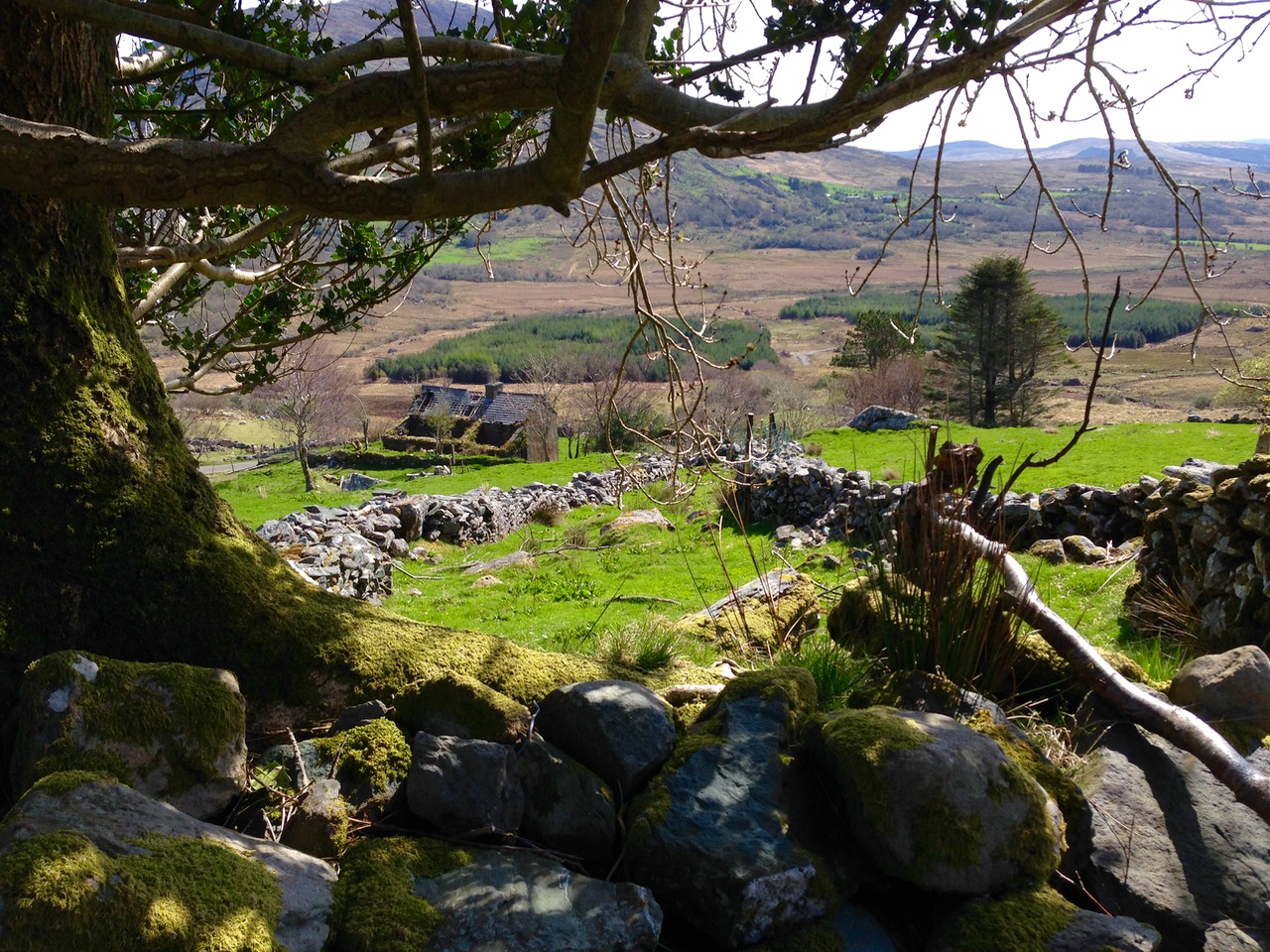
There are some places in this world that touch you deeply in the soul. Derrynablaha has that affect on me. I first went there a few years ago and immediately felt that it was alive with ghosts. I was in search of Rock Art then, and Finola had told me about her experiences in the early 1970s – an intrepid young student on an old Honda 50 loaded down with sheets of cellophane and measuring rods. She had met the O’Sullivans who dwelt in the single farmstead there – they plied her with tea and directed her to the rocks above the house where treasures awaited. When I drove into that valley 40 years later I found only the ruins of the O’Sullivan cottage. It was a poignant moment – the mountains were empty: in some ways it felt like the loneliest place on earth, yet also one of the most beautiful.
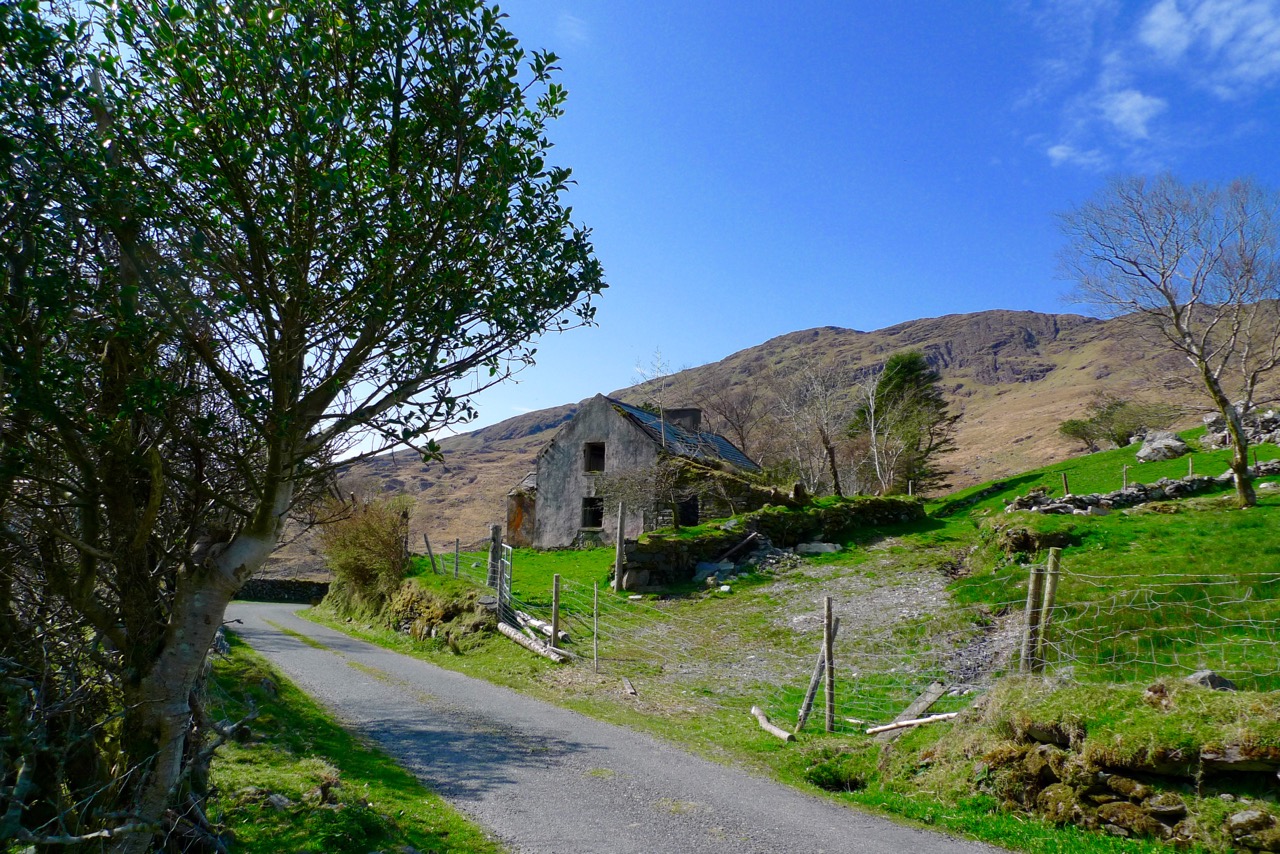
The old O’Sullivan farmstead returning to nature
What kind of a beauty is that? A mixtures of lives vanished and nature healing the wounds. Sheep still grazing on those rock-strewn fields: men from another valley tending them – O’Sullivans also, but – they claim – no relation to the last generation there.
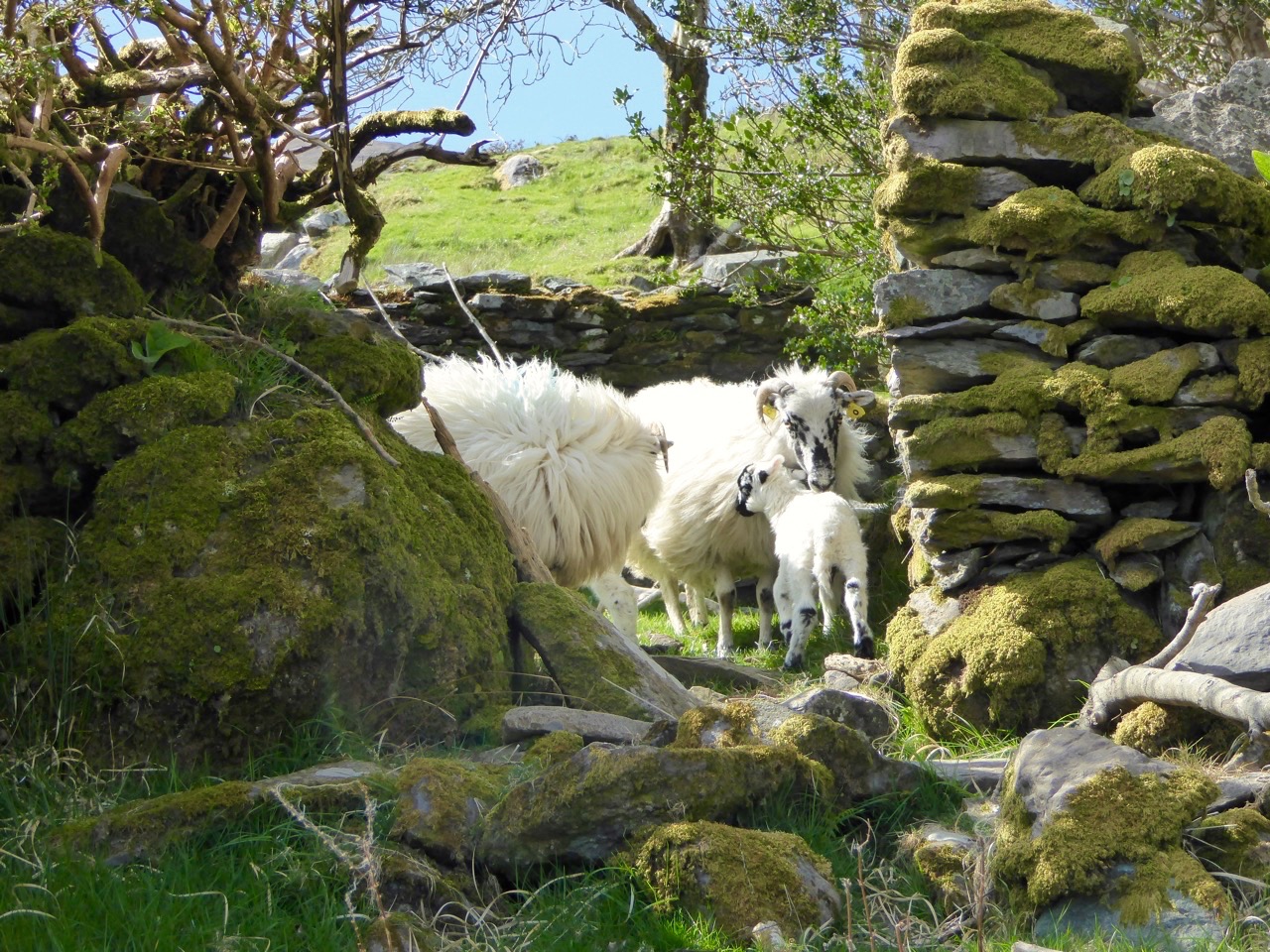
New life among old stones…
Those lives are recently gone but, as I first climbed the precipitous slopes to the west of the old farm, I felt the presence of other ghosts – from a more ancient time. It’s a long haul up to the iconic carved stone which commands the wide view across to Lough Brin but, each time I make that journey, I feel more strongly drawn to the people who made that place their home – or possibly their temple.
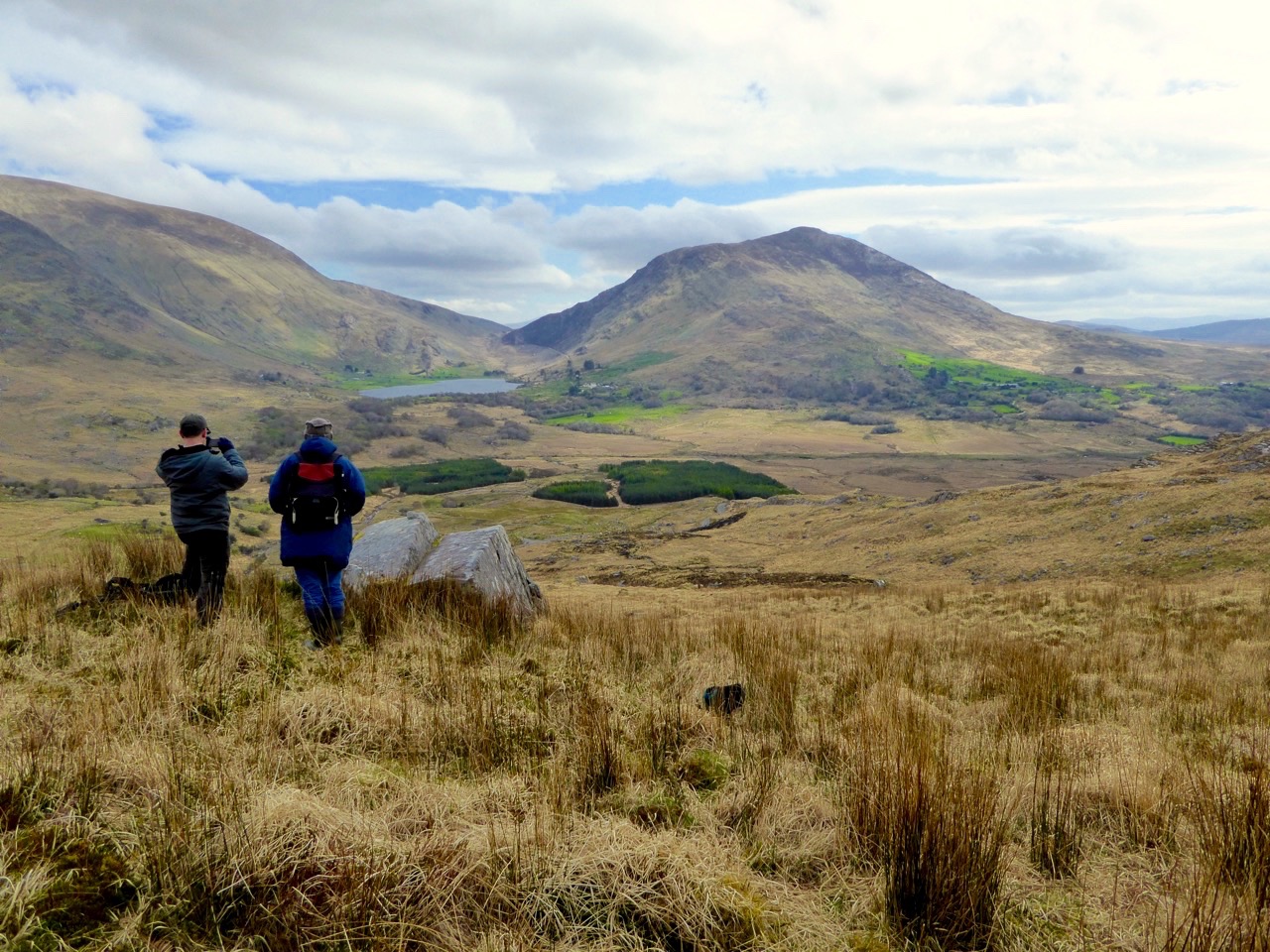
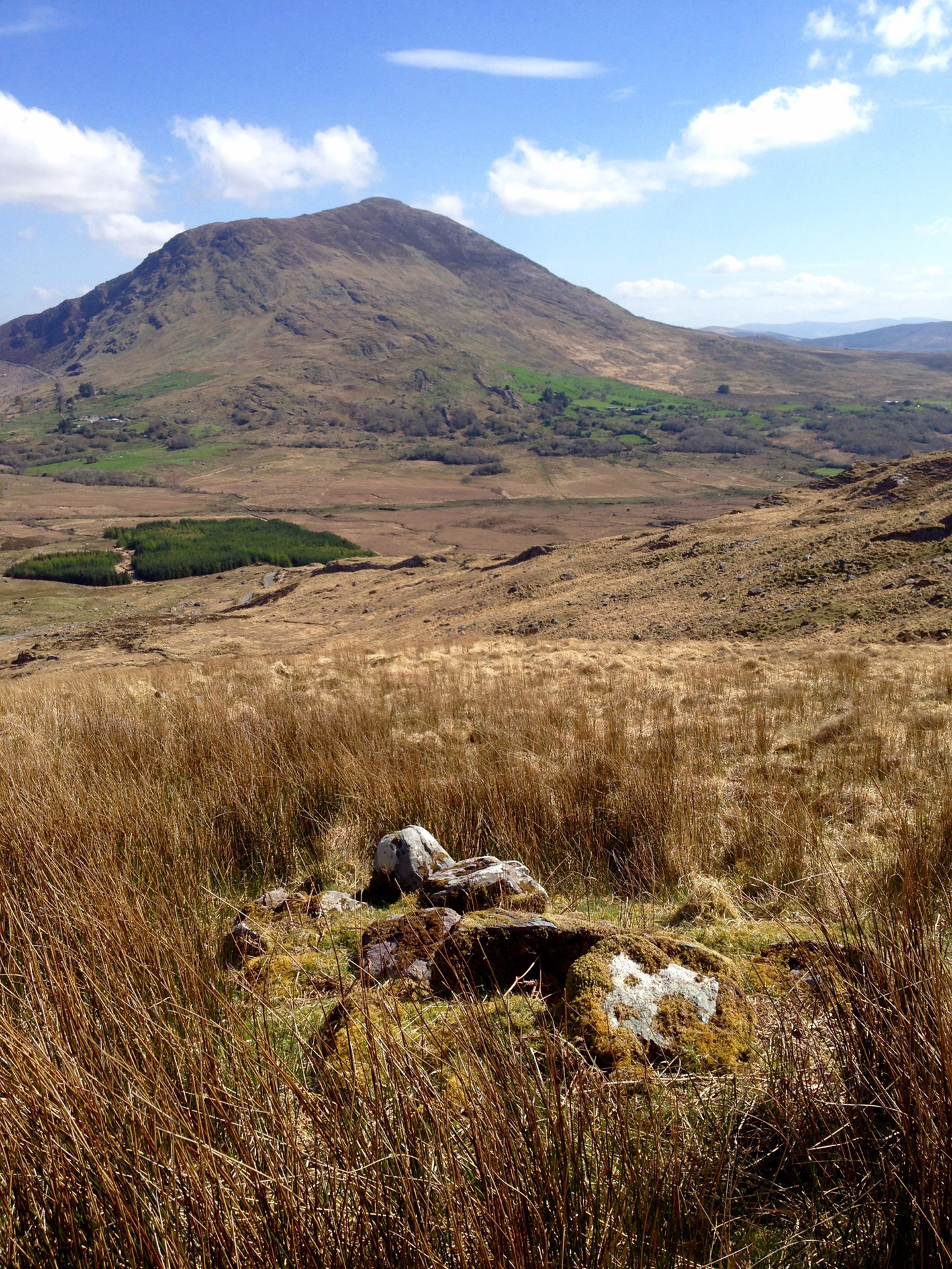
View from the ‘very special’ carved stone
This expedition must have been my fourth visit to the hillside which commands such a magnificent view over the townlands of Derrynablaha and Derreeny and which takes in the lake on the valley floor – seemingly a mere puddle from that elevation yet in fact covering several hectares. On each visit I find more evidence of prehistoric occupation: on this occasion it appeared to me that the carved stone is sited on the edge of a circular plateau; I could trace old retaining walls below, some circles which could have been hut walls half lost in the undergrowth and – above this site – a wall of boulders which might have dammed the stream which runs down the mountain here, to create a little reservoir. I also saw the vestiges of a wedge tomb – aligned east to west – and the base of a cairn… All this, of course, is my imagination at work, but it’s a place where the imagination can take wing.
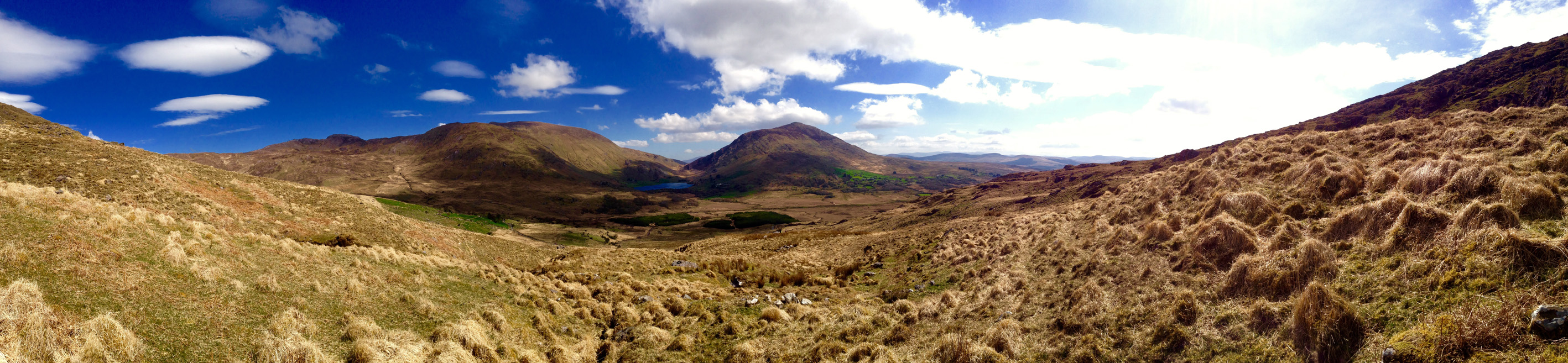
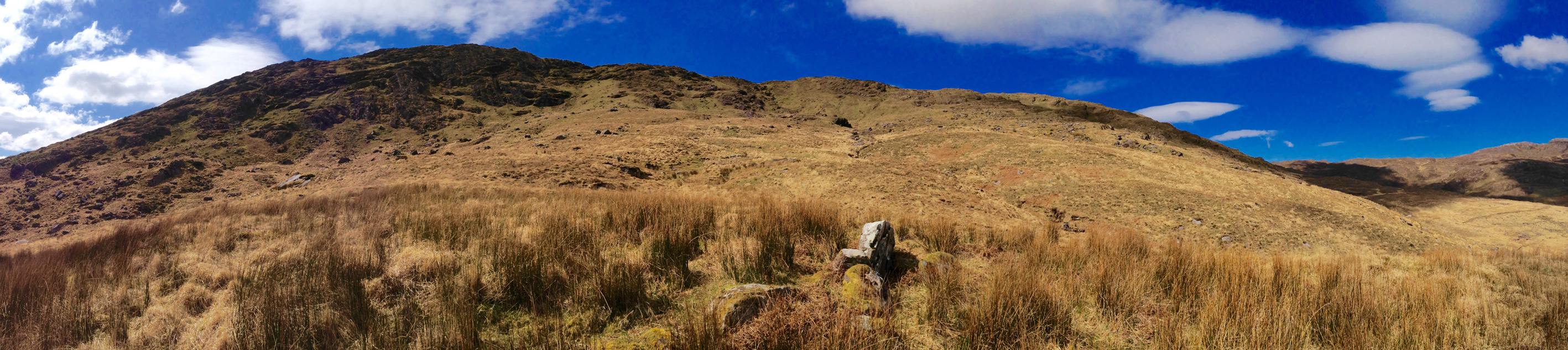
Panoramas from the plateau – east and west
I have so many questions… Was there once tree growth at this level? Derrynablaha means ‘little oak wood of the flowers’ – I imagine something like the stunted oak forests on Dartmoor, where the ancient trees are gnarled and twisted from the ravages of a harsh climate, but which cling to the rocky terrain. But possibly the plateau was raised above this – a place where visibility over the whole landscape was important and visitors anticipated in advance. In my dreams I see fires burning up there in the night, figures dancing, songs being sung… Are they really Wolves and Deer I see moving around the fires, or are they my own ancestors wearing grotesque masks?
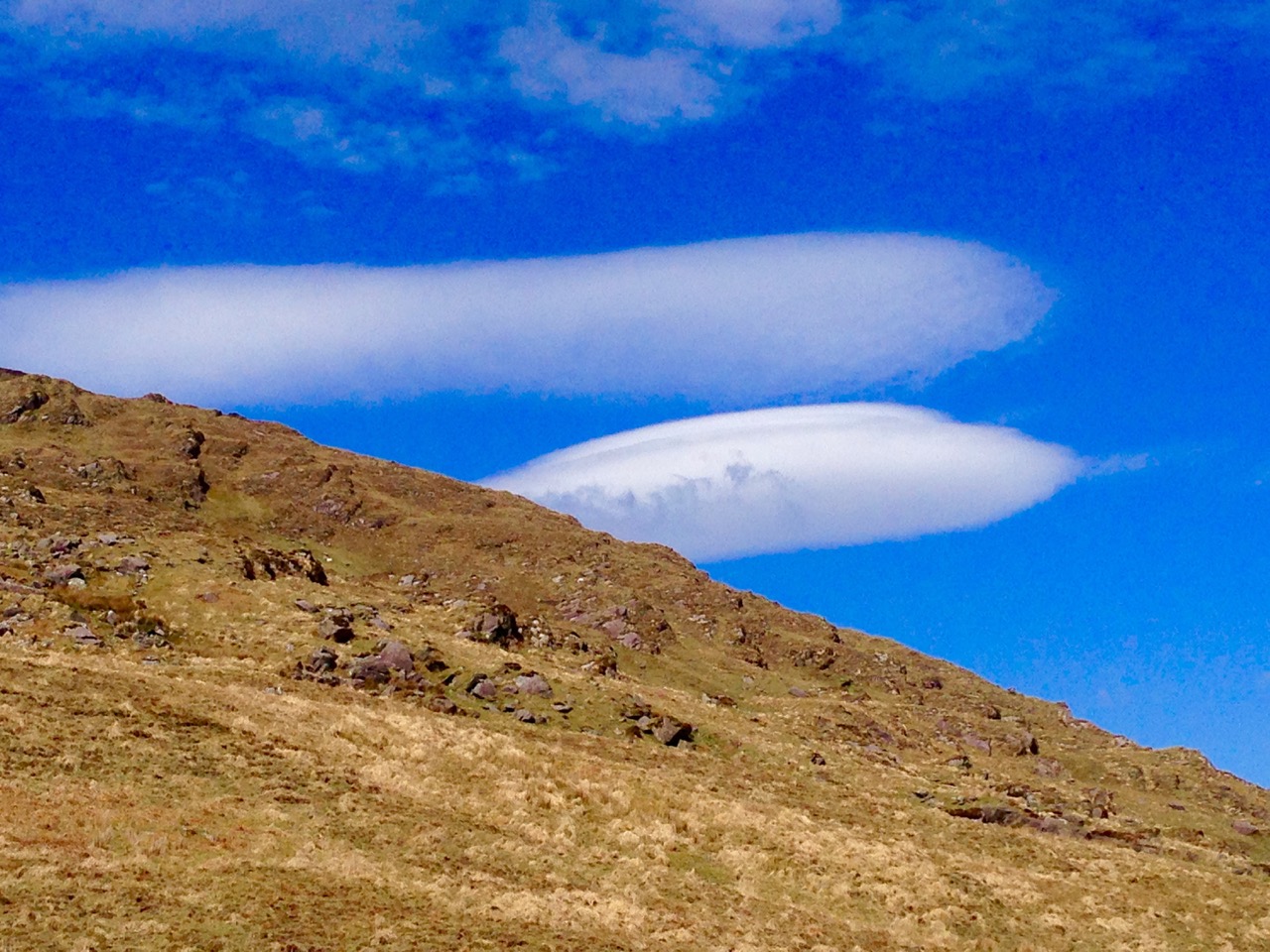
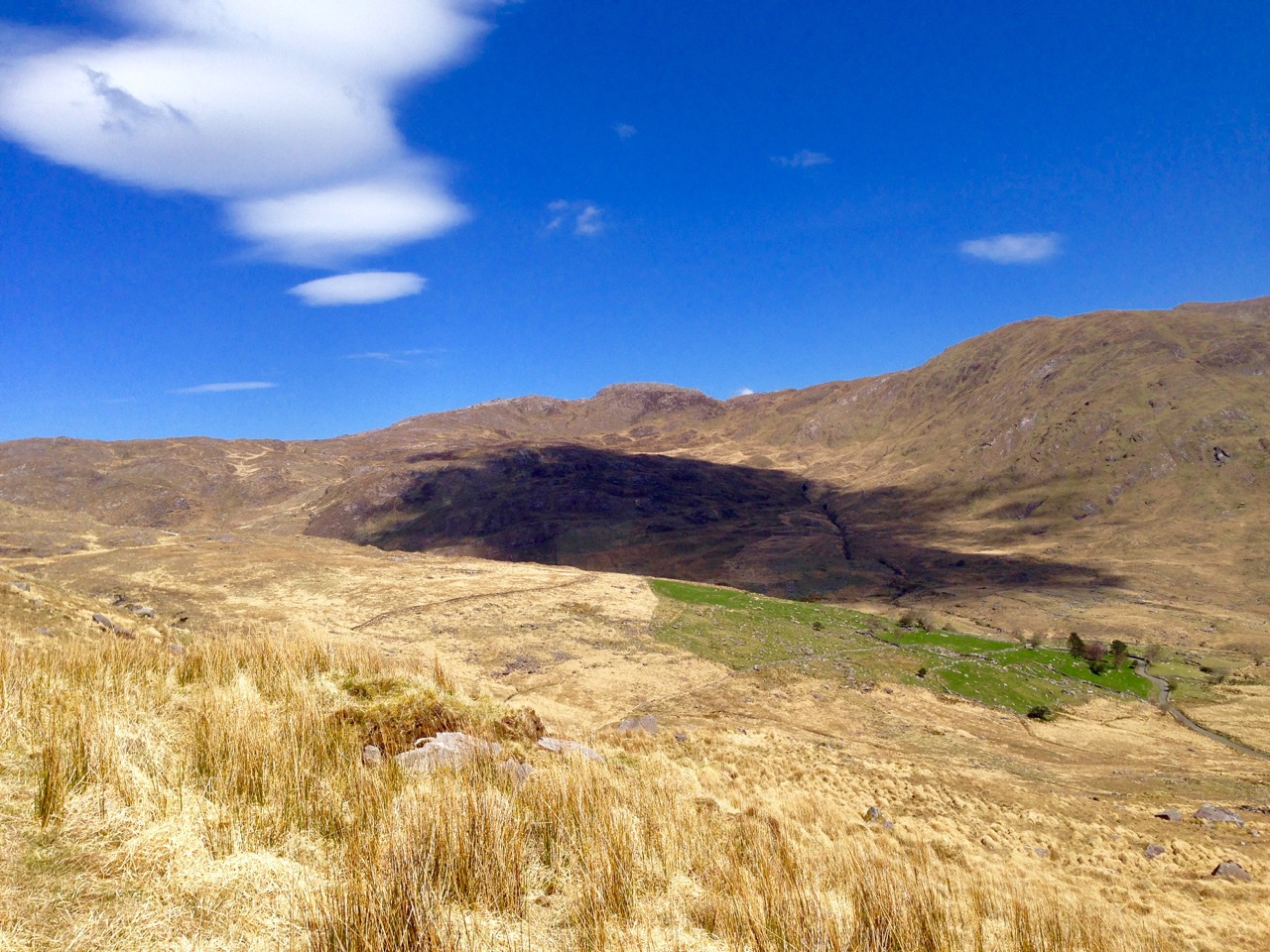
Dream clouds?
Why shouldn’t I have these thoughts? After all, technology might have changed over 5,000 years – but our minds haven’t. It’s not so hard to try and understand our forebears: I like to think they appreciated the power of the pristine landscapes which they inhabited – just as we are awed by the magnificence of their old haunts as we see them today.
Wedge tomb on the plateau?
 Roaringwater Journal