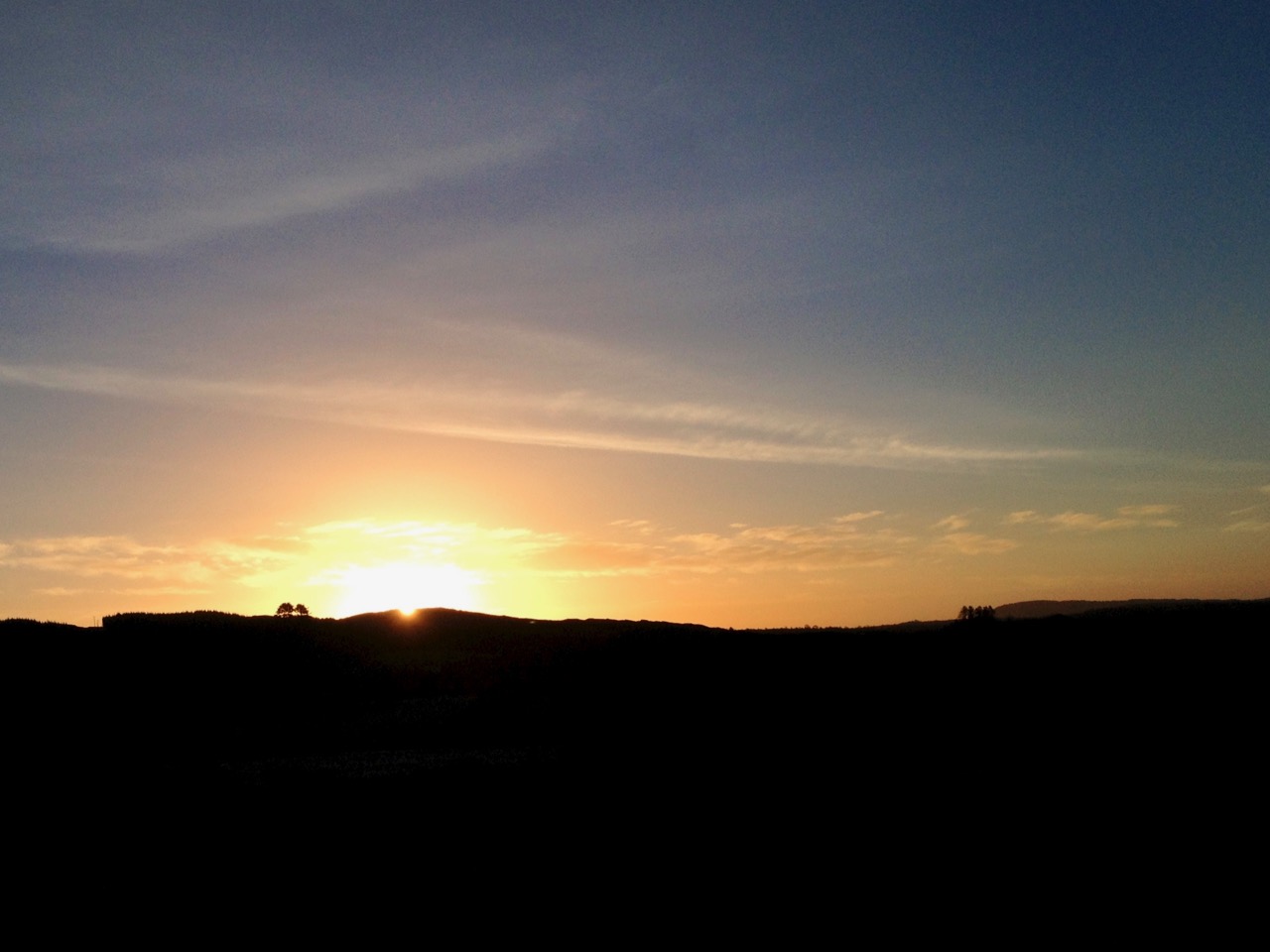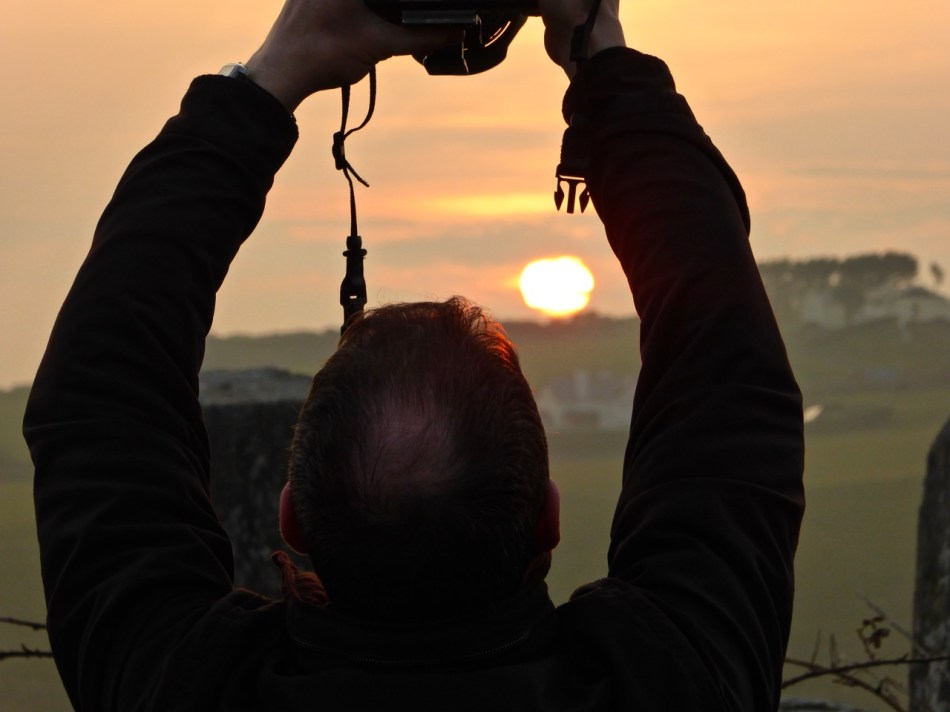
Equinox!

Ken Williams - capturing the moment

We’ve just passed the Equinox – one of the two moments in the year when day and night are of equal length. This happens once in the spring and once in the autumn. This year that moment was March 20th at 9:01AM, but it can fall between the 19th and the 21st, depending on the year. The autumn equinox this year falls on Sept 22, but it can range from the 21st to the 24th.
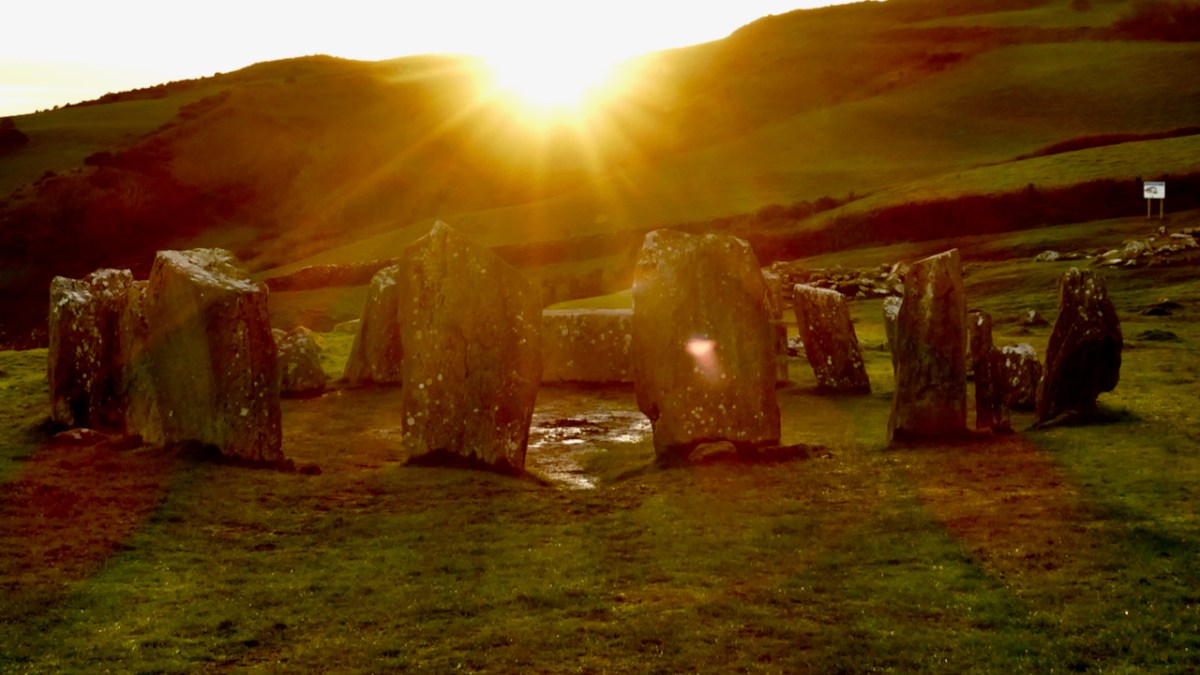
Prehistoric monuments in West Cork often have an orientation – the most famous of course is Drombeg stone circle (above in 2020). It’s a multiple stone, ‘axial’ circle, with two portal stone opposite a recumbent stone. On the winter solstice (this year on Dec 21st) the sun sets behind the recumbent, diametrically across from the portal stones (this is the ‘axis’). Attending this event is always great fun as well as an opportunity to join in a celebration that is thousands of years old.
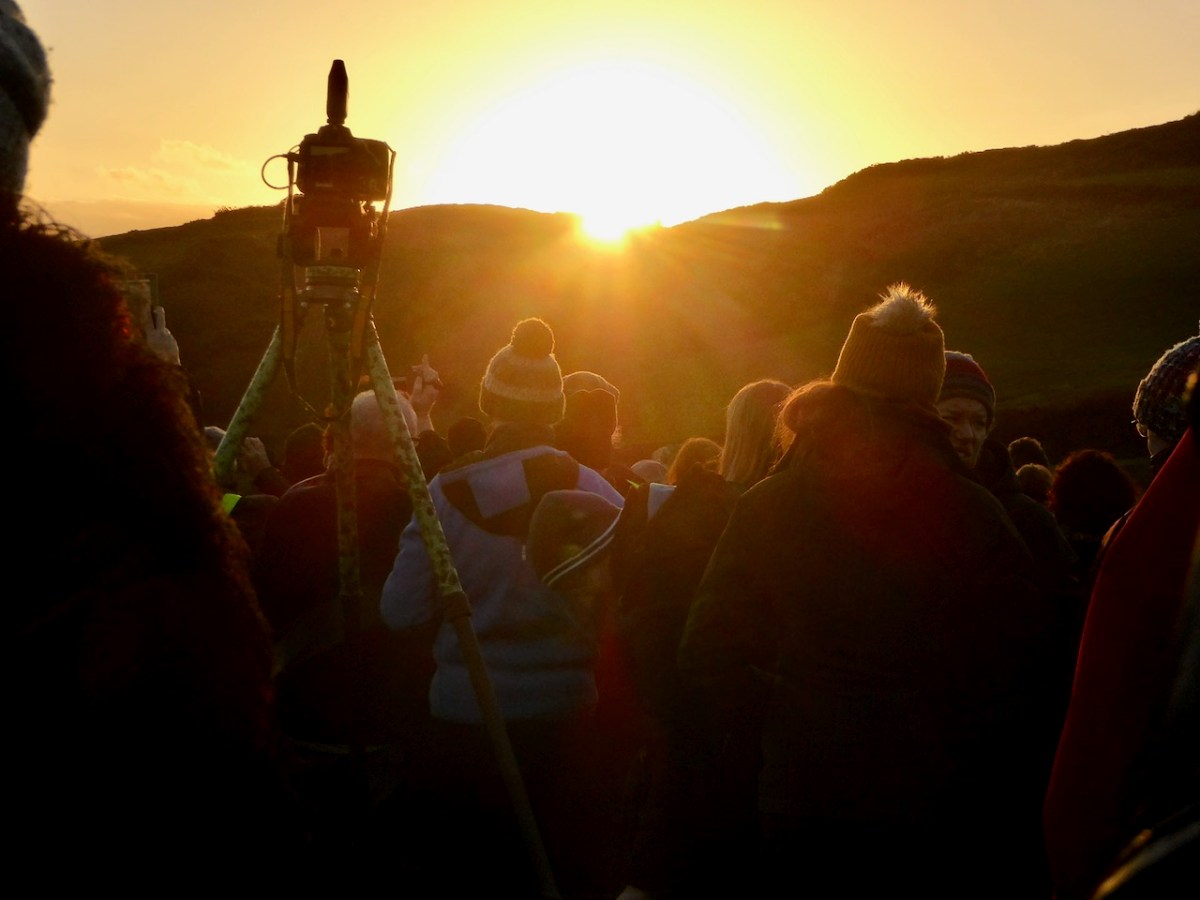
There is a rhythm to the year provided by these four solar events – the longest day (summer solstice), the shortest day (winter solstice) and the equal-length days (equinoxes). Add to that the cross-quarter days – the points half way between the solstices and equinoxes, and we have a natural calendar of eight divisions.
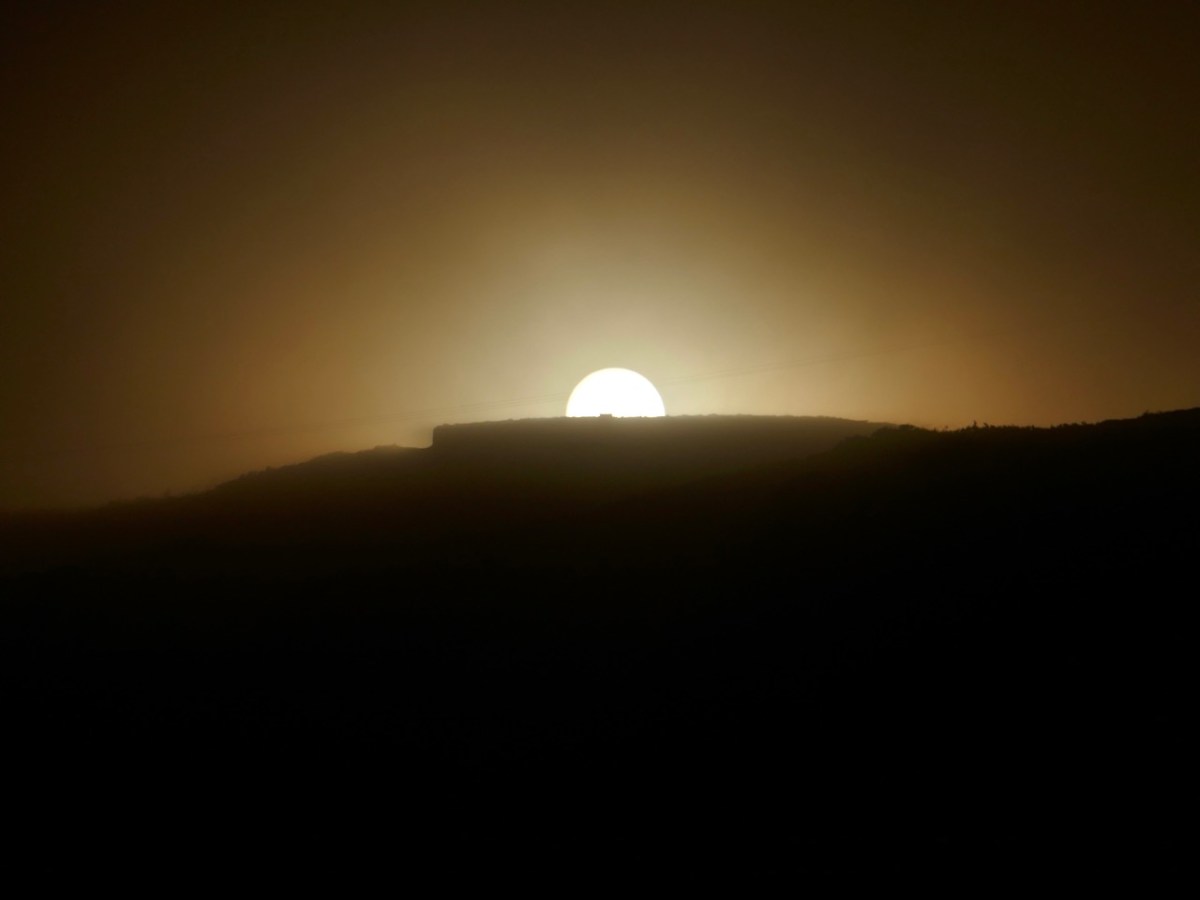
The cross-quarter days, by the way, are the ones that track most closely to the great ancient Festivals in Ireland of Imbolc, Bealtaine, Luanasa and Samhain. Although nowadays these tend to be celebrated on the 1st day of February, May, August and November, in fact the dates would have varied and in 2025, the accurate dates for the cross quarter days are Feb 3, May 5, Aug 7 and Nov 7. This is important to know as various solar events happen on cross-quarter days, and if you want to see them, you have to turn up on the right day! See this post on Boyle’s Bealtaine for a good example of this – the photo above was taken on May 5, 2018.
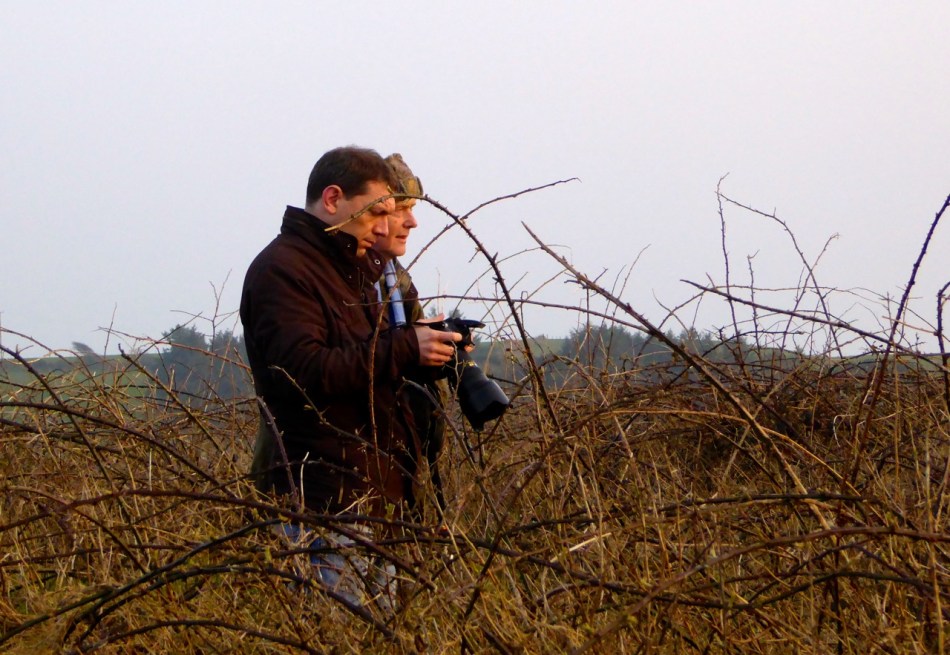
Ken and Robert: getting ready for sunset at Bohonagh

A few years ago, we met up with Ken Williams of Shadows and Stone, to photograph the equinoctial sunset at Bohonagh Stone Circle, near Rosscarbery. Ken is the undisputed master of prehistoric photography in Ireland. His website contains high-quality images of many different kinds of monuments, he supplies photographs for all the best publications, and he was our partner in the Rock Art Exhibitions we mounted in the Cork Public Museum and in Schull.
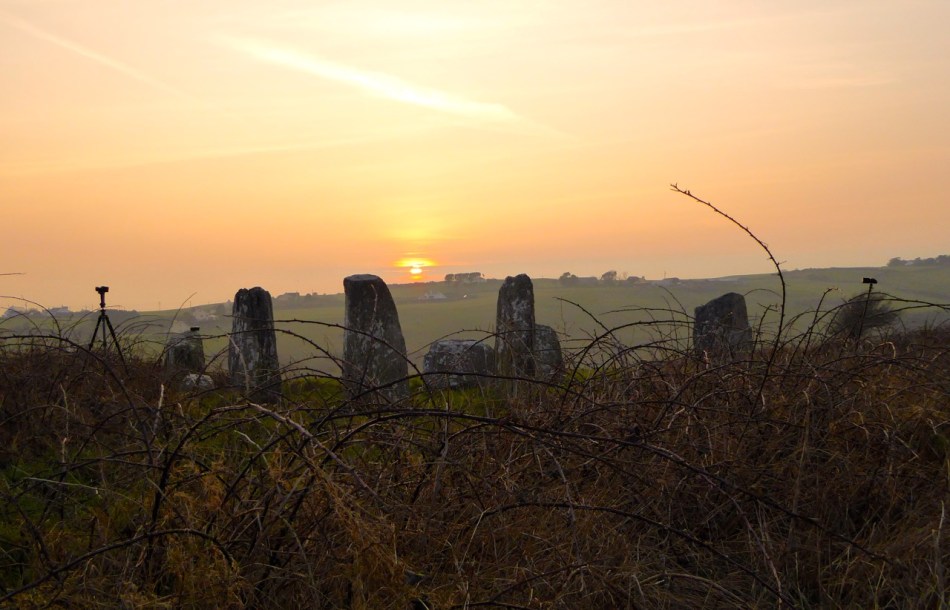
flashes strategically deployed

Ken’s work on rock art is astounding. We know first hand how difficult it is to get good photographs of the carvings. Many of them are covered in lichen, obscuring all the detail, and can really only be discerned in long slanting light, such as at sunrise or sunset. Ken uses both natural and artificial lighting to capture his excellent images and when we first met first we asked him how he packed all those lights up to the remote locations in which a lot of rock art is found. He grinned and opened his backpack. “This is my equipment,” he said, “It’s all I use.” Essentially his gear consists of a camera, flashes, and tripods – strategically deployed in the photograph above. If you want to see the difference between what Ken captures and what us ordinary mortals manage to do, take a look at the first two images in the post Revealing Rock Art.
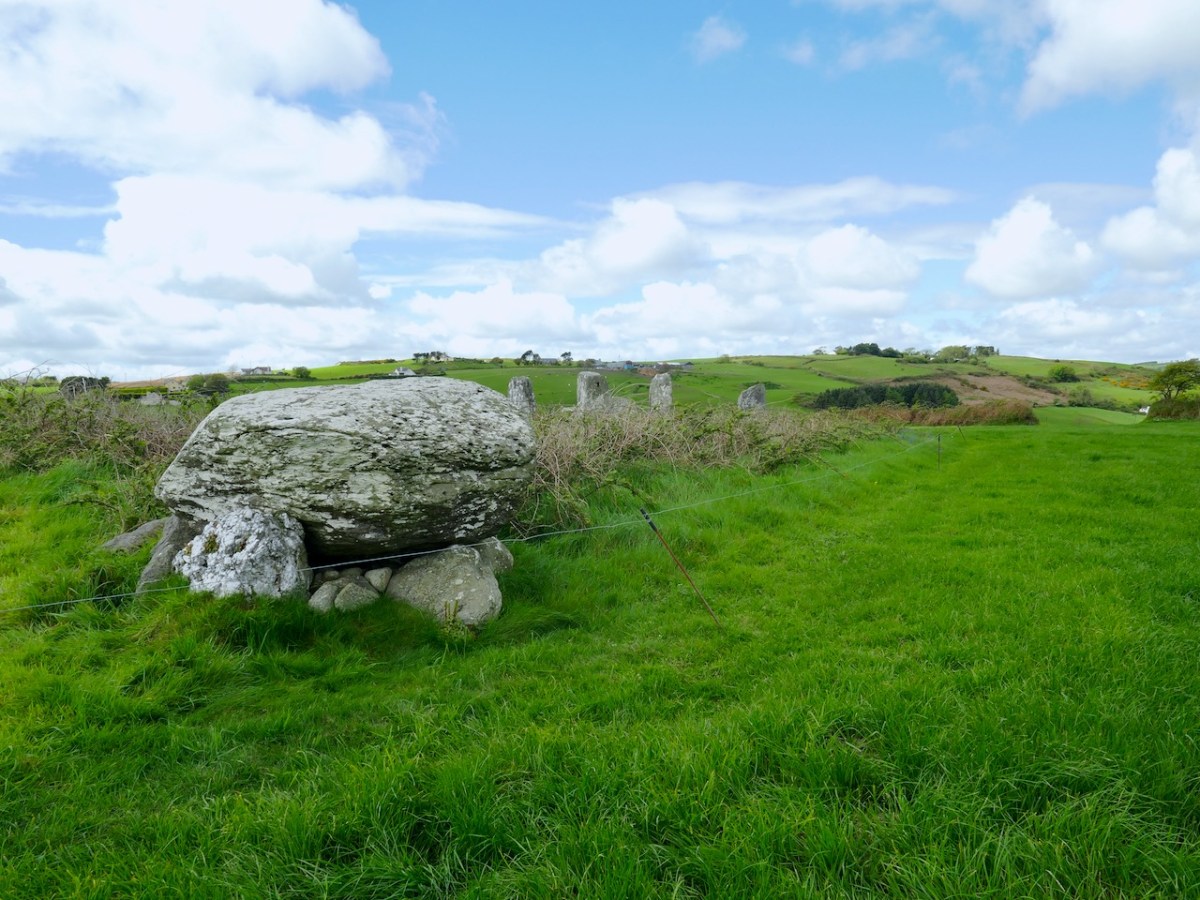
it was a beautiful evening – perfect conditions to see the sun sink behind the recumbent stone. Bohonagh (above) is a complex site. Not only do we have a stone circle, there is also a boulder burial, featuring a rather spectacular quartz supporting stone and cupmarks on the upper surface of the boulder, as well as a cupmarked stone hidden in the undergrowth between the boulder burial and the stone circle. It’s been excavated.*
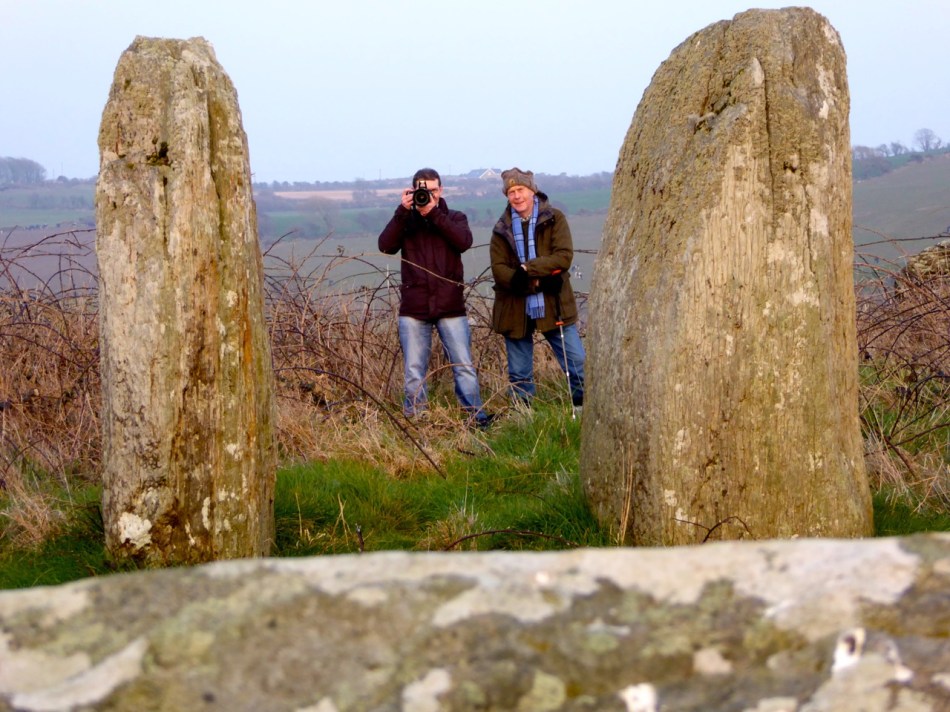
Looking over the recumbent

It was a treat to see a master photographer at work and to have Ken explain how he gets those amazing shots. From previous attempts, I knew how difficult it was to portray a scene when you’re aiming directly into the glare of the setting sun. This time I concentrated on capturing the photographer at work. Ken, meanwhile, worked his usual magic – and here’s the result, included with his permission. Not only can you see everything, including the still blue sky, but his picture captures the mysterious ambiance of the setting and the occasion.
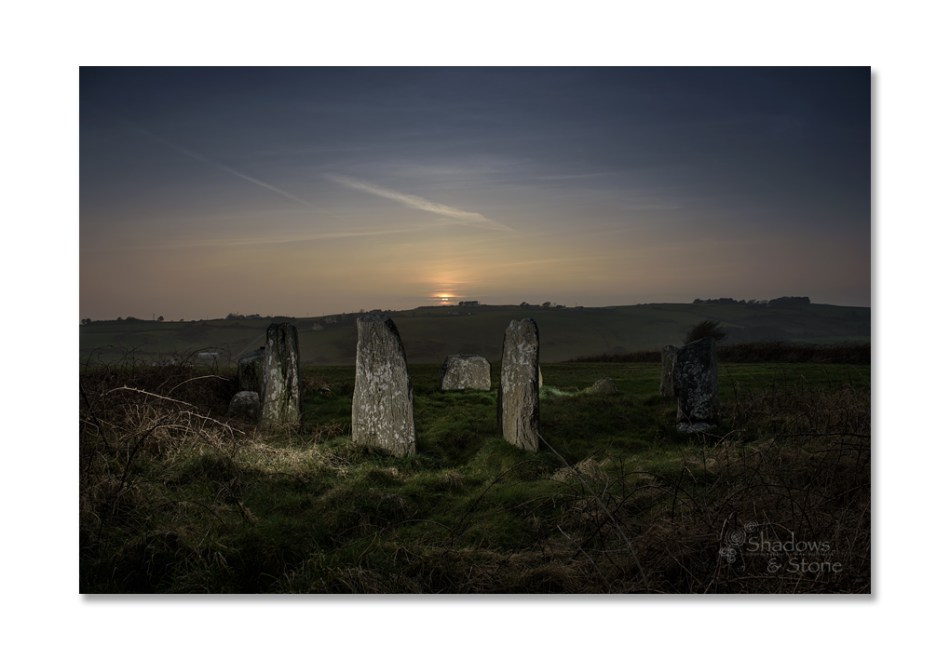
BohonaghEquinox15-12

Our thanks to Ken for an inspirational photo shoot.
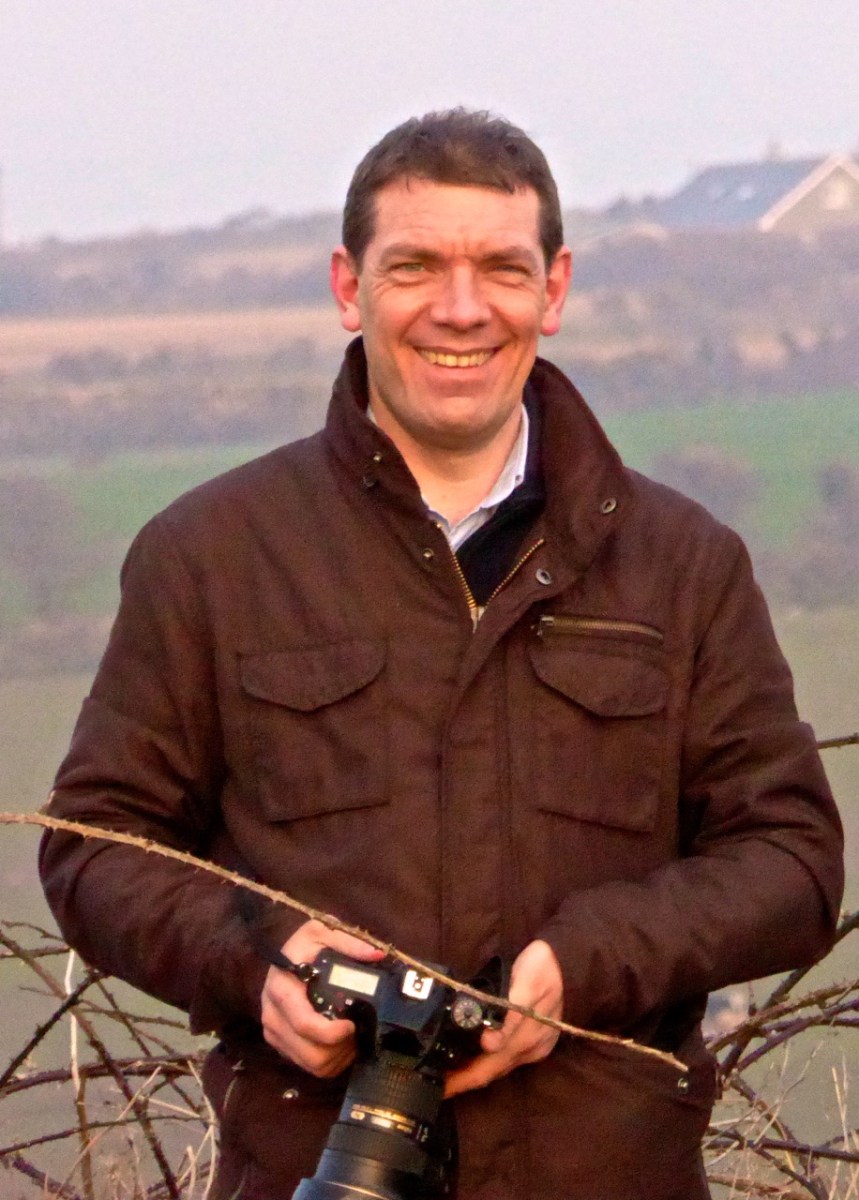
Thanks, Ken!

* A stone circle, hut and dolmen at Bohonagh, Co. Cork, by EM Fahy, 1961
Imbolc – How Our Ancestors Welcomed Spring

February 1 – we celebrate it as St Brigid’s day now, and support the call for making it a national holiday. But we have celebrated it in Ireland forever as Imbolc, the calendar marker that heralds the arrival of spring.

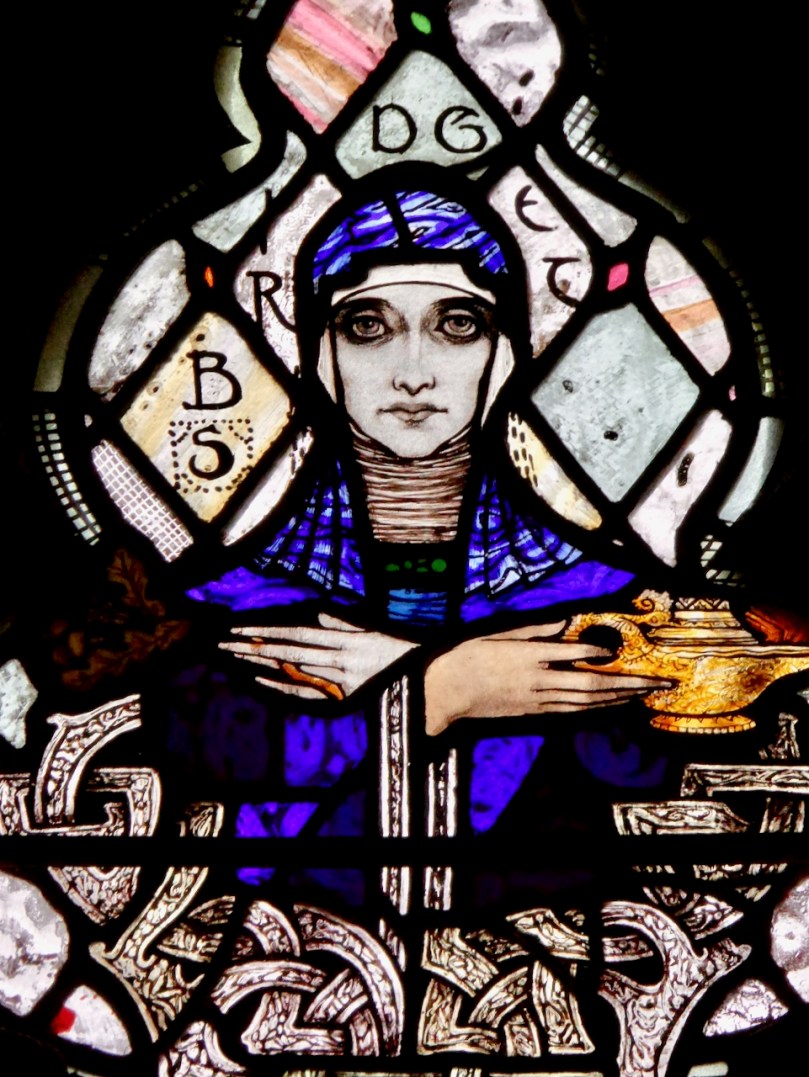
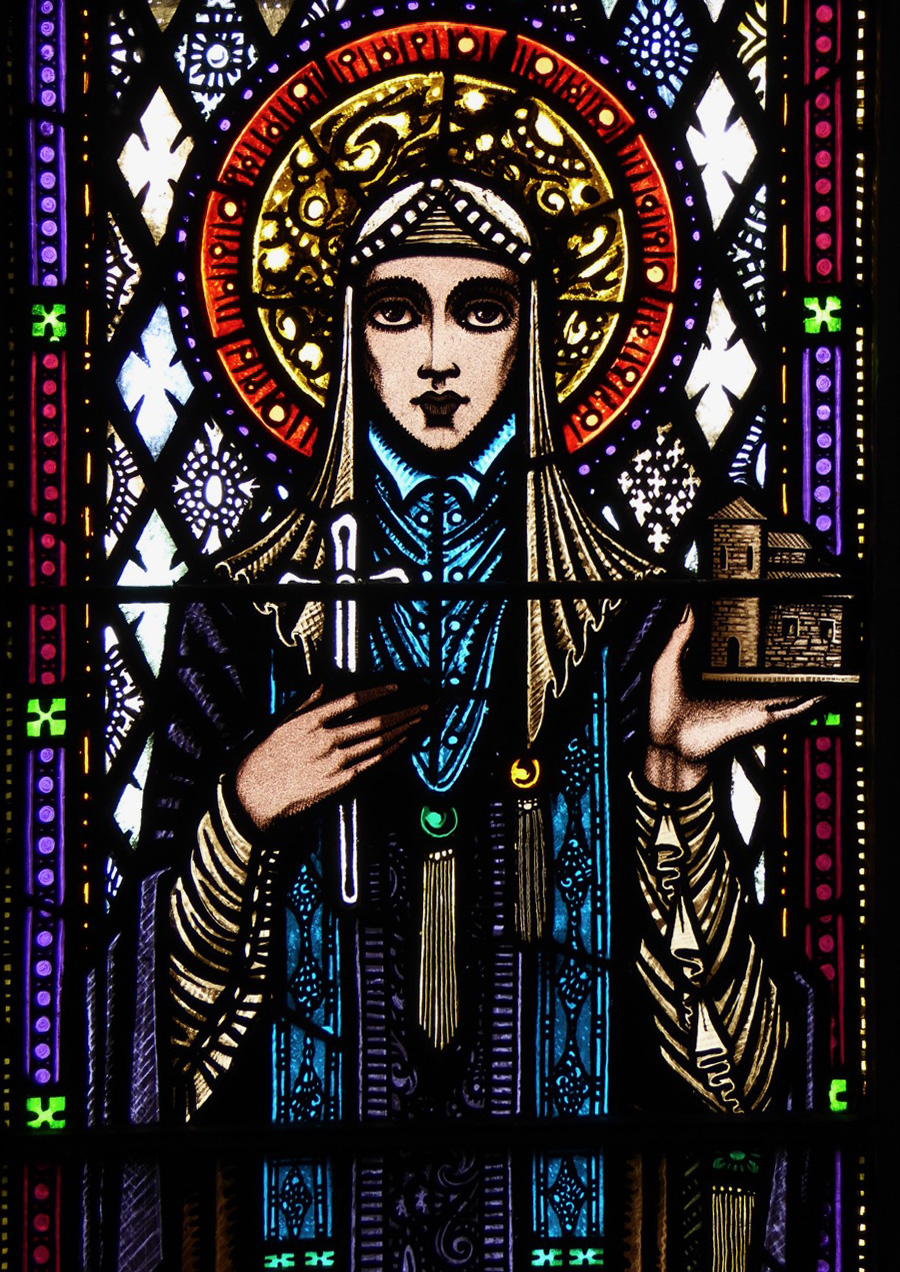
St Brigid by Harry Clarke in St Barrahane’s Church, Castletownshend

What follows was originally a Joint Post by Finola and Robert, written way back in 2013. We have edited it to update the links and added some new photographs and are republishing it now.

Archaeologists have long been aware of the astronomical siting of some Irish megalithic sites, such as at Newgrange, and Loughcrew Passage Graves in Co Meath and Drombeg Stone Circle in West Cork.

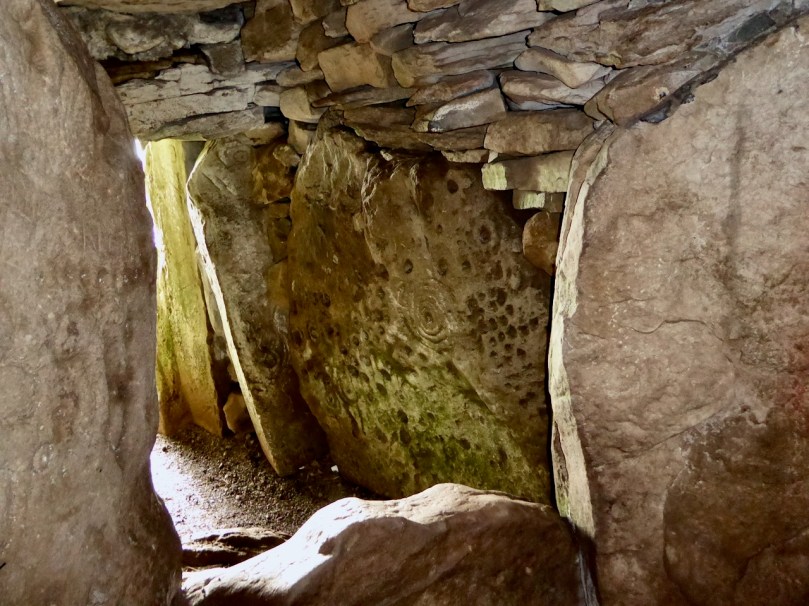
Inside Cairn T at Loughcrew

We have become intrigued by the work of Michael Wilson, a talented amateur astronomer who is singlehandedly documenting the astronomical siting of many monuments in this area. Recently he has turned his attention to prehistoric rock art. Mike’s website contains an astonishing body of work, meticulously researched and rigorously recorded, along with explanatory notes.

Michael Wilson and his Whole Horizon Analytical Technique (WHAT)

Michael Wilson carries out his Whole Horizon Analytical Technique (WHAT)

His thesis, in a nutshell, is that the builders and carvers of Neolithic and Bronze Age times were keen observers of the day and night skies and were intimately familiar with their surroundings. They situated their megaliths and rock art in places where the contours of the horizon allowed them to mark significant solar and lunar events, such as solstices, equinoxes, lunar settings and risings, and intermediate points. Thus, the sun at the winter solstice might rise at the highest point on a nearby mountain, or set in a deep notch in the hills at the spring equinox.

At Drombeg Stone Circle people gather on the winter solstice to watch the sun set over the recumbent stone

The solar calendar has four quarter days (the solstices and the equinoxes), four cross-quarter days (the half way points between the solstices and the equinoxes) and a further finer division into points half-way between the quarters and cross-quarters: an ancient 16 month calendar.

A few days ago [in 2013], Michael posted this:

Imbolc, the spring cross-quarter, is almost upon us. It will be on Feb 1st by the Gregorian calendar, where it is commonly known as St Bridget’s Day or Candlemas, but this is not the correct day. By day-count, the times to celebrate will be sunset on the 3rd and sunrise on the 4th. Astronomically, the sun will be exactly half-way between the winter solstice and the spring equinox at about 16:13 GMT on Feb 3rd, while Feb 2nd is the day to see the sun rise and set at the prehistoric positions for marking this festival.

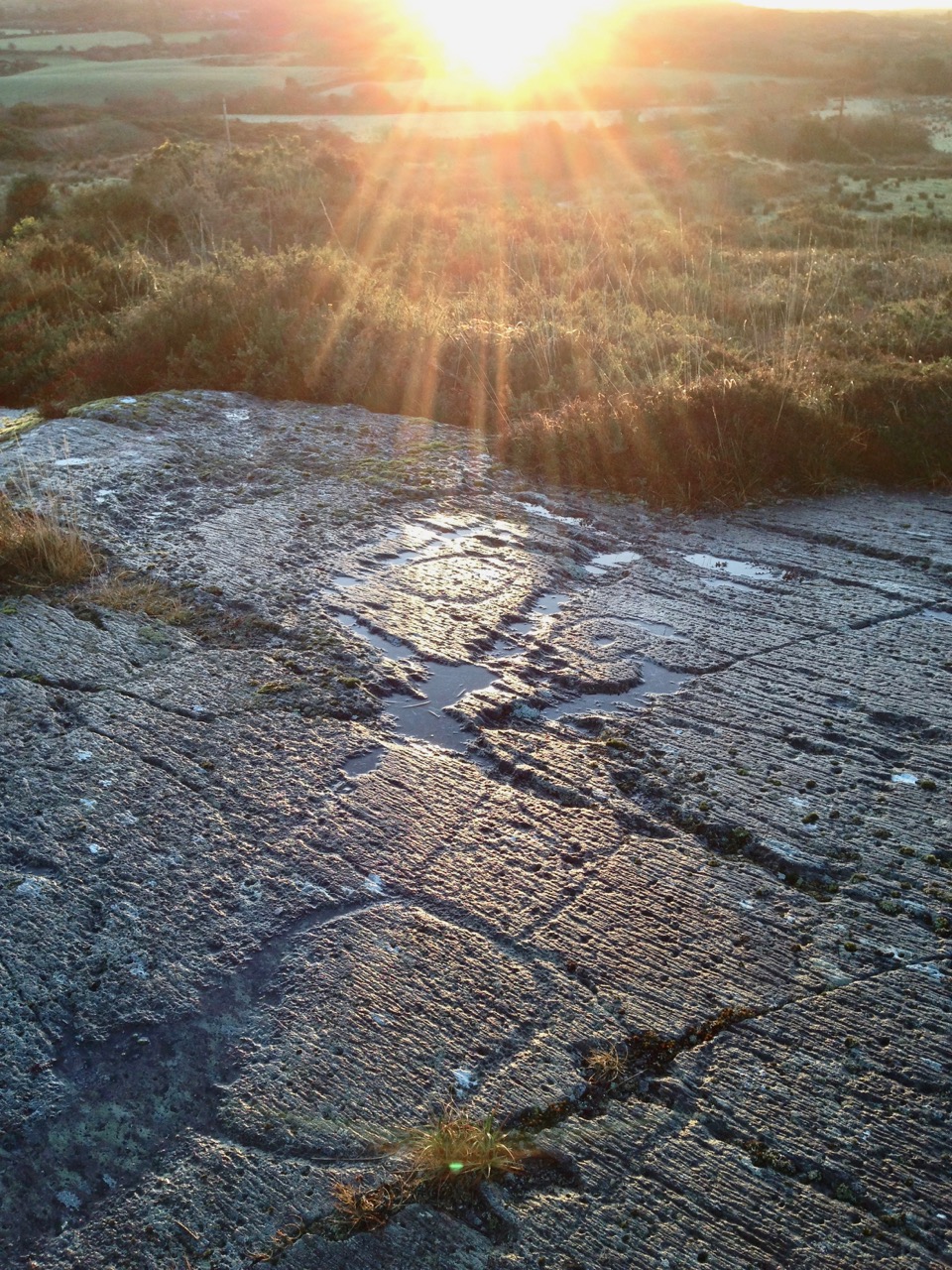
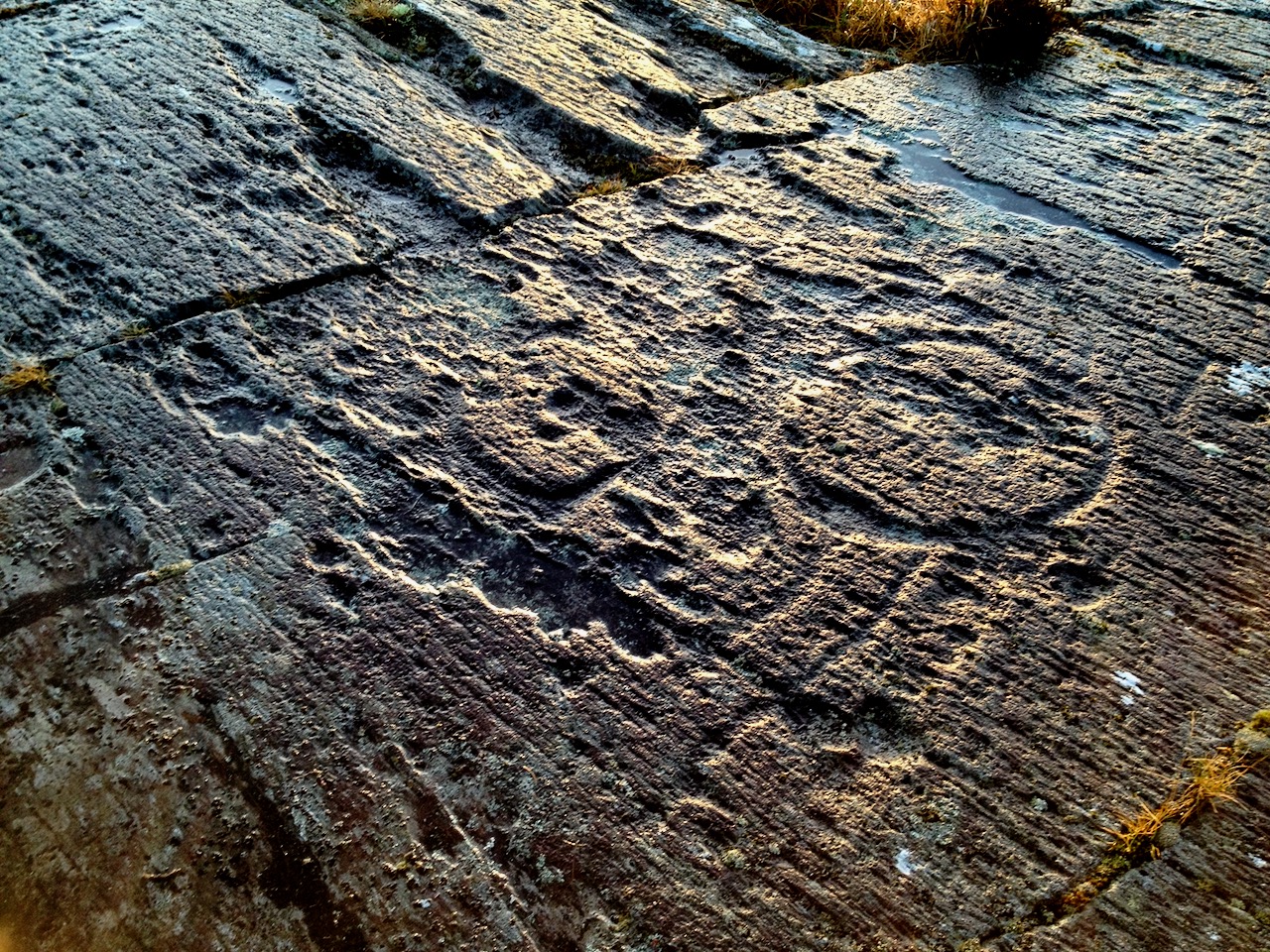
We set out for our favourite rock art site, Ballybane West, before dawn on Feb 2nd, feeling incredibly lucky to have a clear sky. As the sky brightened, and the nearby hills started to receive the sun’s rays, the carvings on the rock surface became clearly visible.

The sun is already hitting the high ground across the valley

Then, the sun rose, exactly where Michael’s predictions said it would, at the highest point of a rounded hill on the horizon. As people had been doing 4000 years ago in this exact spot, we marked the cross-quarter day of Imbolc – a time when the land starts to warm up, the first spring flowers appear, and the ewes are visibly pregnant.

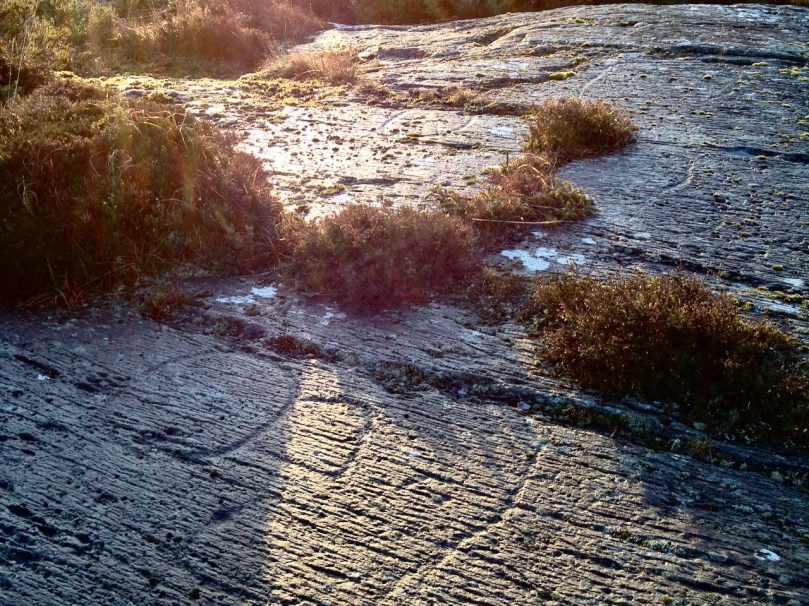
The carvings light up in the dawn rays

The slanting rays of the rising sun provide perfect lighting for seeing rock art, which is often difficult to observe at other times

If Michael is correct, we have to incorporate a new possibility into our thinking about rock art. There have been indications before that the location of the carved rocks was significant. For example, there is often a view of water or of a significant mountain, some theorists have posited that they are ancient boundary markers, and some rock art sites are inter-visible with each other.

But this way of looking at rock art elevates the actual siting of the rock as most important, and allows us to view the carvings themselves as a way to indicate the purpose of the site – a means to an end rather than an end in itself. The motifs, though, will probably remain as enigmatic as ever.


Pagan and Pure

How does a prehistoric calendar mark turn into a pagan feast and then into a Christian saint’s day? This year, the cross-quarter day is Feb 3, yesterday: that is, the day that lies half way between the winter solstice and the spring equinox. Together with the solstices and equinoxes, the cross-quarter days divide the year into eight ‘months’ and they also establish the dates for the ancient festival days of Imbolc ( Feb 2, spring), Bealtaine ( May 1, summer ), Lunasa (Aug 1, harvest), and Samhain (Oct 31, start of winter). In fact, the actual cross-quarters times don’t fall always on those dates but close enough so they have become established as the festival days.

The Brigidine Centre in Kildare, run as retreat and contemplation house. The lead image in this post is a St Brigid stained glass window in Ballinrobe, Co Mayo

As so often happens when an ancient culture is Christianised, Imbolc became conflated with a saintly feast day, that of our own Saint Brigid, the female patron saint of Ireland. Brigid may have originally been a female deity, also called Brigid, or perhaps Danu. This is all controversial, of course – did the idea of the goddess or the idea of the saint come first, for example? Whatever the origins, the marking of the cross-quarter day turned into Imbolc the pagan festival, and finally into Saint Brigid’s Day, and all over the country we make St Brigid’s Crosses, leave a scarf out at night for her to bless, or, still, in Kerry, dress up as ‘Biddies’ and go from house to house, carrying a Brídeóg doll and singing and dancing in a ritual that must be as old as time.

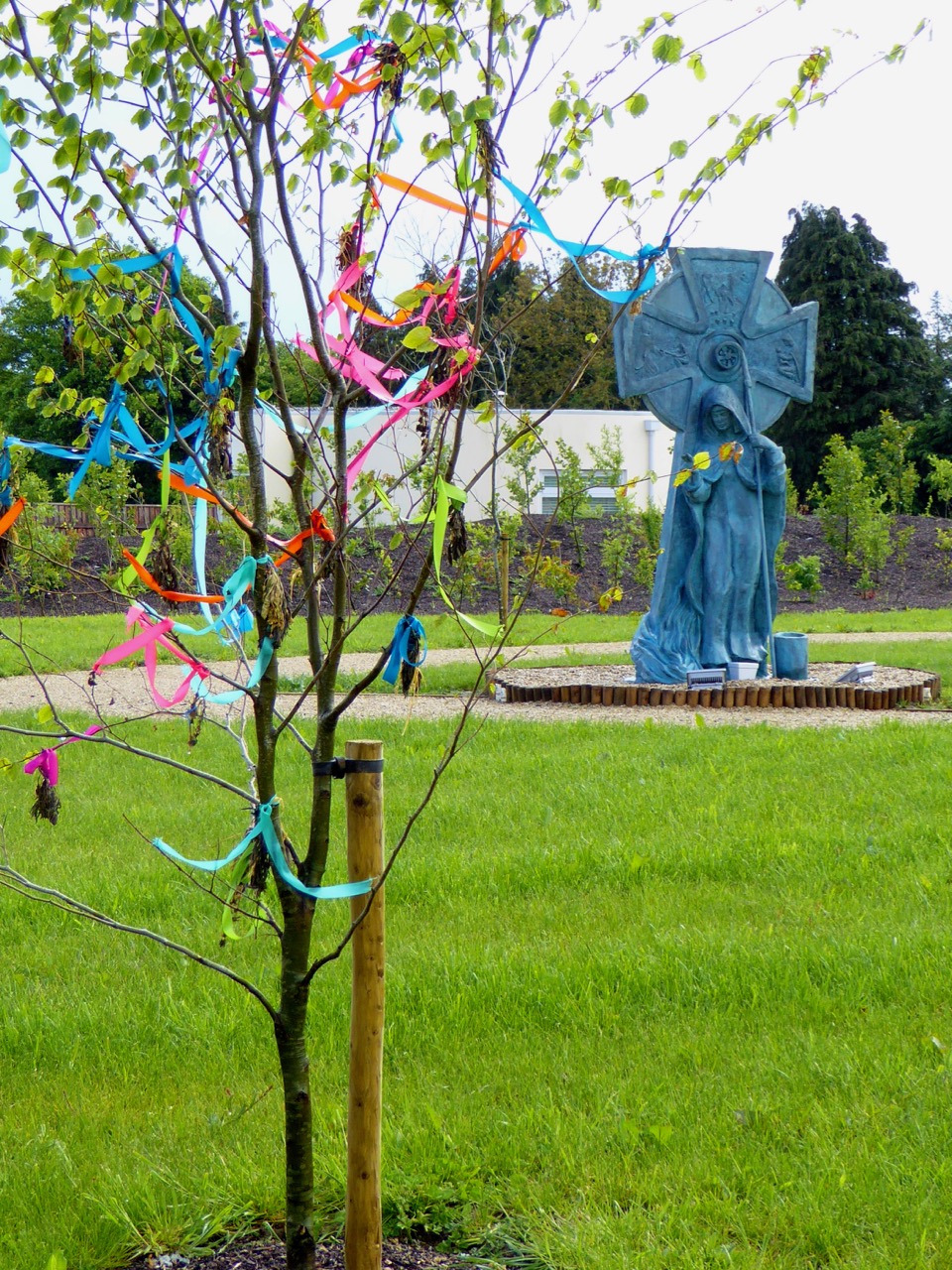
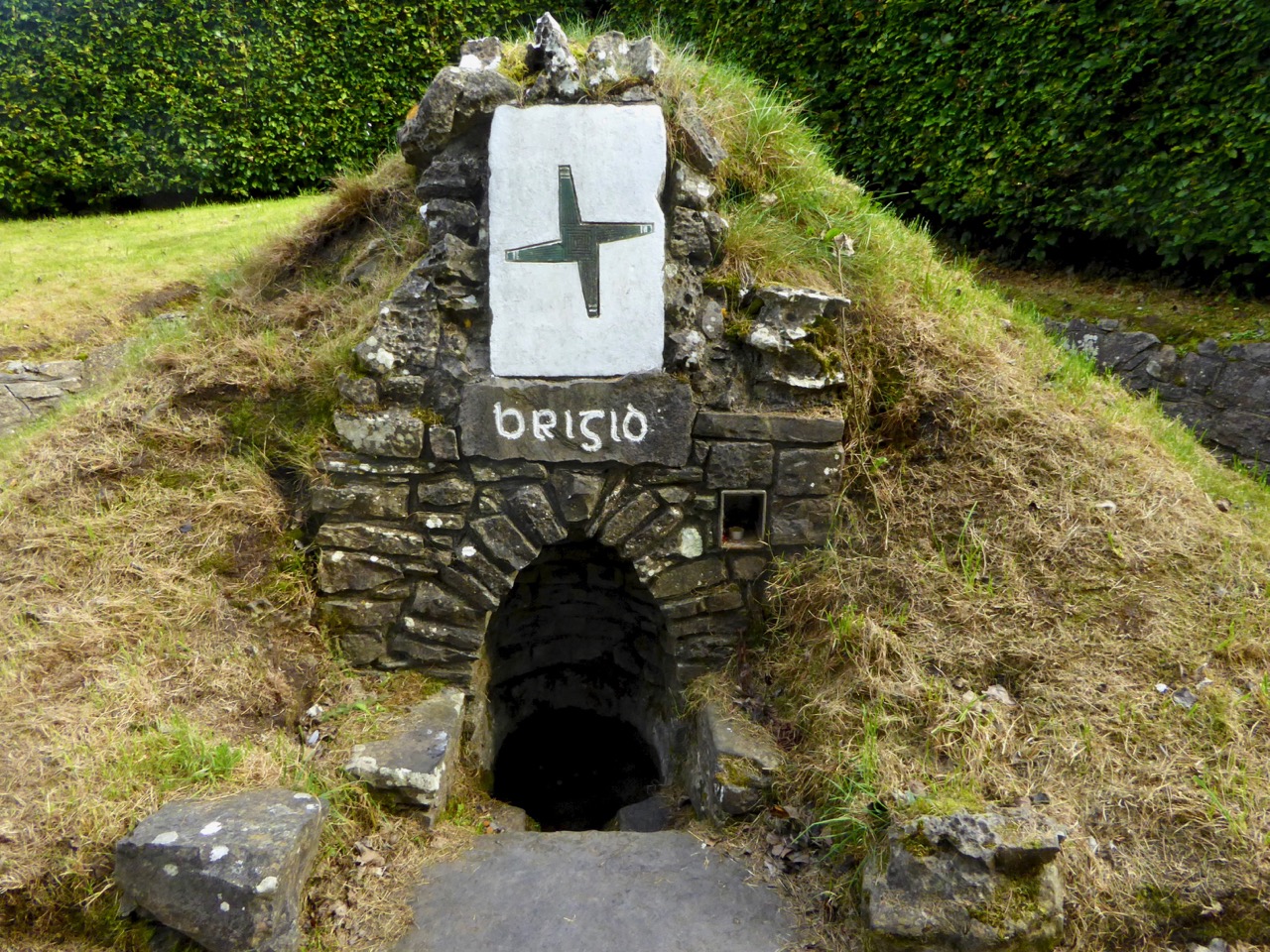
Another custom is to visit those holy wells that are associated with Brigid. Amanda has a special post on that – and is celebrating two years of holy well hunting!

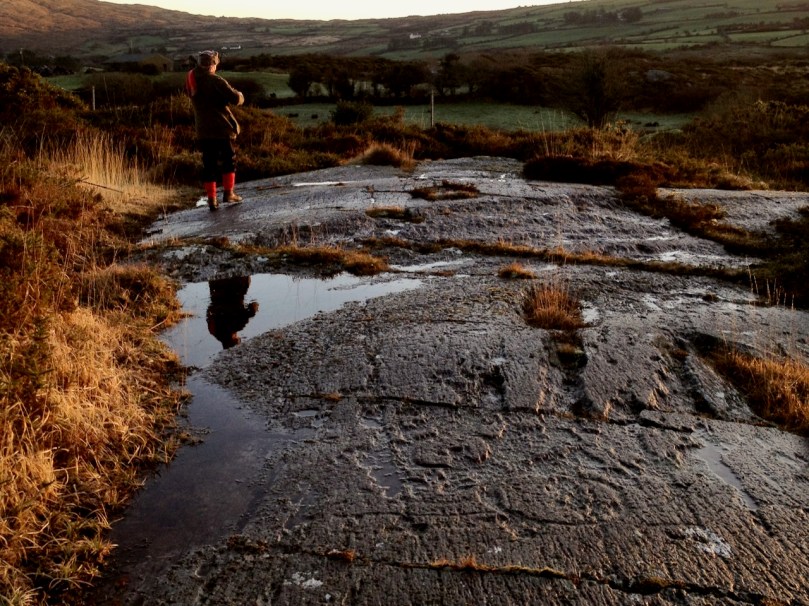
On one Imbolc that lives in our memories Robert and I arose early in the morning and went to watch the sun rise over a small prominence, standing on a piece of 5,000 year old rock art. Our account of that occasion is here, and below is the thrilling moment the sun rose, and lit up the ancient carvings.

Our friend, the poet Paul Ó Colmáin, from whom we take Irish lessons, used one of his own poems as a teachable moment this week, and I was struck by how perfectly it captures that sense of the turning year, the joy of sunrise, the deep embedding in our Irish souls of the ancient and the traditional and the embracing of both. I give the poem first in Irish. For those of you who do not speak it, you can take my word that the language is beautiful and contains nuances that his English version cannot capture, brilliant as it is.

Lá ‘le Bhríde

Dhúisigh an ghrian sinn

an mhaidin úd,

solas órga

ag stealladh

‘is ag scairdeach

isteach ar an urlár,

ag slaparnach

thuas na fallaí,

ag sruthlaíonn

an doras síor-oscailte isteach.

Níor thuigeamar

ar dtús

cad a bhí ag titim amach.

Níor aithníomar

torann buí na Gréine.

Ach chuimhníos

go tobann ar na bhfocail a dúraís,

mar dhraoi:

“Tiocfaidh an Ghrian thar nais ar Lá ‘le Bhríde.”

Agus d’árdaigh dóchas,

ársa, pagánaigh im’ chroí,

inár suí sa leaba,

Bríd nó Danú,

an lámh in uachtar ag an t-earrach,

bhí an geimhreadh, gruama thart.

“Tiocfaidh an Ghrian thar nais ar Lá ‘le Bhríde.”

Paul’s English version of the poem is given below. At the time he wrote it, Paul, his wife, the artist Marie Cullen, and their sons were living on the Great Blasket*, off the Dingle Peninsula, the only inhabitants of the Island.

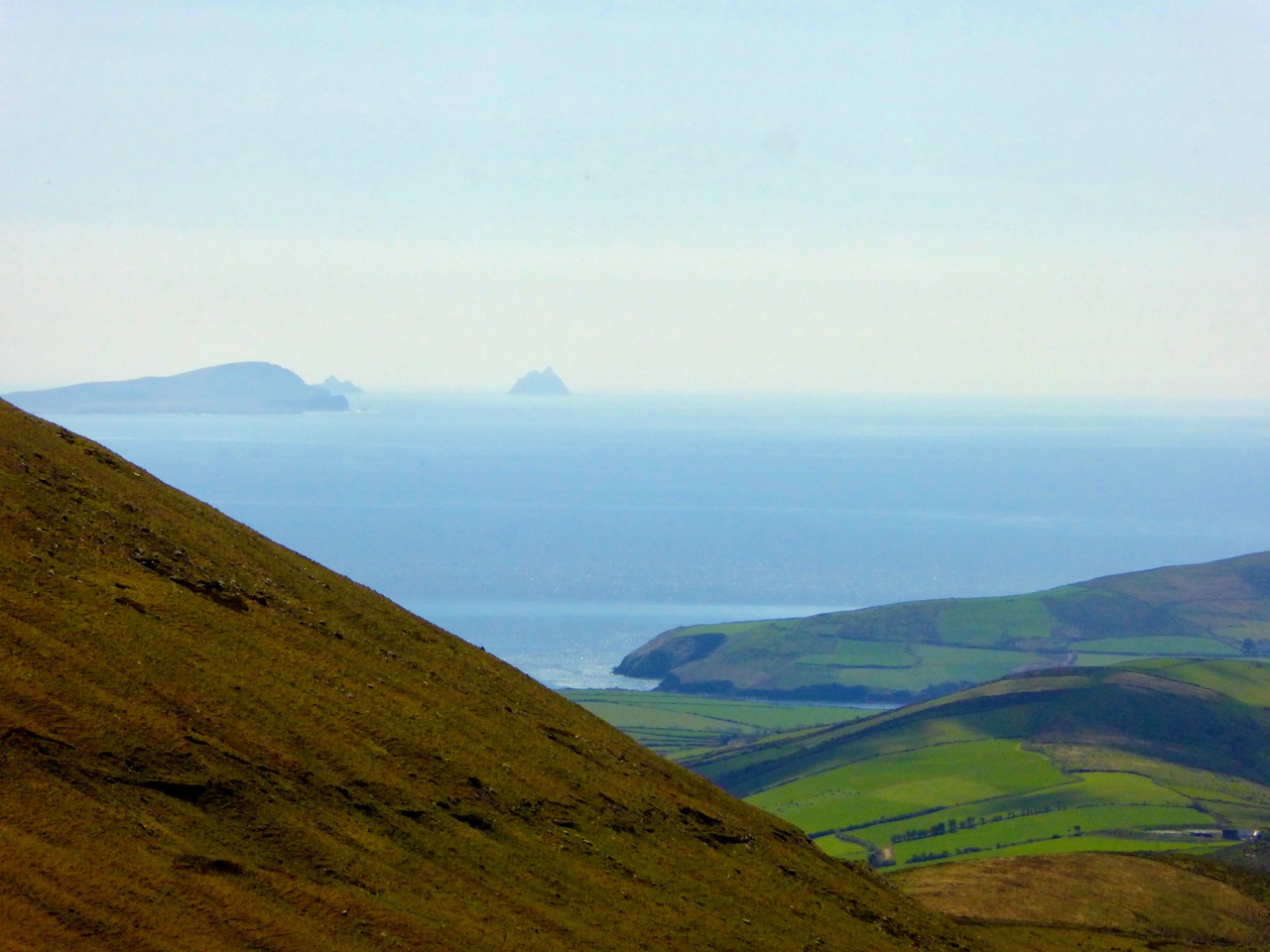
The Blasket Islands lie off the cost of Kerry, near the Dingle Peninsula. An Irish speaking enclave, it is now uninhabited

Winter was long on the Island, made gloomier by the fact that the sun, due to a combination of high ground and orientation, did not shine on their dwelling all winter.

The sun awoke us.

Like a fanfare

or a burst of wild laughter.

Playfully.

Unfamiliar.

Spilling in along the floor.

Splashing up the walls.

Streaming in through the ever-open door.

We didn’t – at first-  know what was happening,

Didn’t recognise the bright clamour of the sun.

Then we remembered the words

That you, druidlike, had spoken:

“The Sun will come back on St. Brigid’s Day.”

And a welling of Hope,

Pagan and Pure,

Came rising inside us,

Sitting in bed,

Brigid or Danú,

The Winter defeated:

“The Sun will come back on St. Brigid’s Day.”

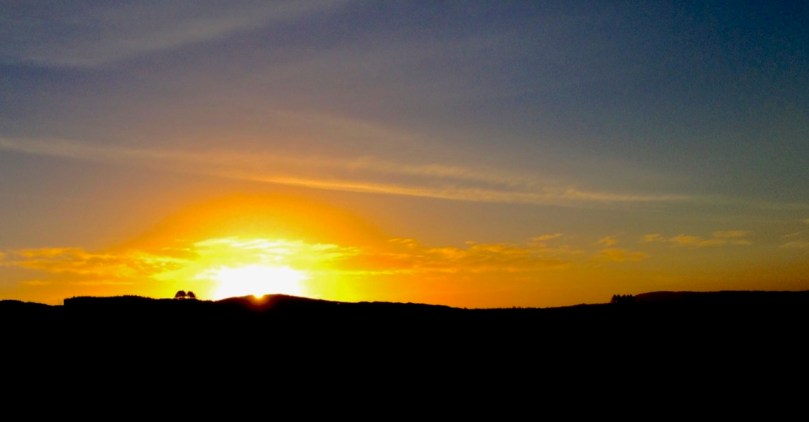
We’ve turned the corner and spring is finally in the air. Today was golden and we spent it on The Mizen (see below). Thank you Brigid/Danu/Imbolc/ancient Calendar Keepers!

*If you’re ever in Kerry, make sure to visit the Blasket Centre

Here Comes the Sun

2013-02-02 08.31.58

The sun rises across the valley from Ballybane West on Feb 2nd, 2013

Joint Post by Finola and Robert

In Finola’s solstice post, she wrote that archaeologists are aware of the astronomical siting of some Irish megalithic sites, such as at Newgrange, and Loughcrew.

Michael Wilson and his Whole Horizon Analytical Technique (WHAT)

Michael Wilson carries out his Whole Horizon Analytical Technique (WHAT)

We have become intrigued by the work of Michael Wilson, a talented amateur astronomer who is singlehandedly documenting the astronomical siting of many monuments in this area. Recently he has turned his attention to rock art. His website contains an astonishing body of work, meticulously researched and rigorously recorded, along with explanatory notes. His thesis, in a nutshell, is that the builders and carvers of Neolithic and Bronze Age times were keen observers of the day and night skies and were intimately familiar with their surroundings. They situated their megaliths and rock art in places where the contours of the horizon allowed them to mark significant solar and lunar events, such as solstices, equinoxes, lunar settings and risings, and intermediate points. Thus, the sun at the winter solstice might rise at the highest point on a nearby mountain, or set in a deep notch in the hills at the spring equinox. The solar calendar has four quarter days (the solstices and the equinoxes), four cross-quarter days (the half way points between the solstices and the equinoxes) and a further finer division into points half-way between the quarters and cross-quarters: an ancient 16 month calendar.

A few days ago, Michael posted this:

Imbolc, the spring cross-quarter, is almost upon us. It will be on Feb 1st by the Gregorian calendar, where it is commonly known as St Bridget’s Day or Candlemas, but this is not the correct day. By day-count, the times to celebrate will be sunset on the 3rd and sunrise on the 4th. Astronomically, the sun will be exactly half-way between the winter solstice and the spring equinox at about 16:13 GMT on Feb 3rd, while Feb 2nd is the day to see the sun rise and set at the prehistoric positions for marking this festival.

We set out for our favourite rock art site, Ballybane West, before dawn on Feb 2nd, feeling incredibly lucky to have a clear sky. As the sky brightened, and the nearby hills started to receive the sun’s rays, the carvings on the rock surface became clearly visible. Then, the sun rose, exactly where Michael’s predictions said it would, at the highest point of a rounded hill on the horizon. As people had been doing 4000 years ago in this exact spot, we marked the cross-quarter day of Imbolc – a time when the land starts to warm up, the first spring flowers appear, and the ewes are visibly pregnant.

The carvings light up in the dawn rays

The Ballybane West carvings light up in the dawn rays

If Michael is correct, we have to think in a whole new way about the rock art. Although there have been indications before that the location of the carved rocks was of some significance (for example: there is often a view of water; some theorists have posited that they are ancient boundary markers), this way of looking at rock art elevates the actual siting of the rock as most important, and allows us to view the carvings themselves as a way to indicate the purpose of the site – a means to an end rather than an end in itself. The motifs, though, will probably remain as enigmatic as ever.