‘Harry Clarke’ Nativities – NOT by Harry Clarke

It’s become a bit of a tradition with us here at Roaringwater Journal to do a post like this in the lead up to Christmas. See this post, and this one, or maybe this one. All busy stained glass studios were requested to supply Nativity windows – a favourite of Catholic Churches throughout Ireland. Harry himself made several Nativities, but this post deals with windows made in his style, but not by him. All of them were made in his father’s business, Joshua Clarke and Sons, or in The Harry Clarke Studios, as it was renamed in 1930. Sometimes windows are just signed Clarke, or Clarke and Sons. If you’re looking at these images and saying to yourself, Surely these are Harry Clarkes! I recommend reading some of my previous posts for the difference between a Harry Clarke and a Harry Clarke Studio window. Perhaps begin with The House Style: William Dowling and the Harry Clarke Studios.
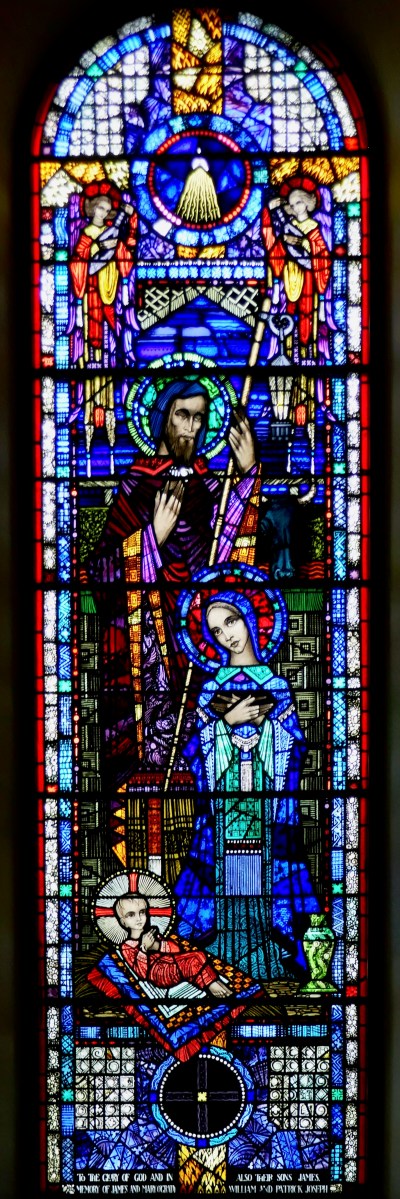
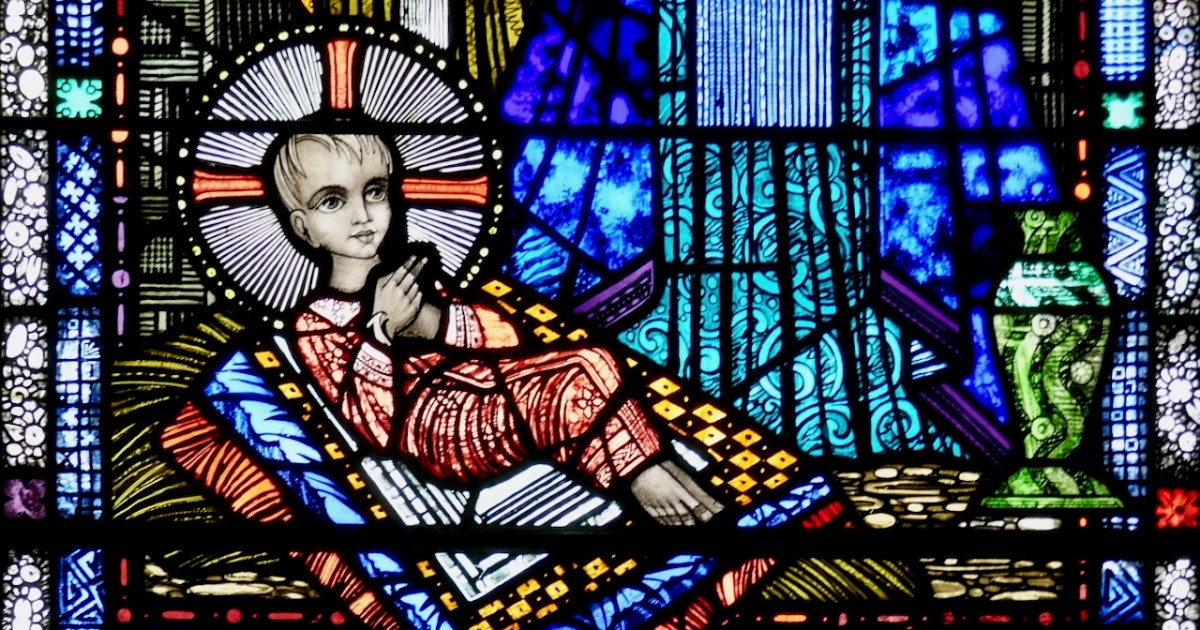
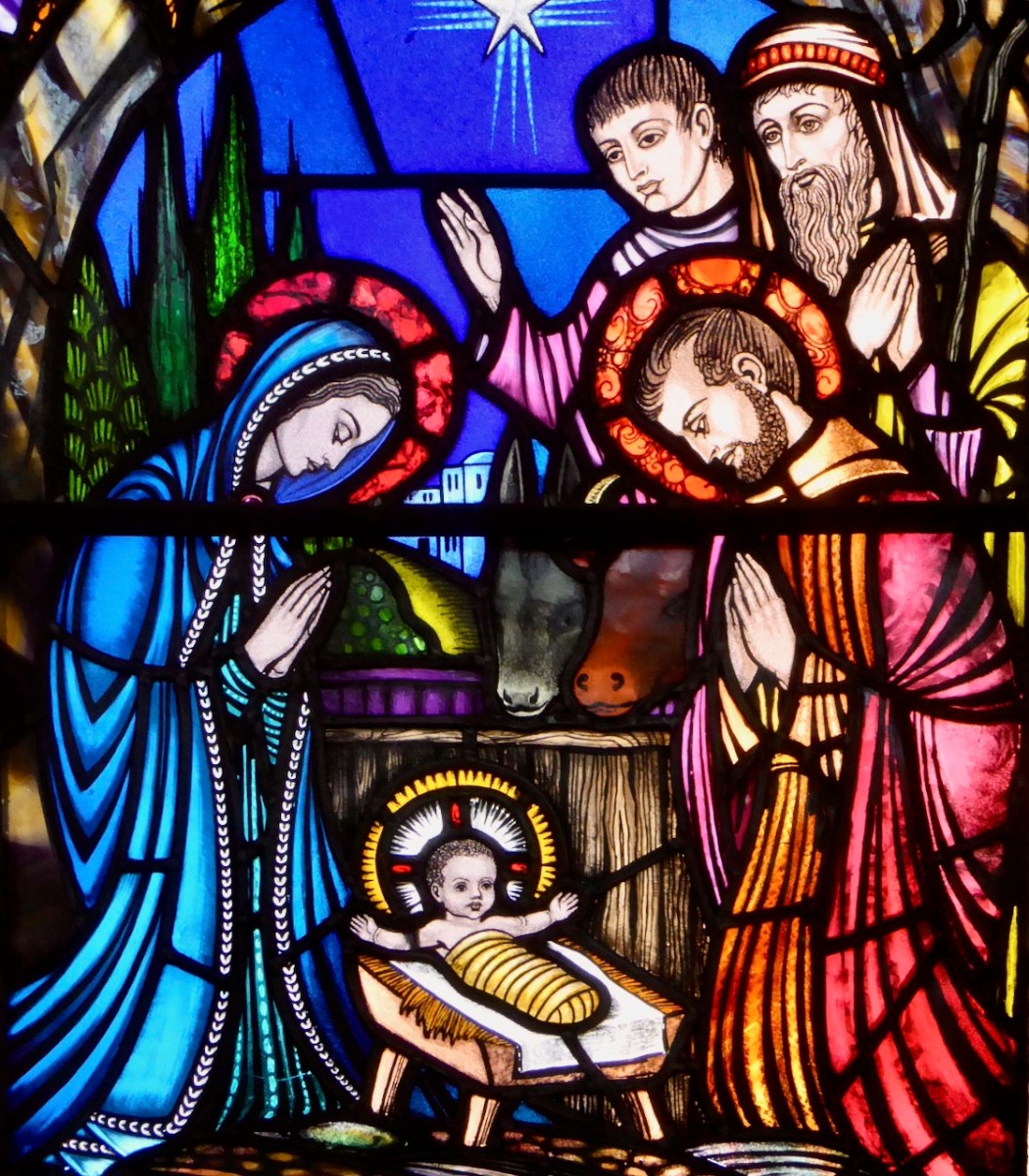
These first two images are from a remote church in Wicklow, in the townland of Killamoat, near Rathdangan. They were done in the Harry Clarke Studios, after Harry died in 1931, and are attributed to George Stephen Walsh, who had started as an apprentice with Harry several years before he died. I particularly love all the details surrounding the Baby Jesus – the blankets upon which he lies and that strange green urn.
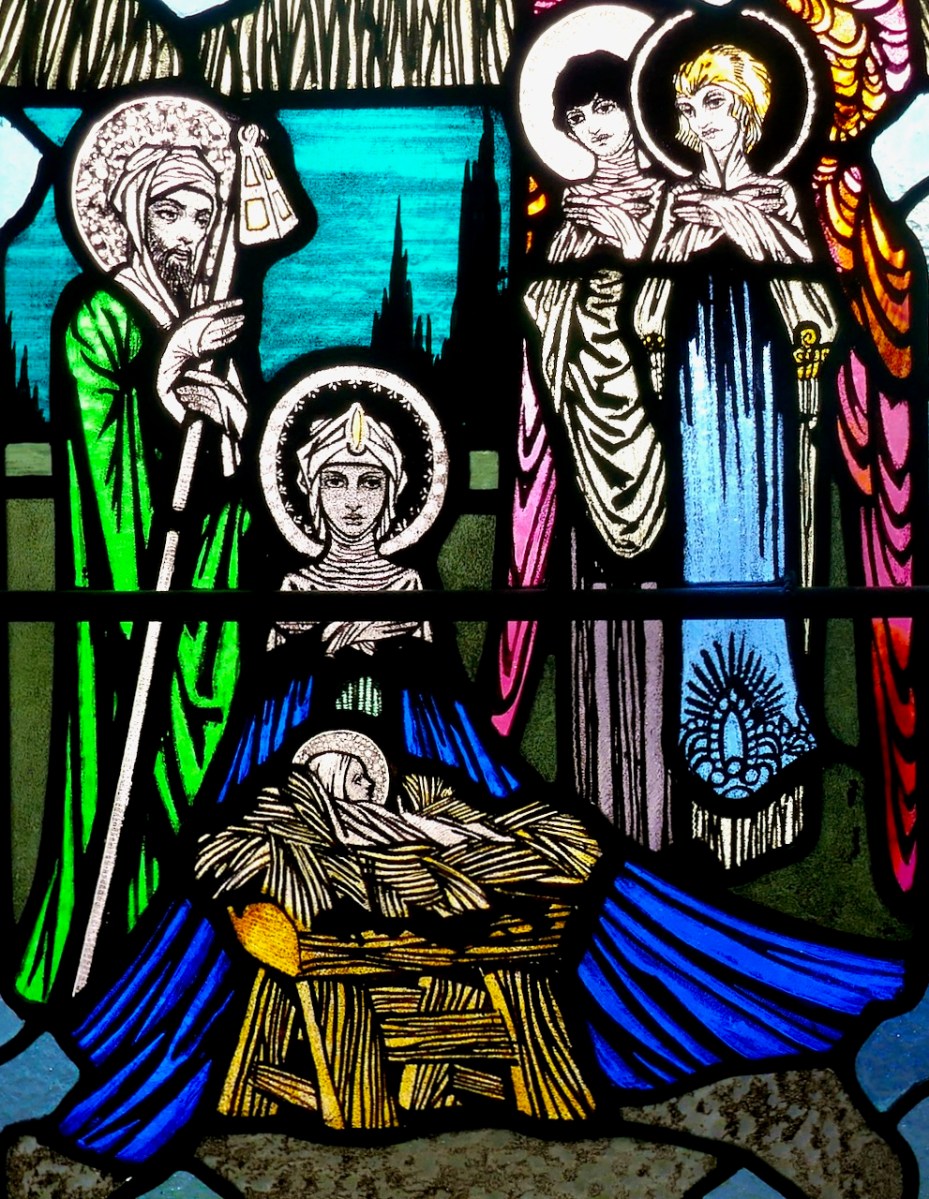
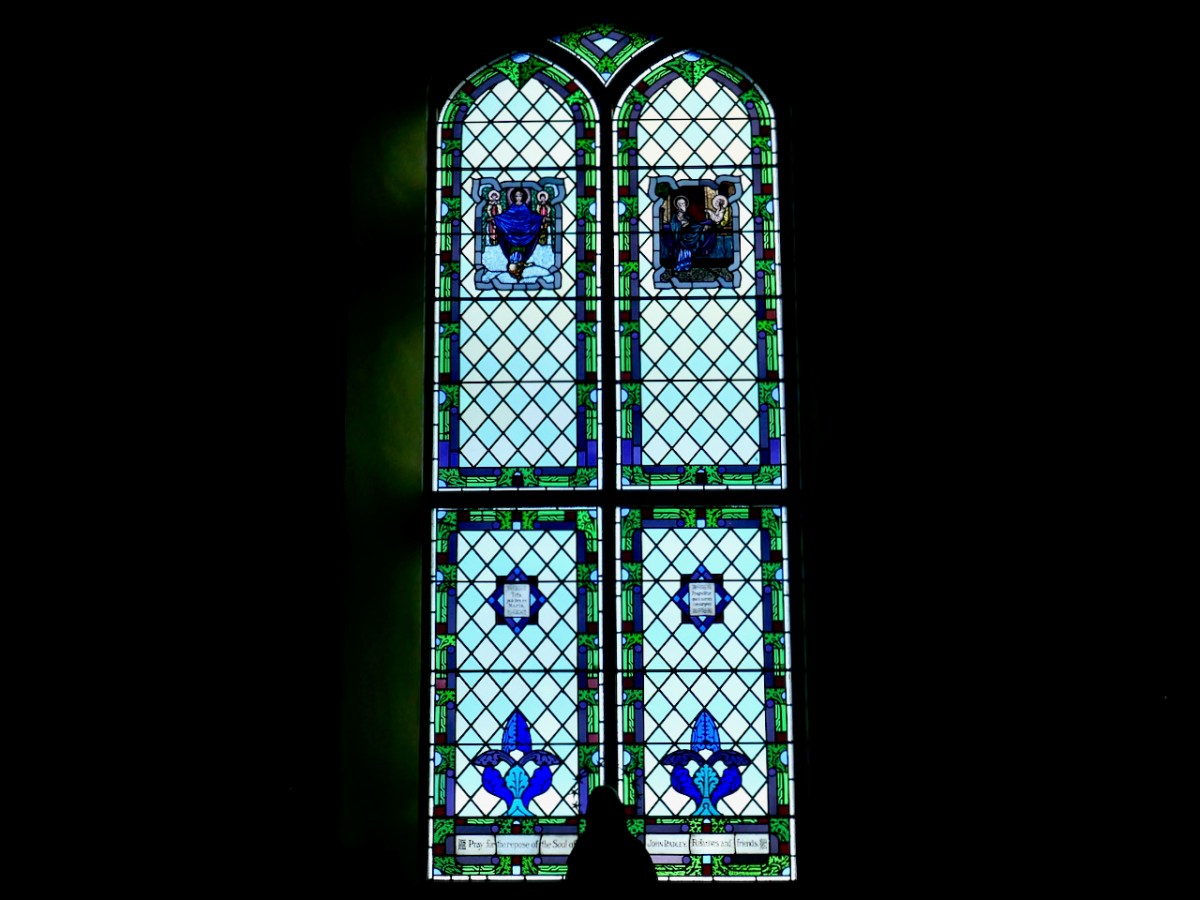
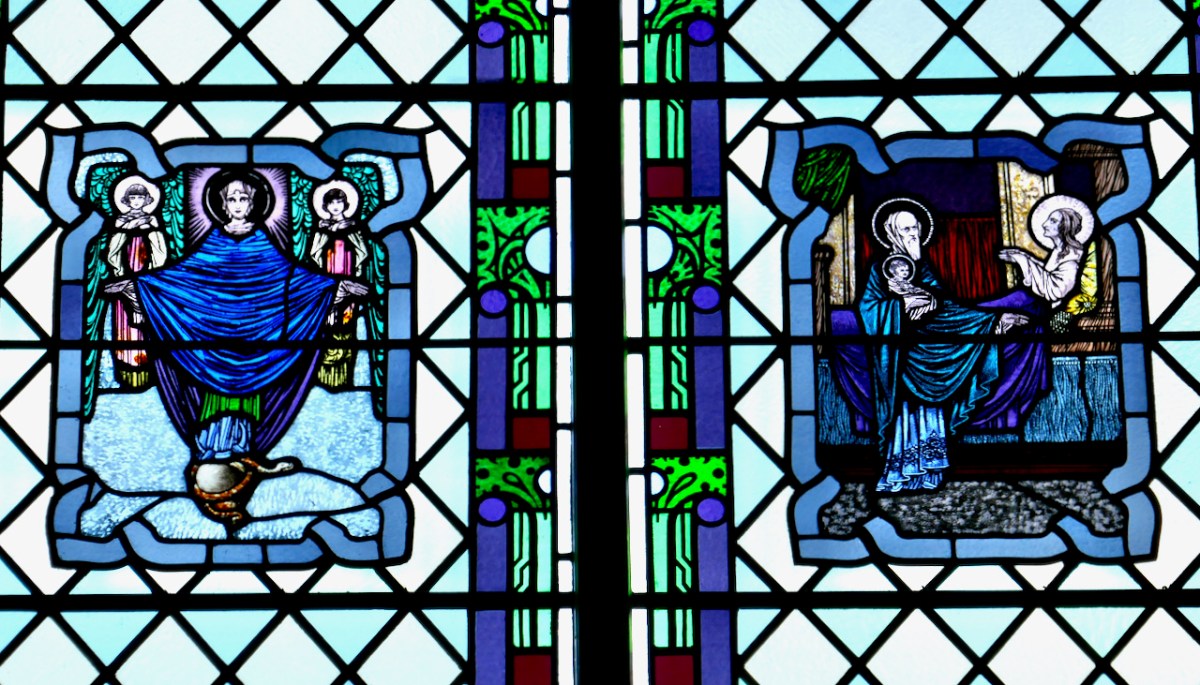
This is from a series of small windows in Leixlip – I made a slide show of those windows, which you can watch here, in a post titled Clarke-Style Windows. They were made in 1925, in the Joshua Clarke Studios, in which Harry served his own apprenticeship and which retained its name until it became the Harry Clarke Studios in 1930, shortly before Harry died. In 1925 Harry was an established artist and had taken on several apprentices to help out in the busy studio – one of them made these windows and we don’t know which, although it could have been Philip Deegan. Deegan had taken Harry’s courses at the Dublin Metropolitan School of Art, and was accomplished at reproducing his style.
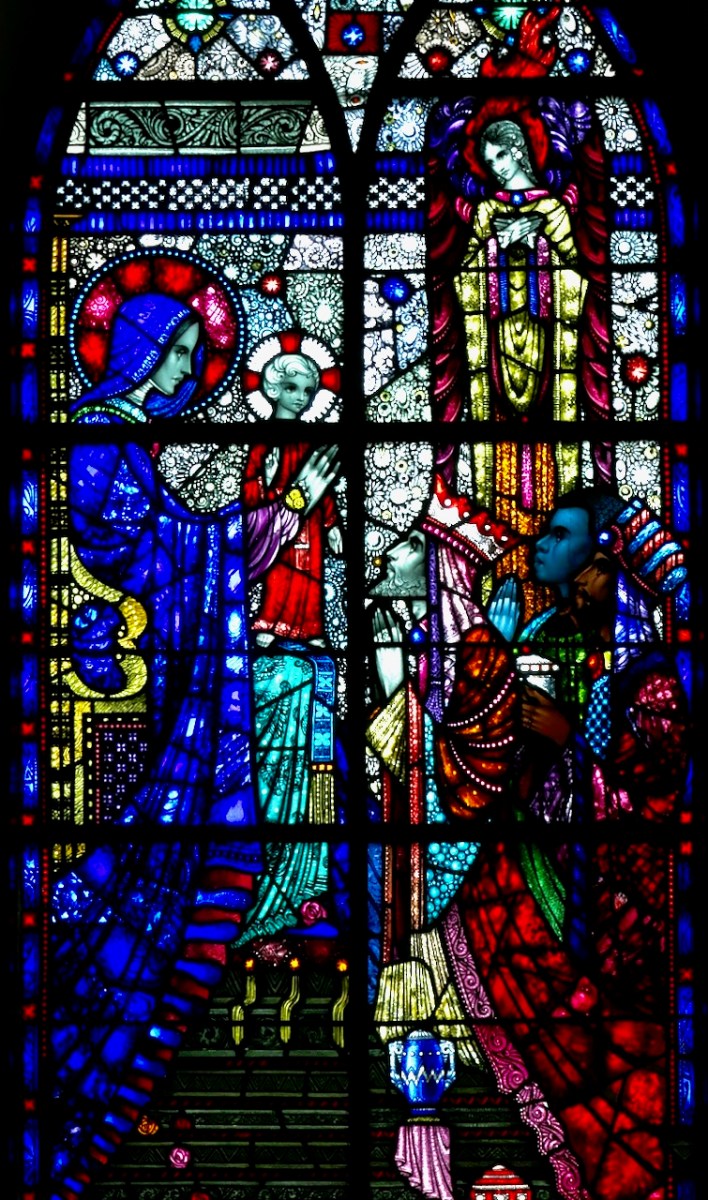
William Dowling* was one of Harry’s most accomplished artists and the one who stayed on in the studio the longest, up to the 1970s. In the years after Harry died he and Richard King produced beautiful windows in the Clarke tradition, using very good glass and carrying on the ‘house style’ of dense, jewel-like surfaces, packed with ornamental detail. Above is one of his windows from Knockainey, Co Limerick, dating from 1940 .
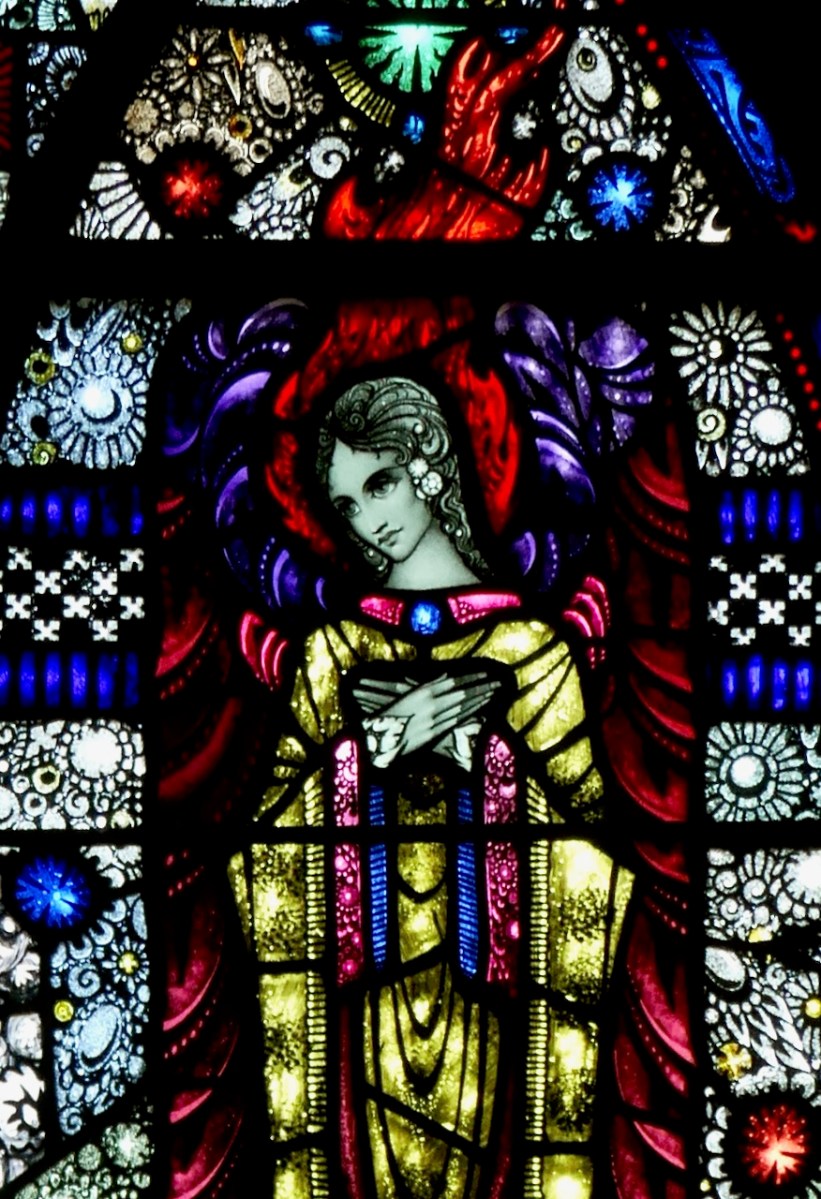
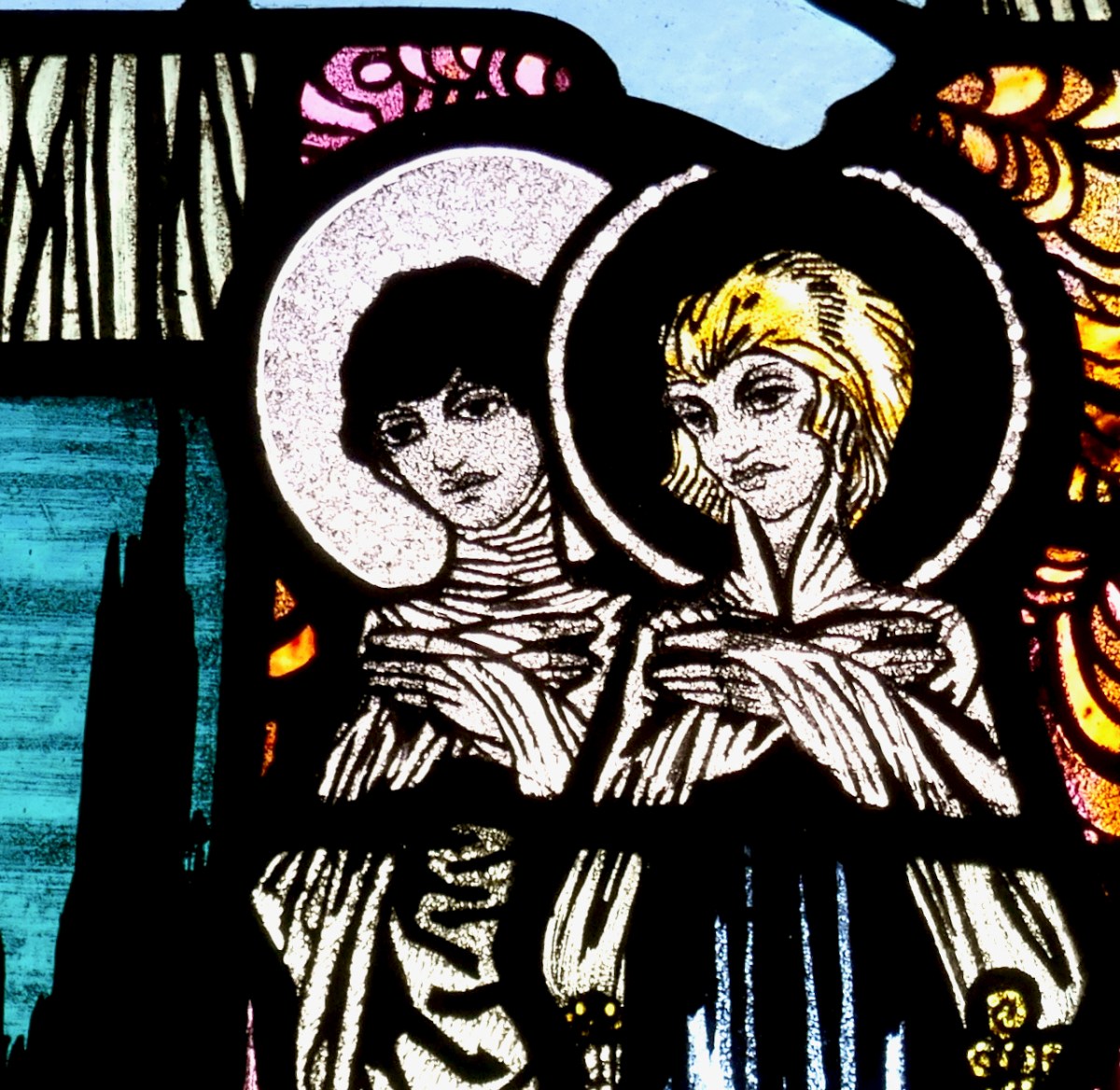
This is the angel from that window – I was struck by the fiery aureole that burns behind his head, instead of the usual halo.
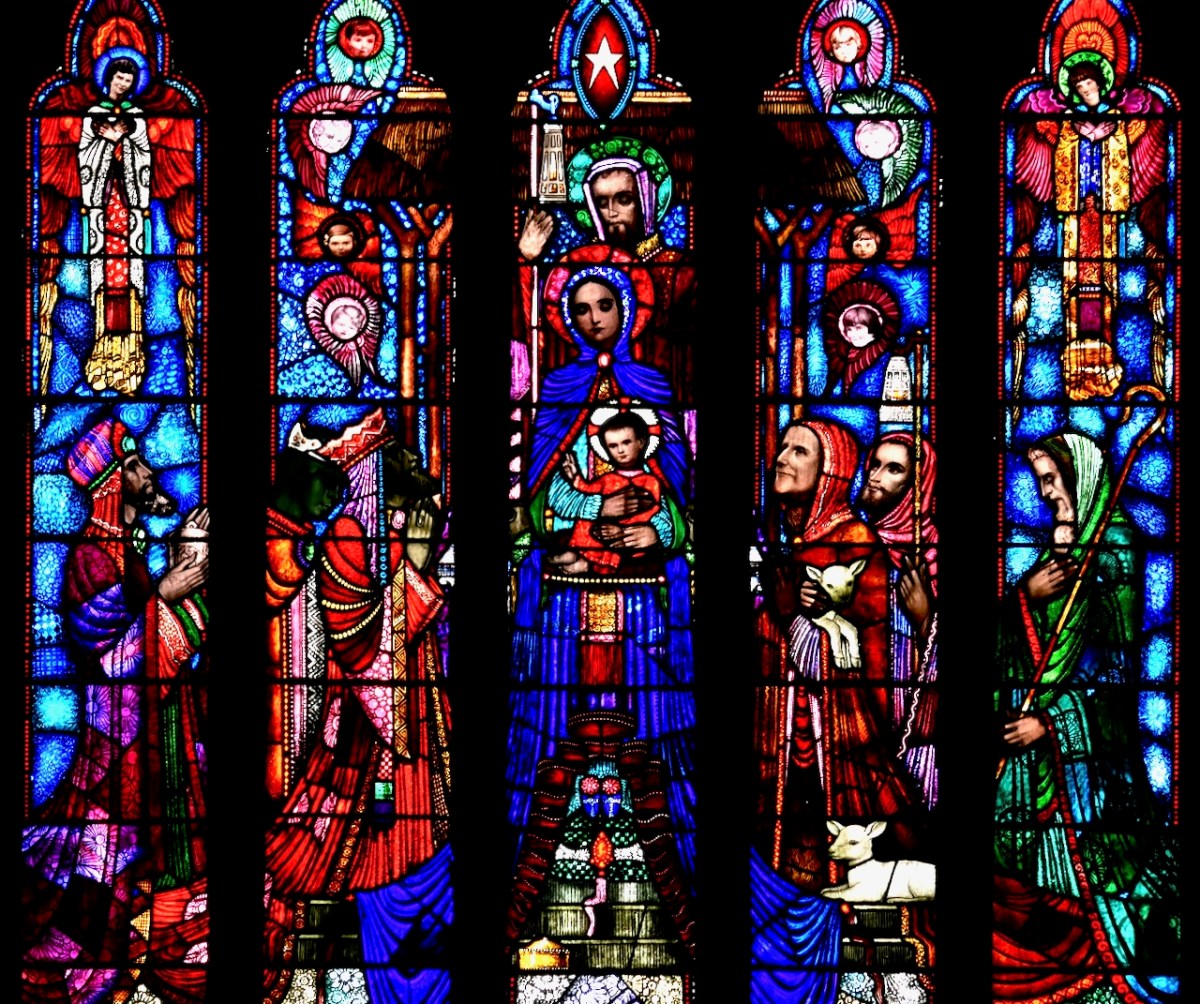
This one is also by Dowling, but from somewhat later, in 1948, and it’s in the Catholic Church in Bandon. You can see how Dowling’s style has evolved – it’s not quite as dense. The composition is still beautiful and local lore has it that many of the young relatives of the priest who commissioned the window are immortalised in some of the faces. Can anyone in Bandon tell us more?
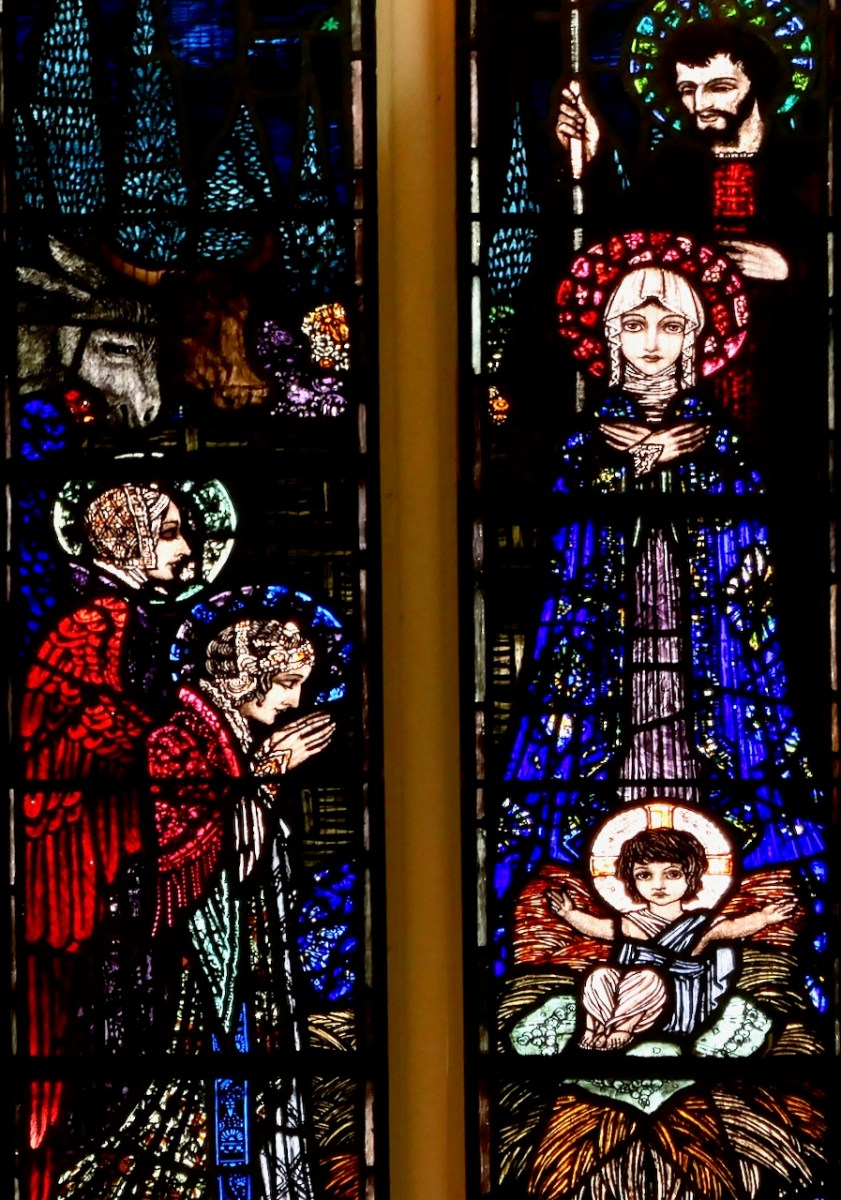
Another from the Studios after Harry Died – this one is in the Catholic Church in Wicklow town and we don’t know to whom it should be attributed.
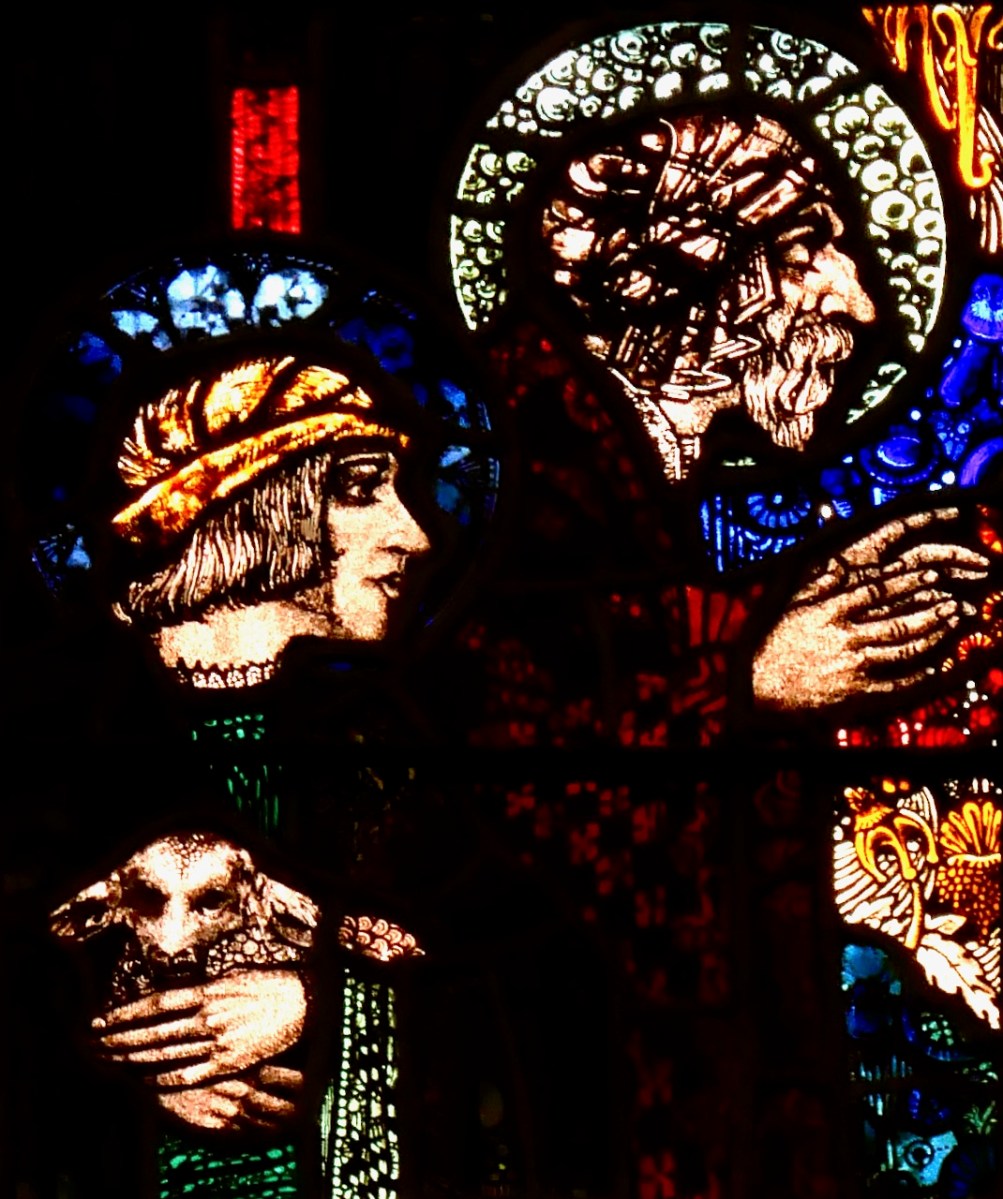
I picked out two of the shepherds to highlight as they had such interesting faces. I also loved the fact that the lamb appears to have a little triangular lacy cap.
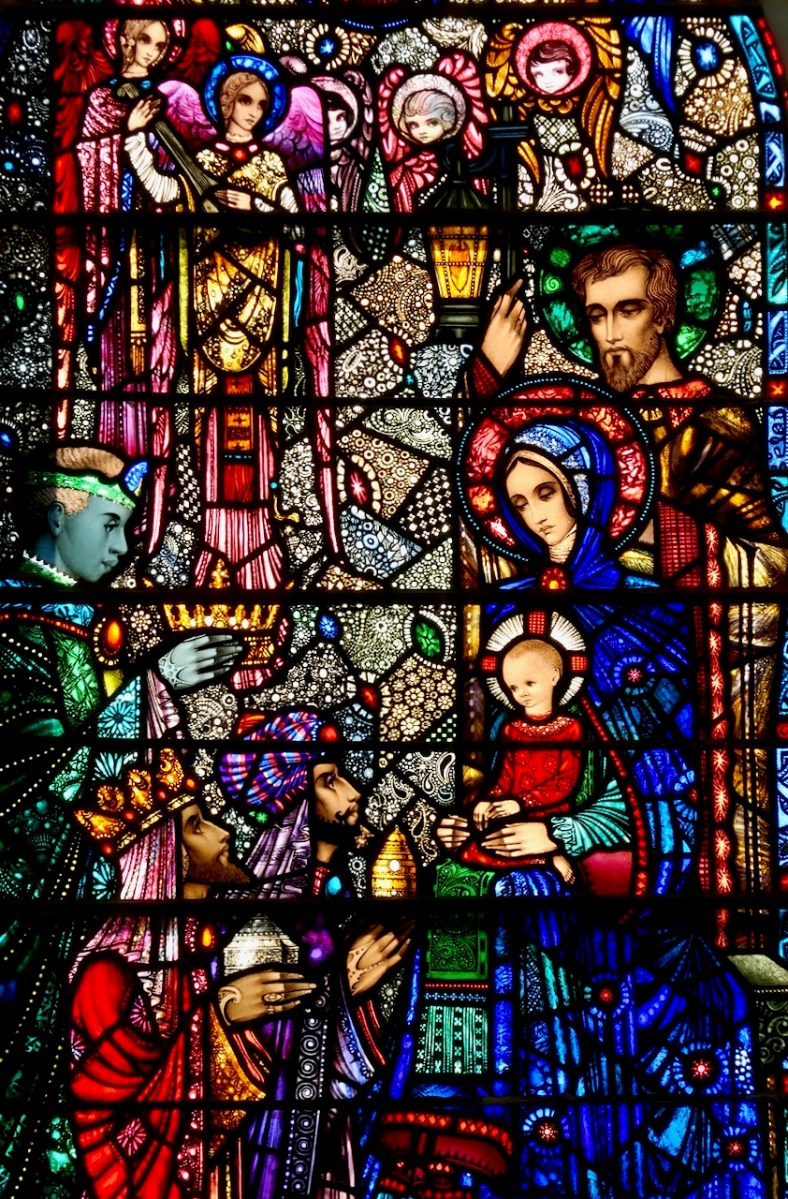
This window is from Millstreet, Co Cork and is another of Dowling’s wonderful productions, dating from 1940. Below is the predella (lowermost panel) from this window.
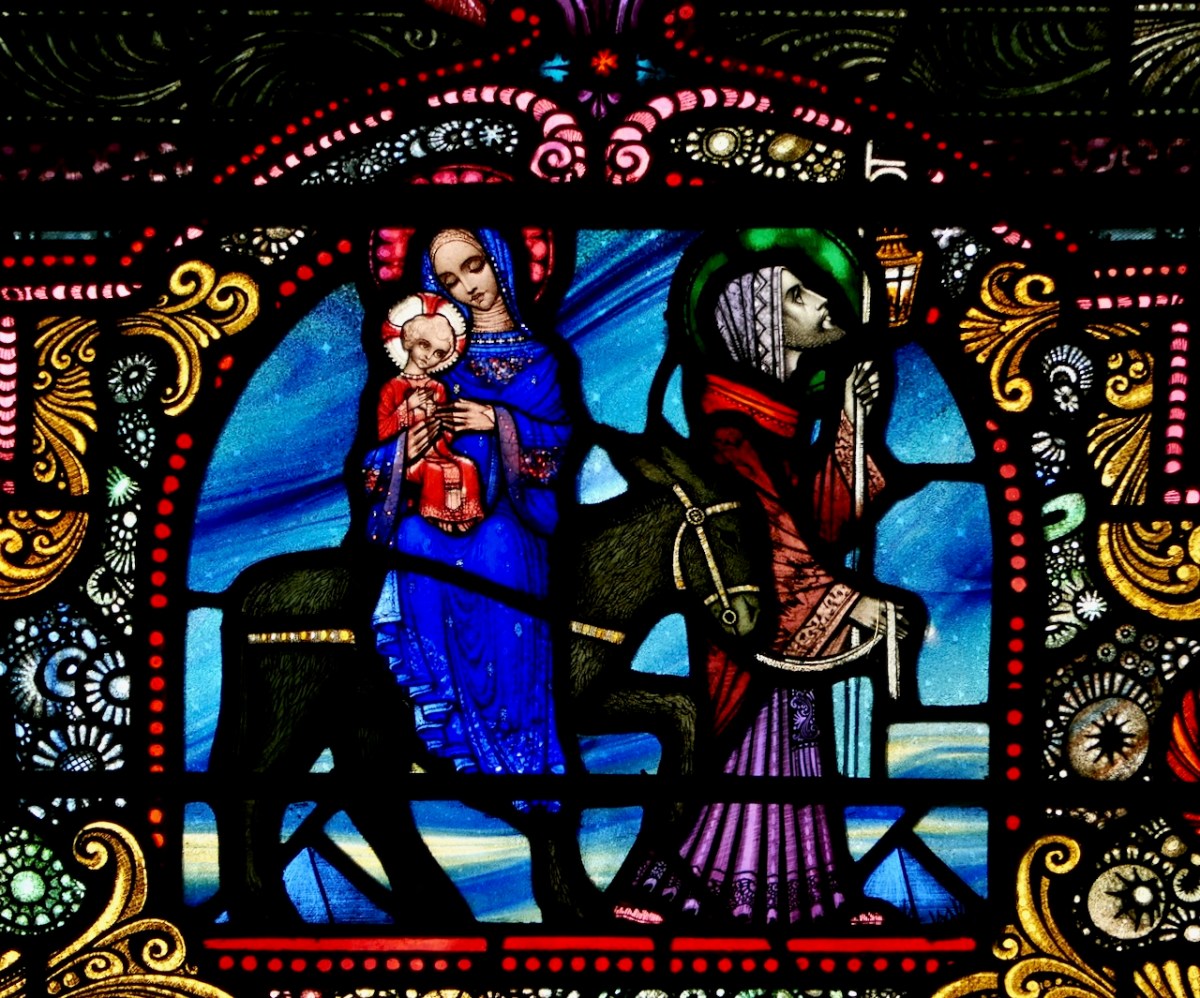
I suppose we’d have to say that overall there is a bit of a sameness to these Nativity windows and that’s down to the overarching influence of Harry’s very particular style. Eventually, this style fell out of fashion – a victim of its own success, or a failure to change with the times. While it lasted, though, it was superb. Eventually, due to falling demand and the price of good glass, the windows coming from the Harry Clarke Studios failed to keep up the high standards established by him and kept up by Dowling and King as long as they could. Here’s an example from around 1950 so you can see what I mean.
* For more on William Dowling, see Paul Donnelly’s excellent essay Legacy and Identity: Harry Clarke, William Dowling and the Harry Clarke Studios (in Harry Clarke and Artistic Visions of the New Irish State). Paul’s research has greatly informed all my work on William Dowling and other aspects of the Harry Clarke Studios.

Clarke-style Windows

“In no time there was a large studio successfully producing Clarke-style windows to his designs or under his supervision.”

This post and this slide show is about a set of windows in a church in Leixlip, Co Kildare. The music is How Can I Keep from Singing by Enya ©, used with permission. I am hoping she will like me using her transcendent sound for this purpose. (You may need to click on Watch on YouTube for the full screen version.)

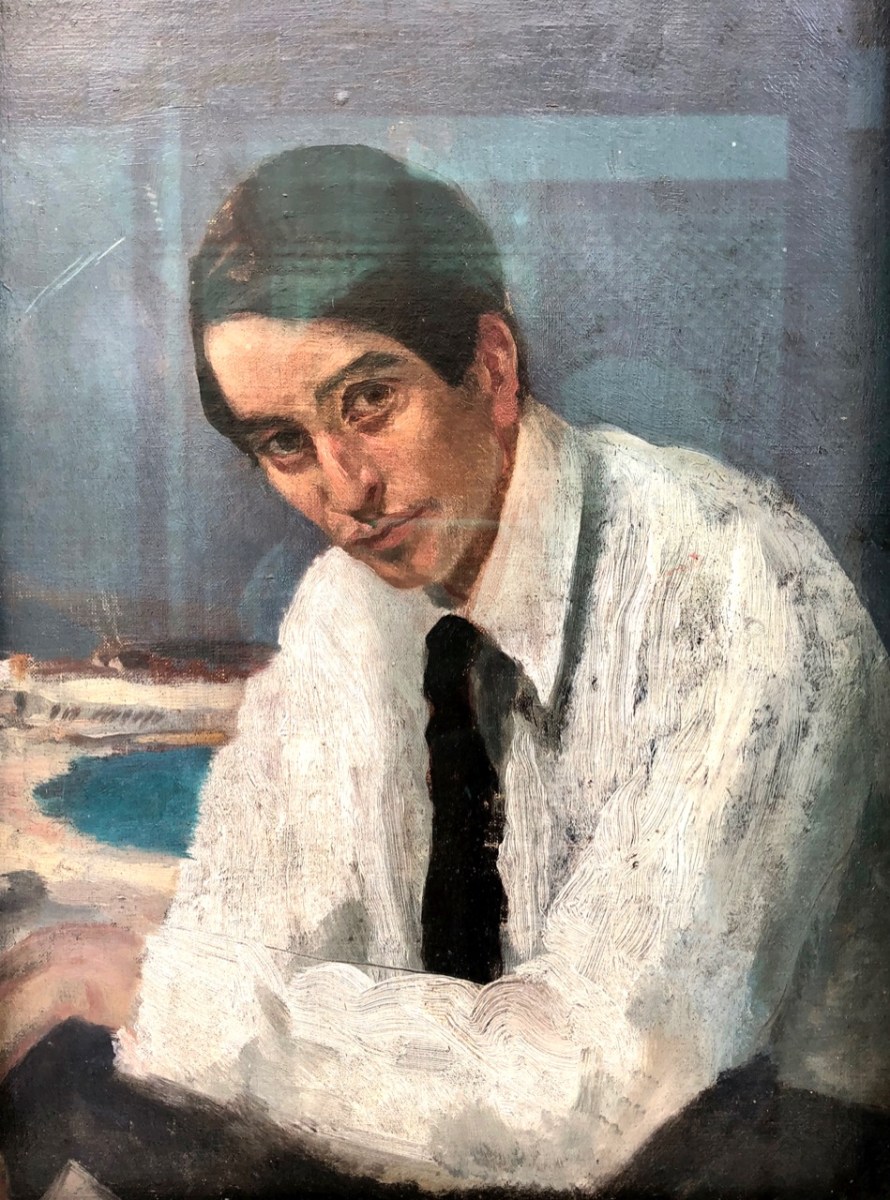
The Leixlip stained glass perfectly illustrates what a Clarke-style window is all about. The quote in the first paragraph is from Nicola Gordon Bowe’s Introduction to the Gazetteer of Irish Stained Glass. The foremost scholar on all matters relating to Harry Clarke (above, in a portrait by his wife, Margaret Clarke) and stained glass of the Irish Arts and Crafts era, she has researched his output exhaustively, and helped us to understand that he ran a busy studio with over 30 employees and was by no means able to design or paint all the windows himself. 

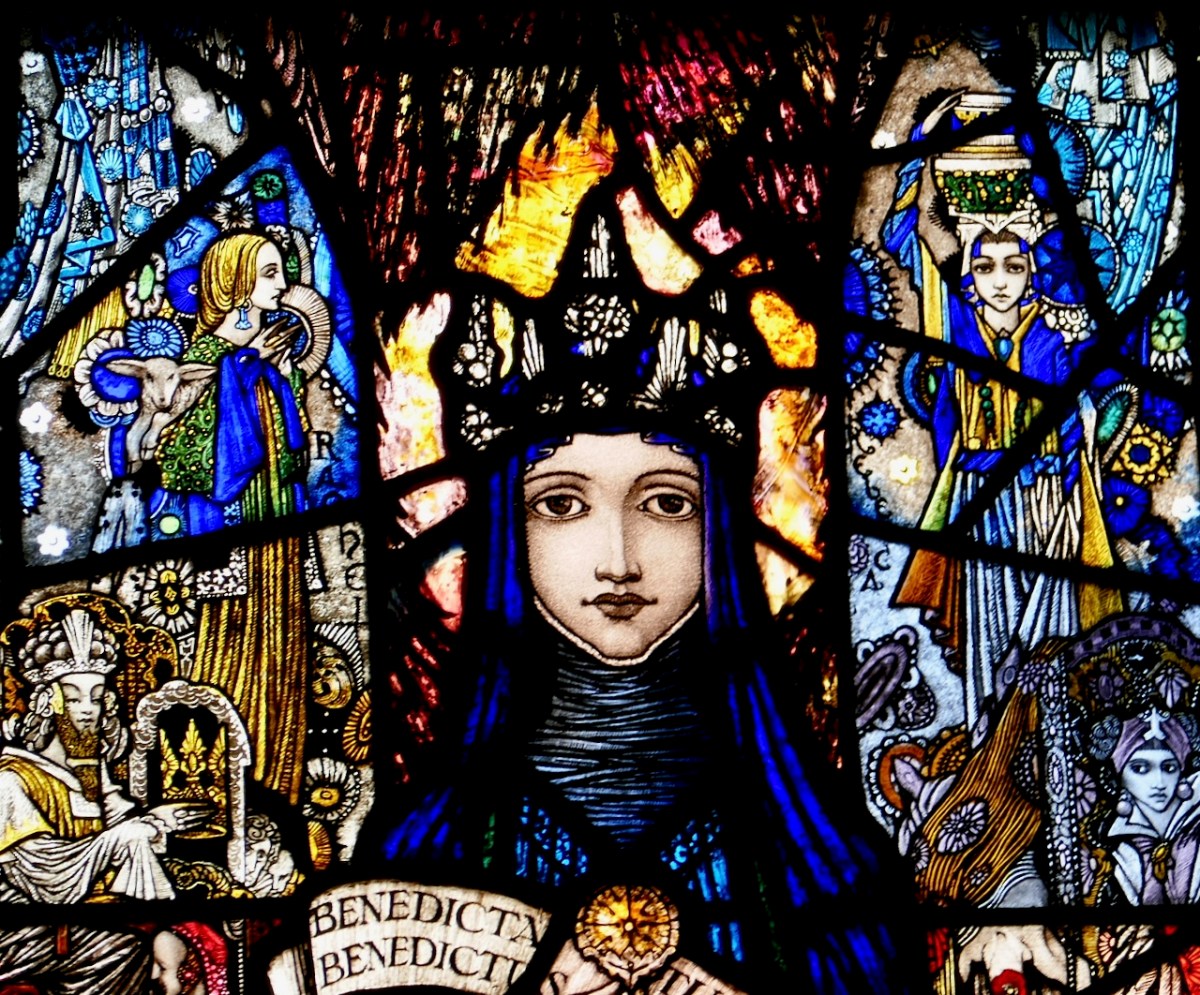
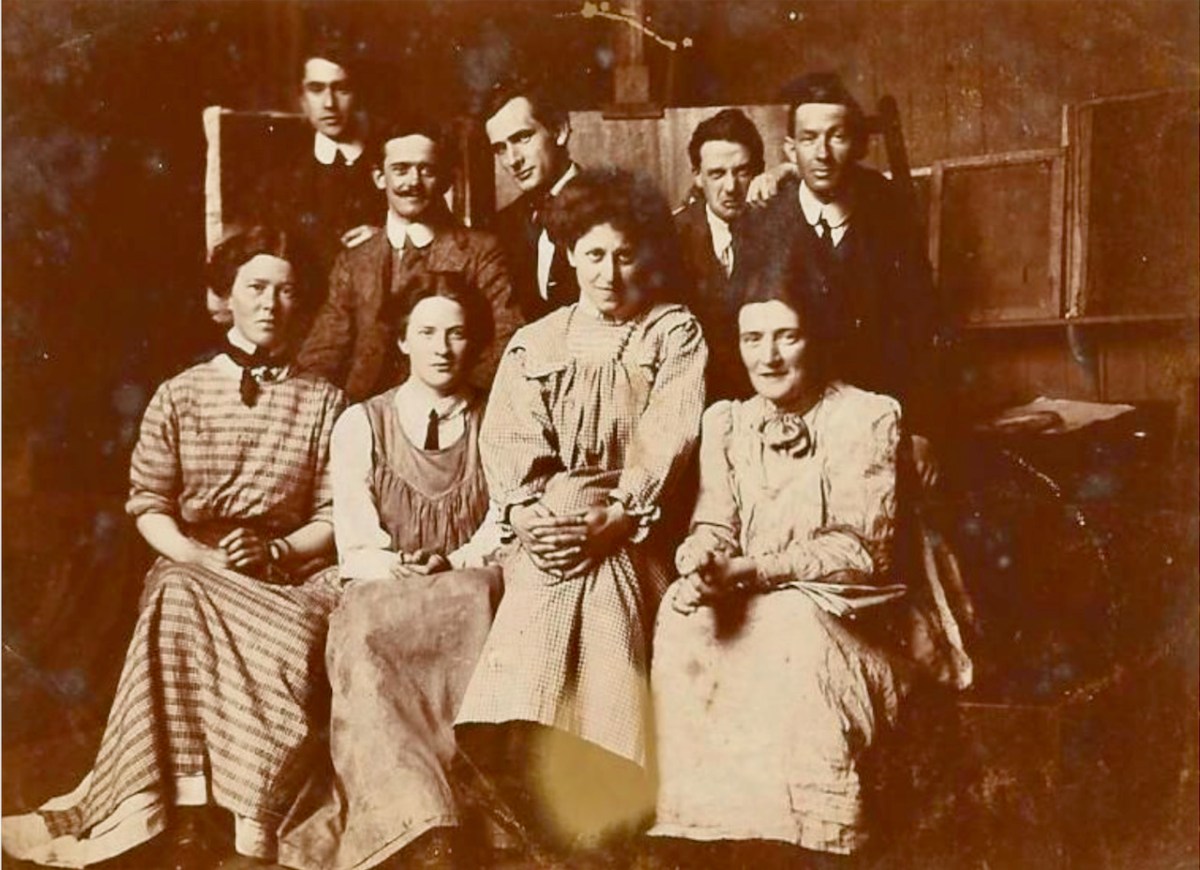
Of course he did many windows – about 150 in all – but if they were his windows, he signed them and they were expensive. Above is a detail from his Terenure masterpiece, The Virgin in Glory, to give you an idea of the difference between the real thing and a Clarke-style window. In addition to that, after his father died in 1921, he and his brother Walter ran the business – Joshua Clarke and Sons (it wasn’t called The Harry Clarke Studios until 1930) – with Walter looking after the business end and Harry in charge of the artistic output. Harry produced his own windows on the side, as it were, paying for materials and glazing time, but charging differently. To fulfil the demand for stained glass windows from around the country (and indeed from the USA, Australia, Britain, and other countries) Harry gathered around him a group of talented artists and trained some of them to reproduce his style. Some of the artists he found himself – they were either fellow students/friends at the Dublin Metropolitan School of Art (like Austin Molloy, or the group below showing Harry top left) or had arrived through recommendations (Philip Deegan from Worthing), or, like Millicent Girling, had taken one of Harry’s own classes. He taught design at the DMSA for a couple of years in the early 1920s and according to Nano Reid, one of his students, all the students were under his spell and there was a wave of Harry Clarke Style illustrations.*

However they got there, in the mid-1920s Kathleen Quigly and Leo Cartwright had joined the other accomplished artists working under Harry’s supervision. While not all the windows the Joshua Clarke studios produced in this period were ‘in the Clarke style,’ many were, and there was huge pressure to produce a Harry Clarke window although not always the budget to go with the aspiration. 

The windows in Our Lady’s Nativity Church in Leixlip, Co Kildare, fall into this category. They were installed in 1925 by Joshua Clarke and Sons and consist mainly of clear and light green quarries, with decorative borders. Each two-light window has a fleur-de-lis design in blue and a Latin inscription at the bottom, while the top panels feature two small scenes from the lives of Mary and Christ. The glass is of the inexpensive kind and the repetitiveness of the decoration meant that most of the windows could be assembled by apprentices or glaziers, while one of the studio artists produced the small scenes.

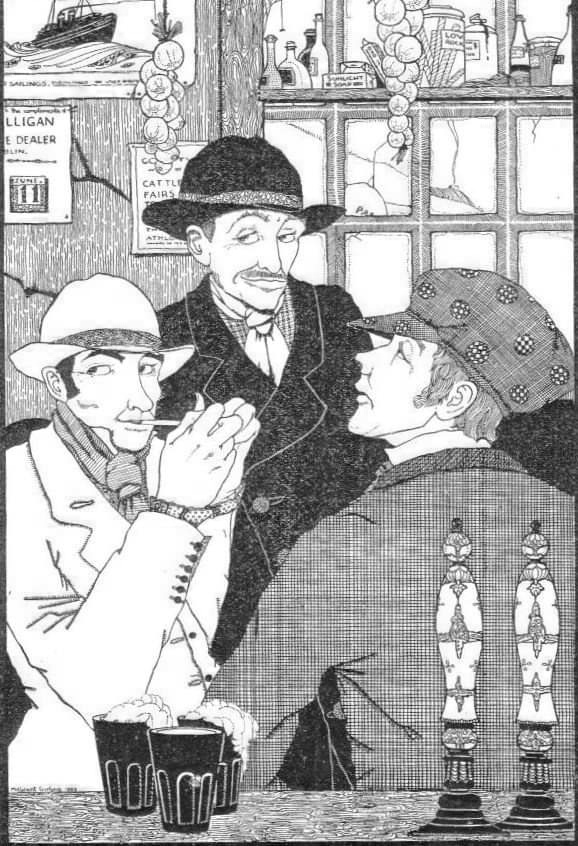
Who did them? On balance, my guess would be Philip Deegan. He seems to have been the go-to artist for Clarke-style windows. Kathleen Quiqly was also there at the time, but she was mainly assisting Harry with his own windows. Deegan was very capable of designing a near-Harry, as some of the drawings attributed to him in the TCD Clarke Archive attest. Take a look at his sketches for windows here, here and here, for example (sorry, not allowed to reproduce the images online). Not only was he working at the studios, he also signed up for Harry’s design classes and provided illustrations for the Dublin Magazine. I’ve only managed to find one of these (thank you, the amazing Patrick Hawe!) but the facial expressions remind me forcibly of the scourger in the Scourging of Christ window. 

However, that’s speculation on my part and it could have been one of the other artists, or even more than one artist. The small scenes are lacking in Harry’s signature complexity and deeply emotive expression, but taken as a whole they make a charming sequence and deserve to be more visible than they are. 

For much more on Harry Clarke and on stained glass, go to our Stained Glass Navigation Page.

*Quoted in The Metropolitan School of Art, 1900-1923: (Part 2) by John Turpin. Dublin Historical Review, Vol 38, No 2, Mar 1985