It’s been an eclectic week – Amanda, Peter and I had a skite out to Inchydoney, and I finished off the week with a trip to Barley Cove.
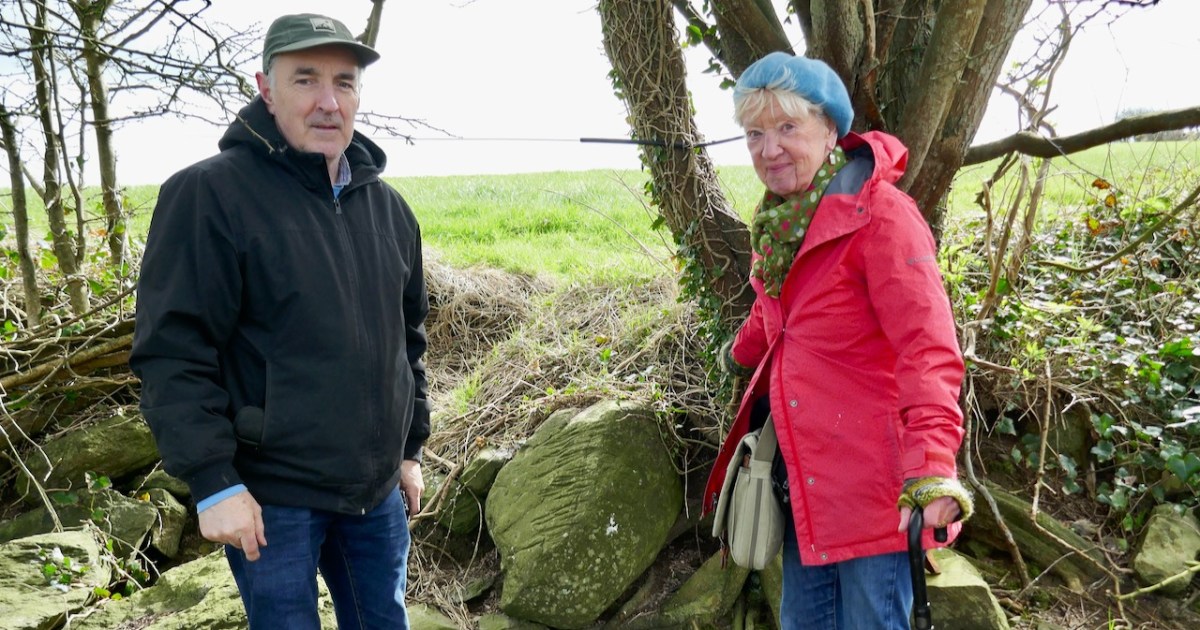
Inchydoney Island is a beautiful, unique and historical part of West Cork. Just south of Clonakilty, it was indeed once an island but now is connected to the mainland with causeways. The reason for our trip was to check out an intriguing stone, spotted by Willie O’Regan, along the shore. Willie’s thought was that it might be an Ogham stone and he wanted to check that out. It had fallen forward out of the bank in recent high tides, revealing parallel grooves along its length – just the sort of thing you might expect from an Ogham stone.
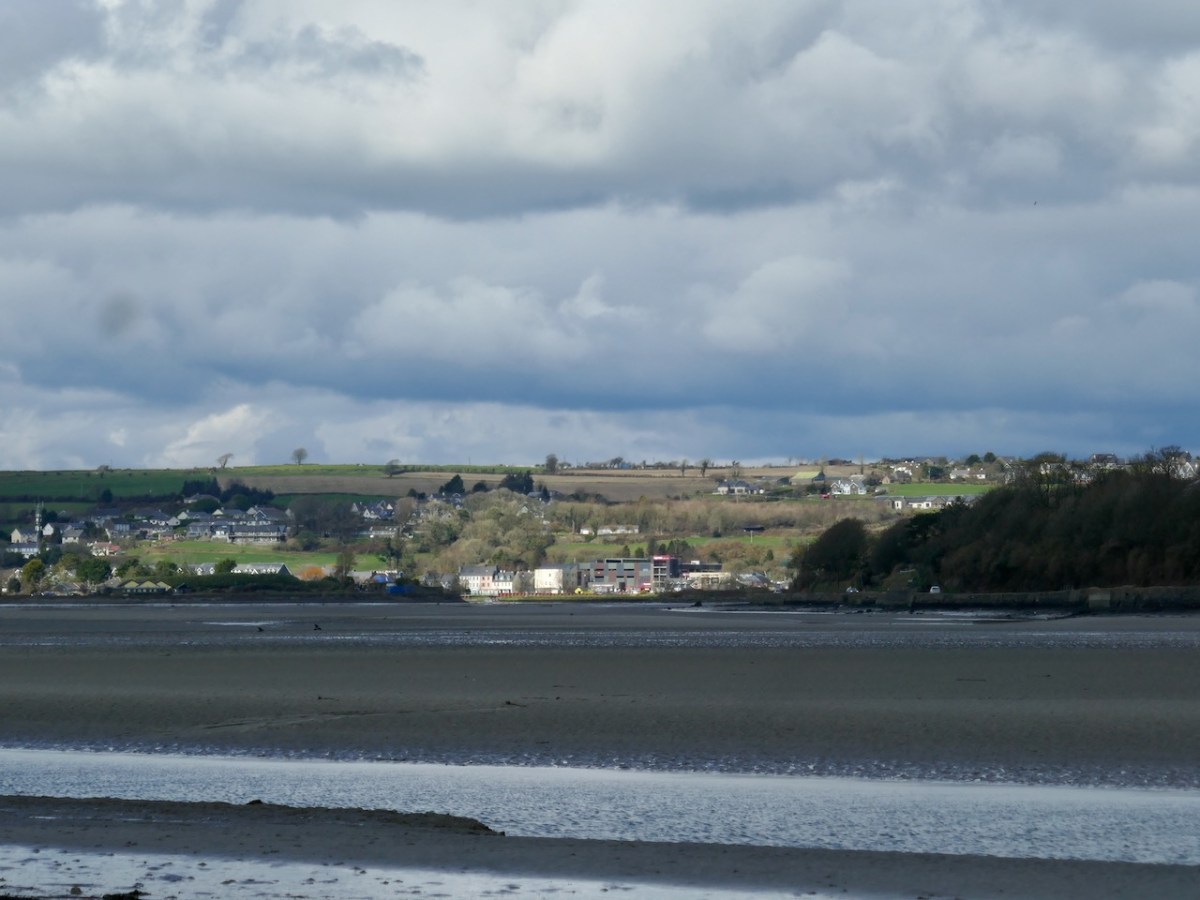
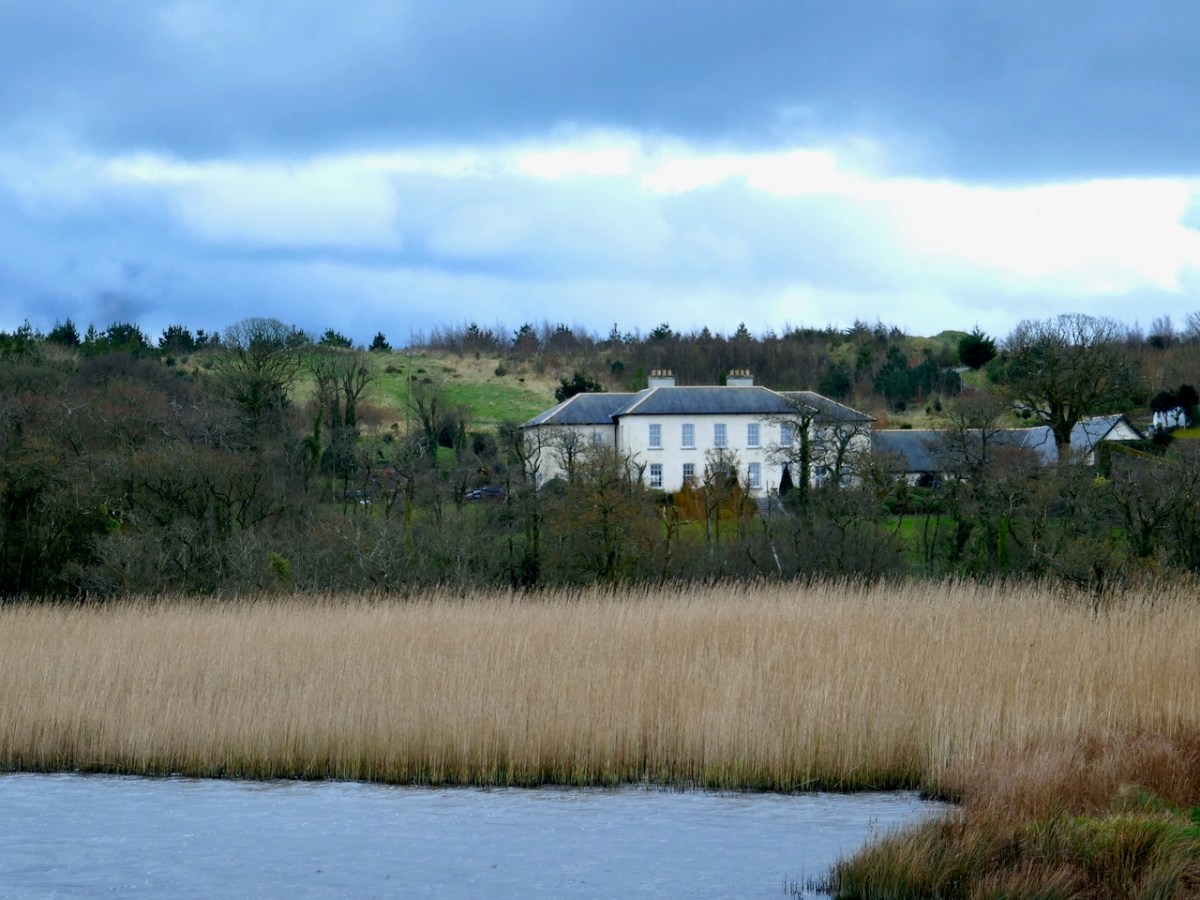
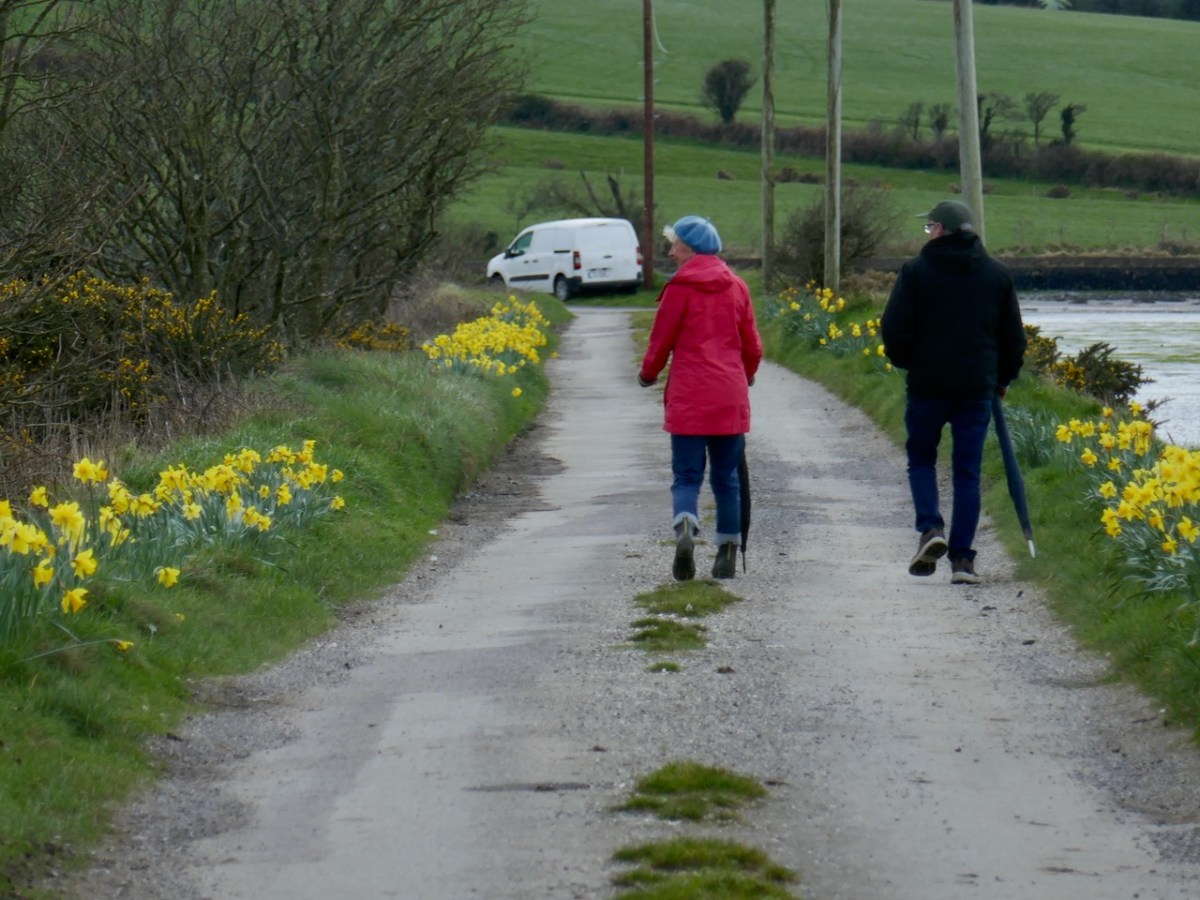
We rendezvoused with Willie on the north side of Inchydoney, across from Clonakilty (above) and walked along the shore, while he told us about the history of the area. We could see across the pond known locally as the Beamish Lake to the Hungerford House, originally called Inchydoney House. It has been purchased and magnificently restored in recent years, the owners pouring resources and loving attention into their project, including restoring the walled garden.
The shoreline had been – er – shored up by rocks and rubble all along its length. It may originally have been walled – designed landscapes were very popular in the 18th century – take a look at New Court, for example. There may also have been small inlets and launching places along the edge. At one such possible spot Willie showed us what he had found.
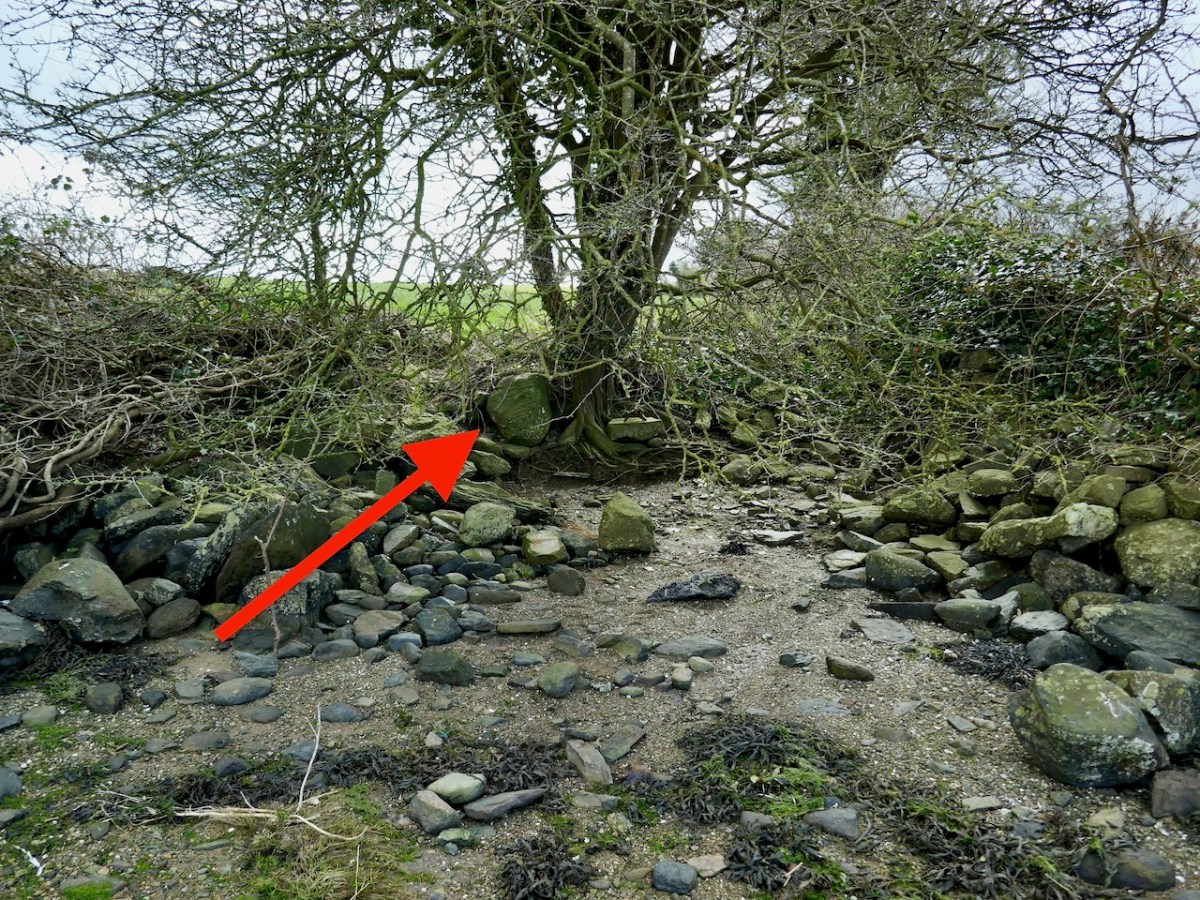
We examined it thoroughly and took lots of photos. It wasn’t an Ogham stone – although anyone could be forgiven for mistaking it for one! The grooves are actually plough marks.
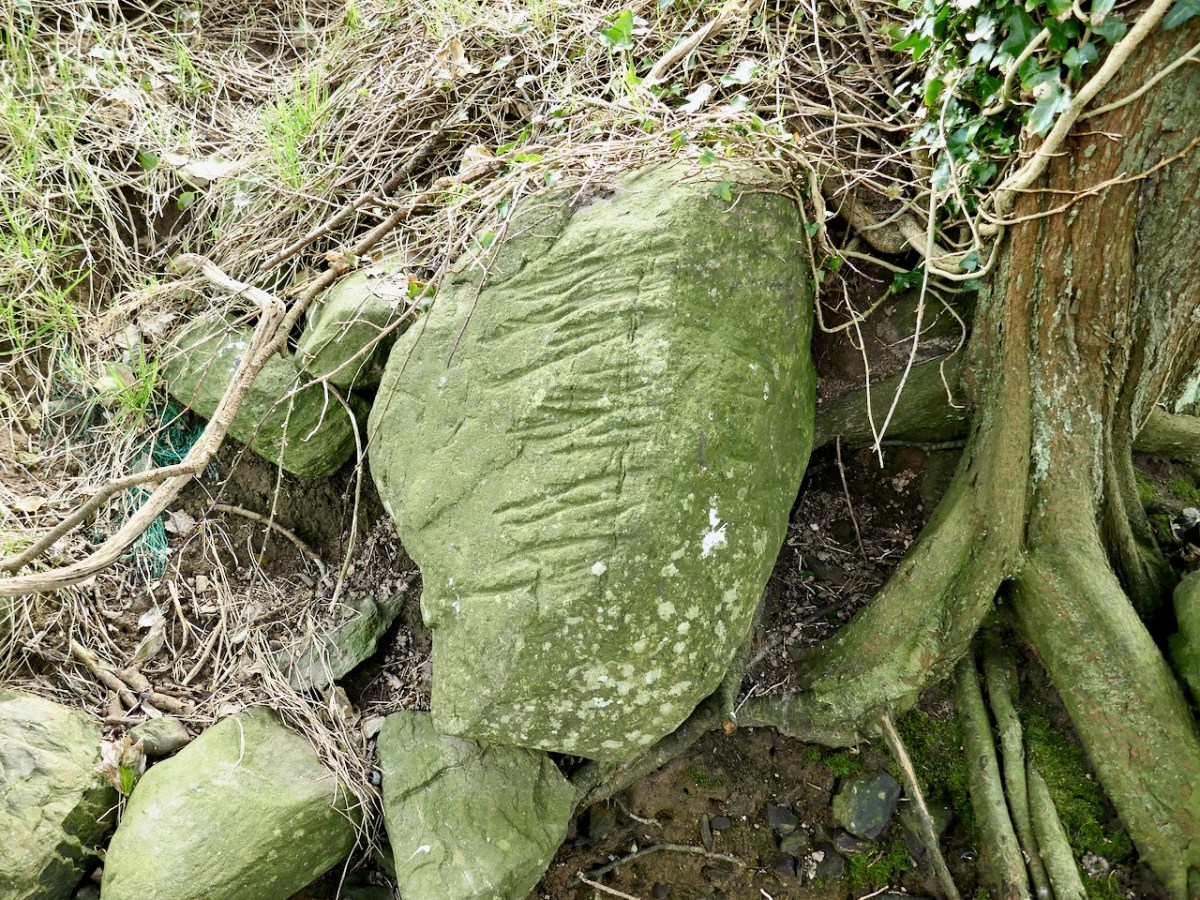
As the plough passes over and through the soil, it runs across stones that are just at the right depth below the surface, gouging out these grooves. Over the years, many grooves appear. Sometime the stones, if they are small enough, roll over and the grooves appear on other surfaces, as seems to be the case with this stone.
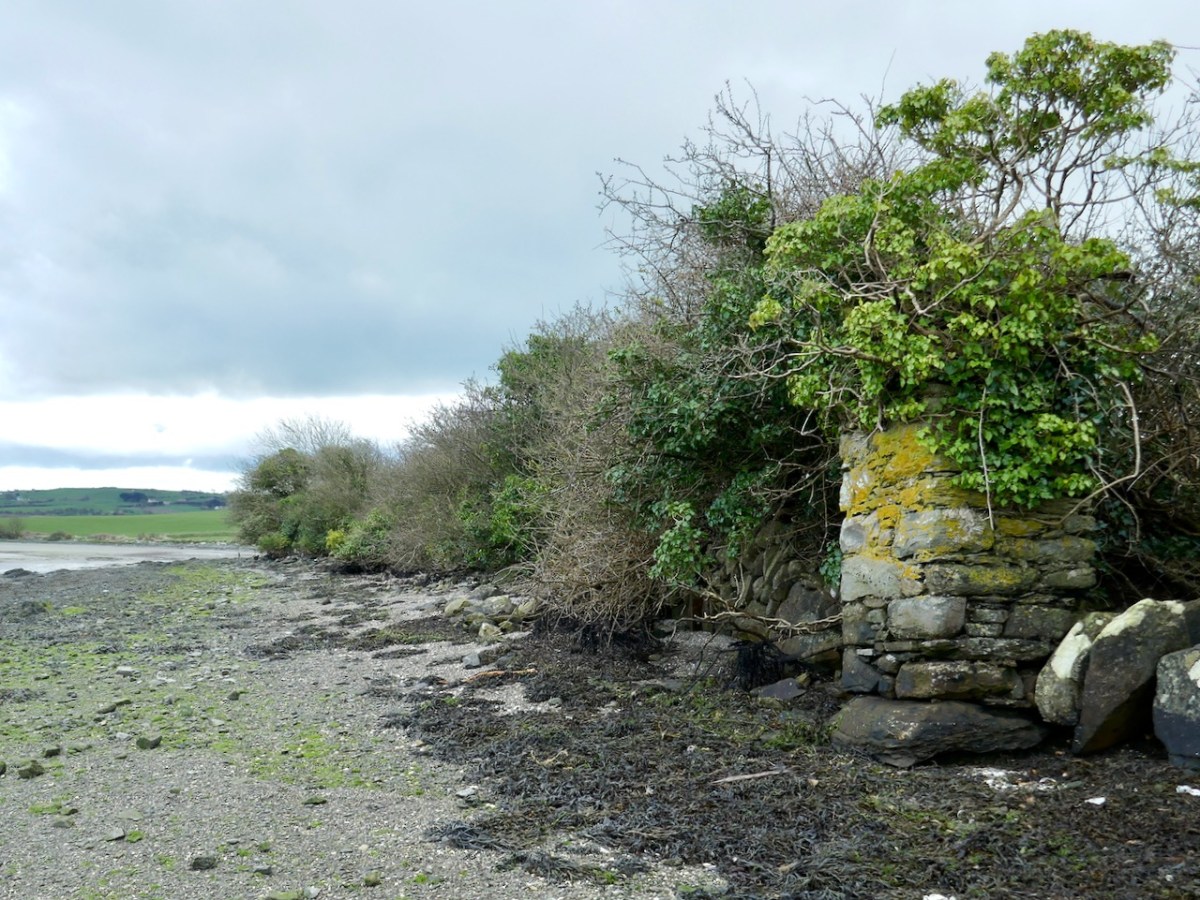
Plough-marked stones like this could be any age – this one could be medieval or more recent. It was probably finally unearthed and tossed to the edge of the field to join the other rocks keeping the water from eroding the shorelines, eventually falling forward and revealing itself to Willie’s keenly observing eyes. It tells a story – a story of cultivation and hard work and a story of never throwing anything away, and a story of a man who walks these shores for pure pleasure and never misses a trick. Thanks, Willie – we had such a good time on this walk!
And – to learn all you ever wanted to know about Inchydoney Island, read Robert’s epic post from 2021, Inchydoney – and Virgin Mary’s Bank.
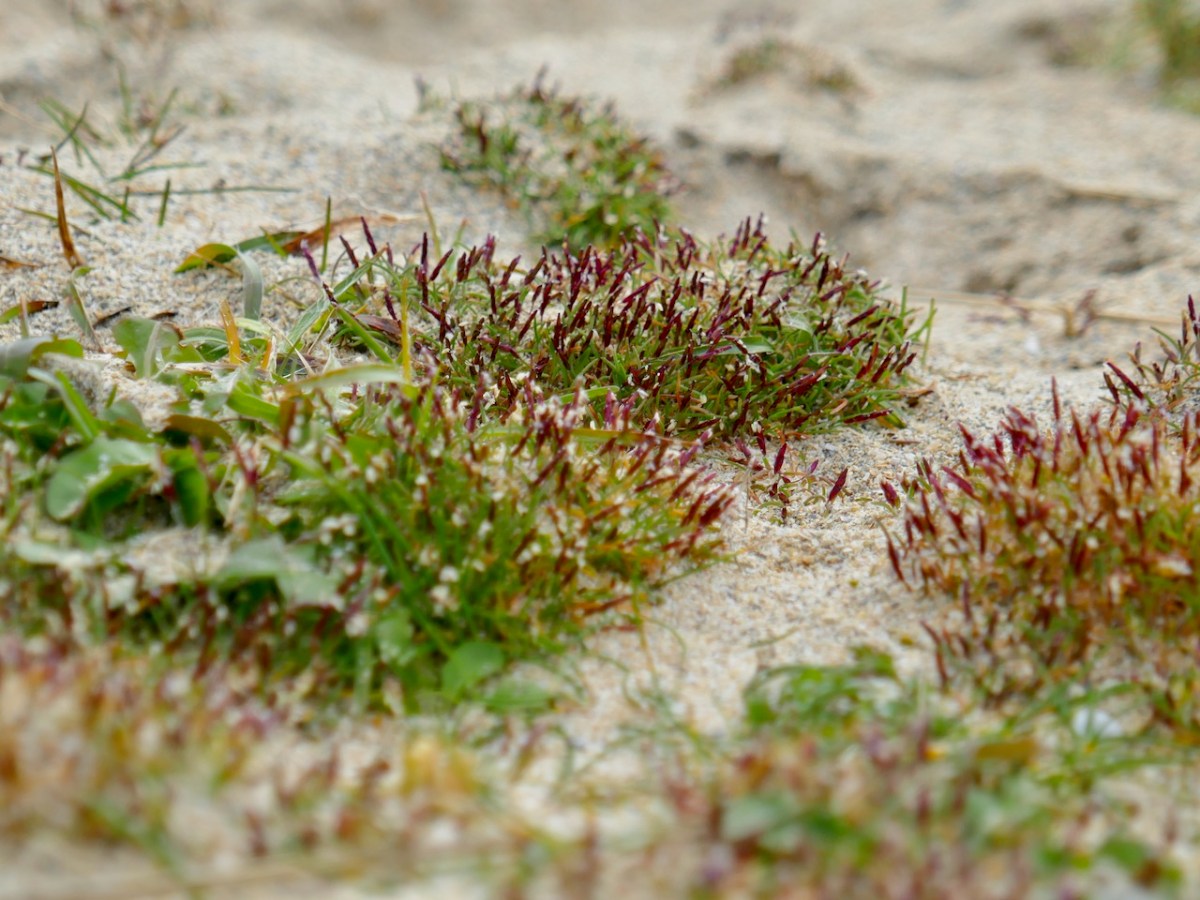
And Barley Cove? As last year, I went out to see what I could see of the Early Sand-grass. A remarkably homely little tuft of grass that is nevertheless precious because it is extremely rare. I found lots and it felt so good to be out in the fresh air, lying in the dunes, and taking an unconscionable number of photographs of this humble little representative of our incredible West Cork biodiversity.
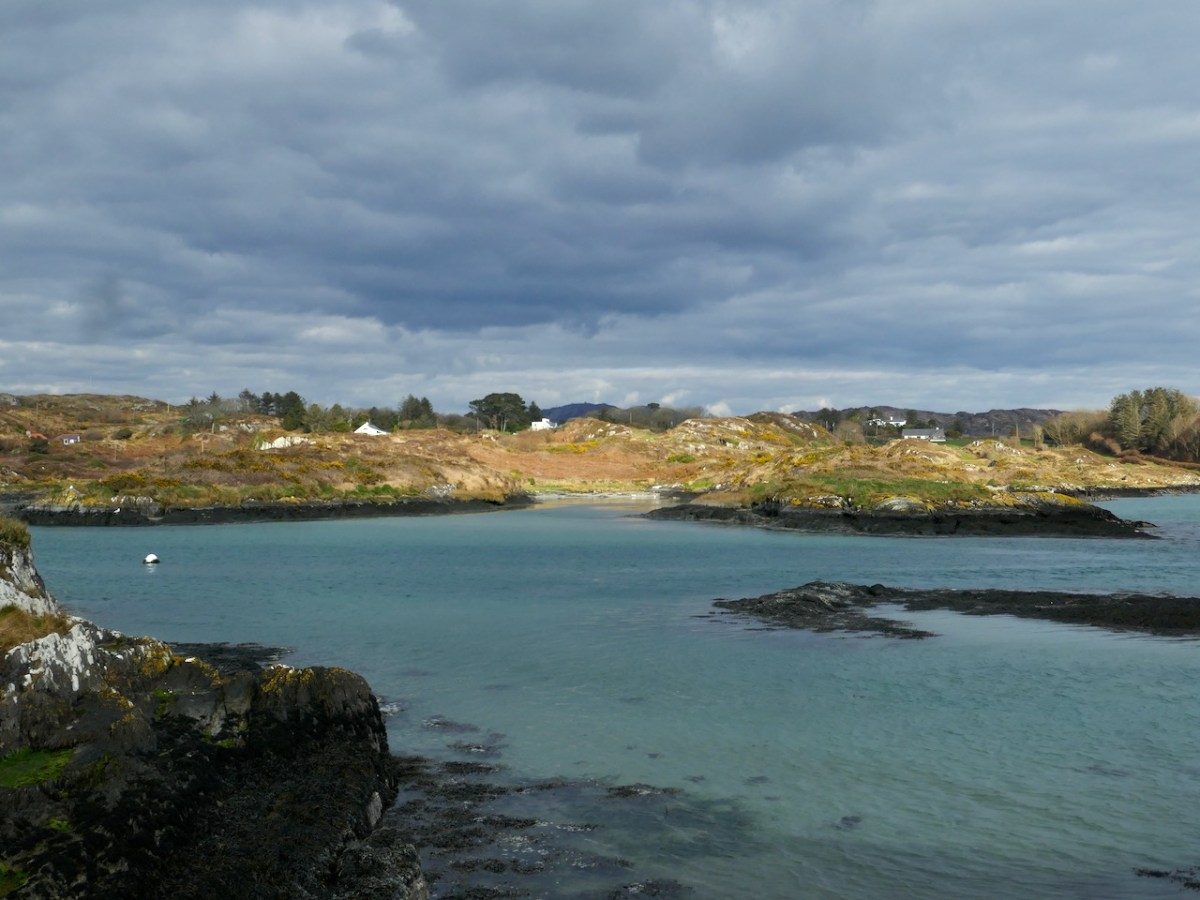
And then home through some of the most scenic coastline in Ireland. Not that I’m biased.

Discover more from Roaringwater Journal
Subscribe to get the latest posts sent to your email.
 Roaringwater Journal
Dear Finola, Love your posts. Thought you might be interested to see this Palaeolithic rock inscription from Sicily. Very similiar to yours ?? All the best, Maura
LikeLike
Thanks, Maura, but unfortunately no image was attached.
LikeLike
I feel sorry for the poor ploughmen who had their shares blunted by these big stones as they passed over them ! Perhaps some of the shares even broke as they impacted on them…. Never been to Inchydoney Island but mjst go have a look some time. Anyway what a nice post and thank you Finola.
LikeLike
Julian – weirdly, your comment ended up in spam were I have just found it. You’ve never been to Inchydoney???
LikeLike
There is an interesting assemblage of cross fragments to be found on probably the highest point of Inchadoney. Number 2618 on the Archaeological Inventory. There is also an unrecorded soutterraine in the field just a short distance east of the ruined church. There was a small fenced off area around the entry point the last time I was there.
LikeLike
Thanks, Jerome – we didn’t have time to go look, but promised ourselves a return visit to see the church.
LikeLike
And all your daffodils out already, too!
LikeLiked by 1 person
Great Report on Inchydoney Finola,
A branch of The Hungerford family had a mansion in Cahermore Rosscarbery. We did a walk in that area with Skibbereen Walking Group and engaged a local Farmer to tell the story and to walk to the field where Mansion House and gardens were built. – nothing remains except pillars and a rusty gate! Another member of the Hungerford’s lived in Toormore –I believe that it was the house in the trees which was recently sold.
Happy St Patrick’s Day
Brigid
LikeLike
Great additional information, Brigid – thank you!
LikeLike
A lovely part of the country. We stayed at the Incydoney hotel two years ago and enjoyed it very much – great restaurant! Also, a nice pinch of Frog Orchid at the far end of the beach.
LikeLike
I must have a wander and look for that.
LikeLiked by 1 person
It’s always great to be invited out to look at interesting artefacts and meet like-minded enthusiasts. The stone has its own unique history, and what a fabulous setting. A great day.
LikeLike
You never know what you’ll find in West Cork!
LikeLike