I am always delighted when readers contact me with stories about some of the West Cork places I have written about, so I was very pleased indeed to get a message from Jack Cooper, relaying a story from his friend Gabrielle McCracken, nee Chavasse. Gabrielle, an Oxford graduate, lives in Scotland now and has very happy memories of her childhood in the shadow of Mount Gabriel and subsequent visits back to the area.
Gabrielle’s reminiscence takes shape around the small lake on the top of Mount Gabriel that I wrote about in my post Legends of Mount Gabriel: the Bottomless Lake. Here is her story, punctuated by comments and photographs from me. The Rectory (below) that Gabrielle refers to came up for sale a few years ago and this photograph is from the sales video.
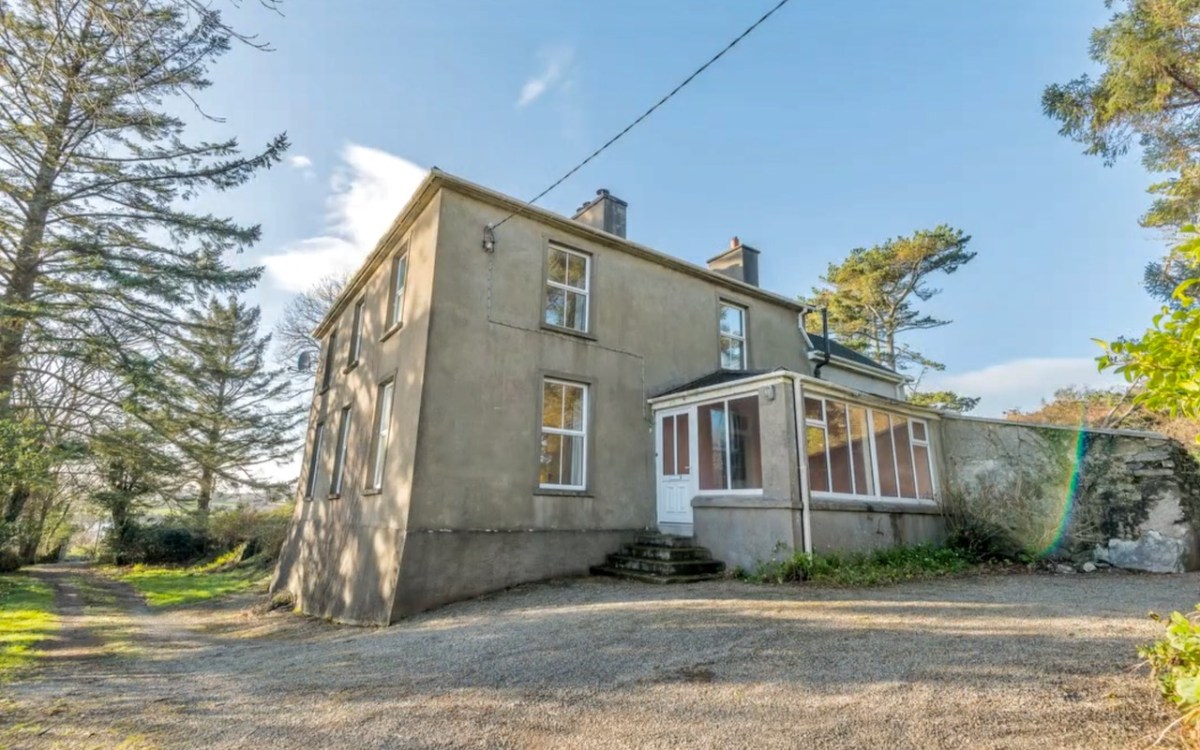
In the early 1930s, my father, Claude Chavasse, became the Rector of the ‘altar’ parish in West Cork. It was his first parish : he already had a Mediaeval History degree and the history and legends of wherever he lived were of great importance to him. I was born in 1935 and spent the first five years of my life in that lovely parish: we could see Mount Gabriel from the rectory, hence my name.
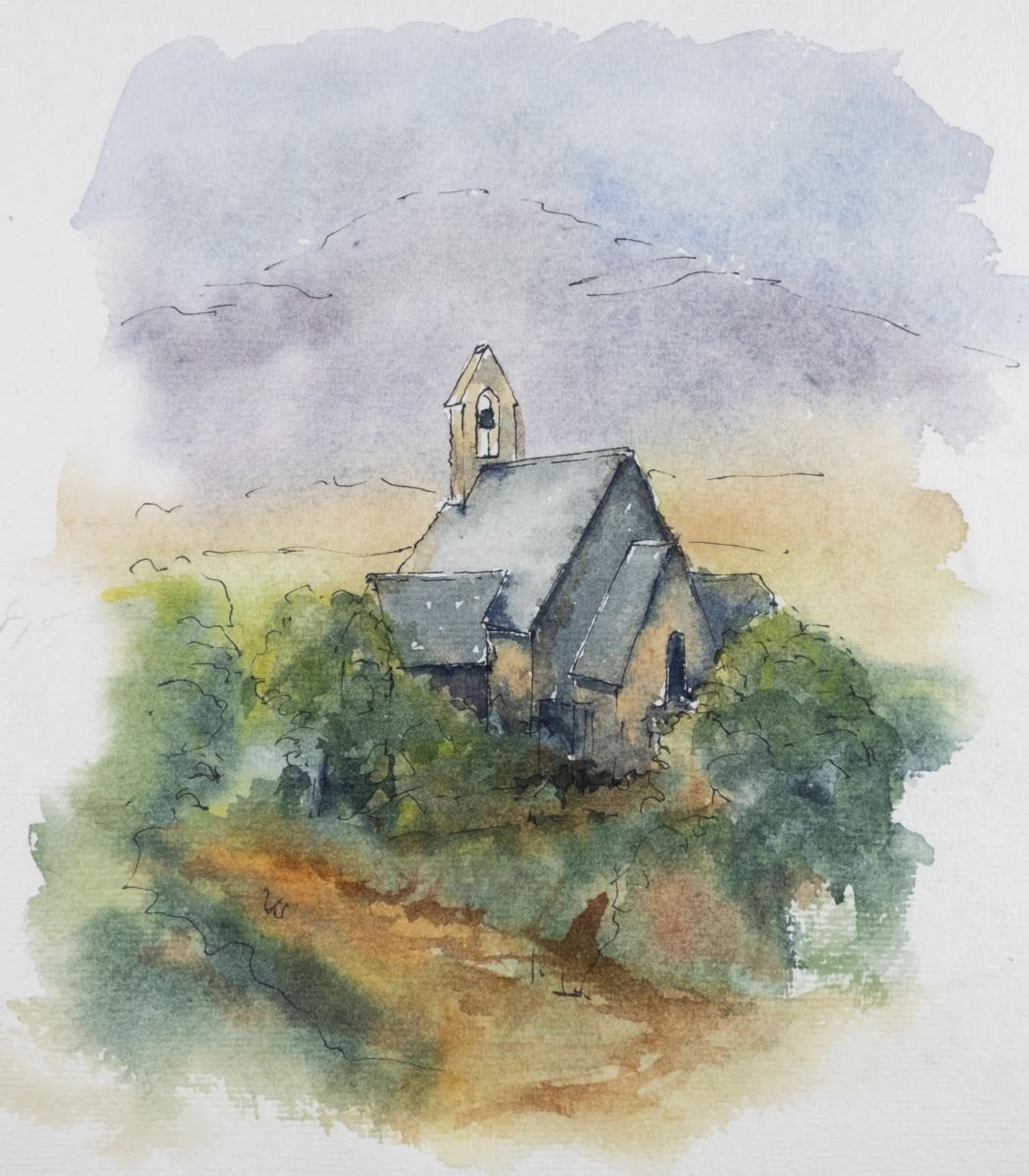
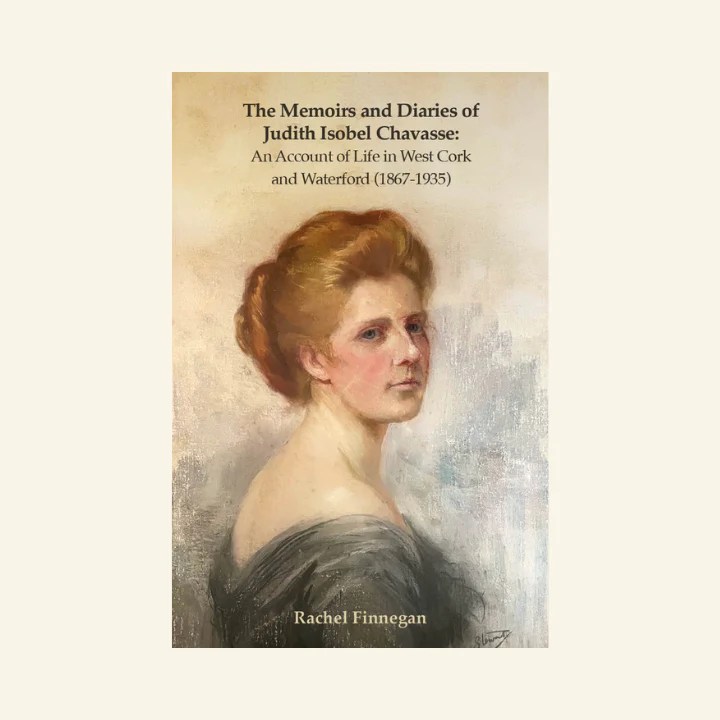
Peter Clarke’s lovely watercolour of the Altar Church is above. Claude was a member of the large Chavasse family associated with Castletownsend and New Court. Rachel Finnegan has written beautifully about the Chavasses in her book The Memoirs and Diaries of Judith Isobel Chavasse. Judith Isobel was Claude’s mother, Gabrielle’s grandmother.
I was brought up in the knowledge of the legend that the foot-shaped lake on the mountain was where the Archangel Gabriel had put his foot down on Earth on the way to Nazareth and the Annunciation. My parents often climbed the mountain and they told me that they had often swum in the lake undeterred by its reputation for being bottomless and that, if they went too deep, they might find themselves on the Fastnet Rock! In about 1948, my father took locum summer duty back in his beloved ‘altar’ parish, and so he and my mother were able to climb Mount Gabriel again but now with my sister and me. We all swam in the dark peaty water of the lake, and I remember it well.
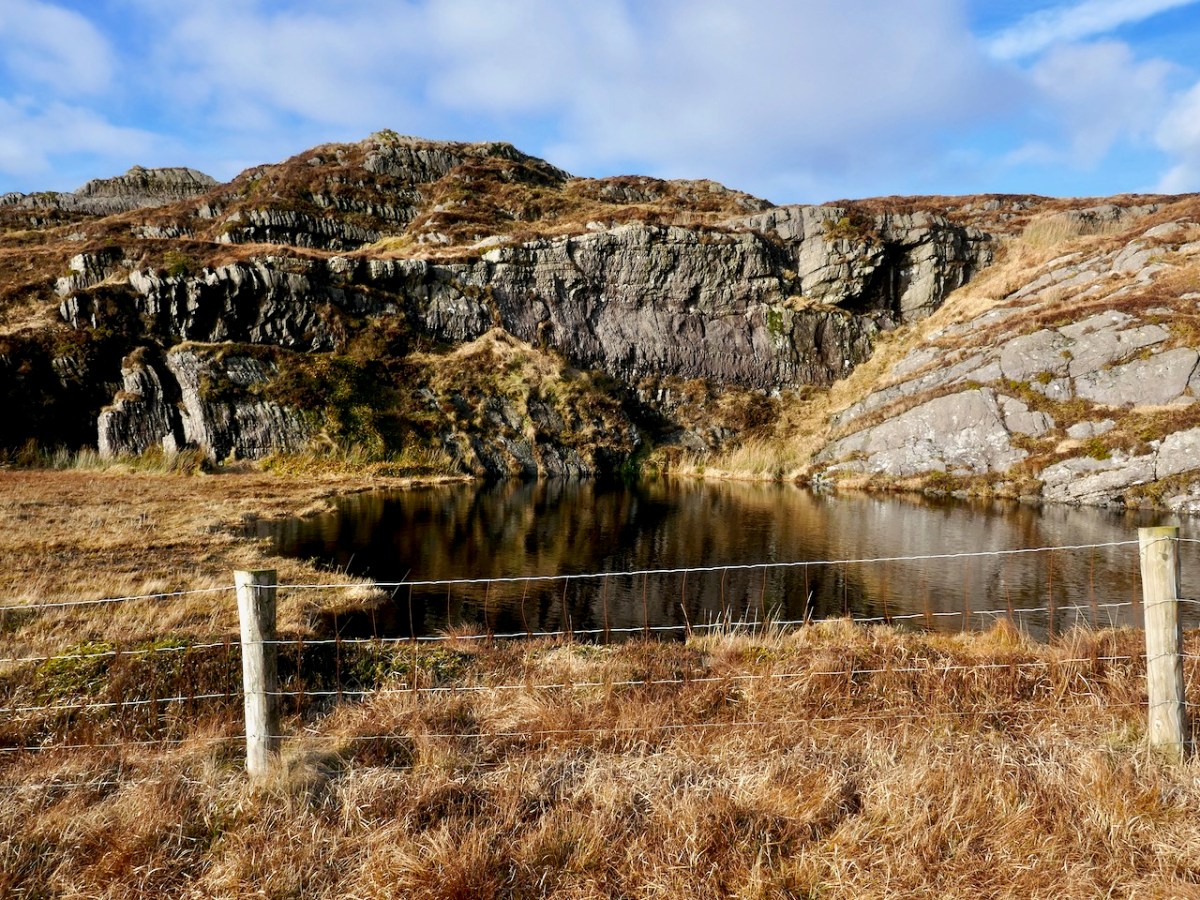
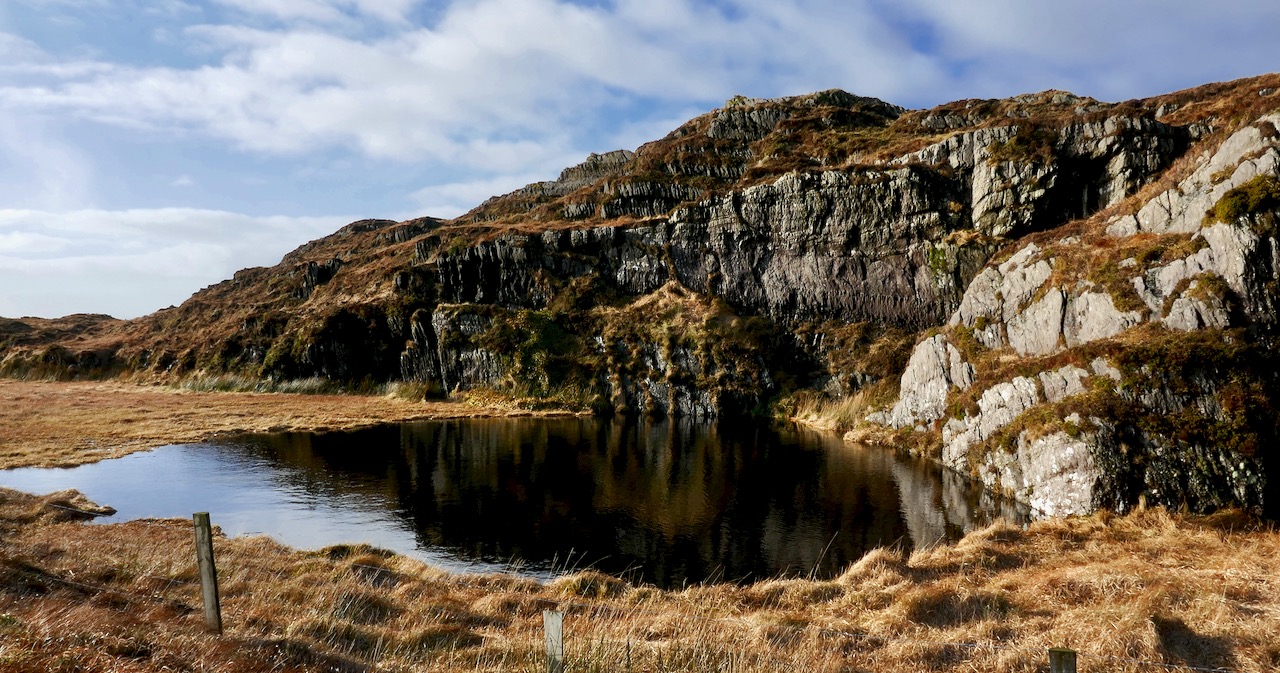
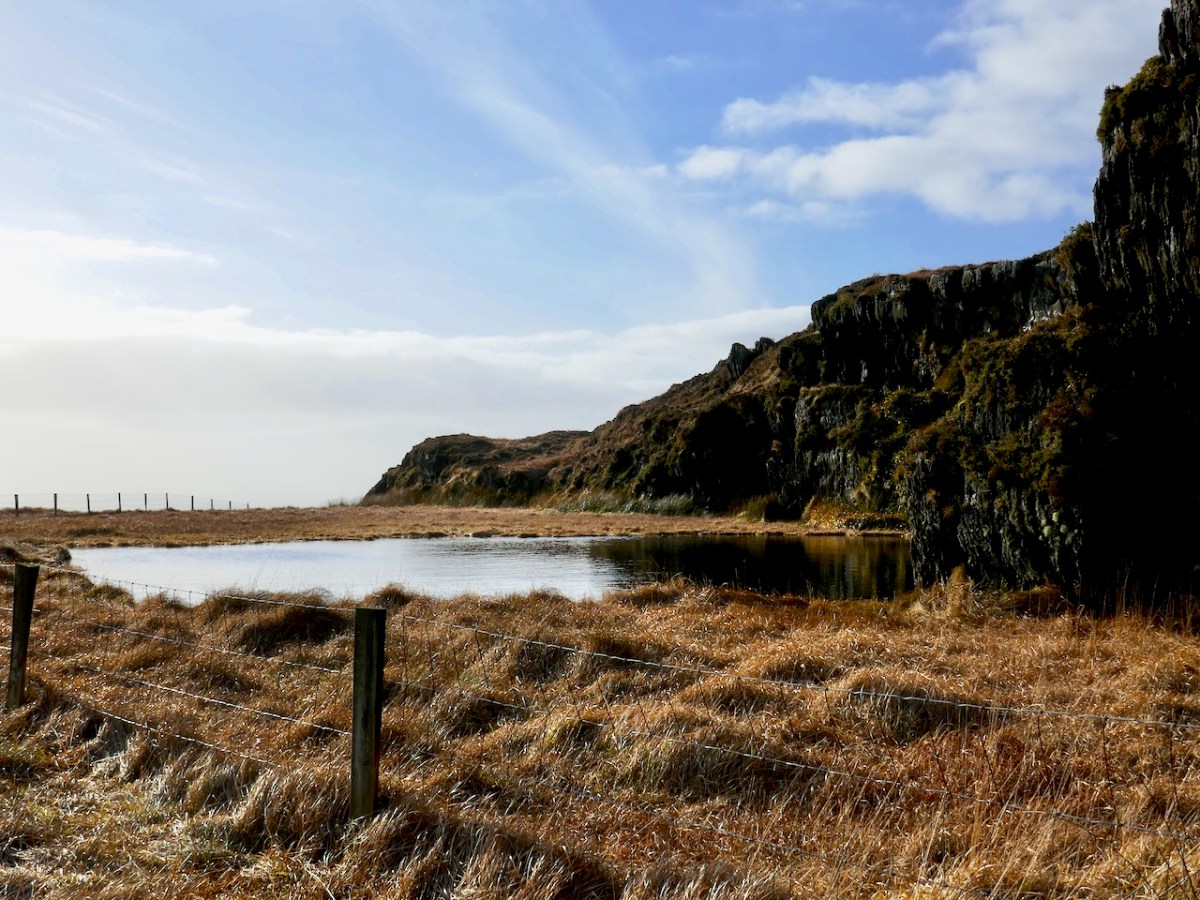
I love that they swam in the lake – it is dark and peaty as she remembers it but so alluring in its remoteness and in how it is contained within a pocket in the landscape with those cliffs in the background.
The lake may have been about 6 yards long and not very wide. It is hard to remember dimensions, but on one side, there was the curve as of an instep and on the other was a small steep rocky cliff, perhaps about 8 feet high with delightful little ferns growing in its crevices. There would have been very few tourists in those days, and there might have been a minimal footpath to the lake, but no road, no posts, no wire , all of which appear in more recent photographs.
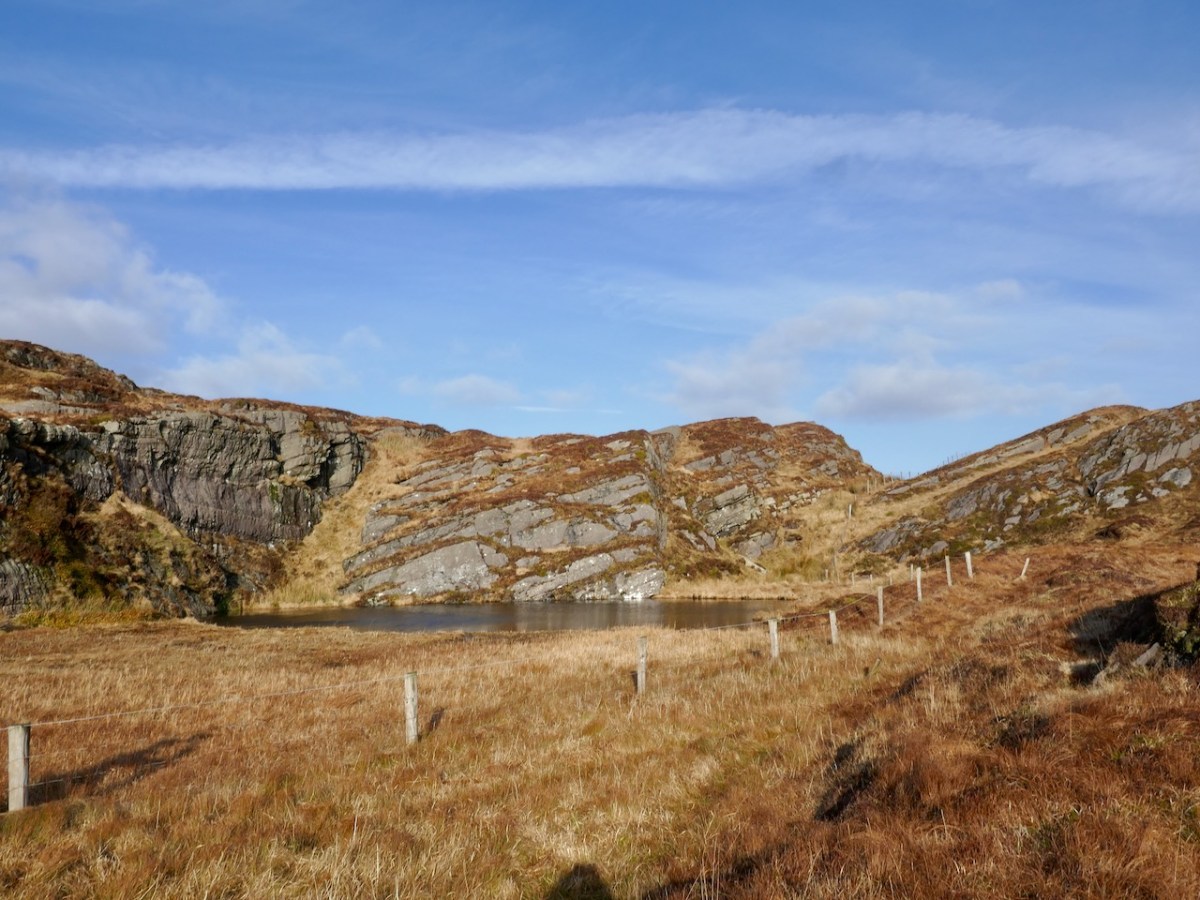
While Gabrielle remembers the lake as smaller than it actually is (typical of us all) her description of the character of the lake is completely accurate – the ‘instep curve’ and the cliff with its ferns are all clearly visible. The fence with its wooden posts and wire are all much more recent.
On that occasion, I took a black and white photograph of the lake (with my Brownie Box camera) and entered it in a school photographic competition, but, alas, I destroyed the negative and gave the only print to a friend a few years ago.
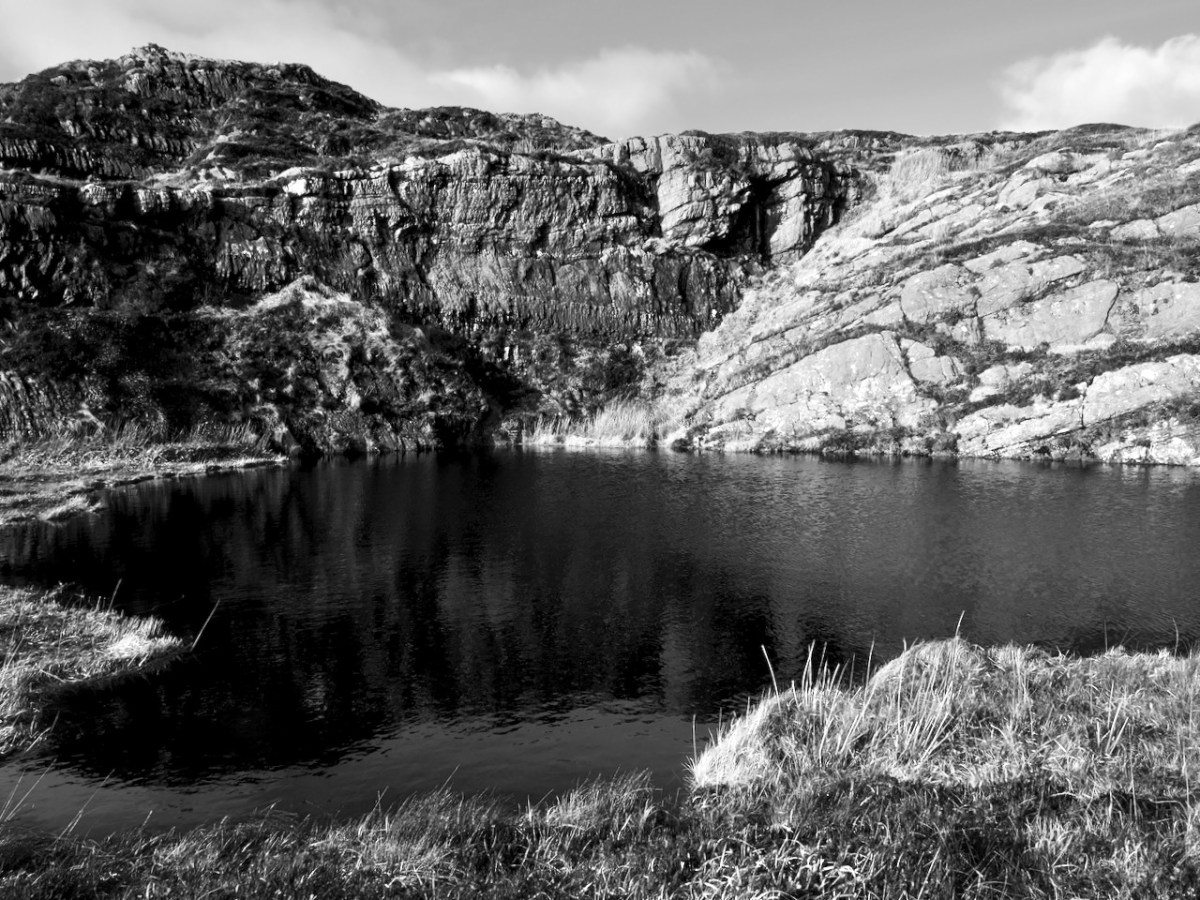
I have turned one of my photographs into a black and white image. I understand that Gabrielle’s vision is not good, so Jack will have to describe this to her.
In the early 1980s, when I and my two children were visiting relations (Dr. and Mrs Pearson, staying at Coosheen, Schull), I took my children up Mount Gabriel to visit the lake that was so important to me. We looked in vain. We clambered through thick heather, we climbed over rocks, we sought everywhere near the top of the mountain — I was devastated that we could find no sign of the lake.
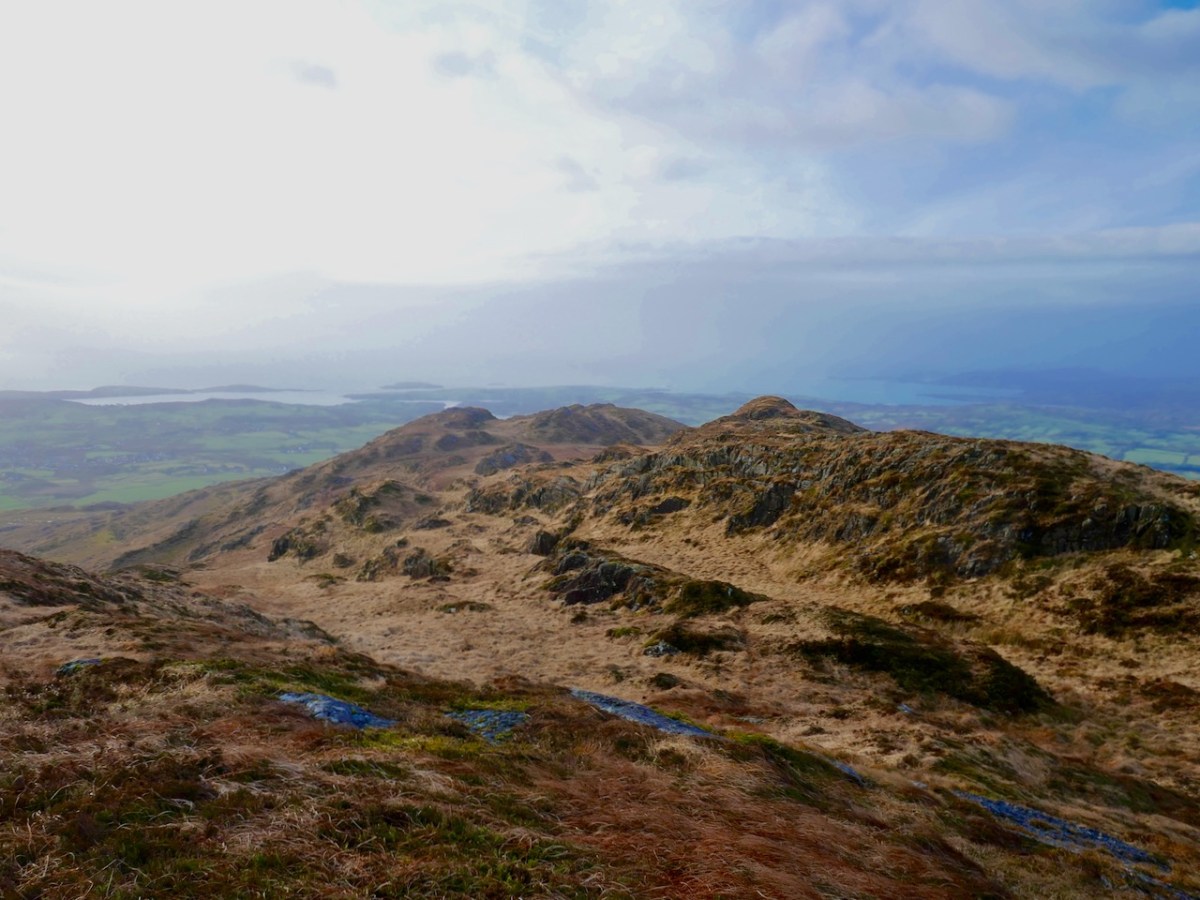
I know that feeling! Robert and I came close to missing the lake too and at one point felt like we might have to be rescued from the mountain while traversing the rough terrain (above). But I can assure Gabrielle that the lake is still there – we did find it eventually.
Straightaway, we climbed back down to Schull and went to the tourist office and asked the official (she was probably in her forties) what had happened to the lake? She asked if we meant the reservoir at the foot of the mountain and said that there was no lake, and she had no idea why the mountain was called Mount Gabriel!
There is a reservoir at the foot of the mountain (below) but of course that is not Gabrielle’s lake.
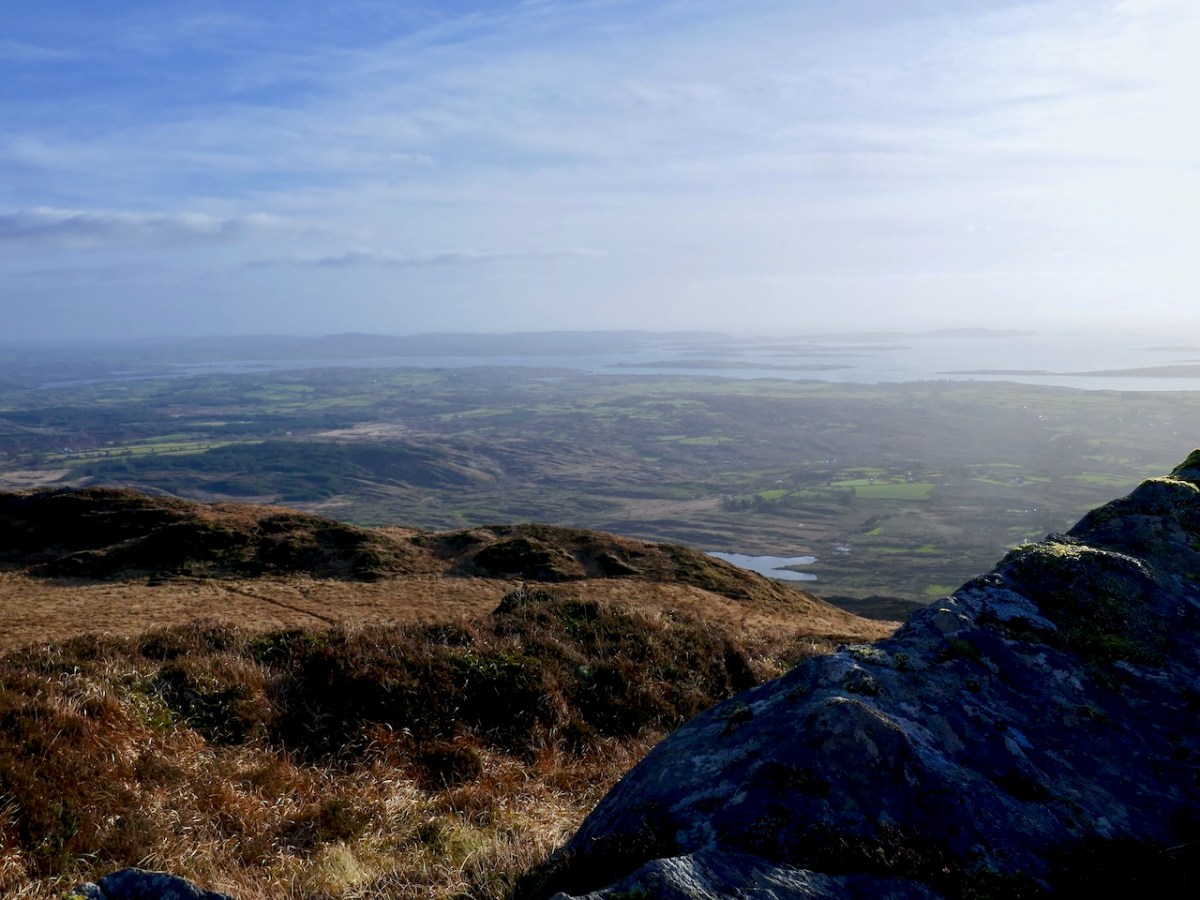
It occurred to me that the Americans, who were responsible for building a radar tracking station on the mountain summit, and knew nothing of the importance of lakes or legends, had infilled the lake with soil and rocks. It was a spring fed lake and any debris could have blocked the spring, leaving initially no trace of the lake.
This is an important part of Gabrielle’s story for a particularly interesting reason – it is illustrative of the fact that folklore about the mountain did not stop in the 1930s. This belief, that Americans built the dome, grew in the early 1980s as a result of an unfounded newspaper article claiming the installation was part of NATO defences, leading to a group called the Irish National Liberation Army (INLA) bombing one of the domes. In fact, the installations monitor civilian aircraft in Ireland’s upper airspace and have no military function.
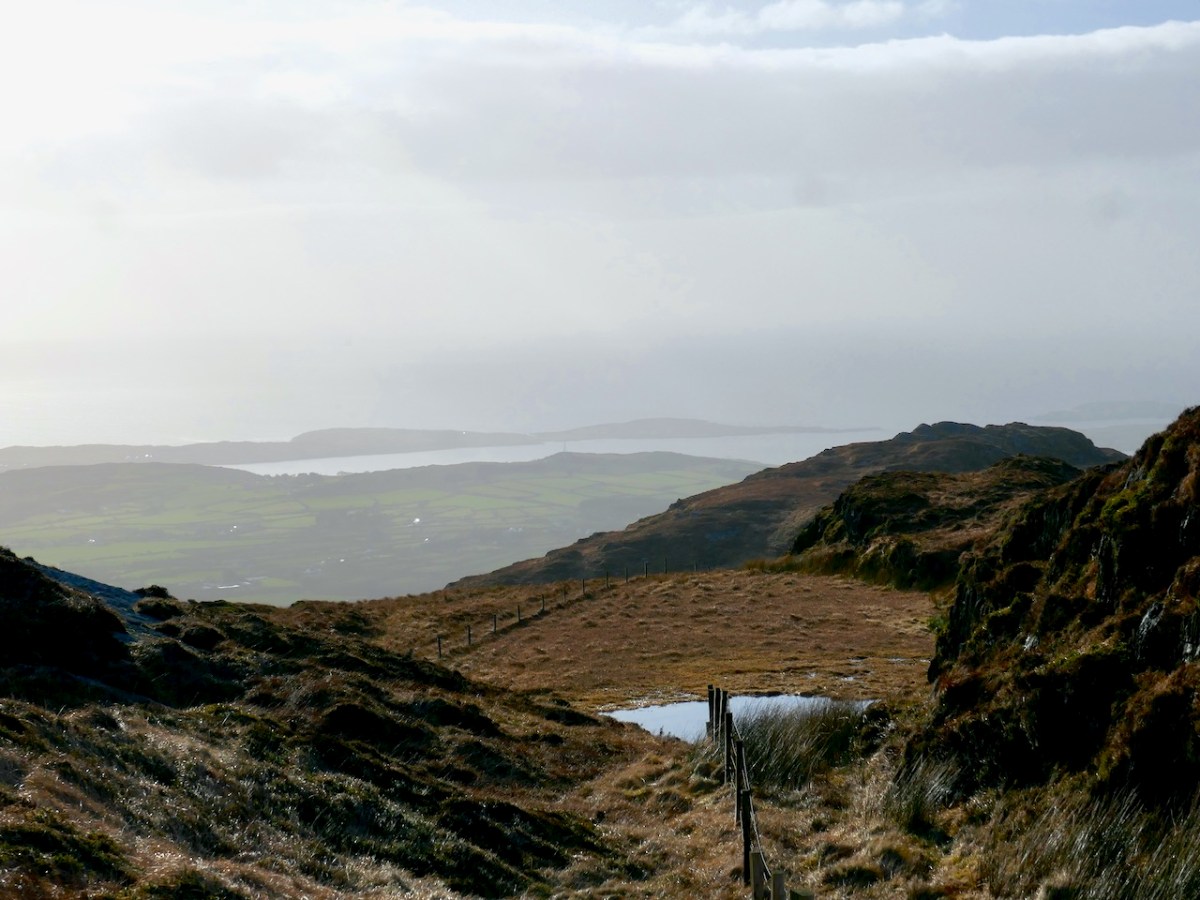
But now, in modern photographs, there appears to be a marshy area with a large puddle in its midst but hardly worthy of the foot of an archangel. Perhaps the puddle will grow larger and will, in time, become a lake again.
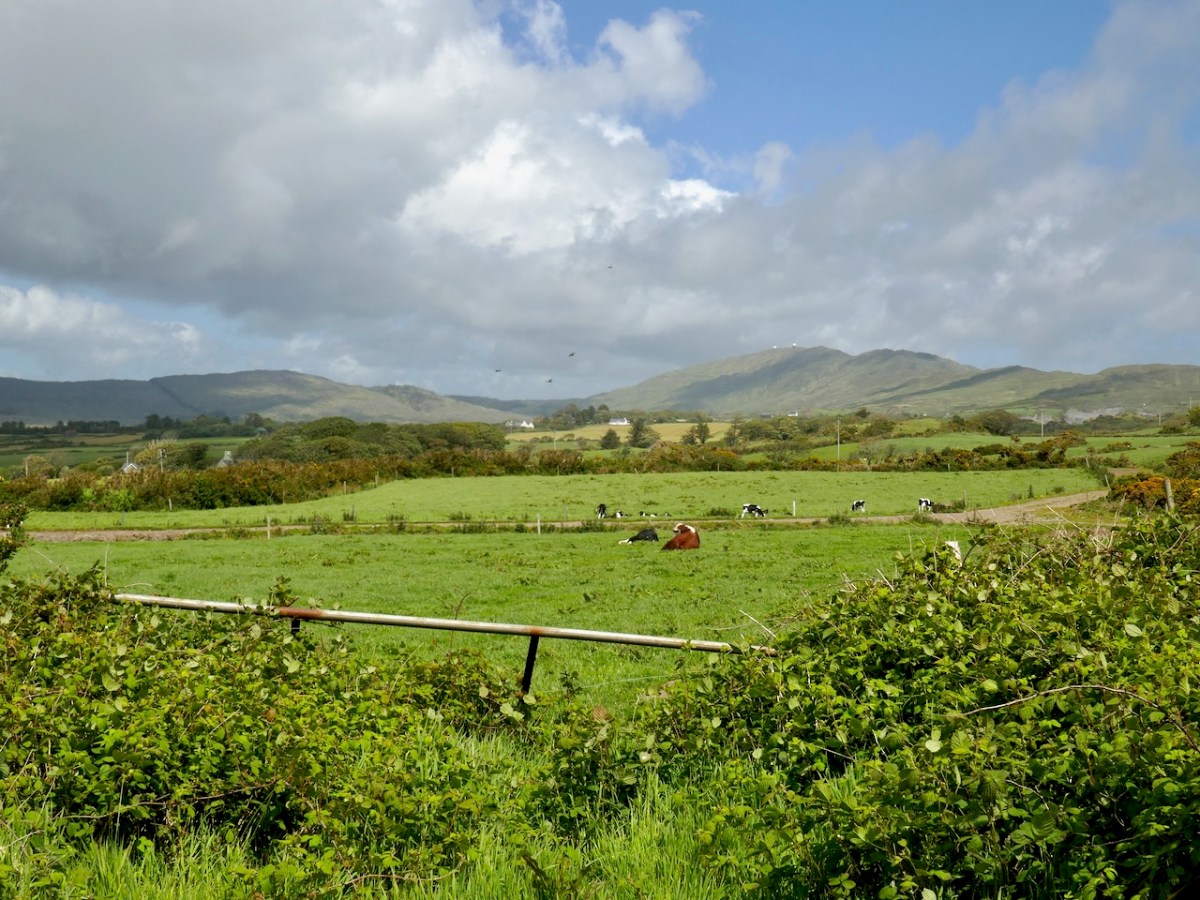
I think this impression is my fault – the photograph below does seem to emphasise a ‘marshy area’ with a puddle. In reality the lake seems to be more or less the same size in the earlier OS maps (dating to the 1840s) as it is now, and that photograph was taken in such a way as to hide most of the lake. I think I was just trying to show the location in relation to the sea and the islands in the distance.
Perhaps the photographs below help to correct that impression.
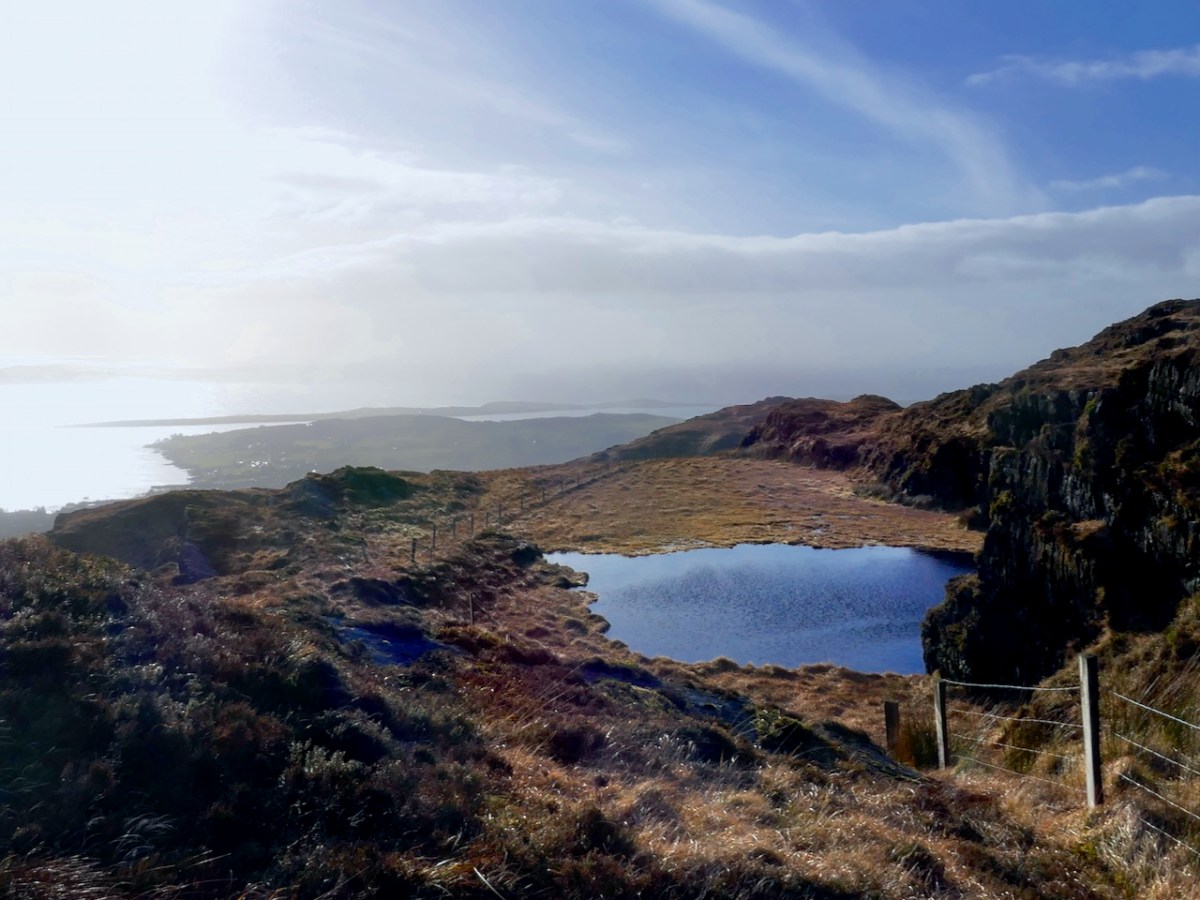
In my original Legends post, I wondered about the schoolgirl, Julia Creedon, who wrote about the lake in the 1930s and said Although she may have faithfully reproduced the essence of the story she heard from Dan O’Sullivan, her own abilities are very evident in this story, as is her immersion in reading other stories in this genre. Did she become a seanachaí (a story teller), or a teacher or a writer?. . . If she were still alive, she would be in her late 90s now.
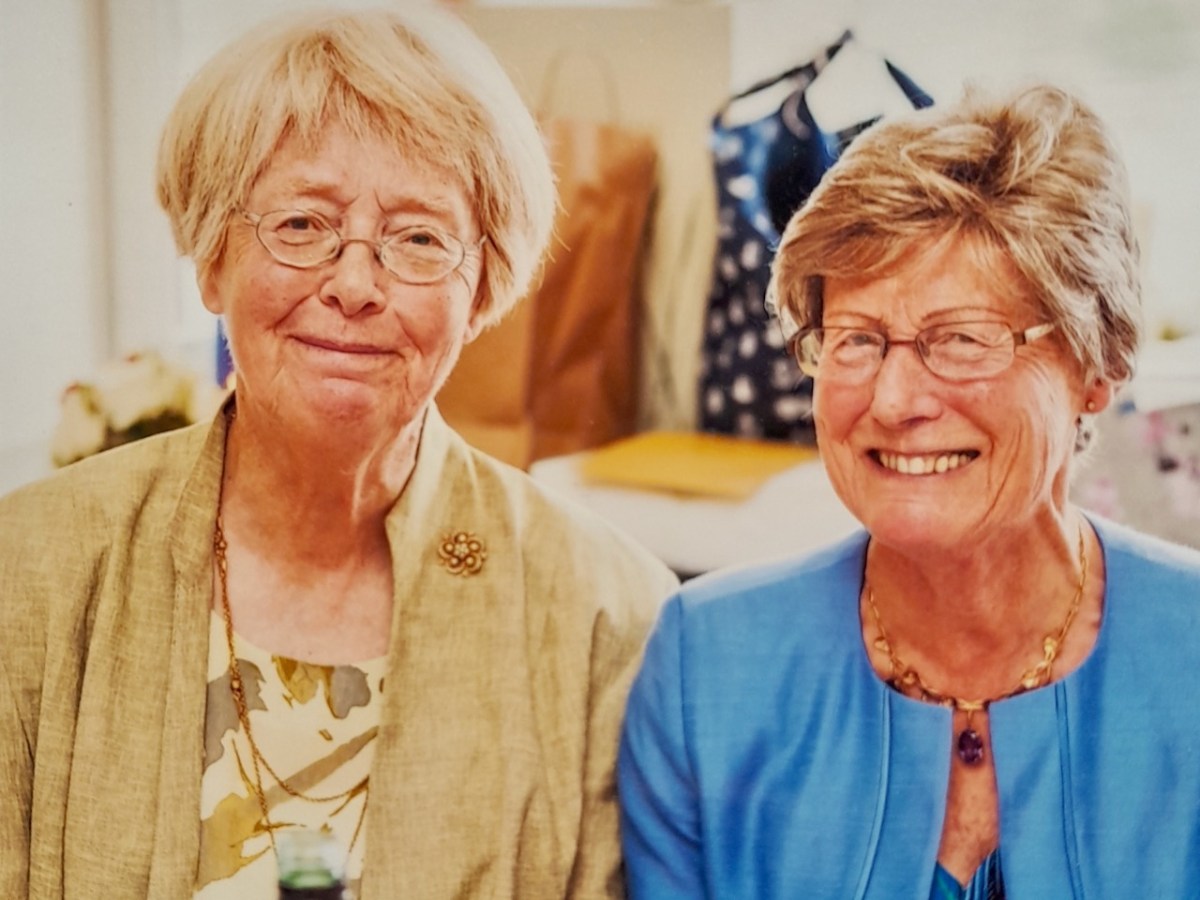
How wonderful is it, that just five years later, I have a reader in her 90s with her own living memories of the place. And here is Gabrielle, on the left, with her sister, Judith.
Discover more from Roaringwater Journal
Subscribe to get the latest posts sent to your email.
 Roaringwater Journal
Finola,
Gabrielle’s story caused me to reminisce too. I spent my youth in Toormore, where my mother played the organ in the Altar church. I took piano lessons from Rev. Quelch in the rectory and I remember my father often mentioning Rev. Chavasse as his favourite. I particularly enjoyed the story you told some issues ago about the origin of the church.
I look forward to your journal every week. I love your offbeat and interesting stories, and beautifully expressed.
Bill Jermyn
LikeLike
Thanks so much, Bill – comments like that keep me going. And with a name like that, you have a very Toormore heritage. I think you are referring to my Saints and Soupers series – all centred around that unique little church.
LikeLike
Finola,
I published a memoir two years ago, and it just occurred to me that parts of it may interest you.
The title is “Only Dead Fish Swim with the Current.” There may be a copy in the Schull bookshop, or it is also available on Amazon.
Bill
LikeLike
Fantastic! I’ll look out for it.
LikeLike
A great example how stories of place connects us over time.
LikeLike
Lovely comment, John.
LikeLike
This is wonderful Fionnula ! Inspiring !
LikeLike
Your literary landscape, Leeanne!
LikeLike
absolutely ! And the lake on Mount Gabriel features in the next book !
LikeLiked by 1 person
Imagine being named after a lake, how wonderful.
LikeLiked by 1 person
What a lovely post! I’m so glad that Gabrielle shared her memories with you, and I’m glad also that the lake still exists. Loved reading about how they swam in the lake, and the continuity of folklore attached to it.
LikeLike
It was so satisfying to write this one!
LikeLike
All very interesting ! In my teenage years I climbed Mount Gabriel several times I think ( before the road was built or the Domes) but never discovered this lake. Iam nmot great swimmer and doubt if iwould have been tempted to swim in it even if I had discovered it !
LikeLike
Just goes to show the lake isn’t obvious or easy to find.
LikeLike
Wonderful memories and rediscoverings!
LikeLike
Agreed, Paddy!
LikeLiked by 1 person
What a great blog post. Human fallibility and enduring memory blending to create a reality.
LikeLike
And all mixed with folklore!
LikeLike
What a wonderful story, I especially love why she is called Gabrielle. Please let’s try and get up there again soon!
LikeLike
Yes – pity we couldn’t make it this week with the awful weather.
LikeLiked by 1 person
How beautiful. How fantastic to discover this wonderful story about the lake and so much more. Thank you for this.
LikeLike
Thanks so much, Stephen. I am pretty bowled over by your own site!
LikeLiked by 1 person
Thank you Finola!
LikeLike