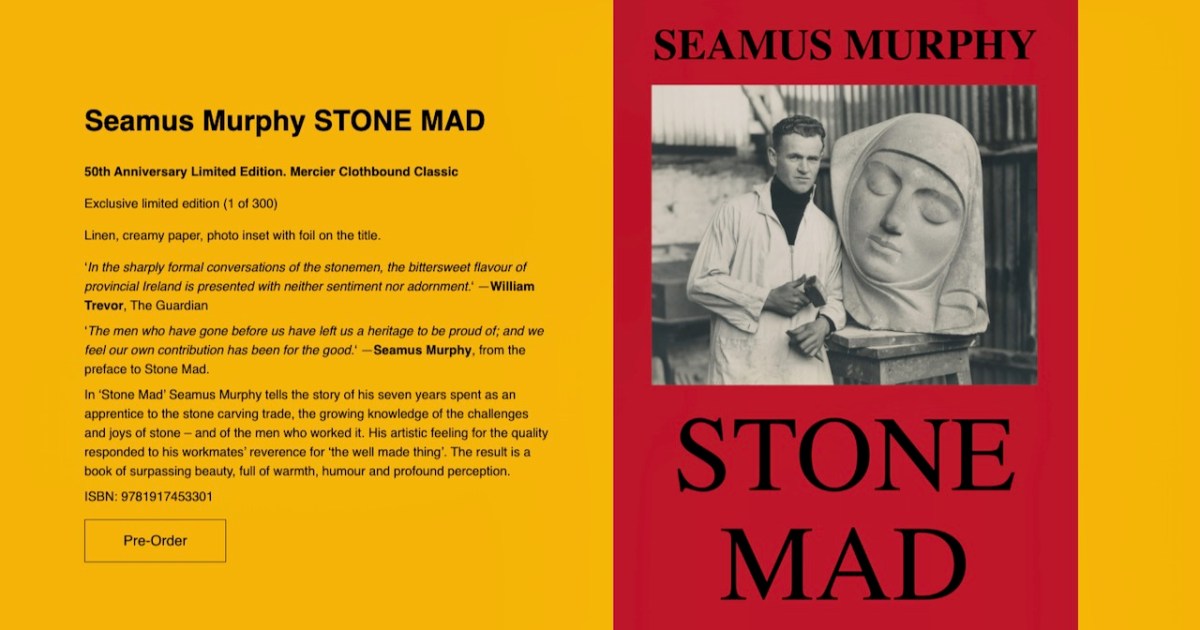
Stone Mad, Re-Issued

Yesterday, in a ceremony in the Cork Public Museum, Mercier Press launched a re-issued Stone Mad, by Seamus Murphy. This year is the 50th anniversary of Seamus’s death, in 1975. The book is also the One City One Book choice of the Cork City Library, as part of the 2025 Cork World Book Fest taking place all this week in venues across Cork.
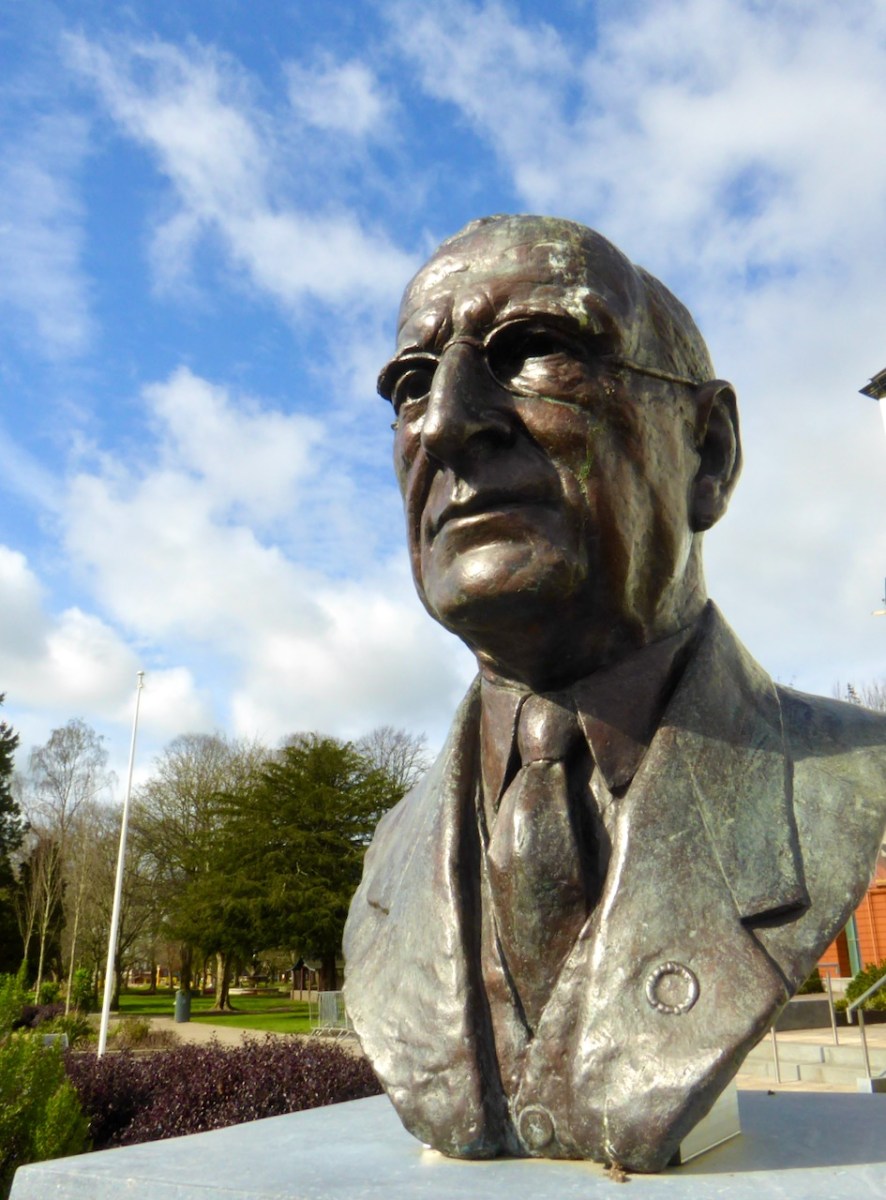
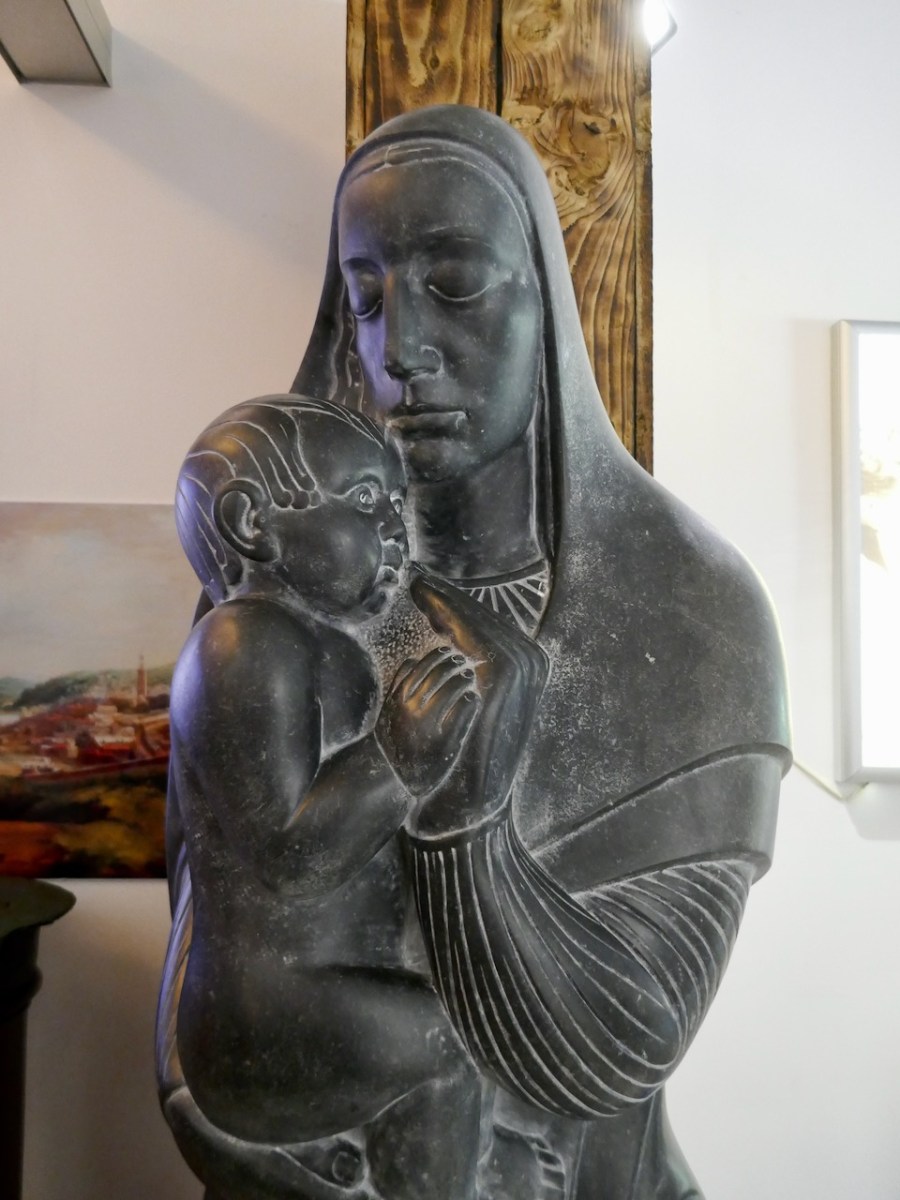
I attended the launch in the Museum, in Fitzgerald Park, home of several sculptures by Seamus, including this one of De Valera, above. Long-time readers will remember our own Rock Art Exhibition in the same building ten years ago – somehow apt that it featured the prehistoric version of the stone carving tradition we were celebrating yesterday. 
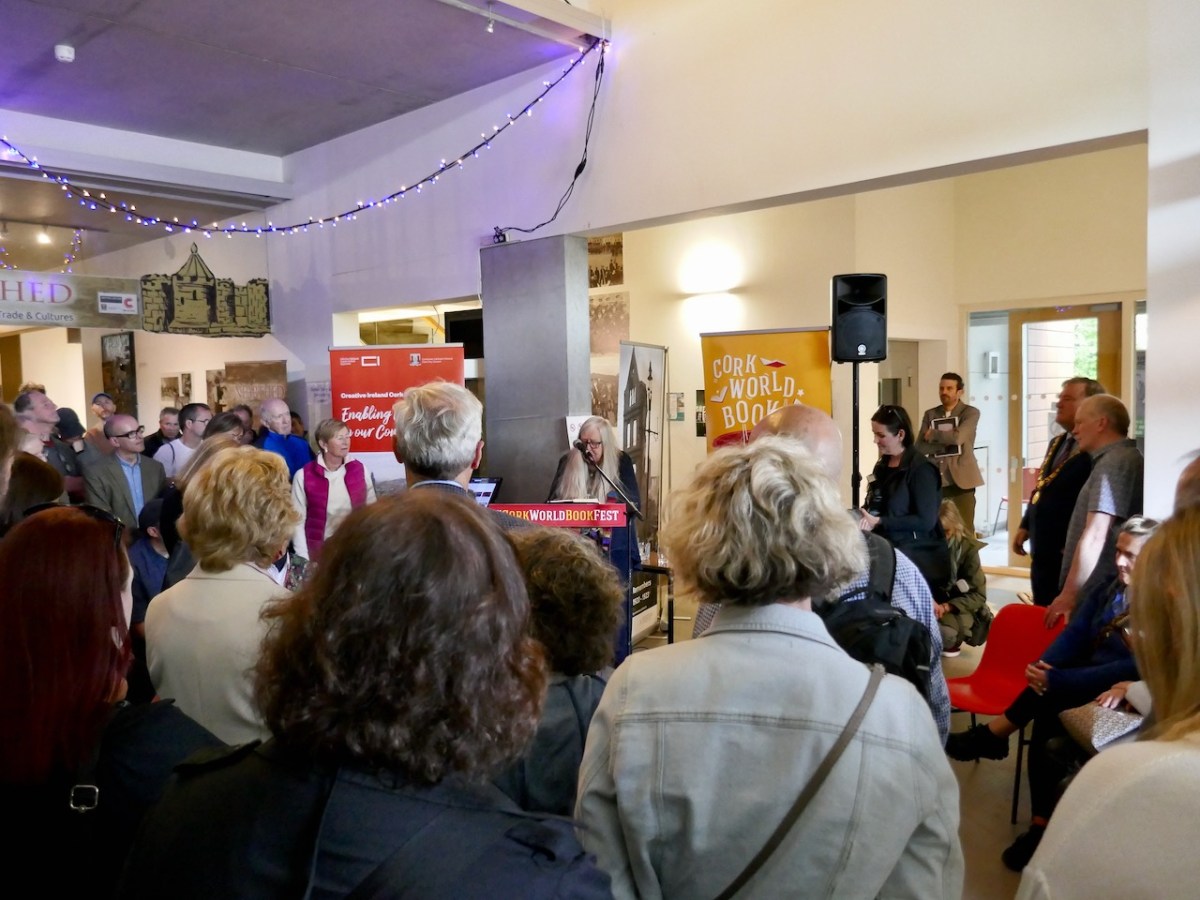
The book was officially launched by the poet Eiléan Ní Chuilleanáin, about whom I wrote here. She had known him in the old days in Cork, and her’s was a wonderful, evocative, beautifully written summary of Seamus and his book. She finished with words that resonated with everyone in the room (and it was packed!) – I paraphrase it as: Read this book again. And afterwards, go and wander around Cork. You will never look at it the same way again.
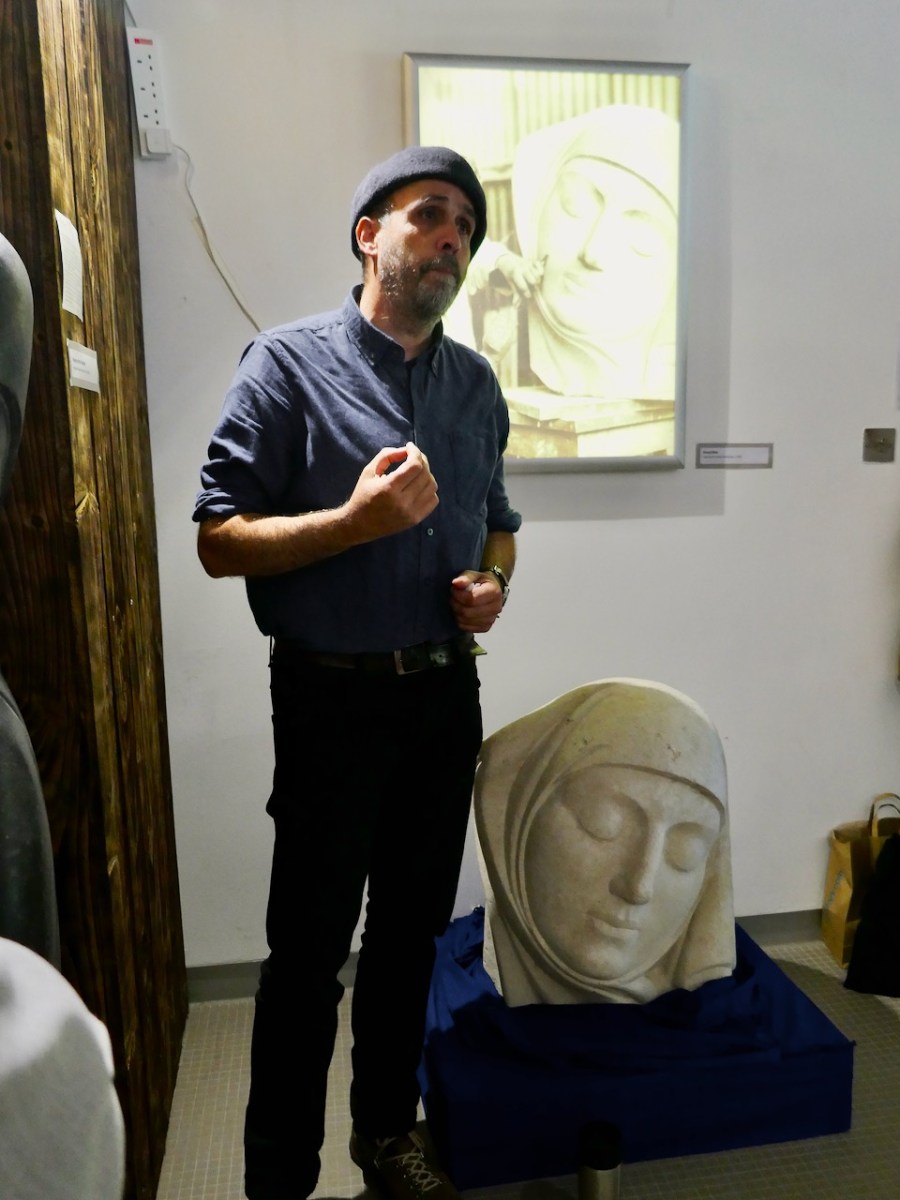
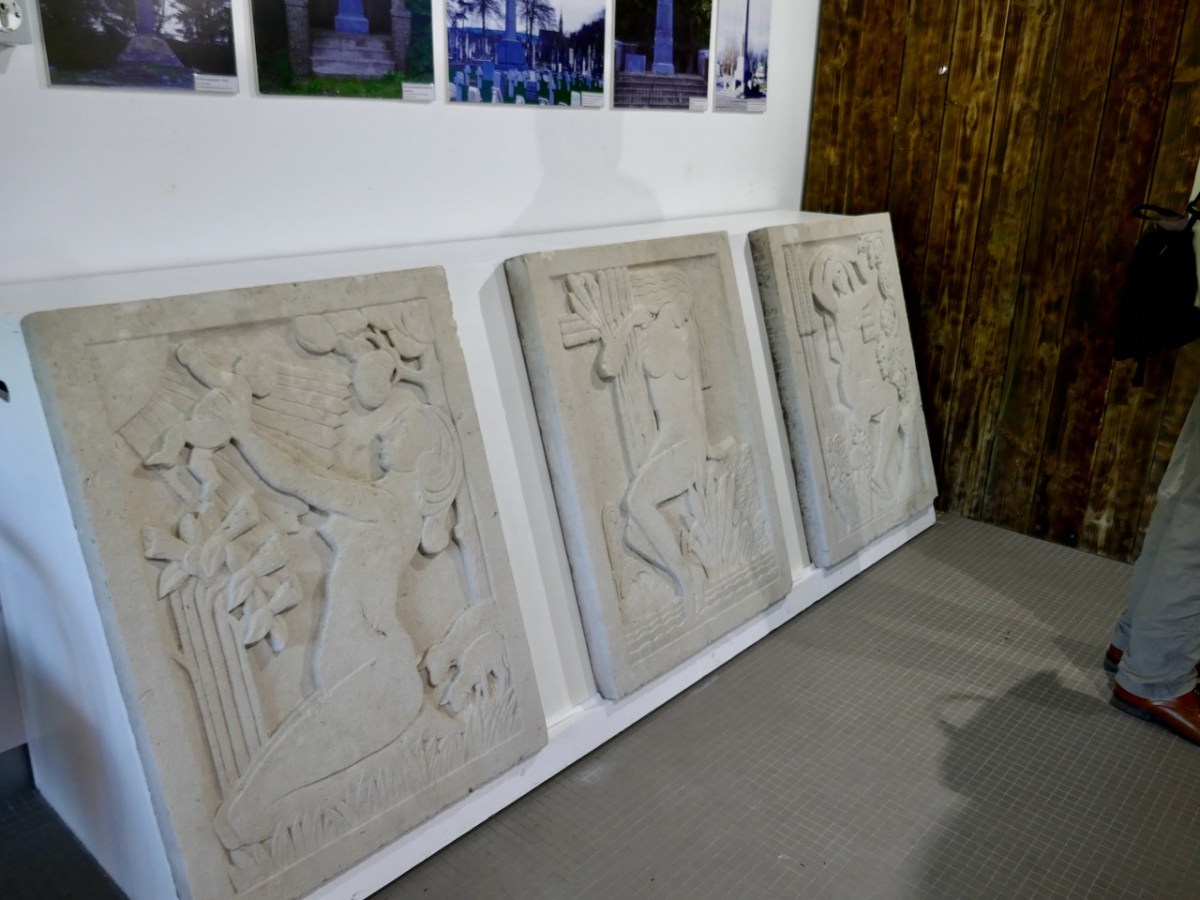
Eoghan Daltun, author of An Irish Atlantic Rain Forest, was there too. Besides a passionate conservationist, he is a skilled sculptural restorer, and was responsible from rescuing Dreamline from weather and lichen damage a couple of years ago. Standing within the display of carvings and tools and images, all carefully set up by the Museum team led by Curator Dan Breen, Eoghan talked us through what was involved in carving in stone and, many years later, restoring the artwork. 
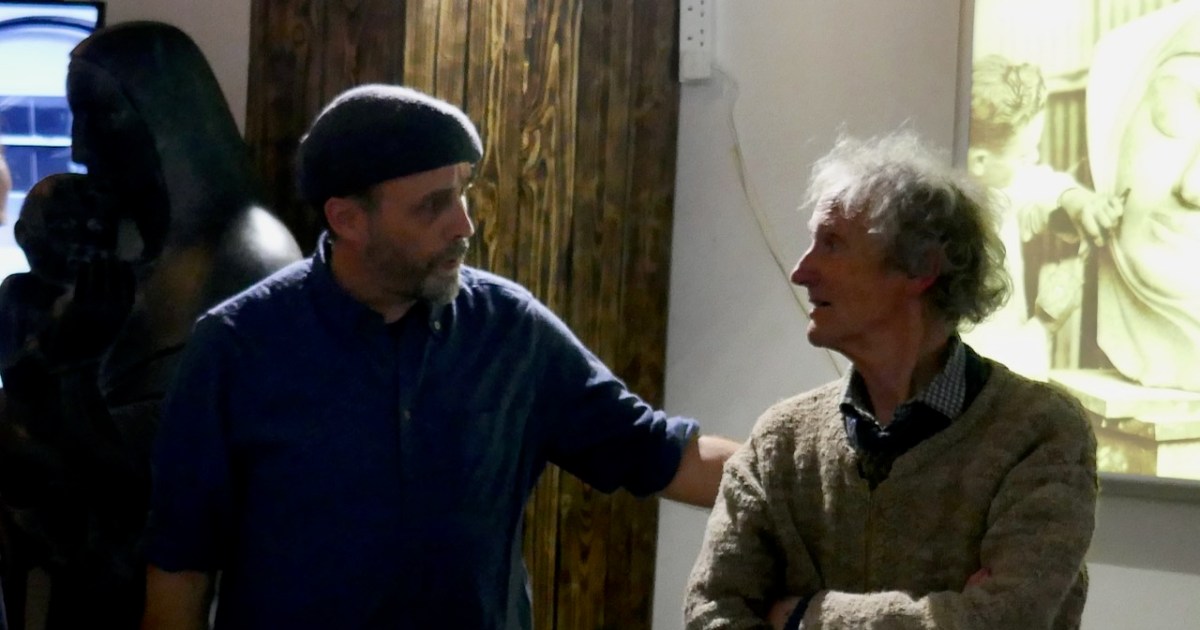
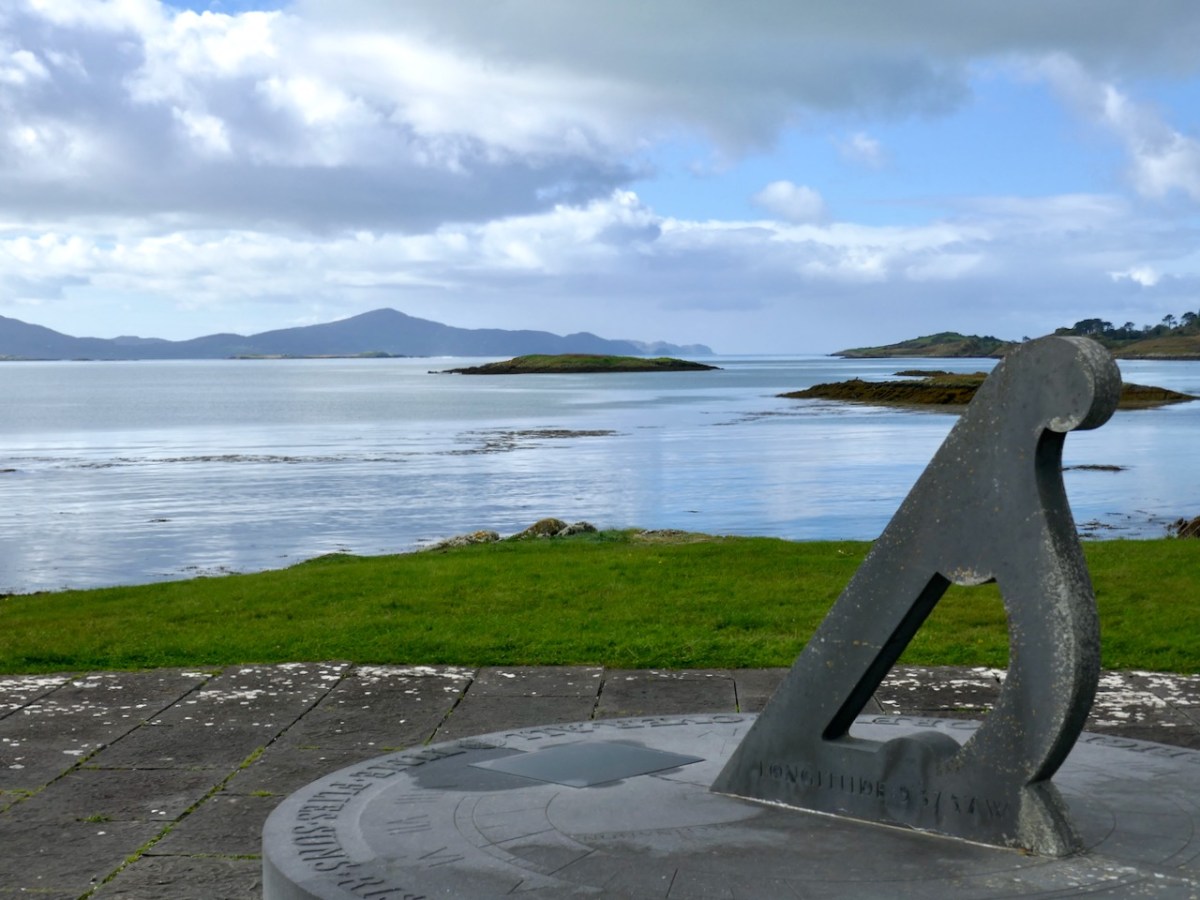
I was also very pleased to meet Ken Thompson, the stone carver who finished off lettering on Seamus’s headstones, after his death, and who carved many monuments I have encountered in Cork and elsewhere, including the inspirational memorial to the Victims of the Air India tragedy in Ahakista, below. 
Seamus Murphy is acknowledged as one of Ireland’s best stone carvers, and an icon of the 20th century Cork cultural scene. His work can be seen all over Ireland, but especially in an around Cork. If you are not that familiar with his output, the documentary Seamus Murphy A Quiet Revolution is a great introduction to his life and work.
Stone Mad has been a favourite on our shelves as long as Robert and I have had a joint library. We own a couple of copies, including a hardback of the second edition, signed by Seamus and with illustrations by William Harrington. It’s an evocative summation of his life as a ‘stoney’, the men with whom he worked, and the craft they honed together. It has become iconic, as much for its on-the-ground and entertaining picture of life in a Cork stone yard as for its musings on stone carving as an art, from medieval times to the present day. For some extracts, see my post, Building a Stone Wall.
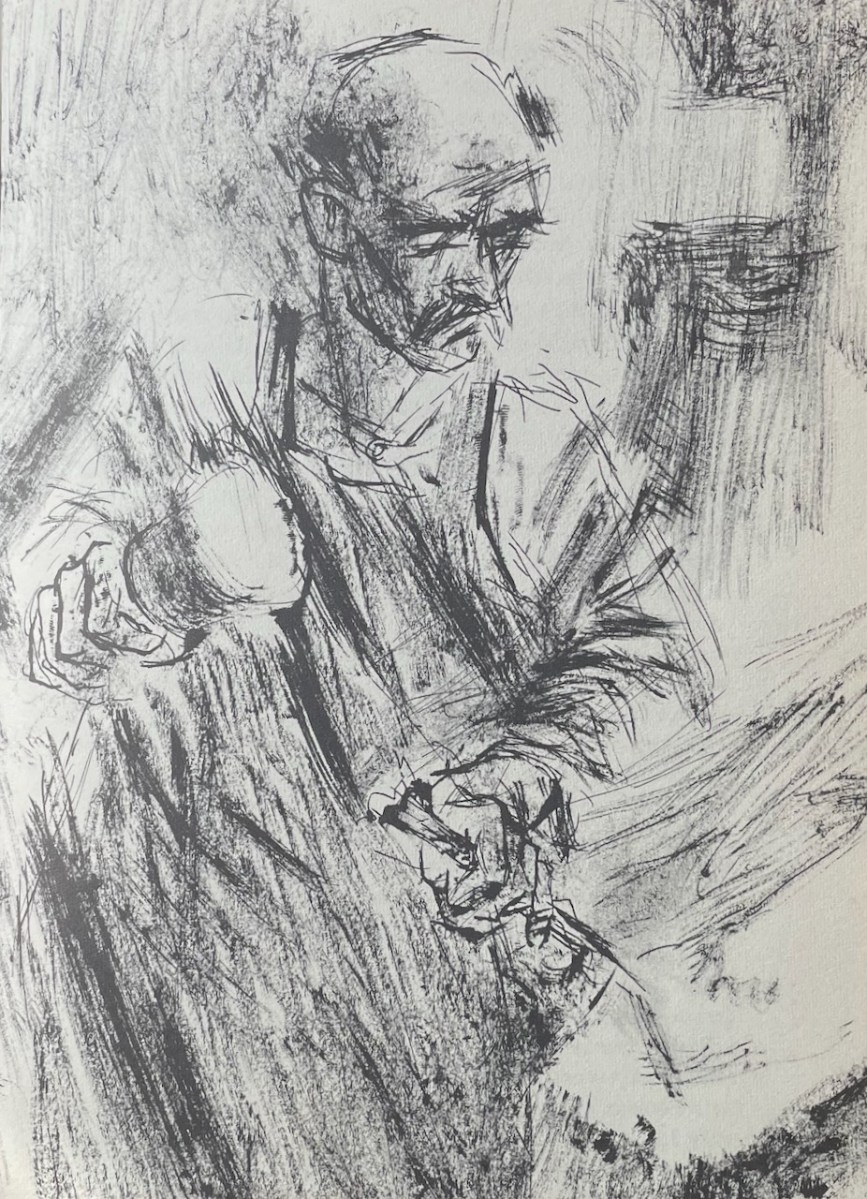
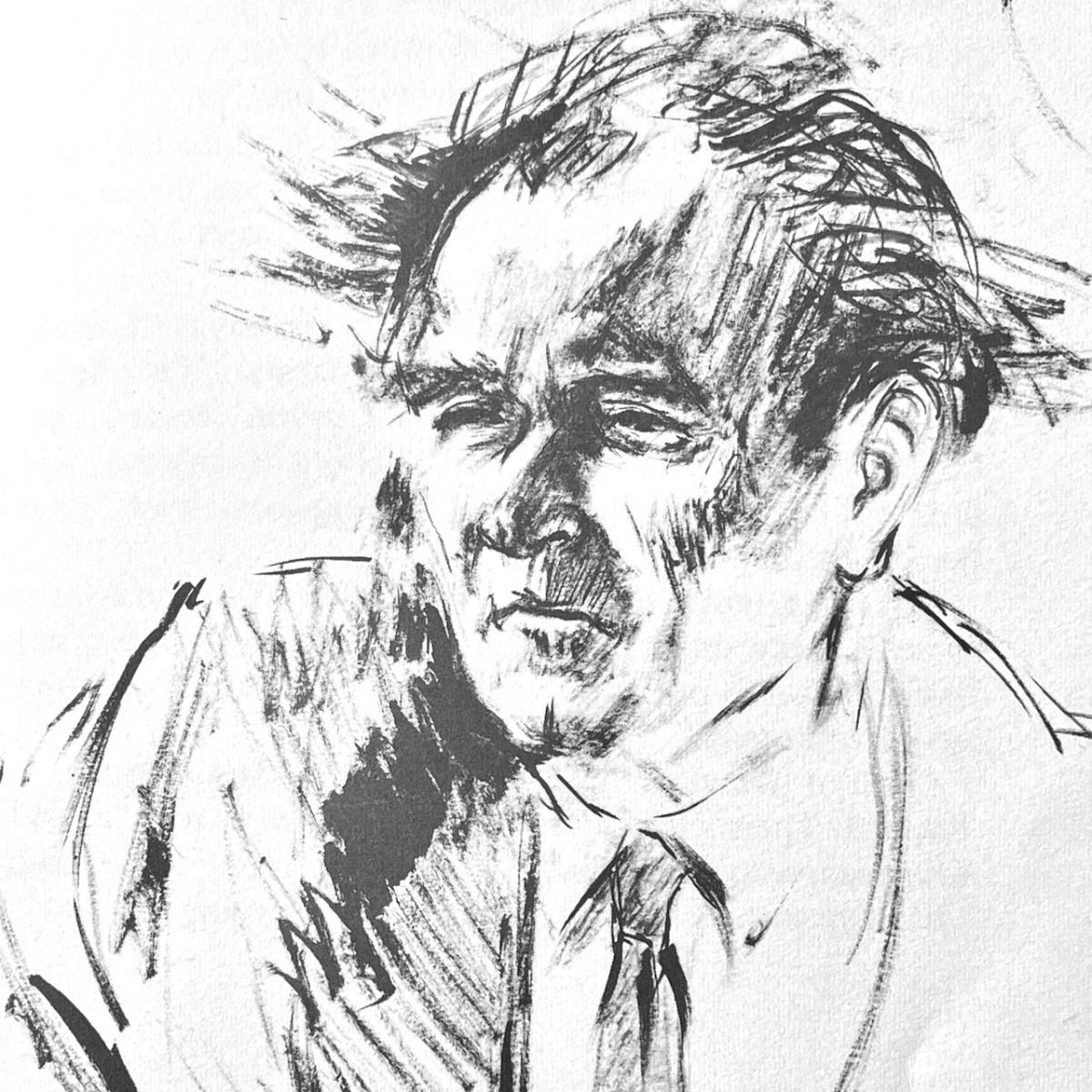
The illustrations by William Harrington, pen and ink sketches, capture the work, the camaraderie of pub life after a hard day’s work, but also includes a sensitively drawn portrait of Seamus. 
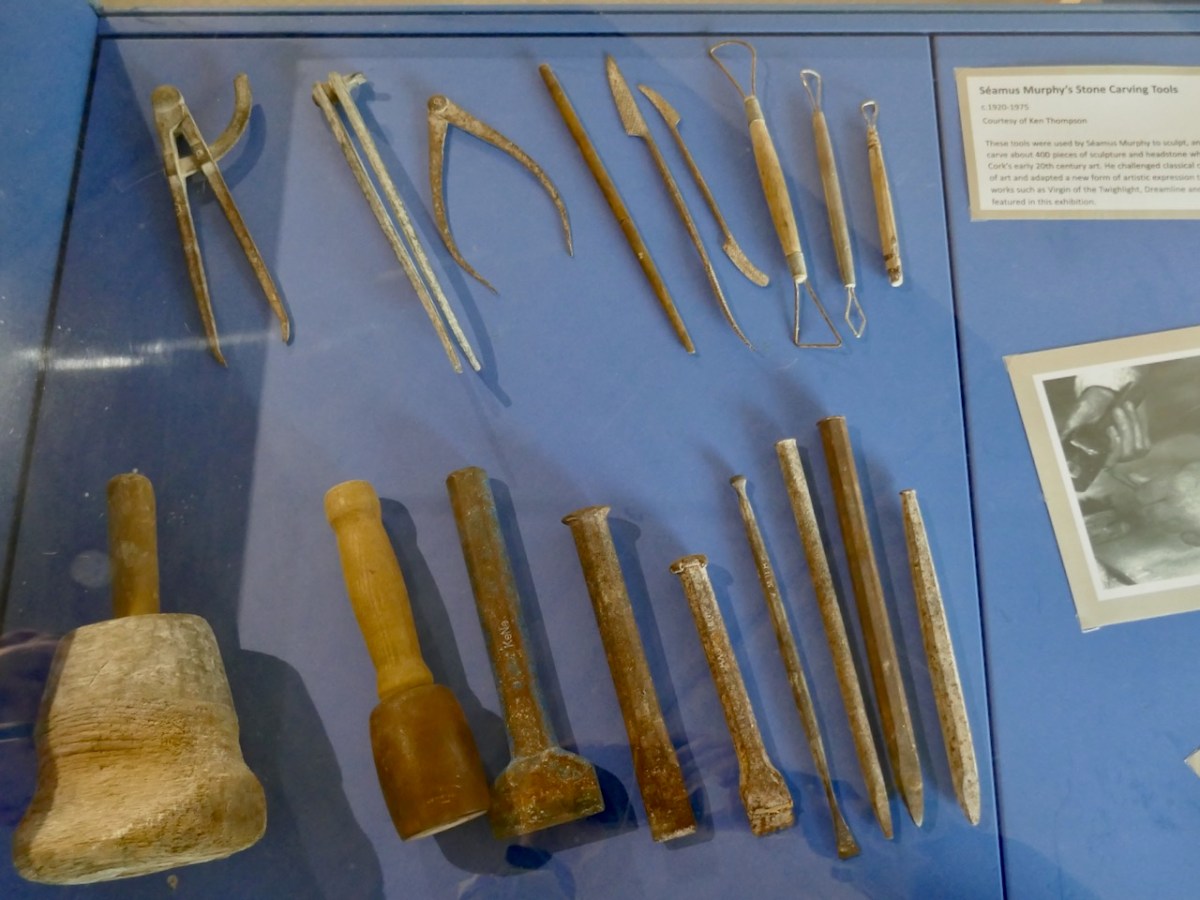
If you don’t have a copy of Stone Mad, do get one – it deserves a place in your library. I will leave the last word to Ken Thompson, from the documentary I link to above. Ken inherited Seamus’s tools (below) – most of them look surprisingly delicate for the work they do, don’t they?
Ken says, Now he’s been dead for 40 years, but I see his work in churches all the time. His work is shining out. It’s still a beacon. It still speaks.
Licking the Lizard – or The World Turned Upside Down

…Nothing was more natural than the desire to have a ‘last fling’ just before the beginning of Lent. On the Continent of Europe this became a public, communal revel, the carnival, but generally in Ireland the Shrove Tuesday celebration was a household festival with the family and their friends gathered about the fire-side, when the surplus eggs, milk and butter were used up in making pancakes, and even the most thrifty housewife did not object, as otherwise these perishable foodstuffs might go to waste. Some people kept the Christmas holly for the fire which baked the pancakes…

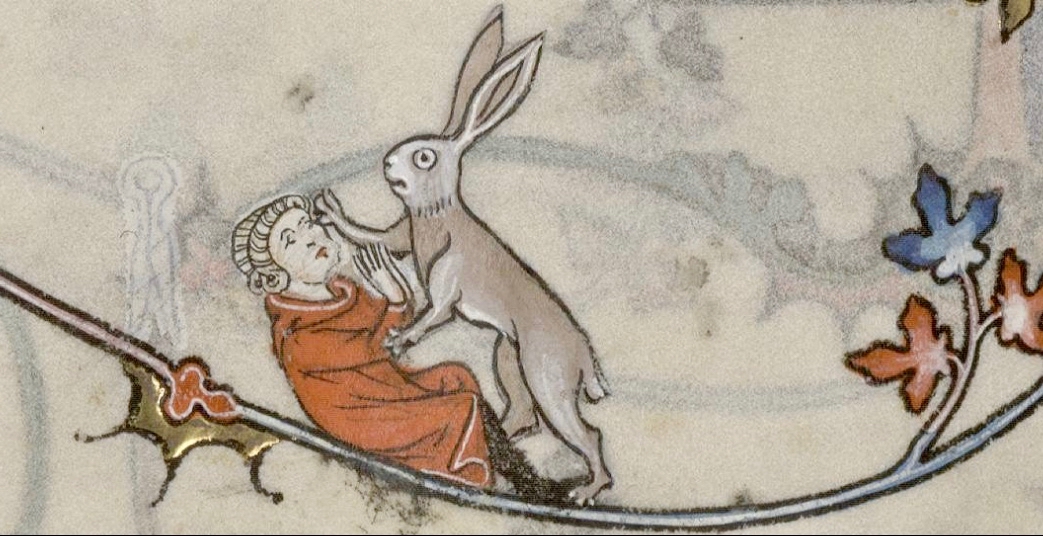
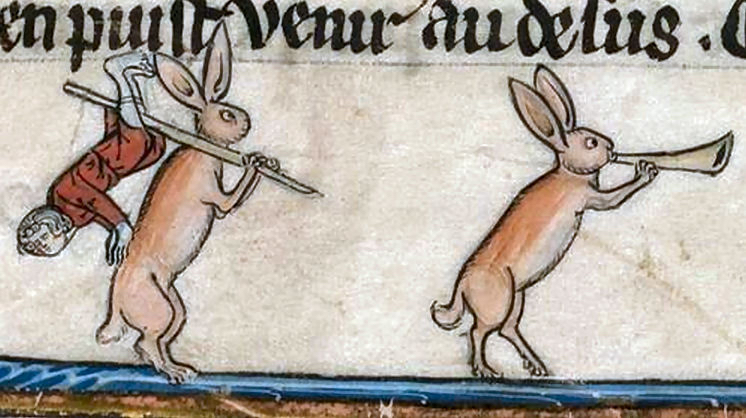
That’s my old friend Kevin Danaher again, reporting on the seasonal customs which we will be celebrating this week, described in The Year in Ireland Mercier Press, 1972. As he points out, the ‘last fling’ in Ireland is tame by comparison with Carnival in other countries, where it really can be the case of A World Turned Upside Down – authority is despatched to the sidelines while fools, mock kings, mock abbots and ‘Lords of Misrule’ conduct the proceedings. Hence the illustrations above, where malevolent hares get their own back on human hunters – and men lay eggs! Both of these are from the marginalia of thirteenth century manuscripts which are teeming with such anarchic visions.

Above – role reversal, a popular feature of carnival customs – and contemporary political upheaval which seems carnivalesque

An 18th century chapbook carries a remarkable and wonderful series of illustrations: The World Turned Upside Down or The Folly of Man, Exemplified in Twelve Comical Relations upon Uncommon Subjects. Here we find ‘the cart before the horse’, ‘children caring for their parents’ and many other thought-provoking reversals.

Back to Danaher:

…In Skibbereen, County Cork, after the fall of darkness on Shrove Tuesday evening the boys of the town amuse themselves by discharging home-made firecrackers. These were made by wrapping gunpowder in paper with a short fuse attached and enclosing the packet in a tight covering of the lead-foil lining of tea chests. Some, even more dangerous, were made from a short length of lead pipe stuffed with powder. These miniature bombs were thrown about the streets, at groups of people, when the sight of the glowing fuse flying through the air was the signal to scatter and run. The bang from these fireworks is said to have been very loud and when thrown at a belated wedding cavalcade, usually caused the horses to bolt, much to the public danger. Towards the end of the last century this custom was finally suppressed by an active police official… (ibid)

amorous hare

John Dunton, an English writer and bookseller, visited Ireland and described various customs he encountered, in Teague Land: or A Merry Ramble to the Wild Irish (1698). Here’s one he observed in Naas, Co Kildare:

…The inhabitants of this place and the neighbourhood have a custom (how begun I could not learn) on Shrove Tuesday to meet on horseback in the fields, and wherever they spy a hare in her form, they make as wide a circle as the company can and the ground will permit, and someone is sent in to start poor puss, who cannot turn herself any way but she is repulsed with loud cries and so frightened that she falls dead in the magical circle, though sometimes she breaks through and escapes; if a greyhound or any other dog be found in the field, it is a thousand to one she loses her life; and thus after they have shouted two or three hares to death they disperse…

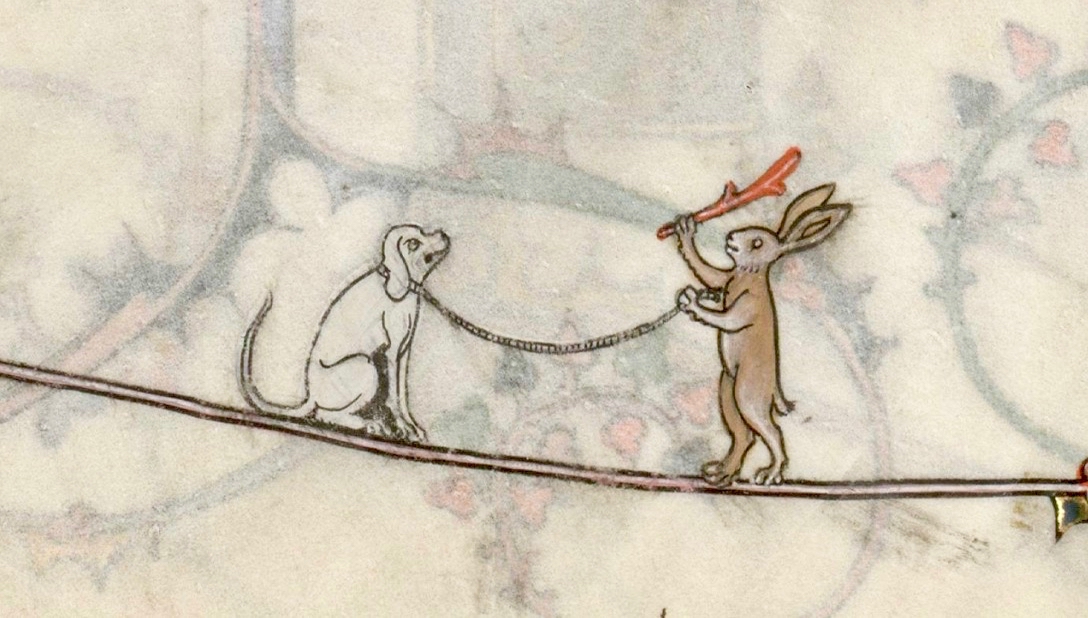
Hardly surprising, then, that the hares in the 13th century manuscript marginalia should want to get their revenge… And, unhappily, an evolution of this same barbarous sport, now under the name of ‘hare coursing’ is still permitted in Ireland! We live in a topsy turvy world, indeed.

better hunting hares

Amhlaoibh Ó Suilleabháin, the schoolmaster of Callan, Co Kilkenny reported a similarly unsavoury Shrove Tuesday custom in  1831:

…To-day is the day when cocks were pelted. It was a barbarous trick. The poor cock was tied to a post or a stone by a hard hemp cod, and sticks were thrown at it. He who killed it became owner of it. A penny was wagered on every shot. Recently this custom has receeded. I have not seen it for thirty years. It was an English custom…

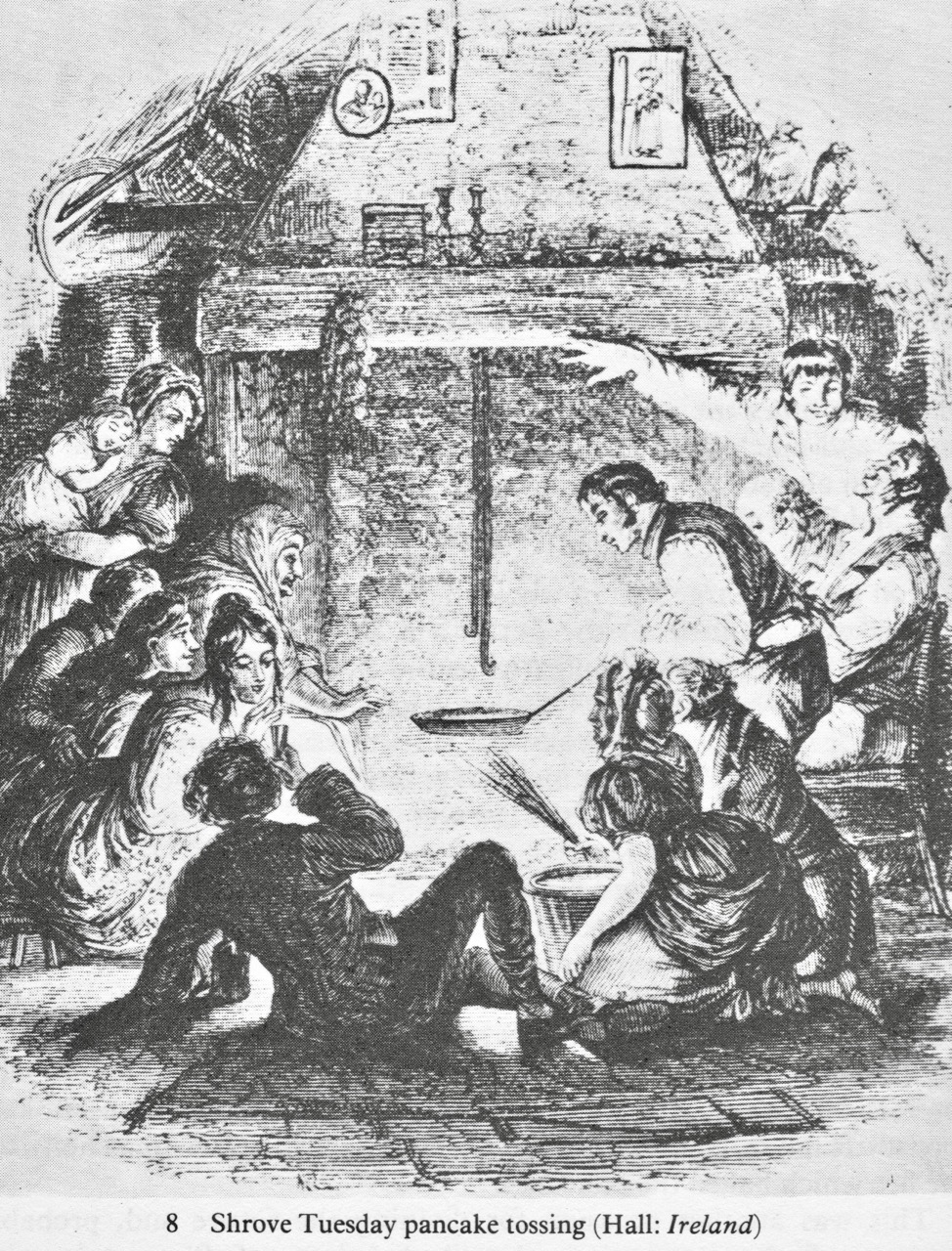
Good to know that we can at least blame the English for that! Cock-throwing was also noted in the three volume Guide to Ireland published between 1841-1843 by Samuel Carter Hall (1800-1889), and his wife Anna Maria (1800-1881) …The day for this sport was Shrove Tuesday, a day which is still dedicated to games and amusements far less cruel and irrational… They went on to describe and illustrate pastimes more familiar to us.

hall's shrove tuesday

…The family group – and the “boys and girls” of the neighbours – gather round the fireside; and each in turn tries his or her skill in tossing the pancake. The tossing of the first is always alloted to the eldest unmarried daughter of the host, who performs the task not altogether without trepidation, for much of her “luck” during the year is supposed to depend on her good or ill success on the occasion. She tosses it, and usually so cleverly as to receive it back again on its surface, on its reverse, in the pan. Congratulations upon her fortune go round, and another makes the effort: perhaps this is a sad mischance; the pancake is either not turned or falls among the turf ashes; the unhappy maiden is then doomed – she can have no chance of marrying for a year at least – while the girl who has been lucky is destined to have her “pick of the boys” as soon as she likes…

We had better finish off with a pancake recipe – and who better than Monica Sheridan to provide a traditional Irish one?

Oh! Do I hear you asking where Licking the Lizard comes into all this? Here is Kevin Danaher to round things off:

…There was a common belief that to lick a lizard endowed the tongue with a cure for burns and scalds; this was especially effective if the lizard was licked on Shrove Tuesday…

hare with dog