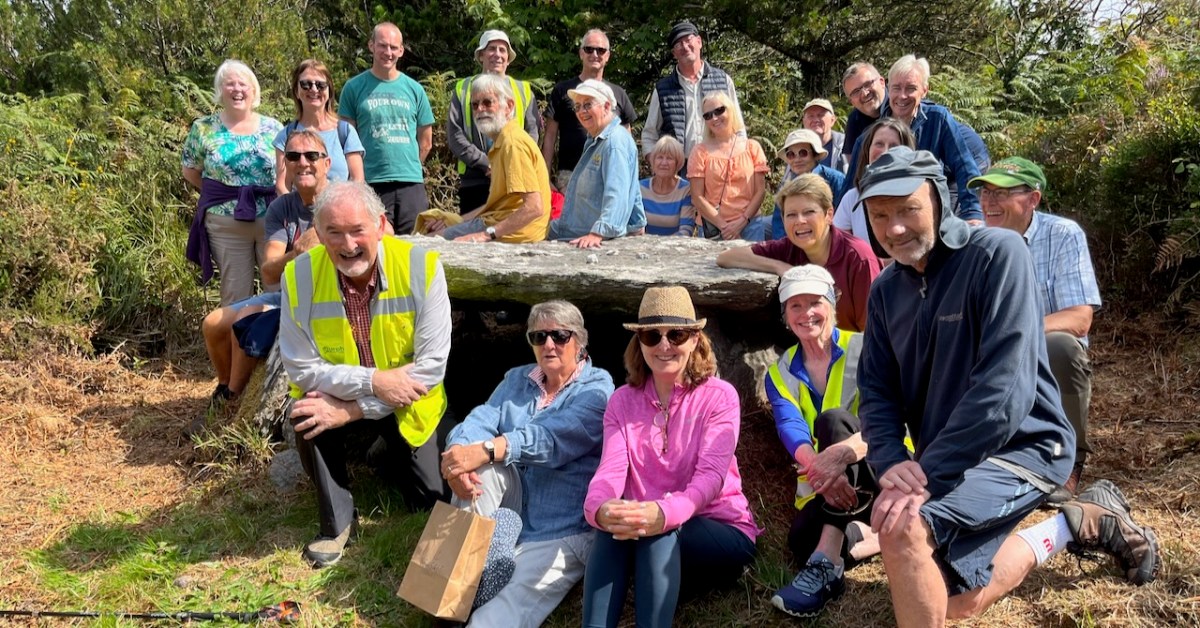
During the Ballydehob Summer Festival this year the organisers scheduled a Walk to the Wedge Tomb. A lovely group signed up and we made our way up the newly-cleared path.
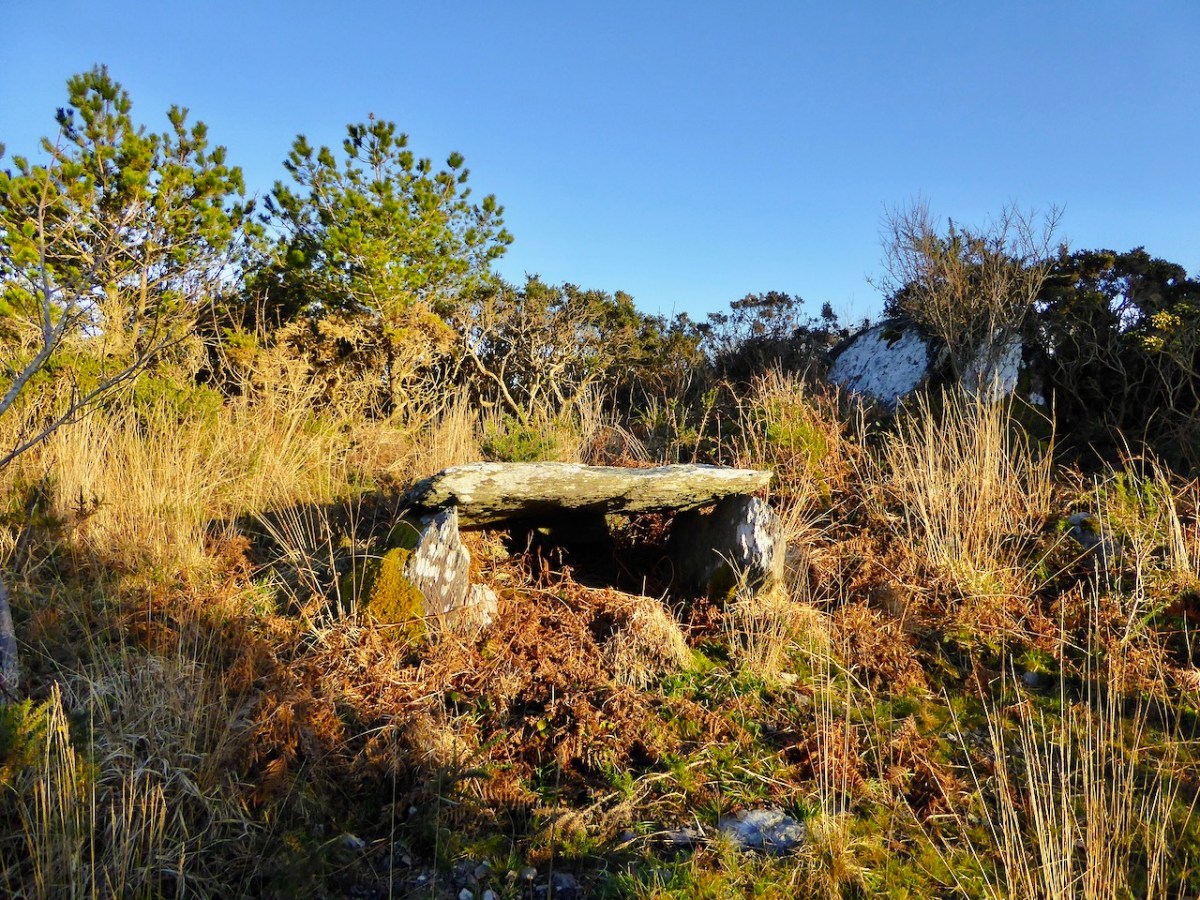
This wedge tomb, in the townland of Kilbronogue, is close to where we live. We were introduced to it way back in 2015 by the owner of the land, Stevie Lynch – see this post for an account of that meeting, and for more about wedge tombs in general. At that time, Stevie also brought us to a previously-unrecorded cupmarked stone on his land (below), which we subsequently submitted to the National Monuments records.
Stevie’s attitude to the monuments on his land was exemplary. He promised that no harm would ever come to them while he was alive. “These ancient monuments don’t belong to me,” he told us, “they belong to everyone.” In that instant he became our Heritage Hero, and we loved seeing him at the Ballydehob Talks at the Vaults, which dealt with all aspects of local heritage.
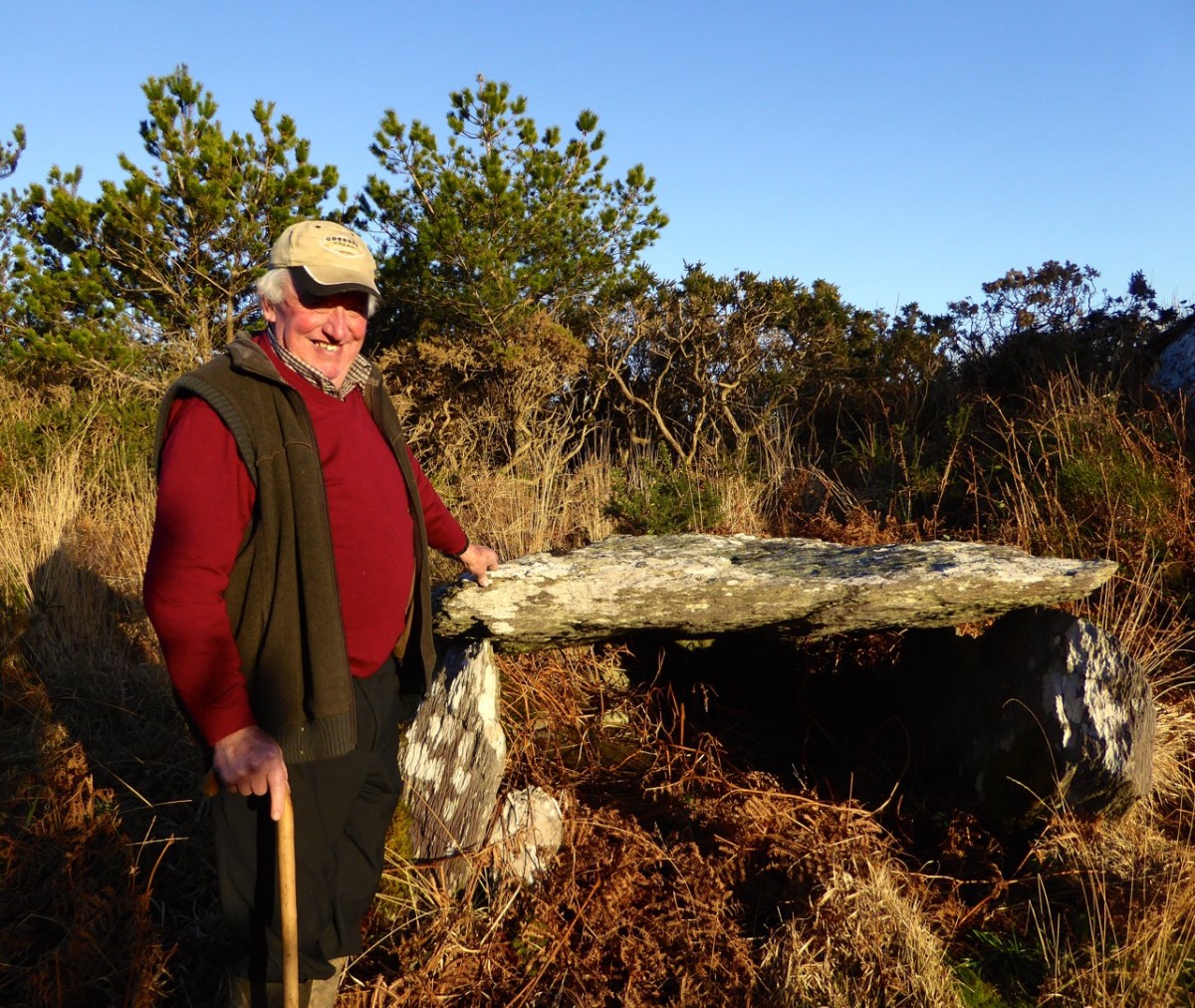
Sadly, Stevie passed away earlier this year. So this Walk to the Wedge Tomb was an opportunity for all of us to honour the memory of the man who had treasured this megalith and designed a path to it for everyone.
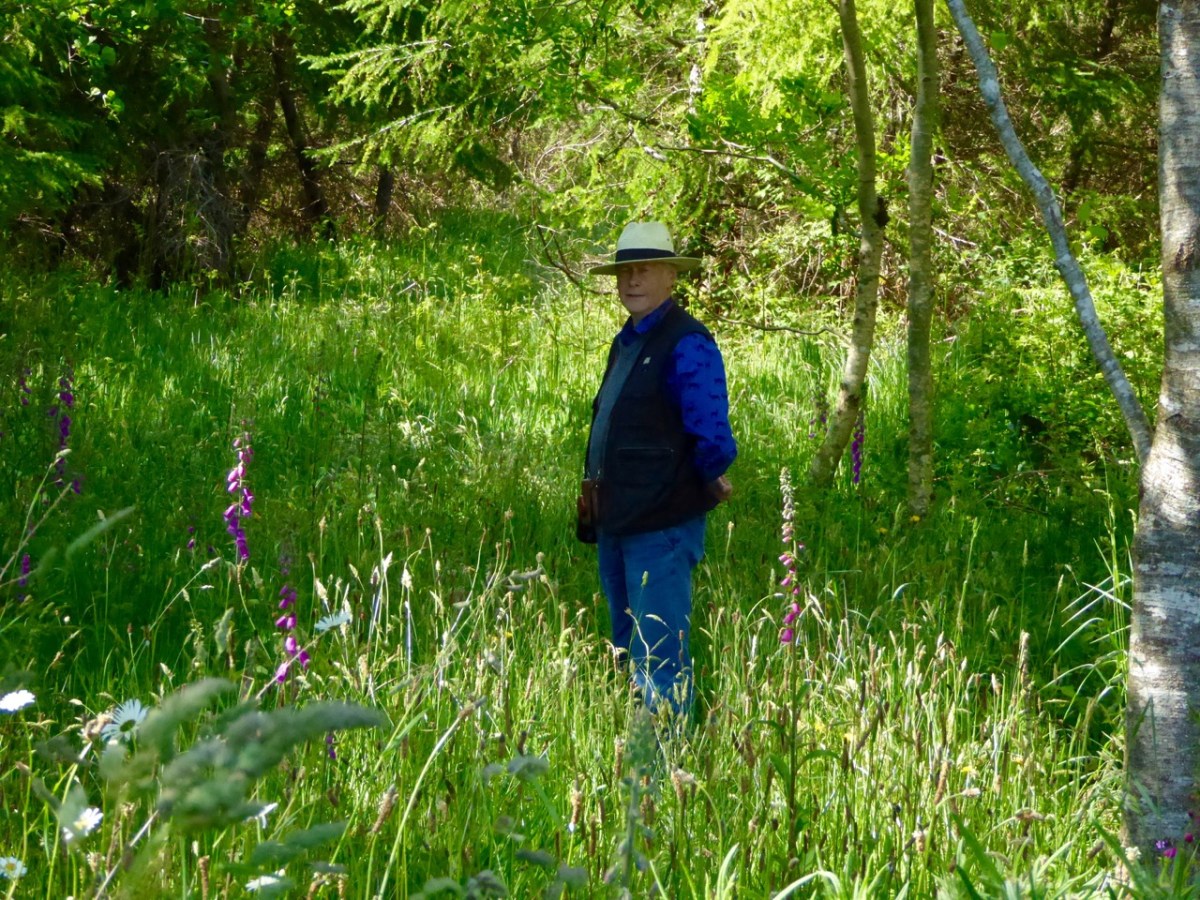
The walk up through Stevie’s plantation of native trees is beautiful. It can get quite overgrown in the summer (above), which only enhances the atmosphere, and it’s actually quite awe-inspiring to emerge at the top to the site of the tomb, sitting in a small glade.
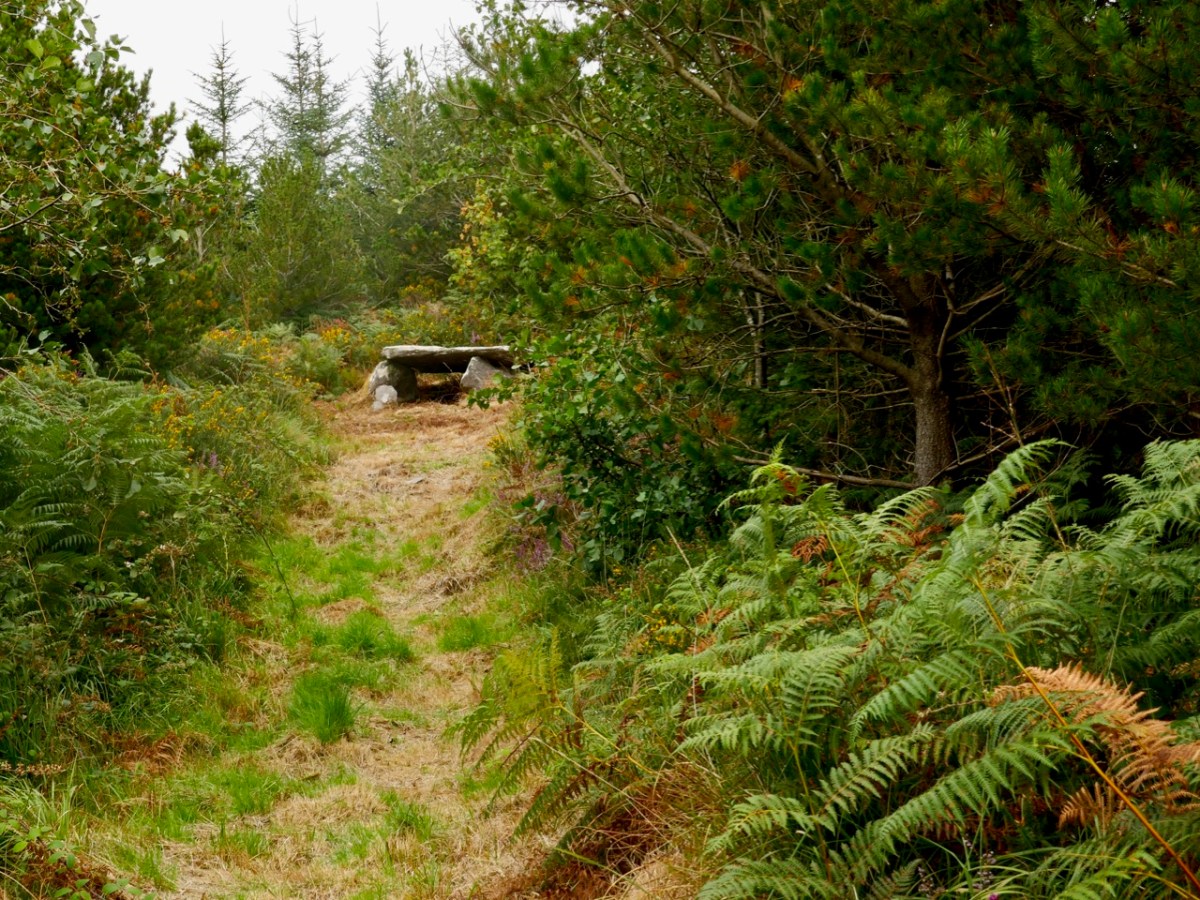
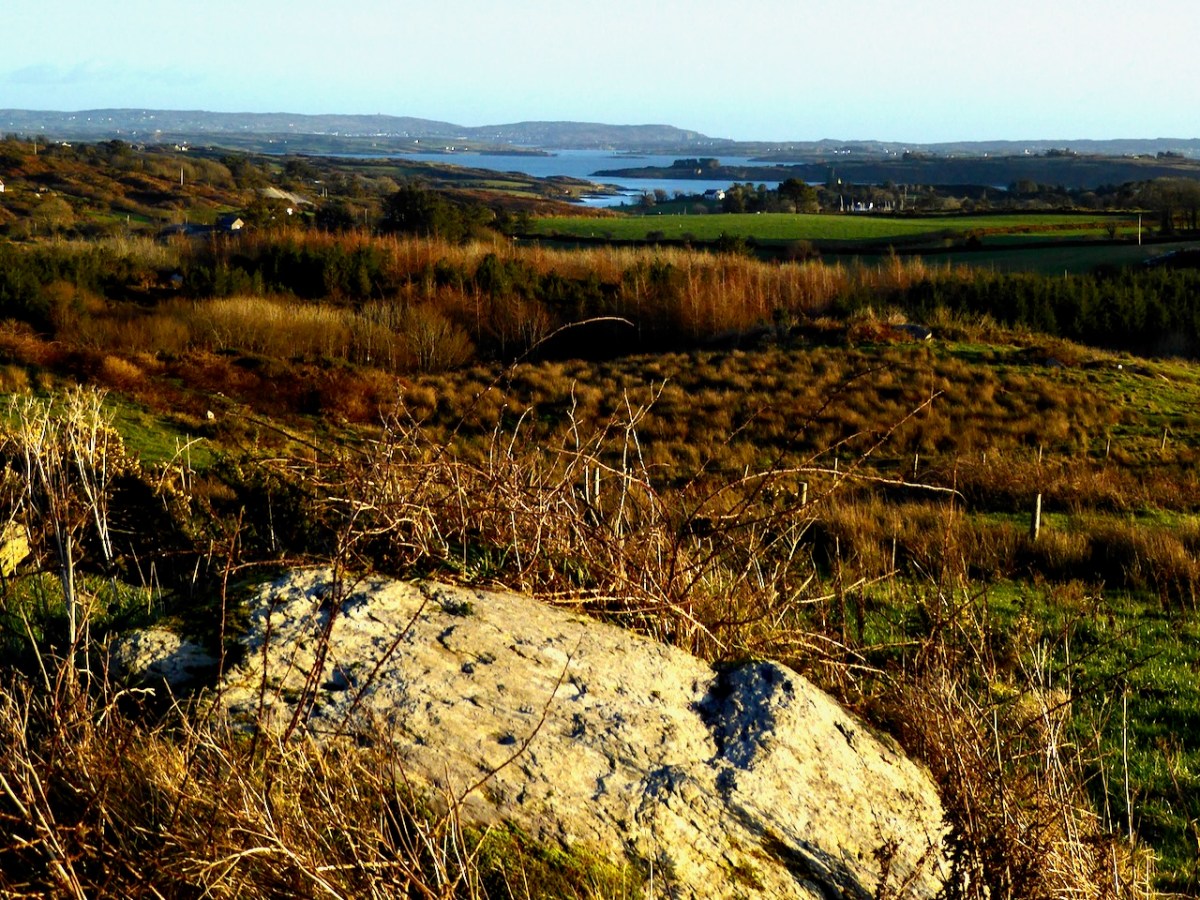
Kilbronogue is a classic wedge tomb, higher and broader at the opening, west, end, and oriented to the west. Some trees have come down, I think, in the last few years, because now there is a clear view to Mount Gabriel from the tomb. I suspect that there is also a view down the Peninsula to the Mizen Peak, although I can’t verify that due to the trees that surround it.
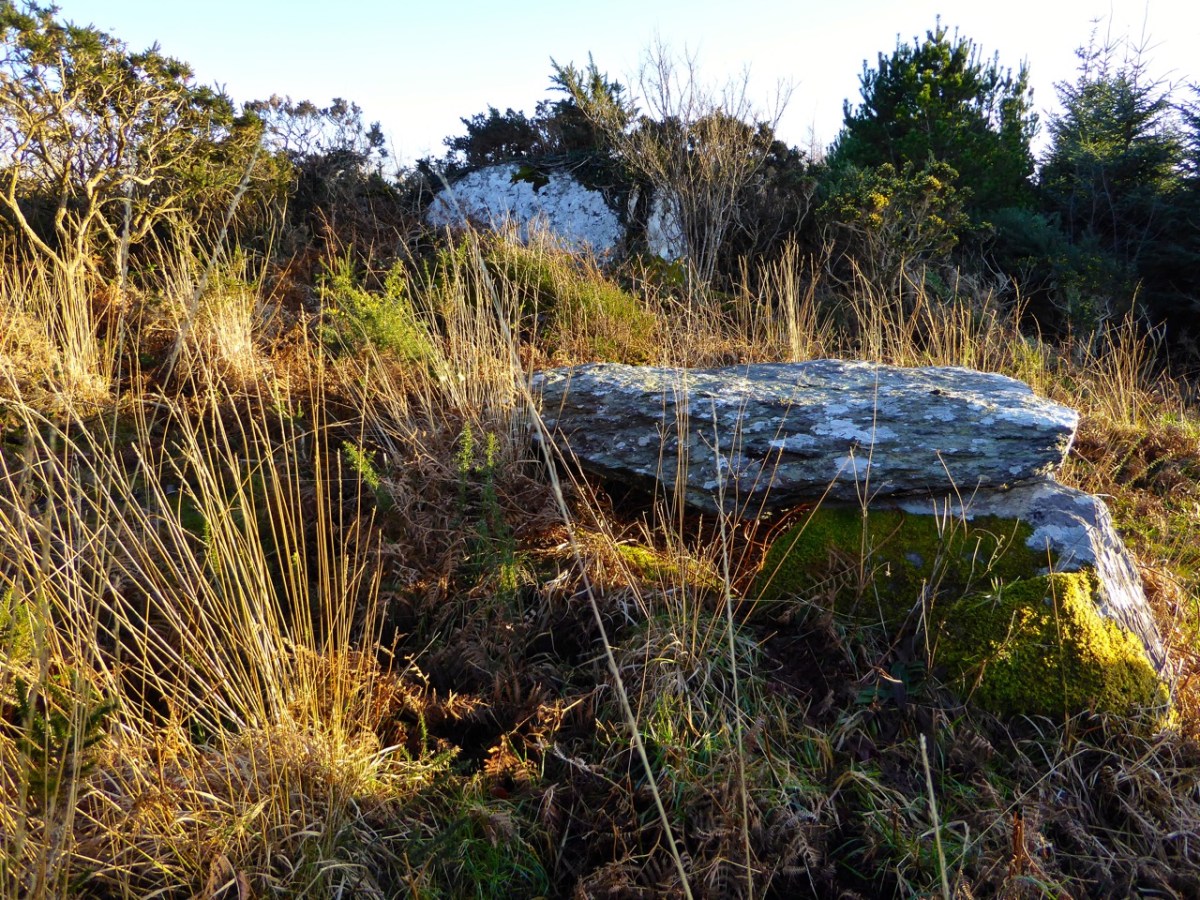
There’s a rock outcrop right behind the tomb (above) and it was probably the source of the stones that built it. Wedges are small megaliths and we can imagine them as the work of a local community or even family group.
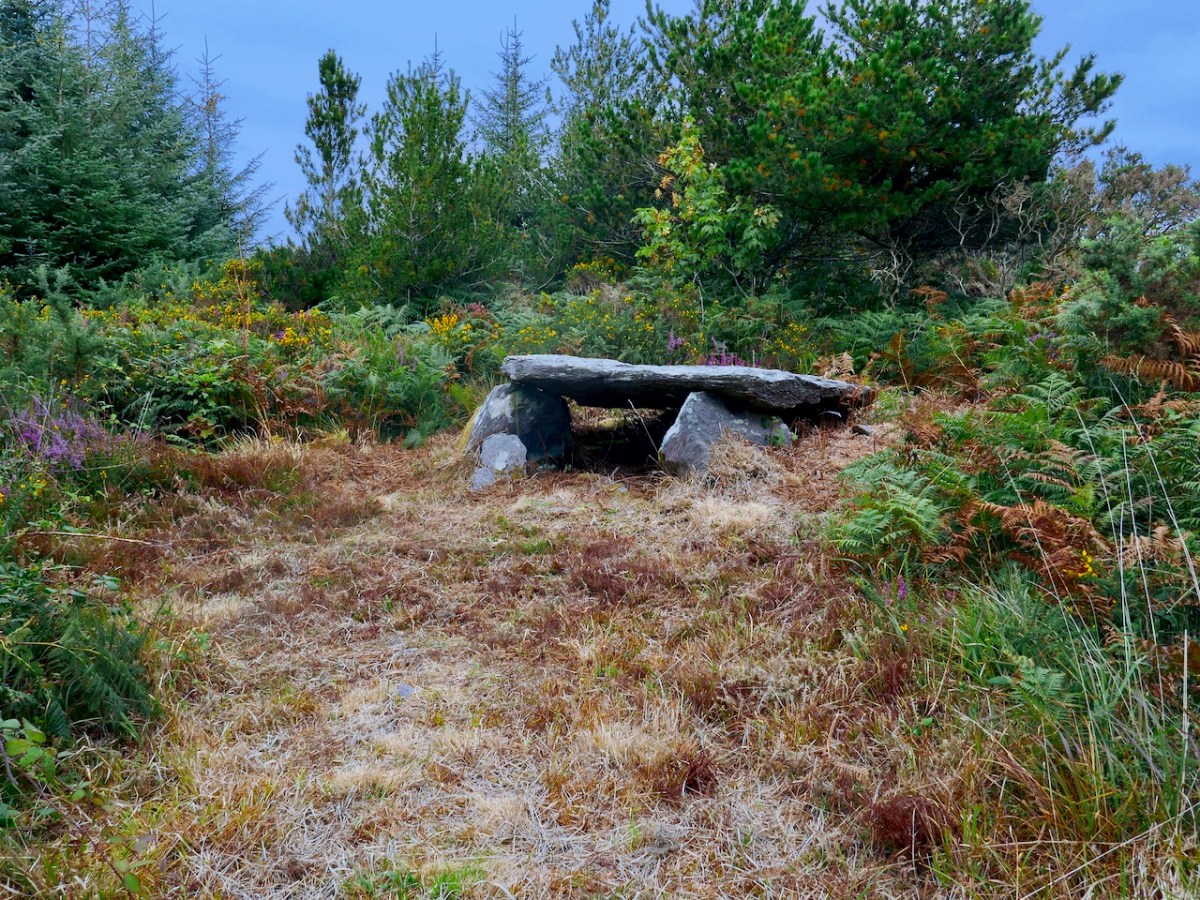
The burial rite was cremation, and they generally date to the Early Bronze Age, the time when Mount Gabriel was a source of copper for these early metal workers and farmers.
There is some folklore about it – here’s an extract from the Schools’ Folklore Collection:
There is a Dolmon also in Kielbronogue in a hill which belongs to John ORegan. There is a very big stone on top of three other stones. It weighs one ton. It is said that men lifted it. Some people say that Mass has been celebrated there, and others say a great chieftain of old was buried there.
DÚCHAS, SCHOOLS’ COLLECTION, ROSSBRIN
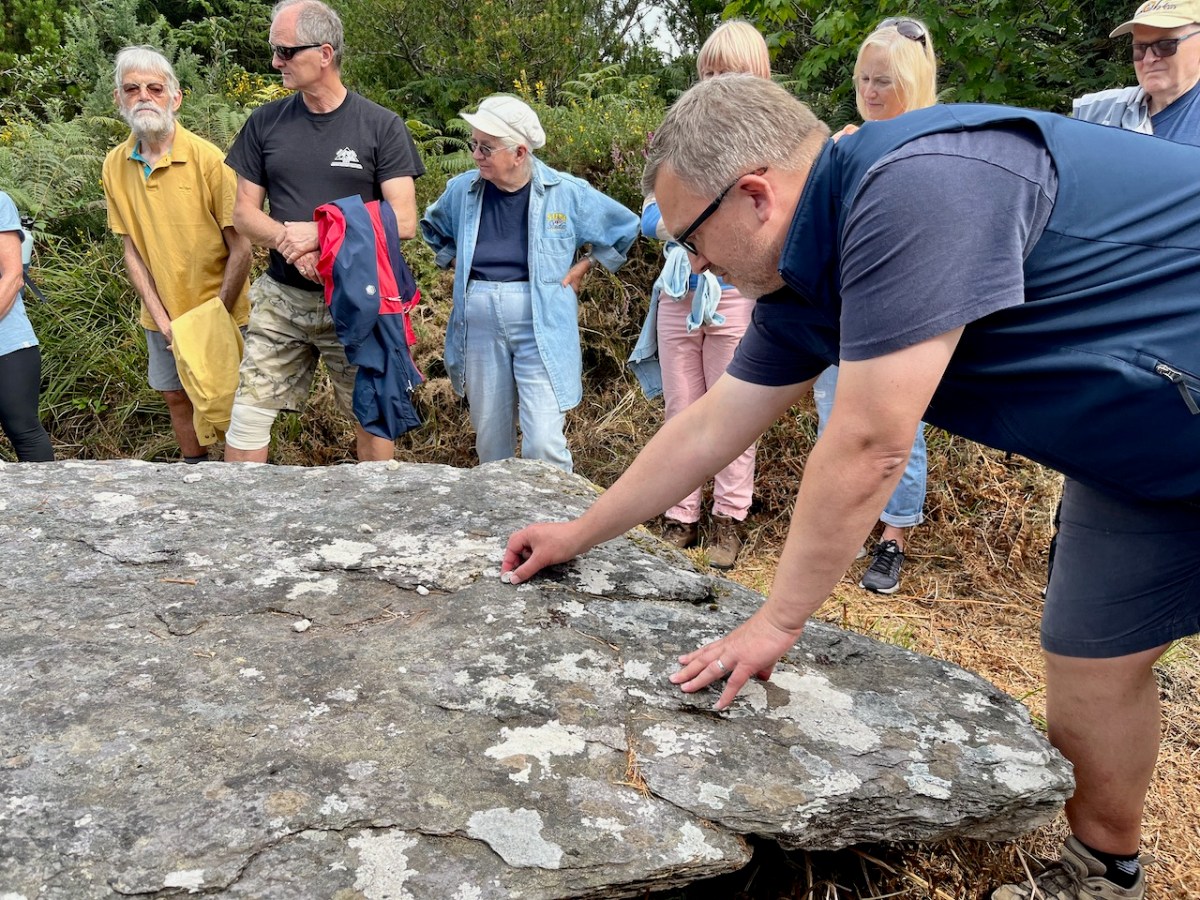
One of the findings at wedge tomb excavations is that white quartz often features as votive offerings, sometimes in the tomb and often in front of it. We had brought along a bag of white quartz pebbles, and each of us laid a pebble on the tomb as our own small thank you to Stevie, our Heritage Hero.
 Roaringwater Journal