
There’s a new blog on the scene – and it’s just the sort of thing to appeal to Roaringwater Journal readers. Holy Wells of Cork is the brainchild of Amanda Clarke. We’ve written about Amanda before – she often comes along on our adventures and she and Peter are the team behind the book Walking the Sheep’s Head Way and the website Sheep’s Head Places.
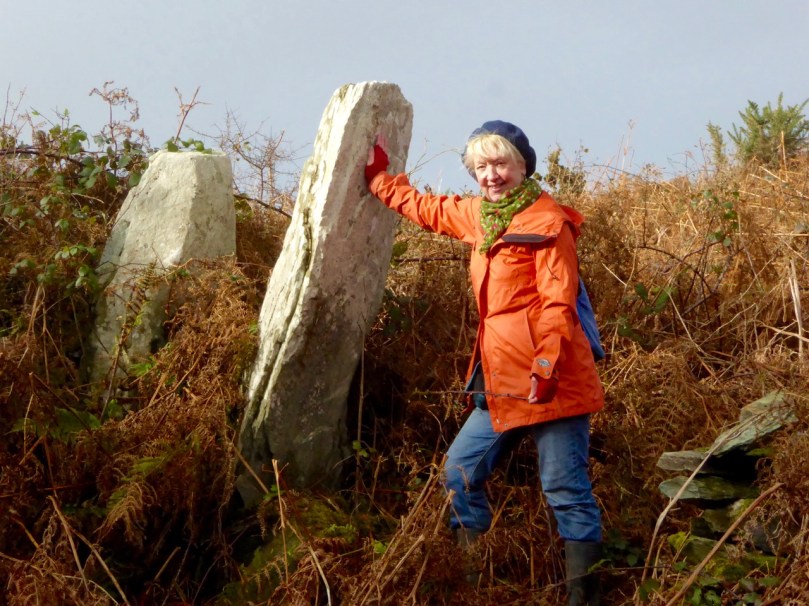
Amanda’s always been fascinated by holy wells. We’ve gone to see quite a few over the last couple of years – often a case of hunting down an obscure reference or a dot on a map. She decided that the perfect day to launch her blog was, of course, St Brigid’s Day, February 1st, and that, in order to do it properly, she should visit a St Brigid’s well on that exact day. I tagged along as the recorder.

It’s up there? And I have to go up on my knees?
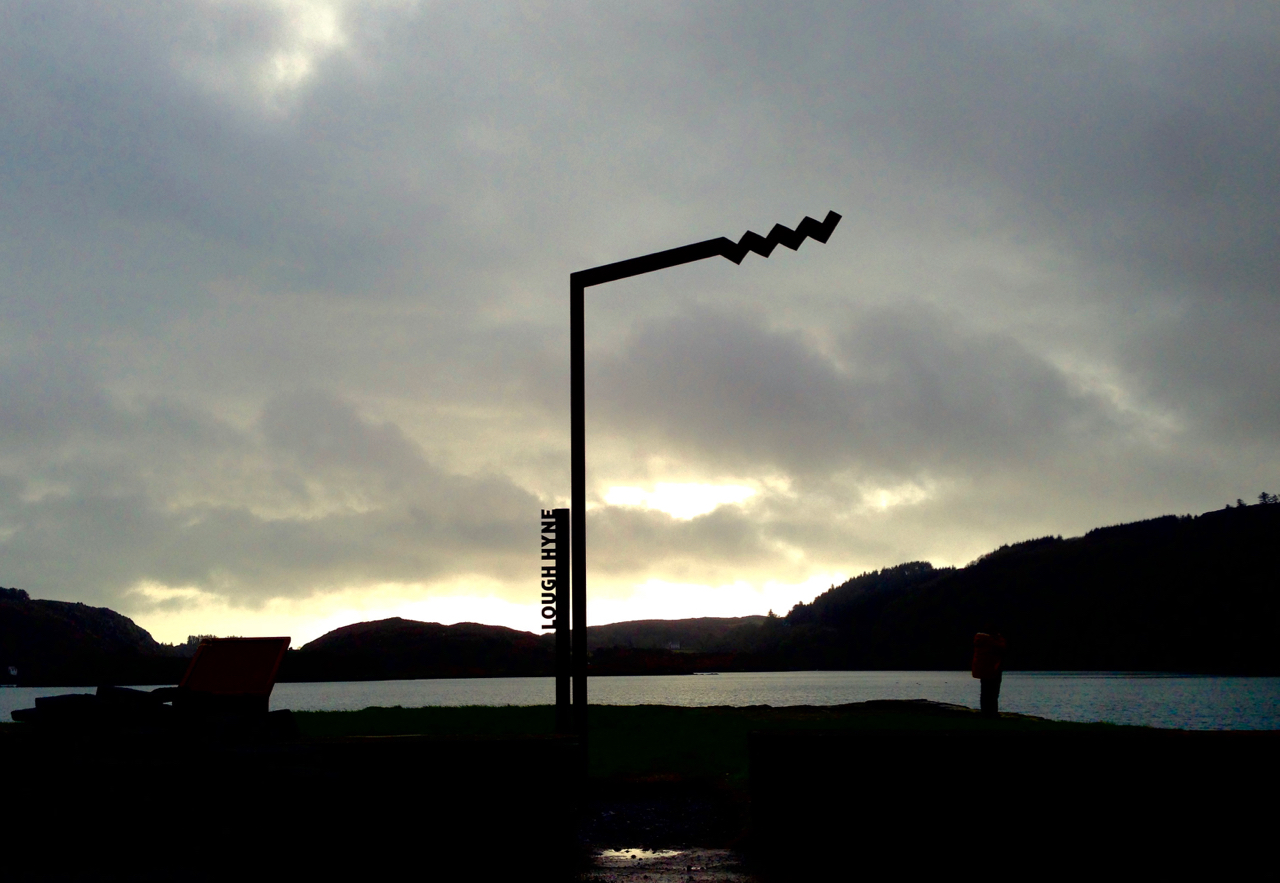
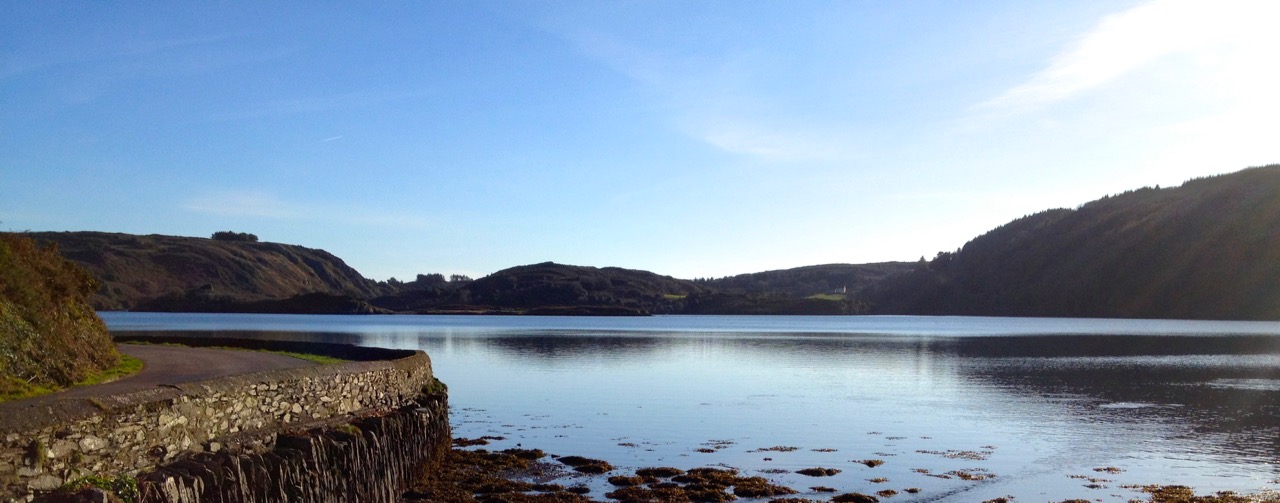
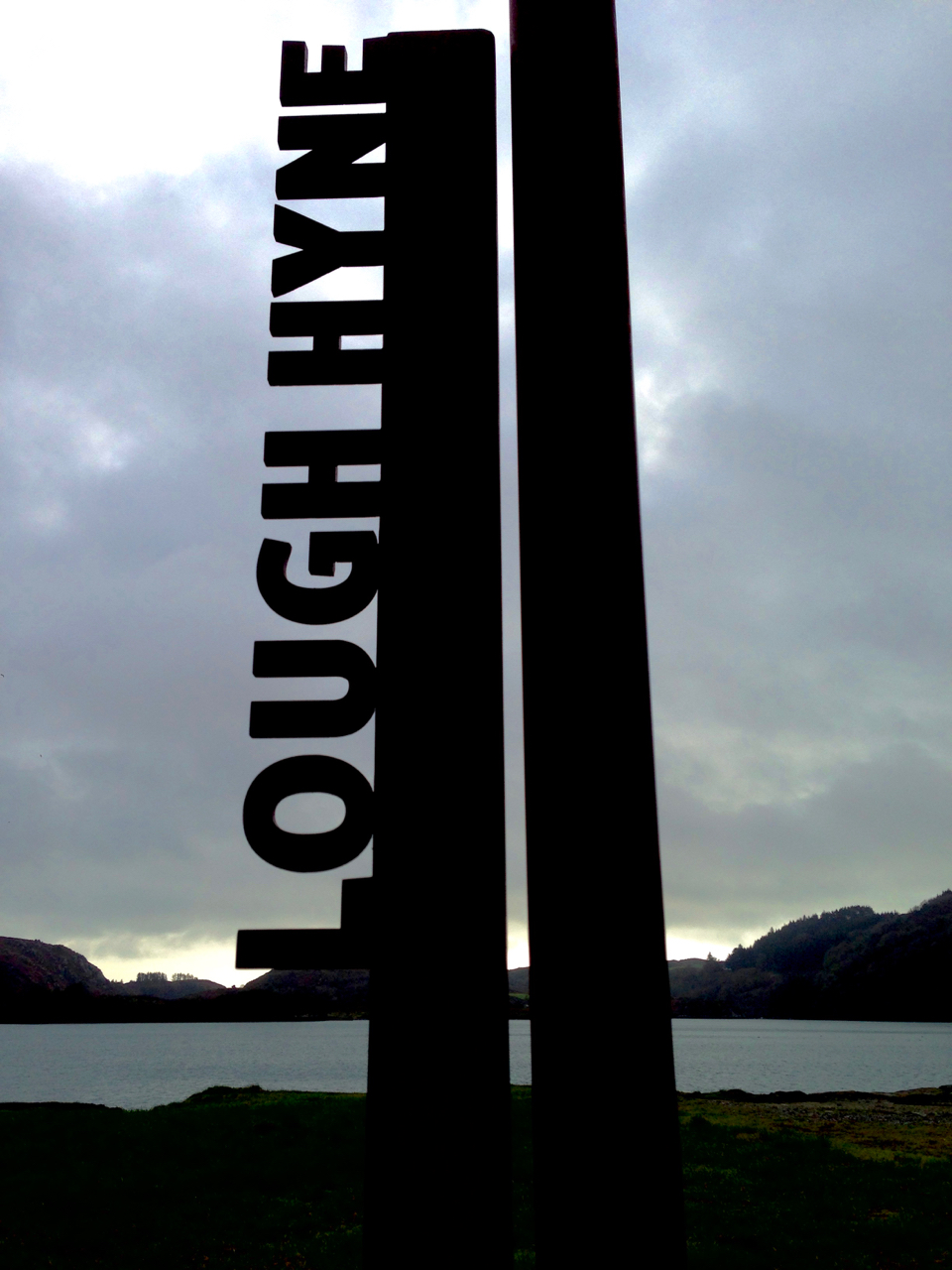
St Brigid’s well, Tobar Breedy, is on private land on the side of Lough Hyne, south of Skibbereen, and Amanda had sought and been granted kind permission by the landowner to visit the site. You can read her account here – it’s all in her signature chatty style that manages to make you feel as if you’re on the adventure as well.
As a bonus, there’s a tiny ruined medieval church, also dedicated to Brigid (Templebreedy).

However, all is not well in the land of holy wells. A recent post is about four holy wells that were once the focus of veneration in Cork City. Read how they have weathered the passage of time, and be glad that she is recording them before some of them disappear from public consciousness altogether.


The first time I went to this secluded holy well in Castle Haven I was afraid to venture over the crumbling bridge. But when we returned, the bridge had been replaced. Local people are often proud of their holy wells and keep them up
Amanda will be posting regularly so go on over and sign up so you will get the updates as soon as they are on the blog. There’s lots of background information as well.

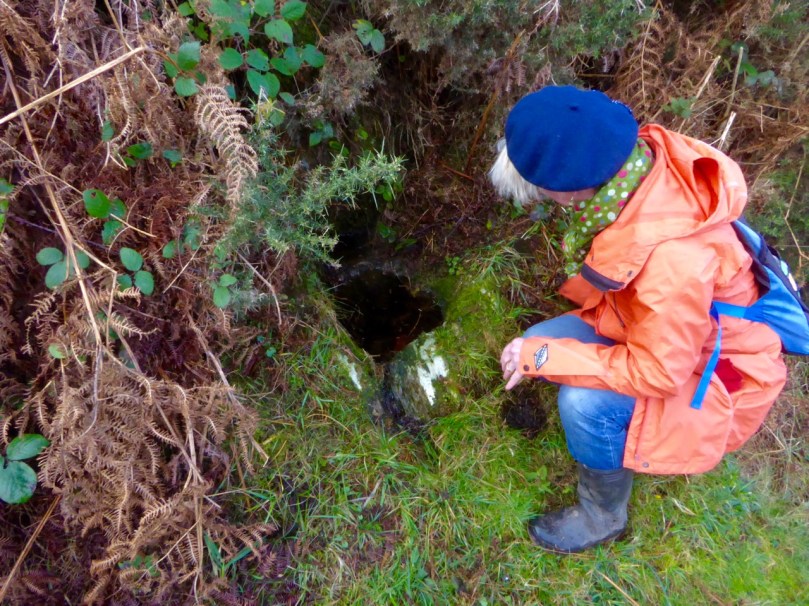
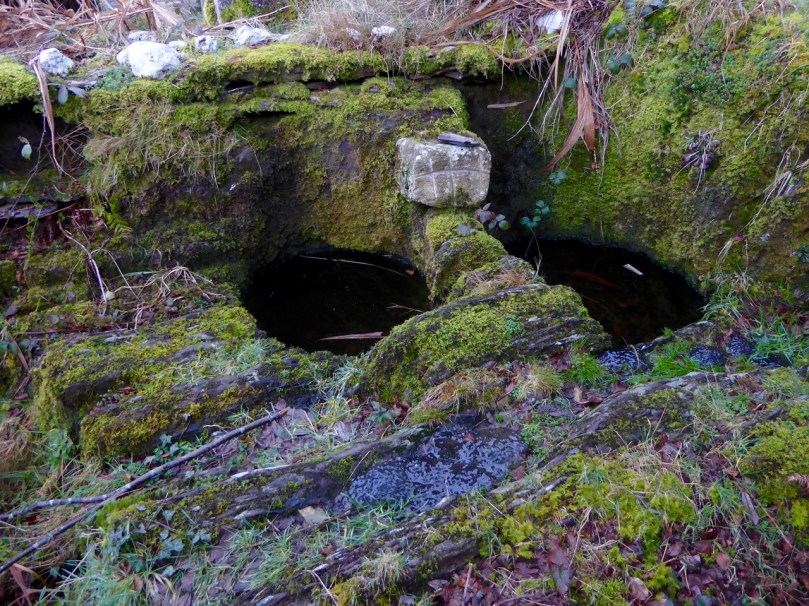
Believe it or not there’s a tiny well under all that decaying foliage
We’ve featured holy wells ourselves from time to time. One of our favourites was this time last year, just outside Ballyvourney, where we found the well of St Abán , who may have been St Gobnait’s brother.
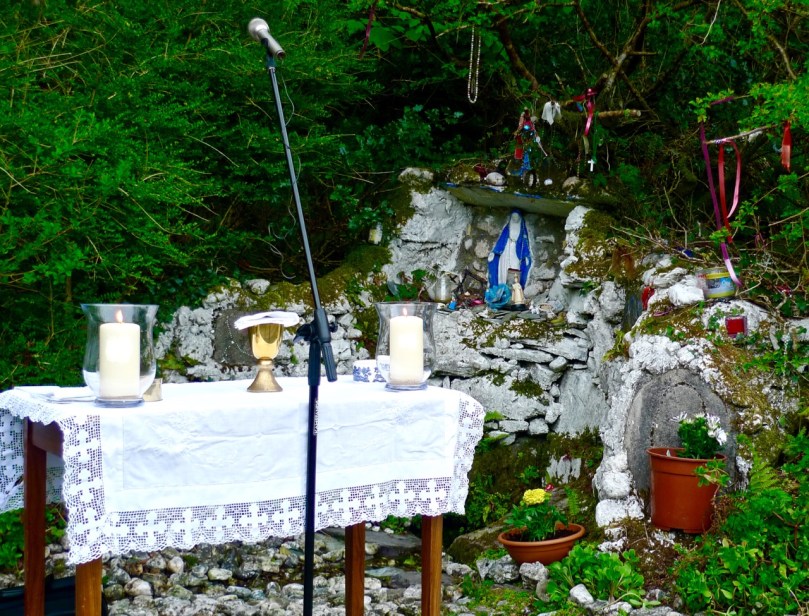
Robert wrote about the other holy wells near Lough Hyne, one a Lady’s Well and one dedicated to curing eyesight. Last year, he attended the mass which is still said here every May.
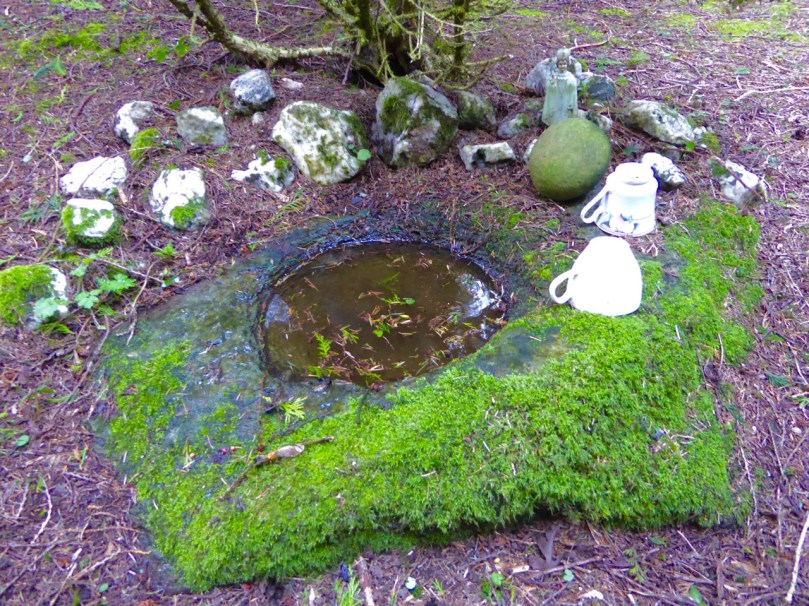
This little well is in the middle of a small wood, with evidence it is still in use. Note the white quartz stones around it – white quartz is often found at prehistoric sites too
No doubt Amanda will record all of this properly in time. I’m looking forward to her future posts and to going along on the field trips!

I love the offerings that you see at Holy wells. Sometimes you get extras too. In the case below, St Lachtan’s Well, it’s frogspawn. Holy frogspawn, of course.
 Roaringwater Journal