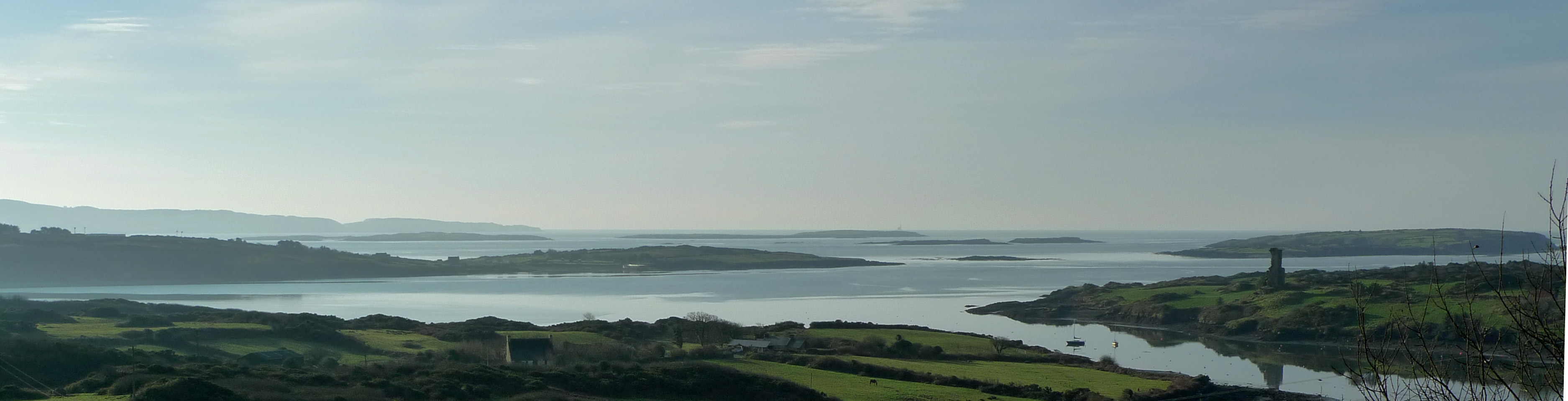
‘The Pale’ was an expression first noted down in the early 15th Century to describe the ‘safe’ area around Dublin which was kept fortified and garrisoned by the English monarchs of the time. When we last looked into Irish history [my post: here] Henry II had brought the Norman knights into Ireland and in due course they settled and assimilated with the local populations, in spite of The Statute of Kilkenny which, in 1366 decreed that inter-marriage between English settlers and Irish natives was forbidden. It also forbade the settlers using the Irish language and adopting Irish modes of dress or other customs. In reality such laws were impracticable, unworkable and largely ignored.
 To be ‘outside the Pale’ meant to be outside a safe zone. Down here in West Cork we are a very long way ‘outside the Pale’ – a map shows West Cork and Kerry in 1450 as an isolated area in the south west of the island surrounded by Hiberno-Norman Earls and Lords. In that time there were local factions protecting their interests by building castles and fortified tower houses all along the wild and rugged coastline. I have referred to castles a few times in my previous posts: Rosbrin, just around the corner from Ard Glas – home of The Scholar Prince Finian O’Mahon and a great centre of learning in the Sixteenth Century; another O’Mahony castle at Drumnea – close to the Bardic School – and the place where the two sons of the King of Spain were drowned and turned into swans. Opposite us is Kilcoe Castle, superbly restored from a completely ruined condition by Jeremy Irons [have a look inside it here]: this was a castle of the McCarthy clan. Further to the east are the remains of a number of O’Driscoll castles.
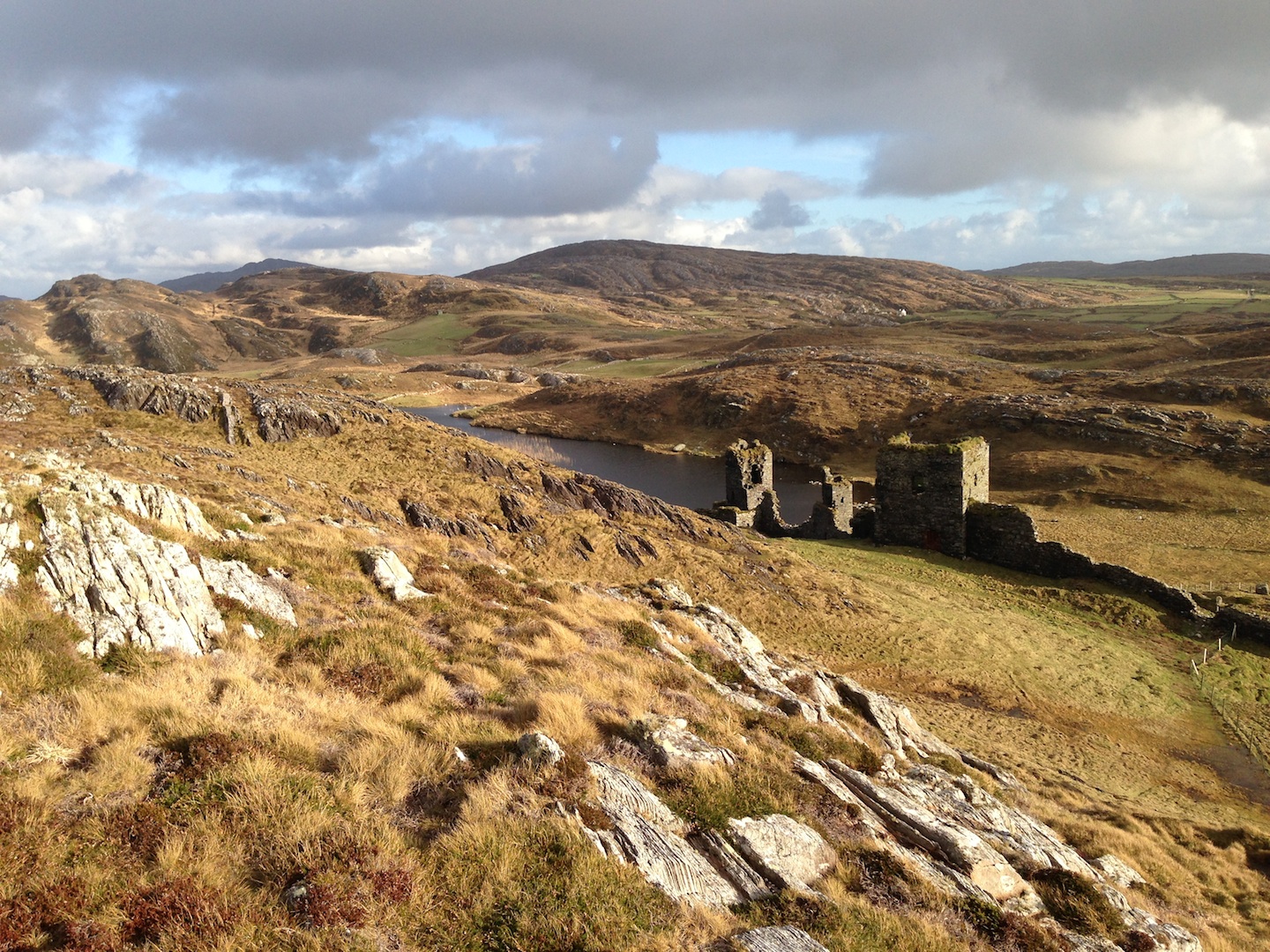
On a crystal clear day last week Finola and I went out to find the remotest of all the West Cork castles: Dunlough. This structure sits on a lonely promontory at the tip of the Mizen Peninsula – Ireland’s most south westerly point. We travelled as far as the snaking lane would take us, then headed on foot across the fields and past the farmhouses that were the end of the civilised world here. Eventually we were clambering over an isolated and untamed landscape of rock outcrops with the Atlantic roaring below us. Our first sighting of Dunlough as we pulled ourselves up to the top of a ridge and looked over was breathtakingly dramatic.
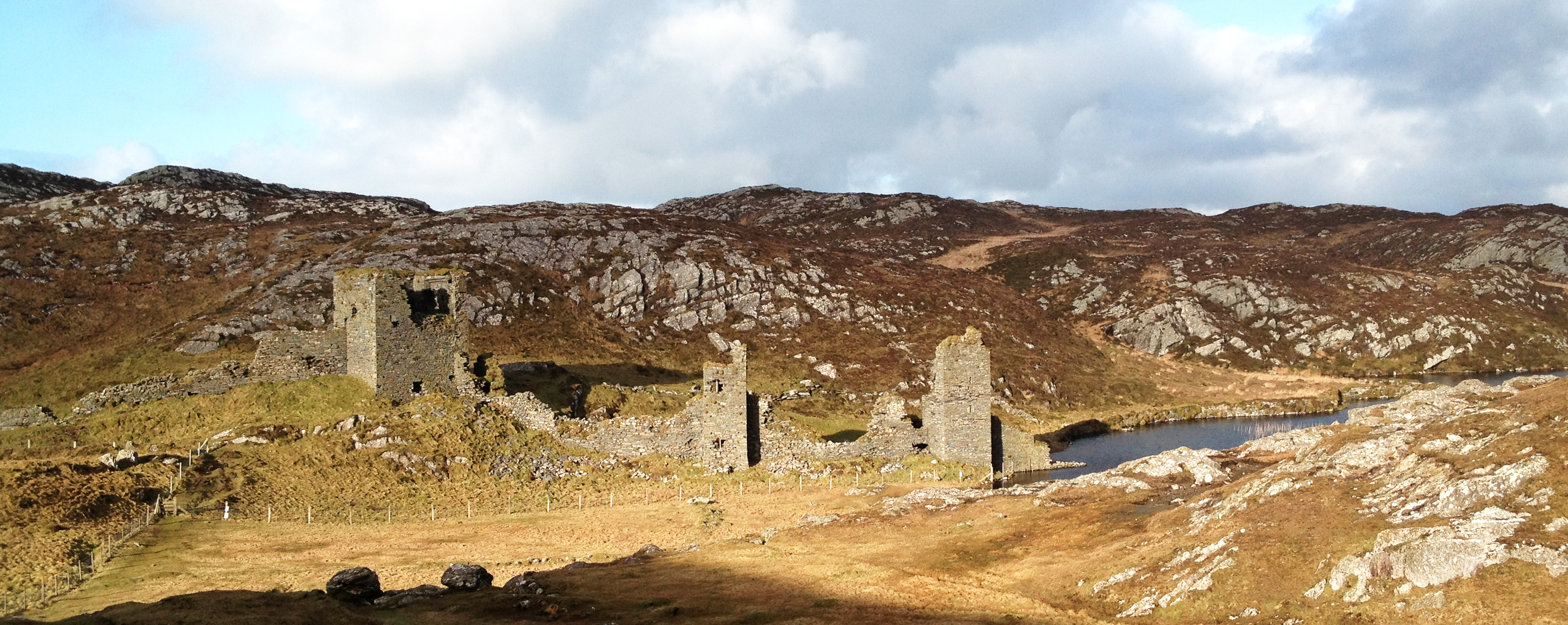
The promontory – in earlier times the site of an Iron Age fort – is known as ‘Three Castle Head’, because of the O’Mahony structure which was now presented to us: there are three square towers or keeps linked by enclosing walls. The castle was founded in 1207 and is built entirely of dry stone masonry. It is remarkable how much of this still stands after 800 years of facing up to the prevailing weather. There is also an artificial freshwater lake beside the walls, probably established at the same time as the buildings, to provide drinking water for the inhabitants and their cattle and – perhaps – a stock of freshwater fish.
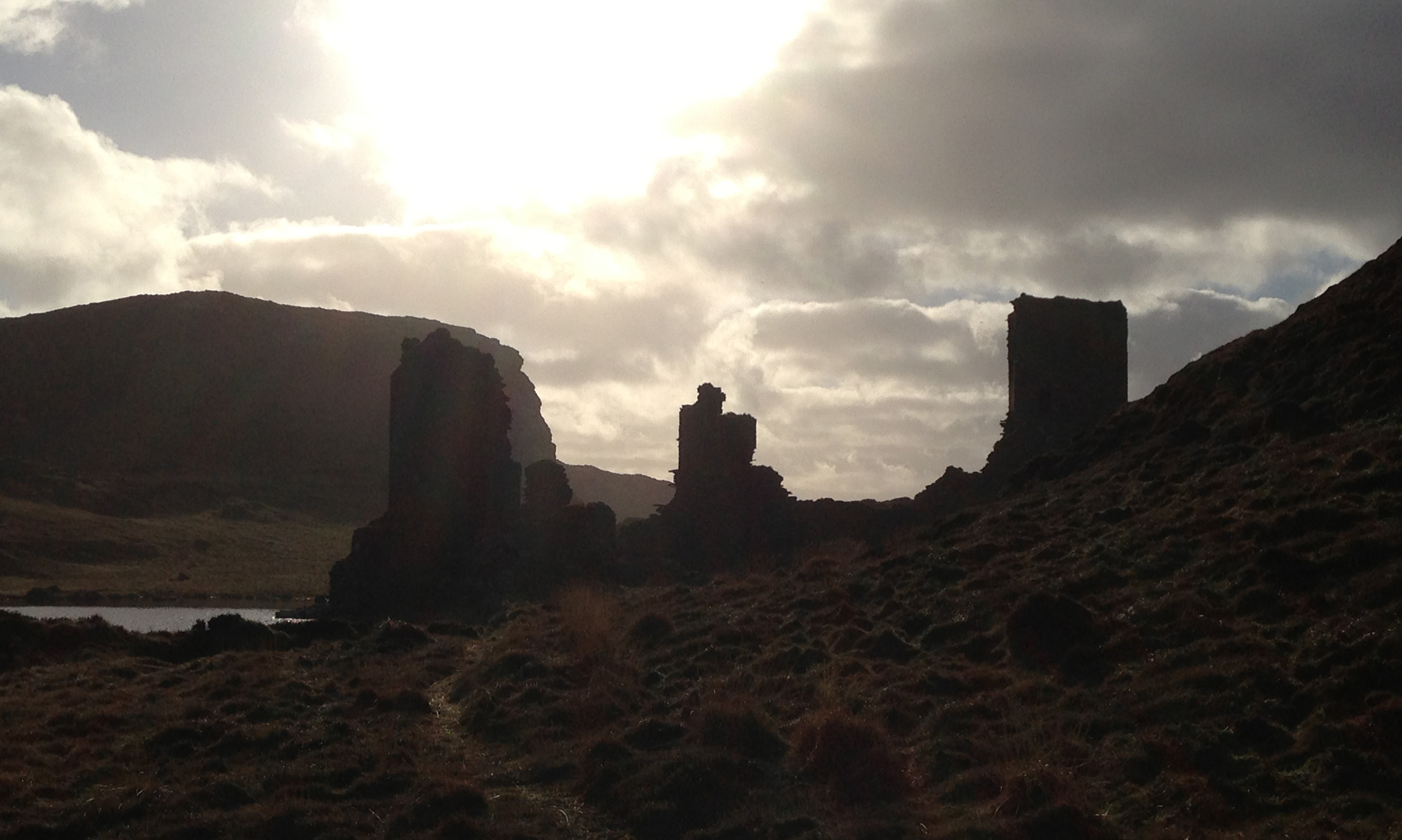
In its time the castle must have supported and sheltered a sizeable population. Today – and for us – it seems one of the most beautiful and lonely places on earth. We walked in awe around the ruins and watched a large flock of Black Backed Gulls foraging on the lake. Perhaps they are the spirits of those who lived their lives out in that extraordinary wilderness?




 Roaringwater Journal