Saintly Soup: Maura Laverty’s Feasting Galore

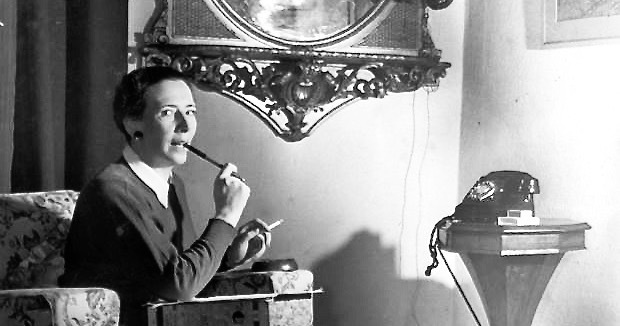
I have long been a fan of Maura Laverty. I was delighted to receive as a Christmas present from my brother a copy of a book by her called Feasting Galore: Recipes and Food Lore from the Emerald Isle. For more on Maura Laverty, and as background to this post, it might be a good idea to go back now and read my post Kind Cooking.
Feasting Galore appears to have been a book written (or rather compiled, as it seems to have borrowed stories and recipes from her other books) especially for the American market (Emerald Isle in the title is a clue). One of those books, of course, was Full and Plenty and there’s great news, by the way for Maura fans – Mercier Press, who owns the publishing rights to Full and Plenty and currently has an abridged version available, is going to re-issue it in full later this year.* I’ll be lining up!

The forward to Feasting Galore is by Robert Briscoe, the Lord Mayor of Dublin in the 1950s and early 60s (below, with JFK on his state visit in 1963). In his remarks he comes up with the following startling claim, Her knowledge of Irish traditional cooking makes her a leader in this field, and this knowledge she has gained from a detailed study of the lives of the early Irish Saints which are our chief source of information concerning the domestic ways of the ancient Irish. Having read something of Bob Briscoe as he was universally known in Dublin, I can see his tongue firmly in his cheek here and his audience in mind. And having read the book, I see Maura laughing her way through the whole project.

Now, as my readers know, I love a good saint. Briscoe’s reference was irresistible and sent me searching through the book for all the saintly references. I found lots of them! Before I get to the Saints though, I thought you might like a rundown on some of the traditional Irish recipes we don’t hear much about nowadays. After reading the list you might feel there are good reasons for that.
Let’s start with the vegetables. We begin with Brandon Parslied Potatoes, and move on to Slieve na mBan Carrots before reaching Cauliflower Souse. This is followed by Haggerty, Leekie Manglam, Nettle Briseach, Pease Pudding, Potato Collops, and Potato Scrapple. And of course Braised Cabbage and Colcannon make an appearance along with Dulce Champ.

I think you’d have to agree that of all of these Leekie Manglam is the one that needs to be investigated. So here is the story as given by Maura Laverty.

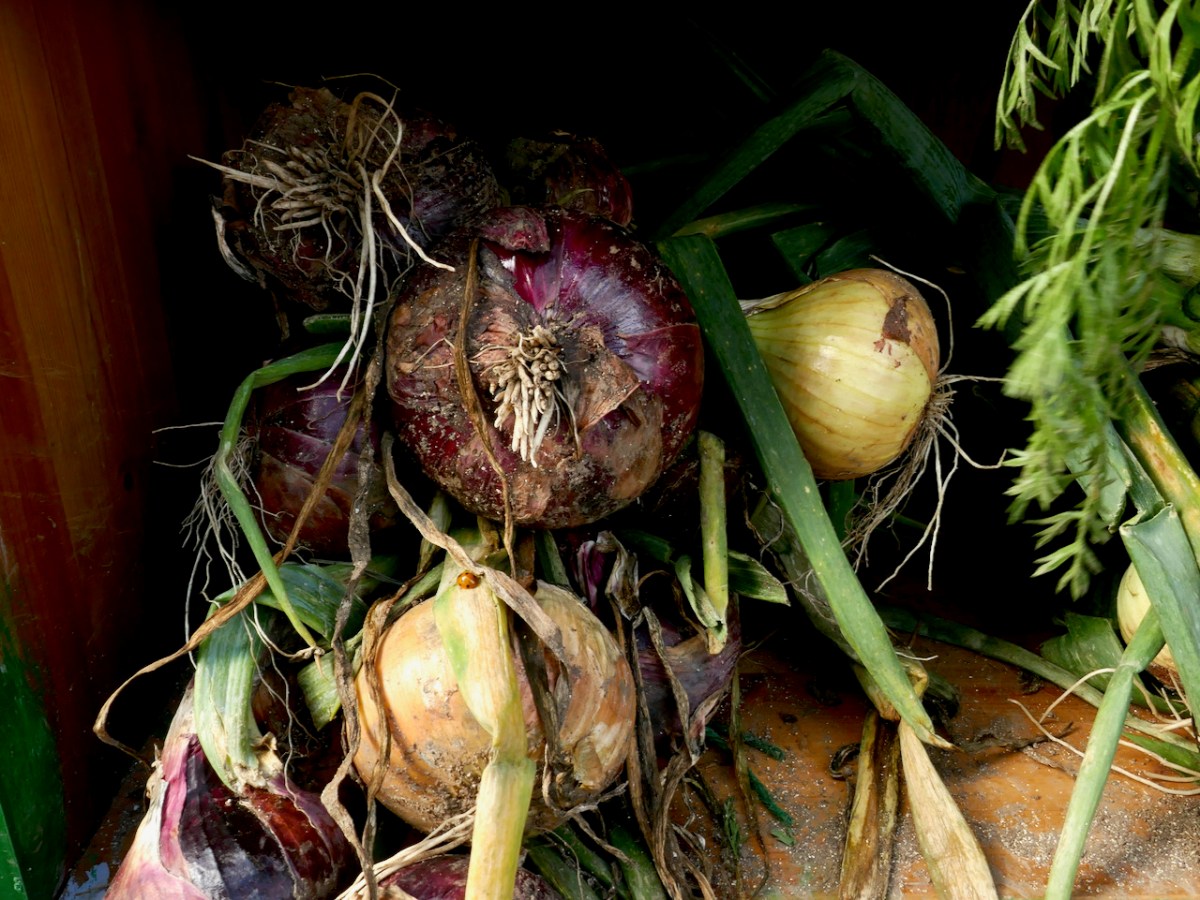
Leeks have always occupied a favoured place in Irish cooking – and with good reason. Their popularity dates back to the days of Saint Patrick. One day, so the story goes, a Chieftain who was being driven out of his mind by his pregnant wife’s demands for leeks (then out of season), employed the Saint’s help. Saint Patrick took a few juicy rushes, blessed them, and turned them into leeks which immediately cured the unfortunate woman’s “longing sickness“ and brought peace to her harassed husband. There and then Saint Patrick ordained that any woman suffering from the “longing sickness“ (modern doctors call it “pica“ or “morbid craving“) should be cured if she ate any member of the onion family.

So now you know! And here is the recipe.

Ingredients: One third recipe for Lardy cakes, three large leeks, four slices streaky bacon, half cup breadcrumbs, quarter cup milk, pepper and salt to taste, one egg.e

Method: parboil the leeks, drain, and cut them into very thin slices, add the diced bacon, mix in crumbs, milk, and seasoning. Divide the pastry in two. Use half to line a pie plate. Fill with the leek mixture. Brush edges with water. Cover with a lid of pastry. Press edges firmly together and flute. Brush with beaten egg and bake 30 minutes in a 425° oven.

As with other traditional Irish cookbooks (see this post about Monica Sheridan for example) every piece of an animal is used. There are recipes for Brawn, Cock of the North, Coddled Coneen, Griskins, Haslett, Pig’s Cheek, Trotters, and Tripe. There’s a bewildering variety of jams, jellies, scented jellies, marmalades and chutneys.
But what about the saints I hear you ask? Well, we’ve already had a taste of Saint Patrick so here’s one about Saint Columba and the recipe is for something called Brothchán Buidhe. Pronounced brohawn bwee, it means yellow broth, which is a savoury concoction of vegetable stock thickened with oatmeal and enriched with milk. It was, Laverty tells us, the favourite pottage of Saint Columba.

When Lent came around the Saint decided to mortify himself with ersatz broth, so he instructed his cook to put nothing into the broth pot except water and nettles, with a taste of salt on Sundays.

“Is nothing else to go into it, your reverence?” asked the cook in horror. “Nothing except what comes out of the potstick,” the Saint replied sternly.

This went on for two weeks. The Saint grew thinner and weaker, and the cook grew more and more worried. And then, all of a sudden, Saint Columbus started to put on weight again and the worried look left the cook’s face. The devoted lay brother had made himself a hollow potstick down which he poured milk and oatmeal. Thus he was able to preserve his master from starvation and himself from the horrible sins of disobedience and lies.

When questioned by the Saint he was able to assure him honestly that nothing went into the broth save what came out of the pot stick.

I will save you from the recipe because it looks very unappetising indeed and I can’t imagine anyone would want to make it for any reason.

The next Saint we encounter is Saint Keevóg, and he comes at the end of a version of the Children of Lir. For the complete and very sad story of the four children who were turned into swans by their wicked stepmother, you can read Robert‘s post here. Here’s Maura’s ending:

At long last the day came when they heard the mass bell of Saint Keevog. The four swans winged their way to the Saint’s little church where they were baptised. It is said that immediately after their baptism, their feathers fell from them and they reverted to human form, but incredibly aged and wrinkled.… And this story of the children of Lir explains why Swan, which was considered royal food elsewhere, is never mentioned in accounts of ancient Irish banquets. Until this day to kill a swan is an unforgivable sin in Ireland.

From poetry to pike is not such a long step, particularly when the pike is from Lake Derravara and is made into a poem of a dish in this way. 

This is followed for a recipe for Pike Derravara – a bit of a stretch perhaps. Keevog is St Mochaemóg, the founder of Liathmore monastery about which we wrote here. In Robert’s version he is called Saint Kemoc, a hermit who found them, four ancient, withered people.
Did the cookie, Maura Laverty asks us, come from Ireland? Here is her answer.

The first written mention of cookies occurs in the ancient Book of Lismore.

It seems that when Saint Patrick came to Ireland he found that Ogham – the only form of writing then known here – was the closely guarded secret of the Druids. Patrick in his wisdom realised that education was a necessary preliminary to conversion from paganism, and he introduced the Roman alphabet to the people to whom he was bringing the gifts of enlightenment and salvation.

In the book of Lismore we are told that the child who grew up to be Saint Columcille found difficulty in learning the alphabet. To encourage him his mother baked A-B-C cookies with which he was rewarded as he mastered letter after letter.

It is very probable that this sweet way of coaxing children to learn became common throughout Ireland. And I think it quite likely that it was introduced to America by Saint Brendan the Navigator who discovered the New World long before Columbus set foot there.

And so it goes on, over-the-top names and recipes designed to, er, feed every leprechaun-and-shamrock preconceived notion that Americans might have of the Irish. There’s a chapter on Fast-Day Feasts, and recipes for Convent Loaf and Nun’s Cake. I can only imagine the fun she had writing it. The illustrations, by Bill O’Gorman (I’ve found nothing about him – anyone?) also add to the chuckles – it’s hard to imagine a more stereotyped set of cartoons.

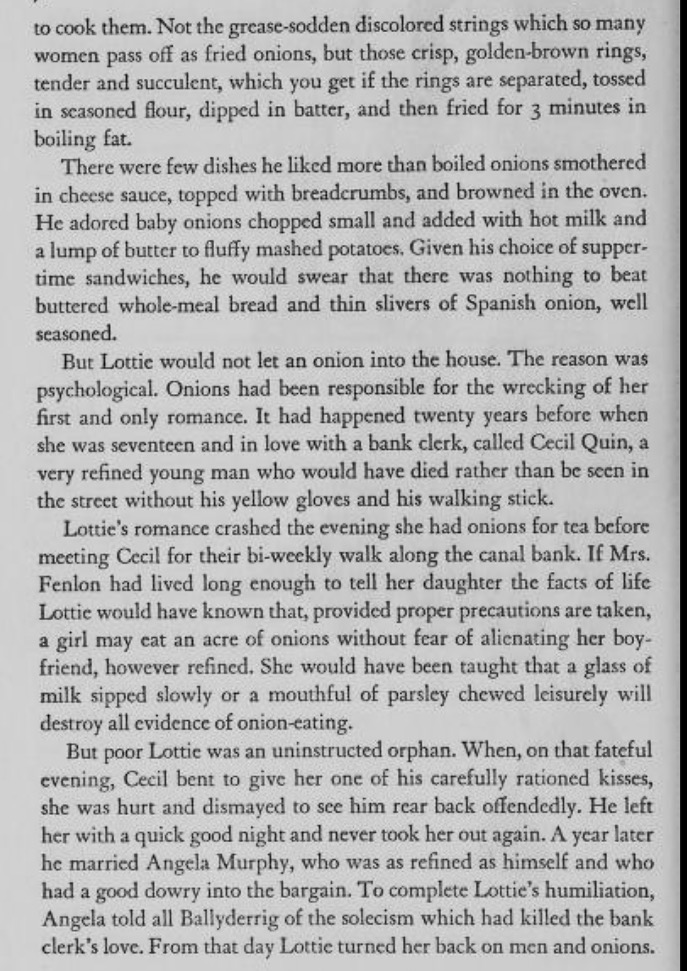
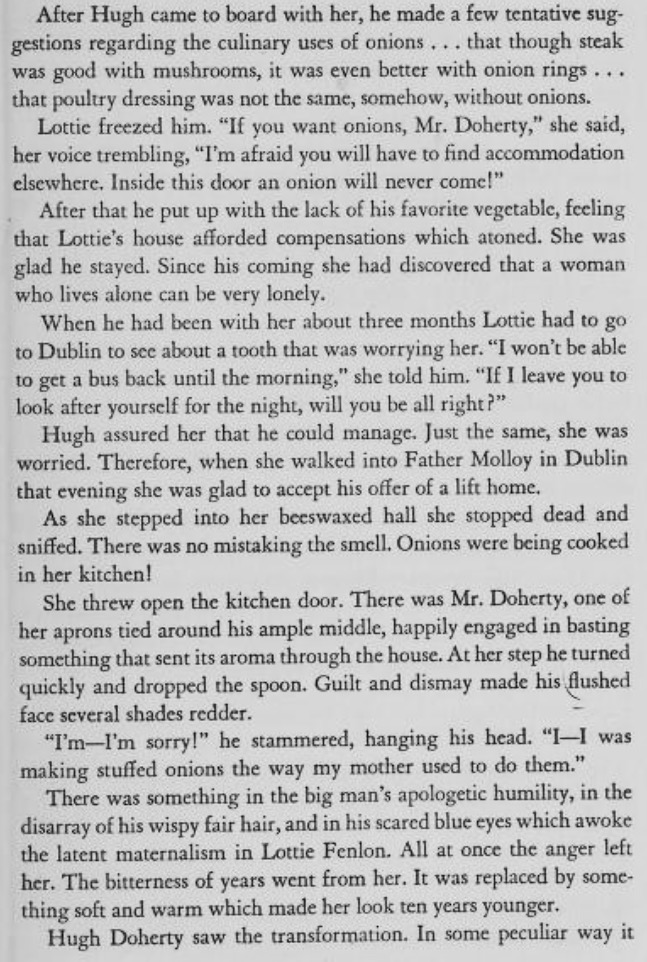
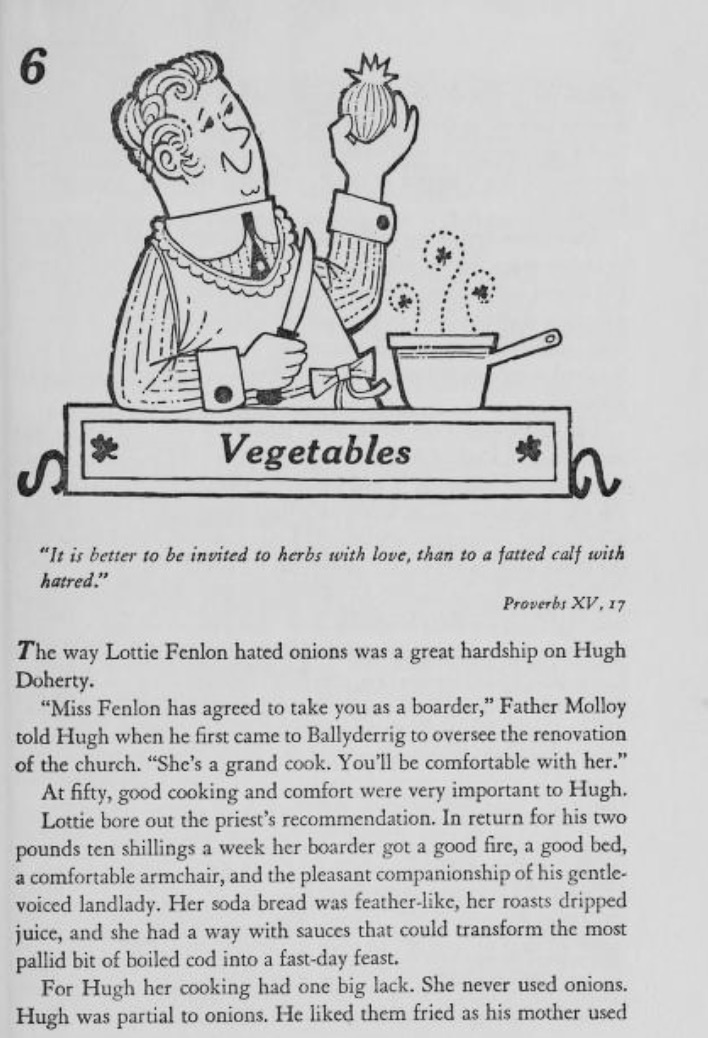
Each chapter is preceded by a story, mostly around the theme of food being the way to a man’s heart, and that age, girth or criminal records were no impediments to true love. I leave you with the one with which she introduces the vegetable chapter. 
Now, seeing as it’s the season that’s in it, I’m off to cook up some St Brigid’s broth.

*Many thanks to Mercier Press – although they do not claim rights for Feasting Galore, I appreciate that stories and recipes in it have been taken from Full and Plenty. Feasting Galore was issued by Hippocrene Books, but is no longer in their catalogue.
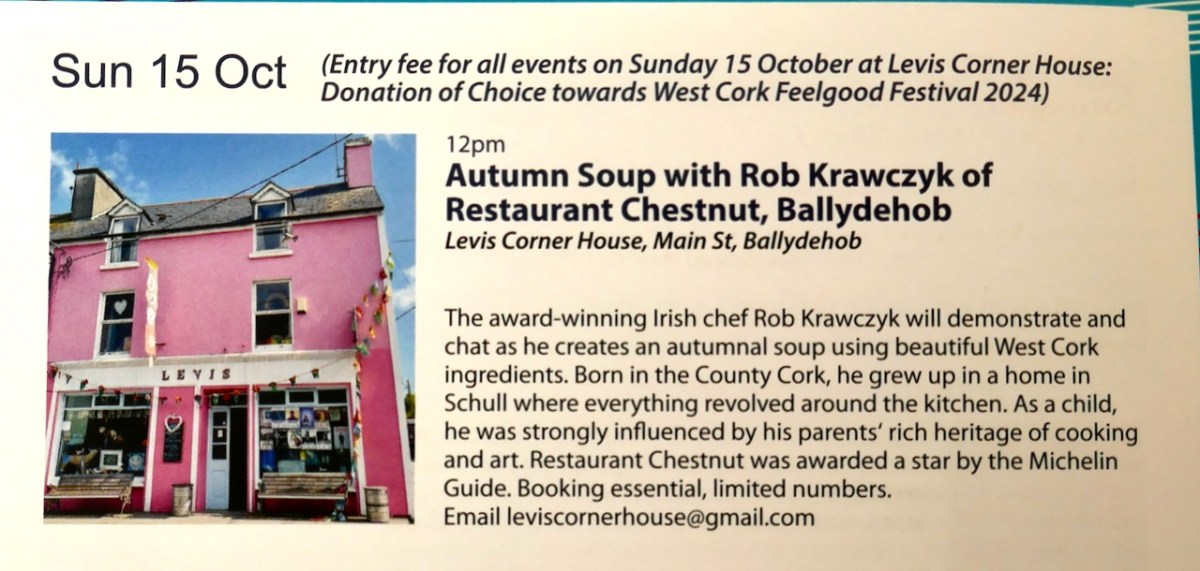
Rob’s Autumn Soup

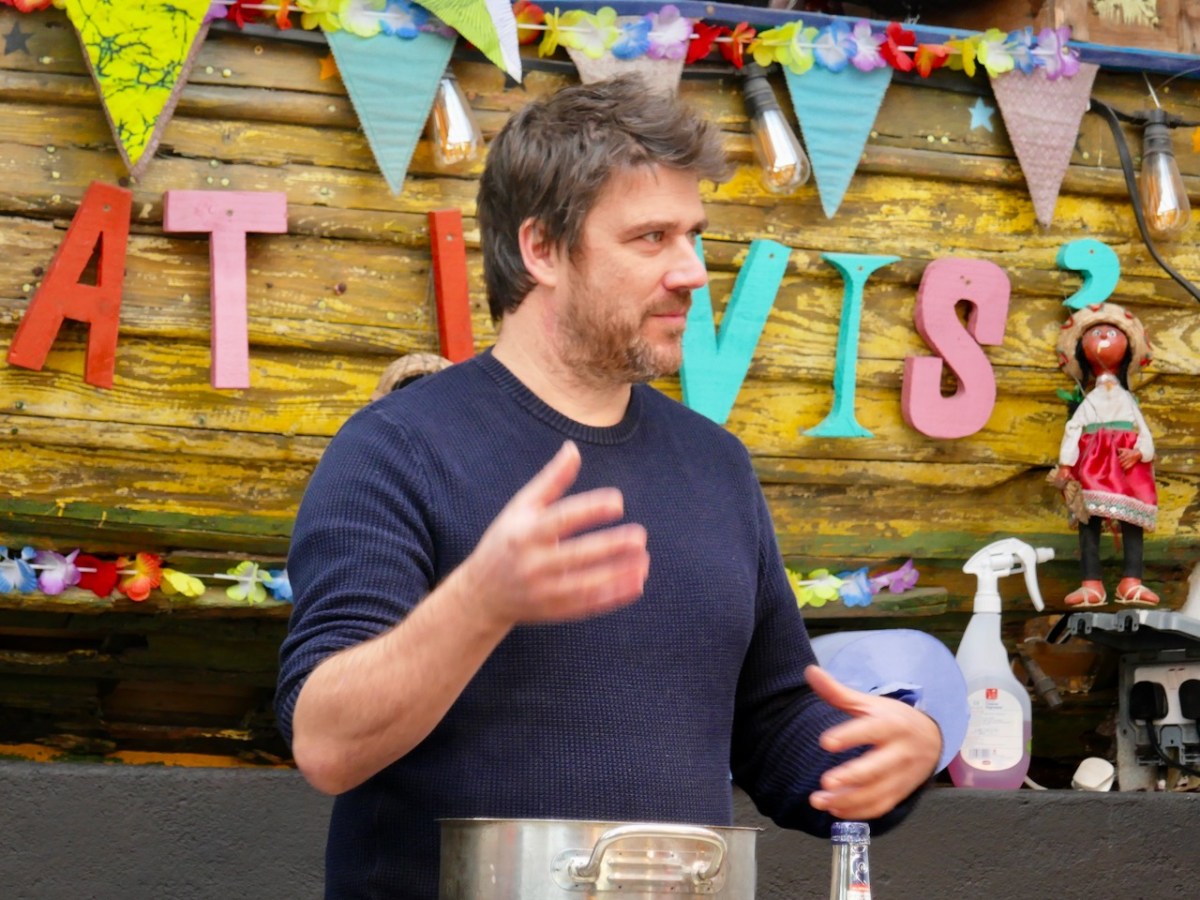
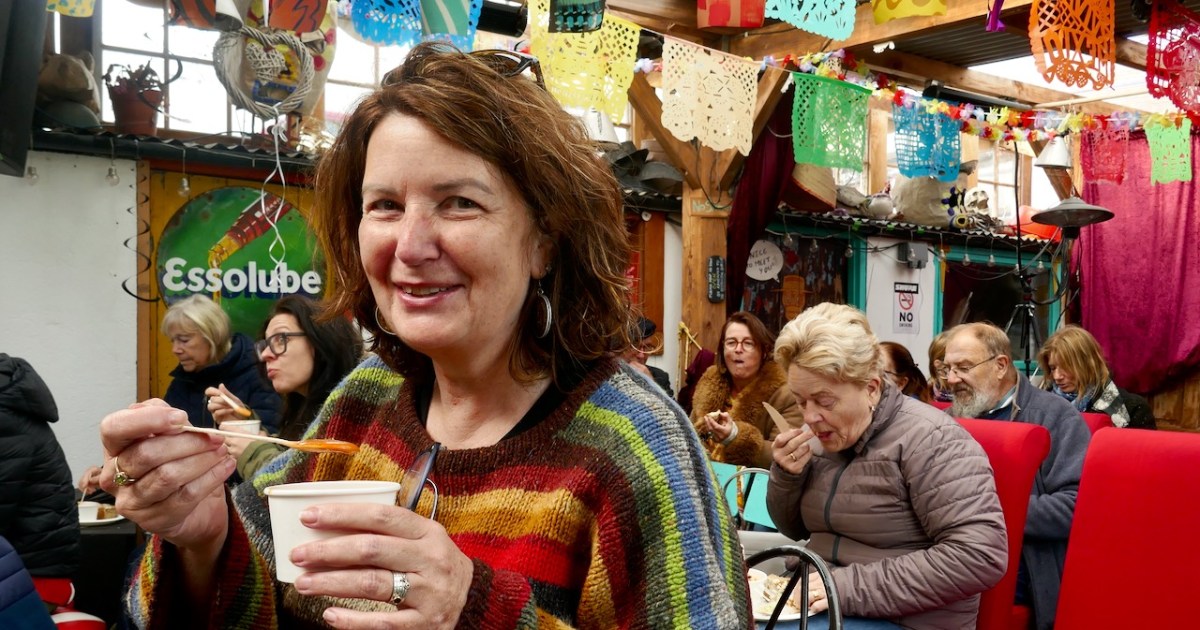
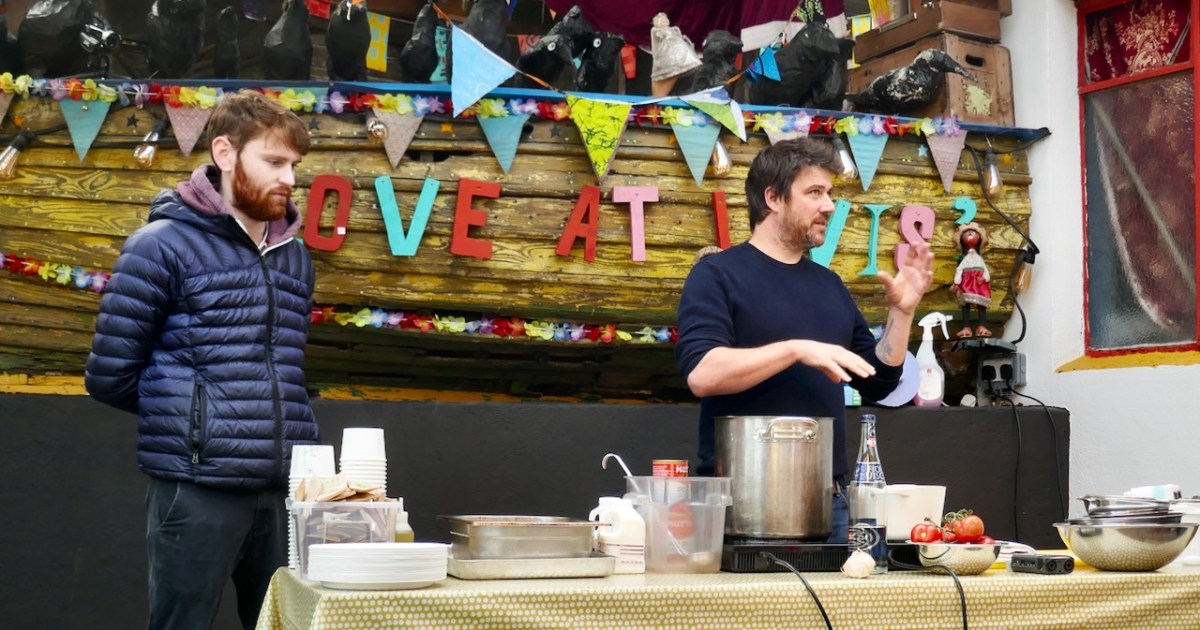
That’s Rob Krawczyk – our own Ballydehob Michelin starred Chef and owner of Restaurant Chestnut here in Ballydehob. He’s showing us how to make soup? I’m in!

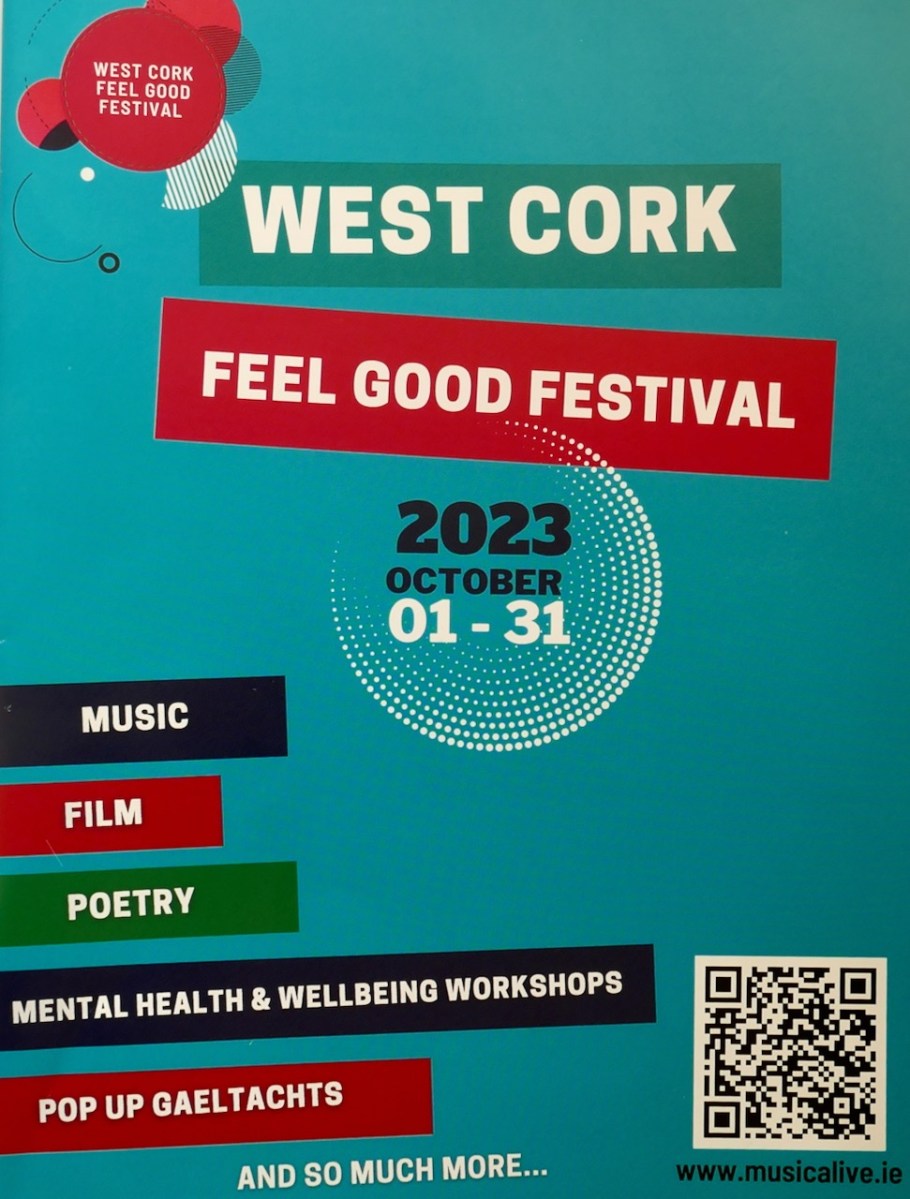
The occasion was a fundraiser for the marvellous West Cork Feel Good Festival – a festival that’s dedicated to experiential workshops that offer moments of exploration, discovery and connection. There are events taking place all over West Cork, and the underlying theme is that of good mental health and wellbeing for all of us. This one was in the fabulous Levis’s where so much of the heart of Ballydehob is nurtured. (See my post about their famous shop counter, here.)

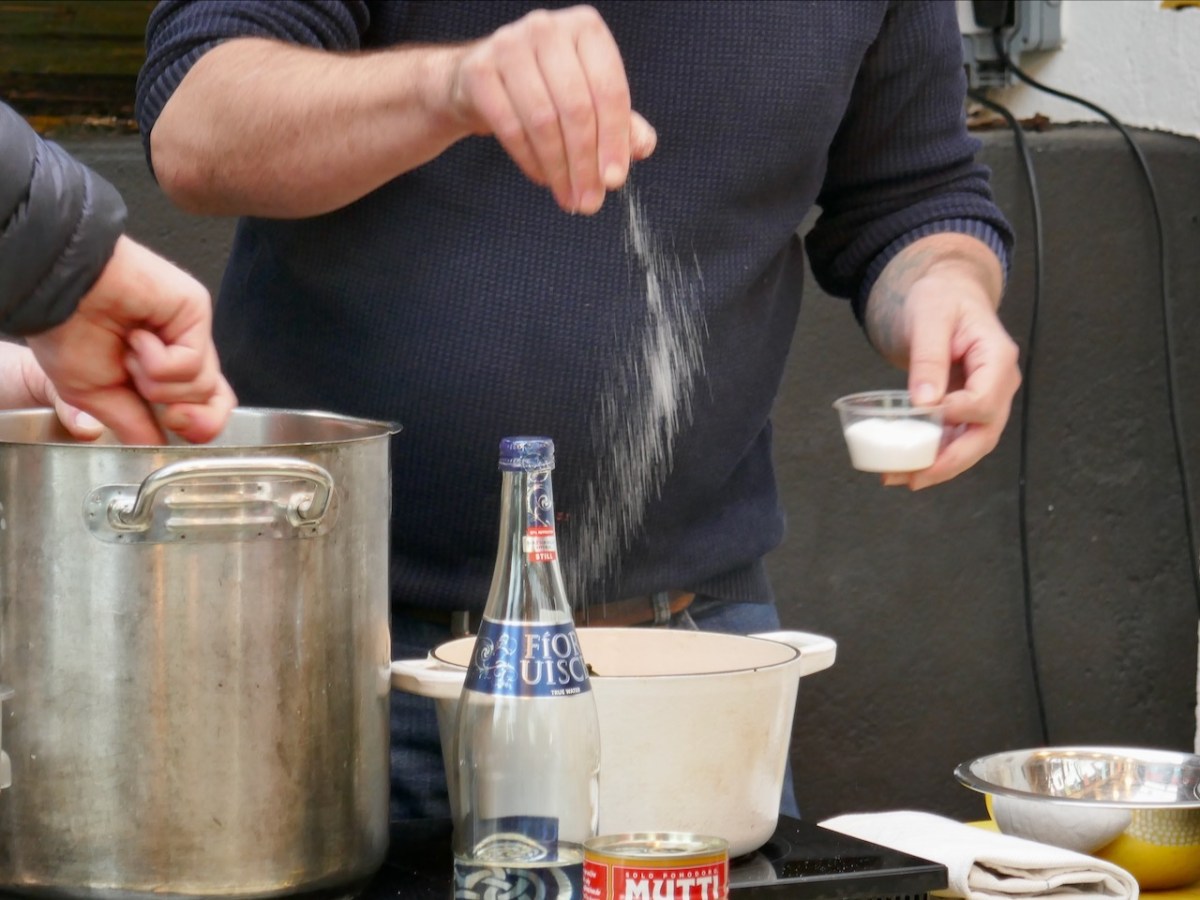
Rob is genial and casual – no hint of Master-Cheffy uppityness and not a tweezer in sight. West Cork is a foodie paradise and there’s a mantra that local cooks like to use – fresh food, simply prepared. And this was a masterclass in exactly that. There were 4 ingredients – tomatoes, oil, garlic and salt. That’s it.

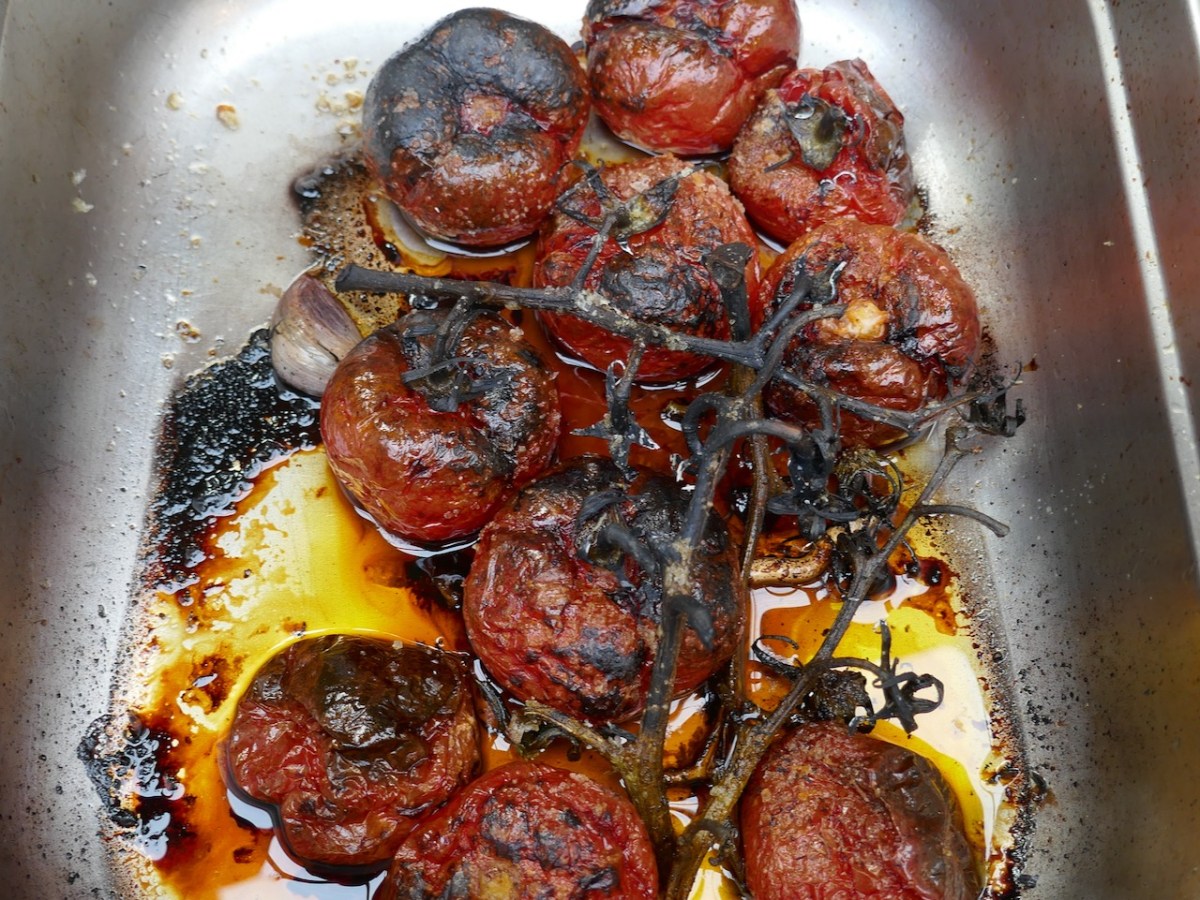
What did I learn that I didn’t know before? First, and most surprising to me – roast the tomatoes, vine and all! Roasting brings out the flavour, and apparently the vine itself also contains buckets of flavour too. Chuck in a couple of cloves of garlic – no need to peel or cut them up. He buys his tomatoes from Lisheen Greens – one of our local producers of vegetables.  

How about seasoning? Rob used two kinds of salt, coarse and fine, and a generous amount of each. He also told us it was important to season at the end as well. I asked him about pepper – every video I watch on the internet has copious amount of salt and pepper added, and the Master Chef guys are always bleating on about seasoning. I personally use pepper very sparingly and in very few recipes, so I was curious. Rob made my day when he told me he doesn’t often use pepper, and when he does he adds it at the end. 

I said that one of the ingredients was tomatoes, and that’s correct. But there were two kinds – one kind was the fresh tomatoes on the vine that Rob roasted, the other was – canned! It’s important, he said, to look for good quality canned tomatoes that have been peeled – unpeeled can leave unpleasant bits in the soup. This one is available in Fields of Skibbereen.

Once the tomatoes have roasted, the canned tomatoes are added, everything is mixed and cooked in a big pot, and then processed in a blender or food processor to chop up the vine stalks and the garlic. Finally, it’s all strained through a sieve, tasted, and a last seasoning added. 

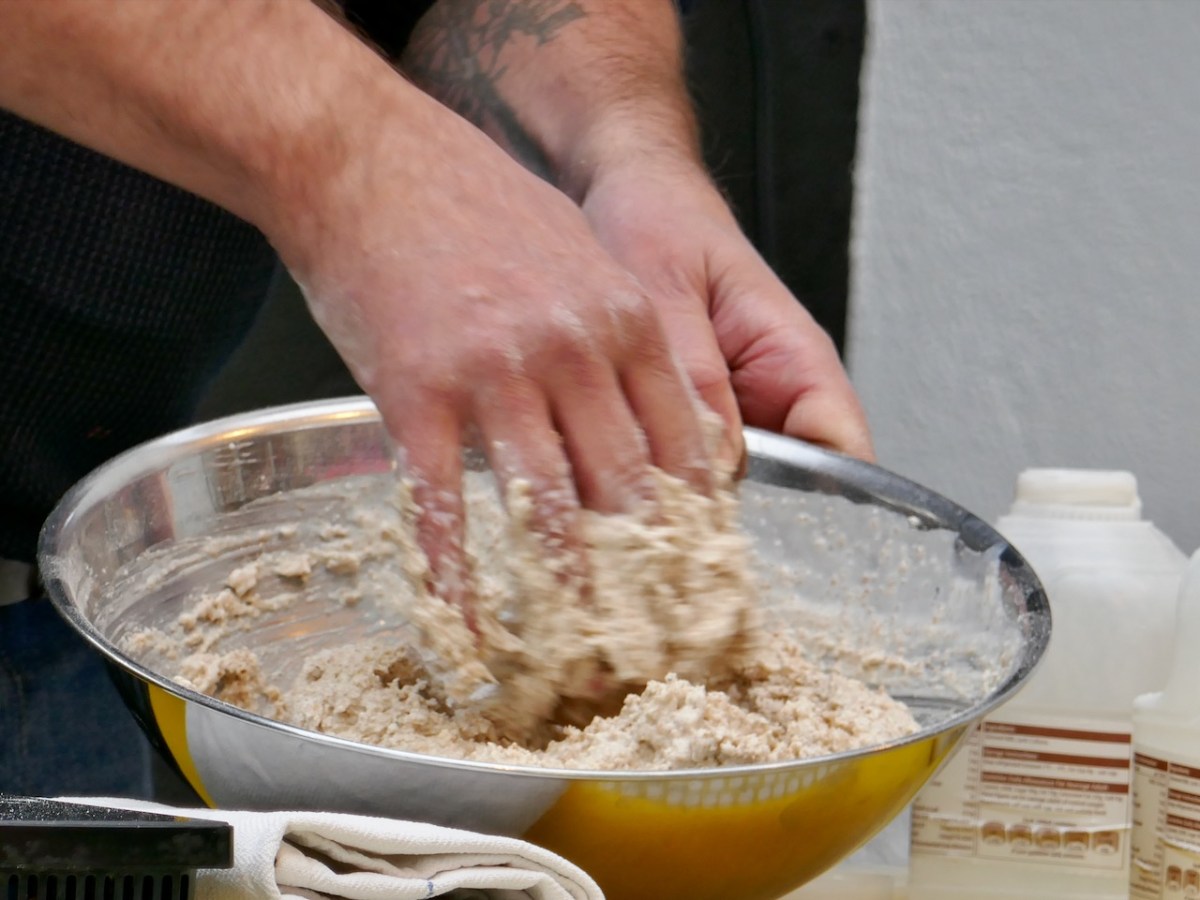
To serve it, Rob showed us how to make a brown soda bread. His tip – handle it as little as possible, only as much as you need to, to get all the dry and wet ingredients to come together. 

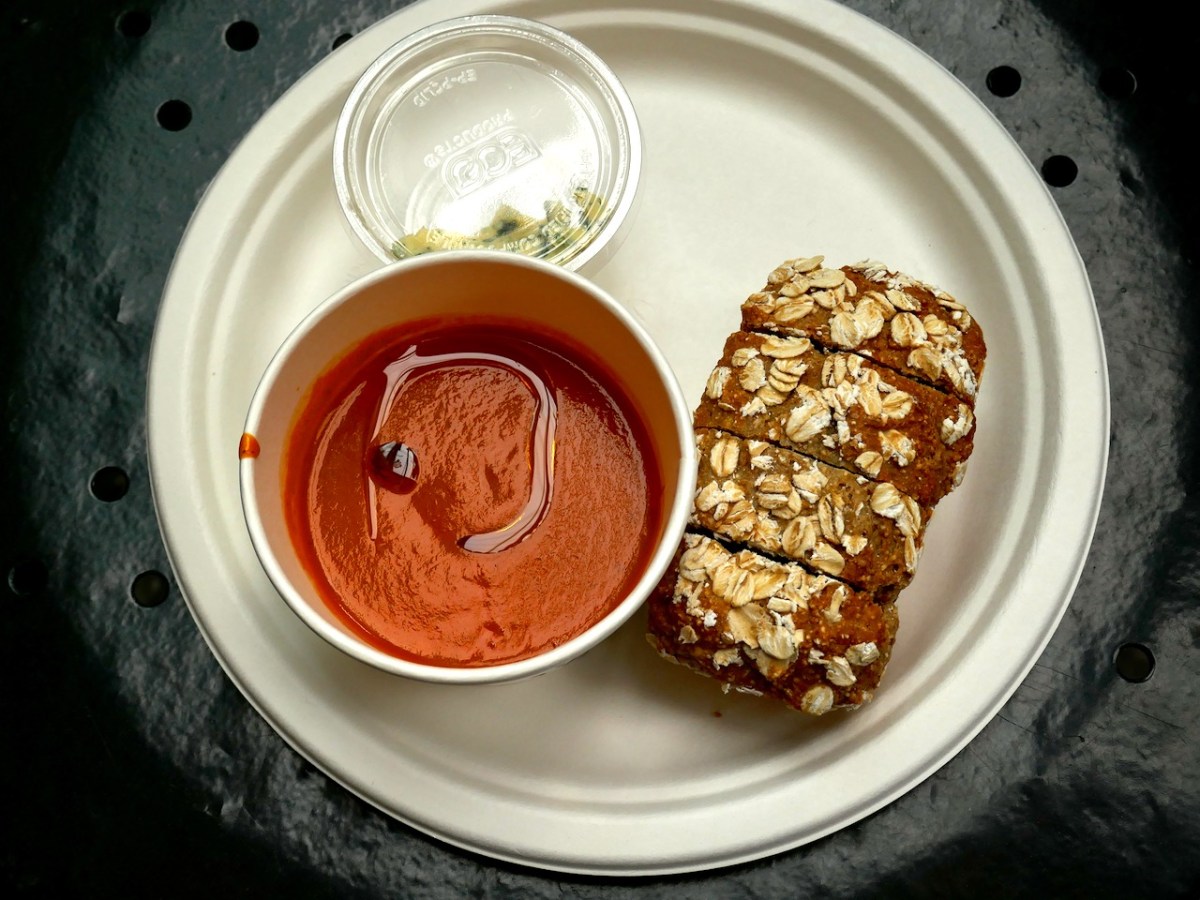
Of course, in the best tradition of here’s one I made earlier there was a big pot of soup on the hob, and lots of little loaves of brown bread with herbed butter. 

Delicious!!!

“Easter” Island!

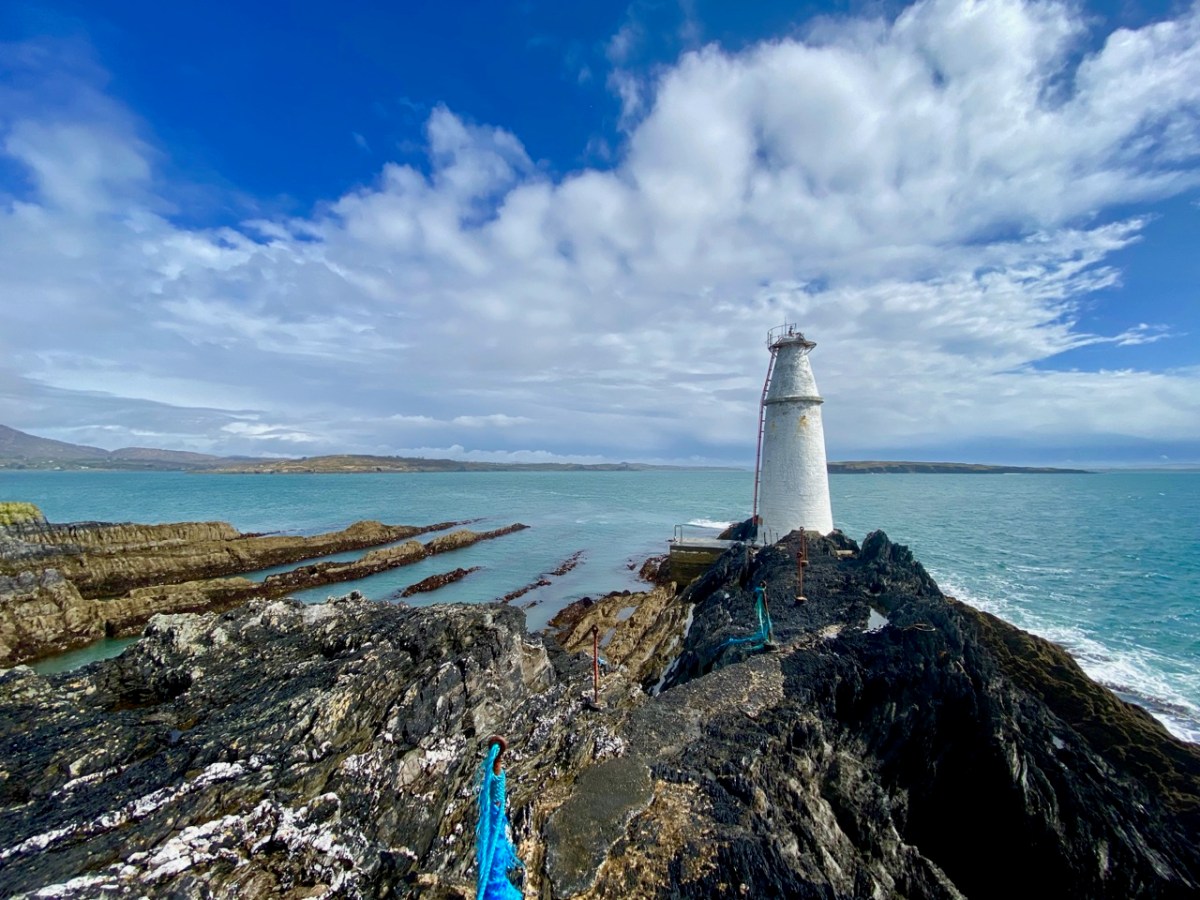
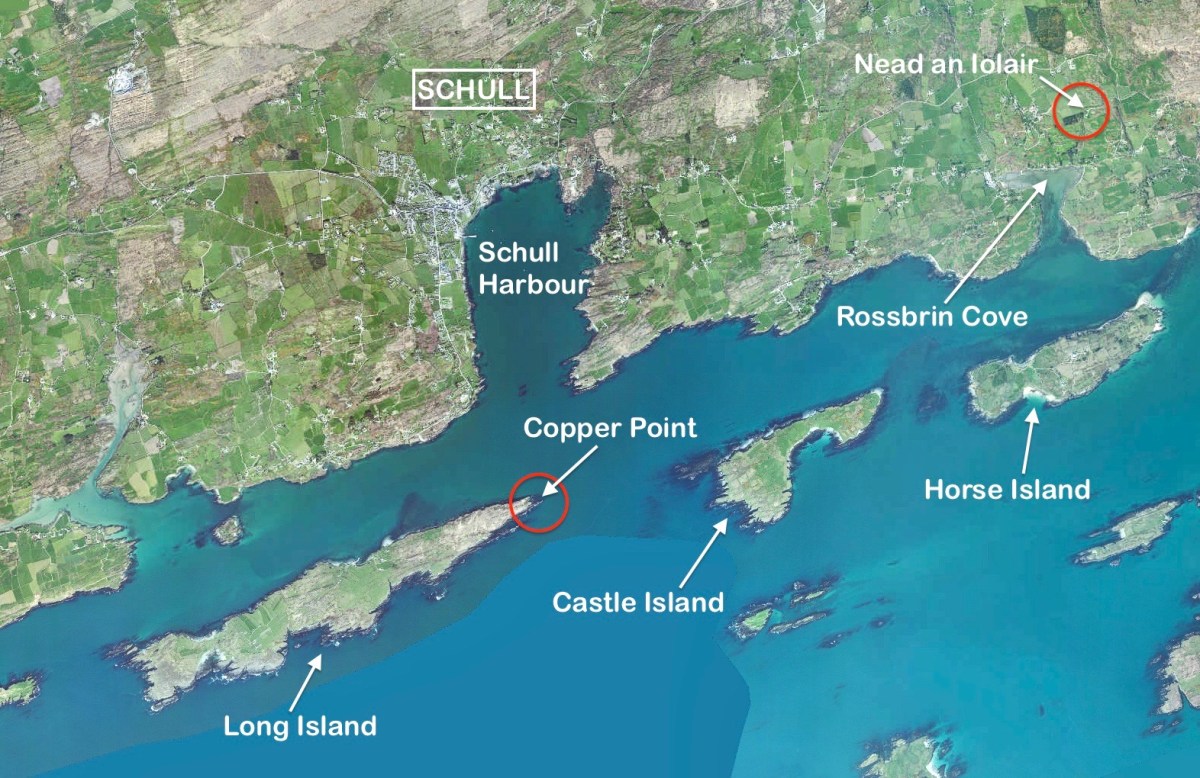
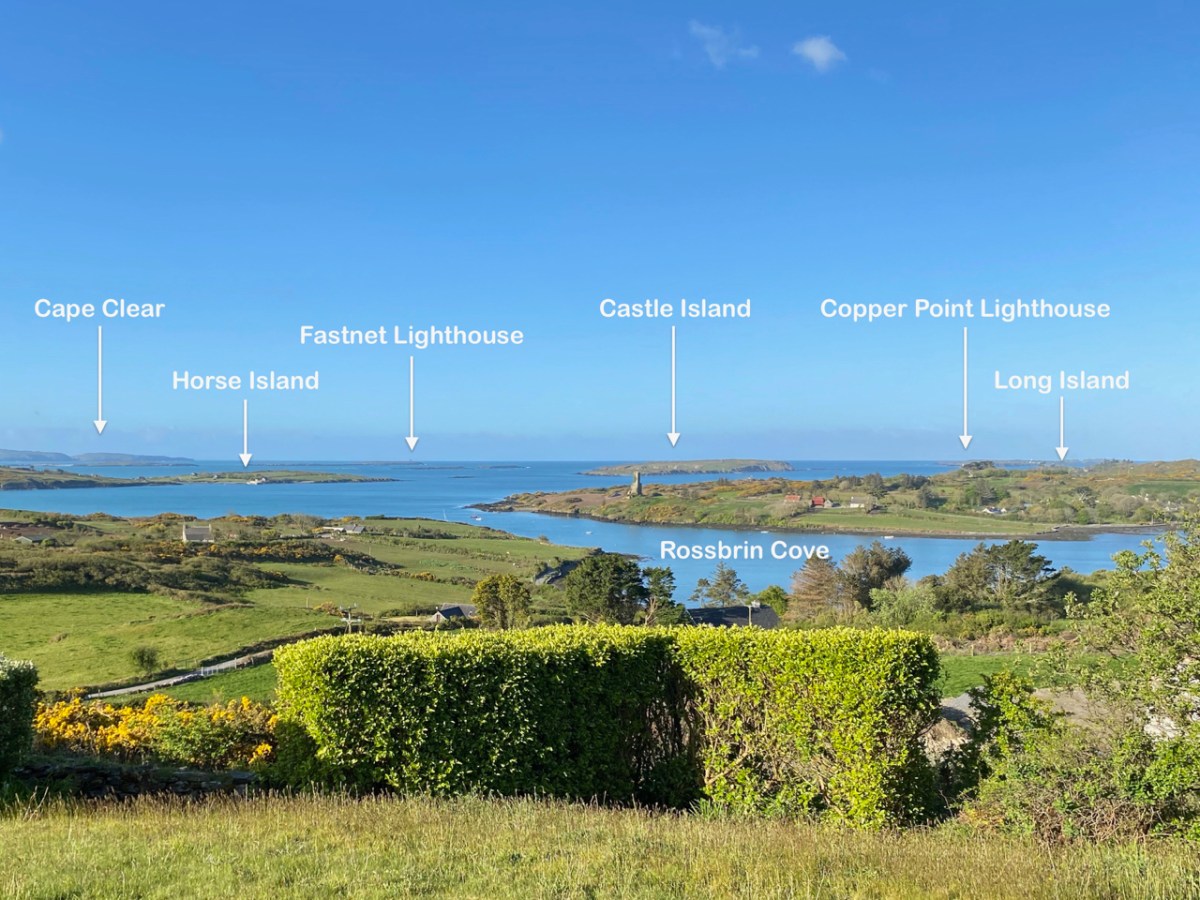
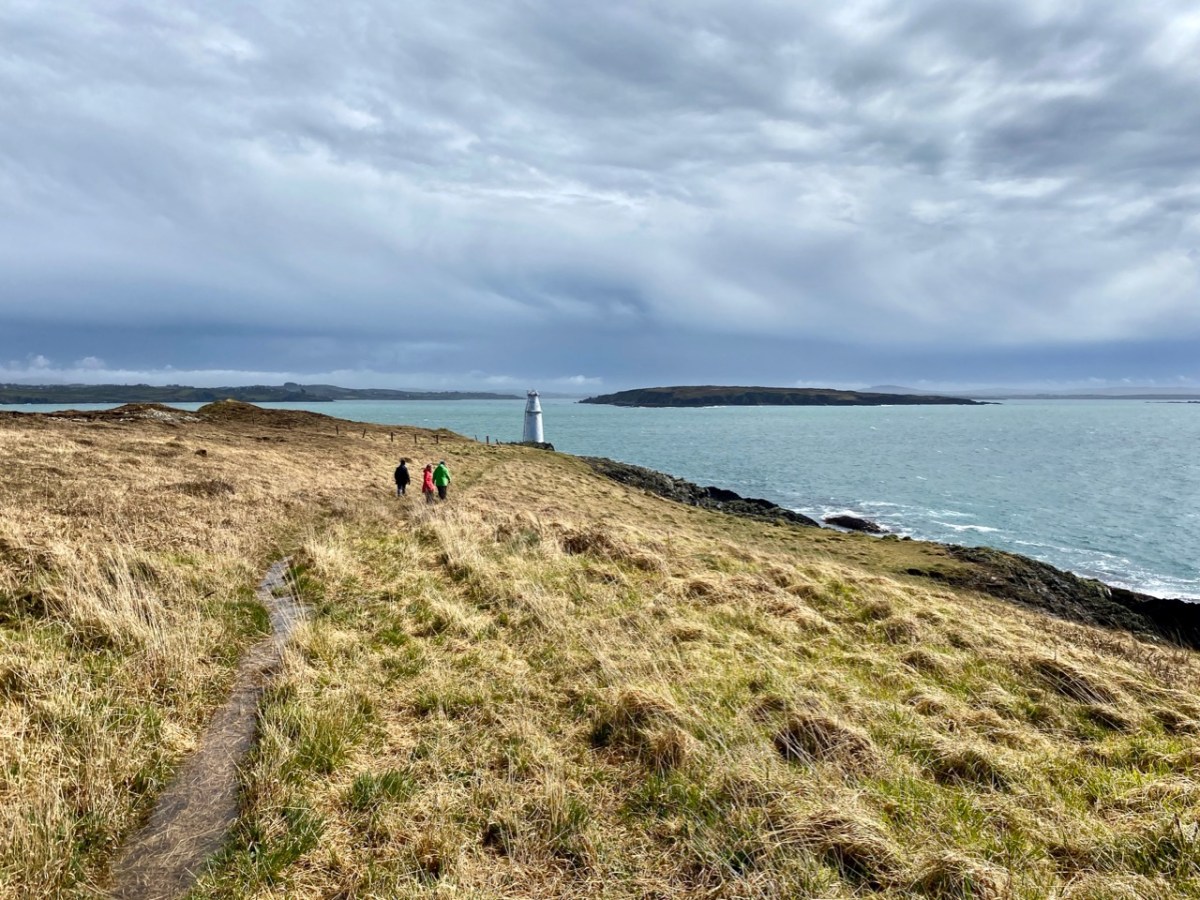
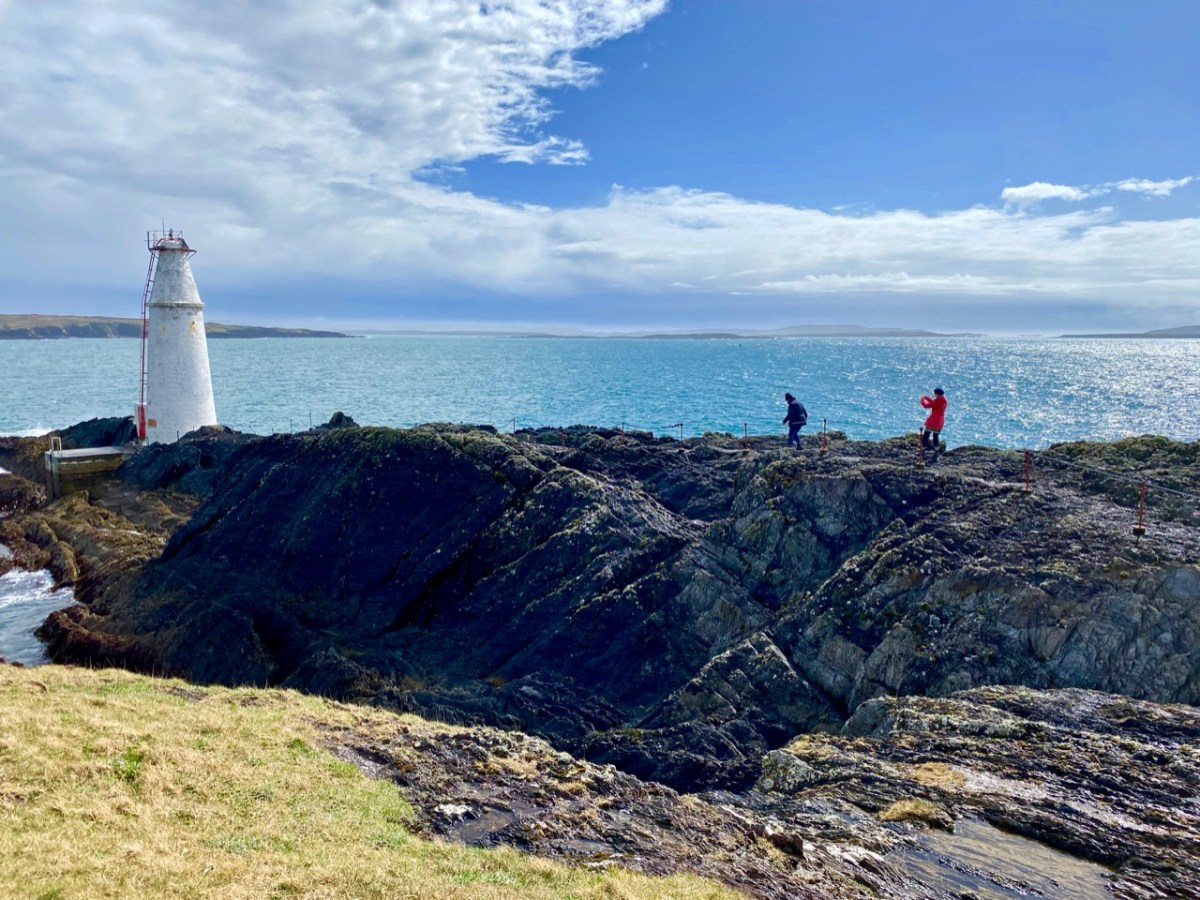
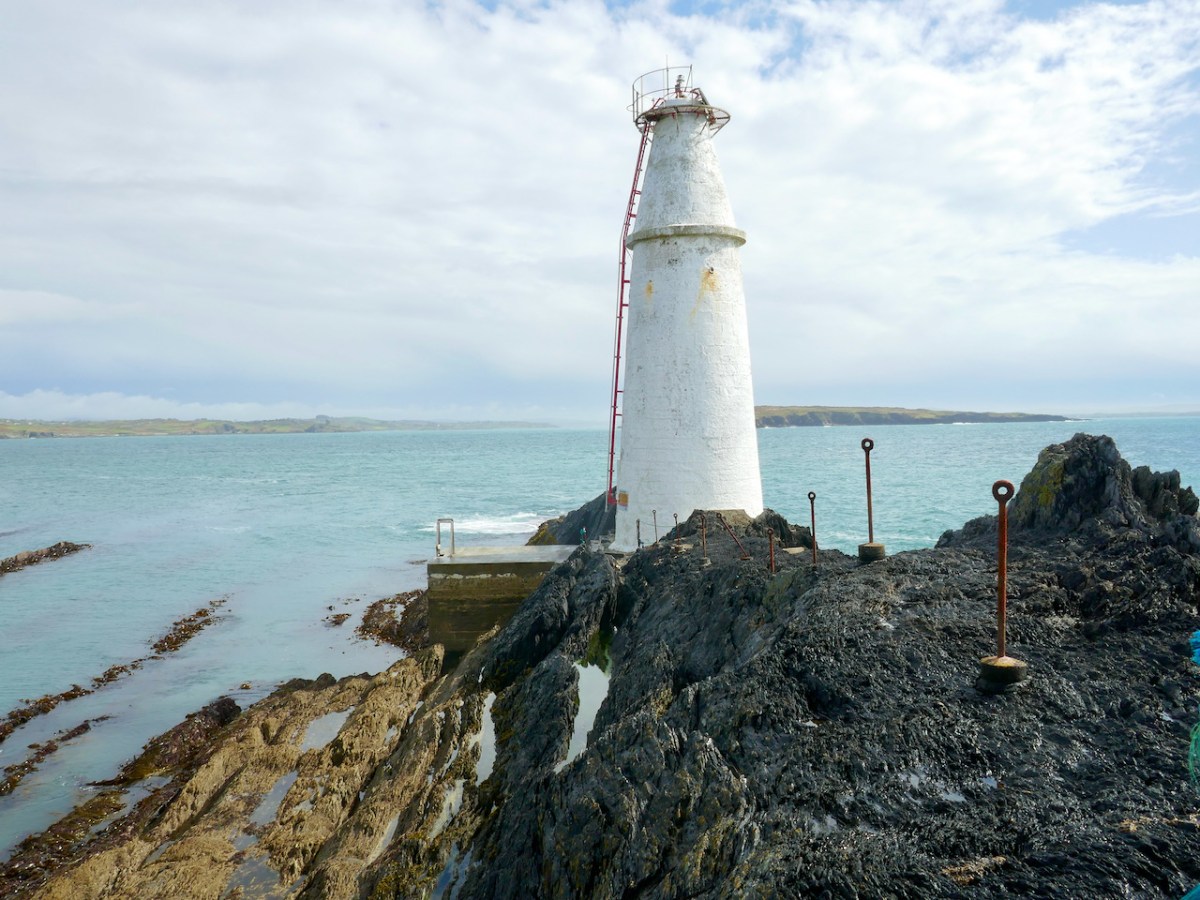
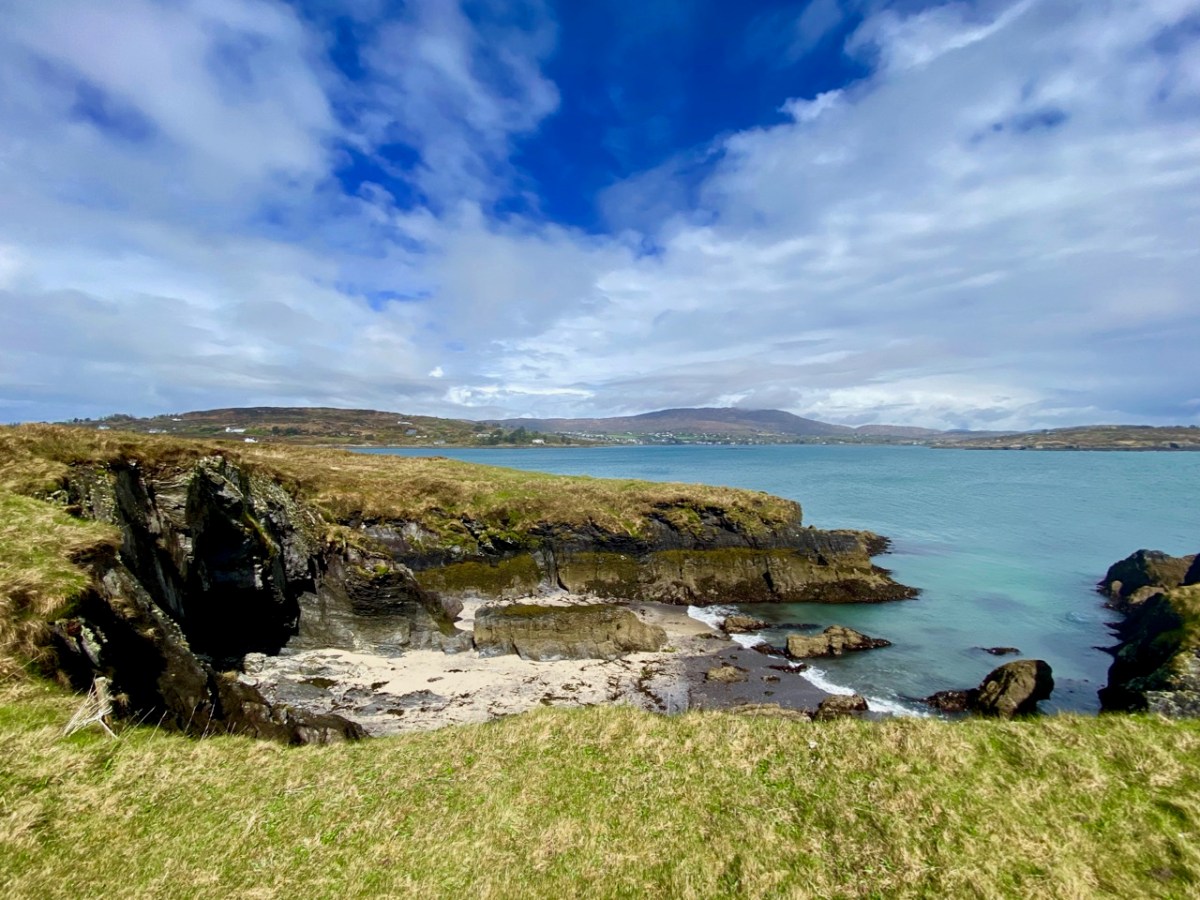
What better place to spend Easter Day than at the ‘Easter end’ of Long Island? We can see the island – out there in Roaringwater Bay – from our home here at Nead an Iolair. The lighthouse on the end of the island faces us – and winks through the night with the character of 3 quick flashes every 10 seconds. The narrow headland on which it stands bears the name ‘Copper Point’ – and so does the lighthouse.
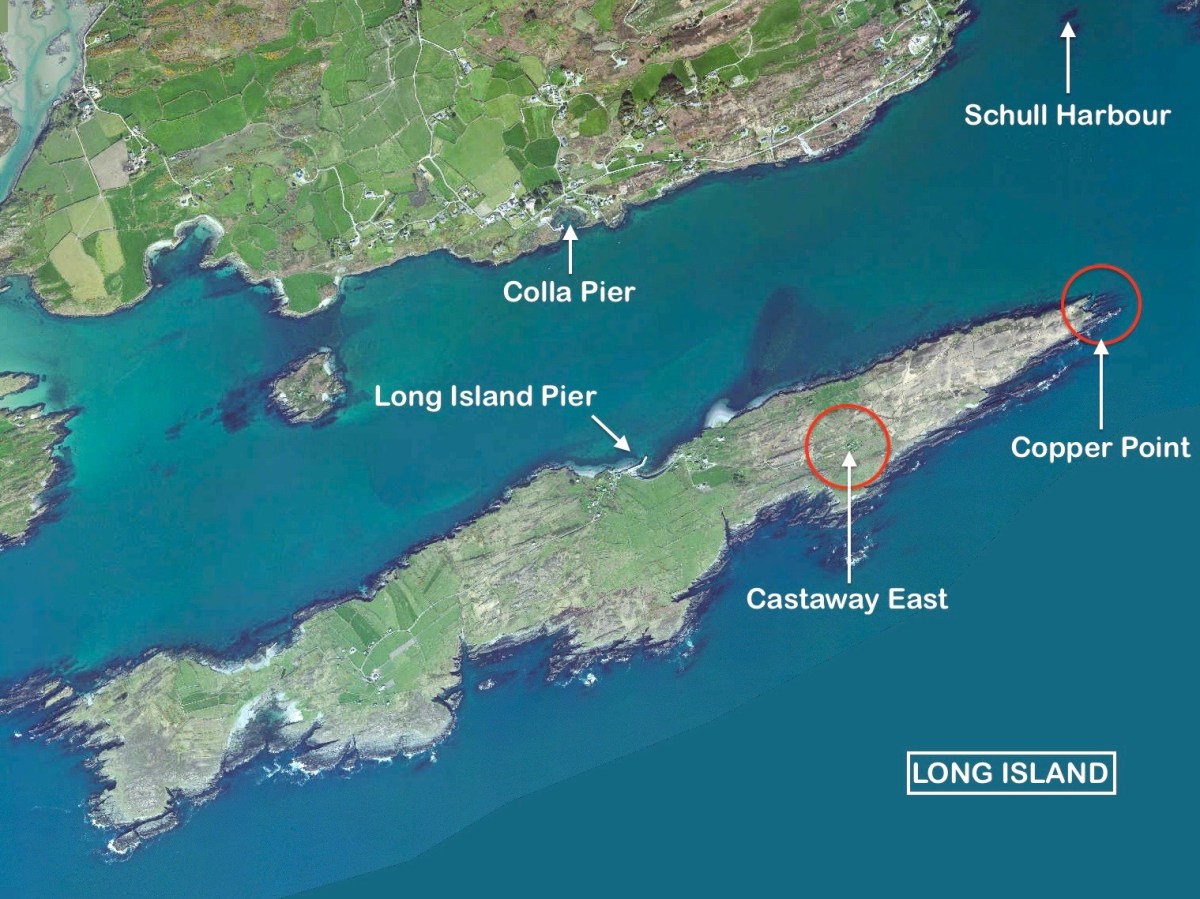
This aerial view shows Long Island in its context – a part of Roaringwater Bay and its ‘Carbery’s Hundred Islands’. Its neighbours to the east are Castle Island and Horse Island – all in our view – (that’s our view, below).
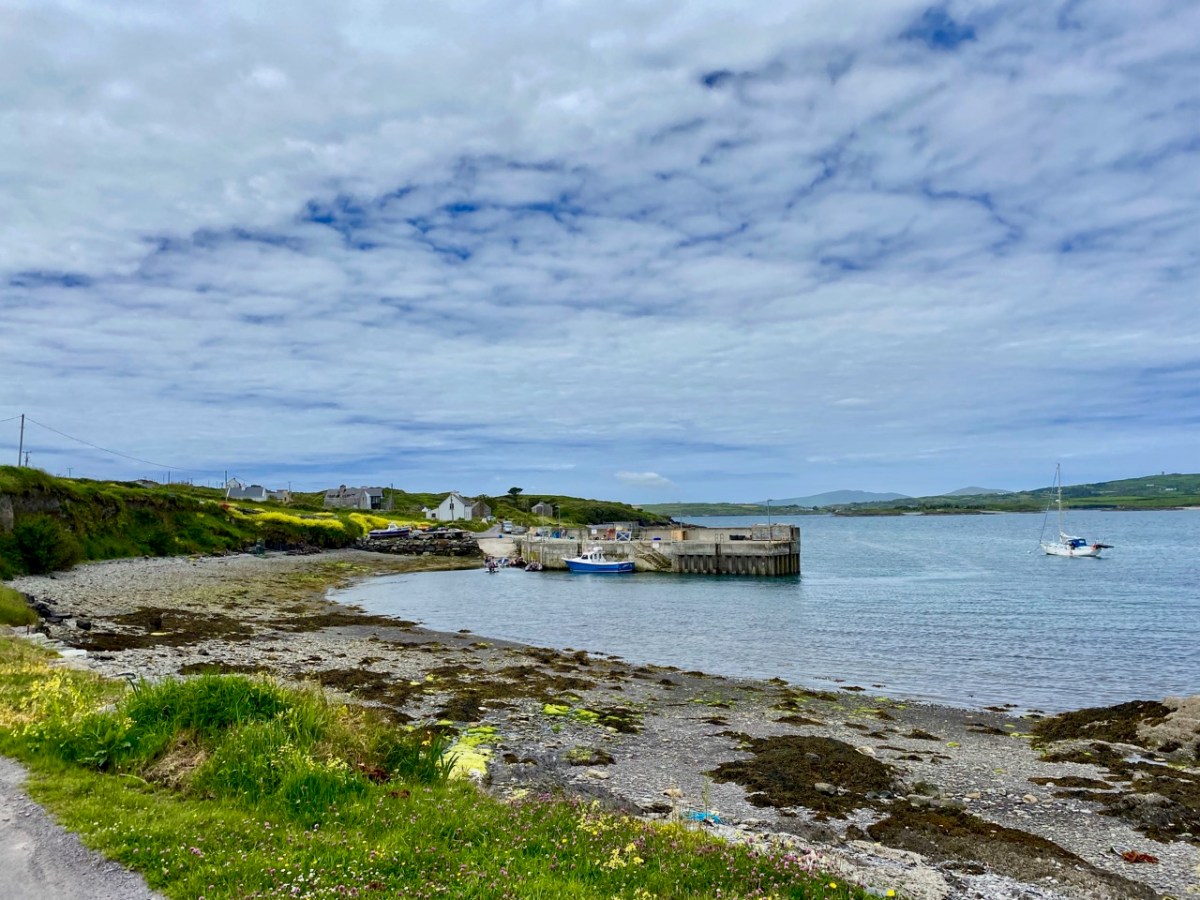
A closer aerial view of the island, above. It’s accessed by a regular ferry which leaves Colla Pier, a short distance from Schull town. The ferry arrives at Long Island Pier: there it is, on the pier (below).

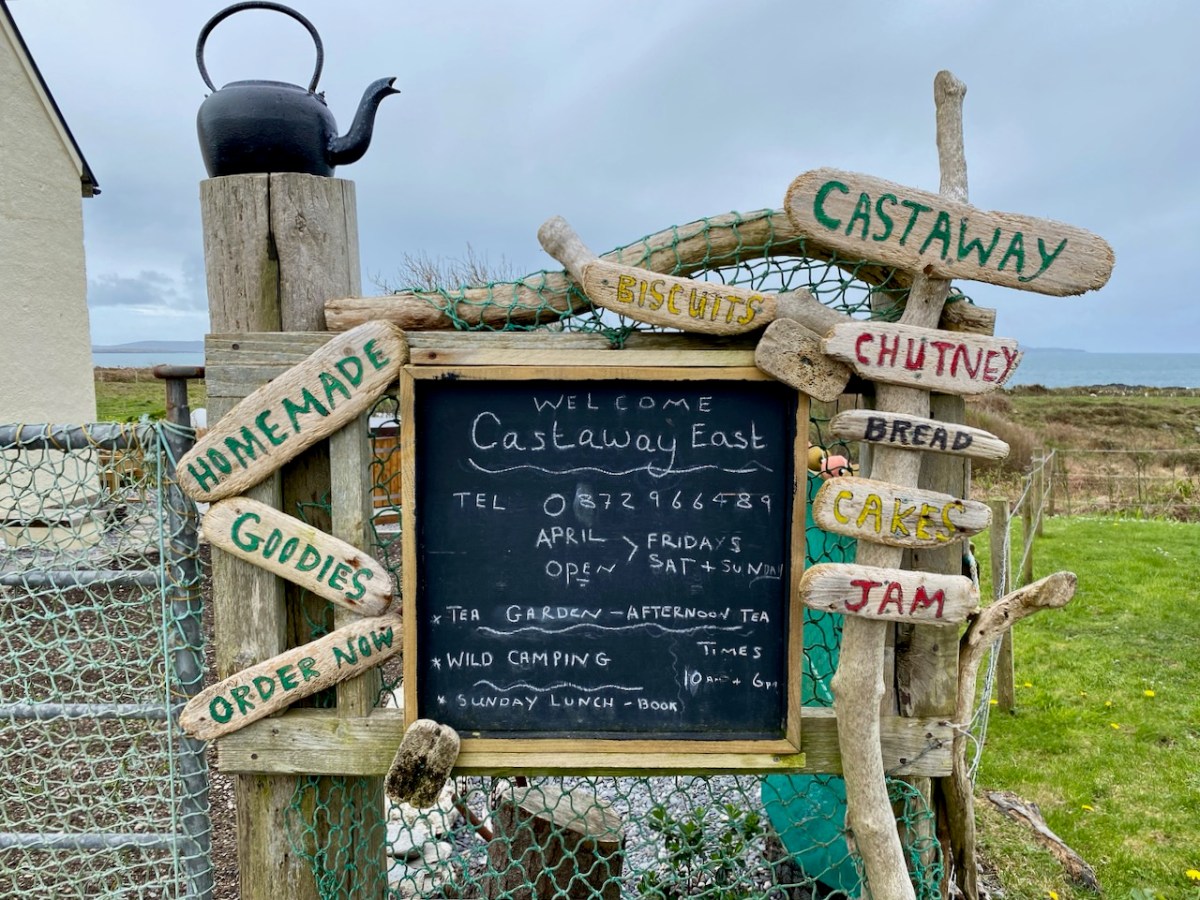
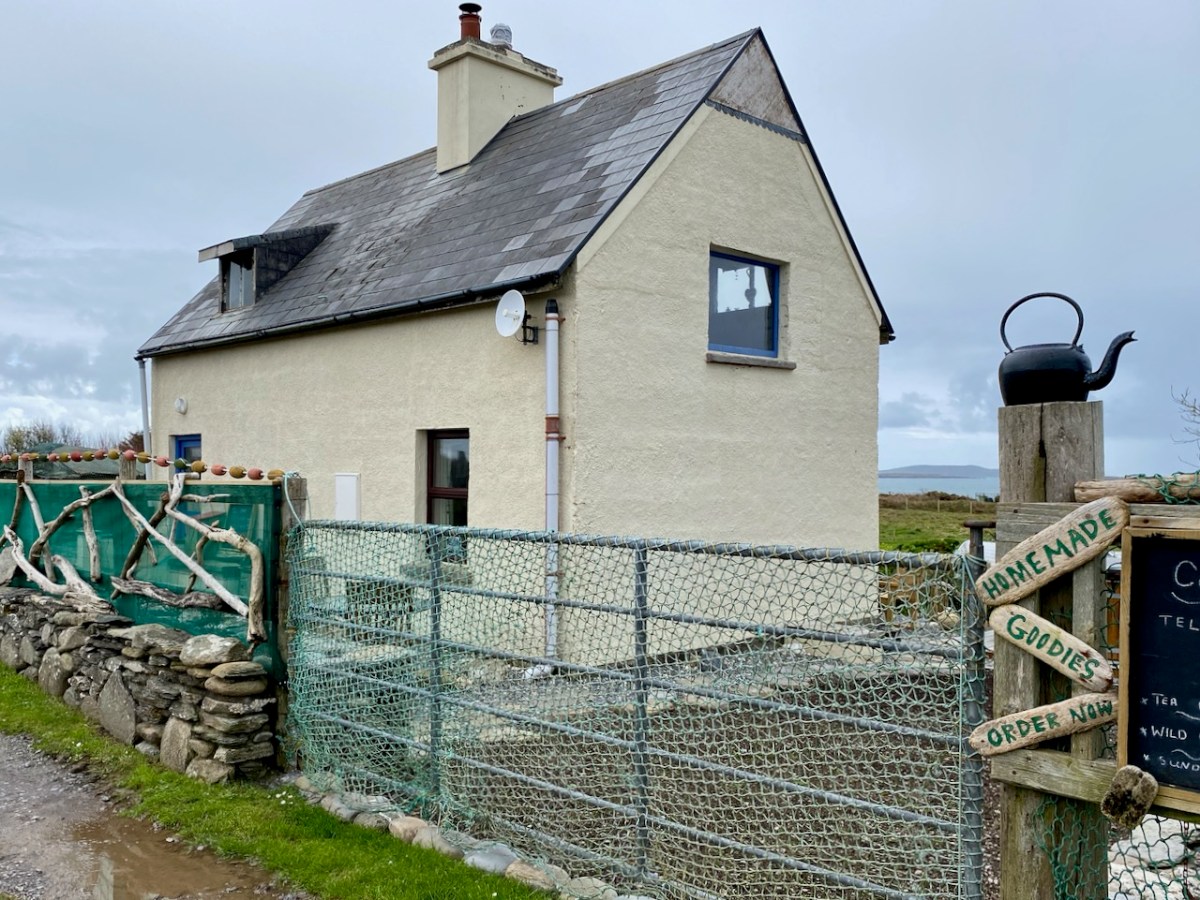
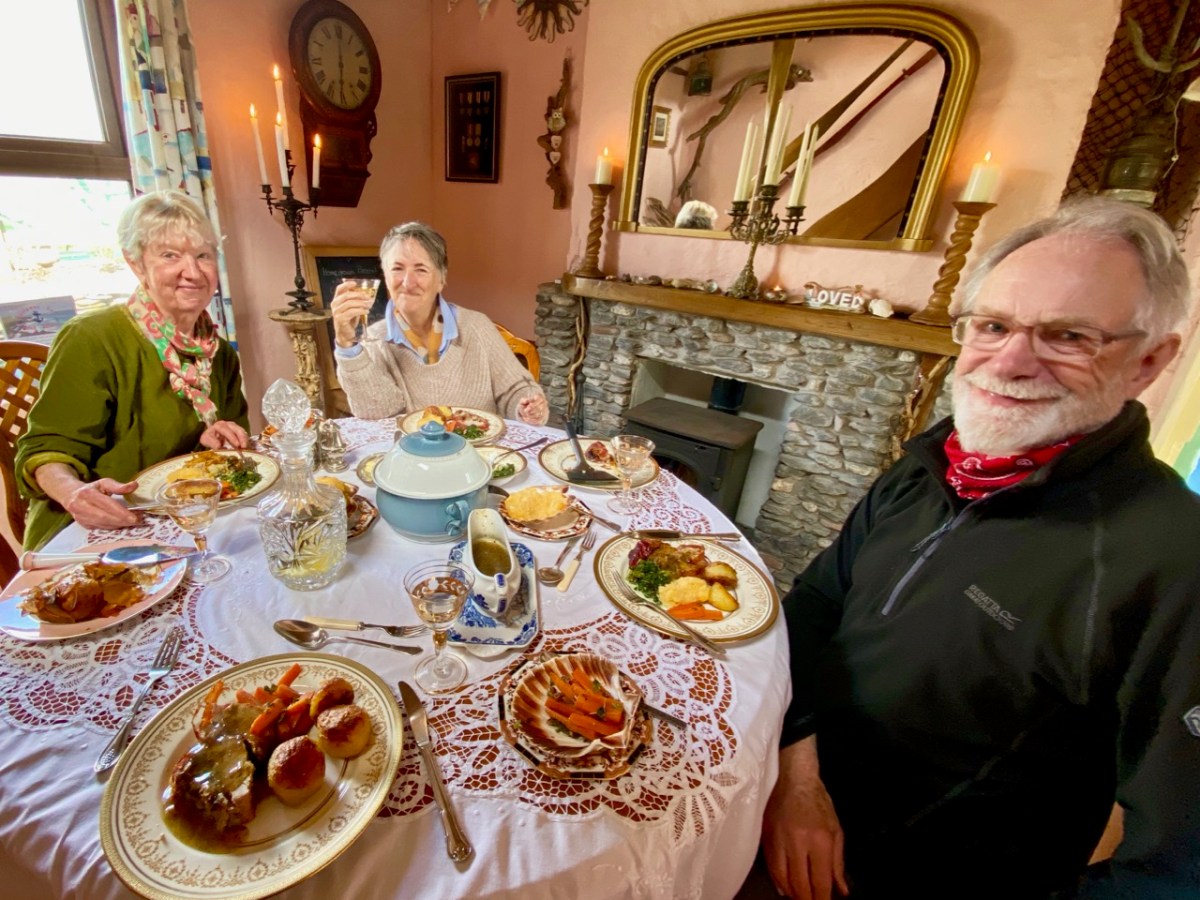
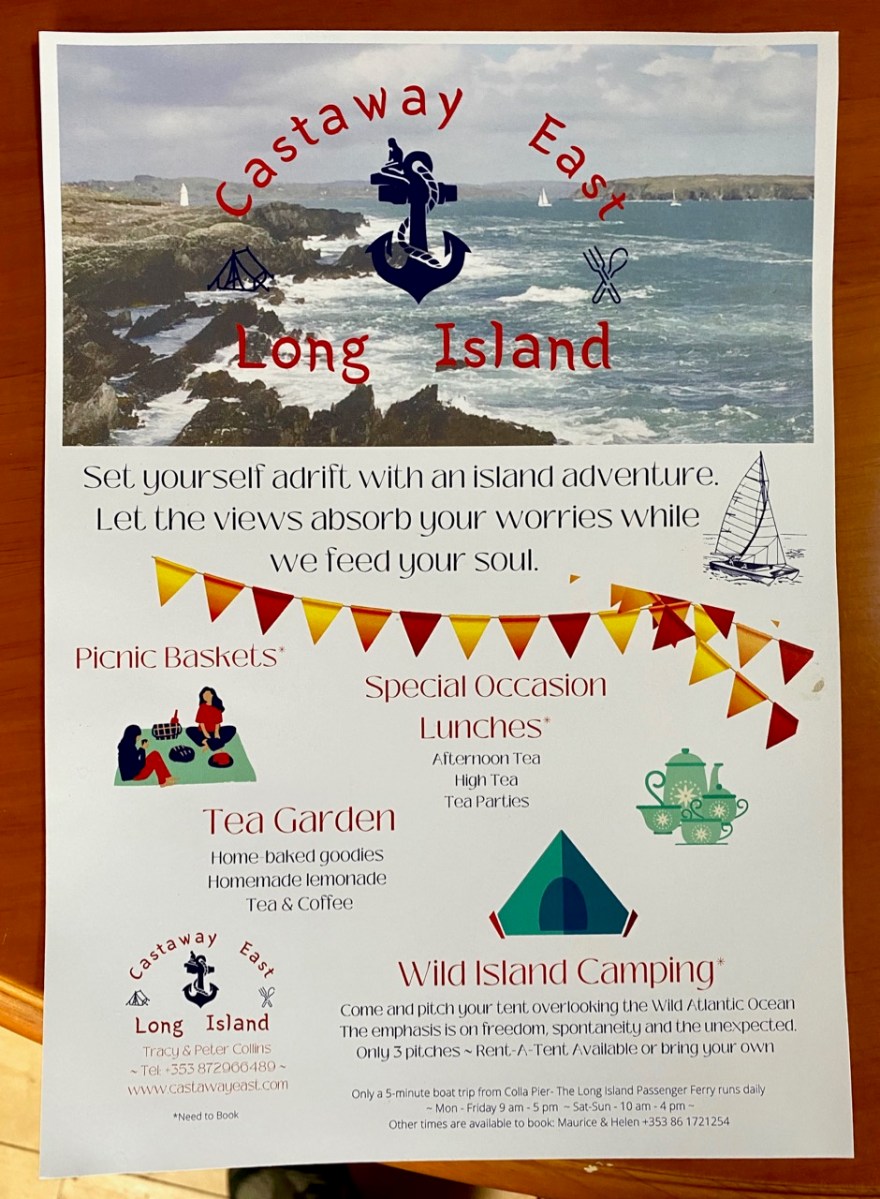
Our destination on this Easter Sunday was Castaway East – the furthest house on the ‘Easter’ end of the island. We have taken you there before, when we organised a Mad Hatter’s Tea Party in July of last year. The hosts there are Tracy and Peter, who served us brilliantly for that occasion, and also for the Wildflower Walks which Finola led last June: the Castaway crew provided a superb picnic for everyone, delivered to us at the island’s western end. This time we decided that we would test Tracy and Peter’s skills by ordering up an Easter Sunday lunch to celebrate a ‘special’ birthday for our good friend, Peter Clarke.

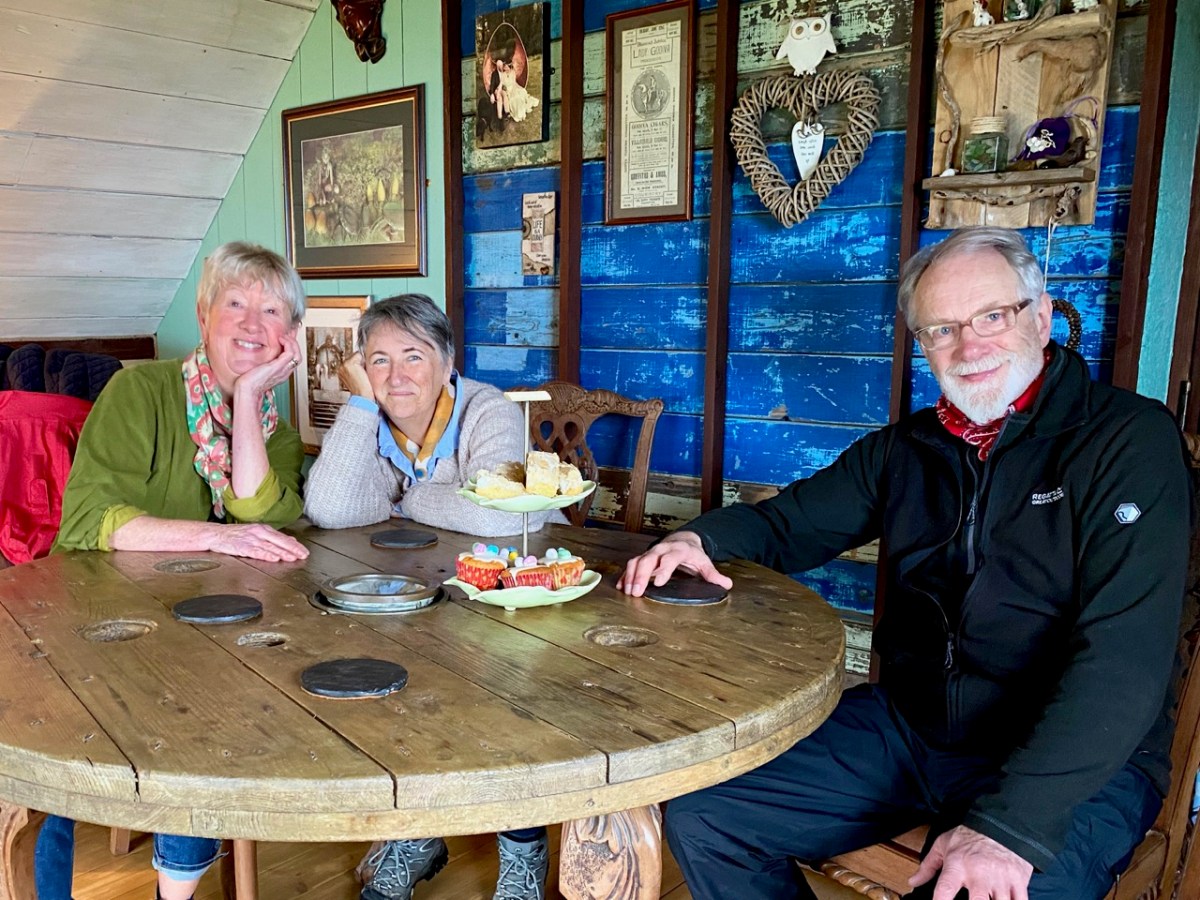
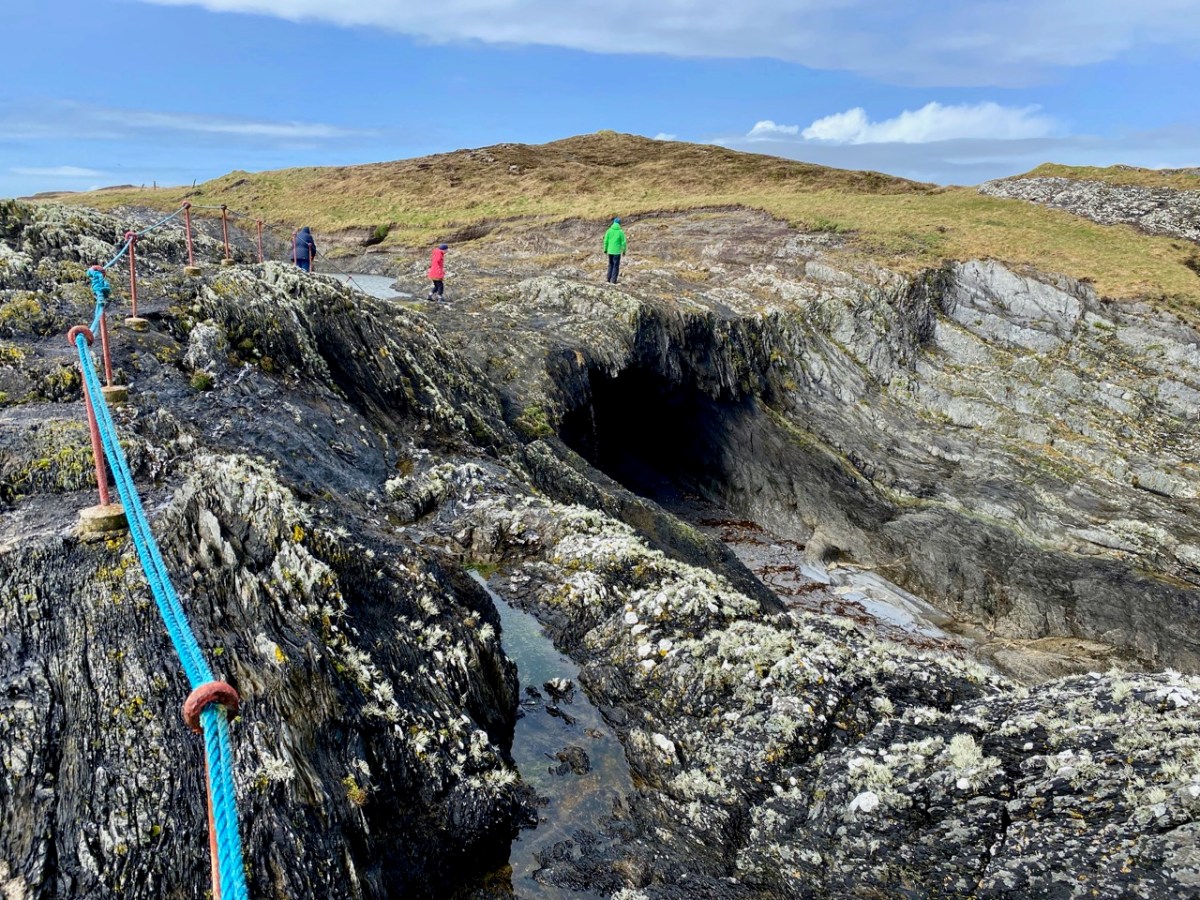
Amanda Clarke, Finola and birthday boy Peter, looking forward to a morning coffee (with delicious Easter treats) after arriving at Castaway East. We had an upstairs room in the Castaway house, with a good view over the island. Before lunch we had an opportunity to explore part of the island we had never been to before, heading down to Copper Point.

Why is it called ‘Copper Point’? Because there was a copper mine close by, one of many such enterprises that were seen in West Cork in the nineteenth century. Explorations on the island were started in the 1840s by the Cornish mining engineer Captain William Thomas: he wrote a Roaringwater Journal post for us a couple of years ago! William sank a trial shaft for 10 fathoms (60 feet) and extended a level south from this shaft for 3 fathoms. No metal bearing lode was found, and the mine was abandoned. Traces of these workings can still be seen not far from the lighthouse. It’s slightly ironic, perhaps, that the name ‘Copper Point’ arrived from somewhere and stuck.

It’s a wild landscape – but very beautiful and imbued with atmosphere. We certainly worked up a good appetite while on our morning walk, and returned to the house with great expectations.

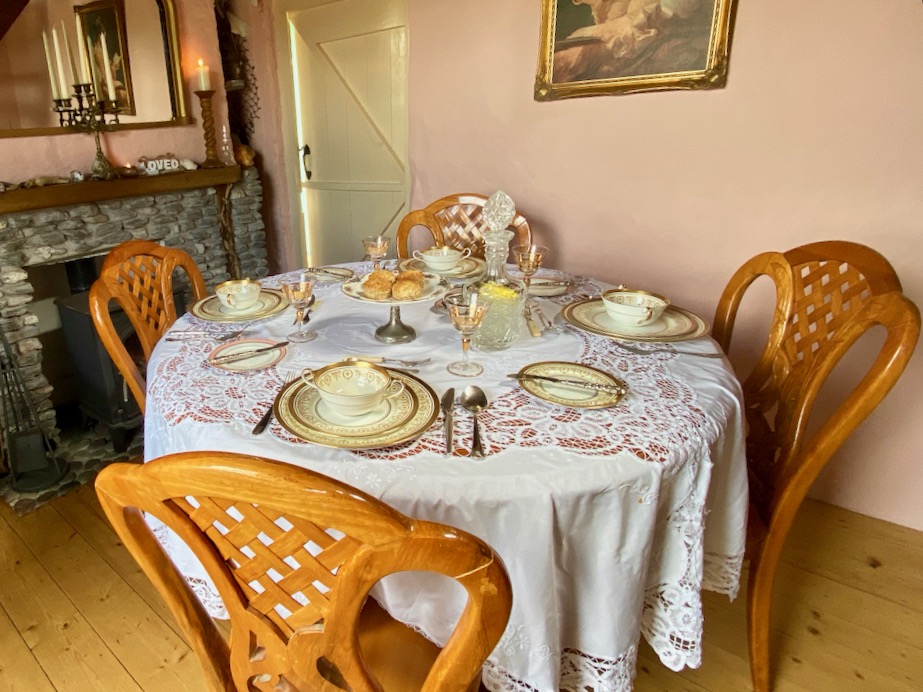
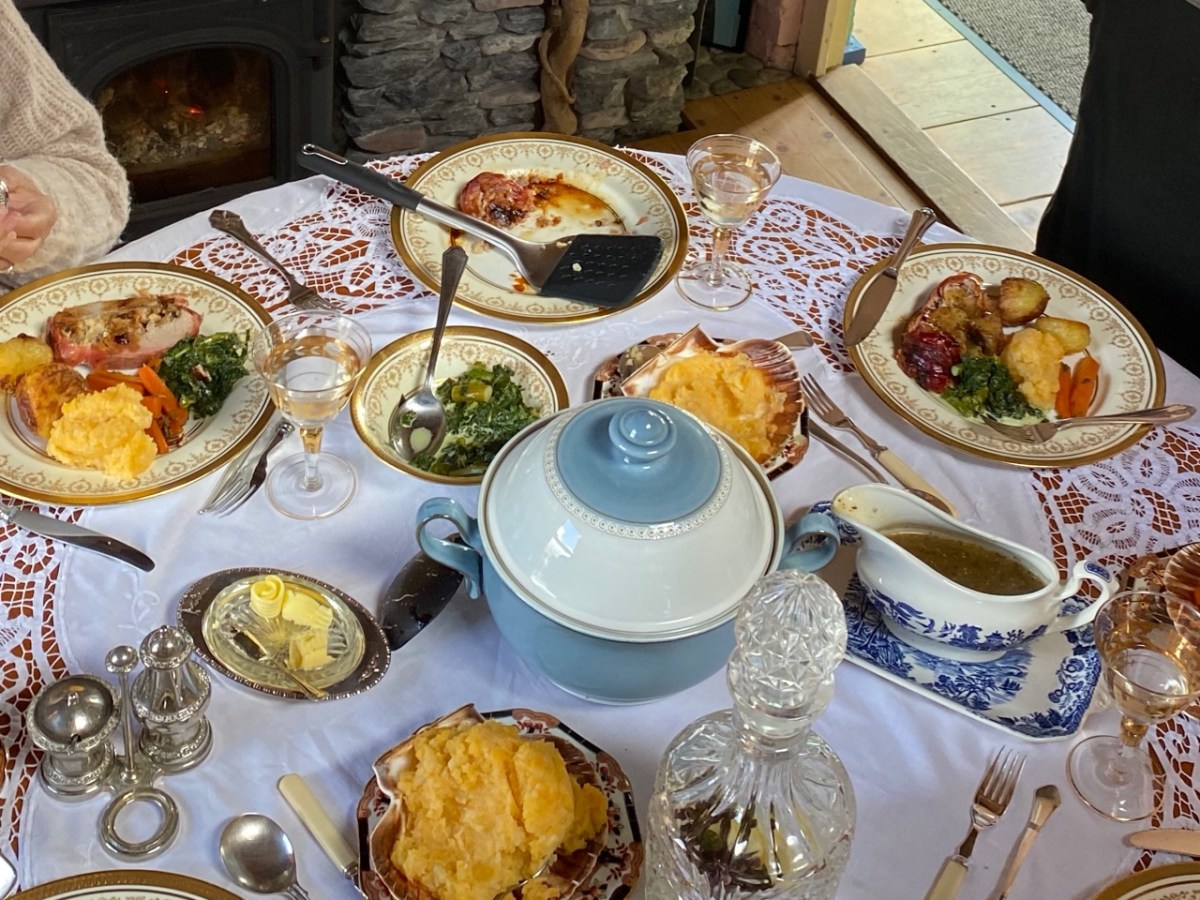
All those expectations were far exceeded when we sat down to our meal. We had a room to ourselves, attractively furnished and comfortable, with a welcome wood-burning stove on the go in one corner. Tracy and Peter have spent considerable time and energy upgrading what was a very run-down cottage, and have used locally available materials with impressive imagination.

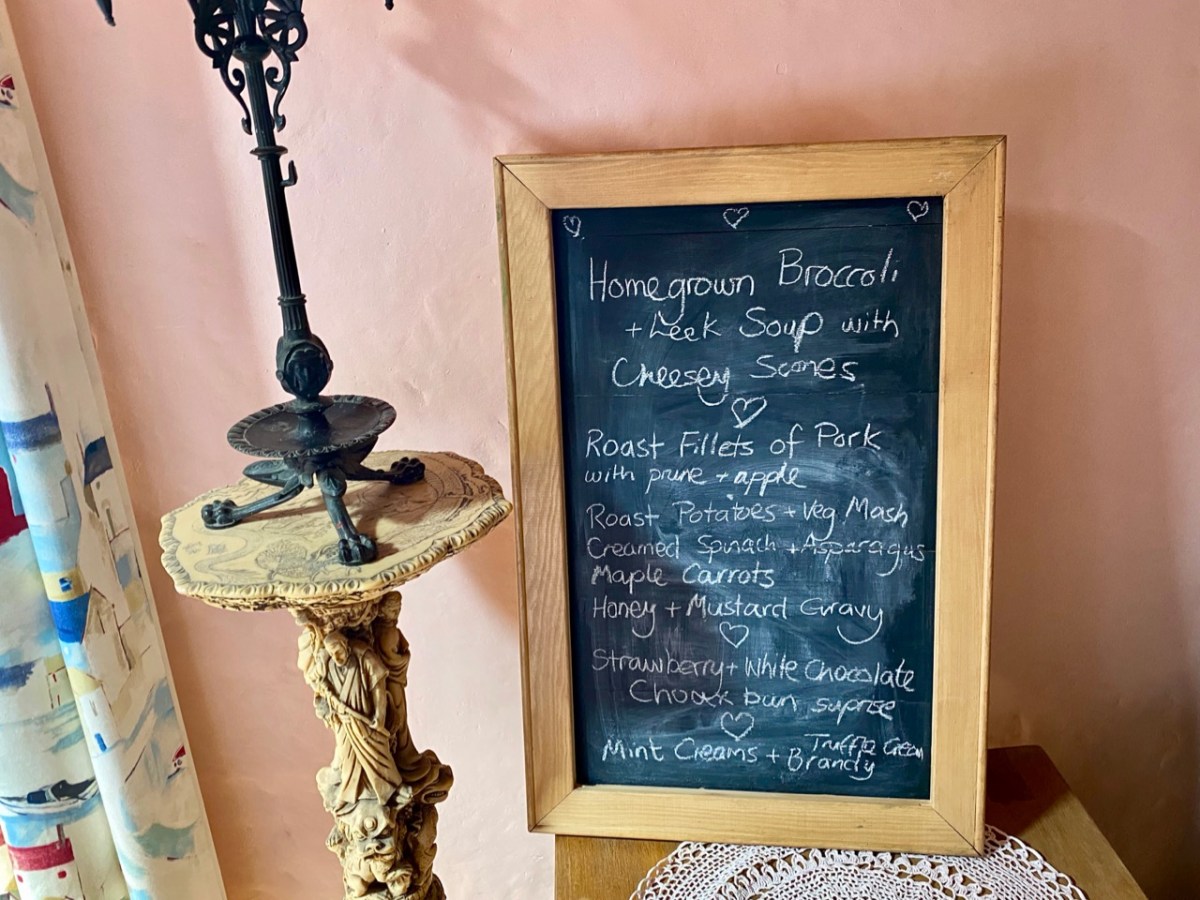
Tracy – in charge of the culinary delights – had worked out a menu which was entirely tailored to our various tastes (and dislikes) – and it was brilliant! All the courses were exemplary.

The main was a Sunday roast to make your mouths water… Fillets of pork for the three of us who are not vegetarian, and a miraculous stuffed filo pastry pie for Amanda. The accompanying vegetables were prepared without any meaty elements – so we could all savour them in equal measure.

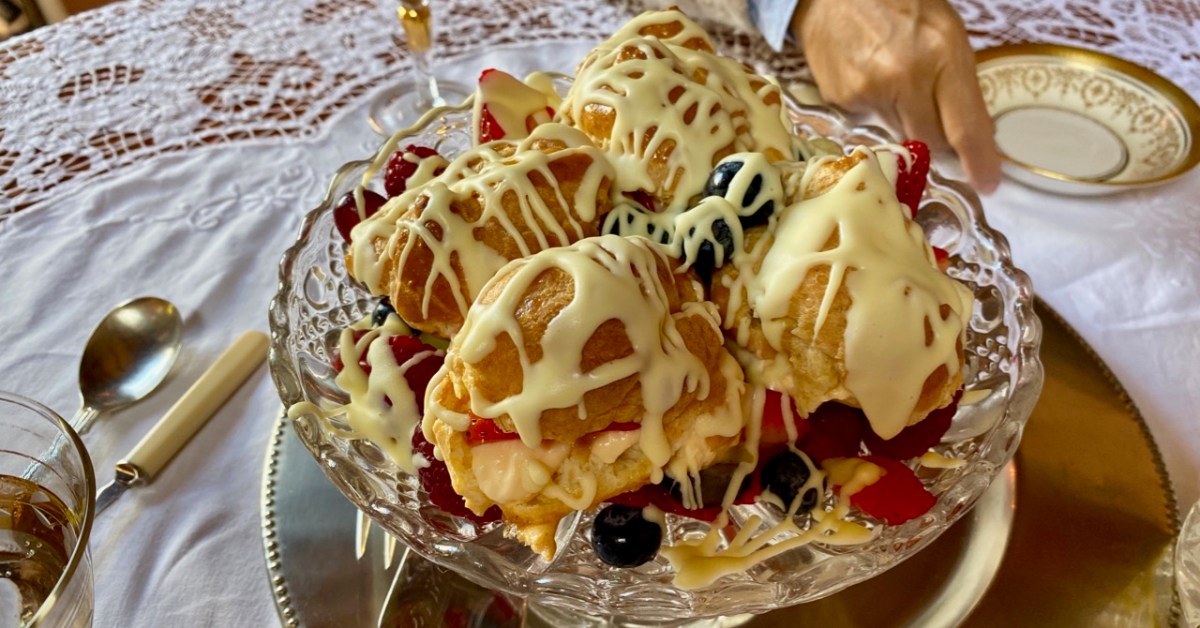
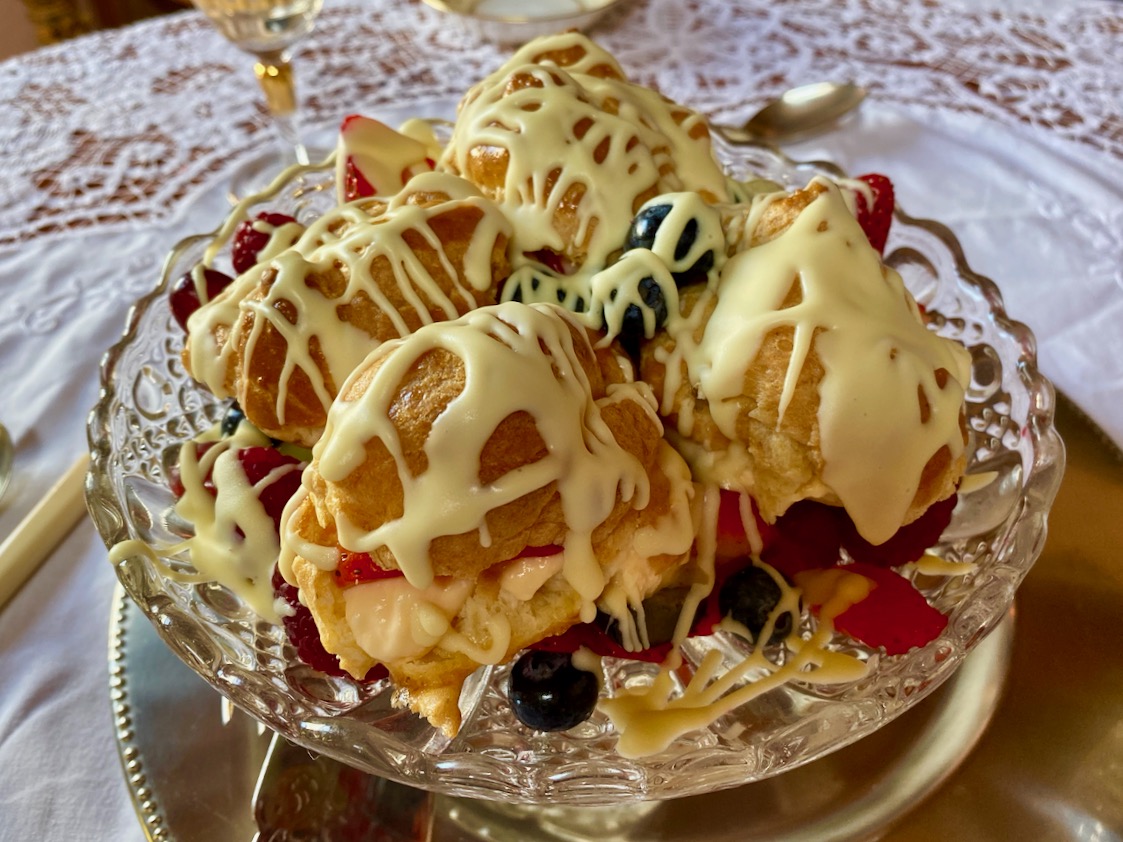
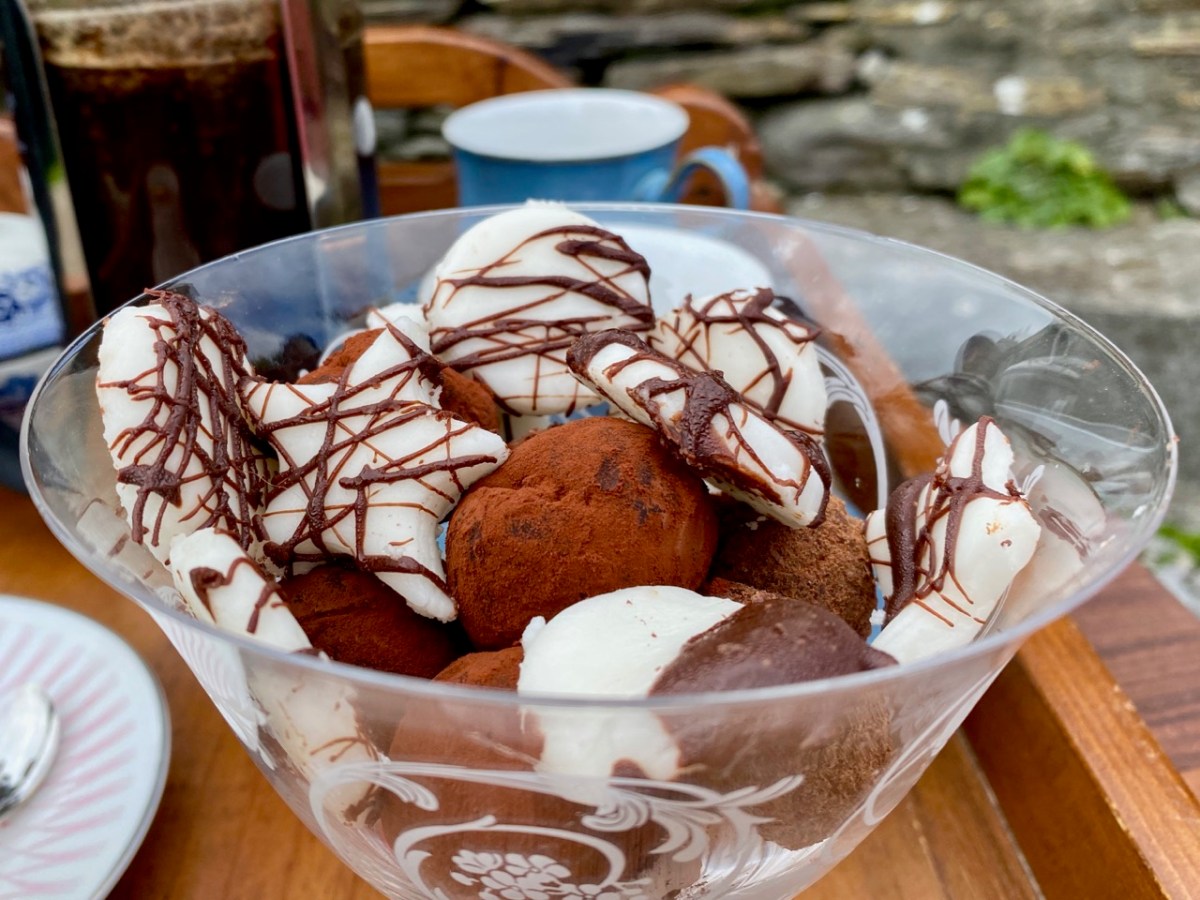
Peter was delighted with every aspect of his celebratory meal – we all were! The choux bun dessert was unbelievable; not a morsel was left behind. The riches never stopped: for our after-dinner coffee we went outside to the terrace-with-a-view and enjoyed home-made fondants and biscuits.

I think you’ve got the message… Sunday lunch at Castaway East is a very special experience indeed. Combine it with a good walk on a beautiful and atmospheric West Cork island and you will have a day you will always remember. If you want the experience for yourselves give Tracy and Peter a shout: they will be delighted to organise it for you.

Contact Tracy & Peter Collins on +353 872966489 or email simplytracy@icloud.com – They also have a campsite!

Monica Sheridan and Christmas

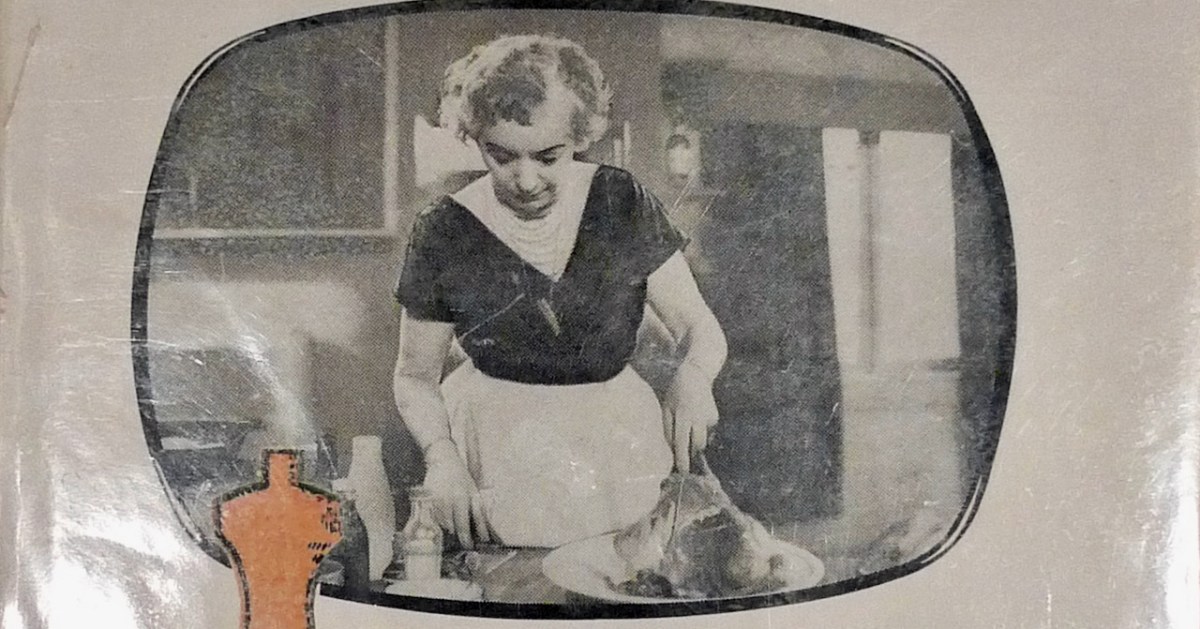
I always drift back to Monica Sheridan at Christmas. Ireland’s first TV chef, she lives in the memory for those of us who grew up at the dawning of the television age in Ireland. Her Christmas Cake recipe is a classic and because it is nowhere on the internet, I decided, way back in 2013, to put the whole recipe in a blog post. This actually led me down a rabbit hole because the three posts I have written about Monica Sheridan were published so long ago that they no longer display properly, so I have spent the day updating them. Here is the first post I wrote about her – it was called Monica’s Kitchen and was all about her first cook book.

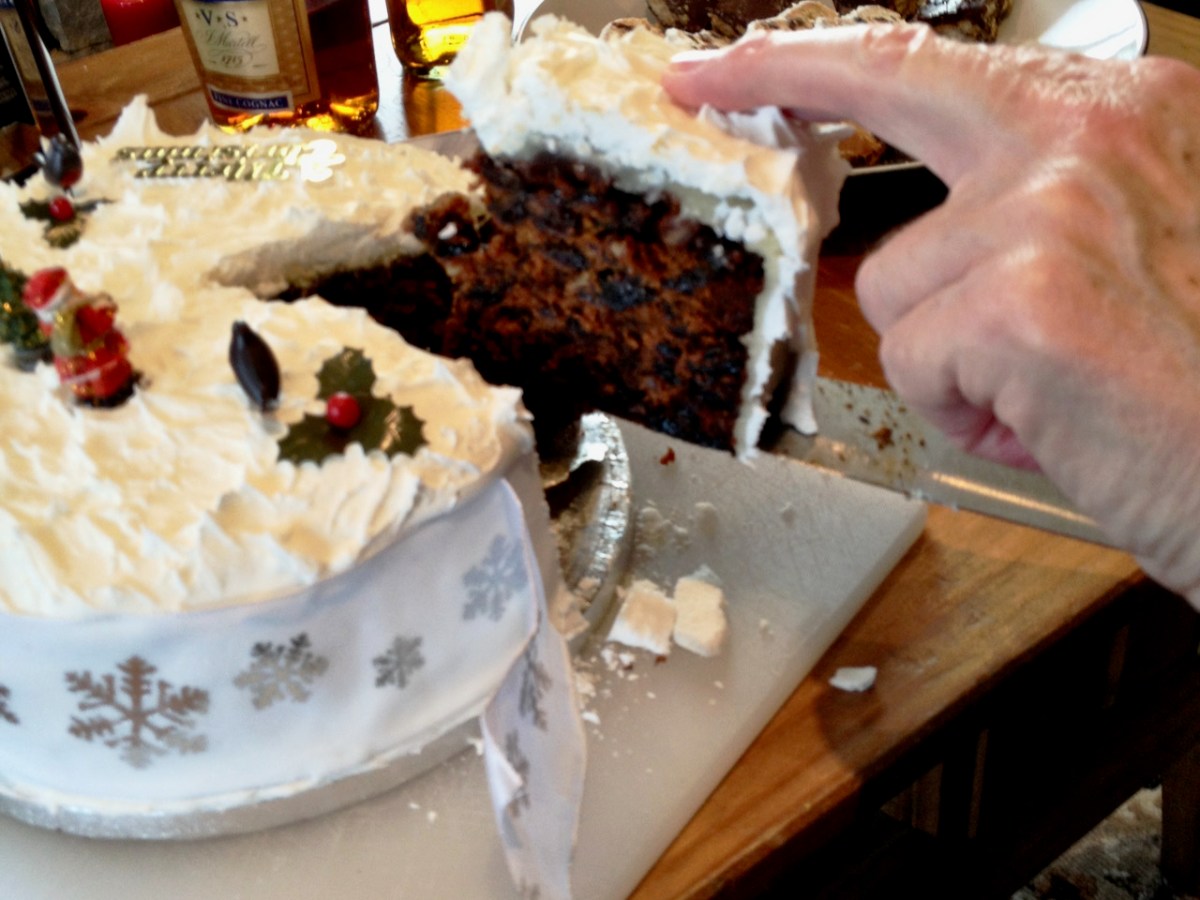
And here is the Christmas Cake post. She described it thus: unorthodox, unhygienic, almost improper – but it does work. She’s right – I have made it and it is delicious.

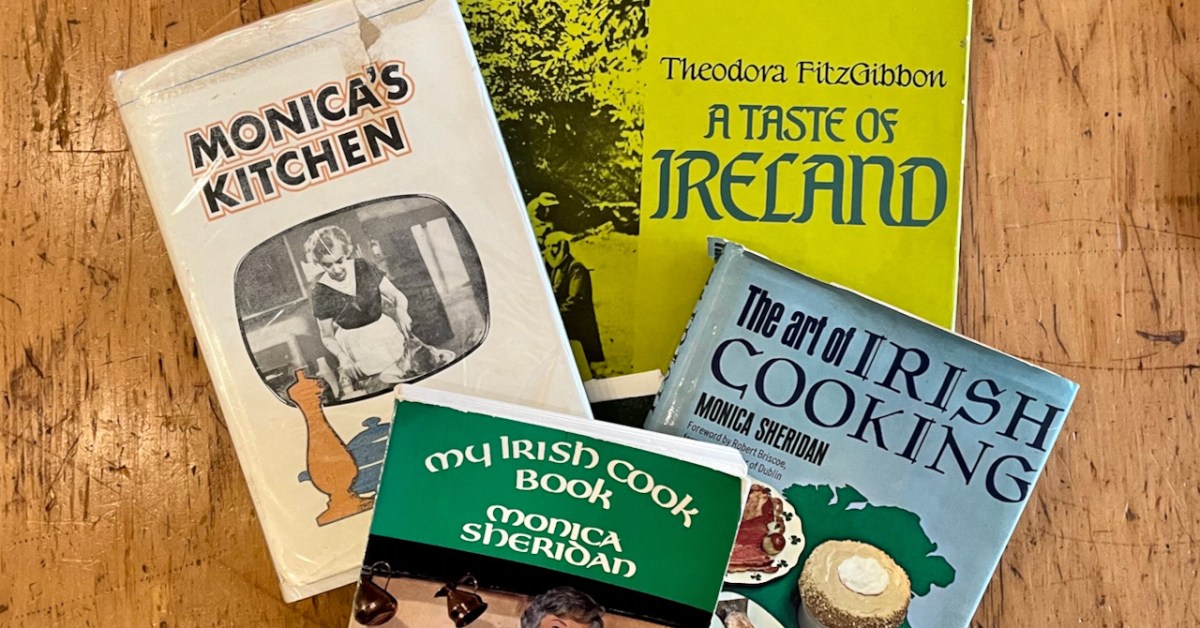
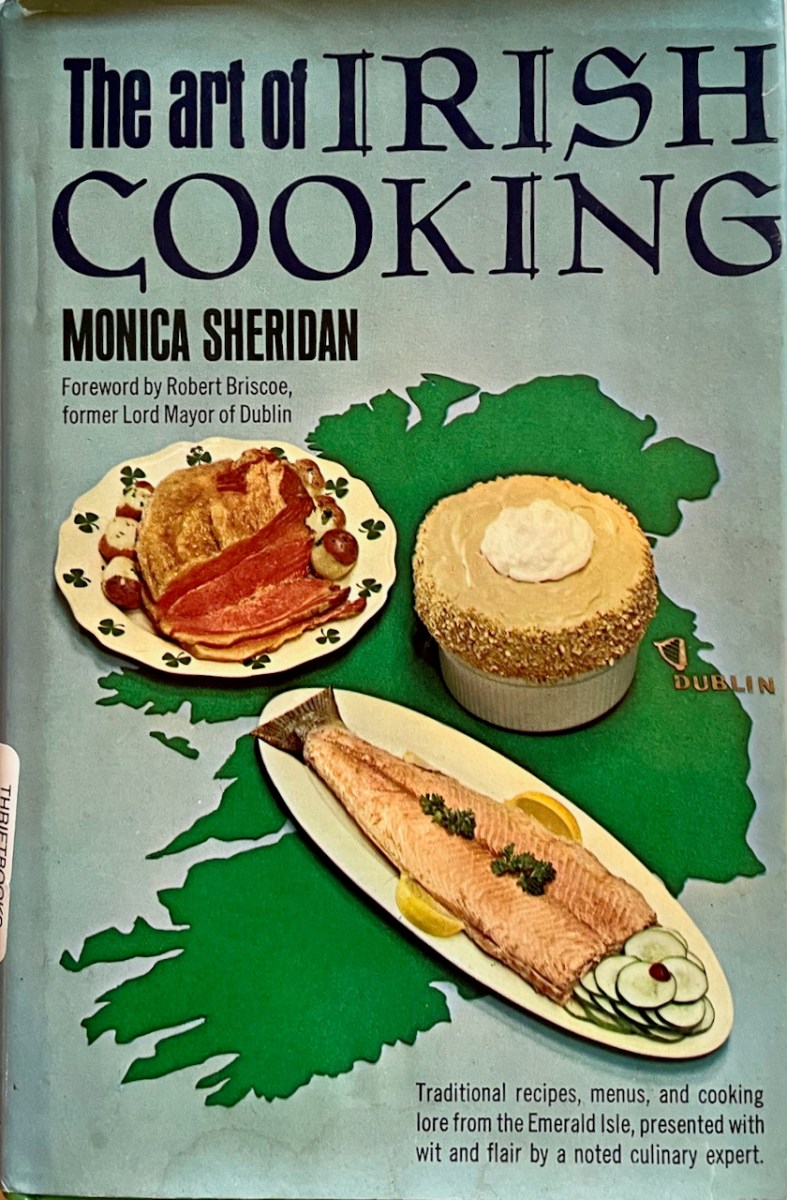
Another of her books, The Art of Irish Cooking, was written specifically for the American Market. It’s an Americanised version of the 1965 book, My Irish Cook Book, that I brought with me to Canada when I emigrated in 1974. This was the book I used when I was writing about Plum Pudding, although I didn’t use her recipe, just her pyrotechnics. It would be hard to exaggerate how unappetising the cover of the American version is.

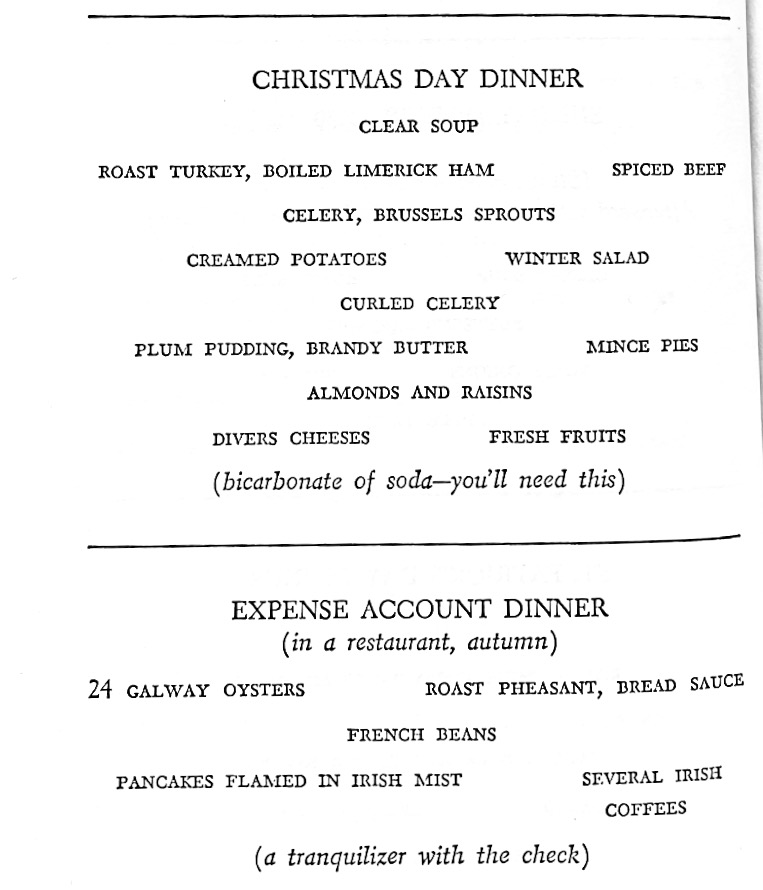
Many of the recipes are the same, but there are significant differences between the Irish and American books. Amusingly, the chapter on ‘Drink’ is re-labelled ‘Beverages.’ All the same colloquial come-here-till-I-tell you chat is here and there’s an introduction by Bob Briscoe, the popular Lord Mayor of Dublin, who can’t resist the Irish-American tropes, saying, Our traditional Irish fare proved itself a boundless source of rugged health and stamina. . . it built the muscles that helped to push the great railroads across the American continent, and the Irish intellects that have adorned the world’s literature. For some reason, the American edition required menus, as if the publisher had said – ‘Yes, but what do the Irish actually eat at a meal?’ Here’s the Christmas dinner menu (with a bonus Expense Account menu delivered with her trademark sense of fun).

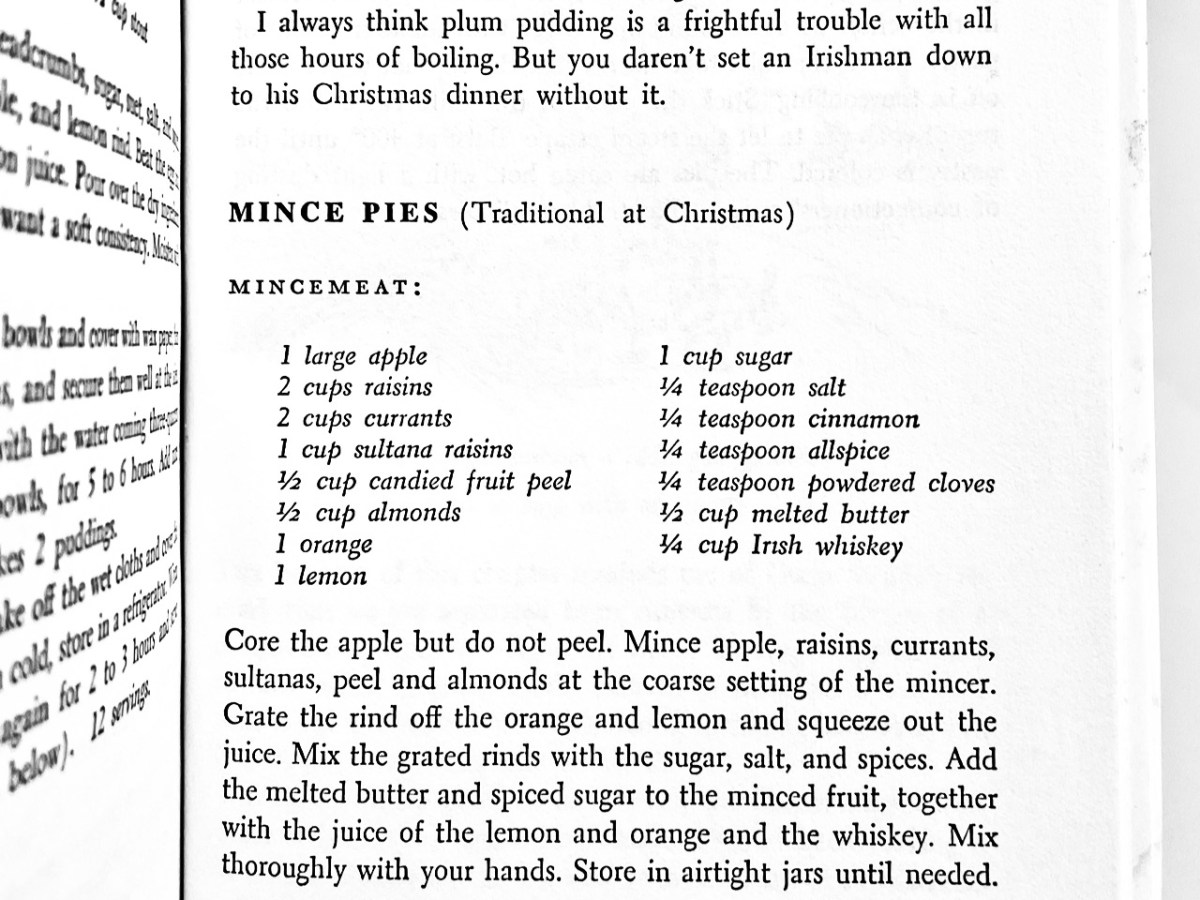
I have no idea what creamed potatoes are (mashed with cream?) or why she serves celery twice, the second time ‘curled.’ But this American edition is the only one where she gives a recipe for Mince Pies, so I am including her recipe for Mincemeat, in case there are those of you out there who like to make their own. Other recipes I have consulted call for shredded suet, but Monica keeps it fairly simple, although she does assume you have a mincer. It’s not such a standard piece of kitchen equipment as it used to be, so if you’re not sure what it is, here’s a link. I love her comment on the puddings too!

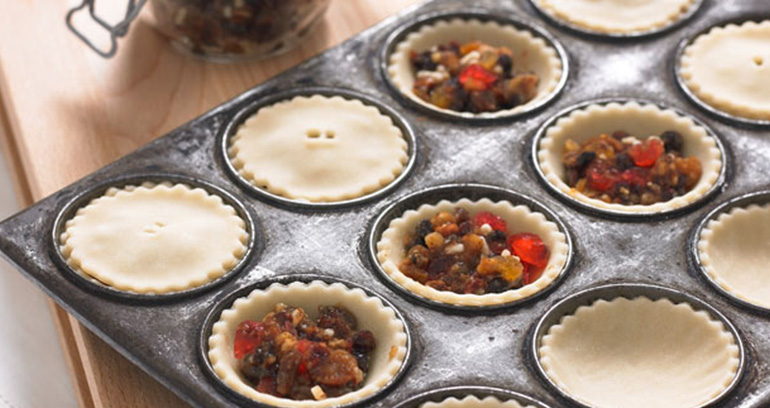
I’ve never made mince pies myself, but if I was to do it, I think I’d go with this one, from Jusrol ready-made pastry.

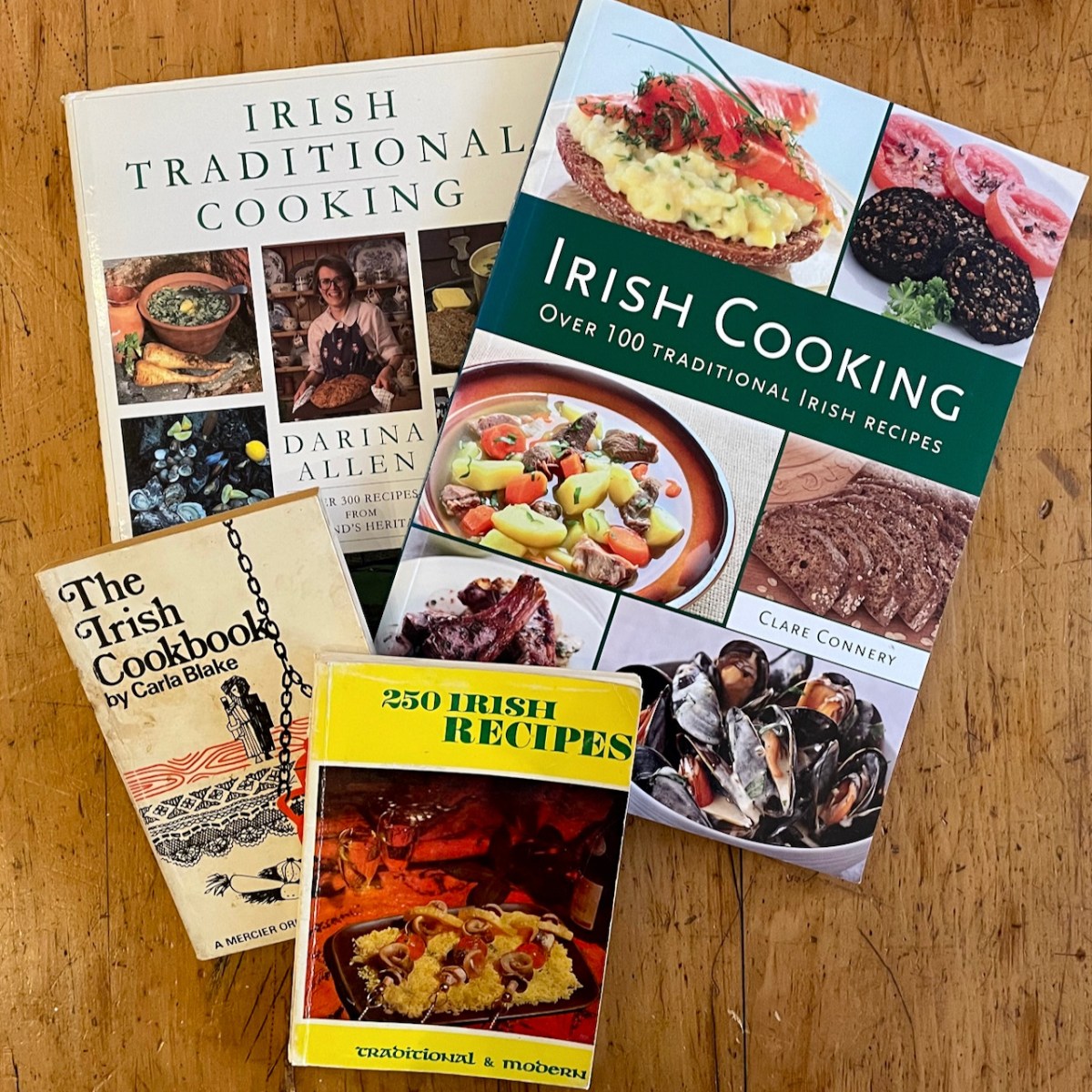
All our mothers and grandmothers cooked from Monica Sheridan and Maura Laverty‘s cookbooks. Together, these two women dragged Irish cuisine into the 20th century. Oh – yes, there was Theodora FitzGibbon too – well deserving of a future post. That’s my copy of her A Taste of Ireland in the lead photograph. I have several other cookbooks devoted to Irish cooking, from the 60’s to the 90’s. Fillet Sole St Brigid, anyone? Or a nice dish of Sloke?

Posts about Monica Sheridan

Monica’s Kitchen

Monica Sheridan’s Christmas Cake

Monica Sheridan’s My Irish Cook Book

Fabulous Five-Minute Blackberry Jam

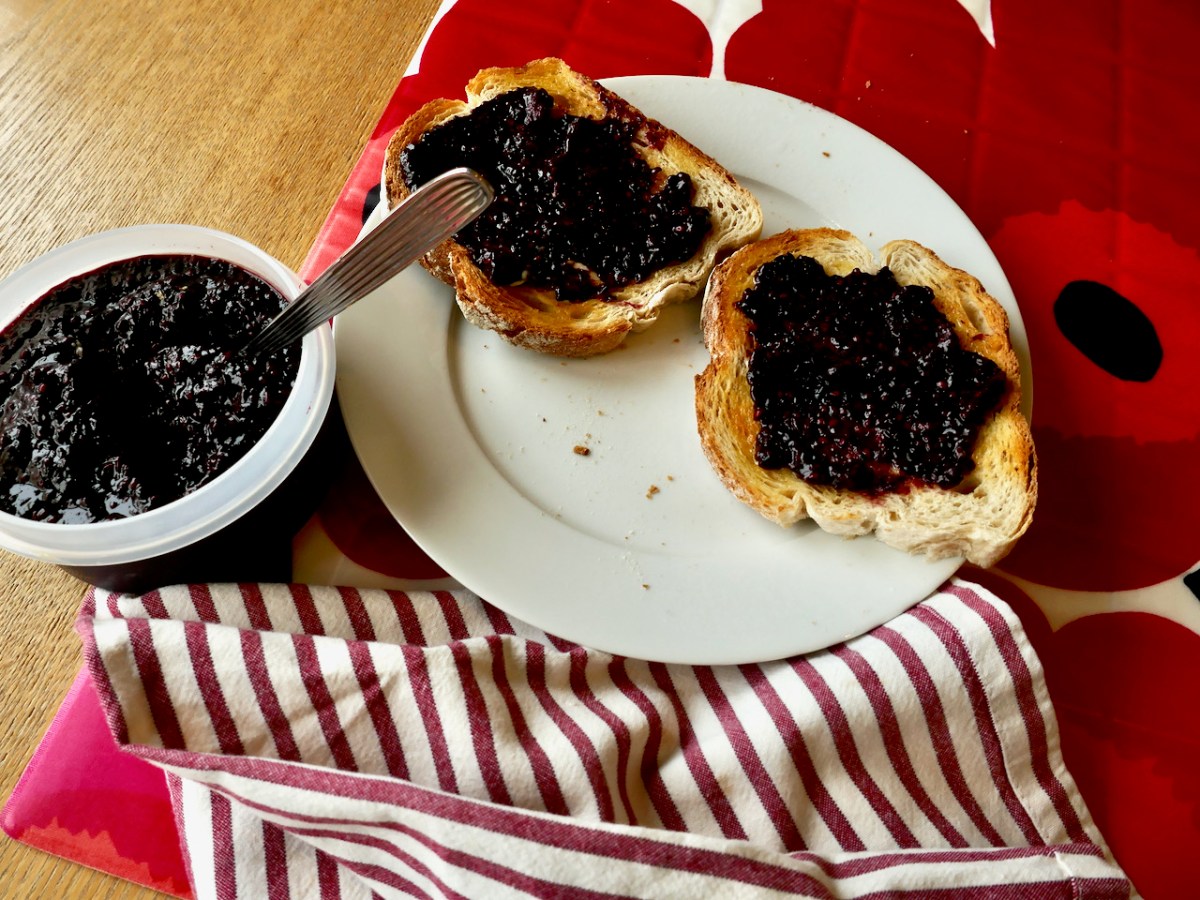
This is my go-to recipe for blackberry jam. I’ve made ‘real’ jam – which takes all day and leaves you hot and bothered – and then wondered how to get through a dozen jars of jam and ended up pressing them on friends and neighbours. This is so much easier!

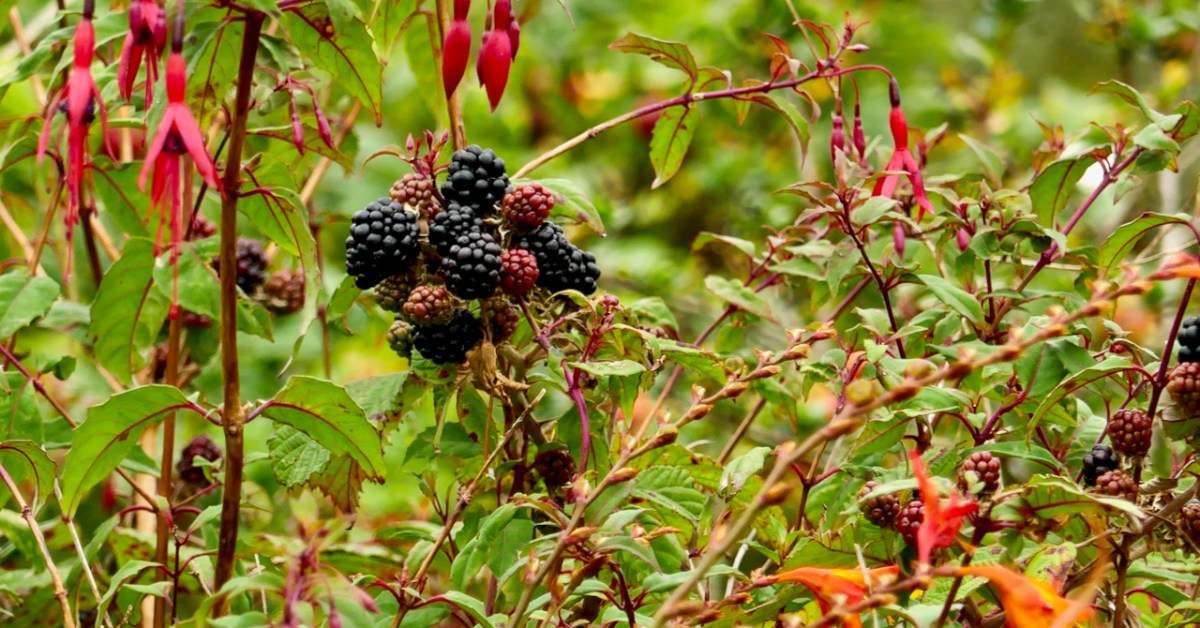
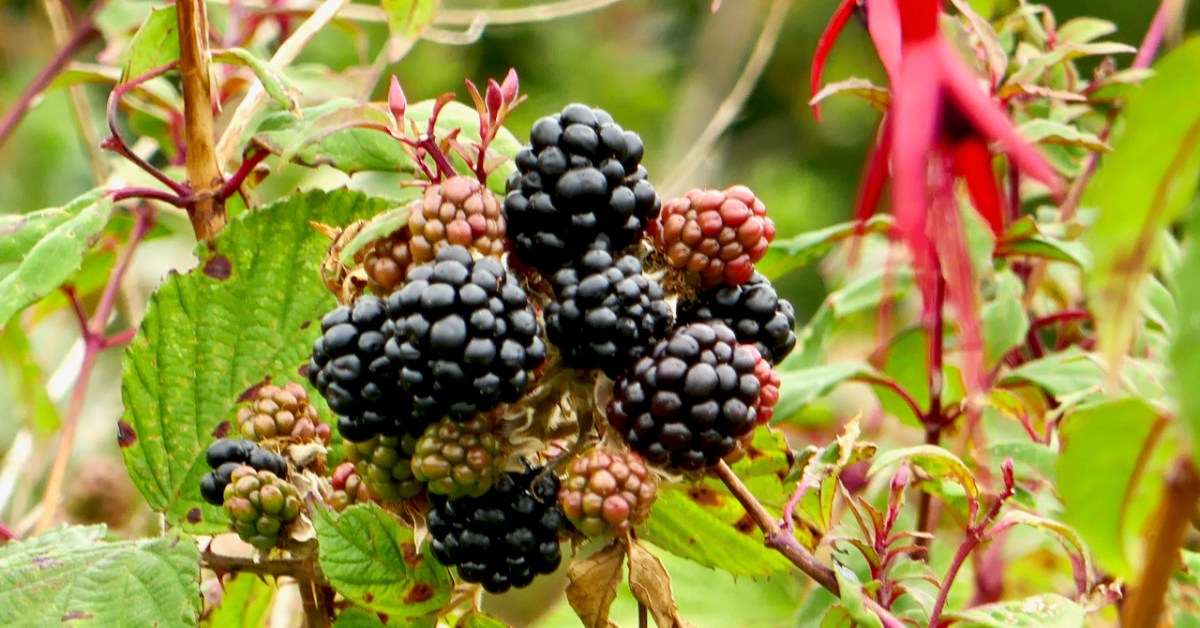
Blackberries are early and abundant this year. They’re everywhere and they’re free for the picking – all the best chefs are out there, adding them to the ‘foraged’ list on their menus. They’re also incredibly good for you! Although some of the claims made for them are probably fanciful, it’s true that they are packed with fibre, Vitamin C, potassium and antioxidants. If you’re picking them with gusto, a few drops of your own blood adds some additional flavour.

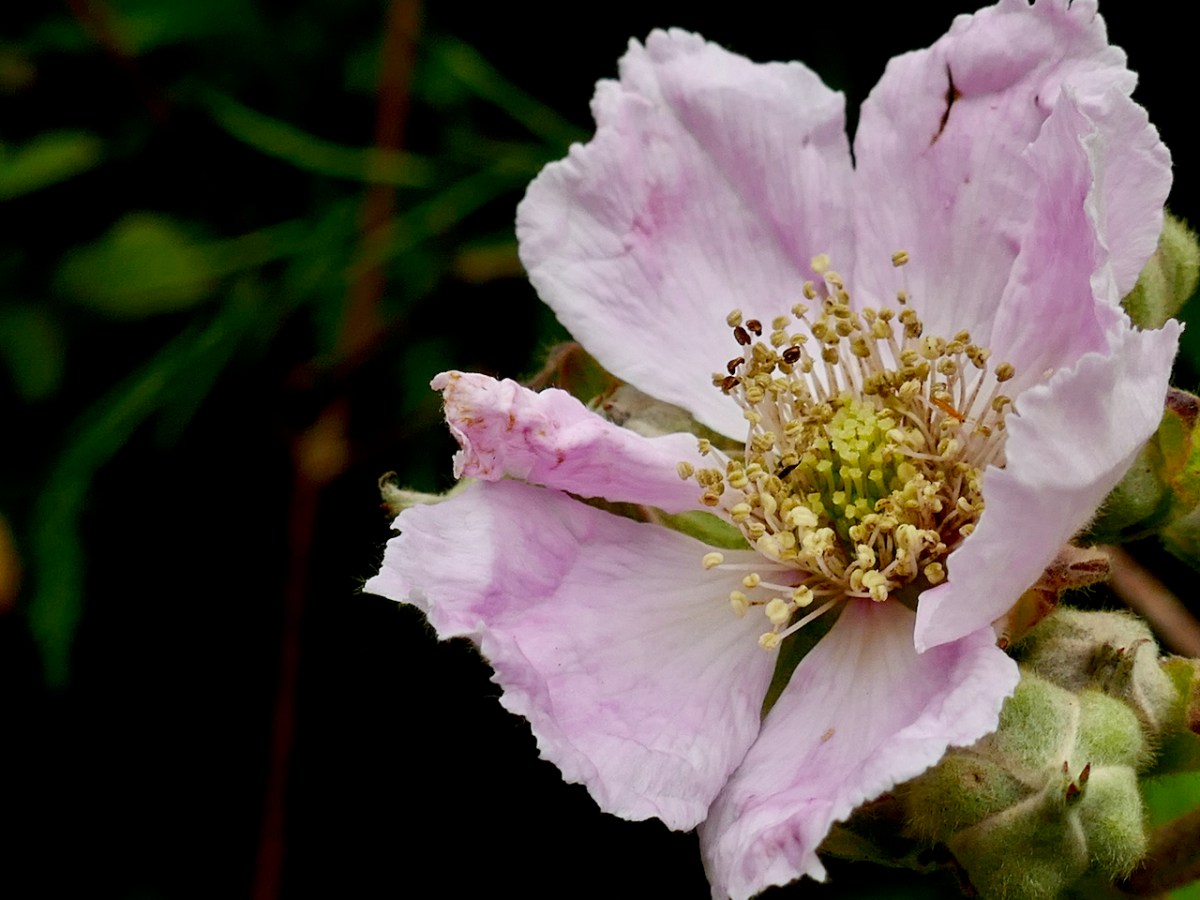
Although they can be a pain for gardeners, blackberries are marvellous for pollinators. The flowers contain huge amount of nectar and pollen and it’s one of the plants that can really make a difference for bees. They may become a medicinal crop too – a student from Cork, Simon Meehan, won the Young Scientist of the Year award in 2018 with his discovery of an antibiotic contained in blackberry brambles.

So what about that jam recipe? And can it really take only five minutes? Yes! Collecting the fruit, in my own garden, took me about ten minutes (mainly because I kept eating the berries as I was picking) but the jam itself took less than five minutes to make. I used two cups (about a pint, or 500ml).

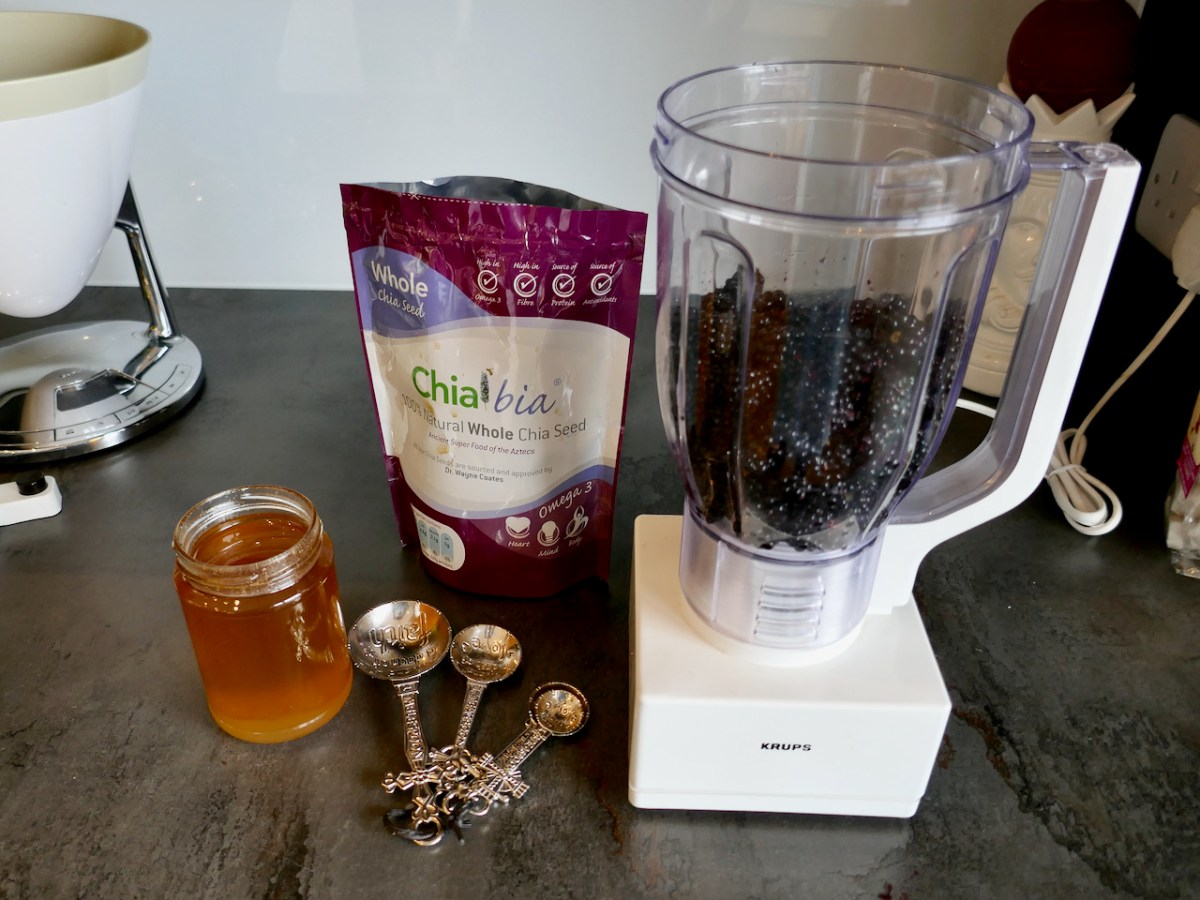
The secret is Chia Seeds – those tiny little black seeds that swell up and jellify when you add moisture. They, like the blackberries, are also very good for you, being full of B Vitamins and minerals.

If you’re concerned about the calories in honey, or want to keep it vegan, leave out the honey (it will just be a little more tart) or use maple syrup or a sugar substitute. Scale up in ratio – that is, for two cups, just double everything, etc.

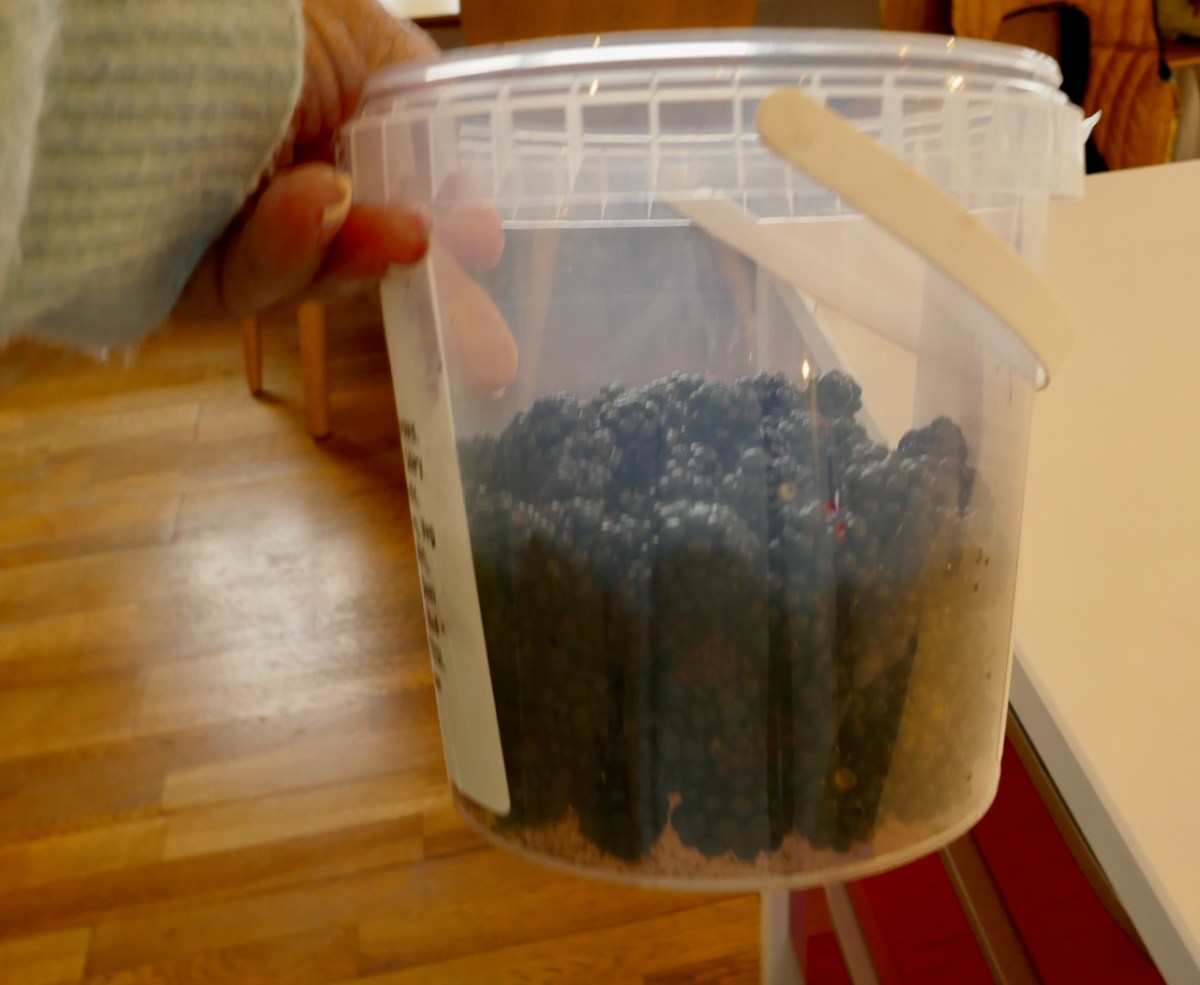
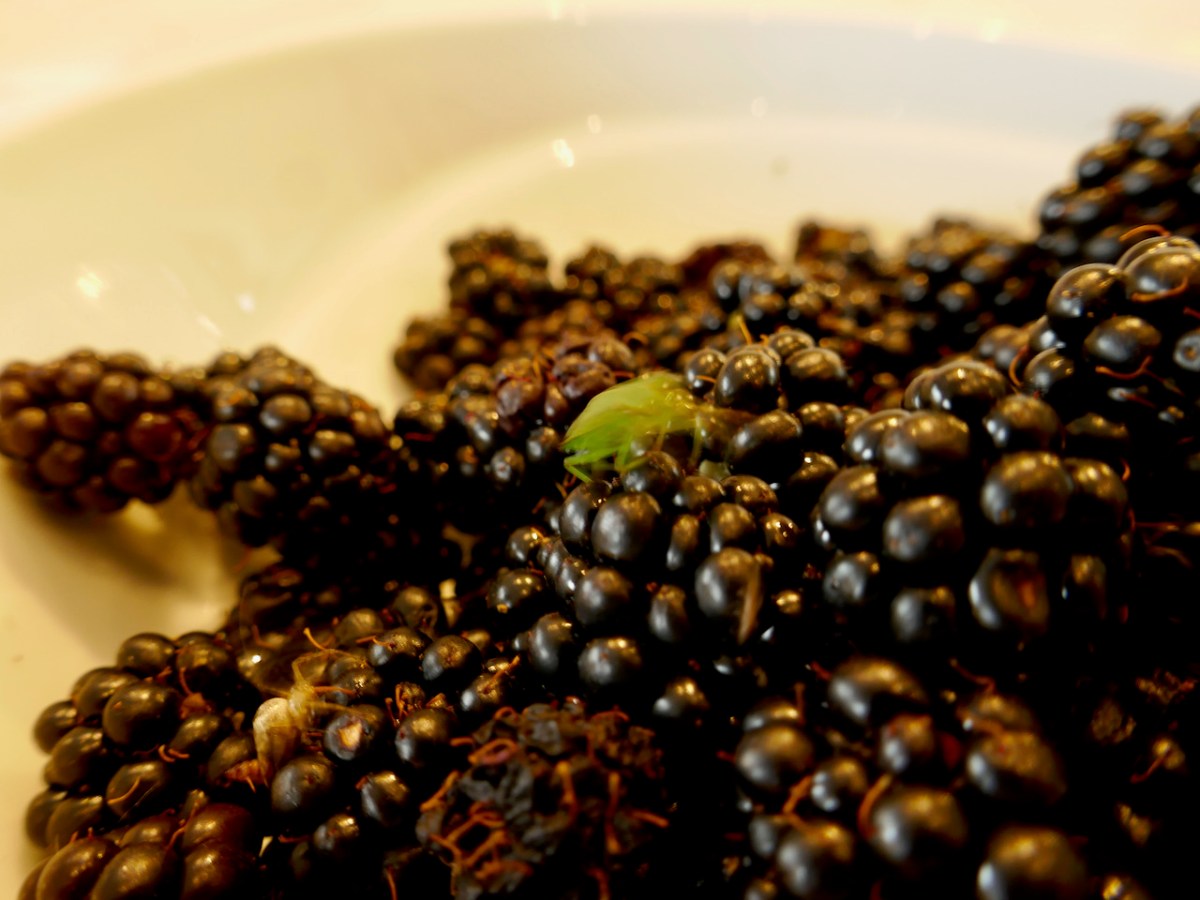
Pick through them well!

Ingredients

1 cup blackberries

1Tbs Warm water

1 Tbs Honey

1 Tbs Chia Seeds

Method

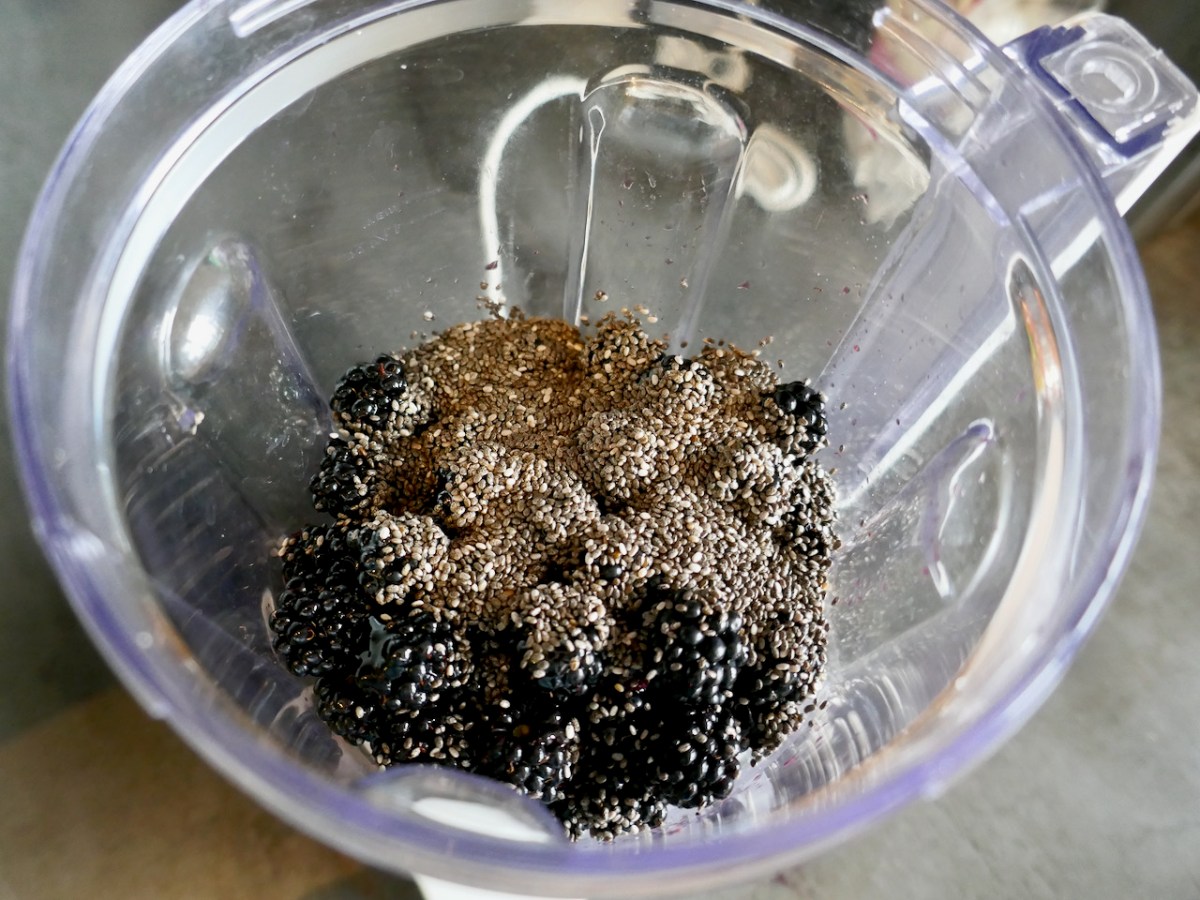
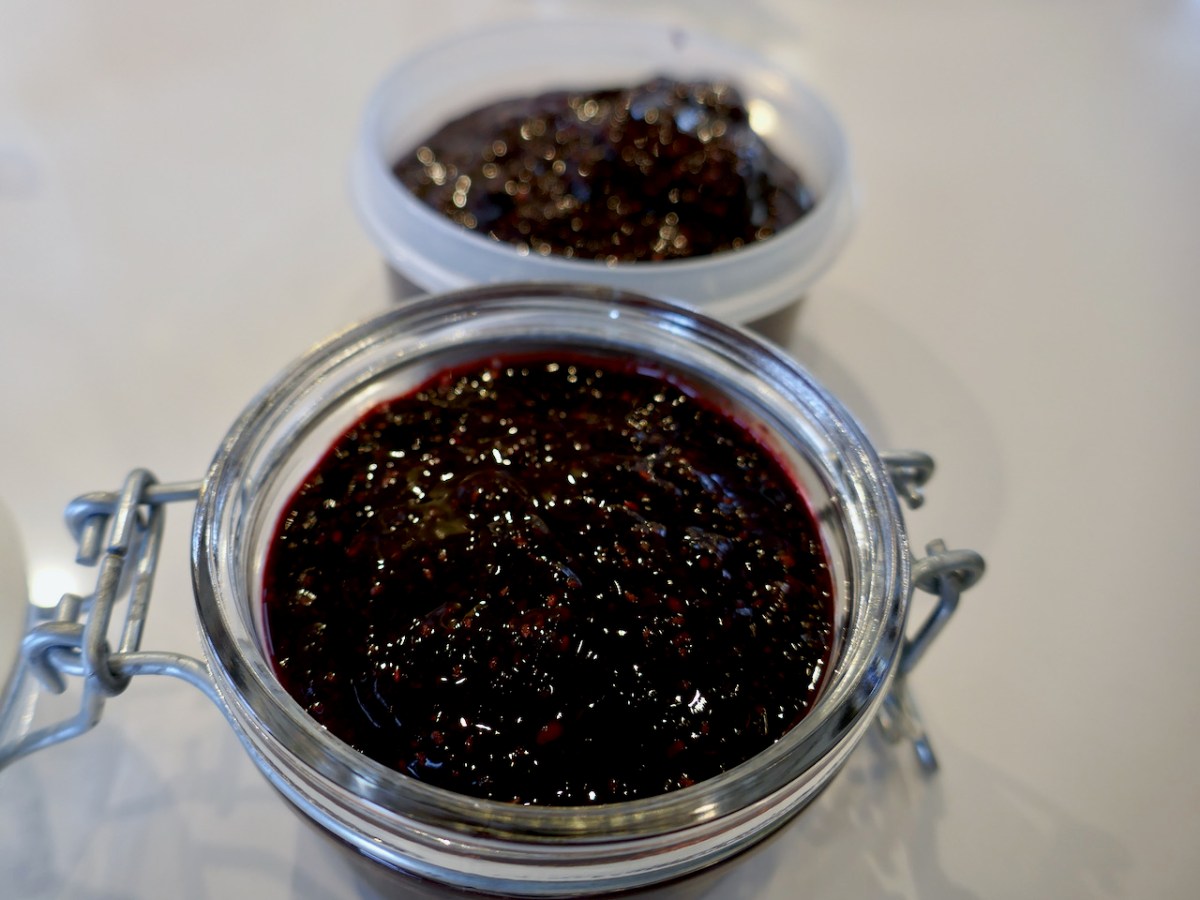
Pick through the blackberries to remove any sticks or bugs. but don’t wash them. Put all ingredients in a blender and blend until mushified (technical term), or use a hand blender, or just mash everything together really well with a fork. Pour it all into a clean jar (or glass, or yogurt pot) and store in the fridge.

Because this isn’t cooked, you have to keep it in the fridge but it will last for a couple of weeks there. You can also freeze it.

Yum!

Fresh From Sea and Land

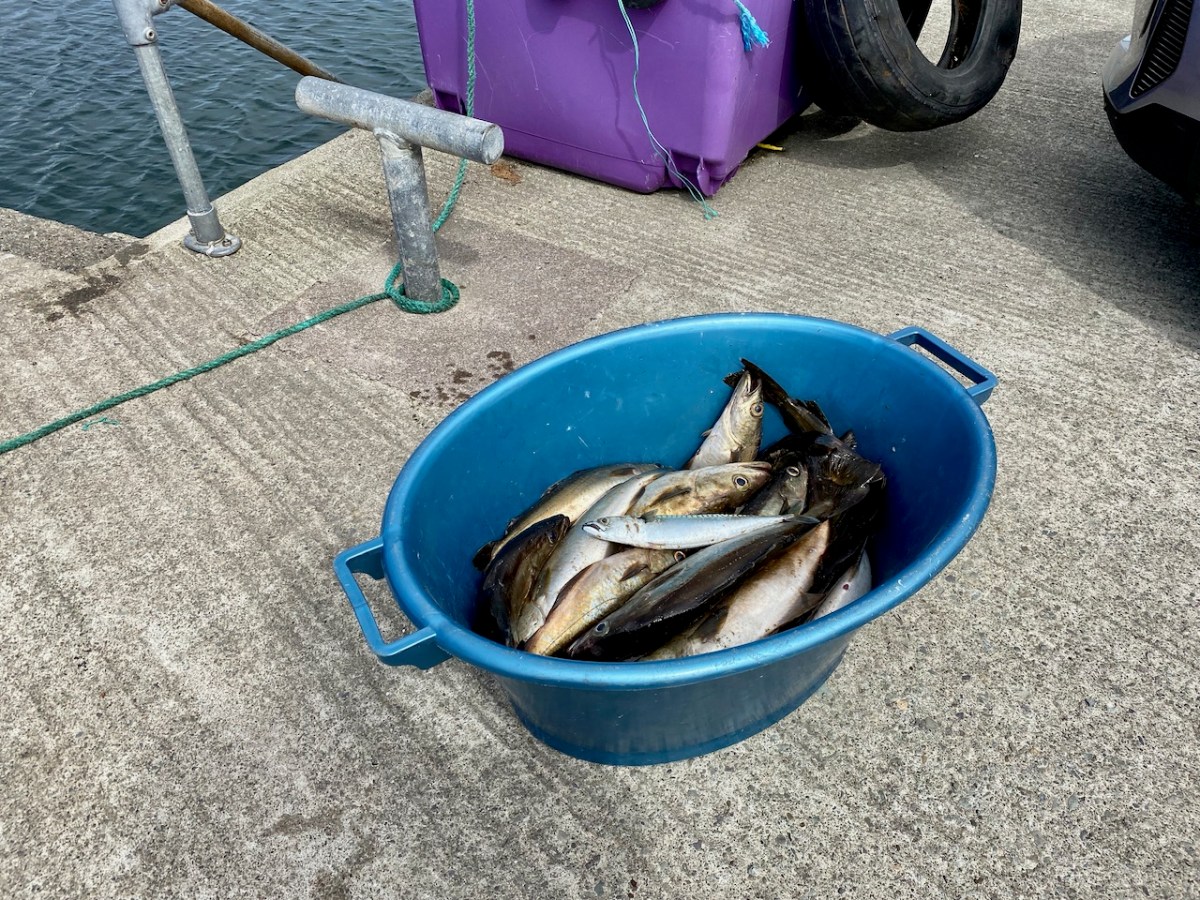
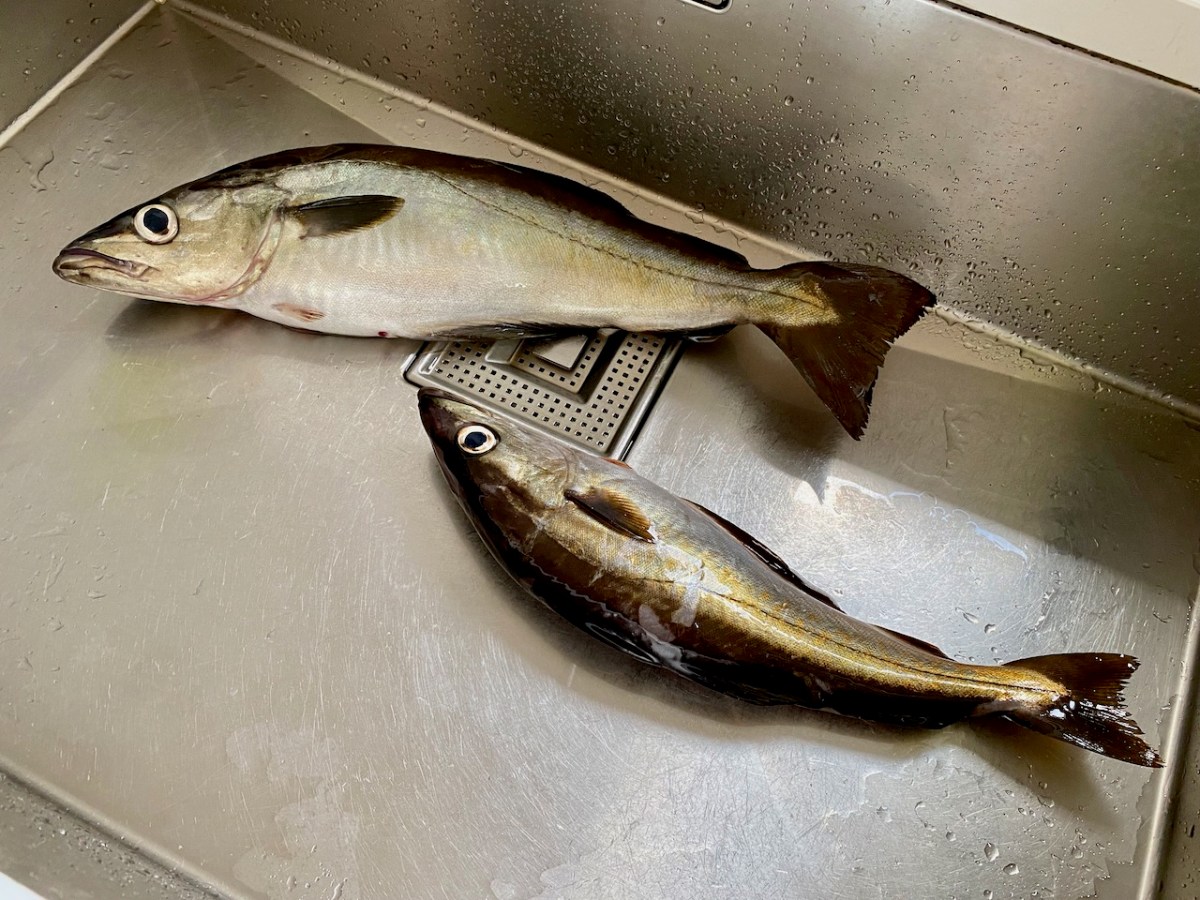
Would you like some pollock? It was a friendly fisherman on a West Cork pier we happened to stop on. He had just landed with some friends and family and they had caught a lot of fish, mostly pollock. They couldn’t eat them all, Billy said, just help yourself. A little overcome with such generosity, we selected two lovely fish, and asked for his advice on how to cook them.

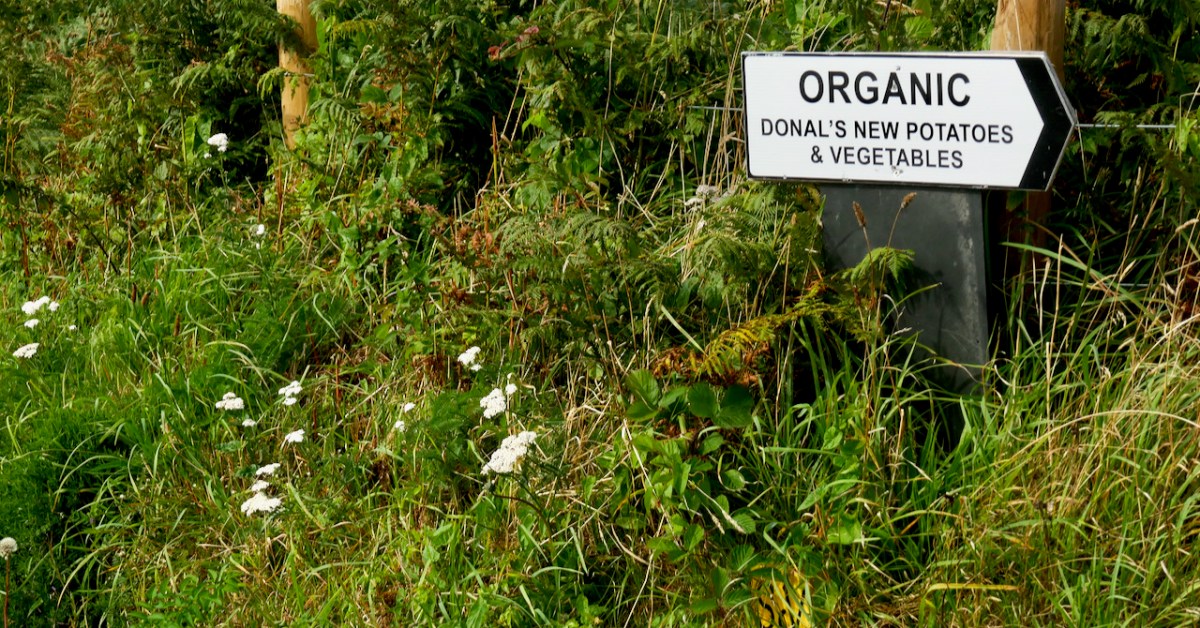
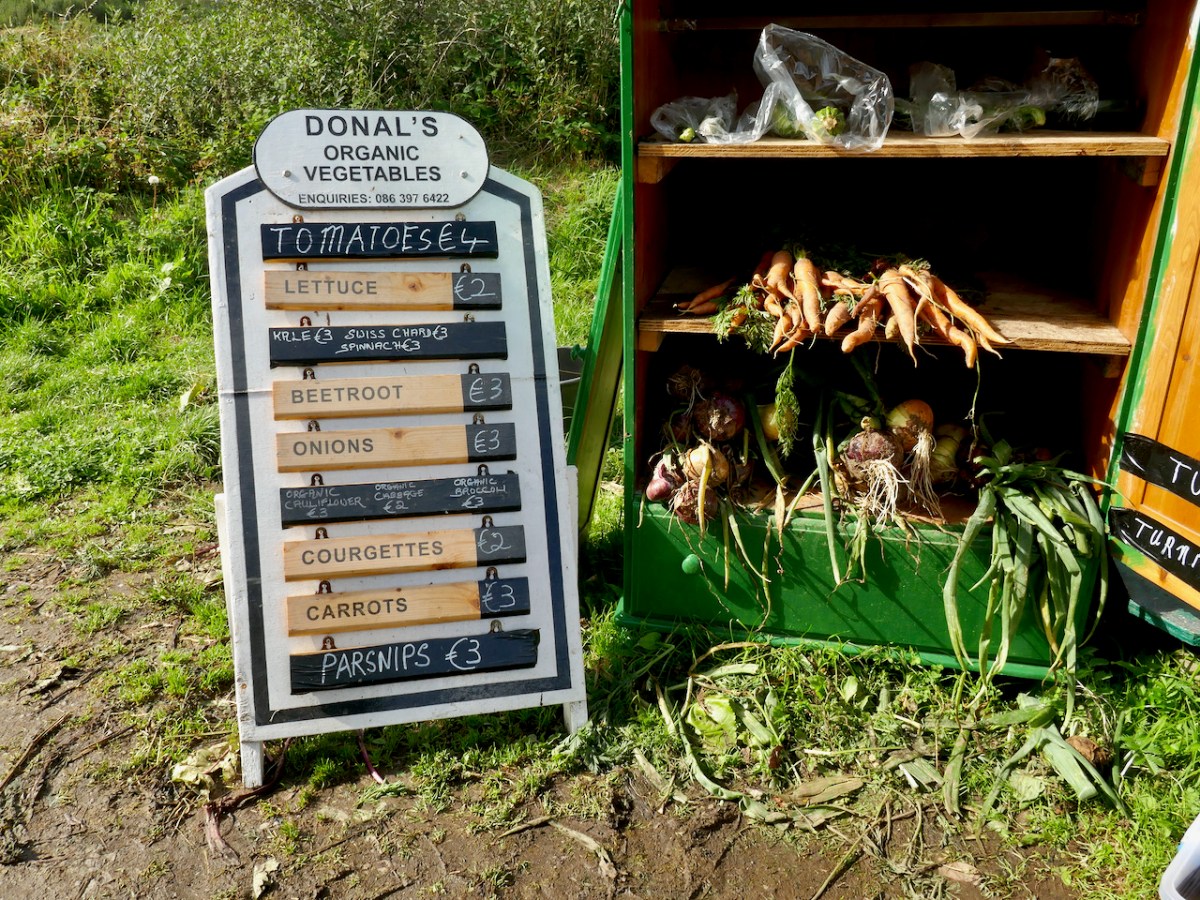
Just keep it simple, was his advice, with some dry potatoes and cream. Dry, it turned out, was his term for floury potatoes, and we knew just where to get those. Our neighbour, Donal, keeps a fresh vegetable stall nearby. He digs up or cuts the vegetables in the morning, and puts them in a little stall he built himself. You have to get there early if you want the pick of the crop.

Donal’s new potatoes are legendary. I was chatting with a friend who lives nearby recently and we were talking about the best way to lose the Covid weight. It’s all about the carbs, I said – pasta, rice, flour, sugar, potatoes … A look of horror came over her face. “But not Donal’s new potatoes!” We agreed that they couldn’t possibly be anything but healthy and whatever list of Bad Carbs we made, Donal’s New Potatoes could not be on it.

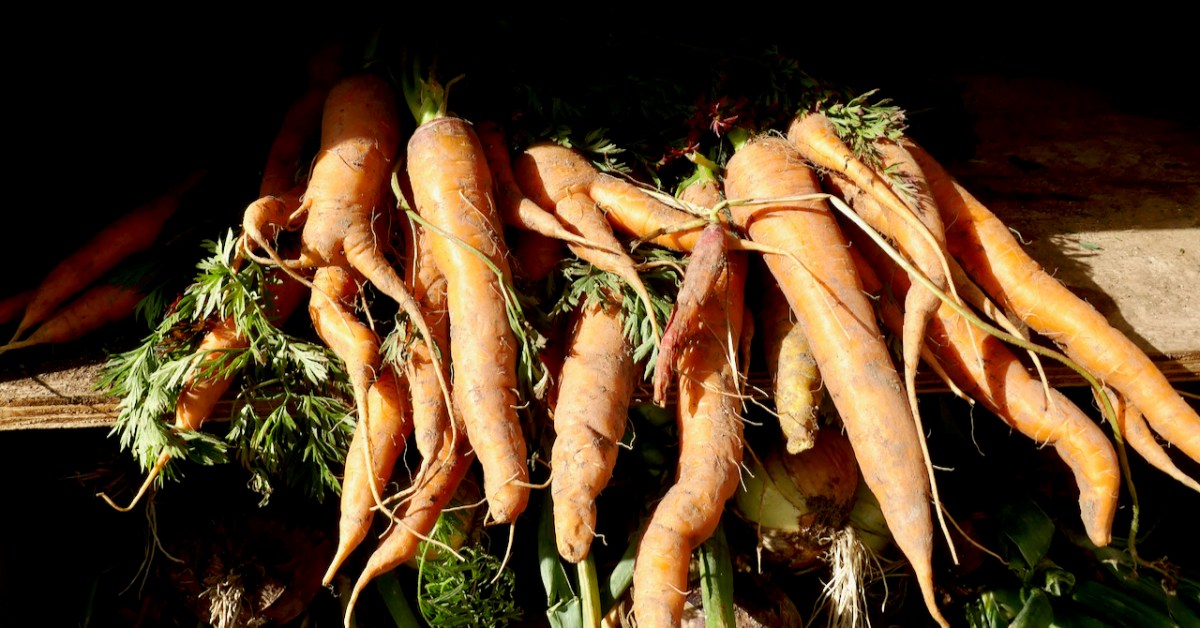
So on the way home from the pier, we dropped by the stall for the potatoes. While I was at it I picked up some carrots, courgettes (Zucchini to this ex-Canadian) and onions. 

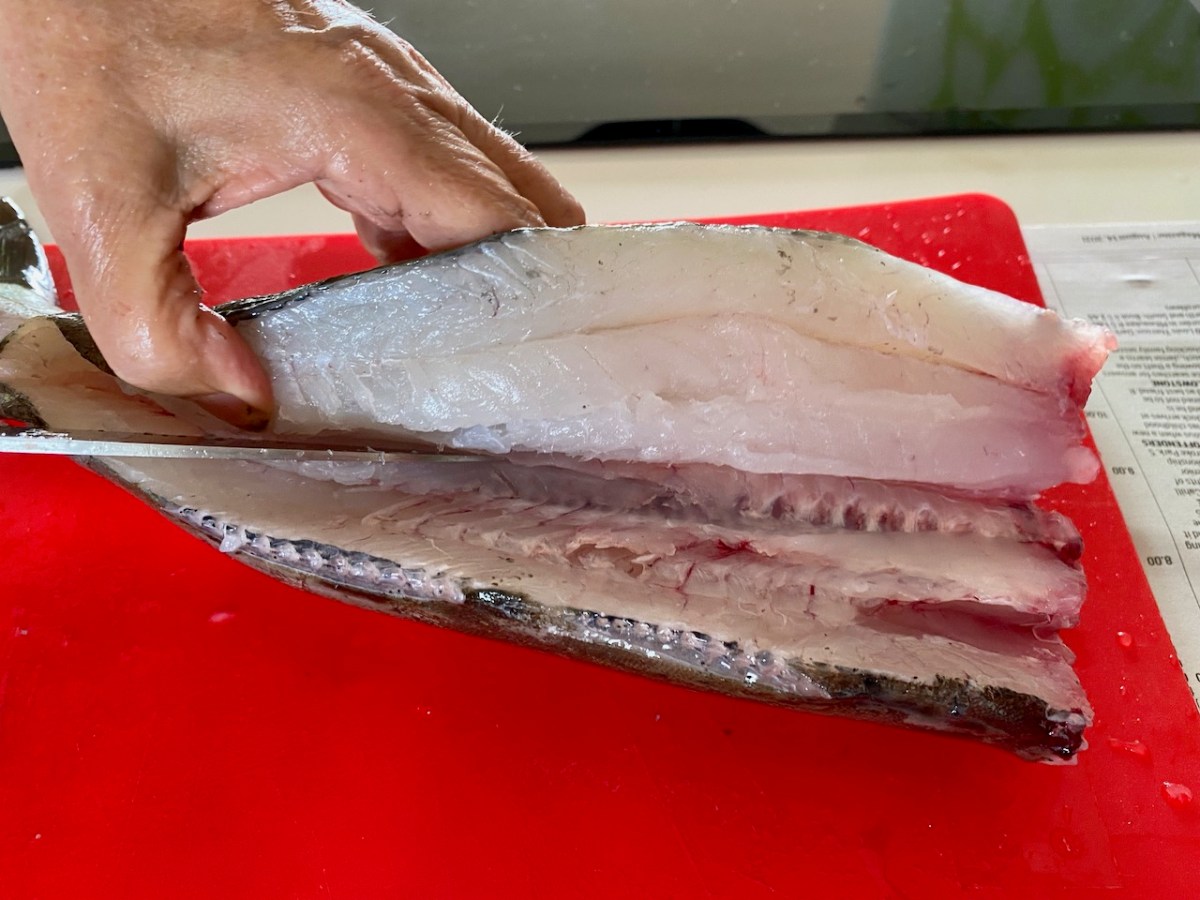
I don’t know about you, but I have never actually gutted, cleaned and filleted a fish before. In fact, I have been awestruck by the expertise of the women at the fish stall in the Skibbereen market and their skill with that long, thin-bladed filleting knife. Where to start? YouTube, of course!

So with the computer propped up beside me, and Robert sharpening the knife and encouraging me every step of the messy way, I managed it. I will spare you most of the gory details and include this one that actually looks like I know what I am doing.

Although I probably left good meat behind, at last I had a lovely set of fillets, free of bones. 

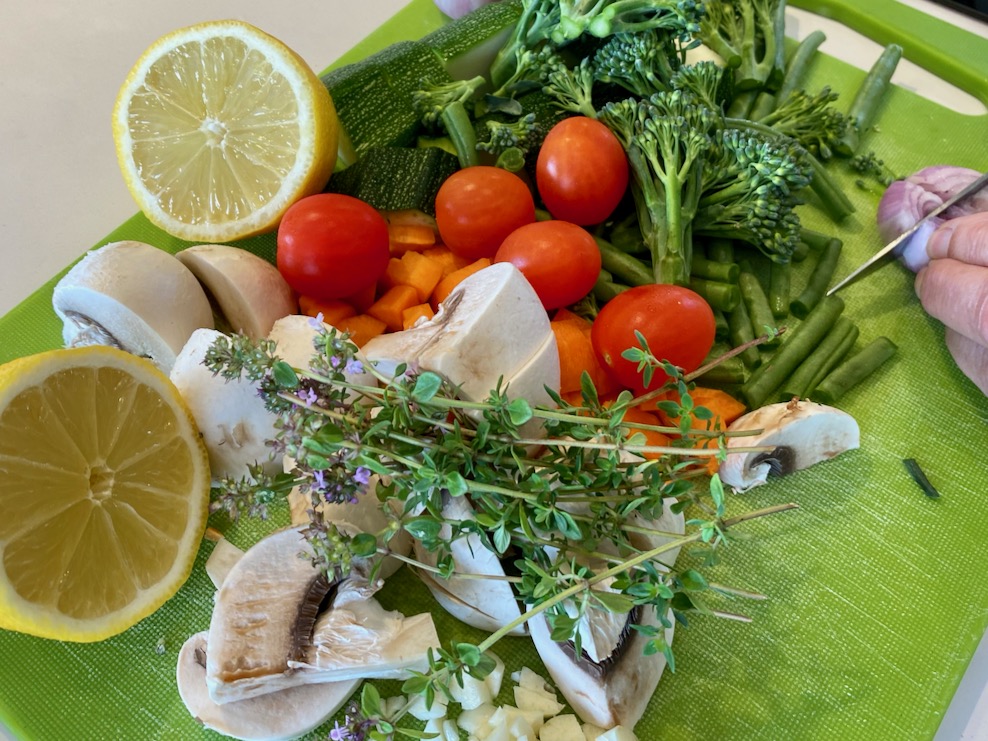
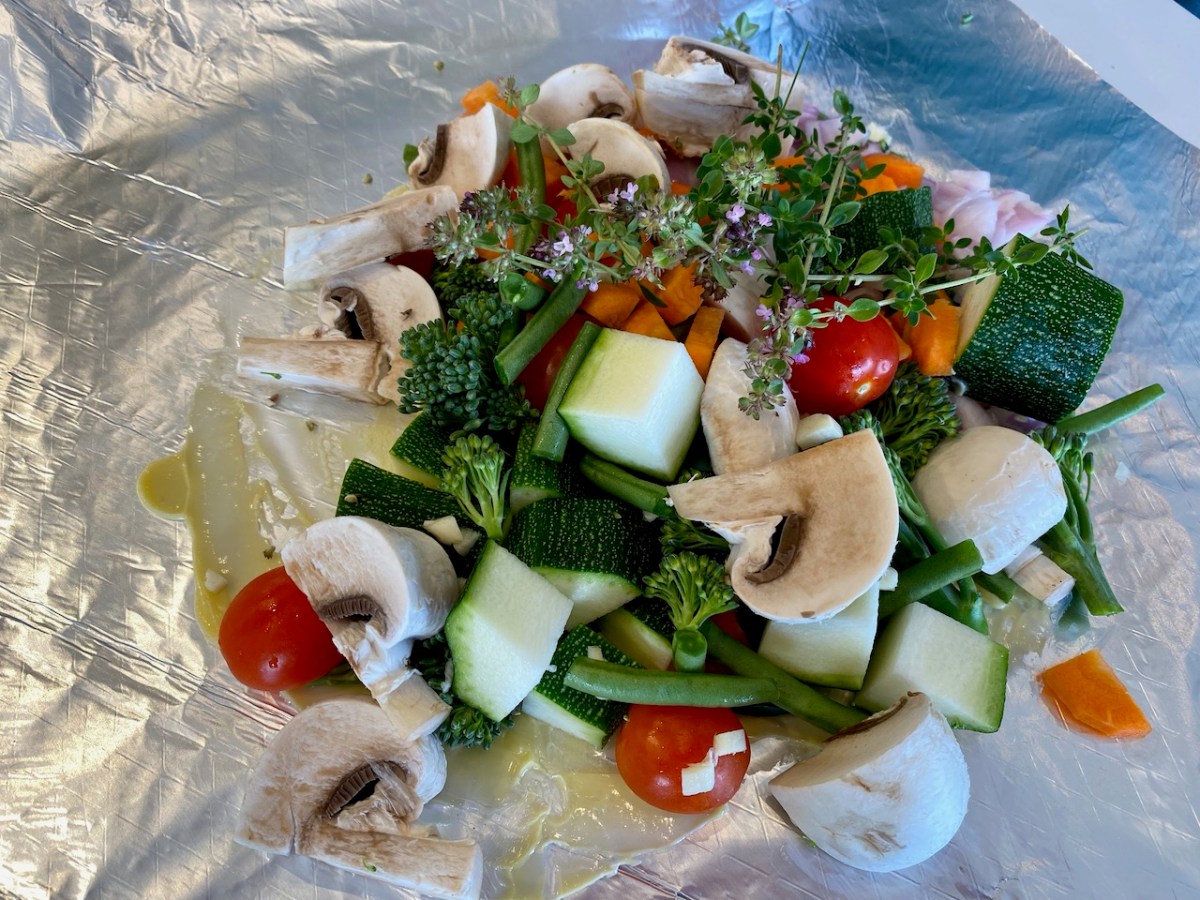
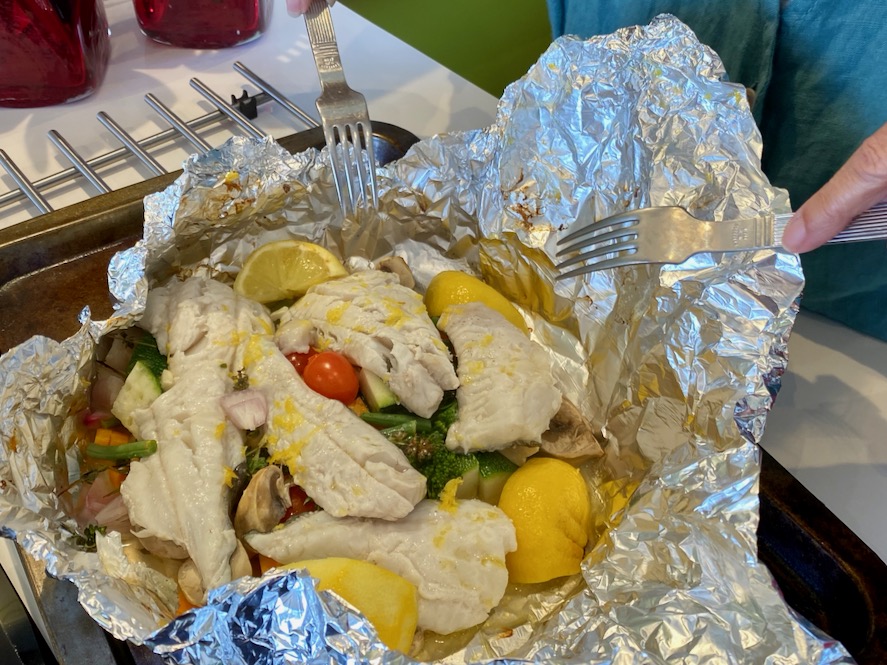
After that, it was a question of cutting some vegetable into small pieces – I used carrots, shallots, broccoli, green beans, mushrooms, cherry tomatoes, and garlic. 

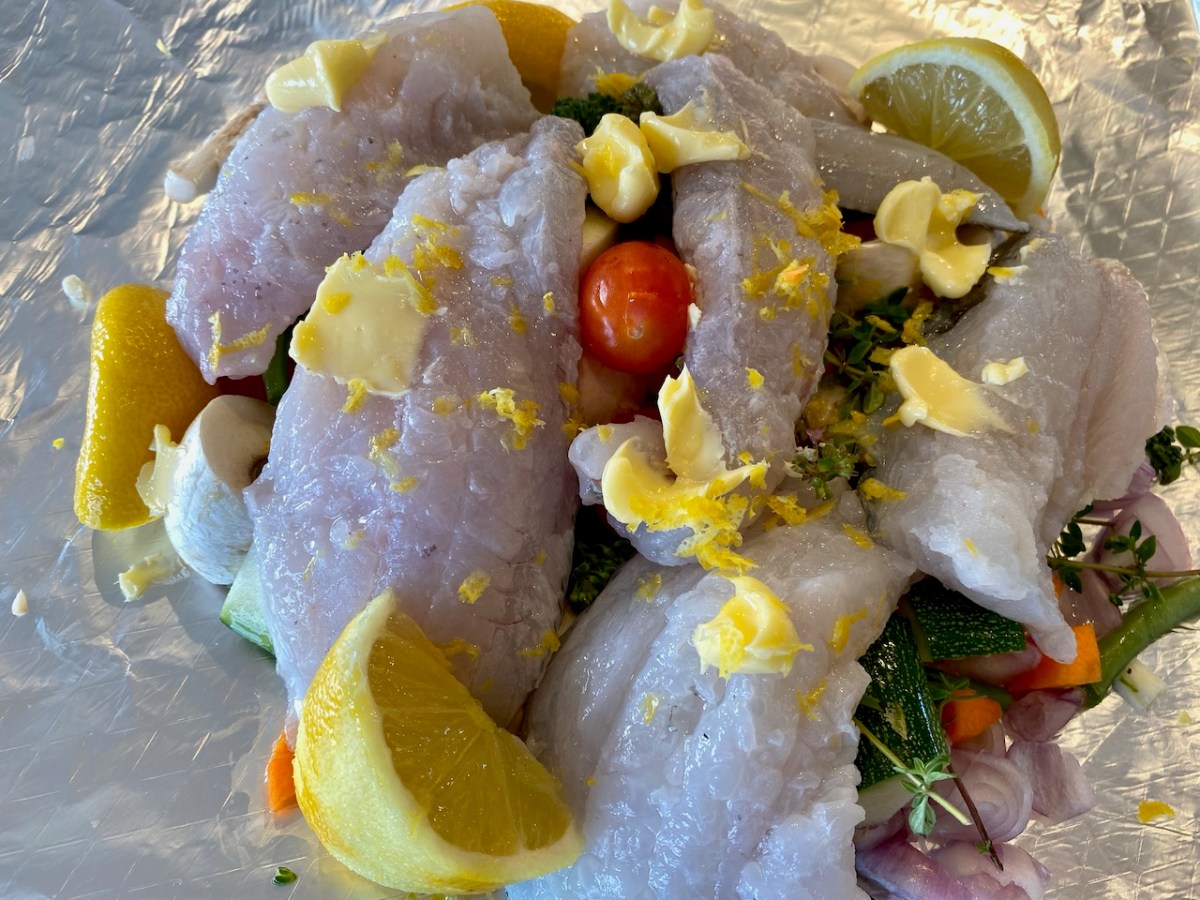
I piled them all onto a big sheet of buttered tinfoil, along with herbs from my little herb patch, and then laid the fillets on top. 

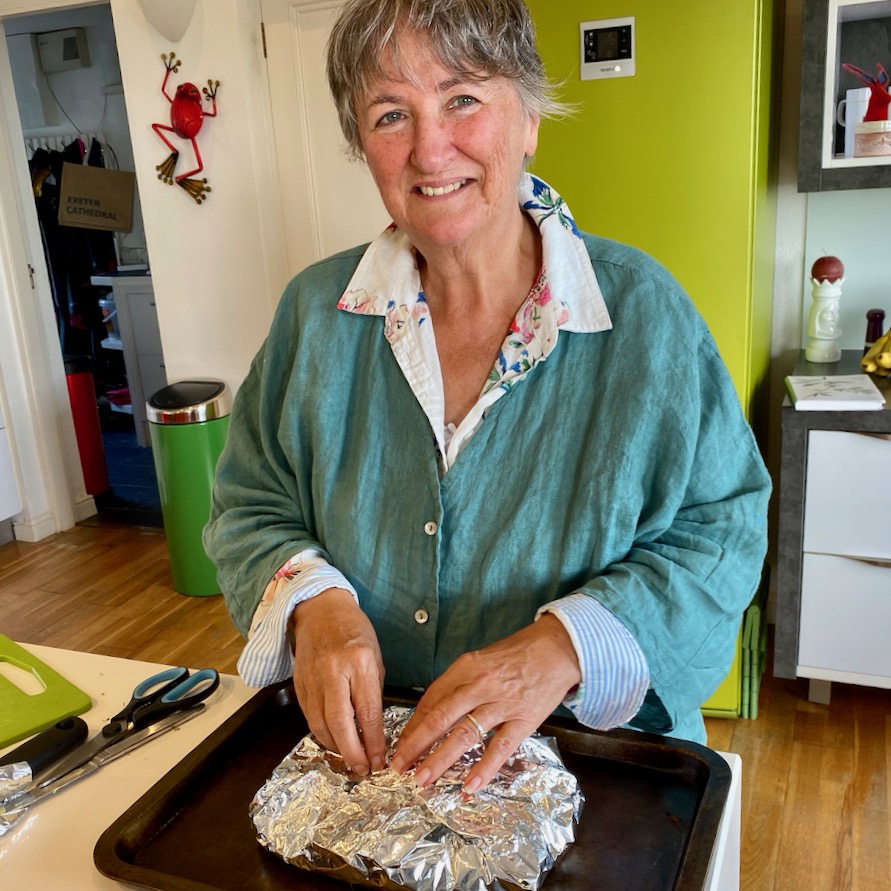
I poured lots of lemon juice over it all, along with zest, and dotted everything with more butter. Then I wrapped it up, and into the oven it went at 190C for 20 minutes.

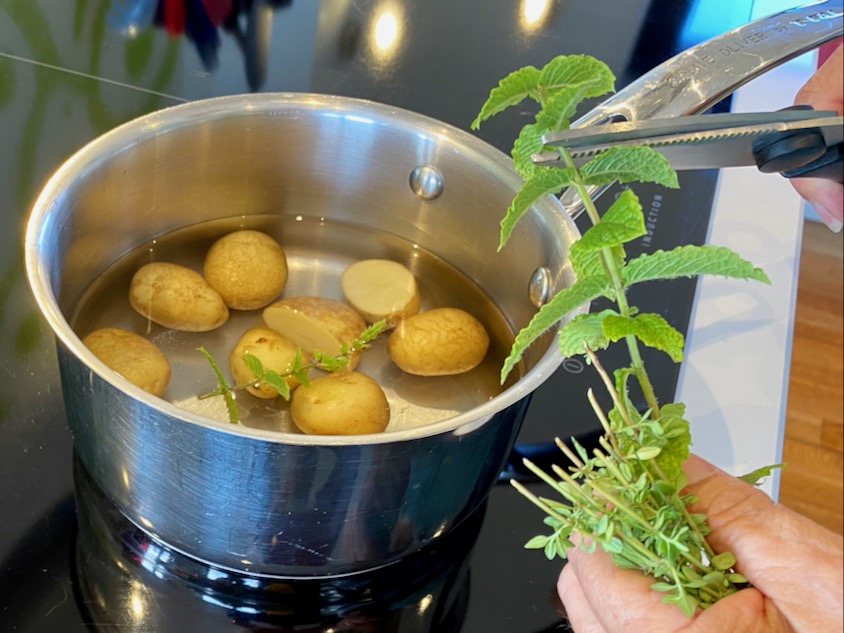
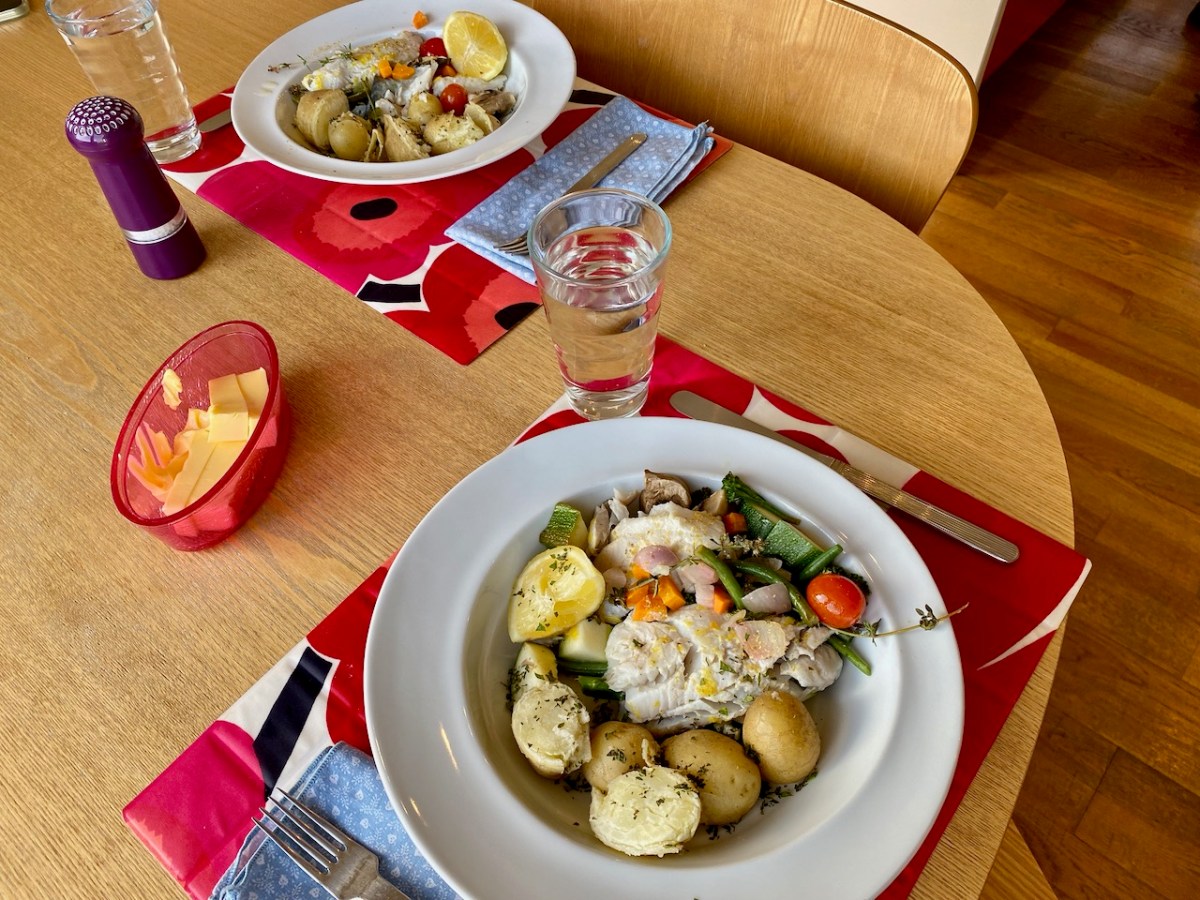
The potatoes were simply boiled with some mint from my garden. I chopped more mint to scatter on top once they were cooked.

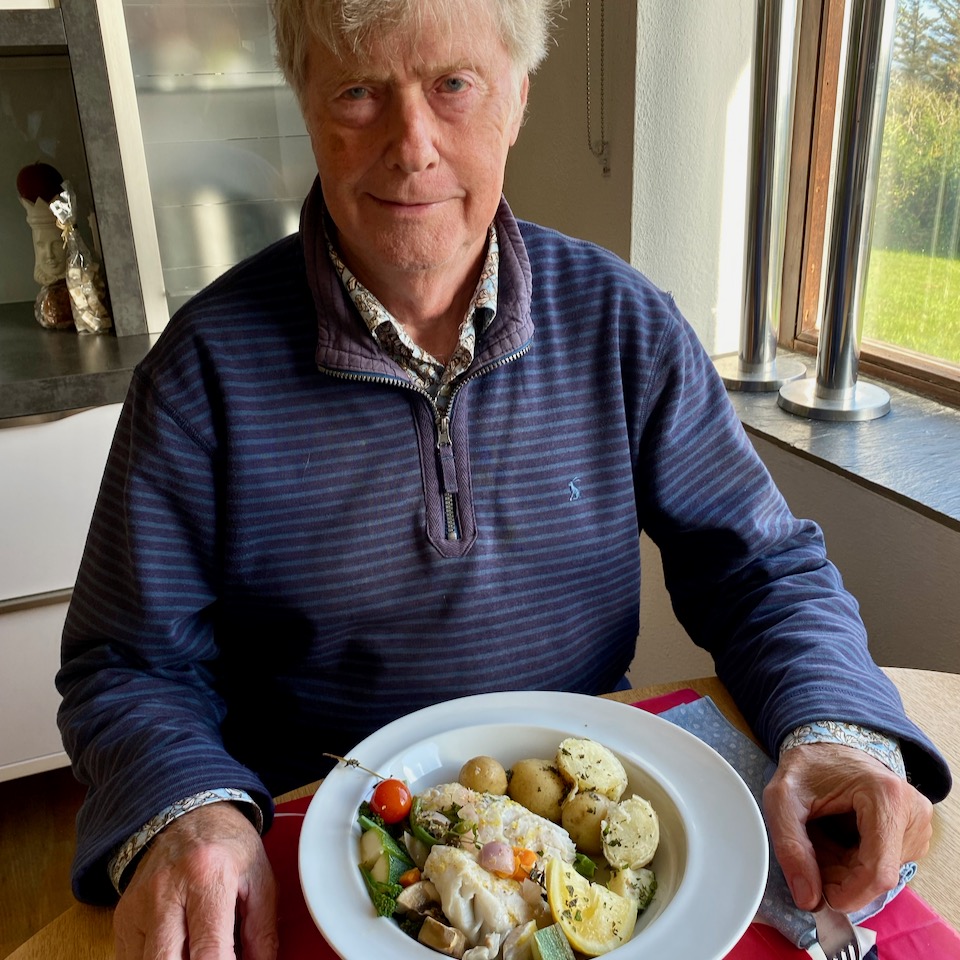
The results? Delicious!

In West Cork we have access to a lot of very fresh food and we eat well. There are markets in all the towns and villages near us (see this post from a few years ago), and Neighbourfood does a great job of keeping us going all year round. 

But there’s something extra special in a meal like this – straight from the ocean or the ground and onto a plate with very little intervention. 

Mmmmmm…