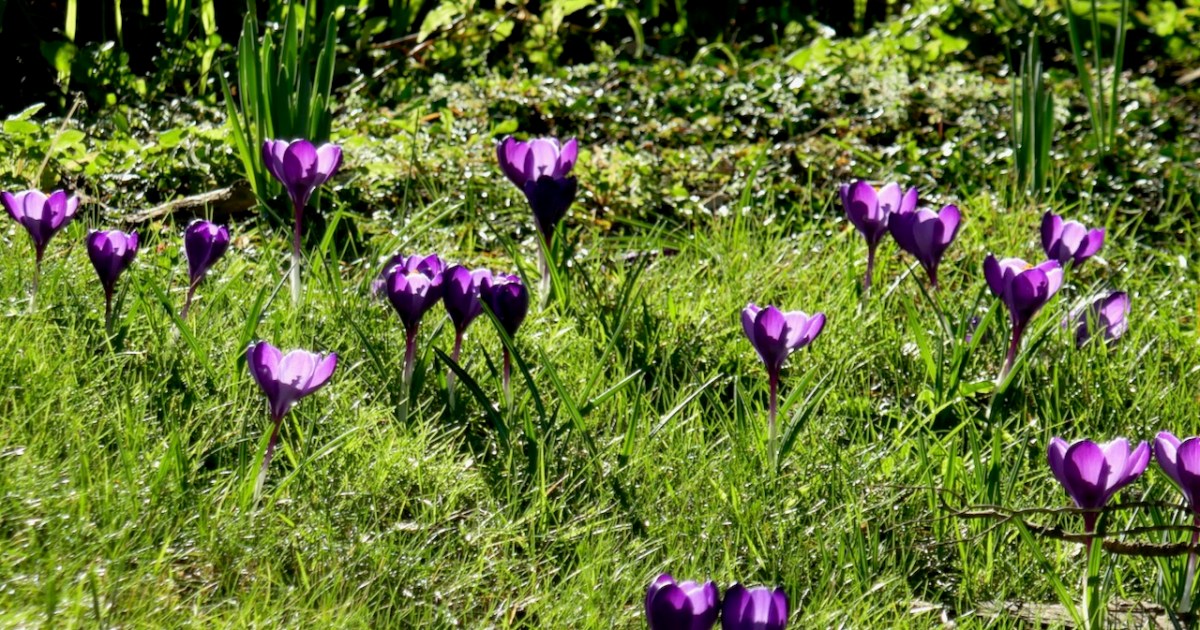
A very quick post tonight – the ‘settling in’ is taking a little longer that I planned. I know everyone understands how that is, when you move house. Today I discovered that my driveway is lined with crocuses (OK, croci for the purists) – enough to lift your heart.
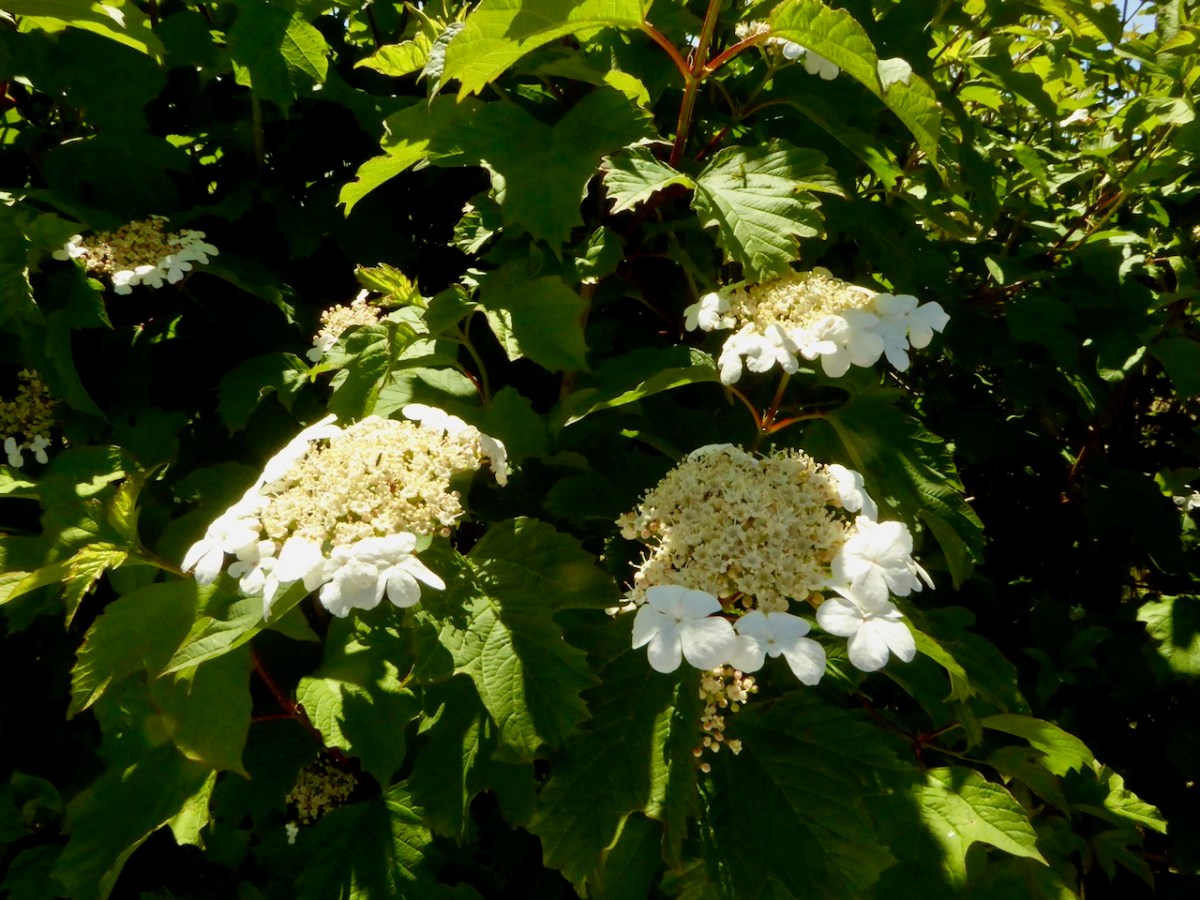
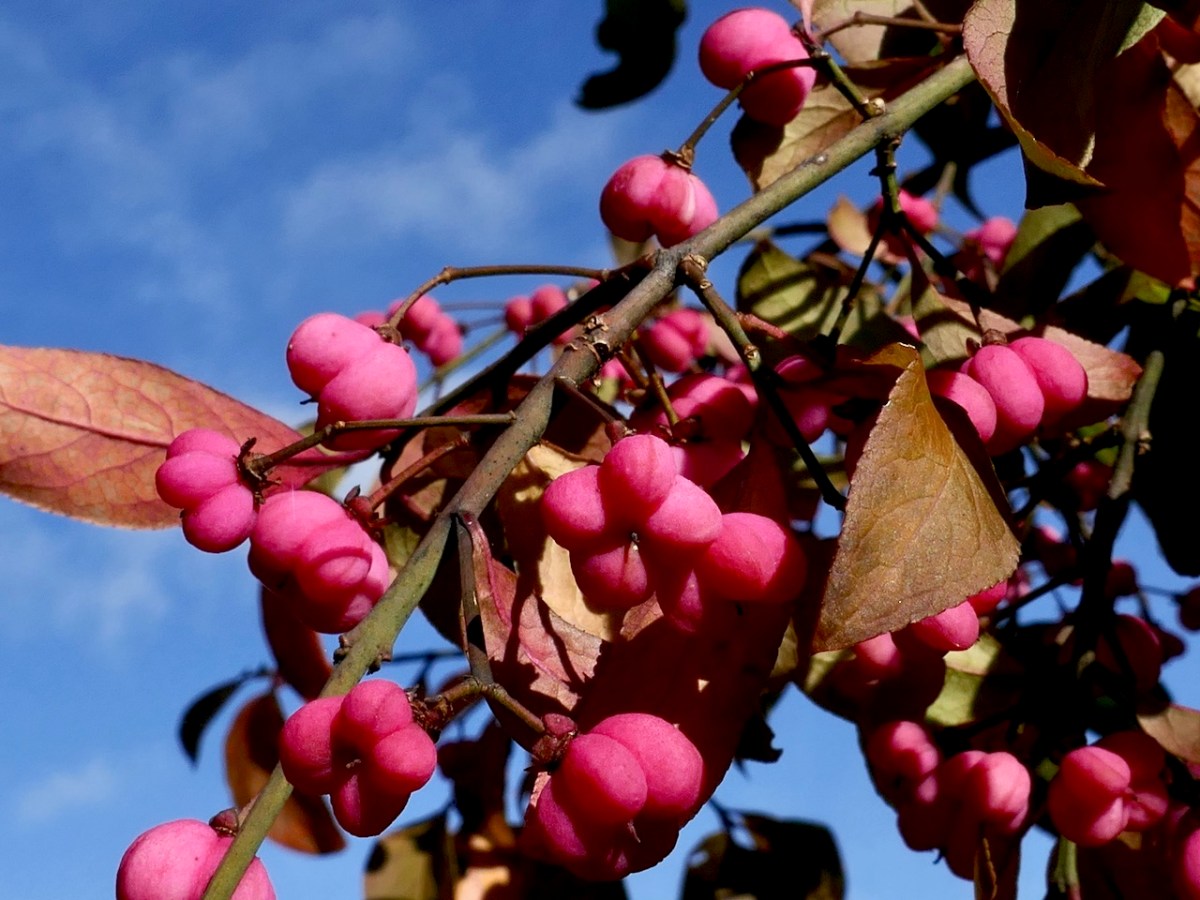
One of the things I need to do is plan a hedgerow for the back of the house. Of course, I want it to be instant and consisting of all native Irish species. Like the Guelder Rose, above and below. Turns out, those two things are not compatible, so my plan is to plant a fast growing hedge, preferably evergreen and intersperse it with native Irish trees, which are mostly deciduous.
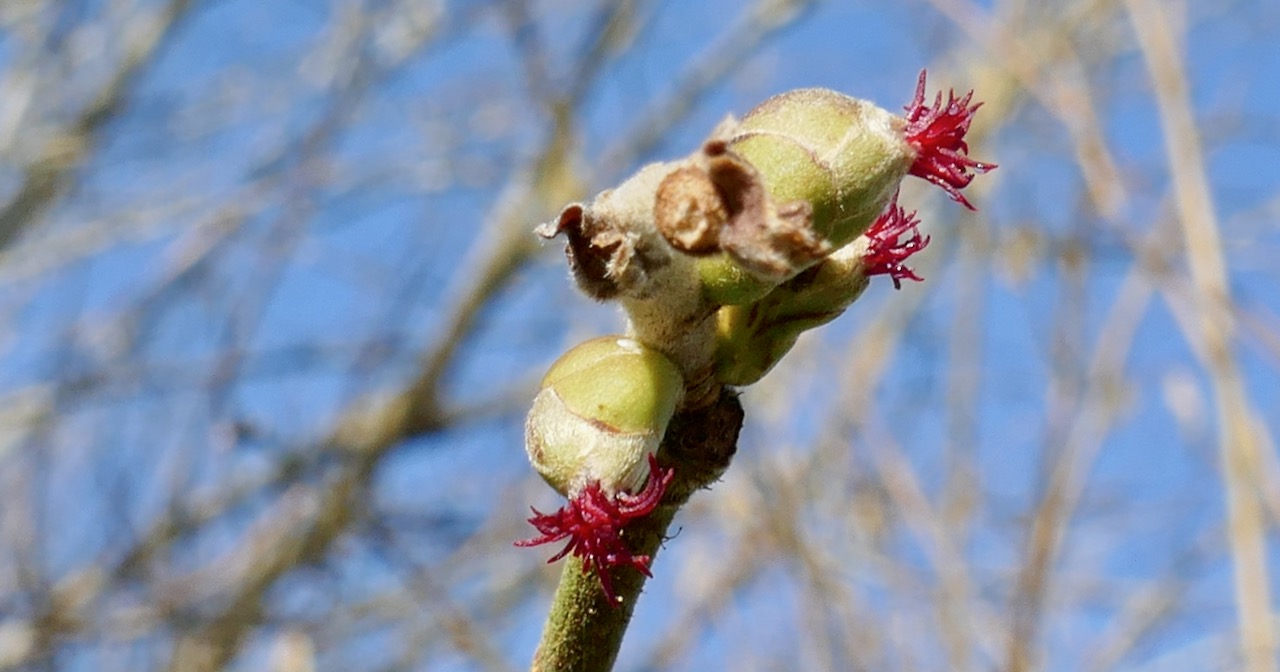
Fortunately, there’s a lot of helpful information available to anyone wanting to do this, on the Hedgerows Ireland website, and I will be following their advice as much as I can. I have a head start in that I have several Hazel trees – my feature photo today is the tiny scarlet female flowers that appear above the catkins on Hazel trees in the spring.
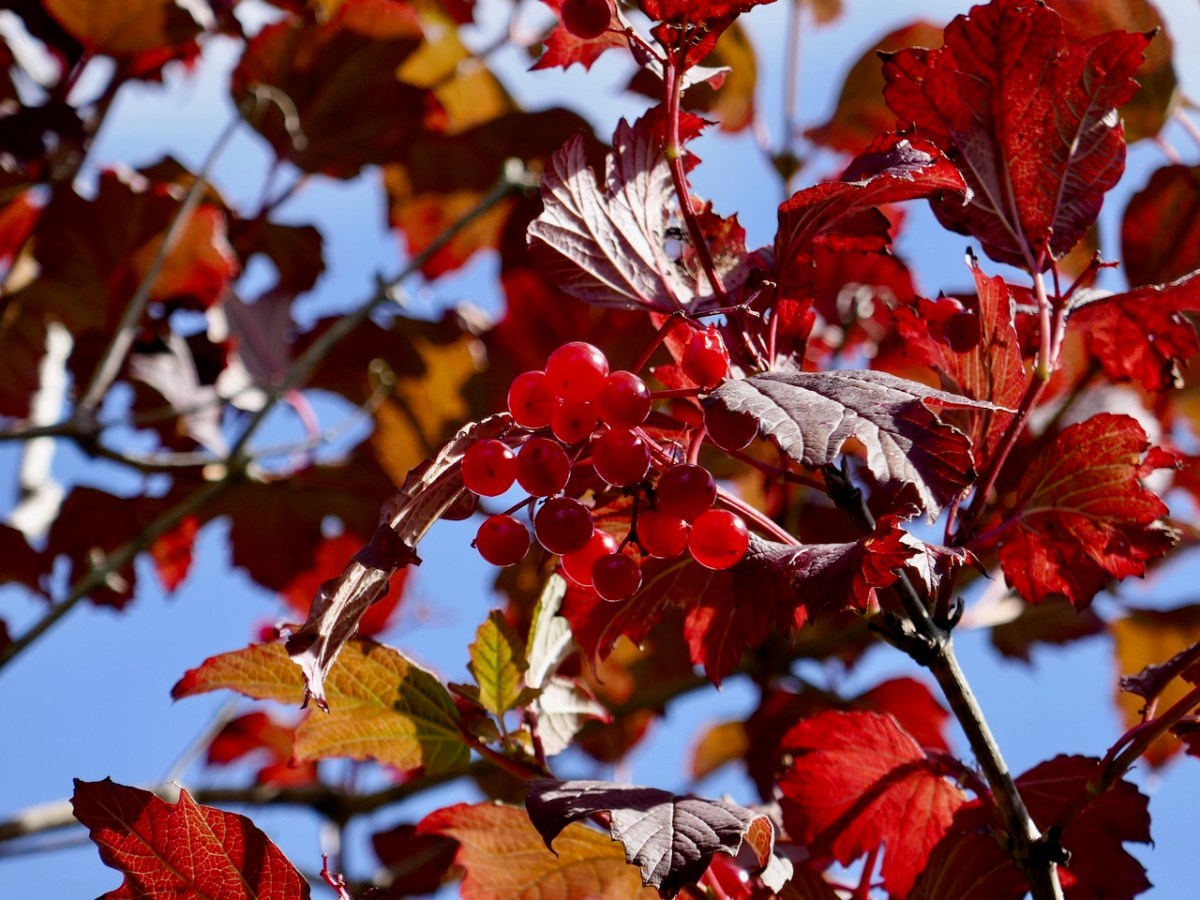
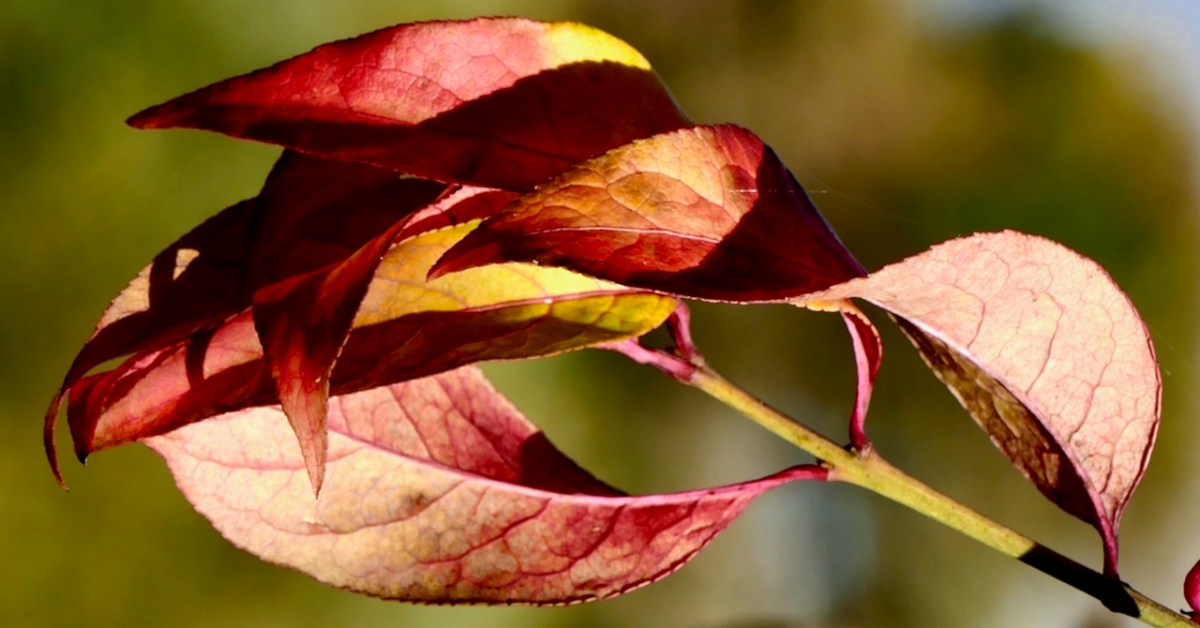
One of the trees I will be ordering is the spectacular Spindle – above is the fruit and below the autumn leaves. I only know of one wild tree near here and I visit it every year.
I am also planning a wildflower patch, like in my last place – take a look at these posts:
I’m reposting this, written six years ago, for the season that’s in it.
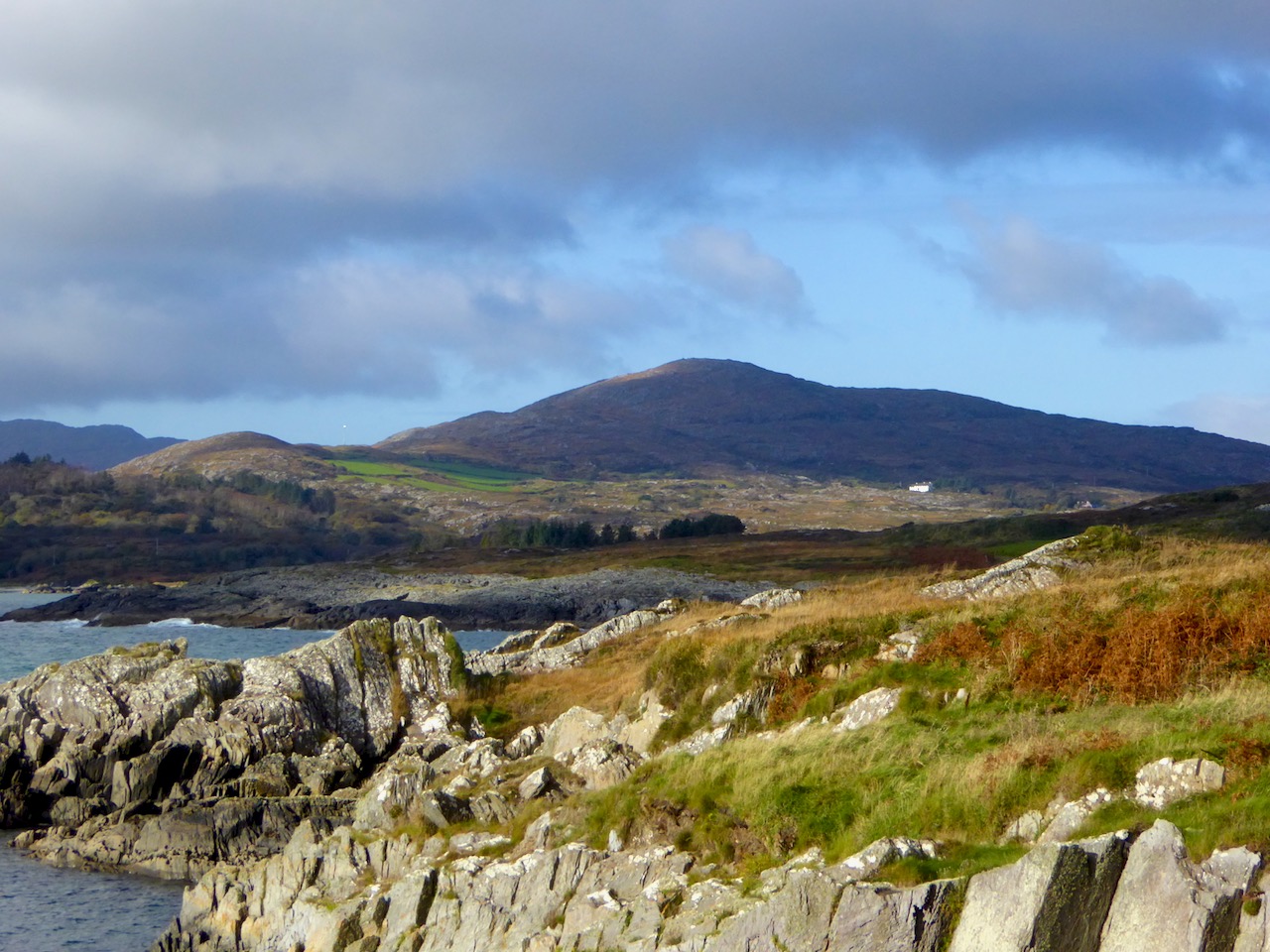
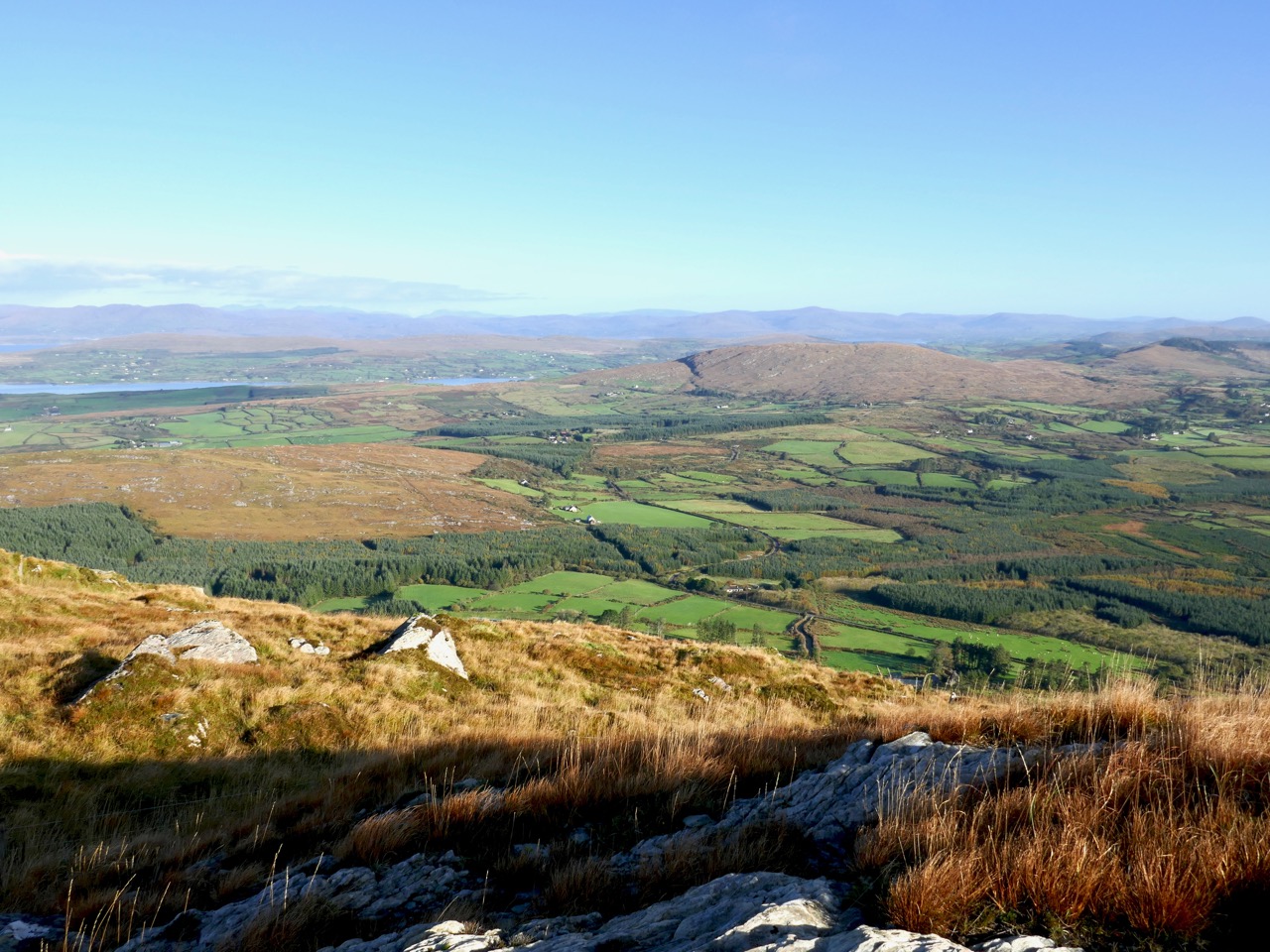
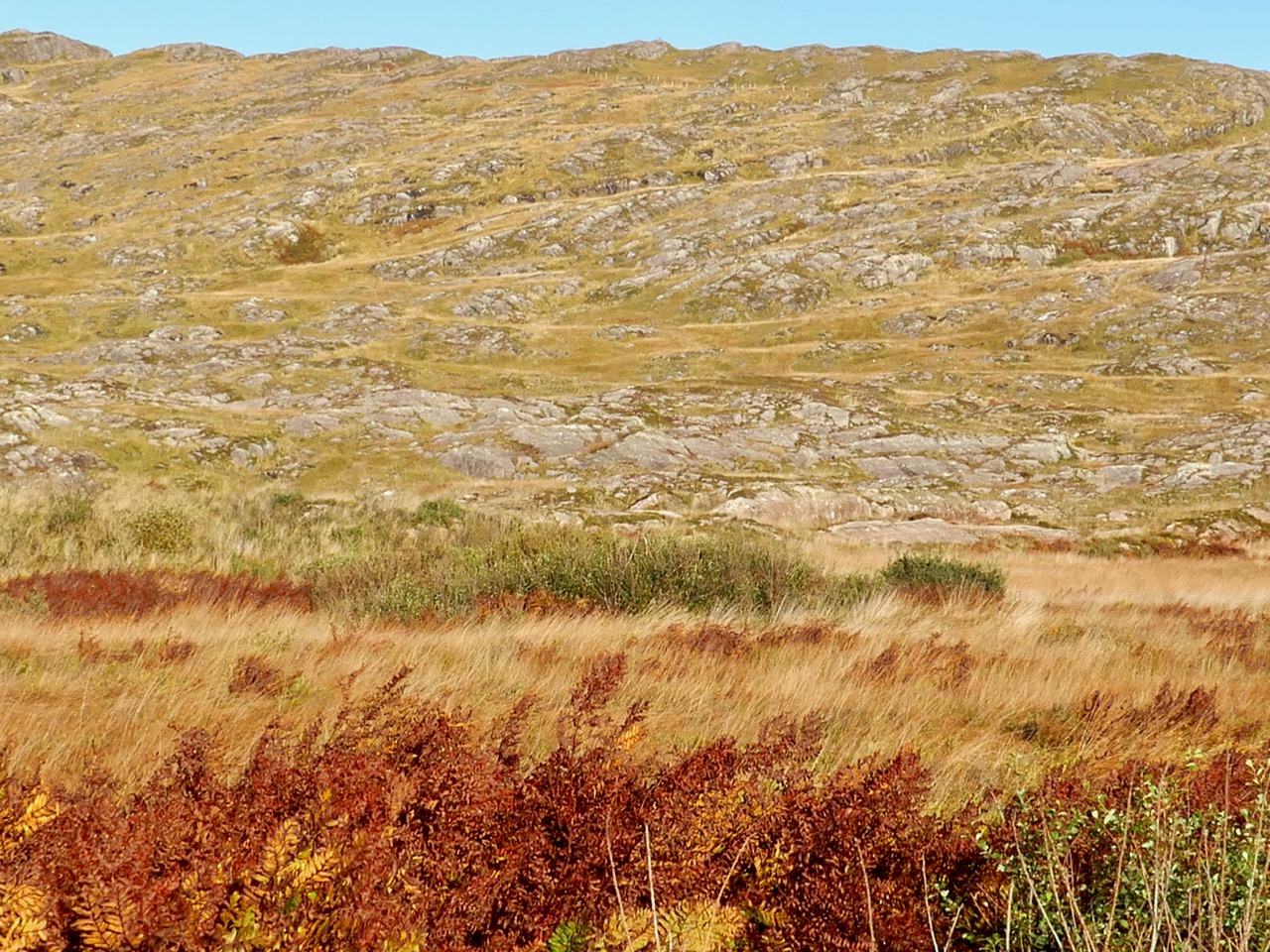
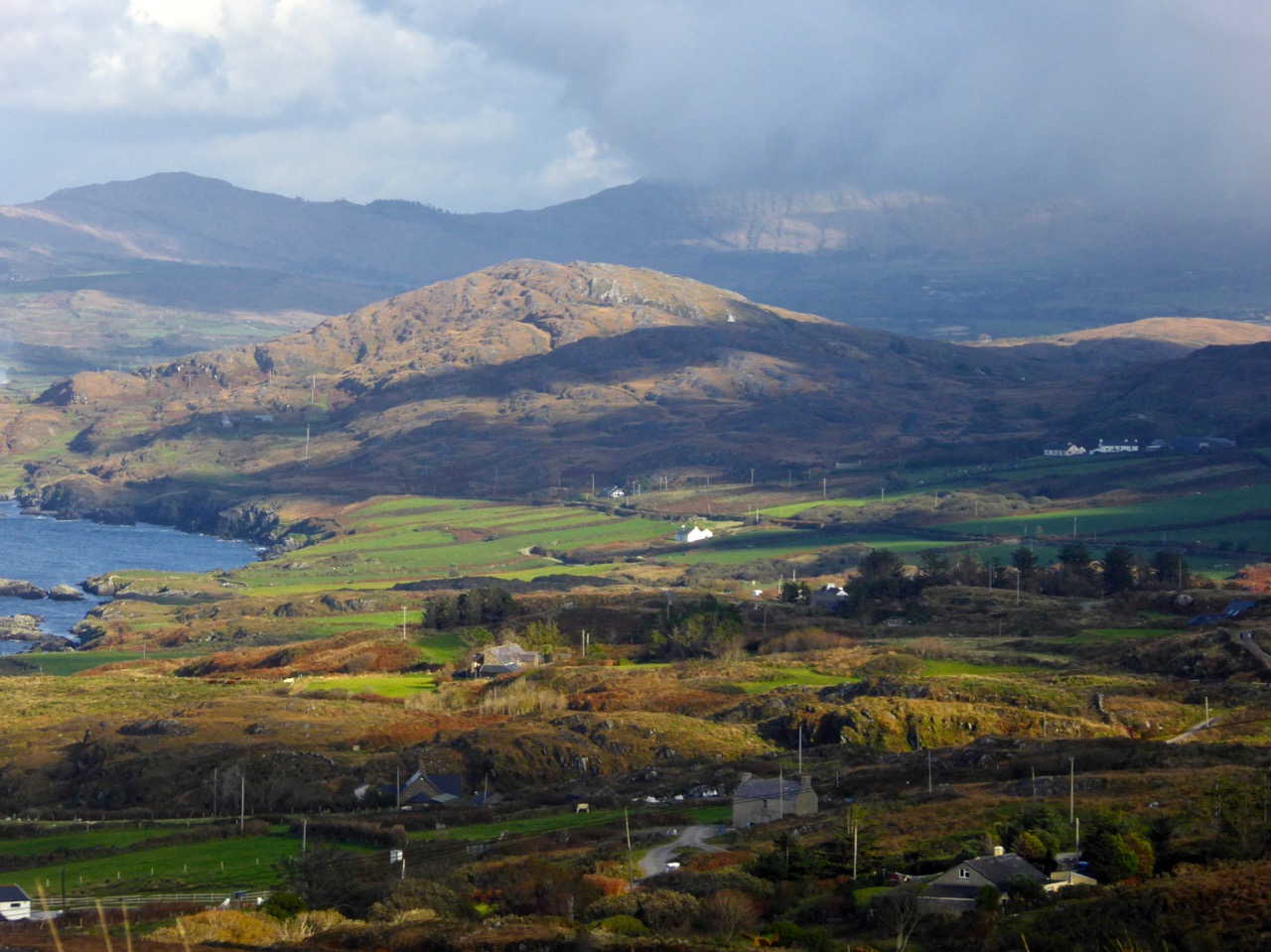
It’s not the trees that lend autumnal hues to the Mizen, as they do elsewhere. It’s the whole landscape – that combination of rock, heather, bracken, moor grass, brambles, filtered through the light and shade of our notoriously changeable climate – that creates the special colour palette we associate with autumn. It’s my favourite time of year.
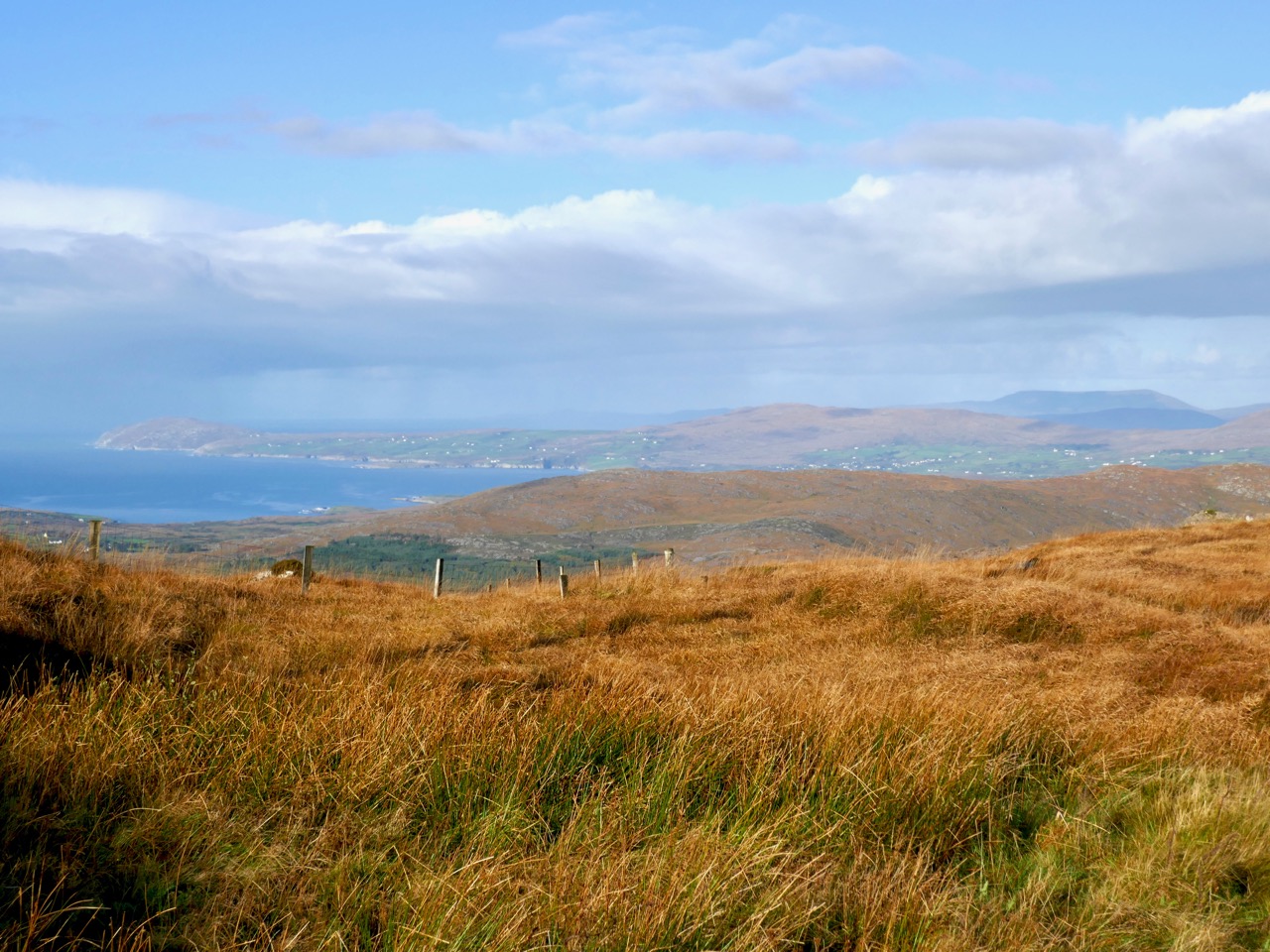
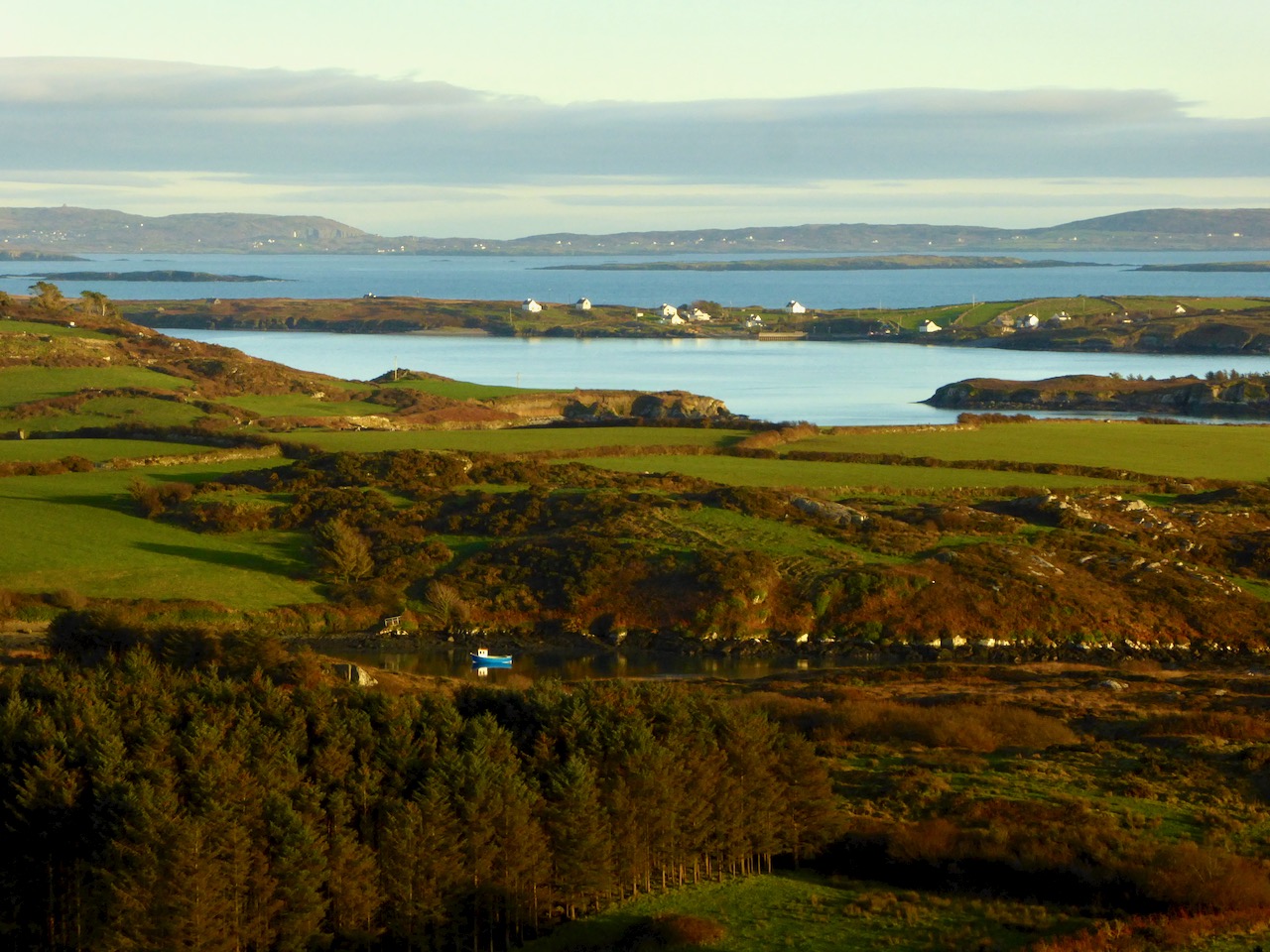
Today, early, we drove up Mount Gabriel and looked over the whole of the Mizen, back to Mount Corrin and Mount Kidd, and across to the Sheep’s Head, the Beara, and away to the mountains of Kerry.
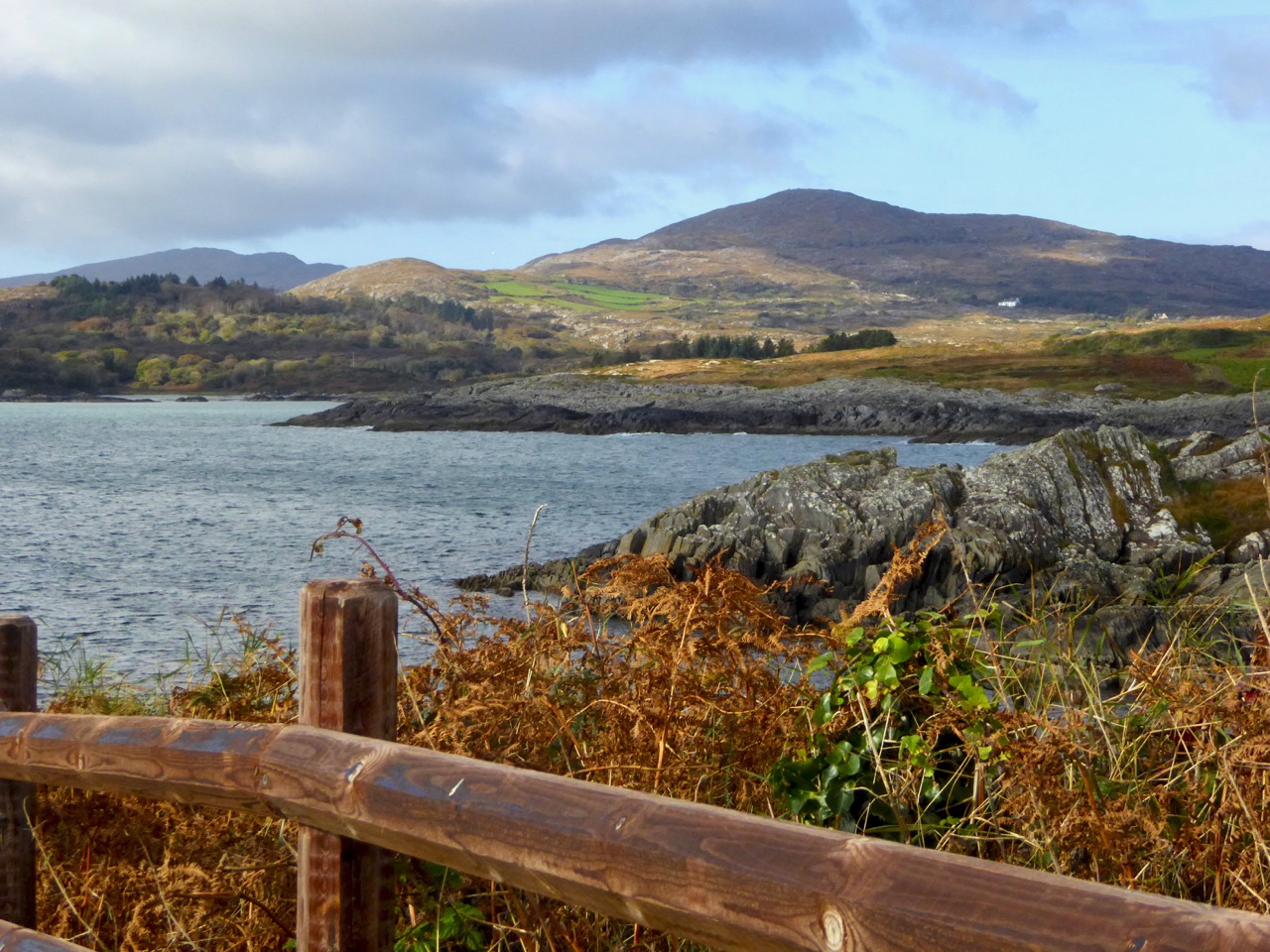
Upper: looking down to Dunmanus Bay from Mount Gabriel; Lower: looking across to Mount Corrin
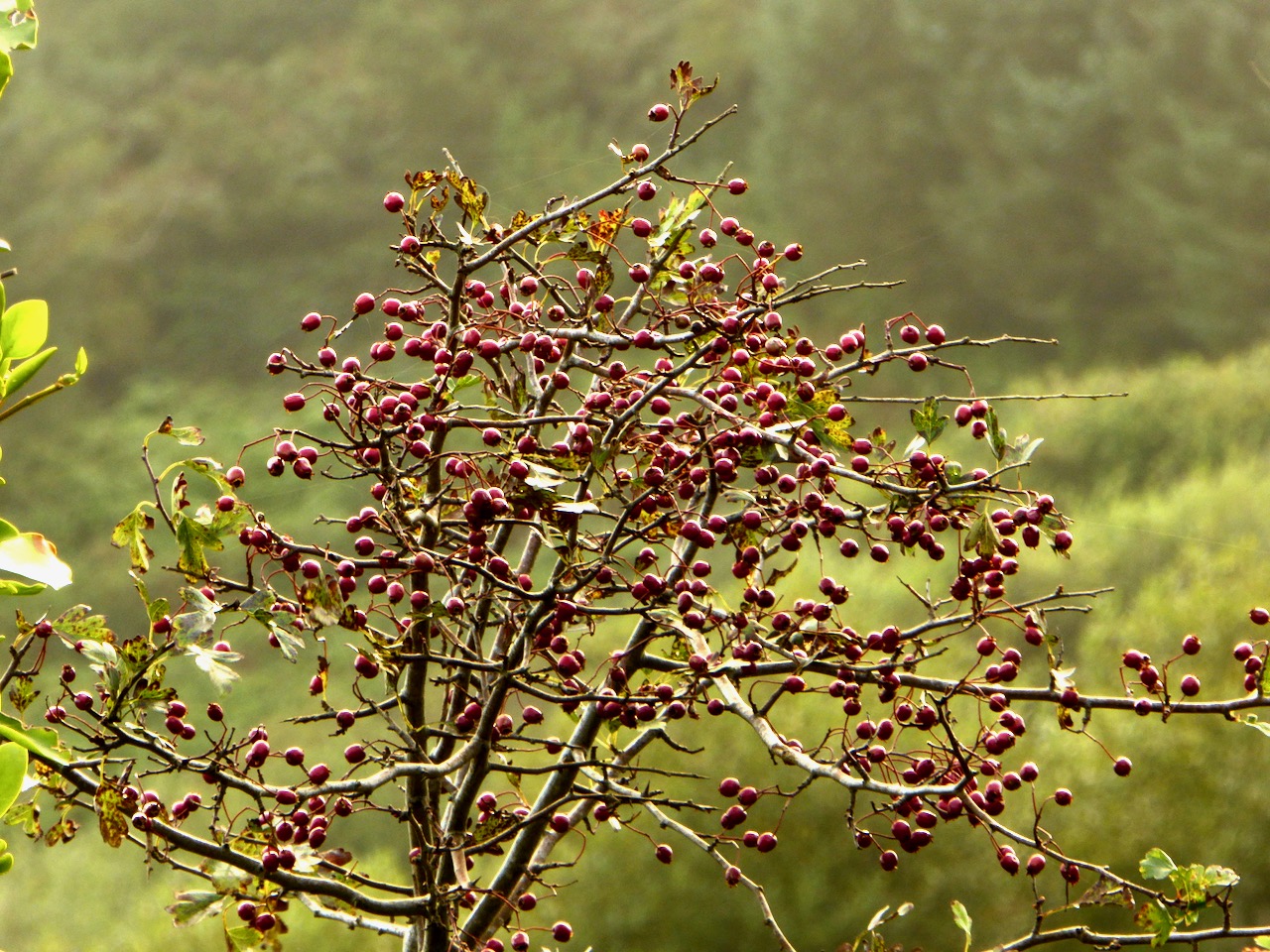
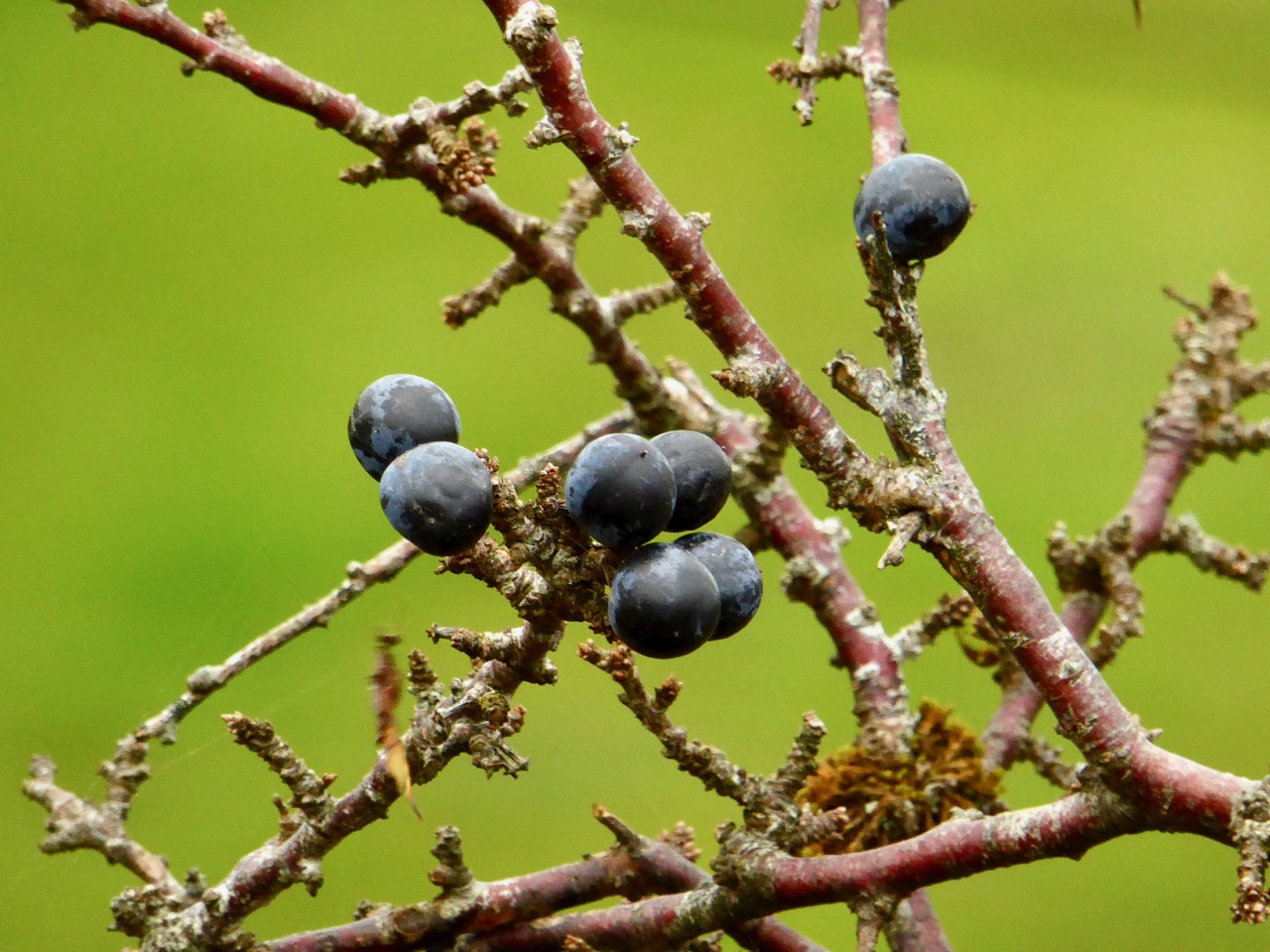
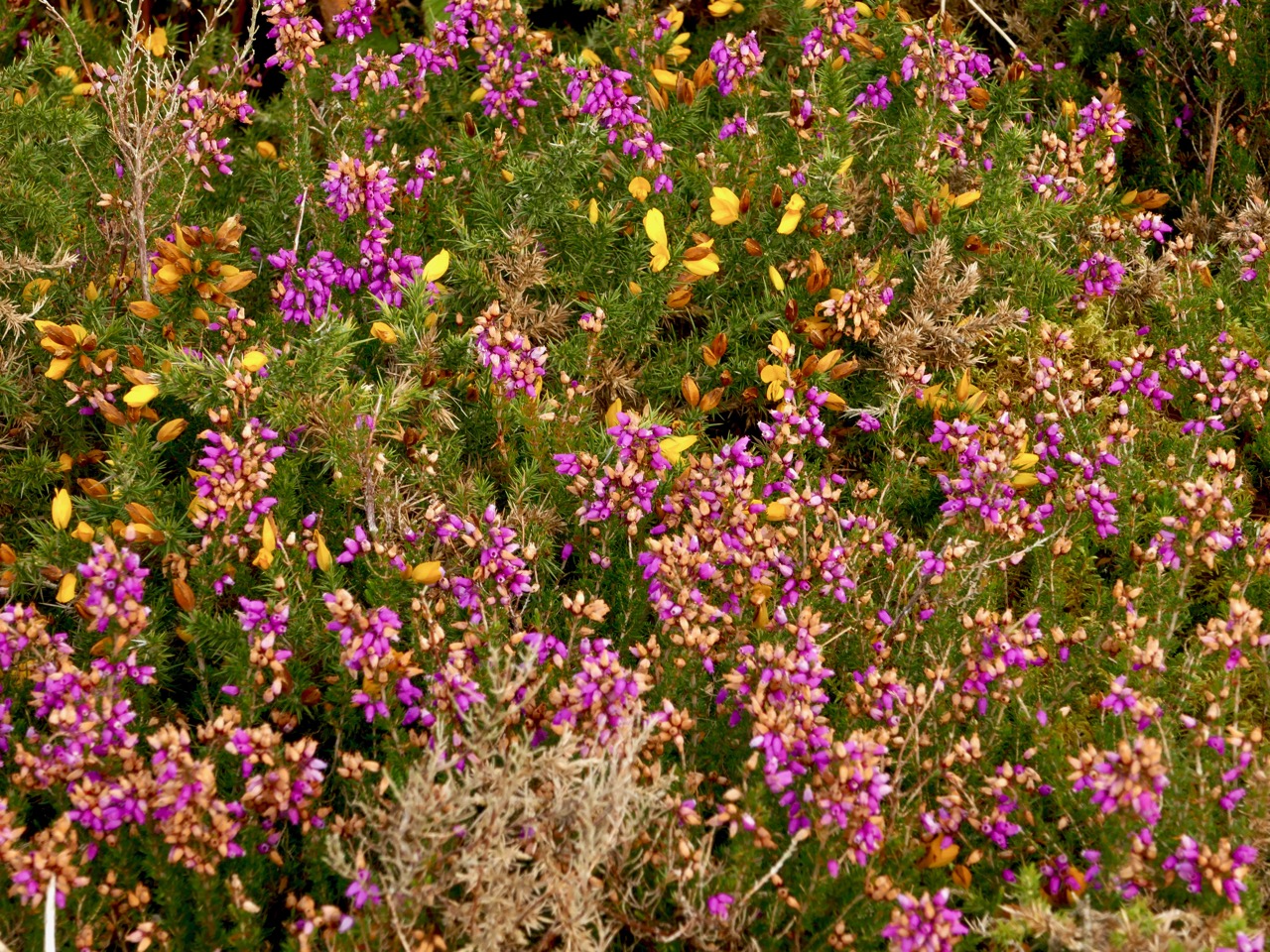
But every day brings changes. What trees we have are not yet bare. The thorns, blackthorn and whitethorn are loaded with berries. The heather is hanging on here and there, providing a wonderful contrast to the yellow gorse.
Haws, Sloes, Heather and Gorse
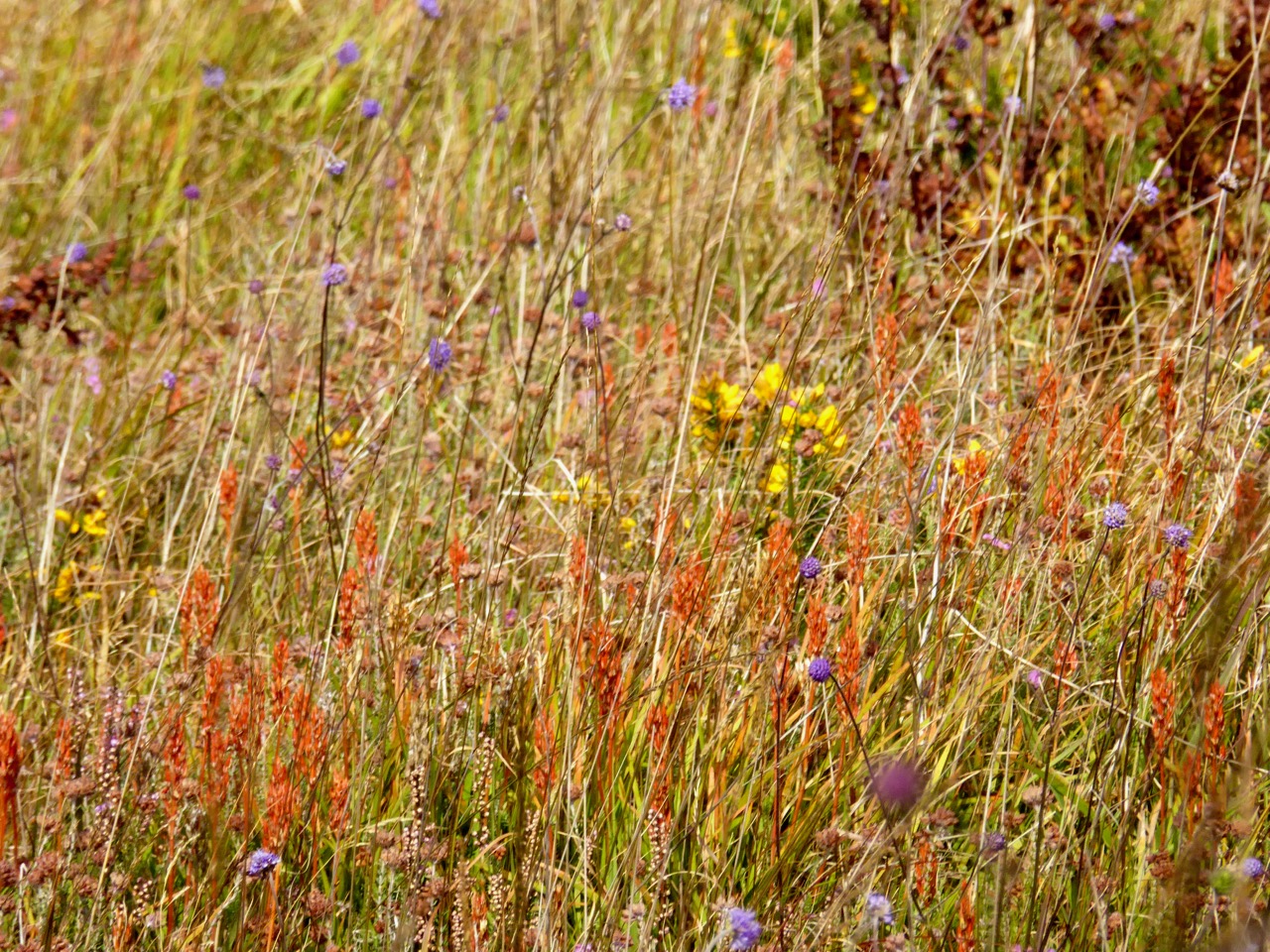
The bog asphodel is fading now, but earlier in the month it had reached its peak orange state and looked spectacular consorting with the other bog and mountain flowers that were still blooming.
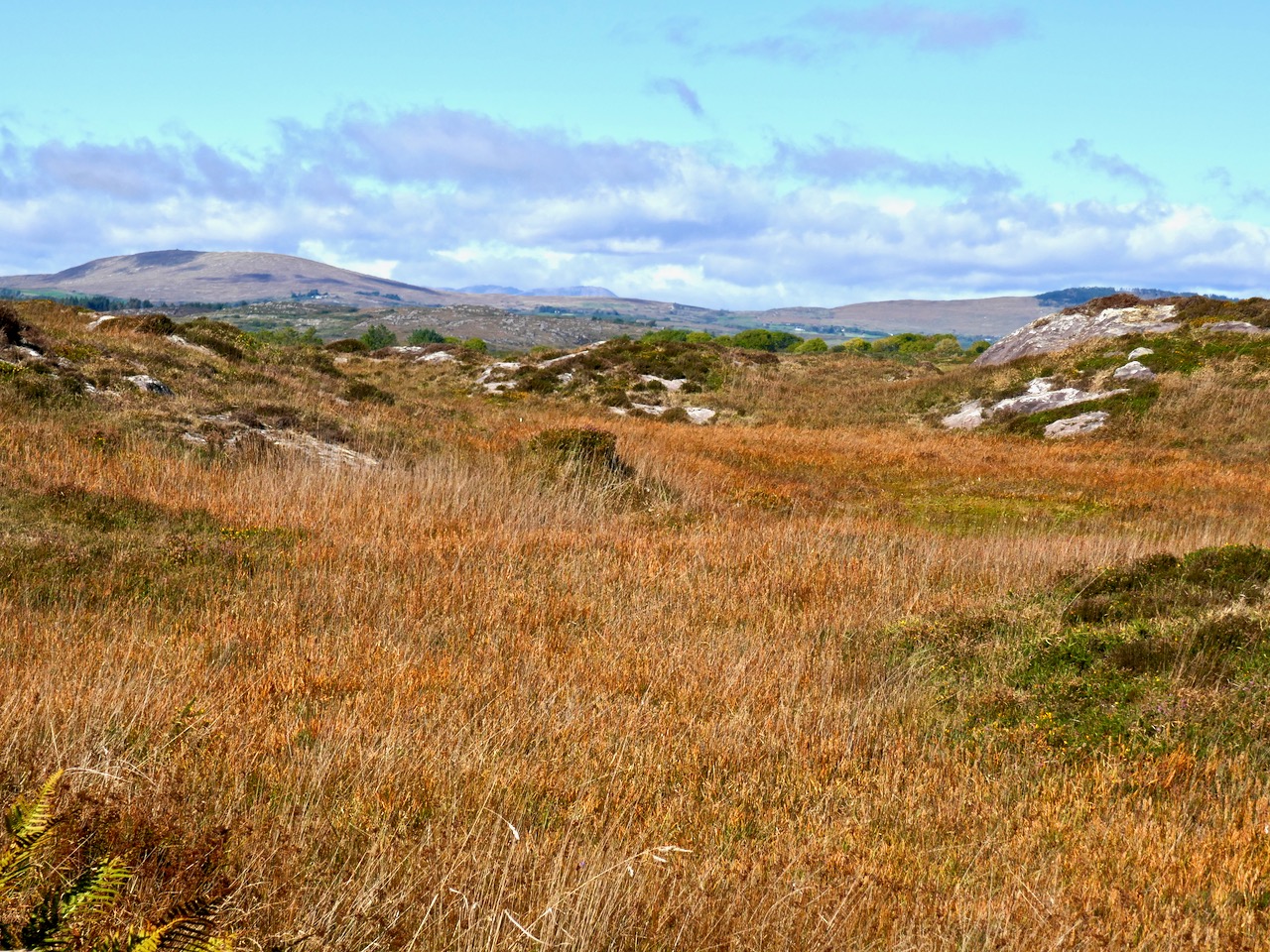
Upper: Bog Asphodel, Gorse, Scabious; Lower: Cappaghglass Bog
When you get a clear day, like today, there is nothing on earth like a walk on the West Cork hills, drinking in the colours and trying to store them in the memory. Or perhaps, in a blog!
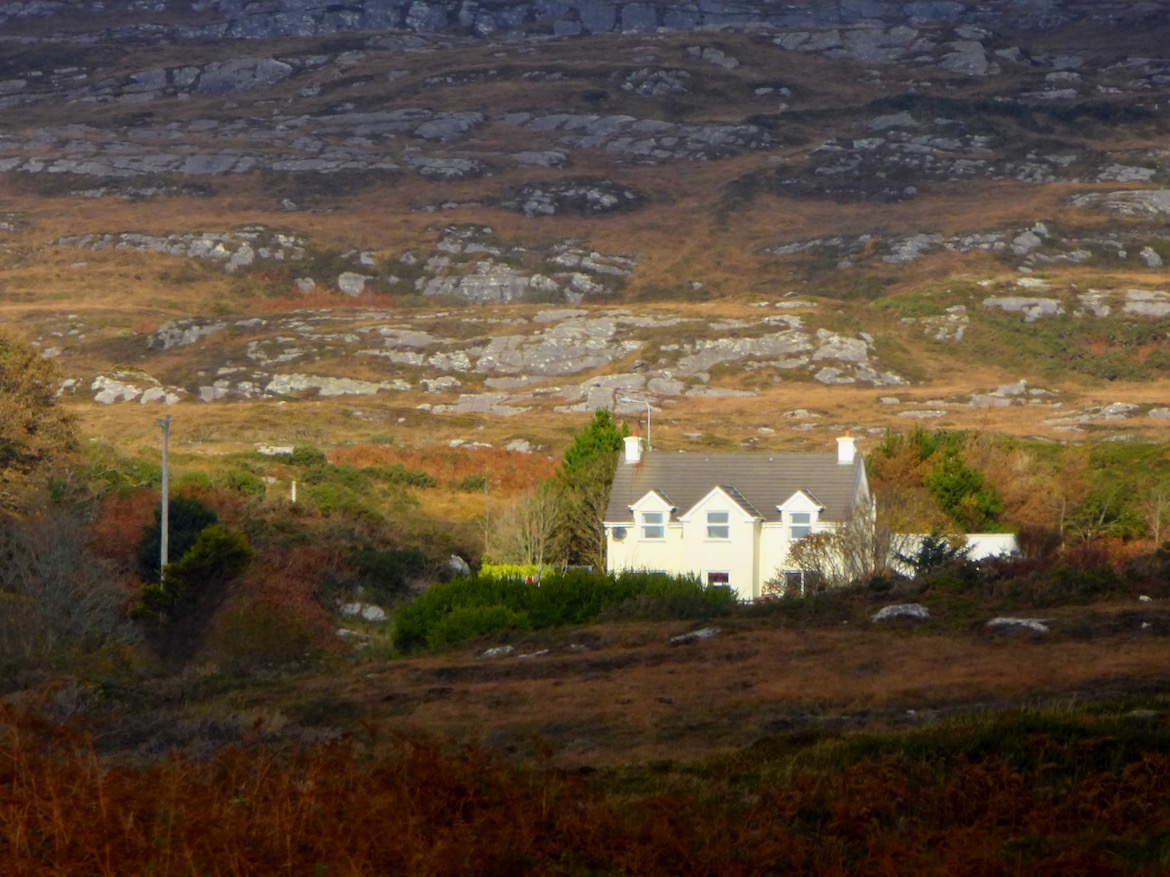
Upper: Toormore; Lower: Derryconnell
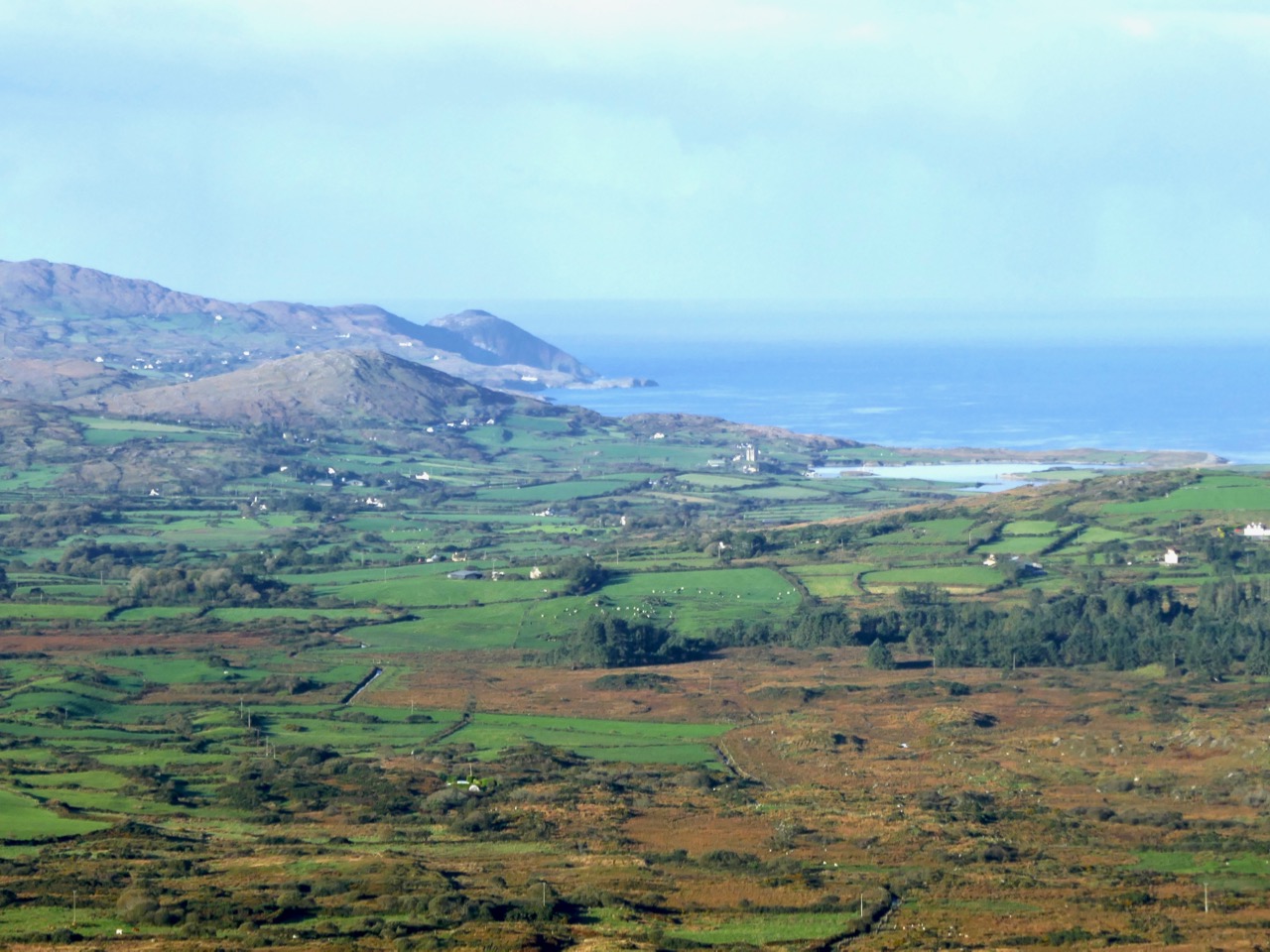
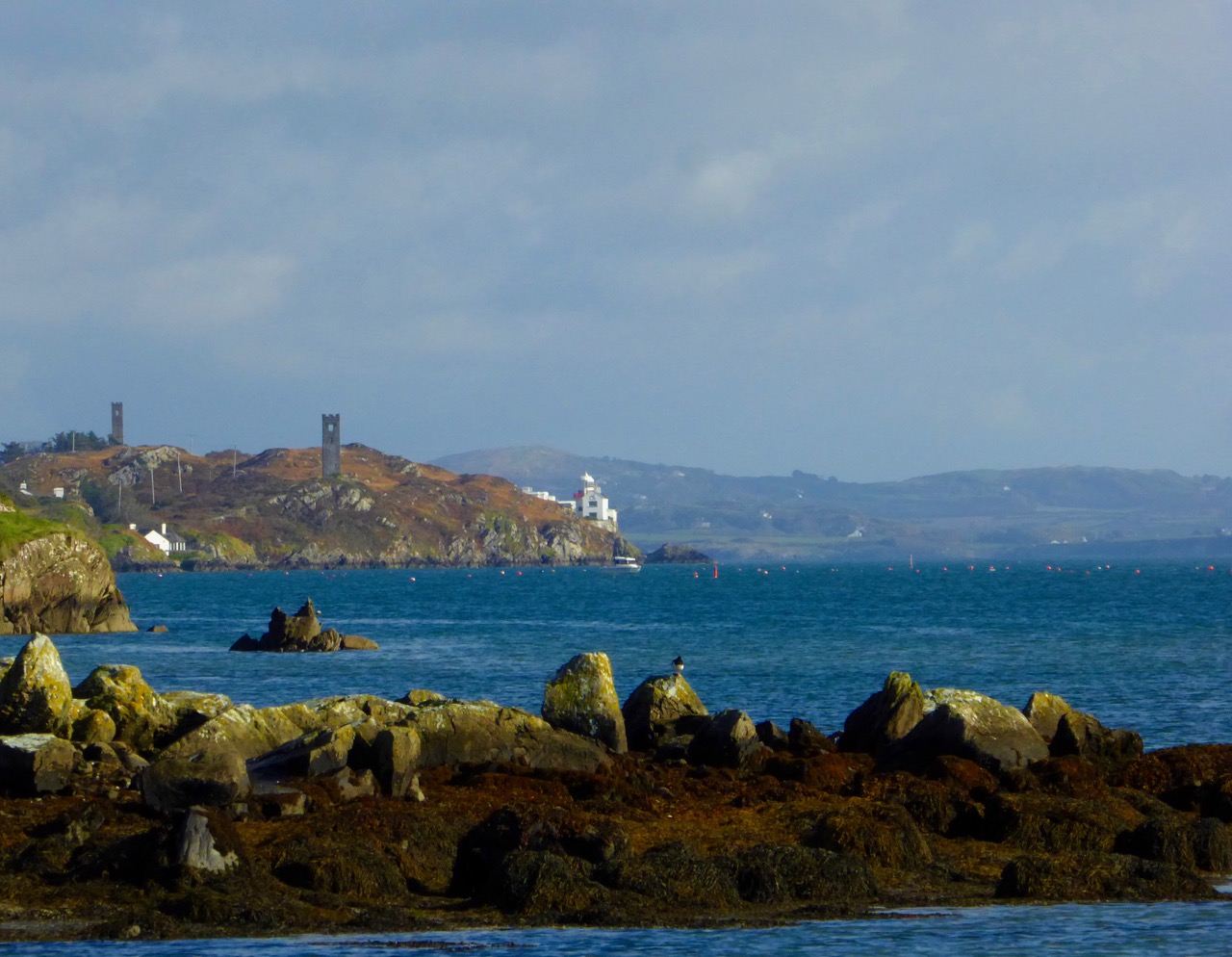
Upper: North Side of the Mizen; Lower: Crough Bay and Long Island
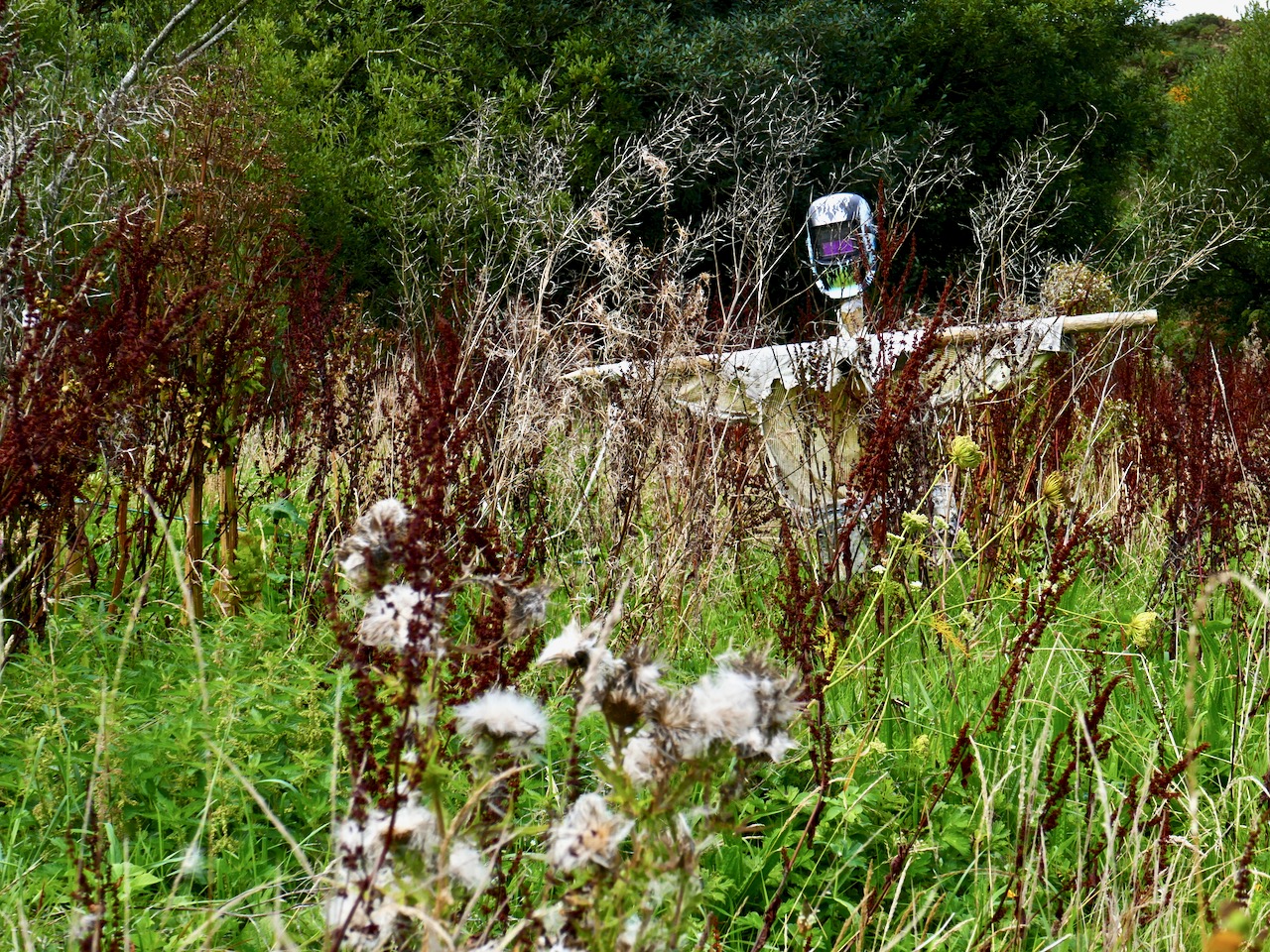
Scarecrow in an abandoned garden – quintessential autumn image!
This is a companion piece to Lying in the Grass. That slideshow was shot in May three years ago, all the photos taken in my own garden within the previous week, and all native wildflowers.
This time, all the shots were captured in one day, July 18th, on a visit to Barley Cove with my friend and fellow nature-lover, artist Damaris Lysaght. The purpose of our visit was to monitor a rare plant, Dodder (below). This is one of the very few places in Ireland in which it grows, parasitising on the roots of the Wild Thyme, and mainly visible as a twisted mass of reddish stems. We were not sure if the tiny flowers, looking like miniature cauliflower heads, were about to flower or had flowered already.
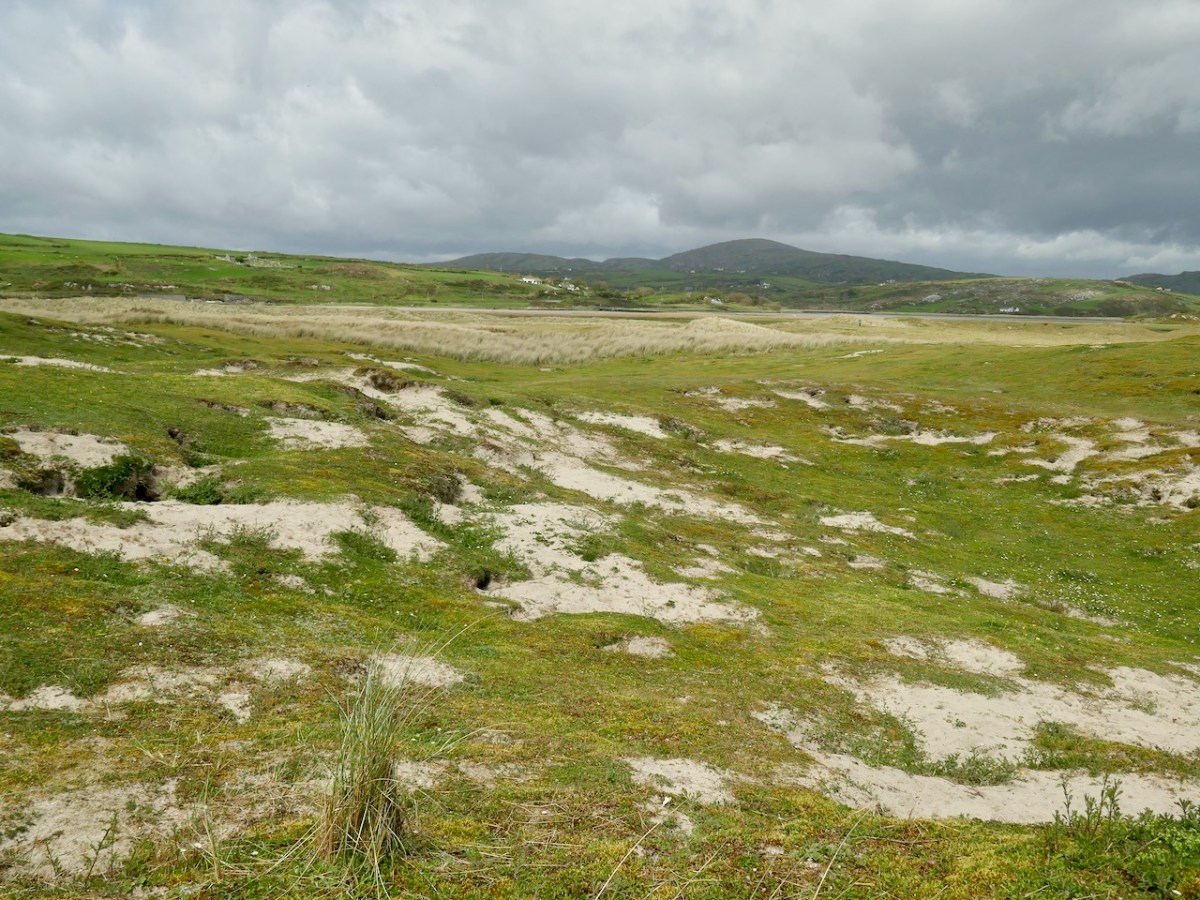
At this time of year the dunes at Barley Cove are a carpet of wildflowers. Many of them are tiny so you have to get up close to make their acquaintance. Photo taken by Damaris.
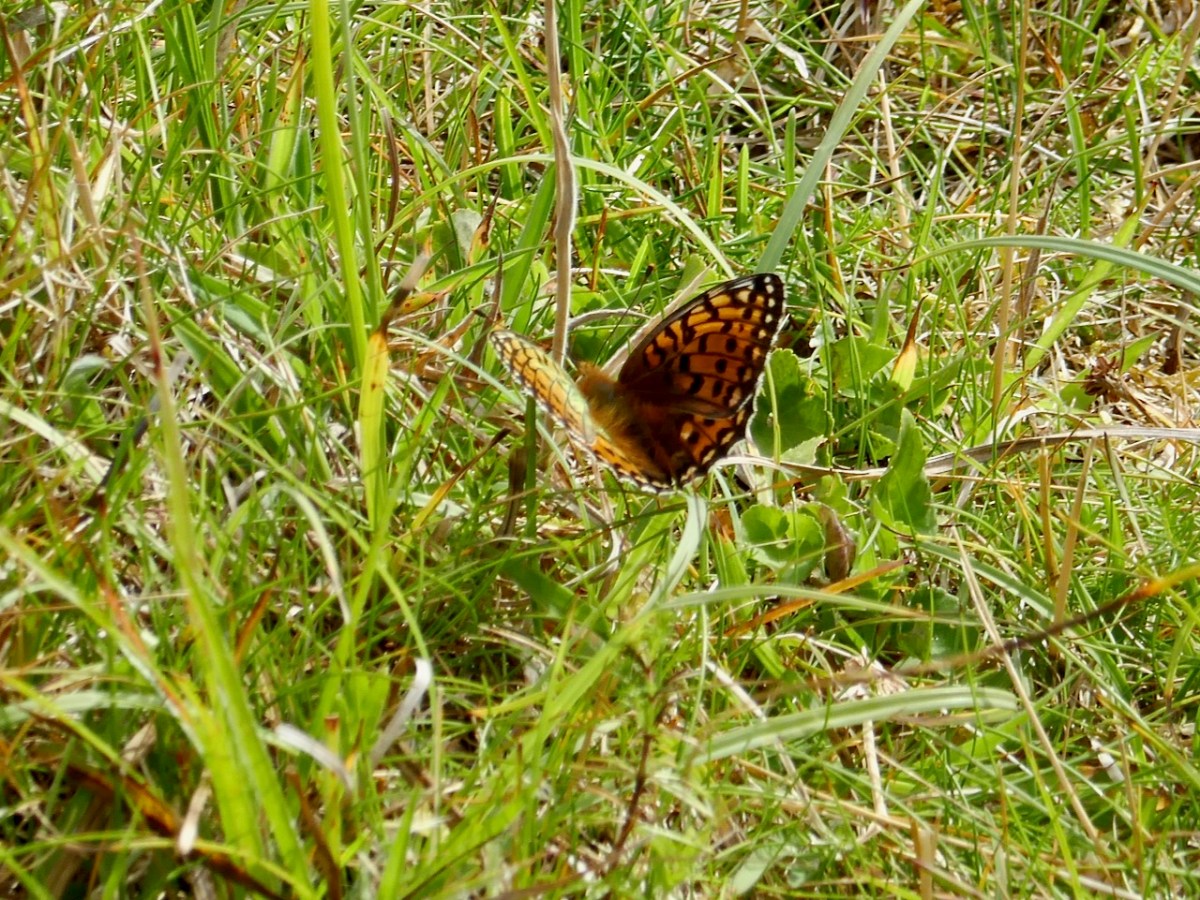
Damaris had another reason for getting closer. We were lucky to catch a Dark Green Fritillary flitting from spot to spot and Damaris, a butterfly expert, figured it was probably laying eggs on the basal rosettes of the Common Dog Violets that flourish on the dunes. In the last photograph of the slideshow she is trying to see butterfly eggs – a task that defeated even her!
The National Biodiversity Centre is this incredible organisation punching way above its weight when it comes to the application of scientific principles to the assessment and preservation of Ireland’s natural heritage. They are also brilliant communicators, involving individuals, farming organisations and community groups in the effort to maintain and enhance our biodiversity.
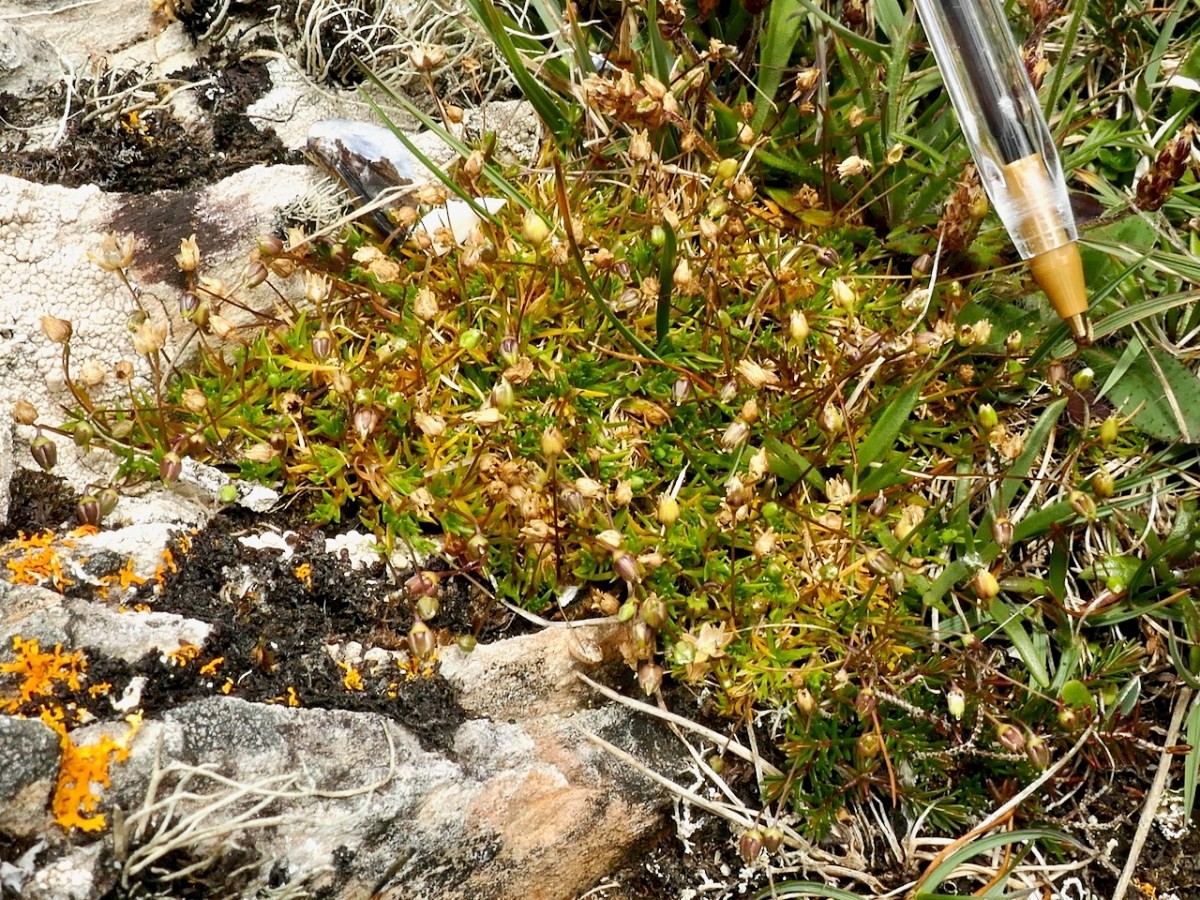
I signed up a few years ago to monitor some rare plants and it’s been an eye-opening experience. Doing this, you see first hand the challenges facing our native wildflowers in the face of loss of habitat, competition from other plants (sometimes alien invaders), herbicides, and now of course, climate change. Sometimes the plant populations aren’t so much threatened as just inherently rare. That’s the case with Early Sand-grass. According to one of my favourite sites, Irish Wildflowers, Jenny Seawright , this little plant is Very rare in Ireland, only one known location on SW coast. Found by T.O’Mahony in 2005 on disturbed ground among coastal sand-dunes. T O’Mahony, by the way, is another of my botanical Heroes, author of The Wildflowers of Cork City and County. Happily for me, that one known location is Barley Cove, above. (In fact I’ve just seen it is found in Dublin Bay as well.)
Not very exciting, is it? Scrubby little patches of brown grass scattered in the sand. But every plant plays its part in the complex web of life and in this highly specialised sand dune habitat who knows what tiny insects depend on the particular sustenance this unassuming little grass provides?
And actually, once you get up close, it’s quite a handsome little cluster of surprisingly colourful stalks, with little while filaments emerging from the heads.
One of my monitoring days was in the company of my friend Damaris and we were also looking for Heath Pearlwort. Paul Green had shown it to us during the workshop the previous year (below) but finding it again was a different matter. It was raining and cold and we were crawling over the exposed hill above Barley Cove looking for a tiny plant. We hardly noticed, until we turned blue.
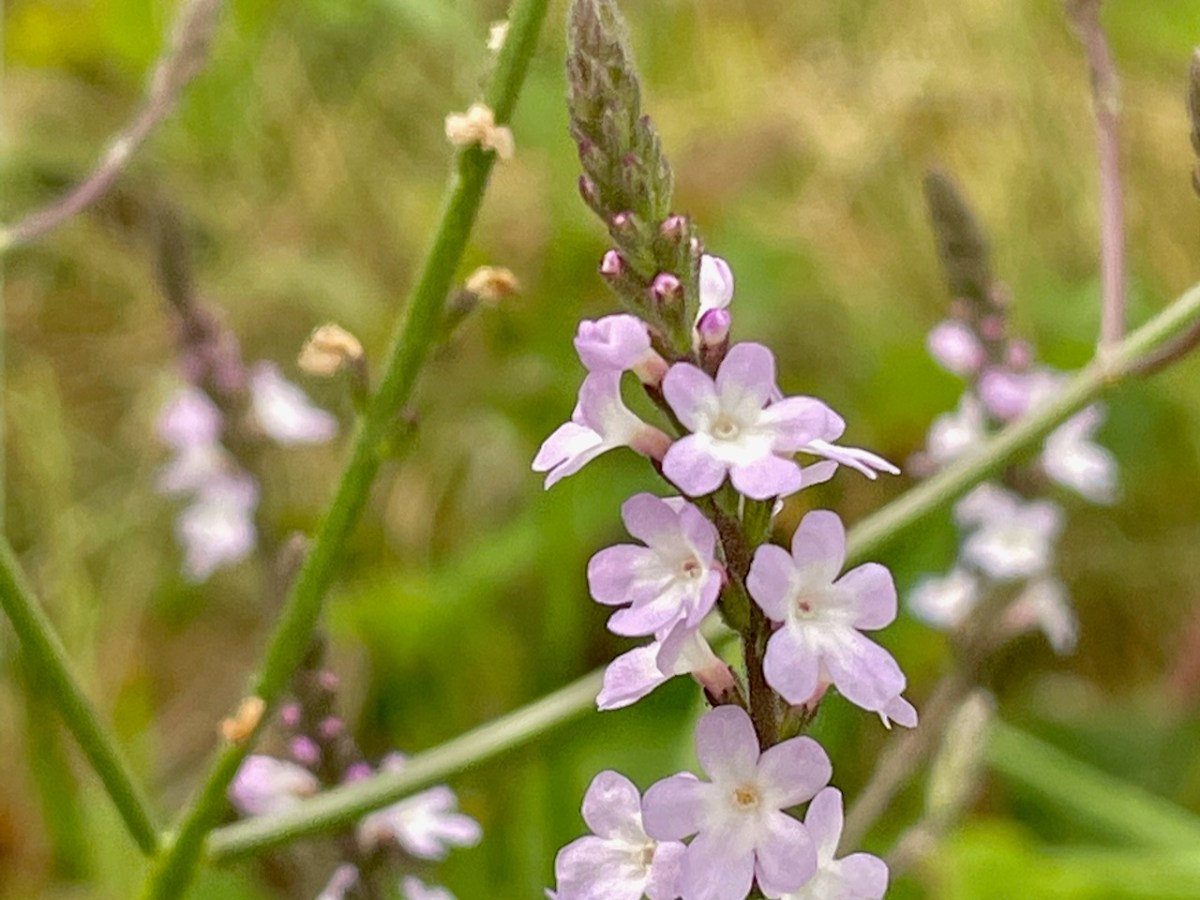
A much easier assignment for me is Vervain, a beautiful, fragile-looking but surprisingly tough flower that happens to grow near me.
Three years ago, one of the spots where it was growing was scraped clean and covered in tarmac. It had been a dangerous corner and the Vervain was simply overlooked. I was devastated – this little location was completely wiped out. Imagine my surprise and delight when I found it again the following summer, struggling up through the tarmac! And by this summer, not only had the population recovered but far from struggling, large and vigorous plants were growing up, finding their way through the pavement and flourishing.
But overall the story of the Vervain populations I have been monitoring is emblematic of the difficulties facing many wildflowers. Of the three original locations I started with, I am down to one (above). The good news is that this year I found a new location – all fingers crossed this one manages to hang in there.
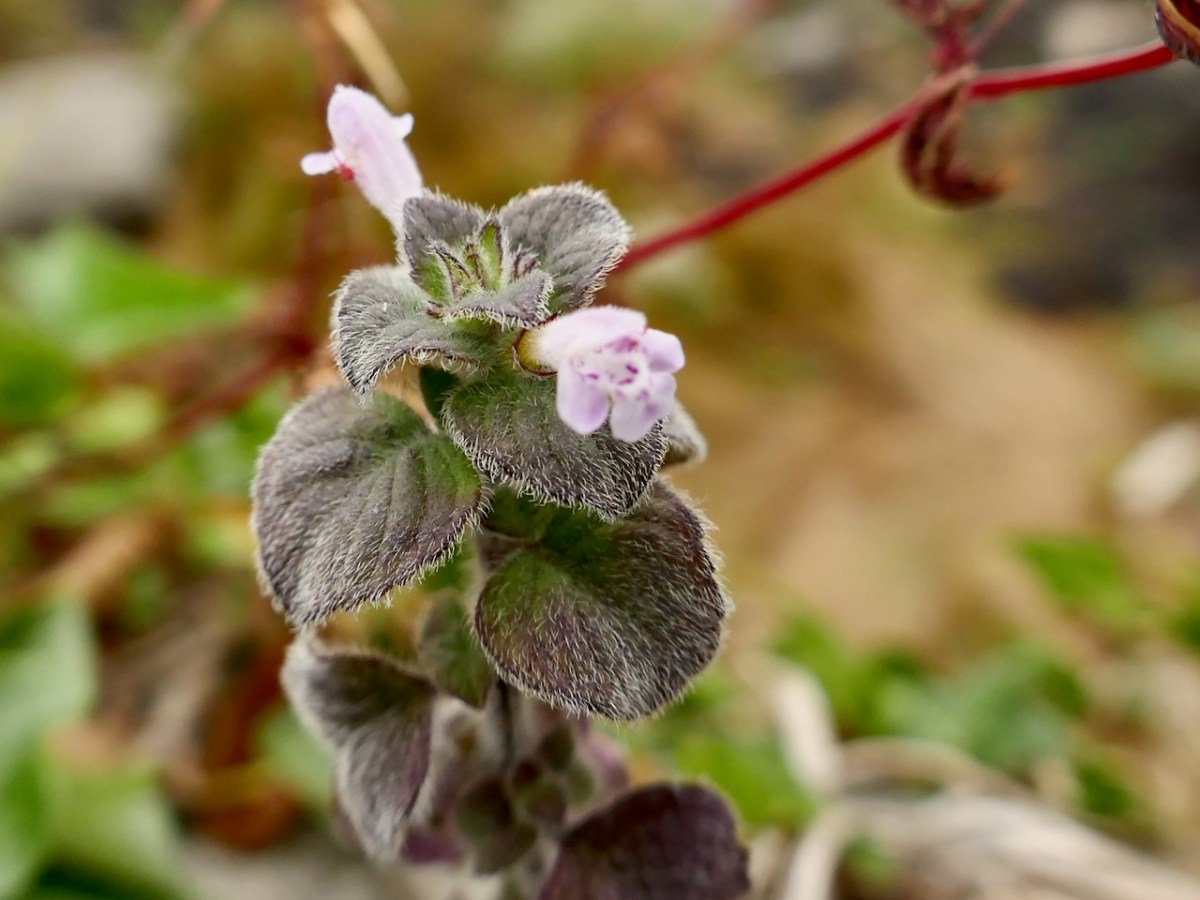
My final plant is the lovely member of the mint family called Calamint.
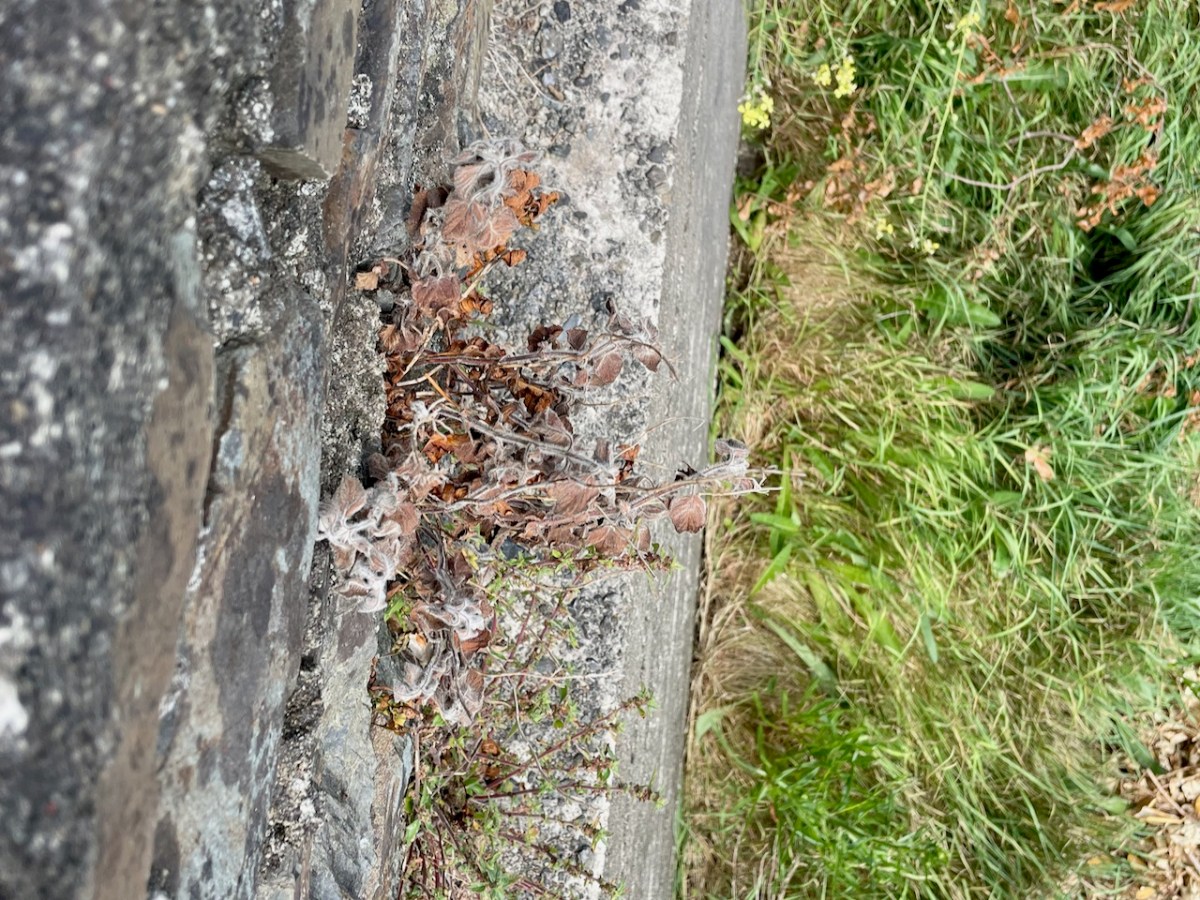
It’s facing two challenges. The first is that it’s growing on a stone wall, and so is Pellitory-of-the-wall, which has a habit if spreading and taking over all available space. In fact that’s what’s happening.
In the photo above the flower with the reddish spikes is Pellitory-of-the-wall, while the patch of brighter green in the middle is Calamint, trying to hold on to its territory. The Calamint has another problem, though.
Someone has decided the wall needs to be kept tidy and has dosed it liberally with Roundup, killing some of the Calamint (above). Sigh.
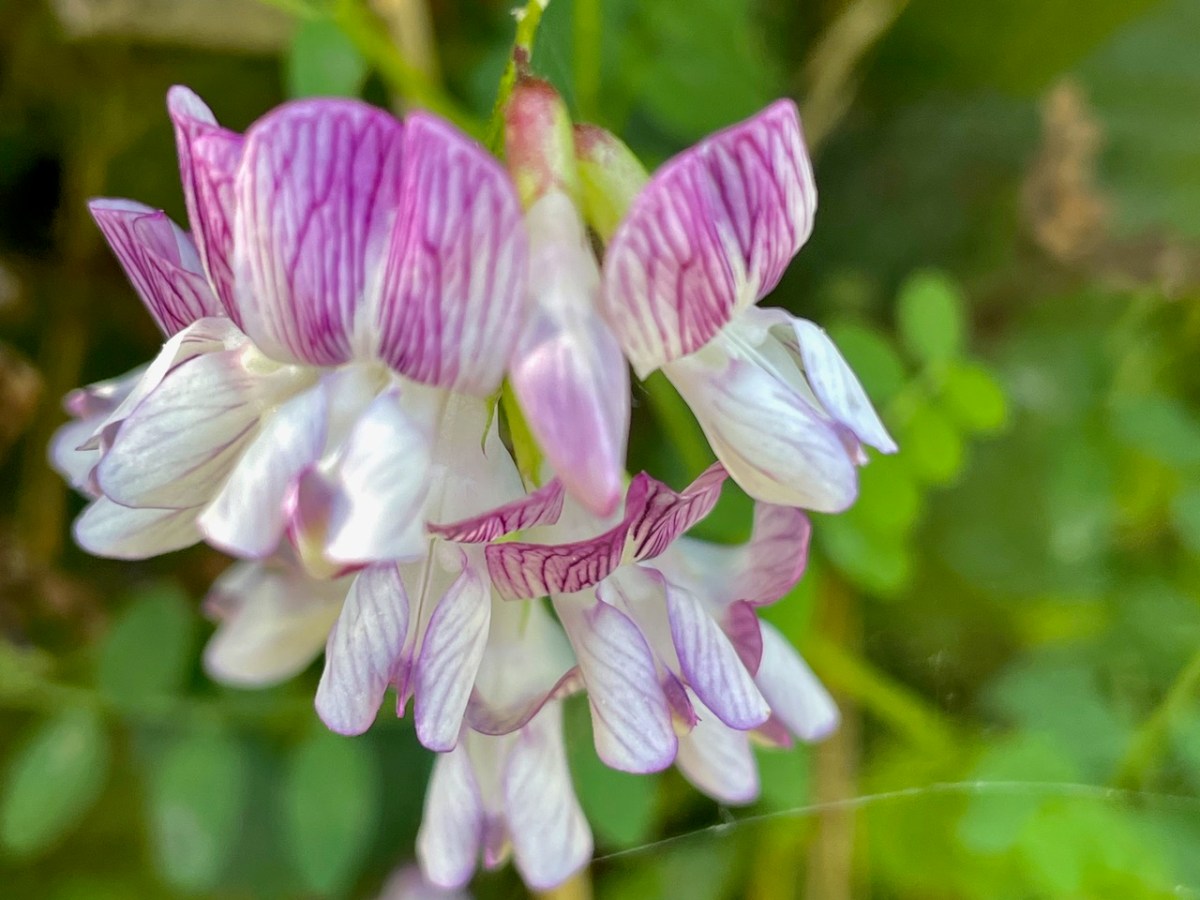
I’m going to leave you with a couple of pics of rare wildflowers I’ve seen this year – just to cheer us up and remind us of the beauties that manage to survive here and there against the odds. This is Wood Vetch.
. . . It is very seldomly violently cold here, and freezeth but little. There are commonly three or four frosts in one winter, but they are very short, seldom lasting more than three of four days together and with all their very worst, nothing so near so violent as in most other countries. But, how mild they ordinarily be, and how little subject to excessive cold. And as the cold in winter is moderate and tolerable, so is also the heat in summer; which is seldom so great, even in the hottest times of the year as to be greatly troublesome . . .
1726: A Natural History of Ireland in Three Parts by Gerard Boate, Gerard and Thomas Molyneaux
I was attracted to the early 18th century quote by Boate (first paragraph), because it certainly always seemed to be the case that Ireland has the perfect climate: never too cold and never too hot. In these days of global warming, maybe that’s less so than it used to be: we are experiencing long, cold and wet winters (here we are in mid May and we have to keep our fires burning!) and some scorching summer days when it’s exhausting to be out in the sun. Nevertheless, I believe we are fortunate not to suffer too much from unhealthy extremes – as yet.
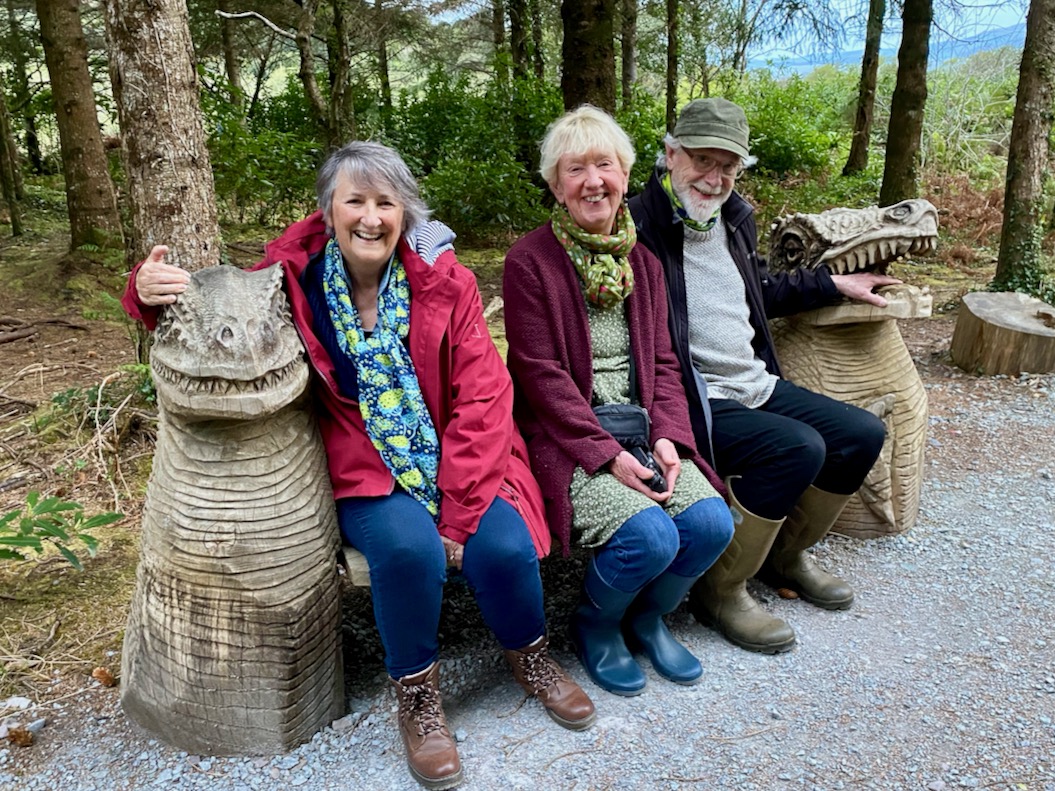
Today’s post sees us travelling again with our frequent companions Amanda and Peter (above, with Finola). Remember my post from last week? For that expedition we stayed at Kells Bay House, in Co Kerry: Peter and Amanda organised that wonderful trip. We decided we couldn’t leave that sublime place until we had visited the Primaeval Forest there.
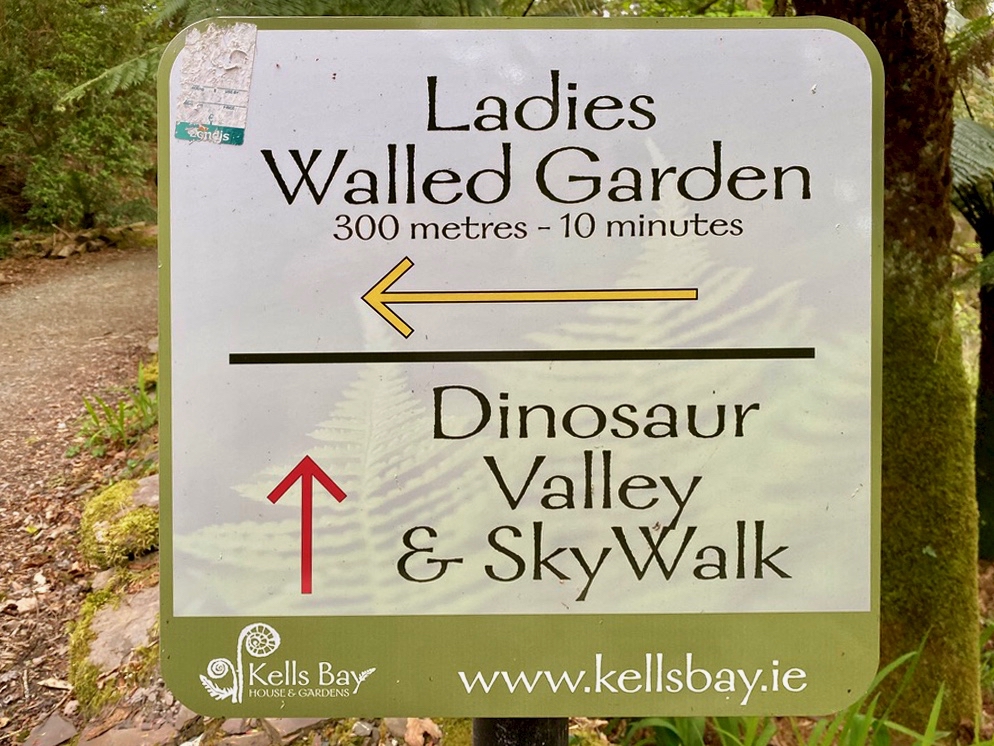
. . . Rowland Ponsonby Blennerhassett (1850-1928), grandson of Rowland Blennerhassett, married Mary Beatrice Armstrong from London in 1876 and is recorded as living at Kells. He extended the original Hollymount Cottage and renamed it Kells. They also kept a house at Hans Place, Chelsea, near to the Chelsea Physic Garden. Rowland Ponsonby is widely held responsible for making additions to the garden which still stand today. He established the Ladies Walled Garden adjacent to the front of the house for his wife Lady Mary, planted the Primeval Forest and laid out the pathways through the gardens . . .
The History of Kells Bay House & Gardens Helen M Haugh 2015
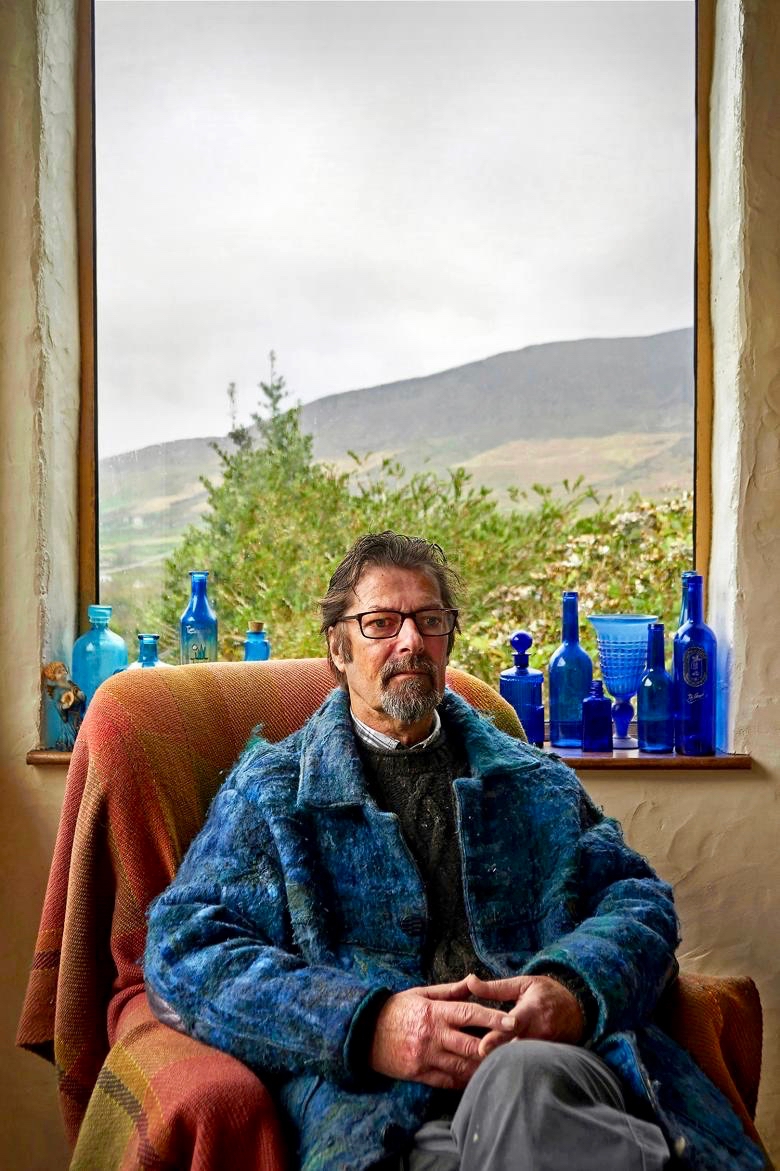
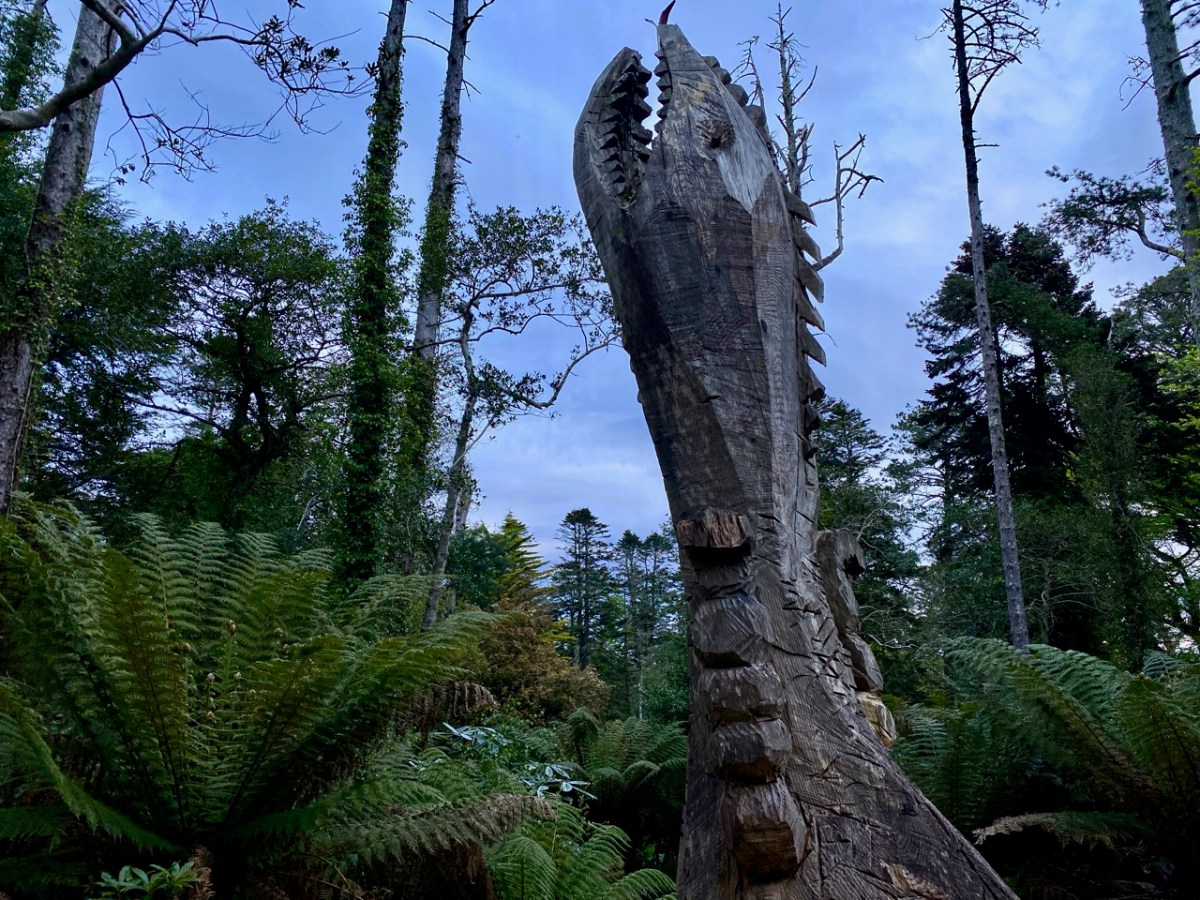
One of the principal attractions of the gardens at Kells Bay – and the Primaeval Forest – is a series of sculptures carved from tree fragments, commenced in 2011, by Kerry sculptor Pieter Koning. Here is a striking portrait of that artist by photographer David Molloy:
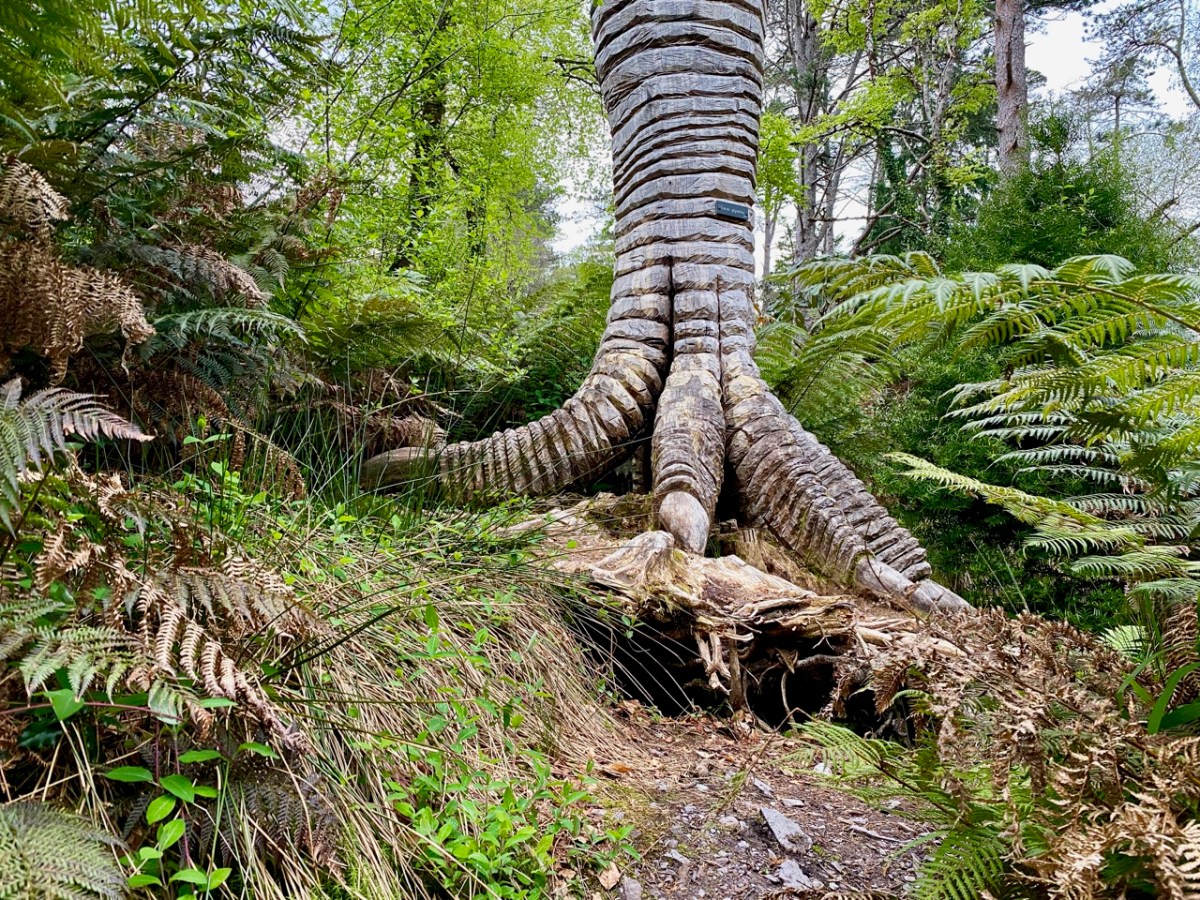
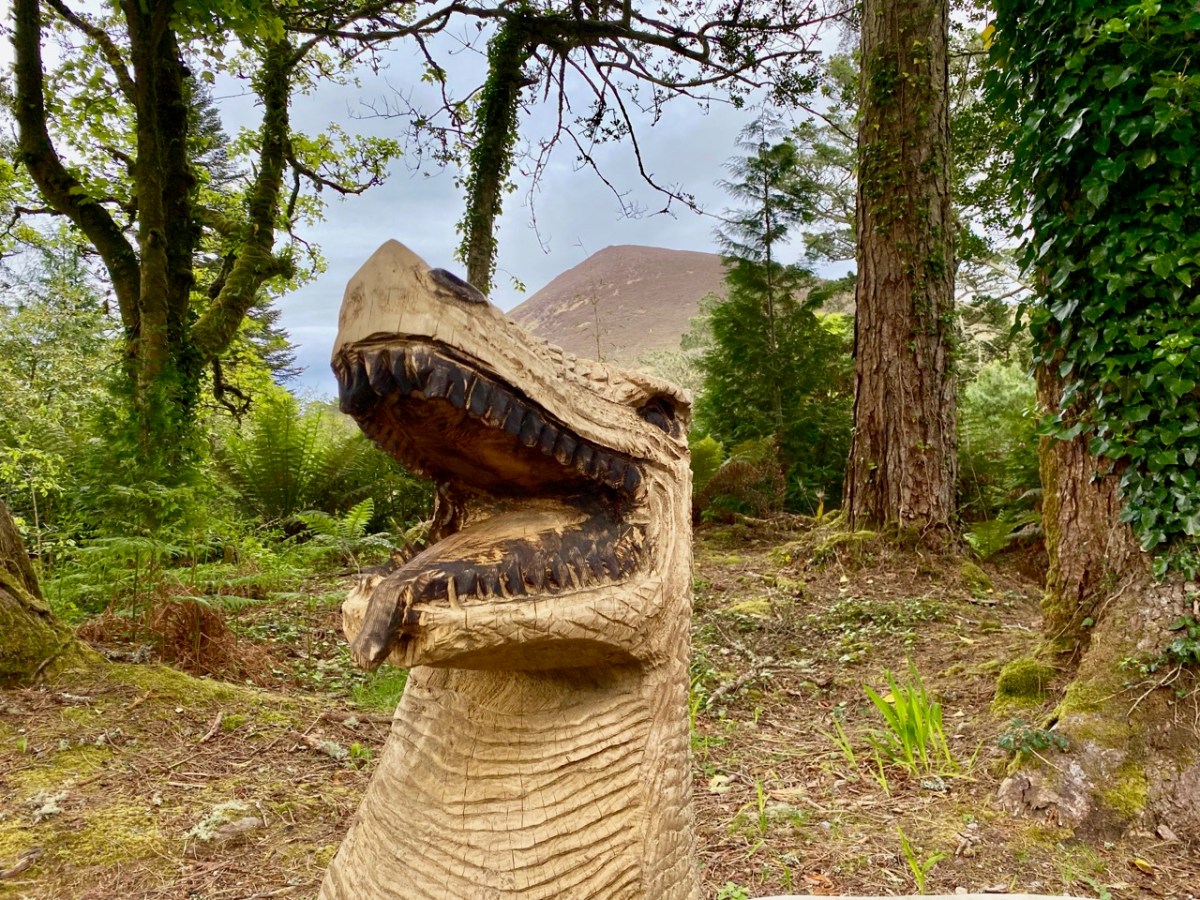
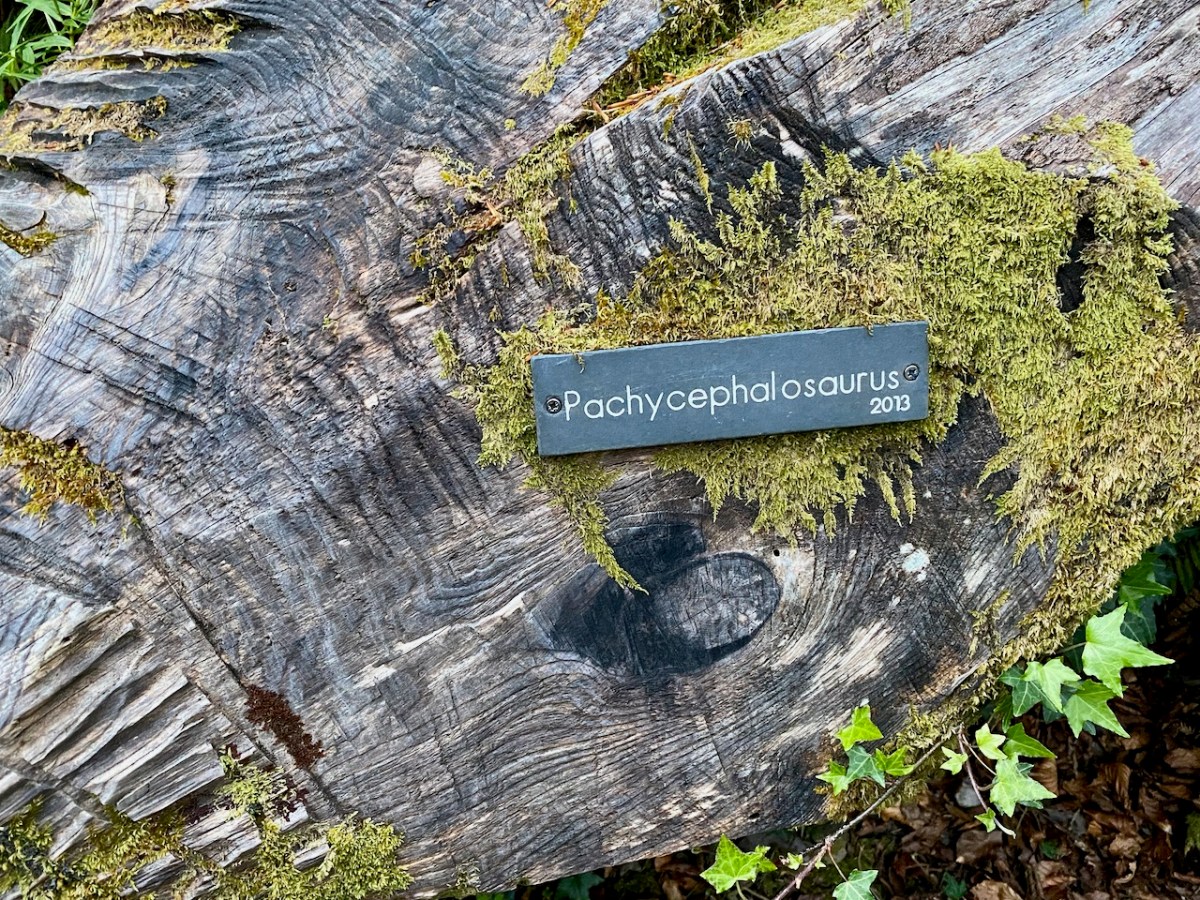
The Dinosaur sculptures have blended well into the natural landscape over the years: we were delighted with them!
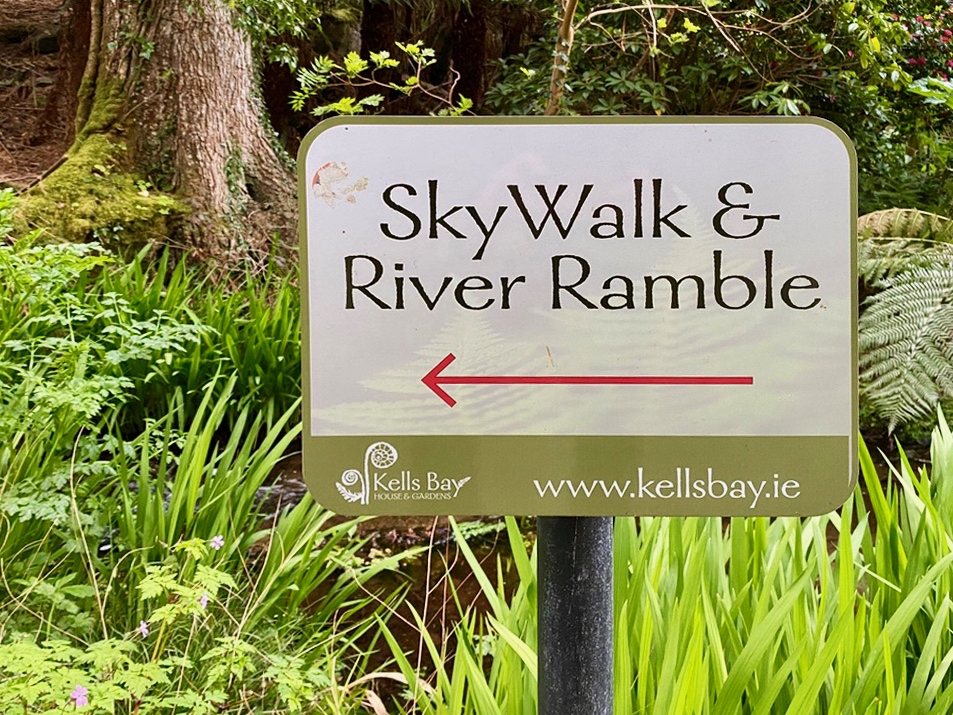
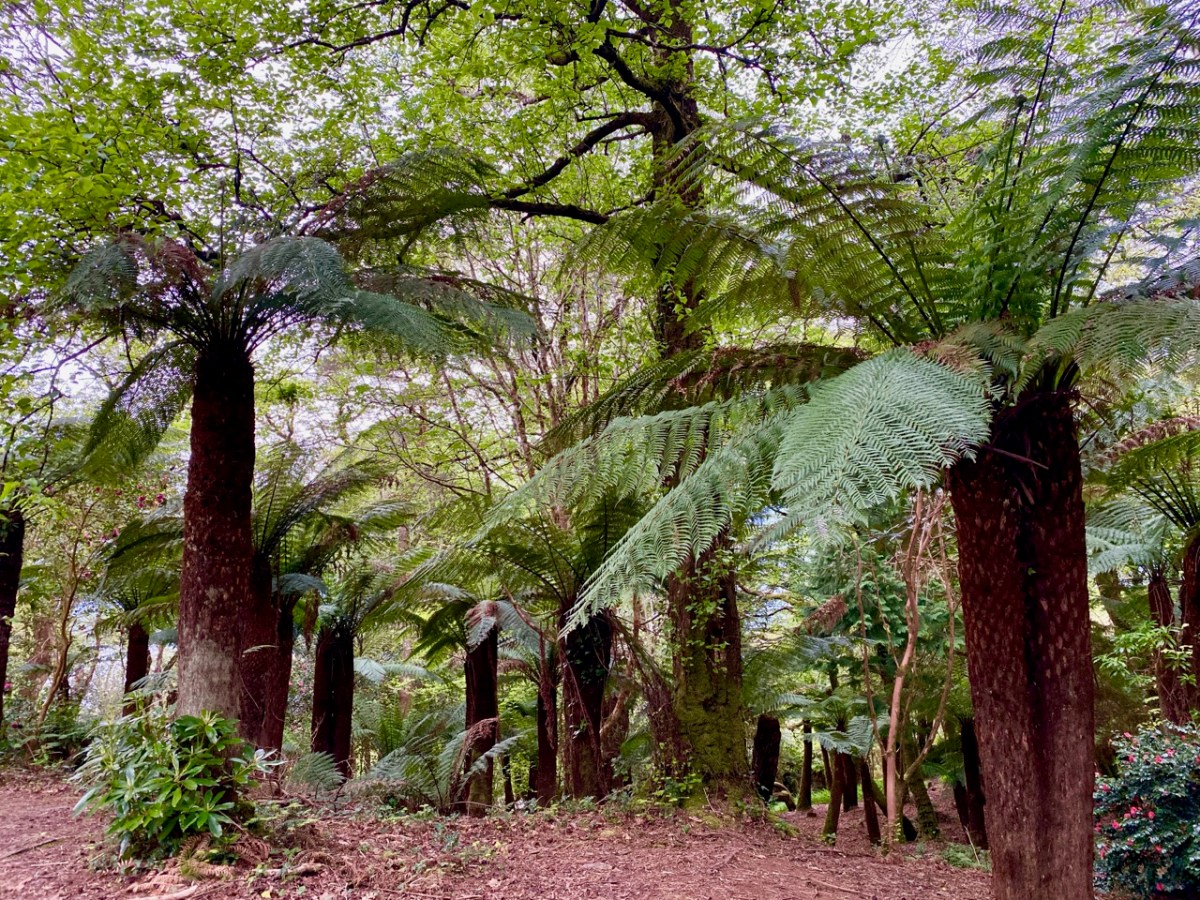
In addition to the Dinosaurs, which are well worth an exploration (I have only shown a few here to tantalise you into a visit!), there is a tree-fern forest planted by Blennerhassett, and spectacularly enhanced by the present owner, Billy Alexander, who has been awarded a Gold Medal at Chelsea Flower Show for his Kells Bay Gardens ‘mirocosm’. There are plenty of landscaping features old and new, and a ‘Sky Walk’ rope bridge, which is quite challenging.
Finola and I are at odds about this species: Gunneramanicata. Finola sees them springing up in the countryside where they ‘don’t belong’ – they originate in South America and are now spreading wildly, particularly here in the west of Ireland. Gunnera is listed on the Third Schedule of the EU Habitats Regulations which makes it an offence under Regulation 49 …to plant, disperse, allow or cause to grow this plant in the Republic of Ireland… So I can see Finola’s viewpoint. But I have always admired them. They grow so fast that you can almost see them getting bigger if you stand and stare for a few minutes. In this context, at Kells Bay House, they are part of an exotic collection dating from the 1800s, and therefore excused (says I).
I hope you will agree that Kells Bay House and Gardens is a ‘must see’ destination. And it’s well worth more than one visit. Include it – as we did – in a tour of landscape, archaeology and Holy Wells. The county of Kerry has so much to offer!
We’ve had a long cold winter and it’s raining, misty and downright bleak outside as I write this. But there have been bursts of sunshine here and there and when I can catch those moments I am out with my camera to see what I can find in the trees and the grass. The land is waking up. This video is a compilation of what I’ve seen in the last week, in my own garden and along the boreens around me.
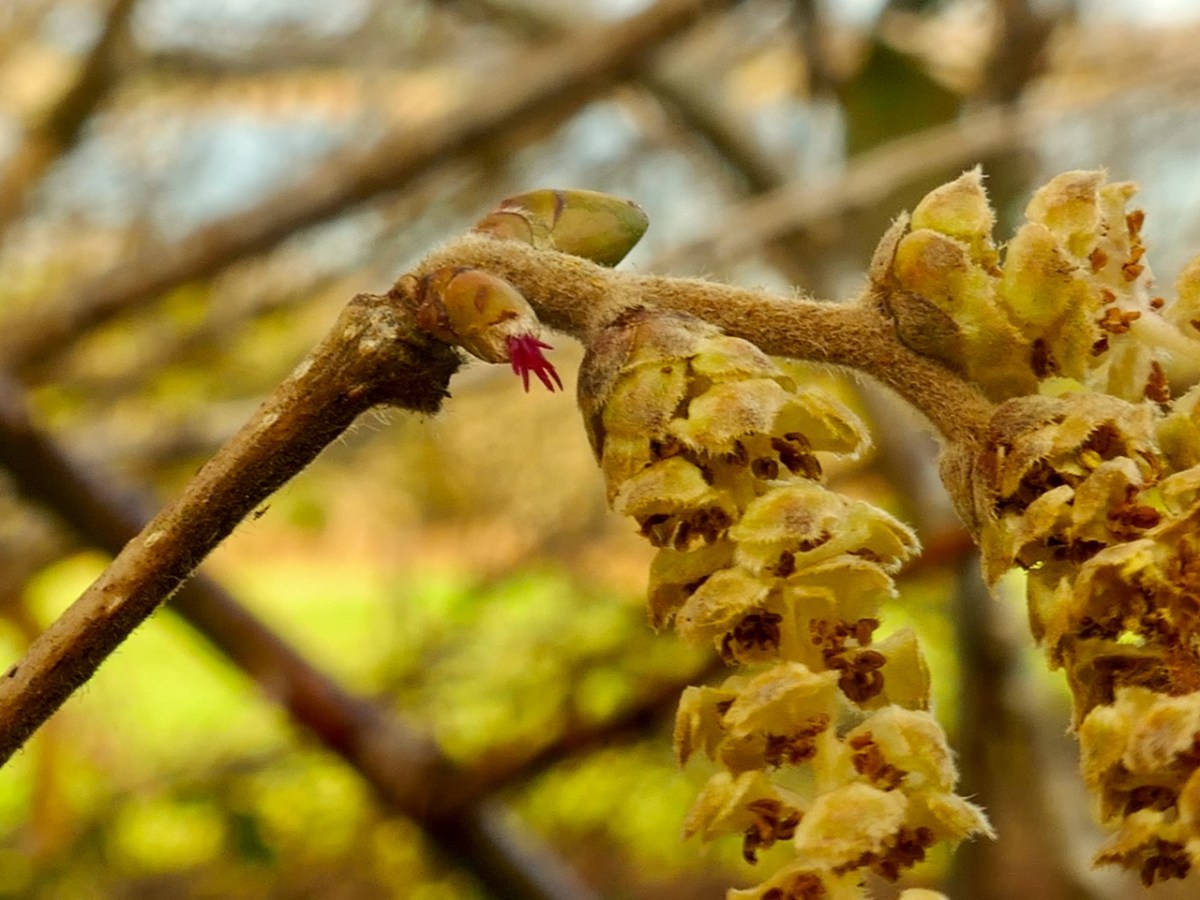
Here’s what I saw – all native and all typical of our West Cork flora. Hazel trees produce both male catkins – easy to see – and tiny red female flowers – very difficult to see and easy to overlook, but very pretty little pincushions when you see them.
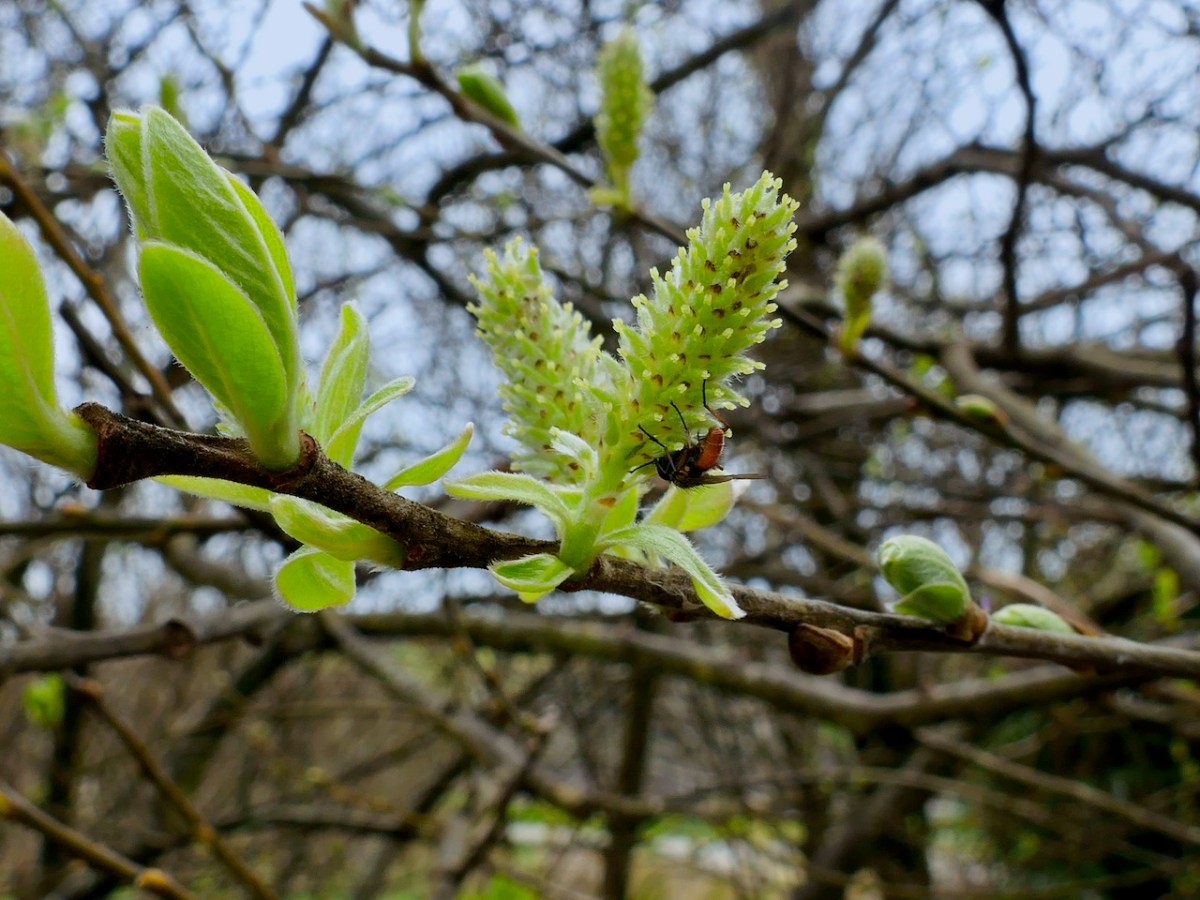
Willow trees, on the other hand are either female or male and depend on wind and insect to pollinate one from the other. The male trees are the ones who produce the cute little pussy willows, which explode into yellow flower heads as they mature.
I only have a female tree, with its own distinctive catkin-like spiky flowers. Fortunately, as you’ll see in the video, when I was photographing it, it was visited by a Great Tit and a White-tailed Bumble Bee, all helping (along with the breezy weather) with the pollination.
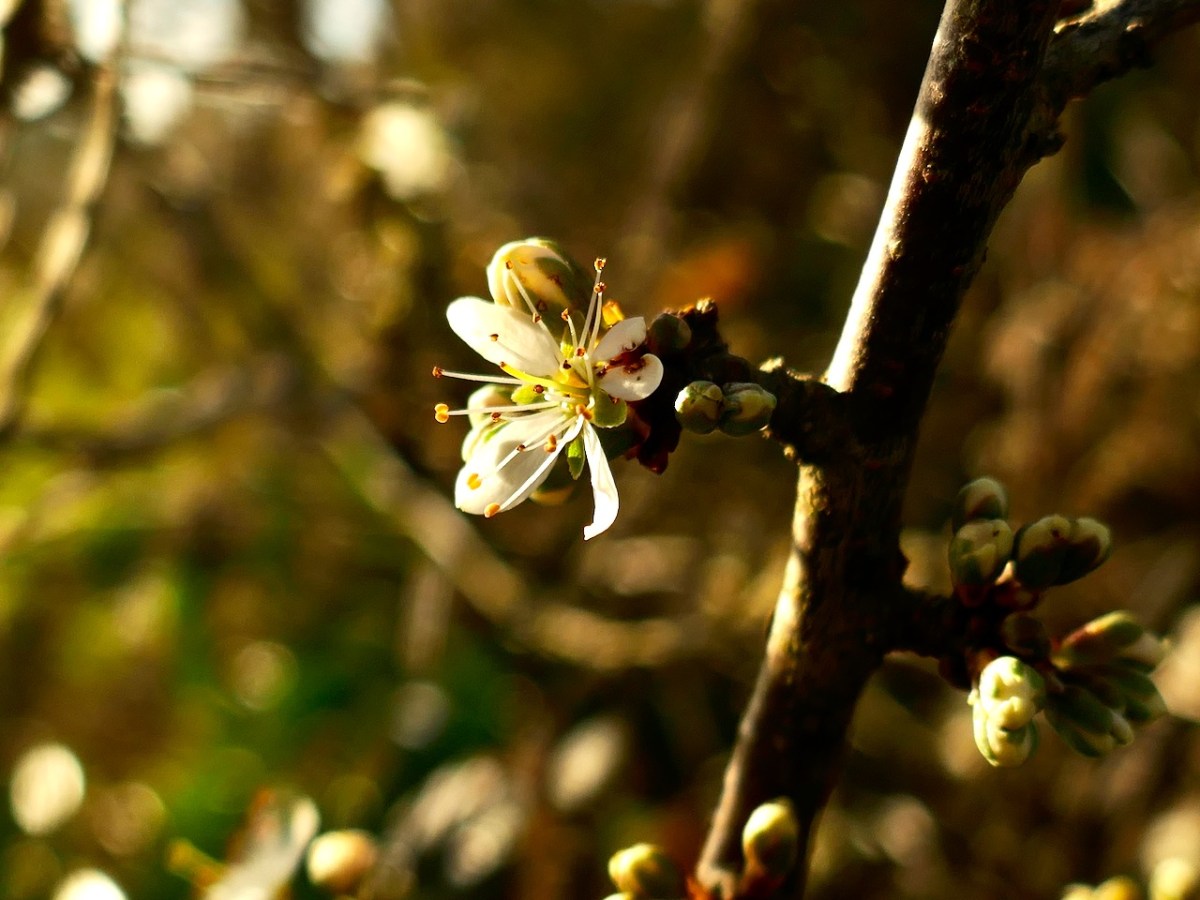
The blackthorn trees are one of our true harbingers of spring – the flowers emerge before the leaves, looking bright and beautiful against the dark bark.
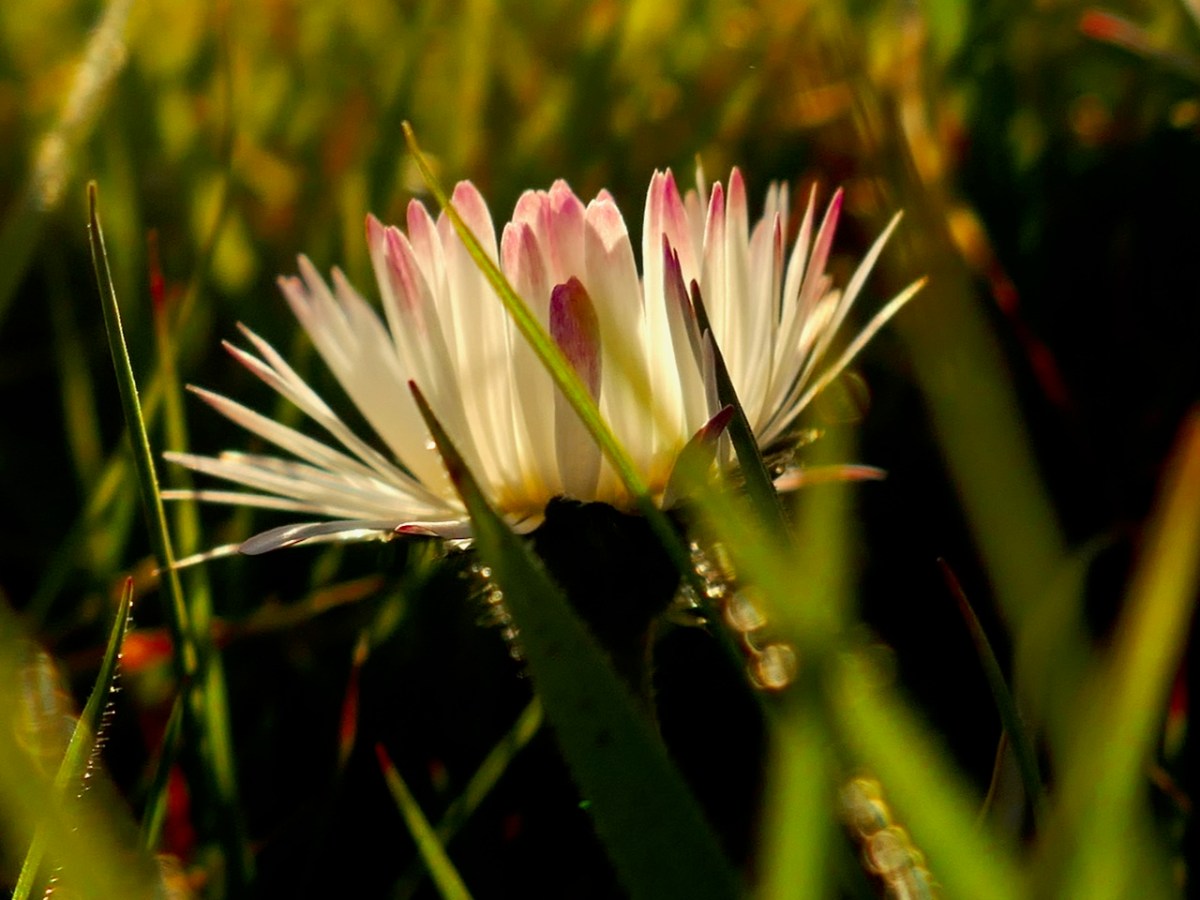
Some Staghorn moss is followed by two Dandelions and then some Lawn Daisies, Dandelions come early in West Cork and don’t last long – they are soon replaced by Cat’s-ear in my lawn. The daisies are a constant delight all summer long.
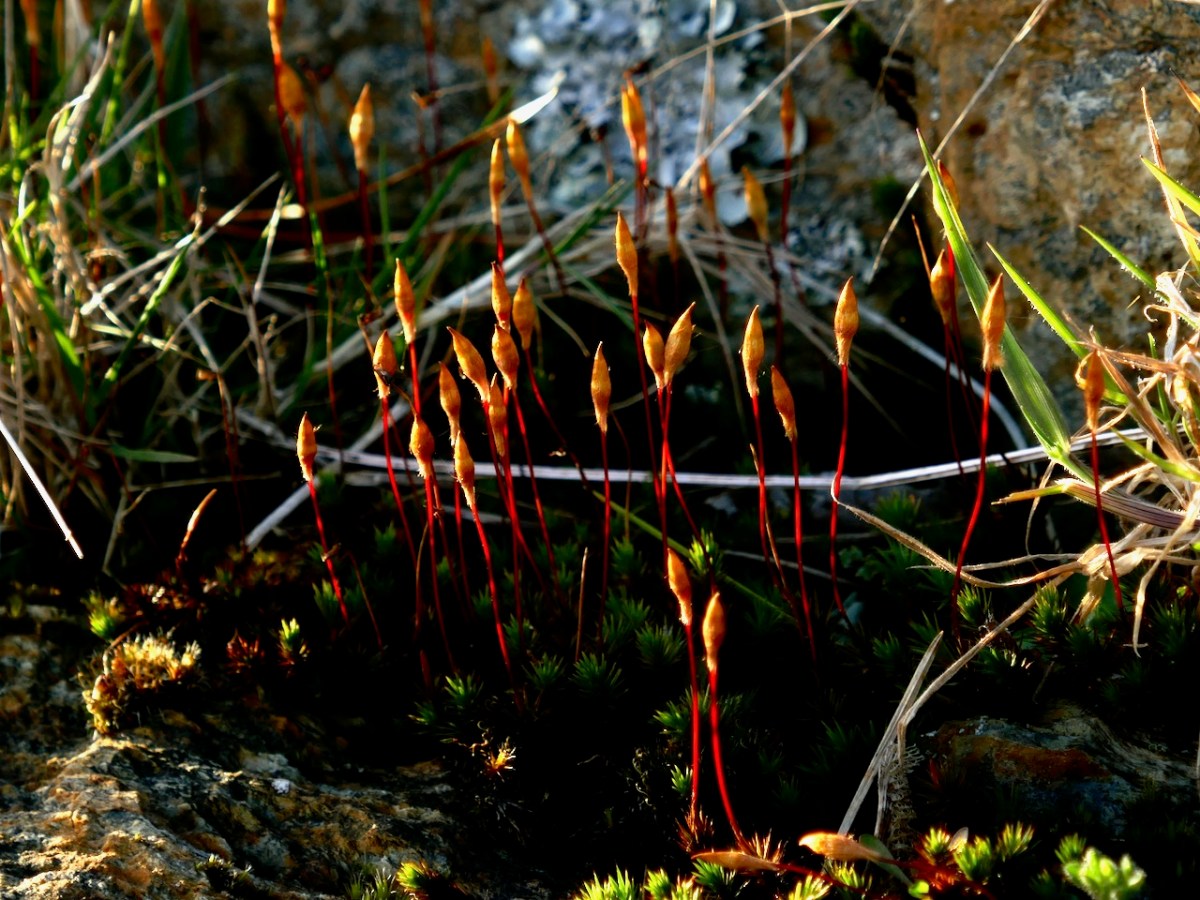
Another early spring wildflower is Common Dog-violet. This one really rewards getting up close. See my lead photo for this one. Finally, a couple of shots of Herb Robert emerging from a stone wall, followed by photos of Juniper Haircap Moss, which has established a little colony in the crevices of the rocks that line my driveway. The spore capsules sit atop tiny bright red stems. That’s my lead photo for this post, and the shot below.
Welcome to the UCD Library Cultural Heritage Collections blog. Discover and explore the historical treasures housed within our Archives, Special Collections, National Folklore Collection and Digital Library


















 Roaringwater Journal