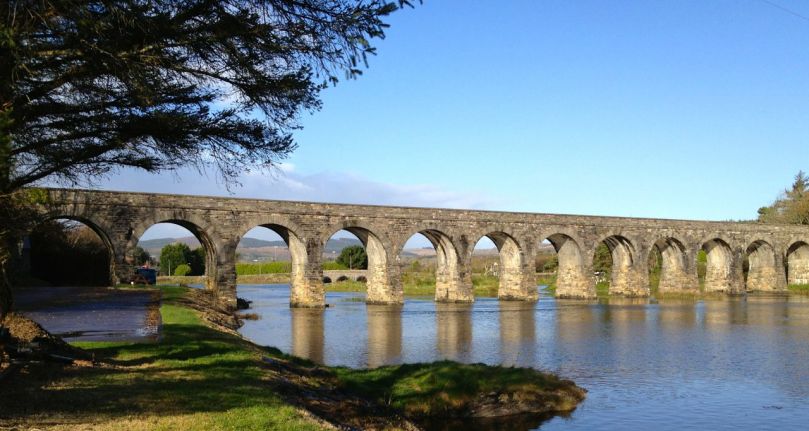
Bridge

The Famous Twelve Arch Bridge in Ballydehob

The Famous Twelve Arch Bridge in Ballydehob

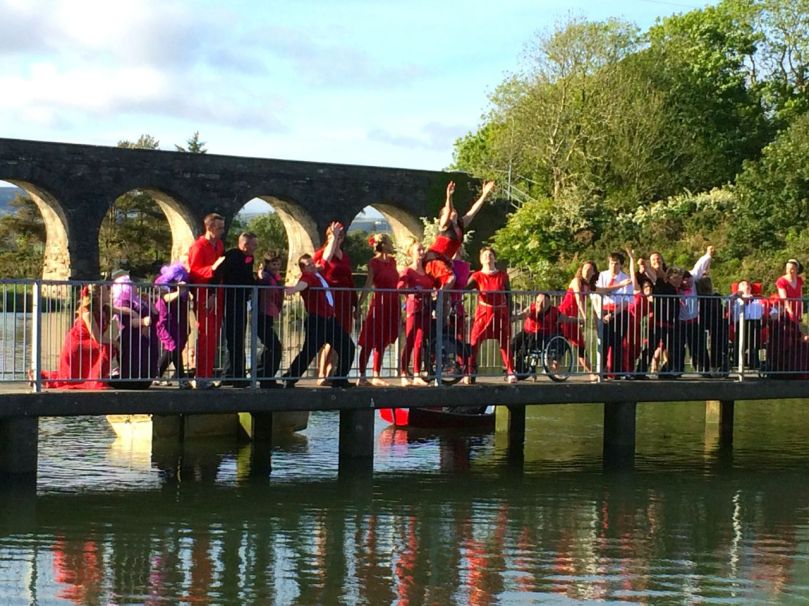
Recently, as part of the Ballydehob Country Music Festival (although the connection may be a little tenuous) we noticed posters going up around the town for a dance to be performed on the famed Twelve Arch Bridge. The dance company, Croi Glan (Kree Glan – pure heart) had more information on their website:

Professional dancers from Croi Glan, 5 musicians performing live, Croi Glan’s aerial dancers suspended from the bridge on rope and harness and aerial silks, and 40 West Cork Inclusive Dance Group community performers from COPE, CoAction and the local West Cork area, 25 of whom have intellectual disabilities, in a once-in-a-lifetime, hugely ambitious project directed by Tara Brandel, a native of Ballydehob.

Intrigued, I sought more information on Croi Glan. Here is a piece from TG4, the Irish language television station, that illustrates what the company is all about:

We arrived at the Pier to find that the whole of Ballydehob had turned out. The place was rocking, with live entertainment, gourmet hot dogs and a wine bar. While the morning had been overcast, by early afternoon the clouds had parted and brilliant sunshine added to the festive atmosphere.

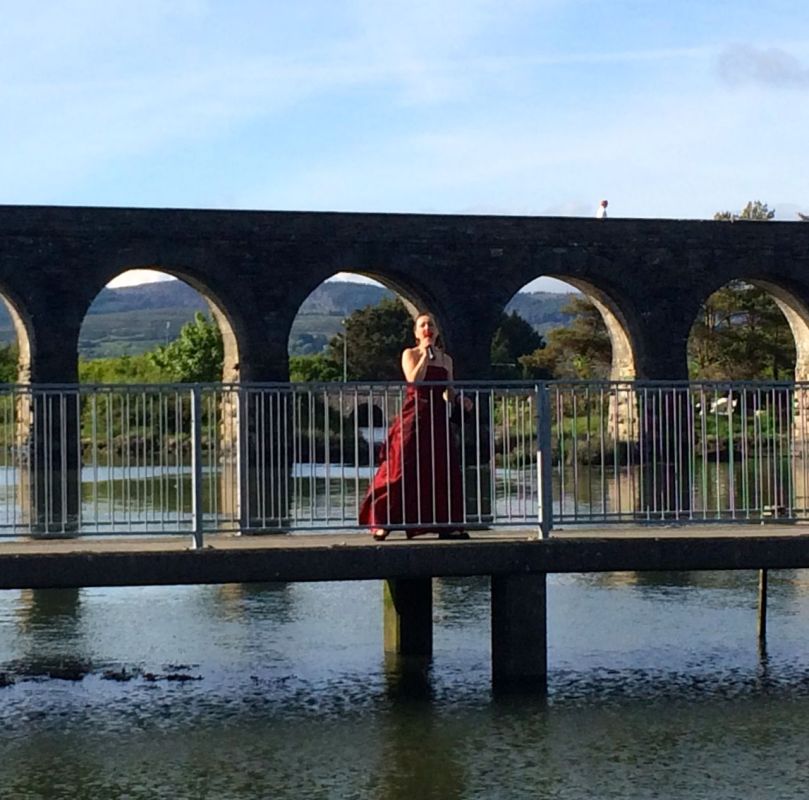
Siobhan Heapes

Siobhan Heapes

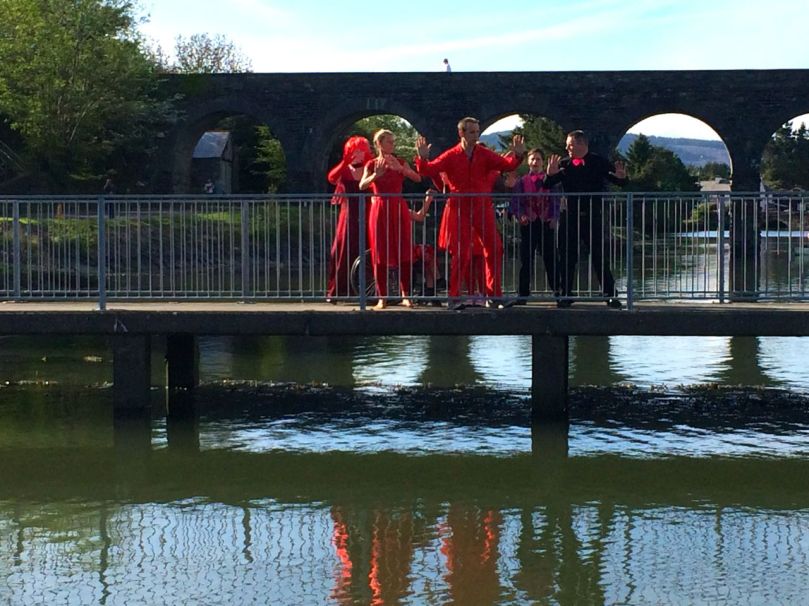
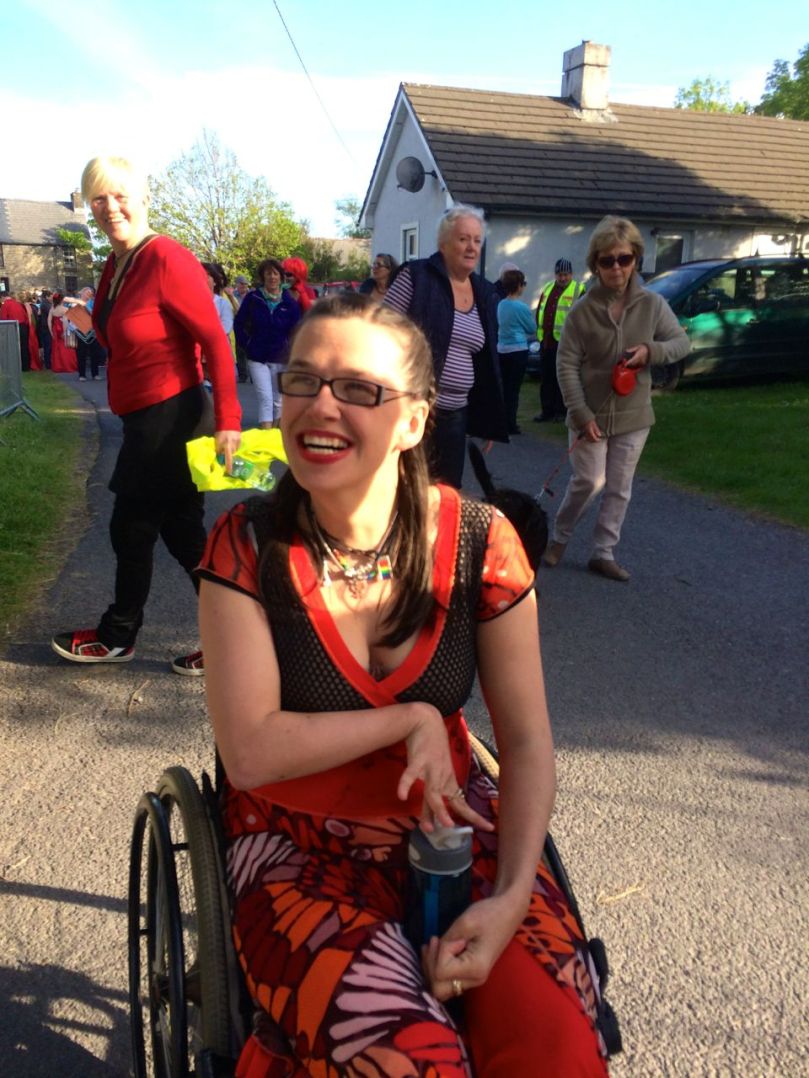
The dance started with a local singer, Siobhan Heapes, singing on the walkway over the water, calling the dancers. One by one and in groups they arrived on the walkway and we began to appreciate the diversity of the troupe – some professional and balletic, some in wheelchairs or with mobility difficulties, some with intellectual disabilities. Together, they told a story: a story of bridging and transcending differences, of supporting each each other, of honouring the part each played in the dance. 

The dance begins

The dance begins

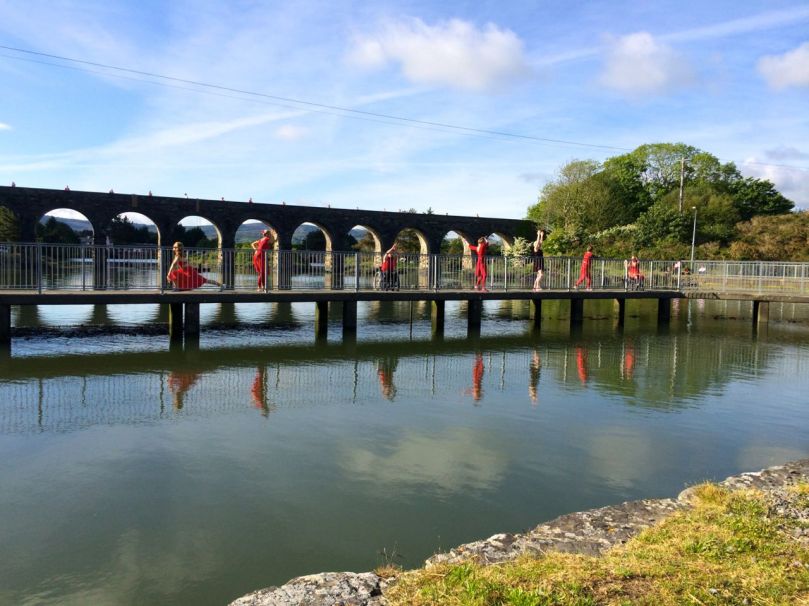
The stage became larger and larger, as the dancers occupied the green spaces around the walkway, and then moved onto the bridge itself.

Using the whole space

Using the whole space

Two dancers were lowered over the bridge –  a heart-stopping moment – and then yellow silks unfurled and their bodies twined and moved with the silks as we watched entranced from the Pier and Siobhan provided the haunting musical background.

Aerial dance

Aerial dance

The finale had all the dancers back on the walkway for one final movement together of intense communication, lifting and balancing each other, paying a last homage to the theme of Bridge. And suddenly it was over and we erupted into possibly the most enthusiastic standing ovation I have ever been a part of. It was loud, it went on and on and then on some more. Some us were in tears, all of us were smiling and turning to each other and searching for superlatives to describe what we had just witnessed. 

Finale

Finale

There were flowers, and speeches. Tara Brandel said she had “never been prouder to be from Ballydehob.” We lingered, chatted with the dancers, congratulated Tara (it was hard to get close to her) and her assistant choreographer, Mary. People took a long time to disperse – something had stirred us all in that way that makes you want to hang on to the feeling as long as possible.

Mary Nugent, Assistant Choreographer

Mary Nugent, Assistant Choreographer

Perhaps it was, as Tara explains in the YouTube video above, that when you watch a Croi Glan performance, you are operating entirely in your heart.

An Charraig Aonair: The Fastnet Rock

An Charraig Aonair: The Lone Rock

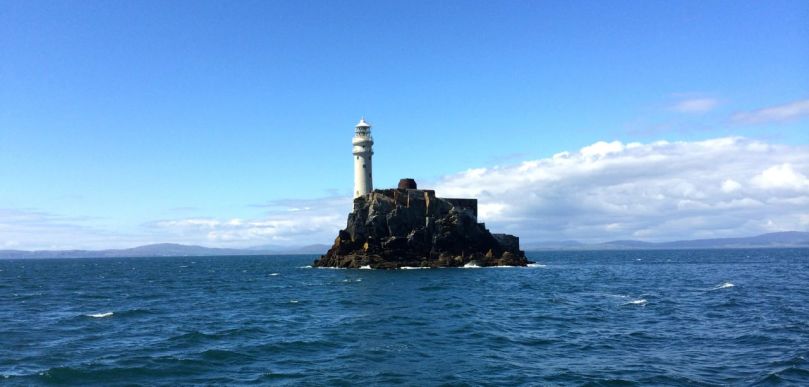
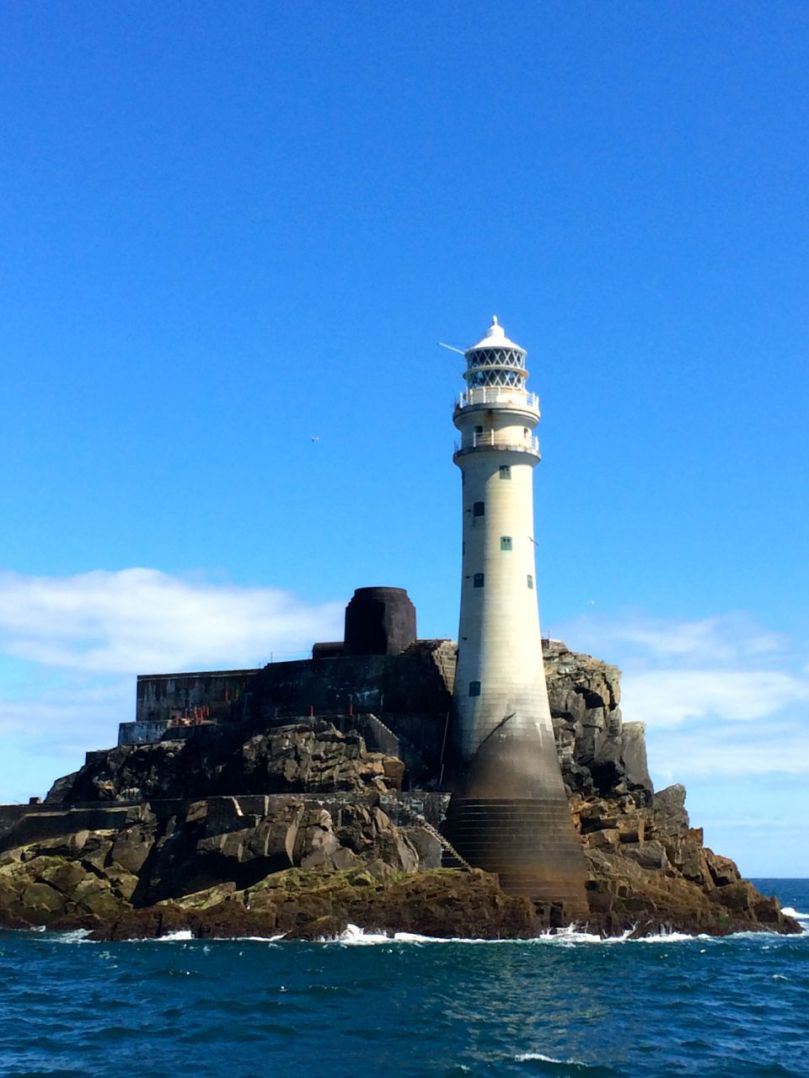
Robert has written about our field trip to Cape Clear Island and I can now reveal that the journey also included a thrilling sail around An Charraig Aonair (Karrig Ane-er, The Lone Rock) better known as the Fastnet Rock; or to thousands of emigrants for whom it was the last sight of their home country, Ireland’s Teardrop.

The Fastnet from Cape ClearThe Fastnet from Cape Clear

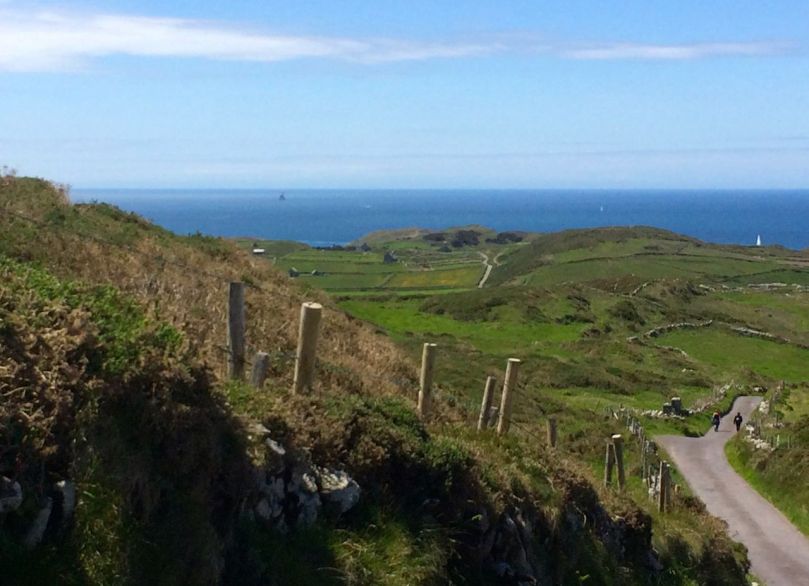
We had been looking forward with great anticipation to visiting the rock close up. We can see it from our home, a craggy point on the horizon –  a far away mystical tor abounding with lore and legend. We have been awestruck by the waves crashing over the lighthouse in winter storms and wondered at the lives of the lightkeepers who once manned that treacherous outpost. We watched through our telescope as enormous yachts rounded the rock in the biennial Fastnet Race last summer, following the progress of the race on a special iPhone app. I have written elsewhere about the awful tragedy of the 1979 race, in which Gerard Butler and his fellow lightkeepers on the Fastnet played a crucial role in monitoring the participating yachts in the mountainous sea conditions. 

The original Cape Clear Lighthouse beside the signal towerThe original Cape Clear Lighthouse beside the signal tower

The Fastnet was built to avoid such tragedies. Its first iteration was in 1818 as a lighthouse tower on a high point on nearby Cape Clear Island, beside the Napoleonic-era signal tower. However, the light was frequently obscured by fog and after the wreck of the Stephen Whitney in 1847 with 92 souls lost, it became clear that the best place for a lighthouse was on the Fastnet Rock. 

Eamon Lankford and FinolaEamon Lankford and Finola

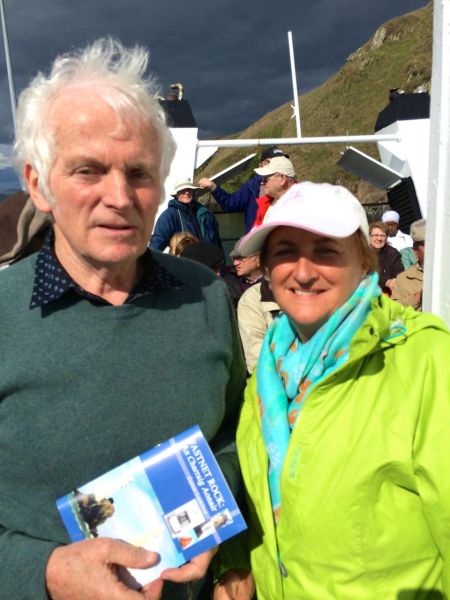
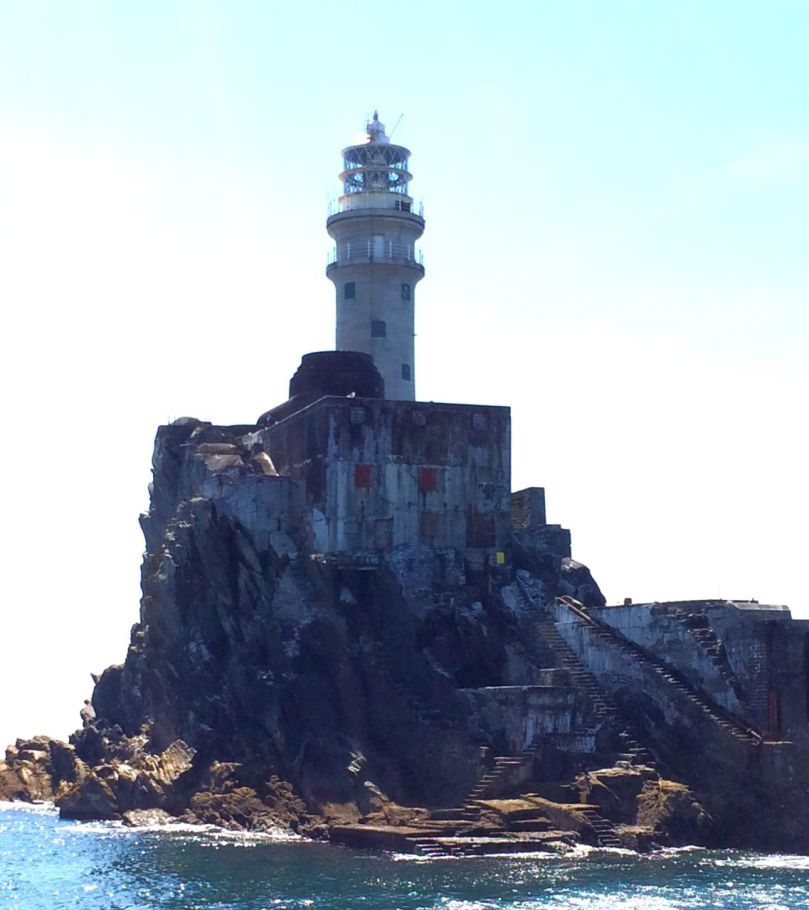
The great era of lighthouse building in Ireland got underway in the mid-nineteenth century. The engineering, design and construction expertise necessary to build lighthouses are impressive enough. Add to this the logistics of building on a tiny and inhospitable rock in a heaving sea on the edge of the Atlantic, and the sheer accomplishment of the objective is  staggering. The first attempt, started in 1849, was of steel and needed constant repair. It was decided to replace it with a structure of Cornish granite and the current lighthouse first cast its beam over the waters in 1904. Eamon Lankford in his book Fastnet Rock: An Charraig Aonair describes the building process and provides old photographs illustrating how the granite blocks were ‘floated’ and hoisted on to the islet, having been first assembled and tested in Cornwall. According to the Irish Lights website Fastnet is the tallest and widest rock lighthouse tower in Ireland and Great Britain and was a monumental achievement when completed in 1904. Each of the granite stones of the tower is dovetailed into those around it, bonding the structure into a virtual monolith. This webpage also has several excellent photographs of the lighthouse from the air. What photographs reveal is what is not said by irish Lights – the lighthouse is also a thing of beauty. Tall, slender and elegant and boasting two balconies, it personifies form and function in the most admirable fashion possible.

Today the Fastnet is fully automated but in The Lightkeeper Gerard Butler describes what it was like to live on the rock in fair weather, when he fished and swam from the steps, and foul, when the seas crashed and roared over the lighthouse as it quivered and shook all night. 

Fastnet, showing the steps and storesFastnet, showing the steps and stores

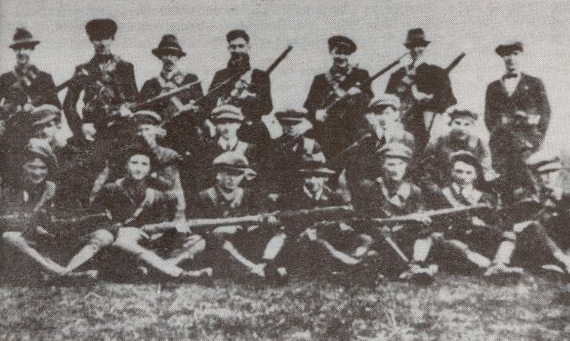
One of the stories we heard from Eamon concerned  a daring midnight raid on the lighthouse carried out by an IRA ‘Flying Column’ (experts in guerilla warfare) in 1921 during the Irish War of Independence. They were after the explosives used on the Fastnet to power the foghorn. In researching this story further, I found an article in the 1999 Mizen Journal (no longer in print) by Frank Lannin, based on the eyewitness account of Sean O’Driscoll.* Here is part of Lannin’s account:

The breeze had freshened and caused the usual swell around the Rock and there was a rise and fall of several feet. The anchor was let out and the boat moved slowly to the landing place. Positioned on the bow was John O’Regan, a rope tied around his waist, a revolver in his pocket and balancing himself with the rise and fall of the boat. He would have to select the right moment to jump on the Rock and catch the iron ring which was fixed to the Rock. He knew where the ring was fixed, but to grasp it in total darkness was a feat that few would attempt. His vast experience as a seaman was now to be put to the test. As a wave was rising he jumped. It was a tense moment. As the wave covered him he grasped the ring with both hands. (It was an occasion for handclapping, but not tonight.) In seconds he had made the boat fast and the rest of the raiding party were landing on the platform. The huge steel door of the lighthouse was not locked. John was first up the spiral stairway leading to the room where the Lightkeeper was on duty. He put up no resistance and as a precaution the wireless was dismantled. Seventeen boxes of gun cotton and three boxes of detonators and primers were loaded on to the “Maire Cait” by means of the lighthouse derrick. in all, the spoils weighed but one ton. The daring mission was accomplished.

The Third West Cork Flying Column: a group like this carried out the raidThe Third West Cork Flying Column

The fog signal, together with the light, was an important aid to navigation for ocean going vessels. It was only in 2011 that the Fastnet foghorn was permanently discontinued, as modern navigation equipment rendered it unnecessary. All around the world people are missing the haunting sound of foghorns now, a sound so many of us grew up with. But at least we can see the light from Carraig Aonair every night and count its ‘character’ – one two three four five FLASH…one two three four five FLASH – and know that it’s doing its part to keep our mariners safe on the seas that roll outside Roaringwater Bay.

The full extent of the column of Cornish granite and the stub of the original steel tower.The full extent of the column of Cornish granite and the stub of the original steel tower.

*See pages 18 to 20 of Sean O’Driscoll’s statement for his dramatic story of the raid.

Off to Skibbereen!

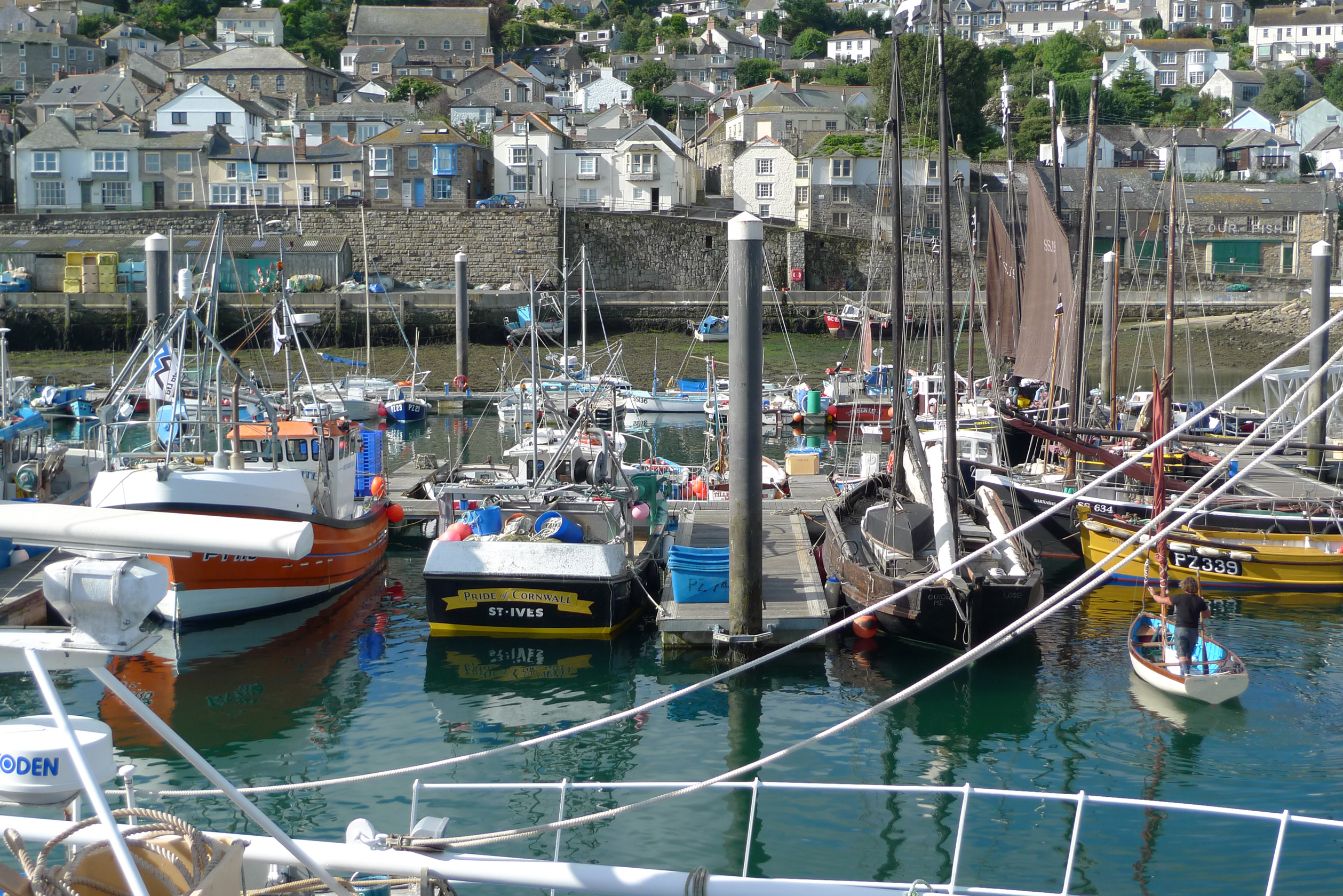
Newlyn Harbour, Cornwall

Newlyn Harbour, Cornwall

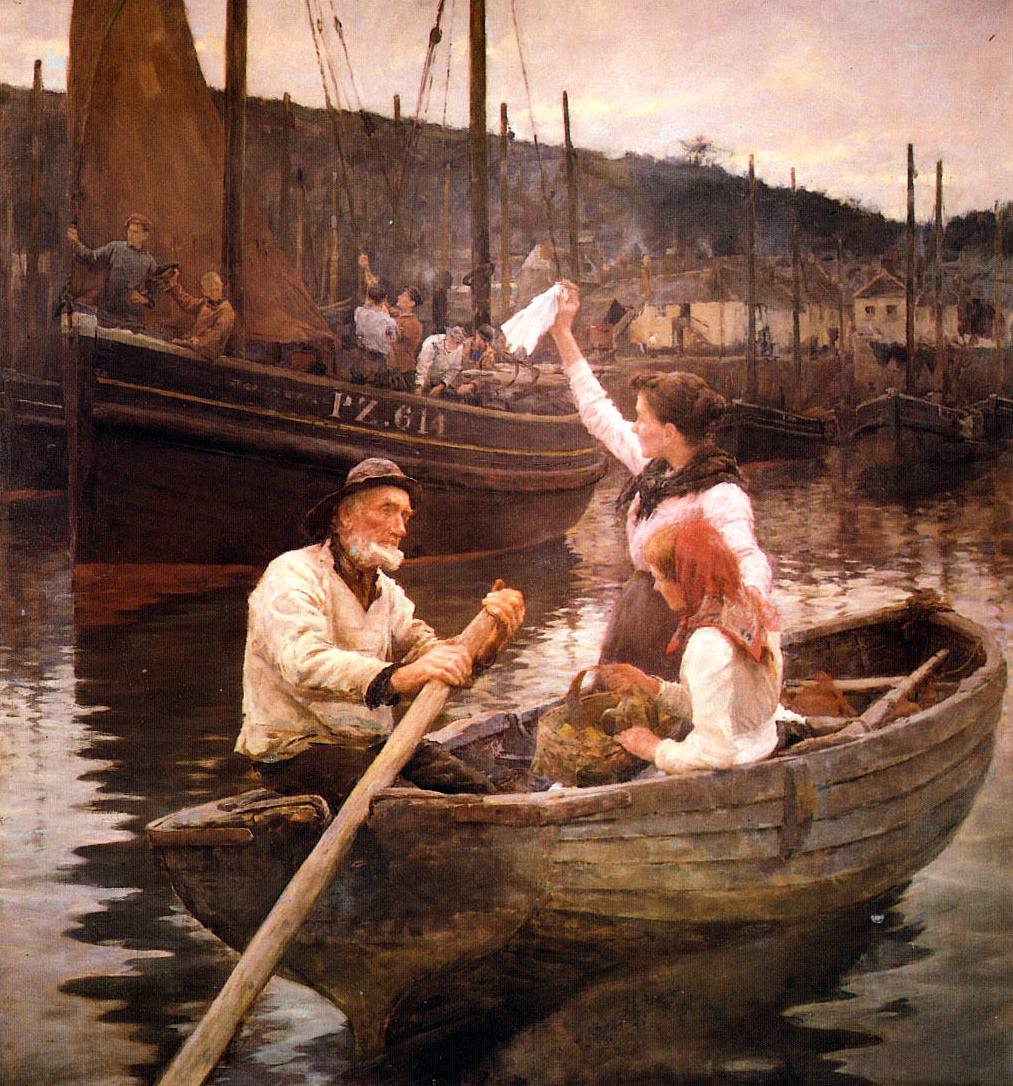
What’s the link between Newlyn in Cornwall – where I had a fisherman’s cottage for 20-odd years – and Skibbereen, our nearest town here in West Cork? The answer is ‘art’, and the painting below by Alexander Stanhope Forbes sums it up: Off to Skibbereen from Newlyn.

offtoskibb1

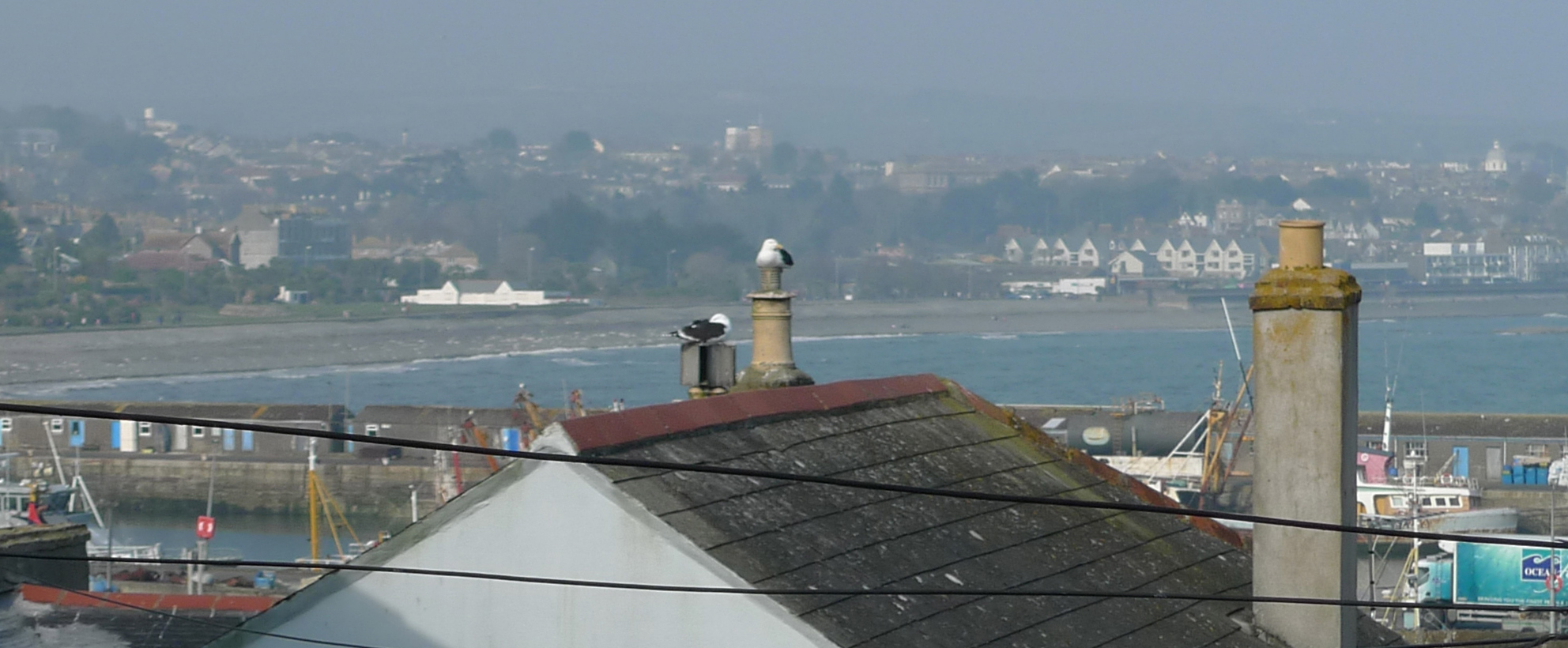
Stanhope Forbes was born in 1857 in Dublin and worked in the en plein air technique of painting, first in Brittany and then in Cornwall, where he settled and founded the Newlyn School of artists. He died in Newlyn (a day or two short of my first birthday) in 1947. If you want to see a collection of Newlyn School paintings visit the Penlee Gallery in Penzance: they are superbly detailed depictions of everyday life in a working fishing community during the late nineteenth and early twentieth centuries. En plein air was all about light, sun and clarity: the artists chose places where the light was at its best, usually close to the sea. My cottage looked out over Mounts Bay in West Penwith, on the far south western tip of Britain. Like the lugger in the picture I have crossed the Celtic Sea from Cornwall, and I now live on the far south western tip of Ireland.

View from my cottage in Cornwall

View from my cottage in Cornwall

I am intrigued by the Off to Skibbereen painting. It tells a story, but we can’t guess that story. It’s presumably PZ 614 that’s on its way to Ireland, and not the ladies in a small open punt with a basket of sandwiches… But why Skibbereen? Records show that from the 1820s Newlyn fishermen were chasing the Herrings off the coast of County Cork. On the whole the fishermen of Newlyn were active most of the year. In January and February they fished for Mackerel off South Devon, following the shoals westwards to Mounts Bay for the next couple of months. Then they moved to Irish waters for the Herring season, returning in July to catch Pilchards until December. They were away from home for weeks at a time so a departure could be a poignant time for their families.

Skibbereen at the end of the 19th century: can you spot the cat?

Skibbereen at the end of the 19th century: can you spot the cat?

Skibbereen was a settlement served by water. The River Ilen is tidal and in the early 19th century boats of up to 200 tons could navigate to Oldcourt, within two miles of the town centre. From there goods were transferred into ‘lighters’ (unpowered barges) and then brought into the quays where there were warehouses and a Customs House. Now, sadly, Skibbereen’s waterfront is a bit neglected and its active past shipping history is no longer obvious. Five historic quays have been identified along the river: Steam Mill Quay, Long Quay, Levis Quay, Minihane’s Quay and Chapel Quay. The Skibbereen Town Development Plan has this to say about them:

…Historic Quays – Comprising of old disused stone quays along the town side of the River Ilen between the two road bridges, these quays were once the primary means to transport goods and people in and out of Skibbereen. Some of the quays are in private ownership, others are unrecognisable and some have been blocked with stone and deposits. However,what is unquestioned is the historic significance and value of the quays and therefore their protection should be considered as part of this plan. In the past, communities and public bodies turned their back on water bodies but now the tide is turning in this regard. Therefore an opportunity presents itself … by ensuring that the quays are redeveloped as part of any proposal on adjoining land…

Building work progresses in Skibbereen

Building work progresses in Skibbereen

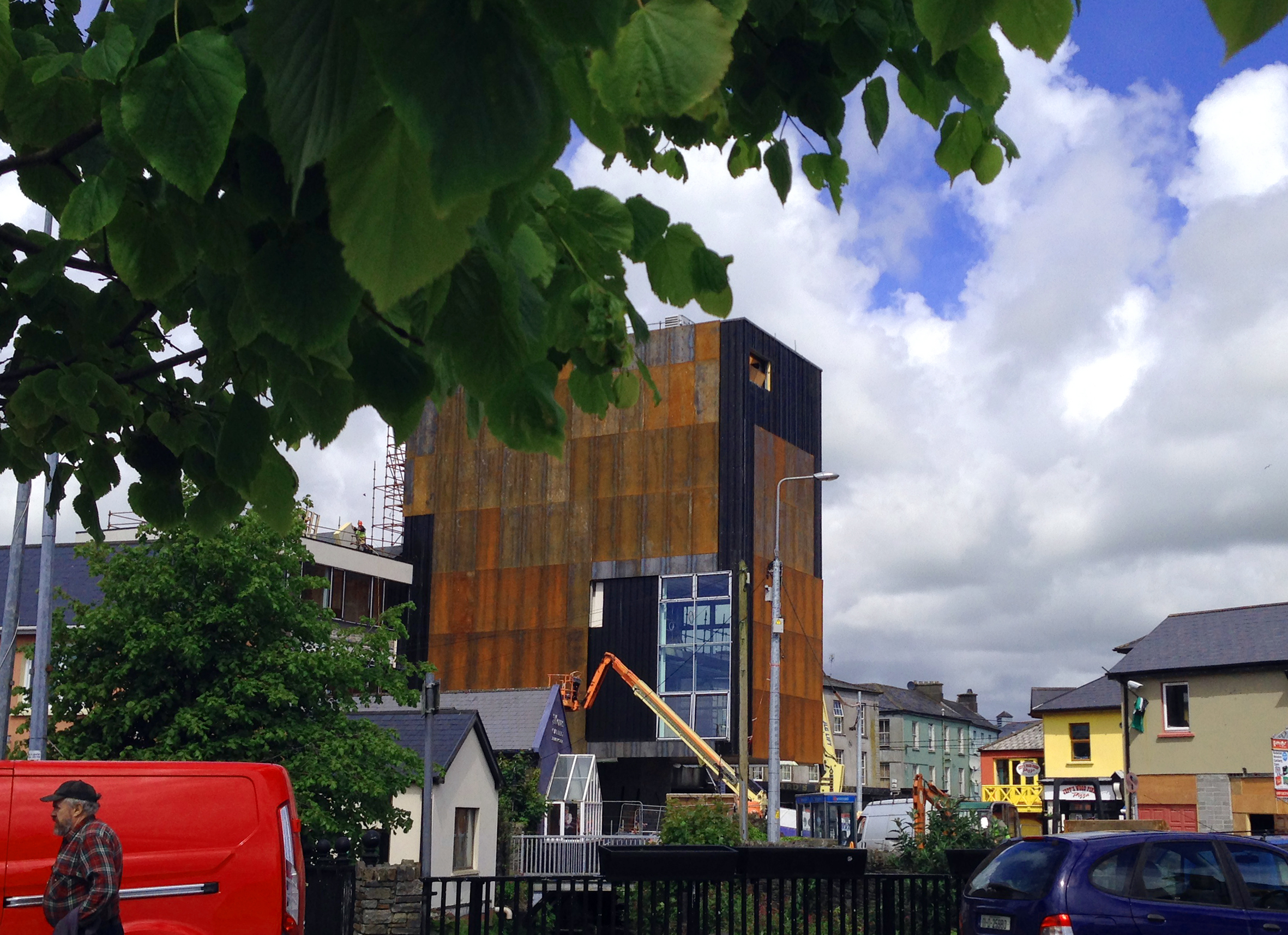
There is a new development going up in the centre of Skibbereen right now, just by the old Levis Quay. It’s on the site of a rather bleak four-storey warehouse structure (now demolished) known most recently as Wolfe’s Bakery. This new building is all about art – rather neatly for my thesis on the artistic links between West Cornwall and Western Ireland.

WCAC_north_view_final-sized

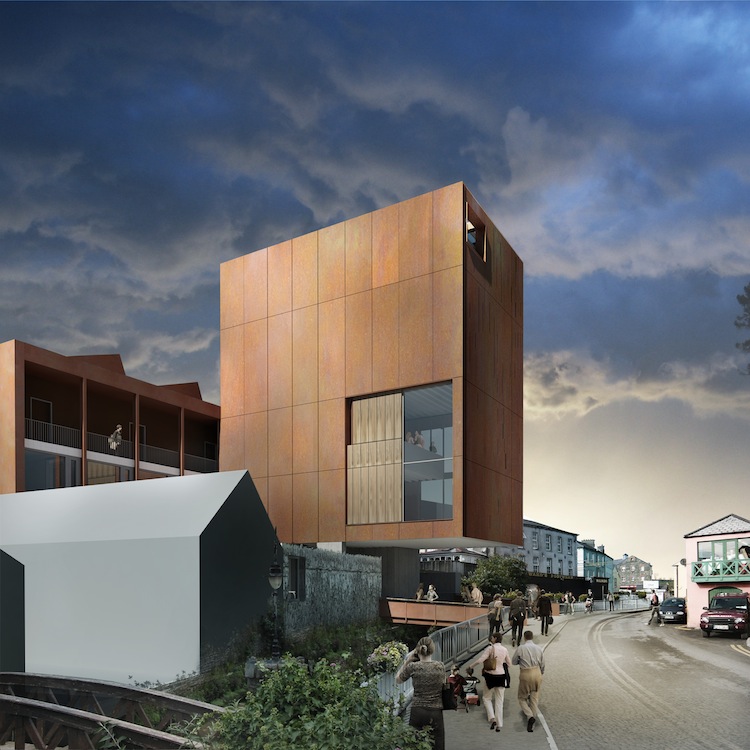
Competition Winner – Skibbereen’s new Arts Centre

The people of Skibbereen are very fortunate to have secured funding for a major arts building, especially in the present climate of austerity. The West Cork Arts Centre will house exhibition space and studio space for artists and social spaces for the community, including enhanced workshop, dance, performance and film club facilities providing a ‘centre for excellence’ in the visual arts at local, national and international levels. The building occupies the ghost of the earlier warehouse and is on five storeys, all fully accessible. Valuable extra space is cleverly gained by cantilevering a portion of the main block out over the Caol Stream. An international design competition was held for the design of the new centre, and this was won by Architects Donaghy and Dimond of Dublin. Visually the building is stunningly contemporary – and this works well in a small town with a diverse architectural language spanning many centuries. So often, new buildings are not allowed to be ‘of their time’ and resort to pastiches of older styles with the result that present day town centres can lack any dynamic character.

The building is being clad with a material known as ‘Corten‘. It’s actually rusted steel! It’s an attractive and durable finish which matures and stabilizes as time goes on. The appearance of a large rusty steel box in the centre of town is exciting some comment but – as always with anything new – judgement is best reserved until the project is completed. In my opinion it will add to the attractions of Dear Old Skibbereen and provide very welcome new facilities in the heart of this creative community. Well done Skibbereen!

Taking Shape - 21 May 2014

Taking Shape – 21 May 2014

Here’s an idea: several of the Newlyn School artists were Irish – or had Irish connections. Perhaps in West Cork we should put on an exhibition highlighting artistic links – old and new – between Cornwall and Ireland?

Wolfe’s Bakery – site of the new Arts Project

Cape Clear

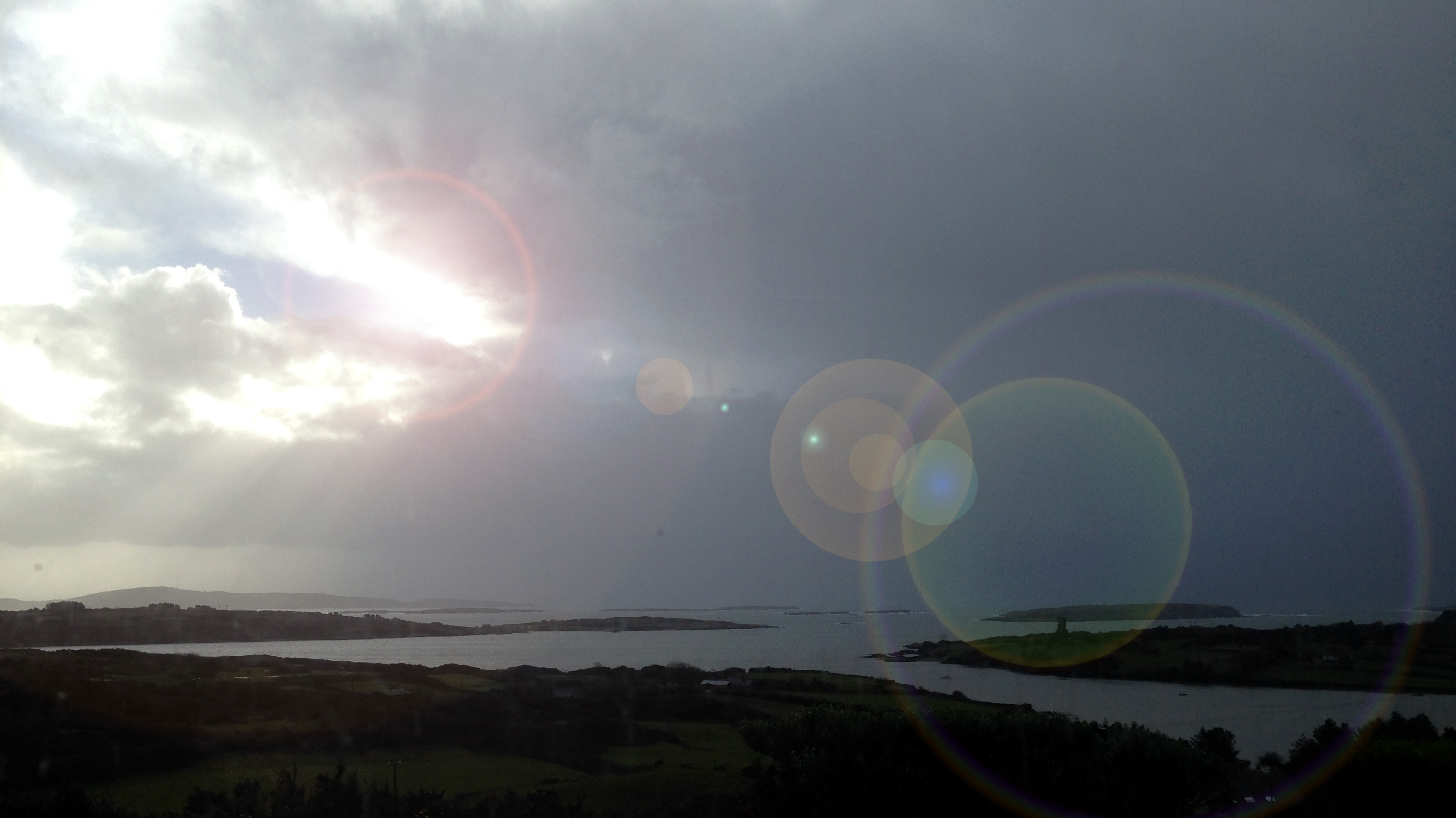
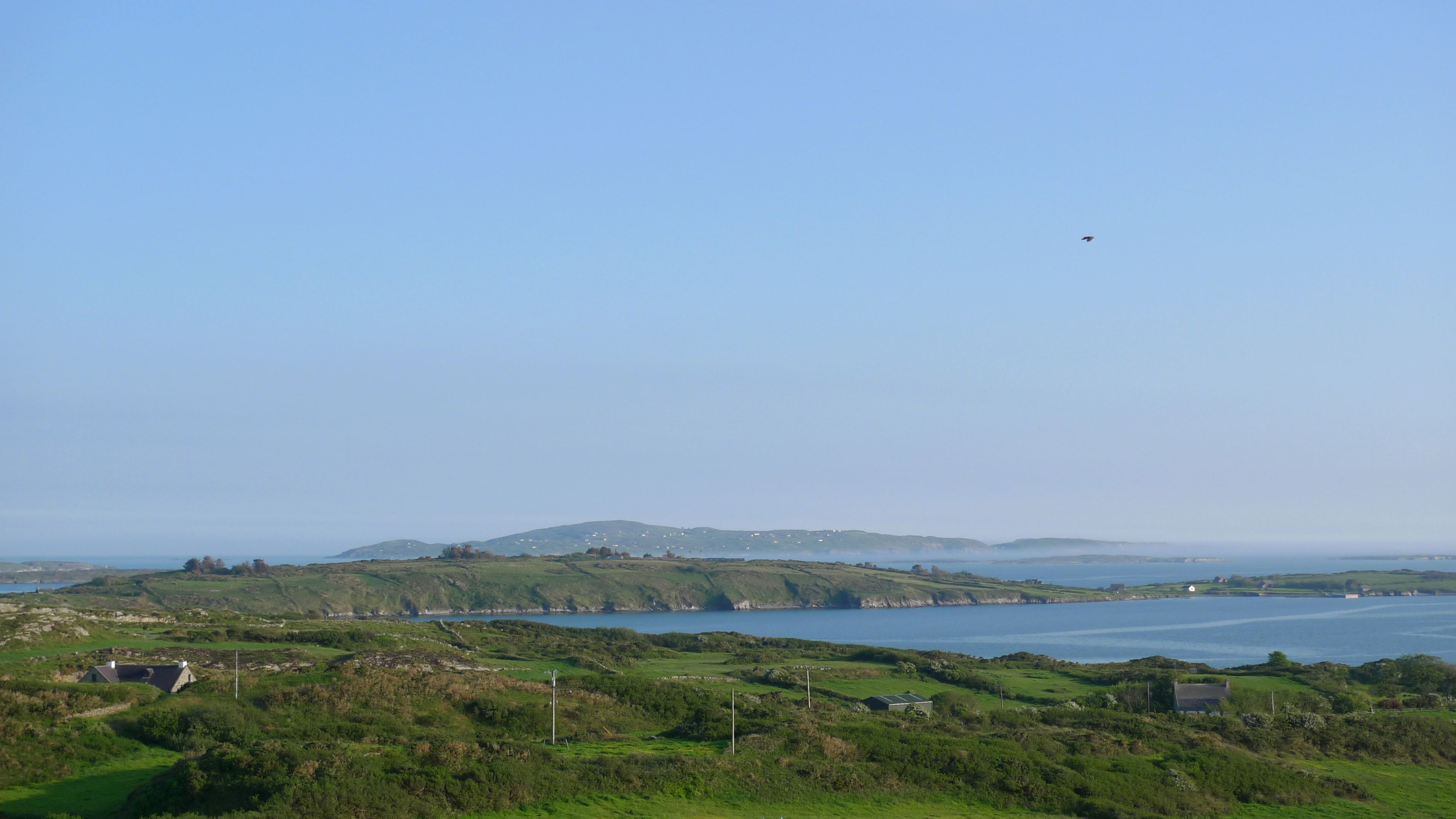
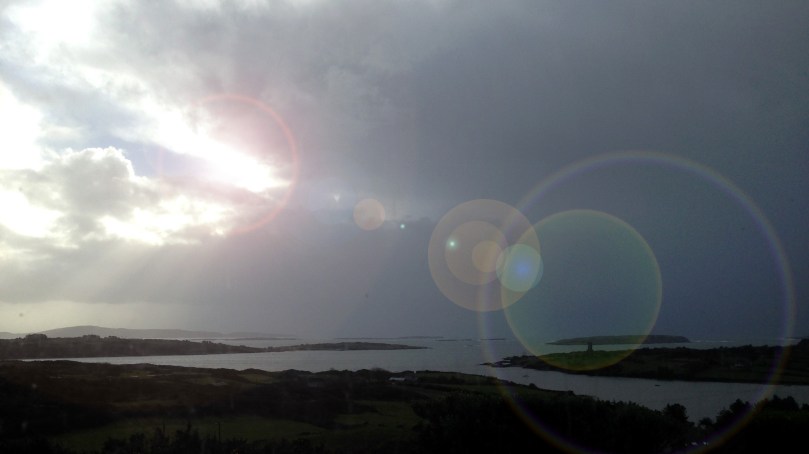
Distant Cape Clear - with solar effects

Distant Cape Clear – with solar effects

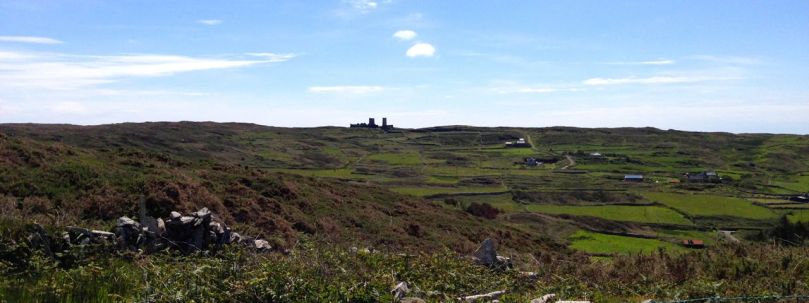
Always in our view from Nead an Iolair are the many islands of Roaringwater Bay: sometimes they are referred to as ‘Carbery’s Hundred Isles’. The largest of them – and the furthest out into the Atlantic – is Cape Clear. From our vantage point in Cappaghglass it sometimes floats on the horizon like a great seal under brooding skies, yet with the clarity of summer skies every hillside cottage can shine like a white jewel. I visited the island for the first time last weekend, drawn to its isolation and history – and by its own Saint – Ciarán, born on this most southerly point of Ireland and preceding Saint Patrick by some generations as the ‘Apostle of Eirinn’.
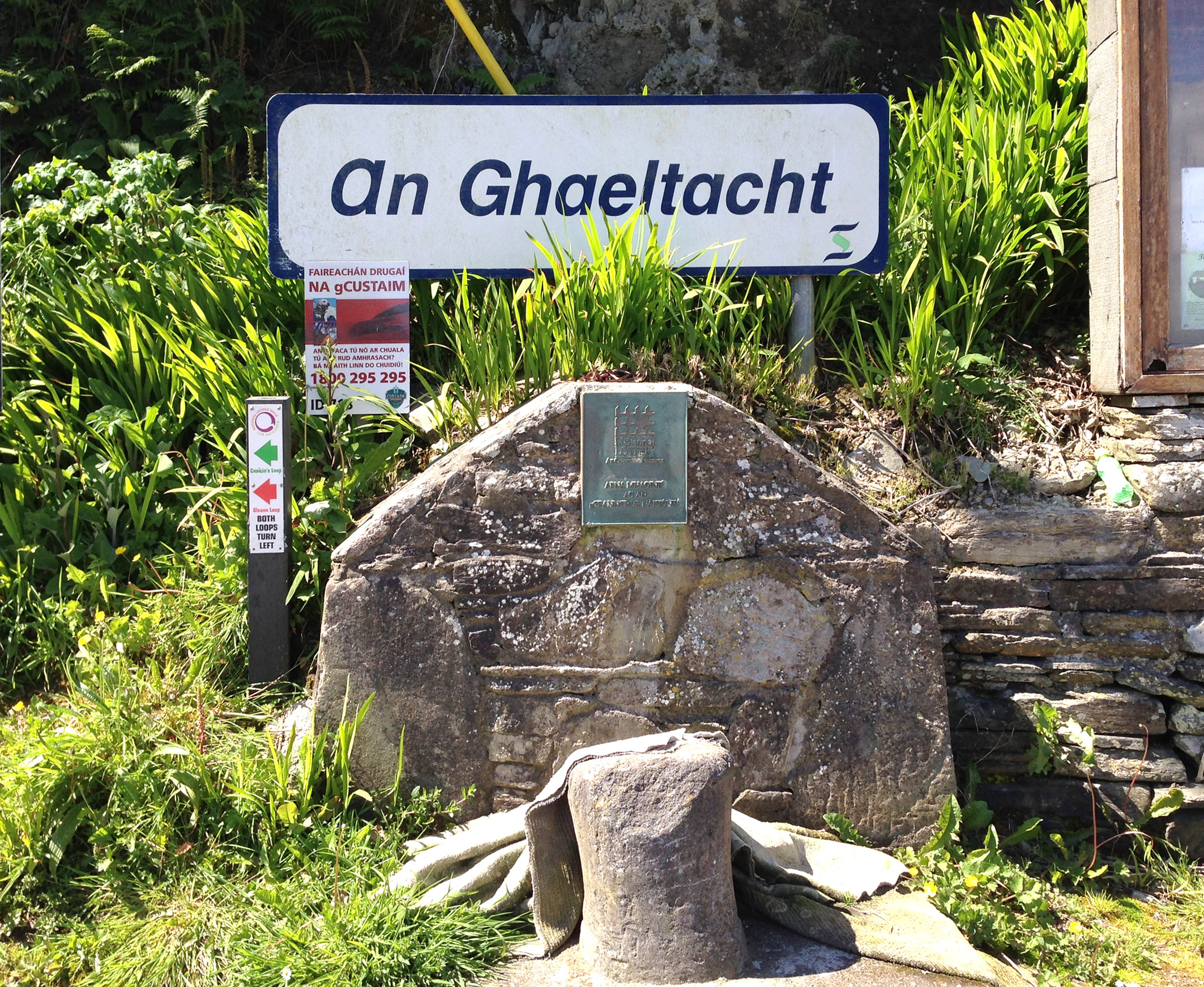
ghaeltact

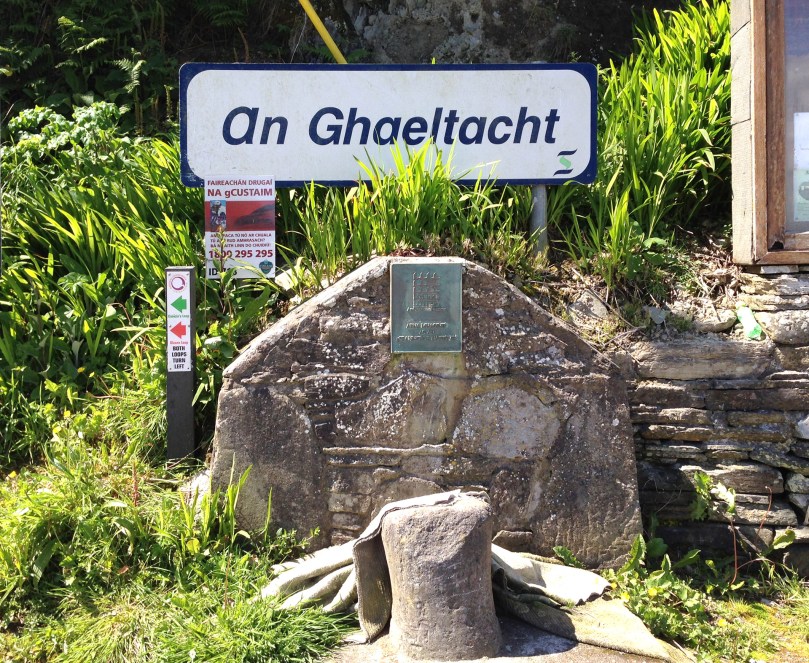
Cape Clear is a place apart. It is one of the Irish Gaeltacht areas – where Irish Gaelic is spoken as the first language. Oileán Chléire is the Island of Ciarán, and one of the first things to be seen after landing is an ancient stone by the quay – said to have been placed there by the Saint himself – and his holy well – while nearby are the ruins of an ancient church and burial ground.

Saint Ciarán’s life has inspired some colourful stories. Before he was conceived Ciarán’s mother (Liadán) had a dream that a star fell into her mouth. She related this dream to the tribal elders who were knowledgeable of such things, and they told her that she would bear a son whose fame and virtues would be known as far as the world’s end. Ciarán’s first disciples included a Boar, a Fox, a Brock and a Wolf: they all became monks and worked together to build the community.
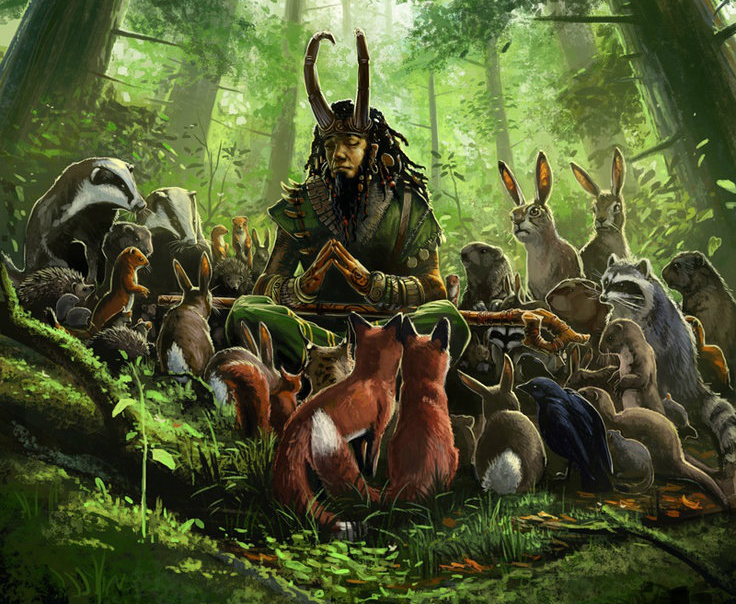
An interesting find: Ciarán as a Celtic God by Astrella

An interesting find: Ciarán as a Celtic god by Astrella
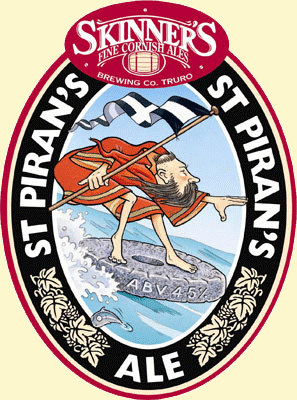
An unusual incarnation of the St Ciaran / Piran legend!

An unusual incarnation of the St Ciaran / Piran legend!

The Saint is also recognised in Cornwall, where he is known as Piran (or Perran) – scholars argue that in some ‘Celtic’ languages the C sound is interchangeable with the P sound. Certainly there is a legend that the Heathen Irish tied St Ciarán to a millstone and dropped him into the sea – and he then floated across to Cornwall where he converted the Heathen Cornish. Whatever the basis of this, both Piran and Ciarán share the same Saints Day: March 5th – which is also my birthday – so that puts me firmly into the picture!

Writers in the past have commented on the island’s particular character:

“…The natives of Cape Clear are distinct in a great measure from the inhabitants of the mainland; they have remained from time immemorial as a separate colony, always intermarrying amongst themselves; so that we must regard them as amongst the most typical specimens at the present day of the old Milesian race. The name of nearly all the islanders is O`Driscoll or Cadogan, the later being only a sobriquet for the former. Baltimore and Cape were originally the stronghold of this family, the principal Chieftain, O`Driscoll Mór, residing in Baltimore. There can be no doubt that they were the aboriginal race residing along the sea-coast of Carbery. The isolated position of the island and its difficulty of approach, have kept the population in a comparatively antique state and distinct condition during the lapse of centuries, so far as nationality and descent. Until the year 1710 Cape was an established monarchy, and an O`Driscoll – the head of the clan- was always styled, “King of the Island”. They had a code of laws handed down from father to son. The general punishment was by fine, unless some grave offence was committed, and then the delinquent was banished forever to the mainland, which was looked upon as a sentence worse than death…’ (from Sketches in Carbery by Daniel Donovan,1876)
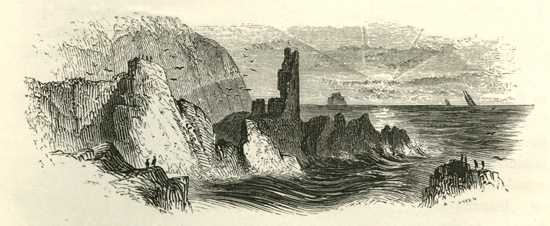
Dunanore – engraving by W Willes 1843

Our visit was organised by the Skibbereen and District Historical Society, and was masterminded by past Chairman Brendan McCarthy. He had arranged for the sun to be shining all day, and for the sea to be the calmest that anyone had known for years. A bonus was the presence of Dr Éamon Lankford – a knowledgeable and erudite local historian and toponymist whose projects have included setting up detailed place name archives for Cork County, Kerry, and Cork City. There are now over 200 large volumes of historic place name references and the work is still under way: examples from the city survey include Black Ash, Cáit Shea’s Lane, Murphy’s Farm, the Snotty Bridge, The Shaky Bridge, the Boggy Road, Tinker’s Cross, Skiddy’s home… Éamons unbounded energy has not stopped there – he has gone on to set up and run the Cape Clear Island Museum and Archive and written books on the Island’s people and landscape, on Saint Ciarán, on the Fastnet Rock, on Cape Clear place names- and has set up the Cape Clear Trail… Phew! We walked up the (very) steep hill to the Museum, which is housed in the restored old school building, and no-one could fail to be impressed by the sheer volume of information and artefacts it contains. Volunteers are needed to help run it through the summer months, so anyone fancying a bit of island life please make contact through the website. On our ferry trip from Baltimore and in the Museum Éamon kept us entertained and educated with stories, history and local lore.

I was keen to visit the Museum because I knew it housed a replica of the passage grave art (carved stone) found on Cape Clear and now believed to have once been part of a passage tomb on the highest point of the island – Cill Leire Forabhain. In 1880 the original stone was turned up in a field and taken across to Sherkin by the then curate of that island to ornament his garden. He left Sherkin only a year later, and the stone became overgrown and forgotten. It was rediscovered in 1945 and given to the Cork Public Museum where it is now on display. The carvings on this stone are in the style of the other spectacular decorated stones in the Boyne Valley and at Loughcrew, rather than the simpler Rock Art we are working on in West Cork and Kerry (although this ‘simplicity’ is belied somewhat by the recent discovery at Derreennaclogh). Beside the replica stone in the Museum is a smaller piece of Rock Art, although debatably labelled as being caused by ‘solution pits’.
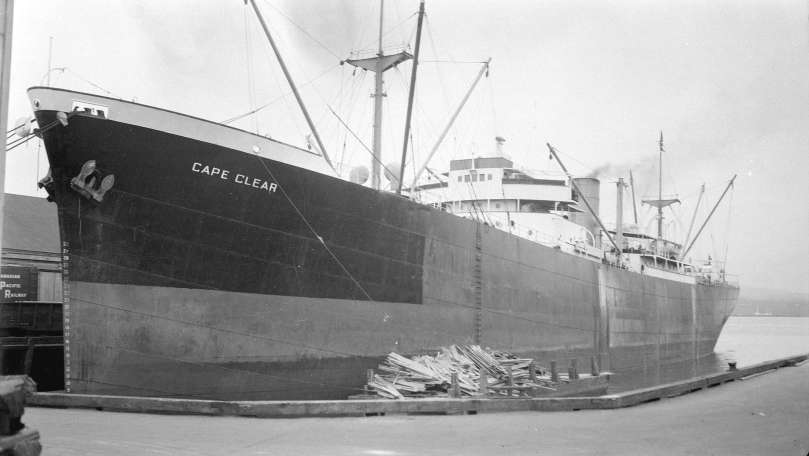
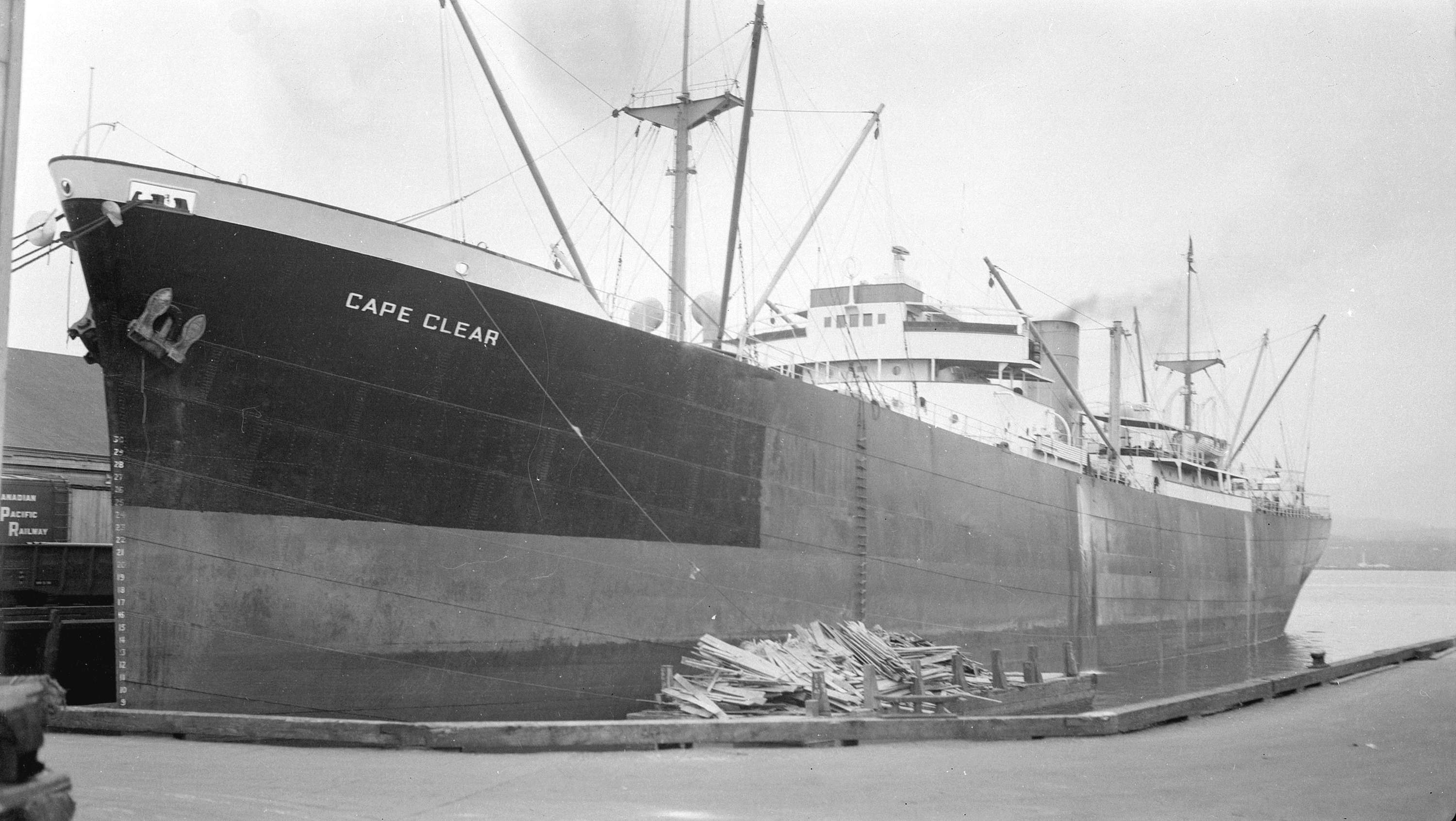
MV Cape Clear - built in Glasgow in 1939; went down in the Red Sea 1944

MV Cape Clear docked in Vancouver – built in Glasgow in 1939; went down in the Red Sea 1944

There is so much more to say about Cape Clear: it has given its name to a settlement in Victoria, Australia, supposedly named by gold miners from Ireland, and also to a number of ships built in Scotland. Talking of ships, the surroundings of the island have seen many a shipwreck: more than 50 wrecks have been recorded off Cape Clear between 1379 and 1944. This is partly because of the proximity to the notorious Fastnet Rock. FASTNET
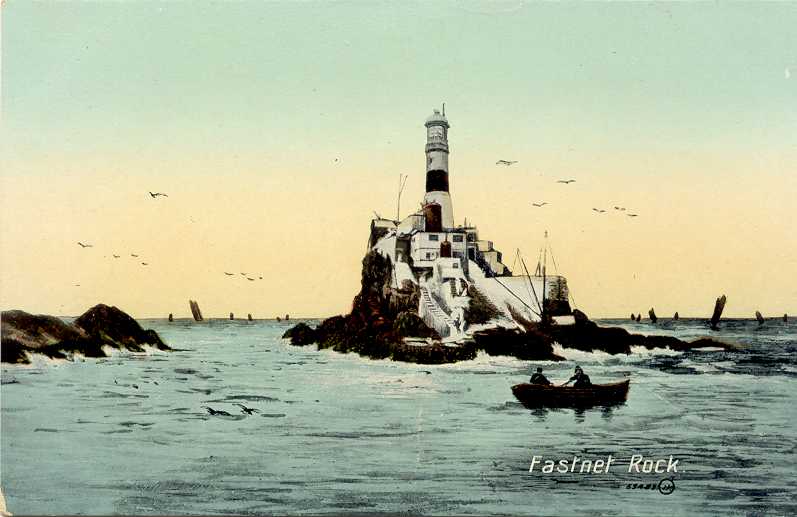
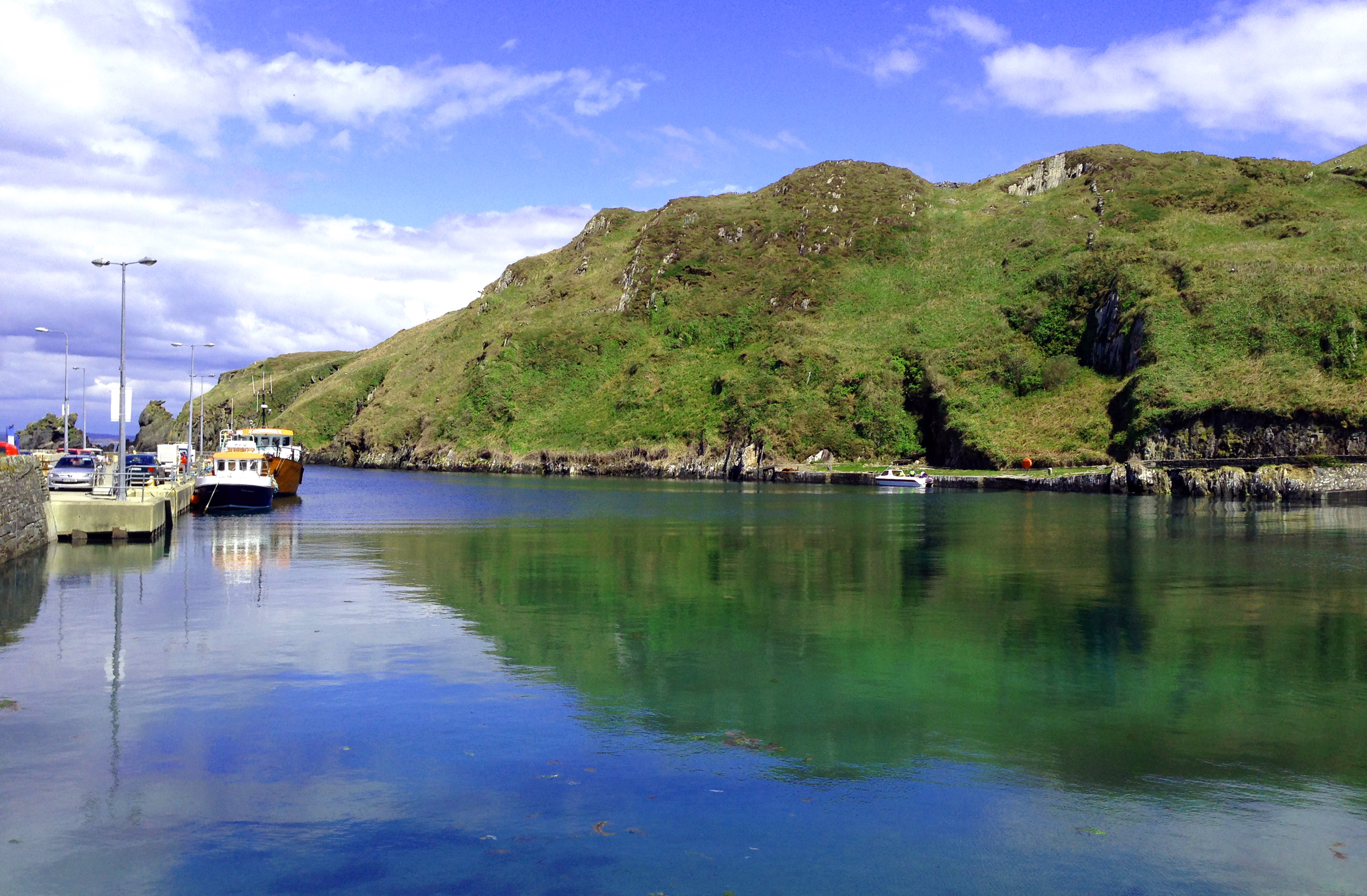
We have to revisit Cape Clear again in the not too distant future, when we can devote more time to a full exploration of the island: it comprises 7 sq kilometres and 16 townlands. This time, however, it was down to the harbour for an excellent lunch before embarking on the ferry for the next stage of the trip to…. But that story must wait until another time!
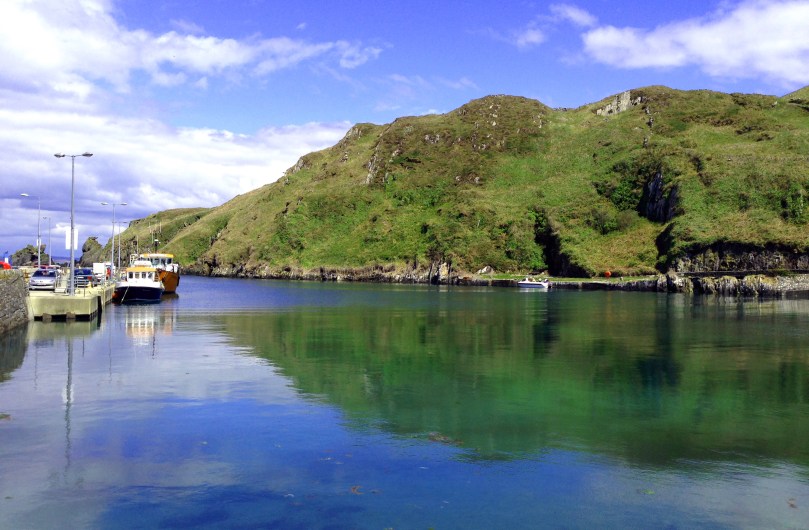
harbour

For me, small island communities have a very particular feel: it’s not just the silence and closeness to nature, but a real awareness of how fragile, yet tenacious, the tenets of human existence / subsistence can be. As I write this, Cape Clear is romantically shrouded in mist out there over the bay: only the highest ridge, the cairn, the watchtower and the old lighthouse visible in grey silhouette. It’s a place that will pull us back across the water very soon.
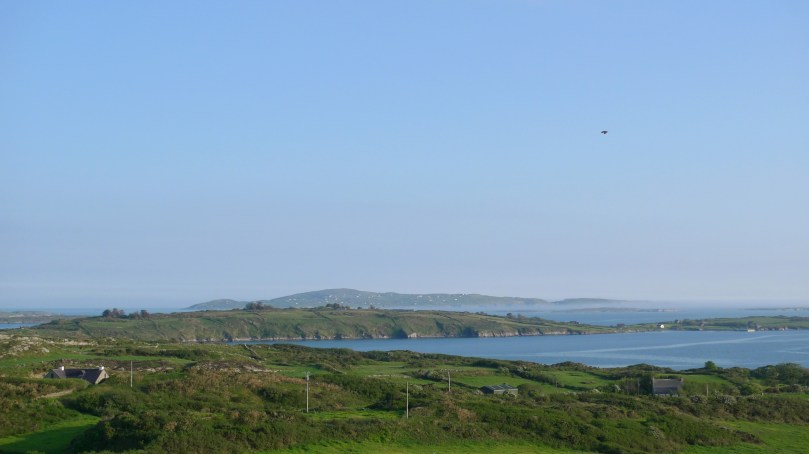
today

Today’s view of the Cape from Nead an Iolair

The Fastnet Short Film Festival

Our Village is Our Screen Schull has been getting ready for this Festival for months. Everyone we know seemed to be volunteering or involved or just, like us, planning to cram in as many films and events as they could. The town was freshly painted (yes – the whole town! Well, it seemed that way), banners and streamers flapped gaily along the main street, and cinemas popped up everywhere. The church hall became The Adelphi, Hackett’s Bar became The Carleton and Grove House turned into The Palace. You see – Schull doesn’t have an actual cinema!

But lack of facilities has never stopped a West Cork town intent on hosting a world-class festival. They have come up with the most ingenious method of screening and watching that you can imagine. For the duration of the Festival, the films are hosted on a server and the whole village becomes an intranet. While the main programme runs at the Adelphi, all the pubs, cafes, shops and premises on the intranet have large screens where you can watch the movies. Some are playing the ones on the programme, and others are hosting re-runs so you can catch up on what you’ve missed. You can sit with a coffee and a scone, or a pint and a sandwich and watch whatever’s on screen. You can drop in and out, all for free. But there’s more: you can bring your own device – computer, tablet, phone – and log into the intranet and watch on a park bench, or sitting in your car, or while shopping, if you want. The marvellous Whyte Books hosted a story telling session, and The Blue House Gallery got in a load of bean bags so you could lie on your back and watch movies on the ceiling.

Robert, Chris O'Dell (Festival Artistic Director) and young Austrailian filmmaker Jake Zappia

At the Opening Reception: Robert, Chris O’Dell (Festival Artistic Director) and young Austrailian film maker Jake Zappia

The opening party was at Grove House – the sun shone, much Corona was downed (the generous Festival sponsor), and then it was off to The Adelphi for The Lord’s Burning Rain, filmed in West Cork and based on the Aeneid – a coming of age story with echoes of Ireland’s War of Independence, the effects of which still resonate in this area. This was followed by a Q and A with the filmmaker, Maurice O’Callaghan, hosted by the excellent John Kelleher. With our Canadian visitors in tow (Alex and Mavis, enjoying it all hugely) we took in some shorts the next day in Newman’s restaurant and that night attended the second featured film, Living in a Coded Land. The Q and A session afterwards was enjoyable and stimulating – the director, Pat Collins, expounded on his vision and his influences, and the host, Aidan Stanley, drew him out with thoughtful questions and directed traffic as audience members got into the conversation.
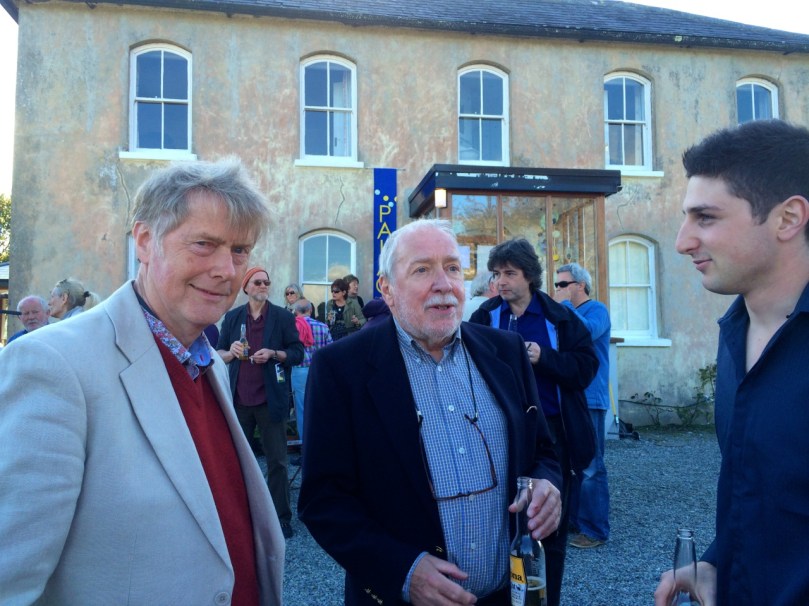
Our most unusual experience of the festival came on Saturday. We took the ferry to Long Island and watched movies in the bedroom of a beautiful island house courtesy of the owners, Maurice and Helen. Long Island has a year round population of under ten people. A local film maker, Helen Selka, has made it her focus. Although we didn’t get to see her longer piece, Bleak Paradise, we watched a shorter one called The Polling Station. In the film, nothing much happens beyond a handful of people coming to a cottage to cast their ballots in a referendum – and yet it was funny, charming and poignant. We also watched one of the eventual Festival winners – a closely observed tragicomedy called Breakfast Wine. The set finished with a gut-wrenching, wonderfully conceived and acted piece called Stolen. I was glad I brought along kleenex for this one. 

There were celebrities to meet (David Puttnam, Steve Coogan and the team from Philomena, Stephen Frears), events for children, lots of technical sessions for the hoards of young filmmakers invading Schull for the festival, and forums and clinics on all kinds of topics. But mostly there were the films – in turn quiet, ambitious, animated, provocative, amusing, youthful-but-showing-potential, soulful, well-written, cleverly directed, beautifully shot. They left us marvelling that powerful stories with fully realised characters can be told in a few precious minutes.

Superlatives fail me – especially when I think that this was all accomplished by a dedicated group of volunteers! Well done indeed Schull and the Fastnet Short Film Festival Team!

Ballymaloe

Ballymaoe House

Ballymaoe House

Even before I left Ireland in 1974, Ballymaloe (pronounced Ballymaloo) had a reputation. That reputation has only grown since. A family-run enterprise, it is known for great hospitality, delicious food, championing of Irish produce, and turning out a generation of Irish chefs. “Ballymaloe-trained” is synonymous in Ireland with “Great Cook.” 

Happy Ballymaloe pigs

Happy Ballymaloe pigs

To celebrate the second anniversary of the day we got engaged, Robert and I treated ourselves to an overnighter at Ballymaloe House earlier this week. It’s about half an hour from Cork, in the rich farmland of Ballycotton Bay. We stopped off in Cloyne first – see Robert’s post – and arrived in time for a late lunch served in the conservatory. 

Having checked in to our large and comfortable room with its own little outdoor terrace, we spent the rest of the afternoon exploring the grounds, winding our way through bluebell-lined paths and along a stream edged with yellow irises and overhung by weeping willows. We dropped into the Ballymaloe shop too, a treasure trove of kitchen equipment and tasty goodies. 

Racel Allen's Everyday Kitchen

Rachel Allen’s Everyday Kitchen

Before dinner we read more about the Ballymaloe story. Myrtle and Ivan Allan started a restaurant in the 60’s to highlight the best of Irish country house cooking, using fresh produce from their own farm, fish from nearby Ballycotton Bay and meat from local butchers. Their children and their families joined in and over the years the hotel developed and a cookery school flourished. Many other businesses emerged – a brand of relishes and preserves; cook books, cooking columns and TV cooking series; the shop and cafes; an entertainment and exhibition space; eco-tourism. The newest enterprise is an annual LitFest which centres on writing about, talking about and demonstrating cooking – and lots of eating the cooking too! We arrived the day after it ended and the place was still buzzing from the energy of it all.

Coffee in the drawing room after a magnificent dinner

Coffee in the drawing room after a magnificent dinner

Dinner was, simply, delicious! It is a 5 course set menu, with choices at each stage. But this is not mannered food – nothing had been forced through a sieve and nothing was decorated with parsnip crisps. The emphasis was on fresh food expertly prepared and on letting the taste speak for itself without overloading it with spices or fiddly bits. My main course was lamb and it was served with turnip, cabbage and new potatoes. Hardly a Master Chef plate – but the lamb melted in the mouth and the vegetables were flavourful and satisfying. Soup, fish course, main, cheese and dessert – with our waitress asking if we wanted a second helping, or anything else, or anything different…well, we waddled out eventually to enjoy coffee (and petit fours for goodness sake) in the drawing room and to reflect on how spoiled we felt to be staying, and eating, in this remarkable place.

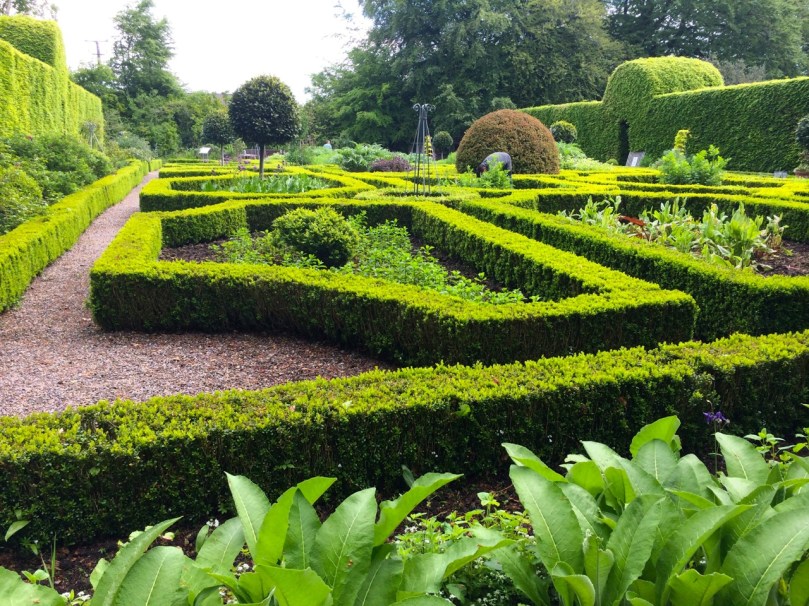
One of the many gardens at the cooking school

One of the many gardens at the cooking school

Next morning, after an equally scrumptious breakfast, we drove over to the cooking school and toured the gardens – there are several different kinds – the second shop, the shell house, the greenhouses, and the only henhouse in Ireland lit by a chandelier. We had to tear ourselves away finally to head back to West Cork, but vowing we would be back again to sample the delights of Ballymaloe.

The henhouse with the chandelier

‘Palais des Poulets’ – with chandelier!