Uisce Beatha

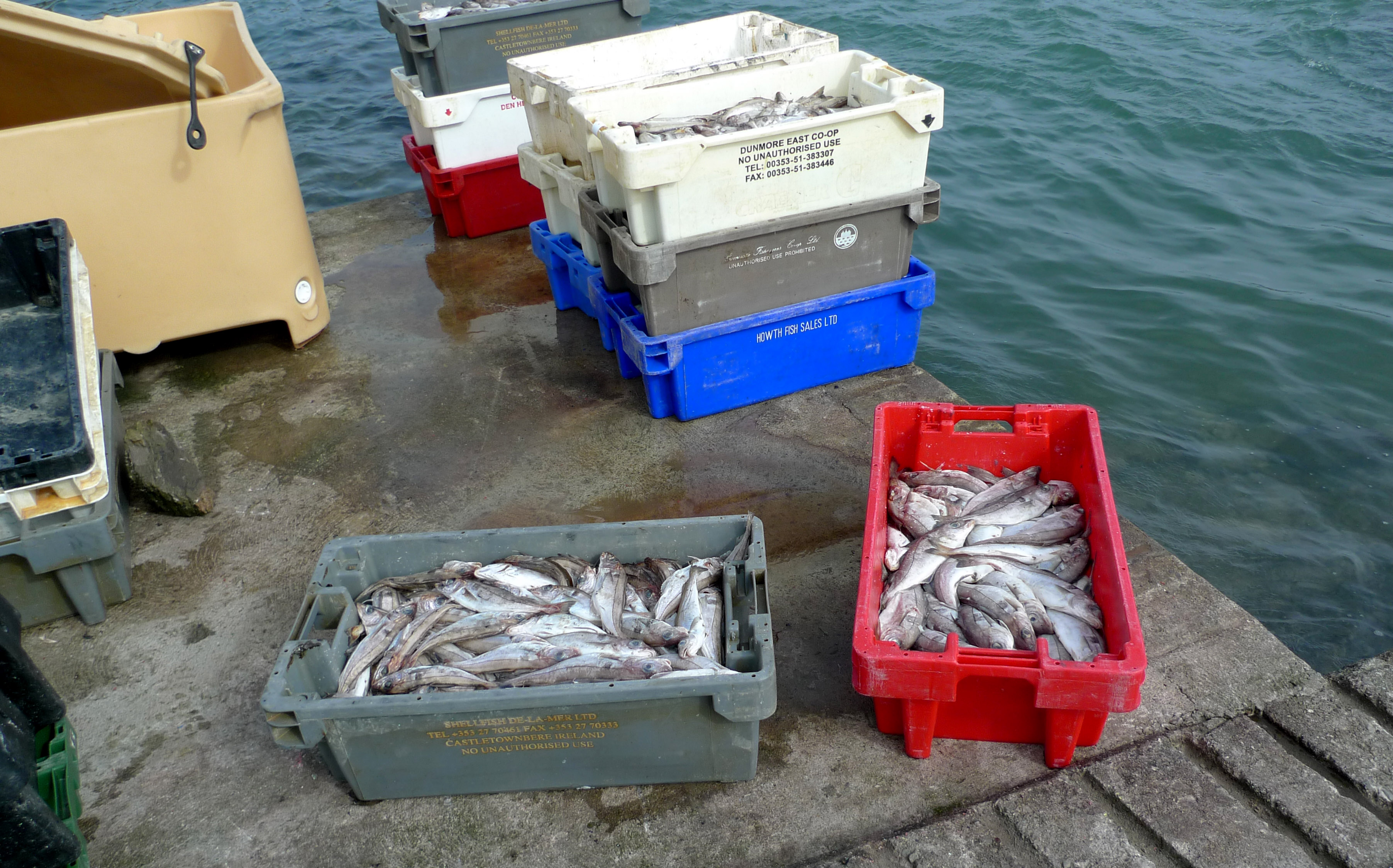
fishy

Ireland is an island – a fairly small one. There’s a lot of water surrounding it (3,500 miles of coastline) and coming out of the sky. This abundance of water has shaped the natural landscape and coloured it emerald green. Not surprisingly, traditional life, history, culture and folklore in this country are imbued with watery references.
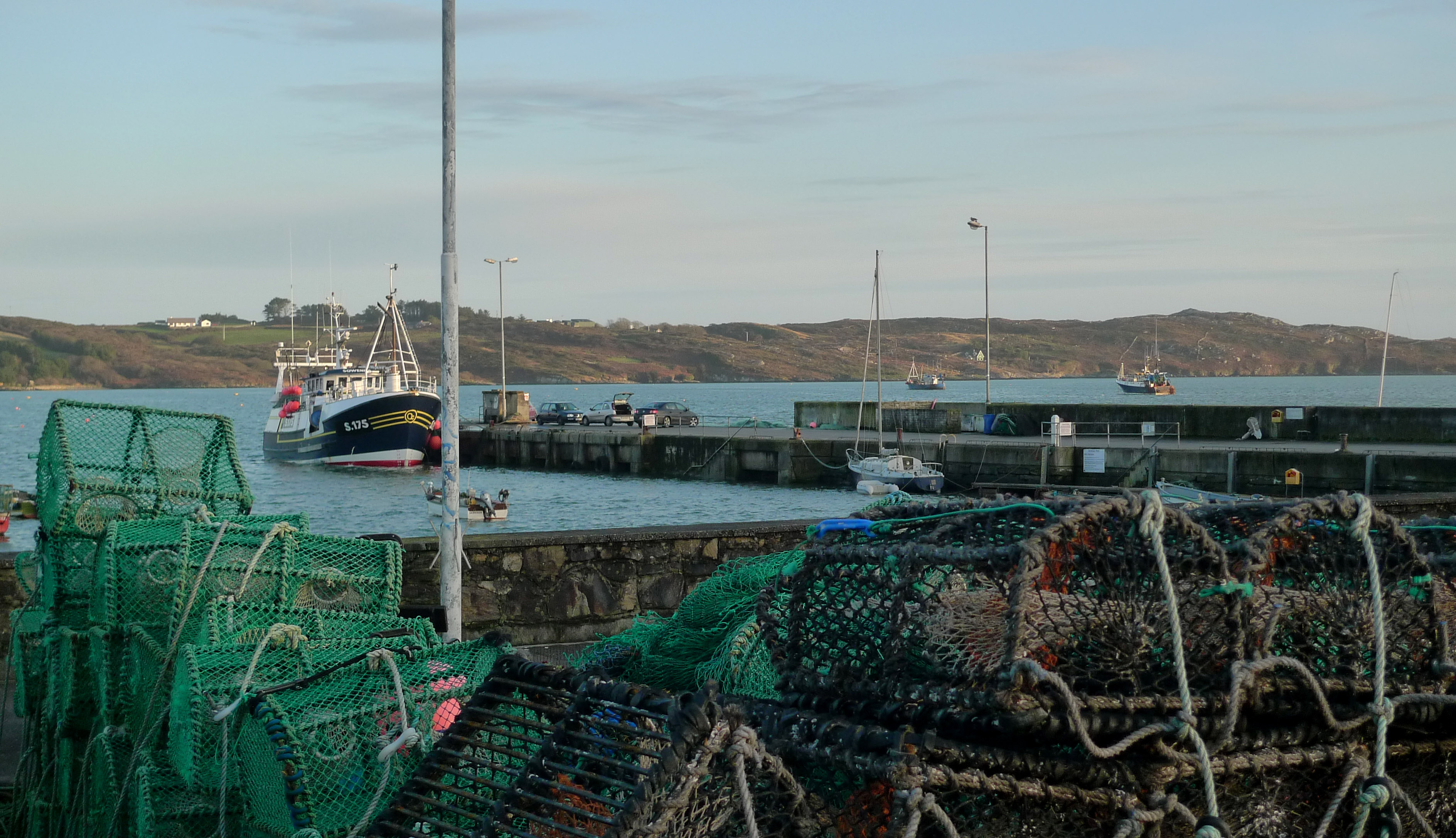
Schull Pier

Schull Pier

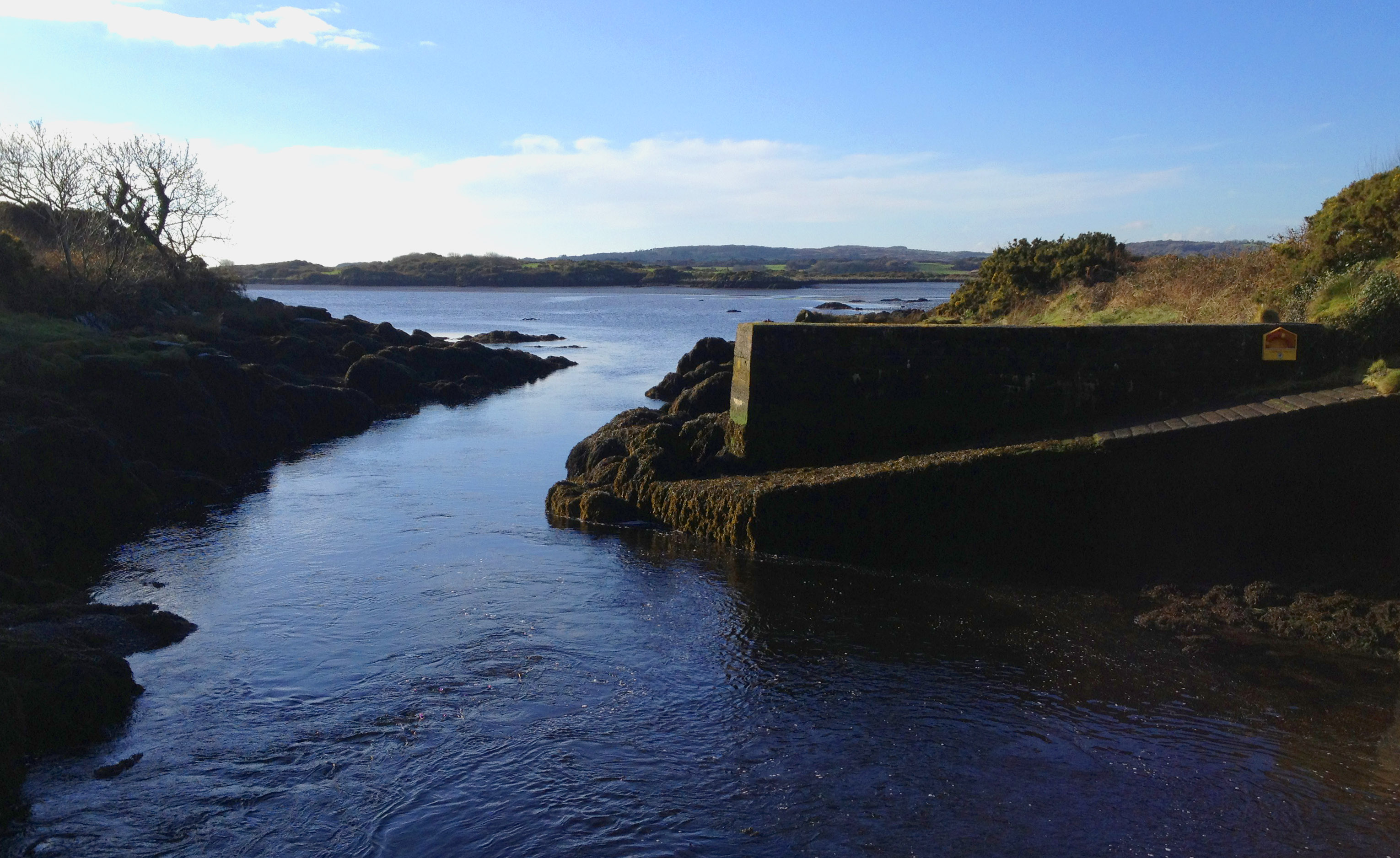
Down here in West Cork you are never more than a mile or two from the sea: it has historically provided defence, sustenance, isolation and wealth. When the O’Mahony and O’Driscoll clans ruled here in the fifteenth and sixteenth centuries it was recorded that more than 500 large fishing boats from France, Spain, and Portugal were constantly harvesting the fish shoals off the Mizen. Each chieftain’s income from the foreign ships surpassed £1,000 annually by way of fishing rights, harbour dues and protection money (that’s about 3,000 cows in trading terms in those days). Today you can still see evidence that the bays, inlets and islands have long provided income and a means of transport to the local communities: there are small piers everywhere. There’s an ancient one – ruined but still visible – just below us at Ard Glas, and an hour’s walk along the water would take in half a dozen others mostly still maintained in good order and regularly used.
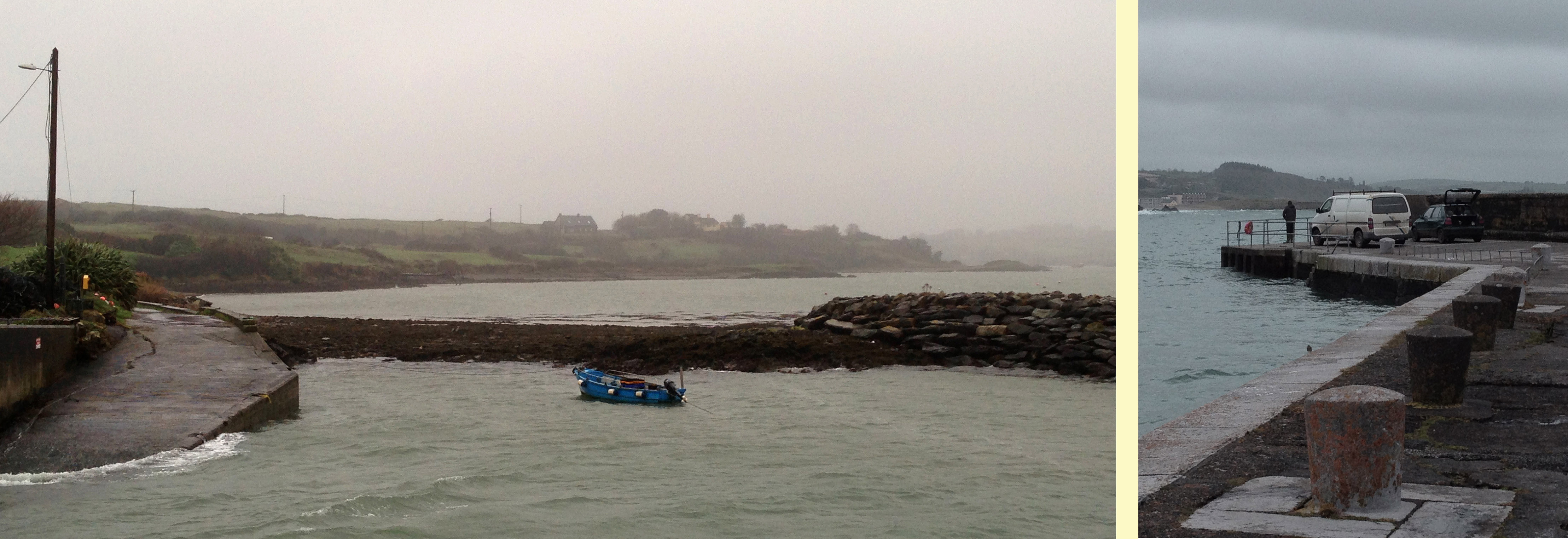
cunnamore-roscarberry

Piers at Cunnamore and Roscarberry

When we go up to the market in Bantry on a Friday morning to get our own fish fresh from the local quays we pass by the statue of St Brendan the Navigator. In the sixth century Brendan set out with forty other monks in a little boat to find the Island of Paradise; instead, they discovered America, returning after seven years to tell of their many adventures with sea monsters, miraculous islands and sirens. In the 1970s Tim Severin recreated Brendan’s twin masted boat using Irish ash and oak lashed together with two miles of leather thong and wrapped with 49 traditionally tanned ox hides sealed with wool grease. In this he sailed for a year via the Hebrides and Iceland to reach Newfoundland, thus proving that the legend could have been based on fact.
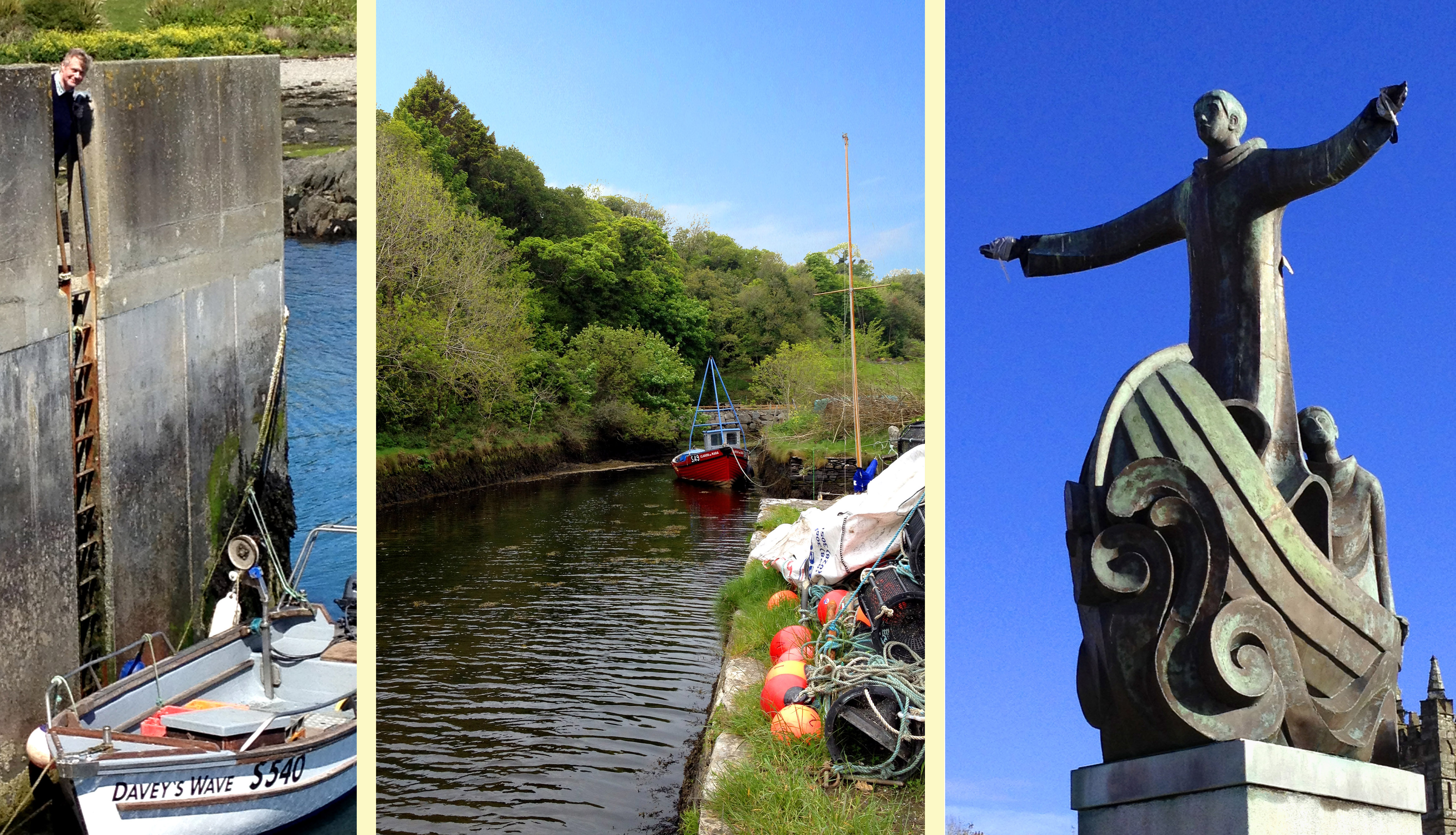
Colla Pier, Roaringwater Pier and St Brendan
Colla Pier, Roaringwater Pier and St Brendan

The 'lost' pier at Bealaclare

The ‘lost’ pier at Bealaclare

In 2010 two fishermen found a small canoe in the Boyne River. It’s reckoned to be 5,000 years old and may have carried stone for the building of the great passage tomb at Newgrange (that predates the Pyramids). That boat is only 3 metres long, but another canoe discovered in 1901 in Co Galway is even older and much bigger: 15 metres long, hollowed out from the trunk of a single oak tree that was over 2 metres in diameter: something that couldn’t be found in Ireland today. It probably had outriggers and could have been used to bring tin from Cornwall to mix with the locally mined copper, enabling the Bronze Age to take off. Fascinating.
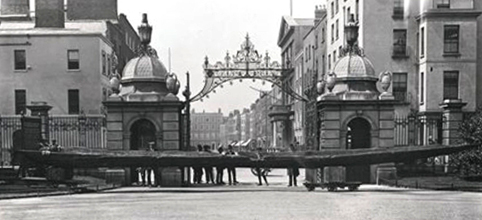
Bronze Age Canoe

Bronze Age Canoe

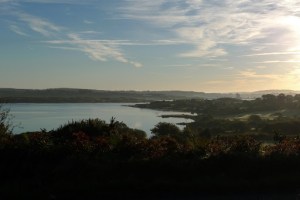
Every day we look out over the water, and on all our walks we have glorious views over the bays, the Celtic Sea and the Atlantic. That’s a constant in our lives that I don’t think we could ever do without.

Oh – by the way: Uisce Beatha (pronounced Ish-kah Baahaa) – that translates literally as Water of Life – and, in Ireland, also as ‘Whisky’.
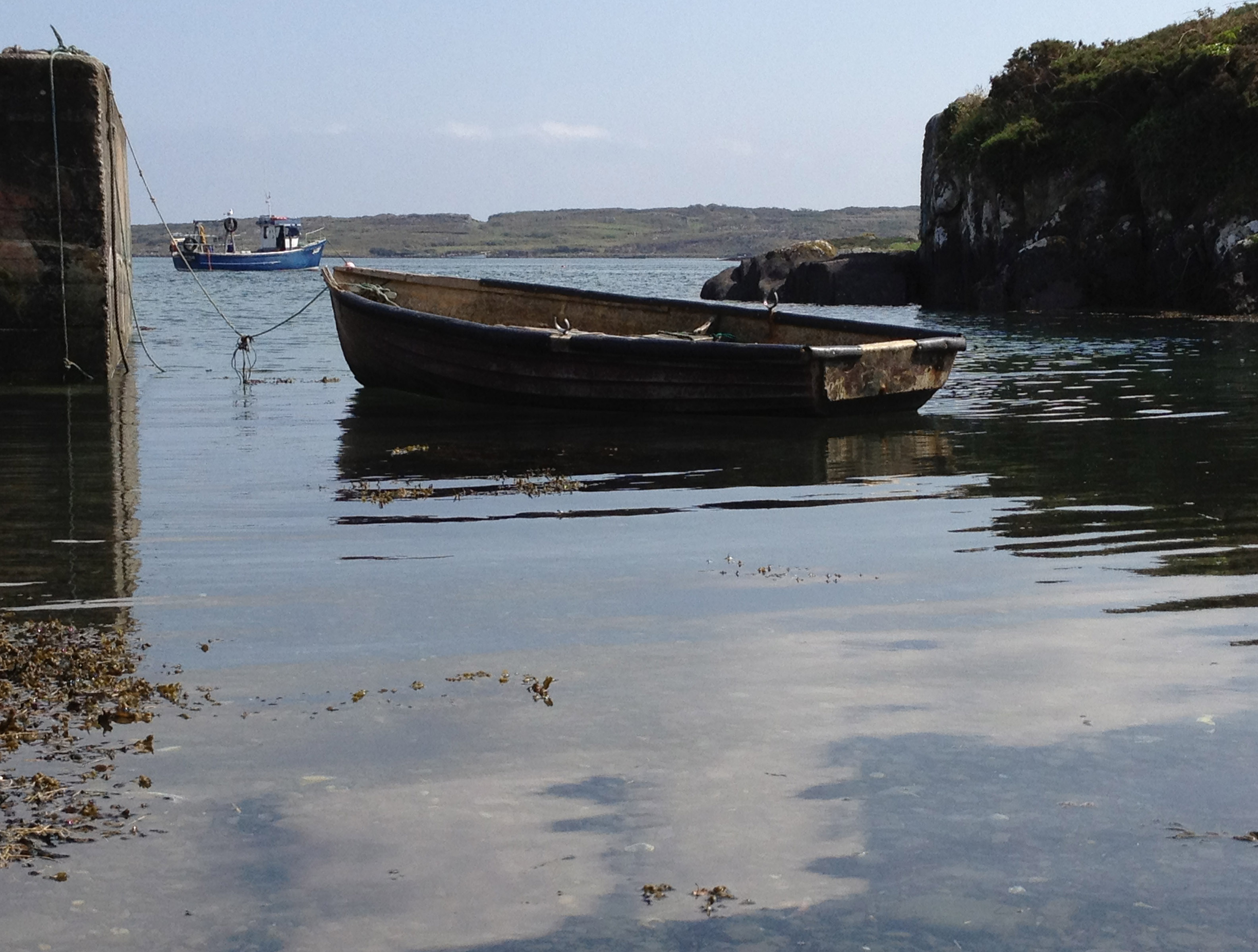
Turk Head Pier
Turk Head Pier

Hare Heaven

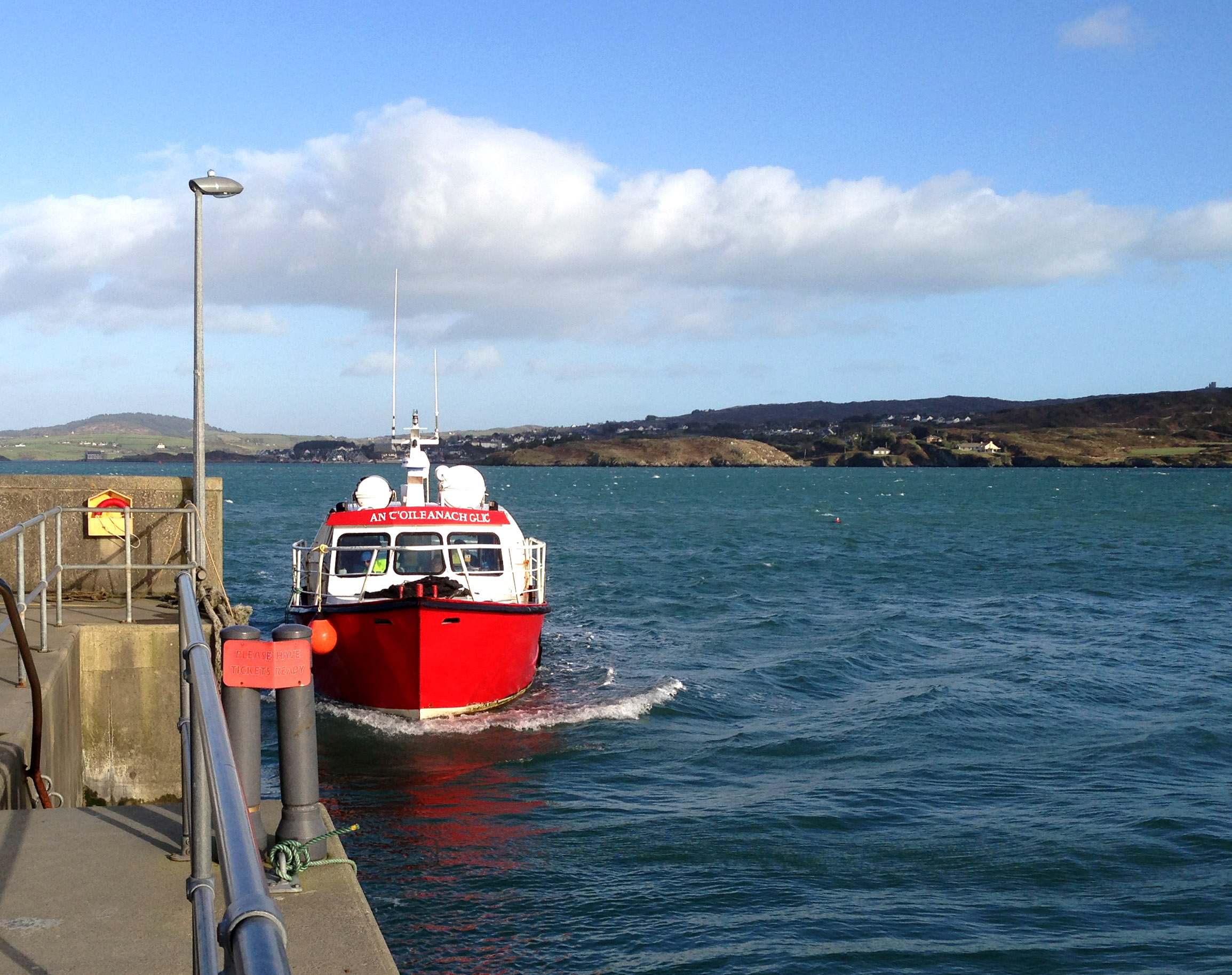
10 o'clock ferry from Baltimore to Sherkin

10 o’clock ferry from Baltimore to Sherkin

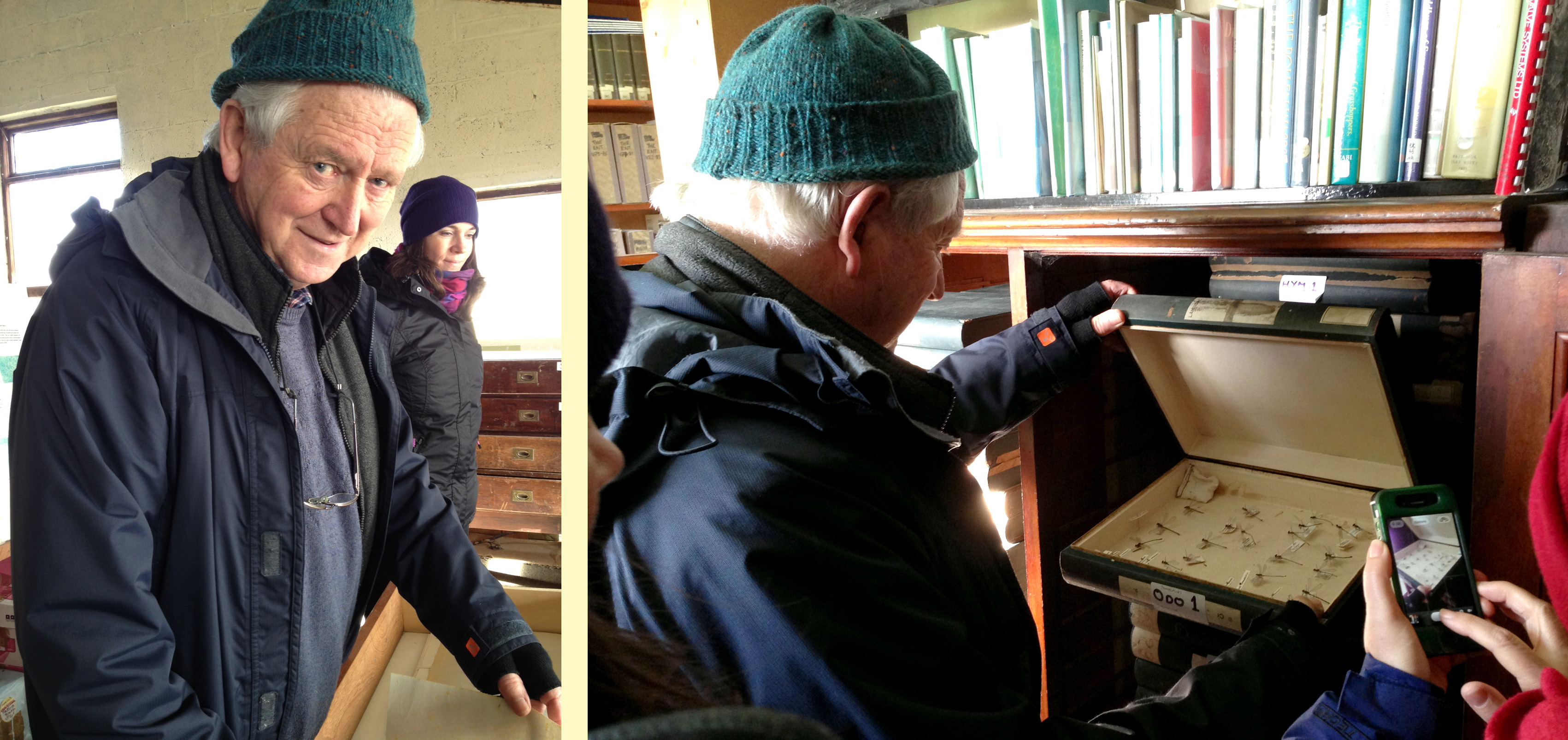
Imagine a place where Hares can live without any fear of human interference and hardly any natural predators – that’s the Calf Islands in Roaringwater Bay: Middle Calf, East Calf and West Calf. I gleaned that exciting and wonderful piece of information on a visit this week to the Sherkin Island Marine Station exhibition, in the Islander’s Rest Hotel on Sherkin. A friend of Finola had given us an introduction to the founder and manager of the Marine Station – Matt Murphy – and the very first conversation I had with him on that day was about Hares and Rabbits! Great quantities of the latter thrive on Cape Clear – the largest and most distant of these West Cork islands – but not on the others, while Hares have the privilege of the Calves all to themselves: no-one has lived there since the 1940s.

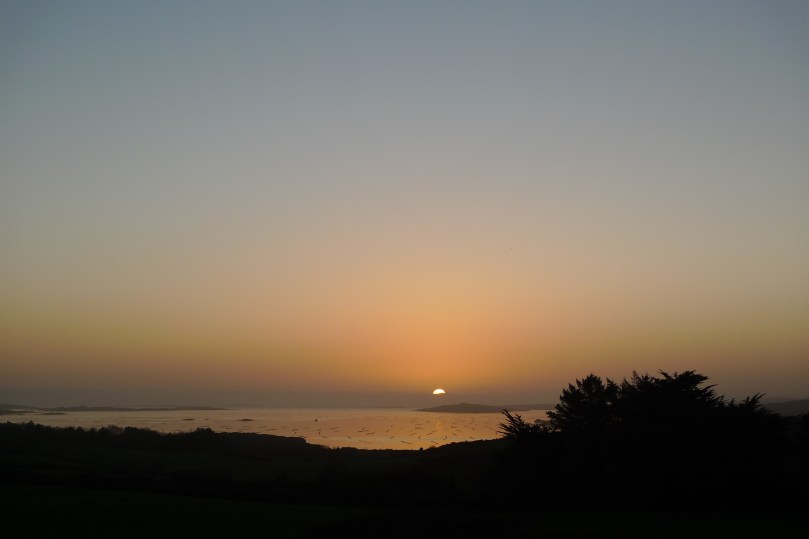
Dawn over Sherkin, seen from Ard Glas: Cape Clear is in the far distance

Dawn over Sherkin, seen from Ard Glas: Cape Clear is in the far distance

Their are 14 islands (or island groups) in the Bay [here is a good summary], and all have been inhabited at some time in history, but now only the larger ones – Clear, Sherkin, Castle, Horse, Hare and Long Island are occupied. The most populous is Cape Clear, around 120 people at the moment: it is part of the Gaeltacht – the areas in the Republic where spoken Irish predominates. We haven’t yet visited Clear but we intend to as it is a centre for the study of the Irish language and traditional culture. There is an internationally renowned storytelling festival on the island in September of every year.

Roaringwater Bay

Roaringwater Bay

Our trip to Sherkin started on the ten o’clock ferry from Baltimore, a short drive from Ard Glas. My daughter Phoebe has been visiting from Norway this week and we took her along for the ride. Matt brought us to his home for a wonderful lunch prepared with his daughter Susan (five of his seven children still live and work on the island), and he told us about the Marine Station, which is an internationally renowned centre for the study of the marine environment. Matt and his wife Eileen (who, sadly, passed away in 1979 at the age of 37) started the project in 1975 and it is now a unique education and research facility. Every year volunteer students come to the station from all over the world to take part in the continuous monitoring of marine life, weather, biology and environment in the Bay and to carry out specific surveys (examples: Rocky Shore Survey, Phytoplankton Survey, Zooplankton, Otters, Birds, Insects, Butterflies and Moths, Terrestial Flora and Seaweed). The Station houses a huge library of documents and samples – probably the largest such collection outside of any university in Europe. It publishes an environmental newspaper – the Sherkin Comment – and books, while also organising exhibitions, conferences and workshops.

Matt, Phoebe and some of the archives

Matt, Phoebe and some of the archives

At the age of 77 Matt remains fully active in running the Station, which has never received any state funding. We were impressed with his total commitment – and with his faith. In September 2000, on the occasion of the Station’s Silver Jubilee, a bronze plaque was unveiled:

God, the Creator of all life, has given us those most precious gifts – the sea and the land. Ponder a moment on those wonders, remembering you are their caretaker. Now ask yourself what you are doing to ensure their beauty remains for future generations to enjoy…

In return for our fascinating day spent in Matt’s company, we have agreed to contribute an article to his newspaper on Rock Art – there is none that we know of on the islands, but there is prehistory, history, nature and culture a-plenty!

Signs of the past on Sherkin

Signs of the past on Sherkin

Aviation

ardavia

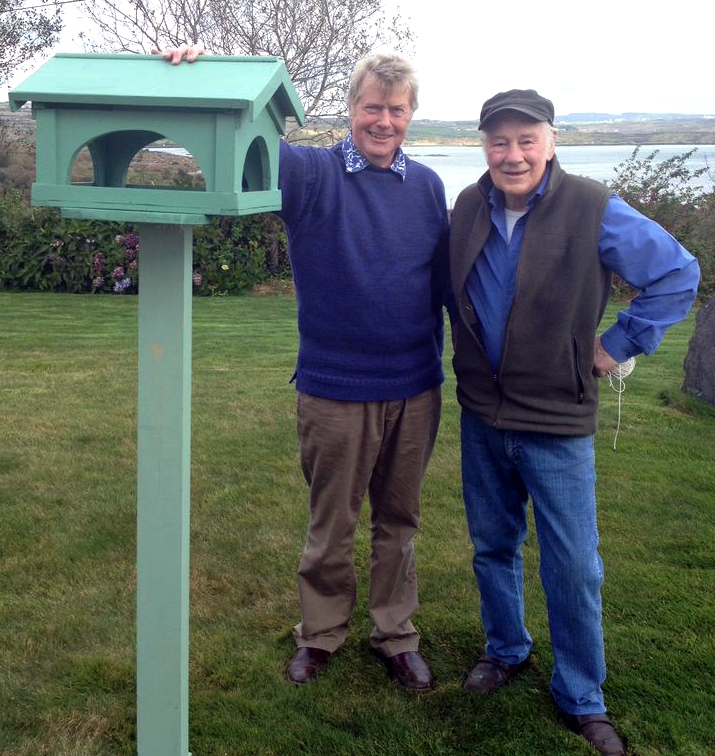
Author and Danny - with brand new table!

Author and Danny – with brand new table!

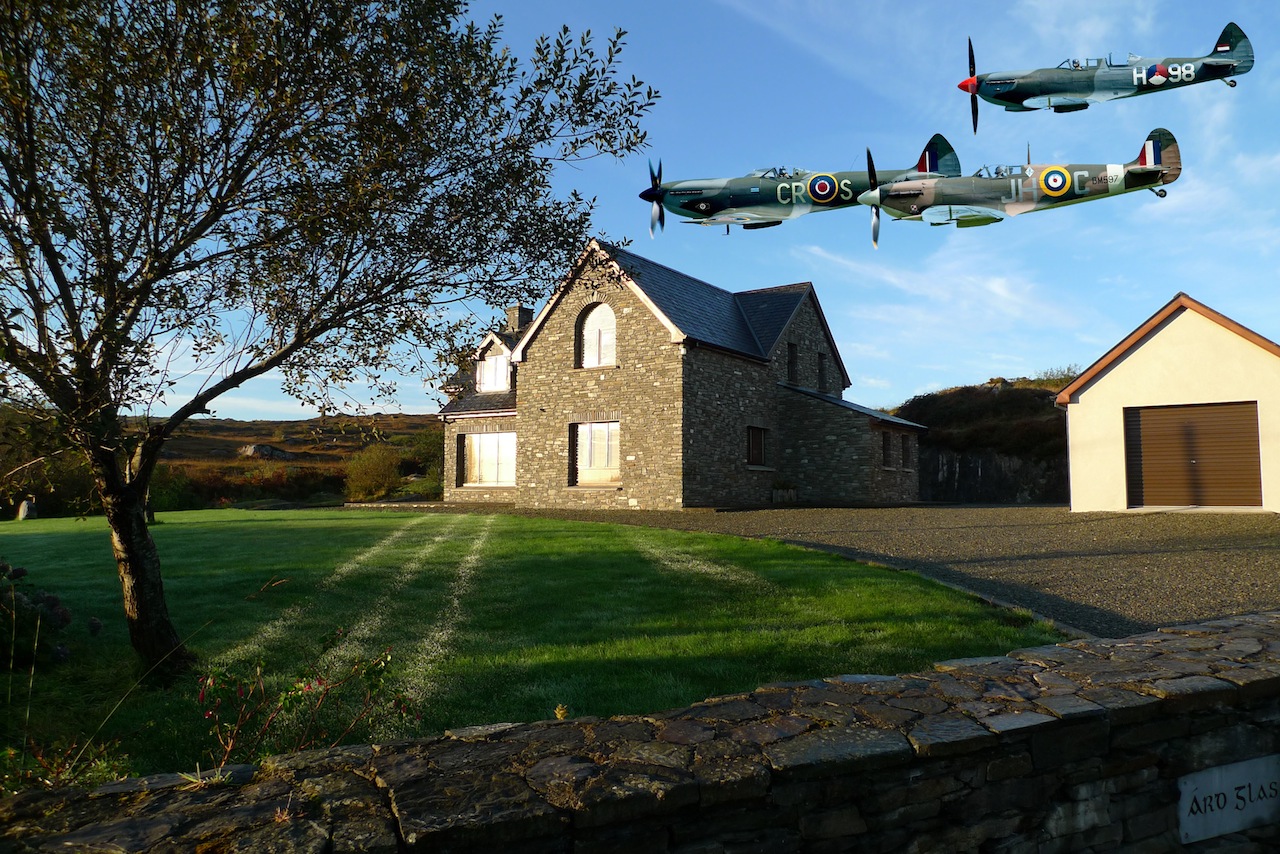
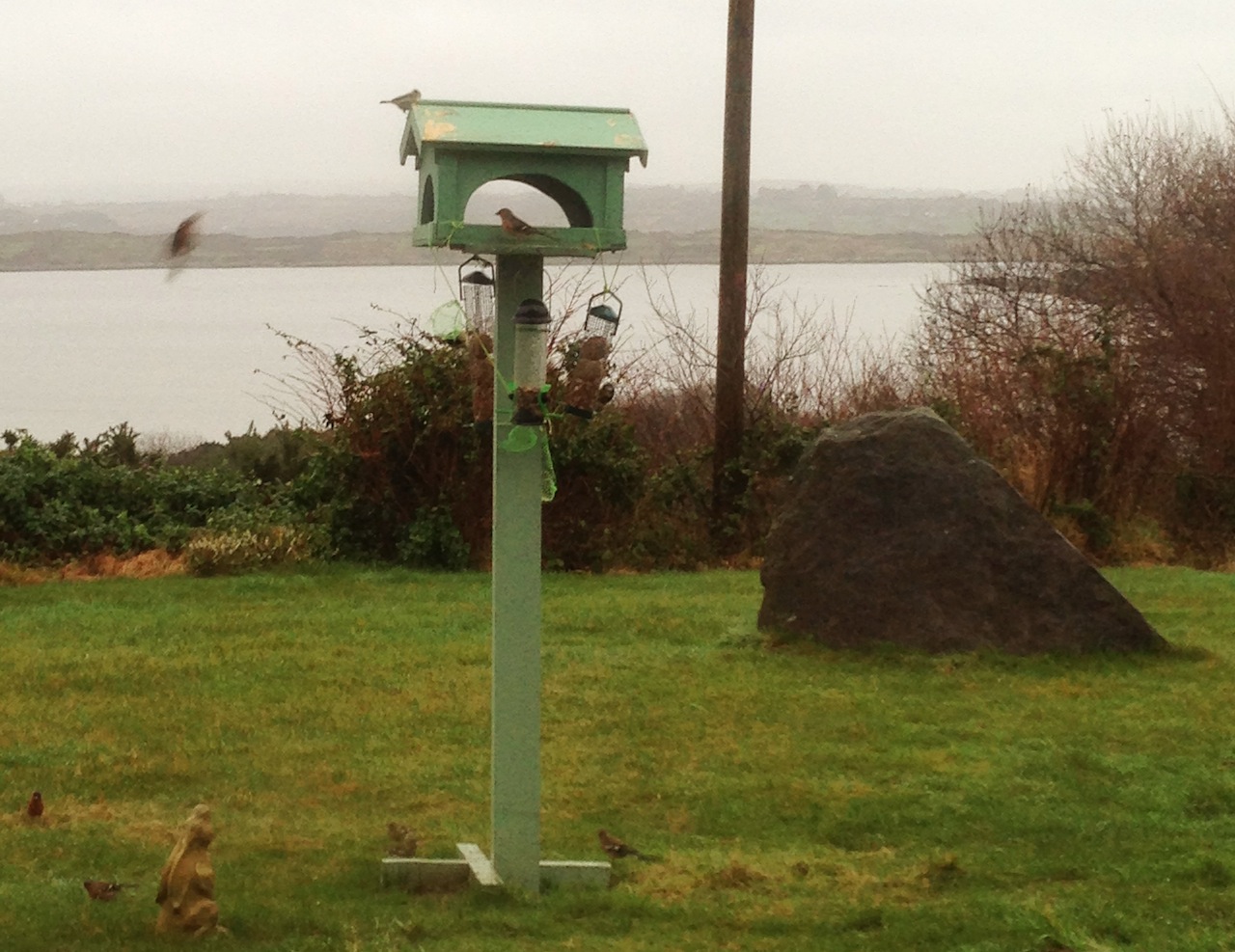
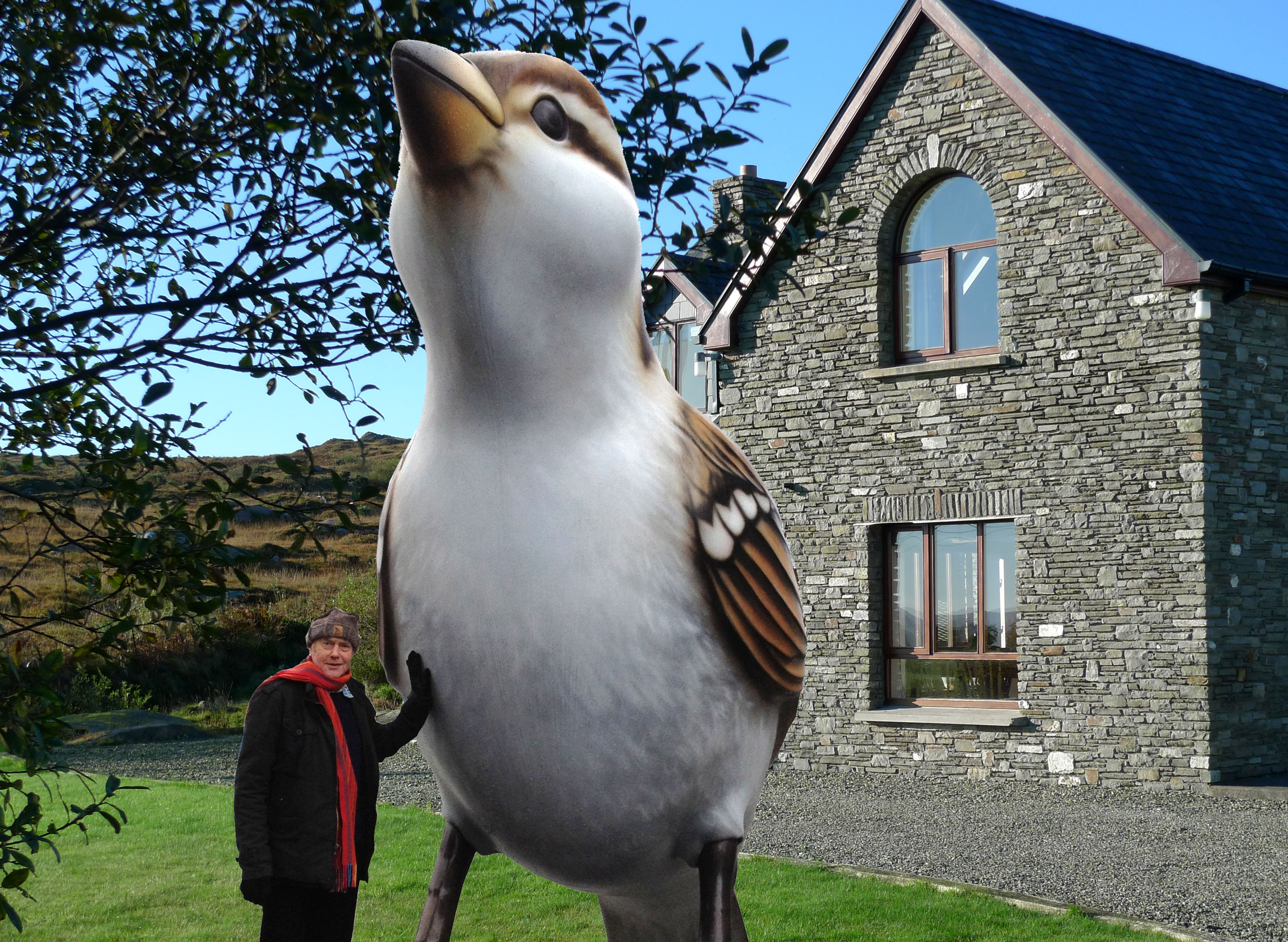
Perhaps you didn’t know that we have our own mini airport here – right outside Ard Glas! It all started when we asked our friend Danny – who constructs wonderful furniture and accoutrements in the Irish vernacular, and paints them green – to make us a birdtable. He duly did so, and painted it green. It now sits outside our windows and provides us with hours of entertainment.

Firstly, we have a squadron of Spitfires. These are our Chaffinches – to date the record is 24 of them on or around the table at any one time: handsome birds, male and female almost alike, but the males have perky crests which they raise when they want to assert themselves. They whizz in, a whole bunch at a time in close formation, and settle on the grass landing strip where they methodically hoover up the seeds and crumbs. They don’t seem to take much notice of us or the bigger birds – they just get on with the job in hand. Quite suddenly they must get a call to action, for they all take off at once and fly across to the fields down below us, returning en masse after a short interval. They are quite quarrelsome, and often engage in dogfights with each other, diving, spinning and turning in the air.

Then there are the helicopters: these are Tits, of several varieties – Great, Coal and Blue. They hover around the seed holders and suet balls, then make a vertical landing on an impossible perch. They will hang upside down and spin around, quite unperturbed. But they don’t stay long: one seed, it seems is enough – then  they are off to a tree or bush to enjoy it at leisure, before returning on their distinctive undulating flight paths.

We no longer see the Goldfinches: they have gone south for the winter. Also vanished is the Jay, whom we saw only once, taking a break from its journey to the oak woods inland.

Airport in action...

Airport in action…

Daily regulars are our three Magpies: maybe they are one male and two wives, or perhaps parents and a child – they always come down together. One has to admire their magnificence: sleek and shiny. For me they are the flight officers and crew. You know when you see them passing through the concourse at the airport carrying those intriguing flight bags? Crisply uniformed, black and white – and strutting importantly through the crowds…. That’s Magpies: they strut. And they do think of themselves as important. They’ll dismissively push away the smaller birds and take large beakfuls of whatever is available. If I see only one I have to remember to say the mantra – “Good morning Mister Magpie – hope your wife and children are well” else some bad luck might befall me. Then, of course, there is the other mantra – “One for sorrow, two for mirth, three for a marriage, four for a birth…” As it’s invariably three of them they must be trying to send us a message.

It’s odd that the biggest birds of all are the most nervous: these are the Hooded Crows. We have two regulars and they are undoubtedly the Jumbo Jets around here. It’s great to watch them coming in – a slow descent, hovering with their wings up, then a solid bump onto the ground. But they are always on the lookout: they take ages to pick up a crust or a nut. They stand a little way from it, eyeing it up, but will then look all around to make sure no-one is watching before jumping and snatching it, quickly flying off to hide it in a safe place. Well, they don’t take off quickly – it seems to be quite an effort for them to get airborne: they need the longest runway.

I haven’t mentioned the resident Robin, and the Wren has disappeared since Christmas. I’ve got a feeling the Wren Boys were out on St Stephen’s Day, and succeeded in catching it for their supper! The Wagtail is a constant: as it is always walking around on the ground with its perky manner I feel it is that man with the two bats who very cleverly makes all the planes manouevre  in impossibly tight circles, just for the fun of it…

Robert communes with feathered friends

Robert communes with feathered friend

A Place in the Heart

clarke

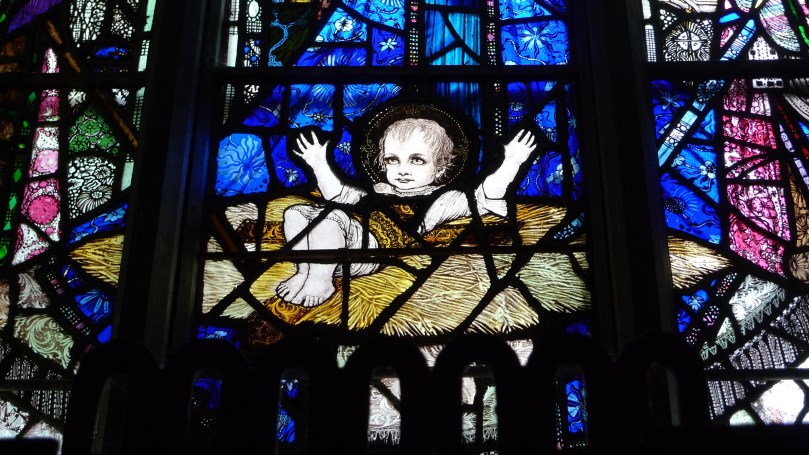
A church window by Harry Clarke: Ireland’s – and perhaps the world’s – foremost glass artist

At the ending of the year we are halfway through our winter adventures in West Cork. Today is a turning point: a transition. Traditionally, crossing over boundaries is rife with custom and superstition. Make sure you let your fire go out tonight, and kindle a new one in the hearth in the morning to ensure good health and good fortune. The Celts noted the importance of boundaries – they divided the year up into four parts: Imbolc, Beltaine, Lammas and Samhain. At each turning point there was a festival, usually involving fire. It’s interesting that our New Year is marked by fire – or fireworks – in many cultures.

ballin

clarke2

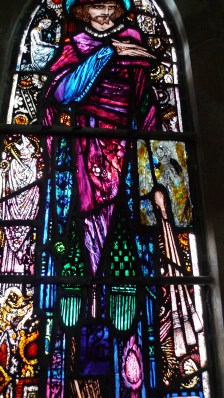
St Luke – another Harry Clarke window, in the church at Castletownshend

At this moment we are right in the middle of the Celtic dark time: Samhain – pronounced ‘Sow (female pig) – in’. This will end on February 1st, when Imbolc begins. Imbolc is ‘the beginning of the light’ – Candlemas in the church calendar. Certainly, in early February, we see the first green shoots of the Spring appearing.

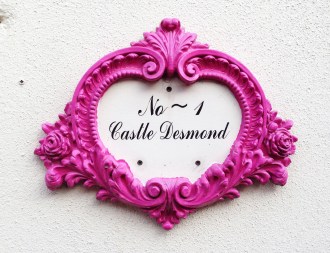
castledesmond

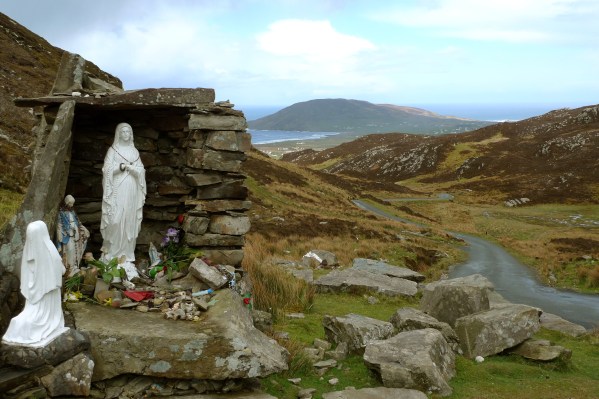
statuestat

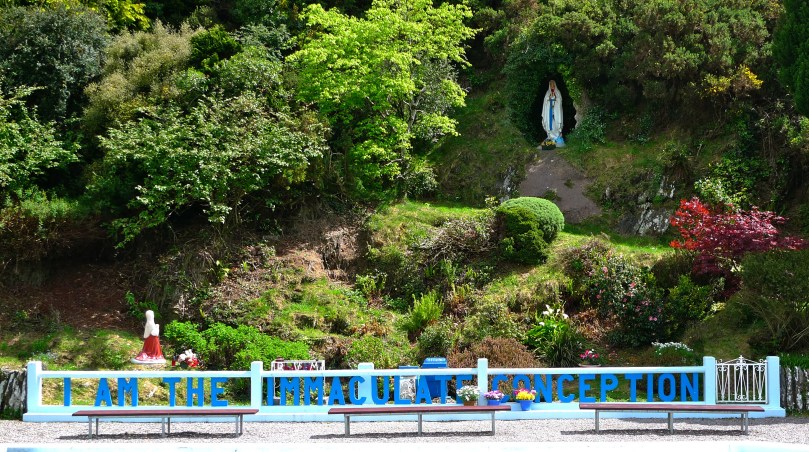
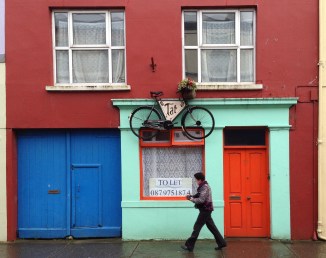
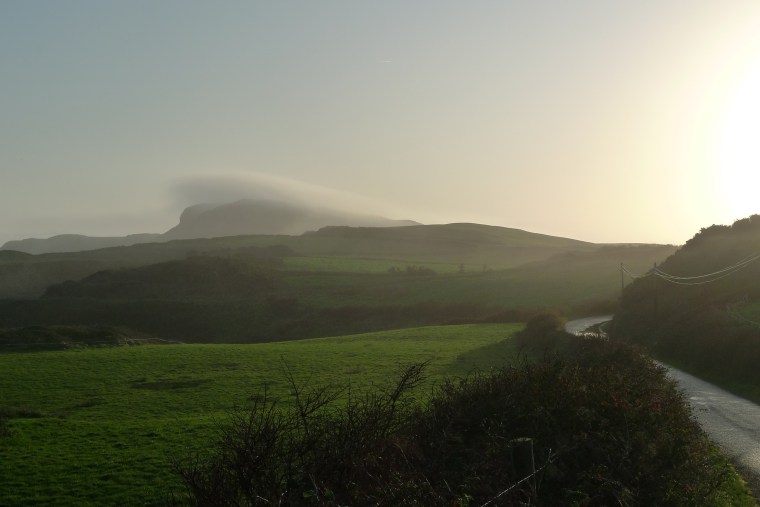
This post is a bit of a reminiscence. A summing up of impressions and emotions through pictures from the last three months. The common theme is colour – whether in landscape or in architecture – because we have found this ‘green’ island to be full of so many colours. Hopefully a few of the photos capture something more, something deeper:  an inherent respect in this land for history, culture and holy places.

scene

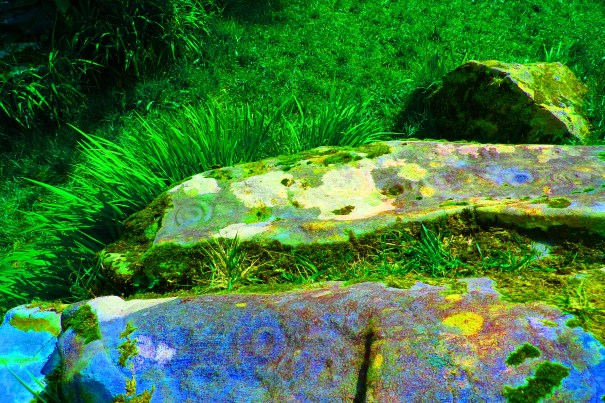
Rock Art - was it once painted?

Rock Art – was it once painted?

mussels

Mussel beds on Roaringwater Bay

HAPPY NEW YEAR from Ard Glas, on the shores of Roaringwater Bay!

Place Names – and PRIZES!

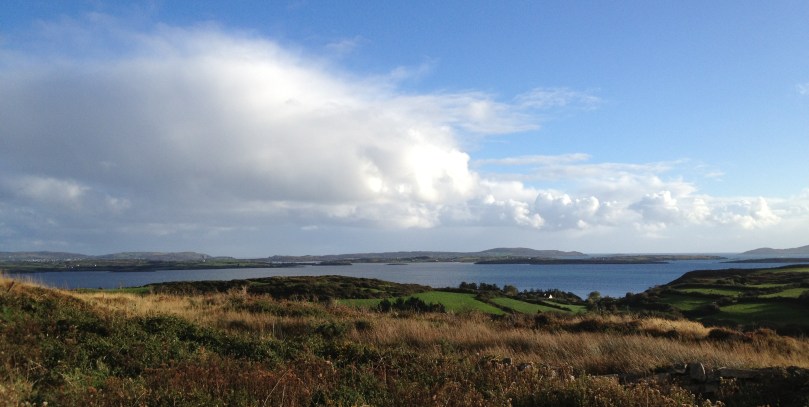
View from Cappaghglass

Several of my Canadian readers have asked me to do a piece on place names. As a Canadian, it’s hard to fathom that the address ‘Finola Finlay, Ard Glas, Greenmount, Ballydehob, Co. Cork, Ireland’ could actually get to me – “What?” you say, “No street address? No postal code? And how on earth do you pronounce Ballydehob?” (Actually, just Ballydehob, Ireland, would probably make it to me.)

When Ireland was mapped by the Ordnance Survey in the 1820’s to 1840’s, place names were Anglicised mostly by trying to reproduce the Irish names phonetically. With some basic knowledge of Irish it is possible to winkle out the meaning of many place names. The smallest unit of land recorded on the maps is the ‘townland’. This being Ireland, the term ‘townland’ has nothing to do with a town but is a defined geographical area, probably based on very ancients divisions. Townlands vary in size, but 300 acres would be typical. In rural areas, the address often includes the name of the house (Ard Glas), the townland (Greenmount), the nearest town with a post office (Ballydehob) and the County (Cork).

ANNOUNCING OUR FIRST COMPETITION!

Below is a basic Irish-English dictionary of common place name words. Use it to translate the names of some West Cork place names – submit your responses by clicking on ‘Leave a Comment’ at the end of this post. Use your imagination, your poetic sense, your personal lexicographic preferences and your sense of humour. There will be LOVELY PRIZES for the best entries!!!

Words for Irish word (translation) Pronounced
Field Gort (small field) Gurt
Ban (meadow) Bawn
Cappagh (tilled field) CAppa
Settlement Liss or lios (round earthen enclosure) Liss
Dun (fortified enclosure) Doon
Rath (round earthen enclosure) Rath
Baile or Bally (settlement or town) BOLL-yeh
Cill (small church) Kill
Hill/Mountain Ard (high place) Ord
Drom (rounded hill) Drum
Cnoc (hill, rocky) K-Nuck
Letter (hillside) LETTer
Croagh (mountain) Croke
Sliabh (mountain) Sleeve
Mullach (summit) MULLock
Terrain Doire (oak wood) Derry
Mona (bog) MOAN-Ah
Carraig (rock) KArrig
Poul (hole, hollow) Powl
Descriptive Mor (large, big) More
Beag (small) Byug
Glas (green) Gloss
Rua (red) RU-ah
Dubh (dark, black) Duv
Ban (white) Bawn
-Een (as a suffix – diminutive: little, small) Een

Place Names around Roaringwater Bay

Cappaghglas
Gortnamona
Gorteenakilla
Ballybane
Derreenard
Lisheen
Letterscanlan
Mullaghmore
Ardraha
Cnocnacarriga

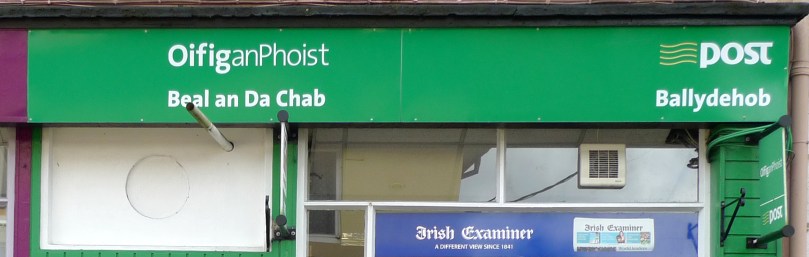
Oh and Ballydehob? It’s pronounced BAlly-dee-HOB. From the Irish Béal an Dá Chab, meaning ‘mouth of the two river fords’. Just to confuse things.

beal an da chab

Return to Roaringwater

Were we mad? Whose idea was it, exactly, to rent a house in West Cork for six months? After one glorious, seductive, deceitful day of sunshine, the rain has been unrelenting. Sometimes it’s a fine mist and sometimes it’s a downpour. Sometimes it makes your hair curl into tendrils and sometimes it soaks you to the underwear. The bay below the house, teeming with aquatic life on that sunny day, is now blanketed in grey fog.
And yet…and yet…the green lawn is drooping with fuchsia; a tiny robin is peeping at me from the hydrangeas and there is the possibility that the fox will come back for a visit. We think he took the leftover pork from the edge of the lawn – although the friendly dog that dropped by today did seem to go straight to the place we left it.
We spent a happy hour today at Whyte’s Books in Schull. They serve coffee and delicious cakes and have collections of book reviews in large binders. Browsers and buyers come and go. The local priest is after Salman Rushdie’s latest: “Destined to be a classic, Father” the owner assures him. An elderly German drinks hot chocolate and reads quietly, two Englishmen chat in a back room, a woman is looking for Alice Munro stories. We inquire about the Writing Circle to take place Monday nights and we Google the name of the instructor. All we can find is one 60-page self-published paperback and a couple of references to ‘aromatherapy and crystal workshops’. Perhaps we’ll give this one a miss.
Besides, I am already signed up for fitness classes, thanks to information from the friendly post-mistress. The classes are run by M, who is English, and doing it for free. The postmistress has already told me this, but it is confirmed when I go to buy trainers at the sporting goods shop in Skibbereen. When I say I need them for a fitness class the salesman says, “That would be M’s class out in Ballydehob, would it?” It turns out that this is the only fitness class in the area, and M has been in to order steps and weights. The only other local offering is “the occasional bit of yoga” run above a restaurant by the proprietor but only “when herself isn’t too busy with the food, like.”
We have decided we need discipline. Our resolutions go like this:
·         Get up early. Does 8:30 count?
·         Music practice every day so that Robert can learn new tunes on his squeezeboxes and so I can become a bodhran genius. I am setting my sights high, convinced that the fact I am having trouble keeping the beat is a mere temporary beginner stage.
·         Healthy activity every day. We envision long hikes over the rugged hills, strenuous climbs rewarded by sandwiches on a rock with sweeping vistas. So far we have walked down through the fields to the water (it was uphill all the way back), and along to lane to see what the neighbours’ houses looked like. Occasional houses, but little sign of neighbours.
·         Writing every day. We have in mind, ultimately, a collaborative writing project – the kind of blog that garners a devoted readership and establishes itself as a staple among the literary/naturalist/outdoorsy/amateur historian or archaeological set. To date we have each managed one email, and this.
We tell ourselves that we haven’t been here a week yet. That we have a whole six months. That we are still getting over jetlag. That we are still discovering how to just be together. That we will eschew the scone with our coffee from tomorrow on. That spending an hour looking through the spotting scope is an important way to orient ourselves to our environment. That the fact that we included ‘come and visit’ invitations to everyone we know at the end of our emails just means we are friendly types. That tomorrow we will do a section of the Sheep’s Head Way. And that right now is a good time for bodhran practice.
But wait! Is it? Can that shaft of watery light be…YES, it’s the sun! Hold that bodhran – I’m off down to the water.