Back to the Skeams: 81 Men Left the Island

Fishing was a huge part of how the islanders made a living and fed themselves and their families. For how this was conducted I am relying on Hester’s detailed account. She writes about her parents’ generation and also about her own – her husband, Patsy, also went fishing. I will use Hester’s words, from her memoir, Misty Memories, lightly edited for a bit of brevity.

Most of the men from the islands around went Lobster fishing every Summer. There were 27 lobster boats in Heir Island when I was ten years old and at school there. Each boat had a crew of three men. That meant that 81 men left the island from May to September and went to Kinsale and Cobh – a long journey along a rough coastline in very shallow sailing boats.
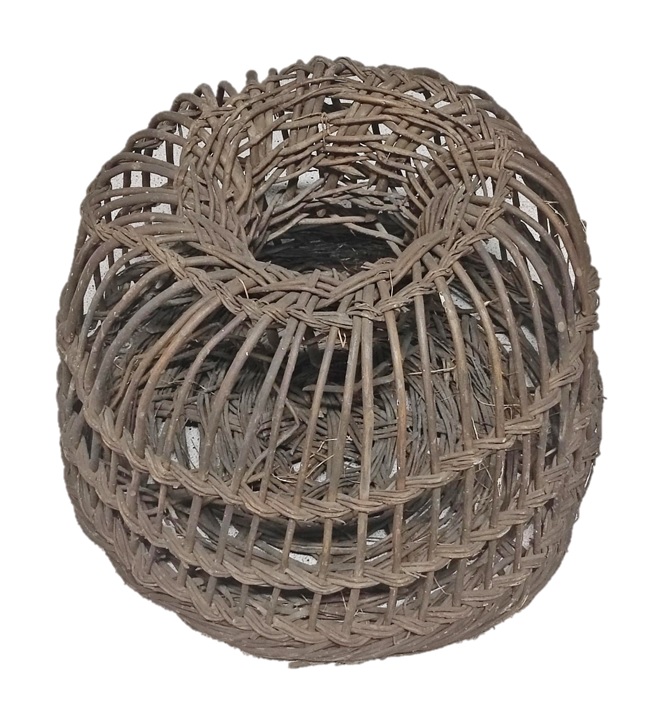
A traditional Heir Island Lobster Pot. © National Museum of Ireland*

Lobsters were caught in baited lobster pots, made of willow twigs and anchored in deep water. The men made the pots themselves during the winter months. Some were very skilled and others helped them – they worked as a team or ‘meitheal’ as it is called in Irish. They had special tools for the job and a sort of mould around which they wove the twigs so that the pots had the proper shape. Rowing for miles to the other islands and to the mainland to get enough twigs, they carried big bundles on their backs, often having to walk four or five miles back to the boat. 
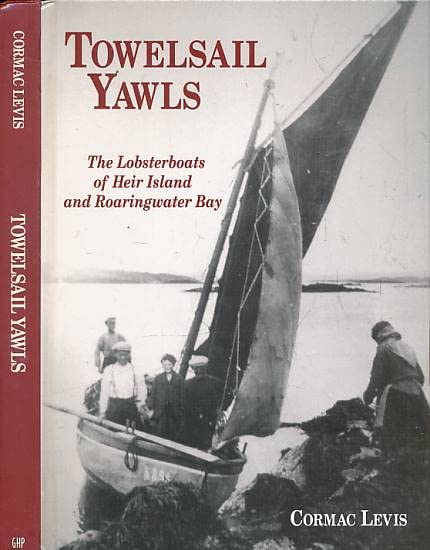
The authority on traditional Heir Island boats is Cormac Levis, and this book is a must for anyone interested in this topic. It is currently out of print but you might be able to find a copy online. Cormac is planning a second edition for 2026.

Lobster boats had three sails and the smallest one of these, called the ‘Towel Sail’, was used to make up a sleeping tent over the boat’s stem. Just as with the lobster pots, the men made the sails themselves. There was a lot of work in them and some of the men were really expert at it. Sails for the lobster boats and other bigger boats were made of canvas with a rope sewn firmly all around the edge. They made special eyelets across the sail to hold the reef cords so the sail could be made smaller in high wind. 
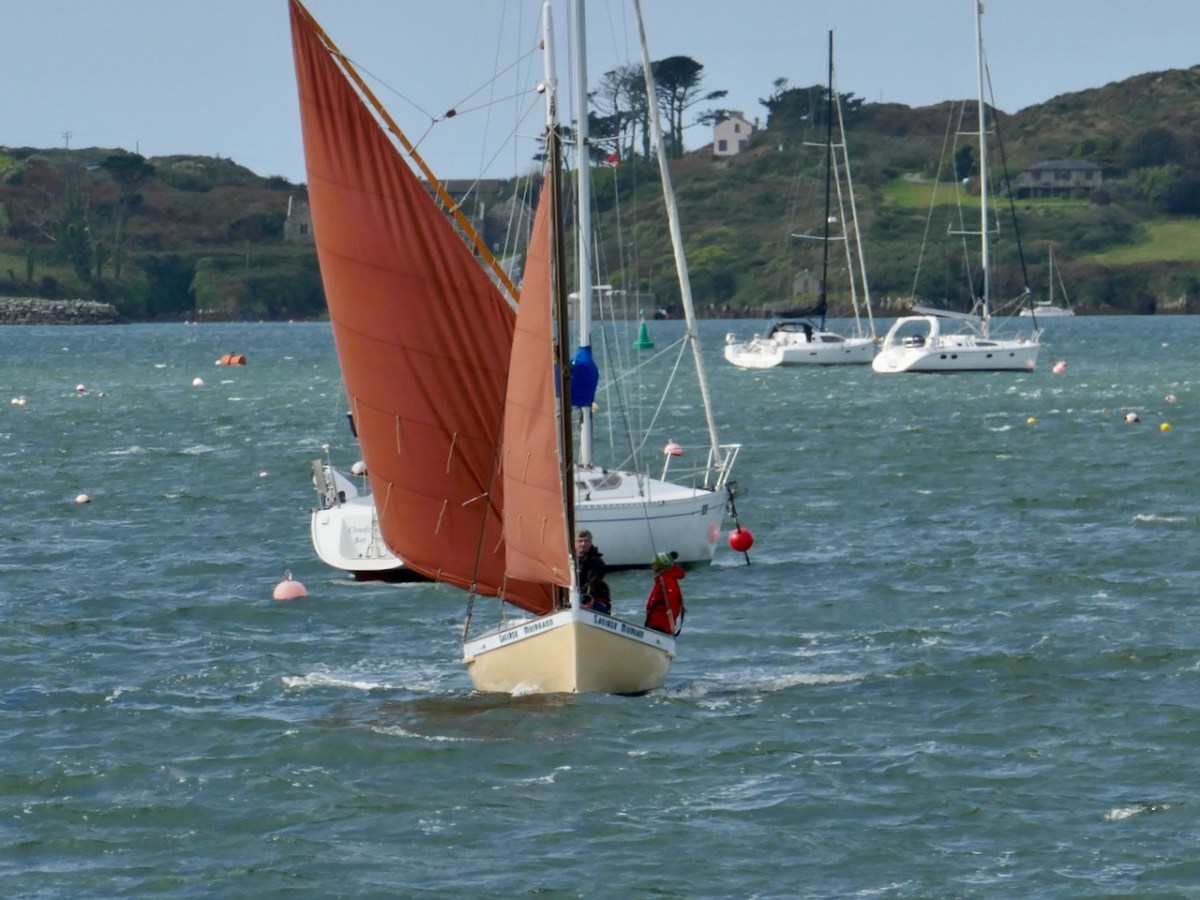
Cormac’s own boat, the Saoirse Muireann, is a traditional towelsail yawl, built at Hegarty’s boatyard

There were lots of preparations to be made for going lobster fishing. When pots and sails were right, the boats were filled with ballast and sunk in deep water for two weeks to close the seams after winter dry dock. Then they were taken up, painted inside and tarred outside. The three-man crew came together to put in the ‘pig-iron’ – slabs of iron for ballast to keep the boat from capsizing. They then put in the steer and the helm and a big anchor. Special ropes and stones were prepared to tie the pots deep in the fishing ground. They called these the ‘Killick rope and stone.’ Next, they added the utensils – a tin basin for washing and for making bread, pots, a kettle, tin plates and mugs. Foodstuffs, including the flour for making bread, were kept in the little cupboard built into the stem of the boat. Drinking water was stored in a ‘breaker’, a round wooden barrel that held a few gallons. They also brought potatoes and coal for the fire.
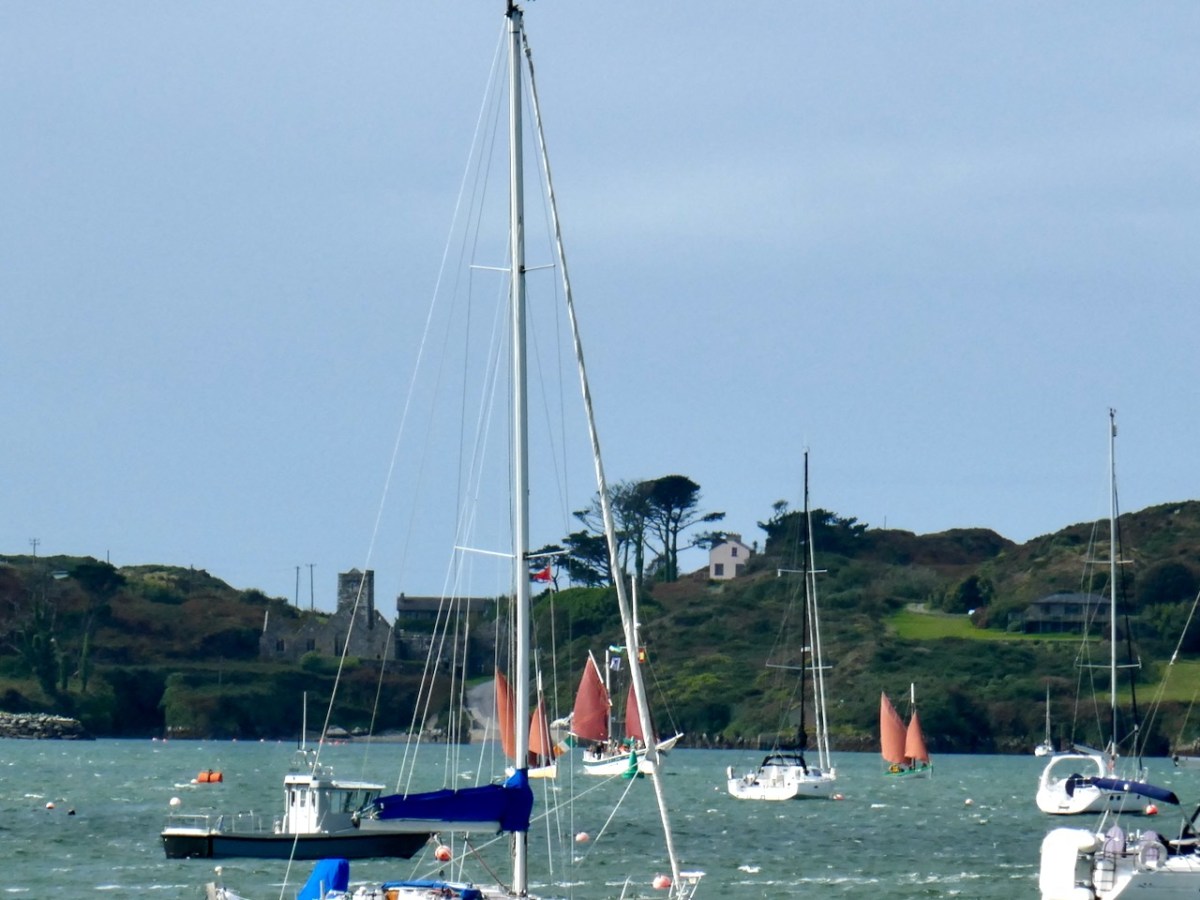
This photograph shows the relative size of the three boats used in the Heir Island fishery. Left to right is the Saoirse Muireann, the Saoirse and the Hanorah

They had an iron bastible pot they called ‘the oven’ to hold the coal fire. The set-up for the fire had to be very carefully and safely arranged. A thick piece of cast iron was placed on the thwart mid-way in the boat and the fire pot was put on top. All the cooking was done on this fire. A pig’s head, potatoes and vegetables were all boiled together in an aluminium bucket. They also cooked fish. One man was in charge of the bread-making. They made white soda bread – very thin cakes that baked quickly. Bits of soot sometimes got into the white flour and the bread would have black streaks in it.
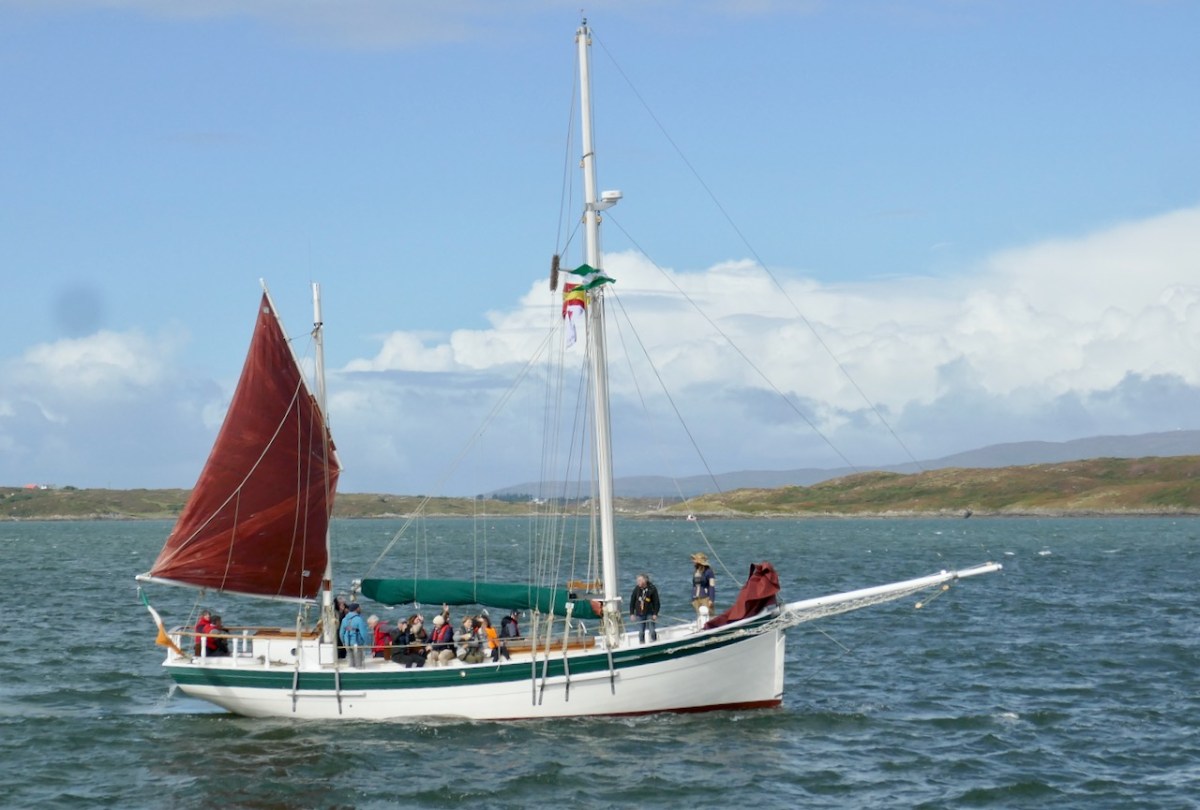
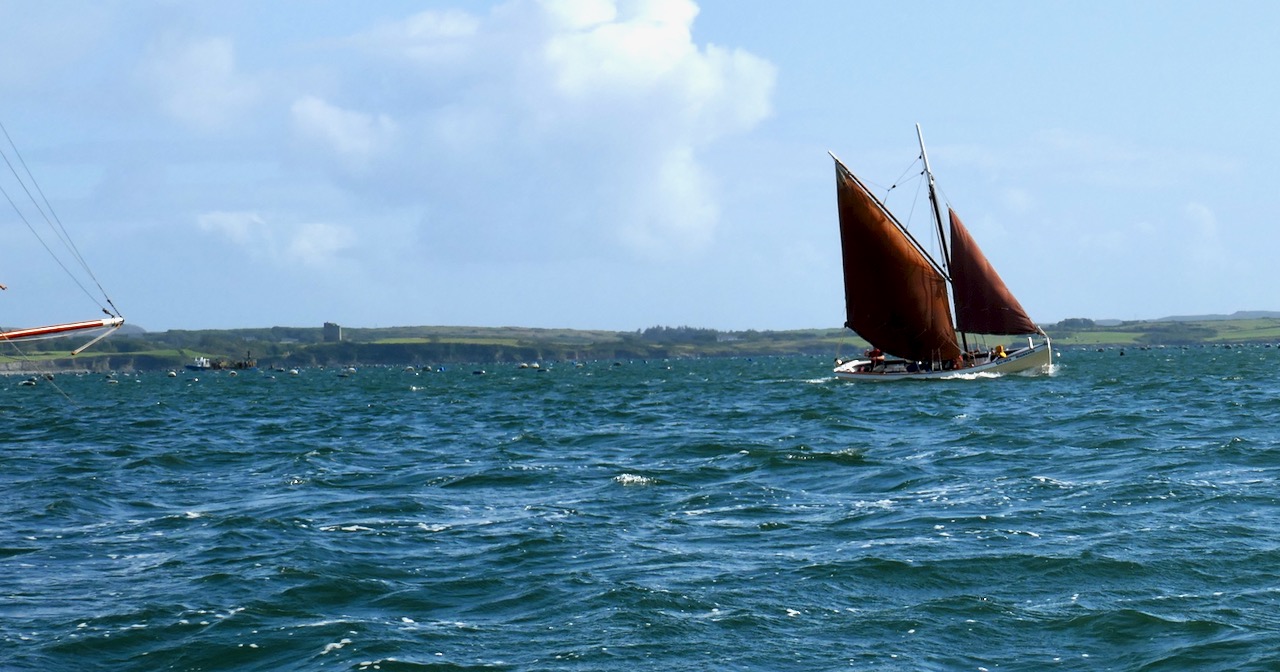
This is the largest of the boats. This is the fabled Saoirse, a replica of the boat sailed around the world by Conor O’Brien is 1923-25. It is a 42′ Ketch and the design was based on a traditional Roaringwater Bay fishing boat

There was smoke and soot everywhere and the men’s skin and clothes were black on their return home and took weeks to get clean again. The combination of soot, salt water and the hauling of ropes caused the skin of their hands to crack. Their ‘intensive care lotion’ was to ‘pee’ on their hands to toughen the skin. They all put on lots of weight during the lobster season and when they came home and their skin cleared of soot, they had a great healthy colour.
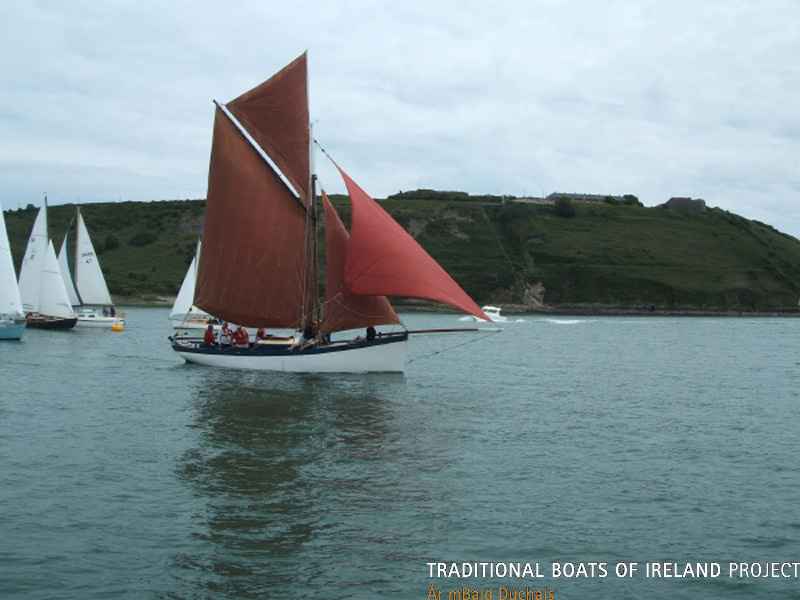
Joe says in his account In 1934, when I was thirteen, we got a boat built by Harry Skinner at Baltimore.This was a small light boat, not the boat above, but I am including this image as it is of a Skinner-built mackerel yawl. It’s from this source.

Washing and shaving were done by sitting the basin of water into the open end of a lobster pot to keep it steady. The same tin basin was used for everything – washing, shaving and making bread. Three towels had to do them for the whole time they were away and these towels were jet black when they came home. They wore flannel underwear – ‘the wrapper’ was a thick vest top with long sleeves and ‘the drawers’ were full length long-johns. The women made all these by hand from their own patterns. All the seams were sewn by hand – herringbone stitch to make sure they never ripped. The younger men didn’t like wearing this heavy underwear but they soon found they were so cold out at sea that they were glad to have them. Each man had three sets of underwear kept in a flour bag with their other clothes and a small bottle of Holy Water.
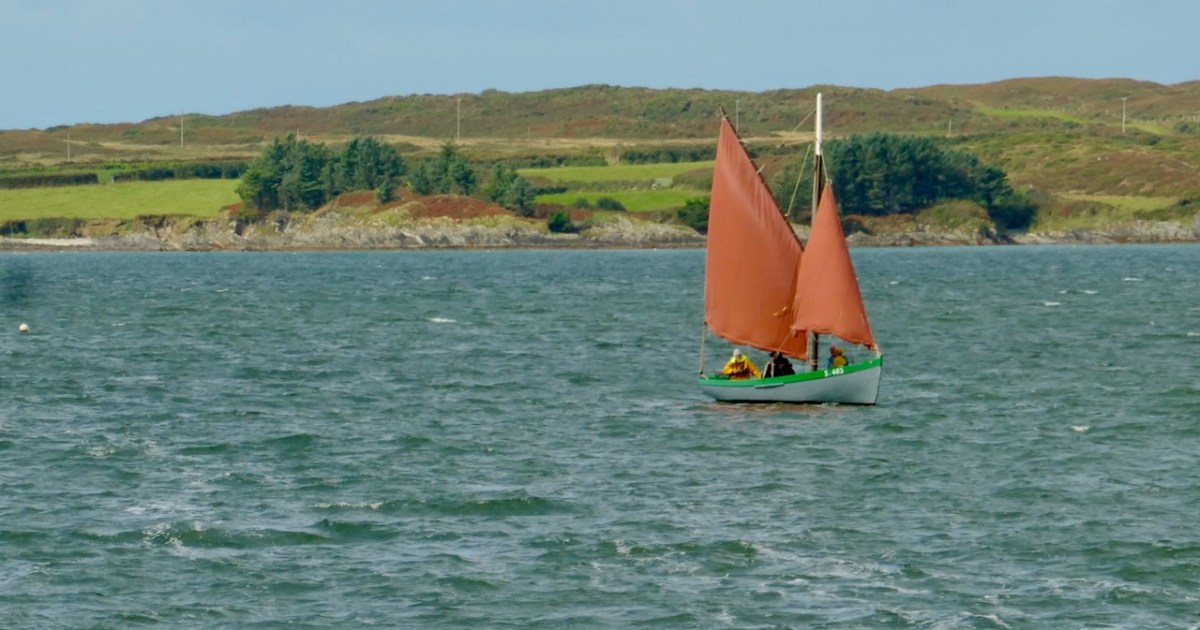
The Hanorah is another traditional boat built at Hegarty’s – this one was used for mackerel fishing

The lobster-men were really skilled at their job. They knew exactly where to get the lobsters and how to handle them without getting bitten when moving them from the pots to the storage basket. This basket had to be kept submerged under a buoy until they went ashore and sold their catch to buyers along the coast – lobsters had to be sold alive. 
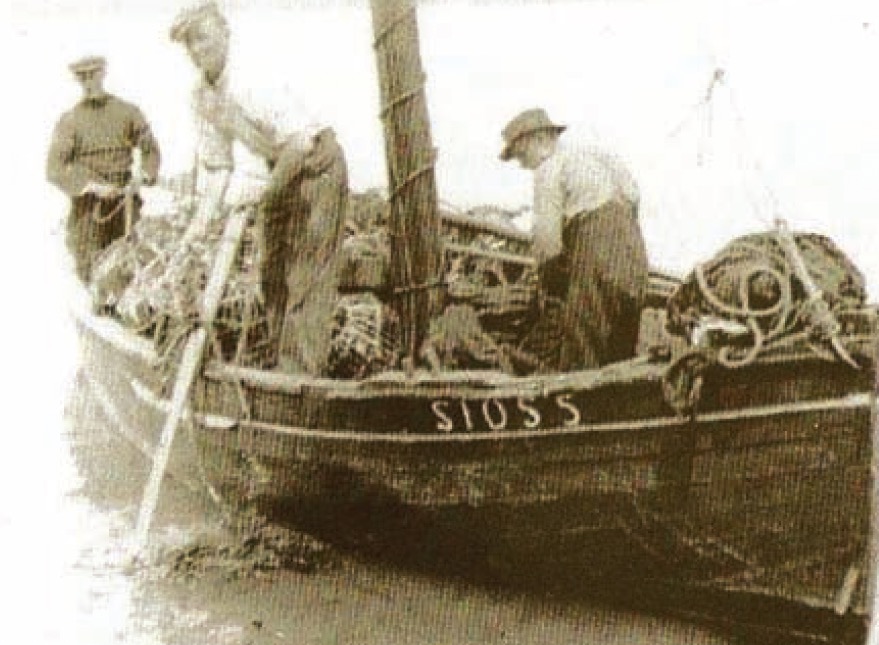
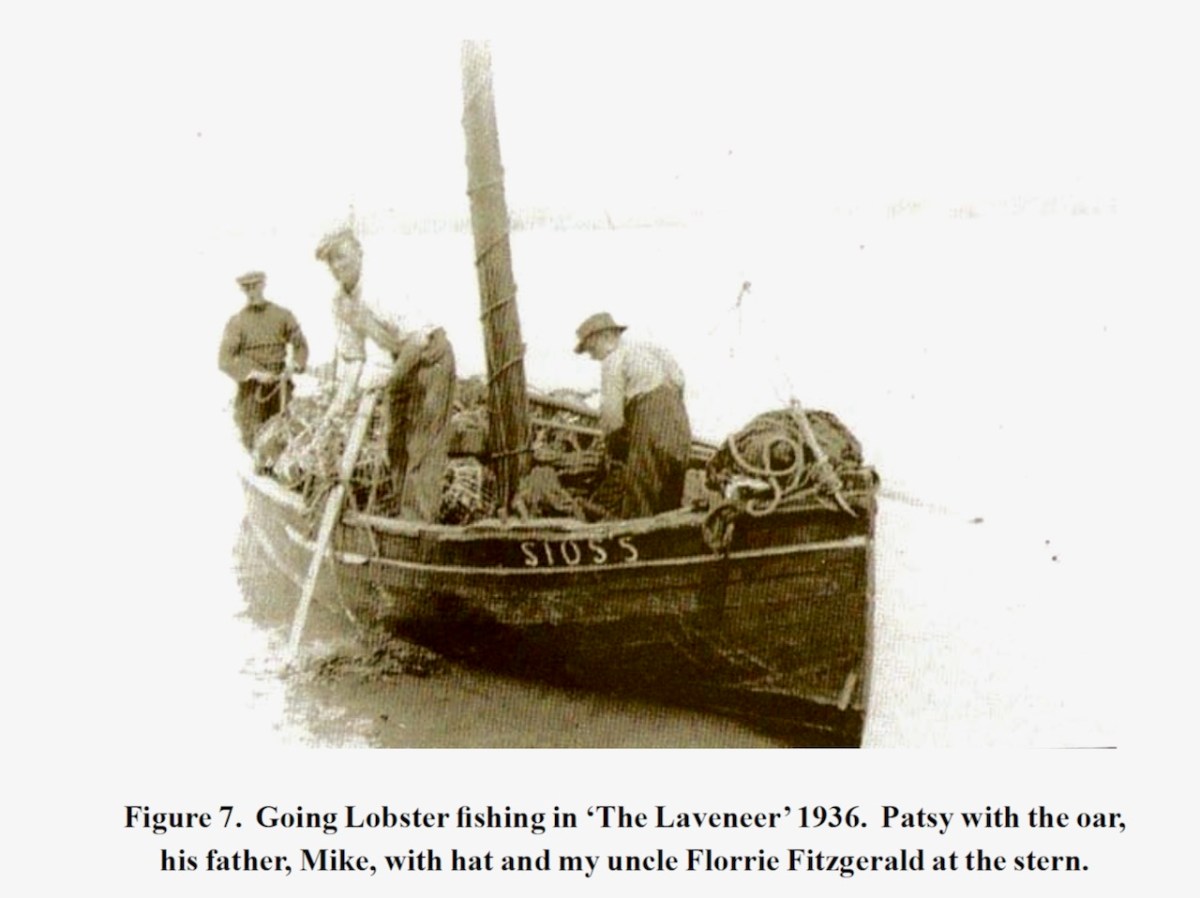
A closer image of the Laveneer loaded with lobster pots

The three men had to get on with each other in a very small space and co-operate together for their own safety. They said the Rosary together every evening and used their Holy Water to bless themselves, their boat and their pots. Patsy’s father, Mike O’Neill (called Mike, the Laveneer or Mike Mary Harte) was considered one of the best boatmen around. He was described in Heir Island as “the safest man going out the harbour mouth” (Baltimore Harbour).
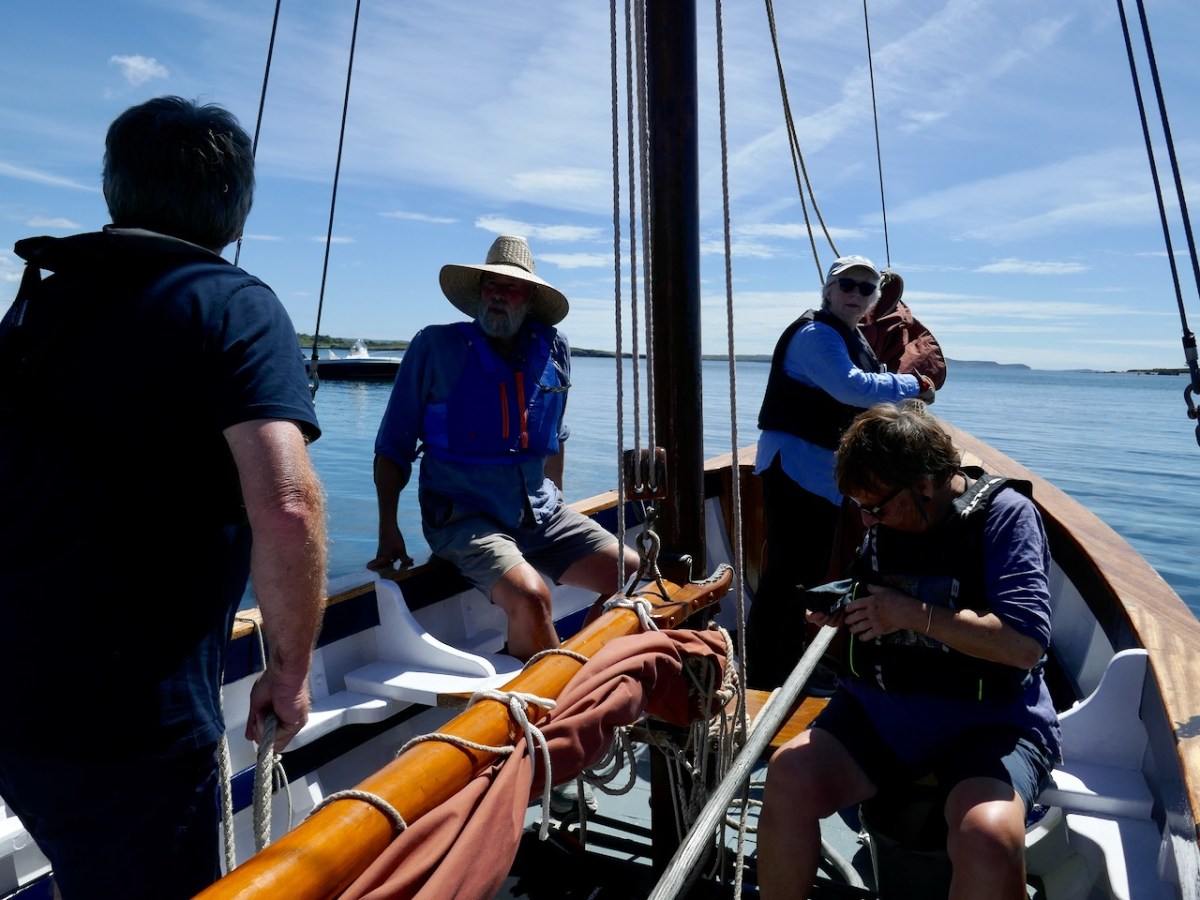
This is aboard Cormac’s Saoirse Muireann this summer – it will give you a feel for the kind of room we had in the boat

Hester’s memories above were of her father’s generation, but her husband, Patsy also went to sea when he needed to and it was an anxious time for Hester.
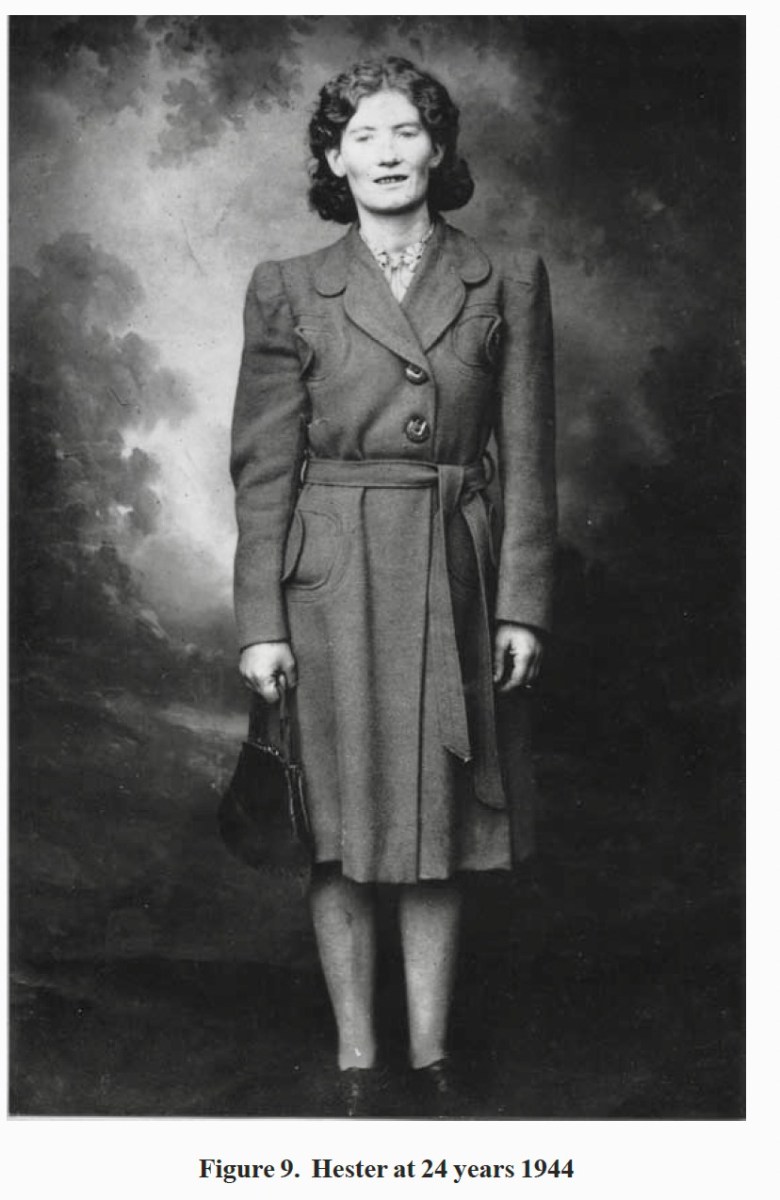
In the last few winters before we left Heir Island Patsy went herring fishing to Dunmore East in County Waterford. He went with a crew from Cape Clear in a small trawler called ‘The Radiance’. Herrings were in great demand in those days and when they had a week of good catches, he sent the money home in a registered letter. I tried to save some of it for the day when we might be able to get a place in the mainland. I remember how the children and I used to write letters to him and address them to ‘Boat Radiance’ c\o Dunmore East Post Office where he picked them up when they landed their catch, and wrote back to us. He could be away for up to three months in the depths of winter and I was always worried for his safety in the stormy seas on those cold winter nights.
It might be a while before I get back to Hester and Joe, but there is lots more to tell from their accounts on life on a small island in Roaringwater Bay
Back to the Skeams: The Sea Dominated Our Lives

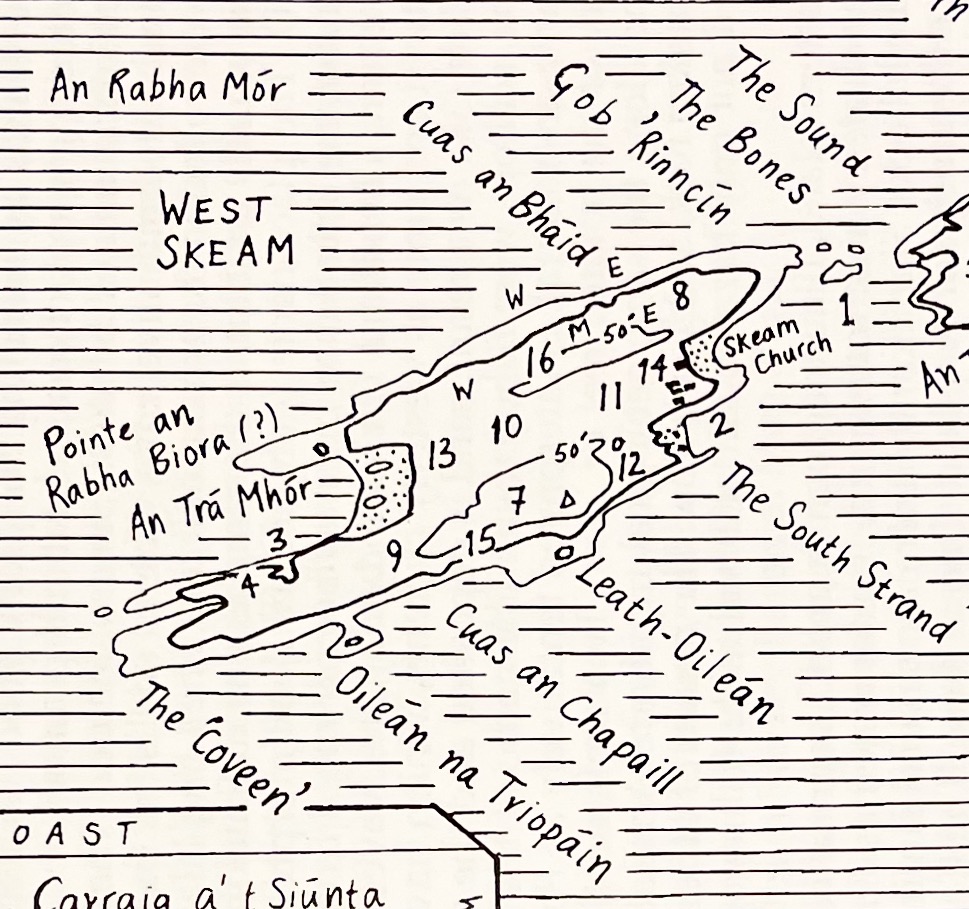
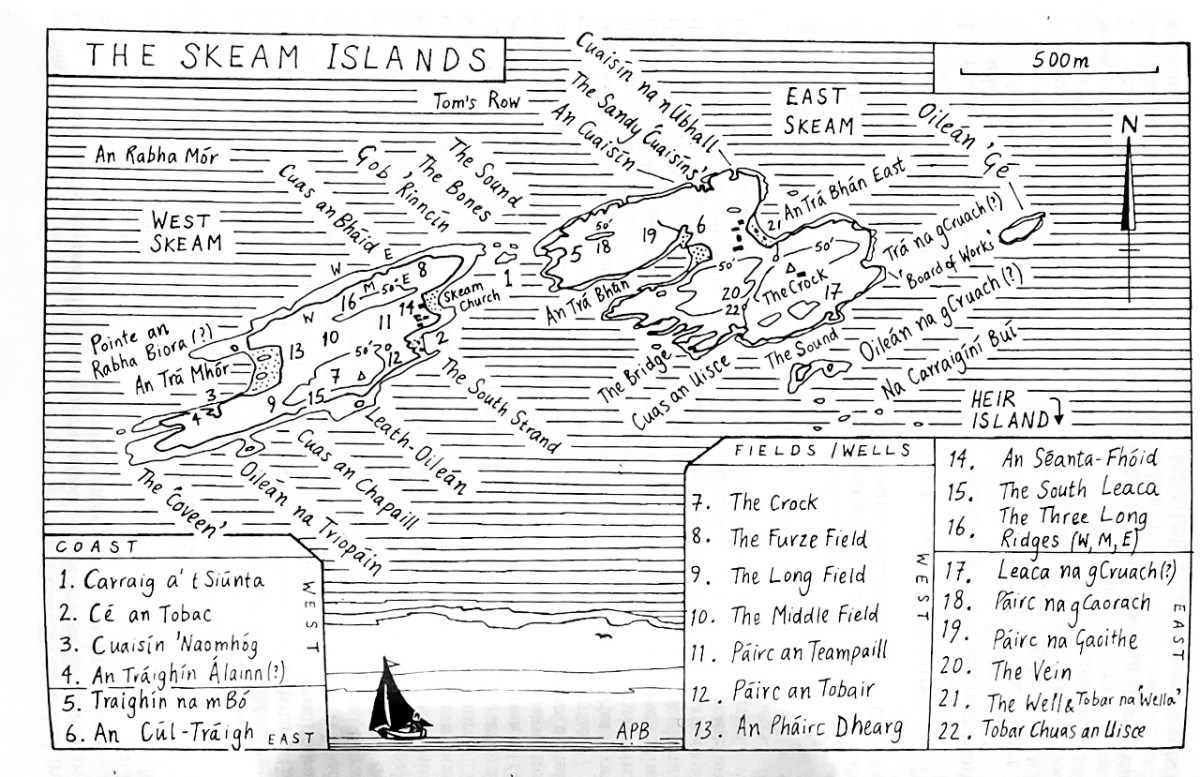
More about Hester and Joe’s story now, but let’s start off with another fantastic resource – Anthony Beese’s map of the island, published in the Mizen Journal in 2000*. What’s great about this map is that it was drawn up using local informants and so we have many of the places that Hester and Joe refer to.

For example, Gob ‘Rinncín. Joe tells us 

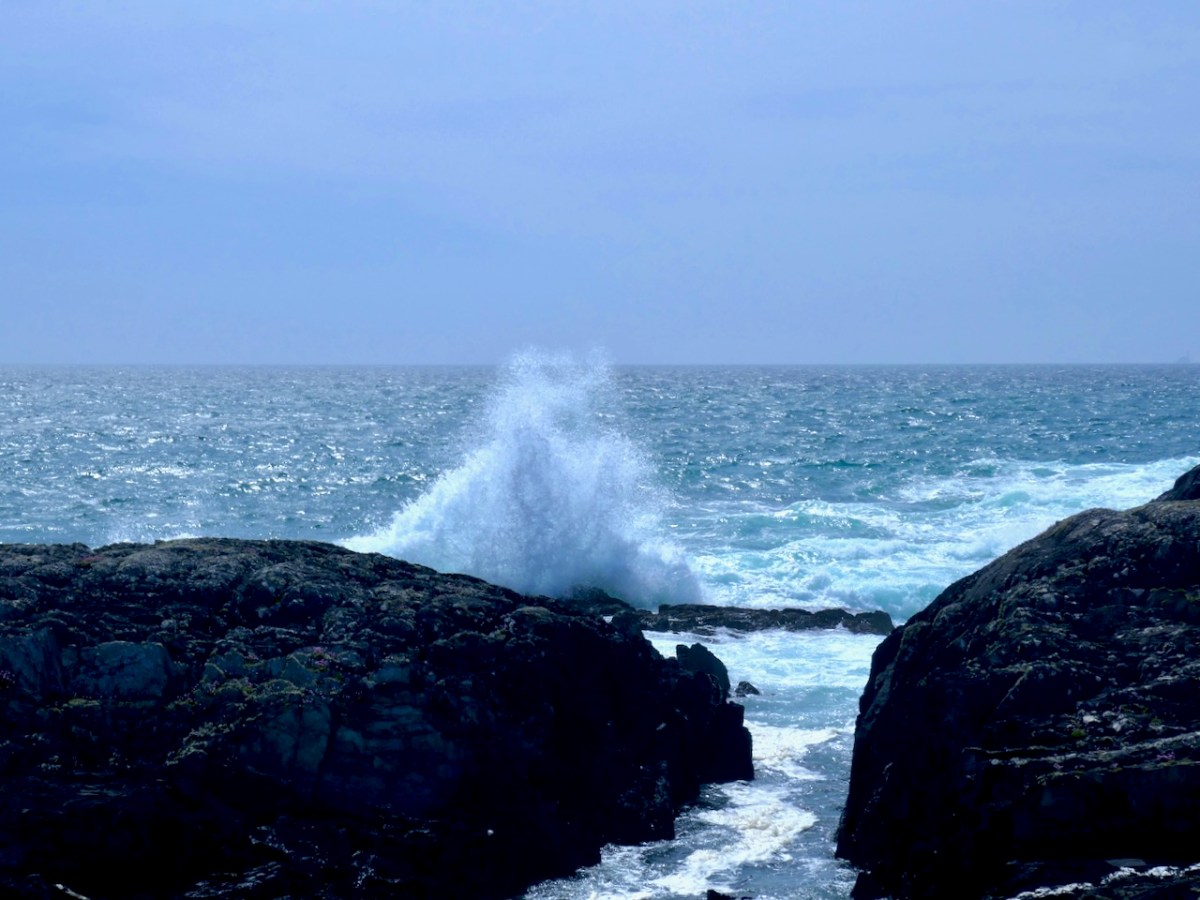
The little field down by the point facing across to East schemes we called ‘Gobreenkeen’, because on a rough-ish day the waves coming in from the north and the waves coming in from the south, (especially if the tide was low), would meet and shoot up and twist and that would be the dance, the Gobreenkeen. It was there we got scallops in that kind of weather.

Rince (pronounced rinka) is the Irish word for dance, and gob means beak, or point. Therefore this word translates as the Point of the Little Dances. How lovely is that? I am imaging something like this…

Hester tells us about Oileán na Triopáin (illawn na tripawn)

We used to eat a green seaweed we called Triopán that grew plentifully on a rock called ‘Oilean na Triopáin’ on the south side of the island. It was cooked in milk and eaten with fresh cream. 

I can’t find a translation for Triopáin – perhaps a reader might know what seaweed this is.

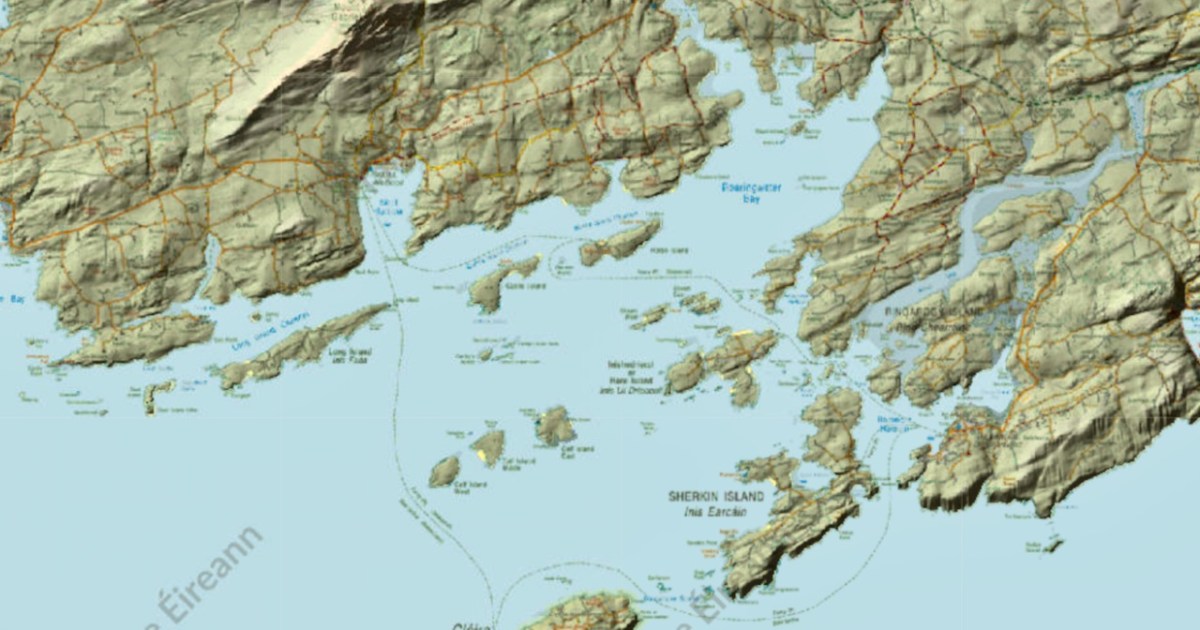
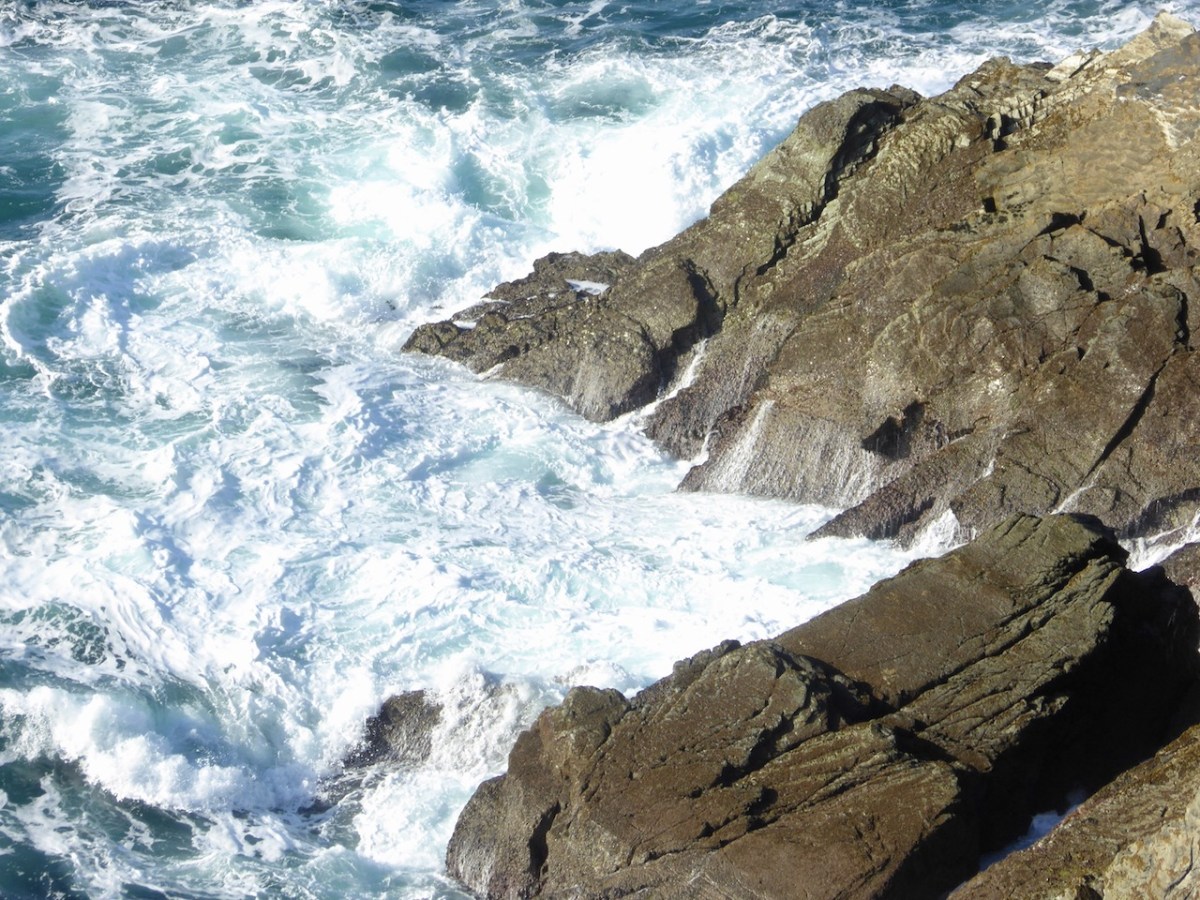
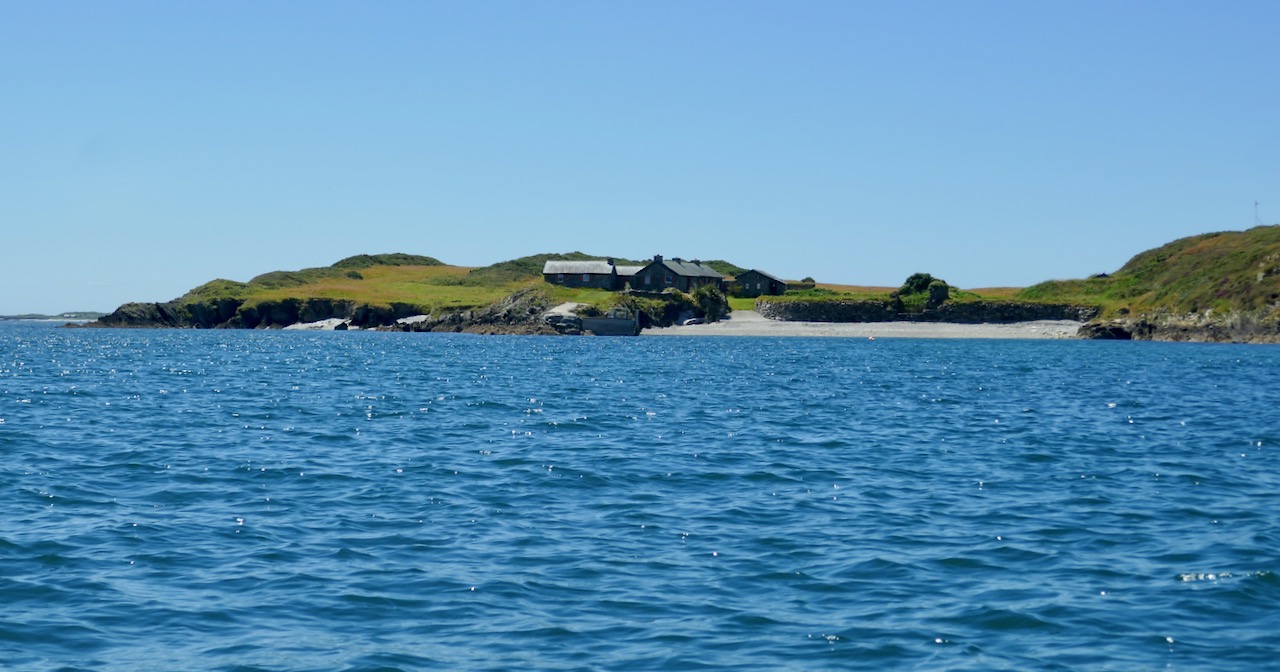
The quote The Sea dominated our lives is from Joe’s account, and here is a map showing the context of the islands. It is immediately obvious how exposed the Skeams are to the south west winds which are, in fact the prevailing winds around here. 

Both Hester and Joe tell of times when it was impossible to leave the island, or get a doctor to a woman in labour. Joe tells us:

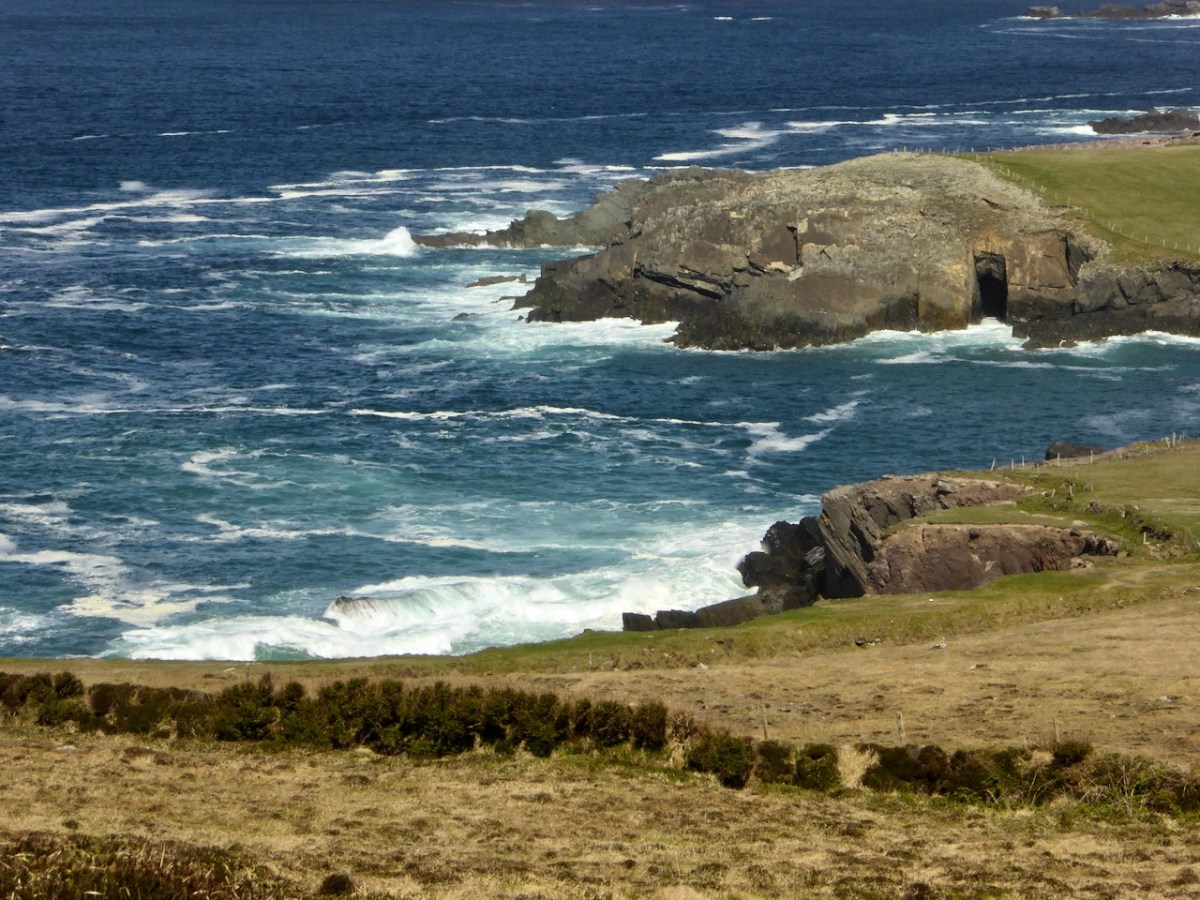
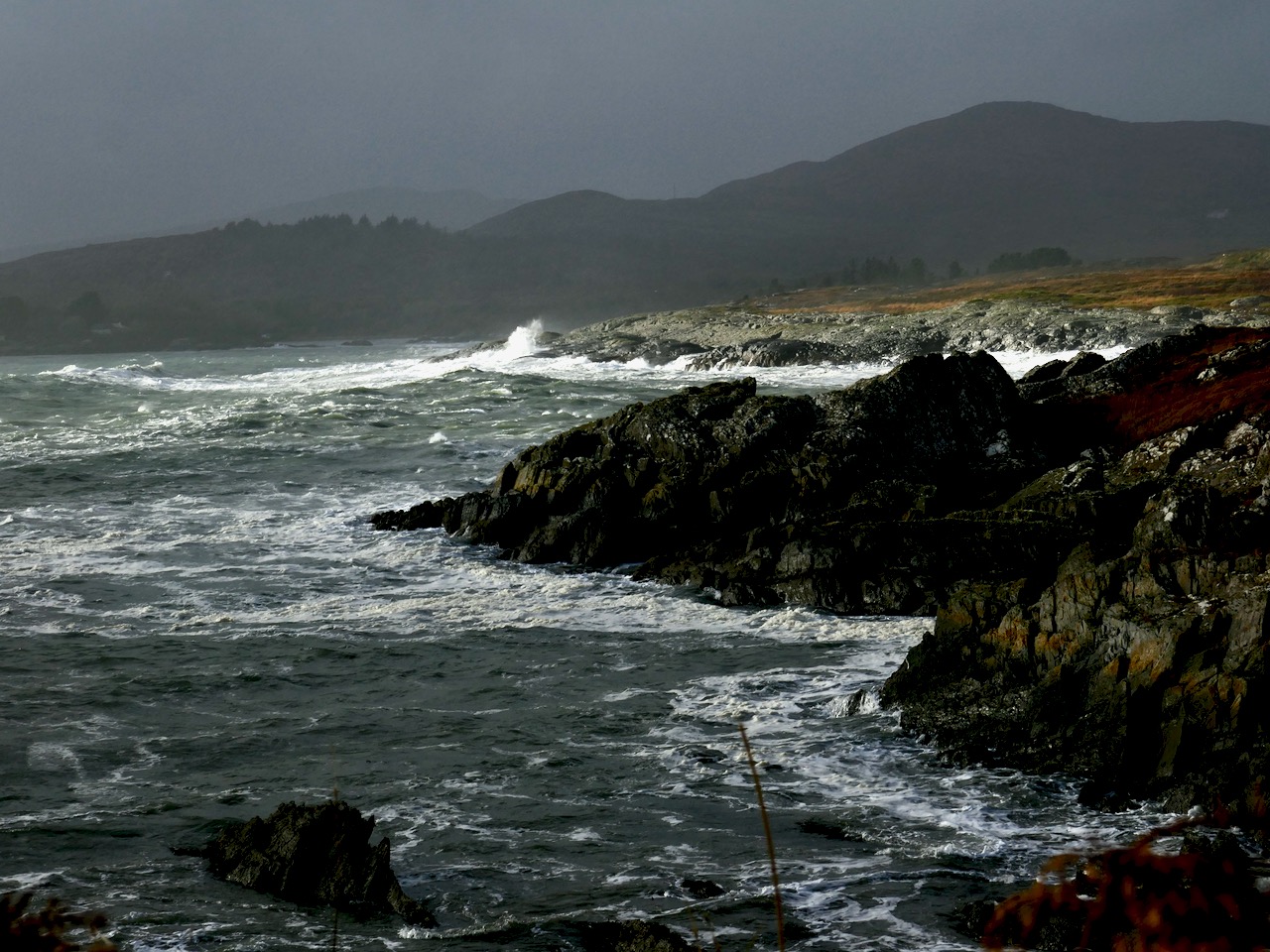
I think people who visit West Skeam don’t realise how high the waves are in a winter storm – big waves ride over the rocks, just missing the houses and pouring back down onto the Strand, quite a lot of water, not just spray. The problem was getting out or going anywhere in bad weather. It was always a worry for the people waiting for about to come back.

Hester says:

Because the island was situated among very rough sea currents, the weather was a big issue in our lives. Storms and high tides could come without notice. We had no weather forecasts but we did have our own signs from nature. Birds flying against the wind meant the wind was going to change for the better – the safest wind was the one blowing from the north east since it didn’t rage or raise the big waves. Bad weather was sure to come when seals were seen near the shore or the cattle were standing near the fence ‘tail for tail’ as if in a stall. Rain was on the way when the fish we had salted and dried for the winter or my father’s tobacco became wet. Very high tides meant a storm was approaching. The fishermen had many other signs that guided them to keep safe on the seas. 

We had no landing pier so it was sometimes very hard to land in rough weather. A big swell would send tons of water up over the landing place and the men had to wait to drop off one or two between these breakers and let the boat go back out to safety until the next chance. They repeated this until everyone and the boat were safely ashore. They were great boatmen and understood where the danger was and how to deal with it. A stranger coming to the island would be drowned the first day.

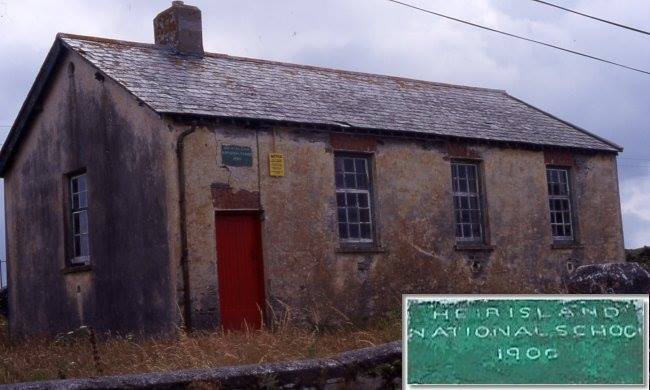
One of the most important effects of the sea on their lives involved attendance at school. The children all went to school on Heir Island, staying with their maternal grandmother in her small house, and having to wait their turn to attend until the older children no longer needed the beds. Thus, Joe didn’t start until he was 10.

Here is Hester’s story:

My sister Mae found school hard and when her Confirmation time came, the teacher said she did not know her catechism well enough to put her in the Confirmation class. The priest backed the teacher. At that time I was eight years of age and still waiting to start school but my grandmother did not have space for me until Mae was confirmed and could leave school. My mother decided she would fight this injustice. On the day of the Confirmation she brought Mae to the altar rails and put her in with the other children. She met the priest and told him she would talk with the Bishop. Her sister-in-law who taught in Lisheen school in the mainland (being a teacher meant power in those days) met the Bishop with her. They had a very fruitful talk with him and he understood the situation. The Confirmation class was always examined by a priest who came with the bishop on the day. Mae was able to answer the few simple questions. The visiting priest called her aside and told her to come up with the other children to be confirmed. The Parish Priest and her teacher were raging. Poor Mae never forgot that day. She was so embarrassed. You would talk today about being bullied in school! My mother and her sister-in-law told that story while they lived. 

Hester and Joe’s mother, Kate, had prepared them at home, teaching them to read and ‘do sums.’ Joe liked school at first and enjoyed meeting other children but he was very homesick. Here is his moving story.

On Friday evenings my parents would row or sail over to take one or two of us home. My grandmother never wanted us to go because there were always jobs to be done. Often on a Friday evening, especially in winter, we would stare across the water looking for a boat coming to take us home, and that was the highlight of the week. It would be a rowing boat in winter, because you could not manage a larger sailing boat. We would play in the fields, the four of us but never for long – we kept looking out across the water. I would sometimes imagine, just as it was getting dark, that I had seen a boat coming; sometimes it was not ours, but a boat going somewhere else, and my heart would sink and I would go away and cry.

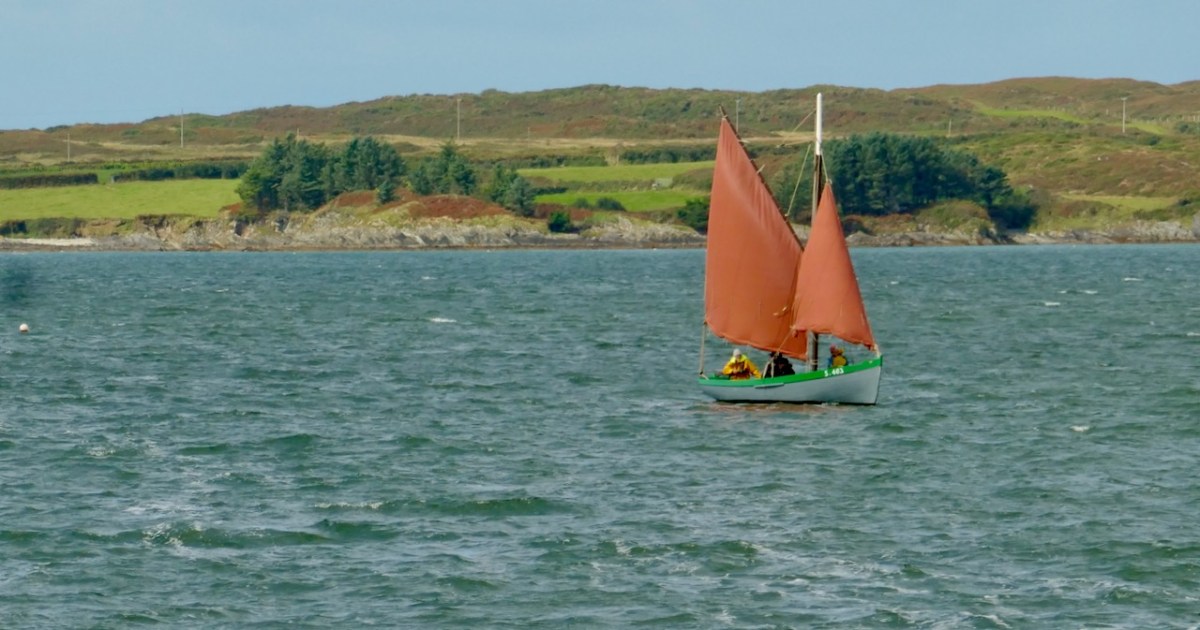
That’s a traditional Heir Island boat, above – perhaps like the one Joe was longing to see. Both Hester and Joe say that when their uncle married there was no longer room at their grandmother’s house and so they would row to school when the weather permitted. Neither minded missing school and all the O’Regan children found great contentment in each other’s company. 

Hester describes what happened after Christmas: When the feasting was over, we had to go back to Heir Island and school. It was so hard to leave home, we were lonely for weeks afterwards. Joe says: At home we never missed the company of other children. We would go upstairs to do homework or sit looking out the windows at the big waves coming over the rocks.

The school on Heir Island finally closed in 1976. By that time it was down to one student. Next time, more about daily life on the island.

* The Natural Environment and Placenames of the Skeam Islands by Anthony Beese. Mizen Journal, No 8, 2000

Back to the Skeams but Distracted by Sickles and Flails

I’ve been wanting to get back to the Skeams since I wrote the first post, West Cork’s Earliest Church: The Skeams Part 1. The next part I planned was to tell you about daily life on the islands, and for this I feel very fortunate to have the recollections of two islanders, sister and brother, who spent their young lives on the Wester Skeam. 

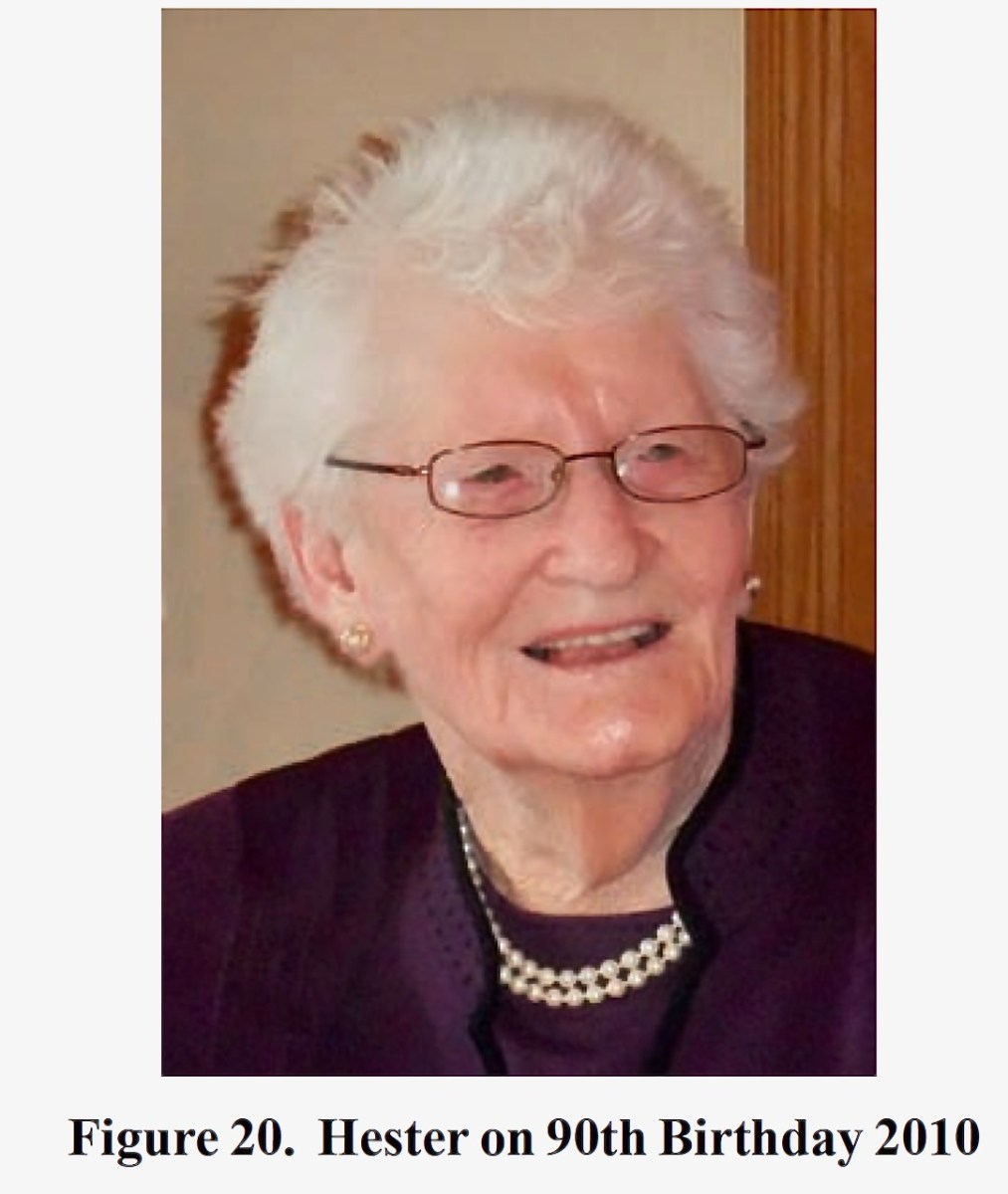
Misty Memories is a memoir by Hester O’Neill, née O’Regan, the youngest girl of the O’Regan family, born on the island in 1920. It’s a gem – compiled by her daughter Brenda, from the notes her mother had made and the conversations Brenda had taped over the years.

Her brother Joseph, one year younger than Hester, recorded his memories in 1993 and that was transcribed and edited by Mary Mackey, and published in the Mizen Journal in 1994. I want to do full justice to these two accounts – brother and sister wrote about many similar and some different aspects of life. But as I read I started to get distracted. Both Hester and Joe wrote about the harvest and how they grew wheat on the Island. The ploughing was often done using donkeys.

The wheat was also planted in the spring. Our land was excellent for growing it and there was no need for spraying . . . The wheat ripened in July or August and was cut with a sickle. Later, when they got more modern, they got a scythe. [Hester]

We used to cut the wheat and oats with a sickle rather than a scythe because we used the straw for thatching our outhouses, and the cycle kept it nice and straight. [Joe]

And so, of course, that sent me off looking for more information on sickles, and who should I stumble across only the remarkable Eoin Reardon. Eoin is still only 24 but has amassed a huge following on social media sites for his tutorials on traditional woodworking. 1.7 million subscribers on YouTube alone. I have met Eoin (very impressive) so I was delighted to see his tutorial on fixing and sharpening a sickle, and then using it to cut oats. Here he is, but do give him a follow on Instagram, TikTok or YouTube – he’s very engaging and you’ll be amazed at what you learn. (Hit Shorts to watch on YouTube)

The next step was to detach the wheat kernels from the stalks:

Then the straw was taken to an outhouse and, to get the grain out, was ‘slashed’ against stones placed on a long bench near the wall . The men wore sack aprons to protect them from the dust and save their clothes from being torn by the strong straw and large handkerchiefs on their heads. They looked like butchers! After that, the grain was put in bags and on a dry day with a little breeze, it was taken out to a field and winnowed from a bucket on to a clean sail to remove all the chaff. [Hester]

The cut wheat or oats outhouse to be beaten on stones which were on a long bench against the wall. It came out very clean. Then on a dry day it would be winnowed from a bucket onto a sail or something similar. [Joe]

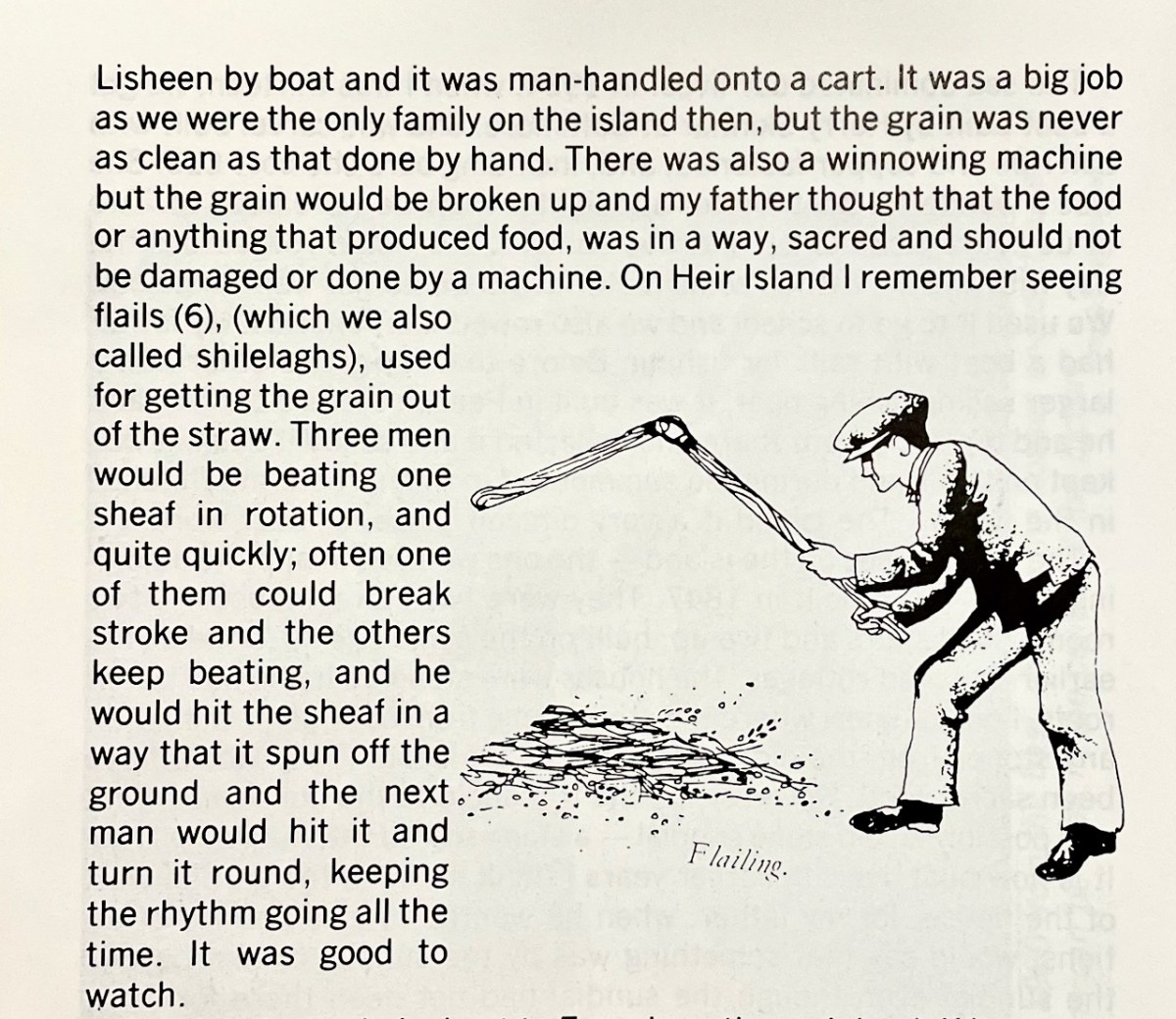
Both Hester and Joe remark that the people on Heir Island, instead of the slashing method, used flails. Here is Joe’s account:

And Hester’s is similar”

I remember seeing people on Heir Island use flails to thresh the grain out of the straw. A flail was made by binding a long wooden handle to a shorter piece of wood with a strong rope or leather thong leaving a length of the rope in between so that the second stick could swing. Three men kept beating each sheaf of straw until all the grain was out – tossing and turning it with great speed and skill. Whenever a row broke out among the men, which was seldom, since the people were very neighbourly, the women were terrified in case they might be tempted to use the flail on one another. 

Once again, I couldn’t resist diving into the internet to see what I could find on flailing and winnowing. Here is a video showing how back-breaking flailing was, and the challenges of keeping the rhythm going.

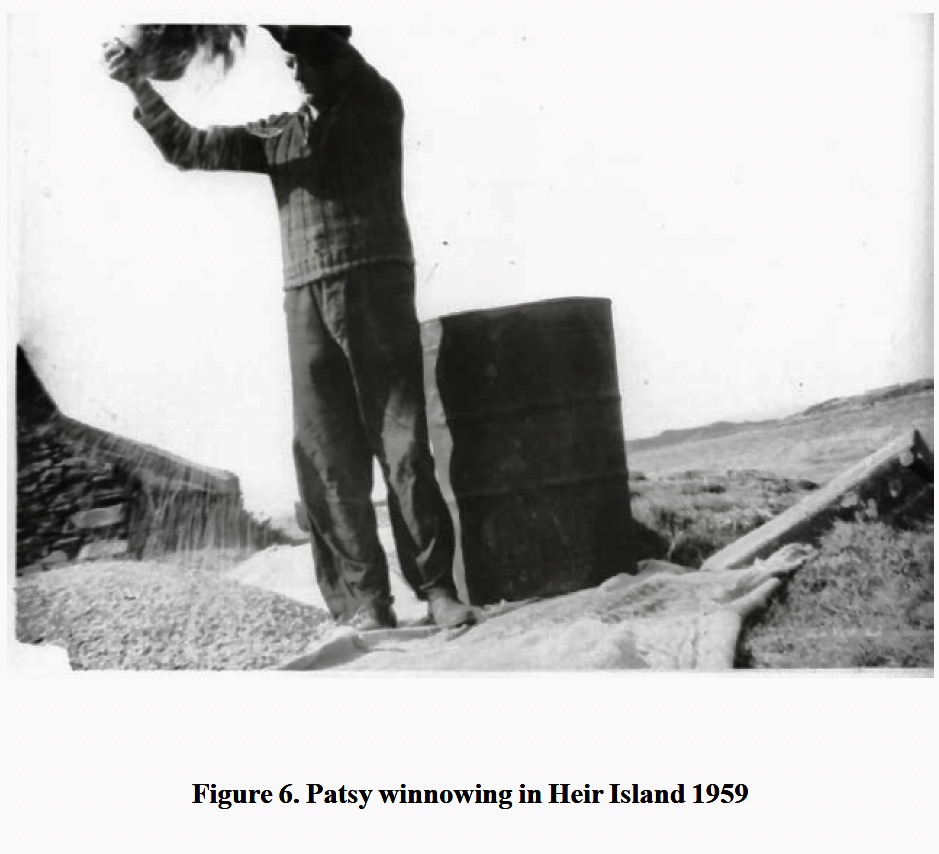
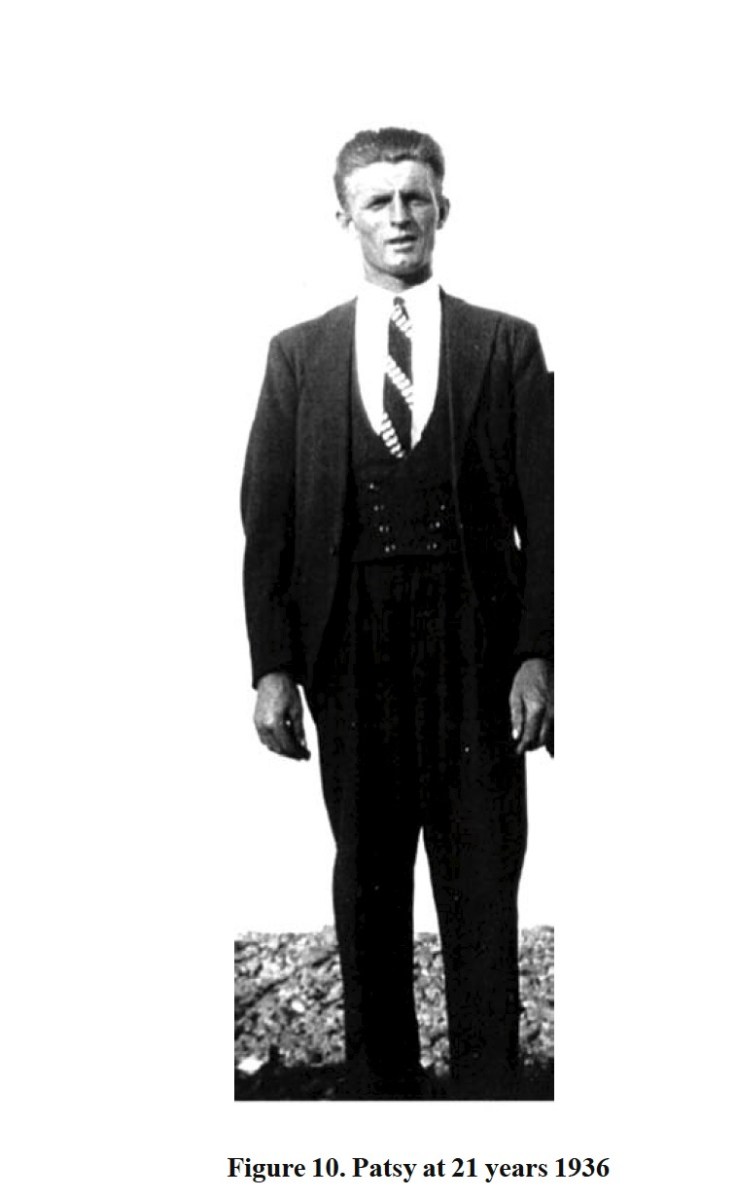
And here is Patsy, Hester’s husband, winnowing. I think the bucket contains the unwinnowed seed and the wheat or oat kernels are spread on the sail in front of him, exactly as in his children’s account.

And finally, not an Irish video, but one from Alberta, Canada, showing the whole process, including grinding for different flours.

Life on the Islands in Roaringwater Bay could be difficult and it was certainly hard work, but that’s not what shines through from Hester and Joe’s memories. Next time, I will look at some of their unique experiences.