One Acre – Three Years On

I’ve been documenting all the wildflowers on my acre in West Cork. I started three years ago with the first post, simply called One Acre and then updated it two years ago with One Acre – One Year On.

The only actual gardening I do is to maintain a herb bed. Apart from that, we get the grass cut and the hedges trimmed occasionally, and a great neighbourhood kid comes to do some very select ‘weeding’ where it’s absolutely necessary. I don’t really believe in the whole notion of ‘weeds’ but I reluctantly accept that we have to keep some areas clear.

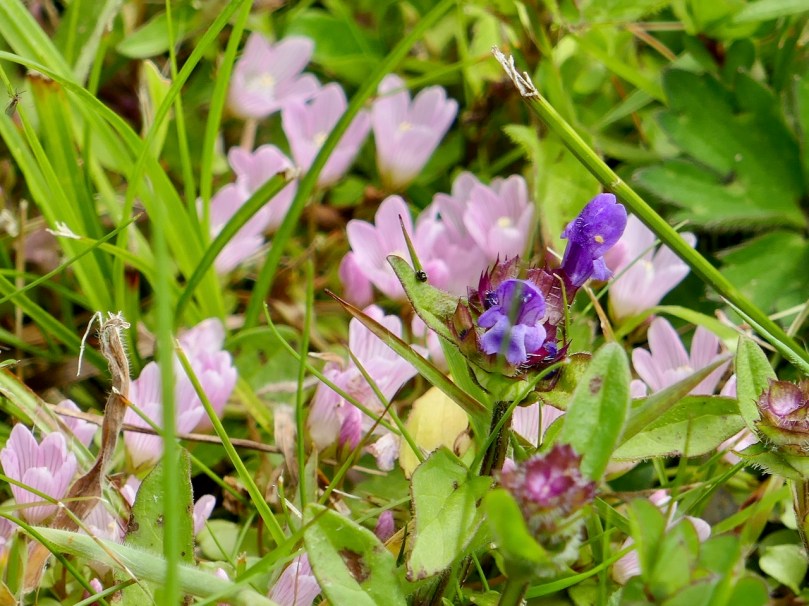
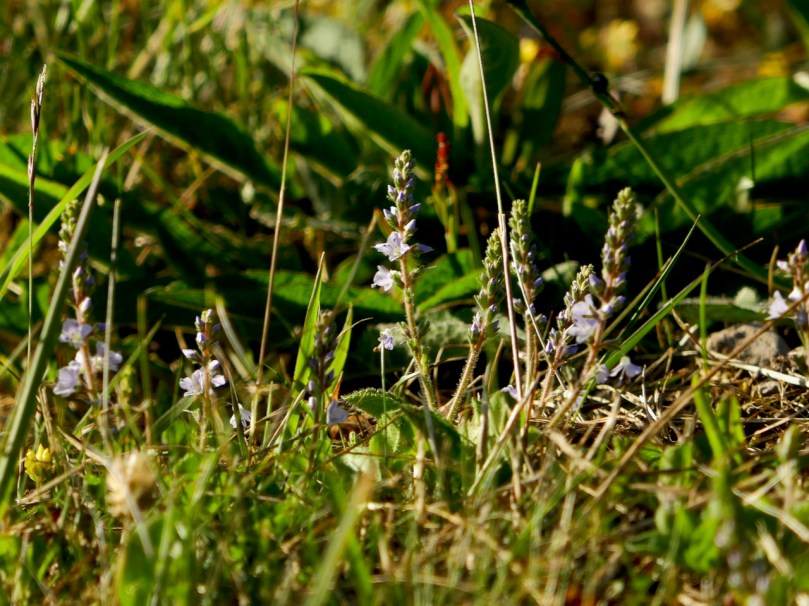
Growing in the lawn, from the top: Bird’s-foot Trefoil, Self-heal, White Clover; Bog Pimpernel and Self-heal; Heath Speedwell; the spectacular male flowers of Sheep’s Sorrel

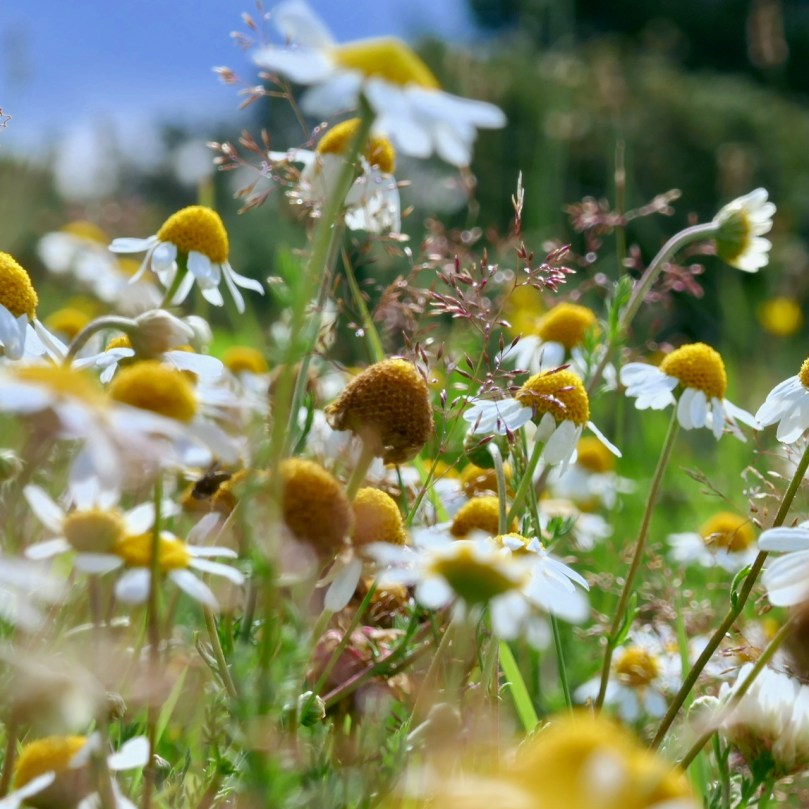
Apart from that I have two approaches. The first is driven by my desire to keep the place as non-manicured as possible and Robert’s desire to have it looking reasonably tidy, or at least not abandoned. This approach is to cut the grass as seldom as I can get away with, leaving all the lawn flowers to flourish in between the cuts. I also leave the boreen/right of way above the house uncut all summer, as this is where the Chamomile (below) grows most abundantly and as it’s getting rarer in Ireland I feel privileged to have it.

The second approach is to set aside part of the garden as a perennial wildflower meadow (below). In planning and maintaining this meadow I have followed best practise as laid out by various experts in creating pollinator-friendly spaces and I am delighted with the results.

I started with a grassy slope and simply didn’t cut it for the first summer. In the autumn I had it cut and thoroughly raked. This is an important step – if you leave the cutting in the grass it fertilises or enriches it, and what you want is soil that is as impoverished as possible.
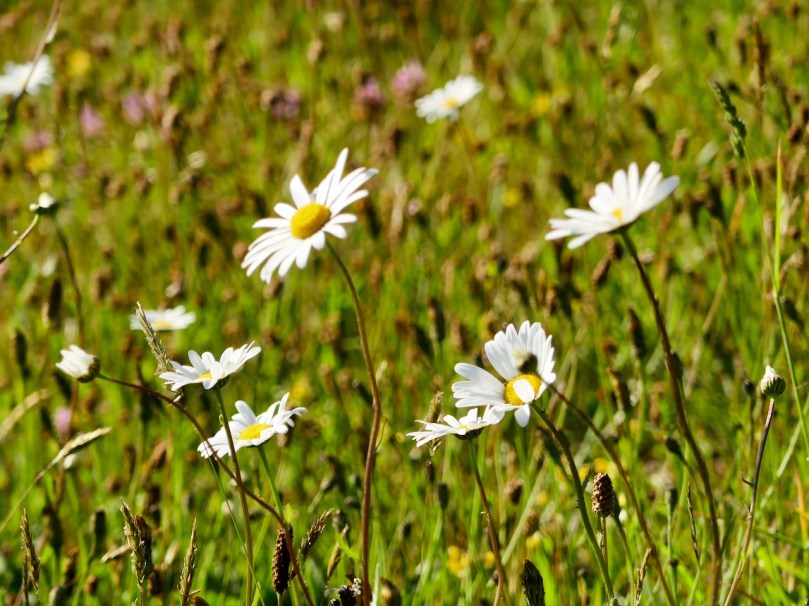
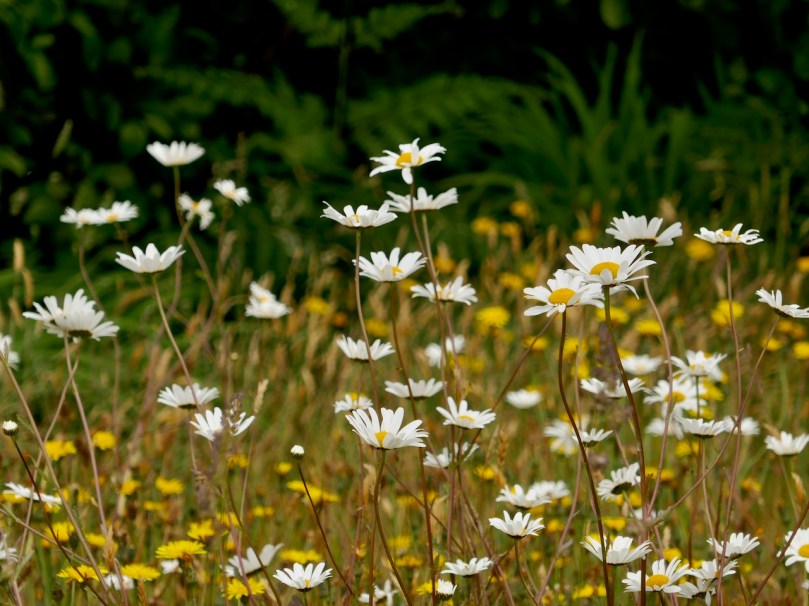
Above, from the top: Oxeye Daisy; Field Wood-rush; Cat’s-ear

The following summer I just let it grow and it seemed to flourish with all sorts of grasses coming up, as well as Knapweed, Oxeye Daisies, thistles, Sheep’s-bit, Ribwort Plantain, White and Red Clover, Cat’s-ear, and lots of Bird’s-foot Trefoil.
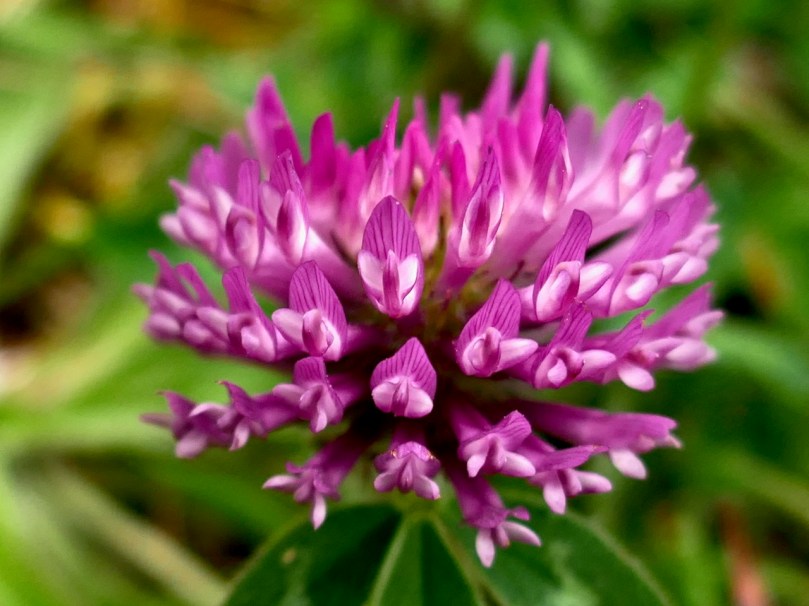
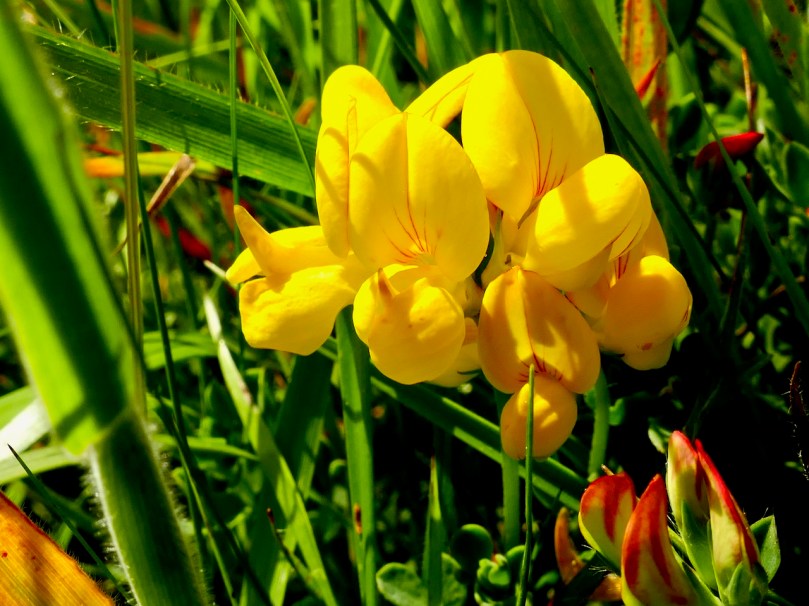
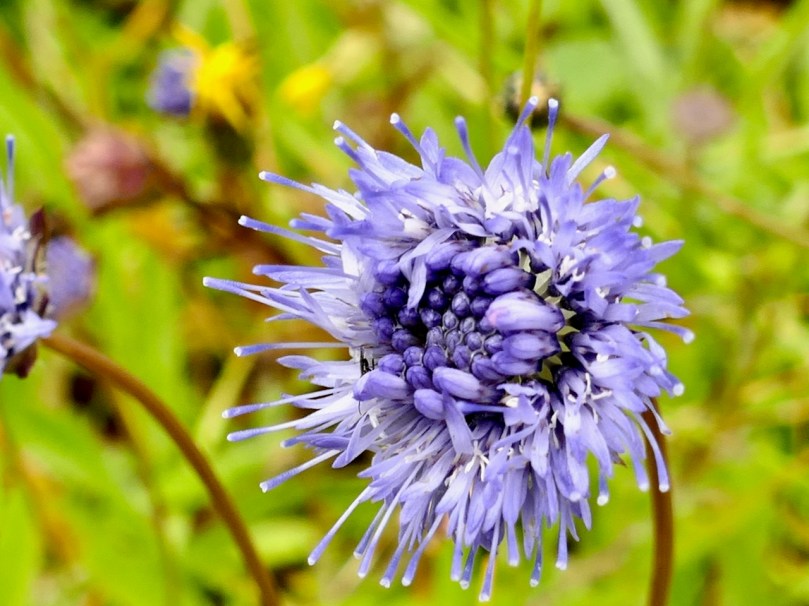
Above, from the top: Red Clover; White Clover; Bird’s-foot Trefoil; Sheep’s-bit; A Painted Lady Butterfly and a Bumblebee on Knapweed

That autumn I had it cut and raked again but this time I introduced the only intervention that the meadow has received. Once the grass was cut and raked I broadcast Yellow Rattle seeds (bought from wildflowers.ie which guarantees to only sell native Irish seeds). Yellow Rattle (below) is a magical wildflower. It parasitises on the roots of the grasses, thinning them out and creating more bare patches where wild seeds can land and germinate. Although it does grow in the wild in West Cork it would be hard to find and harvest enough seed for my meadow.

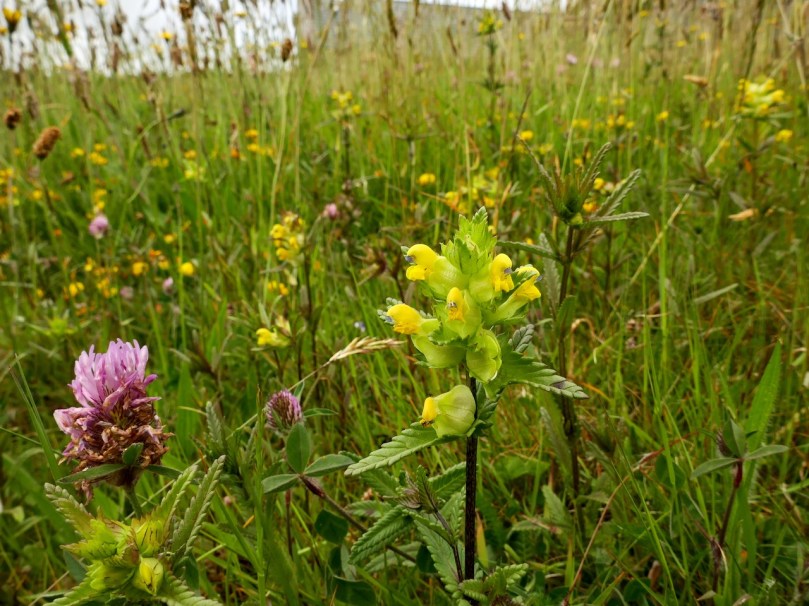
We have lots of birds who visit our garden but I had never seen pigeons there until I sowed the Yellow Rattle. It was like a shout went out, and they descended in flocks, pecking away at all my precious seeds, with me inside banging on the windows or racing out to chase them away. I needn’t have worried too much – they left enough seeds to have a really good showing the following spring. They self-sow readily and I have now had two seasons of Yellow Rattle working away to reduce the tough grass roots.
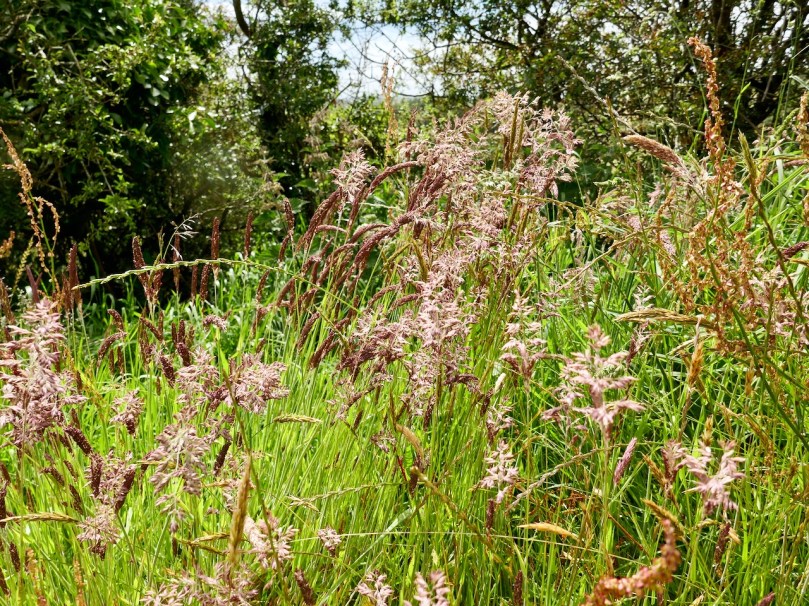
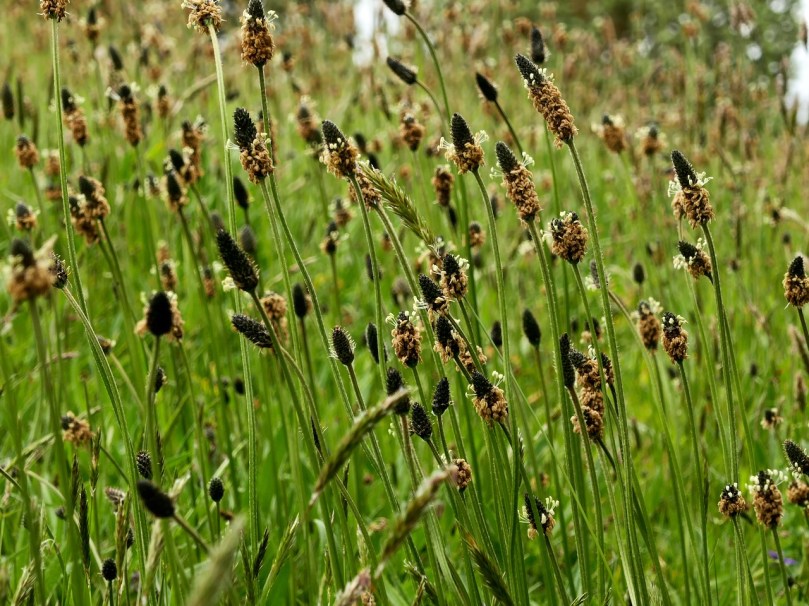
Above: I still have lots of grass, of course – an amazing variety – and a vast extent of Ribwort Plantain

I said above this was the only intervention I have made in the meadow, but now that I think of it I have also dug out some large dock plants as it does tend to take over. I have since read that this may have been the wrong things to do as its almost impossible to get all the roots.
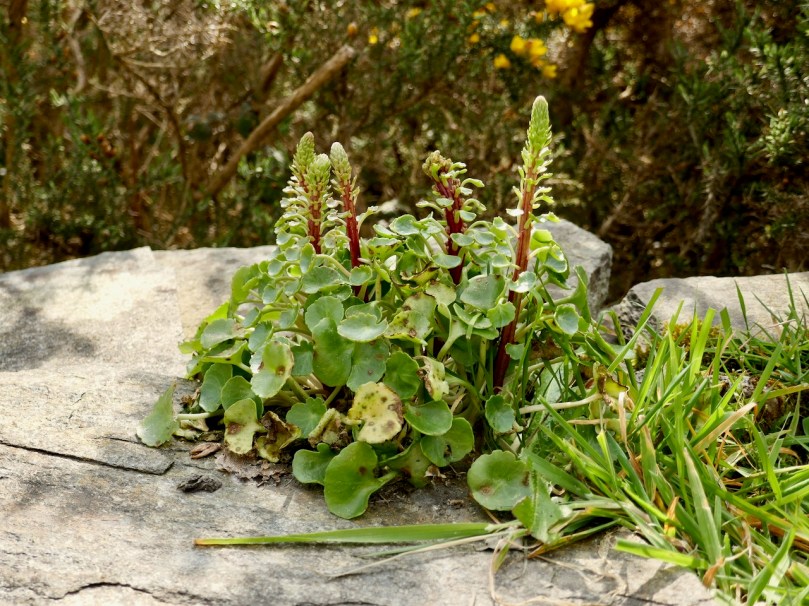
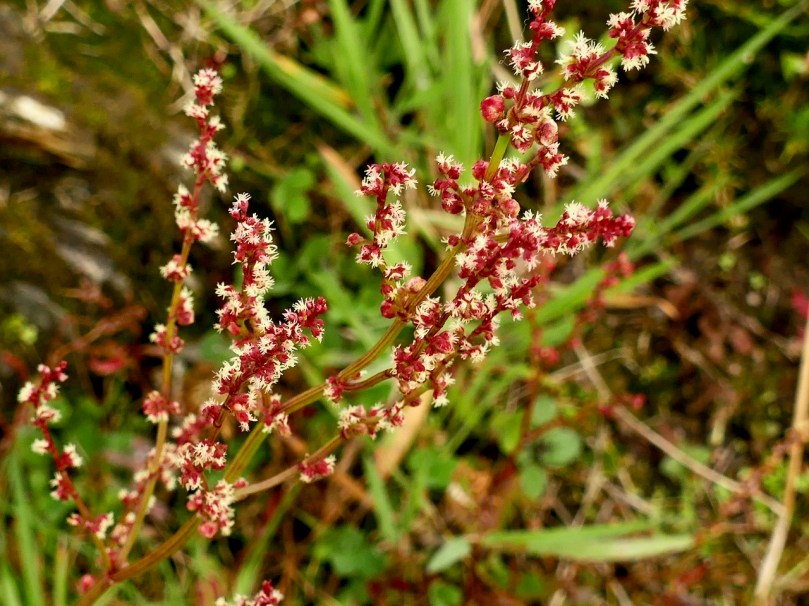
Above, from the top: Navelwort; Lady’s-mantle; Knapweed about to emerge; Common Ramping-fumitory; Common Milkwort

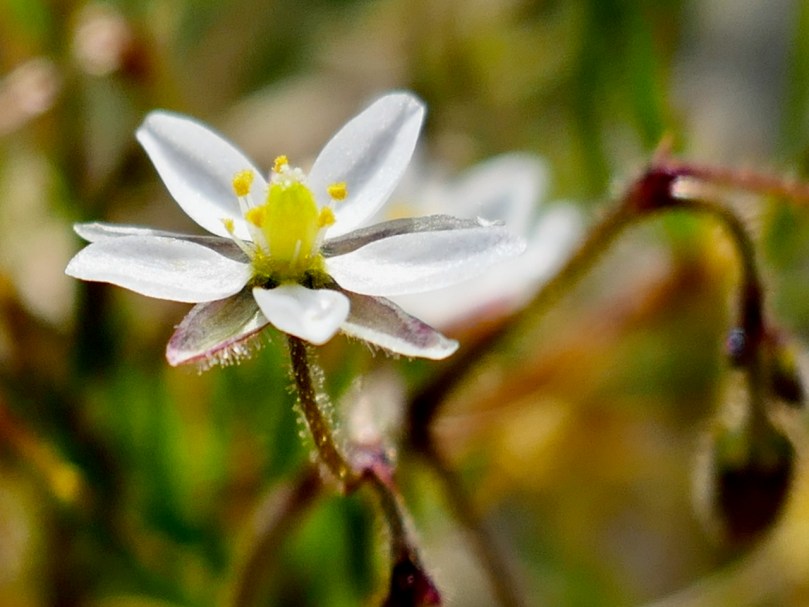
We have a gravel driveway, rock walls, a stone terrace with steps, and a small patch of trees and ivy and all provide habitat for wildflowers (above) that spring up unbidden from time to time, some welcome (like Corn Spurrey and the Sharp-leaved Fluellen which is an endangered species) and some not so welcome (like the Verbena bonariensis that is fast becoming a ‘possibly invasive’ species).

Above, from the top: Sharp-leaved Fluellen; Verbena bonariensis; Corn Spurrey

You’ve probably seen photographs of annual wildflower meadows (as opposed to my perennial meadow) full of brilliantly coloured poppies, cornflowers and corn marigolds. What they don’t tell you about these kinds of meadows is that firstly they are a lot of work and have to be re-done every year and secondly that you have to be really careful where you get the seeds as many companies sell imported mixes (marketed as ‘bee-bombs’, for example) which do not serve our native insects well and which have the potential for introducing invasive species. My friend Jack has done a brilliant job on his annual meadow, sowing only native seeds from Sandro Caffola at Wildflowers.ie and the results are spectacular (below).

It takes a bit of a mindset change to see beauty in a perennial wildflower meadow and an acre of land where wildflowers are prioritised. Accustomed as we are to equating a well-mown lawn with tidiness and good management, it might be difficult to look at an expanse of Daisies, Cat’s-ear and Autumn Hawkbit and Smooth Sowthistle (all of which look more or less like dandelions), Bird’s-foot Trefoil and Self-heal and not see ‘weeds’ and neglect.

Above from the top: English Stonecrop; Self-heal; an uncommon white form of Self-heal

But that shift in our perspective? We all need to make it now, if we want to save our pollinators.

A Signal Success in Irish Engineering – Part 6: Dunnycove

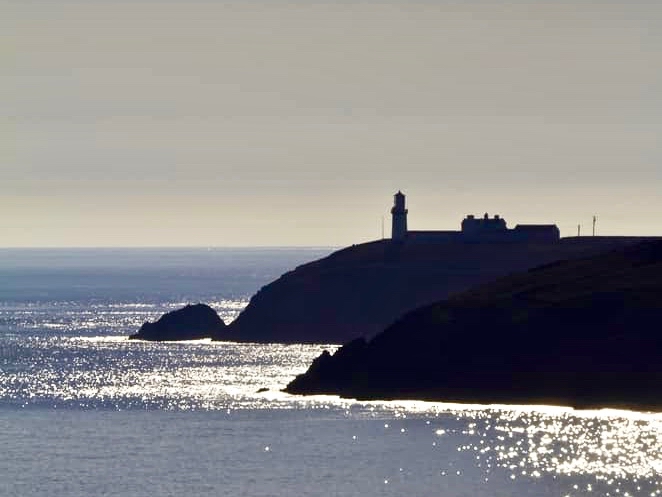
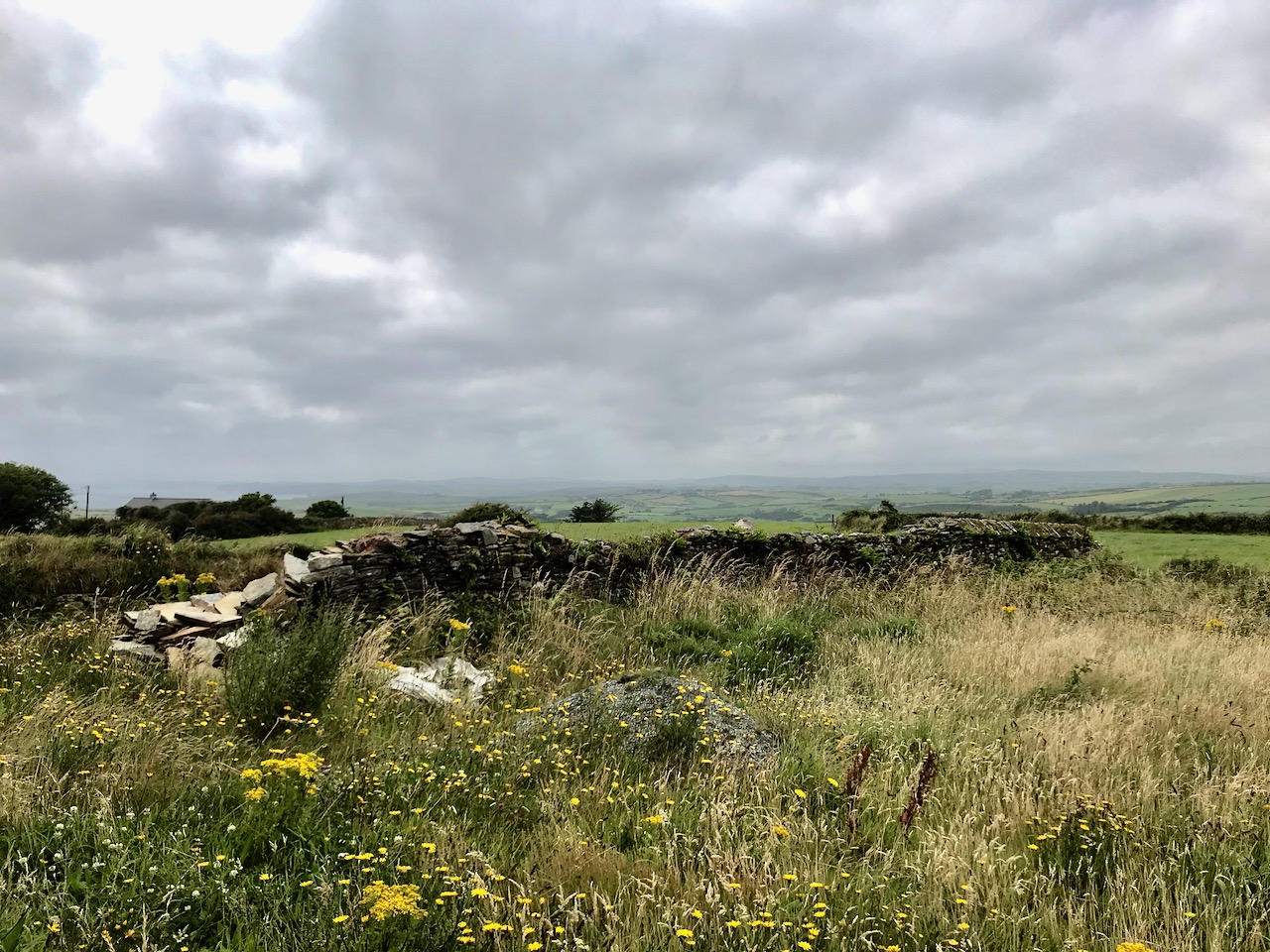
Galley Head, in West Cork, is one of those wild and exposed headlands where you get exceptional views in all directions. In our hunt for Napoleonic-era signal towers on the Irish coast you would fully expect to find one of the towers here – but no! A lighthouse and lightkeepers’ cottages – yes. These date from around 1875 but, in the early years of the nineteenth century, the strategically important signal tower was built inland, in the nearby townland of Dunnycove.

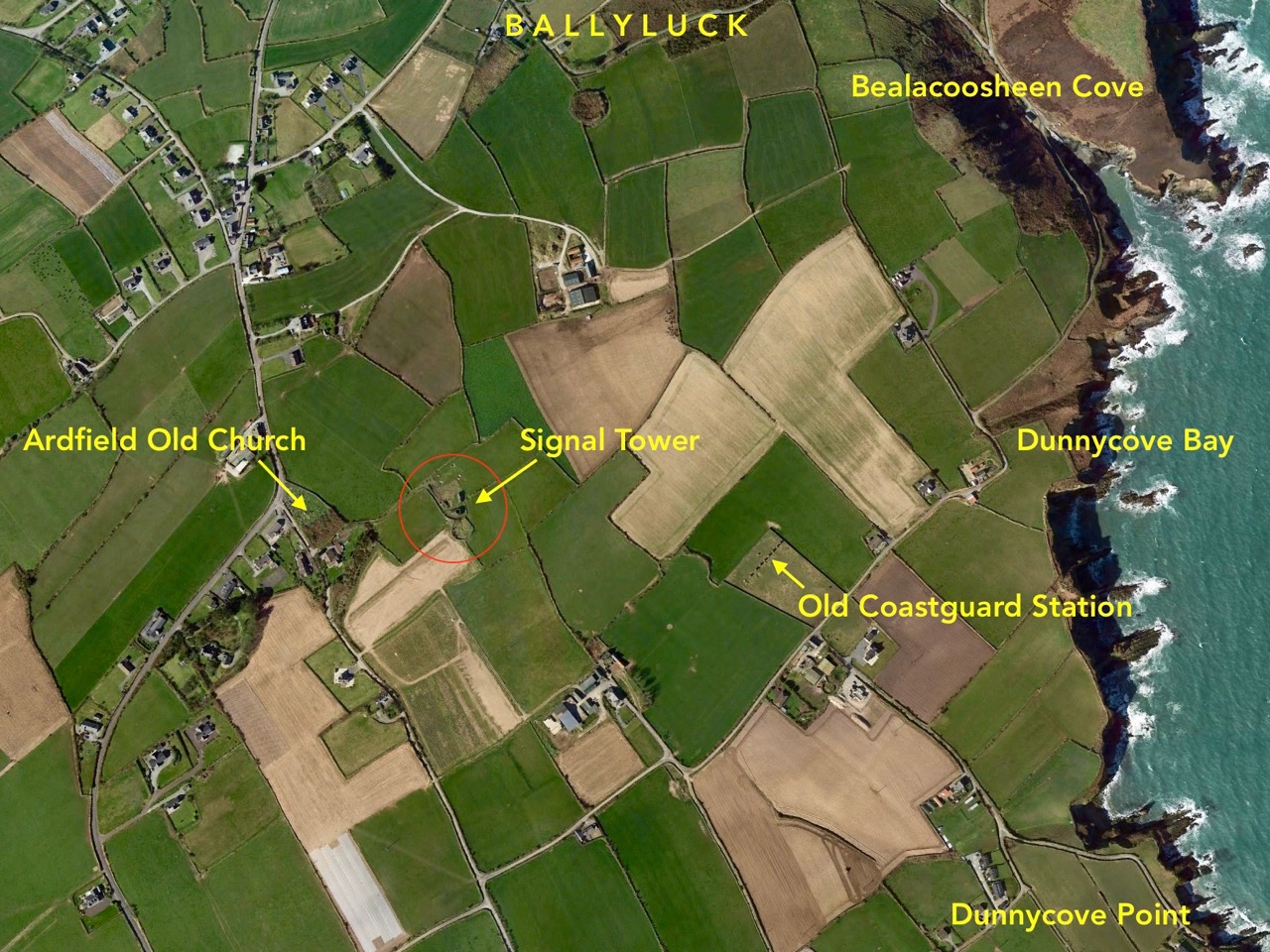
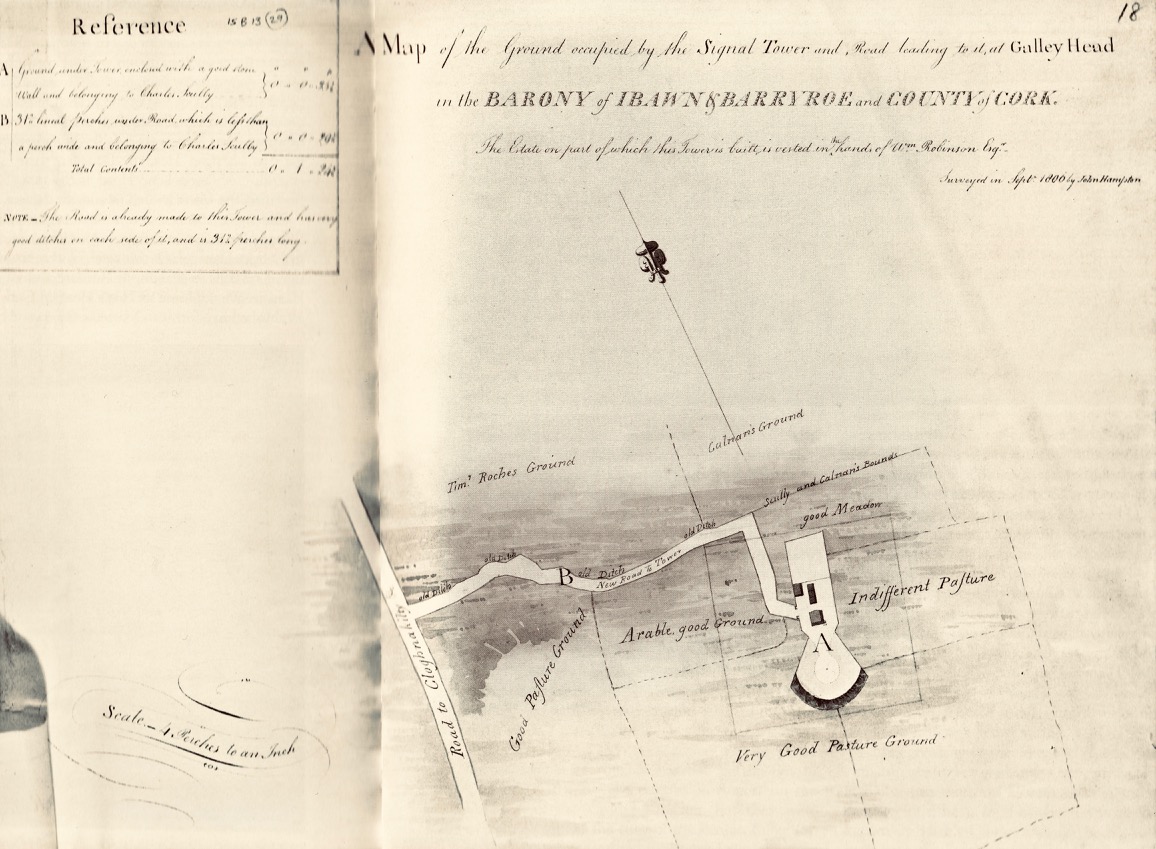
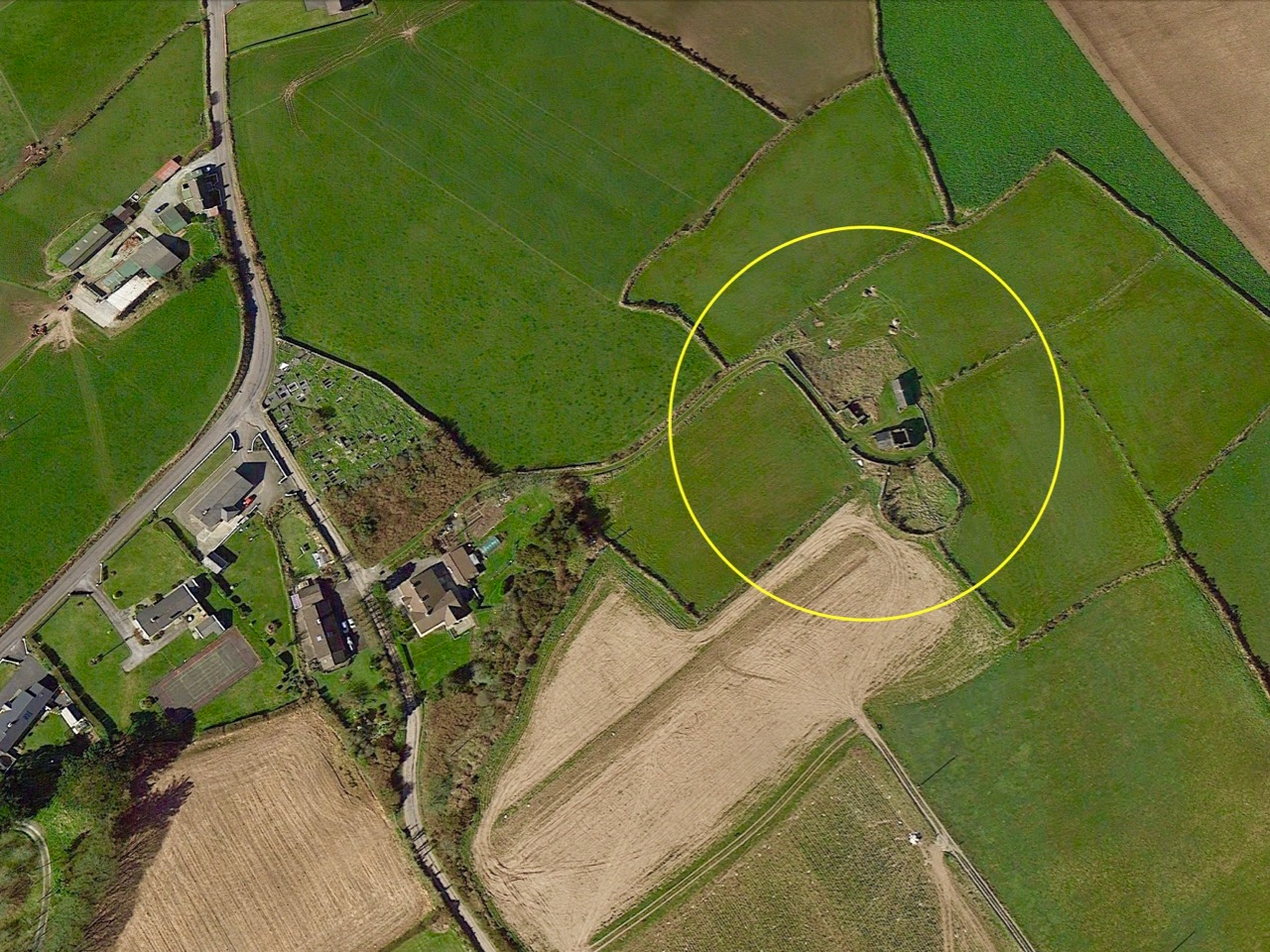
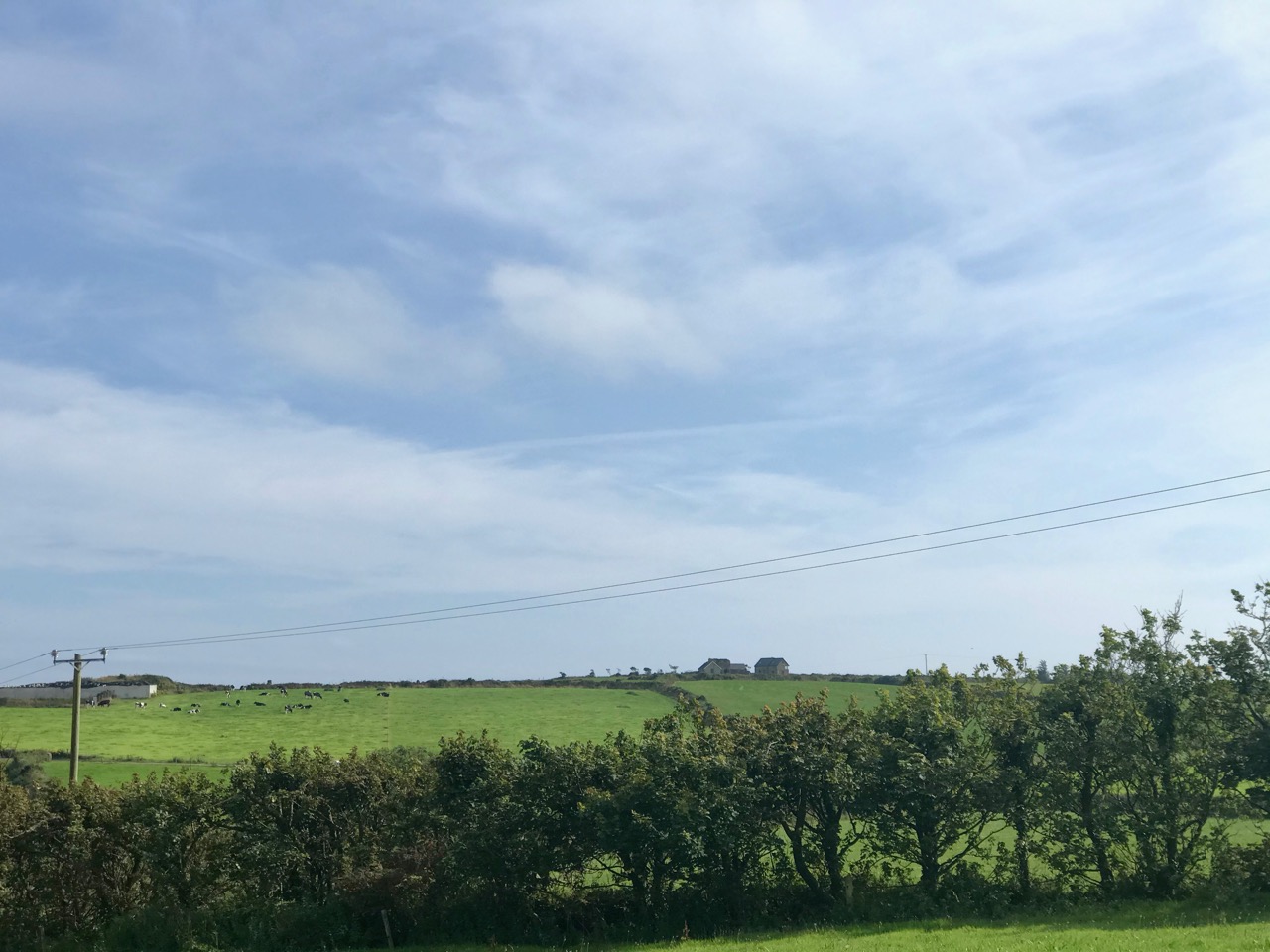
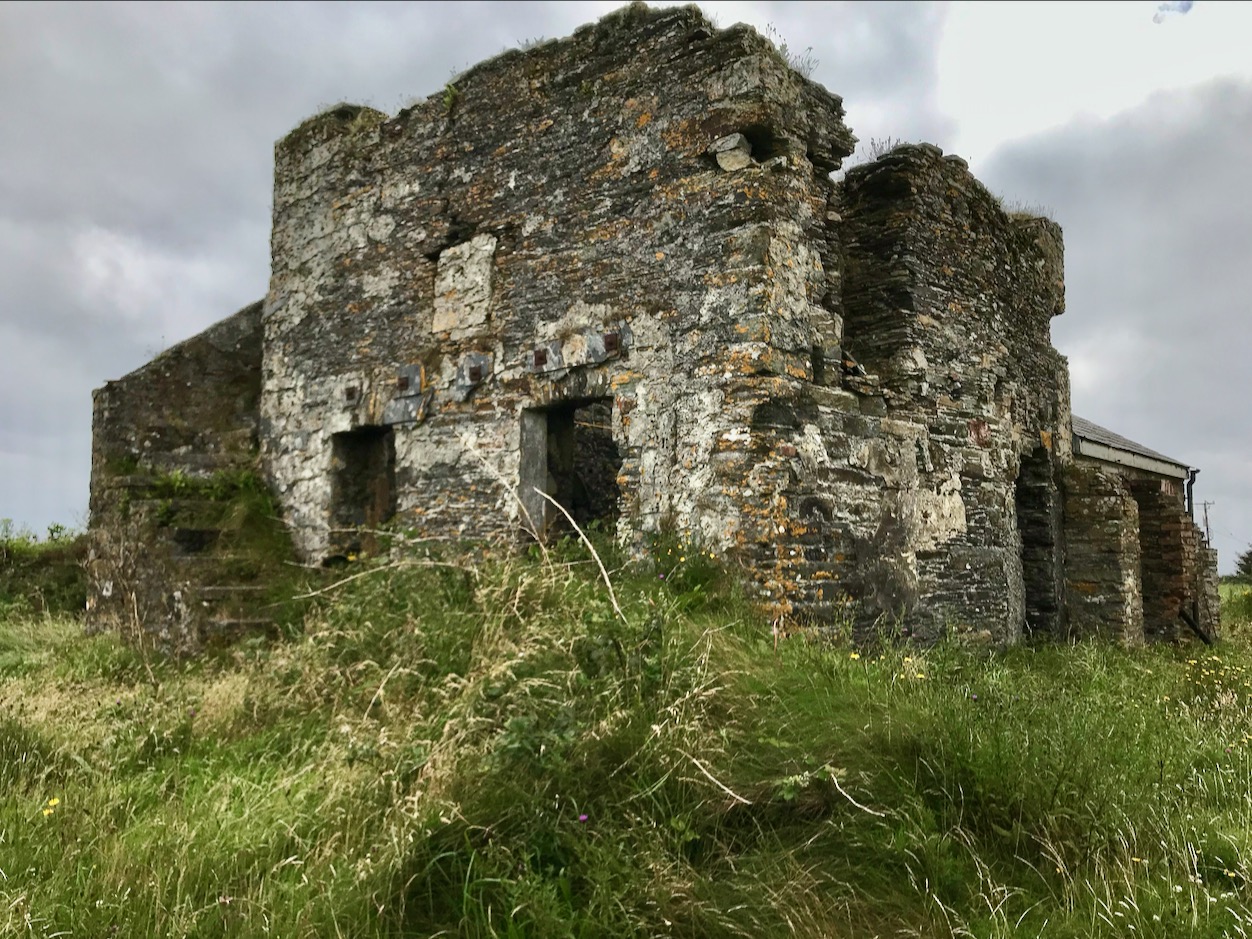
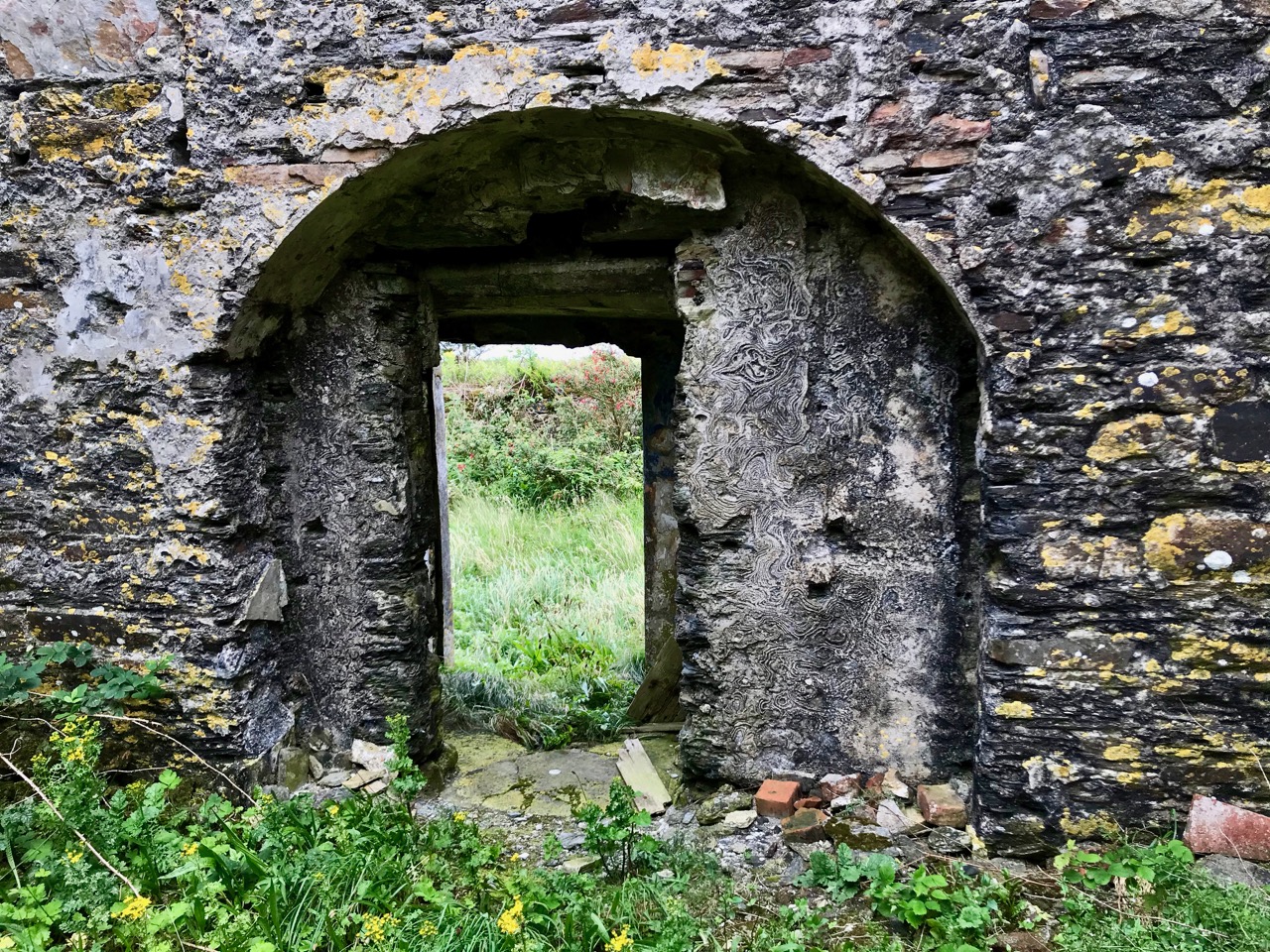
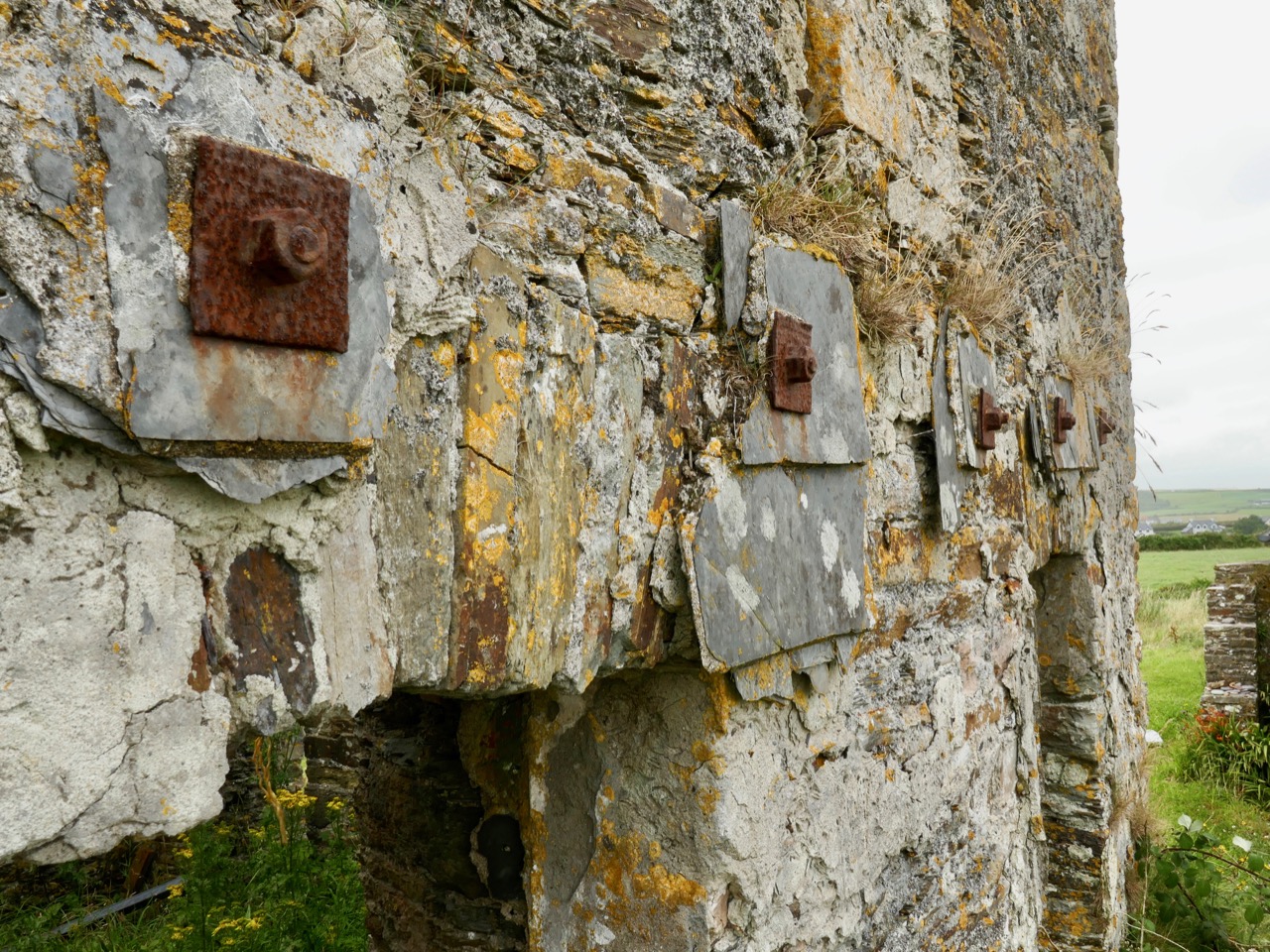
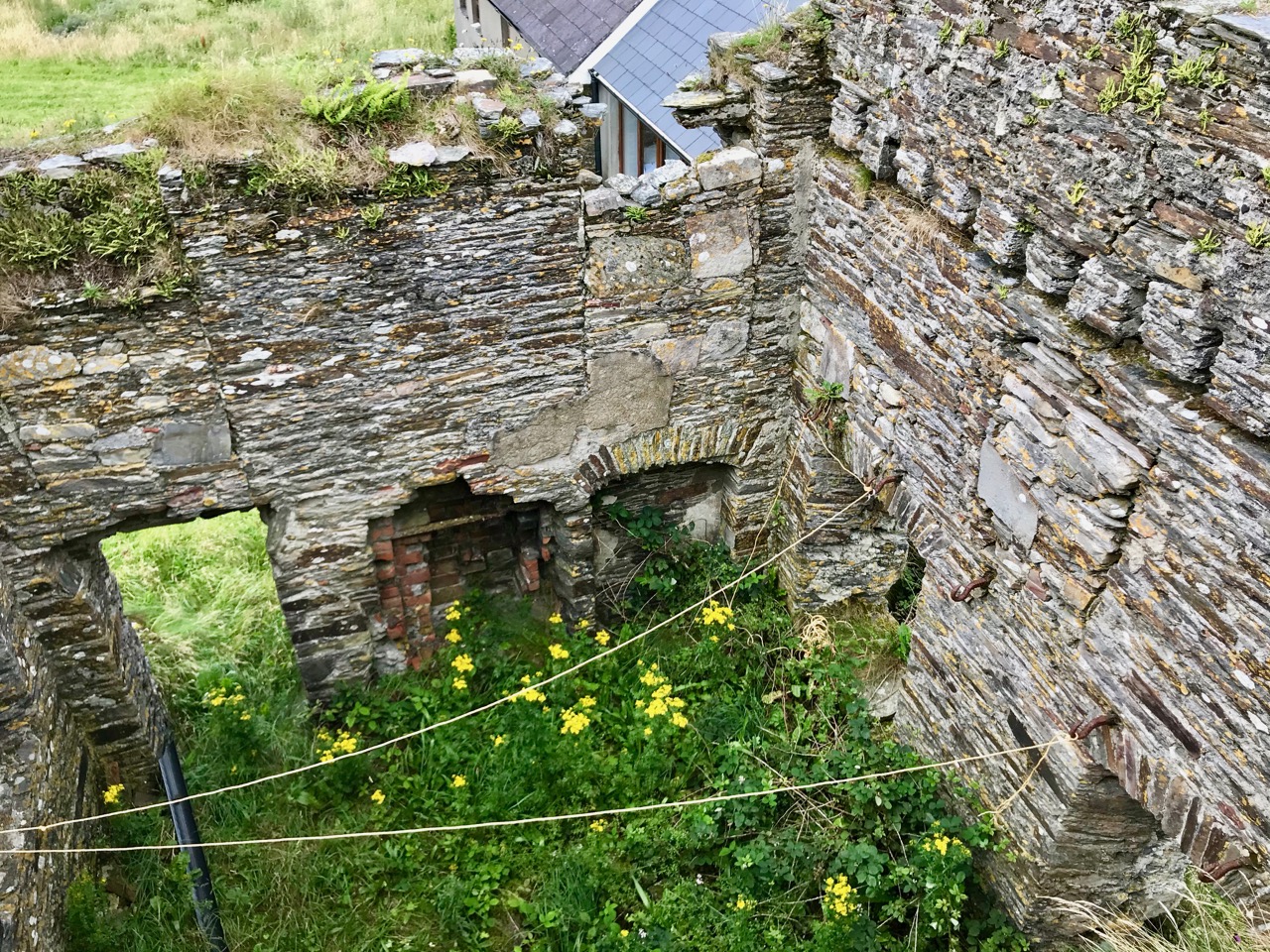
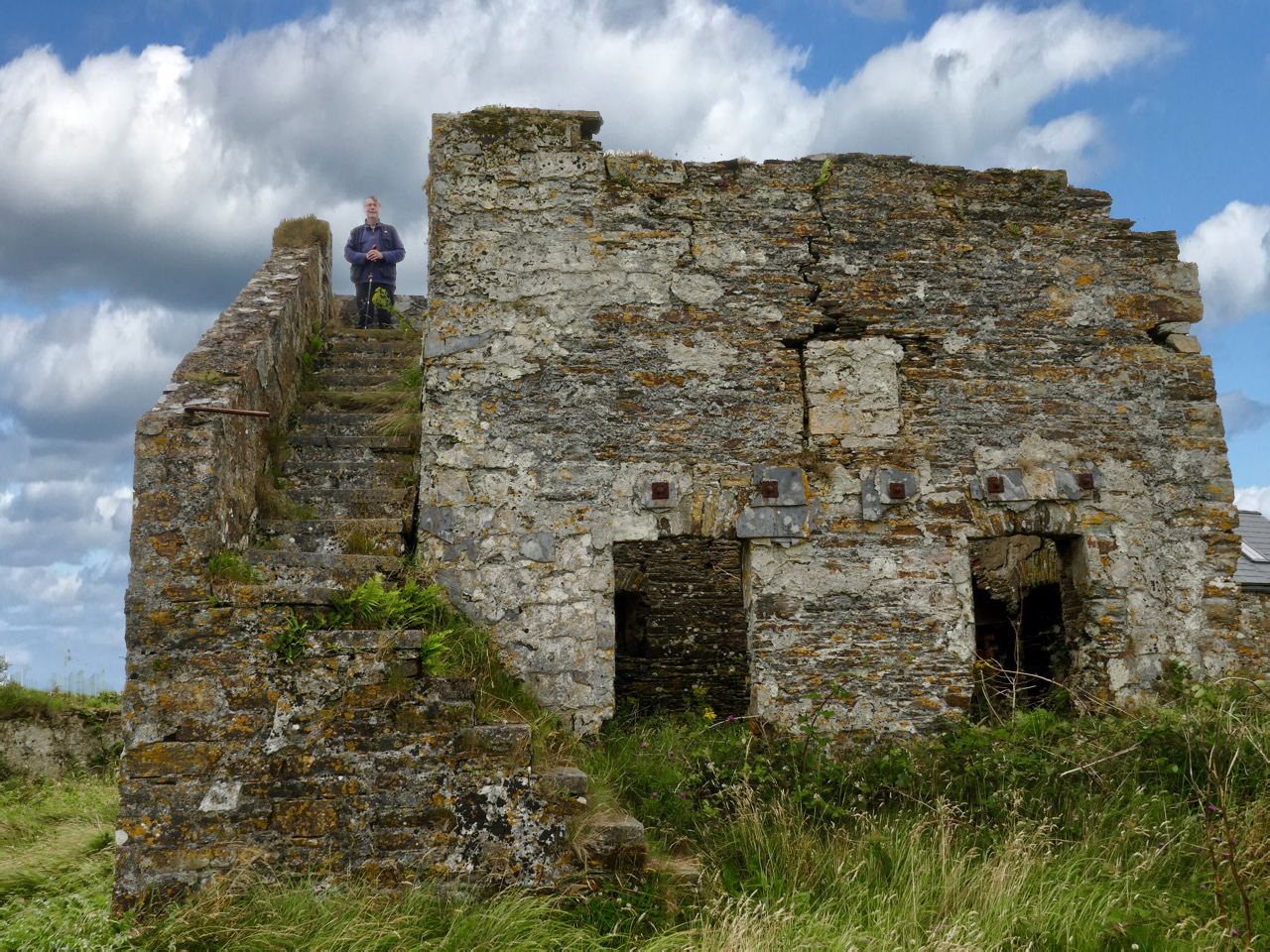
The header picture shows what remains of the tower itself today. This has in fact been adapted over the years, and the original building conformed to the square tower pattern that we have investigated elsewhere (a good example is at the old Head of Kinsale). The upper picture (above) shows the lighthouse at Galley Head seen from high ground to the east, while the lower picture is an aerial view of the Dunnycove signal tower site in its wider surroundings. Below is an 1806 map of the ‘. . . Ground occupied by the Signal Tower and Road leading to it at Galley Head . . .’ This tower is often referred to as the Galley Head Tower, even though it is some distance inland from the Head. But it is well placed to command views to the towers in the communication chain immediately to the west (Glandore) and east (Seven Heads).

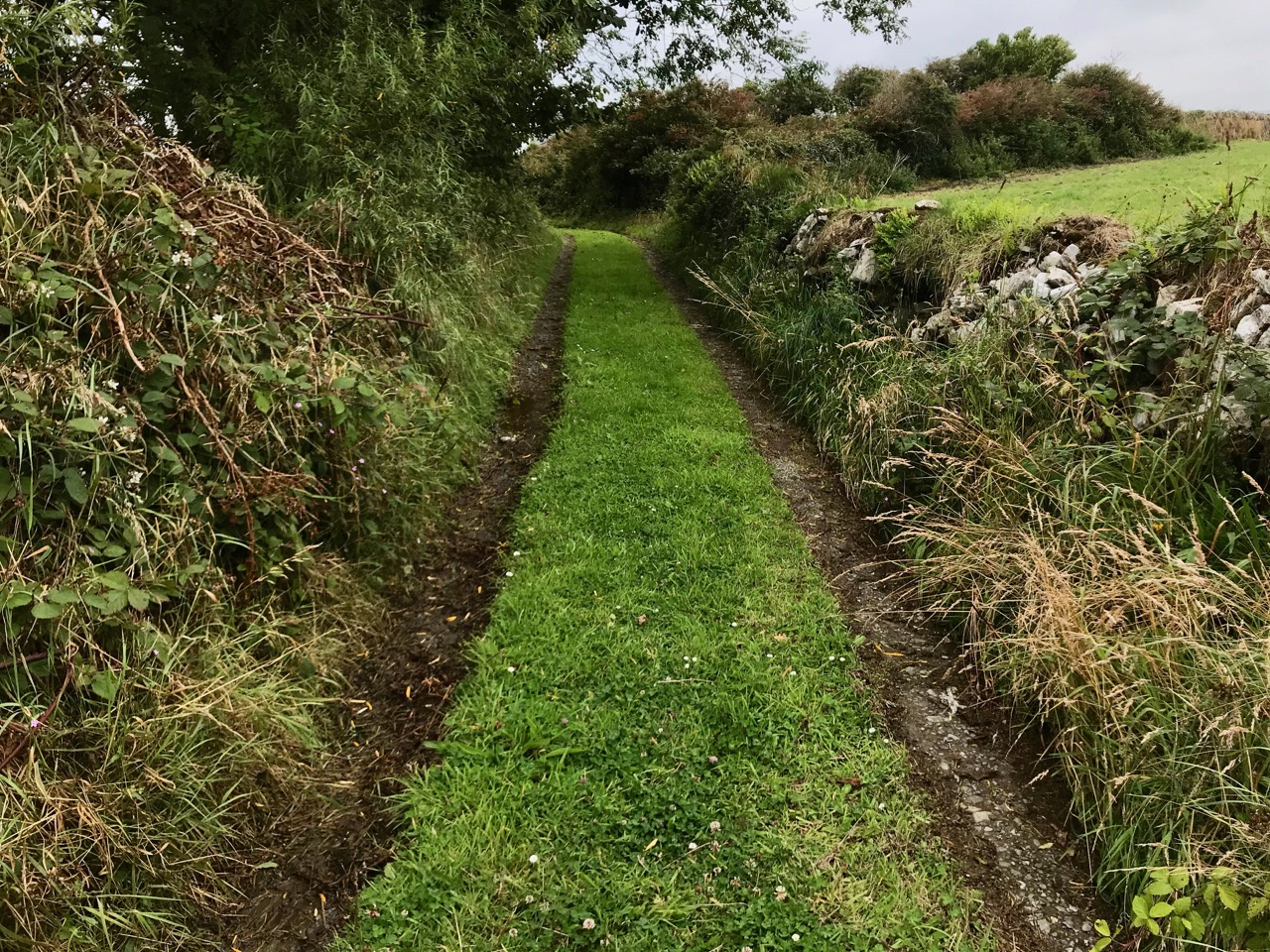
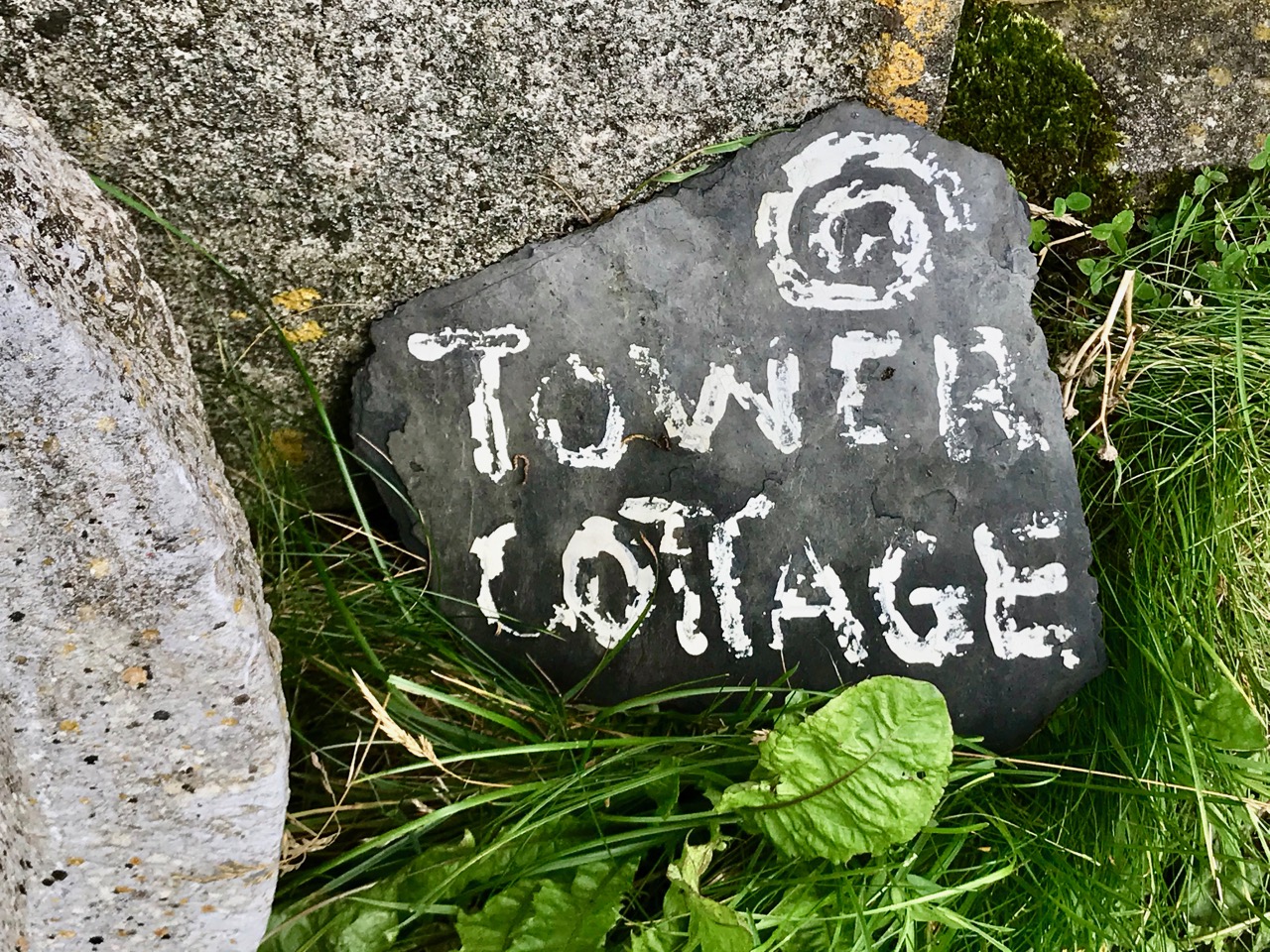
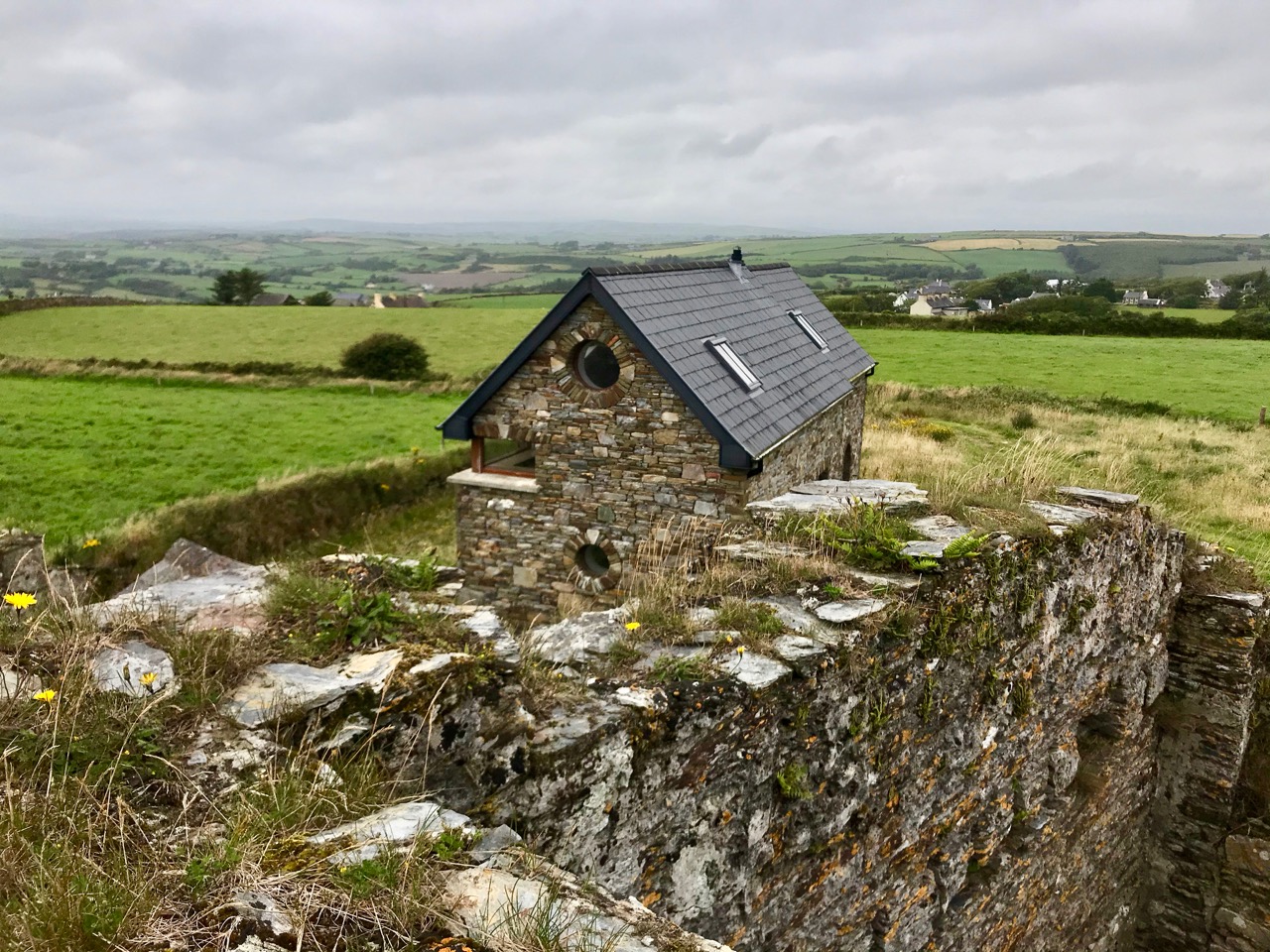
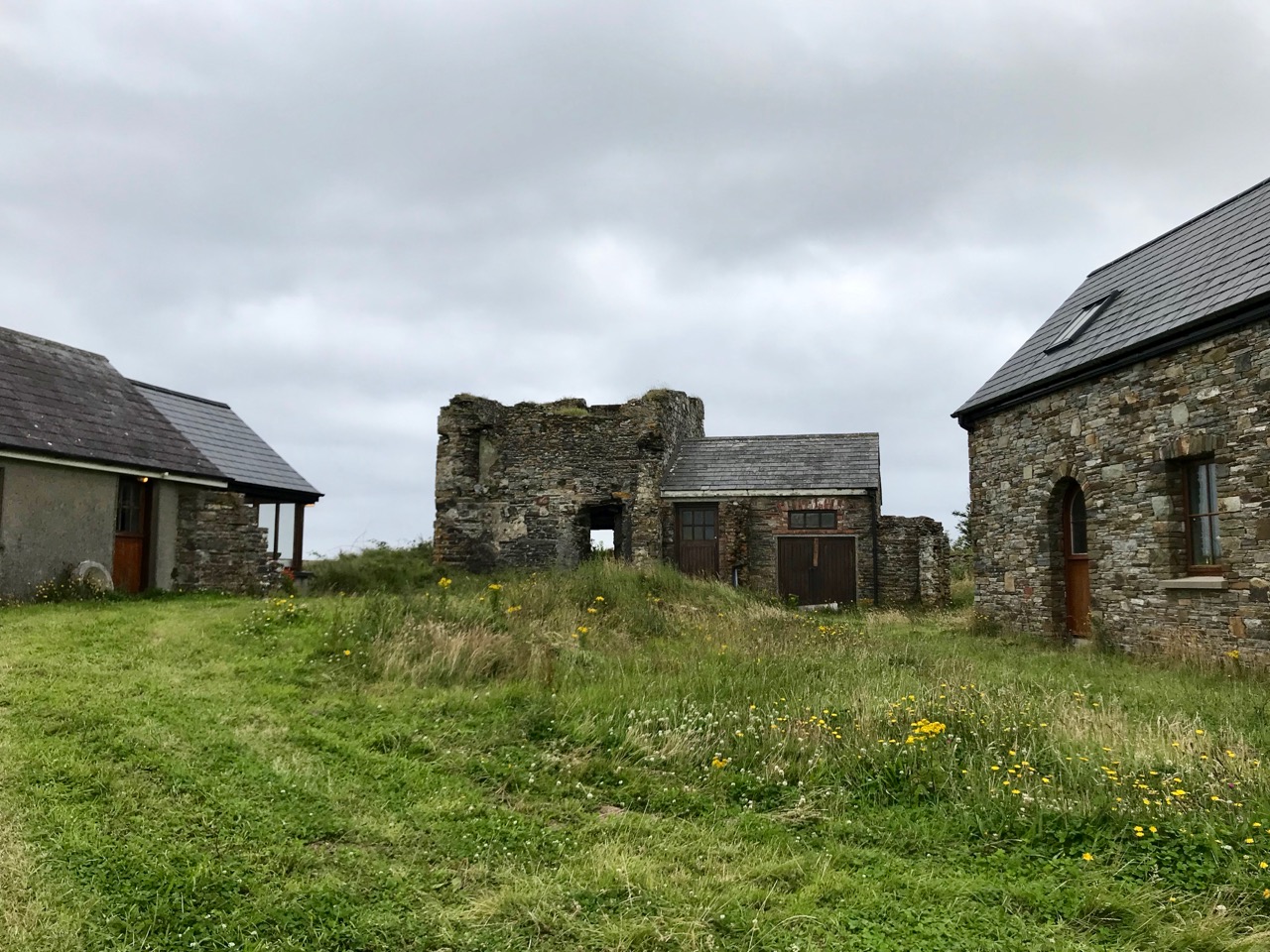
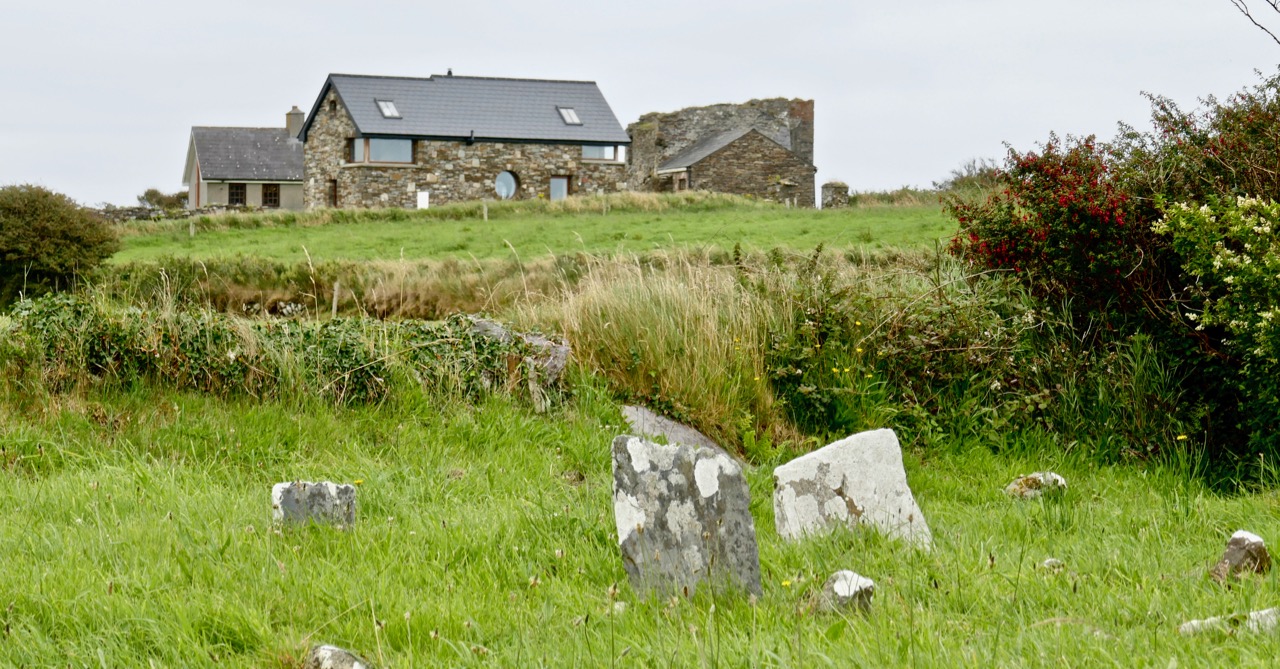
The curious profile of the site as marked out on this early map shows a segmental shaped area to the south of the tower. It is likely that this was where the signal mast itself was situated. I am intrigued by the descriptions of the surrounding land: ‘good Meadow’, ‘Indifferent Pasture’, ‘Very Good Pasture Ground’ and ‘Arable good Ground’. Also, on the left of the survey drawing appears to be a table of land values, and the statement that ‘The Road is already made to this Tower and has very good ditches on each side of it, and is 312 perches long’. The road is in good condition today, as the site has been developed with a cottage and modern studio:

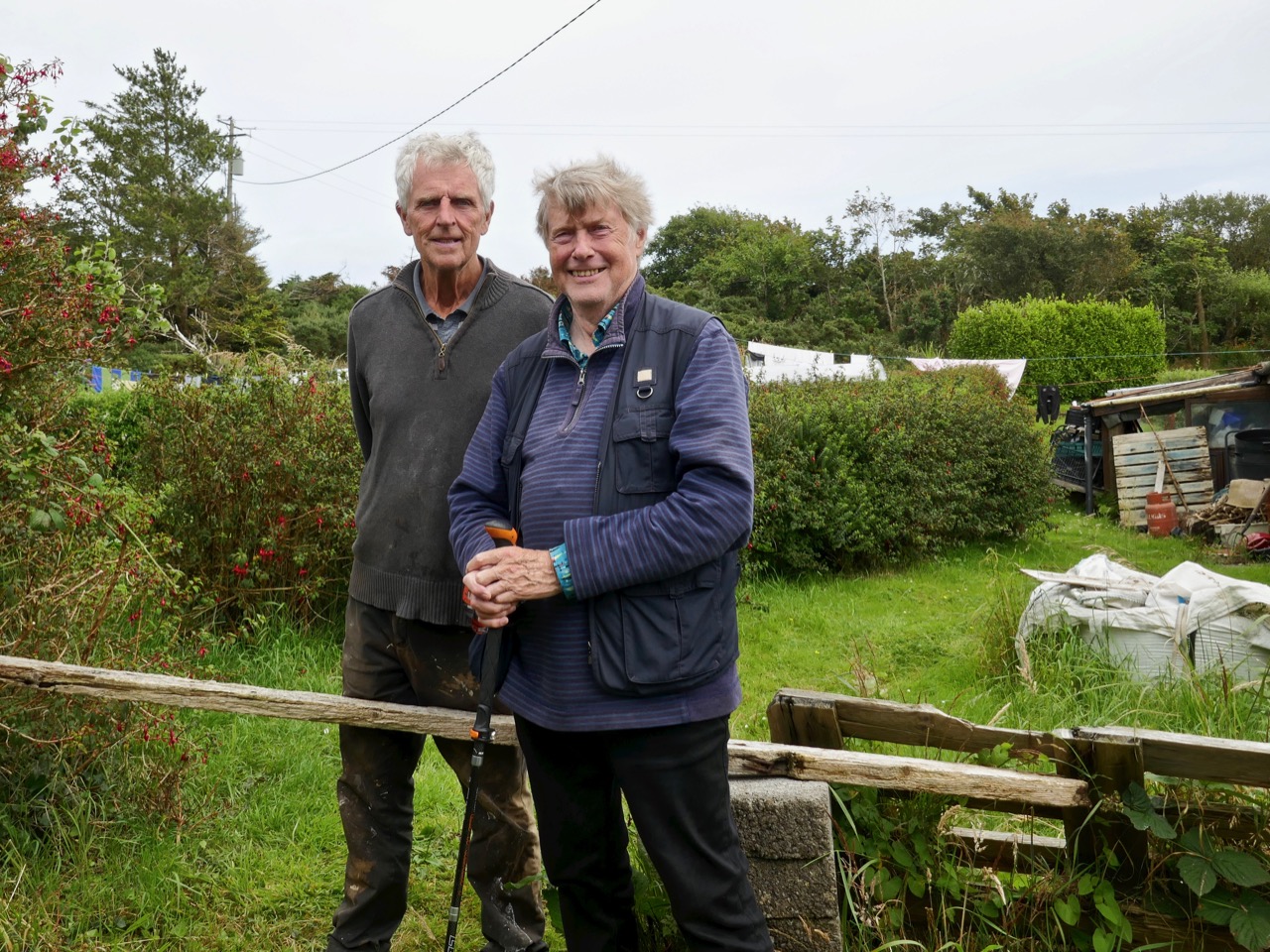
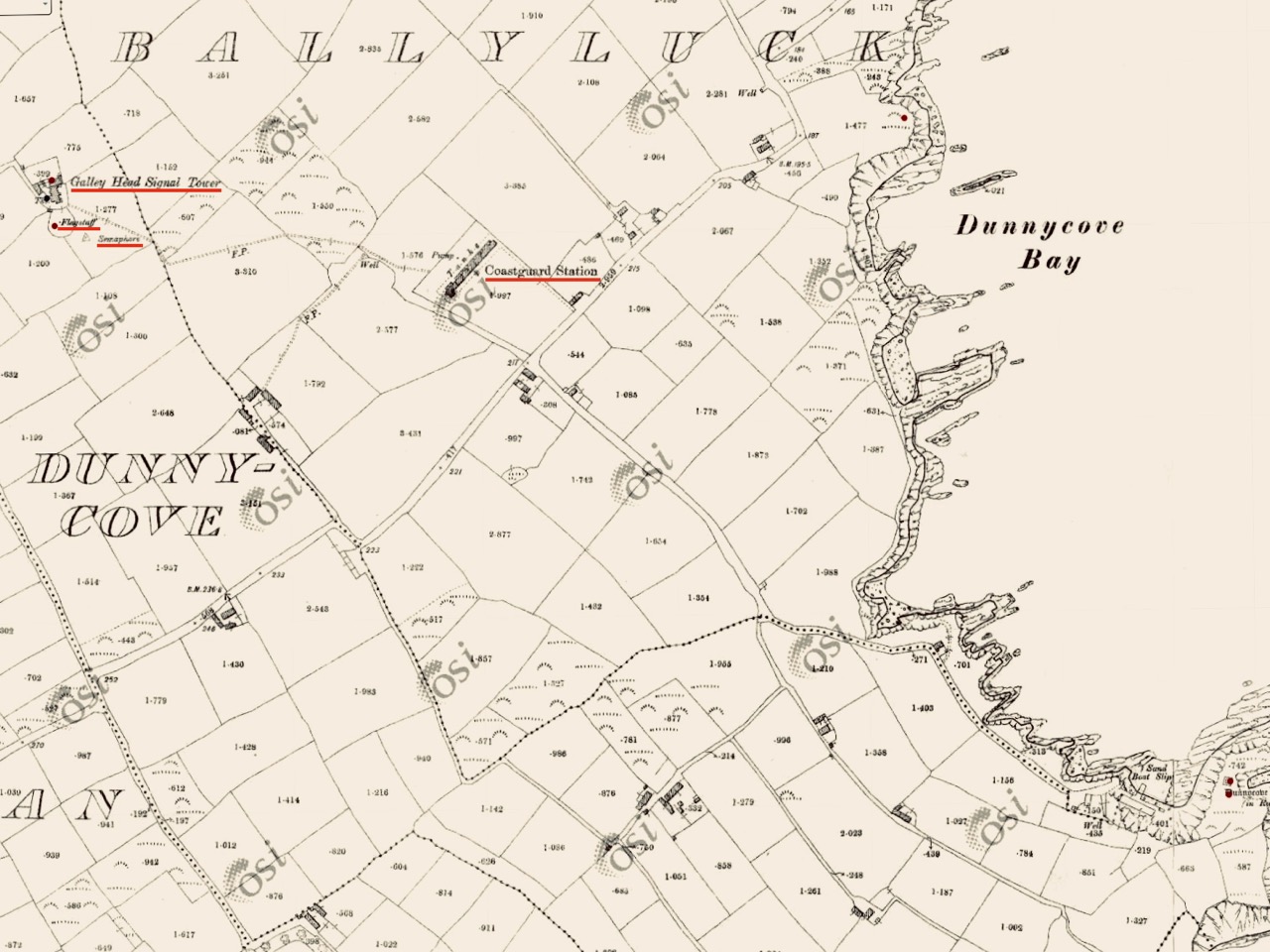
There’s nothing better than good local knowledge when you are trying to piece together a historic jigsaw puzzle. We were delighted to run into Billy Sheehan working in his neighbouring garden: it didn’t take long to establish that his own family had been involved in the signal tower site for generations, and had been connected to the local Coast Guard which had used the tower as a lookout point after the original building had fallen into disuse. Here’s Billy and myself, below. Under us is an extract from the 25″ Ordnance Survey map, drawn between 1888 and 1913. Note how on this map the signal tower site itself has changed since 1806, with many more buildings, a ‘flagstaff’ and a ‘semaphore’ indicated. These all undoubtedly date from the Coast Guard use of the site – you can also see the Coast Guard Station indicated below the tower: there are just a few masonry pillars left at that location today.

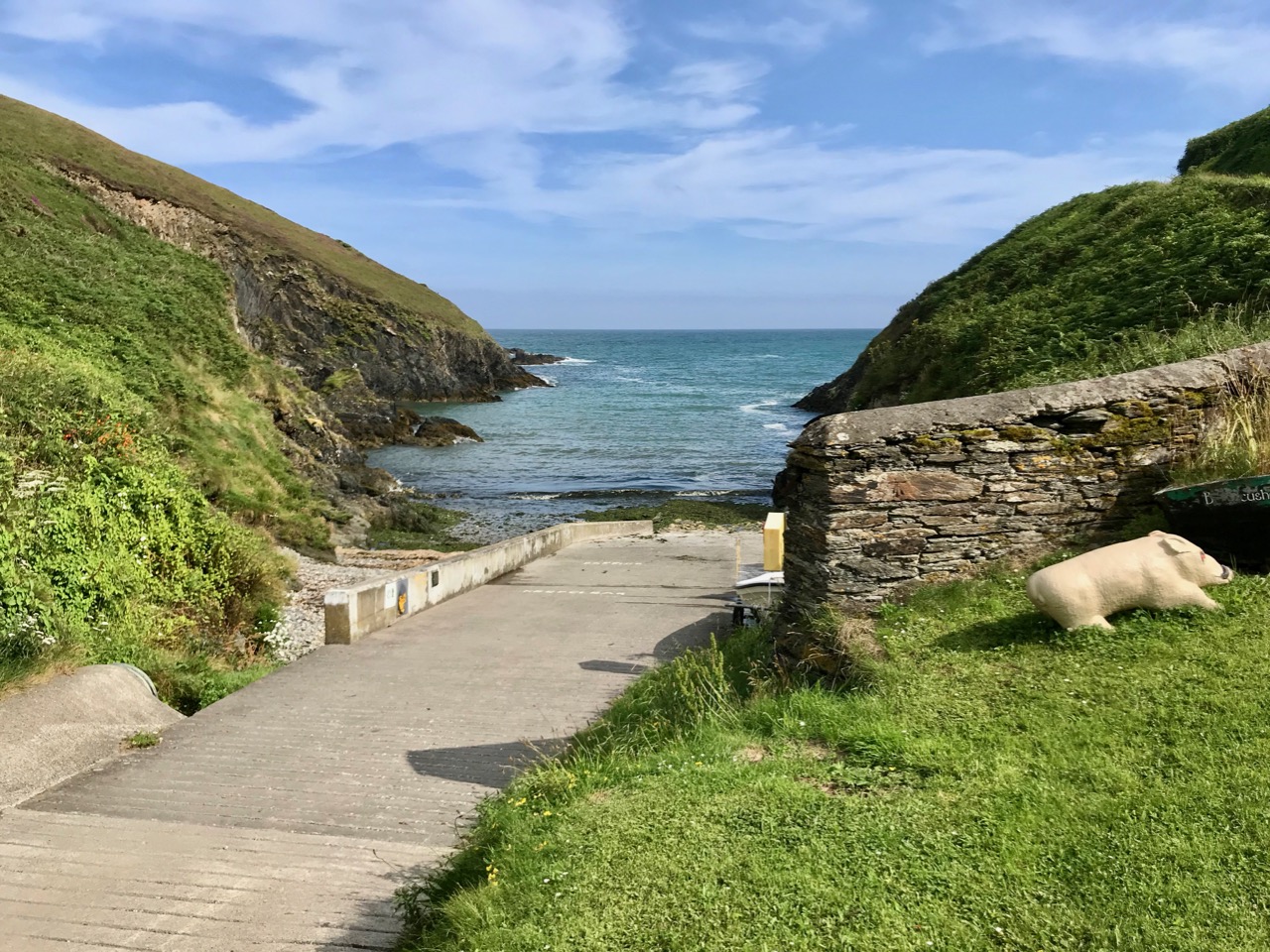
This is the ramp leading down to the water at Ballycusheen Strand, not far from Dunnycove. The pig is a well-known local landmark! I was interested to see the reference to ‘semaphore’ on the OS map, outside the original signal tower enclosure. This word recurs frequently in discussions about signal towers. Theoretically, any visual signalling system is an ‘optical semaphore’, but the term is likely to be more specific here and probably refers to an updated mechanical system rather than the ‘flag and ball’ method generally used in the early 19th century, when the signal stations were run by sailors or retired naval men who were well used to reading flag signals through high quality telescopes. There’s a volume to be written on how long-distance signalling evolved over many centuries – not just in Ireland but across Europe and beyond, beginning, perhaps, with The Scottish Parliament passing an Act in 1455 that said:

One bale, or faggot, shall be warning of the approach of the English. Two bales that they were actually coming and four bales, blazing side by side, shall note that the enemy is in great force.

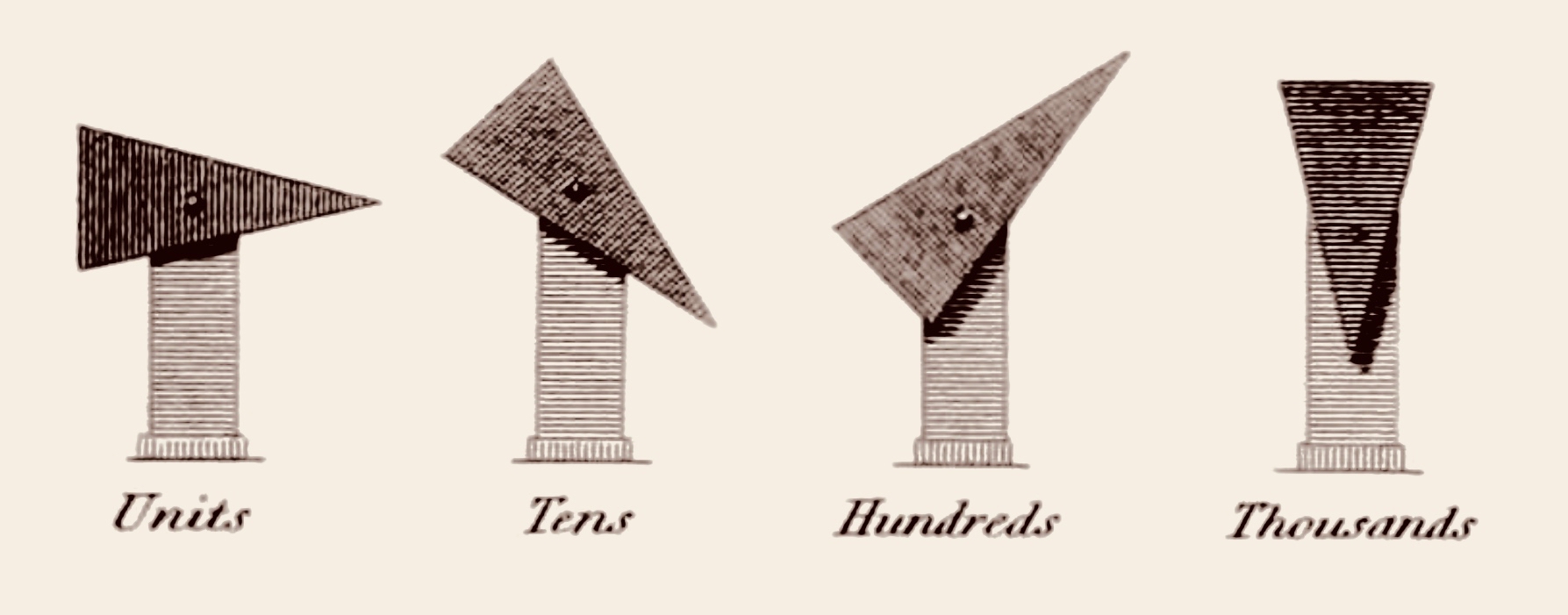
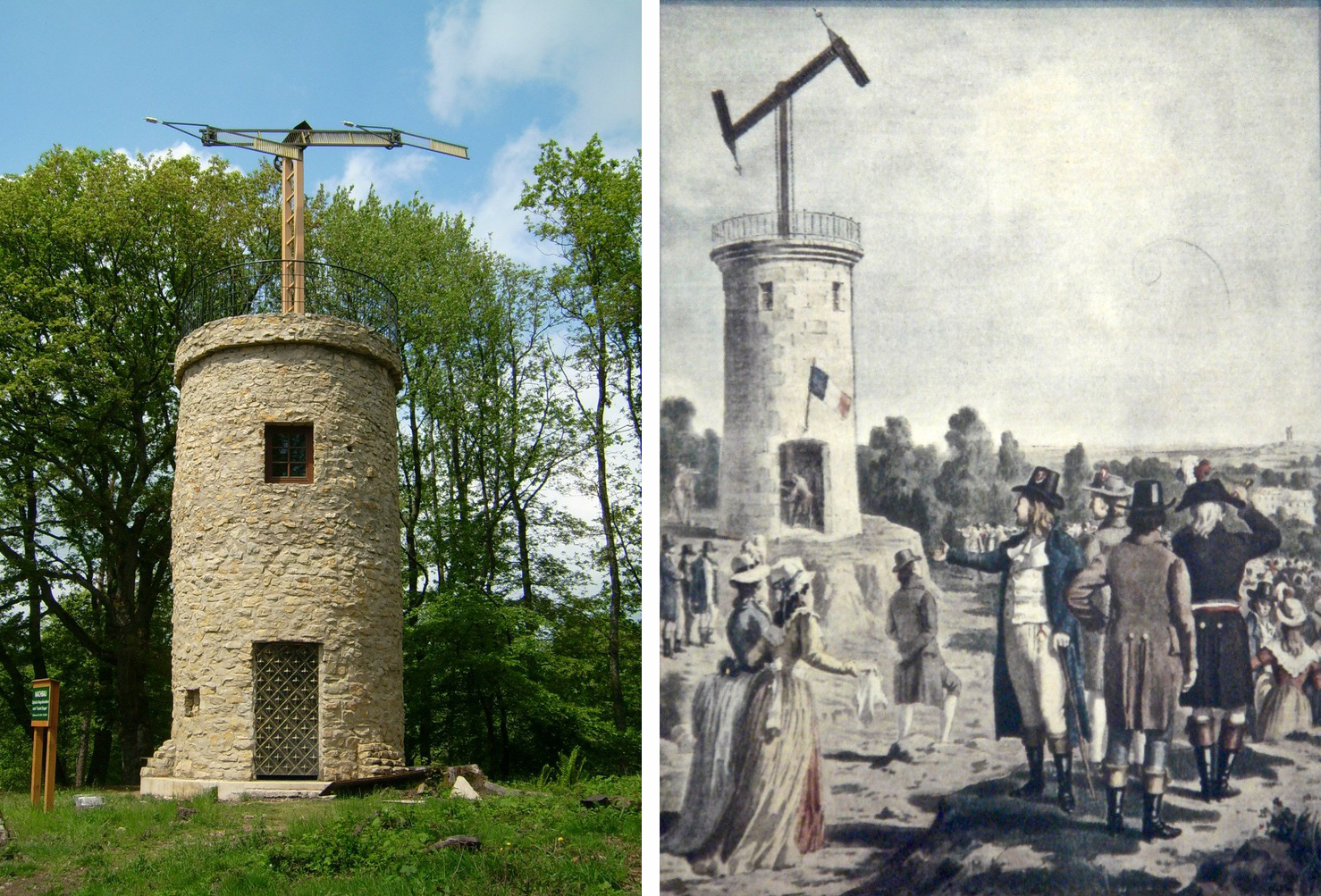
There is a record of Robert Hooke, ‘curator of experiments’ at the Royal Society, proposing a system that combined a telescope and signalling in 1684. One of the important names that surfaces here in Ireland is Richard Lovell Edgeworth (1744 – 1817).  An inventor and writer, Edgeworth was the son of an Anglo-Irish landlord whose family gave their name to the town of Edgeworthstown, Co Longford; he studied at Trinity College, Dublin. In 1767 he placed a bet with his friend, the horse racing gambler Lord March, that he could transmit knowledge of the outcome of a race in just one hour. Using a network of signalling sections erected on high ground, the signal would be observed from one station to the next by means of a telescope. The signal itself consisted of a large pointer that could be placed into eight possible positions in 45 degree increments. A series of two such signals gave a total 64 code elements and a third signal took it up to 512.

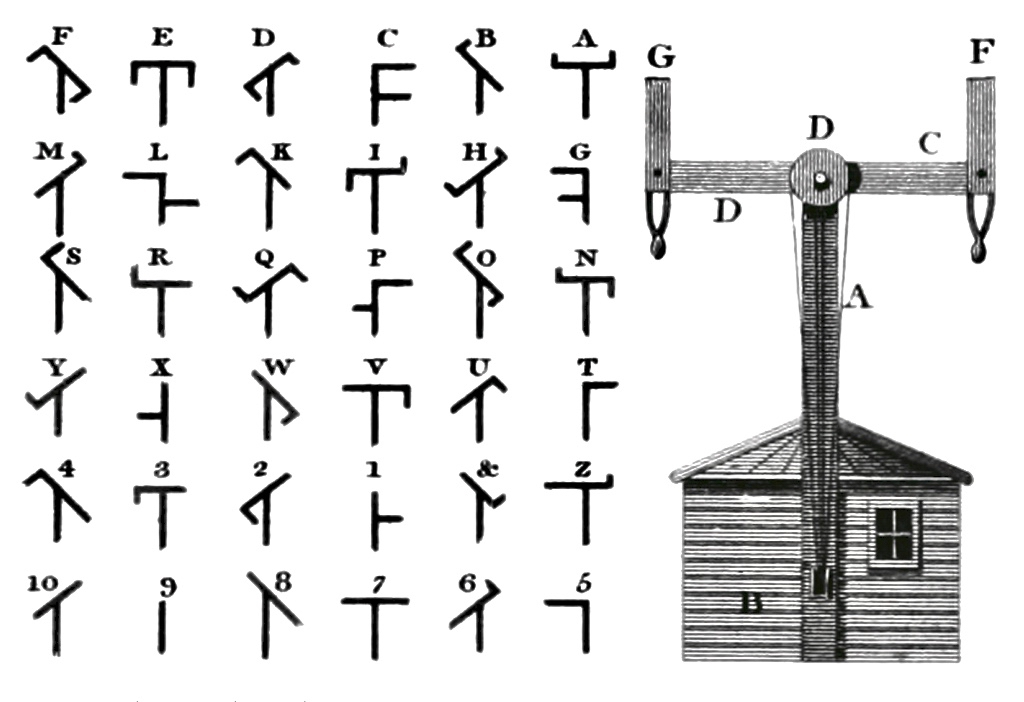
Edgeworth (perhaps best known for fathering the writer Maria Edgeworth (1768 – 1849) – one of his 22 children) termed his device a ‘Tellograph’. In November 1794 the most impressive demonstration of his invention used 30-foot-high Tellographs to communicate between Donaghadee, Ireland and Port Patrick, Scotland (about 40 miles). In France at the same time the Chappe brothers succeeded in covering that country with a network of 556 stations stretching a total distance of 4,800 kilometres (3,000 miles). Le système Chappe was used for military and national communications until the 1850s.

Le système Chappe (above). French technology is demonstrated in the 1790s – the very time the First French Republic was threatening the least defensible part of the British Isles – Ireland – and emphasised by the attempts of Wolfe Tone to land a French fleet in Bantry Bay in December 1796. That landing was a failure – due to atrocious weather – but it did, perhaps, wake the British authorities to the wisdom of guarding the Irish coastline. The signal tower system was a hastily devised result of this.

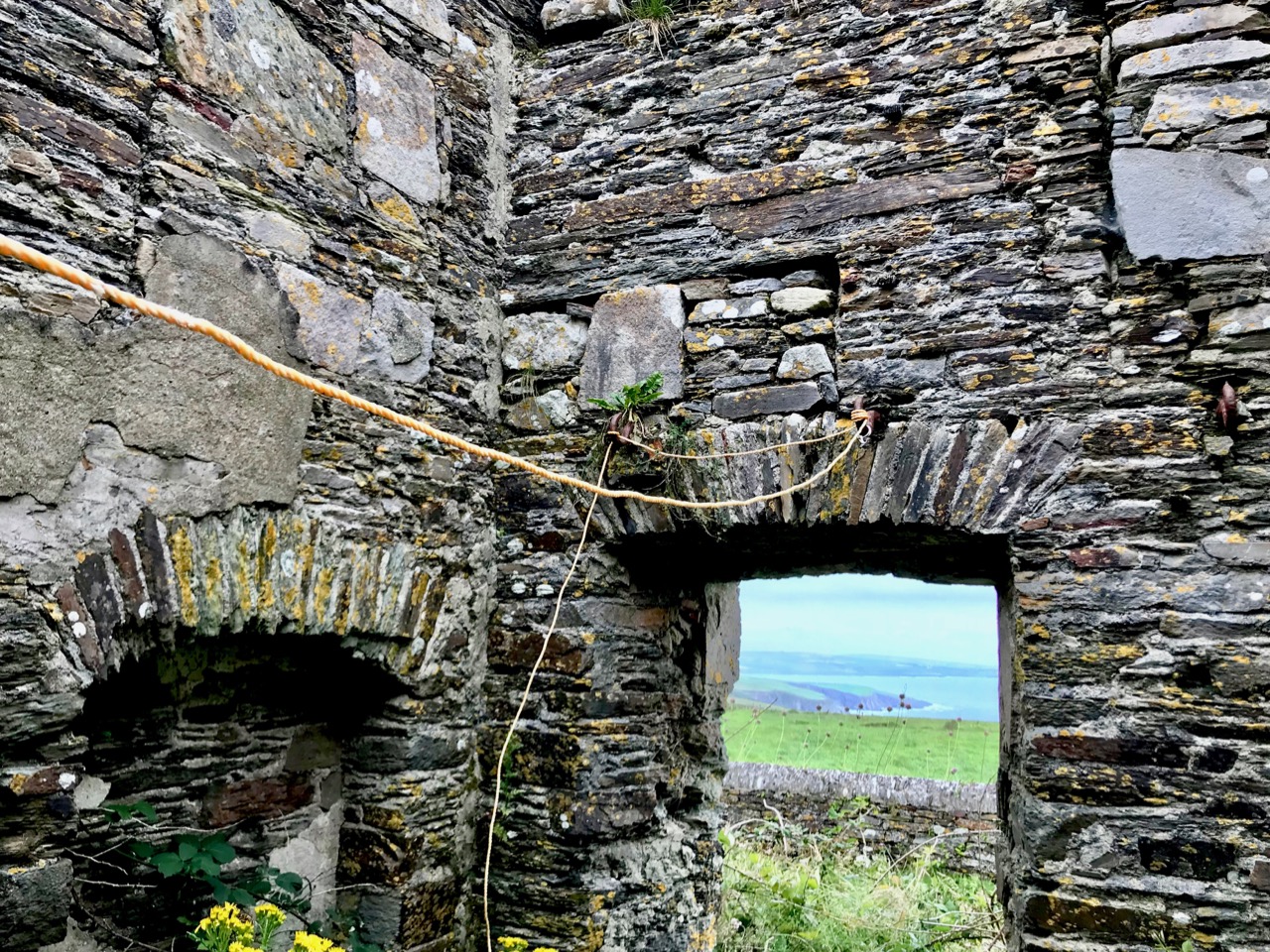
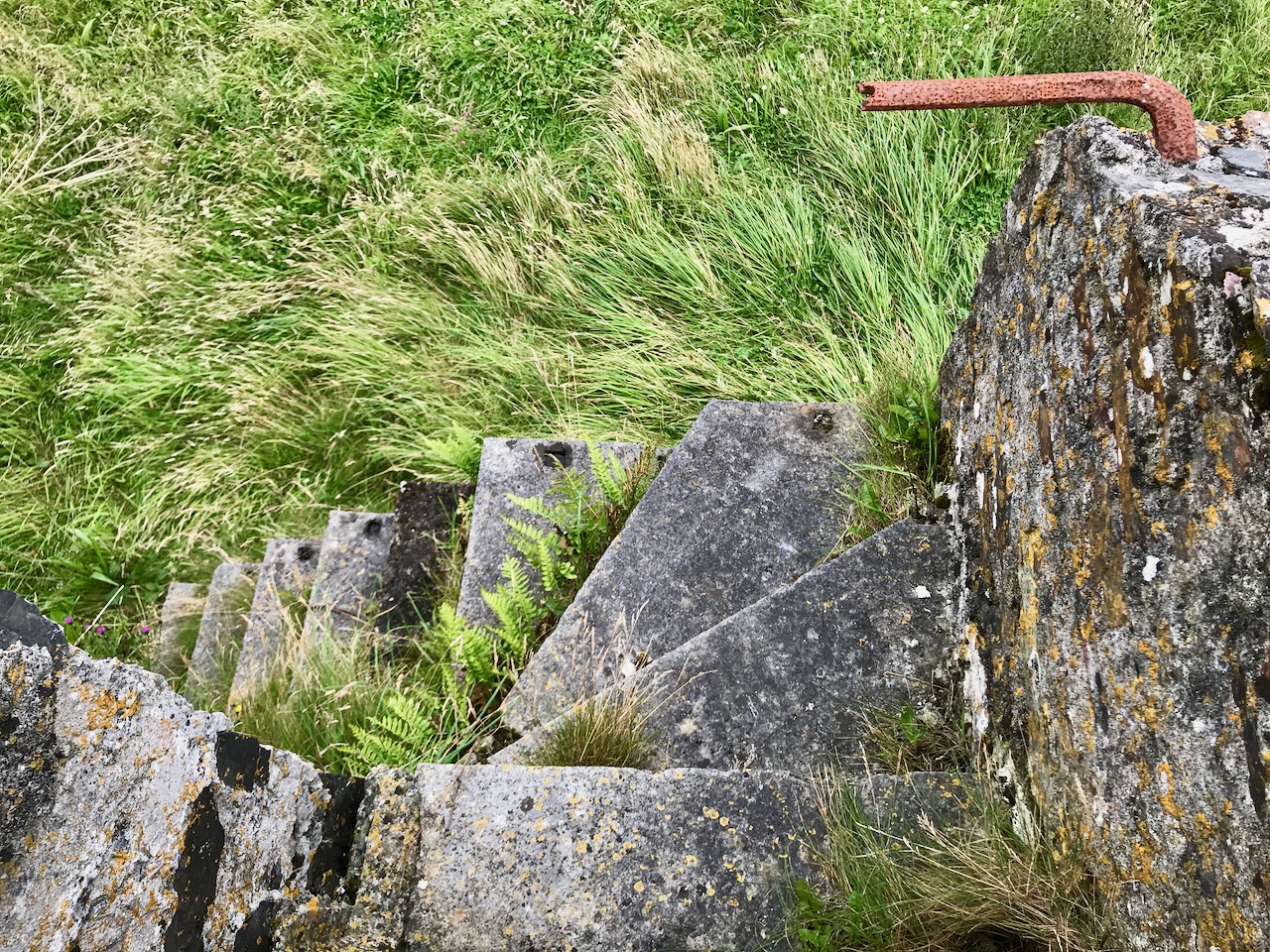
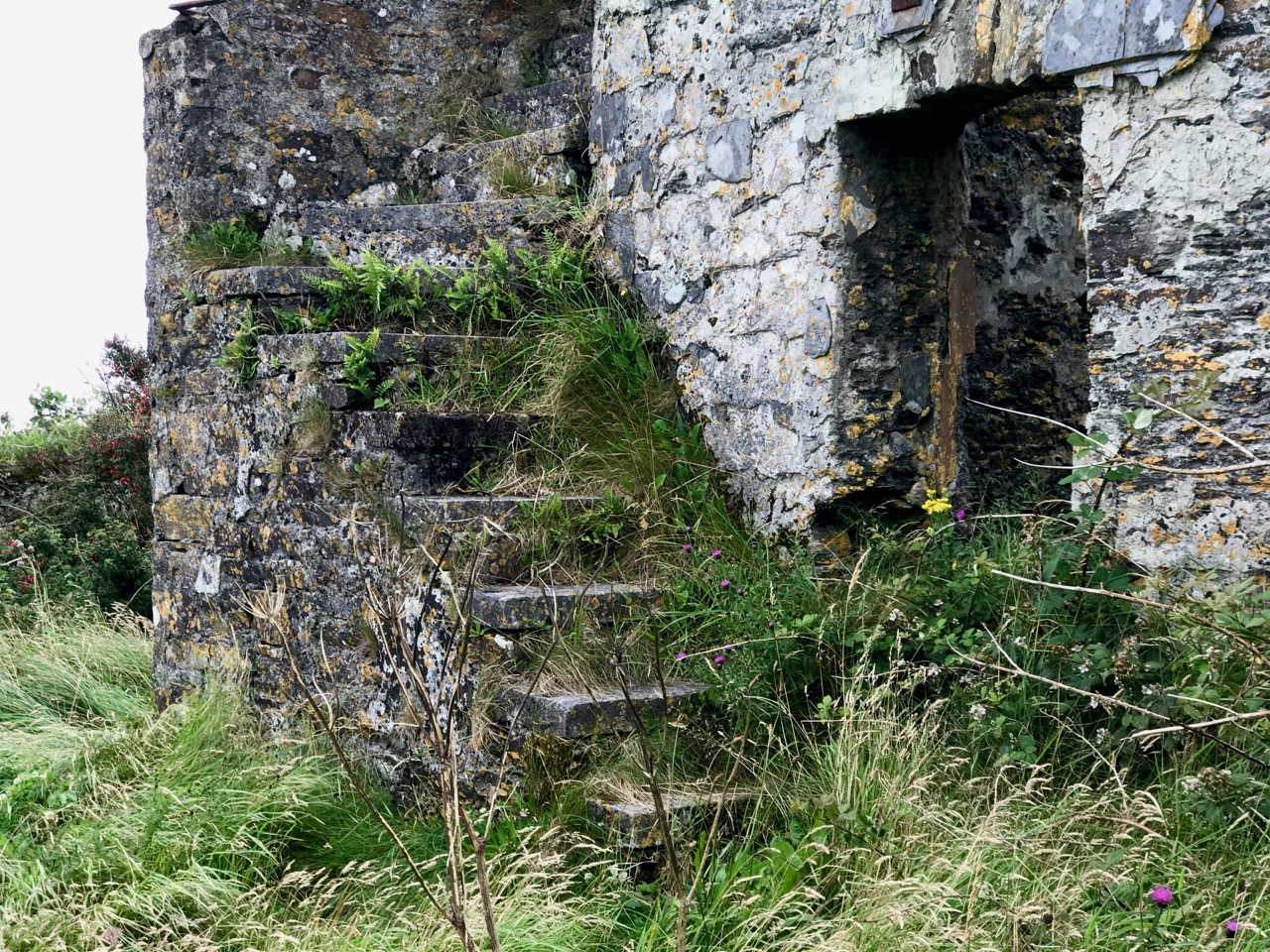
There’s a lot going on at the Dunnycove Signal Station site: the setting remains clearly laid out based on the 1806 plan, and the dominating view is due south. Parts of the original building remain although much has been altered including an external staircase and the surrounding structures.

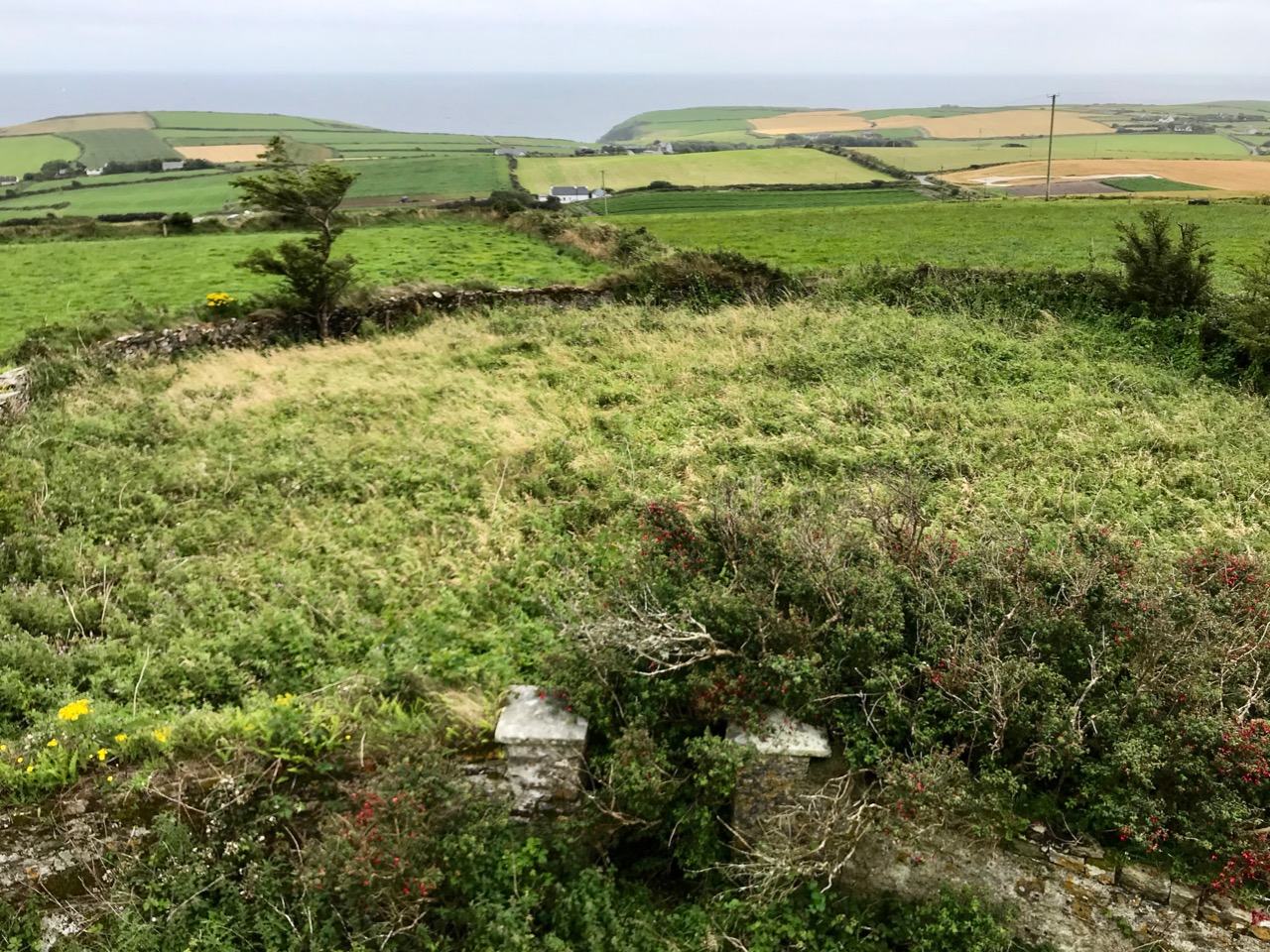
The upper picture shows a distant view towards the signal station complex: it is on the highest point in the immediate landscape. Next is the view from the present top of the old tower, looking across the segment-shaped land which once held the signal mast and – later – the ‘semaphore’, most likely used to communicate with the Coast Guards below: beyond is the ocean. In 1837 Lewis’s Topographical Dictionary of Ireland had this to say about the area:

. . . In the R C divisions this parish is the head of a union or district, comprising the parishes of Ardfield and Rathbarry, in each of which is a chapel; that of Ardfield is a low, plain, but commodious edifice, situated on the commons. There are schools in which 140 boys and 170 girls are taught, also a school at Dunny Cove, a Sunday school under the superintendence of the vicar, and one or two hedge schools. The ruins of the old church are situated on the highest point of land in the parish; and near them is a building which during the war was used as a signal tower, but is now the residence of Lieut. Speck, who commands the coast-guard at Dunny Cove. Close to the Cove are the ruins of a castle . . .

It seems to me that this site, in particular, has so many stories to tell us. Not just about the one period in history that caused the building of the original tower, but also about how a community has developed and adapted around that building. After the close of the Napoleonic era, when the threat of invasion receded, the tower retained its significance as a high place from which observations can be made. The Water Guard (which became the Coast Guard) took it over and it has remained a dwelling place for families ever since. Billy Sheehan is testament to this ‘living’ history, and the old stonework survives to tell where meals were cooked – where sleeping, waking and working became the rhythm of life for generations on this West Cork hilltop.

Please note that Dunnycove Signal Station is a private property and permission to access it must be sought from the owner

The previous posts in this series can be found through these links:

Part 1: Kedge Point, Co Cork

Part 2: Ballyroon Mountain, Co Cork

Part 3: Old Head of Kinsale, Co Cork

Part 4: Robert’s Head, Co Cork

Part 5: Downeen, Co Cork