
The story of a Swiss Government foray into West Cork at the time of the Cold War has seeped into folk memory. When we settled in Ballydehob in the early twenty-first century we heard many accounts and – as is often the case – sensation takes preference over sober fact. Nevertheless, the tale is worth telling, and I have set out what I perceive to be accurate. It all centres around the man above – Colonel Albert Bachmann – and two locations: Murphy’s Cove, Tregumna, and Liss Ard House, just outside Skibbereen.

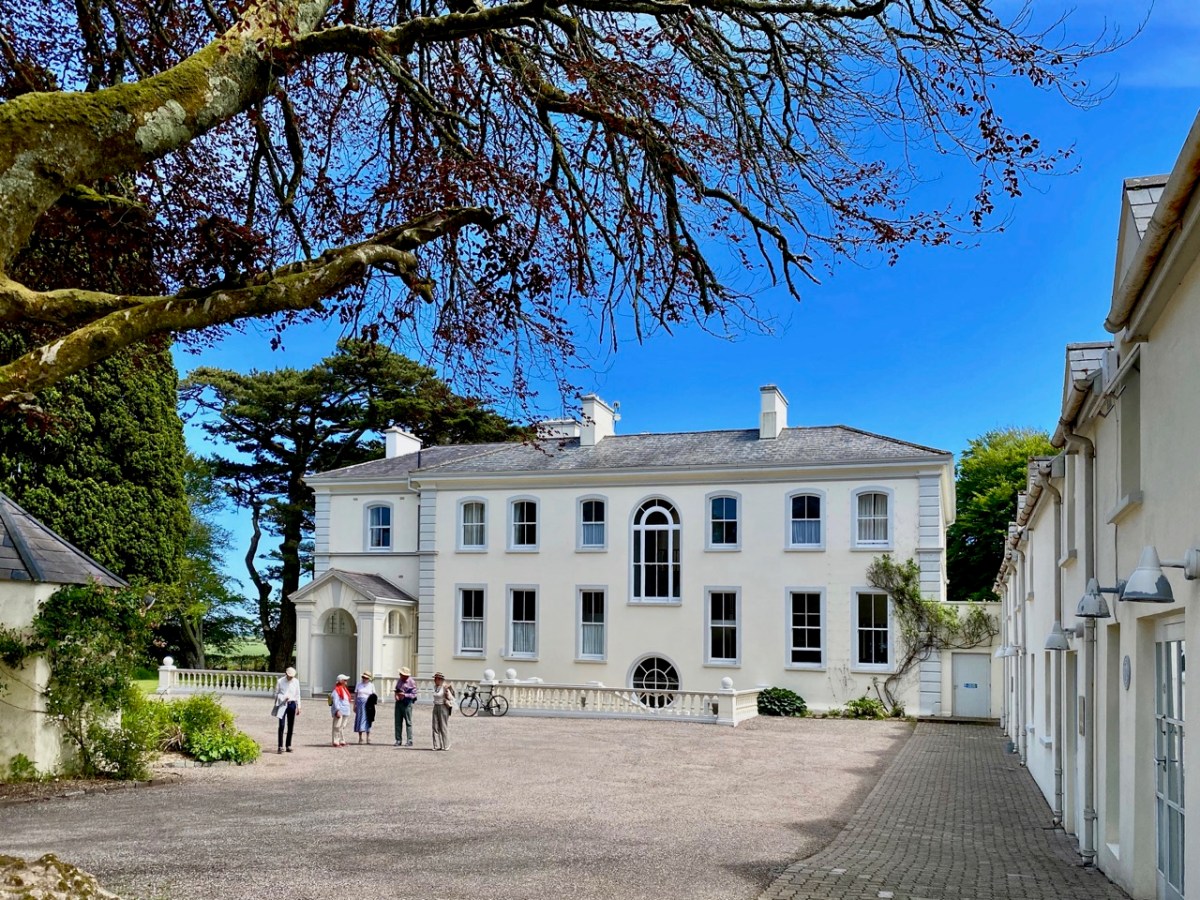
Contrasting atmospheric conditions: Murphy’s Cove, Tregumna, on this misty October day (upper pic) and Liss Ard House on a beautiful June day in 2021 (lower pic). Our story properly begins in 1962 . . .

The cover of Esquire magazine, January 1962 features an article headed ‘9 Places in the World to hide’: one of these places is “Cork – Ireland”. In fact, the article suggested that Cork was considered the safest place in all Europe in which to hide from the predicted nuclear holocaust. I was a teenager in the UK at the time, and remember the worries of everyday life through that year – in particular the Cuban Missile Crisis. 1963 was little better – dominated by Kennedy’s assassination. We didn’t have a television in those days – friends did; but our ears were glued to our wireless sets, not knowing what to believe, or expect. Now – sixty years later – I’m older and wiser. I survived.

. . . COLONEL ALBERT Bachmann, who has died in Cork at the age of 81, was the James Bond of Switzerland. He came to west Cork in 1963, fell in love with the area and bought property there. At the time he was rising through the ranks of Swiss military intelligence, though Switzerland is typically seen as the world’s most neutral state with few if any belligerent enemies. Bachmann took himself on a secret mission to Biafra, then trying to secede from Nigeria, where he implied mysteriously that he was involved in secret arms deals with the Shah of Iran. He passed himself off as an upper-crust Englishman called Henry Peel who smoked a pipe, though with his Germanic accent it is difficult to imagine this disguise was successful . . . He was promoted to Colonel in the intelligence and defence section of Switzerland’s Untergruppe Nachrichtendienst der Armee (UNA). This gave him authority over three units of secret Swiss military intelligence, including a special service set up to respond to any threat of Soviet invasion, which he felt very sure could happen . . . . He hunted with the West Carberry, where he was something of an embarrassment, having his own ideas about which fields he could gallop across without the permission of the owners . . .
Obituary in the Irish Times 14 May 2011

It has been said that, with Swiss military money, he bought 200 acres of land in West Cork, including Liss Ard House (above, from Skyscape). From 1976 onwards, Colonel Bachmann converted Liss Ard into an exile for the Swiss Federal Council (the governing body of the country, which has seven elected members). Known locally as “The Funk Hole of Europe”, it was equipped with all modern high-tech computer facilities long before such equipment was widespread in Ireland. The cellars were dug out and strengthened to store the massive Swiss gold reserves that the government would bring with them.

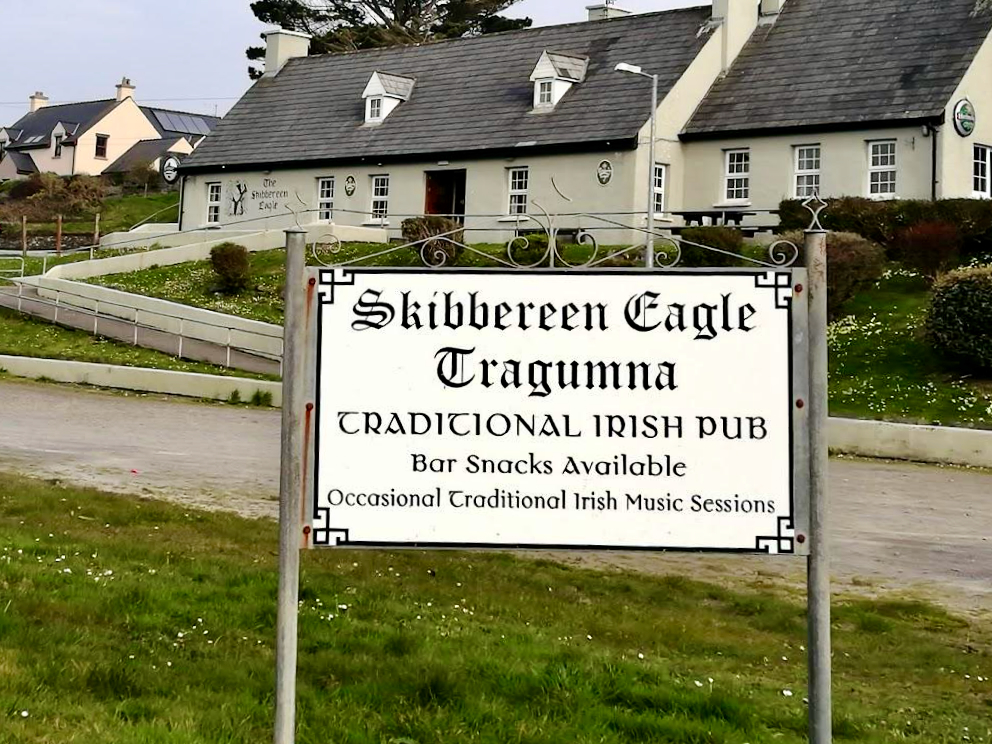
Above are some of the cottages in Murphy’s Cove that Bachmann bought, possibly also with Swiss money. Ostensibly they were to house fleeing diplomats in the event of the predicted collapse of civilisation. The Colonel’s interests, however were not always related to the Cold War. He set up a pub in Tragumna, the Skibbereen Eagle: named after an infamous local newspaper. Rumour has it that the kitchens were oversized because they would have to feed the exiled envoys. It’s still a popular establishment.
In fact, the more you try to delve into the life of Bachmann, the more enigmas you encounter. Some reports say that he raised the money himself to purchase Liss Ard: the historian Titus J Meier showed in a book that Bachmann acquired the property on the west coast of Ireland with the help of private and institutional sponsors. The Swiss Government only paid annual rent twice, each time amounting to 50,000 francs.
. . . Bachmann was obliged to retire in 1980. An official investigation criticised P-26 [a Cold War stay-behind army in Switzerland charged with countering a possible invasion of the country] as an illegal paramilitary programme, operating as a clandestine, parallel structure within the Swiss security network, and lacking governmental authorisation or control. When Bachmann’s secret army was finally dismantled, its war chest – gold worth six million Swiss francs – was donated to the Red Cross. But he always insisted that it served a vital function. “How vital,” Bachmann told the reporters who sought him out, “I cannot tell you.” . . .
Bachmann’s Obituary in The UK Daily telegraph
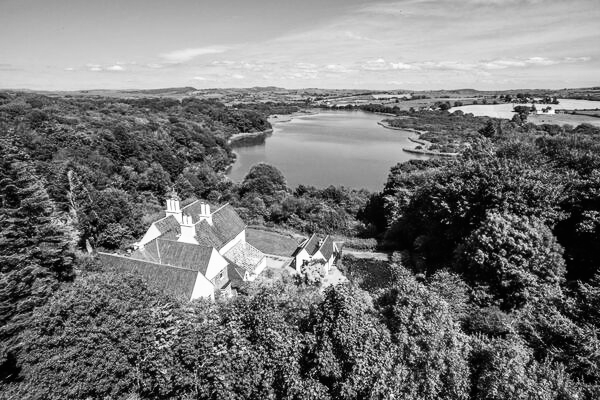
Another view of Liss Ard Estate (courtesy Irish Examiner)

Esquire Magazine January 1962
Col Albert Bachmann: born November 26, 1929; died April 12, 2011
Discover more from Roaringwater Journal
Subscribe to get the latest posts sent to your email.
 Roaringwater Journal
Fascinating story, there’s also an account of his life in the journal of the Skibbereen and District Historical Society, Vol 6, 2010 (‘Lissard House and the Swiss’). The author is Paddy Leahy.
LikeLike
I’ll have a look at that, Colm. Thank you.
LikeLike
What a great movie this story would make!
LikeLiked by 1 person
Are you Volunteering?
LikeLiked by 1 person
Tempting 🙂
LikeLike
I don’t know, you think you’ve a quiet place to get away from it all!
LikeLiked by 1 person
We do go out looking….!
LikeLike
It’s an amazing story and Liss Ard looks so quietly glamorous now – I wonder what the cellars are like!
LikeLiked by 1 person
Next time we are there, we’ll ask!
LikeLike
It’s a different country down there; different people! LOL
LikeLiked by 1 person
How true!
LikeLiked by 1 person
We remember some memorable meals at Lissard especially during the Food Festival and a wonderful afternoon tea and mushroom foraging. A truly wonderful place. An interesting tale.
LikeLiked by 1 person
There have been a few incarnations of the food offerings there. Our memories of them are good!
LikeLike
All very bizarre ! great place for a wedding, and fabulous gardens to walk around in with dogs….I didn’t know all this previous stuff though !
LikeLiked by 1 person
I’ve heard various rumours around this subject for years, Julian. Decided I would get to the bottom of it…
LikeLike