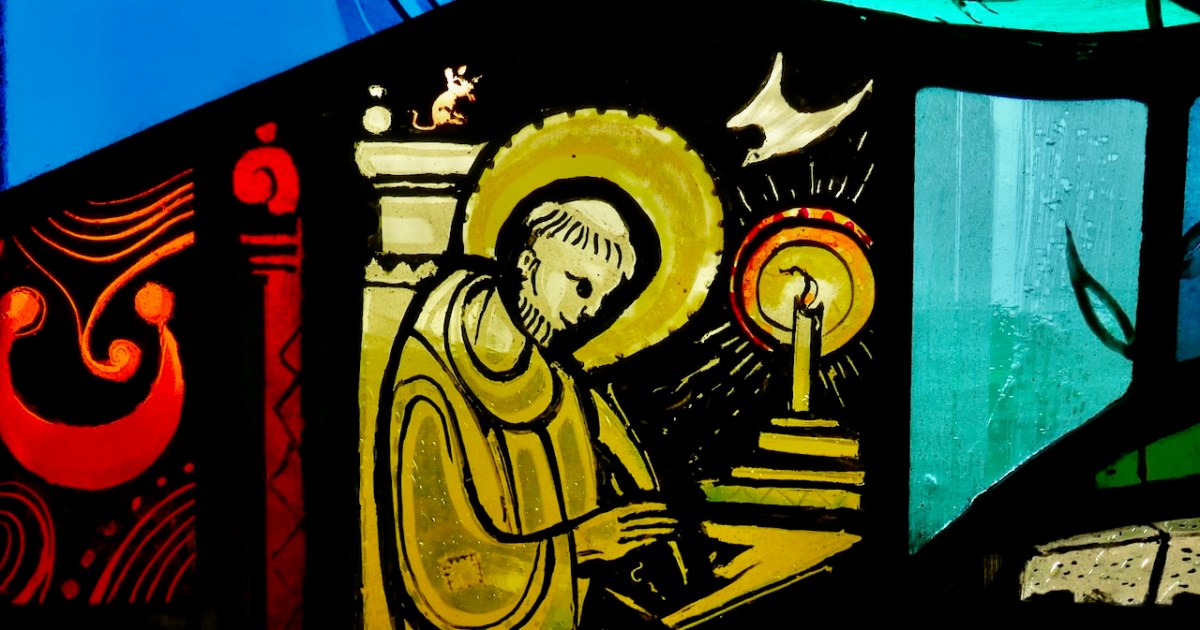
Greetings from Roaringwater Journal to all our dear readers. As 2023 draws to an end and we look forward to some post-solstice brightening every day, we celebrate and wish you joy with our favourite poem, illustrated by our favourite artist.
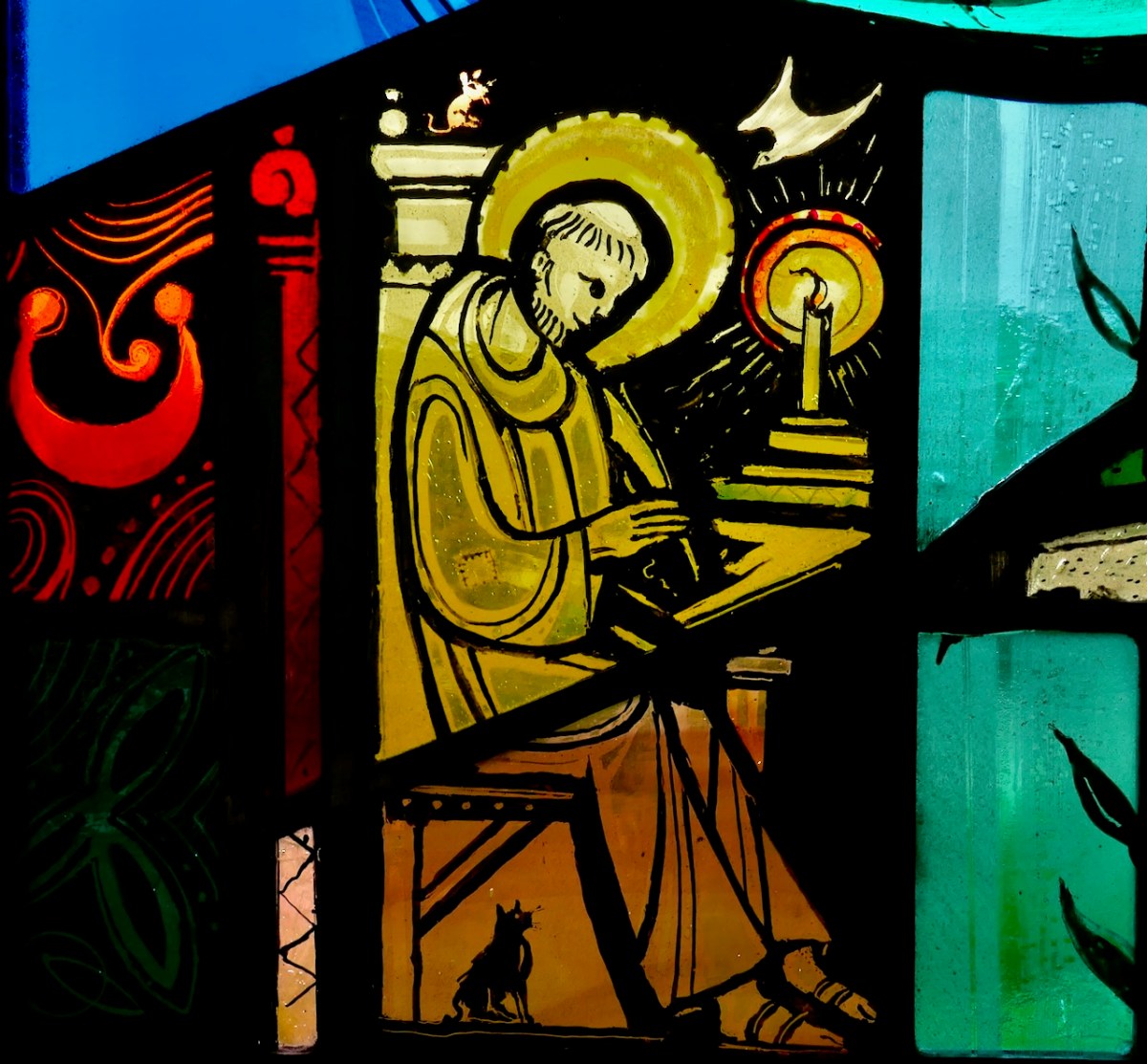
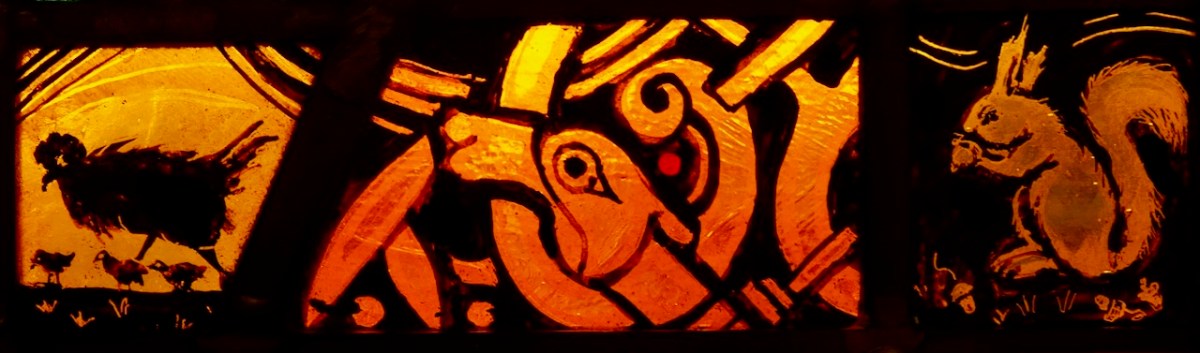
The poem is Pangur Bán (pronounced Panger Bawn) and it was written by an Irish monk in a German monastery in the 9th century. It’s one of the oldest poems known in any language. The translation is by the distinguished scholar Robin Flower and the images are from our own stained glass window by George Walsh.
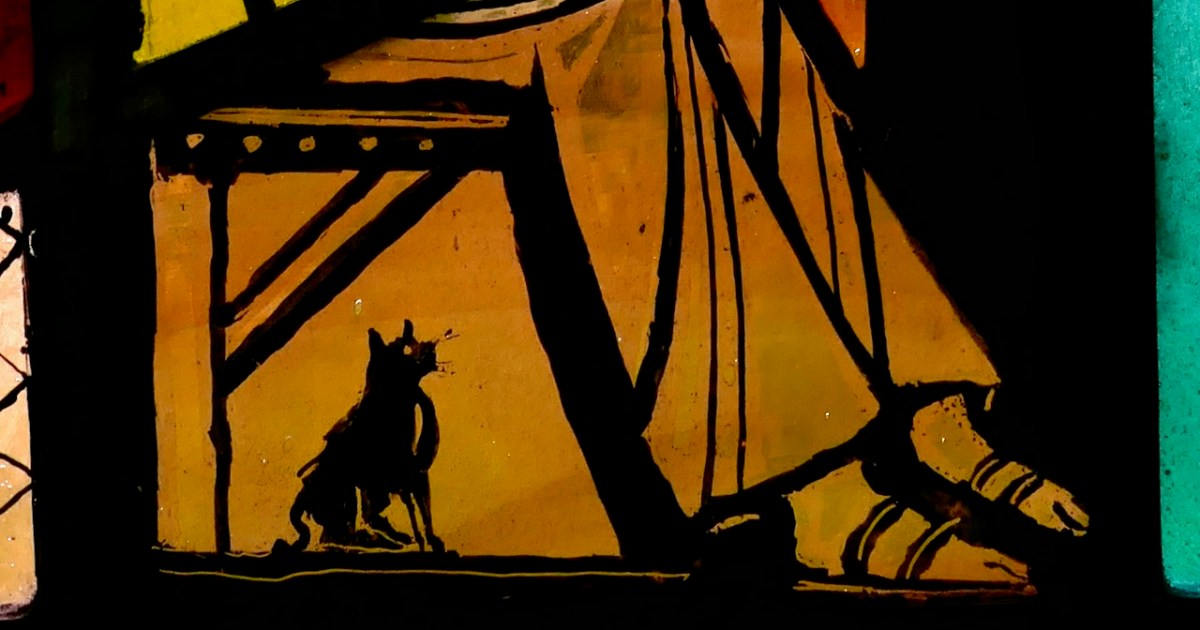
I and Pangur Bán, my cat,
‘Tis a like task we are at;
Hunting mice is his delight,
Hunting words I sit all night.
Better far than praise of men
’Tis to sit with book and pen;
Pangur bears me no ill-will,
He too plies his simple skill.
‘Tis a merry thing to see
At our tasks how glad are we,
When at home we sit and find
Entertainment to our mind.
Oftentimes a mouse will stray
In the hero Pangur’s way;
Oftentimes my keen thought set
Takes a meaning in its net.
‘Gainst the wall he sets his eye
Full and fierce and sharp and sly;
‘Gainst the wall of knowledge I
All my little wisdom try.
When a mouse darts from its den,
O how glad is Pangur then!
O what gladness do I prove
When I solve the doubts I love!
So in peace our tasks we ply,
Pangur Ban, my cat, and I;
In our arts we find our bliss,
I have mine and he has his.
Practice every day has made
Pangur perfect in his trade;
I get wisdom day and night
Turning darkness into light.
For the curious – here is a recording of how the original medieval Irish would have been pronounced, followed by a translation by Seamus Heaney. And here is the original poem in that medieval manuscript (lower left), followed by a transcription.
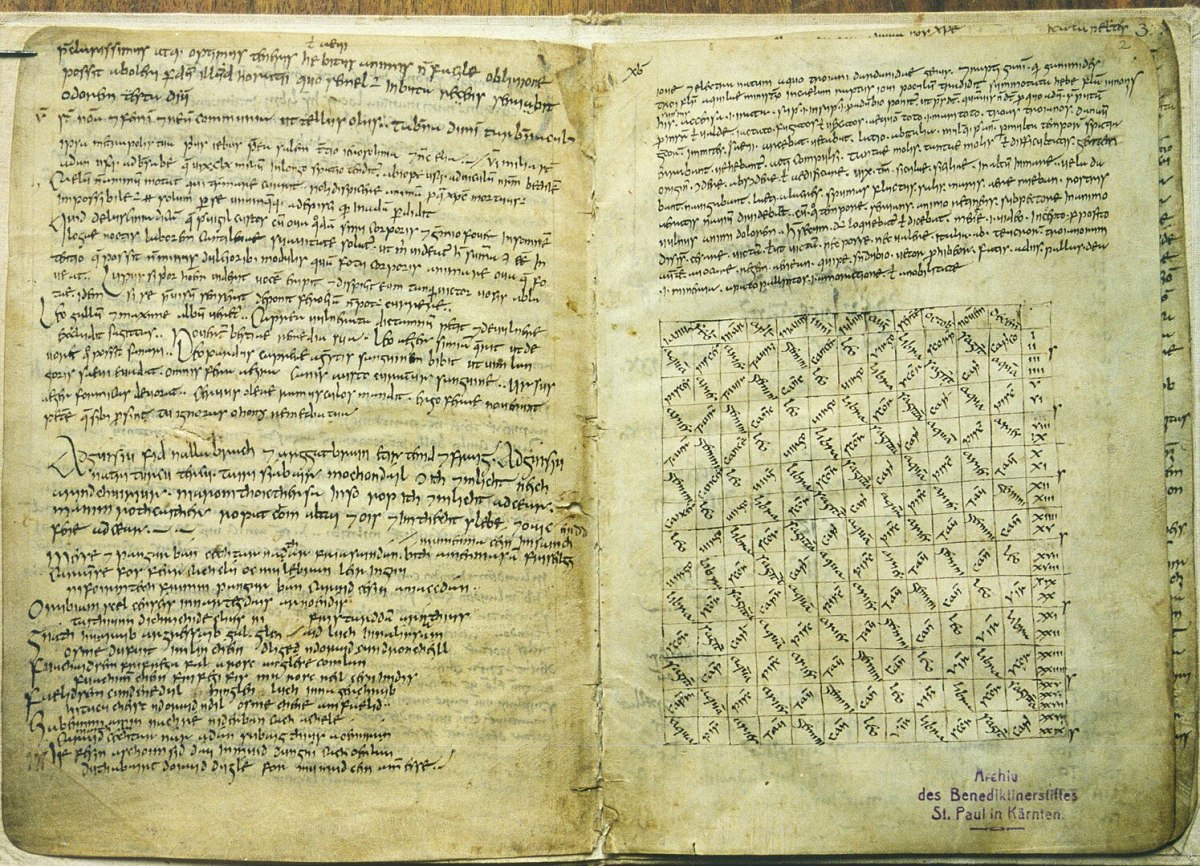
Messe ocus Pangur Bán,
cechtar nathar fria saindan
bíth a menmasam fri seilgg
mu menma céin im saincheirdd.
Caraimse fos ferr cach clú
oc mu lebran leir ingnu
ni foirmtech frimm Pangur Bán
caraid cesin a maccdán.
Orubiam scél cen scís
innar tegdais ar noendís
taithiunn dichrichide clius
ni fristarddam arnáthius.
Gnáth huaraib ar gressaib gal
glenaid luch inna línsam
os mé dufuit im lín chéin
dliged ndoraid cu ndronchéill.
Fuachaidsem fri frega fál
a rosc anglése comlán
fuachimm chein fri fegi fis
mu rosc reil cesu imdis.
Faelidsem cu ndene dul
hinglen luch inna gerchrub
hi tucu cheist ndoraid ndil
os me chene am faelid.
Cia beimmi amin nach ré,
ni derban cách a chele
maith la cechtar nár a dán,
subaigthius a óenurán.
He fesin as choimsid dáu
in muid dungní cach oenláu
du thabairt doraid du glé
for mu mud cein am messe.
That’s our joint post for Christmas, folks! We’ll be back next Sunday with our annual roundup of our favourite posts from 2023.
Discover more from Roaringwater Journal
Subscribe to get the latest posts sent to your email.
 Roaringwater Journal
A lovely post to end the year! I enjoyed hearing the poem in medieval Irish and thought how nice it would be for someone to translate and read it in Scottish Gaelic!
LikeLike
My own Pangur Bán is at my side as I read this charming poem and how nice to have your own stained glass window!
LikeLike
Pangur Ban has warmed my Christmas Eve. Thank you, Finola and Robert. Looking forward to your 2024 discoveries. Happy Christmas!
Katharine
LikeLiked by 1 person
Best Season’s Greetings to you too, Katharine…
LikeLike
That’s all great, many thanks! We’re glad of these introductions (even when it shows my ignorance!) – never too late!
Have a good Christmas and see you in 2024. Don’t forget – invite yourselves here!
V&D xx
LikeLiked by 1 person
We will certainly catch up with you both again before too long – Christmas Greetings!
LikeLike
Robert and Finola – thank you so much for this pure delight! And a merry Christmas to you.
LikeLiked by 1 person
Hope all goes well with you, Merrily. Have a good Christmas!
LikeLike
Merry Christmas & A Happy New Year Robert & Finola & Thank You Both For All The Great Posts Throughout The Year!
LikeLiked by 1 person
Thank you Sean – have a good time yourself!
LikeLike
A charming and delightful post to get on Christmas Eve ! I will add it to my collection of poems about cats ….
LikeLiked by 1 person
It’s one of the best…. Have a good Christmas, Julian!
LikeLike
I love the poem! Part of it was in the book “How the Irish Saved Civilization”, by Thomas Cahill. I think the cat’s name translates to The White Fuller.
LikeLiked by 1 person
That’s right. I remember reading that book and really enjoying it.
LikeLike