A Substantiated Account of the Neglect and Mismanagement of Ballydehob Waste Water Treatment Plant and the Resulting Ongoing Pollution of Ballydehob Bay and Estuary
Researched and Compiled by Cormac Levis on Behalf of the Ballydonut Wastewater Action Group.
© Cormac Levis. 2024.
Photographs by Cormac Levis and Roaringwater Journal
Acronyms
BOD Biochemical Oxygen Demand
COD-Cr Chemical Oxygen Demand Chromium
ELV Emission Limit Value
EPA Environment Protection Agency
PE Population Equivalent
SAC Special Area of Conservation
SS Suspended Solids
SWO Storm Water Overflow
WWDL Waste Water Discharge Licence
WWTP Waste Water Treatment Plant
A Brief Overview
The gross neglect and mismanagement of Ballydehob Waste Water Treatment Plant over a period of ten years has resulted in a serious and ongoing pollution problem in Ballydehob Bay, especially in the estuary adjacent to the village and in the vicinity of the Quay. The key factor in the issue has been Uisce Éireann’s failure to comply with several conditions of its Waste Water Discharge Licence, most significantly one which requires a fundamental upgrade of the existing plant in order to comply with waste water treatment regulations. Cork County Council had already recognised the need for such an upgrade long before Uisce Éireann took over the management of the plant in 2014. They had gone as far as submitting plans to the Environment Protection Agency (EPA) as early as 2009 and including the proposed project in the Water Services Investment Programme. By the time the new Licence was issued, however, Uisce Éireann had taken over the management of the plant and, although it was a condition of the Licence, the plant was never upgraded; Uisce Éireann claiming other projects were considered to be of greater priority. The EPA constantly pursued Uisce Éireann on the matter over the years but stopped short of legal prosecution. In the meantime, raw and partially treated sewerage frequently pours from an out-dated, overloaded septic tank into what is one of the most environmentally sensitive bodies of water in West Cork and a valuable amenity for the local community.
Note: Irish Water was officially renamed Uisce Éireann on the 31st of December 2022. For convenience, that is the version of the name used in this document throughout.
Mandatory Upgrade of WWTP Never Undertaken
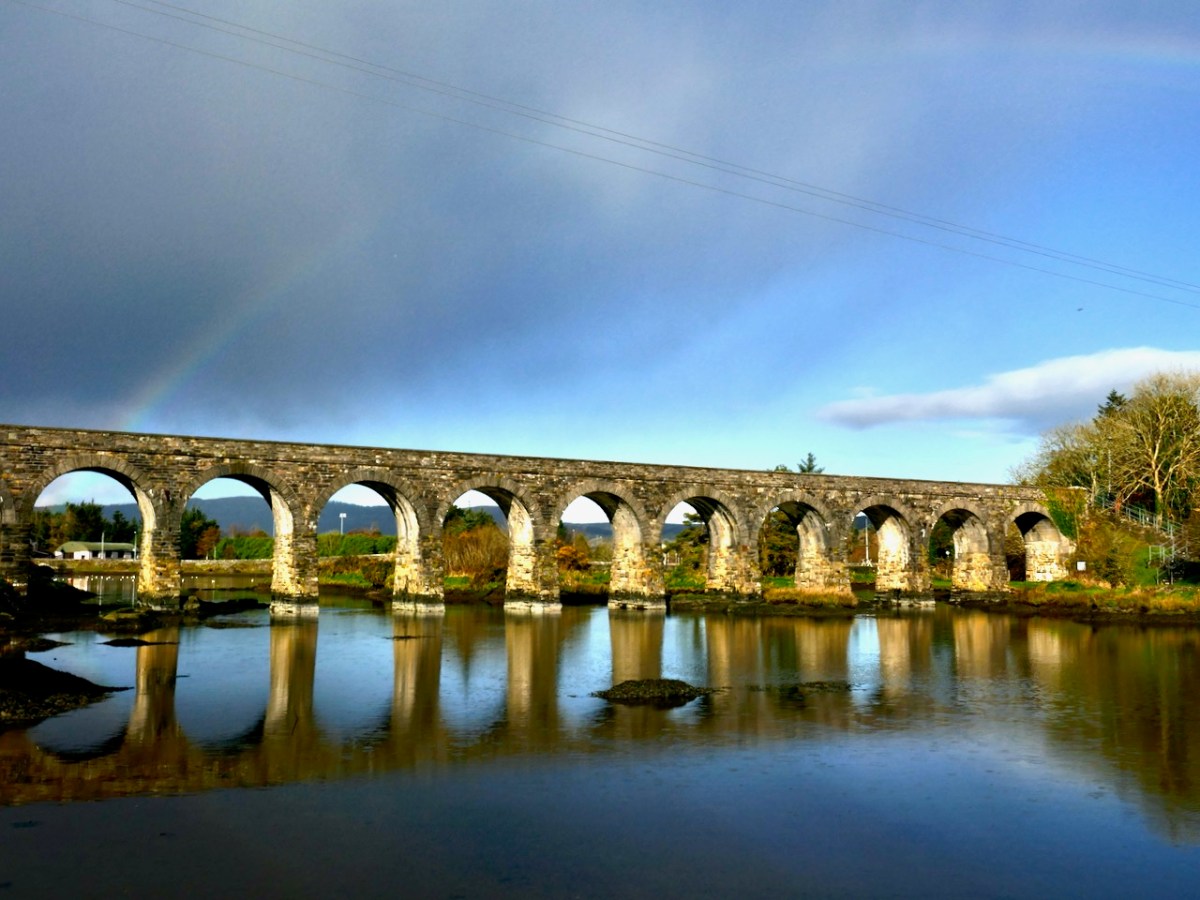
Ballydehob Waste Water Treatment Plant (WWTP) is situated near to the estuary, on the west side of Store Road, approximately half way between the tennis courts and the twelve Arch Bridge. It consists of a basic septic tank, no secondary treatment is provided and it is of inadequate capacity for the population it now serves. It was built in the mid-1980s and designed for a population equivalent of 700.[1](PE is calculated by reference to the number of connections to the system including domestic, commercial and public services, along with population figures for the agglomerate.) In 2009, Cork County Council drew up plans for an upgraded treatment plant to provide both primary and secondary treatment, in order to comply with all the most recent Urban Waste Water Treatment Regulations and directives, and also to cope with an increasing PE.
In assessing the need for a new plant, the County Council took cognisance of the exceptional environmental importance of Ballydehob Bay, into which the existing treatment plant discharged: “Ballydehob Bay, which abuts the town, is within the Roaringwater Bay and Islands Special Area of Conservation (SAC) and proposed Natural Heritage Area [under the Natura 2000 programme – a European network of important ecological sites]. Roaringwater Bay and Islands is a site of exceptional importance, supporting diverse marine and terrestrial habitats (including the shallow sheltered bays such as that of Ballydehob), six of which are listed under the EU Habitats Directive. The site is also notable for the presence of Otter and Grey Seals, plus a number of rare species and also supports important sea bird colonies.”[2] It determined that “Due to the sensitive nature of the receiving water in Ballydehob, the level of treatment provided by the existing septic tank would not constitute appropriate treatment…….it is considered that a minimum of secondary treatment should be provided to Ballydehob.”[3] The EPA concurred with this assessment[4]. A Natura Impact Statement for the proposed new treatment plant, which was issued in July 2011, even went a step further. It stated that in addition to secondary treatment, Ultra Violet disinfection was also required in order to comply with the Urban Waste Water Regulations, 2001.[5]
On the 22nd of June 2009, Cork County Council submitted an application to the EPA for a Waste Water Discharge Licence based on their plans for the proposed new plant. The plant was to cater for a PE of 1,163 to cover population growth and development over the following twenty years.[6] An application fee of €10,000 was paid to the EPA[7] and the project was included in the Water Services Investment Programme at an estimated €683,000.[8] The works were to be completed by October 2012.[9]
The EPA duly granted the new Waste Water Discharge Licence on the 3rd of November, 2014 (Register No D0467-01). By this time, Uisce Éireann had taken over responsibility for waste water services from the local authorities and consequently the licence was granted to Uisce Éireann. The provision of a new secondary waste water treatment plant (as planned by the County Council) was a requirement of the licence,[10] even though it had not yet been built. In the meantime, the existing WWTP was subjected to only moderate interim Biochemical Oxygen Demand and Suspended Solids removal limits (which it failed to achieve). More stringent limits were to apply from the 31st of December 2019, by which time the new plant was required to be completed, as specified in Condition 5.4 of the licence.[11] Condition 5.1 stipulated that Uisce Éireann was to submit a programme of infrastructural improvements in its second Annual Environmental Report, with a timeframe for completion.[12] These Conditions, along with many more, were never complied with.
In spite of the clearly demonstrated need for a new WWTP, in spite of the fact that Cork County Council had already done most of the heavy lifting, in submitting detailed drawings, plans and design specifications, and in spite of the binding conditions of the licence issued by the EPA, the proposed new plant was never built and Uisce Éireann continues to this day to operate in flagrant breach of its licence. As a result, the effluent from the system has consistently failed to meet Emission Limit Values (ELVs) for Biochemical Oxygen Demand (BOD) and Suspended Solids (SS) every year since the licence was granted, right up to 2023 ( test results for 2024 not yet available). In 2021and 2022, as well as BOD and SS, it also failed for Ammonia-Total and COD-Cr (Chemical Oxygen Demand), and in 2023 for COD-Cr.[13] The mandatory Annual Environmental Reports (AERs) submitted to the EPA by Uisce Éireann consistently acknowledge the lack of secondary treatment as the reason for the failures and the EPA reminded it, again and again, of its obligation to up-grade the plant. Yet no improvements were ever undertaken.
Septic Tank Overloading and Issues Around Desludging
Given that the existing septic tank was designed for a population equivalent of only 700, it is not surprising that as well as a lack of secondary treatment, insufficient capacity has also been a major issue. The AERs for 2019, 2022 and 2023 show that its hydraulic design capacity is frequently being exceeded and the AERs for 2016 and 2017 state that the septic tank is overloaded organically as well as hydrologically. Furthermore, a compliance investigation by the EPA in 2017 reported that “the septic tank is overloaded hydrologically and organically. Design PE is 700, current PE is 964.”[14] Adding to this problem, Cork County Council is currently developing a residential apartment complex at Greenmount Road to accommodate 32 occupants. According to the Ecological Impact Assessment carried out for the development, “Wastewater from the proposed development will be conveyed to Ballydehob Wastewater Treatment Plant.”[15] It is also unlikely that the major influx of thousands of people every year for the Ballydehob Jazz Festival, along with the large crowds attending the many other festivals during the year, was taken into account in calculating a PE of 964.
The problem of overloading could be mitigated by frequent desludging of the septic tank. In January 2018, the EPA instructed Uisce Éireann that more frequent desludging was required and requested records of desludging for 2017.[16] In its reply, Uisce Éireann referred to other issues broached in the instruction but did not address the issue of desludging at all and did not provide records.[17] Following a repeated request, Uisce Éireann replied that the tank was desludged three times in 2017 and was due to be desludged twice in 2018[18]. It would appear that 2017 was an exception, as all other references to desludging by Uisce Éireann state that desludging is carried out twice a year. Furthermore, in August 2018, as a result of a site visit by an EPA inspector, it came to light that Uisce Éireann has no practical means of determining when or how often the tank should be desludged as “There are no wash facilities on site so this prohibits the regular use of a sludge judge as it creates health and safety issues for the operator transporting the sludge judge”. Instead, “Desludging is based on experience”. The inspector’s report goes on to stipulate that “Irish Water should install wash facilities on site to allow for regular use of a sludge judge to determine optimal desludging.”[19] According to an email from Uisce Éireann to the EPA in December 2019, a sludge judge was being used by then and “as a result” the tank was being desludged at optimum times.[20] However, in September 2023, in response to a request from the EPA for evidence that the plant was being optimised, Uisce Éireann replied, contrary to its 2019 statement, that a “Sludge judge cannot be used at the site due to H&S reasons. The site has no cleaning facilities.”[21] To date, there is no evidence that wash facilities have been installed and desludging still takes place only twice a year.
Further evidence of a lack of necessary equipment and facilities at the site is illustrated in a communication issued by the EPA, in October 2020, demanding an explanation as to why a composite sampler was not in use, and enquiring as to when one would be installed in order to comply with the conditions of the licence.[22] In reply, Uisce Éireann explained that a composite sampler could not be used as there was no electricity or water supply at the site and there was no funding available under its current business plan for the provision of those services.[23] No electricity or water supply has since been connected to the site.
Storm Water Overflows Leaking Raw Sewage into Estuary
According to the inspector’s report of August 2018 (quoted above), “The network suffers from water ingress which contributes to the hydraulic overloading of the plant.”[24] In actual fact, the network is a combined system, intentionally designed to collect surface water as well as waste water. This has contributed significantly to the overloading problem. There are two storm water overflows (SWOs) in the system, one at a pump station and one at the septic tank. Both discharge directly into the estuary. One of the deficiencies in the system identified by the Natura Impact Statement (referenced above) was the fact that “During rainfall events there are significant volumes of storm run off entering the sewers, causing the storm water overflows in the system to be activated regularly.”[25]
In all the AERs from 2015 to 2023, Uisce Éireann states that the overflows were unmonitored, the number of times they were activated was unknown, the total overall volume discharged in the overflows was unknown, and the total volume of sewage discharged in the overflows was unknown. Yet it classifies the overflows as being of low significance. This classification is based, it seems, on the assertion that the receiving waters are “Estuarial and coastal waters not containing EC identified bathing waters or shellfish waters”[26], rather than on any consideration of potential damage to the environment. To investigate that issue, one has to consult a Storm Water Overflow Assessment that Uisce Éireann had to carry out as a condition of its licence, in 2015. The Assessment concludes that the overflows from the septic tank are non-compliant with the Department of the Environment’s criteria governing storm water overflows.[27] This conclusion was based on the fact that it was unknown whither the overflows cause significant visual or aesthetic impact or public complaints, whither they cause deterioration in water quality in the receiving water, or whither they give rise to failure in meeting the requirements of EU directives; all of which are requirements of the Department’s regulations.[28] Significantly, the section of the Storm Water Overflow Assessment report which is entitled “Remedial Measures to Ensure Compliance” was left blank and there is no evidence that such measures were ever undertaken. Two years later, in 2017, Uisce Éireann submitted a Shellfish Waters Desk Study, again in accordance with a condition of its licence. This study stipulated that “Further assessment of this storm water overflow (SW002) [i.e. the overflow at the septic tank] is required.”[29] Again, there is no evidence that any further assessment was ever carried out.
In spite of the foregoing, the AERs for 2019, 2022 and 2023 again claim that the overflows were compliant with the Department of the Environment’s criteria (The other APRs either report non-compliance or fail to indicate either way.) while again at the same time, paradoxically, acknowledging that the overflows were unmonitored, the number of overflows occurring was unknown and the volume of sewage discharged in the overflows was unknown. The reality is, that dirty foul smelling water and raw sewage can regularly be seen flowing from the septic tank overflow directly into the estuary, right at the edge of the public road. Furthermore, contrary to what is stated in the Storm Water Overflow Assessment, this occurs even in dry weather, which is a further violation of the Department’s criteria. It occurs especially in late summer, presumably because the septic tank is chronically overloaded just before it gets desludged in September. As an assistant at a sound installation on the estuary, I personally witnessed the septic tank overflow in operation on several occasions from the 11th to the 15th of August, 2022. This was during a prolonged period of dry weather. Also, even when the valve is closed, this overflow often leaks continuously for days on end.
Risks to Public Health and the Loss of Amenity Value
The issue of stormwater overflows would have been catered for in Cork County Council’s unrealised plans for a new treatment plant, which made provision for an overflow chamber and storm tank. Uisce Éireann, having failed to upgrade the plant as required by the discharge licence, was instructed by the EPA in 2018 to “Investigate the possibility of bypassing storm flows from the septic tank.”[30] In its reply, Uisce Éireann failed even to acknowledge this instruction, making no mention of it[31] and, once again, there is no evidence that it was ever acted upon; stormflows continue to flow into the tank.
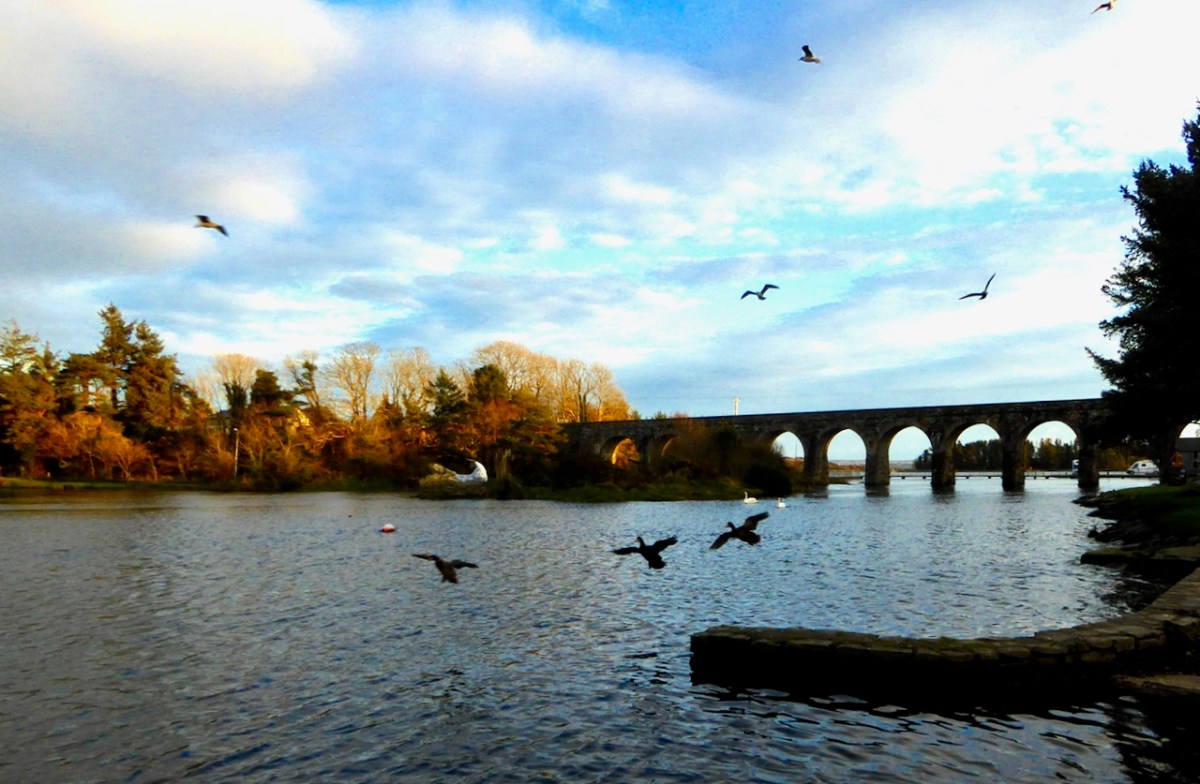
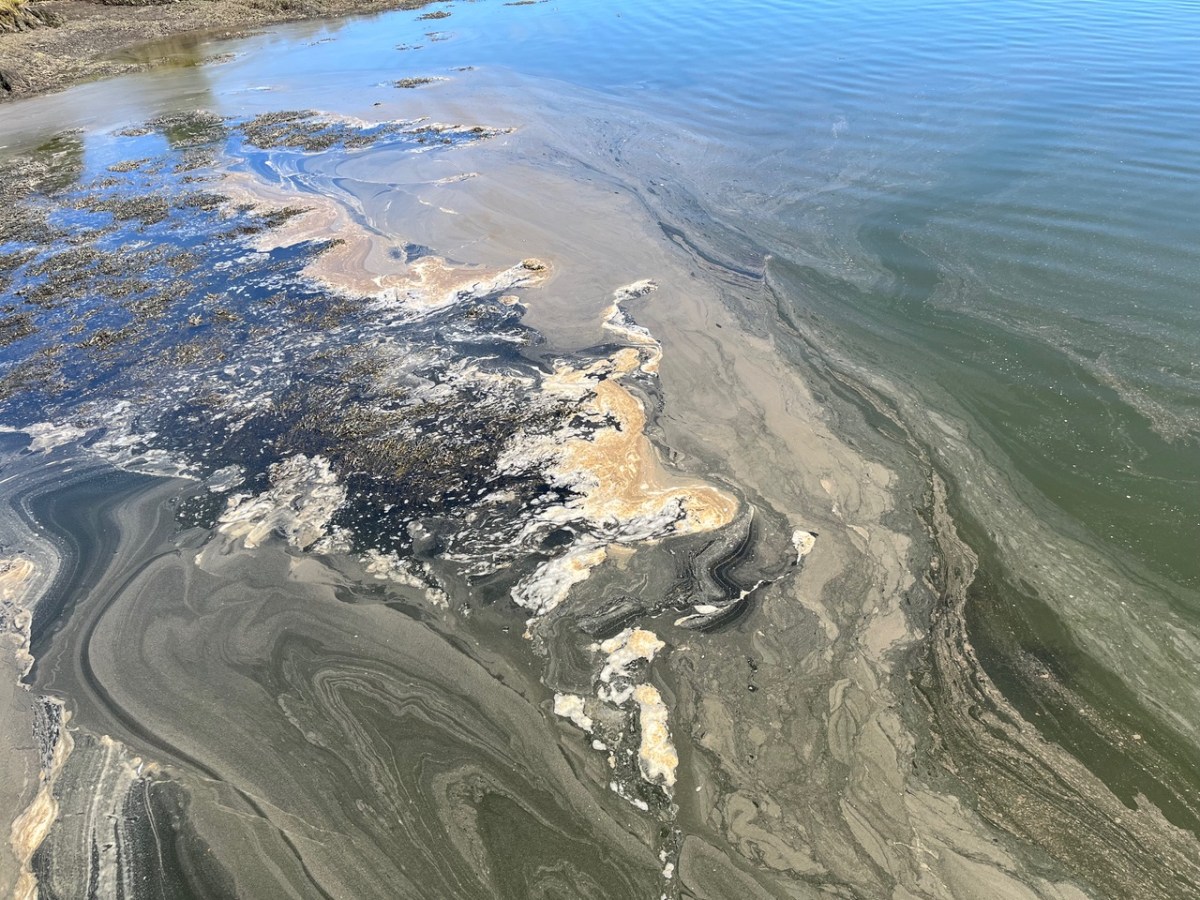
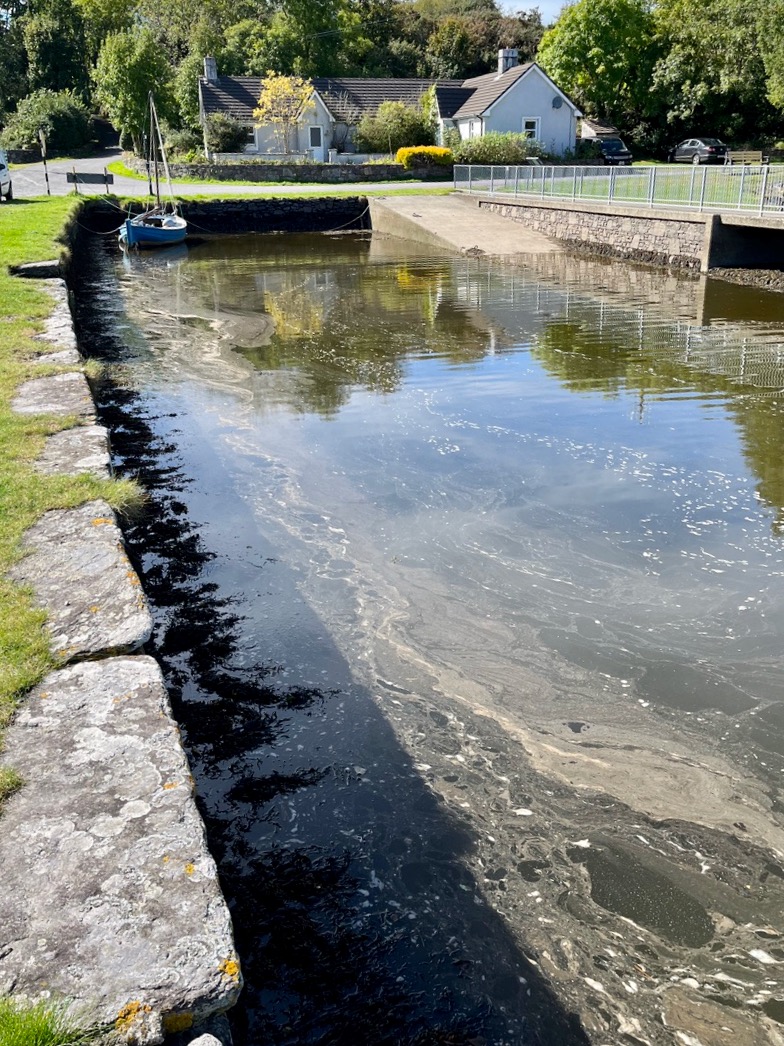
The failure of the plant to meet the prescribed Emission Limit Values over an extremely prolonged period, the frequent overloading of the system and the discharge of raw sewage of unknown quantities through the stormwater overflows, has resulted in serious, visibly observable pollution in Ballydehob Harbour and estuary. A thick grey and brown coloured scum can regularly be seen floating in on the coming tide from the location of the primary discharge point, which is located about 50 meters downstream of the pier. Large slicks of this scum float up and over the weir north of the pier and into the lagoon adjacent to the children’s playground, public tennis courts, community park, community hall, dedicated camper van park, the public road, a public car park, a public walk route and right up to within a few meters of private residences at the east end of the village. Added to this, grey, filthy, foul smelling water, and often even faeces and toilet paper, can be seen pouring out of the stormwater overflow directly into the lagoon, even in dry weather. In summer the stench from the treatment plant itself is frequently overpowering, preventing camper van owners from parking in the park provided by Cork County Council. All this occurs in one the most picturesque areas around Ballydehob which is very popular with young families, walkers, tourists, campers and ornithologists .
In 2022, the EPA became so concerned about “the non-compliant discharges” from the plant that it advised Uisce Éireann that it should “liaise with Cork County Council to ensure that consideration is given to erecting appropriate signage in the area to address any potential risks to public health and the loss of amenity value.”[32] In reply, Uisce Éireann stated that the County Council reported that the risks to public health and loss of amenity value were low as the area was unsuitable for bathing.[33] In actual fact, people do occasionally go swimming off the pier when the tide is in, and this summer one individual swam in the area regularly for some days before he became aware of the pollution.
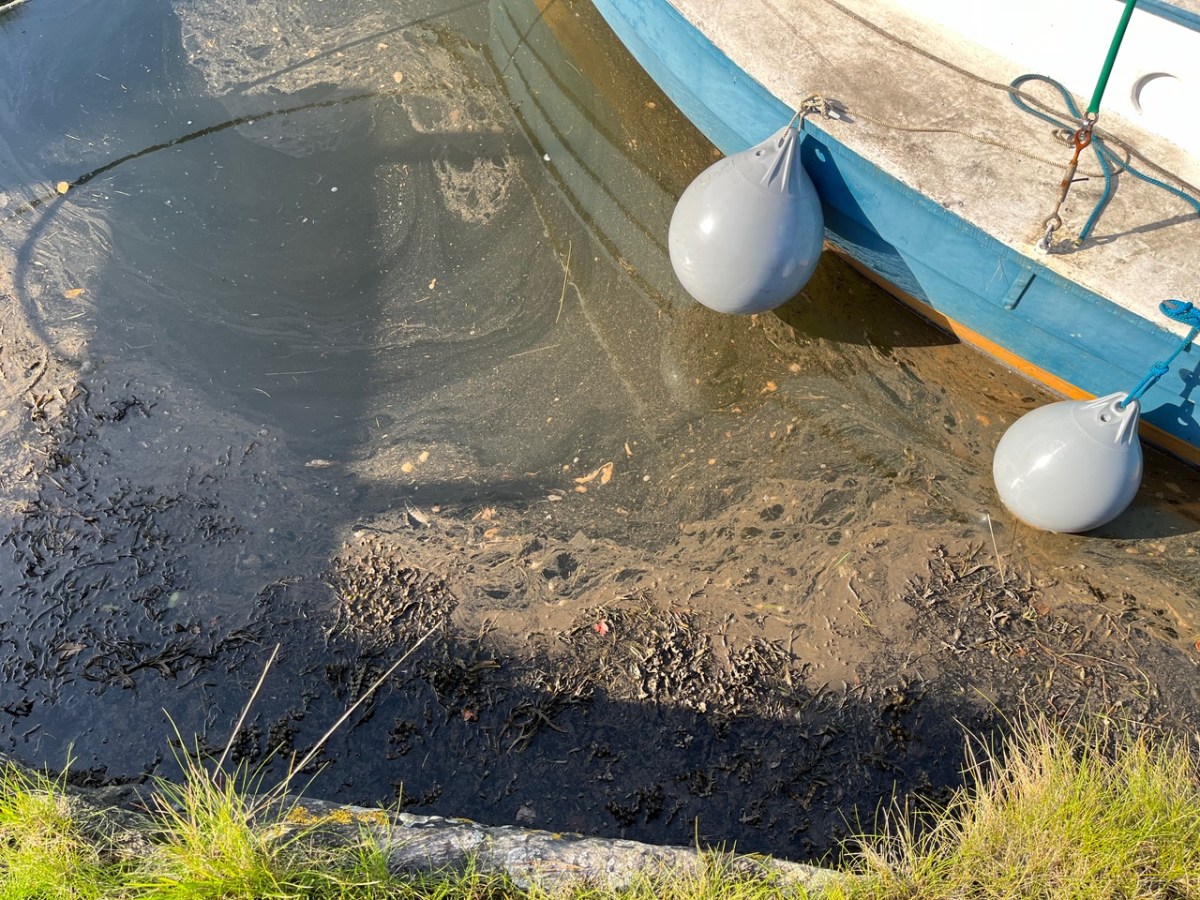
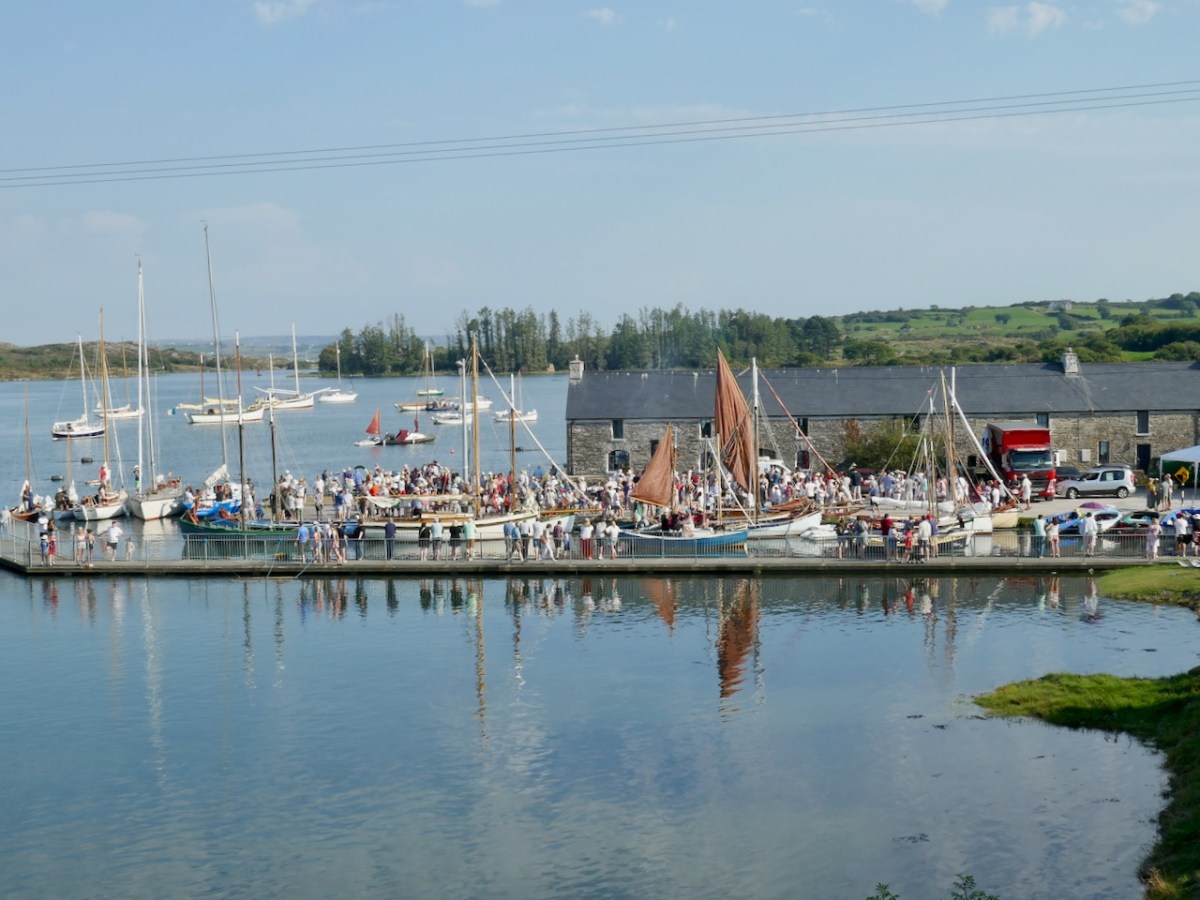
The risk to public health is not confined to swimming. There is an old tradition of shellfish gathering every Good Friday in an area less that two kilometres downstream of the primary discharge point. Children regularly go crab fishing off the pier and the weir in the Harbour itself, often hauling their lines through sewage scum floating on the surface of the water and a small number of people fish with rod and line. With spring tides regularly flooding the banks of the estuary, both children and adults have been known to wade barefooted in the flood waters. The crews of boats tying up at the pier often have to deal with their mooring lines being coated in sewage scum. This needs to be seen in the context of a significant increase in the volume of waterborne traffic in Ballydehob Harbour in the last twenty years, with pleasure craft regularly visiting from all over Roaring Water Bay and anything from forty to seventy-two boats attending the Ballydehob Boat Gathering every year. Ballydehob Bay is also popular with kayakers, who launch their craft at the slipway in the harbour, and occasionally jet skis make an appearance.
Several visitors to the sound installation conducted on the lagoon in August 2022, expressed dismay and disgust at the vile smell emanating from the treatment plant and the filthy water that poured from the septic tank overflow over the five days the event was in progress. The show involved members of the public going out on the lagoon on pedalboats to listen to the sound compositions, and some would have come in direct contact with the water.
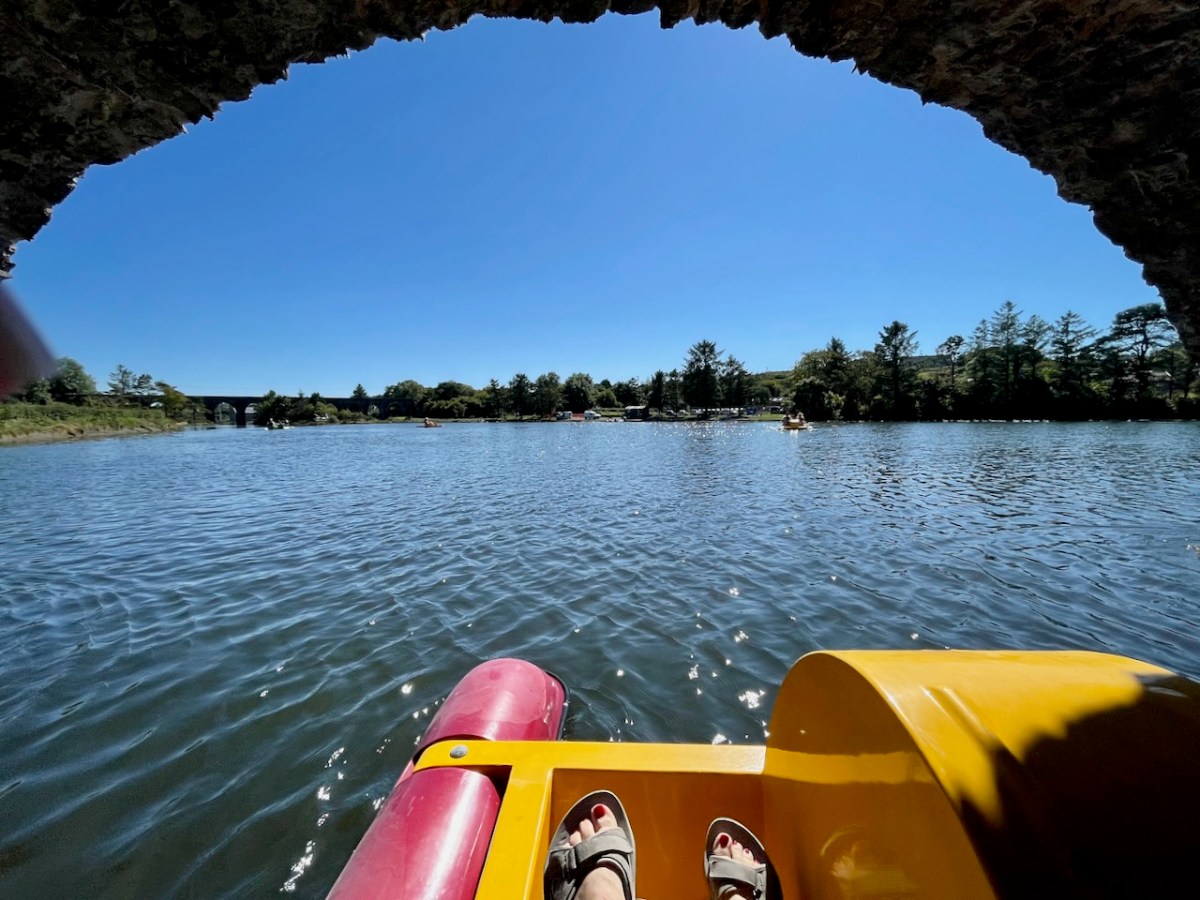
The little quay from which they launched was built as part of a community project in the early 1990s but is now frequently besieged by a slick of sewage scum. It is a favourite spot with the public for feeding sea birds and ducks whenever the absence of sewage pollution allows it. (The drastic decimation of the duck population over the years may or may not be connected with the pollution problem). The incoming tide frequently brings sewage scum to within two meters of picnic tables and public seating provided by the County Council, and right up to the edge of a public walkway. It also brings sewage scum close to the perimeter of the children’s playground. Clearly, in light of the above, it is a gross miscalculation on the part of Cork County Council to suggest that the risks to amenity value and public health, posed by discharges from the septic tank, are low.
The Threat to the Environment
The Natura Impact Statement referenced the “degraded water quality” in Ballydehob Bay and listed the discharge of sewage effluent that is not properly treated as one of “the current damaging activities and main threats to Ballydehob Bay and Roaringwater Bay SAC.” It goes on to elaborate on the vulnerability of the SAC apropos of water quality and the importance of the improvement that the proposed new sewage scheme was expected to deliver in that regard. The water quality of the SAC was “currently classified as Moderate Status which is At Risk of not achieving Good Status by 2015 (as per the requirements of the Water Framework Directive)….. good quality water is necessary to maintain the populations of the Annex II species (Grey Seal/Halichoerus grypus and Otter/Lutra lutra) for which the site is designated. This good water quality is dependent on controlling both the fertilisation of the grasslands and requires that sewage be properly treated before discharge. The proposed Sewerage Scheme [which was never delivered] will significantly reduce the nutrient loads entering Ballydehob Bay and Roaringwater Bay SAC and therefore is likely to improve the water quality of this system. This improvement of water quality is necessary to sustain the populations of Annex II species for which this site has been designated.”[34]
Unfortunately for the otters which were once present in the upper estuary and Harbour area, a lack of “good quality water” may already have taken its toll by the time the Natura Impact survey was carried out in 2011. It reported that while it was highly likely that the wider area supported a strong population of otters, “No otter signs or spraints were observed despite extensive searching” [35]in the area from just below the Quay to the road bridge leading into the village (Three Arch Bridge)[36]. This happens to be the area most effected by sewage pollution.
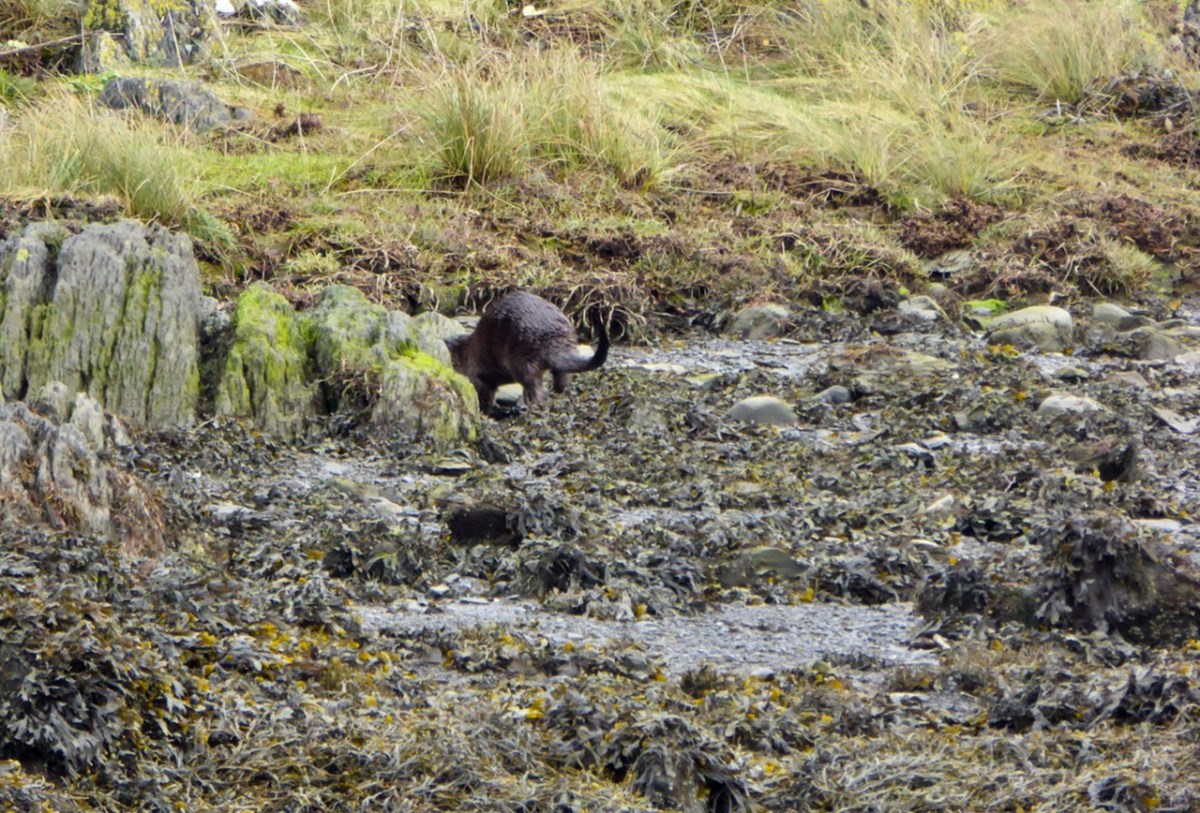
As regards Grey Seals, their nearest haul out site is three kilometres from the primary discharge point of the septic tank. However, Harbour Seals haul out on the Craoibheen Islands in Ballydehob Bay, just 1.6 kilometres directly downstream of the discharge point and well within the area impacted by the effluent.[37] Unlike Grey Seals, Harbour Seals do not seem to be a qualifying interest of the Roaring Water Bay And Islands SAC. They are, however, a protected species under the Wild Life Acts, 1976 and 2000 and presumably require the same good quality water that Grey Seals need if their population is to be maintained.
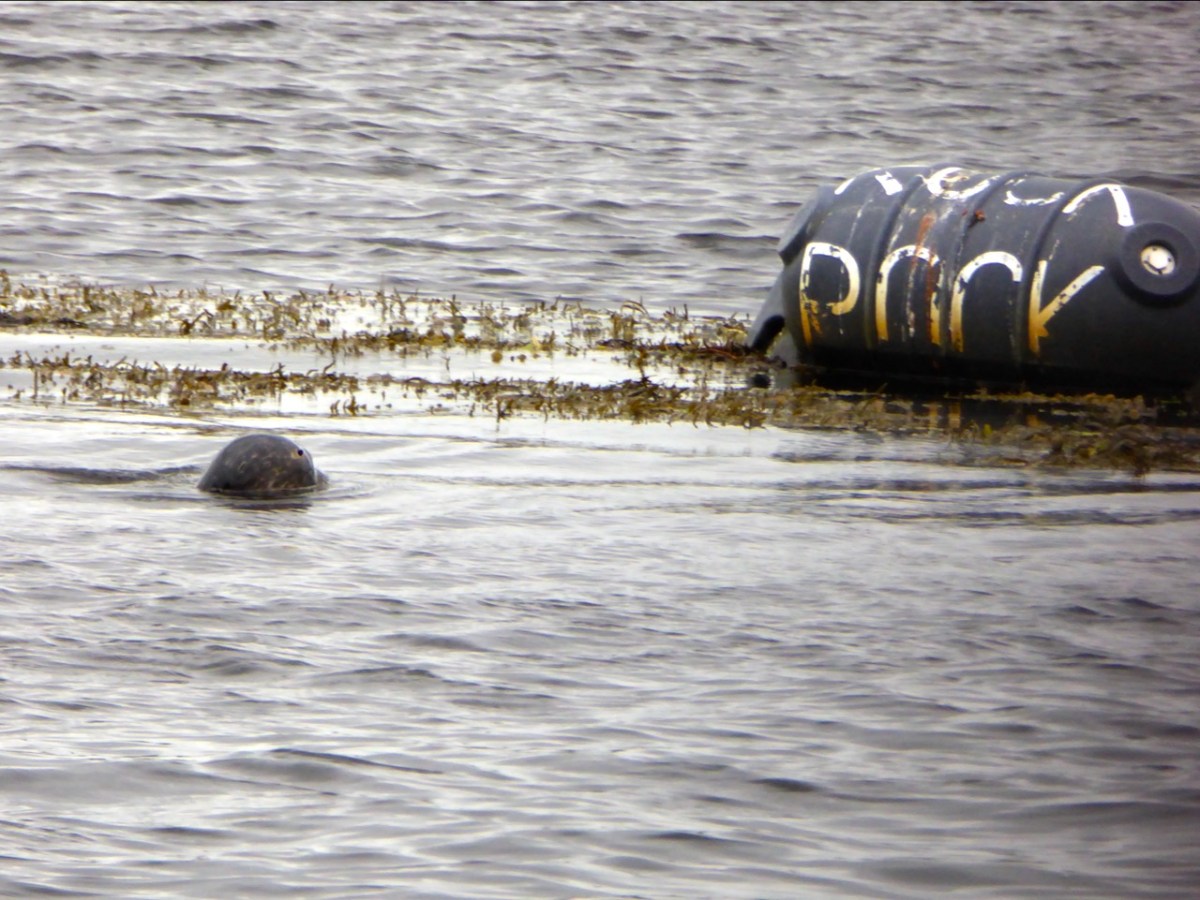
Both otters and seals and the entire marine environment of Ballydehob Bay continue to suffer the consequences of “degraded water quality” due to the failure of Uisce Éireann to implement the plans for “appropriate treatment” that Cork County Council had proposed fifteen years ago.
Risk to Designated Shellfish Waters
Roaringwater Bay is famous for the quality of its cultivated mussels, produced in clear waters in an area of the Bay officially designated as a Shellfish Area. The Sea Fisheries Protection Authority has granted Class A status to these waters based on the regular and ongoing testing of mussels produced within the area. This means that they may be placed on the market without treatment, for direct human consumption.
The Roaringwater Bay Designated Shellfish Area is listed as a Protected Area (in terms of water quality) in the Roaringwater Bay Pollution Reduction Programme. This programme was established by the Minister for the Environment in 2010 specifically “to protect and improve water quality in the designated shellfish growing areas in Roaringwater Bay”[38]. However, contrary to a Shellfish Waters Desk Study carried out by Uisce Éireann in 2017,[39] a Compliance Investigation by the EPA in the same year found that the discharges from the Ballydehob WWTP are not meeting the Environmental Quality Standard for shellfish.[40] Fortunately, a number of reports and studies have shown that the mussel production area itself is not impacted by discharges from the plant. It is crucial that steps are taken now to guarantee that this remains the case into the future, especially in light of the fact that the nearest mussel lines are located just three kilometres downstream of the primary discharge point.
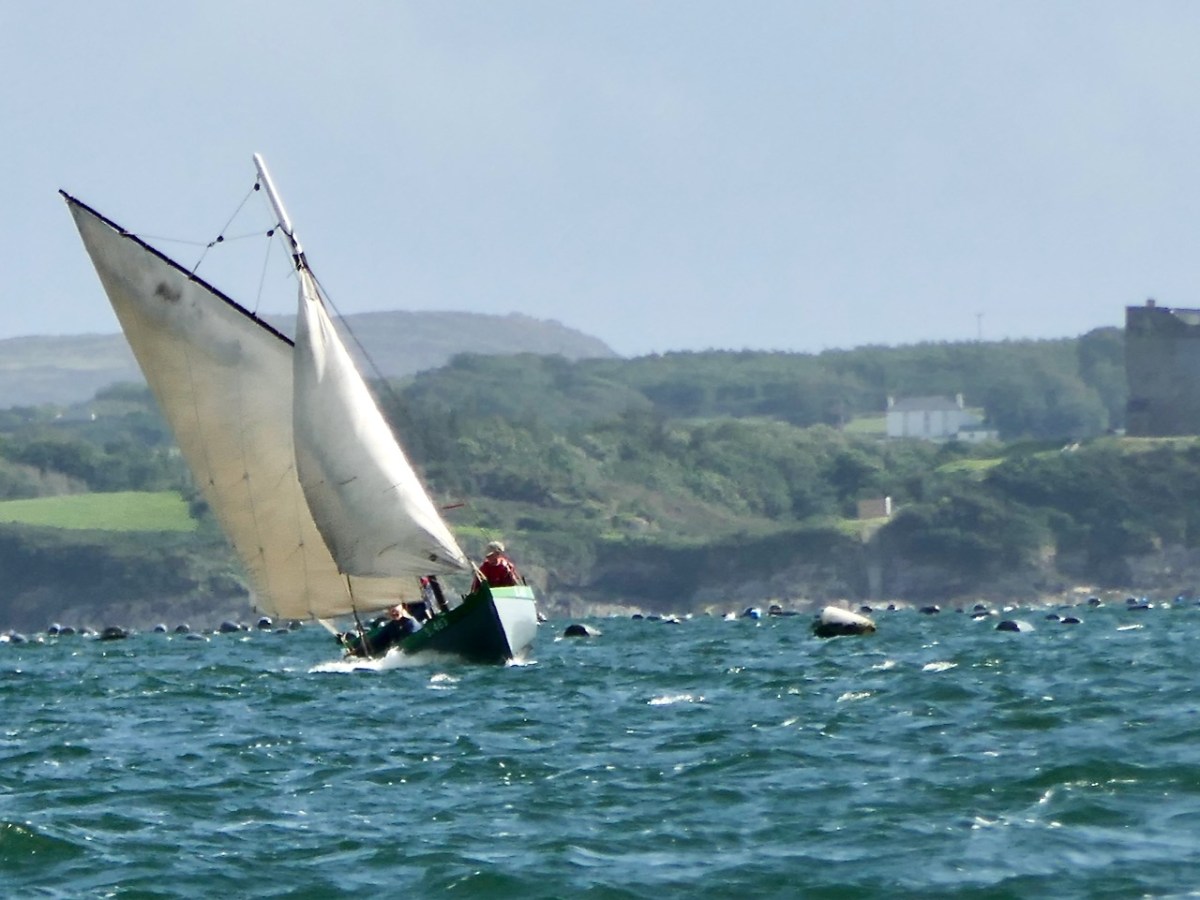
It should also be noted here, that the Designated Shellfish Area actually extends well into Ballydehob Bay, to within 900 meters of the primary discharge point.[41] This is well within the area impacted by the non-compliant discharges from the septic tank,[42] which are a violation of the Pollution Reduction Programme designed to protect the area. While no shellfish cultivation is currently carried out in Ballydehob Bay and it is too shallow for mussel cultivation, it has huge potential for the cultivation of oysters.
The EPA’s failed efforts to prevail on Uisce Éireann to upgrade the WWTP
All of the AERs submitted to the EPA by Uisce Éireann acknowledge the fact that the continuous failure of the WWTP to meet the ELVs stipulated in the Waste Water Discharge Licence is due to the lack of secondary treatment. The 2021 AER, for example, states: “The WWTP is not compliant with the ELVs set in the Wastewater Discharge Licence. Septic tank not designed for secondary treatment.”[43] Yet no cognisance is taken of the fact that Uisce Éireann is obliged to upgrade the WWTP in order to deal with the problem. Condition 5.4 of the Waste Water Discharge Licence categorically states:“ The licensee shall complete the improvements as set out in Schedule C: Specified Improvement Programme, of this license, by 31/12/2019 in order to ensure compliance with the emission limit values … of this licence.”[44]
Uisce Éireann was obliged to submit a detailed programme of the infrastructural improvements required and a plan and timeframe for their implementation to the EPA, as part of its second APR (Condition 5.1). The programme was never submitted and the status of the required works is given in all the AERs as “not started”. In all the AERs up to 2019, the following ‘copy and paste’ comment is entered in the section headed “Specified Improvement Summary”: “The improvement programme will be reviewed by Irish Water to assess the works required to comply with the licence on a prioritised basis.” In other words, the Ballydehob upgrade is not a priority with Uisce Éireann.
Uisce Éireann’s failure to prioritise an upgrade for the Ballydehob plant is the subject of many damning communications it received from the EPA over many years. An EPA Compliance Investigation report in 2017 entitled “Upgrade of Ballydehob WWTP”, outlined the licence breaches incurred due to the inadequacy of the septic tank, including repeated ELV breaches, the high amount of infiltration into the system, non-compliant SWOs, overloading, insufficient PE design and the failure of discharges to meet the Environmental Quality Standard for shellfish.[45]
In January 2018, Uisce Éireann was reminded that “The Licence requires under Condition 5.1 that a programme of infrastructural improvements be submitted …this programme has not yet been submitted….prepare a programme of infrastructural improvements.”[46] Uisce Éireann replied that the capital needs for Ballydehob WWTP would be considered in the investment plan prioritisation process but it could not confirm that it would be included in the next investment plan, which was post 2020.[47]
On the 8th of January 2020, Uisce Éireann was asked to “confirm” that the Ballydehob WWTP upgrade was included in the post 2020 investment plan and to outline interim measures to be taken, until the upgrade was in place, to ensure that the plant met the ELVs required by the licence.[48] In reply, Uisce Éireann could not confirm delivery times for an upgrade and basically indicated that it had other priorities.[49] No interim measures were submitted. On the 7th of July, the EPA again requested an outline of interim measures[50] only to be told that there was limited scope at that time for further operational measures.[51] In all the AERs from 2020 to 2023, Uisce Éireann steadfastly refuses to commit to an upgrade stating: “No additional improvements planned at this time” and “ Capital works funding post 2024 will be contingent on the project being included in the 2025-2029 investment period.” This is in spite of an EPA Site Visit Report from August 2018 that states: “The EPA notes with concern that Irish Water still has no plan in place for the upgrade of this WWTP……The upgrade of the WWTP needs to be given priority by Irish Water.”[52]
Apart from the Specified Improvement Programme which, as we have seen, was a condition of the licence, Uisce Éireann was also expected to take general measures to prevent environmental damage. The measures taken each year were to be reported in the AERs under the heading “Annual Statement of Measures”. All the AERs show that Uisce Éireann took no such measures in relation to the Ballydehob plant. For three years in a row Uisce Éireann simply reported: “No additional measures have been taken in [2015/2016/2017] in relation to prevention of environmental damage. The need for measures to prevent environmental damage will be reviewed on an annual basis.”[53] In the following years the report was simply that no improvements or changes were made.
In April 2021,having failed to get Uisce Éireann to implement the Specified Improvement Programme or to submit an outline of mitigating measures it would take in the interim, the EPA instructed Uisce Éireann to “provide an update on the Ballydehob WWTP upgrade” in the Annual Statement of Measures section of the 2022 AER. This last ditch effort to get Uisce Éireann to act, elicited a long reply in which it was made clear, once again, that “there is no planned project for Ballydehob included in the current Capital Investment Plan at this time. Ballydehob will be considered as part of the Investment Planning for the 2025-29 Investment Plan.” It went on to highlight the fact that the maintenance and upgrade of Uisce Éireann’s water and sewer network required a multi-million euro investment programme over many years and that projects were assessed based on available funding. “A review of projects through which Ballydehob was assessed did not provide allocation of funds for works at this site.”[54] It was at this stage that the EPA resorted to advising Uisce Éireann to consider erecting signage to warn the public of potential health risks.
Conclusion
All of the major players in this issue are aware and acknowledge the fact that the Ballydehob WWTP is in need of a major upgrade; from Cork County Council who first sought to upgrade the plant fifteen years ago, to the EPA who made an upgrade a condition of the Waste Water Disposal Licence, to Uisce Éireann (in spite of their inaction), as evidenced in their own records and acknowledged in their AERs. Nobody needs to be convinced. Nothing further needs to be proved. It is a clear-cut, non-contested fact by all concerned that Ballydehob is in urgent need of a new, upgraded WWTP to stop the serious pollution caused by the current grossly inadequate system. Why then has nothing been done about it? Surely, as one of the richest countries in the world, with a twenty-five billion budget surplus, we can do better than this for our local communities and for the environment. It is a legal and moral entitlement, and it is essential, that the Ballydehob WWTP upgrade is finally included in Uisce Éireann’s investment programme for 2025-2029. Ballydehob has waited long enough.
02/10/2024
References
[1] Application to the EPA, by Cork County Council, for Waste Water Discharge Licence, dated 18/06/2009, p.11.
[2] Ibid pp 43-44.
[3] Ibid pp 30-31.
[4] EPA, Loretta Joyce, Inspectors Report on A Waste Water Discharge Licence Application, dated 08/10/2014.
[5] RPS Natura Impact Statement of the Proposed Ballydehob Sewage Scheme, issued July, 2011, 4.2.1, p22
[6]Application to the EPA, by Cork County Council, for Waste Water Discharge Licence, dated 18/06/2009, p 29.
[7] Letter dated 27th May, 2009, from Ms Mary Nolan, Staff Officer, Cork County Council to Mr Declan Groarke, Senior Executive Engineer, Cork County Council.
[8] Application to the EPA, by Cork County Council, for Waste Water Discharge Licence, dated 18/06/2009, Attachment B10, Cork County Water Services Investment Programme 2007-2009.
[9]Ibid, p 26.
[10] EPA Waste Water Discharge Licence, Register Number D0467-01, introduction and also p 6.
[11] Ibid, Condition 5.4, p14.
[12] Ibid, Condition 5.1, p12 and 5.3 p13.
[13] Uisce Éireann Annual Environmental Reports, from 2015 to 2023 and EPA Action/Instruction, Ref no A018846
[14] EPA Compliance Investigation, 23/05/2017, Ref. No. C1001472.
[15] Ecological Impact Assessment, Ballydehob, Co, Cork. May 2022. Prepared for Cork County Council. P 2
[16] EPA Action/Instruction, Ref no A018846
[17] EPA Message Ref No EM011399
[18] EPA Message Ref No EM011980
[19] EPA Site Visit Report, 23/08/2018, Ref No SV14274, p 5.
[20] EPA, Message Ref No EM015839
[21] EPA, Message Ref No EM025774.
[22] EPA Action/Instruction, Ref. No. A108569
[23] EPA, Message, Ref No EM019210
[24] EPA Site Visit Report, 23/08/2018, Ref No SV14274, p 5.
[25] RPS Natura Impact Statement of the Proposed Ballydehob Sewage Scheme, issued July, 2011, p 21
[26] Uisce Éireann , Annual Environmental Report 2015, Appendix 7.4, Stormwater Overflow Assessment, 5.3.2, p 13.
[27] Ibid, 5.2, table 2, p 13
[28] Urban Waste Water Treatment Directive (91/271/EEC), Procedures and Criteria in relation to Stormwater Overflows, pp 6-7
[29] Uisce Éireann, Shellfish Waters Desk Study, 19/07/2017, Agglomeration Name: Ballydehob, Discharge Licence No: D0467-01, p 13.
[30] EPA Action/Instruction, Ref No A018846
[31] EPA Message Ref No EM011399
[32] EPA Action/Instruction, Ref No A113866
[33] EPA Message Ref No EM023769
[34] RPS Natura Impact Statement of the Proposed Ballydehob Sewage Scheme, issued July, 2011, 5.2.3.1, p 32.
[35] Ibid, 3.2.2, p 18.
[36] Ibid, Fig 3.4, Habitat Map, p16.
[37] Application to the EPA, by Cork County Council, for Waste Water Discharge Licence, dated 18/06/2009, Attachment F.1, Report on Marine Outfall Studies
[38] www.gov.ie, Revised/Updated Roaringwater Bay Pollution Reduction Programme
[39] Uisce Éireann, Shellfish Waters Desk Study, 19/07/2017, Agglomeration Name: Ballydehob, Discharge Licence No: D0467-01
[40] EPA Compliance Investigation, 23/05/2017, Ref. No. C1001472.
[41] EPA Inspectors Report on A Waste Water Licence Application, p 3 and Fig. 1.0, p 6
[42] Application to the EPA, by Cork County Council, for Waste Water Discharge Licence, dated 18/06/2009, Attachment F.1, Report on Marine Outfall Studies.
[43] Uisce Éireann, Annual Environmental Report 2021, 2.2.1
[44] EPA Waste Water Discharge Licence, Register Number D0467-01, Condition 5, Programmes of Improvements, 5.4,p14.
[45] EPA Compliance Investigation, 23/05/2017, Ref. No. C1001472.
[46] EPA Action/Instruction, Ref No A018846.
[47] EPA Message Ref No EM011399
[48] EPA Action /Instruction, Ref No A024767.
[49] EPA Message Ref No EM017211
[50] EPA Action/Instruction, Ref No A026477
[51] EPA Message Ref No EM017350
[52] EPA Site Visit Report, 23/08/2018, Ref No SV14274, p6.
[53] Uisce Éireann, Annual Environmental Report 2015, Appendix 7.1, Annual Statement of Measures.
Uisce Éireann, Annual Environmental Report 2016, Appendix 7.1, Annual Statement of Measures.
Uisce Éireann, Annual Environmental Report 2017, Appendix 7.1, Annual Statement of Measures.
[54] EPA Message Ref No EM021901
 Roaringwater Journal