Most of our followers will know of Finola’s involvement with Irish ‘Rock Art’; and that has nothing to do with the Beatles or Bill Hayley (remember him?)…

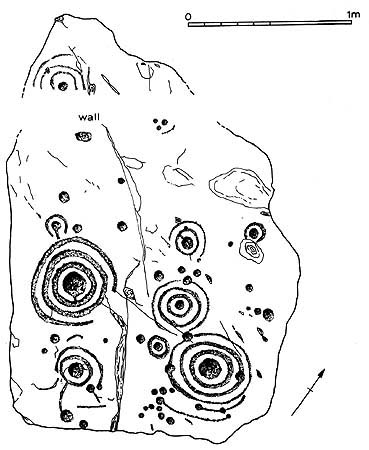
Rock Art at Derrynablaha – Robert’s ‘modern’ interpretation based on Finola’s 1973 survey
Finola’s interest in Rock Art dates from her time at the University of Cork in the 1970s, when she studied Archaeology and wrote her thesis on Neolithic and Bronze Age petroglyphs in Cork and Kerry: that is still a standard work on the subject, although since those days the number of known examples throughout Ireland has increased significantly. The closest pieces to us here in Ard Glas are up in the hills north of Ballydehob, in the townland of Ballybane West. One is on a very large, flat piece of rock outcrop, about 30 metres long by 10 metres wide: Finola had surveyed it back in 1973. We often tramp up there, perhaps hoping to see some hitherto undiscovered markings – or even to find enlightenment through contact with the rock as to why it is there and what it might mean. But – so far – we have always returned none the wiser.
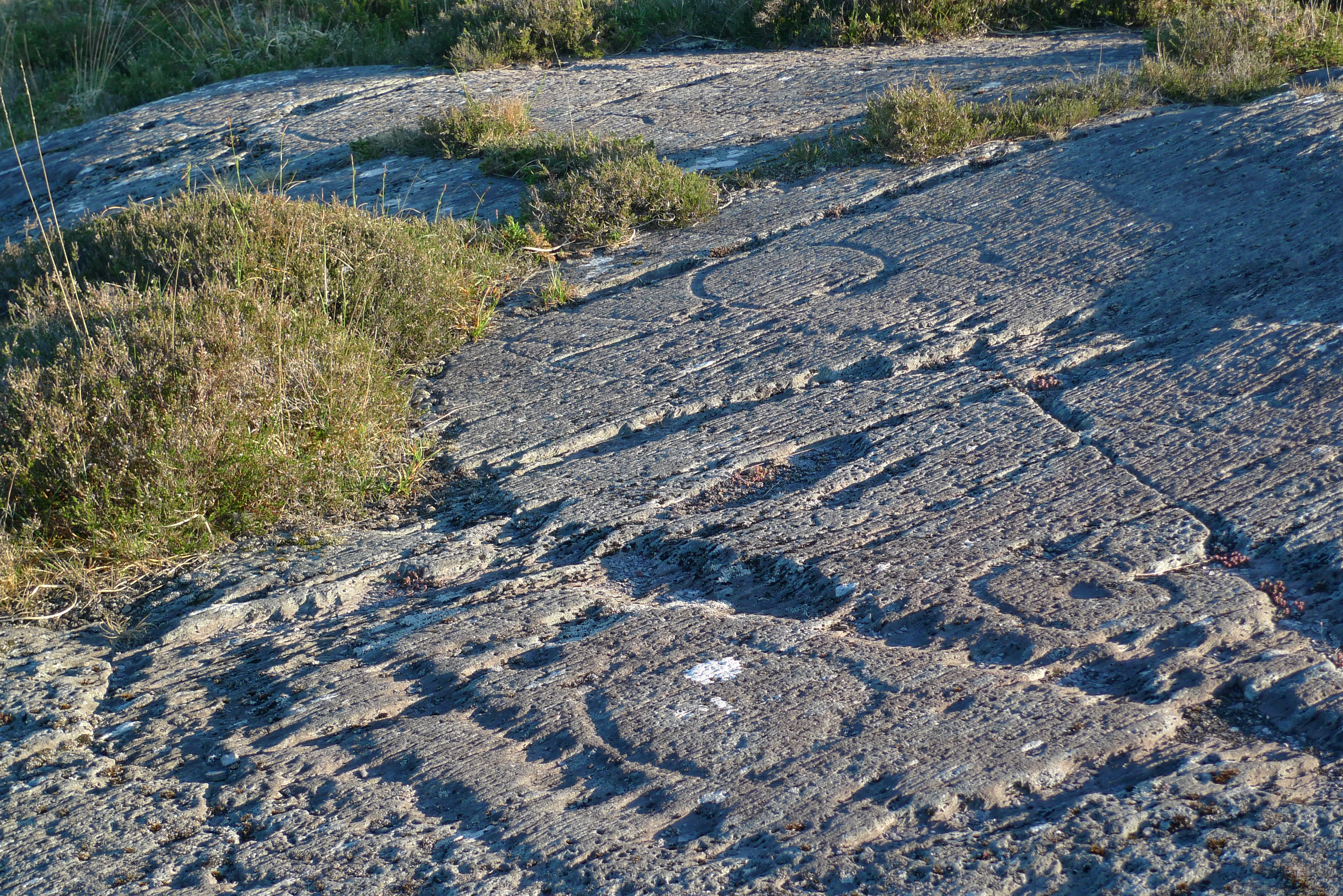
Motifs from Ballybane West. They are best seen in low sun – as here: at other times they can be virtually invisible

Rock Artist Finola and her ‘new’ piece…
These petroglyphs are certainly enigmatic. Mainly, they are ‘cup marks’ (circular depressions in the rock) often, but not always, surrounded by a ring or rings – although various other shapes have also been found. It’s amazing that they continue to survive as most are on exposed sites, constantly battered by the West Cork weather – but they do. Yesterday we went to have a look at a recently discovered piece, near Schull. It is in the garden of a private house and is almost completely hidden by encroaching moss and undergrowth. With permission we pulled back some of the moss and had an initial look: it’s a good example, with deeply incised cup and ring marks. Finola found in her researches that Rock Art sites often have views of the sea and of mountains – as does this one in the Schull garden (and those at Ballybane West). It is, therefore, possible that they have a geographical purpose; there is no way of knowing, unless we are ever fortunate enough to slip through a time warp and meet up with one of the original artists (who speaks English). I am always hopeful of this, and will let you know – somehow – if it happens….


 Roaringwater Journal