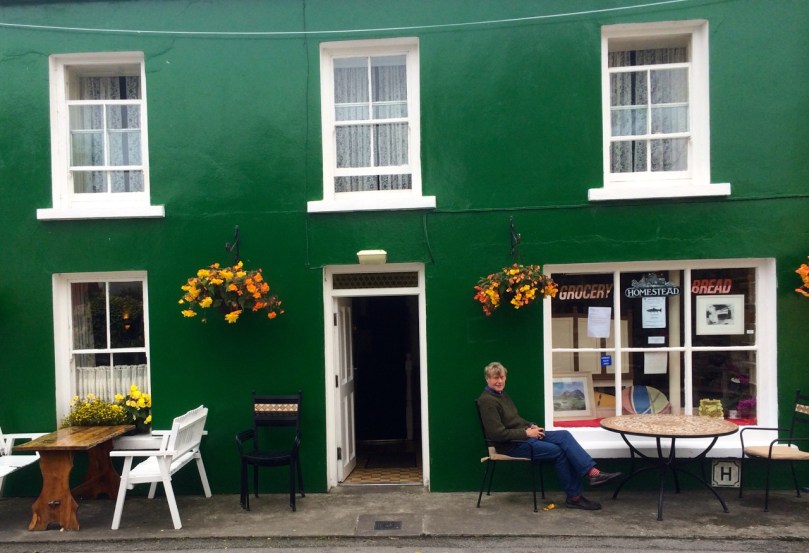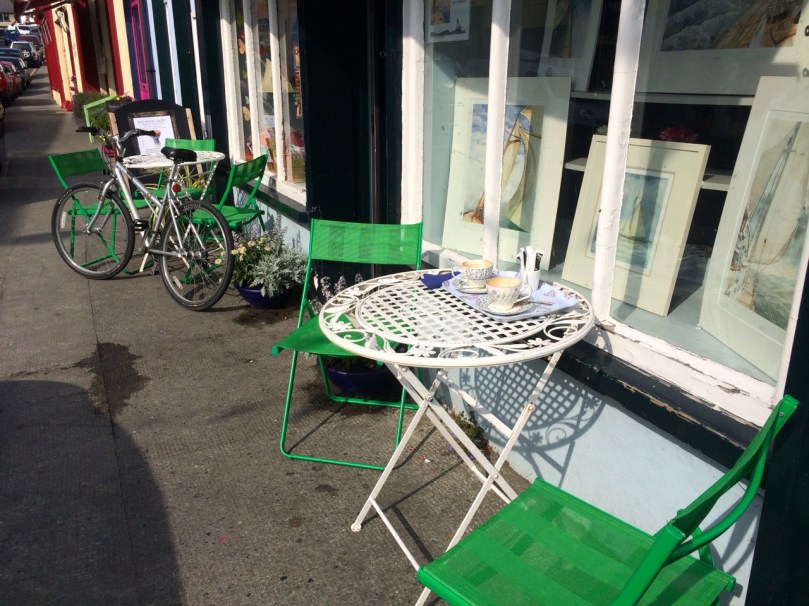
Whyte Books/Now AnnaB’s Bookshop

How inviting is this!

So inviting!

Since this post was published, Whyte Books has changed name and ownership. It is now AnnaB’s Bookshop – and we are happy to report it is as charming and wonderful as ever under its new owner, Katarina.

Do you have a favourite bookshop?

Of course you do! We all have one – THAT bookshop where you feel welcomed; where it never matters how long you browse or if you actually buy something; where knowledgeable staff can recommend a good book for your father or your grandchild; where you can sit with a nice cup of tea and a slice of something delicious as you browse through book reviews or escape from the rain; where they can order stuff for you and the process doesn’t feel like a soulless internet transaction.
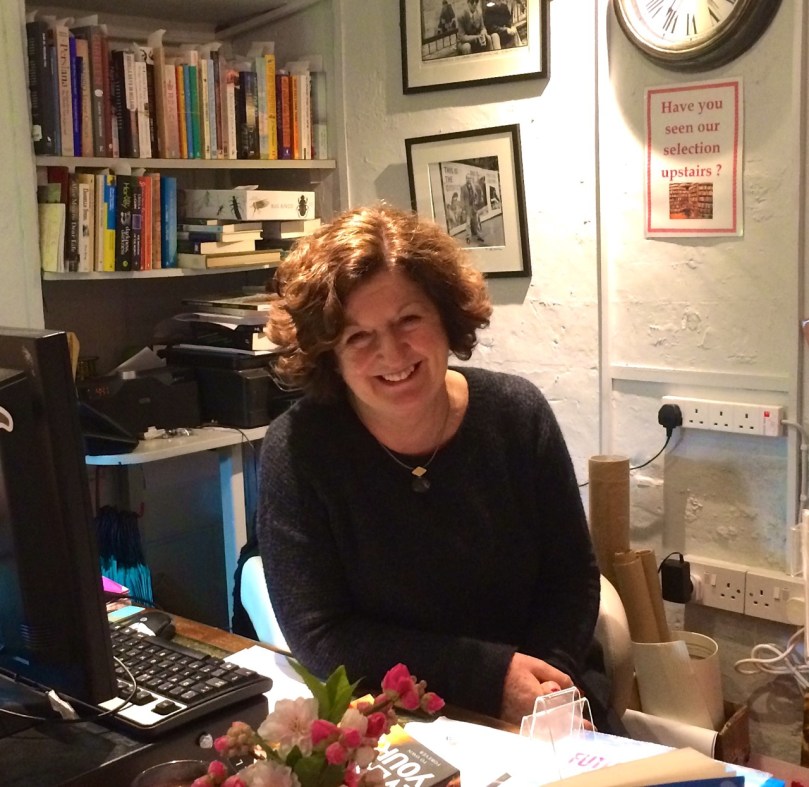
Sheila

Herself

We have THAT bookshop, here in Schull. It’s called Whyte Books, presided over by the charming and cultivated Sheila Whyte. Sheila is typical of many of us who have made West Cork our home. She grew up in Dublin but spent most of her adult life in Australia. She fell in love with Schull on a holiday here, she fell in love with bookstores wherever she travelled, and when the time came to put it all together, well, we were the winners.

Sheila had a vision of what she wanted – a place that would become a hub of reading and intellectual activity in the area and she has worked hard to create just that. There’s a nook for kids and a space for young adults, besides all the little corners and seating areas where you can while away a pleasant hour with your nose in a book and your hand curled round a cuppa. She holds poetry readings, promotes and launches local books (a recent example is Gubbeen by Giana Ferguson) and hosts a monthly book club.

This week Whyte Books hosted the first ever session of The Moth in the South West. The Moth is new to Ireland although story telling is definitely not! A cultural phenomenon, The Moth got started in New York but is based on the idea of neighbours getting together on the porch to tell stories after it gets dark and the moths come out. Stories must be first person narratives, true, told not read, and last no more than ten minutes. About 20 of us gathered upstairs: there were candles and wine and laughter and stories and a promise to make it into a regular event. All the ingredients, in fact, that make Schull such a vibrant community and locate Whyte Books at the beating heart of that community.
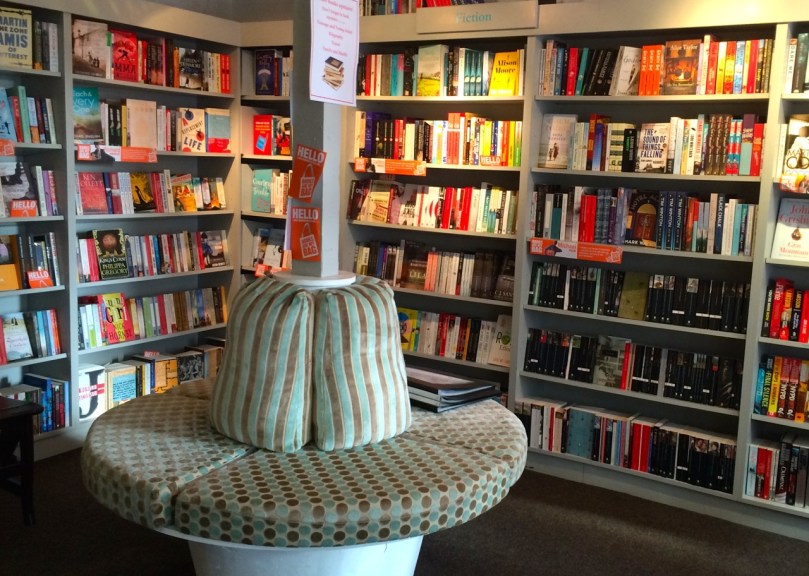
books and books

books and books

We are so lucky to have a great bookshop here! It’s a tough business these days, so take a break from buying online – go buy the latest Must Read at your local bookshop. At Whyte Books, I can guarantee that if it’s not on the shelves they can get it for you. And while you’re at it, have a coffee…and maybe one of those yummy little chocolate thingies.
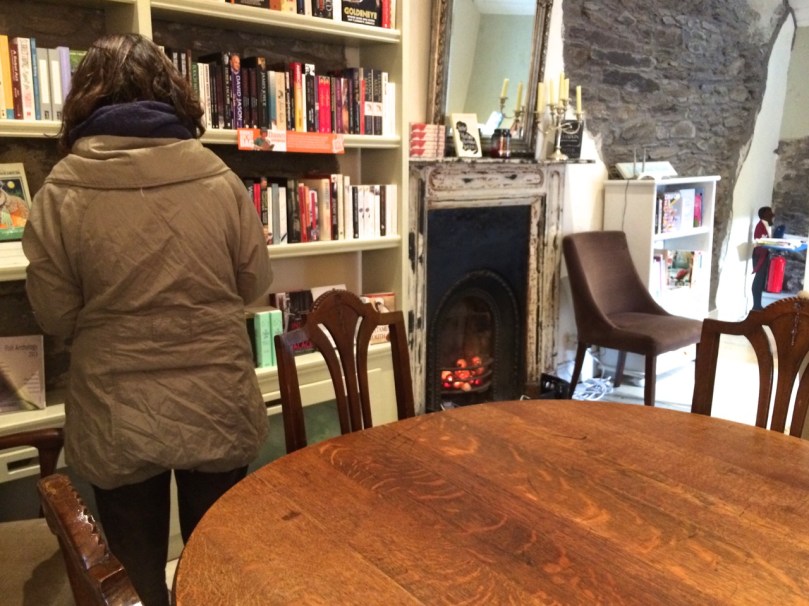
Browsing upstairs

Browsing upstairs

By the way, I’m not the only one who loves this shop. It’s been voted Best Bookshop in Munster, featured in a beautiful video,  and even people who happen by rave about it

Martinmas

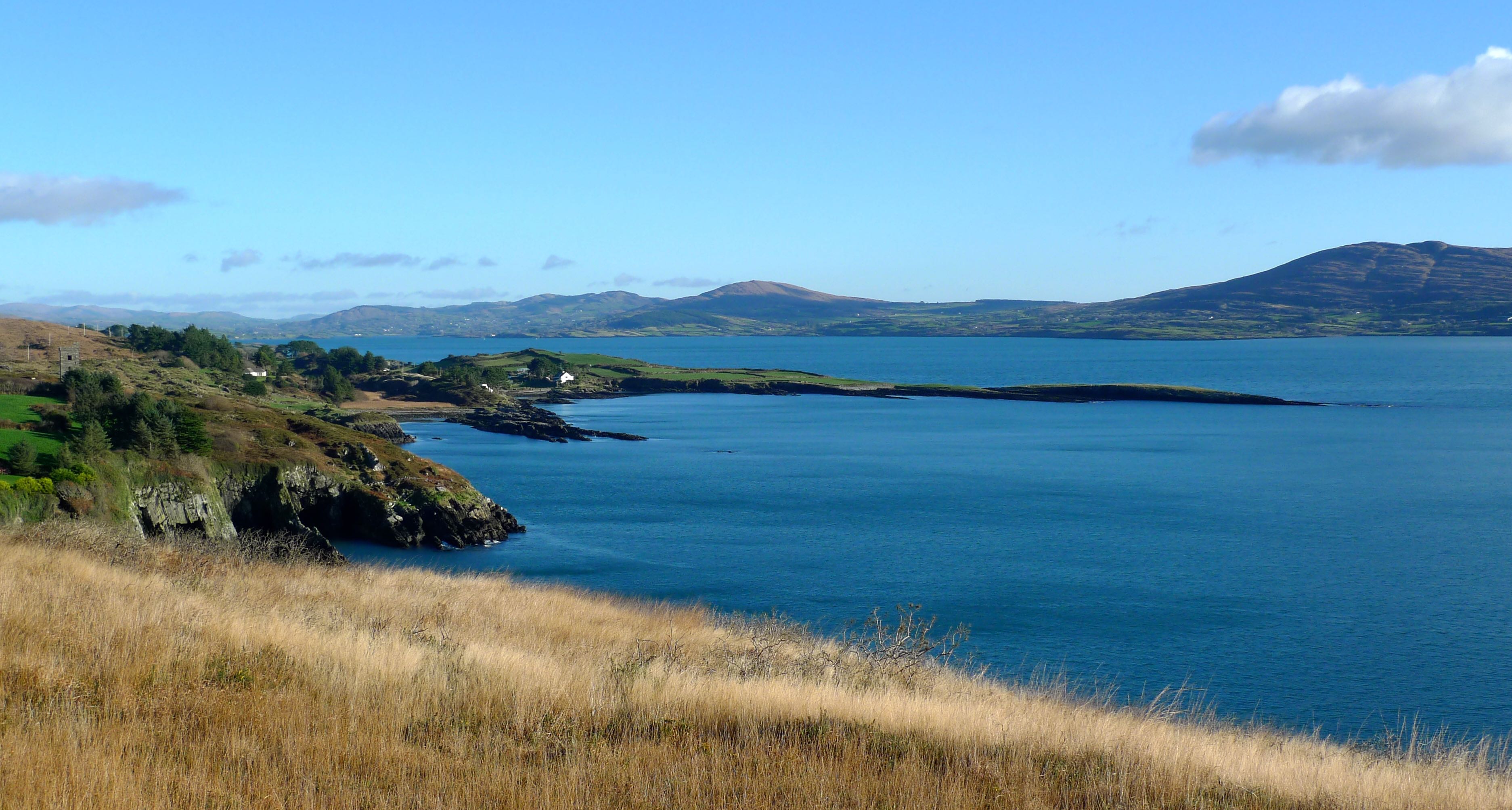
St Martin's Summer: late November on the Sheep's Head

St Martin’s Summer: late November on the Sheep’s Head

I’m used to pursuing the lives of the Irish Saints – often obscure, always fascinating – their legends tied up with folk tales and seasonal customs. But here we are, in Ireland, with a strong tradition of celebrating a continental Saint – St Martin of Tours.

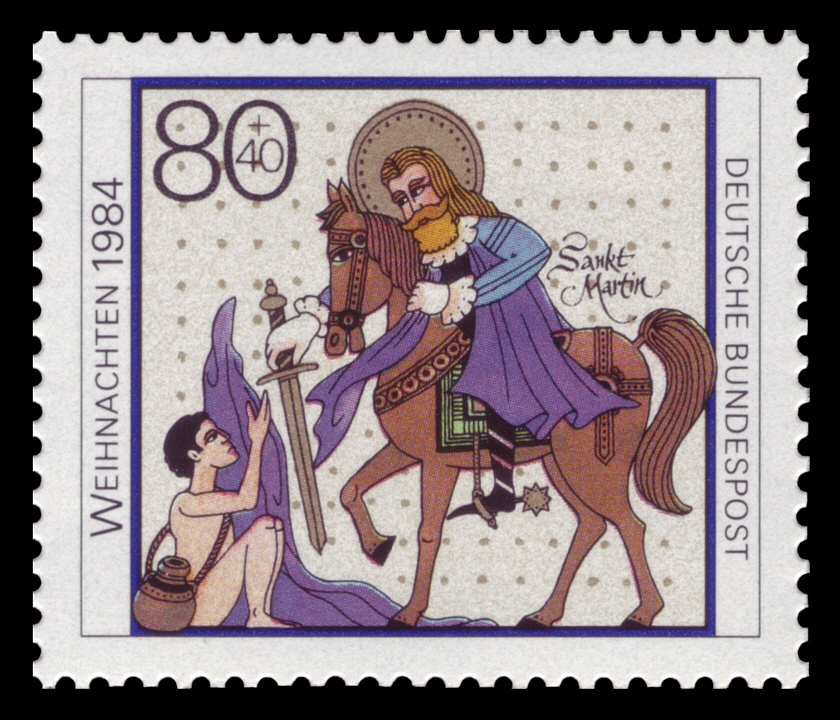
St Martin of Tours adorns a German postage stamp

St Martin of Tours adorns a German postage stamp

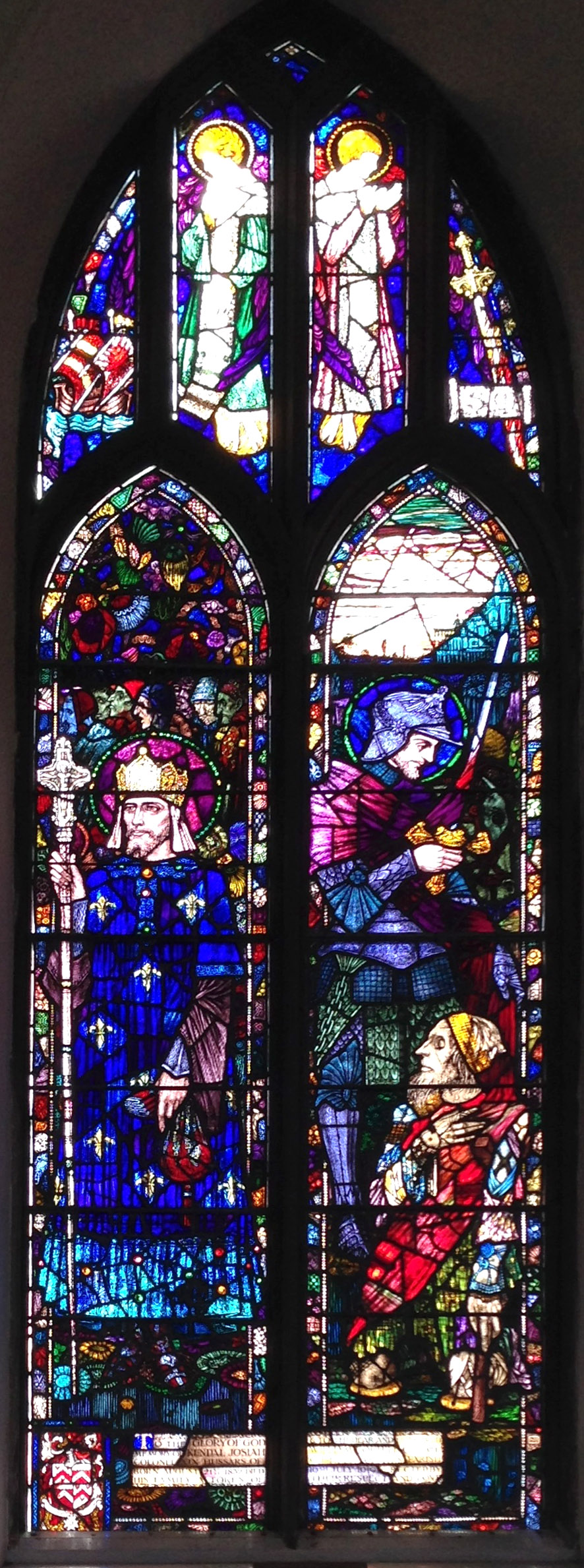
St Martin doesn’t appear to have any connection with Ireland at all – yet everyone here seems to know the one element of his story that is always told: in the winter storms he met a naked beggar and cut his own cloak in two, giving half to the beggar. There is a twist to the story – that same night Martin had a dream: he saw Jesus wrapped in the piece of cloak he had given away and Jesus said to him, “Martin has covered me with this garment.” Even though Martin was at that time a soldier in the Roman Army he sought to be baptised and then refused to fight as this was against Christian principles. In fact, he was the first recorded ‘Conscientious Objector’.

Harry Clarke's window in Castletownshend, showing St Martin and the Beggar in the right hand panel

Harry Clarke’s window in Castletownshend, showing St Martin and the Beggar in the right hand panel

St Martin’s Day is on 11 November and the season is known in Ireland as Martinmas. There are customs surrounding this time – still remembered in some rural districts. There is a whole chapter devoted to Martinmas in Kevin Danagher’s book The Year in Ireland (Mercier Press 1972). From this we learn that every family is to kill an animal of some kind “…and sprinkle the threshold with the blood, and do the same in the four corners of the house to exclude every kind of evil spirit from the dwelling where this sacrifice is made…”

In 1828 Amhlaoibh Ó Súilleabháin of Kilkenny recorded in his diary: “…The eleventh day, Tuesday. St Martin’s Day. No miller sets a wheel in motion today; no more than a spinning woman would set a spinning wheel going; nor does the farmer put his plough-team to plough. No work is done in which turning is necessary…” This might be because of a story that Martin was martyred when thrown into a mill stream and killed by the mill wheel. In fact the hagiography states that he died of old age.

Another Irish legend (from Wexford) relates that the fishing fleet was out one St Martin’s Day, when the Saint himself was observed walking on the waves towards the boats. He proceeded to tell them to put into harbour as fast as possible, despite the good weather and fishing conditions. All the fishermen who ignored the Saint’s warning drowned during a freak afternoon storm. Traditionally, Wexford fishermen will not go out to sea on Saint Martin’s Day.

St Martin is the patron saint of Geese. In England there are two ‘Goose Fairs’ held in the autumn, one at Tavistock near my old home on Dartmoor. I have been to that fair: geese and poultry are still in evidence, but I don’t know whether there is any direct link to our Saint. In the not-too-far-away Exeter Cathedral Close there is a Holy Well dedicated to St Martin.

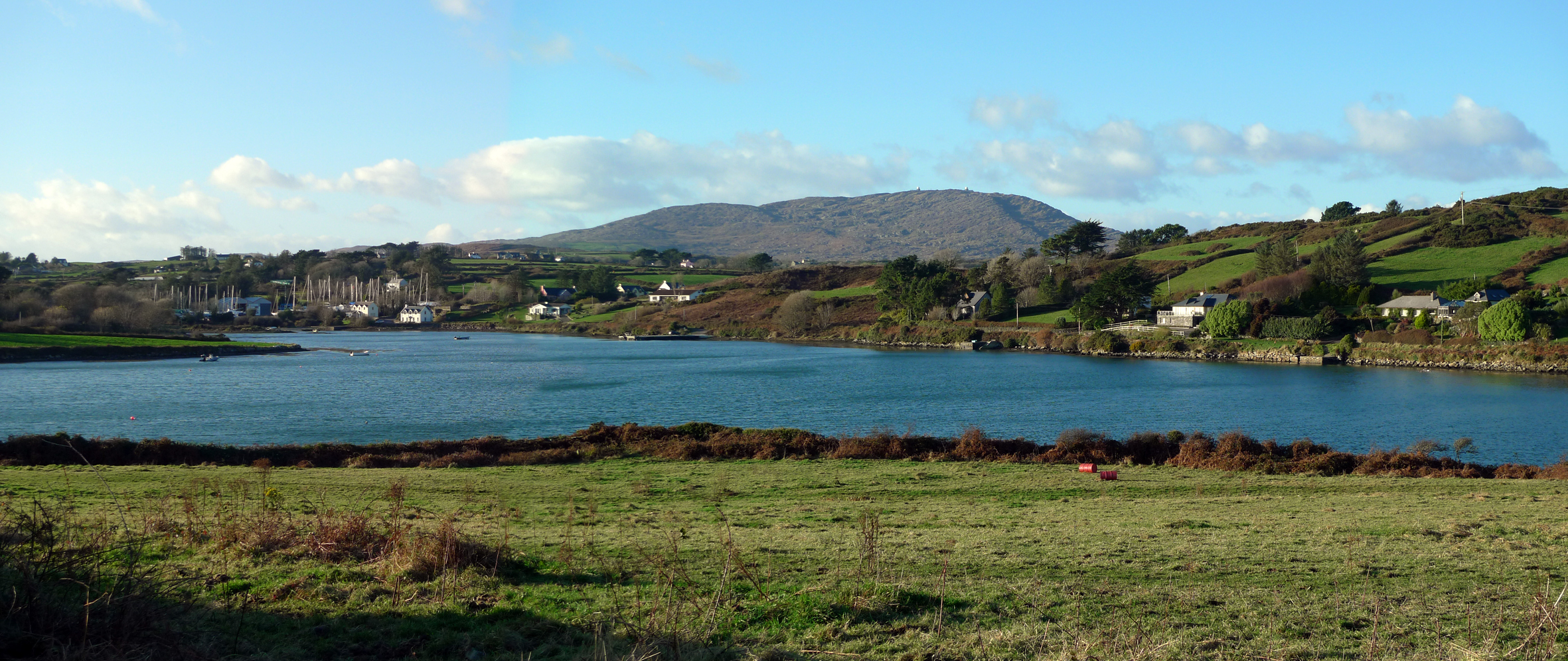
In England and Ireland they call any spell of good weather which occurs after 11th November ‘St Martin’s Summer’. We are having one of those at the moment.

We are also now at the ‘November Dark’ – the days just before a new moon when there is no moon at all visible in the night sky. Traditionally, this was the time to cut willow rods to store for basket making in the spring, as then “…they would have the most bend in them…” (according to Northside of the Mizen).

St Martin's Summer at Rossbrin Cove

St Martin’s Summer at Rossbrin Cove

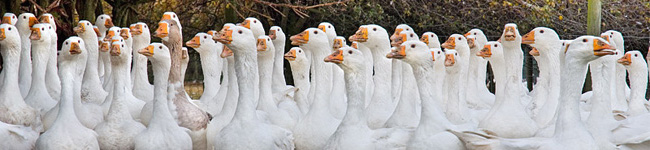
St Martin’s Goose was traditional fare on Martinmas in some cultures, so I’m feeling a little worried about this gaggle…

Goosey Fair, Tavistock, Devon

Goosey Fair, Tavistock, Devon


The Chief

fiddlers

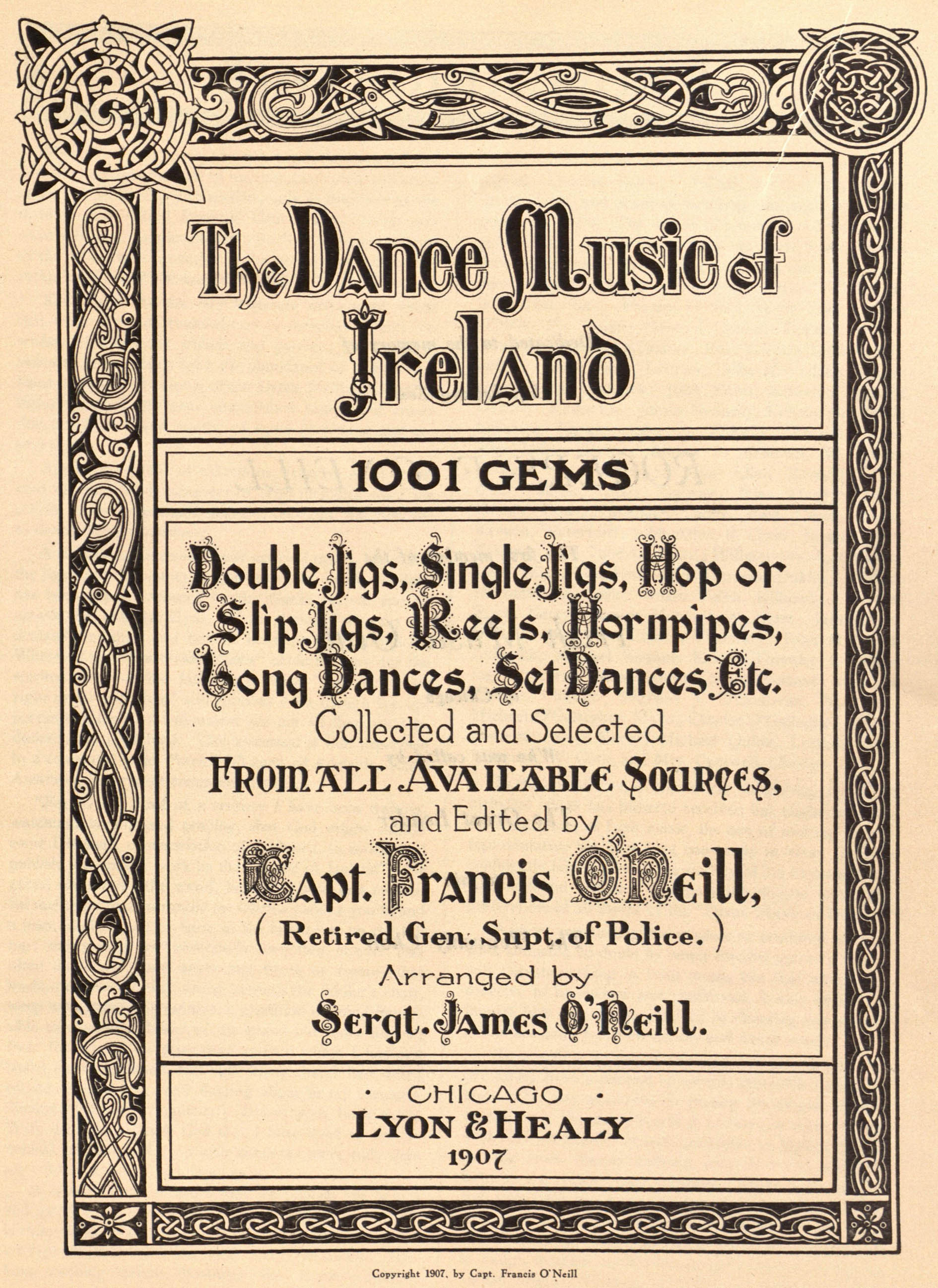
Way back in 2013 I wrote about our chance discovery of the Captain Francis O’Neill Memorial – out in the deep countryside west of Bantry Bay. Just to remind you, O’Neill – always referred to locally as The Chief – was a West Cork hero who championed Irish traditional music, and many students of The Music have a copy of ‘1001 Gems: The Dance Music of Ireland’ – O’Neill’s best known collection of tunes, published in 1907. I acquired my copy over thirty years ago and so far I have learned only a fraction!

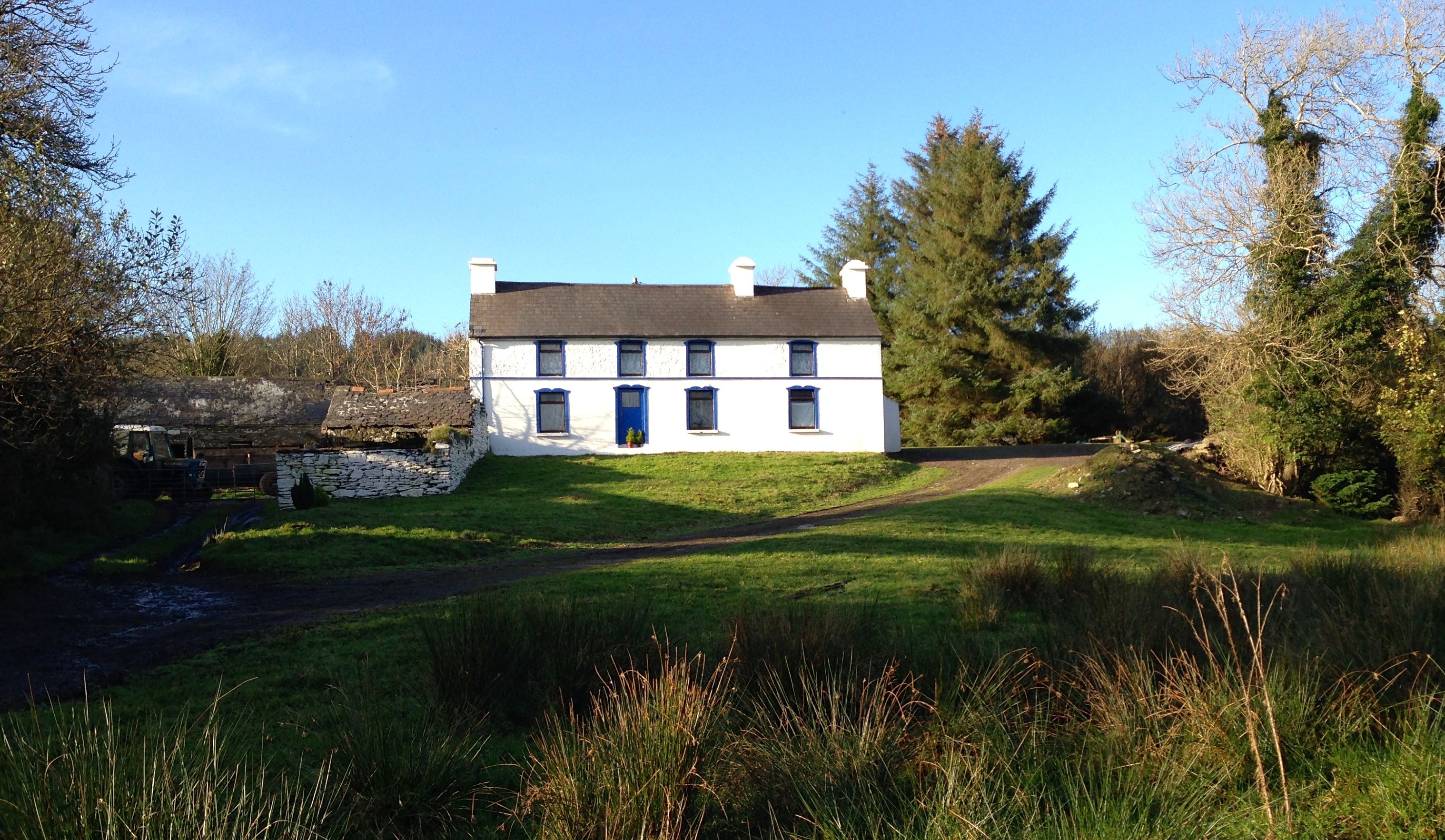
Birthplace and Homestead of Francis O'Neill, Tralibane

Birthplace and Homestead of Francis O’Neill, Tralibane

Ireland has a great tradition of honouring its heroes, and ‘The Captain Francis O’Neill Memorial Company’ was set up in 1995 to do just that for The Chief. It was timely, as the 150th anniversary of his death came in the summer of 1998, and the Company was responsible for erecting a plaque at Tralibane Bridge – the place of his birth – and on that day also reviving the ‘pattern dancing’ at the crossroads by the bridge, after an absence of very many years.

Dancing at the Crossroads, Tralibane Bridge

Dancing at the Crossroads, Tralibane Bridge

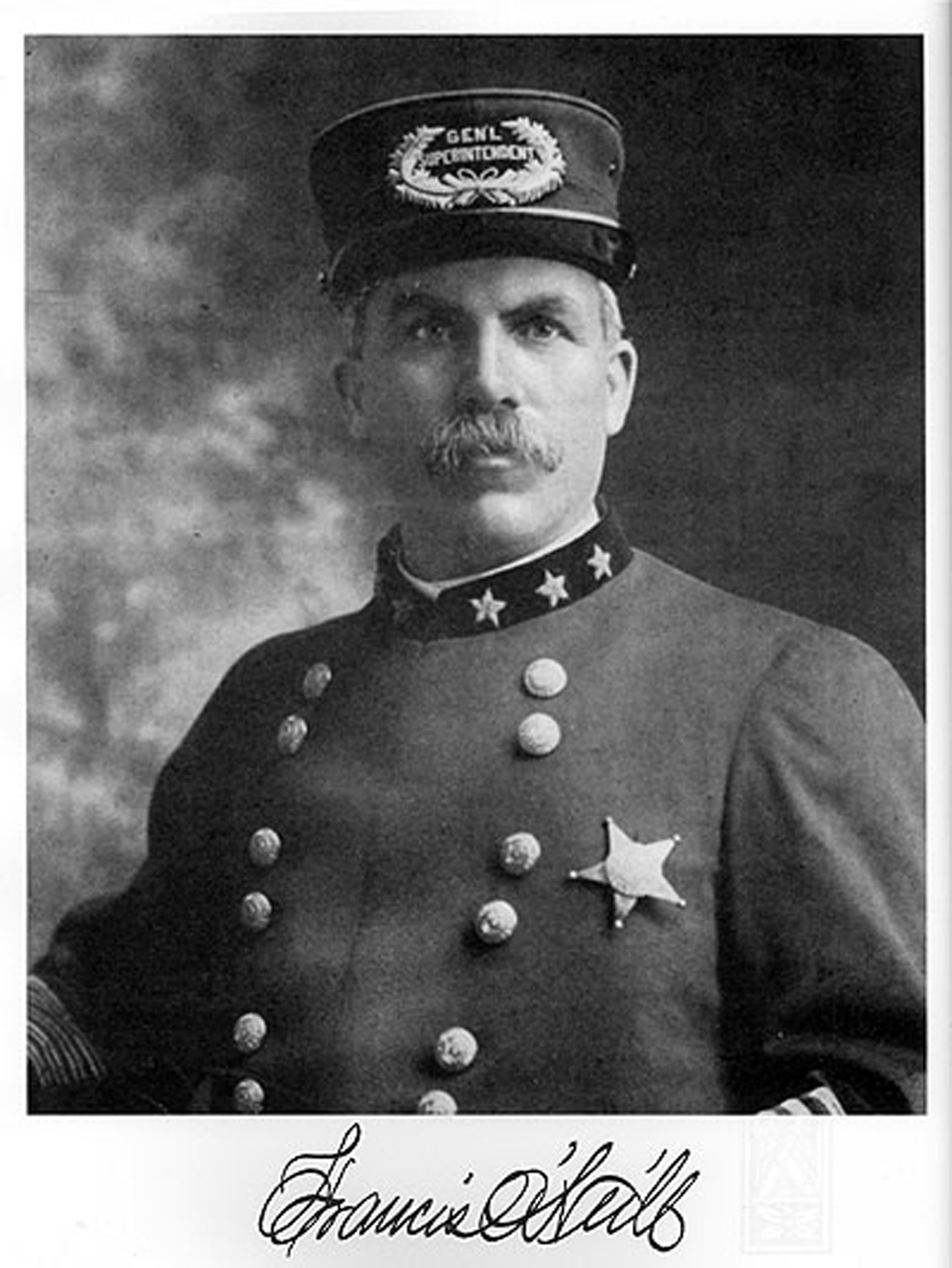
I’d better briefly recap on the man himself… He was born on August 28, 1848 at Tralibane in the Parish of Caheragh – the youngest of seven children. His parents had a very strong background in Irish music, and Francis grew up in a household which was a gathering place for musicians sharing and exchanging tunes, and accompanying the dances. Like so many of his peers he left home at the age of 16, embarking in Cork city on a sailing vessel bound for England and from there found work on other ships which took him around the world. Among his many adventures was a shipwreck while aboard the Minnehaha in the South Pacific. He was rescued by a passing ship which eventually docked in San Francisco, where he decided for the time being to stay on dry land. His journeyings took him on to Chicago, where he joined the Police Force in 1873. At that time 40,000 residents of the city were Irish: by 1900 there were over a quarter of a million there: a huge reservoir of Irish music for Francis to garner – something he revelled in. During his first months of service he was shot and seriously wounded in the course of duty. One of the bullets lodged in his spine and could not be removed: he carried it with him for the rest of his long life.

badge

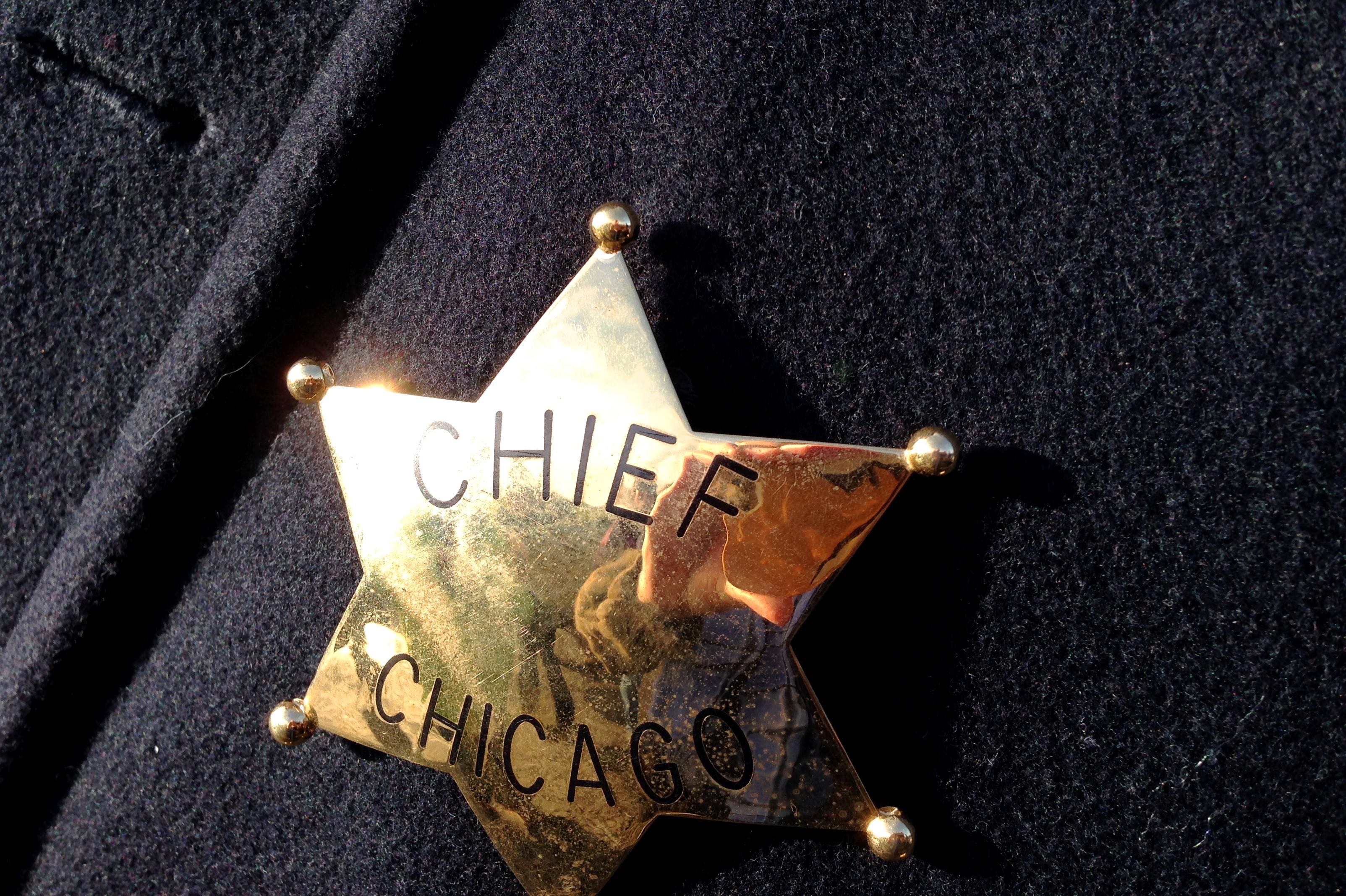
Francis was good at his job: he was promoted to Lieutenant, Captain and, finally, to Chief of the Chicago Police in 1901. He had 3,300 men under his command – the vast majority of them were Irish, and one suspects that many of them were employed by The Chief because of their musical abilities and resources! All through his adult life Francis O’Neill collected and wrote down tunes; he was also an early champion of the phonograph, which helped him in his transcriptions.

Timmy McCarthy as The Chief

Timmy McCarthy as The Chief

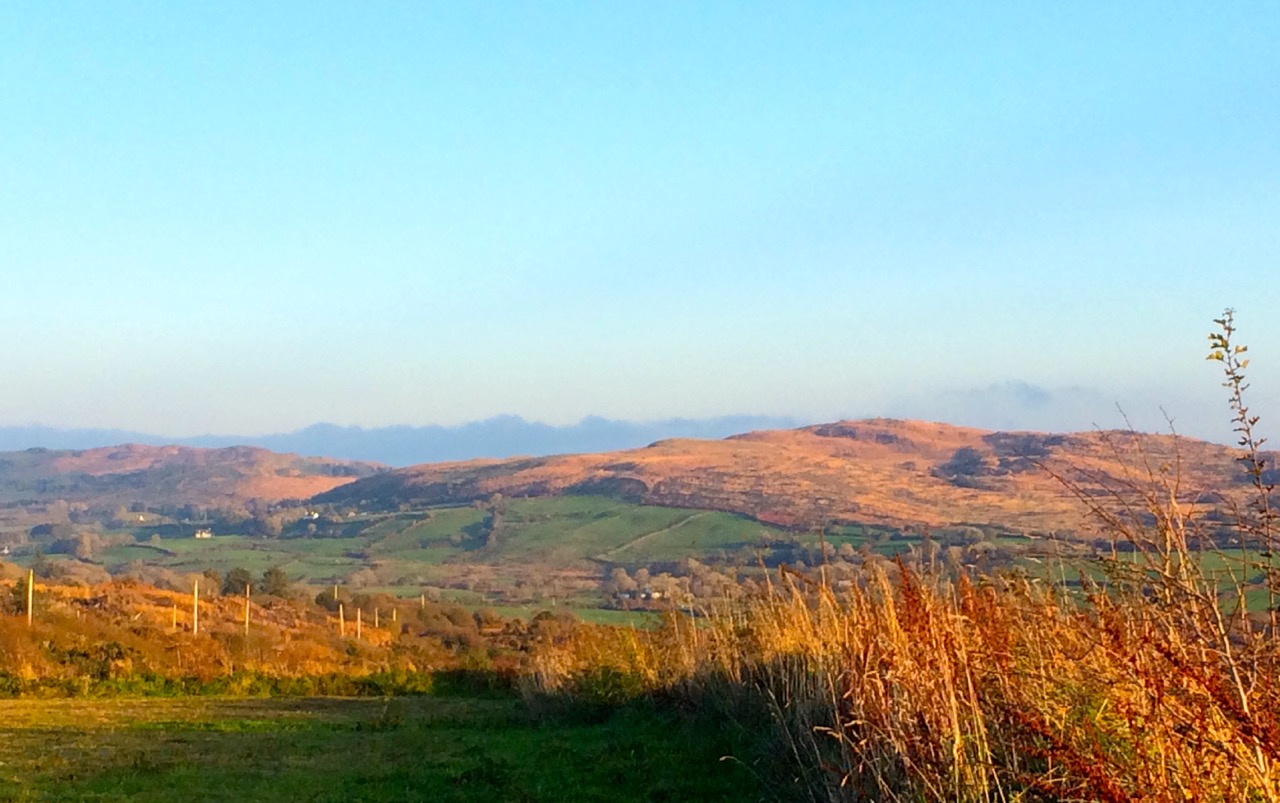
We went out to Tralibane today and – sure enough – enjoyed music and dancing at the crossroads, but we were also entertained by The Chief himself, resurrected by Timmy McCarthy – a descendant and a fund of information. I am indebted to him for the above and for many tales and anecdotes which I don’t have room to include here. He was dressed the part: a Police Chief’s uniform complete with polished badge – and he wielded a truncheon! He walked us from the Bridge (where we had been treated to outdoor music and dancing) to the house where Francis had been born, and then on to the site of the O’Neill Memorial. There was food, drink, tales and more music and dancing. It’s the middle of November, and the sun beamed down on us, lighting up the mountains in the distant view. You must tire of me telling you how beautiful it is here in rural Ireland, but we can never get enough of this wonderful landscape.

The Parish of Tralibane

The Parish of Caheragh

O’Neill’s tune collections have been published under different titles in his lifetime and ever since. They are considered the most valuable source material for all students. Some say that The Chief ‘saved’ Irish music, but I am inclined to think that it would have survived regardless. It is certainly very much alive today, as our weekly sessions demonstrate – along with the very many festivals which we are fortunate enough to have right on our door step.

1001gems

Francis and his wife Ann had ten children, but sadly five died young. After an active retirement which was filled with fishing, pottery and photography as well as The Music, the Chief died of heart failure at his Chicago home: he was 87.

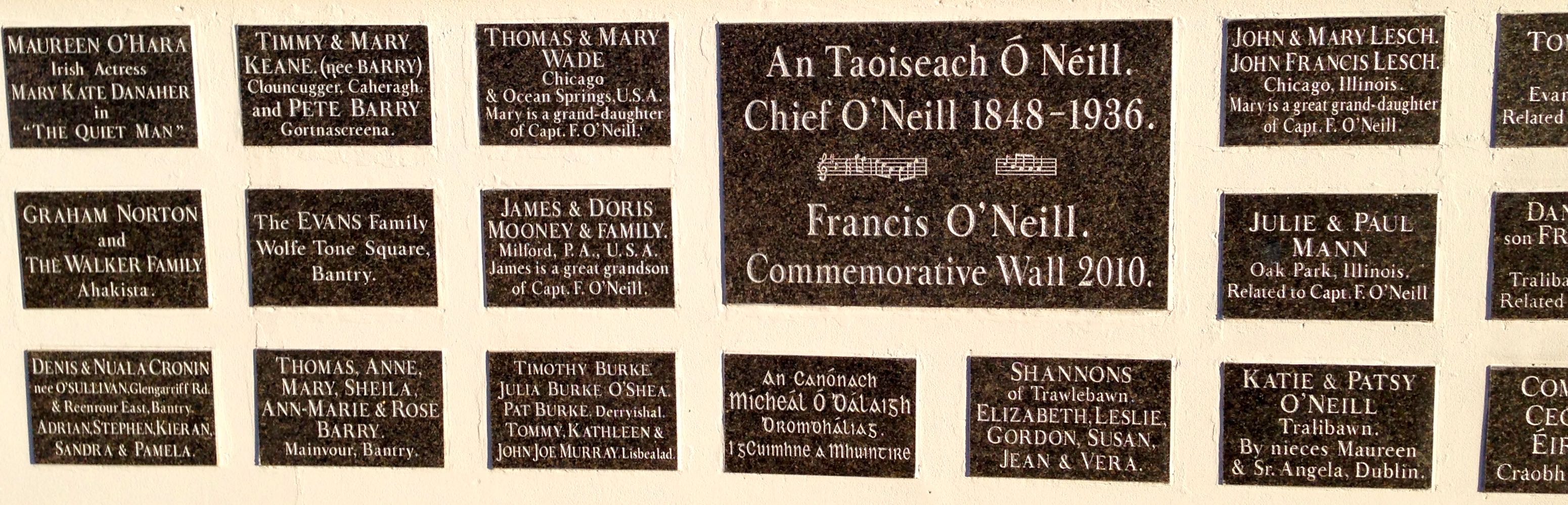
Plaques at the Memorial Site

Plaques at the Memorial Site

Statue of The Chief at the Memorial Site

Statue of The Chief at the Memorial Site

Francis O’Neill has left a legacy which is commemorated at Tralibane. There is a life-sized statue of him looking out over his own family countryside: he plays his flute throughout eternity. The large Memorial site often hosts meetings, music and dancing. We will return again next year…

photo


Shopping for Memories

Miss Clerke

In my post Going for the Messages I told you about rediscovering the shops of my childhood here in West Cork. Since then, Miss Clerke’s shop, lightly photoshopped but totally recognisable, graced the front page of the Irish Times Magazine as their illustration for their Ireland’s Best Shops competition. So it’s not just me, then. I’m not the only one with a nostalgia for the old-time shopping experience.

Evans of Bantry

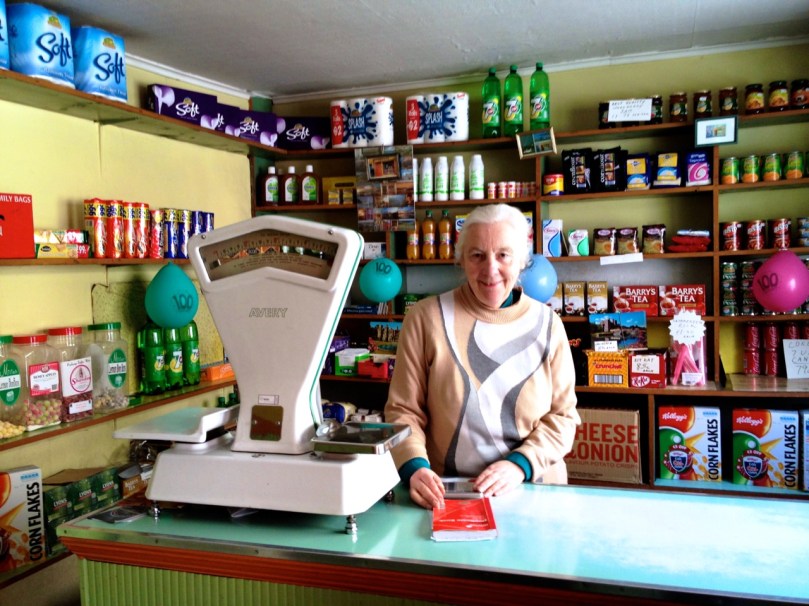
In that spirit, I am revisiting a few of my favourites traditional shops. I have discovered two more shops like Miss Clerkes. First, there’s Evans, In Bantry. Proudly run by Miss Evans, it has the same look and feel of a place unchanged since the 50’s, although perhaps the pinkness of it all might be more modern. It has a lovely atmosphere – when I was in there a couple of kids were trying to decide how to spend their pocket money on sweets from the big glass jars.

MIss Murphy in her traditional shop

MIss Murphy in her traditional shop, Eyeries


Lunch is served outside

Lunch is served outside

On the Beara Peninsula we stopped for lunch at Miss Murphy’s store in Eyries and chatted with her about my Great Uncle who had married an Eyries woman. Since I couldn’t remember her name Miss Murphy was unable to help, but she tried, and she made us a delicious basket of sandwiches.

Some shops are a little puzzling – for example, P. Cronin Carpenter in Skibbereen. I’ve never seen it open and I’m not sure what it would sell if it did open its doors. The photo of the interior was taken through the window.

In Bantry one of the Undertaking establishments has a shop. At first I found this idea a little startling, but it makes a lot of sense once you come to appreciate Irish graveyard traditions, including how often people visit graves and leave tokens at them.

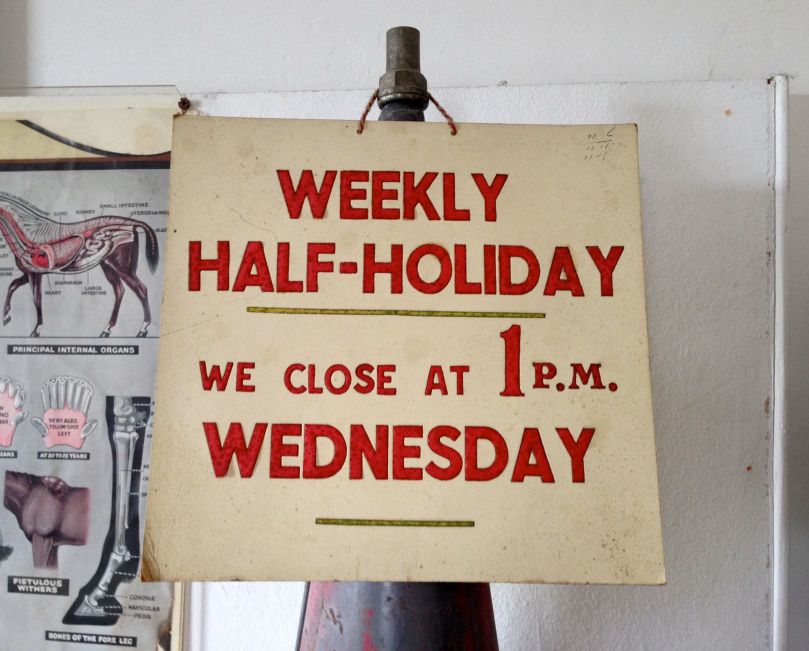
half holiday

Shops in Irish country towns follow traditional opening hours. They invariably close for lunch (1PM to 2PM) and generally follow a five-day-a-week opening schedule. This can mean they are closed, besides on Sundays, on Mondays – but other days are possibilities too. None nowadays follows the old tradition of the half day. Remember that? 

messenger bike

And remember how the groceries would be delivered – by a young lad on a messenger boy bike? You can still get delivery but now the messages come in a van.

Levis's Pub in Ballydehob: the traditional grocery section is still intact

Levis’s Pub in Ballydehob: the traditional grocery section is still intact

Of course, one of the traditions we remember about country towns was that of pubs also selling groceries or dry goods – whatever people needed. You went in for a pair of wellies and a dozen eggs, and took your ease with a pint on the bar stool, or a whiskey in the snug, before you left. Levis’s Corner House in Ballydehob has preserved the grocery counter. You can hear Joseph talking about it, and about the great history of this historic pub in the excellent radio documentary “Keeping the Door Open.” It’s about far more than just this one pub – it’s about a whole way of life in rural Ireland. A way of life that still lingers in West Cork…so far.

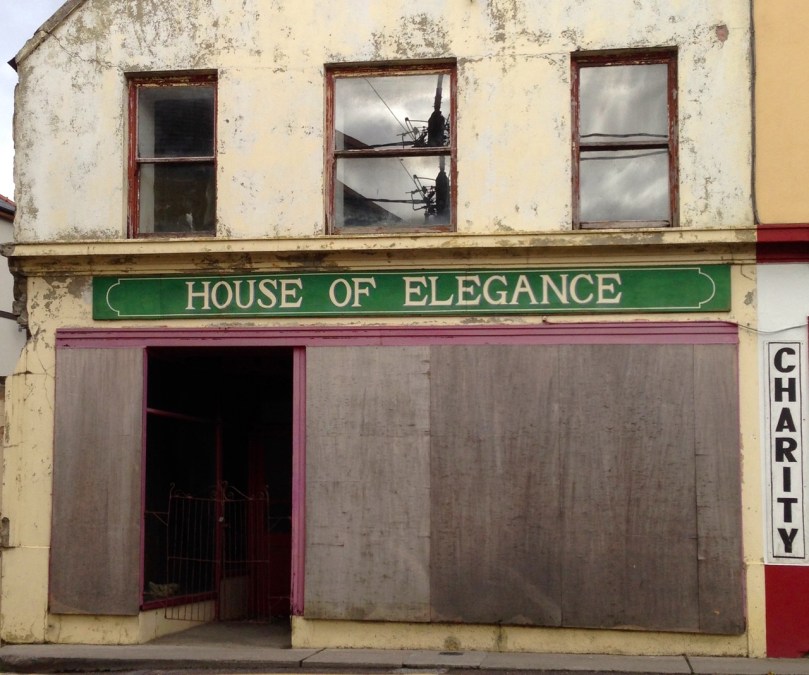
elegance

Mizen Magic 4: The Beaches

Barley Cove Beach from Brow Head

Barley Cove Beach from Brow Head

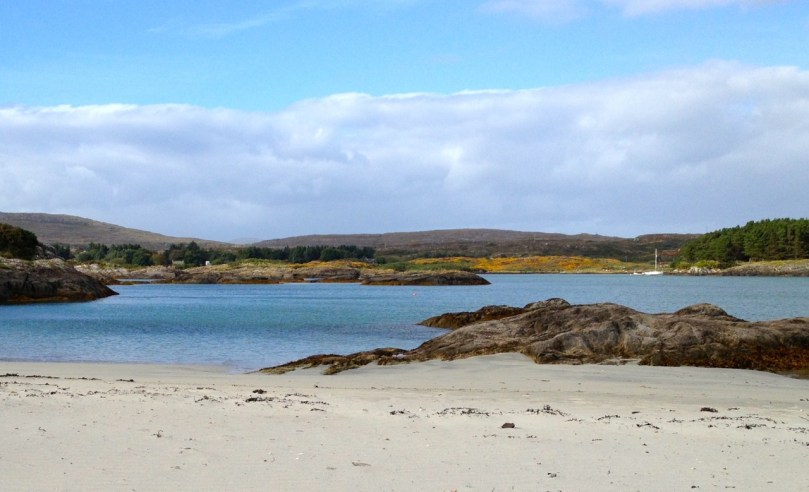
If you’re not familiar with West Cork, you may be surpised to hear that we have some of the best beaches in Ireland. And no – they are not just to look at, and yes, people do swim here in the summer. In fact a surprising number of the people we know were still swimming well into October. The autumn weather was glorious, and they claimed the sea was still warm enough to be enjoyable. In fact, they raved about how delicious it was to be bobbing around in the stuff. (You know who you are.)

A little further east of us there are good surfing beaches but here on the Mizen our beaches feature the golden sand and the dunes of the classic swimming beaches. The most popular with holiday-makers is the incredible expanse at Barley Cove. These photos were taken in February – so we aren’t swimming, but we have the place almost to ourselves, apart from the horses, and we are loving it!

Around the corner from Barley Cove are the beaches of Galley Cove and the White Strand. When the sun goes down on one, you can just move to the next one.

Ballyrisode

Ballyrisode

A local favourite is the beach at Ballyrisode, near Toormore. We strolled along it on a fine day in September, with nary another soul in sight.

Shelly Beach

Shelly Beach

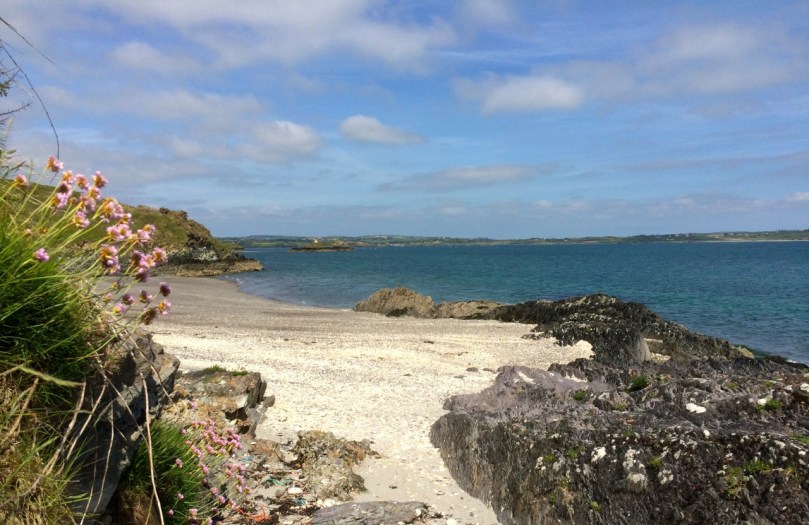
But of course we have our own little secret beach nearby. Those in the know call it Shelly Beach – for the reasons you might imagine. You can’t drive there – it’s only accessible on foot down boreens and over the fields – and it’s a beautiful, peaceful spot, perfect for that wind-in-the-hair, sun-in-the-face, contemplative experience.

Inchydoney Beach

Inchydoney Beach

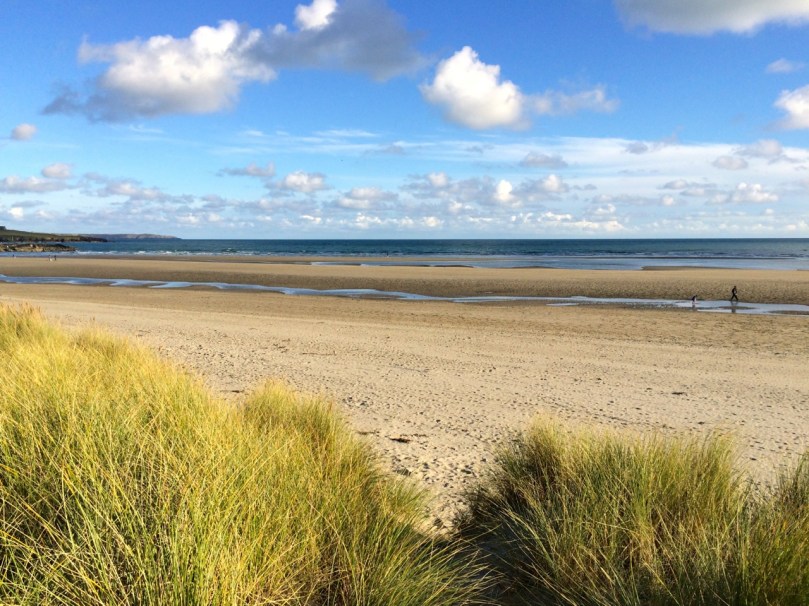
The last photo wasn’t taken on the Mizen, but it’s only a few miles to the east, so perhaps it’s not totally cheating to include it here. It was taken on a fabulous sunny day half way through October, and the beach was alive with activity.

Sky Garden

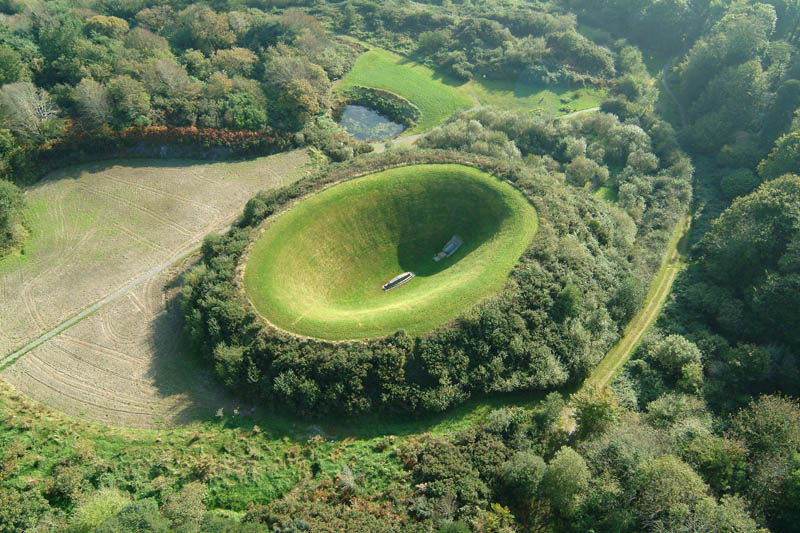
Iris Sky Garden (photo by Liss Ard Estate)

Irish Sky Garden (photo by Liss Ard Estate)

Just outside Skibbereen – a stone’s throw from Nead an Iolair – is a work by Californian artist James Turrell: the Irish Sky Garden. It’s a piece of landscaping which explores light by both night and day: an observatory. The structure is an artificial crater with a stone plinth at its centre from which two participants can view the sky framed by the perimeter of the oval enclosure.

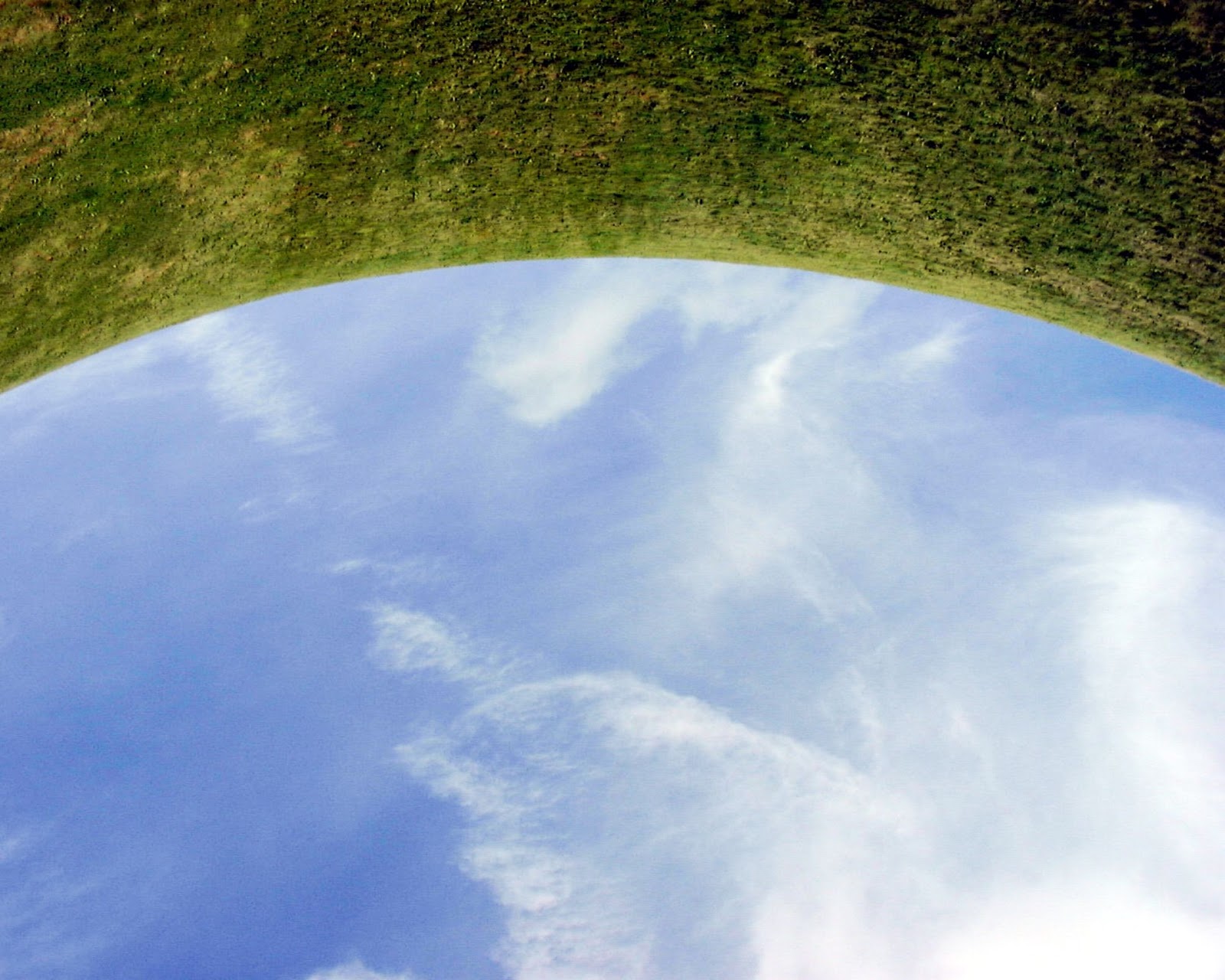
Sky view from the plinth

Sky view from the plinth

In Turrell’s own words describing the experience “…The most important thing is that inside turns into outside and the other way around, in the sense that relationships between the Irish landscape and sky change…”

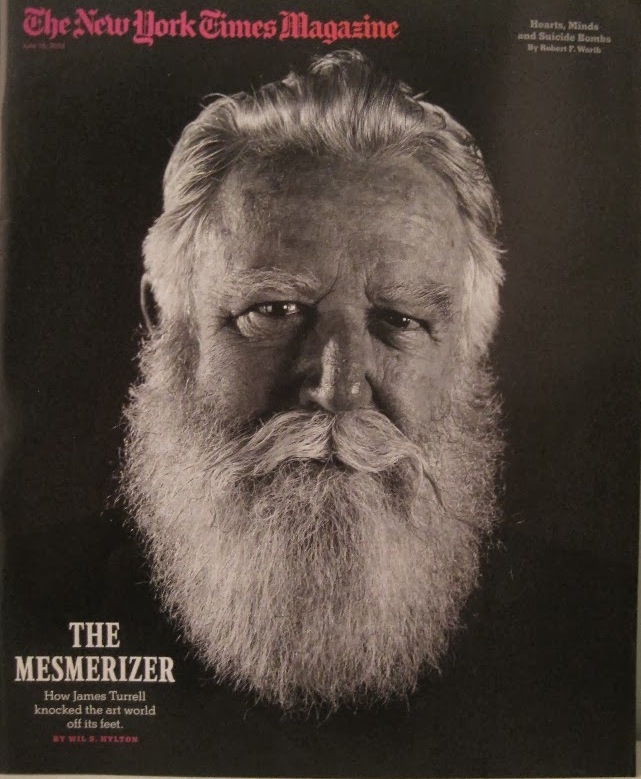
Turrell CoverJames Turrell was born in 1943 – in Pasadena. His father was an aeronautical engineer and James obtained his pilot’s license when he was just 16. He has been exploring landscapes by flying over them ever since. He studied perceptual psychology, mathematics, geology and astronomy. He enrolled in the graduate Studio Art program at the University of California, Irvine, in 1966, when he began to explore light projections. At the same time Turrell, a Quaker and conscientious objector, was jailed for a year for encouraging young men to avoid the Vietnam War draft.

All the artist’s work is focussed on light and space. In an interview of 2002 for the International Sculptor Center he explained:

“…I was raised a Quaker, and now I have come back to being active. I’m not sure whether that has impacted my art-making, because my work is not about specific issues—perhaps being a Quaker influences how I live my life and what I value. People tend to relate any work in light to the spiritual. I don’t think this is actually correct, yet, in terms of our lives, we greet light in three major ways that aren’t necessarily partitioned. There is a psychological aspect, a physical aspect, and a spiritual aspect. In terms of the physical, we drink light as Vitamin D, so it’s literally a food that has a major effect on our well-being. The strong psychological effects of light can readily be felt in particular spaces…” 

Some examples of Turrell’s work in light and space:

Finola’s post on Liss Ard Gardens gives a good background to the setting of this artwork: a Georgian house (now also an excellent hotel and restaurant – check for opening hours) surrounded by formal and informal landscaping and lakes interlaced by tracks and footpaths which offer ever changing vistas. When she wrote the post a year ago she probably had no idea that it would be the setting for our marriage – which took place this week!

Liss Ard House

Liss Ard House (photo by Peter Clarke)

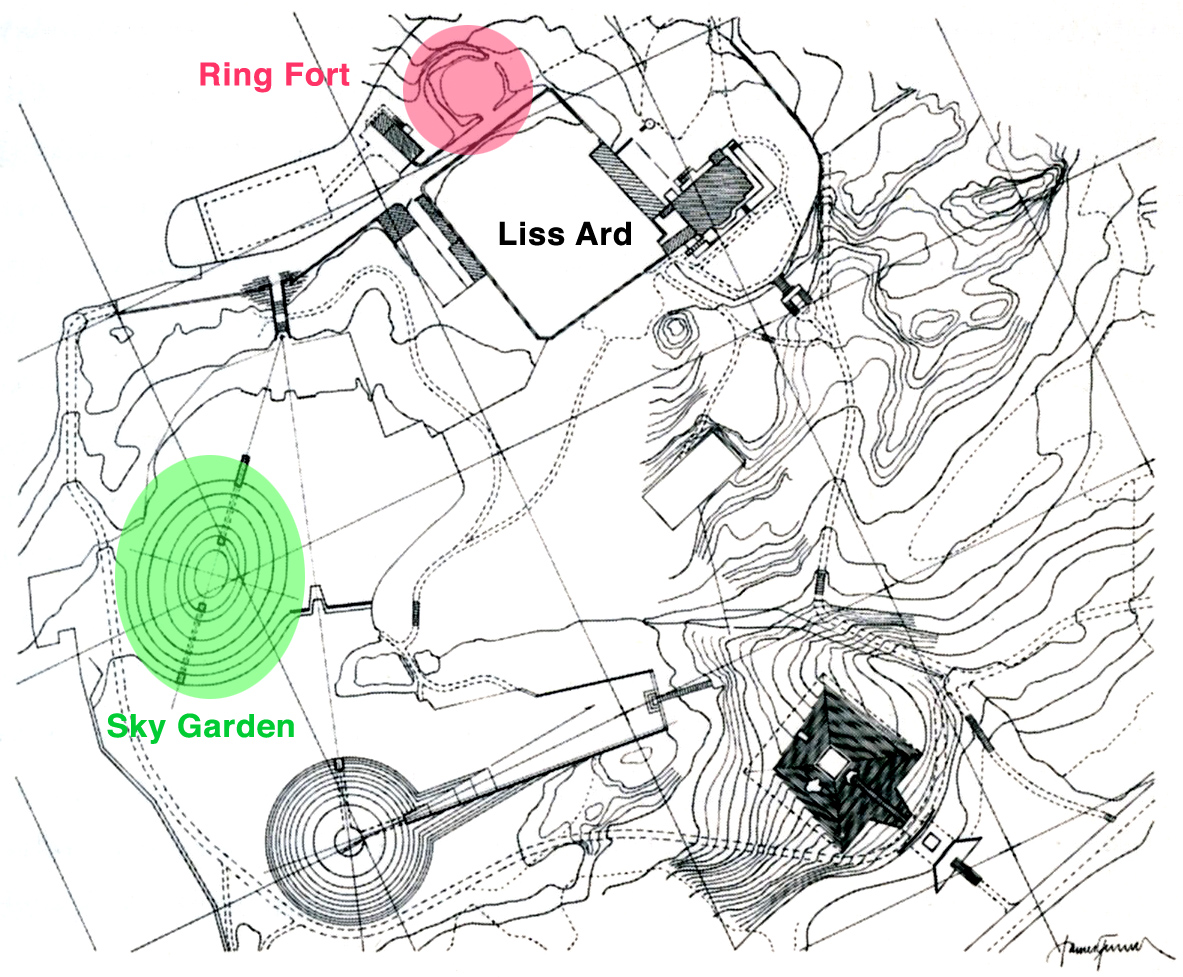
The name Liss Ard comes from Lios Ard, ‘lios’ being an Iron Age ring fort and ‘ard’ meaning high – hence high fort. The ring fort is still extant as a magical space – a grass circle surrounded by trees; there is also, under it, a souterain – a system of low tunnels and chambers which are often found in association with structures of this type. When we discovered that Liss Ard was licenced to hold weddings – and that licence covered all of the grounds – we jumped at the opportunity to ‘tie the knot’ within an Irish archaeological site…

James Turrell's concept drawing for the Liss Ard project, showing Ring Fort and Sky Garden

James Turrell’s concept drawing for the Liss Ard project, showing Ring Fort and Sky Garden

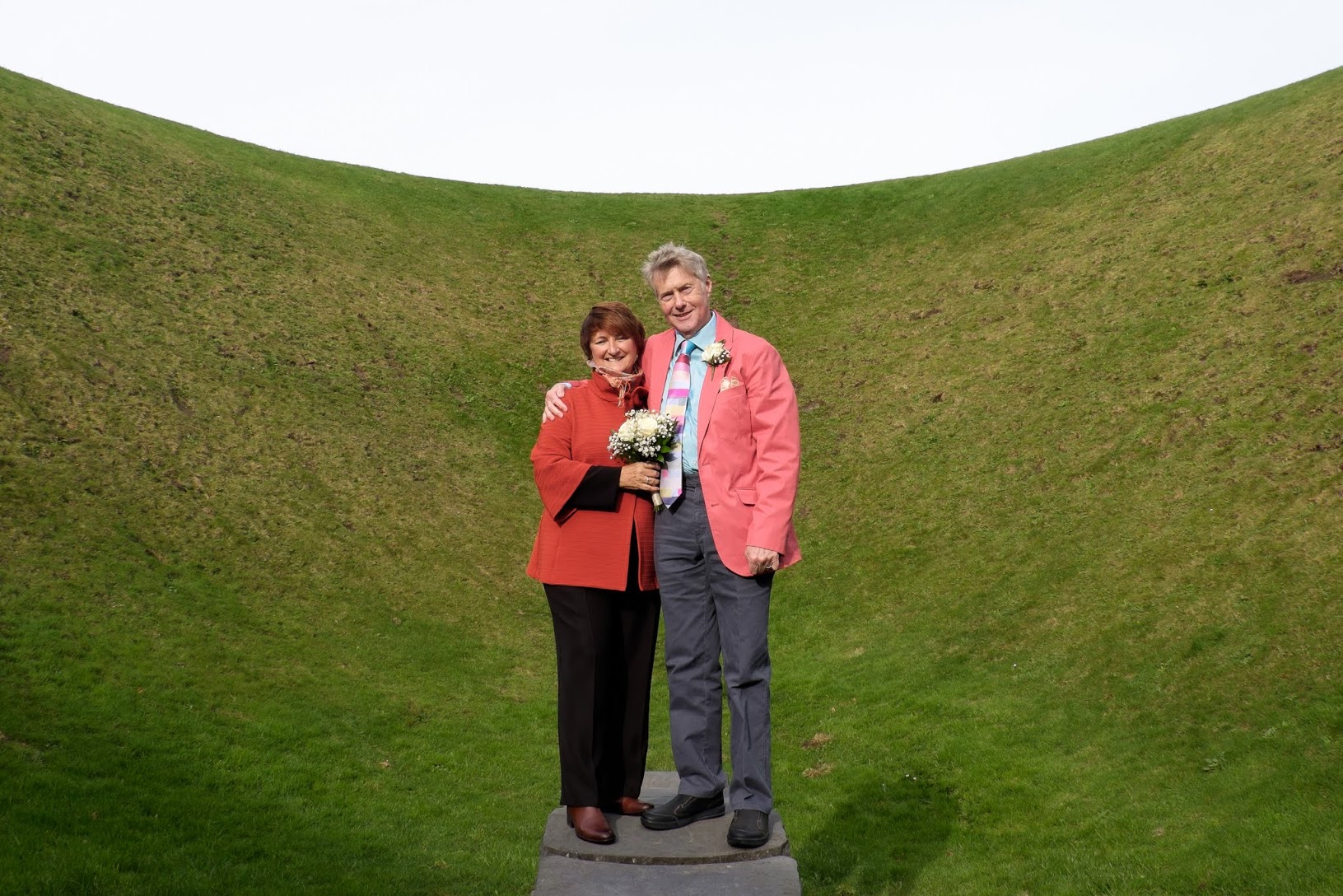
Our ceremony was simple – a humanist celebrant and just a few guests who have been important to our lives in Ireland. After the official bits we wandered down to the Sky Garden and admired Turrell’s vision from the altar-like plinth. We were blessed with blue sky and sunshine.

Wedding Day...

Wedding Day… (photo by Peter Clarke)

In 1979 James Turrell acquired a vast natural cinder crater located outside Flagstaff, Arizona. This – the Roden Crater – is possibly his best known work, and it is still in progress. He is turning this volcanic crater into a massive naked-eye observatory, designed specifically for the viewing of celestial phenomena. There are other ‘sky’ works in a number of countries: a ‘Turrell Tour‘ has been mapped out which takes in an least 23 of them.

Roden Crater

Roden Crater, Arizona

Skyspace, Scotland

Skyspace, Scotland

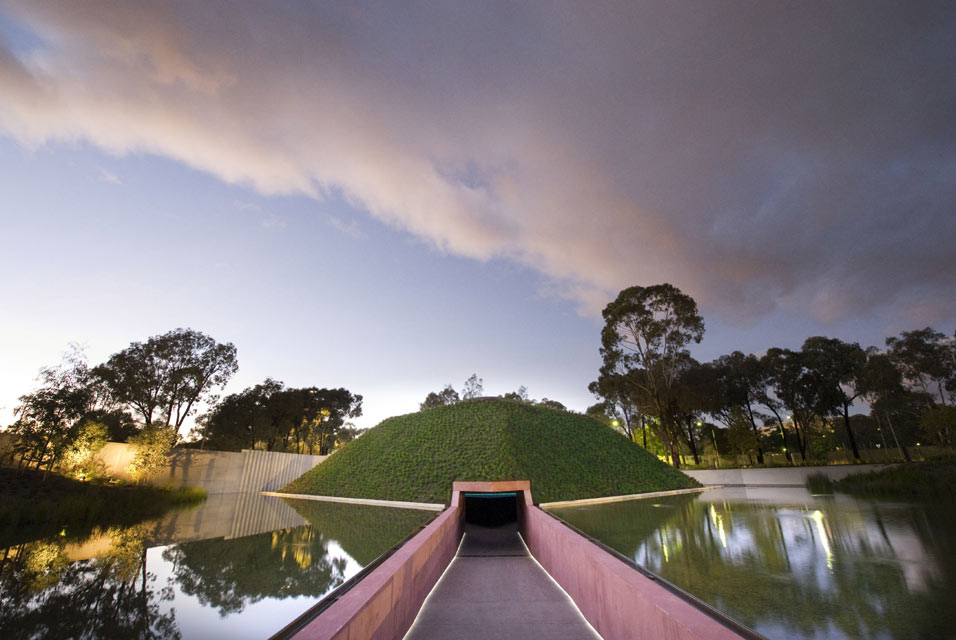
Within-Without

Within-Without, Canberra 2010

Celestial Vault, Stroom, Holland 1996

Celestial Vault, Stroom, Holland 1996

*

It’s a big leap – from Liss Ard to Arizona and beyond. The full concept of the Sky Garden has never been completed: two more installations were planned. But how exciting that here in West Cork we have a stunning example of the work of this world-renowned artist.