I keep coming back to this story. I wrote about it first when the anniversary was the 30 year mark. And again two years ago when there were new developments in Canada. If you are not familiar with the story, please go now and read Amid Unbearable Tragedy – a Model for the World (Updated).
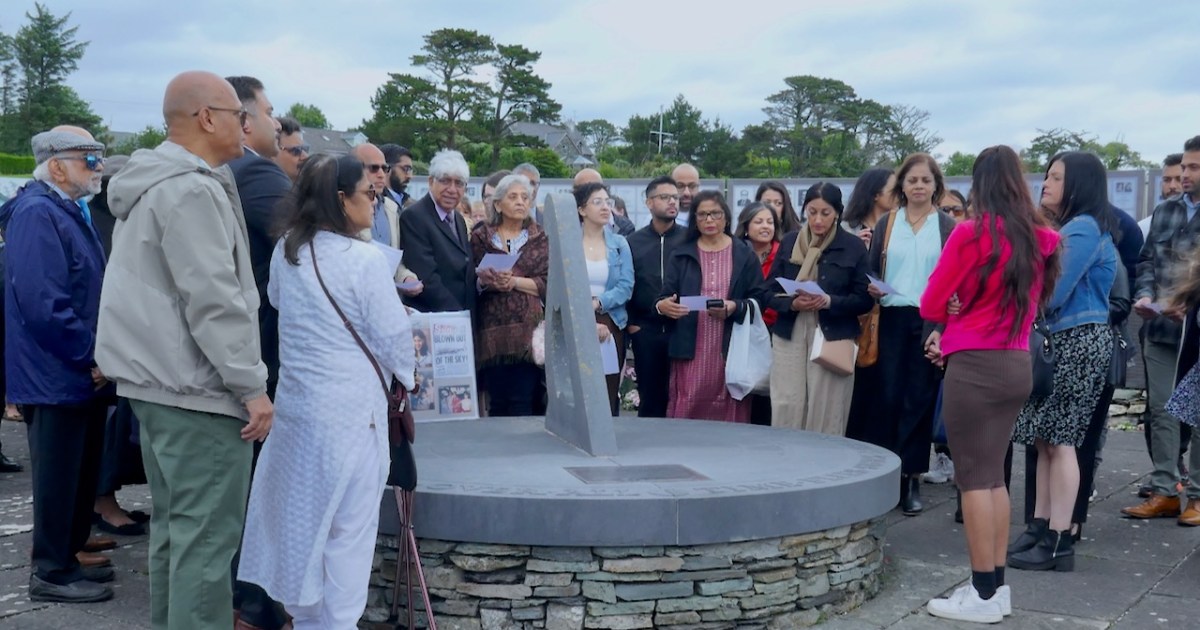
I attended this year’s ceremony – the 40th anniversary. It remains the single largest mass murder in Canadian history and the deadliest aircraft bombing ever. In fact, it remained the deadliest terrorist attack involving an airplane until September 11, 2001.
There was a large turnout this year. Family members still come, including my new friend Sanjay Lazar, who contacted me in advance of the ceremony. His is a story tragic beyond belief – he lost his parents and his sister in the bombing, and became in time a spokesperson for airline safety and a trade union champion.
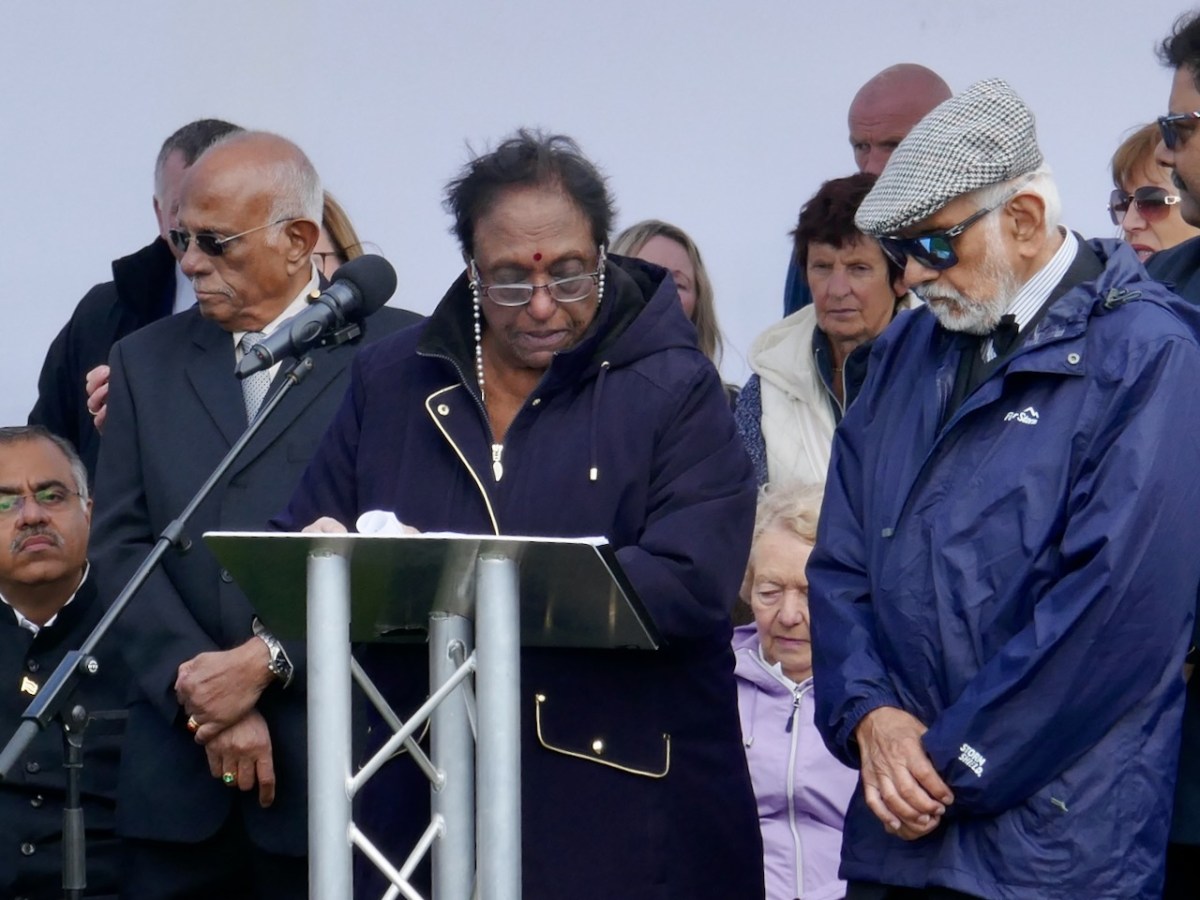
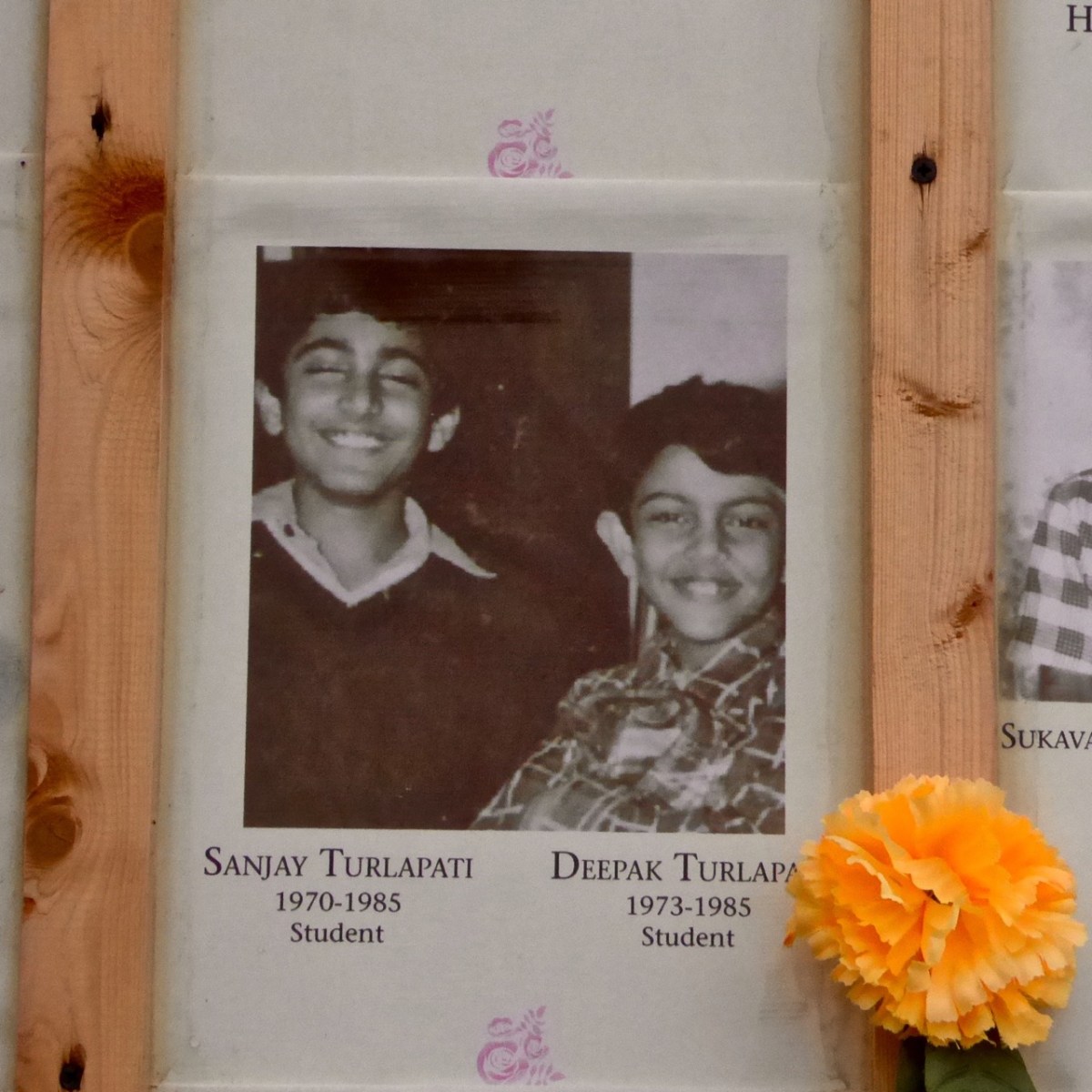
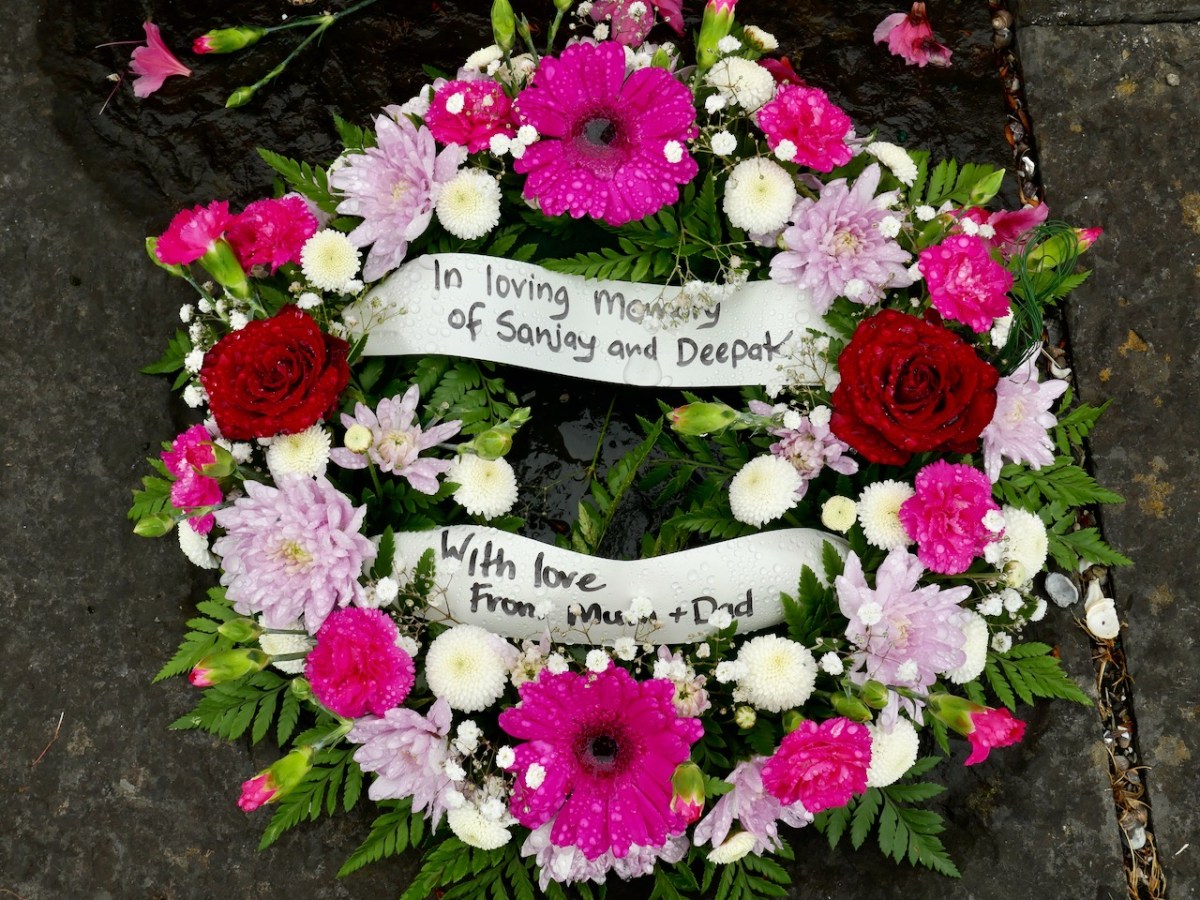
He comes every year, as does Dr. Padmini Turlapati, who spoke about her two sons, Sanjay, whose body was recovered, and Deepak, who is still out there. Unbelievably, she made us laugh with her funny stories about the boys.
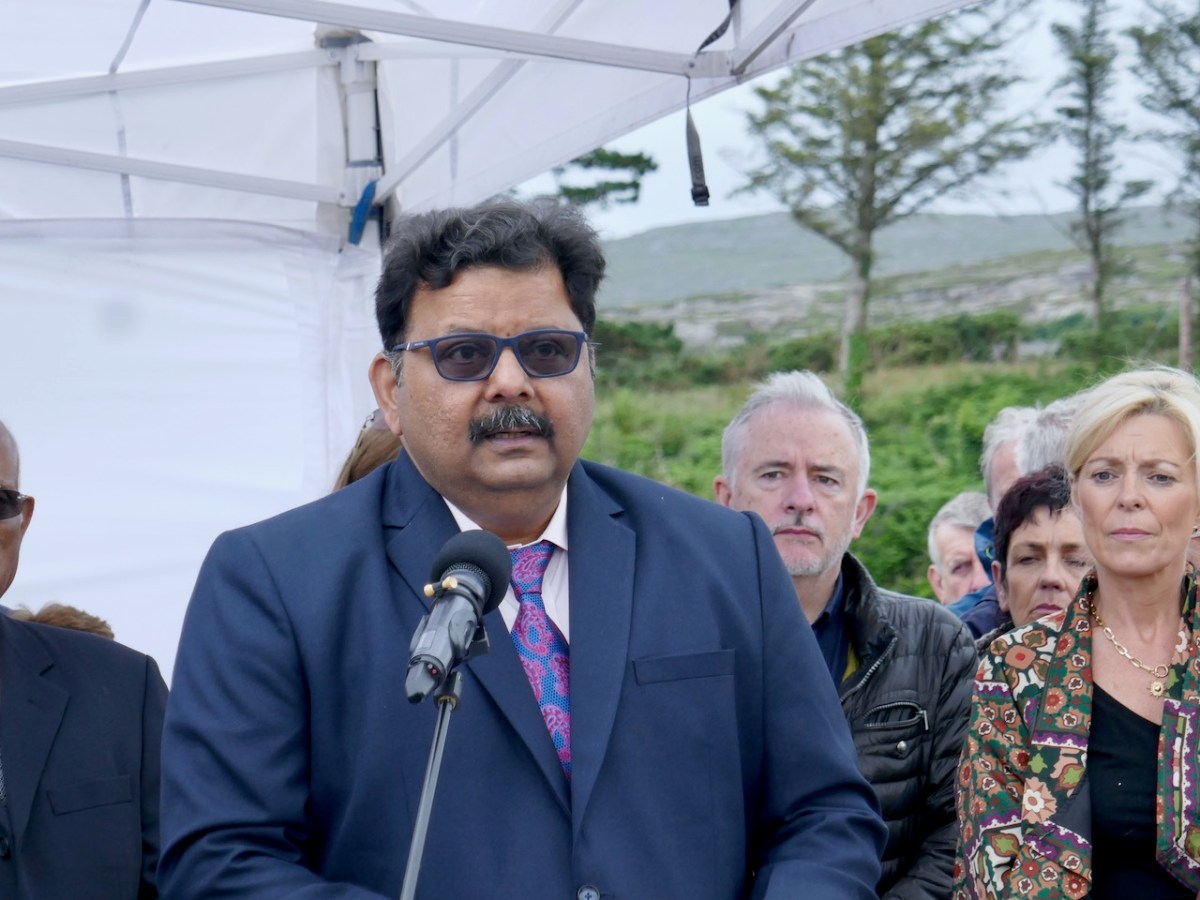
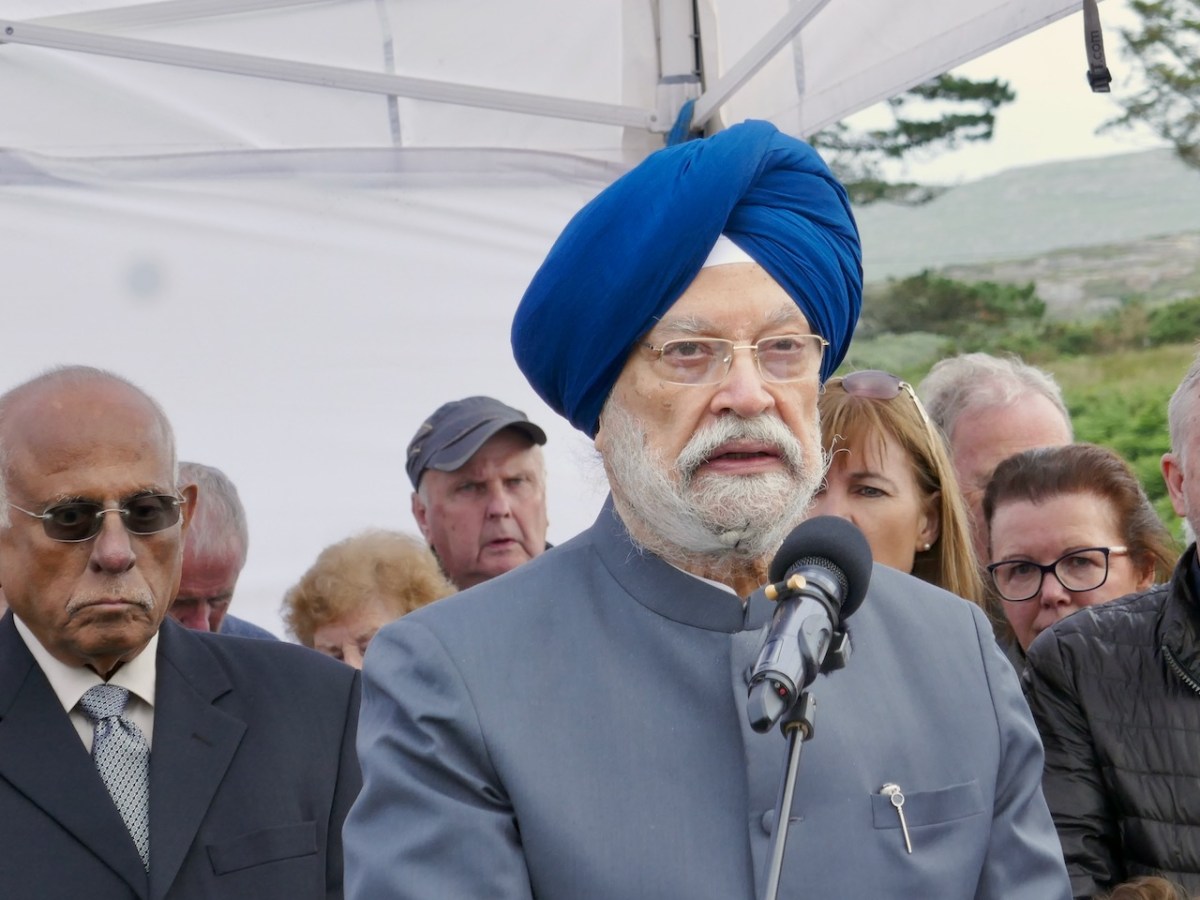
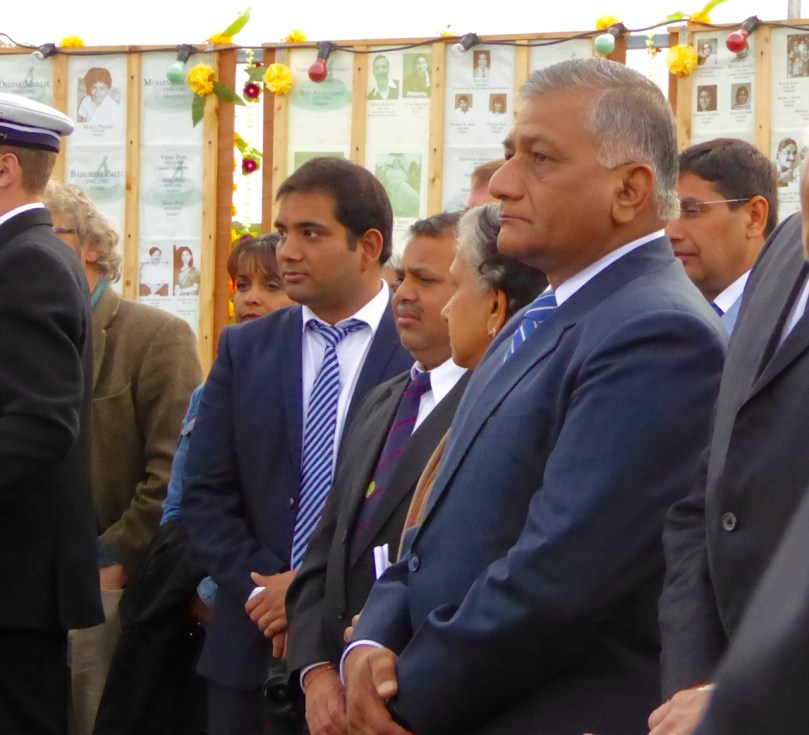
One particularly moving speaker was Hardeep Singh Puri, Indian Minister of Petroleum and Natural Gas. Himself a Sikh, what he said was captured beautifully by Amanda in her daily blip:
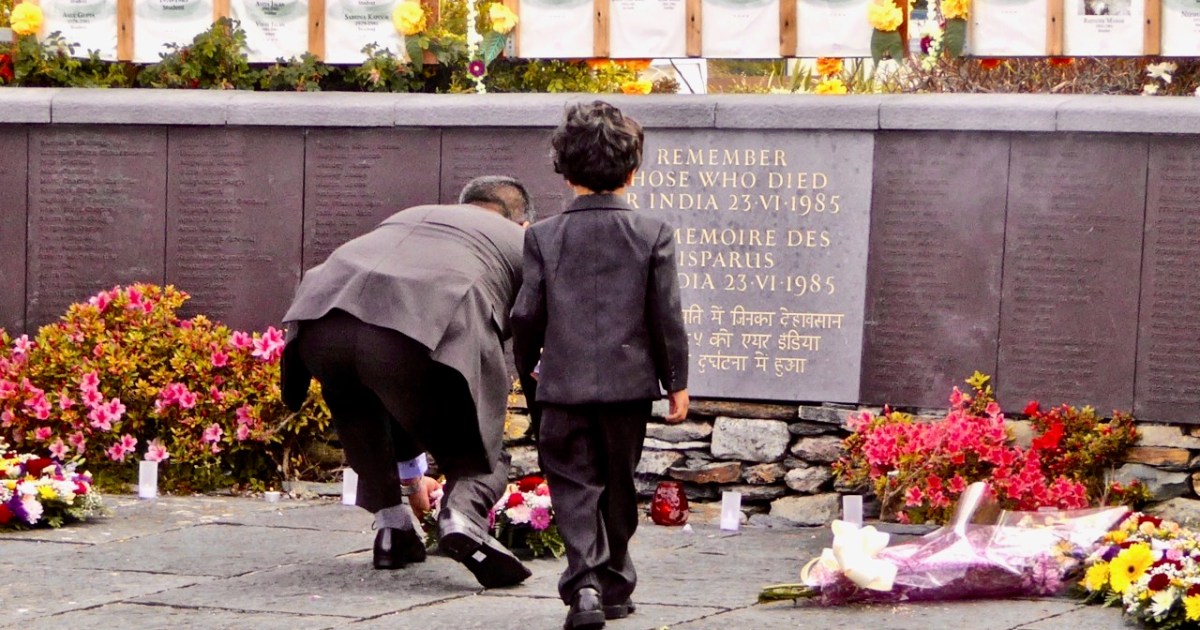
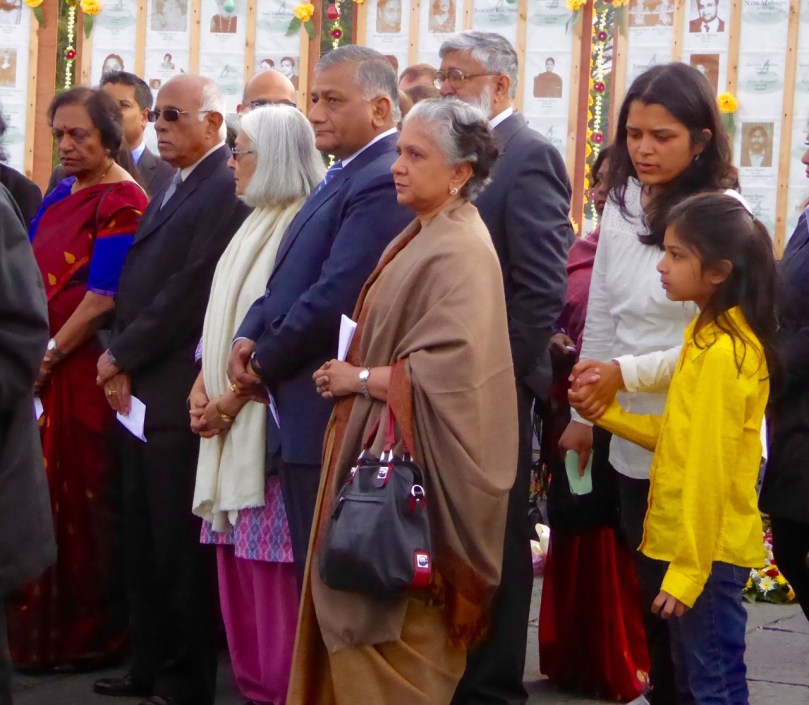
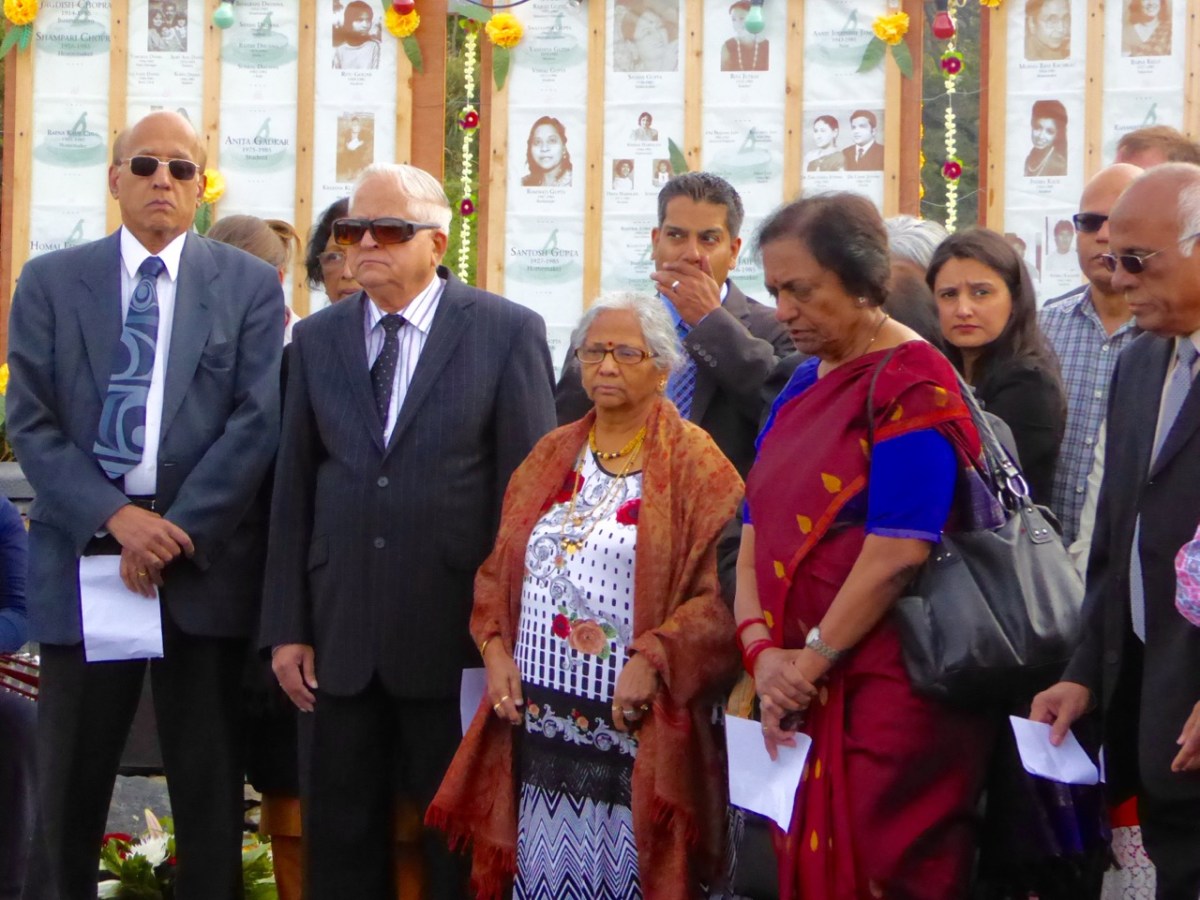
Towards the end one of the speakers spoke of the utter futility and horror of terrorism and urged us to look around – here he said was what it was all about – kindness, goodness and love. I looked – a very multi-cultural gathering, Sikhs, Christians, Muslims, Hindus, Indian, Canadian, British, Irish from all walks of life- all joined in sorrow and support, humanity at its best.
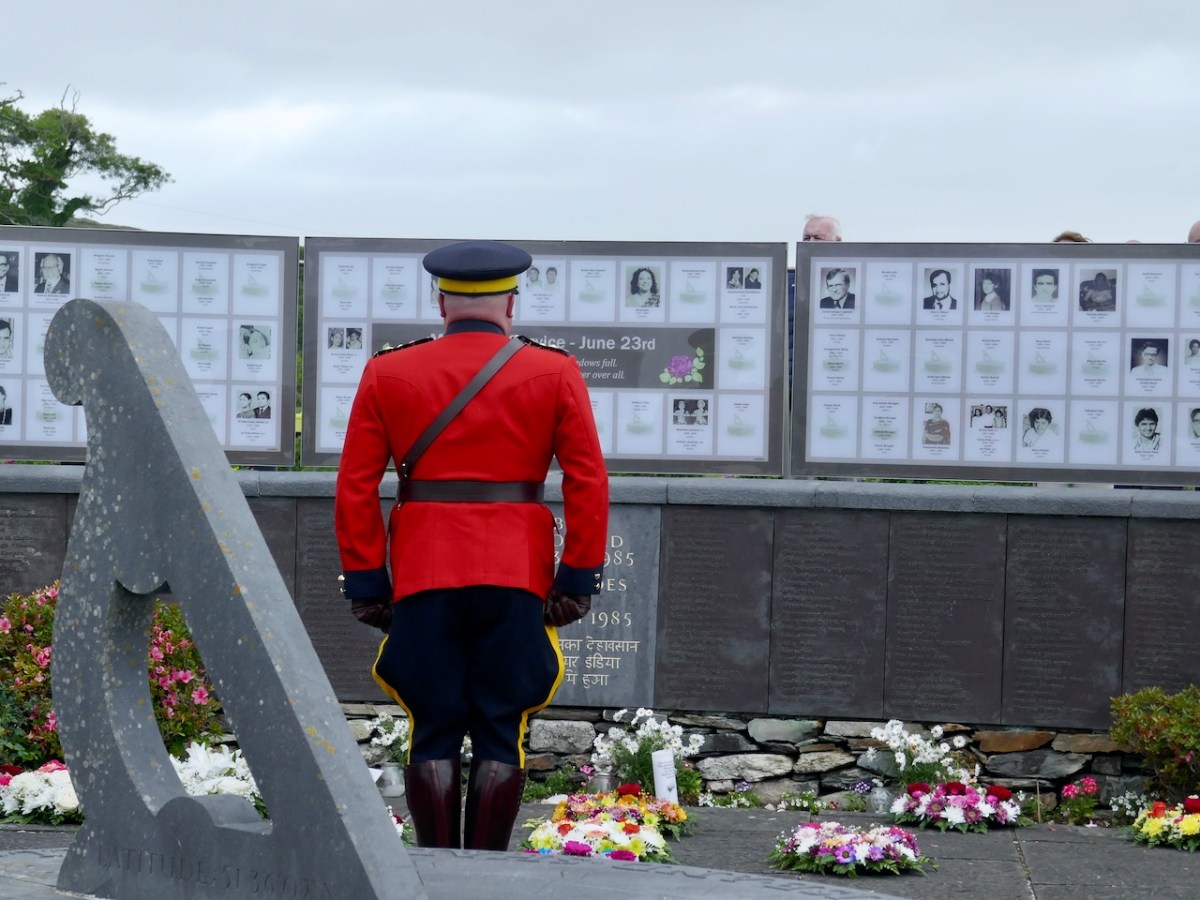
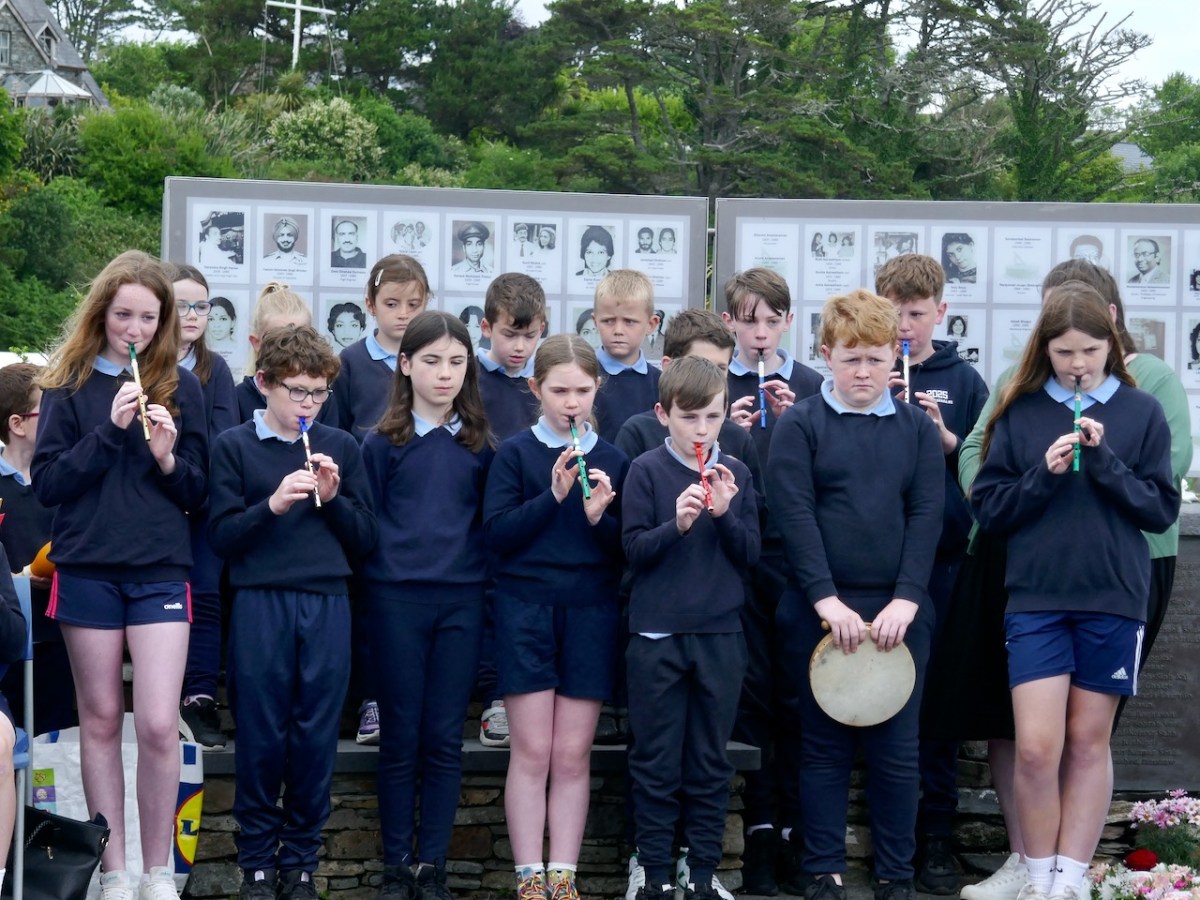
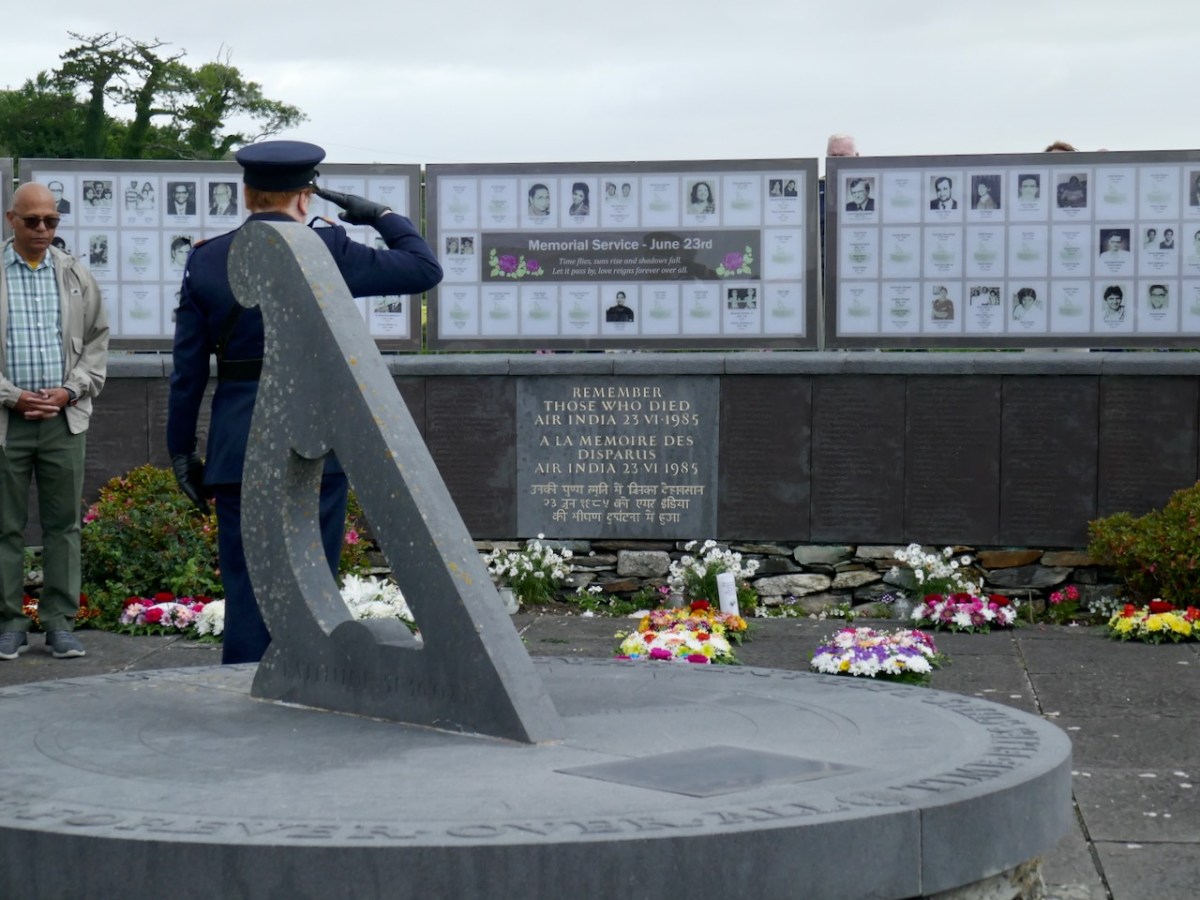
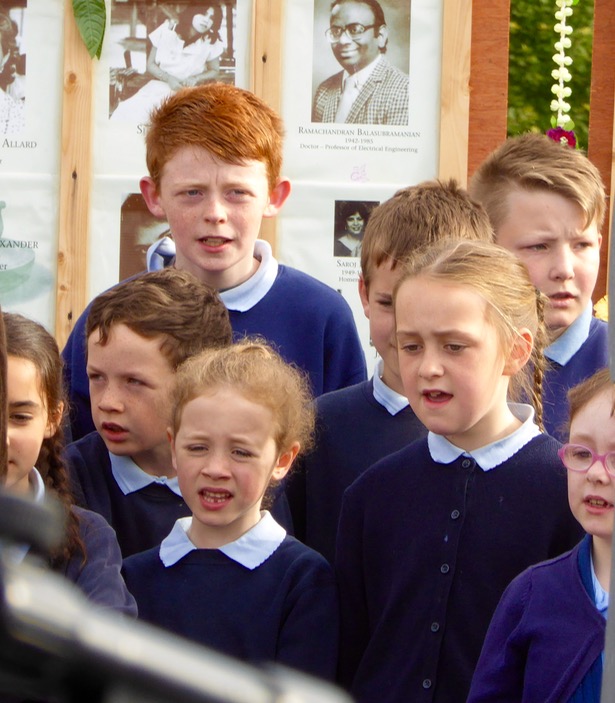
Amanda was undone by the performance of the local schoolchildren. As she mopped her eyes a very large Mountie in full dress uniform put his arm around her and patted her shoulder. It was a lovely moment.
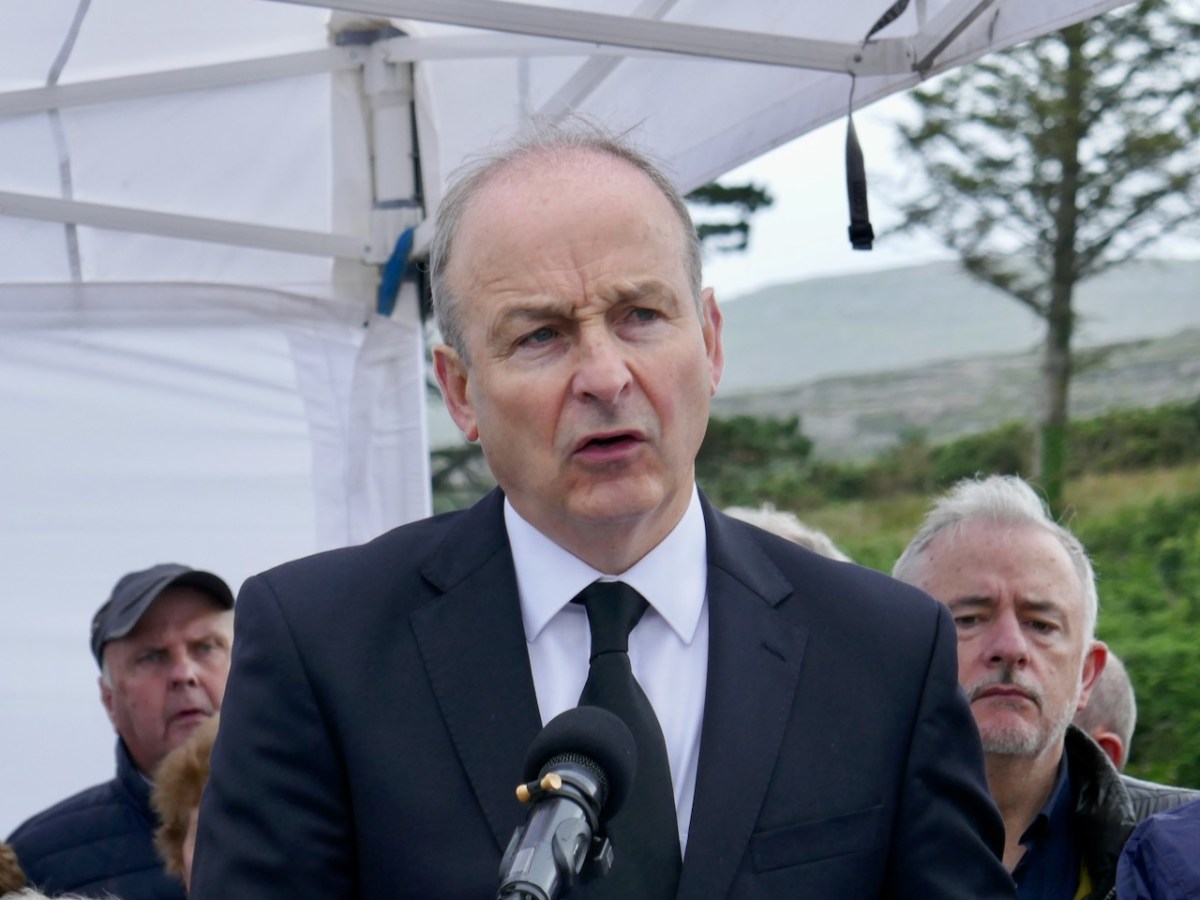
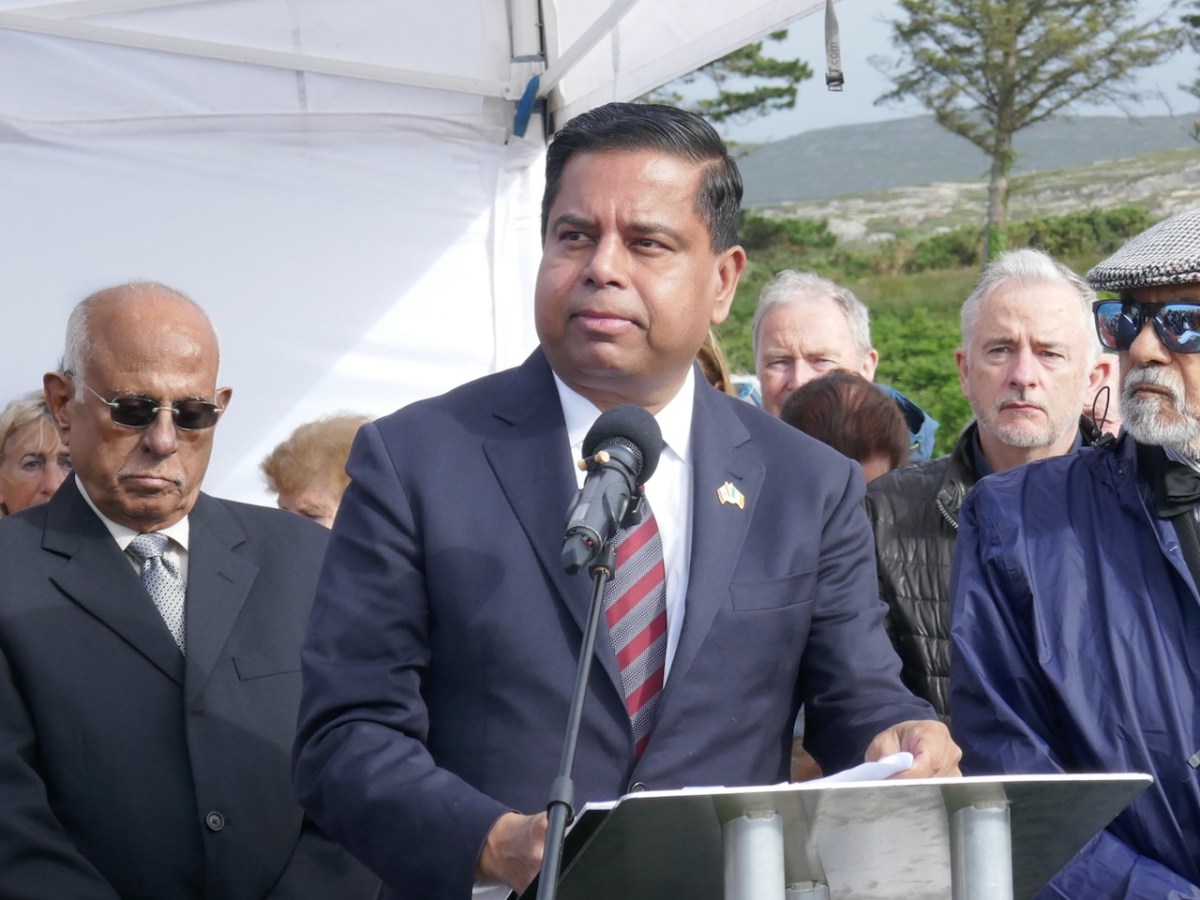
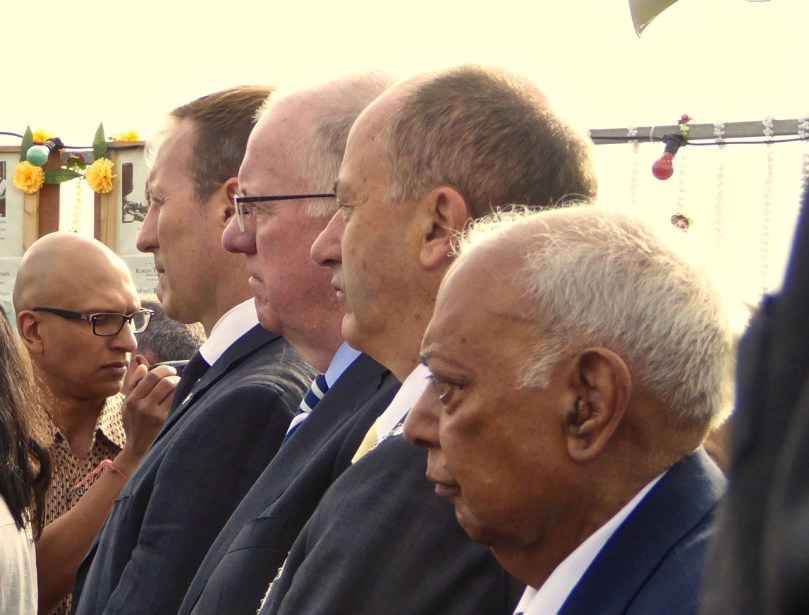
Micheál Martin, grave and respectful, spoke the words I have used in my heading, dignity, love and remembrance. It perfectly summed up the feeling of the day. It was echoed by Gary Anandasangaree, Canadian Minister of Public Safety, who came to Canada as a child refugee, fleeing terrorism in Sri Lanka, who condemned terrorism in all its forms and spoke to the frustration of the family members who are still without answers.
In the last three years there have been high-profile assassinations of Sikh leaders in Canada, including the chief suspect in the bombing, and this has led to the closure of each others embassies in the midst of accusations by Canada that India was behind the murders. Meanwhile, India accused Canada of harbouring terrorists. Mark Carney, the new Prime Minister, has been working quietly behind the scenes to normalise relations again, with success.
This year it seemed that something has shifted – ten years ago, even two years ago, there was more emphasis on the anger at the botched investigation, the utter frustration at the lack of answers and the failure of the Canadian government to hold anyone to account. This year people spoke mainly about moving towards a sense of peace. The emphasis was on support and love, on getting along in our multi-cultural societies, on respecting each others’ cultures and on mourning with each other for those who will never return.
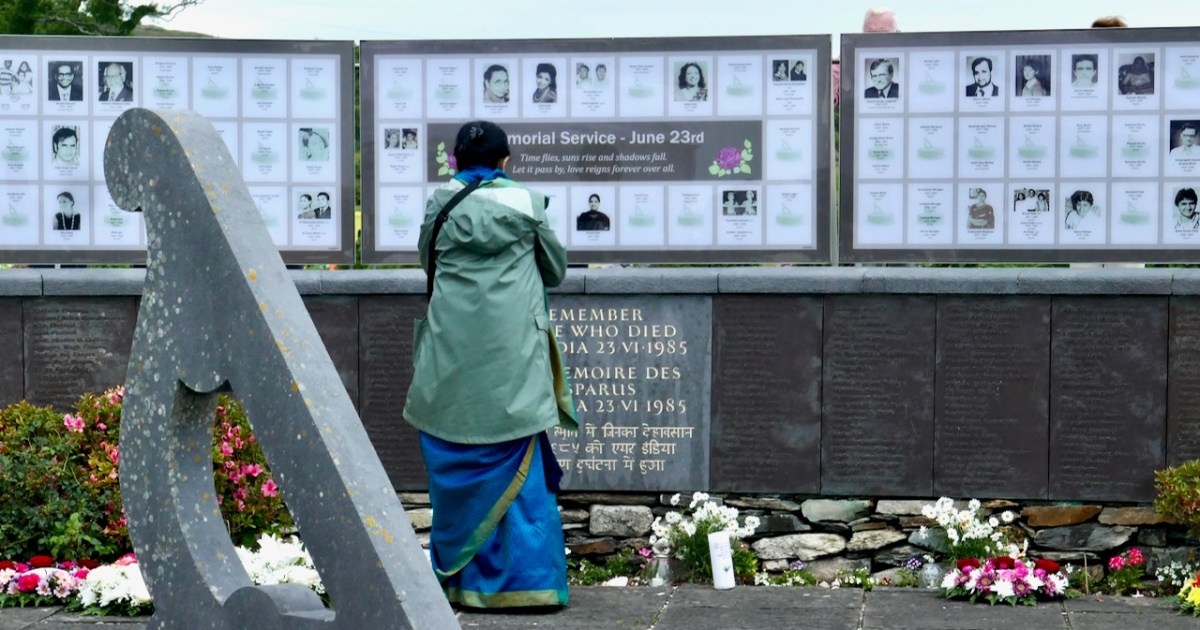
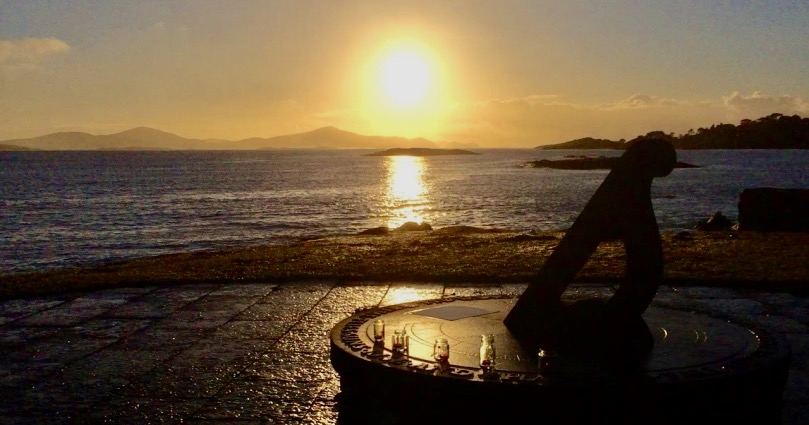
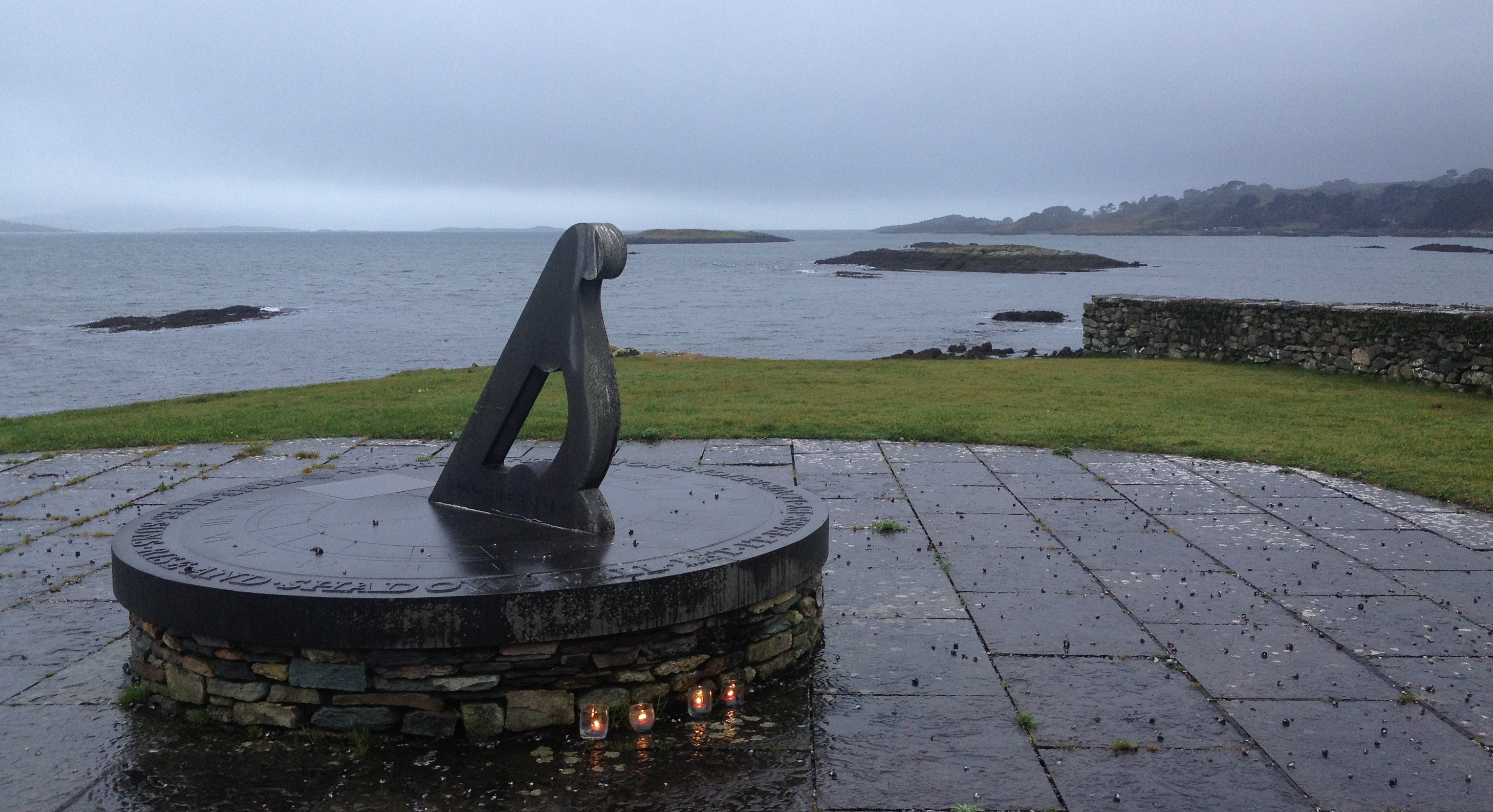
The central point of the commemoration is Ken Thomson’s beautiful sculpture, a sun dial set to the exact time the bomb went off.
Originally posted in 2015. Re-posted now, 8 years later with an update at the end.
Some posts are hard to write. In the case of this one, there are such complex emotions – sadness and anger being the dominant two, but overlaid with pride and gratitude. I will explain.
On June 23rd, 1985 – 38 years ago this week, but 30 years ago when this post was originally written – a bomb on board Air India Flight 182 exploded when the plane was just off the coast of West Cork. Everyone on board, 329 people, were killed. One in every 4 victims was a child. Eighty percent were Canadians.
The bomb was the work of Sikh extremists, operating out of Vancouver. A botched investigation, jurisdictional disputes, and massive incompetence at many levels has meant that no perpetrator of this heinous crime has ever been convicted for it – a travesty that is a dark stain on Canada’s judicial system and that has left the families of the victims with no sense of justice to this day.
Members of the victims’ families began arriving immediately after the bombing and, deeply affected by their plight and by their own traumatic involvement in the the recovery operation, the people of West Cork opened their hearts and homes to them. Ahakista residents took on the task of petitioning governments for a memorial garden and of arranging a yearly commemoration service. The memorial is beautiful and perfectly maintained year round. Beginning in 1986 the service has been held every year without fail and family members who come are welcomed, supported and fed, in the Irish way. Many friendship have been forged over the years.
In contrast, it took the Canadian Government a long time to acknowledge that this terrorist attack, in the words of Prime Minister Harper’s official apology ‘…was not an act of foreign violence. This atrocity was conceived in Canada, executed in Canada, by Canadian citizens, and its victims were themselves mostly citizens of Canada.’ This speech was made in 2010. The first Canadian memorial to the victims was erected in 2006 and there are now four. There are no memorials in India.
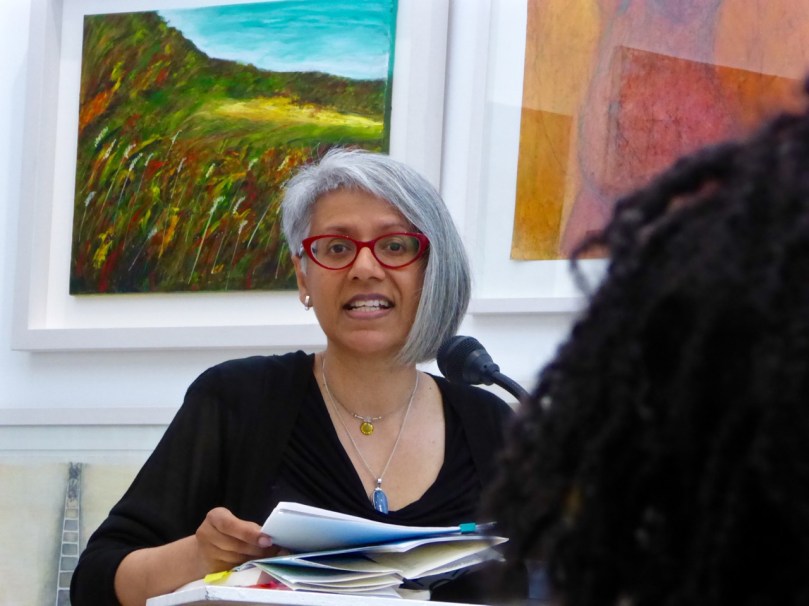
Renée Sarojini Saklikar
Because 2015 was the 30th anniversary the ceremony was a large one, with dignitaries from Canada, India and Ireland in attendance and about twenty family members. For us, it started the night before, with a poetry reading in the West Cork Arts Centre in Skibbereen. Renée Sarojini Saklikar is a Canadian poet who lost an aunt and uncle in the disaster. She read from her book Children of Air India, and also some new pieces. Deeply influenced by the opacity of official documents, by memory and loss, her poems carried a quiet power that seeped into our souls almost without our noticing. She elicited our participation in one poem – a piece made up entirely of acronyms – and she spoke to us about the process of writing poetry from trauma and invited our stories and comments. It was a deeply emotive experience – a good preparation for the following day’s ceremony of remembrance.
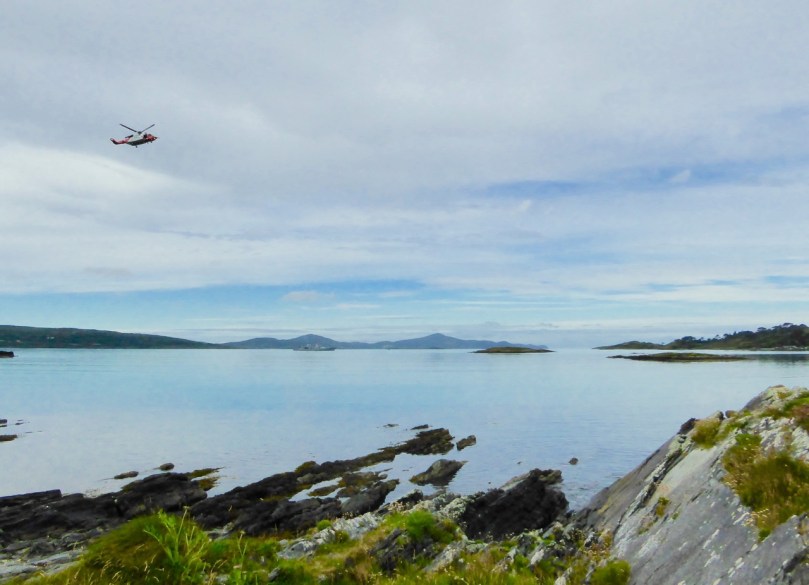
The Irish Navy ship and Coast Guard Fly Past
The ceremony timing mirrors the events of the original June morning when the bomb exploded in the plane, with a minute’s silence at 8:12AM, broken by chanting by family members. The Irish Navy were on hand to signal the moment with a siren blast, and a Coast Guard helicopter performed a formal fly past. A choir of children of the local National School sang and there were speeches and wreath-layings. I was pleased to see Canada’s Minister for Justice, Peter McKay, in attendance as well as the Canadian Ambassador to Ireland.
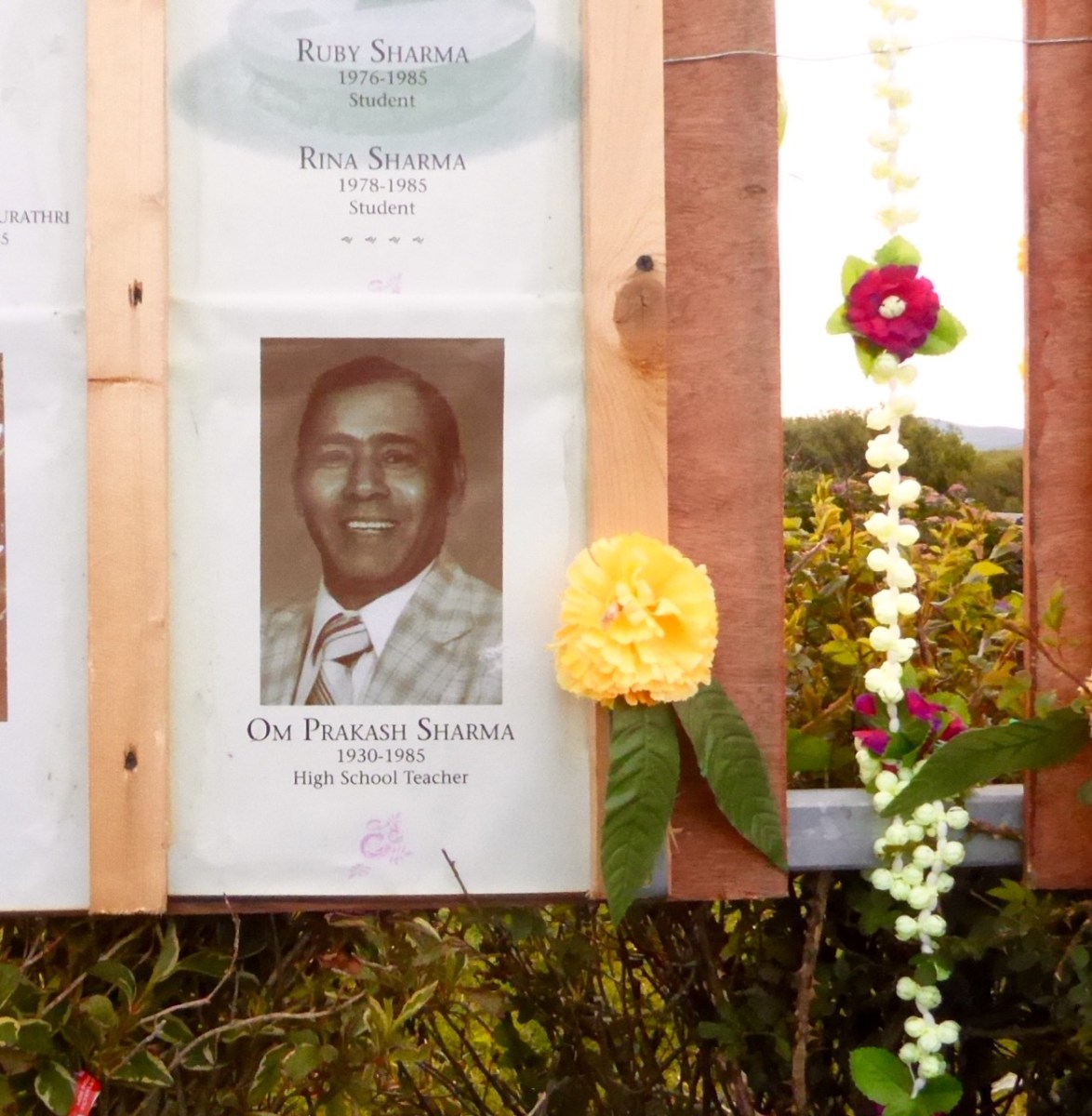
Speaking to the family members brought home to me as nothing else could do the enormity of the tragedy and the still-raw emotions at the core of this event. Saroj lost her father, a teacher. “He was a proud Canadian,” she said. “He loved Canada and taught Canadian children in Newfoundland. He cared so much for his new country, but when he died, suddenly in the eyes of Canada he was no longer a Canadian but an Indian.”
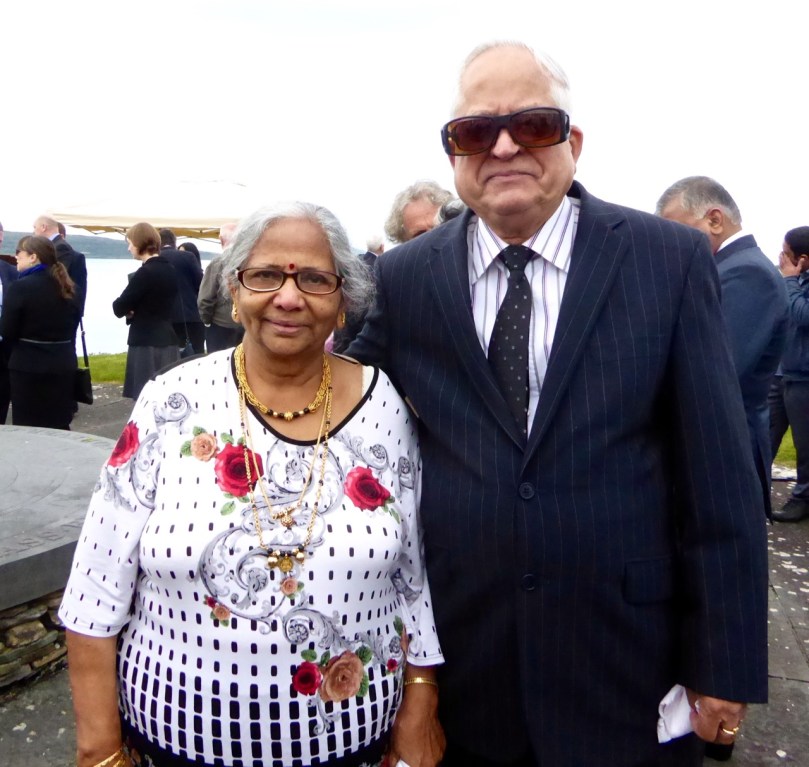
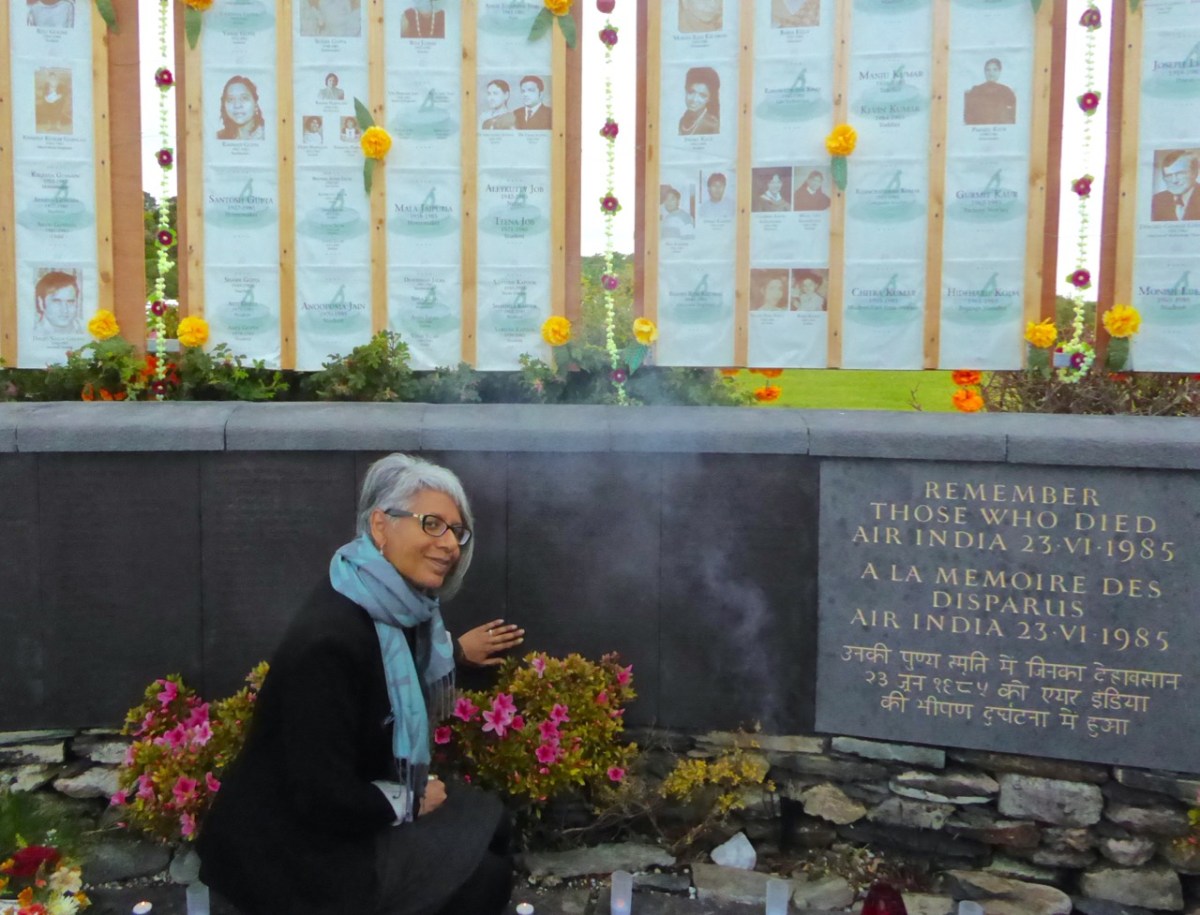
Saroj (below) had sat through many days of the Vancouver trial of the accused bombers (who were eventually acquitted) and still could not get her head around the outcome when the evidence was so clear.
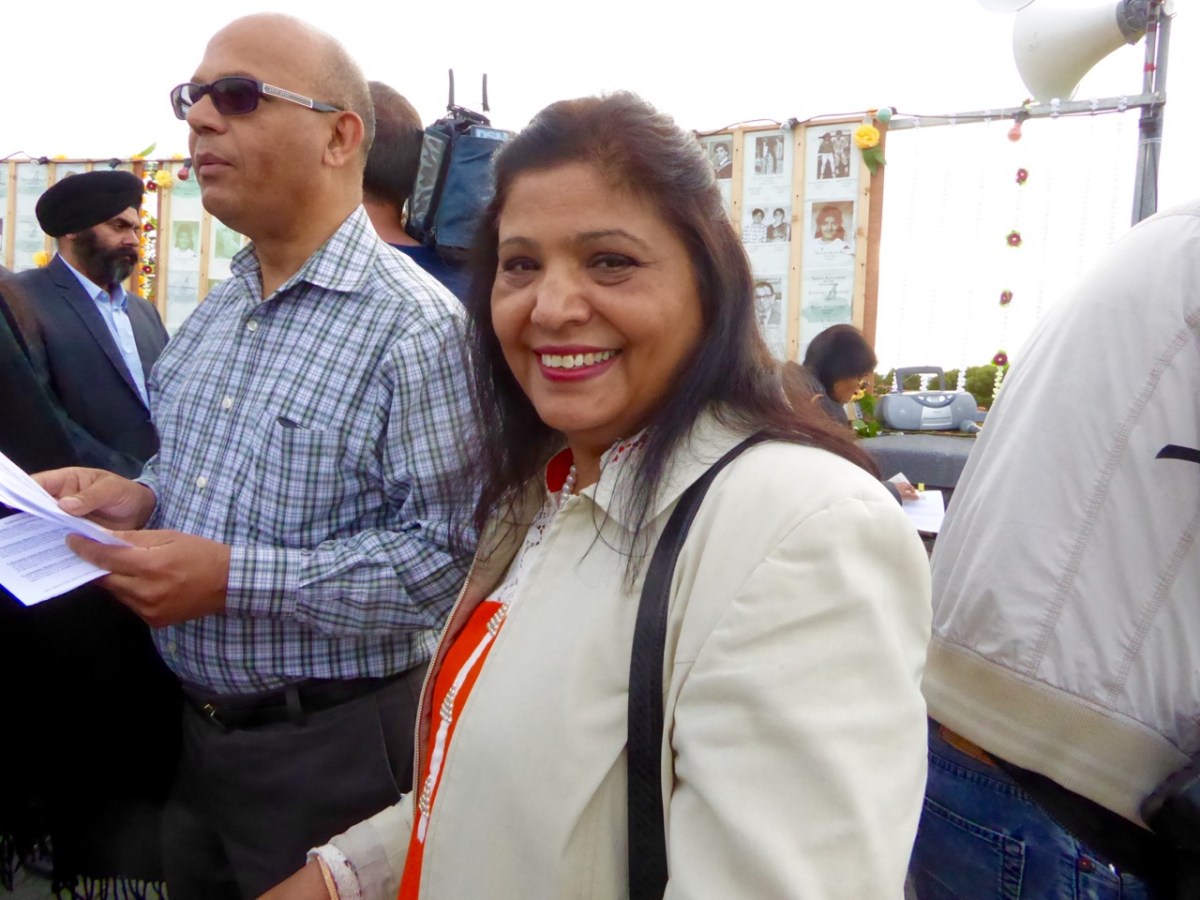
Dr. Padmini Turlapati (in the sari, below) was the spokesperson for the families. She lost her two sons. They had just finished school and were going to India for the summer to see their grandparents.
She showed me their photograph – two merry kids, laughing and carefree. Because they were visiting their grandparents they had taken with them their albums of mementoes and photographs – Padmini had to piece together a few photos from their school and friends. Sanjay’s body was recovered, but Deepak is still out there, and so she comes back every year to the place which has become a focus for her grief. In her speech she encompassed all the emotions that the families still feel – unspeakable sadness, anger and – gratitude.
Sanjay and Deepak
Over and over speakers spoke about the warmth, the generosity and the support of the West Cork people who had been there for them in their despair when it seemed that their governments had abandoned them. Several used the same phrase. Addressing themselves to the people of Ahakista, to the fisherman and coast guard volunteers, to those who built and maintain the memorial and who organise each year’s ceremony. “You”, they said, “are a model for the world.”
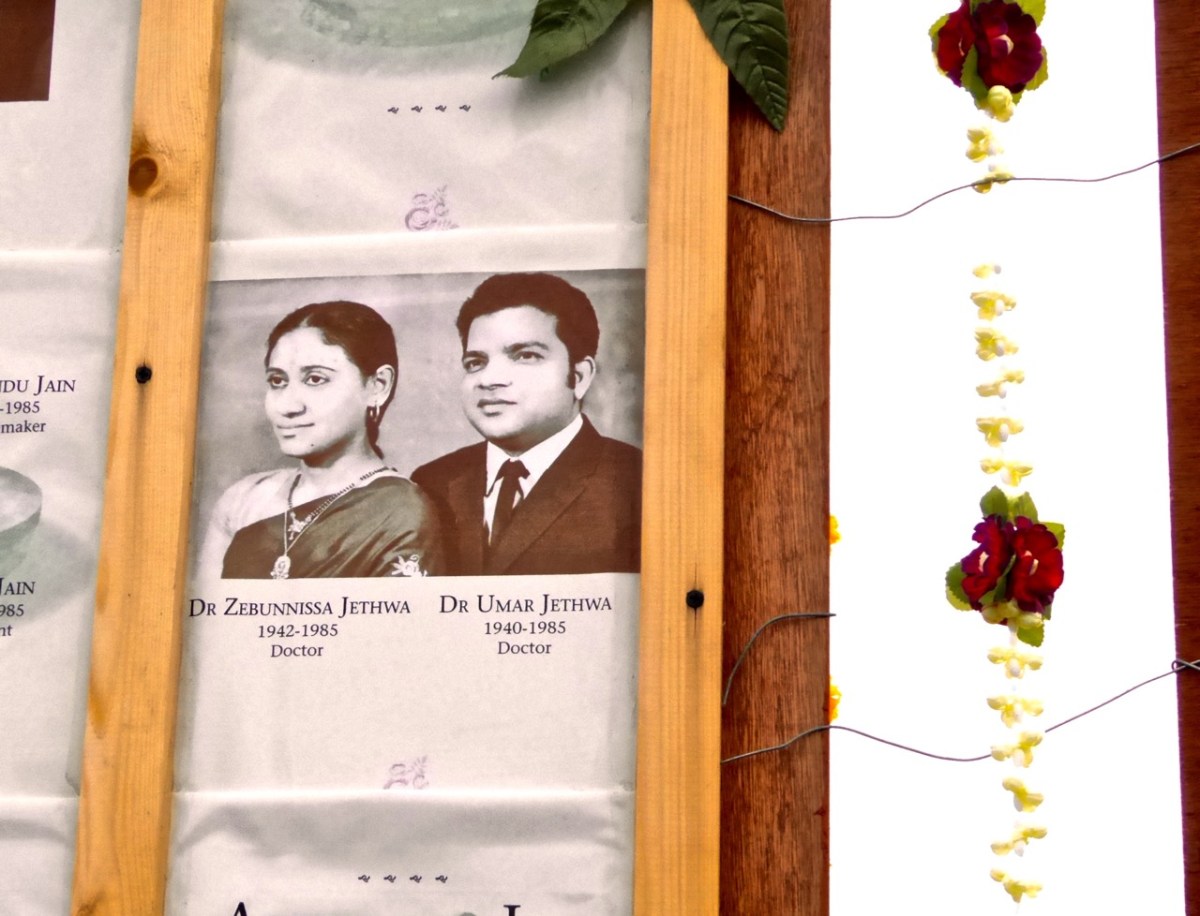
Renée was there, honouring her aunt and uncle, both doctors, both contributing enormously to Canadian society.
As a Canadian who listened nightly to the reports of the Vancouver trials I can have an inkling of the unfathomable well of loss and anger that these families feel. As an Irish person who is now living in West Cork I am proud of how our neighbours and friends stepped in to support and comfort these devastated families.
Perhaps the best way to end is with one of Renée’s poems. I will try to reproduce it faithfully on the page.
In the home-house, in the basement, there is the mother — she is singing a sweet song.
It is before —
June 1984
Of her name, there are redactions.
Of her mother tongue, there is no record —
this is the life of a woman, made in India,
living in Canada.
In the home-house, in the basement, there is the mother
And she is absent, sister
Update, 2023
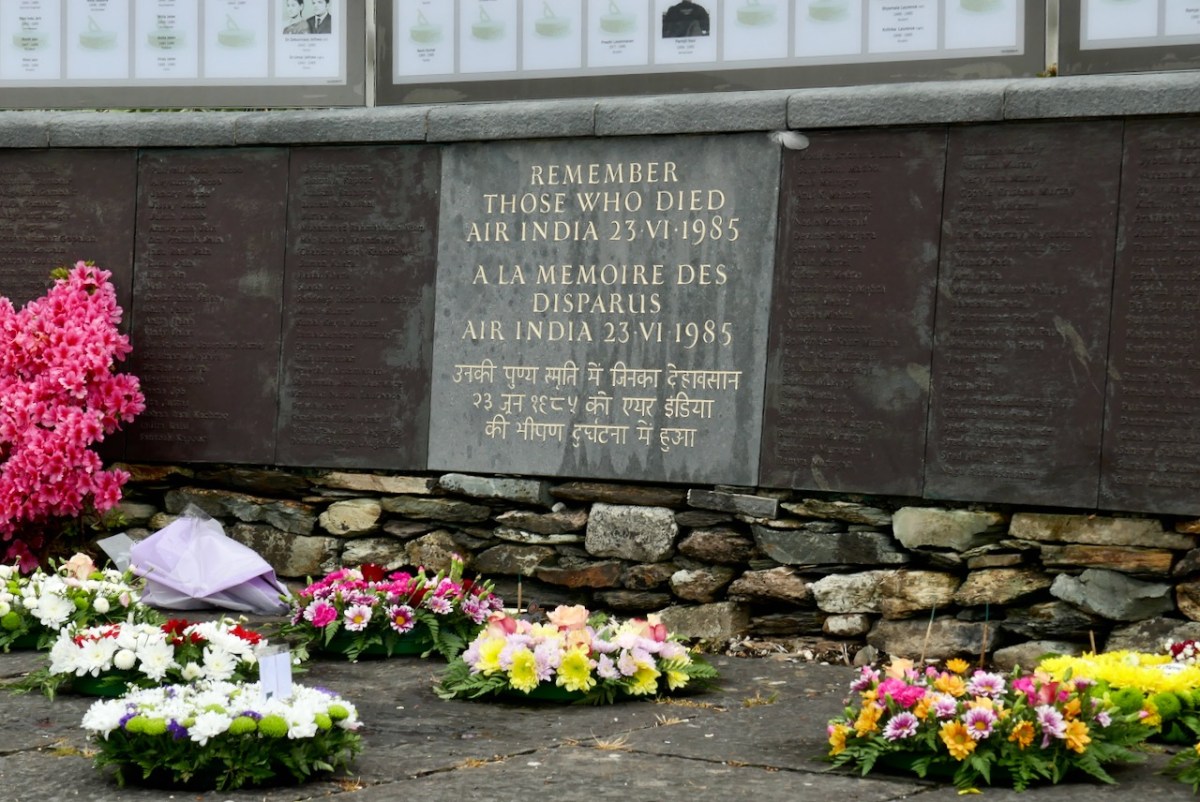
We visited the memorial this week, on Friday the 23rd. The ceremony had taken place, as always, in the morning and the site looked beautiful despite dismal weather. Fresh flowers had been laid, including, most poignantly, for Sanjay and Deepak.
Nothing has changed for the families. The man who was tried and acquitted in the infamously botched trial in Vancouver, Ripudaman Singh Malik, was shot dead last year in what appeared to be a targeted gangland-style killing. Although two men were charged for the murder, the trial has yet to be held. Malik had many enemies and had earned more by a recent turn-about in his support for the Indian Government, and nobody has linked his murder to the Air India Bombing. In the last few days, another prominent Canadian Sikh activist, Hardeep Singh Nijjar, has also been murdered in a similar way. It is speculated that his, and other recent deaths, are linked to the movement for a Khalistan state as a Sikh homeland.
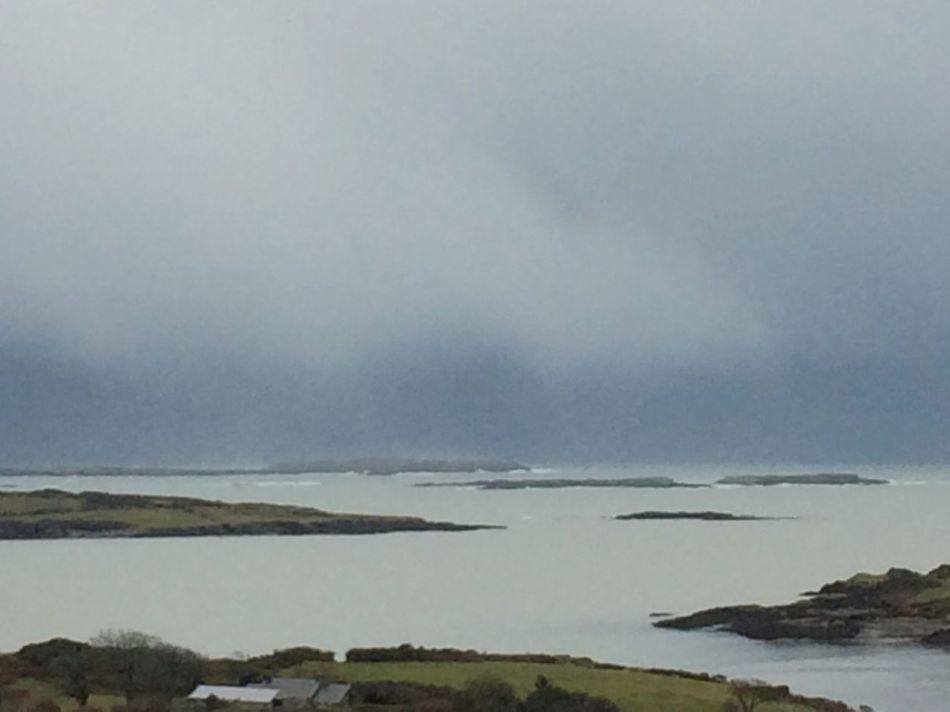
Waves crash against the islands in Roaringwater Bay
In our early days here I read in a couple of places that Roaringwater Bay got its name from the Roaringwater River, which in turn derived its name from the sound of the water tumbling over the rocks as it neared the sea. Now, I know better. The water in this huge bay, with its multiple islands and rocks, does roar. Not all the time, of course – you could live beside it for weeks, even months and never hear it.
The view past Castle Island, after a storm
But after a storm, when the wind has died down, the rain has stopped, and all is calm we fling open the doors to enjoy once more the bright sunshine and balmy air. That’s when it stops us in our tracks: a constant roar, like a distant jet engine, or a working factory just out of sight. The first time we heard it we were viewing a house on a hill about a mile inland and came around to the side facing the sea – and there it was. It took us a while to figure out what we were hearing: it sounded like some kind of foundry or industrial equipment. (Aha! So that’s why they want to sell this place!) It gradually dawned on us that there was nothing like that in this isolated spot and that what we were hearing was coming from much further away – from the sea, in fact.
Is there a prevailing wind here?
Once back home we got out the spotting scope and could clearly see the waves crashing against the islands. In the aftermath of the storm the water was still turbulent, with giant waves pounding against the rocky shores and breaking right over the rocky islets. The cliffs at the western end of Cape Clear were covered in sheets of salt spray. We have a clear view of the Fastnet Rock (more about this in a future post) and in particularly wild conditions we can see waves breaking over it, reaching up to the trunk of the enormous lighthouse.
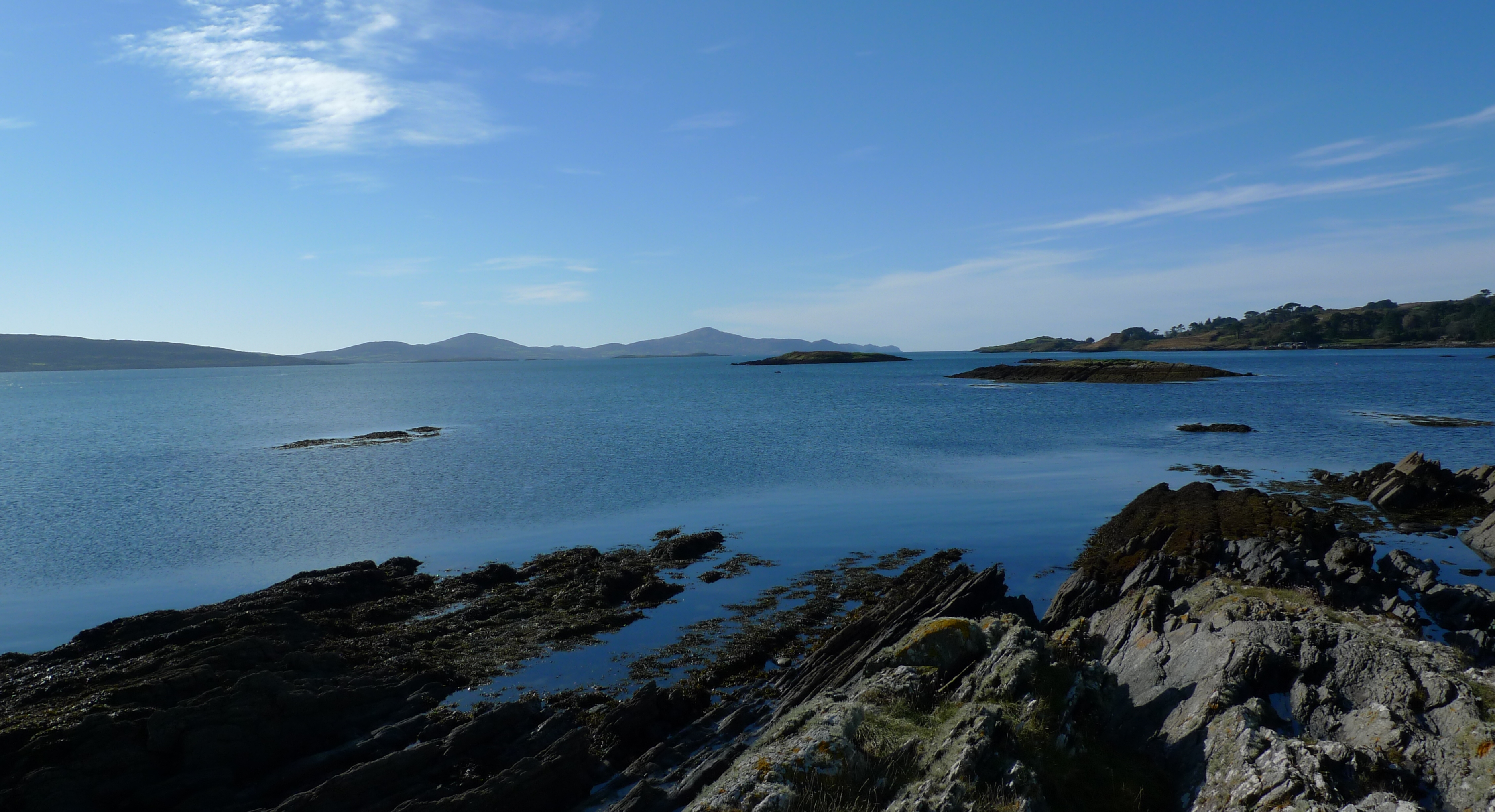
Near Ahakista: The calm after the storm
Our recent storms have been, as we say in West Cork, mighty. A particularly vicious series of gale, storm and hurricane force winds (9, 10, 11 and 12 on the Beaufort Scale) has wreaked havoc along the coast. Yesterday we went to Ahakista on the Sheep’s Head. The damage there has been recorded by Amanda – click here to see her photos and account. We had a respite from the winds today – a perfect opportunity to listen to the roaring water.
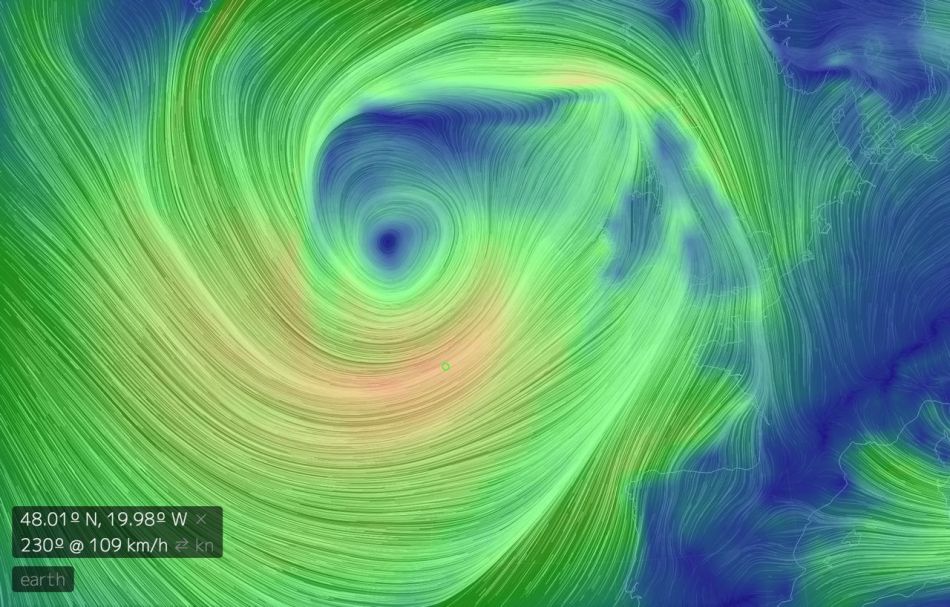
Earth Winds. Jan 05, 2014
Tonight we are expecting another onslaught, like the one on St. Stephen’s night that Robert reported on in his last post. I have discovered the Earth Winds Map – one of the coolest sites on the internet. Updated every three hours, it shows how the winds are flowing around the earth. This screen capture shows the Atlantic storm that is heading for us and packing winds of 109km per hour. That’s classified as “Violent Storm” and just a few km/h short of a hurricane. Met Ireland has issued a warning, especially for areas affected by high tides, of storm surges and potential flooding. We will hunker down and keep our fingers crossed for ourselves and our neighbours here in West Cork. And when it’s all over, we will listen for the roaring of the waters.
Air India Disaster Memorial site, Ahakista, Sheep’s Head, West Cork
On the 23rd of June, 1985, Air India flight 182, en route from Montreal to New Delhi, exploded in mid-air off the coast of West Cork. All souls on board were lost – 329 children, women and men, of whom 268 were Canadians. The bomb originated in Vancouver and was the work of Sikh extremists. The perpetrators have never been convicted, leaving the families of the victims, almost 30 years later, with no sense of justice and closure.
The Air India bombing is very much a living story still in Canada and especially in Vancouver, where the chief suspects live and where the trials of those suspects were held – trials that went horribly awry and which resulted in acquittals. I have seen heartbreaking interviews with family members – people who lost parents, brothers, sisters, children – speaking of their long search for the truth and their despair at the incompetence of the prosecution process. In one moving piece, a son said (I paraphrase from memory), “We have been let down by the government of Canada. We have been let down by the government of India. The only people who have never let us down are the people of West Cork in Ireland.”
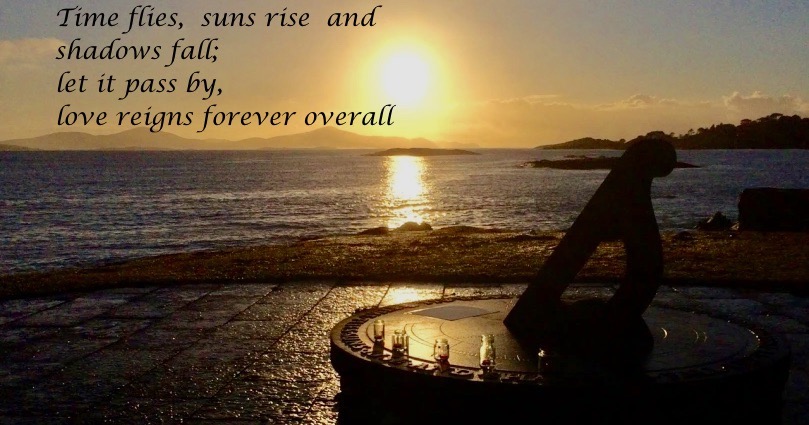
Many West Cork people were involved in recovering the bodies and collecting what washed up on shore. They were intensely affected by the plight of the families and by their wish for a memorial – a place of focus where they could gather to remember their dear ones. The people of Cork purchased a site at Ahakista, on the rugged and remote Sheep’s Head Peninsula, and built that memorial. Every year on June 23rd they host a remembrance ceremony. It is a place of unearthly beauty and the memorial is heart-rending in its design. Oriented towards the wild coast, a large sundial marks the moment when the plane went down. Around the dial are these words:
Time flies
Suns rise
And shadows fall
Let it pass by
Love reigns forever
Over all.
Today, on a grey and mizzling day, Robert and I travelled here to remember those we have loved and lost, ensuring that Ahakista will remain for us an enduring place of peace and memory.
Welcome to the UCD Library Cultural Heritage Collections blog. Discover and explore the historical treasures housed within our Archives, Special Collections, National Folklore Collection and Digital Library





 Roaringwater Journal