Grove Orchard: My Half-Acre

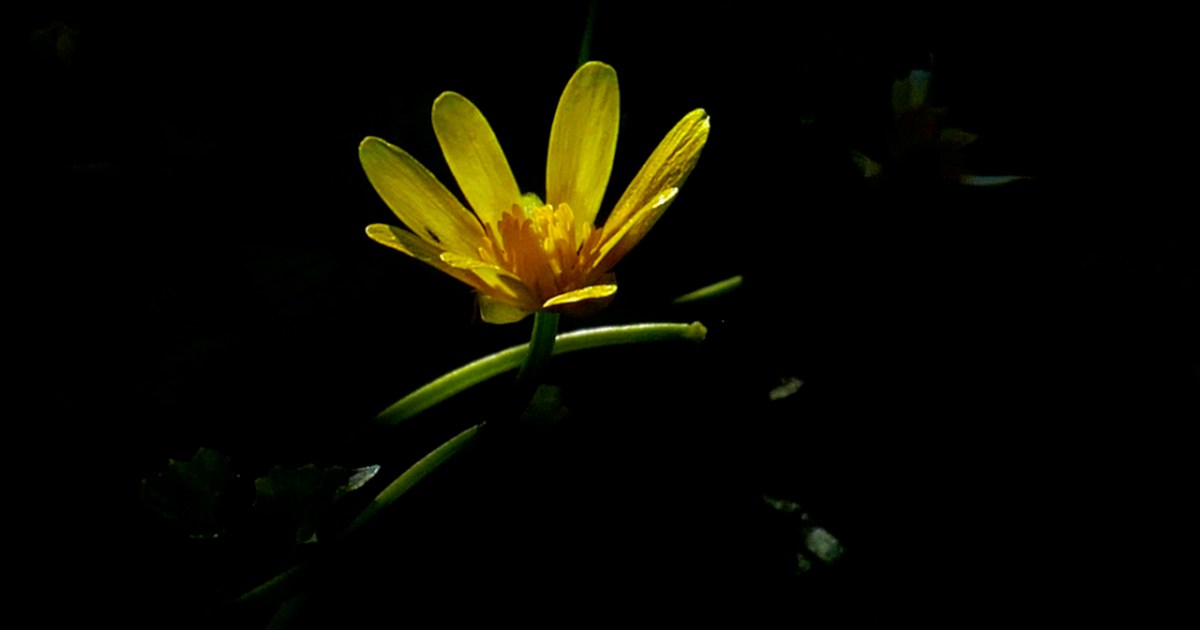
I did a series of posts, Rewilding my One Acre about my last house, Nead an Iolair, in which I charted over several years all the wild flowers that grew on our property. That included my wildflower meadow (more of a patch in reality) as well as all the little plants that just showed up in the grass and the gravel. 
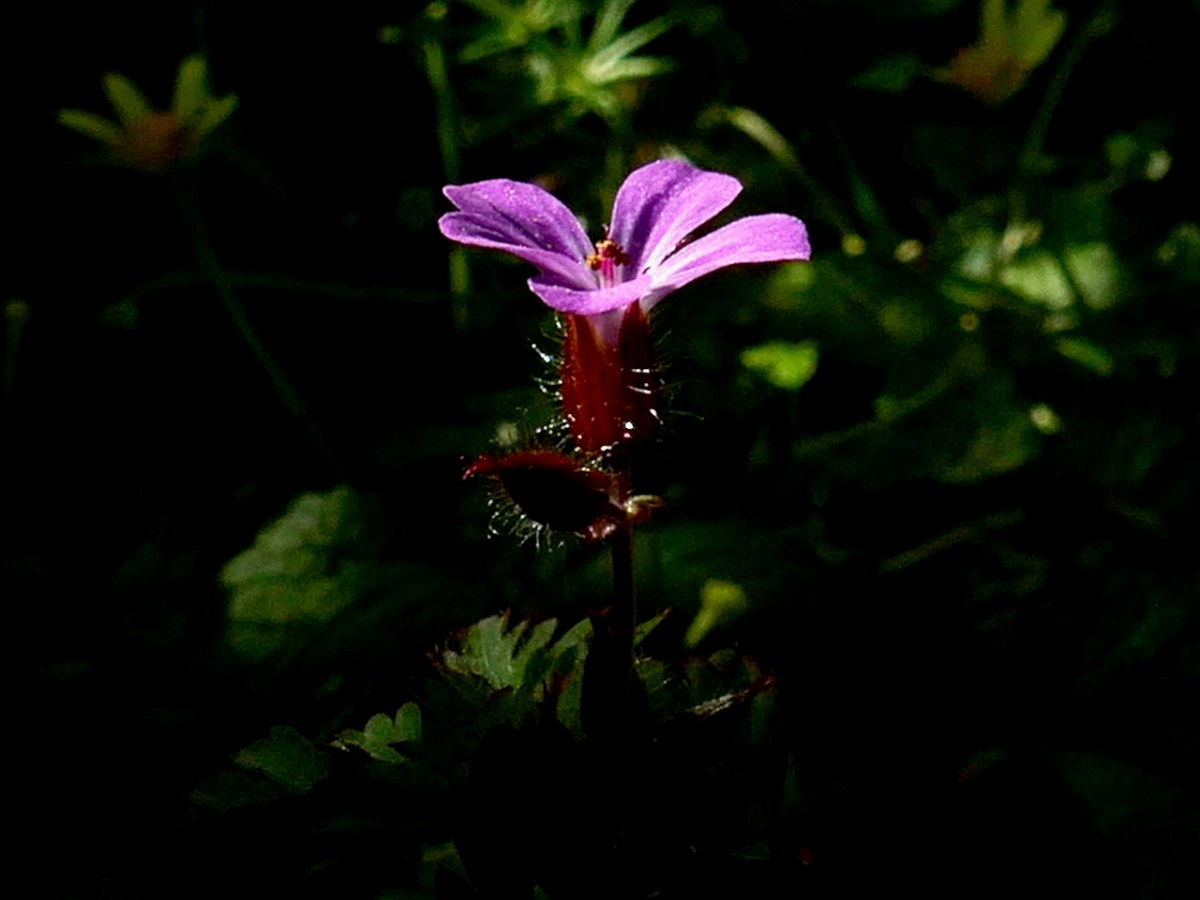
I want to do the same at Grove Orchard – that’s the name of my new house and it’s a name with some pedigree, deserving perhaps of a future post. So I have been out with my camera, lying in the grass, which is not the greatest choice for someone prone to hay fever, but I grudge my readers no sacrifice. Here is the result and I hope you enjoy it. You can click on Watch on YouTube for full screen.

The music is An Droichead /The Bridge by Liam O’Flynn, used with permission.
It was originally commissioned to reflect the theme of President Mary McAleese’s presidency, ‘Building Bridges’ and performed for her inauguration as President of Ireland. This version features Mark Knopfler on guitar.
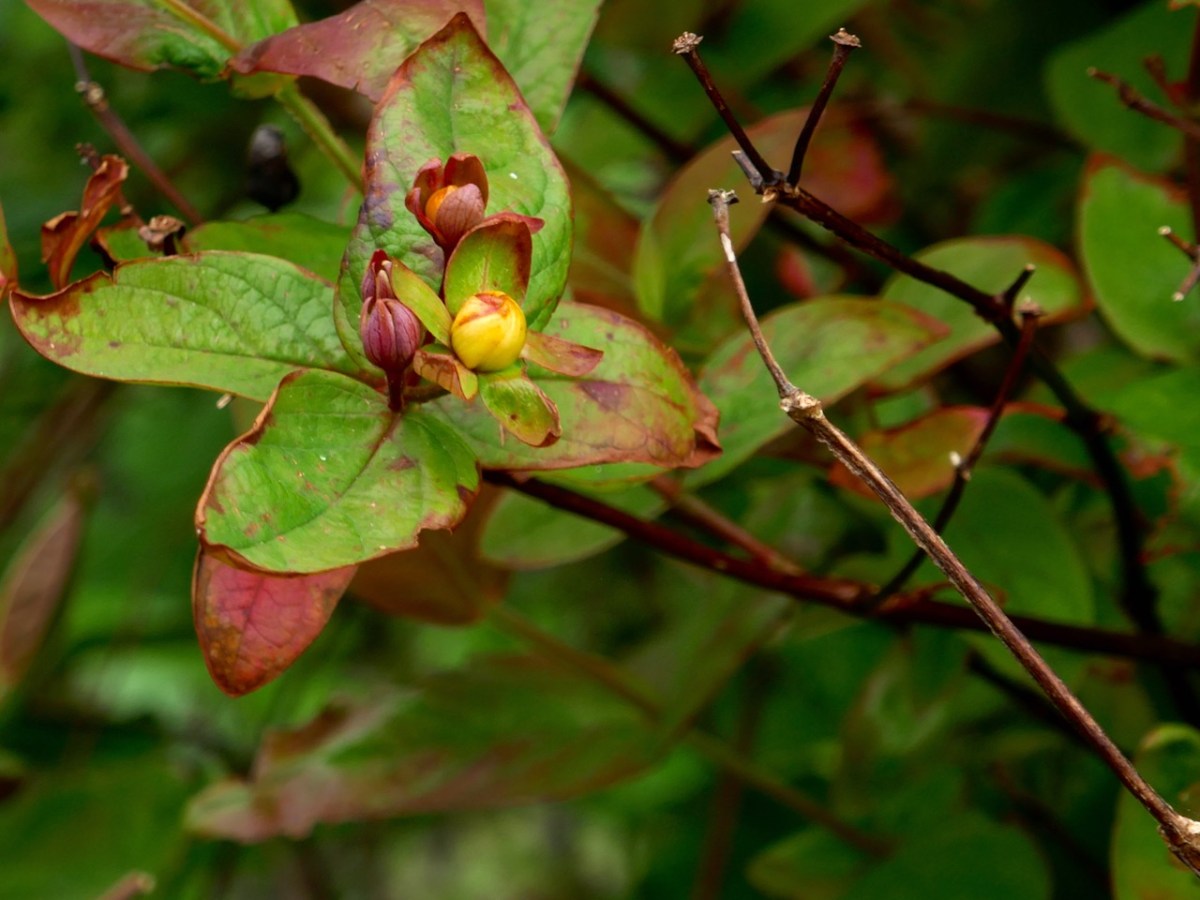
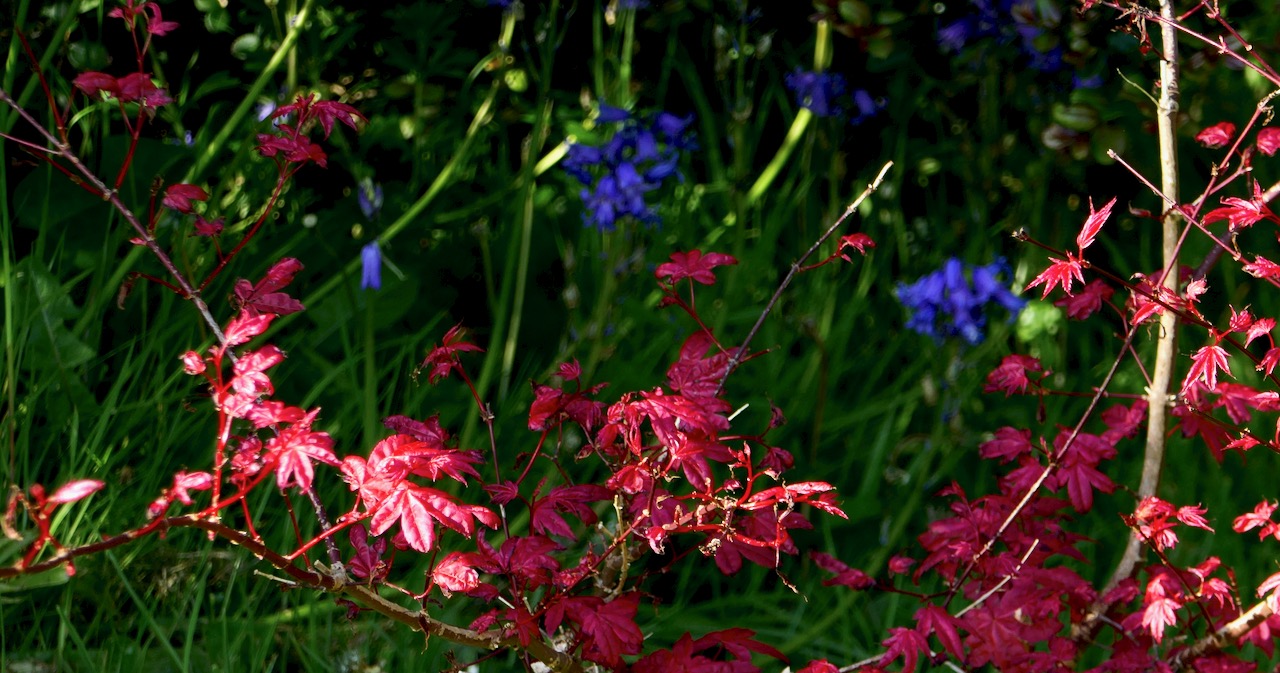
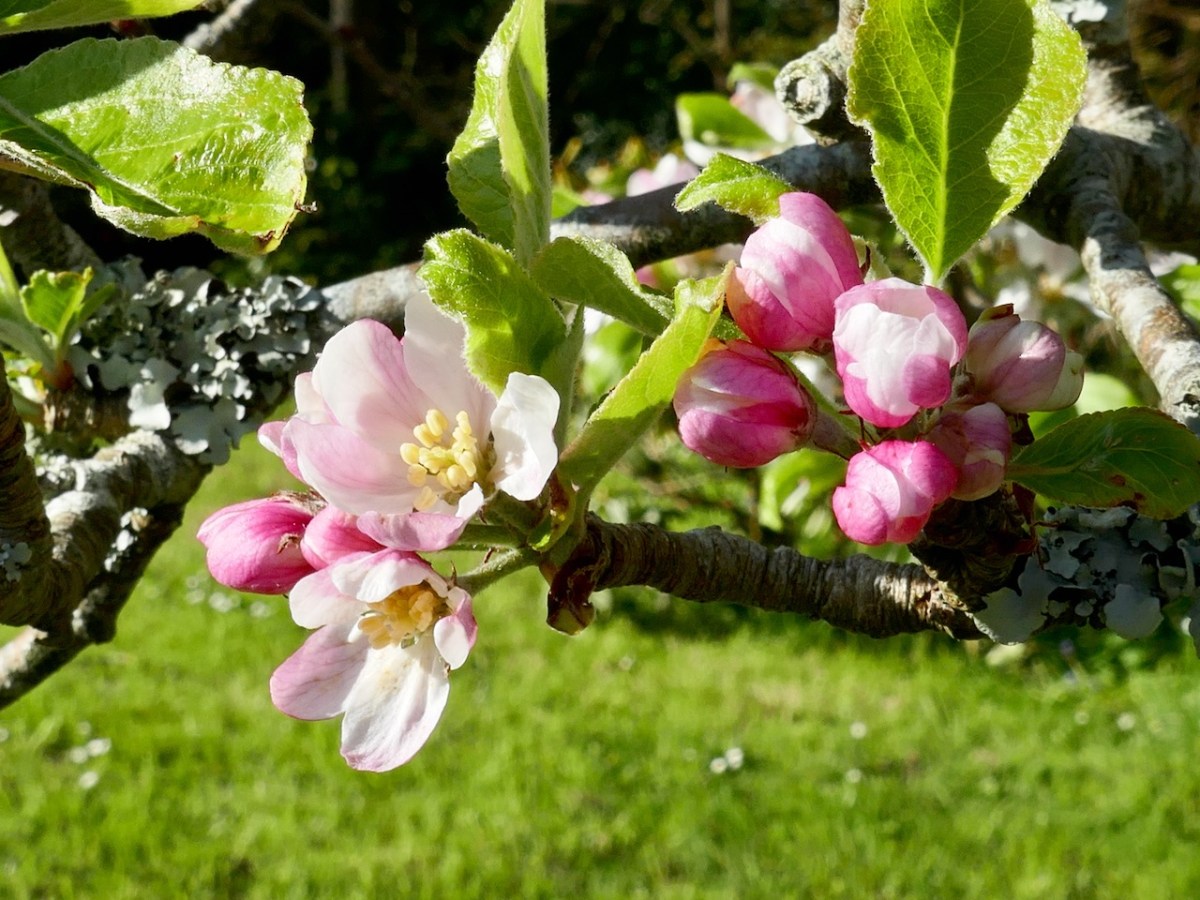
Because this is an established garden/orchard, I have included what flowers are blooming now, be they wild or cultivated. And sometimes just leaves, because they are so eye-catching (that Japanese Maple! Those apple blossoms!) and also any critters that hove into view. I don’t know who owns the cat, but he (she?) owns my garden. There’s a twice-daily patrol to make sure all is in order.
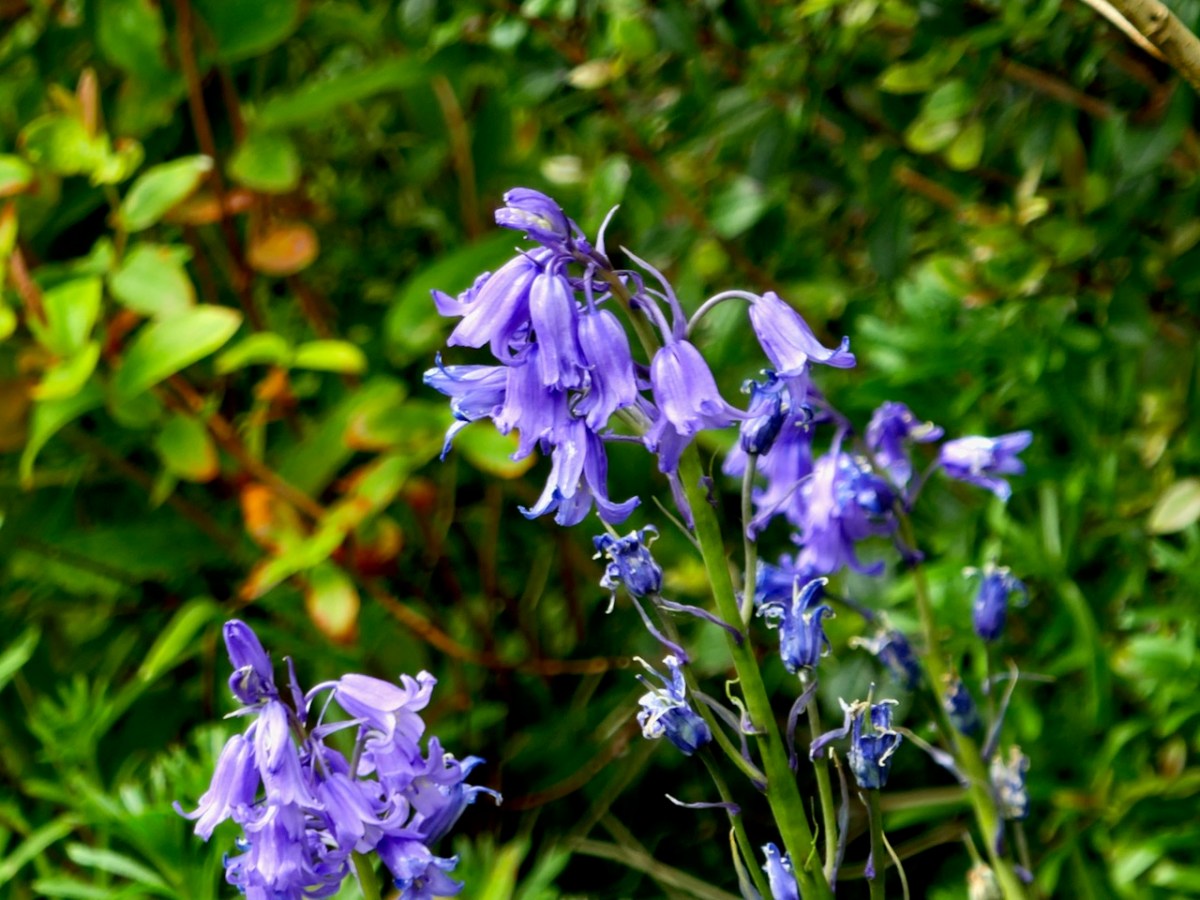
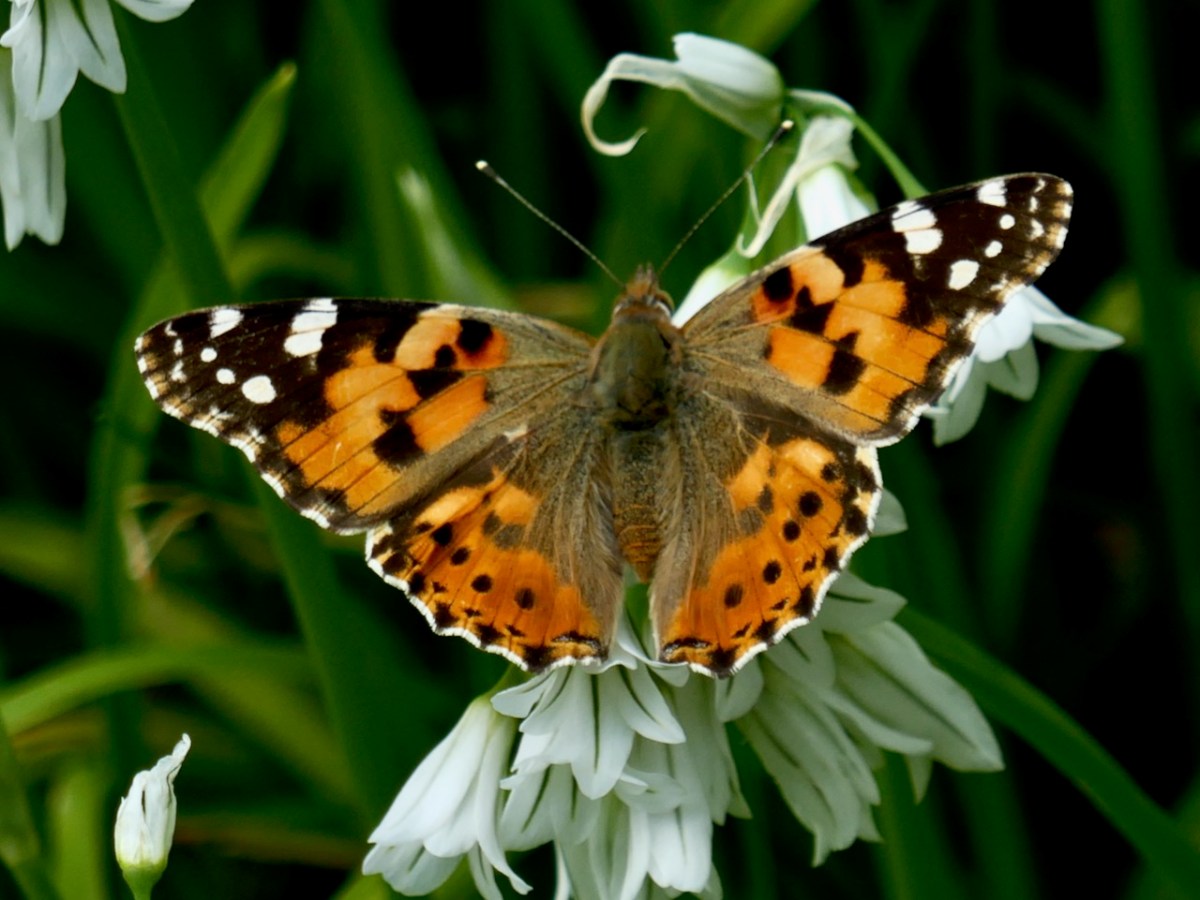
By no means is every plant native. Or benign. I have discovered some aliens – Chilean Iris and Three Cornered Leek for example are both non-native but at the moment they are alive with bees so I am reconciling to their presence in my garden. And alas, my Bluebells are not native, but the Spanish imports. Darn.
I have a wilderness area (ok, an unkempt part of the garden) and in it I have discovered Mock Strawberry (Potentilla indica) aka Yellow-flowered Strawberry. It’s rare and invasive and I have submitted a report to the Biodiversity Data Centre.
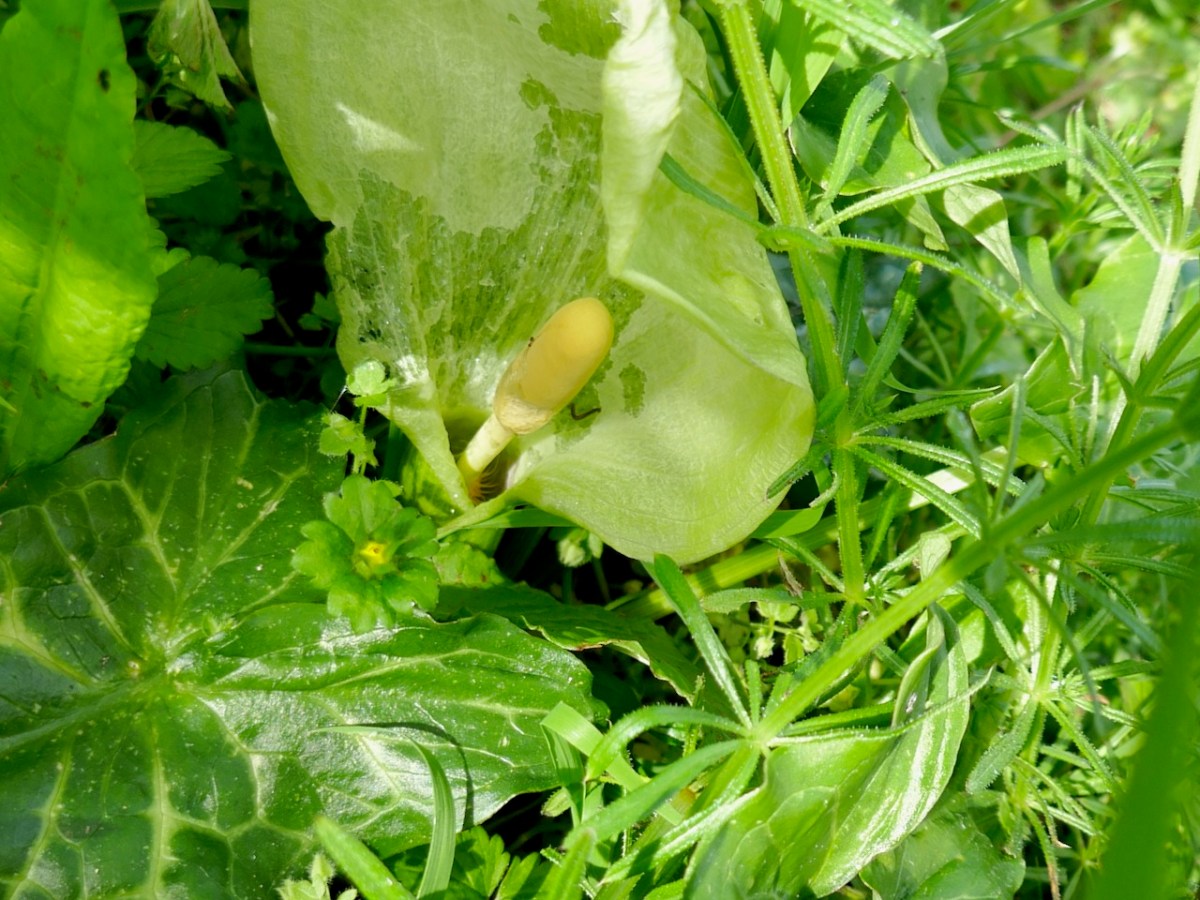
And I seem to have LOTS of Lords-and-Ladies, aka Cuckoo Pint, or Arum maculatum. It’s native but very poisonous to humans and pets. BUT – birds love it, apparently, so I’ll keep it but keep an eye on it. The Irish name for it is Cluas Chaoin (Kloo-us keen) – it means smooth-surfaced ear and isn’t that just the perfect descriptor? The image above shows both Lords-and Ladies and a Mock Strawberry.
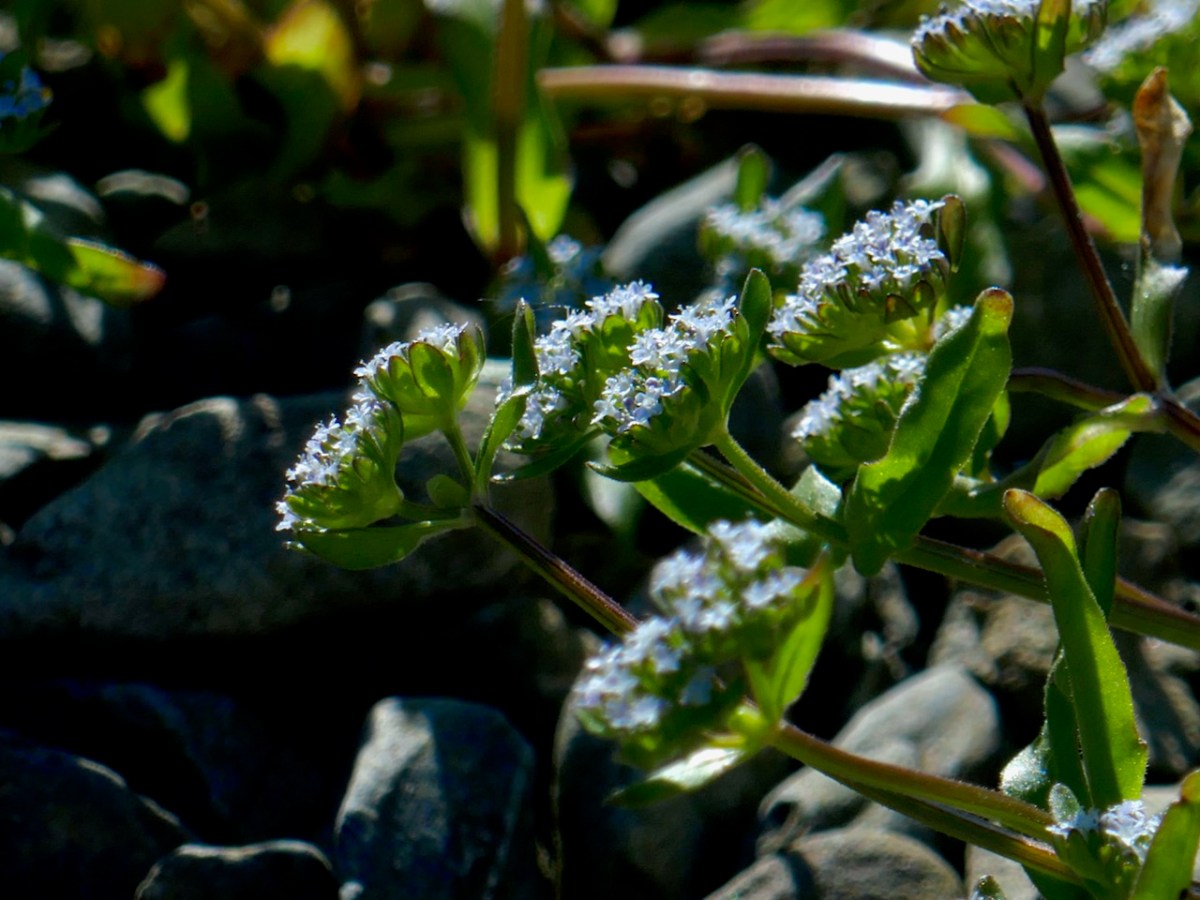
On the whole, the garden is alive with native wild plants – it’s most of what you will see in the slideshow. It’s also alive with birds – I have just downloaded the Merlin App so I know I have far more birds than the ones I can actually see. And I need advice, Dear Readers! A swallow pair is busy building a nest in my garden room – right over the table. I hate to knock it down, but I am not fond of bird poop in my tea. What to do?
Feed the Bugs

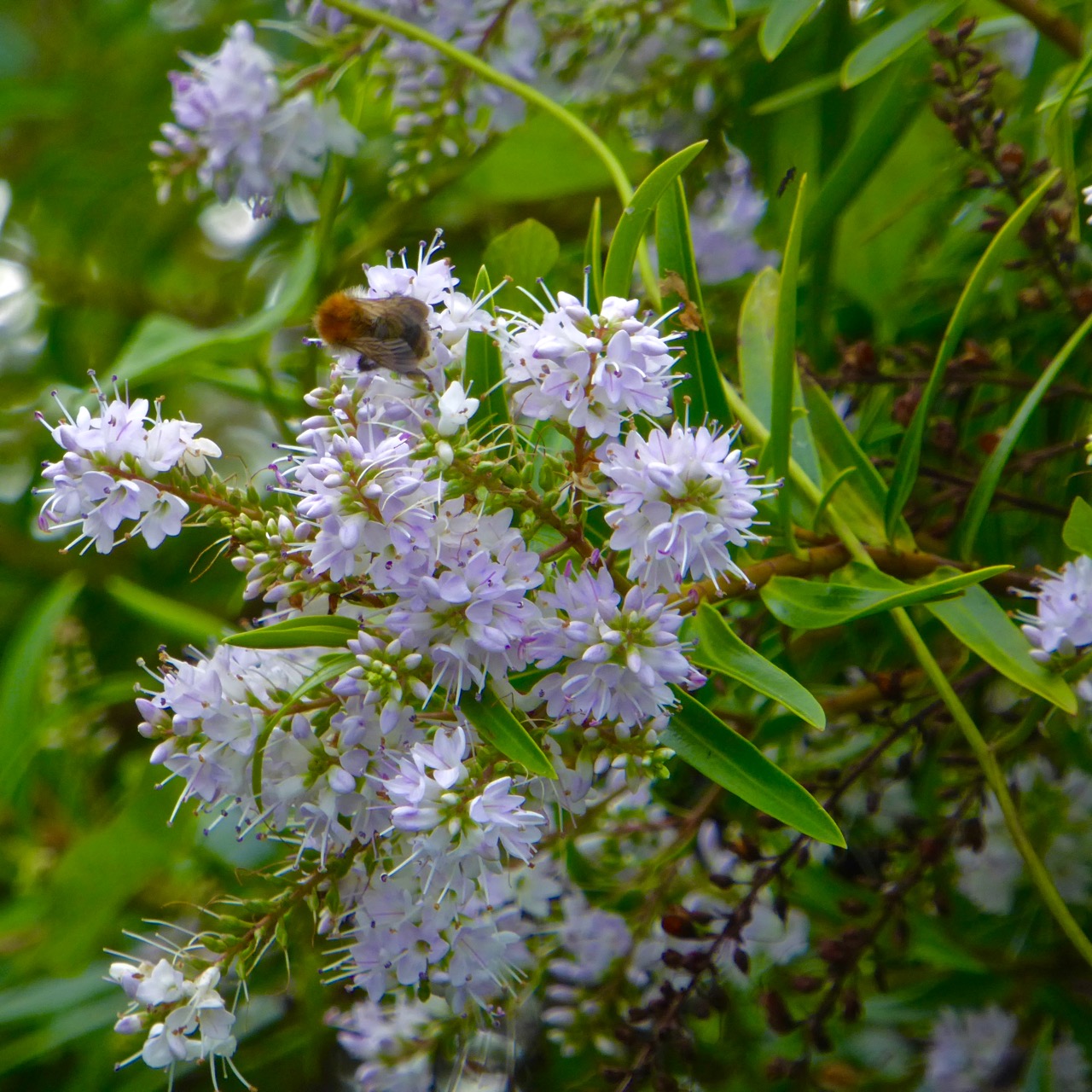
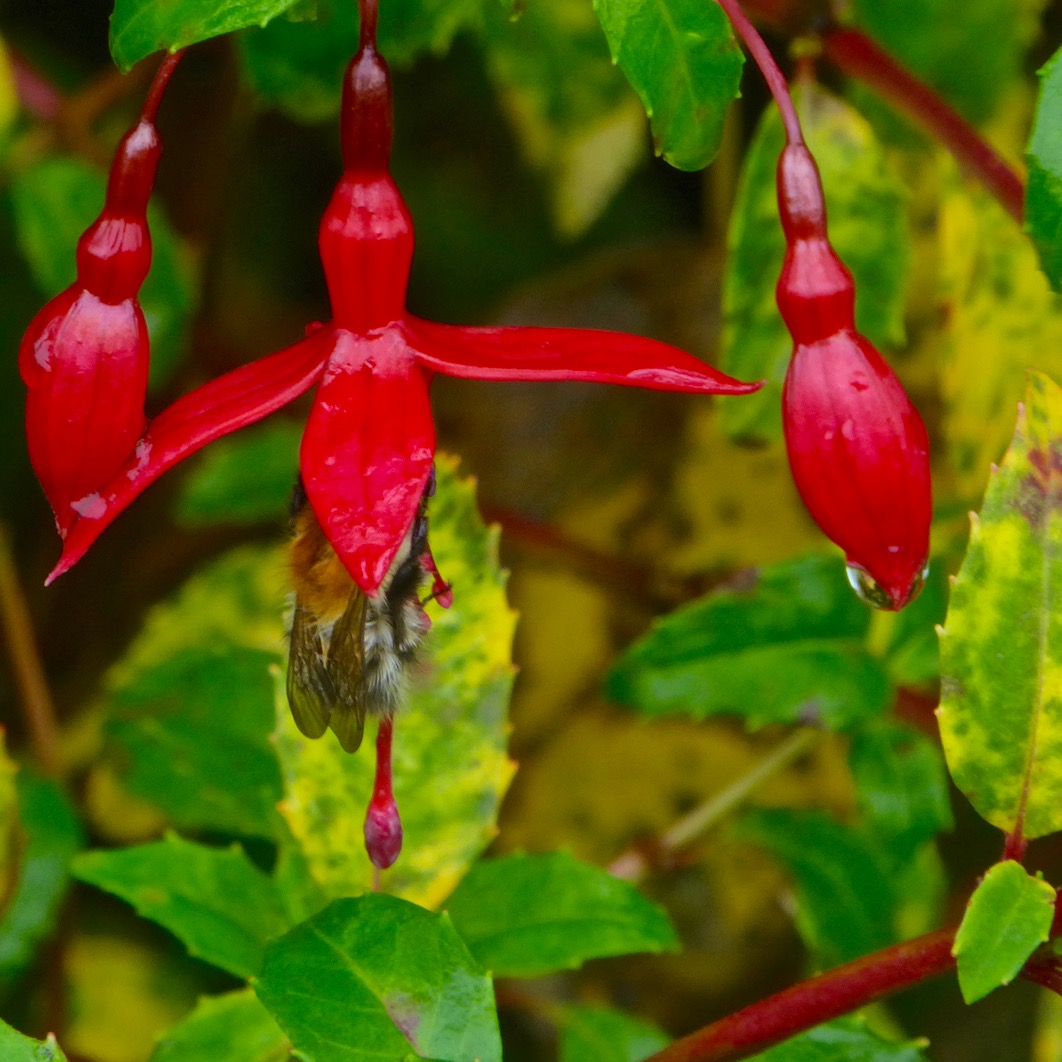
Bee in Fuchsia

Our walk in Glengarriff Woods opened my eyes to the challenges facing us in regards to ensuring the continuing biodiversity of Ireland. Loss of habitat, invasion of alien species, climate change, and modern farming practices all combine to present our insect life with increasing difficulty in obtaining what they need to thrive. Perhaps the best-known (although not the best understood) example currently is the enormous die-off of the bee population, known as colony collapse.

Hildegard's Shrub

With this in mind, I have been observing the bees, butterflies and bugs in our neighbourhood, and the role of flowers, both wild and cultivated, in supplying the food and the nectar they need. We have the advantage here that the hedgerows are rich in flowering plants, and that by regulation they must remain uncut until the end of August.

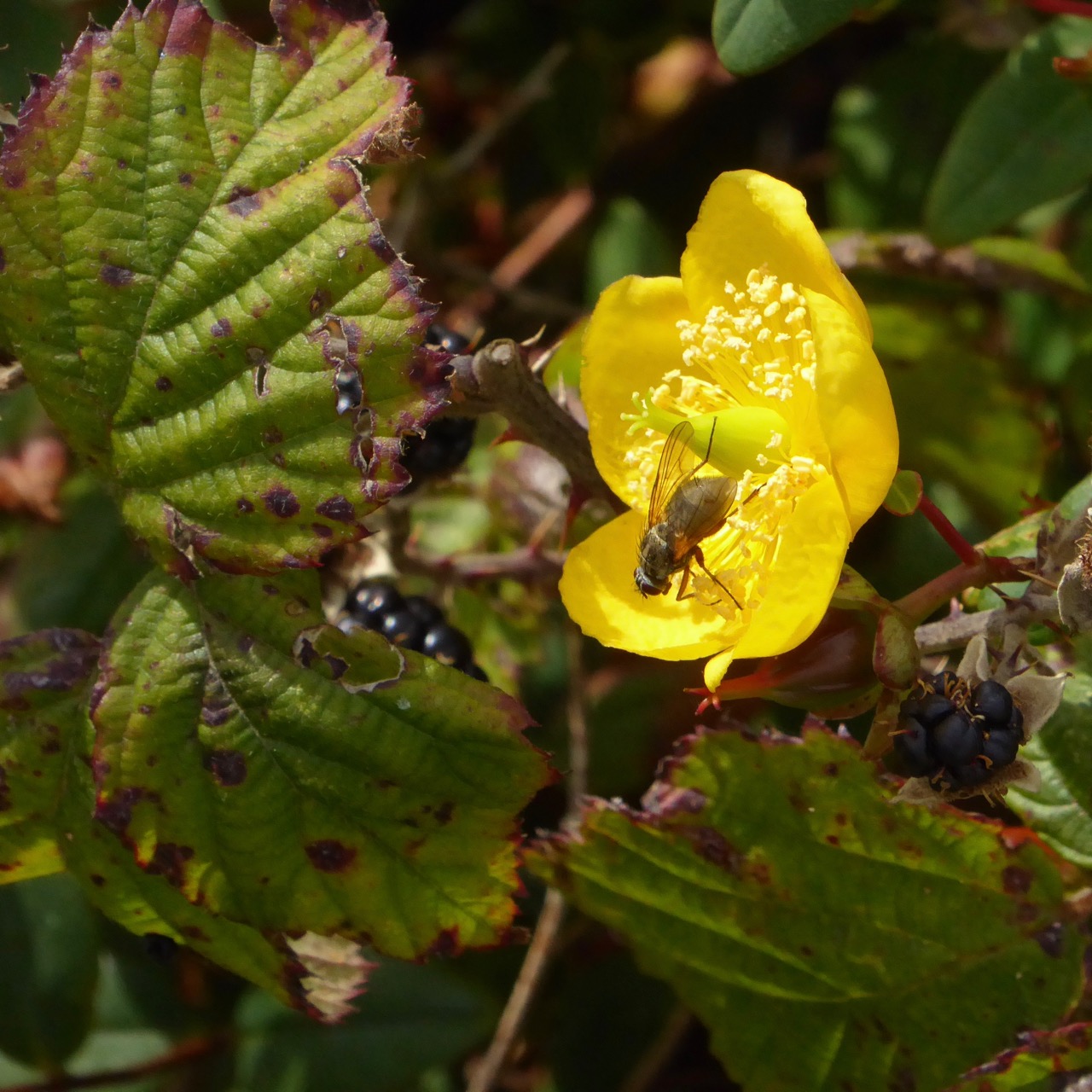
Fly on yellow flower

But this has been a short, cool summer and already the flowers that we saw last year in September have gone, to be replaced with the browning bracken. Our Budleia, for example, also known as the Butterfly Bush, was still attracting butterflies in September last year but this year it’s been flowerless since late August.

A speckled Wood Butterfly and a Hoverfly enjoy some blackberry time

On the upside, we’re enjoying a bumper blackberry crop, and lots of insect seem to love blackberries as much as we do. Because of the way blackberries grow, ripening at different times, some brambles are only flowering now, providing nectar for the bees.

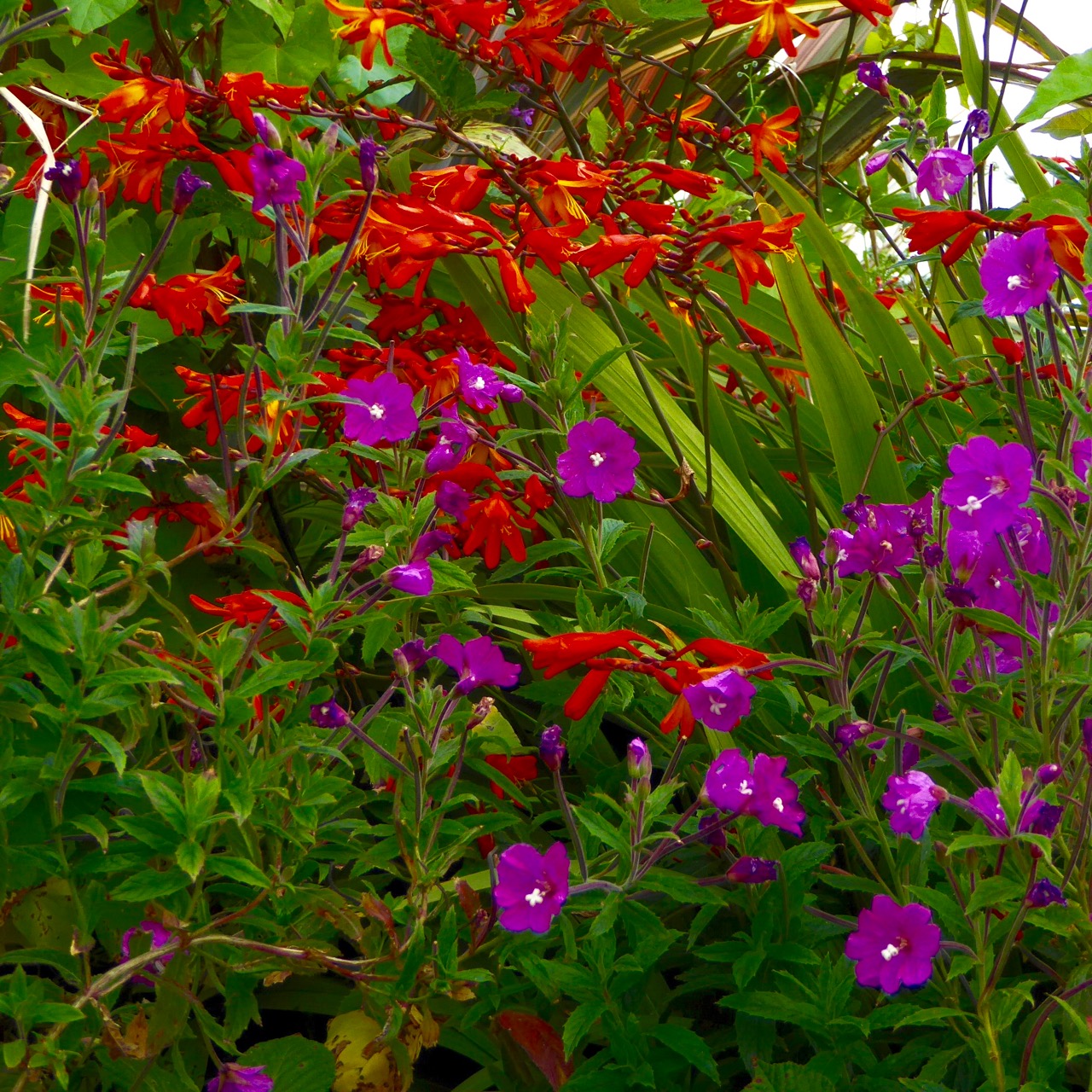
Great Willowherb 2015

This photograph, showing a riotous mixture  of Great Willowherb and Montbretia (Crocosmia) was taken at this time in 2015: this year all these flowers have finished already.

holly close to flowering

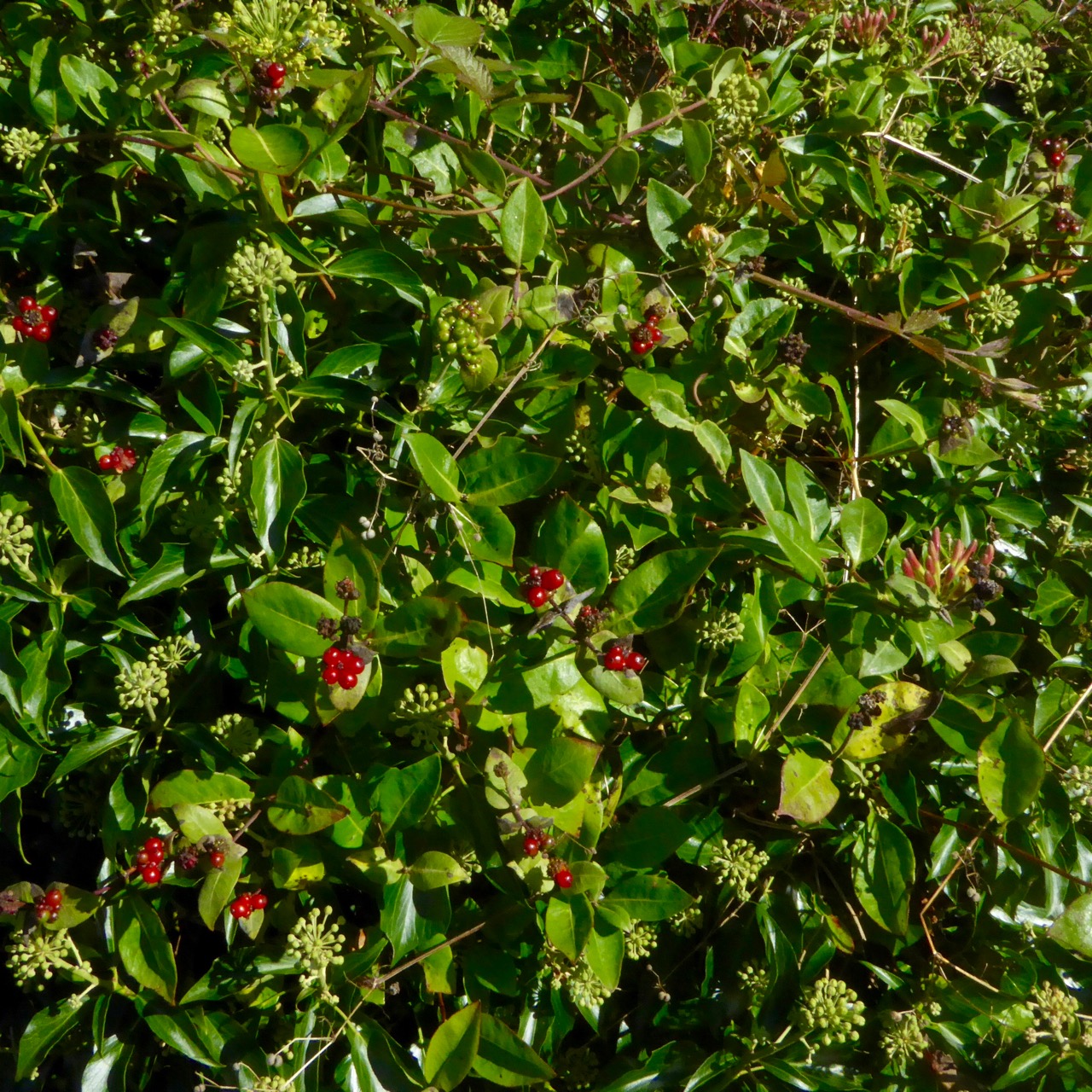
This year the holly flowers are abundant – here they are about to bloom. The berries are honeysuckle berries

The fuchsia is still flowering, providing that gorgeous blush along the boreens that we love. One of the advantages of the fuchsia flower is that it is down-facing. This helps to keep it dry and preserve the nectar (see photo at beginning of post).

We have two types of bindweed here: hedge bindweed in the upper photo; a subspecies, the uncommon hedge bindweed ‘roseata’ is lower right ; lower left is sea bindweed, which grows along sandy shores

We might hate bindweed but it is an important flower for the bees. The hedge-bindweed we see around here has pretty pink and white stripes – apparently the white stripes act like a runway, guiding the insects into the heart of the flower.

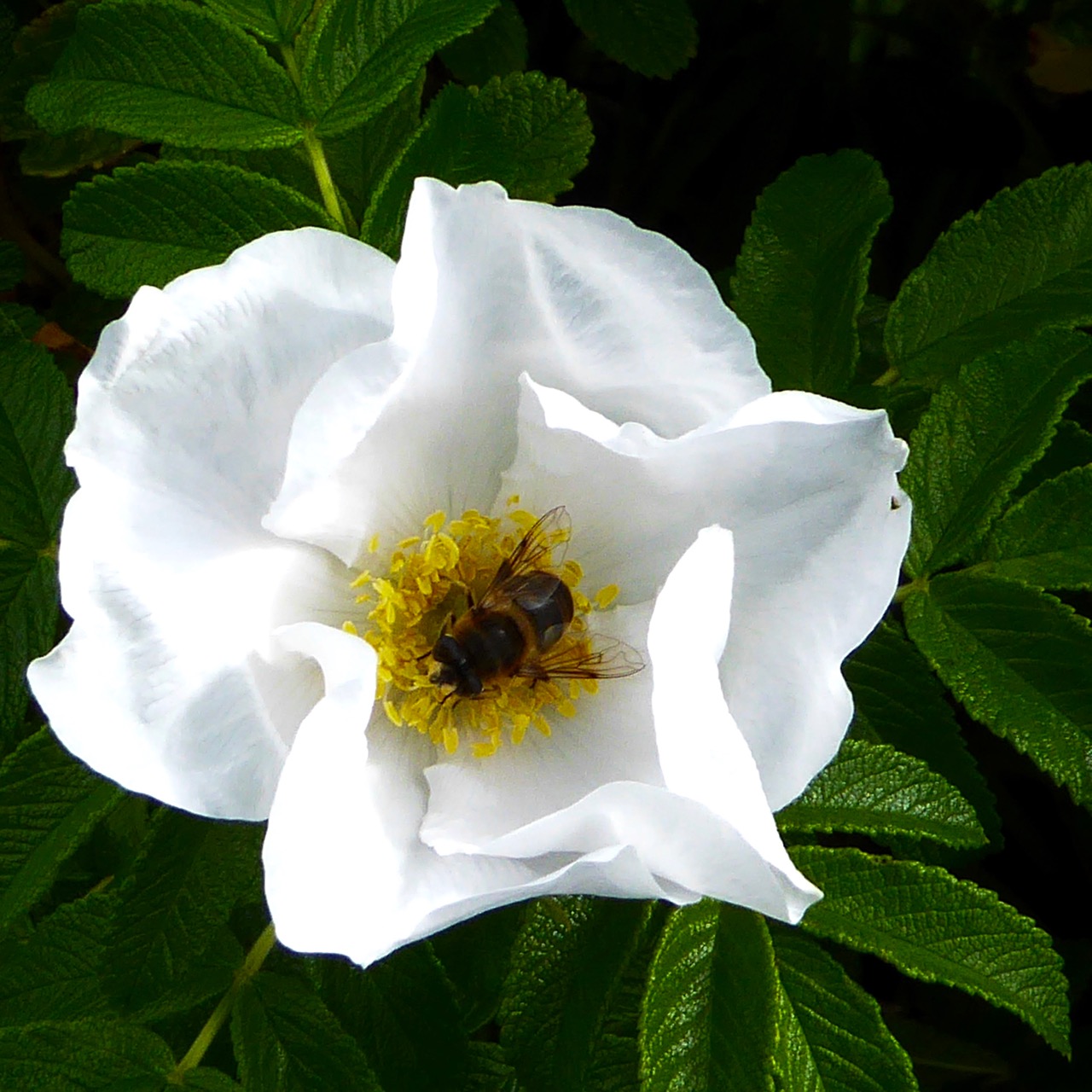
rose with bee

Wild and cultivated roses are still blooming, here and there. This little guy is appreciative.

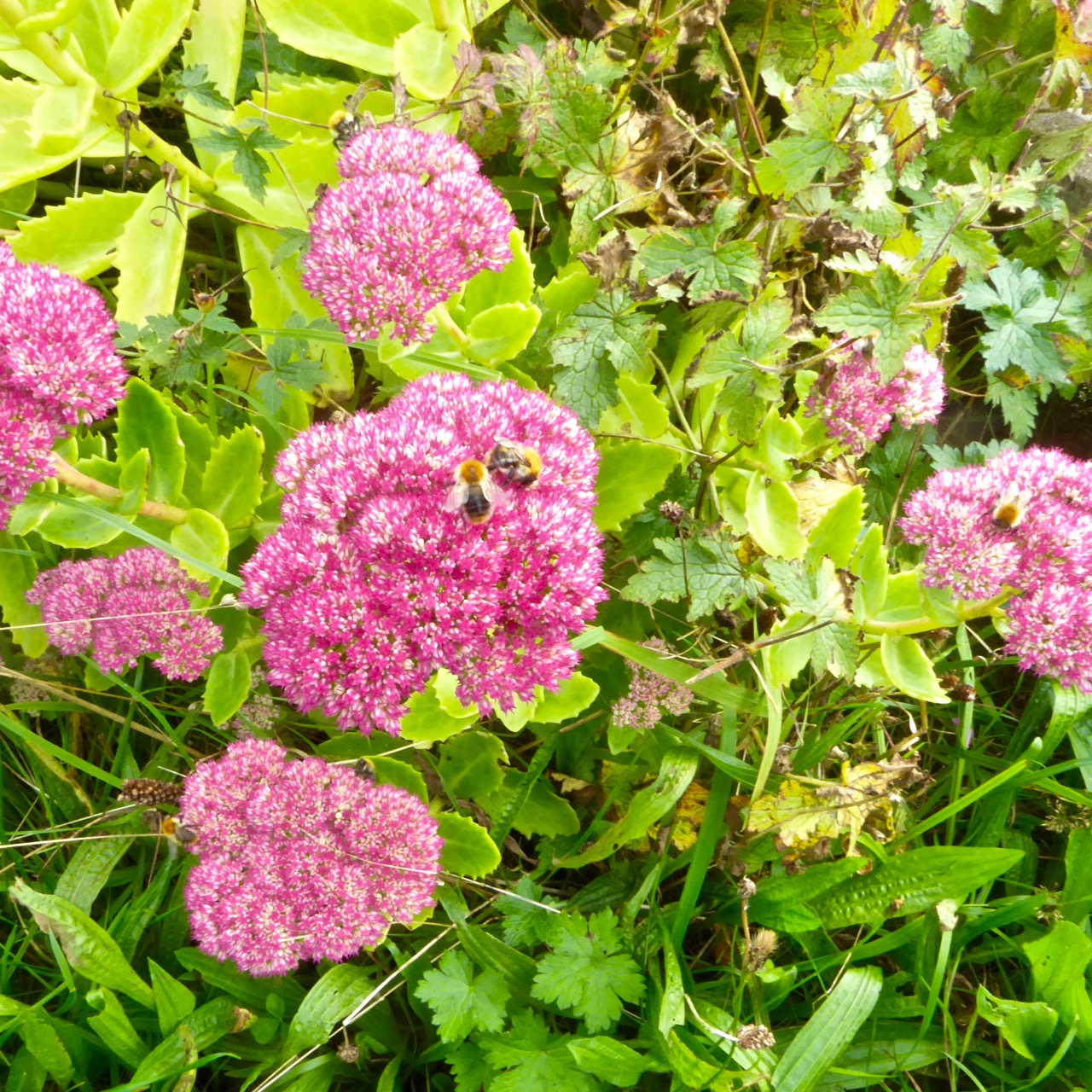
Speckled Wood Butterfly on sedum

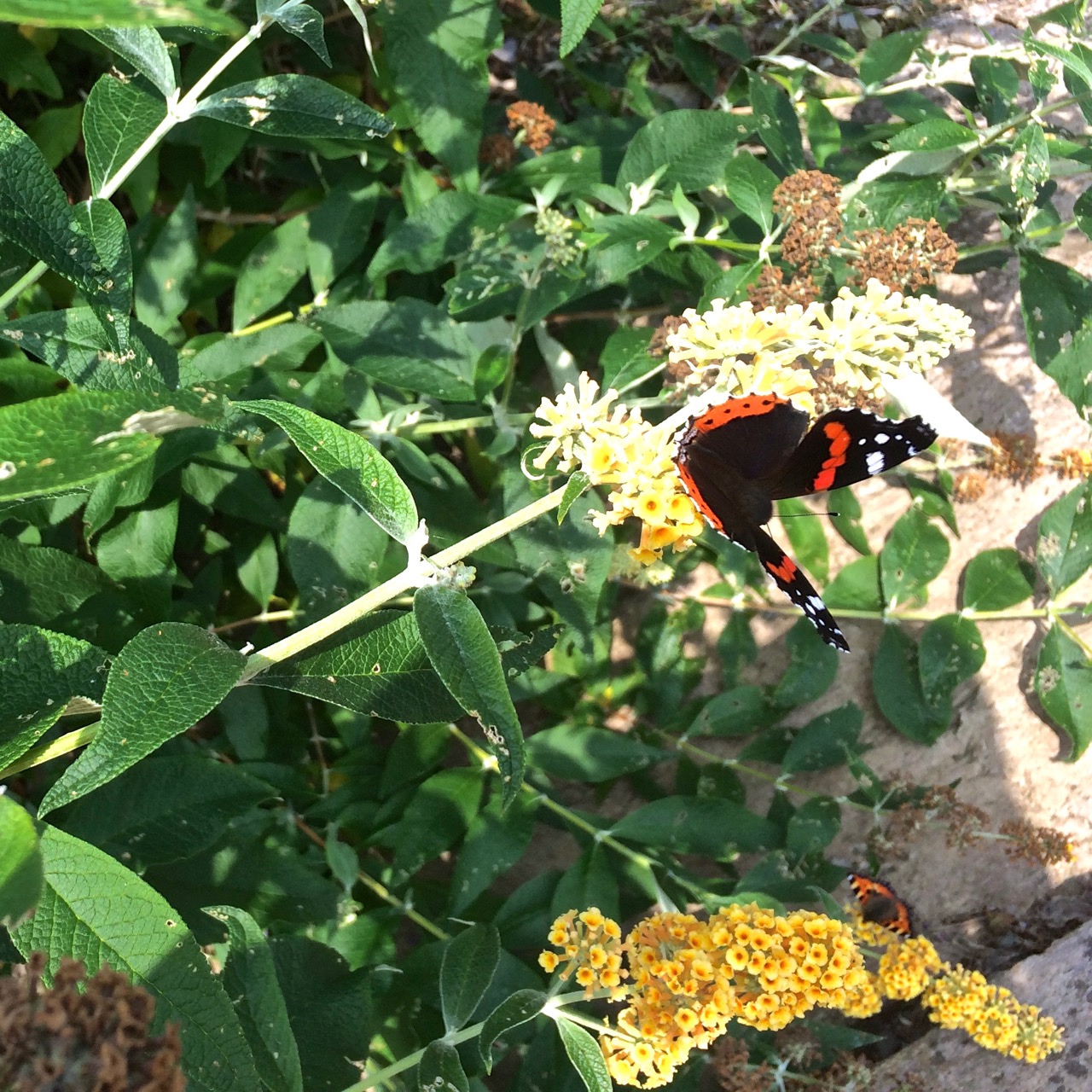
How many bees?Red admiral at Helen's GardenMy  friend Gill grows sedum (upper two photos) and the bees love it. You can hear the hum from ten feet away. Meanwhile, Helen and William’s garden (lower photo) attracts butterflies by the score. I saw my first Red Admiral there last year.

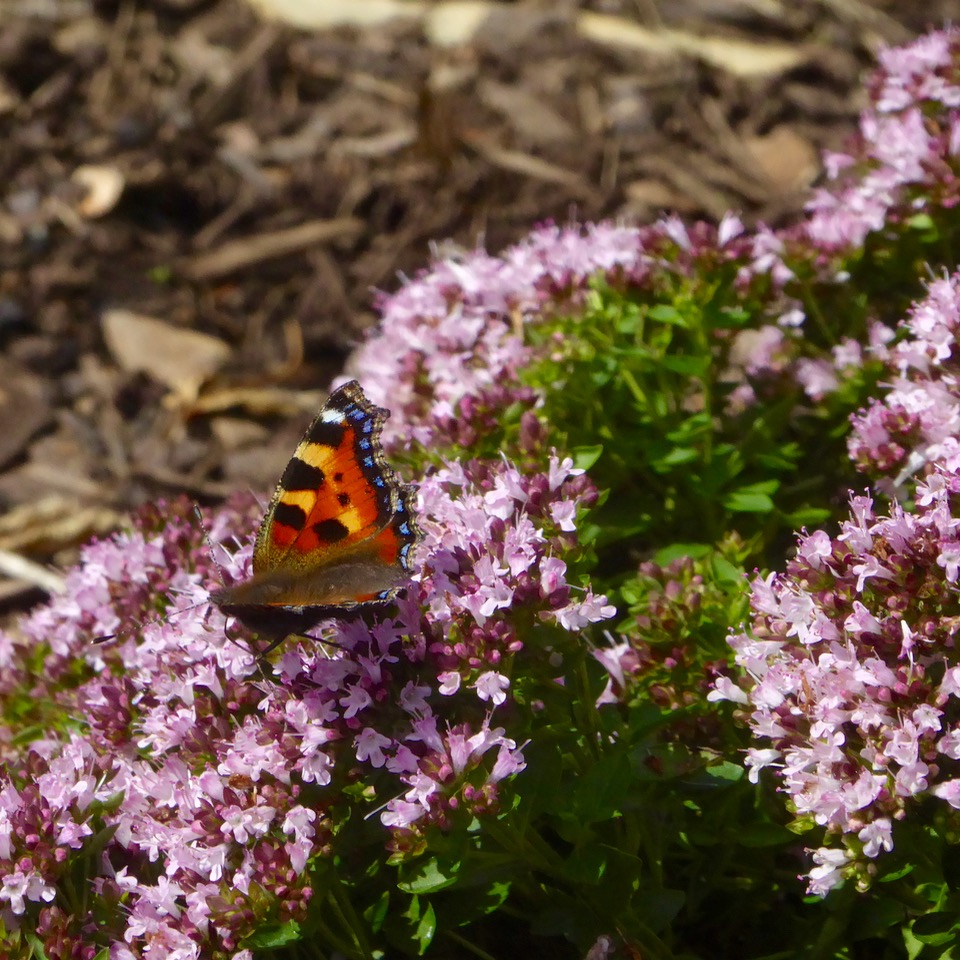
Small Tortoiseshell on oregano

A Small Tortoiseshell Butterfly enjoys my Oregano, along with the bumbles bees

In my herb garden it seems to be the Oregano that is attractive to both bees and butterflies. It’s just finishing its flowering period now, but I still have to be careful when I pick a bunch, not to pick a bee as well.

Flies and spiders need the flowers too. Hoverflies are an important part of the ecosystem, helping to pollinate and preying on aphids and thrips. They (and the wasps!) seem to prefer my fennel. They also like the little pink Herb Roberts that are still to be seen in the hedgerows.

Honeysuckle

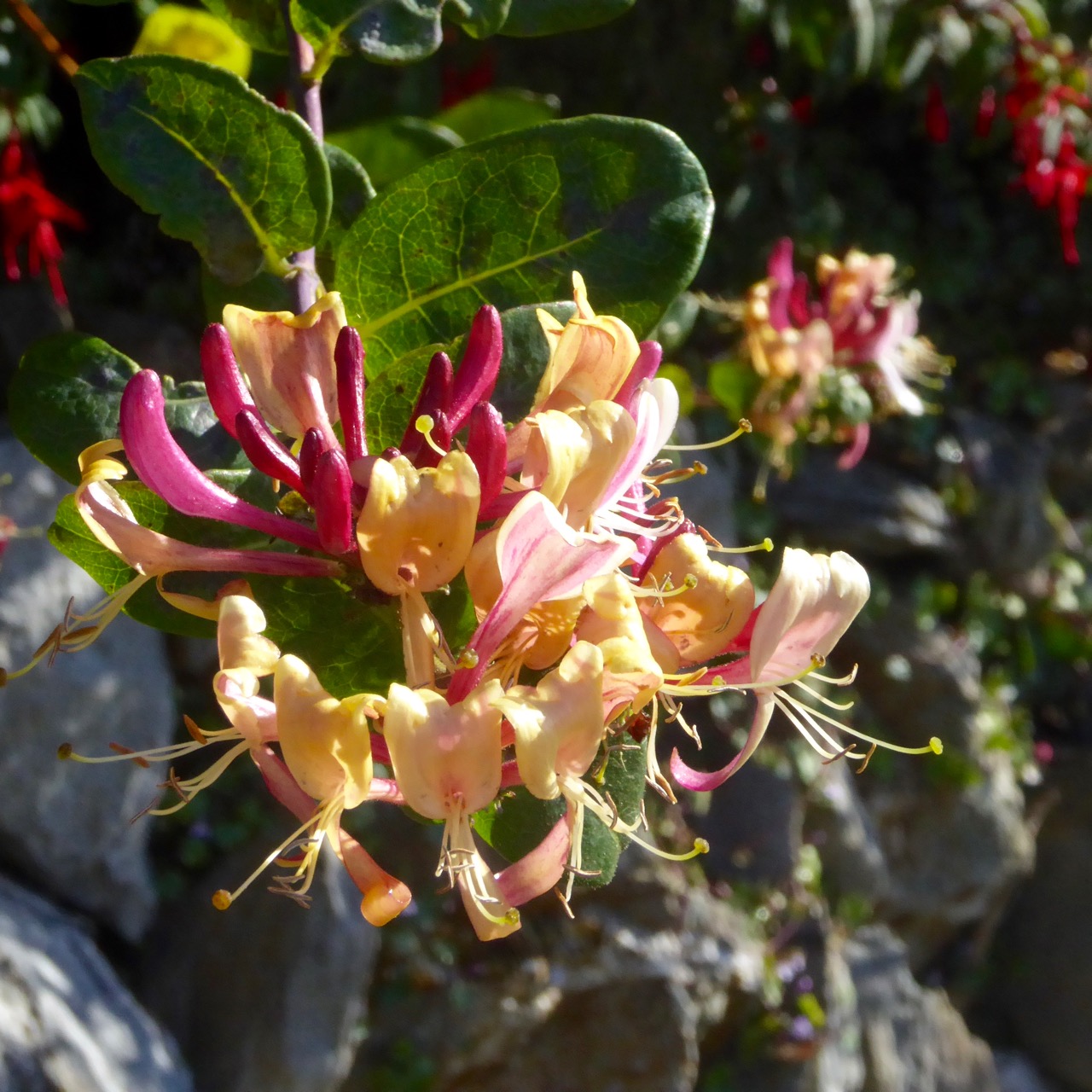
And what about the Honeysuckle? It’s abundant and beautiful, and with a name like that surely it’s a-buzz with bees? No – apparently the flower is too long and the bees can’t reach in far enough to gather the nectar. But the sweet scent, which gets even more intense towards the evening, calls in the moths who take their fill.

Snail on cabbage

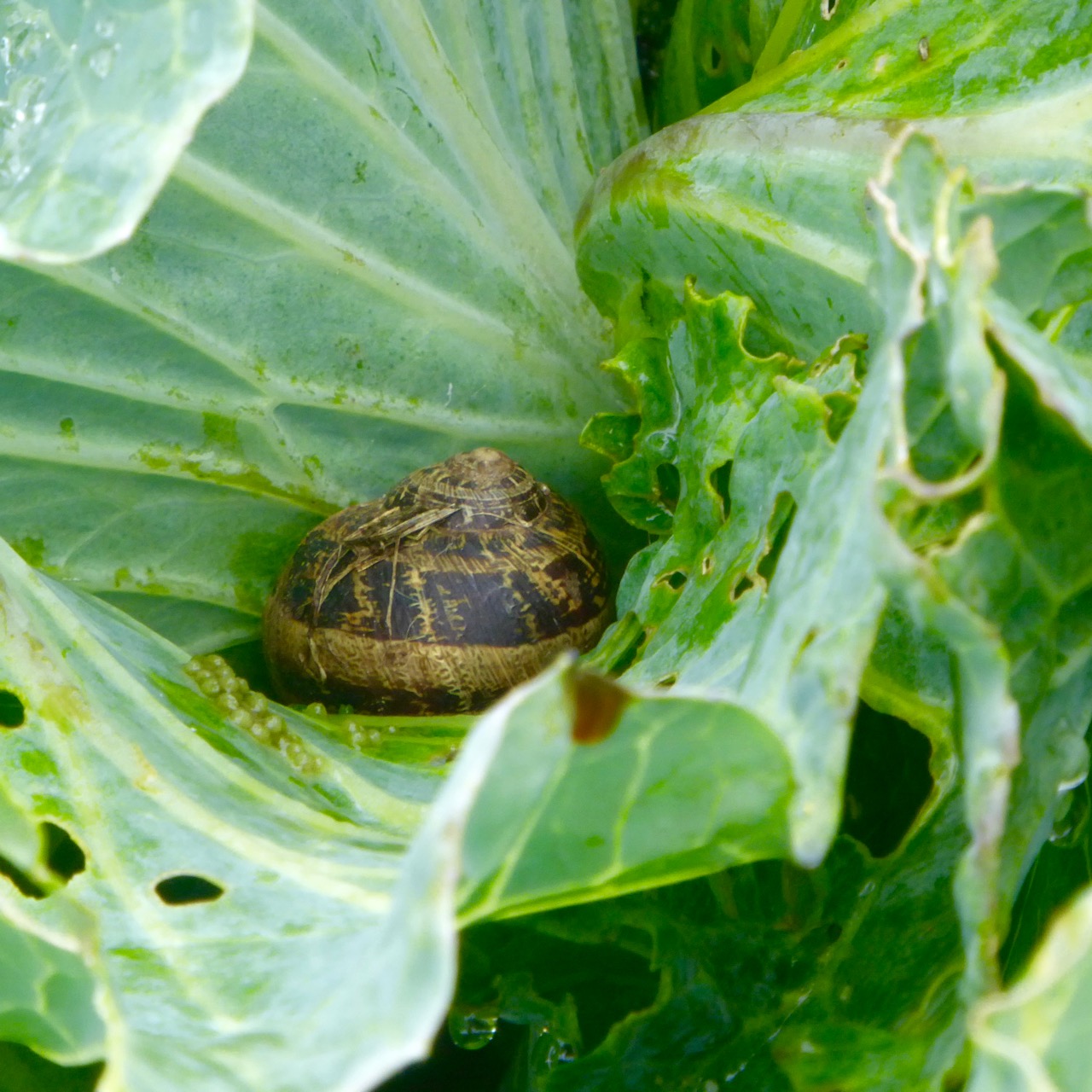
Ah, but y’know – you can’t always welcome little critters to your plants. Sometimes, it’s us against them.

Cobweb on Montbretia

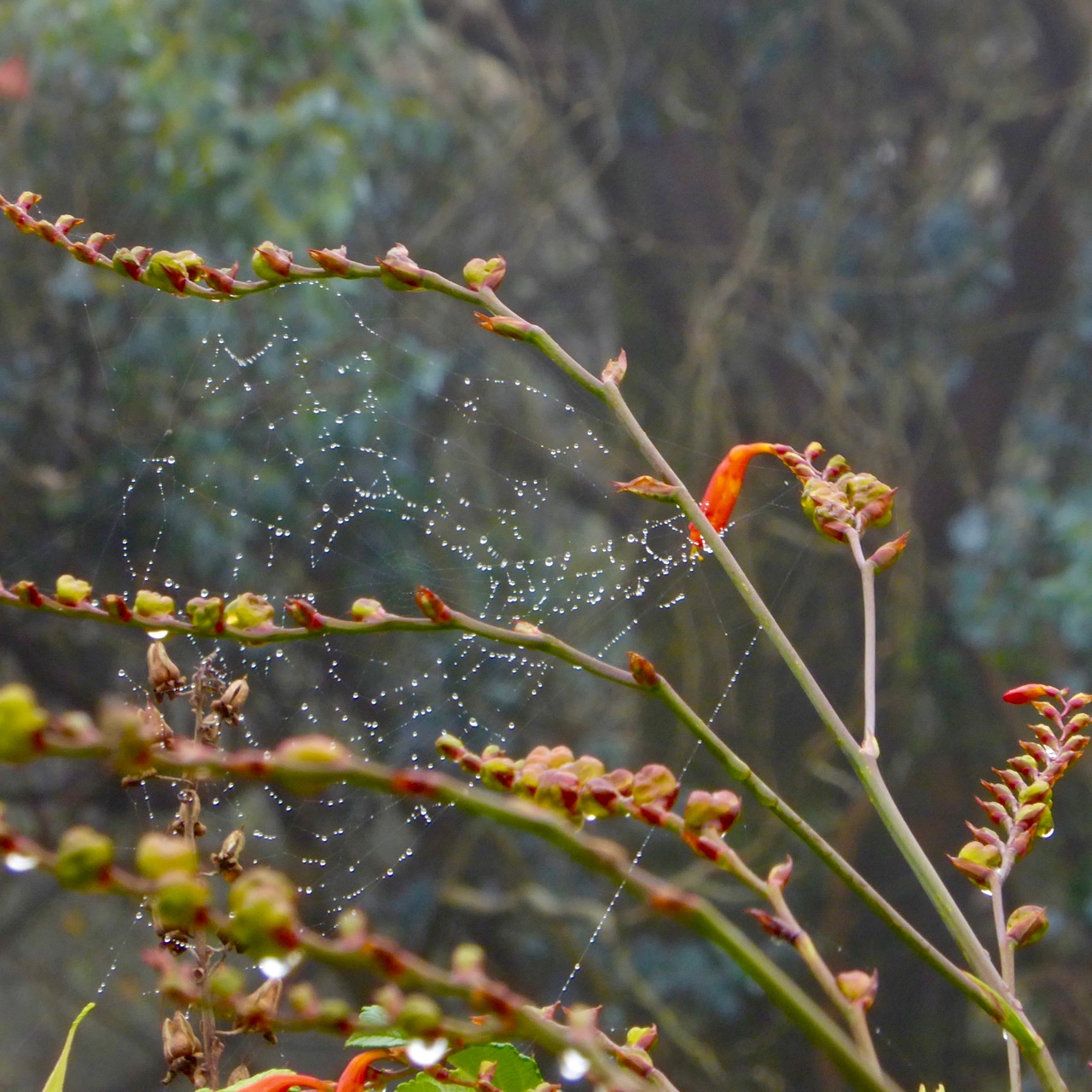
And of course, sometimes the plant isn’t so much food, as a means to an end…