Michael Healy by David Caron: Review

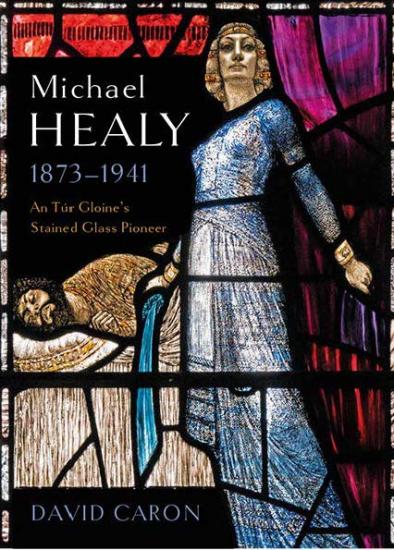
This book – MIchael Healy: An Túr Gloine’s Stained Glass Pioneer – is nothing short of a miracle. It’s beautifully written by David Caron, with superb photography mainly by Jozef Vrtiel, and outstanding production values by Four Courts Press. But a miracle? Yes – because David Caron uses his scholarship and knowledge of stained glass as well as the history and art movements of the period to produce an immensely readable book about an intensely private man who left behind practically nothing about his life except his magnificent work.
I will declare an interest right away – David Caron is a friend and mentor, editor and principal writer of the Gazetteer of Irish Stained Glass, to which I am one of the contributors. I have been looking forward to this book for a long time, as have all his friends, colleagues and collaborators. It was launched to great acclaim in Dublin on November 1 – all the available copies were snapped up at the launch, including mine (stowed behind the desk), so I had to wait until December to get my hands on it. 
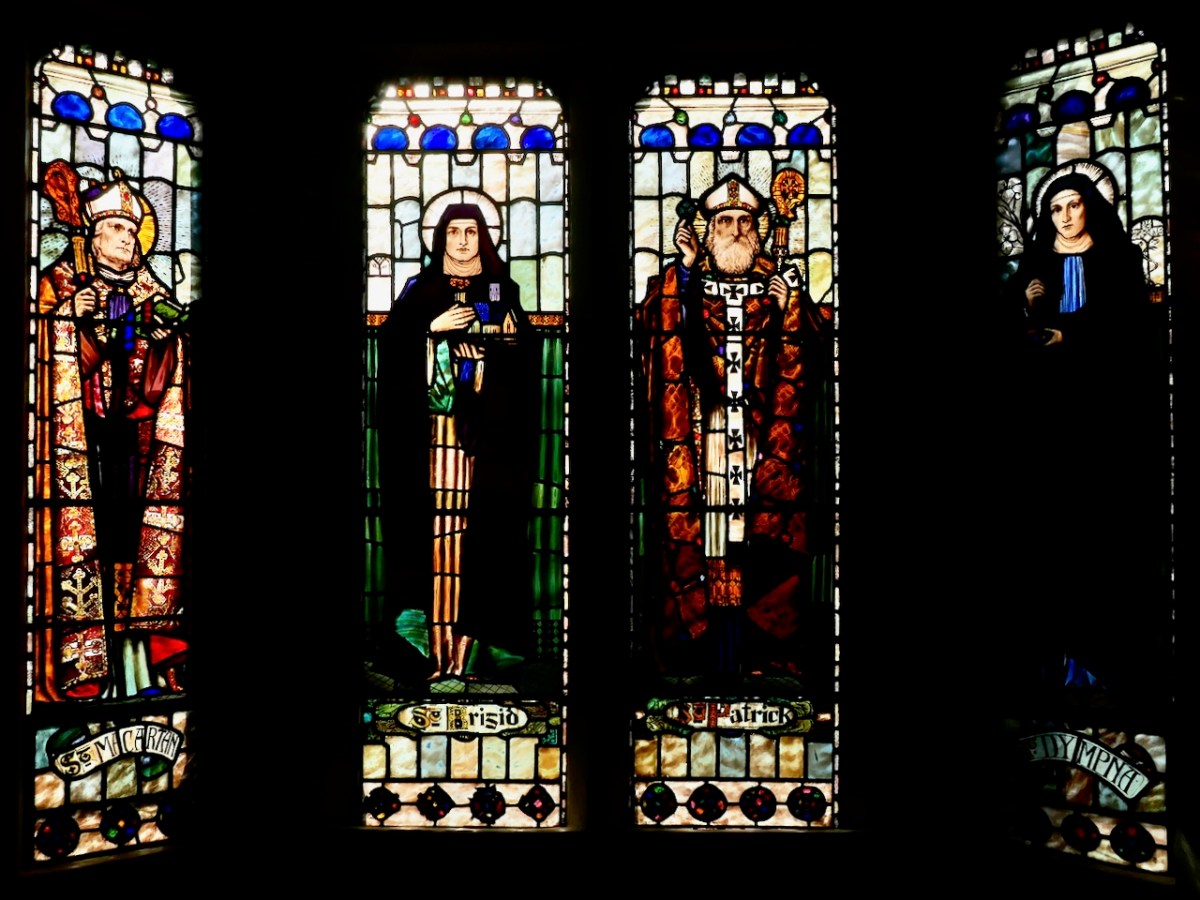
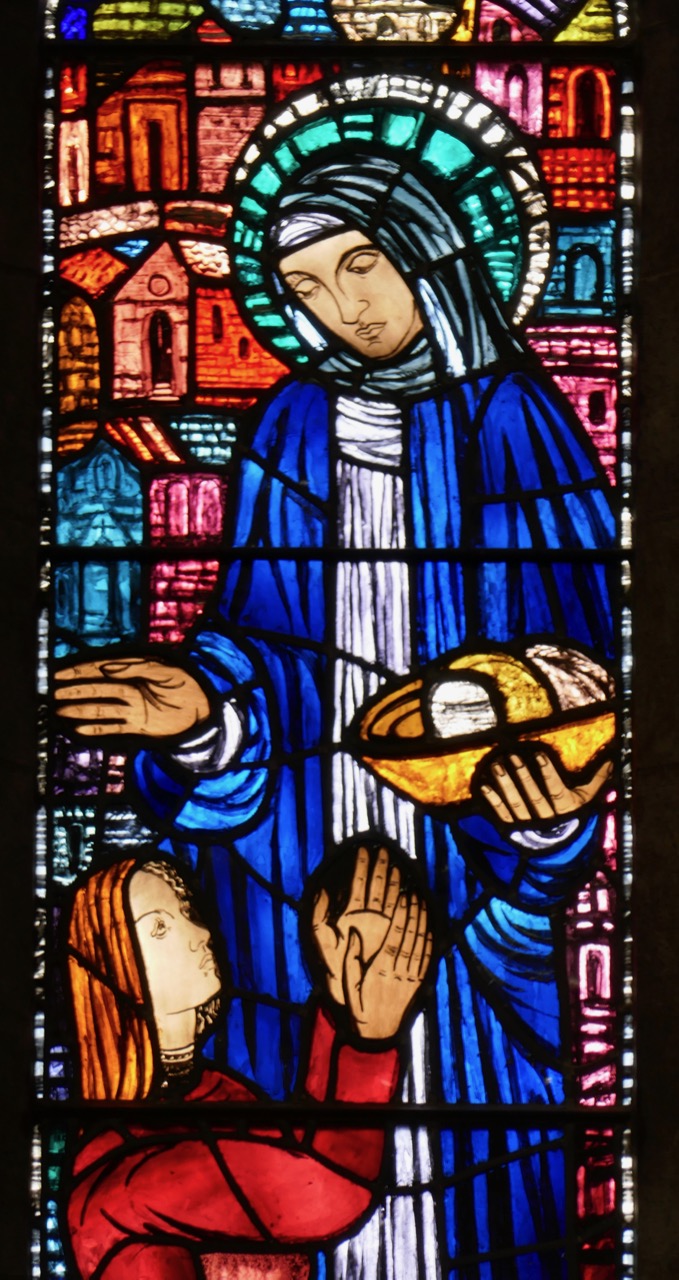
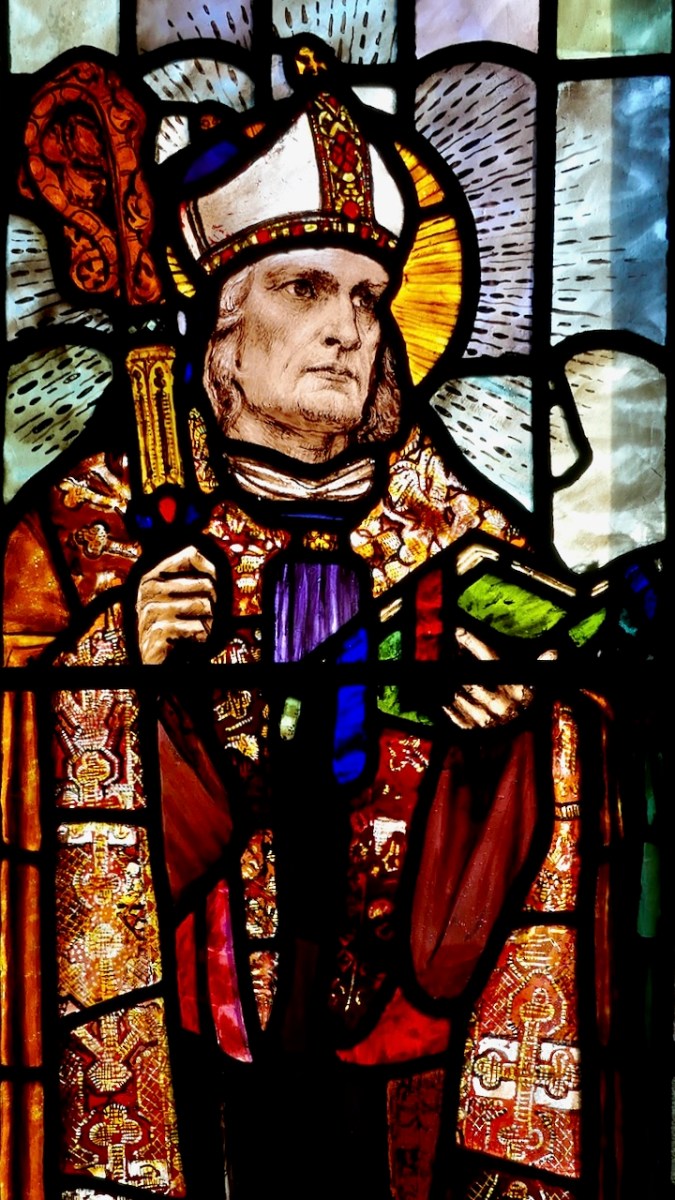
From a private bishop’s oratory, Sts Macartan, Brigid, Patrick and Dympna. Detail of Macartan, below. The rich reds and yellow shading of Macartan’s robes are the result of aciding and silver stain, described further down

All the photographs in this post are my own – but I haven’t seen that many Healy windows, and my photography does not bear comparison with Jozef’s magnificent images. The book is profusely illustrated – it’s one of its many strengths – with many photographs of the tiny details in which Healy delighted and which distinguish his windows from those of other artists. Healy spent all his working life at An Túr Gloine (The Tower of Glass) the Studio founded by Sarah Purser. If you are unfamiliar with this period in Irish stained glass, you might like to read my post Loughrea Cathedral and the Irish Arts and Crafts Movement before continuing.
Born in 1873 into grinding poverty in a Dublin tenement, through a combination of great good luck and his own prodigious talent and hard work, Michael Healy turned himself into one of the foremost stained glass artists of his time. Reading David’s account, it is difficult not to be overwhelmed at times by the hardship endured by Healy and his family in turn-of-the-20th-century Dublin. Packed into one room with miserably inadequate sanitation, whole families succumbed to disease and early death. Consumption was rampant and the only recourse for anything approaching treatment was the dreaded workhouse. Infant mortality rates were high and so we read about several Healy babies who failed to survive into adulthood, as well as adults carried to early graves, leaving widows and widowers to try to cope. 

Christ with Doubting Thomas, St Joseph’s, Mayfield, Cork

In the midst of all this was the First World War, the Easter Rising, the War of Independence and the Civil War, followed by the emergence of the new Irish State. David chronicles all of this, and the effect it was having on citizens, like Healy, who were trying to go about their business, but who also had deep convictions about politics and religion.
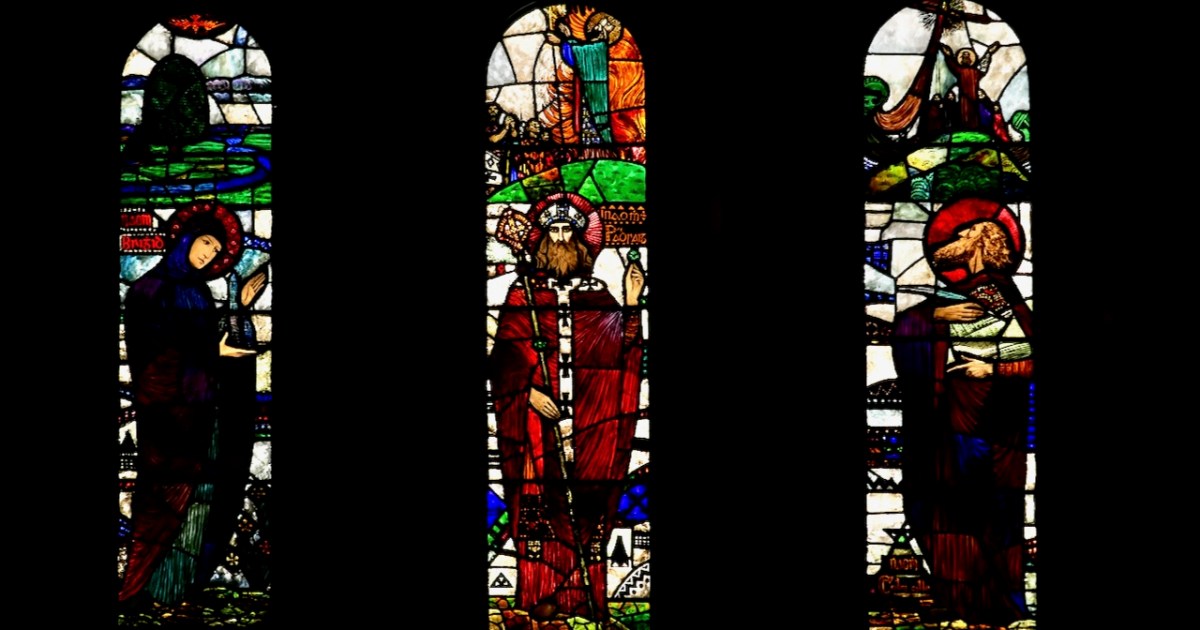
These windows, Sts Brigid, Patrick and Columcille, are in the National Gallery

In some ways, Healy was a typical young man of his time. Deeply religious, he spent some time in a seminary before deciding he was unsuited to the vocation. He belonged to a Catholic men’s lay organisation. David provides many instances where his working class Dublin accent, his republicanism, and his Catholicism must have put him at odds with his fellow artists at An Túr Gloine, mostly female, Protestant and from well-to-do backgrounds. They found him brooding and introverted, although they acknowledged his exceptional talent, and until Evie Hone arrived he did not make true friends with any of them.

The Annunciation, Loughrea Cathedral. This window was closely based on a design by the great arts and crafts stained glass master, Christopher Whall. Whall came over from England to supervise the execution of it by the Túr Gloine artists, including Healy. Celtic revival interlacing was very popular at the time, and a way of putting a nationalistic stamp on a window – note the subtle inclusions of interlacing here and there

I mentioned that he had strokes of good luck in his life, two in particular. One was the patronage of a perceptive priest, Fr Glendon, who enabled him to study in Florence for a period of time and who procured illustration work for him in Dublin. David points out here and there in the text the influence of Italian painters discernible in Healy’s windows, gained from his sojourn in Italy.

Detail of a Patrick window in Donnybrook

The other was that he found lodgings with a landlady, Elizabeth Kelly, and over time they grew close. Eventually, they become lovers and had a son, Diarmuid, together. Although the relationship was never publicly acknowledged (she was married, although her husband left her) it provided both of them with stability and comfort, and Healy was close to his son. In the 30s Diarmuid O’Kelly (although his mother went by Kelly) bought a Ford Model T and he and Michael would go on sketching expeditions up into the Dublin Mountains and out along the canals. 
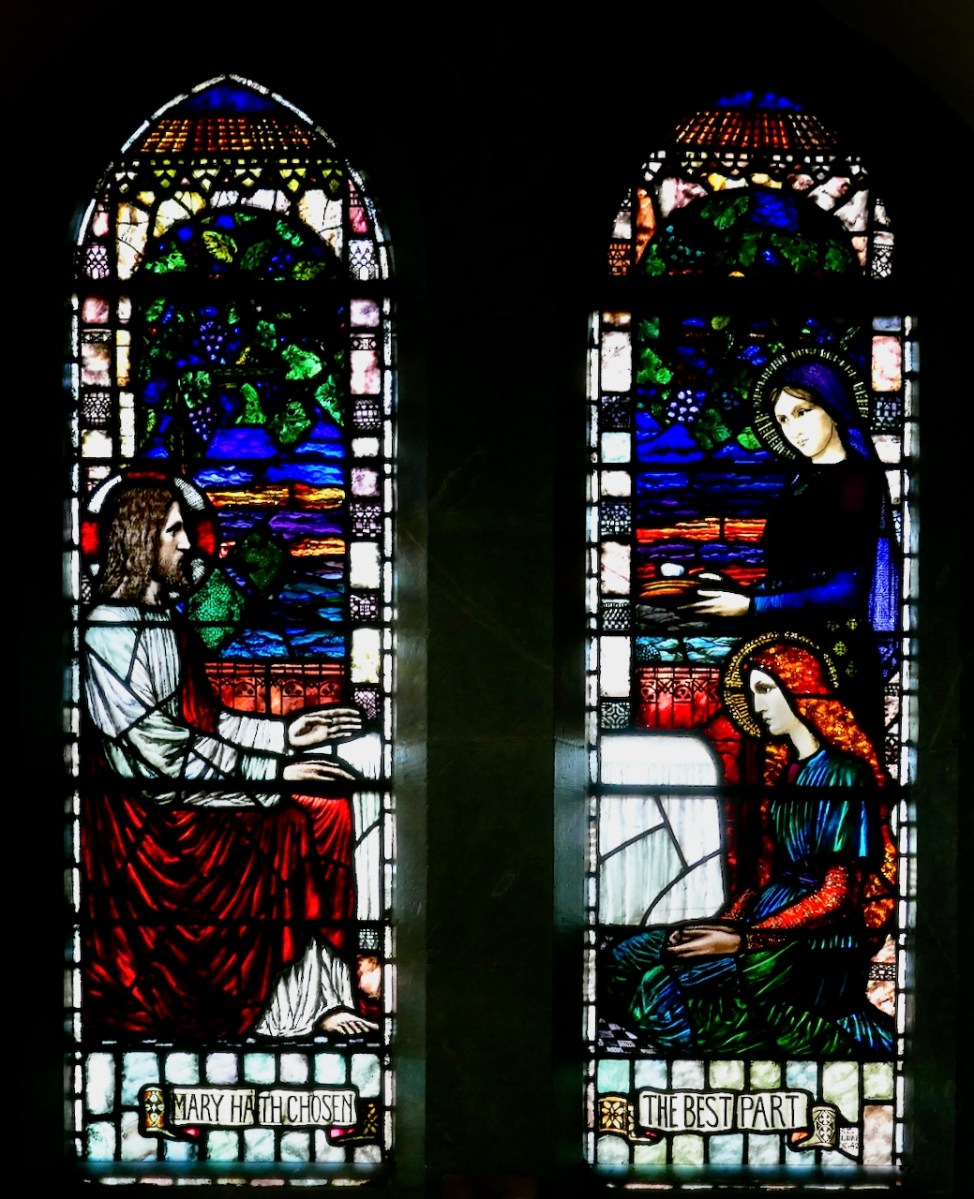
Christ with Mary and Martha, Mayfield, Cork

Because of the opprobrium that such a scandal would have visited upon both Elizabeth Kelly and Michael Healy, Diarmuid was never told that Healy was his father, but he must have suspected, and in more recent times DNA testing confirmed the relationship. Reading about the frequent tragedies that befell the Healy family and the privations under which he grew up, I find it very comforting to know that Michael enjoyed the security and love of his adopted family as he got older.

St Simeon, one of Healy’s early windows for Loughrea Cathedral

David leads us on a measured journey through Healy’s life and work. He was the first recruit to An Túr Gloine, Sarah Purser’s stained glass studio, and later co-op. There, he worked alongside AE Child (also his instructor at the Dublin Metropolitan School of Art), Catherine O’Brien, Beatrice Elvery, Ethel Rhind and Hubert McGoldrick. All of them looked up to him as the finest painter at the Studio. He, in turn, admired the work of Wilhelmina Geddes, and when her health caused problems he finished some of her windows, trying to respect her style and designs. But it wasn’t until Evie Hone arrived that he found a true colleague – Nikki Gordon Bowe described Hone as “his devoted disciple and admirer” and she finished some of his windows after he died.
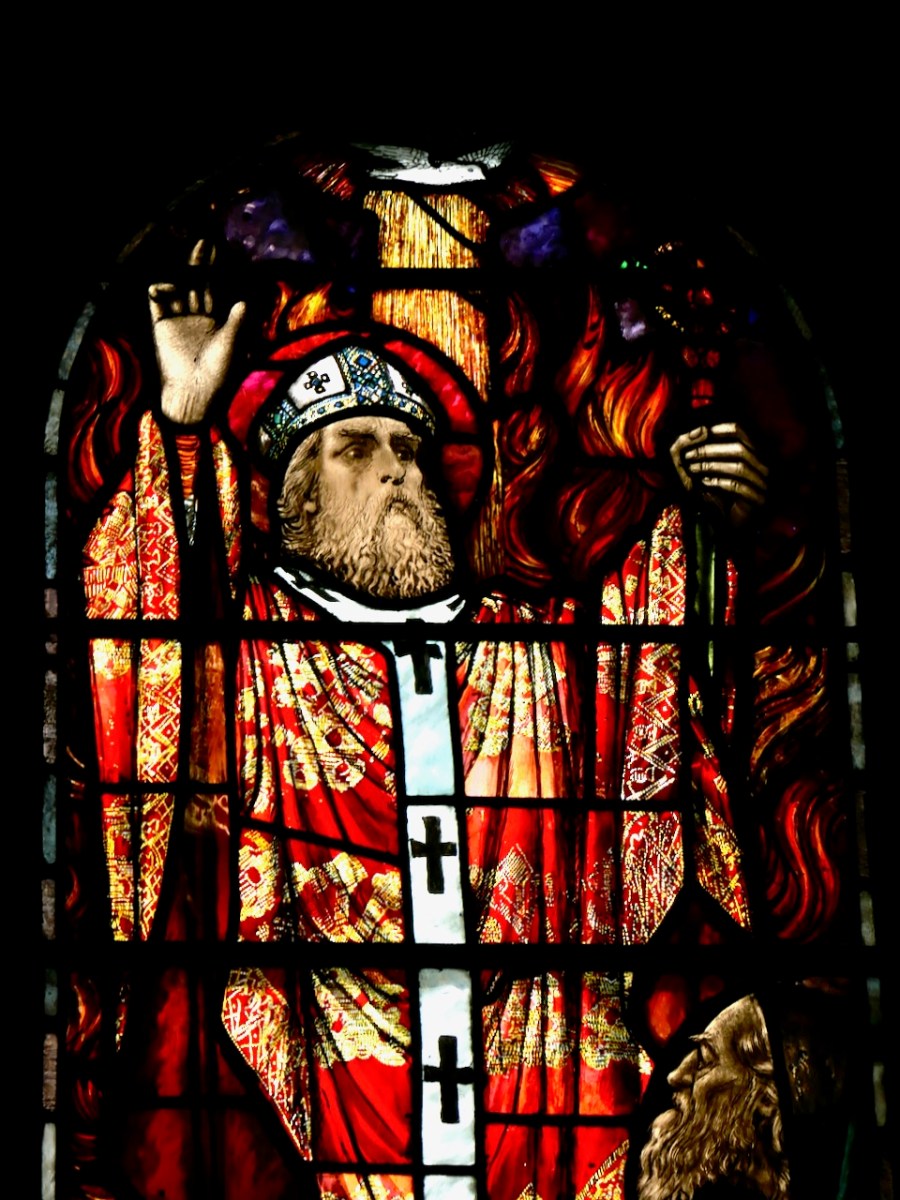
Healy designed many Patrick windows – this one is in Glenariff Co Antrim

Each commission is described and through David’s detailed accounts we come to understand Healy’s style – what iconography he was attracted to, how he decided on the myriad details with which he embellished his windows, and most of all, his decorative methods. 
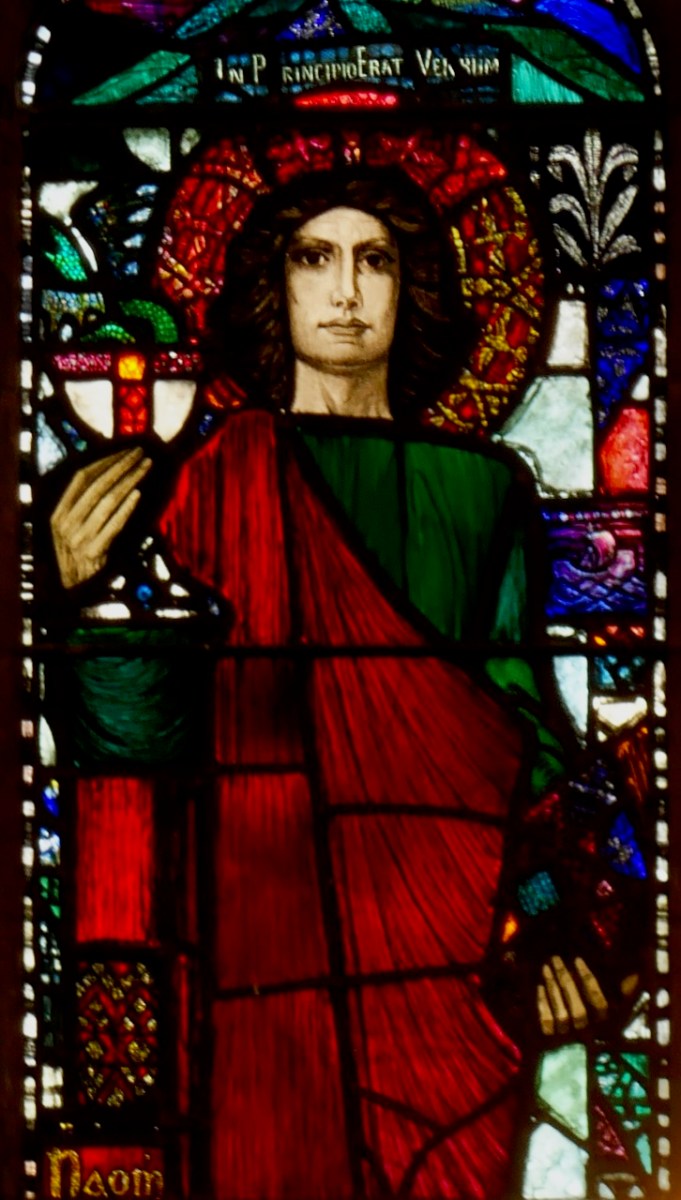
John the Evangelist, Loughrea Cathedral

Long before Harry Clarke made it is his signature, Healy was a master of aciding, a difficult (and dangerous) process used to remove colour from the surface of flashed glass. Flashed glass is clear glass which has a skim of coloured glass fired onto its surface. This top layer could be removed by scratching or etching it away, or by immersing the glass in a bath of hydrofluoric acid, having first applied beeswax to any surface where the colour should remain intact. By waxing and immersing, often several times, colour could be altered from, for example, a rich ruby red to the merest hint of pink, and all shades in between.
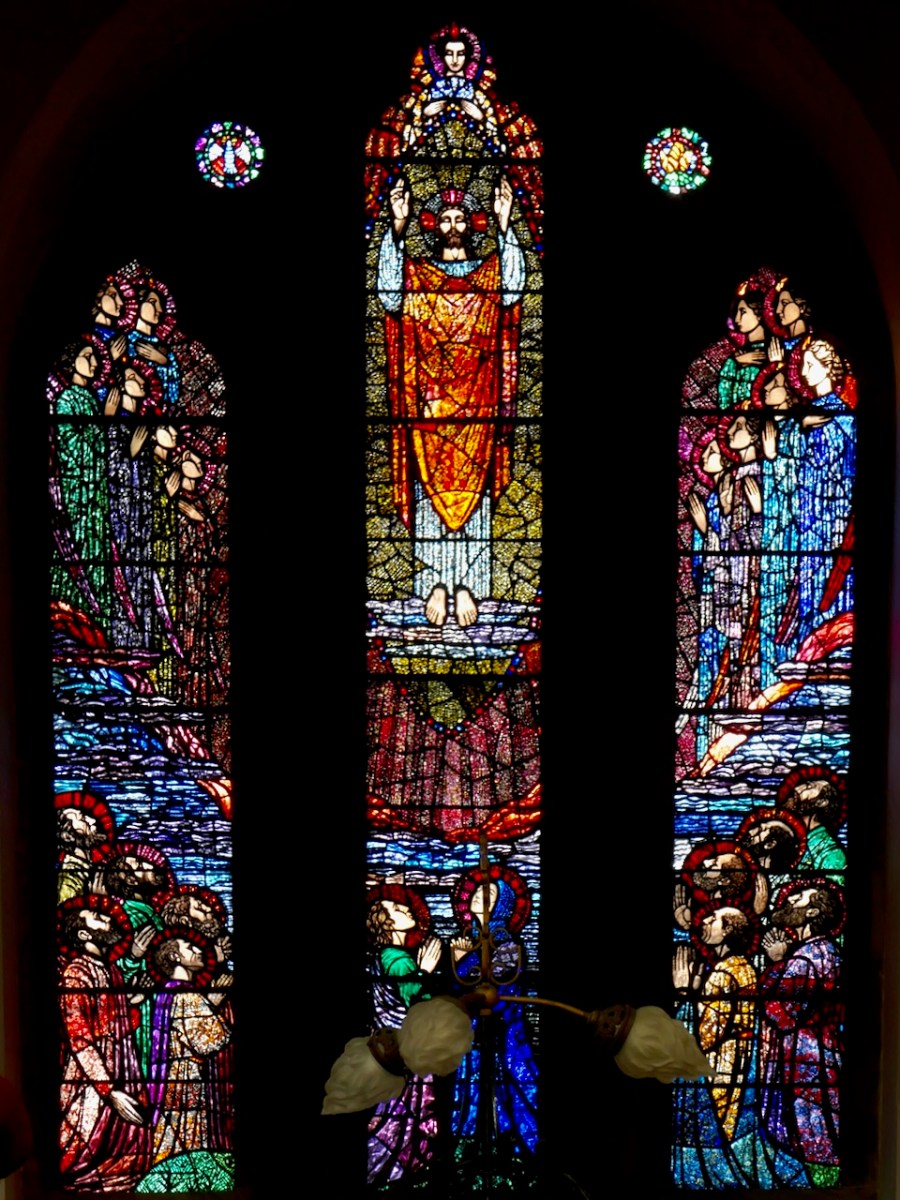
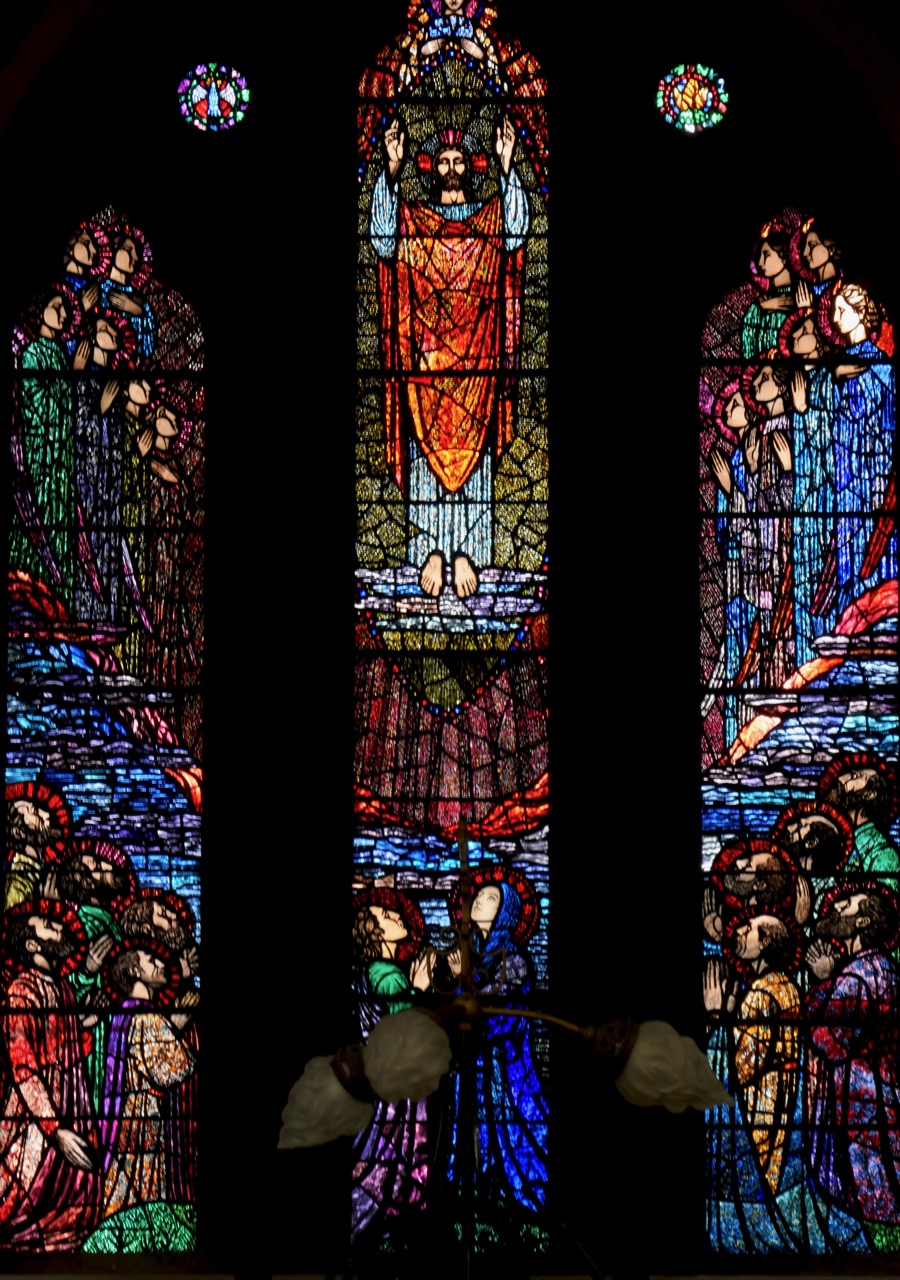
Healy’s Ascension, in Loughrea Cathedral

Healy would often plate two sheets of glass together – for example, one red and the other blue – each one carefully acided, and could by this means achieve an astonishing array of colours from the red-blue side of the spectrum. Added to this, he would often use silver stain on the back of the glass. Once heated in the kiln, the silver stain would permeate the glass, turning it yellow (repeated firings could deepen this from bright yellow to a rich amber colour). Finally, all the figuration would be painted and stippled on to the surface of the glass and the individual pieces of glass would be assembled and leaded together to produce the finished window. Healy was a perfectionist and Purser would despair of ever making enough money to keep the studio going since he spent so long on each commission.
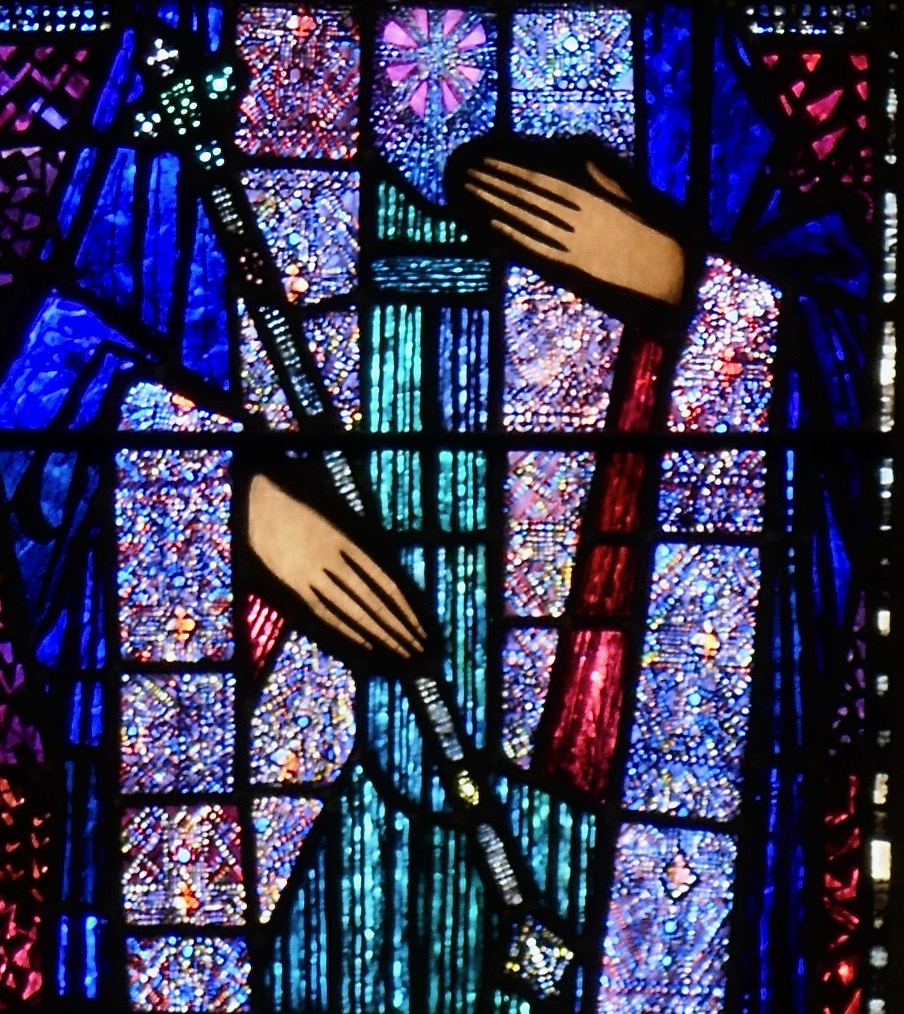
This detail from Healy’s Virgin Mary window in Loughrea illustrates well his aciding technique using red and blue flashed glass plated together to produce not only infinite shades of colour but a sparkling jewel-like effect

It is through David’s lively analysis of each window that we truly come to appreciate Healy’s genius and his evolution as an artist, his style developing according to his exposure to more modern influences.
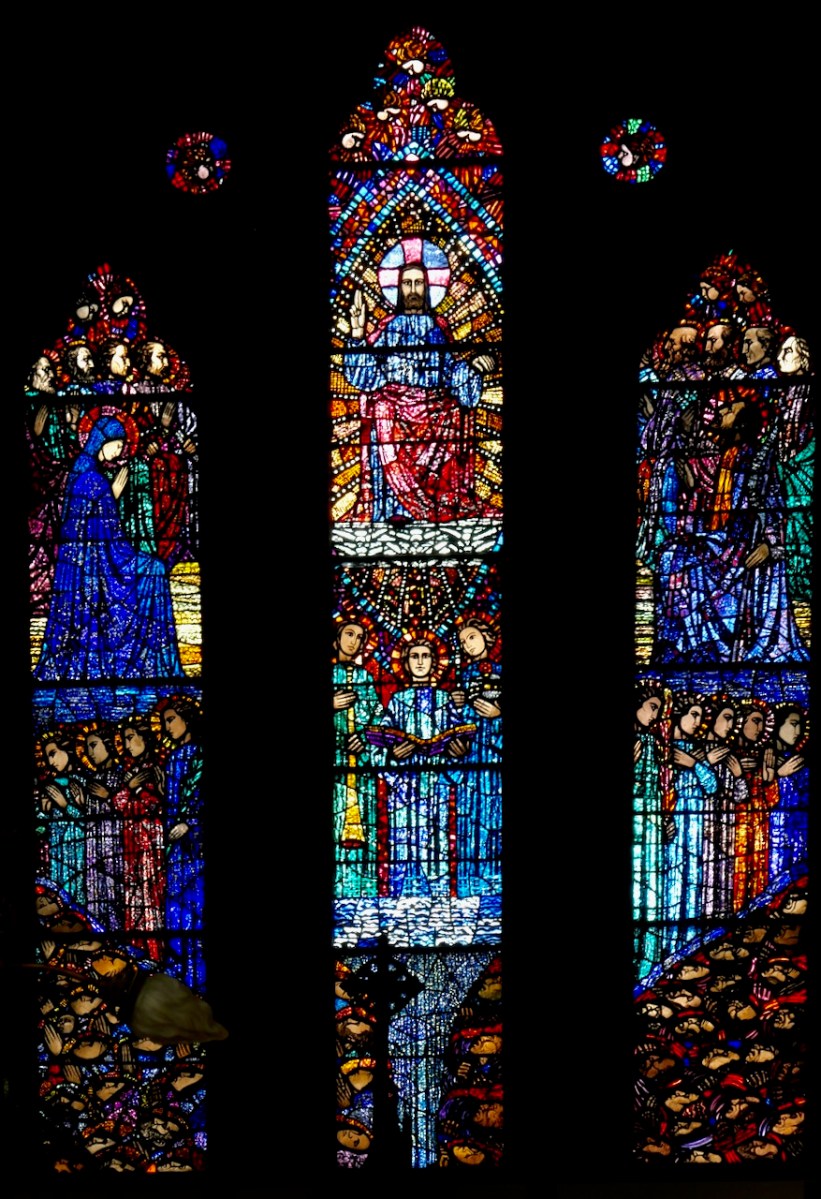
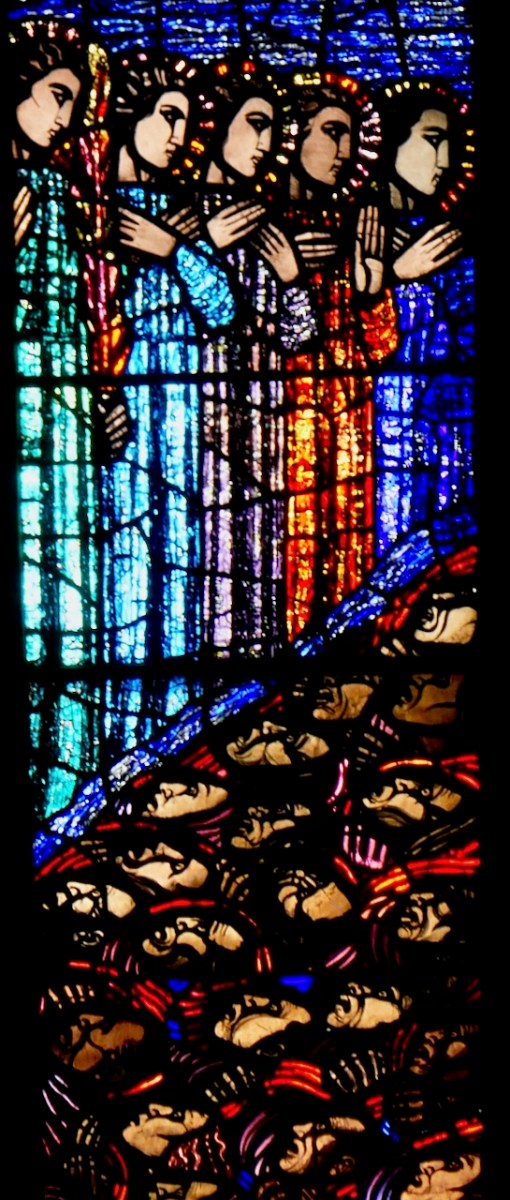
Considered one of his masterpieces, this is the Last Judgement Window in Loughrea, completed towards the end of his life. A detail from The Damned(right -hand light) is below

David wears his erudition lightly and when he dissects a window, pointing out elements that are easy to miss, and explaining what they mean and why Healy used them, I found myself pouring over Jozef’s wonderful photographs, picking out each separate item of iconography, and marvelling anew at the depths of learning that Healy brought to his designs. For example, David devotes five pages to the St Augustine and St Monica window in John’s Lane Church in Dublin and not a word is wasted.
Along the way we meet a host of characters – the redoubtable Sarah Purser and his colleagues at An Túr Gloine, enterprising priests and bishops, citizens memorialising their dead family members (CS Lewis!), art critics such as C P Curran, American heiresses, patrons of the arts, Celtic Revival influencers (OK, modern word, but you know who I mean). We get insights into the inner workings of the studio, wherein frequent bouts of unprofessional behaviour created tensions, and where Sarah Purser often had to crack the whip when productivity lagged. We come to understand the difficulties of soliciting business, agreeing on final designs and delivering orders, especially to overseas clients, in days when postal service to American and New Zealand took weeks.

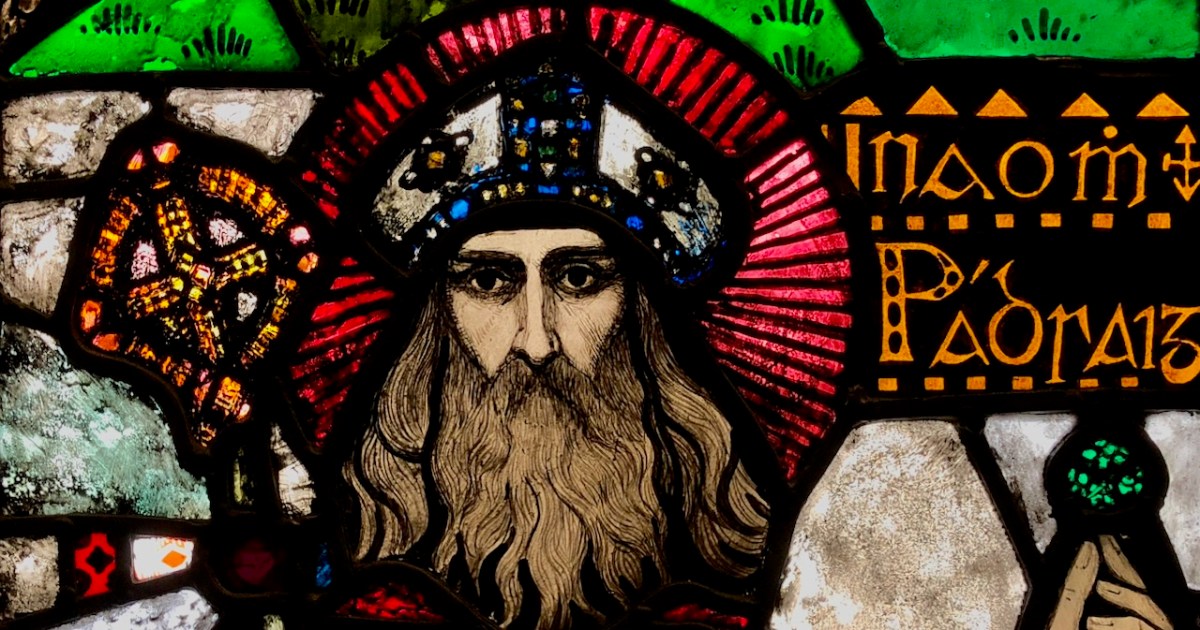
A detail from the Patrick window in the National Gallery

We also come to see Healy as a rounded artist who did more than stained glass. His quick sketches of Dublin characters, drawn from life have all the attraction of immediacy and familiarity, while his watercolour landscapes are charming.  

An early Loughrea window, Virgin and Child with Irish Saints

Healy died in 1941. By the time you finish the book, you feel you have lost a friend – a difficult and complicated one to be sure, but one whom you admire and will never forget. While obviously a gruff character on the outside, David allows us access to his humanity, and points out the obvious sympathy with which he portrays some of his subjects. His Loughrea St Joseph (below), for example, shows, in the words of the art critic Thomas McGreevy, a “Joseph who knows the tragedy of the world and who has some special understanding of the destiny. . . of the child”. We are, of course tempted to see in the tenderness with which Joseph gazes down at Jesus a revelation of Healy’s suppressed feelings for his own son.

This book is not just for stained glass enthusiasts, though they will delight in it, but for anyone interested in life in Ireland at the end of the 19th and beginning of the 20th century, and indeed for anyone who enjoys good writing and a story that propels you through almost 70 years of the life of a significant artist. Available from the publisher or in all good bookstores.

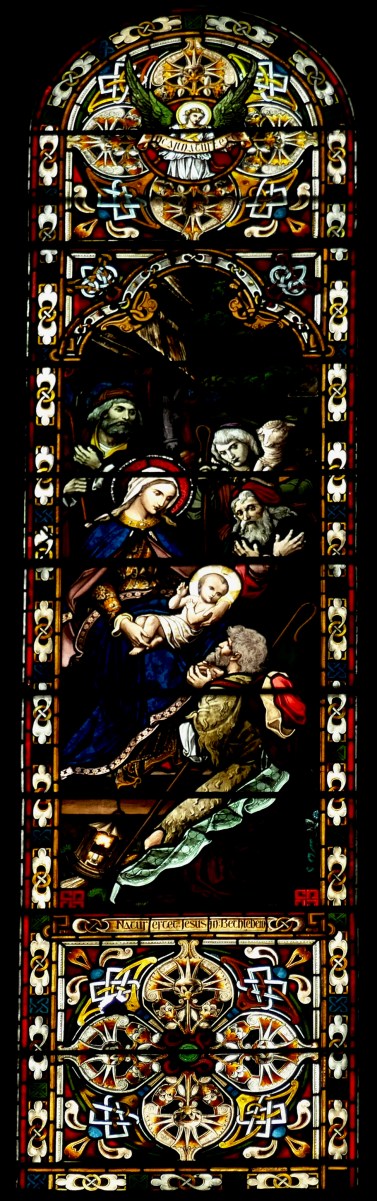
The Nativity in Stained Glass

Dear Readers – we know you aren’t all on Facebook, so this is for those of you who follow us on WordPress or other platforms. On our Facebook page, we’ve been running a series on The Nativity in Stained Glass in the lead up to Christmas, so here, in one post, are those photographs and text. All the windows are Irish and 20th century. Merry Christmas to you all!

This one is by George Walsh and it’s in Frankfield Grange Catholic Church in Cork. This scene is part of a larger window, the main scene depicting the Annunciation. More about George Walsh here.

Kevin Kelly was a long-time stained glass artist for Abbey Studios. He loved doing Nativity windows. This one is in Inchigeelagh, Co Cork and featured on a UNICEF Christmas Card. It’s worth taking a look at the detail – amazing for what’s quite a small window.

Our next Nativity in Stained Glass comes from St Carthage Catholic Church in Lismore and is the work of Watson’s of Youghal. While the figures are conventional, the ‘Celtic Revival’ decoration lifts this window far above the ordinary. Read more about Watsons and their mastery of this form, popular among Irish nationalists at the turn of the 20th century.

This beautiful Nativity window is in Mayfield, Cork, in the Church of Our Lady Crowned. The Murphy-Devitt Studios were a group of young, dedicated artist and designers, determined to bring something new to traditional stained glass. We think they succeeded magnificently.

This scene of the visit of the Magi is in Kilcoe Church of the Holy Rosary and is the work of Catherine O’Brien, the artist who worked longest in An Túr Gloine, the Arts and Crafts Stained Glass Co-operative founded by Sarah Purser and Edward Martyn to promote home-grown arts and craft in Ireland. This is a re-working of a previous window by O’Brien, proving that even Arts and Crafts practitioners were not above re-cycling.

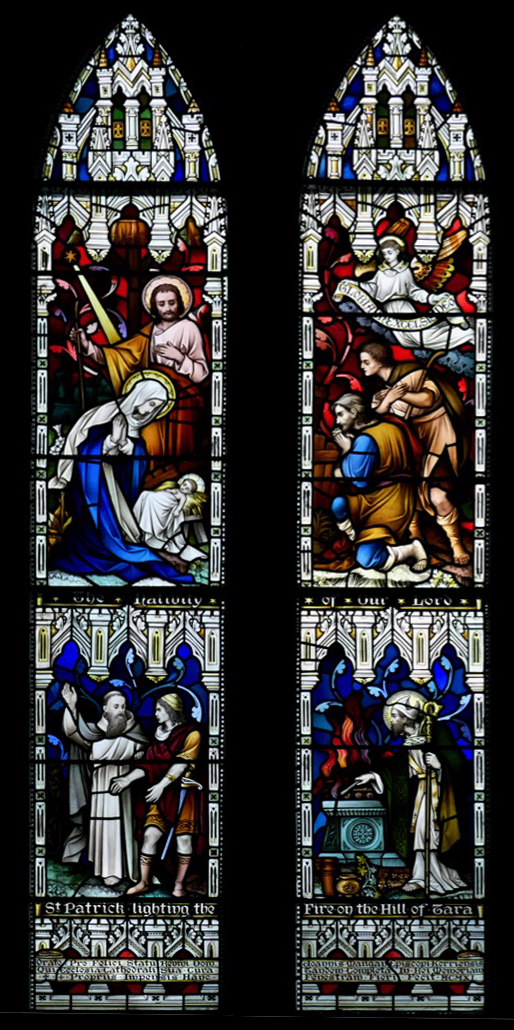
What does the Hill of Tara have to do with the Nativity?  In the Catholic Cathedral in Killarney are a whole set of windows that draw parallels between biblical scenes and Irish saints – all part of the push-pull between the Rome-centric internationalisation of the Irish church versus the desire of Irish congregations and clergy to see their own Irish and local saints depicted in their stained glass windows. In this case, the Nativity of Jesus is compared to the birth of Christianity in Ireland when St Patrick lit the Pascal Fire on the Hill of Slane (although the window says Tara, the story is that the high king saw the fire from the Hill of Tara). The windows are by Hardman, before they became Earleys.

The Dominican Convent in Wicklow town has a gorgeous series of windows – the Mysteries of the Rosary. They were done in the Harry Clarke Studios in 1938, several years after Harry’s death, but his influence is very evident. They were mostly designed and painted by William Dowling, but with much input from Richard King. To see if you know the difference between Harry Clarke and Harry Clarke Studios windows, take the quiz, or just cheat and go straight to the answers.

Patrick Pollen, although he grew up in England, made his stained glass career in Ireland. Having been bowled over by Evie Hone’s Eton windows he came to Dublin to work with her. Hone’s influence is readily apparent in these two panels, which form the predella (lowest section) of a window in St Michael’s church in Ballinasloe, Co Galway, dating to 1957. I haven’t written about Pollan (yet) but you can read about Evie Hone here.

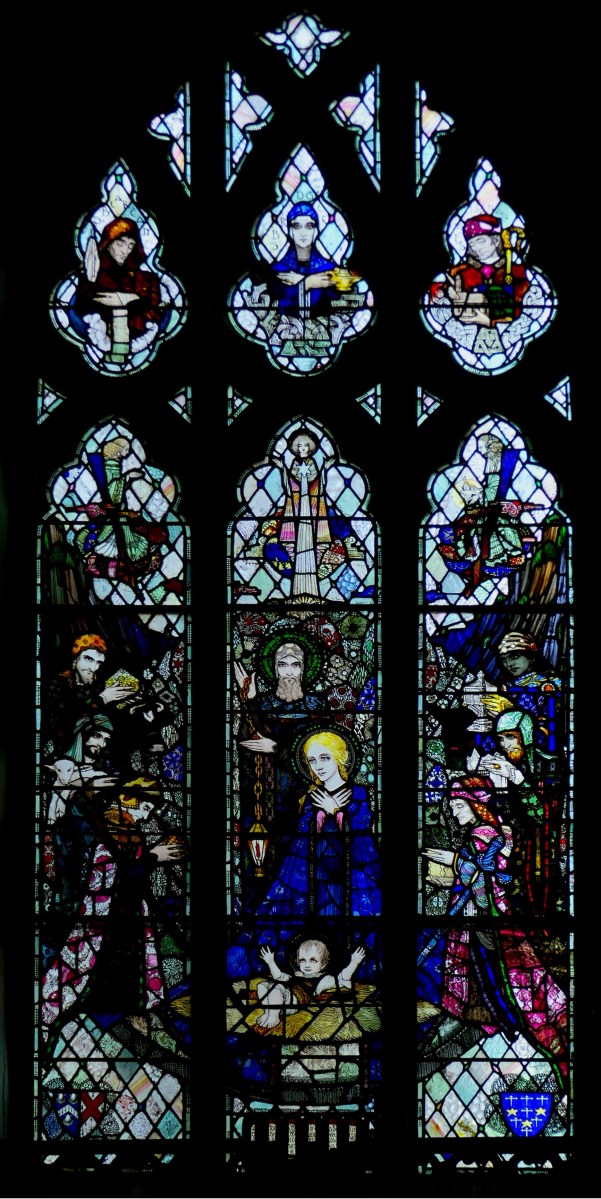
We’ve kept the best for last – the genius that is Harry Clarke. This is his Nativity Window, done in 1919 for Edith Somerville and her family, for the C of I Church of St Barrahane in Castletownshend, Co Cork. Lots more about Harry Clarke, Ireland’s greatest stained glass artist.

That He Might Better Rest

In my time browsing and photographing stained glass windows I have come across many WWI memorial windows in Protestant churches, but only three in Catholic churches – an extraordinary ratio, given that over two hundred thousand Irish men fought in that war, with Catholics far outnumbering Protestant Irish soldiers (simply because they represented a far greater portion of the population). It is estimated that thirty five thousand Irish soldiers died in that conflict. 

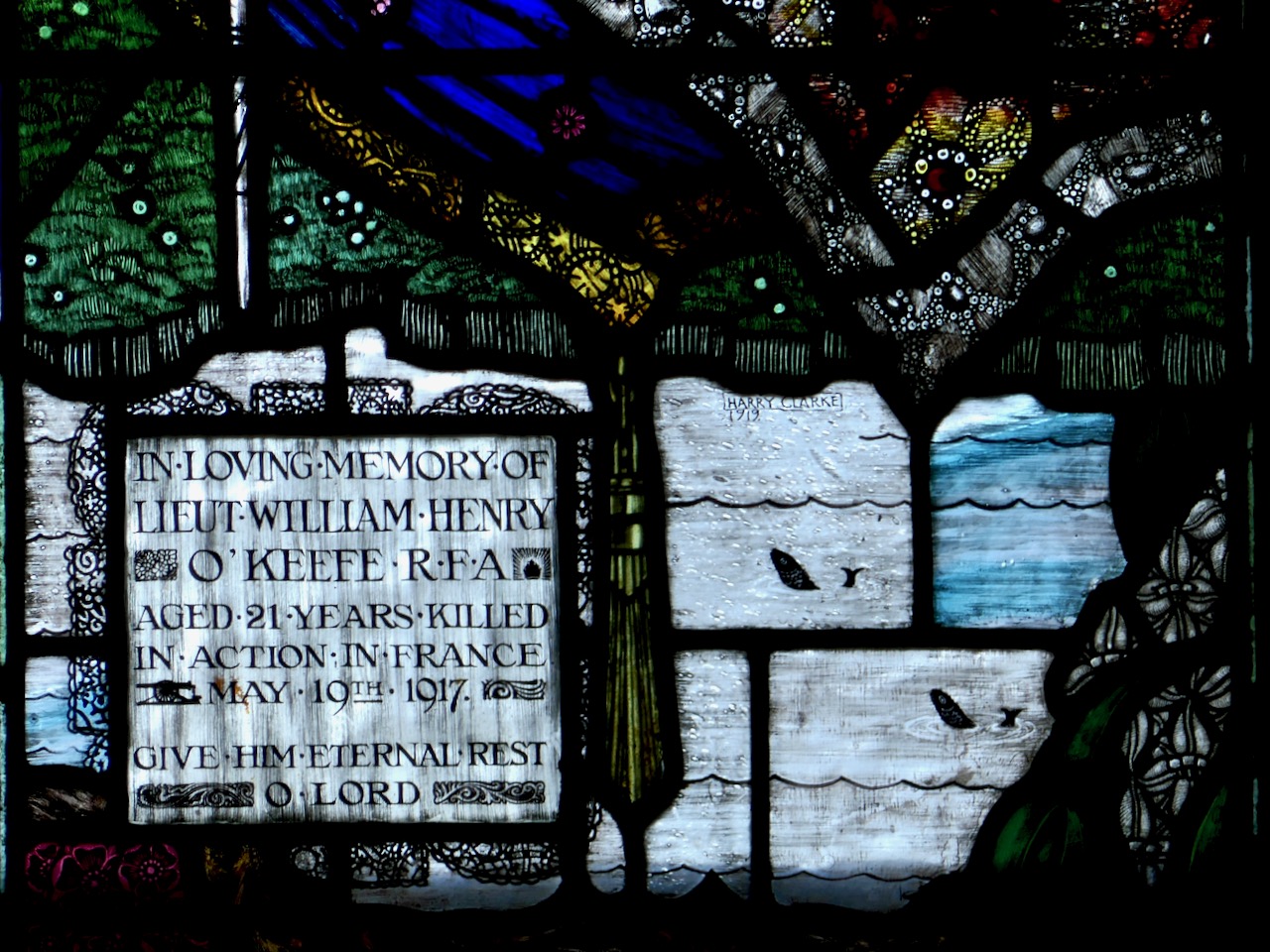
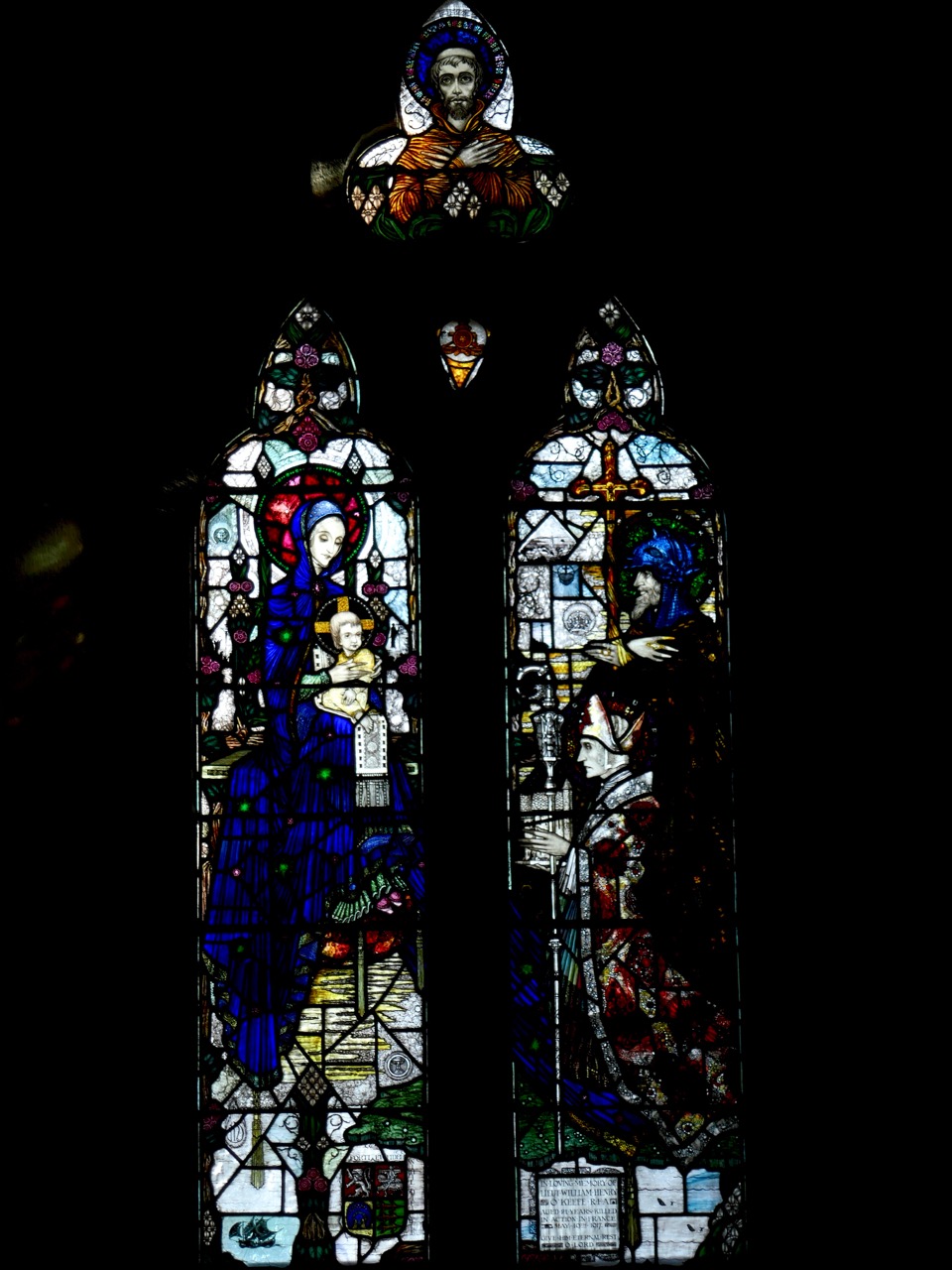
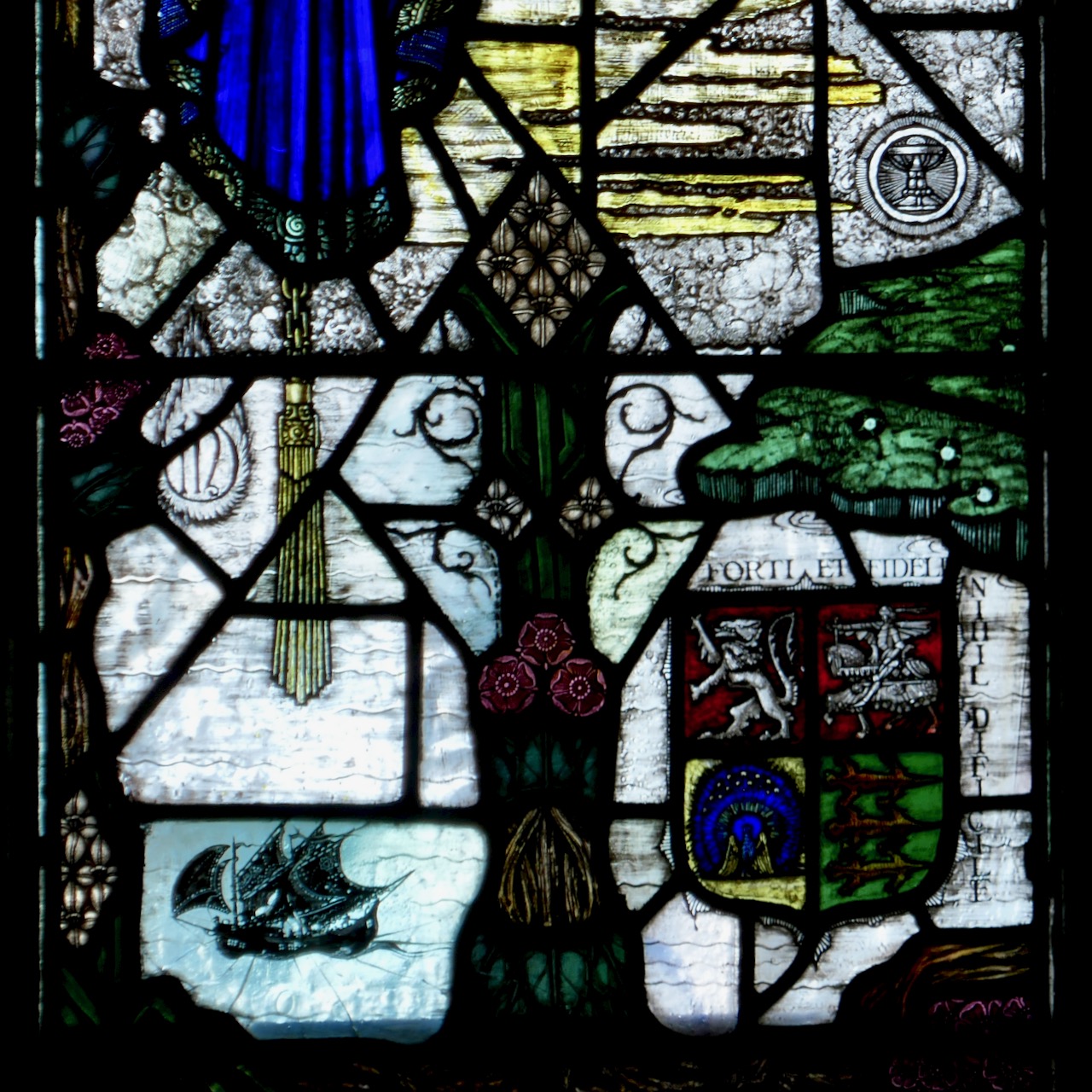
The O’Keefe War Memorial window in the Church of the Assumption, Wexford town, by Harry Clarke (above, and detail top image) 

There are many reasons for the lack of memorials in Catholic churches – for example, the vast majority of Irish soldiers in the British Army came from poor families who could not have afforded such a memorial. But also it has to do with the collective amnesia we developed about our participation in British wars. As I wrote in Outposts of Empire, returning soldiers came back to a new Ireland, one in which nationalist aspirations dominated, and many young Catholic men preferred not to speak about their British Army service.

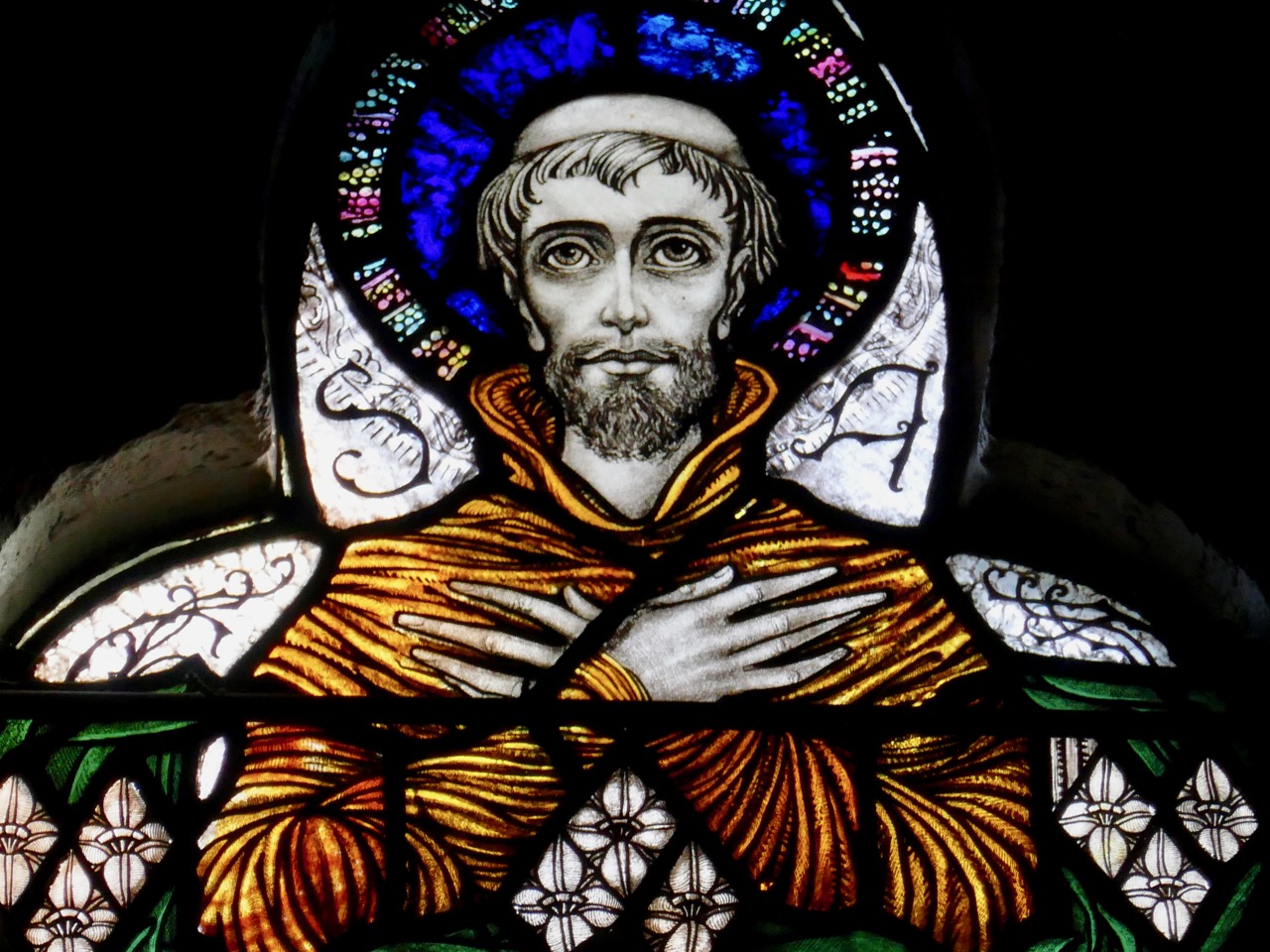
A figure, possibly St Anthony, in the top tracery light of the O’Keefe window

But the three windows I have seen are beautiful and interesting, using some different icons from so many Church of Ireland windows, which tend to feature Michael the Archangel defeating the dragon or a knight in armour fighting “The Good Fight” with regimental standards and lists of engagements in the bottom panel.

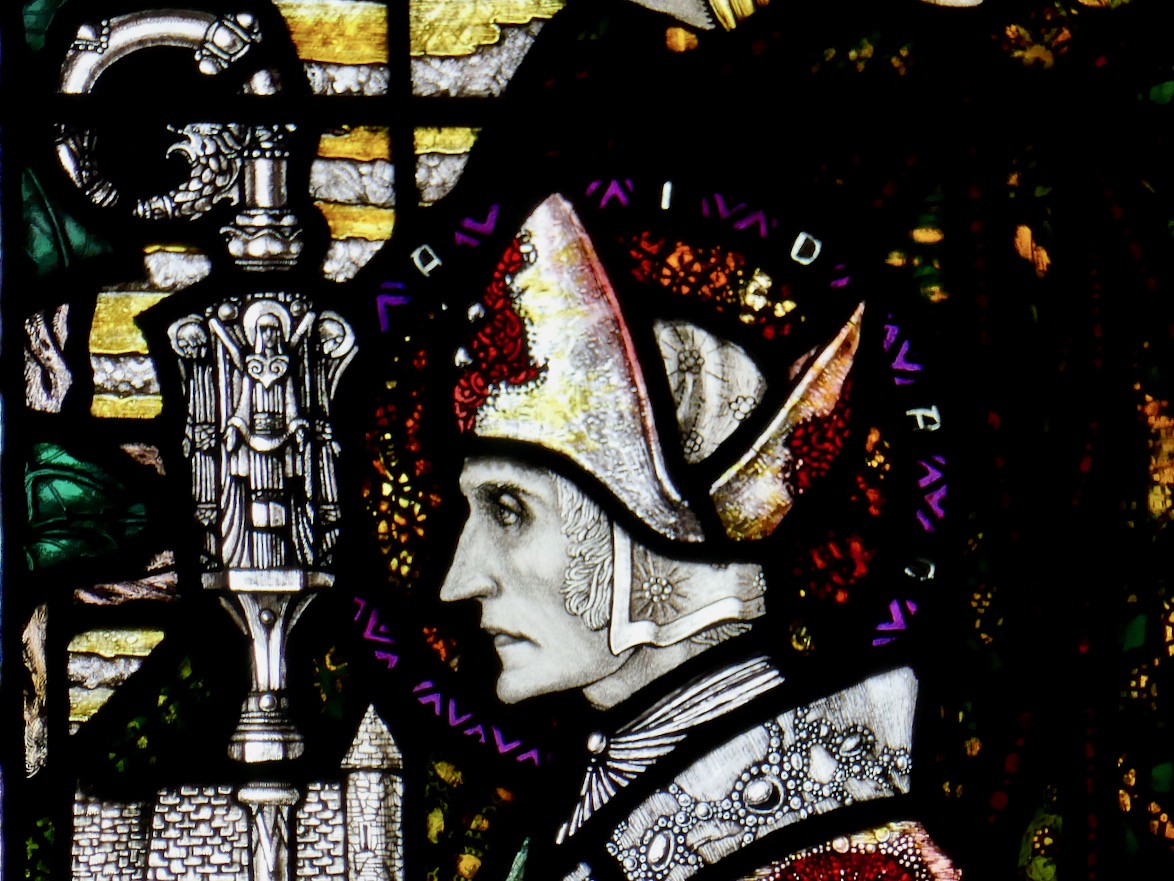
St Aidan of Ferns

I have started with everyone’s favourite, Harry Clarke, who designed and executed this window in the Church of the Assumption in Wexford town. The fallen soldier was 21 year old Lieut Henry O’Keefe and Harry travelled to Wexford in Sept of 1918 to meet his mother and discuss the window, which was installed the following year.

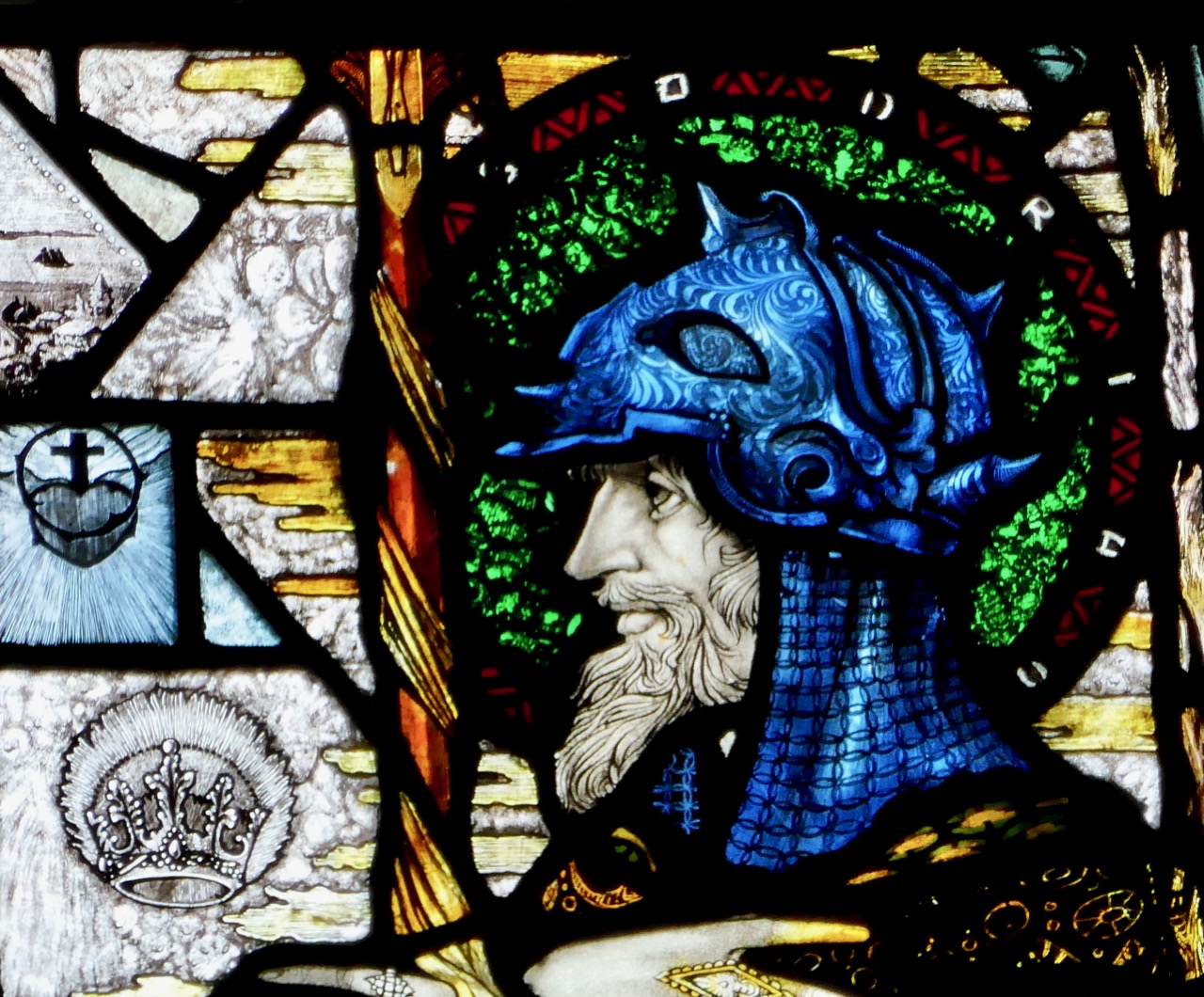
St Adrian, Patron Saint of Soldiers

The design is classic Harry Clarke. Serenely floating high on the left panel is the Madonna and child, clothed in an elaborate and bejewelled blue gown which extend across to the second panel where two saints have come to pay homage. The image of the Madonna evokes the bond between mother and child, while the two saints are carefully chosen: St Adrian is the patron saint of soldiers and St Aidan of Ferns represents Wexford. Above, in a tracery light, a monk, possibly St Anthony, gazes out in an attitude of prayer.

The O’Keefes were a prominent Wexford merchant family and their coat of arms is shown in one panel. Numerous tiny details – a ship, leaping fish, crucifixion images, a tiny image of the Church of the Assumption itself, as well as Harry’s ubiquitous floral ornamentation, fill every section. The overall result is highly emotive. I can imagine the O’Keefe family visiting often and finding comfort in the beauty and compassion of the imagery.

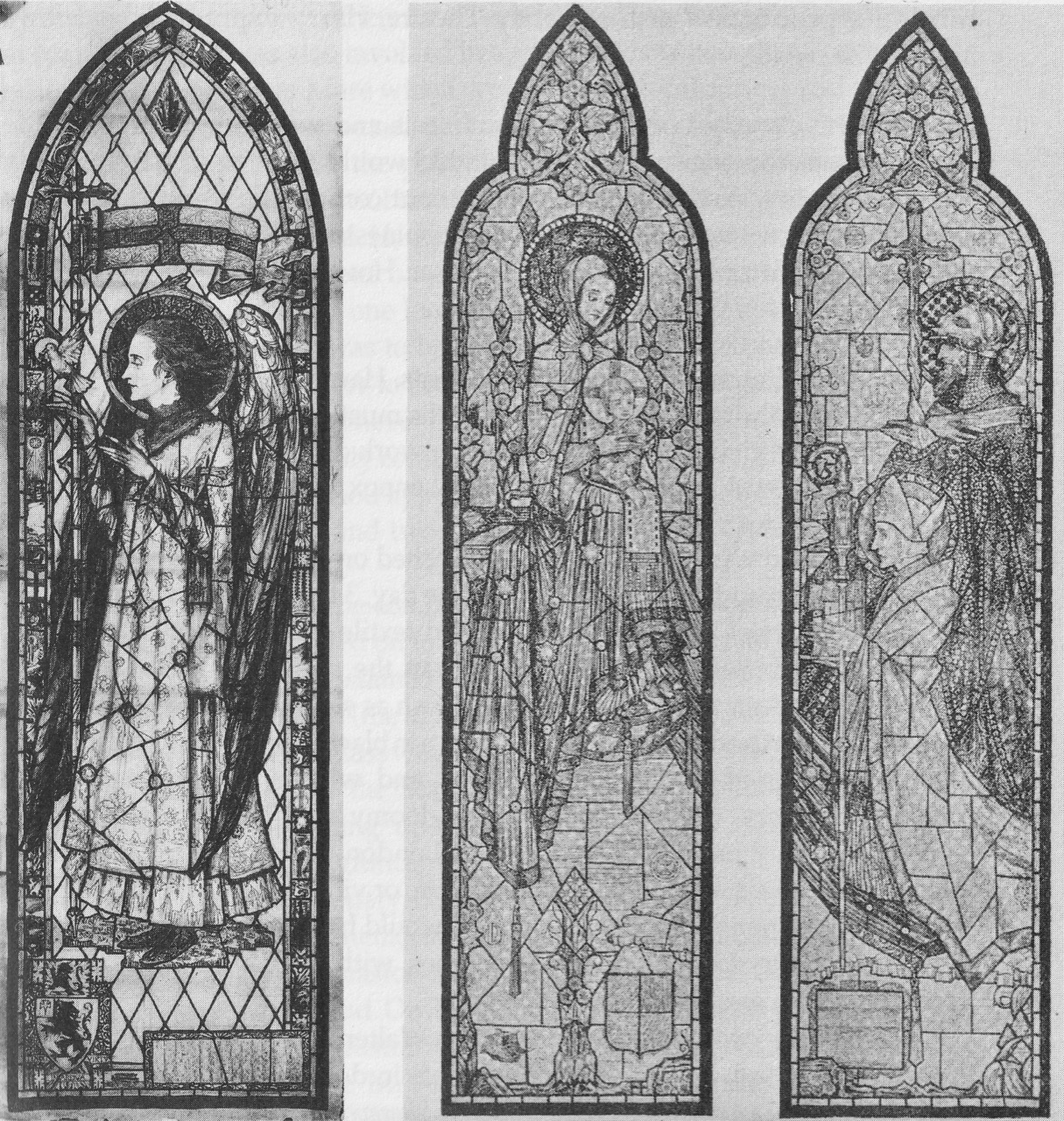
Harry Clarke designed two WWI memorial windows simultaneously and they are completely different. Above is the cartoon for the O’Keefe window and, on the left, for a window, Angel of Hope and Peace, for the Holy Trinity Church of Ireland in Killiney, Co Dublin

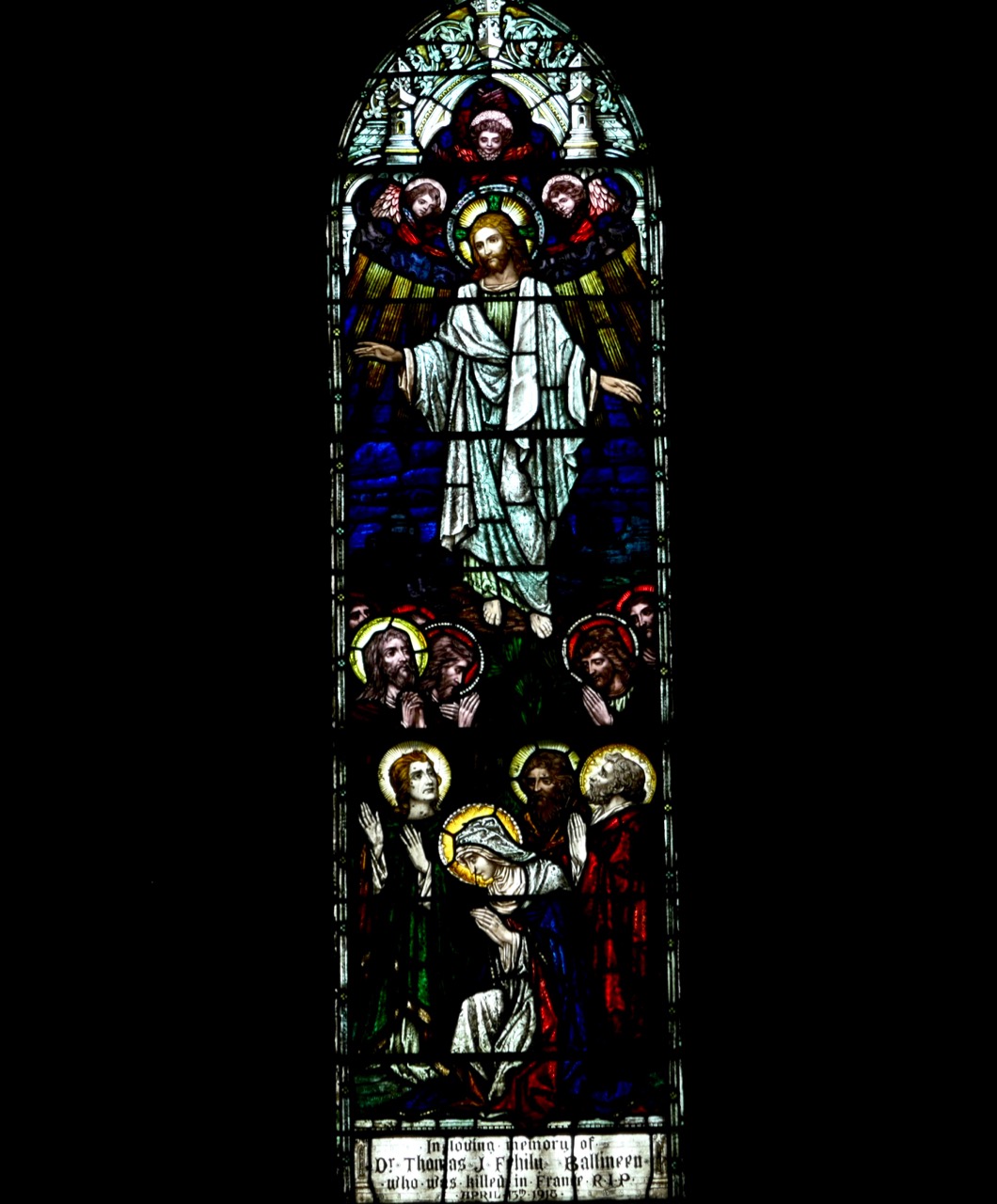
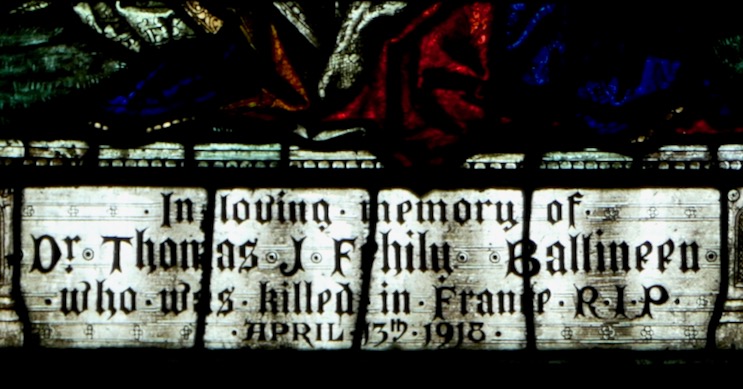
Our second example is from the West Cork Church of the Immaculate Conception in Enniskeane. Probably by Watsons of Youghal, this window is a memorial to Dr Thomas J Fehily, a native of the parish who qualified and practised medicine for many years before enlisting.

Local historian, Anne Lynch has given a good account of his life in a Southern Star article. She writes, Ballineen was a long way from the action when World War I started in the summer of 1914. However, two local brothers, both medical doctors, saw the war as an opportunity to utilise their medical skills. In doing so, it cost one brother his life, while for the other, it was the start of an illustrious career in the British Empire. The doctors were the Fehily brothers.

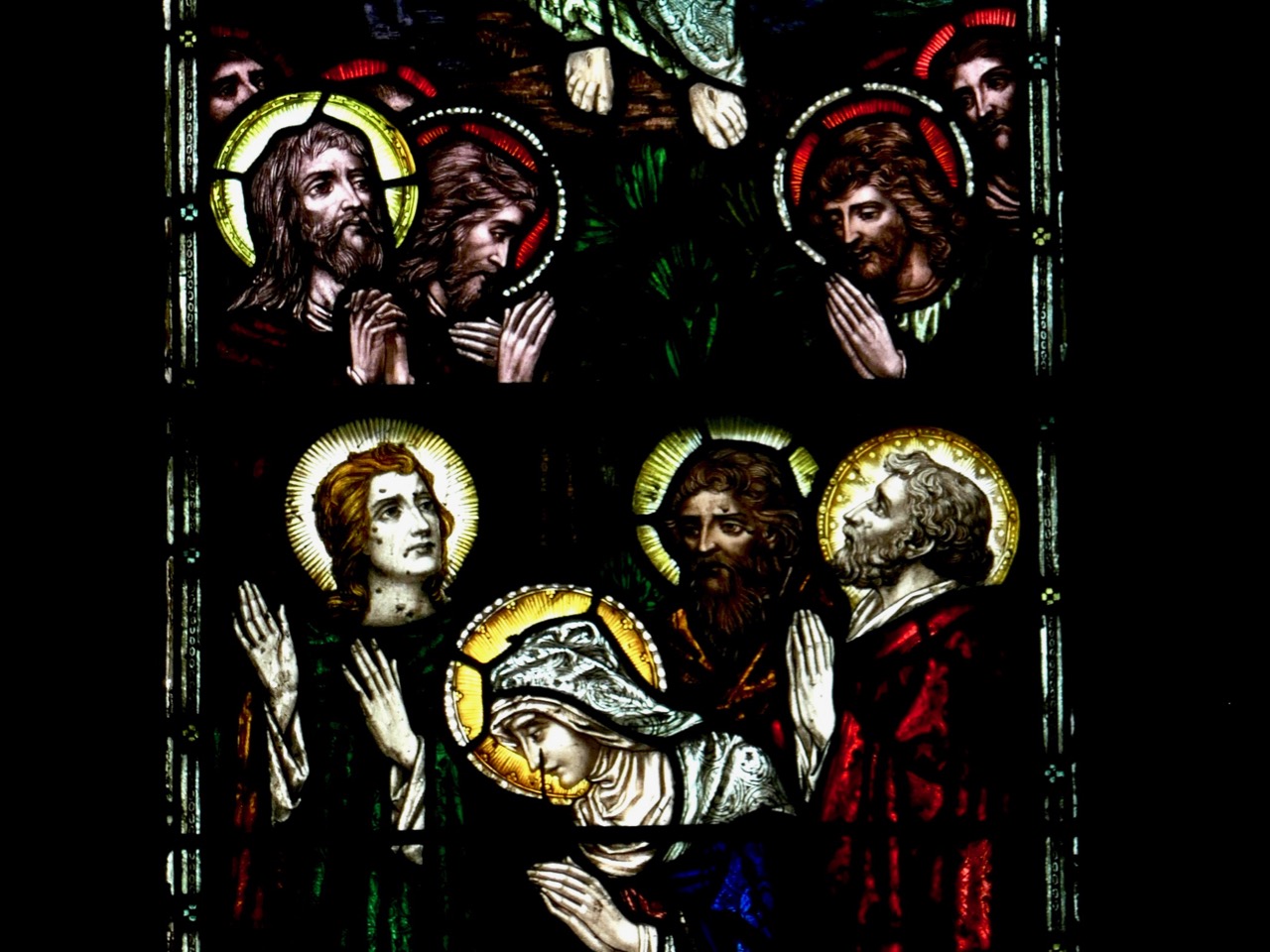
This is an Ascension window and at first I was puzzled by this choice for a war memorial window but as I thought about it, it became clear – Jesus ascends to heaven having sacrificed his life for his fellow man, while his sorrowing mother weeps below.

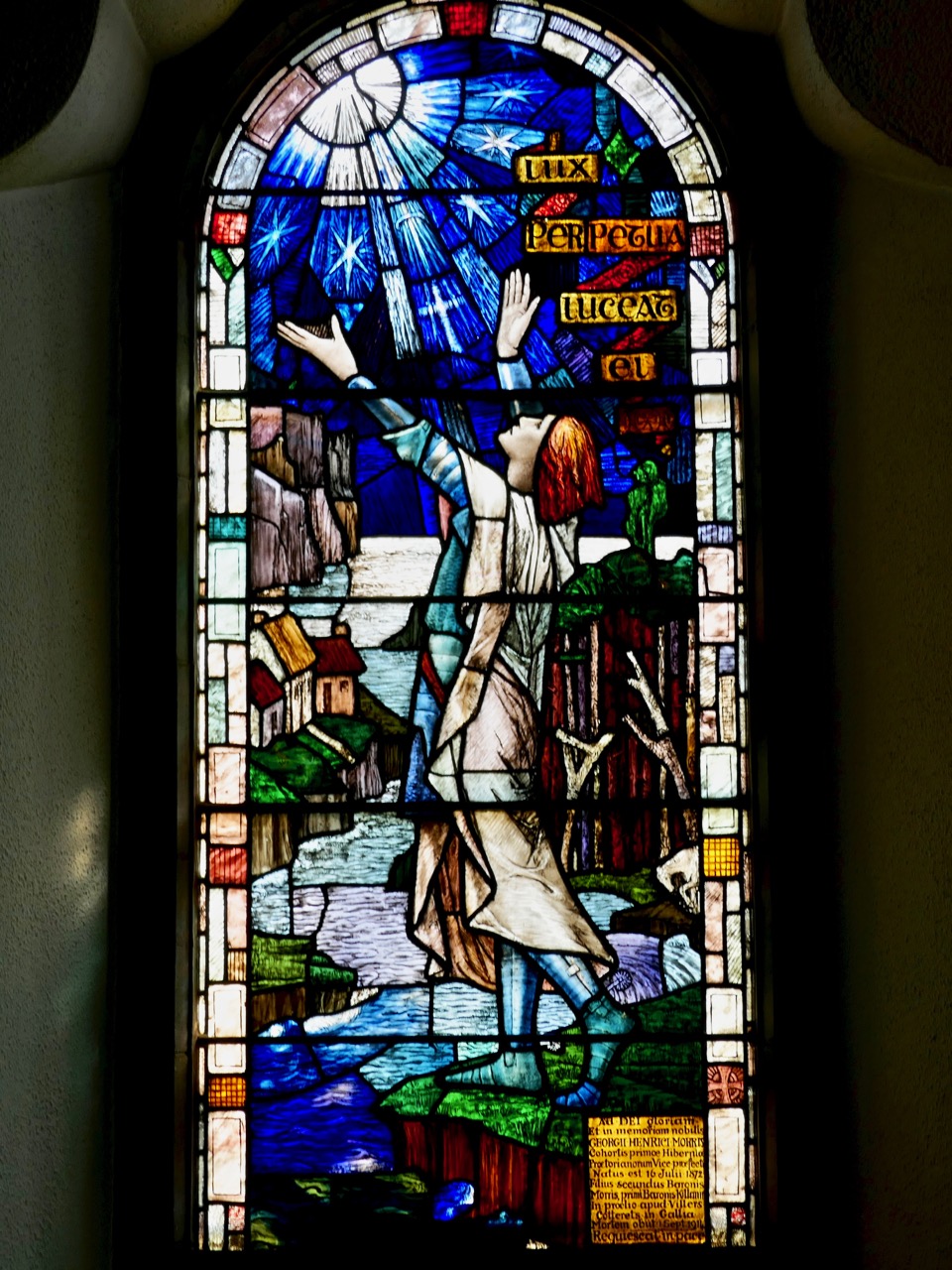
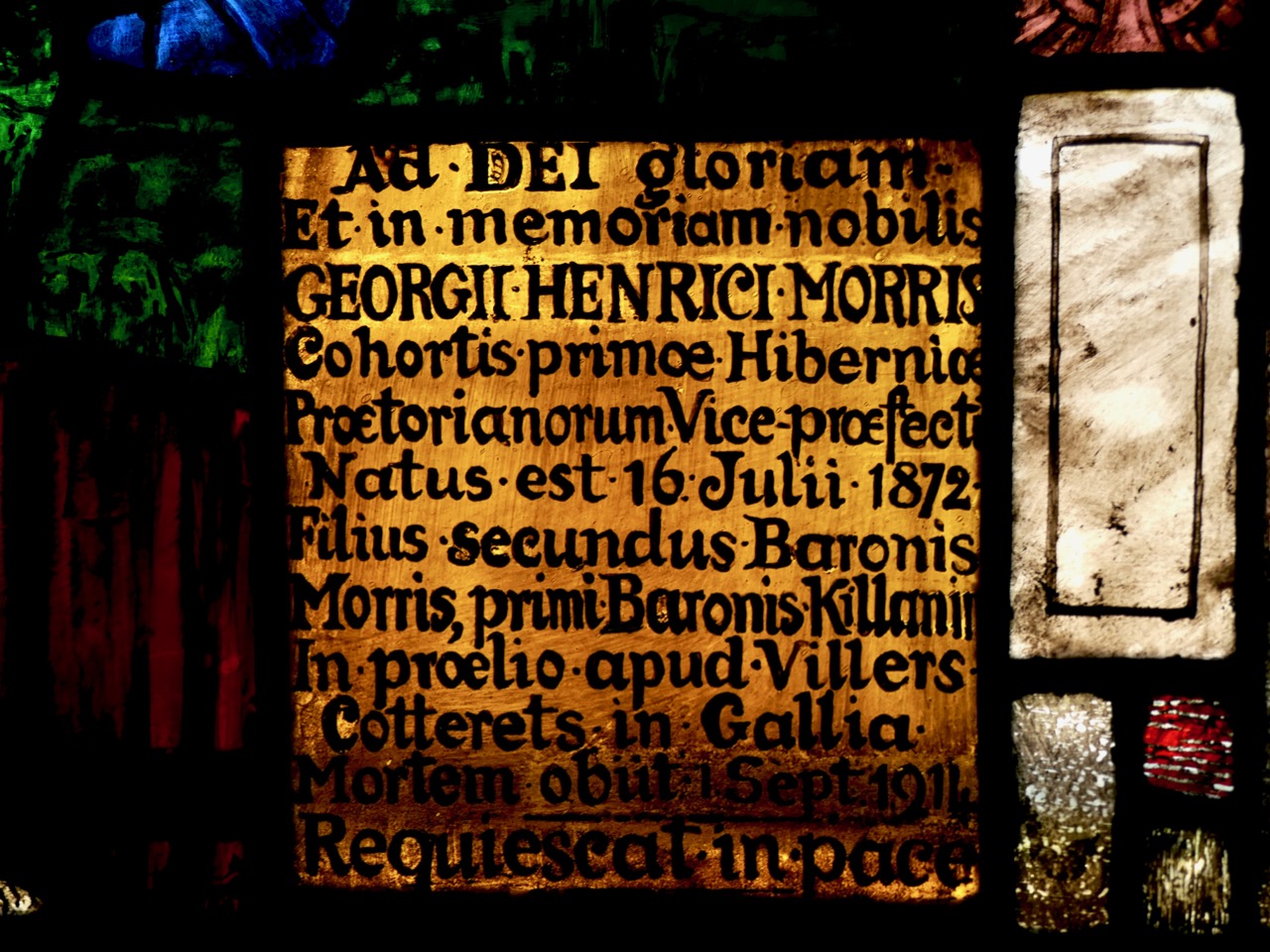
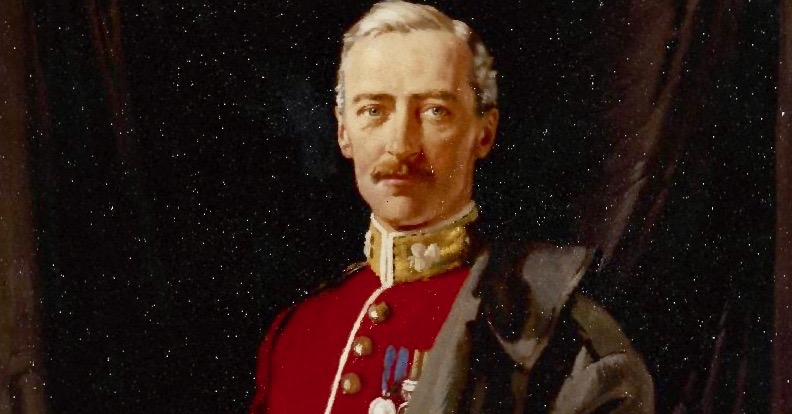
The final window is in the neo-Romanesque church of Spiddal in Co Galway and is dedicated to the memory of George Henry Morris, a hero of the war, and second son of Lord Morris.  A painting of George Henry by William Orpen ends this post.

There is an affecting account of a visit to his grave by his grandson Redmond Morris with his own children, where they even manage to take a photograph in the very spot that George himself was last photographed. By all accounts a brilliant man and a highly respected officer, George died within two weeks of arriving in France. Read more about him on his Wikipedia page and note that he was the father of Lord Kilanin, for many years the esteemed President of the International Olympics Committee.

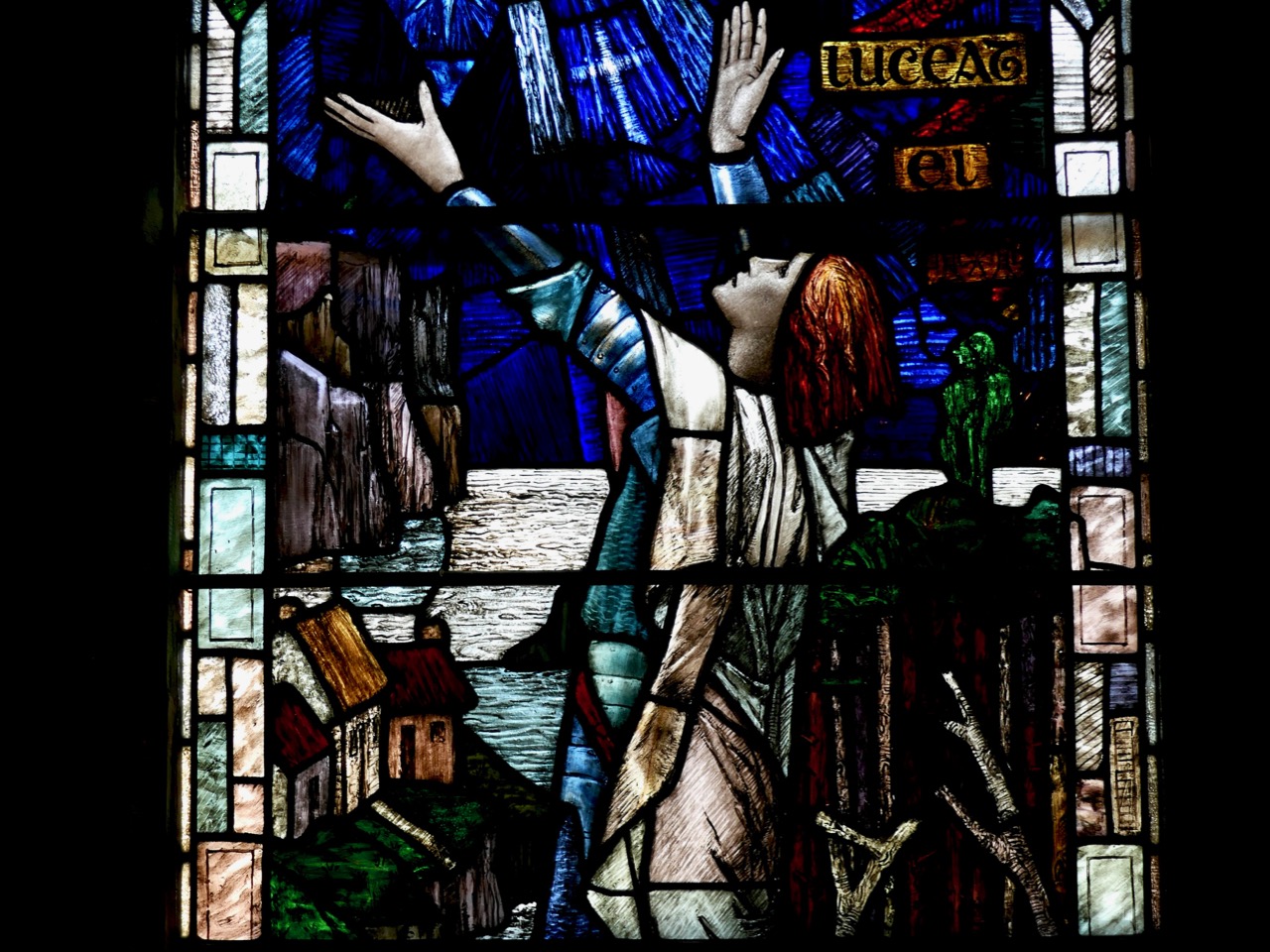
The window is by Catherine O’Brien, one of the artists of An Tur Gloine.  See this post about Loughrea Cathedral for more about this design co-op: Edward Martyn was also involved with the design and furbishment of this Spiddal church. O’Brien has depicted a golden-haired figure reaching upwards to a divine light, with the words lux perpetua luceat ei – Let Perpetual Light Shine Upon Them. The figure is a rider (denoted by his spurs only) and a riderless horse is seen at the bottom right. The location in Connemara is captured with thatched cottages and sea cliffs.

One of our most famous War Dead was the poet, Francis Ledwidge. His poem, A Soldier’s Grave, has given me my title, and I will leave it here now in honour of the many brave Irish men who gave their lives in WWI.

Then in the lull of midnight, gentle arms
Lifted him slowly down the slopes of death
Lest he should hear again the mad alarms
Of battle, dying moans, and painful breath.

And where the earth was soft for flowers we made
A grave for him that he might better rest.
So, Spring shall come and leave its sweet arrayed,
And there the lark shall turn her dewy nest.

George Henry Morris, painted by William Orpen

Loughrea Cathedral and the Irish Arts and Crafts Movement

How did a church in an Irish country town become a repository for some of the greatest treasures of the Arts and Crafts movement of the early 20th century? That church is St Brendan’s Cathedral in Loughrea, Co Galway, which we visited last week.

Evie Hone’s St Brigid window

The Arts and Crafts movement was a reaction against soulless methods of industrial production which emphasised repetitive tasks and removed the link between the worker and the final product. Such factory processes were eventually applied to works of art, such as stained glass windows, where numerous workers would be employed to assemble a final product. Within the movement, artisans, artists and makers sought to get back to a former time, often conceived as medieval and highly romanticised, when craftsmen and women designed and executed exquisite works from start to finish.

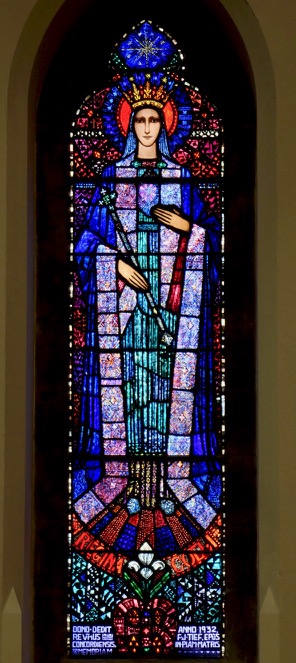
Queen of Heaven window by Michael Healy

So where does Loughrea come in? Well, for a start, it was the home of Edward Martyn, a wealthy enthusiast for all things Gaelic Revival including language, theatre, literature, music and art. Heavily influenced by the philosophies of the Arts and Crafts movement, particularly by those of William Morris, he worked with Sarah Purser to found An Túr Gloine (The Tower of Glass) as an artist/maker stained glass studio. Not a small part of their initial success was his ability to promise commissions from the decoration of St Brendan’s Cathedral.

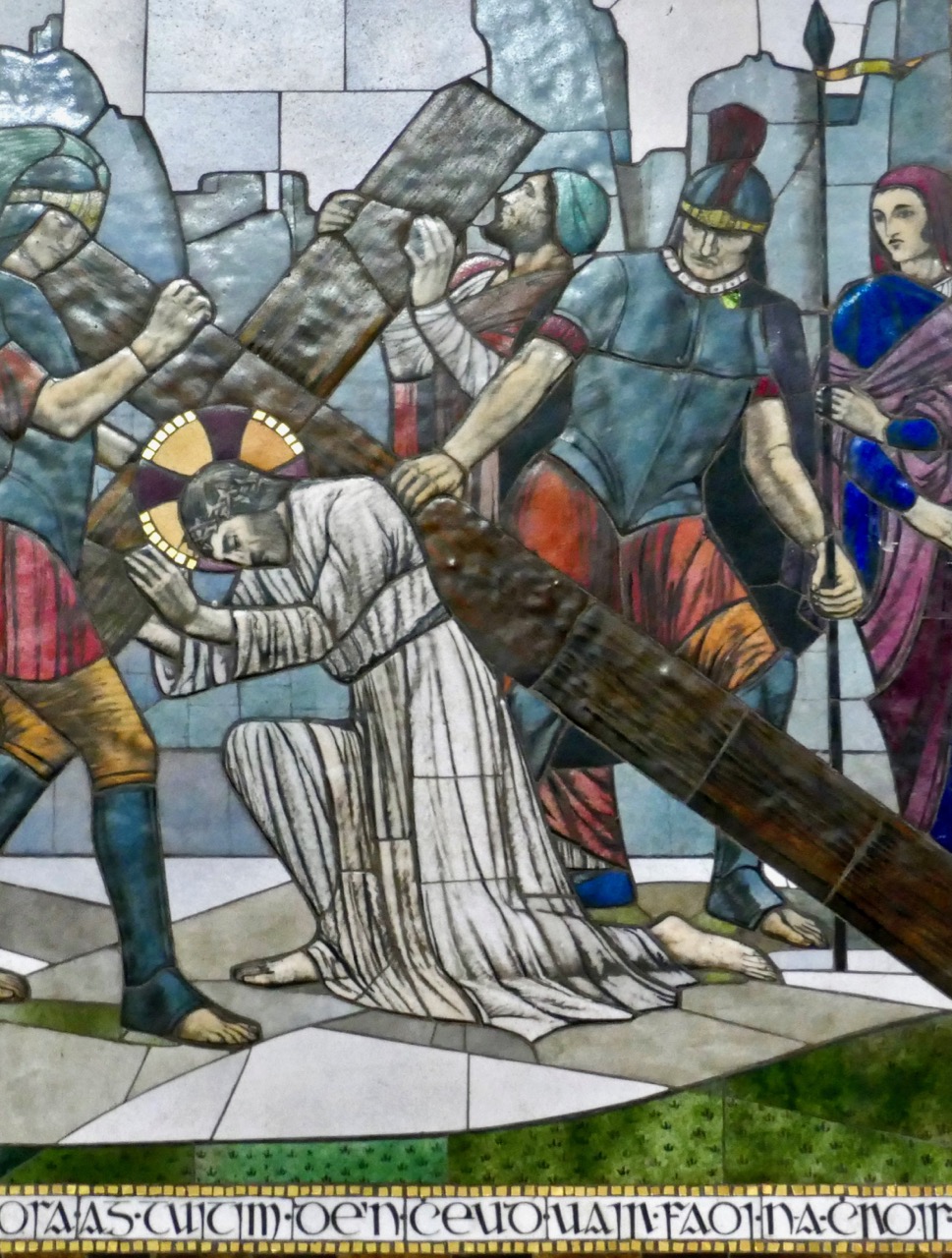
The Stations of the Cross are by Túr Gloine artist Ethel Rhind and are executed in the unusual opus sectile mosaic technique

Thus it is that this church, in outward appearance very much like the prevailing neo-Gothic style of the end of the nineteenth century, is packed with the work of the most eminent women and men artists of the opening decades of the 20th century. Yes, that’s right, women and men – the Arts and Crafts movement empowered women artists like few such movement had before (or since, perhaps).

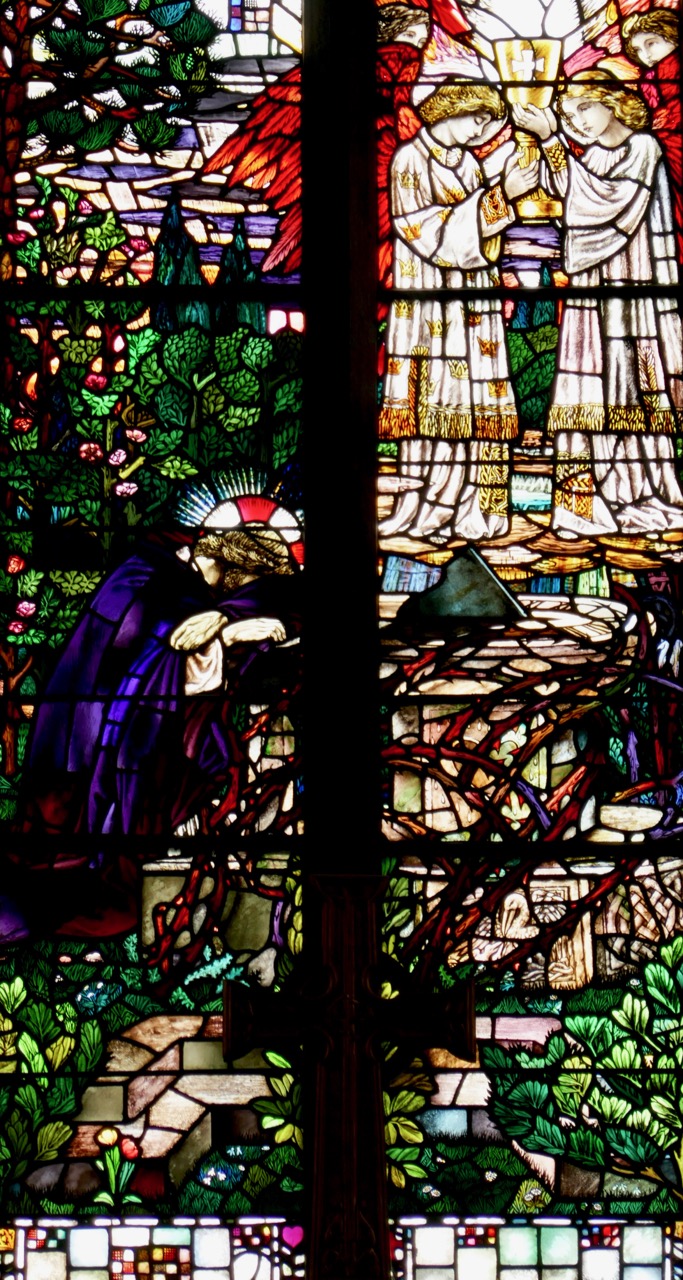
The Agony in the Garden by A E Child, detail

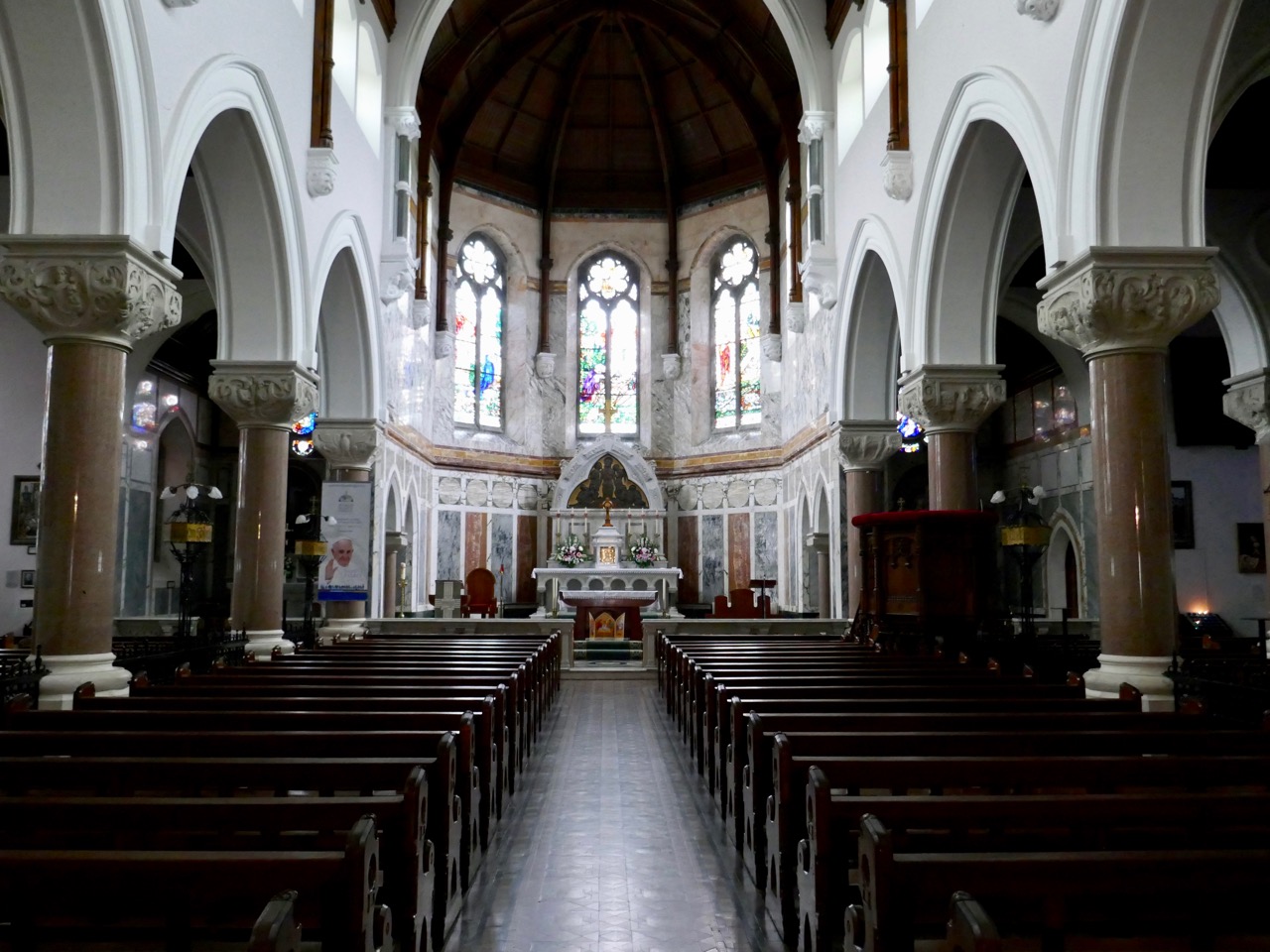
It takes a moment to realise what you have entered – initially the church interior seems familiar and unremarkable, almost heavy in its preponderance of marble, tile and dark wood.

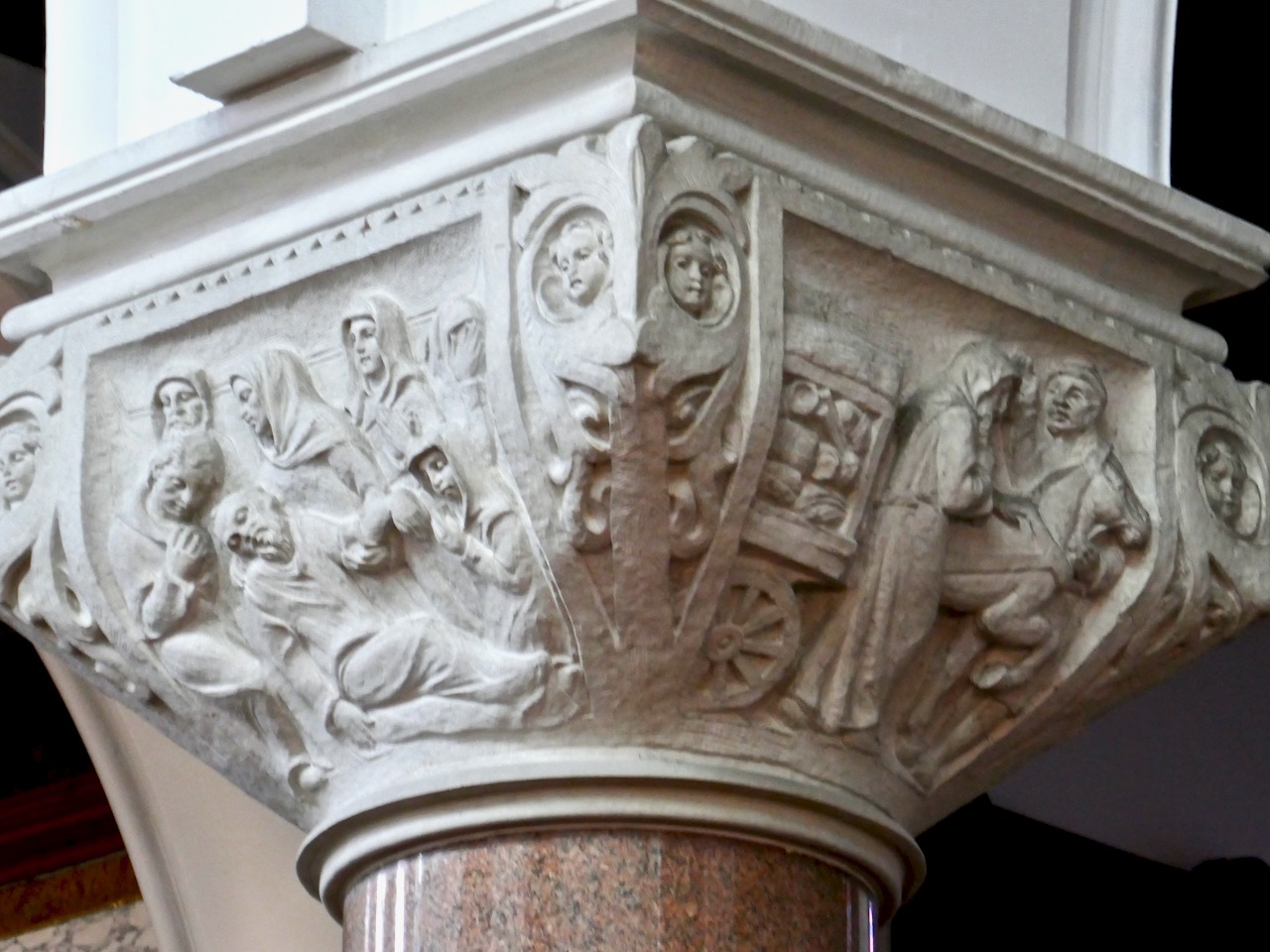
But as the eyes adjust, you can be permitted a gasp or two as you realise that all the capitals are carved with scenes from the life of St Brendan, that there are fine sculptures here and there, that the arm of each pew has been individually decorated with idiosyncratic characters, that are are art-nouveau-looking light standards throughout the aisles, that the stations of the cross are unlike any you’ve seen before, and finally that the stained glass windows are numerous and beautiful.

Two scenes from the Death of Brendan, carvings by Michael Shortall

All the Túr Gloine stained glass arts are represented here: A E Child, Michael Healy, Ethel Rhind, Catherine O’Brien, Beatrice Elvery, Evie Hone and Hubert McGoldrick. There is even a small St Brendan window by Sarah Purser herself – a rarity as she mostly confined herself to the management of projects rather than glass-painting.

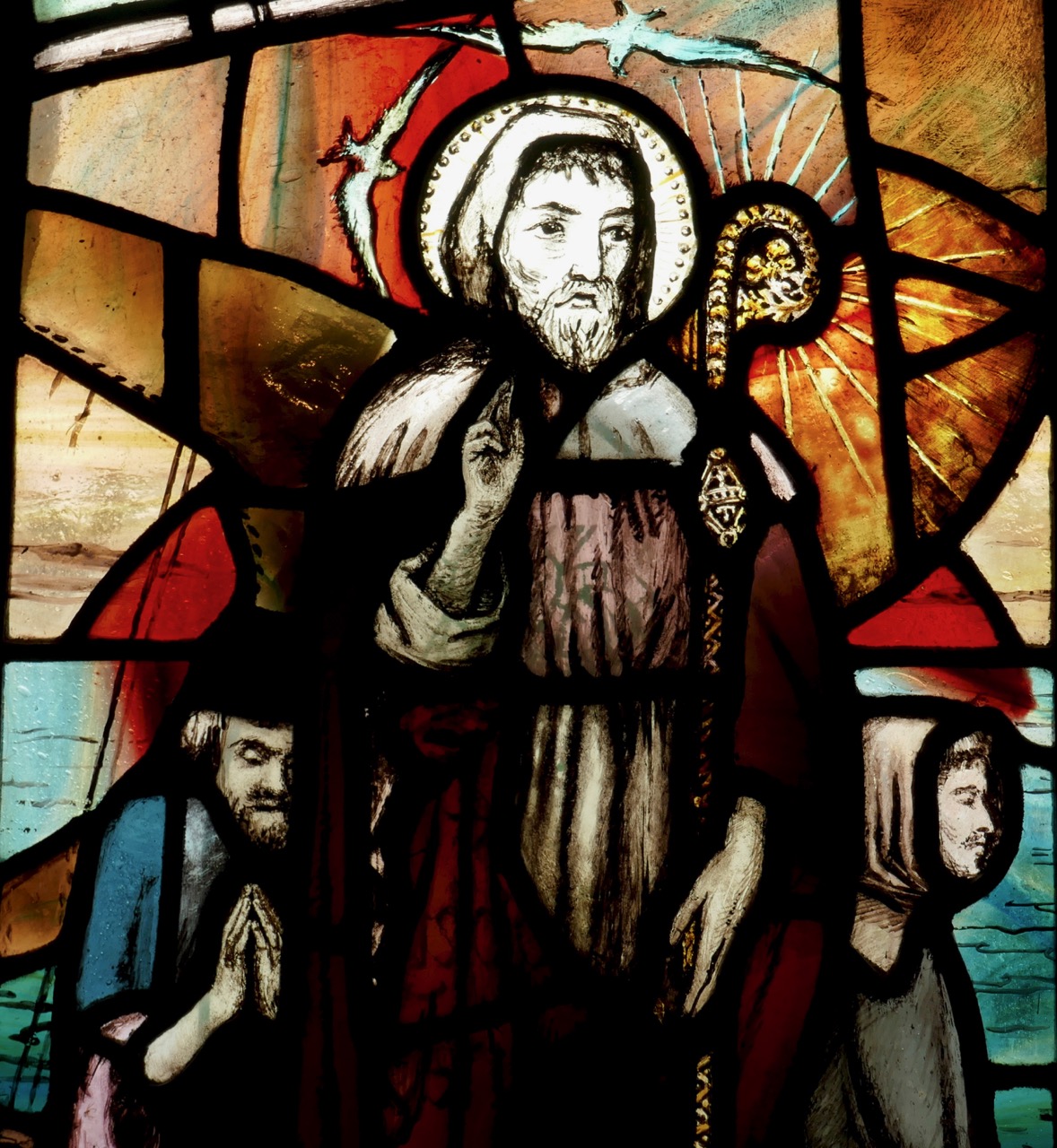
One of the very few stained glass windows actually executed by Sarah Purser herself – a Brendan image in the porch of the church

The stone carving is mostly the work of Michael Shortall, a student of John Hughes, the foremost sculptor of his day who provided bronze figures for the church. Eminent architect William Scott was engaged to design church furnishings and was responsible for the side altars, the entrance gates, the altar vessels and candlesticks, the baptismal font and altar rail.

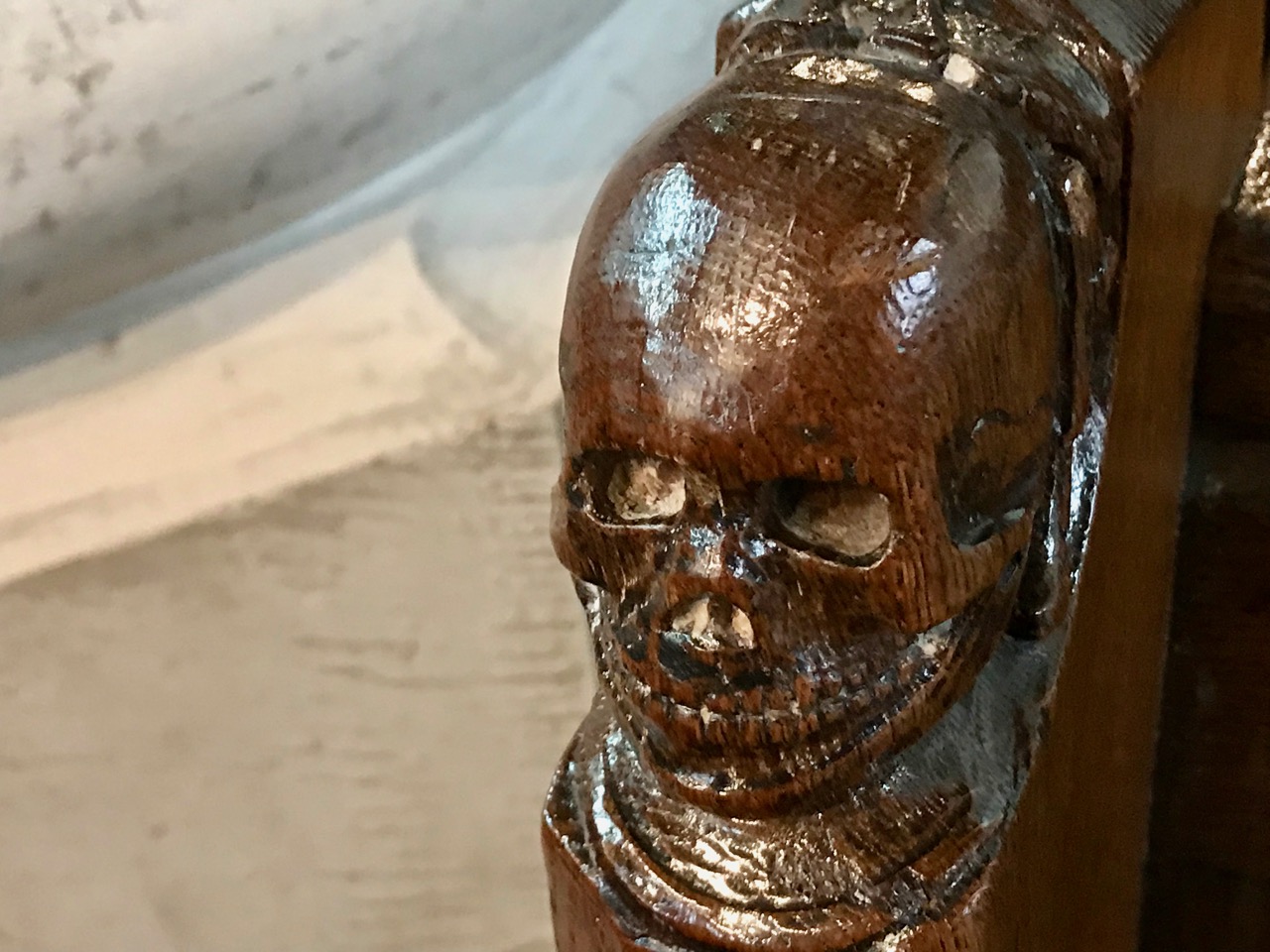
Each pew arm has a whimsical creature – this one was no doubt intended to concentrate the mind on mortality

The woodwork was all done locally, with the workers encouraged to use their skills to depicts beasts and mythical figures, in much the same way that medieval craftsmen had done.

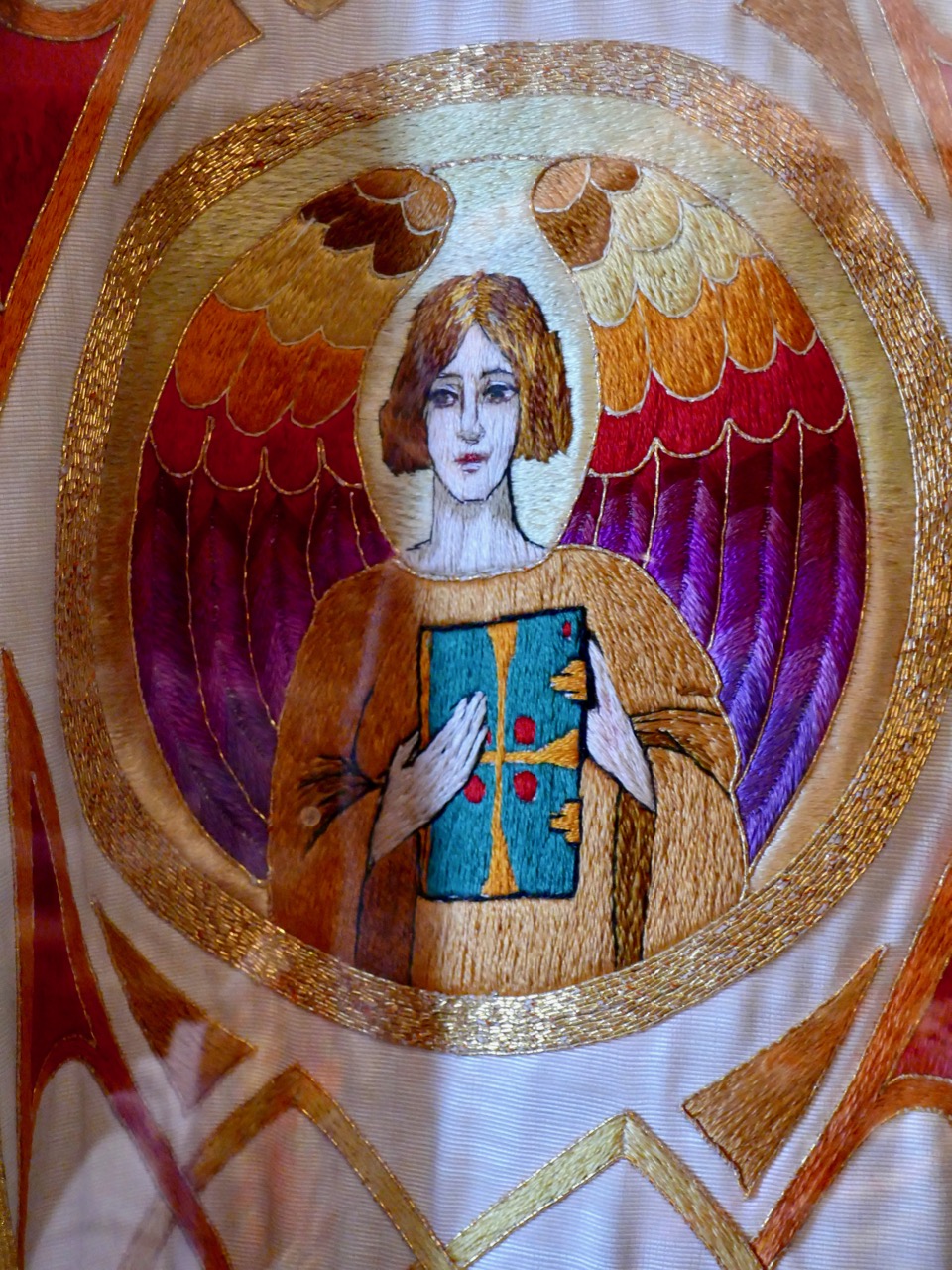
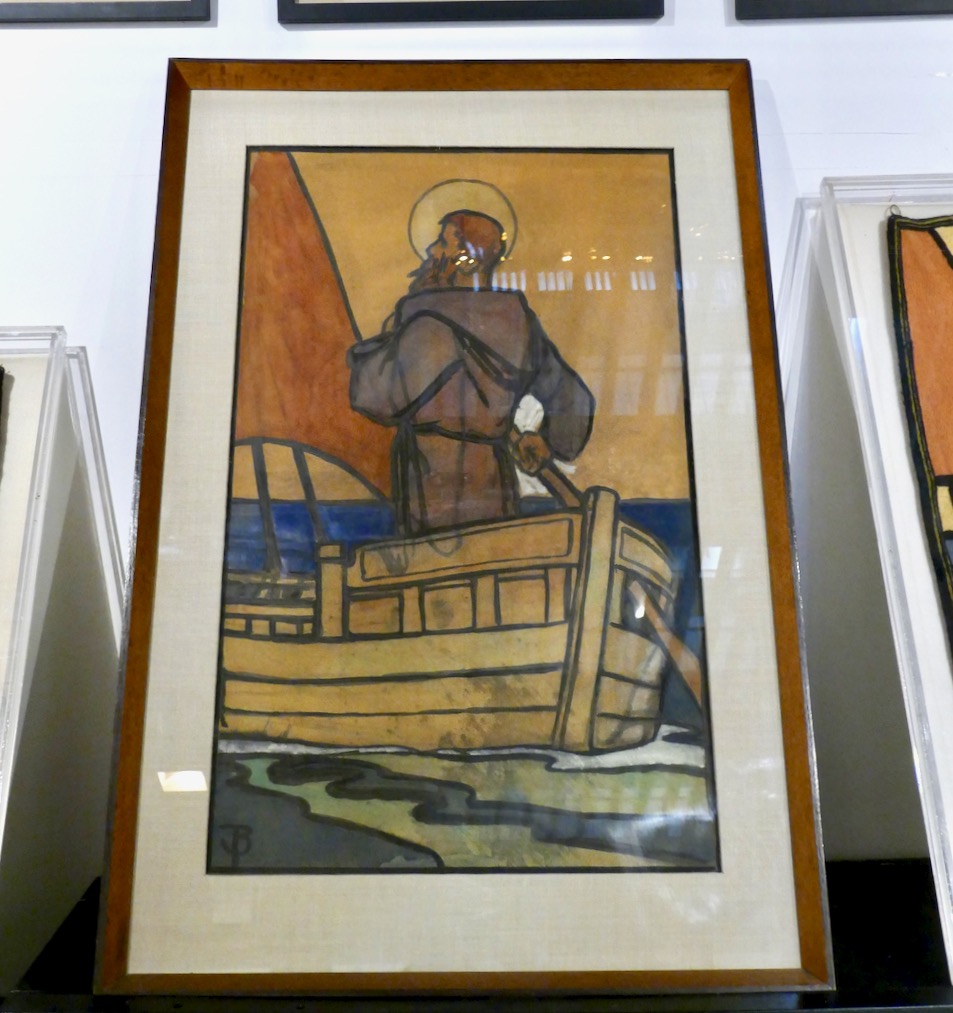
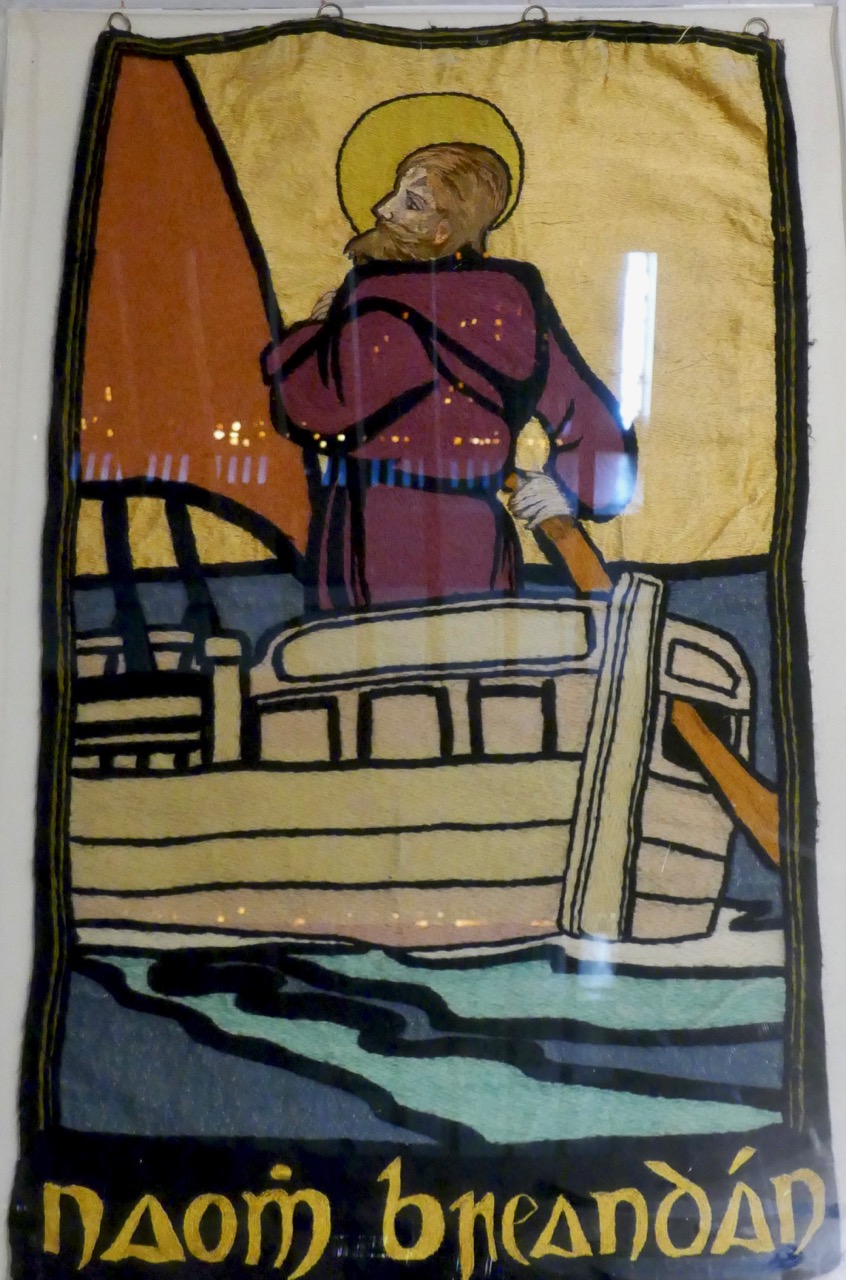
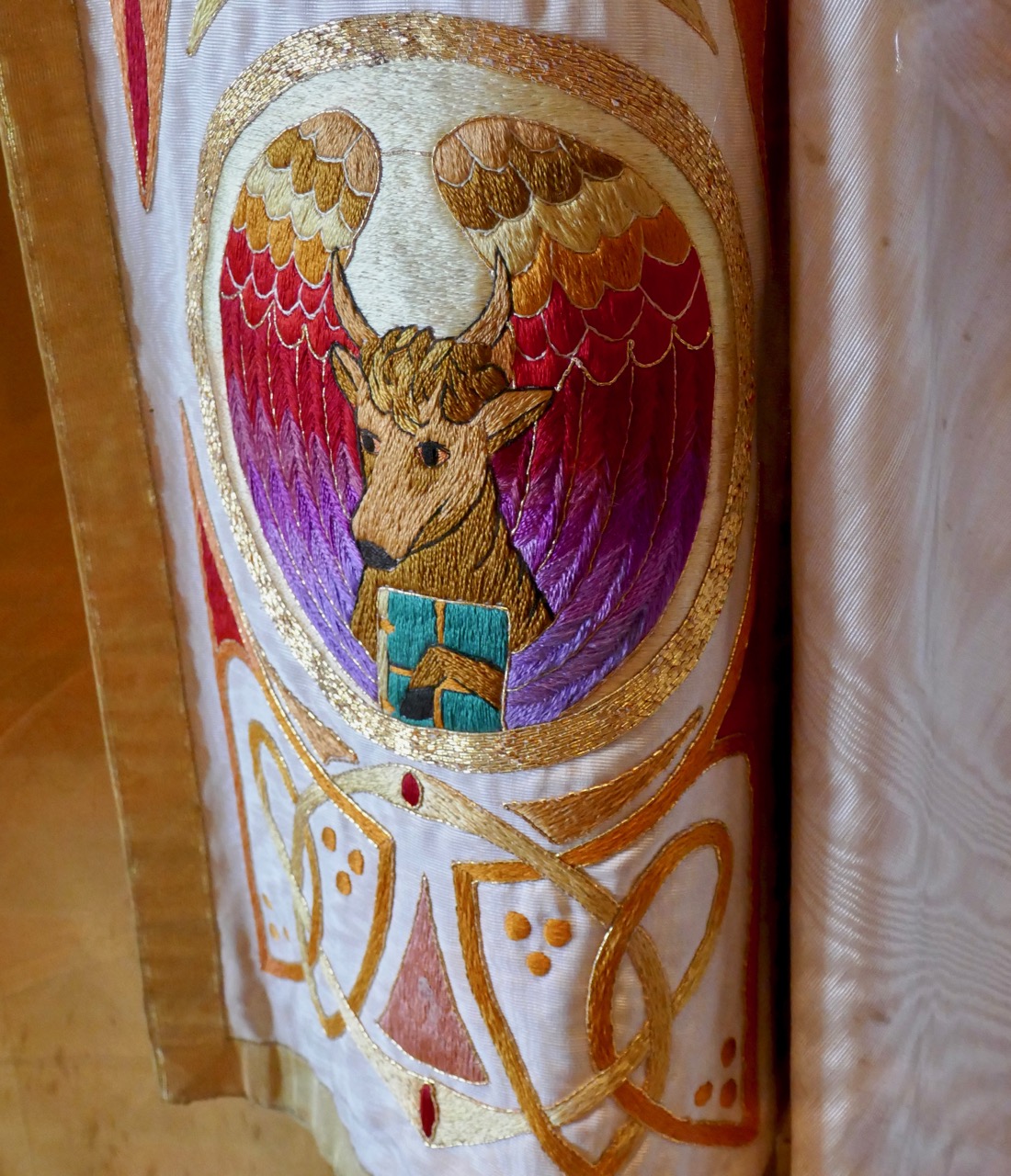
The museum contains an outstanding collection of sodality banners designed by Jack B Yeats and his wife, Cottie, and embroidered by the Dun Emer Guild. Above is the original design and the finished product

But that’s not all. Beside the church is a small museum, similarly packed with treasures. In particular, here is where you will see the work of the Dún Emer Guild, a women’s cooperative enterprise that designed and supplied materials (altar cloths, vestments, rugs, tapestries) to churches and others. Strongly influenced by traditional Irish designs such as scrollwork, interlacing, high crosses and Book of Kells symbols, the works supplied to St Brendan’s are wonderful examples of Irish Revival motifs, skillfully embroidered in gorgeous colours.
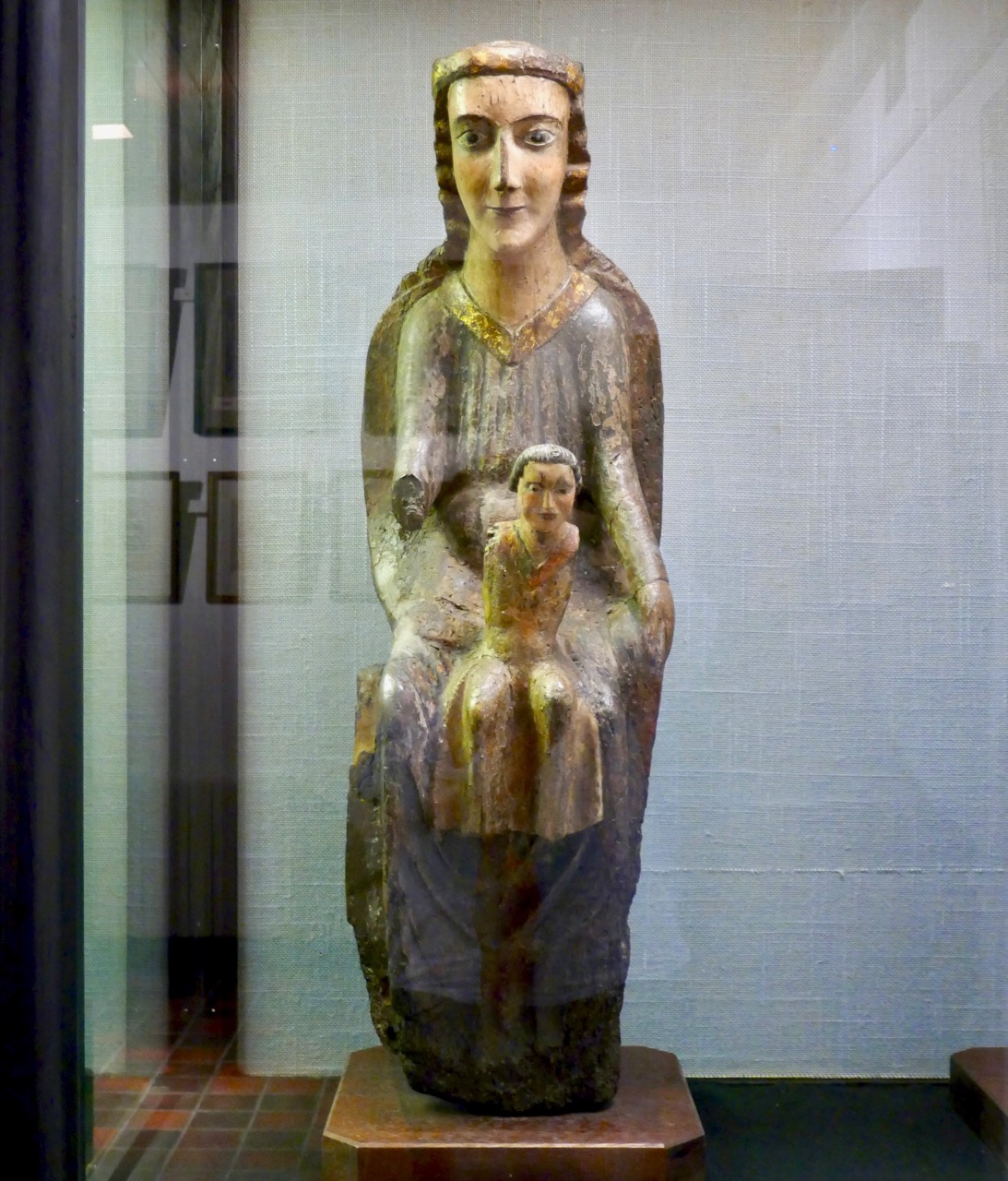
The Museum holds other artefacts too, including extremely rare medieval wooden carvings: most wooden statues were destroyed by the Puritans and very few have survived. There are also fifteenth century vestments, original drawings and sketches by Irish artists, altar vessels, and stained glass cartoons.

Twelfth or Thirteenth century wooden statue of the Virgin or Child

This post is a small introduction to the wonders of Loughrea Cathedral. About 40 minutes east of Galway and just south of the M6, this church is a must-see for anyone interested in the history of Ireland and its Arts and Crafts movement. The only comparable experience is the Honan Chapel in Cork.

Michael Healy’s magnificent Resurrection window

All I can do here is show you a representative sample of what we saw and encourage you to go see the totality for yourself. You won’t regret it.

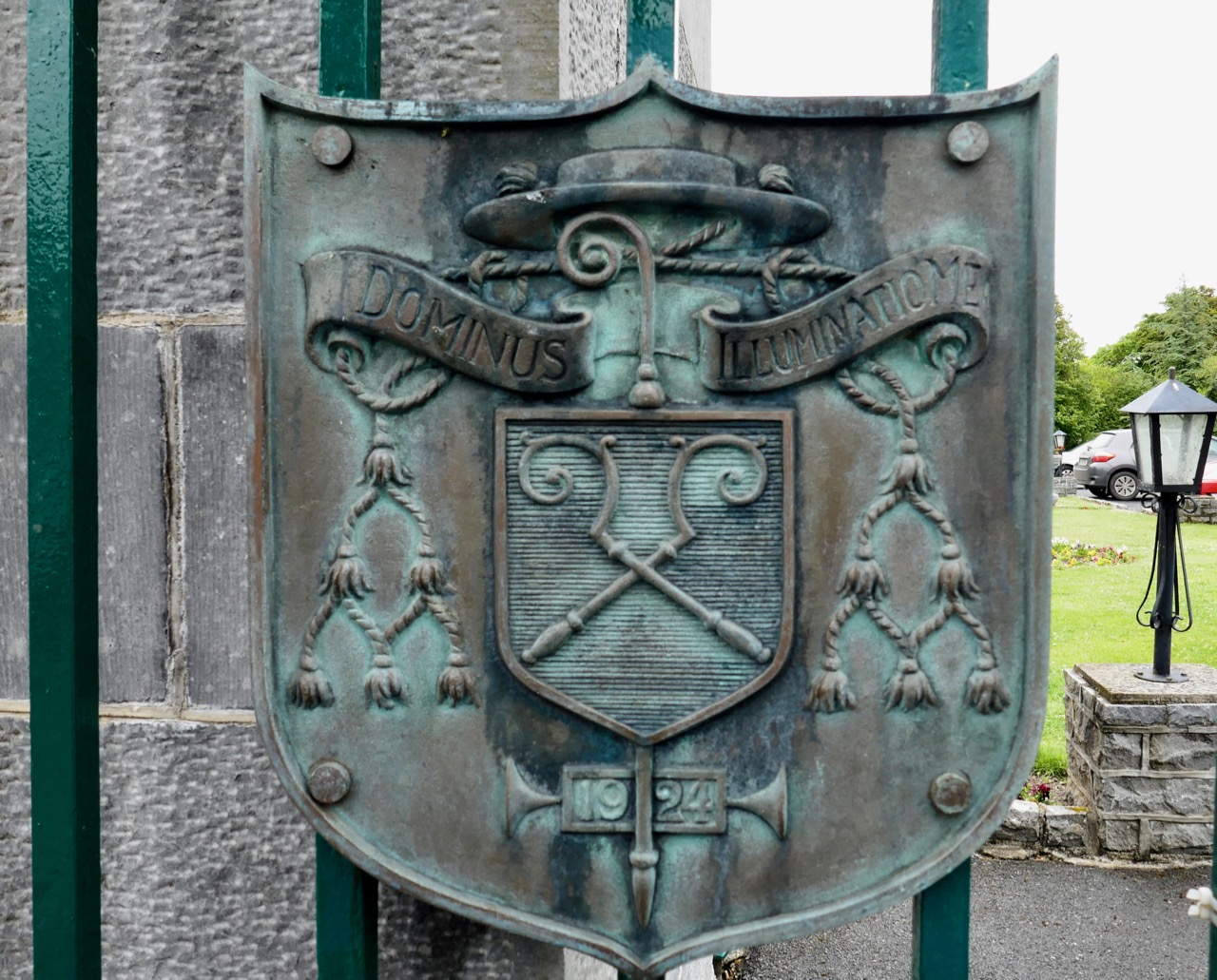
The massive cathedral gates, designed by William Scott