Cnoc Buí Arts Centre and 20th Century Irish Art

We have a major new player in the arts scene in West Cork. Over the last couple of years, Cnoc Buí (cnoc buí – yellow hill) Arts Centre in Union Hall, has quietly established itself as a significant focus for the arts. I have attended several exhibitions there, always marvelling at the space, the light, the curation and the excellence of the art on exhibit. Here’s the list for 2024, although it doesn’t include the current exhibition, and that’s the one I want to write about today. 
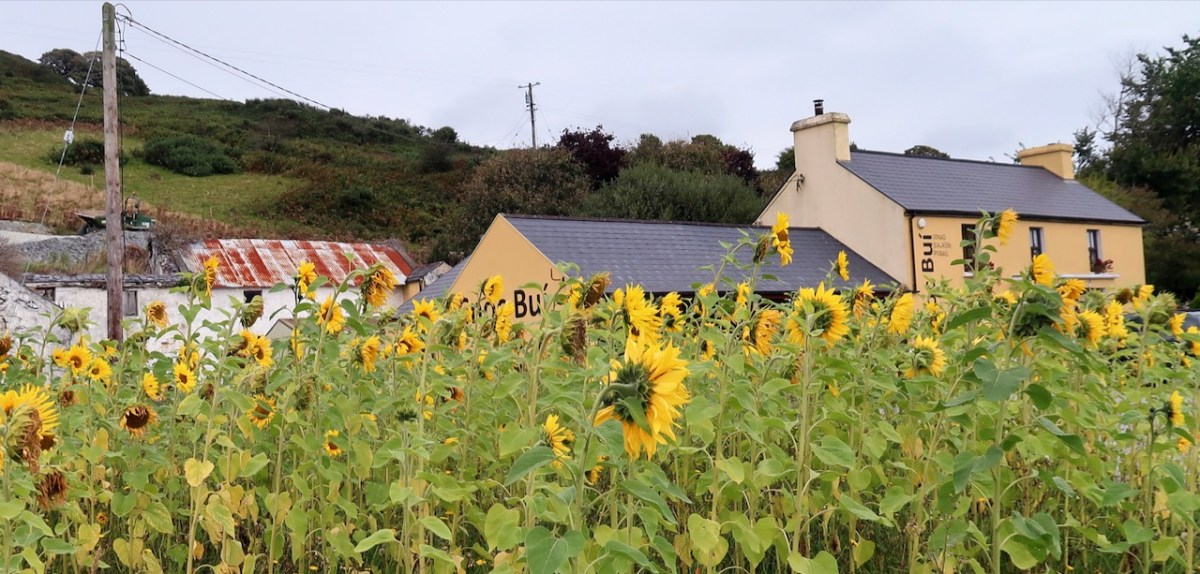
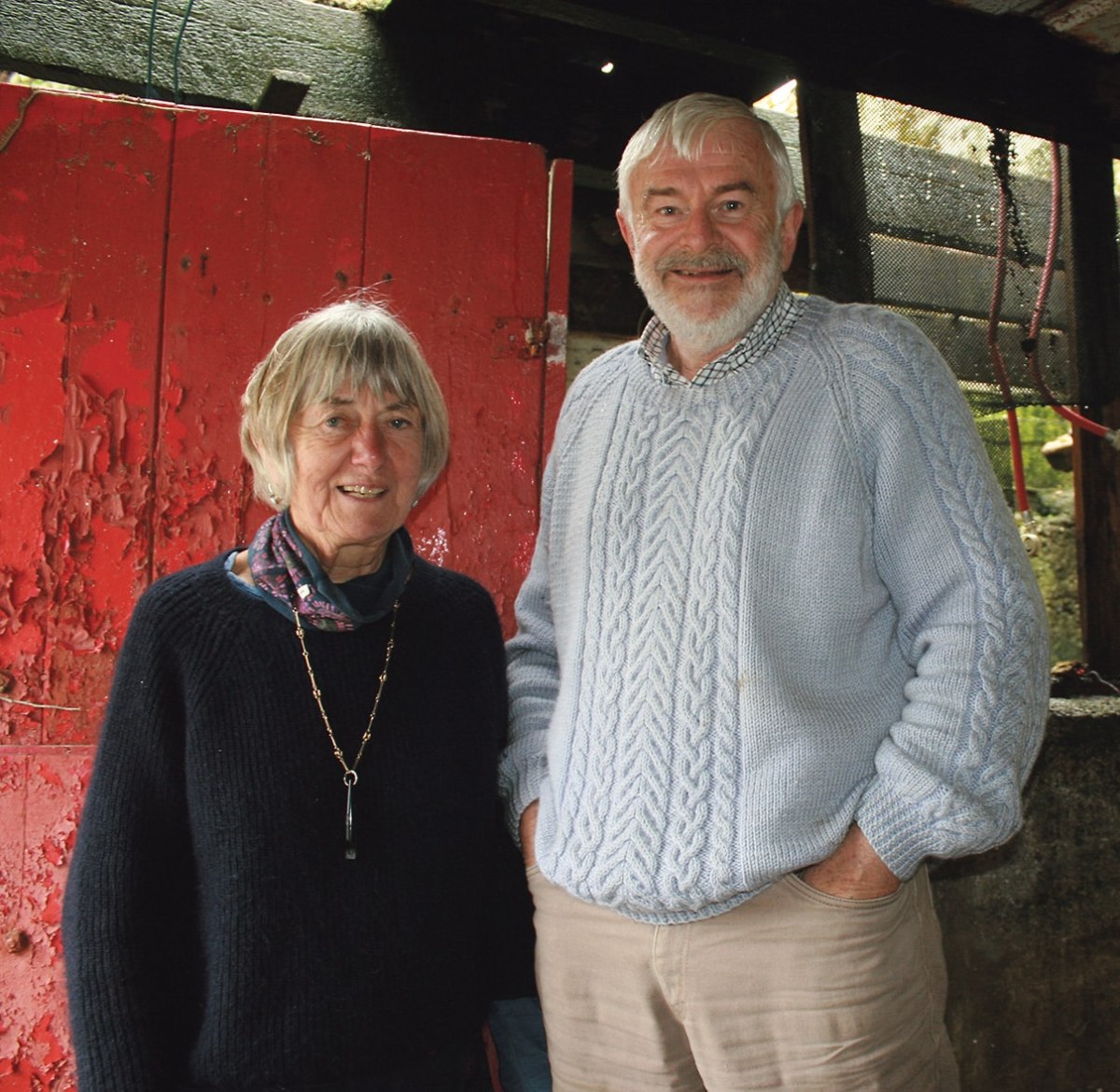
First of all, a little about Cnoc Buí itself (photo above by Amanda Clarke). As the name suggests, it’s a yellow house, beside the sea in in Union Hall, renovated and fitted out for the arts. It’s the brainchild of Paul and Aileen Finucane, who have come to live in Union Hall permanently, after owning a house here for forty years. Passionate about art, and avid collectors, they are ‘giving back’ in the most magnificent way possible through their philanthropic efforts. Read more about them and Cnoc Buí in this story from the West Cork People. (Photo below courtesy of the West Cork People.)
Those of you not living in West Cork – you have no idea how rare it is to come face to face, in your own backyard, with the great Irish artists of the 20th century. Normally we have to go to Dublin, to the National Gallery, or the Hugh Lane.
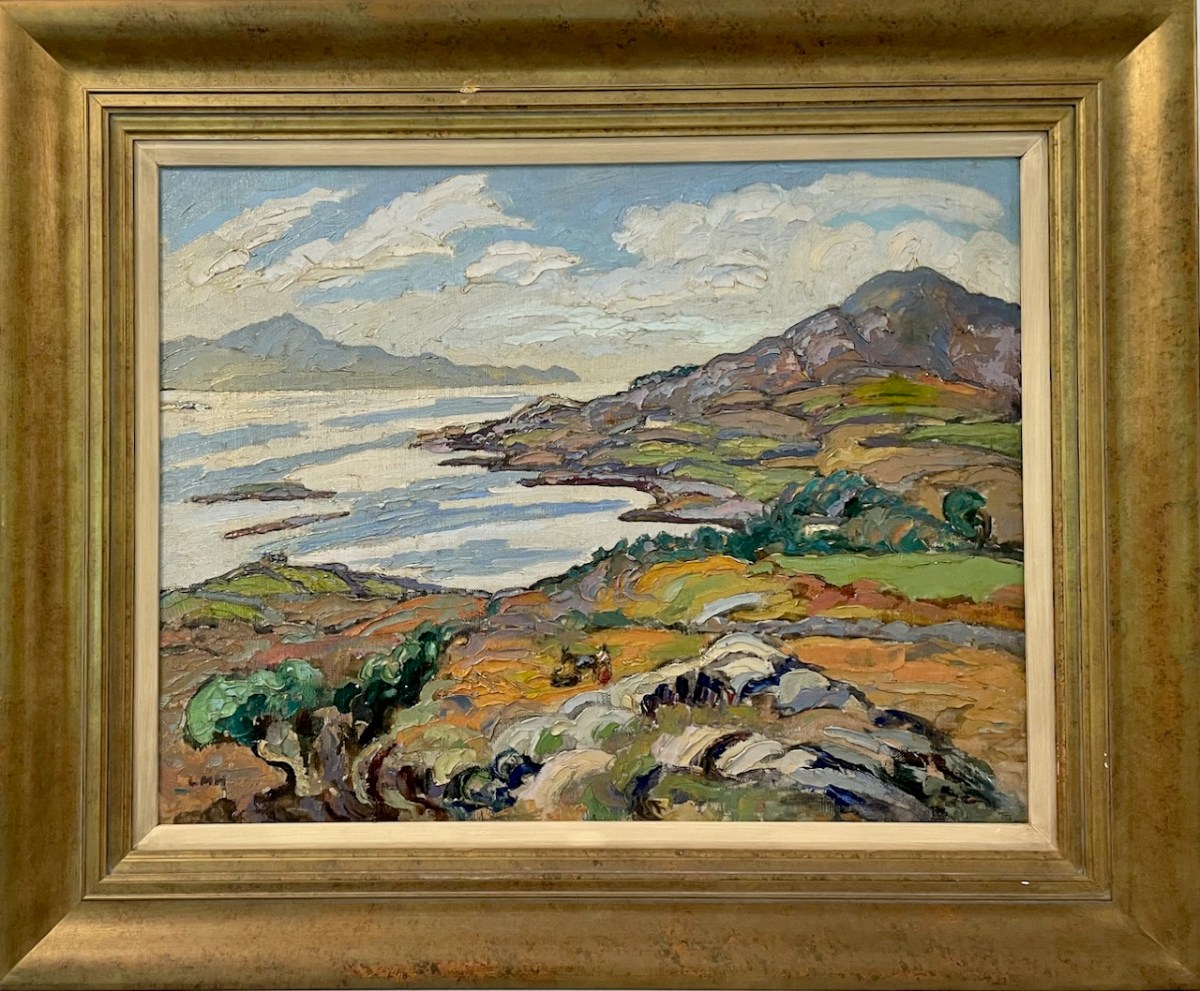
Ahakista by Letitia Hamilton

I often get my fix from the wonderful Facebook Page 20th Century Irish Art, and I have come, thanks to that source, to recognise many of the names and styles of our leading artists.
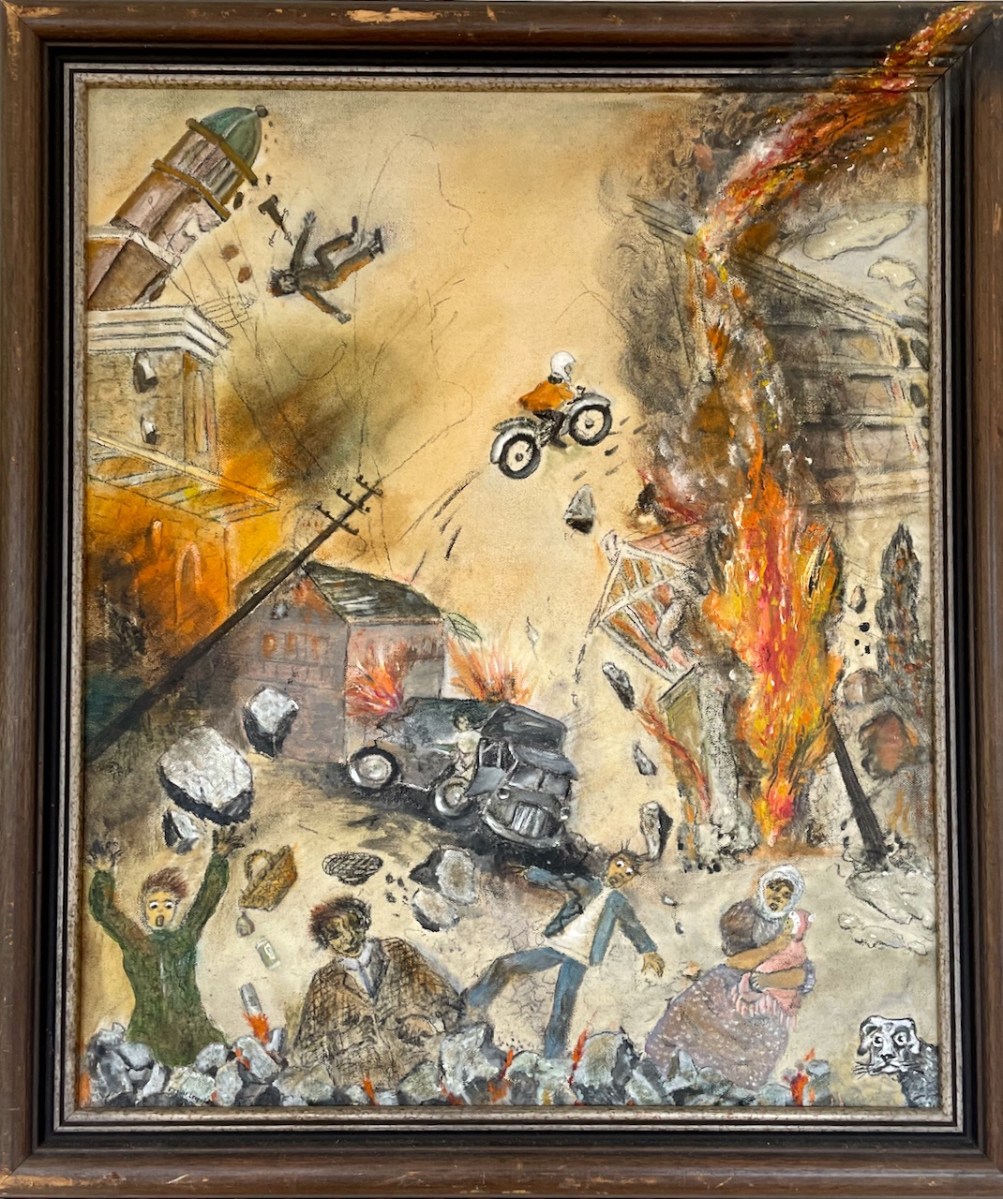
Phyllis Leopold’s The Belfast Blitz

The only other comparable experience I have had here in West Cork was with the Coming Home expedition in 2018. Don’t get me wrong – I love 21st century art and we have SO many excellent artists and great venues here in West Cork, and we have written about and reviewed many, many shows. Remember The Souvenir Shop? Rita Duffy is here as well.

Kathleen Fox, Still Life with Bust

This show emphasises Irish women artists – over half of the pieces are by women. We are all rediscovering the superb women artists who were in the shadow of famous husbands (Grace Henry, Margaret Clarke) or unjustly neglected (Kathleen Bridle, Hilda Roberts, Gladys Mccabe), better known as stained glass ‘craftswomen’ (Evie Hone, Sarah Purser, Olive Henry, Kathleen Fox), written off as mere ‘Illustrators’ (Norah McGuinness), or who were even actively discriminated against by the male establishment and dominating figures like Sean Keating. Some are getting the last laugh now – there’s a new exhibition opening now in the National Gallery devoted to Mildred Anne Butler, who is represented in this exhibition.
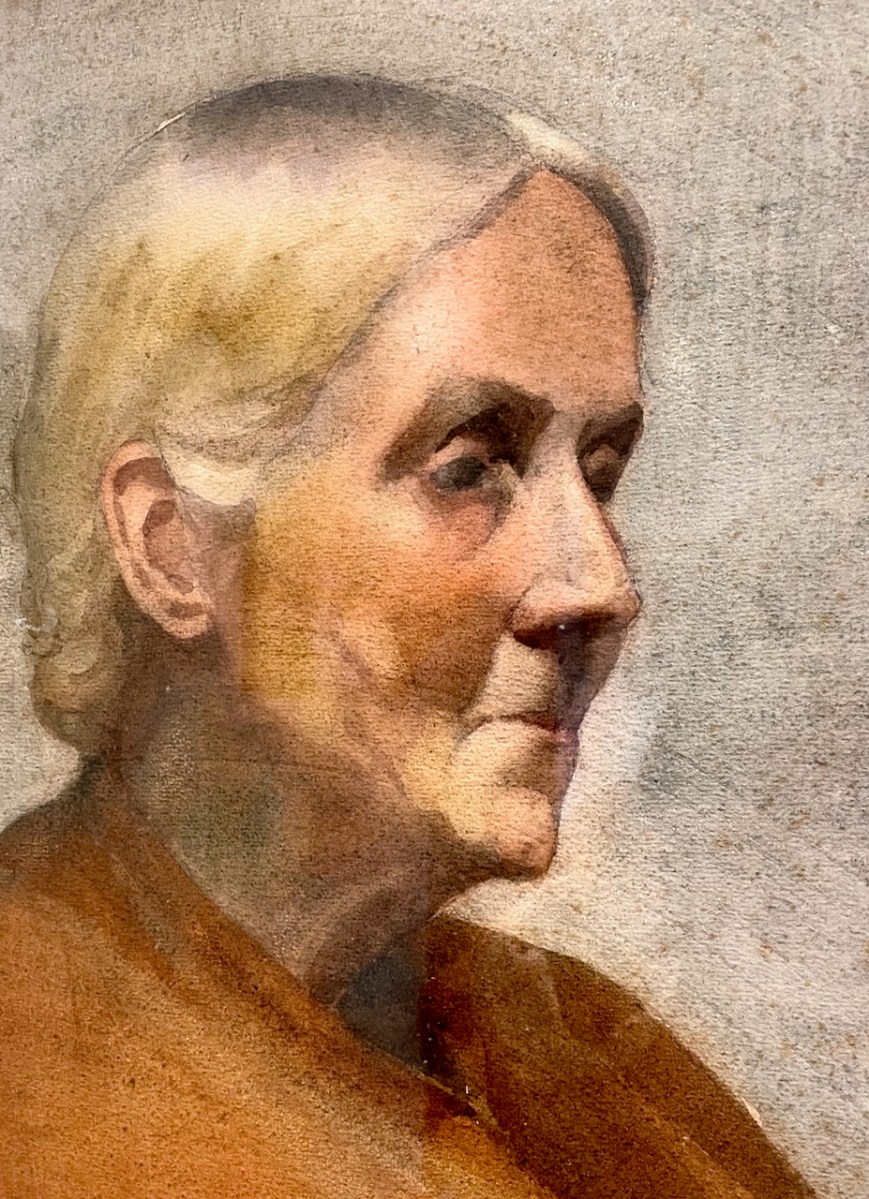
Olive Henry is more familiar to me as a stained glass artist, so I was delighted to see this fine portrait

But it was women who led the Irish art world into the modern era: The Irish Exhibition of Living Art was founded by women who had been able to afford to go abroad to study  and had picked up newfangled ideas on the continent – women like Evie Hone and Mainie Jellett. Young artists flocked to their exhibitions, while the old guard stuck to their conservative, academic forms – echoed, of course, in the suppression of women and modernism in the new Irish State.
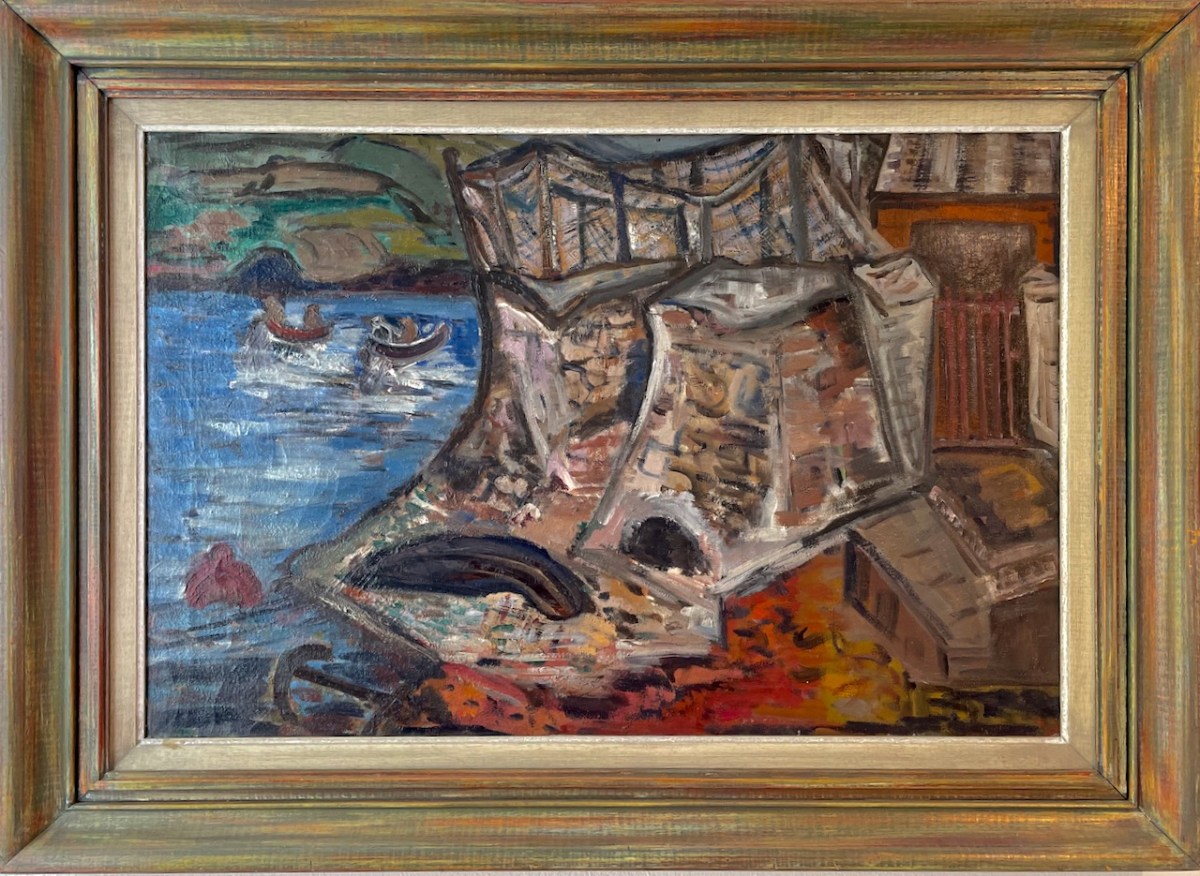
Evie Hone, Drying Nets – The Harbour Wall, Youghal

But here they all are, in Union Hall! The pioneering, courageous, persistent, driven, women of the new State. 
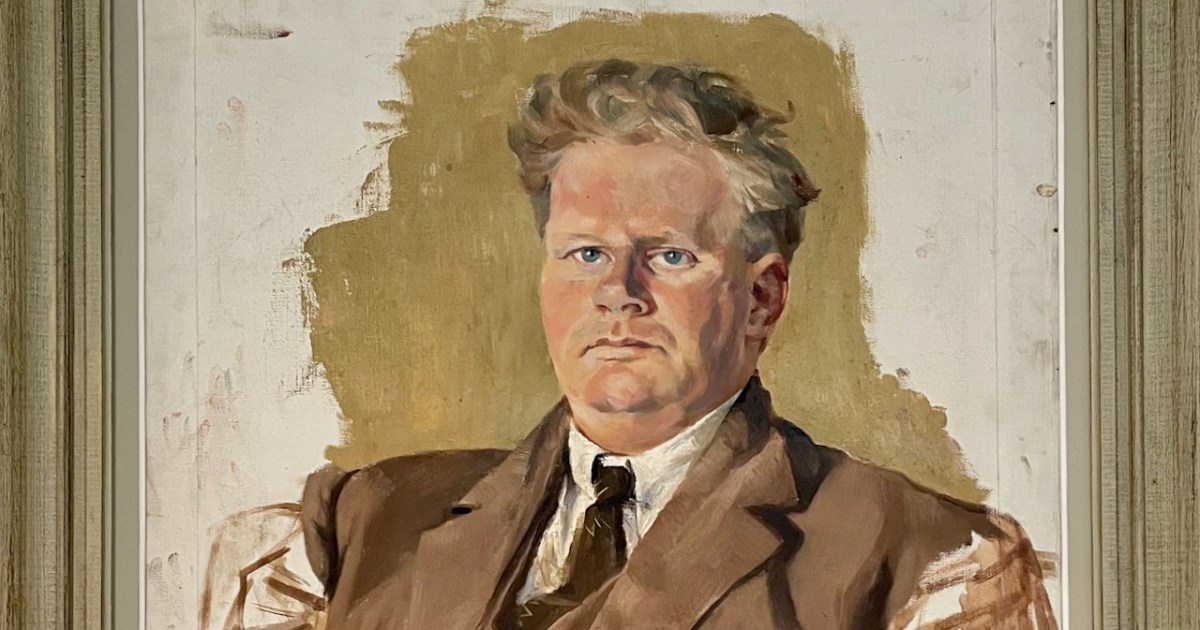
Portrait by Hilda Roberts

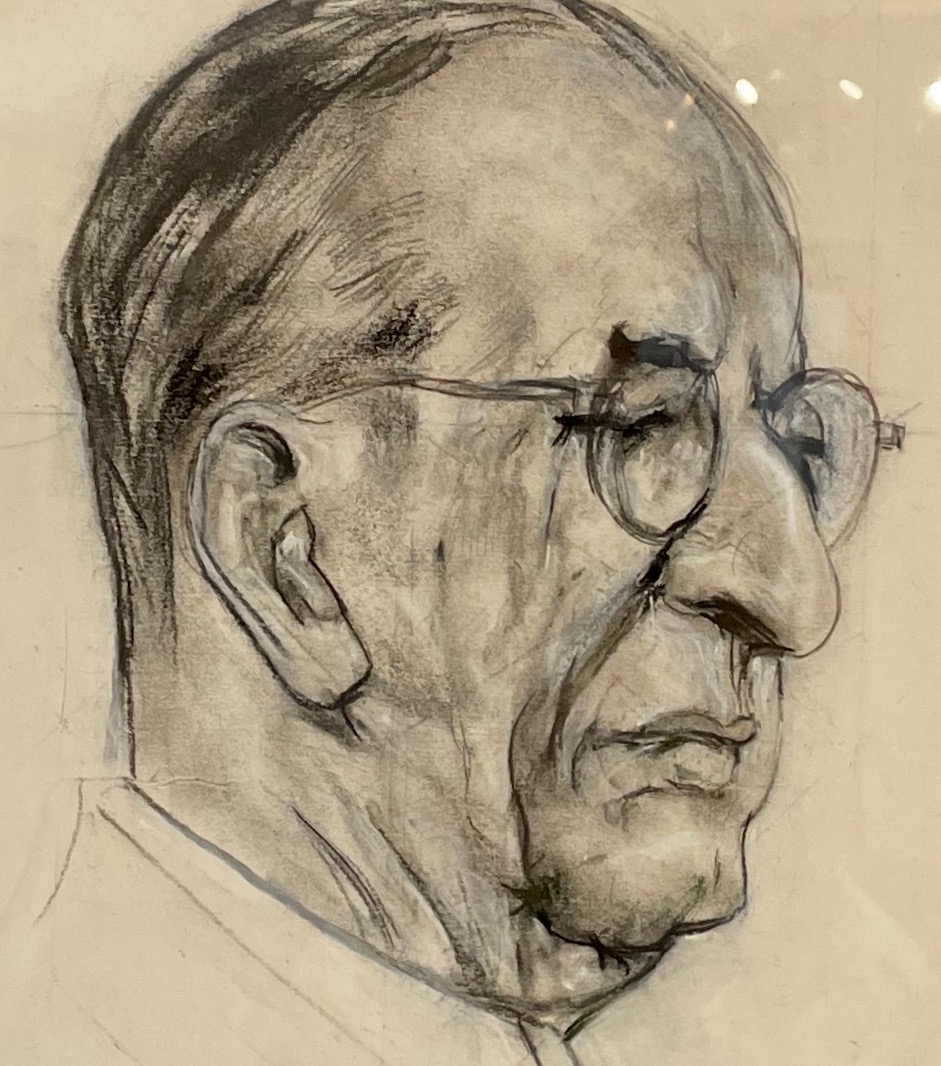
There are lots of men here too, of course – even Sean Keating, with a marvellous charcoal portrait of deValera. Did they grumble together about the goings-on over at the IELA?
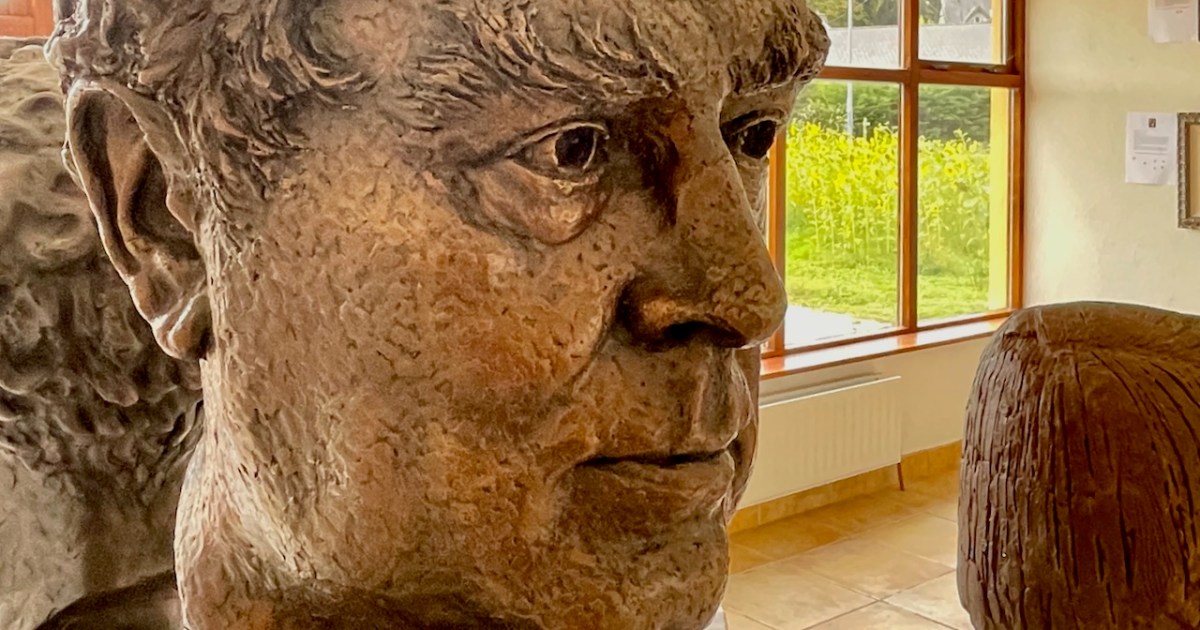
John Sherlock was new to me and a great discovery – I have used his bust of John Hume as my lead image. 
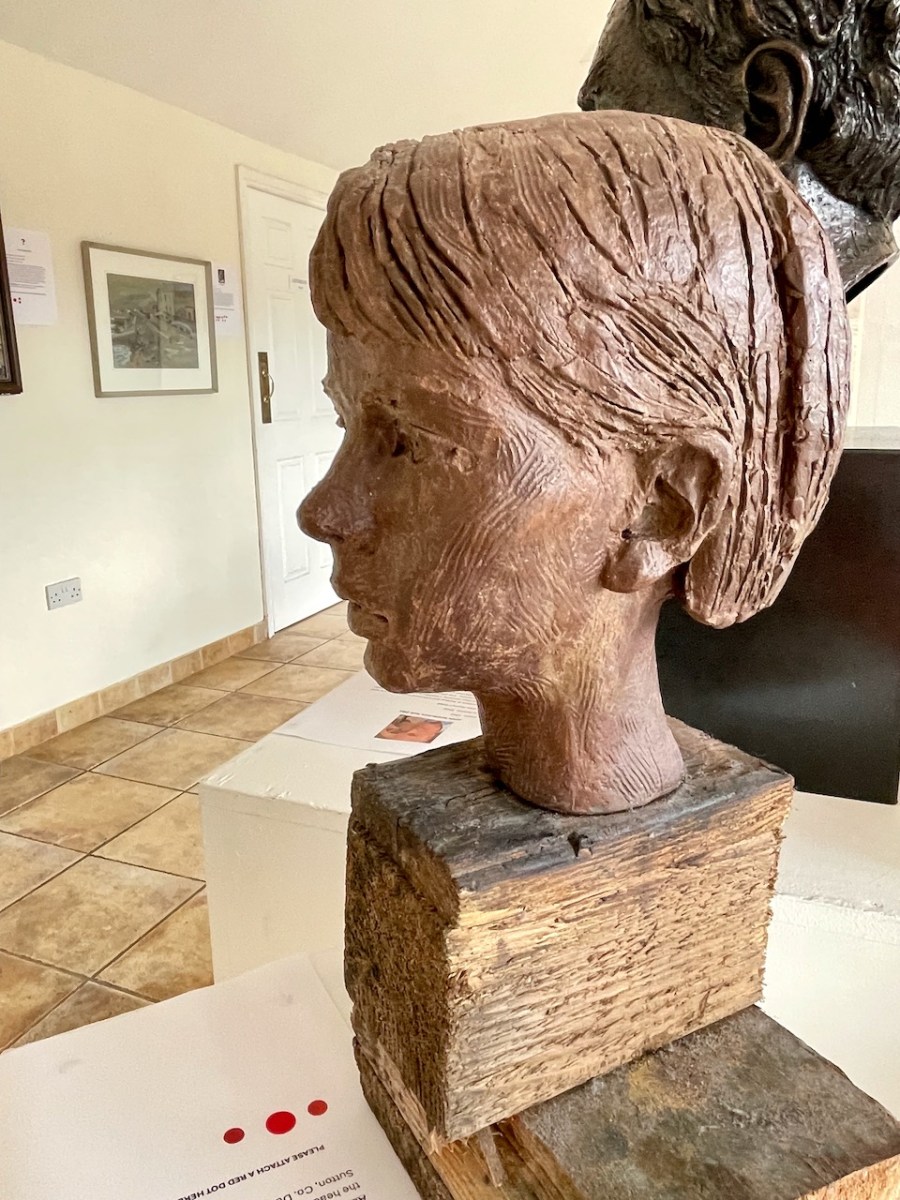
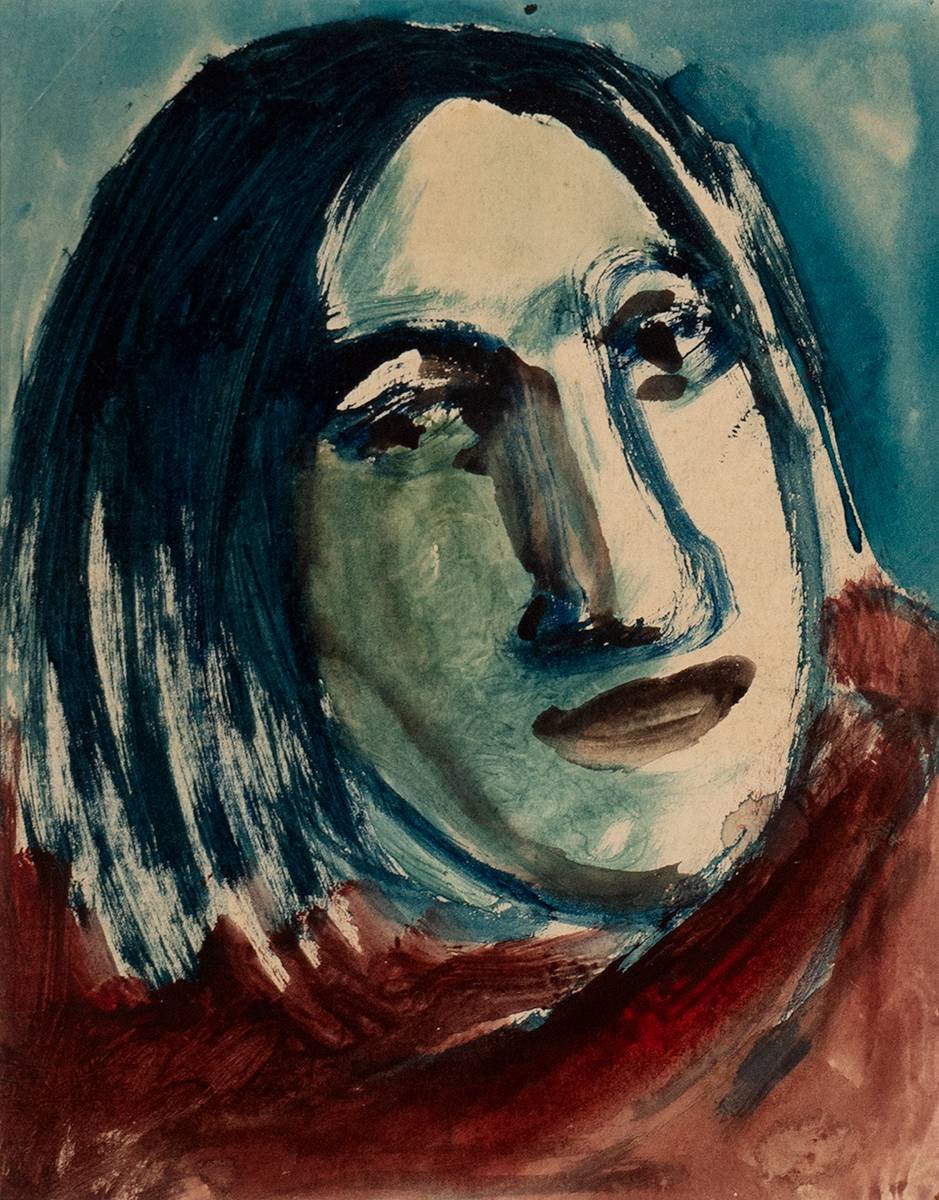
Oisín Kelly (above, Bust of a Young Girl) is a personal favourite, and I have mentioned Thomas Ryan in another context: he is also, perhaps, under-appreciated. George Campbell, despite designing windows for Abbey Studios in the 60s and 70s, never got written off as a stained glass craftsman. The portrait (below) is of his mother, Greta Bowen, who only began painting at 70 and exhibited well into her 90s.
I recognised this painting, Mary Magdalen (below) as a Margaret Clarke right away, even though I had never seen it before.
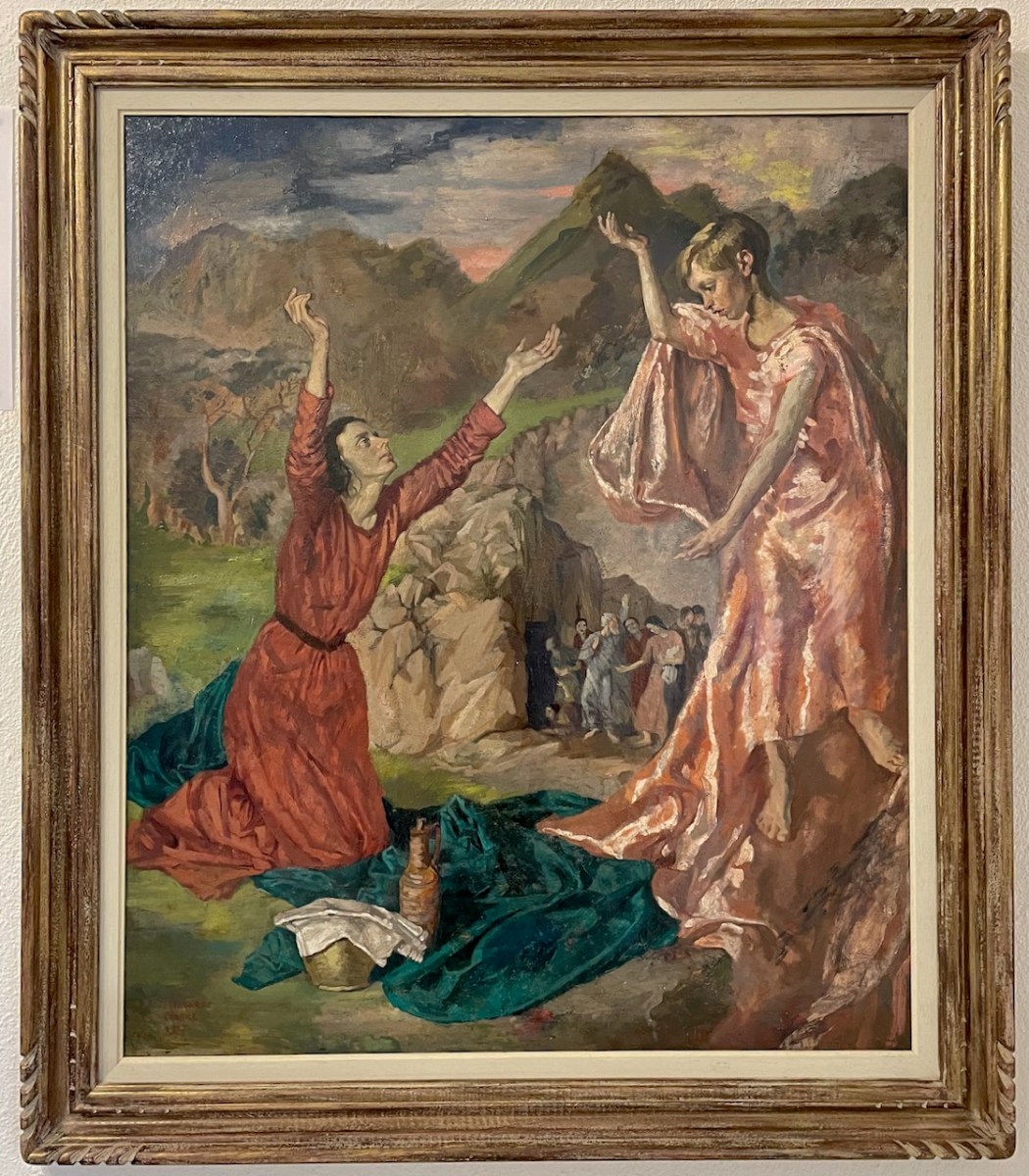
It’s that combination of exact portraiture (I am willing to bet the angel was based on one of her children), the haunting expression in the eyes of Mary Magdalen, and the way the gestures mirror the scenery and shrubbery behind the figures.
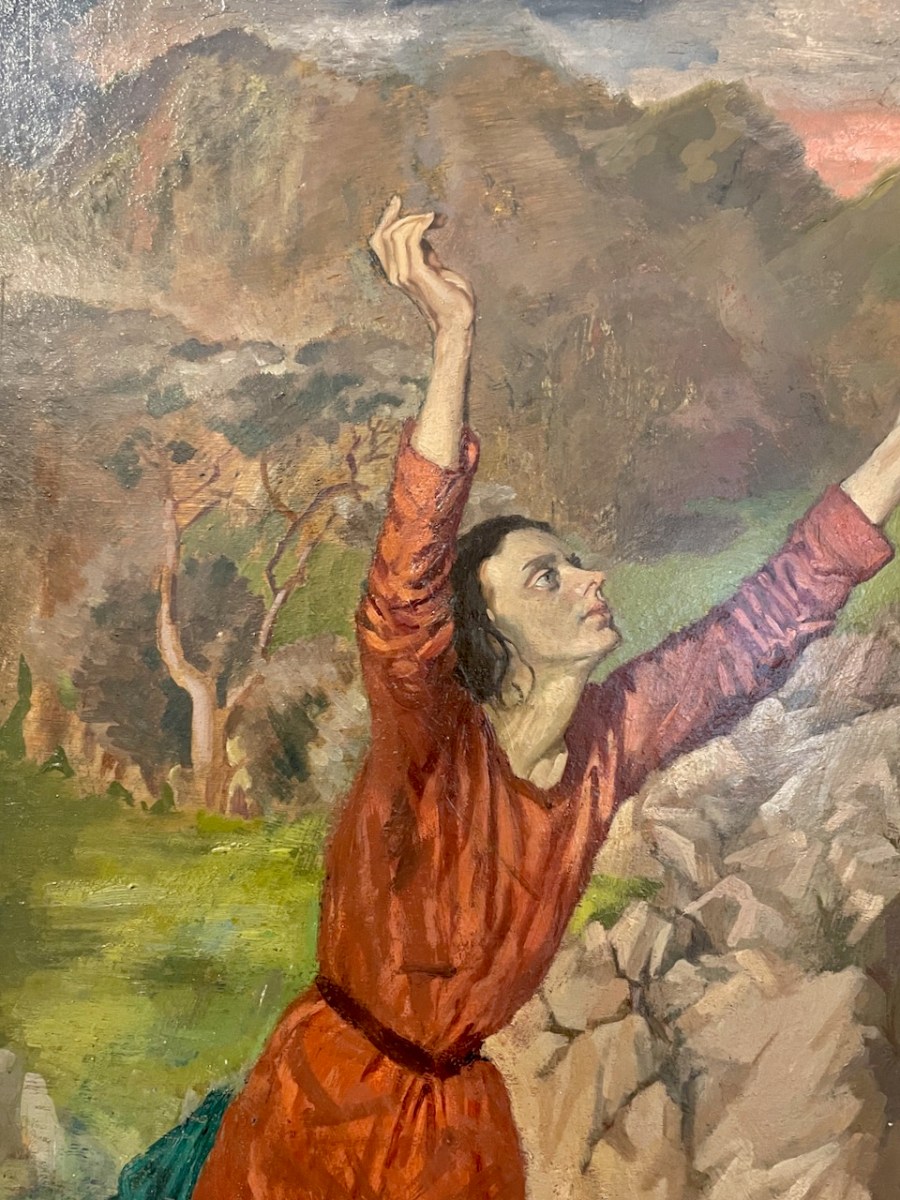
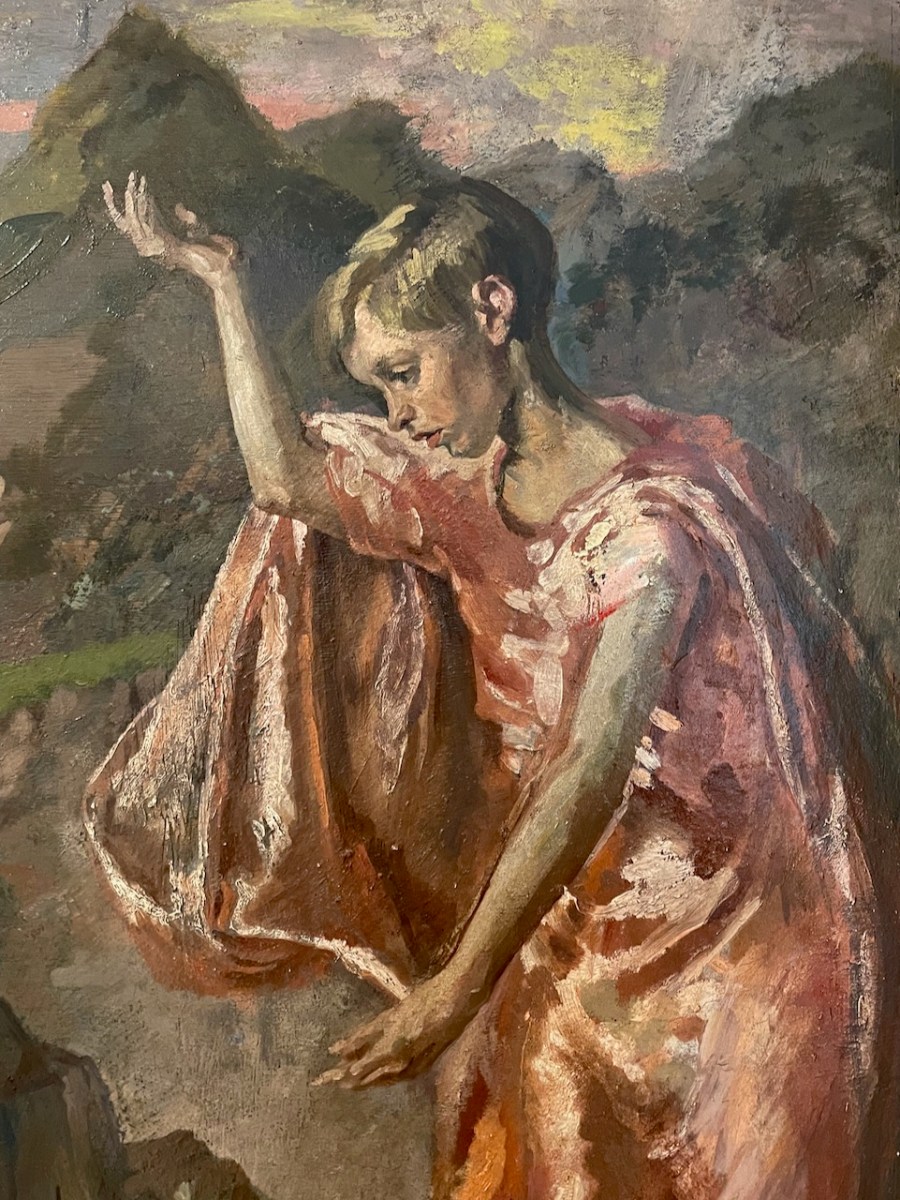
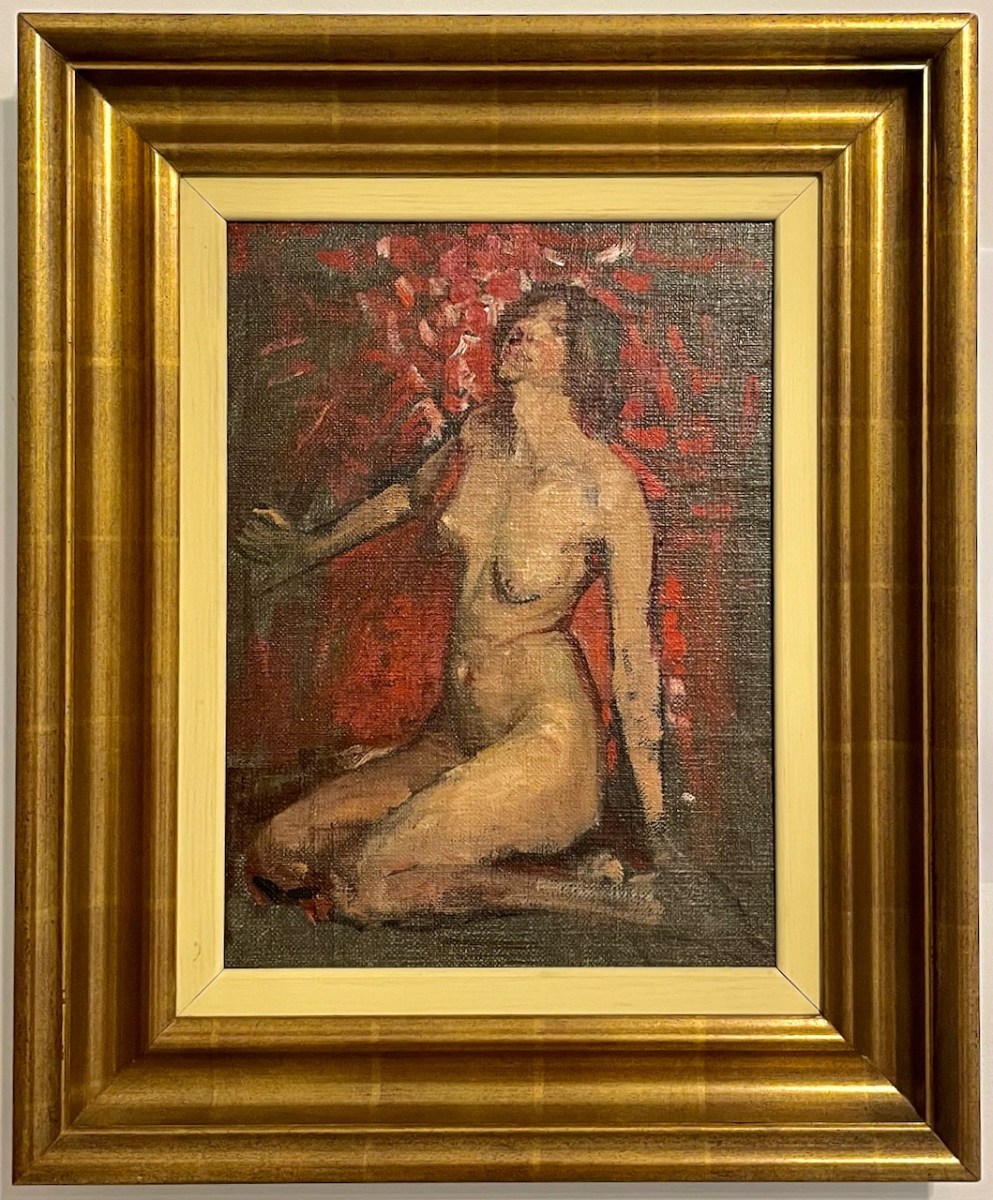
The Sarah Purser is interesting on a number of fronts. Purser made her name with portraiture, using her connections to obtain many commissions – she herself said she went through the British nobility ‘like the measles.’ But this nude (below) is of Kathleen Kearney, ‘Mother of All the Behans’, who worked for Purser as a young (and very beautiful) woman. Sarah Purser’s many talents (she was a superb manager of An Túr Gloine Stained Glass Studio among many other things) are currently on full display at the Hugh Lane Gallery.
I have only given you a flavour of what’s in this exhibition. If you can, get down to Union Hall and take a wander through it yourself. If you get there on a weekend, the charming Nolan’s Coffee House will be open. 
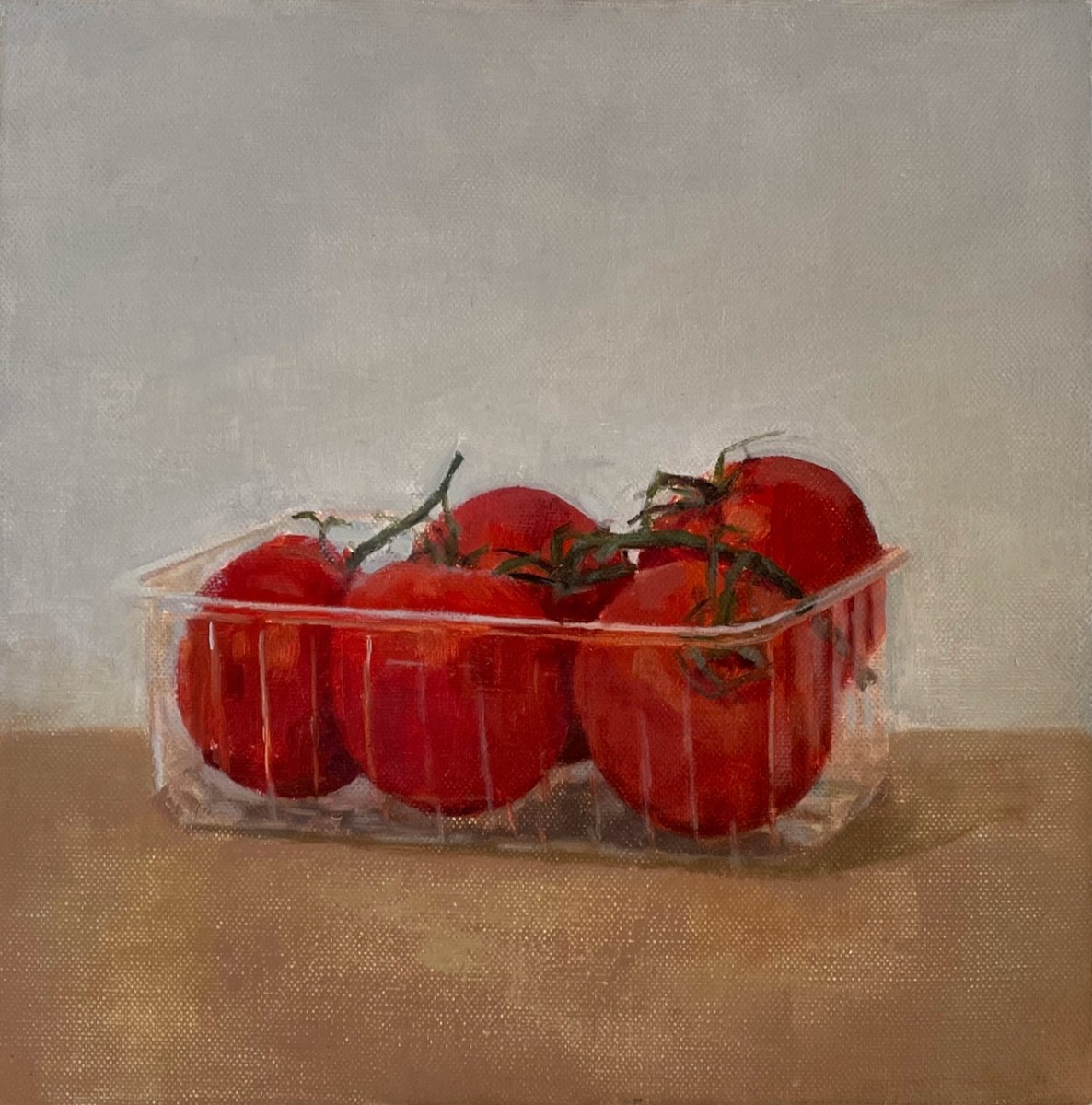
Maeve McCarthy’s Tomatoes

Becoming a Book Town: Skibbereen and Inanna Rare Books

This is the post that Robert was working on before he died. I have finished and edited it, keeping it in his voice to the best of my abilities. Finola

Ireland is rightly celebrated for its books – and their talented authors. You will find a thriving bookshop in many a modest Irish town. We are a nation of readers, it seems, and even when we are not reading much, we are buying books and loving books and  gifting books, and all the time developing our teetering pile of bedside books to dip into before sleep.

But it takes more than a good bookshop or two to deserve the title of a Book Town. According to the criteria, a town has to have ‘several’ books shops, and particularly shops that sell antiquarian and second-hand books. The only one we have been familiar with hitherto is in Sidney, BC, Canada, where Finola has spent many happy hours browsing among the treasures. 

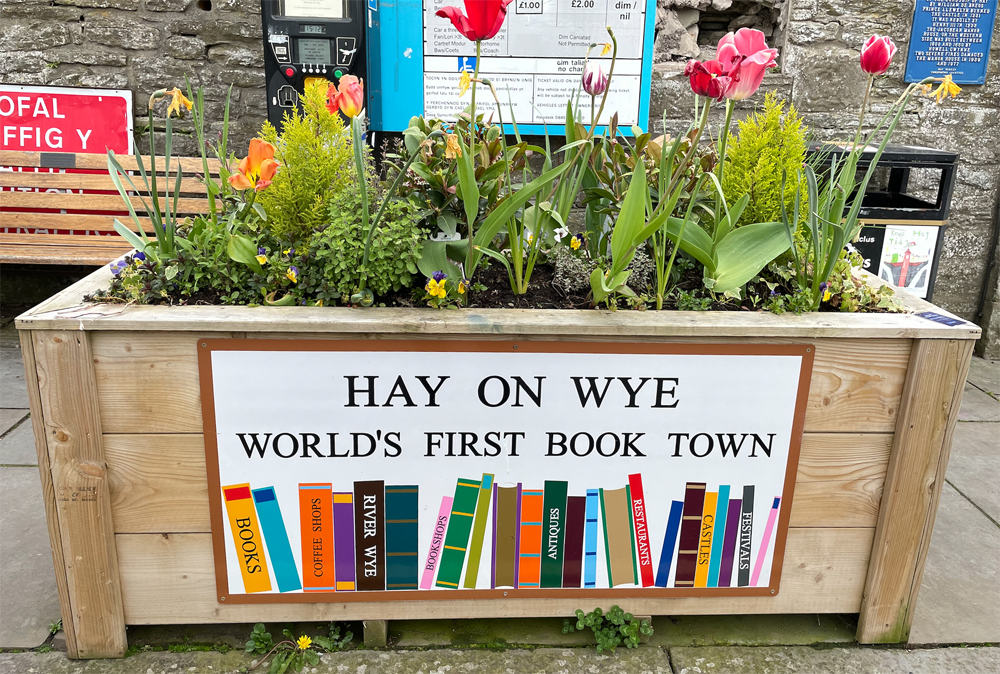
The Book Town model got its start in Haye-on-Wye in Wales (Image courtesy of the Curious Rambler) way back in the 60s and included, from the beginning, the idea that empty heritage buildings should be filled – with books! If you can add events – a festival, readings – or complementary business such as publishers or letterpress printers, all the better. 

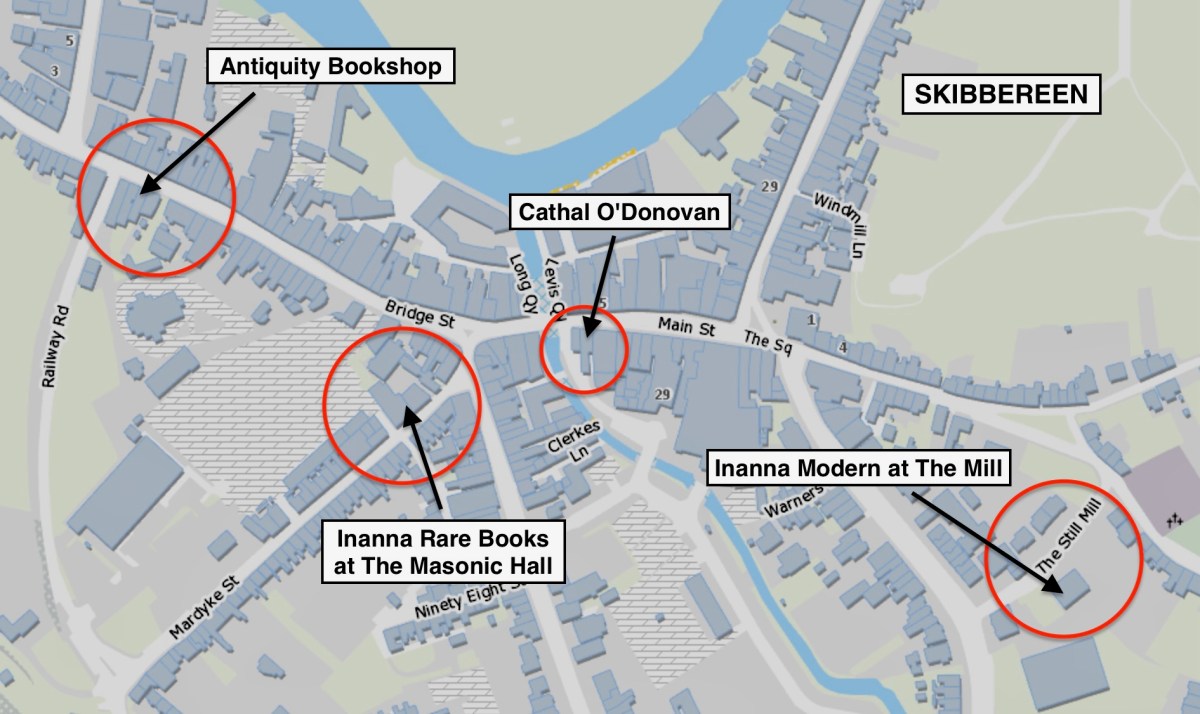
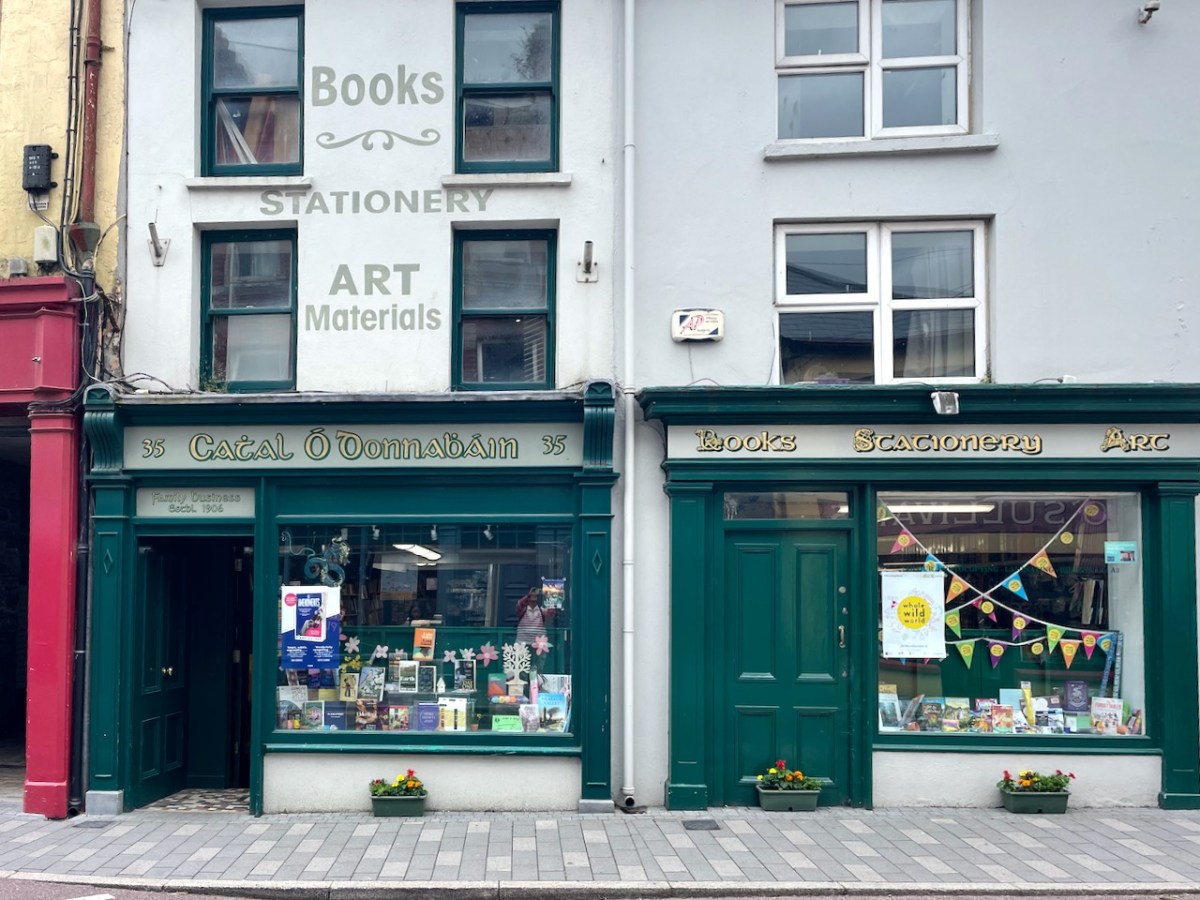
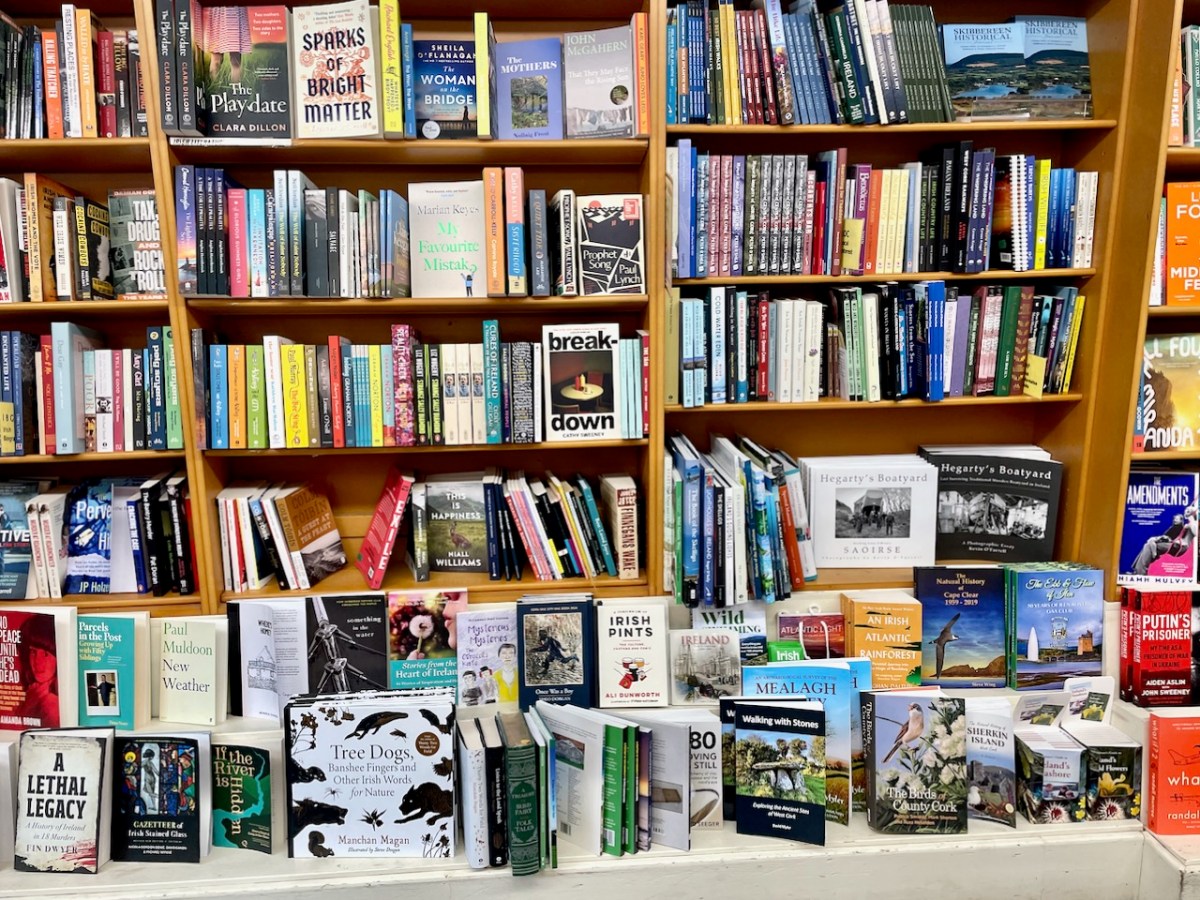
Skibbereen is well on its way to becoming a Book Town, mostly due to the efforts of Holger and Nicola Smyth and their family. Before we get to the Smyths, though, we have to talk about the other books stores and especially Cathal Ó’Donnabháin’s excellent store which supplies us with the best in local interest and contemporary books. In the photo below, taken this week, Finola and I are represented in three of the publications on the shelves. Can you spot which ones?

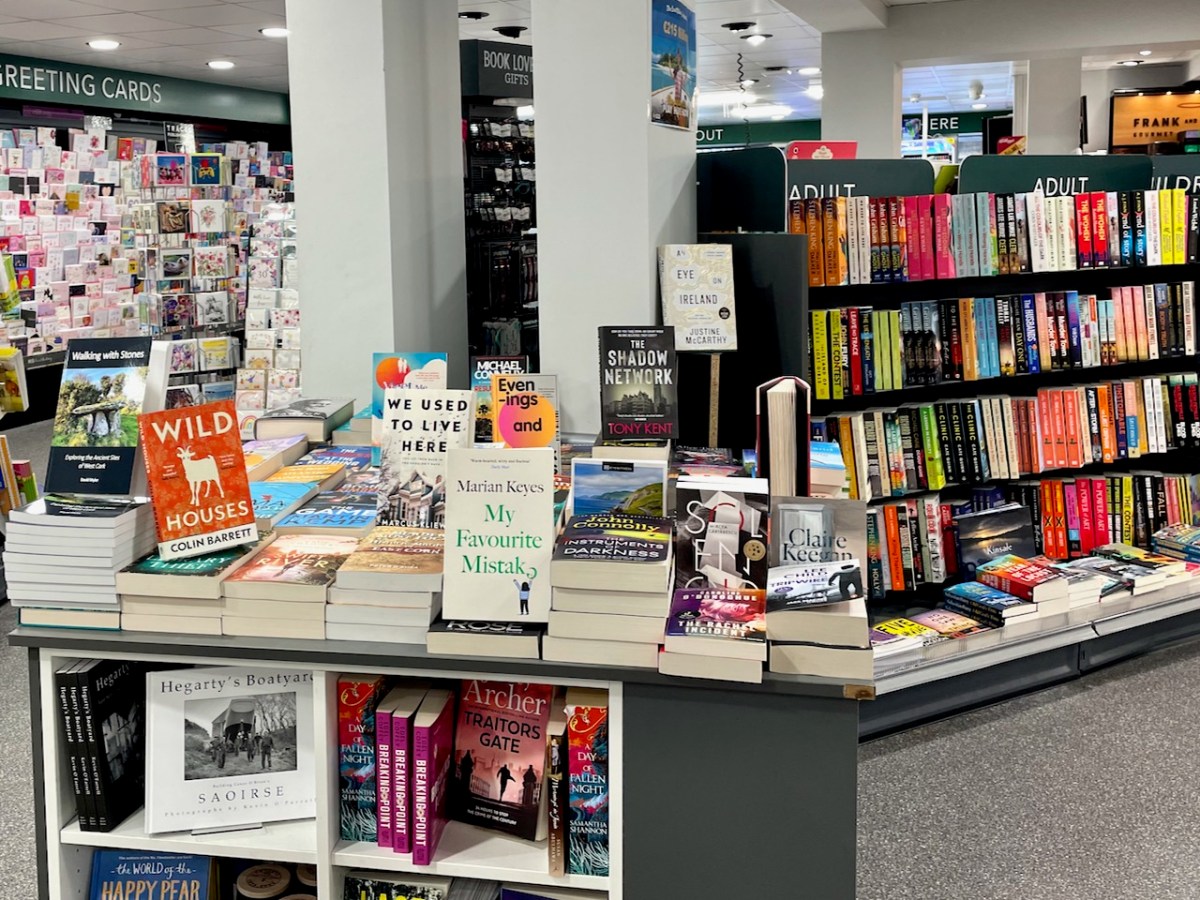
There’s usually an excellent selection of old books at the Charles Vivian stall at the Skibbereen market on Saturdays – they have a premises too, near Rosscarbery. Even our local SuperValu, Fields of Skibbereen, has done a major renovation and now incorporates a section selling books and periodicals. 

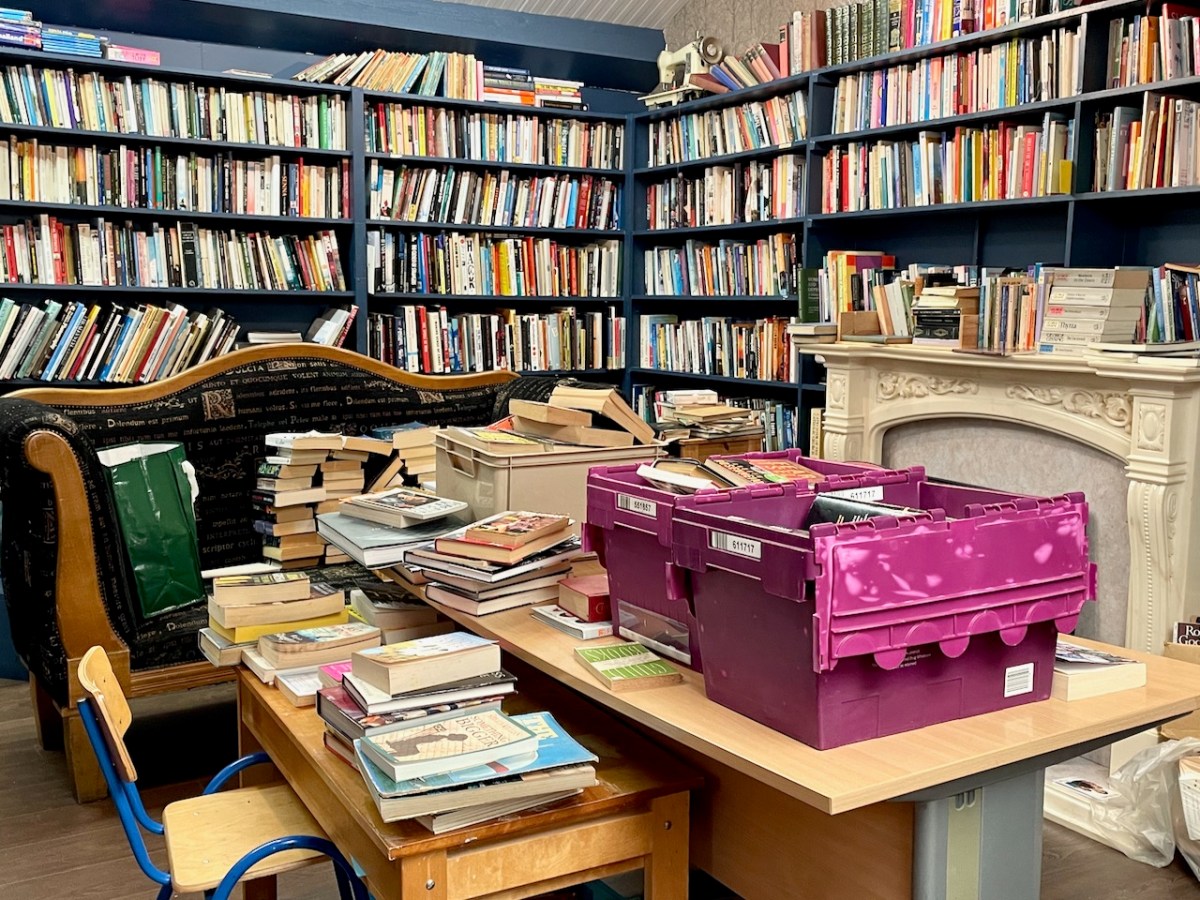
You can spot surprising finds, too, among the second-hand book sections of the town’s charity shops – I was tempted to curl up and spend an hour at this room at the Charity Shop for the wonderful Lisheens House.

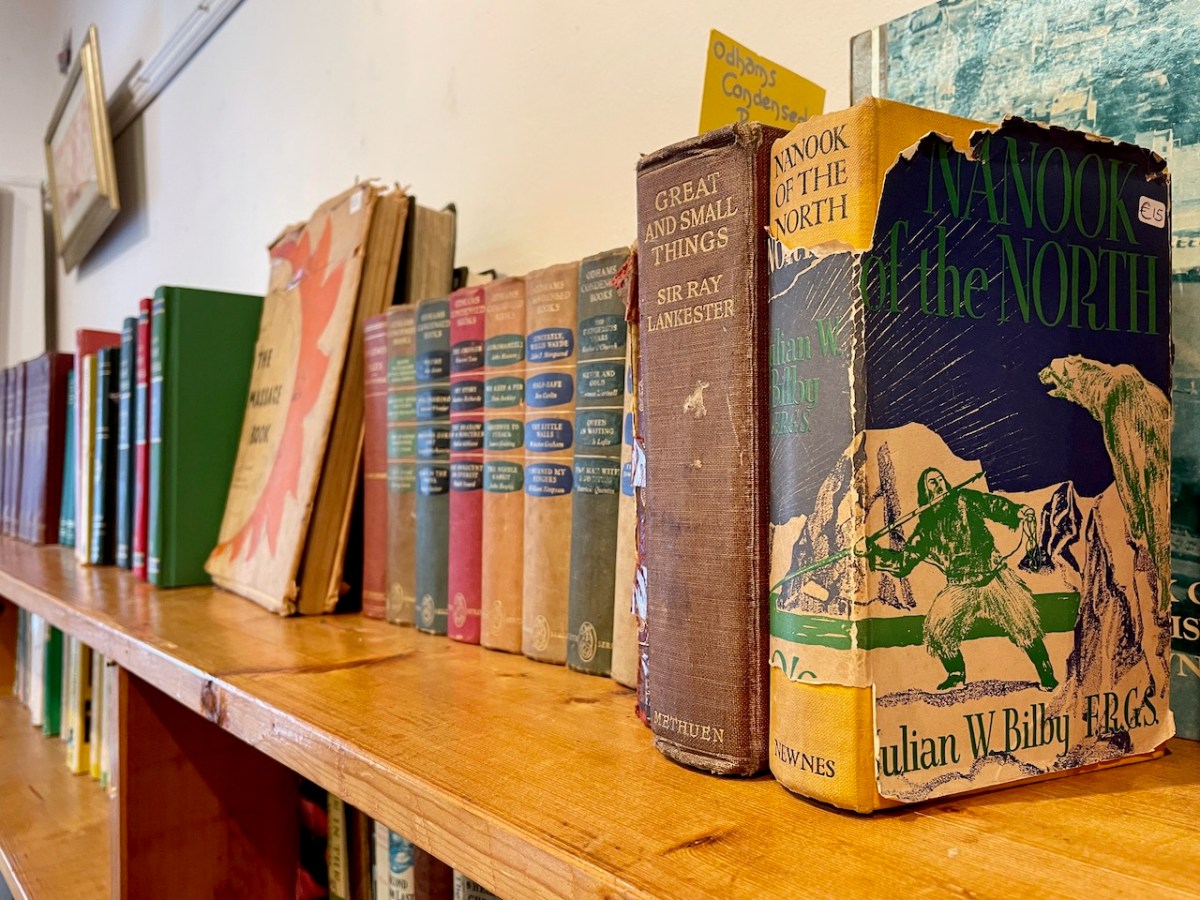
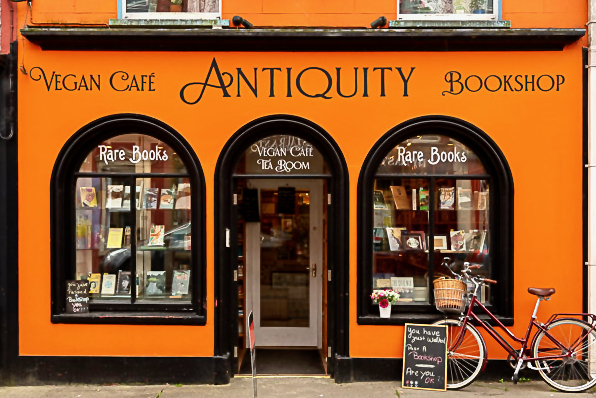
But Skibbereen is also fortunate to be a significant centre for rare and antiquarian books – and much more. What is now known as Antiquity (and might be more familiar to many as The Time Traveller’s Bookshop) is a great asset to all residents in the area. Not only is it “…the first All Vegan Cafe in West Cork…” but it offers a plant-based menu, a juice bar and good coffee – all to be enjoyed in the environment of well stocked shelves of fascinating secondhand books which can be browsed at leisure, and purchased. I can vouch for the excellence of the vegetarian stew!

Antiquity is run by Nicola Smyth and her son Junah. Nicola met with her husband Holger, 30 years ago and “…fell in love in front of Holger’s first bookshop…” They travelled in Europe for many years with their four children and many dogs, living in a world of rare books, before settling in West Cork in 2008 and opening The Time Traveller shop. Finola and I came across the Smyths and their books when we also settled in West Cork in 2012. If you had a look into our library at Nead an Iolair, you would see many volumes which have come from Holger and Nicola, especially classic Irish titles on history, archaeology and Irish art and literature.

The Smyths have never been folk to rest on their laurels. Over the last decade or so they have expanded their activities and their geography – experimenting with forays and pop-ups into Cork City, Kinsale and Westport, for example. The Westport shop is still open, under new ownership, as West Coast Rare Books. They have also added to their specialisations Manuscripts, Rare Maps of Ireland and the World, Original Art & Photography, Illustrated Books, Decorative Art, Etchings & Engravings, Lithographs, Botanical Illustration, and rare Vinyl from the 60s to the 90s, a selection of Rare 78’s, and Early Jazz, Rock & Pop albums. If this seems remarkably ambitious, well, it certainly is – and how lucky are we in West Cork to have these offerings right on our doorsteps?

I set out today [Robert was writing this in February] to explore a relatively new venture by Holger – Inanna. Let’s first look at the name: Inanna is a goddess. Worshipped in ancient Mesopotamia, her dates are around 3000 BC – about the same age as Brú na Bóinne, the Newgrange passage tomb, here in Ireland. She is well documented as the Queen of Heaven, and legends connect her with the creation of the cycle of the seasons. She is acknowledged as reigning over love, war, fertility, law and power.

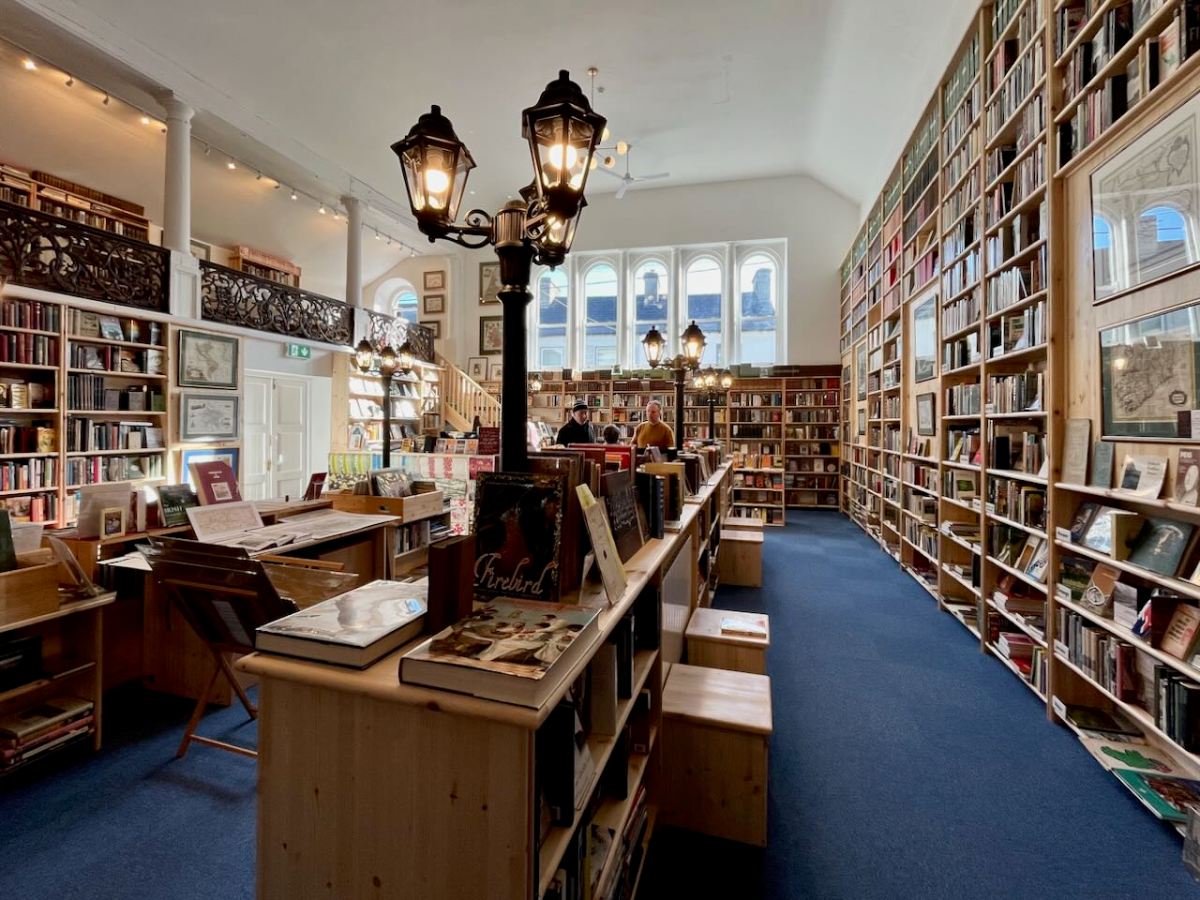
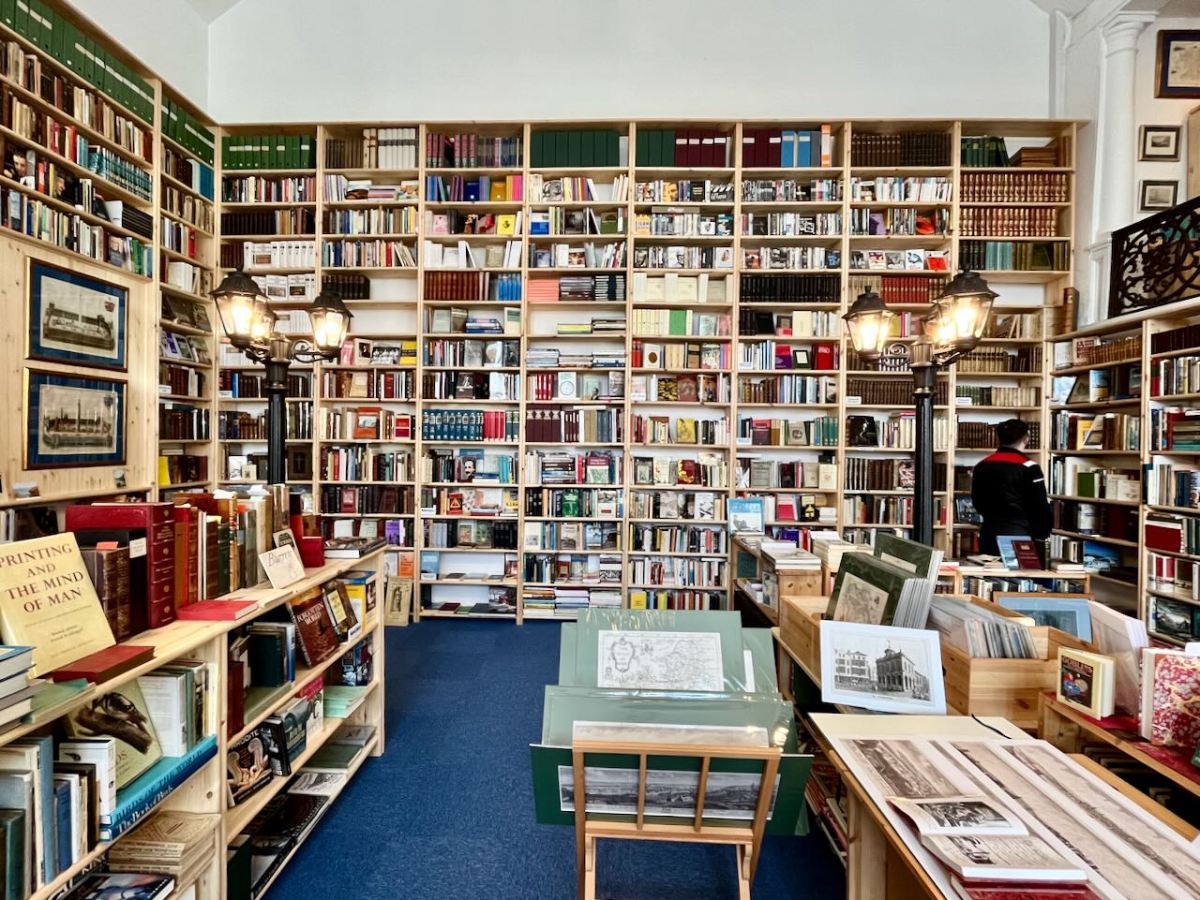
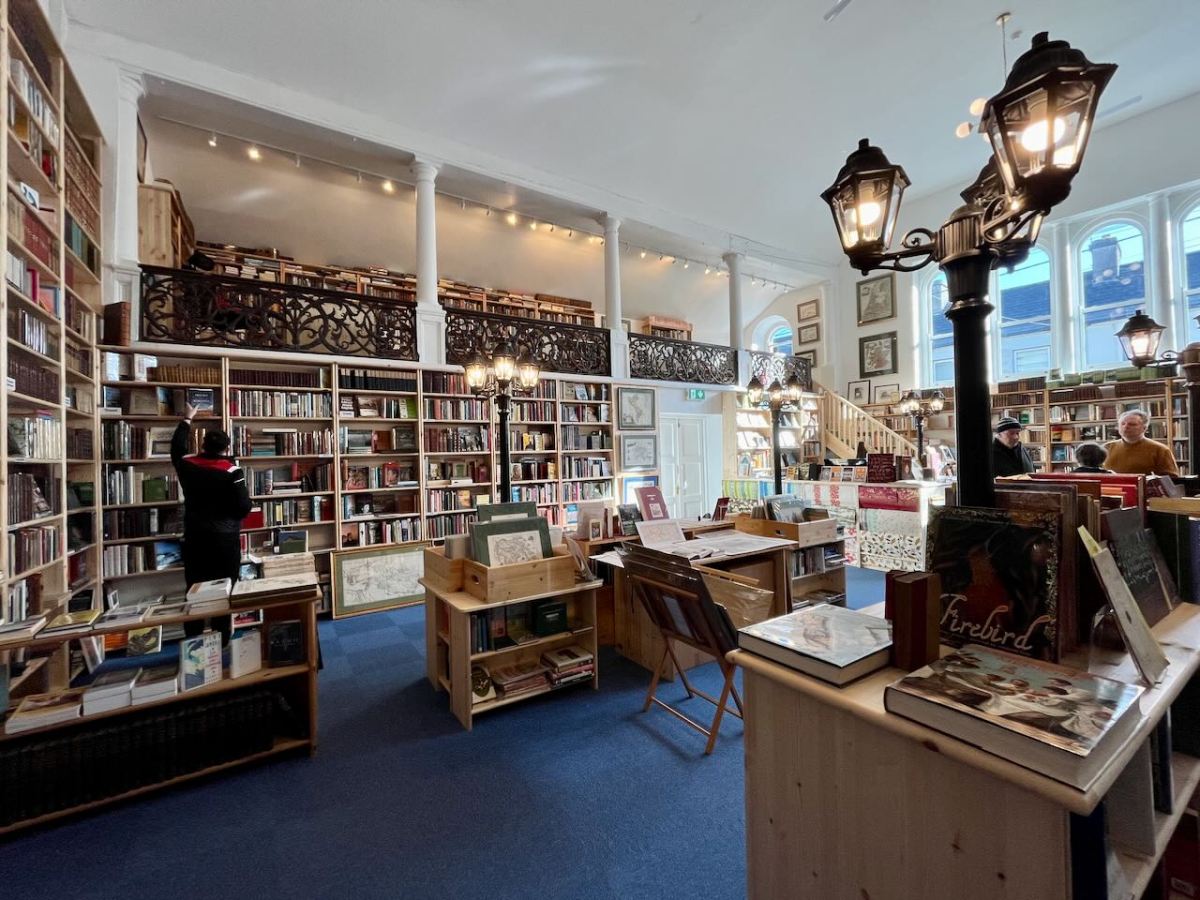
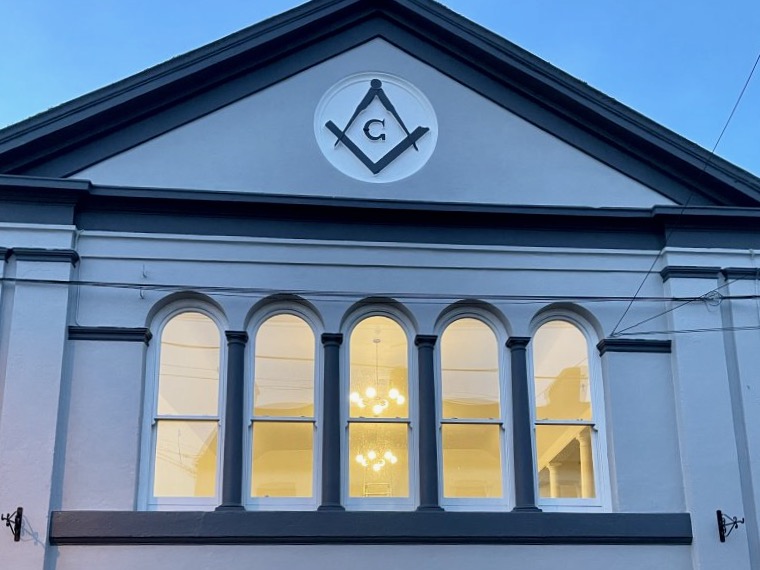
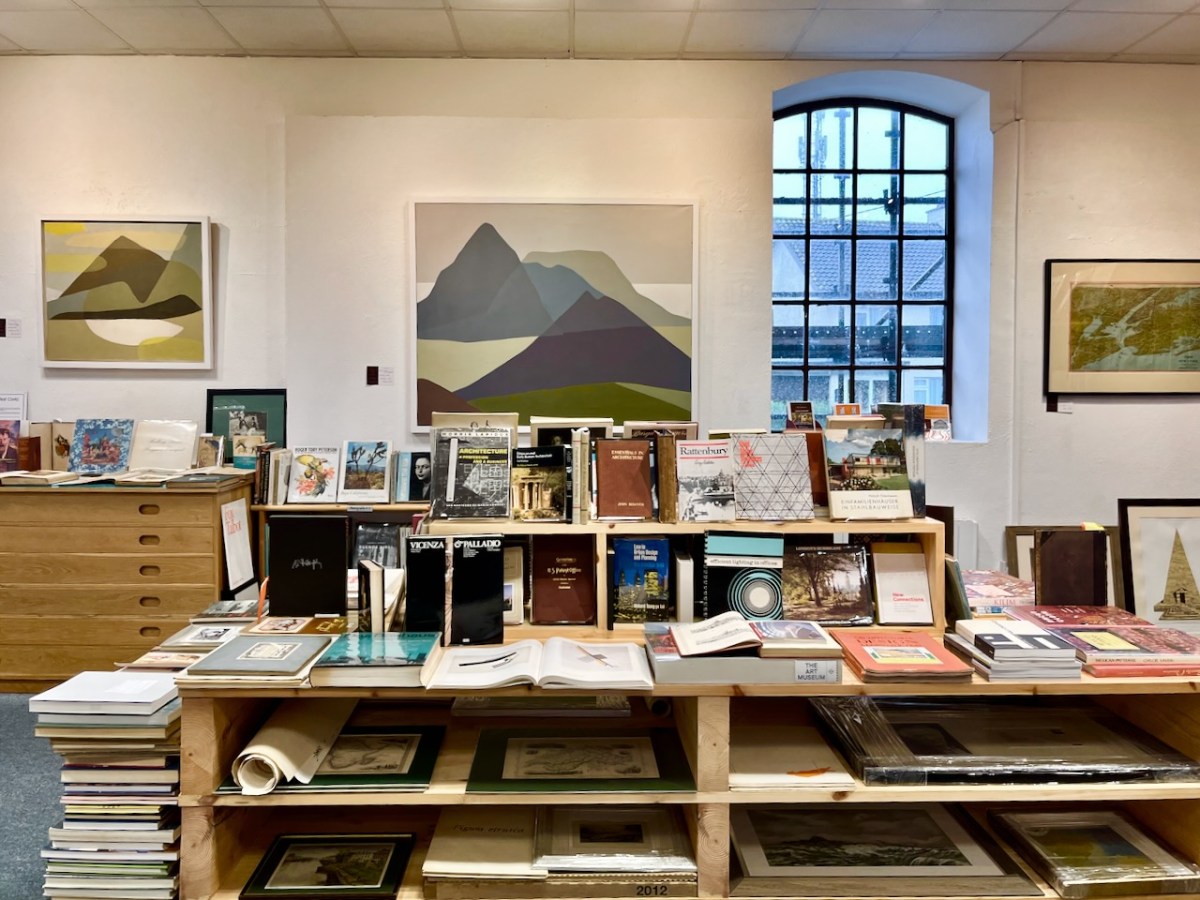
In keeping with the Book Town ethos of utilising historic buildings no longer in use, Inanna Rare Books is housed in the Masonic Hall – I can think of no better use for a building like this. It’s like walking into a grand Victorian library, with books stretching to the ceiling, a mezzanine with an elaborate wrought iron bannister, and the whole place flooded with light from the huge arched windows. 

This striking edifice was built in 1863 as a lecture hall. Alas, the lectures didn’t thrive – although such public adult education efforts were very popular at the time – and it was sold after a few years to the Freemasons, and became a Masonic Hall, a meeting place for the masons and a centre for their ritual activities. Over time, their numbers dwindled, but the hall remained in good shape and retains most of its original features, including the timber sash windows.

Over 500 people visit this book store every month. Some travel from afar especially to see this glorious space and browse the collection. 

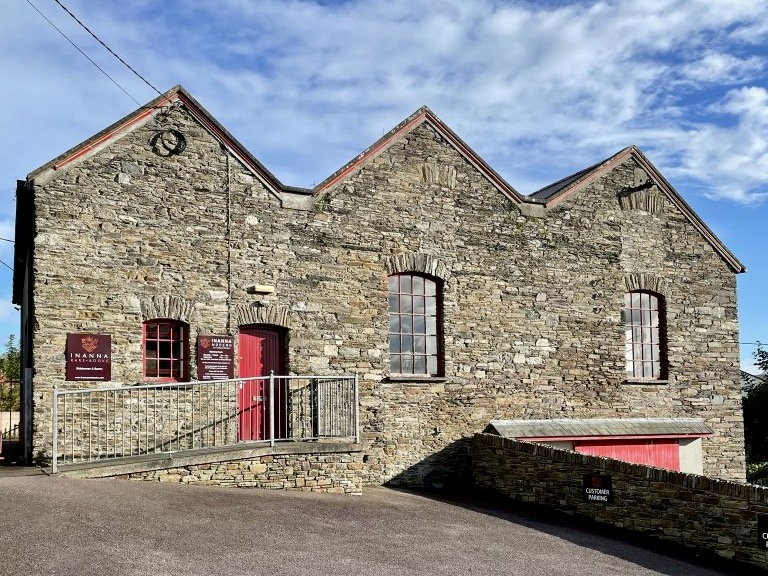
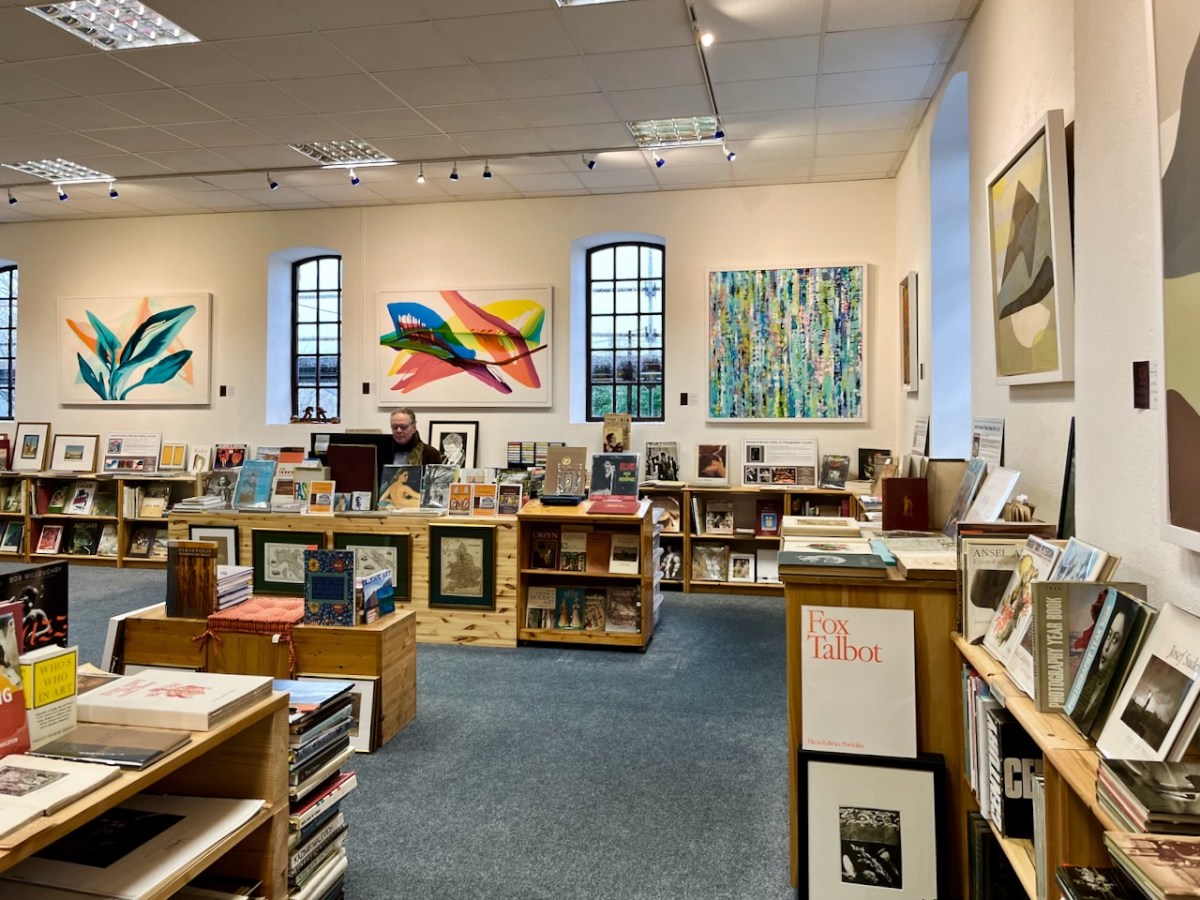
Holger and Nicola’s most recent store is the Still Mill, just off Market Street (above). This, as the name suggests, started off life as a distillery in the 19th century, becoming a grain mill in the 20th century. It had a mill wheel to drive the machinery – that wheel was later broken down and sold off for furniture-making. One of the town’s businessmen, Michael Thornhill, slept as a baby in a cradle made from the wood. 

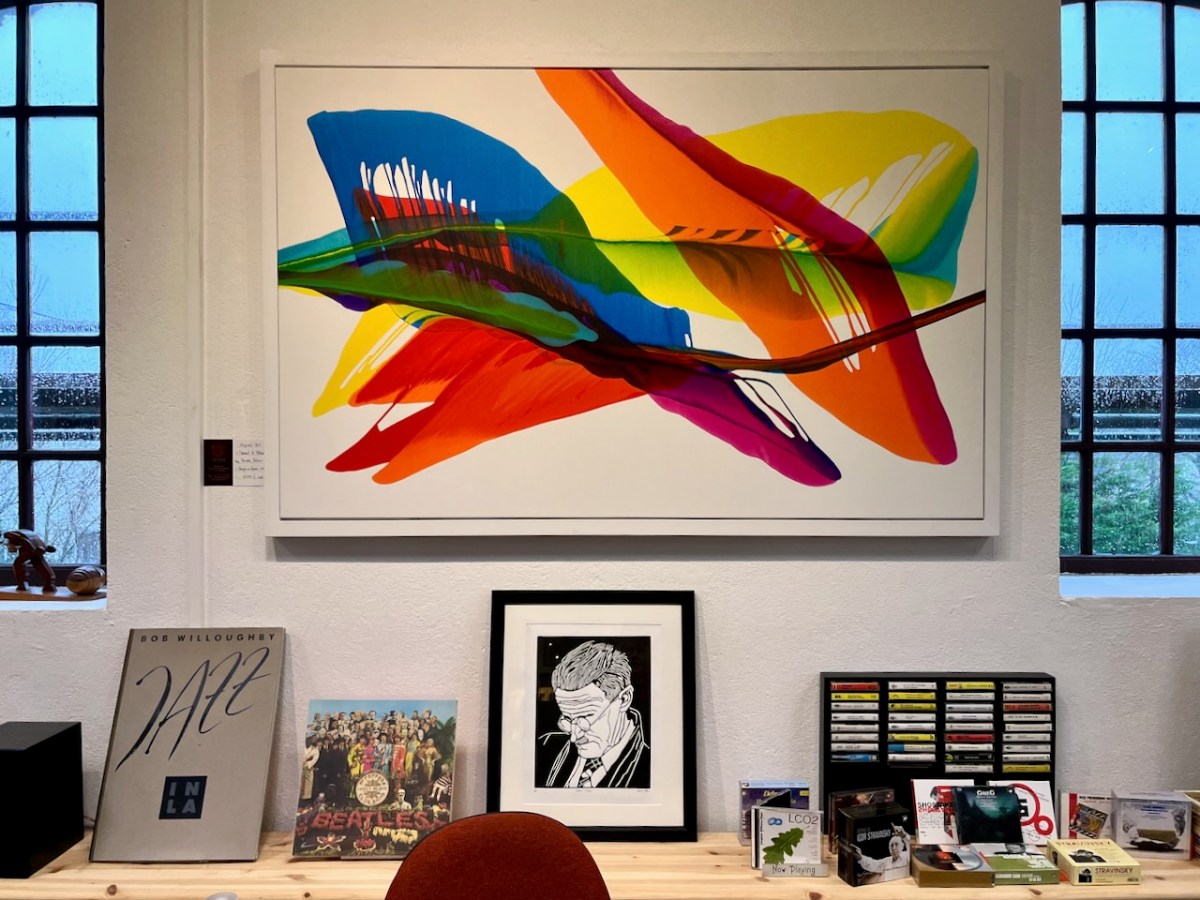
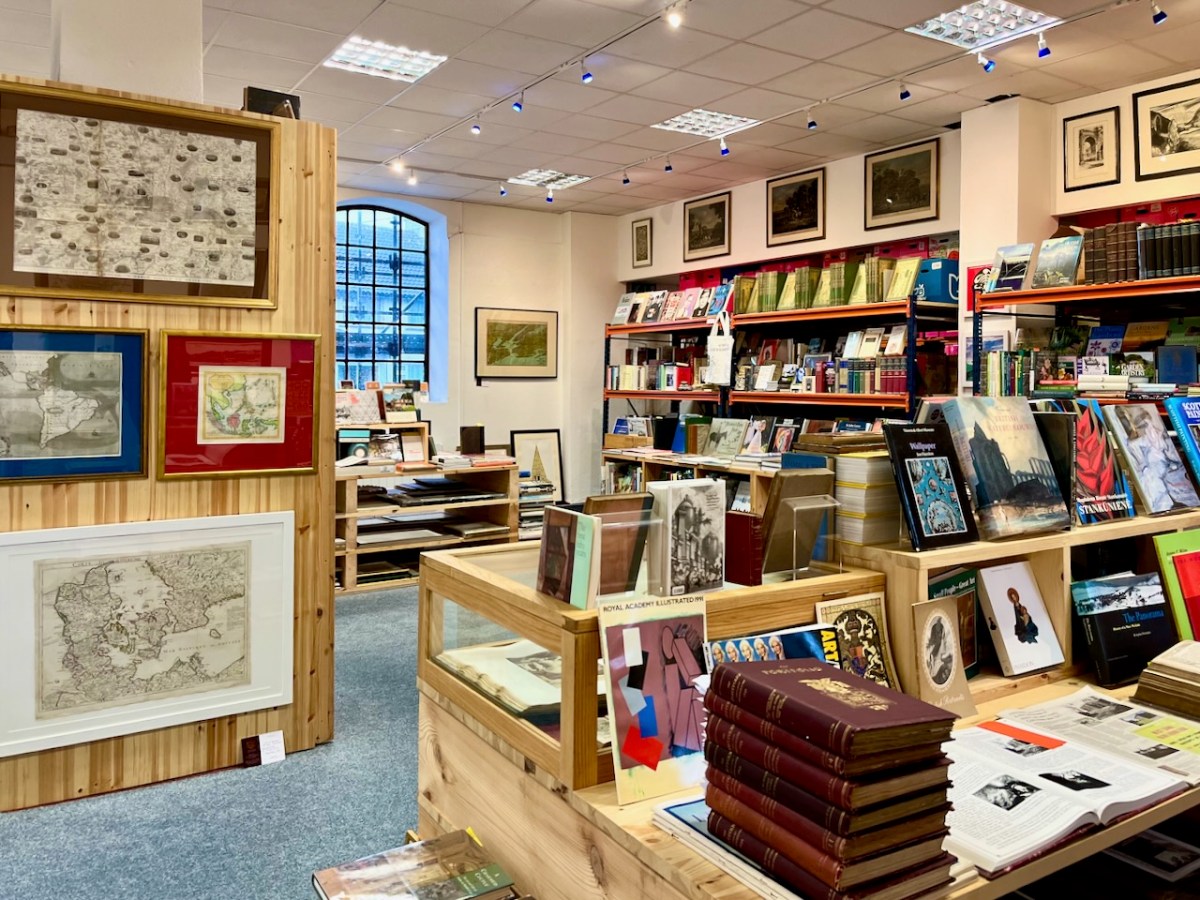
The heritage character of the building is obvious from the outside and stepping inside you are immediately struck by the stately character of the lofty ceilings and deeply-set windows – and how perfectly it suits a bookstore. The focus in this store, named Inanna Modern, is on art – art on the walls, art history and criticism on the shelves, photography, every conceivable form of art book. Holger represents, among others, a Canadian artist, Brooke Palmer, and his intense, colourful images provide a vibrant counterpoint to the lines of sober book covers.

Holger is passionate about using heritage buildings for such purposes. The best buildings in town, he asserts, often sit forlorn and neglected (see The Irish Aesthete for example after example) and what better way to revive them than with a business like this – a perfect match of form and function. Each of his landlords is totally supportive of his efforts, and together they hope to provide models of what is possible in any community. 

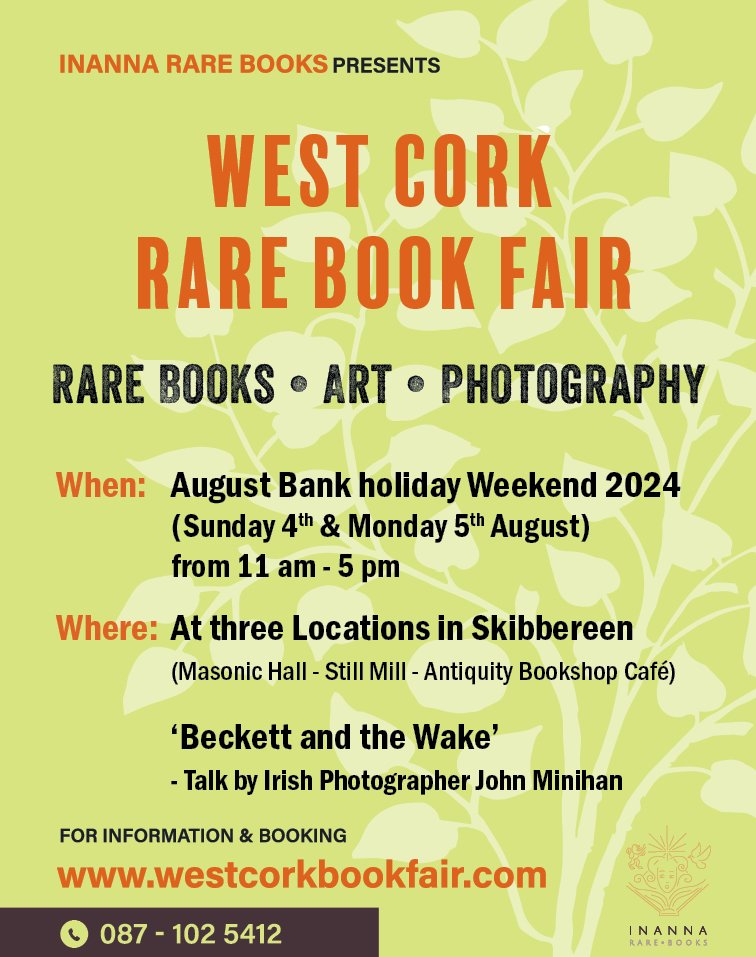
Reader, if you live in Ireland, you are only too familiar with what Holger is talking about – lovely old buildings crumbling and disregarded that, with some attention, could become energetic hubs of cultural activity and commerce. For a budding Book Town, spin-offs are important too. Holger organises the occasional book-related talks or readings and a yearly Rare Book Fair that will take place this year on August 4th and 5th. Meanwhile, for their artists, there was an exhibition at the marvellous Cnoc Bui Arts Centre.

You may not be familiar with the term Book Town – yet! But Skibbereen is well on its way to becoming a shining beacon for bibliophiles from all over the world, thanks mainly to the efforts of the Smyths. How wonderful it is to have people of vision and passion driving an economy for book-lovers, in one small Irish town. 

Feasts and Festivals

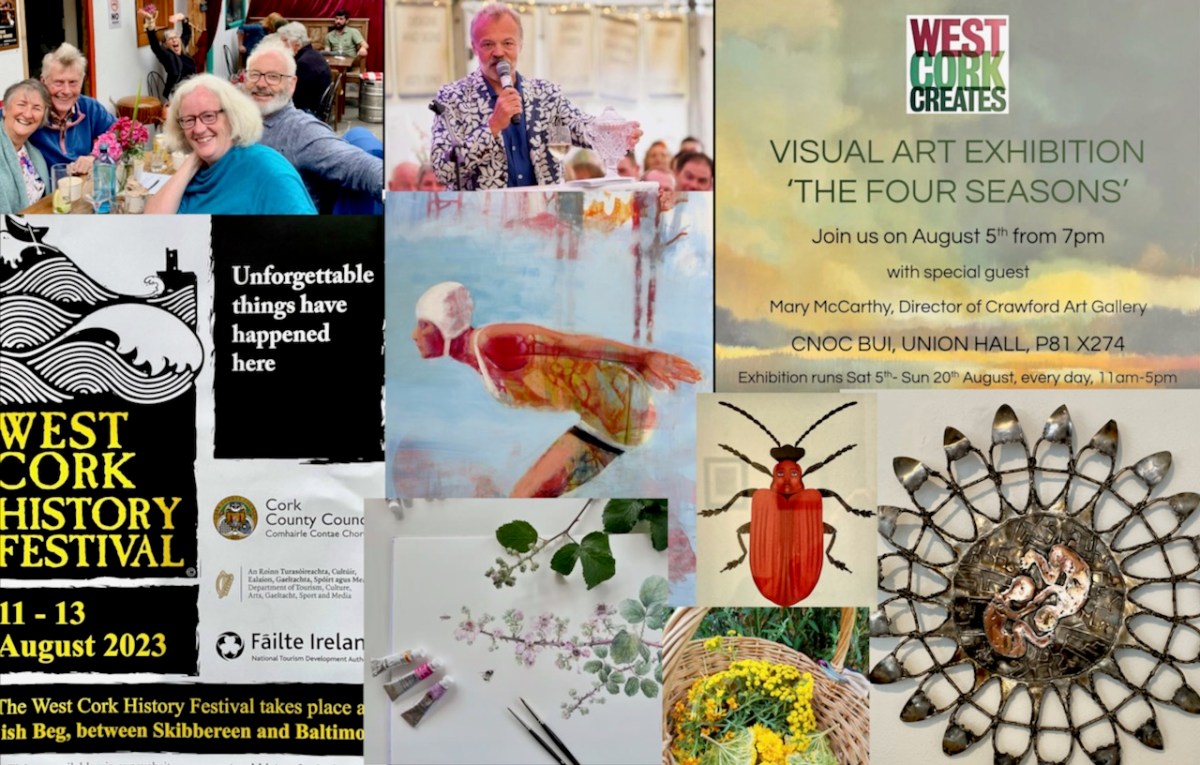
It’s August in West Cork and we’re going to need a holiday to recover! July was a blast – here are a few highlights – The West Cork Literary Festival (I was on stage at Future Forests as part of a joint Lit Fest and Ellen Hutchins Fest Seaweed and Sealing Wax presentation, to a large and enthusiastic audience; A Fusion Feast at Levis’s with good friends and cooked by Rob Krawczyk and, both with their own Award Winning Restaurants; the Launch of Holy Wells of Cork by Amanda Clarke; and a continuation of the high standards of exhibitions at The Blue House Gallery in Schull, with Oonagh Hurley, Catherine Weld and Shane O’Driscoll – including this rug designed by Shane and made by Ceadogán Rugmakers.

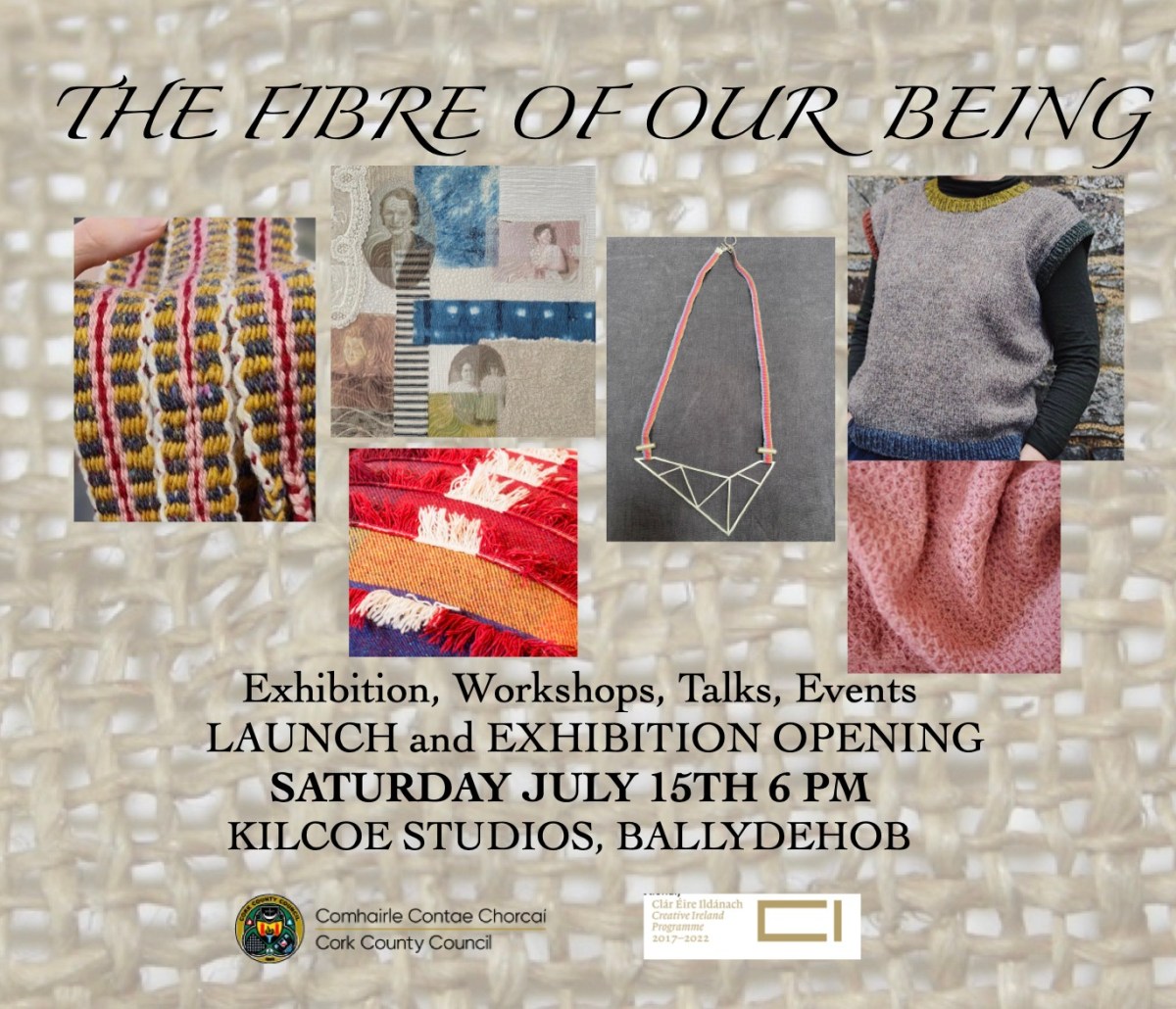
The wonderful Kilcoe Studios also organised an innovative series of events titled The Fibre of Our Being, “exploring contemporary textiles which draw on tradition to reinvigorate their process” and involving several different artists, including our friend and neighbour Liadain Aiken – see here for our post on Robert’s sweater.

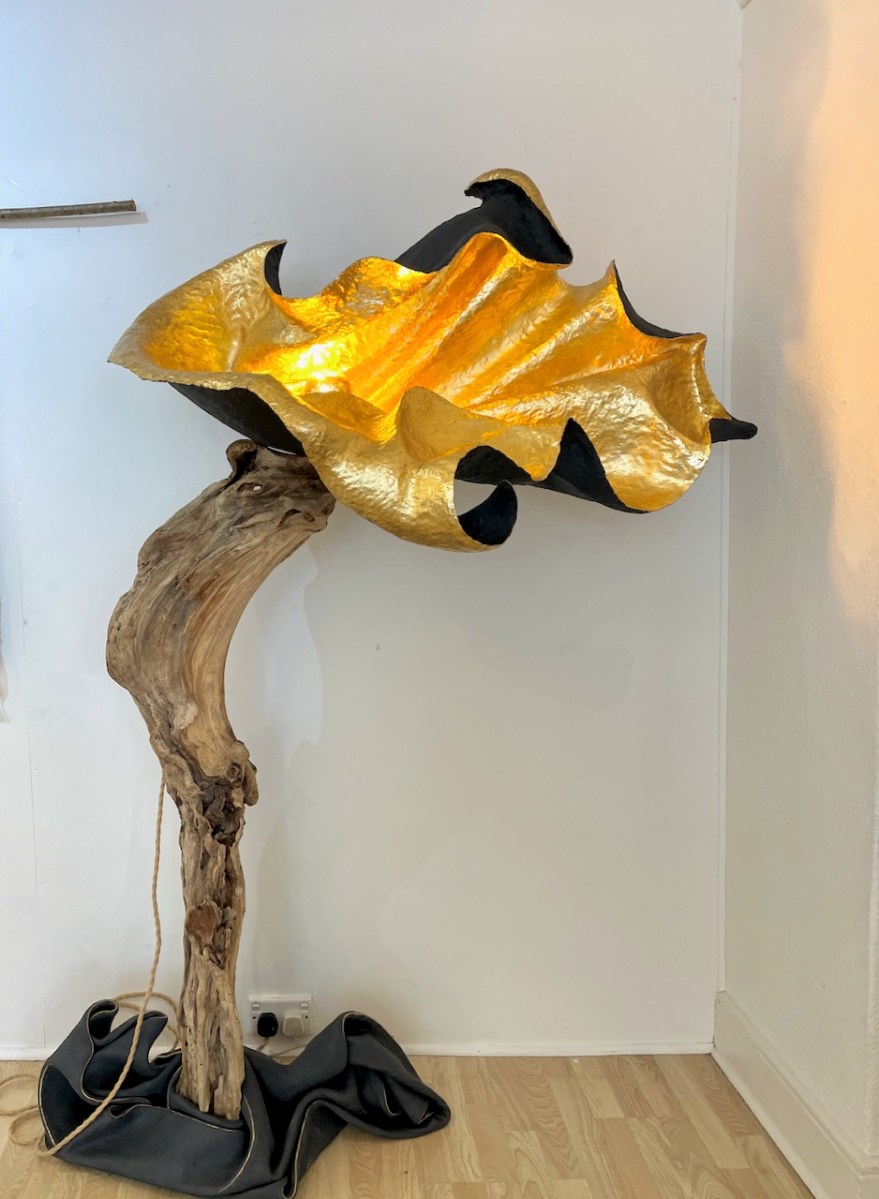
August started with the 10 Hands Exhibition at the Working Artists Studios. 10 Hands is the brainchild of Angela Brady, architect, film maker and craft historian. This year, the ten artists and makers have been joined by 6 more from the Working Artists Studios team, and the result is very impressive. Lots of variety here, and an exceptionally high calibre of vision and execution. I am craving one of the incredible standards lamps by Ania Surazynska – here’s one example. This artist is new to me, but I see a very, er, bright future for her. You heard it here first.

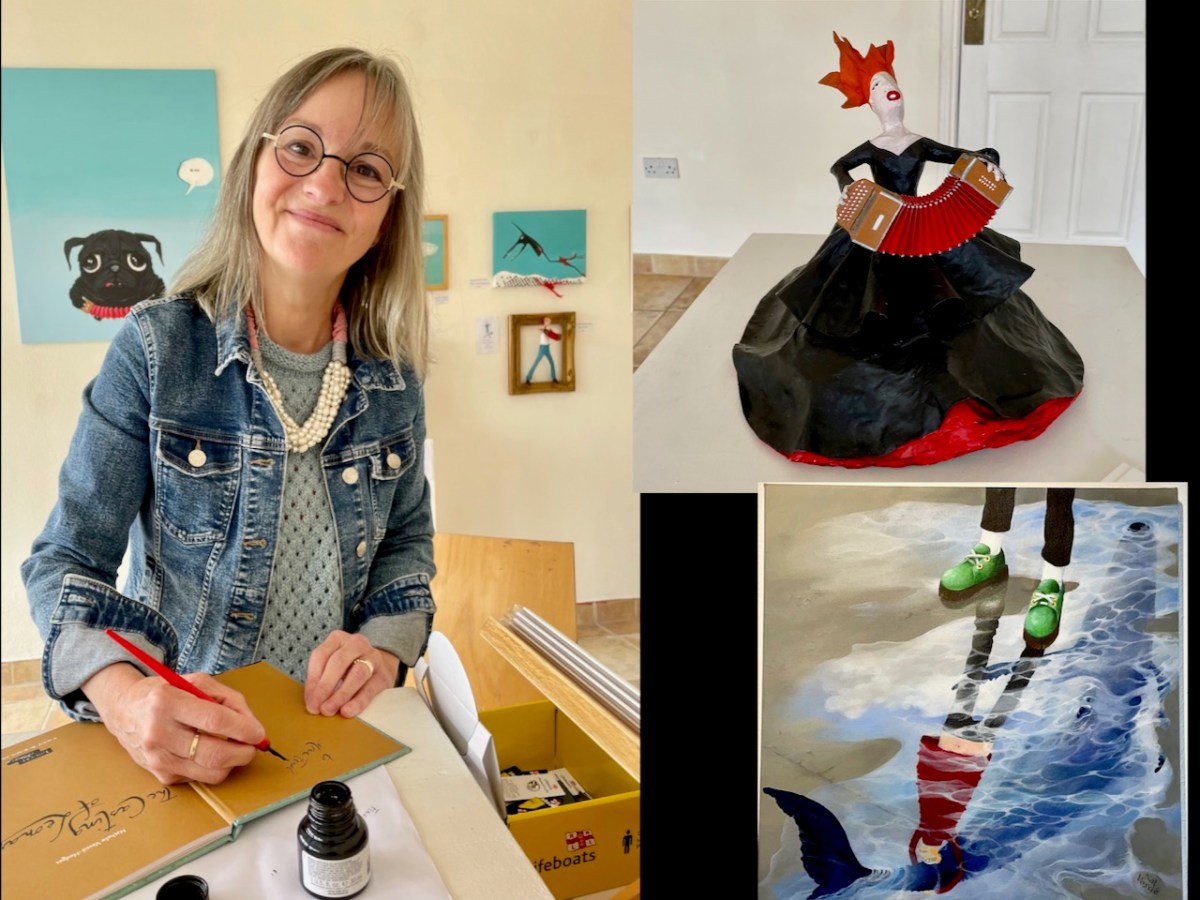
While we weren’t able to get to the opening last night, we are planning a trip out to Union Hall tomorrow for the annual and always-outstanding West Cork Creates Exhibition. This show has now moved to a marvellous new establishment, the Cnoc Buí Arts Centre. We visited last month and were delighted by the exhibition we found there, of sculptures, paintings and books by Nathalie Vessié-Hodges. Here she is signing one of her books for me (it was published by the Louvre!). A fairly recent blow-in to West Cork, I predict we will be seeing more of Nathalie.

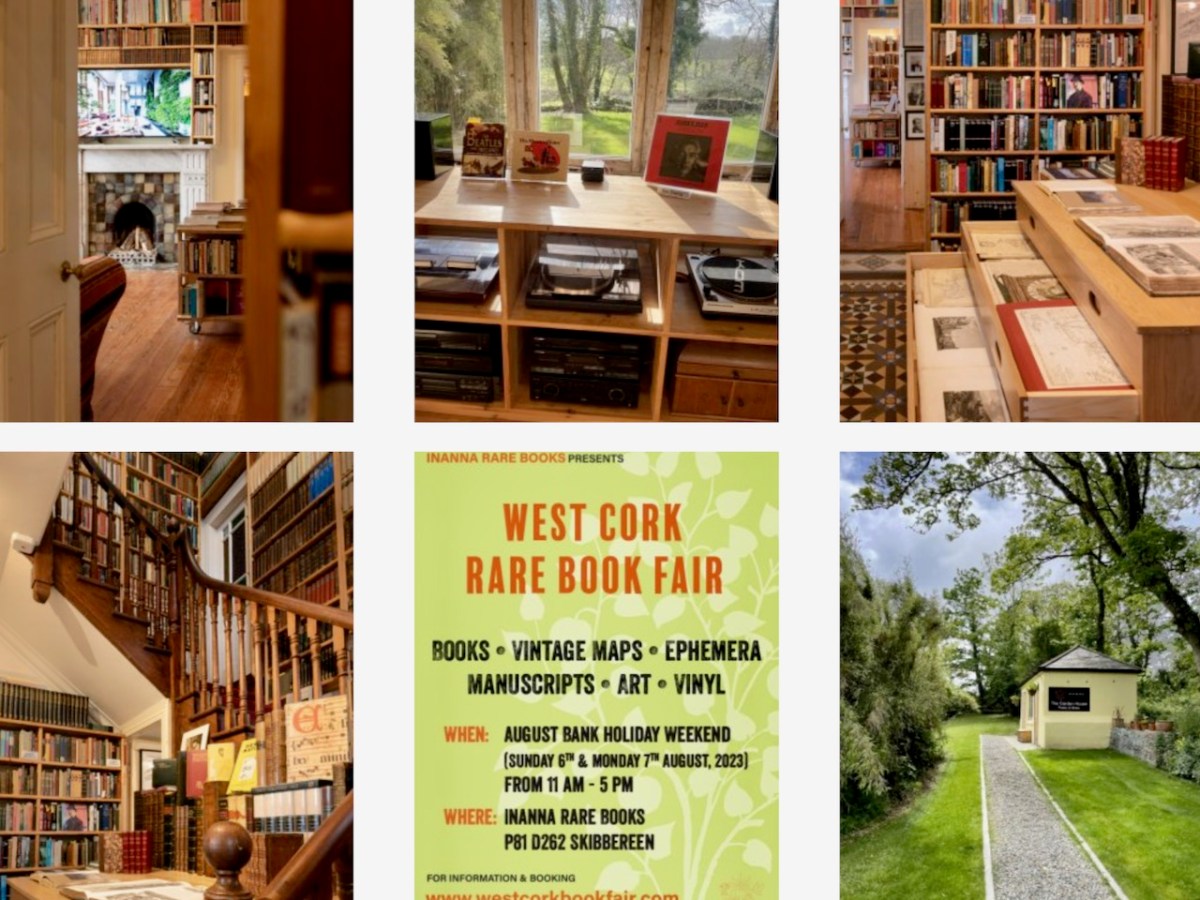
Also on our list for tomorrow is the West Cork Rare Book Fair – we attended last year at the lush Inish Beg Estate and this year it is being held at the home of Innana Rare Books just outside Skibbereen. Doesn’t this look inviting? (It’s a screenshot from the Innana website – thank you, Holger and Nicola!)

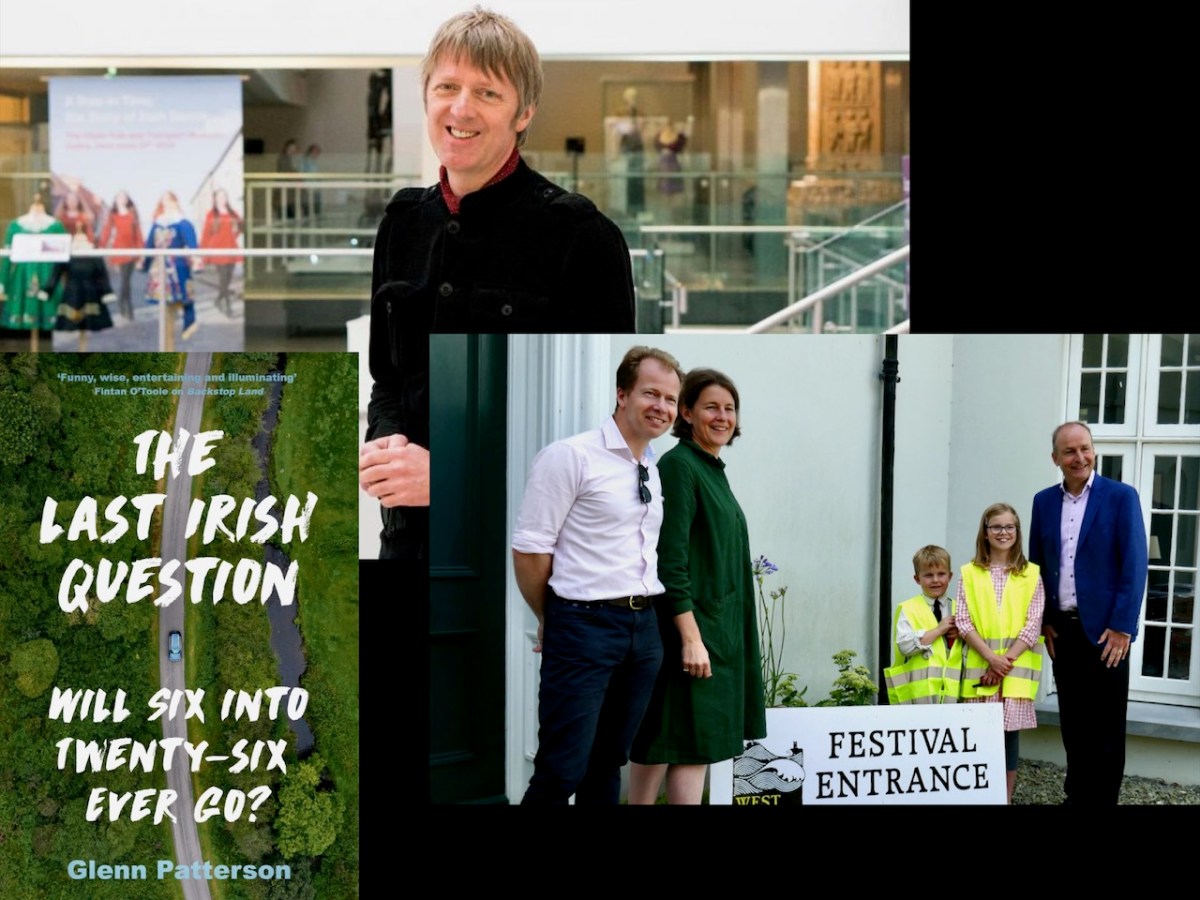
And then it’s right into the West Cork History Festival. Robert and I have organised the field trips, and we are looking forward to our own contribution to those – a tour of the historic Church of St Barrahane in Castletownshend. There are several other options – including walks and swims with Gormú, a walking tour of Ballydehob (oops -sold out!) and an historical Kayak trip through Castlehaven. The Program of Talks features leading academics and writers, and there’s a hot rumour that Micheál Martin will do the opening honours. I’m particularly looking forward to Friday night’s opening session with writer Glenn Patterson who will be in conversation about his latest book The Last Irish Question: Will Six into Twenty Six Ever Go? followed by a panel ruminating on what we have learned from the Decade of Centenaries about our past and our future.

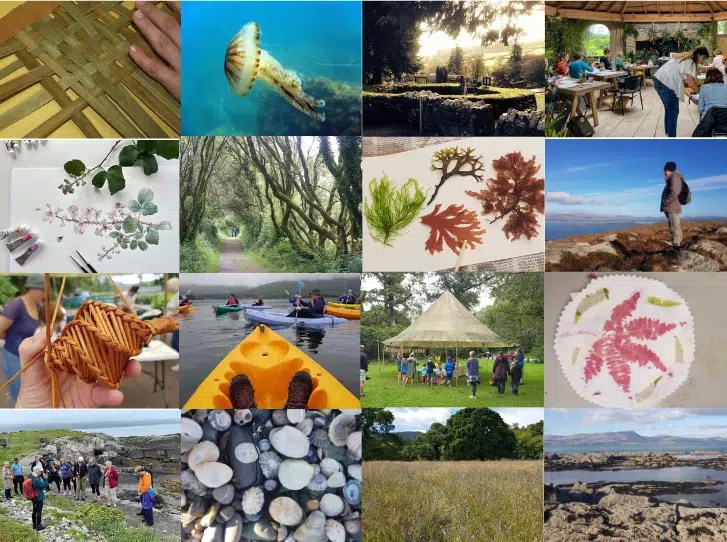
For history buffs, you just can’t beat this Festival, this year in the magical surroundings of Inish Beg Estate. As soon as it’s over I will be hot-footing it to the events of the Ellen Hutchins Festival – a feast of delights for anyone even vaguely interested in the natural world, inspired by the life and work of Ireland’s first female botanist. I’ve signed up for several events – lots of them are free and many are suitable for children.

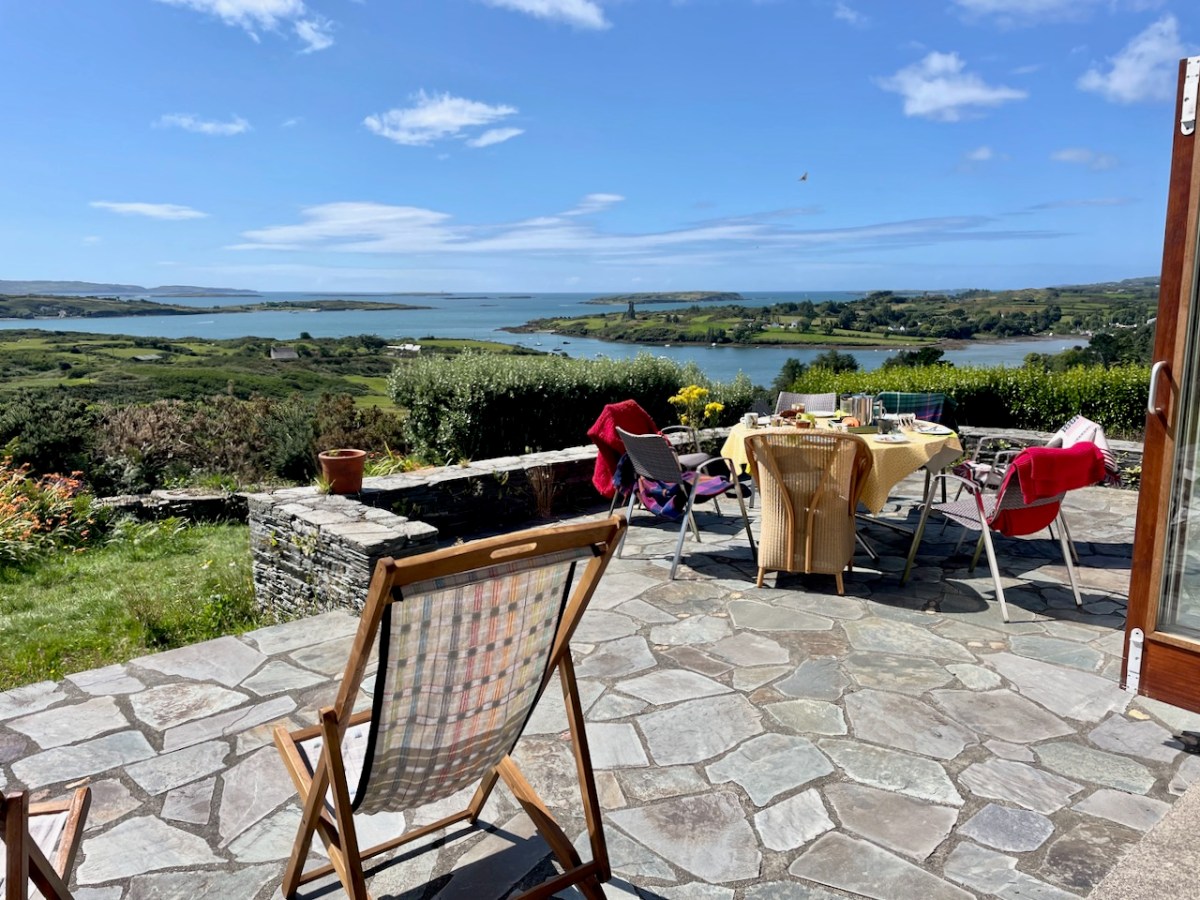
And once all that is over, I might just have to retire. Wait, what? I AM retired, I hear you say? Ah – so no excuse needed to do more of this – having leisurely lunches overlooking Roaringwater Bay?

Oh – you have another question? What’s Graham Norton doing in the top photo? That’s easy – he lives part time in Ahakista on the Sheep’s Head, and there he is, doing his stint as Quizmaster at the annual Ahakista Festival this weekend. We attended one year and it was predictably hilarious.