Irish Artists and Stations of the Cross: Part 2

The current image has no alternative text. The file name is: lyons-10th-detail.jpeg

Four years ago I wrote a post Irish Artists and Stations of the Cross. It was inspired by my realisation, as I visited churches, that some of them (OK, a tiny minority) had stations that were far removed from the mass-produced models we see on most church walls. During the period when parishes, congregations and architects were responding to the encouragement of Vatican II to glorify God with the best of sacred art and with up-to-date architecture, many Irish artists were glad indeed to get these commissions. I am starting today with two artists drawn to my attention by Michael Burke, the sculptor responsible for the remarkable stations from the last post in the Church of the Irish Martyrs at Ballycane. Thank you, Michael!
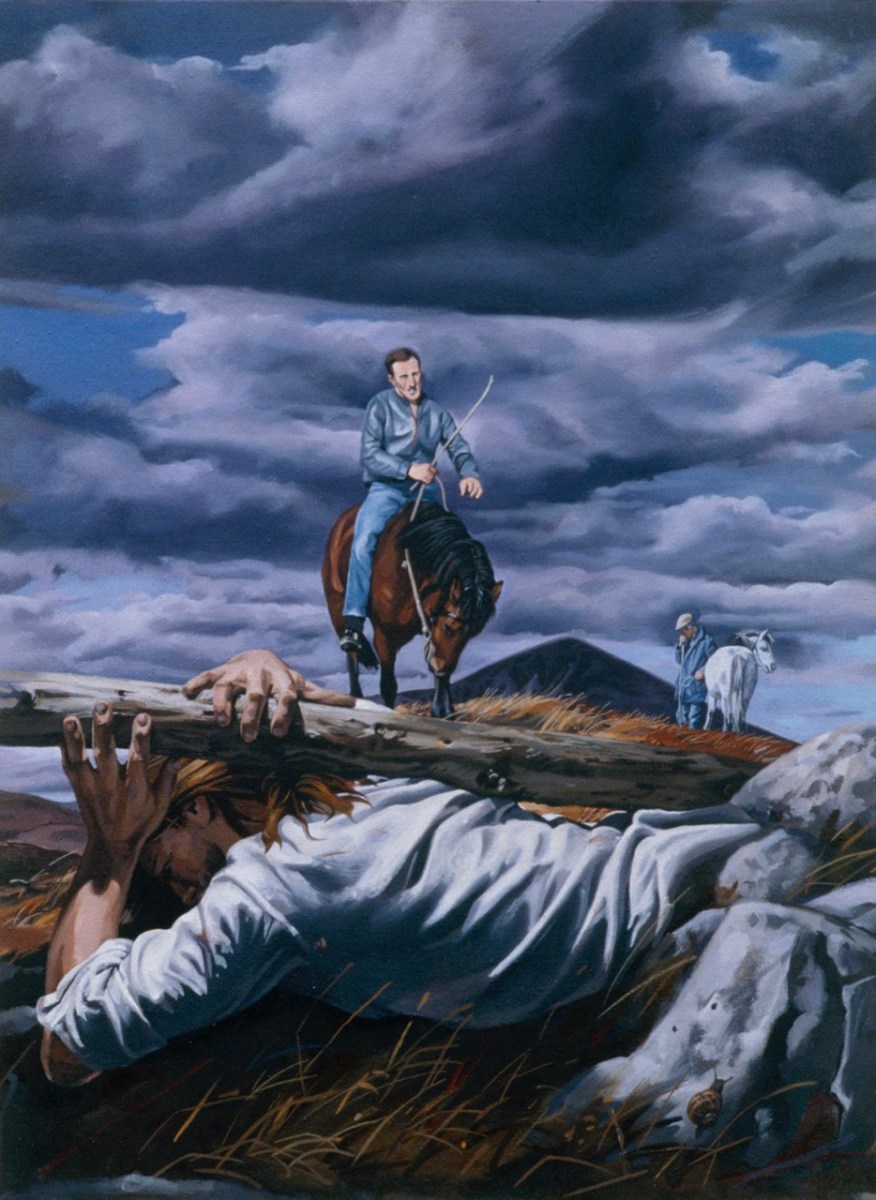
Fergus Lyons, First Fall, 3rd 1988, Oil on canvas, Collection of the Arts Council/An Chomhairle Ealaíon

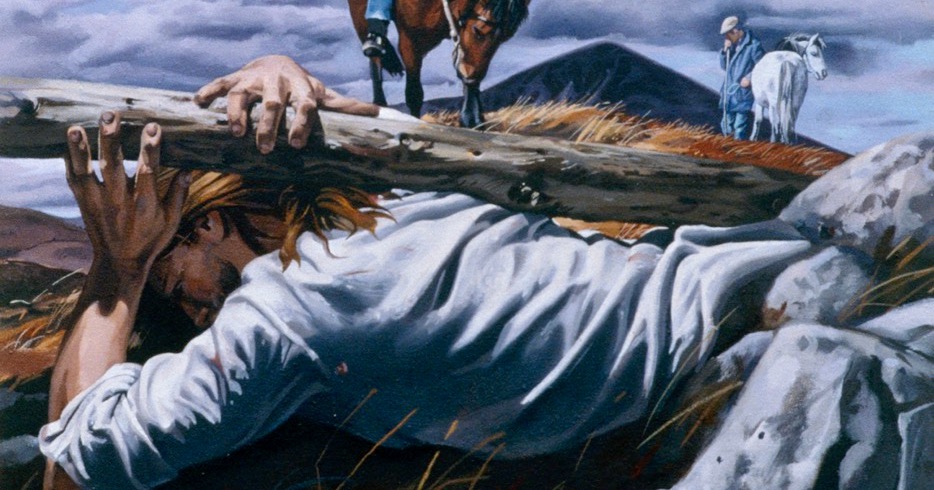
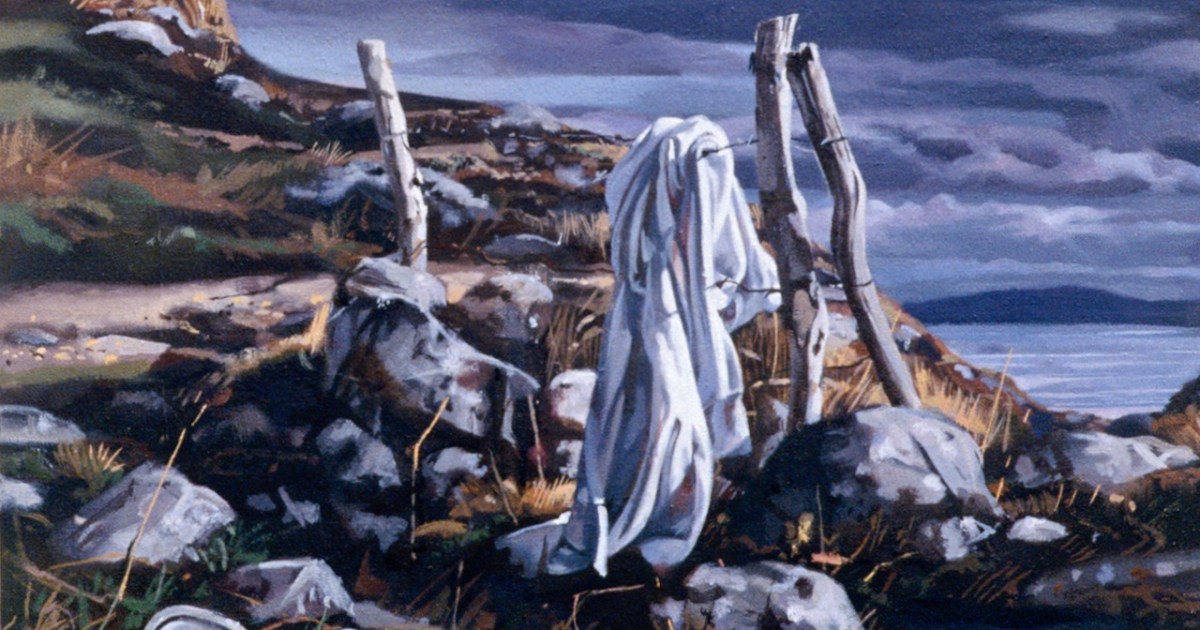
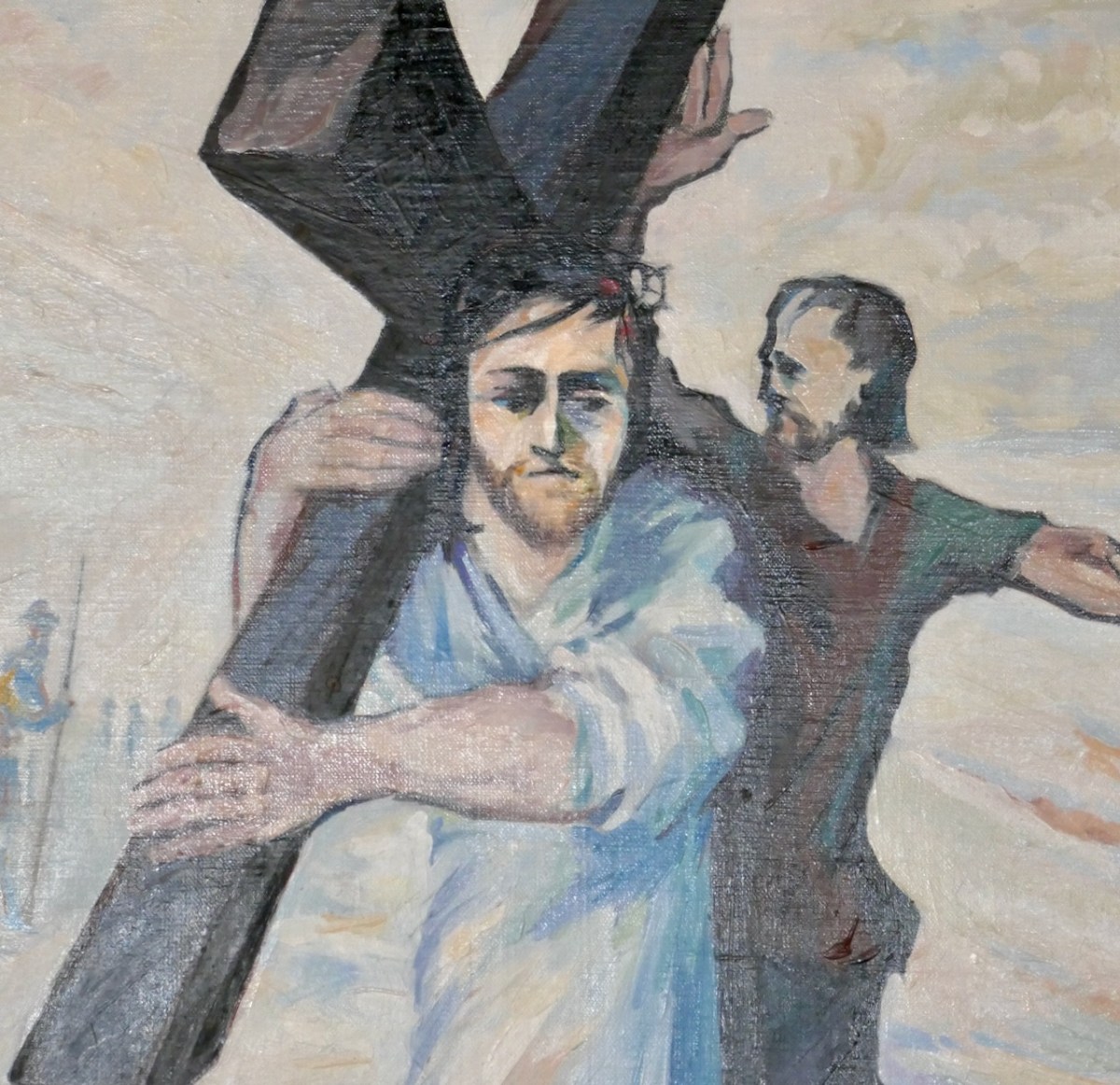
The first of these is an extraordinary set by Fergus Lyons, who now lives and works in Sligo. Read about him here and on his own website. His stations, originally designed for a church, are now in the collection of the Arts Council, and Fergus and the Arts Council have given me permission to use these three. The series is called Turas Chonnacht (Connacht Journey or Pilgrimage or Stations – the word Turas can mean all three things) and Christ is depicted as young man in jeans. 
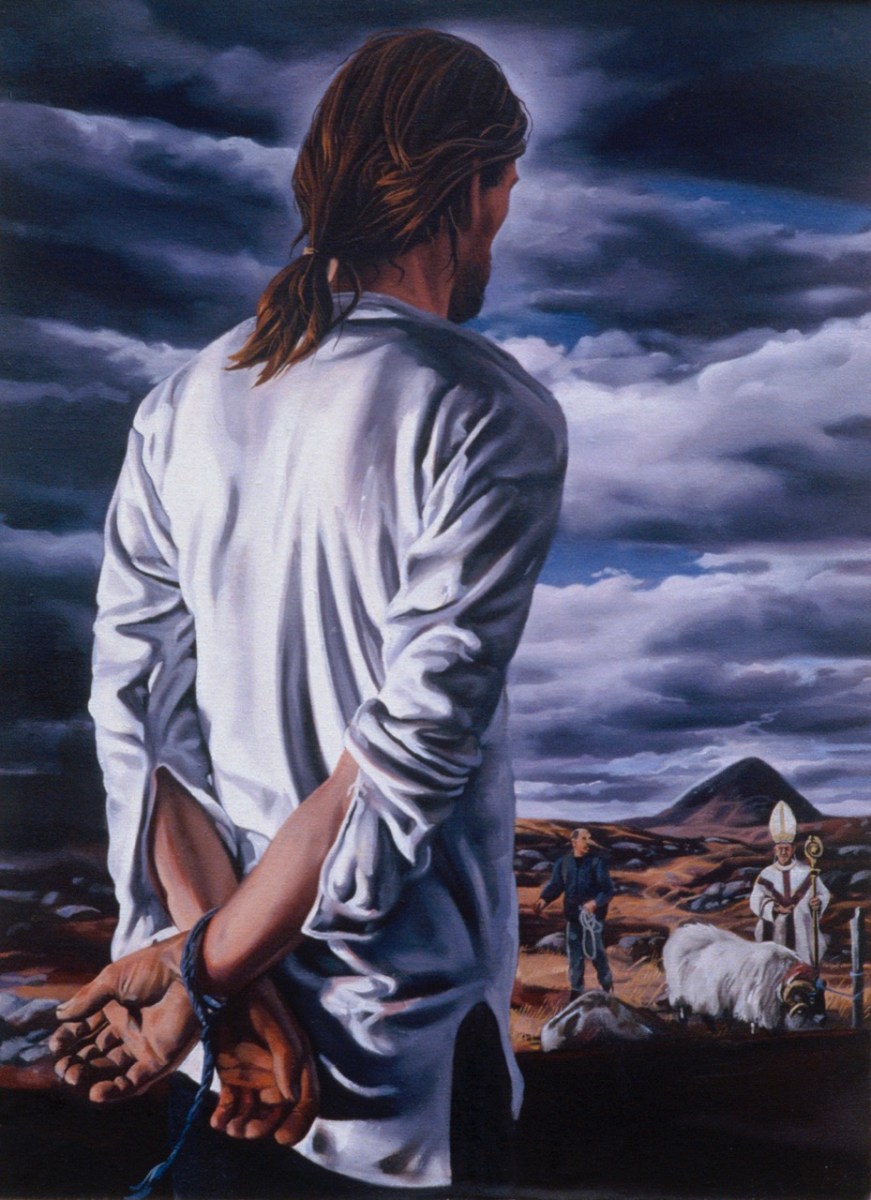
Fergus Lyons, Condemned ,1st, 1988, Oil on canvas, Collection of the Arts Council/An Chomhairle Ealaíon

Fergus told me,  I designed them that when hung side by side that they would form a continuous landscape (each painting blending or leading into the next) ascending Croagh Patrick and returning down again to where we all are, so to speak. He designed them for a church but the commission fell through, which is when the Arts Council bought the whole set and made it part of their travelling exhibitions. Currently it is on long term loan to St Oliver Plunkett Church in Finglas.
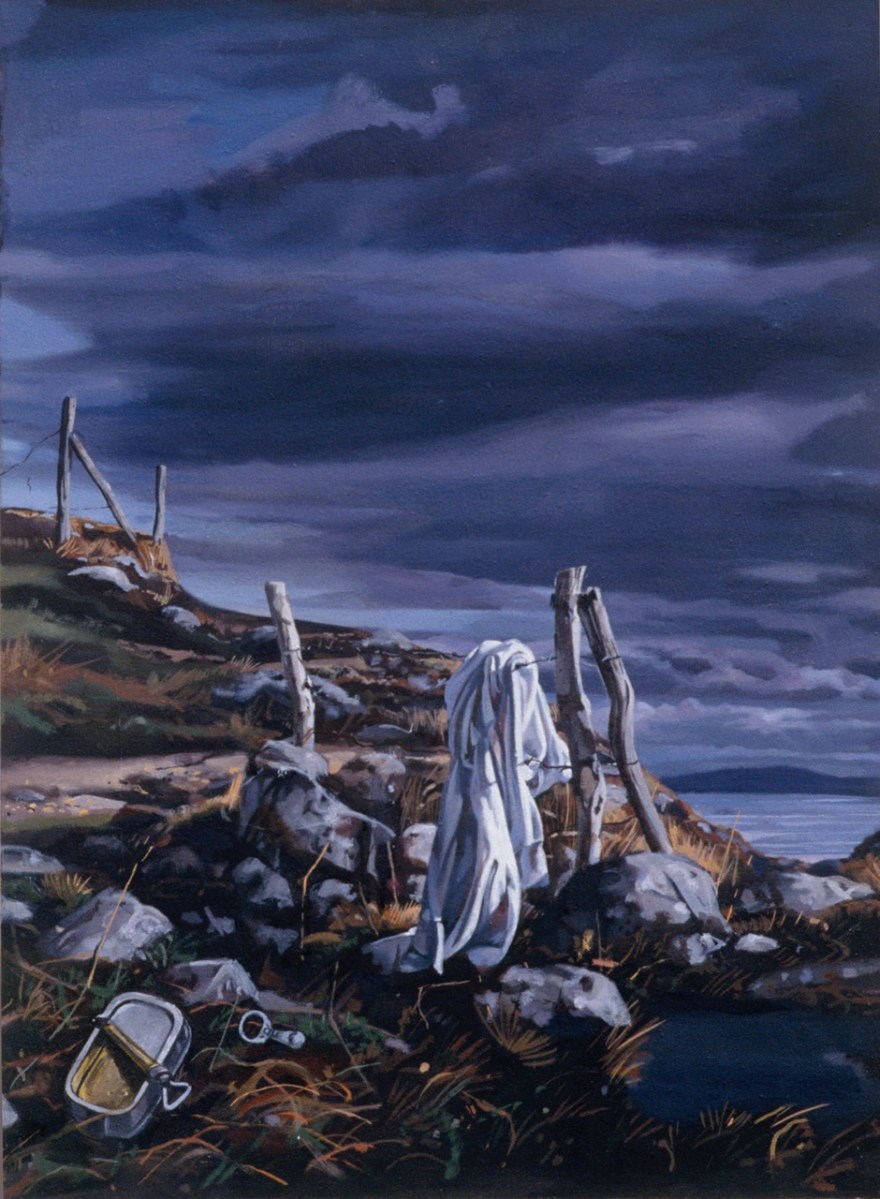
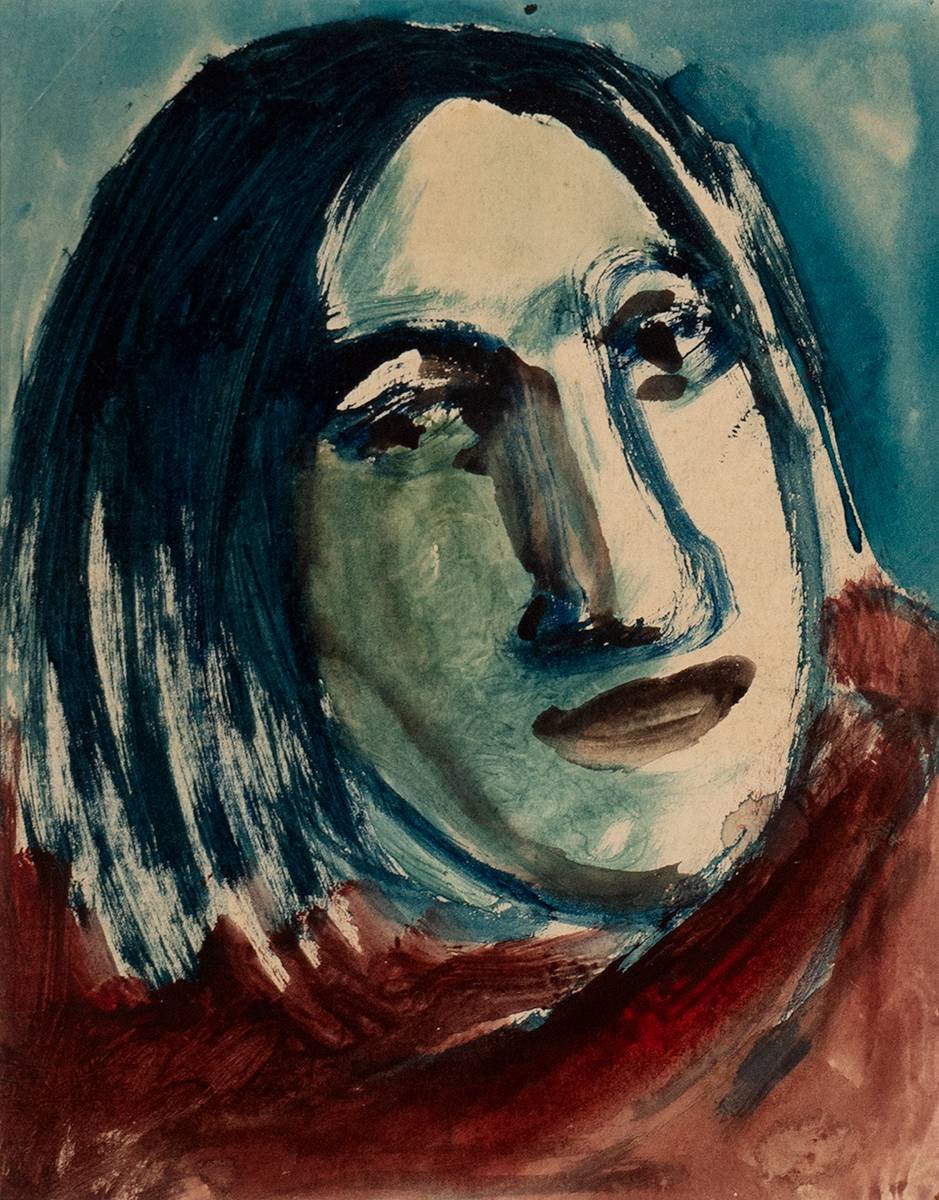
Fergus Lyons, Stripped, 10th, 1988, Oil on canvas, Collection of the Arts Council/An Chomhairle Ealaíon

The second artist is Henry Flanagan O.P., and once again I have Michael Burke to thank for drawing him to my attention – he was Michael’s teacher at Newbridge College. Michael contacted me recently to say that the small enamel station I posted in my last piece was the work of Henry Flanagan – and this made sense because the enamel station was in a Dominican Retreat House, in Cork, and Fr Flanagan was a Dominican priest. Here is another of those stations.  Michael has memories of helping Fr Flanagan to pack enamel – a delicate operation so Michael must have been a star pupil.
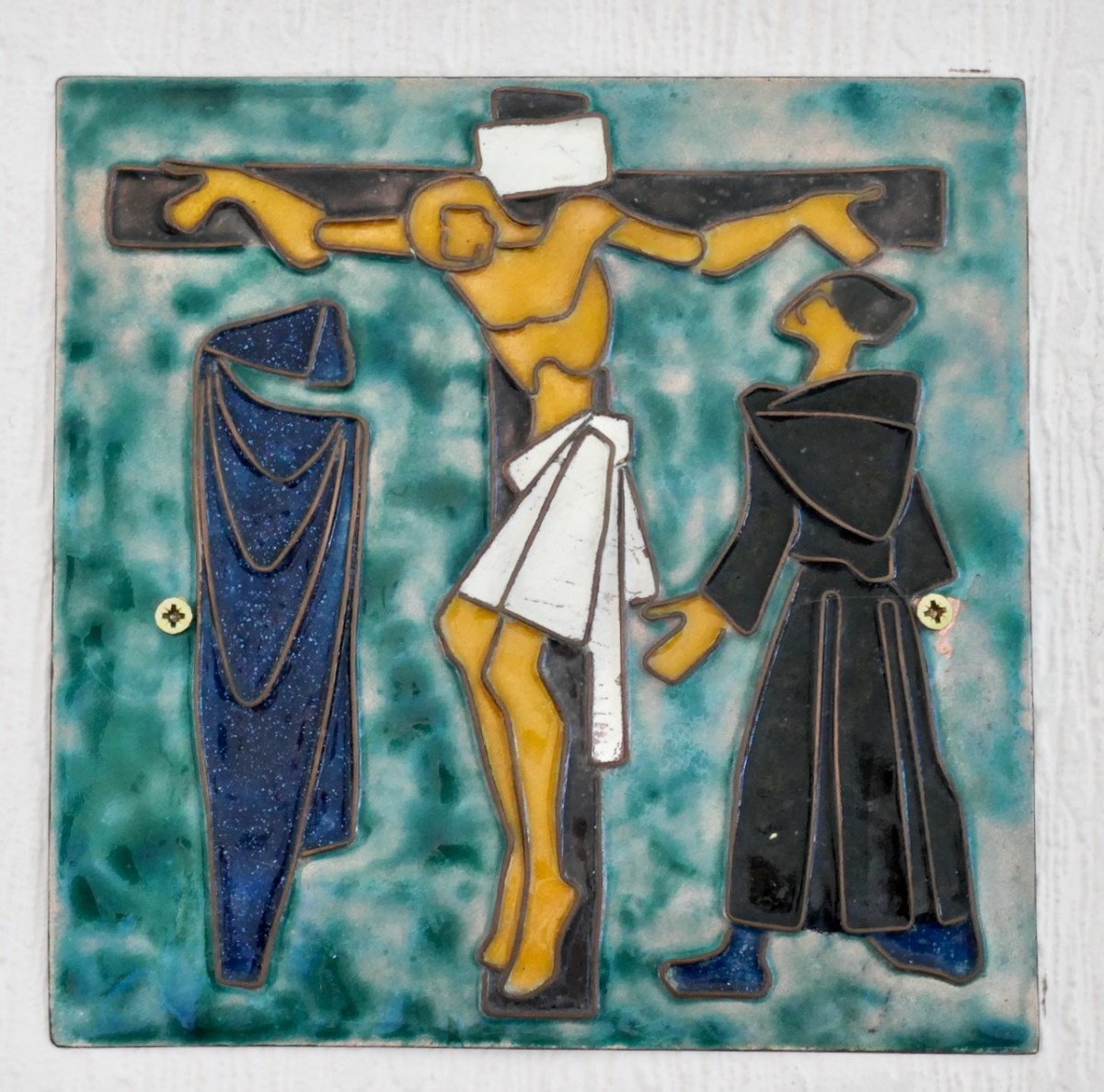
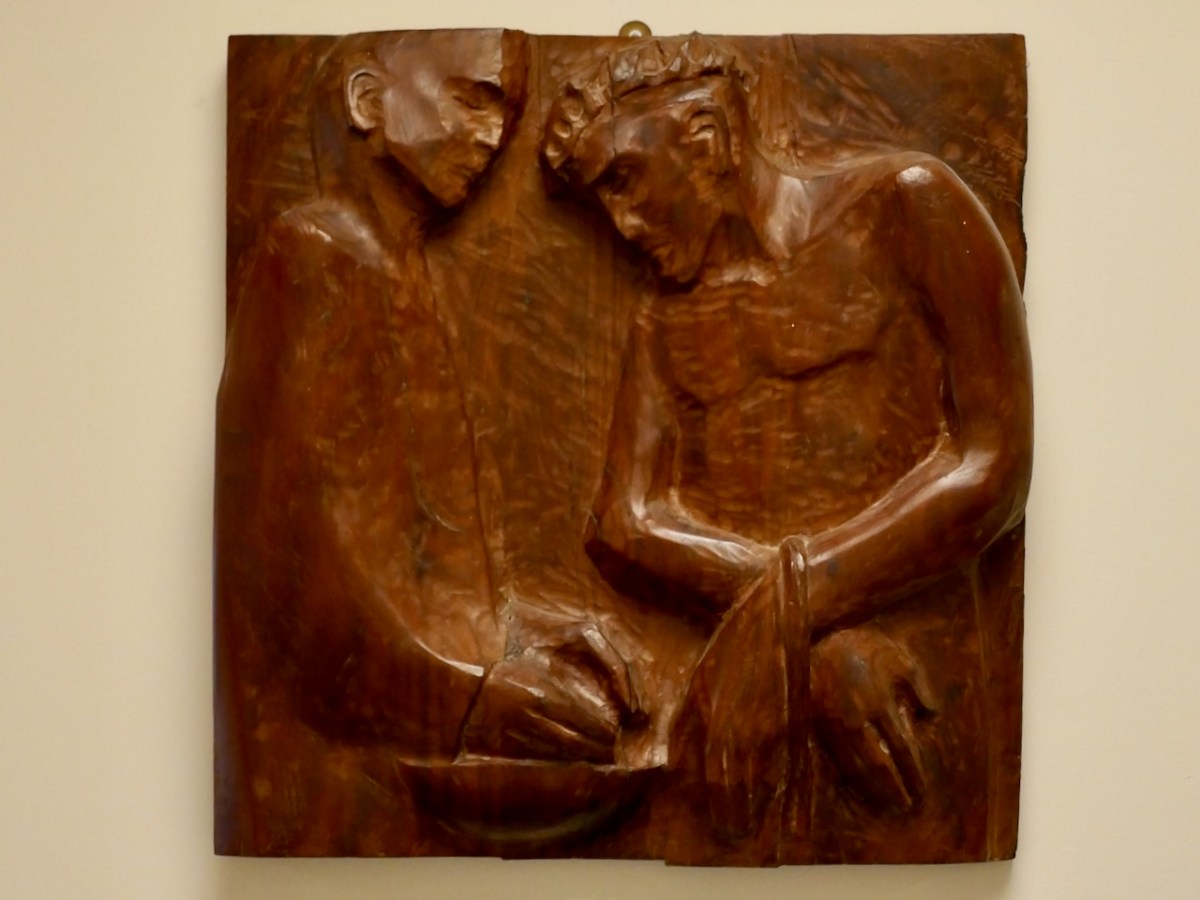
But Fr Flanagan was talented in multiple media – here is one of his stations in wood for Newbridge College. He also worked in stone, metal, plaster and more – I have ordered the book on him so I will write more about him in the future. 
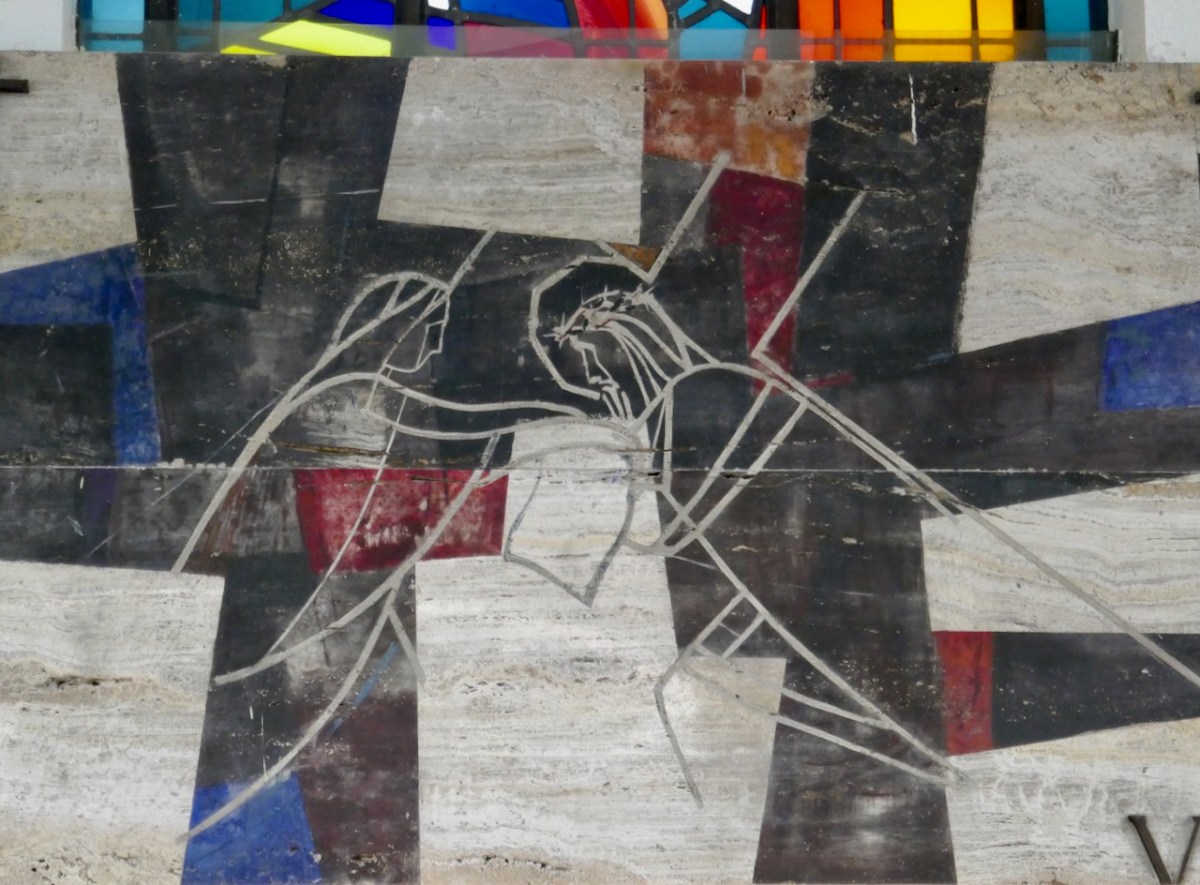
The beautiful library in Athy was once St Dominic’s Church, built in the 1960s. The builders turned to Abbey Stained Glass to provide the glass and the stations, and Frank Ryan asked George Campbell to design them. George, a leading artist, was used to working in paint, so Frank teamed him with George Walsh to realise the finished product. There’s a good account of all this in Karen Reihill’s George Campbell and the Belfast Boys.
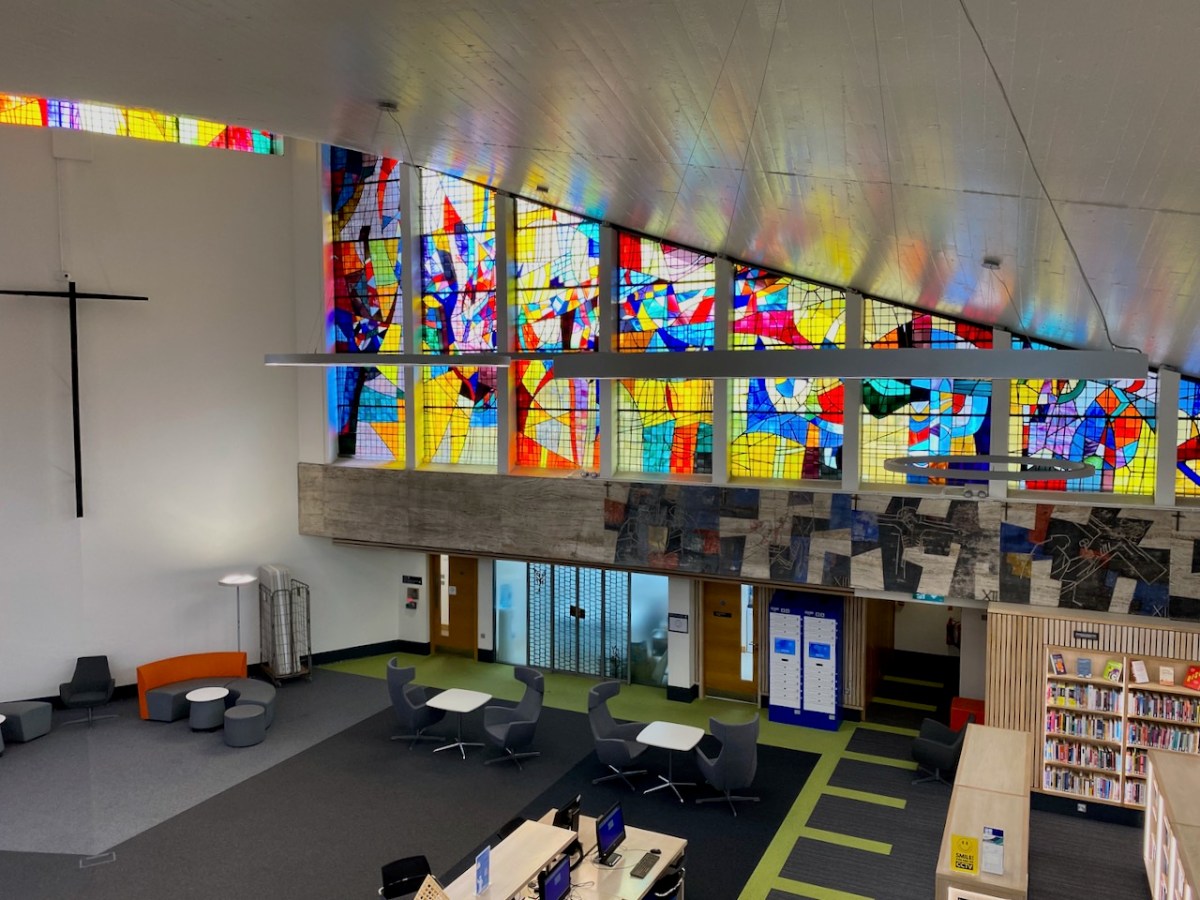
The stations formed a band across the top of the wall and were made of multiple slaps of different coloured travertine marbles, with the scenes etched into the marble. George Campbell also painted stations for at least two churches – now that I know where to look I will be itching for a road trip. The Athy library is a joy to visit – see Emma Gileece’s wonderful post about it here.
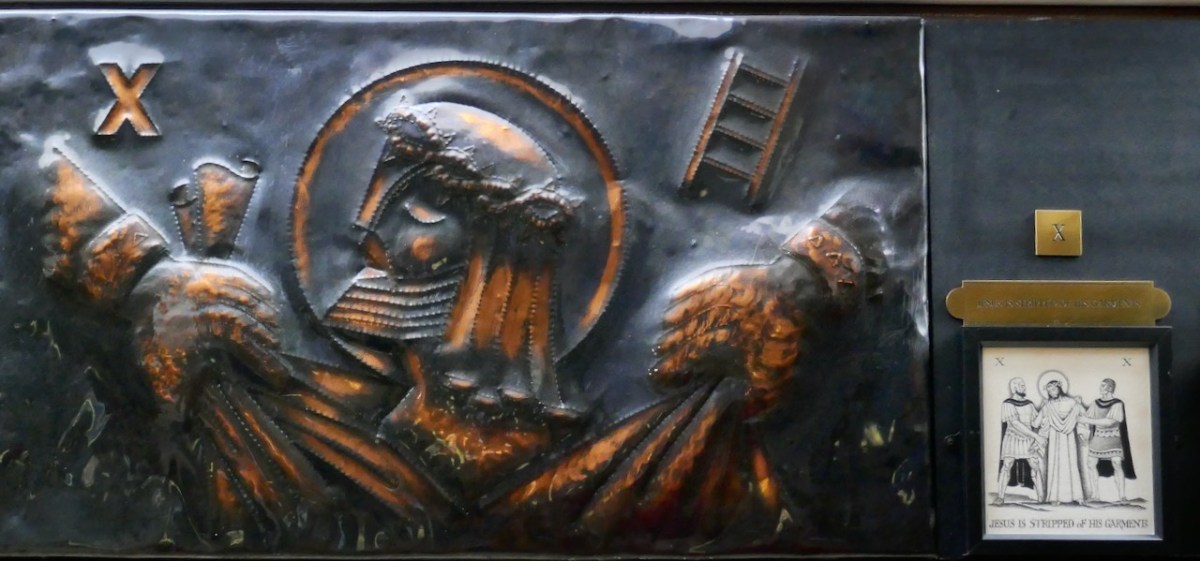
Our final set of stations for this post are somewhat controversial. They are from John the Evangelist Church in Ballinteer. A sign in the church declares them to be the work of Cecil King. However, this is very unlikely – Cecil King by the time the church was built on the 70s was known for strictly abstract paintings with fields of colour and geometric elements. He did not work in repoussé copper. A much more likely candidate was Richard Enda King (the son of Richard King), who had a modern style and worked in copper like this. 
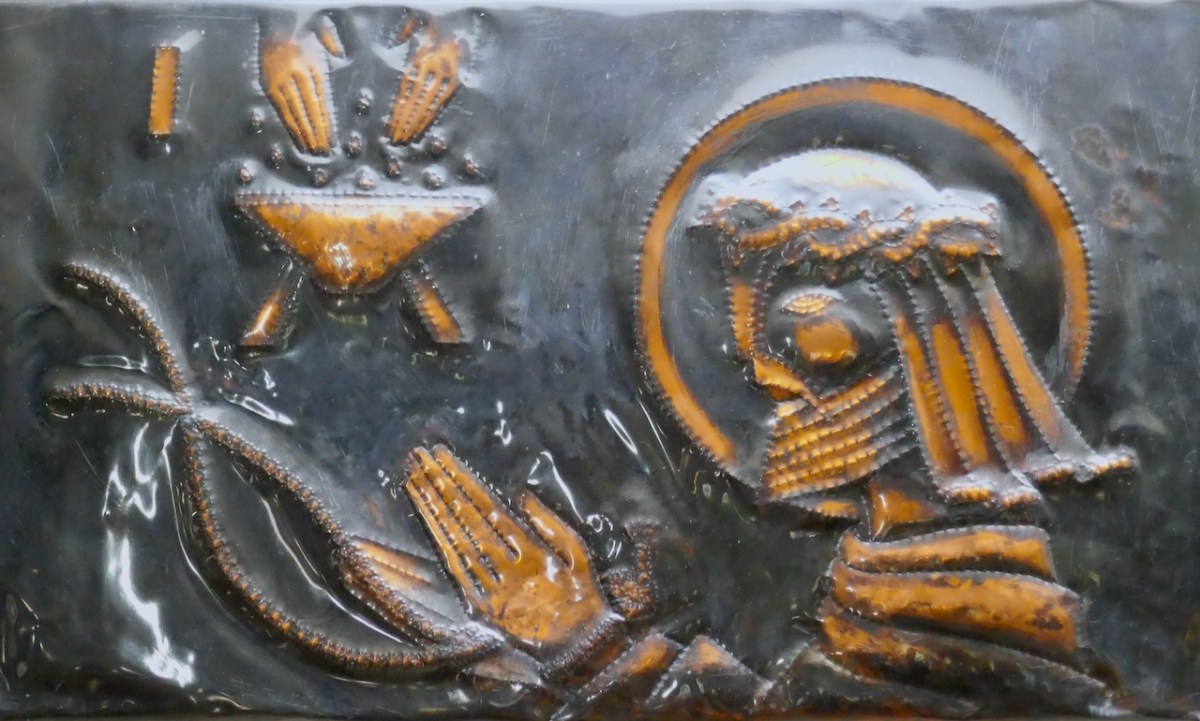
Interestingly, each copper station is accompanied by a small pen and ink drawing of the same station, done by William Dowling in 1943 and acquired by the church in 2010. The juxtaposition of the two styles is a little jarring. 
I had far more images than I could use for this post, so let me finish with another couple of Anon’s stations. As you know, the mystery of the enamel station has been solved from Post 1, although not that of the painted stations in the Wexford Franciscan church. Here’s another one of those, to see if it tickles anyone’s memory.
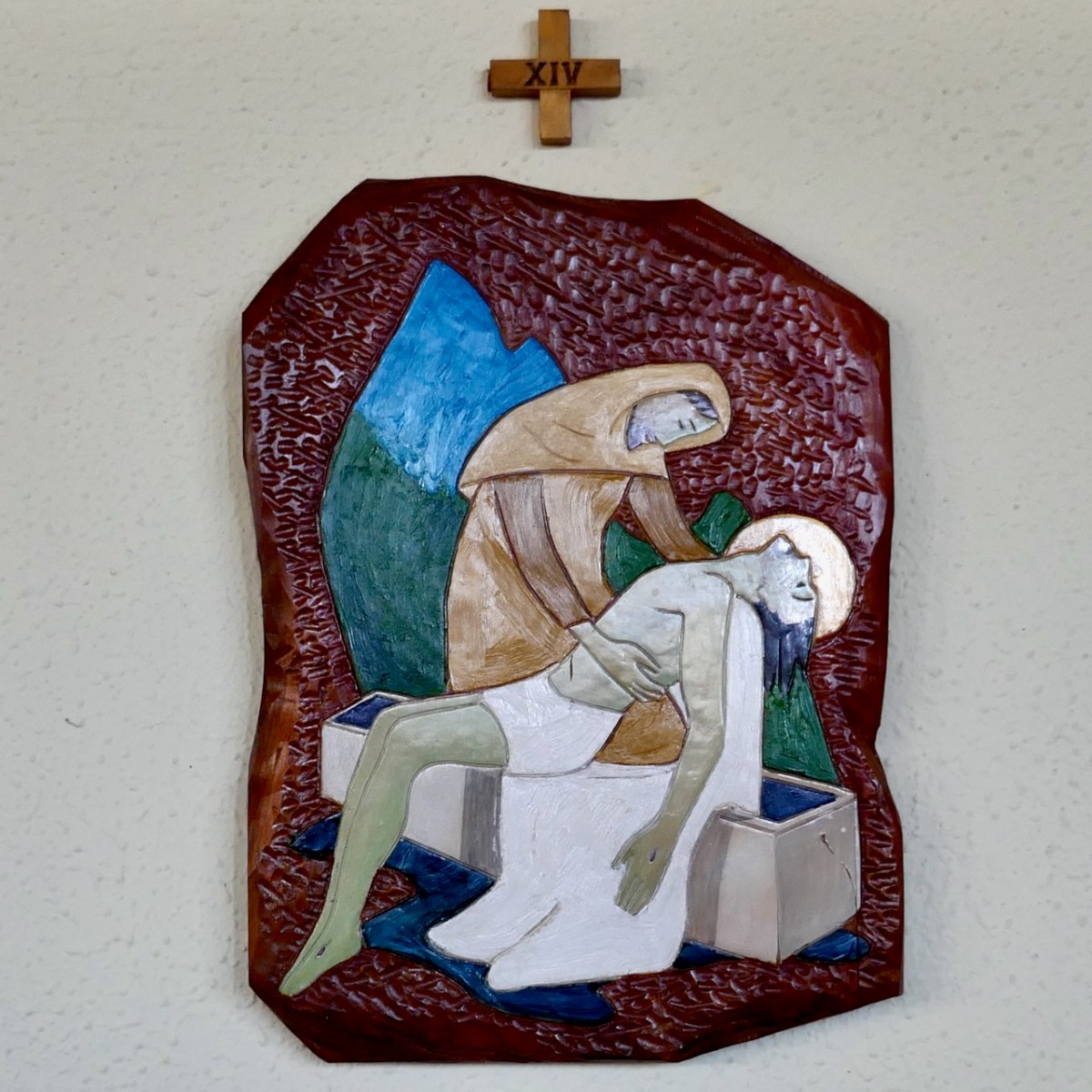
And one final work by Anon – this is one of the stations from a beautiful little set in the church in the Black Valley in Kerry. I think they may be wood carvings, but I am not sure. Anyone?
Many thanks to Michael Burke, Fergus Lyons and to Ben Mulligan of the Arts Council
Cnoc Buí Arts Centre and 20th Century Irish Art

We have a major new player in the arts scene in West Cork. Over the last couple of years, Cnoc Buí (cnoc buí – yellow hill) Arts Centre in Union Hall, has quietly established itself as a significant focus for the arts. I have attended several exhibitions there, always marvelling at the space, the light, the curation and the excellence of the art on exhibit. Here’s the list for 2024, although it doesn’t include the current exhibition, and that’s the one I want to write about today. 

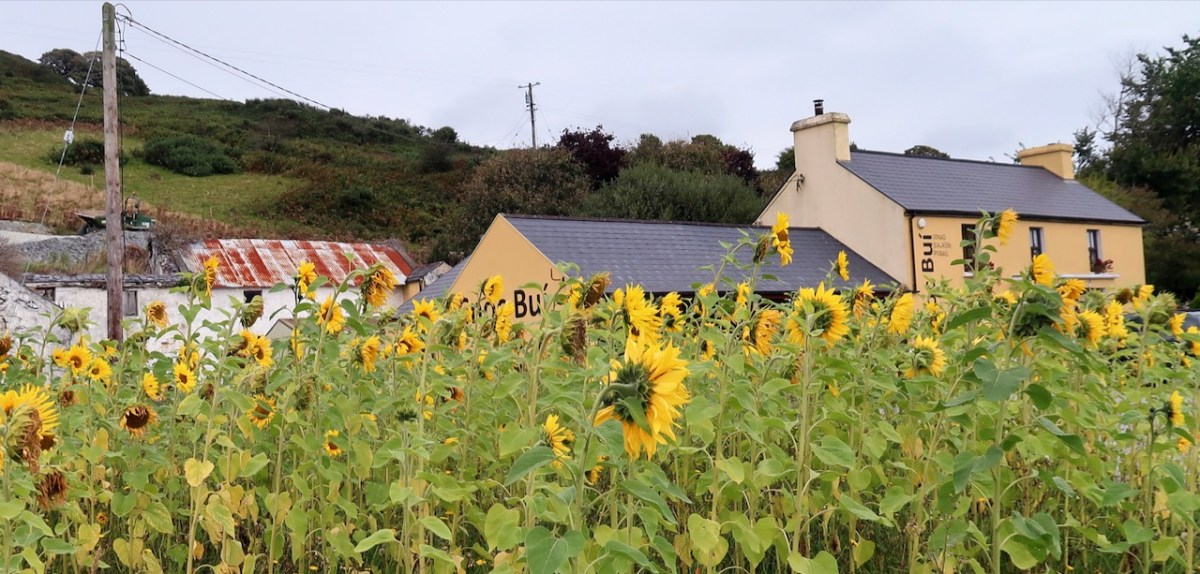
First of all, a little about Cnoc Buí itself (photo above by Amanda Clarke). As the name suggests, it’s a yellow house, beside the sea in in Union Hall, renovated and fitted out for the arts. It’s the brainchild of Paul and Aileen Finucane, who have come to live in Union Hall permanently, after owning a house here for forty years. Passionate about art, and avid collectors, they are ‘giving back’ in the most magnificent way possible through their philanthropic efforts. Read more about them and Cnoc Buí in this story from the West Cork People. (Photo below courtesy of the West Cork People.)

Those of you not living in West Cork – you have no idea how rare it is to come face to face, in your own backyard, with the great Irish artists of the 20th century. Normally we have to go to Dublin, to the National Gallery, or the Hugh Lane.

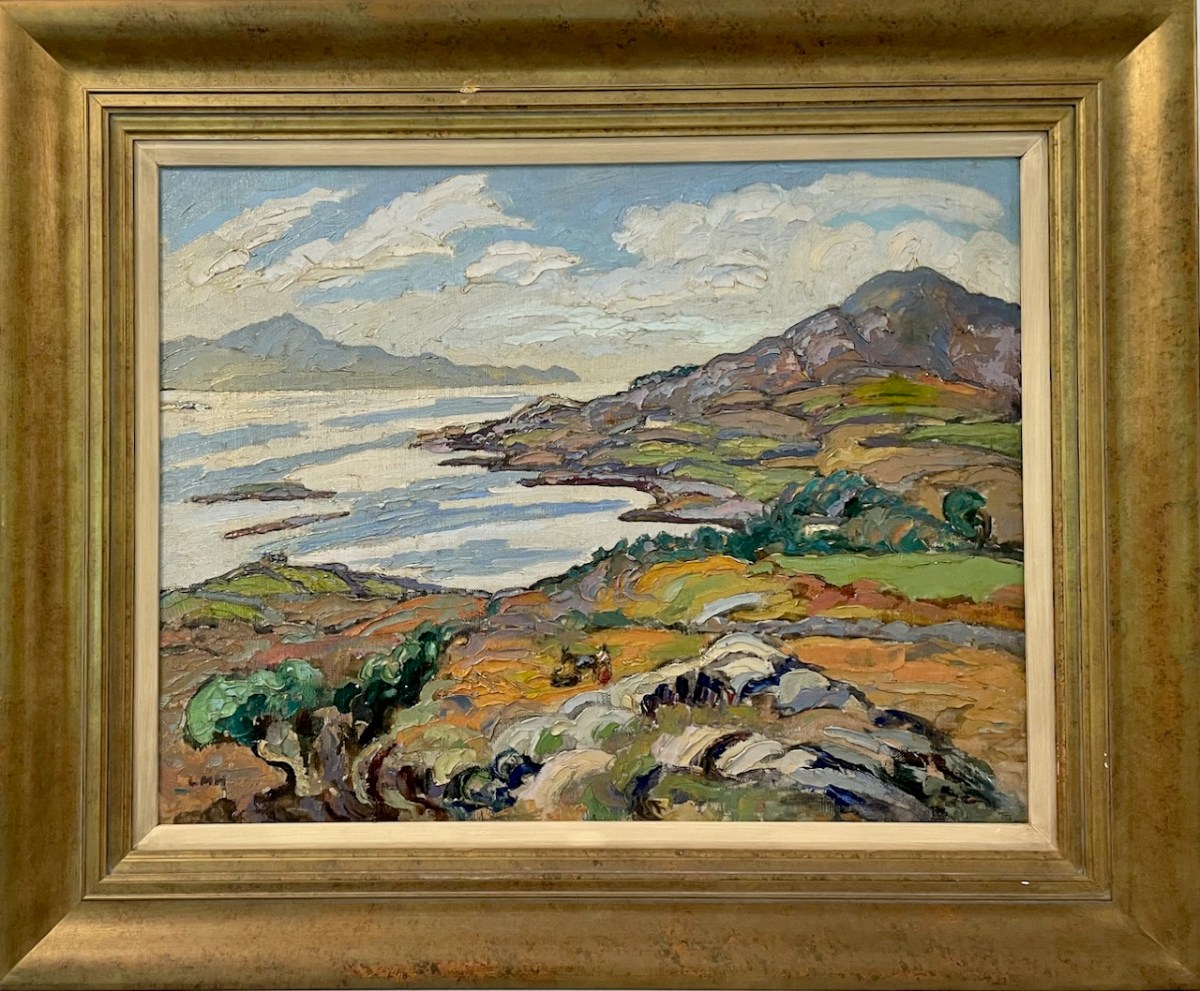
Ahakista by Letitia Hamilton

I often get my fix from the wonderful Facebook Page 20th Century Irish Art, and I have come, thanks to that source, to recognise many of the names and styles of our leading artists.

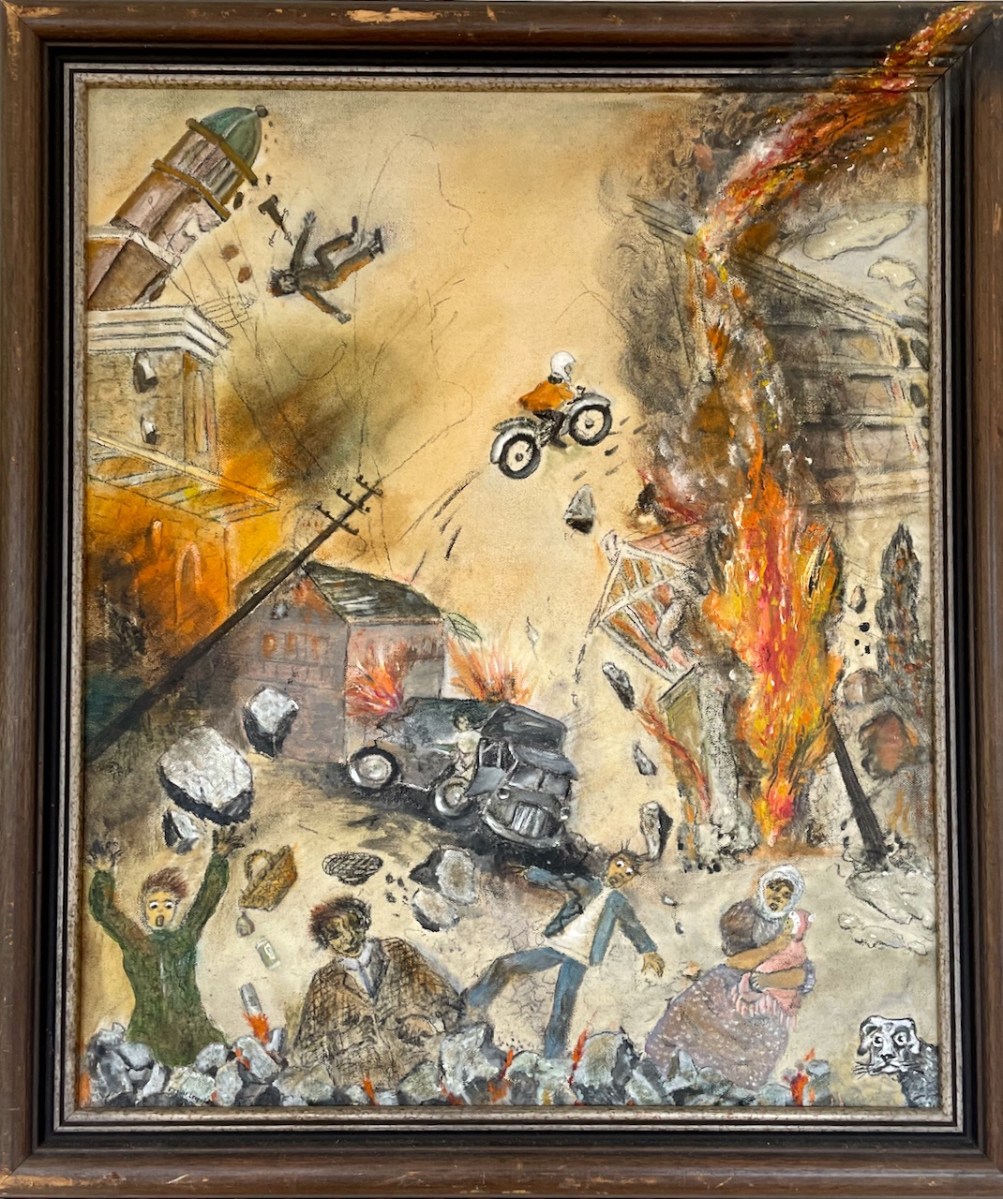
Phyllis Leopold’s The Belfast Blitz

The only other comparable experience I have had here in West Cork was with the Coming Home expedition in 2018. Don’t get me wrong – I love 21st century art and we have SO many excellent artists and great venues here in West Cork, and we have written about and reviewed many, many shows. Remember The Souvenir Shop? Rita Duffy is here as well.

Kathleen Fox, Still Life with Bust

This show emphasises Irish women artists – over half of the pieces are by women. We are all rediscovering the superb women artists who were in the shadow of famous husbands (Grace Henry, Margaret Clarke) or unjustly neglected (Kathleen Bridle, Hilda Roberts, Gladys Mccabe), better known as stained glass ‘craftswomen’ (Evie Hone, Sarah Purser, Olive Henry, Kathleen Fox), written off as mere ‘Illustrators’ (Norah McGuinness), or who were even actively discriminated against by the male establishment and dominating figures like Sean Keating. Some are getting the last laugh now – there’s a new exhibition opening now in the National Gallery devoted to Mildred Anne Butler, who is represented in this exhibition.

Olive Henry is more familiar to me as a stained glass artist, so I was delighted to see this fine portrait

But it was women who led the Irish art world into the modern era: The Irish Exhibition of Living Art was founded by women who had been able to afford to go abroad to study  and had picked up newfangled ideas on the continent – women like Evie Hone and Mainie Jellett. Young artists flocked to their exhibitions, while the old guard stuck to their conservative, academic forms – echoed, of course, in the suppression of women and modernism in the new Irish State.

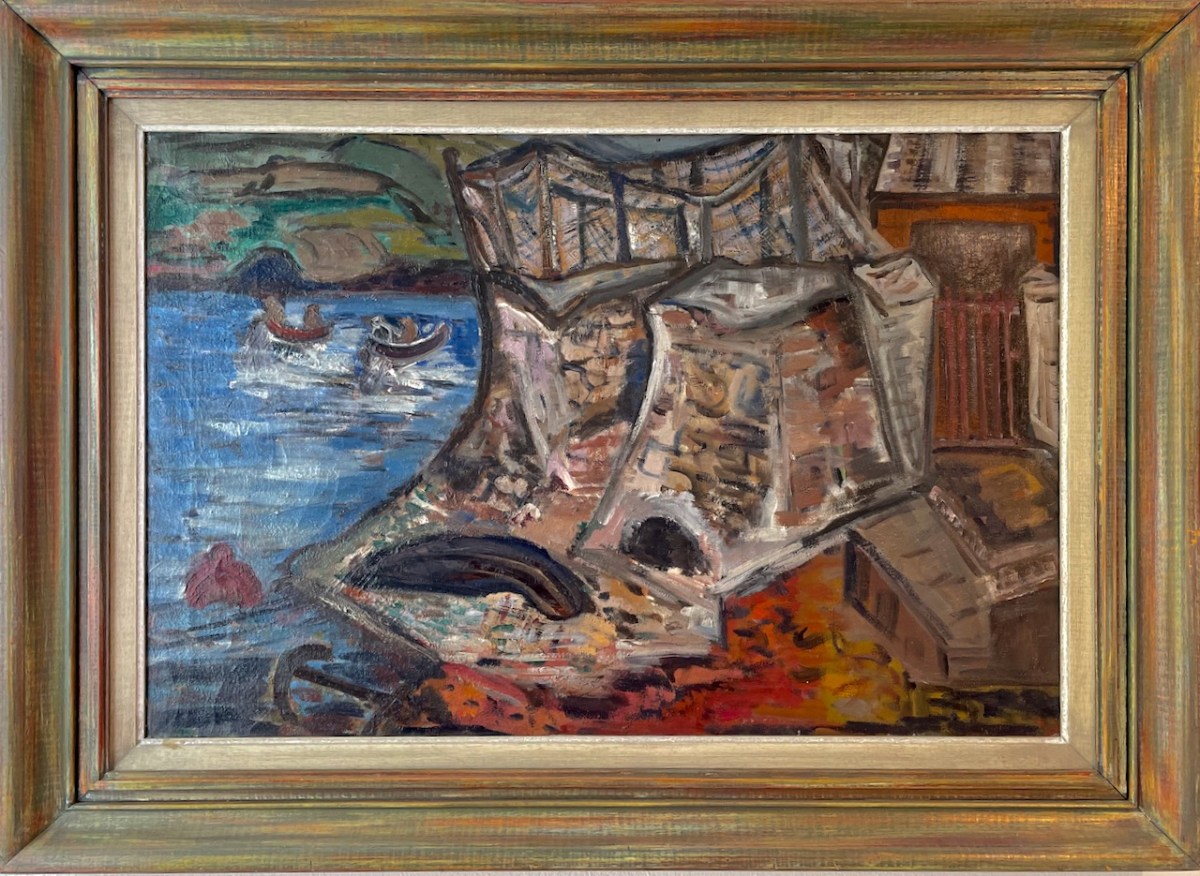
Evie Hone, Drying Nets – The Harbour Wall, Youghal

But here they all are, in Union Hall! The pioneering, courageous, persistent, driven, women of the new State. 

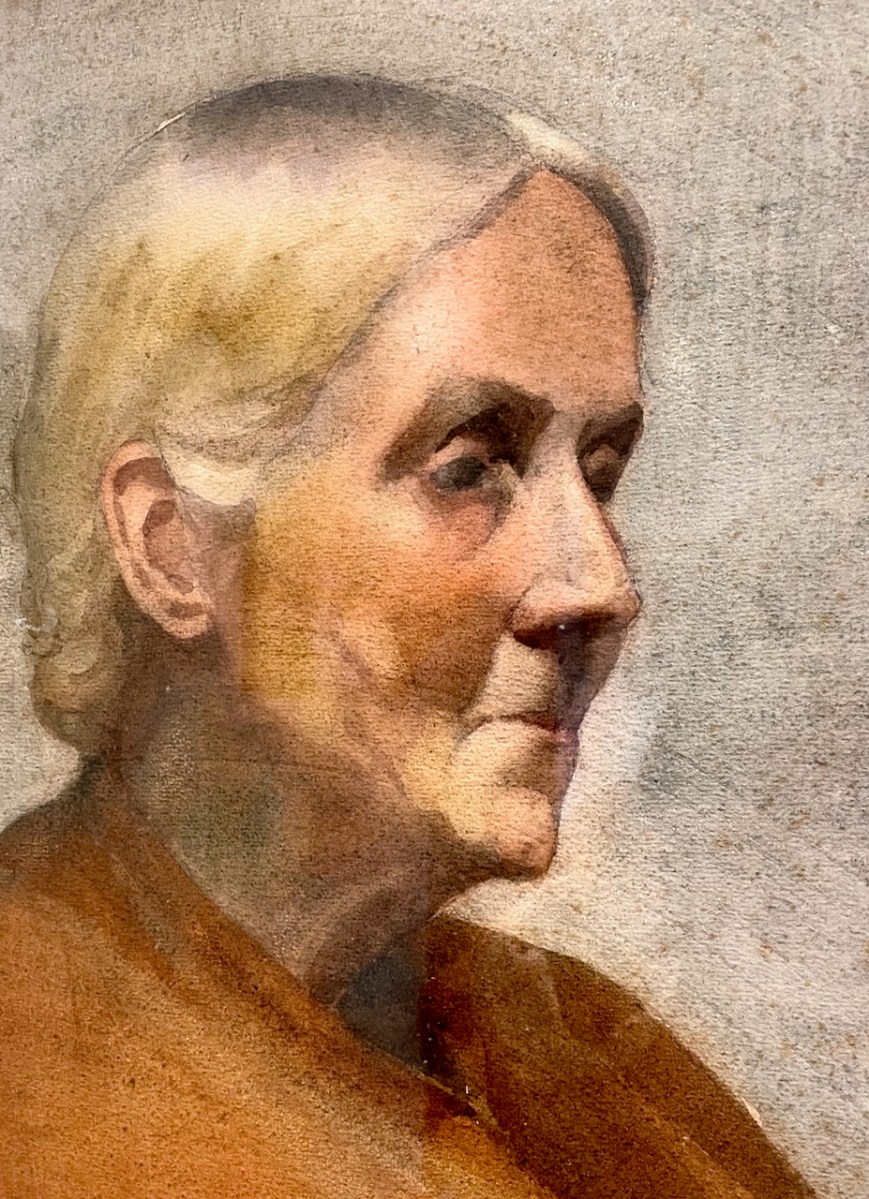
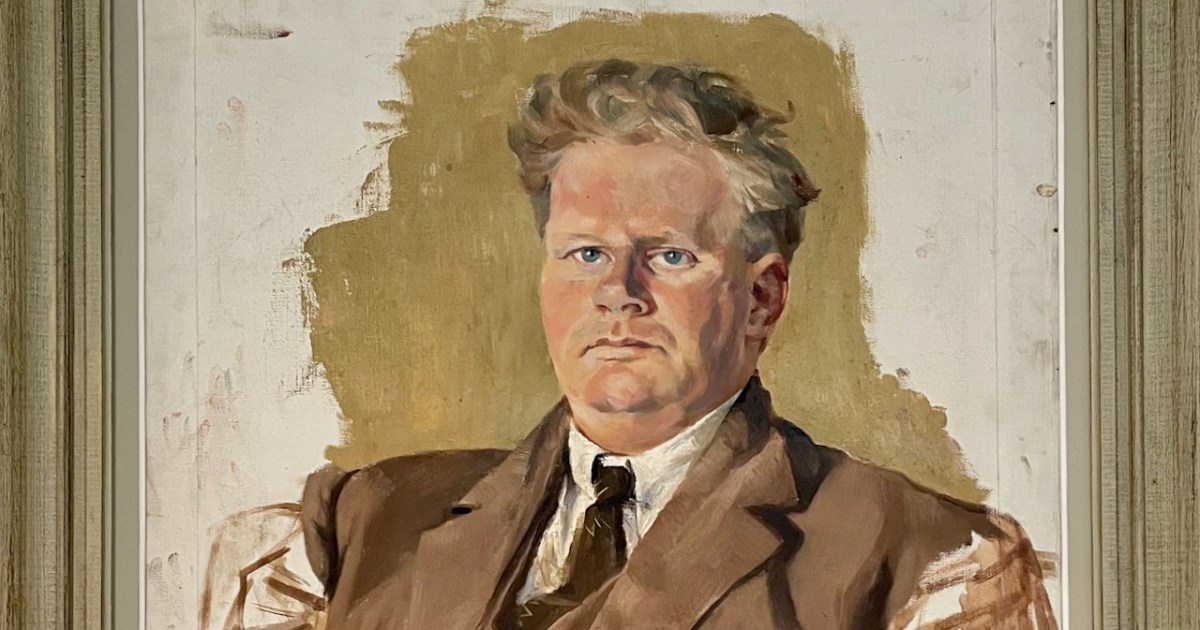
Portrait by Hilda Roberts

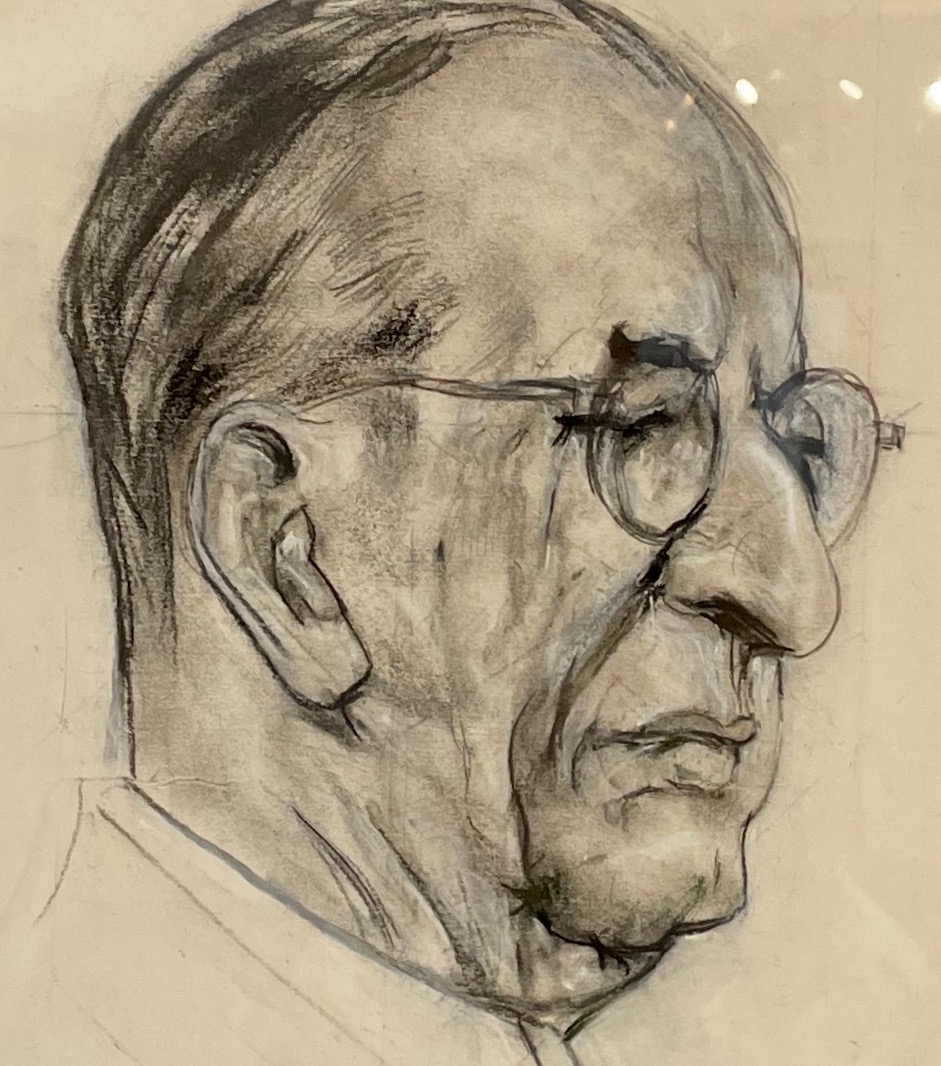
There are lots of men here too, of course – even Sean Keating, with a marvellous charcoal portrait of deValera. Did they grumble together about the goings-on over at the IELA?

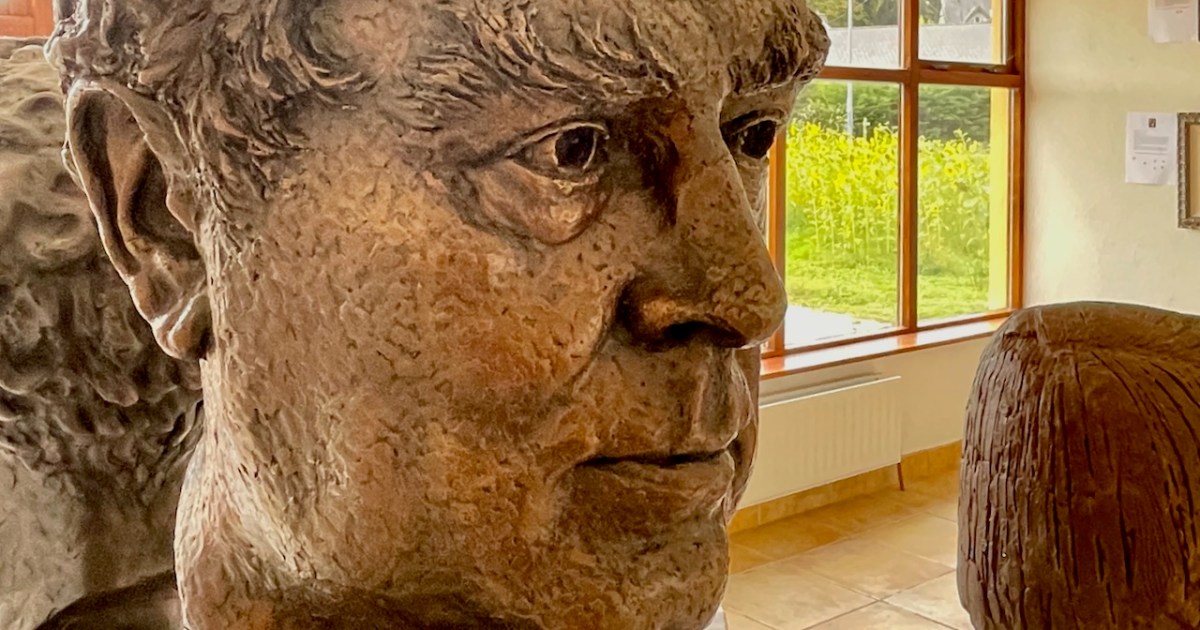
John Sherlock was new to me and a great discovery – I have used his bust of John Hume as my lead image. 

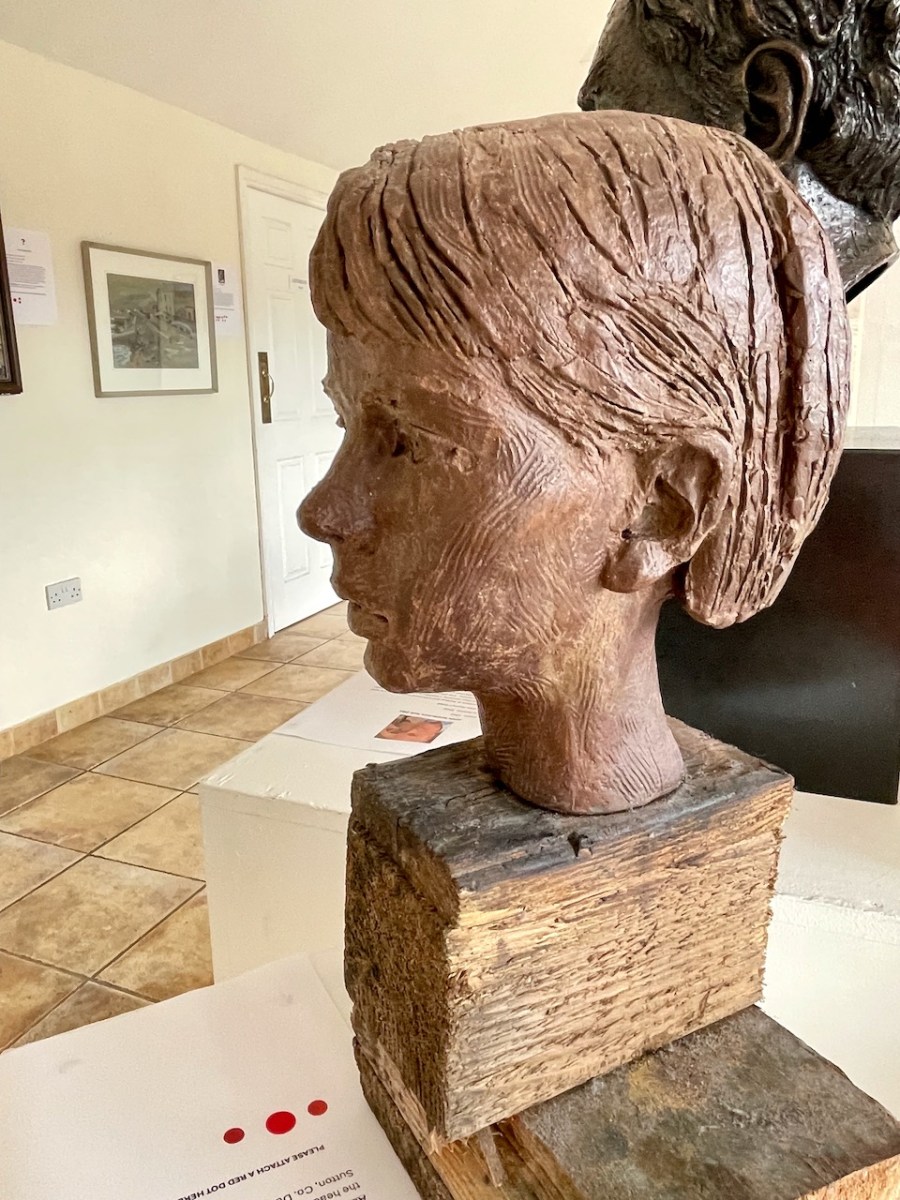
Oisín Kelly (above, Bust of a Young Girl) is a personal favourite, and I have mentioned Thomas Ryan in another context: he is also, perhaps, under-appreciated. George Campbell, despite designing windows for Abbey Studios in the 60s and 70s, never got written off as a stained glass craftsman. The portrait (below) is of his mother, Greta Bowen, who only began painting at 70 and exhibited well into her 90s.

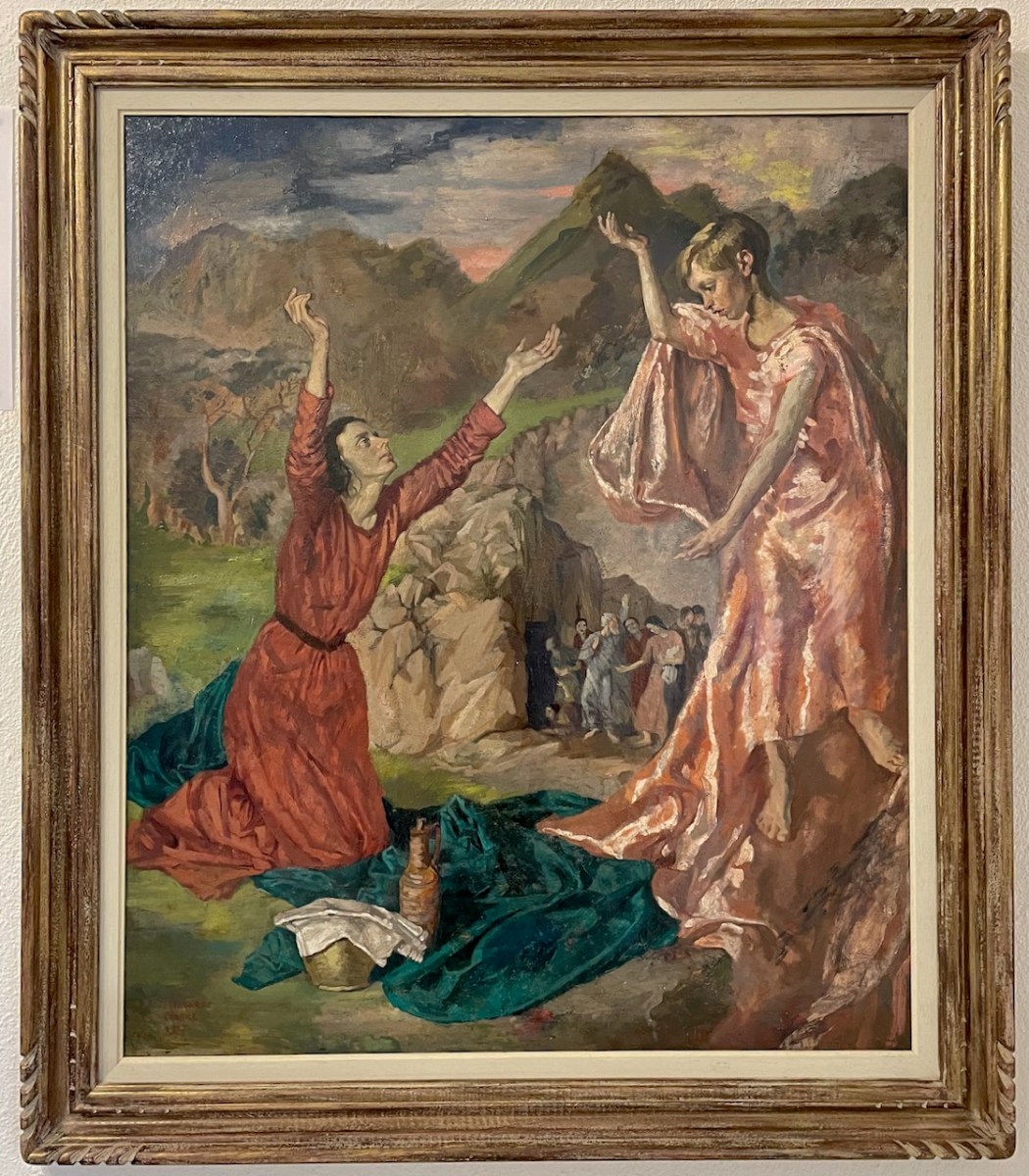
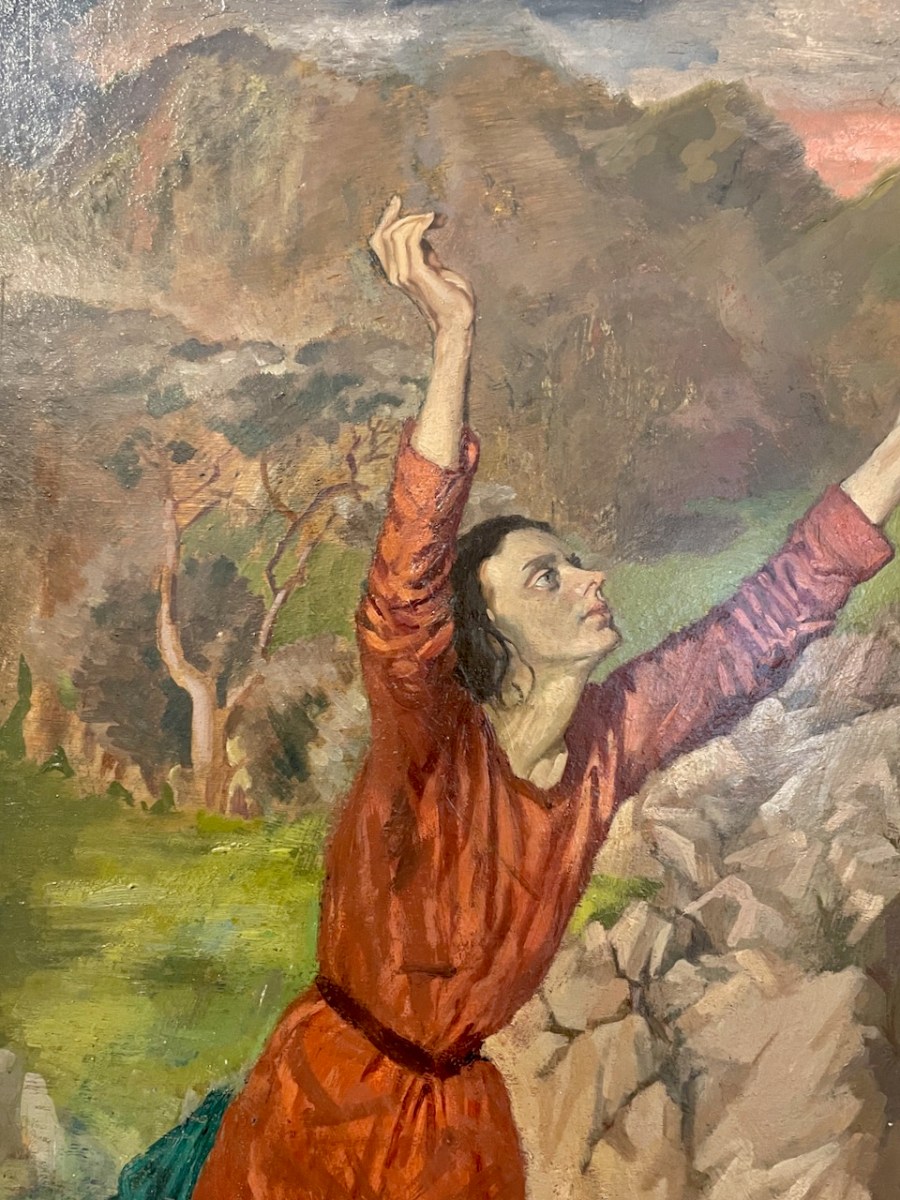
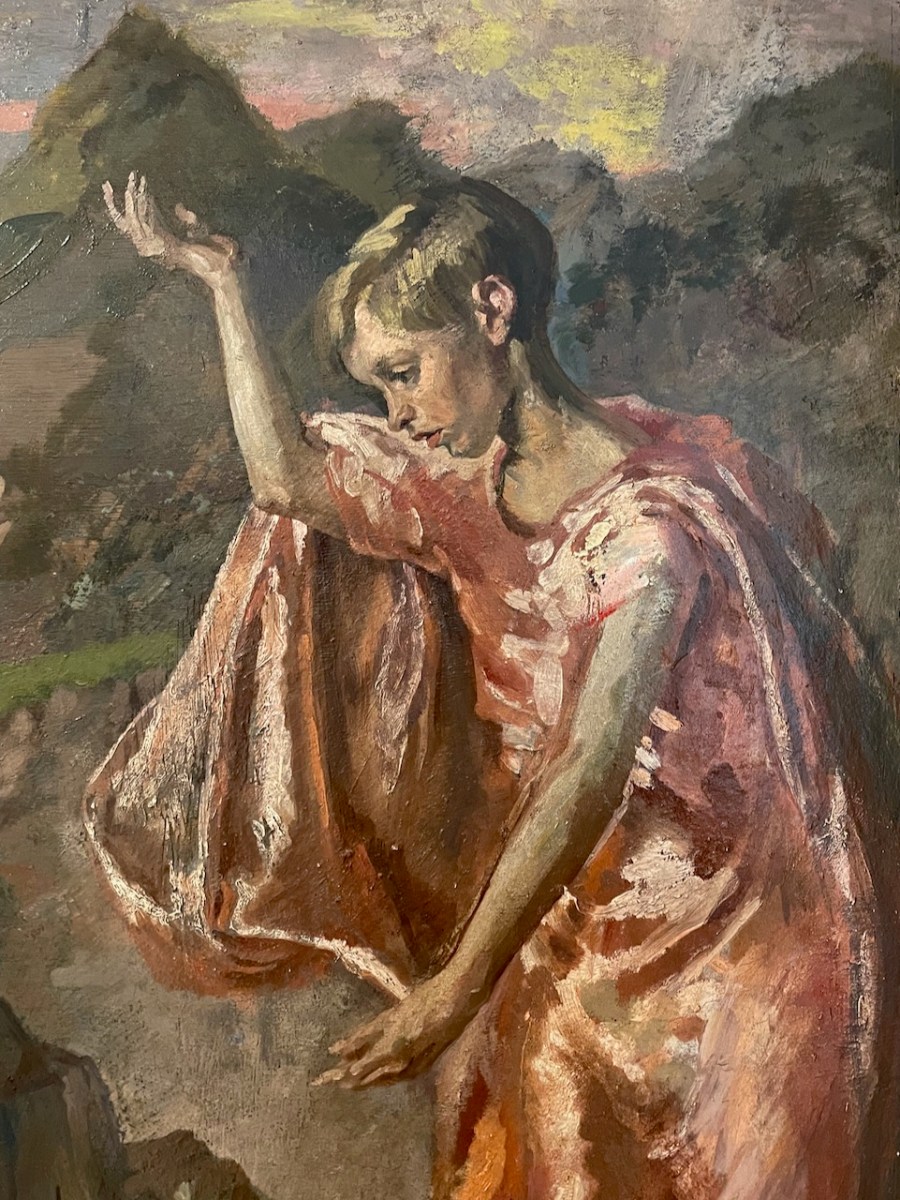
I recognised this painting, Mary Magdalen (below) as a Margaret Clarke right away, even though I had never seen it before.

It’s that combination of exact portraiture (I am willing to bet the angel was based on one of her children), the haunting expression in the eyes of Mary Magdalen, and the way the gestures mirror the scenery and shrubbery behind the figures.

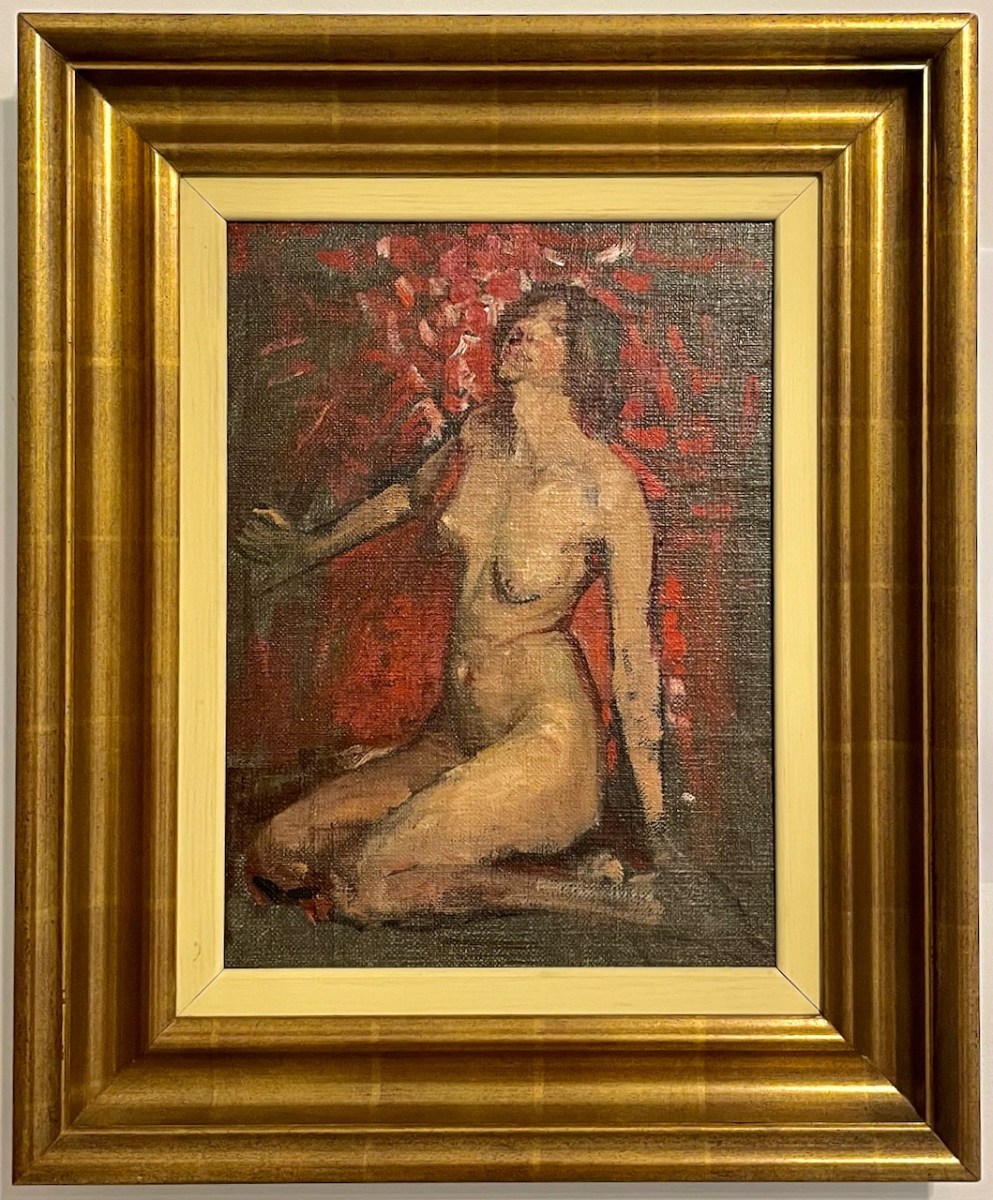
The Sarah Purser is interesting on a number of fronts. Purser made her name with portraiture, using her connections to obtain many commissions – she herself said she went through the British nobility ‘like the measles.’ But this nude (below) is of Kathleen Kearney, ‘Mother of All the Behans’, who worked for Purser as a young (and very beautiful) woman. Sarah Purser’s many talents (she was a superb manager of An Túr Gloine Stained Glass Studio among many other things) are currently on full display at the Hugh Lane Gallery.

I have only given you a flavour of what’s in this exhibition. If you can, get down to Union Hall and take a wander through it yourself. If you get there on a weekend, the charming Nolan’s Coffee House will be open. 

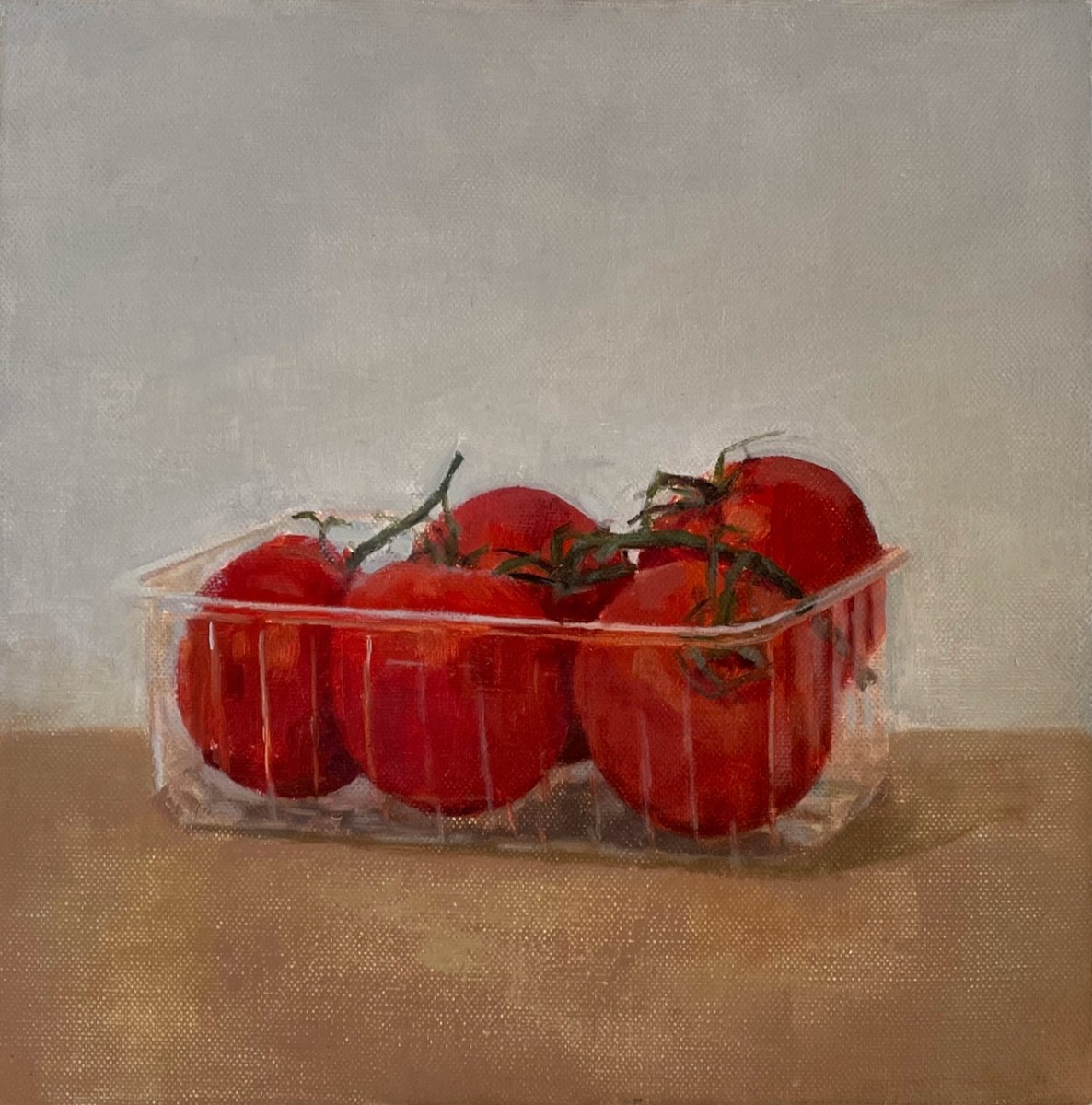
Maeve McCarthy’s Tomatoes