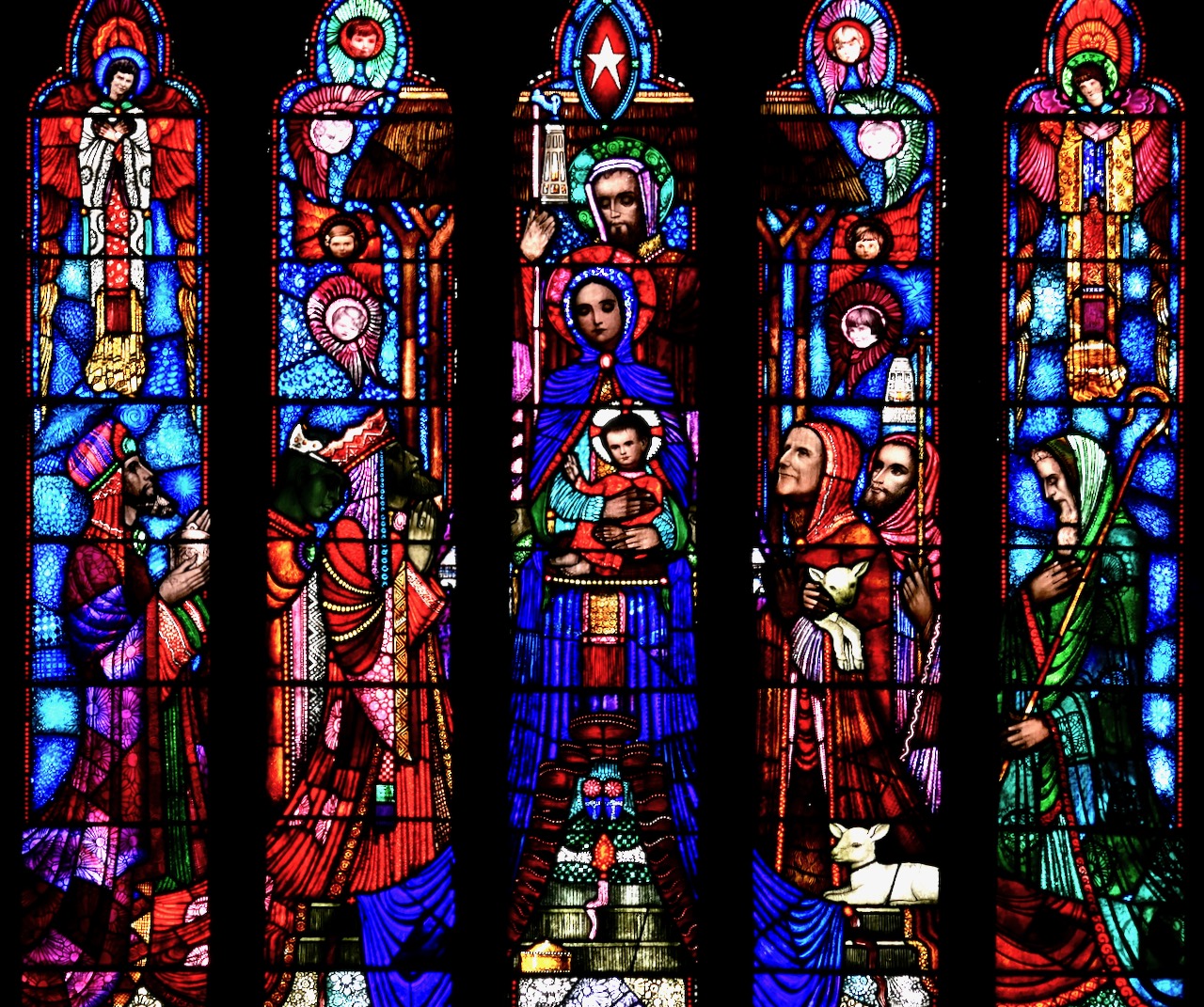
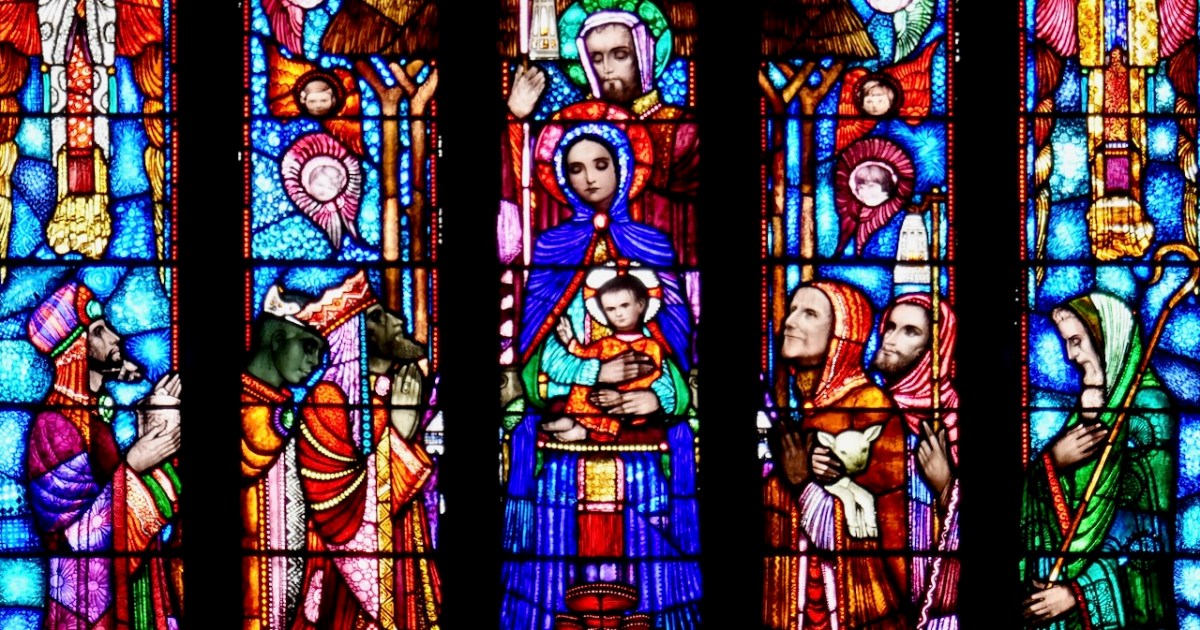
I love it when a stained glass window has a story and I think this one has the backstory to end all backstories. It’s in St Patrick’s Catholic Church in Bandon, Co Cork, on the west wall and it’s enormous.
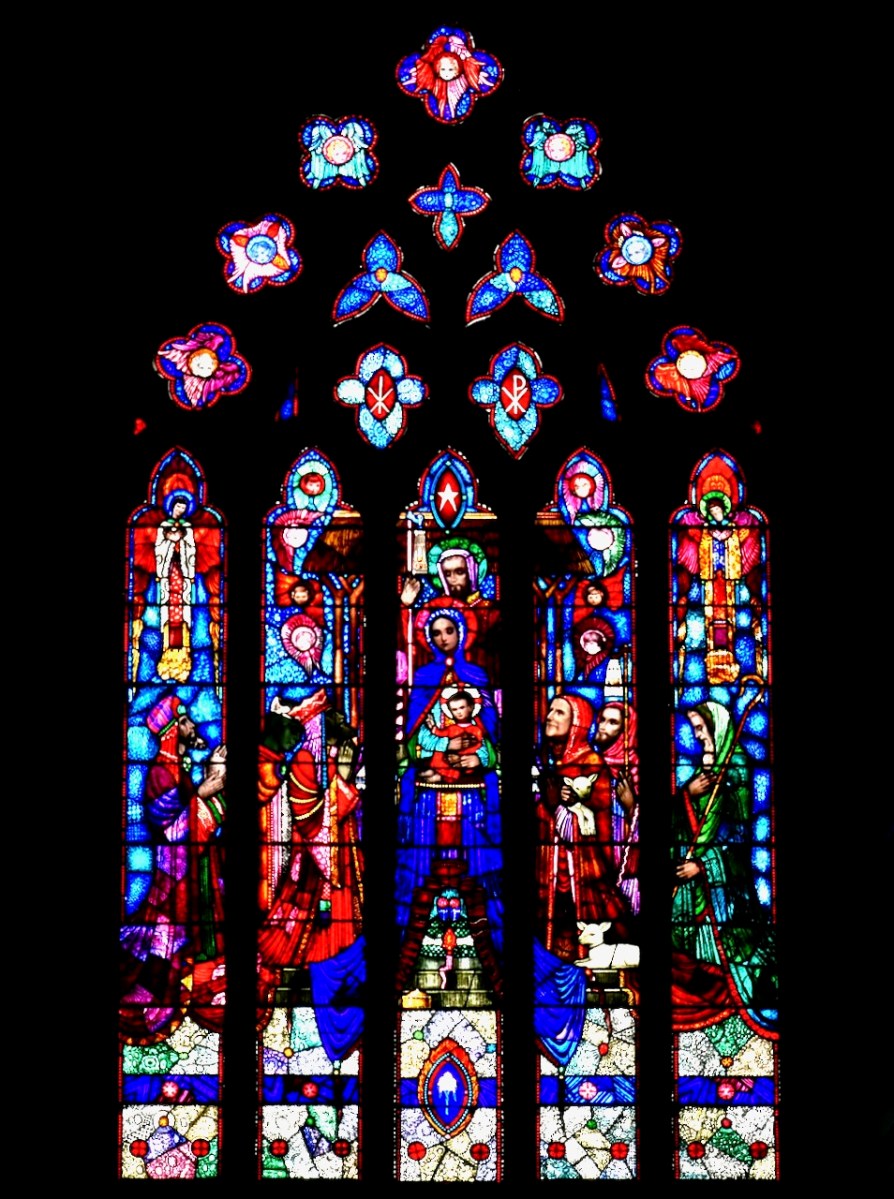
My previous posts about windows with stories are One Window, Eight Stories, about the Bobbie Bole window in Drogheda Grammar School, and Watson’s Brian Boru: One Window, 7 Stories. They followed a pattern of one-story at a time so I will follow that again, and see how many stories this turns into.
Story 1: Joseph Sr
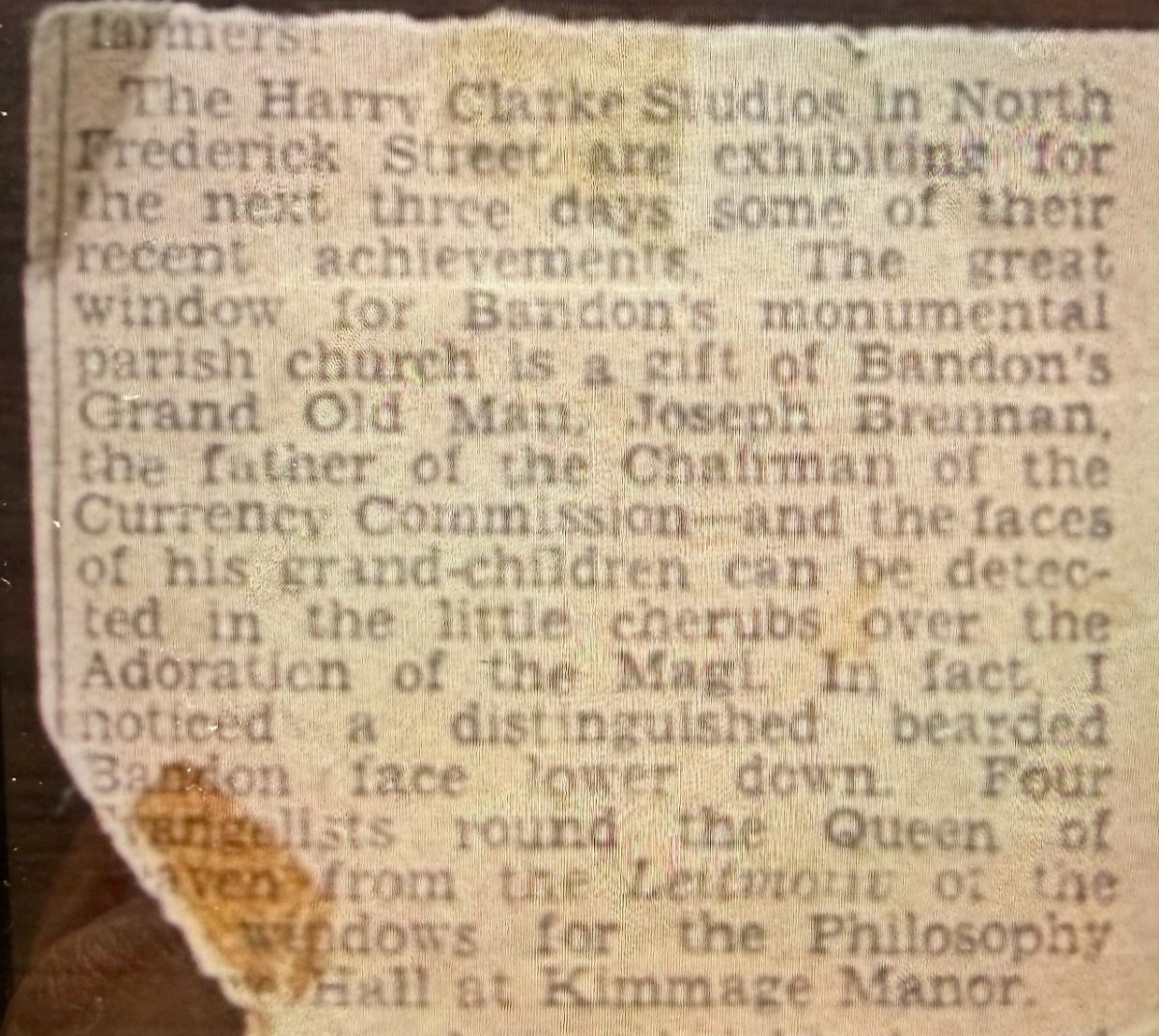
Let’s start with the person who commissioned the window, and the church into which it would be set. Joseph Brennan Sr was a Bandon businessman, distinguished and universally respected, and head of a large family. He died in 1948, having established several businesses in Bandon, including a bakery and mill.
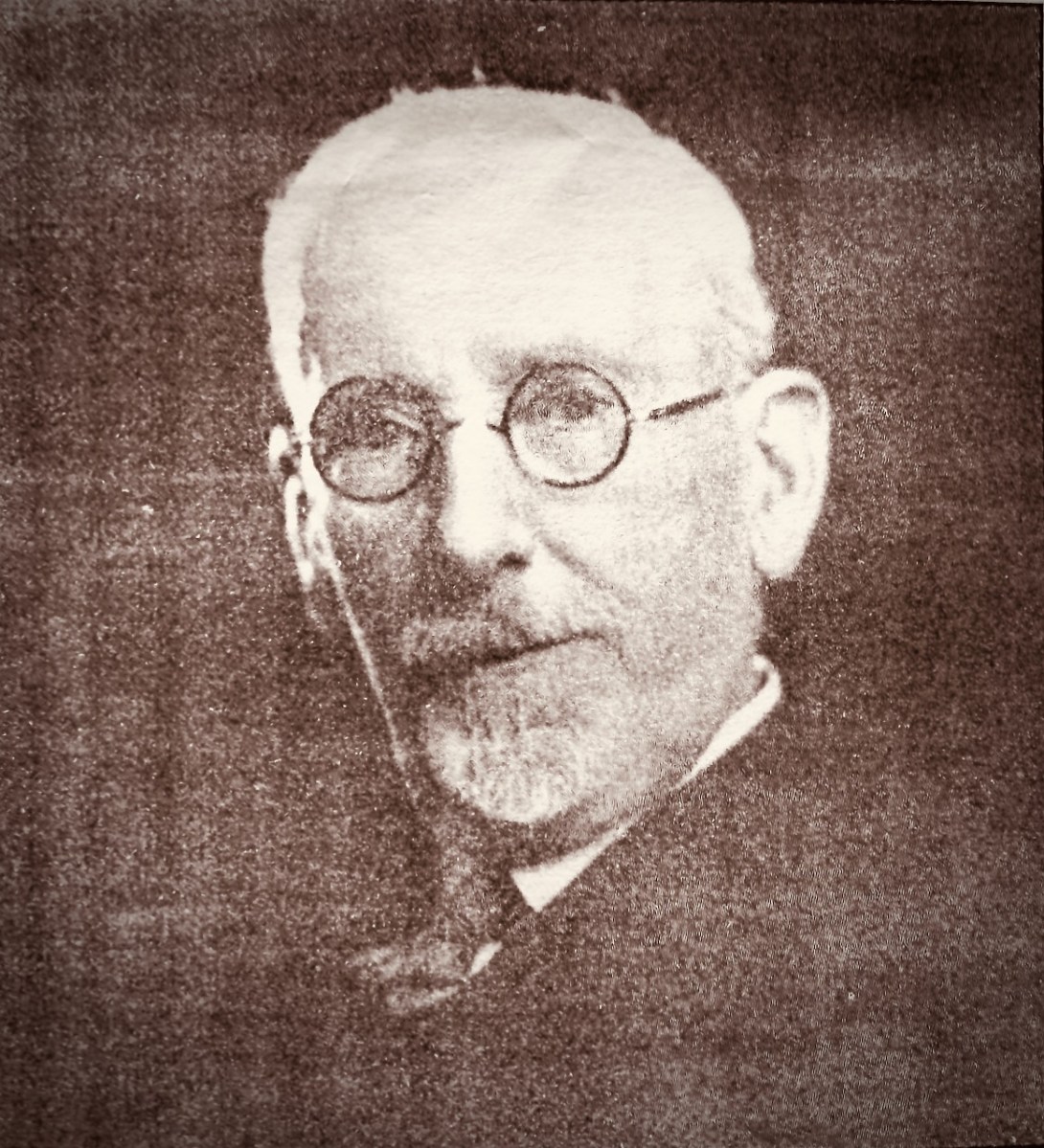
According to his obituary:
for several years he provided the town with light until the service was taken over by the ESB. He was also a promoter of a woollen industry in Bantry which you later sold. As well as being the prime mover in all these undertakings he was a director of the West Cork bottling company and several other firms. (June 5 1948, Southern Star)
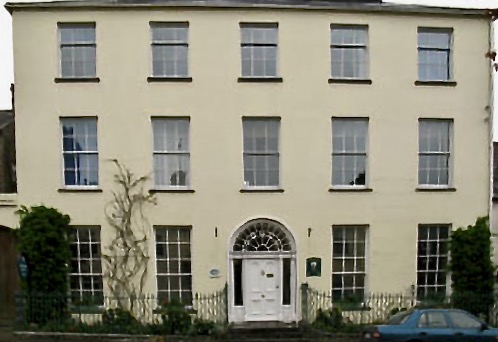
He was also a devoted family man, living in Kilbrogan House in Bandon (above). His wife, Mary, died in 1896 at the early age of 37. He never remarried and outlived her by more than 50 years. All of his children were clever and highly educated and he had a clatter of grandchildren of whom he was very fond. He was a stalwart member of the Catholic Community in Bandon and conceived the idea of a stained glass window for it, in or around 1940. Having determined on the window, he turned to his son, Joseph Jr, to manage the business.
Story 2: Joe Pound Note
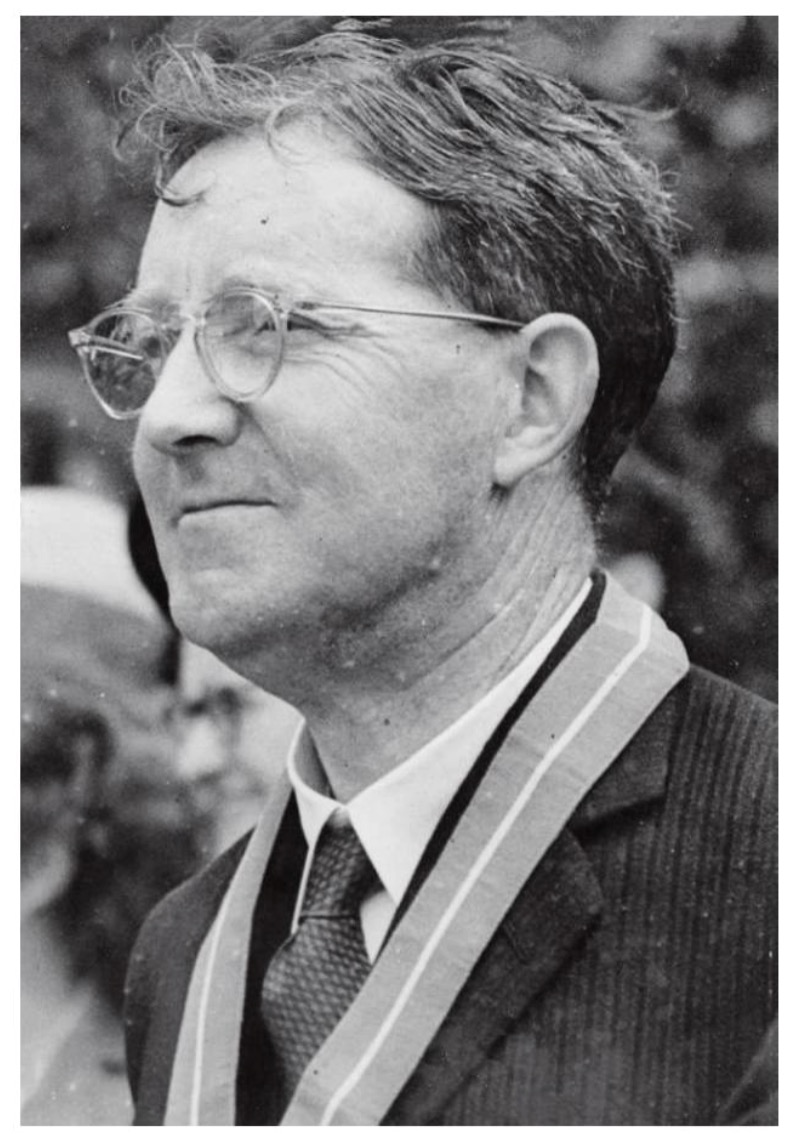
Joseph was the oldest of his seven children and the most successful. Read his biography in the DIB (no, really, do read it – it’s fascinating). A graduate of Clongowes and Cambridge, he rose through the British civil service in Ireland, transferring, it appears, seamlessly into the Irish civil service after the treaty and working closely with Michael Collins to establish a department of finance and (in particular) set up an exchequer. His experience and advice was invaluable to the new state and eventually he was appointed Chairman of the Currency Commission (1927–43) and then Governor of the Central Bank – here’s their first meeting.
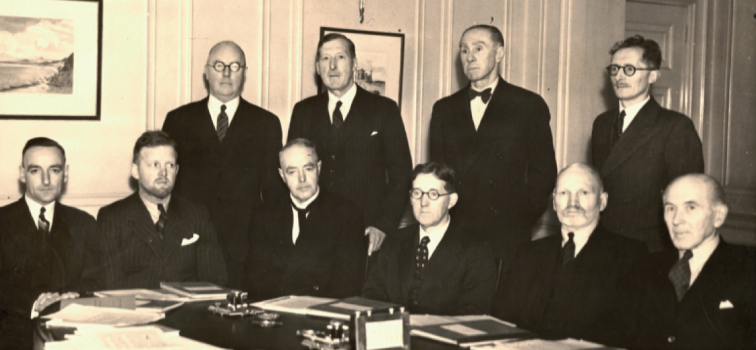
In that capacity, his signature was on our banknotes, and that sealed his fate to be known in his hometown ever after as Joe Pound Note.

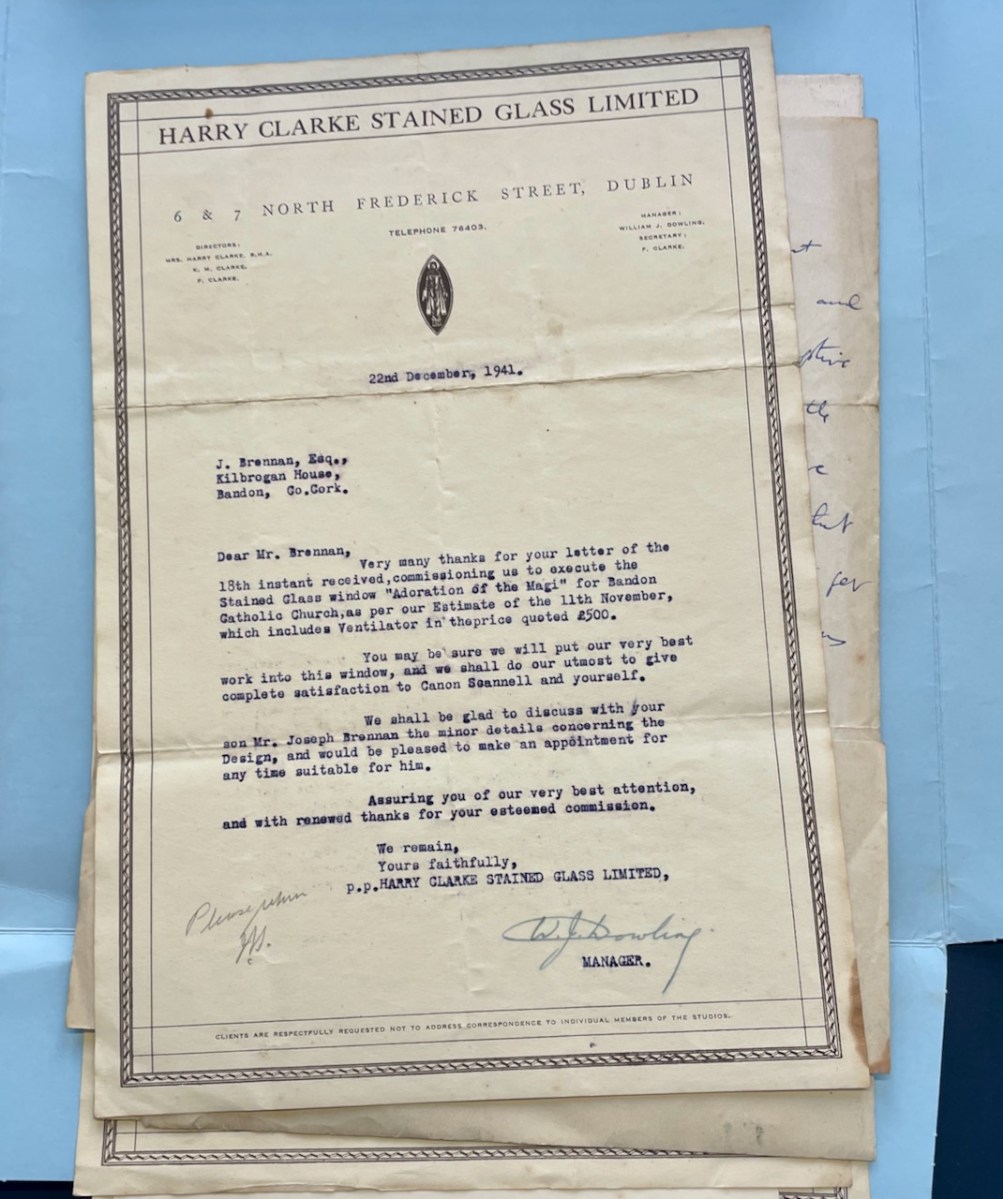
The correspondence between the Josephs Sr and Jr and the Harry Clarke Studios has been preserved in the Joseph Brennan Papers in the National Library of Ireland. The extracts and photos from that collection that follow are used with their permission.
Story 3: William
After Harry Clarke died the Studio continued until the 1970s, and as of 1940 the Manager and Chief Designer was William Dowling, about whom I have written in the post The House Style: William Dowling and the Harry Clarke Studios. So it was William Dowling who negotiated with Joseph Jr (on behalf of his father) and it is also William Dowling who is credited with the design for the Bandon Window, the original of which is located in the Harry Clarke collection at Trinity College. Here is that design, but to have a really good look at it, go to the TCD source and enlarge it so you can see the lovely pencilled details.
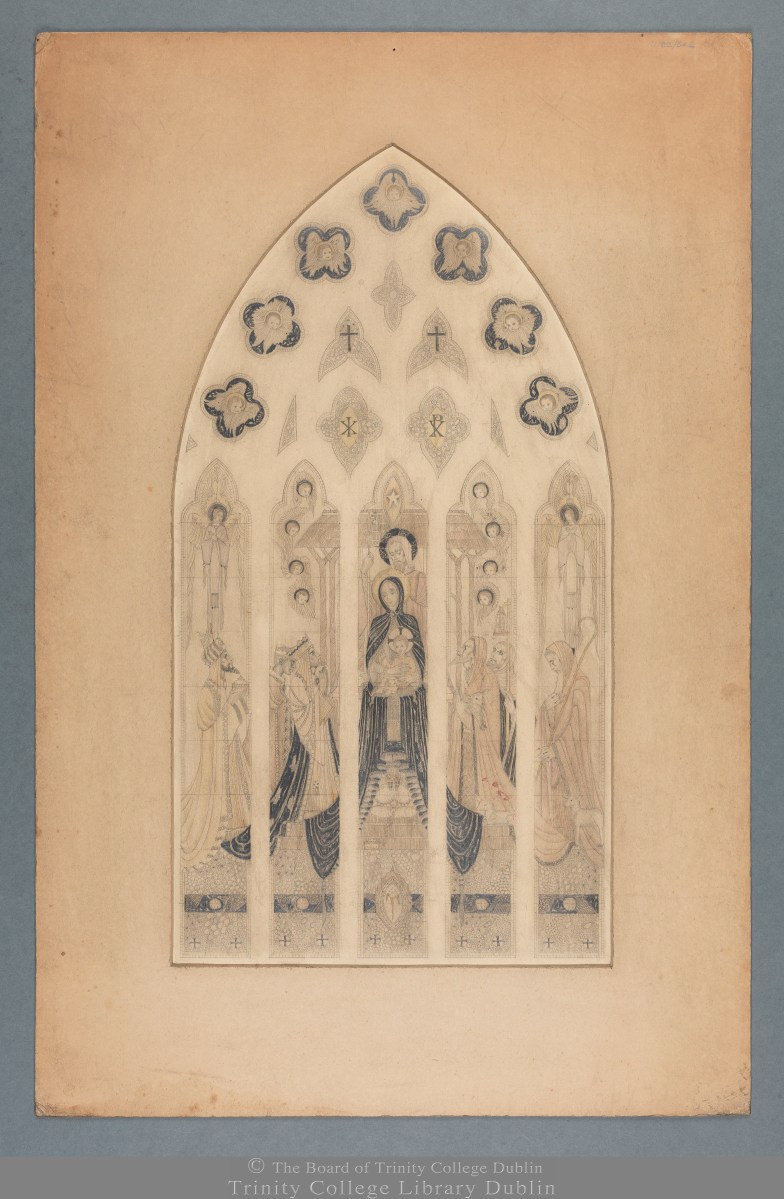
Dowling’s letters make it clear that the studio was very anxious for this commission – it was large and prestigious. Joe Jr’s advice to his father includes the recommendation not to haggle for a cheaper price, as he was convinced they would get a better outcome by paying what was asked: Joe must have known his father’s propensity for driving a hard bargain.
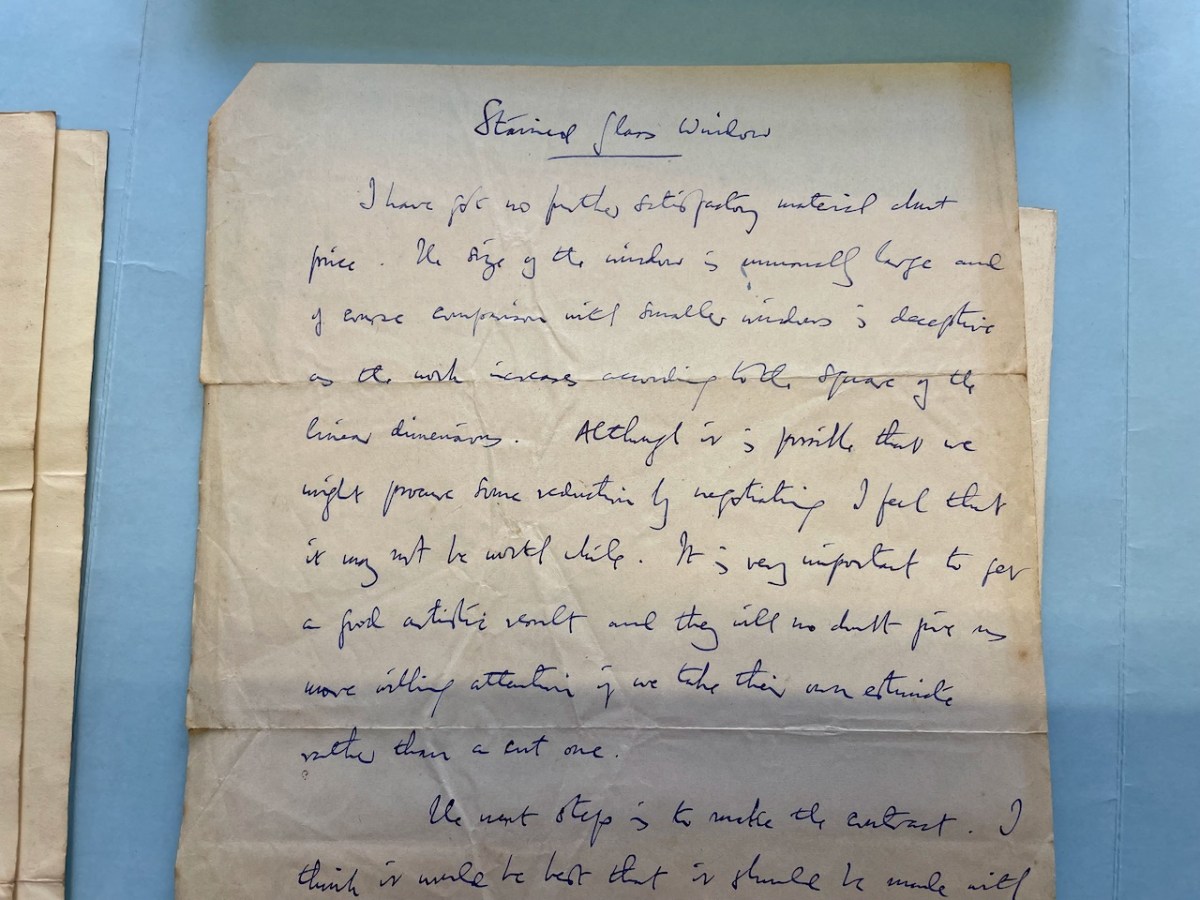
One of the interesting aspects for me was the Studio letterhead which contains the footer: CLIENTS ARE RESPECTFULLY REQUESTED NOT TO ADDRESS CORRESPONDENCE TO INDIVIDUAL MEMBERS OF THE STUDIOS. I have been studying the fierce competition for business that went on among the stained glass studios, and the loyalty that was demanded of employees – the fear that they were doing side deals was real.
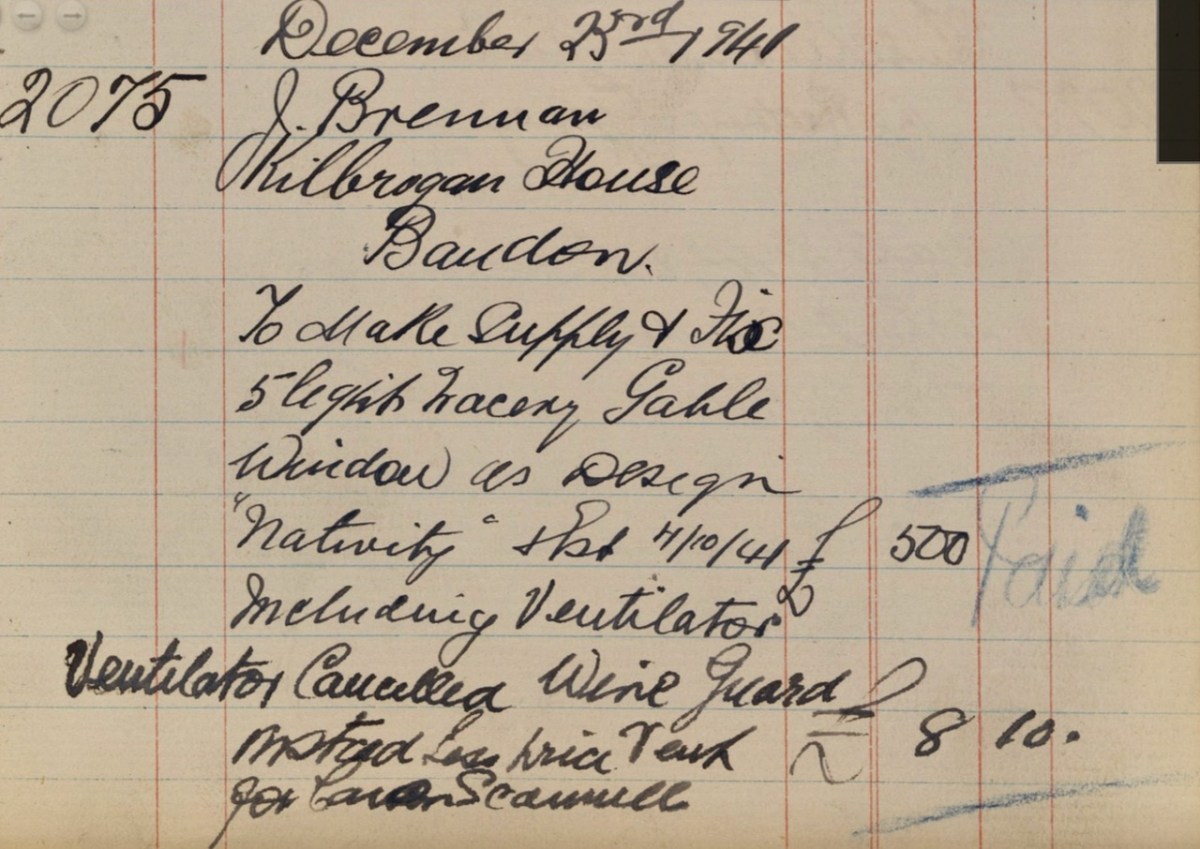
A price of £500 was agreed. Much wording was expended on whether or not the window should have ventilation (no) and/or a wire guard (yes, for an extra £8). Fr Scannel arranged to have a plan of the window frame sent and there was a mysterious reference to ensuring that photographs would be supplied.
Story 4: Helen
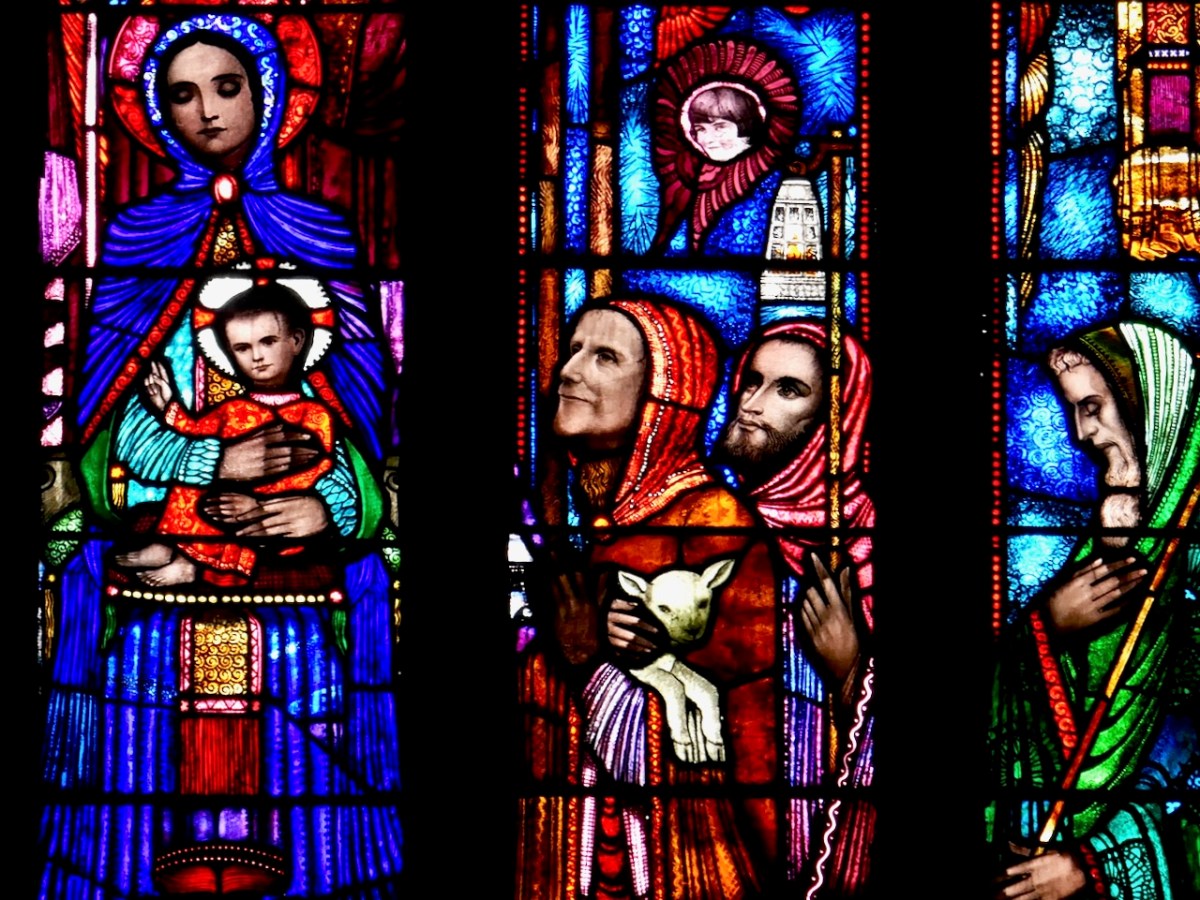
The photographs were of Joe Sr’s grandchildren, and also of himself and possibly his long deceased wife, Mary. He wanted them incorporated into the window as a long-lasting memorial to his family – a highly unusual, but wholly delightful idea and one that has fascinated Bandon people to this day. Enter one of Joe’s great-grandchildren, Helen Twomey, still resident in Bandon and a friend of my sister-in-law’s sister, Yvonne Coakley. Yvonne and Helen came to visit me, bearing gifts and treasure – the treasure being a family tree and Helen’s knowledge of who was who in the window.
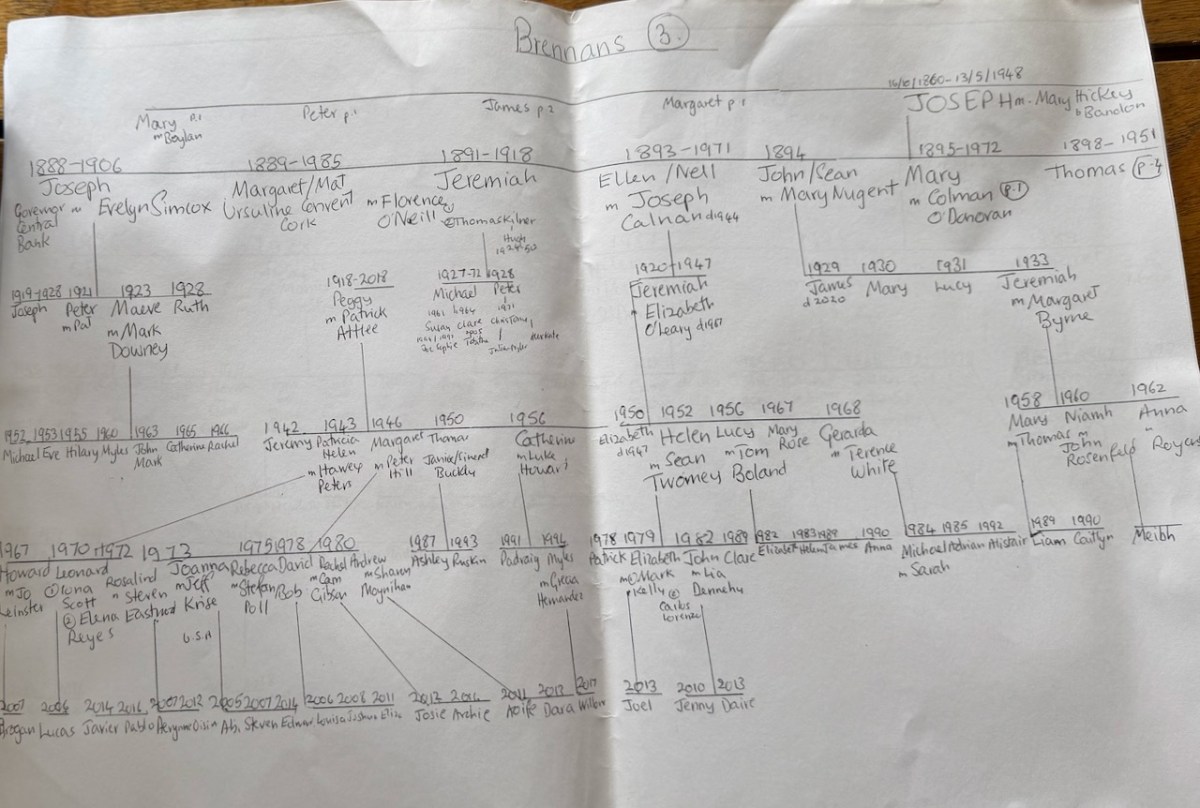
An article in The Holly Bough of 1971 had named the grandchildren but not their position in the window.
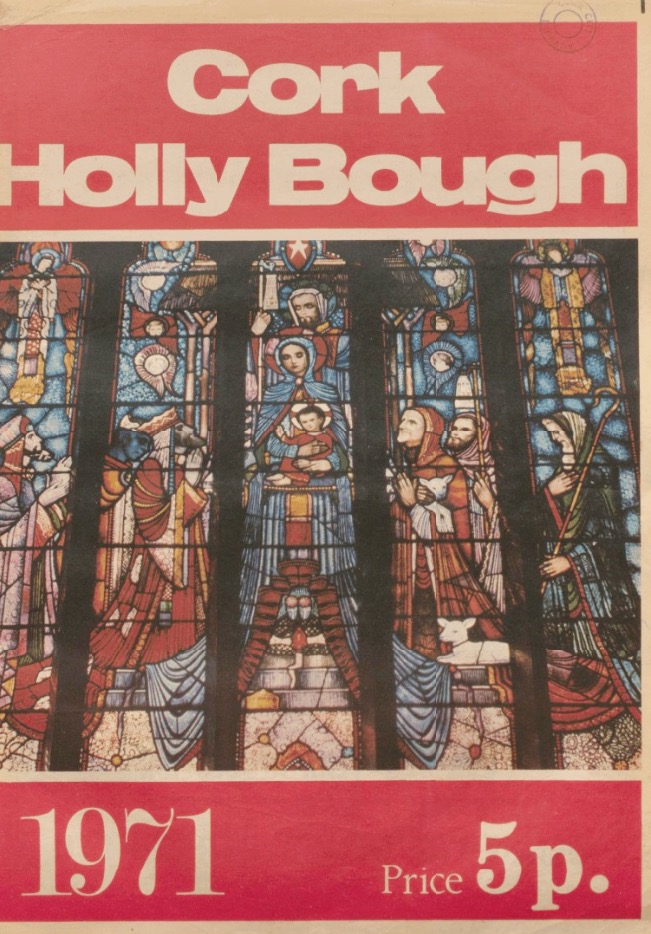
Another article in the 2007 Holly Bough had gone further and asserted that although the 1971 article had claimed that the face of the Blessed Virgin was based on a photograph of a youthful Mary Brennan, in fact Mary was the seraph at the top right. The author says that this information came from Ruth Brennan, Joe Jr’s daughter. It went on to list other grandchildren and between us Helen and I made this sketch of who was who.
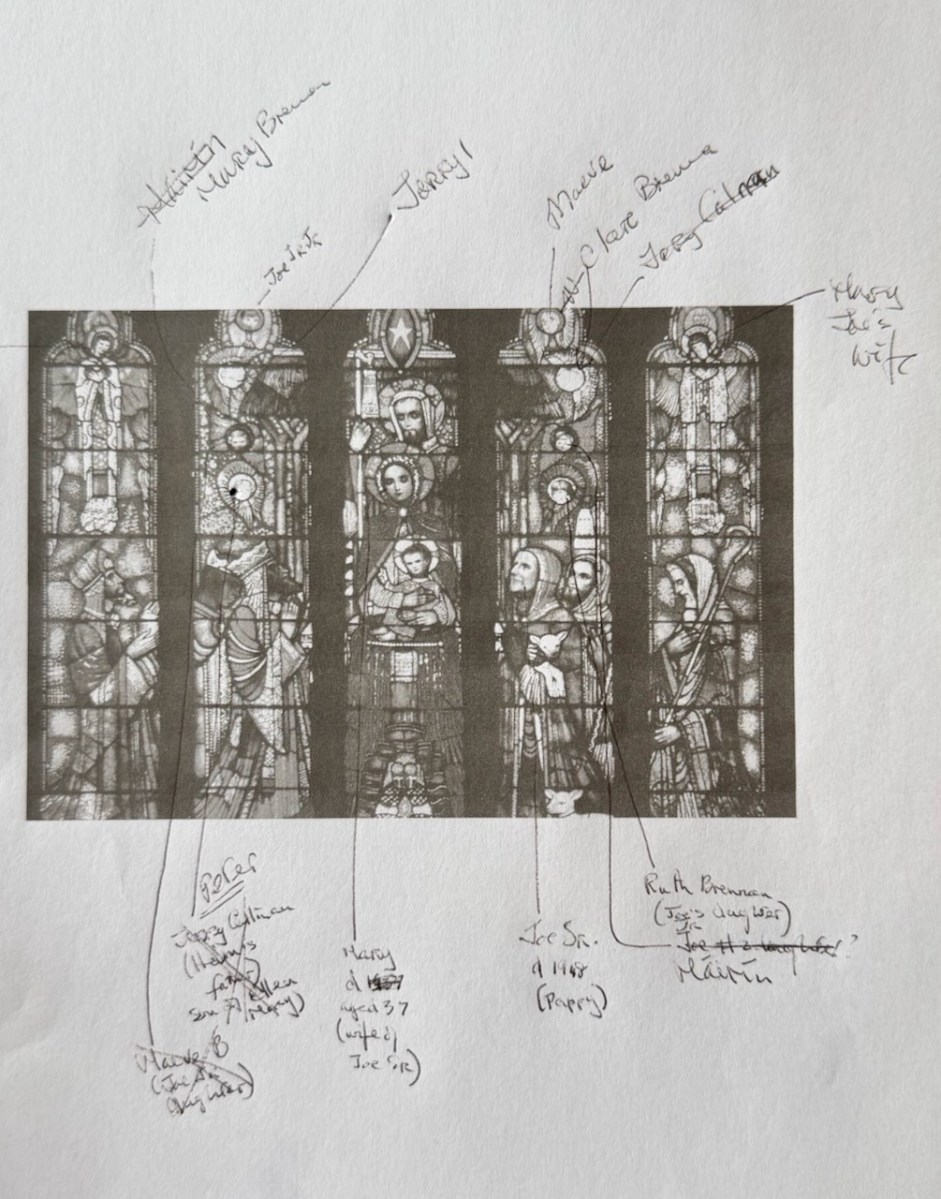
As you can see, it was not an easy task and it differs a little from the Holly Bough account. I’ve decided to leave it as is to show you how we pored over the images, identifying and correcting. Jerry has the exclamation mark as he was Jerry Calnan, Helen’s father. I do not think the Virgin Mary was Joe Sr’s wife, Mary as her face is very Clarke Studio and does not have the appearance of having been taken from a photograph.
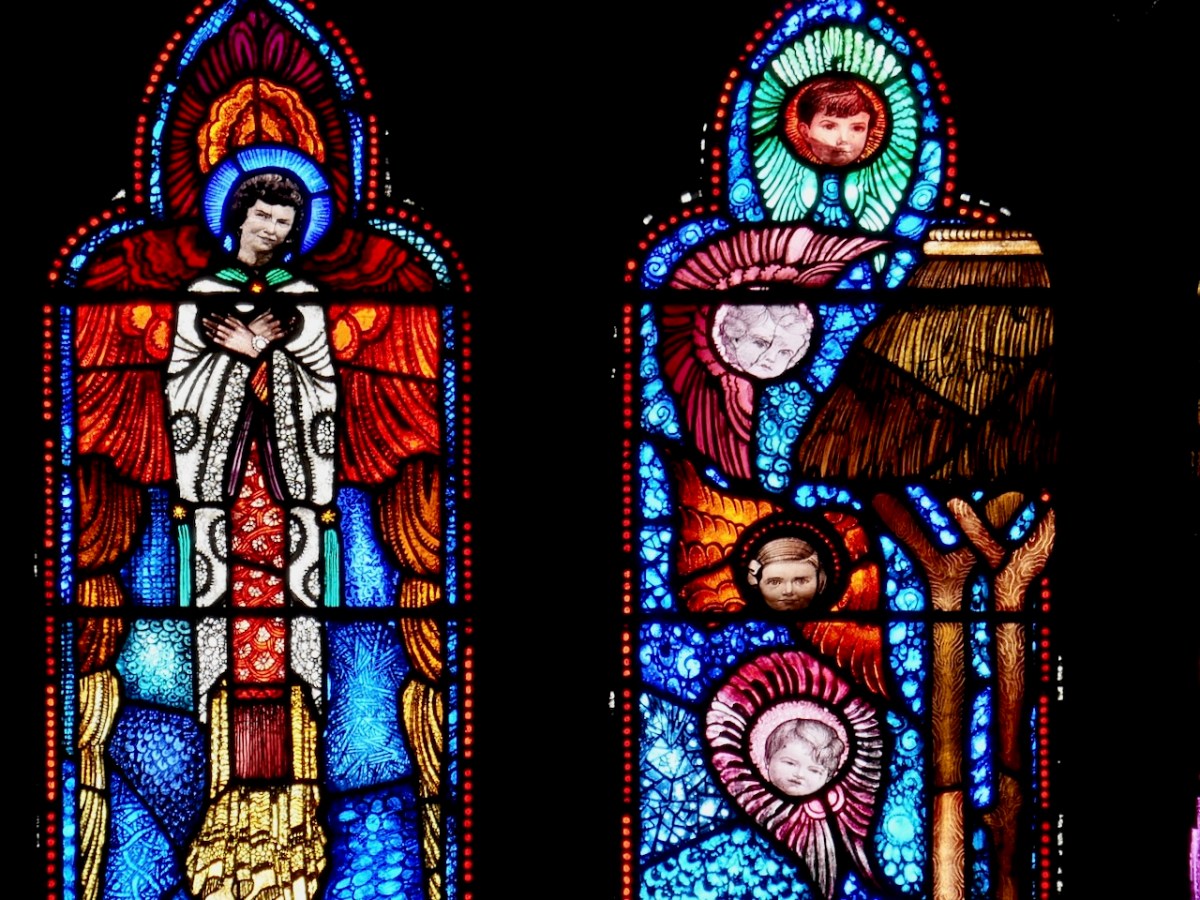
However, take a close look at some of the cherubs, and the two angels, and you will see instantly that these were real people. In fact, the Baby Jesus looks like a real person as well, although not identified in any of the accounts.
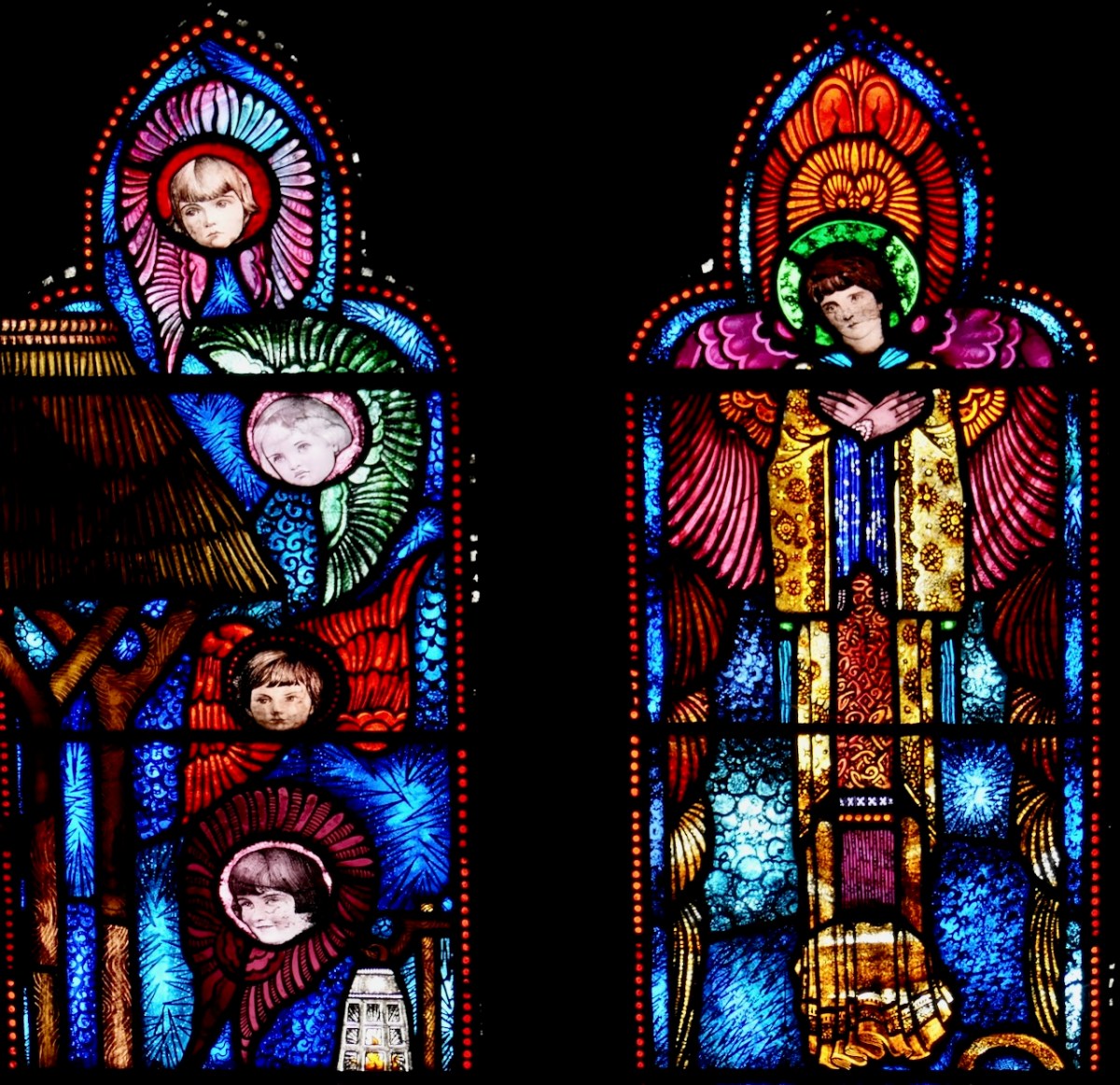
The Studios were proud of this window and exhibited it prior to it being shipped off to Bandon.
Story 5: George Stephen
As is plain to see – there are differences between the design and the window. If William Dowling designed this window, did he also paint it? We can answer this question – no, he didn’t. In fact the artist behind this extraordinary window was George Stephen Walsh. George Stephen had apprenticed under Harry Clarke, starting in 1925 when he was fourteen. He had five years of Harry’s supervision, tutelage and encouragement, until Harry died in 1931 (Harry was away in the Davos sanitarium for the last year). He was known in the studio for his talent with faces, so he was the obvious person to whom to assign this window, in which faces were crucial.
But we have other evidence. In George Stephen’s archive, kept by his son, George Walsh, is this photograph. On the side it says ‘painted, Clarkes.’ It’s a photograph (George Stephen was a keen photographer) of the finished window, taken probably when it was on display in the Studios before being dispatched to Bandon.

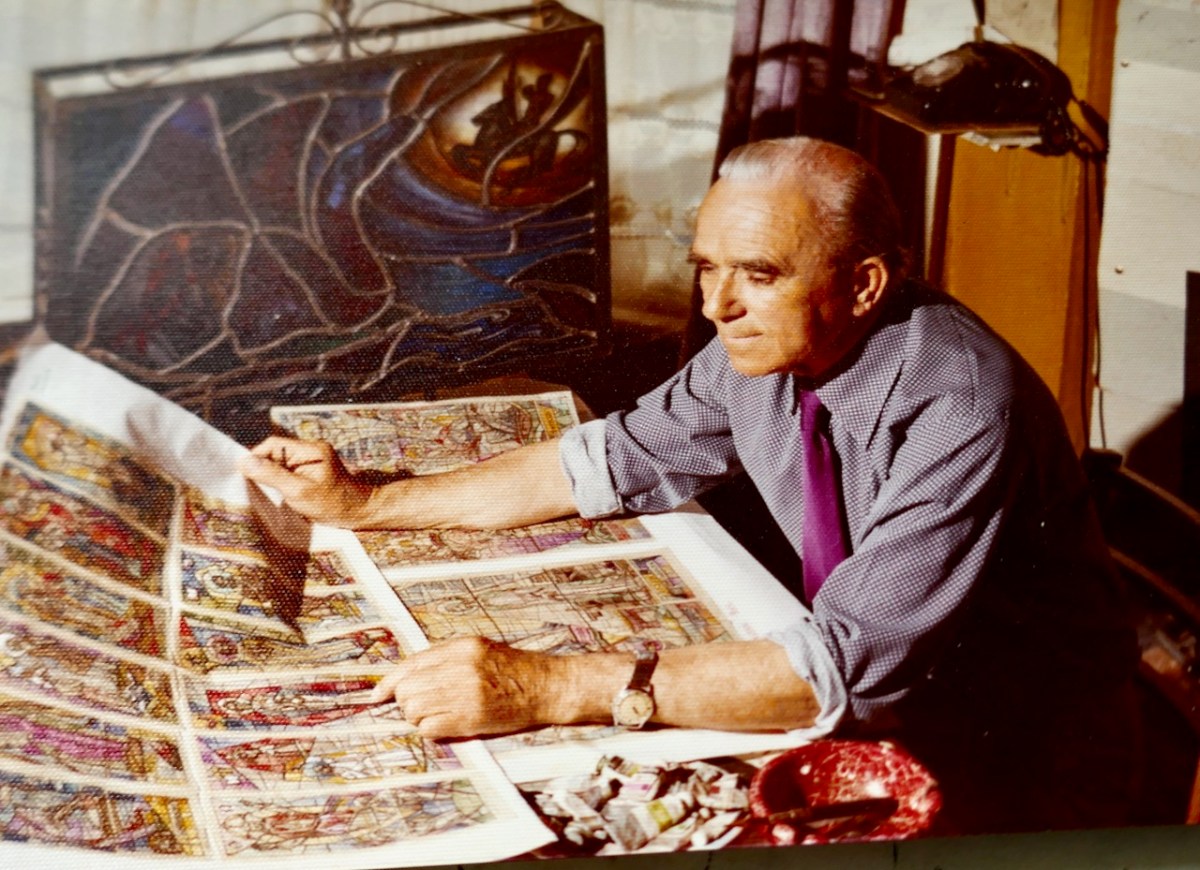
It was one of the last windows George Stephen painted at Clarke’s since he left in the early 1940s, frustrated by the house rules that refused to allot credit to the real artists behind the windows. He went on to have a distinguished career and produce many brilliant windows. This is him in later life, with a set of designs destined for a large American church.
Next time you are in Bandon, drop in to see this window. Take a pair of binoculars so you can see the tiny faces and ask yourself – how would you like your family album to take the form of a magnificent stained glass window?
Discover more from Roaringwater Journal
Subscribe to get the latest posts sent to your email.


Quite an audacious idea but the result is charming, and excellent research – I bet that was enjoyable. I too will be popping into the church when I’m next in Bandon.
LikeLike
Can’t help wondering what it’s like to be immortalised in glass as a toddler.
LikeLike
What a fascinating and wonderful story ! And so well researched by you ! I don’t go to Bandon very often ( only to Specsavers every now and again !) but I will certainly pop into the church to take a peek at all this. Amazing what bits of historical treasure are all aorund us that we don’t know about……. Thank you !
LikeLike
Yes – a great story and lovely to uncover it.
LikeLike