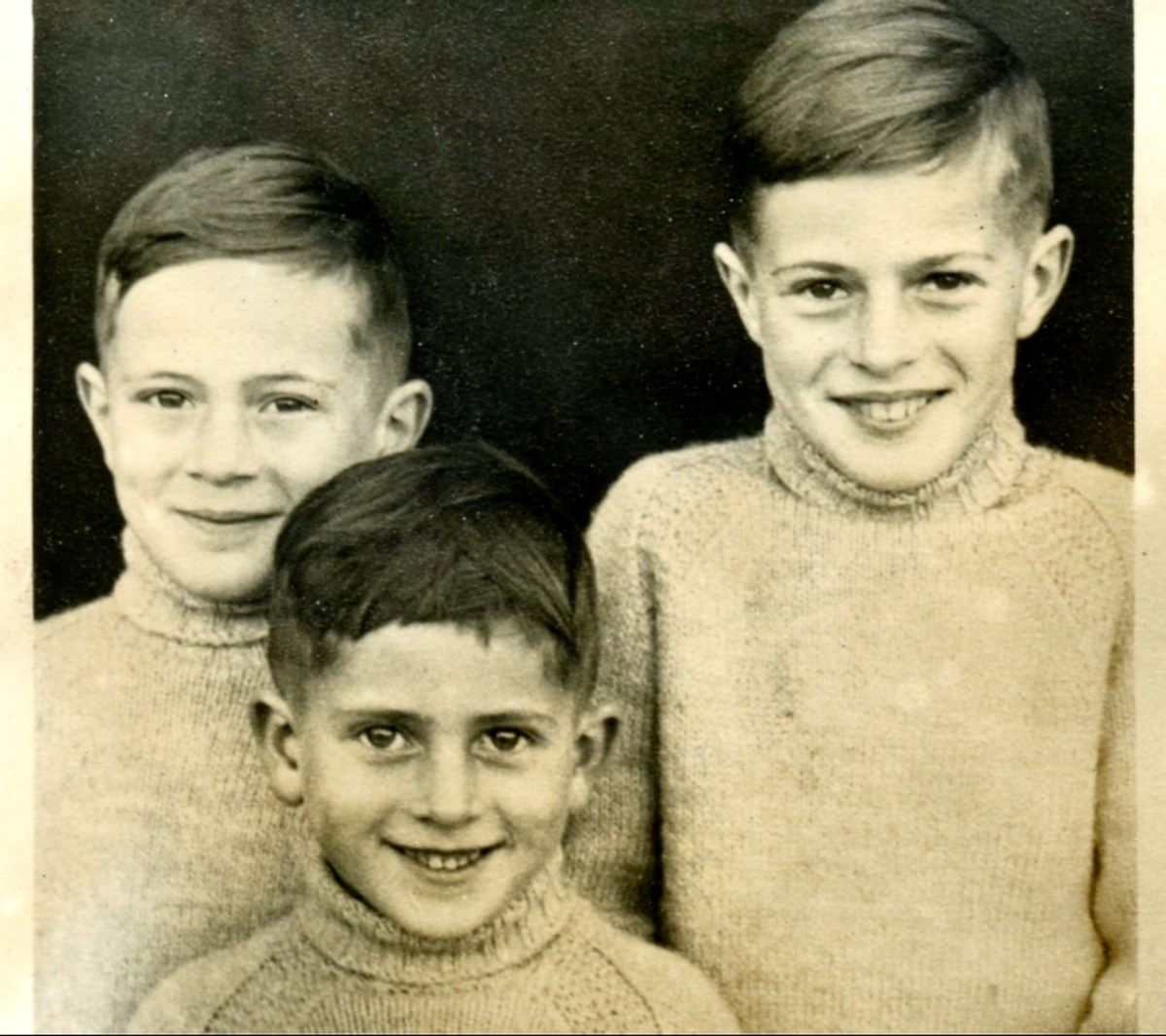
This week’s post is courtesy of a) Bill Jermyn and his marvellous memoir Only Dead Fish Swim with the Current,* and b) the annual Threshing Day at Caheragh. That’s Bill above on the left, with his brothers, David and Richard, about 1960 I think. I was very taken with Bill’s account of threshing day in Toormore, beyond Schull on the Mizen, where he grew up. Mind you, everyone called it The Thrashing back then, and I heard lots of that today in Caheragh too.

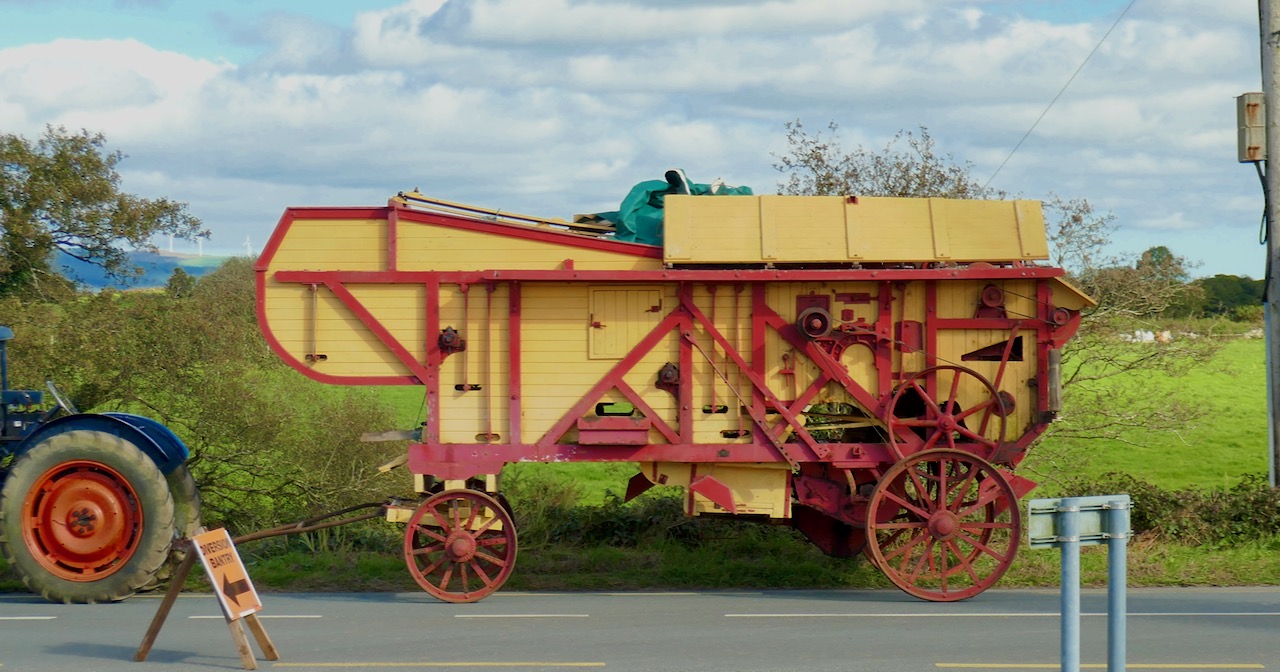
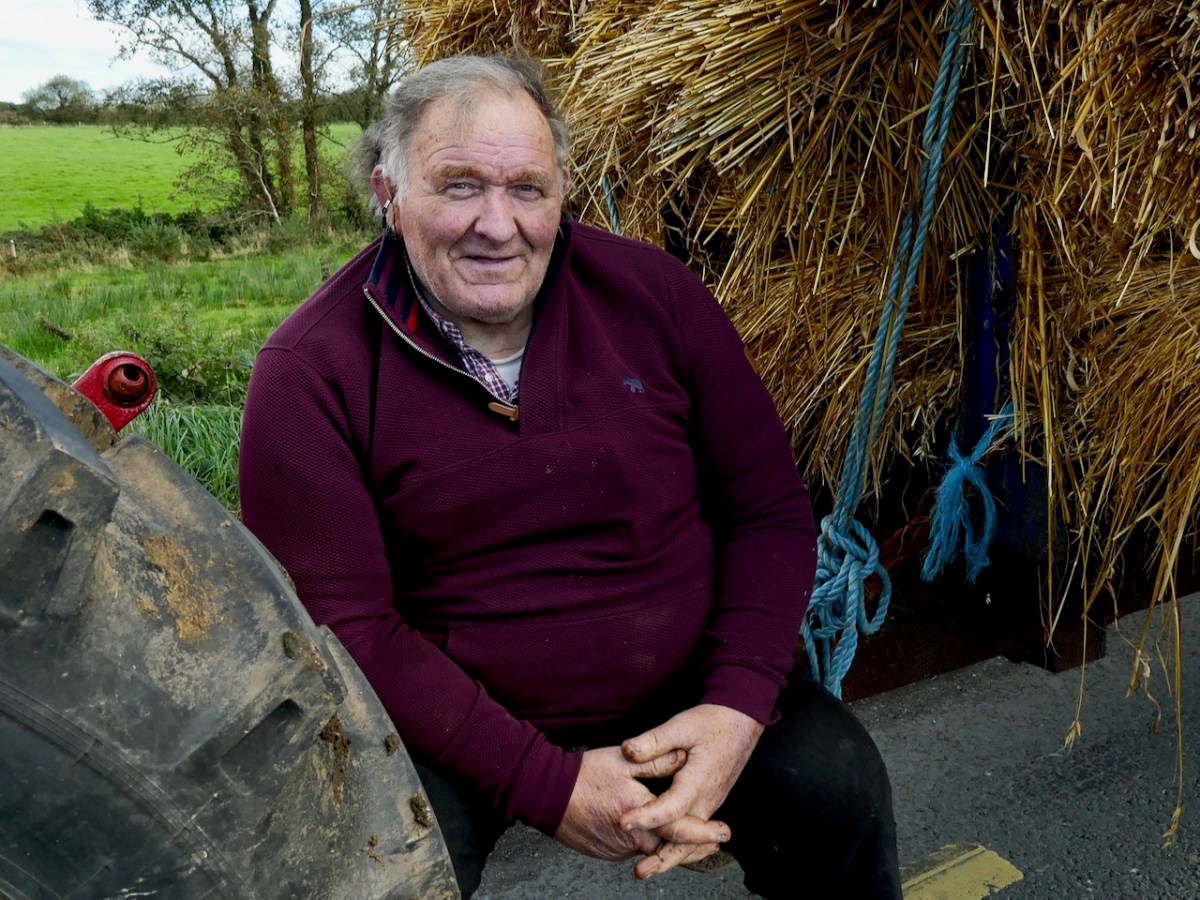
For a kid of 6, the Threshing Machine must have been like one of the Wonders of the World. It is still incredibly impressive. I don’t know if the machine in Caheragh (and next Sunday in Ballydehob) is the same one that came to Toormore, but it could have been. This one dates to 1911. Sean O’Sullivan (below) rescued it, and Ted O’Driscoll modelled and remade all the parts, and there seems to be a whole gang of men who keep it running and gather together to work it, all in great good humour and with evident satisfaction at helping to conserve such a traditional operation.
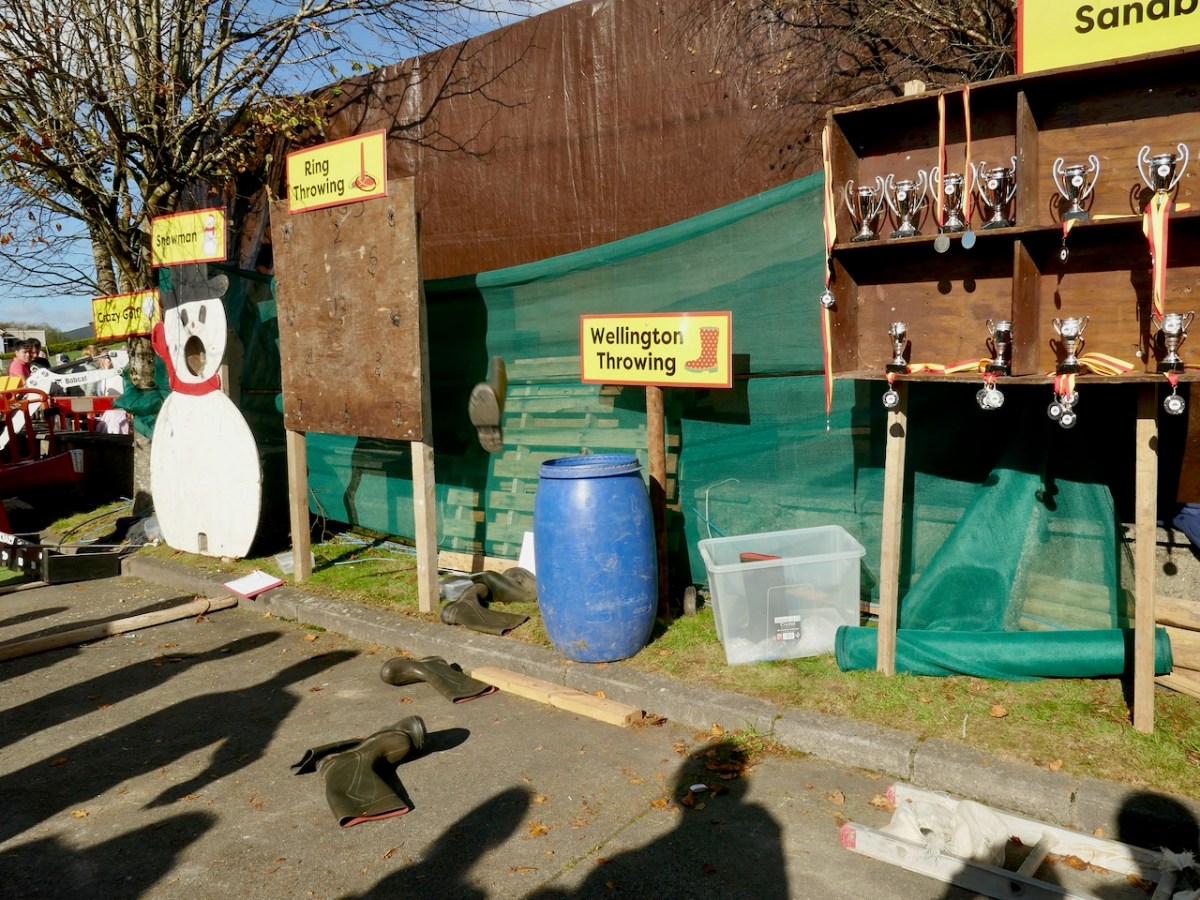
It was great fun to be out in Caheragh (pronounced Cora, about 10 km north of Skibbereen) amid the vintage cars and tractors and the stalls and games – the welly-tossing was my favourite – and delicious food. It was a pet day, and everyone was out to have fun. Now – here is Bill, to tell us how is was when he was a kid.
The annual “thrashing,” as it was called, was a rite-of-passage in the fall and a high point of community cooperation and socialization. I always looked forward to Babe Donovan’s thrashing in the haggard across the road from her house. Babe had two large fields growing oats; the cutting was done about two weeks in advance of the threshing and the men leaned the sheaves together in fours and fives to form stooks. When these had dried, they were brought to the haggard with several trips of horse and cart. The sheaves were built on each other to form a large stack at one side of where the thrashing machine would be stationed. When the first stack was built to about 12 feet, another stack was built opposite the first so that there was room for the thrasher in between.
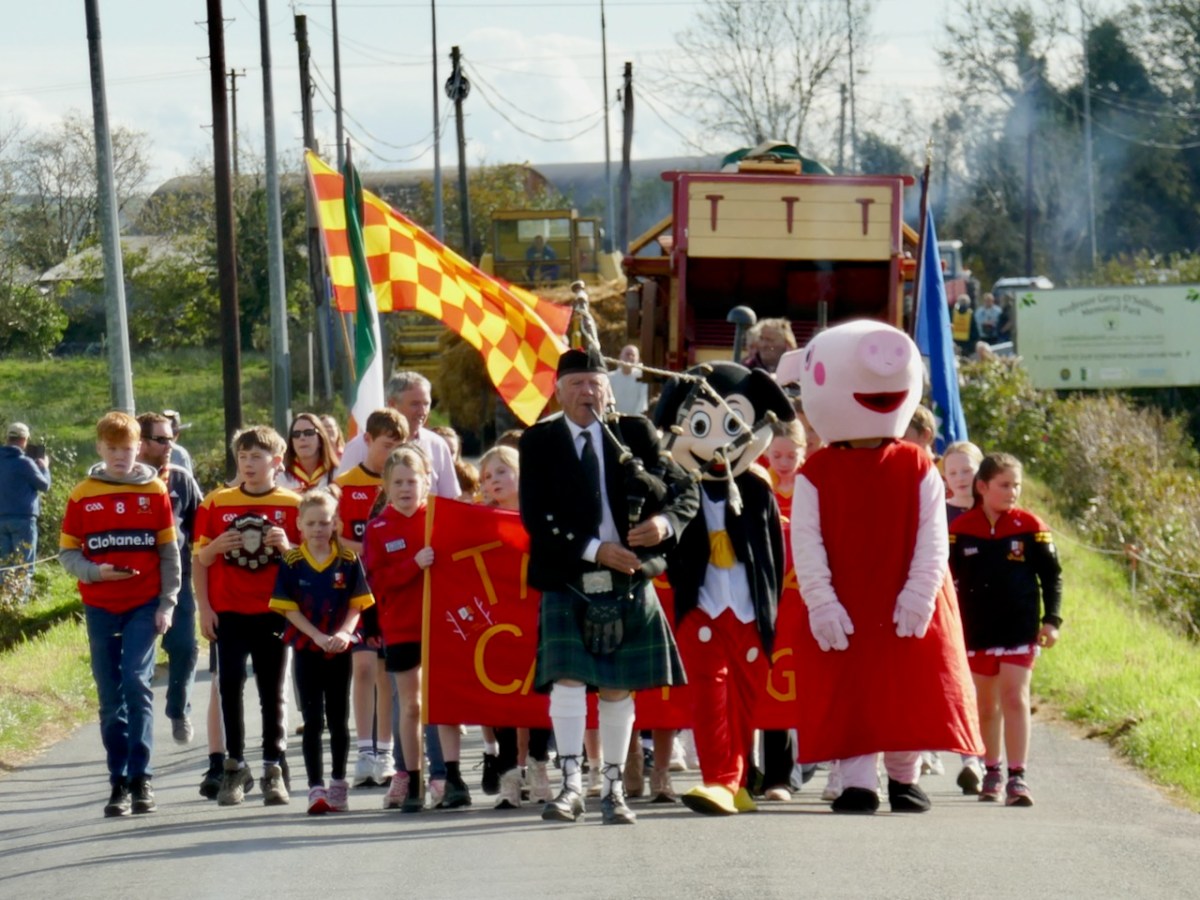
The long-awaited thrasher rarely arrived on time because it depended on how much oats was in the previous haggard. Eventually, it came up the road slowly, towed by the owner on his tractor. The men of Toormore followed. They traditionally worked together at each farm until all the oats in the parish were threshed. The thrasher needed quite an amount of ‘nurturing’ to get through the narrow gates of the haggard. Part of the challenge in the region was getting the thrasher in and out of the small haggards. The gates were not made for such a large machine. Eventually, the thrasher squeezed in and was then reversed between the two stacks.
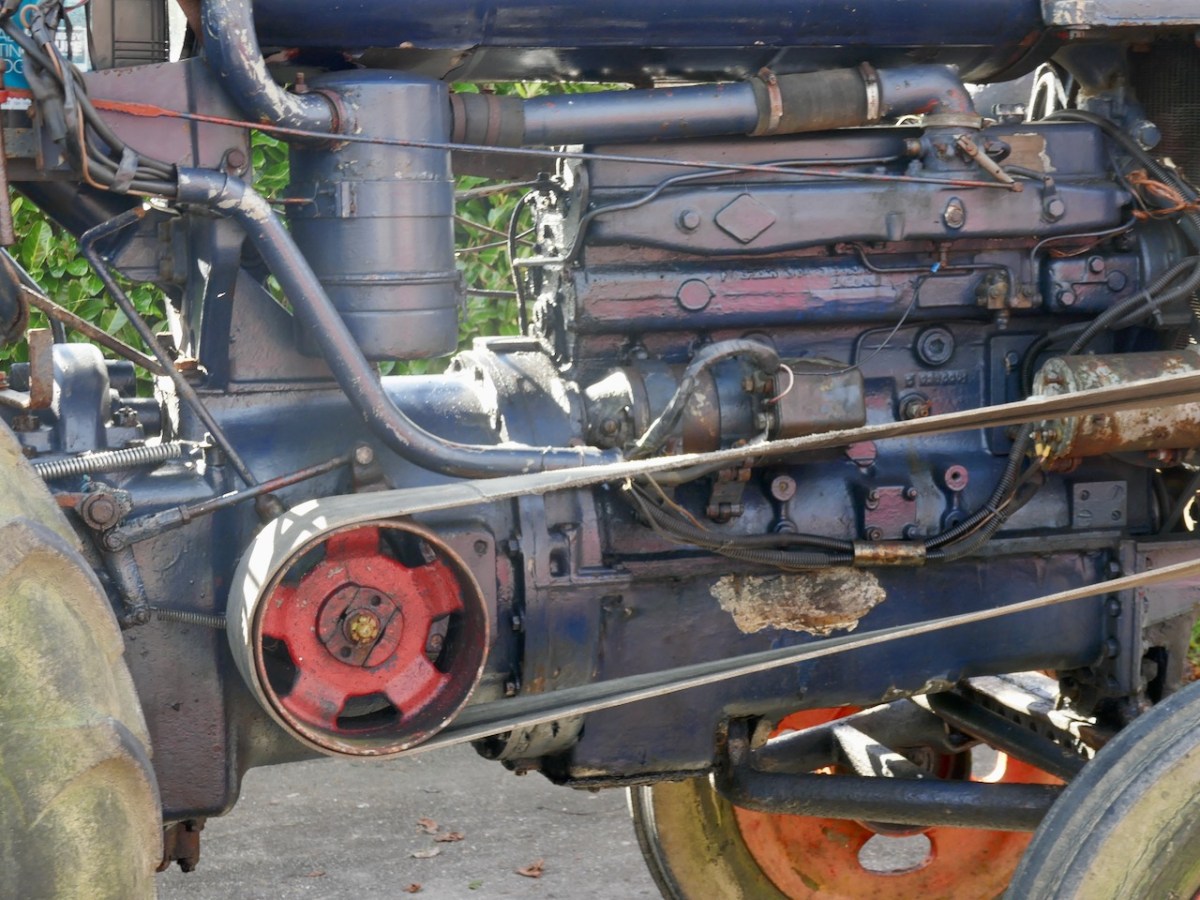
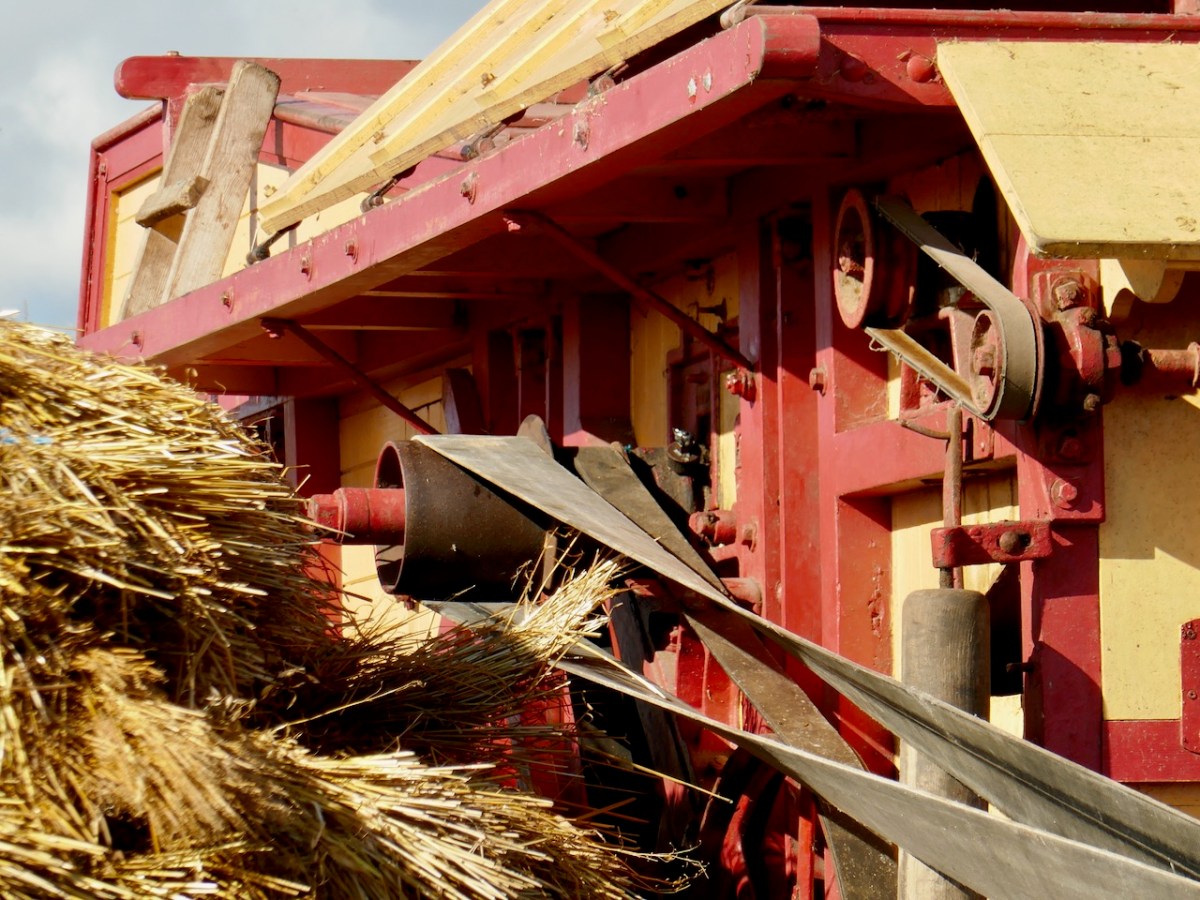
The owner connected the tractor to the thrasher using a belt and two flywheels. The beast was now ready to spring to action, drawing life from the tractor. Up close the thresher looked like a Tyrannosaurus Rex with a large mouth at one end and exhaust-like chutes at the other. Two men climbed up on the first stack and two more climbed on top of the machine. The men on the stack threw the sheaves to the men on the machine. They ripped off the binding and fed the sheaves to the voracious jaws of the hopper.
Across the road, in Babe’s kitchen, I smelled the sweet aroma of bacon boiling in the large pot on the turf-burning stove and the even more beguiling scent of cabbage. Neighbourhood women were there assisting with the food preparation for a meal when the thrashing was done. I heard the gurgling sound of the permanently boiling tureen of water, ready to sate the constant requirement for fresh tea. I shuttled across the road, with buckets half-filled with milky tea and lumps of bread, while the other kids ferried bottles of black porter. Work stopped as the men lay on the straw on the stacks and on the thrasher to drink their porter or tea.
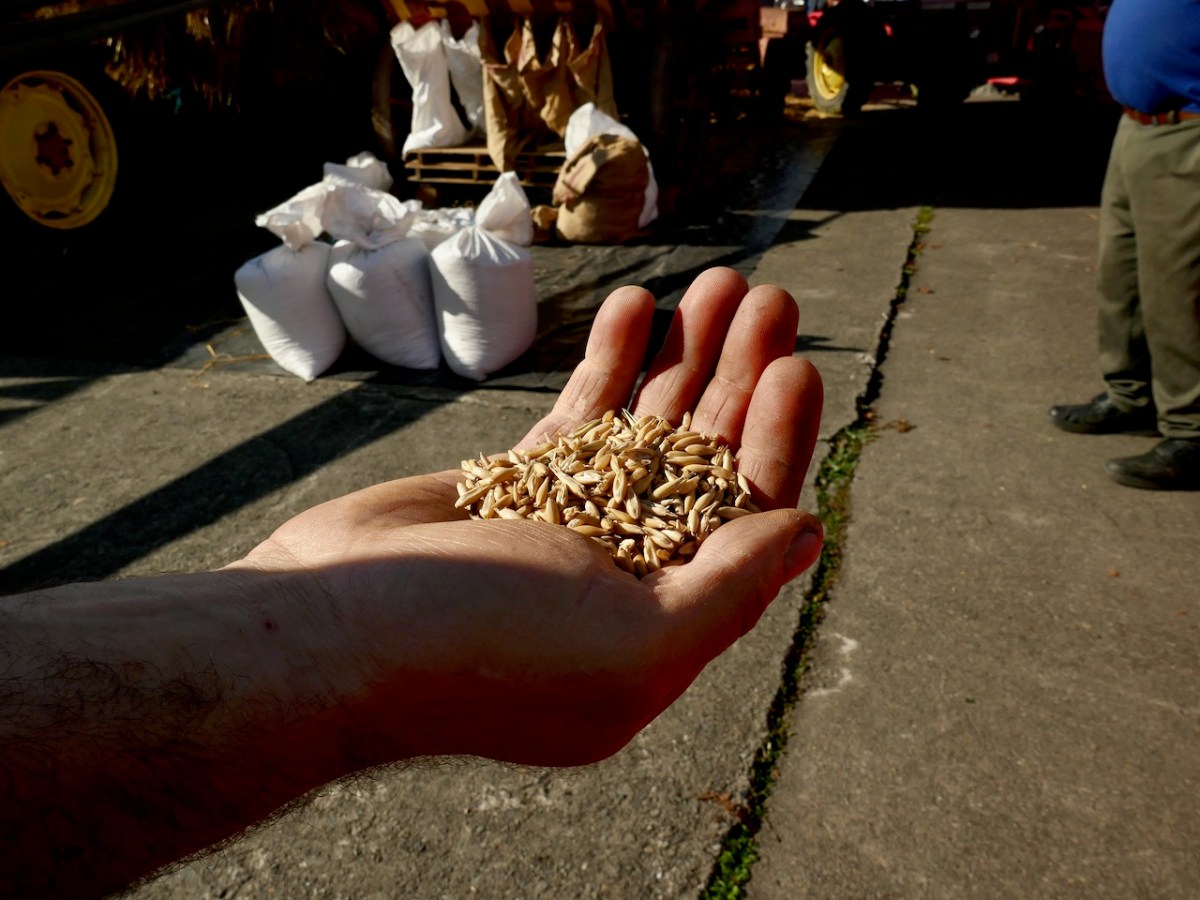
The thrasher seemed to grow taller as the flanking stacks of oats grew smaller, while its inner workings were mysterious due to the amazing exterior array of wheels and belts that whirred and strafed with hypnotic regularity. The vibrating baffles issued their familiar ululating roar. The oats were digested into the bowels of the machine, and it began to spit the separated straw out of the front end, like some regurgitating prehistoric beast. On the ground at the back of the thresher, I helped with the bags that were slowly filling with the warm grain. There were four outlet chutes with jute bags attached to each. My job was to watch out for bags filling and close off the shutter on the chute. When the men took away the bag, I attached an empty bag and opened the chute again. I was six years old.
Under the overall high-pitched roar of the machine were the individual sounds of some of the hard-working parts, the whirring of a wheel, the slapping of a belt, and the clapping of the baffles: whirr, whirr, whirr, whirr awhirr, slap, slap, whirr, whirr awhirr, clap, clap, whirr, whirr awhirr …….all combined to create a friendly symphony of sound. The machine weaved its magic with the community in harmony, nothing in order, but everything in its place.
Thank you, Bill, for allowing me to use your story – it was a real treat to see the whole thing through the eyes of a child. The book is available in West Cork bookstores and at https://www.amazon.ie/Only-Dead-Fish-Swim-Current/dp/1738961907
[And a note for my friend, Jim – I have taken up my bed, Jim. :))
Discover more from Roaringwater Journal
Subscribe to get the latest posts sent to your email.


Looks like a great day was had at The Thrashing, the essence unchanged though was that Peppa Pig I spotted?!
LikeLike