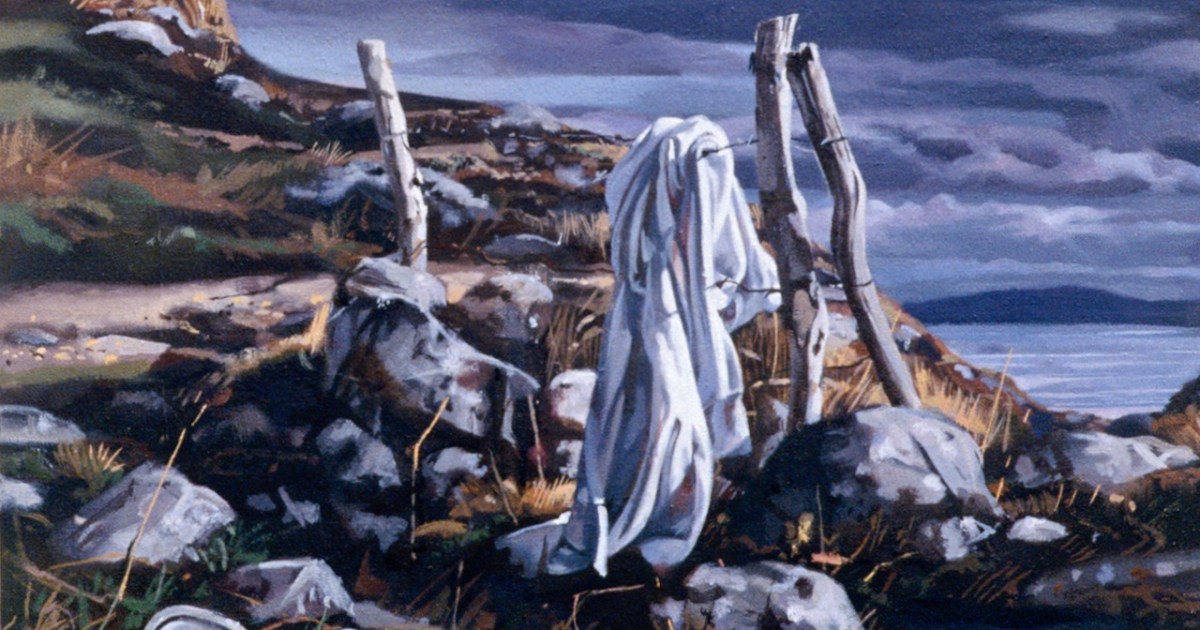
Four years ago I wrote a post Irish Artists and Stations of the Cross. It was inspired by my realisation, as I visited churches, that some of them (OK, a tiny minority) had stations that were far removed from the mass-produced models we see on most church walls. During the period when parishes, congregations and architects were responding to the encouragement of Vatican II to glorify God with the best of sacred art and with up-to-date architecture, many Irish artists were glad indeed to get these commissions. I am starting today with two artists drawn to my attention by Michael Burke, the sculptor responsible for the remarkable stations from the last post in the Church of the Irish Martyrs at Ballycane. Thank you, Michael!
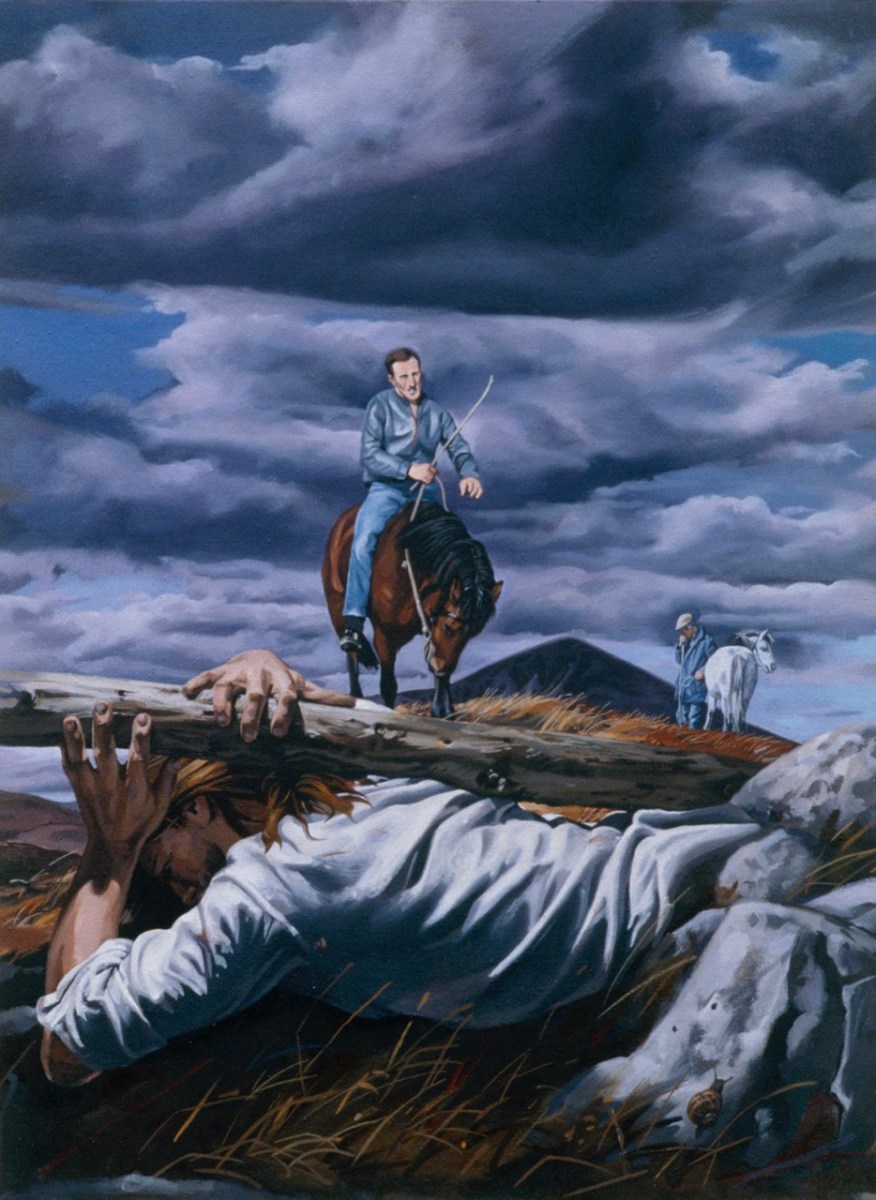
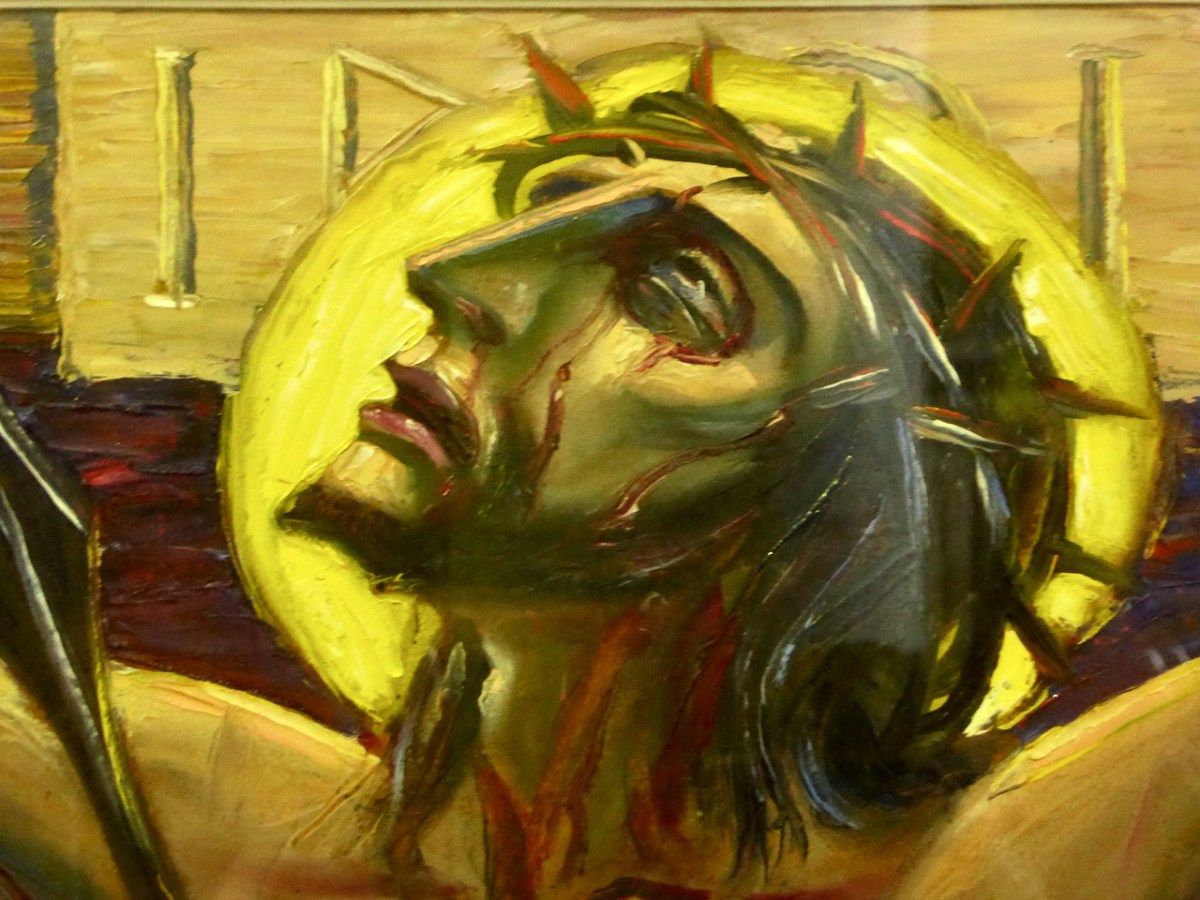
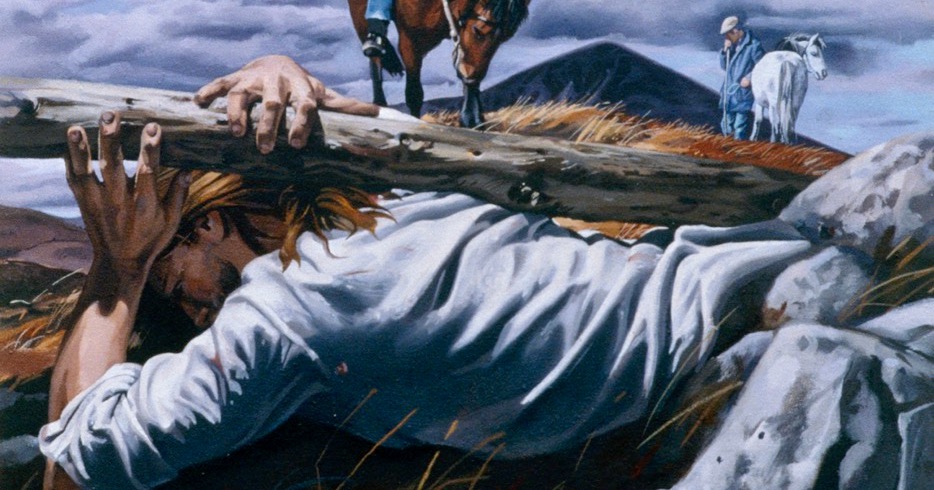
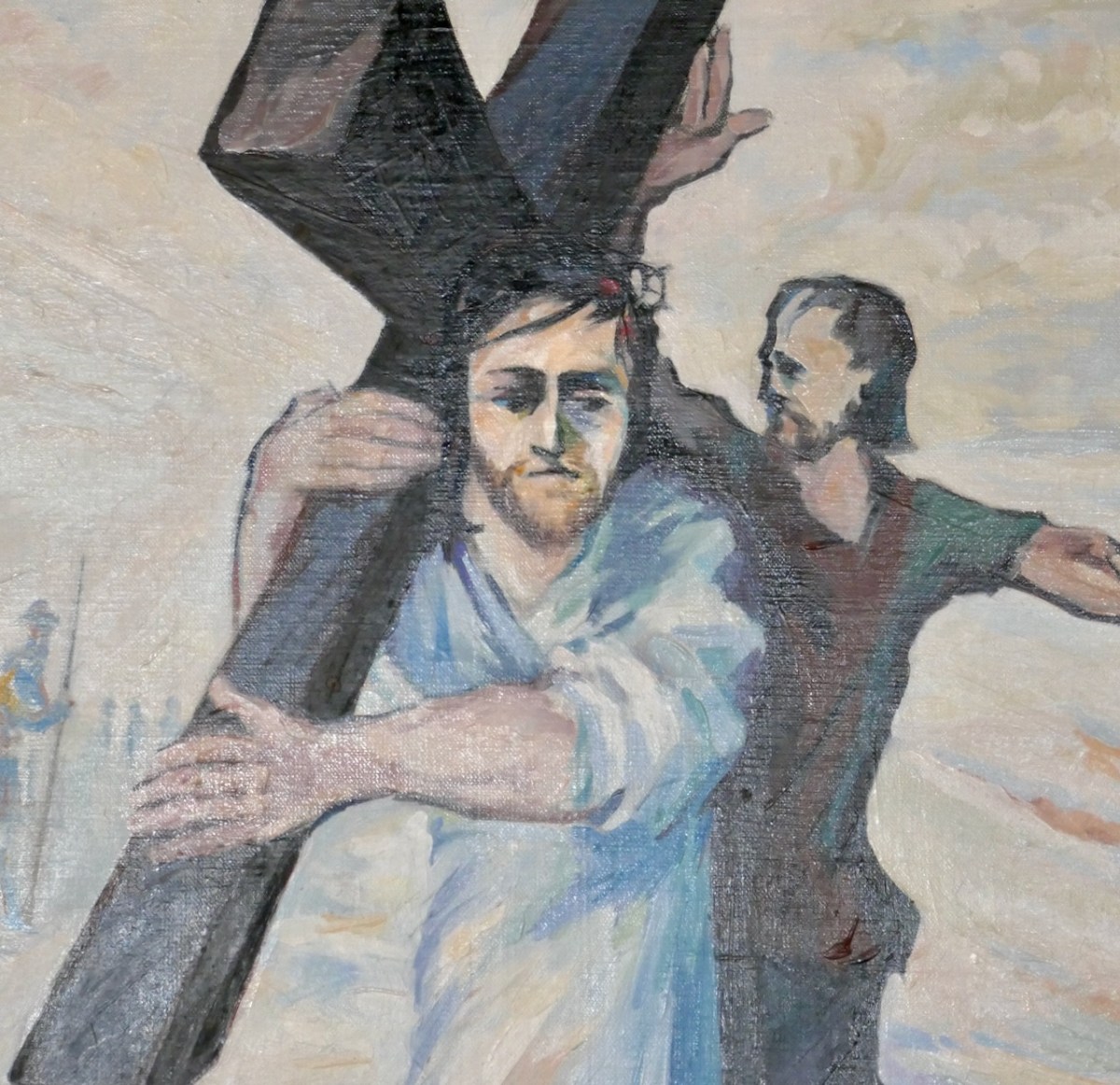
Fergus Lyons, First Fall, 3rd 1988, Oil on canvas, Collection of the Arts Council/An Chomhairle Ealaíon
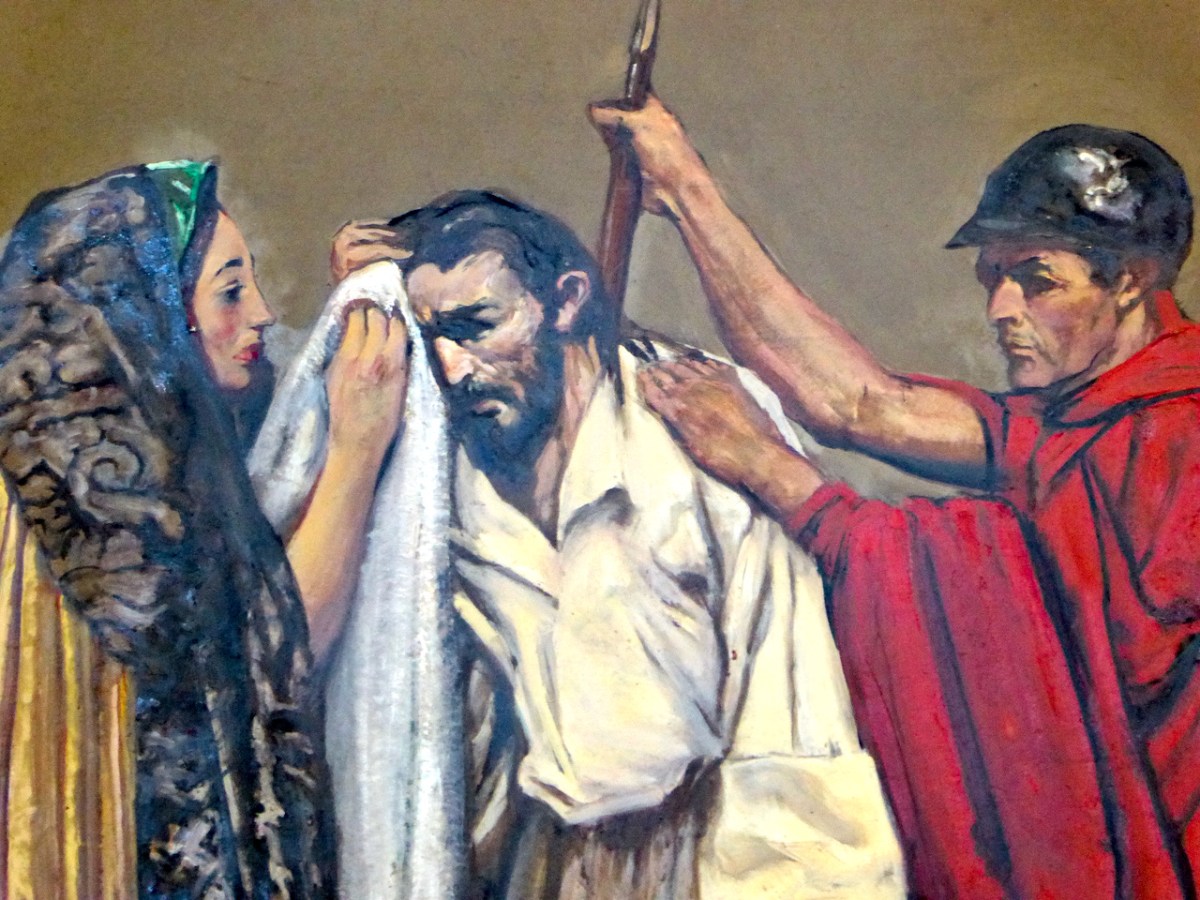
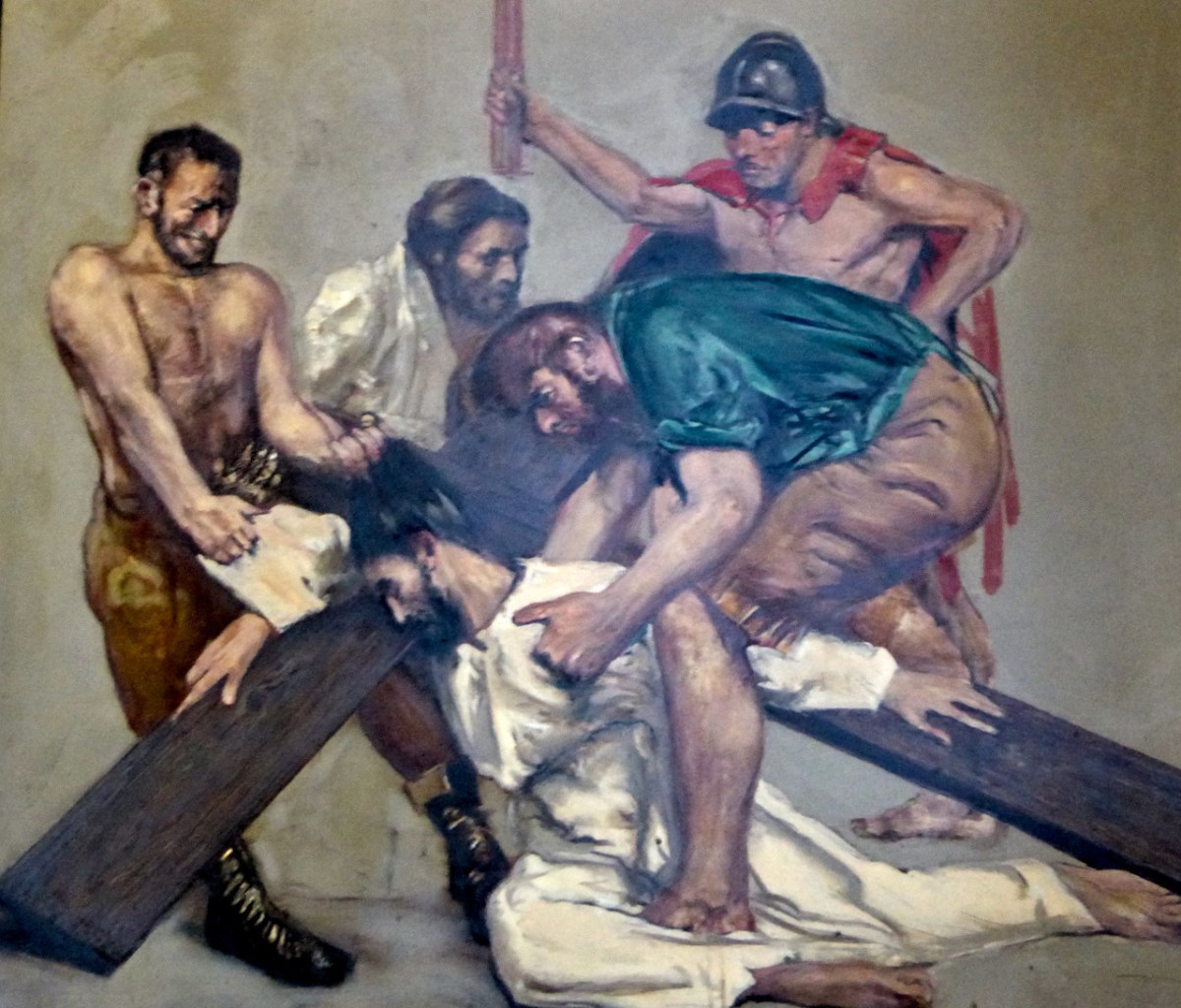
The first of these is an extraordinary set by Fergus Lyons, who now lives and works in Sligo. Read about him here and on his own website. His stations, originally designed for a church, are now in the collection of the Arts Council, and Fergus and the Arts Council have given me permission to use these three. The series is called Turas Chonnacht (Connacht Journey or Pilgrimage or Stations – the word Turas can mean all three things) and Christ is depicted as young man in jeans.
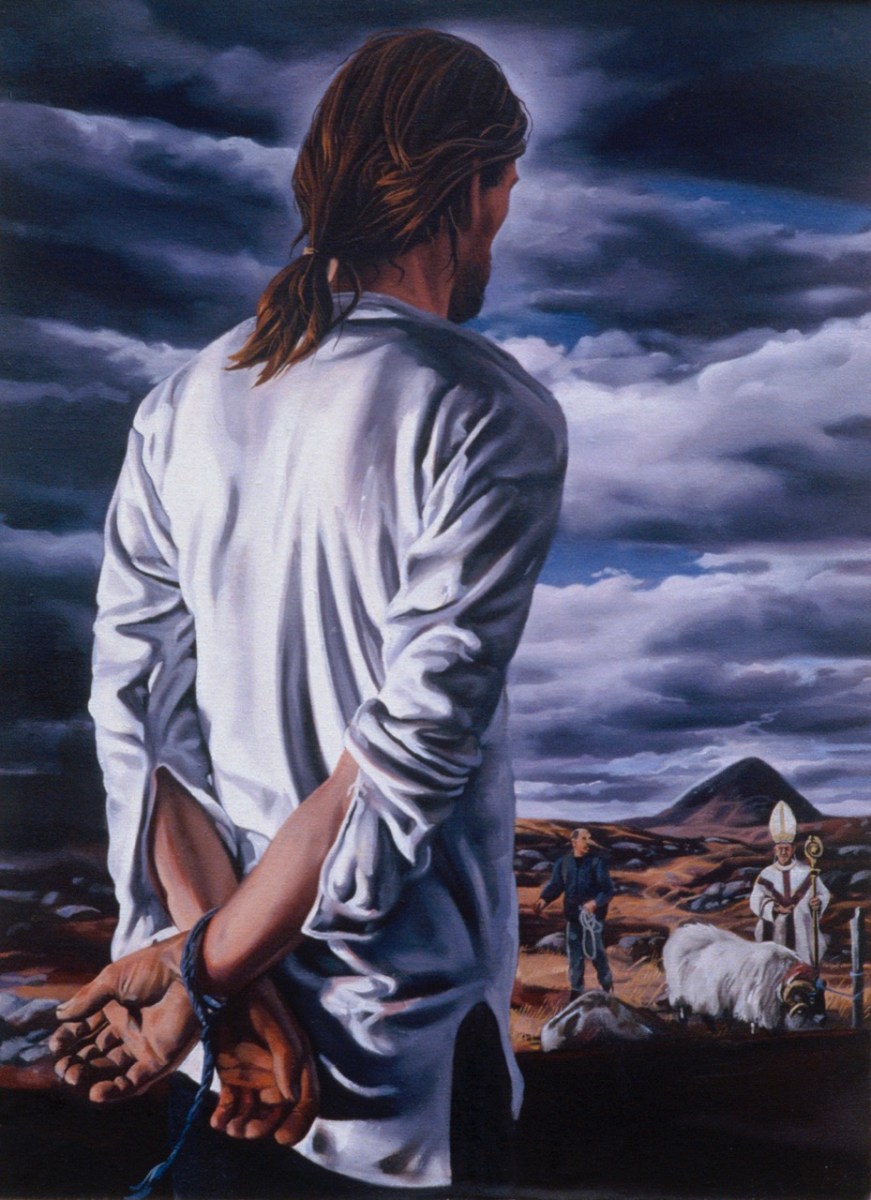
Fergus Lyons, Condemned ,1st, 1988, Oil on canvas, Collection of the Arts Council/An Chomhairle Ealaíon
Fergus told me, I designed them that when hung side by side that they would form a continuous landscape (each painting blending or leading into the next) ascending Croagh Patrick and returning down again to where we all are, so to speak. He designed them for a church but the commission fell through, which is when the Arts Council bought the whole set and made it part of their travelling exhibitions. Currently it is on long term loan to St Oliver Plunkett Church in Finglas.
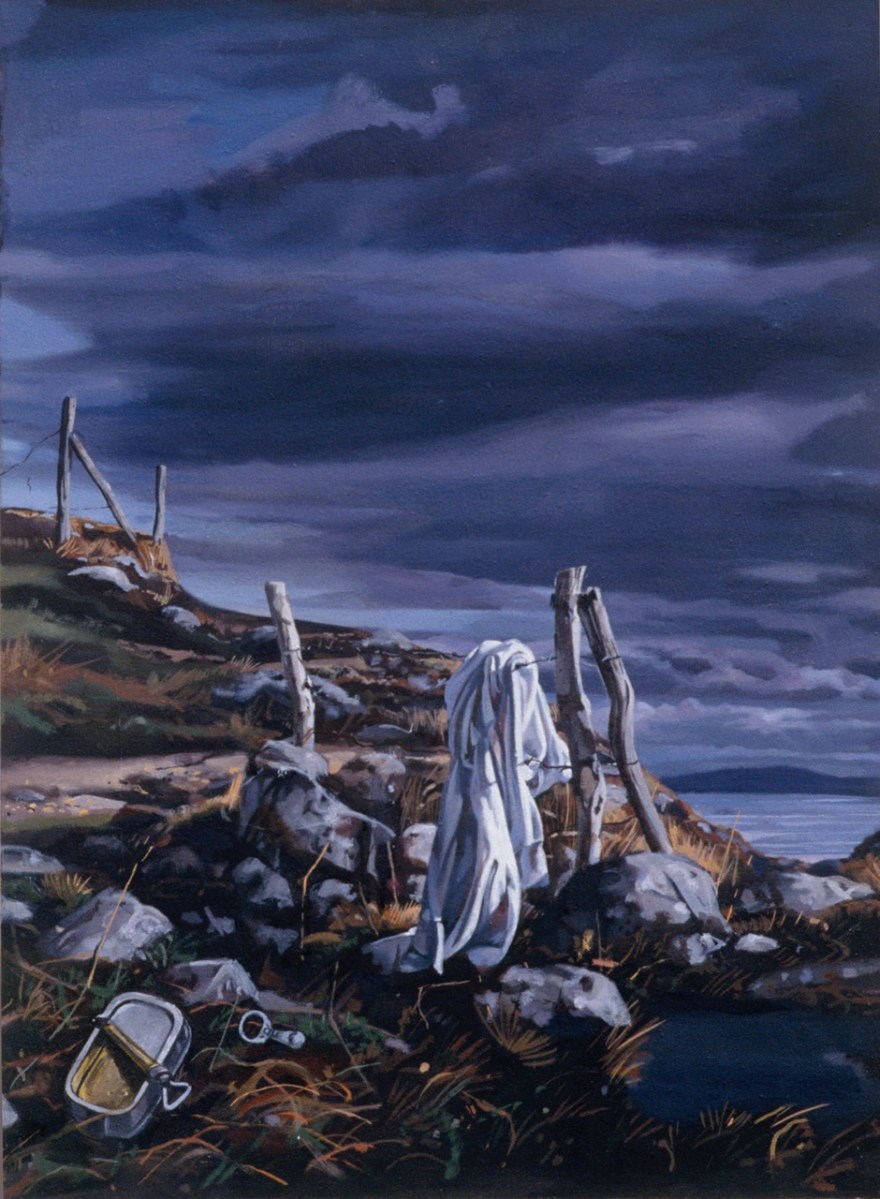
Fergus Lyons, Stripped, 10th, 1988, Oil on canvas, Collection of the Arts Council/An Chomhairle Ealaíon
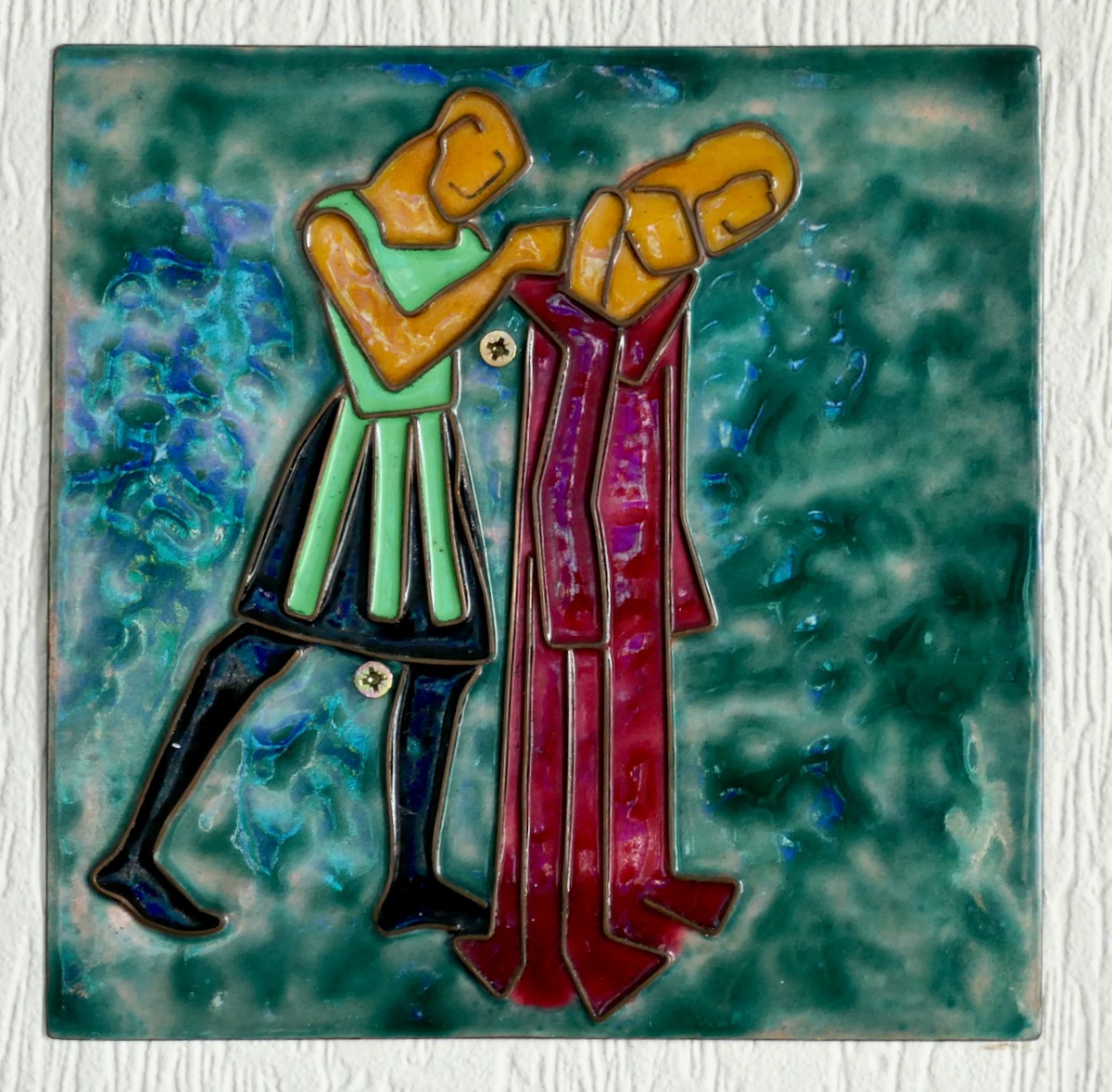
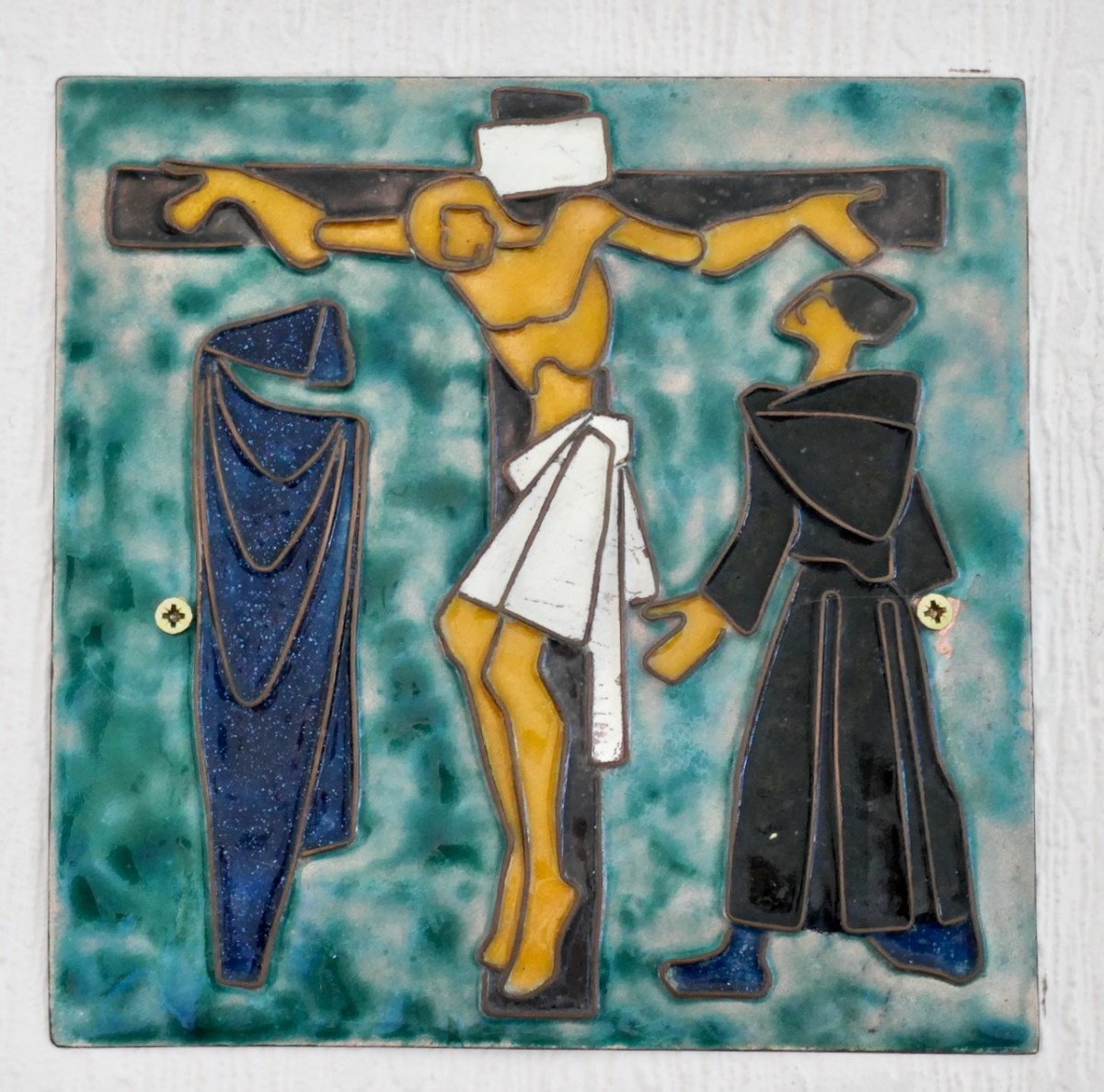
The second artist is Henry Flanagan O.P., and once again I have Michael Burke to thank for drawing him to my attention – he was Michael’s teacher at Newbridge College. Michael contacted me recently to say that the small enamel station I posted in my last piece was the work of Henry Flanagan – and this made sense because the enamel station was in a Dominican Retreat House, in Cork, and Fr Flanagan was a Dominican priest. Here is another of those stations. Michael has memories of helping Fr Flanagan to pack enamel – a delicate operation so Michael must have been a star pupil.
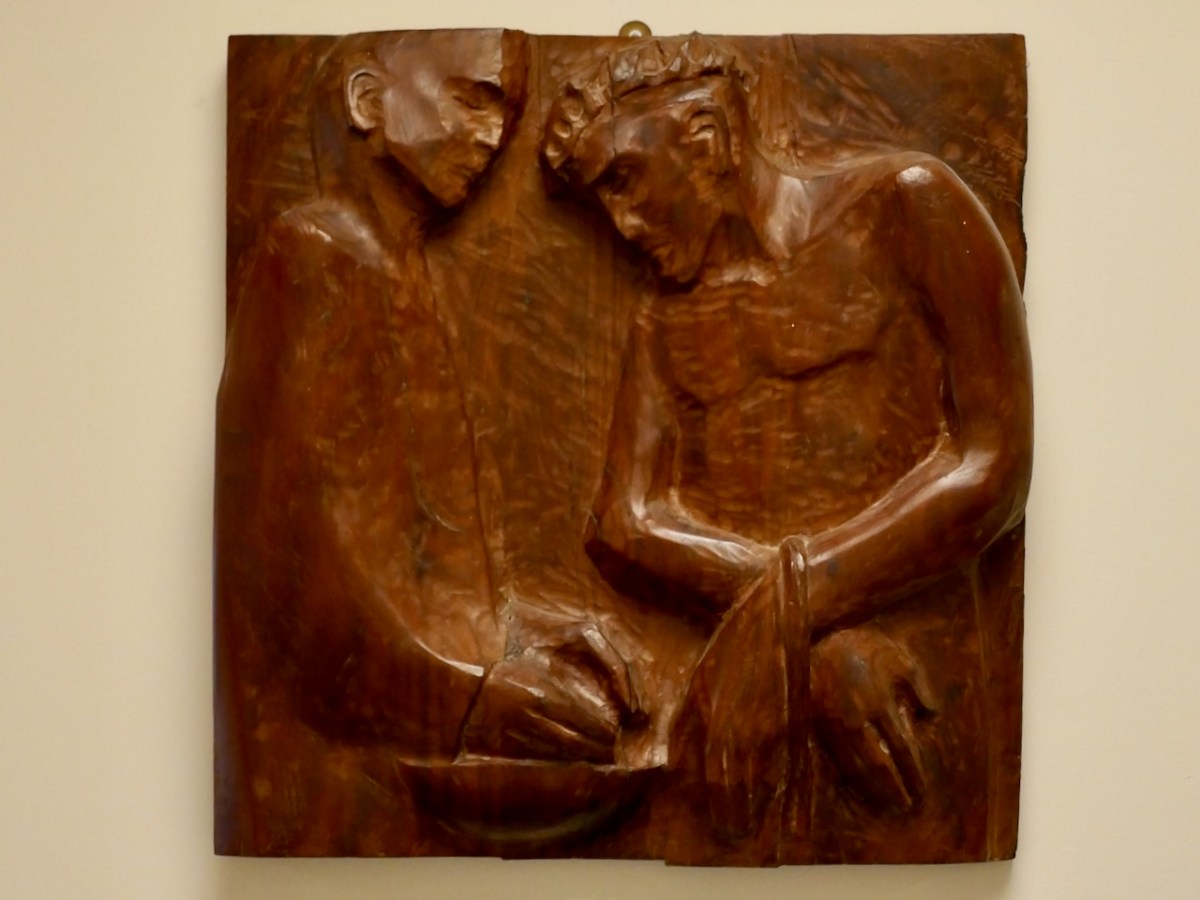
But Fr Flanagan was talented in multiple media – here is one of his stations in wood for Newbridge College. He also worked in stone, metal, plaster and more – I have ordered the book on him so I will write more about him in the future.
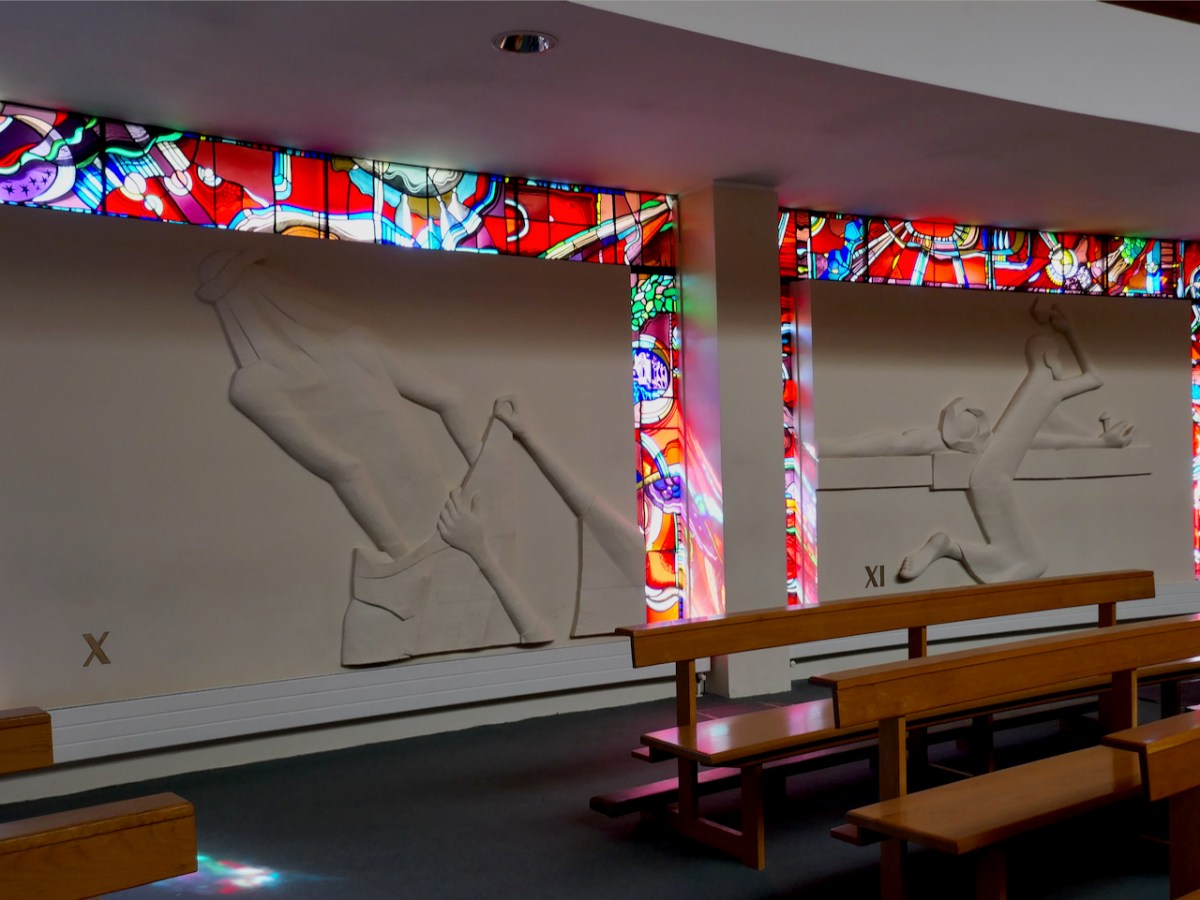
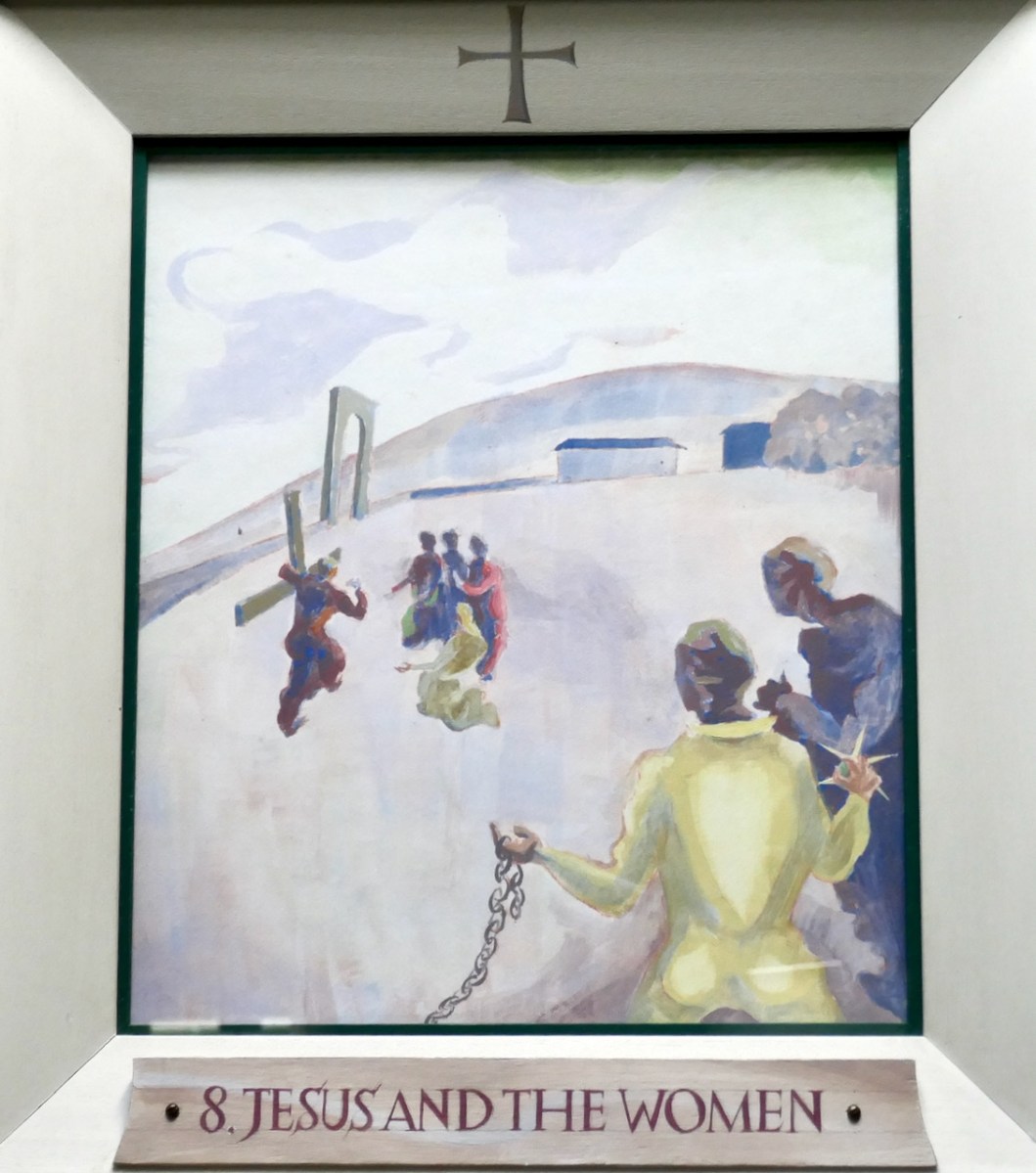
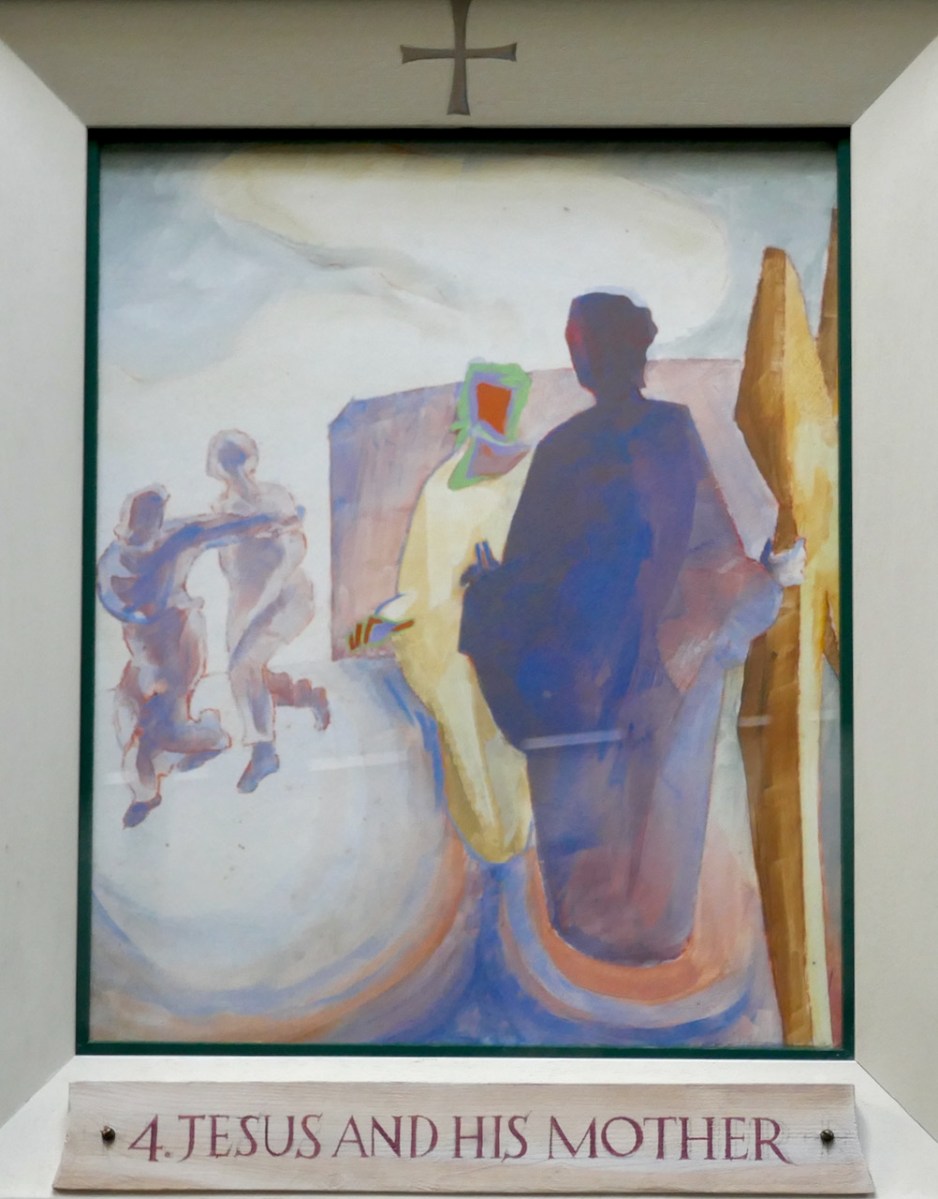
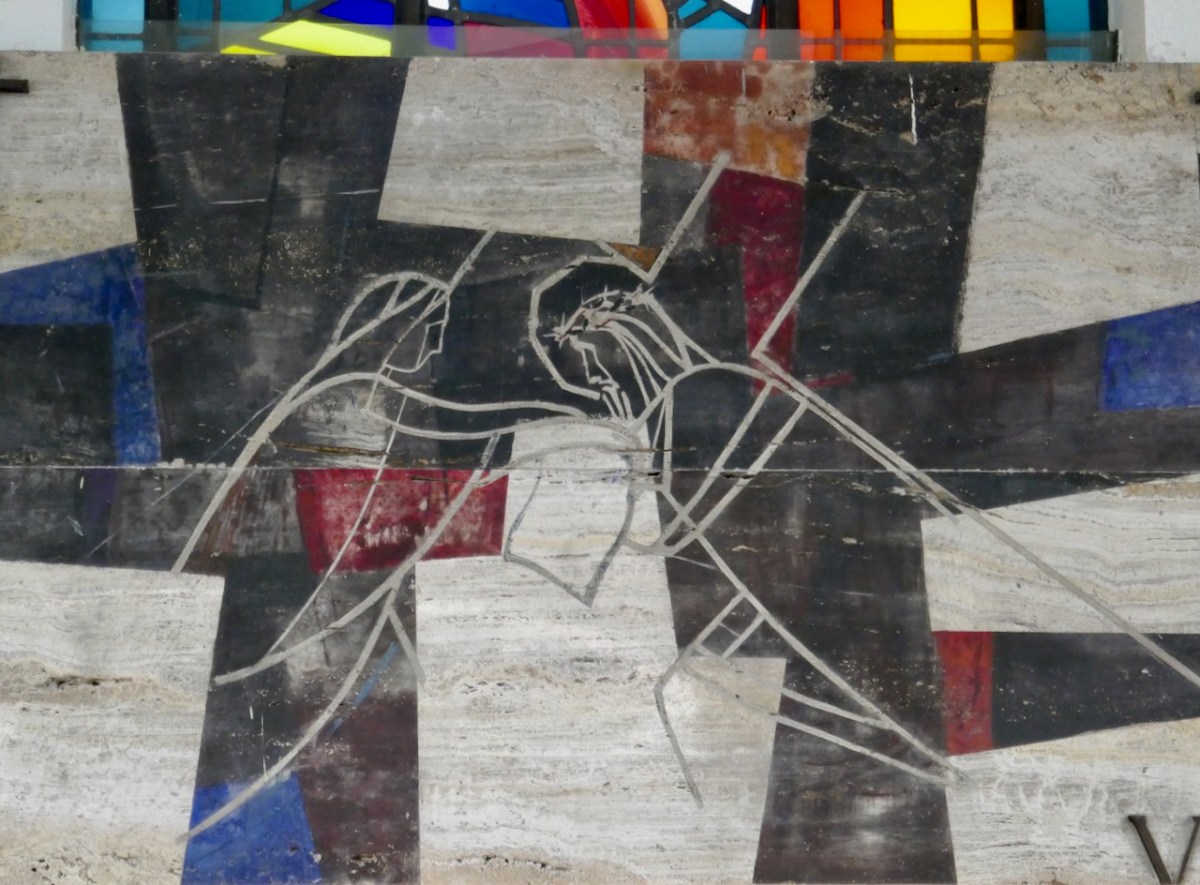
The beautiful library in Athy was once St Dominic’s Church, built in the 1960s. The builders turned to Abbey Stained Glass to provide the glass and the stations, and Frank Ryan asked George Campbell to design them. George, a leading artist, was used to working in paint, so Frank teamed him with George Walsh to realise the finished product. There’s a good account of all this in Karen Reihill’s George Campbell and the Belfast Boys.
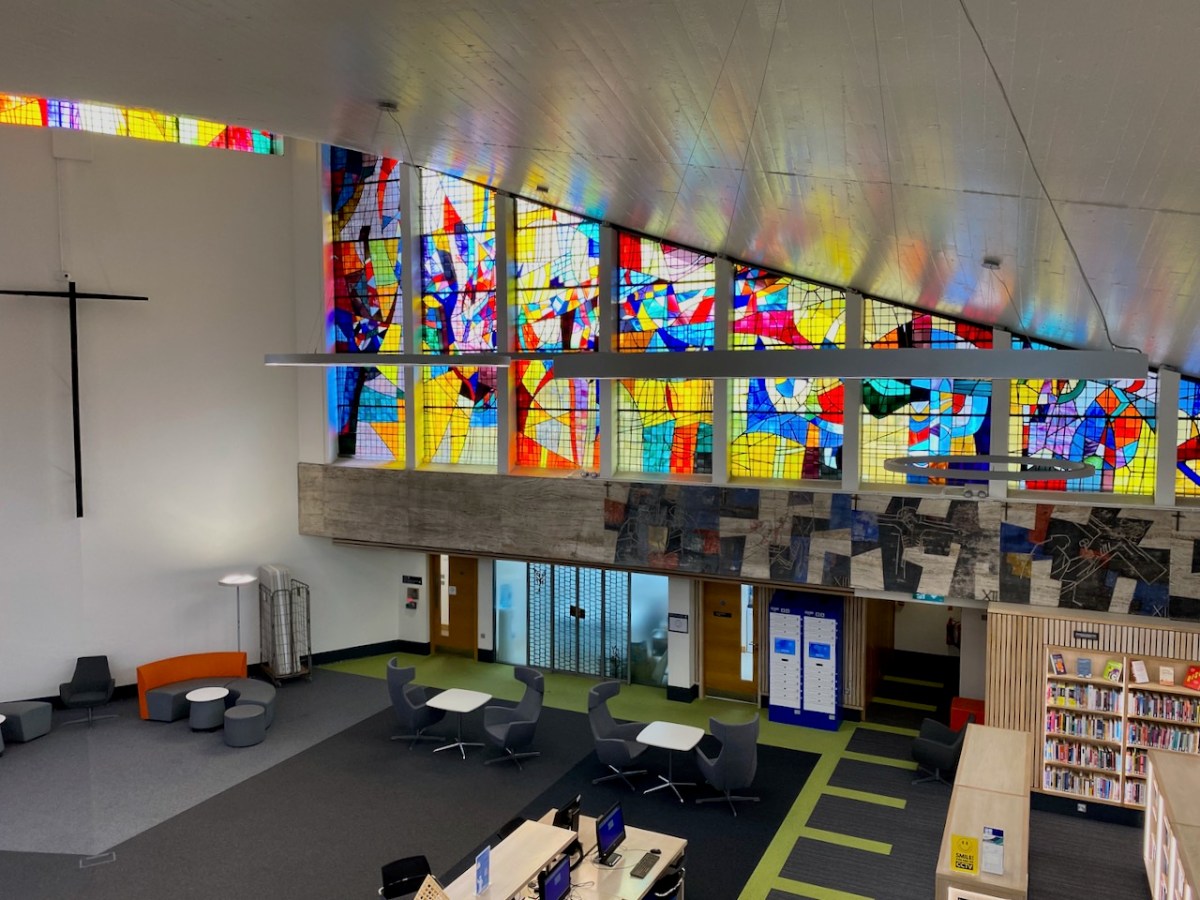
The stations formed a band across the top of the wall and were made of multiple slaps of different coloured travertine marbles, with the scenes etched into the marble. George Campbell also painted stations for at least two churches – now that I know where to look I will be itching for a road trip. The Athy library is a joy to visit – see Emma Gileece’s wonderful post about it here.
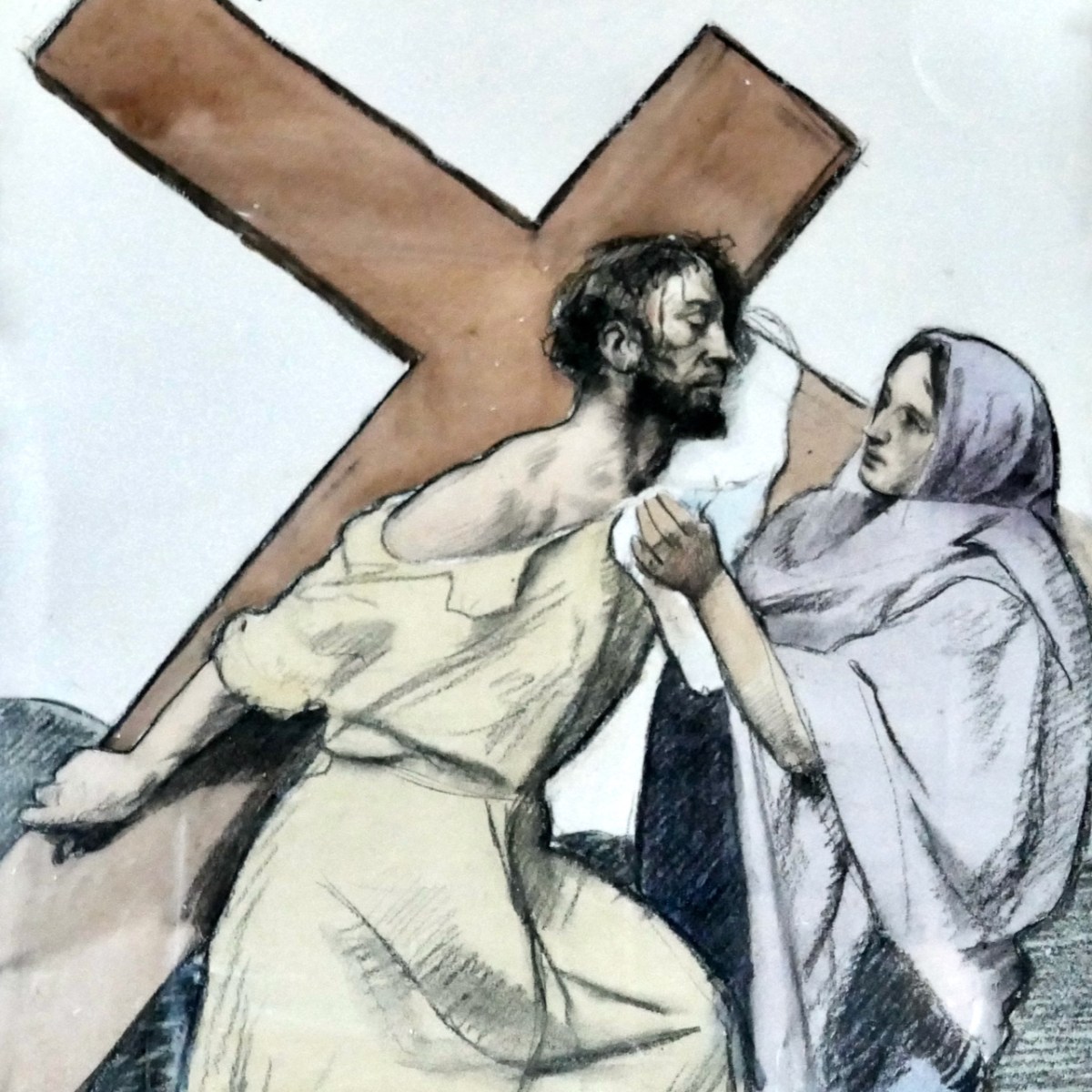
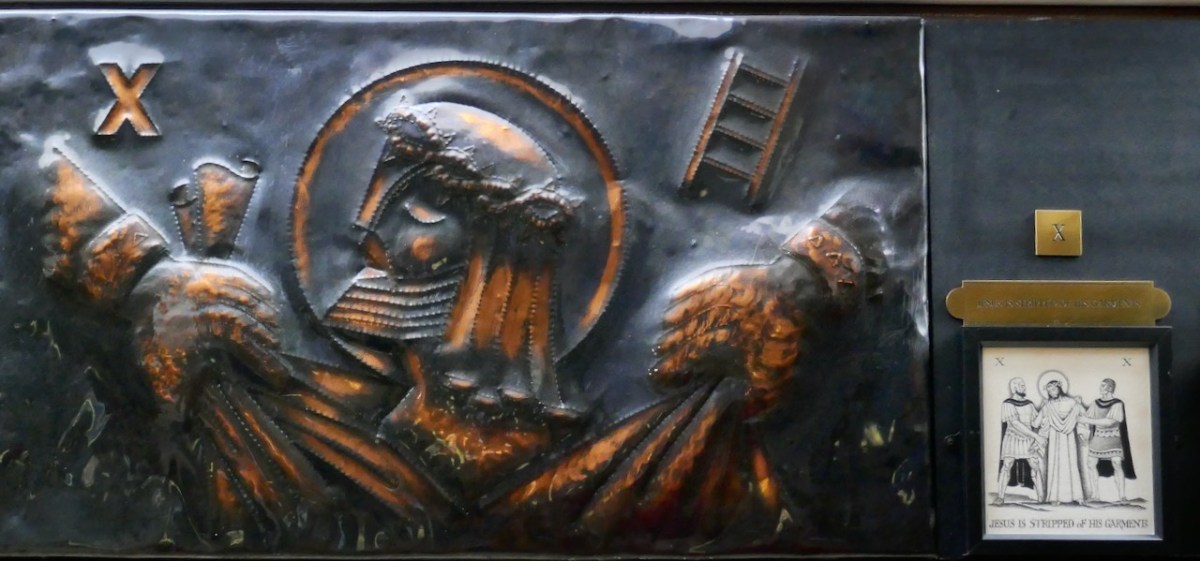
Our final set of stations for this post are somewhat controversial. They are from John the Evangelist Church in Ballinteer. A sign in the church declares them to be the work of Cecil King. However, this is very unlikely – Cecil King by the time the church was built on the 70s was known for strictly abstract paintings with fields of colour and geometric elements. He did not work in repoussé copper. A much more likely candidate was Richard Enda King (the son of Richard King), who had a modern style and worked in copper like this.
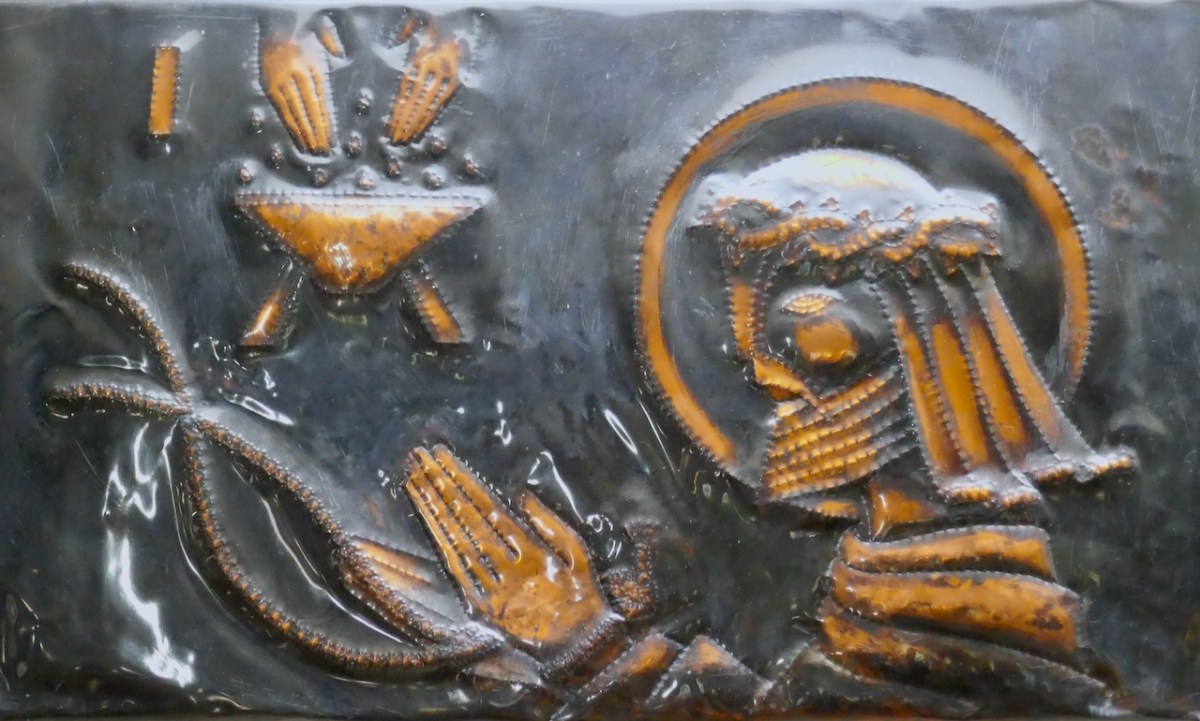
Interestingly, each copper station is accompanied by a small pen and ink drawing of the same station, done by William Dowling in 1943 and acquired by the church in 2010. The juxtaposition of the two styles is a little jarring.
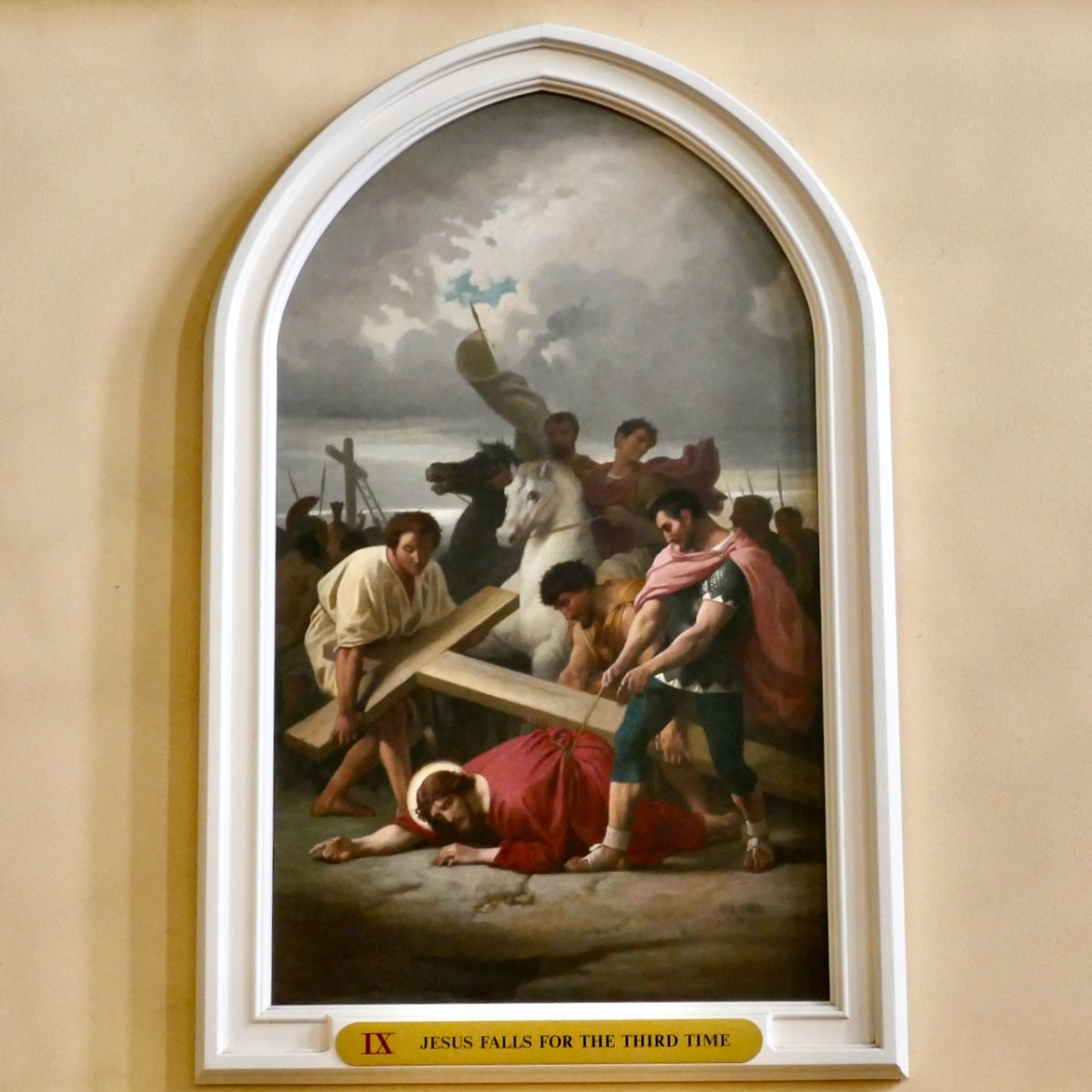
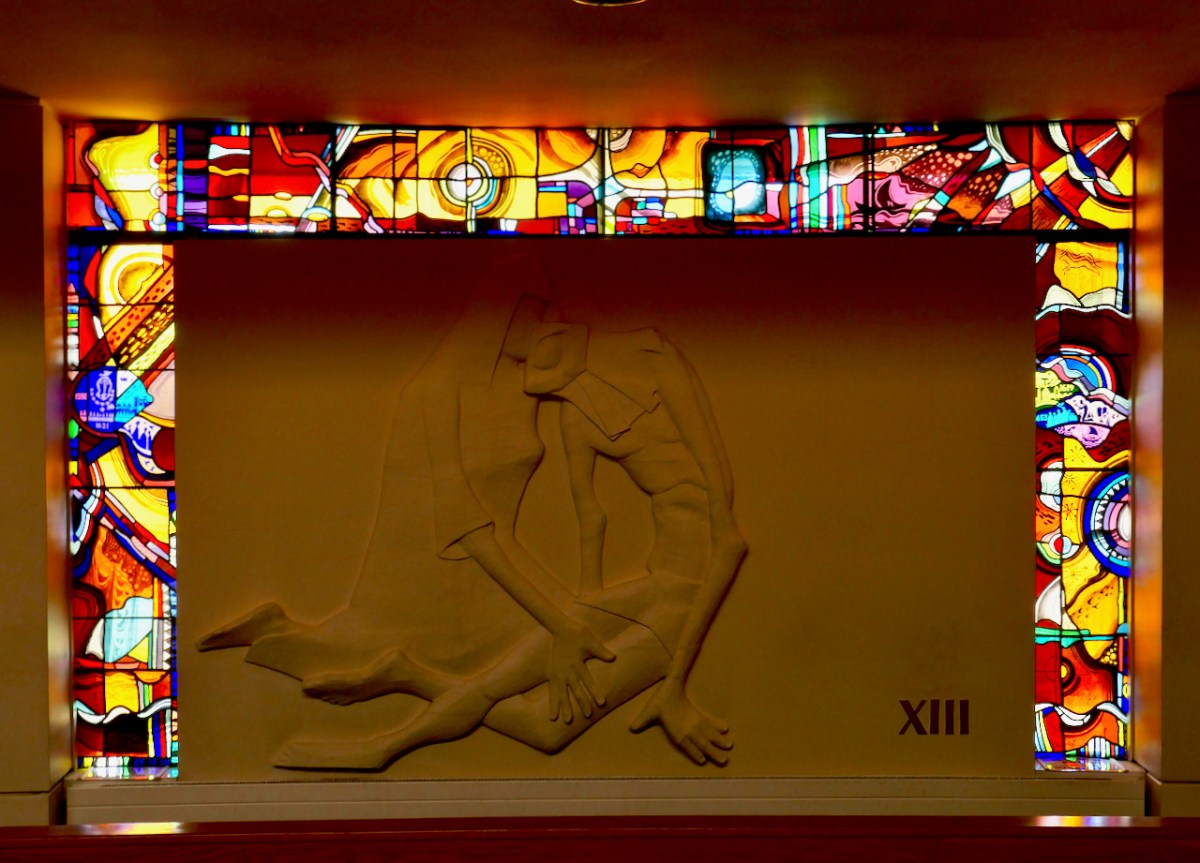
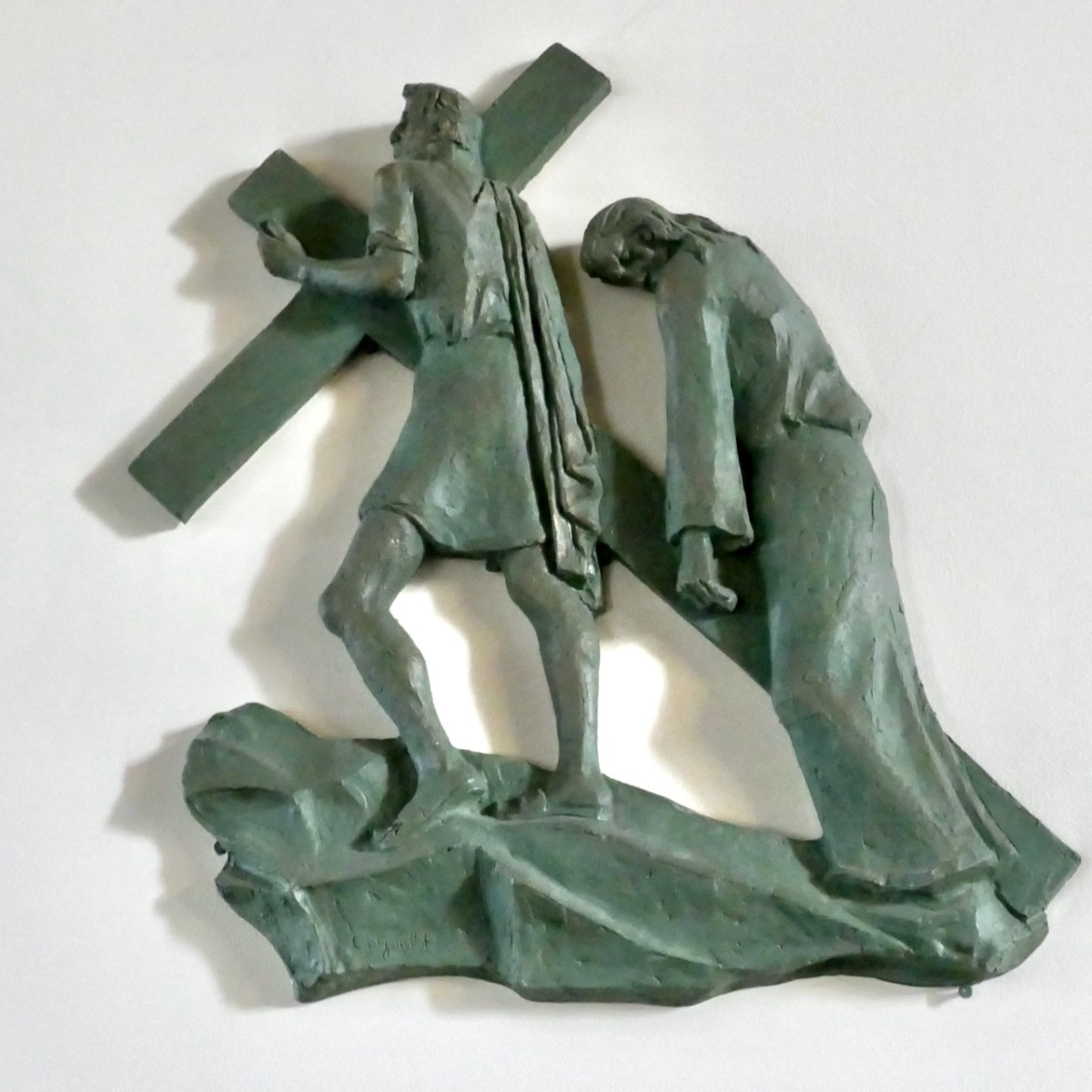
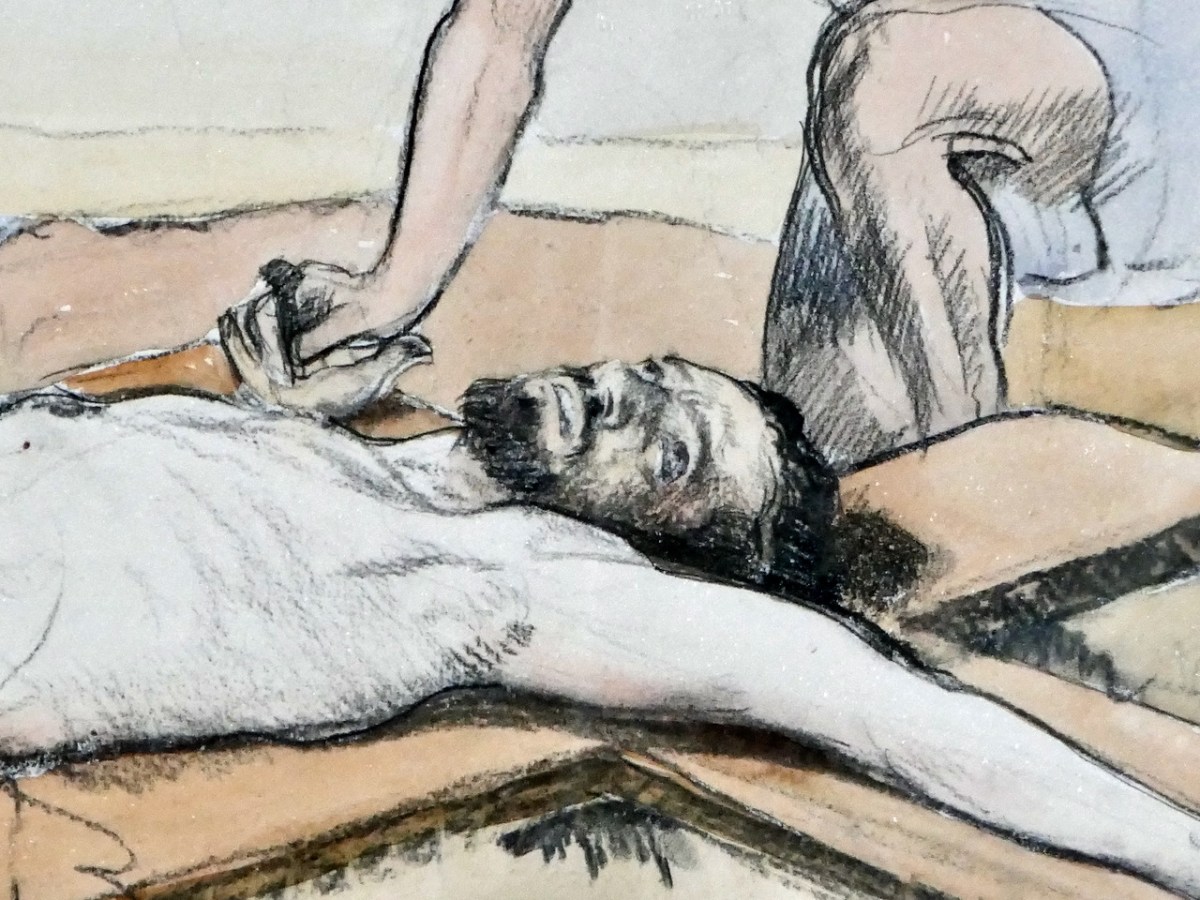
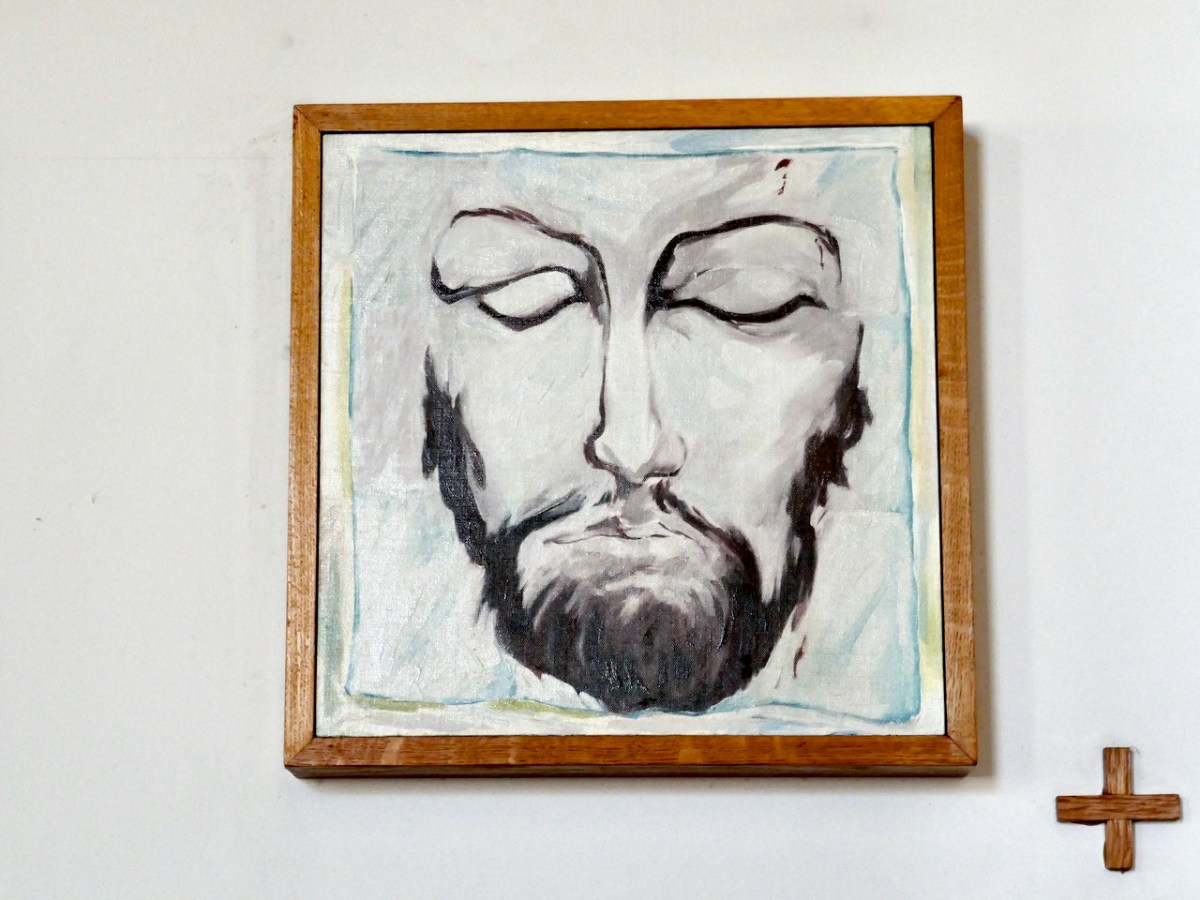
I had far more images than I could use for this post, so let me finish with another couple of Anon’s stations. As you know, the mystery of the enamel station has been solved from Post 1, although not that of the painted stations in the Wexford Franciscan church. Here’s another one of those, to see if it tickles anyone’s memory.
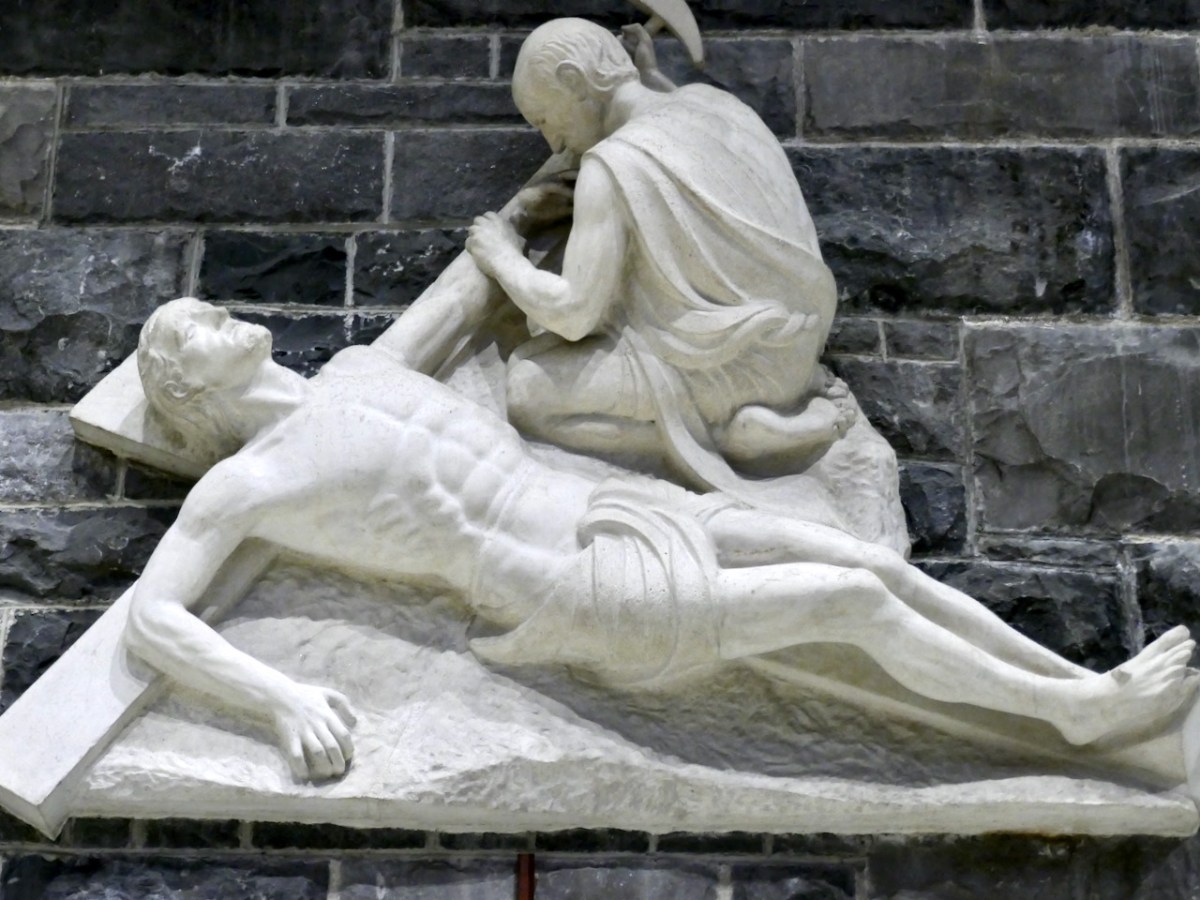
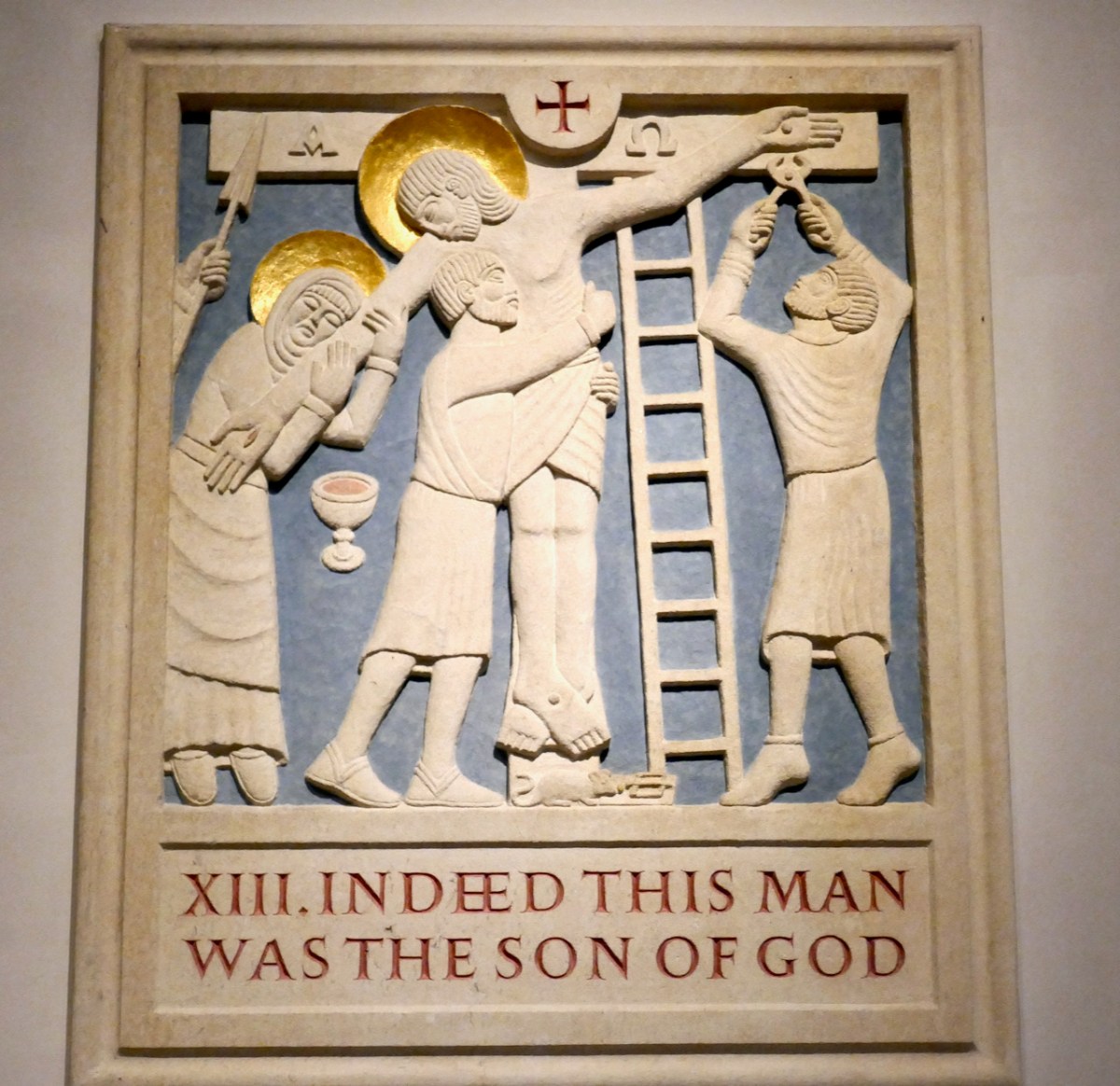
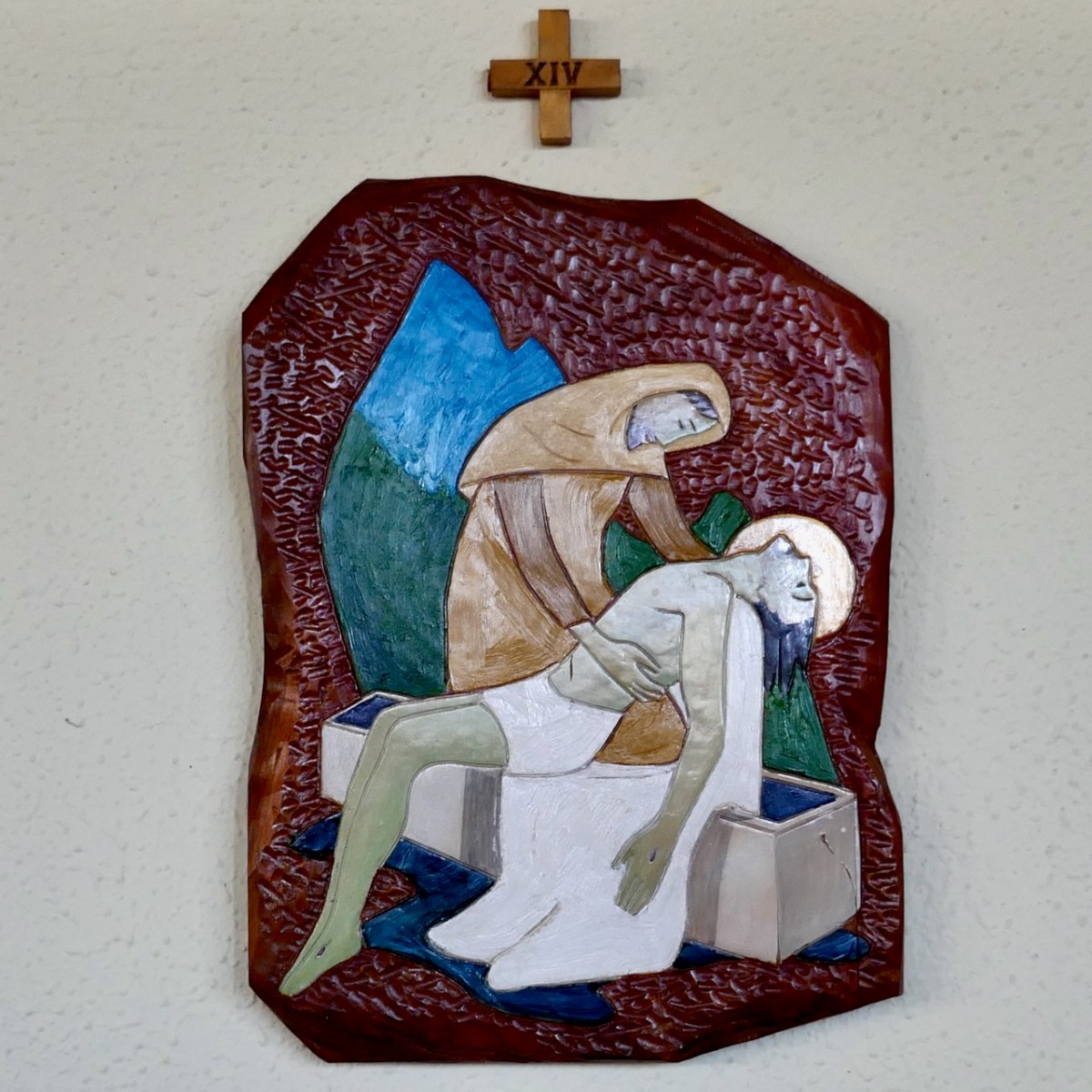
And one final work by Anon – this is one of the stations from a beautiful little set in the church in the Black Valley in Kerry. I think they may be wood carvings, but I am not sure. Anyone?
Many thanks to Michael Burke, Fergus Lyons and to Ben Mulligan of the Arts Council