Early Irish Photographer: Sir John Joscelyn Coghill

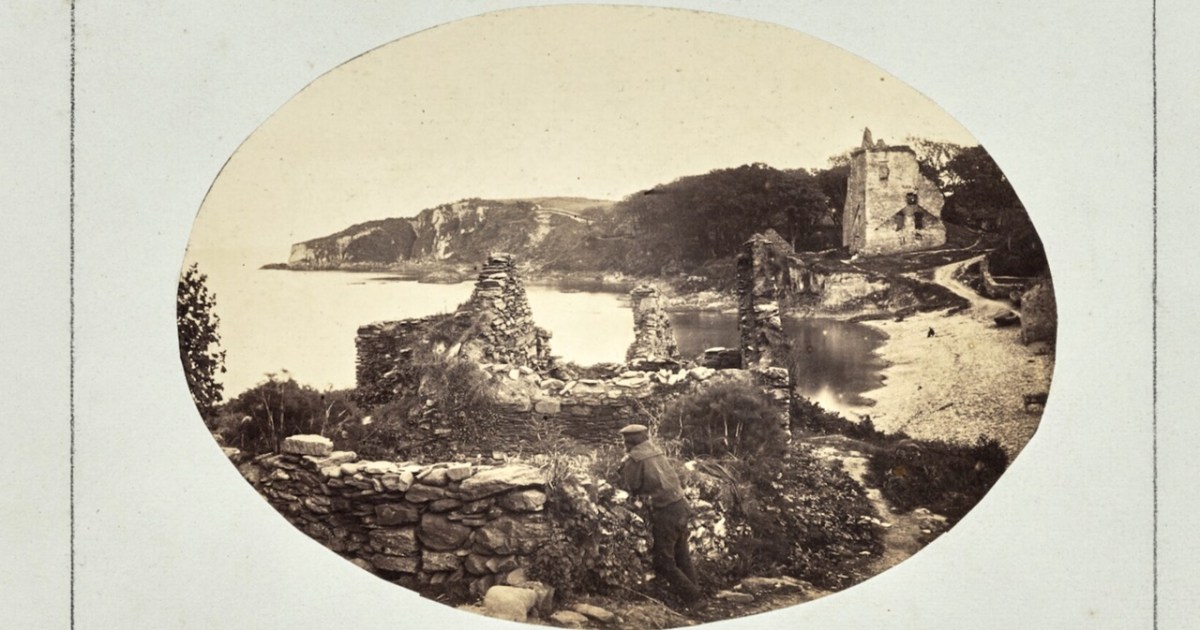
Castlehaven.an important record of what the castle looked like before it fell down

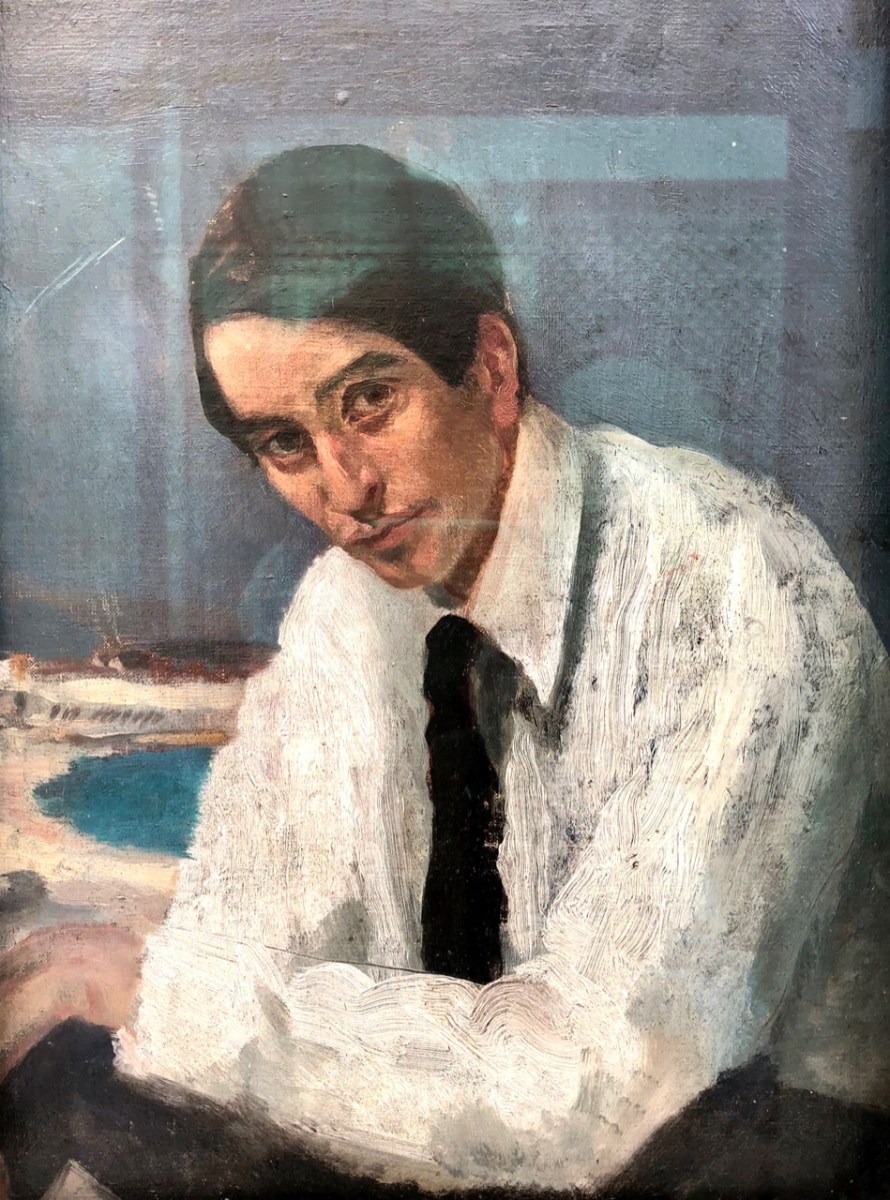
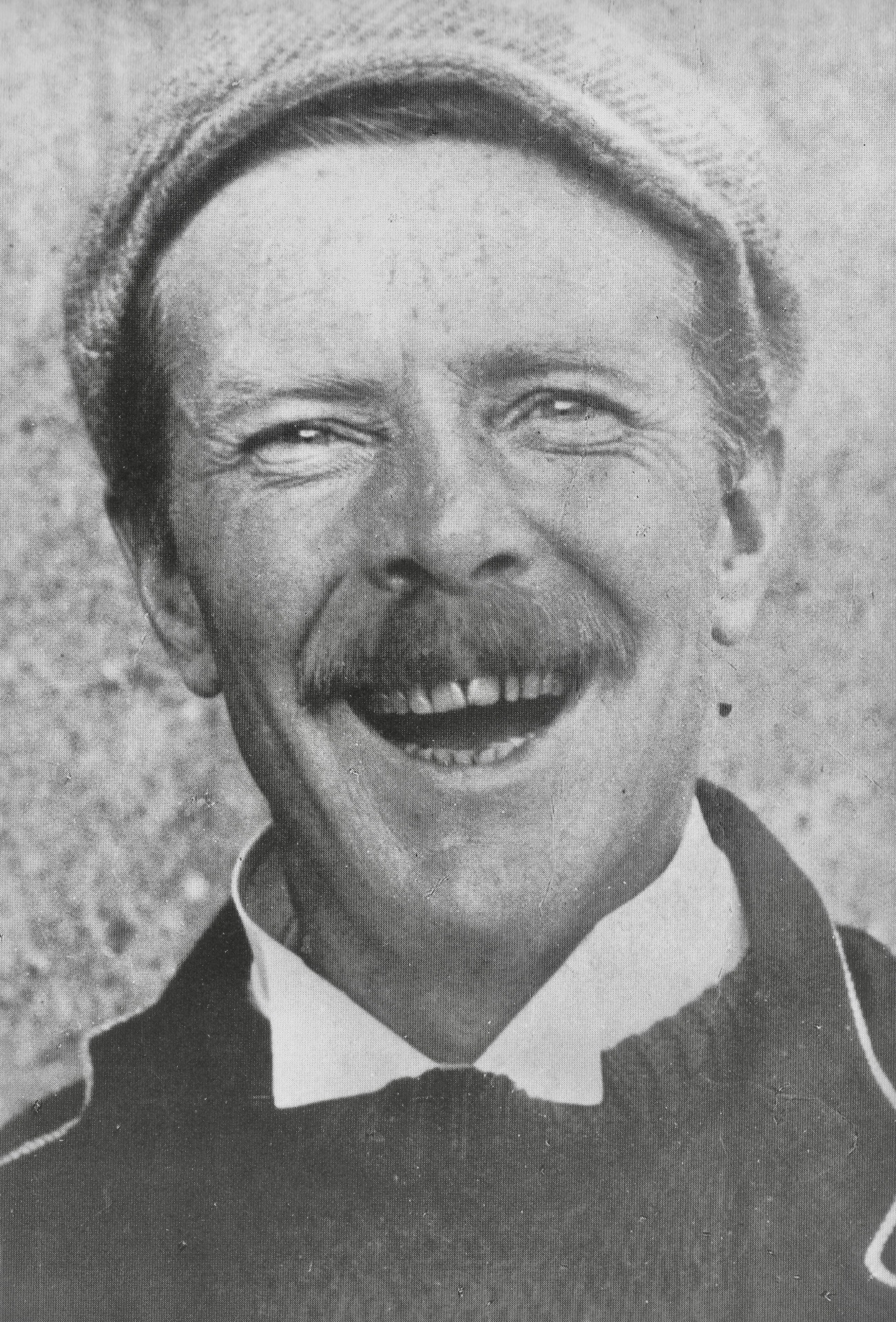
In last week’s post, which I called a Trailer, I introduced this Early Irish Photographer. Congrats to Elizabeth and Sean who knew the identity of the mystery man. The photographer was Sir John Joscelyn Coghill, 4th Baronet, uncle to Edith Somerville (Adelaide, Coghill’s sister, was her mother) and father of Neville and Egerton Coghill. Neville was to die a hero’s death at the Battle of Isandlwana during the Zulu wars, and Egerton was to marry his first cousin, Edith’s sister Hildegard. 

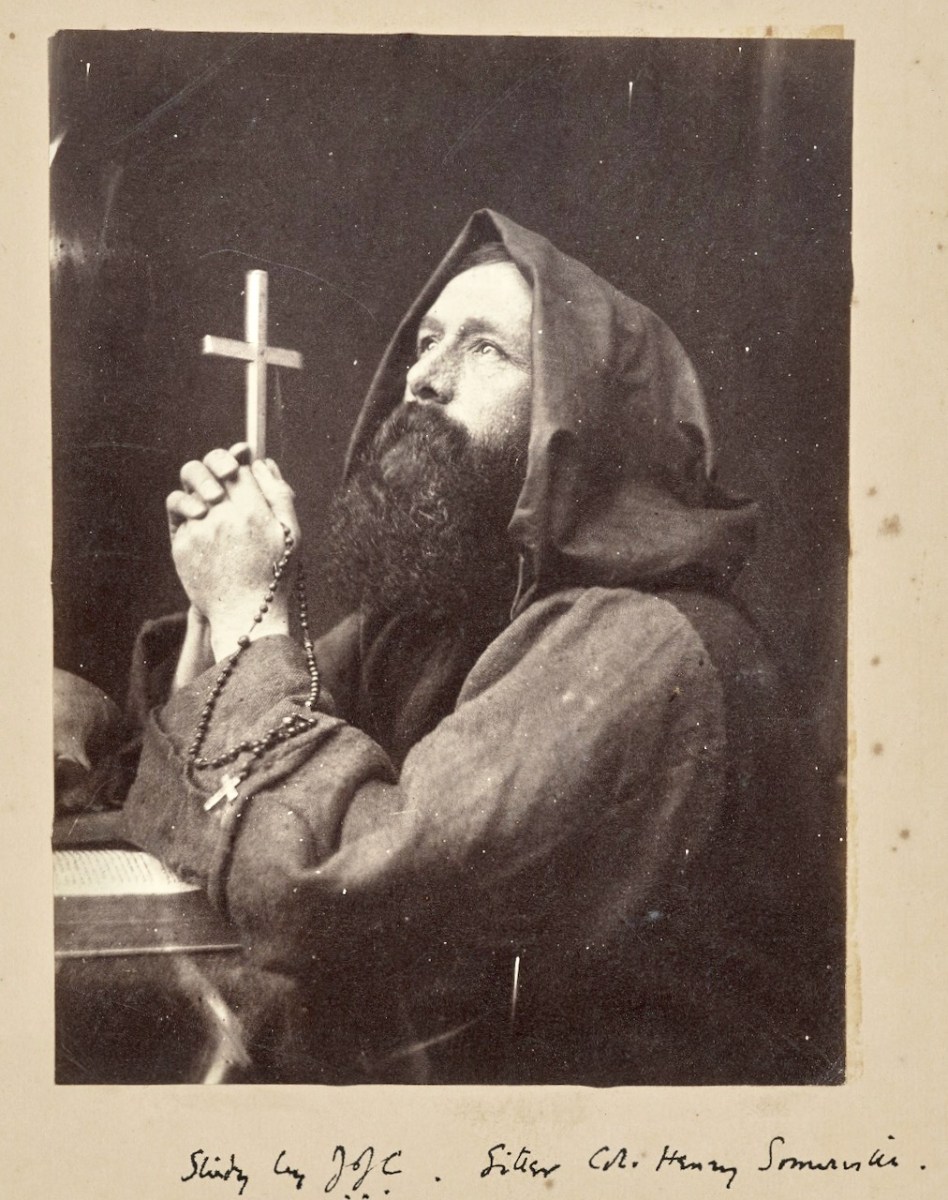
JJC (as he often styled himself) moved to Castletownsend in 1860, bringing with him a large family and several good-looking sisters, including Adelaide. Edith described him as my Uncle, Sir Joscelyn Coghill, leader of the second wave of invasion, with a photographic camera (the first ever seen in West Carbery) and a tripod. He used all his friends and relations as subjects, including himself (above).
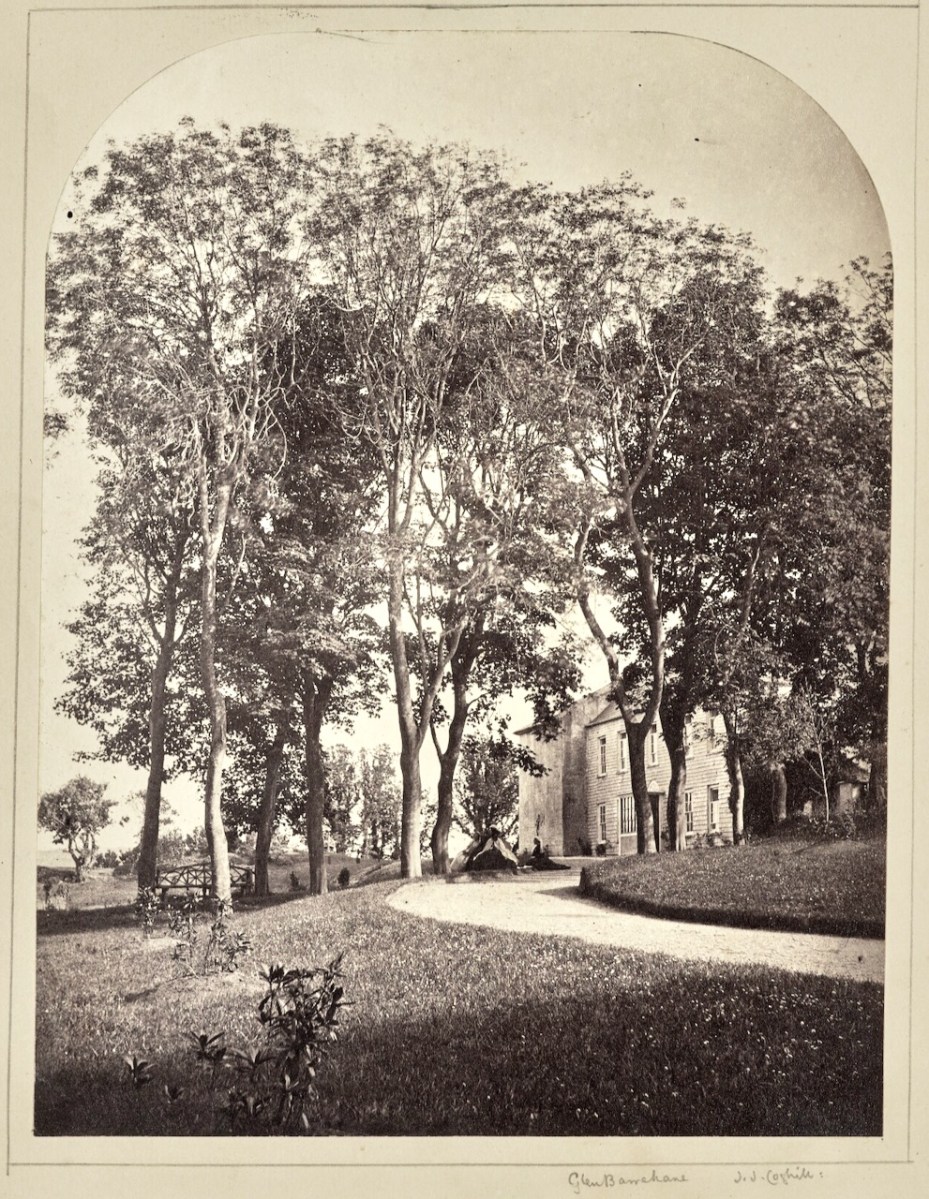
Glen Barahane, originally called Laputa, in honour of Dean Swift who had once visited Castletownshend

By this time he was already an established photographer, although this was only one of his many avocations. He came from a wealthy family and had grown up in Belvedere House, Drumcondra in Dublin. According to his entry in the Dictionary of Irish Biography (DIB):

Coghill . . . took a special interest in photography in the early 1850s, when wet-plate photography and a number of photographic paper processes became available to amateur photographers. He was present at the inaugural meeting of the Dublin Photographic Society (1854–8) on 1 November 1854 and was elected honorary secretary. He served a term as president and three terms as vice-president. In May 1858 the DPS changed its name to the Photographic Society of Ireland and amalgamated with the fine arts section of the RDS.

JJC travelled widely on the continent, writing about his photography trips and offering advice to others (e.g. Seek official permission to photograph public buildings, and, if crowds gather when a camera is taken out, do not show irritation, but encourage them to be your ally rather than your enemy.) He was a staunch defender of photography as art – a hard sell with many traditionalists. From the DIB:

In May 1858 Henry McManus, RHA, headmaster of the school of art in the RDS, delivered a lecture on art in which he pointed out that the artist’s craft could not be superseded by mechanical means. The artist’s hand required the guidance of intelligence, McManus said, and this action could not be imitated by the use of machinery, however ingeniously contrived. Coghill differed with McManus on this occasion, and later in the year (November), when he replied more fully in a lecture at the RDS, Coghill described how photographers should study and reflect on art principles and not be mere servile copyists. He believed that photographers should use their intellect, taste, and judgement on the subject matter in front of the camera lens and so raise their photographic work from the mechanical to the sphere of art.

JJC was an immediate favourite in Castletownshend, along with his brother, Kendal, with whom he was close. They brought with them an interest in spiritualism and infected everyone with it.

Her Coghill uncles Joscelyn and Kendall thrilled her by their psychic feats. On 3 April 1878 she records: “Mother heard from Uncle Jos (Sir Joscelyn Coghill Bart, the head of the family) who was at a grand seance and was levitated, chair and all, until he could touch the ceiling.’ Professor Neville Coghill his grandson has informed me of the tradition that the Baronet signed his name on the ceiling in pencil.


Somerville and Ross, A Biography by Maurice Collis,  Faber and Faber 1968

JJC’s daughter, Ethel, Edith’s first cousin and Castletownshend ‘twin’ wrote this about her father:

He was a real peter pan – a boy who never grew up in many ways, full of enthusiasms of all kinds, whether it were yachting, music, painting, writing, acting, photography, spiritualism, speculation – all had their turn and he flung himself into each and all with a fervour that lasted at fever heat for a time. At one time after my mother’s death [1881] he and his brother Kendal took a house in London for some months. To it they brought a considerable amount of the family plate and a presentation set of gold belonging to my uncle, as well as my grandfather’s medals and other valuable things. They left the house for some weeks in charge of two maids, who promptly brought in their young men, cleared the house of nearly all the valuables and had the cheek to order a sumptuous luncheon in my father’s name and a landau in which they went to [the races]. My father was in Ireland when the telegram came to inform him of what had happened. I did not see him for some time afterwards. By then, he had come to look on the thing as a huge joke. Nothing was ever recovered, but he felt as though he had been part of a Sherlock Holmes mystery, and this compensated him for everything he had lost.


Edith Somerville, A Biography by Gifford Lewis. Four Courts Press .2005

The Coghills lived in Glenn Barrahane (no longer there) and the house was the centre of many activities – amateur theatricals, singing, séances, painting expeditions. The Somervilles, his nieces and nephews, adored him and his brother Kendal. He must have had a good relationship also with their father, his brother-in-law, Henry Thomas Somerville, as he often cast him in ‘character studies.’ – Henry, in turn, must have been good-humoured and patient.
But tragedy struck too – Neville was only 26 when he died at Isandlwana in 1879. He was awarded the Victoria Cross posthumously, in 1907. When he died his younger brother, Egerton, became the heir. Originally wealthy, the family’s fortunes suffered several setbacks and most of their fortune was wiped out by bad investments. As Maurice Collis puts it, On 29 November, 1905, at the age of 79, sir Joscelyn Coghill died, and life changed dramatically for Hildegard and Egerton, who inherited the baronetcy and a load of troubles.
Egerton and Hildegard were so hard up they had to wait seven years before they could marry. Egerton died suddenly in London in 1921, and Ireland (and especially West Cork) was in such upheaval that it was many months before his body could be taken home. Read more about Egerton in my Post Harry Clarke, Egerton Coghill and the St Luke Window in Castletownshend. And more about jolly Uncle Kendal in The Gift of Harry Clarke.
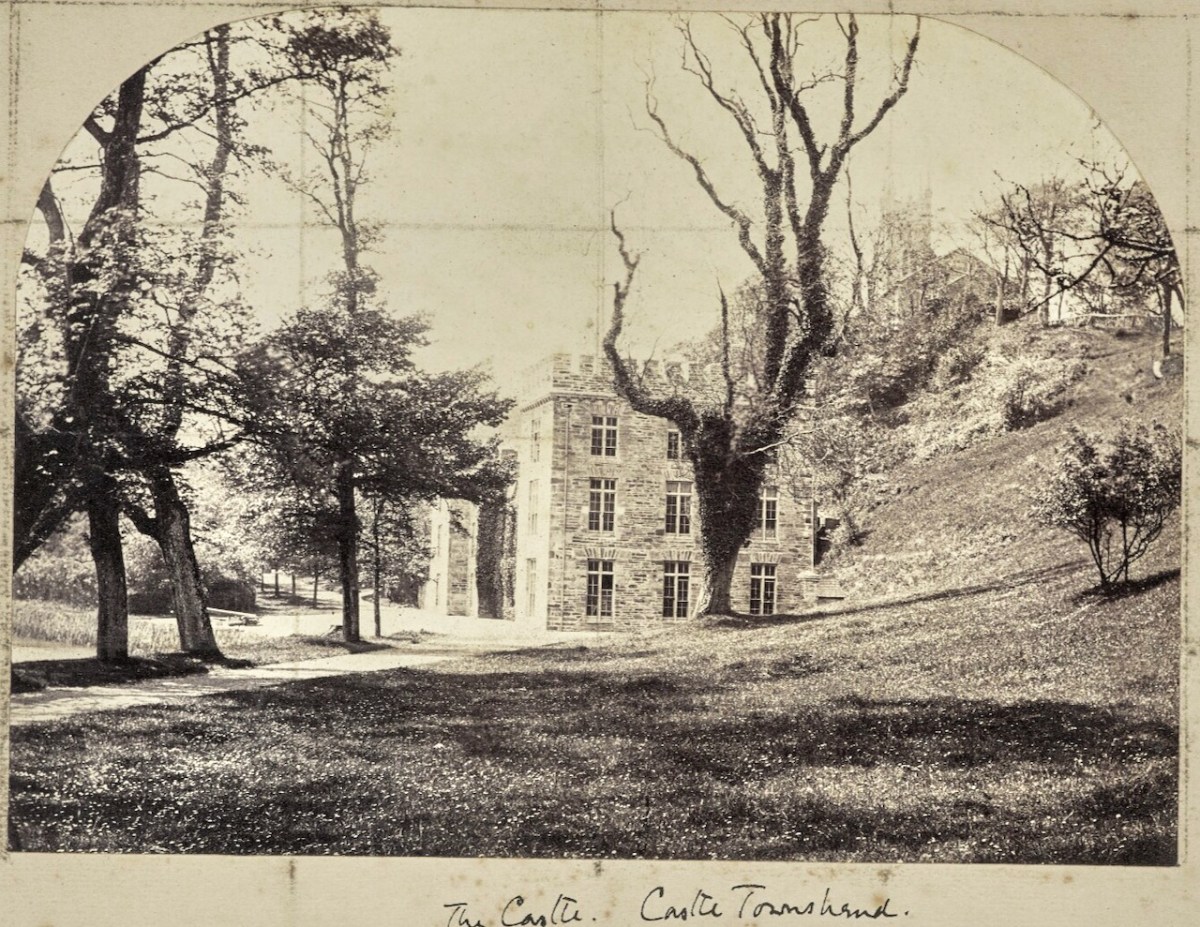
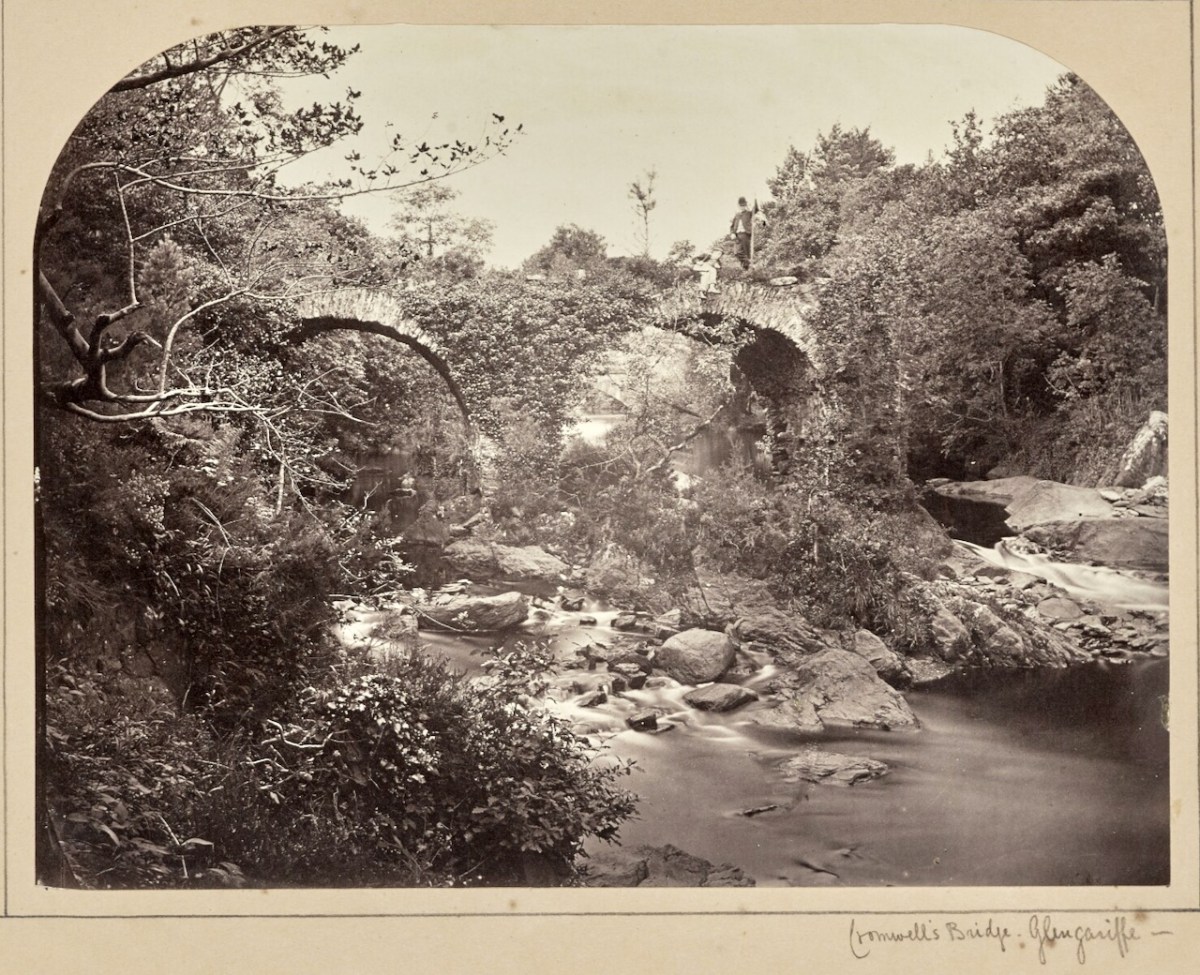
Although far removed from Dublin, JCC chaired “the photographic committee of the Dublin International Exhibition (1865) [and] was credited with the success of the photographic section” (DIB). He continued to exhibit up to the mid-1870s, winning prizes for his photographs.  I have included in this post photographs taken by JJC in and around West Cork. They constitute an invaluable record of people and places, taken between 1860 and his death in 1905.
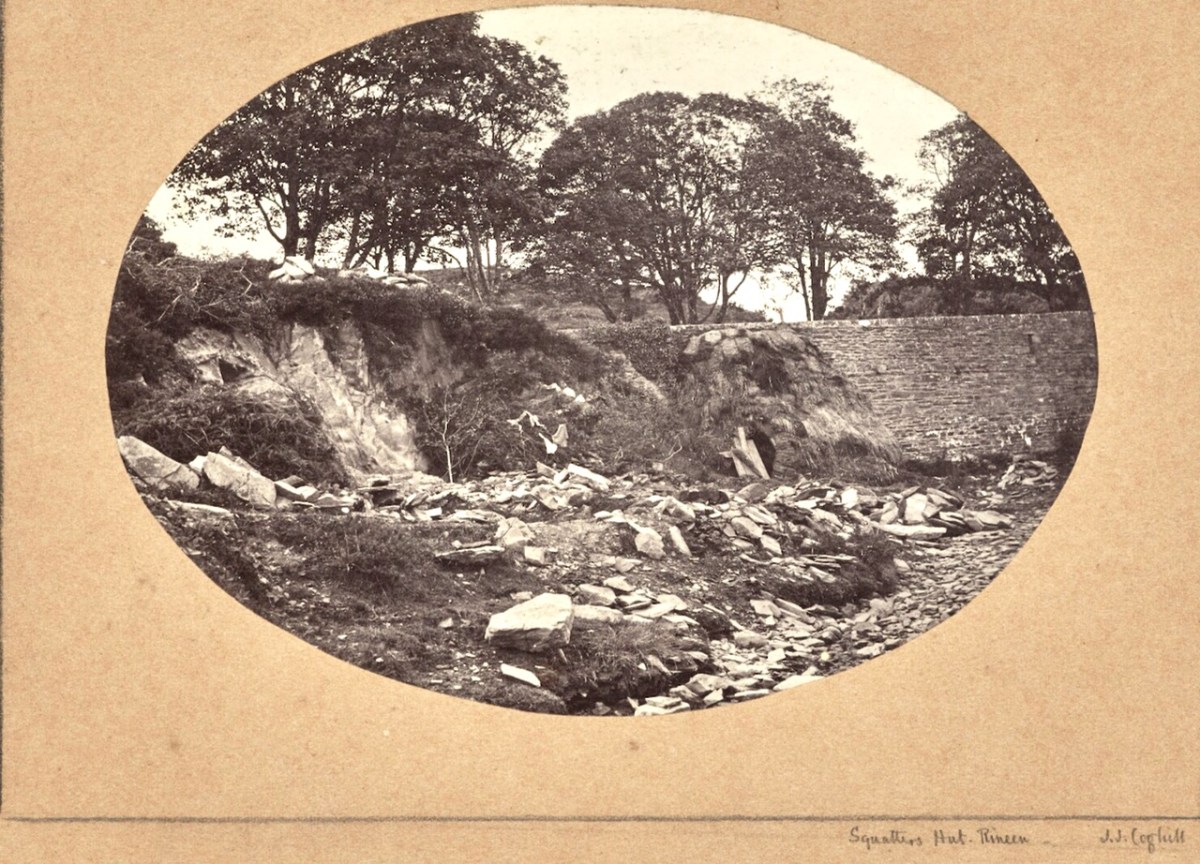
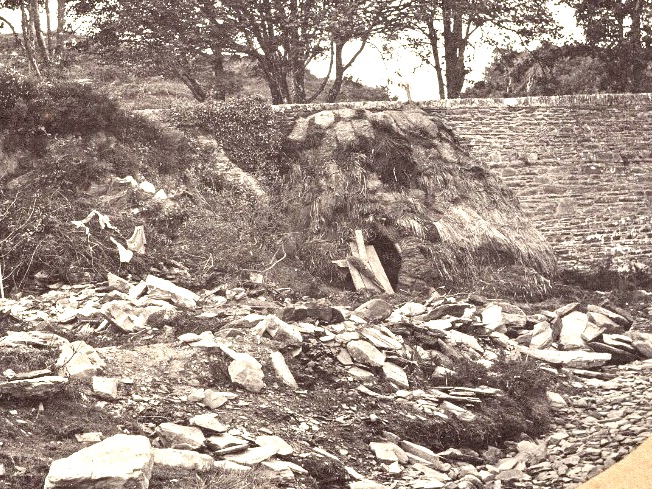
For example, the photo above, detail below, is of a “Squatter’s Hut, in Rineen (the same bridge I featured last week). It’s a fascinating and important image, as it is the only photograph I have ever seen of one of the miserable cabins (known as fourth-class housing), made of sod, in which many of the poorest people lived in West Cork before the Famine.
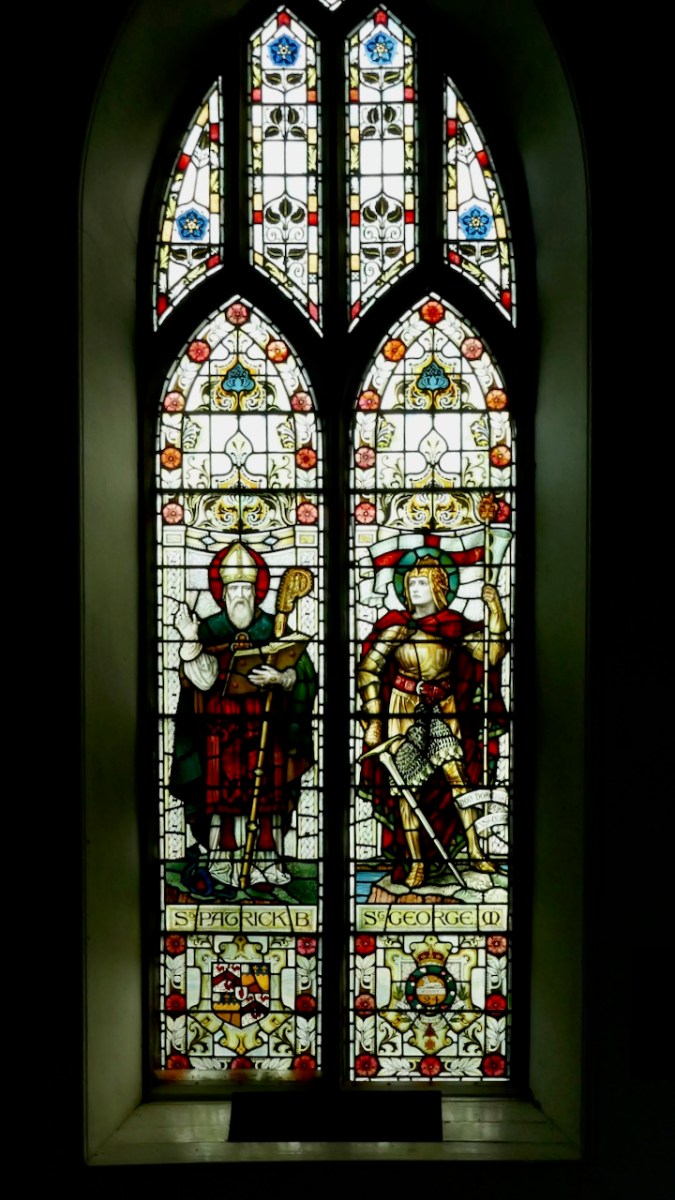
I am not sure how these photographs arrived into the Getty Museum in Los Angeles, but many of the images are now freely available on their website, copyright-free, and we are grateful for that. You can browse the whole collection for yourself. You can also visit St Barrahane’s Church in Castletownshend and see the fine windows for yourself, including this one by Powells of London, dedicated to JJC and his son, Neville. Can you spot the Victoria Cross?
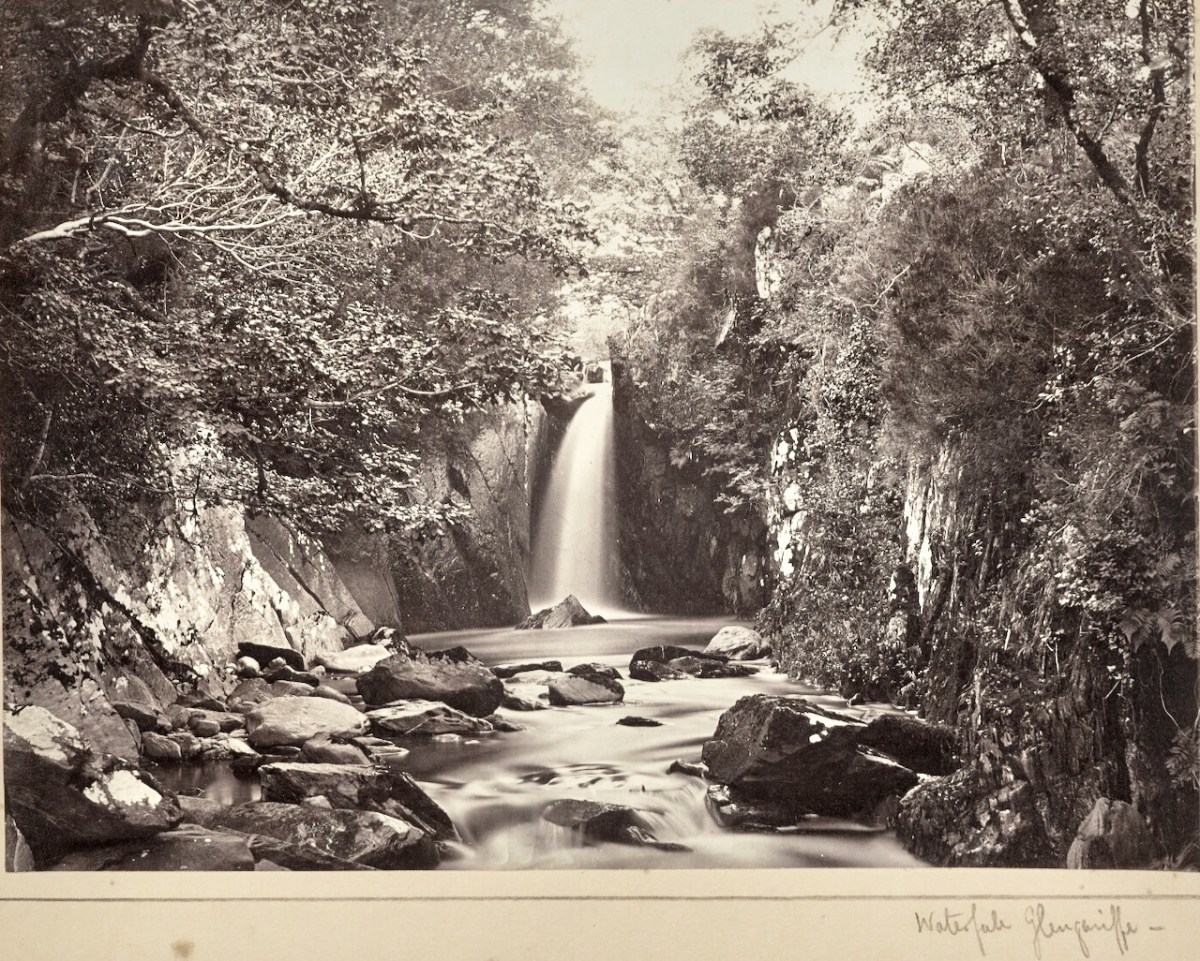
There are other memorials to JJC in that church too – take a look next time you’re there. I will leave you for now with one of JJC’s landscape photos, of a Glengarriff waterfall – a masterful shot for what was, at that time, quite a difficult subject to capture, moving water.
When Harry Met Edith: Part 1 – “Like a Living Flame”

St Barrahane’s Church of Ireland in Castletownshend, West Cork, is unique in many ways and a national treasure, not least because of its three Harry Clarke stained glass windows. I have written about the St Luke window and also about the St Louis/St Martin window. Both are gems. But for some reason I have not yet properly written about the East Window and it seems fitting to start that post now, since Harry Clarke died 92 years ago this week at the all-too-young age of 41.

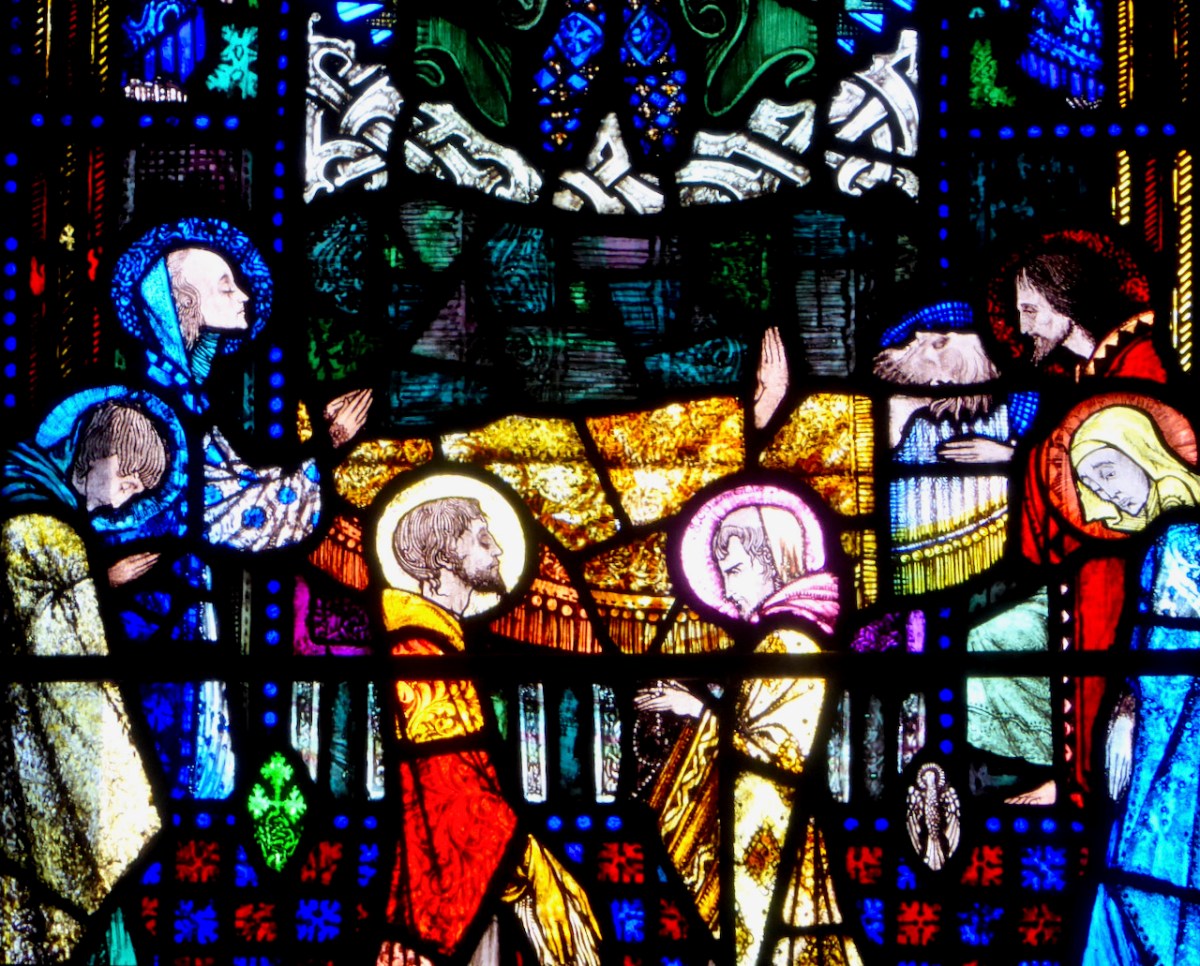
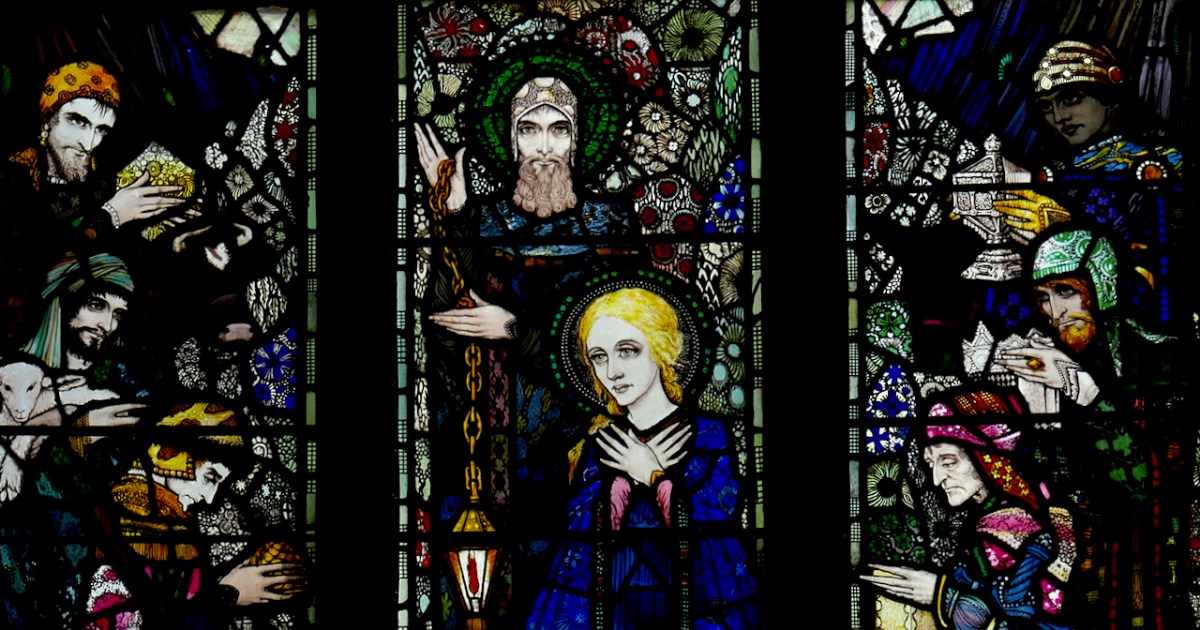
The East Window, the largest part of which comprises a nativity scene, was one of the first commissions Harry received after he burst on the scene in 1916 with his series of saints for the newly opened Hiberno-Romanesque Arts and Crafts masterpiece that was the Honan Chapel at University College Cork. That’s a small detail from his Joseph window for the Honan, below.

The Somerville siblings had been planning for a long time to commission a new window to honour their grandparents, the existing one being hideous and gloomy. In 1907 they had requested a new design from the Manchester firm of Walter J Pearce, but had not followed up with a commission. Besides her intense dislike of the ‘Berlin Woolwork’ (as the family called the despised stained glass) Edith Somerville thought the window openings themselves too long and narrow and felt they should be shortened to produce a more pleasing proportion for a stained glass scene. However, none of the schemes progressed beyond the Somerville siblings procuring permission from the church committee to remove and sell the offending window and replace it with a more suitable memorial to their grandparents.

This illustration is from Somerville and Ross: A Biography by Maurice Collis.

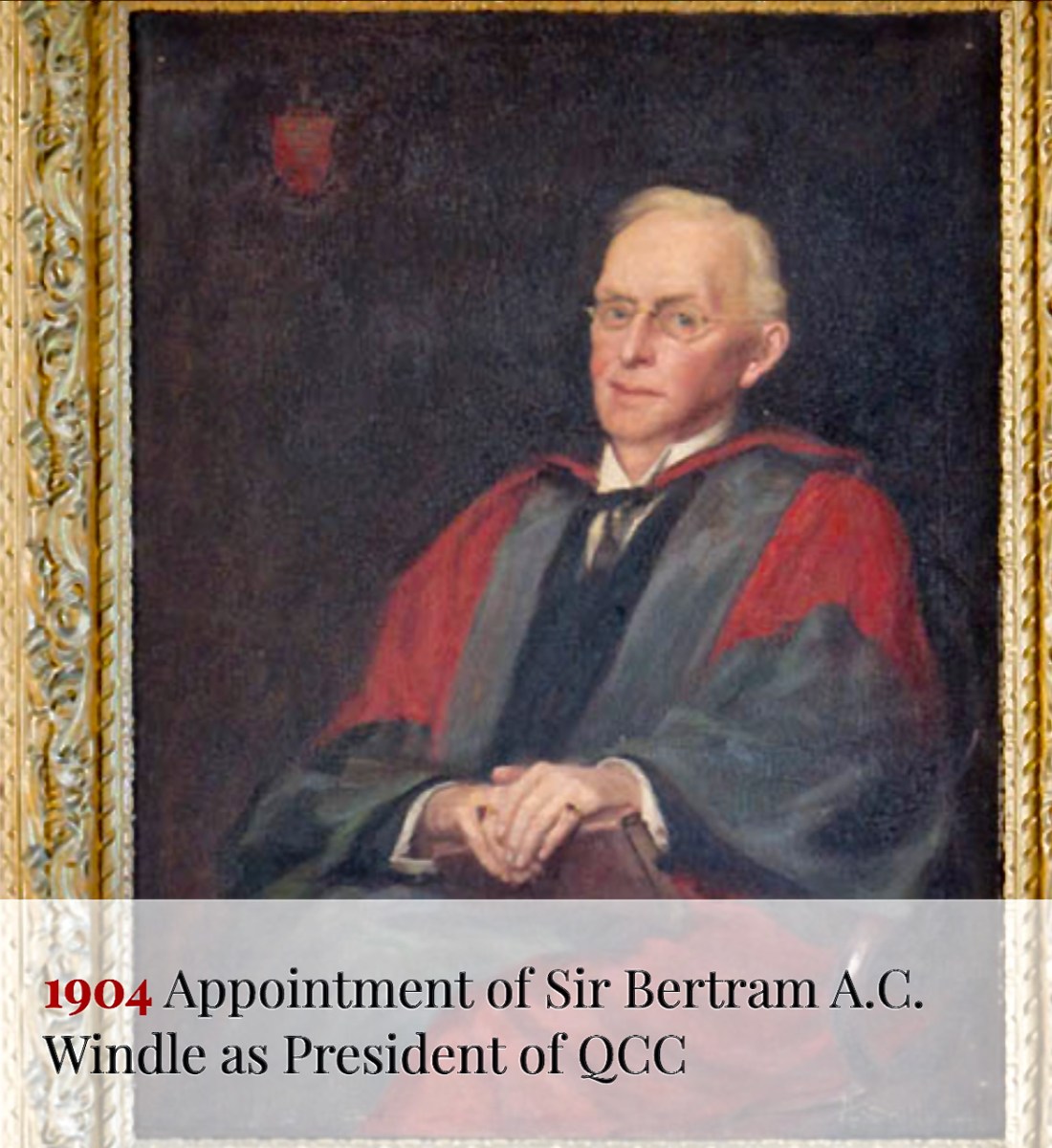
On January 14th 1917 Cameron, the oldest of the family and hence the one who had to have final approval over expenditures like this, went to see “Bertie’s windows”. Sir Bertram Windle was the President of University College Cork and a first cousin to the Somervilles (below, captured from the UCC website). He had worked with Sir John O’Connell to actualise the Honan Bequest which resulted in the building of the Honan Chapel with the inclusion of stained glass windows by An Túr Gloine and by Harry Clarke.

Cameron records in his diary:

Bertie took me to see his jewel of a chapel – quite the best modern building I have seen – & the windows – all but one – very good & some – the Clarke windows- supremely lovely. I have never seen such glass except in 14th century windows – the whole chapel simple & lovely nothing mean or tawdry […] After luncheon went again to the Chapel for another look at the windows.

The Edith OEnone Somerville archive in Drishane :
a catalogue and an evaluative essay /
by Otto Rauchbauer

Edith Somerville got up to see the windows for herself in March. Edith was already an established writer and artist, who had studied in France and was familiar with modern art movements. At that point in her life she was slowly coming to herself again, after a period of intense mourning on the death in 1915 of her beloved cousin and collaborator, Violet Martin with whom she had written a series of highly successful novels and stories under the name Somerville and Ross.

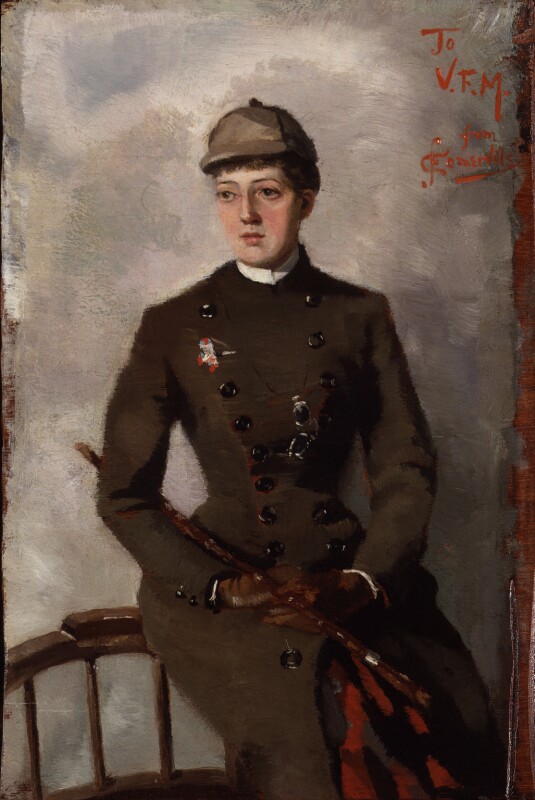
Violet Florence Martin, in an 1886 portrait by Edith Somerville, from the National Portrait Gallery, used under license

Her own artistic knowledge and sensibilities are evident in her reaction to the windows. She wrote to Cameron: 

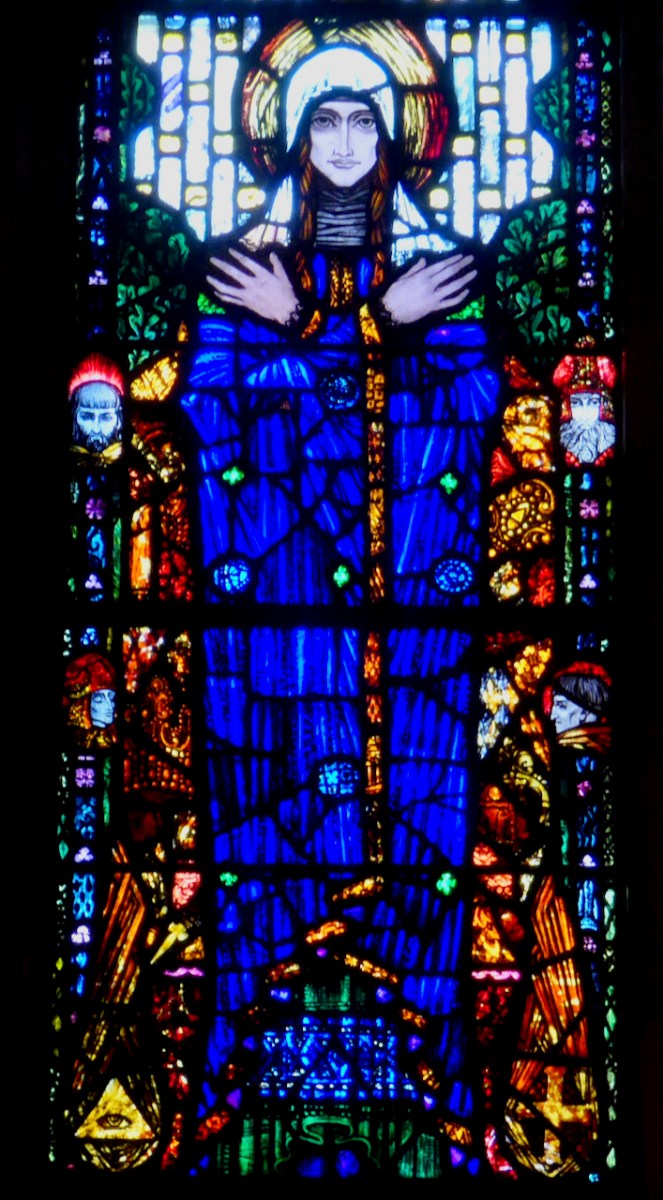
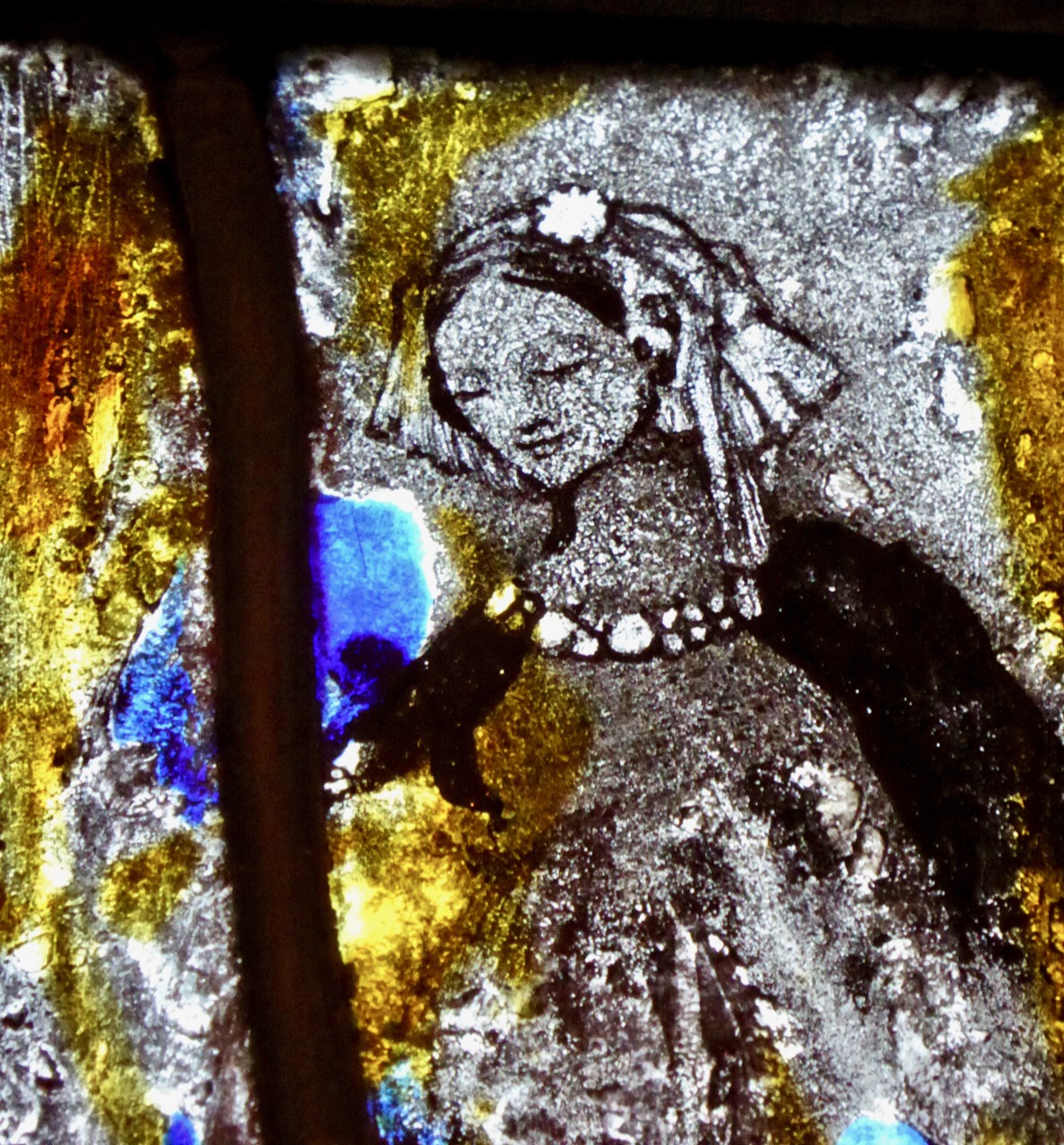
They certainly are very wonderful in colour, & some of them beautiful in all respects. I preferred the Western three-light window [Brigid, Patrick and Columcille] & I almost disliked the blue one, & the Aubrey Beardsley female face [Gobnait] thought horrible; so modern and conventionally unconventional. The green western light was lovely and a nice design, I like 2 of the left side ones (Brigid and Patrick]. I thought the eastern Purser window just moderate (i.e. not among high class tho’ much better than average). There is to me a slight faint of coarseness in Clerke’s [sic] work. Not much finesse, though the actual glass has a quality of burning and furious brilliance that I have never seen anywhere else. The blue robe, for instance, hits your eye like a living flame or a blast of wind. Perfectly amazing, but not quite pleasant. I can rave about some of his qualities with anyone, but I am not quite a whole-hogger. However, I expect he will be artist enough to adapt his work to the church & to realise how to get harmony into it. His windows have a kind of hellish splendour – in a chapel dedicated to the Infernal Deities they would be exactly right, gorgeous and sinful. . . If that young man. . . went mad it would not surprise me, but I hope he won’t before he does our window for us.

The Edith OEnone Somerville archive in Drishane :
a catalogue and an evaluative essay /
by Otto Rauchbauer

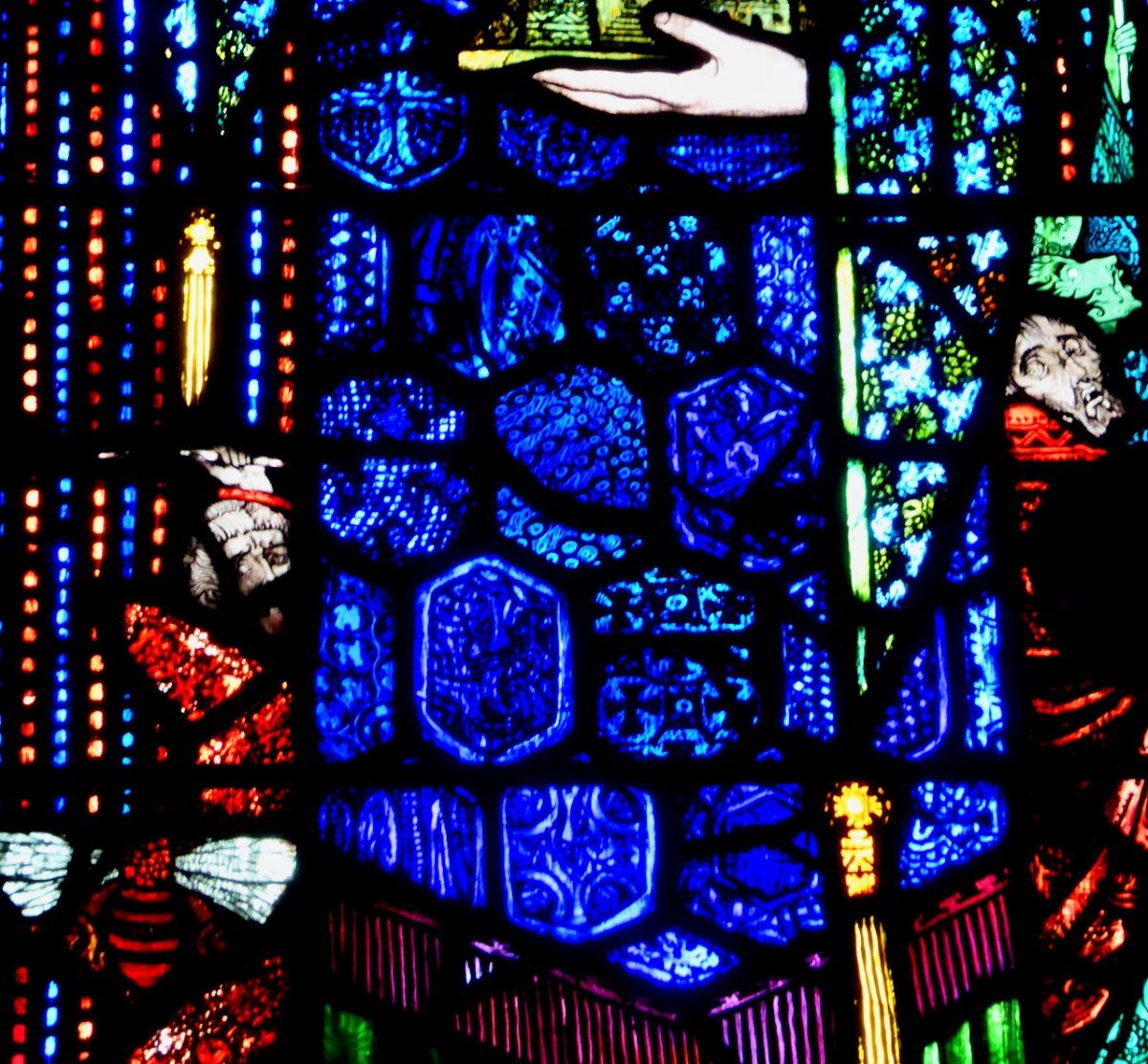
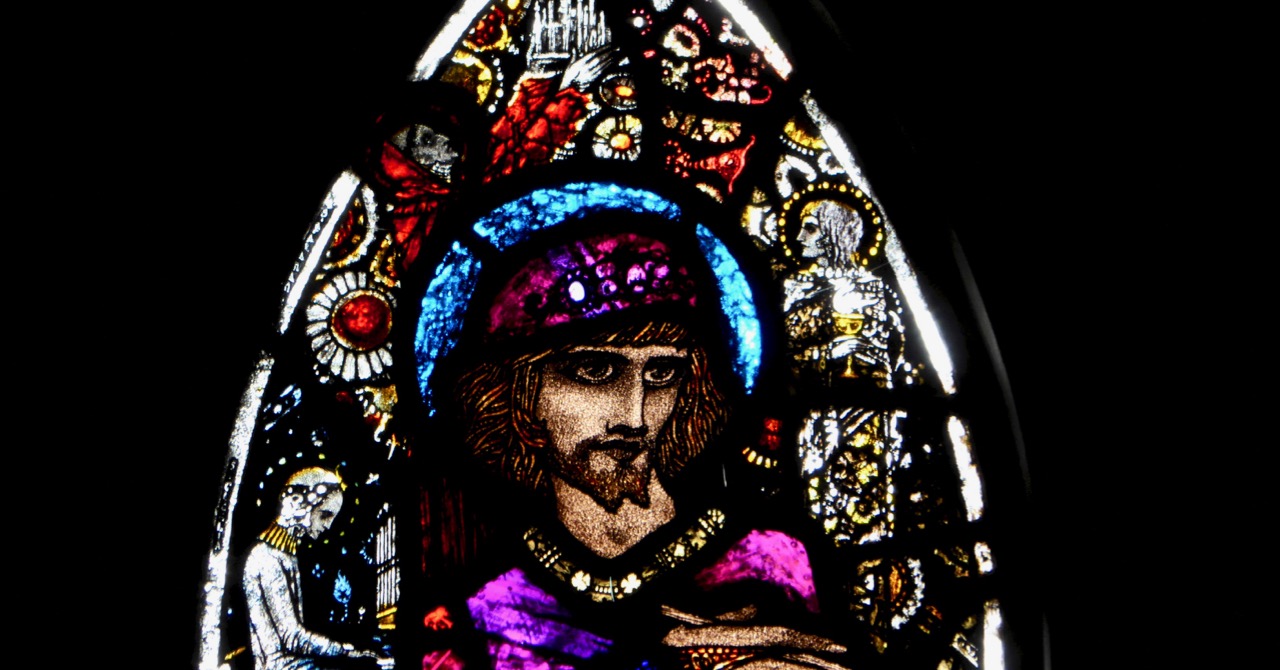
Was it St Ita’s blue robe (above) that struck Edith so forcefully – like a living flame or a blast of wind – ? Or was it perhaps, the one worn by Gobnait, patron saint of beekeepers, cleverly worked out as a series of honeycomb shapes (below). In either case, this deep blue was one of Harry’s hallmarks – he went to great lengths to procure good blue glass.

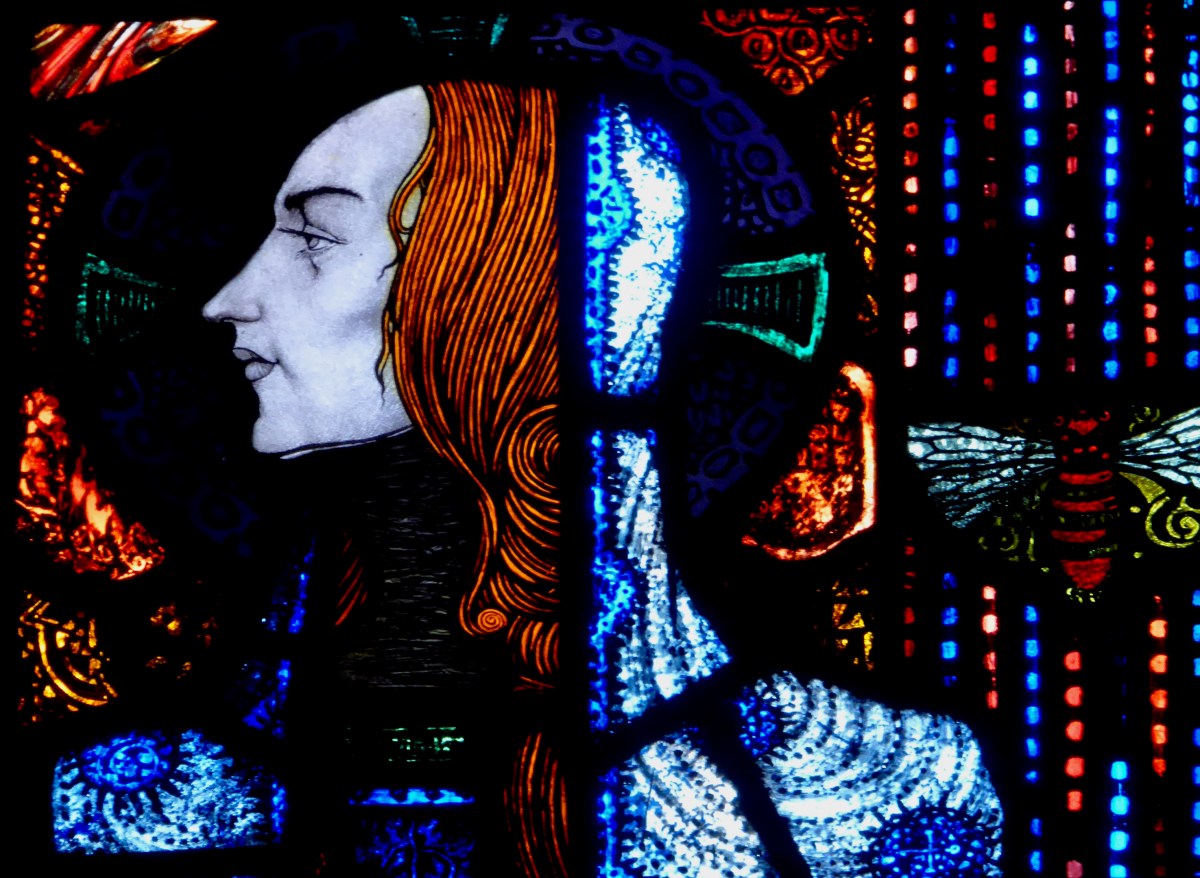
We can unpack a lot in Edith’s letter to Cameron. For a start, it seems that Cameron had already decided, no doubt influenced by Bertie, that Harry Clarke was the artist who should do the East Window. Edith’s reaction, while often credited with being the deciding factor in choosing Clarke, was after the fact, and both more moderate and more judicious than Cameron’s. Her comments are enough to make me wonder, if the decisions had been hers to make, whether Harry would have been engaged. She was insistent, in a further letter to Cameron, that something more of ‘harmony’ and less of intensity than the Honan windows (as exemplified by his Gobnait portrait, below) would be appropriate for Castletownshend. In fact, shortly after seeing Harry’s work at the Honan, it seems that Cameron had deputed their cousin Egerton Coghill (see my post about Egerton and the St Luke window) to approach Harry, whom he appears to have known personally, but after that initial meeting, it was Edith who took charge of the process. This made sense since Cameron was not living in Castletownshend at that time, but in London. Things moved quickly – even before she had seen his work for herself, she had sent him a tracing of the East window (perhaps one that had been prepared for the proposed Pearce commission) and thereafter it was she who communicated with Harry. 

He responded to getting the tracing in a letter of Feb 1, 1917.*

Thank you for your letter and tracing of the East window of Castlehaven Church. I clearly understand your ideas about shortening the existing window but I hesitate to support your doing so until I see the church – I like long openings and the window may only look out of scale by being filled with inferior glass – I do think you would be unwise to make the three openings into two if you are going to have single figures and not subjects or a subject. Were the existing window or openings left I would have room to put small subjects from the lives of the selected saints at the top and bottom of each opening – were the windows shortened I would have room for the figure only. I am judging from the tracing and cannot tell until I saw the actual window with the light etc – the trees may present difficulties.

The approximate cost of filling the existing window with single figures and small subjects – figures to be of S Brigid S Finbarr and Barrahane will be £315 and if it were shortened by 3‘6“ the cost will be – £252.

I will be in Cork in the early spring and if it were convenient to you, could meet you at Castlehaven Church –

If you are anxious to place the commission at once I will go down any day next week (after Tuesday) that you suggest.

I do my work from start to finish myself and so take longer then is generally expected over a window – Your window would take about six months and could be started on a date mutually agreed-upon should I have the pleasure of doing it –

I greatly appreciate your asking me about the work

Letter from Harry Clarke to Edith Somerville,
Somerville Archives, Drishane House

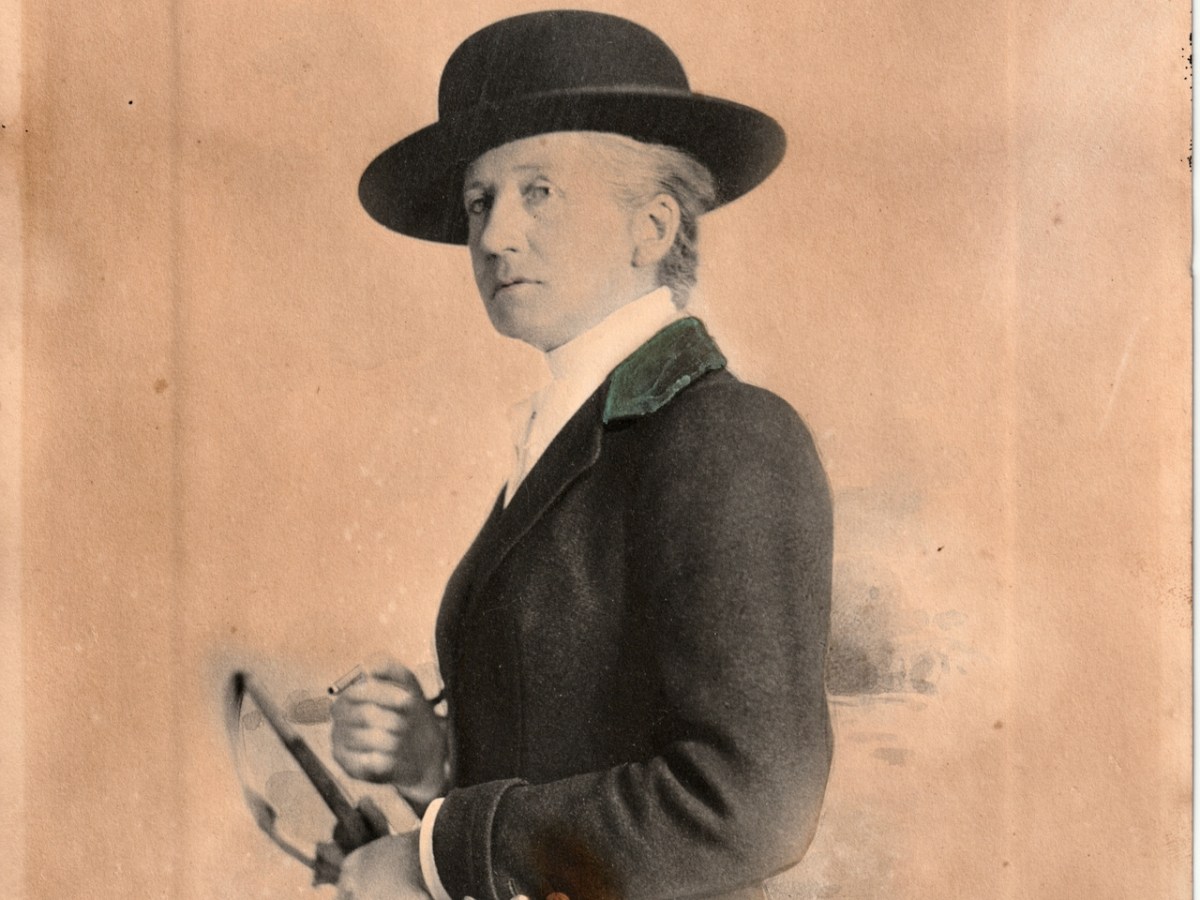
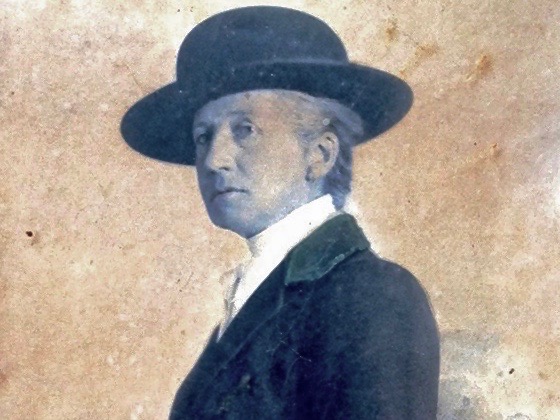
Harry did indeed come to Castletownshend  – a diary entry records it was April 4 and he stayed to lunch, although another source says that he stayed overnight and that Edith found him shy but liked him enormously. At this time, Edith was nearing 60, (dressed as Master of the Fox Hounds, below) whereas Harry was 27. She referred to him as ‘our window boy’ in a subsequent letter to Cameron.

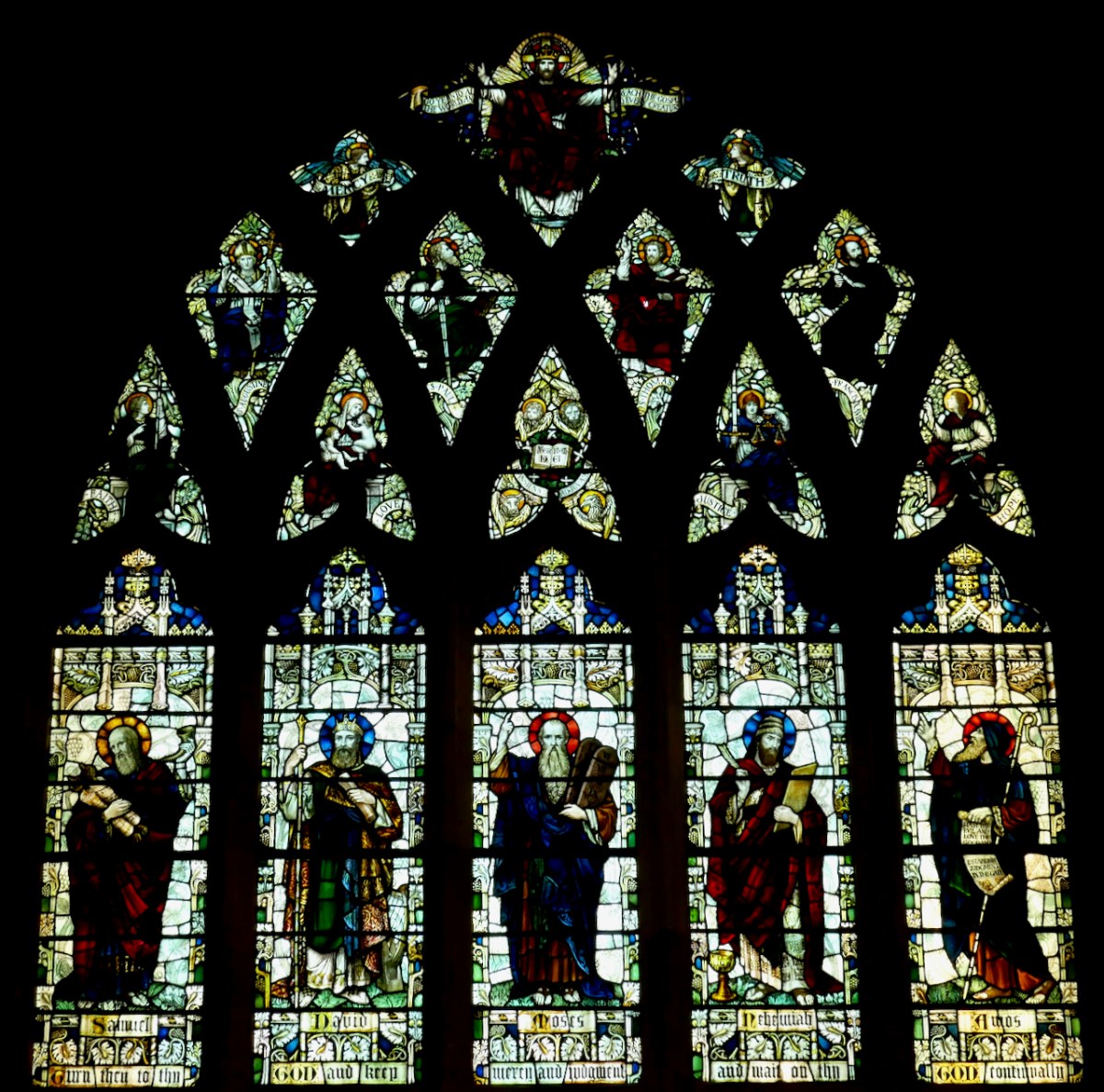
The letter refers to the dimensions of the window – Harry didn’t mind  the shape at all – “I like long openings.” But Edith, very much the painter, had been taken by the more horizontal orientation of windows she had seen in Exeter Cathedral, such as the Old Testament window below) and really wanted to change the windows by making them shorter and perhaps even cutting them down to two-lights. As we will see, she realised part of this ambition, but not all.

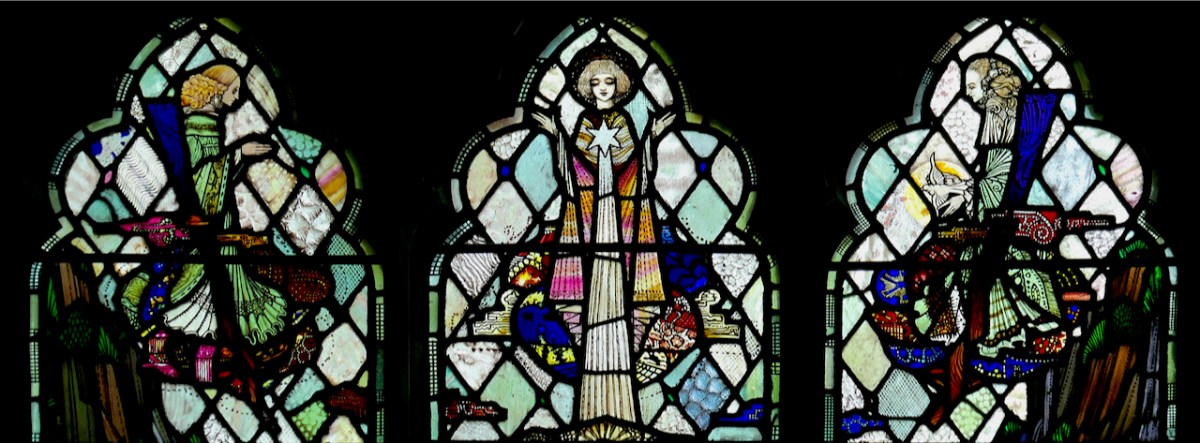
Although the decision that Harry was to do the window was now made, that’s not to say that all went smoothly from this point on. Edith had a hard time being decisive about the iconography she wanted (St Finbarr didn’t make the final cut), and at one point Cameron managed to lose Harry’s design for the window and she had to ask him to do it again. Also, there was the matter of cost, and how the rest of the family felt about it all. We’ll get into all that in the next post, as well as the elements of the window that Harry designed. Here’s a sneak preview.

*I have to record here my debt of gratitude to Thomas Somerville and the Somerville Archives, for permission to view and quote from letters from Harry Clarke to Edith Somerville and from Edith to Cameron. It is an enormous privilege (and quite a thrill) to have original material to work from.

Harry Clarke, Egerton Coghill and the St Luke Window in Castletownshend

Remarkably, there are three Harry Clarke stained glass windows in one small West Cork village – in St Barrahane’s Church of Ireland church, in Castletownshend. The smallest of the three windows is the St Luke, inset into the south wall of the chancel. It is a miniature masterpiece, designed with extraordinary attention to detail by Harry, and executed in his studio.

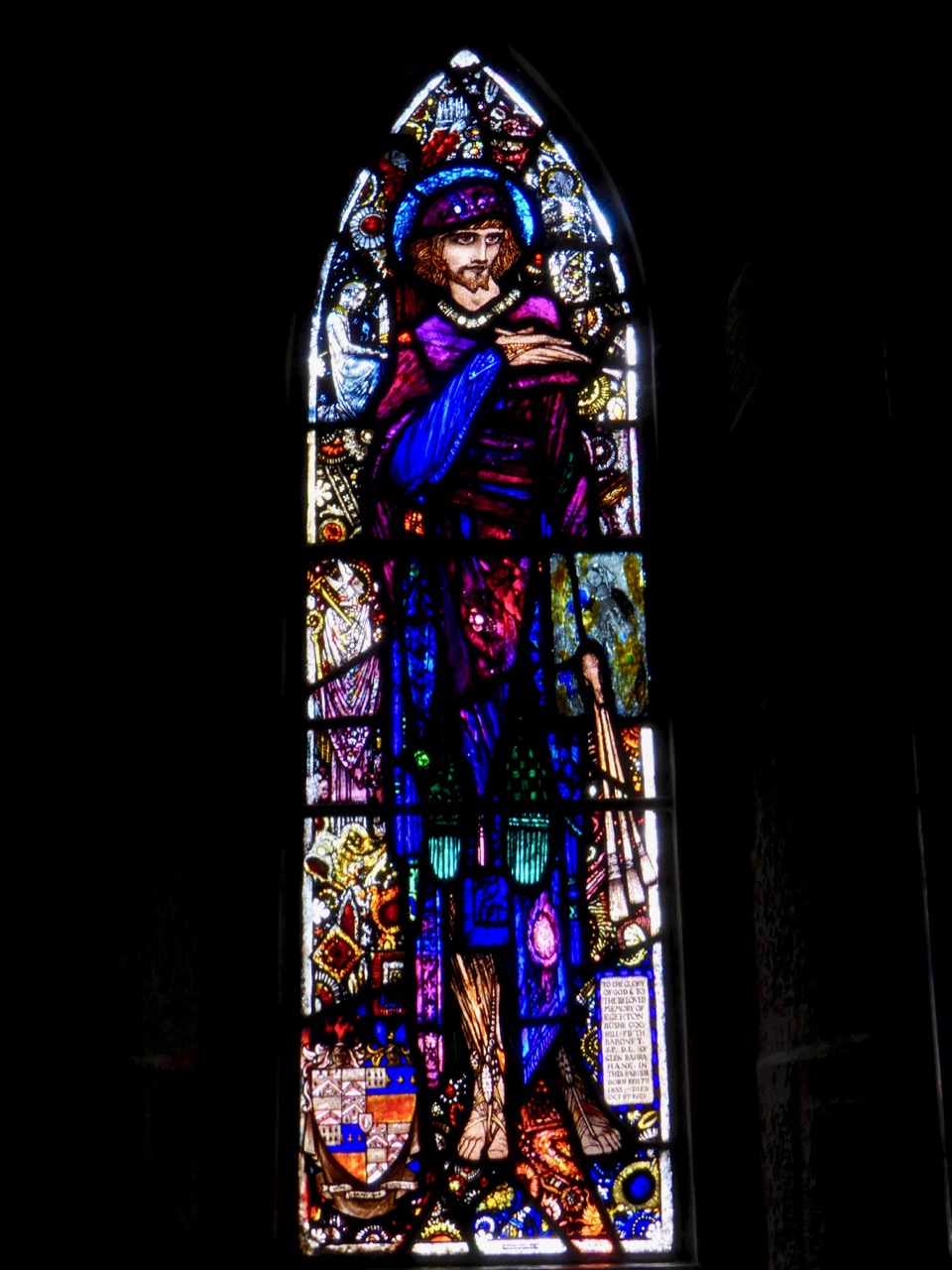
The iconography that was chosen was specific to the subject – St Luke as Patron Saint of Painters. That’s because this was a memorial window to Egerton Coghill – more correctly Sir Egerton Bushe Coghill, 5th Baronet Coghill.

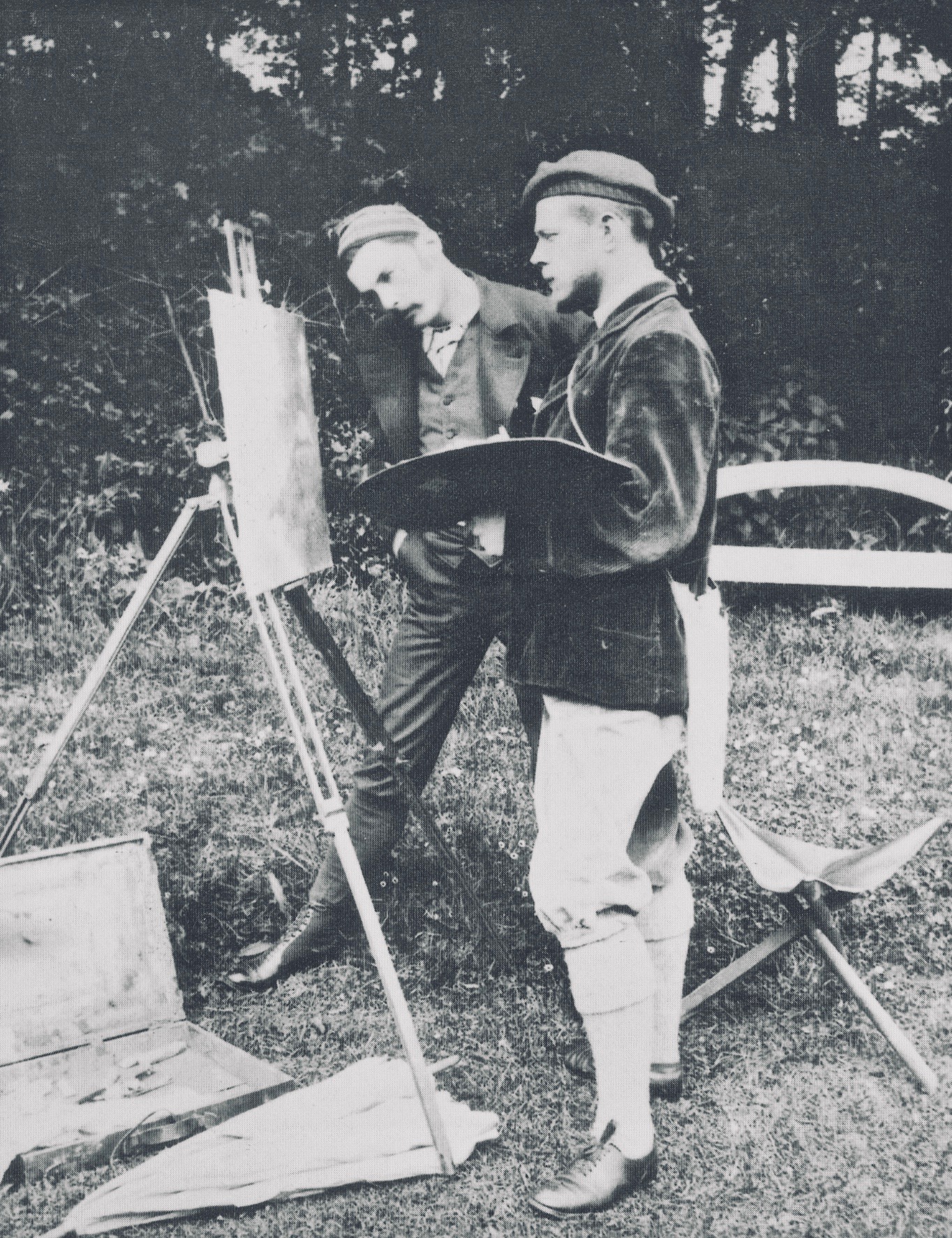
Egerton Coghill, left, with his painting companion Herbert Baxter*

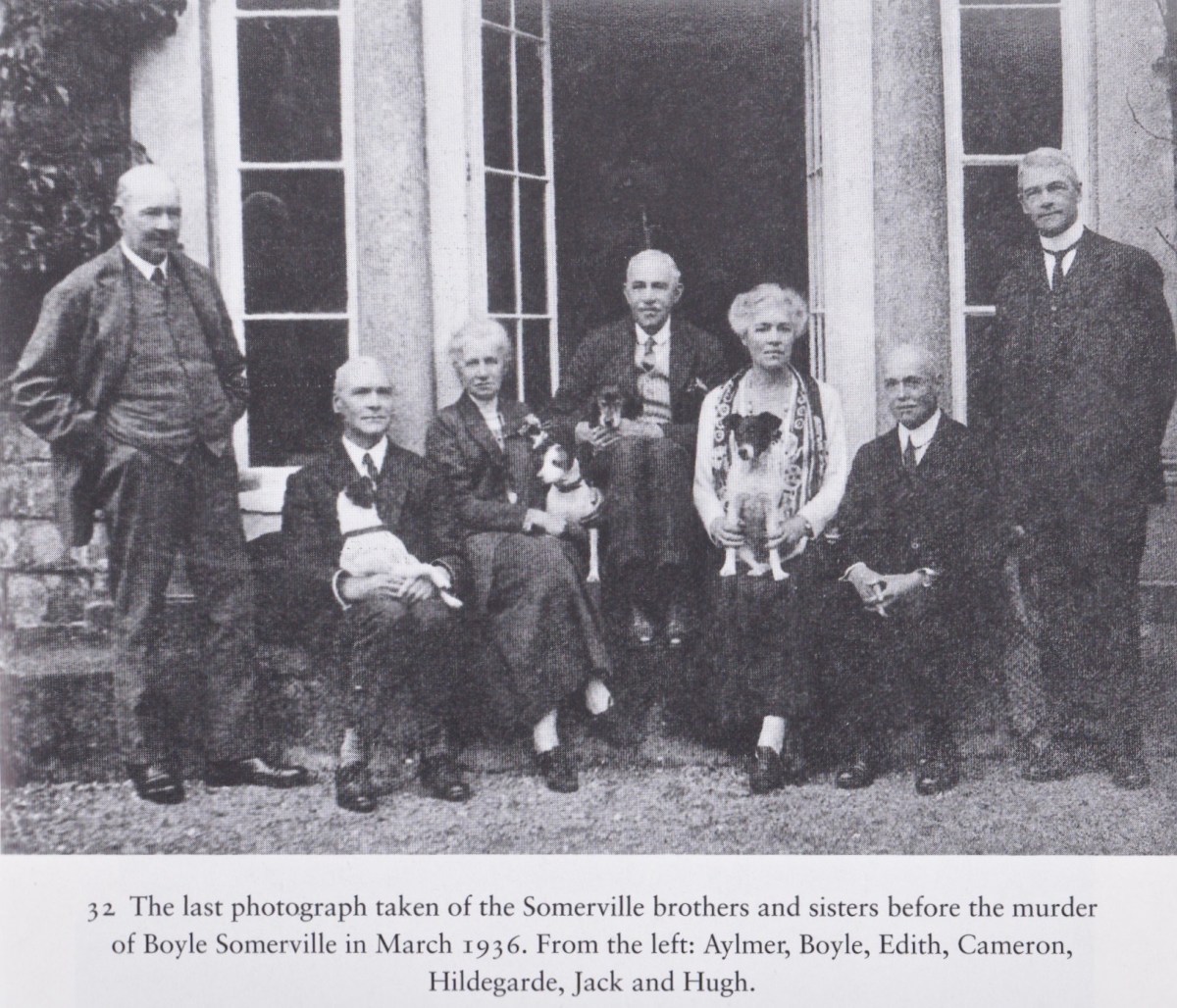
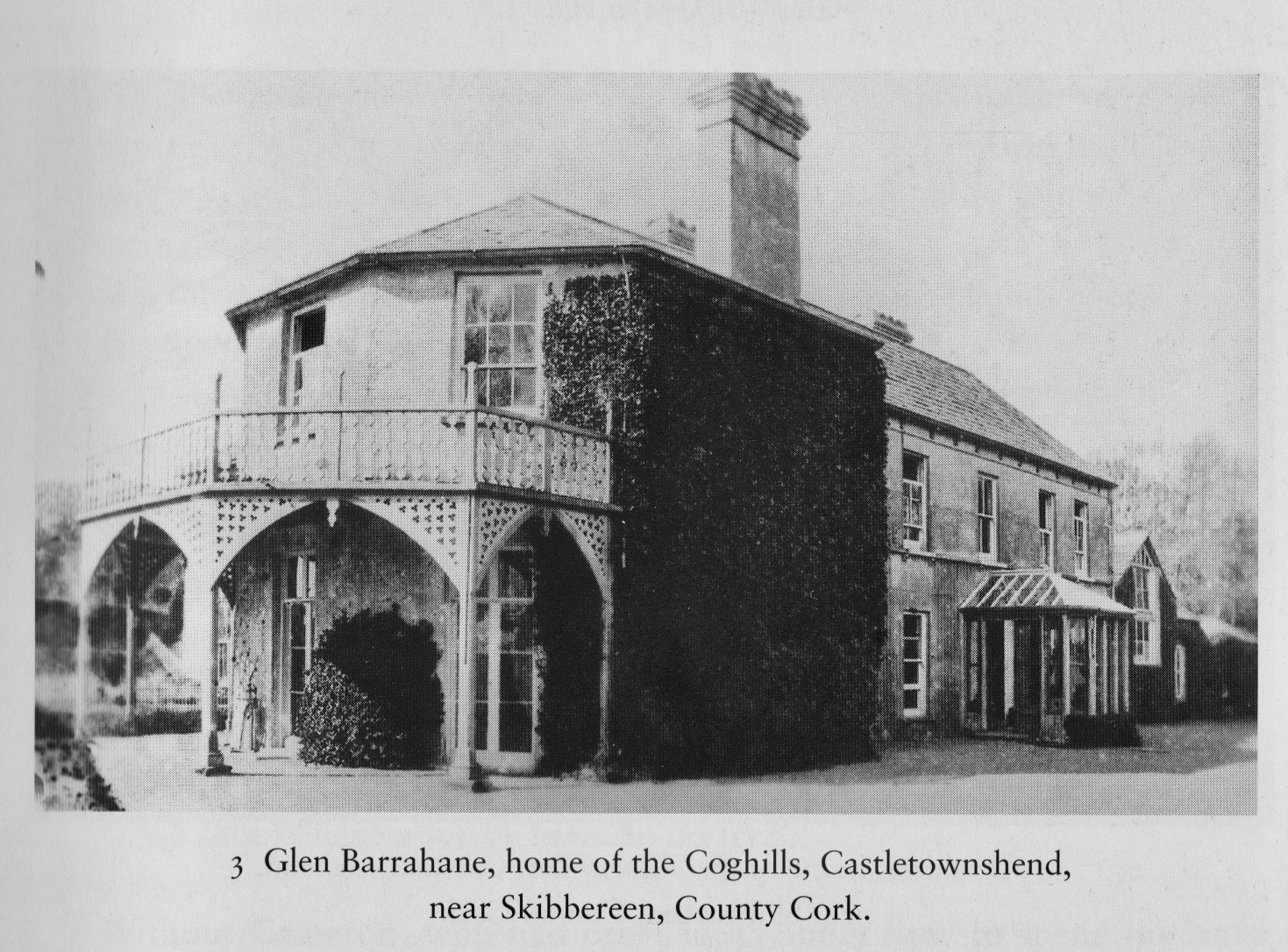
Egerton had grown up in Castletownshend, one of a large family of Coghills who lived in a rambling house called Glen Barrahane, and who seemed to be related in multiple ways to all the other families who lived in and around Castletownshend. His father (Sir John Jocelyn, one of Ireland’s earliest photographers) was the brother of Adelaide, who had married Thomas Henry Somerville, mother of the Somerville family that included (among others) Edith (see Stories and Stained Glass), Boyle (see Boyle Somerville: Ireland’s First Archaeoastronomer and Boyle’s Bealtaine), and Hildegard. Hildegard eventually married Egerton, her first cousin. To Edith and Boyle, therefore, Egerton was both first cousin and brother-in-law.

To Edith he was also a childhood playmate, a best friend and a great supporter and artistic mentor. In periods of distress for her he encouraged her to concentrate on her work – first art and then writing, and he loaned her money when the going got tough. Everyone loved him, it seems. He gave up a career in engineering to devote himself to painting and his limited private means allowed him to study abroad. When he and Hildegard fell in love their families were delighted, but they had to wait seven years to be able to afford to marry.

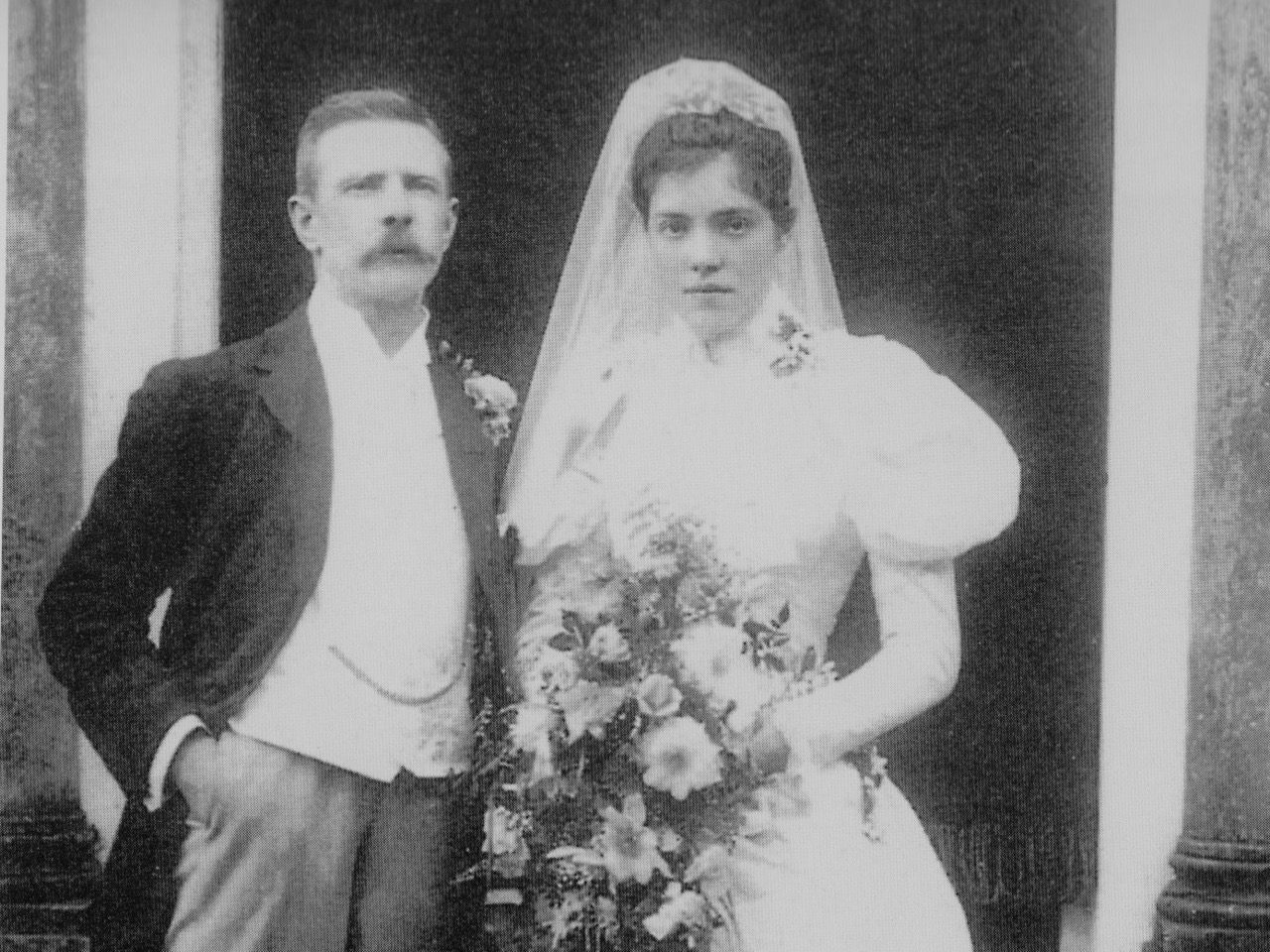
Egerton and Hildegard on their wedding day

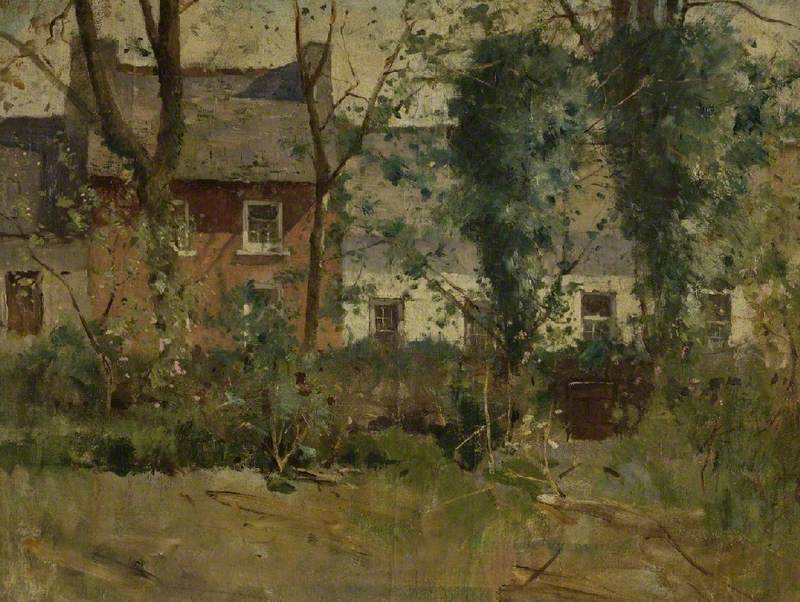
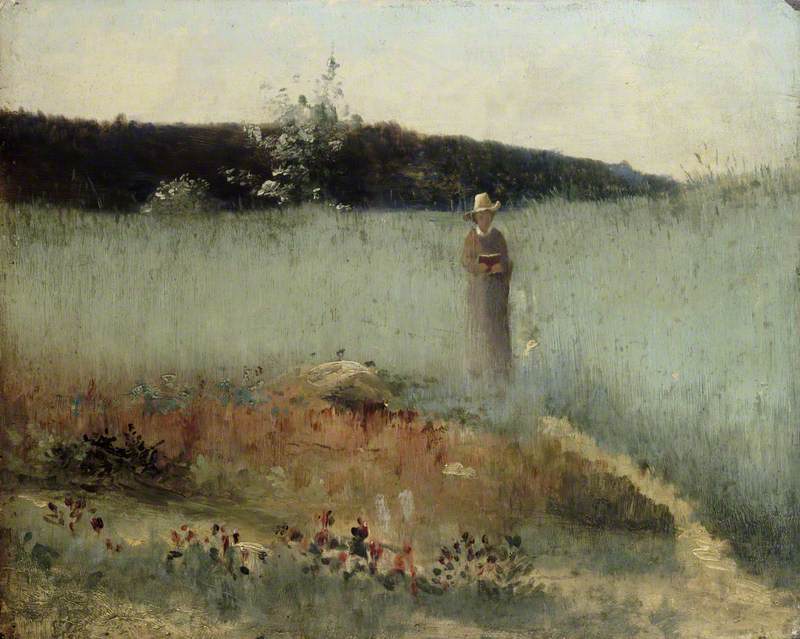
As a painter, Egerton was strongly influenced by the Impressionists. He painted en plein air, drawn to landscape and to muted colours. He loved to capture the scenery around Castletownshend, or the village itself, as in this charming depiction of the main street.

The Mall from Malmaison (Courtesy of the Fitzwilliam Museum)

He was accomplished and well-known in his day, exhibiting widely and selling well. A scholarship at Oxford, for landscape painting, is named in his honour. Now, he seems to have faded from memory, and images of his paintings are hard to find online.

Field of Rye, Barbizon (Courtesy of the Ashmolean Museum)

Egerton’s older brother, Neville, was killed at the Battle of Isandlwana during the Zulu Wars – Robert has developed a talk on West Cork Links to the Zulu Wars and will no doubt write a post about Neville eventually. One of the windows in St Barrahane’s (not a Harry Clarke) is dedicated to his memory. When Neville died, Egerton inherited the title and moved back permanently to Castletownshend with Hildegard and his children. Egerton himself died unexpectedly in England in 1921 during the upheavals caused by the War of Independence at home in Ireland, so it was some time before his body could be brought back to St Barrahane’s for burial. According to Edith, The whole country came to the funeral, and all the men competed for the privilege of putting a shoulder to the coffin, for even a few steps.

When Edith and Hildegard were able to consider a permanent memorial for their beloved Egerton it was naturally to Harry Clarke that they turned. Edith had been entranced immediately by Harry’s work when she travelled up to Cork, on the advice of her brother Cameron, in 1916 to view the windows in the Honan Chapel. She wrote to Cameron afterwards to thank him. She was nothing short of stunned by Harry’s windows and “the quality of burning and furious brilliance that I have never seen anywhere else. . . his windows have a kind of hellish splendour”.

Edith in her Master of the Foxhounds habit, about the age she was when Egerton died

Since then, Edith had worked with Harry to install the Nativity window in 1918 (it was his first public commission) as a memorial to her grandparents, and again in 1921 on the Kendall Coghill window (Egerton’s bachelor-soldier uncle and a universal family favourite) about which I wrote in my post The Gift of Harry Clarke. She now asked him to take on this new commission, and Harry, who had known and liked Egerton, promised to pay special attention to this project.

St Luke, Patron Saint of Painters, is depicted with a palette and brushes, with the Madonna’s face appearing on the palette

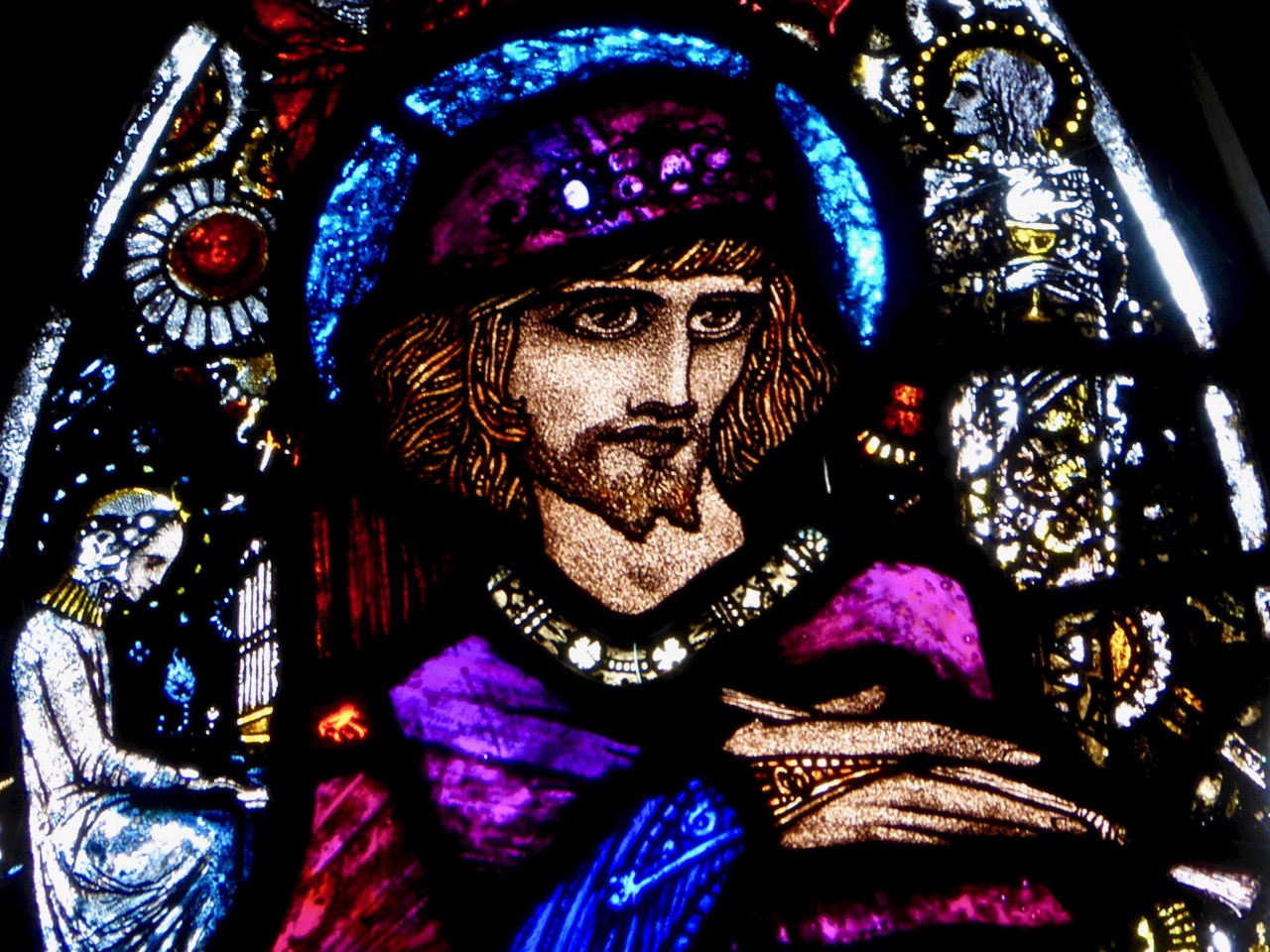
The design he came up with is exquisite, and every detail is important. St Luke, perhaps better known to most of us as one of the four gospel writers, is also the Patron Saint of Painters. This is based on the tradition that he painted the first image of Mary, and that image became an early Christian icon. In Harry’s design, Luke holds a painter’s palette and brushes, and the image of Mary appears like a ghostly presence on the palette.

Luke, with St Cecelia to the left and St John, holding a chalice, to the right

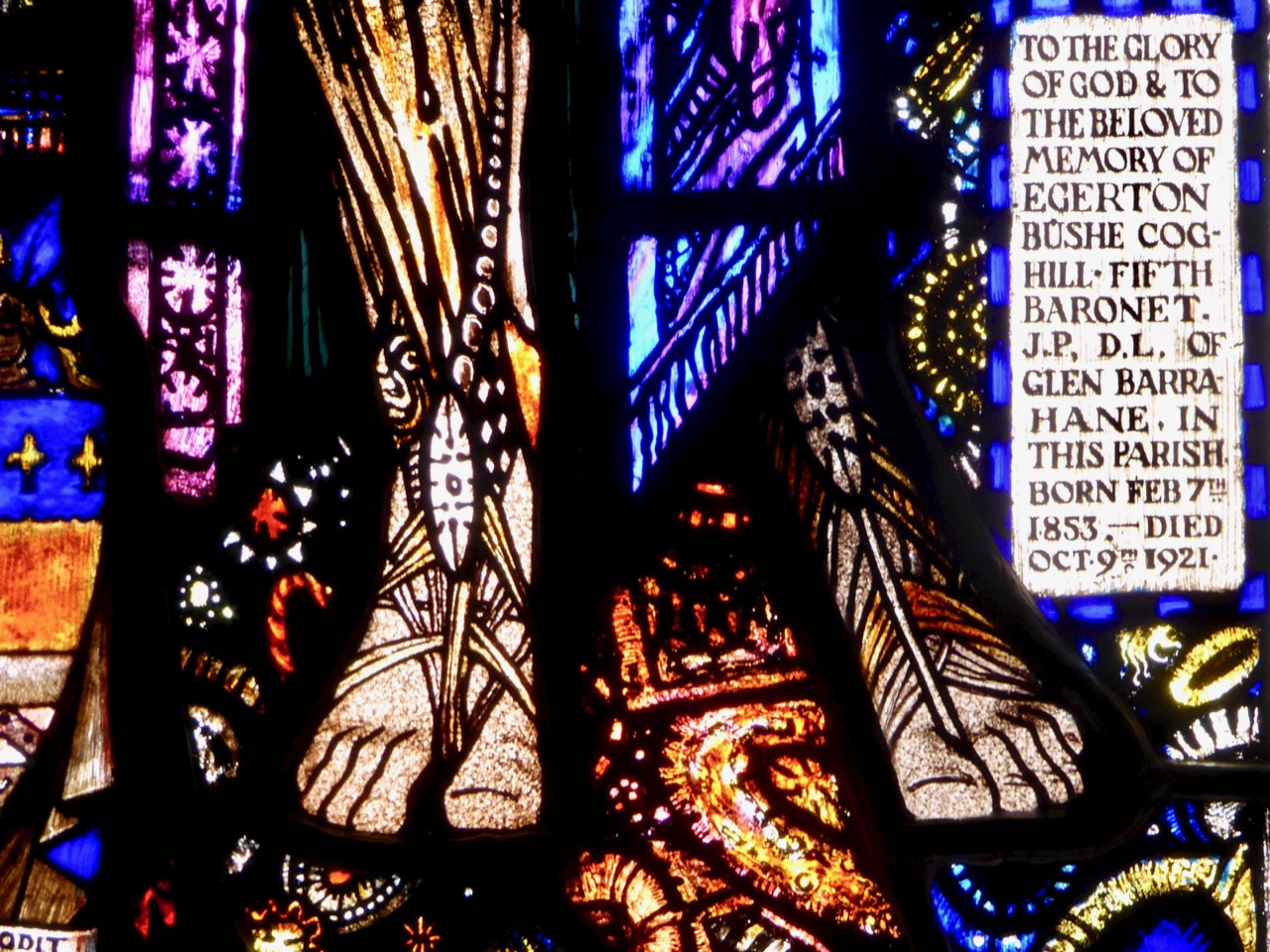
Luke himself is a typical Harry creation, with his huge eyes, forked beard, and expression full of compassion. His right hand, with long tapered fingers and a sleeve point (Harry loved those), holds a brush. His hat and garments are elaborately rendered in blue, scarlet and purple. His sandals, thong style, are complex twists of leather straps.

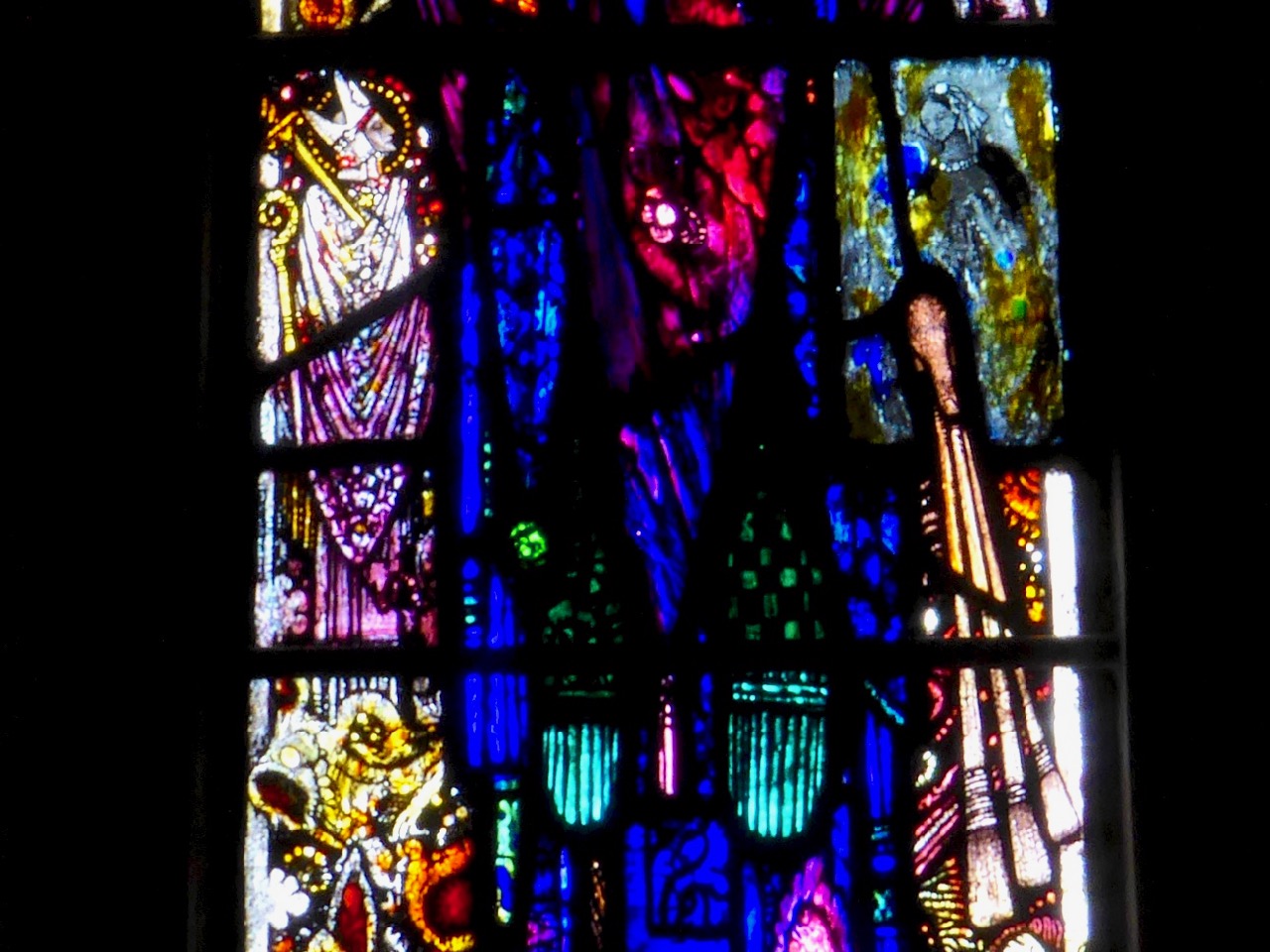
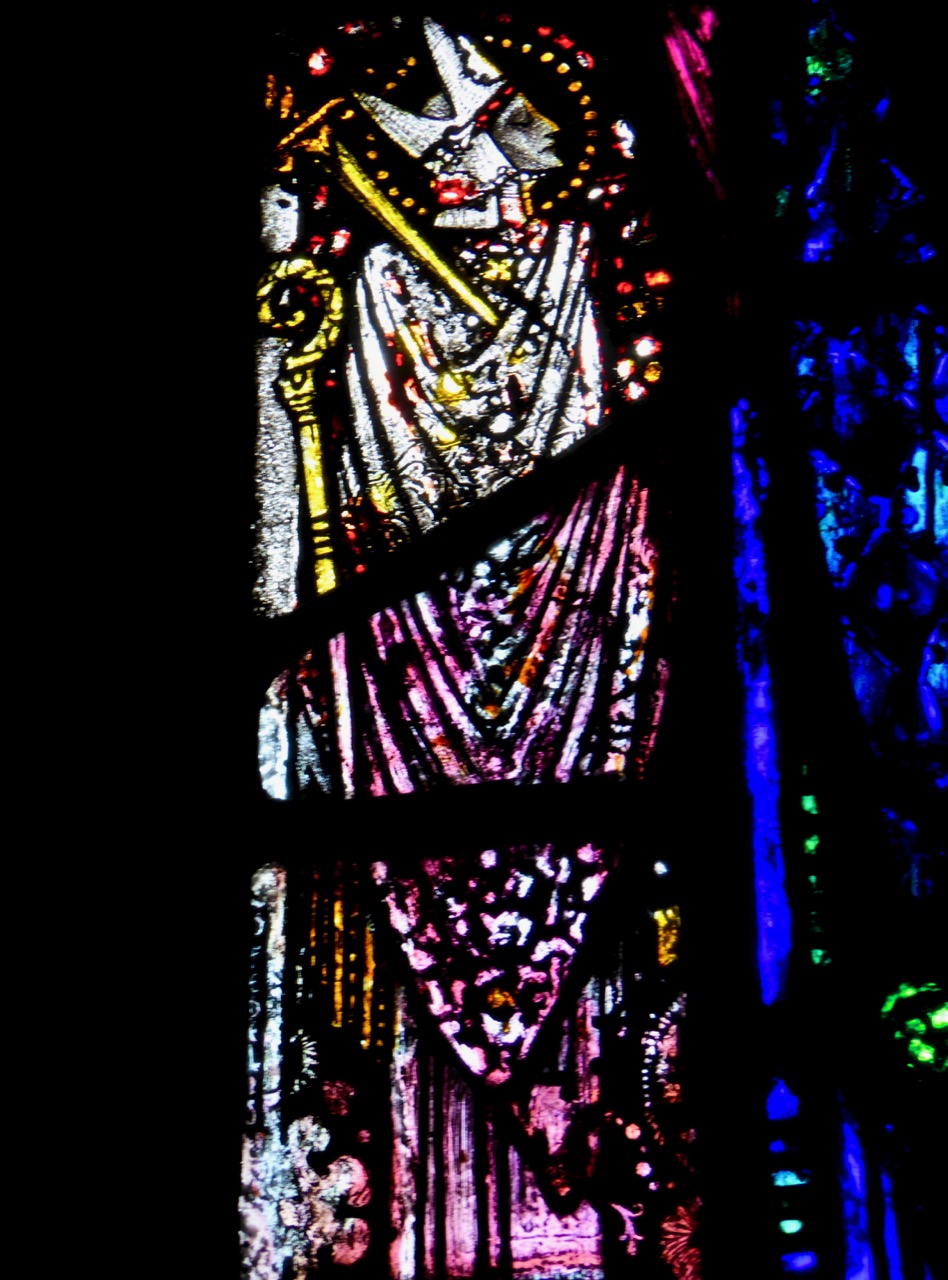
Besides the Luke and the Madonna images, there are four other sacred figures in the window. One of the unique joys of this window is that you can get close enough to it to see these tiny figures clearly, since it is at eye level (it helps to be tall). The first, on the left side of the window is St Fidelio, dressed as a bishop (below). Although one author asserts that Egerton was born on St Fidelio’s name day, I have been unable to confirm that or to find any information at all about St Fidelio, but obviously this saint had meaning to Egerton, or to the Somerville sisters, or perhaps it was a reference to Egerton’s faithfulness. However, it could, like St Cecilia, be another musical reference, to Beethoven’s opera, Fidelio. In fact, most of the figures appear to relate to secular aspects of Egerton’s life, while thinly disguised as the kind of saintly images suitable for a church window. I can almost hear Harry, Edith and Hildegard chuckling over the choices, knowing that Egerton, who had his full share of boisterous Coghill humour, would thoroughly approve of the coded messages.

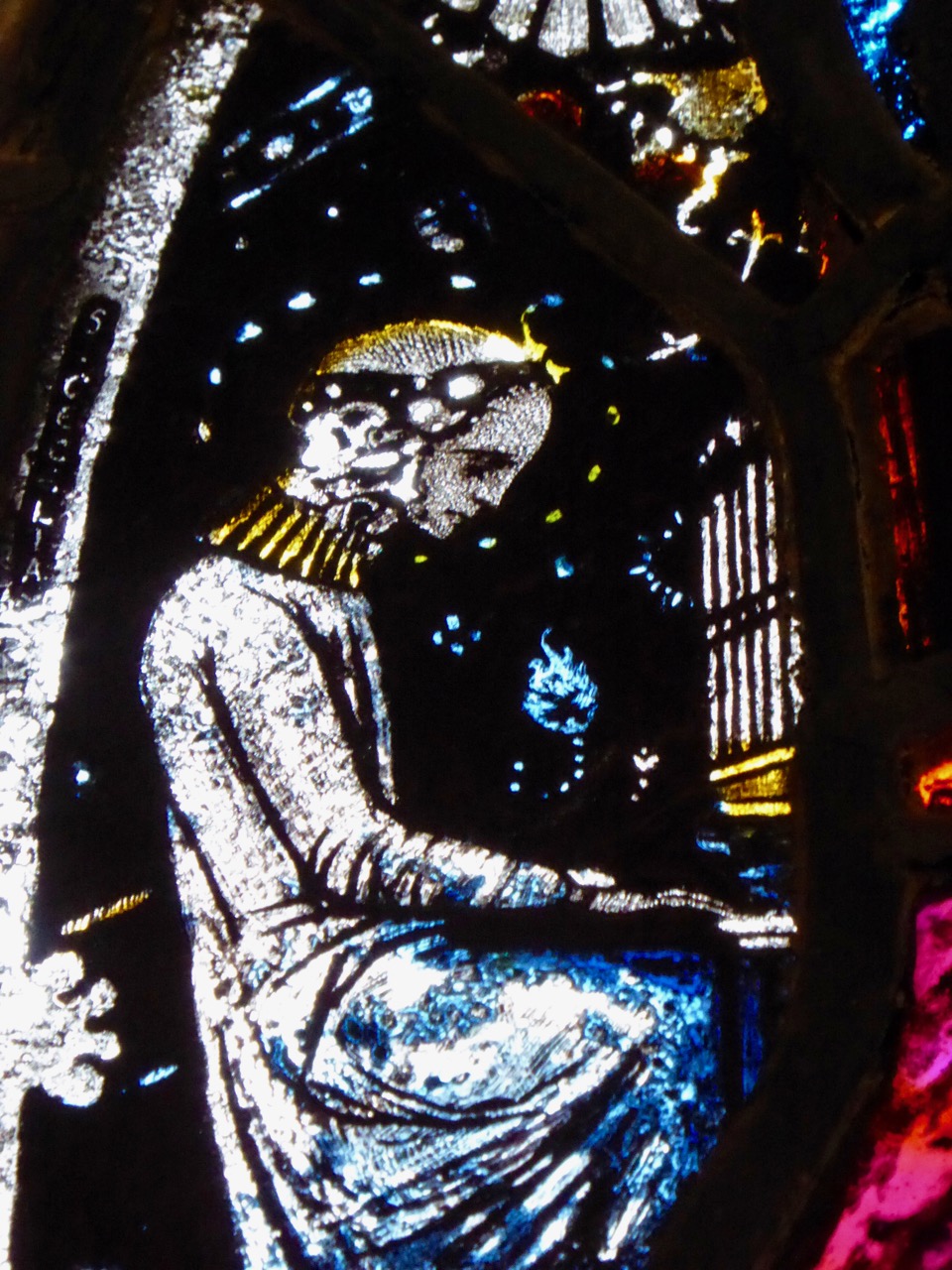
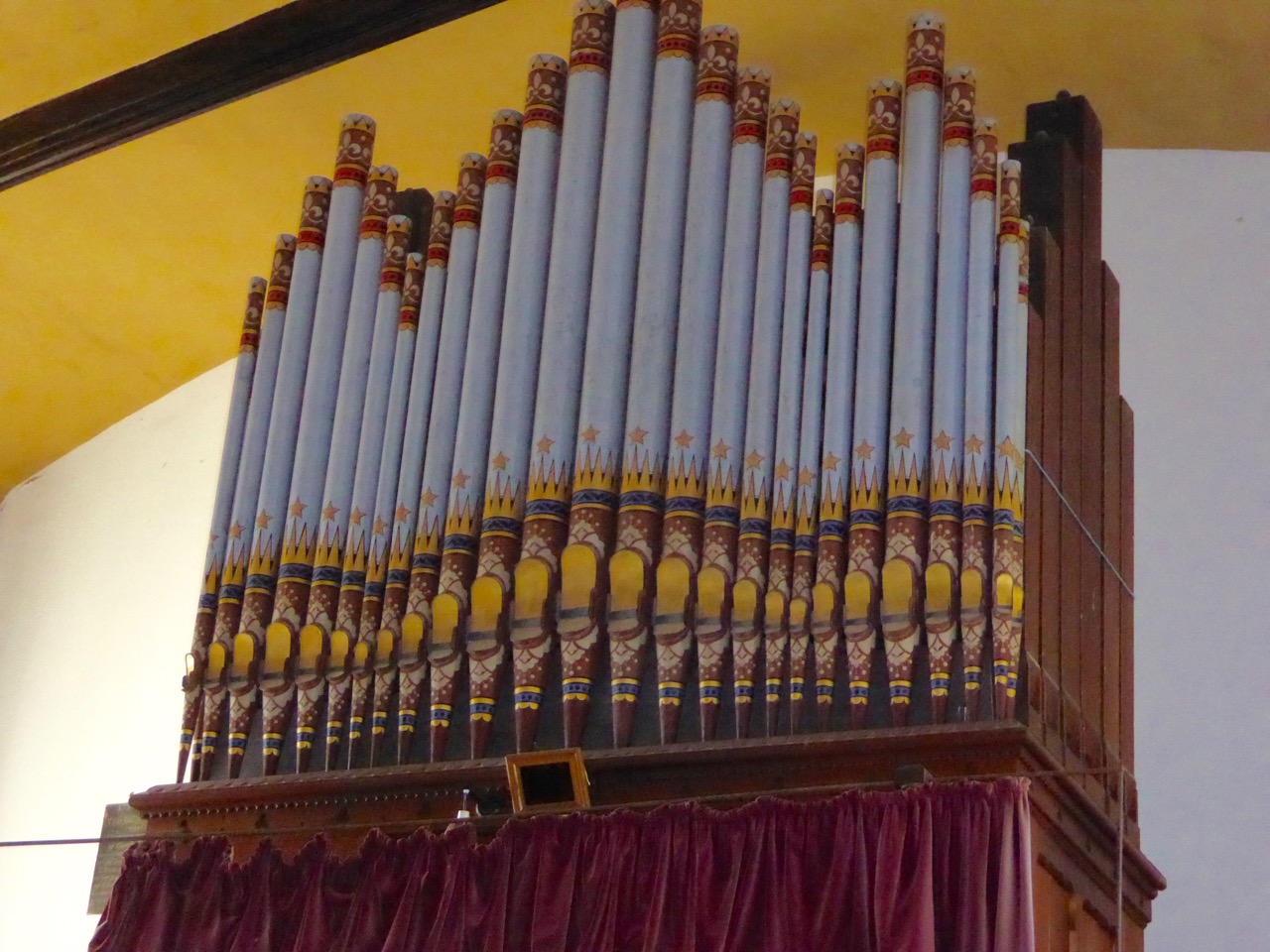
To the left of Luke’s shoulder is St Cecilia. Egerton loved music, had a fine voice, and performed happily in the musical theatre that was a staple of family life within the Castletownshend circle. Gilbert and Sullivan was a favourite. But this is also a nod to Edith – Cecilia is shown playing an organ while the organ that Edith played for over 50 years occupies the loft at the other end of the church (below).

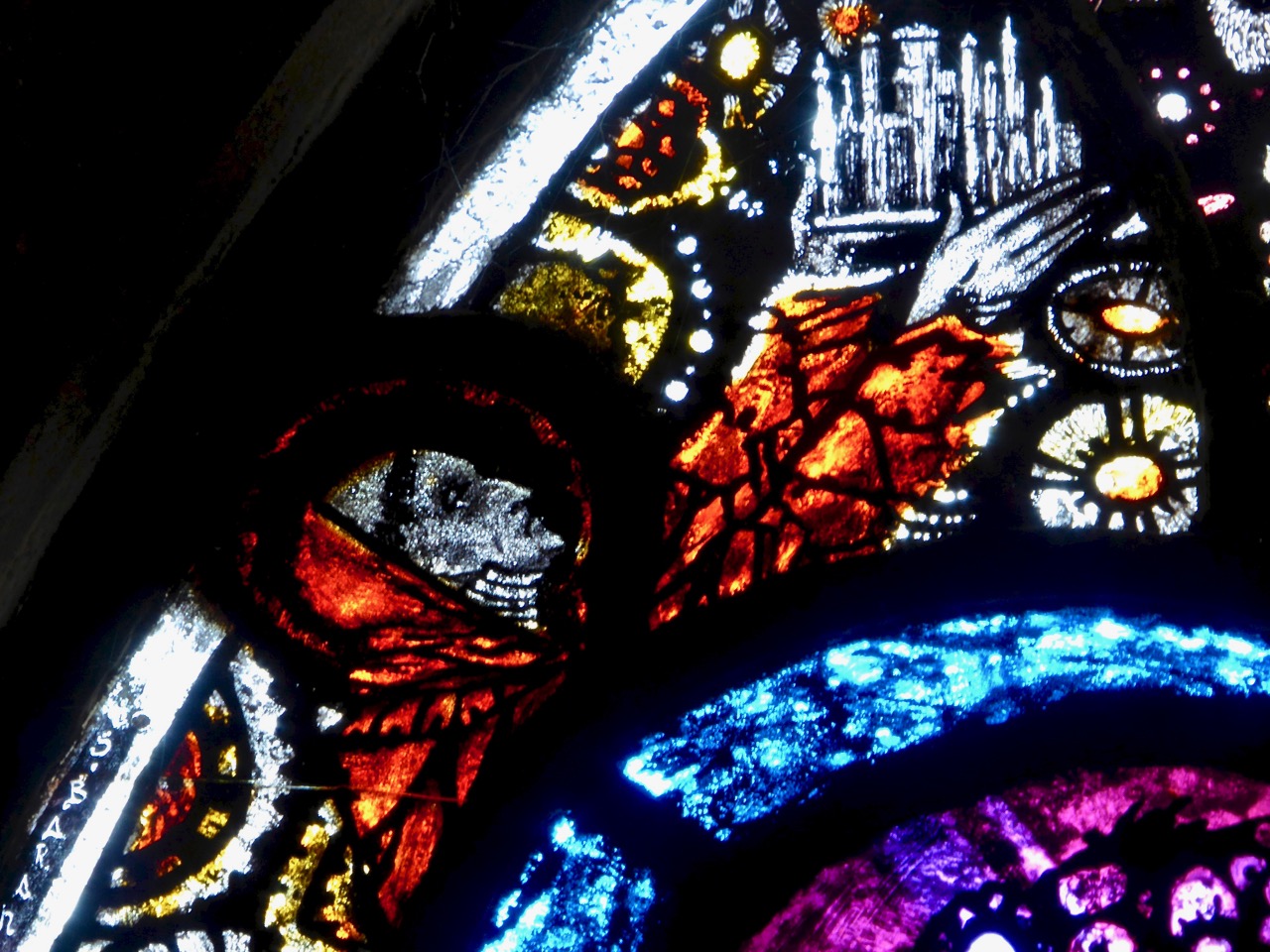
Finally, at the top of the window, across from each other, are St John and St Barrahane. Barrahane, after whom the church is named (and who is pictured also in Harry’s nativity window in the same church) is the local saint, and the Coghill house was called Glen Barrahane in deference to that tradition. The tonsured monk is holding up a church (below). John was both his father’s and his grandfather’s (Baron Plunkett) name.

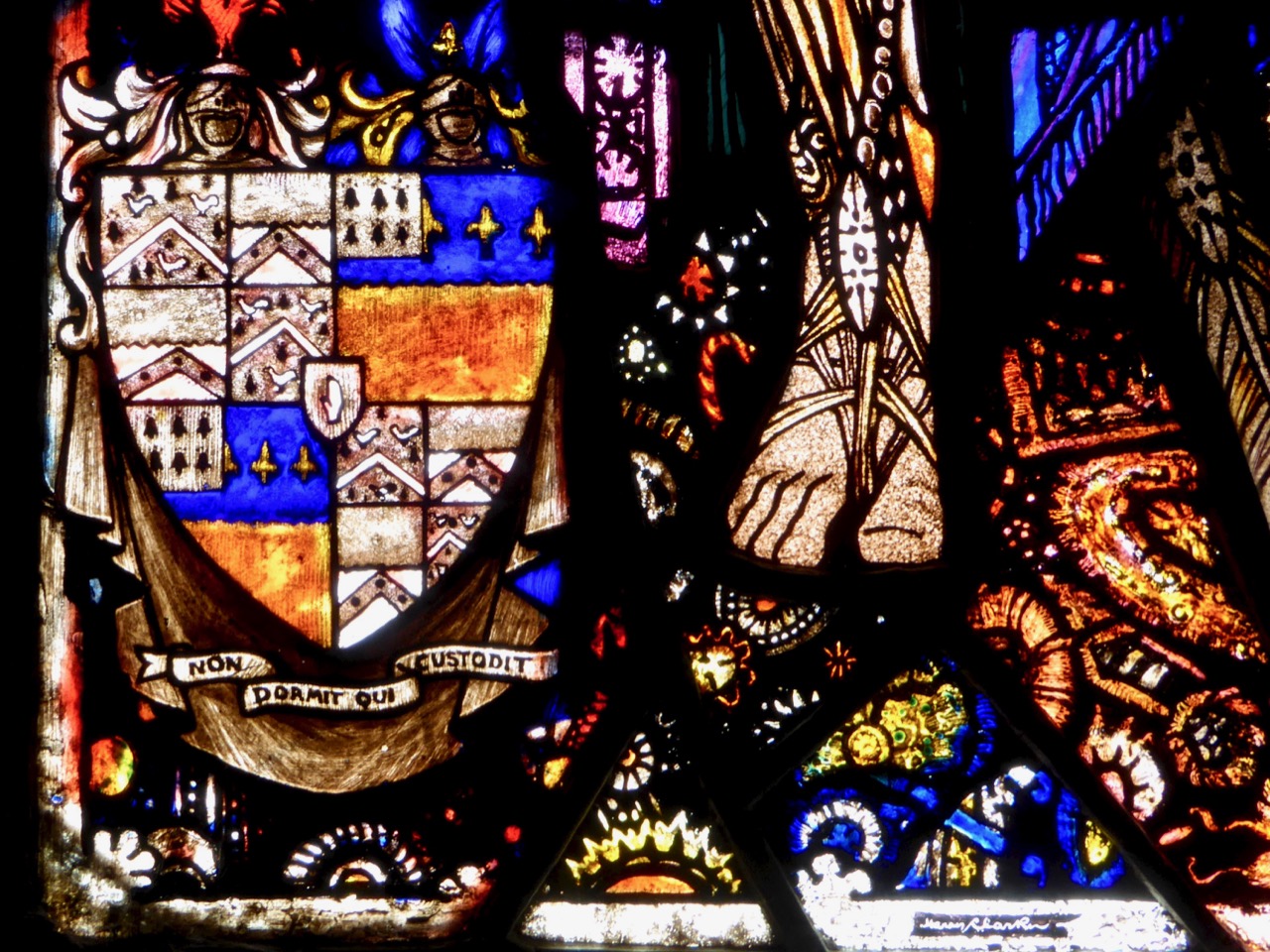
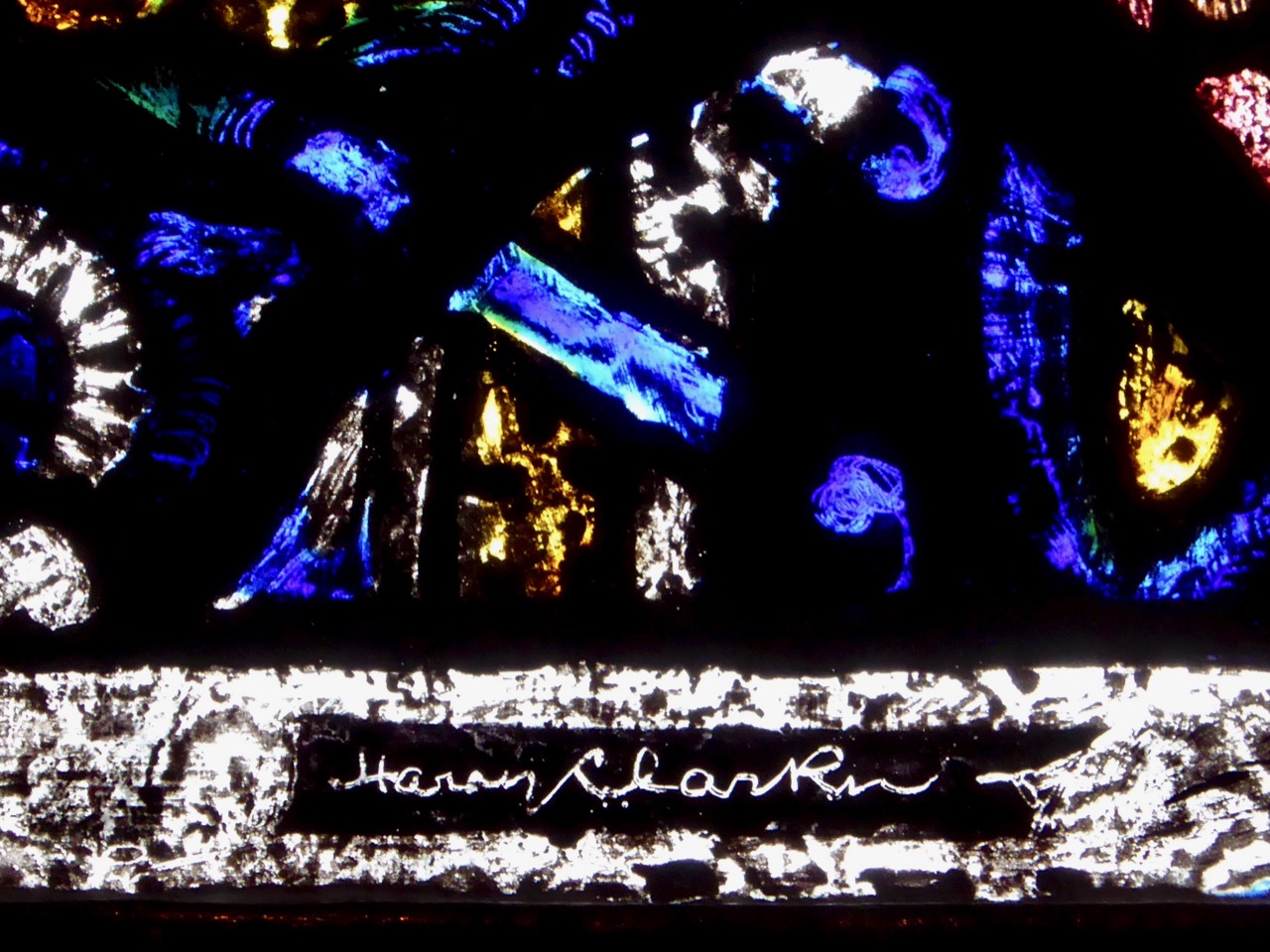
Egerton’s coat of arms, the dedication plaque, and Harry’s signature round out the window.

At this time, the Harry Clarke Studio was experiencing enormous demand for his work. To satisfy this demand he employed a group of highly talented artists and craftsmen, all of whom were trained to faithfully execute his designs, with Harry supervising closely. Thus it was with this window – most of it in fact was made while Harry was out of the country. The fact that he did not personally do most of the etching, staining and painting on this window does not in any way detract from its identification as a true Harry Clarke window – in every meaningful sense this was his creation and his signature indicates that he took full credit for the final product.

If you go to St Barrahane’s, make sure that you open the gate in the altar rails and go right up to the little window in the chancel. People have been known to miss it. It’s a unique opportunity to get nose-to-nose with a Harry Clarke. And when you do, spare a kind thought also for Egerton, a fellow artist, beloved by all who knew him, and honoured in this exquisite work of art.

*The four black and White photographs are from Edith Somerville: A Biography, by Gifford Lewis. I could find no copyright information on them so am assuming they are available for use, with gratitude to the author and publisher, Four Courts Press. The photograph of Edith as MFH is in my own possession.