Yes, after 13 years of owning this special house, I have sold it to a lovely couple who I know will treasure it like we did. I am moving into Schull (all of 8km away) on Thursday, and I am looking forward to being able to walk everywhere, especially to Amar’s cafe.
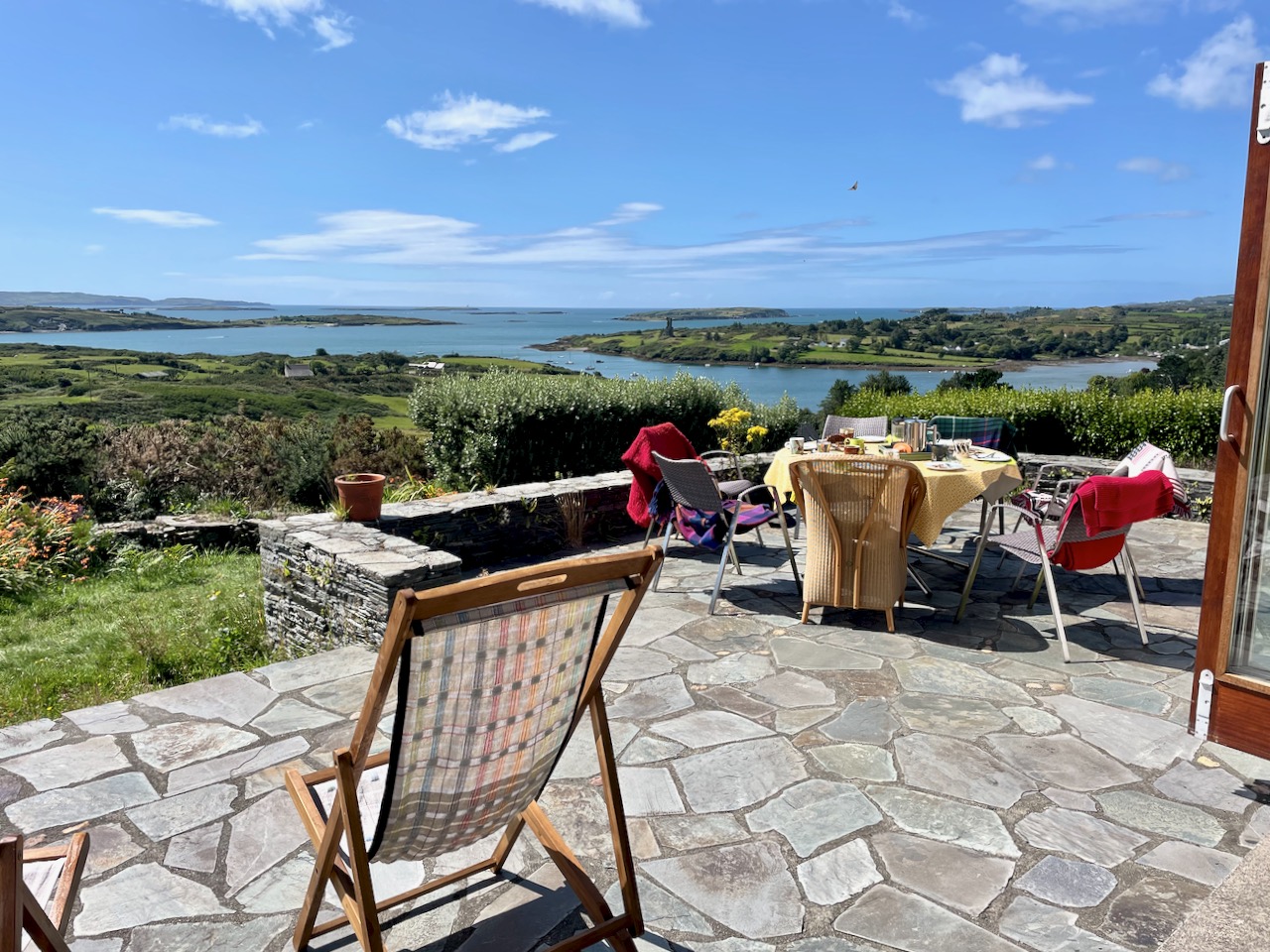
Nead an Iolair – it means Eagle’s Nest and was Robert’s choice of a name for the house – has been the subject of many of our posts and as a final honouring of the house and the acre it sits on, here is a round-up of some of the posts we have written about it all, over the years.
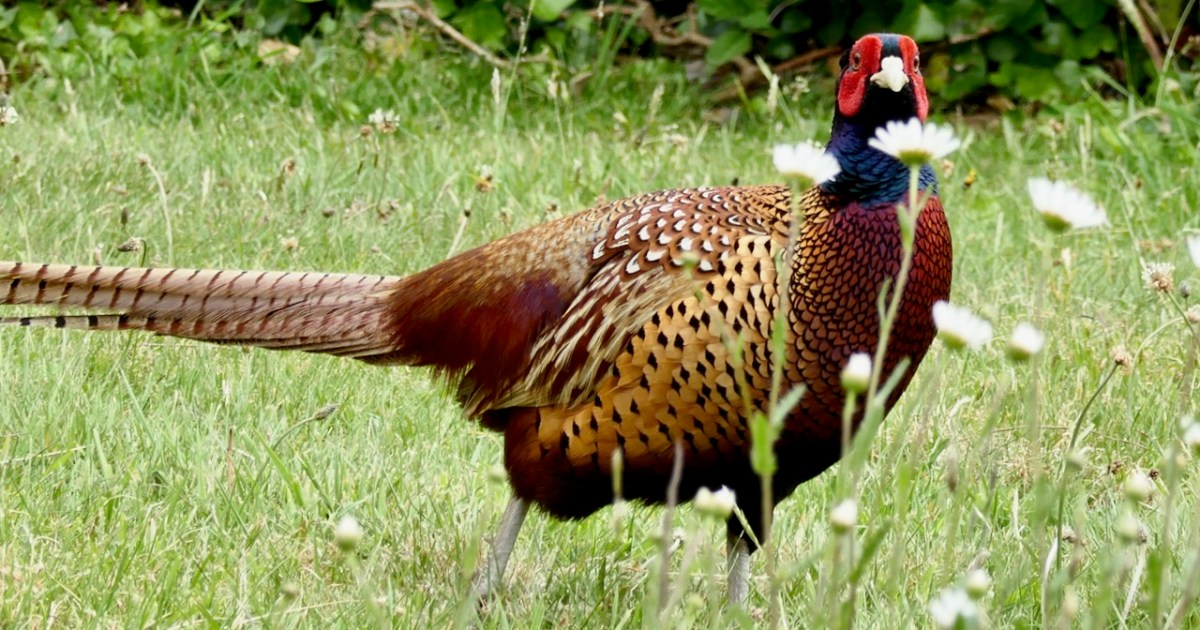
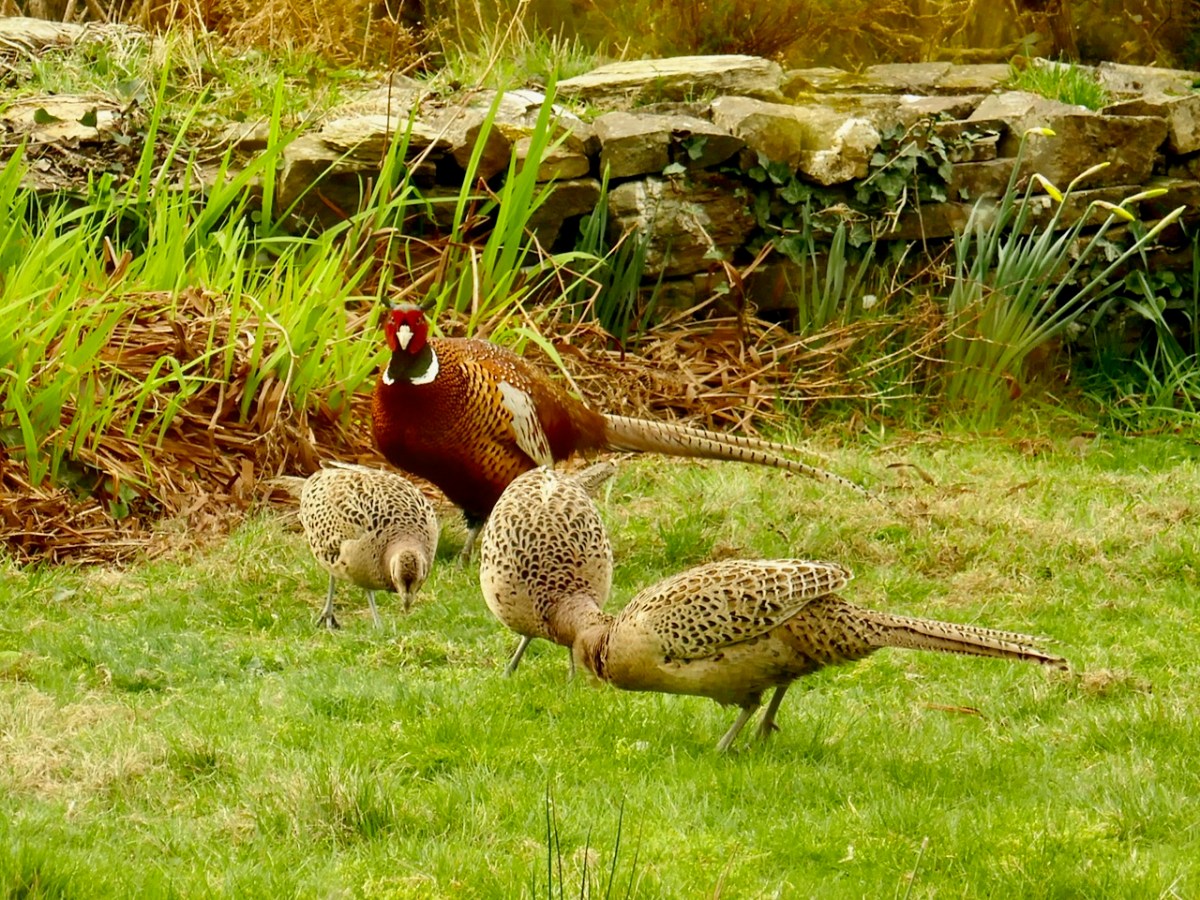
Although we have kept no pets, we are far from deprived of the company of animals. Finbarr the Pheasant, for example – our heads tell us it cannot be the same bird all these years, but our hearts just think that we have looked after him so well that he has adopted us. He has had up to four wives – there are currently two and it has kept him busy, herding and courting them and fending off other males. All played out in front of our living room window.
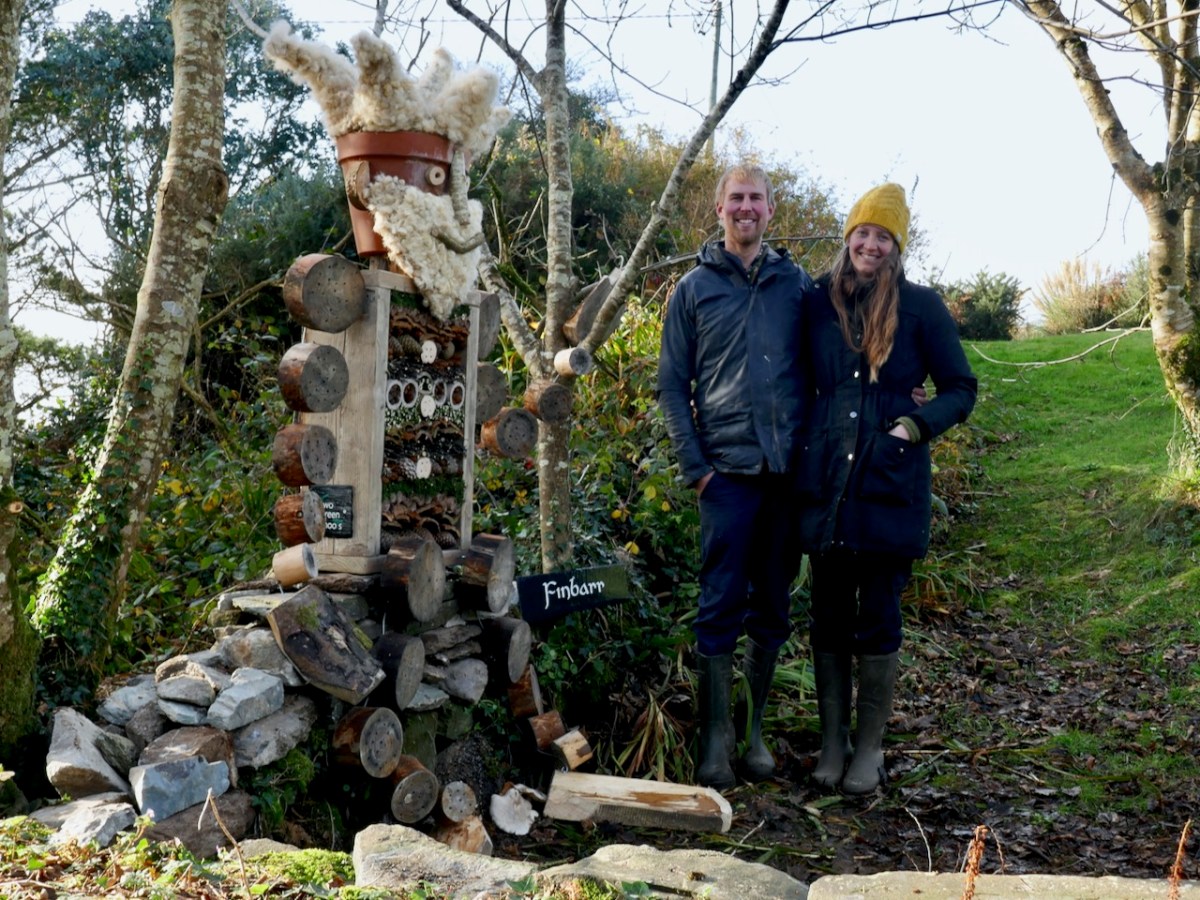
And let’s not forget our other Finbarr, Our Lockdown Mascot, the bug hotel designed and installed for us by Kloë and Adam, of Two Green Shoots. He’s still there – say hello if you pass.
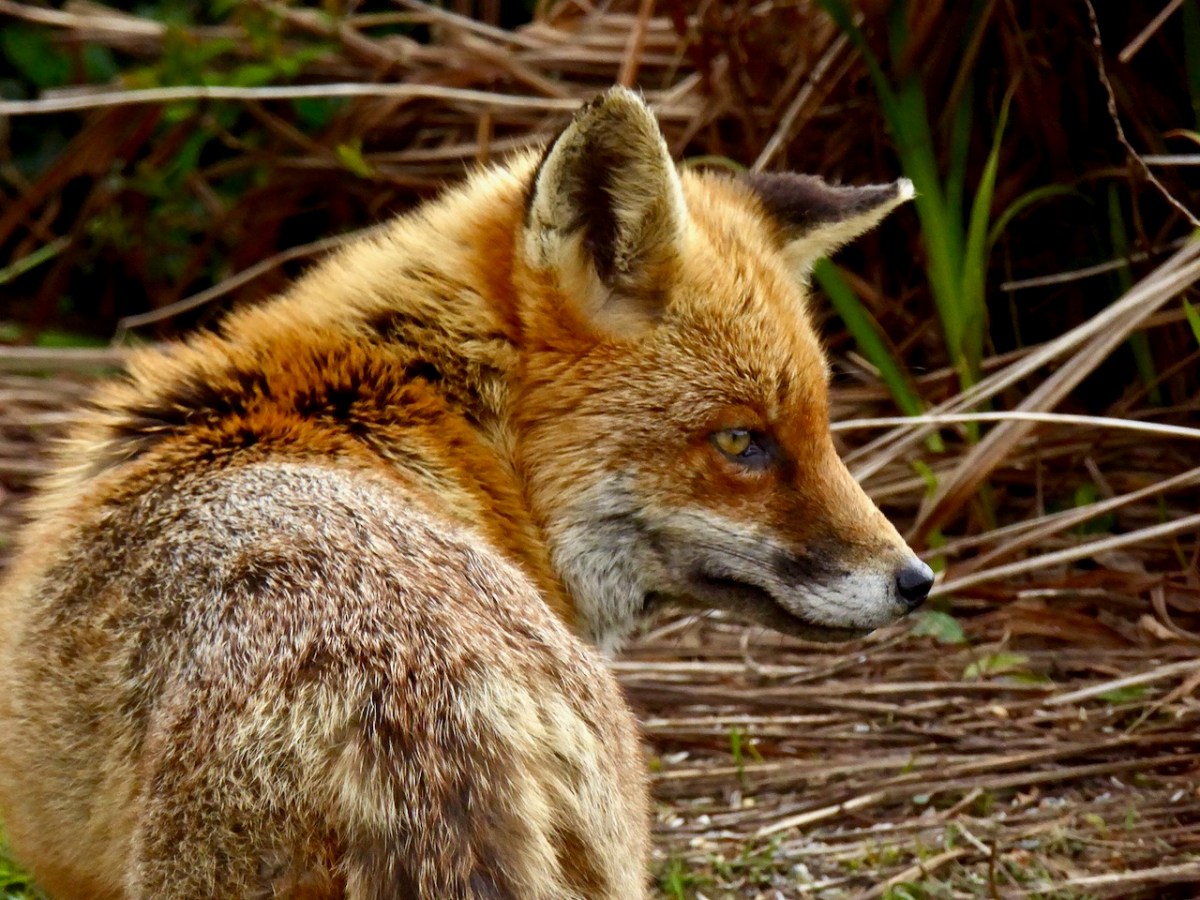
And we still miss Ferdia – the friendly fox who would eat out of our hands (anything except broccoli) and who loved to sit on the terrace while Robert played his melodeon. Occasionally another fox trots by but none have taken Ferdia’s place as a constant visitor.
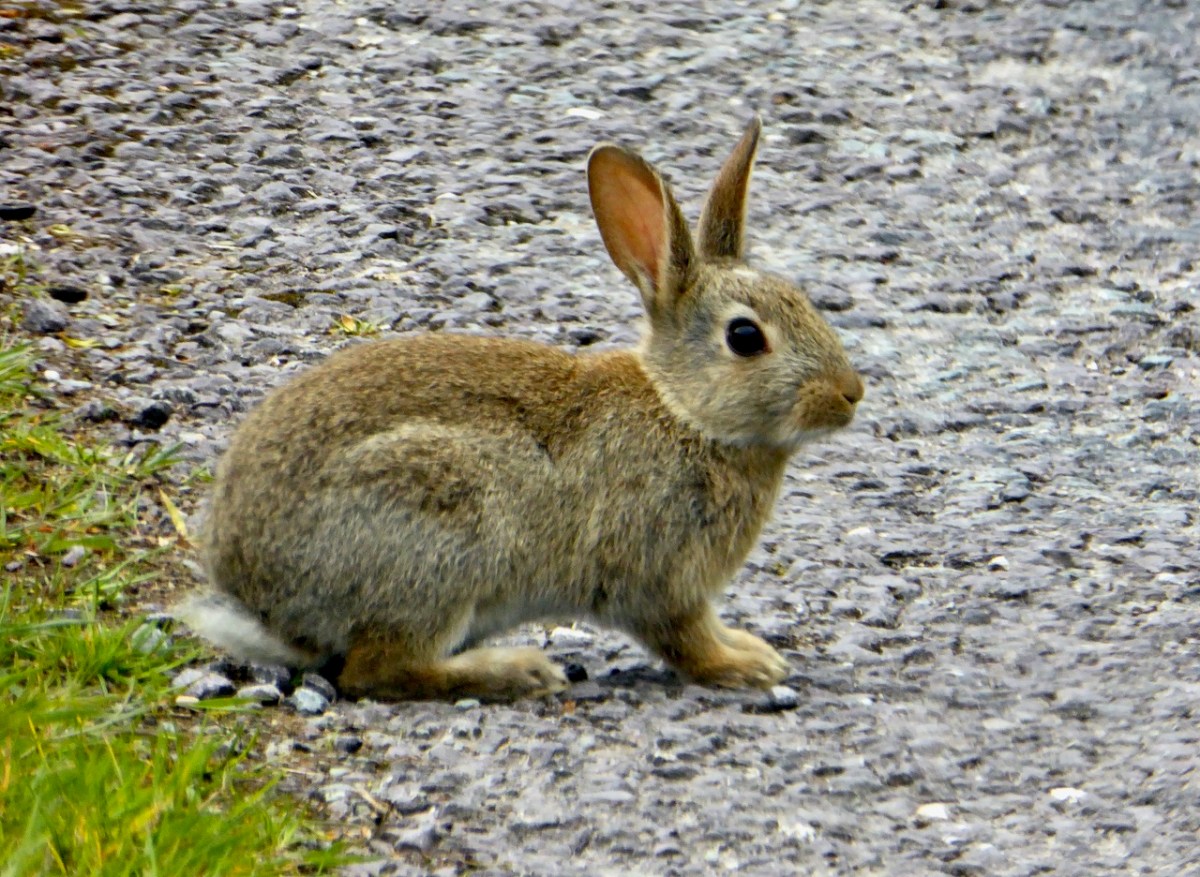
If I come home in the evening, rabbits are leaping into the hedges as I drive in. When I throw open the curtains in the morning, they are sitting outside my window.
Robert was a hare fanatic, and we did have a brief dalliance with a young hare we called Berehert (below), but they have become quite rare now in our neighbourhood.
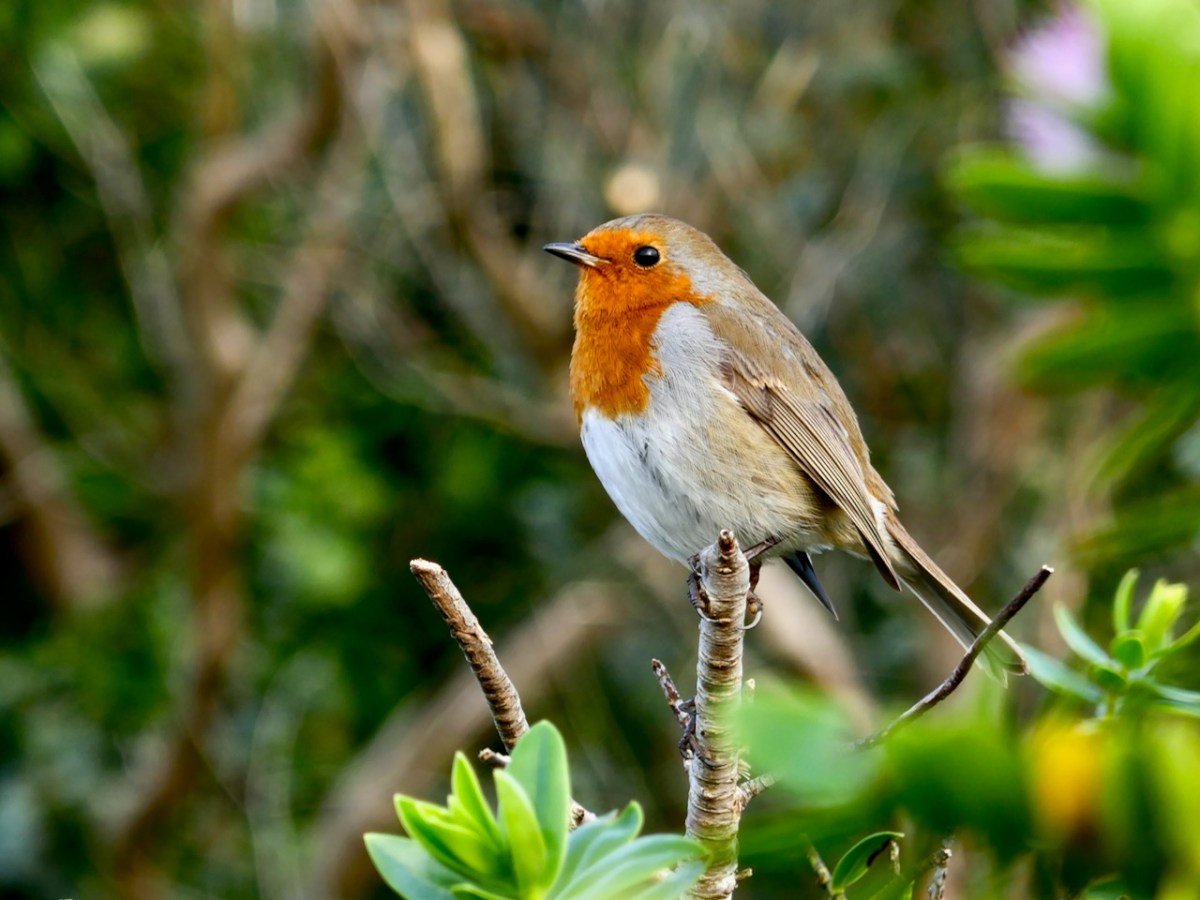
Small birds come to the feeder, and there is a robin that I am this close to coaxing onto my hand.
And although we don’t see them, the moths are everywhere – from hardly visible against a stone wall to spectacularly coloured.
It has been a joy to discover the beauty and variety of these silent creatures of the night.
Every now and then a bird or animal will appear for a brief time to grace us with its presence – like Spiro the Sparrowhawk, who perched outside our bedroom window and cased the joint before swooping off low over the back wall.
Or like this bundle of ferocity – The Wild One – a stoat who terrorised the pheasants, despite being a lot smaller than they are.
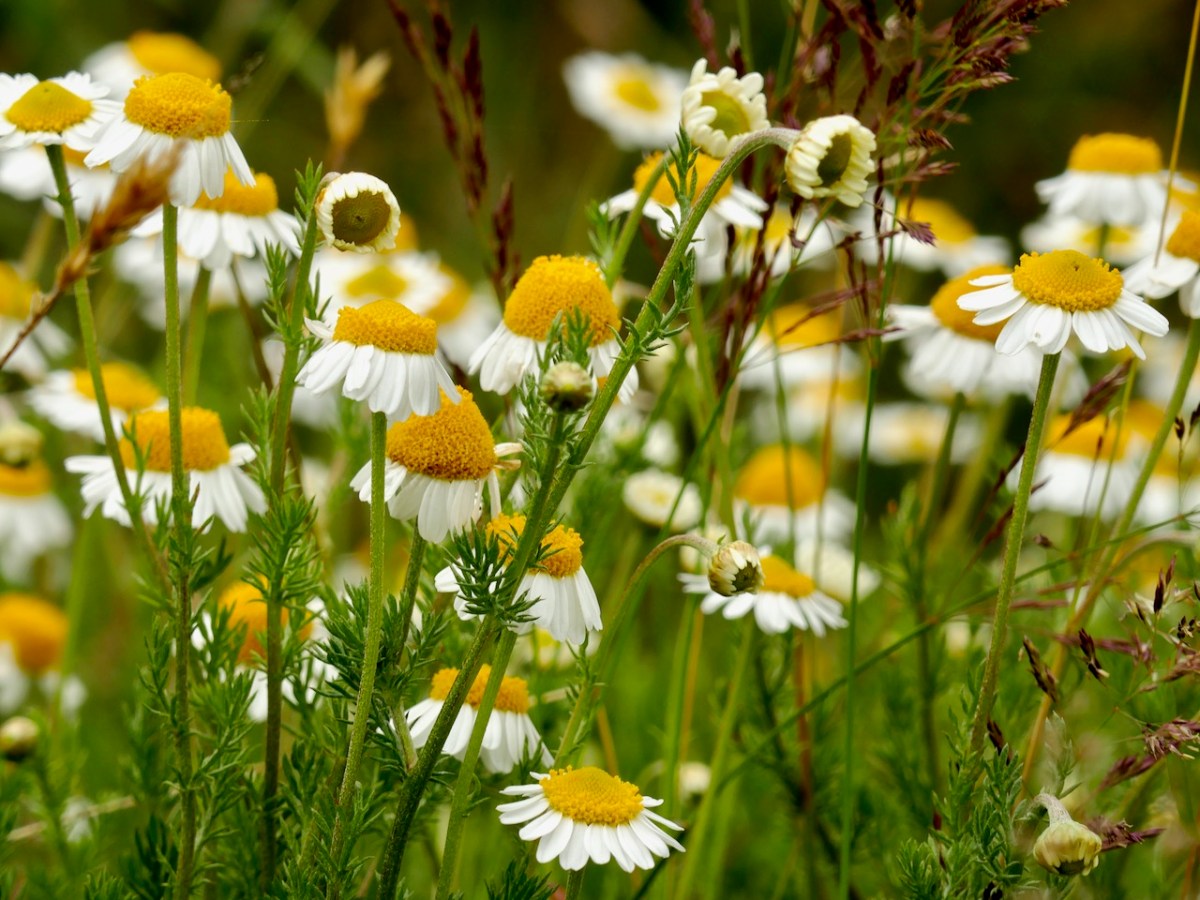
One acre – that’s what we have here. I documented the wildflowers that have popped up all over the acre, both in my wildflower patch and just on the land on general.
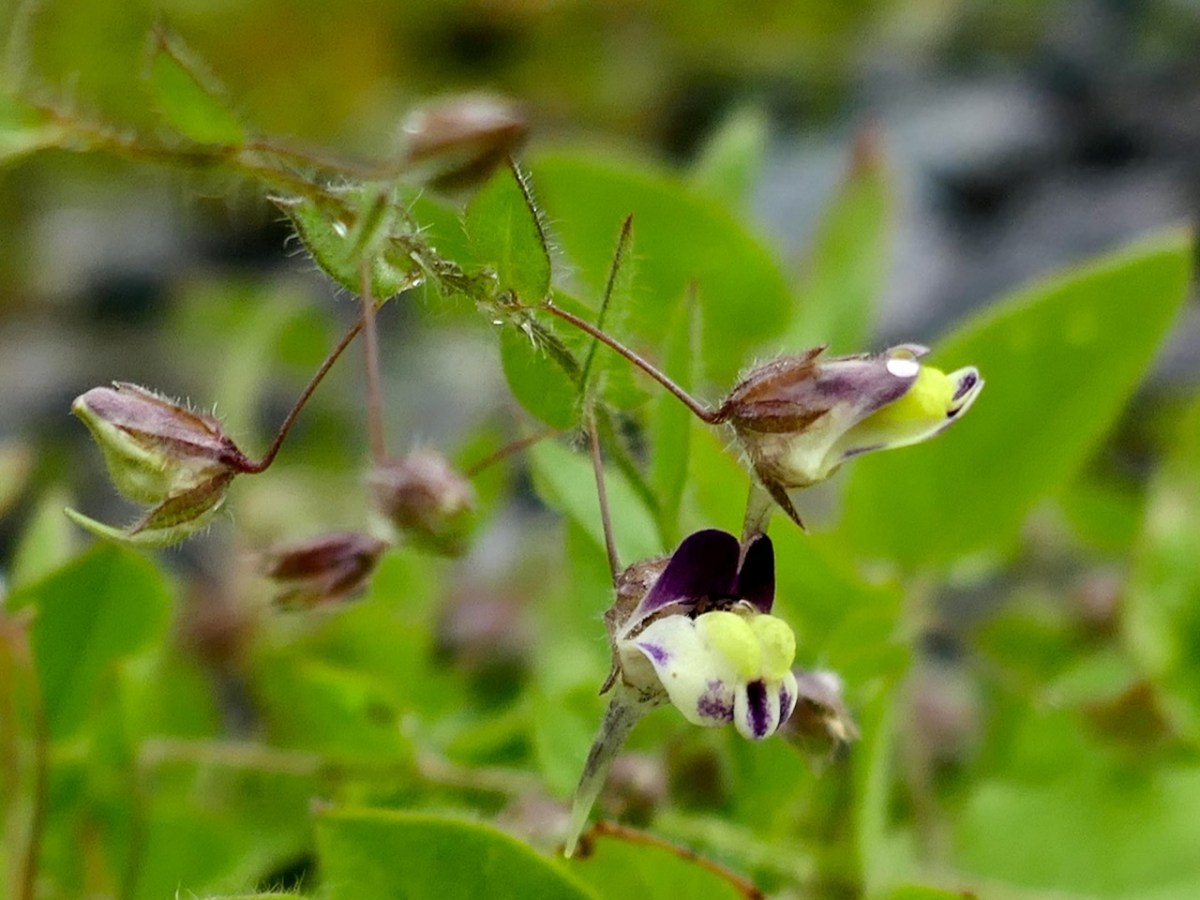
The chamomile is spreading and every now and then, something really unusual shows up – like this tiny sharp-leaved fluellen that has managed a toe-hold in my driveway and came from God knows where (below). My slideshow, Lying in the Grass, will give you an idea of the variety of plants I have found here.
The storms that sweep through in the winter can do some damage. When we moved in, we had the gorse jungle in our front haggard dug out. All that did was expose our pine trees to the winds and each of them toppled in turn.
The lovely wall surrounding our property also gave way over time, leading us to get Diarmuid to come and Build a Stone Wall. Watching him, we discovered that this was a craft and a skill that hasn’t changed in hundreds of years.
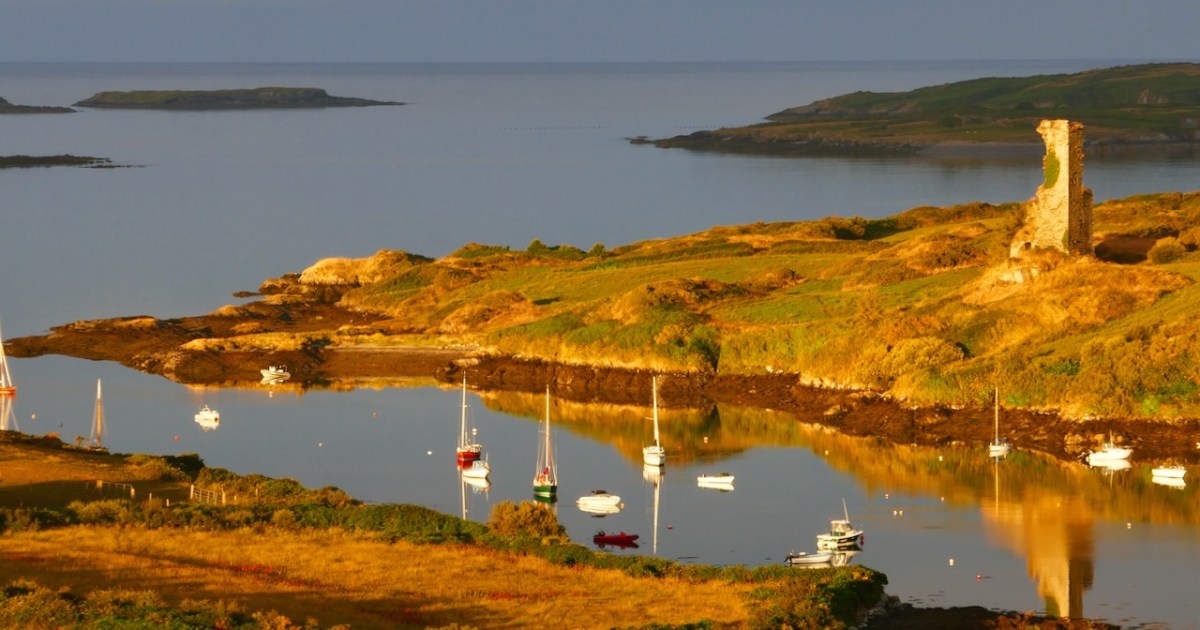
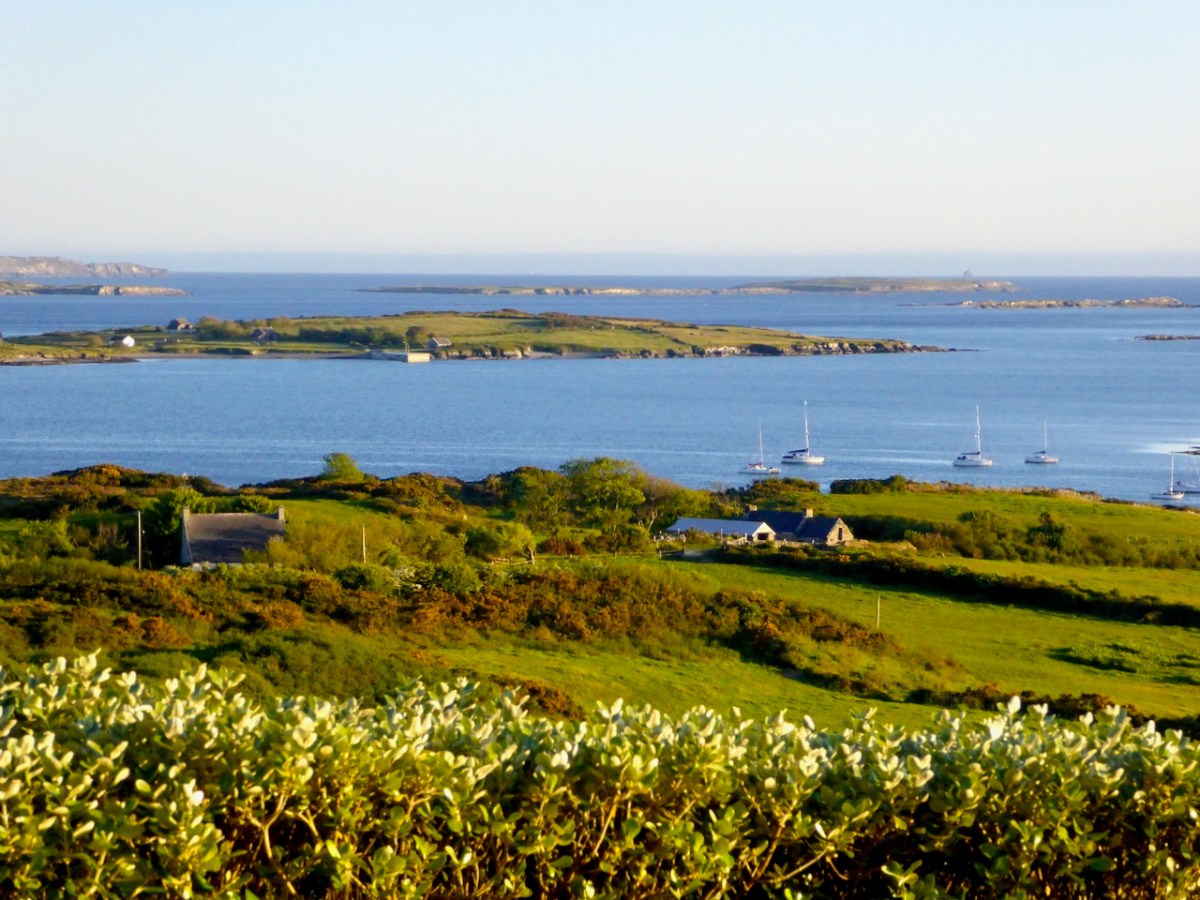
I will miss our amazing view across Roaringwater Bay. We can see several medieval castles, the Baltimore Beacon, the Fastnet Rock, most of the islands. We hear The Roaring on a calm day after a storm. We see the sun going down further and further south each day as the year turns, sometimes sinking into the sea and sometimes dropping behind an island or a hill.
And even though Robert is gone almost two years now, I still find myself saying we, because his presence is so palpable in this place that he loved, and all my experiences here were shared with him. I know his benign spirit is coming with me to Schull: he would have loved the new house and totally approved of my move.
And yes, don’t worry, his Finola Window is coming with me
A joint post by Robert (words) and Finola (images)
This weekend our eyes have been opened! A hitherto hidden layer of the natural world in West Cork has been lifted for us by a friendly neighbour who offered to lend us a moth trap for a couple of nights. If the idea of a ‘moth trap’ seems unkind, let me immediately say that the intention isn’t to harm any aspect of Nature . It’s a ‘moth trap’ because it attracts moths during the night to an environment which is benign to the insects, and they hang around so that we can examine them – and get really excited about their beauty – in the morning. They then disperse back to their natural environments and – as long as you are careful – no injury ensues.
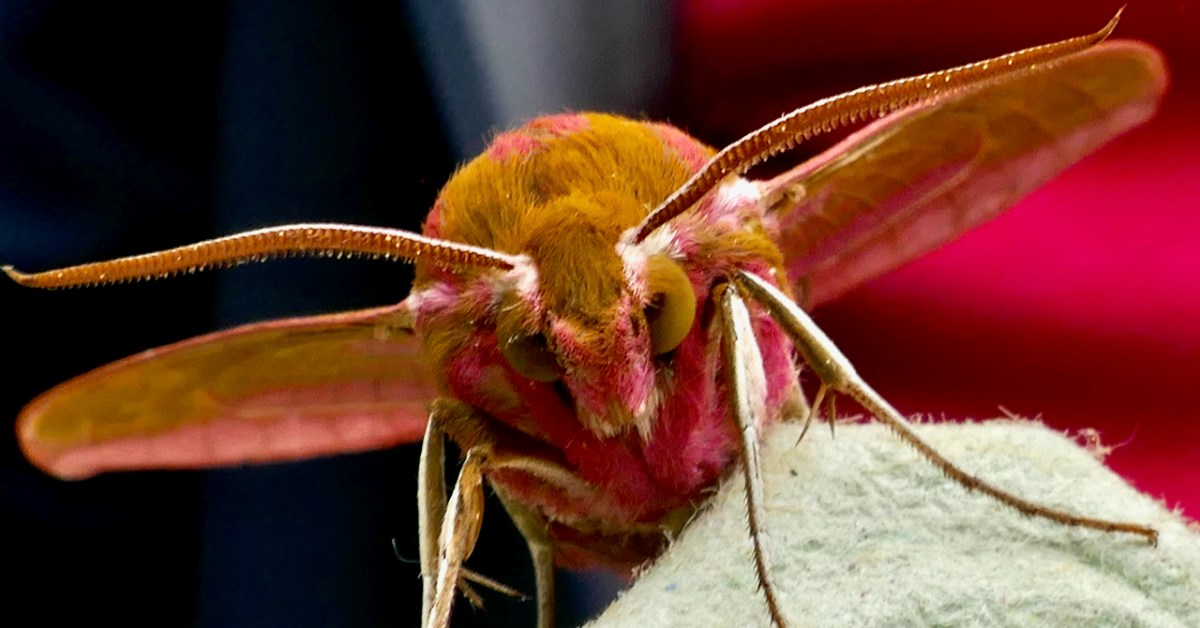
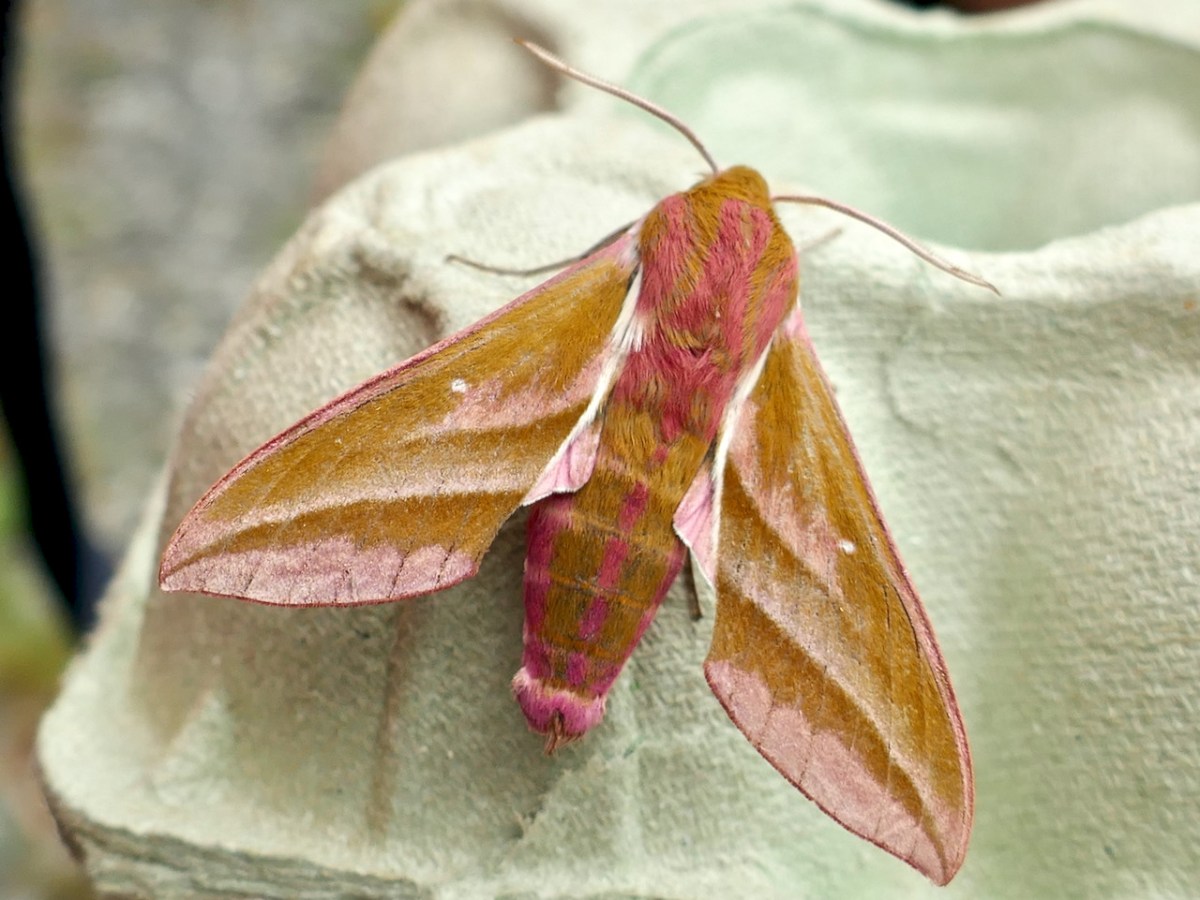
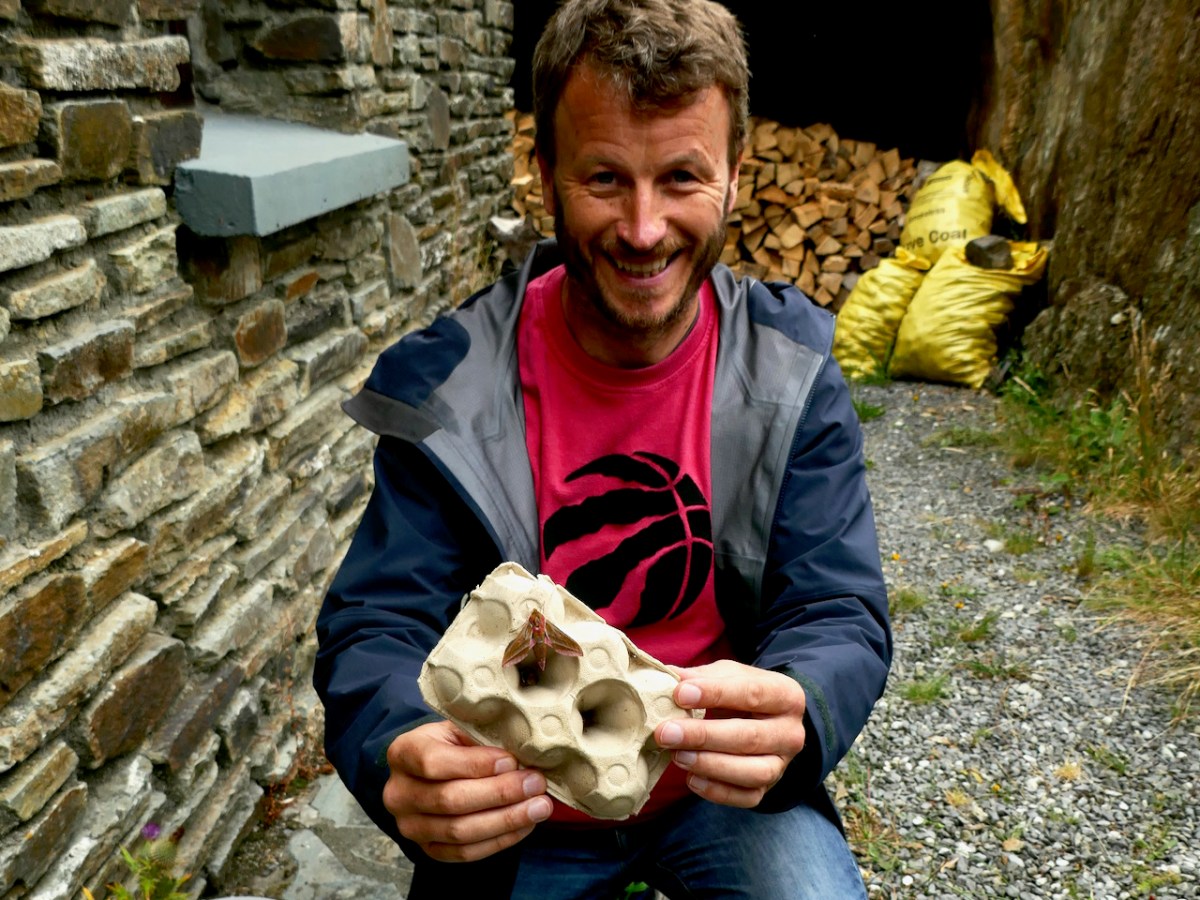
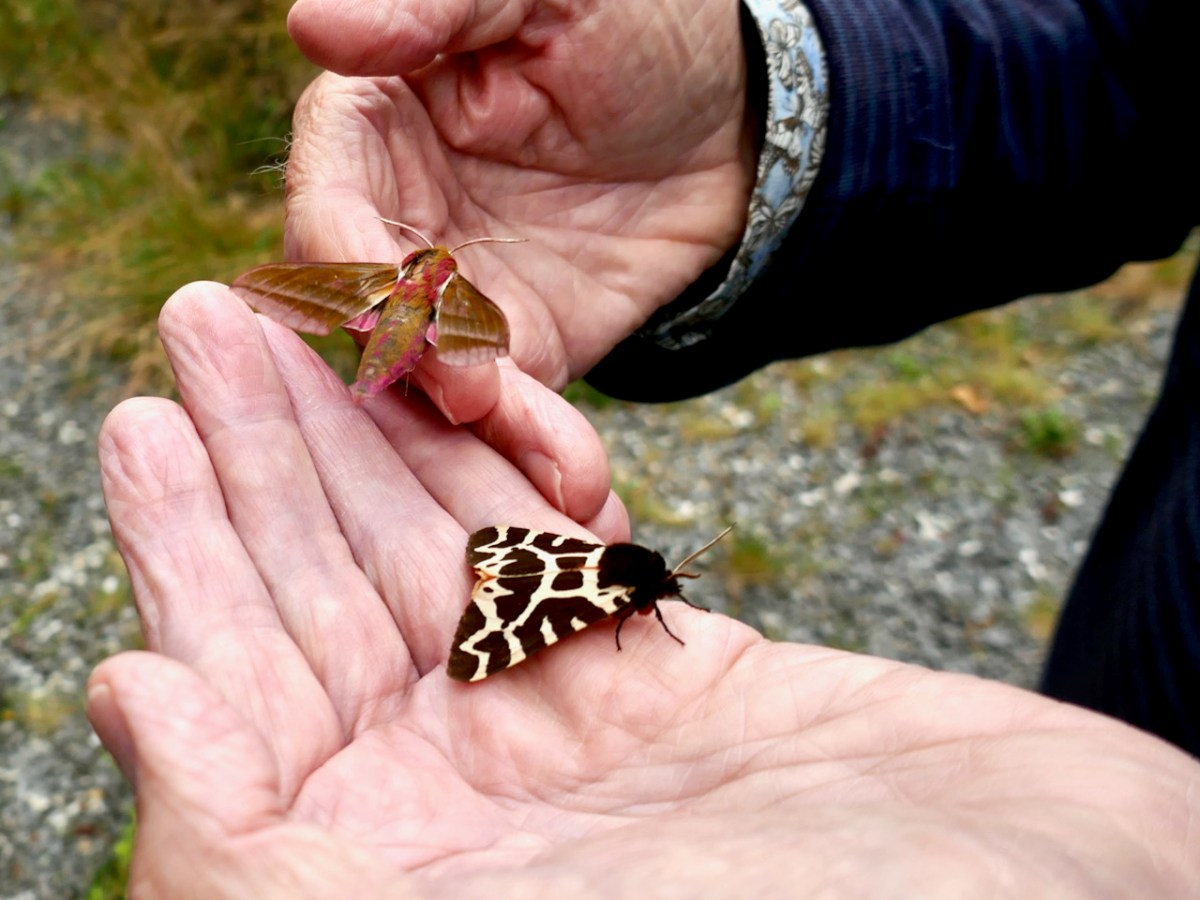
Header and upper picture (above) – one of our first finds was an Elephant Hawk-moth – bizarre and beautiful! Lower picture (above) – Ferdia showing us the Elephant Hawk-moth at the first ‘reveal’
Our friend – Ferdia – is a professional who works for the National Parks and Wildlife Service and – perhaps strangely – his special expertise is in the lives of bats. So why has he introduced us to moths? Well – the principal food source for bats is moths, so he has to be knowledgable about those as well. The other ‘enemy’ of moths is the Robin. So our cheerful little red-breasted companion who comes to greet me every morning when I take out the seeds has suddenly become a garden monster indiscriminately guzzling some of the most beautiful small creatures I have ever encountered! But I have to tell myself that it’s all about the natural order of things.
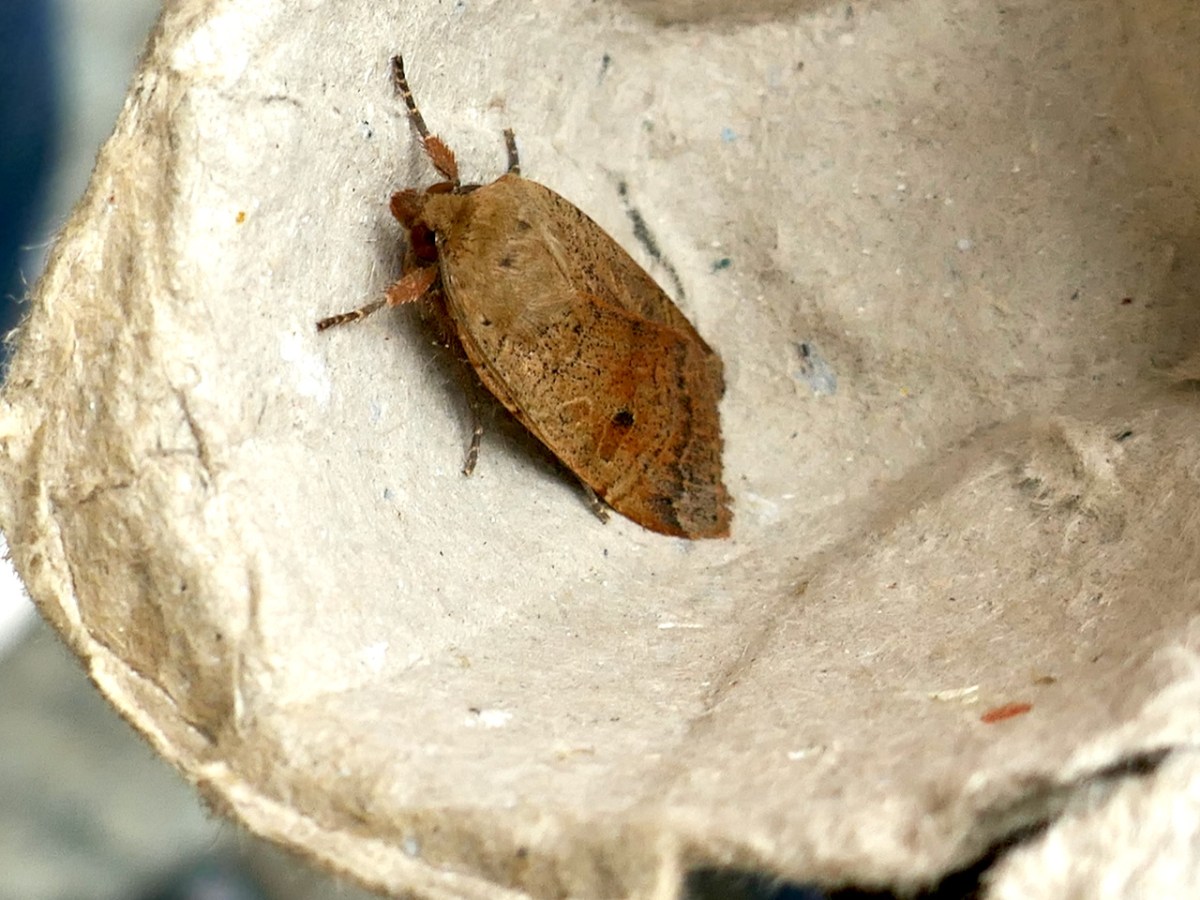
So let’s have a look at the ‘moth trap’. It’s basically a light source mounted on a funnel which sits over a box. The light is ultra-violet: this is what the moths like. In the box are some old cardboard egg cartons – also attractive to the insects. So – in the darkness – they fly towards the light and flutter down into the box, where they seem very happy to settle in all the crevices of the cartons, cheek by jowl with other moths of all varieties, and wait patiently to be discovered. They are nocturnal creatures so it’s not surprising that they seem a bit sleepy when daylight comes but they don’t appear to object to showing off for us, and will even quite readily explore our hands and clothes – and they definitely pose for the camera! All these photos are taken by Finola, mainly using her macro setting with the Leica lens.
Revealing what’s in the box – the moths like to settle down in the crevices of the egg boxes and don’t seem to be unduly perturbed when we take them out to have a peek. Note that there’s a stray black beetle in the picture above
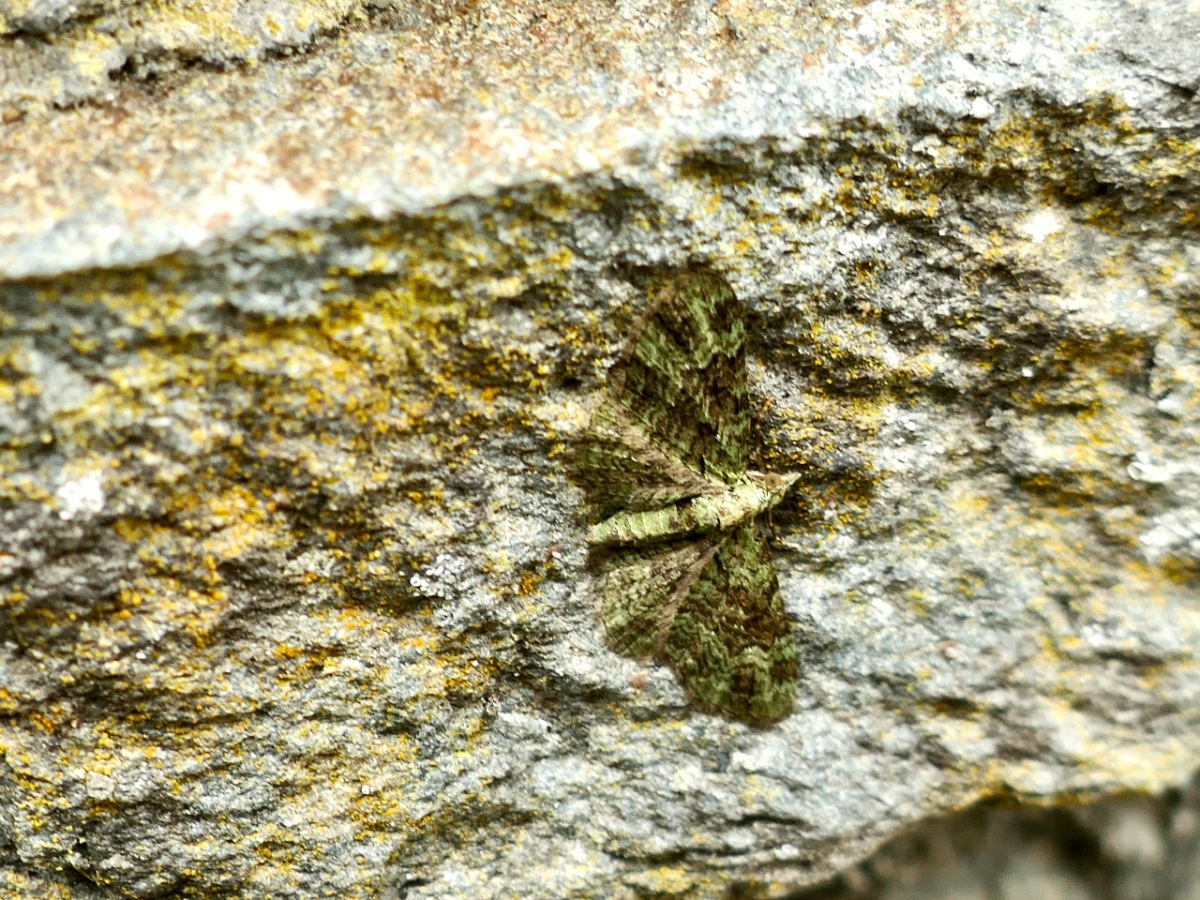
It’s hard to describe the excitement we both felt when our friends Ferdia and Anna came up that first morning for the ‘reveal’. To begin with, they pointed out to us that not all moths end up in the box. They are attracted by the light but many settle in the vicinity rather than going into the funnel. So the trap had been put against a sheltered stone wall of our house and our astonishment grew as we realised how many moths there were within a radius of about a metre around the trap, occupying many nooks and crannies of the stonework. But their ability to camouflage themselves by choosing places where they perfectly blended into the background was stunning: at first they seemed completely invisible. Take that, Mr Robin!
Upper – Ferdia is about to open the trap: he never harms the moths, the plastic containers are used to temporarily hold them for identification before they are released. Lower – moths settling in the garden – how many can you see in the picture? We think there are nine
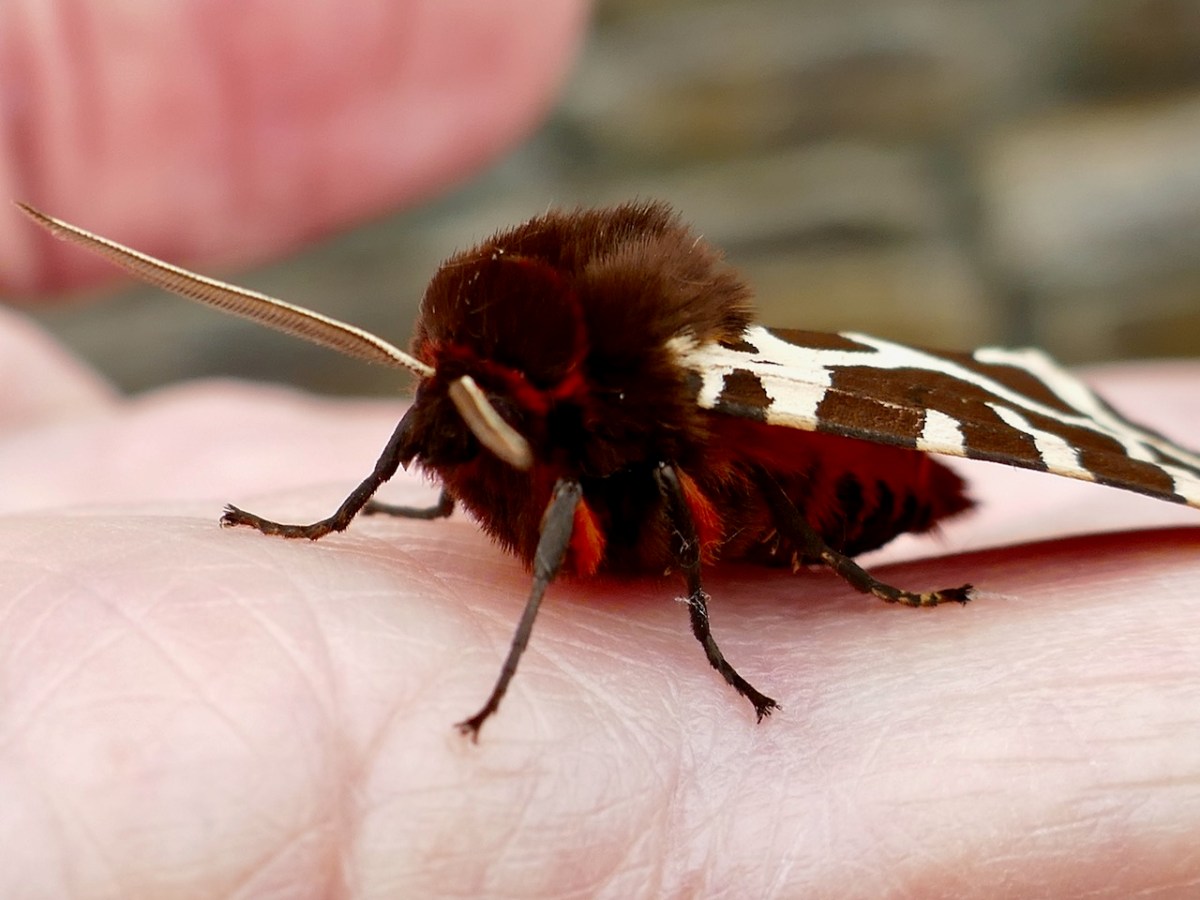
If you thought moths were brown and boring, think again. Of course many are brown – ish. But many more are not, and even the very brown ones are so beautifully marked that they deserve as much study as the ‘brash’ ones, which immediately catch the attention. But ‘brash’ is not a good word. Perhaps we should say ‘showy’, or ‘flamboyant’ – have a look at the examples. My eye was caught by the Garden Tiger, which one can only say is just resplendent.
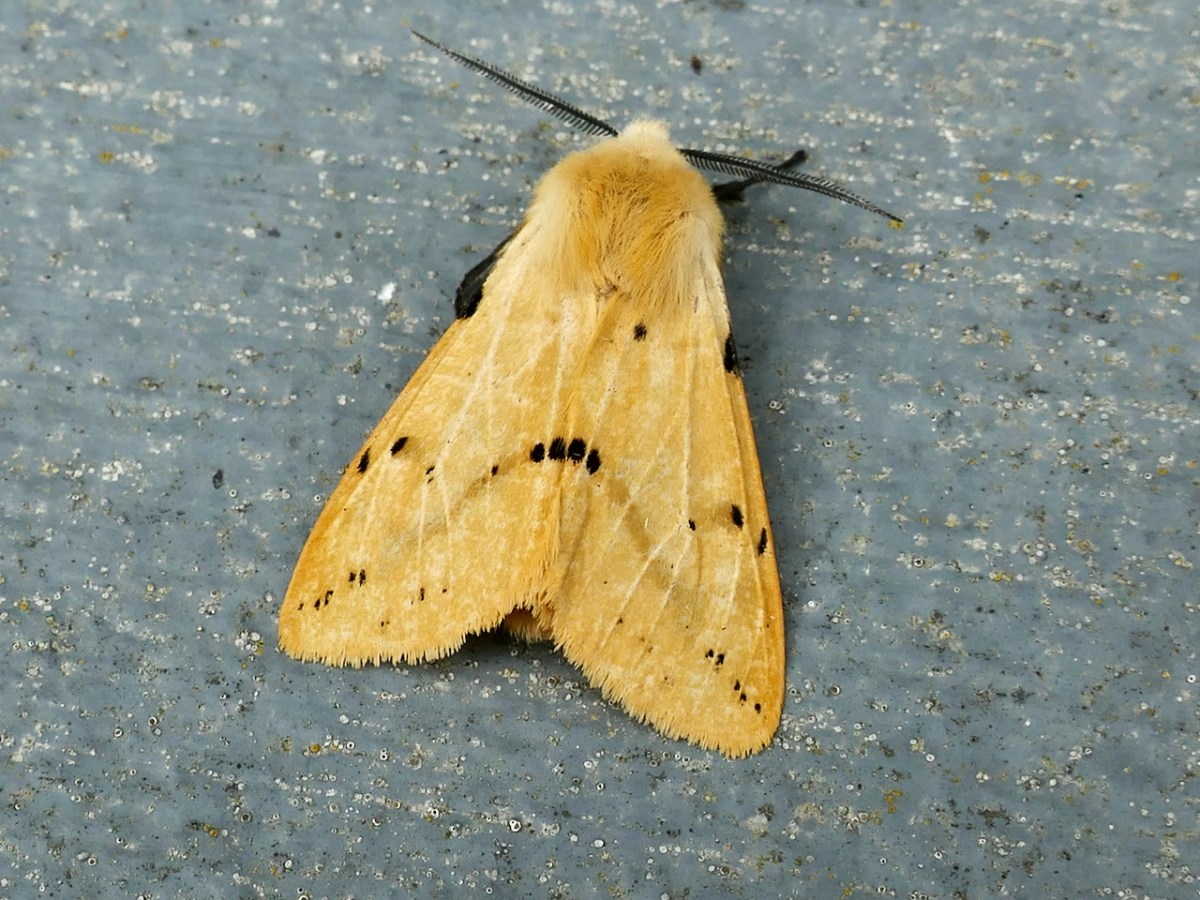
Buff Ermine
Burnished Brass (these are all real moth names)
Six examples of good moth camouflage (from upper) – Green Pug and a close-up of the same one –Dark Arches – Dark Spectacle – Mottled Beauty – True Lover’s Knot (can you see it?)
Four studies of the incredible Garden TigerMoth. This one certainly does not seem to seek camouflage: perhaps its markings frighten off the predators?
Every moth has a name! When you consider that there are nearly 1500 different ones in Ireland, that’s amazing. Mostly they are simply descriptive, but that makes sense. Feast your eyes on the ones we found. I think you will understand our excitement and wonder at this new world which has suddenly landed on our own doorstep. Ferdia educated us to the environment here in regard to moths. We are on the coast and we face out towards France: it’s a migration route! Believe it or not, some moths migrate great distances over the sea; not just from France, but from Africa too. How can they survive such journeys? They appear so delicate and evanescent.
From upper – Clouded Border – Common Wave – Emerald. Above – mixed moths: Elephant Hawk-moth and Garden Tiger
One of our first discoveries as the magic box was opened was the Elephant Hawk-moth. Admire the colour, and the size, but also look closely at the texture. Moths are mainly covered in ‘scales’ but these can appear like feathers; and see where the scales are wearing away on one example, revealing the anatomy of the creature underneath. Yes, moths are fragile and short-lived, but remember they are just one part of a cycle that involves mating, egg-laying, the caterpillar larvae; becoming a chrysalis and then hatching into another beautiful creature.
I was surprised to learn that moths appear at all times of the year – even in the middle of winter. Their cycles coincide – as you would expect – with those of their plant-based food sources. So the insects we have seen over the last two days are effectively ‘midsummer moths’ and if we put out a light-box in a month or so we are likely to see completely different species.
Another spectacular species that must live around us – hitherto unnoticed – is the Poplar Hawk-moth: Hildegard is modelling it in the upper picture, while I am showing it off in the lower one: it’s amazing that we have never seen this wonderful creature until today!
So how are we doing – in West Cork – in terms of looking after our moth populations? Well, as with much of the natural world, things are declining due to unfriendly farming methods and general habitat deterioration. That’s a constant message to all. Many of us are becoming more aware and are being active in establishing our own micro universes – such as Finola’s wildflower meadow here at Nead an Iolair.
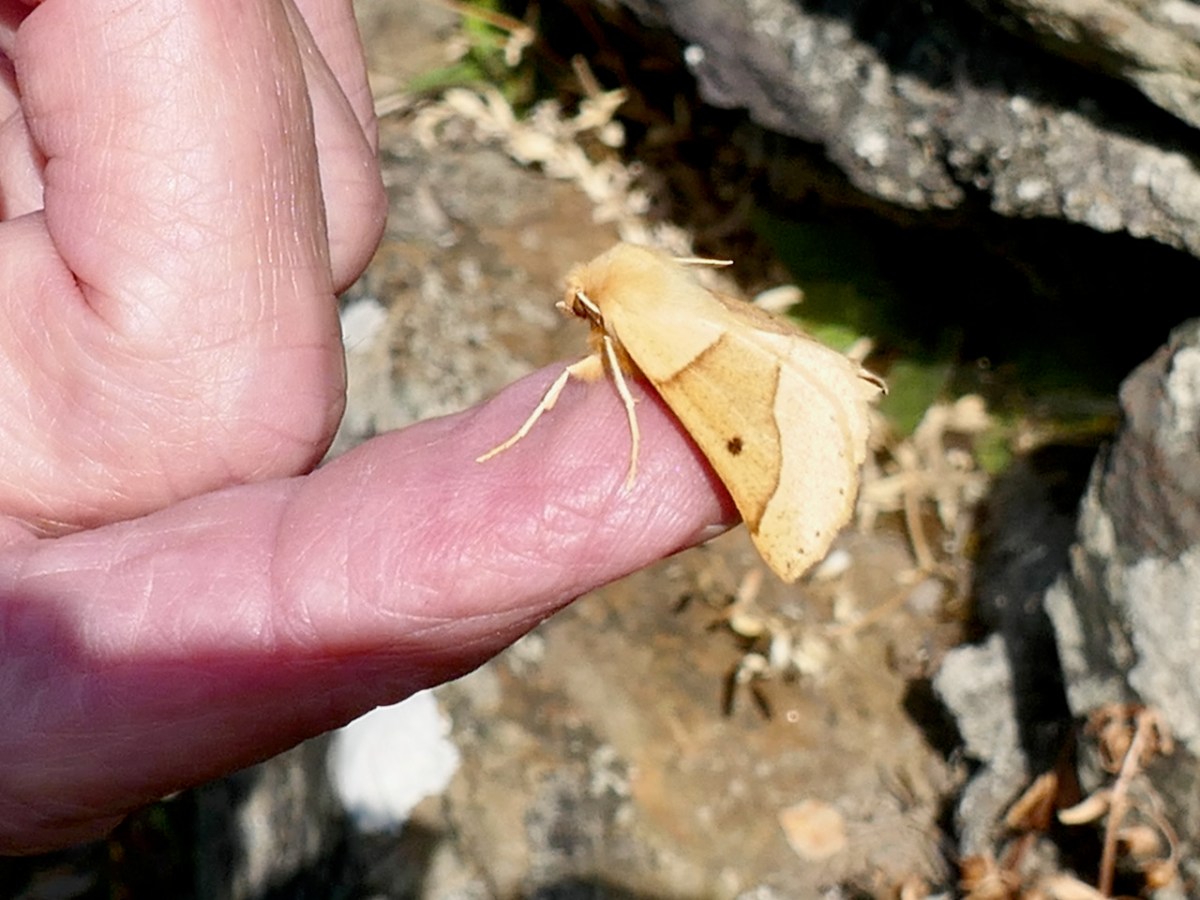
In our habitat – that’s a Spectacle Moth hiding in the grass but showing off its spectacles (upper); centre is a Pebble Prominent in the foreground with a Spectacle behind; while (lower) is one of my own favourites, the subtle Scalloped Oak Moth
Moths choose to lay their eggs on plants that will provide nourishment, and those plants are known as larval food plants. Some of the moths are quite adaptable and may use a wide variety of trees, shrubs and flowers. For example, the Poplar Hawk-moth, the Clouded Border, the Scalloped Oak feed on Aspen and Willows. Others prefer flowers and herbacious ‘weeds’: the Elephant Hawk-moth loves Willowherbs and Bedstraw (lots of those in West Cork); the Garden Tiger likes Nettles and Dock (our wildflower patch!); the Dot Moth goes for all those weeds that are the bane of gardeners, such as Nettles, Bindweed, Groundsel and White Clover while the Small Fan-footed Wave selects Dandelion and Plantain. The Sharp-angled Carpet is highly specialised to Stitchwort and Chickweed.
From upper – Rosy Rustic with Lesser Yellow Underwing – Dot Moth – Small Fan-footed Wave – Single Dotted Wave – Sharp-angled Carpet ((purely a descriptive name – it won’t eat your carpets!)
The good news is that here in West Cork we still have flourishing habitats to offer moths – our fields, hedgebanks and heaths provide what they need – that is, the native plants to which native moth species are adapted. As everywhere, we cannot take this for granted as all our native habitats and plants are under pressure. Yet another reason for letting at least part of your garden go wild.
From upper – Lesser Yellow Underwing – Large Yellow Underwing – a Pug: there are very many different Pugs!
Hopefully this little article will open some eyes – as our own eyes have been opened (widely) by the realisation that there are far more worlds within our own world that we can be aware of – and should care for. If nothing else, it’s just the sheer excitement of discovering all the incredible creatures that we share our world with . . .
. . . Moths are often characterised – inaccurately – as being dull and, in the mind of many, they are undesirable and troublesome insects. This is also a mistaken view as just a few species are real pests in that they consume food crops, stored food products or objects that people depend on or value. The vast majority live their lives unseen by most people. However, when moths are seen in daylight the appearance of many species can be a revelation showing intricate patterning and colours that is at least the equal of the Irish butterflies. Most moths are undoubtedly secretive and their colours and patterns usually give them daytime camouflage . . .
Ireland Red List No 9 – Macro-moths (Lepidoptera) National Parks and Wildlife Service 2016
The Magpie
One of the joys of the moth trap was finding that it didn’t just attract moths. Look at what we also found: a wonderfully fierce-looking (but in fact docile) wasp and – best of all – a Sexton Beetle. These splendid creatures lay their eggs in the rotting corpses of animals: human Sextons look after graveyards and were in the past gravediggers as well!
With very many thanks to Ferdia and Anna for giving us these bewitching experiences.
As a footnote to those who might be concerned at the harm that moths can cause in the house – to clothes, carpets etc – I must add that, of the 1,500 species we have in Ireland, no more than half a dozen are harmful in this way. Putting out a light-box moth trap will not bring destruction upon you! Instead your days will be illuminated and dazzled by your new discoveries.
Welcome to the UCD Library Cultural Heritage Collections blog. Discover and explore the historical treasures housed within our Archives, Special Collections, National Folklore Collection and Digital Library



















 Roaringwater Journal