It’s become a bit of a tradition with us here at Roaringwater Journal to do a post like this in the lead up to Christmas. See this post, and this one, or maybe this one. All busy stained glass studios were requested to supply Nativity windows – a favourite of Catholic Churches throughout Ireland. Harry himself made several Nativities, but this post deals with windows made in his style, but not by him. All of them were made in his father’s business, Joshua Clarke and Sons, or in The Harry Clarke Studios, as it was renamed in 1930. Sometimes windows are just signed Clarke, or Clarke and Sons. If you’re looking at these images and saying to yourself, Surely these are Harry Clarkes! I recommend reading some of my previous posts for the difference between a Harry Clarke and a Harry Clarke Studio window. Perhaps begin with The House Style: William Dowling and the Harry Clarke Studios.
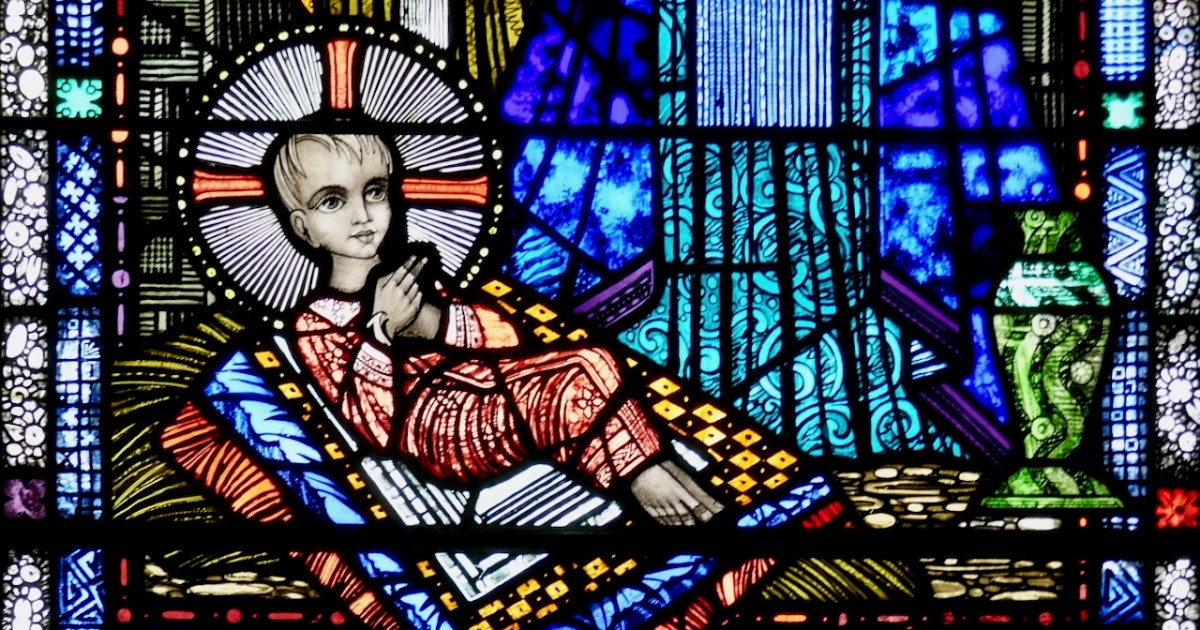
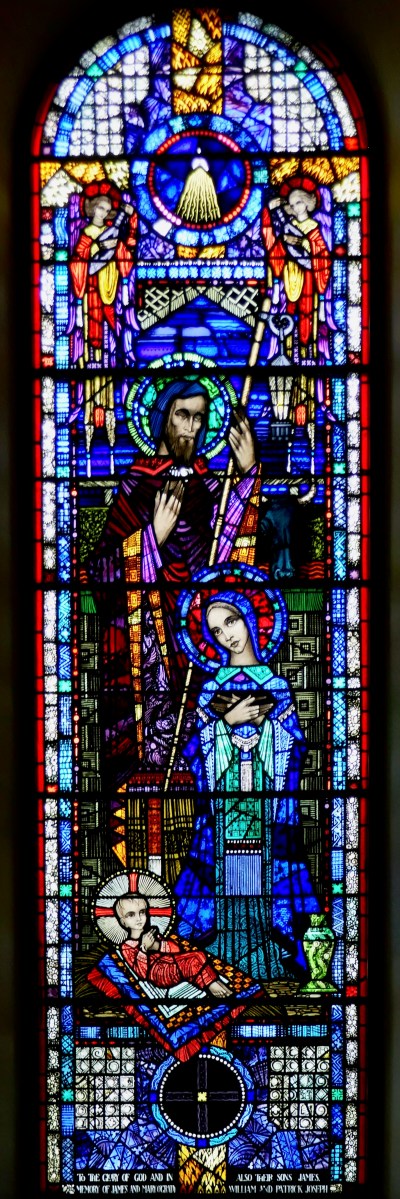
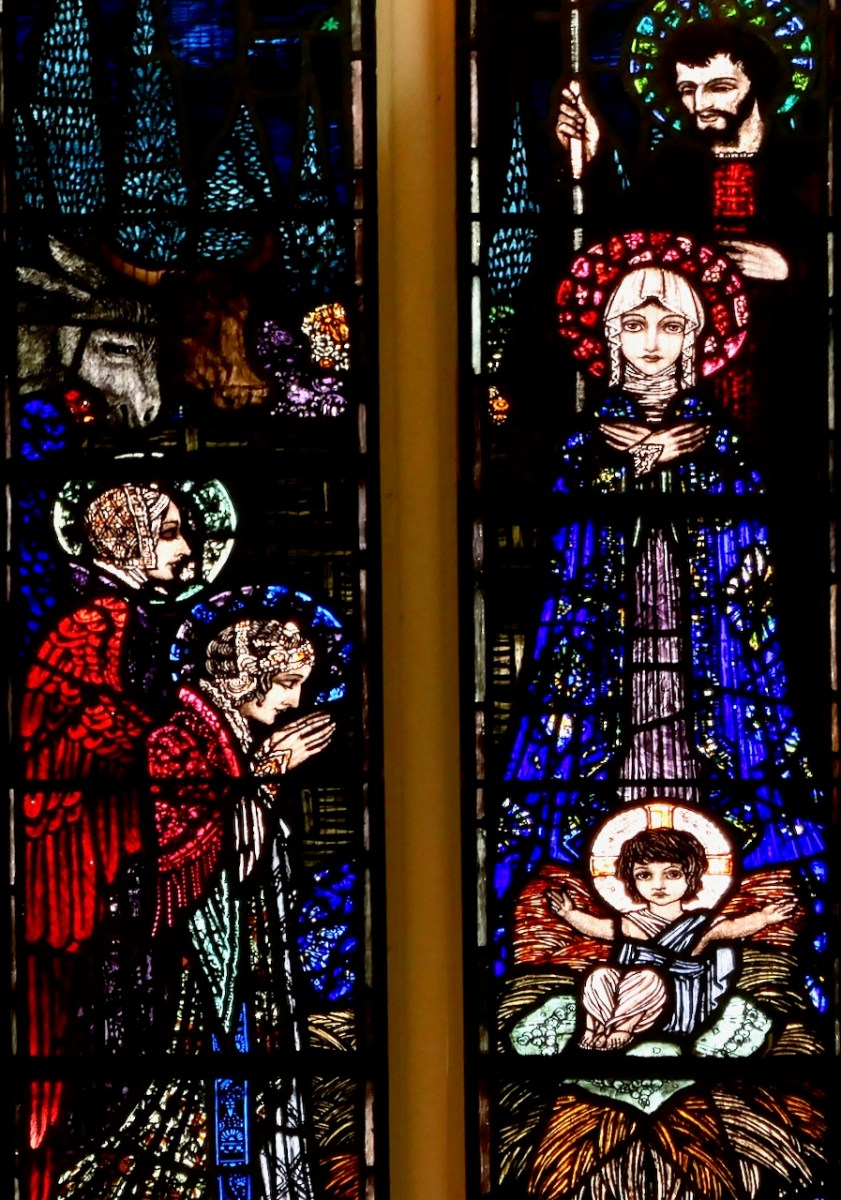
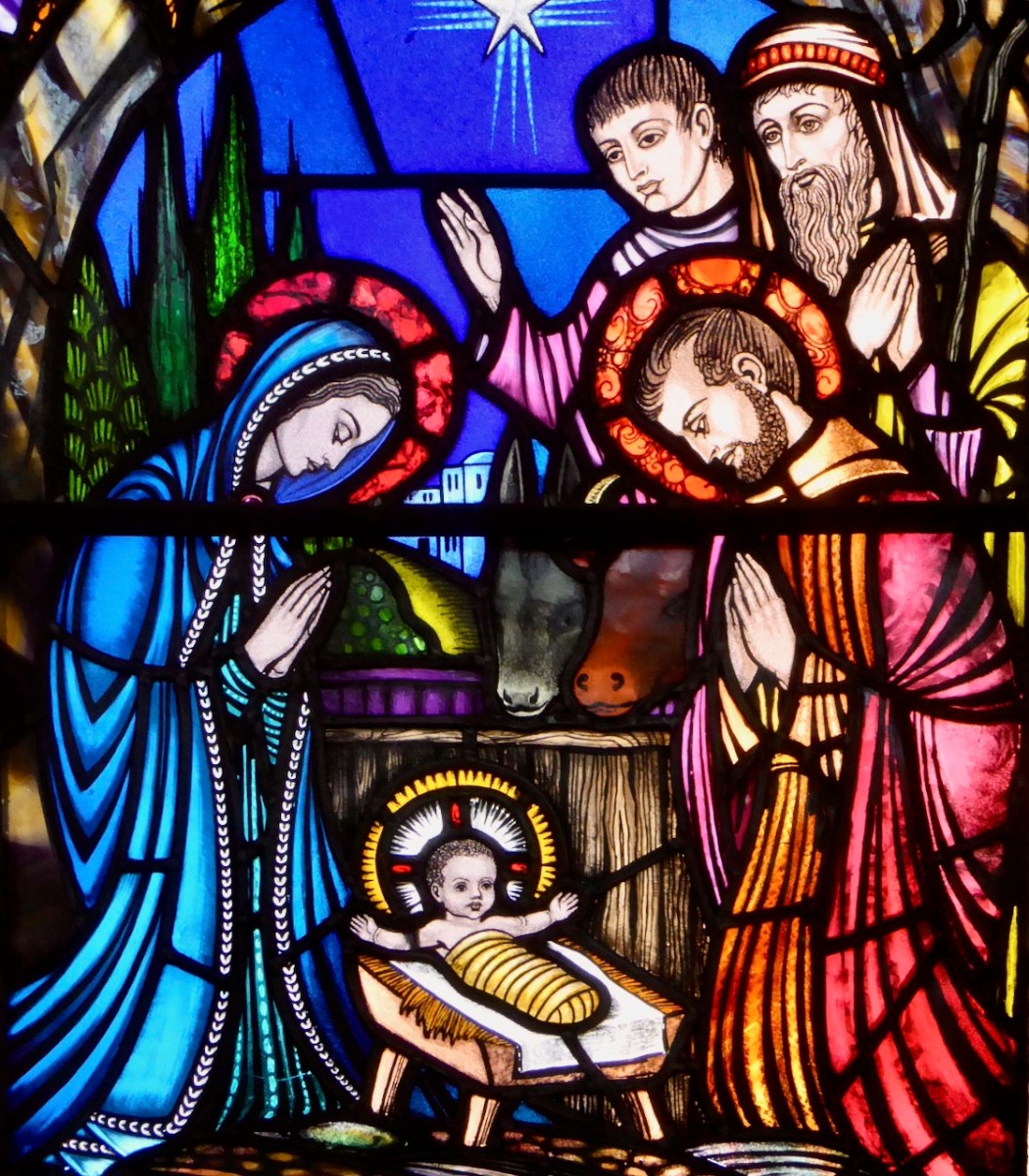
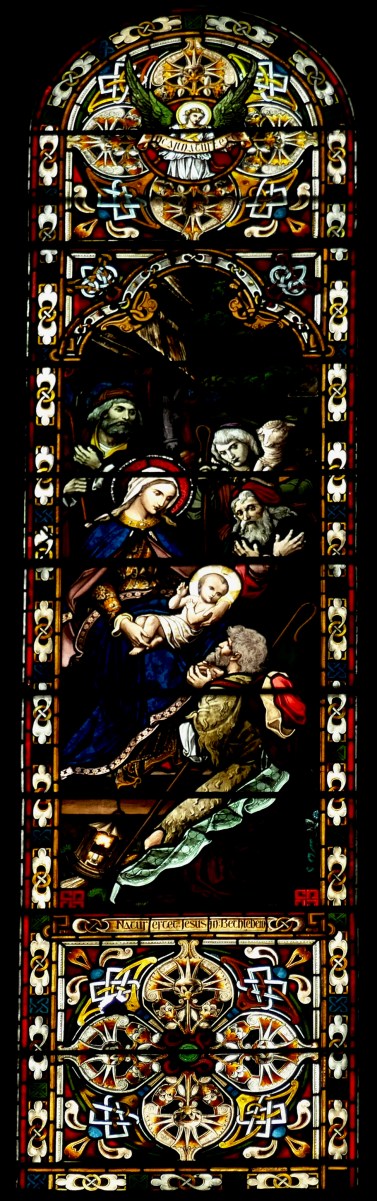
These first two images are from a remote church in Wicklow, in the townland of Killamoat, near Rathdangan. They were done in the Harry Clarke Studios, after Harry died in 1931, and are attributed to George Stephen Walsh, who had started as an apprentice with Harry several years before he died. I particularly love all the details surrounding the Baby Jesus – the blankets upon which he lies and that strange green urn.
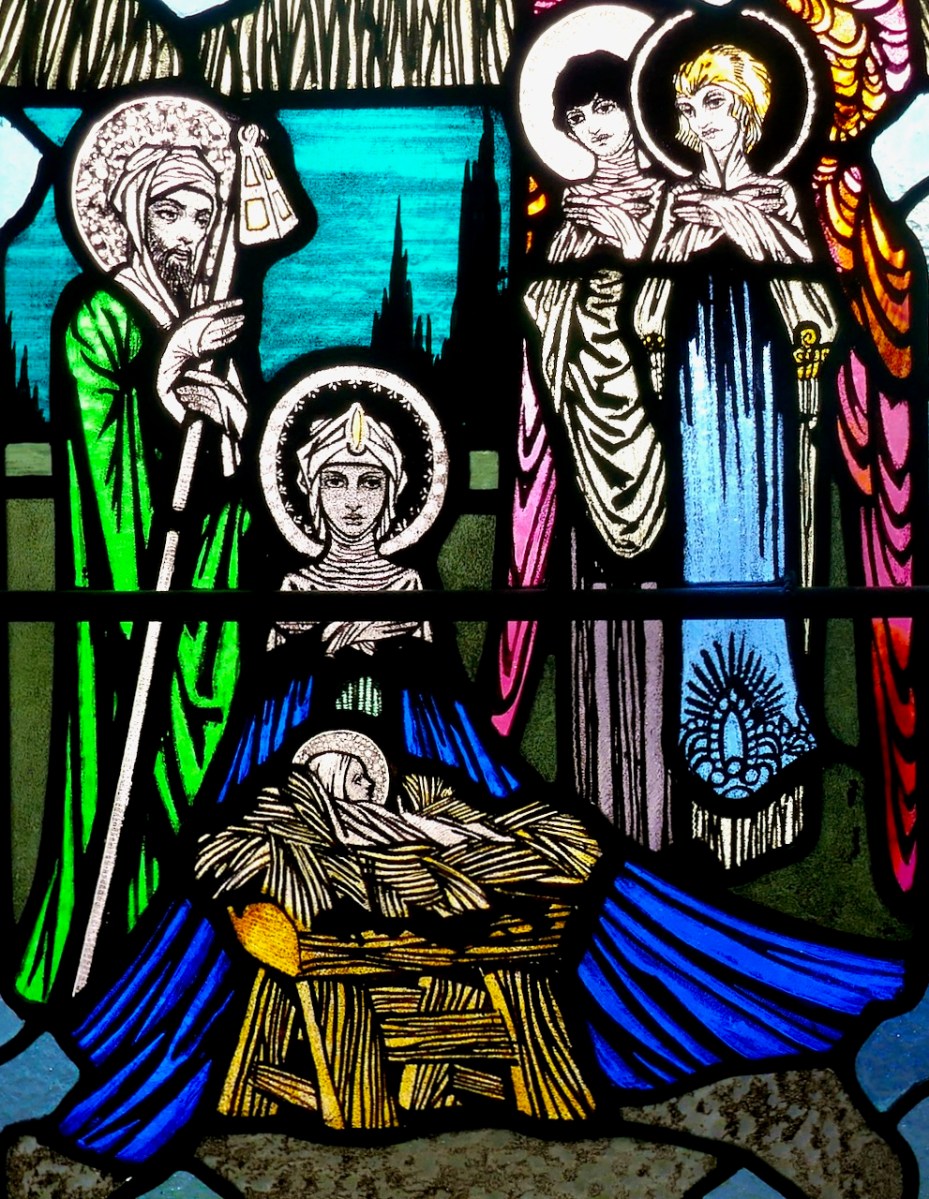
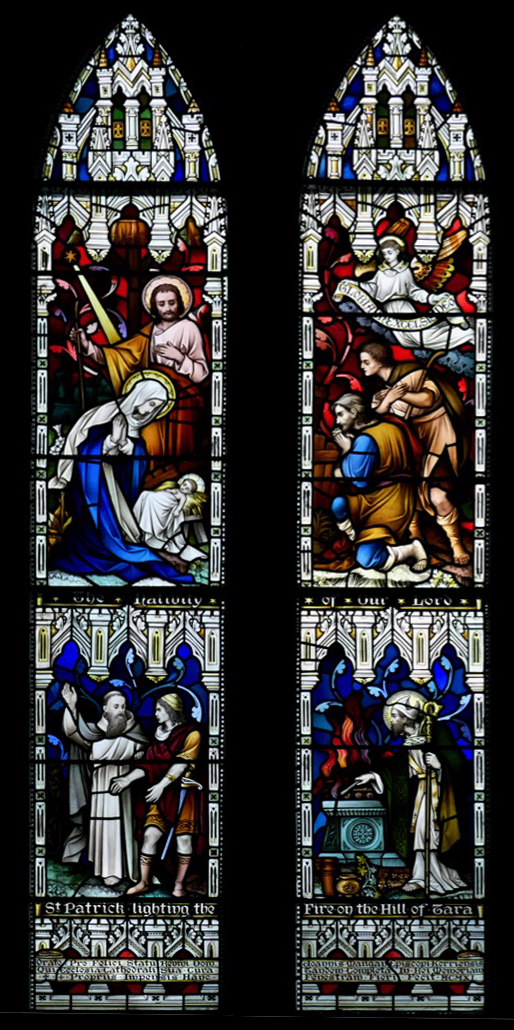
This is from a series of small windows in Leixlip – I made a slide show of those windows, which you can watch here, in a post titledClarke-Style Windows. They were made in 1925, in the Joshua Clarke Studios, in which Harry served his own apprenticeship and which retained its name until it became the Harry Clarke Studios in 1930, shortly before Harry died. In 1925 Harry was an established artist and had taken on several apprentices to help out in the busy studio – one of them made these windows and we don’t know which, although it could have been Philip Deegan. Deegan had taken Harry’s courses at the Dublin Metropolitan School of Art, and was accomplished at reproducing his style.
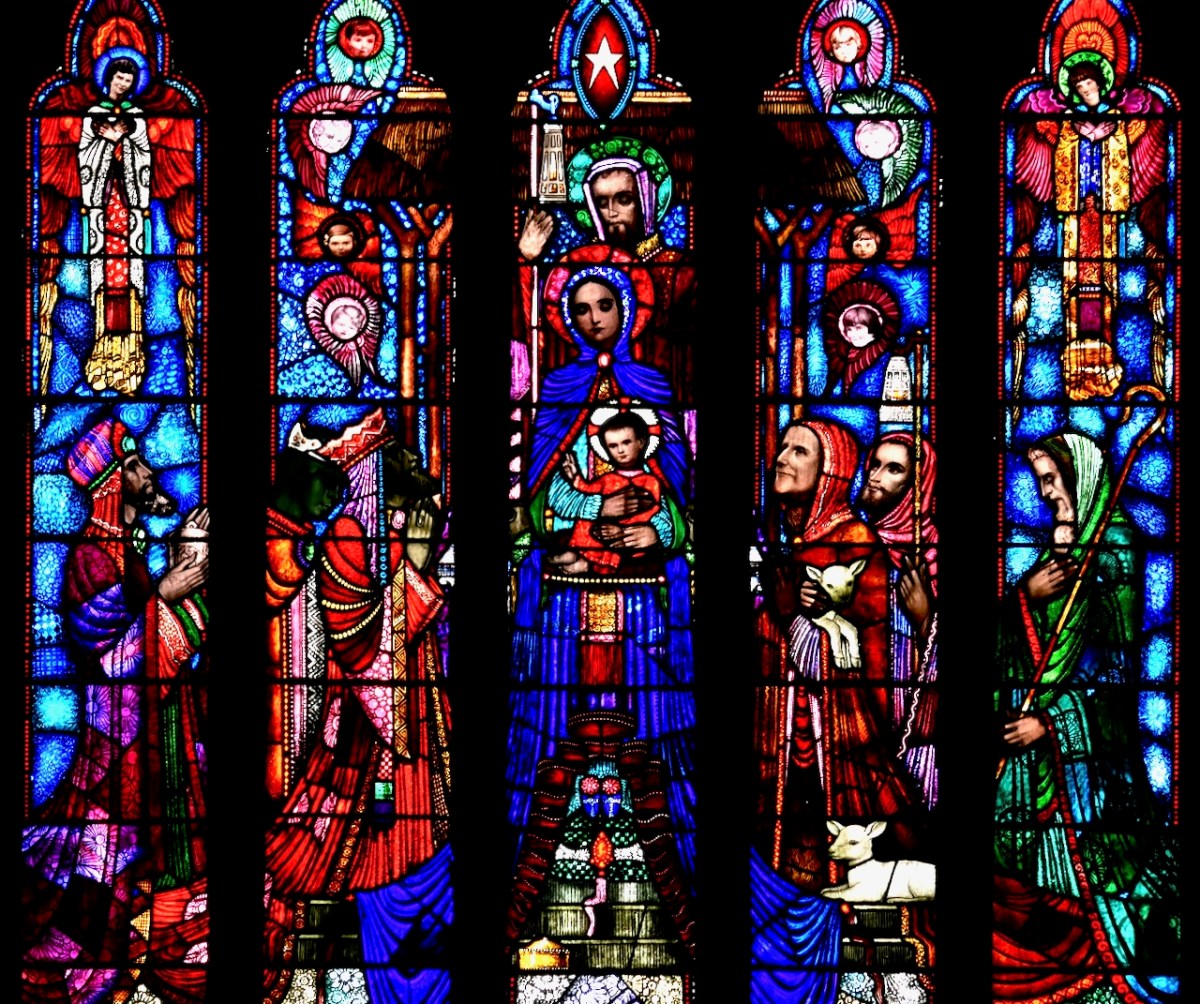
William Dowling* was one of Harry’s most accomplished artists and the one who stayed on in the studio the longest, up to the 1970s. In the years after Harry died he and Richard King produced beautiful windows in the Clarke tradition, using very good glass and carrying on the ‘house style’ of dense, jewel-like surfaces, packed with ornamental detail. Above is one of his windows from Knockainey, Co Limerick, dating from 1940 .
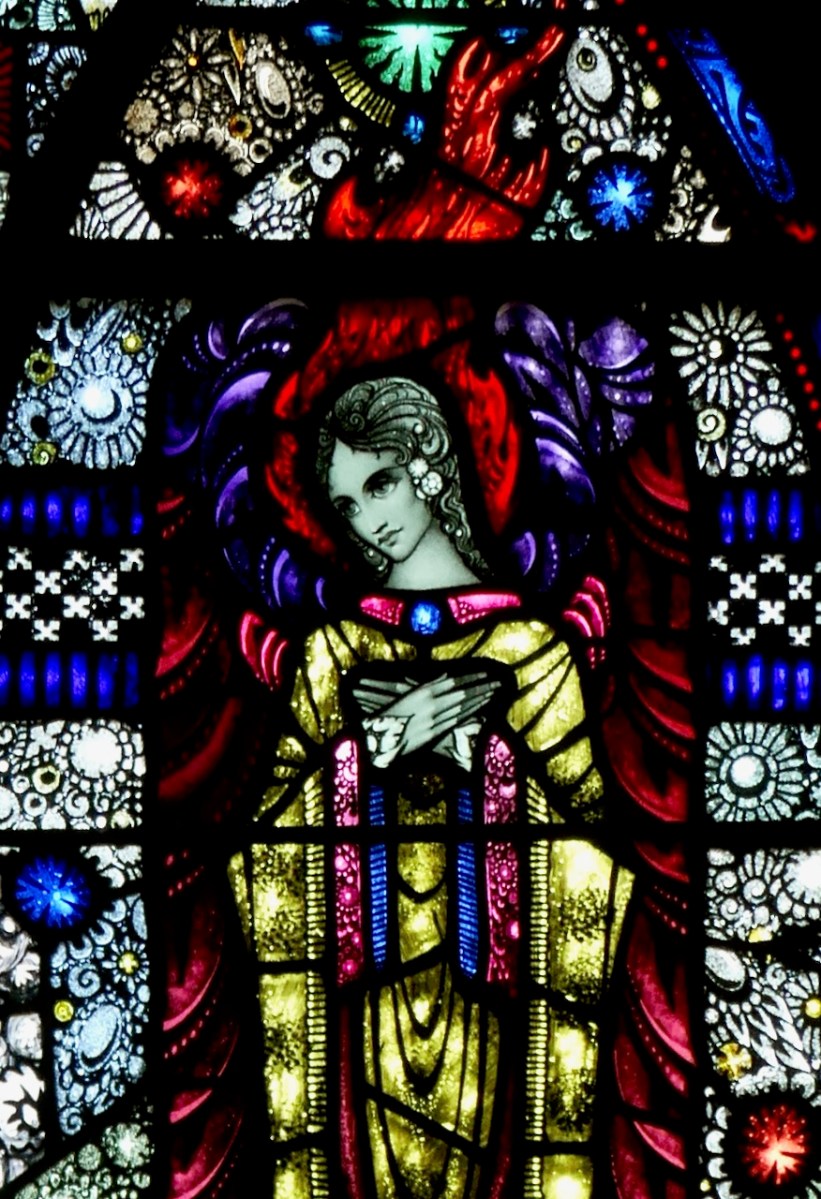
This is the angel from that window – I was struck by the fiery aureole that burns behind his head, instead of the usual halo.
This one is also by Dowling, but from somewhat later, in 1948, and it’s in the Catholic Church in Bandon. You can see how Dowling’s style has evolved – it’s not quite as dense. The composition is still beautiful and local lore has it that many of the young relatives of the priest who commissioned the window are immortalised in some of the faces. Can anyone in Bandon tell us more?
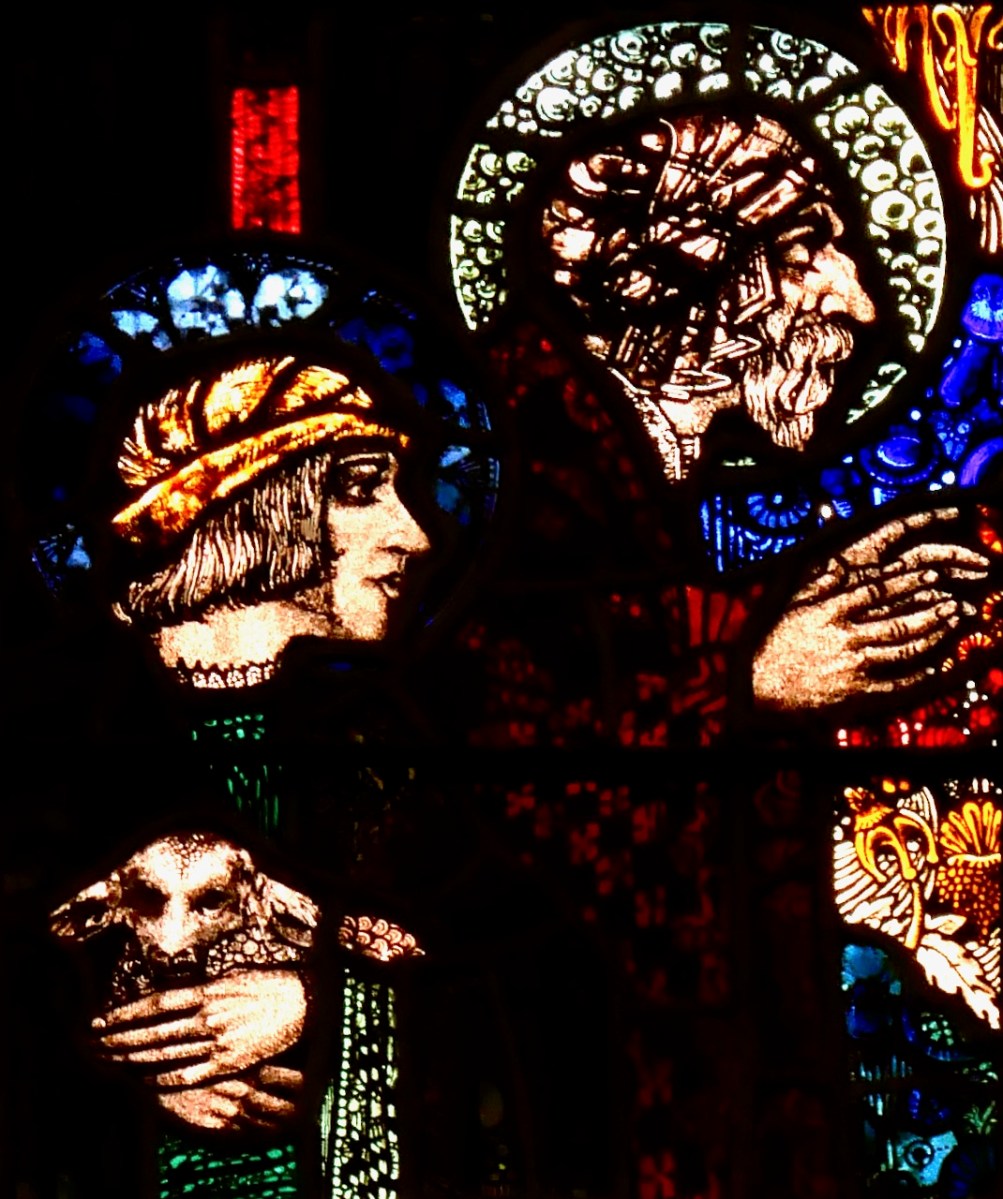
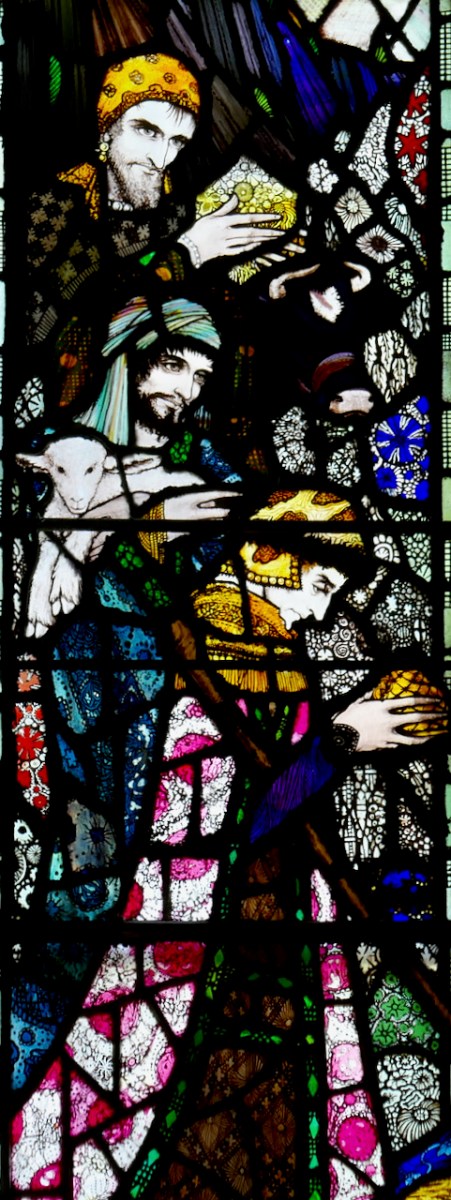
Another from the Studios after Harry Died – this one is in the Catholic Church in Wicklow town and we don’t know to whom it should be attributed.
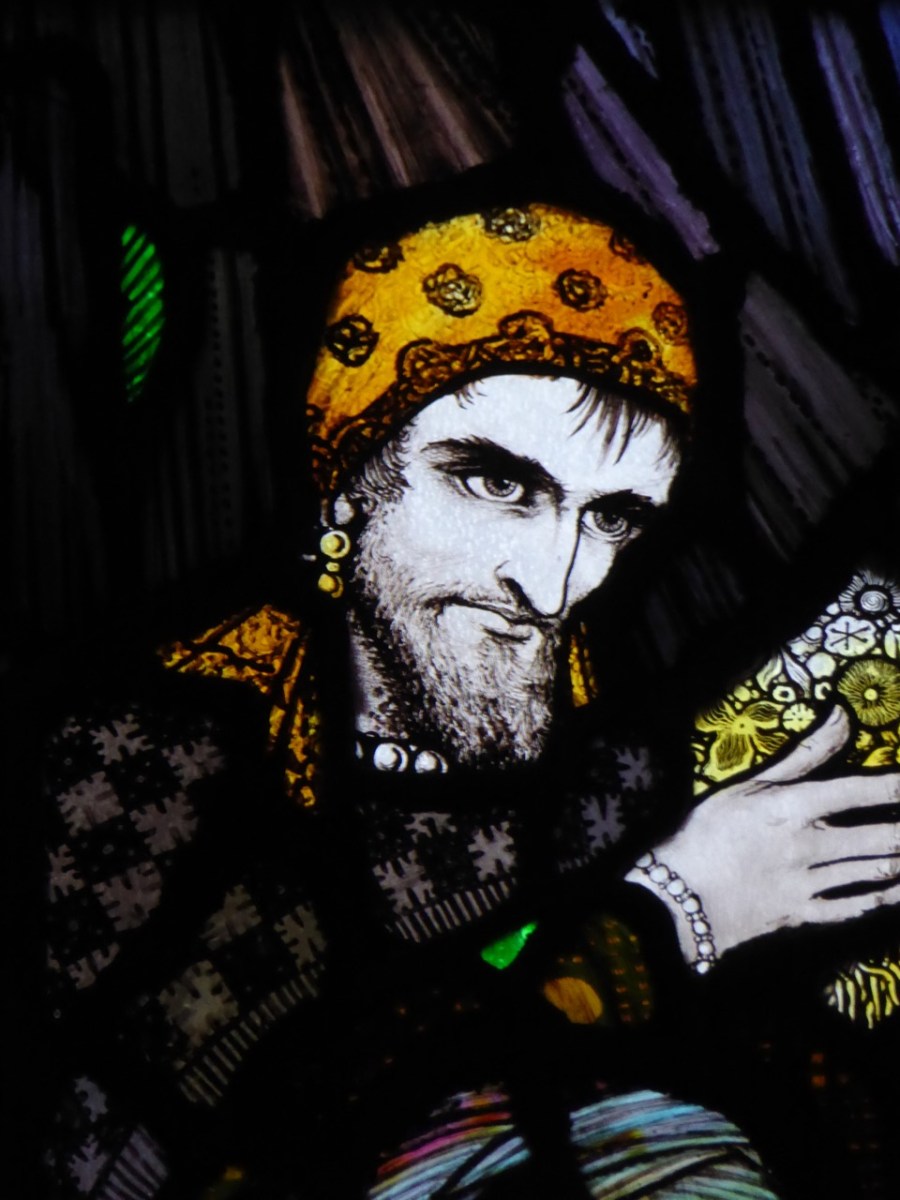
I picked out two of the shepherds to highlight as they had such interesting faces. I also loved the fact that the lamb appears to have a little triangular lacy cap.
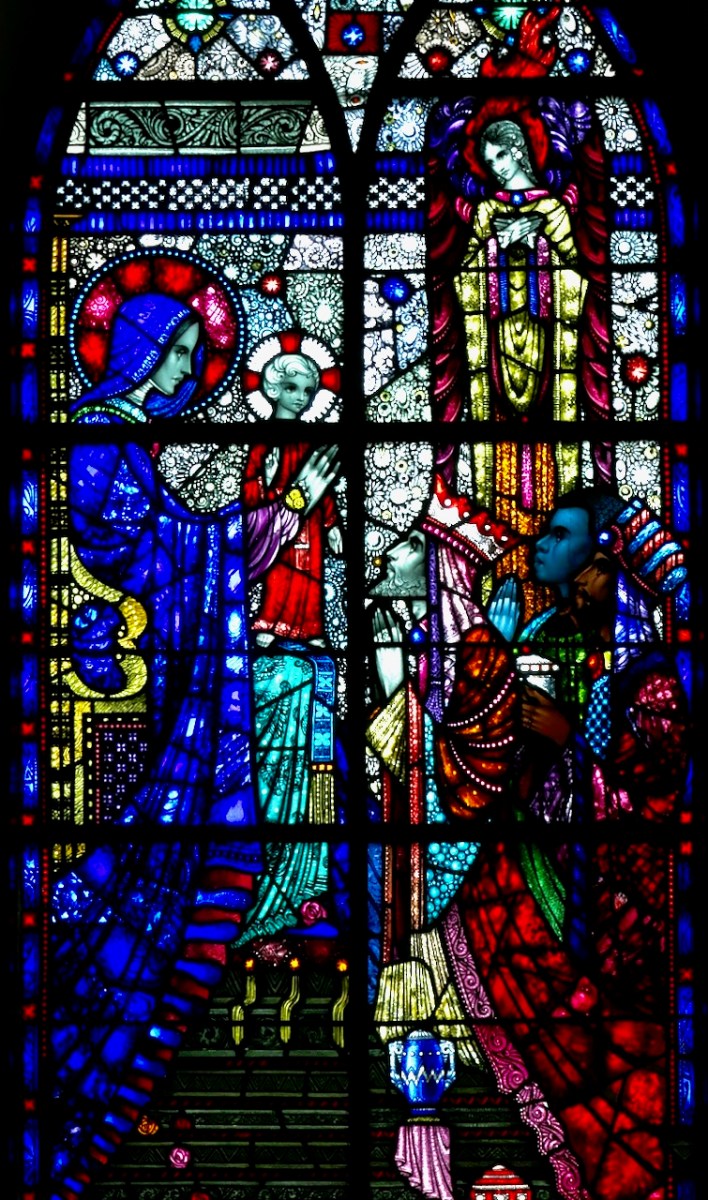
This window is from Millstreet, Co Cork and is another of Dowling’s wonderful productions, dating from 1940. Below is the predella (lowermost panel) from this window.
I suppose we’d have to say that overall there is a bit of a sameness to these Nativity windows and that’s down to the overarching influence of Harry’s very particular style. Eventually, this style fell out of fashion – a victim of its own success, or a failure to change with the times. While it lasted, though, it was superb. Eventually, due to falling demand and the price of good glass, the windows coming from the Harry Clarke Studios failed to keep up the high standards established by him and kept up by Dowling and King as long as they could. Here’s an example from around 1950 so you can see what I mean.
* For more on William Dowling, see Paul Donnelly’s excellent essay Legacy and Identity: Harry Clarke, William Dowling and the Harry Clarke Studios (in Harry Clarke and Artistic Visions of the New Irish State). Paul’s research has greatly informed all my work on William Dowling and other aspects of the Harry Clarke Studios.
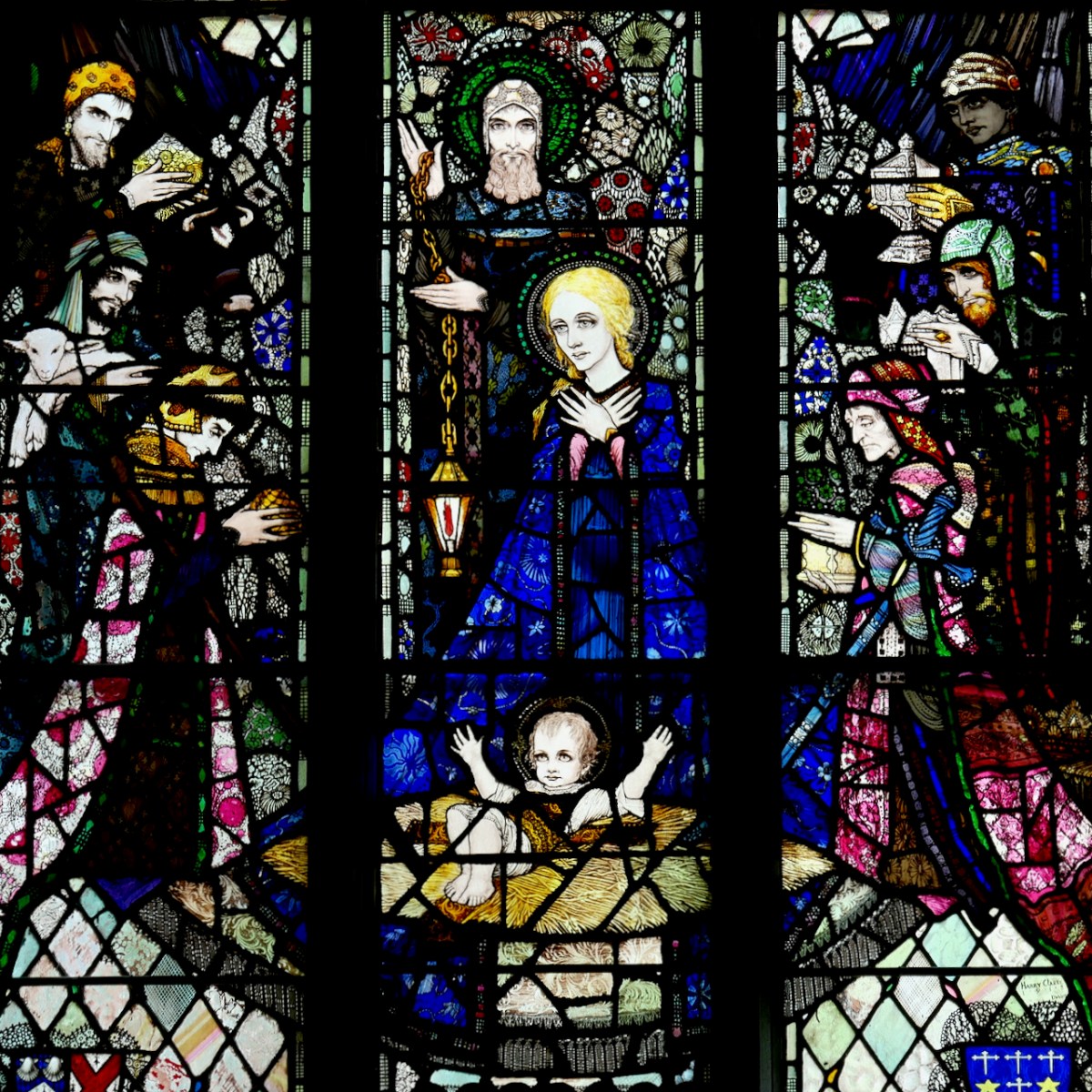
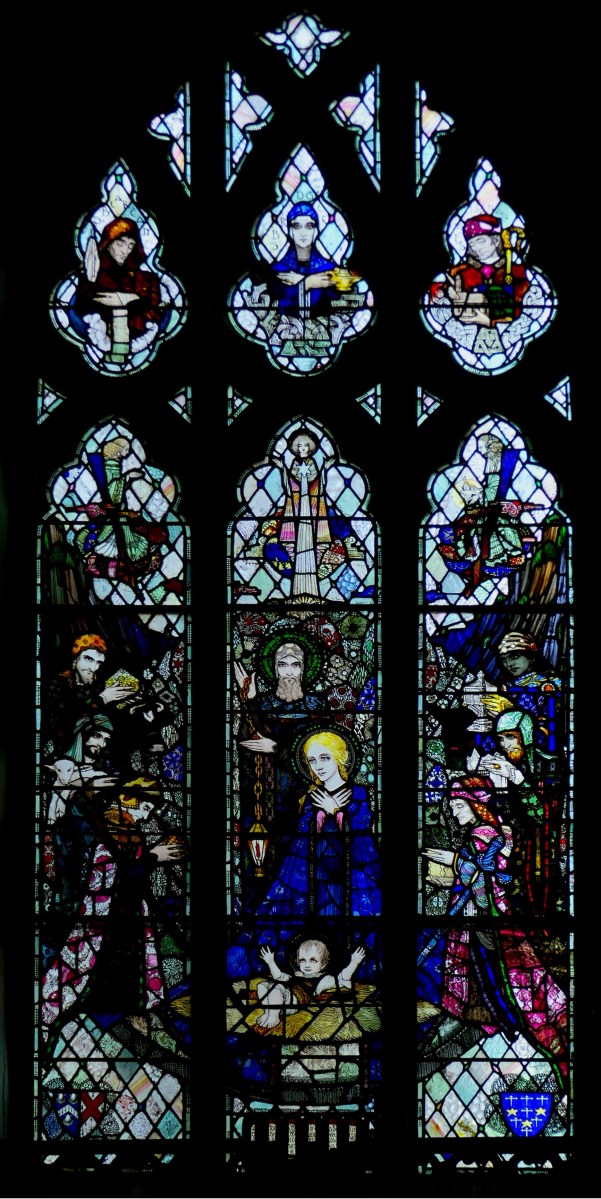
The Nativity that Harry designed for St Barrahane’s is, according to Nicola Gordon Bowe*, technically remarkable, but let’s look at the design, starting from the top. Here I am relying on Gordon Bowe’s extraordinary design vocabulary – all the quotes in italics are hers. (If you haven’t yet read them, Part 1 is here and Part 2 is here.)
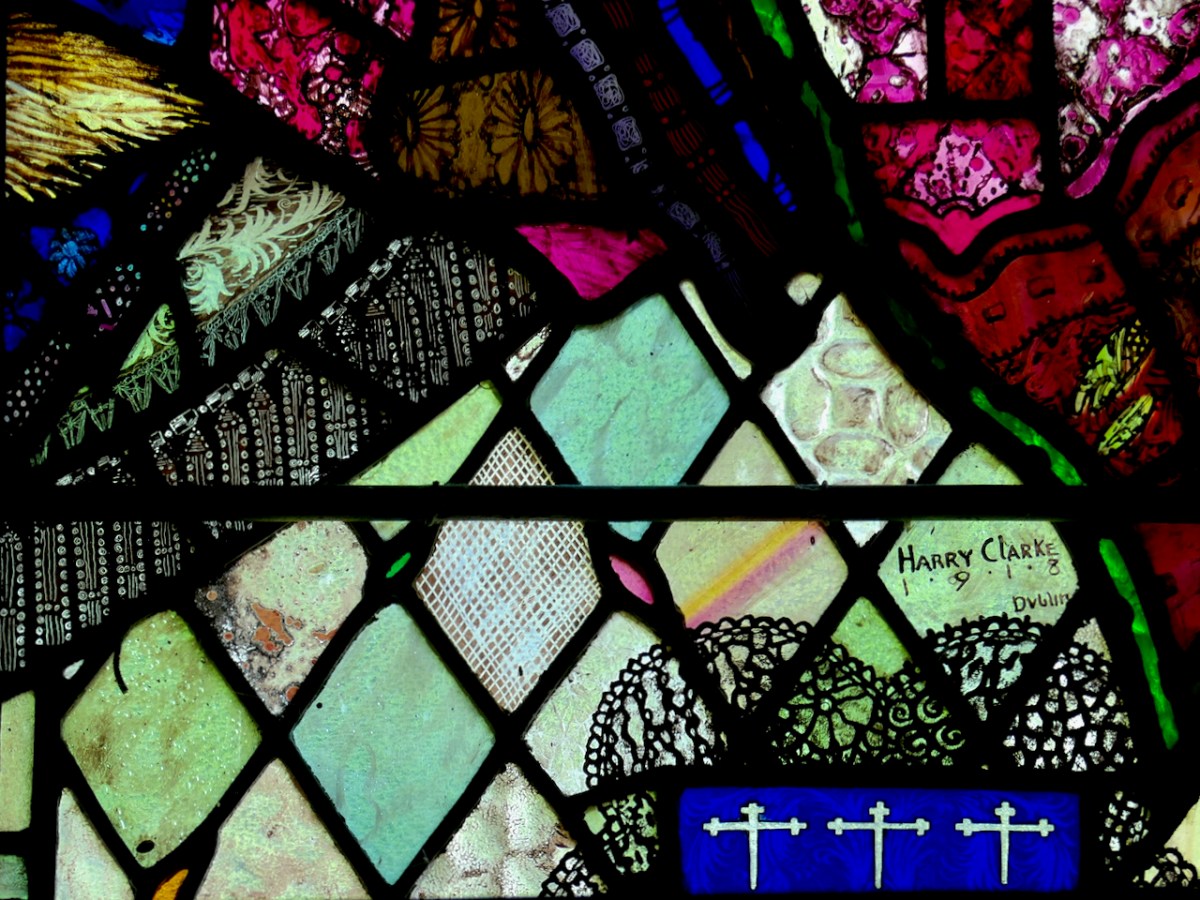
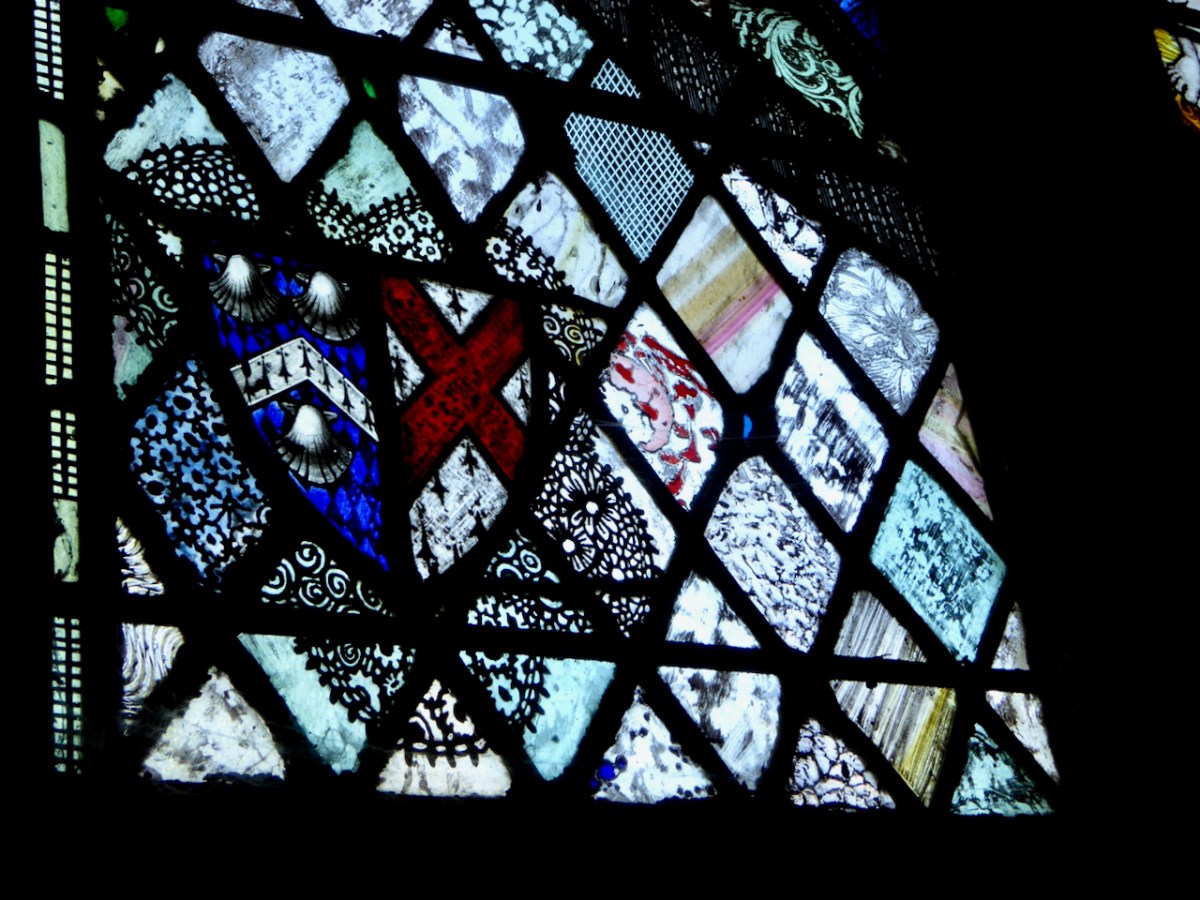
Harry’s re-designed and very Gothic tracery is filled with clear quarries – pieces of glass, leaded together in a diamond pattern, joined here and there with tiny coloured ovals. The use of clear glass was necessitated by the lack of light filtering from behind the east window, as there is a bank with tall trees immediately outside. However, this is not clear, or plain, transparent glass as we know it. Each quarry has been worked in some way. Those that started out life as clear glass have been chosen for their irregularities and have been treated with matt washes, stipples and semi-abstract lacework sequences so that each differs from its neighbour. Some of the quarries were not clear to begin with, but were flashed in pinks, blues or green, and these have been acided to the barest shimmer of colour. The result is that each individual quarry is intrinsically interesting without detracting from the overall effect of a subtly embroidered patchwork quilt in which the light lingers. These quarries occupy most areas of the window except for the main nativity scene and provide the backdrop for the top two sections – the saints and the angels. The signature panel at the bottom of the window is a good place to observe the quarries up close.
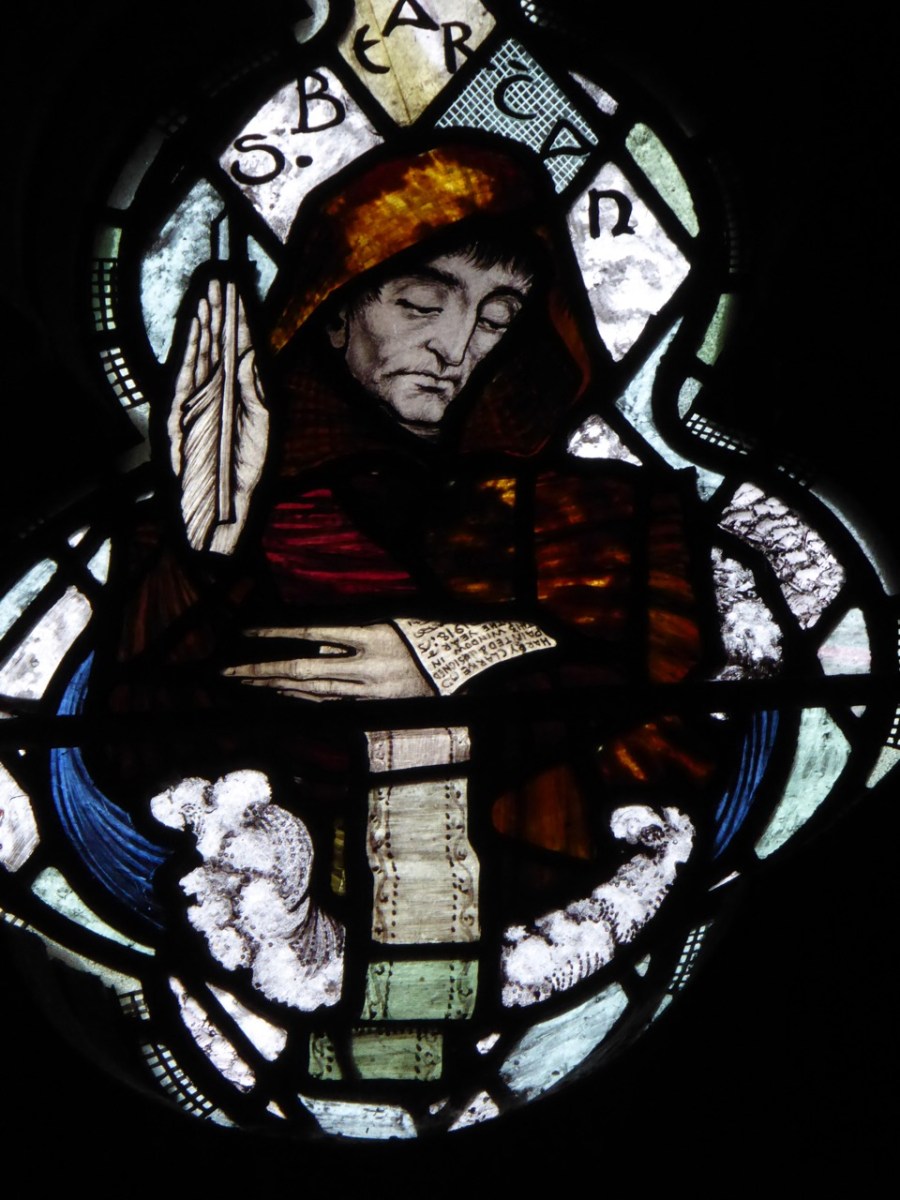
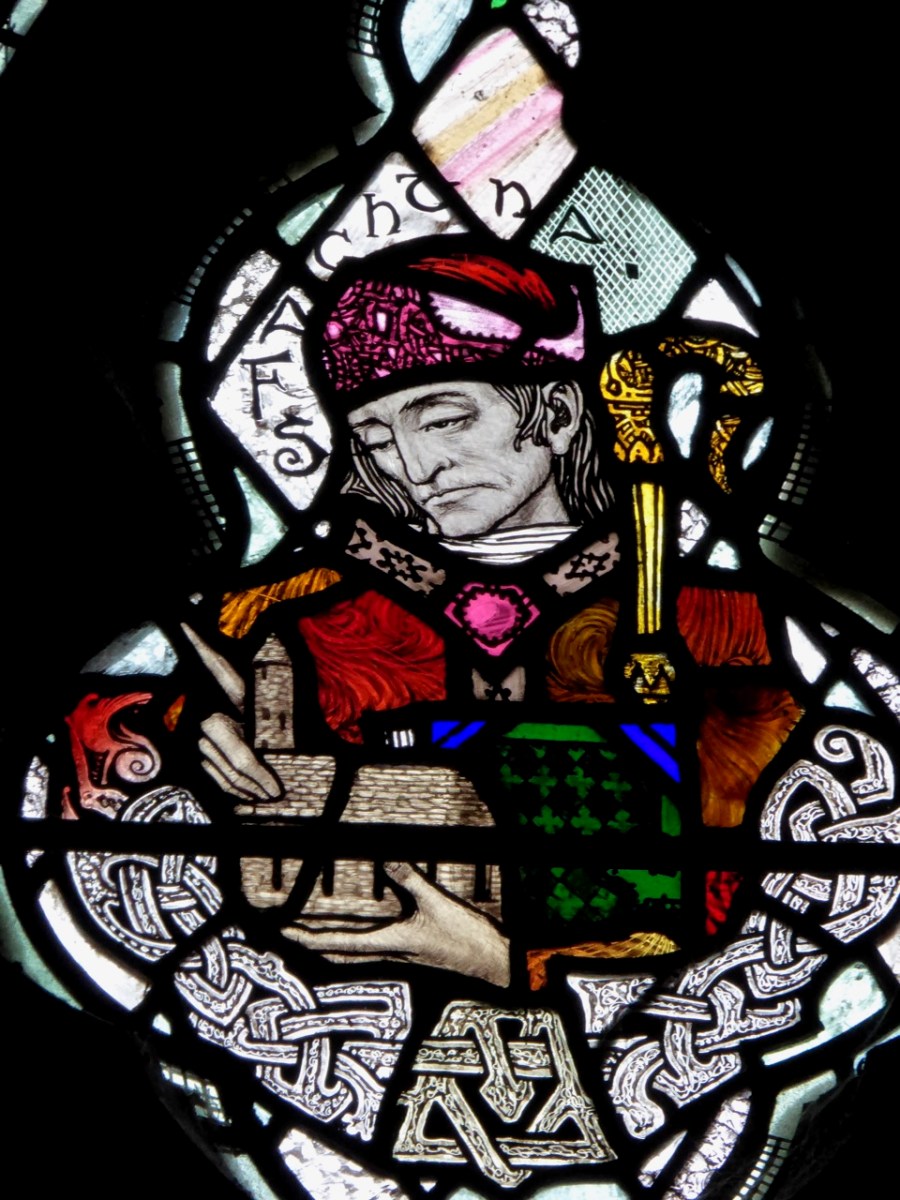
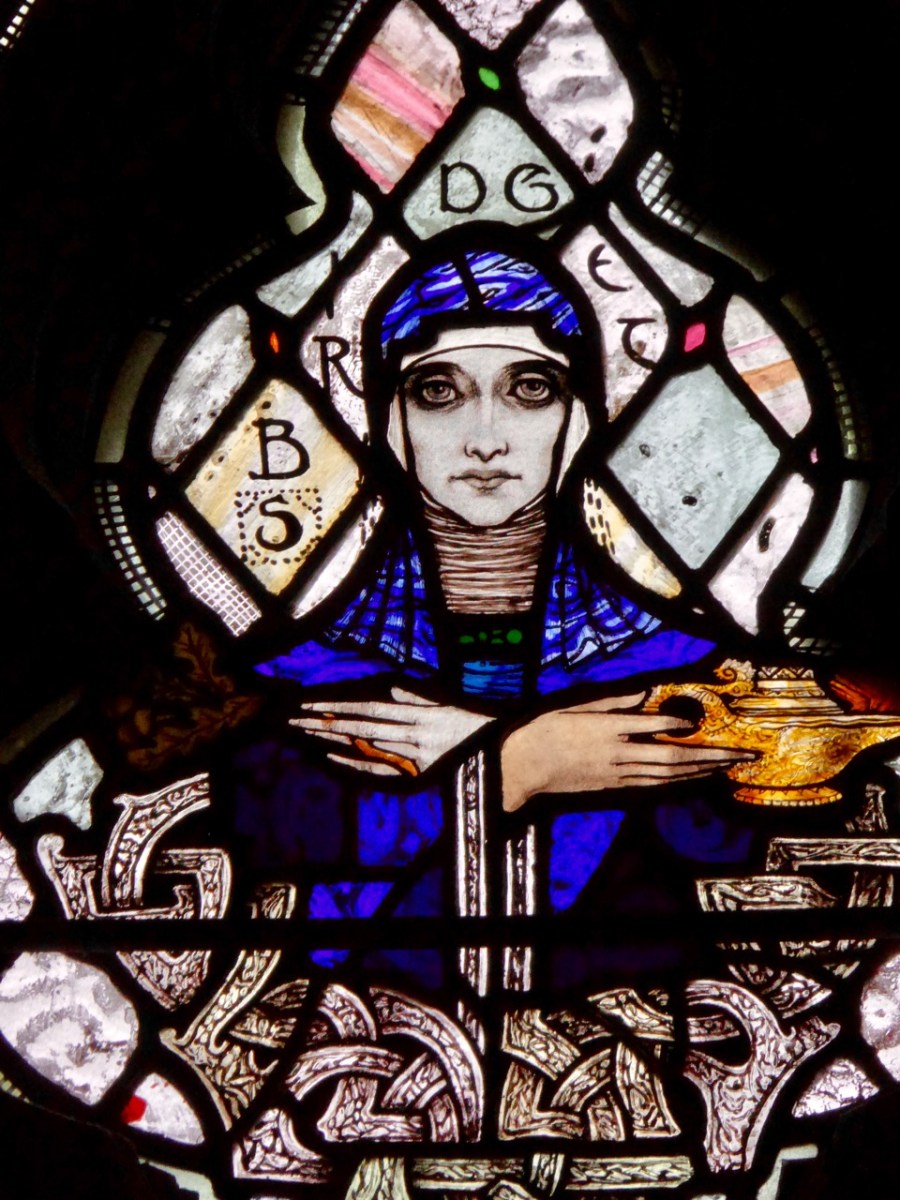
Edith was very much in tune with the Arts and Crafts Movement in Ireland but also with the Celtic Revival (see my posts on the work of Watson of Youghal for a thorough discussion on this style and the term). Within the literary tradition of the Revival there was a focus on the study of our ancient saints and a scholarly emphasis on translating various Lives and Martyrologies, many of whom were alive in the folklore and memory of the countryside. Of the three saints depicted here, Brigid is considered one of our three National or Founding Saints (see this post for more on Brigid), while Fachtna and Barrahane (or Béarchán) are local to West Cork.
Harry used Revivalist interlacing as a supporting device for Brigid and Béarchán. Interlacing – so popular in Ireland at the time – was in fact quite rare in his work, although it had appeared in a couple of the Honan windows, such as the Joseph window, above, in a similar position. Harry was much more influenced by Continental art movements than by the conventions of Revivalist decoration, but Edith was still keen on it, as witness her later design for a mosaic floor in the chancel of the church, so this element may have been at her suggestion, or at least responding to what he saw as her preferences.
For her turn, Edith had done her homework and knew what saints she wanted, discarding Finbarr (Patron Saint of Cork) after an initial dalliance with him. Barrahane had given his name to the area around Castletownshend, Glenn Barrahane, as well as a medieval church (now ruined) and a popular Holy Well pilgrimage (in which I participated in December). Edith’s informant was James Bourke – I have laid out all that information in my post Honouring St Barrahane, so I won’t repeat it here, but do take a look at the detailed photos of the St Barrahane window in that post, including the little surprise that Harry inserted in this window. Interestingly, while Brigid and Fachtna are underpinned by revivalist interlacing, Barrahane is floating on a cloud.
Fachtna was the saint who had founded Rosscarbery and was patron of the diocese of Ross; Harry depicts him holding a church and with his bishop’s crozier. He is gazing contemplatively downwards as if on the Nativity. Notice how the interlacing below him ends in a bird’s head finial.
Brigid is clad in blue (perhaps that same blue that Edith had said ‘hits your eye like a living flame or a blast of wind’. She looks directly out, calm and wise. In her right hand she holds a golden lamp (looking suspiciously like an illustration from the Arabian Nights) and between the fingers of her left hand is entwined the stem of a twig of oak leaves, another of her attributes, tying her to Kildare (or Cill Dara, the Church of the Oaks).
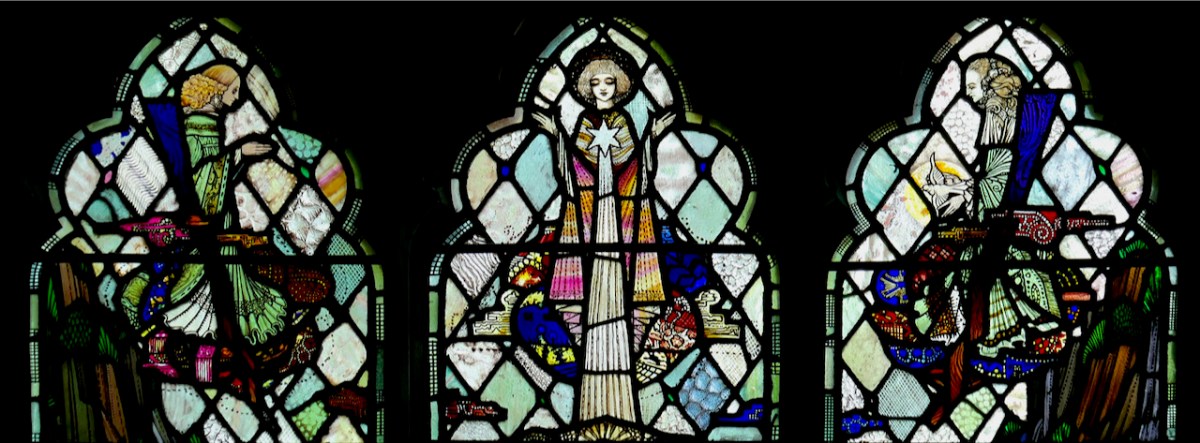
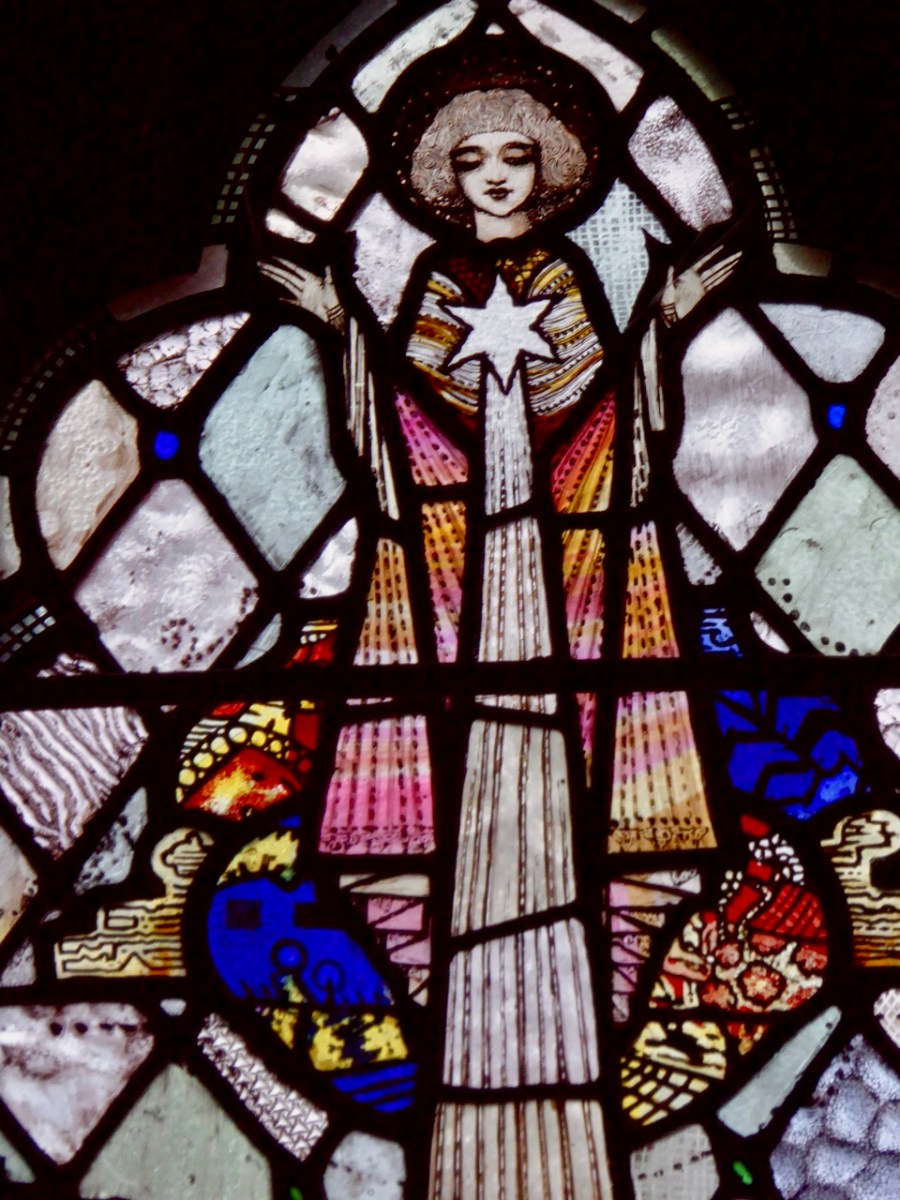
Beneath the three saints are three angels, floating above the Nativity. Although they form a wonderful trio, each is remarkably individual. The middle angel (with a fashionable bob) incorporates the star which is a traditional element in Nativity scenes.
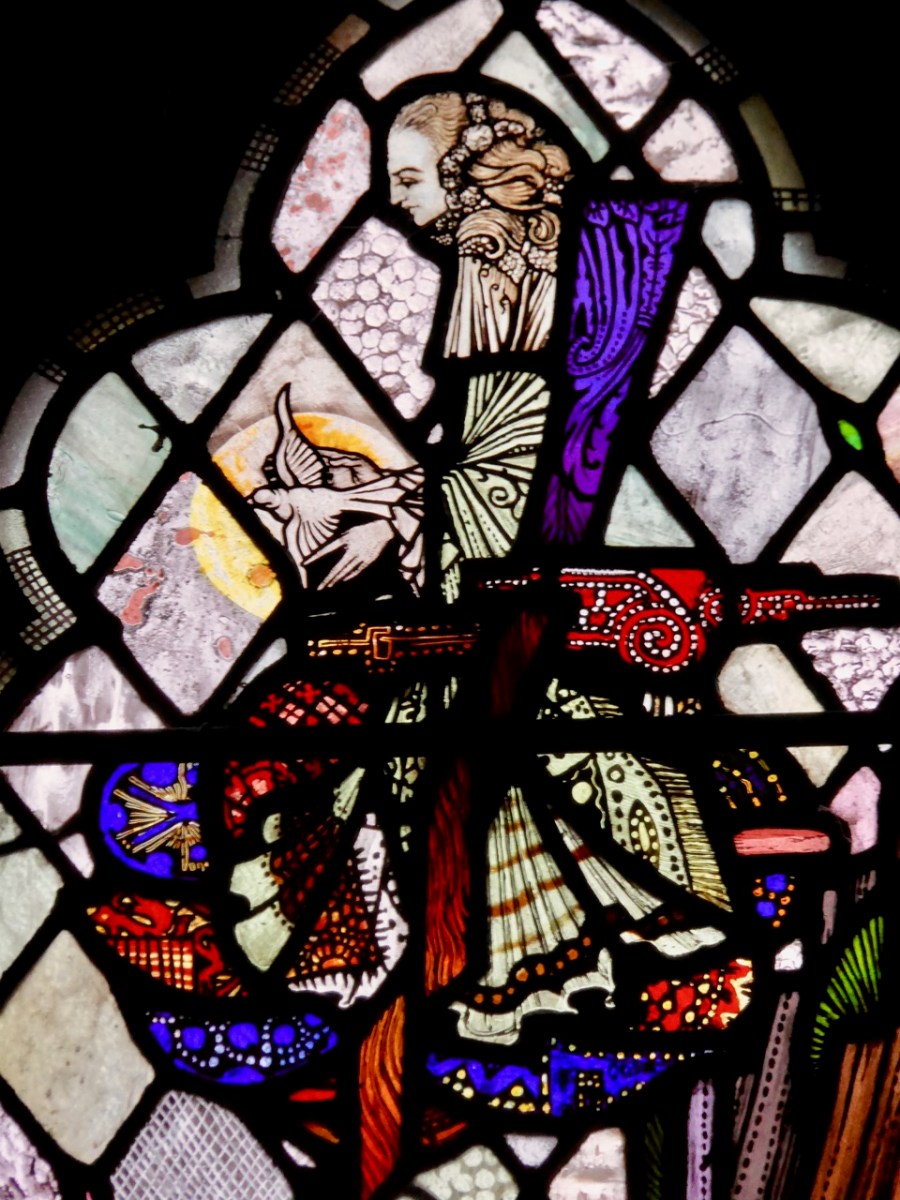
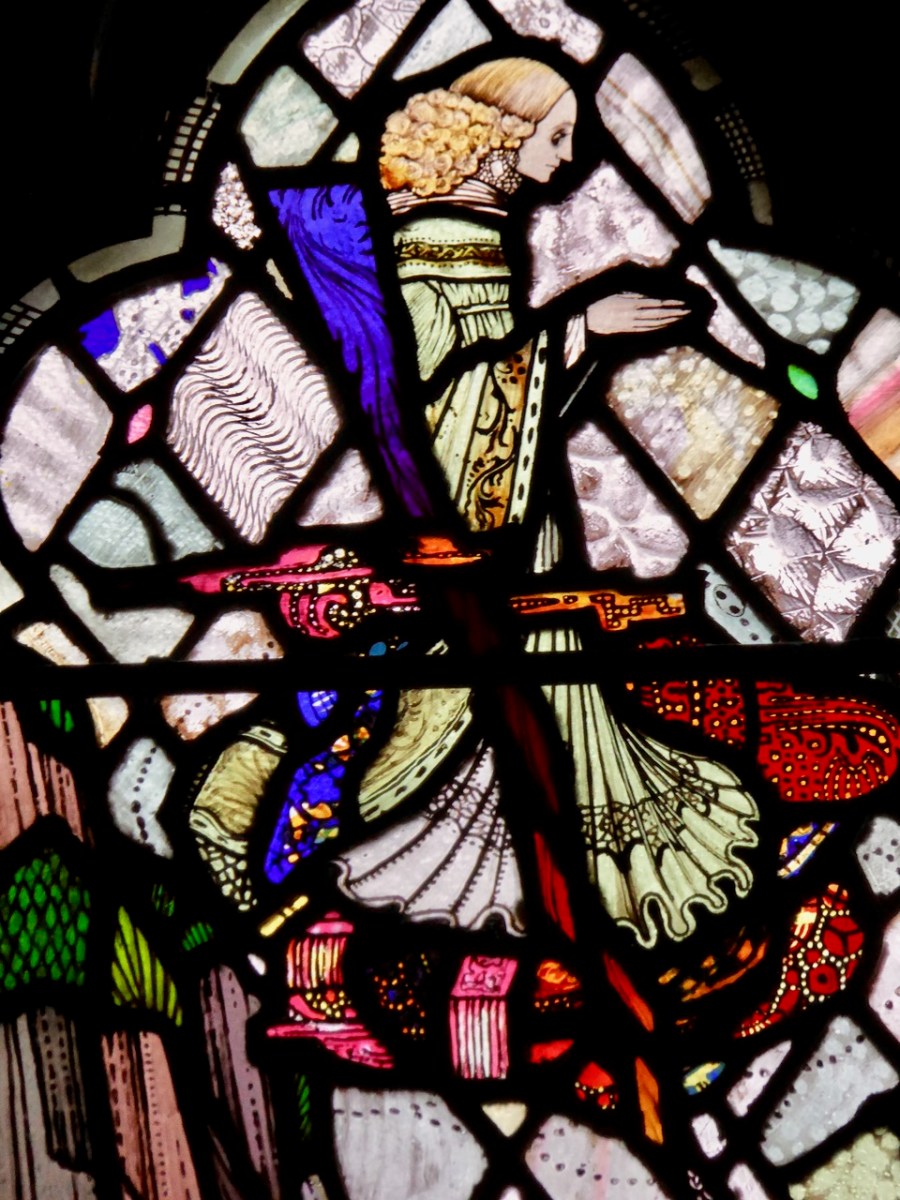
The left and right angels have elaborate, flowing or pleated robes and complicated coiffures. One holds a dove while the other has hands held in prayer. Gordon Bowe, in trying to analyse the decorative element at the centre of these angels says in her thesis Both seem to be manipulating jewelled levers, similar to the studded gun holsters favoured by cowboys.
I love this sentence but perhaps understandably it didn’t make it into her book, where she merely remarks that the saints and angels abound in intriguing decorative detail.
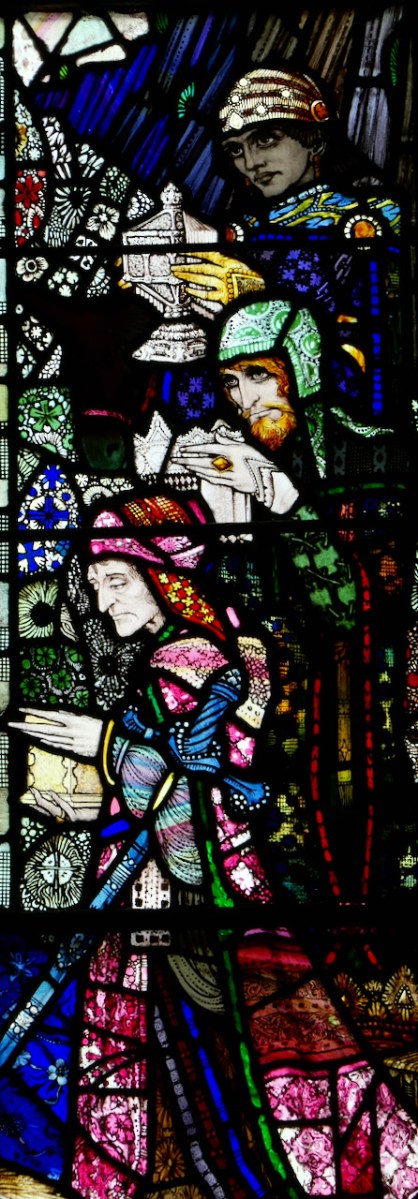
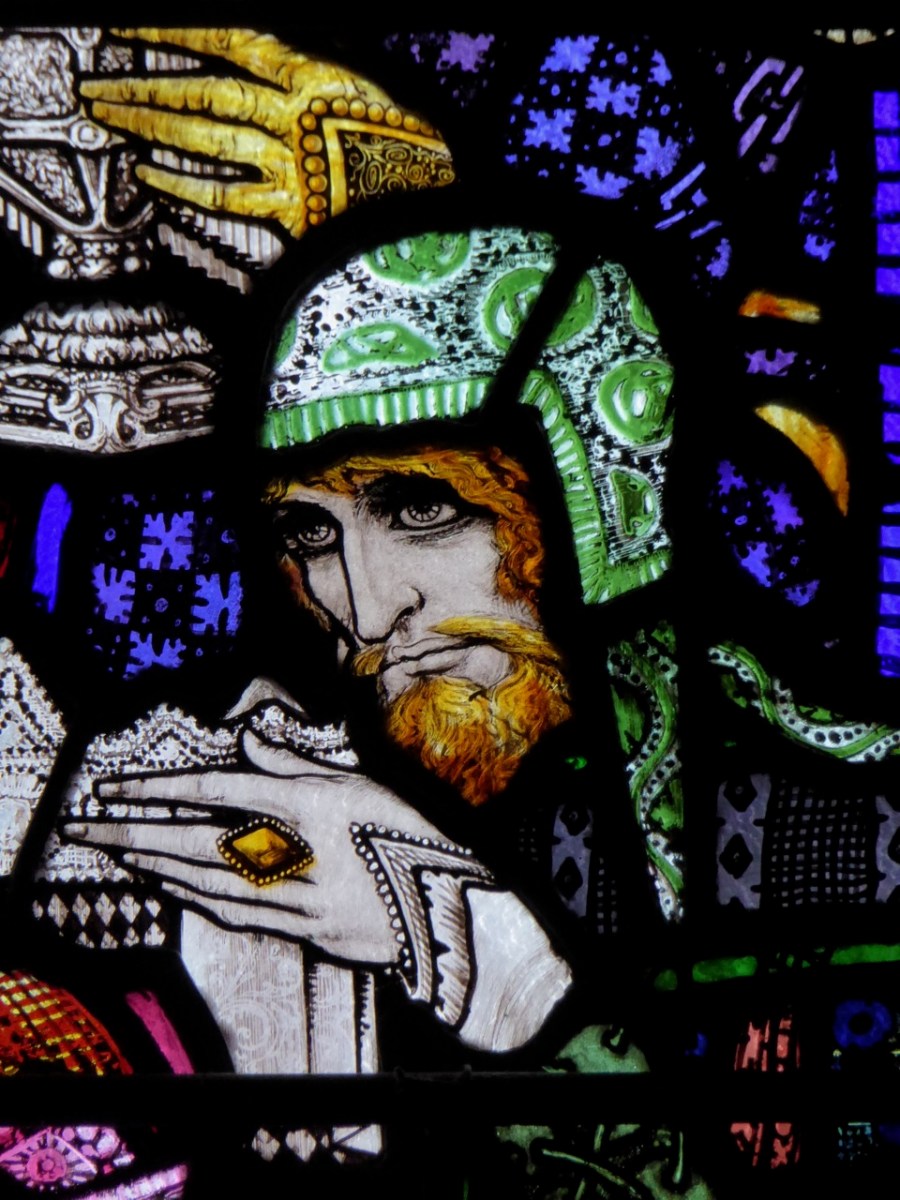
The central scene, of the Nativity, is beautifully constructed. Besides the angels above it, the framing devices consist of three elements. The first is an arc of silver chain upon which everything rests, most importantly the manger. You can see a close up of it in the signature panel above. The second is the rock face which stretches above and behind the Magi and the Shepherds. The third is one of Harry’s typical expanses of ‘floral ornamentation’ – one of his future hallmarks. Of this fantastical conglomeration of flowers, leaves, mosses, jewels, geometric shapes Gordon Bowe says always inventive and subtle in his pen and ink and watercolour illustrations, ingenious when painted or acided onto his glass by himself, but too often repetitive and lifeless . . . when imitated by his followers.
The robes of the lowest Magi and the lowest shepherd extend beyond the supporting chain-like arc, bringing a slight sense of perspective to the composition. Gordon Bowe likens the rich treatment of the fabric to the work of
Gustav Klimt here and his flat treatment of interlocking decorative patterned, often symbolic planes, in which he would sometimes use coral, gold, mosaic, turquoise and semi-precious stones with casein paint to make up his richly mantled figures . . .Both men rely on the faces and hands of their figures to convey a human expressiveness and only here does any attempt at modelling occur. The eyes of their figures transport the spectator into a world of opulent trance. Both artists are equally unconcerned with perspective, reality or a third dimension. In the tradition of the best purely decorative work, background and foreground, figure and setting are equally important and integral. Any light is reflected from within the fabric of the design. Movement is created by how the light affects the surface of the picture and by the sinuous symbolic fluidity of the line. This is what W Hoffman has called Synaesthesia – a stylised ornamented style, where people are statues, backgrounds are wallpaper and interchangeable linear formulate are used as arrangements for figures and settings in different colour relationships, so that obstruction and symbol interrelate.
The Life and Work of Harry Clarke Ph D Thesis by Nicola Gordon Bowe, 1981, P 249
As Gordon Bowe shows us, Harry was totally tuned in to the modern movements of his day – decorative and symbolist traditions that envisioned an idealised, stylised and imagined-medievalist form of representation that was the opposite of realistic depiction. She notes – there is no attempt whatsoever to suggest that the kneeling shepherd has ever set hands on the earth or worked as a shepherd.
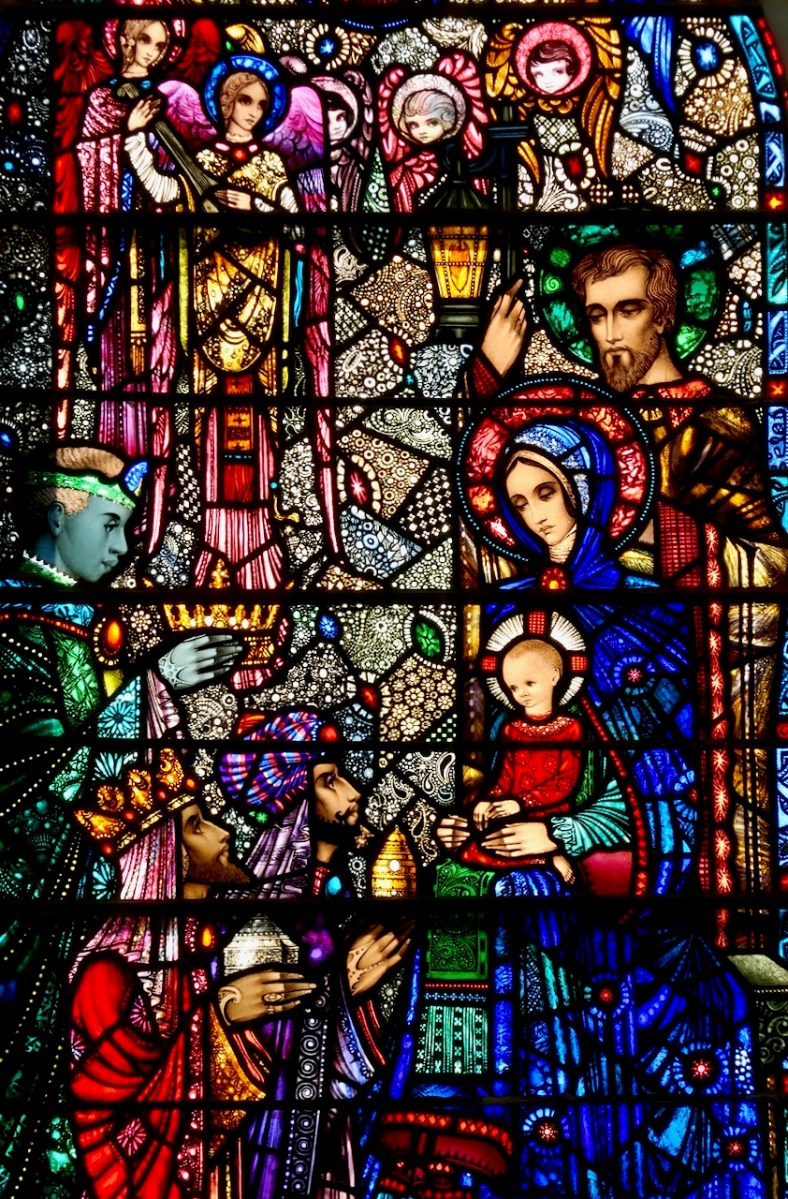
Three gorgeously apparelled Kings are balanced by equally splendorous shepherds, each holding gifts. Almost hidden to the right of the upper shepherds is the head of a cow – it is hard to see as it is done in a dark purple glass. Local lore is adamant that this is an homage to Edith who apparently pioneered the introduction of Friesian Cattle into Ireland.
Joseph stands guard over Mary and the Baby, holding a chain with a lantern and gazing out directly at the viewer. Mary’s expression is gentle, her hair is a golden blond, surrounded by a halo of pearls, her robe, in traditional blue, studded with star-like flowers.
The baby, looking more like a wise elder than a newborn, lies in the manger, his hands up to embrace the world, his halo a delicate filigree. The coats of arms lie at the bottom of the panel – they were done and installed after the rest of the window was finished and Harry came down to supervise their insertion. That probably explains why this window has two signatures (did you go back and check the St Barrahane post?). Unfortunately, the wooden screen that stands behind the altar obscures the base of the window and makes it impossible to photograph the Townsend coat of arms (below) except from the side, but it’s another good opportunity to view the quarries.
Let us remember that Edith had misgivings about the choice of Harry to do this window. She was concerned about the “hellish splendour” of his Honan windows, the “burning and furious brilliance” of his glass, which she found “perfectly amazing but not quite pleasant.” In a letter referred to by Rauchbauer she “insists again that something a little less intense is required than the Bertie windows.” She may well have been concerned about the effect of full-on Harry on elderly parishioners, who had to be onside for the windows to go ahead. In any event, it looks like she managed to communicate well with Harry, and that he understood the brief – to “adapt his work to the church & to realise how to get harmony into it.”
It is, indeed, charming and harmonious. No macabre beings peer out from behind the figures (as they do in the Honan and in the St Louis window down the aisle in St Barrahane’s), there are no Aubrey Beardsley stern and “horrible” faces and no predella scenes of sacrifice or death (see St Dympna, for example). All is gentleness and serenity, compassion and contemplation. One wonders if Harry would have been so biddable a few years later.
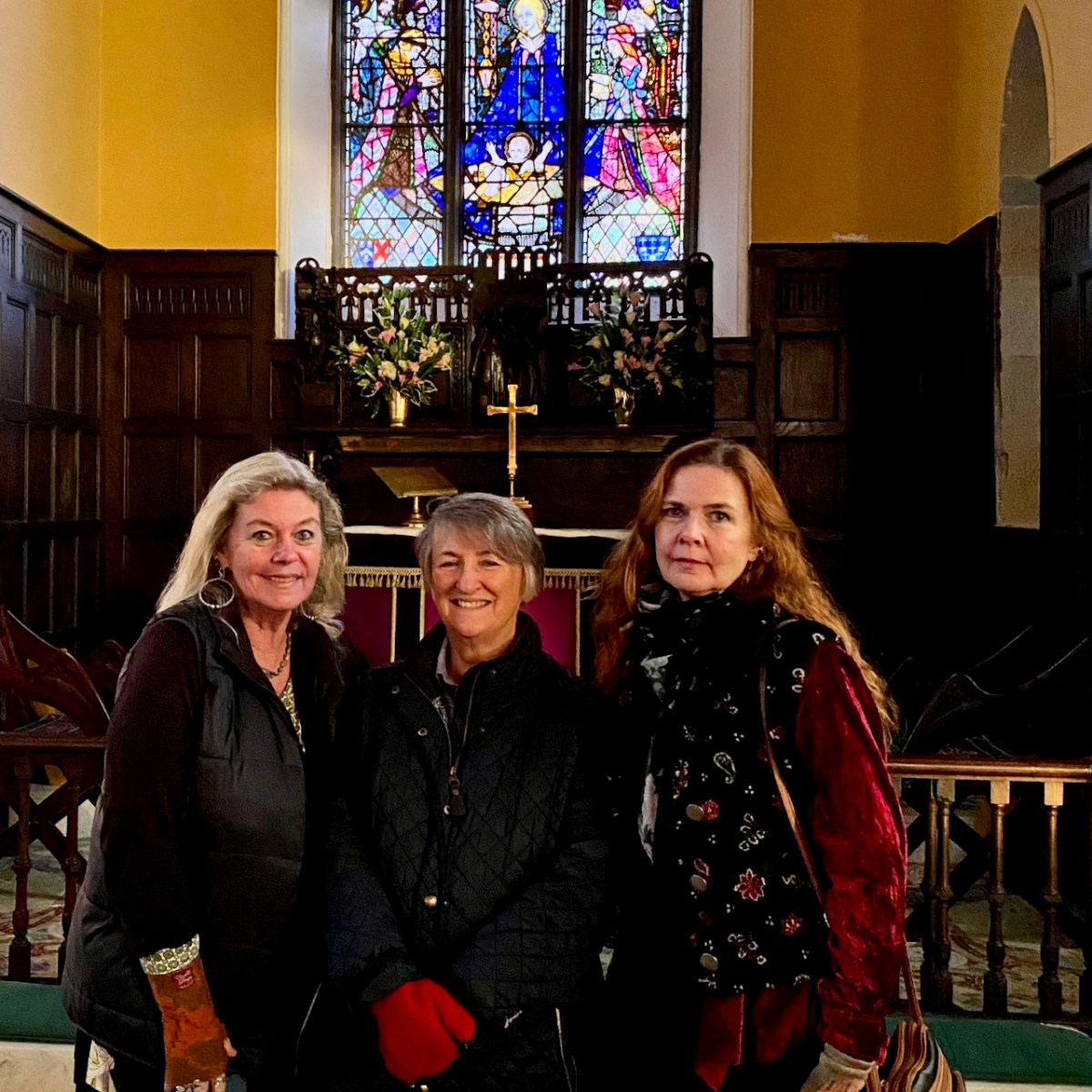
A final special photograph to finish this series. Here I am in front of the window, with Harry’s two granddaughters, Etain and Veronique, during a recent visit to Castletownshend
In this post I am relying both on Gordon Bowe’s Life and Work of Harry Clarke and on her Doctoral Thesis, lodged at NIVAL. I am deeply grateful to David Caron for facilitating my viewing of this material.
Dear Readers – we know you aren’t all on Facebook, so this is for those of you who follow us on WordPress or other platforms. On our Facebook page, we’ve been running a series on The Nativity in Stained Glass in the lead up to Christmas, so here, in one post, are those photographs and text. All the windows are Irish and 20th century. Merry Christmas to you all!
This one is by George Walsh and it’s in Frankfield Grange Catholic Church in Cork. This scene is part of a larger window, the main scene depicting the Annunciation. More about George Walsh here.
Kevin Kelly was a long-time stained glass artist for Abbey Studios. He loved doing Nativity windows. This one is in Inchigeelagh, Co Cork and featured on a UNICEF Christmas Card. It’s worth taking a look at the detail – amazing for what’s quite a small window.
This beautiful Nativity window is in Mayfield, Cork, in the Church of Our Lady Crowned. The Murphy-Devitt Studios were a group of young, dedicated artist and designers, determined to bring something new to traditional stained glass. We think they succeeded magnificently.
The Dominican Convent in Wicklow town has a gorgeous series of windows – the Mysteries of the Rosary. They were done in the Harry Clarke Studios in 1938, several years after Harry’s death, but his influence is very evident. They were mostly designed and painted by William Dowling, but with much input from Richard King. To see if you know the difference between Harry Clarke and Harry Clarke Studios windows, take the quiz, or just cheat and go straight to the answers.
Patrick Pollen, although he grew up in England, made his stained glass career in Ireland. Having been bowled over by Evie Hone’s Eton windows he came to Dublin to work with her. Hone’s influence is readily apparent in these two panels, which form the predella (lowest section) of a window in St Michael’s church in Ballinasloe, Co Galway, dating to 1957. I haven’t written about Pollan (yet) but you can read about Evie Hone here.
We’ve kept the best for last – the genius that is Harry Clarke. This is his Nativity Window, done in 1919 for Edith Somerville and her family, for the C of I Church of St Barrahane in Castletownshend, Co Cork. Lots more about Harry Clarke, Ireland’s greatest stained glass artist.
Welcome to the UCD Library Cultural Heritage Collections blog. Discover and explore the historical treasures housed within our Archives, Special Collections, National Folklore Collection and Digital Library











 Roaringwater Journal