Rathgall Hillfort

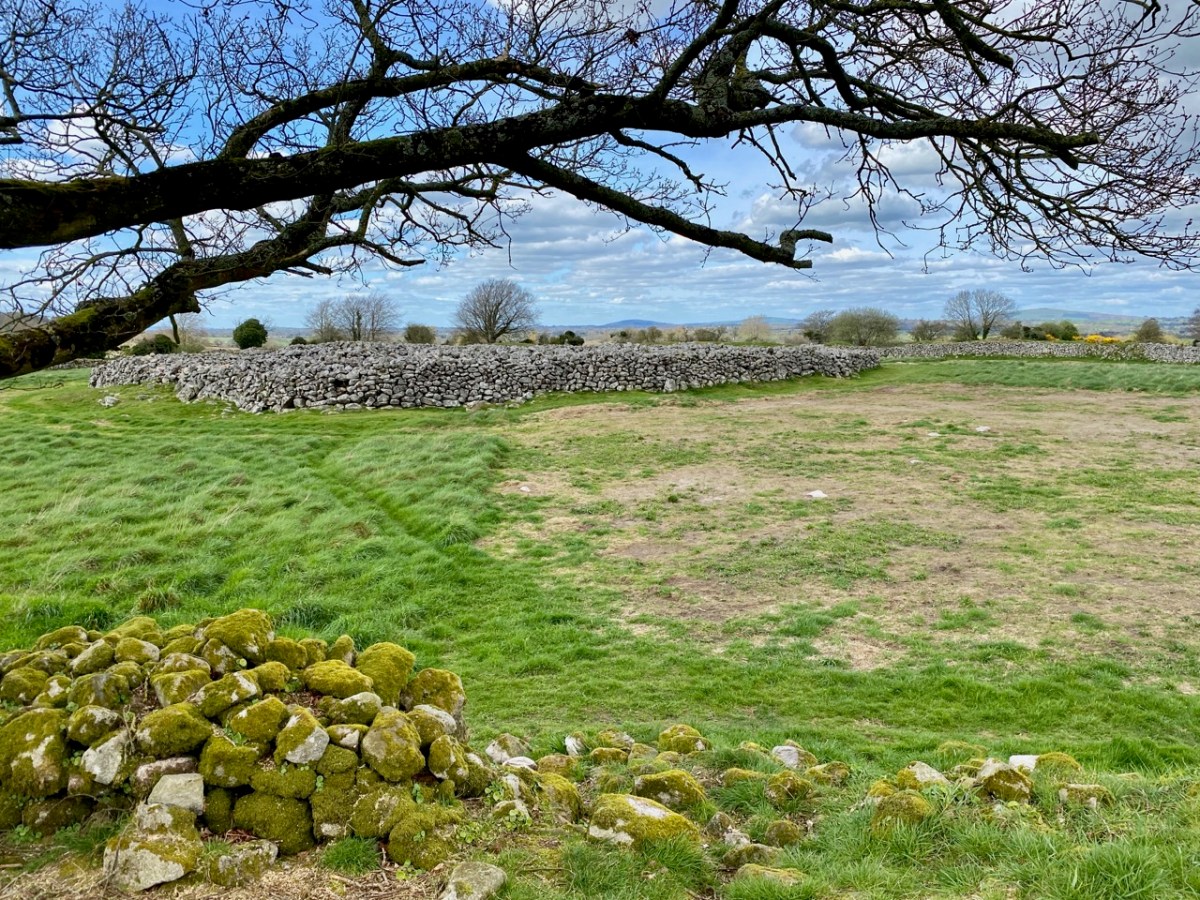
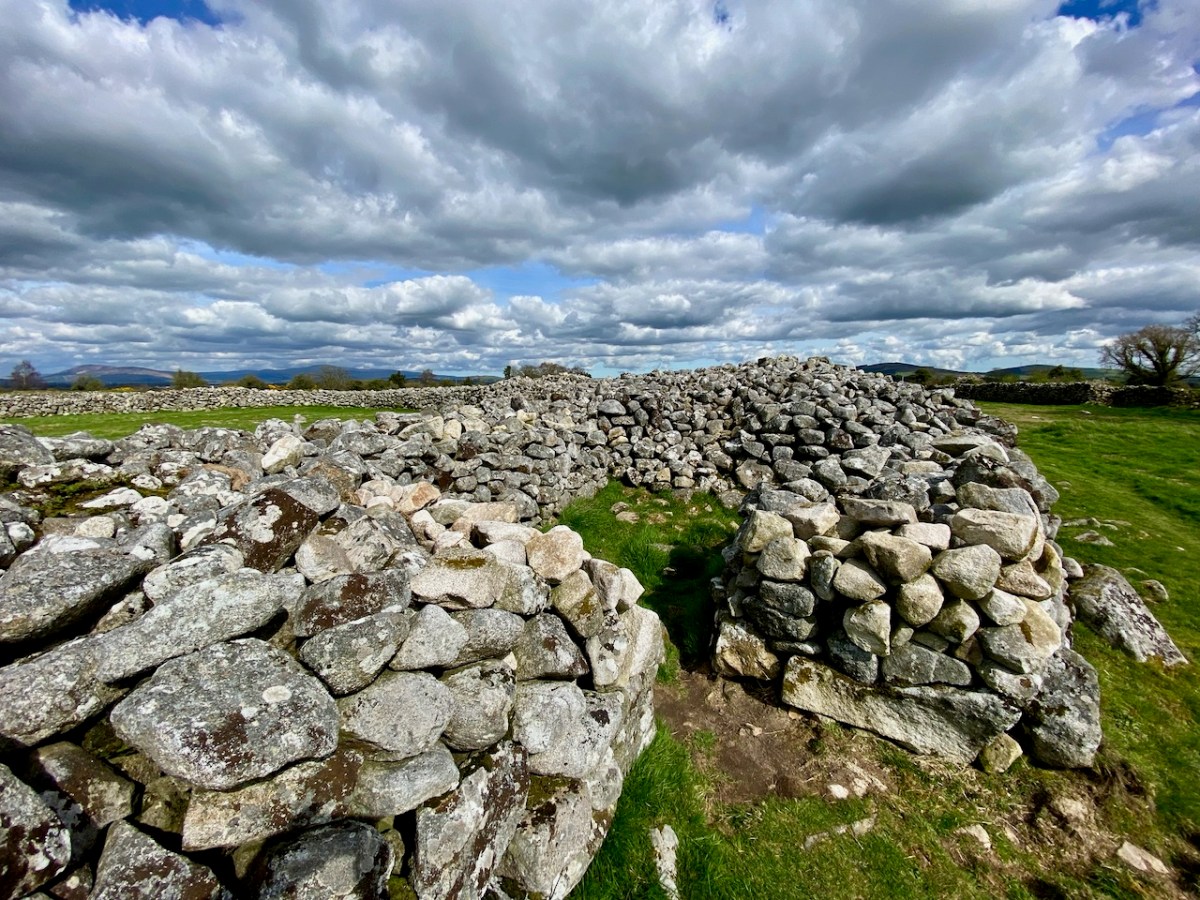
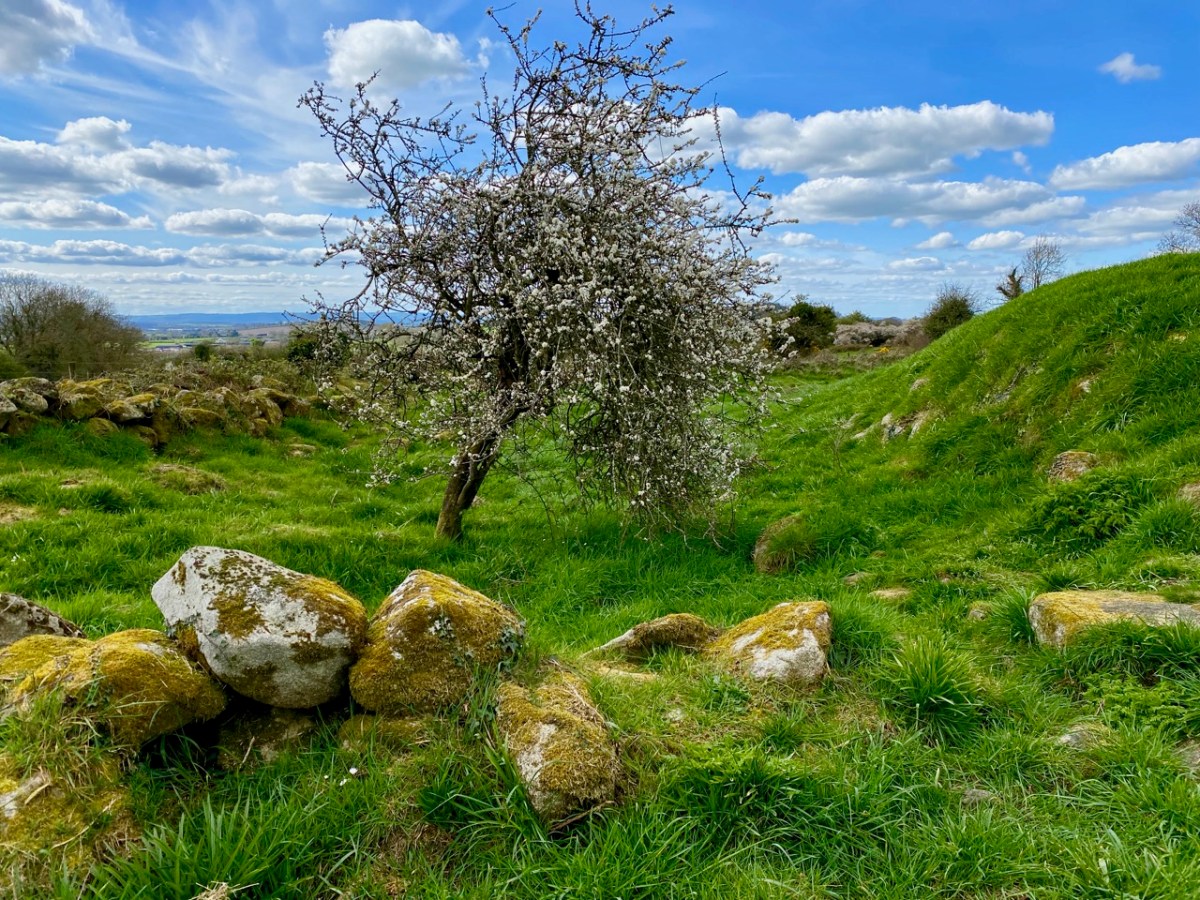
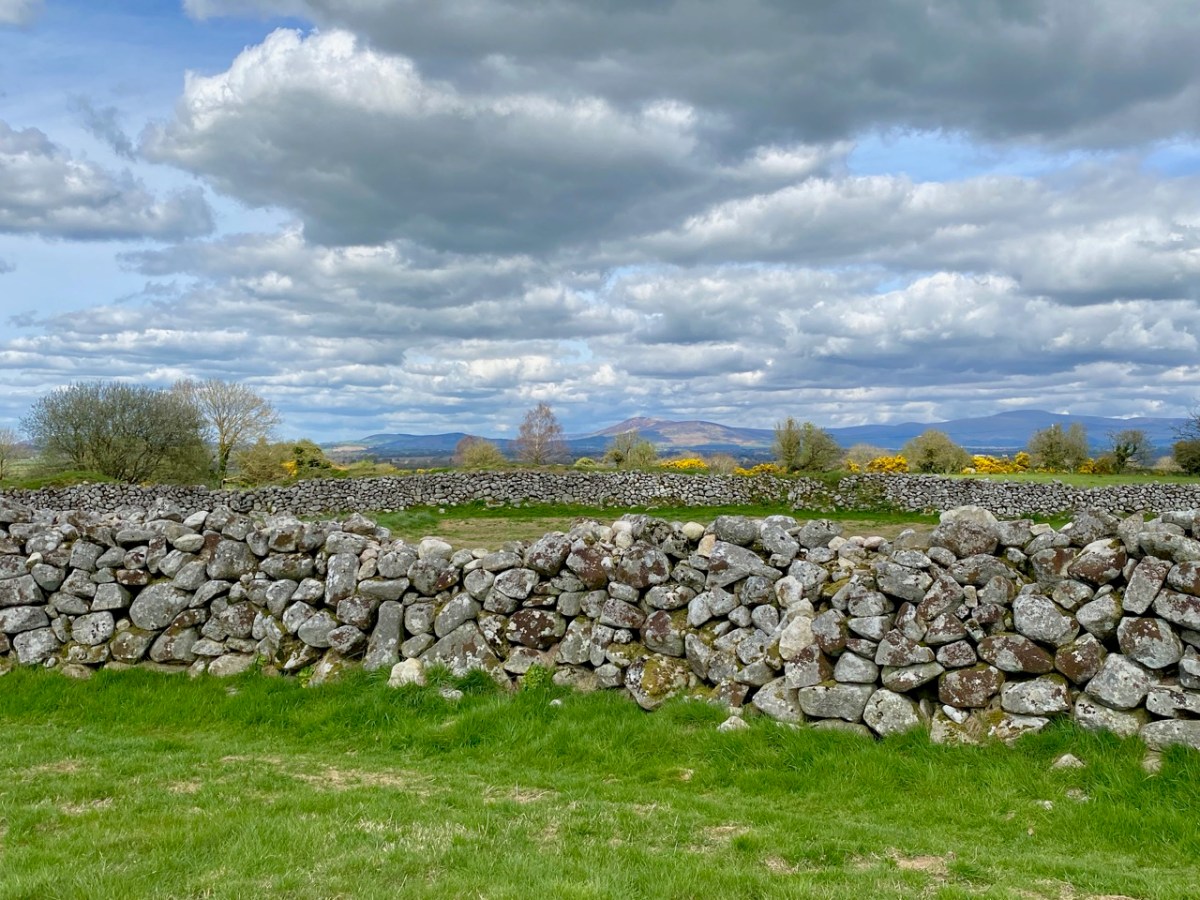
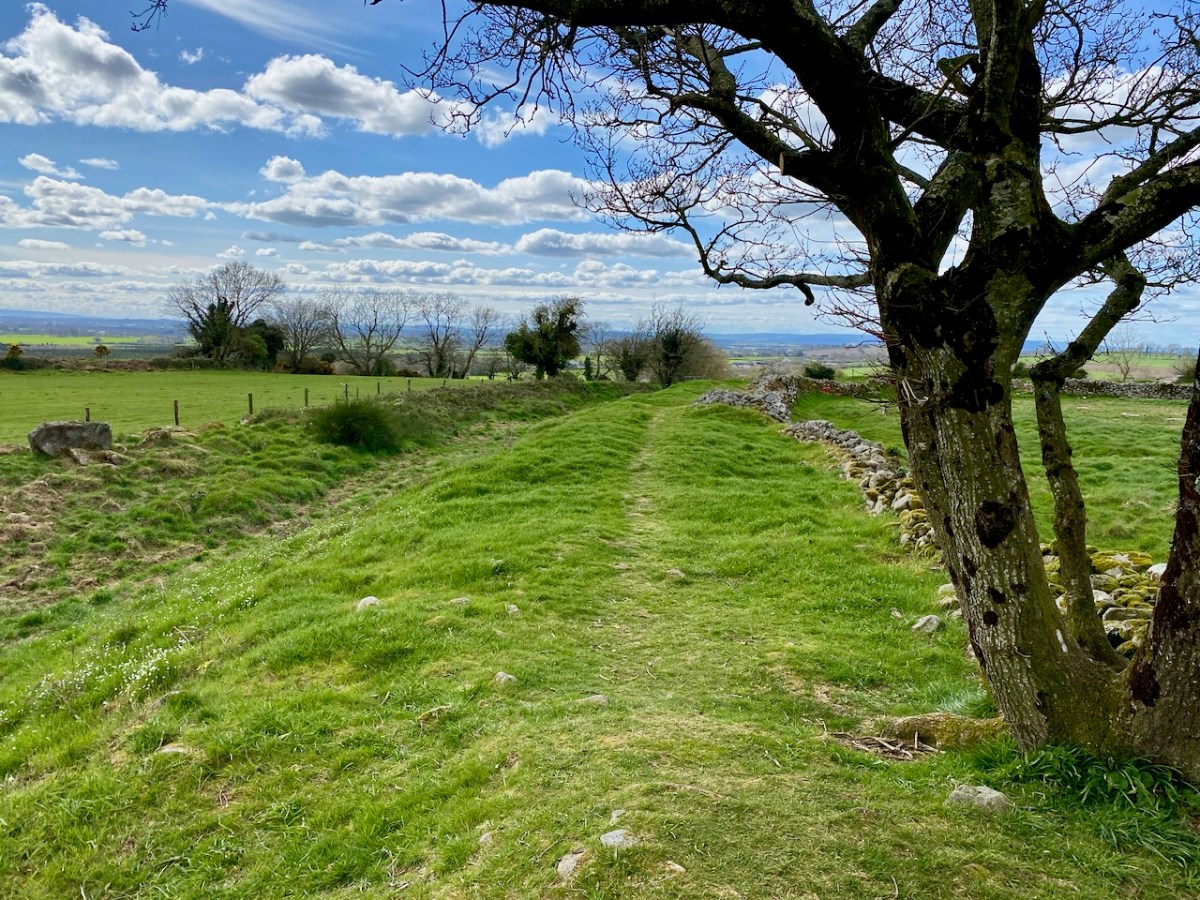
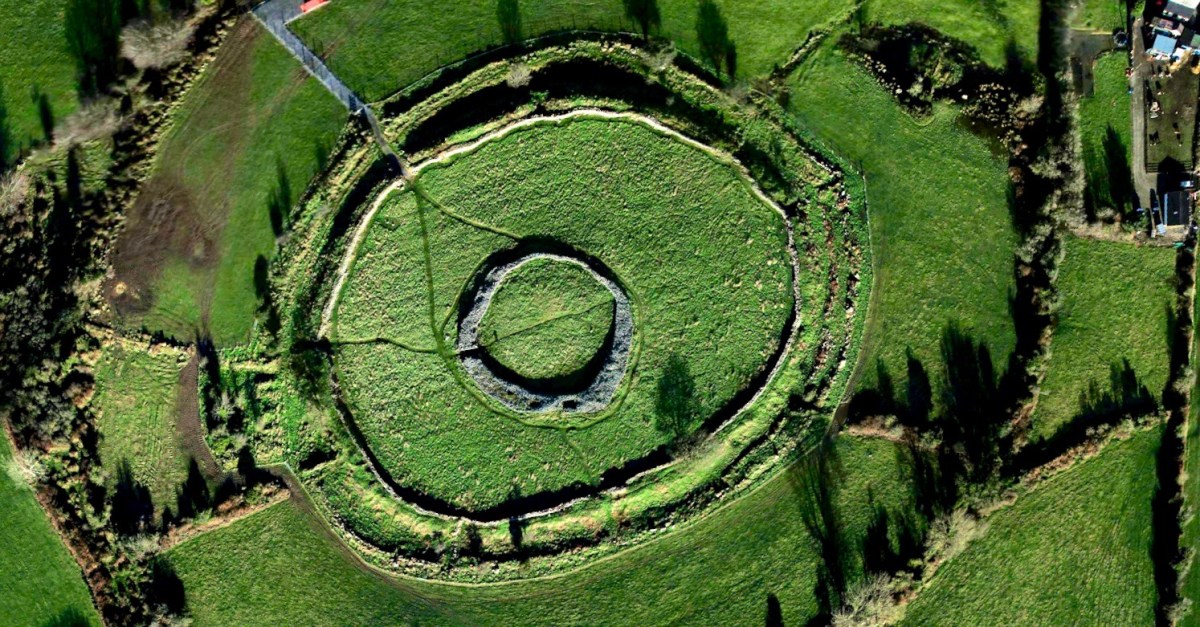
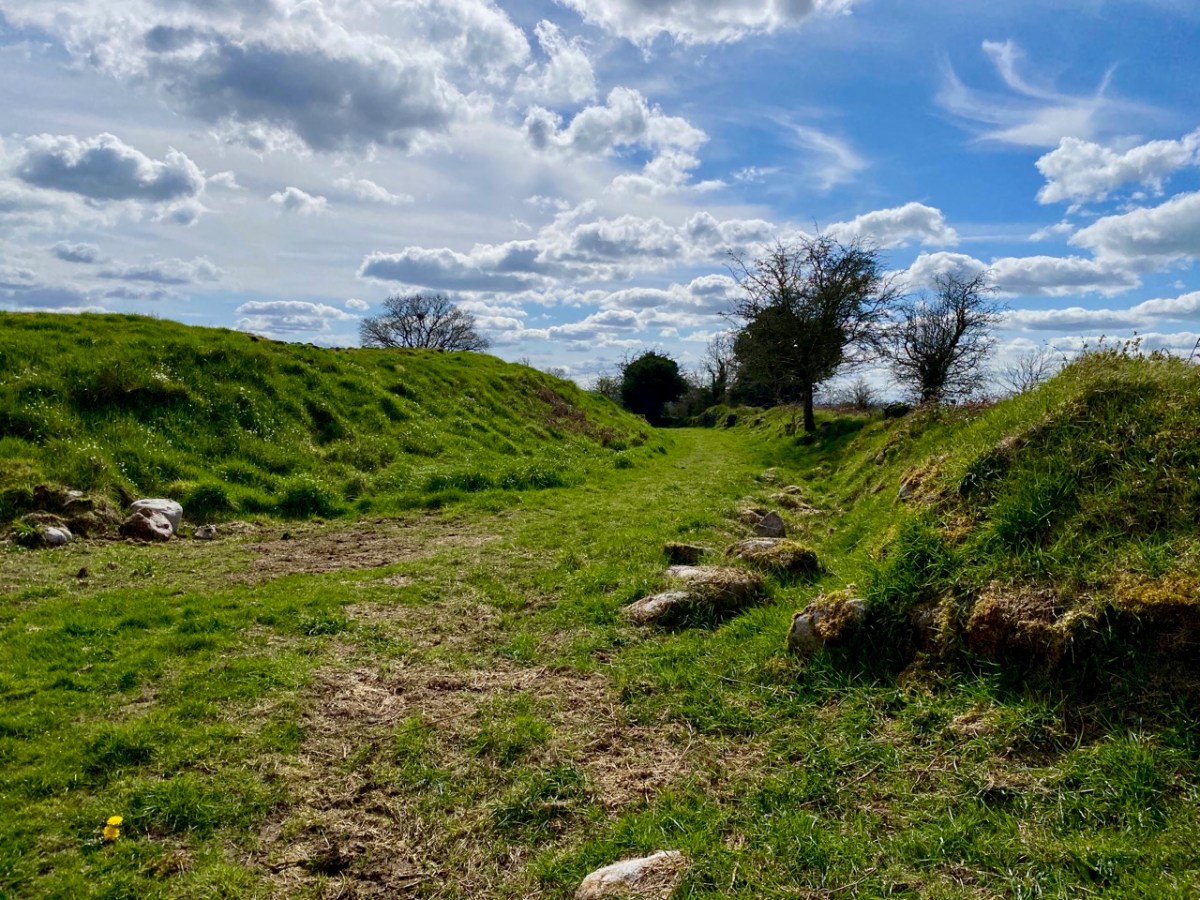
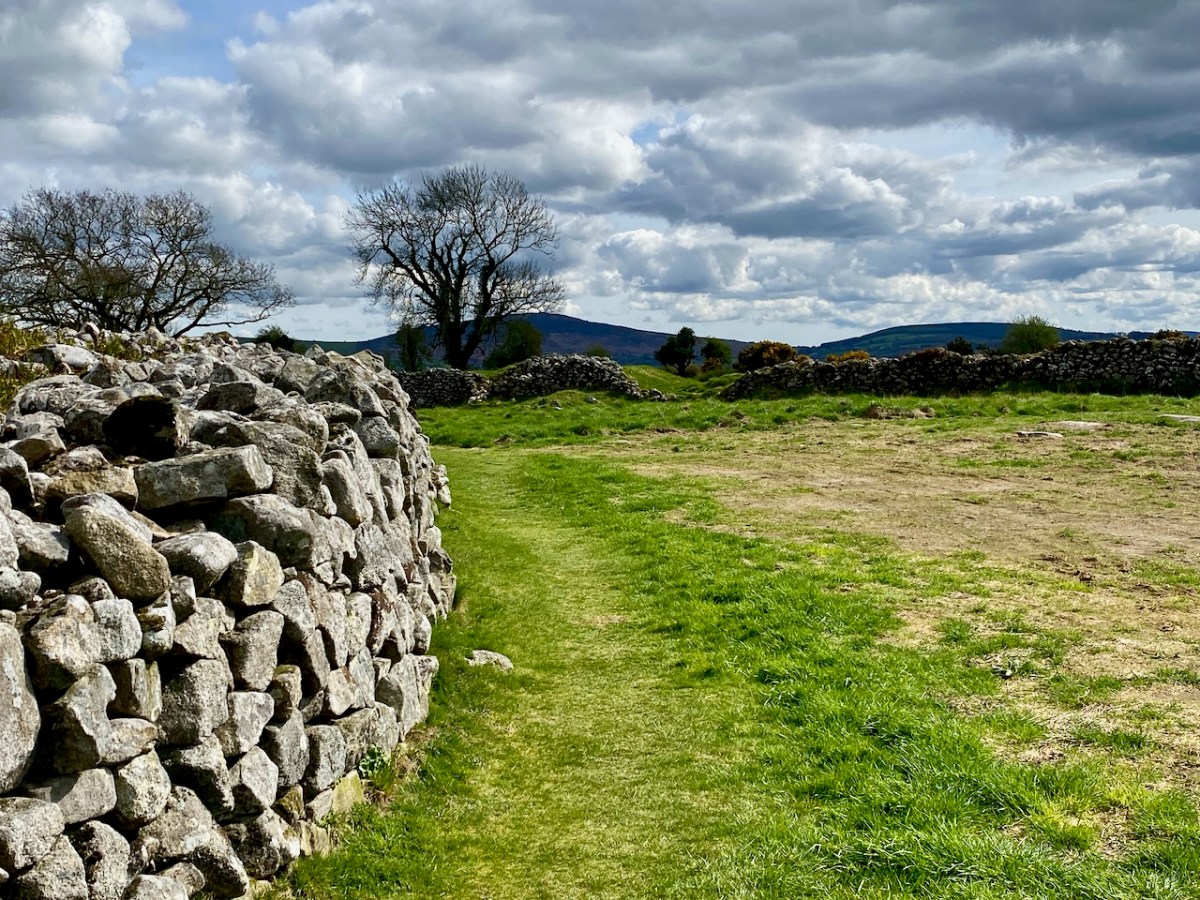
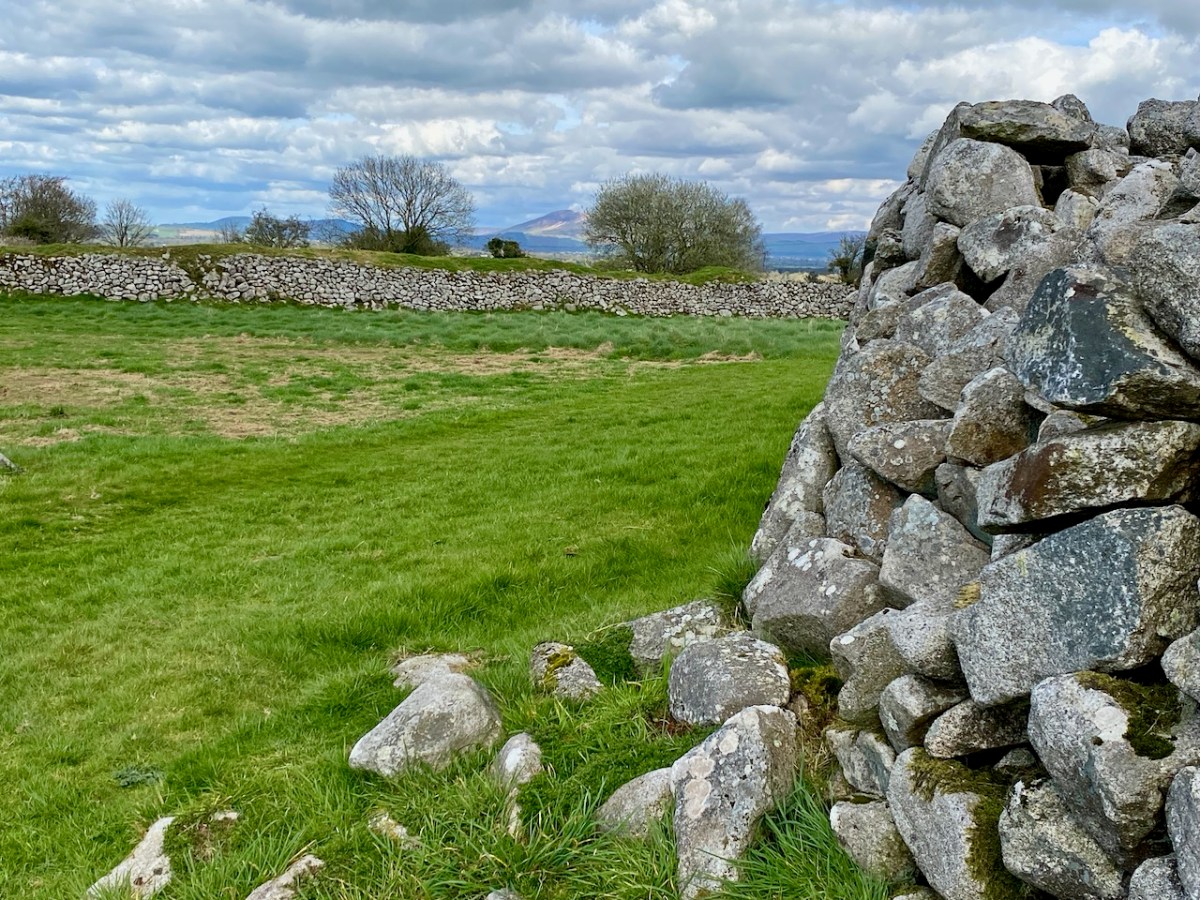
Our journeys in search of important Irish archaeology can take us a long way from home. Today’s subject – the impressive Rathgall Hillfort – is located in County Wicklow, on the east side of the island. But it is well worth a long journey: its size is impressive – it occupies an 18 acre site. And the history of the place goes as far back as the Neolithic age. We visited on a brisk spring day, when the clouds were determined to contribute to our appreciation of this monument.
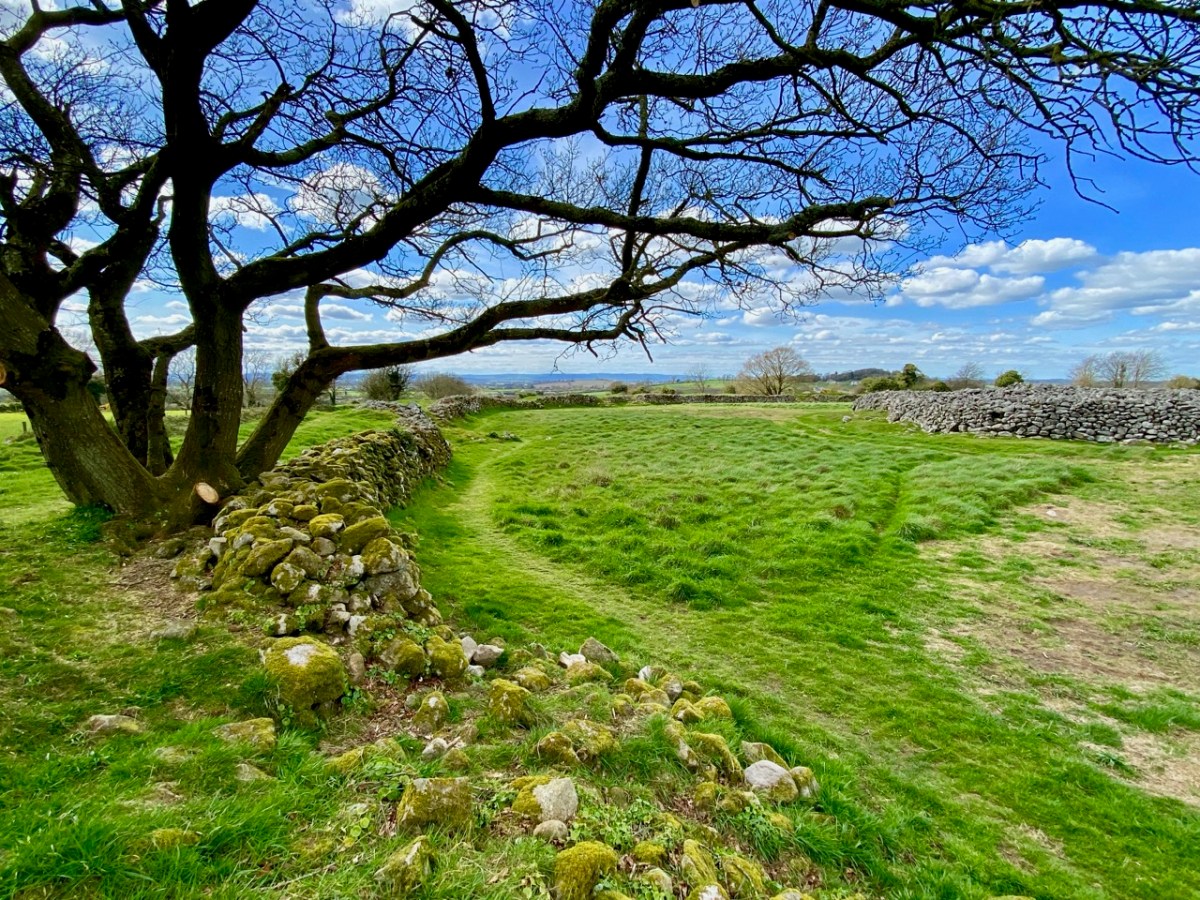
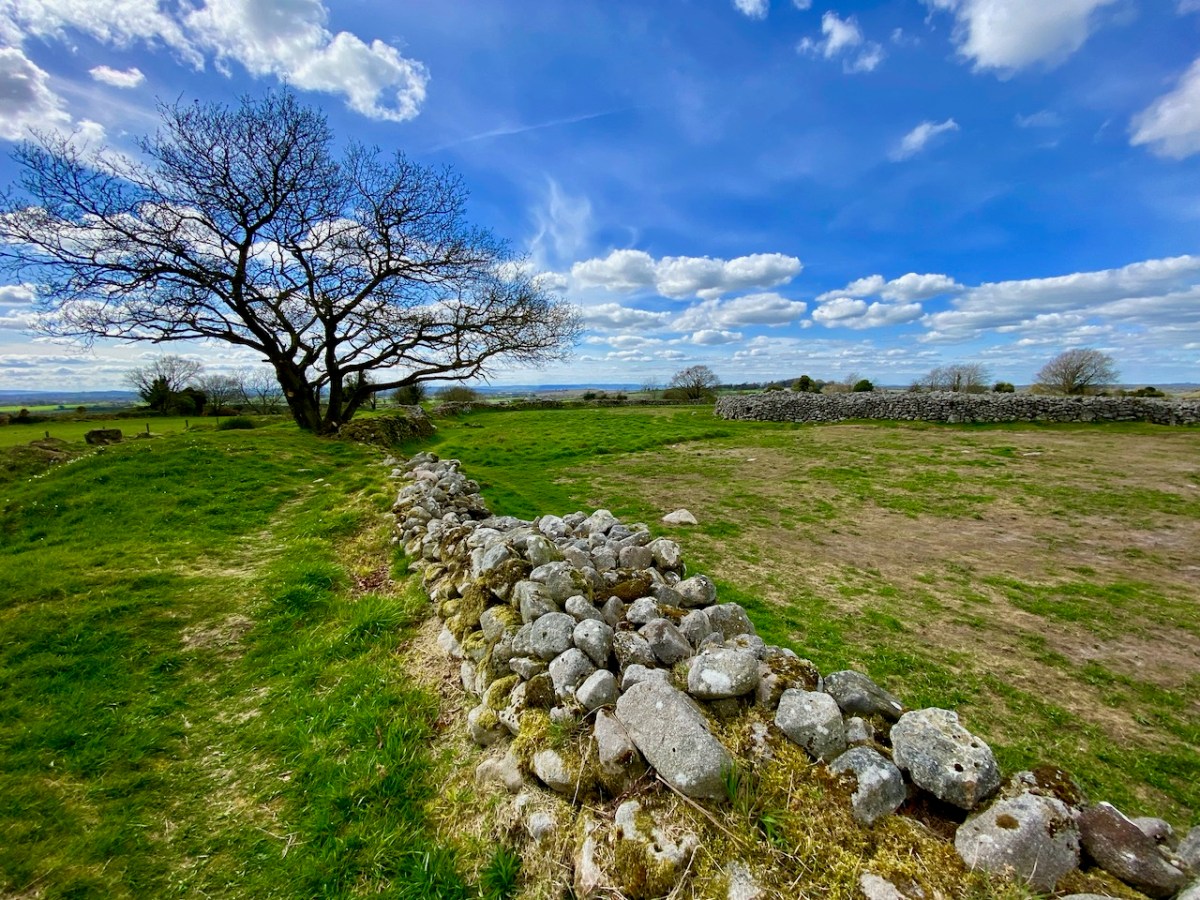
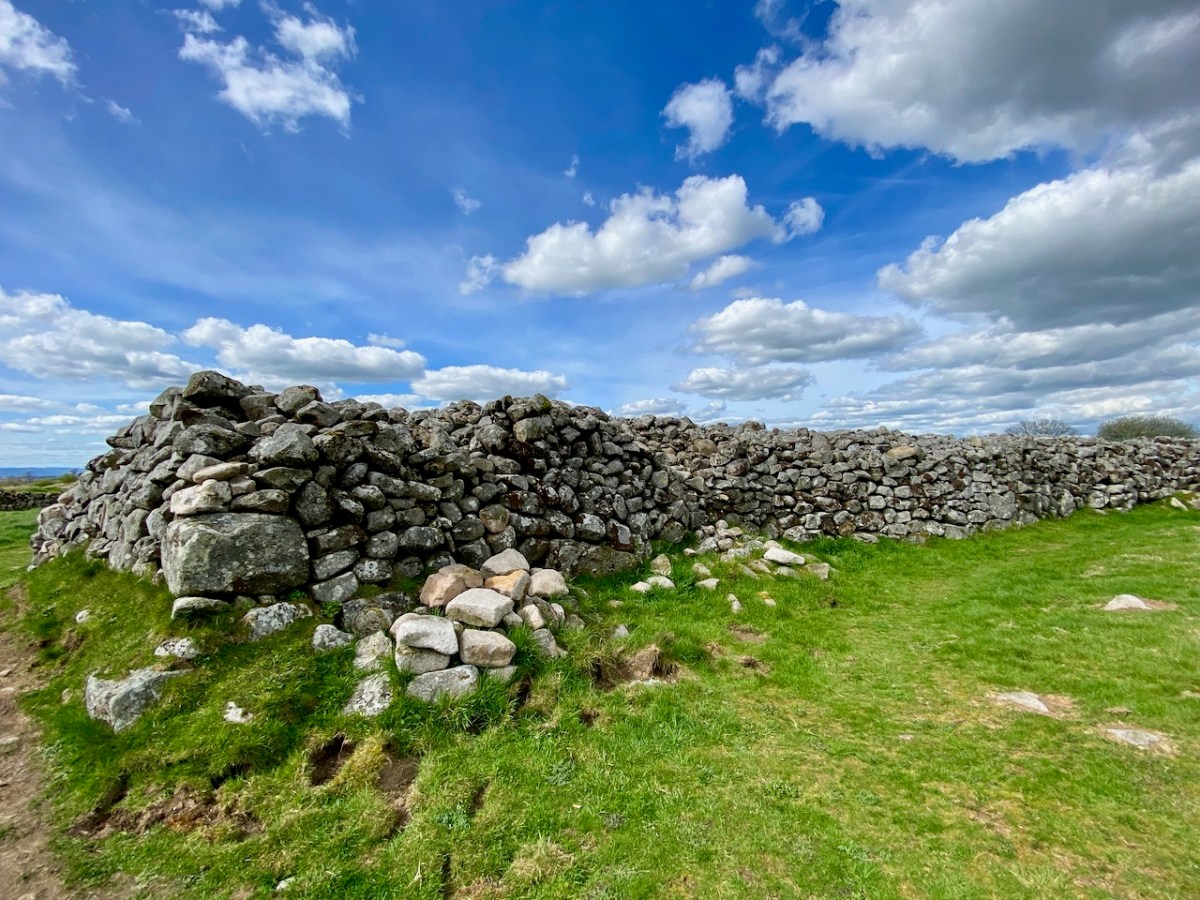
The size and longevity of this hillfort push it into a rare category. The substantial central rampart of stone walling is medieval, but the outer rings of stone and earth appear to have considerably earlier dates.

. . . Rathgall was a site of quite exceptional importance in the centuries spanning the birth of Christ, an importance that was clearly pan-European. The variety of structural information that the excavation yielded is unprecedented in the Bronze Age and the extraordinary concentration of artifactual evidence from the site has not been matched elsewhere in the country. Rathgall opens a wide range of questions concerning, not merely the nature of the Ireland’s later Bronze Age, but also the role of the hillfort in contemporary cultural developments . . .

Professor Barry Rafferty 2004
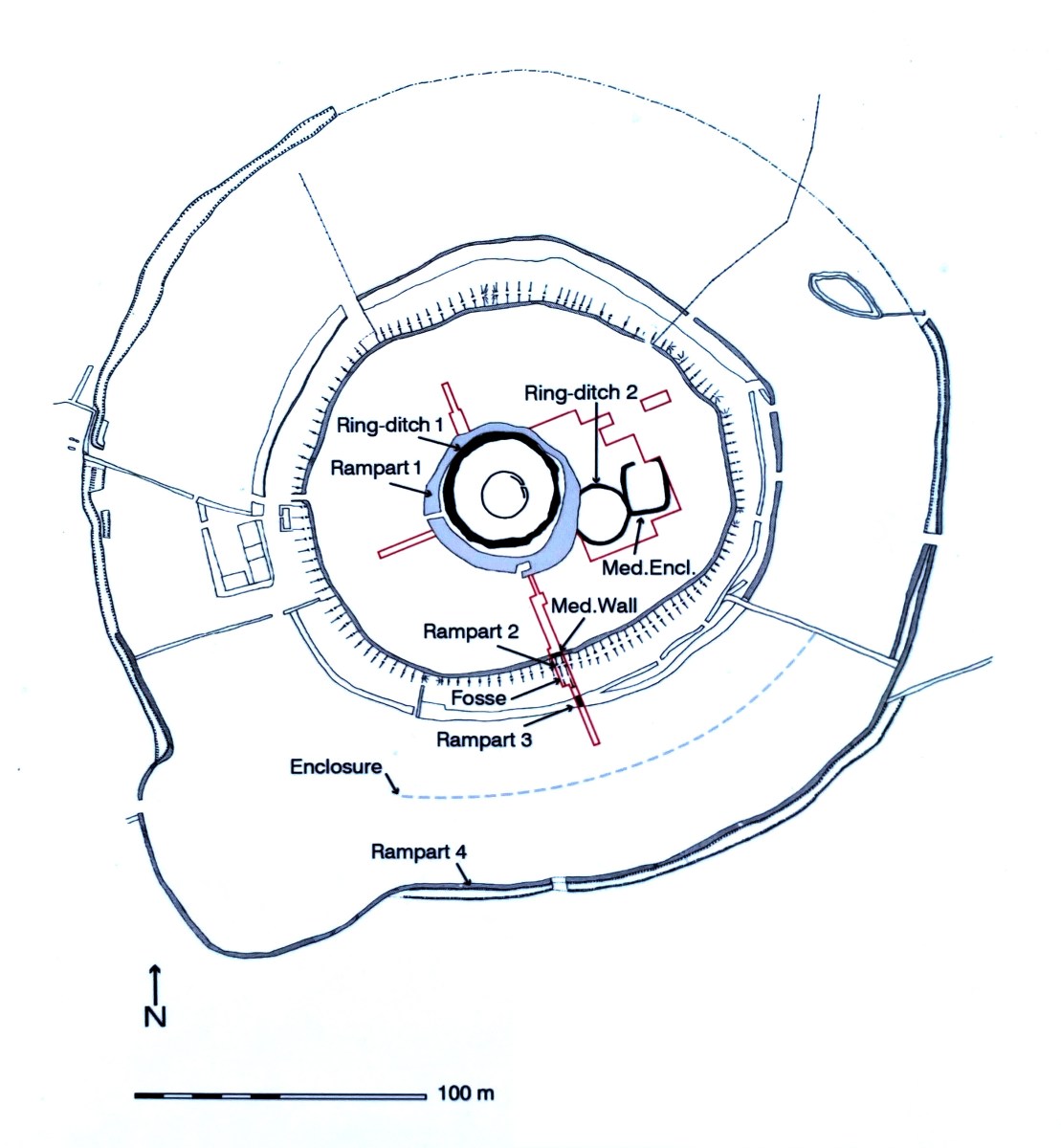
Plan of the hillfort and surrounding earthworks taken from the site notice board. Red lines indicate the site excavations. This board states that:

. . . Rathgall Hillfort is a hilltop settlement enclosed and defended by four concentric ramparts which can be dated to the early and middle Neolithic period . . . The outer three ramparts are stone and earthen banks and are likely to be prehistoric in date. Within the central enclosure there is evidence of metalworking, a cemetery and a round house; all dating to the Late Bronze Age . . .
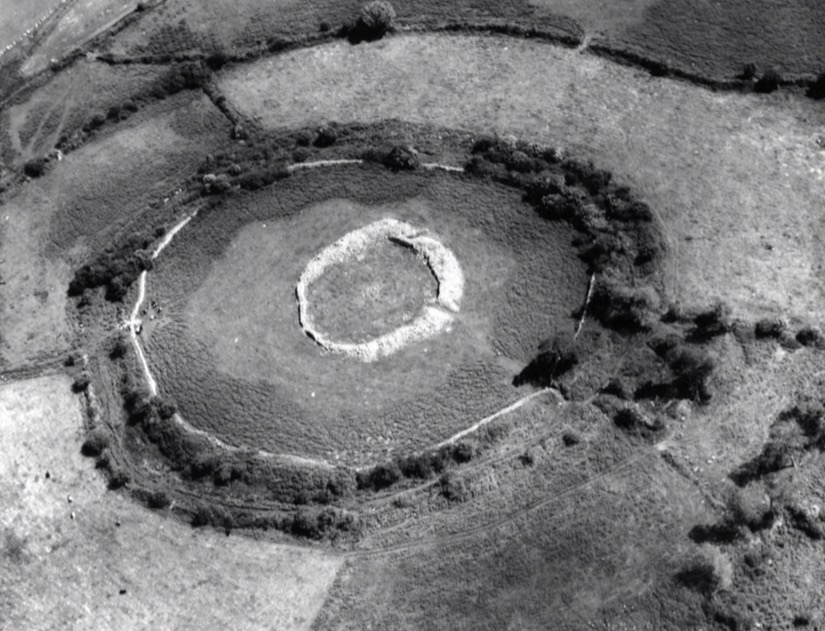
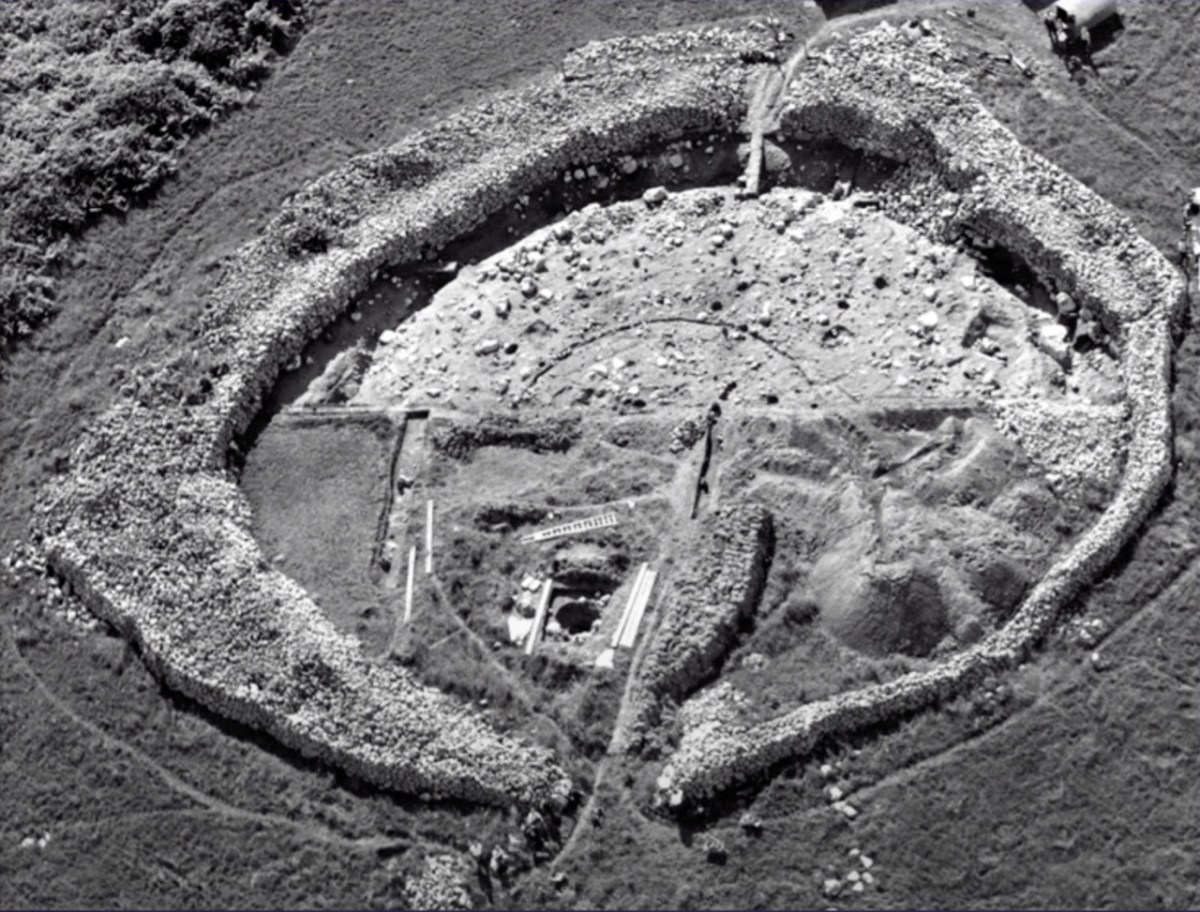
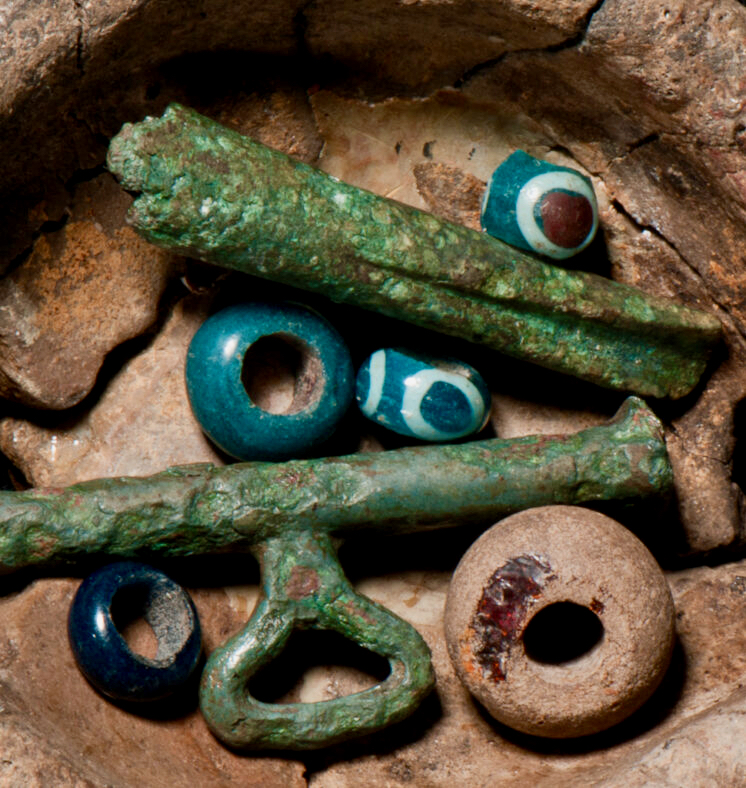
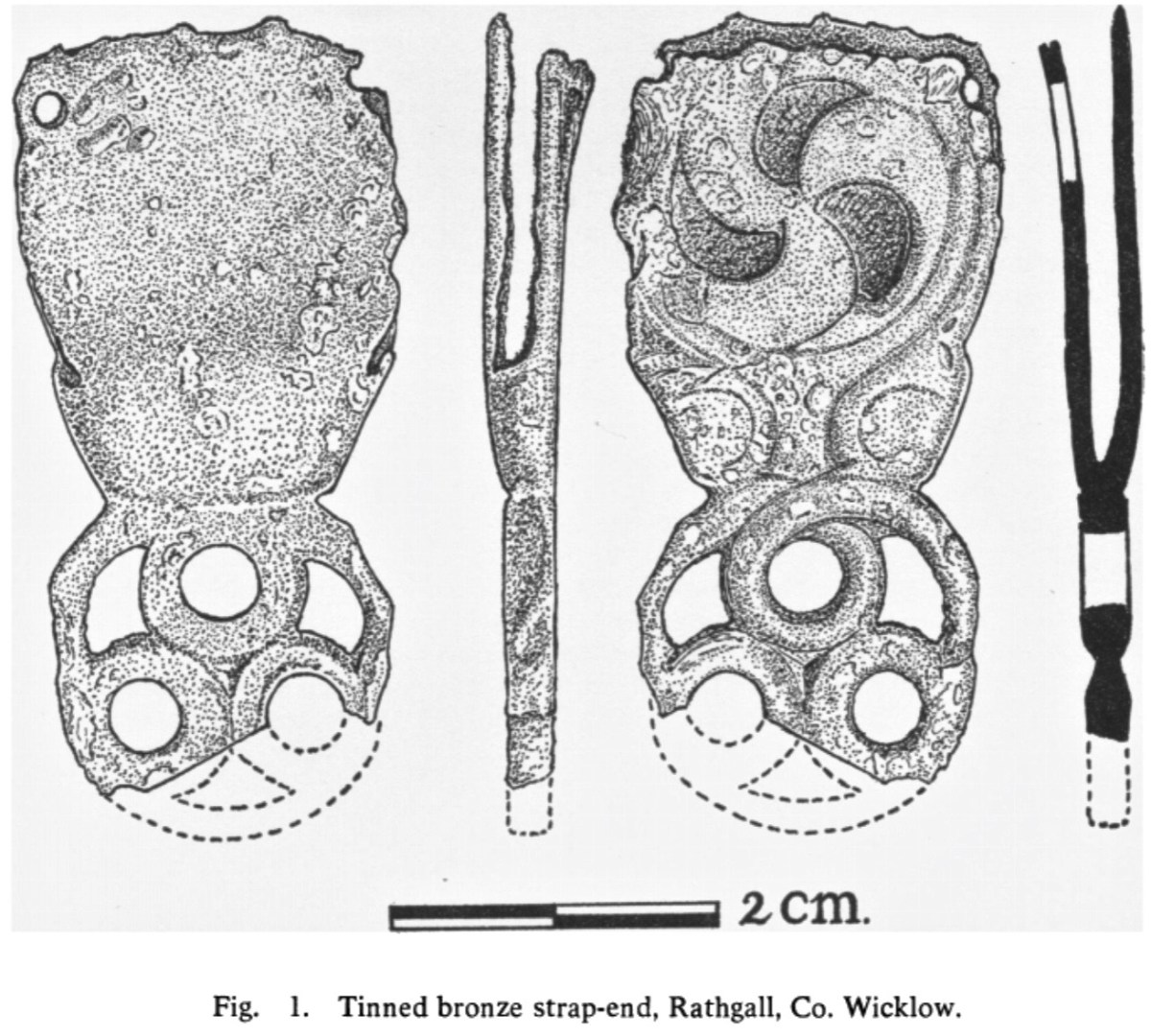
The two photographs above are taken from the time of archaeological investigations which commenced in 1969. The results of those excavations, which covered a number of years, have yet to be formally published. [Late edit: Elizabeth Shee has informed us that the findings will be published this summer by Wordwell, through the work of Katherina Becker of UCC. Many thanks, Elizabeth, we will look our for that]. The investigations found evidence that this was the site of an important and busy Bronze Age factory for metalworking (axe and spearheads, swords) and for pottery, jewellery and glass beads. In total over 50,000 pottery fragments were found, as well as 3,000 bronze and gold artefacts.
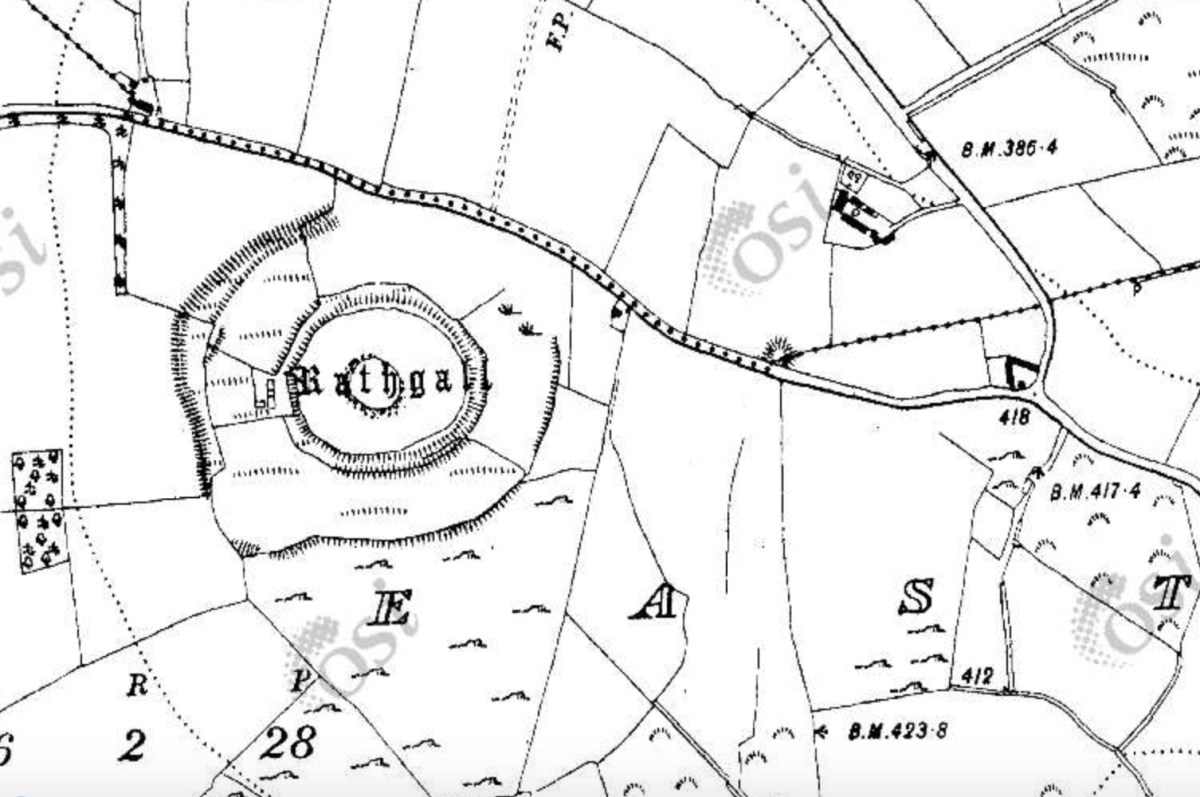
Rathgall from the early OS map. The importance of the site was realised and kept in use by successive generations.
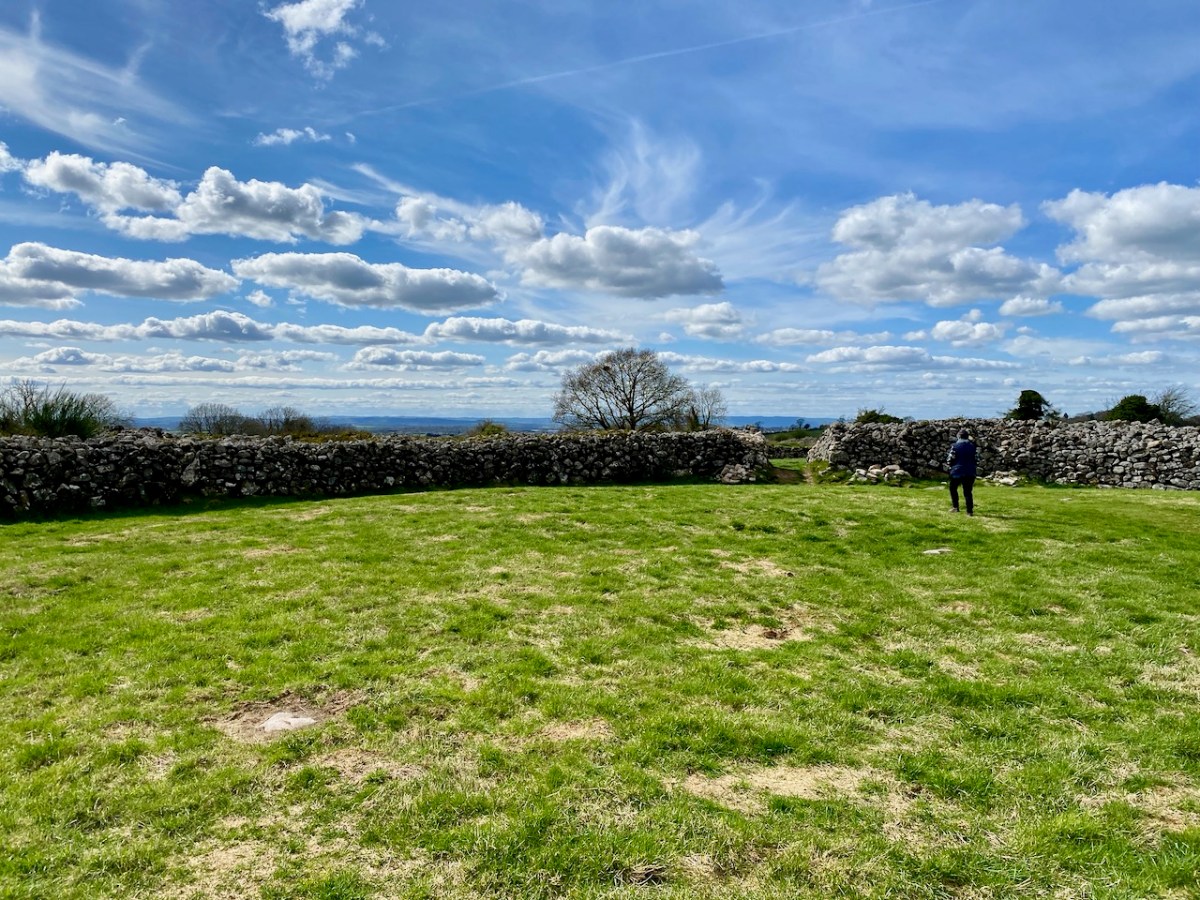
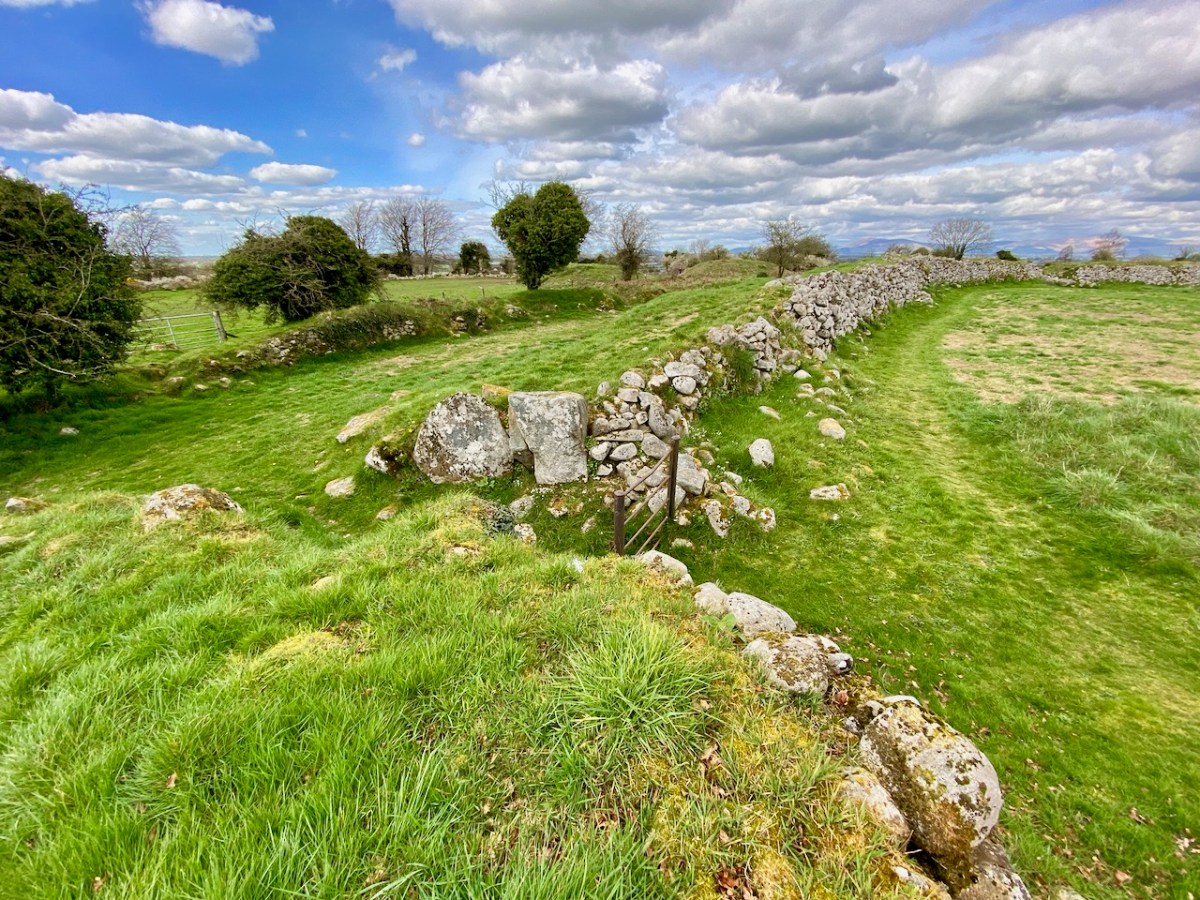
Our knowledge of the societies that centred their life on settlements such as these in Ireland is sparse: here, and elsewhere, we are left with evidence of their stone structures (which will outlast us) but also intriguing finds – the following quotations summarize some of Professor Rafferty’s work here (courtesy of Rath Community Group and The Heritage Council):

1969 – 1971 . . . It took over 3 years to dig out the entire 15 metre wide section of the inner circle. Within an hour of starting work, he [Professor Rafferty] had located pottery pieces. Over 10,000 finds were from the inner circle; glass objects, clay moulds, stone and gold objects. Post holes indicate that there was a small house-like structure within the circle. The ditches were filled in with black material among the stones. An oval pit was discovered near the centre of the house. It had a carefully placed large boulder on top of black material almost covering the pit. The pit had been back filled in with yellow clay around the boulder. When the black clay was taken out, they found a small gold-plated copper ring, 1 cm wide approx, embedded in burnt baby’s bones. They came to the conclusion that this was a ritual burial pit . . .
1972 – 1973 . . . They moved to the southern slope of outside of the inner circle and were getting 400 finds per day. Prof Rafferty got down to prehistoric levels after 1 foot in some places. This area was “jampacked with artefacts, glass, gold, animal bones, pottery and basket remains.” Rabbits had done a lot of damage and stones were removed by people over the years. They found hundreds of clay mould fragments embedded in a black clay-like substance. Clay moulds are always broken when found as they could only be used once. The moulds were made for swords or whatever was needed: copper was poured in and in order to get out the sword etc, the mould had to be broken. He found a smaller crucible with traces of lead in it, parts of blades of swords or rapiers, spearheads, cauldron legs but not the cauldron . . .
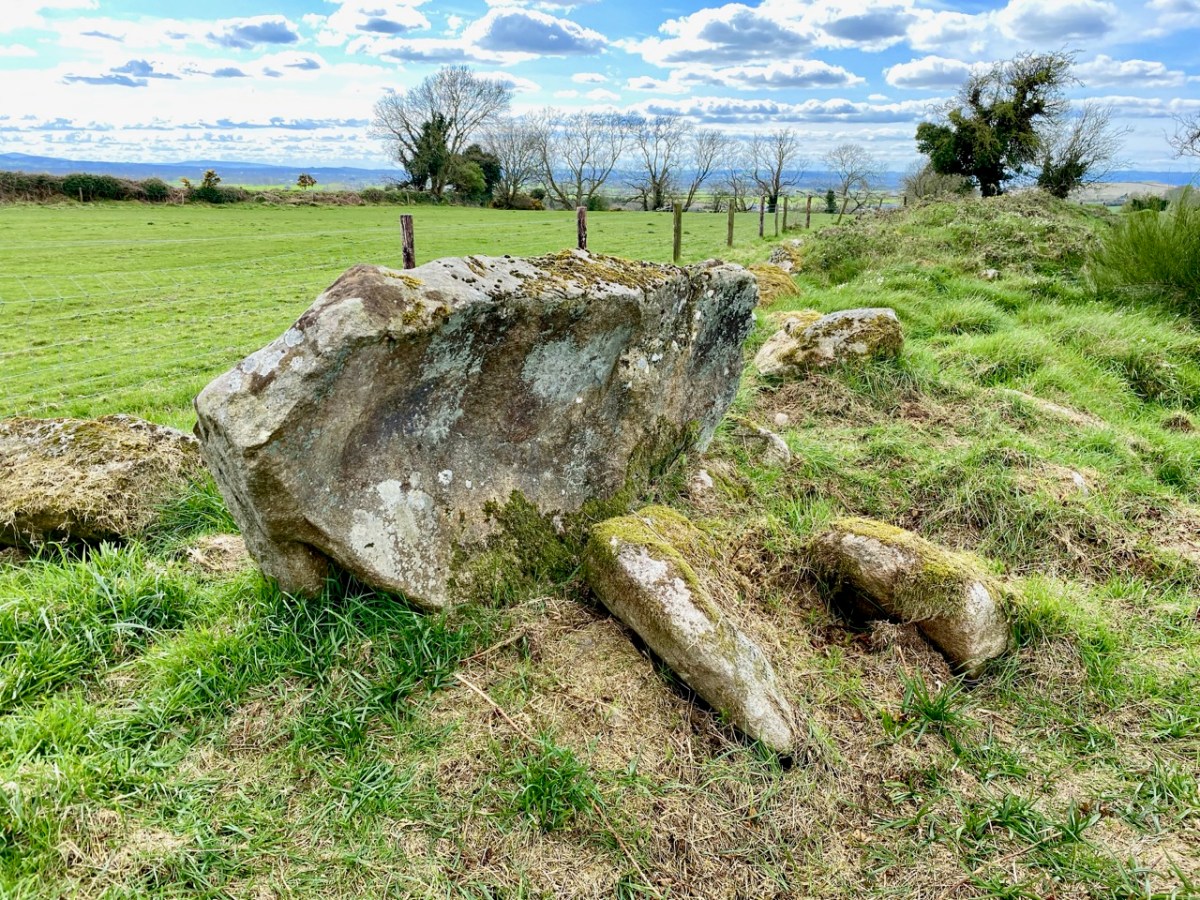
1974 . . . In Bronze age times people were buried crouched down in a foetal position and put in a clay pot. The remains of a female and child were discovered in such a clay pot at Rathgall, buried in a pit underneath large slab stones. Eighty eight glass beads were uncovered, which is the largest quantity found in any Bronze Age site in Ireland. These beads are 1 – 3 cm wide, mostly circular in shape, blue-green in colour and with a hole in them. This collection is unprecedented in the late Bronze Age of Ireland and is also one of the largest from a single site as yet discovered in Western Europe (Rafferty and Henderson 1987). Prof Rafferty found a 2cm twisted gold cylinder with its ends finely hammered and a dark green glass bead mounted in the middle, 2 – 3cm wide. Tiny delicate loops of gold were attached to each end. This is an object of great beauty and advanced technological expertise. He also found a metal disc with mercury gilding on it. Mercury gilding was used to stick gold to bronze. He got this piece analysed by the British museum and the piece was dated back to 1000 BC. Before it was analysed, the Irish professionals were uninclined to believe that this came from Ireland as nowhere in the world had mercury gilding been found that dated back further than 400 BC. Prof Rafferty felt that this emphasised the exceptional importance of the Rathgall site . . .
While visiting this site I was reminded of an adventure we had last summer in Northern Ireland. You’ll find it here. There we discovered The Giant’s Ring: that earthwork struck us as ‘gigantic’. But it only occupies an area of 2.8 hectares. Our latest exploration is over 7 hectares! That makes it Cyclopean, surely! While this Co Wicklow site has been examined by archaeologists, we certainly don’t yet have all the answers as to why it existed, nor do we know everything we would like to about those who built it. We just can’t help expressing a sense of wonder at this – and other – artefacts which have made their marks on our landscapes. We are grateful to those who have explored and labelled these sites, and also to those who make sure they are conserved for our future generations, who might find more answers than we do as to their origins.
Hell Fire

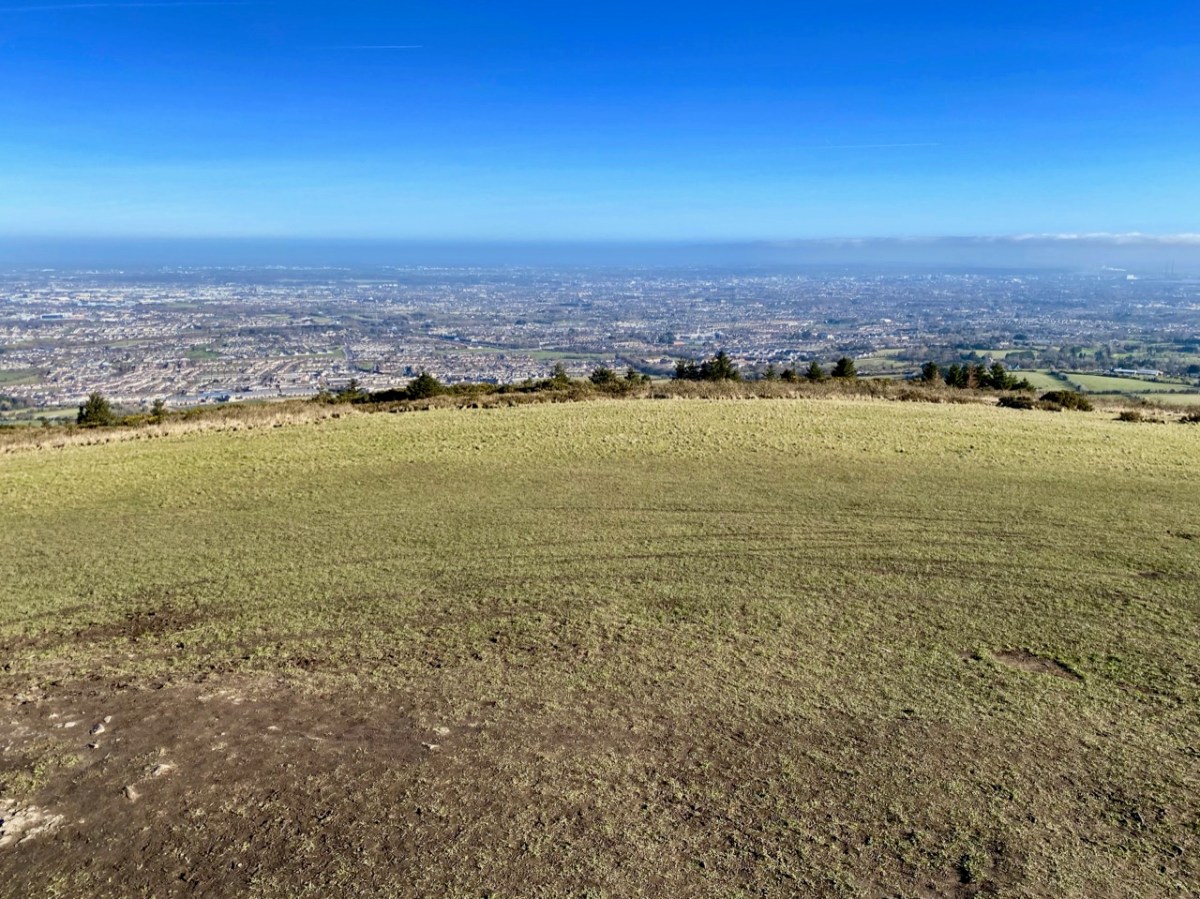
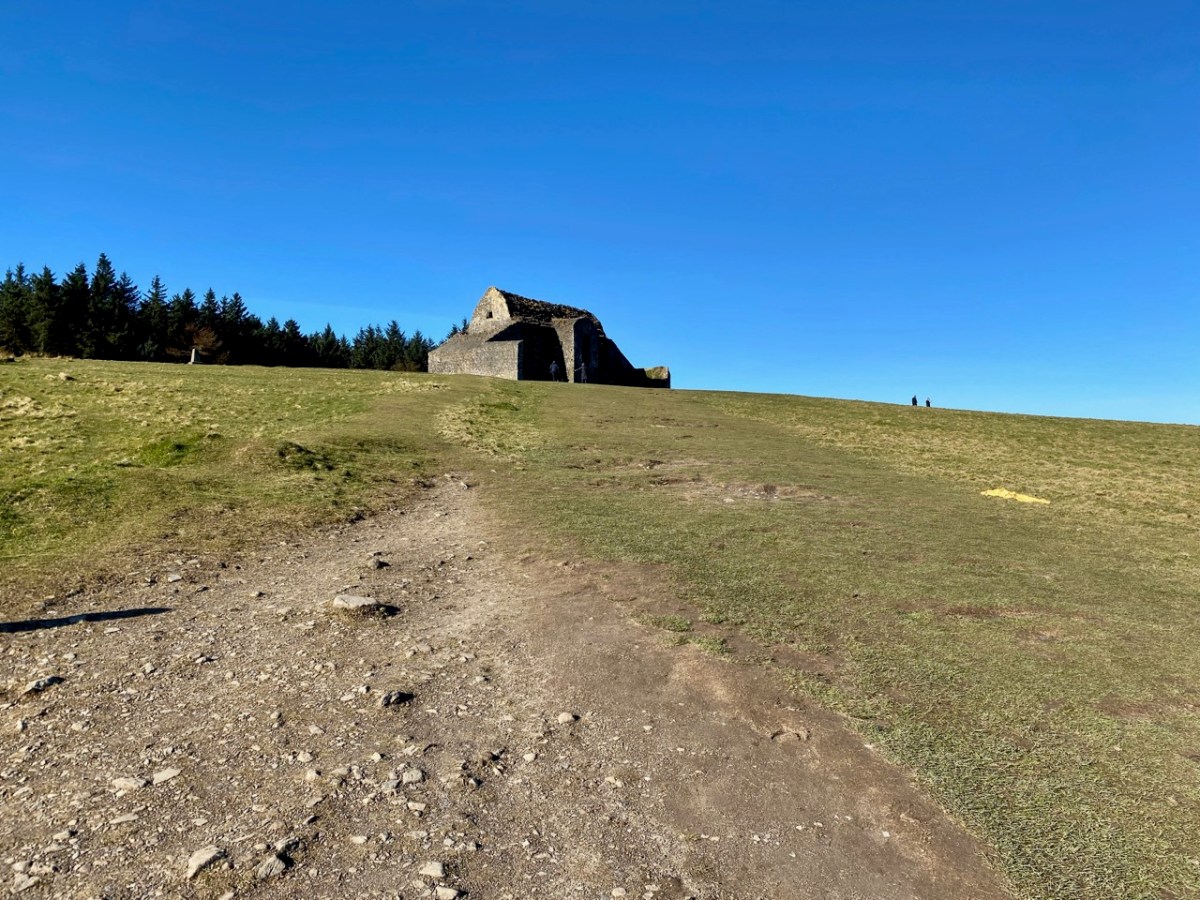
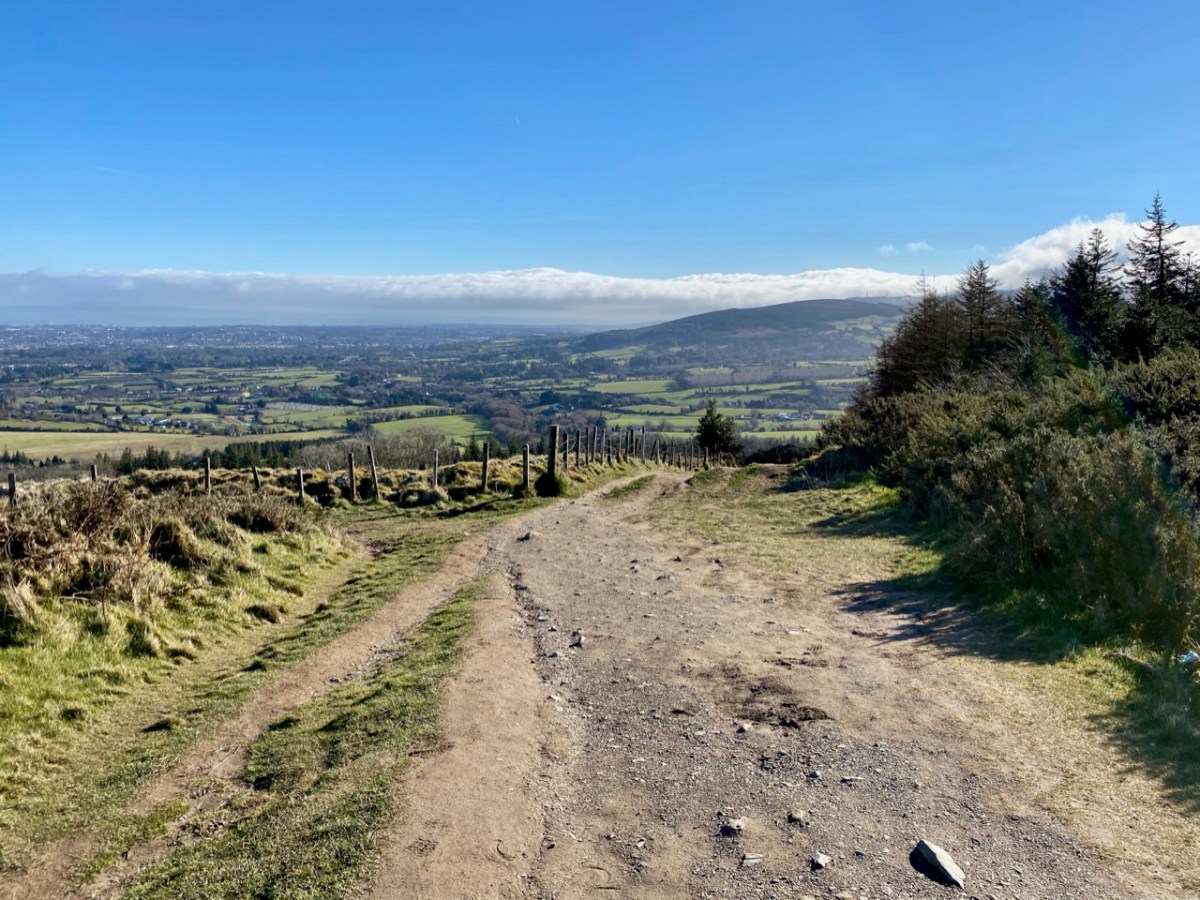
It’s taken me a while to visit this notorious site which is situated on a summit of the Dublin Mountains. The view across the city from the 390 metre peak is stunning:

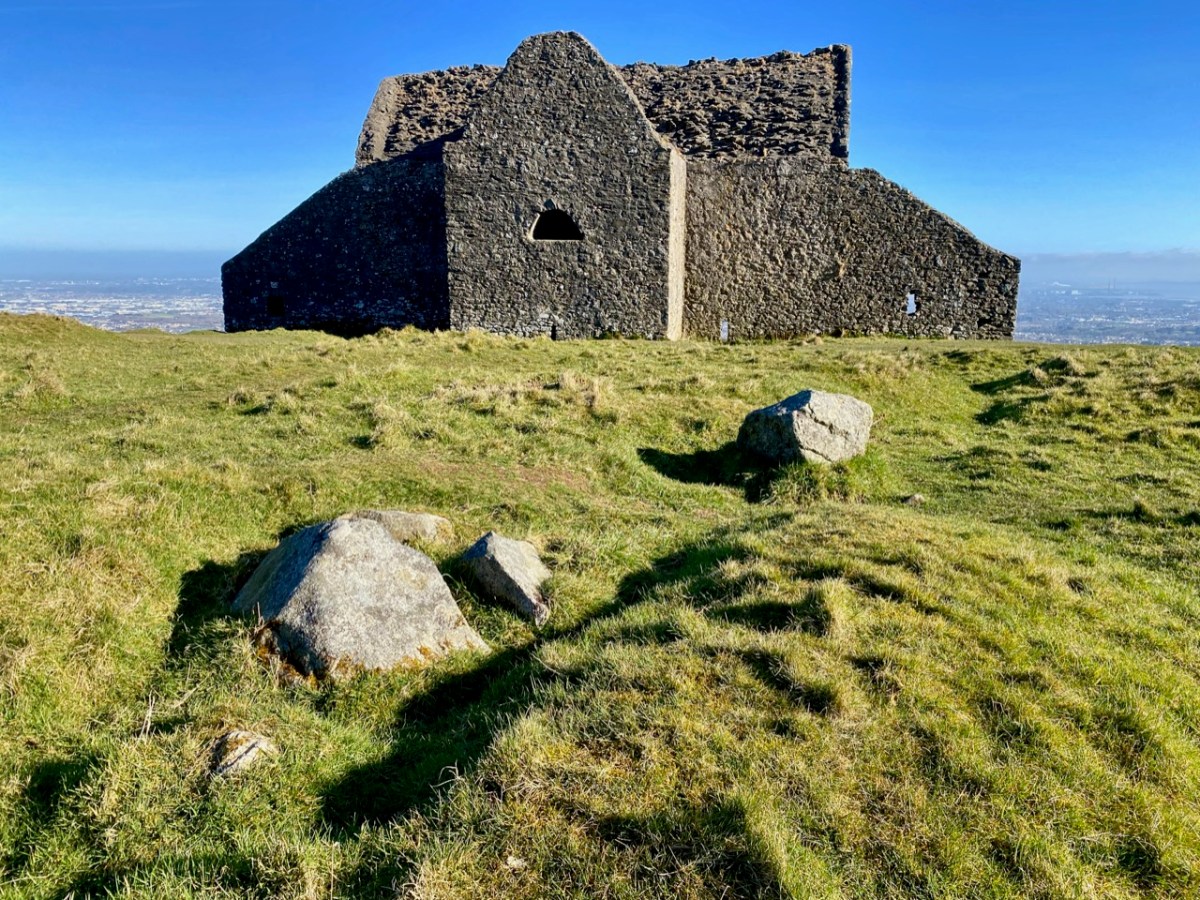
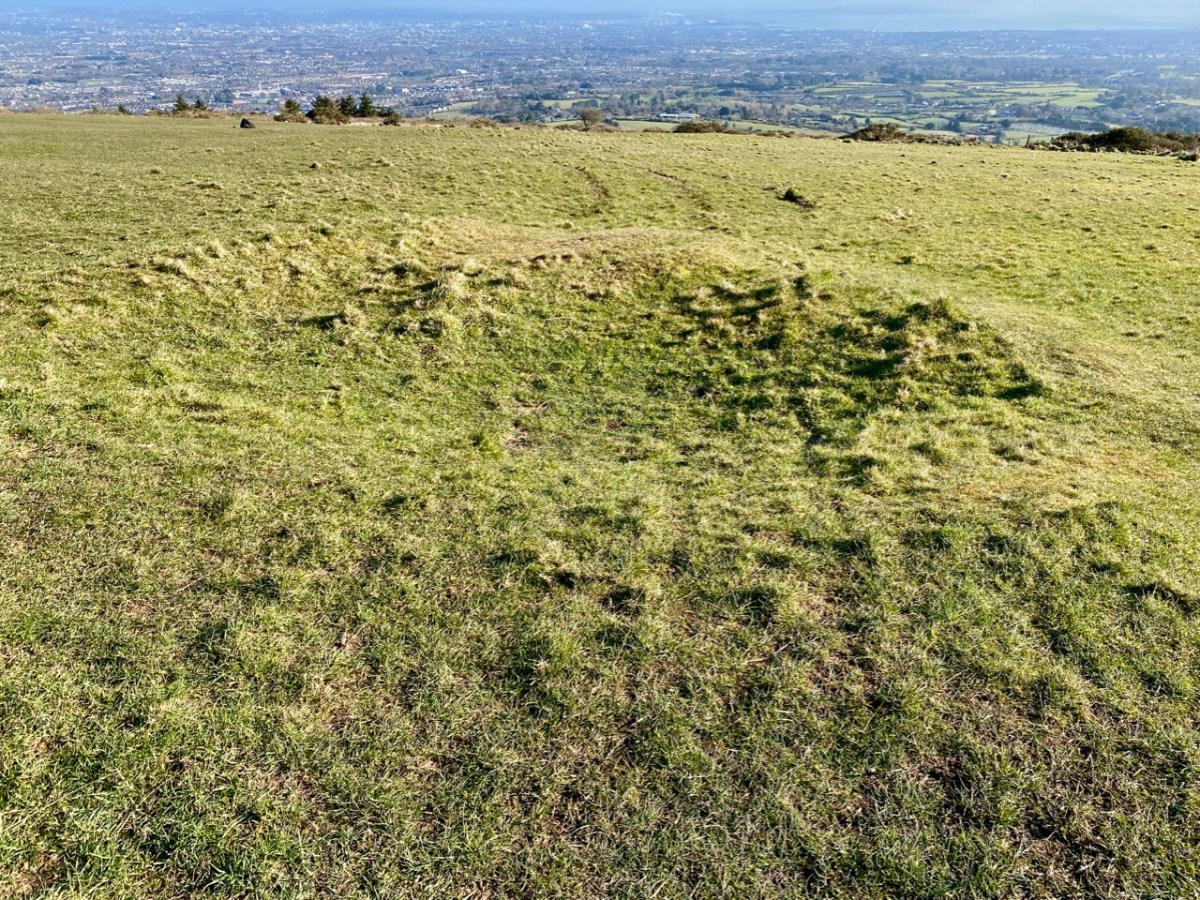
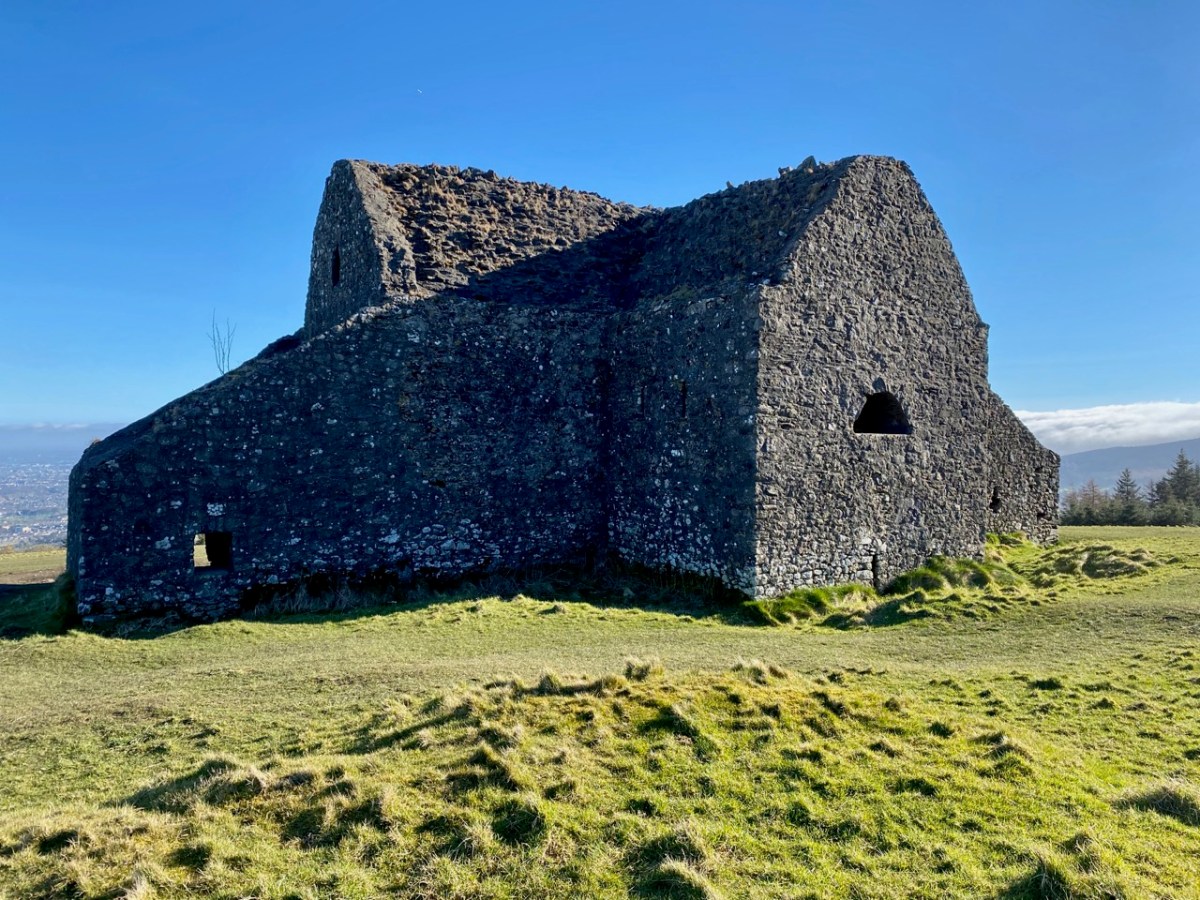
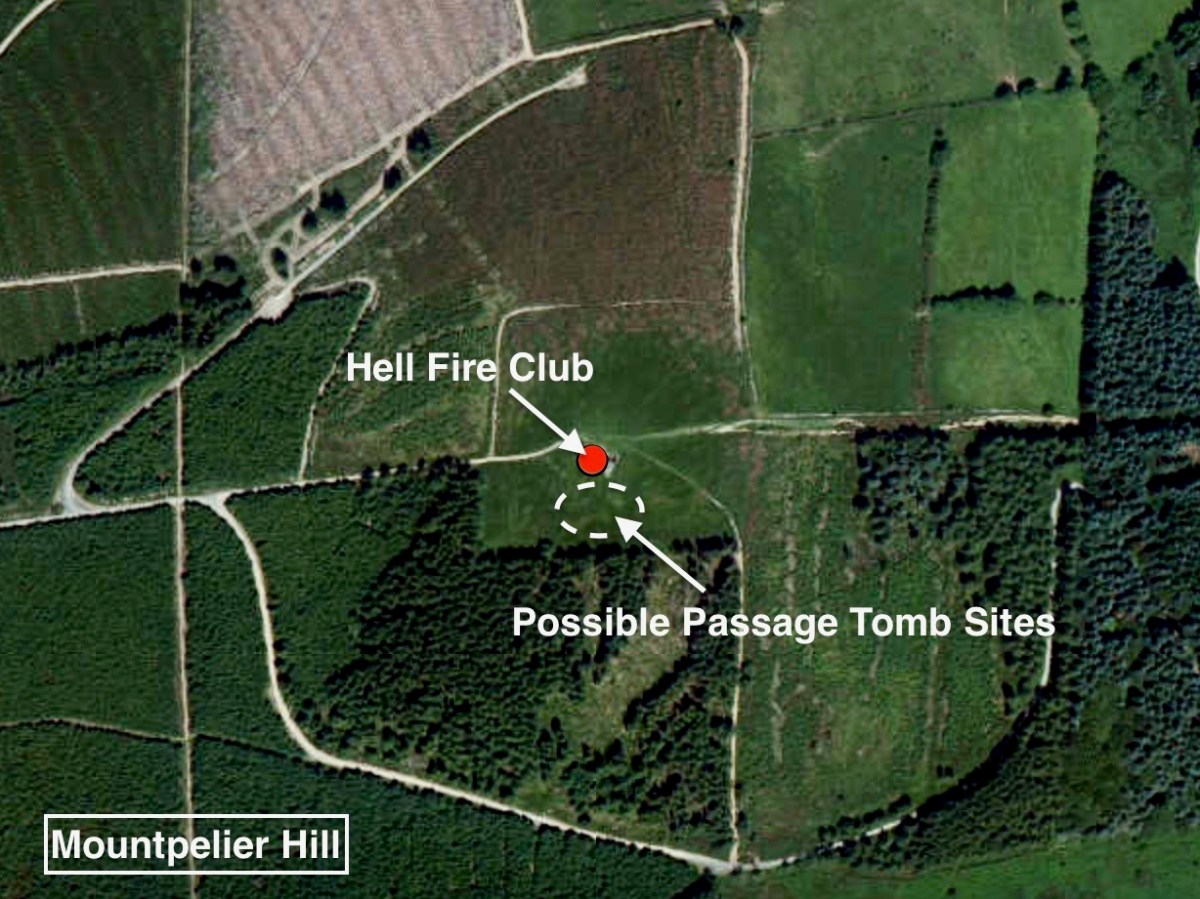
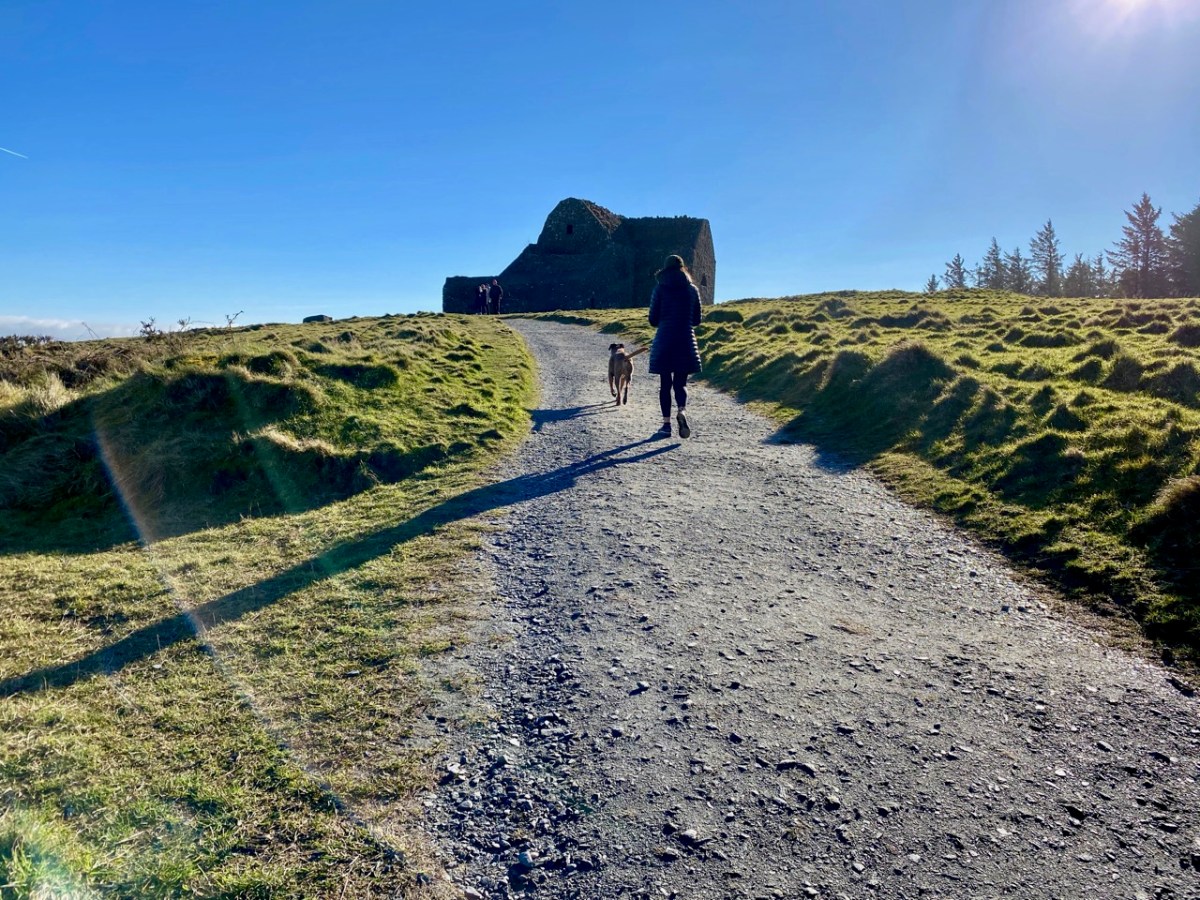
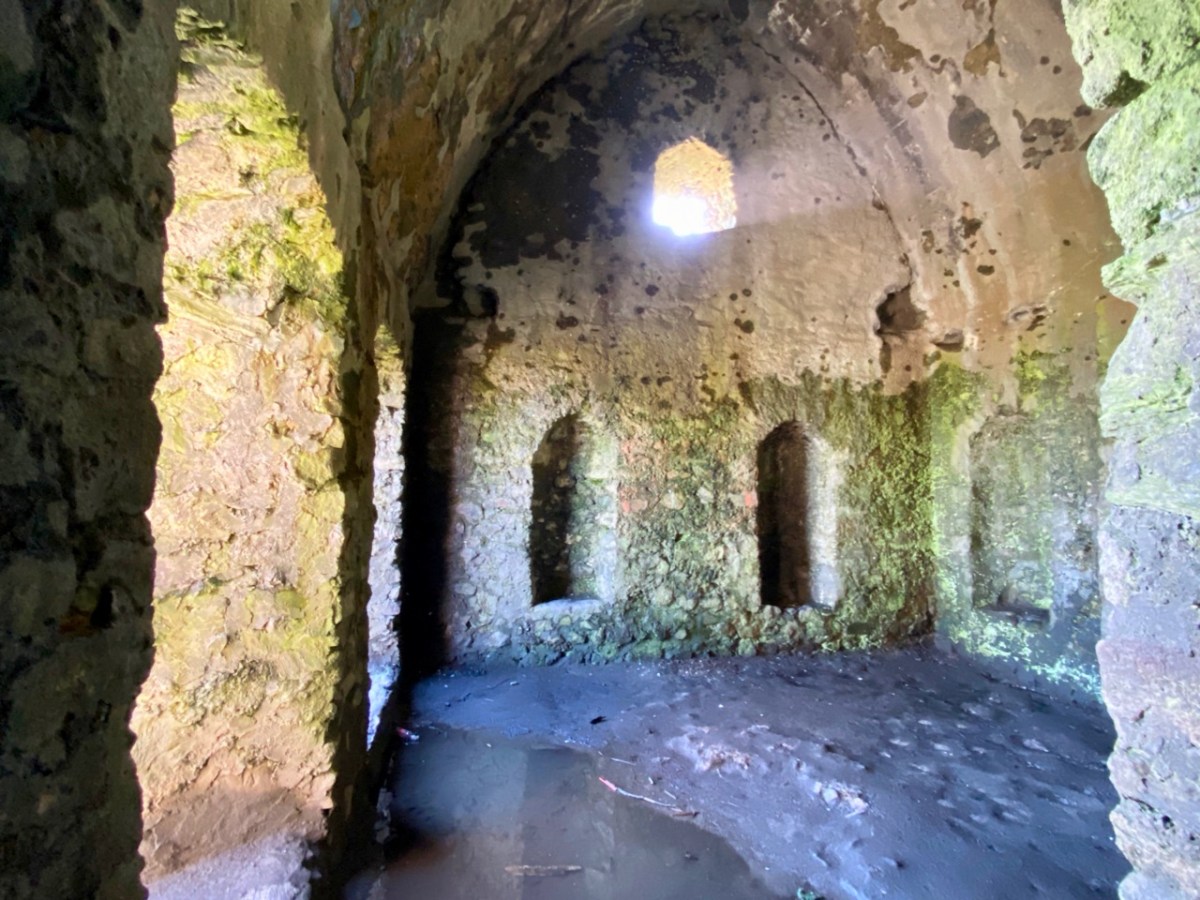
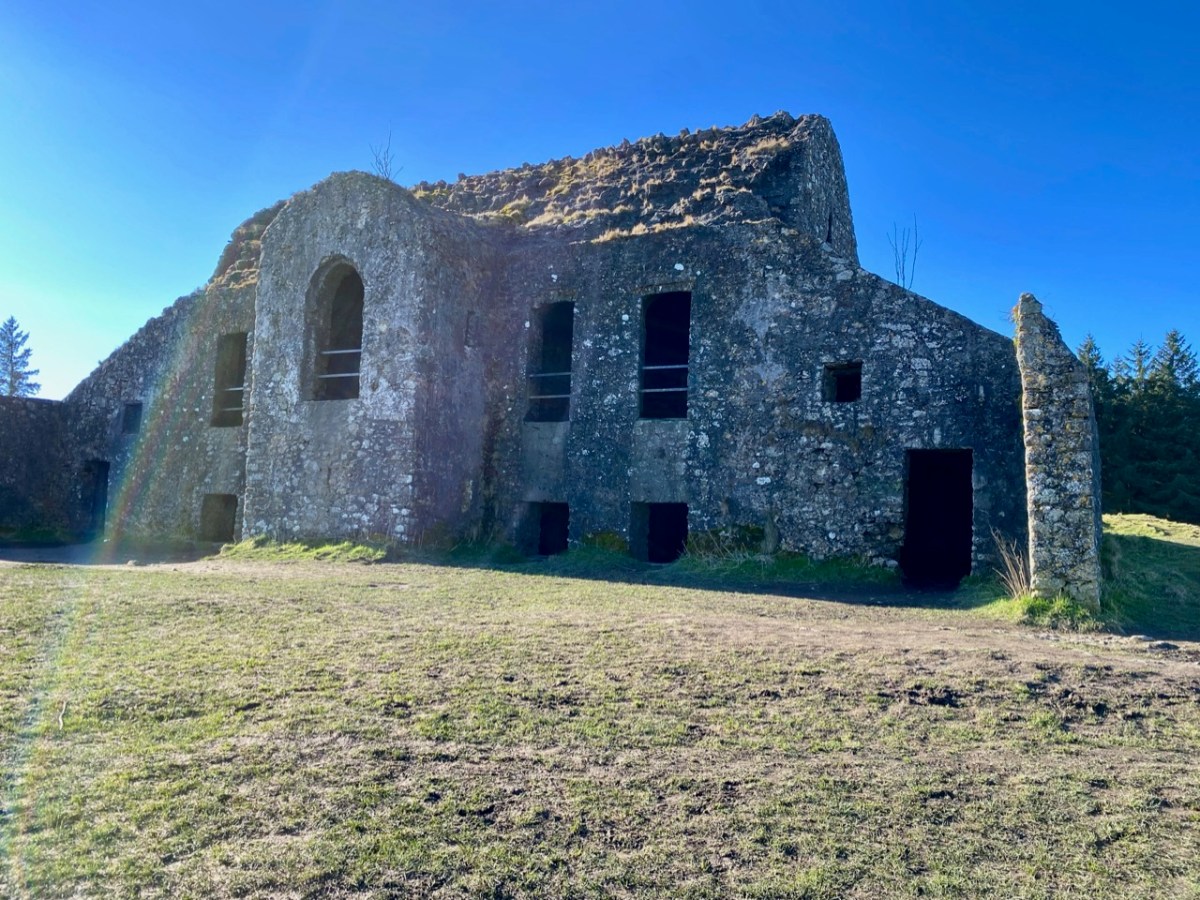
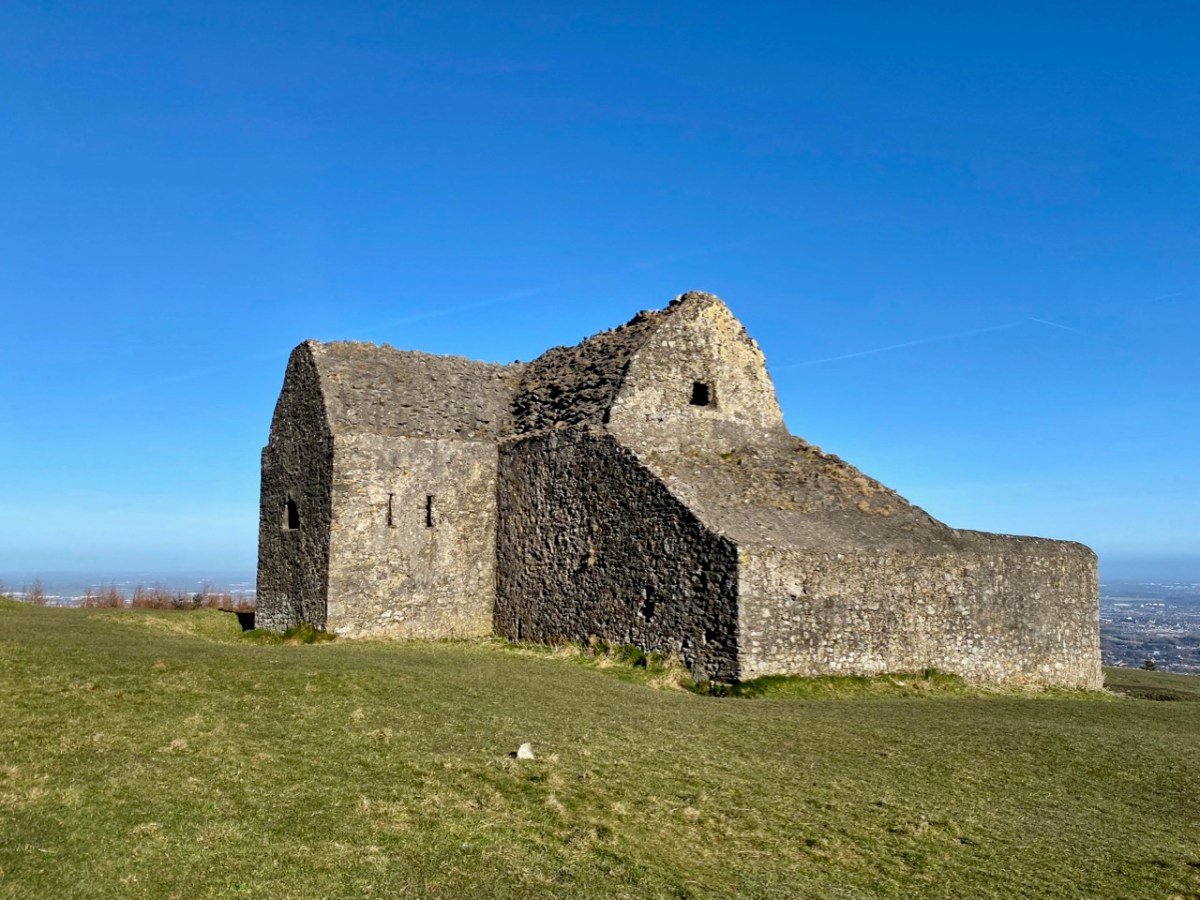
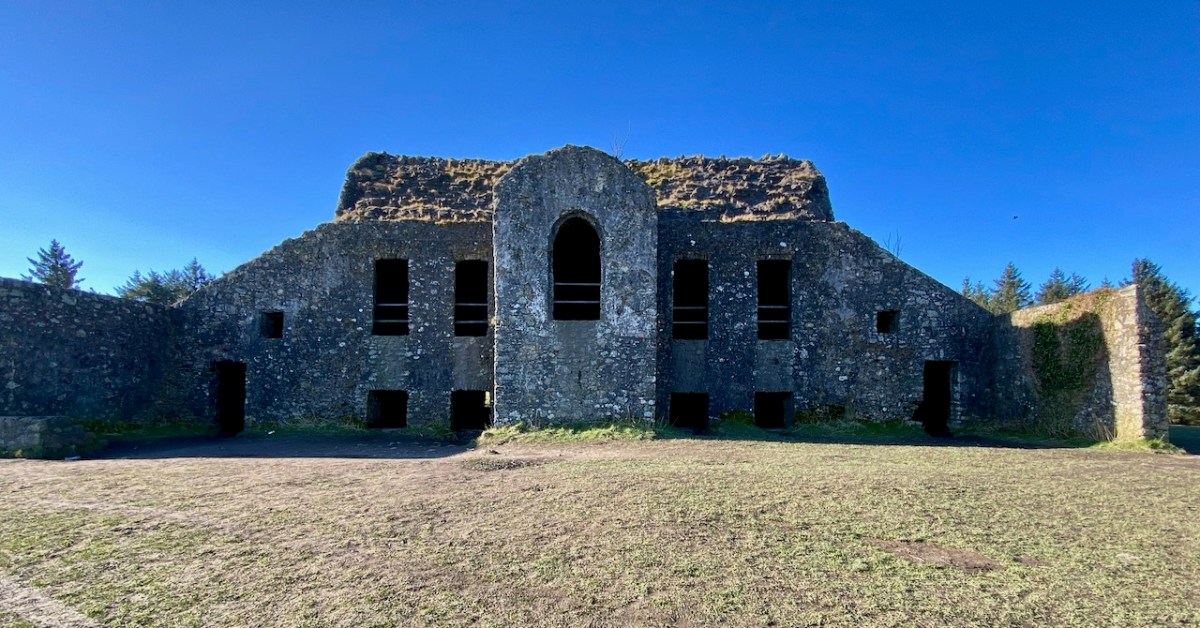
It’s the stories and the folklore that attracted me to this place, long known as the Hell Fire Club. In the eighteenth century ‘Speaker’ Connolly built it as a hunting lodge. According to tradition he used the stones from a prehistoric monument that was previously on the hill. It’s now known from recent excavations that at this location was one – or two – passage tombs dating from the Neolithic Period (4500 – 2000 BC). This – or these – were surrounded by a circle of large boulders known as a cairn. Today, some fragmentary traces of the earliest use of the site can be detected. The best information on the neolithic site is found in the Abarta Heritage report, here. An earlier description, dating from 1779 in fact, was written by Austin Cooper, who visited in that year:

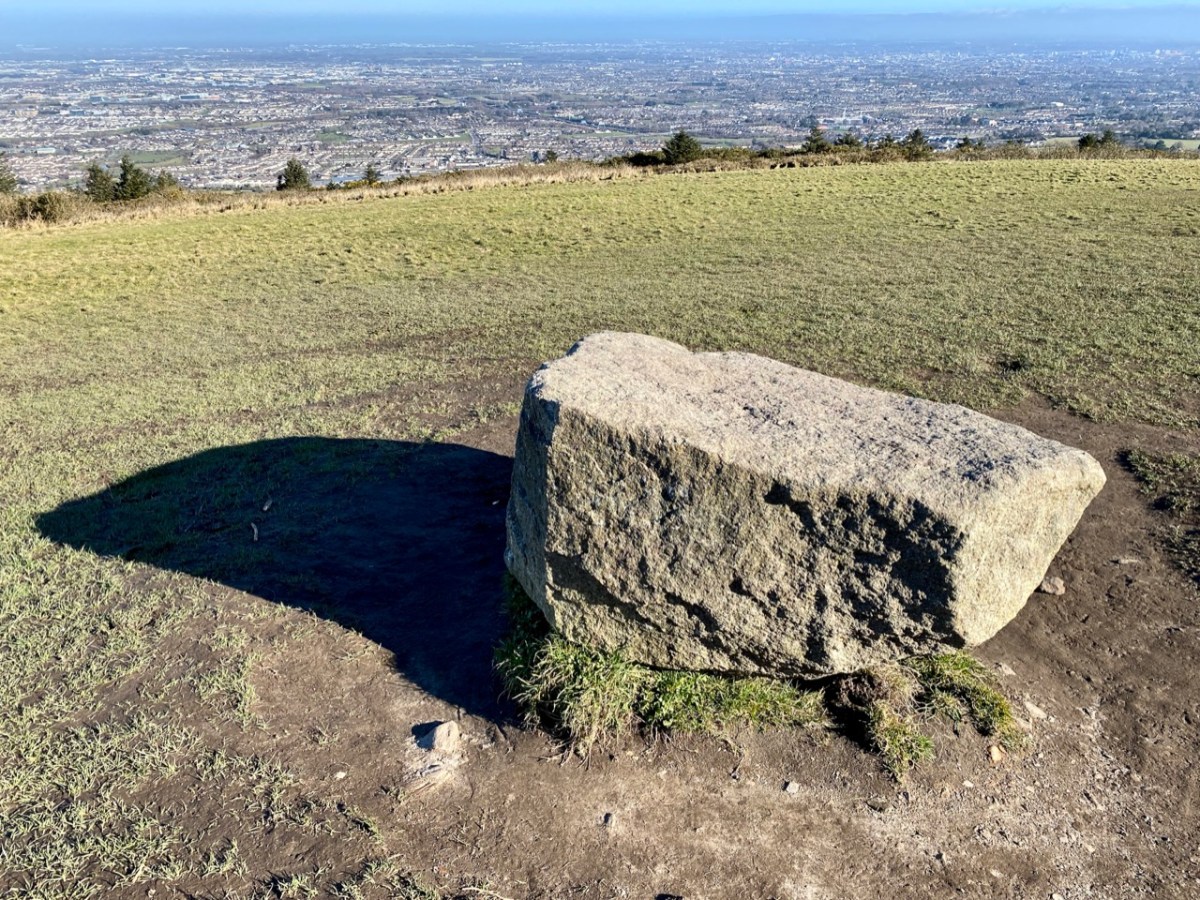
. . . Behind the house are still the remains of the cairn, the limits of which were composed of large stones set edgeways which made a sort of wall or boundary about 18 inches high and withinside these were the small stones heaped up. It is 34 yards diameter or 102 yards in circumference. In the very centre is a large stone 9 feet long and 6 feet broad and about 3 feet thick not raised upon large stones but lying low with the stones cleared away from about it. There are several other large stones lying upon the heap . . .

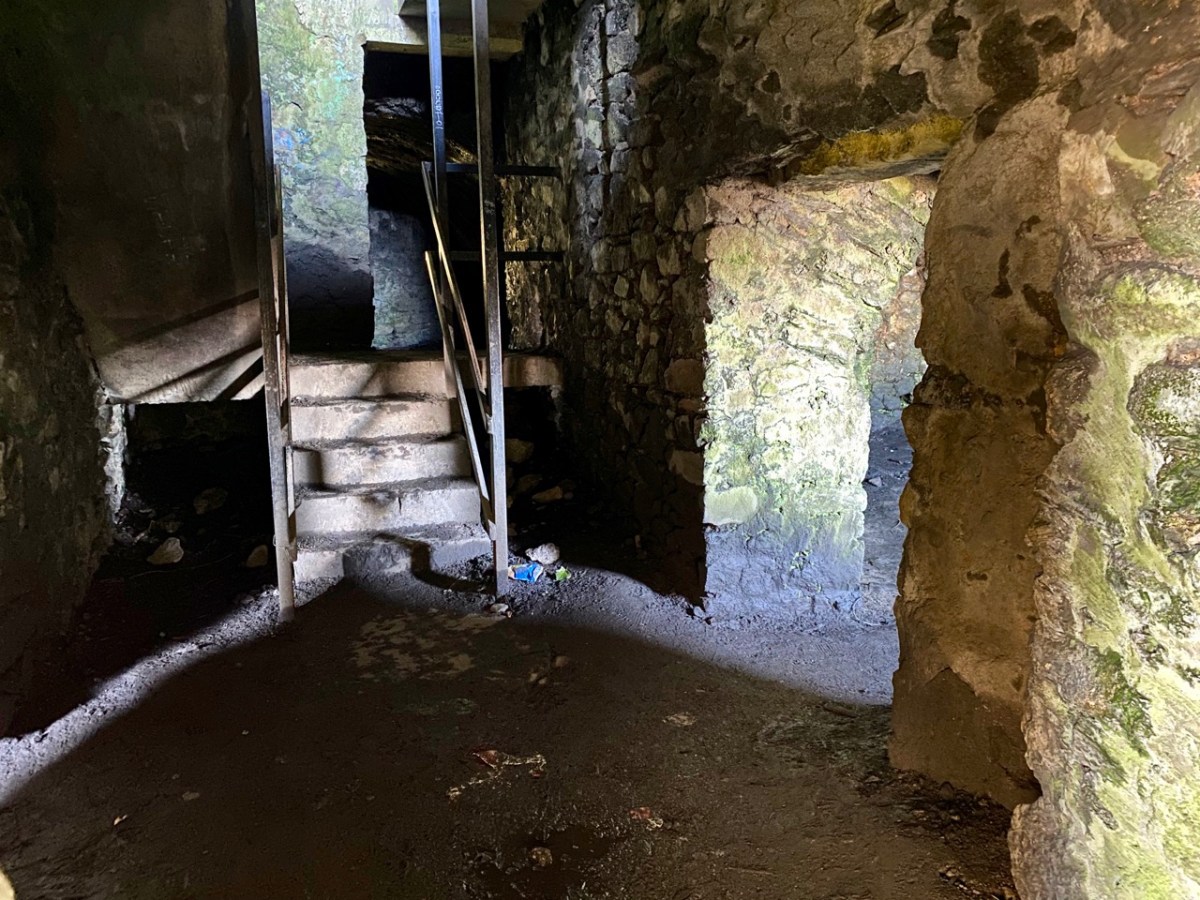
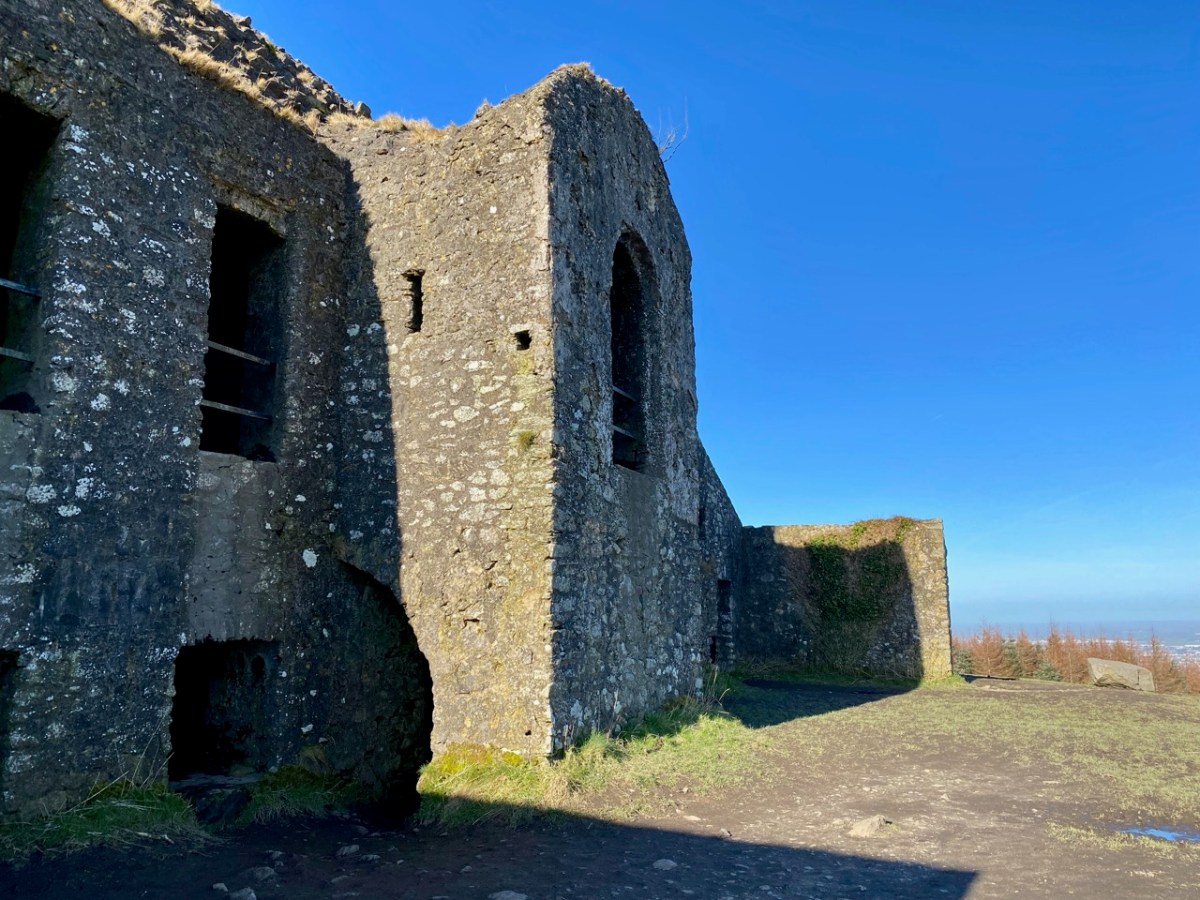
William Connolly (Speaker of the Irish House of Commons) was one of the wealthiest men in Ireland; he had a house in the city and a country estate at Castletown, near Celbridge. It is said that he deliberately used stones from the ancient tomb in the construction of the hunting lodge at Mountpelier. Shortly after it was built the roof, which was originally slated, was blown off in a great storm. Locals attributed this misfortune to the work of the devil, in revenge for the destruction of the cairn. Following this event the lodge gained a reputation as a place where evil prevailed. However, Connolly replaced the slated roof with a stone vault which still exists today, although the building is effectively a ruin.

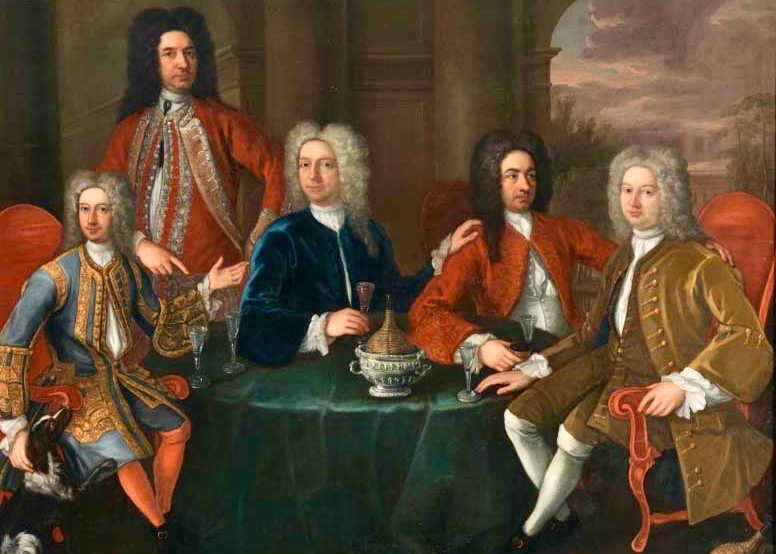
The Irish Hell Fire Club members were some of the elite of society, and included peers of the realm, high ranking army officers as well as wealthy gentlemen and artists. Here is a portrait of some of them by James Worsdale (himself a Club member); it is in the collection of the National Gallery of Ireland, Dublin.

From left to right: Henry Barry 4th Baron of Santry, Colonel Henry Clements, Colonel Henry Ponsonby, Colonel Richard St George, and Simon Luttrell, 1st Earl Carhampton. Biographies of all of them are summarised here – also from the Abarta reports. Their lives in general were debauched and relatively short. Missing from the portrait are father and son Richard Chappell Whaley and Thomas ‘Buck’ Whaley, who was to become ‘the most famous Buck of all’. Richard’s nickname was ‘Burn-Chapel’ Whaley because of his hatred of religion and in particular, the Roman Catholic church. He would amuse himself on Sundays by riding around Dublin setting fire to the thatched roofs of Catholic chapels. The Whaleys were related through their ancestry to Oliver Cromwell. Their family residence was Whaley Abbey, Co Wicklow: you can find more on this in Finola’s post today.

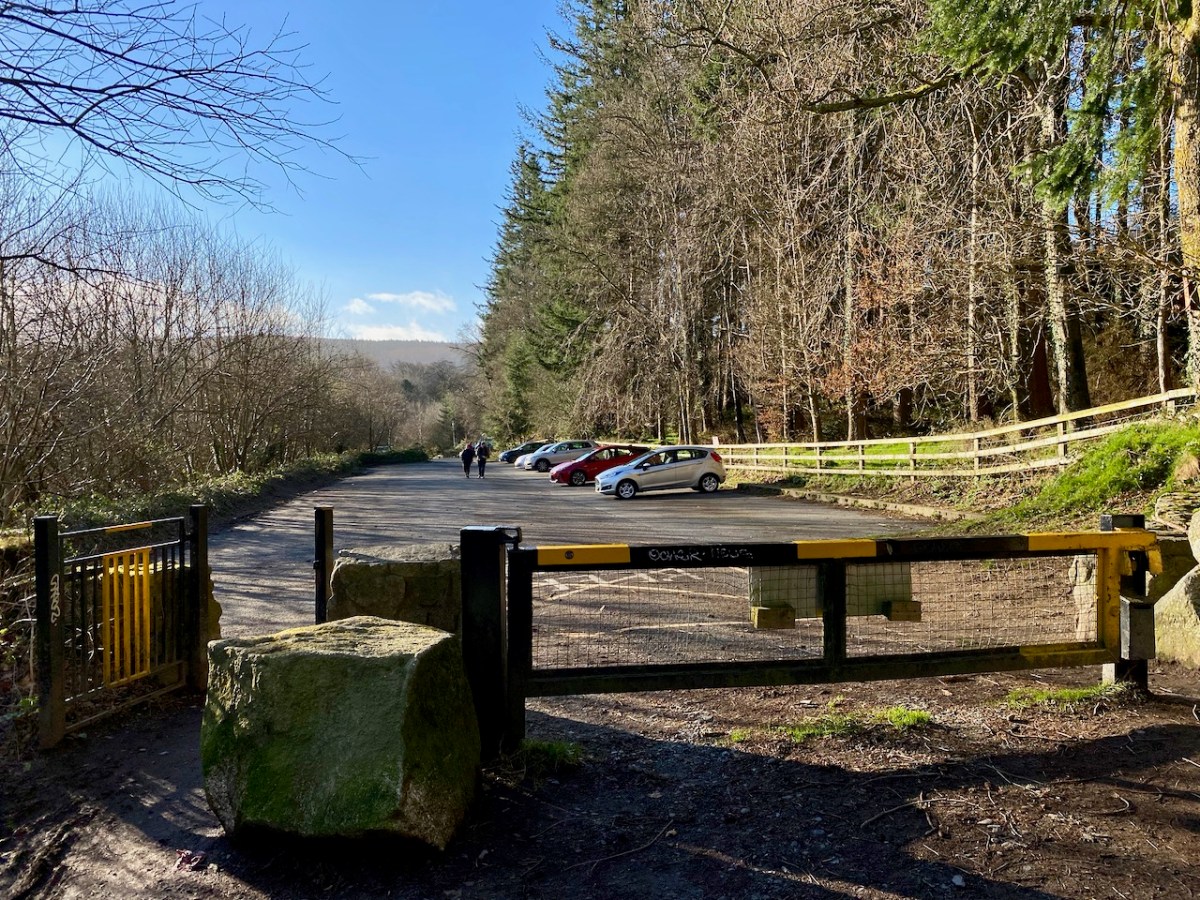
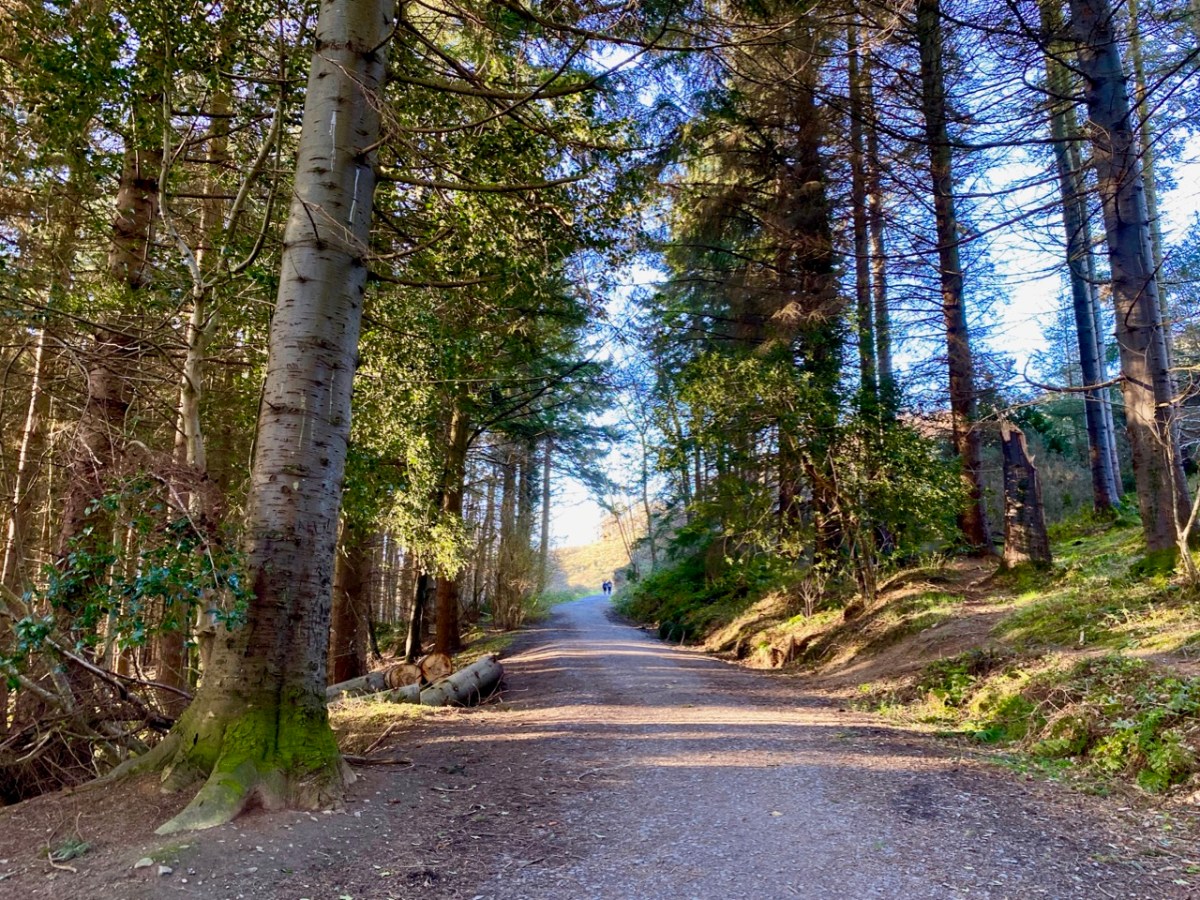
Mountpelier is a significant mountain top overlooking Dublin, and is now fully accessible to all. A warning, though – in good weather the Coillte car-park very soon fills up (at all times of the year) and there is nowhere else nearby to leave your vehicle – get there early!

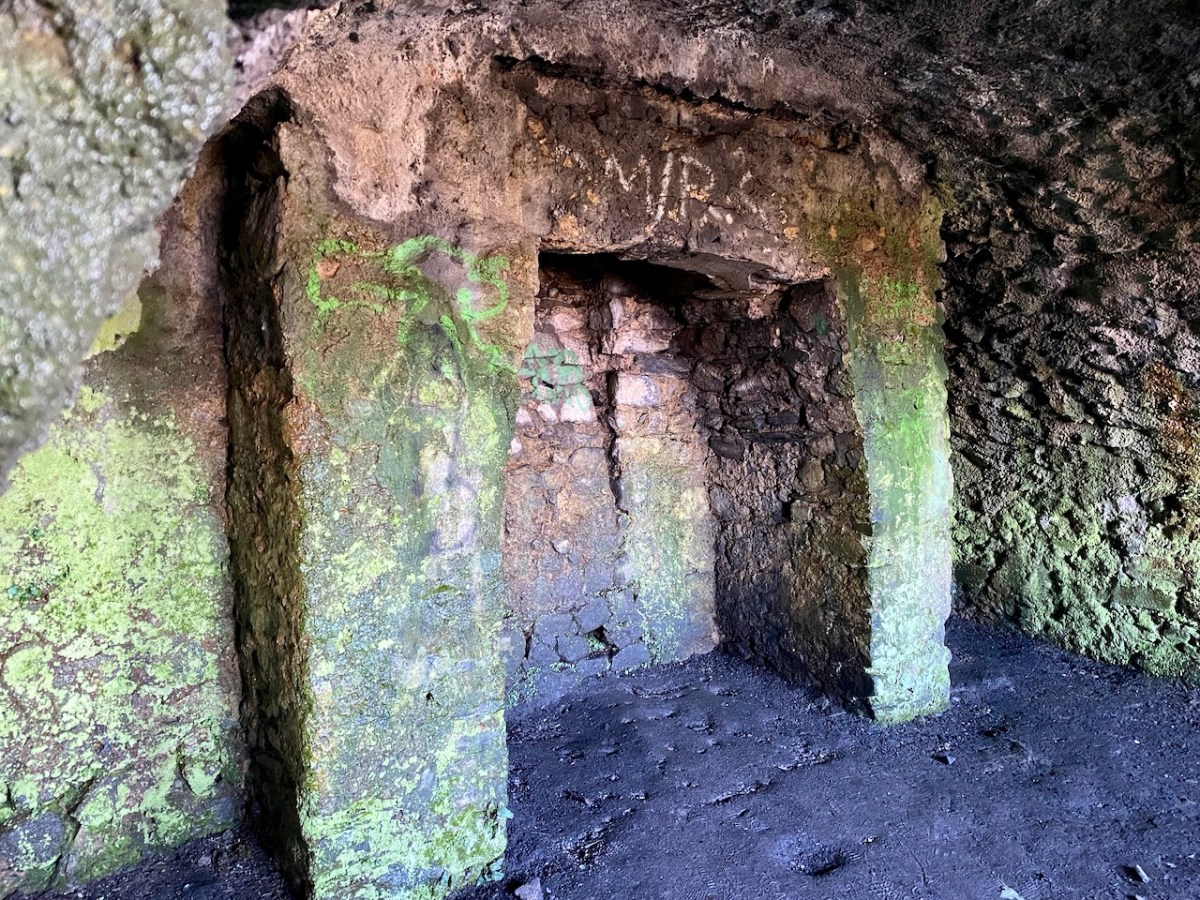
It could be said that the ruin of the lodge is ‘maintained’ in that it is stabilised and unlikely to fall down. If you are exploring, look out for the lintel over the large fireplace, which is supposed to be a standing stone removed from the passage grave site.

The Hell Fire Club is, of course, haunted! Not that we saw anything untoward when we visited on a glorious spring day. But the stories abound. They are probably best told through the accounts in the Schools Folklore Collection:

. . . About six miles from Dublin the Hell Fire Club is on a hill. It is a medium size old castle. When the owner of it died nobody else claimed it. All the men of the district came to play cards in it every night. One night when all the men were playing their nightly game one of the men cheated. The men rushed upon him over-powered him. The bound him hand and foot and put him in a barrel of whiskey. Then they set fire to it burning him alive. That was a cruel thing to do but then men did not care. From that day on that old castle was called the Hell Fire Club . . .


Stewart Somerville, Dundrum School

. . . There is an old ruin called Hell Fire Club on the very top of one of the Dublin Hills. This house was built by a man named Connelly, during the time of the Famine. It was built to give employment to the men. Many men used to got to Hell Fire Club to gamble. It is said that one night they were playing cards and there was much money on the table. One man dropped a card on the floor, and when he stooped down to pick it up he noticed a man with cows feet, and he wore a red cloak. The men were very frightened and they made a great uproar. The man turned into a ball of fire. All the men were burned in the fire. There was one man who had a bunch of medals attached to his coat and he was the only man who escaped from the burning house . . .

Mr Finlay, Rockbrook, Co Dublin

. . . The Hell Fire Club, or the Brass Castle is situated near Rathfarnham in the Co Dublin. My Great-grandfather used to pass by the Brass Castle on his way home from work, (he was a mason) he had a habit of hitting the wall with his trowel to hear the ring of the brass. One night a priest had to go on a sick call. When he was coming home through the mountains he lost his way. Seeing a light he went in that direction. He knocked at the door of the house, which happened to be the Brass Castle – The door was opened by a man who was dressed in black with a black mask on his face. The priest was brought in to a room. Sitting at a large table were twelve men dressed the same as the first one. The men were playing cards. On the table was seated a large black cat. The men defied the priest to put the cat away. The priest ordered the cat down, but it never moved. Again he ordered it down, but the cat did not move. The men laughed at the priest and jeered him. The third time the priest said “Begone Satan”. The cat jumped from the table and disappeared up the chimney with a loud roar. The priest told the men that the cat was the devil. The men were never heard of again. The priest got home safe, and from that time onward the Brass Castle was called the Hell Fire Club. This story is true. It was told to me by mother, because the Brass Castle belonged to her ancestors . . .

Seán Ó Nuamáin, Kilbride, Co Wicklow

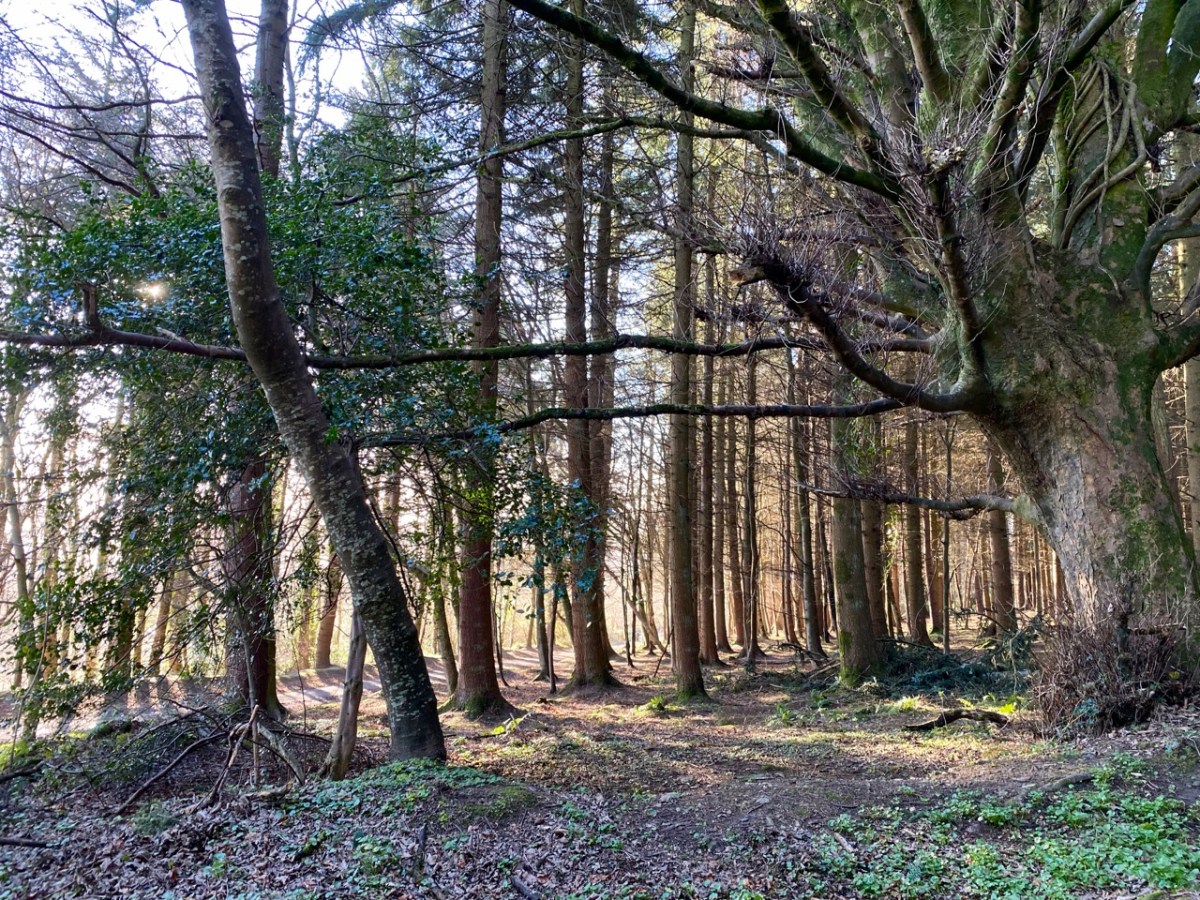
The Mountpelier Woods consist of around 5.5 kilometres of forest roads and tracks. The woods offer nature trails and a permanent orienteering course. Lord Massy’s Estate and Mountpelier Hill are also traversed by the Dublin Mountains Way hiking trail that runs between Shankill and Tallaght. It’s an attractive walk at all times of the year, with easy access from Dublin city centre.

A comprehensive application to An Bord Pleanála was submitted in July 2017, seeking permission to establish a Dublin Mountains Visitor Centre with associated works relating to tourism, leisure and recreational activities which would embrace the Hell Fire Club site and the mountain trails. Permission was granted, subject to conditions, on 25 June 2020. Another chapter in the story of this notorious locality unfolds . . .

As a tailpiece, I found this image of a ‘Hell Fire Club Goblet’ dating from c1745. It’s currently in the Philadelphia Museum of Art, but it must originate from Ireland: James Worsdale, whose name appears on this glass, was appointed Master of the Revels in the Dublin Hell Fire Club in 1741. It was also he who painted the portrait of Club members illustrated in this post: look at their goblets in the painting!