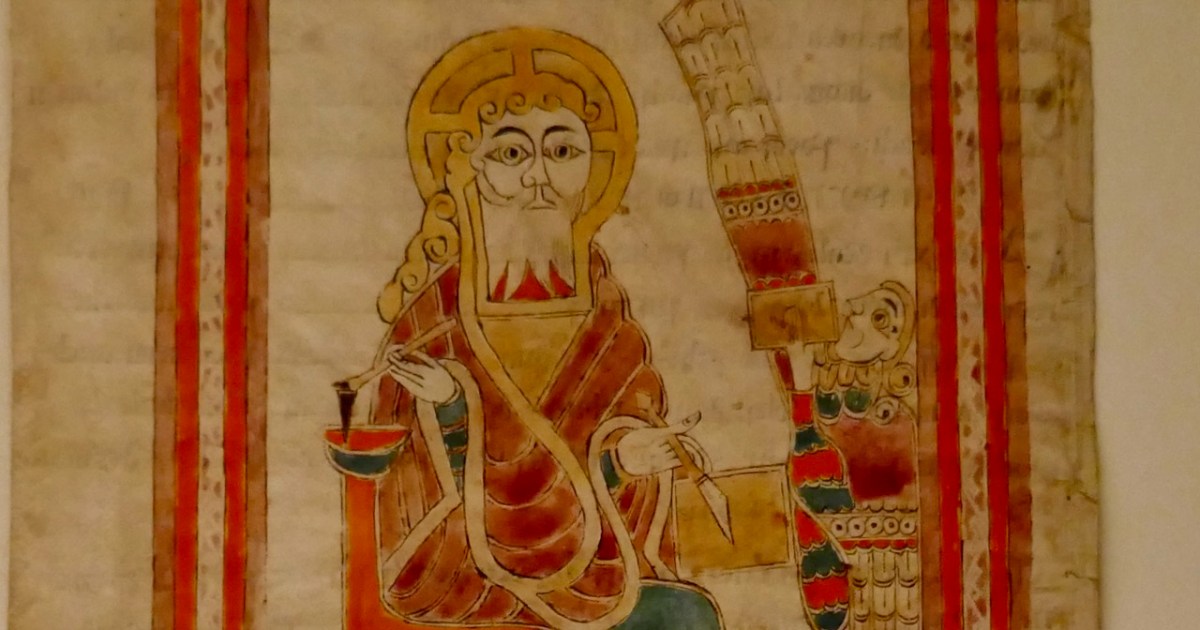
A few weeks ago I visited the National Museum in Dublin especially to see their Words on the Waves exhibition. This is the story of how Irish monks lived and worked on the continent during the 8th and 9th centuries, producing marvellous illuminated manuscripts of the gospels and other books.
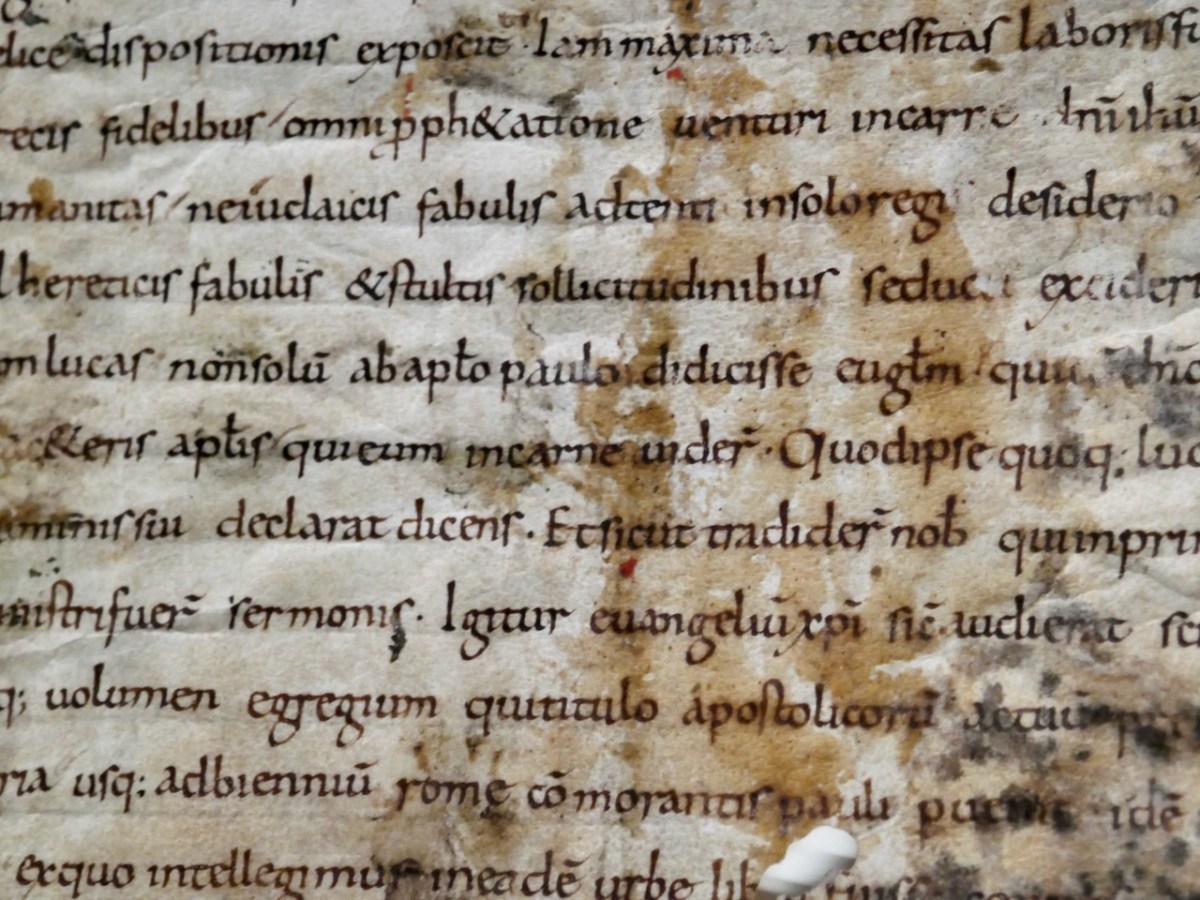
The exhibition continues until the 24th of October so if you haven’t seen it yet, there’s still lots of time. And it is SO worth it. The exhibits are a mixture of Irish and continental. St Gallen, in modern-day Switzerland, was one of the destinations to which Irish scribes travelled and they have retained an incredible collection of manuscripts. Below is the start of the Gospel of St John – In the Beginning Was the Word.
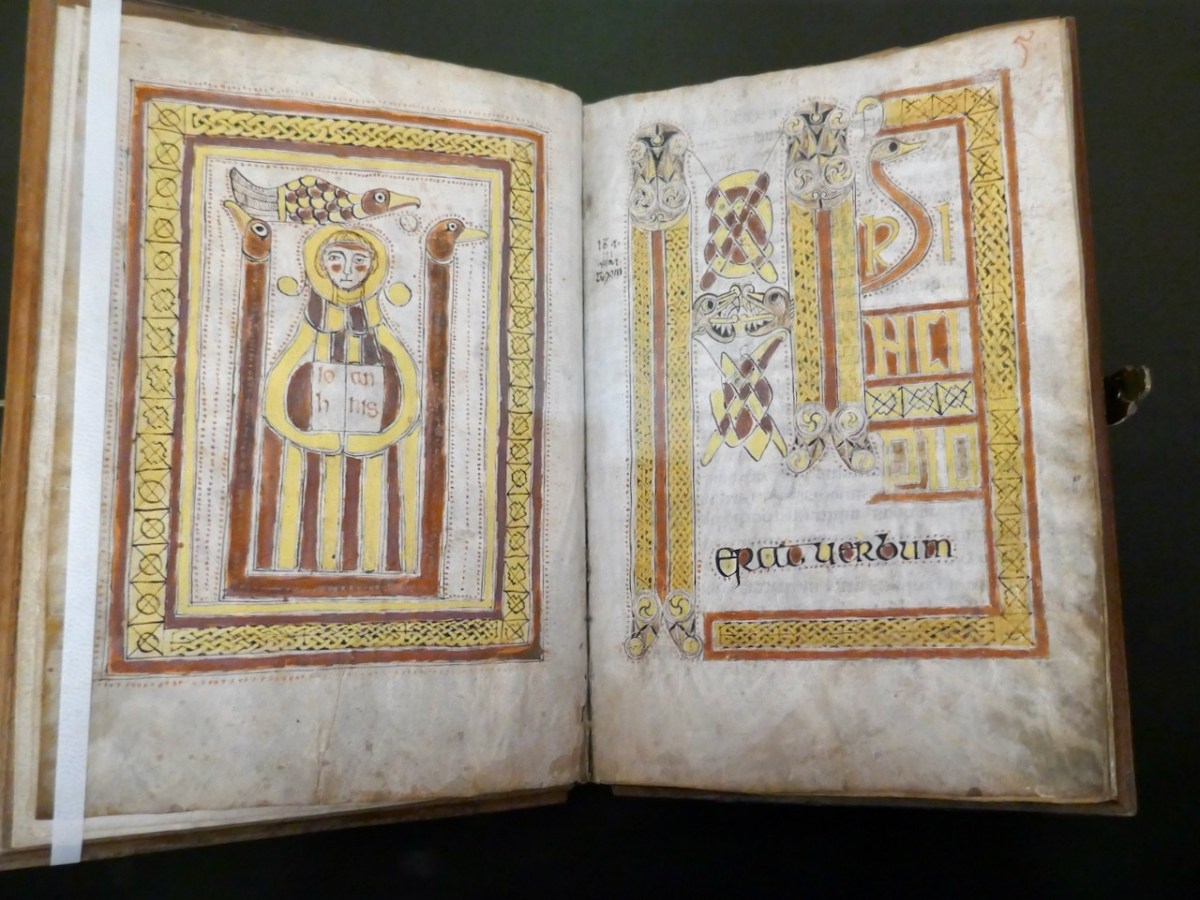
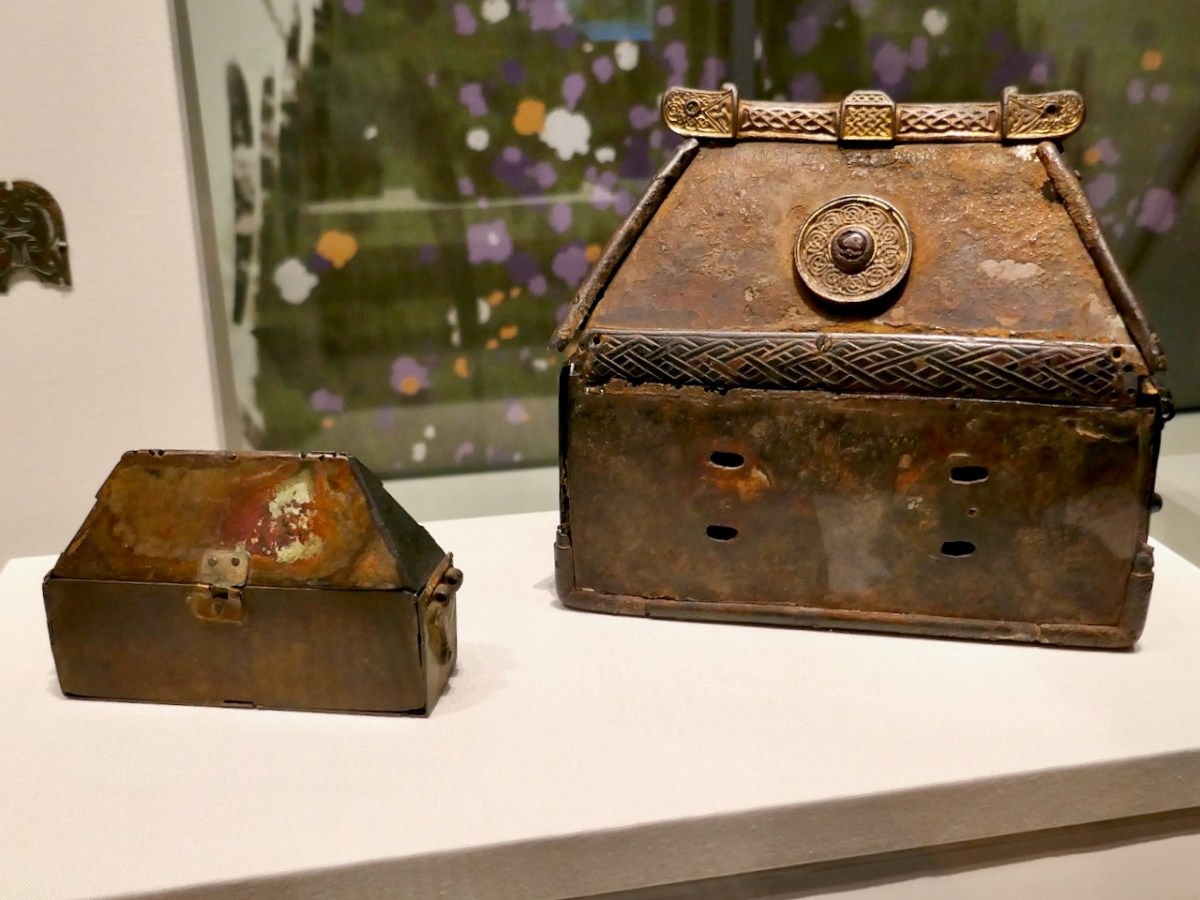
There are book shrines and gospel fragments from Ireland, explanations of how books were made and bound, early examples of ogham writing, designs on wood and metalwork of what we often call “Celtic interlacing” but which is properly referred to as ultimate La-Tene.
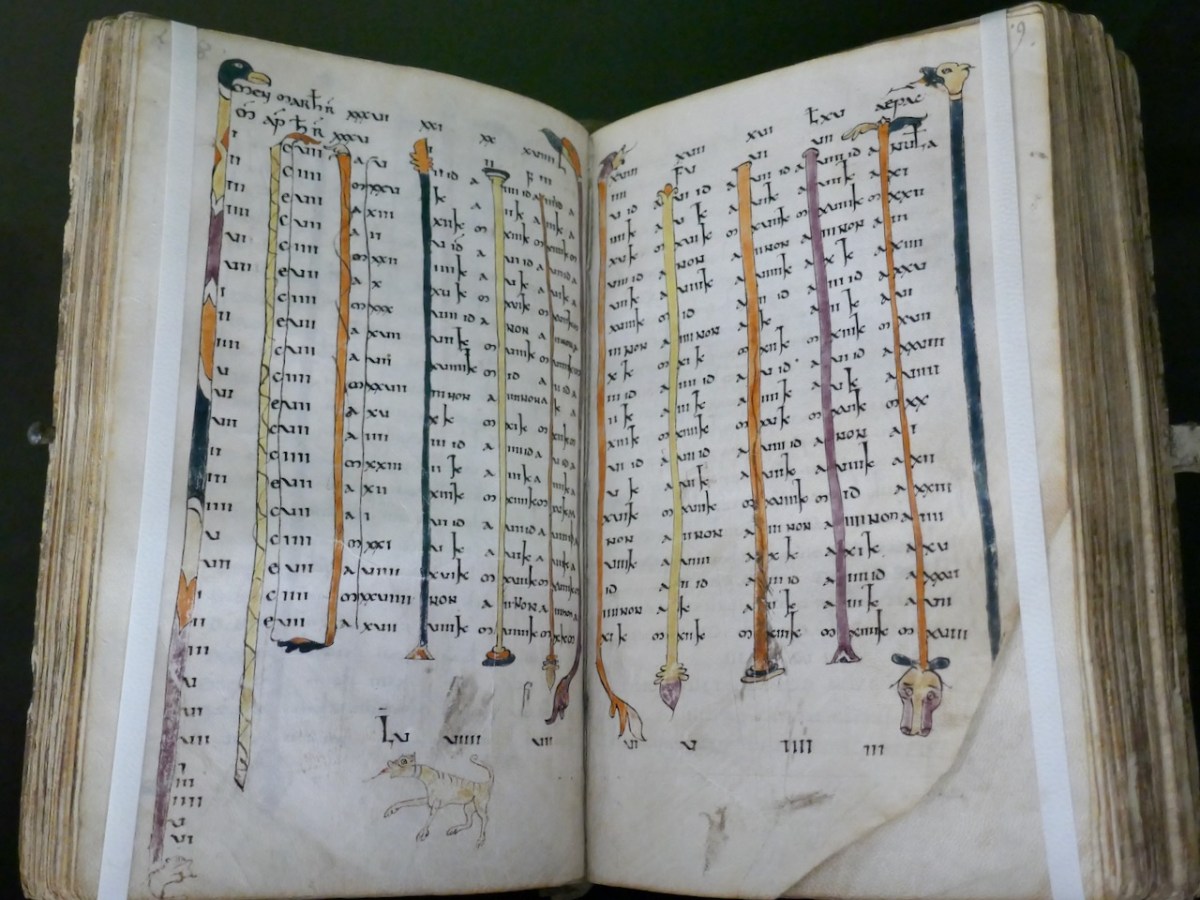
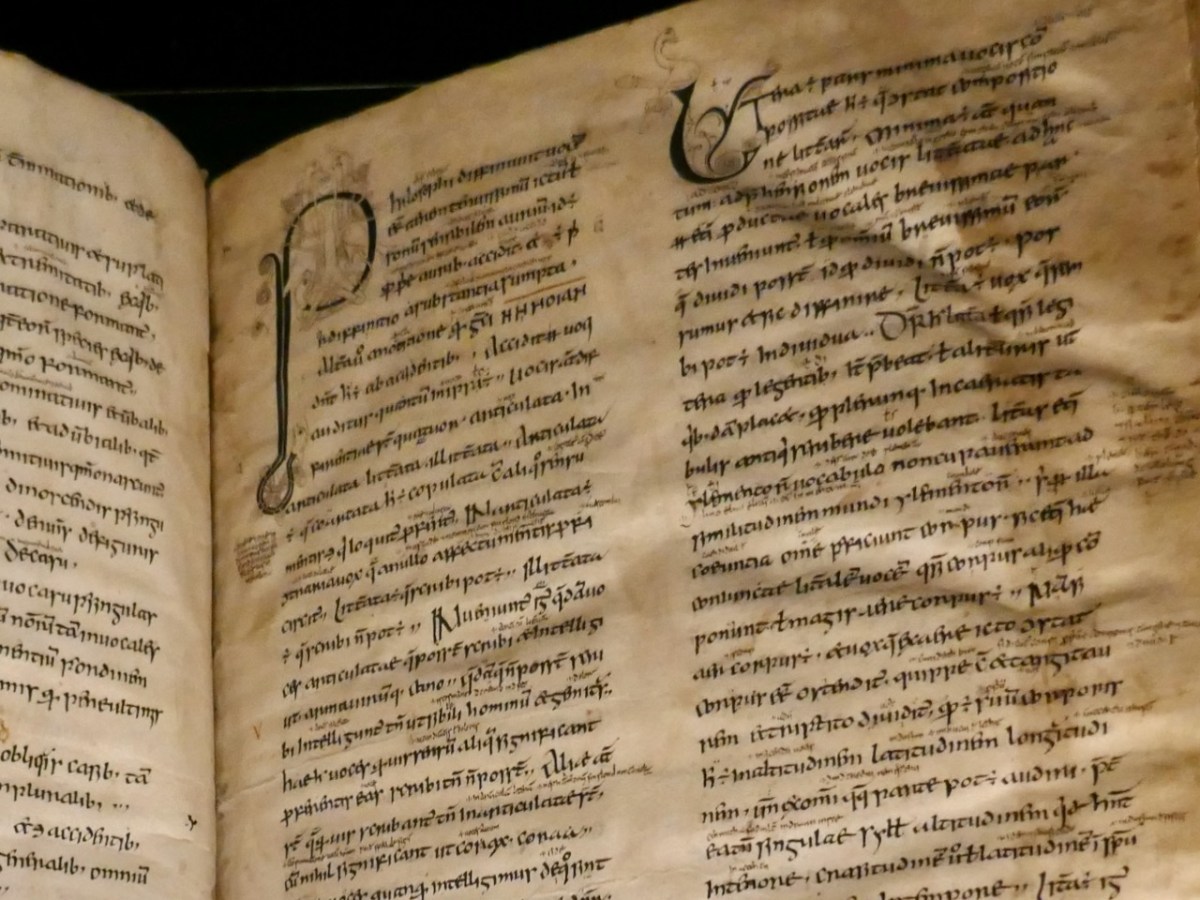
From St Gallen come the manuscripts – gospels, law texts, a mathematical calculation for Easter (below), a Greek dictionary and a Latin Grammar (second down).
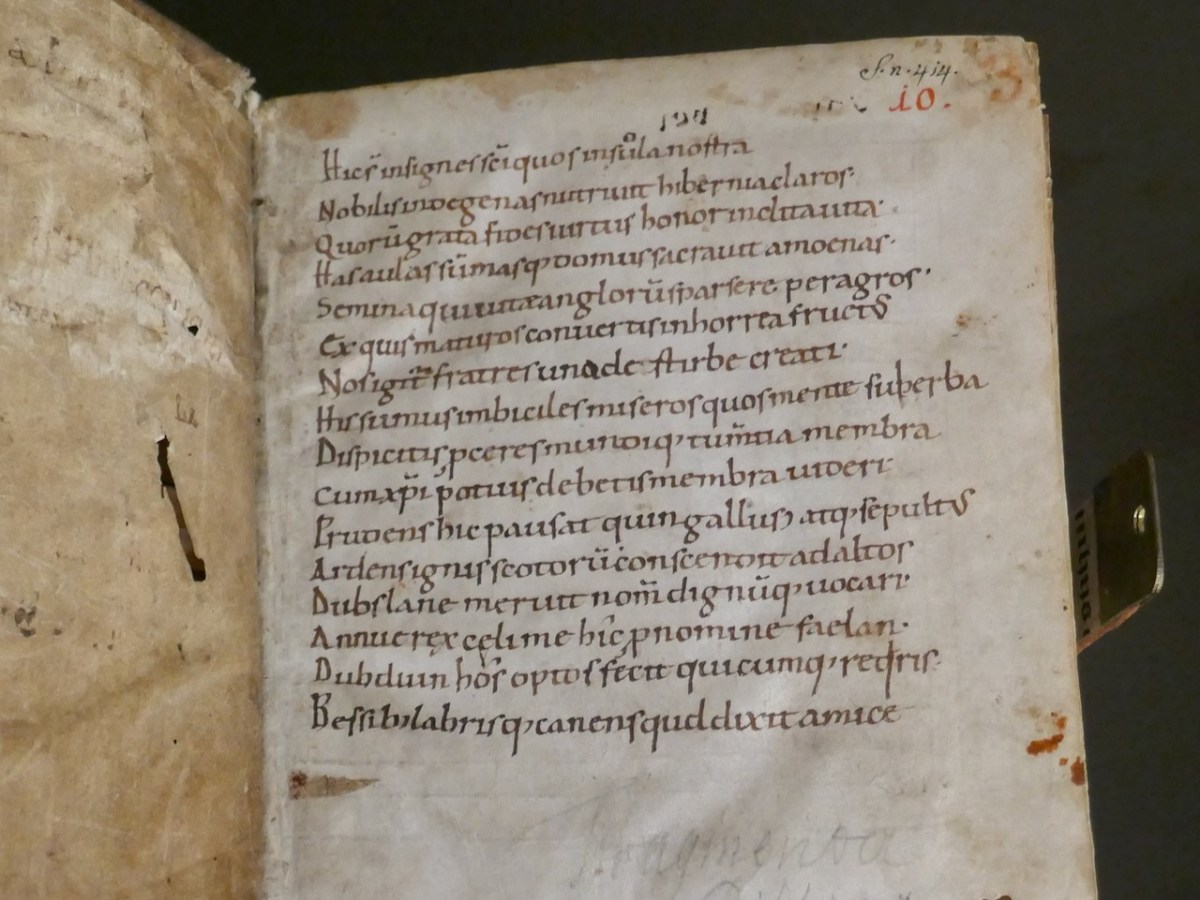
There’s even a poem of complaint by an Irish monk about how badly he is being treated at St Gallen (below).
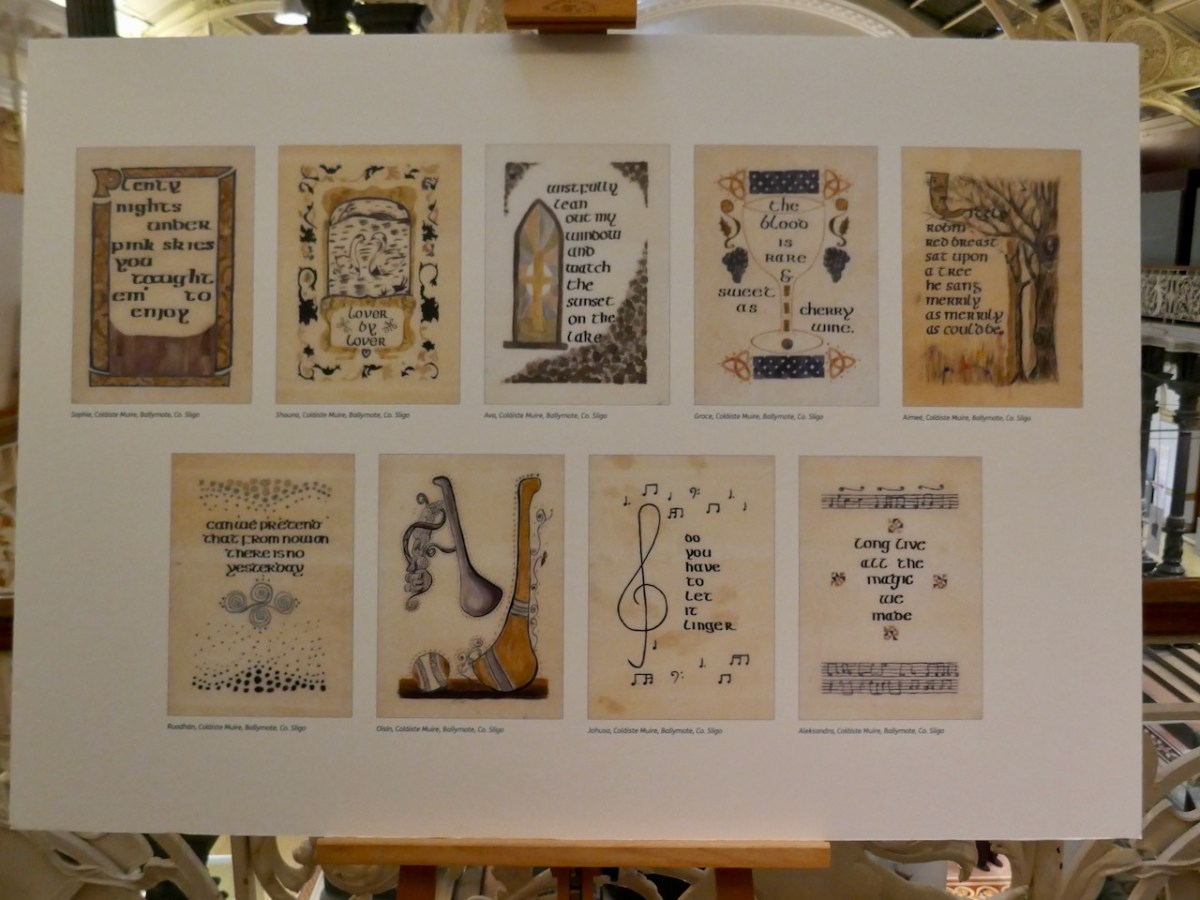
A lovely addition was an exhibition of student work, based on workshops they had taken on the art of calligraphy and medieval manuscripts.
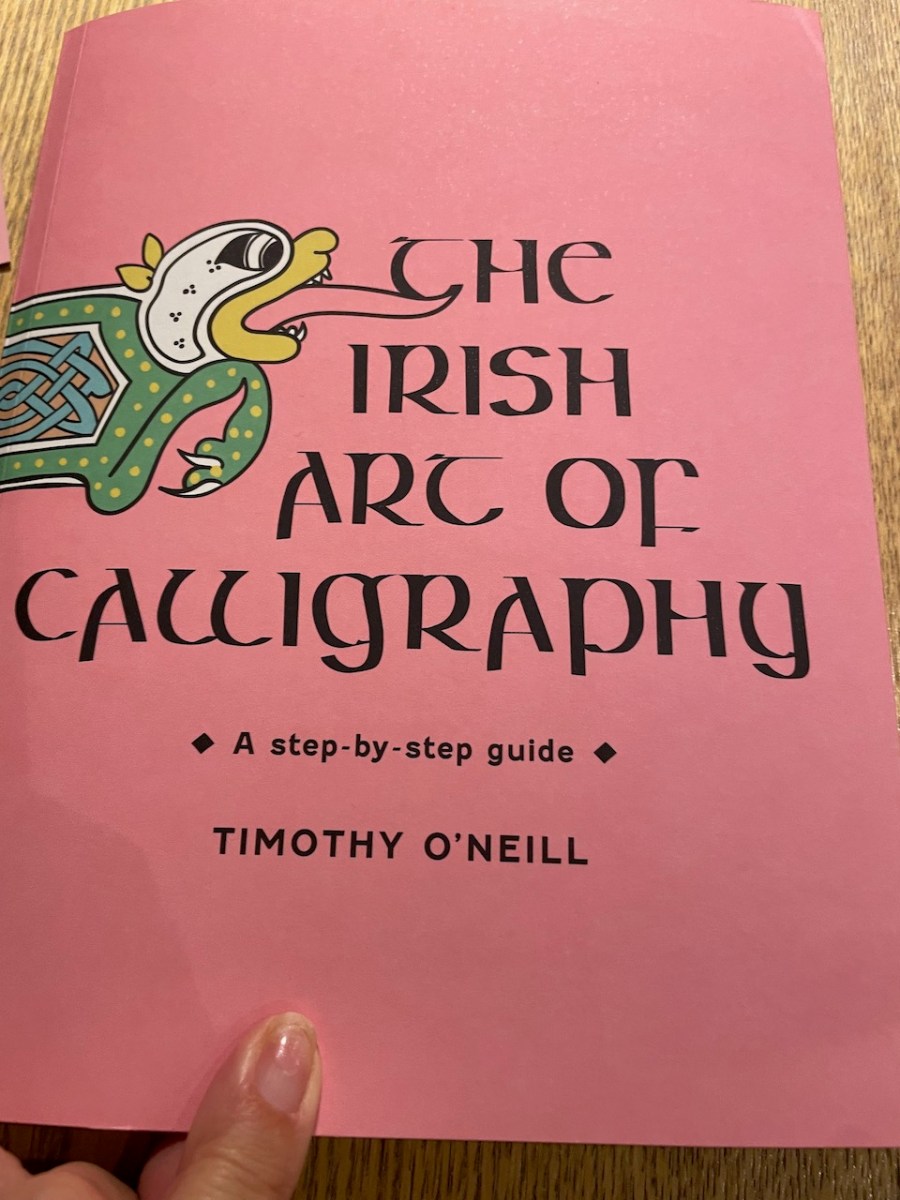
I was completely bowled over by the manuscripts. Carried away by enthusiasm, I ordered a copy of the Royal Irish Academy’s The Irish Art of Calligraphy, by Timothy O’Neill, the renowned expert on this field.
I then bought myself a calligraphy set at Cathal O’Donovan’s lovely bookshop in Skibbereen.
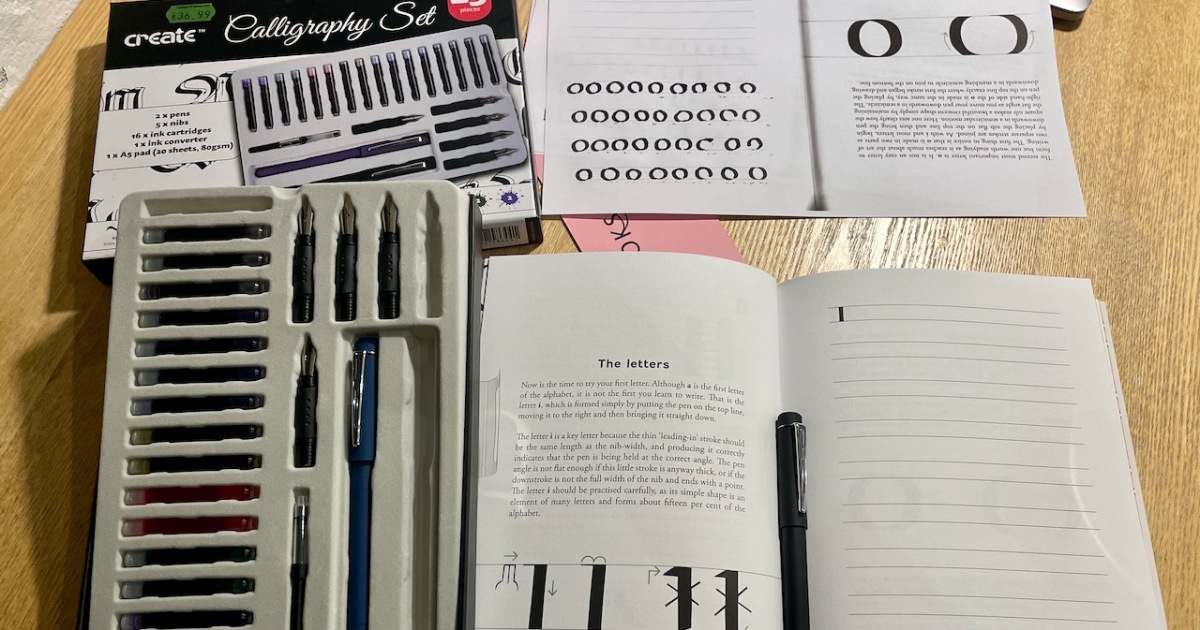
I don’t have an artistic bone in my body, but hey, I reasoned, this is not art, it’s just writing, right? The instructions were crystal clear and organised in a lovely straightforward step-by-step manner. Having figured out how to assemble the pen (no instructions included, but thank you, YouTube) I set about copying the letter i, then the o then j, c, and e.
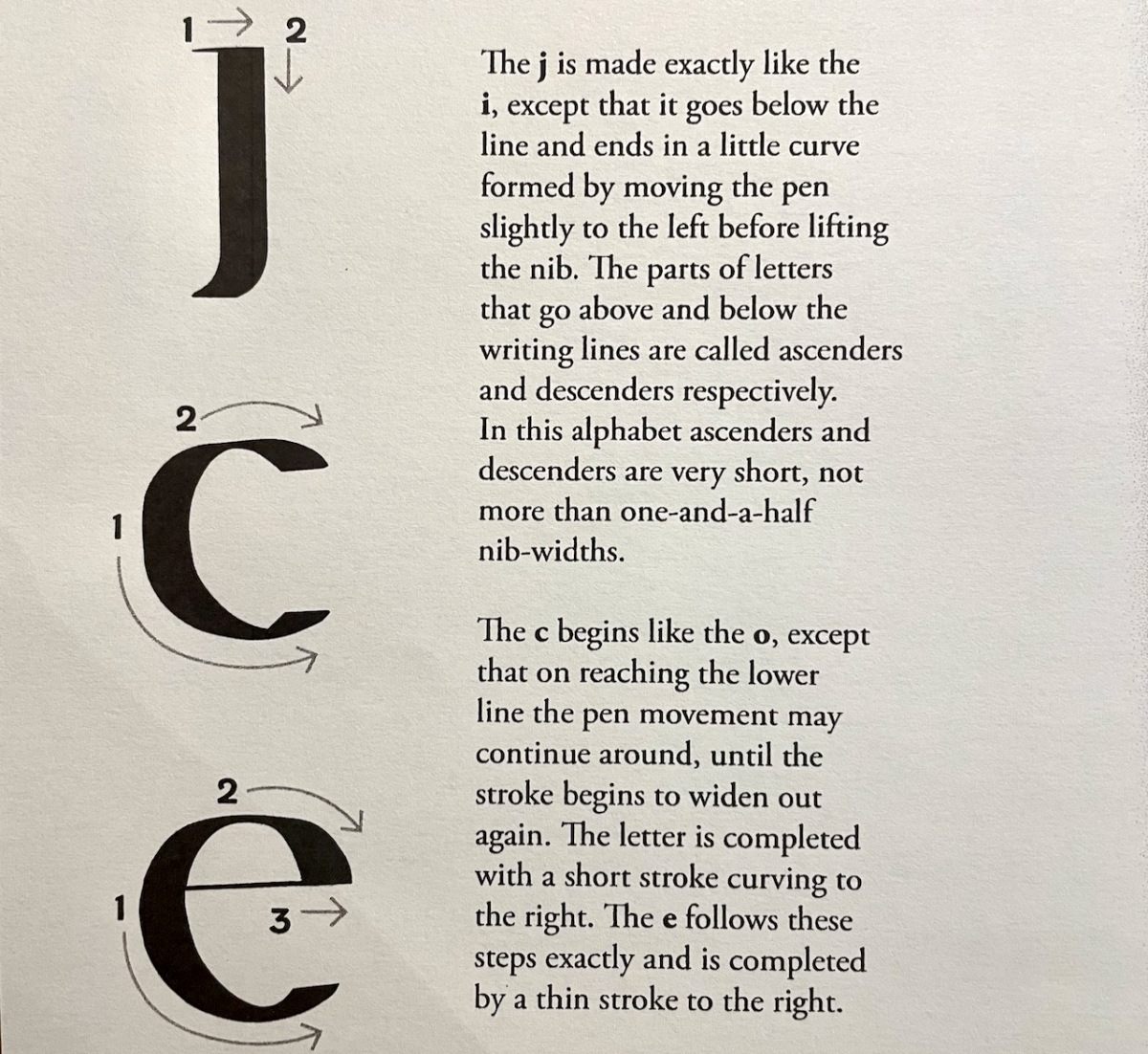
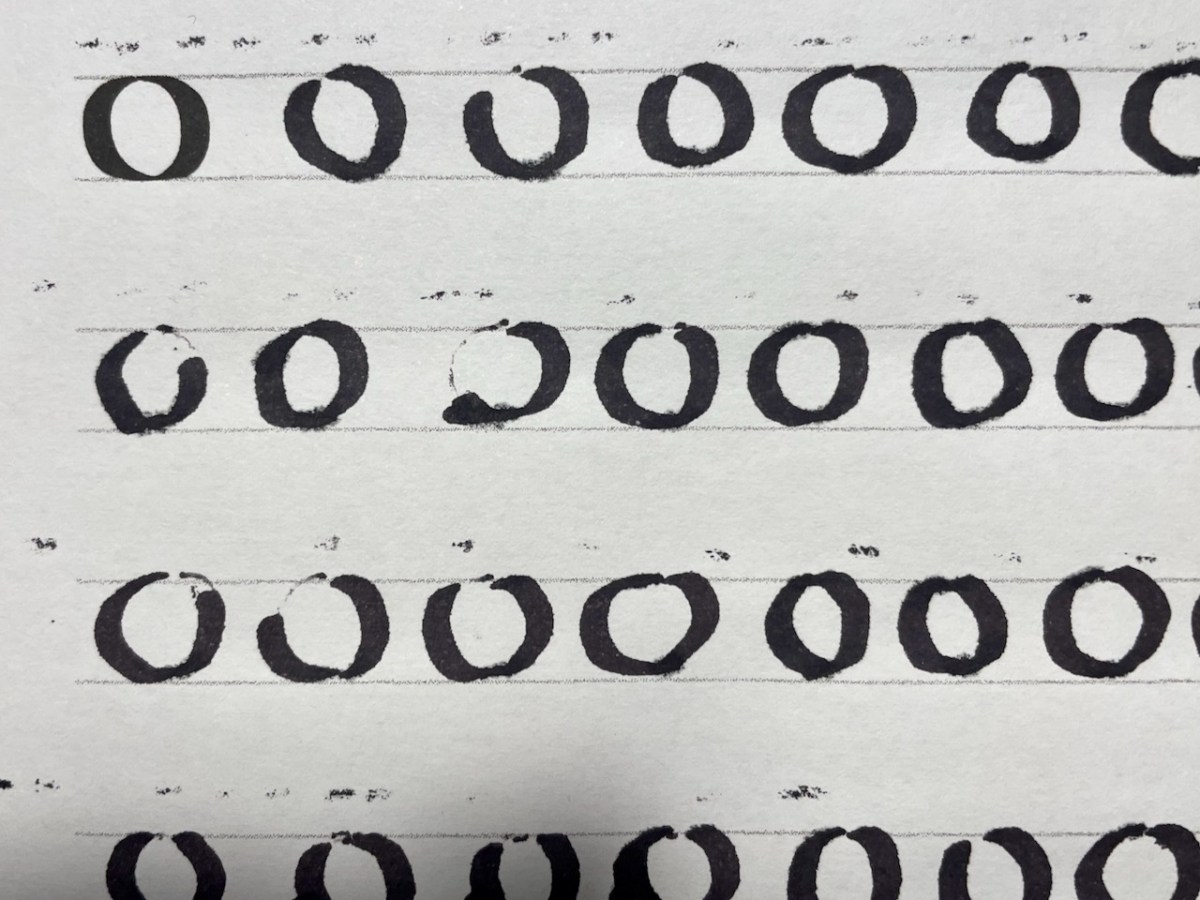
Yes, you guessed it – this is a lot harder than it looks, especially for someone not naturally gifted in this way! I may have used too thick a nib to begin with. I may be holding the pen wrong. The paper I copied to practise on (I didn’t want to use the book!) may be too blotty.
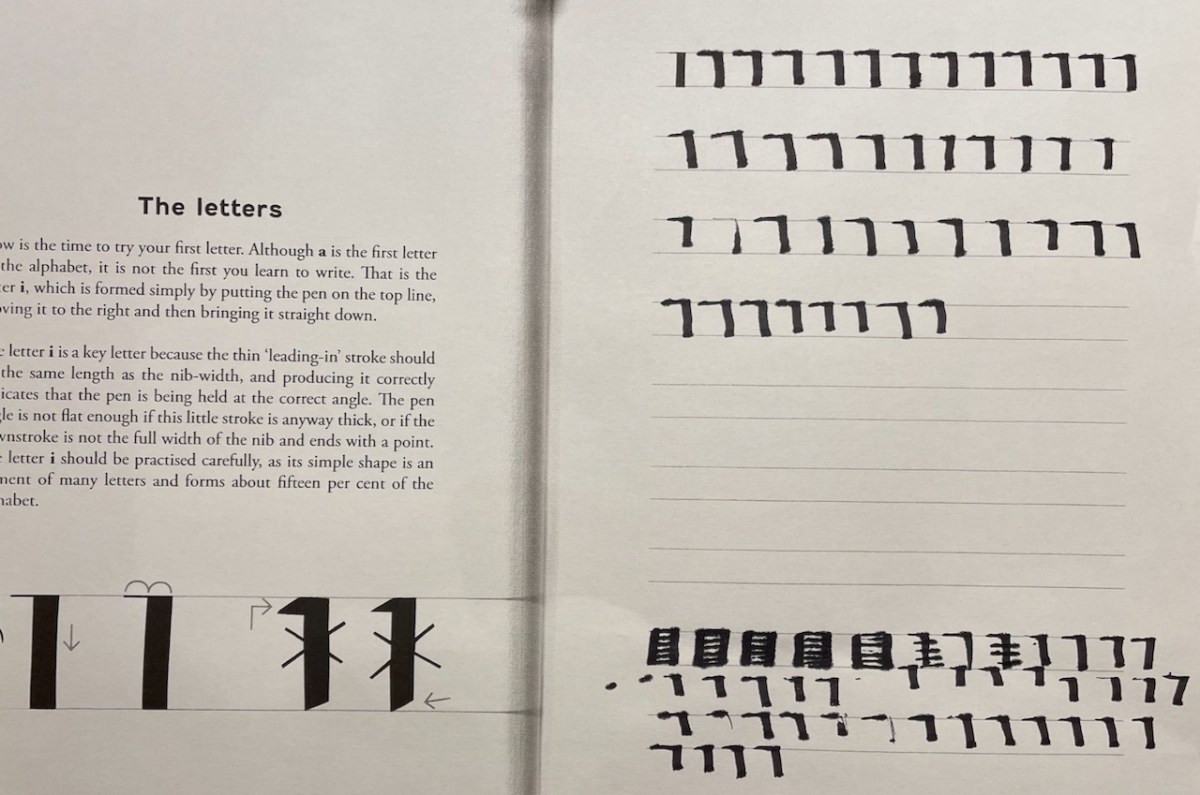
I will try again. Any readers who can see what I am doing wrong, please weigh on with words of advice. Encouragement to persist also welcome. This my letter o attempt – the first o is the model, the rest are mine.
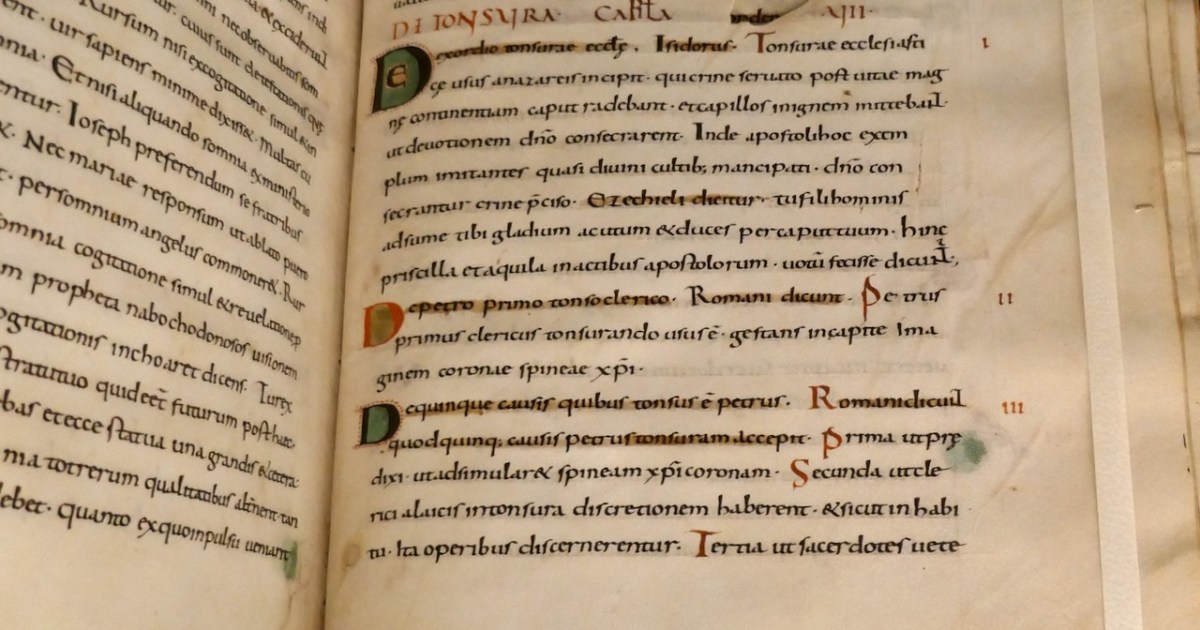
After all, I tell myself, those monks didn’t produce those wonderful scripts overnight – I wouldn’t be surprised if it wasn’t a seven year apprenticeship. Perhaps I’ll do an update in seven years and show you my progress. What are the chances it will look like this?
 Roaringwater Journal