A Grand Job!

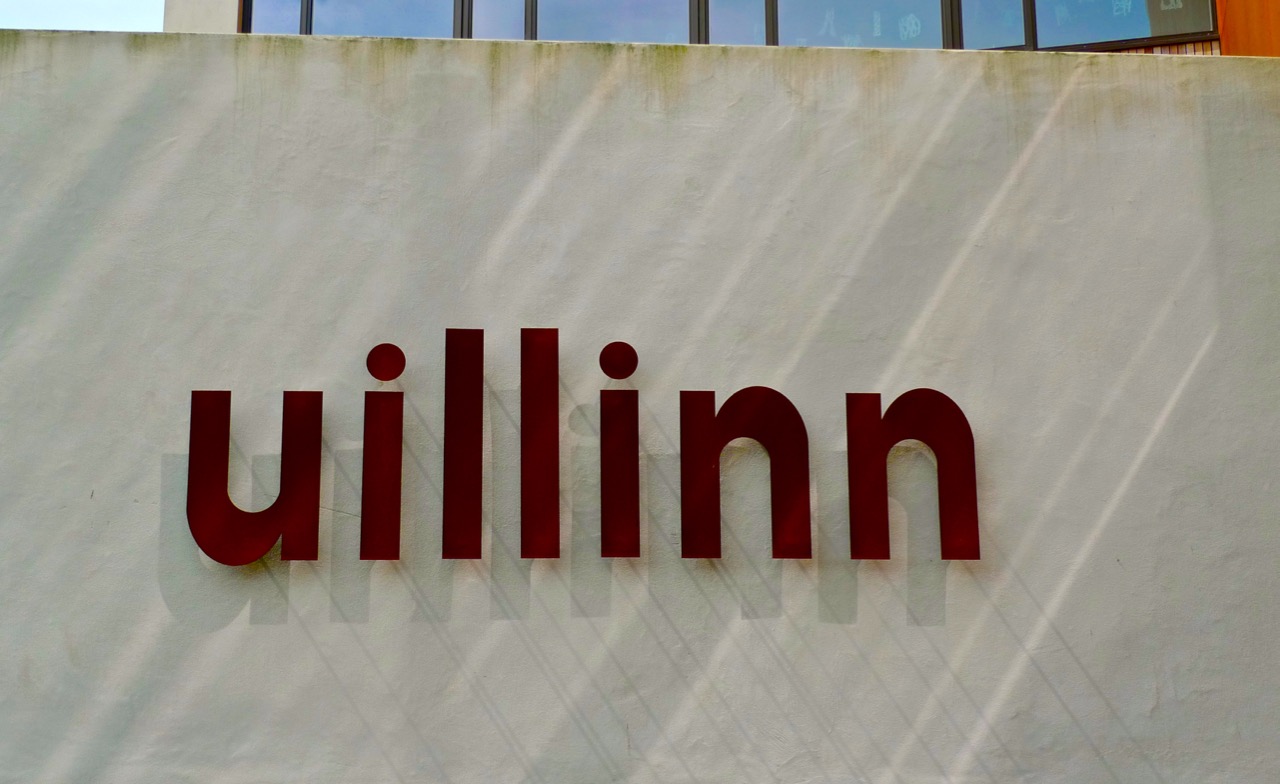
uillinn name

Here’s a riddle: what’s the connection between rusty steel and the President of Ireland? The answer – Skibbereen! Skibbereen on a summer afternoon in June, in fact…
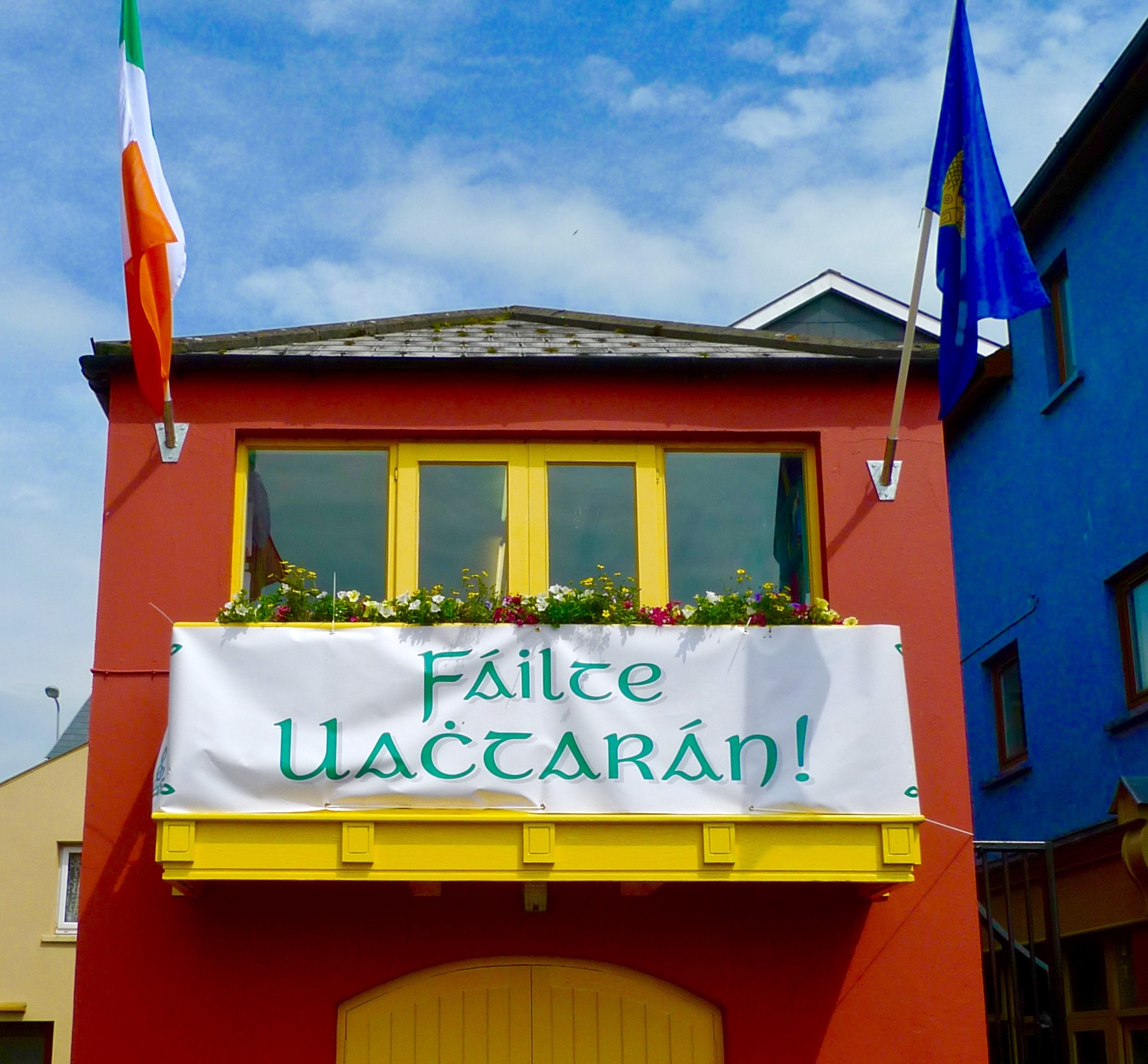
Welcome, President!

Welcome, President!

This week the President was in West Cork and on Thursday he came to Skibbereen. Before I lived in Ireland I was pretty ignorant as to the role the President plays in the life of the Republic. It’s not a political position – nothing like the American President, for example: although officially ‘head of state’ the Irish President has no powers – the executive running of the country is entirely in the hands of the government. Instead, the President of Ireland – Uachtarán na hÉireann – acts mainly in a ceremonial capacity and is very visible in civic life. There are always buildings to be opened, institutions to be founded, statues to be unveiled, speeches to be made, important visitors to be hosted… 
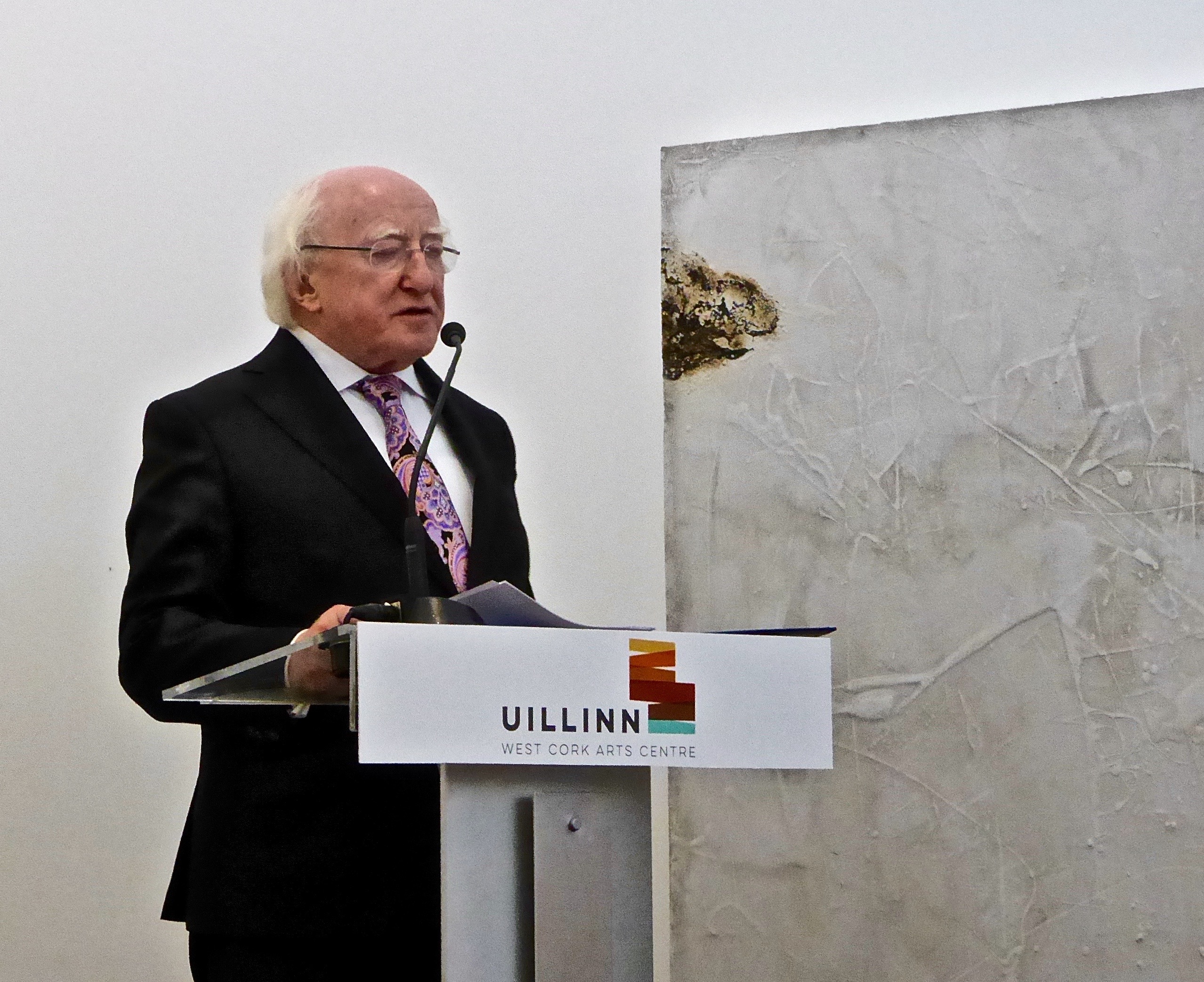
President Michael D Higgins formally opening Skibbereen's new Arts Centre

President Michael D Higgins formally opening Skibbereen’s new Arts Centre

Presidents can either be chosen by popular consensus or elected by a vote of all Irish citizens. Michael D Higgins was elected in October 2011 and his tenancy will run for seven years. Following this he can serve a further term if he and the people so wish. A Limerick man, Michael D (as he is usually known) is well liked: he’s had an impressive career in public life – academic, lecturer, professor, politician, poet, sociologist, author and broadcaster. He served as Minister for Arts, Culture and the Gaeltacht and was President of the Labour Party for many years. He is the first Irish President to have made a state visit to the UK.

His first appointment in Skibbereen was to open Uillinn – West Cork’s new Arts Centre: that’s where the rusty steel comes in – partly… Regular readers of this blog will know all about this building. It was controversial while under construction, mainly because of the Cor-Ten steel cladding to its prominent five storey tower. Cor-Ten or ‘weathering steel’ is a material consisting of alloys which encourage a rust-like patination on exposure to weather, forming a fully protective coating over a number of years. In fact, the weathering process takes about as long as one term of office of an Irish President! I know many people disagree (although I think some are coming round…), but I find the ‘rusty’ finish very attractive, and I like the fact that the appearance keeps on changing in an organic way.

I was impressed with Michael D’s speech: he’s an enthusiast for all the arts and emphasised how important this modern building is – not just for Skibbereen but for the whole of West Cork. The site – right in the centre of town – had been a bakery for generations, and the President pointed out the analogy between the essentials of bread, fundamental food for the body, and the arts – food for the soul.
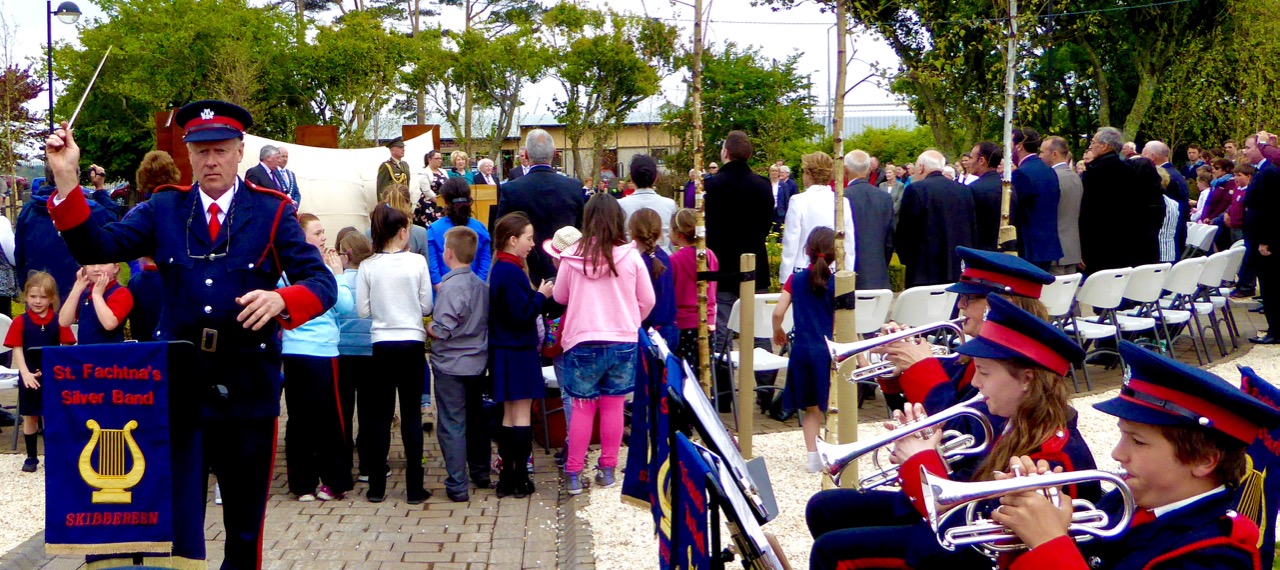
'Presidential Salute' in the O'Donovan Rossa Memorial Park

‘Presidential Salute’ in the O’Donovan Rossa Memorial Park

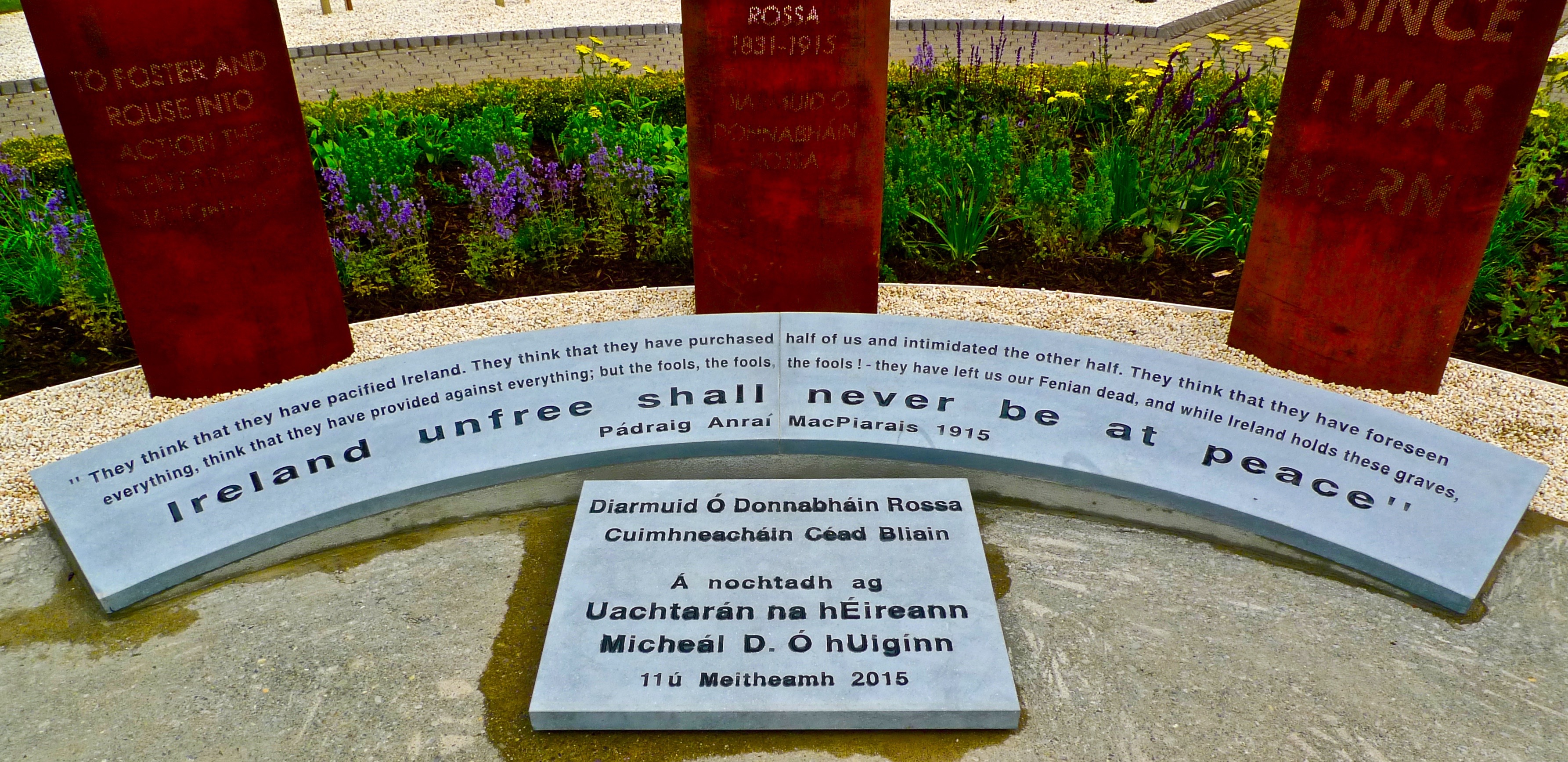
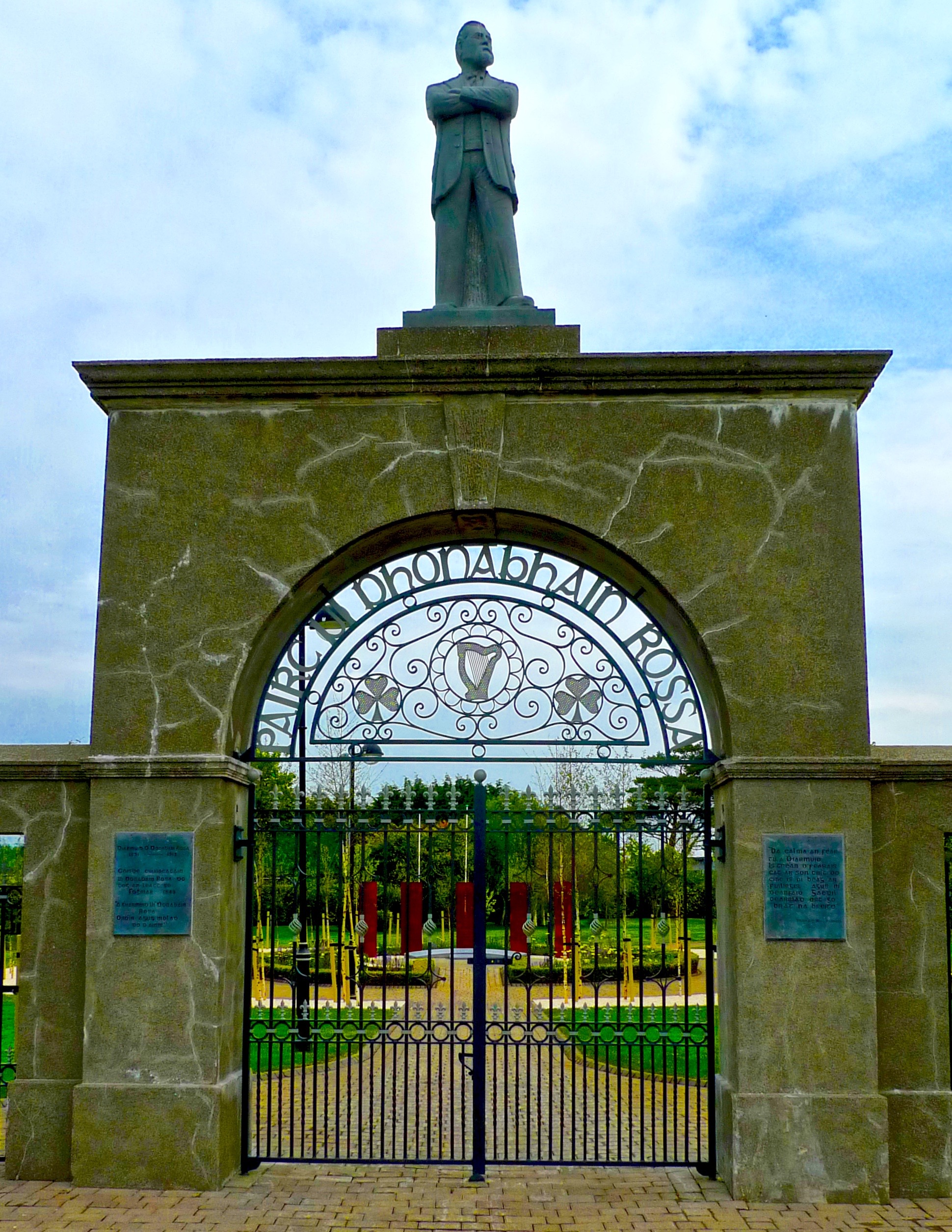
Next item on the afternoon’s agenda was a visit to the park: the President was to unveil a new memorial to Jeremiah O’Donovan Rossa – a local hero who had links with Skibbereen. Finola has mentioned him previously and is currently working on a post about him: July this year marks the centenary of his death. O’Donovan Rossa fought for Ireland’s freedom, just as Michael Davitt did (I wrote about him last week). The President gave a passionate speech emphasising the debt that the Ireland of today owes to those campaigners of yesterday, and I was pleased to hear him mention Davitt specifically.
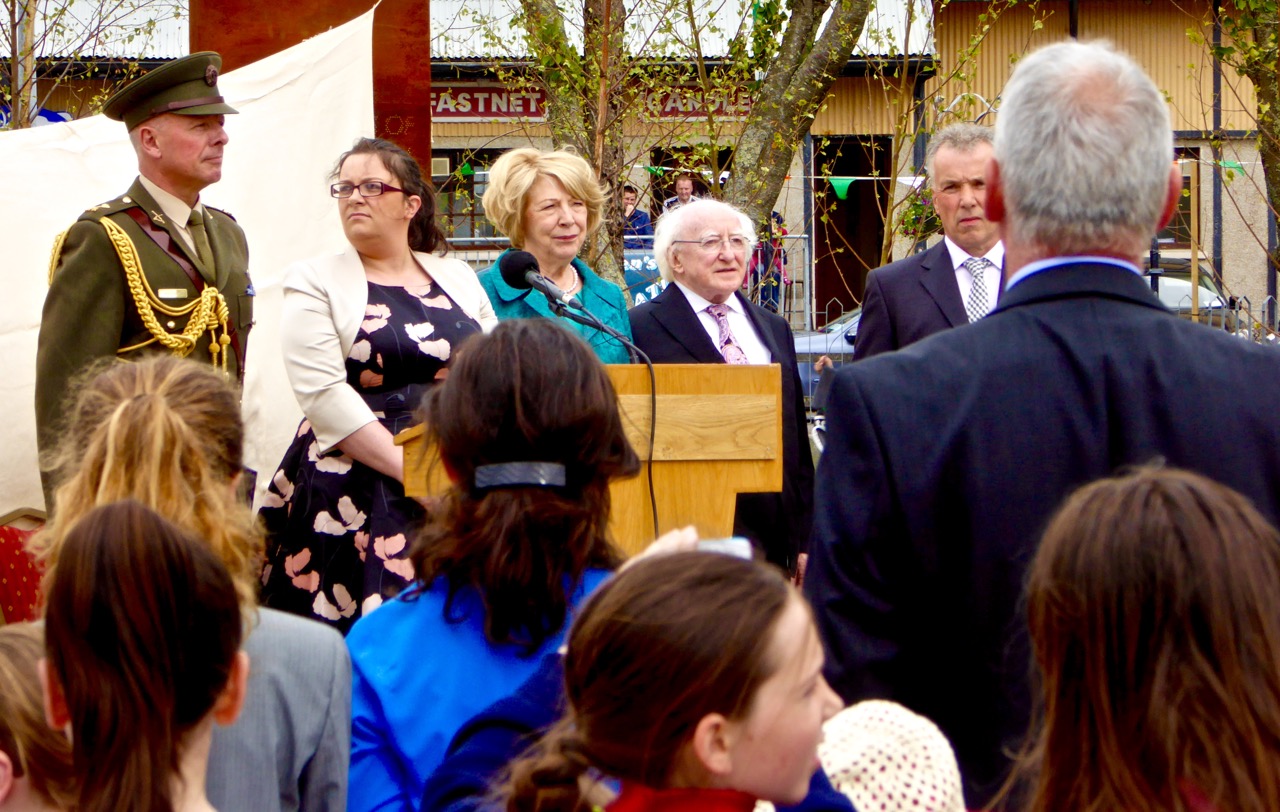
Ready for the unveiling...

Ready for the unveiling…

New commemorative sculpture in Skibbereen's O'Donovan Rossa Memorial Park

New commemorative sculpture in Skibbereen’s O’Donovan Rossa Memorial Park

I think the new memorial is a great piece of modern commemorative art: it’s rusty steel again! Five columns are placed in the centre of a garden, each telling something of the hero’s story. You have to work to see all the images: they are made by perforating the ‘weathering steel’ sheets. It’s very effective because it can’t be ignored – you just have to stop and work it all out. I commend the artist – but nowhere can I find any mention of who that is! I’m still searching…**
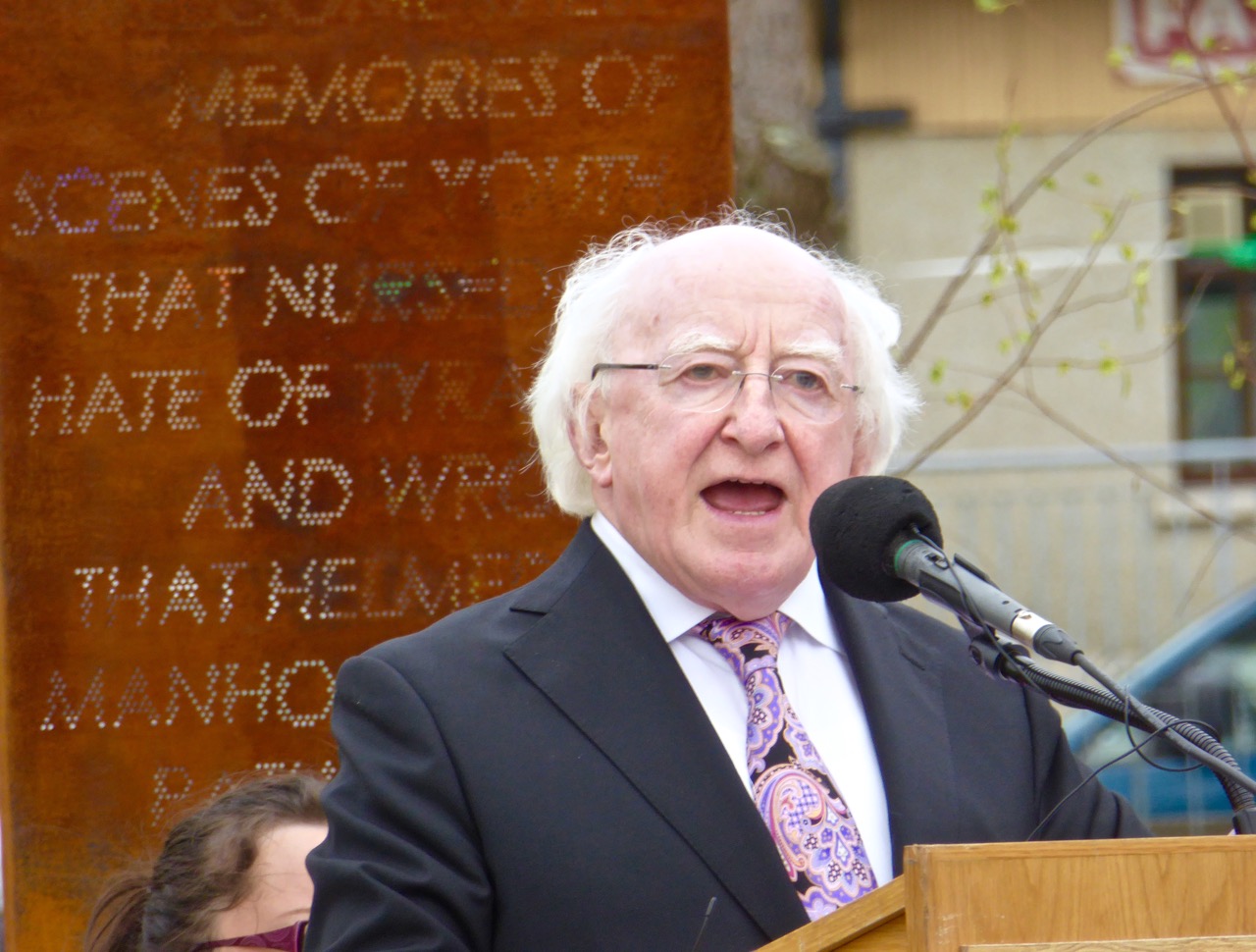
President Higgins speaks out with passion about freedom fighter Jeremiah O'Donovan Rossa

President Higgins speaks out with passion about Ireland’s freedom fighter Jeremiah O’Donovan Rossa

Michael D is a fluent speaker in Irish. He slipped easily between English and Irish while giving his orations – and made it sound so simple! The sun almost shone, the crowds were in good spirits, and the Band played. The rusty steel was looking good. All in all, the visit of Ireland’s President to Skibbereen was a grand job

gate

We have now heard from Graepels Perforators in Kinsale letting us know more about the monument. Here is their message: We worked with Giulia Vallone (now Senior Architect at Capital Projects Implementation Unit CPIU) and Orla Higgins (Cork County Council Architect) to create the memorial. We teamed up with Cork County council to create it.
Forgotten Hero – Michael Davitt

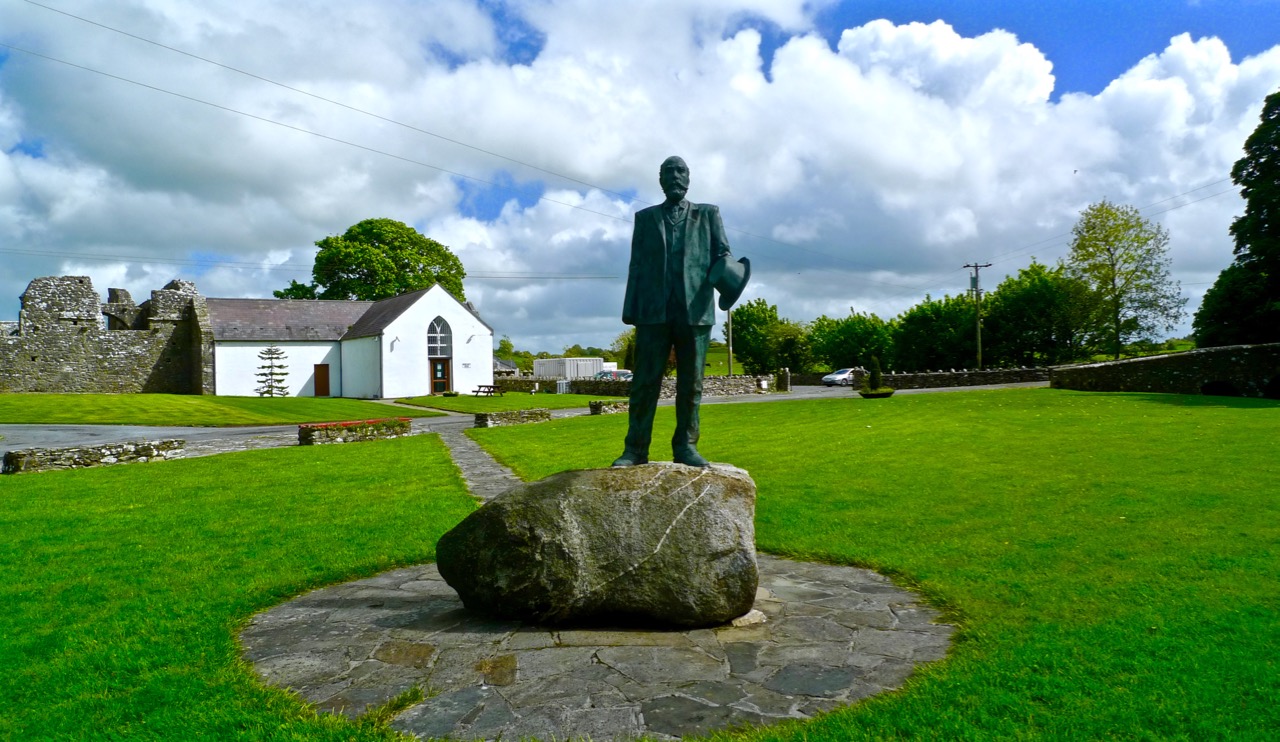
Straide, Co Mayo - Michael Davitt's statue outside the museum dedicated to him
Straide, Co Mayo – Michael Davitt’s statue outside the museum dedicated to him

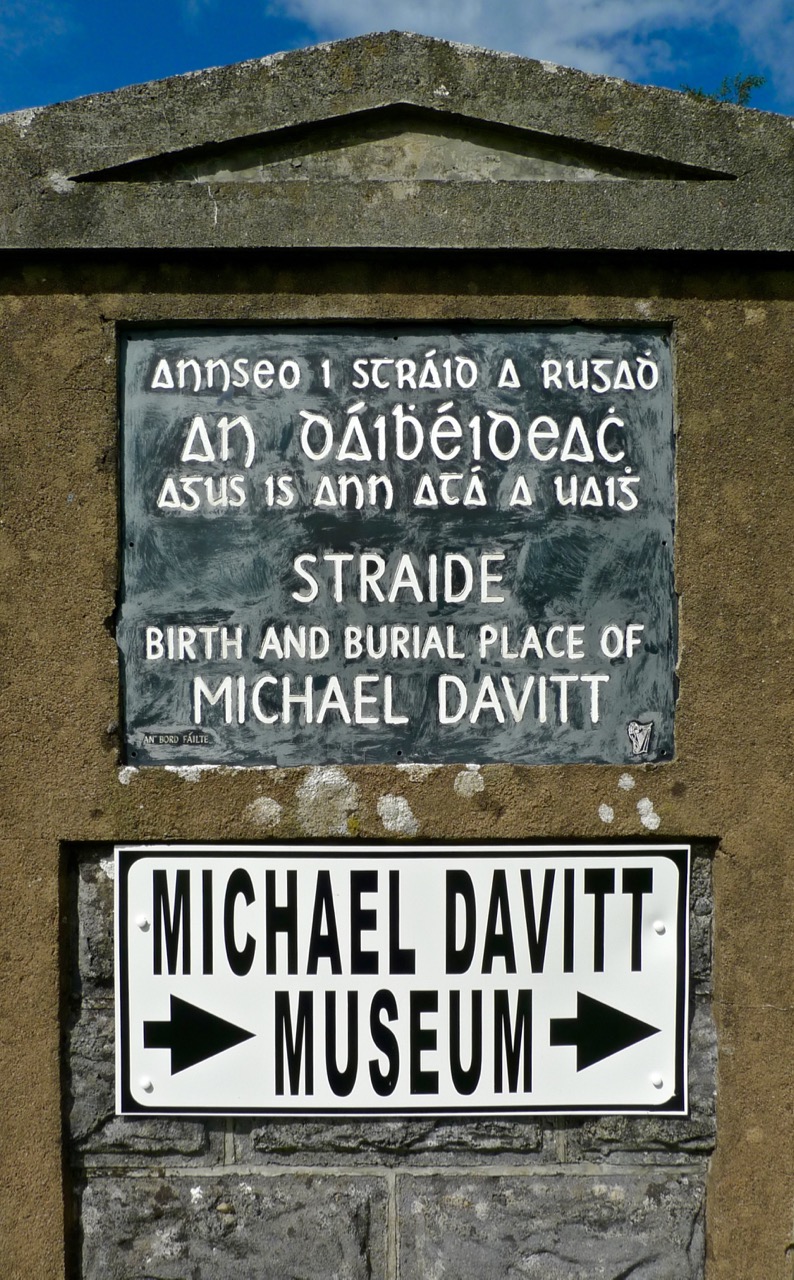
On our recent travels in Mayo we chanced upon a little museum in a rural situation. I was fascinated by the setting: housed in an old church adjoining the ruins of a 13th century abbey (which itself has some fine medieval carvings). The church has been restored specifically to accommodate the museum, which tells the story of Michael Davitt – who was born close to the site of the museum in 1846, and was buried right behind it in 1906.

Sixty years: a relatively short life – but years filled with remarkable achievement pursuing the causes of basic human rights and of freedom for Ireland. Years filled, also, with considerable hardships.

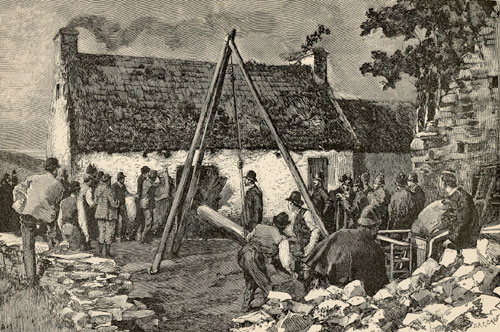
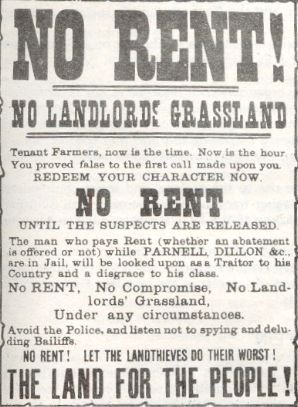
eviction
Eviction

The village of Straide, in County Mayo, was hard hit by the famine – The Great Hunger – when Michael was born: a disaster that led to starvation and forced emigration for millions of Irish people. The Davitts were no exception to this. When he was only four years old Michael witnessed his own family being evicted from their cottage because they were unable to pay the rent to the landlord. He watched while their few possessions were piled on to the lane and their home was flattened.

Evicted families had little choice: starvation, the workhouse or emigration. The Davitts took the latter course, arriving in Liverpool in November 1850. From there they travelled on foot to Haslingden in Lancashire and settled in the closed world of a poor, Irish immigrant community with strong nationalist feelings and a deep hatred of ‘landlordism’.

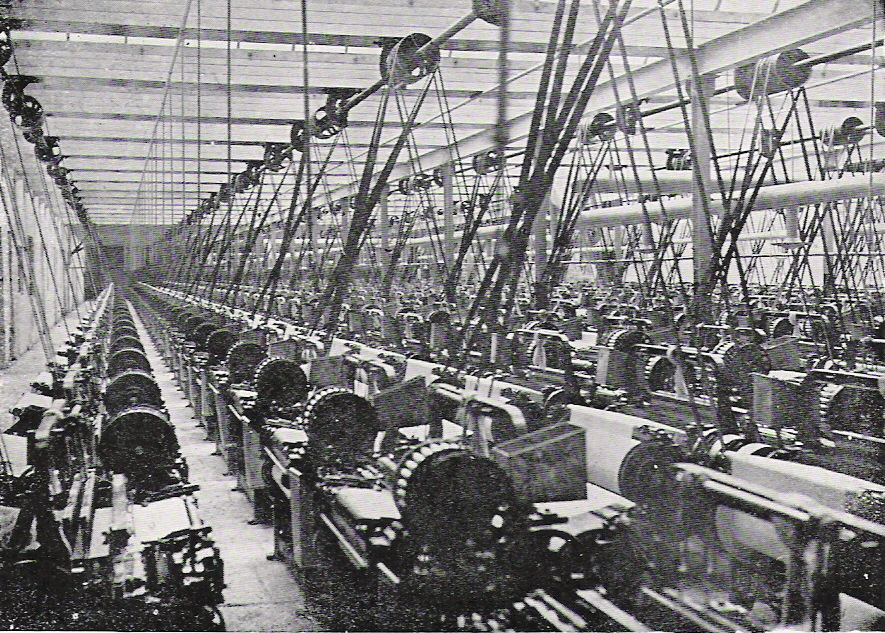
At the age of ten, Michael was sent to work in a local cotton mill. At the age of eleven his right arm was entangled in the machinery of a spinning machine and had to be amputated. There was no compensation for accidents suffered by child labourers in the Victorian world, nor – indeed – very much concern or compassion for the conditions suffered by the working classes generally in the British Empire at that time.

Lancashire cotton mill c1900

Michael was fortunate as his plight was noticed by a local benefactor, John Dean, who helped him to gain an education in a Wesleyan school. When he left the school at fifteen, Michael Davitt secured a job in a post office and learned to become a typesetter. He also started night classes at the local Mechanics Institute and used its library, where he read extensively about Irish history, contemporary Irish life and radicalist views on land nationalisation and Irish independence.

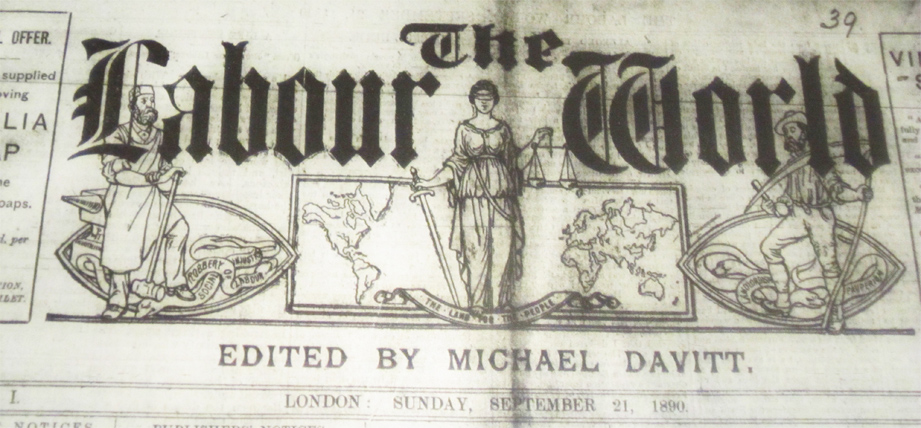
One of Michael Davitt's campaigning newspapers
One of Michael Davitt’s campaigning newspapers

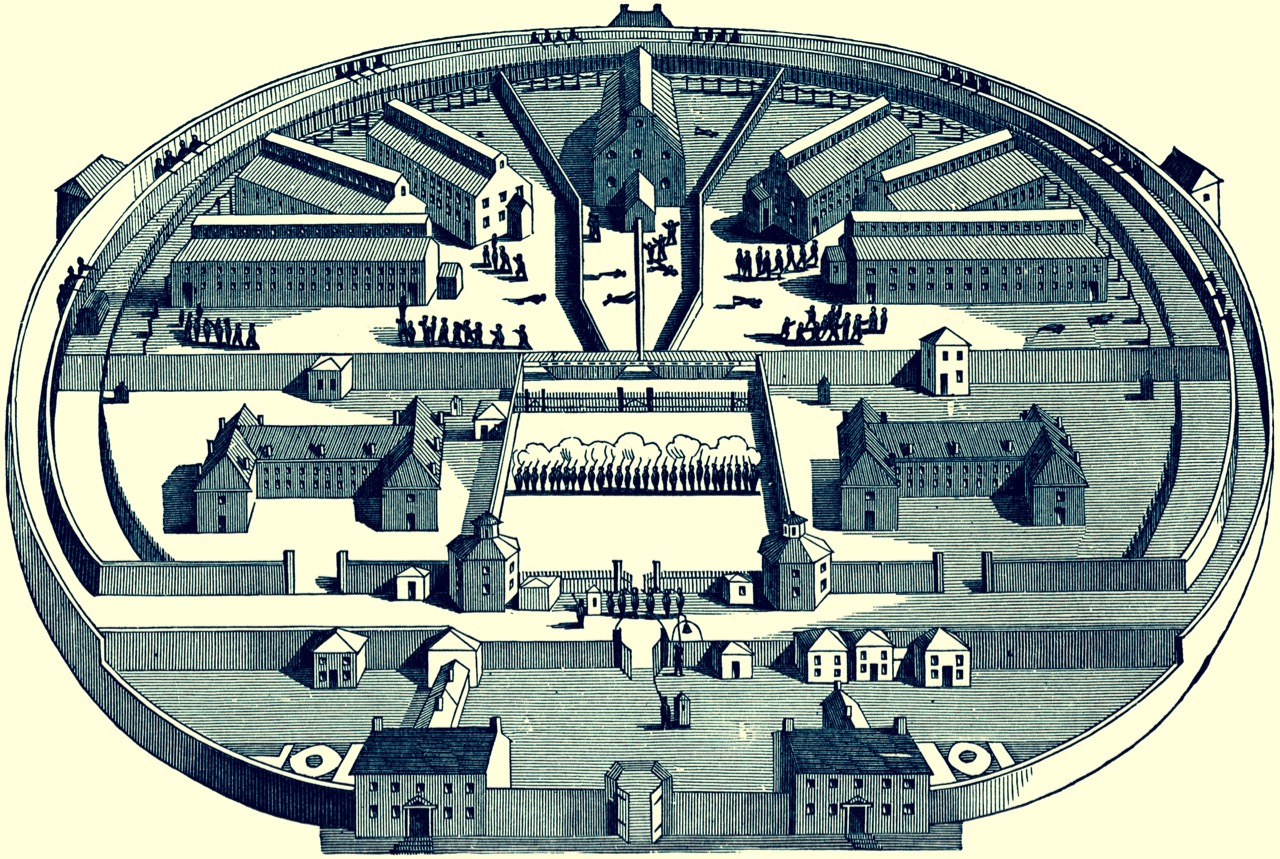
In 1865 Michael joined the Irish Republican Brotherhood. Two years later he left his job to devote himself full-time to the IRB, as secretary for Northern England and Scotland, organising covert arms smuggling to Ireland. He was arrested in London in 1870, convicted of treason and sentenced to 15 years of penal servitude in Dartmoor Prison.

Dartmoor Prison - hard labour
Dartmoor Prison – hard labour! (Harper’s Encyclopaedia)

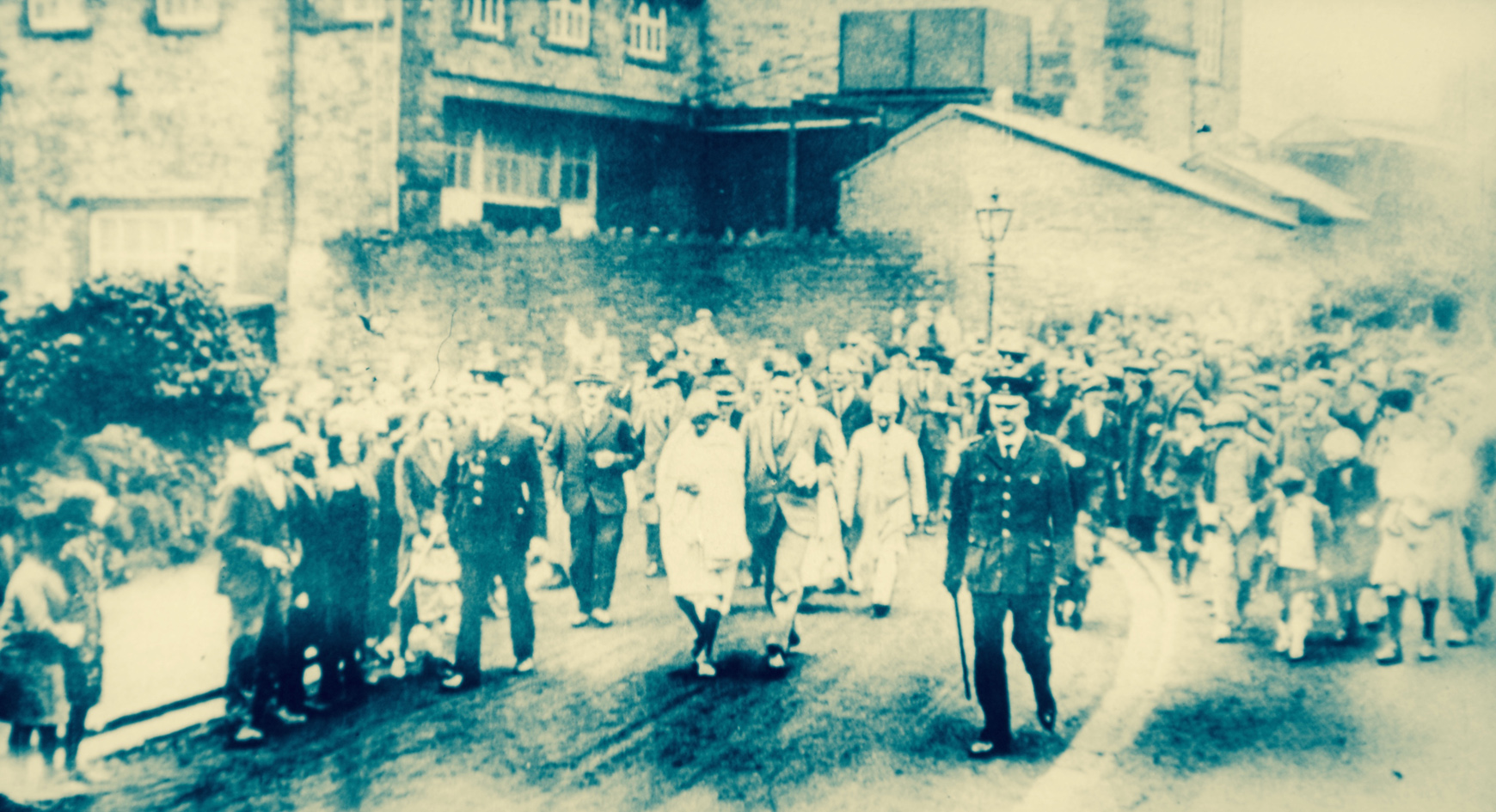
While imprisoned he came to the conclusion, recorded in his Leaves from a Prison Diary, that violence was self defeating and he became an advocate of agitation through non-violence: years later  Mahatma Gandhi cited Davitt as a major influence in the creation of his own peaceful resistance movement.

Ghandi visiting a cotton mill in Lancashire, 1931
Gandhi visiting a cotton mill in Lancashire, 1931

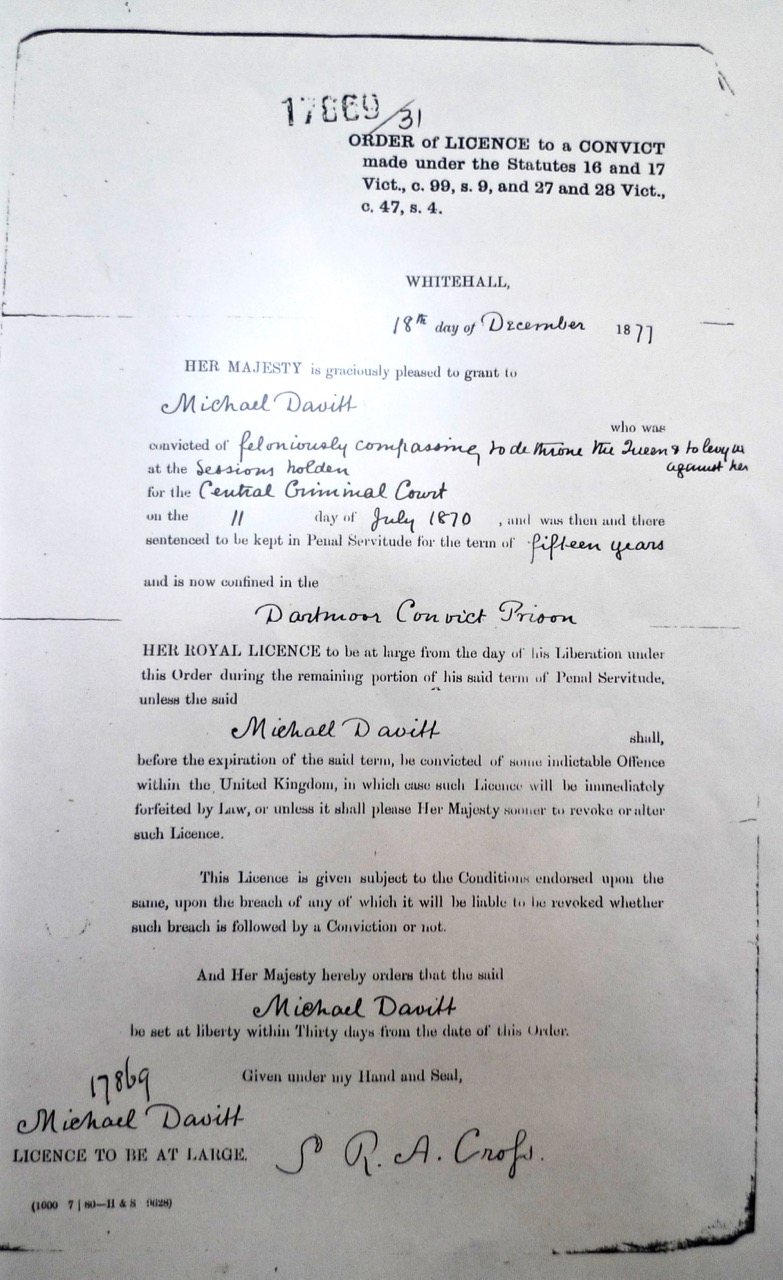
Eventually in Westminster the Irish Parliamentary Party began to campaign against cruelty inflicted on political prisoners and pressed for an amnesty for detained Irish nationalists. Partially due to public furore over their treatment, Davitt and other prisoners were released in 1877 on a ticket of leave: Michael had served seven and a half years. He and the other prisoners were given a hero’s welcome when they returned to Ireland.

'Licence to be at large'
‘Licence to be at large’

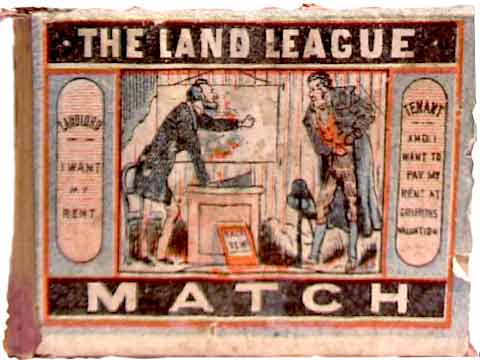
For the rest of his life Michael Davitt was devoted to the causes he believed in. In Ireland the Land League became a reality and eventually Irish tenant farmers were enabled to buy their freeholds with UK government loans through the Land Commission. County Councils in Ireland were also able to build over 40,000 new rural cottages, each on an acre of land. By 1914, 75% of occupiers were buying out their landlords. In all, over 316,000 tenants purchased their holdings, amounting to 15 million acres out of a total of 20 million acres in the country. This set the pattern of small owner-occupied farms that we see all around us today in rural Ireland – a system that has long struggled to be economically efficient, but which allows independence and self-pride, which the landlord system certainly did not.

Independent Ireland
Independent Ireland

Michael Davitt was not able to see the realisation of his vision for Ireland, but he played an important part in the movements that enabled it: many historians say that his role was central to it. Such were his energies and beliefs that he involved himself in universal human rights movements, and advocated for more than just the oppressed Irish. He said women should have the right to vote; he spoke out for labour unions and helped found the British Labour Party. He served in Parliament, wrote numerous books, founded newspapers and travelled the world speaking for the underprivileged everywhere. He spoke out against anti-Semitism and supported the Boer fight for freedom in Africa.

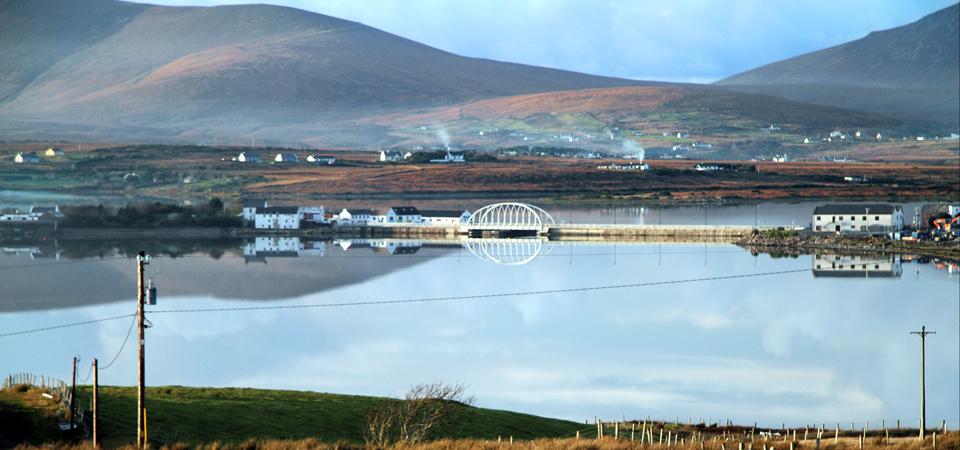
I had never heard of Michael Davitt (Finola had): it seems his name was erased from Irish history for a while because of disagreements with other campaigners. Fortunately, that wrong has now been righted, and we have this museum in his memory – celebrating his life and work and open seven days a week all through the year. There is a life-sized bronze statue outside it. Recently a new bridge in Mayo has been named after him. As a man he didn’t seek personal acclaim: he wanted his funeral to be unassuming, yet over 20,000 people filed past his coffin. At Davitt’s grave a Celtic Cross in his memory bears the words Blessed is he that hungers and thirsts after justice, for he shall receive it.

The new Michael Davitt Bridge, connecting Achill Island with the mainland - courtesy Polranny Pirates
The new Michael Davitt Bridge, connecting Achill Island with the mainland – courtesy Polranny Pirates

Davit wrote in his will: To all my friends I leave kind thoughts, to my enemies the fullest possible forgiveness and to Ireland an undying prayer for the absolute freedom and independence which it was my life’s ambition to try and obtain for her…

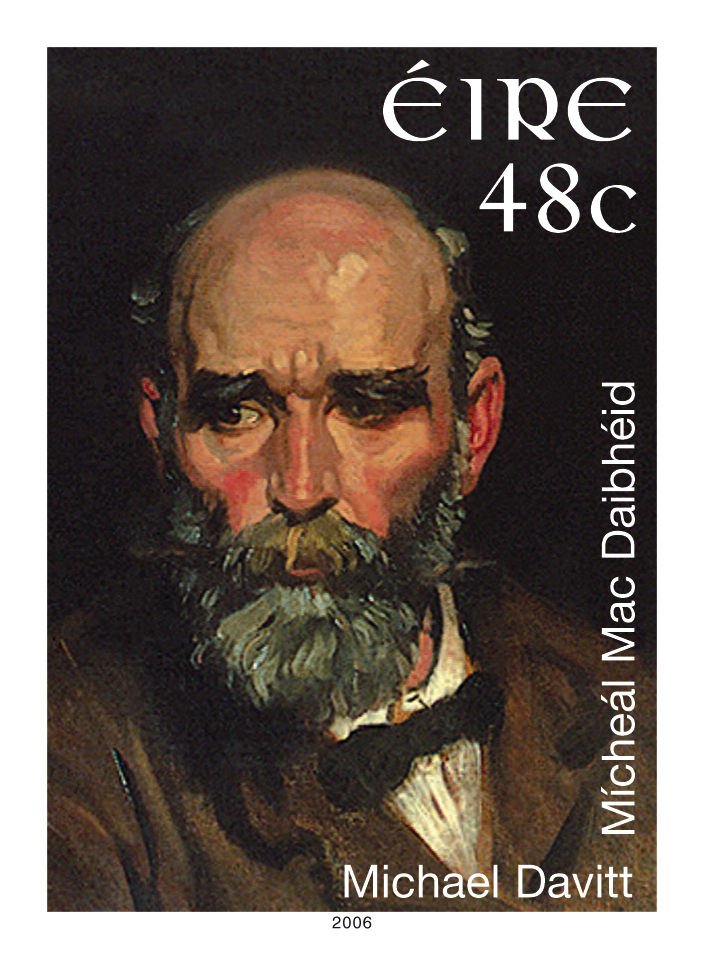
MichaelDavittStampHR

For his group, Patrick Street, musician Andy Irvine penned a song about Michael Davitt: his memory lives on…

O Forgotten Hero in peace may you rest

Your heart was always with the poor and the oppressed

A prison cell could never quell the courage you possessed

Irish Farming – 6,000 Years Ago

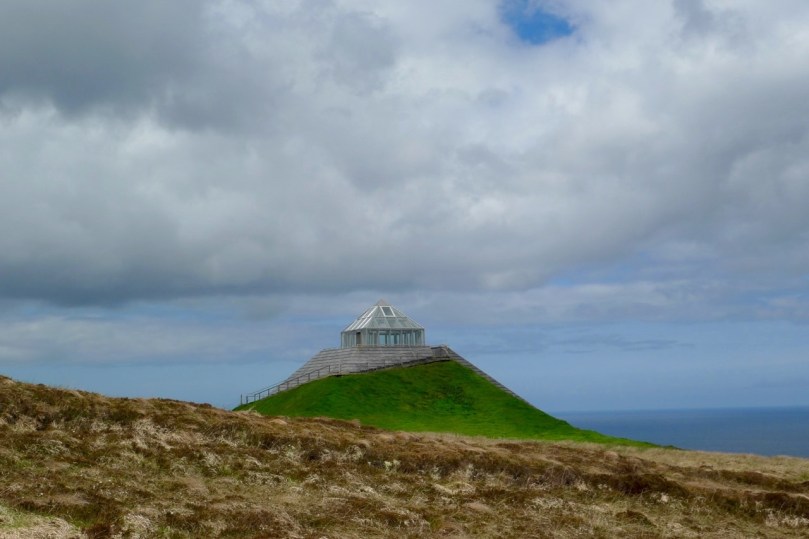
The Céide Fields Visitor Centre

The Céide Fields Visitor Centre


How did we farm in Ireland in Neolithic times? Turns out, much as we do now!

We’re just back from an inspiring trip to Mayo, the highlight of which was a visit to the largest Neolithic site in the world – the Céide Fields (pronounced Kay-jeh, for our non-Irish readers).

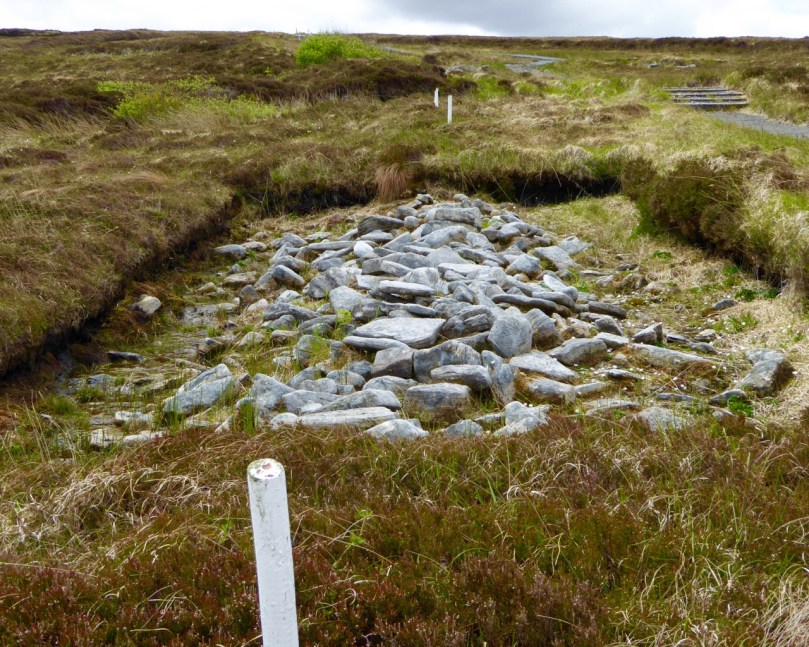
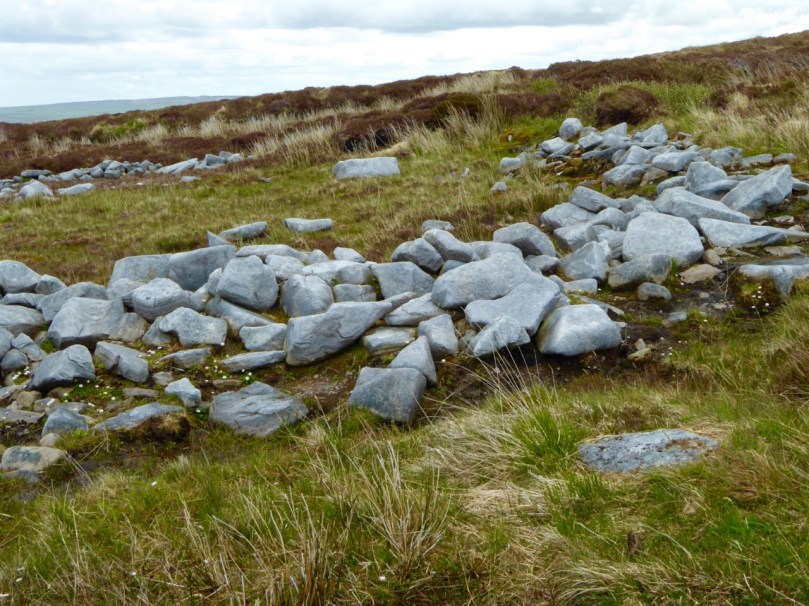
Collapsed field walls under the bog. The white stakes mark the line of the uncovered wall

Collapsed field walls under the bog. The white stakes mark the line of the uncovered wall

When we think of the Neolithic (or New Stone Age, or Early Farming) period in Ireland, we automatically think of the megalithic tombs – spectacular sites like Newgrange and Loughcrew, or the smaller portal tombs, like Poulnabrone or Arderrawinny. But how did these people make their living? What were their daily lives like? We found the answers, going back almost 6,000 years, at the Céide Fields.

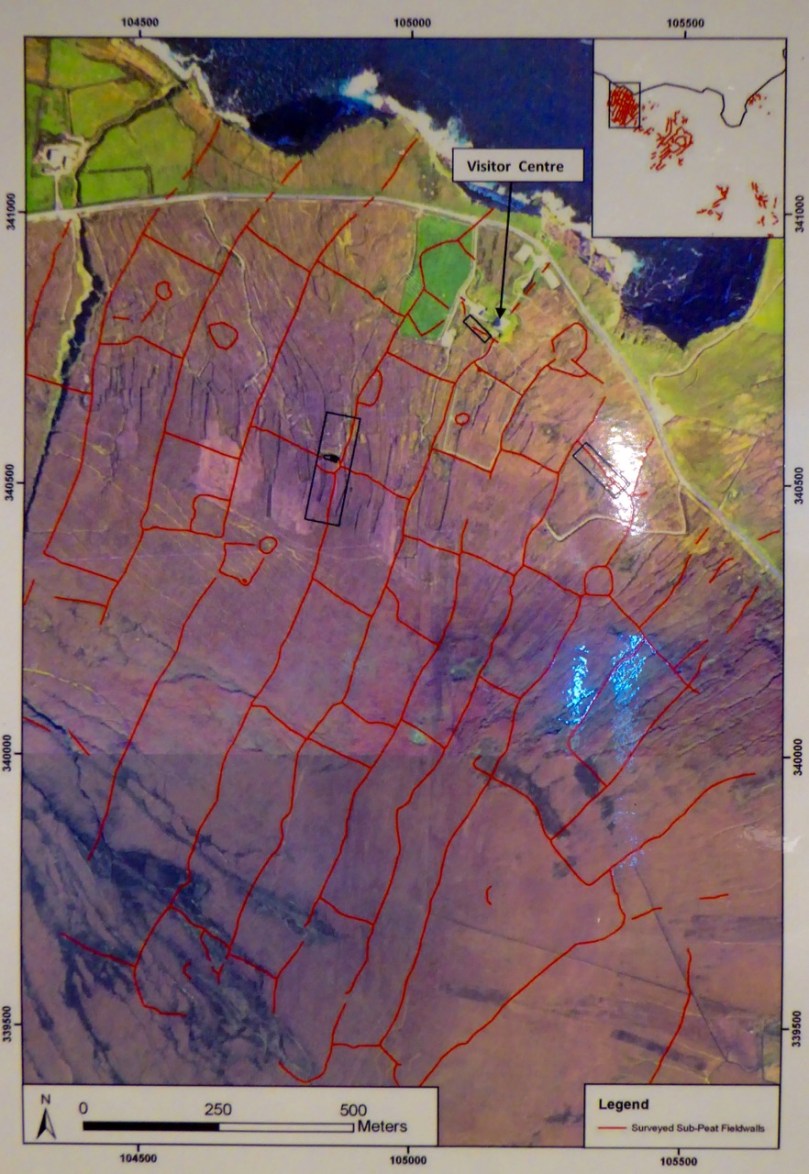
The extent of the fields around the Visitor Centre

The extent of the fields around the Visitor Centre

The Céide Fields is an extensive system of enclosures, stretching for kilometres from the sea over the hills, used for livestock farming. Occasionally, besides grazing fields, there is evidence for corrals, grain-growing, and farmhouses. In fact, much like we see around us in West Cork nowadays, people lived in their own farmhouses, surrounded by their fields, within sight of their neighbours.

This enclosure surrounded a farmhouse

This enclosure surrounded a farmhouse

Society was cooperative – it had to be, in order for such an enormous network of fields to be constructed. And life was peaceful: there is no evidence of defensive structures. The weather was warmer than now – warm enough so cattle could graze outside all winter – and there was enough land and food for everyone.

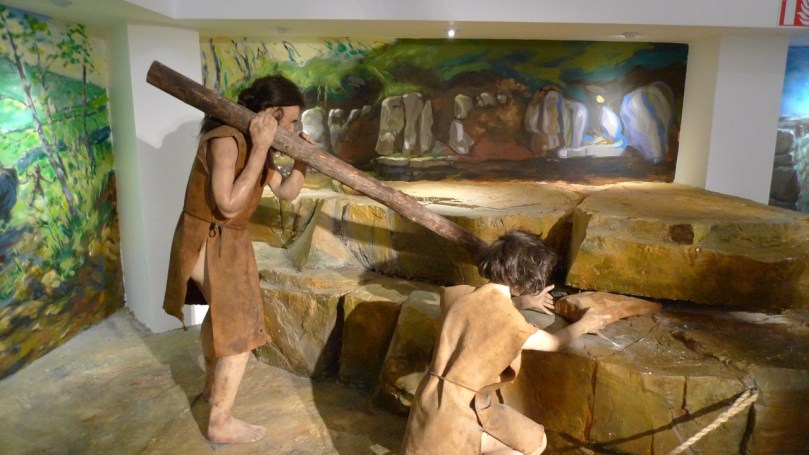
They quarried rocks for fences and for structure like court tombs

They quarried rocks for fences and for structure like court tombs

They had a spiritual life, building their own version of megaliths – the Court Tombs. We were fortunate to meet the manager of the Céide Fields site, Gretta Byrne, who gave us directions to Rathlackan Court Tomb – a site she had excavated. Court tombs are a type of chambered tomb, generally oriented towards the east and featuring a forecourt at the front of a long mound that covered the chambers. Rathlackan is a fine example, with three chambers and a nicely preserved forecourt. It took a highly organised society to build a complex structure such as this.

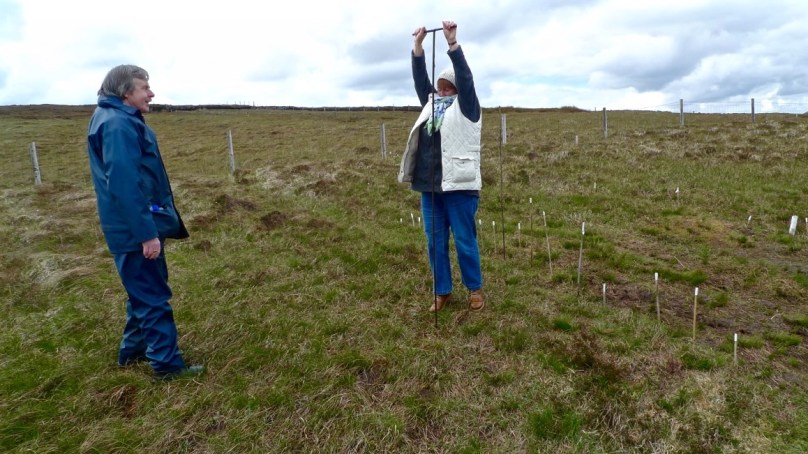
In the 1930s a local schoolteacher, Patrick Caulfield, first discovered what were clearly pre-bog collapsed walls when cutting peat in the deep blanket bog that covers this part of Mayo. Decades later his son, Seamus, now an archaeologist, headed the investigations that led to the realisation of how extensive the field system was. Mostly this was done by probing – sending a thin metal bar down through the soft peat until it hit a rock. This technique was so successful that miles of walls could be charted without the need to excavate. Excavation focussed on uncovering small sections of wall and features like enclosures and house-sites.

I take a hand at probing

I take a hand at probing

About 5,200 years ago, a combination of climate change and forest clearance led to the development of the blanket bog that covers the land today and ultimately forced these Neolithic people, after 500 years of successful farming, to abandon their fields. The ecology of bogland and the conditions that create it are the subject of some of the museum exhibits and also of the excellent guided tour that covered two hectares behind the Visitor Centre.

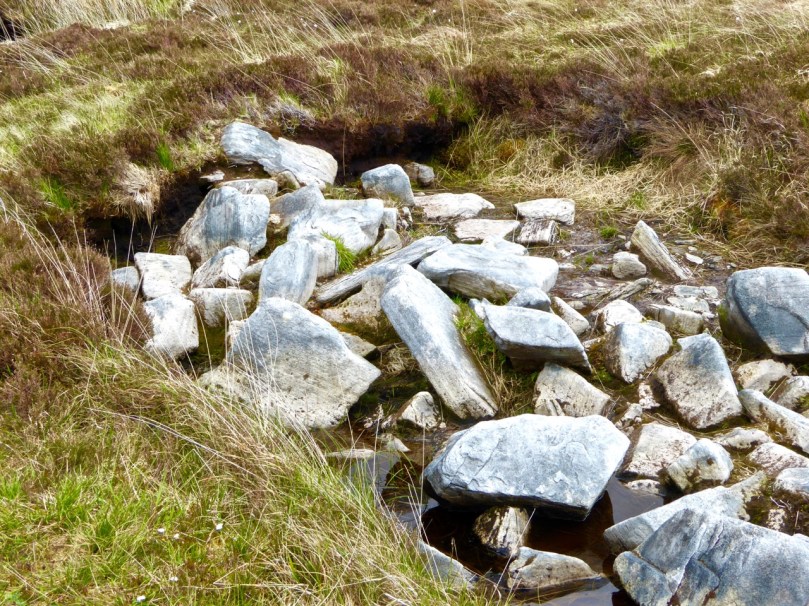
A section of wall disappears under the bog

A section of wall disappears under the bog

If you find yourself in this part of Ireland, do plan a visit to the Céide Fields. Take some bug spray – although they weren’t in evidence when we were there, the Céide midges have a reputation for ferocity. Enjoy the display in the award-winning Visitor Centre first and fortify yourself with a coffee and cake.

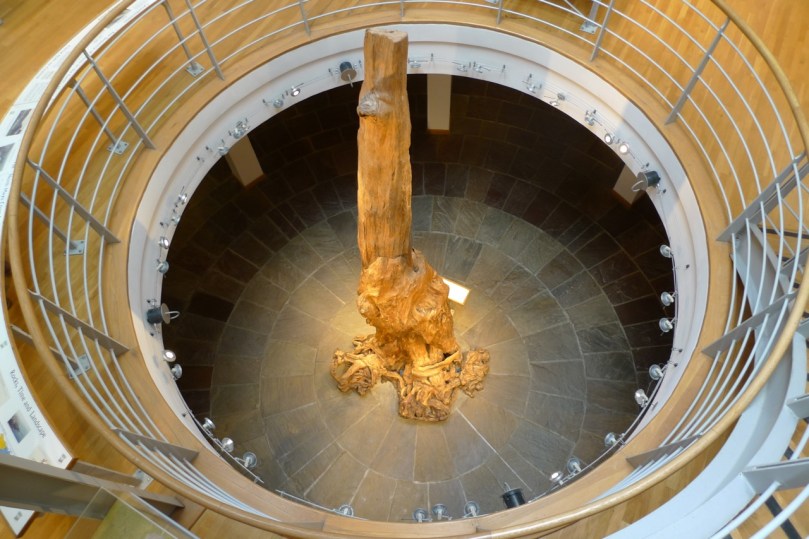
This pine came from the bog

This pine came from the bog

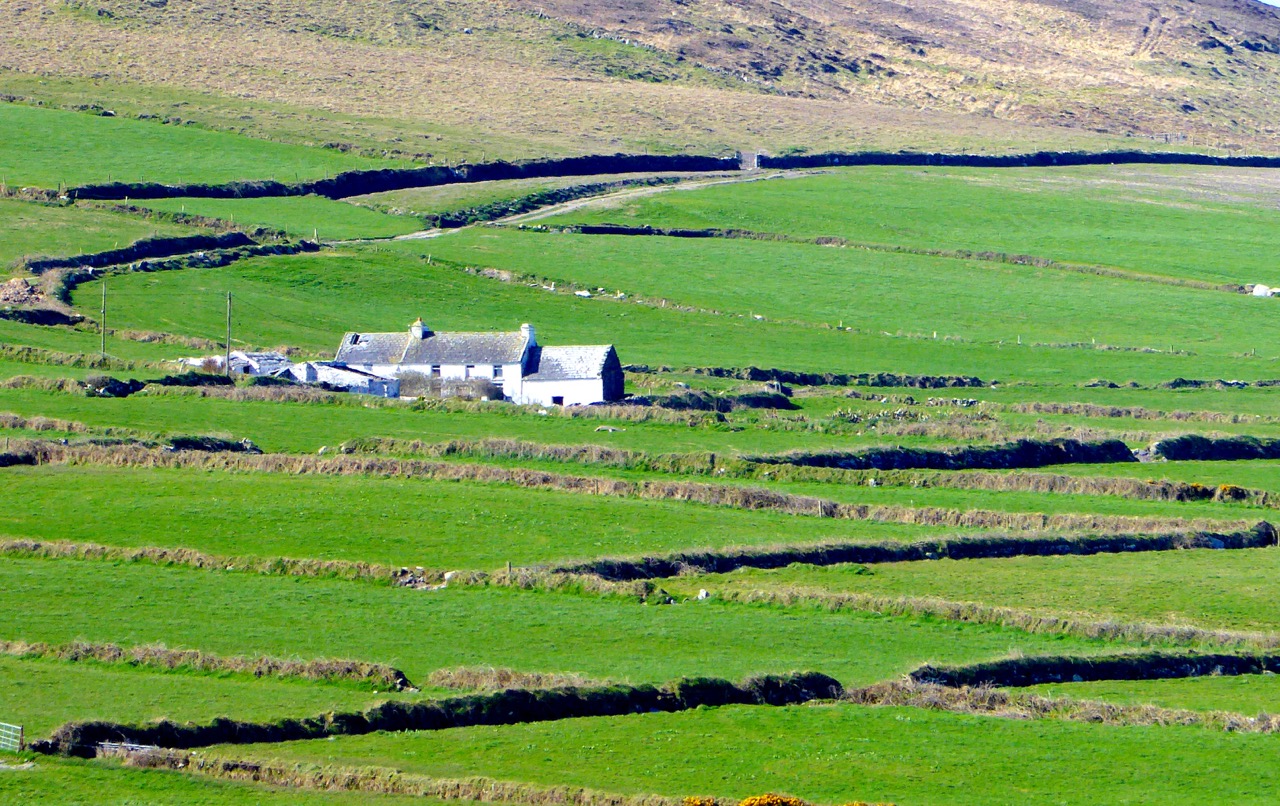
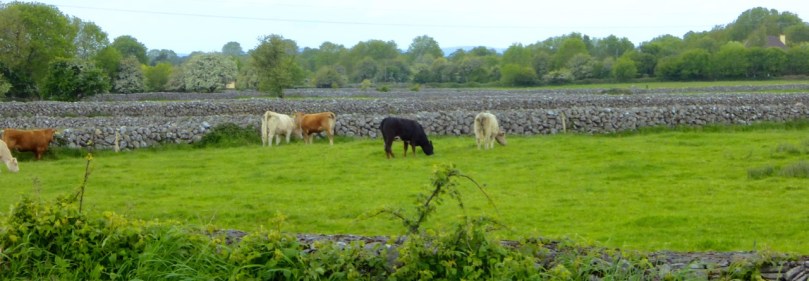
Once outside, as you walk along beside the ancient stone walls, look across the valley towards Downpatrick, and marvel at the continuity of a way of life – small cattle farms among stone-walled fields – that began almost 6,000 years ago.

This scene, in Galway, could have happened 6,000 years ago in North Mayo

This scene, in Galway, could have happened 6,000 years ago in North Mayo

We’ll let Seamus Heaney have the last word. His poem, Belderg, was inspired by the Céide Fields:

When he stripped off blanket bog

The soft-piled centuries

Fell open like a glib;

There were the first plough-marks,

The stone-age fields, the tomb

Corbelled, turfed and chambered,

Floored with dry turf-coomb.

A landscape fossilized,

Its stone wall patternings

Repeated before our eyes

In the stone walls of Mayo.

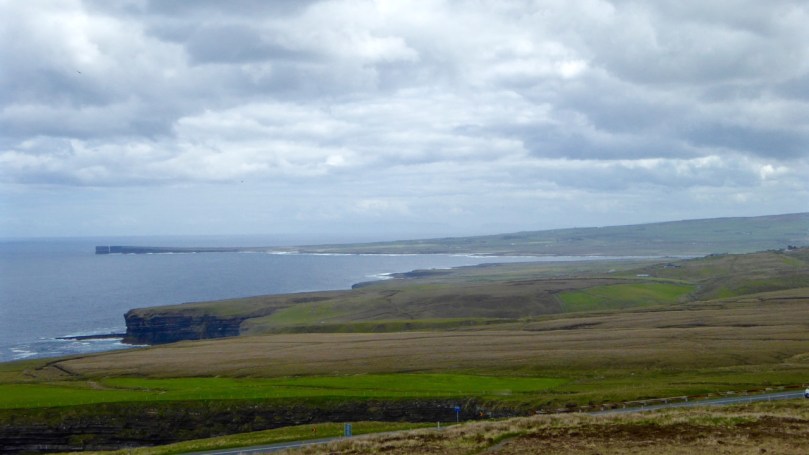
Looking towards Downpatrick Head from the Visitor Centre

Looking towards Downpatrick Head from the Visitor Centre

Ewe-nique Experience

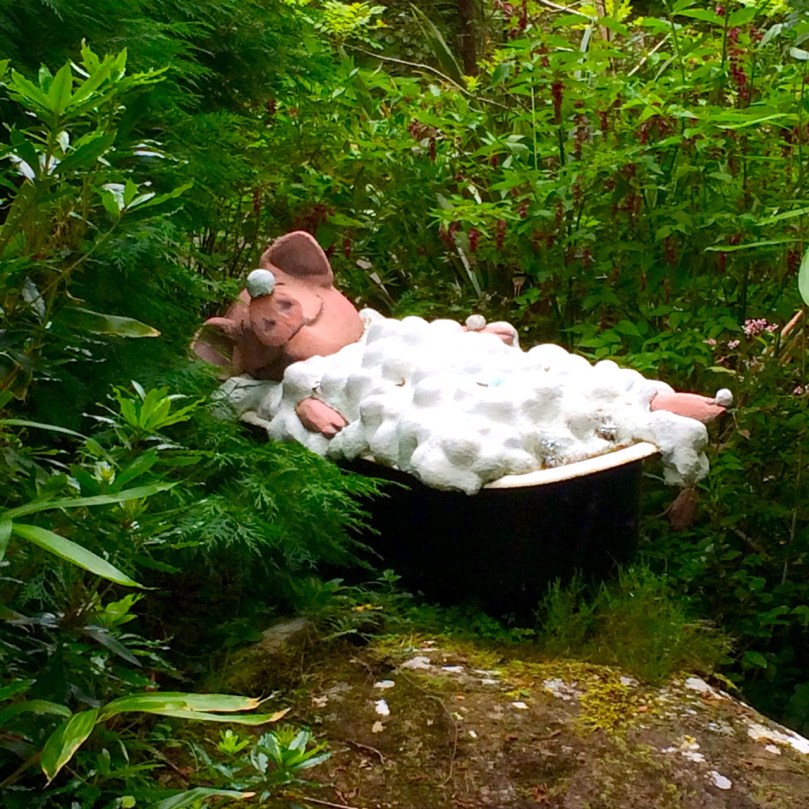
Pig in tub

Between Glengariff and Kenmare, amid old-growth forest and tumbling streams, lies an enchanted garden. Hewn from rock, trees, and sheer imagination  – this is The Ewe Experience.

Sheena Wood: artist and ecologist

Sheena Wood: artist and ecologist

Kurt Lyndorf, a former war correspondent, and Sheena Wood, an artist, started the project in Goleen and moved it to this challenging spot several years ago. Their aim was twofold – to beguile and to educate and they have accomplished both in the most delightful way.

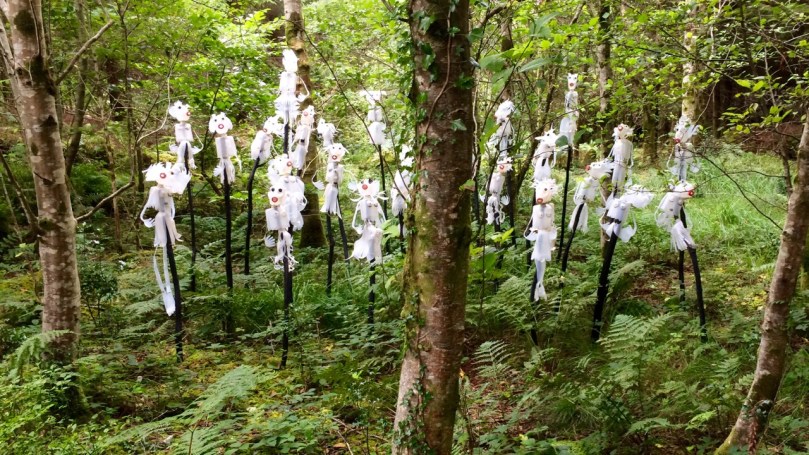
First and foremost this is a sculpture garden in which Sheena’s quirky sculptures of animals and spirits are discovered around every turn. Sometimes they are obvious, and sometimes only sharp eyes will pick out a hint of something hidden in the undergrowth. Made from discarded clothing, old tyres, fallen branches, even plastic bags, the figures are more than they seem at first glance – they carry the message of conservation and sustainability that is one of the themes of this garden.

Ghosts among the trees

Ghosts among the trees

The pathways lead up and down and meander beside a sparkling stream.

Stream

Along the way there are places to stop and play games (we spent a long time trying to beat each other at Stixs) or read snippets of verse. Information panels encourage us to think about how we interact with the natural world and how we understand it.
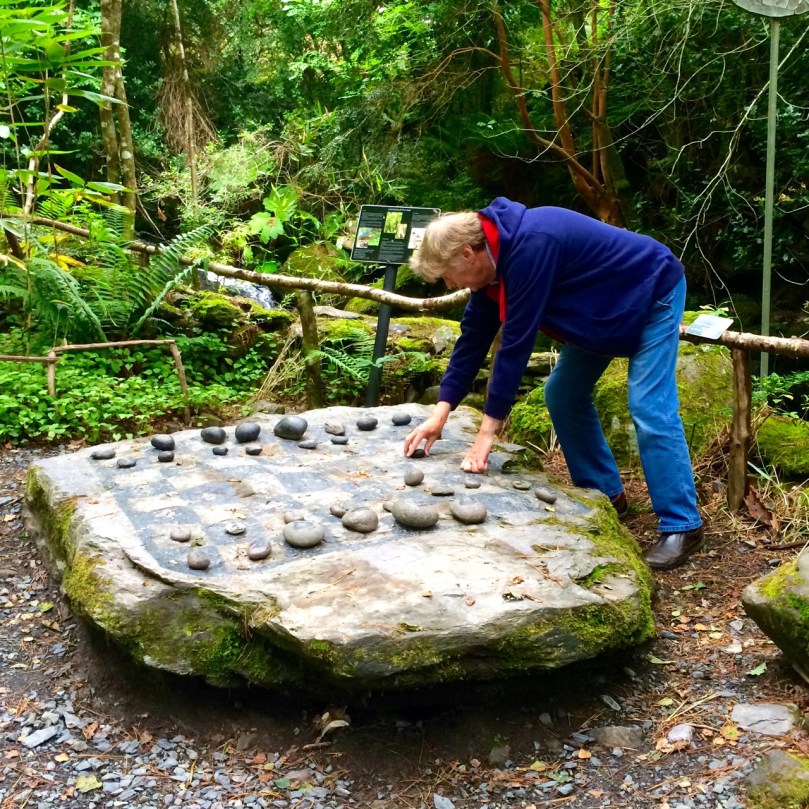
Your move!

Your move!

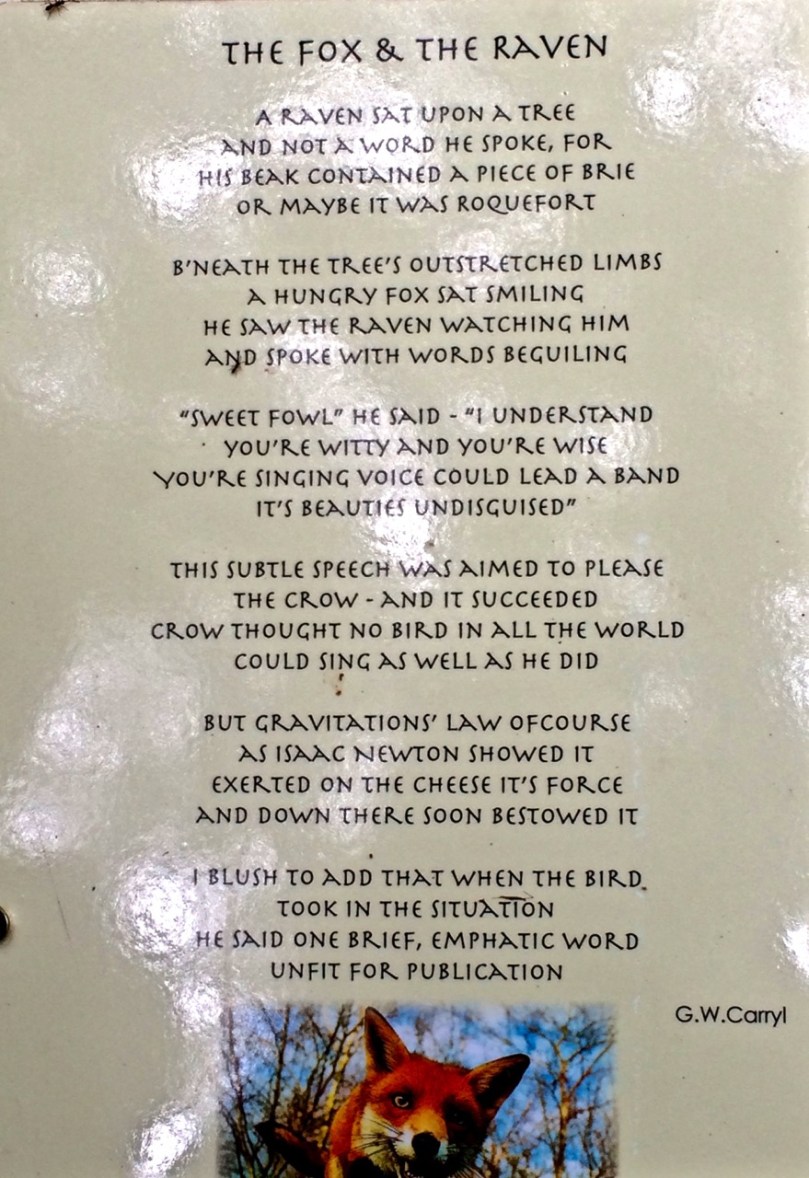
Fox and RavenChildren will love this place as much as adults. The photos you see here are but a tiny fraction of the ones I took on the day we visited last year, just at the end of their season. It’s open again now, and I know Sheena and Kurt spend the winter planning new installations, so you may or may not see exactly what we saw.

Prepare to be captivated!

Careful on the way out!

Careful on the way out!

Impressions

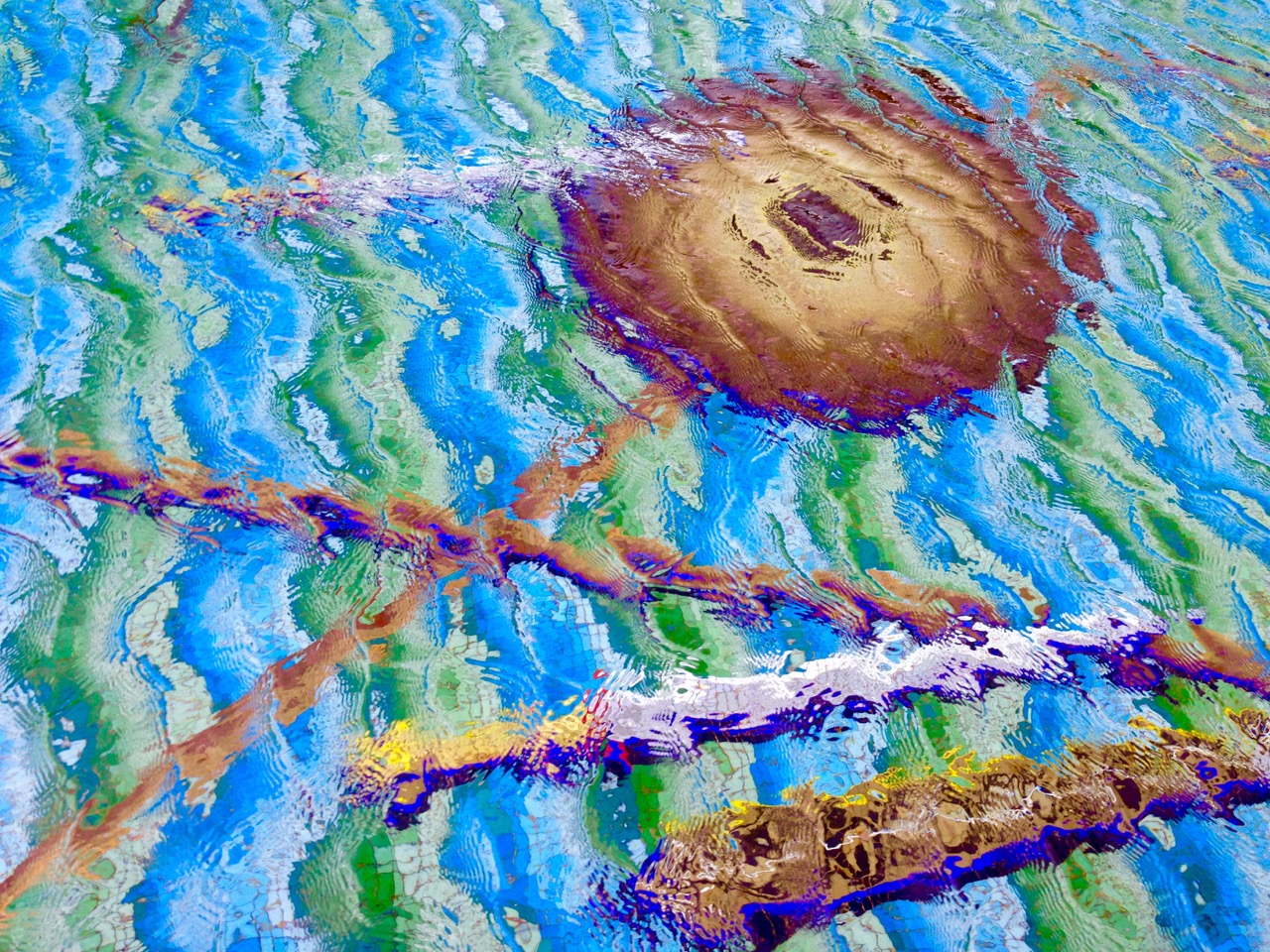
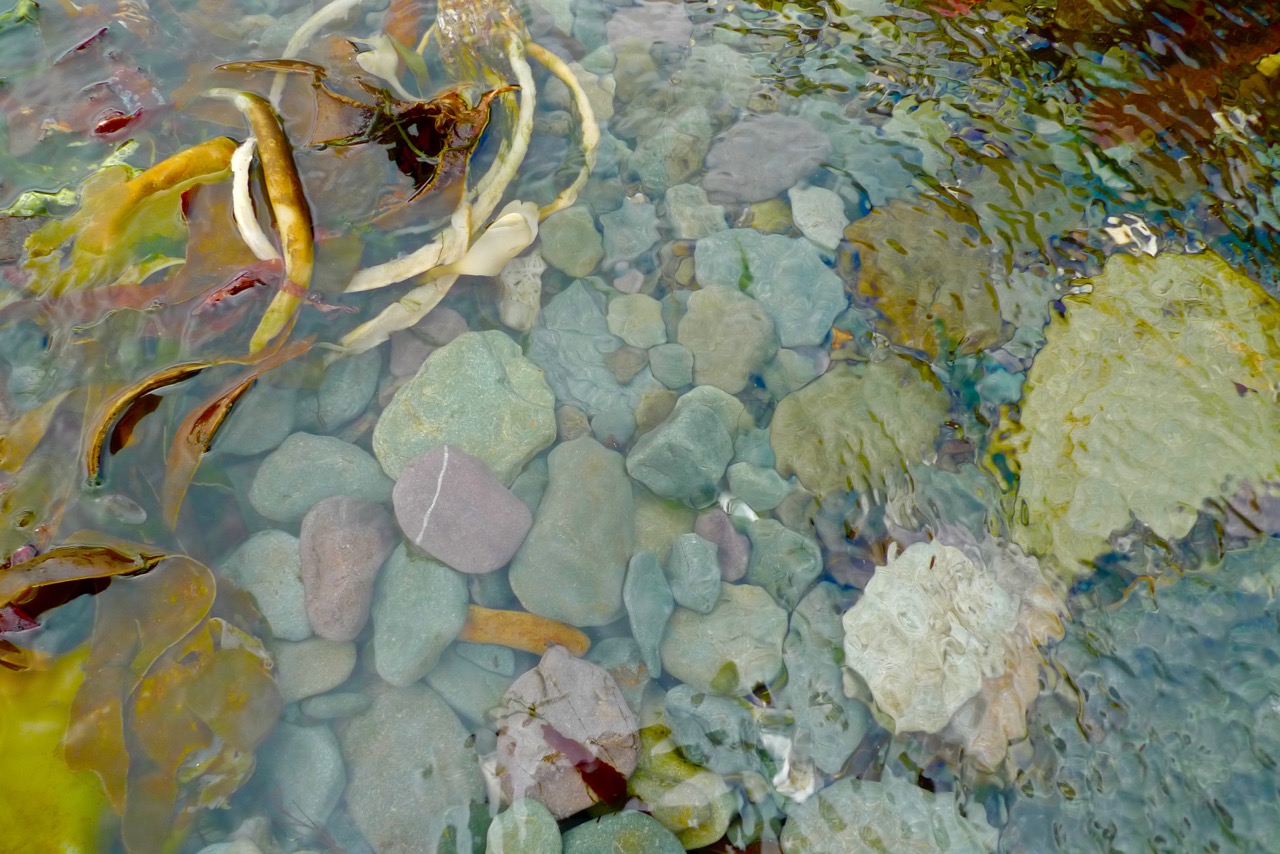
Water worlds - in a Dublin park, above and in the wilds of West Cork, below

Water worlds – in a Dublin park, above and in the wilds of West Cork, below

water 2

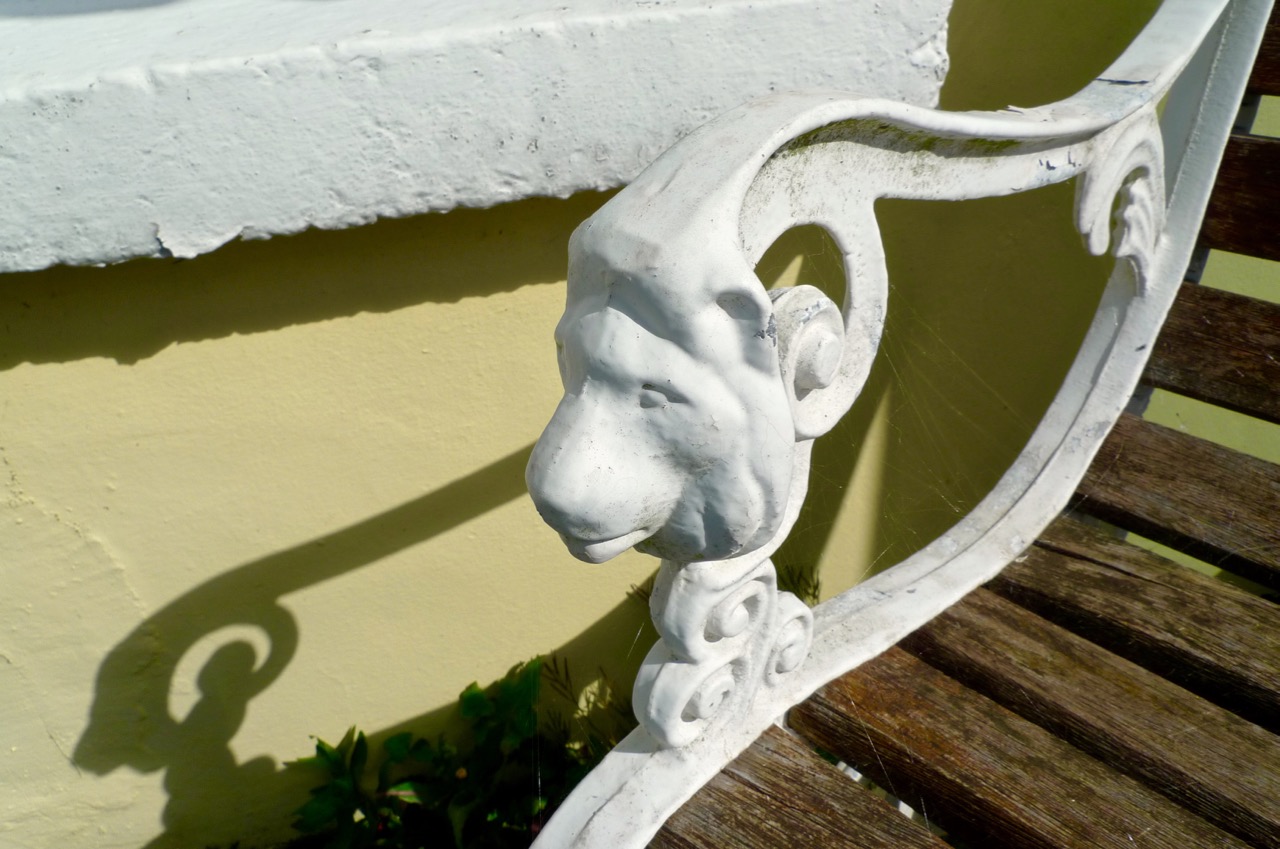
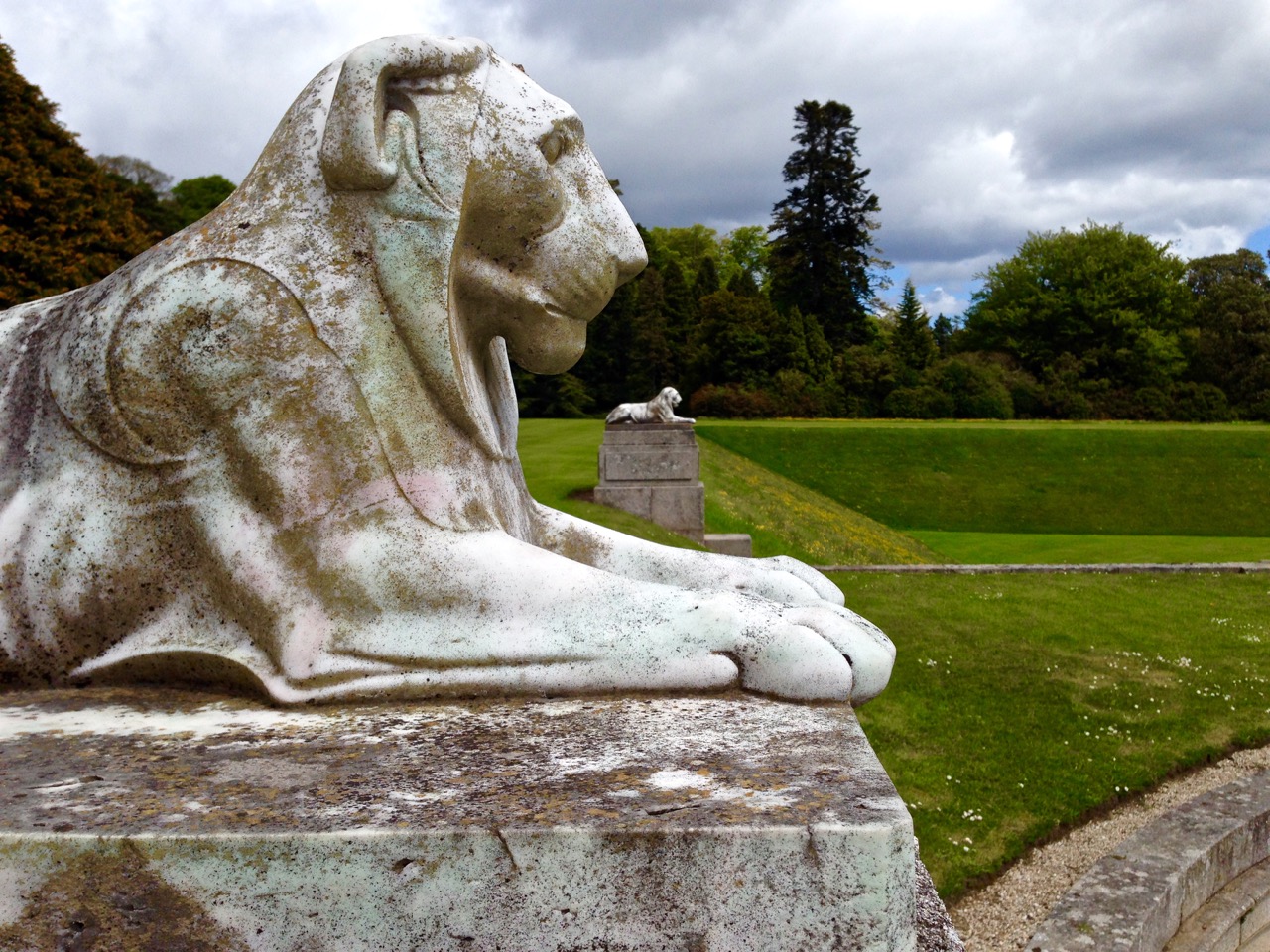
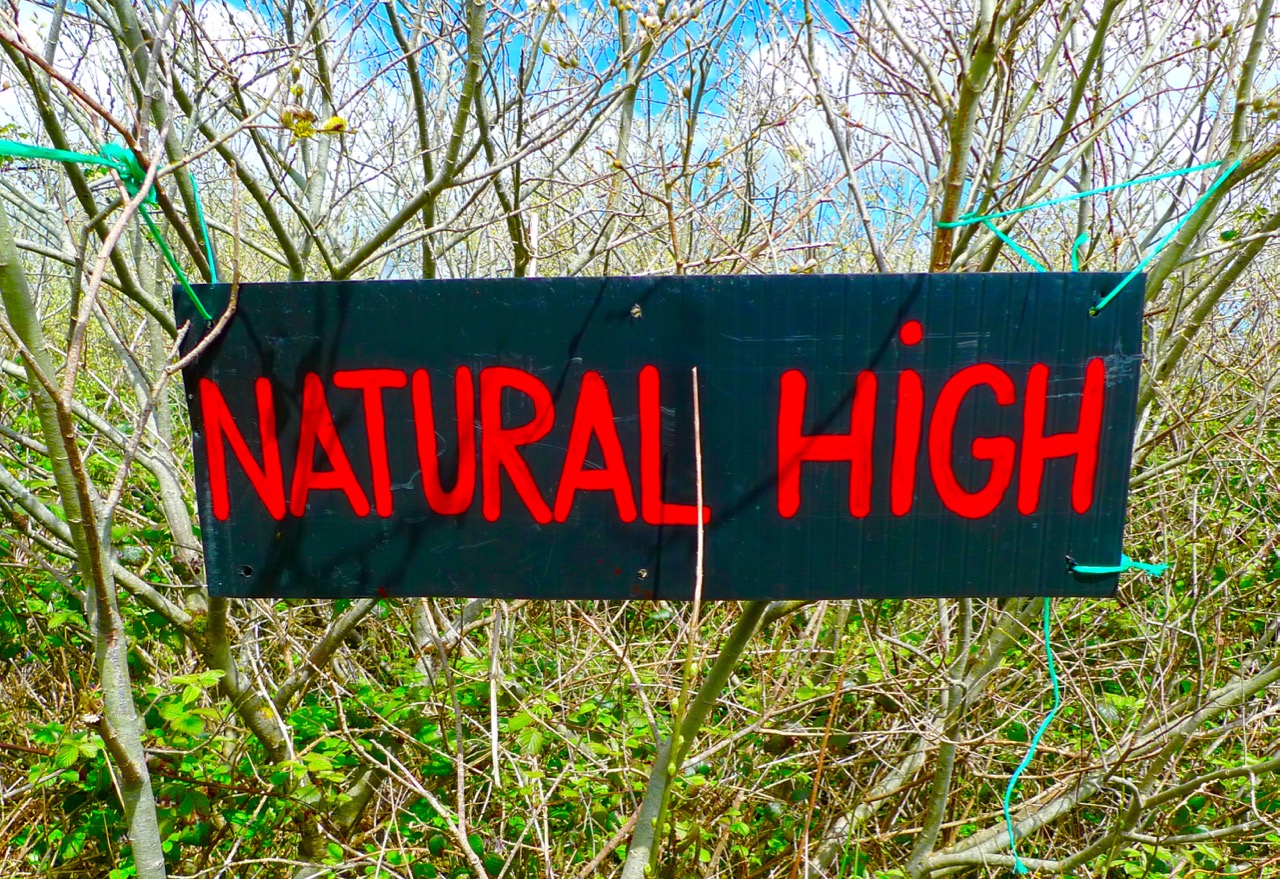
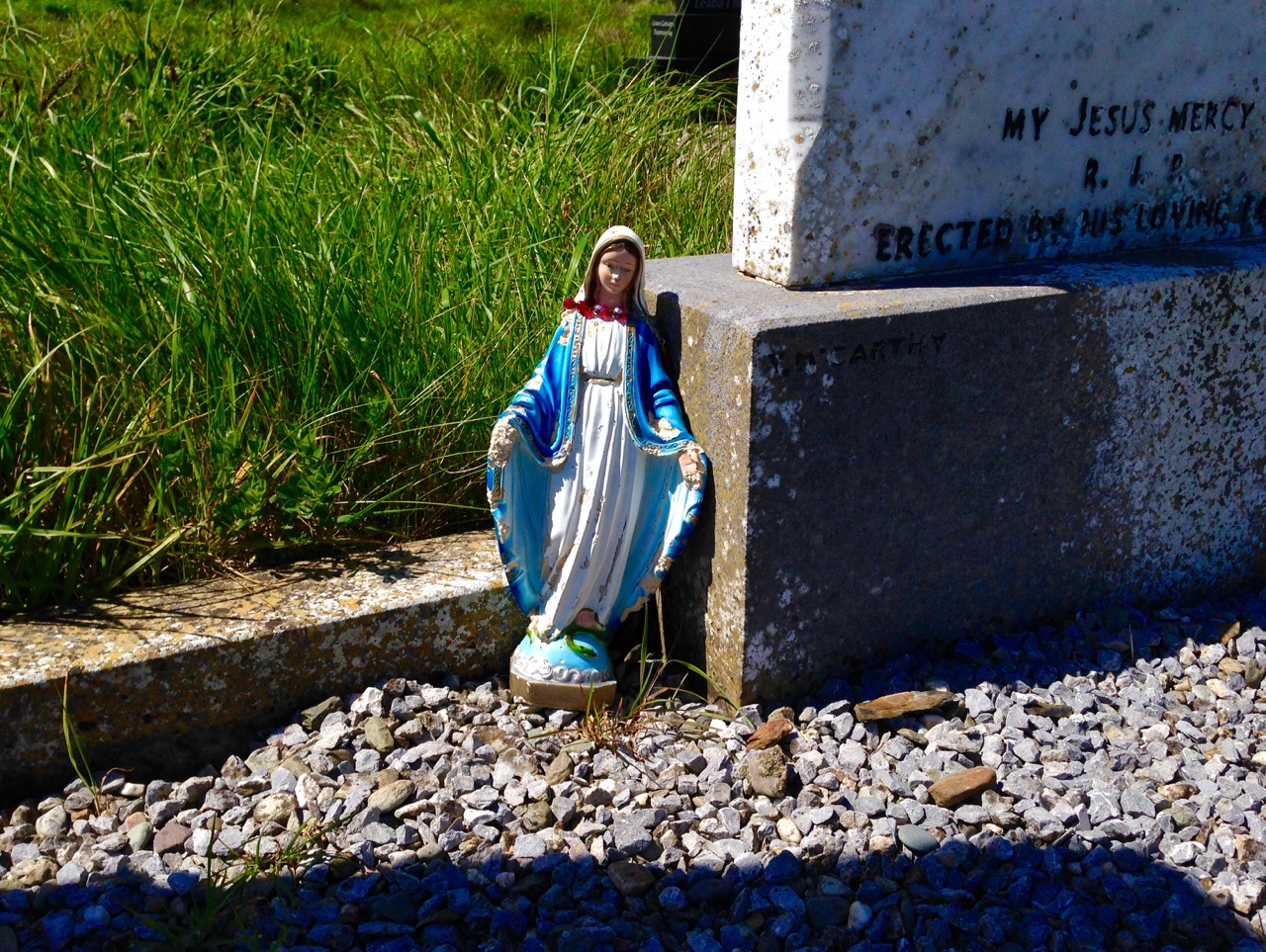
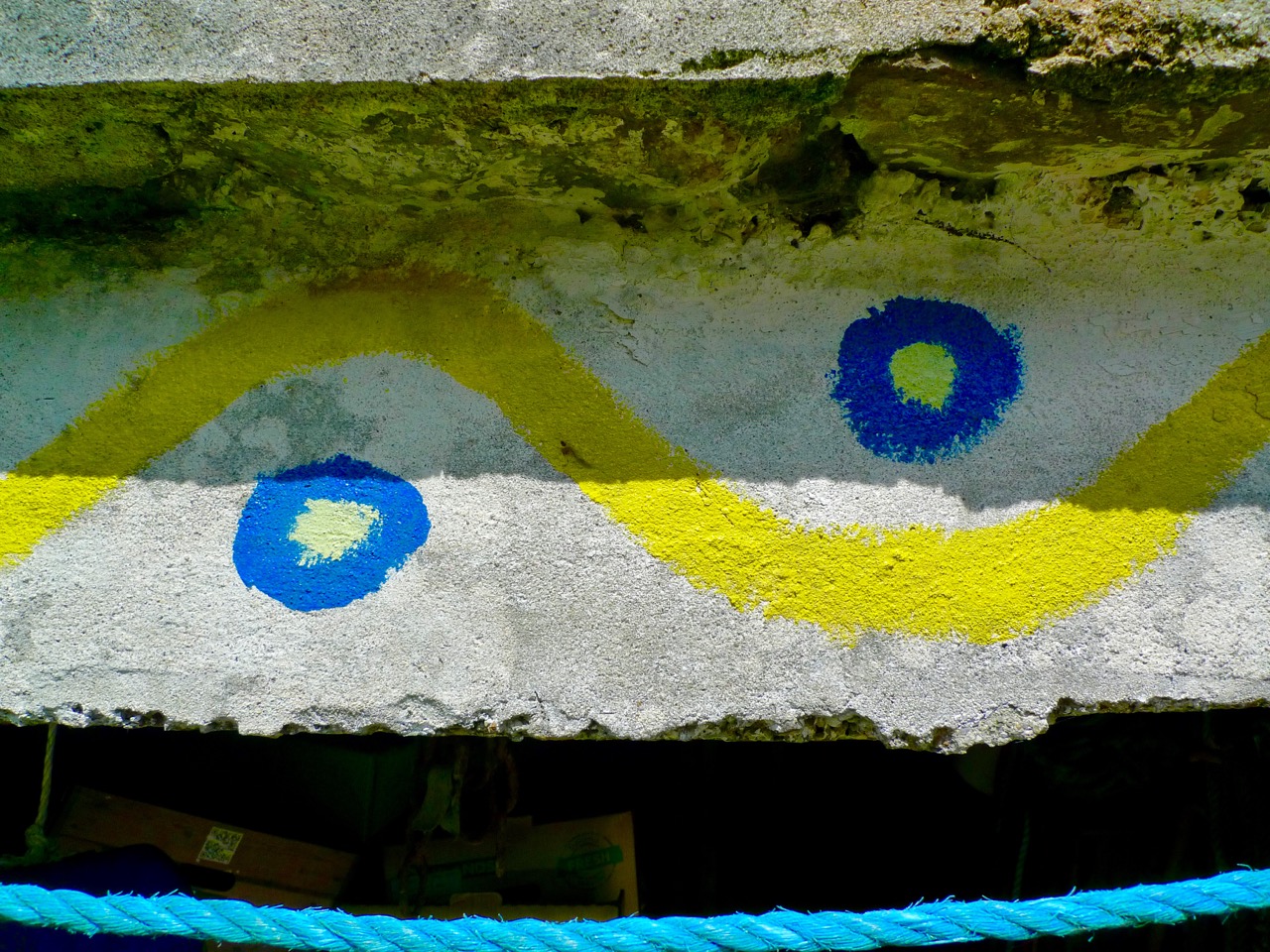
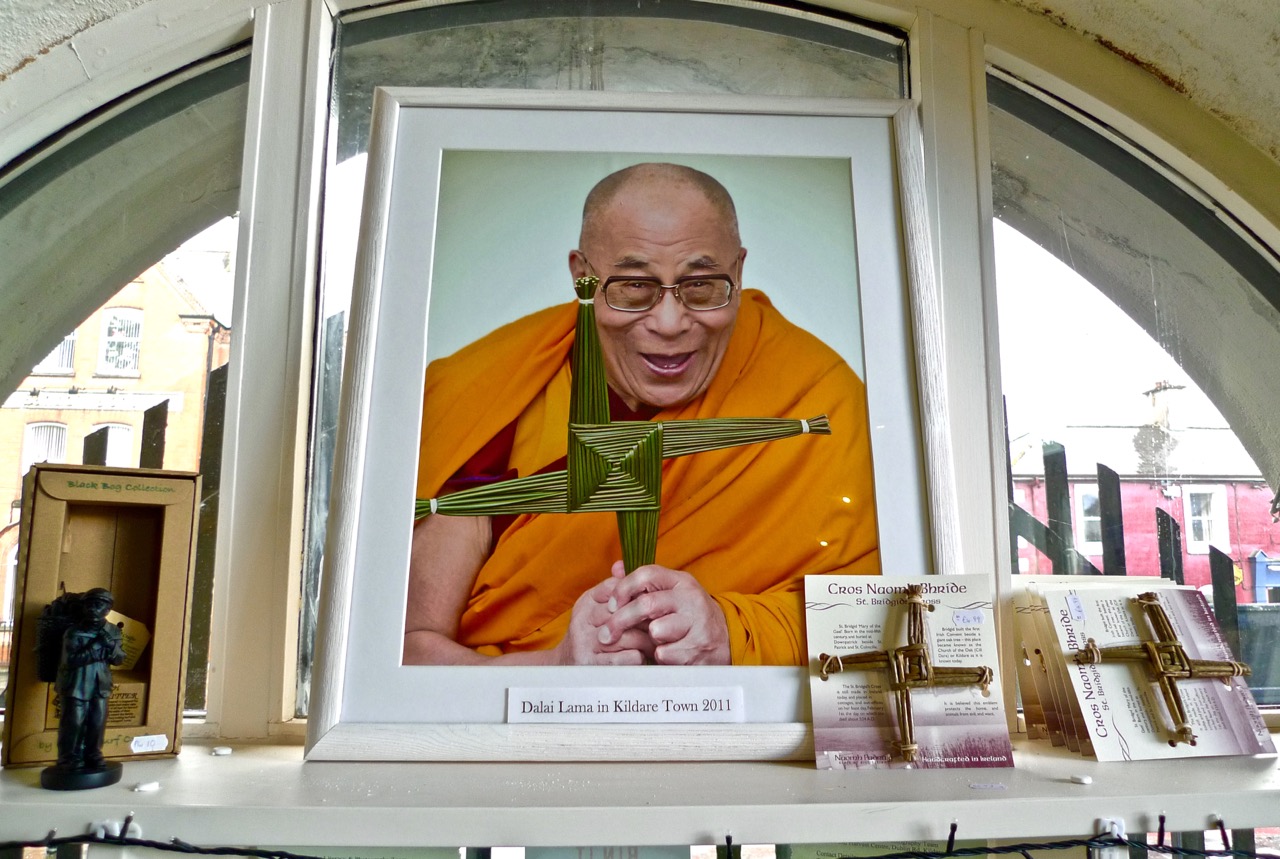
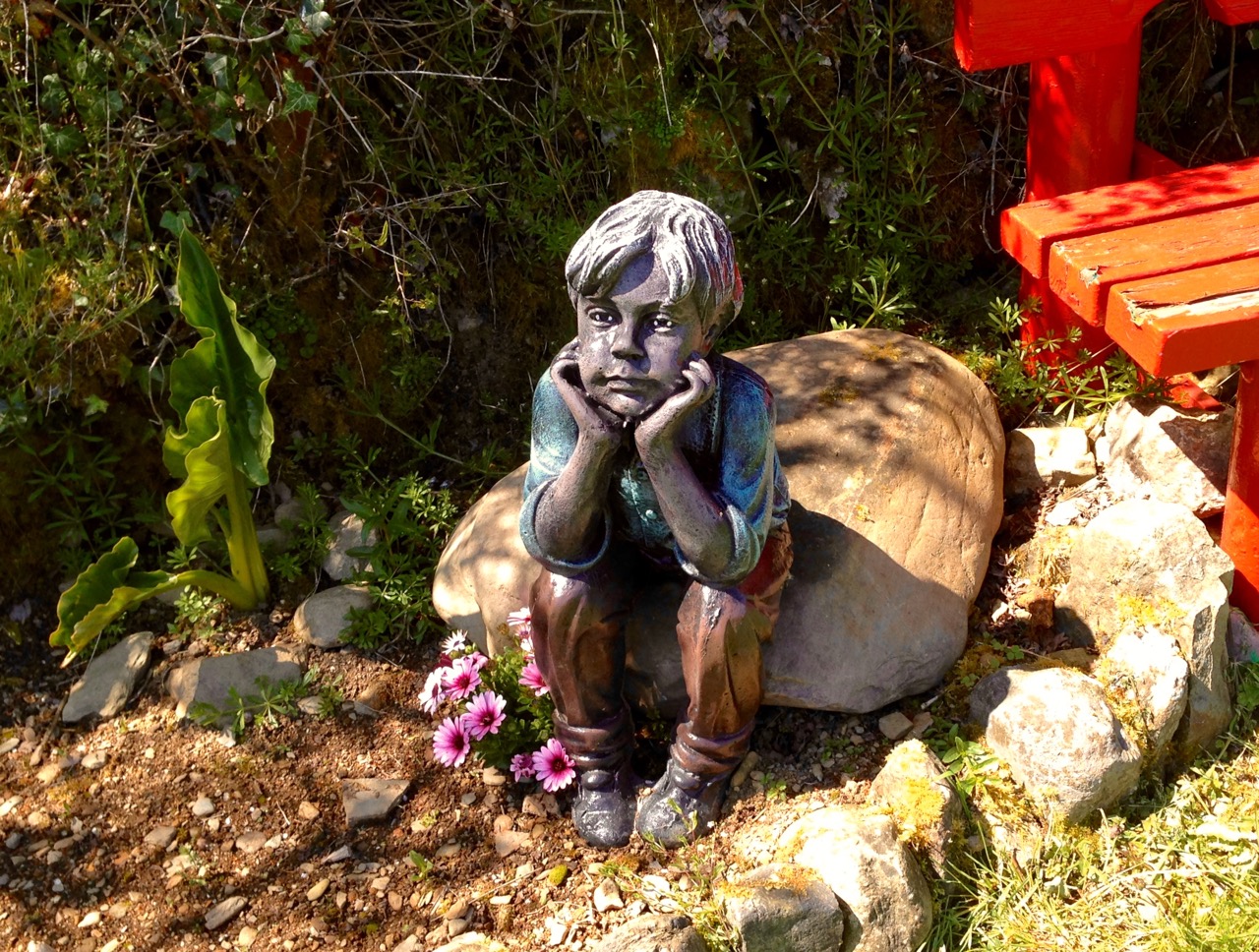
It’s over two years since I had a round up of the odd, quirky – or perhaps just very Irish – things that catch my eye during our travels. I called that post Juxtapositions. Here’s another collection of images that have fascinated me enough to record them with the camera. As in Juxtapositions, I have tried to show these pictures in context where it counts – or just let them speak for themselves. Sometimes I’ve added a little text, perhaps to amplify why I have been attracted by certain Impressions

lion

lions

Gentrified Lions at Powerscourt, Co Wicklow, and a domesticated version, above

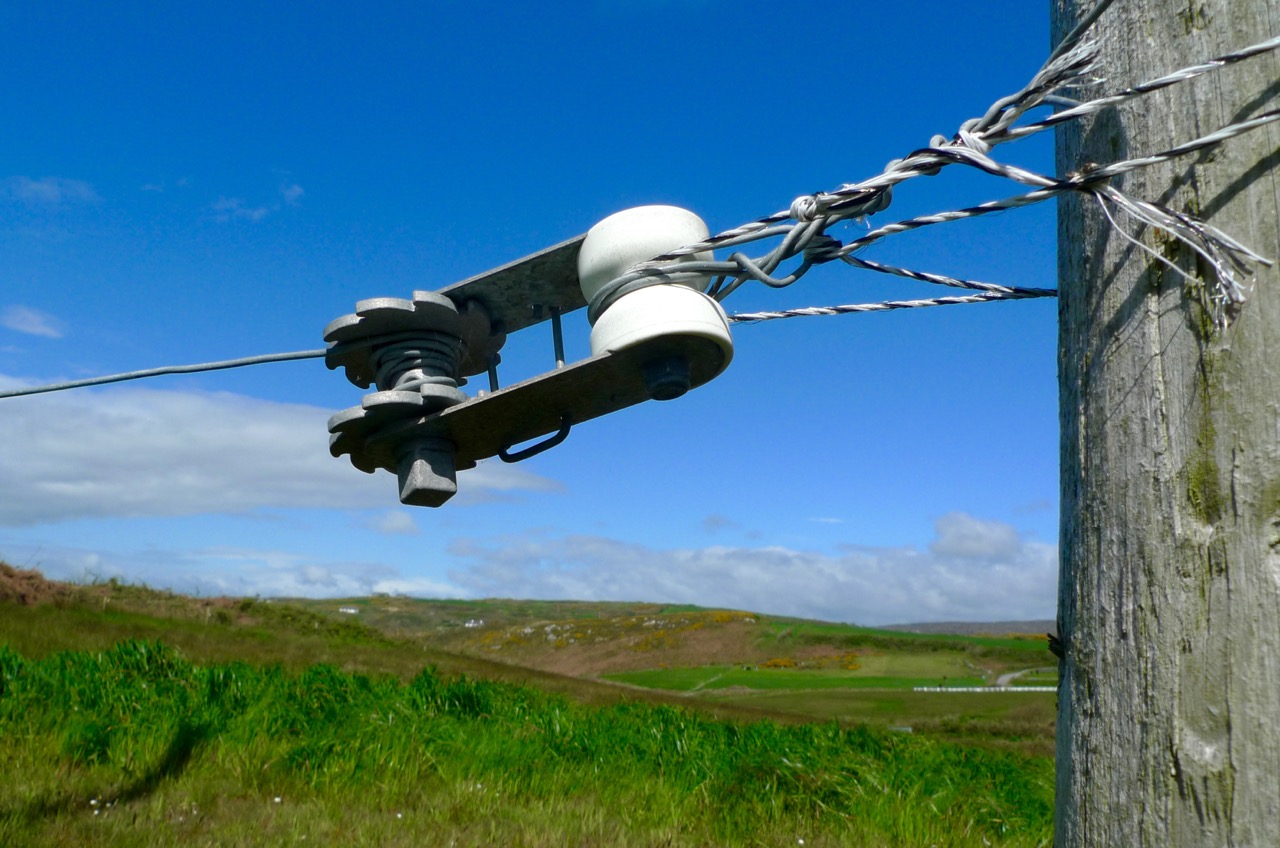
Some high things…

high

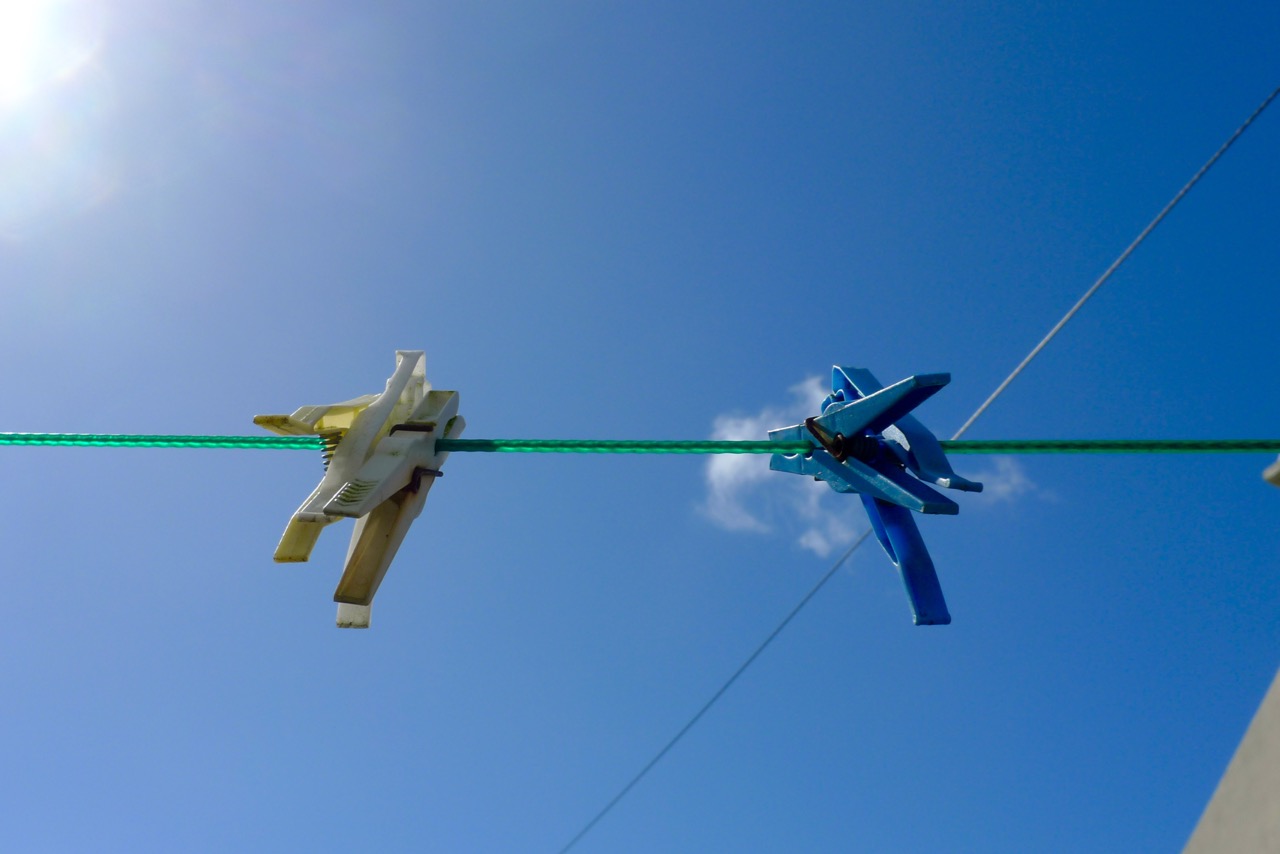
…and some little things…

little mary

pegs

fence

Startling Impressions…

Above left – an ancient stone cross in an urban setting, and – above right – the statue of Cúchulainn – a memorial to the 1916 uprising: an impossible-to-photograph icon in a poignant setting, the General Post Office building, Dublin. On the 24 of April (Easter Monday) 1916, about 2,000 Irish Volunteers and 200 from the Irish Citizen Army occupied the General Post Office as well as other important buildings in the city. They proclaimed the Irish Republic, read the Proclamation and raised the Irish flag for the first time. The British army shelled the GPO and other buildings. After a week’s fighting, the leaders of the rising surrendered: most suffered execution by firing squad. Many civilians died in the cross-fire. The guns and fires had destroyed much of the city and the GPO was in ruins. All this happened in Twentieth Century Great Britain…

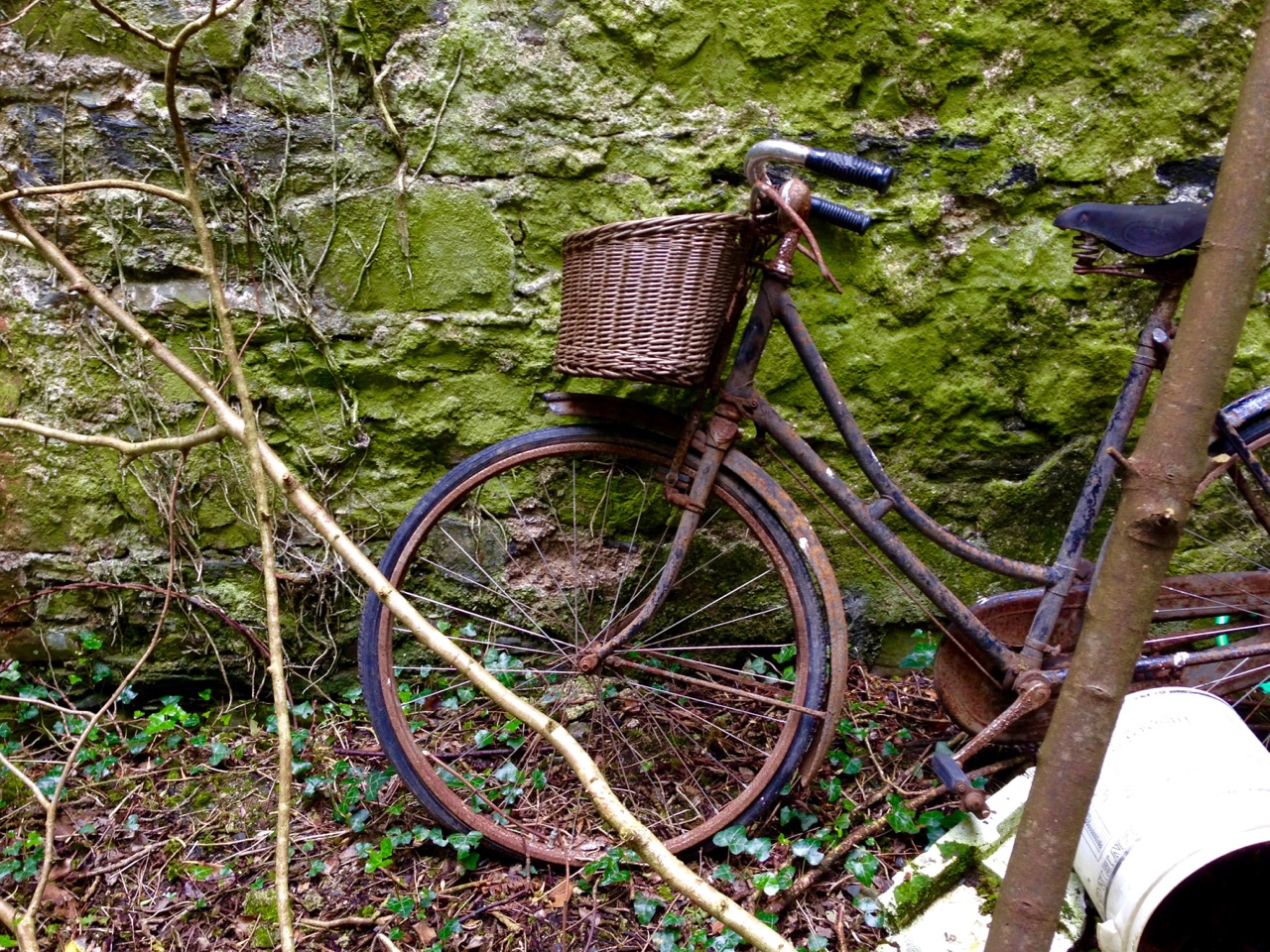
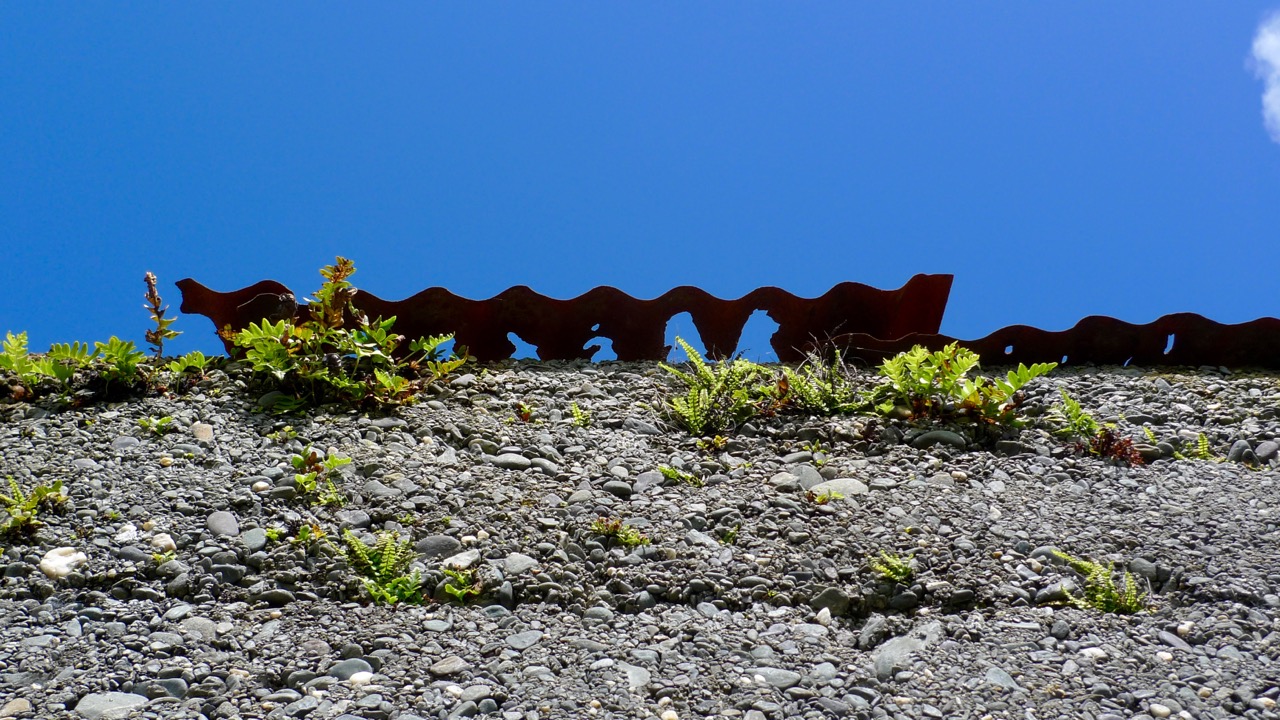
Rust and relics…

bike

corrugated

wavy line

Ancient and modern…

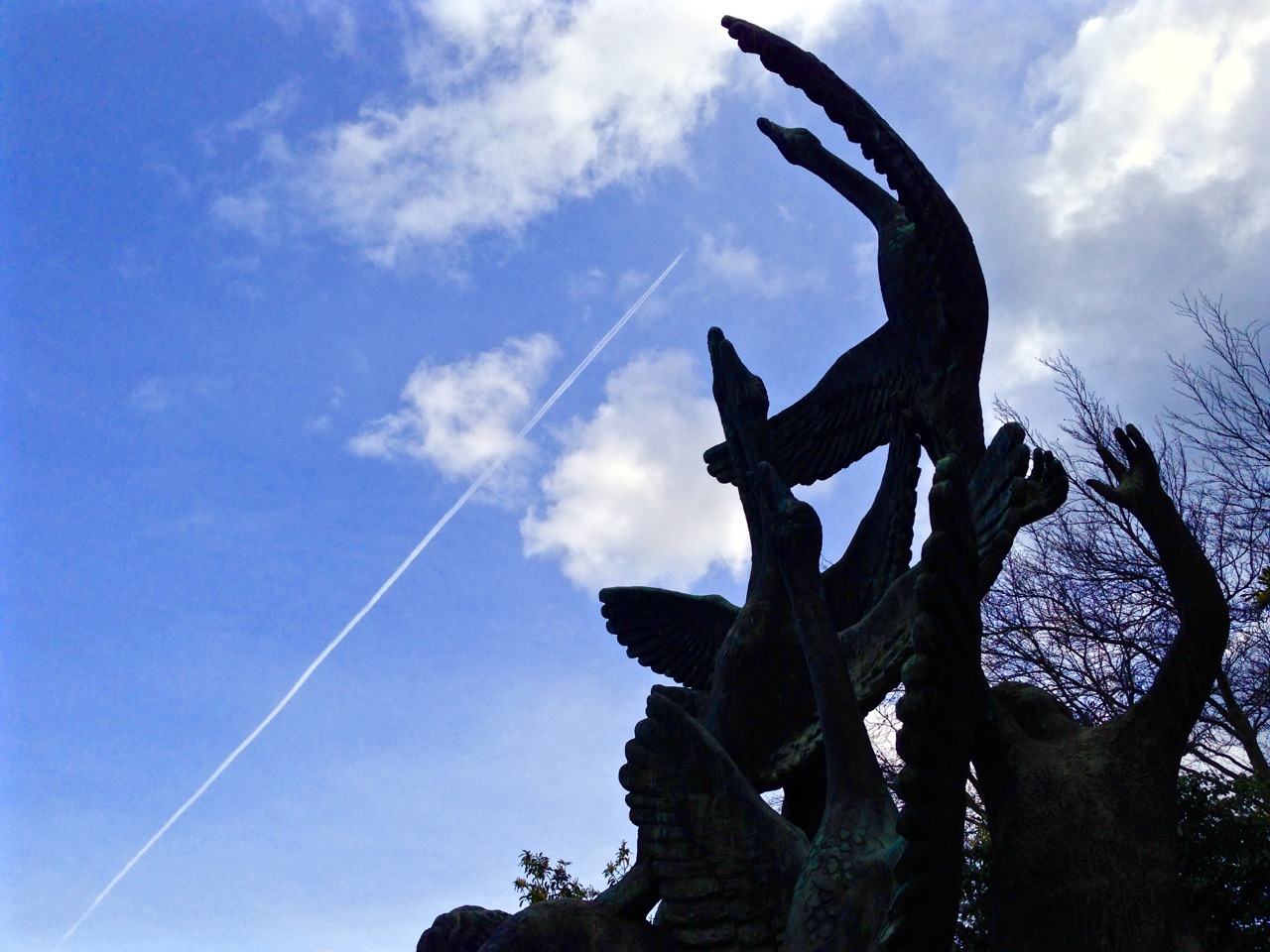
The Children of Lir - sculpture by Oisín Kelly in the Garden of Remembrance, Dubiln

The Children of Lir – sculpture by Oisín Kelly in the Garden of Remembrance, Dubiln

Emerald Isle greens…

Art and ‘Nature Art’…

Seekers…

dali lama

sitting

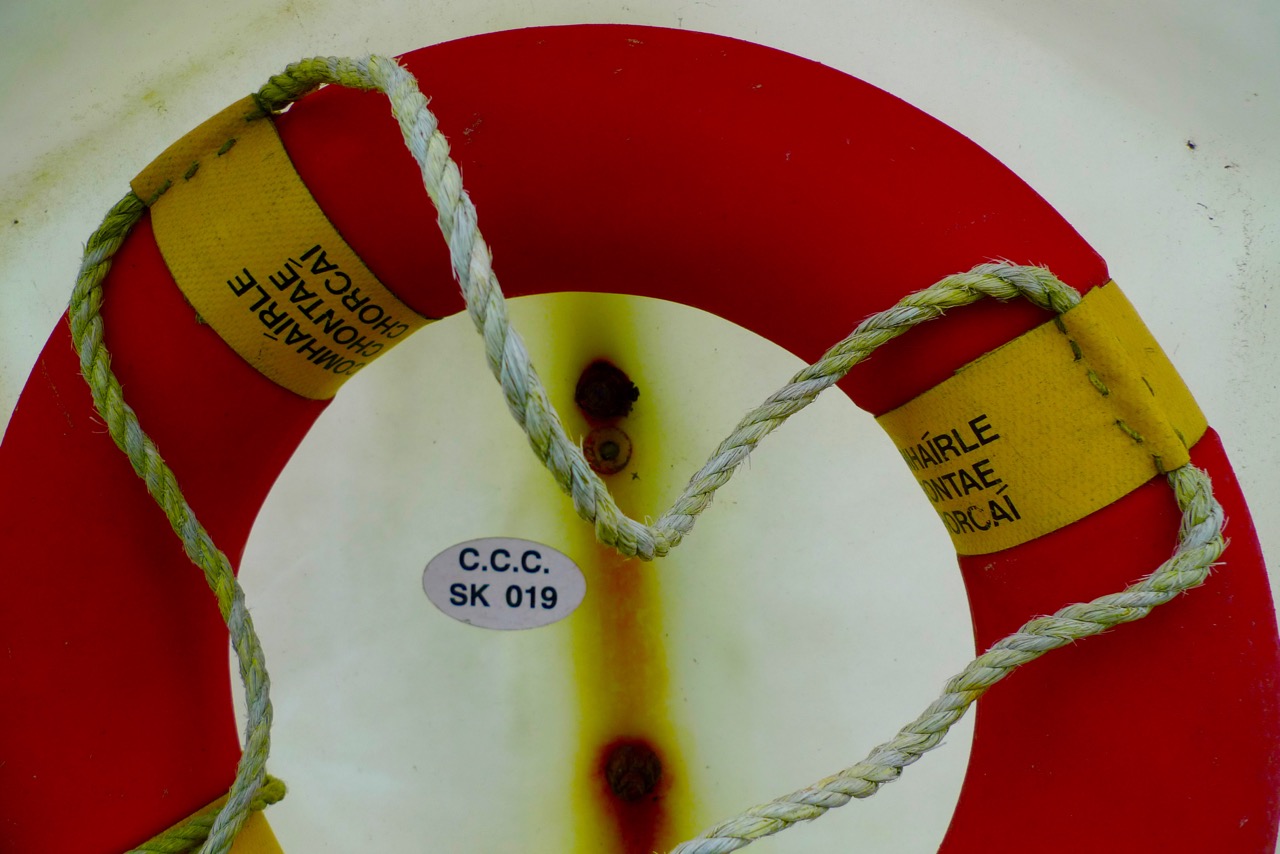
Lifeline…

ring

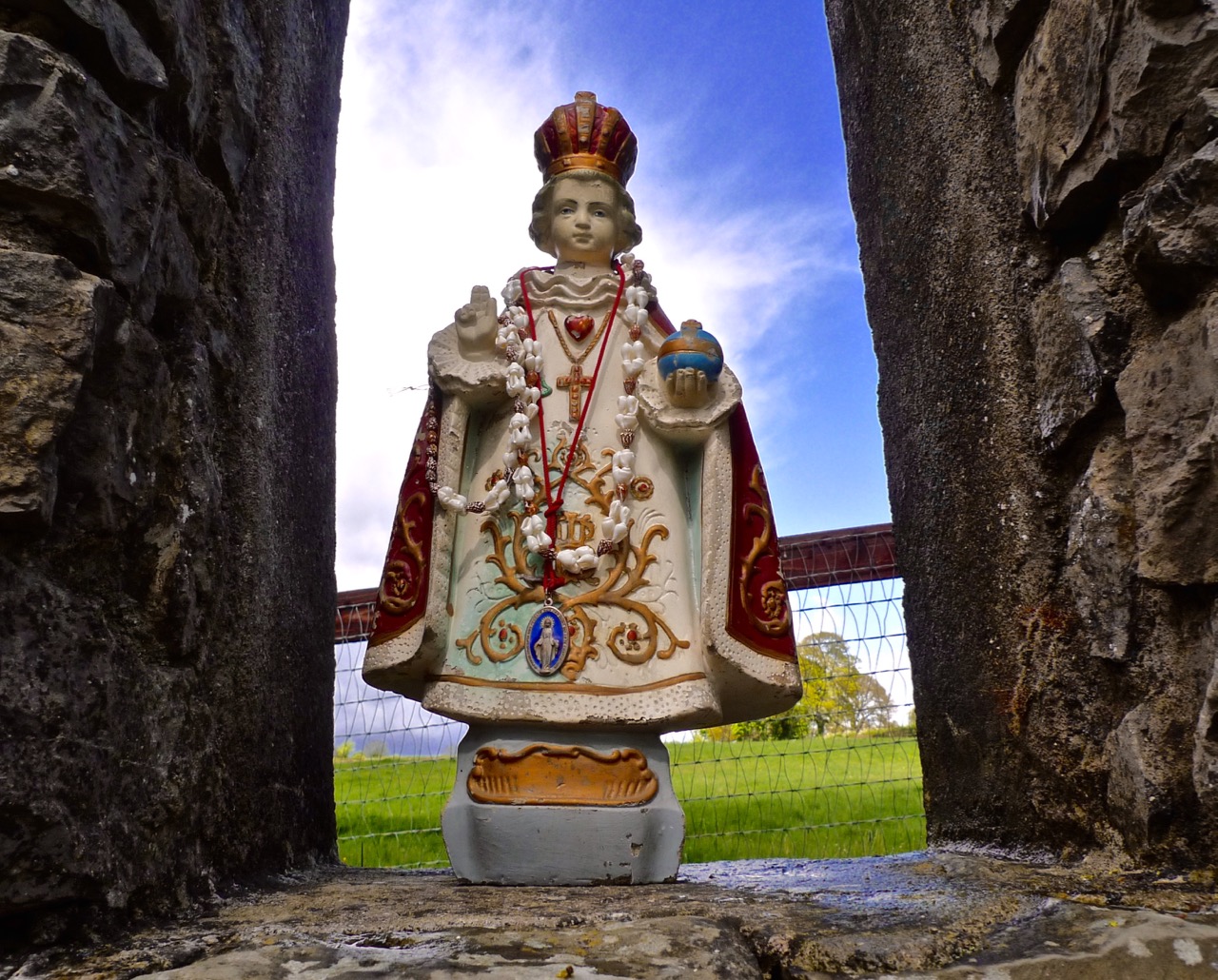
The last word…

little saint

Time to Refresh

Mum and three lambs

Everything is looking fresh and new in West Cork these days as we revel in the early summer light. Time to perk up Roaringwater Journal too, with a new look and feel and better navigation. We like this full-page look, with the menus in sidebars and more information in the footers. It’s designed to look good on all devices.
We hope you agree, but do let us know what you think.