The Edge of the Landscape – William Crozier

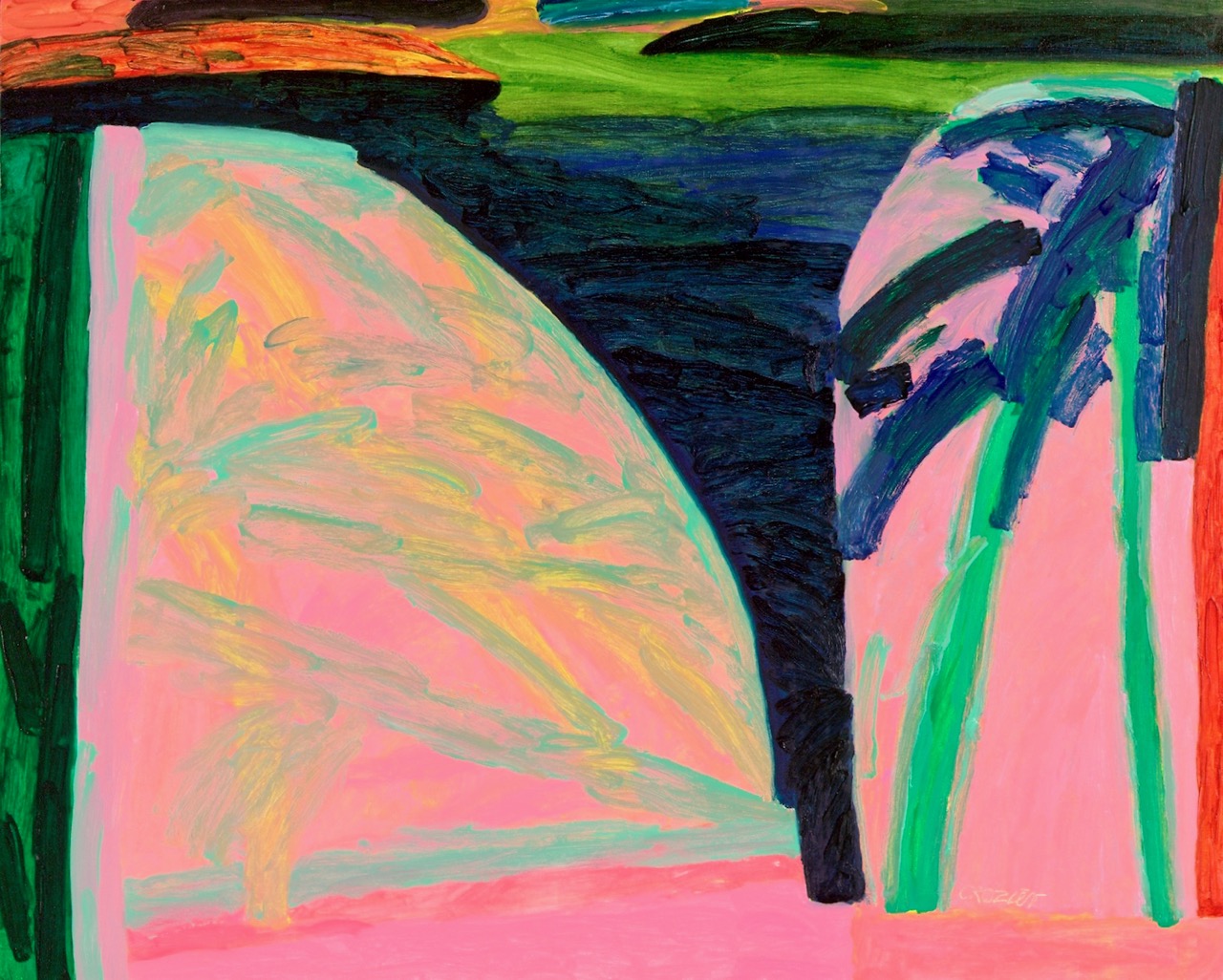
The Edge of the Landscape is the title of an upcoming exhibition which opens this weekend at Uillinn. It will show some of the later work of William Crozier (1930 – 2011), a Scottish born artist who considered himself more Irish than Scottish as his parents were from Ballinderry, Co Antrim. He adopted Irish citizenship in 1973 and purchased a cottage at Kilcoe, West Cork, in the early 1980s. Although he worked both here and in Hampshire for the rest of his life, most of his later paintings dwelled on the Irish landscape – specifically the splendours of West Cork, which are so familiar to us.
The meeting of land and sea was a recurring theme in Crozier’s work. The quay at Turk Head, above, inspired the header on this post – painted by Crozier in 2003. We might wonder at the eye of the artist that pictures the scene in such vivid colours, but anyone who has lived in West Cork will be familiar with his palette: the rocks, the fields, the lanes, wildflowers, water and ever-changing skies provide all the colours in his paintings, tints, tones and shades which are successfully pulled into unexpected compositions.

Katharine Crouan – Bill Crozier’s widow – has written to me “…Bill was not, in any way, a topographical artist but you can see in his work – particularly from 1984-95 – the stimulus  the landscape provided. He spoke of loving the ‘glamour’ of the West Cork landscape, referring to the glitter of water and sunlight on foliage after rain and the dark shadows that came out of nowhere. For him it was all magical…”
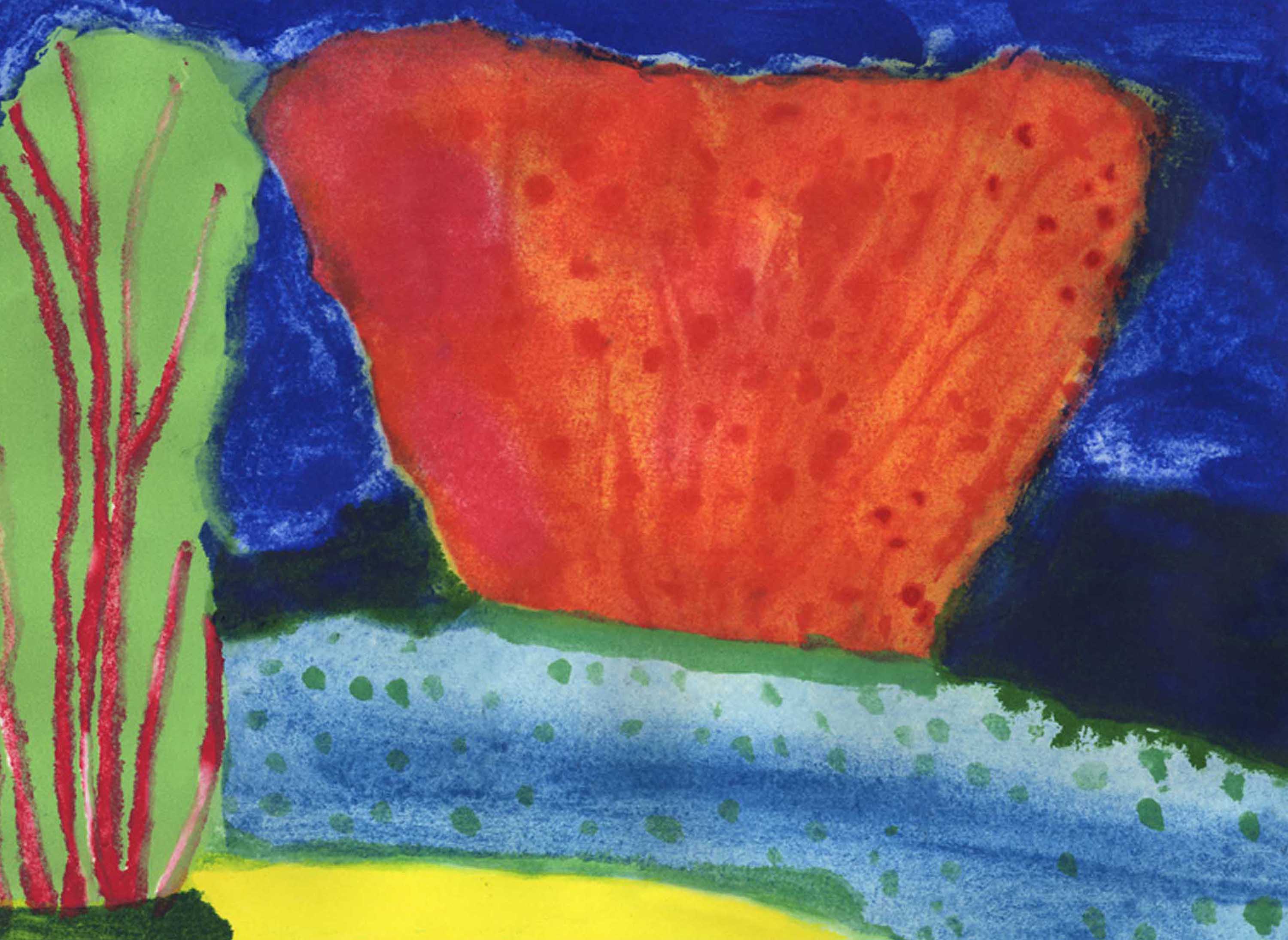
‘Kilcoe Strand (From Peninsula)’, painted by William Crozier in 2011

I am reminded of Peter Lanyon, the St Ives artist (who was, interestingly, the subject of a book titled At the Edge of Landscape): he famously said that, as a painter, he needed to “…get under the skin of the landscape…” That need informs his work, which is abstract rather than specifically landscape-based yet inspired, as he stated, from flying over his native Cornwall and – by exploring the mine shafts – tunnelling underneath it. For me, William Crozier has the same regard for his West Cork homeland and successfully expresses his relationship with it through the richness of his work.
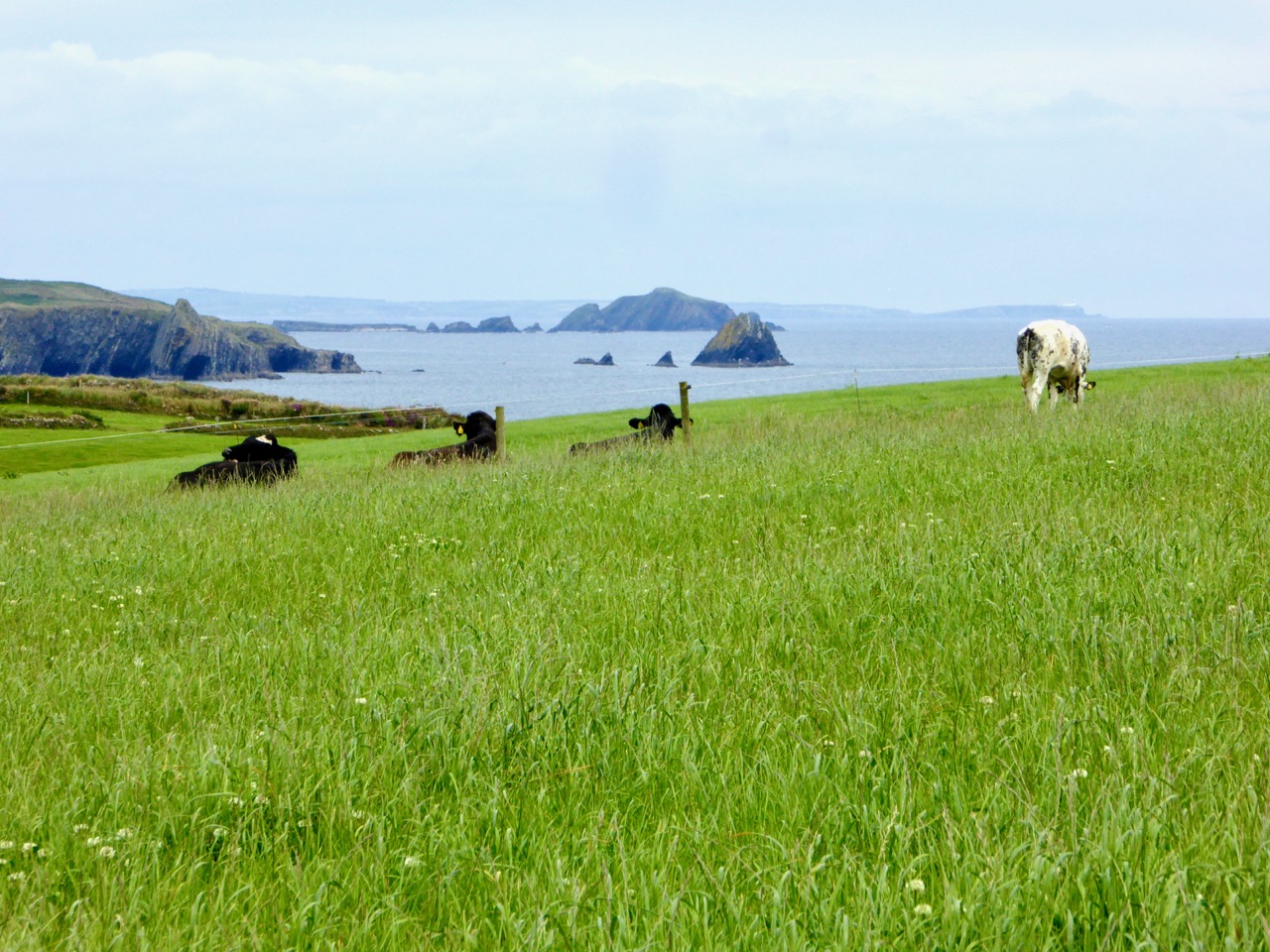
Toe Head, West Cork (upper picture) was the inspiration for many paintings. Lower works: Toe Head 1989, (left), and Wolf’s Castle, Toe Head 1998 (right – Richard Barrett) 

William Crozier was a prolific painter – he estimated that he had painted more than 12,000 pictures, each executed in a single session. The landscape-inspired works are just one part of an enormous opus. He did not overlook the sometimes hard realities of his surroundings. Cocks of hay drying in a field may appear a romantic ‘rural idyll’, but are equally a portrait of an economically unviable small-holding.
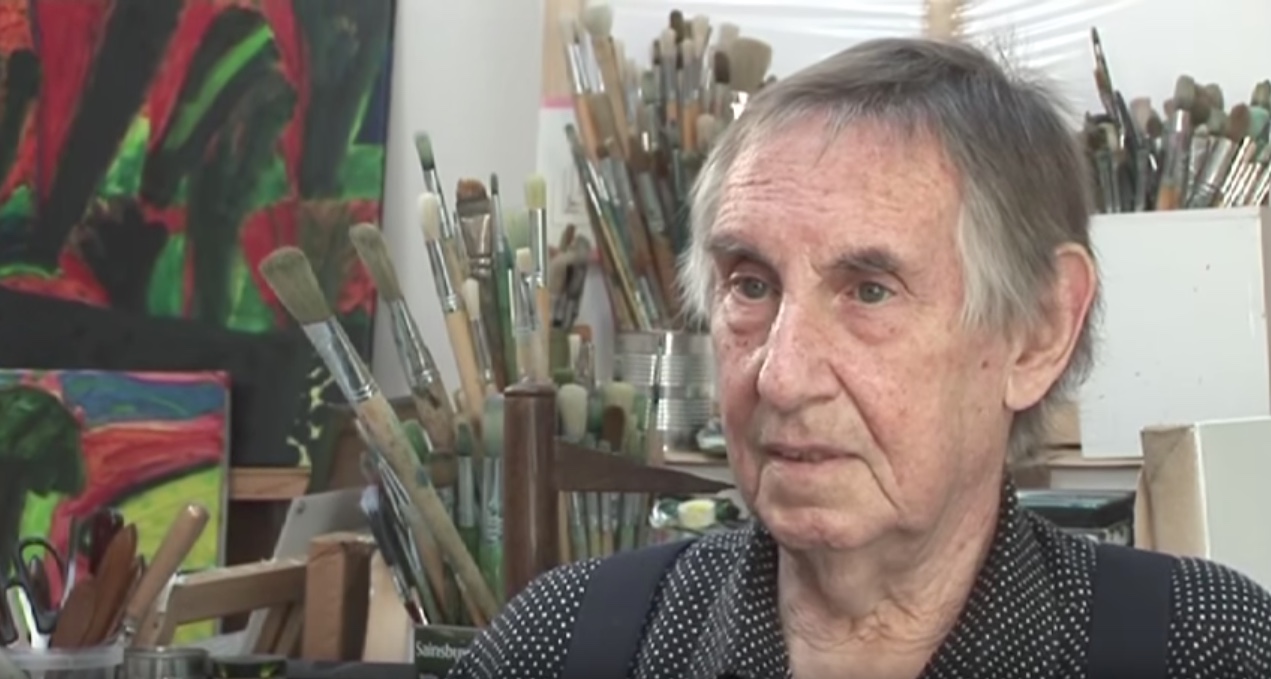
William Crozier in his studio c 2009

The exhibition of a selection of Crozier’s work produced since 1985 is showing at Uillinn: West Cork Arts Centre from 15 July to 31 August, and later in the year some of his earlier works will be shown at IMMA: The Irish Museum of Modern Art from 12 October 2017 to 8 April 2018. Both exhibitions are curated by Seán Kissane (Curator, Exhibitions, IMMA), who will be presenting a talk on the work at 6pm this Friday, 14 July, in Uillinn, following which the exhibition will be formally opened by Sarah Glennie, the Director of IMMA. An important new publication edited by Katharine Crouan and Seán Kissane and designed by Peter Maybury accompanies the exhibition with texts by Mark Hudson, Katharine Crouan, Seán Kissane, Riann Coulter, Enrique Juncosa, and Sarah Turner.

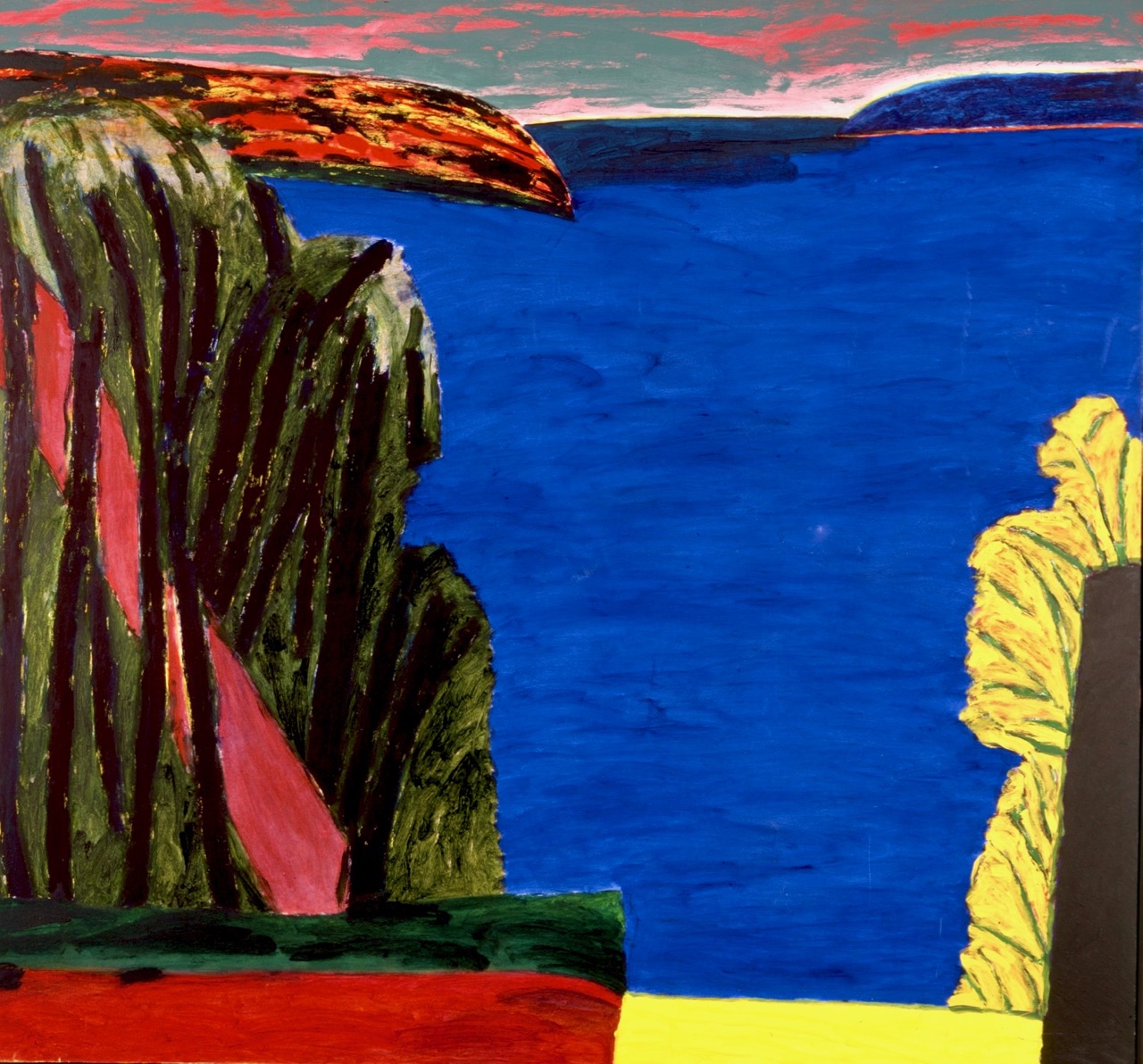
Below – Departure from the Island, William Crozier 1993 (Flowers Gallery). Note that copyright on all works rests – unless otherwise stated – with the William Crozier Estate
Postscript – In the Tracks of the Yellow Dog

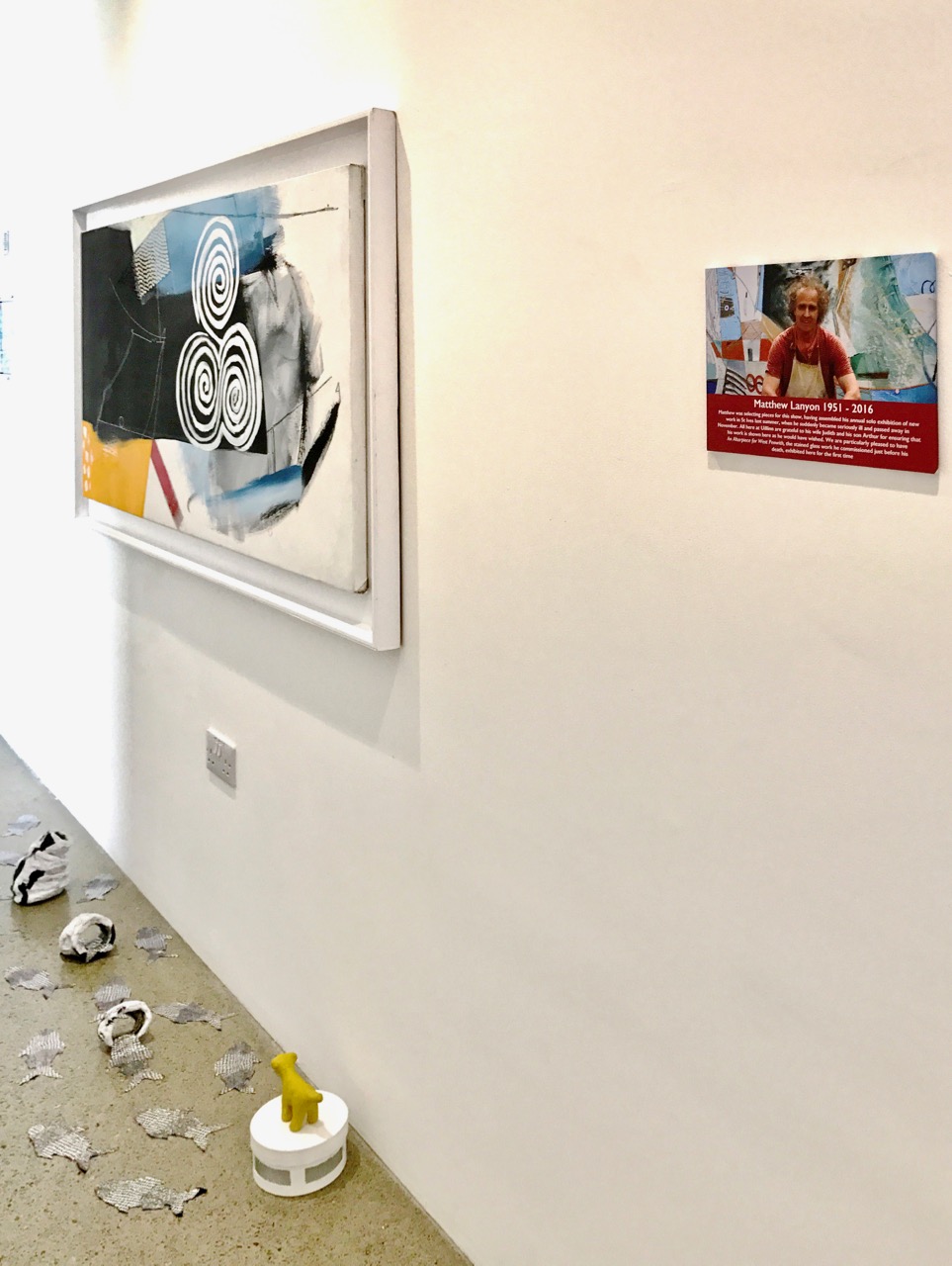
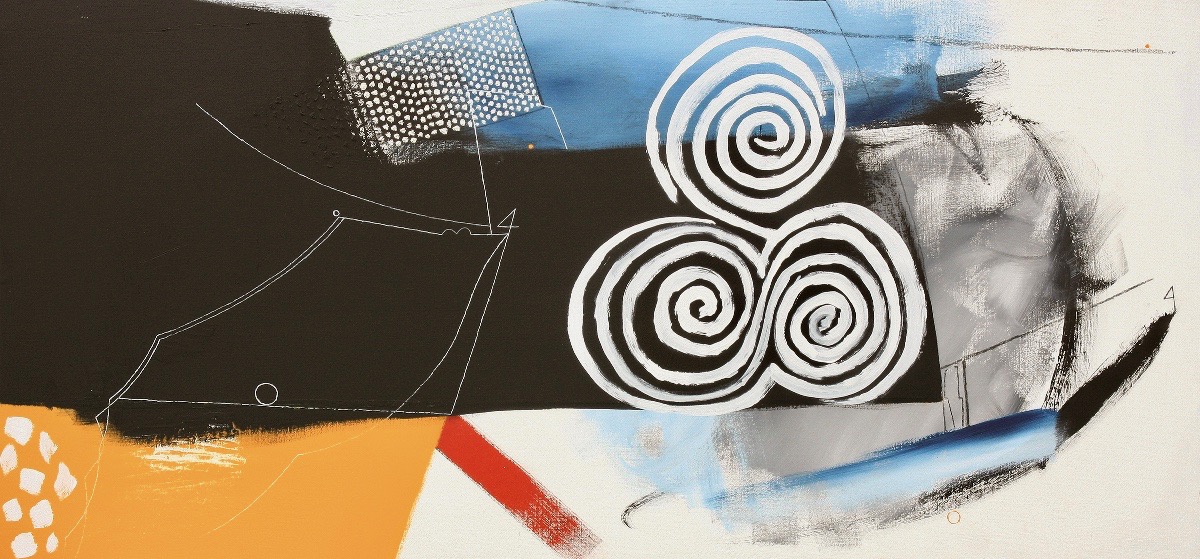
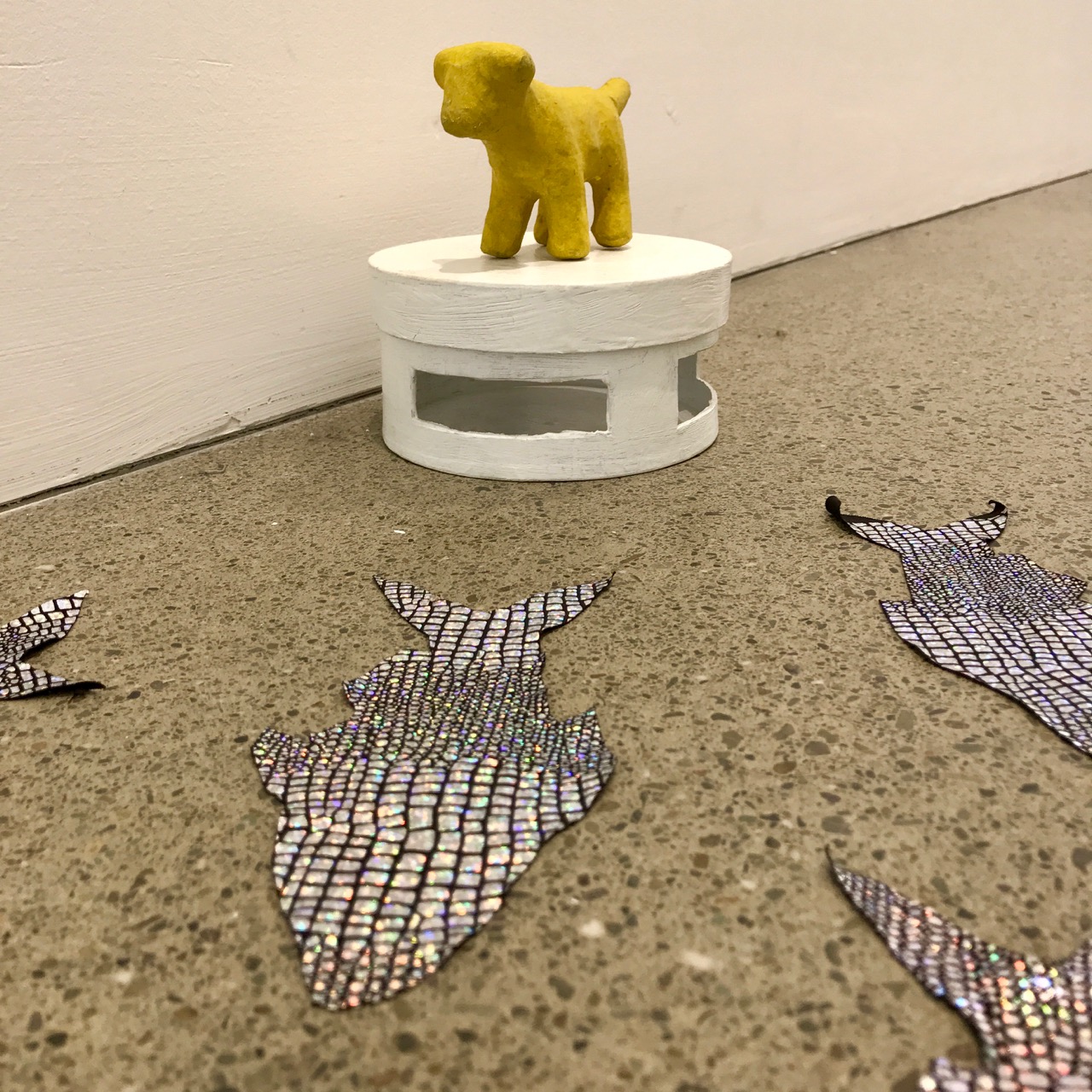
Uillinn – the West Cork Arts Centre gallery in Skibbereen – has a great facility in its exhibitions – a Discovery Box which can be used by children (or anyone else) to express their reactions to whatever is on show. I went in the other day to have a last look at the West meets West show of the work of Cornish Artists (hurry! – it closes on Saturday 8 July) and was delighted to see that someone had used some elements from the box to place a little installation under Matthew Lanyon’s painting aptly titled ‘Skibbereen’.

The Discovery Box in action at Uillinn – left, with Phil Booth’s impressive construction Gwennap Head in the background and – right – set against Tony Lattimer’s wonderful ceramics. (Photos courtesy of West Cork Arts Centre)

The Discovery Boxes are tailor-made for each exhibition. This one has been assembled by Sarah Ruttle and includes (amongst a multitude of inspired shapes) fish and fishing nets, miniature coiled ceramics reminiscent of Tony’s work – and a yellow dog! Why a yellow dog? Well, one of the most striking exhibits in this show is a tapestry designed by Matthew Lanyon – In the Tracks of the Yellow Dog.

Upper picture – the Discovery Box installation under Matthew Lanyon’s ‘Skibbereen’ painting and (lower left) the tapestry with (lower right) the paw print of the Yellow Dog substituted for the artist’s signature

The tapestry was manufactured by Flanders Tapestries in Belgium: cottons, wools and acrylics were selected in close collaboration with Matthew to achieve a tonal harmony from his original design. The yellow dog, a reference to Yellow-Dog Dingo from Kipling’s Just So stories, makes only one appearance; the paw print from a dried out salt lake in central Western Australia substitutes for the artist’s signature. 

We will miss the excitement and impact of those large, very Cornish works once they are packed up and sent back across the Celtic Sea, but that’s the nature of a gallery: the moment has to be enjoyed and then set aside as it will be soon replaced by other stimuli. Following on from West meets West at Uillinn is The Edge of the Landscape a major retrospective of the art of William Crozier (1930-2011), opening on Friday 14 July at 7pm. Born in Scotland, Crozier spent much of his time in Kilcoe, West Cork, from the mid-1980s, and this exhibition will present many of his works which have been inspired by the landscapes so familiar to us.

Below: Matthew Lanyon’s Skibbereen

Headstones or Folk Carvings?

This week we stumbled upon one of the finest collections of 18th century gravestones we have ever seen, in the ancient Kilcoole Church yard. We’ve been visiting friends in Wicklow and enjoying ourselves very much.

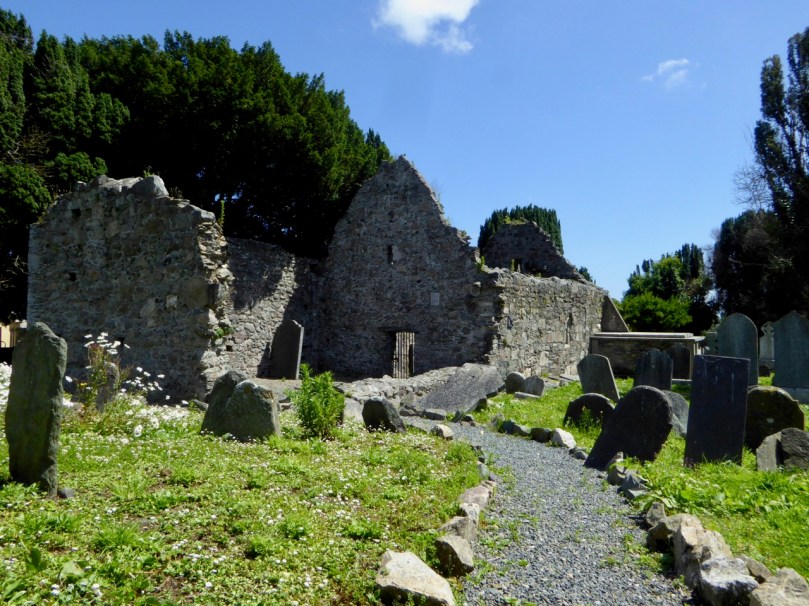
The church itself is very old, mostly 12th century. Although un-ornamented, the arches and windows are Romanesque in design, and the church originally had a stone roof, like the one we wrote about in Kilmalkedar. It’s kept locked but the key is easy to obtain, although it only opened the outer gate, so we were unable to see inside the church.

The graveyard, however, turned out to be a treasure trove! In West Cork we do see the occasional eighteenth century gravestone, but they are often heavily weather and lichened and impossible to read. However they manage it, these gravestones were as fresh and readable as the day they were carved.

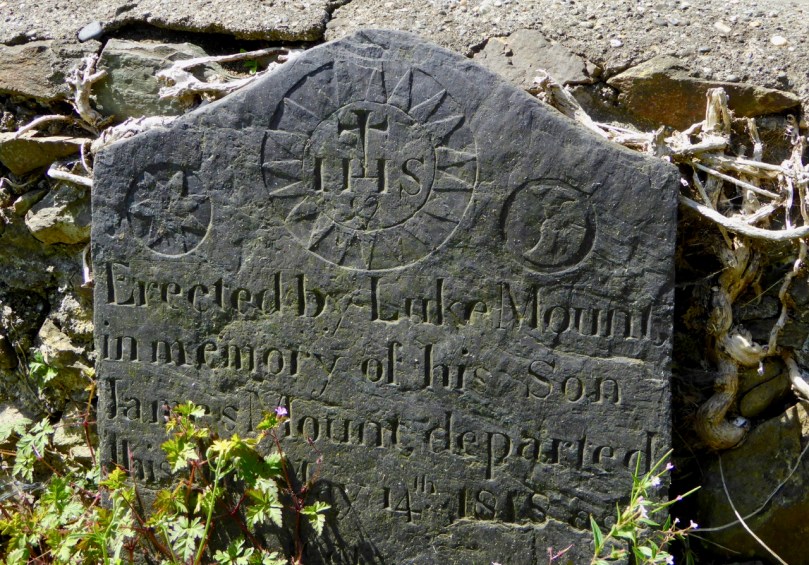
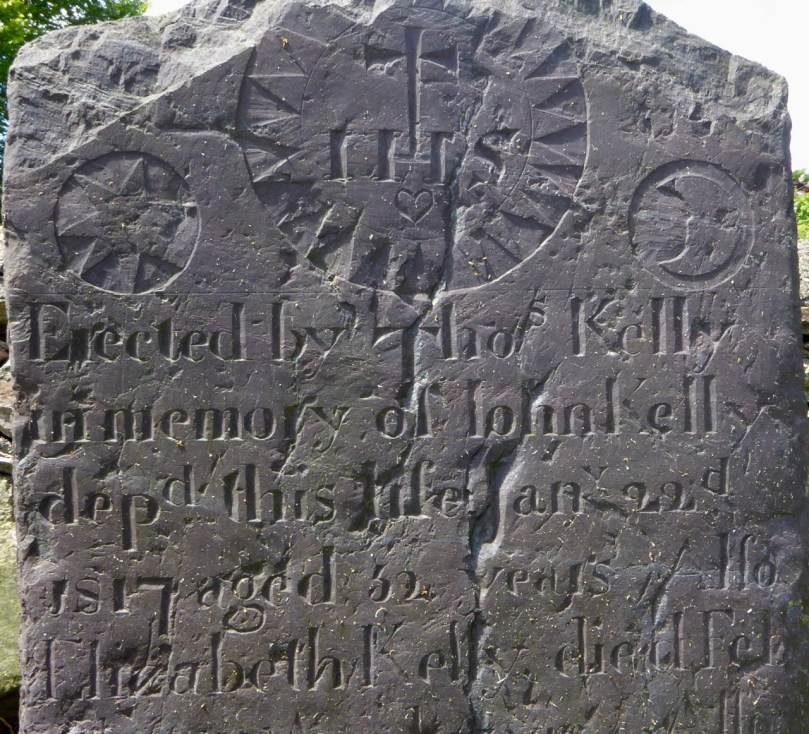
This 1792 headstone for Felix Kavanagh has the IHS symbol surmounted by a cross and surrounded by a sunburst. On either side is a six-pointed star and a barred circle – we are unsure of the meaning of this motif

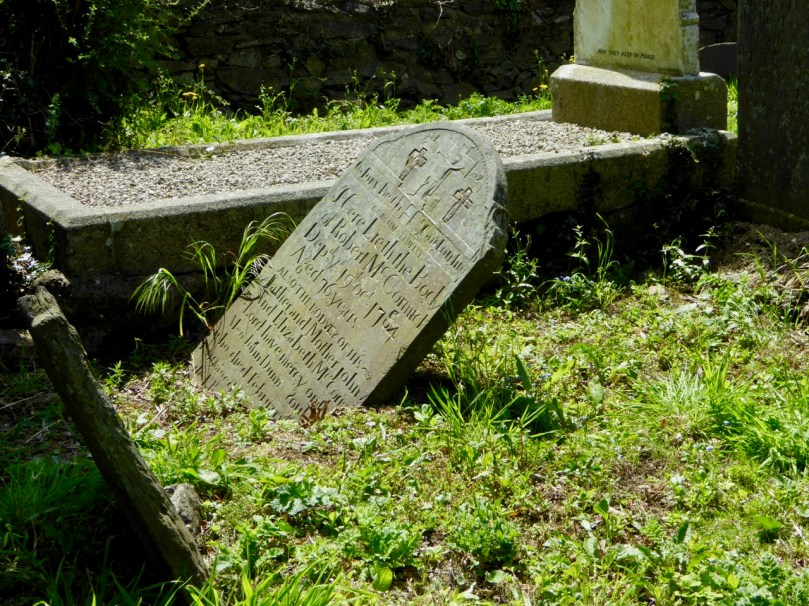
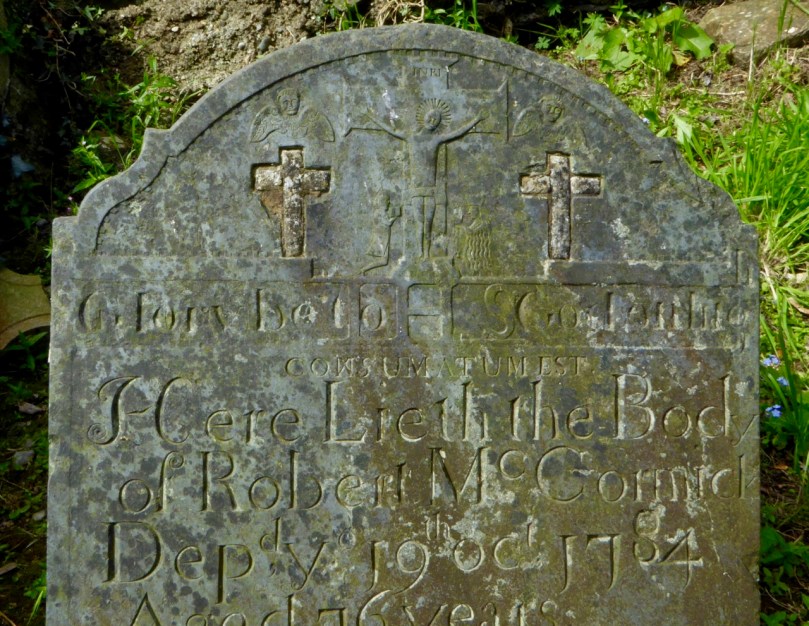
In our post Memento Mori we introduced you to the joys of graveyard headstones, and explained what symbols were common and what they represented. The crucifixion is a favourite, of course, and that was beautifully represented in Kilcoole by a gravestone for Robert McCormick by Dennis Cullen, dating from 1784.

Dennis Cullen is recognised as one of Ireland’s finest folk sculptors. There are 105 known Cullen headstones, most dating from 1765 to 1785, many in Glendalough, and most depicting passion scenes. He was born in Monaseed and his carving technique was accomplished. He often signed his work, unusual for the day. This is a good example of a Cullen crucifixion scene, except that it was altered later by the addition of two marble crosses.

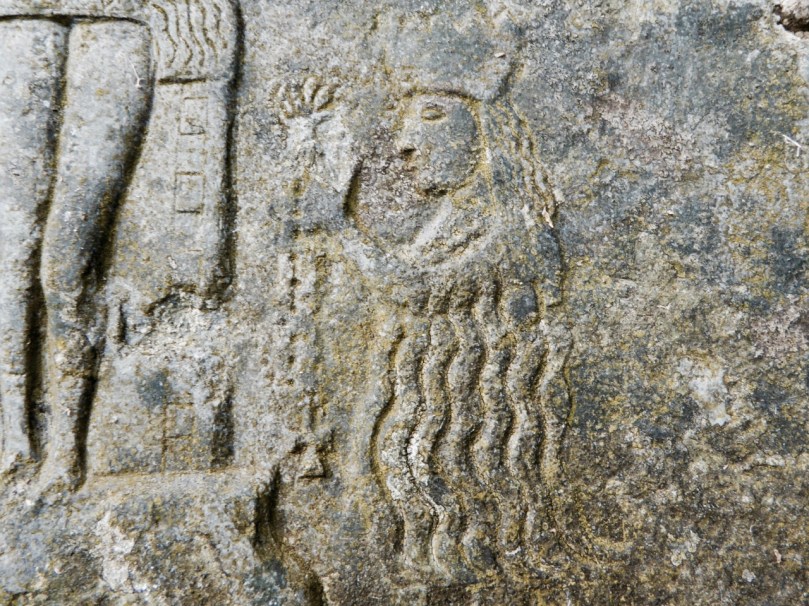
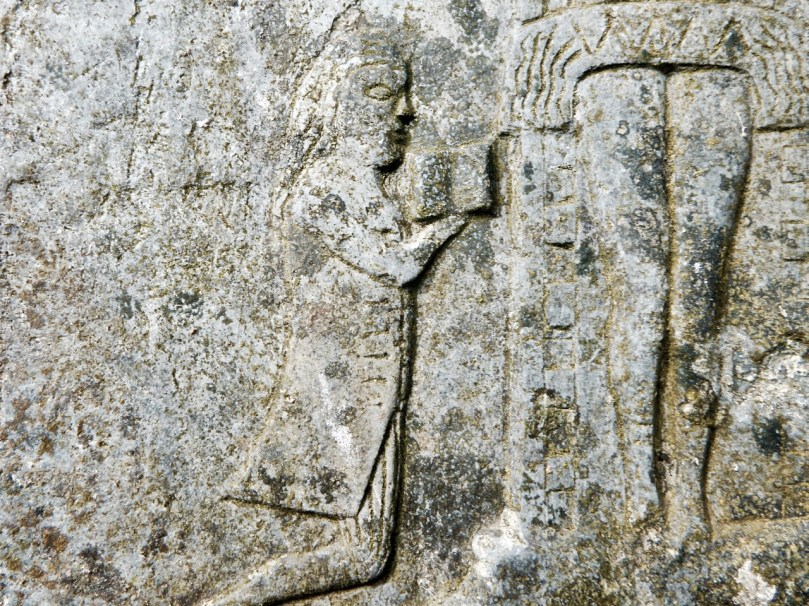
Cullen executed his work in delicate and accurate detail. Christ on the cross is flanked by the Virgin with a crown and beads and St John with a bible. Cullen’s habit was to carve figures in the costume of the 18th century. The Virgin’s flowing hair is, in fact, a long lace veil – common mourning dress of the time. John is wearing a dress coat.

Several of the headstones feature a sunburst as well as sun, star and moon motifs. Powerful symbols of the soul and of immortality, as well as rebirth, these motifs were very popular in the eighteenth century. The IHS symbol (explained in Memento Mori) usually adorned the top of the headstone.

Angels – the soul’s guide to heaven – are found on several of the Kilcoole headstones and we were  delighted at the the variety of ways in which they were depicted.

Because the carvings are so visible and well-preserved in Kilcoole, it’s possible to see not only the detail of the lettering, but also the guidelines used to keep them straight.

Most of the lettering is deeply carved and exhibits, here and there, that idiosyncratic and random placement of letters where the carver may have run out of room, or perhaps was anxious to balance a line.

The lettering styles are fairly plain, although some fancier initial words crop up.

The graveyard has suffered damage both from vandals and from the ravages of time. We were intrigued by the number of fragmentary inscriptions and broken headstones dotting the place.

A local style seemed to be the use of a floral or vine pattern across the top of the stone. There were several examples of this – perhaps the hallmark of a particular carver.

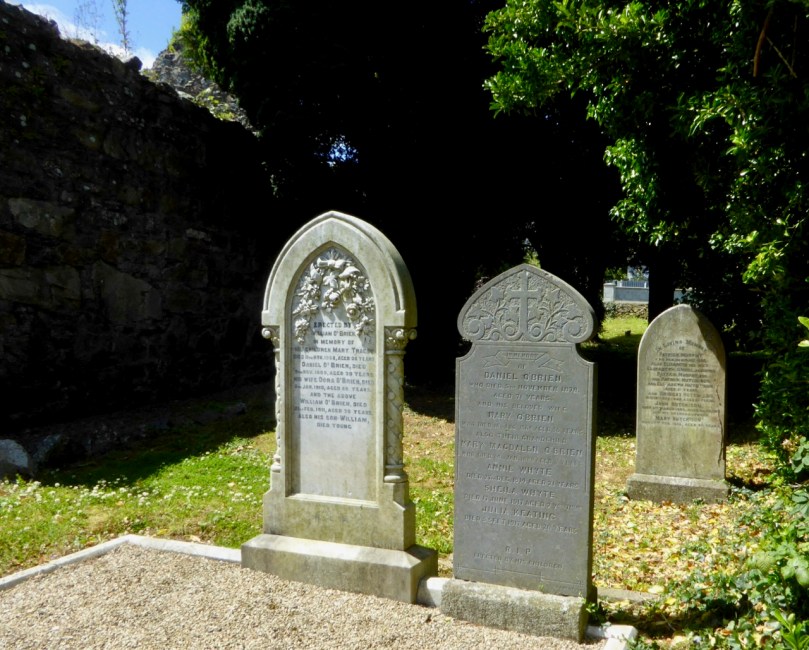
There were some fine later nineteenth century headstone in the graveyard too. Although we recognised that they were beautifully executed, it’s harder to get excited by them: they lack the naive exuberance of the eighteenth century examples and the symbols used are more restrained and limited.

There are several graveyards in Wicklow with similar collections of headstones and we hope to visit more in the future. Meanwhile, to learn more, order a copy of Chistiaan Corlett’s excellent book Here Lyeth about the eighteenth century gravestone of Wicklow