Terry Searle – A West Cork Artist

It’s all happening in West Cork at the moment! In particular, there’s a lot going on in Skibb: the fabulous Skibbereen Arts Festival continues to run all through the week and we have already enjoyed some memorable events. The first West Cork History Festival has been a resounding success – and a learning experience: look forward to great things in the future. But don’t leave Skibbereen without visiting the O’Driscoll Building at Levis Quay, in the town centre. Opening at 1pm on Saturday 5 August and running through to 2 September is an important exhibition of the work of two artists: Terry Searle and Ian McNinch. I’m concentrating today on the life and work of Terry – one of the ‘West Cork Artists’ Group’ who built up a reputation during the latter part of the 20th century, and the story of which has still to be written. Finola and I were privileged to meet with Terry and his wife Penny Dixey recently, and thoroughly enjoyed their accounts of the somewhat Bohemian life and times of artists in West Cork.
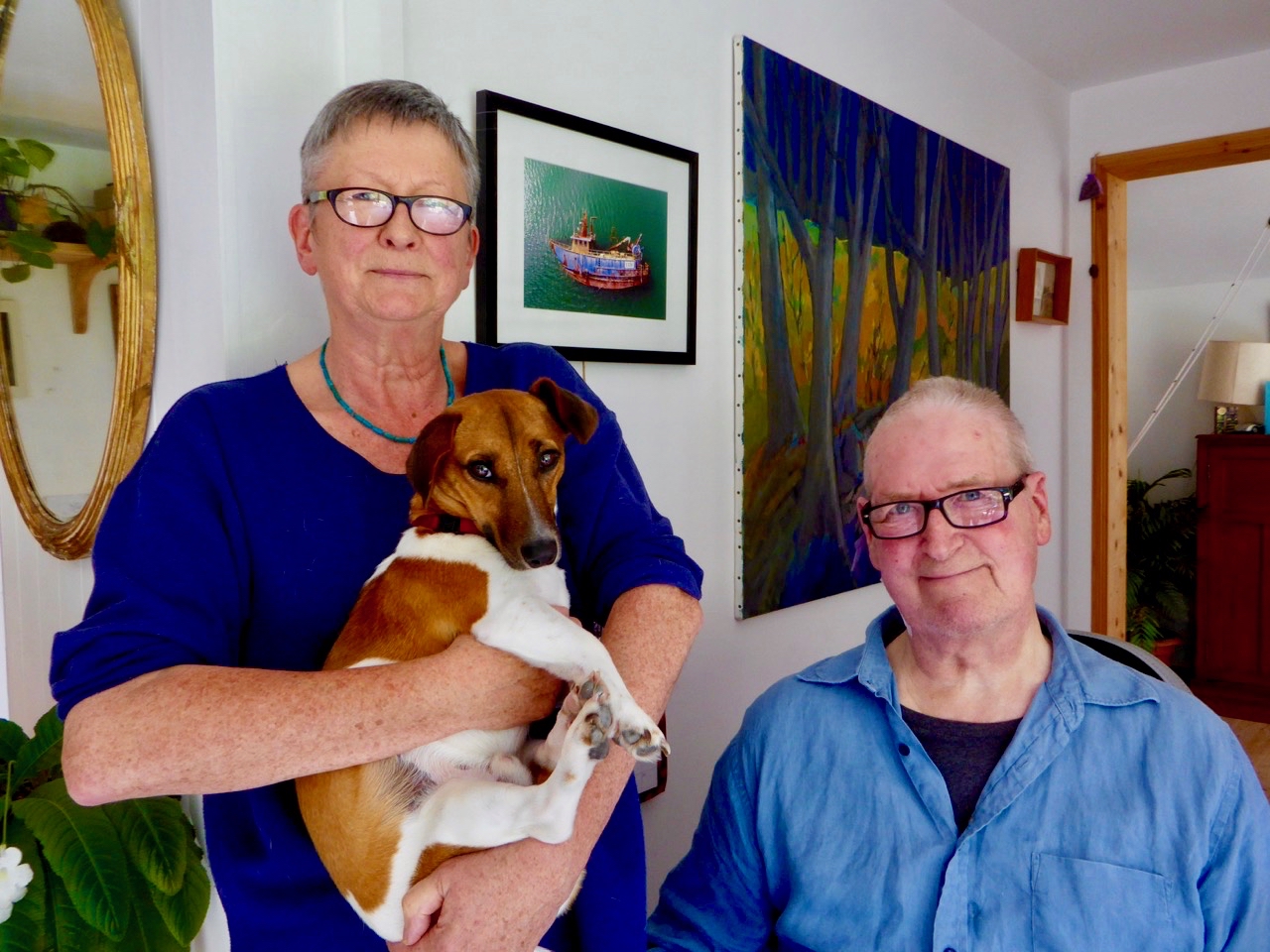
Penny (left, with Ted) and Terry (right) at home in Schull

The exhibition is a retrospective of Terry’s work. His great grandfather was from Dublin: he was born in 1936 and brought up in the East End of London. Like many of his contemporaries he was evacuated to the countryside during the war and spent six years away from his home. It’s hard to imagine how that experience might have affected a young, evolving mind: his positive take is that it imbued in him a permanent love for nature and this has been reflected in his life work.

Terry is a painter. At the end of the war Terry was called up for National Service, where he rubbed shoulders with would-be actors, artists and musicians: their outlooks attracted him and, when he moved back to London, he started evening classes at St Martin’s School of Art and then signed on for a full-time course at Goldsmith’s College of Art. Although life was hard – there were no grants available and he had to fund his studies through a variety of jobs occupying all hours – he never looked back. As he says “…life in the coffee shops in Soho was enjoyable, with a lively social scene…”

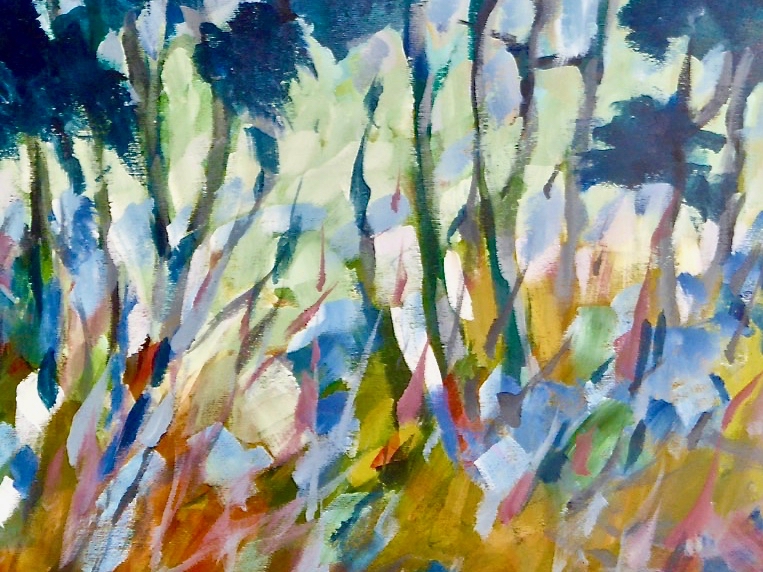
Terry’s influences were many – particularly the large, colour-full abstracts of Rothko and Joan Mitchell – but his life-long hero is JMW Turner. London’s Tate Britain has the world’s largest collection of Turner on exhibition, so Terry had the opportunity to study his hero at first hand. Turner challenged the art traditions of his time (first half of the 19th century) and his techniques appear very ‘modern’ to our eyes. Terry is no slave to Turner’s style, but has a very particular way of viewing his subjects. I think Terry’s work is vibrant – colourful – approachable – very attractive yet with a powerful individuality. I can see some parallels with William Crozier, whose work is currently being shown at Uillinn. By chance, Terry Searle and Crozier once lived in the same road in London but were only on nodding acquaintance. As their lives and work progressed, both found their way to West Cork.
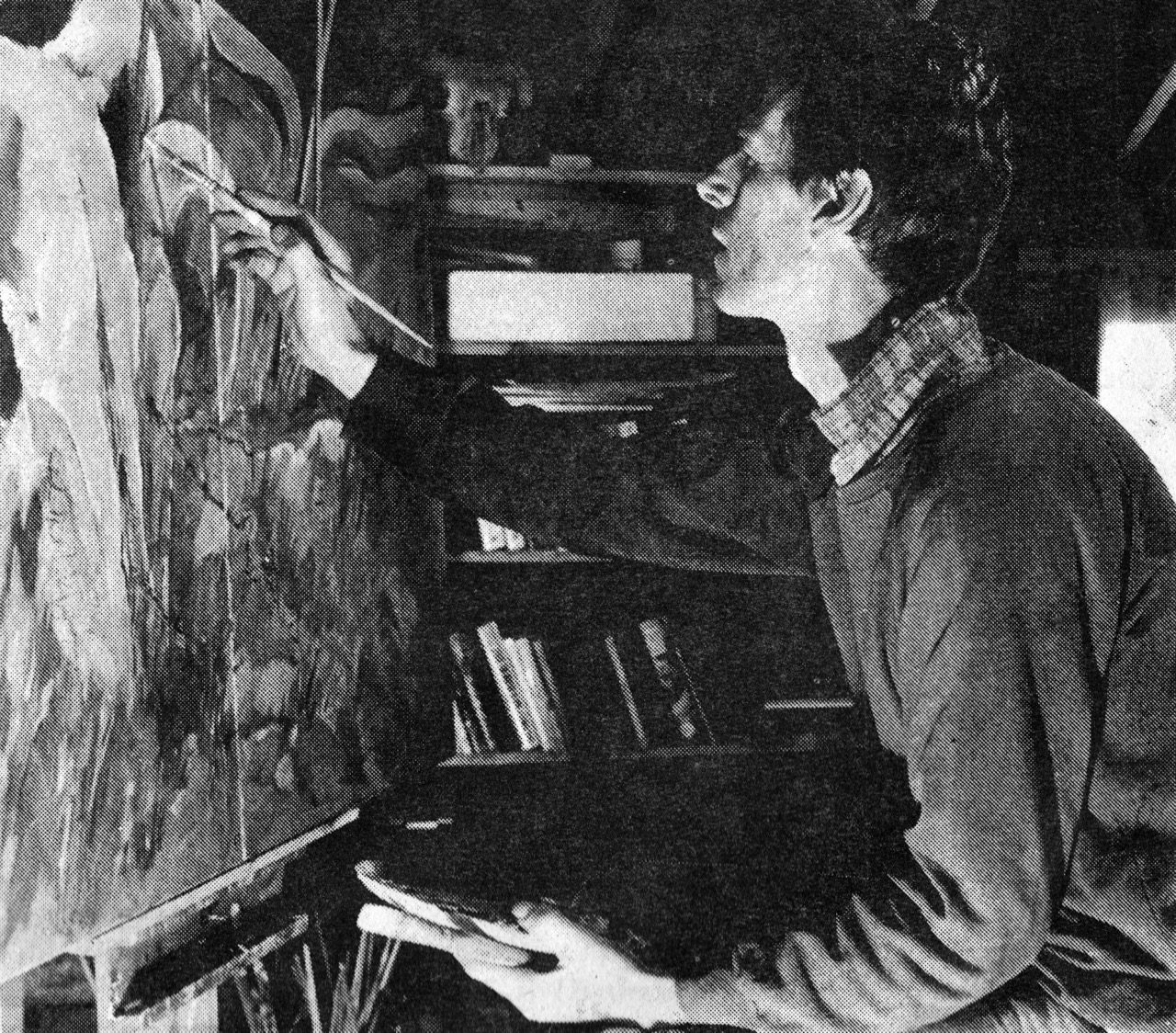
Terry Searle at work, probably around 1986: photograph by Kevin O’Farrell

Terry first visited West Cork when travelling with a group of friends in the 1970s. A number of visits followed and he found himself “enchanted” by the natural beauty of the place, and the civilised pace of life here. He must also have been aware of the strong artistic movement which focussed around Ballydehob and Skibbereen at the time. When he made the permanent relocation to the west of Ireland in 1981 he quickly became active in that movement, and was one of the founders of the West Cork Arts Centre. He contributed to the 1985 exhibition of West Cork artists in Zurich, and in 1987 was part of the important Living Landscape ‘87 Exhibition, which showed in the Crawford Gallery, Cork, as well as in the West Cork Arts Centre in Skibbereen. This extract from the introduction of the exhibition catalogue is enlightening on the spirit of the time:

…Skibbereen is a small town in the South West of the country with a population of 2,000 people. Ten years ago, because of the number of artists living in the area, a small interested group started an art society and held an annual members exhibition which ran for two weeks every July in a local hall. The demand from artists and local people increased over the years and due to the hard work of a dedicated committee, they realised a dream come true – an Arts Centre for West Cork; and with the essential practical help from the Vocational Education Committee in the provision of the building, we became the proud ‘owners’ of a thriving Arts Centre. We run exhibitions monthly, organise musical and theatrical evenings, and provide classes for all, covering a full range of artistic interests in our newly reconstructed classroom. Today, we are very proud to be hosting the first ‘Living Landscape’ exhibition by the top 25 landscape artists working in this country. Our intention to make this a prestigious annual event is ambitious, but then all our plans are ambitious…!

The Living Landscape exhibition shown at The Crawford and in Skibbereen: Terry is third from the right

I wonder how many of those involved in those times could have foreseen just where those ambitions would lead? With Uillinn in Skibbereen, the West Cork Arts Centre now has the foremost public gallery west of Cork city, and it is pushing the boundaries with major exhibitions of contemporary work. Readers will be aware of the recent West meets West exhibition – which heralds a regular exchange of art between West Cork and Cornwall – and the gallery, currently, is hosting a collaborative exhibition with IMMA on the opus of William Crozier.

It’s so good that Terry Searle is being appreciated with this show: he has never been a self-publicist, and it is high time his work received full and proper recognition. He celebrates his eightieth birthday this year. A few years ago he was diagnosed with a degenerative neuromuscular disease and has now been forced to stop painting altogether. It is painful to imagine what a loss that must be to a creative ethos such as his. This exhibition is a very special one – be sure to see it!

Robert is lining up further posts on the stories of the West Cork Artists group dating from the 1960s (and still thriving!) and would be delighted to hear from anyone who has personal accounts, reflections or memories from those days…

Image below – Terry Searle in his studio c1986 – courtesy of Kevin O’Farrell
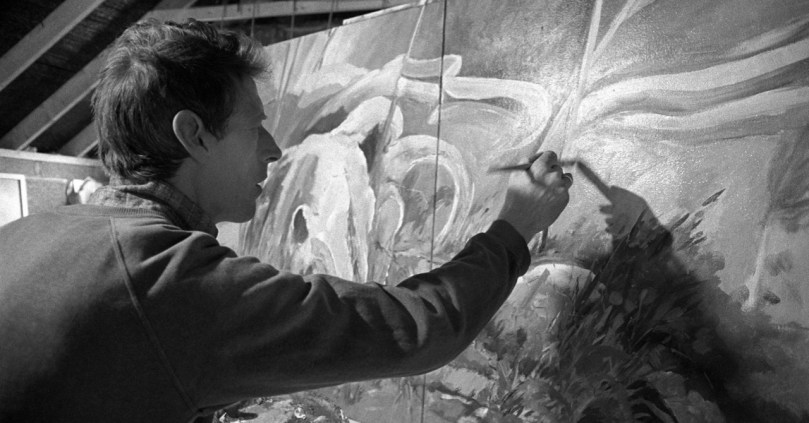
Terry Searle - Kevin O'Farrell

Ireland-Canada: Famine, Fenians, Friends!

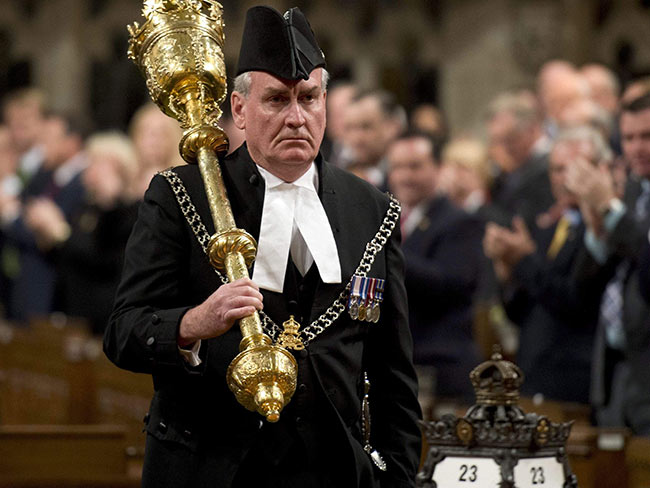
I’m Irish but spent forty years in Canada and I am still learning about the many deep, and too often tragic, links between my two countries. Canada’s Ambassador to Ireland, Kevin Vickers, (above) is coming to the West Cork History Festival in Skibbereen this week to talk about Irish-born Canadian Soldiers in the First World War. So in honour of that occasion I’ve been reviewing some of the connections between our nations.

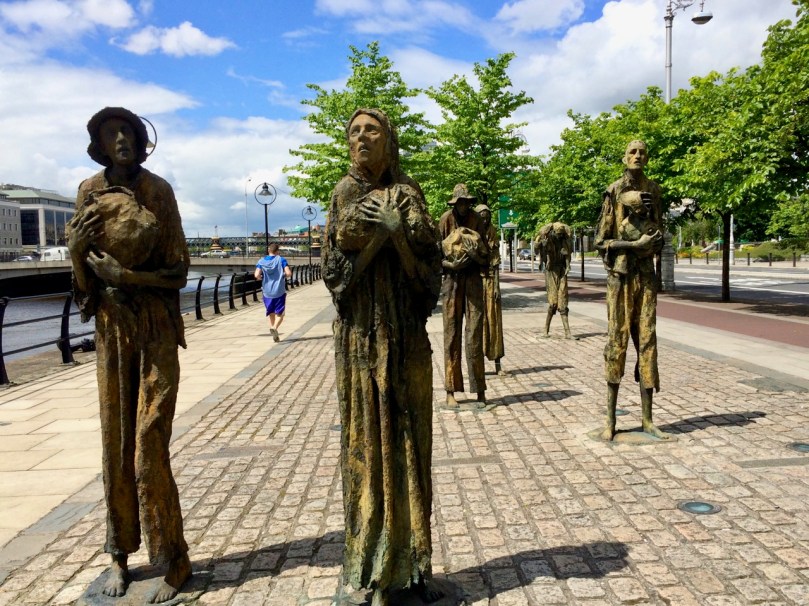
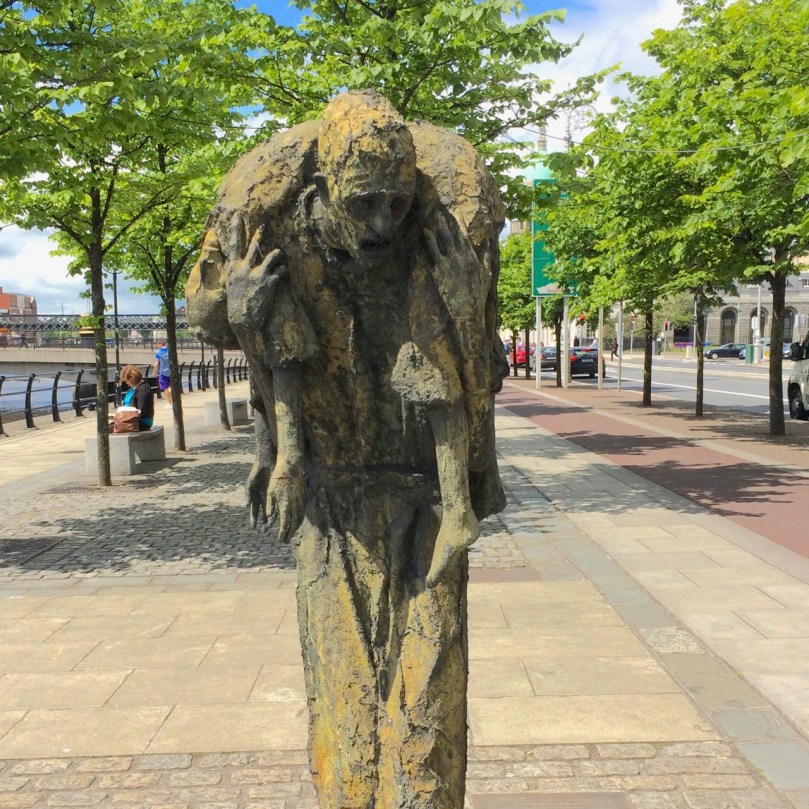
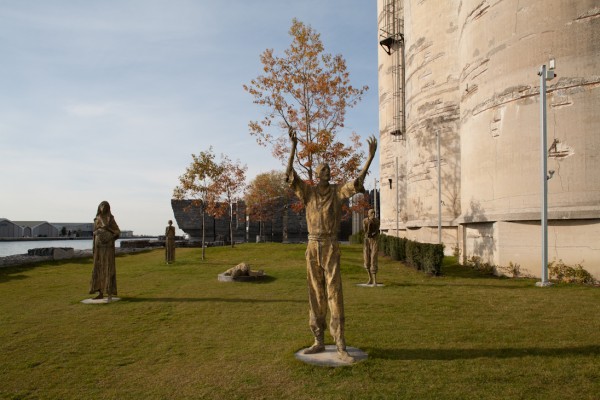
‘Departure’ – the harrowing sculpture by Rowan Gillespie on the Dublin quays

Although my own experience as a Canadian immigrant was a happy one, not all emigration stories are founded in choice and success. There’s a park in Toronto called Ireland Park. Lovely, you say – how nice that we have a memorial in this wonderful city. But Ireland Park commemorates a dark past – the year of 1847 when almost 40,000 immigrants fleeing the Irish Famine arrived in the coffin ships, overwhelming the city.

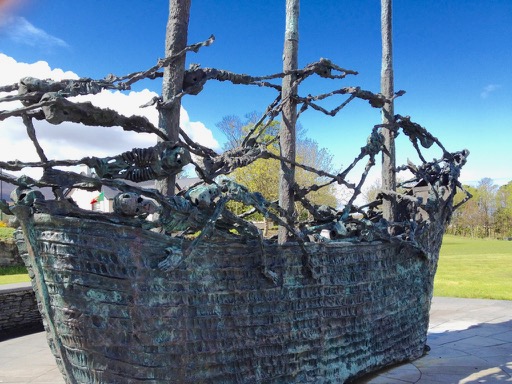
John Behan’s Coffin Ship Famine memorial in Murrisk, Co Mayo

They brought typhus, chaos, starvation and death and were soon filling the fever sheds built by the heroic citizens of the fledgling city. Catholic and Protestant arrived, and Catholic and Protestant co-operated to help them survive. It’s a tale of heroism and suffering and it echoes strongly  to this day, when we think about the refugees pouring into Greece and Calais – those people were once us.

Take a look at snippets from the haunting documentary film ‘Death or Canada’ (one here and another here) – it will give you a sense of what was involved for the incoming famine victims and for those on the ground.

Rowan Gillespie’s ‘Arrival’ in Ireland Park, Toronto

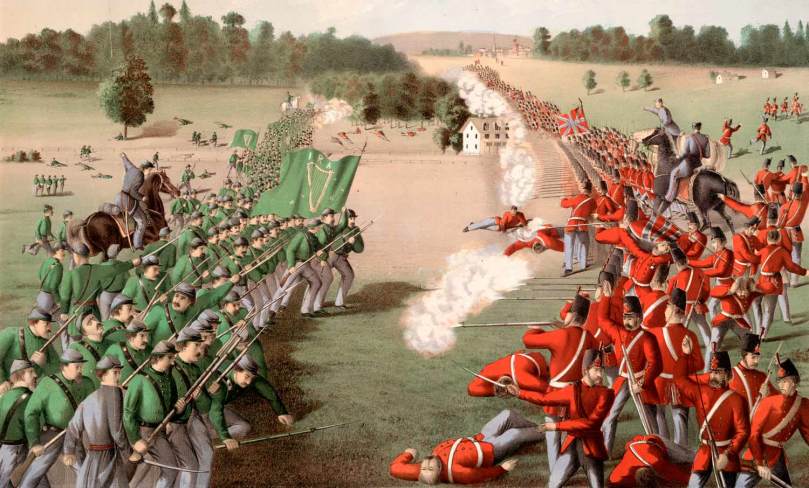
On a more muscular note, I have written elsewhere about the Fenians in Canada. Taking the fight for Irish freedom to ‘British soil’ in North America, there were many raids and one pitched battle organised by the Fenians in Canada. Ironically, the Battle of Ridgeway helped pave the way for Canadian Confederation.

One of the Fathers of that Confederation was Thomas D’Arcy McGee, a complex character who started off in the Young Ireland Movement. In his early days he was a firebrand revolutionary and that’s how he is chiefly remembered here – as one of a group of poets and writers committed to the liberation of Ireland from British rule. In this he would have seen common cause with that old Unrepentant Fenian, O’Donovan Rossa.

Thomas D’Arcy McGee: the young revolutionary and the elder statesman

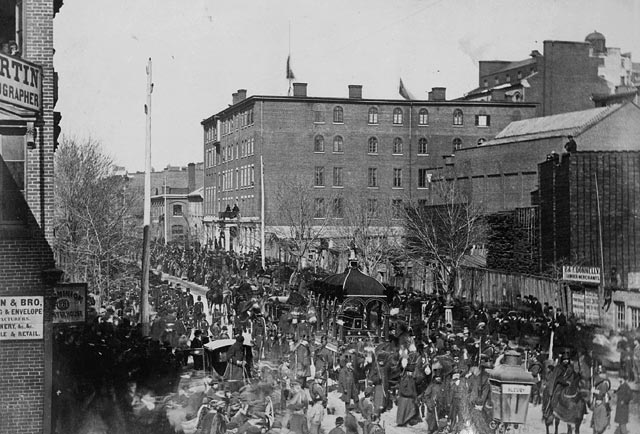
However, life in the United States, to which he was eventually forced to flee, while it radicalised Rossa even further, made a conservative out of McGee. He settled in Canada and became an ardent advocate for Canadian nationhood; however, he turned against violent rebellion and espoused a form of Home Rule, thereby earning the enmity of the Fenians who eventually ordered him assassinated. His funeral, held on what would have been his 43rd birthday, saw 80,000 people line the streets of Montreal to mourn a man that had given so much to his adopted country.

Image © Library and Archives Canada

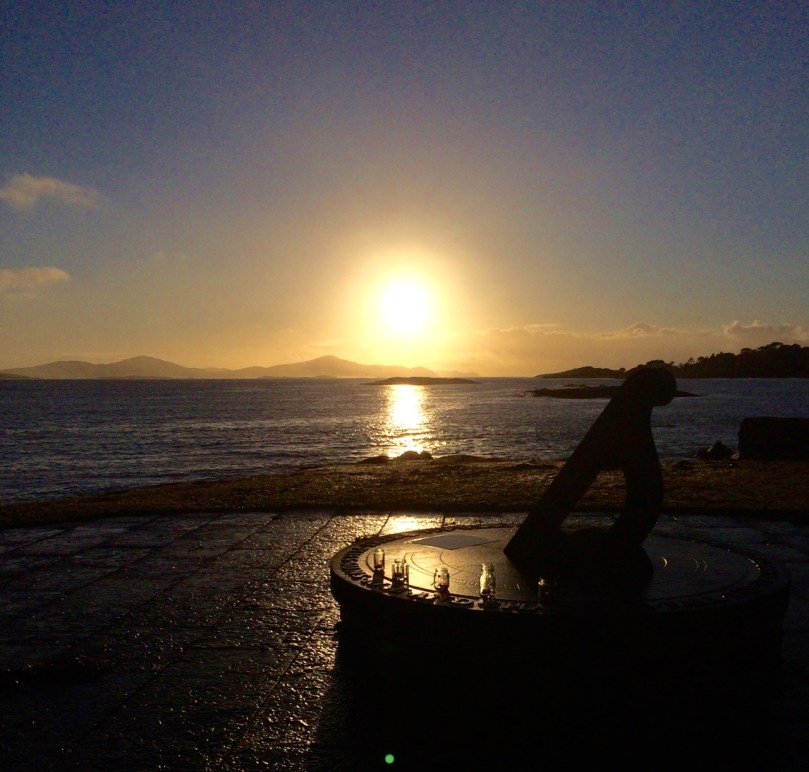
I have written extensively about the Air India Disaster of June 1985. The beautiful memorial in Ahakista has become a place of focus for the families of the victims, who still come every year to remember those who died so tragically on that day. As a Canadian and an Irish person it has become a special place for me – at once a reminder of the terrorist threats that touch on all our lives and the warm and human response that we in West Cork delivered when it all came close to home.

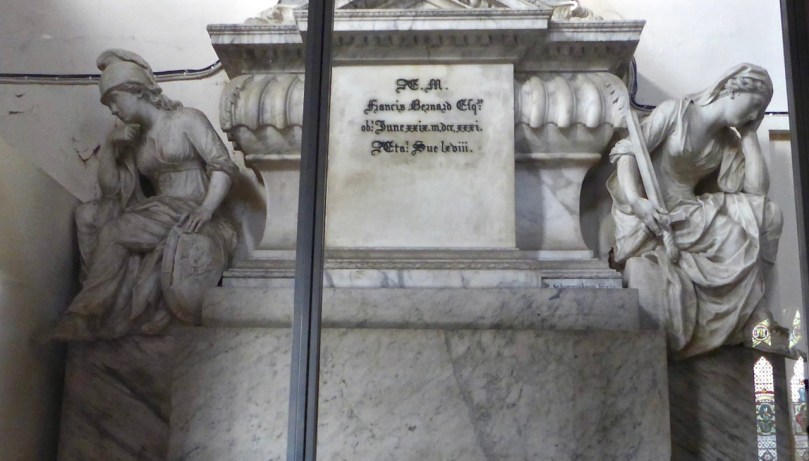
And now we discover that Justin Trudeau, through his mother, is descended from the Bernards of Bandon. This is quite a pedigree – according to The Irish Times In 1661, Francis Bernard married Mary Freake and had six daughters and two sons, the research shows. Mr Trudeau is descended from their younger son, Arthur Bernard, who was High Sheriff of Cork in 1697 and MP for Bandon from 1713-14. My own wanderings around churches have paid off here – take a look at this memorial in St Peter’s Church of Ireland in Bandon – it’s for Francis Bernard – Arthur’s older brother!

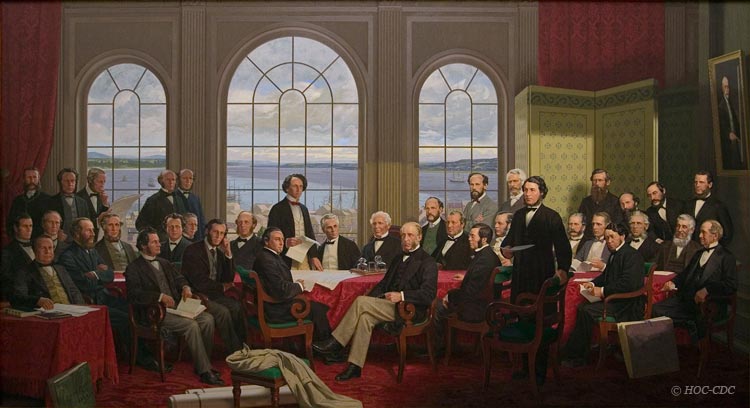
So there you are, Ambassador Vickers – one Canadian-Irish woman’s take on some of what binds us as nations. Oh – and for those of you who don’t know who Kevin Vickers is, this is no regular ambassador, no career diplomat. This is a genuine Canadian hero! We look forward to welcoming him back to West Cork and to hearing him speak on Irish-born Canadian Soldiers in the First World War. I wonder if he’ll arrive on his Harley?A famous Canadian painting depicts the Fathers of confederation – and there’s D’Arcy McGee in the front row, second from the right. Image © Canadian House of Commons.


Stab All!

With the West Cork History Festival just around the corner (this coming weekend – July 28 to 30: hurry! – there are still some tickets left for a whole host of compelling events), I thought I would concentrate today on a little piece of very local history which has fascinated me for some time.

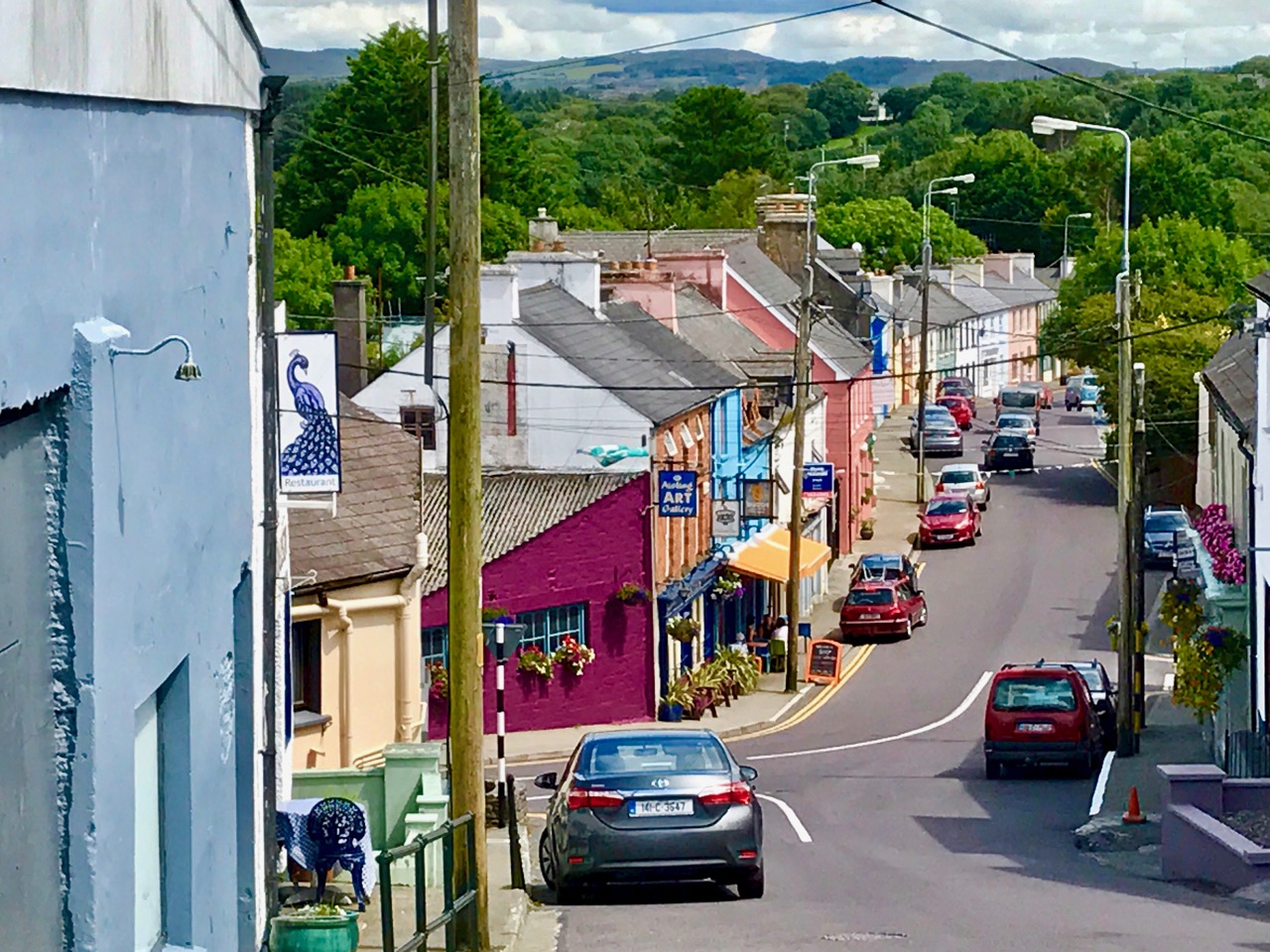
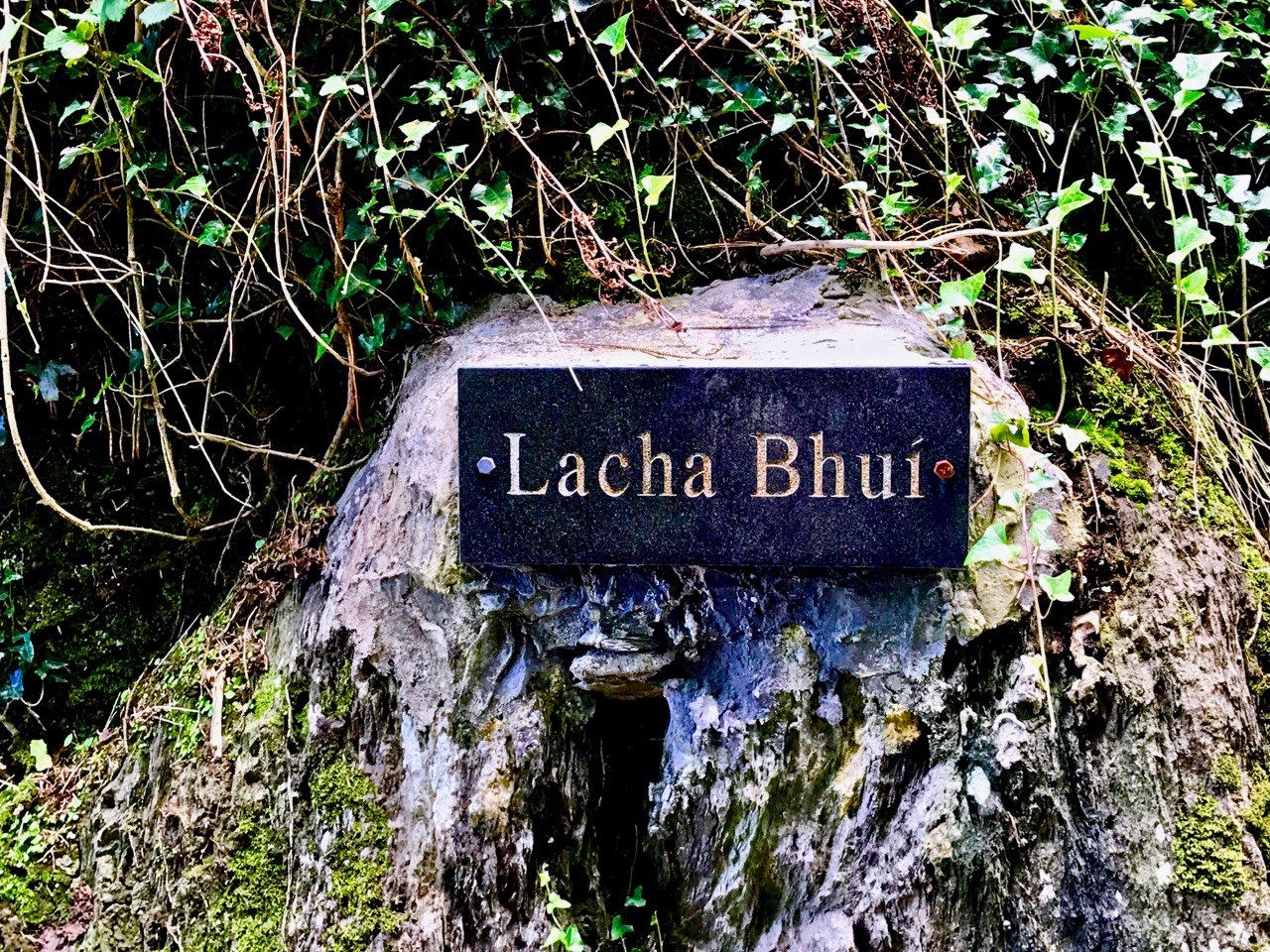
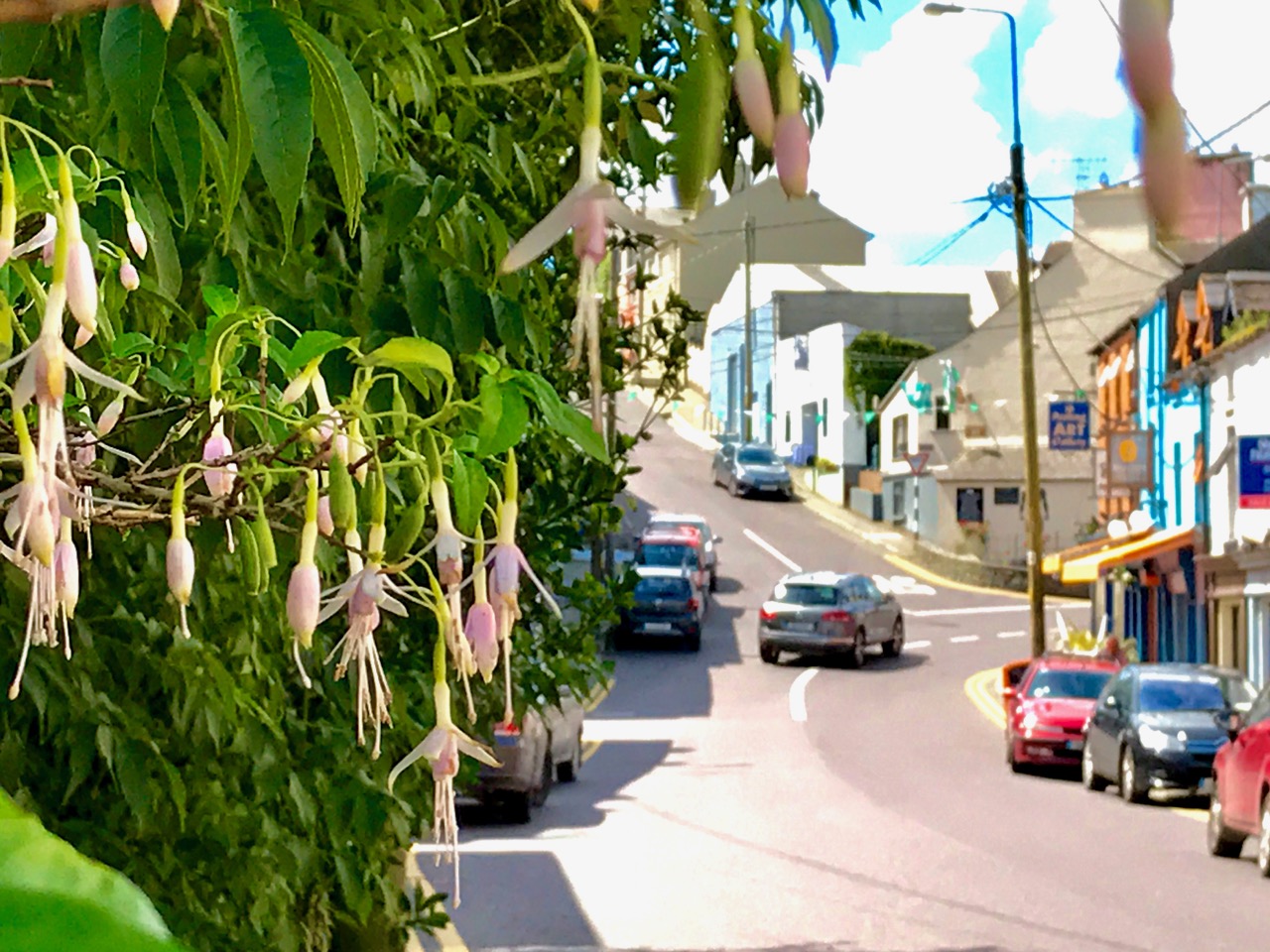
Header picture: looking down Staball Hill to the colourful and thriving community of Ballydehob in West Cork; above – Chapel Lane, just on the edge of town: a haven for wildflowers with – lower picture – the intriguing sign Lacha Bhuí

Mounted beside the road on Chapel Hill in Ballydehob is a slate plaque, which is inscribed Lacha Bhuí. I asked Finola to translate the Irish for me: it says Yellow Duck! Intrigued, I asked around to see if anyone knew why there should be such a sign in this place; eventually, I was transported back to 1642…

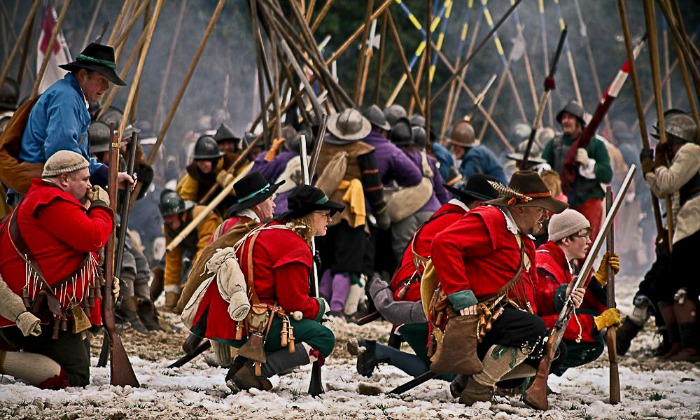
Reenactment of the 1642 Battle of Stratton, in Cornwall: it’s not Ballydehob, but perhaps it portrays something of the atmosphere of the skirmish that took place here in the same year

My principle informant is Noel Coakley – a local historian and a mine of information. He it was who told me the story of a battle that took place in Ballydehob, on Staball Hill in 1642. He couldn’t remember where he had the information from but this is the account he gave me:

In the days of the old Clan system, the McCarthys and the O’Mahonys held sway in this area and a string of castles bears testimony to their strength and dominance. In 1602, an army, led by Sir George Carew, the English President of Munster, descended on the area and were successful in breaking the power of the gaelic Chieftains.

The arrival of the sixteen hundreds saw an influx of settlers, mainly from England, but a significant number were protestants fleeing persecution from Catholic France.

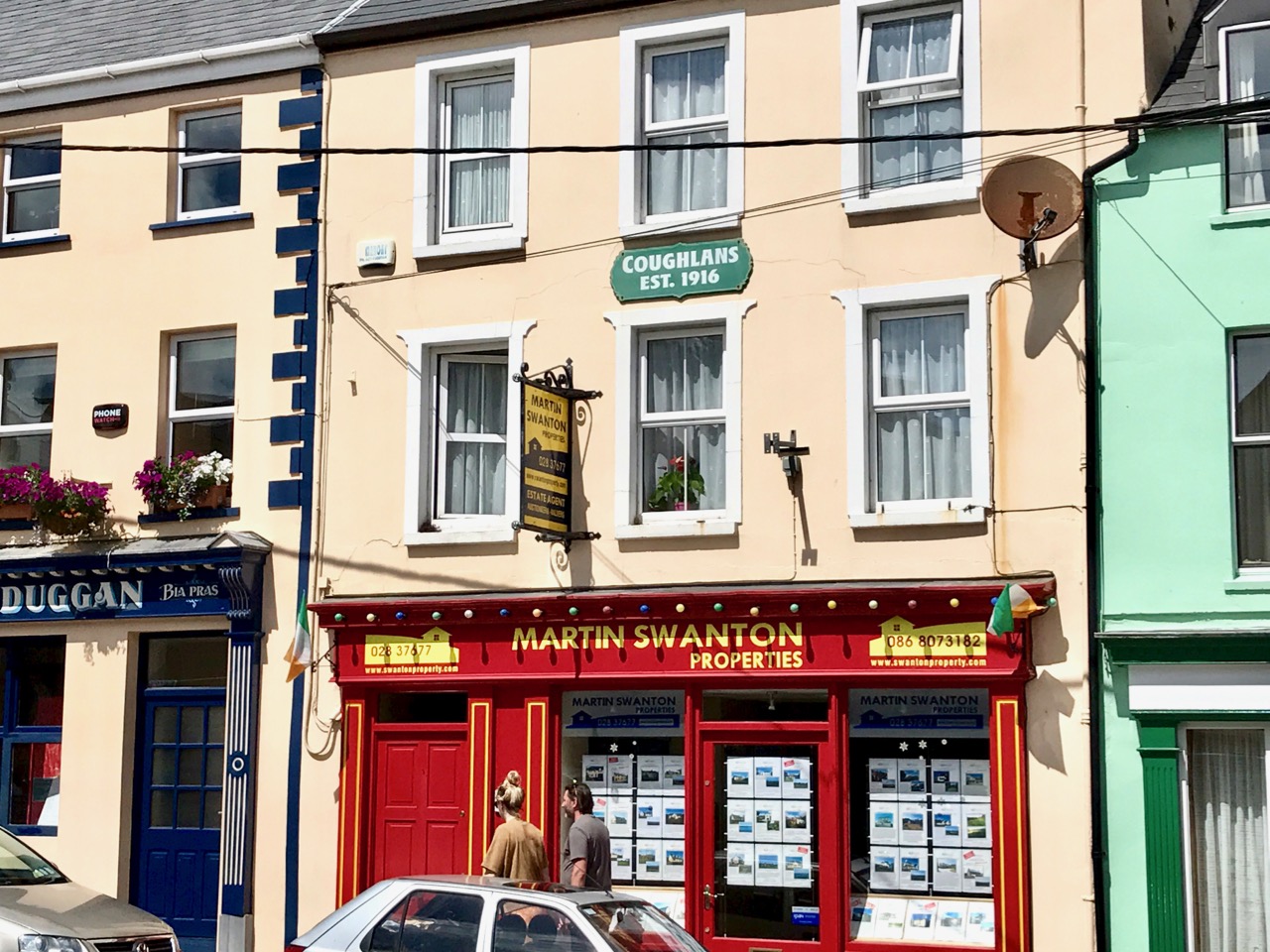
A powerful family named Swanton, from Norfolk in England, came and succeeded in subjecting much of the area to themselves and even changed the name of the village to “Swantons town”. The last use of this name was in the census of 1821.

As always the natives resisted the dominance of foreigners. In those days before police forces, a garrison of twelve British soldiers attempted to uphold and enforce the law and order in Ballydehob. Robert Swanton the leader of the Swanton group, who had quite a few questionable projects to his name, and had earned for himself the nickname ‘Black-hearted Bob’, enlisted the help of the garrison to take over Ballydehob for himself. A group of six local men, who were trained to arms, issued a challenge to the garrison and Black-hearted Bob and a pitched battle was fought at Staball Hill. The year was 1642…

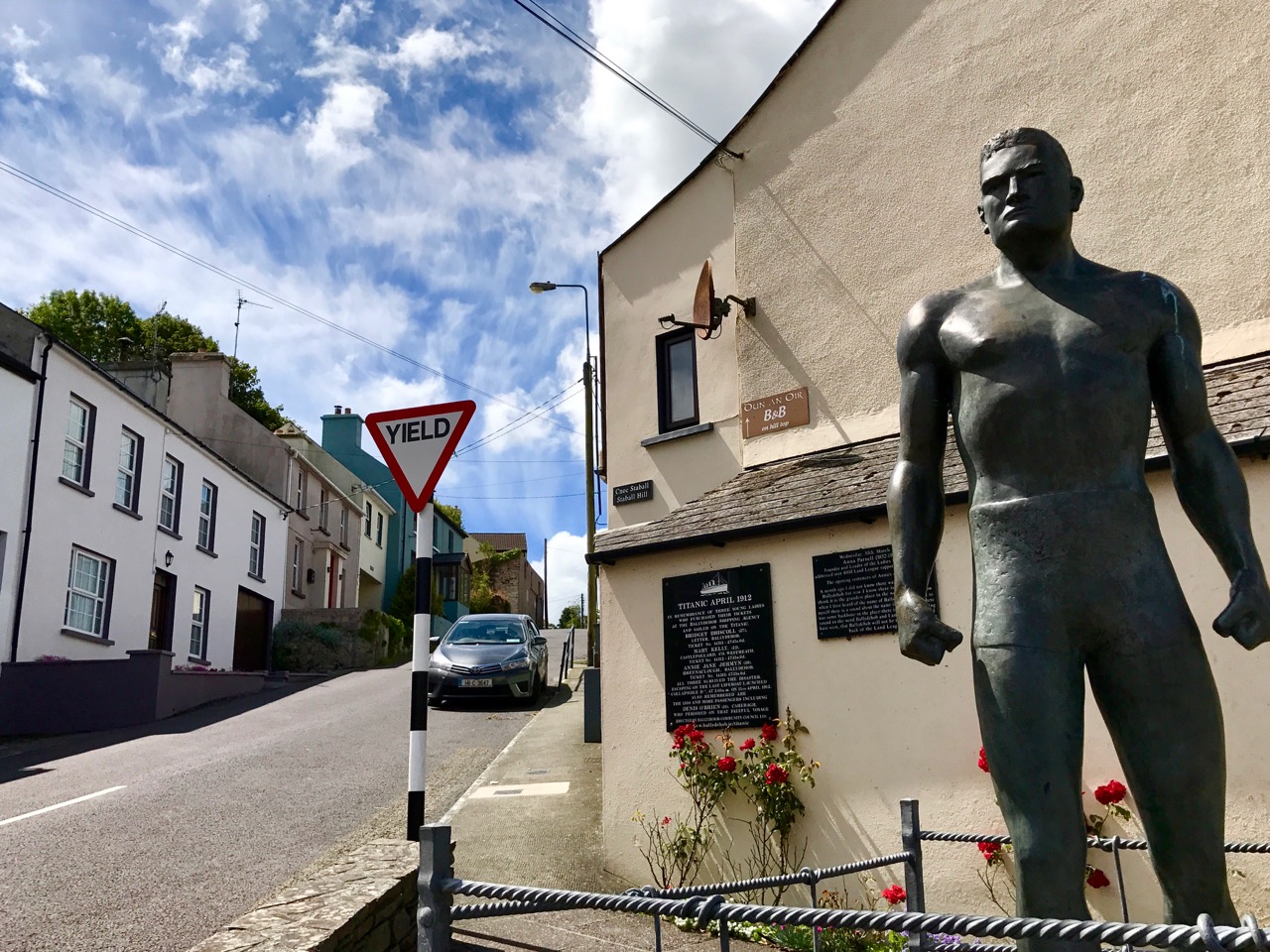
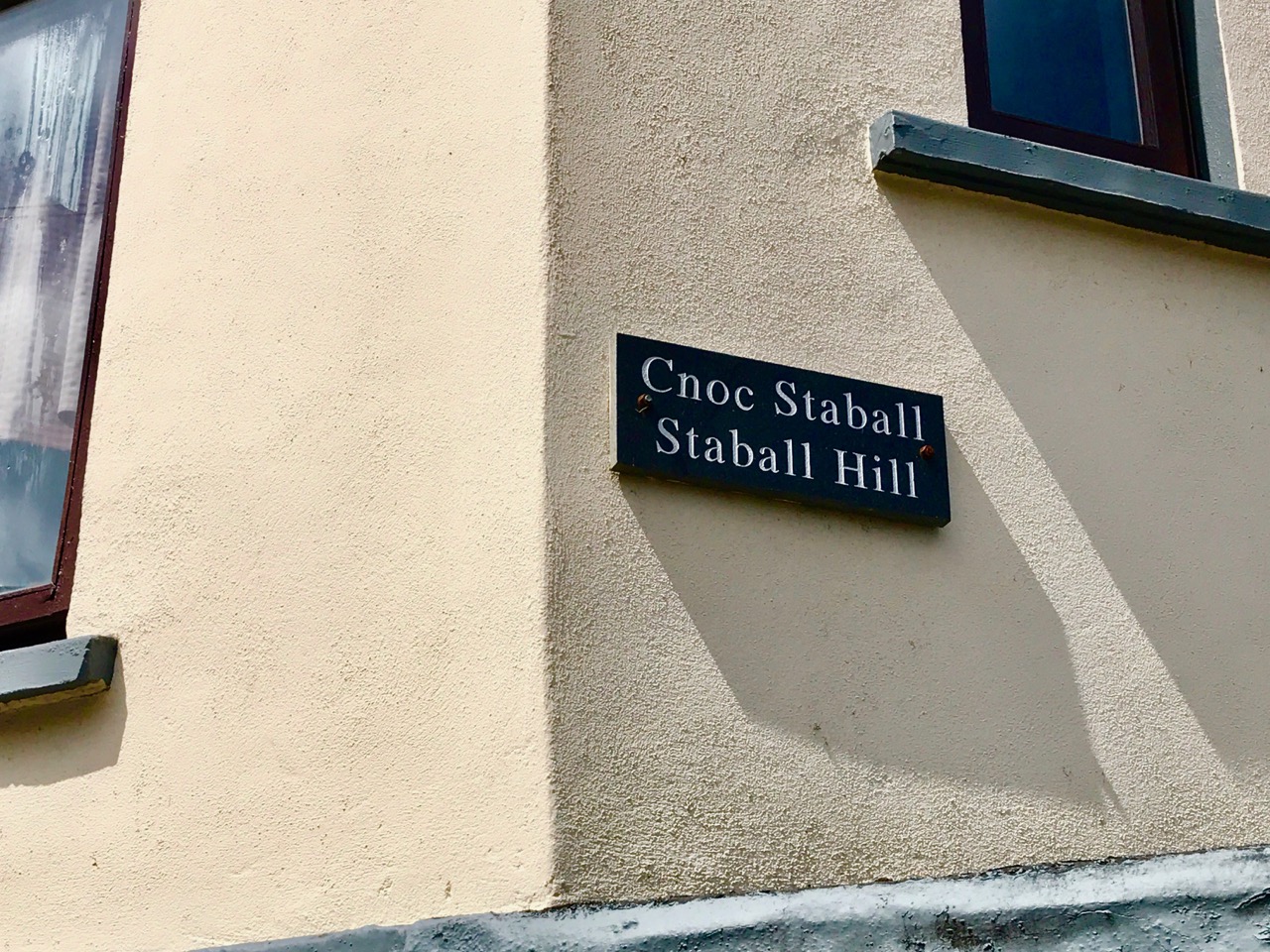
Top – looking towards Staball Hill, Ballydehob, on a peaceful summer Sunday afternoon; centre – Danno – wrestling Champion of the World (and son of Ballydehob) stands guard at the battle site; lower – Cnoc Staball – Staball Hill

There’s more from Noel:

In 1628, the first Huguenots appeared on the southwest coast, mainly in small boats, to escape detection from the French. They brought with them jewellery and other valuables which they traded with the Irish for plots of land. They were entrepreneurs and set up small industries.

One of their number Pierre Camier noticed the exploitation of the natives and took sides with the Irish defenders in the battle of Staball Hill. Black-hearted Bob took flight from the fray and Pierre Camier pursued him and caught up with him between the present St Bridget’s Church and the Garda station and there he attacked him and killed him. He came back to the fray and shouted “I’ve killed the yellow duck”.

Meanwhile the battle was going well for the Irish band. They killed all the garrison losing just one man of their own. The leader of the Irish band shouted “stab ‘em all” and it is alleged that this was how Staball Hill got its name. The term yellow duck is often applied to a coward in France and to this day the spot where ‘Black-hearted Bob’ was killed is known as ‘Lacha bhuí’ which is the gaelic for ‘yellow duck’…
You’d never know it, but this little patch of West Cork tranquility was the very spot where Black-hearted Bob Swanton met his bloody end, at the hands of Pierre Camier

After some searching I found another account of the battle, in From West Cork Through Time by Kieran McCarthy and Daniel Breen – Amberly Publishing, UK 2013:

…The seventeenth century saw the arrival of a number of settlers, mainly from England, but many were also Protestants (Huguenots) fleeing persecution in Catholic France. The Swantons from Norfolk emerged as the most prominent family in the area and, by the late eighteenth century, they had even changed the name of Ballydehob to Swanton’s Town. A garrison of twelve British soldiers attempted to uphold the law. Robert Swanton, the leader of the group, enlisted the help of the garrison to take over Ballydehob. A group of six local men, who were trained in arms, issued a challenge to the garrison and ‘Black-hearted Bob’, and a pitched battle was fought on Staball Hill. The year was 1642…

In rural Ireland history is never far below the surface. Here in Ballydehob there are still reminders of the Huguenot and English proponents in the ‘Yellow Duck’ affair

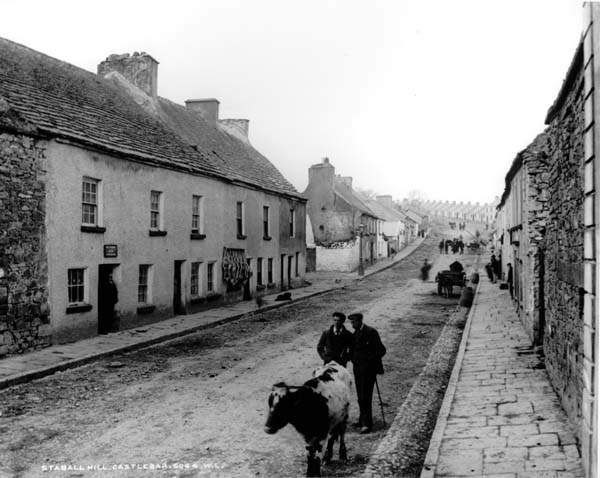
As a little addendum I can’t resist pointing out that there is a Staball Hill in Castlebar, County Mayo. It has a story, too:

According to folklore, Staball Hill got its name from the ‘Races of Castlebar’ during the Rebellion of 1798. General Humbert, with an army of 1000 French soldiers, landed at Killala and fought his way to Castlebar with the help of some Irish recruits where an army of British soldiers were waiting for him.  After the battle, the British contingent fled so fast that the episode became known as the ‘Races of Castlebar’ and is often described as one of the most ignominious defeats in British military history. During the battle a blockade was erected by the British in one last stand at Bridge Street.  As the Irish soldiers, armed only with pikes, charged the British the residents of the street are said to have shouted ‘Stab them all’. This was shortened to ‘Staball’.  On the Ordnance Survey Map c1900 the hill is called ‘Stab all’ – the words separated…

Staball Hill, Castlebar, County Mayo:

Danny

My best friend Danny passed away this week. He chose St Swithun’s Day to go – perhaps because there is a message in the saint’s story – and Danny was a goldmine for the stories. St Swithun – whose monastic community was in Winchester, Hampshire – died in 862. On his deathbed Swithun begged that he should be buried outside the north wall of his cathedral where pilgrims would pass over his grave and rain from the eaves would drop upon it. This was done, but a number of monks felt that this was too humble a place for their bishop, so they worked hard for a year and built a large and ornate mausoleum, decorated with gold and fine carvings. On the anniversary of his death – 15 July – preparations were made to move Swithun into it, but a mighty storm blew up. It lasted 40 days and everything was flooded for miles around. The stately tomb was washed away, and Swithun – as he wished – has enjoyed his simple and peaceful resting place ever since.

Danny loved his simple life tucked away in the hills of West Cork. I first met him in 1978, when he visited the folklore shop we had just opened in Devon, close by where he lived then. From that day our paths crossed frequently, and I came to know his wife Gillian and their five daughters. At that time Danny kept goats and made bodhrans from them – those are the circular framed drums that are frequently used to accompany Irish traditional music. Danny’s hand-crafted bodhrans were considered outstanding by players, and now examples of his instruments can be found across the world. This one is in my own collection:

For me, Danny was a fount of knowledge about Ireland, Irish life and Irish music and literature. I have probably also heard every story about his own travels, which seemed to start in his birthplace of Limerick and took him to most exotic places, finishing here in West Cork, with many stops along the way. It’s sad to think that his life here has passed, but I’m sure his soul soars over this lush and beautiful landscape – and will continue to do so forever. Goodbye, Danny – and safe home.


The House that Danny Built

We lost our friend Danny this week and we are all heartbroken.

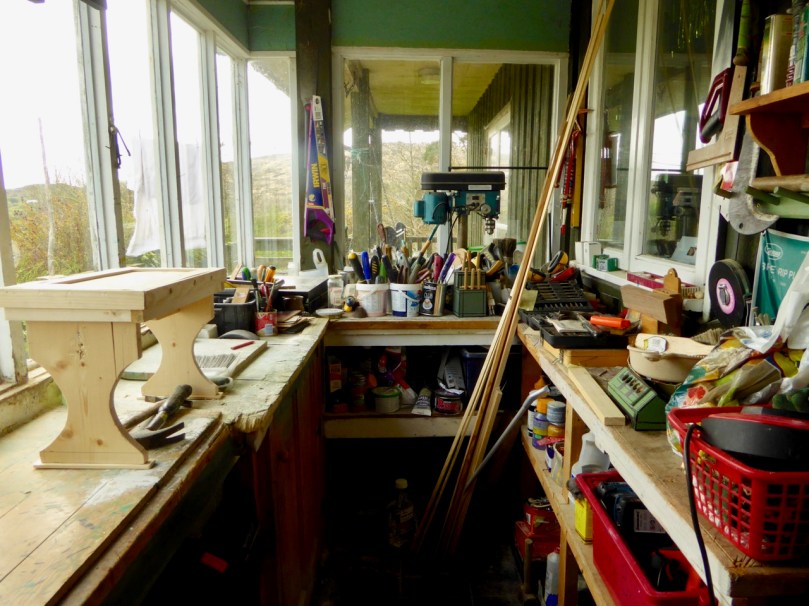
Robert designed his house but Danny built it in his own unique style. Going there was a delight because you couldn’t come away in a bad humour after an hour of stories and laughter, tea and reminiscences. Gill’s lively sense of the absurd mingled with snippets of poetry, stories of Danny’s time in English theatre companies, and classical music always playing in the background. He built himself a tiny sunny workshop and it was here we always found him when we arrived, sawing and drilling and painting. Tables, trays, boxes, chests, mirrors, frames, shelves and shoe racks – even a harp emerged from that cramped space, all painted his signature green and finished in Mondrian-inspired designs. And in between the tools were dotted the eclectic and quirky finds that captured his, or Gill’s, fancy, or works by one of their daughters or grandchildren.

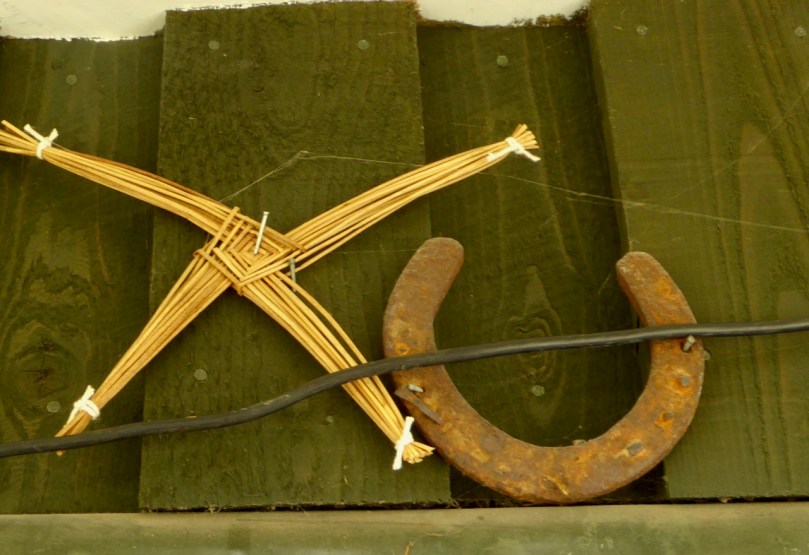
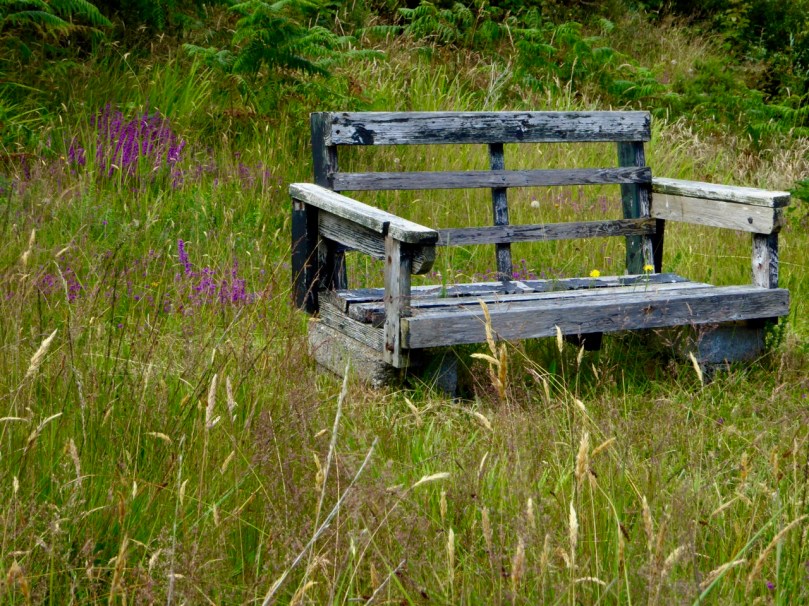
What follows is a photo-essay, an attempt to capture the bundle of creativity and idiosyncrasy, colour, humour and intelligence that was Danny, from images taken mainly in his workshop but also outside the house.

Rest in peace, old friend.

The Broken Stone

All the names in this story have been changed. However, it is a true account of how we came to lose one of our ancient monuments – at once a family and a national tragedy.

This is my drawing. It shows an excellent example of Irish rock art, a classic cup-and-ring design, deeply carved – a thing of beauty, antiquity and intrigue. I know it now as The Broken Stone.

The drawing was done in 1972, while I was recording all the known examples of rock art in Cork and Kerry, travelling on a Honda 50 with with my equipment in a backpack. The sun shone every day that summer. Everywhere I went I was received with kindness and friendship, nowhere more so than at the big farm house owned by Tim and Clair Flynn. The stone was in their garden, having been found in a bog a short distance away and brought to the house in Tim’s grandfather’s time.

Tim ran the farm, and Clair looked after everything else, including three small children. They were lovely people – they took me in, fed me, took a great interest in the research. I felt I had made friends. On a second visit I observed Clair giving two of the children antibiotics and asked why. She explained that two of the three, Niamh and Shane, although not the youngest, Ciara, had a genetic disorder called Cystic Fibrosis. I had never heard of it, and Clair explained that both parents had to carry the gene, that it primarily affected the lungs, and that it was eventually life-limiting. In fact, at that time, life expectancy for those with the disease was about 20.

Through 40 years, mostly spent in Canada and in arenas far removed from Irish archaeology, I never forgot the Flynns or their wonderful stone. It was a happy memory, coloured by the sadness of the inevitability of the progression of the children’s’ disease.

When Robert and I re-engaged with rock art again in the last few years, I knew that sooner or later we would work our way from Cork to Kerry and I would have an opportunity to go again to Flynn’s farmhouse. In anticipation of this, I went to the National Monuments record, to remind myself of the details. To my surprise, I found a record that stated: There are no visible remains of any cup-marked stone here. It was set between two rocks in a prominent position in the garden but was subsequently broken. Its present location is not known. This made no sense to me: a stone like that, which could not be mistaken for anything except an ancient and significant artefact, could not just disappear. Perhaps it was simply not located by the surveyors. Perhaps it had been moved for some logical reason – it was less than a metre long and it was moveable. If it had been ‘broken’ that would make it more moveable yet.

Then, recently, I met Alison McQueen, tasked with updating the rock art records, and asked her about the stone. Since it had disappeared, it was not on her list to visit, but it turned out that she herself had visited the Flynns years before, although her interest was not in the rock art, but in the trough that was also located on the yard. It was a medieval basin that had been brought, over a hundred years before, from Mount Brandon to be presented to Tim’s Great-Grandfather in recognition for his political work and his support for causes such as Catholic Emancipation and land reform. Alison was able to tell me that the Flynns, ageing, and with Tim no longer able to farm, had sold the house and moved a short distance away, taking the trough with them. Of course! They must have taken the stone too, I realised, and that’s where I would find it.

And so, on a recent trip to Kerry, we travelled to the farm. There was nobody home (and a quick snoop around the garden confirmed there was no stone) so we knocked on a neighbour’s door and were kindly directed to the new house, where we were told, Tim and Clair’s daughter-in-law lived, who would be able to help us.

This is how we met Ciara, the surviving member of the Flynn family, and came to hear the story of the stone. Ciara just happened to be there, that day, spending time with her brother’s children. Her brother, Shane, despite all the health challenges he faced, had defied all predictions and only passed away last year. He was, by her accounts, an adventurous and determined man who lived every moment to the fullest and fought the good fight as long as he could, including undergoing a double-lung transplant. He worked and travelled and married – his two children were bright and curious and charming. His widow was not there when we called.

It has taken Ciara a long time to come to terms with the story of the stone – many many years – but she finally felt ready to tell it. She loved it as a child. She and her brother and sister didn’t know how old it was exactly, or anything about rock art, but they made it the centre of many imaginative games, as children the world over do with special features in their surroundings.

As an adult Ciara moved away in the course of her work. During this time, her sister, Niamh, became a staunch member of a Christian Fellowship church. Gradually, Niamh became convinced that the stone represented something evil. It worked on her mind until she was certain that blood sacrifices had been performed there in pagan rituals, and that it continued to exert some kind of malign influence, and in this she was supported by her church. She determined that it must be destroyed. Her parents were aghast, and refused to countenance this plan. However, by this time, Tim was ill and unable to participate in any real decision-making. Niamh launched a campaign to convince her mother. It was relentless and highly charged and Clair, in desperation, finally gave in.

A neighbour with a large digger agreed to destroy the stone. When I asked Ciara if anything was left, she said, she had never been able to find any remains and had been told by her family that it had been ‘reduced to dust.’

When Ciara returned from a term in Belfast shortly thereafter to discover what had happened, she was heartbroken: so distraught, in fact, that it caused a rift with her family for a time. Over the next few years, however, loss piled upon loss, as she lost her parents, her sister, and finally her brother. (In a typically Irish twist to the story, the neighbour who had crushed the stone was himself killed in an accident.)

In the face of grief the issue of the stone receded to the background but was never forgotten. Ciara has brooded over it in the intervening years and when we knocked on the door that morning, she decided she was finally ready to let go of the secret of what had really happened to the stone. I applaud her grace and courage, and I have immense sympathy for the Flynn family and the difficult path they have travelled.

As far as I know, this drawing is the only record we have of The Broken Stone. One of the questions we face as we study rock art is – Is it safe? The answer is complicated: while most of it has enjoyed a measure of protection due to its remote location and relative anonymity, there are many real threats that can negatively impact on rock art in the field, from weather to overgrowth, land clearance, forestry and outright vandalism. But I could never have written a script like this, or predicted that a fundamentalist form of Christian belief would be responsible for the destruction of a beautiful and iconic piece of rock art.

For more on the topic of Irish Rock Art, see our Navigation Page, Section C2