Brendan in Bronze

Do you know the story of St Brendan? He – ‘The Navigator’ – went to North America long before Columbus. Nearly a thousand years before, in fact: Brendan was born in the fifth century. The story of his voyage, and his remarkable adventures with his fellow monks, has inspired art, music and song ever since then. Here’s the beginning of Christy Moore’s version:

A boat sailed out of Brandon in the year of 501
’twas a damp and dirty mornin’ Brendan’s voyage it began.
Tired of thinnin’ turnips and cuttin’ curley kale
When he got back from the creamery he hoisted up the sail.
He ploughed a lonely furrow to the north, south, east and west
Of all the navigators, St Brendan was the best . . .
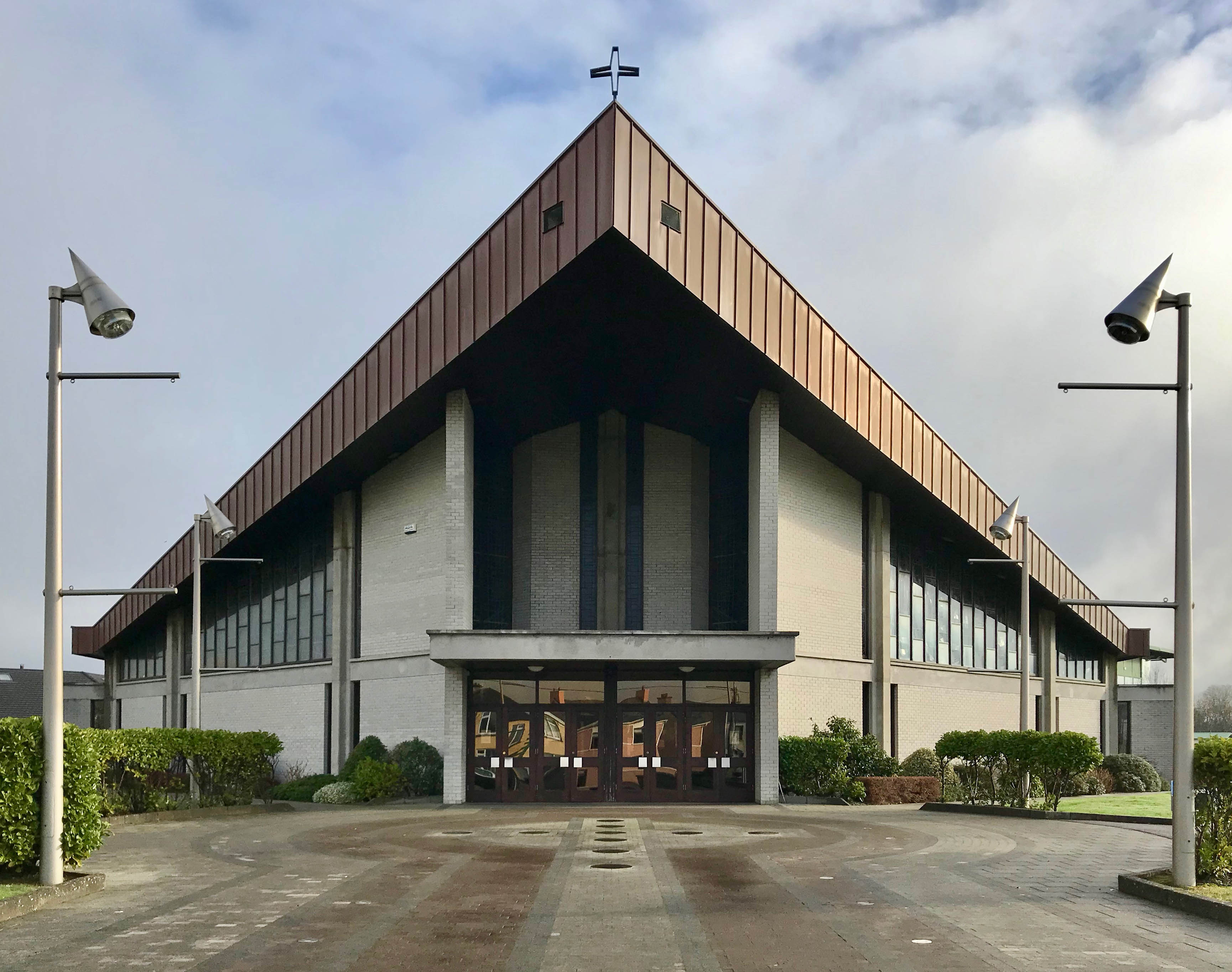
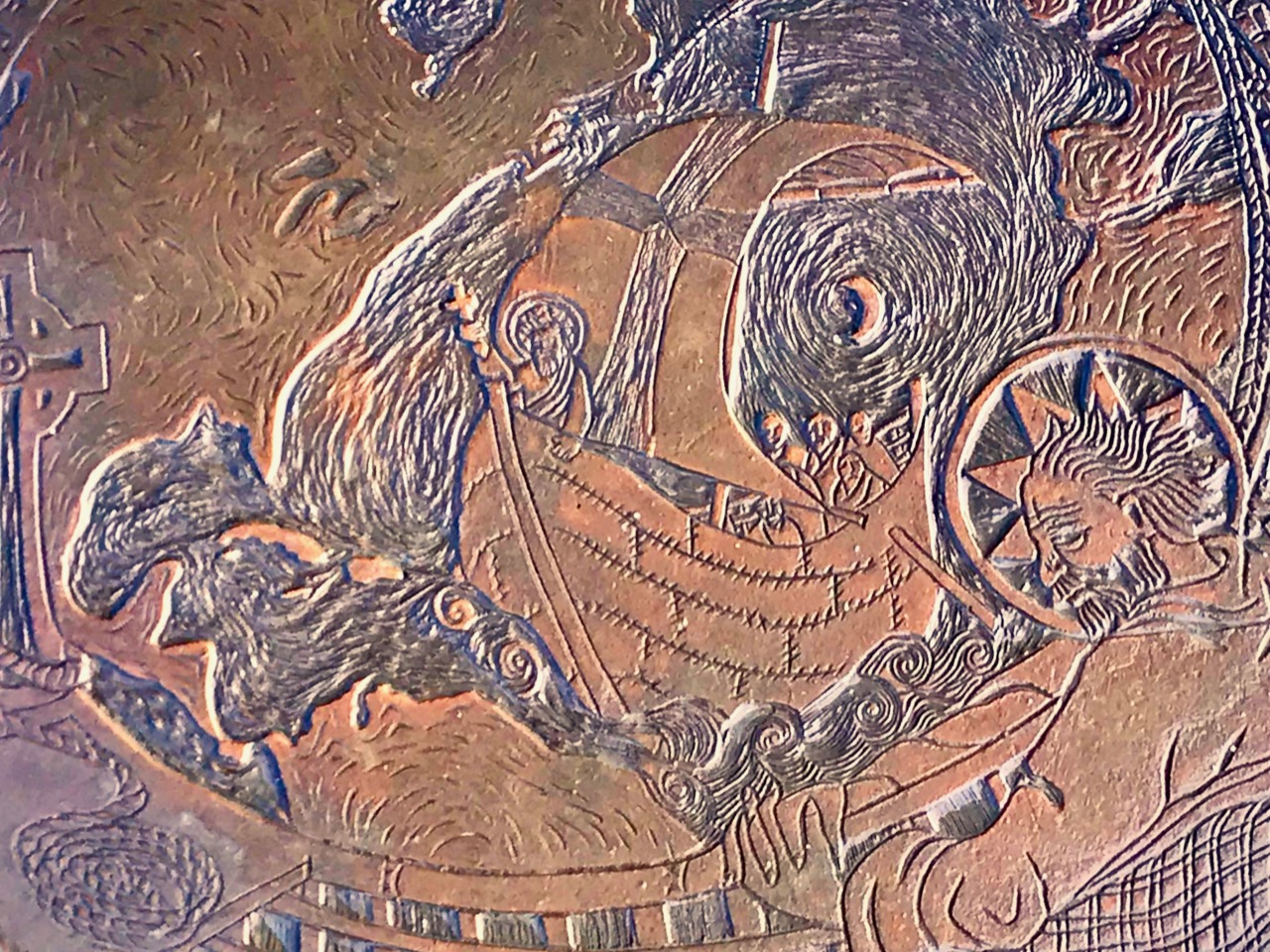
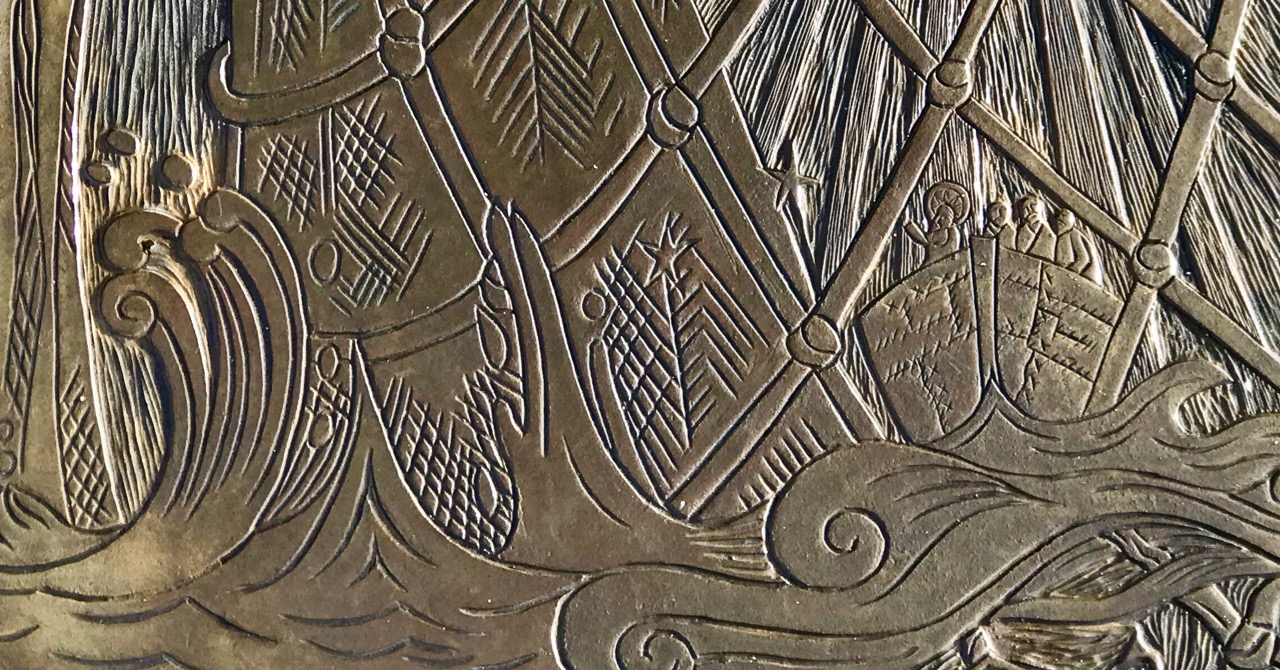
We went to Tralee, Co Kerry, to visit the Church of Our Lady and St Brendan: Finola was looking for windows by Murphy Devitt (which are spectacular) and I chanced upon a set of bronze roundels laid into the paving leading up to the main entrance (above). I felt I had to record them here, as they illustrate and tell the whole story of the Saint so wonderfully well. The large medallions were designed and made by Eithne Ring and Liam Lavery, and were installed in 2010. As far as I know this is a unique record of the voyage: well worth a visit – but don’t miss the windows!
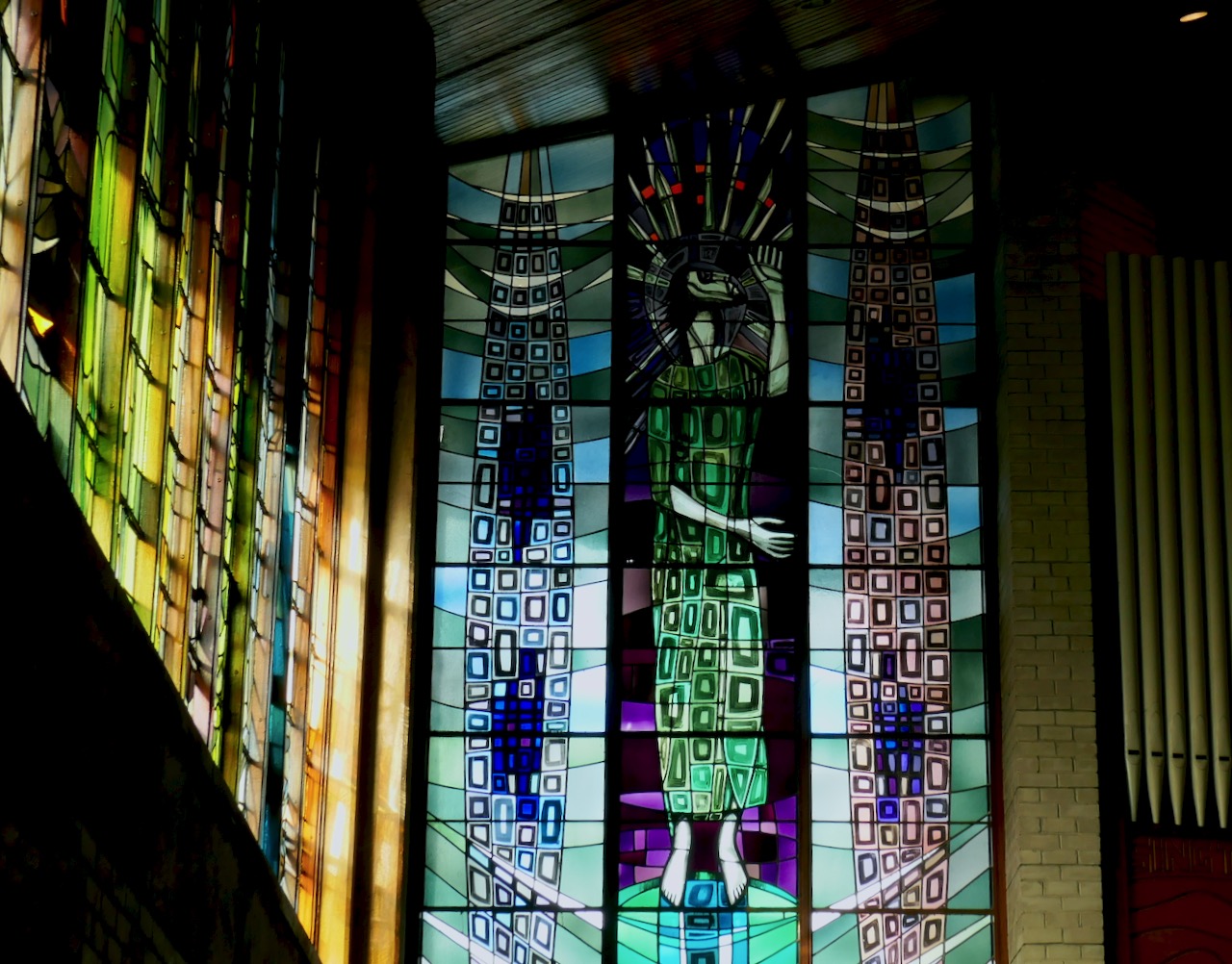
St Brendan: part of a huge stained glass installation by Murphy Devitt in this Kerry church

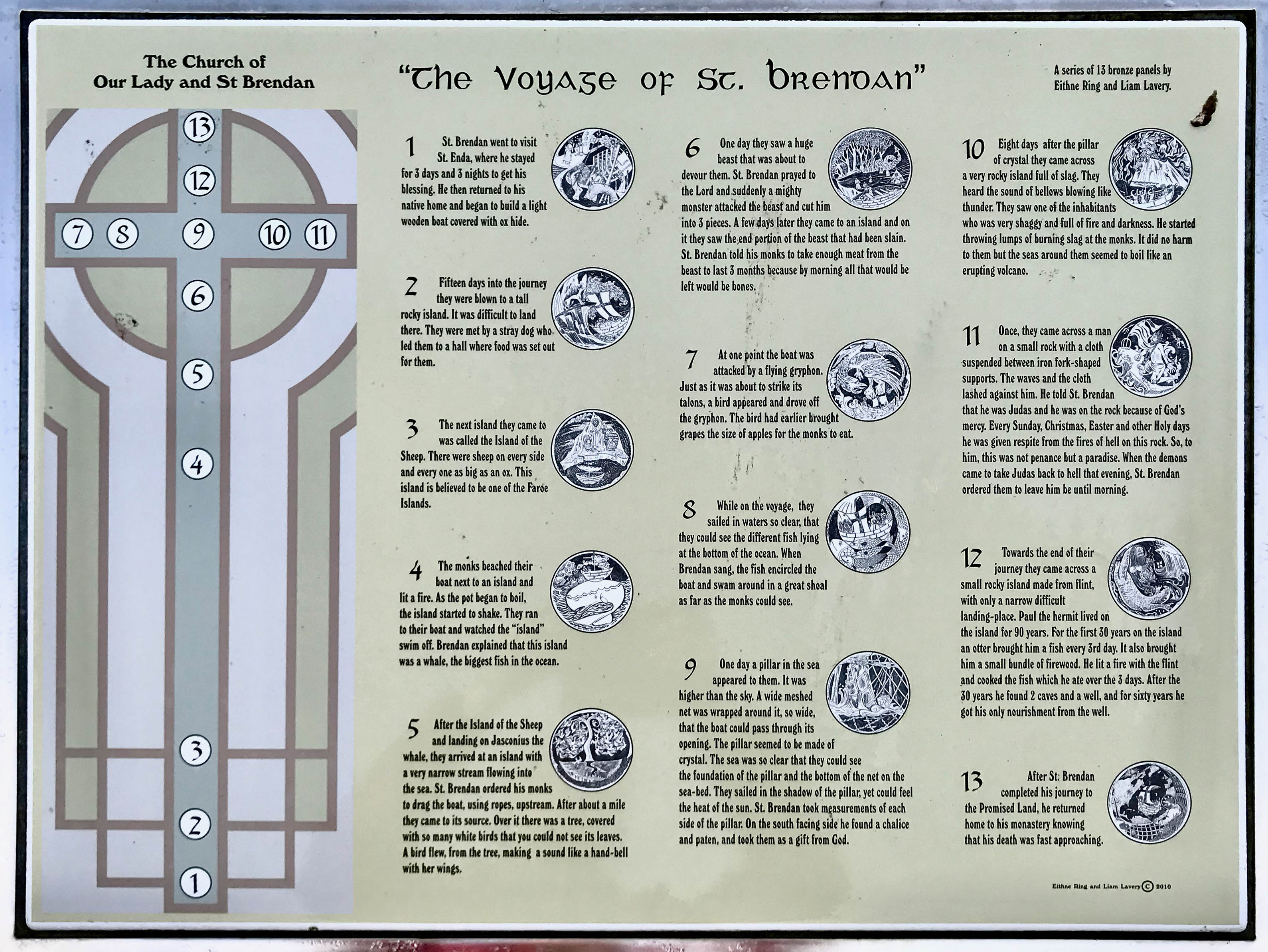
I’m showing the roundels in the order in which you encounter them as you approach the main doors to the church, and giving a very brief description of the subject of each. At the end you will find a commentary provided by the designers, which gives more detail.
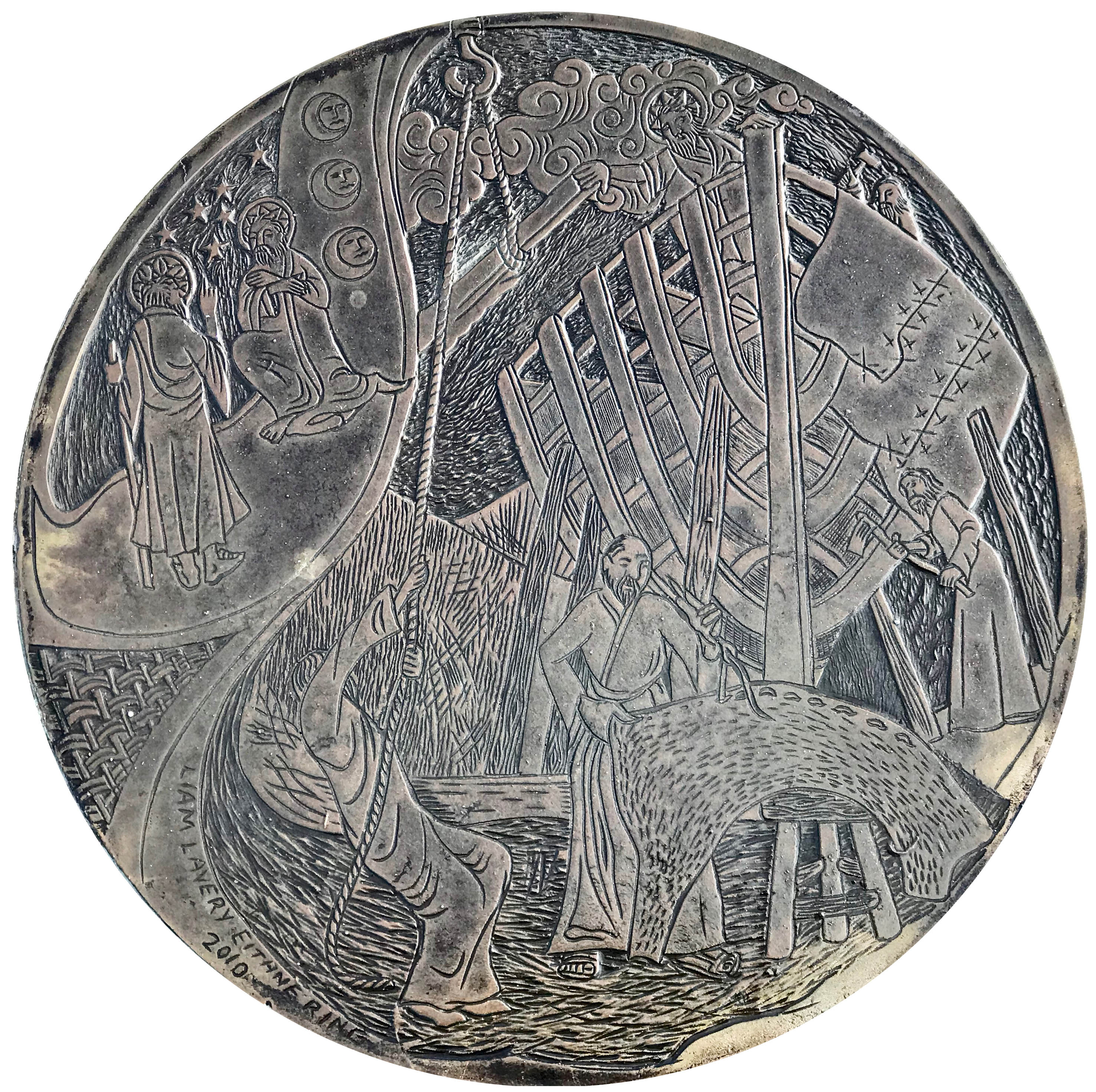
1 St Brendan visits St Enda prior to building his boat
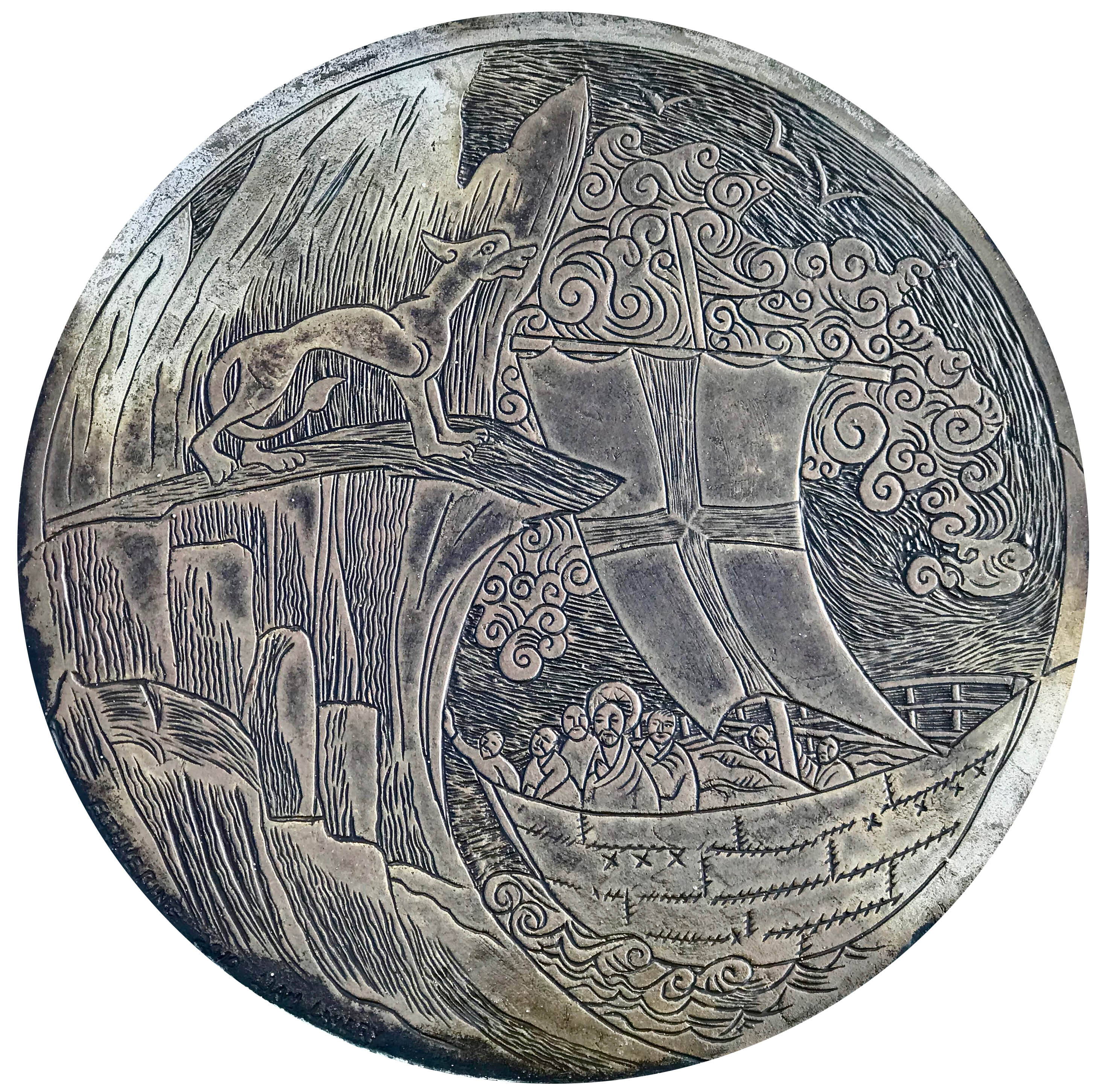
2 On a rocky island, Brendan’s crew are led by a hound to a miraculous hall of food
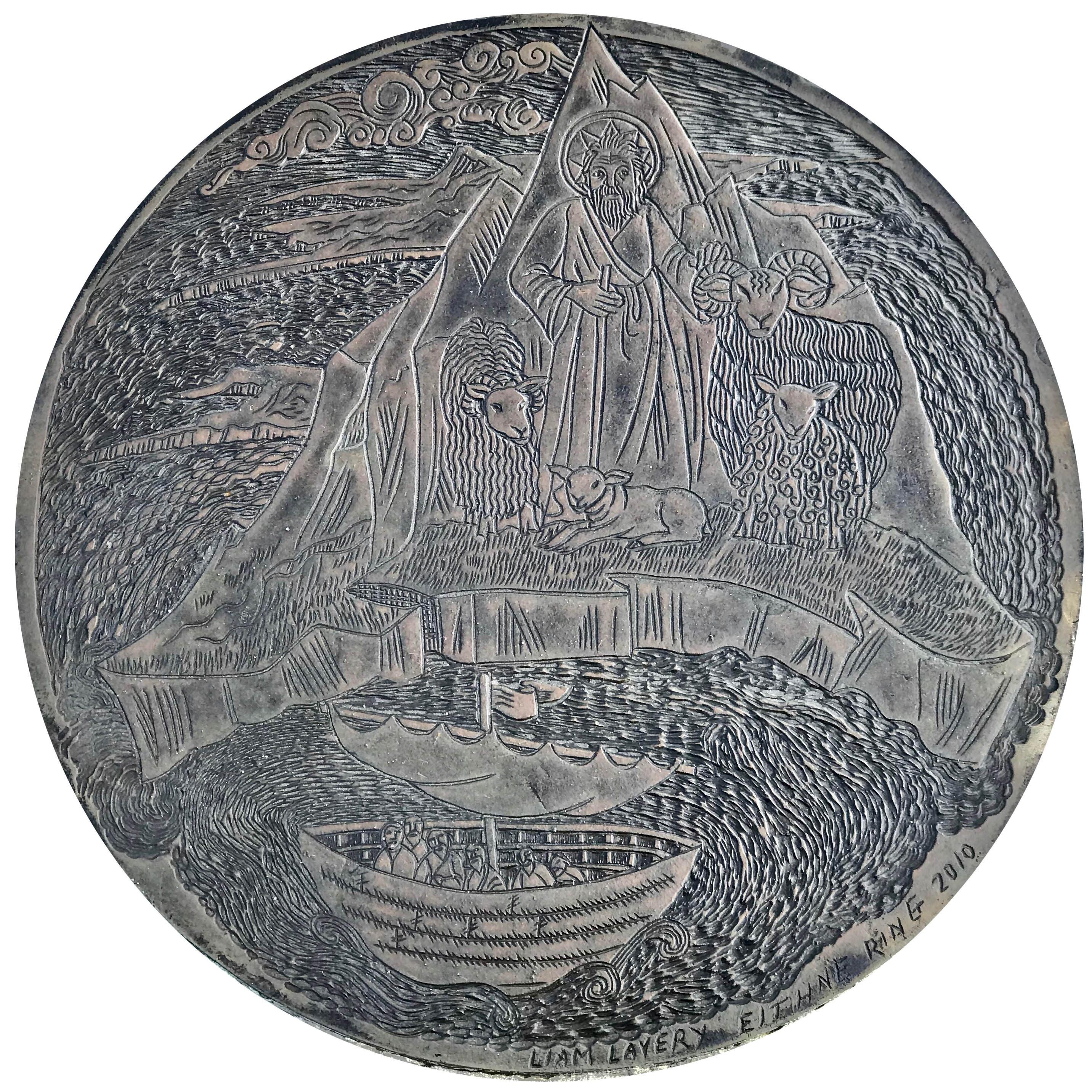
3 The monks find an island inhabited by giant sheep

4 Brendan and his companions land on an island, light a fire and celebrate Mass; they discover that they are on the back of a whale!
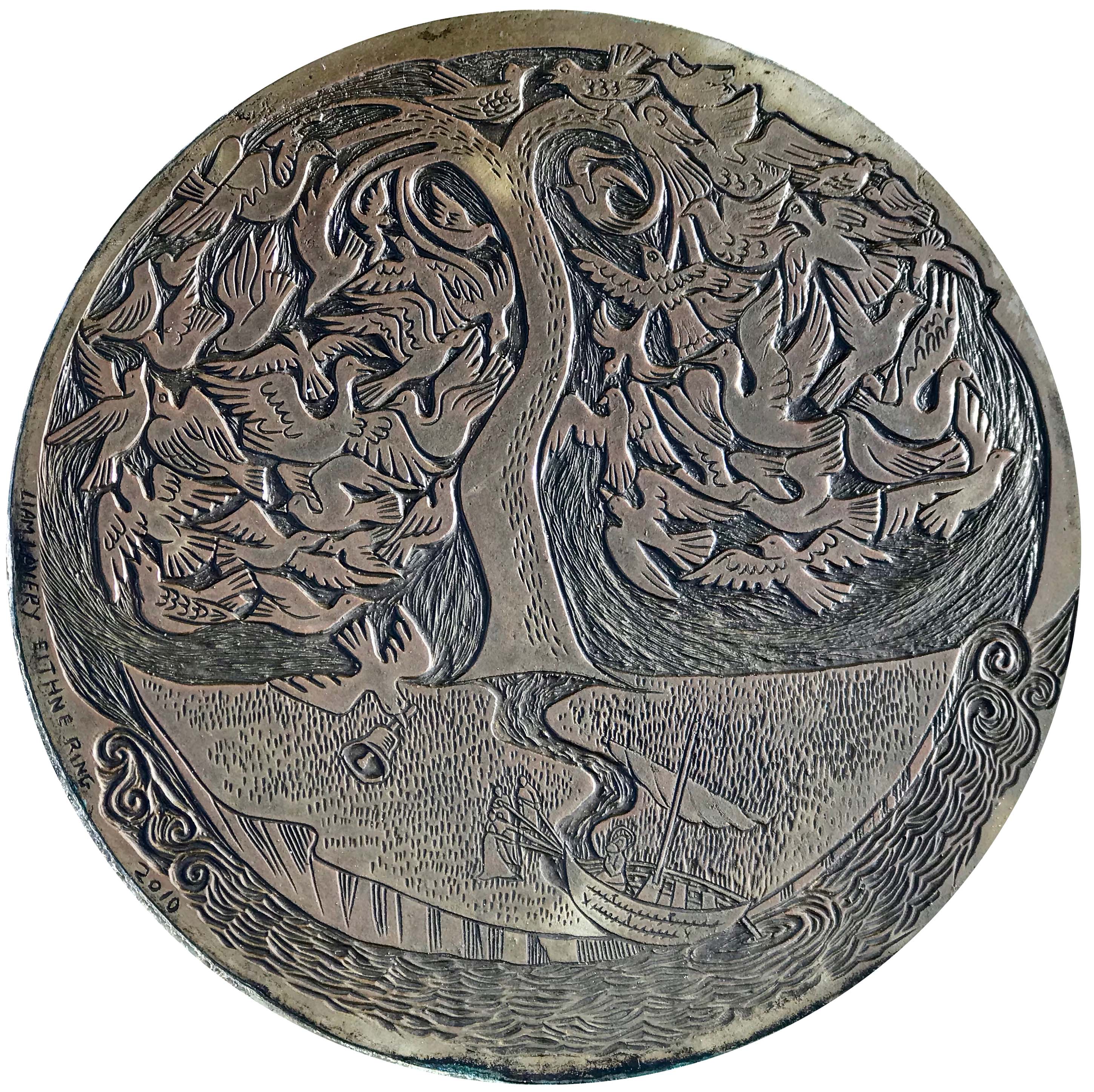
5 An island of white birds: one is ringing a bell

6 The monks take meat from a beast that has been slain by a monster
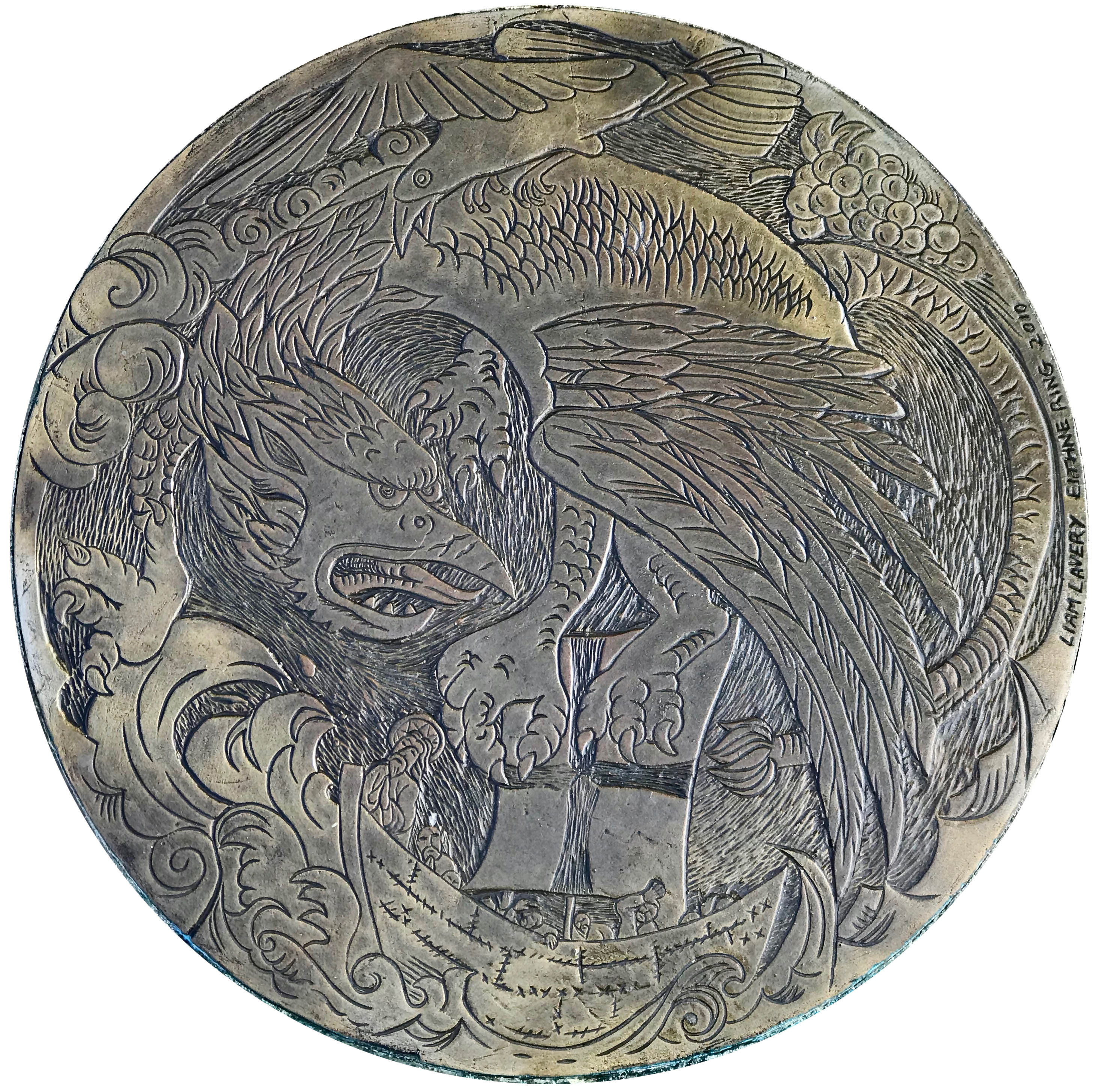
7 On the Island of Grapes the monks witness a battle between a gryphon and a bird: the bird is victorious

8 All the fish in the ocean come to listen to Brendan while he sings
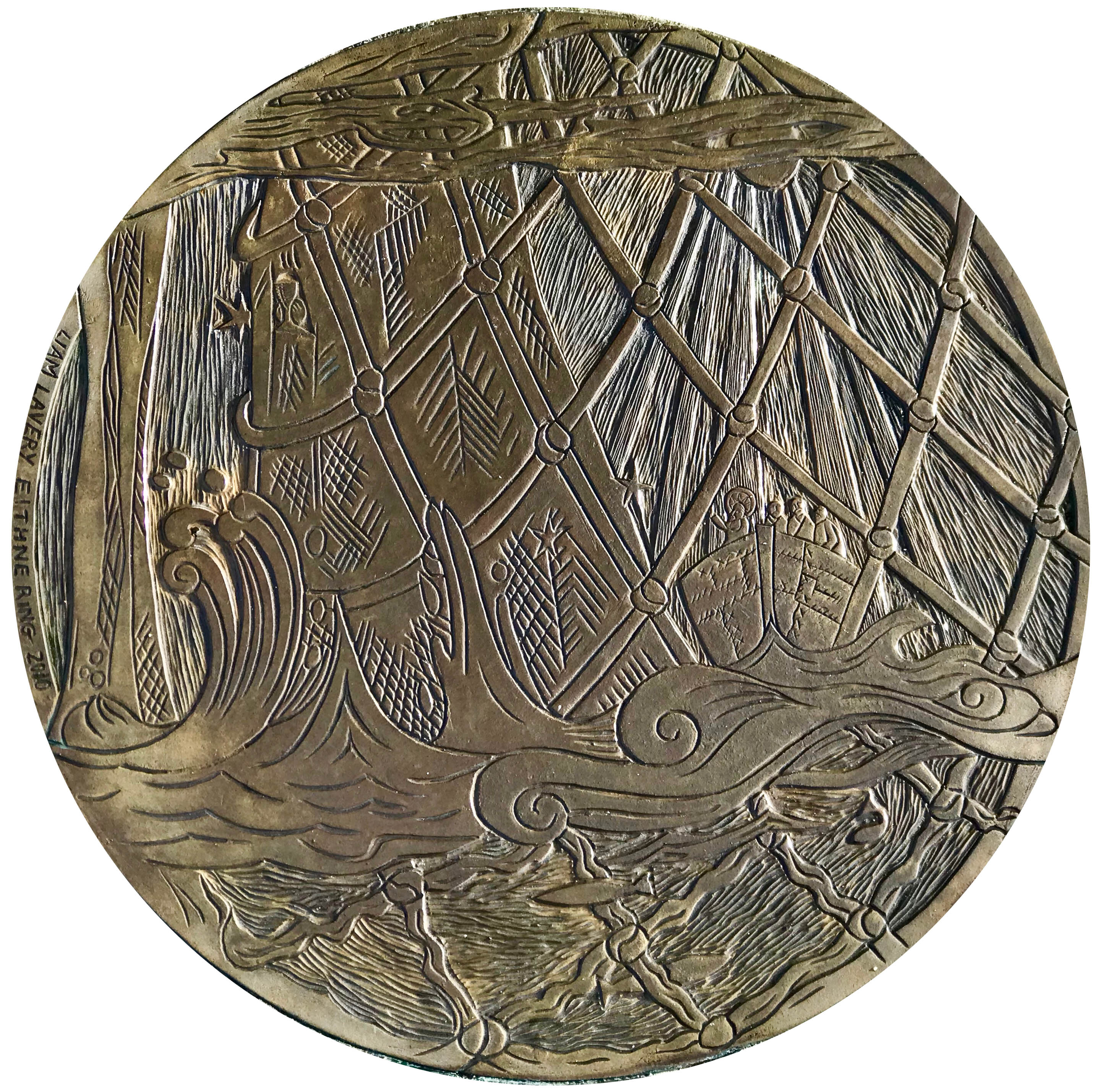
9 Brendan finds a huge crystal pillar rising out of the sea

10 The sea is boiling like an erupting volcano
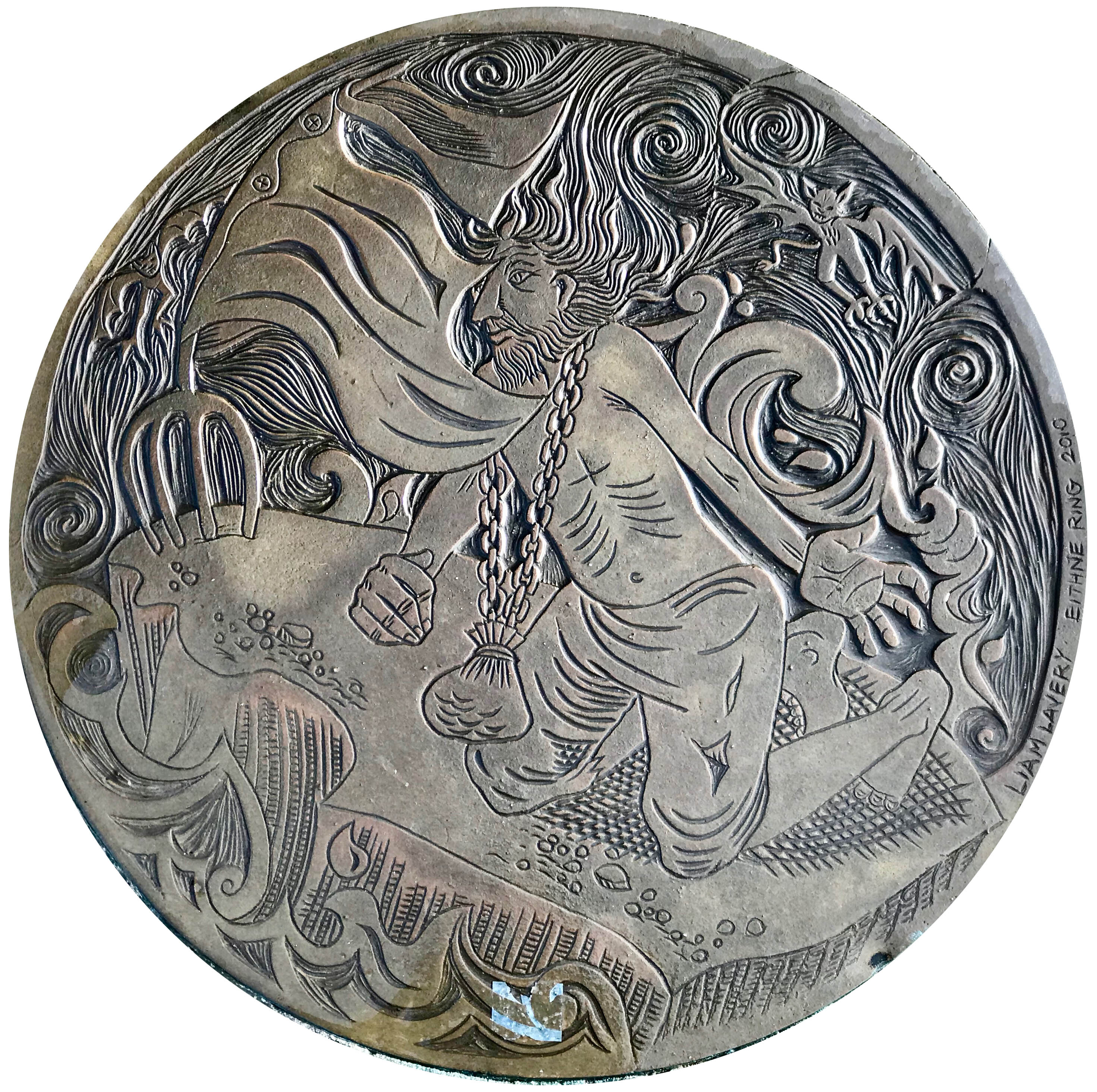
11 Brendan and his companions meet the unhappy Judas chained to a rocky island

12 The travellers find a hermit who has been fed by an otter for forty years
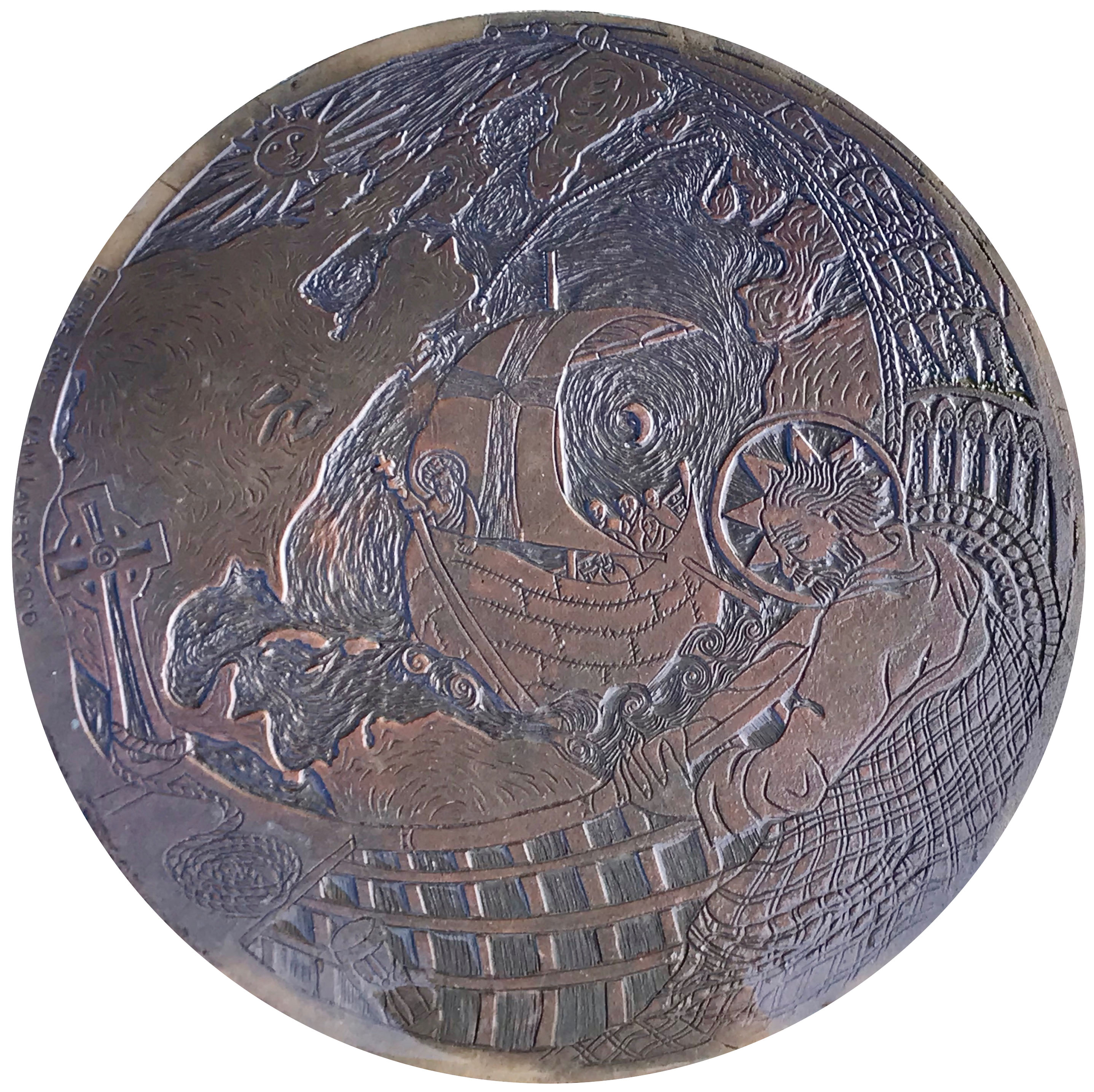
13 Brendan returns to Ireland to prepare for his death
So now you know the bones of Brendan’s story. Now listen to the music! Saun Davey’s Brendan Voyage, a suite for uillinn pipes and orchestra, is a masterpiece inspired partly by the Saint himself, but also by Tim Severin’s 1976/77 recreation of the journey across the Atlantic in a leather clad boat:
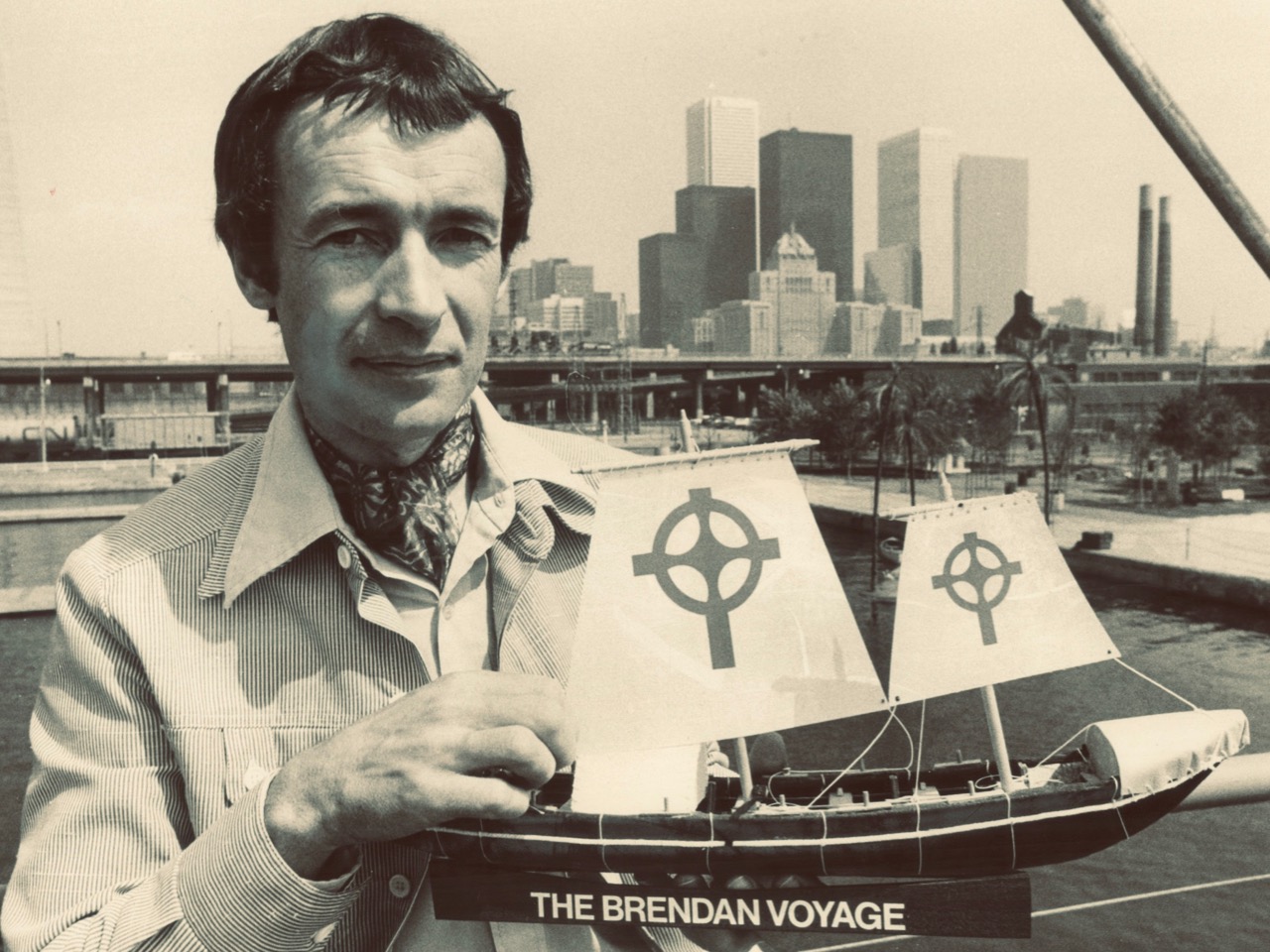
Tim Severin pictured with a model of the boat in which he recreated the Saint’s journey

Let’s give the last words to Christy Moore, and the chorus of his Brendan song (you can find all the lyrics here):

“Is it right or left for Gibraltar?”
“What tack do I take for Mizen Head?”
“I’d love to settle down near Ventry Harbour”,
St Brendan to his albatross he said . . .
Imbolc – How Our Ancestors Welcomed Spring

February 1 – we celebrate it as St Brigid’s day now, and support the call for making it a national holiday. But we have celebrated it in Ireland forever as Imbolc, the calendar marker that heralds the arrival of spring.

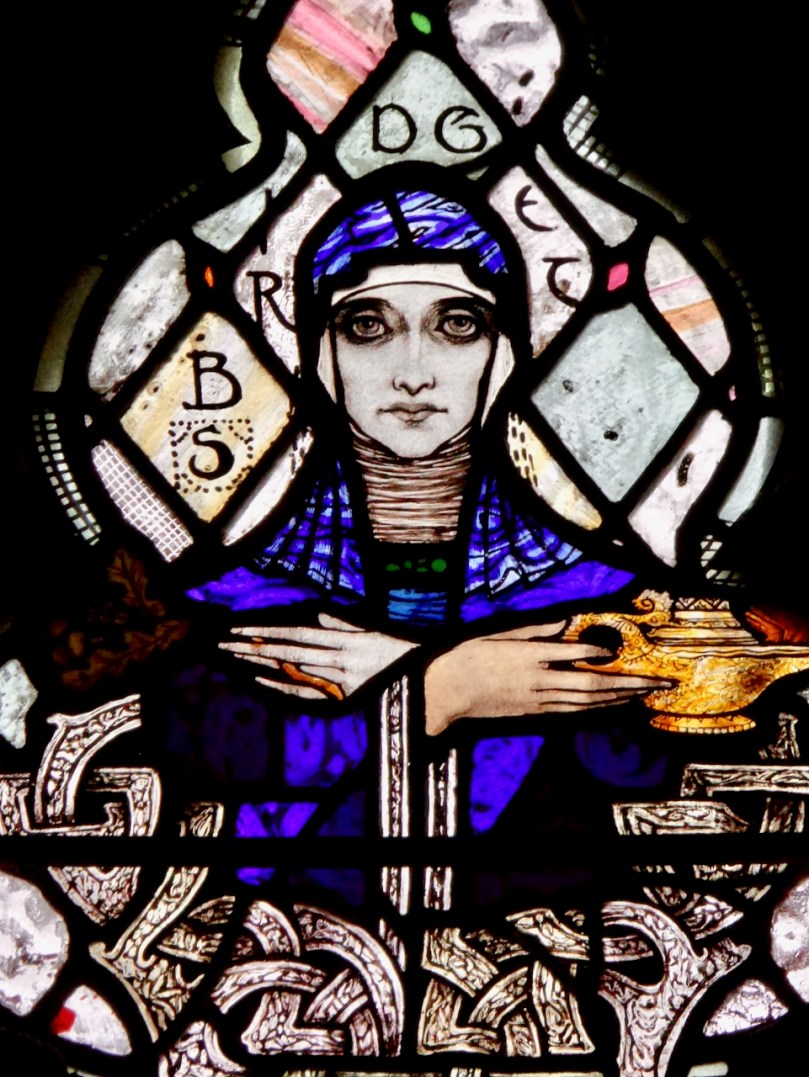
St Brigid by Harry Clarke in St Barrahane’s Church, Castletownshend

What follows was originally a Joint Post by Finola and Robert, written way back in 2013. We have edited it to update the links and added some new photographs and are republishing it now.

Archaeologists have long been aware of the astronomical siting of some Irish megalithic sites, such as at Newgrange, and Loughcrew Passage Graves in Co Meath and Drombeg Stone Circle in West Cork.

Inside Cairn T at Loughcrew

We have become intrigued by the work of Michael Wilson, a talented amateur astronomer who is singlehandedly documenting the astronomical siting of many monuments in this area. Recently he has turned his attention to prehistoric rock art. Mike’s website contains an astonishing body of work, meticulously researched and rigorously recorded, along with explanatory notes.

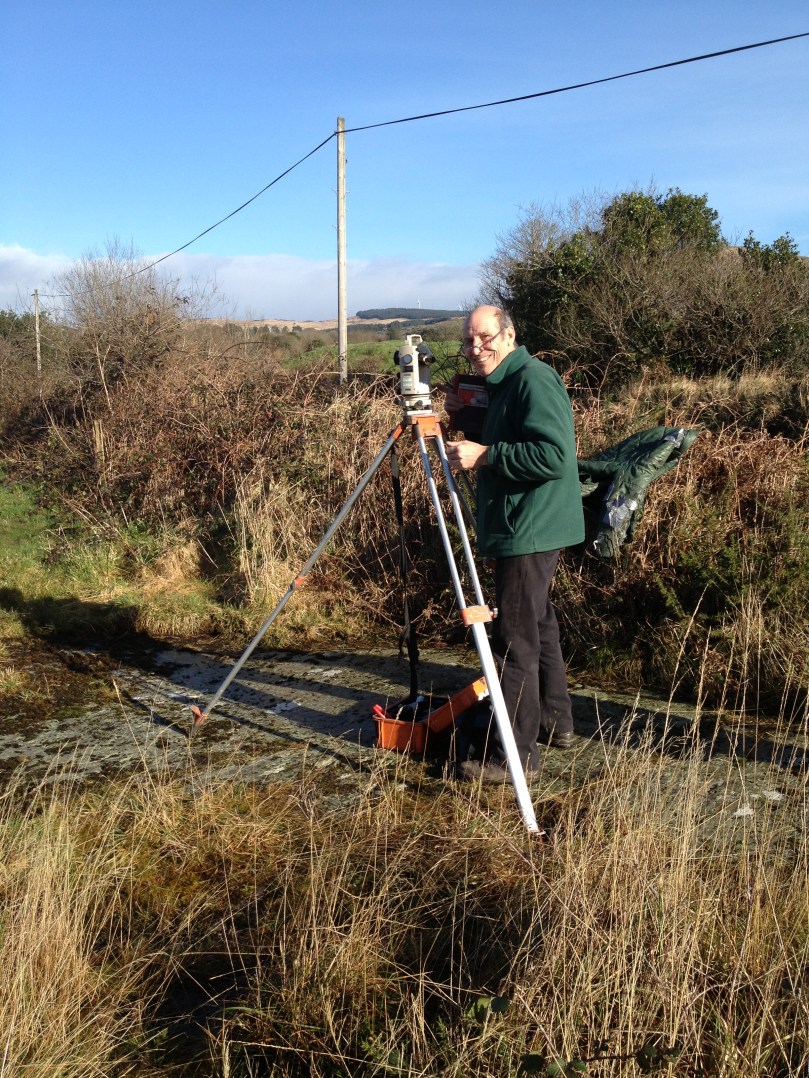
Michael Wilson and his Whole Horizon Analytical Technique (WHAT)

Michael Wilson carries out his Whole Horizon Analytical Technique (WHAT)

His thesis, in a nutshell, is that the builders and carvers of Neolithic and Bronze Age times were keen observers of the day and night skies and were intimately familiar with their surroundings. They situated their megaliths and rock art in places where the contours of the horizon allowed them to mark significant solar and lunar events, such as solstices, equinoxes, lunar settings and risings, and intermediate points. Thus, the sun at the winter solstice might rise at the highest point on a nearby mountain, or set in a deep notch in the hills at the spring equinox.

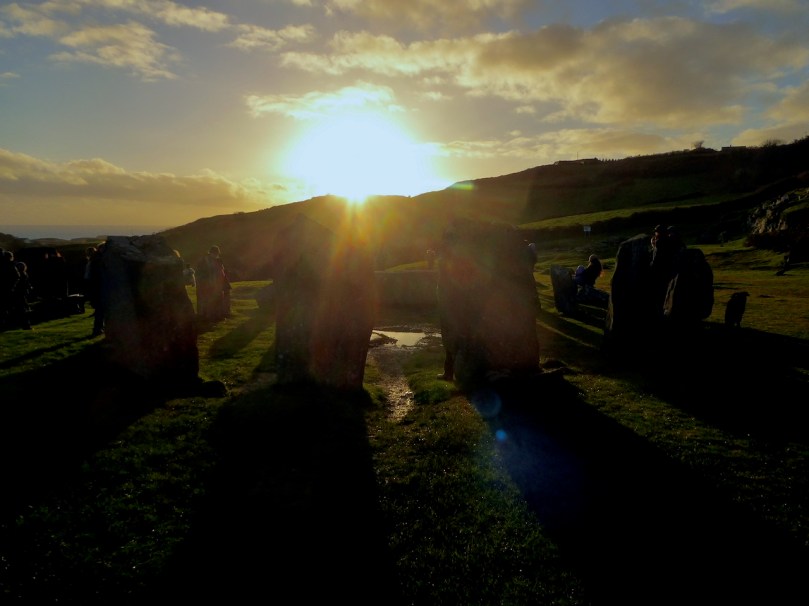
At Drombeg Stone Circle people gather on the winter solstice to watch the sun set over the recumbent stone

The solar calendar has four quarter days (the solstices and the equinoxes), four cross-quarter days (the half way points between the solstices and the equinoxes) and a further finer division into points half-way between the quarters and cross-quarters: an ancient 16 month calendar.

A few days ago [in 2013], Michael posted this:

Imbolc, the spring cross-quarter, is almost upon us. It will be on Feb 1st by the Gregorian calendar, where it is commonly known as St Bridget’s Day or Candlemas, but this is not the correct day. By day-count, the times to celebrate will be sunset on the 3rd and sunrise on the 4th. Astronomically, the sun will be exactly half-way between the winter solstice and the spring equinox at about 16:13 GMT on Feb 3rd, while Feb 2nd is the day to see the sun rise and set at the prehistoric positions for marking this festival.

We set out for our favourite rock art site, Ballybane West, before dawn on Feb 2nd, feeling incredibly lucky to have a clear sky. As the sky brightened, and the nearby hills started to receive the sun’s rays, the carvings on the rock surface became clearly visible.

The sun is already hitting the high ground across the valley

Then, the sun rose, exactly where Michael’s predictions said it would, at the highest point of a rounded hill on the horizon. As people had been doing 4000 years ago in this exact spot, we marked the cross-quarter day of Imbolc – a time when the land starts to warm up, the first spring flowers appear, and the ewes are visibly pregnant.

The carvings light up in the dawn rays

The slanting rays of the rising sun provide perfect lighting for seeing rock art, which is often difficult to observe at other times

If Michael is correct, we have to incorporate a new possibility into our thinking about rock art. There have been indications before that the location of the carved rocks was significant. For example, there is often a view of water or of a significant mountain, some theorists have posited that they are ancient boundary markers, and some rock art sites are inter-visible with each other.

But this way of looking at rock art elevates the actual siting of the rock as most important, and allows us to view the carvings themselves as a way to indicate the purpose of the site – a means to an end rather than an end in itself. The motifs, though, will probably remain as enigmatic as ever.