
Every graveyard we go into has fine example of the blacksmith’s craft – wrought iron grave markers. Ranging from simple to decorative, they are a part of our heritage that is often overlooked and forgotten.

Wrought iron was once a common material in Ireland – there were huge production facilities in Clare, for example. What is it? It’s iron made by smelting iron ore and hammering out the impurities, with little or no carbon content. How it’s produced hasn’t changed much since the start of the Iron Age 2500 years ago. But it’s no longer available as a material, having been completely replaced by steel (carbon content up to 2%) and by cast iron (carbon content of up to 4.5%). This means we are in danger of losing all the knowledge about how to work with it, since it can only be worked using traditional forge techniques.

Graves in burial grounds in the past in West Cork were mostly marked with crude stone slabs as headstones (and sometimes footstones) and the vast majority were un-inscribed. They were carefully chosen, though, and the memory of who was buried there, and the shape and placement of the markers, would pass down through families.
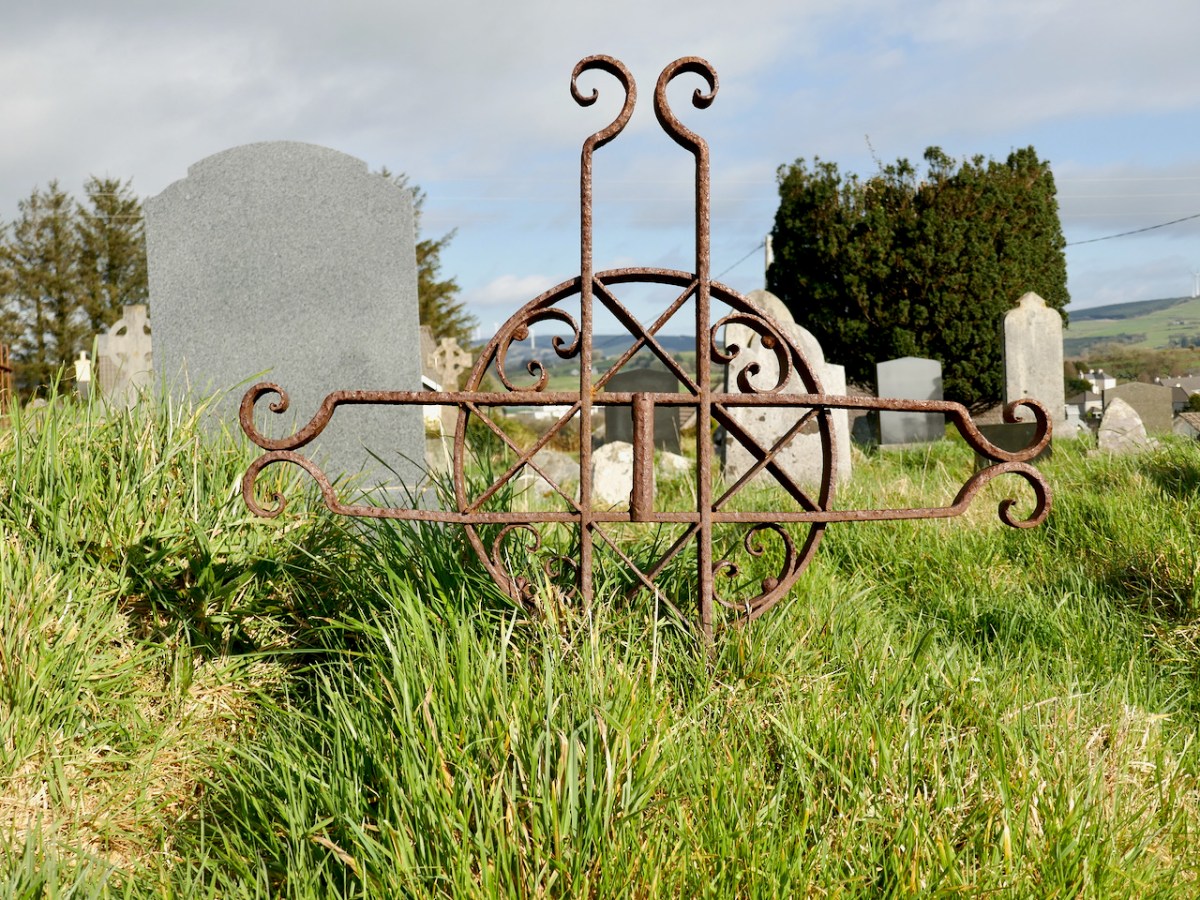
However, every local blacksmith was also adept at making grave markers, most often in the shape of a simple cross, but sometime with more elaborate detailing. As with the hand-forged gates (see A Gate Post and Another Gate Post) grave markers were forge-welded or riveted, and details were added by hammering out shapes, or splitting the iron and curling it around the anvil.

Some examples follow. All are from my local area but wherever you are in Ireland you will find similar grave markers in old burial grounds (although probably not in newer cemeteries) – why not have a wander down to your own local old graveyards and see what you can spot?


Many of the wrought iron grave markers have lost any identification over the years, but there are exceptions, such as the plaque to Timothy Keating who died in 1896 and is buried in Abbeystrewry graveyard in Skibbereen, or the simple letter PH and the date of 1907, from the graveyard in Drimoleague.


This elegant grave surround is completely hand-forged and is in the Abbeystrewry graveyard. It is likely to be the work of one the McCarthys, a family of blacksmiths whose work is still remembered and celebrated in Skibbereen – see this post from the Skibbereen Heritage Centre.


In the same graveyard, Eugene, a member of that McCarthy family, made this impressive famine memorial (above, upper) in his forge on Ilen Street. His hallmark can be seen elsewhere in the graveyard – notice the similarities between the cross on top of the famine memorial and the gravemarker (above, lower). The cross keys are associated with St Peter – perhaps this marks the grave of a Peter.
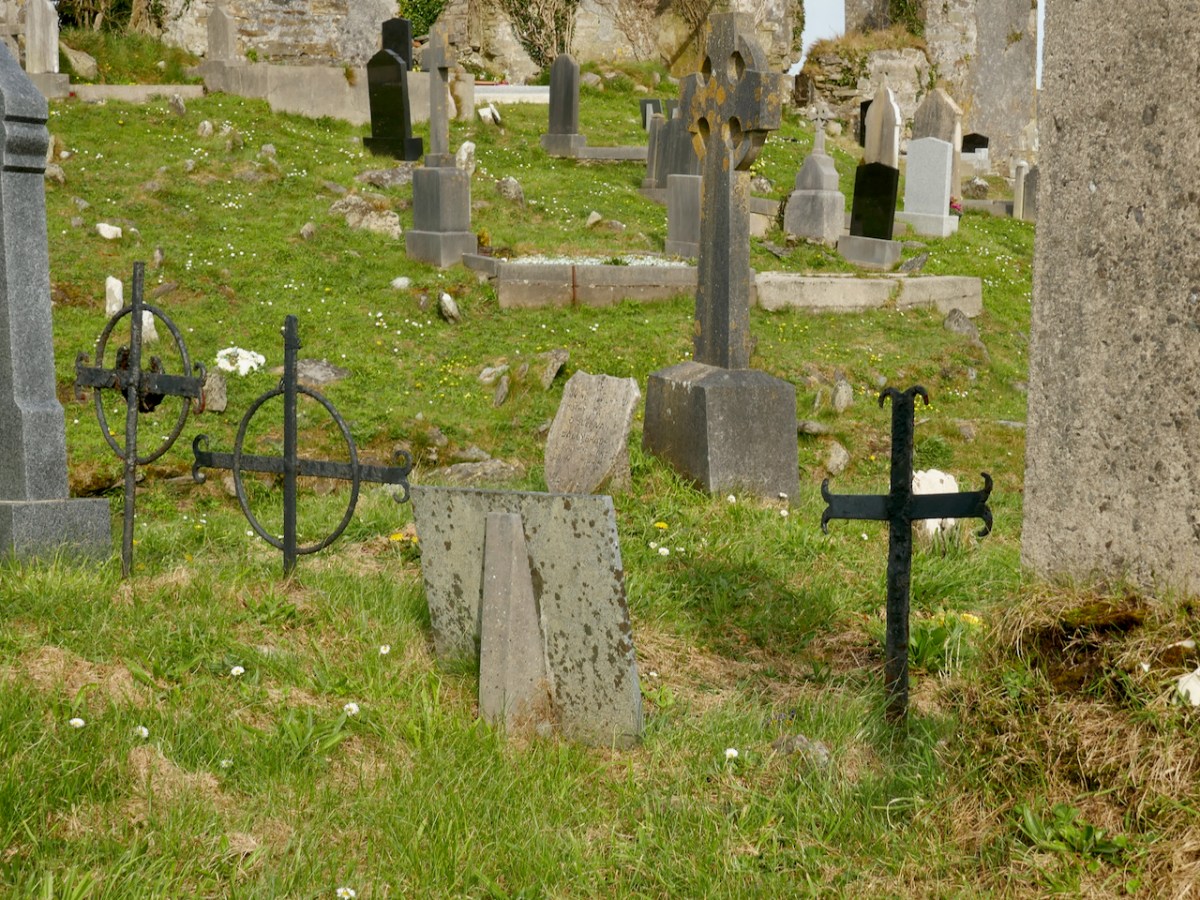
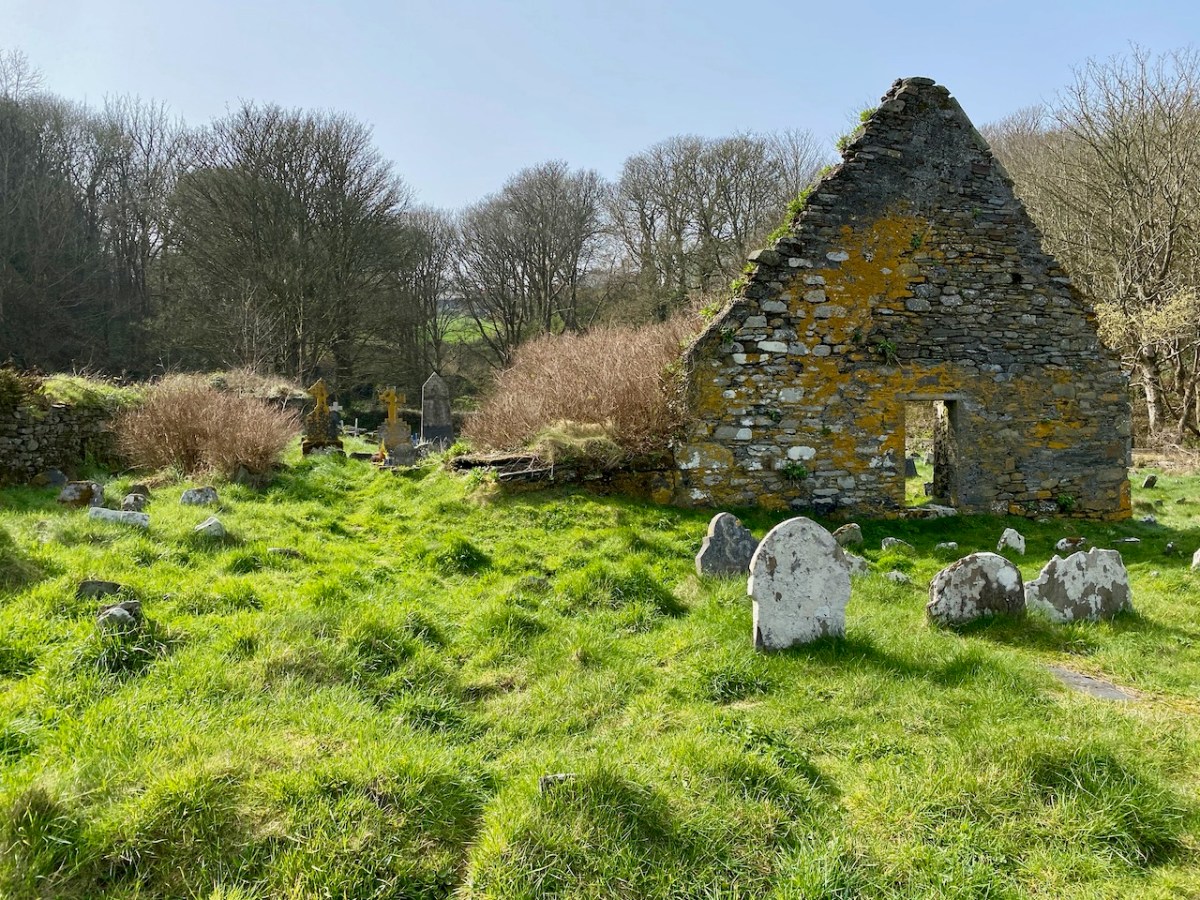
Many simple crosses such as those above can be found in the graveyard surrounding the ruined church of St Mary in Schull. The second image in this post is a more elaborate example from St Mary’s.

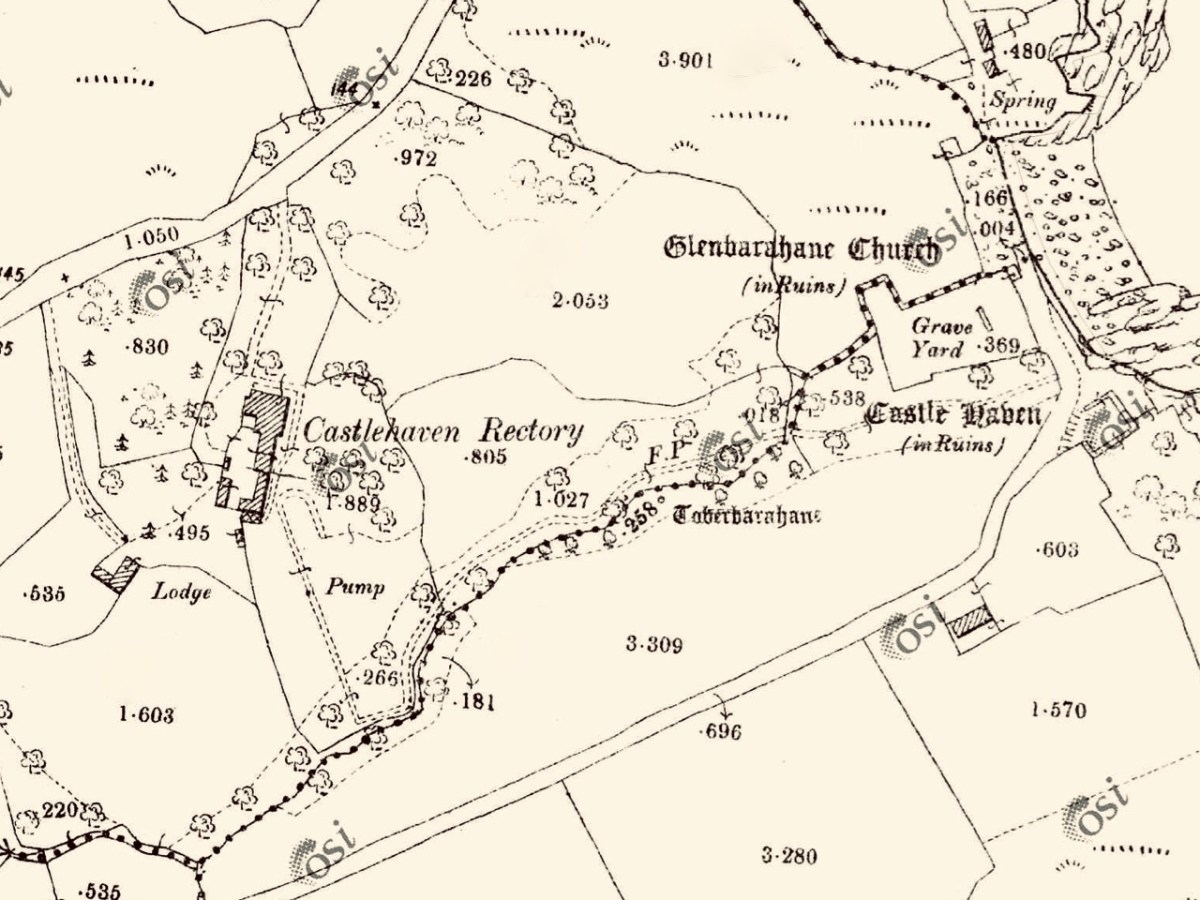
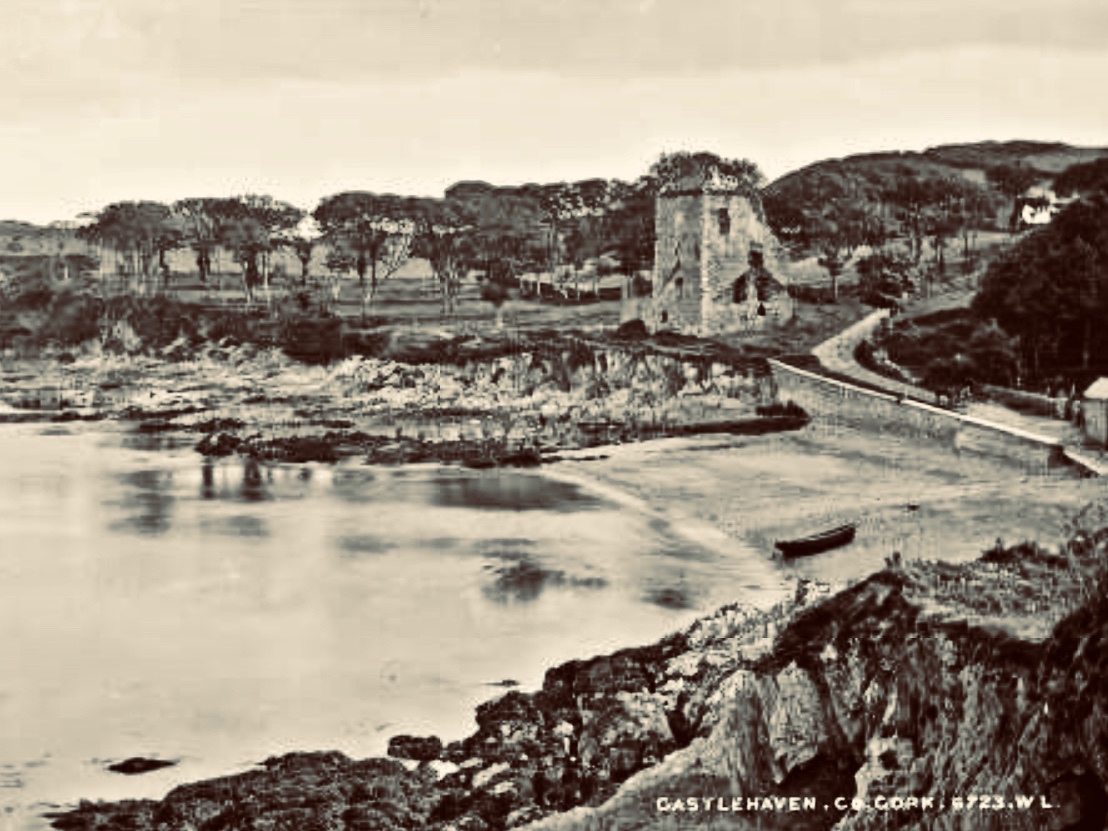
This graceful wrought iron grave surround is in the Castlehaven graveyard. The cast iron headstone obscures the original hand-forged IHS, just visible behind it.

Almost completely obscured by vegetation is this lovely example of a wrought iron grave marker in Creagh graveyard on the banks of the Ilen. Below are more simple crosses in Abbeystrewery.
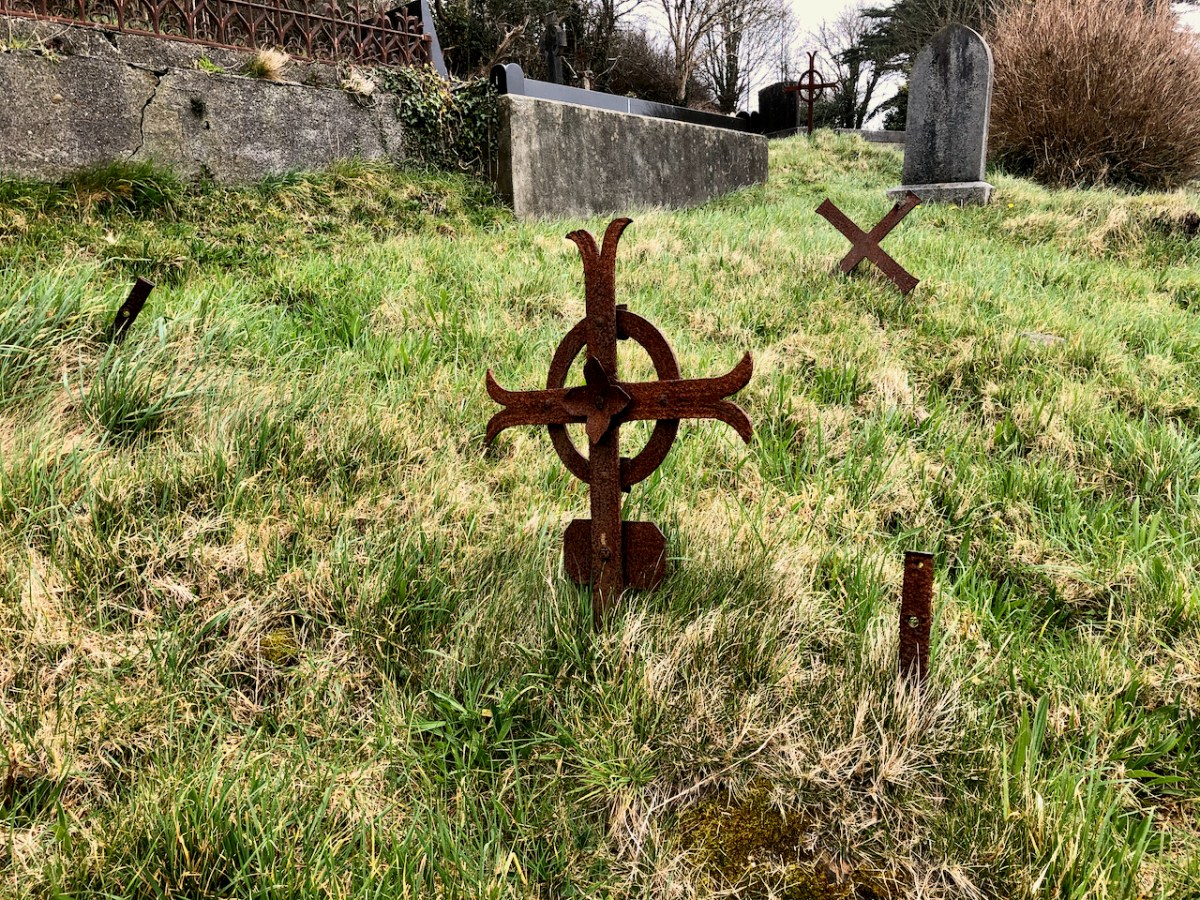
Wrought iron is amazingly durable and will last for hundreds of years with little or no maintenance. It can deteriorate under certain conditions, though, and when it does it can only be properly repaired using traditional forging methods. There are still blacksmiths around who can use these traditional methods – in West Cork we are lucky to have Pat O’Driscoll* and JJ Bowen – but the knowledge and the equipment is getting scarcer.

This lovely memorial to the O’Brien family can be see in the Dunbeacon graveyard. The image below is of a wrought iron memorial in Schull. The circle was made from band-iron, originally used for banding wheels.

I’ve tried to limit this essay to wrought iron. I’m still learning – please point out any errors you see, in the comment section. I hope to do more about cast iron in the future. Wrought and cast iron were often used in combination and we have lots of examples of this in our West Cork graveyards.
*My thanks to Pat O’Driscoll for information and for his willingness to patiently answer my questions.
I am also grateful to Architectural Conservation Professionals – see their site for lots of information on the conservation of historic ironwork.







 Roaringwater Journal