Great Blasket, one of the islands in the parish of Dún Chaoin (Dunquin) off the west coast of Kerry, was the home and life-blood of a tenacious population of Irish families for many hundred years. One of these families – the Ferriters – claim that they controlled the islands as far back as the 13th century and had established a castle there. Whoever lived there had to be tough: the terrain is wild and there is little shelter. Nevertheless, the islanders clung to their territory, and their numbers expanded in the early 19th century when Lord Ventry of Dingle evicted many of his tenants from their holdings and those who left found island life – hard though it was – preferable to persecution.
We are fortunate that, during the early twentieth century, Great Blasket was visited by curious tourists and anthropologists. Among them was Robin Flower, who became Deputy-Keeper of Manuscripts in the British Museum from 1929 to 1944. He had many credits to his name, including Member of the Royal Irish Academy, Doctor of Literature of the National University of Ireland and also of Dublin University. Flower became the historian of the Blaskets, which he ‘immortalised’ through his lectures and writings – and many visits. To the people of the Great Blasket he was playfully known as ‘Bláithin’ – Little Flower – which he considered a great honour. I will write more on Robin Flower in a future post, but concentrate here on some of the photographs of island life which were recorded by likeminded researchers in the first half of the twentieth century. After 1954 there was nothing to record: life on the island, three miles from the mainland and involving an often treacherous crossing, became untenable. The whole remaining population was evacuated in that year, leaving their cottages and settlements to the ruinous ravages of the wild Atlantic gales.
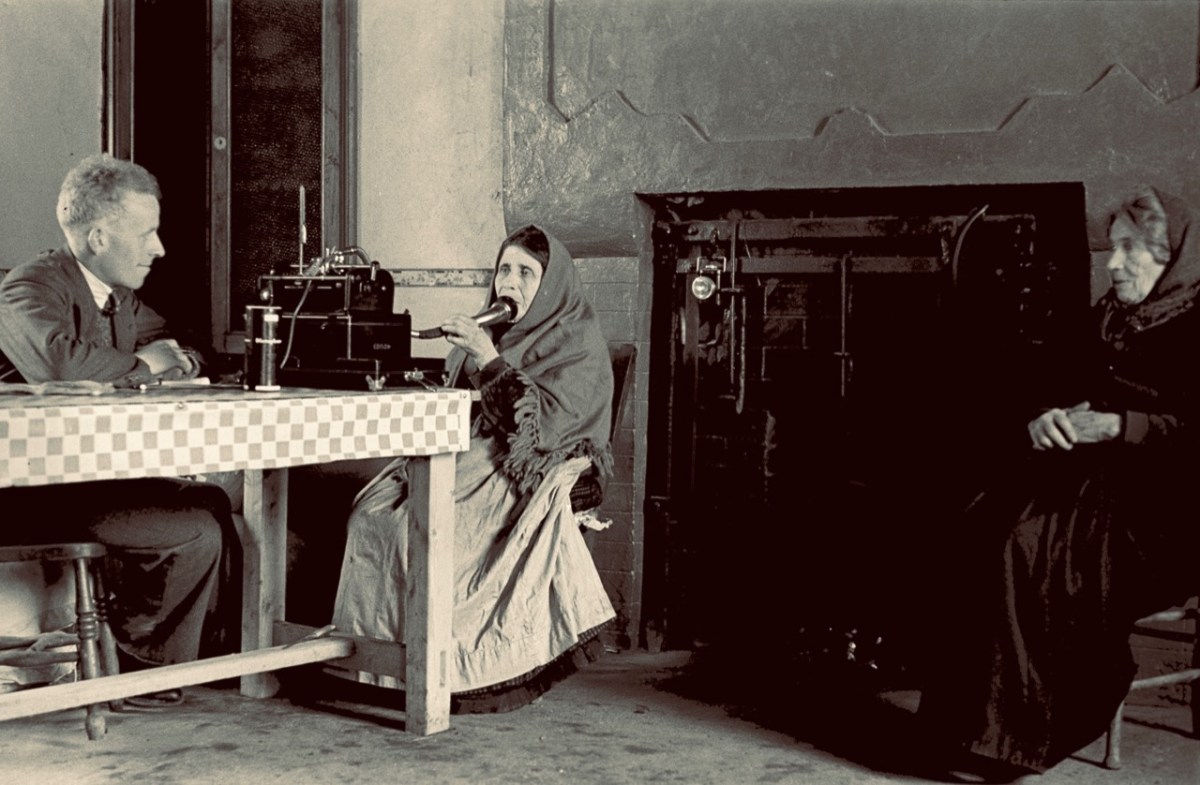
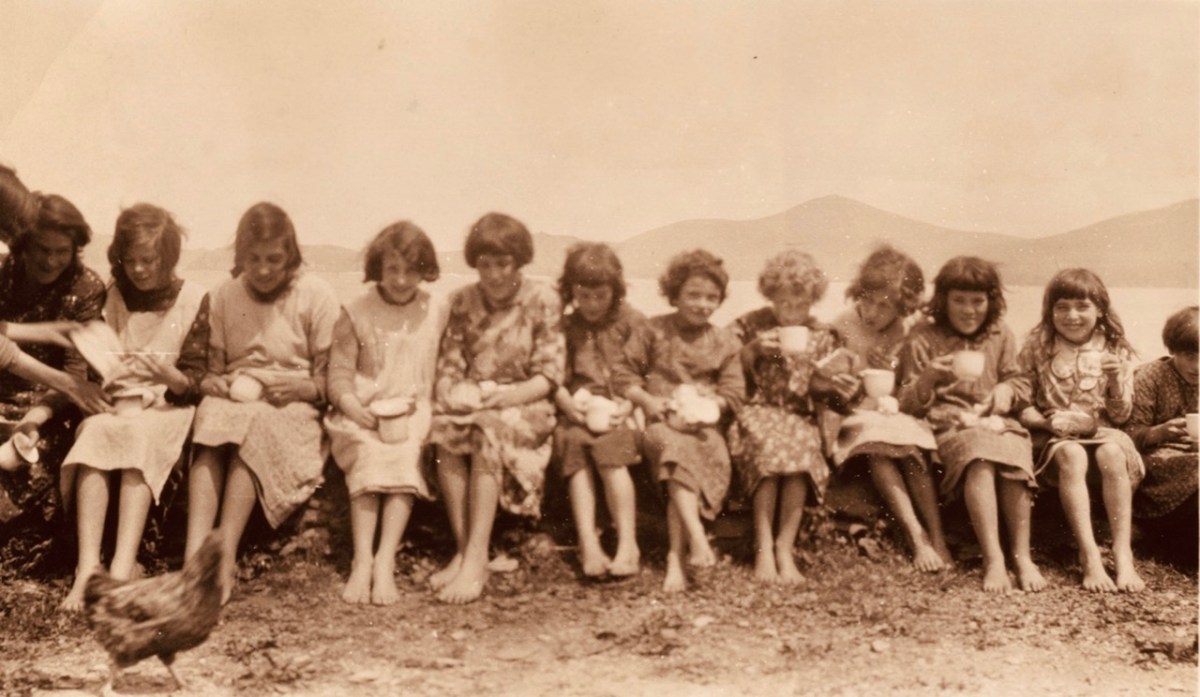
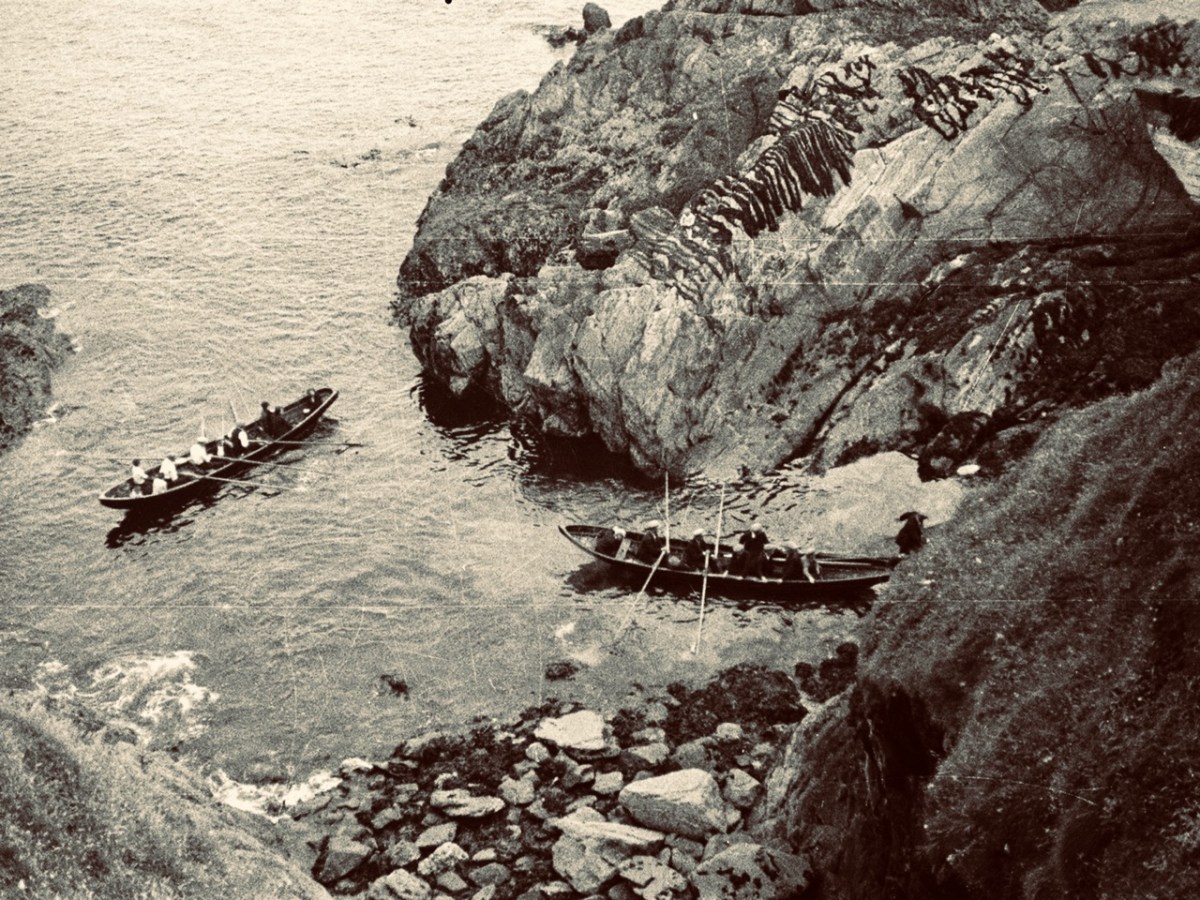
The header picture is a wonderful statement of youth and vigour: island children photographed outside their school in 1932 by Thomas Waddicor. I can’t find anything about this man, but a lot of his work appears in the Dúchas Photographic Collection which was established in the 1930s, so I am assuming he was an active collector and researcher himself. The second picture is by our old friend Tomás Ó Muircheartach, who also spent time on the Blaskets in the 1930s. You will find more about him here. It shows the Blasket men in their fishing curraughs below the craggy rocks of the island. The pic above is also by Muircheartach, and shows Cáit Ruiséal and Máire Ruiséal being interviewed by a follklore collector at their fireside in 1942. I am not sure where this interview took place.

This photograph is also by Thomas Waddicor and dates from 1932. The caption given in the Dúchas Photographic Collection is interesting, if not entirely enlightening: Man, Great Blasket Island: Buffer, note stuffed peaked cap – an island custom.
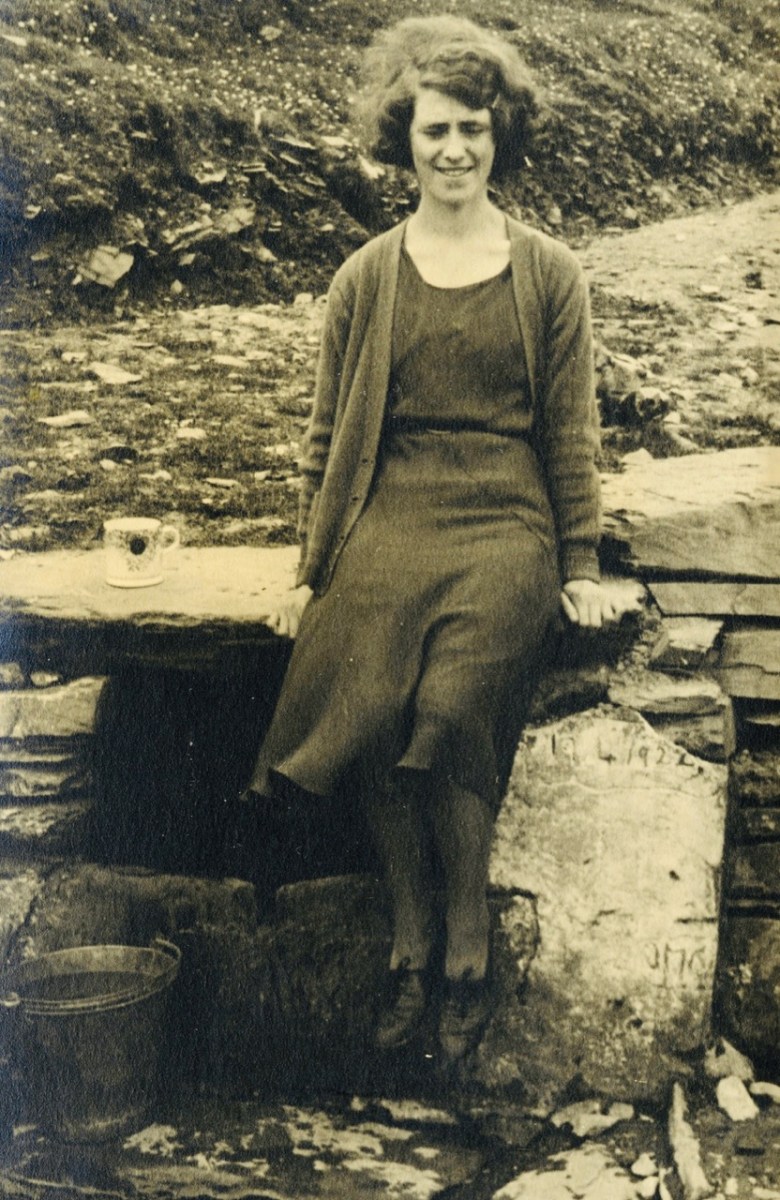
Another from Waddicor, also 1932: Cáit at the Well. I think what strikes me most of all is how real and alive these people are – they certainly don’t seem in any way downtrodden or in danger of extinction: perhaps it’s just because they are ‘posing’ for the camera. But it’s salutary to think that they were only on the island for another generation or so.
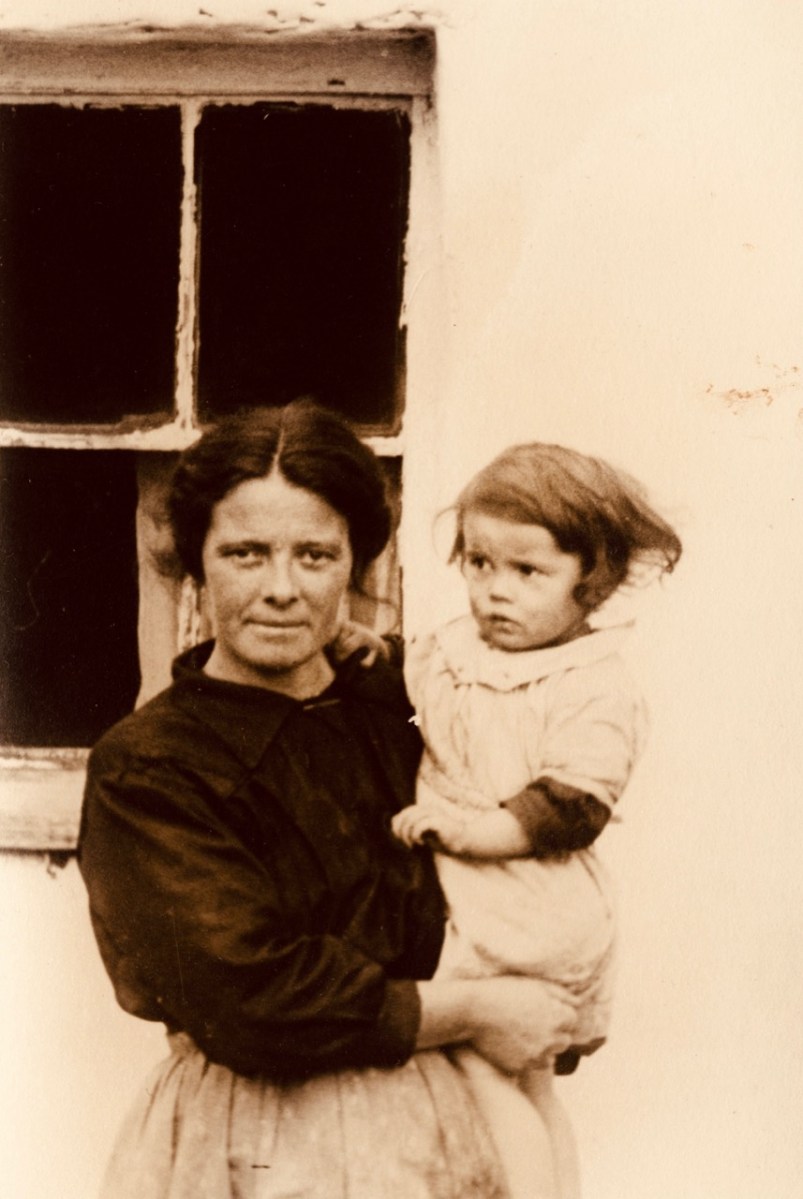

These two photographs (above) are also by Thomas Waddicor and also from 1932. The top one is the ‘Wife and child of Séan the King’, and the lower is ‘Children of Séan the King’. We have a bit of a conundrum here as the last ‘King’ of the Blasket Islands passed away in 1929 (according to this Irish Times article). As Waddicor left behind no photograph of the ‘King’ himself, we have to assume that the lady in the upper photograph was a widow.

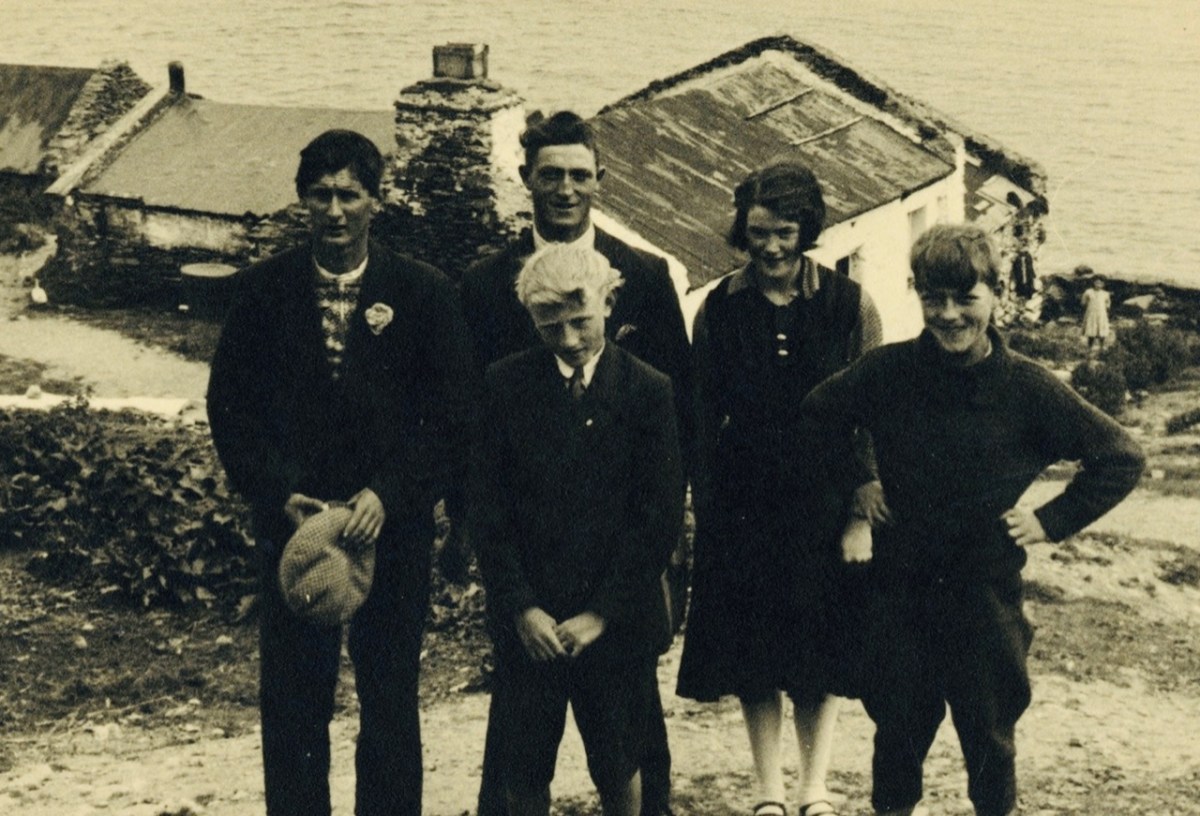
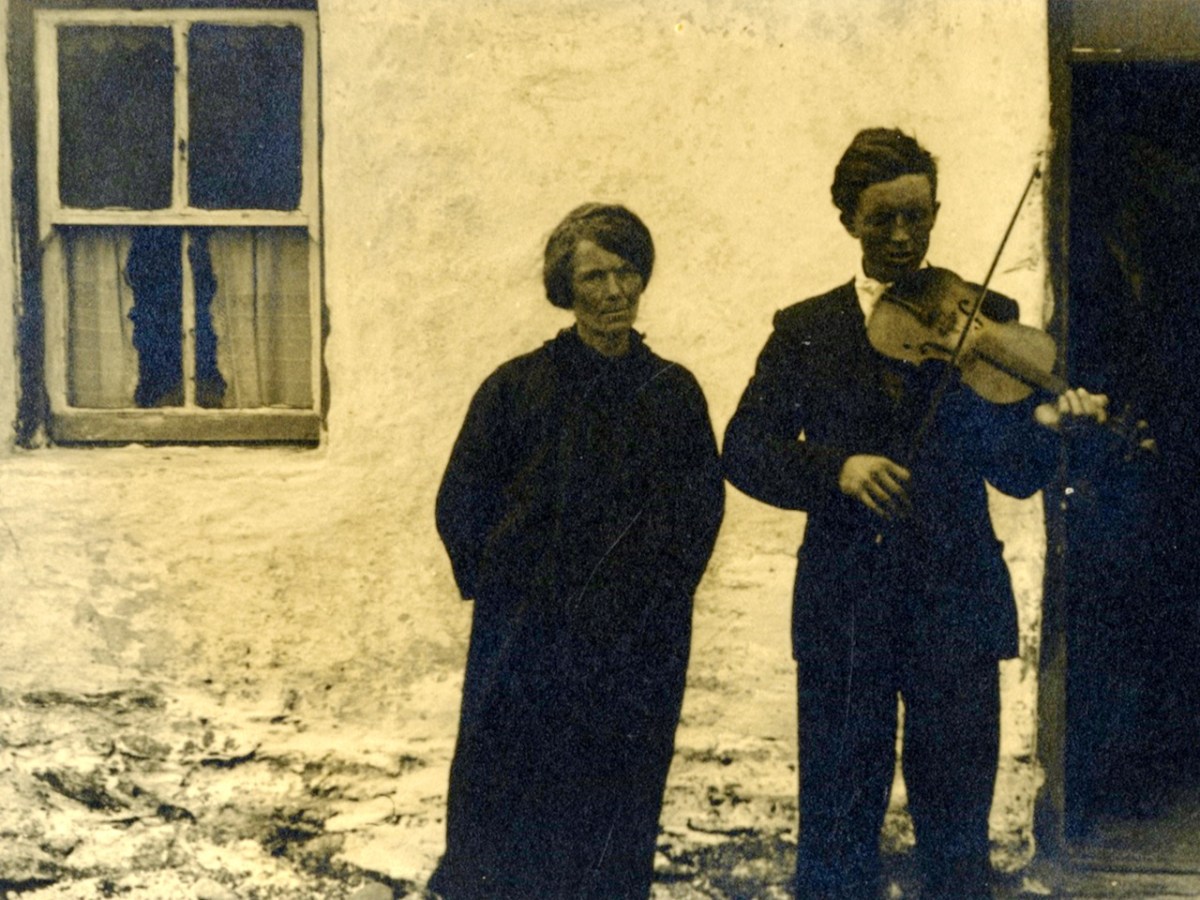
More ‘family’ photographs: the upper of the three is titled ‘Eilis and Brighid’; the centre is just given as ‘Family’, while the lower is ‘Fiddler and Woman’. All are by Waddicor from 1932.

This wonderful lady is also anonymous: sadly we can only know her by the title – ‘Great Blasket Woman’. Again, Waddicor 1932 – and, once more, she seems so full of life!

This is a picture of the Great Blasket Island School. We have some further information: while the folklorists and recorders were visiting the island in 1932, the older schoolchildren decided to interview each other about local customs and lore to mimic the visitors!

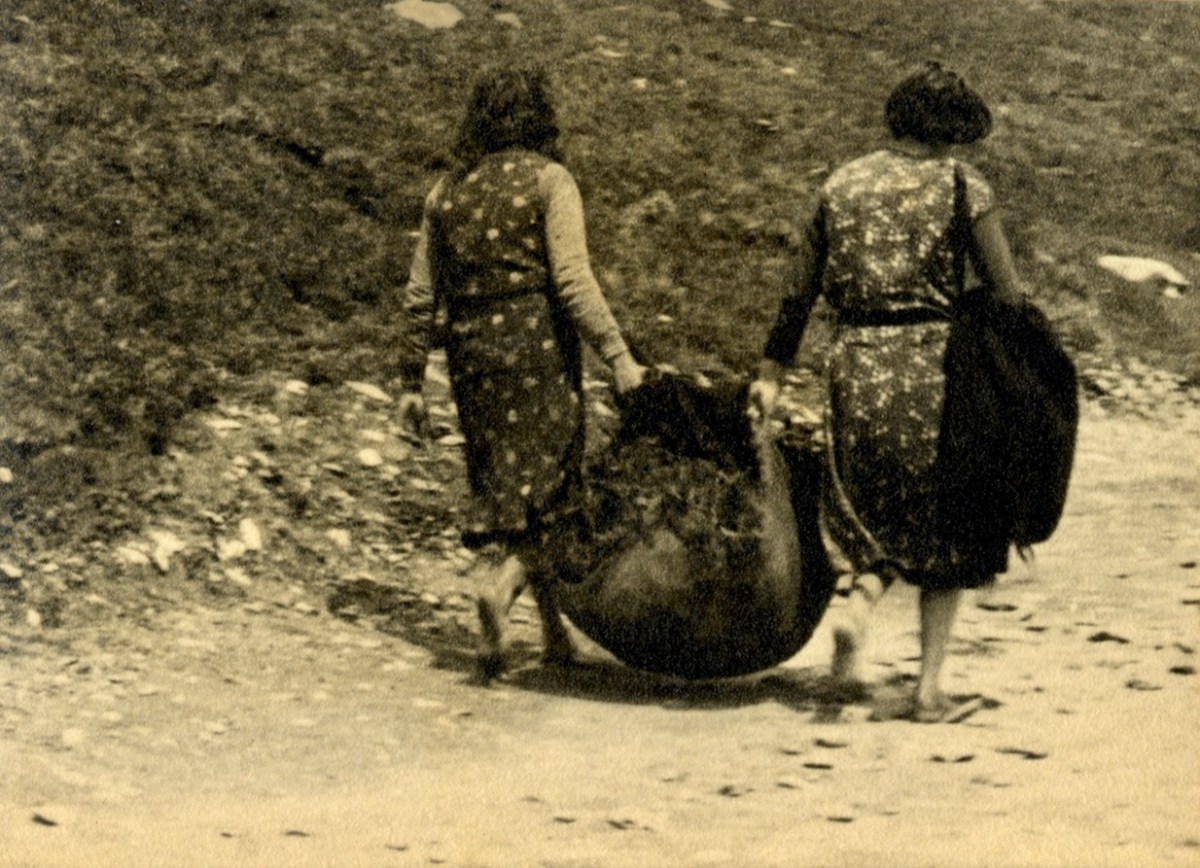
Further unnamed portraits: upper ‘Two Women Great Blasket’ and lower ‘Two Women gathering Heather’. From the Waddicor collection, 1932.
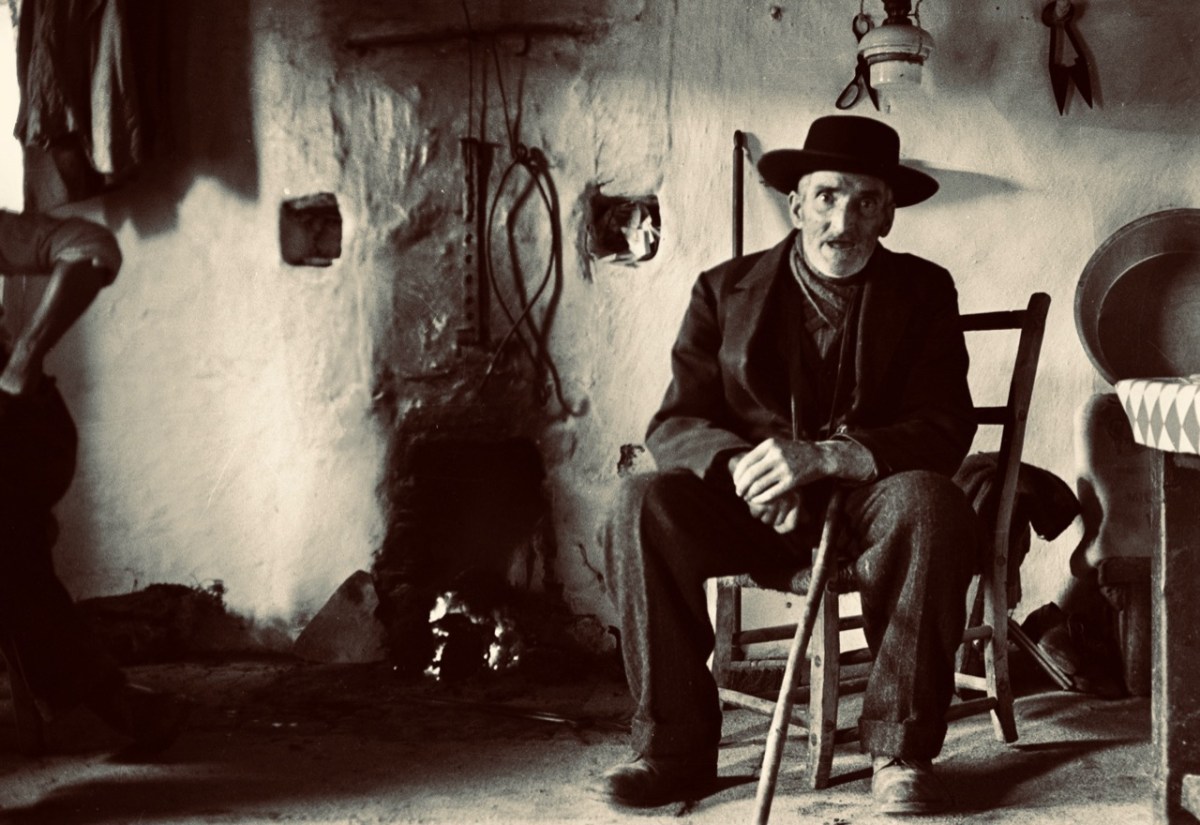
We’ll finish off with a few classics. This is Tomas O Criomhthain and it’s a photo from Muircheartach. Better known to us as Tomas O’Crohan, author of the classic book about the Blaskets:
. . . Tomas O’Crohan was born on the Great Blasket Island in 1865 and died there in 1937, a great master of his native Irish. He shared to the full the perilous life of a primitive community, yet possessed a shrewd and humorous detachment that enabled him to observe and describe the world. His book is a valuable description of a new vanished way of life; his sole purpose in writing it was in his own words, ‘to set down the character of the people about me so that some record of us might live after us, for the like of us will never be again’ . . .
The Islandman Book Review
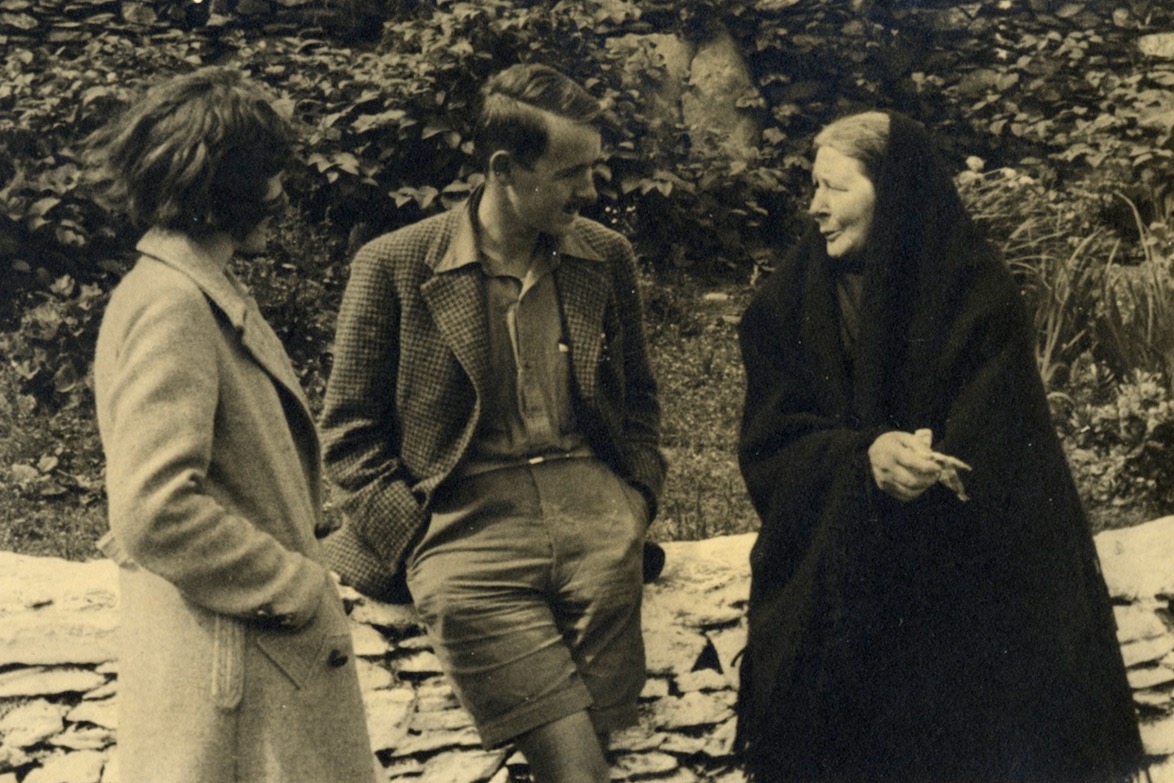
We can’t discuss the Blaskets without mentioning Peig. That’s her, above, with folklorist Kenneth Jackson, taken by Thomas Waddicor in 1932. Peig Sayers was by all accounts a formidable lady but was also described by folklorist Seán Ó Súilleabháin, archivist for the Irish Folklore Commission, as ‘one of the greatest woman storytellers of recent times’. Peig was born in 1873 and died in 1958. She therefore experienced the abandonment of the island, although she had moved away from it in 1942. She was also not born on the island, but in Dunquin, Kerry, She married Pádraig Ó Guithín, a native islander, in 1892 and had eleven children, six of whom survived into adulthood. Sayers is most famous for her autobiography Peig, but also for folklore and stories which have been collected from her.

Finally, this an image of the Loganim Achive entry for Great Blasket Island, written in 1954.
I am grateful to the National Folklore Collection UCD for the use of the Thomas Waddicor images. It’s an incredible resource: this is just a small selection of the hundreds of images which have been archived
 Roaringwater Journal