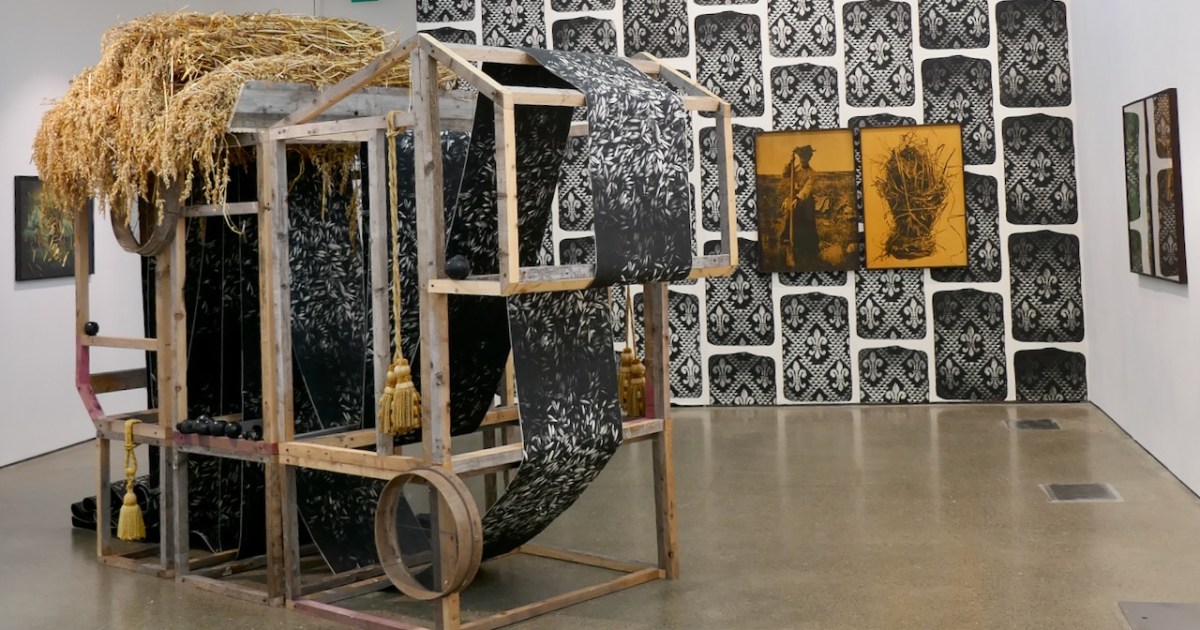
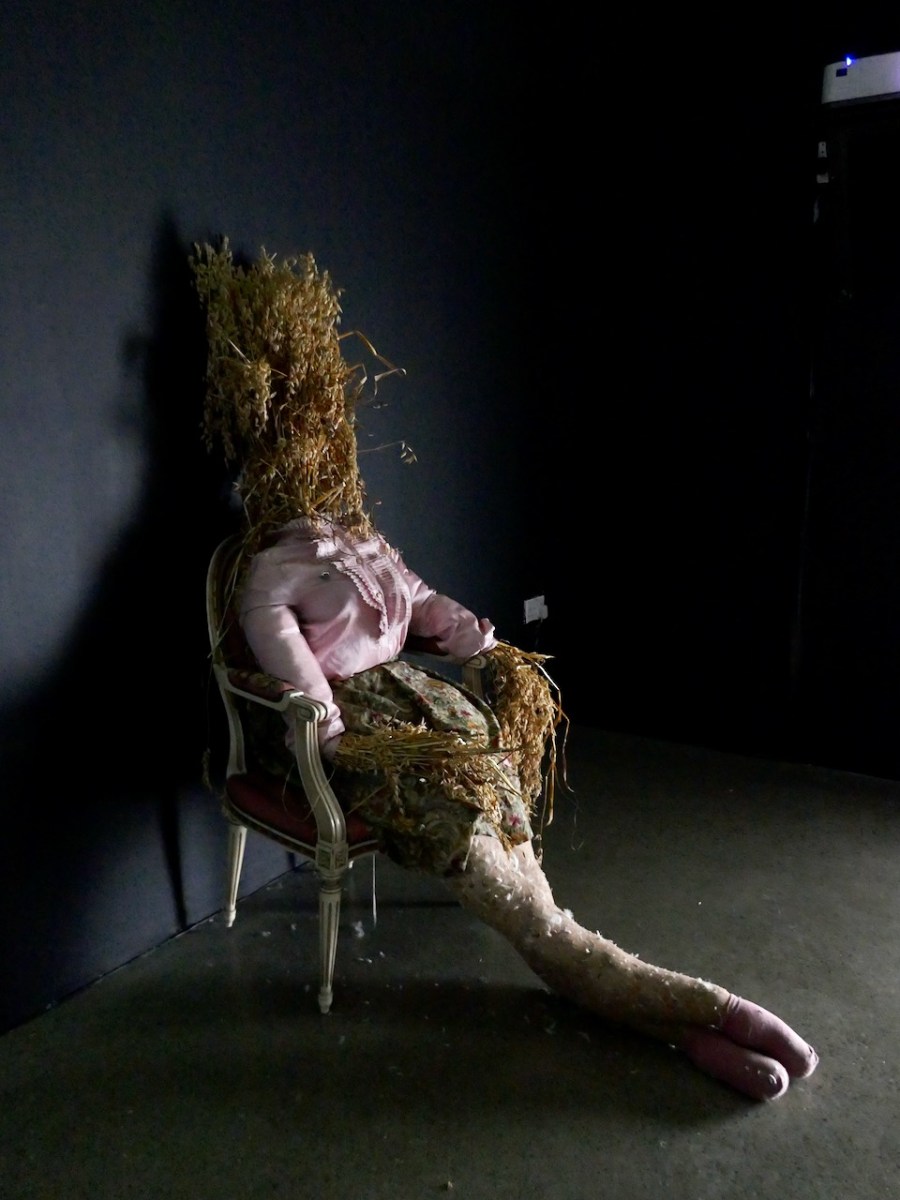
It’s not often an art exhibition has me running to my word processor to get a post out, but this one did it for me! On the surface, this is a quirky, amusing, thought-provoking, installation about the annual Harvest Festival, as practised in the autumn in Church of Ireland communities all over Ireland. Except it’s so much more than that. It’s titled Flail, and it’s on right now at Uillinn.
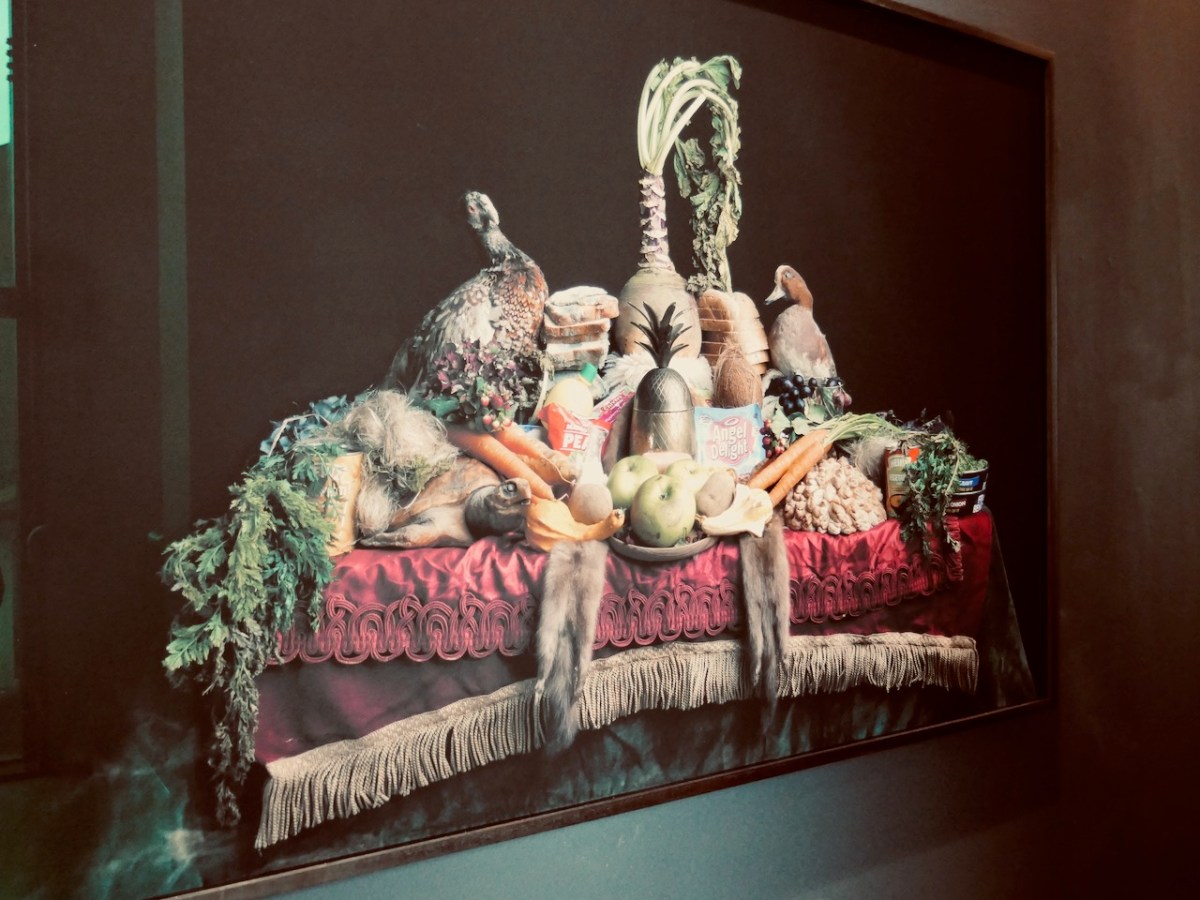
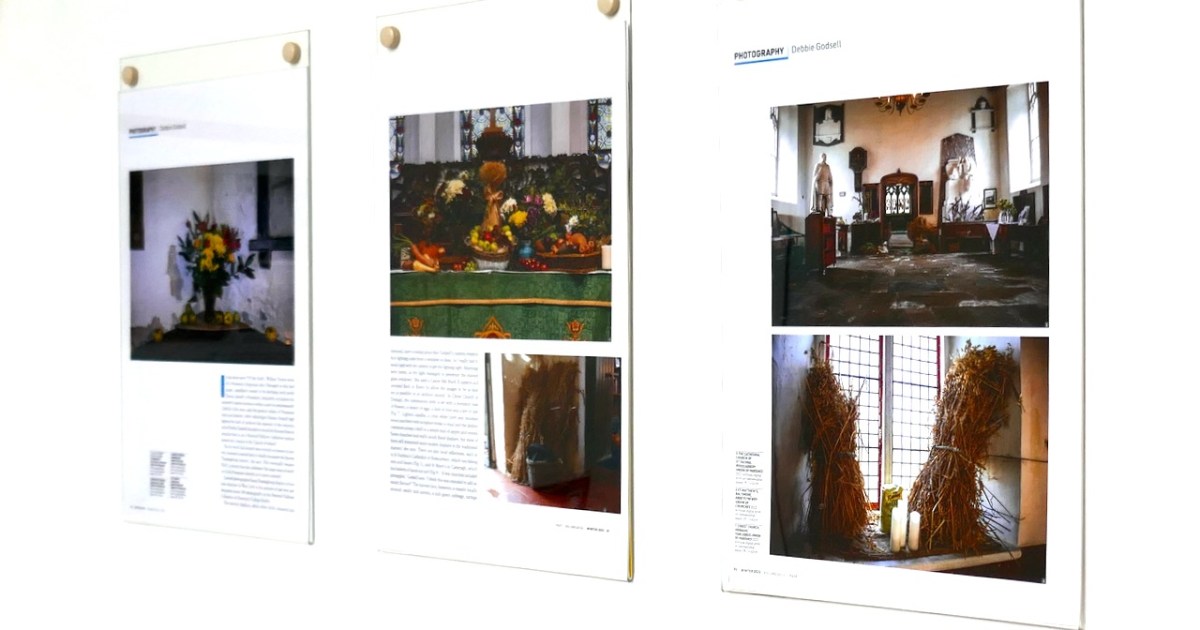
Debbie Godsell has taken the idea of the harvest festival and the communities that celebrate it, and turned it into a personal exploration of her own experience with it, as a child growing up in the C of I, and as a photographer recording the custom of decorating churches. In Ireland, this is a custom unique to the Protestant church – the minority religion. As such, there’s a strangeness to it when viewed by someone who grew up Catholic. Not strange in the sense of peculiar, but in the sense of unknown, slightly other-worldly, why-have-I-never-known-about-this?
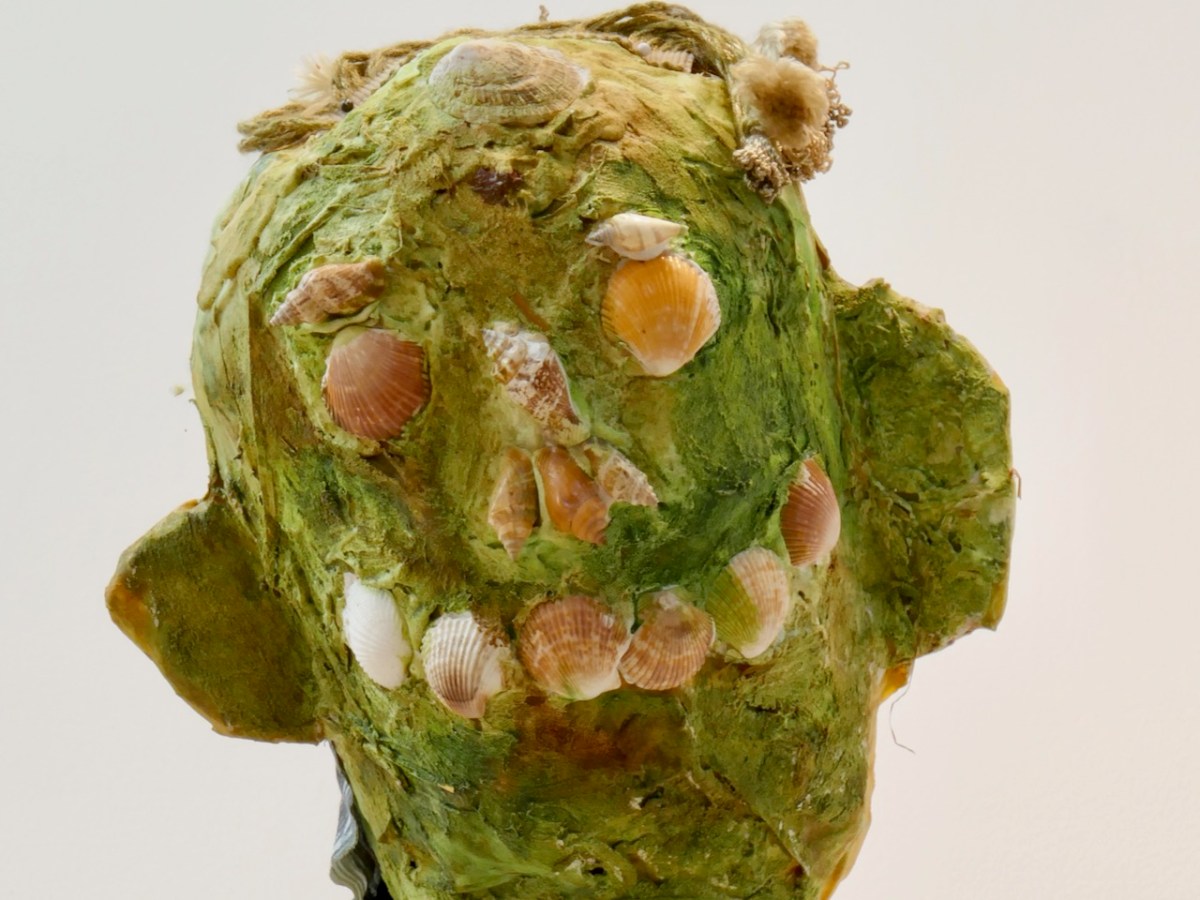
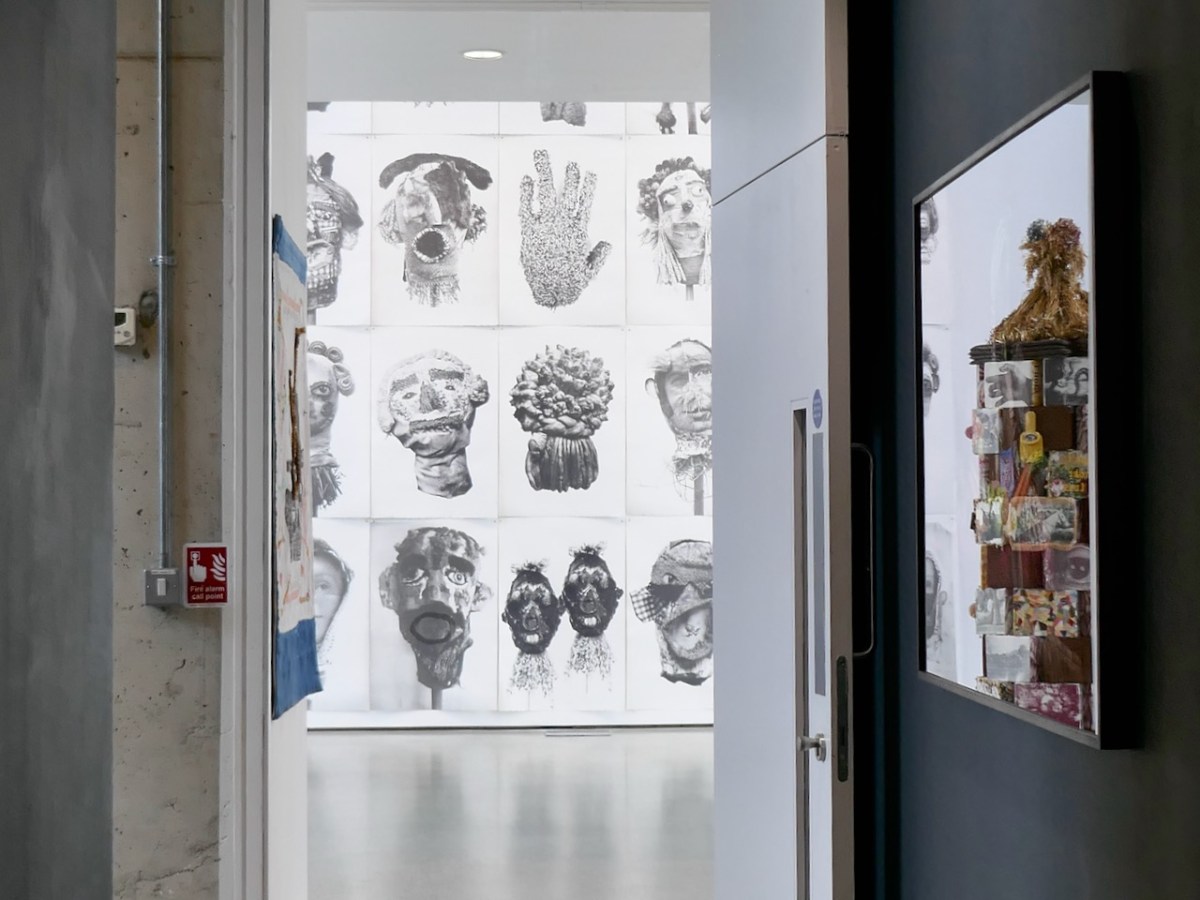
But yes, it is quirky and amusing. Just take a look at these heads – they are the first thing you notice when you come in, titled ‘Ancestors’. Made from all kinds of found materials, some represent real people (hello, Great-Aunt Molly!) although most are simply heads – a bit like you might find on a scarecrow out in the fields around harvest time.
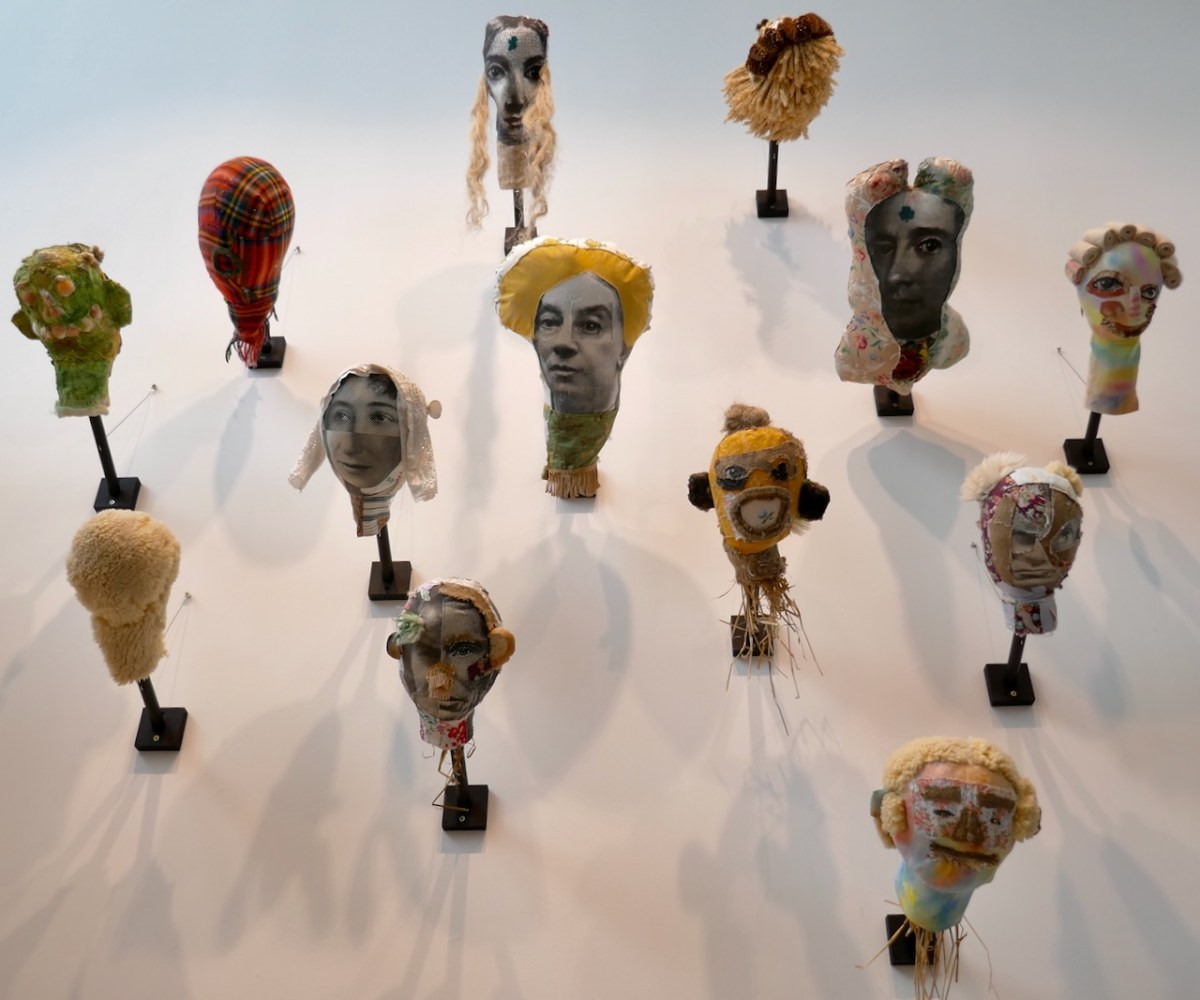
But after the first encounter you realise that this also of course, is the thought-provoking part of this exhibition Now you notice that they are on sticks, mirroring perhaps the heads on pikes that seemed to spell the end on many rebellions against English rule down through the centuries. In her notes, Godsell states:
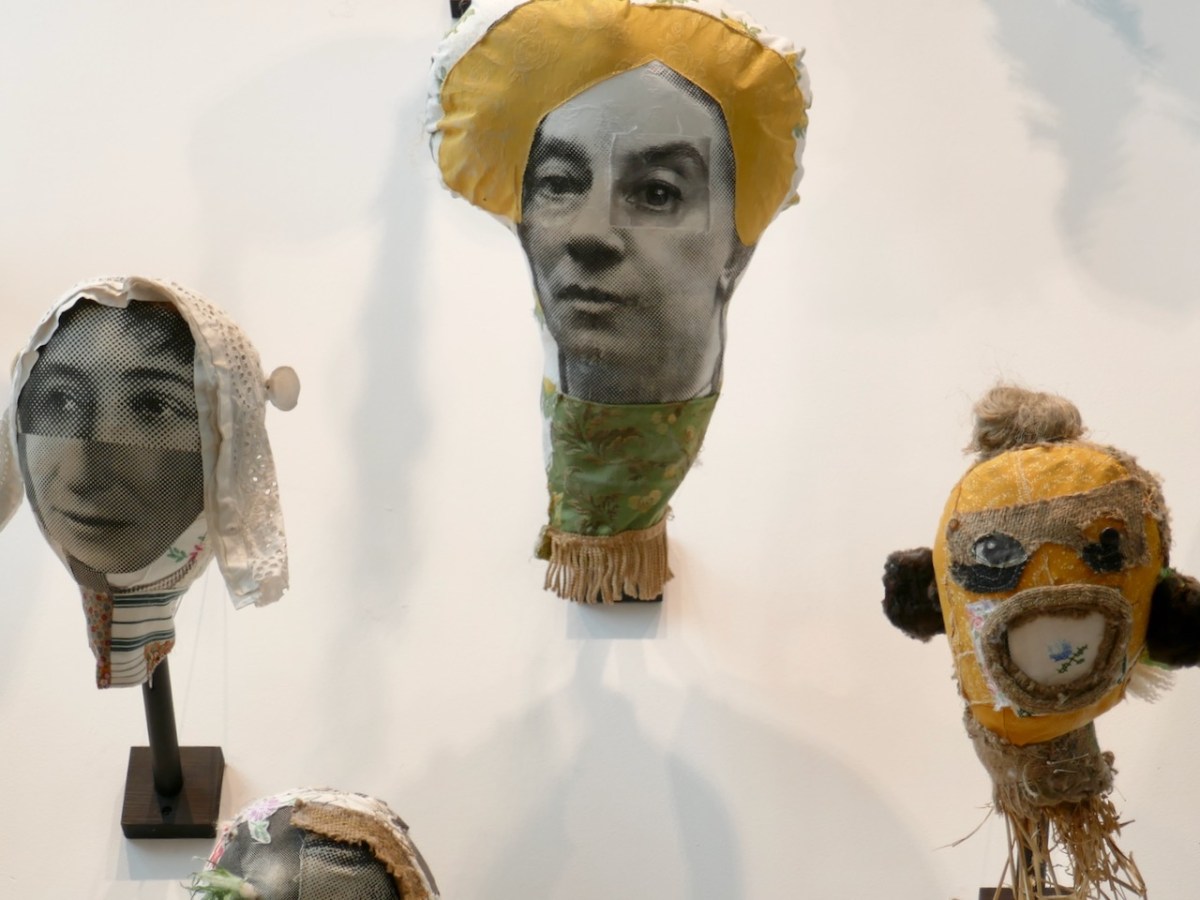
Here, the heads take on an unsettling childlike quality, drawing from elements of folk drama and ritual. Rudimentary in form, they are a fusion of figures from Irish history and the artist’s own imagined lineage. Blurring the line between historical facts and personal mythology, the work interrogates themes of memory, identity and inherited trauma, challenging how history is constructed and remembered.
What does it mean, in Ireland, to be part of a minority religion? What has it meant in the past, and now? What if that religion was perceived to track closely with class, and land ownership, and unionist sympathies?
We pride ourselves, in Ireland, now, on being a pluralistic and non-sectarian society. But if that is true at all, it is only recently so. The Ireland I grew up in – in the 50s and 60s – was deeply sectarian. Protestants and Catholics rarely mixed and we were forbidden, on pain of sin, to enter each other’s churches. We were educated separately, played some different sports (Anyone for lacrosse? How about men’s hockey?), sounded different, went to separate Brownie troupes, studied different curricula at school . . .
This exhibition explores the harvest-related parts of that separateness, but the opening, in which Debbie Godsell was interviewed by art critic Cristín Leach, also featured a discussion on folklore and a hymn by Cristín!
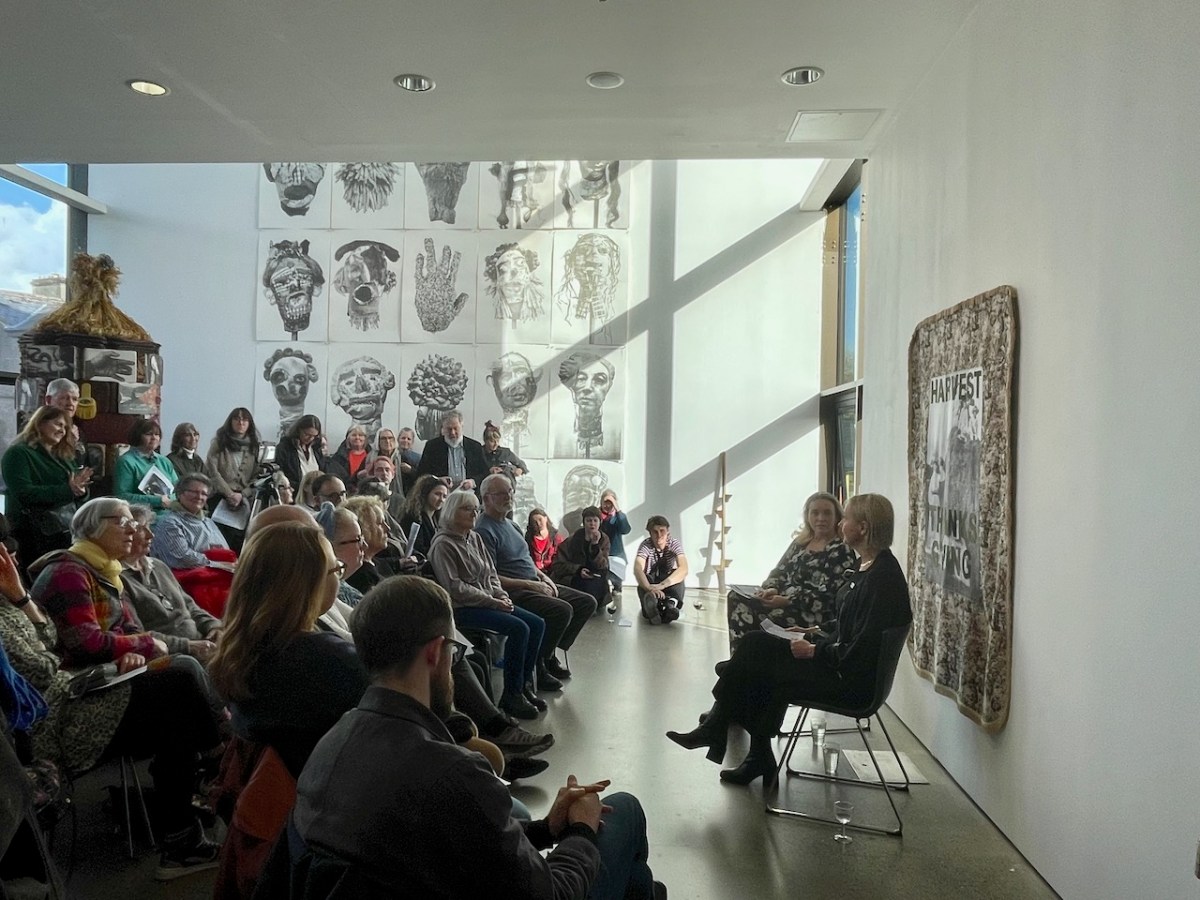
Cristín has said that Flail is ‘complicated territory’ for her and the hymn, Harvesting History, sprang almost spontaneously from engaging with the first Flail exhibition. It has been beautifully set to music by Susan Nares, and the West Cork Choral Singers presented it at the opening. Here’s a snippet.
I was particularly fascinated by the folklore discussion. As Roaringwater Journal readers know, we have used the Duchas/Schools Folklore Collection extensively over the years. One particularly important piece of research for me was to look at what it had to say about the Reverend Fisher – Saint and/or Souper of Toormore. What I found was a little shocking and it opened my eyes to an aspect of this wonderful resource that I had never previously considered – the decidedly sectarian nature of the collections. While some Protestant National Schools did participate in the School’s Collection of 1937/38, Protestants are very under-represented as informants. See this excellent article from History Ireland for more on this*.
Cristín and Debbie talked about the prevailing view of Protestants as seen in the overwhelmingly Catholic responses in the Collection – and it wasn’t a pretty picture. As I discovered with Fisher, and as Amanda has discovered with Holy Wells Folklore, the Protestants are basically blamed for anything misfortunate or discreditable – some examples here, and here and here.
Go see this exhibition if you can. It’s fascinating, but more than that, it’s important. We are still trying to come to grips with our history, in Ireland. Art like this helps immeasurably.
* A ‘Protestant folk’? Author(s): Deirdre Nuttall and Críostóir MacCarthaigh Source: History Ireland , Vol. 25, No. 5 (September–October 2017), pp. 48-51 Published by: Wordwell Ltd. Stable URL: https://www.jstor.org/stable/10.2307/90014607
Discover more from Roaringwater Journal
Subscribe to get the latest posts sent to your email.
 Roaringwater Journal
Fascinating and extremely interesting on Ireland’s history and culture. Thank you Roaring Water Journal👍👍💚💚
LikeLike
Thank you, Tracey
LikeLike
Dear Fionula
what a lovely review! I’m so honoured. I have been reading your work for a few years and I can’t believe I’m now included! I’m delighted you identified the richness of the work underneath the friendly surface. I found this was the best way to draw people in, not confrontational. it’s amazing that the language of art can do that!
do stay in touch
Best wishes
Debbie
LikeLike
Responded by email
LikeLike
This looks so interesting and thought-provoking and an issue rarely considered so powerfully, Those extracts from my blog have really made me think too – I am pretty certain that out of over 500 wells visited there are only two where references are made to Protestants and Catholics co-operating in some way: Cashelfean , West Cork and St Brigid’s Well, Stonehall in Limerick.
LikeLike
And even they aren’t unalloyed.
LikeLike
Oh yes, very much so. In other words, loved it.
LikeLike
Very interesting and something we’d never heard about. Thanks.
LikeLiked by 1 person
What a fascinating exhibition and your superbly written review of the art and the thoughts it provokes is as good as going there for those like me who won’t be able to make it during its short run.
LikeLiked by 1 person
Hopefullu it will have a life beyond Uillinn.
LikeLike