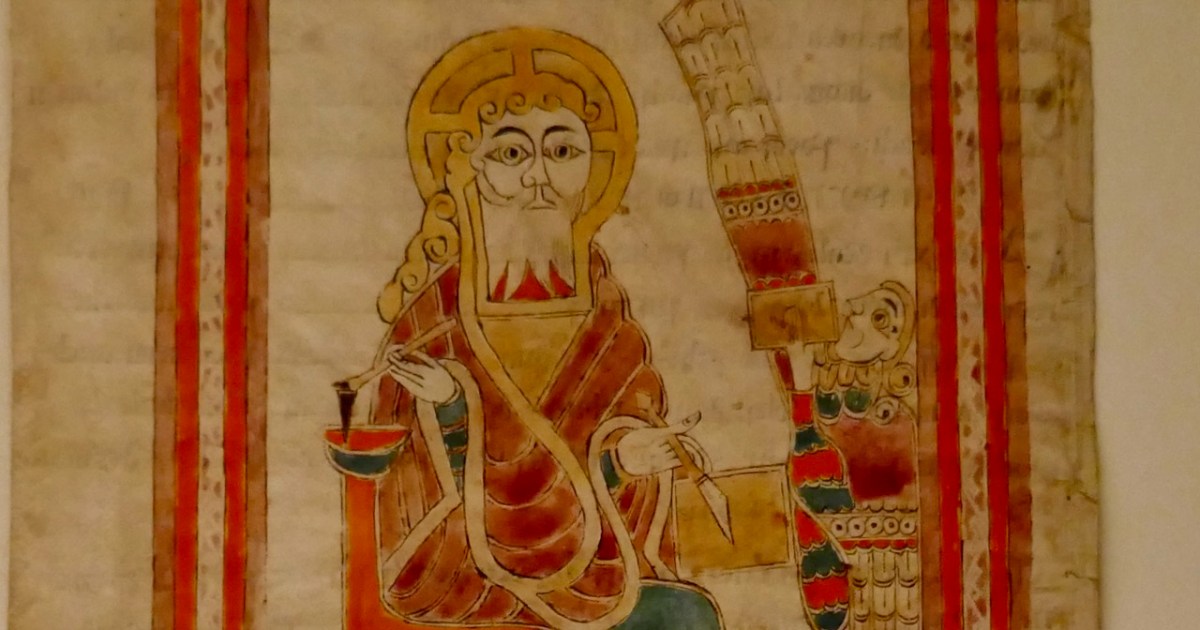
A few weeks ago I visited the National Museum in Dublin especially to see their Words on the Waves exhibition. This is the story of how Irish monks lived and worked on the continent during the 8th and 9th centuries, producing marvellous illuminated manuscripts of the gospels and other books.
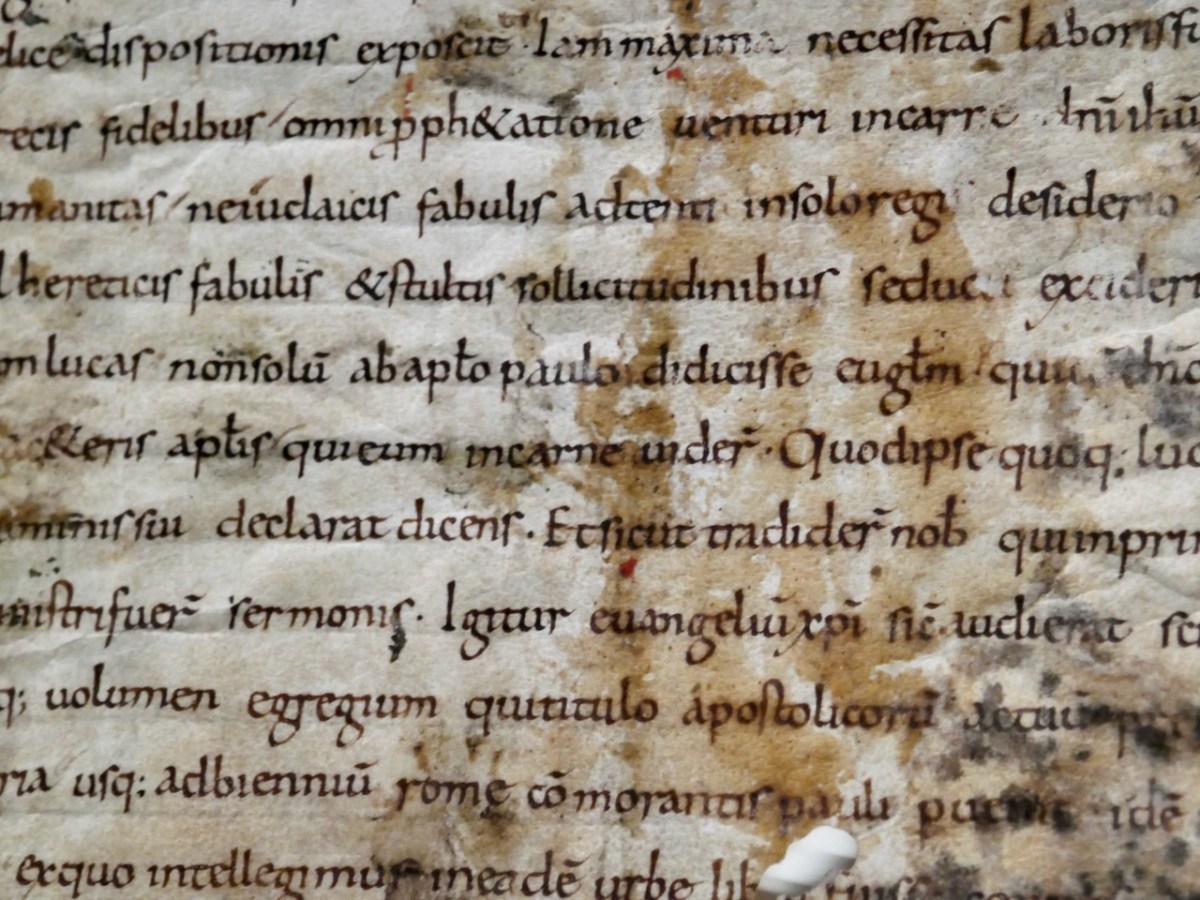
The exhibition continues until the 24th of October so if you haven’t seen it yet, there’s still lots of time. And it is SO worth it. The exhibits are a mixture of Irish and continental. St Gallen, in modern-day Switzerland, was one of the destinations to which Irish scribes travelled and they have retained an incredible collection of manuscripts. Below is the start of the Gospel of St John – In the Beginning Was the Word.
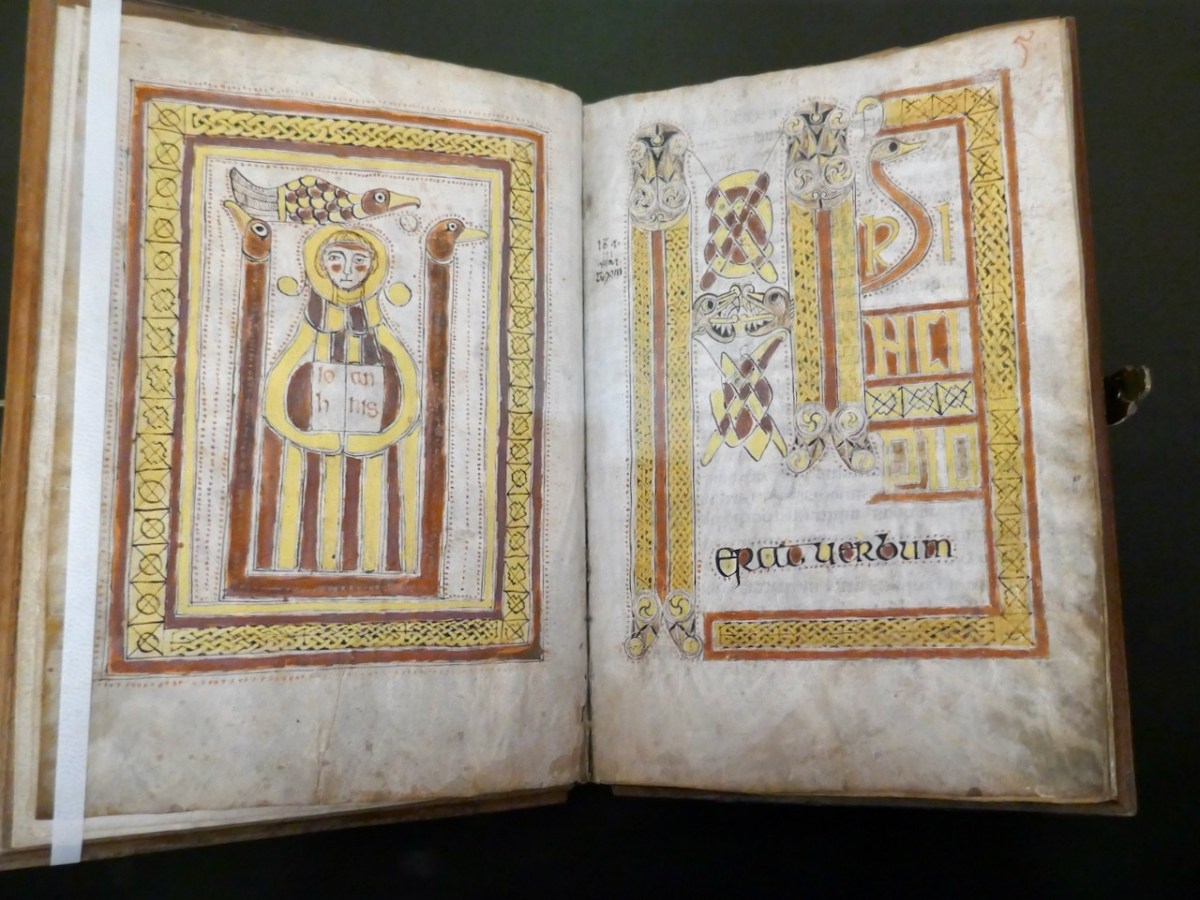
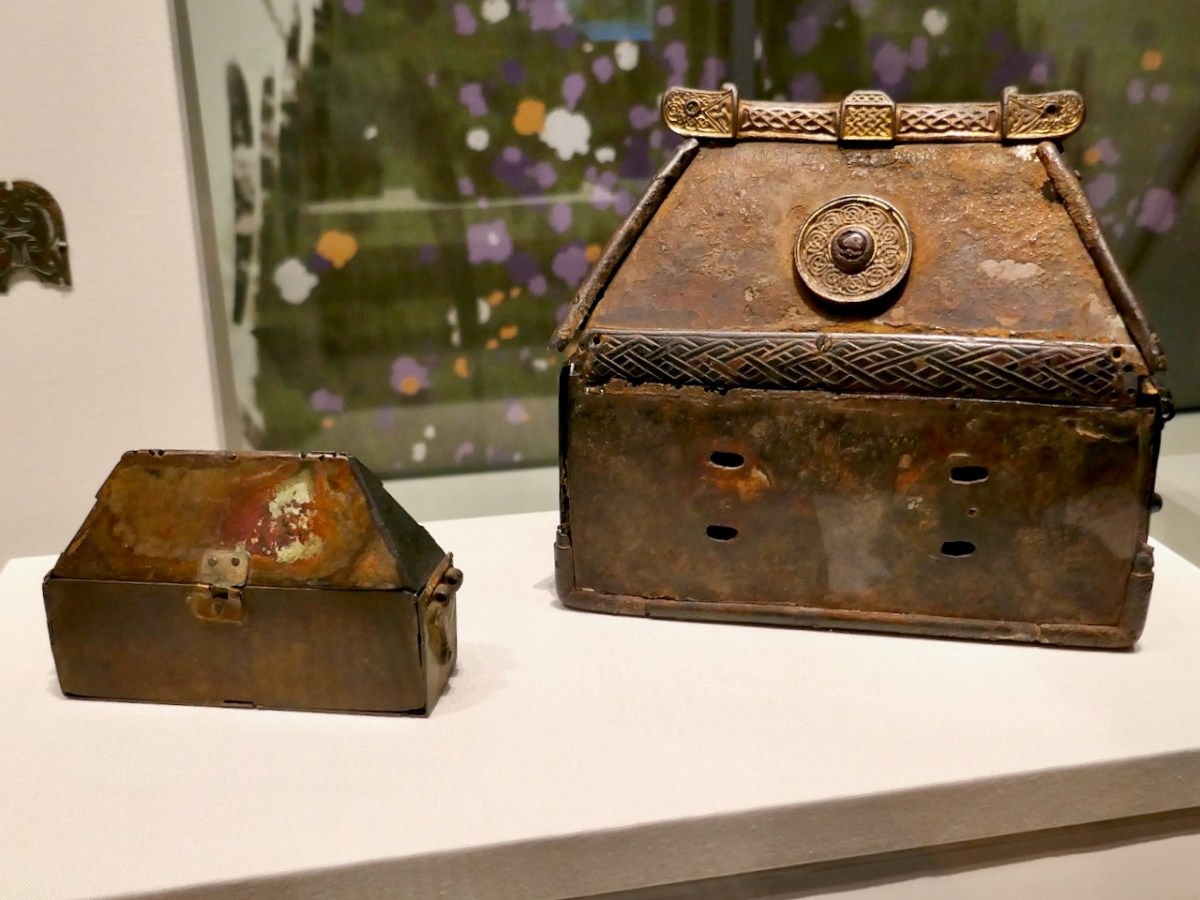
There are book shrines and gospel fragments from Ireland, explanations of how books were made and bound, early examples of ogham writing, designs on wood and metalwork of what we often call “Celtic interlacing” but which is properly referred to as ultimate La-Tene.
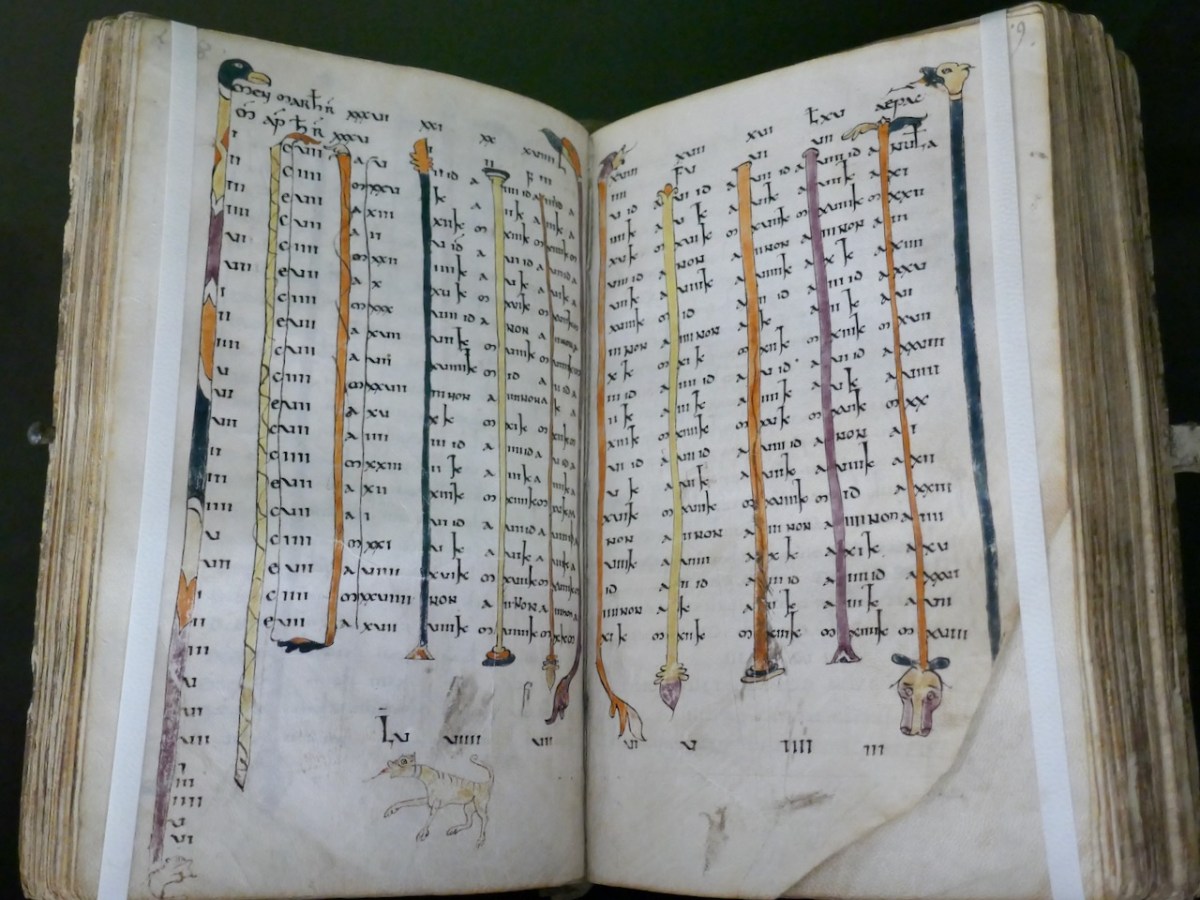
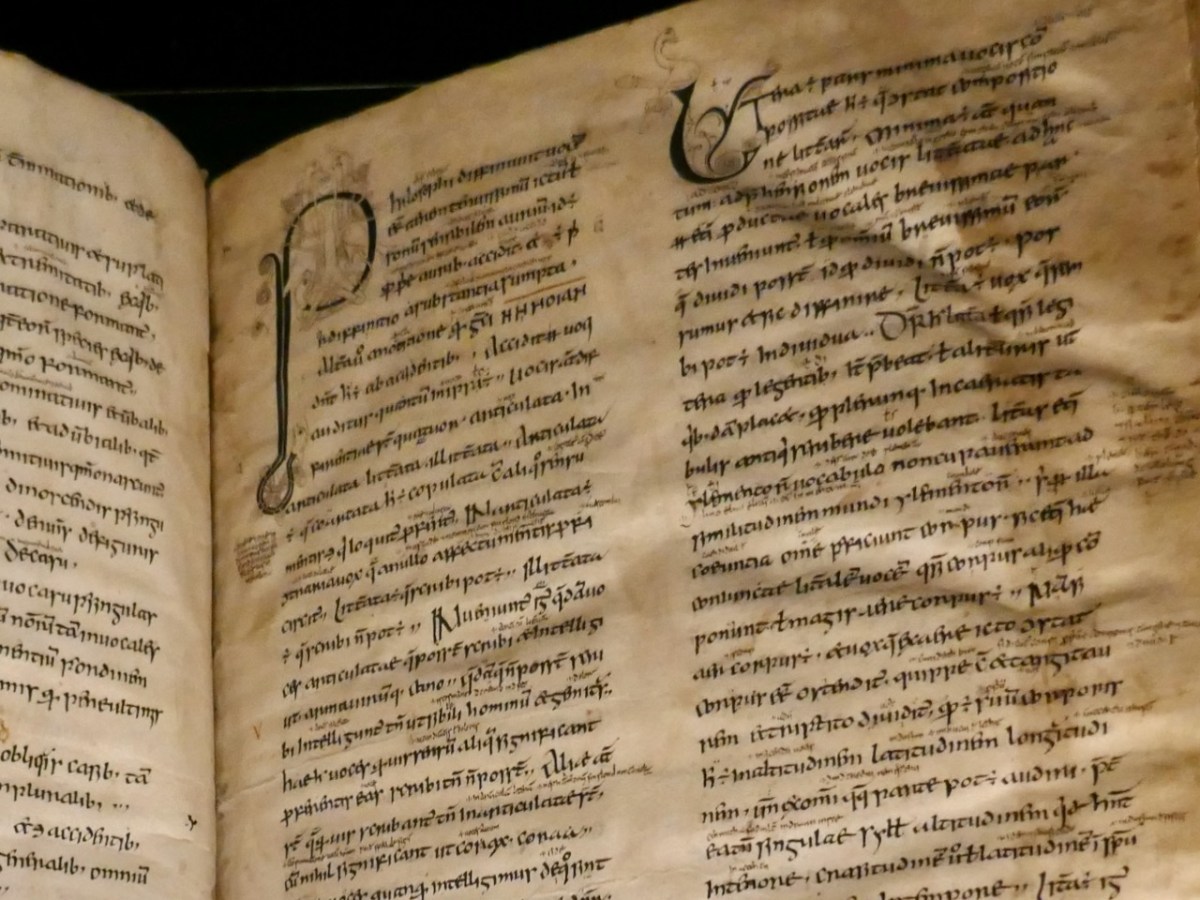
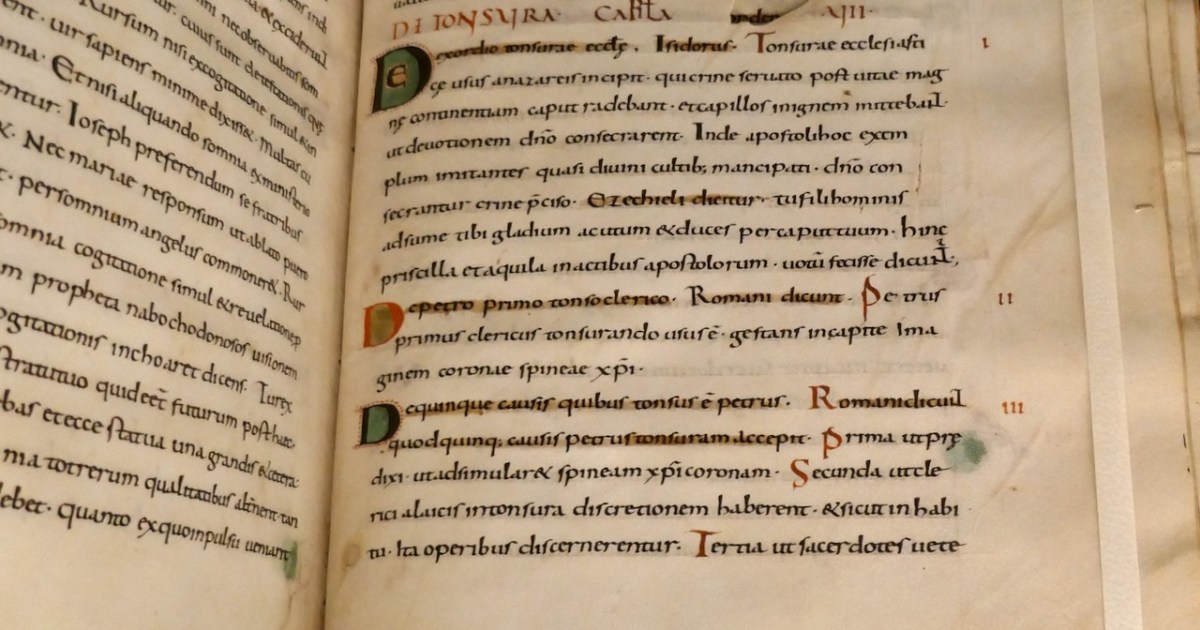
From St Gallen come the manuscripts – gospels, law texts, a mathematical calculation for Easter (below), a Greek dictionary and a Latin Grammar (second down).
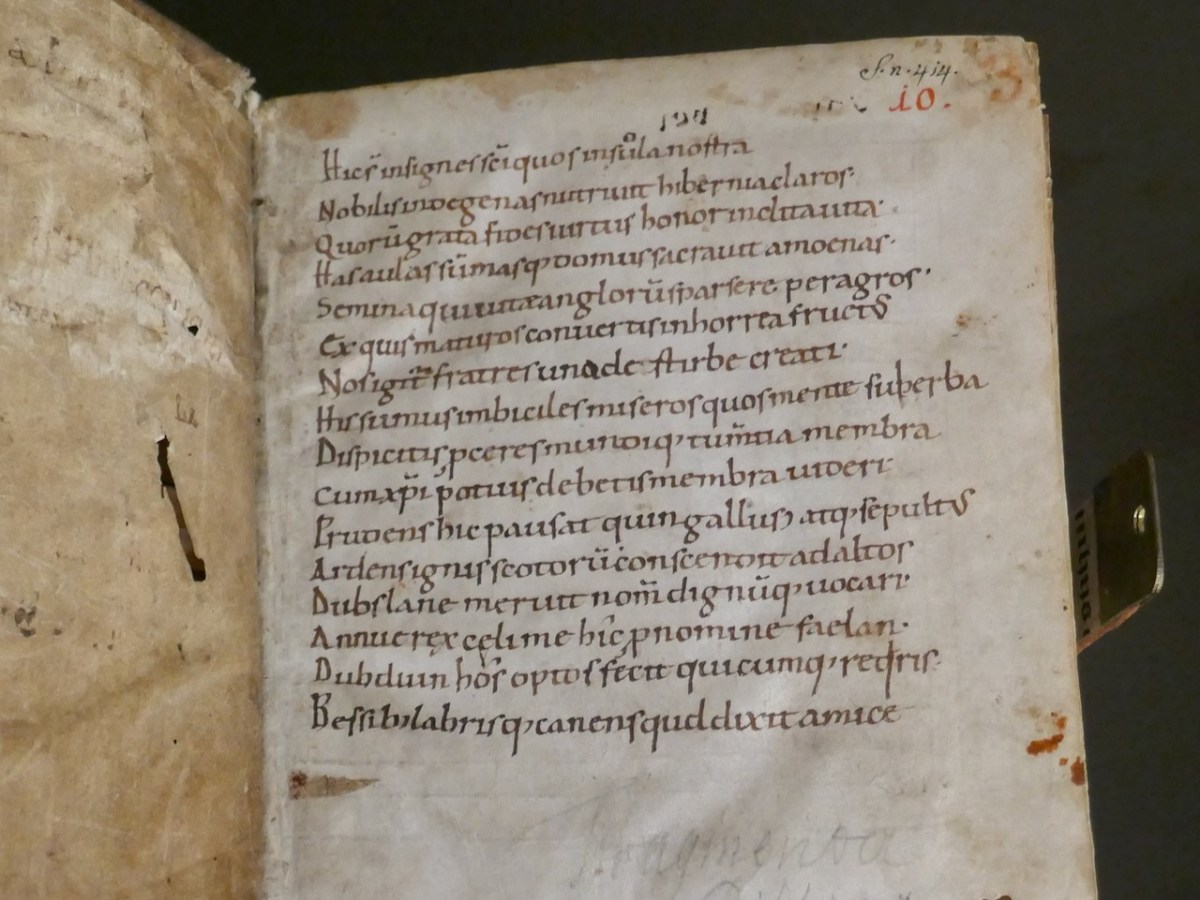
There’s even a poem of complaint by an Irish monk about how badly he is being treated at St Gallen (below).
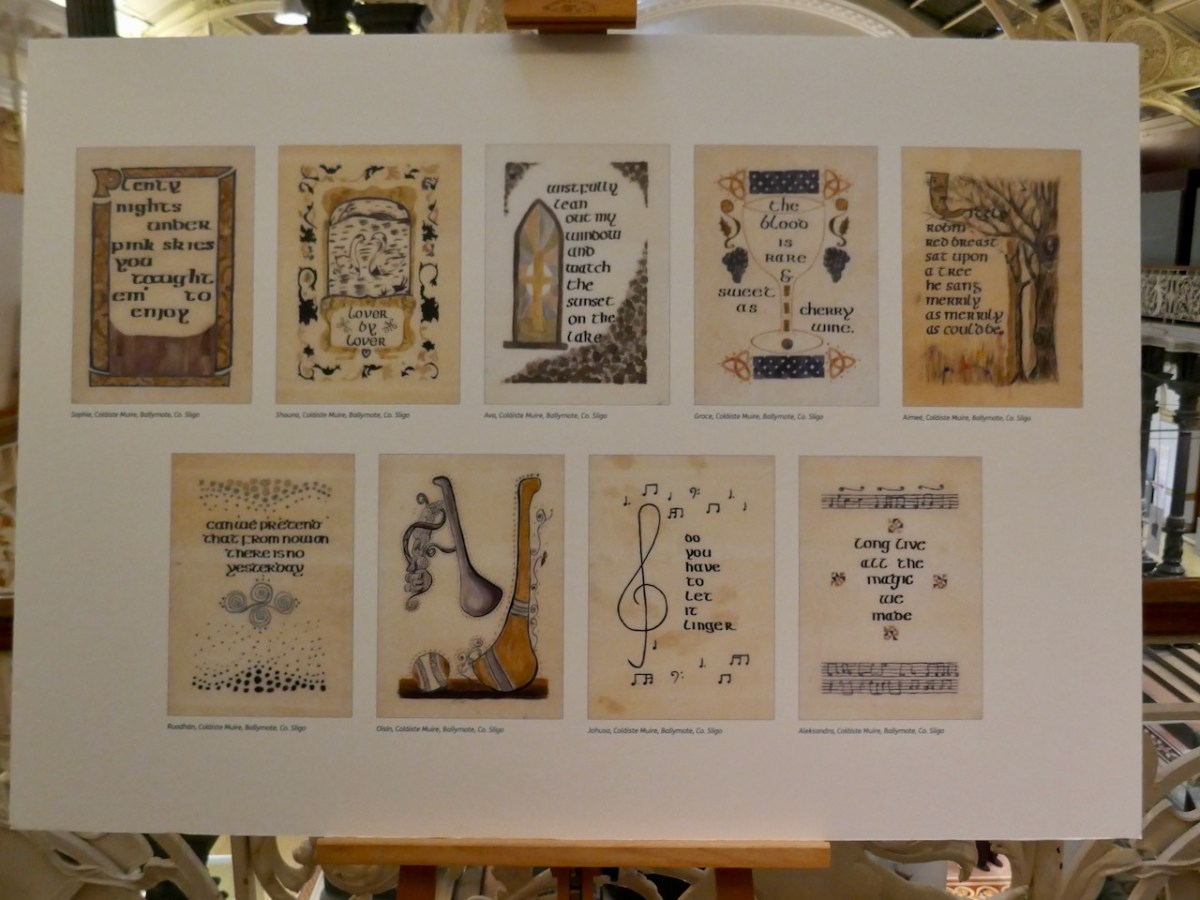
A lovely addition was an exhibition of student work, based on workshops they had taken on the art of calligraphy and medieval manuscripts.
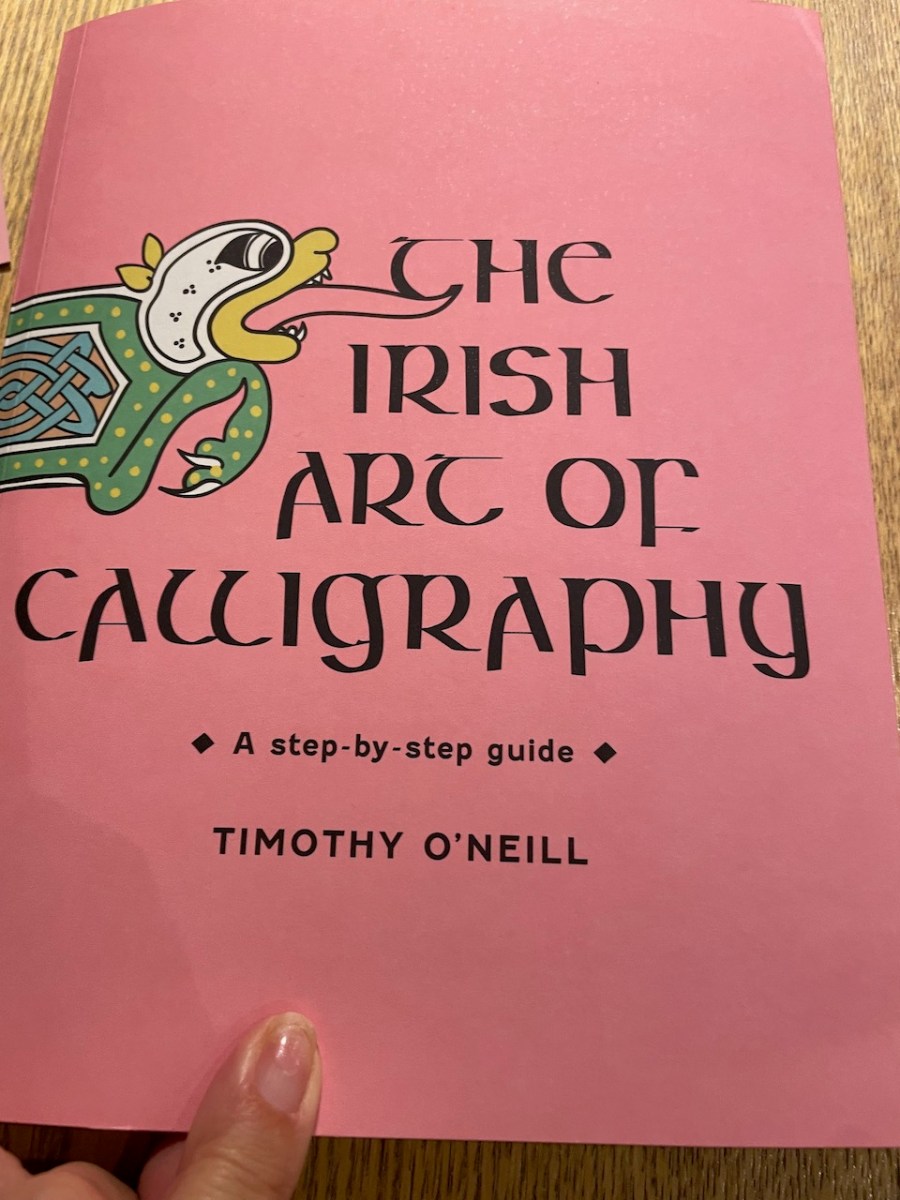
I was completely bowled over by the manuscripts. Carried away by enthusiasm, I ordered a copy of the Royal Irish Academy’s The Irish Art of Calligraphy, by Timothy O’Neill, the renowned expert on this field.
I then bought myself a calligraphy set at Cathal O’Donovan’s lovely bookshop in Skibbereen.
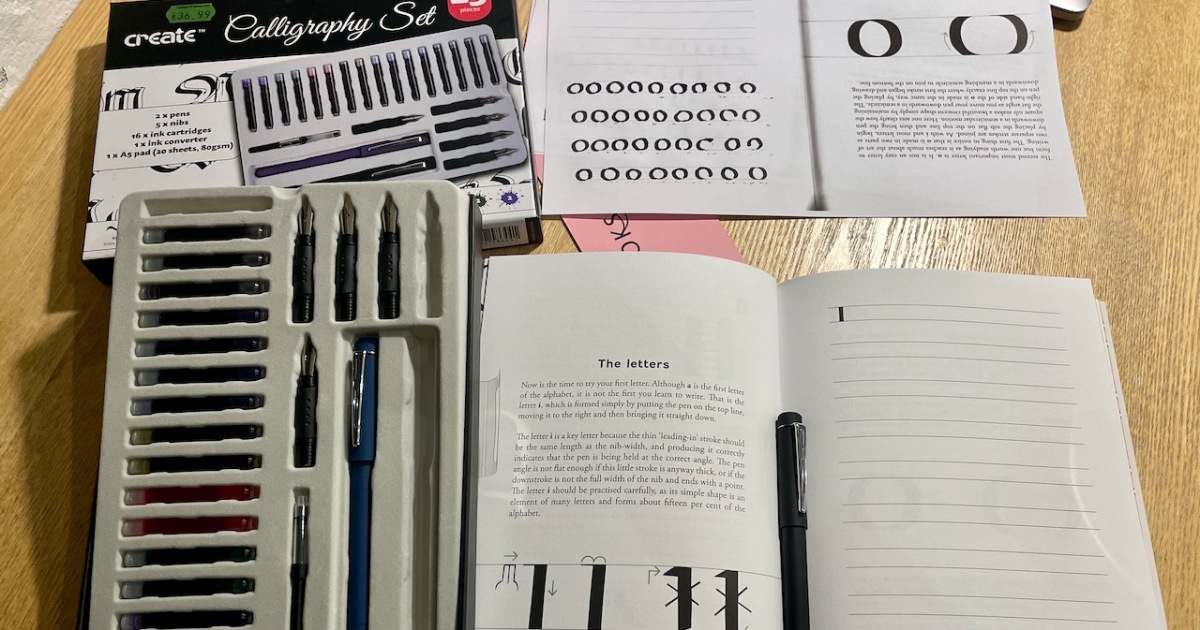
I don’t have an artistic bone in my body, but hey, I reasoned, this is not art, it’s just writing, right? The instructions were crystal clear and organised in a lovely straightforward step-by-step manner. Having figured out how to assemble the pen (no instructions included, but thank you, YouTube) I set about copying the letter i, then the o then j, c, and e.
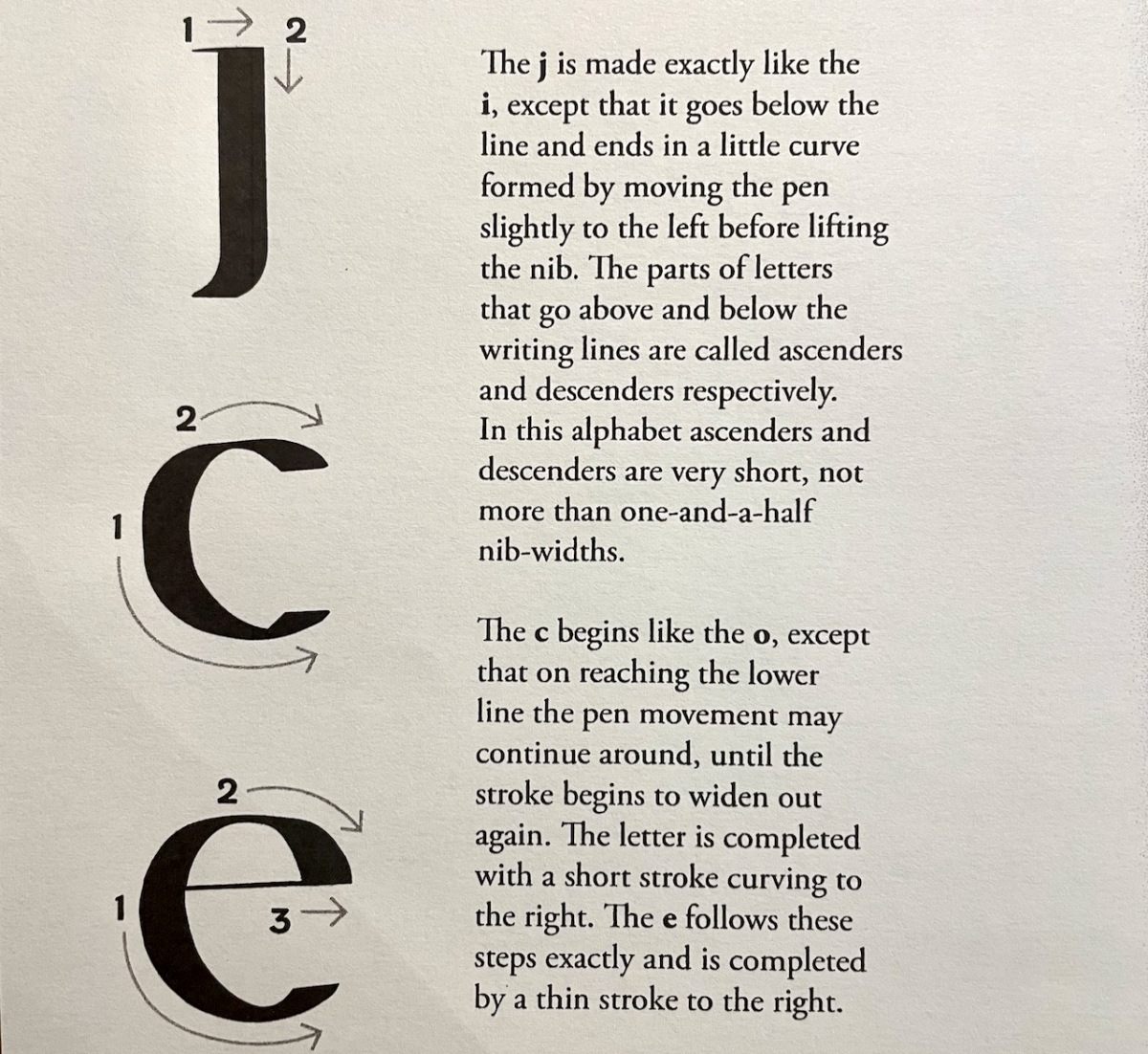
Yes, you guessed it – this is a lot harder than it looks, especially for someone not naturally gifted in this way! I may have used too thick a nib to begin with. I may be holding the pen wrong. The paper I copied to practise on (I didn’t want to use the book!) may be too blotty.
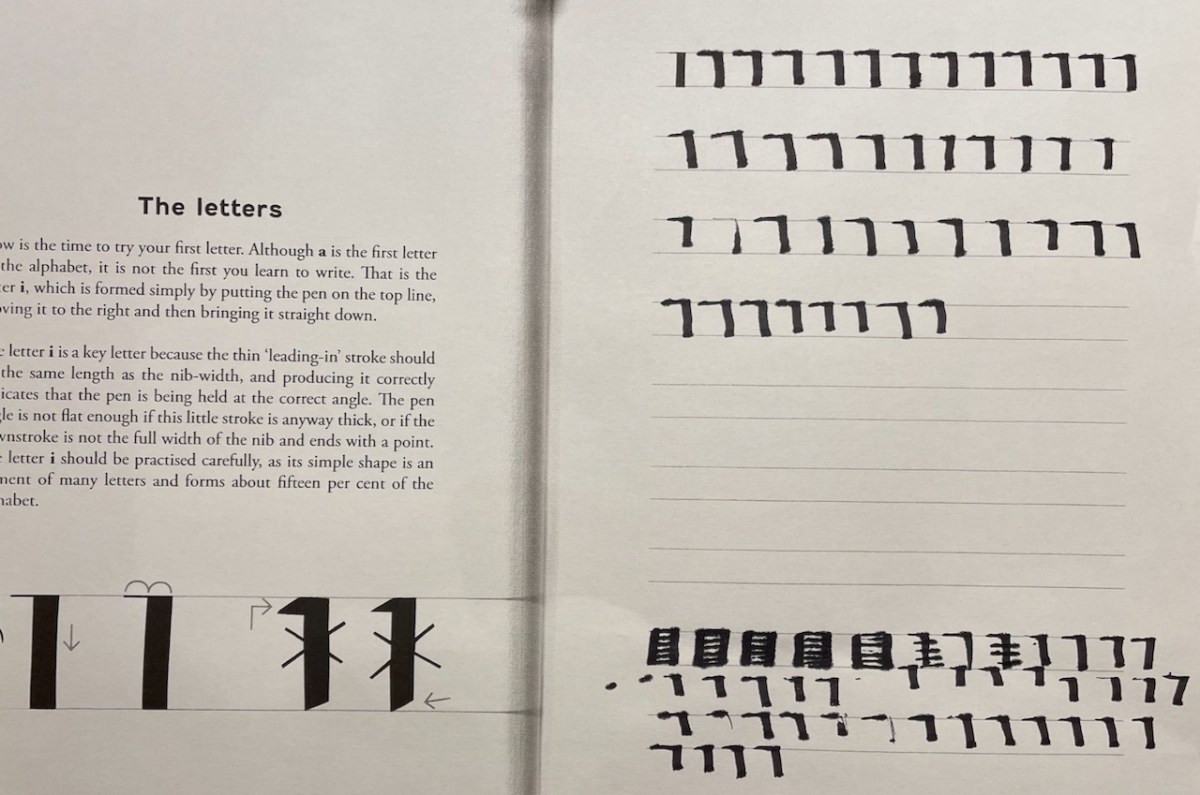
I will try again. Any readers who can see what I am doing wrong, please weigh on with words of advice. Encouragement to persist also welcome. This my letter o attempt – the first o is the model, the rest are mine.
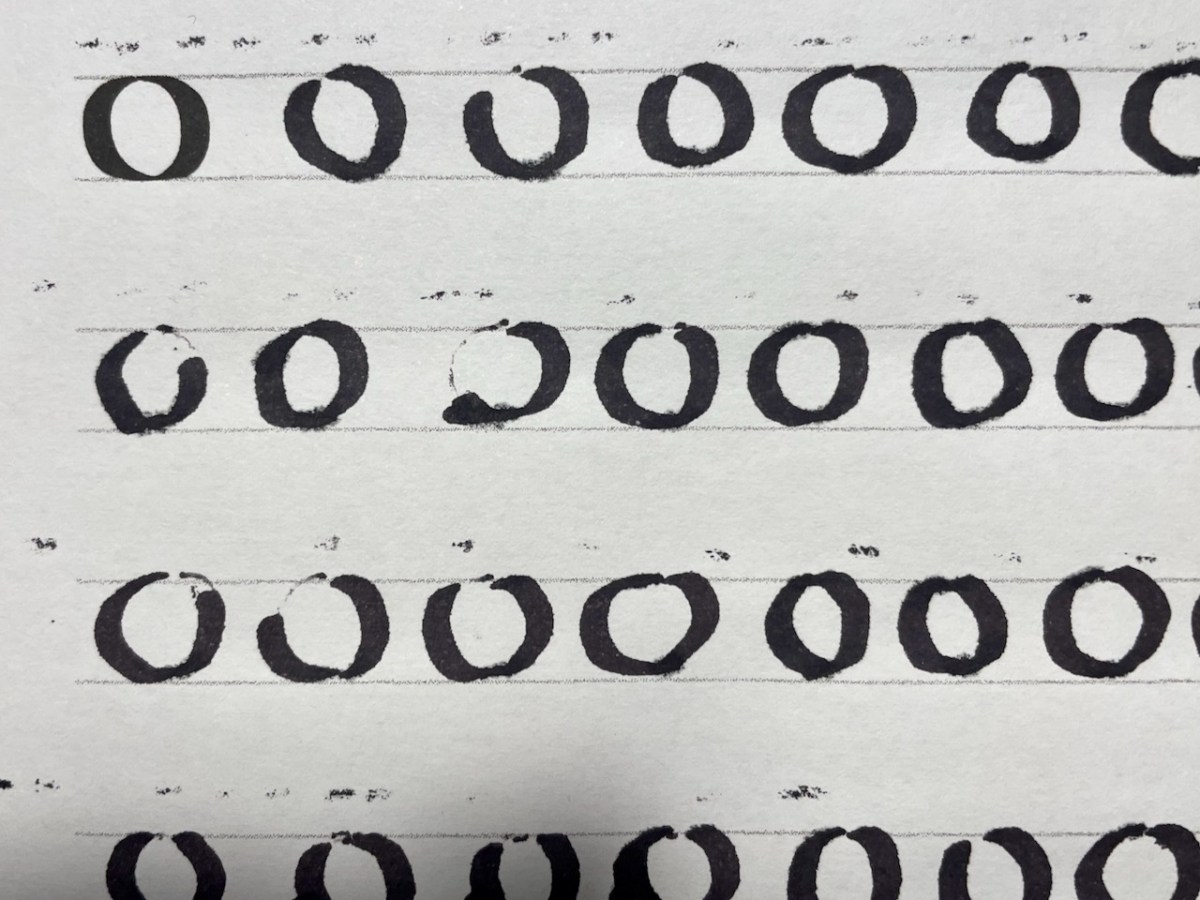
After all, I tell myself, those monks didn’t produce those wonderful scripts overnight – I wouldn’t be surprised if it wasn’t a seven year apprenticeship. Perhaps I’ll do an update in seven years and show you my progress. What are the chances it will look like this?
Discover more from Roaringwater Journal
Subscribe to get the latest posts sent to your email.
 Roaringwater Journal
Hello Finola, I passed the link for this edition to my friend Daibhi O Chronin, (no fadas on this keyboard!)
formally of NUIG who was the inspiration behind the exhibition about which you wrote so enthusiastically. He also wrote the introduction to the fabulous catalogue which I hope you managed to find. It’s fairly well hidden in a corner of the gift shop which is itself fairly well hidden. What happened to the iron rule ‘Always exit through the gift shop’? He says he and Tim O’Neill were students together in UCD and he holds him in very high regard. He also says he is passing on the link to your piece to the NMI people. I love reading your blog every week.
Pearse Vavasour
LikeLike
Hello Pearse – thanks so much for the lovely comments! I really appreciate it.
LikeLike
Looks like too much ink on the nib. Less is more when you are learn8ng, I would say.
LikeLiked by 1 person
The ink is in a plastic thingy. Maybe I should try a dip pen.
LikeLike
An excellent first effort, in that it establishes a baseline from which you can (and will, I’m certain!) only improve! I shall sent an entry in my calendar to check back in seven years for that promised progress report.
LikeLike
I look forward to that email, Michael!
LikeLike
Well, this isn’t that email, but as I was rereading this post (as one does from time to time) I was struck by the idea of a “poem of complaint.” Must set to work upon one immediately!
LikeLiked by 1 person
Hey, Finola, of course you will continue with this long-lost art! Here we are, leaving it all to the magic lazy keyboard! But hey again, wh
LikeLiked by 1 person
Hi Finola
Yes, I too have tried calligraphy and failed miserably, probably because i don’t have that stick-to-itness that’s required (or the uninterrupted time). Not too sure about those calligraphy sets, mine ended up in the bin, most calligraphers that i have seen use dip pens. Paul Antonio (PAScribe) was a good resource on YouTube, I once messaged him saying “It’s all in the wrist”, he replied saying “No, it’s all in the shoulder”. Calligraphy isn’t handwriting in the usual sense.
LikeLike
I think the ‘not handwriting’ things is dawning on me, all right. I will check our Paul Antonio – thanks!
LikeLike
Hi Finola – I too had ‘notions’ about calligraphy in my murky past … It certainly is harder than it looks! But, as you say, Rome wasn’t built in a day. Calligraphy is so beautiful so don’t give up (like I did!).
Vivien
LikeLike
I will keep at it, Vivien – thanks for the encouragement.
LikeLike
Finola
I really enjoyed hearing .ore about Harry Clarke in your film on Sat.
Also Nora Golden who lived in Ballydehob in the 70s & 80s was a wonderful sign writer in Calligraphy. You may hear more about Nora from people in the area.
Brigid
Sent from Outlook for Androidhttps://aka.ms/AAb9ysg
LikeLike
Thanks, Brigid – glad you enjoyed the movie!
LikeLike
Hi Finola, delighted to read your article about the Irish manuscripts which are visiting Ireland after 1000 years!
I’m always asked ‘….and what brought you to Ireland’. Well, the reason might be that I was born on the Feast Day of Saint Gall, the 16th October, in the city of Sankt Gallen and grew up on Gallusstrasse. In history class we learnt about the Irish monks who christianised the people in the area as they threw the pagan effigies into the lake of Constance. In art class we learnt how to use quills to write the celtic script. I highly recommend visiting the baroque library Stiftsbibliothek in Sankt Gallen, where you might find out more about the history of the manuscripts 🙂
Susanne Leutenegger
LikeLike
Nice to hear from you, Susanne. Indeed it would be wonderful to visit that library. There’s a photo of it on the exhibition website, and I was practically drooling at the sight of it. And quills! My goodness.
LikeLike
What a wonderful exhibition, which makes me want to hurry over to Dublin to see it! Never having tried calligraphy, I can’t offer any advice except to say don’t give up – your first efforts look promising to me and I would imagine your hand has got to get used to holding a pen that feels very different to use.
LikeLike
You are too kind about my first efforts, Jo. WAY too kind. 🙂
LikeLike
The exhibition looks fantastic, what superb craftsmanship and erudition. Travelling hopefully is admirable but there are some wonderful colouring books available where the hard work has been done for you!
LikeLike
Ah – must track down one of those.
LikeLike
Well done Finola, you’ve made it to day 2 of your apprenticeship! Enjoy the chance to play and enjoy something new.
LikeLike
Now there’s a positive thought – day two!
LikeLike
Finola – I took Calligraphy in my Catholic boarding school and we wrote a lot so it does become easier. You may find taking a class is a great way to learn and have fun.
LikeLike
Yes – I think a class might be my only answer.
LikeLike
Thank you for sharing the information about the exhibition – wish I was able to visit Ireland again, However, you have inspired me to get out the calligraphy set I purchased months ago and make an attempt – I only want to be able to impress with my messages on greeting cards!
LikeLike
I am amazed that my utter lack of progress inspired anyone! Let us know how you get on.
LikeLike