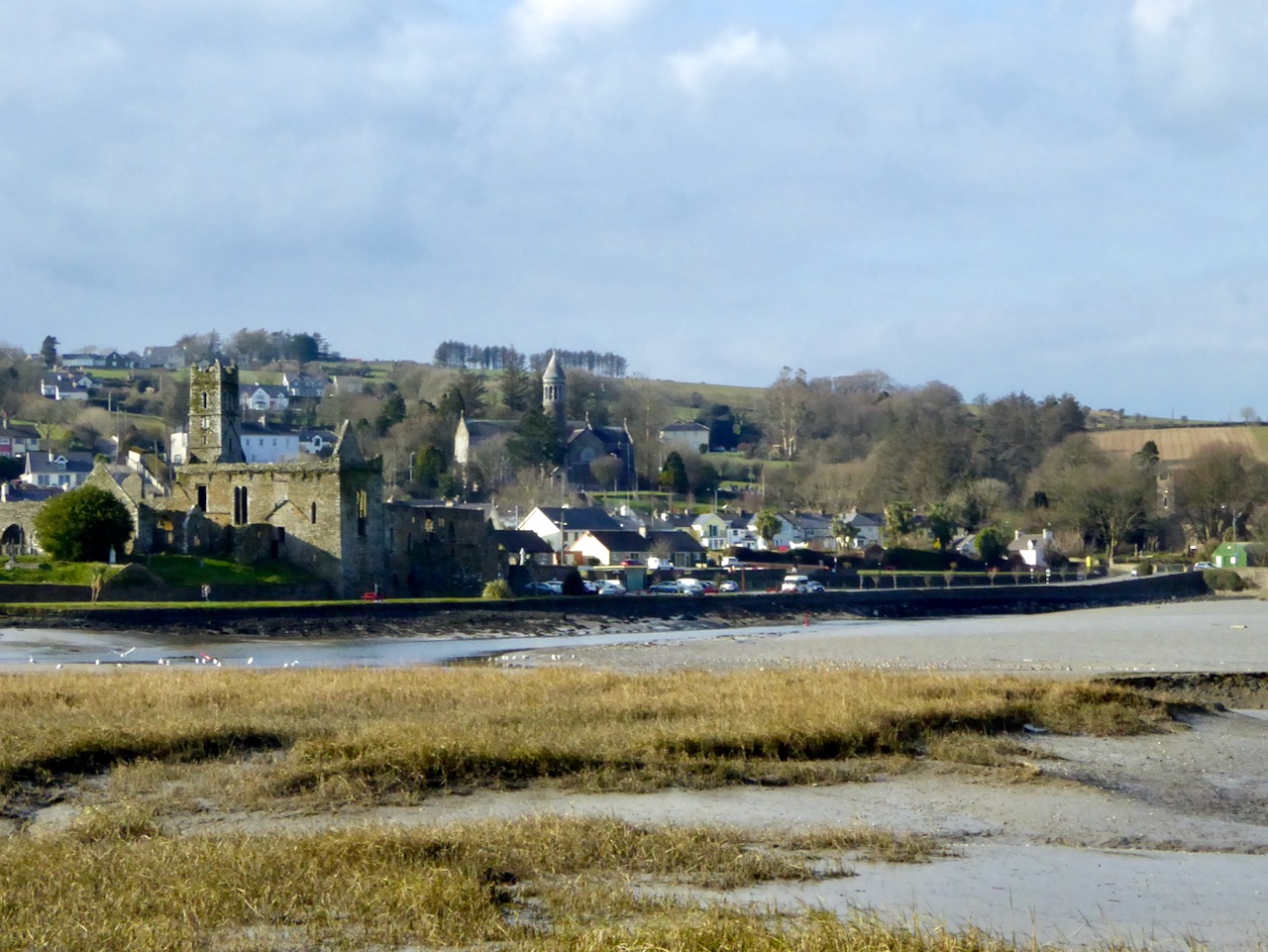
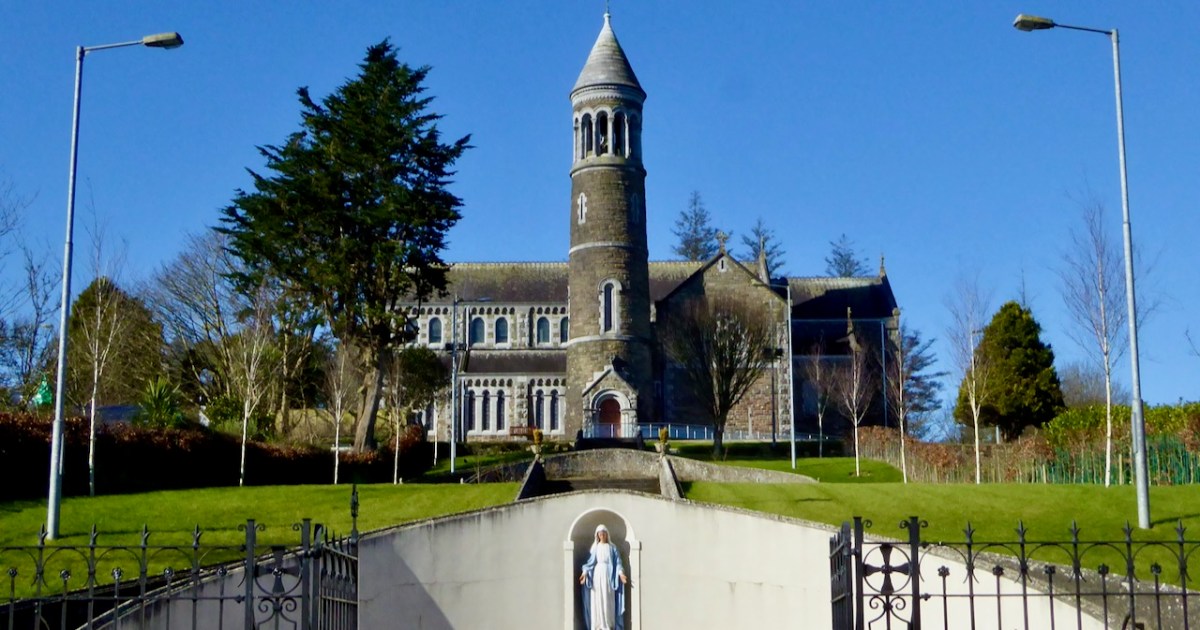
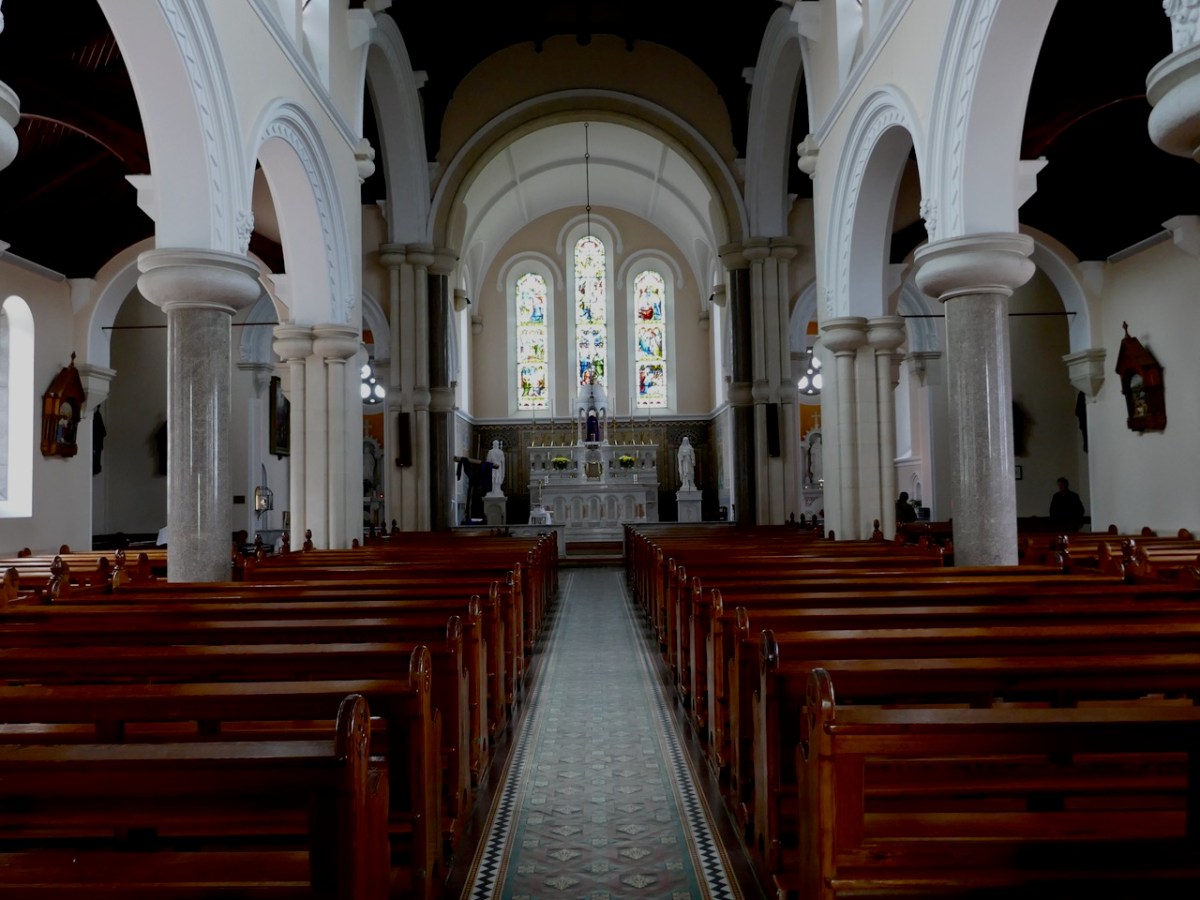
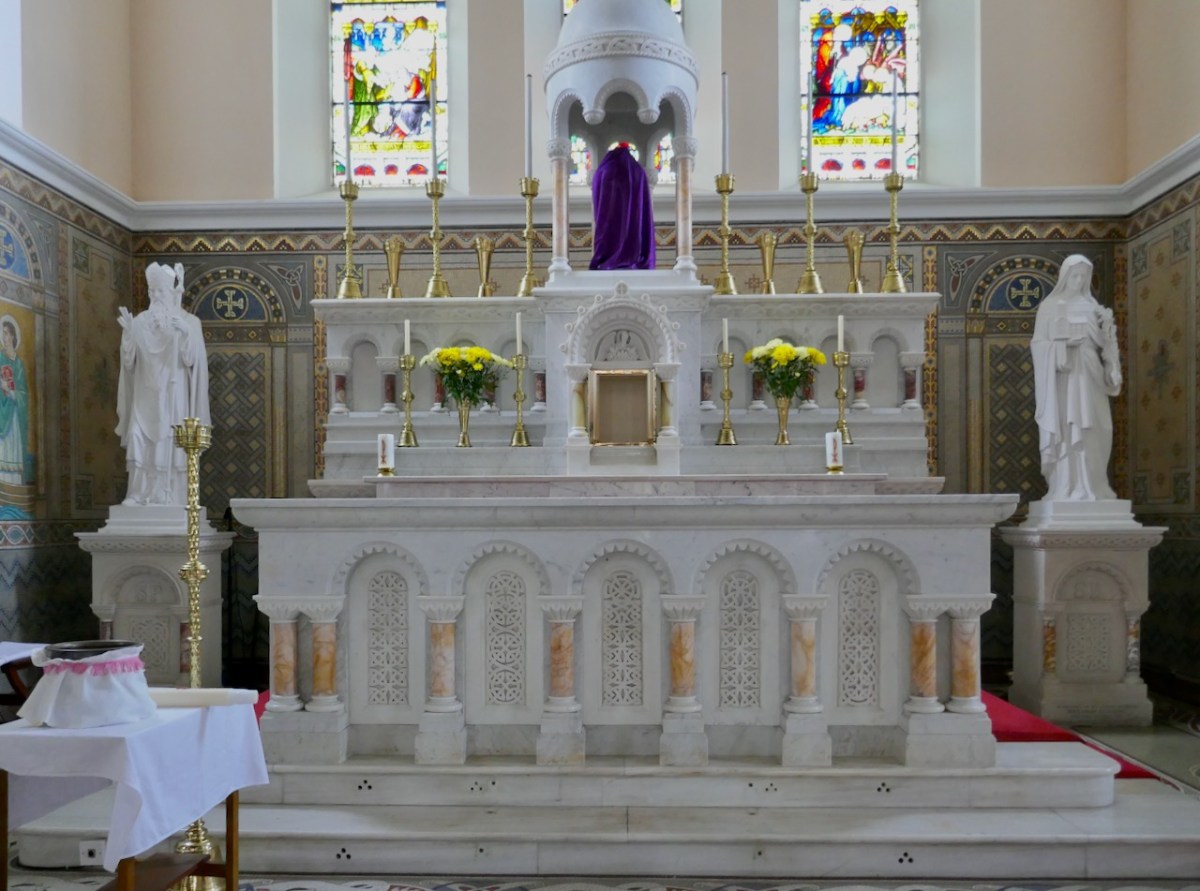
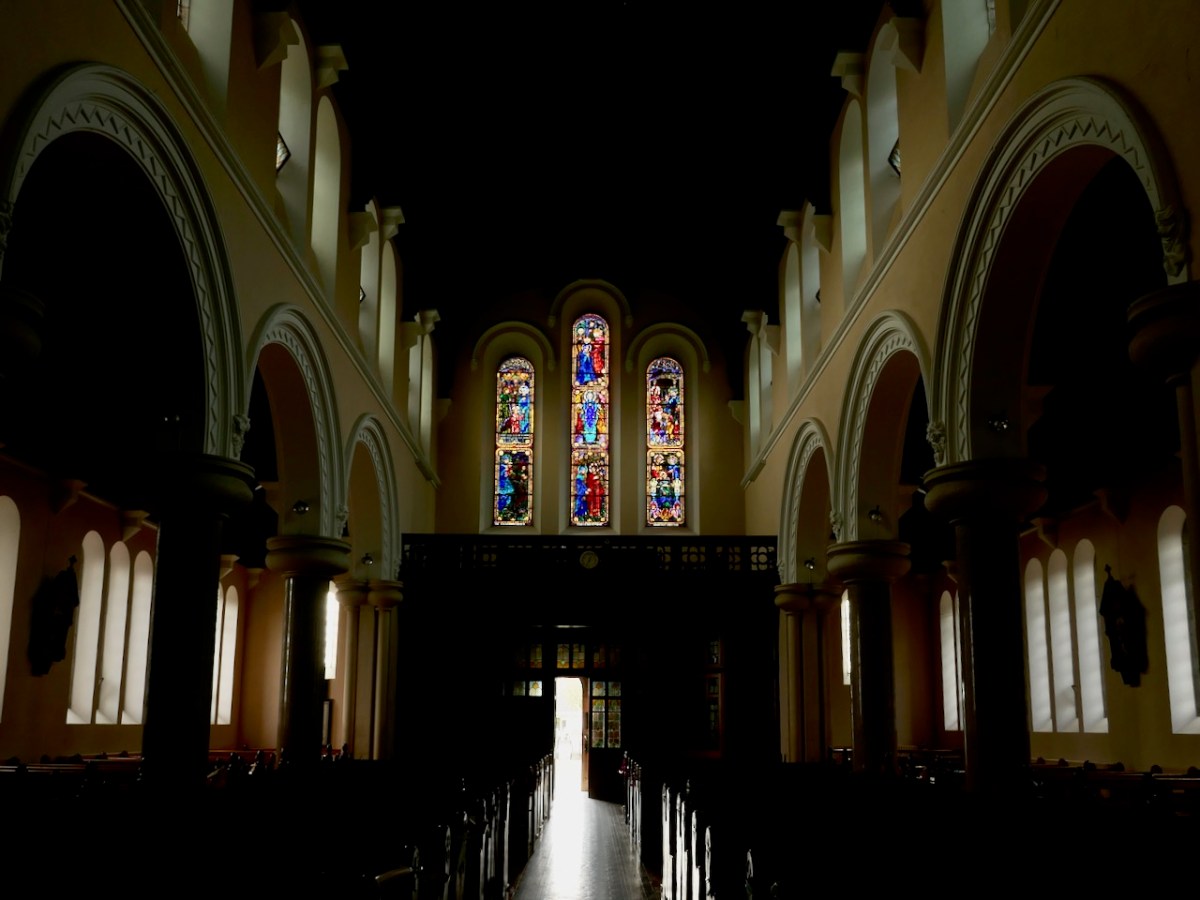
The Catholic Church in Timoleague stands proudly on a hill, instantly visible as the largest and most imposing building in the town. It belongs to the great era of Catholic church-building at the beginning of the 20th century and reflects, in its neo-Hiberno-Romanesque architecture, and its sheer size, many of the Catholic and nationalistic narratives and preoccupations of the time in which it was built.
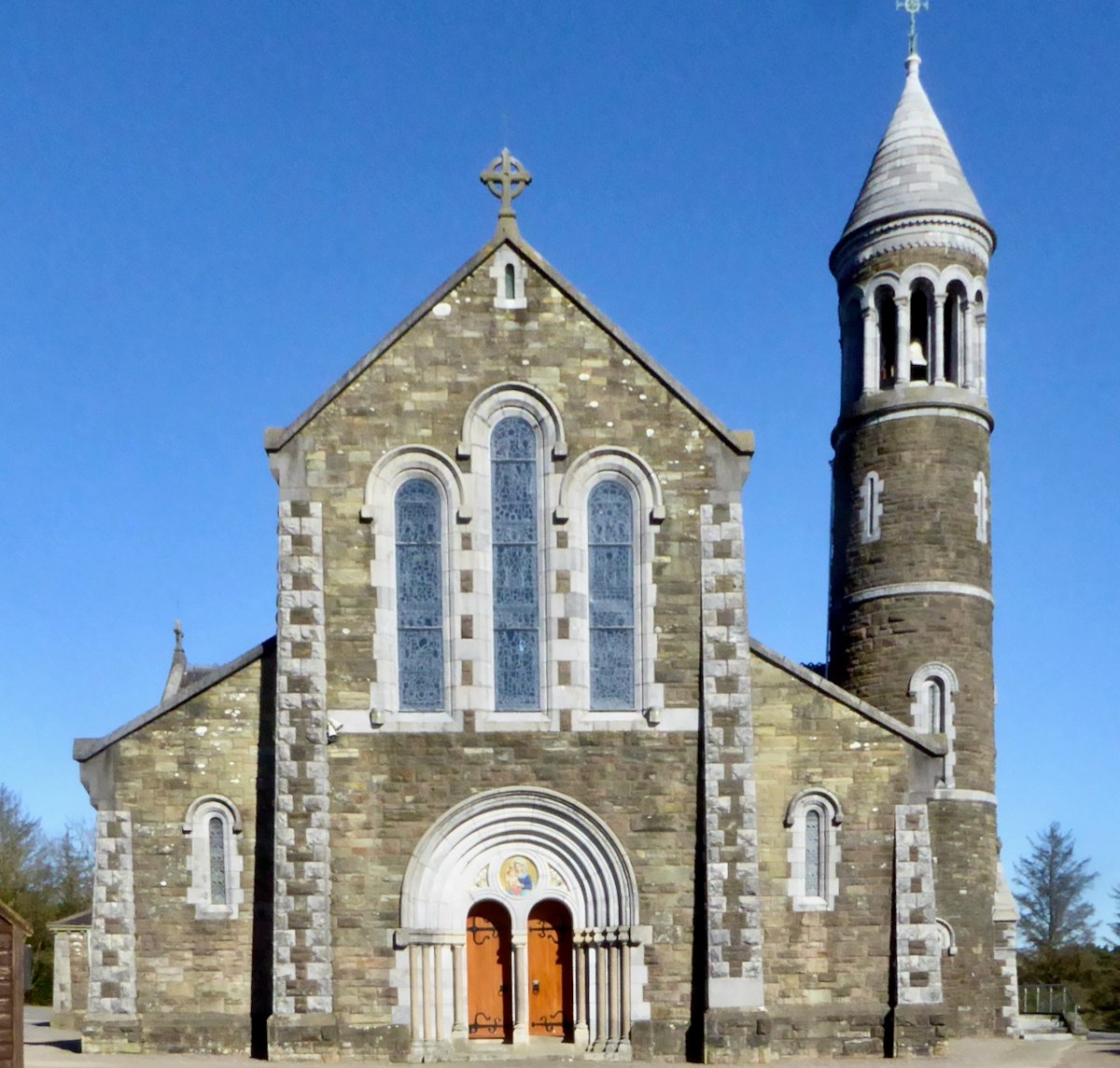
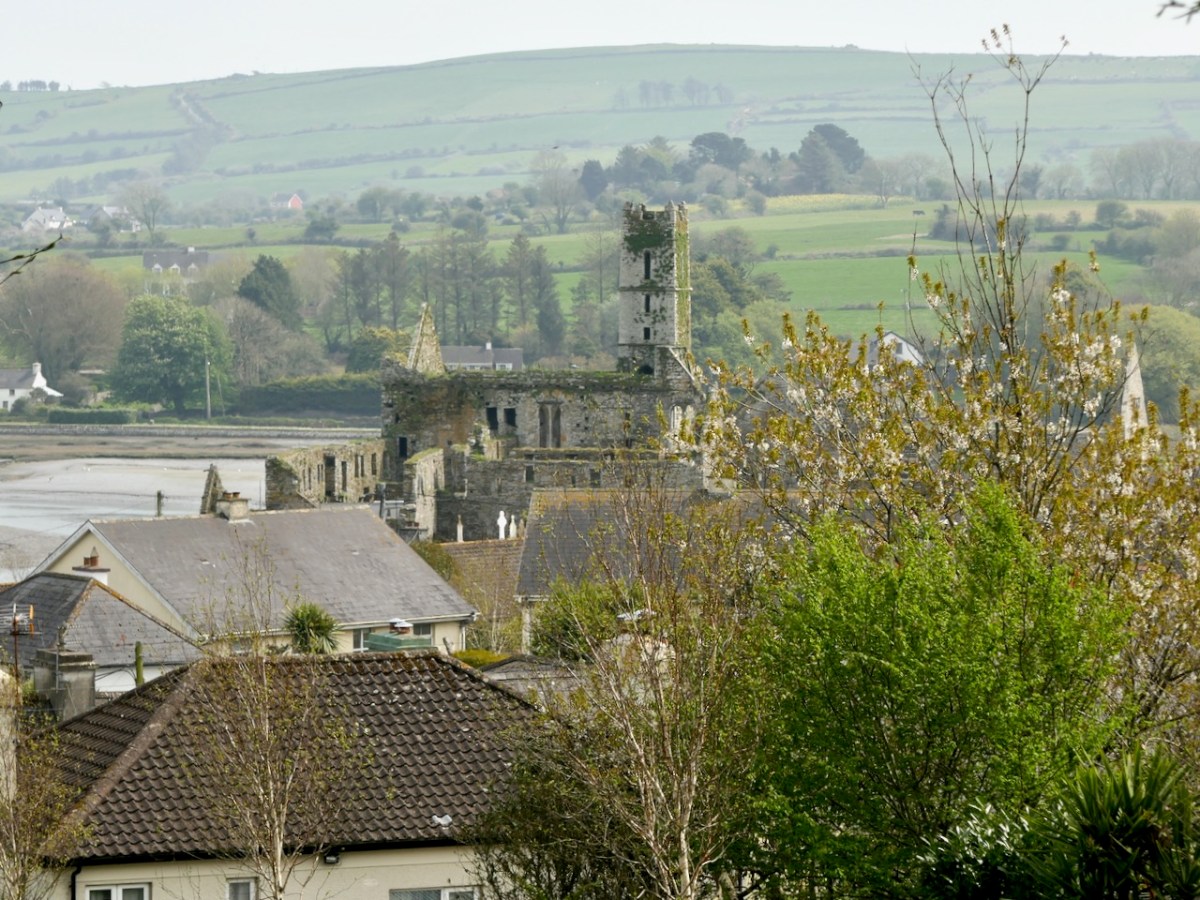
I have already written about the Timoleague Friary and the Church of Ireland Church of the Ascension. Together, they tell the story of Ireland from the 16th to the 19th centuries – the dissolution of the monasteries, the suppression of the Catholic Religion and the special position of the Established Church. But from Catholic Emancipation (1829) to Disestablishment (1869) and Cardinal Cullen’s Devotional Revolution (from 1850), the Catholic Church gained the ascendancy. An ambitious program of building was necessary to replace broken down ‘mass houses’ and provide large and suitable places of worship for the vast majority of the population.
Ground-breaking and foundation stone ceremonies were highly ritualised. Fund-raising efforts were enormous and often involved canvassing emigrants. This took energy and dedication by the Parish Priest, Rev Peter (later Monsignor) Hill.
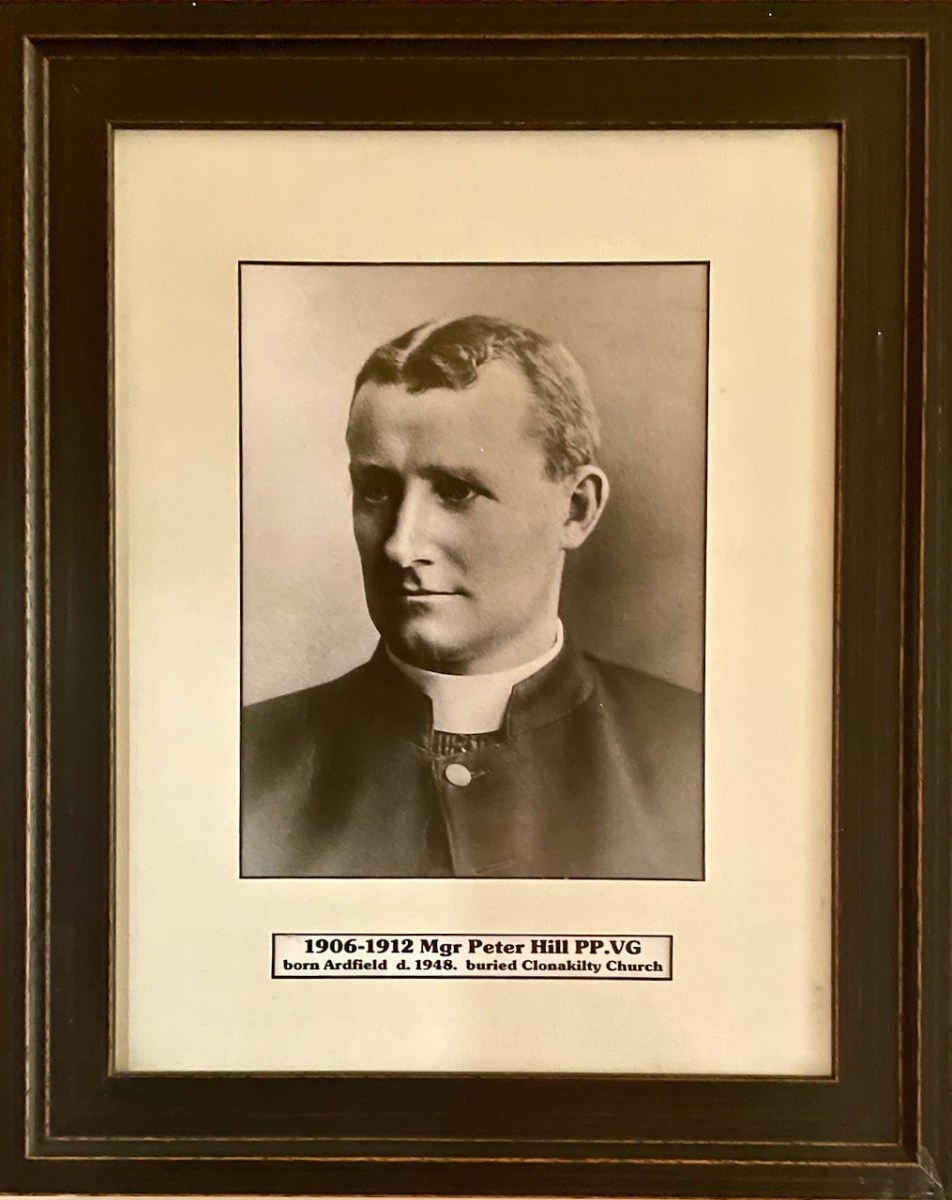
Once the church was built, or largely finished, it was consecrated, usually by a Bishop and in the case of Timoleague the Church of the Nativity of the Blessed Virgin Mary, this was conducted in 1912 by the Bishop of Ross but the oration was delivered by Dr Michael Fogarty, Bishop of Killaloe.
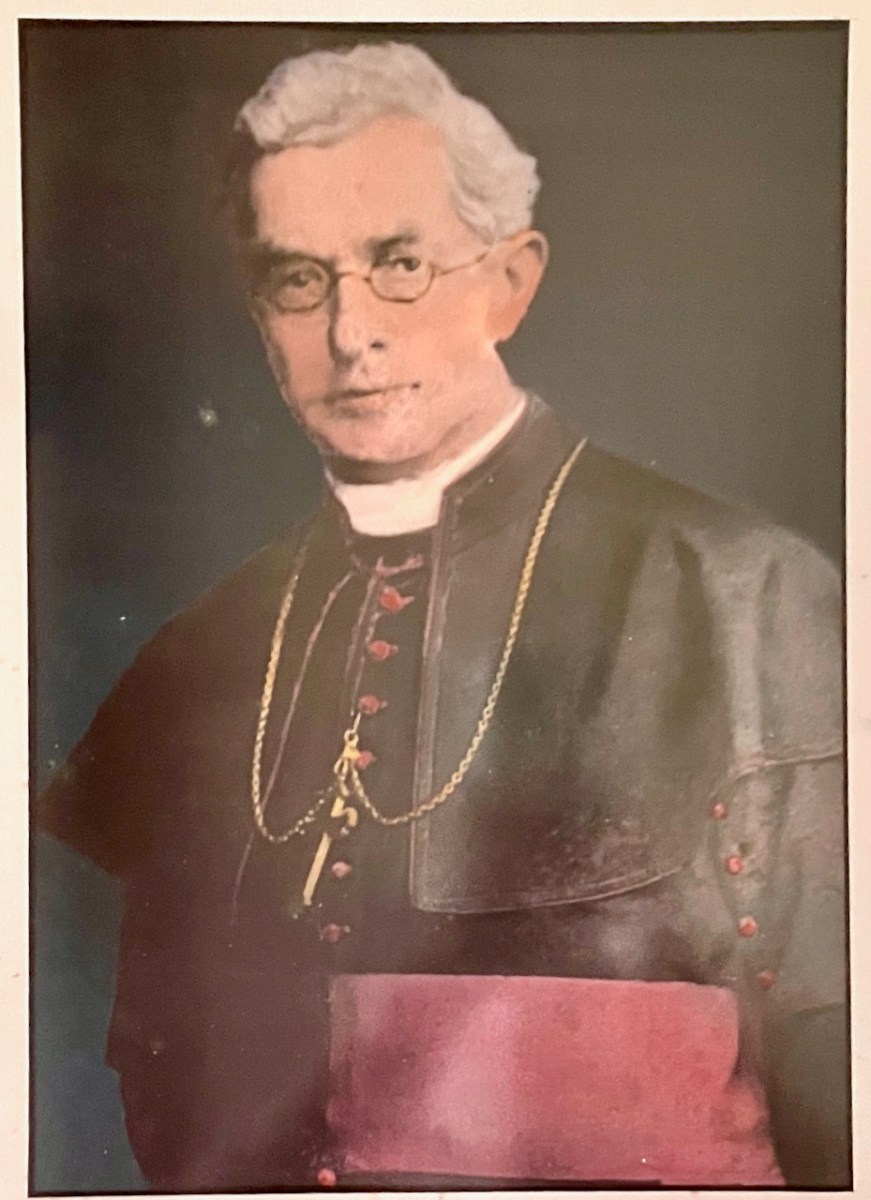
Bishop Fogarty was a passionate nationalist and noted orator who ‘involved himself closely in the social and political challenges facing Ireland’. Fogarty’s speech is remarkable to our modern ears as much for its nuance-free and emotive evocation of the centuries of Irish oppression as for the note of sectarianism that emanated from deep and long-held resentments. However, it seems to have been fairly typical of the speeches given by churchmen on such occasions and I have decided to quote it at length because it provides such a striking example of the kind of nationalistic rhetoric that congregations were listening to on these occasions. Some of us may indeed find it very familiar and remember the impassioned little patriots that we became as we wrote our history essays and sang about Kevin Barry.
The speech is quoted in full by the Skibbereen Eagle, Sept 14, 1912: Solemn Dedication by His Lordship Bishop of Ross/Impressive ceremonies/Eloquent Sermon by His Lordship the Bishop of Killaloe
So here is a deep dive into 1912 nationalistic and Catholic fervour.
Bishop Fogarty began
For many years, the faithful of Timoleague worshipped God in one of the poorest of churches … The Church in Ireland had passed out of its long night of persecution: she had entered on the bright dawn of freedom with renewed vigour, and her faithful sons and daughters strove to reconstruct her temples ….
He went on to castigate those who criticise the expenditure of money on churches,
as if they begrudged to the service of the Most High a shilling of that wealth they squander so lavishly in the service of man. For it is to be observed that the people who speak this – and I am happy to say that they are not Catholics – but if they worship at all for the most part worship in churches which they never built, but which they plundered by violence from others who built them – have neither scruple nor objection to that limitless expenditure which we every day witness in erecting public buildings, courts of justice, banks, Royal palaces, and private dwellings, some of which … have cost more money than would build all the churches in Connacht. But let the poor Irish man spend a shilling in honour of that God whom he adores … let a new window be painted, and organ erected, and we are told at once that this is money misapplied, that it shocks the economic sense, that it had been better spent in starting industries or given to the poor.
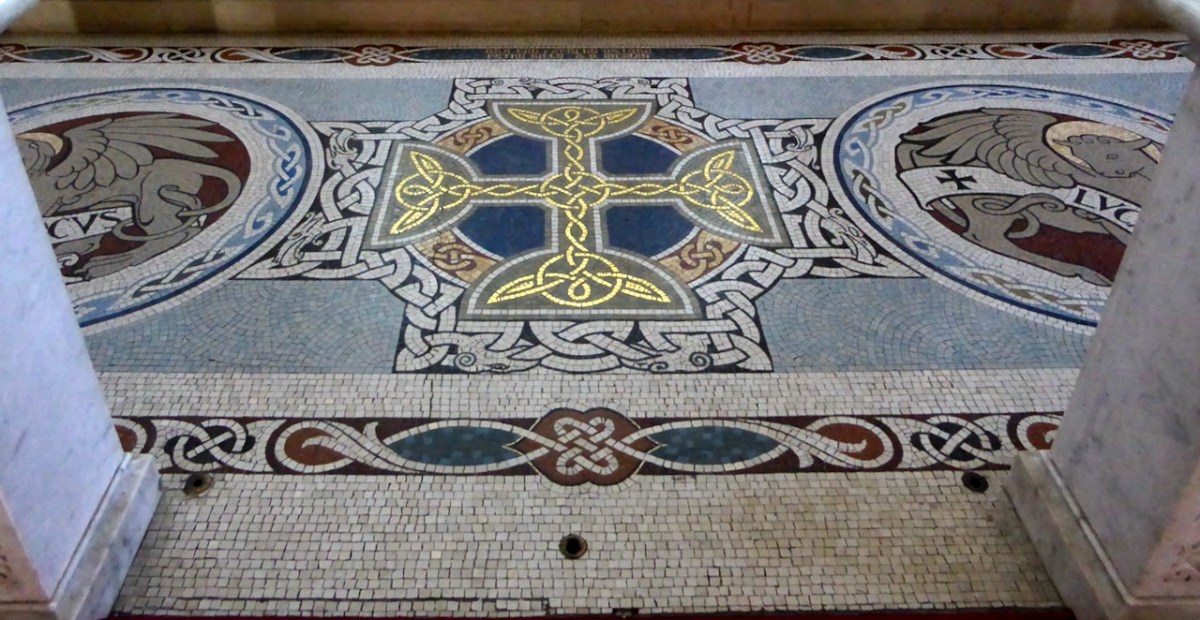
He continued,
Poor plundered Ireland. What a history has been hers. Nowhere else in the world has the faith of the people passed through so many ordeals of persecution without being conquered. Of temptation without being shaken, of scandal without being corrupted. And, therefore, much as I admire this splendid building and rejoice with you in its consecration, it is not, I confess, the beauty of its architecture, nor the solidity of its structure, nor the amplitude of its dimensions that move me now, but the thought of what it represents and stands for, the triumph of our long persecuted faith. Your Catholic ancestors lie buried for many generations around the walls of the old monastery yonder, now roofless and in ruins. They passed out of life, those brave soldiers of the faith, apparently defeated in their long and direful struggle for God and country; and when they died everything seemed lost to Ireland – land, freedom and religion.
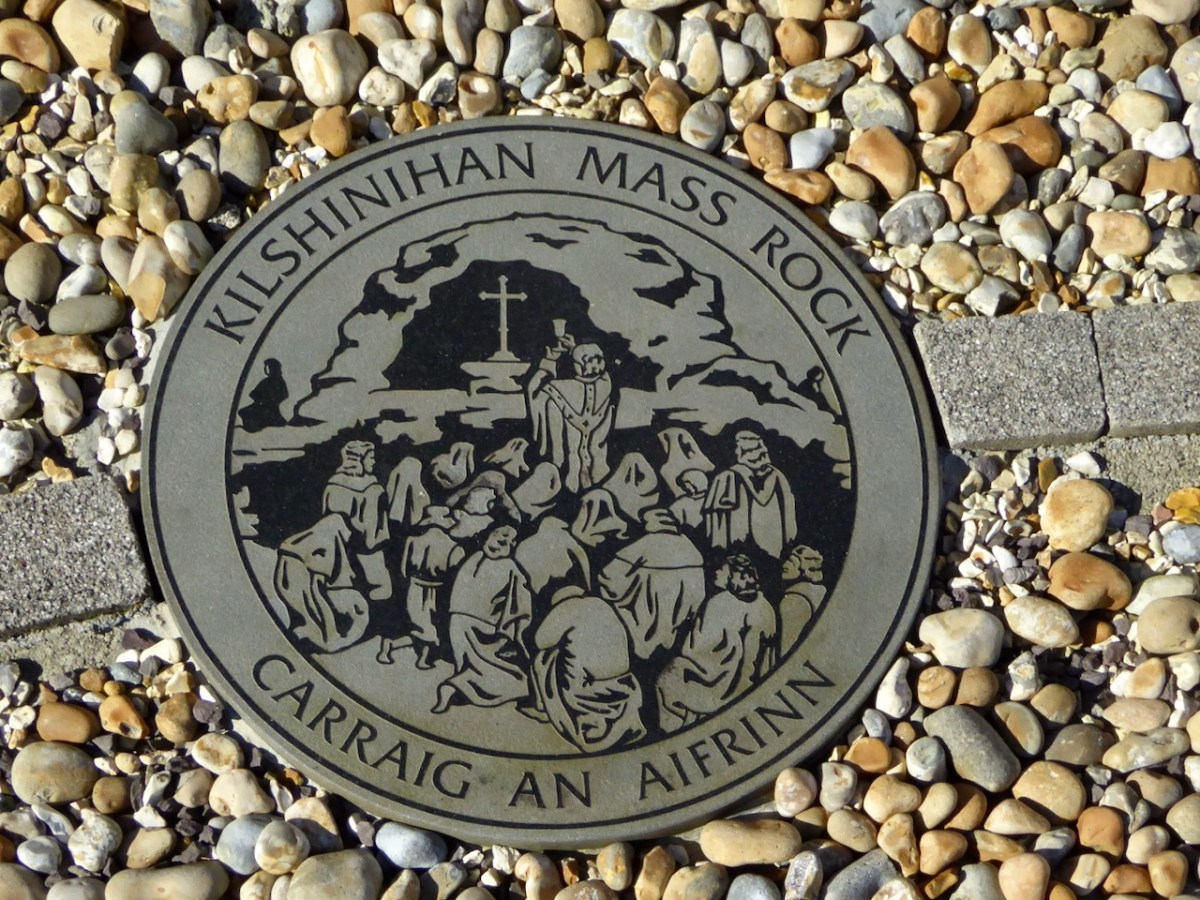
But the flag for which they fought was not buried; nor was the spirit which spread it fearlessly to the breeze, despite all opposition, extinguished in the land. The blood which they shared as martyrs carried in it the seeds of ultimate triumph, and your noble new church, now built and consecrated in an atmosphere of freedom, is the fruit, as it is also a monument of the illustrious and lasting victory won for Catholic Ireland by these, our faithful forefathers. Their race and blood have passed through many vicissitudes of fortune since the dark and disastrous night of Kinsale; they have suffered many a wrong and many humiliations in the intervening centuries, and have undergone many great and sorrowful changes …
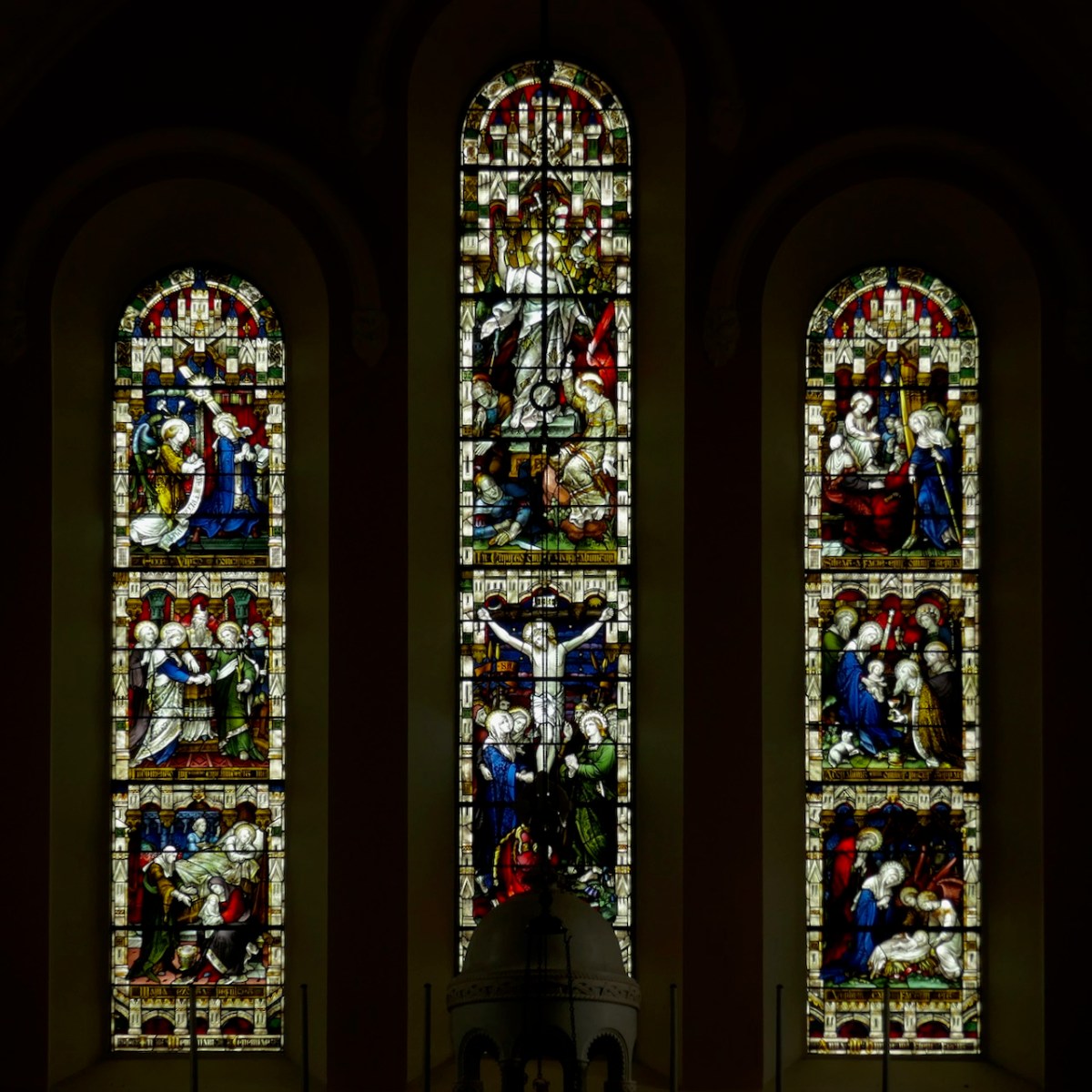
Referring to the fundraising needed to build a church like this, by voluntary contribution and without any form of state aid, he stated,
… though this system may sometimes press hard upon us, and though our richly endowed Protestant neighbours may sneer at our sometimes humble efforts, I regard it not only as a tribute to the intensity of our faith, but as a merciful dispensation of Providence for the preservation of the holy faith in the hearts of our people … the result of this system is that our priests and churches belong to the people themselves – that is the Irish priest as a rule is sprung from the people amongst whom he ministers. He is one of themselves, bone of their bone and flesh of their flesh. His heart and theirs keep perfect time and empathy. He is no foreigner, no outsider, no distant Aristocrat who disdains their humble lives, or chills them with his lofty airs.
Bishop Fogarty lived until 1955 and died, still a committed republican, at the ripe old age of 96. He played a significant role in the struggle for Irish independence although he surprised many by being pro-treaty, possibly related to his personal friendship with Michael Collins.
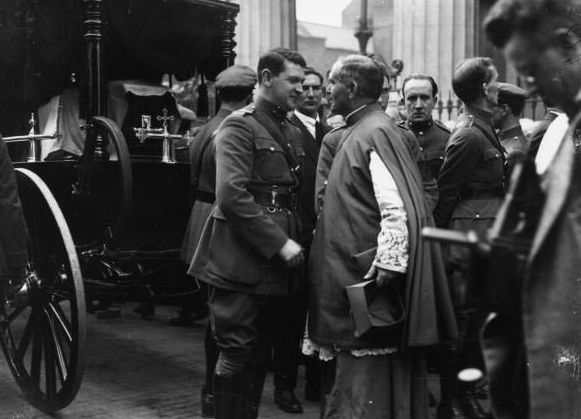
Can you imagine him thundering from the pulpit in Timoleague in 1912, delivering his fiery oration to the willing ears of the congregation? How would you have felt, if you had been sitting there?
Discover more from Roaringwater Journal
Subscribe to get the latest posts sent to your email.
 Roaringwater Journal