Ecce Homo: Harry Clarke’s Kilbride Window

Harry Clarke’s window in St Brigid’s Church of Ireland, Kilbride, Co Wicklow, is a bit of a mystery: simultaneously one of his most beautiful and his most mis-described windows. It’s almost as if there’s some kind of spell on it – whoever shall describe this window shall be led down erroneous pathways*. I hope this post will break that spell and set the record straight.
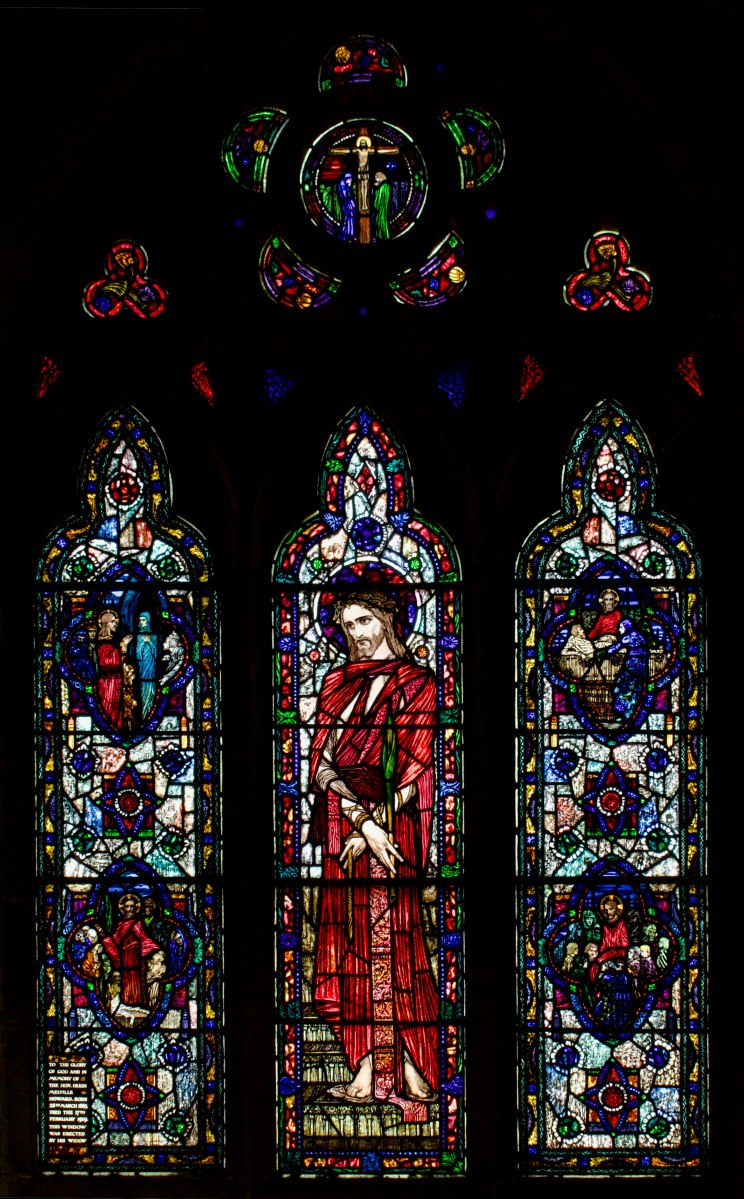
This is the whole window, which occupies the wall behind the altar. It’s a three-light window and the tracery above includes a small roundel with a crucifixion scene.

When it comes to Harry Clarke, there is no more authoritative source than Nicola Gordon Bowe. Hers are the shoulders upon which all of us stand to gain insight and understanding of the man and his work. She didn’t make many mistakes. However, inexplicably, she described this window as a ‘Resurrection’. In The Life and Work of Harry Clarke, she states that: As a result of the St Stephen Lea-Wilson Window in Gorey, Clarke was asked by the Earl of Wicklow to design a Resurrection window for the parish church of Enerily and Kilbride, Co. Wicklow near the Earl’s estate, Shelton Abbey. Several pages further on, she says Harry . . . spent 9 February with the Earl of Wicklow discussing a further window for the small church of Enerily and Kilbride near Arklow.
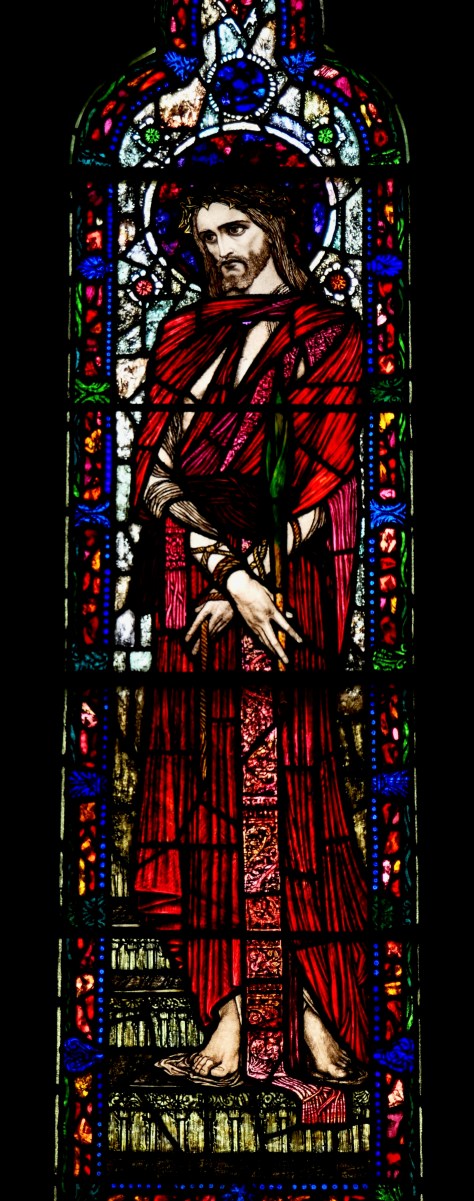
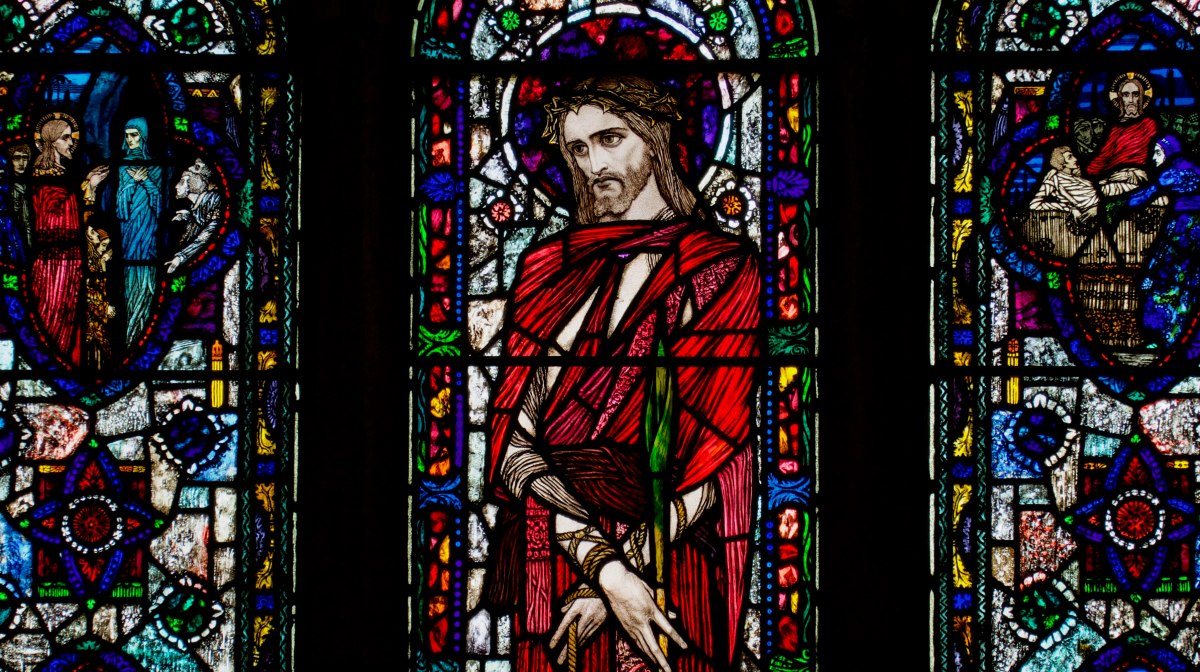
The central figure is of Christ as he was paraded before Pilate, who washed his hands of the affair and declared, as he presented him to the Jews, Ecce Home – Behold the Man. As described in John and Matthew, he is bound, crowned with thorns, holding a reed (Harry has chosen a bulrush), and clad in a scarlet robe. He is standing on steps (as frequently depicted in paintings) and under his feet the cloth may represent his own clothes, stripped from him

She describes the finished window thus: In the three-light Resurrection, the figure of Christ in the centre light stands at the foot of a staircase, robed in ruby, crowned with thorns and bearing the palm of martyrdom. The ruby glass is carried into the border, into the side traceries where it is neither painted nor acided, and is echoed in the medallion showing The Crucifixion in the centre of the rose tracery above. It is also used in the figure of Christ, which appears in each of the quatrefoil panels of the side lights which, set in rich borders of ruby, blue and green, seem inspired by medieval glass. A rich blue dominates four medallions showing miracles of the Lord. The medallion in the lower right-hand light features a self-portrait of the artist, a halo over his untidy hair, and huge eyes giving him a haunted look while above, the resurrection theme is evocatively illustrated by the miracle of Lazarus. This window is much enhanced by the rough, unplastered wall in which it is set.
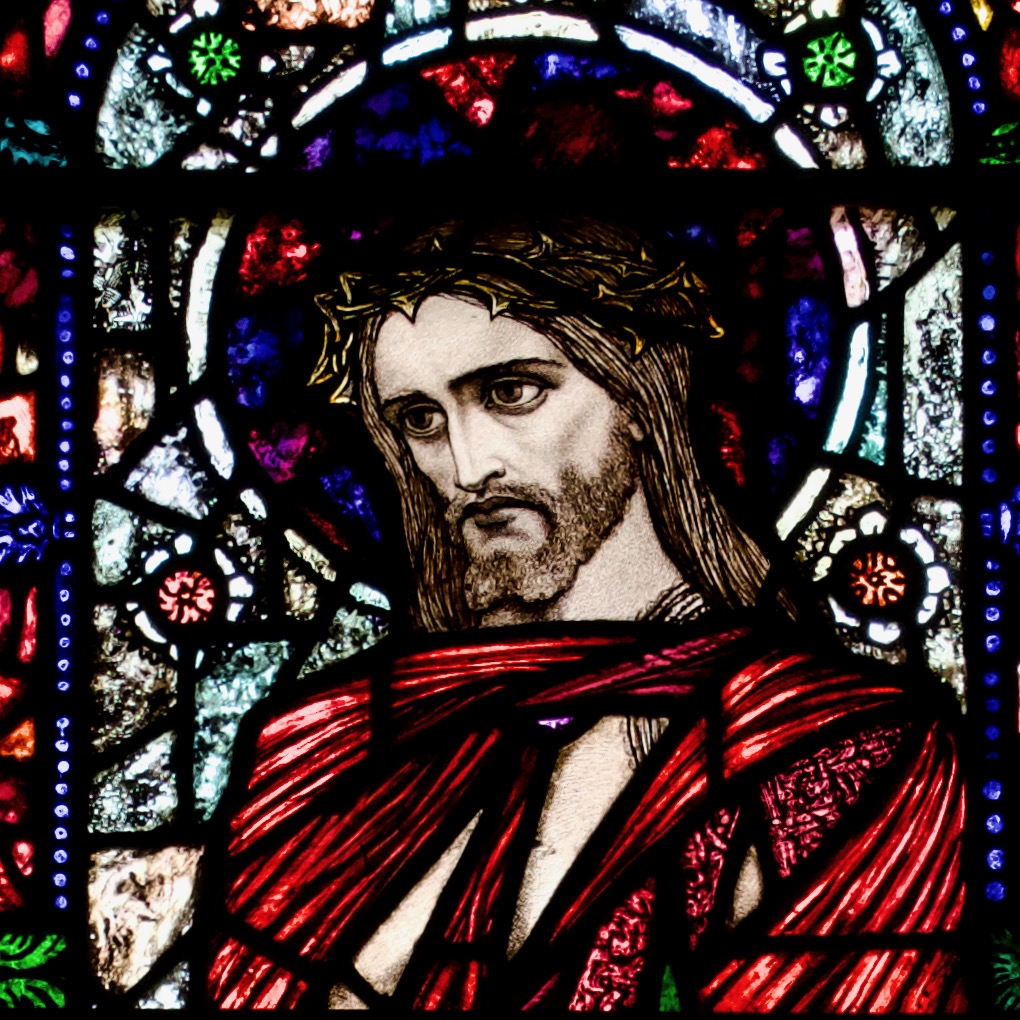
Clarke’s Jesus in this window is one of his most striking depiction of suffering and compassion

However, the dedication on the window is to Hugh Melville Howard, younger half-brother to the Earl of Wicklow, and donated not by the Earl, but by Hugh’s widow.  Hugh had died in 1919. The date might make you suspect that this was a war memorial window, but in fact, Hugh died of pneumonia at the age of 36. This must have been a tragedy indeed for his wife, May Sands, the only daughter and heiress of New York lawyer and real estate mogul, Benjamin Aymar Sands. They had married in America in 1908 – a high society wedding, every detail of which was gleefully reported in the New York Times. At the time of his death they were living in Bellevue House in Delgany and had two children. The window was not installed until 1924.
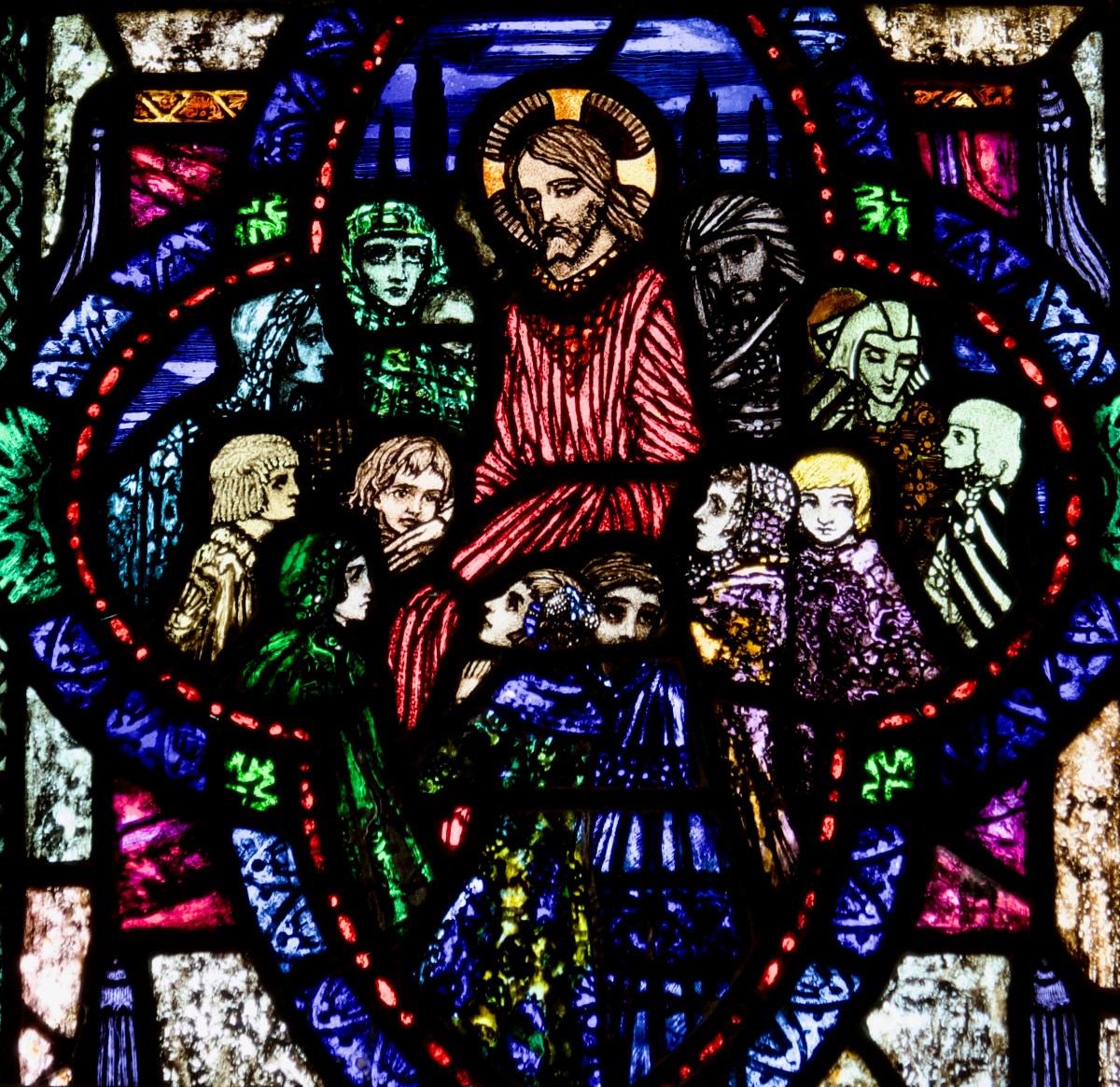
Christ and the Children

So there seems to be a disconnect between the original idea for a Resurrection Window for Kilbride, and the final product, which depicts not, indeed, a Resurrection image but that of the suffering Jesus, mocked by his tormentors, scourged, bound with ropes, crowned with thorns, carrying a reed to stand in for a sceptre. This is the image that is known as Ecce Homo – Behold the Man. 

Matthew 27: 26-31

Then released he Barabbas unto them: and when he had scourged Jesus, he delivered him to be crucified. Then the soldiers of the governor took Jesus into the common hall, and gathered unto him the whole band of soldiers. And they stripped him, and put on him a scarlet robe. And when they had platted a crown of thorns, they put it upon his head, and a reed in his right hand: and they bowed the knee before him, and mocked him, saying, Hail, King of the Jews! And they spit upon him, and took the reed, and smote him on the head. And after that they had mocked him, they took the robe off from him, and put his own raiment on him, and led him away to crucify him. 

John 19: 1-5

Then Pilate therefore took Jesus, and scourged him. And the soldiers platted a crown of thorns, and put it on his head, and they put on him a purple robe, And said, Hail, King of the Jews! and they smote him with their hands. Pilate therefore went forth again, and saith unto them, Behold, I bring him forth to you, that ye may know that I find no fault in him. Then came Jesus forth, wearing the crown of thorns, and the purple robe. And Pilate saith unto them, Behold the man!

I surmise that, whereas the original idea, as proposed to Harry by the Earl, may have been for a Resurrection-themed window, the final central image, of suffering and preparation for death, would have seemed more apt to May, the grieving widow. 
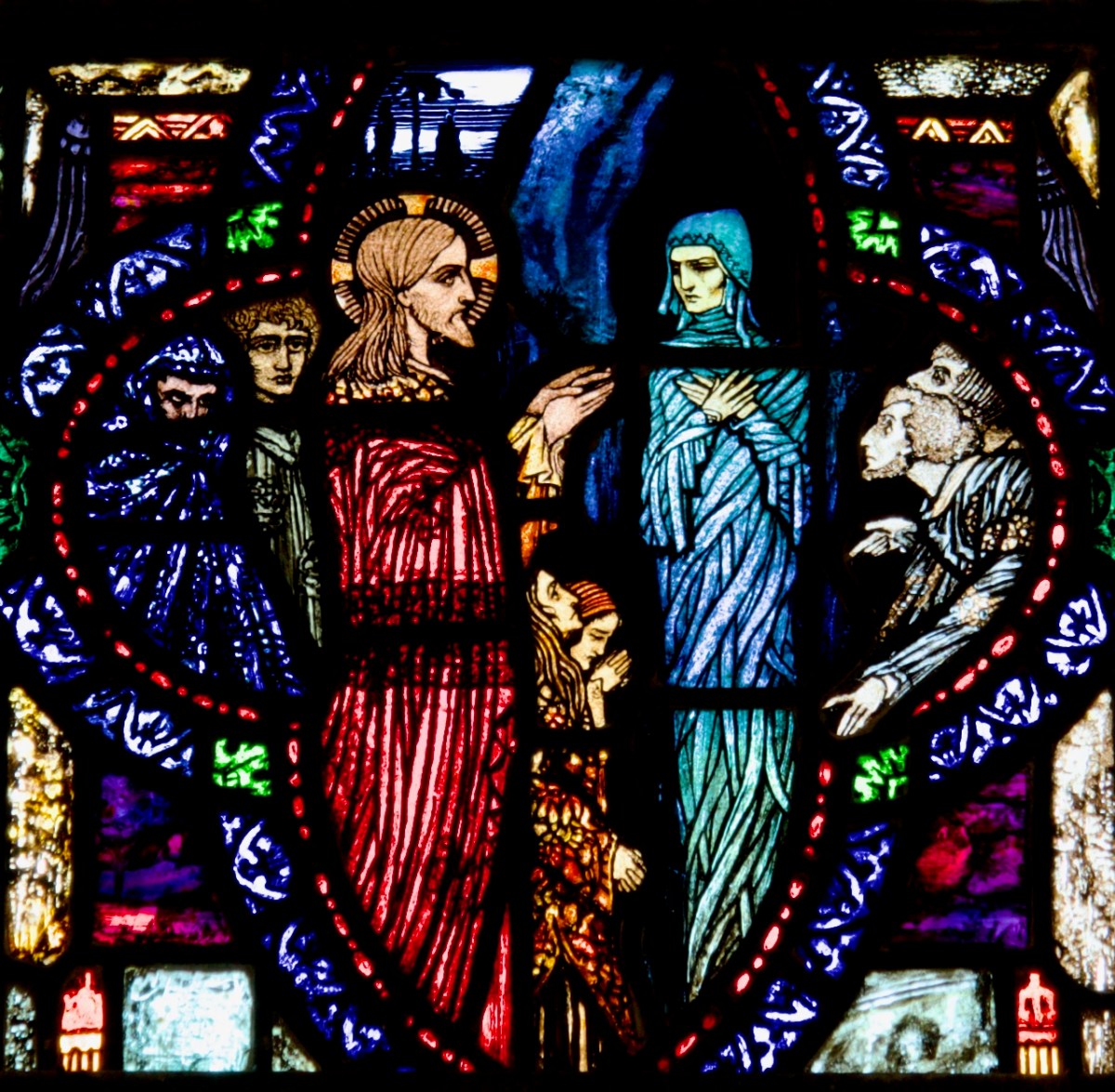
The Raising of Lazarus

May and Hugh had been married in a charming country church called St Andrews Church of the Dunes in the heart of the Hamptons on Long Island. It was an Episcopalian church patronised by wealthy New Yorkers who had country houses in the area. Episcopalian services focus on the sacraments, similar to a Catholic Mass, and the church was filled with stained glass, some by Tiffany.
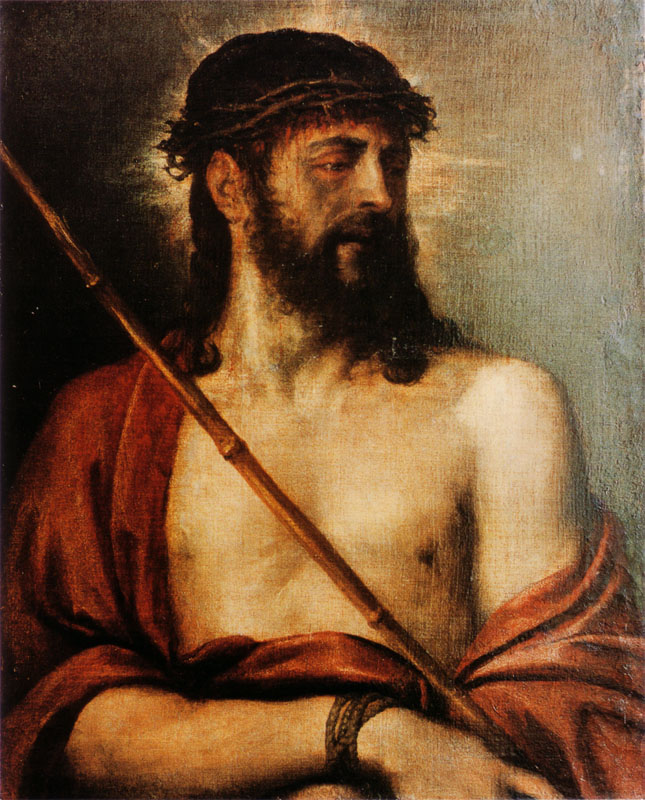
Ecce Homo by Titian (Unknown source, Public Domain, https://commons.wikimedia.org/w/index.php?curid=5557882)

This is relevant because Ecce Homo, despite being a staple of Renaissance imagery (Titian alone did several versions, including the one above), is not a frequent choice for Church of Ireland windows. I can identify only eight windows (of 3,198) which contain Christ in this state of having been scourged or mocked. (There are, on the other hand, one hundred and eleven Resurrection windows.) If it was May, rather than Lord Wicklow, who had the final say in the central imagery, I can see how her background in a more Catholic form of worship might have made her more amenable to an Ecce Homo depiction, and that therefore what started out as a Resurrection Window (with supporting Resurrection-themed medallions), ended as a window depicting suffering, healing, and children. 
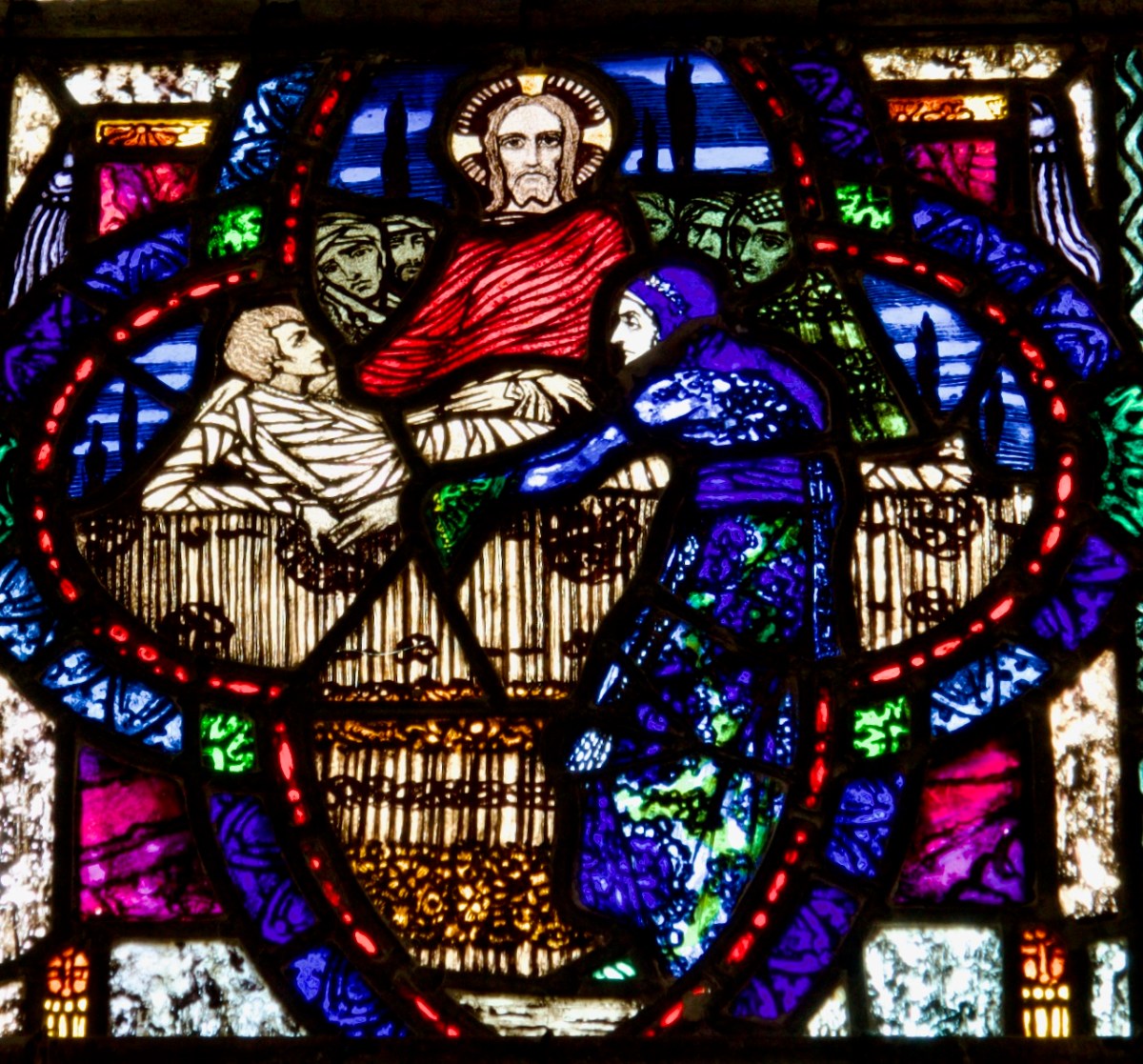
The Raising of the Widow’s Son at Nain

Four medallions are placed on either side of the central figure of Christ. Three relates to the theme of Resurrection and/or healing – The Raising of Lazarus (Top Left); The Raising of the Widow’s Son at Nain (top right); and Christ’s Healing Ministry (bottom left). The final medallion is Christ Blessing Children (bottom right), perhaps a reference to hope that May’s children, now fatherless, would find comfort.
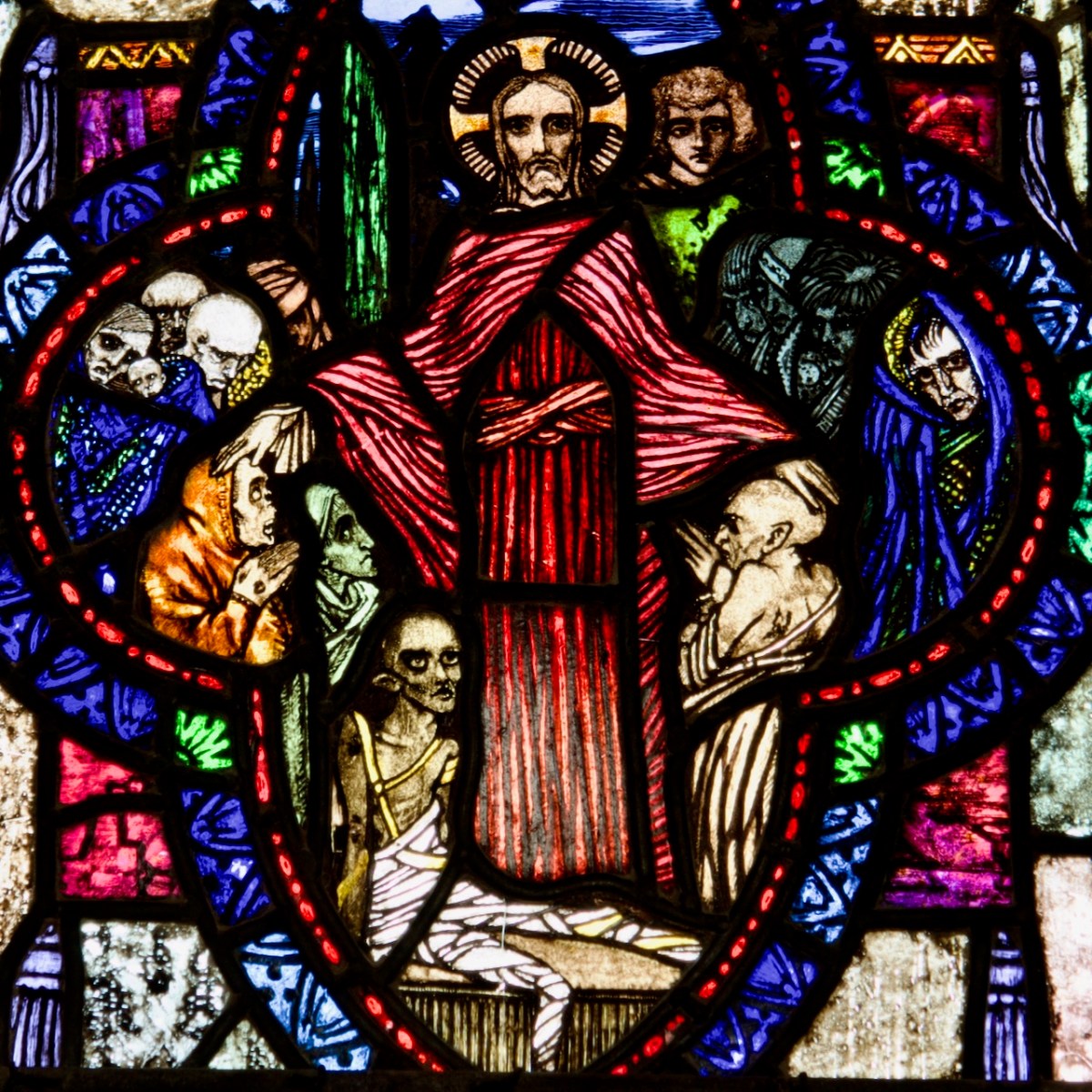
Christ’s Healing Ministry

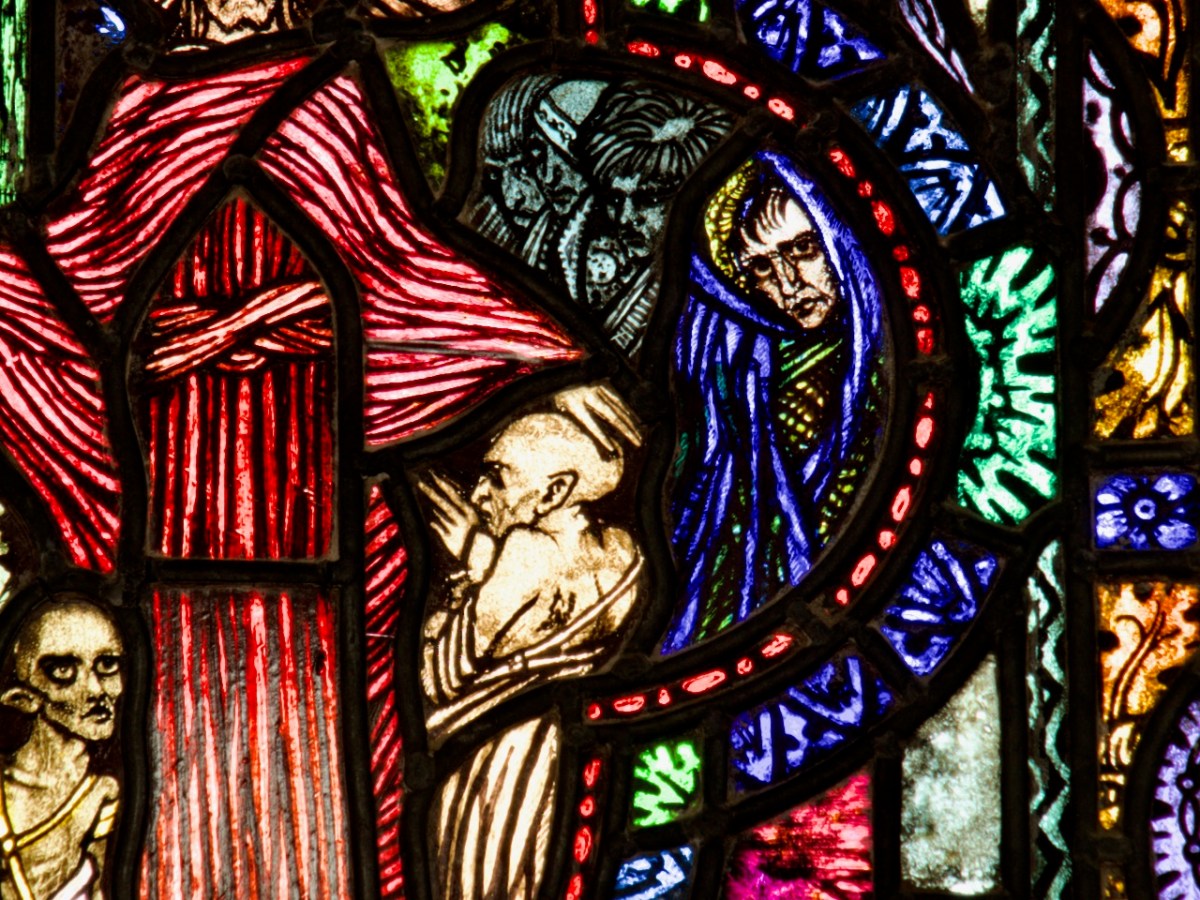
In the medallion above, Gordon Bowe identifies a self-portrait of Harry, peering in on the right-hand side (below). Harry has done this in other windows, often more immediately recognisable than here. The parade of sick, palsied, bandaged and leprous sufferers are typical of Harry’s affinity to the macabre.
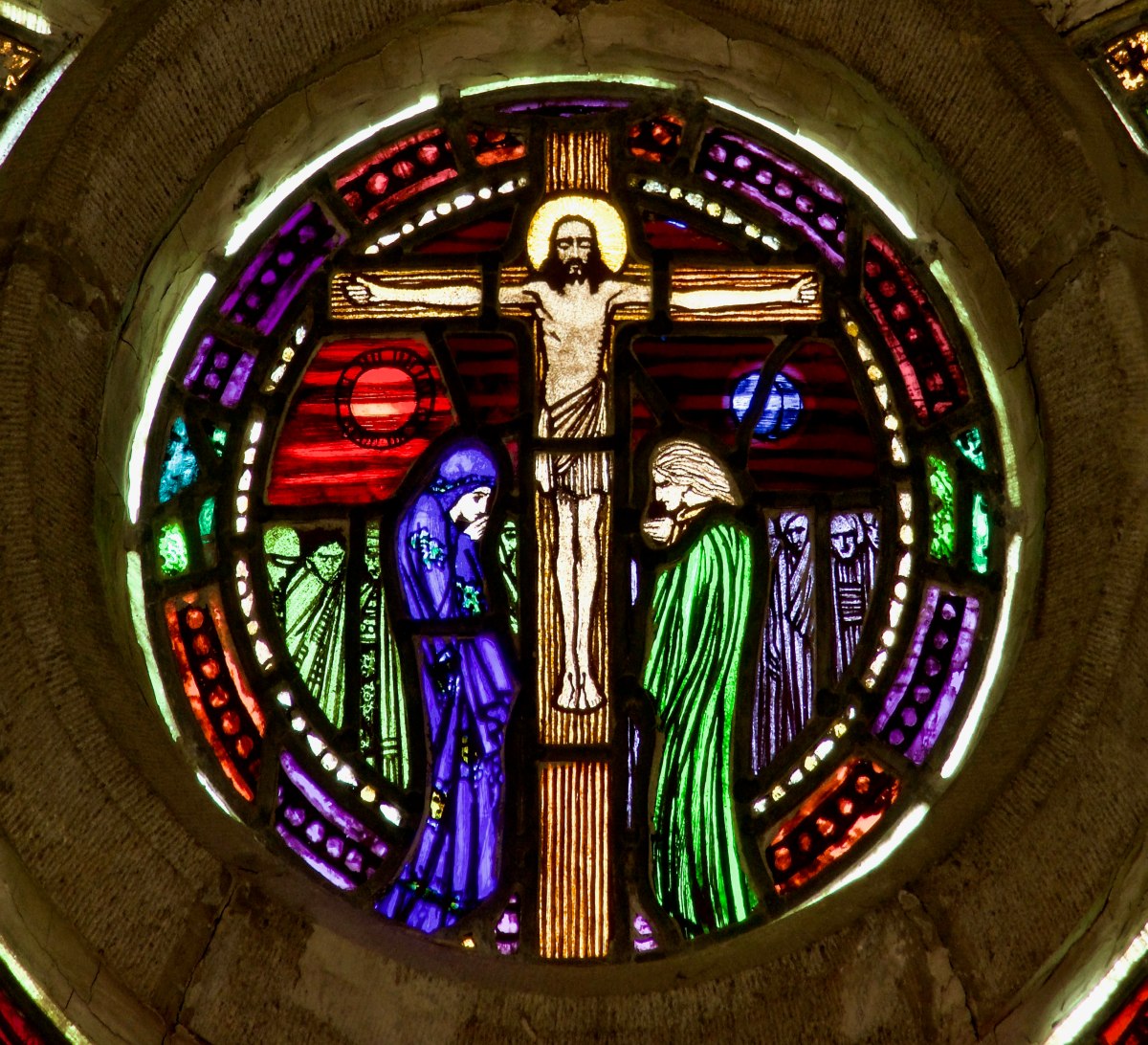
In the cinquefoil tracery at the top of the window is a small roundel containing the Crucifixion. Although tiny, it is as full of detail as are the medallions.
David Lawrence, in his entry in Gloine, correctly identifies the medallions, and uses Christ as Martyr for the central figure, perhaps because he (like Gordon Bowe) interprets the ‘sceptre’ that Jesus is carrying as a palm, the icon of martyrdom. In Strangest Genius, by Lucy Costigan and Michael Cullen, the authors simply repeat the description and background as gleaned from the work of Gordon Bowe (although without credit, as seems to be their practice), along with the errors, and add one of their own, describing the reed as a ‘lily. . .denoting his virtue.’
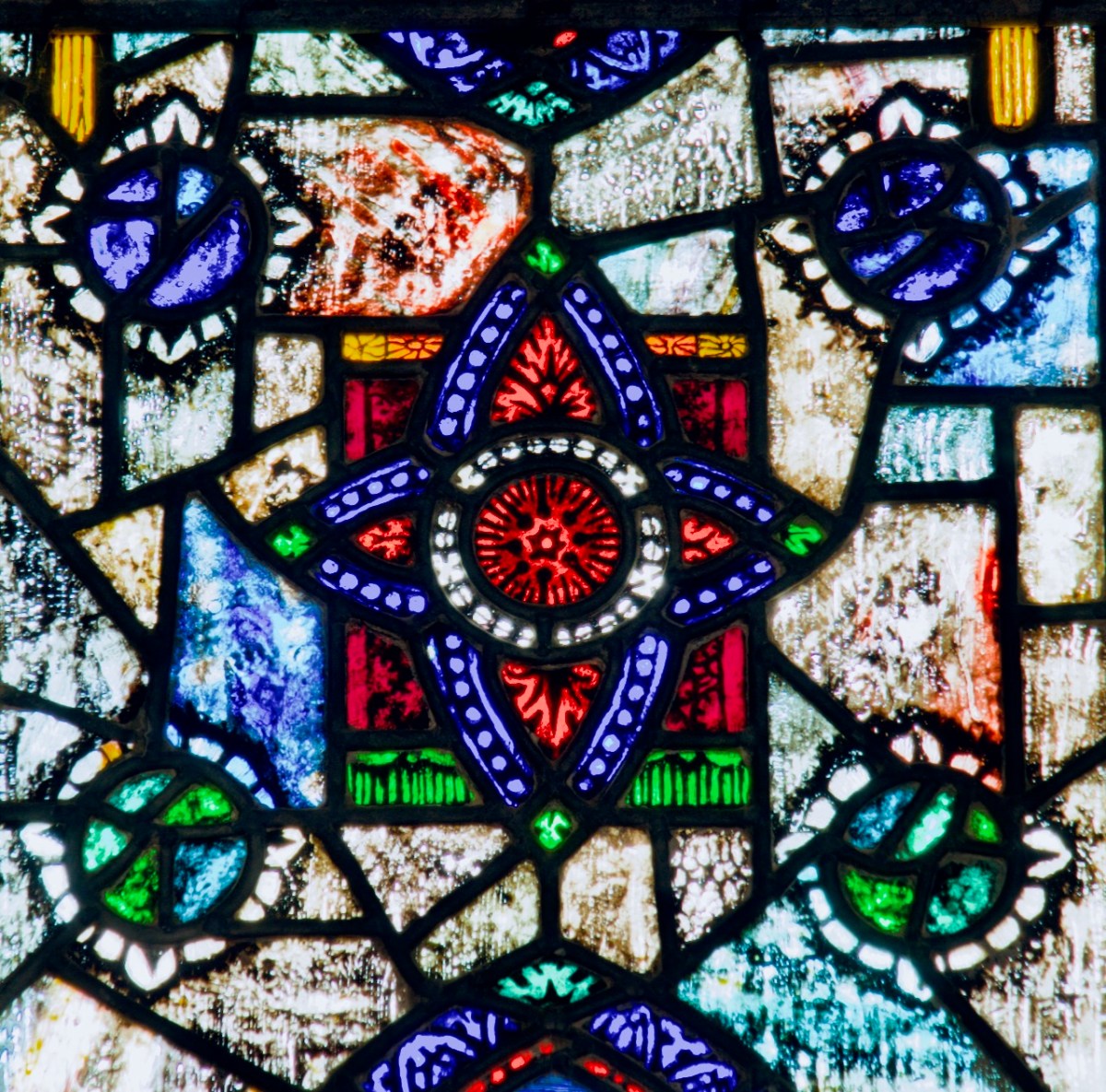
Gordon Bowe often uses the term jewel-like to describe Harry’s ability to make his windows sparkle and shimmer and to use advanced techniques (such as plating and acid-etching) to create depth and allow the sun to refract through the glass. The window in Kilbride is a master-class in how he achieves this effect, especially in the decorative areas between the scenes, as in the one above. No photograph can do justice to this effect.
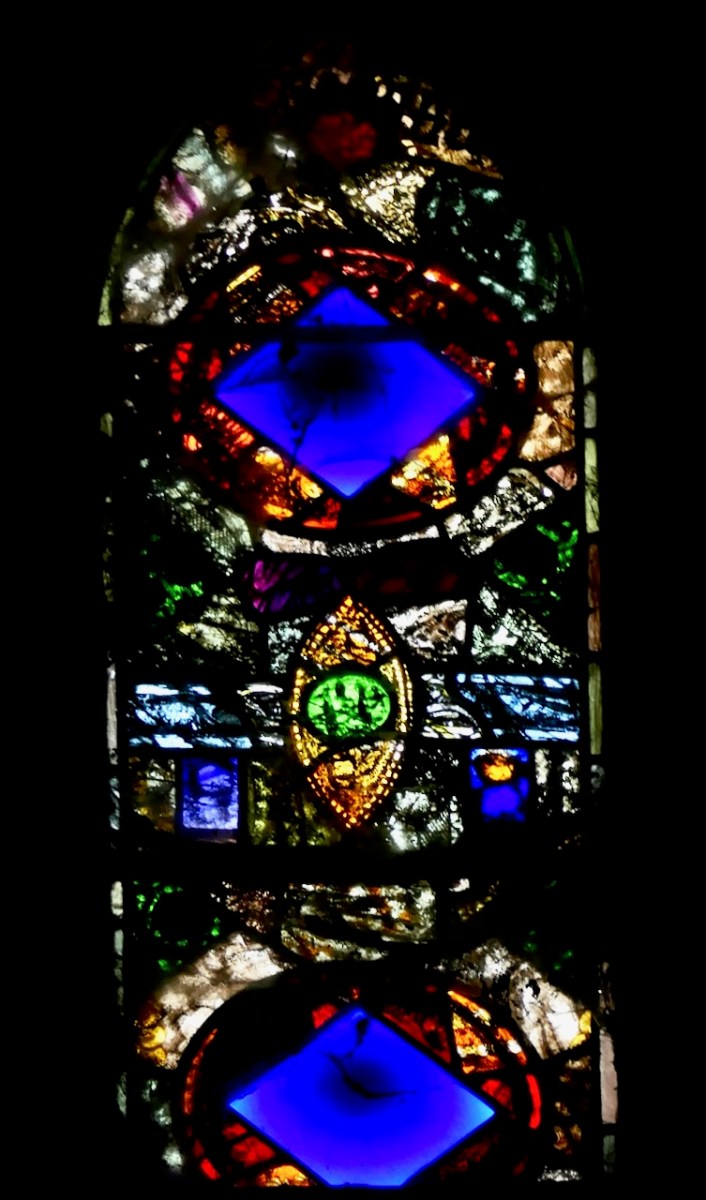
Oh, and just to add to the fact that this tiny church has an exceptional Harry Clarke window – it has a second one (above). Harry made it with left over ‘scraps’ of glass, to fill a small, high, transept window, and he described it as an ‘experiment.’ The two pieces of blue glass prefigure the mid-century practice of dalles de verre, of which we have several excellent examples in Irish Churches.
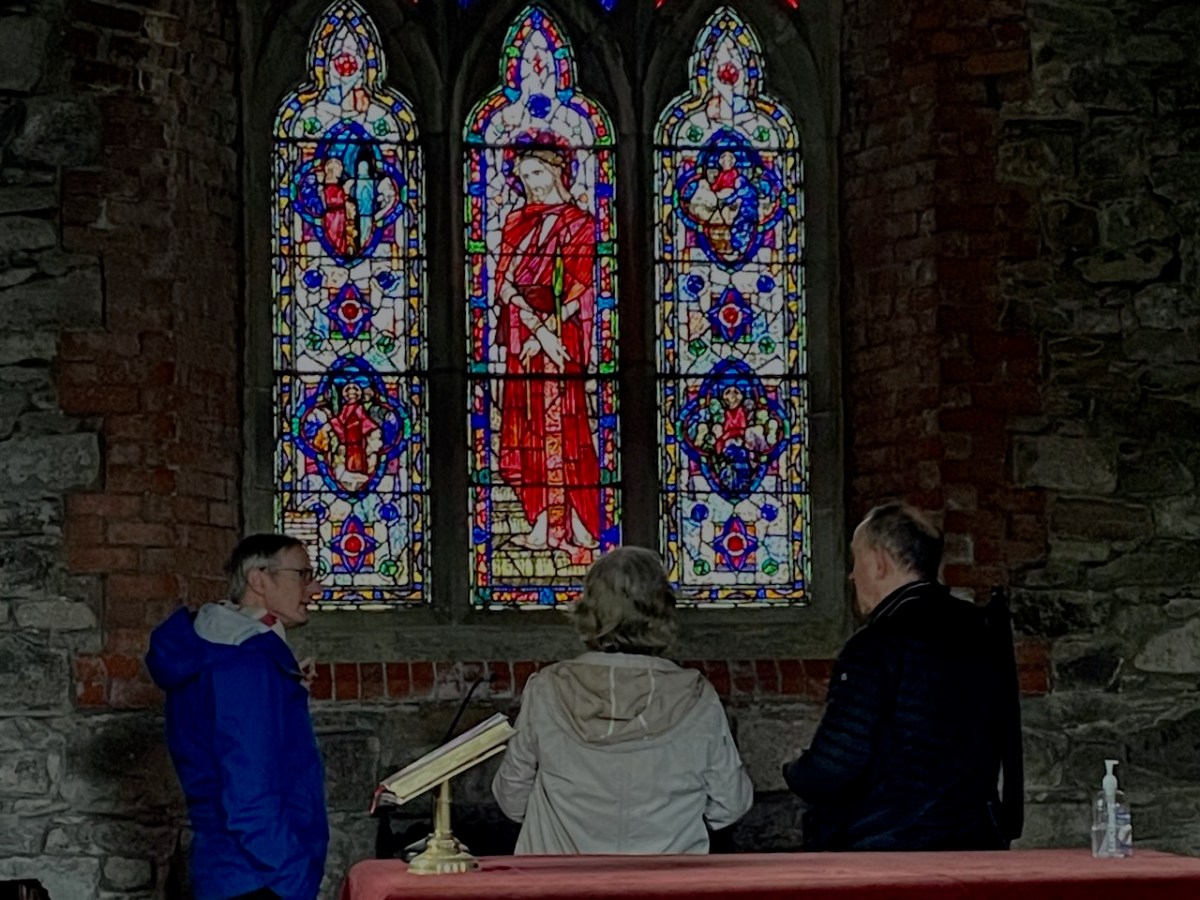
David Caron, Editor of The Gazetteer of Irish Stained Glass; Ruth Sheehy, author of The Life and Work of Richard King; and Paul Donnelly, expert researcher on the Harry Clarke Studios, in front of the Ecce Homo window on a recent visit. Together, we discussed the most appropriate title for the window. Like most Church of Ireland churches, Kilbride is closed most of the time, and therefore the window is not easily accessible. I am very grateful to the Rev Barrett for allowing us to view and photograph the windows last week. Besides the photographs in Gloine, I can find no other images of the window online, so I hope this post will clarify what this window is actually all about. 

*The most head-scratching erroneous description comes from this report in The Wicklow People
Mapping West Cork, Part 1, Updated

This post was originally published several years ago, but I have edited and updated it, so am giving it another airing.

Old maps are magical places to get lost in. Pouring over them, trying to identify what I know now, attempting to look at the territory with a seventeenth or eighteenth century mindset – well, several hours have gone by and I realise it’s dinner time. I’m going to share some of my favourites with you in a couple of posts. Mostly, the maps I am using are from the marvellous David Rumsey Map Collection where the maps are free to use for non-commercial use under the Creative Commons license. We are very grateful to you, David Rumsey – what a service to mankind!
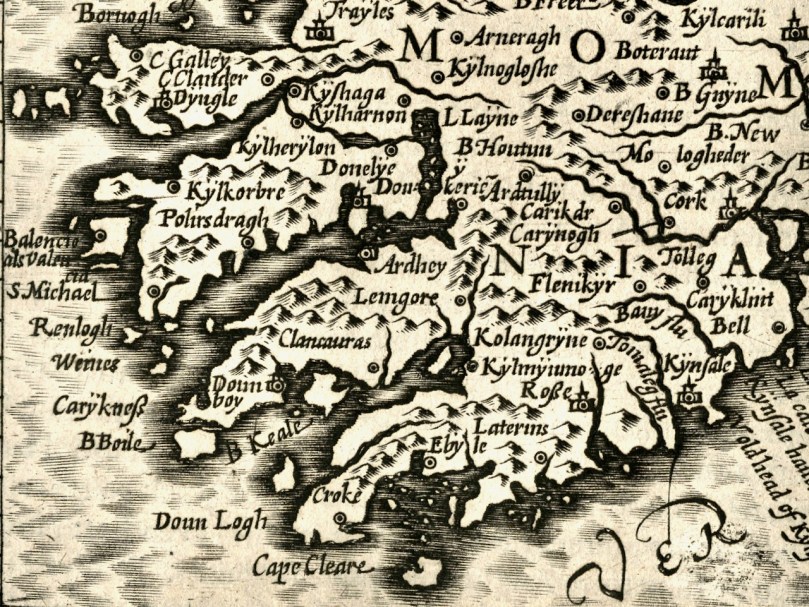
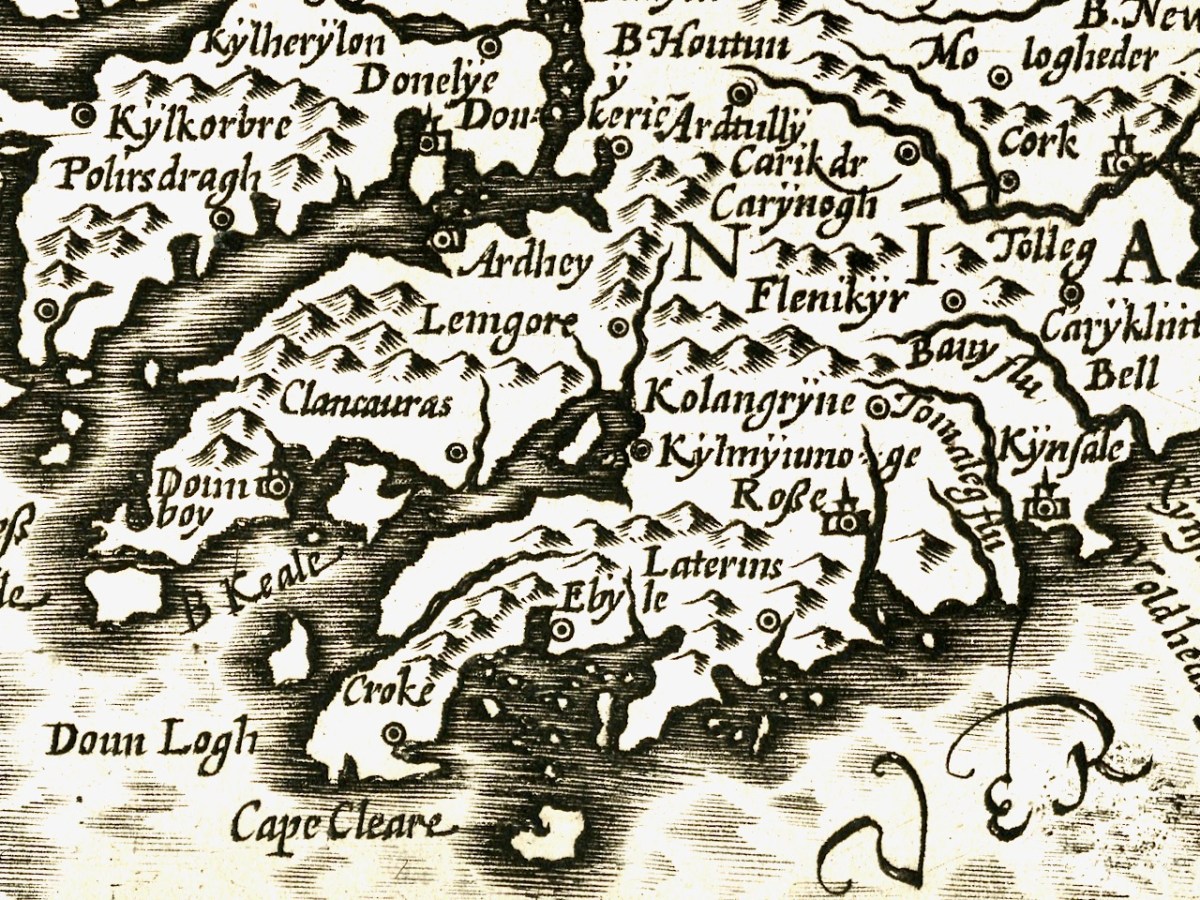
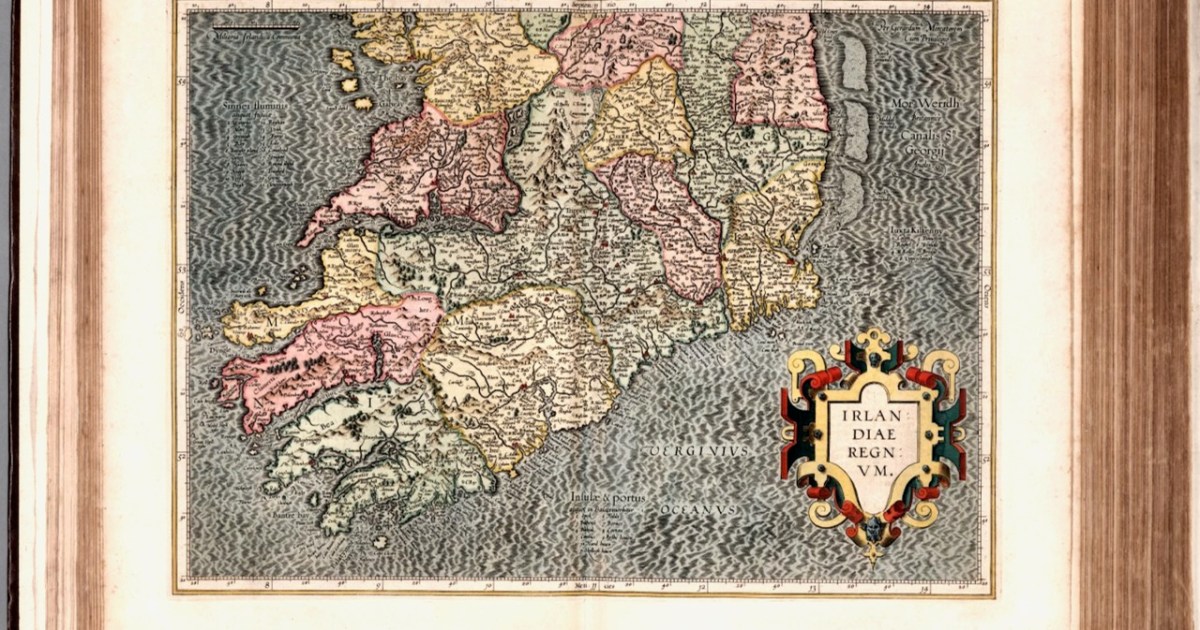
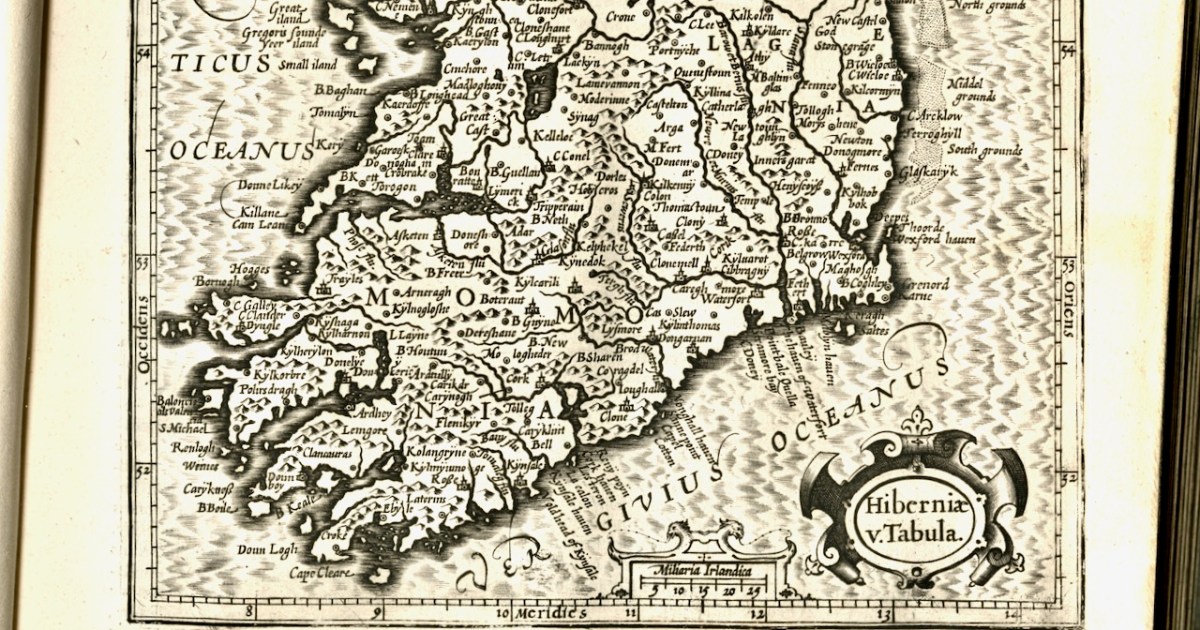
The first map here is by the famous Gerhard Mercator (1512-1594) and Iodocus Hondius (1563 to 1612) and it was published in an Atlas in 1607, after Mercator’s death. The map, therefore, predates the Atlas and was probably done in the late 1500s.

Who was Mercator? This is him, courtesy of Britannica, and his influence on mapmaking was incalculable – he really was the father of modern cartography.
In the 1500s, globe-making was a precise and difficult art. Mapmakers often etched their maps onto paper that they then painstakingly pasted onto paper mache spheres. Old maps had problems, however. Mapping a three-dimensional globe onto a two-dimensional map always involves some distortions, but early maps had serious issues for navigators. They were mostly elliptical and struggled to capture the curvature of the Earth for sailors who were plotting a course. Sailors using them were constantly twisting, curving, and recalculating to compensate for their maps’ deficiencies.

In 1569, Mercator developed a better, more accurate projection. Although the execution was difficult, the basic idea was simple: Imagine a globe with a paper cylinder wrapped around it — Mercator projected that globe onto the paper and then unwrapped it. He then expanded degrees of latitude as they approached the poles, which distorted land, but allowed the directions to be clearer.

https://www.vox.com/2015/3/5/8151303/gerardus-mercator-maps

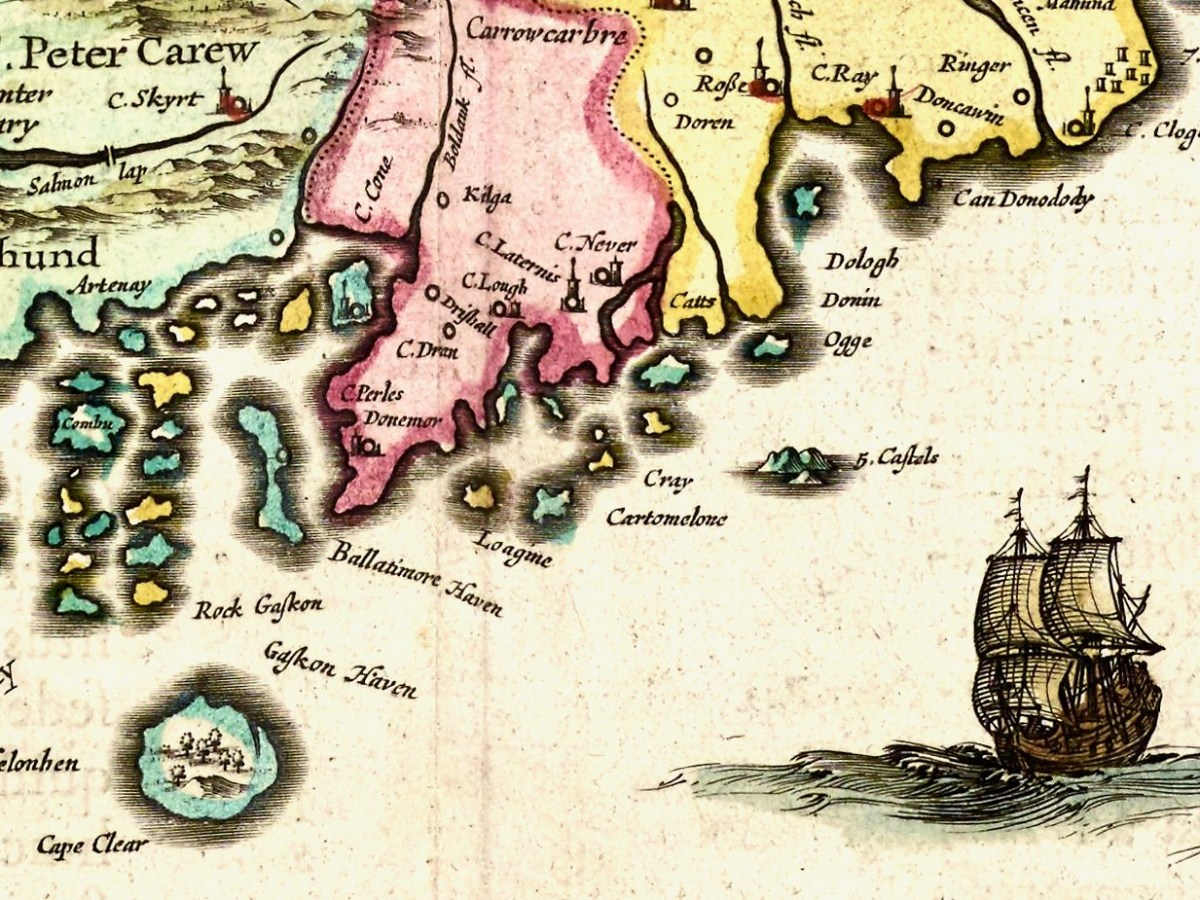
We can recognise some things in this map and not others. Croke is Crookhaven, Doun Logh is Dunlough (or Three Castle Head) and Doun boy is Dunboy Castle home of the O’Sullivan Beares. We can also see Roße – this is Rosscarbery, with the symbol of a church, and Kynsale. But after that I was stumped. However, one clever reader (thank you, Philippa Barry!), when I published this first, added Currently doing some reading on Bantry and O’Sullivan Bere, so getting familiar with placenames. In the first map Kylmyiunoge might be Kilmacomoge, Ardhey is Ardea Castle on the Kenmare River. Looks like Timeoleague is in there too.

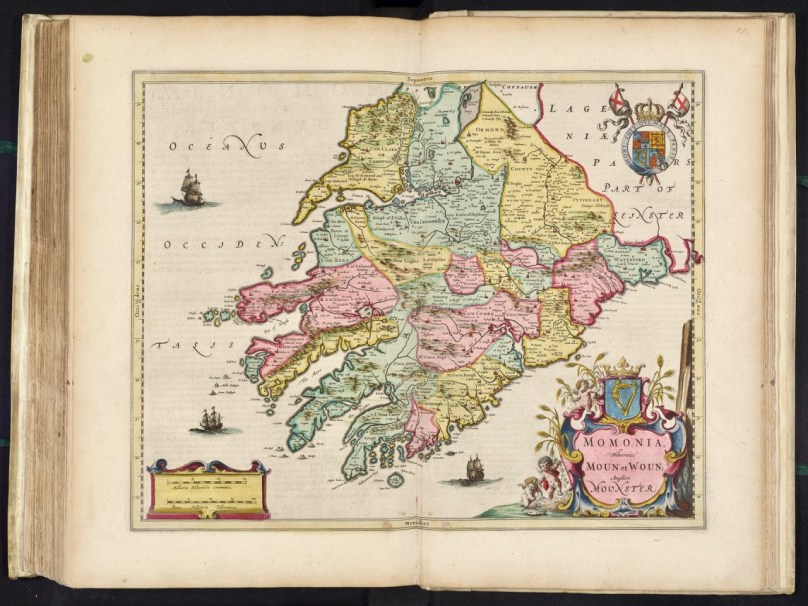
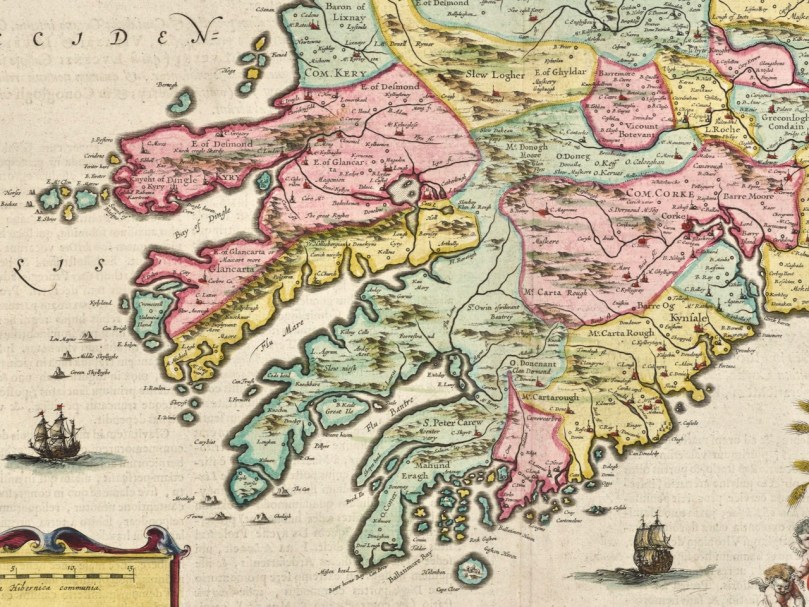
The second map is from 1655 and it’s from Joan Blaeu’s Atlas Major. Blaeu, a Dutch cartographer, lived from 1596 to 1673 and this map is from his Atlas Maior of 1665, considered one of the greatest achievements ever in Atlas publishing. It was also the most expensive book you could buy in the 17th century – worth a year’s wages for a skilled craftsman. The first thing we notice, of course, is that this version is in colour, but you could also buy an uncoloured version for a hundred guilders less. Given printing capabilities of the time, each copy must have been hand-coloured.

There is much more detail now, and more recognisable elements. It’s a wonderful record of what the major sites were then – sites which nowadays hardly exist, or exist as ruins. Let’s take it from east to west.

I recognise Dunowen and Dundeedy, and Ringer must mean the area now known as Ring. The letter C denoted a Castle (or Manor House) as in C Perles. or Castle of Pearls, which is Dun Na Séad (Fort of the Jewels), the O’Driscoll Castle at Baltimore. But what is C Ray? There was a tower house at Castlefreke built by Randal Oge Barry in 15th century, maybe that’s it? And, even more intriguingly, what is C Never?

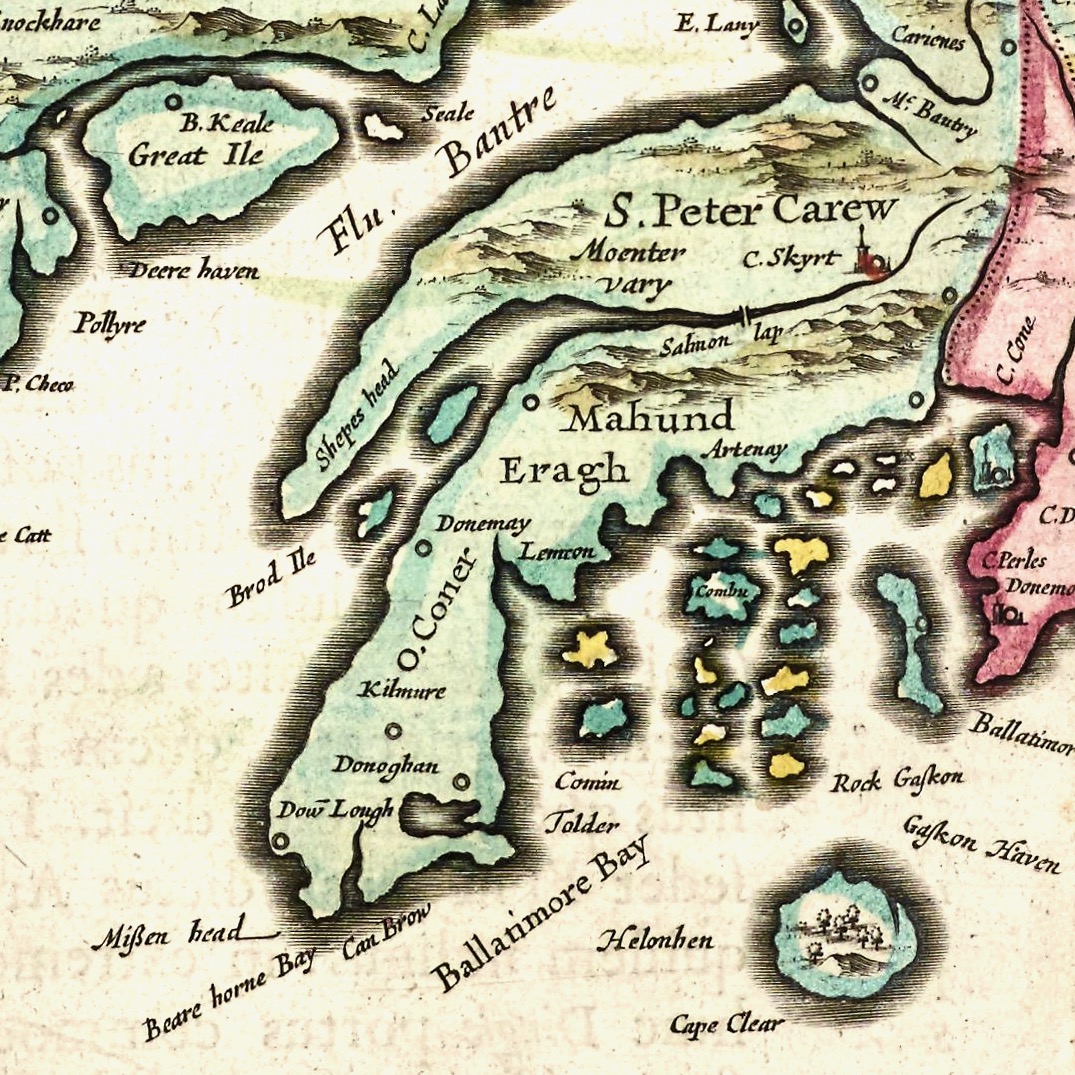
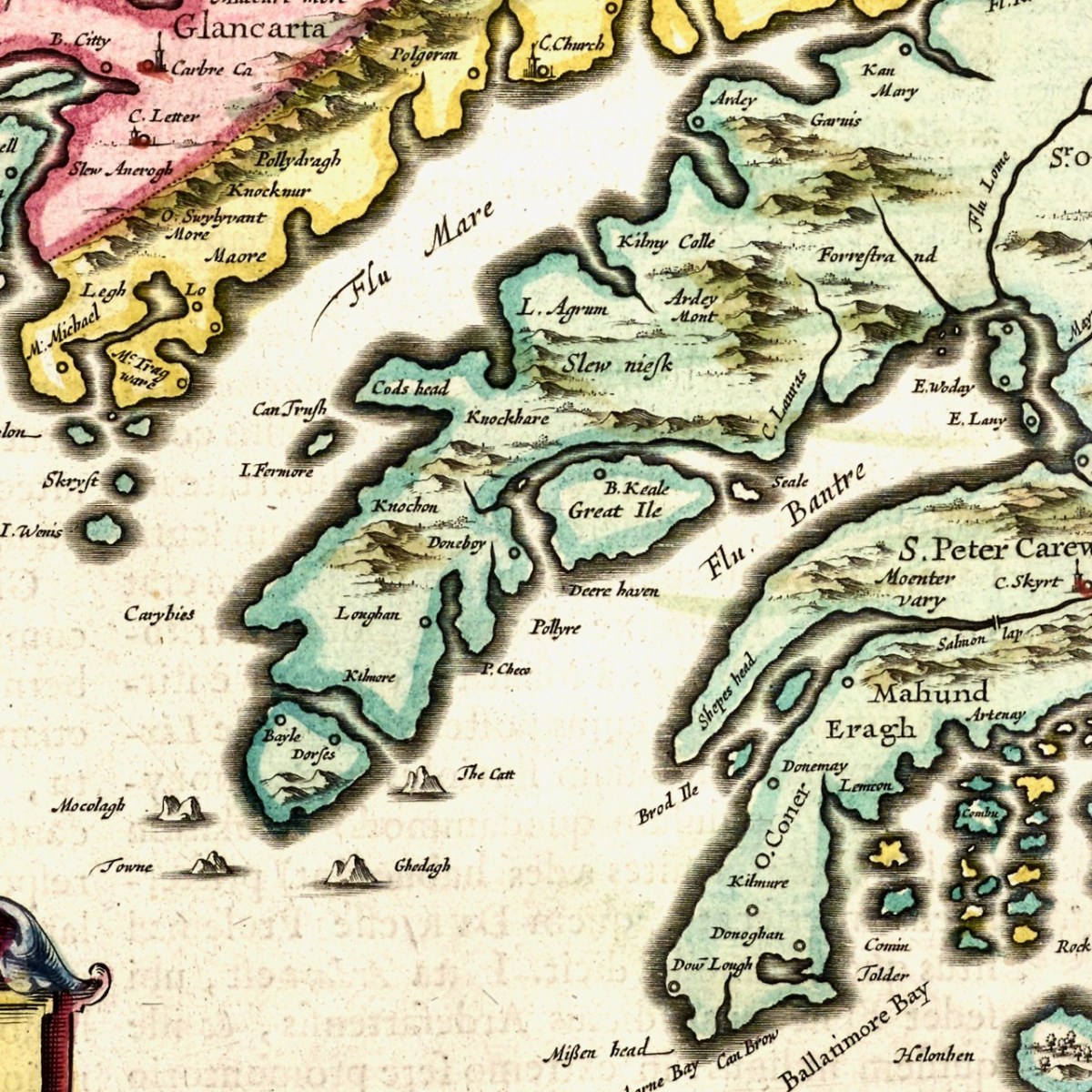
Moving on to Roaringwater Bay and its hinterland, we find Artenay, now known as Ardintenant Castle, one of the ruins of what was once a string of O’Mahony Castles. Ardintenant was the home of the Taoiseach, or clan chief, which is why it would be marked on the map. Other O’Mahony Castles are Dunmanus (Donemay), Dunlough (Dow lough) and Leamcon. Territories of the McCarthy’s, the O’Donovans, Sir Peter Carew and O’Mahonys are given, but also an O’Coner clan, about whom I have no knowledge. The Sheep’s Head is divided into Moenter vary (Muinter Bhaire) at the north end and Shepes head at the south end. Mizen Head has already acquired its name, although I suspect Eragh is a form of Ivaha, the old name for the Mizen Peninsula. Could C Skyrt be Castle Donovan – no other castle is located in this general area?

Finally, on to Beara – we immediately recognise Bear Island, or the Great Island, as it was known historically, and Dunboy Castle, as well as Dursey Island. C Lauras, may be Lauragh, although Lauragh is on the north, not the south side of Beara. I need an expert here, to find other place names that equate to modern sites. So take a browse dear readers, and let me know what you find.

Mapping West Cork, Part 2: John Speed

Urban Dolmen

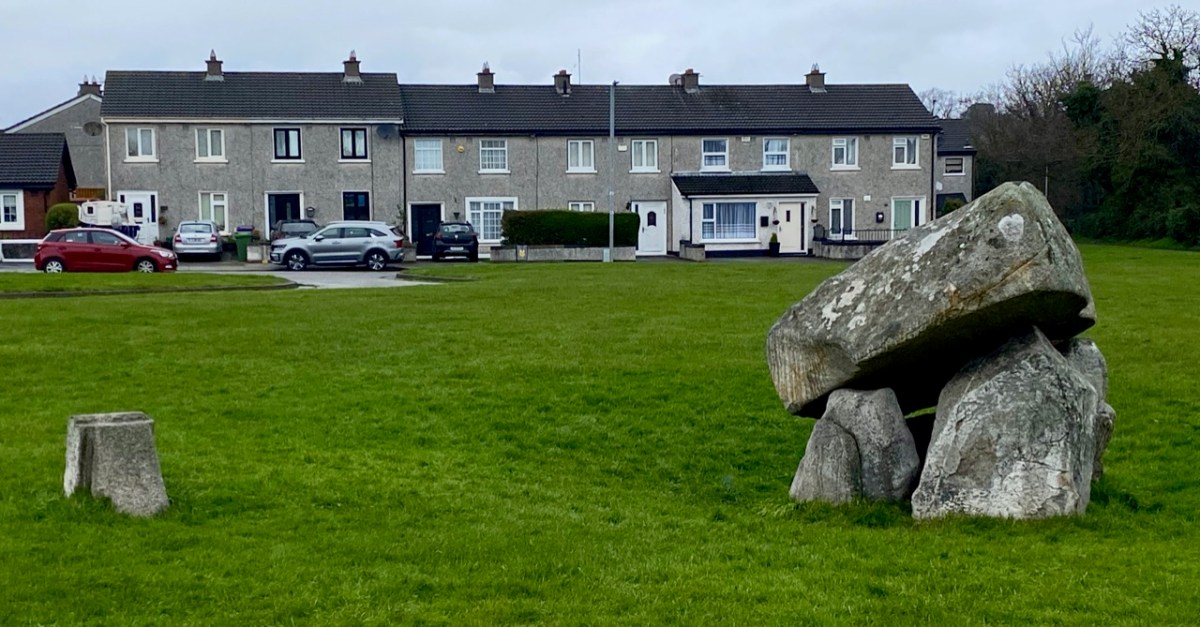
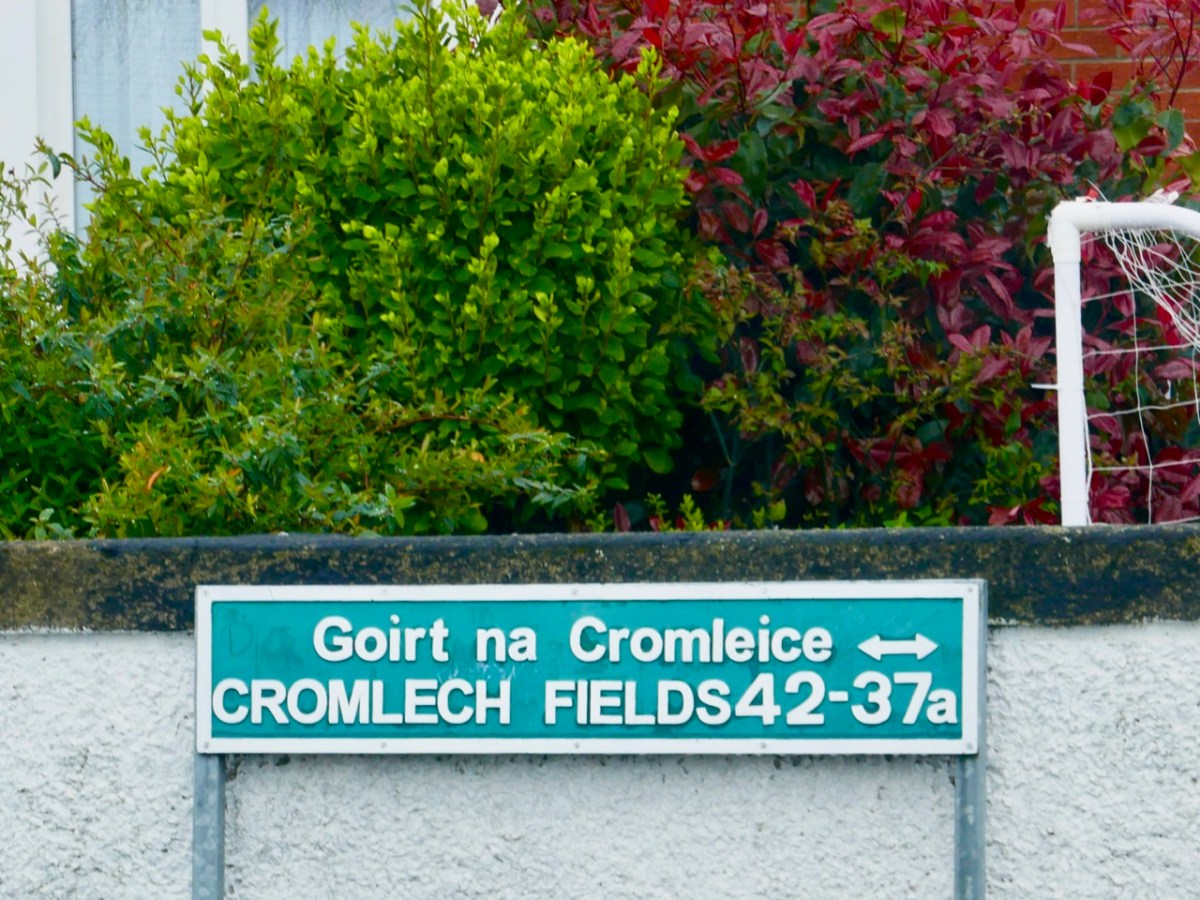
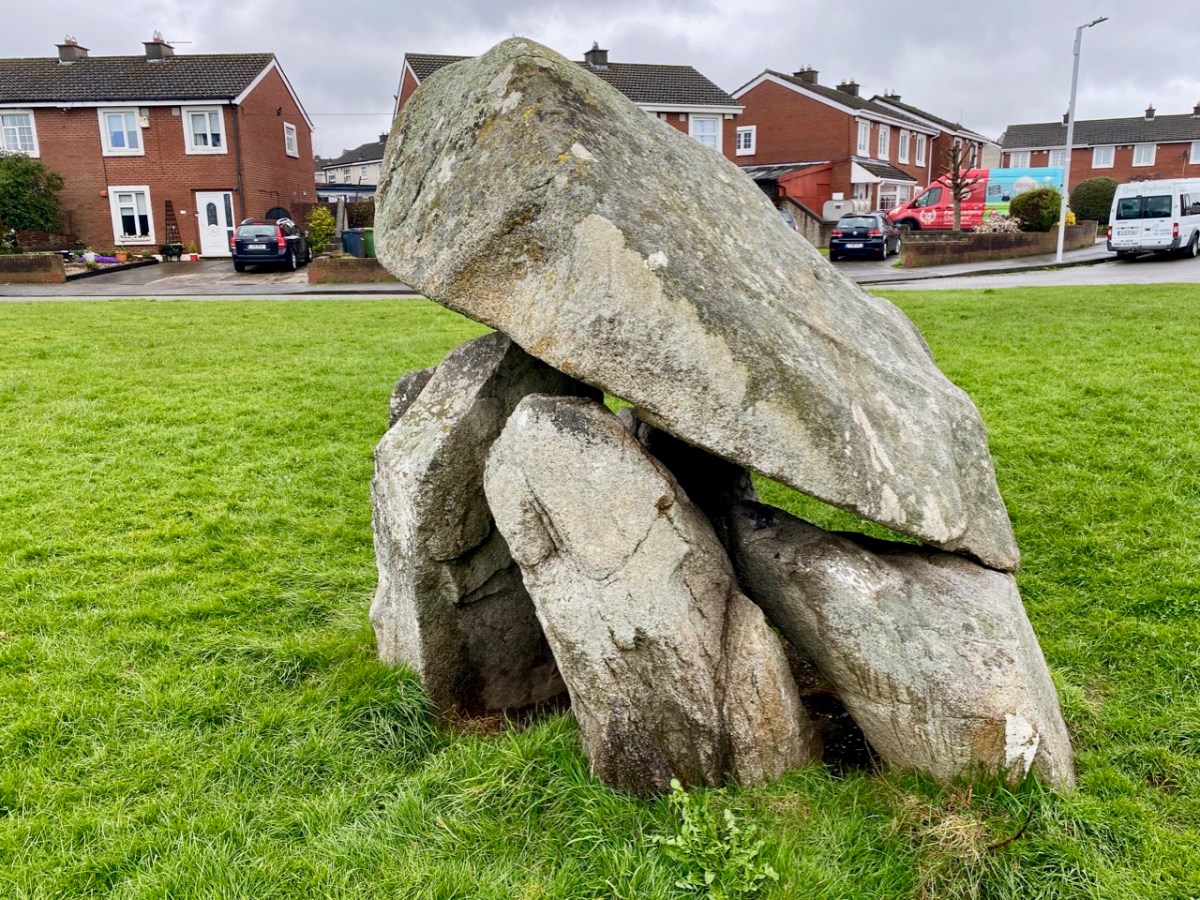
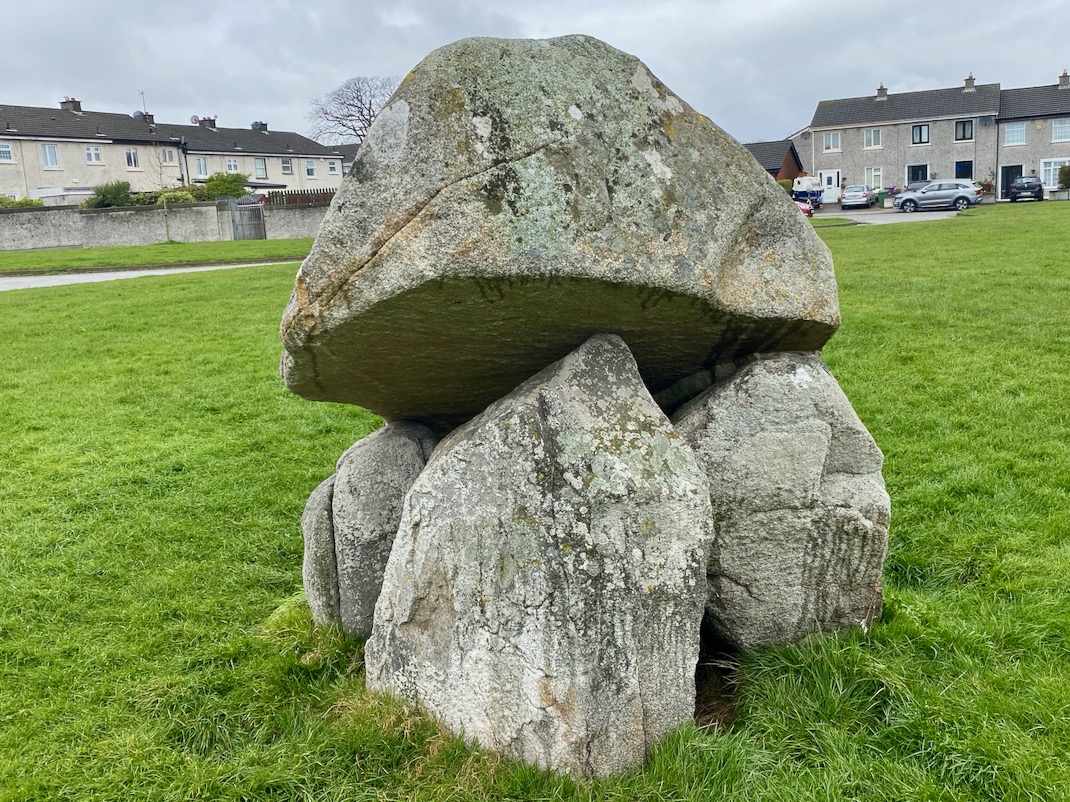
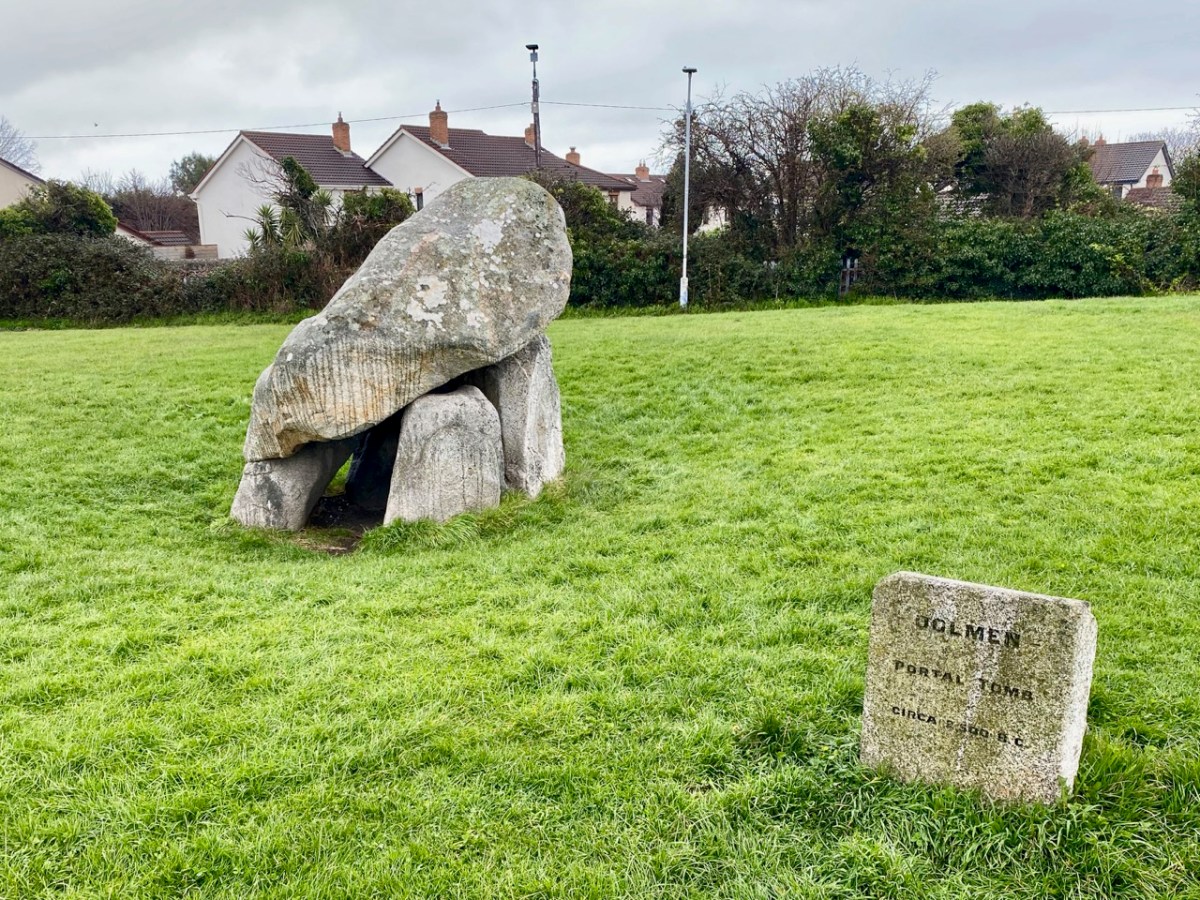
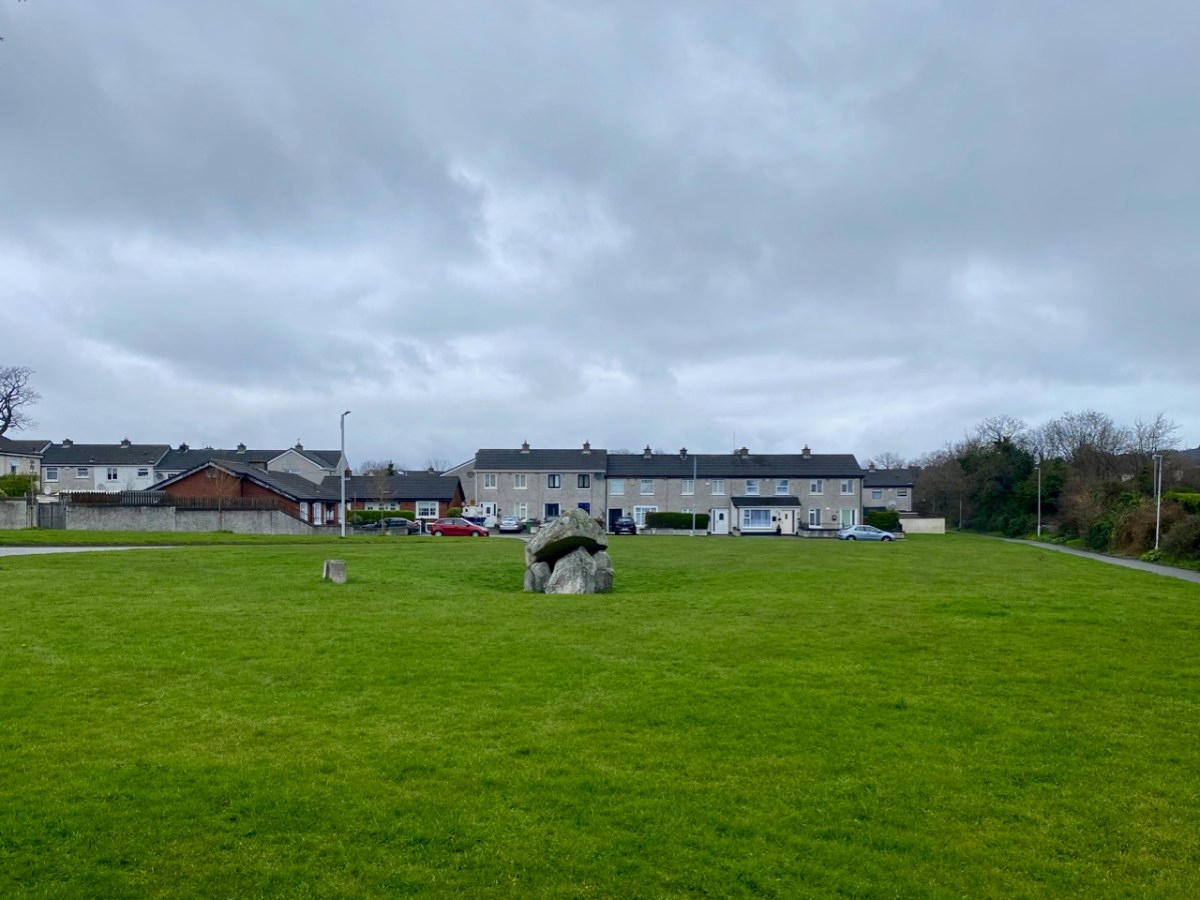
We are used to searching out archaeology in the Irish countryside. More unusual, perhaps, is finding examples in an urban setting. Here’s one – at Cromlech Fields, Hackettsland, Dublin.

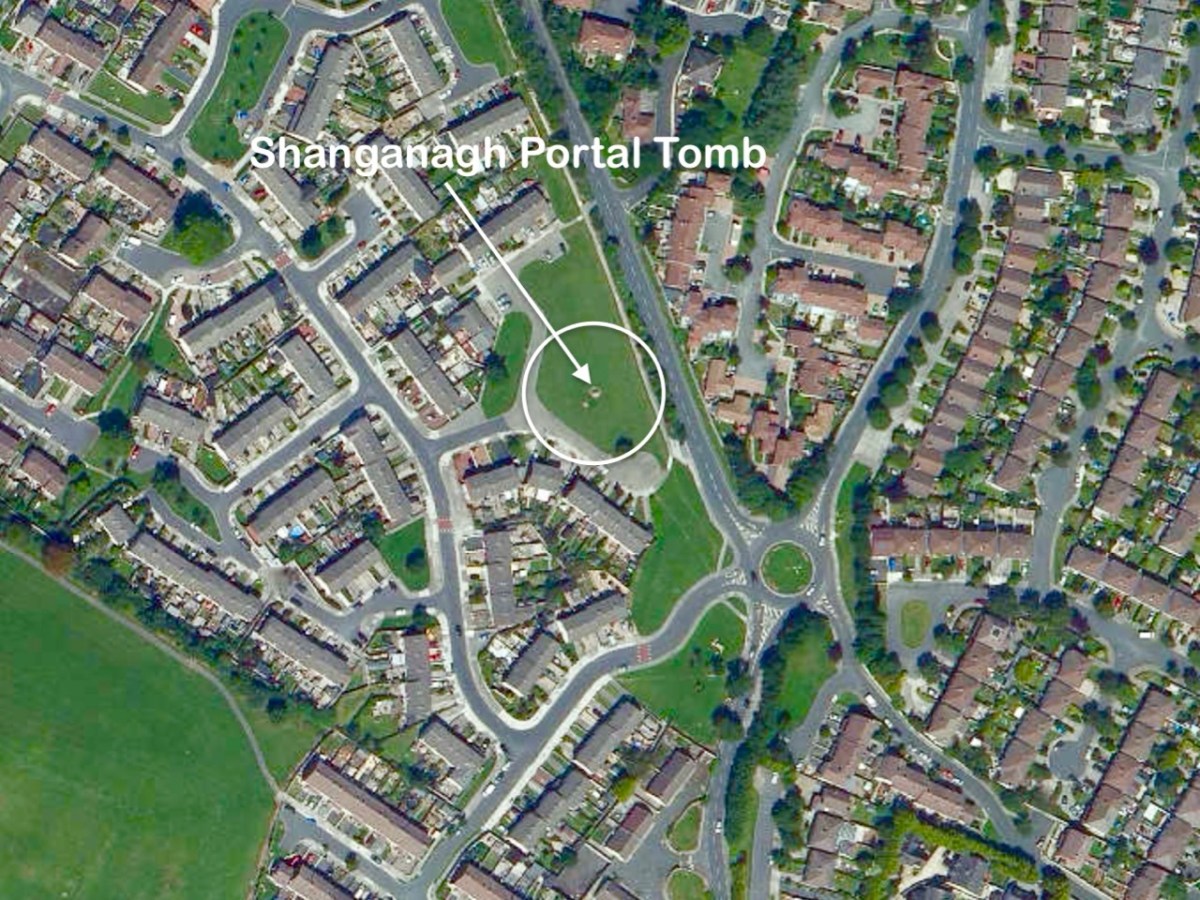
This particular example of a prehistoric structure has survived the encroachment of the city suburbs and is, in fact, in good condition and apparently accepted as part of the landscaping in a dense housing community. It is well-placed in a slightly sunken setting within a substantial green area. It is known variously as the Shanganagh Portal Tomb, Hackettsland Cromlech, or Ballybrack Dolmen. And it’s ancient: portal tombs can date back four or five thousand years – some even more. This arrangement of stones has seen civilisations evolve significantly, but it sits there unchanged.

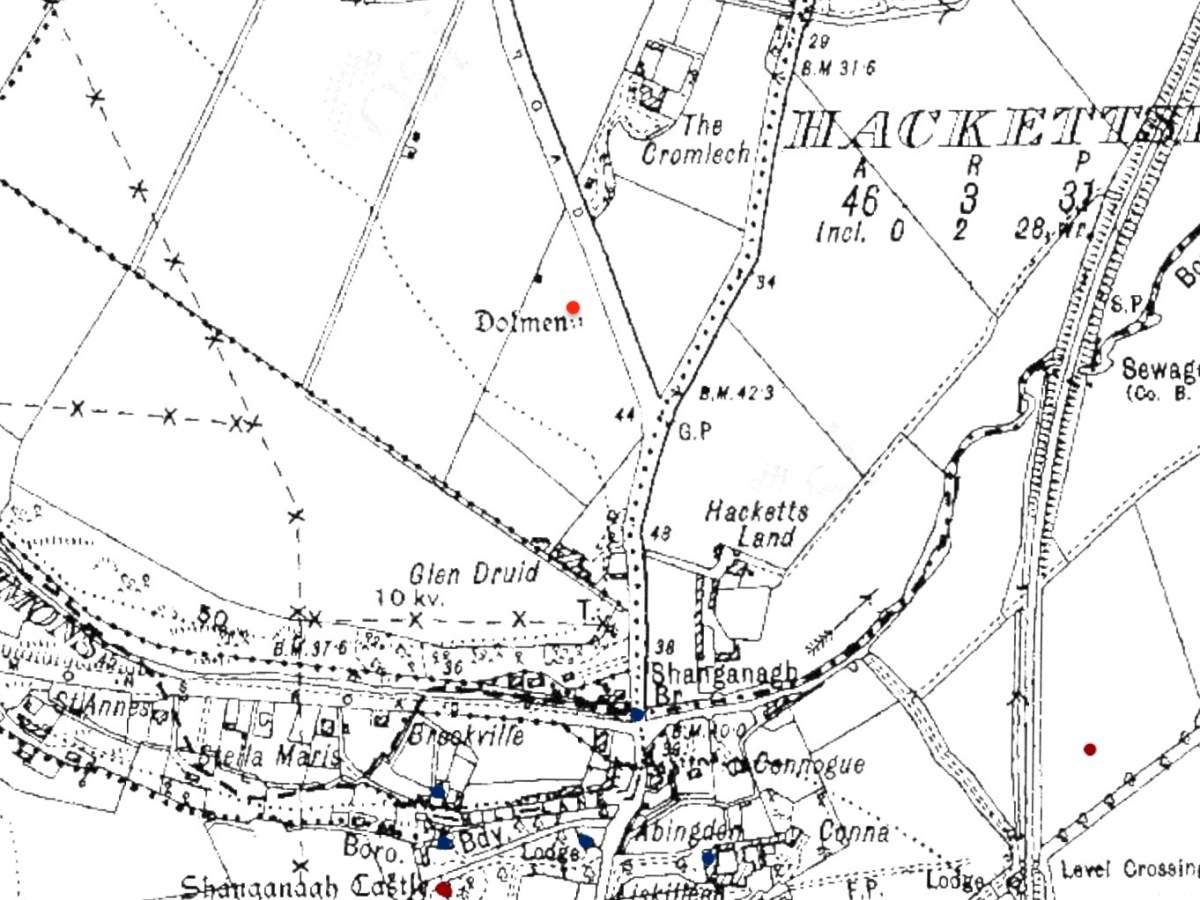
The historic 25″ OS map of Ireland – surveyed from the late 1890s and into the early 20th century. It is clear from this edition that the ‘dolmen’ was still sited in open country at that time.

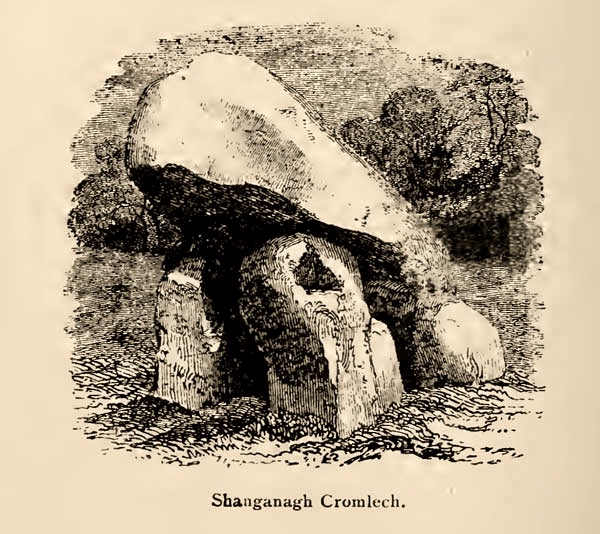
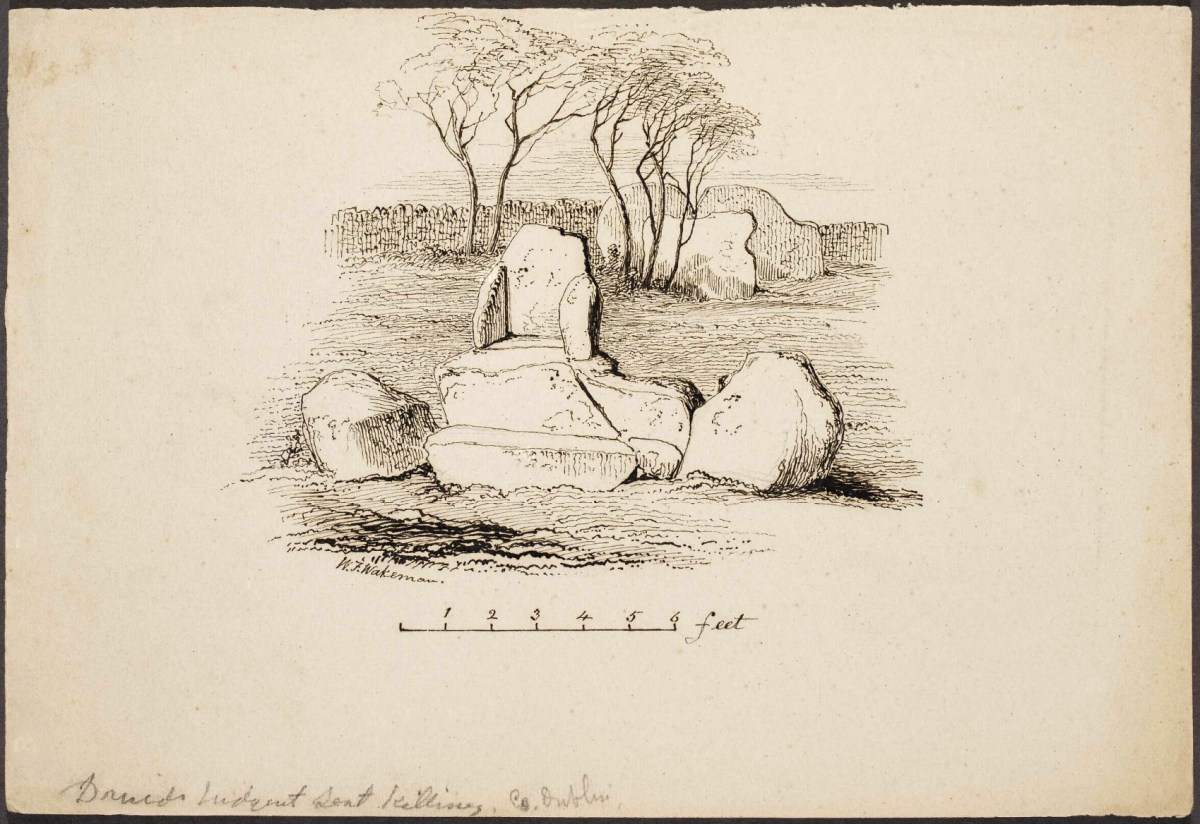
Illustration from: A Hand-book of Irish Antiquaries by William F Wakeman, 1903.

. . . We cannot conclude our notice of this class of monuments without making some mention of the very interesting example remaining at Shanganagh, near the village of Loughlinstown, and not far from the ancient church of Killiney. Though inferior in size to several which we have already described, its dimensions are considerable; and as it remains, to all appearance, in its original state, the student will find it an object well worthy of his attention. The covering stone measures in length nine, in breadth seven, and in thickness three and a half feet, and is supported upon four stones. The highest part of the pile is nine feet above the level of the adjoining field . . .

William F Wakeman

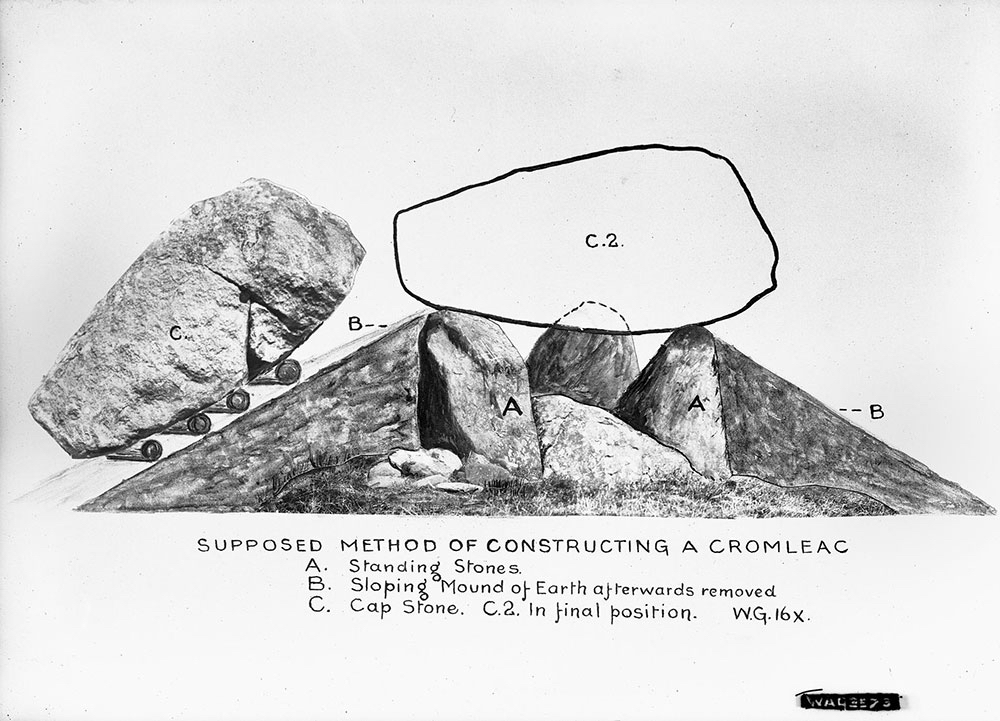
You may want to be aware of the full range of portal tombs in terms of relative scale. Have a look at my post here from a few years ago: it features the largest of the Dolmens in Ireland (and, perhaps, in the world). That one provides challenges in terms of how it was constructed: the capstone, which has been raised on to supporting rocks, is estimated to weigh over 160 tons. Also, this post from Finola offers detailed information on these structures generally. Here is a nineteenth century view of how such monuments were erected:

Megalith or Monstrosity?

Some intriguing arrangements of stones here – and some enigmatic reporting of their significance as history. We are a long way from West Cork – in fact, over on Ireland’s east coast, among the fine estates of Killiney. We can’t help but search out examples of archaeology wherever we go, and a red dot on the Historic Environment map is always a good starting point, as is anything with an enigmatic name.

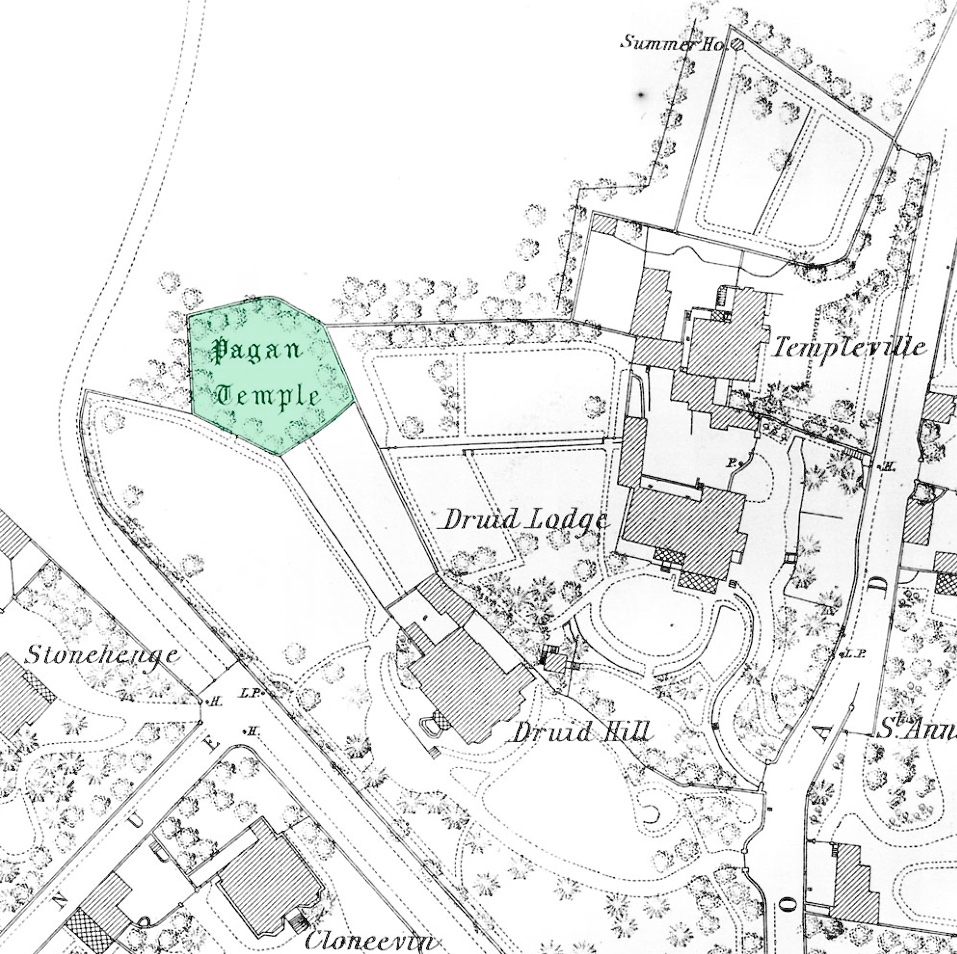
In this case, the red dot is just to the left of the ‘Pagan Temple’ at the top of the 25″ OS map – but look at all the other intriguing names in the locality!

Here’s a close up -extracted from the 1888 OS map, highlighting the site that we are looking at today. With Templeville, Druid Lodge, Druid Hill and Stonehenge as neighbours, the Pagan Temple demands a closer look!

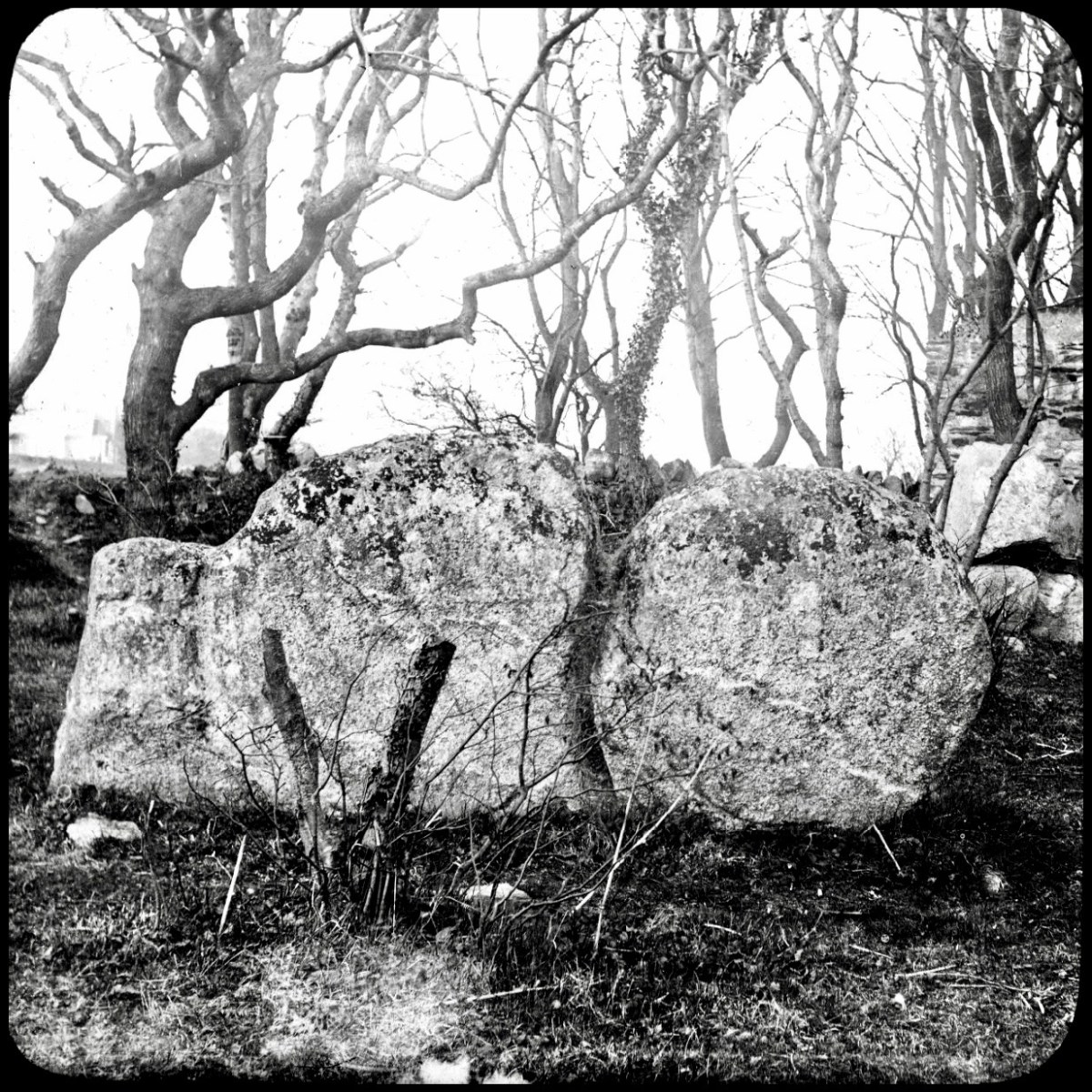
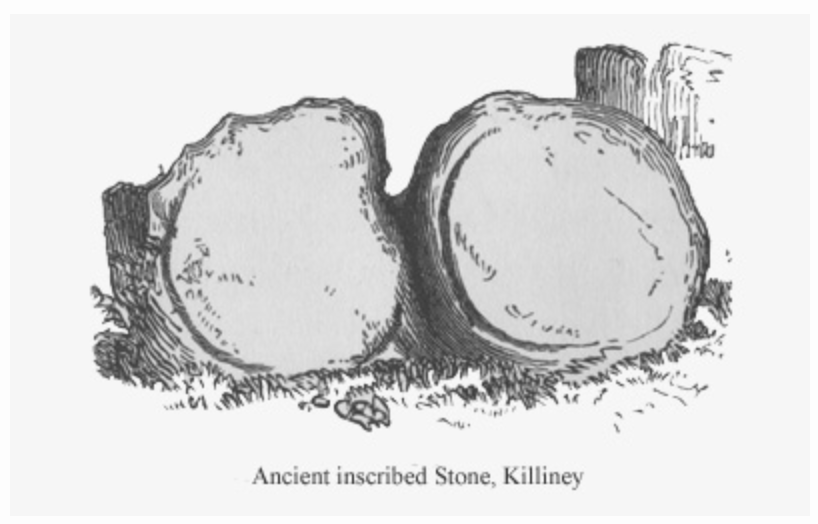
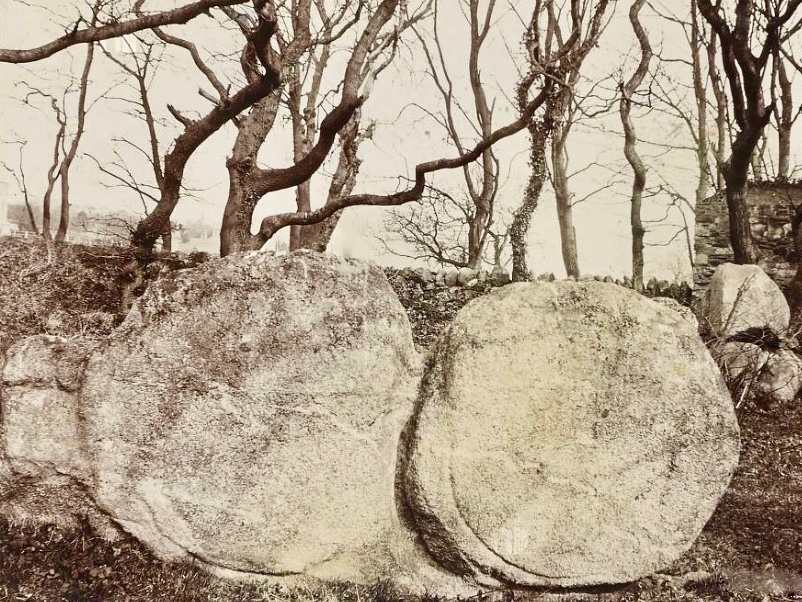
It was last week’s subject – the writer and photographer Thomas Holmes Mason – who directed us to this County Dublin location. As a significant producer of picture postcards, Mason has left a large body of work, even though many of his photographic plates were destroyed in a warehouse fire in 1963. The National Library of Ireland houses a comprehensive collection, and I am grateful to them for this image, above, which shows an intriguing stone formation on the Killiney ‘Pagan Temple’ site. It is referred to as The Sun and Moon stone by some antiquarians, and the following description appears on the current Historic Environment Viewer:

DU026-010—-

Scope note

Class: Megalithic structure

Townland: KILLINEY

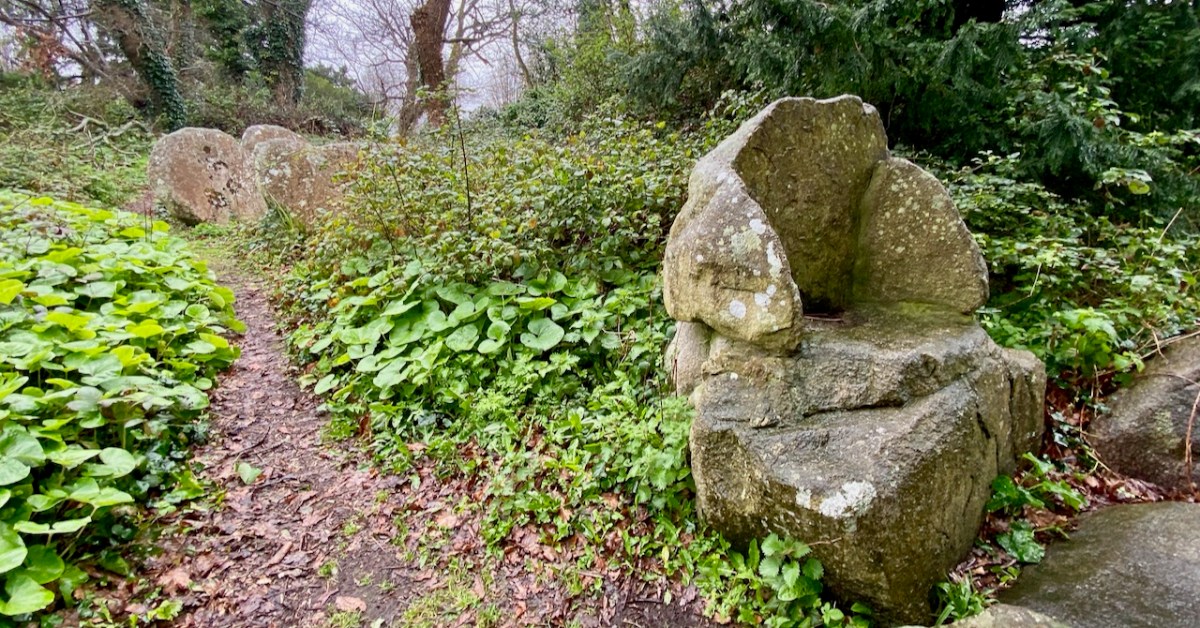
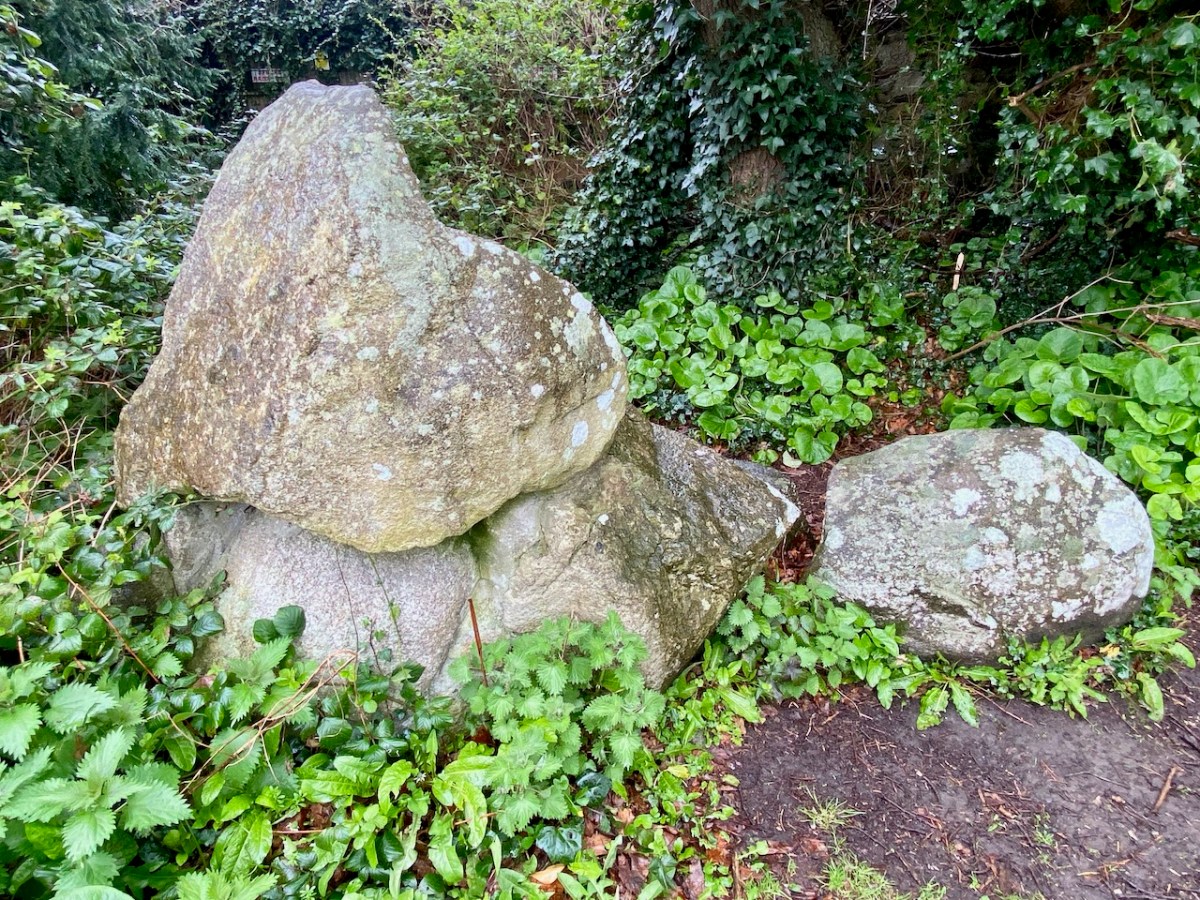
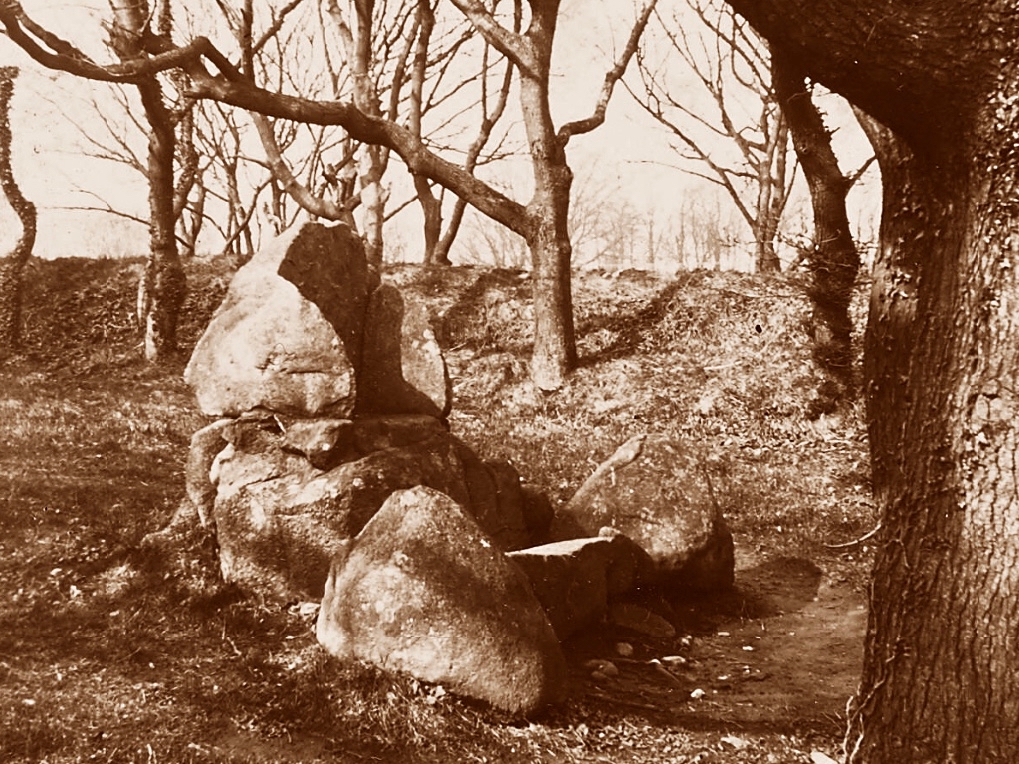
Description: “. . .This enigmatic structure is located within an area enclosed by a hedge on top of Druid Hill. In the E side of the enclosure are three irregular granite boulders that form a façade behind which is a larger boulder containing a setting of stones that form a seat. To the W of this are two large granite slabs set on their long axis. There are tool marks present. This structure appears to be a folly but it may incorporate the remnants of an earlier monument . . .”

Archaeology.ie Historic Environment Viewer

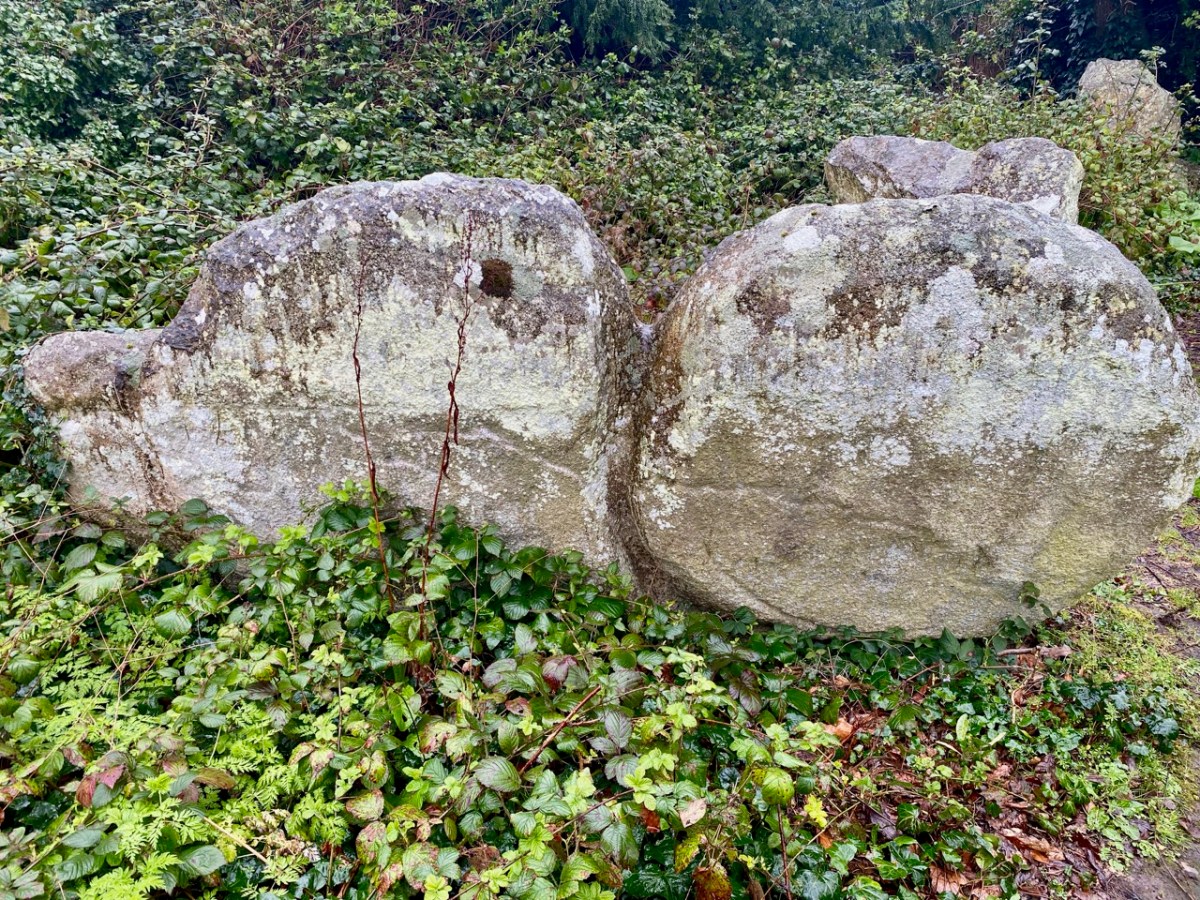
The Archaeology.ie write-up is accurate. In addition to the ‘chair’ (which Finola is elegantly modelling while trying not to sit in a puddle!) there are two further irregular granite boulders – but one of them (detailed in the T H Mason photograph) looks like two circles – hence ‘sun and moon’ – but is in fact a single boulder, here seen from the ‘front’ face:

The right-hand side of this stone has some marks carved on it (by human hand) – possibly part of a large circle that outlines this half, while the vertical ‘groove’, central to the boulder, also appears to have been chased out. It’s worth noting as well, perhaps, that there are two small holes drilled on the back face of this stone, one on each side but not aligned on any centre. Additionally, there is also a small hole drilled on the back face of the second stone:

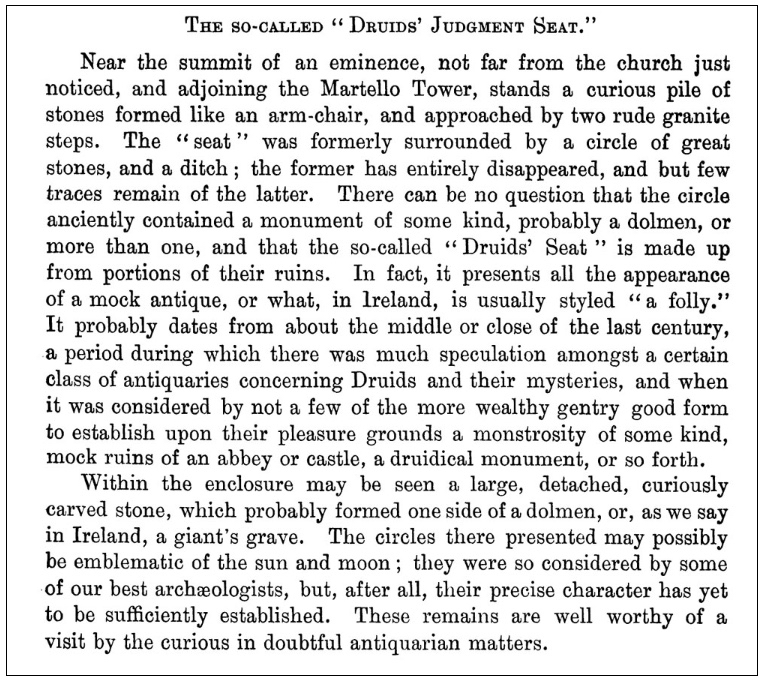
This article – by William Wakeman – appeared in The Journal of the Royal Society of Antiquaries of Ireland December, 1896. It introduces an element of scepticism, which we should perhaps explore. The excellent Killiney History website has collected together a number of writings and observations about this site.

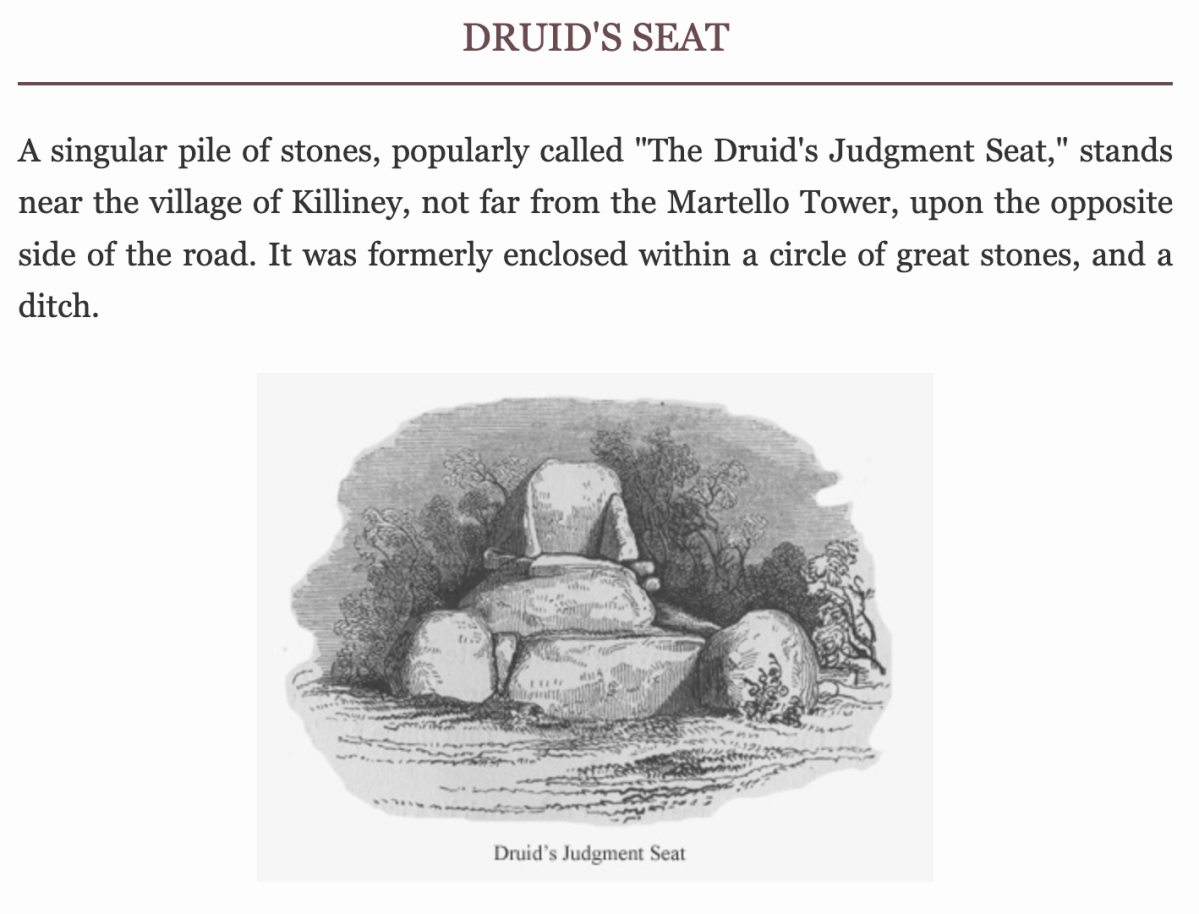
John Dalton writing in 1858 seems quite satisfied of the antiquity of the Judgment Seat. The Gazetteer of Ireland states “A well-preserved Druidical circle with its priests’ seat and its sacrificing stone, occur within a carefully kept enclosure, behind Mount Druid demesne, and near the Martello Tower, but is made accessible by the proprietor to respectable visitors.”

Killineyhistory.ie

William Wakeman, a well known antiquarian of the last century, appears to have been the first to condemn these remains as spurious. “Formerly it was enclosed within a circle of great stones and a ditch. The circle has been destroyed and the ditch so altered that little of its original character remains. The seat is composed of large rough granite blocks and, if really of the period to which tradition refers it, an unusual degree of care must have been exercised for its preservation. The stones bear many indications of their having been at least rearranged at no very distant time. Small wedges have been introduced as props between the greater stones. The right arm is detached from the other part, to which it fits but clumsily. The whole, indeed, bears the appearance of a modern antique, composed of stones which once formed a portion of some ancient monument.”

Killineyhistory.ie

These photographs were taken by William Frazer in 1898. The arrangements of stones at that time are very similar to what we see today – well over a century later – but with far less growth of ground cover.

Above: Druid’s judgement Seat, Killiney – from Library of Ireland archives.

Elrington Ball [1863–1928] confirms this view of the Druid’s Judgment Seat. The stones of which it is composed formed part of a Sepulchral memorial dating from very early times, consisting of three small cromlechs, surrounded by a circle of upright stones about 135 feet in diameter, and, at the time of its first attracting attention, in the 18th Century when everything prehistoric was attributed to the Druids or the Danes, it was assumed to be a Pagan Temple . . . Near the circle was discovered at the same time an ancient burying place, and some stones with curious markings, which are still to be seen. The burying place was of considerable extent, the bodies, which were enclosed in coffins made of flags, having been laid in a number of rows of ten each . . .

Killineyhistory.ie

Finally Woodmartin [Traces of the Elder Faiths of Ireland 1902 Vol 11] makes the sweeping statement: the entire structure leaves the unmistakeable impression of very modern fabrication, and it is a mere clumsy attempt to gull the public . . . As seen to-day these relics of antiquity present rather an unlovely picture, in an obscure and ill-kept corner, surrounded by an unsightly hedge, where weeds and brambles share their ancient sanctity; they seem to arouse but little interest . . .

Killineyhistory.ie

Today, the jury seems to be out on what we are looking at on this site. Time has undoubtedly changed the shape of things: wouldn’t we like to go back a while and see the burying place of considerable extent with all those . . . bodies, which were enclosed in coffins made of flags, having been laid in a number of rows of ten each . . . ? But we do appreciate that a former landowner must have donated the land to excite our interest!

A good tailpiece from William Wakeman

Mizen Megaliths 5: Ratooragh Wedge Tomb

There are twelve wedge tombs on the Mizen, three of which are still on our list to visit. I have written about several of them in many posts, but specifically about the wedge tombs at Cappaghnacallee and Ballydivlin, and at Ballyvogebeg, while Robert has written about the most famous of our prehistoric Mizen Monuments, Altar Wedge Tomb. For a general overview of Wedge Tombs, see Wedge Tombs: Last of the Megaliths.

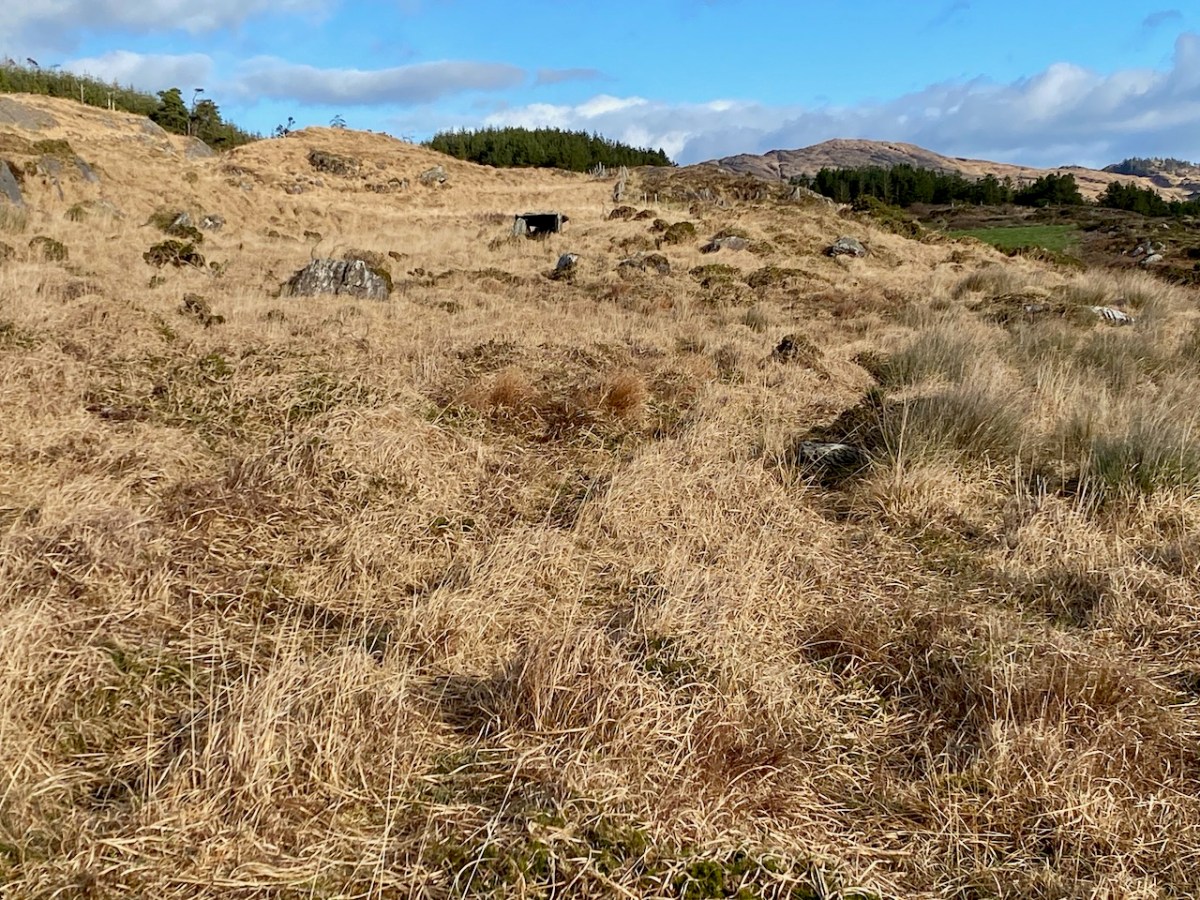
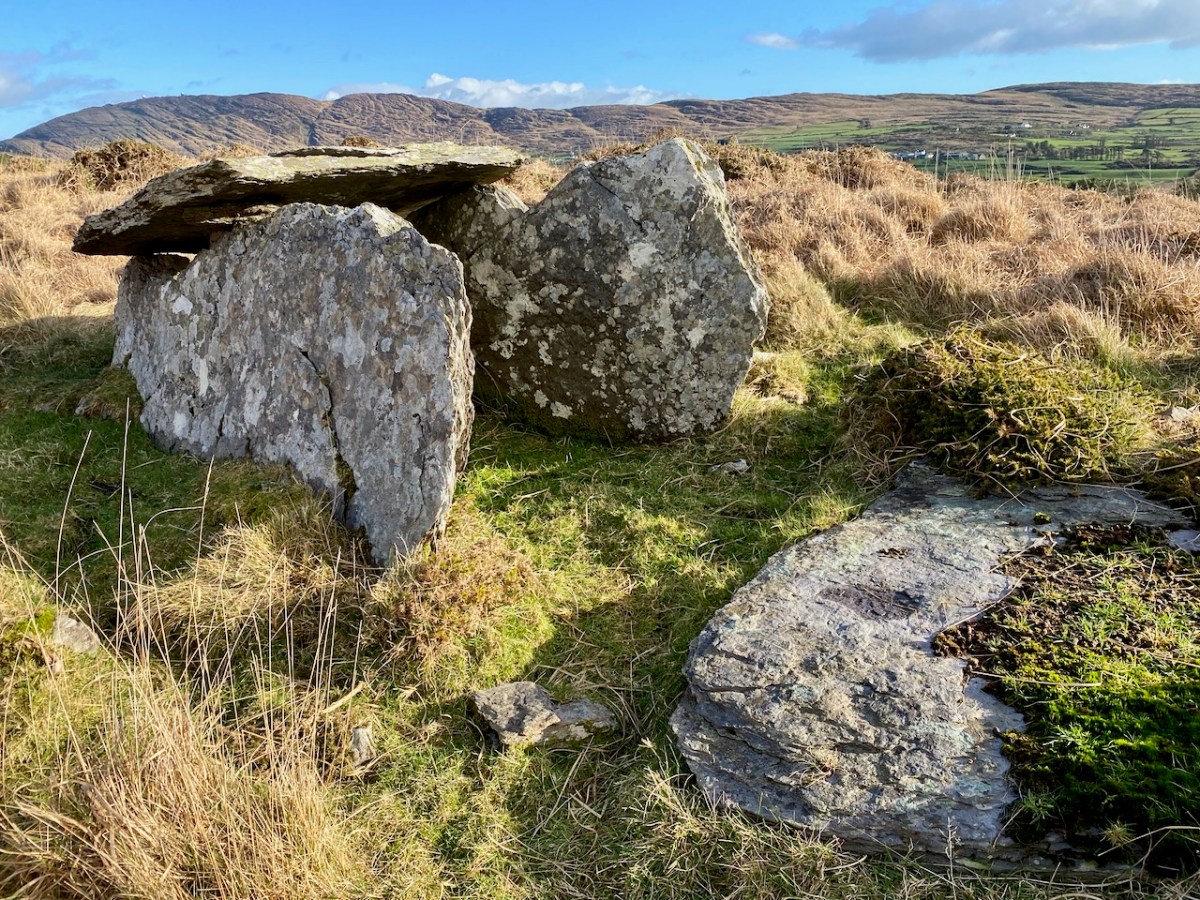
Today’s choice is a beautiful little example in the townland of Ratooragh, which is on the slopes of Ratooragh Mountain, north of Mount Gabriel. The location is fairly typical – on rising ground with good views in several directions.

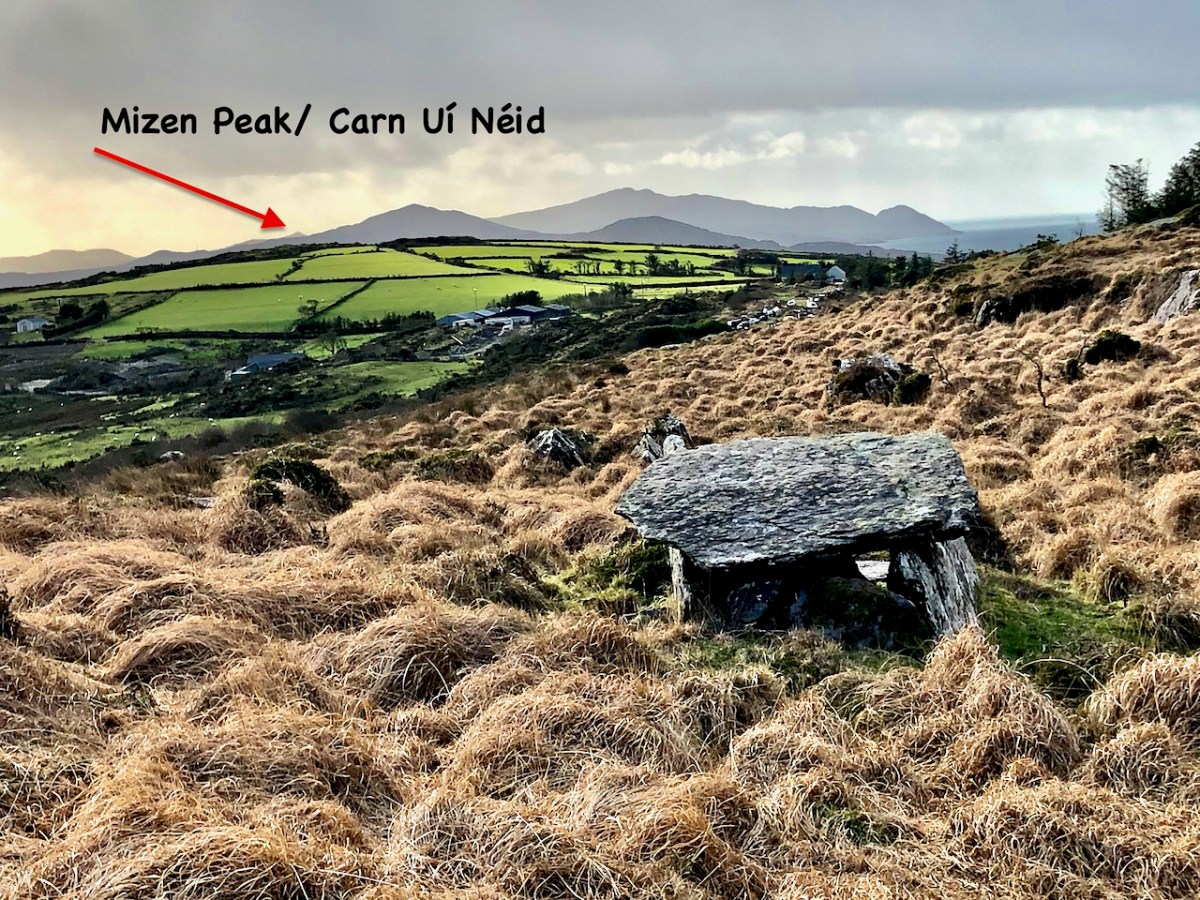
And of course, as all well-behaved wedge tombs are, it is oriented to the west. Like Altar and Ballyvogebeg, it has Mizen Peak in its view, despite the fact that it’s a long way away and is not the most obvious point on the horizon. Perhaps, like those, it’s related to the Handsome Bres.

In the National Monuments description this tomb (CO139-024—-) is described thus: 

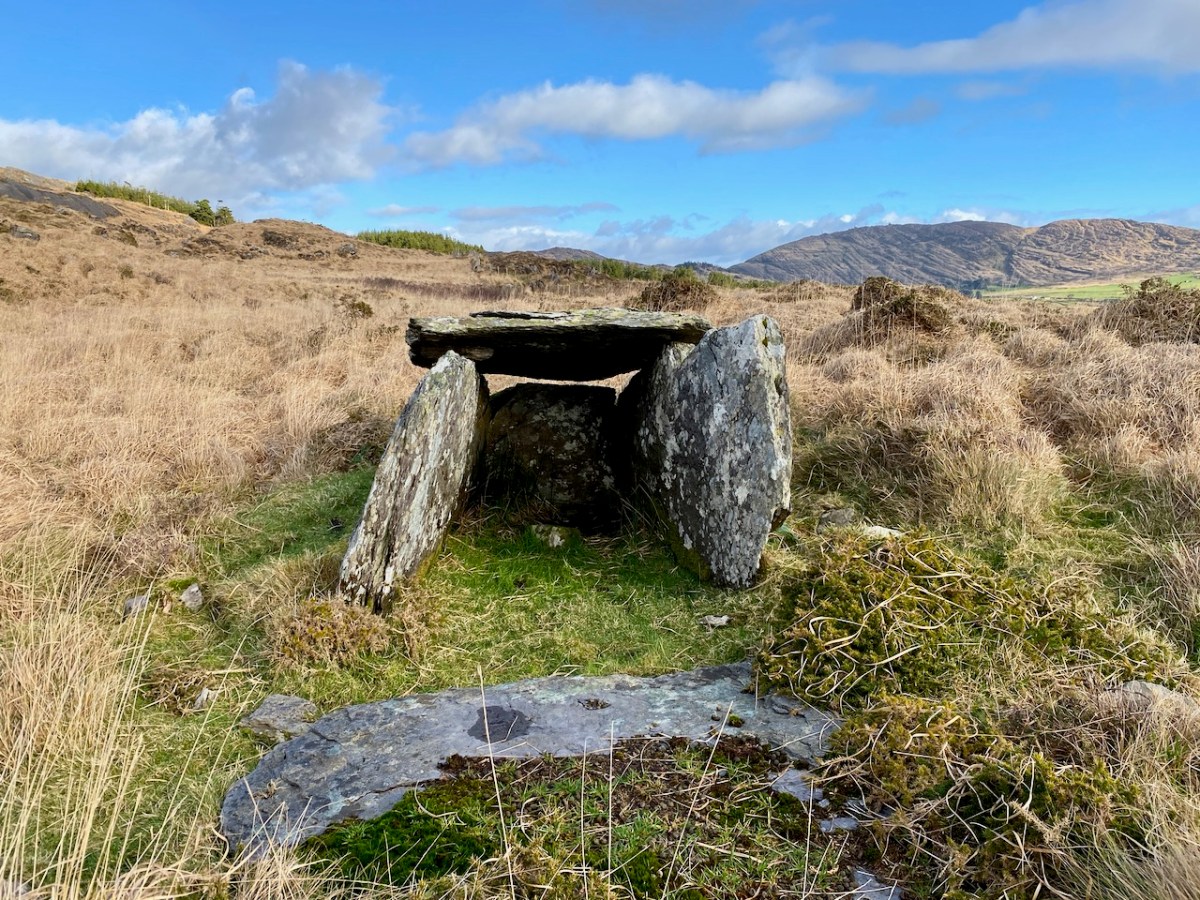
Chamber (L 2.2m; Wth 1.3m at W end, 0.85m at E) open to SW, covered to E by single roofstone. N and S sides each formed of one slab decreasing in height from W-E; inset backstone at E end, backed to E by parallel slab of equal width and height. Small buttress-stone stands at E end S side; prostrate slab to W of chamber may be displaced roofstone. Traces of mound to N of chamber.

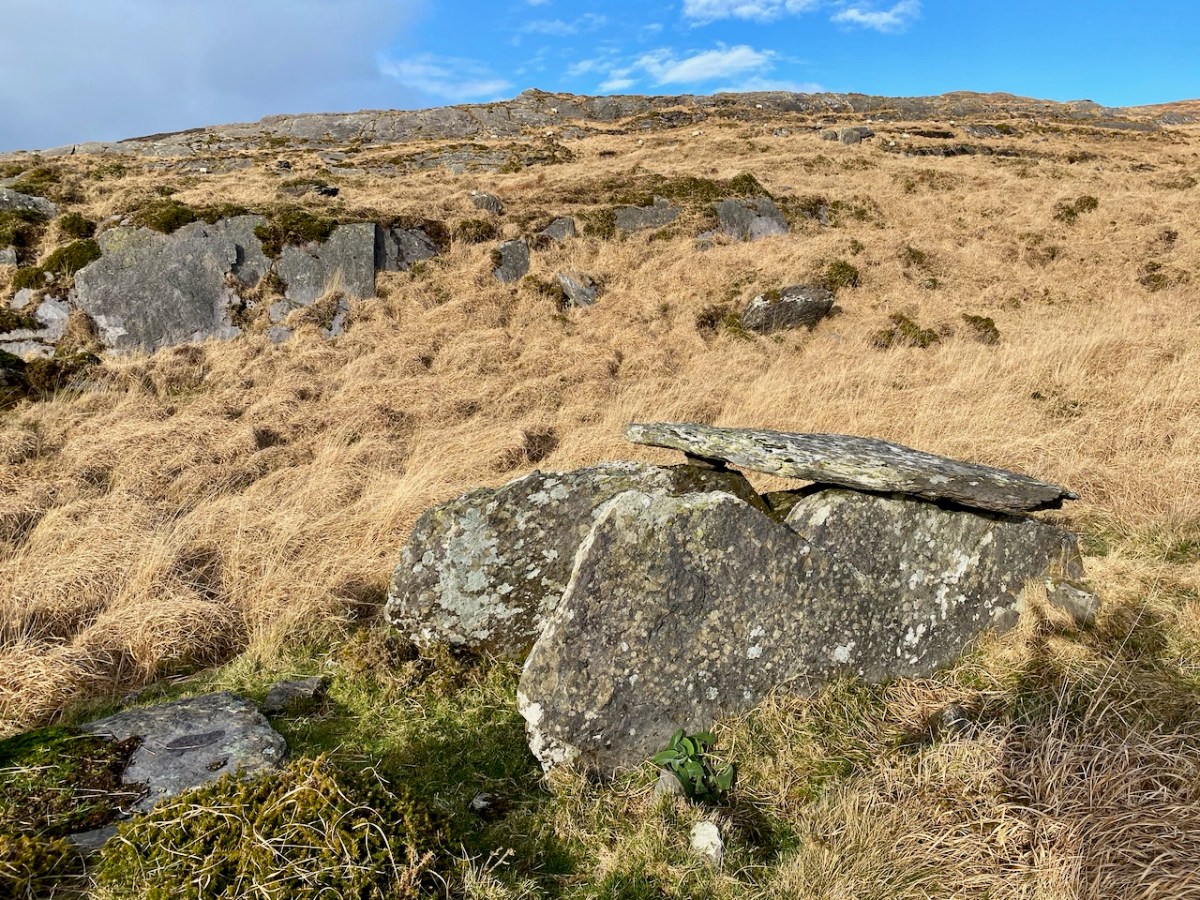
In actuality, the ground is so tufty that it’s not possible to make out any traces of a mound. But the tomb itself is relatively intact, and immediately recognisable, with its sloping roof slab and the sidestones that are taller at the west end. There were two roof slabs, but one has fallen and is in the grass in front of the tomb.

Although off the beaten track, this one was not hard to find in the end, but took a little searching as it’s not exactly where it is shown on the National Monuments map. If you decide to go looking for it yourself, go a bit further than you think you should.

The Darling Buds of March

We’ve had a long cold winter and it’s raining, misty and downright bleak outside as I write this. But there have been bursts of sunshine here and there and when I can catch those moments I am out with my camera to see what I can find in the trees and the grass. The land is waking up. This video is a compilation of what I’ve seen in the last week, in my own garden and along the boreens around me.

The music is by the incomparable Liam O’Flynn: Joyce’s Tune, from his album The Given Note, used with permission.

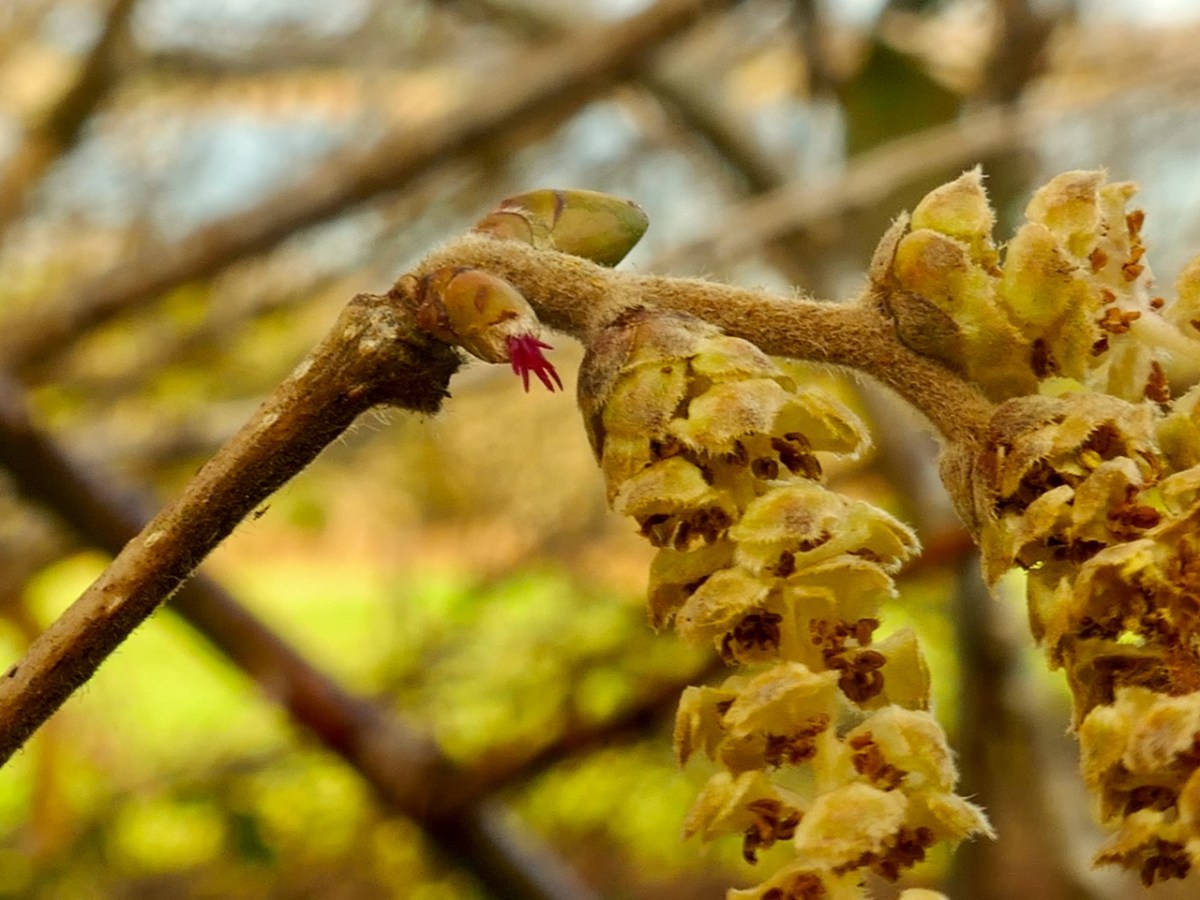
Here’s what I saw – all native and all typical of our West Cork flora. Hazel trees produce both male catkins – easy to see –  and tiny red female flowers – very difficult to see and easy to overlook, but very pretty little pincushions when you see them.

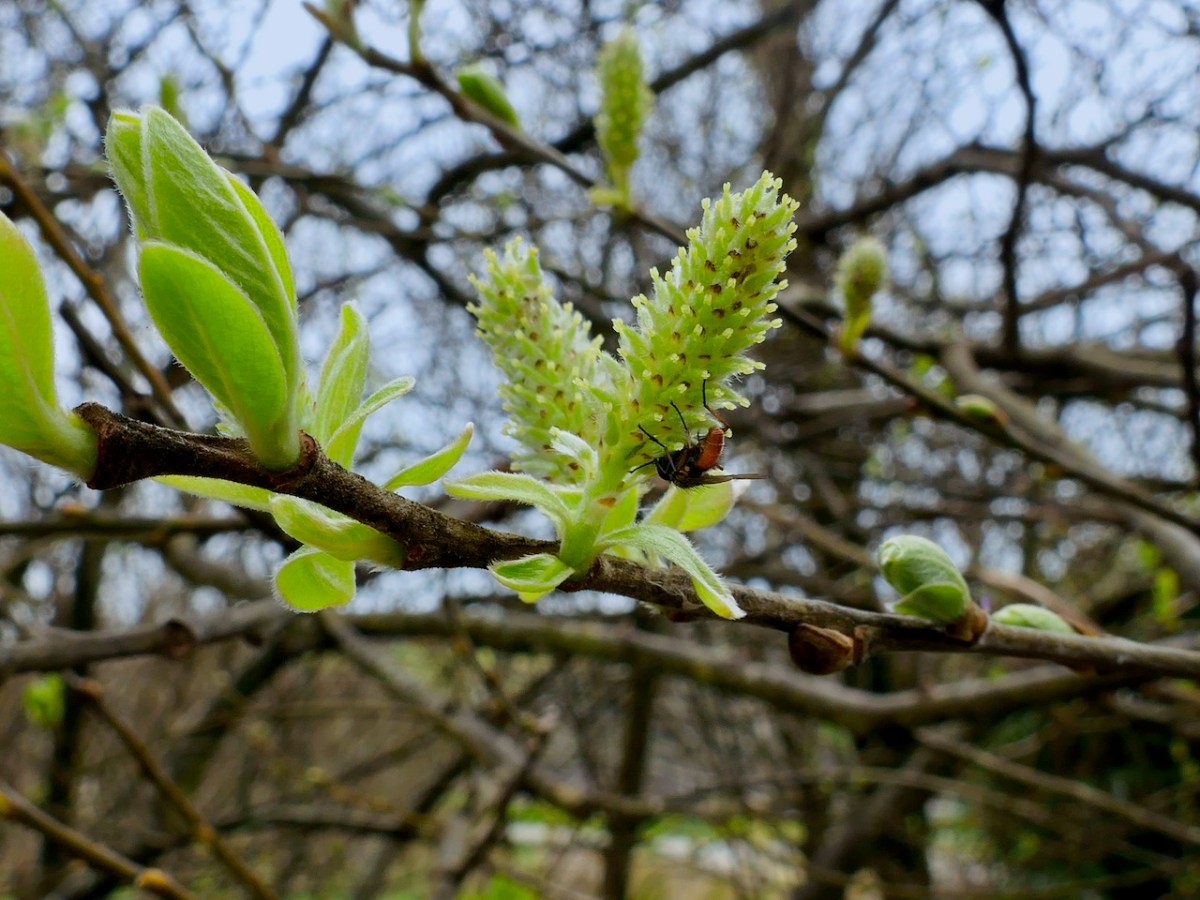
Willow trees, on the other hand are either female or male and depend on wind and insect to pollinate one from the other. The male trees are the ones who produce the cute little pussy willows, which explode into yellow flower heads as they mature.

I only have a female tree, with its own distinctive catkin-like spiky flowers. Fortunately, as you’ll see in the video, when I was photographing it, it was visited by a Great Tit and a White-tailed Bumble Bee, all helping (along with the breezy weather) with the pollination.

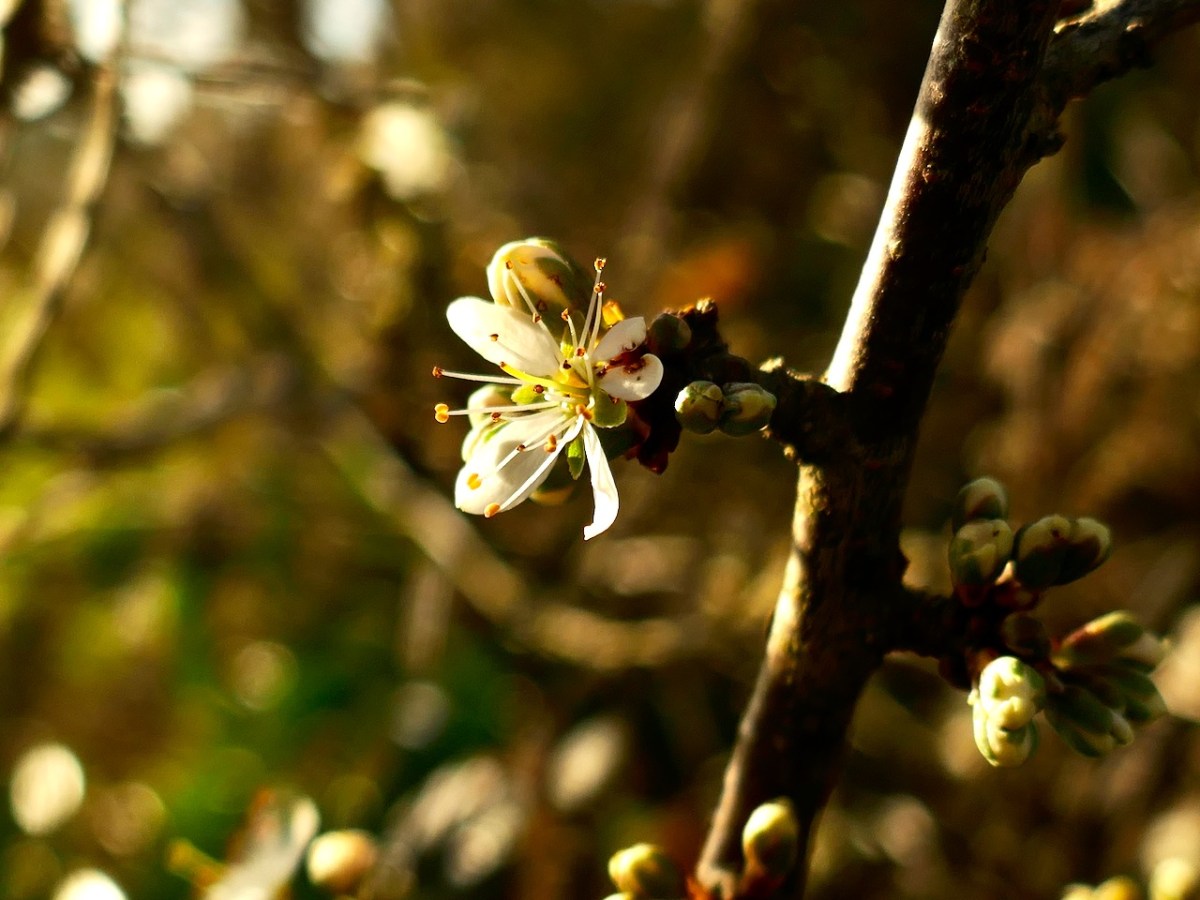
The blackthorn trees are one of our true harbingers of spring – the flowers emerge before the leaves, looking bright and beautiful against the dark bark.

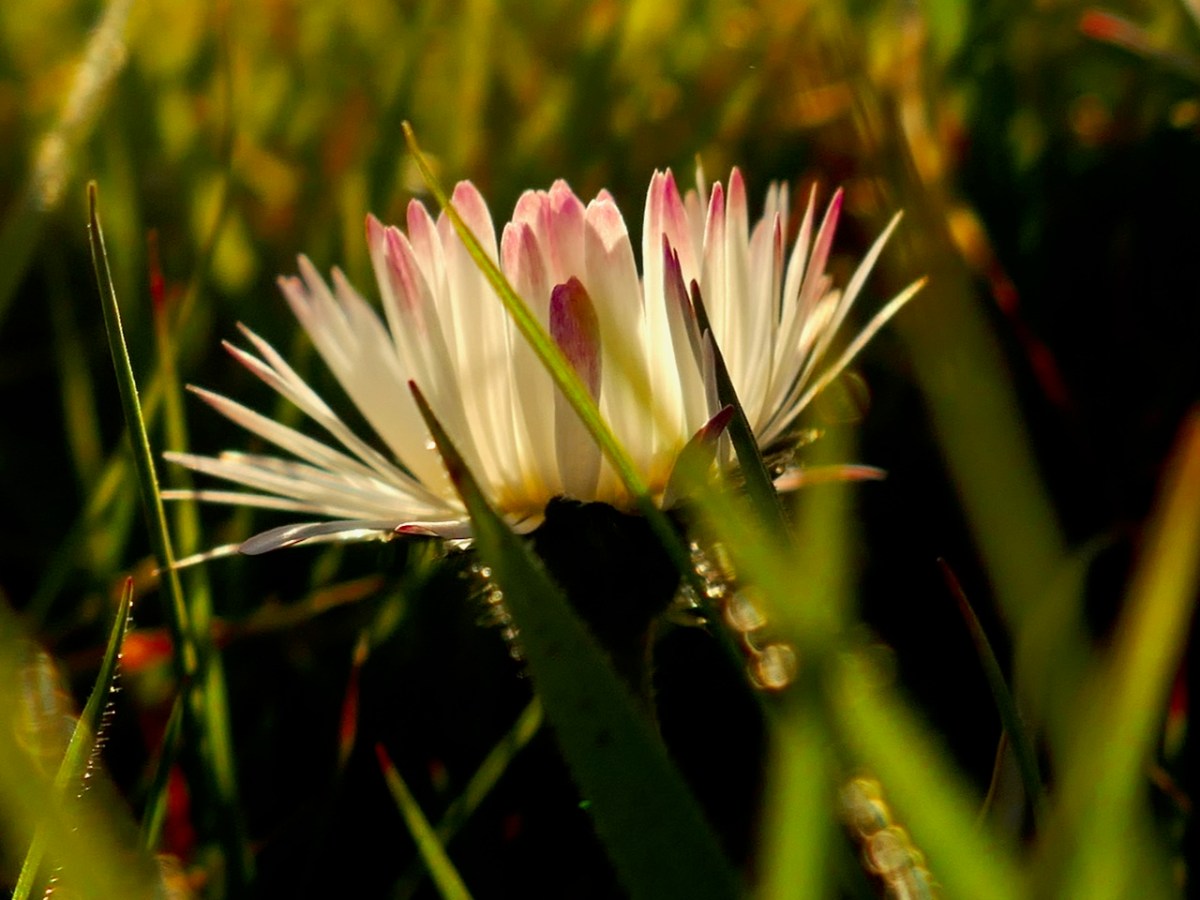
Some Staghorn moss is followed by two Dandelions and then some Lawn Daisies, Dandelions come early in West Cork and don’t last long – they are soon replaced by Cat’s-ear in my lawn. The daisies are a constant delight all summer long.

Another early spring wildflower is Common Dog-violet. This one really rewards getting up close. See my lead photo for this one. Finally, a couple of shots of Herb Robert emerging from a stone wall, followed by photos of Juniper Haircap Moss, which has established a little colony in the crevices of the rocks that line my driveway. The spore capsules sit atop tiny bright red stems. That’s my lead photo for this post, and the shot below.