The Significant Rock Art of Clonfinlough

Whenever we stray from our home territory of West Cork, we are always on the lookout for archaeological wonders. When we set our course for Clonmacnoise, in County Offaly, last week (I like the possible translation of the Irish Cluain Muccu Nóis: Meadow of the Pigs of Nós, but there is an alternative Cluain Mhic Nóis: Meadow of the Sons of Nós), we were looking for Ireland’s most important medieval monastic site, but we were diverted only a stone’s throw from our destination by a sign that we couldn’t ignore…

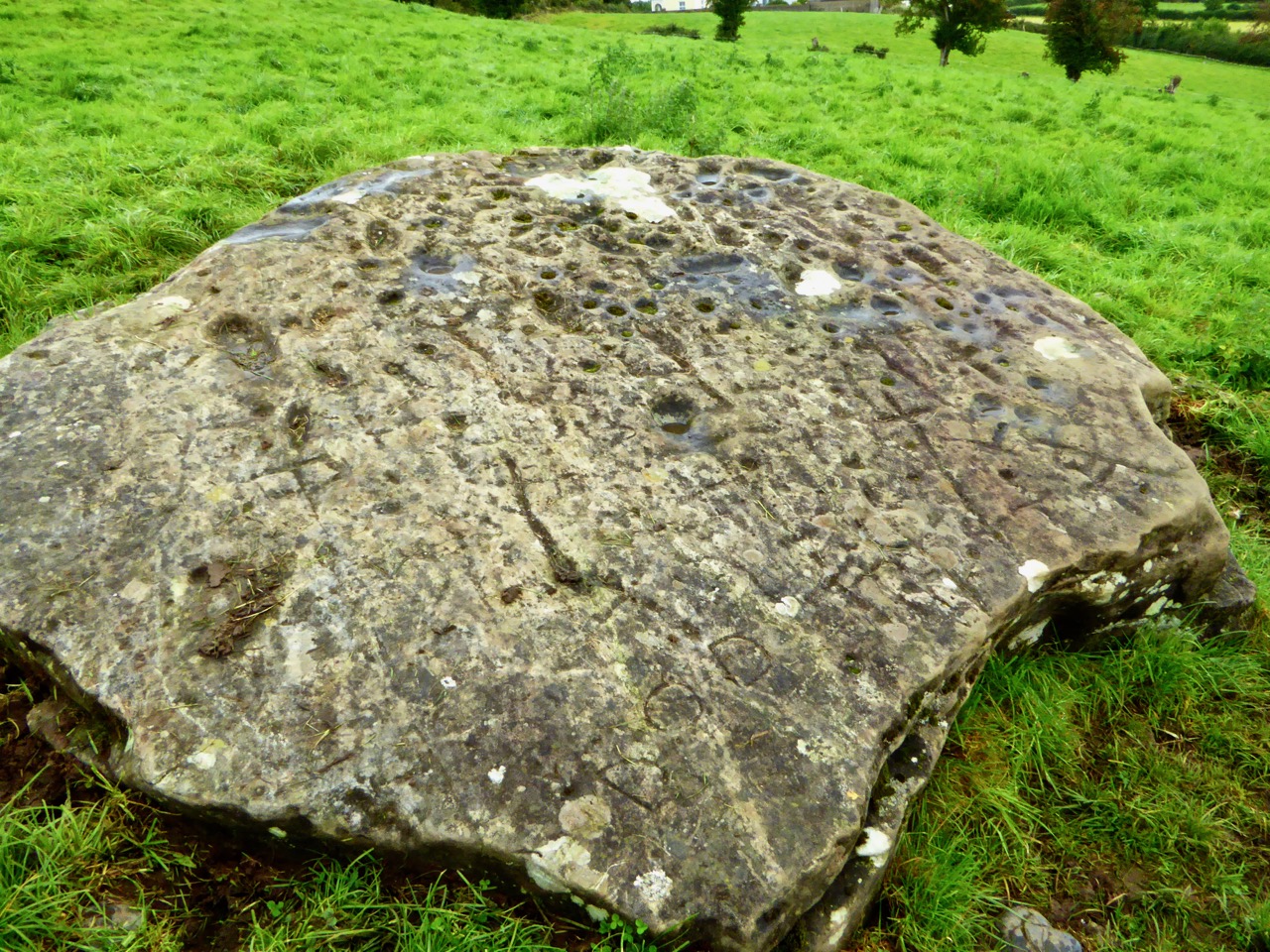
Tucked away to the south east of Clonmacnoise, on a by-road, sits an isolated church in front of which is a well defined and fenced pathway leading past the Priest’s house, through fields, over a stile and into a pasture where cows grazed and barely gave us a glance. There – open to the ravages of weather and cattle – is a large, earthfast slab of limestone bearing a remarkable array of markings.
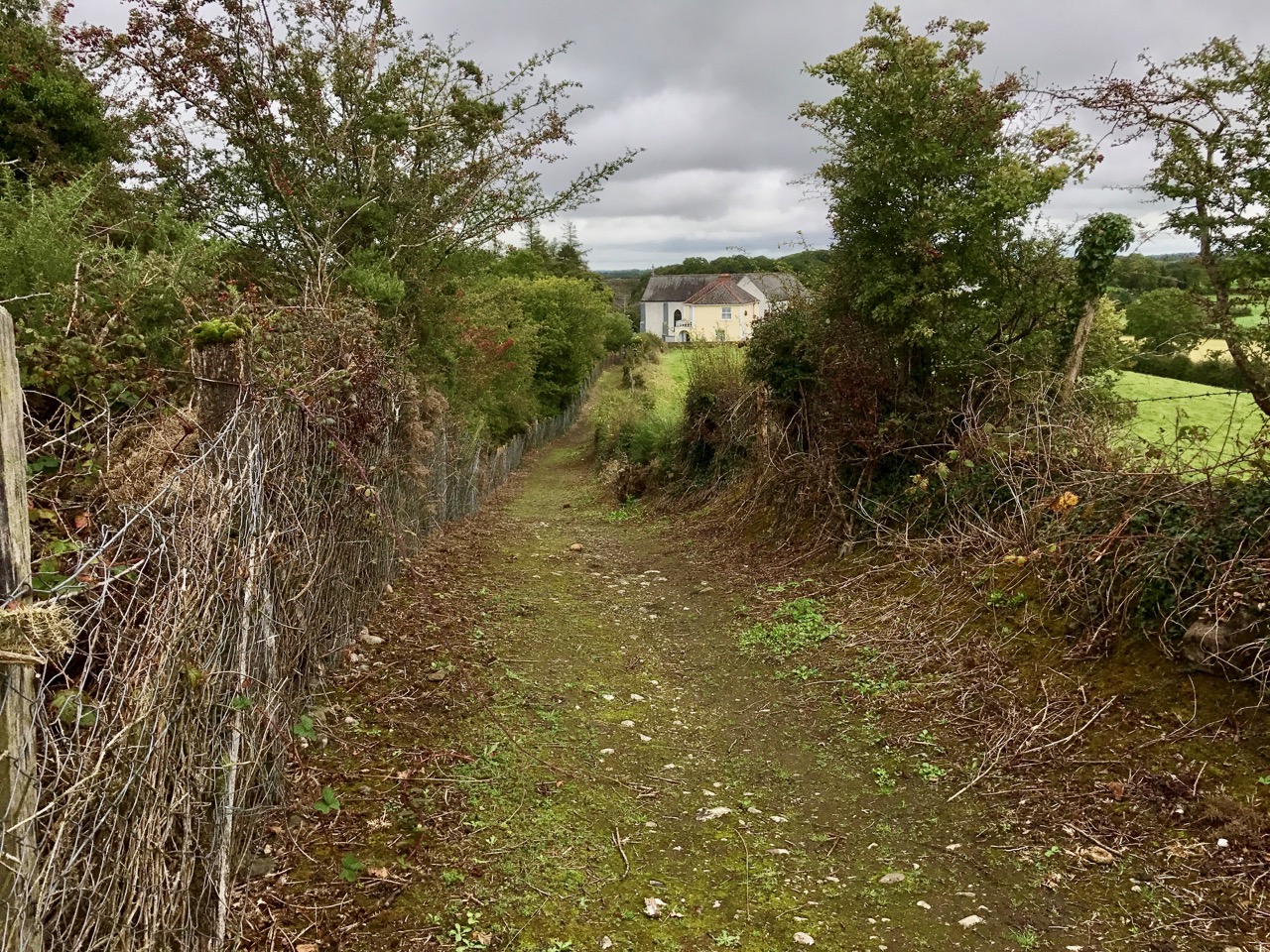
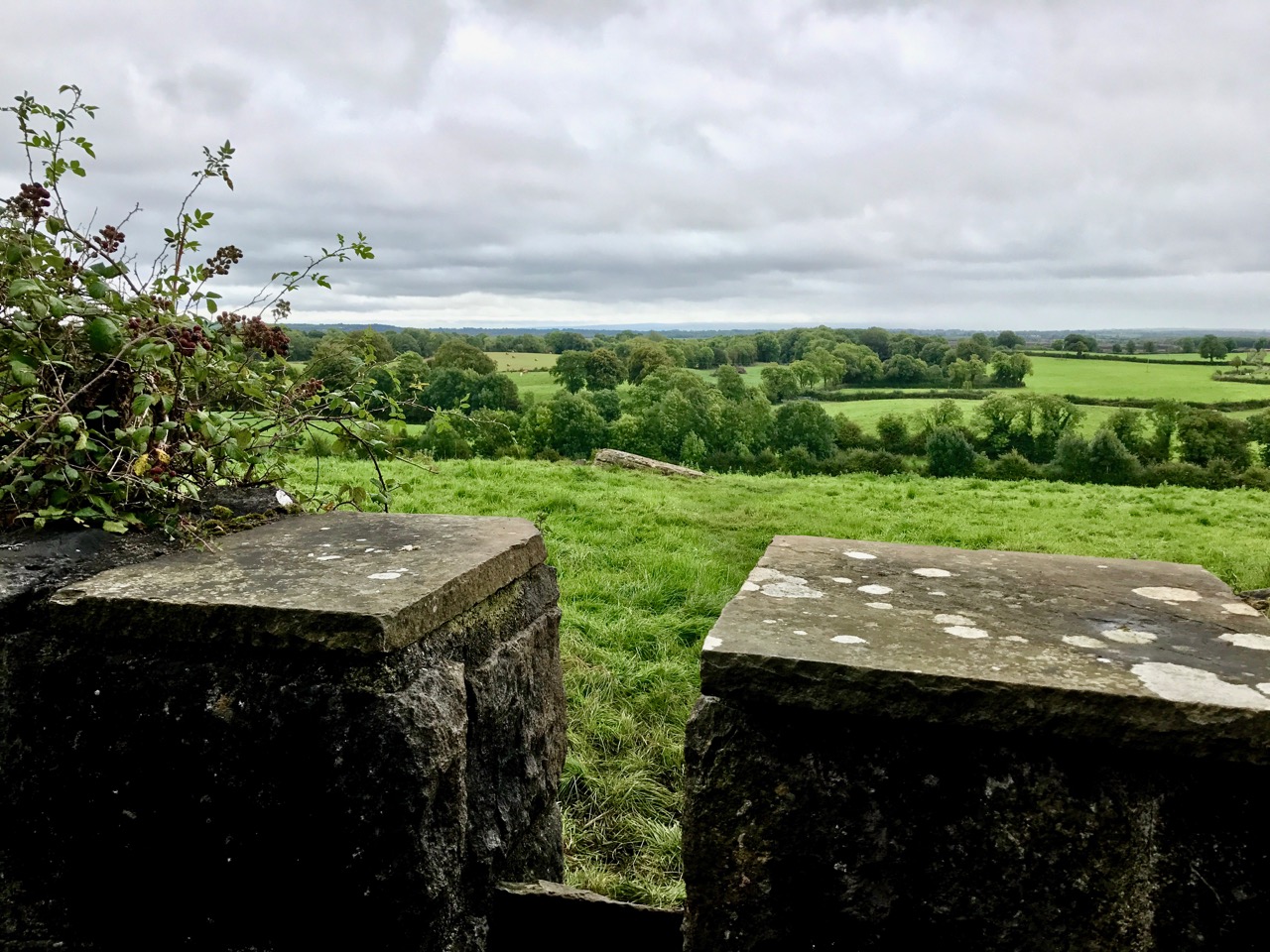
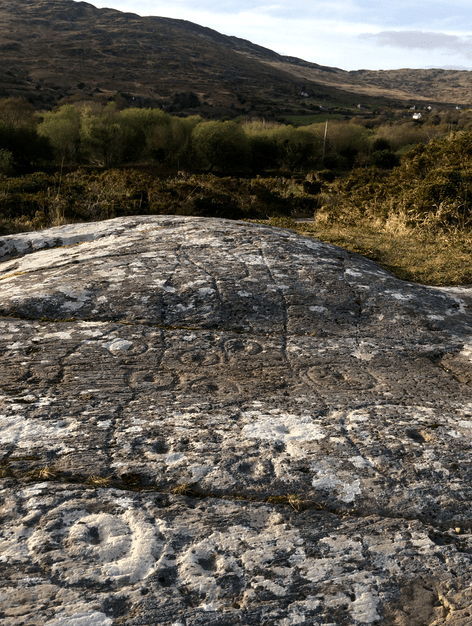
Header – a detail from the stone’s crowded surface. Upper – the well-defined path leading from St Kieran’s Church to the stone (don’t confuse this St Kieran with the one from Cape Clear). Lower – the limestone slab situated beyond the stile

For Rock Art enthusiasts like us the stone was a wonderful find. The surface is teeming with rings, lines, shapes – and even lettering. In spite of the weathering, everything was deeply defined and easy to see. And the more we looked, the more we did see, and the more perplexed we became. I even noted footprints! Remember my search last week for the footprint left by Archangel Gabriel on his visit to his eponymous mountain in West Cork? Here I counted six, and my size nine feet fitted perfectly in them all.
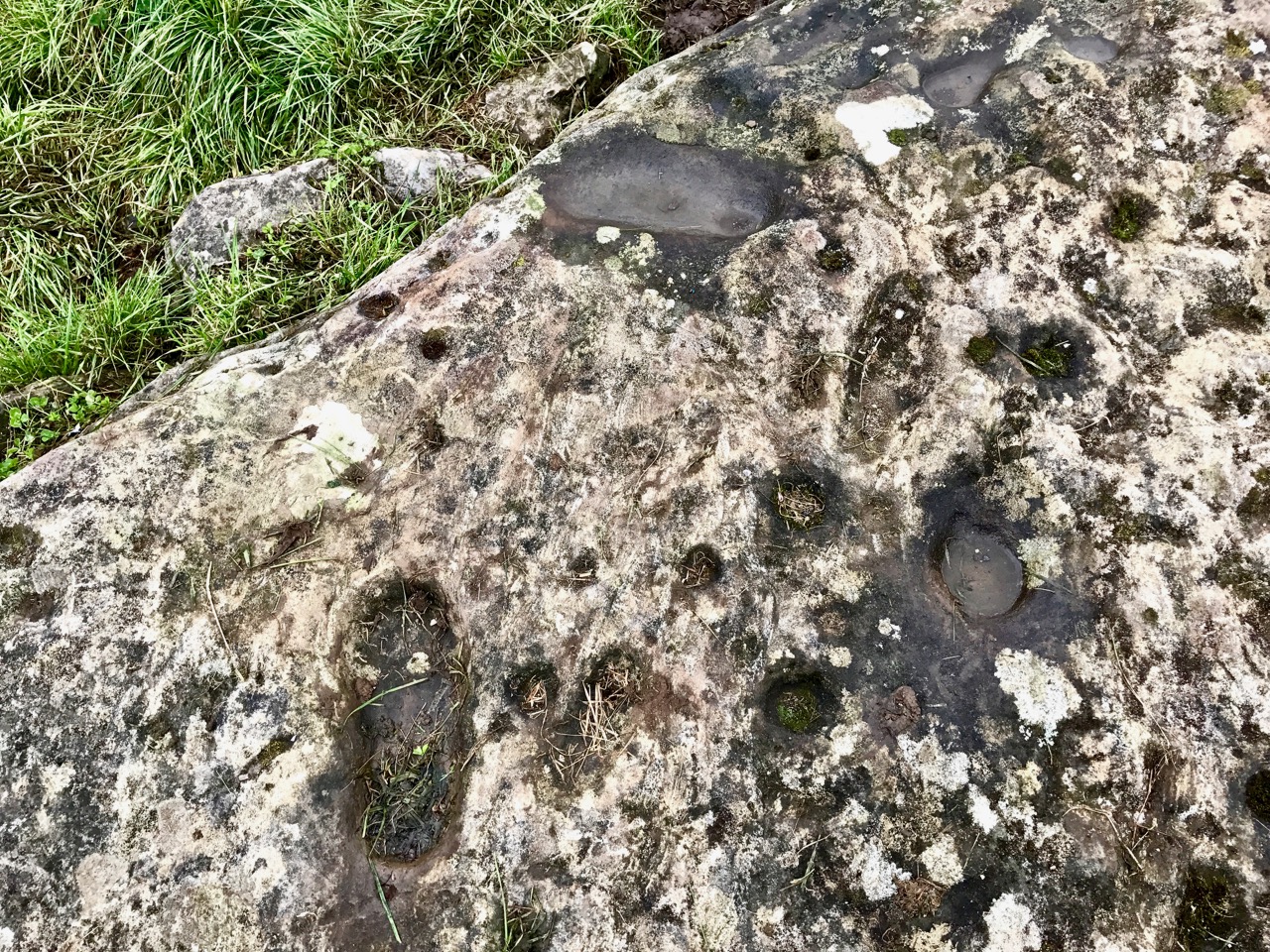
Upper – two of the ‘footprints’ scattered on the stone’s marked surface. Lower – the stone in its landscape context: ‘footprints’ are also visible

When we returned from our visit to Offaly I was able to research the available information on the Clonfinlough Stone and was delighted to find a very comprehensive study of it written by Finola’s old friend and Rock Art expert from UCC, Elizabeth Shee Twohig. The piece – Context and Chronology of the Carved Stone at Clonfinlough, County Offaly – was published in 2002 in The Journal of The Royal Society of Antiquaries of Ireland, Volume 132 pp 99-113. It makes the most enlightening read, outlining the ways in which the stone was regarded and drawn by early antiquarians and then opening up discussion on how much of the stone’s markings might in fact be natural formations, or natural forms which have influenced and been enhanced by ‘artists’ working with motifs which have become familiar to Rock Art researchers today, including cupmarks.
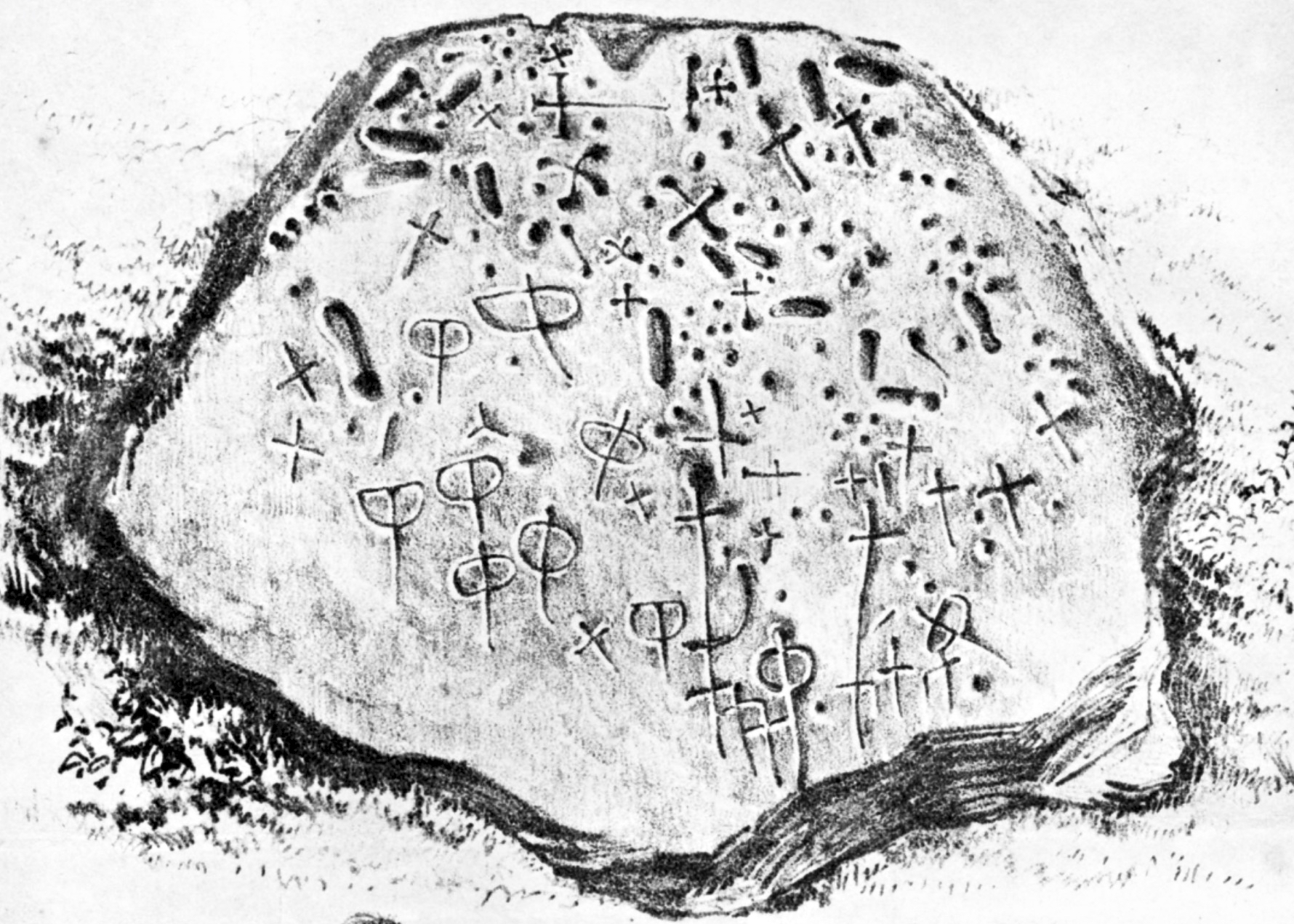
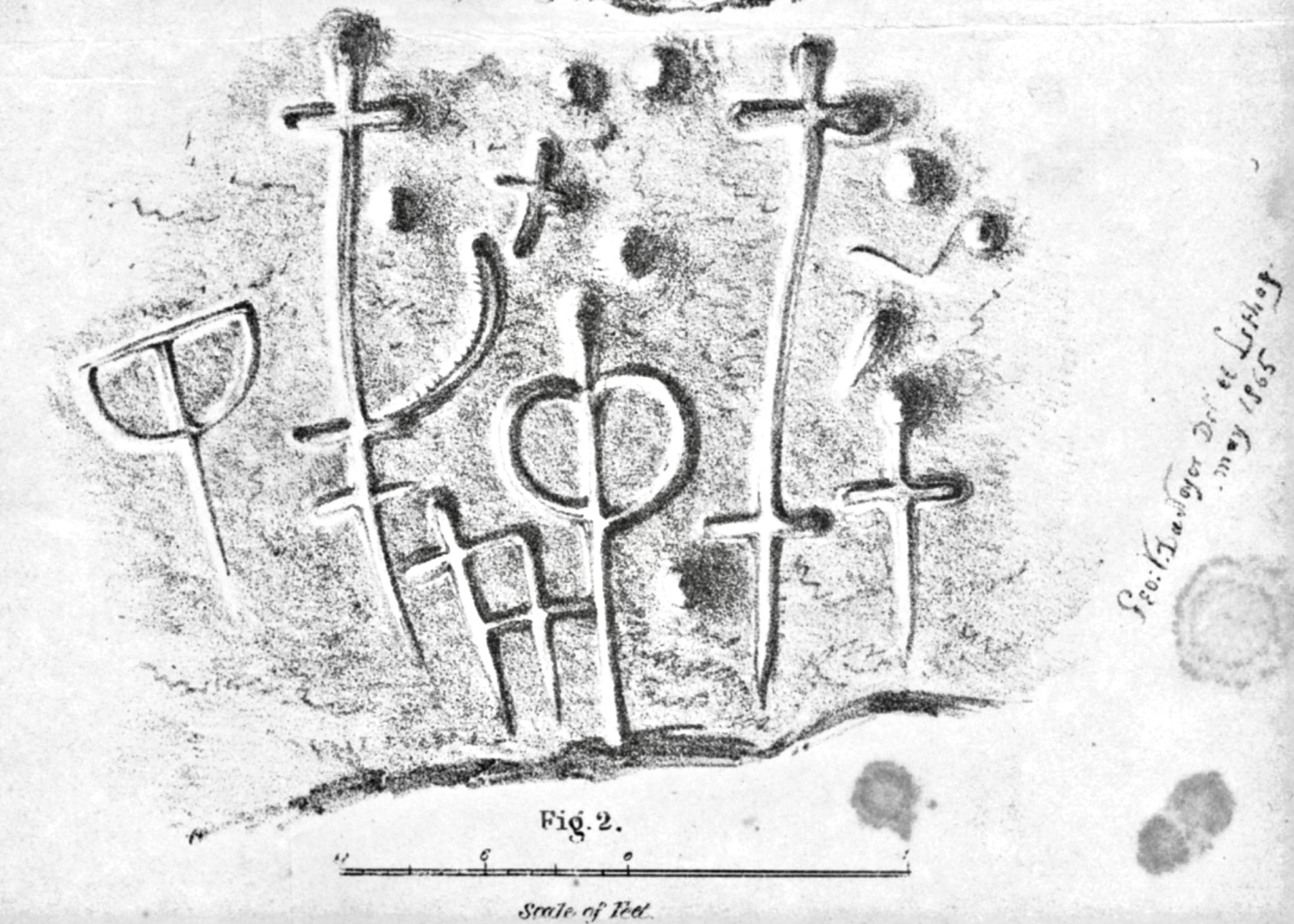
Engravings by George Victor du Noyer illustrating a paper published by James Grave in 1865. Note the emphasis that du Noyer has placed on recognisable ‘Greek’ style lettering (termed phi by Shee Twohig)

Elizabeth Shee Twohig quotes theories by RAS Macalister which evolved between 1921 and 1949, and which include the idea that the phi markings represent ‘…a possible depiction of a battle between the ‘loop men’ and the ‘cross men’ and suggested that the cupmarks …may even indicate the number of severed heads!…’ In his 1928 book The Archaeology of Ireland Macalister (quoted by Shee Twohig) suggests ‘…the carvings as showing a battle or pre-battle scene, the medicine men having prepared for their occult purposes a picture of the consummation desired…’ while in 1949 he saw it as a sign-manual of a hostile expedition from Spain which sailed up the Shannon: ‘…the battlefield, printed with the footmarks of the flying foe, strewn with weapons cast away in their flight and with missile stones…’
These are but brief extracts from the Shee Twohig account and discussions, which are essential reading – not just for possible enlightenment on the markings on this stone, but also for a well defined background on how ideas about Rock Art generally have developed since the time of the earliest antiquarians.
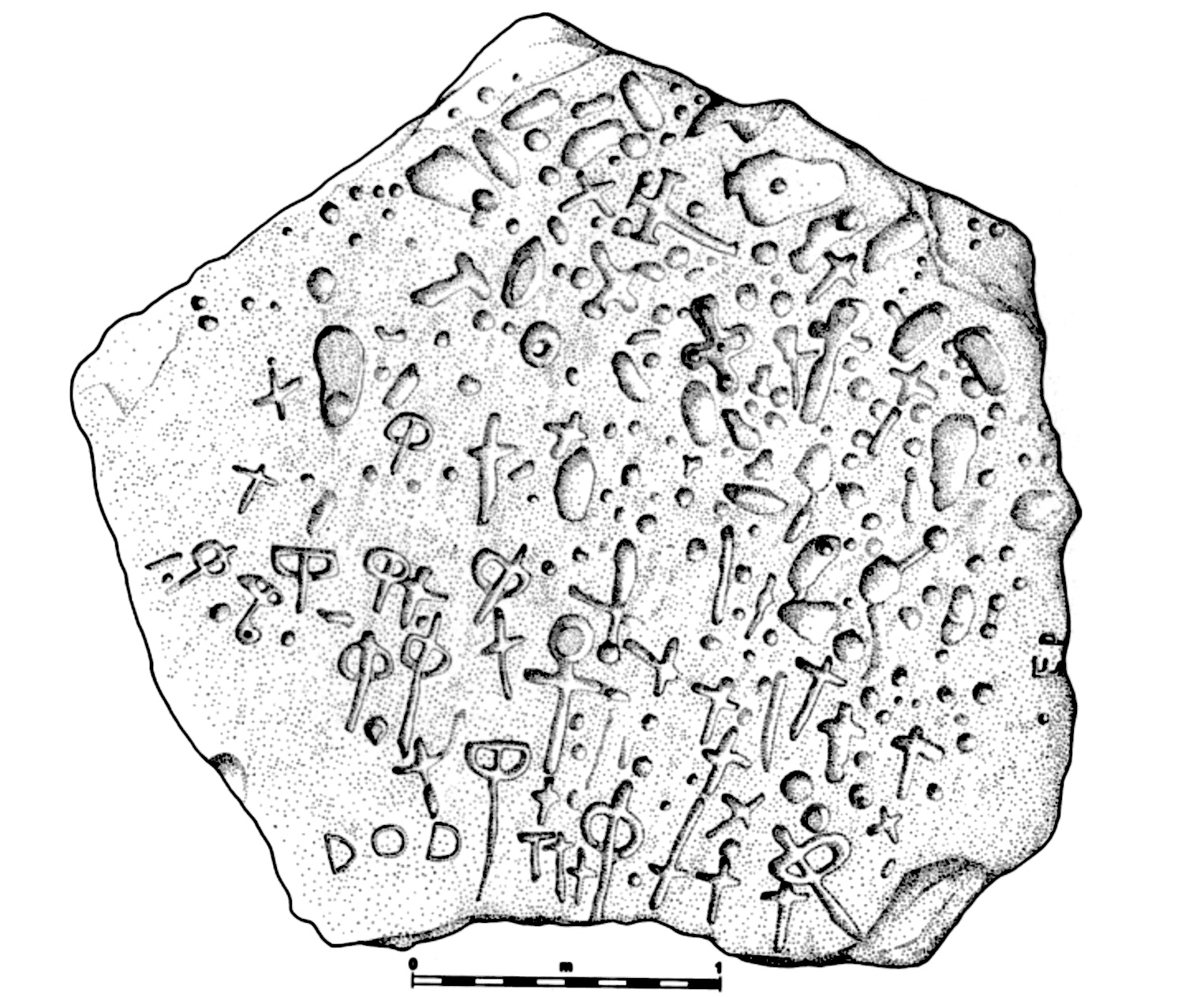
Elizabeth Shee Twohig has amplified her study of the Clonfinlough Stone with the first truly accurate drawing of the markings on it (above). It is certainly interesting to compare this with the 1865 engravings by du Noyer

Elizabeth Shee Twohig brings in to her study the possible significance of the stone’s positioning close to the great monastic centre of Clonmacnoise, which in medieval times was the prime pilgrimage destination in Ireland. There is evidence that one of the paved pilgrim routes passed close by the Clonfinlough Stone. It is plausible, therefore, that at least some of the markings on this limestone slab could have dated from those times: Clonmacnoise was active between the 6th and 12th centuries.
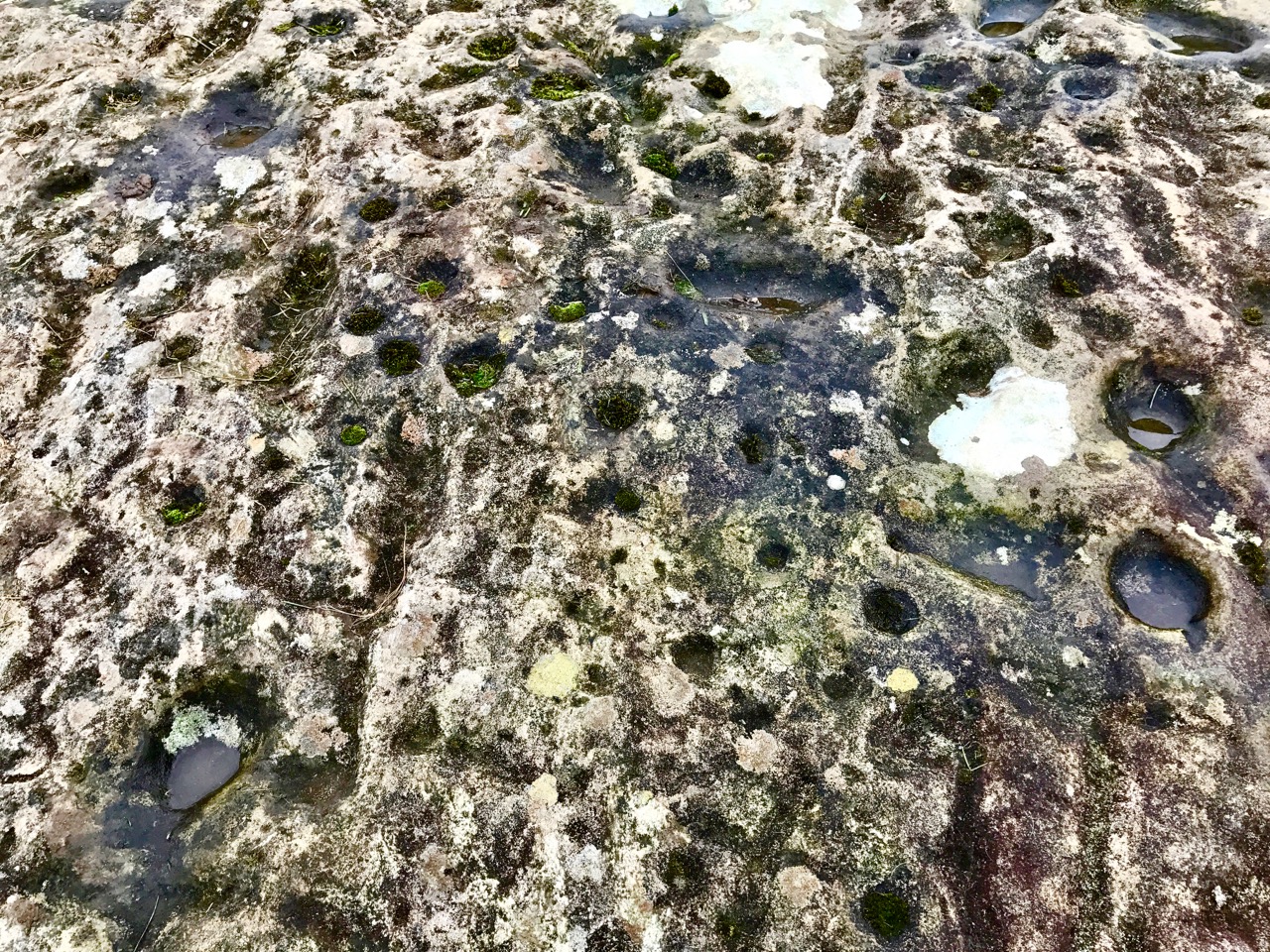
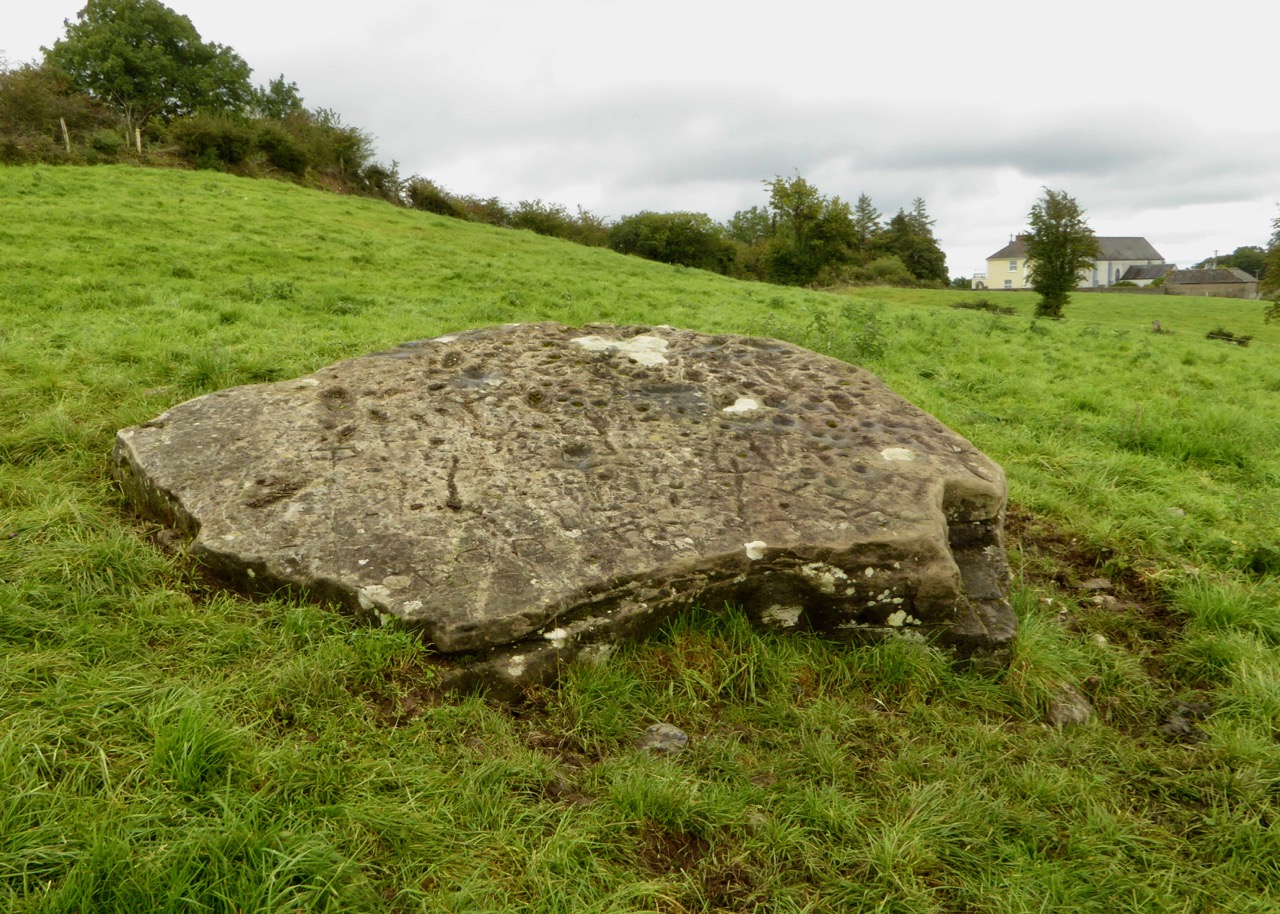
Upper – the many enigmatic markings on the stone: natural limestone solution pits, Bronze Age Rock Art, crosses carved by or for medieval pilgrims? Lower – the stone is within sight of the present day church

A trawl through the folklore records proves fertile. One legend says that at certain times of the year a horseman manifests and gallops around the stone. Another has it that a local boy named Michael used to play at the rock and there met another boy who gave him a silver knife. His mother made him take the knife back and leave it on the stone, for she said the boy was a fairy trying to entice him away. It is also said that another Michael will find the knife, and when he does he will find two big pots of gold under the rocks. Whatever the truth is about the rock and its meaning, I am struck by the path we found coming from the little church which is in sight of the Clonfinlough Stone: could there be something pagan in that stone which required the church to be built there – or is it a mutual guardianship?

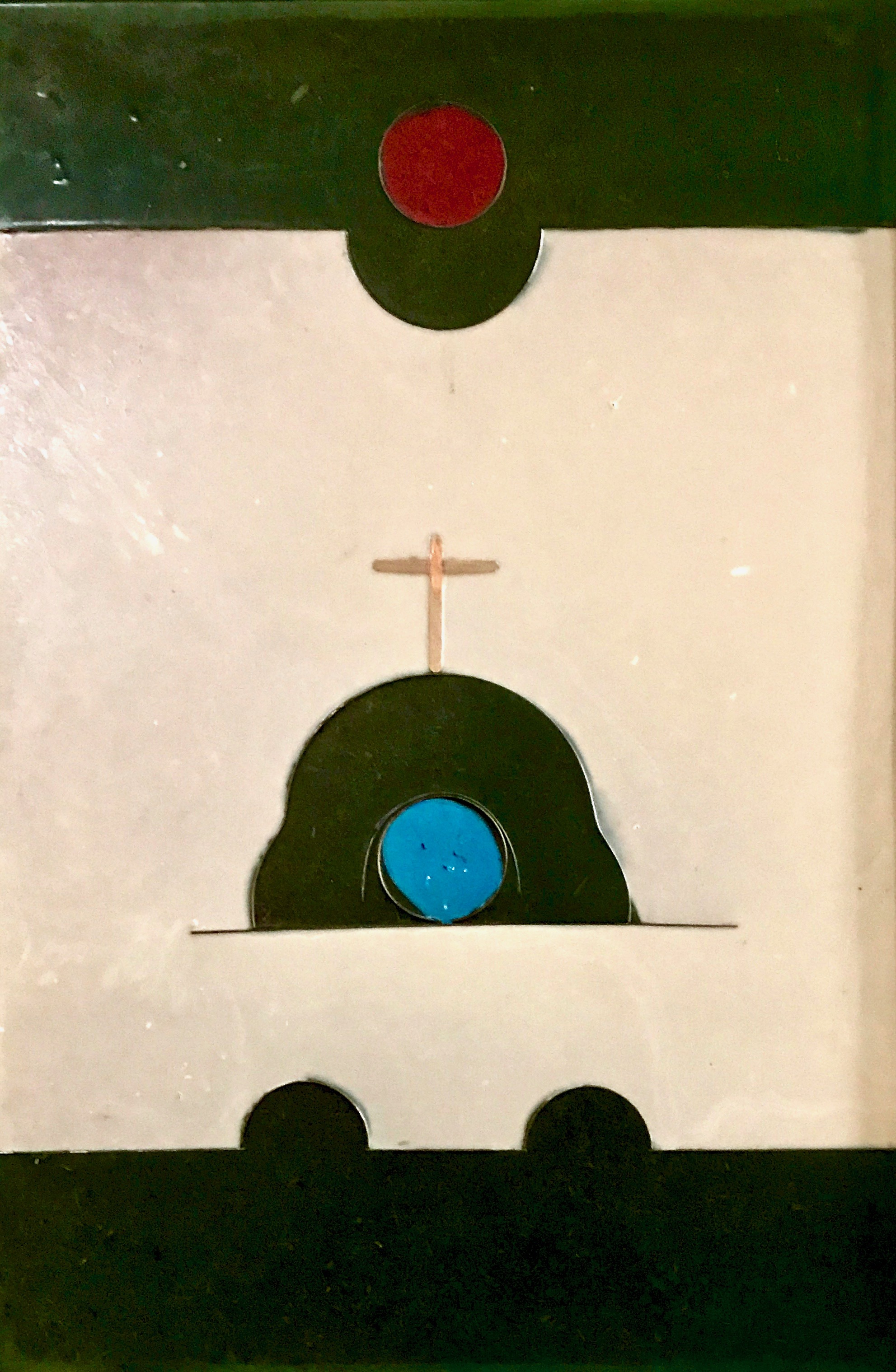
In the church at Clonfinlough is a curious series of Stations: this one showing the ’empty tomb’ can be seen as a rock supplanted by a cross…
The Treasures of Castledermot

Last week we explored the medieval wonders at Moone, in County Kildare. We couldn’t leave the area without going on to Castledermot to visit the monastic site of Díseart Diarmada, (the hermitage of Dermot) – a few minutes’ drive down the road. Stone carving artists were active here, too, as we can see from the many artefacts mainly centred today around St James’ Church, built on the site of the former monastery. These include a decorated Romanesque doorway: Finola is writing about Romanesque architecture today.

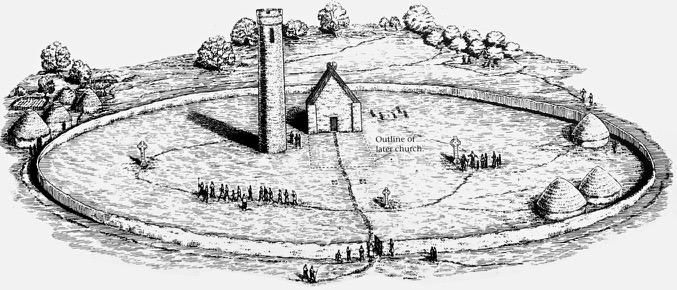
Díseart Diarmada as it might have appeared in the 800s. This reconstructed view is taken from the excellent Dúchas interpretation panels on the site, and shows the earliest church, the 20m high round tower (which still stands today) and the two ornate high crosses, which also remain intact

The settlement itself was highly important. There were Viking raids during the 9th century, probably indicating that there was wealth to be plundered there. A royal grant was given for a fair in 1199, and the very first Irish parliament was convened in the town on 18th June 1264. In 1393 Castledermot was granted permission to mint its own coins.

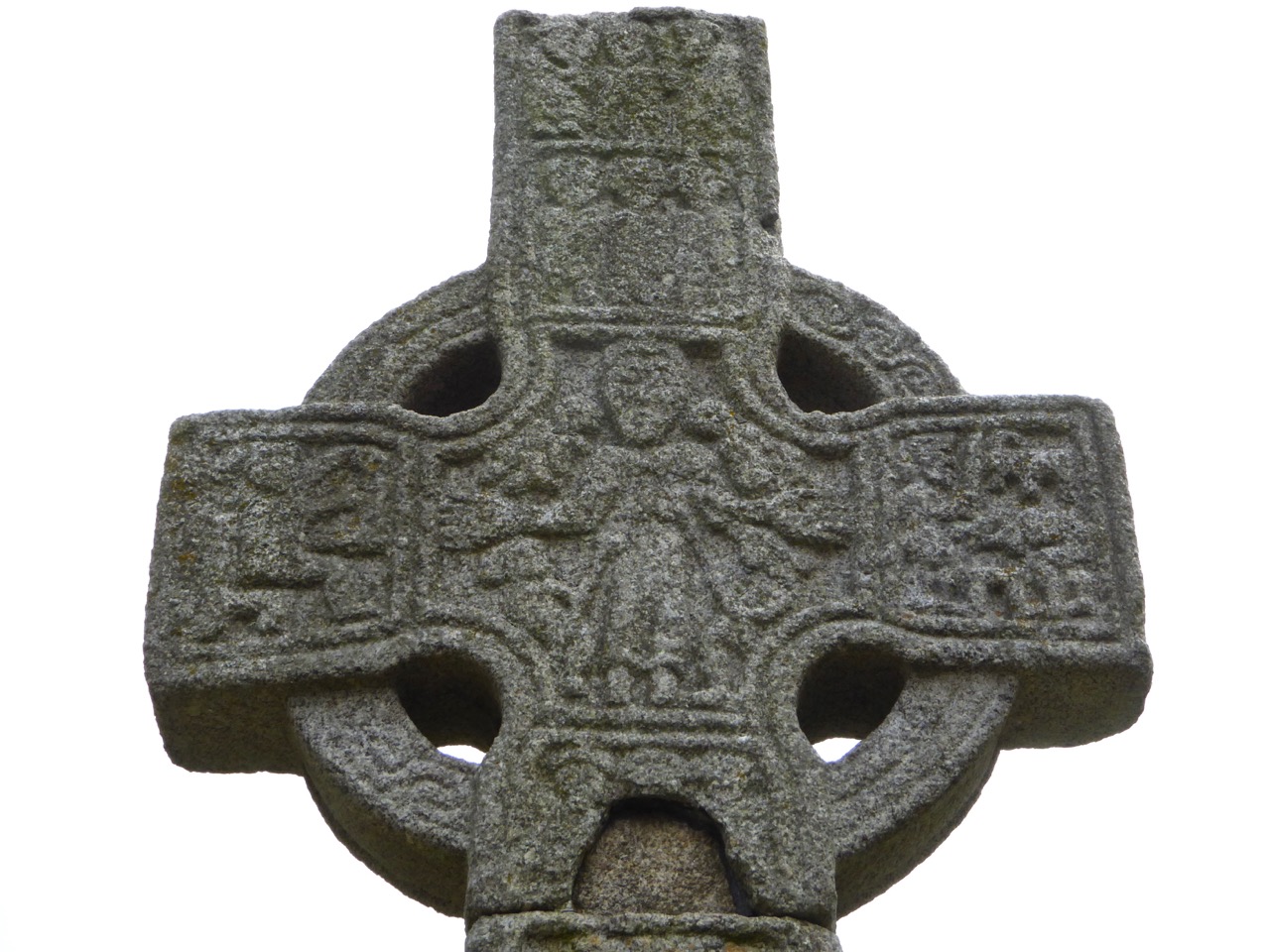
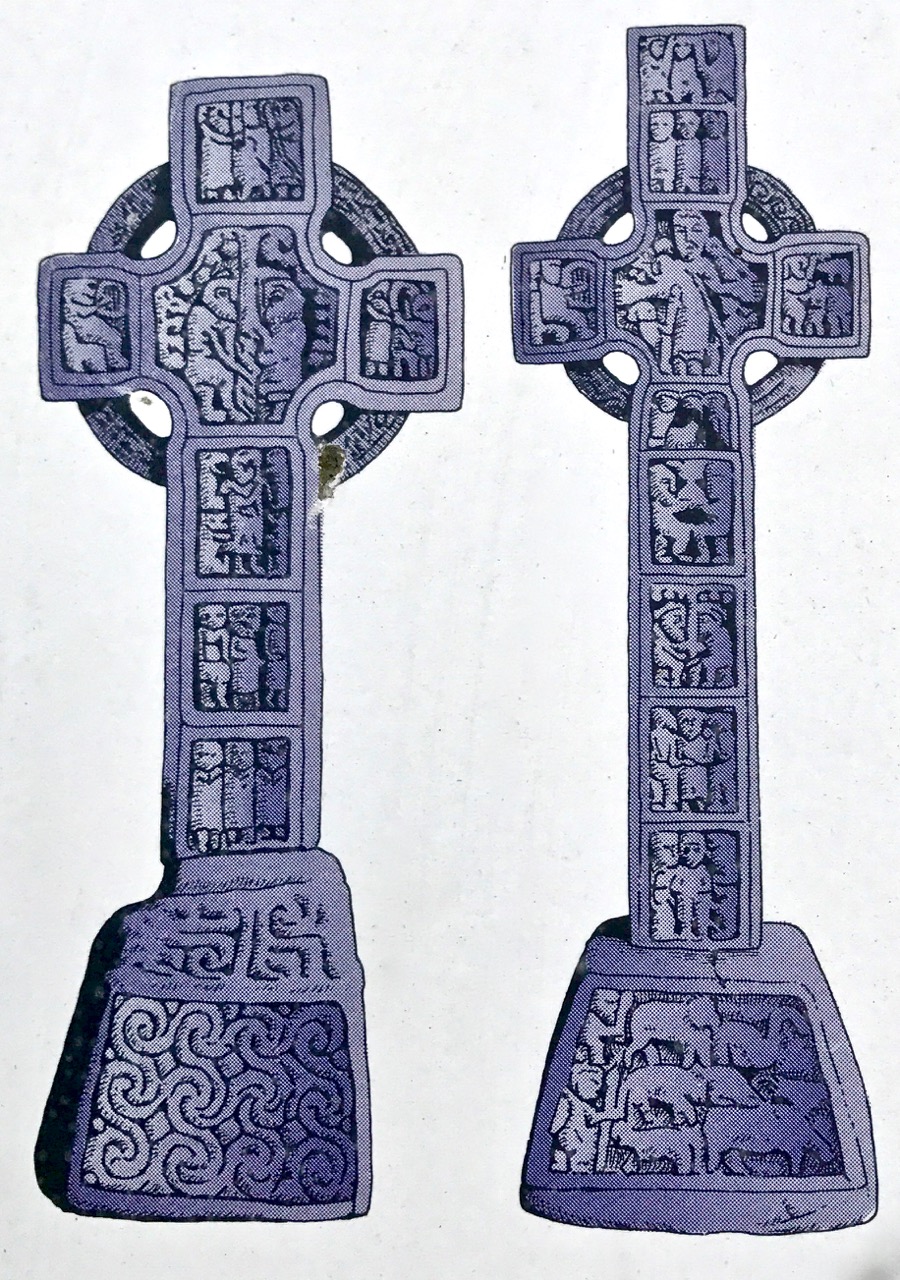
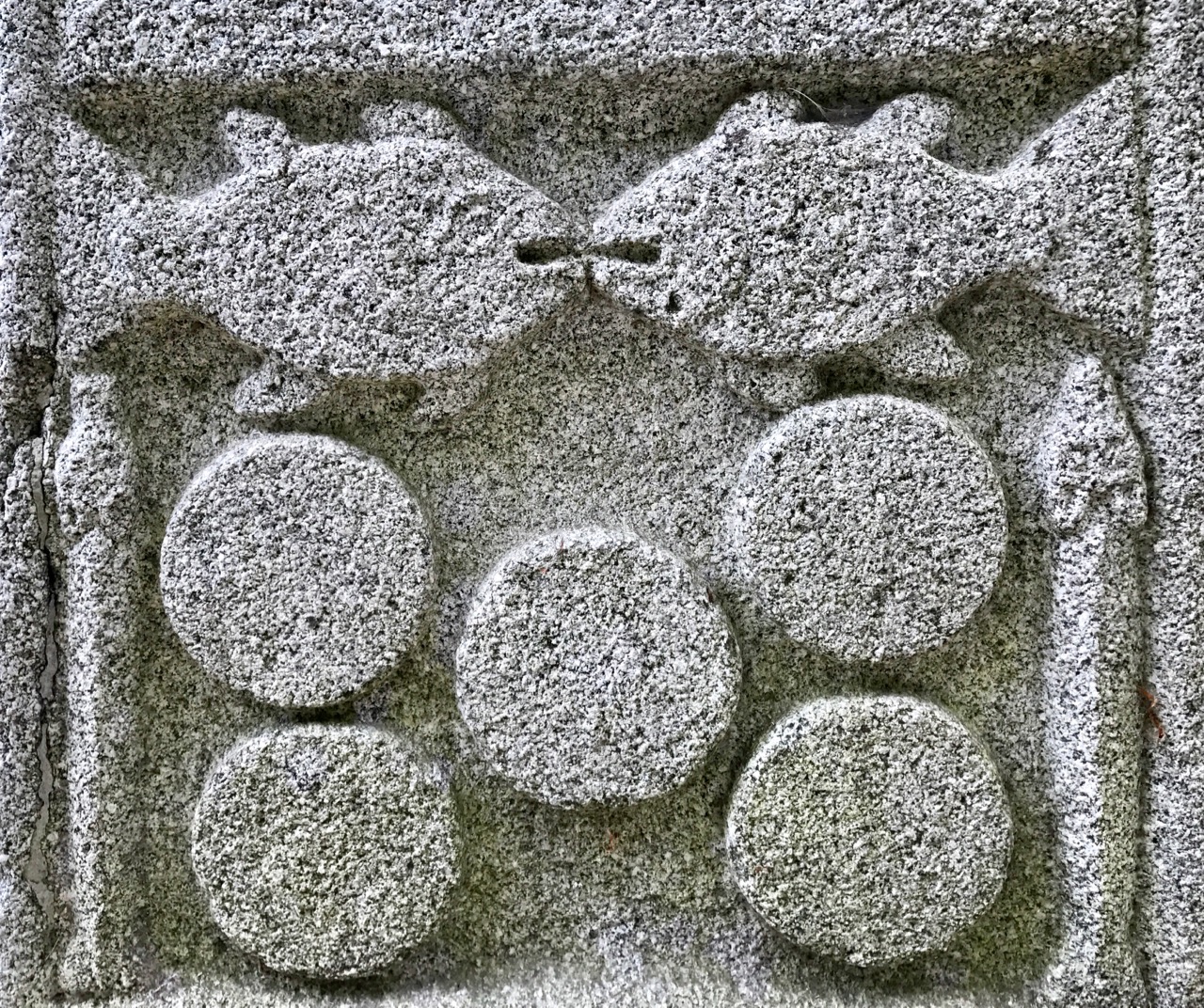
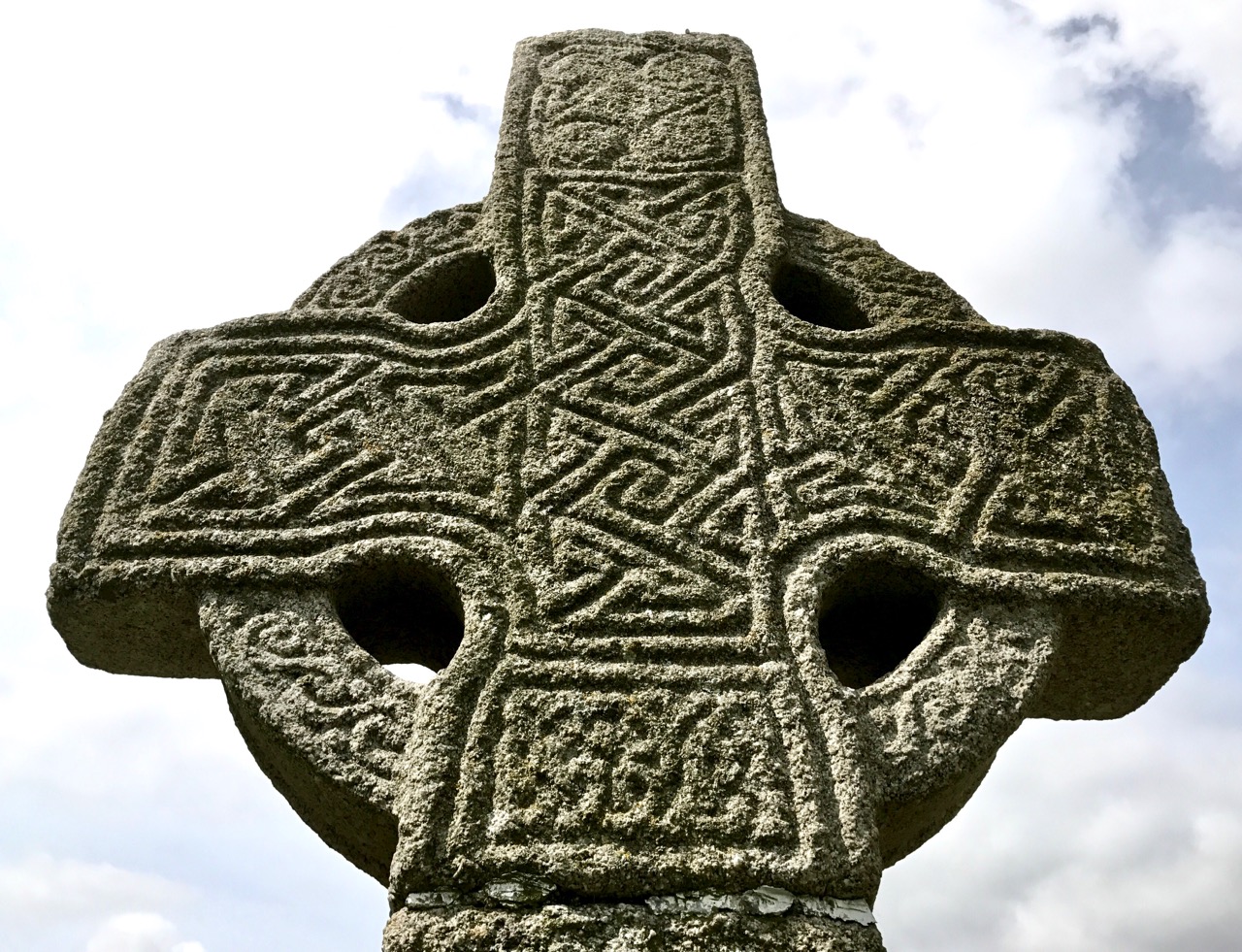
The two high crosses at Castledermot: south cross (left) and north cross (right – round tower beyond). The header picture shows the geometric work on the east face of the south cross

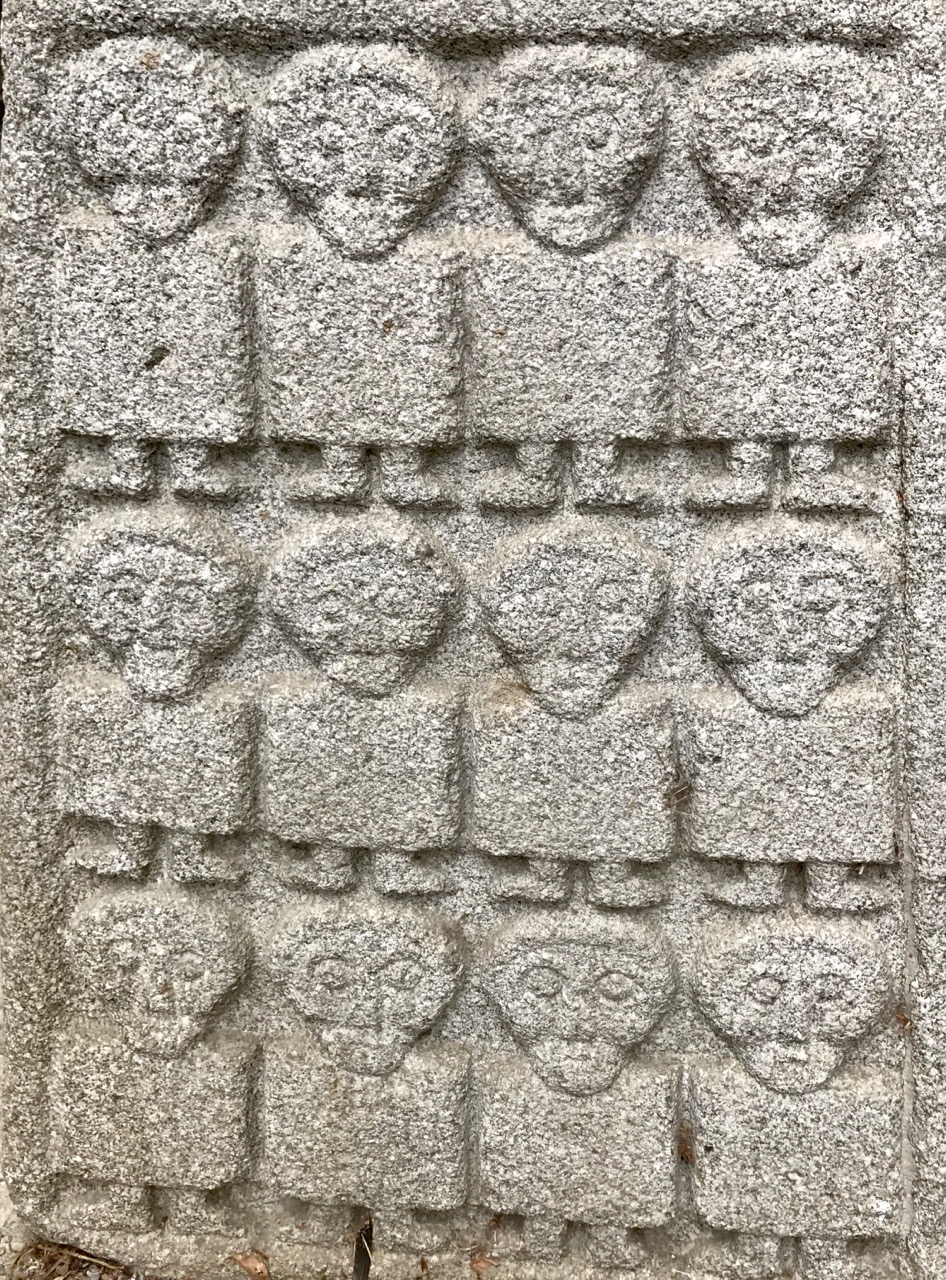
There are certainly figurative carvings on the two crosses to almost rival those found at Moone. I was particularly interested to see other versions of the stories of the loaves and fishes and Daniel in the lions’ den. But the real glory of Castledermot lies in the panels of knotwork. If these were coloured (as suggested at Moone) they must have been spectacular.

Note the loaves and fishes, bottom left

It’s interesting to speculate who might have been responsible for this ancient carving. Could it have been the monks themselves, who considered that part of their dedicated life was to build and decorate the great monastic buildings? Or were they constructed by travelling masons, much as the later cathedrals were? And who directed and designed the work? These are such important monuments – a legacy which we must be sure to look after: they have been here for more than a thousand years and – in spite of being in the open and subject to constant weathering – are still clear to see. At Moone the great cross there has been placed under a modern protective canopy, which is not intrusive. Perhaps such actions should be considered for all these Irish medieval works of art.

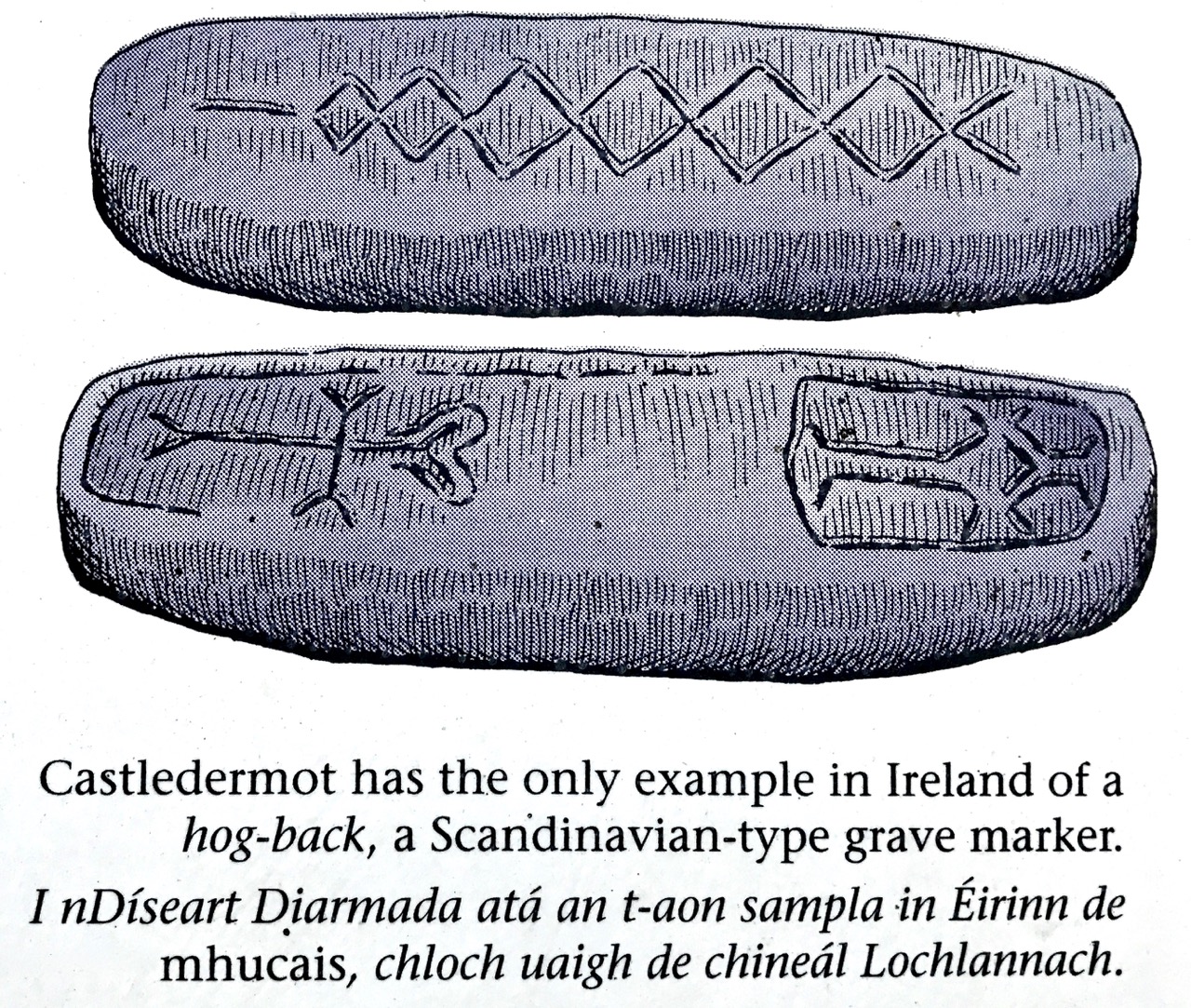
The site at Castledermot reveals many other remains which appear to be weathering quite badly. These include the Hogback Stone, which has been linked to Viking activity in the area: it was discovered just below the ground in its present location in 1967. It is said to represent a House for the Dead, and other examples have been found in Scotland and England: this is the only one found so far in Ireland.

The Hogback Stone (top – Dúchas – and bottom left) and an unusual type of cross-slab close by (right). This is known as the Swearing Stone, and it is said that it may have been used during wedding ceremonies or for swearing oaths or allegiances in early times

Although residents in Castledermot are keen that their historic artefacts are well looked after and are seen by an interested public, the site remains rather obscure and perhaps deserves to be better known. There is a wealth of heritage in Ireland – do we take it too much for granted? The Office of Public Works (formally Dúchas) do their best to maintain and advertise the monuments under their care but it’s an uphill job with a budget which is far too small.

We have by no means exhausted the treasures of this remarkable Irish town. There are other intriguing carved stones and crosses on the monastic site, and, at the southern end of the town are impressive remains of a Franciscan Friary, founded around 1247. This site has a guardian and a key holder, but we didn’t have time to visit. Inside it is a rare cadaver grave stone dating to about 1520. In 1275, the town was given a royal murage grant. This allowed the collection of tolls from people entering Castledermot to pay for the construction and maintenance of town walls. The wall, with three gates, was completed around 1300.

Ancient Irish Art – Moone High Cross

Wherever we travel in Ireland, we look for the routes which will take us past sites rich in history and archaeology. Finola wrote a while ago about places to visit close to the M8, which links Cork to Dublin. Last week we discovered a real gem, in County Kildare, about 40 kilometres east of the motorway – well worth the diversion.

Just outside the village of Moone is the finest medieval high cross that we have seen in Ireland. It is on the site of Moone Abbey (above right – a sketch from 1784 by antiquarian Austin Cooper), where a church is believed to have been founded by St Palladius, who came to Ireland in 431. It was later dedicated to St Columcille. The abbey ruins date from the 13th century, but the site must have been an important religious foundation long before this as the high crosses (there were once four here) are very much older. Historical sources differ on their age – I have found them variously attributed to the 7th, 8th, 9th and 10th centuries! It’s safe to say they are at least 1100 years old.

Early views of the High Cross at Moone: left – an engraving from 1857 and right – a photograph from the Lawrence Collection dating from the 1890s. Both images show the earlier reconstruction, before the centre pillar was discovered and added

The Abbey was ransacked and burned along with the nearby Castle by Cromwellian forces in the 17th century and the high crosses were probably buried at that time. Two sections of the one we can see today were rediscovered in the Abbey grounds in 1835 and re-erected in the Abbey by the Duke Of Leinster. In 1893 a further section was uncovered and added to bring the full height of this cross to 5.3 metres. This is not quite the highest high cross in Ireland – Muiredach’s Cross at Monasterboice is 5.5 metres – but Moone is visually more impressive because it is so slender, and beautifully decorated.

The west face of the Moone High Cross seen in its present context in the ruined Abbey. The site has been well laid out and presented with the fragments of other carved stones discovered during excavations. A protective roof has also been constructed in a non-intrusive simple style

The carvings on the granite Moone cross are in relatively good condition and all the panels can be clearly seen. They are fine examples of medieval Irish art: stories from the Bible  are mingled with Celtic knotwork and some enigmatic bestiary. The figurative work is simple and stylised – yet somehow very modern in its execution.

Stories told in stone: Adam and Eve, Daniel in the Lion’s Den and the Flight into Egypt. The header image is a wonderful representation of the Loaves and Fishes
The Crucifixion, SS Paul and Anthony breaking bread in the desert and The Fiery Furnace
Abraham about to sacrifice Isaac and the Temptation of St Anthony the Hermit

A six-headed monster? Probably not a Bible story…

The site is very well interpreted by the Heritage Service: there are comprehensive information boards describing every carved panel.

Interpretation boards include full annotation for the panels on the High Cross, together with projected reconstructions of the other findings on the site

Top picture – looking towards the east face of the High Cross; below – the east and west faces of the cross wheel
Left – an interesting conjecture showing that the panels may have been coloured in; right – the friendly Keeper of the Cross!

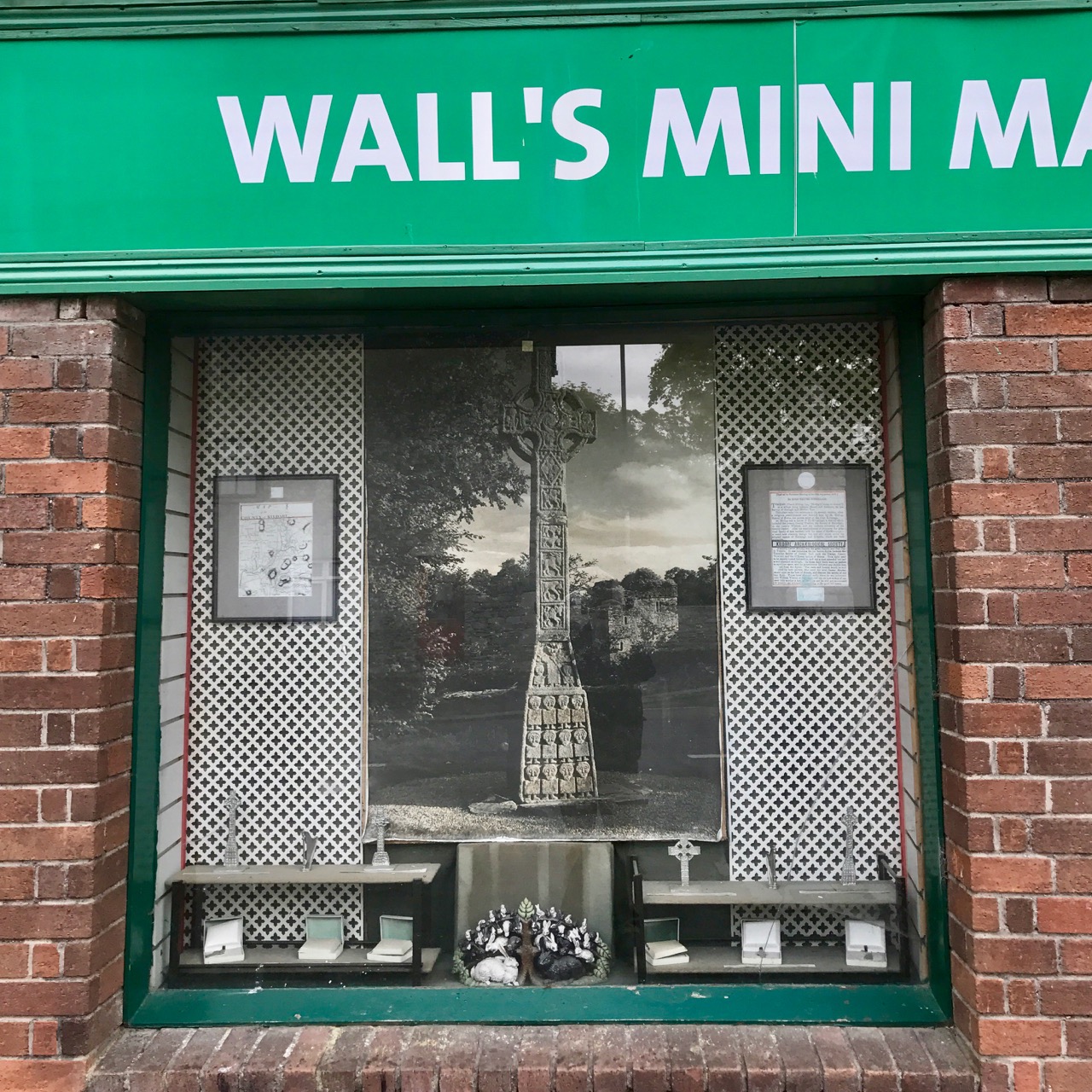
Be sure to visit this site – and don’t forget to purchase your guide book at Wall’s Mini Mart in the village!

The Broken Stone

All the names in this story have been changed. However, it is a true account of how we came to lose one of our ancient monuments – at once a family and a national tragedy.

This is my drawing. It shows an excellent example of Irish rock art, a classic cup-and-ring design, deeply carved – a thing of beauty, antiquity and intrigue. I know it now as The Broken Stone.

The drawing was done in 1972, while I was recording all the known examples of rock art in Cork and Kerry, travelling on a Honda 50 with with my equipment in a backpack. The sun shone every day that summer. Everywhere I went I was received with kindness and friendship, nowhere more so than at the big farm house owned by Tim and Clair Flynn. The stone was in their garden, having been found in a bog a short distance away and brought to the house in Tim’s grandfather’s time.

Tim ran the farm, and Clair looked after everything else, including three small children. They were lovely people – they took me in, fed me, took a great interest in the research. I felt I had made friends. On a second visit I observed Clair giving two of the children antibiotics and asked why. She explained that two of the three, Niamh and Shane, although not the youngest, Ciara, had a genetic disorder called Cystic Fibrosis. I had never heard of it, and Clair explained that both parents had to carry the gene, that it primarily affected the lungs, and that it was eventually life-limiting. In fact, at that time, life expectancy for those with the disease was about 20.

Through 40 years, mostly spent in Canada and in arenas far removed from Irish archaeology, I never forgot the Flynns or their wonderful stone. It was a happy memory, coloured by the sadness of the inevitability of the progression of the children’s’ disease.

When Robert and I re-engaged with rock art again in the last few years, I knew that sooner or later we would work our way from Cork to Kerry and I would have an opportunity to go again to Flynn’s farmhouse. In anticipation of this, I went to the National Monuments record, to remind myself of the details. To my surprise, I found a record that stated: There are no visible remains of any cup-marked stone here. It was set between two rocks in a prominent position in the garden but was subsequently broken. Its present location is not known. This made no sense to me: a stone like that, which could not be mistaken for anything except an ancient and significant artefact, could not just disappear. Perhaps it was simply not located by the surveyors. Perhaps it had been moved for some logical reason – it was less than a metre long and it was moveable. If it had been ‘broken’ that would make it more moveable yet.

Then, recently, I met Alison McQueen, tasked with updating the rock art records, and asked her about the stone. Since it had disappeared, it was not on her list to visit, but it turned out that she herself had visited the Flynns years before, although her interest was not in the rock art, but in the trough that was also located on the yard. It was a medieval basin that had been brought, over a hundred years before, from Mount Brandon to be presented to Tim’s Great-Grandfather in recognition for his political work and his support for causes such as Catholic Emancipation and land reform. Alison was able to tell me that the Flynns, ageing, and with Tim no longer able to farm, had sold the house and moved a short distance away, taking the trough with them. Of course! They must have taken the stone too, I realised, and that’s where I would find it.

And so, on a recent trip to Kerry, we travelled to the farm. There was nobody home (and a quick snoop around the garden confirmed there was no stone) so we knocked on a neighbour’s door and were kindly directed to the new house, where we were told, Tim and Clair’s daughter-in-law lived, who would be able to help us.

This is how we met Ciara, the surviving member of the Flynn family, and came to hear the story of the stone. Ciara just happened to be there, that day, spending time with her brother’s children. Her brother, Shane, despite all the health challenges he faced, had defied all predictions and only passed away last year. He was, by her accounts, an adventurous and determined man who lived every moment to the fullest and fought the good fight as long as he could, including undergoing a double-lung transplant. He worked and travelled and married – his two children were bright and curious and charming. His widow was not there when we called.

It has taken Ciara a long time to come to terms with the story of the stone – many many years – but she finally felt ready to tell it. She loved it as a child. She and her brother and sister didn’t know how old it was exactly, or anything about rock art, but they made it the centre of many imaginative games, as children the world over do with special features in their surroundings.

As an adult Ciara moved away in the course of her work. During this time, her sister, Niamh, became a staunch member of a Christian Fellowship church. Gradually, Niamh became convinced that the stone represented something evil. It worked on her mind until she was certain that blood sacrifices had been performed there in pagan rituals, and that it continued to exert some kind of malign influence, and in this she was supported by her church. She determined that it must be destroyed. Her parents were aghast, and refused to countenance this plan. However, by this time, Tim was ill and unable to participate in any real decision-making. Niamh launched a campaign to convince her mother. It was relentless and highly charged and Clair, in desperation, finally gave in.

A neighbour with a large digger agreed to destroy the stone. When I asked Ciara if anything was left, she said, she had never been able to find any remains and had been told by her family that it had been ‘reduced to dust.’

When Ciara returned from a term in Belfast shortly thereafter to discover what had happened, she was heartbroken: so distraught, in fact, that it caused a rift with her family for a time. Over the next few years, however, loss piled upon loss, as she lost her parents, her sister, and finally her brother. (In a typically Irish twist to the story, the neighbour who had crushed the stone was himself killed in an accident.)

In the face of grief the issue of the stone receded to the background but was never forgotten. Ciara has brooded over it in the intervening years and when we knocked on the door that morning, she decided she was finally ready to let go of the secret of what had really happened to the stone. I applaud her grace and courage, and I have immense sympathy for the Flynn family and the difficult path they have travelled.

As far as I know, this drawing is the only record we have of The Broken Stone. One of the questions we face as we study rock art is – Is it safe? The answer is complicated: while most of it has enjoyed a measure of protection due to its remote location and relative anonymity, there are many real threats that can negatively impact on rock art in the field, from weather to overgrowth, land clearance, forestry and outright vandalism. But I could never have written a script like this, or predicted that a fundamentalist form of Christian belief would be responsible for the destruction of a beautiful and iconic piece of rock art.

For more on the topic of Irish Rock Art, see our Navigation Page, Section C2

Headstones or Folk Carvings?

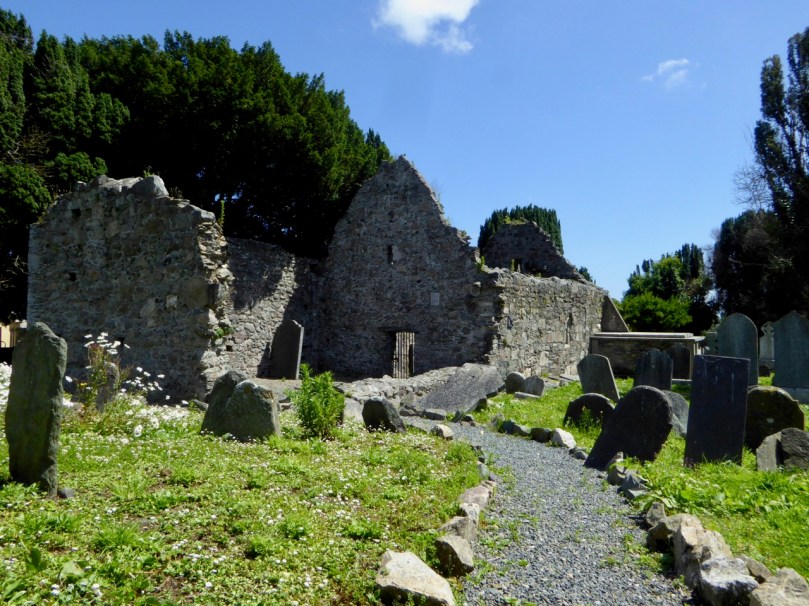
This week we stumbled upon one of the finest collections of 18th century gravestones we have ever seen, in the ancient Kilcoole Church yard. We’ve been visiting friends in Wicklow and enjoying ourselves very much.

The church itself is very old, mostly 12th century. Although un-ornamented, the arches and windows are Romanesque in design, and the church originally had a stone roof, like the one we wrote about in Kilmalkedar. It’s kept locked but the key is easy to obtain, although it only opened the outer gate, so we were unable to see inside the church.

The graveyard, however, turned out to be a treasure trove! In West Cork we do see the occasional eighteenth century gravestone, but they are often heavily weather and lichened and impossible to read. However they manage it, these gravestones were as fresh and readable as the day they were carved.

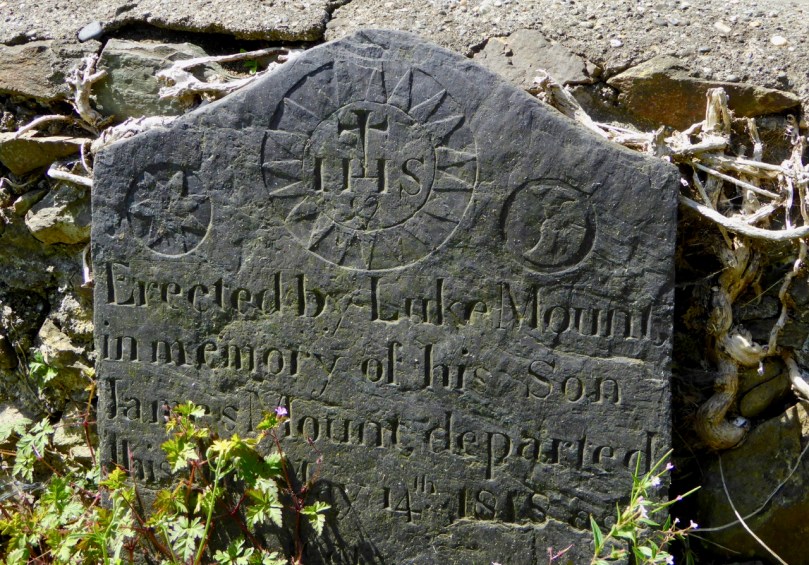
This 1792 headstone for Felix Kavanagh has the IHS symbol surmounted by a cross and surrounded by a sunburst. On either side is a six-pointed star and a barred circle – we are unsure of the meaning of this motif

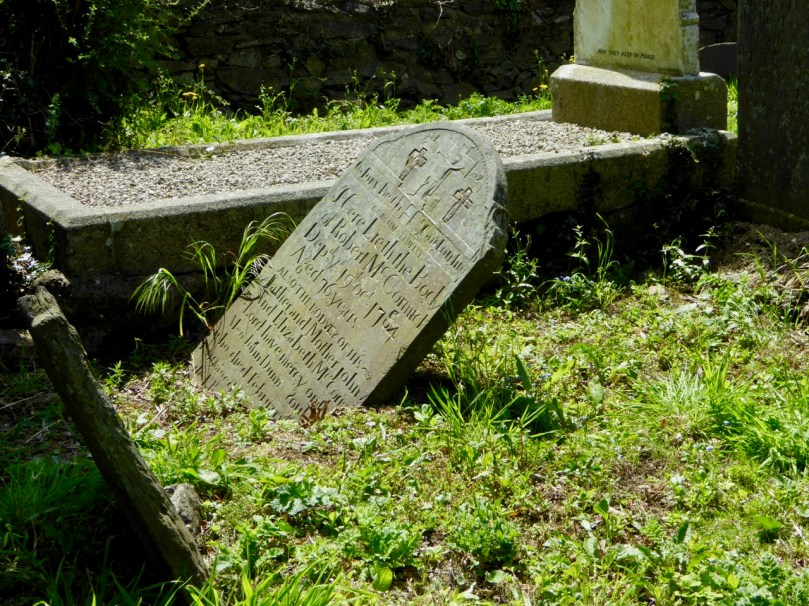
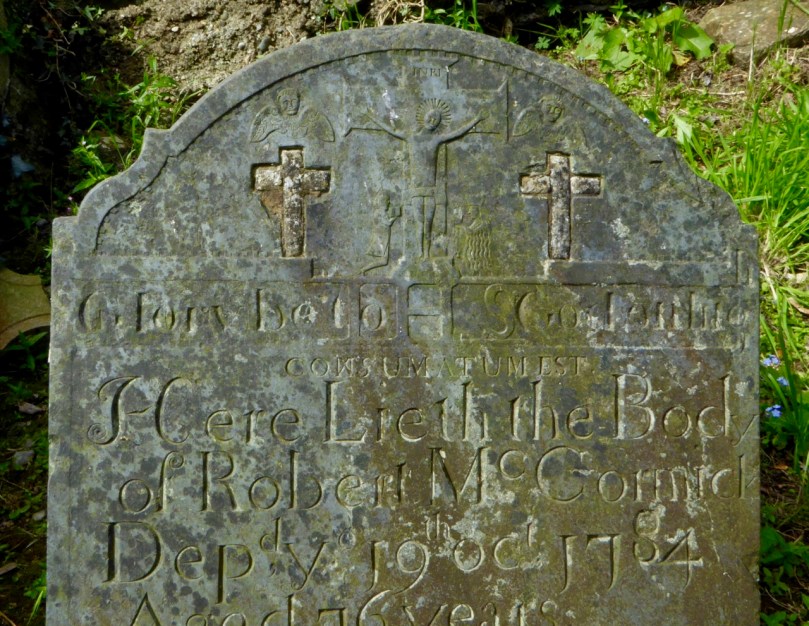
In our post Memento Mori we introduced you to the joys of graveyard headstones, and explained what symbols were common and what they represented. The crucifixion is a favourite, of course, and that was beautifully represented in Kilcoole by a gravestone for Robert McCormick by Dennis Cullen, dating from 1784.

Dennis Cullen is recognised as one of Ireland’s finest folk sculptors. There are 105 known Cullen headstones, most dating from 1765 to 1785, many in Glendalough, and most depicting passion scenes. He was born in Monaseed and his carving technique was accomplished. He often signed his work, unusual for the day. This is a good example of a Cullen crucifixion scene, except that it was altered later by the addition of two marble crosses.

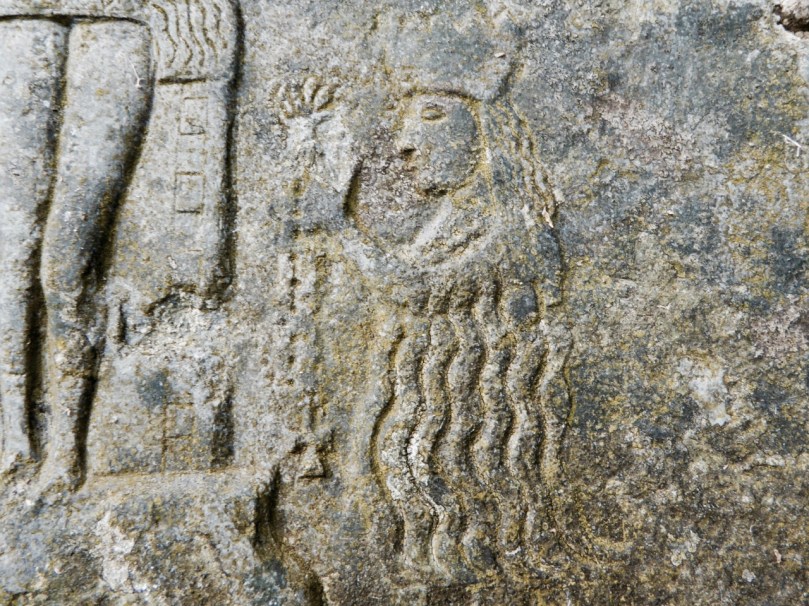
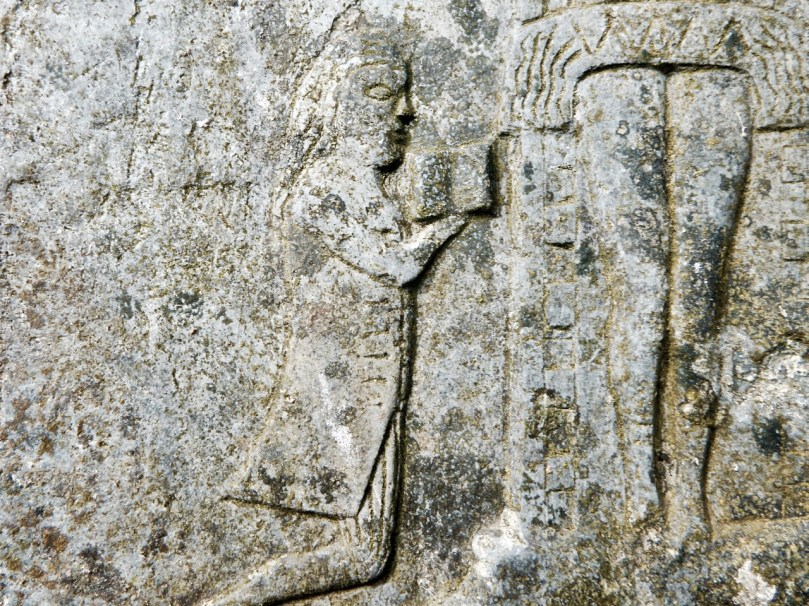
Cullen executed his work in delicate and accurate detail. Christ on the cross is flanked by the Virgin with a crown and beads and St John with a bible. Cullen’s habit was to carve figures in the costume of the 18th century. The Virgin’s flowing hair is, in fact, a long lace veil – common mourning dress of the time. John is wearing a dress coat.

Several of the headstones feature a sunburst as well as sun, star and moon motifs. Powerful symbols of the soul and of immortality, as well as rebirth, these motifs were very popular in the eighteenth century. The IHS symbol (explained in Memento Mori) usually adorned the top of the headstone.

Angels – the soul’s guide to heaven – are found on several of the Kilcoole headstones and we were  delighted at the the variety of ways in which they were depicted.

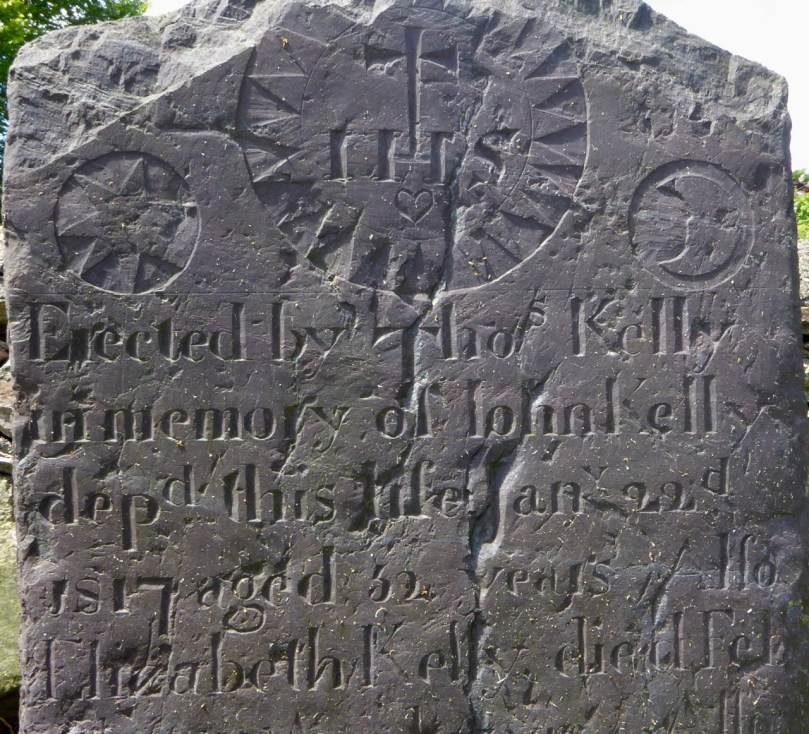
Because the carvings are so visible and well-preserved in Kilcoole, it’s possible to see not only the detail of the lettering, but also the guidelines used to keep them straight.

Most of the lettering is deeply carved and exhibits, here and there, that idiosyncratic and random placement of letters where the carver may have run out of room, or perhaps was anxious to balance a line.

The lettering styles are fairly plain, although some fancier initial words crop up.

The graveyard has suffered damage both from vandals and from the ravages of time. We were intrigued by the number of fragmentary inscriptions and broken headstones dotting the place.

A local style seemed to be the use of a floral or vine pattern across the top of the stone. There were several examples of this – perhaps the hallmark of a particular carver.

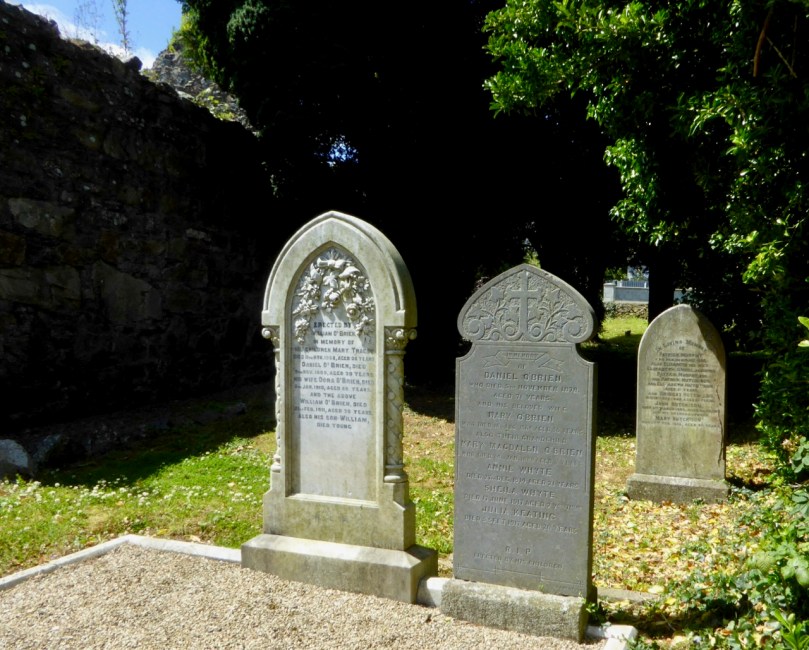
There were some fine later nineteenth century headstone in the graveyard too. Although we recognised that they were beautifully executed, it’s harder to get excited by them: they lack the naive exuberance of the eighteenth century examples and the symbols used are more restrained and limited.

There are several graveyards in Wicklow with similar collections of headstones and we hope to visit more in the future. Meanwhile, to learn more, order a copy of Chistiaan Corlett’s excellent book Here Lyeth about the eighteenth century gravestone of Wicklow

Revealing Rock Art: 150 Years of Images

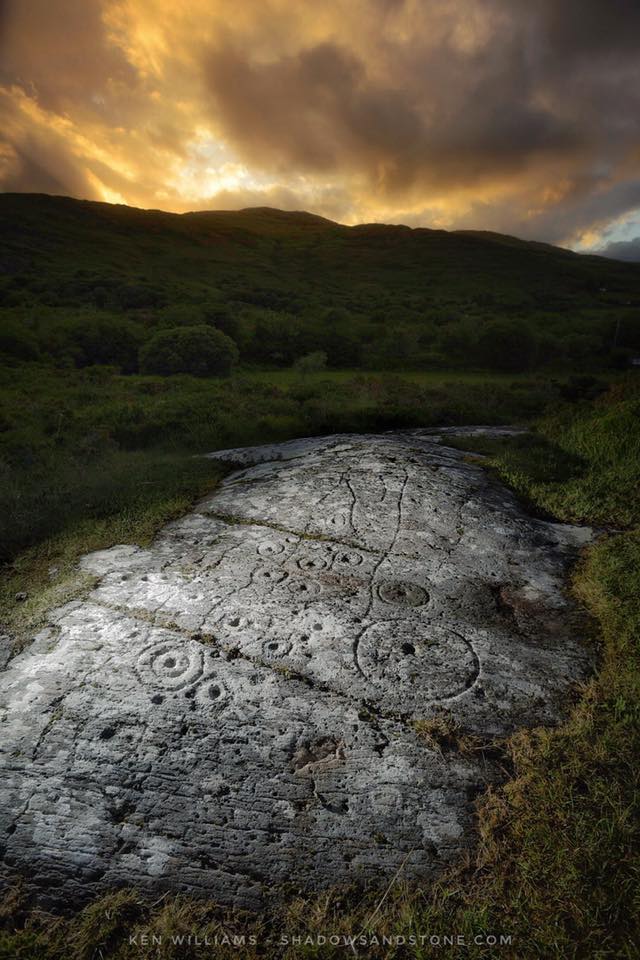
This week a powerful image from Ken Williams of Shadows and Stone (copyrighted, used with permission) lit up the Irish Rock Art Facebook Page (180,000 people had seen it at last count, and it’s been shared more than 1500 times). The photograph, taken with Ken’s signature blend of natural and artificial light, was of a stone in Kerry often known as the Staigue Bridge Rock Art, although technically it’s in the townland of Liss.

As it turns out, this is one of the best-documented rock art panels in Ireland, with images dating from the middle of the nineteenth century to the present day.

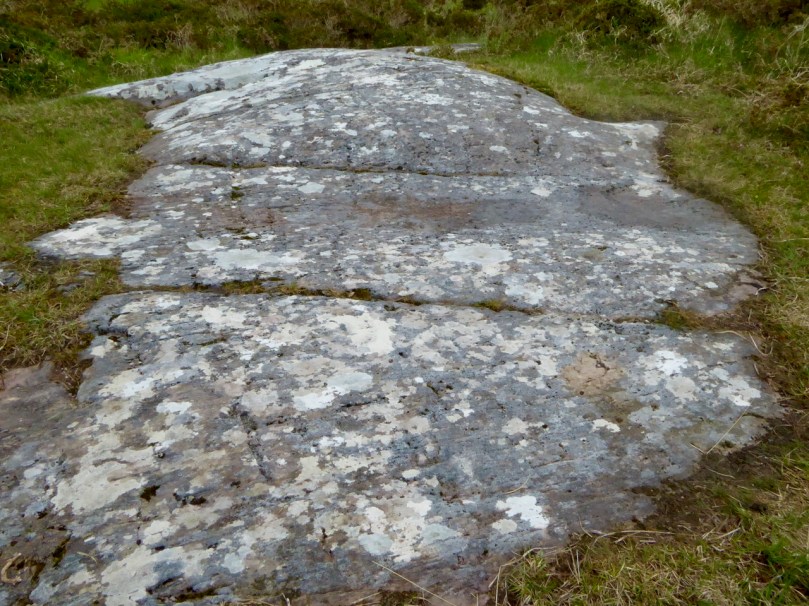
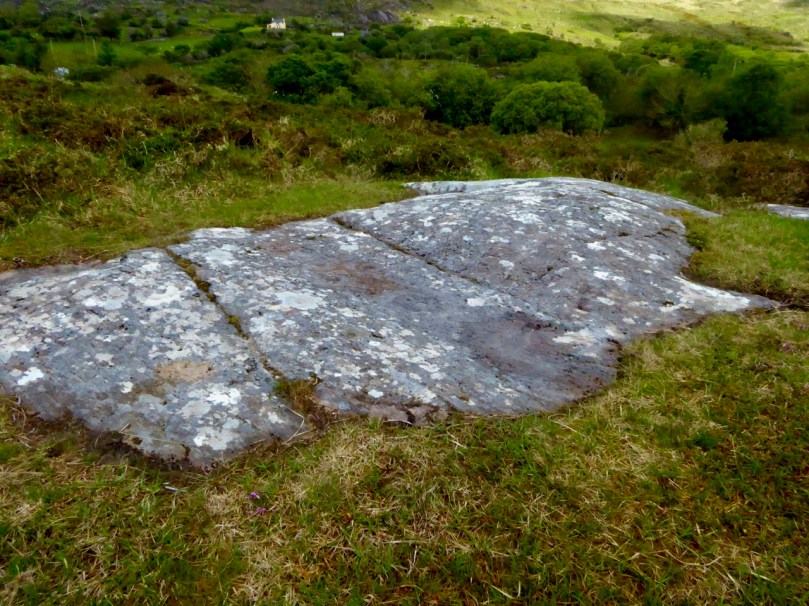
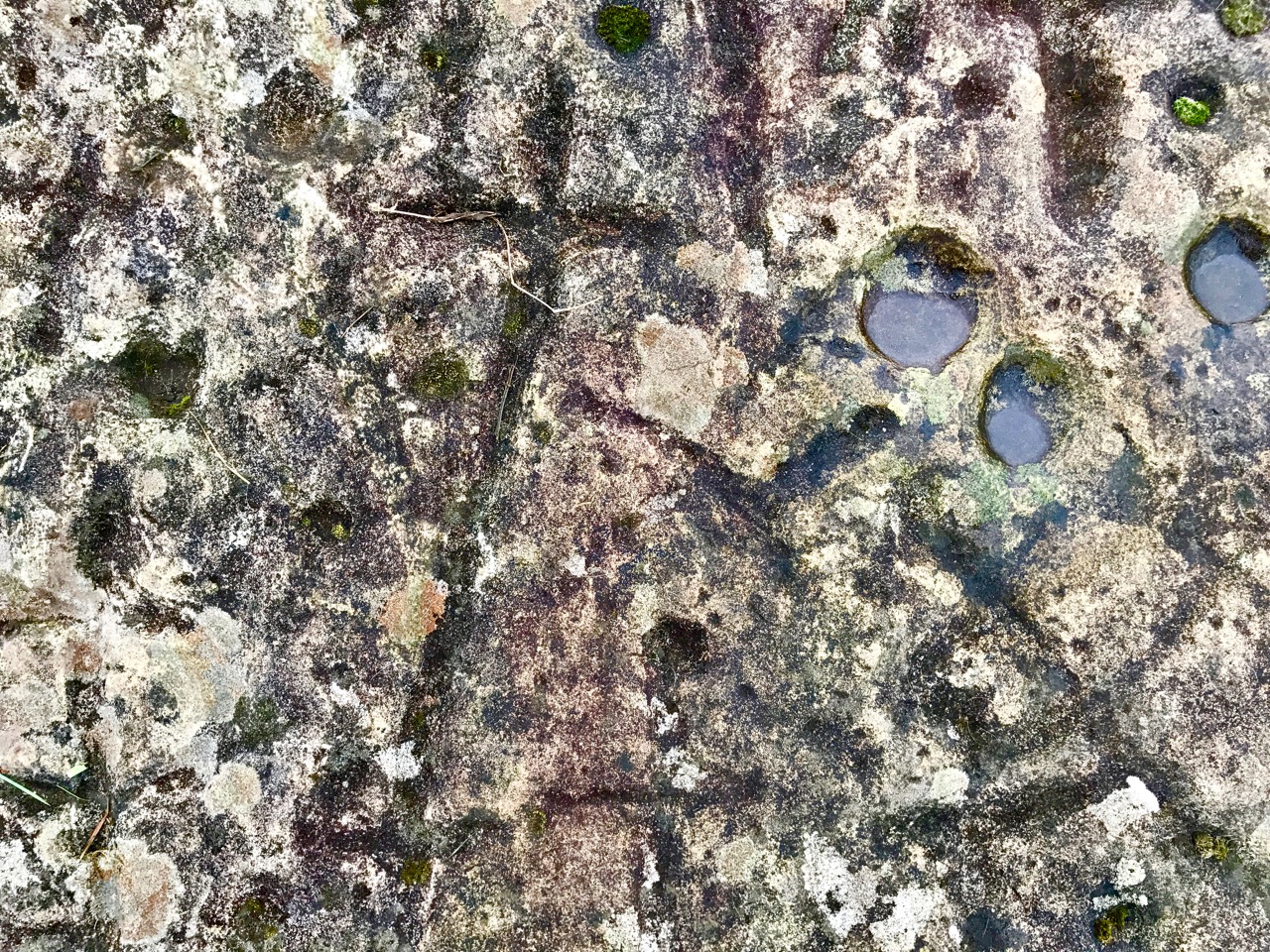
Taken on a recent visit to Liss/Staigue Bridge Rock Art site. This is probably what a casual visitor will see. Can you make out any carvings?

The response to this photograph highlights several important features of Irish rock art. First of all, it seems people are hungry to know more about these enigmatic carvings, and yet rock art is one of the least known aspects of Irish archaeology. Time after time, as Robert and I present exhibitions or give talks, we meet up with a near-universal response of “How come we’ve never heard about this before?”

Another view of the top section of the panel

Secondly, a photograph like this is not normally what you observe in the field. Commonly, rock art (and this one is no exception) is actually difficult to see under most lighting conditions. This rock is just off a popular hiking trail and the vast majority of walkers are unaware of what is a few meters from their path. Even if the route went right alongside it, most walkers would pass by without noticing anything unusual.

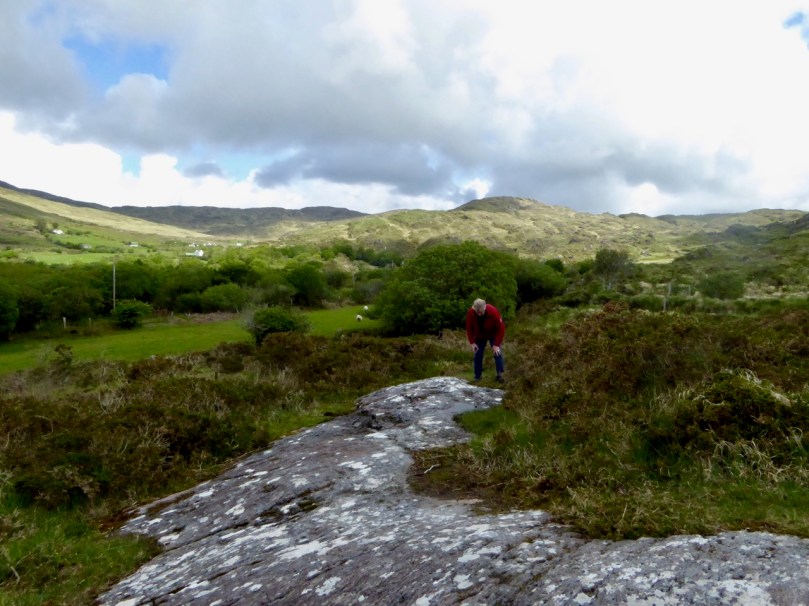
This will give you an idea of the extent of the panel

Thirdly, it is no longer possible to record rock art by any of the traditional methods that were in common use up to the 1990s. Nowadays, recording techniques that do not impact in any way with the rock surface are preferred, and that limits us to what can be imaged through photographic and scanning technology.

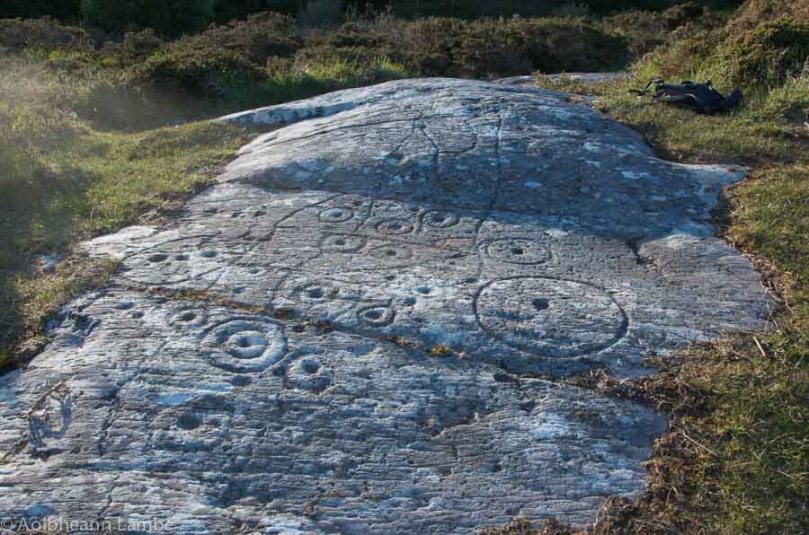
Aoibheann Lambe’s virtuoso photograph – this is the panel in the second photograph, taken from almost the same angle but under perfect natural lighting conditions. © Aoibheann Lambe

There are currently three ways in common use to photograph rock art so that the carvings will show up. The first is to use the natural low, slanting, shadow-casting, light at sunrise or sunset. Rock Art Kerry, the work of archaeologist Aoibheann Lambe, has an outstanding photograph of the rock surface using only natural light. Given our climate, it is likely that many visits to the rock in all kinds of temperatures, early in the morning or late in the evening, were necessary before the perfect shot was possible. Aoibheann’s Facebook page is the place to be these days for new finds – she is making discoveries at a breathtaking pace!

Another of Aoibheann’s photographs – this one shows the extent of lichen growth on the rock surface, which often functions to obscure carvings. © Aoibheann Lambe

The second is to use flash photography – a technique that Ken Williams has perfected and uses to great effect to show up even faint carvings. We’ve seen Ken working – this isn’t a mater of a simple flash on a camera – multiple flashes are deployed with a skill that comes from long experience, and respond to an electronic trigger on his camera.  If you haven’t already done so, a visit to his site is an absolute must for anyone interested in rock art – or indeed in Irish archaeology.

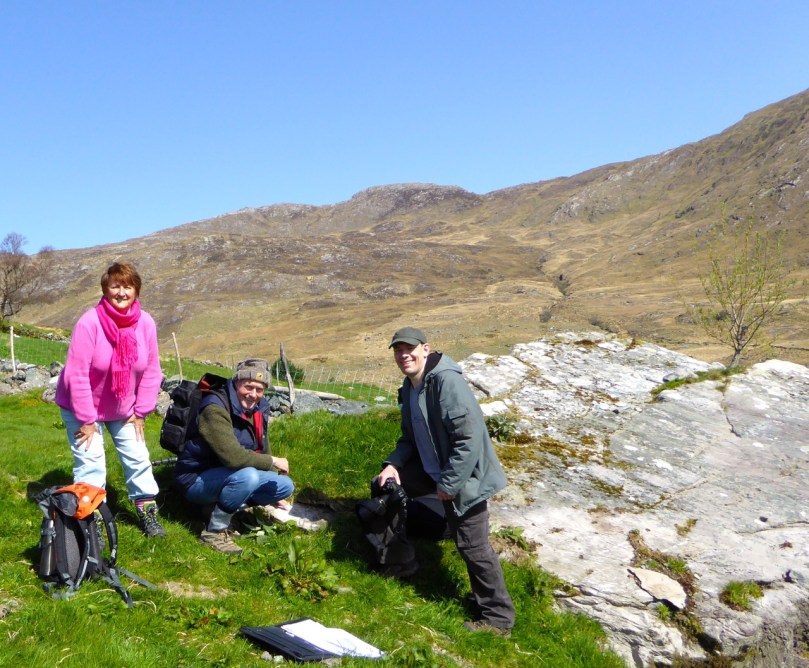
Finola and Robert from Roaringwater Journal and Ken Williams of Shadows and Stone at Derrynablaha in Kerry

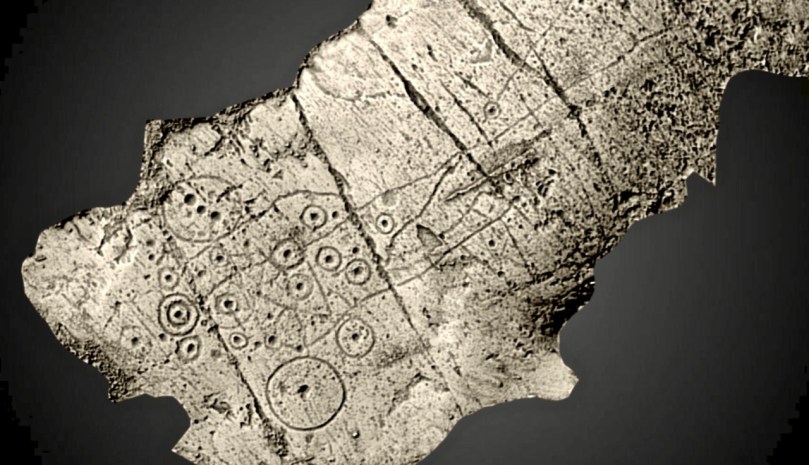
The third technique is that of photogrammetry. In essence, this is the combination of multiple high resolution photographs to construct a 3D image of a rock surface. The Discovery Programme has been sponsoring 3D imaging of various national monuments, including Ogham Stones and Sheela-Na-Gigs, for some time. Under this program, The Dingle Museum (Músaem Chorca Dhuibhne) has produced a series of 3D images, including an excellent one of the Liss/Staigue Bridge rock art panel.

The top panel rendered in 3D – this is a screen capture. © Corca Dhuibhne 3D 2017

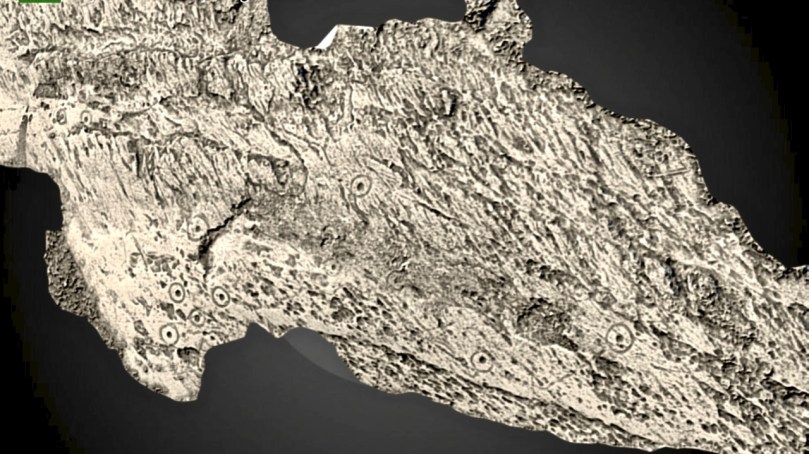
It is particularly exciting because it’s unusually clear (rock art 3D images can suffer from lack of clarity for a variety of reason) and also because this technique allows an image of the whole panel, whereas photography can only capture pieces at a time.

These stills have been captured from the 3D images on the Museum site but they do NOT compare with the experience of viewing and manipulating the 3D images on screen. It’s brilliant work, so please go to their page for the real thing. © Corca Dhuibhne 3D 2017

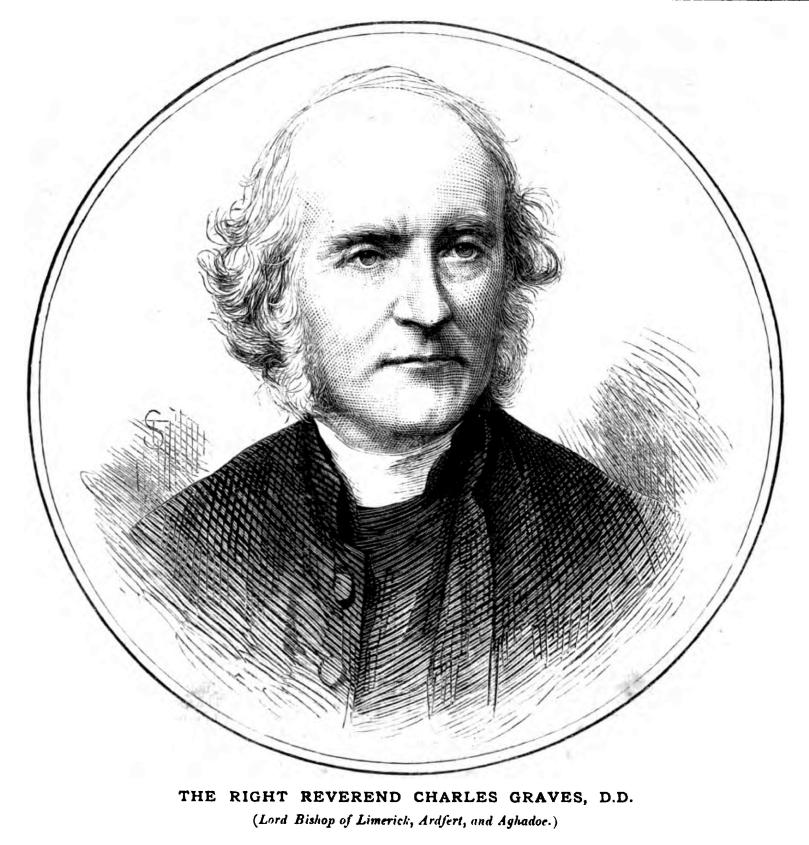
But back to the past, when it was still possible to produce drawings of the carvings. Back, in fact, to the 1850s! There were two Irish antiquarians called the Rev Graves. The better-known one was the Rev James Graves of Kilkenny, but the one we are concerned with here was the Rev Charles Graves, Bishop of Limerick and a noted mathematician, scholar, antiquarian, and President of the Royal Irish Academy. He was fascinated by Ogham and on a trip to view Ogham stones in Kerry he came across other ‘inscribed rocks’ of a type he was unfamiliar with. He wrote up his findings and presented them to the Academy in 1860.

Taken from the Wikipedia article on Charles Graves. Image above by Anonymous – Church Bells (1874–1875)) W. Wells Gardner, Publisher, London, Public Domain

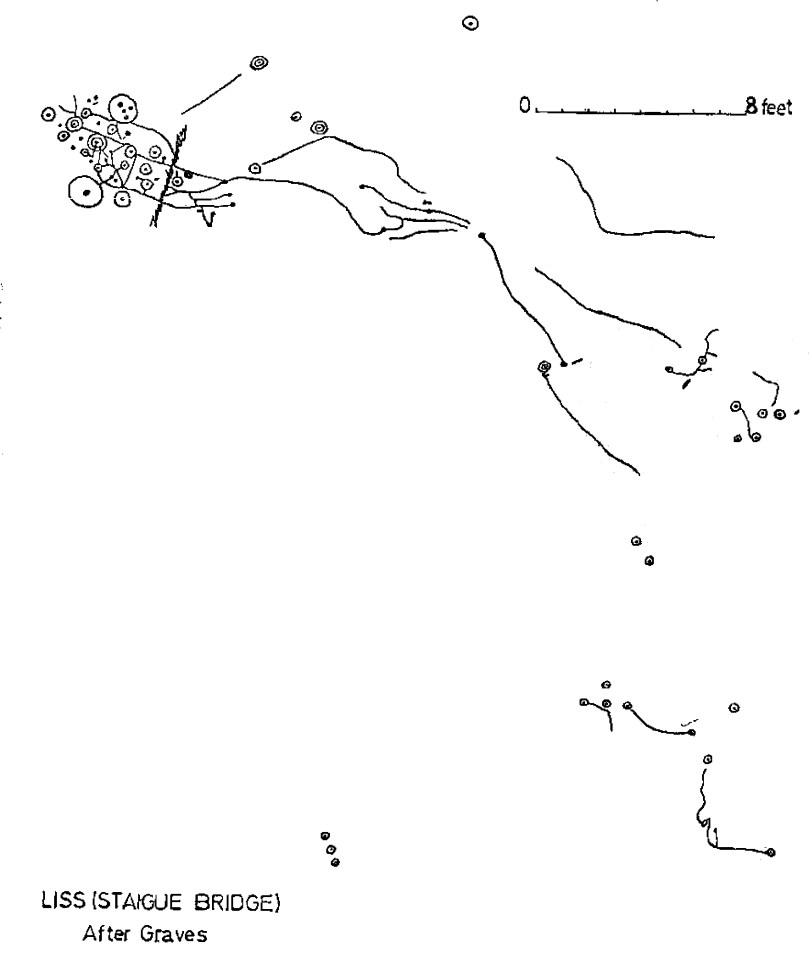
The good Bishop had none of our modern scruples about interfering with the rock surface, or removing the turf to see what else he could fine. He did both: three feet of turf was stripped back to reveal the extent of the carvings and a rubbing was made from the whole surface, which was later converted to a survey-drawing. This, to this day, is the only drawing we have of the complete carving.

When I wrote my thesis on The Rock Art of Cork and Kerry in 1973 I said this about Charles Graves:

The first paper devoted to rock art in Ireland was by Rev. Charles Graves. In 1860 he read a paper to the Royal Irish Academy entitled “On a previously undescribed Class of Monuments”. His paper, mainly concerned with Co. Kerry, is still very valuable and his drawings and observations are often more accurate and more reliable than many later accounts.

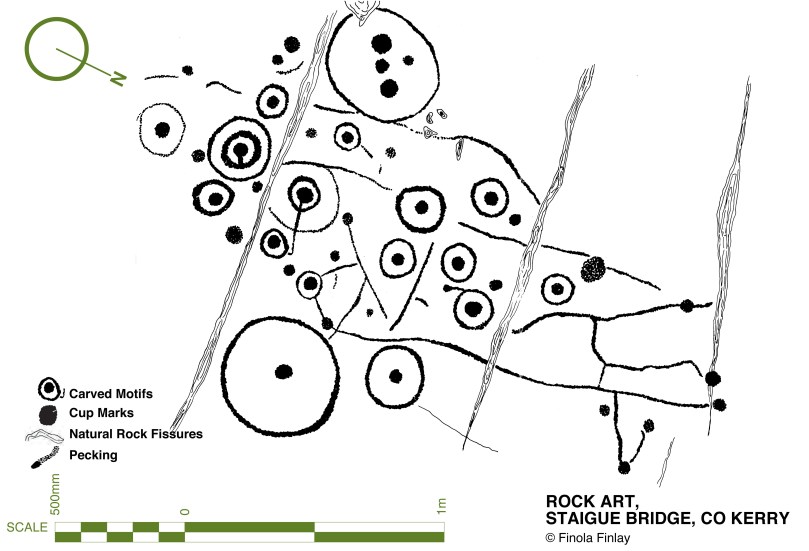
My own drawing was done in 1972. The technique I used then was to chalk in the carvings and trace them onto clear plastic film. That tracing was then re-traced on to good quality paper using indian ink and a stipple technique and then photographically reduced by a professional printing firm. It is naturally an imperfect and subjective method, but long practice enabled me to produce surprisingly accurate renditions which stand up well to modern recording techniques.

I confined my drawing to the main area of carving and used Graves’ drawing as an additional illustration

There are few examples of Irish rock art with the pedigree of Staigue Bridge. It is classic cup-and-ring art in its execution but also contains the unusual elements of very large circles surrounding small cupmarks. It is enormous – a fact that would never have been appreciated if Graves had not determined to find the true extent of the carved surface (although of course we do NOT condone this practice now). It has a literature that goes back a century and a half, and was one of the first pieces of Irish rock art to be described and illustrated. It’s a national treasure.