Robert’s Favourite Posts

We had an unexpected – and unsolicited – accolade in the Irish Examiner last weekend! Tommy Barker wrote, in an article about Rossbrin (pictured above): “…The wonderful literary and visually rich website, http://www.roaringwaterjournal.com, by Rossbrin residents Robert Harris and Finola Finlay is a treasure, a sort of 21st century Robert Lloyd Praeger, online…” Of course, we went straight to our bookshelves to dip into our copy of Praeger’s The Way That I Went – An Irishman In Ireland, first published in 1937. Here’s an extract:

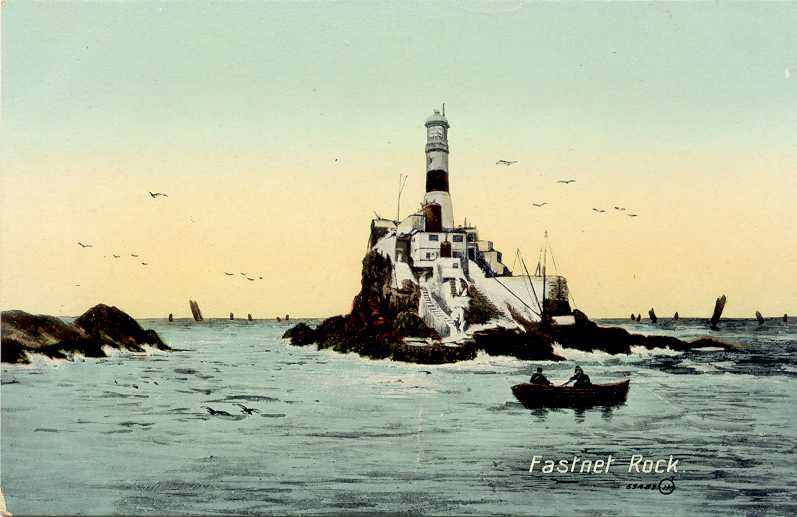
…At the southern end of this land of great mountain promontories, in West Cork, you find yourself in a little-known and tourist-free region of much charm. You stay on Sherkin Island (Inis Oircín, little pig’s island) or Cape Clear Island, at Schull (Scoil, a school) or far out at Crookhaven: and you walk and boat and fish and lounge and bathe, and enjoy the glorious air and sea; towns and trams and telephones seem like bad dreams, or like fugitive glimpses of an earlier and inferior existence. A meandering railway penetrates to Schull, and roads are as good as you could expect them to be in so lonely a country. All is furzy heath and rocky knolls, little fields and white cottages and illimitable sea, foam-rimmed where it meets the land, its horizon broken only by the fantastic fragment of rock crowned by a tall lighthouse which is the famous Fastnet…

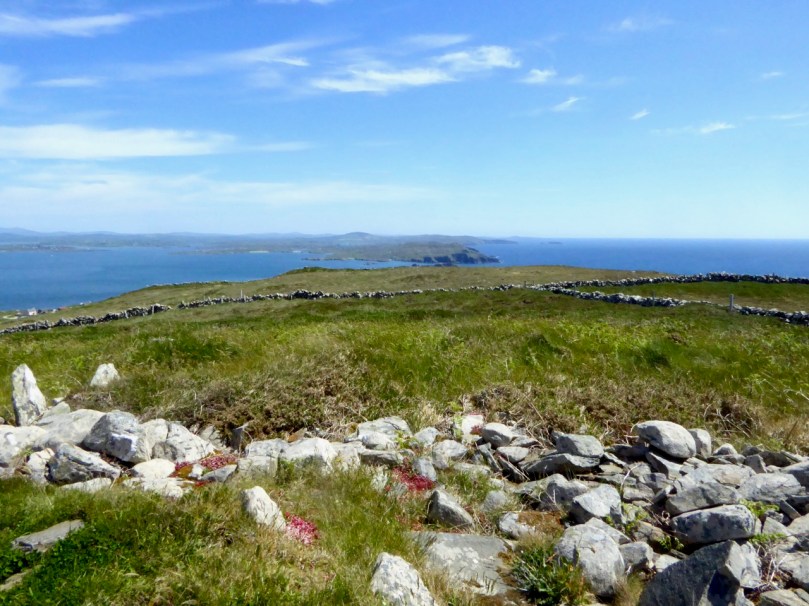
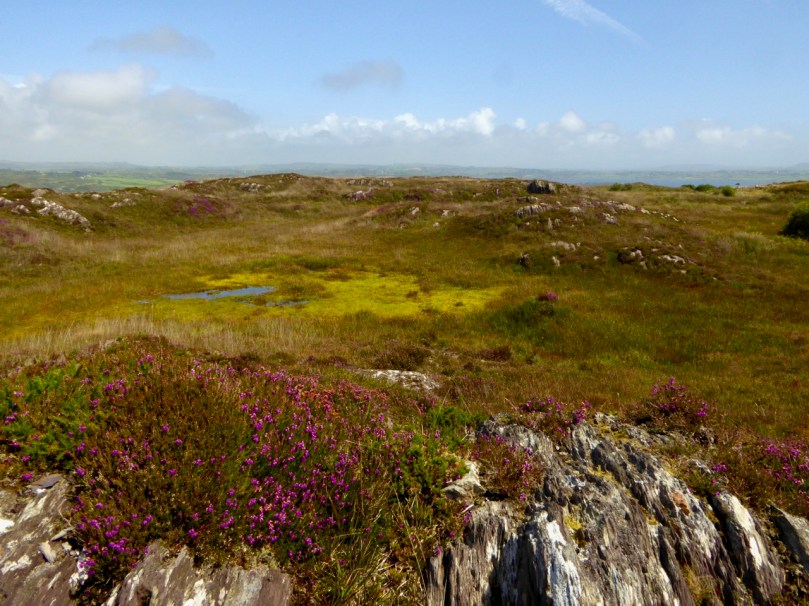
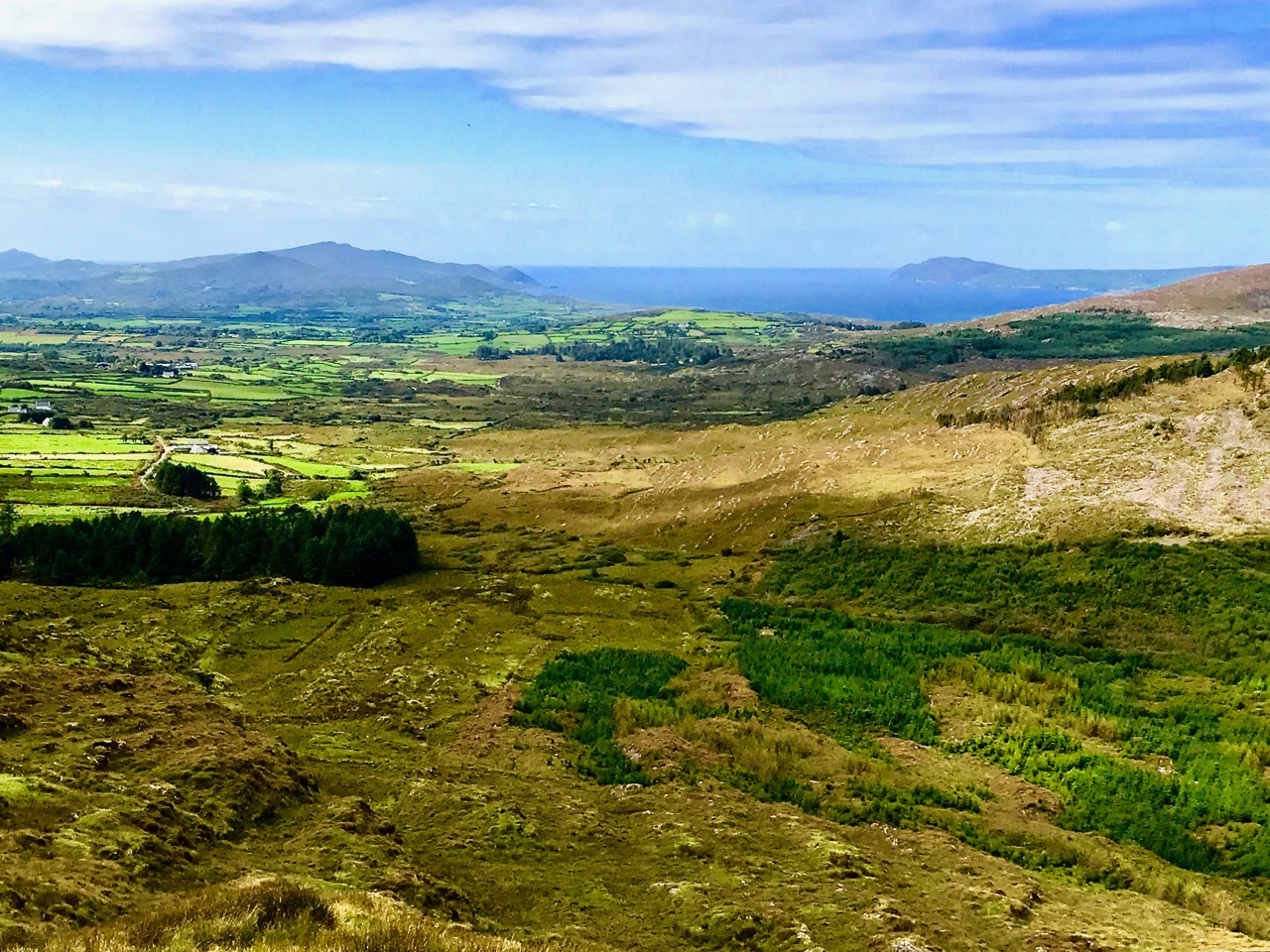
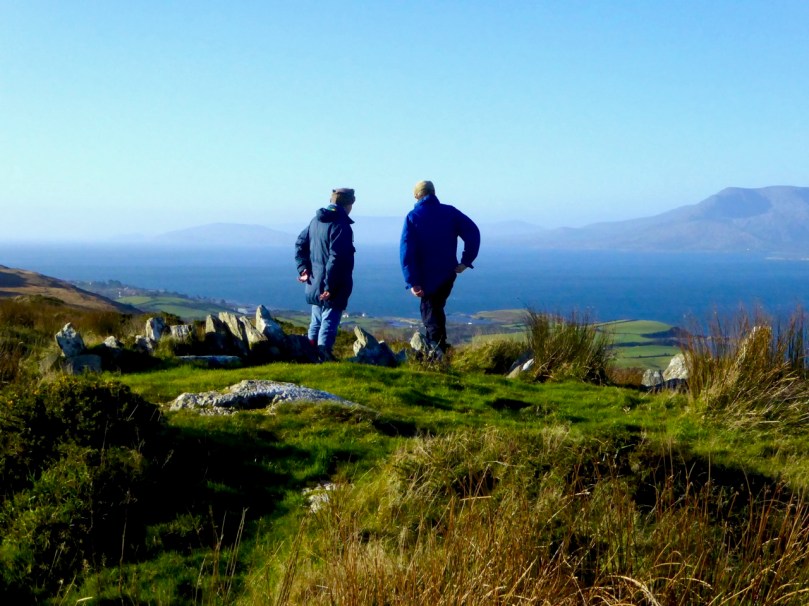
Yes – that’s our West Cork alright (above is a view of the Mizen taken from Mount Gabriel). We hope that, over five years of writing this journal, we have indeed given a good account of this wonderful place which we are privileged to call ‘home’. Certainly, there is nowhere we would rather be. But Roaringwater Journal has not just been about West Cork: we have covered a fair bit of Irish culture and history as well. Last week’s post set out the six most popular articles that we have written in terms of readership numbers; today we are both reviewing our own personal favourites (see Finola’s here) and there is lots to choose from: 466 posts to date! All of them are listed by category in the Navigation pages.

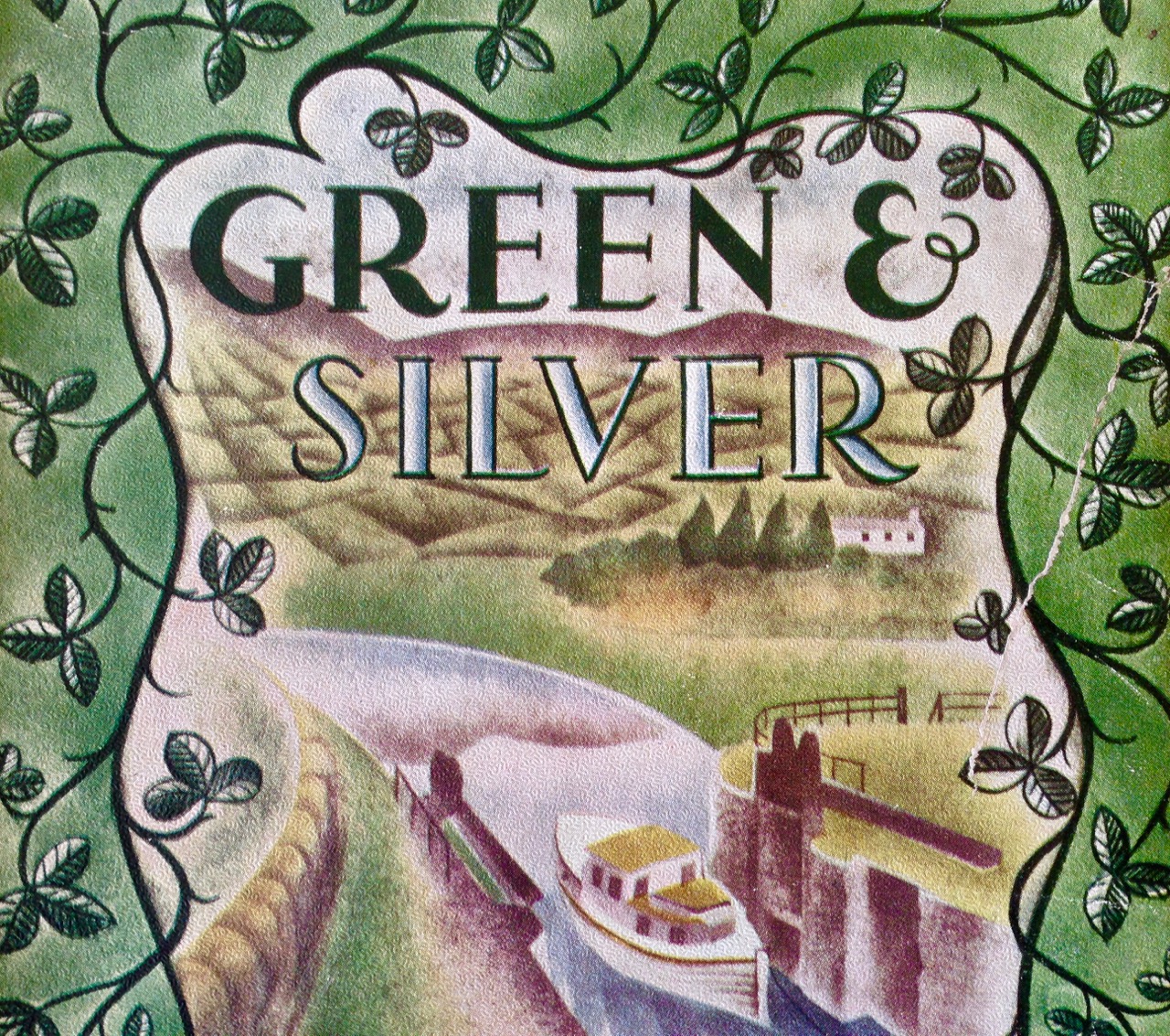
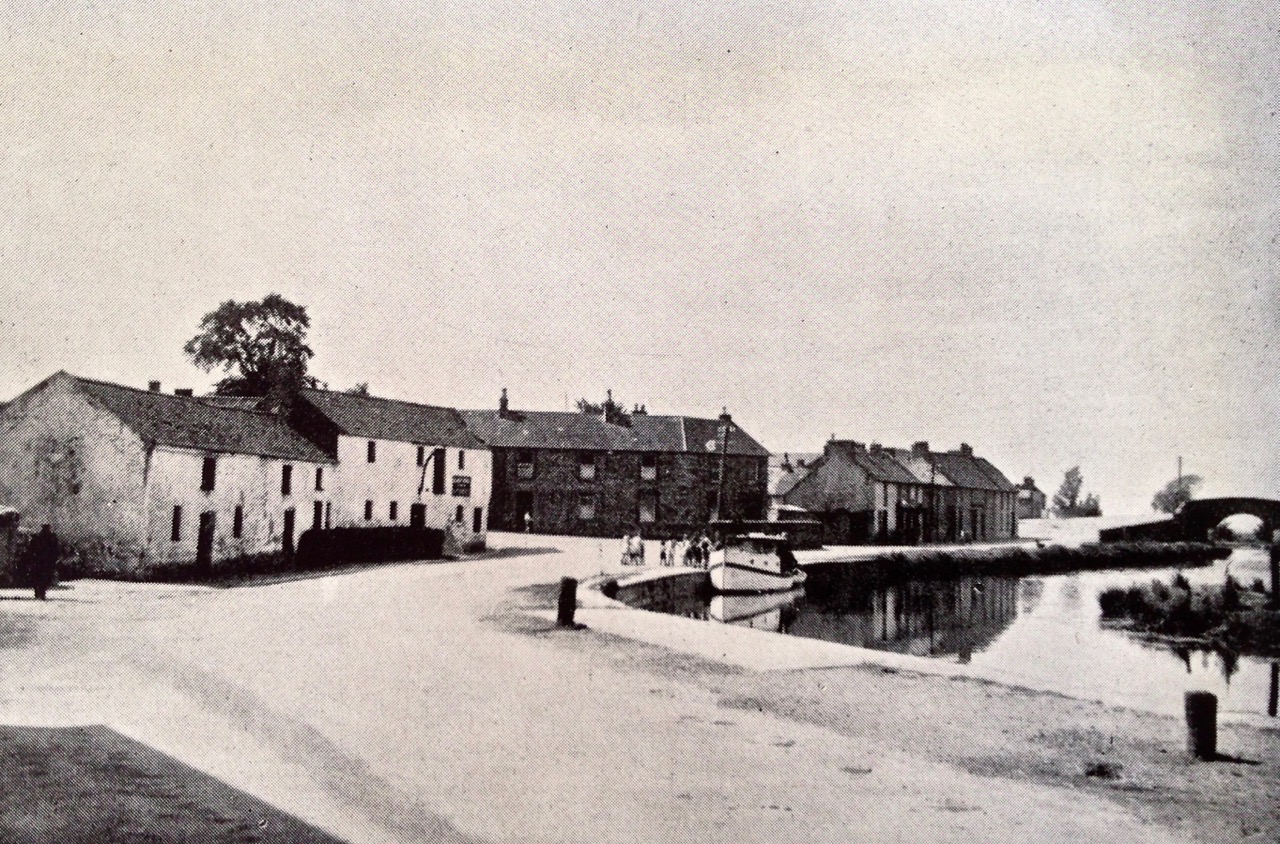
Foremost in my own mind in terms of personal satisfaction is the series I wrote last year: Green & Silver. There have been nine posts in all, starting with my review of a book which I first read in 1963, when I won it as an essay-writing prize at school. The book, Green & Silver, told the story of a journey around the Irish canal system in 1946 (the year I was born), undertaken by an English engineer and writer, L T C ‘Tom’ Rolt and his wife, Angela. When I wrote the review 70 years had passed since the Rolts made that journey. Finola and I conceived the idea of retracing the steps of the Rolts, although not by boat: we drove and walked. It was to be an exercise in tracking the passing of time. We would find the location of every photograph that Angela Rolt had taken in 1946, and take a new one, so that we could compare the changes that had occurred over seven decades. There were many: the canals themselves, which were then near-derelict in places have now been well restored, and the island of Ireland has today an amazing but probably under-appreciated asset: a cross-border system of navigable waterways which connects Waterford, Limerick, Dublin, Belfast and Coleraine.

Canal port: Richmond Harbour, Co Longford. Upper picture taken by Angela Rolt in 1946; lower picture, the same view taken 70 years on

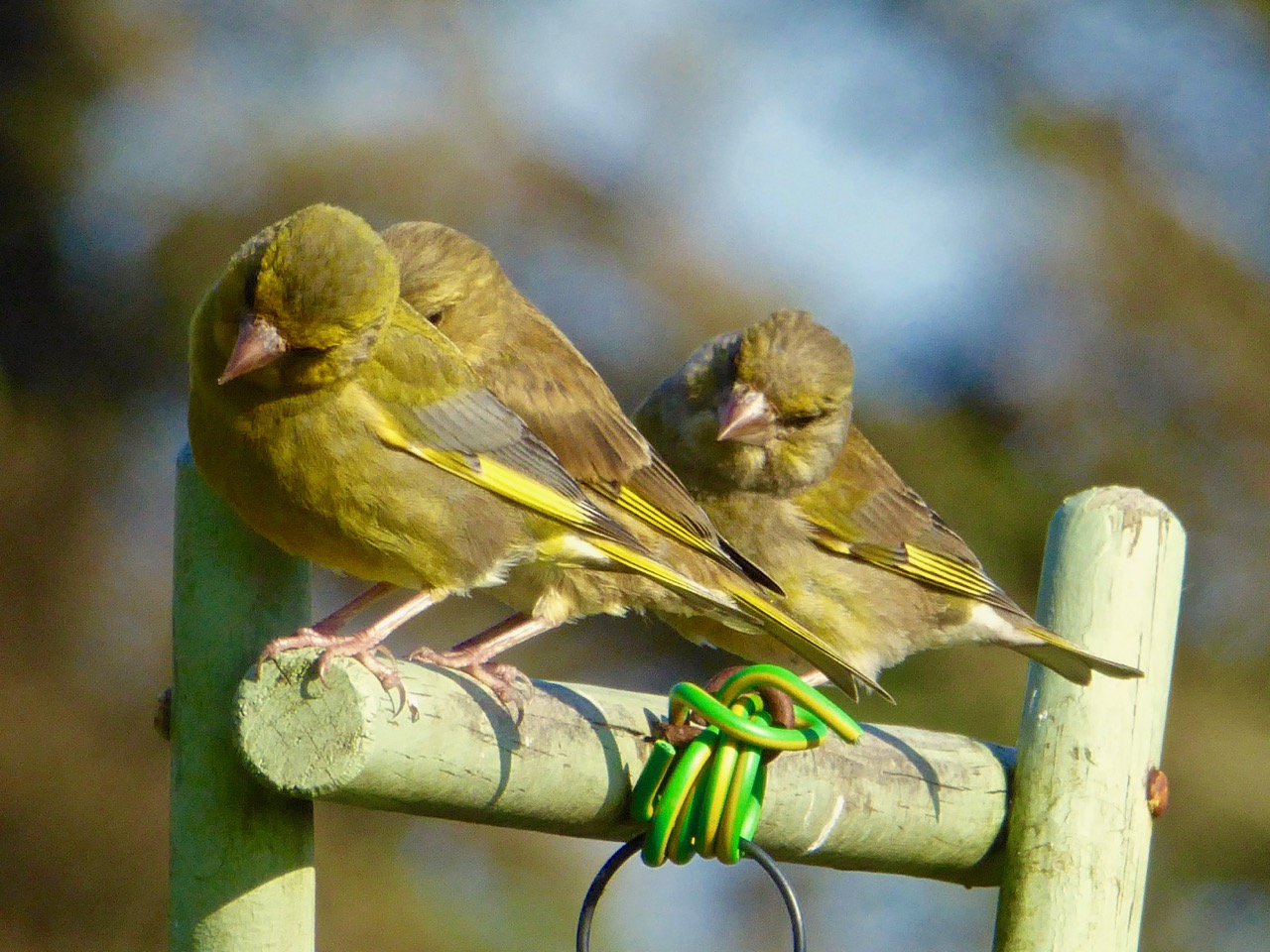
I have always had an obsession with wildlife, and one of my favourite posts summarises what wonderful natural things we have all around us here: The Wild  Side. We have written about the birds – choughs, eagles, sparrowhawks – and the little ones that come to our feeder and keep us entertained.

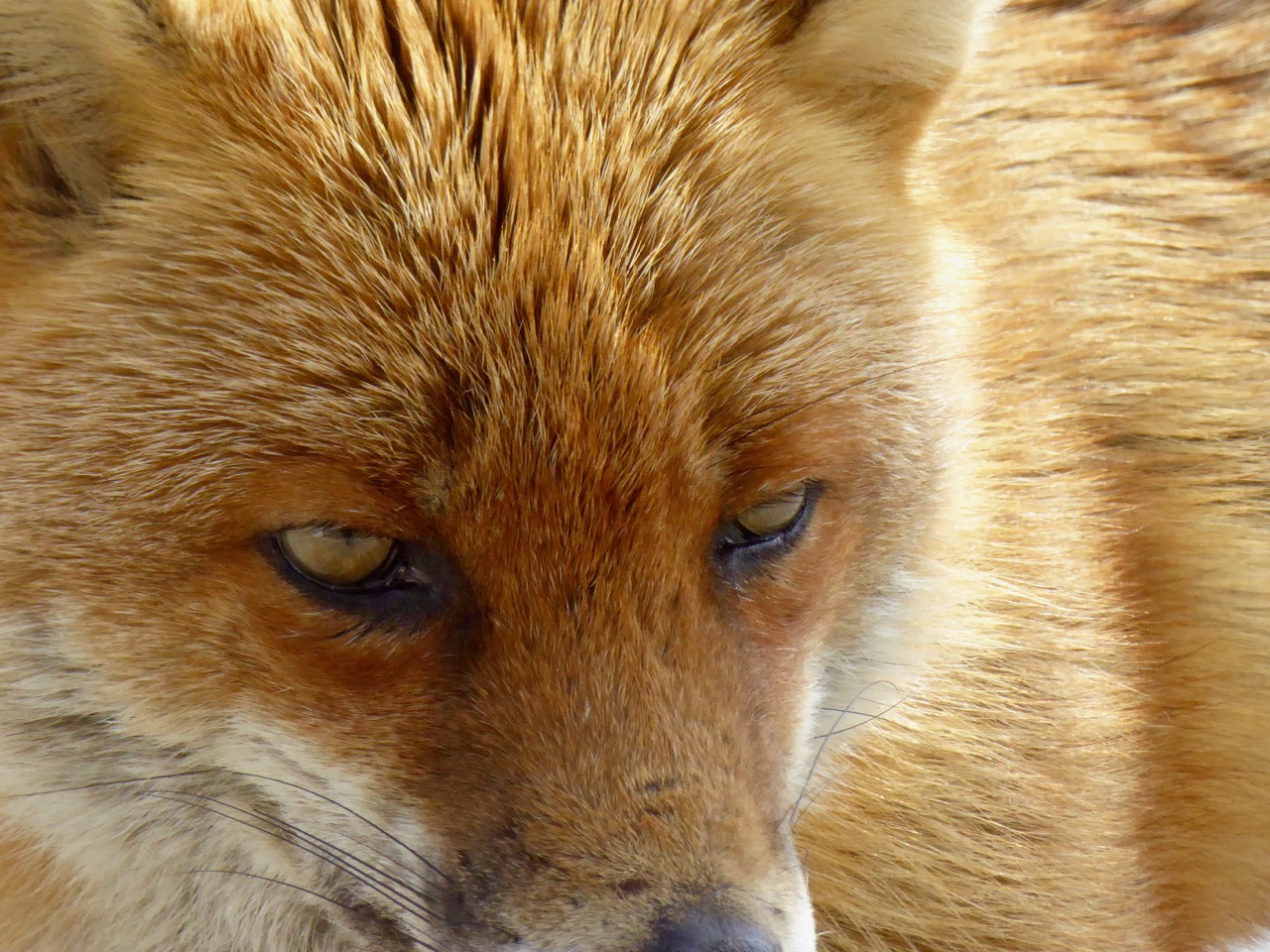
We will never forget our good friend Ferdia, who arrived on our doorstep on the day we moved into Nead an Iolair, and was a regular visitor (usually daily) over several years. Sadly, foxes don’t live for long in the wild, and he has now passed away. He was a very fine dog-fox and was undoubtedly the head of a large family. We hoped that one of his offspring might have taken his place on our terrace, but I suppose he just could never be replaced.

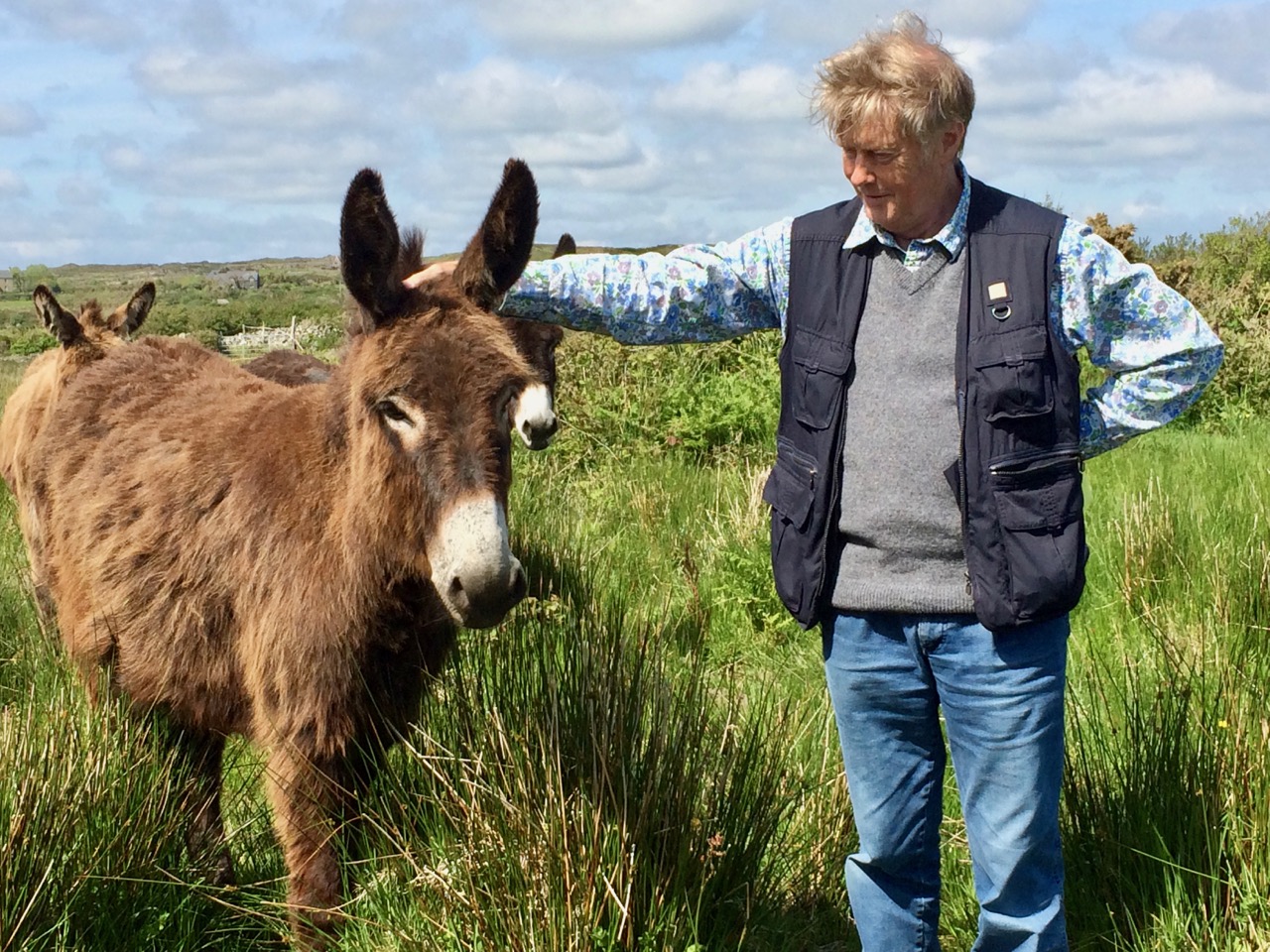
Of course, the pasture and coastline that surrounds us has fine creatures of the domesticated variety, too! (left and right below).

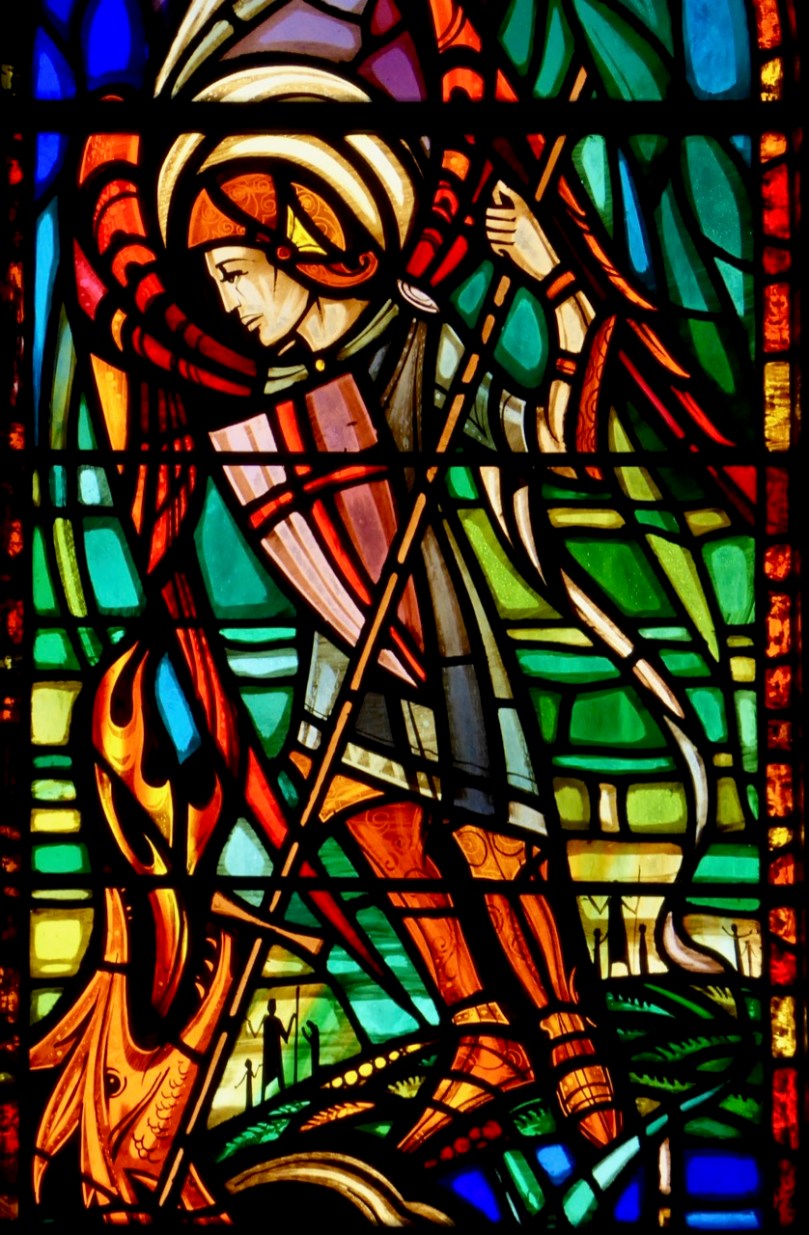
I have family roots in Cornwall and, during my time living here, I have become aware of many links between that westernmost peninsula of Britain and West Cork. In fact, those links go back into prehistory: in the Bronze Age – three and a half thousand years ago – copper was mined on the slopes of Mount Gabriel – a stone’s throw from where we live – and was mixed with tin from Cornwall to make the all-important ‘supermetal’ of Bronze. Another link which I was so pleased to find was that Cornwall’s Patron Saint – St Piran – was actually born and brought up on Cape Clear – the island we look out to across Roaringwater Bay. Read all about it here.

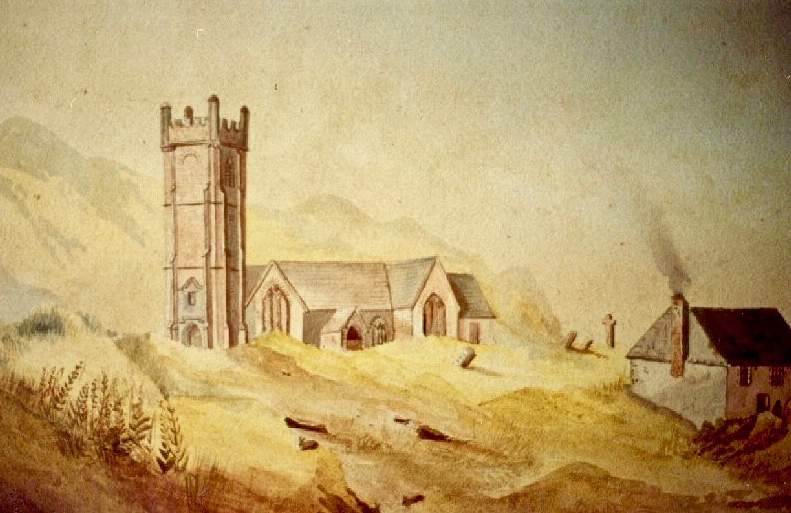
The little church at Perranzabuloe in Cornwall (now inundated by sand) marks the spot where St Ciarán from Cape Clear landed to start his mission. Because of a difference in the Irish and Cornish languages, he became known as St Piran over there. He lived to the age of 208!

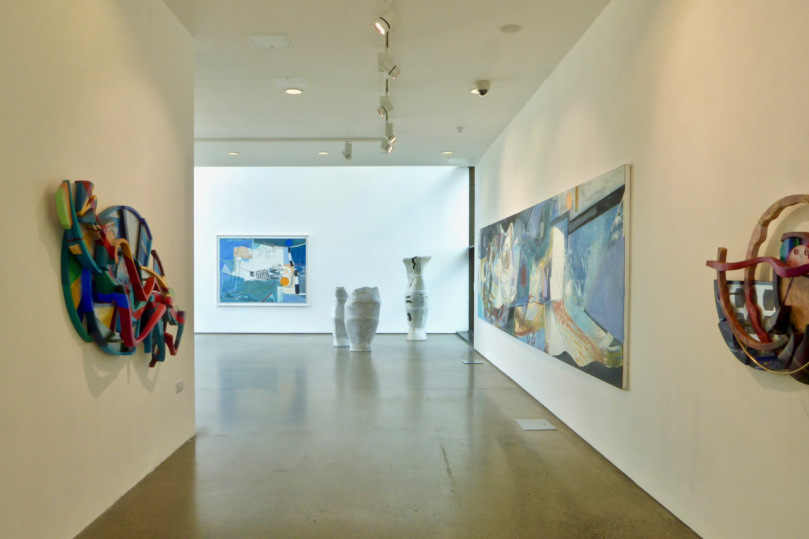
Stirring up those links led to my life being taken over in the summer of this year by organising (together with Ann Davoren and the team at the West Cork Arts Centre) an exhibition of the work of three contemporary Cornish artists which was held in Uillinn, Skibbereen’s amazing new gallery. The exhibition ran with the title of West meets West and heralds future collaborations and visits to Cornwall by West Cork artists. This link opens the series of posts that report on all this.

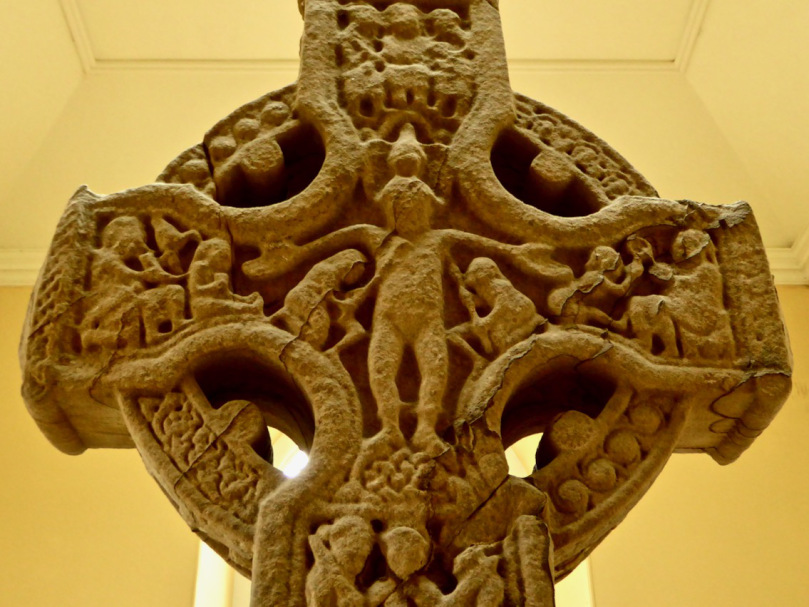
My time here in West Cork – and in Ireland – has heightened my interest in all things medieval, particularly architecture. Finola has written a highly researched and detailed series on the Irish Romanesque style, and our travels to carry out this research have been enjoyable and instructive. I have taken a liking to High Crosses, most of them probably over a thousand years old. They are always found in the context of fascinating early ecclesiastical sites. If you want to know more, have a look at the posts: so far we have explored Moone (above), Durrow (below), Monasterboice, and Castledermot. There are many more to add to this list – and to keep us busy over the next few years.

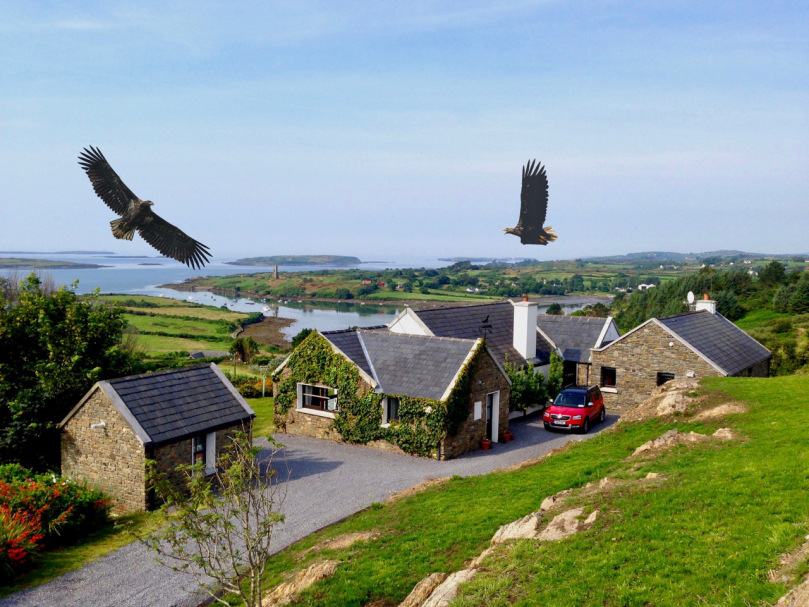
That’s quite enough for one post! It would be possible to write several on how we have been inspired by our explorations in search of material. Somehow, though, our hearts always come back to our very own piece of Irish soil: Nead an Iolair (Nest of the Eagles). Here it is, and here are the eagles flying over it! You’ll find more about them here.

The Best of Five

It’s been five years! That’s a long time to have kept up a journal, with original pieces appearing every week – usually two, each of us writing a post. It keeps us busy: 464 posts to date. We thought we should do a review of the posts which have been most popular: viewed by the most people. These are not necessarily the ones we would consider to be our own favourites: we’ll let you know what we feel our ‘finest hour’ has been next week – while you are all preparing the Christmas lunch!

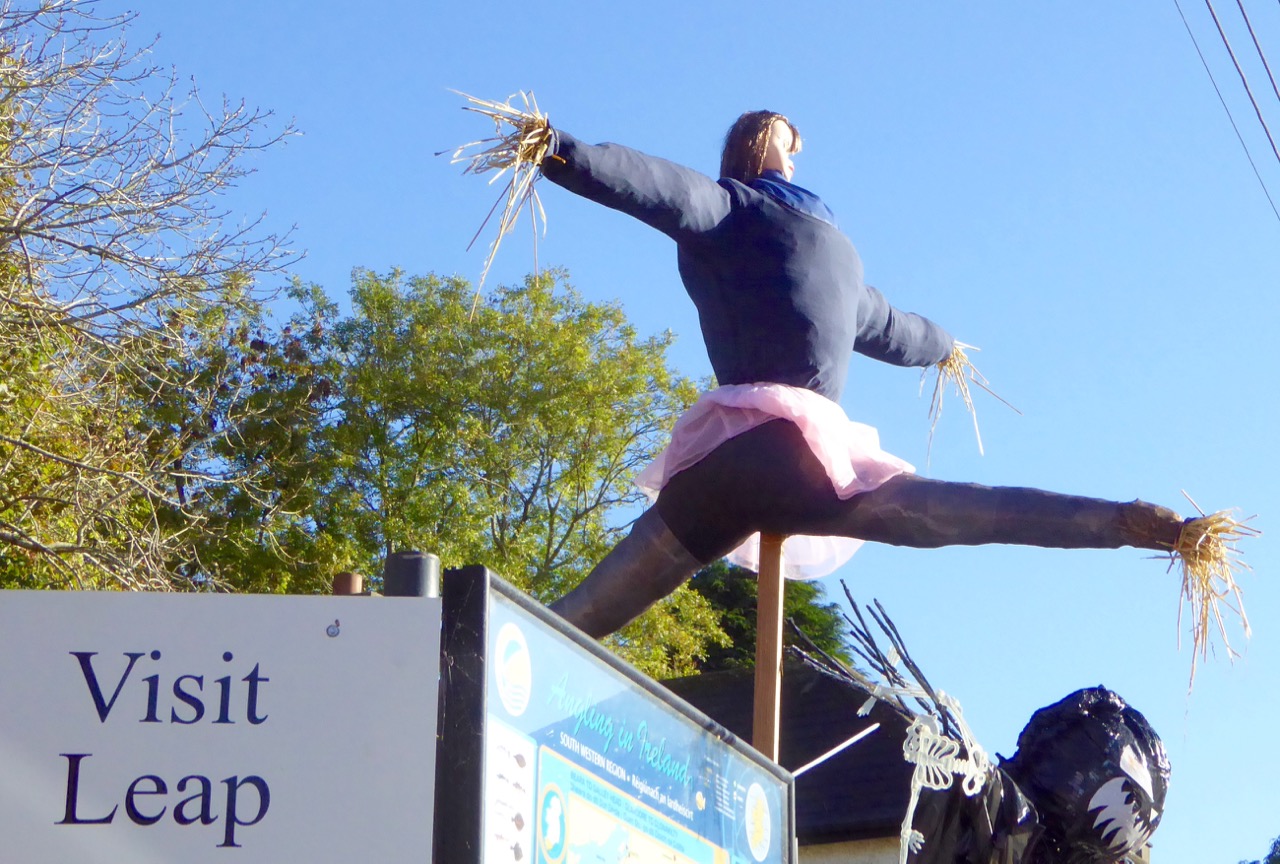
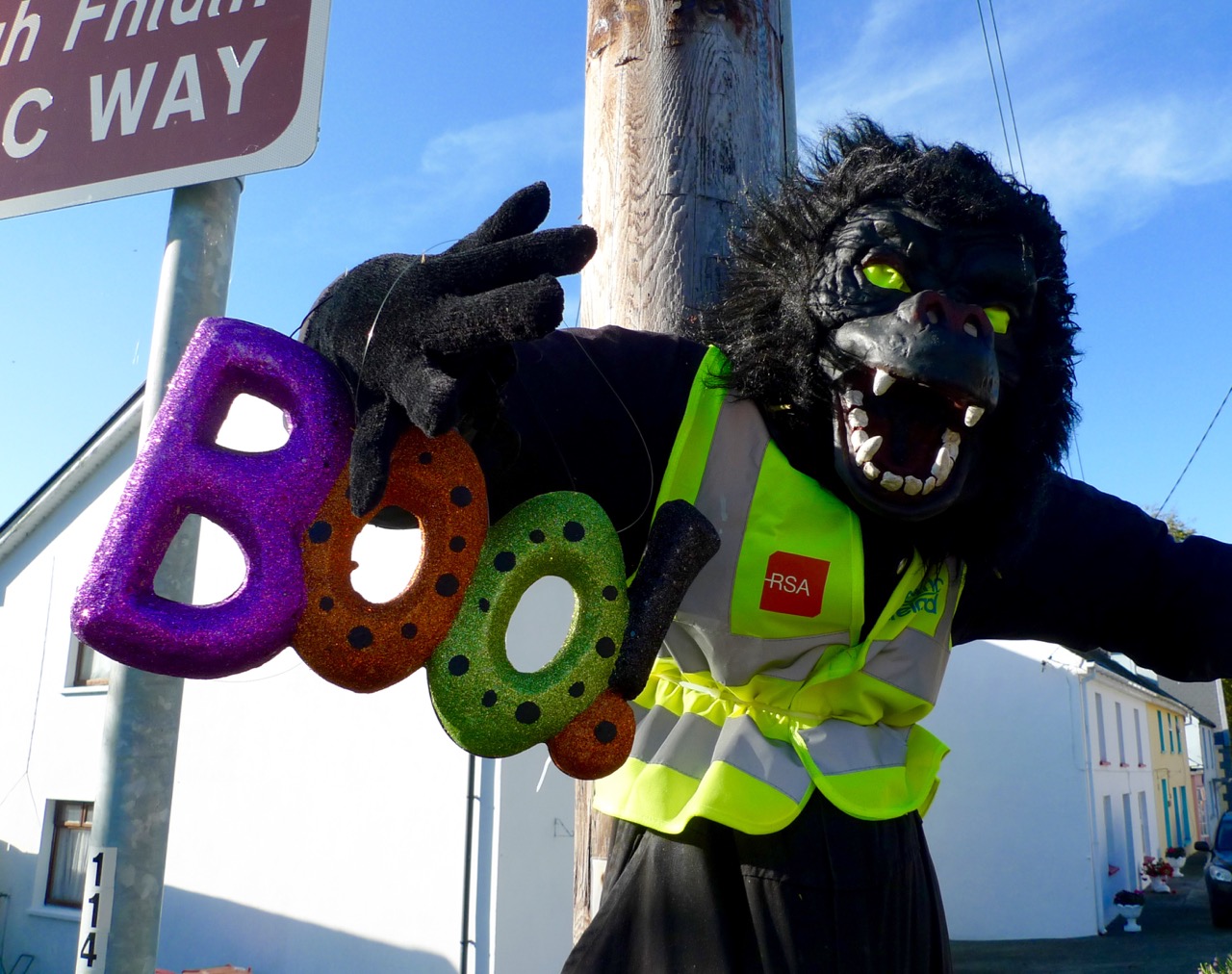
We never quite understood the all-time popularity of Beyond Leap, Beyond the Law, my post which was simply a collection of photos taken at the West Cork village’s 2015 Scarecrow Festival – with a little bit of history about the place added in. It was certainly a wonderful display of the imagination of the people of Leap. Have a look at the post: just one or two photographs don’t do it justice.

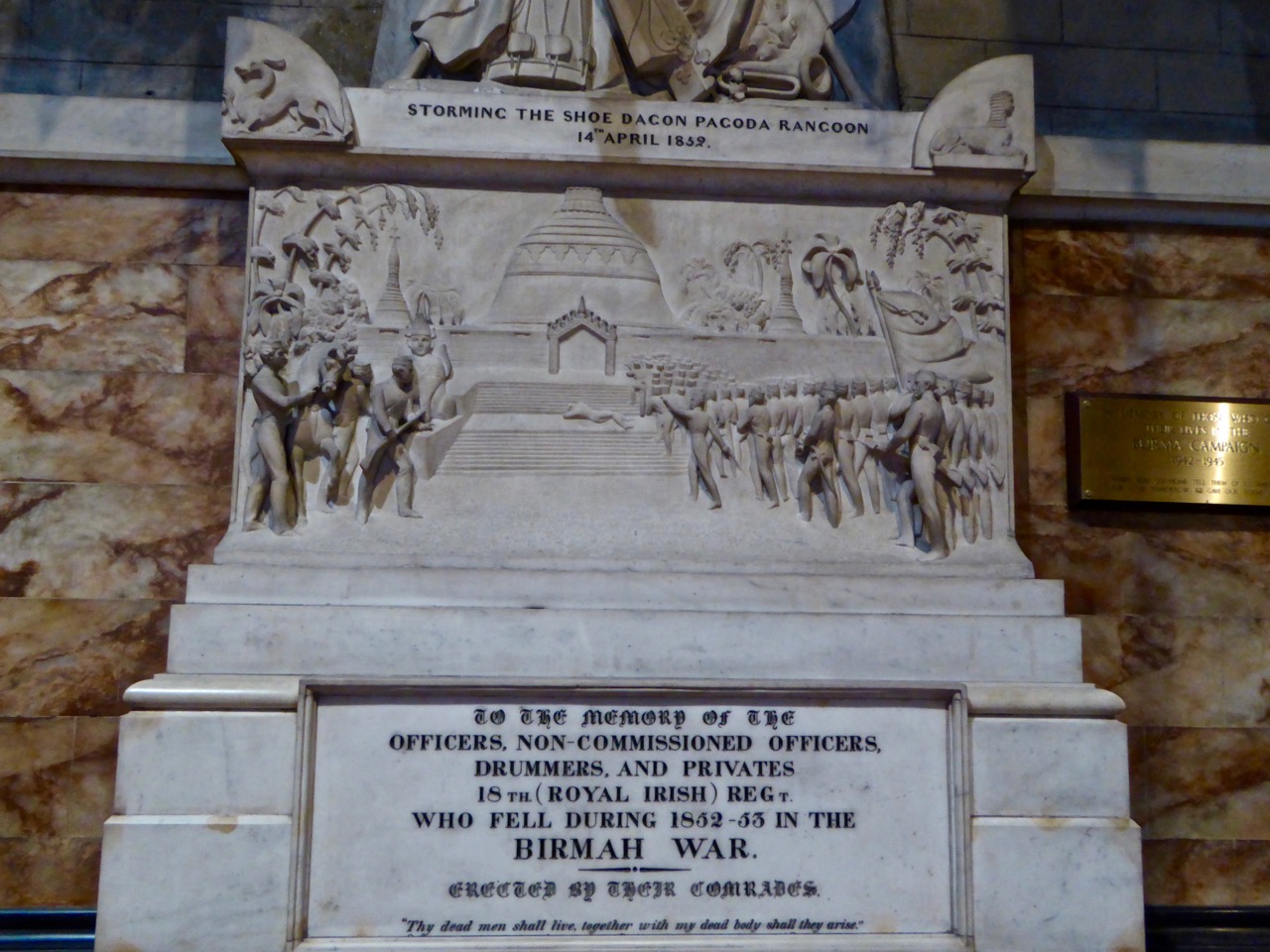
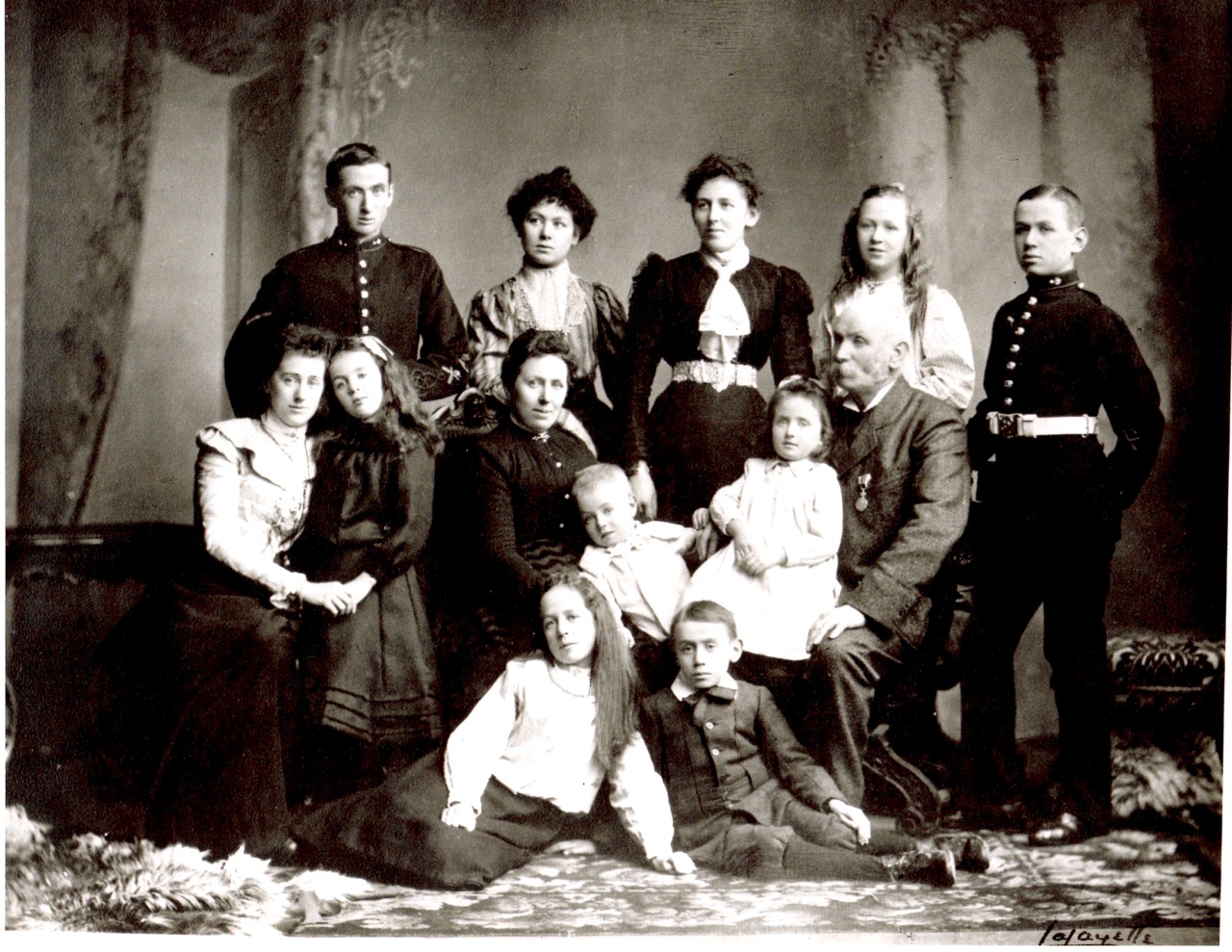
Up next is Finola’s piece from 2016 – Outposts of Empire. This was a much more scholarly article, and involved a lot of research. As you must know, we never pass a church or a burial ground without a full investigation: they provide a wealth of local history. Finola became fascinated by the memorials – mainly military – which appear in Protestant churches around the country. This led her down the path of her own ancestors, many of whom served in the Irish regiments of the British forces. She found this wonderful photo from around 1900 of her Brabazon forebears. Her grandmother Marie is in the centre of the back row, while her great grandfather John Edward Brabazon, who had served in India and Afghanistan, wears a military medal. The two younger men are Finola’s great uncles Michael and James, and they are wearing the uniform of the Royal Hibernian Military School.

Finola’s series on ‘how to speak like a West Cork person’ was a winner, the most popular being her fifth episode: How Are You Keeping? Here is a link to all of them. They make amusing reading, but at the same time they give a lot of insights as to how the Irish language has coloured the way English is spoken here. And here is Finola’s great picture from that post: two Skibbereen gentlemen who might well be asking how are you keeping?

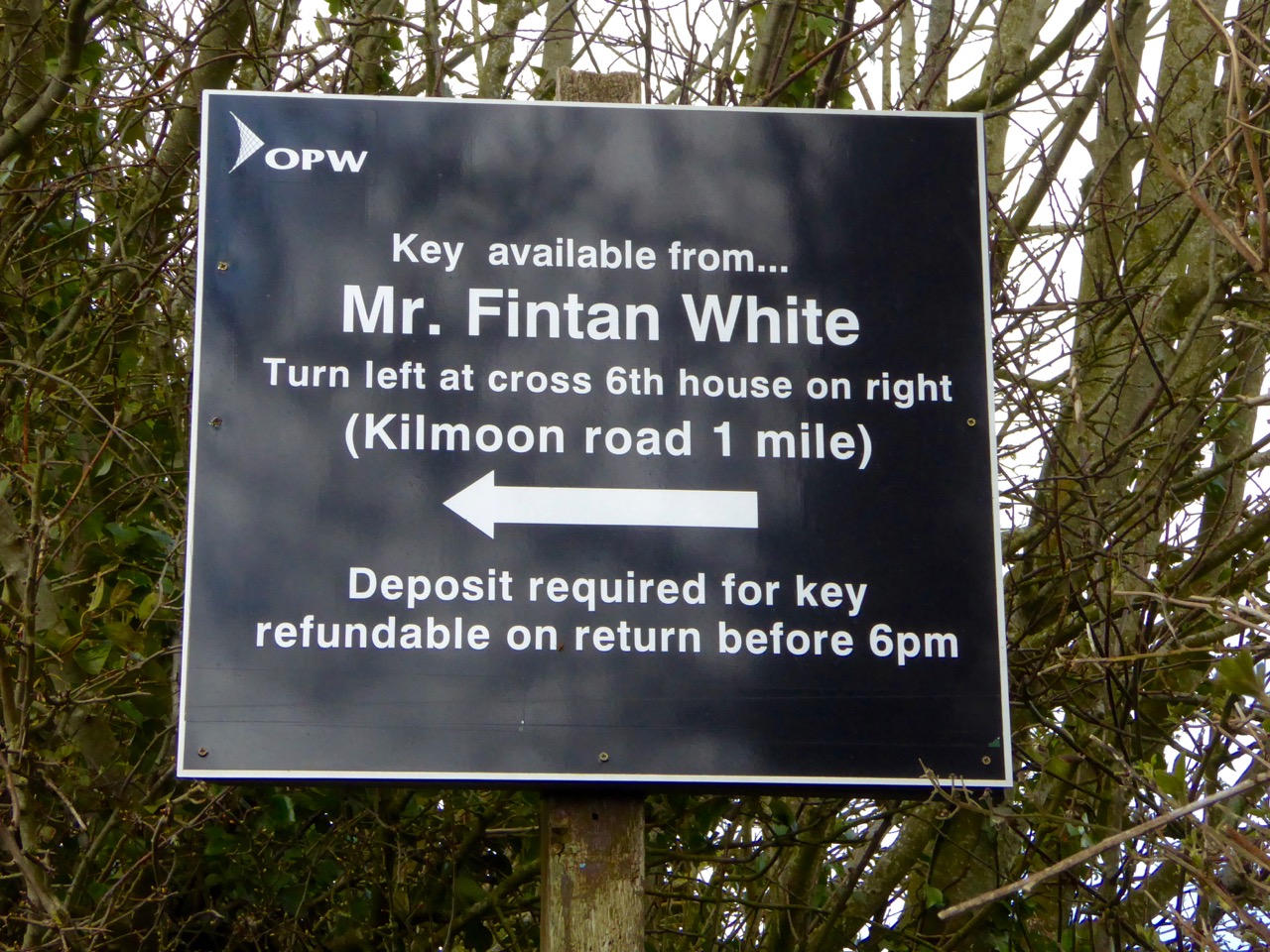
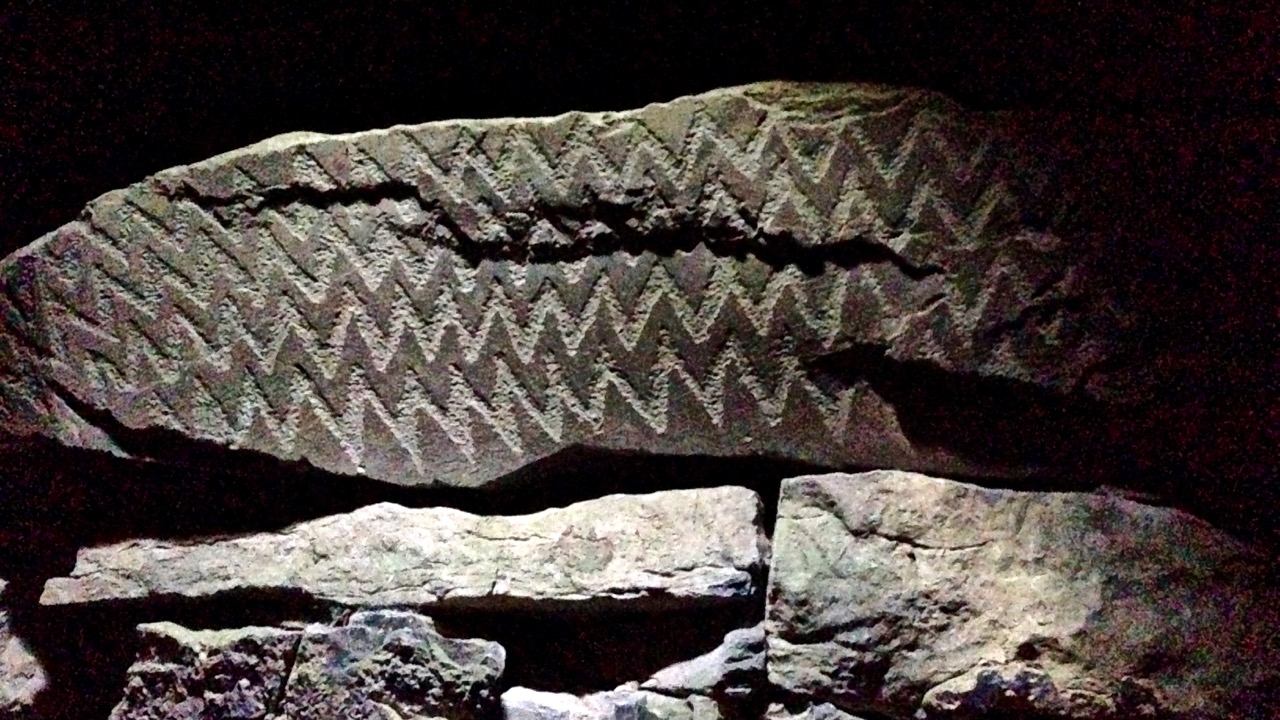
Archaeology comes next, with my account of a most eccentric decorated chambered cairn within the Boyne Valley complex: Fourknocks – the Little Giant. I was particularly taken with the adventure of visiting this tomb, from the first moment of having to collect the key from a farm a mile away in order to let ourselves in, to the experience of being inside with the door shut behind us: total darkness at first, but gradually becoming aware of the remarkable 5,000 year-old zigzag carvings on the rock surfaces within.

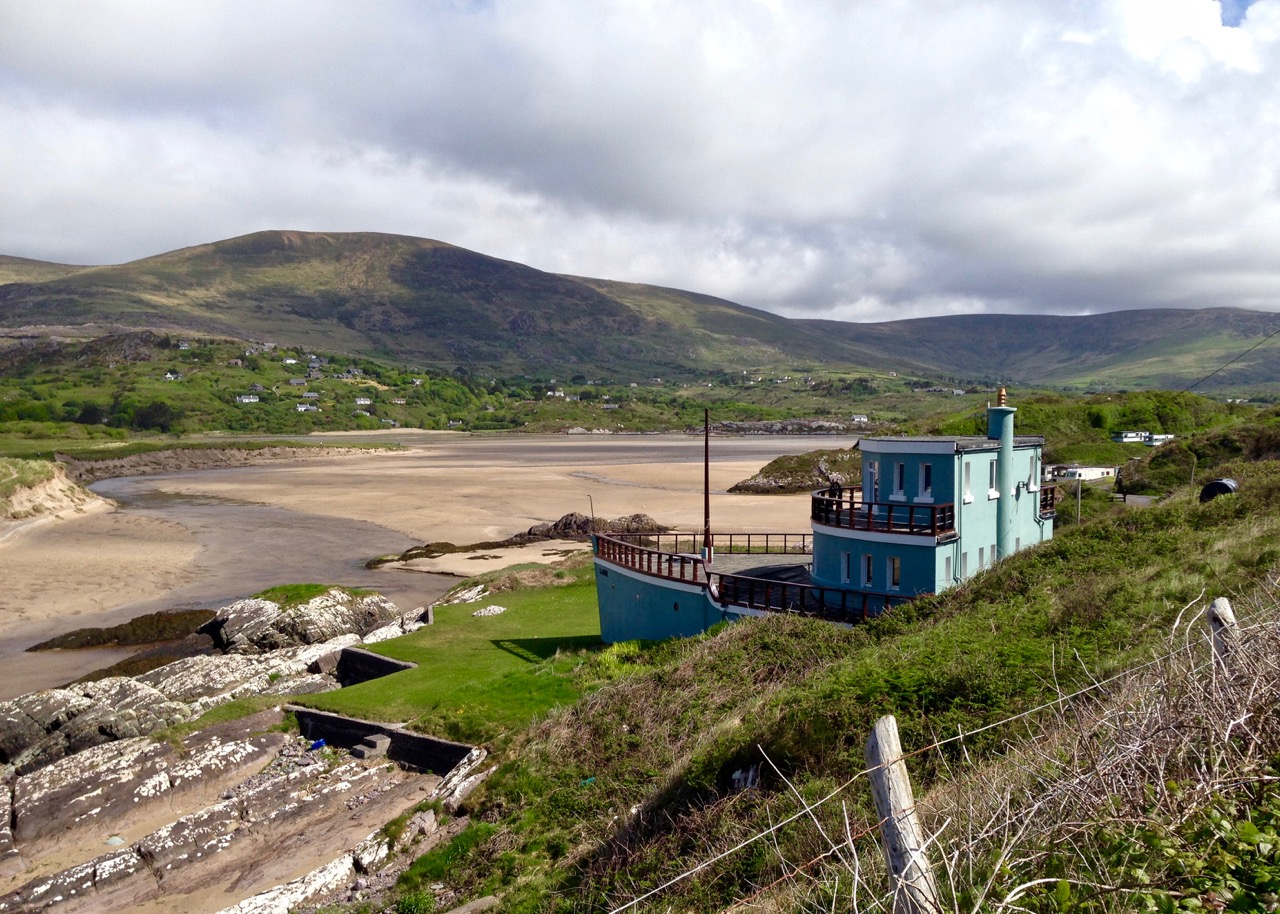
I’m pleased that the fifth most popular post of all time is also the one I most enjoyed writing: Aweigh in Kerry. This was all about a very unusual piece of architecture which we found while travelling in Kerry – a house shaped like a ship, sitting in the sand dunes on the shoreline of Ballycarnahan townland, facing a most spectacular view across to Derrynane, the home of ‘Ireland’s Liberator’ Daniel O’Connell. I was an architect in a former life, and I would have welcomed a commission such as this. It was built in the early 1950s.

Sixth and last in this little review is a post from Finola (happily, we had three each in this list of the top most popular posts!): Castle Haven. Such an account of a place in magical West Cork – which typically offers everything anyone could want in beautiful landscape, village architecture, archaeology, history, literary heritage, art and the omnipresent Atlantic coastline – is exactly what we aspired to for the foundation stone of Roaringwater Journal when we set out, in 2012 on this happy, continuing journey.


George Victor Du Noyer at the Crawford Gallery

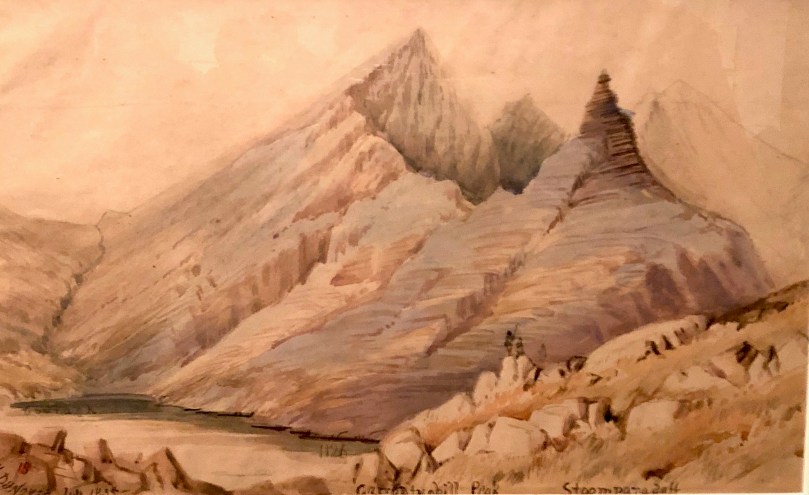
I had been aware of George Victor Du Noyer’s antiquarian drawings from my days as a student, but that did not prepare me for the Du Noyer exhibition currently running at the Crawford – it’s nothing short of breathtaking. Du Noyer, it turns out, was far far more than an antiquarian: he was a nineteenth century Renaissance man, artistic, talented, curious, scientific and learned in equal proportions. Stones, Slabs and Seascapes is curated by Peter Murray (recently retired director of the Crawford) and co-curated by Petra Coffey of the Geological Survey.  If you do nothing else this winter, get to Cork to see this exhibition!

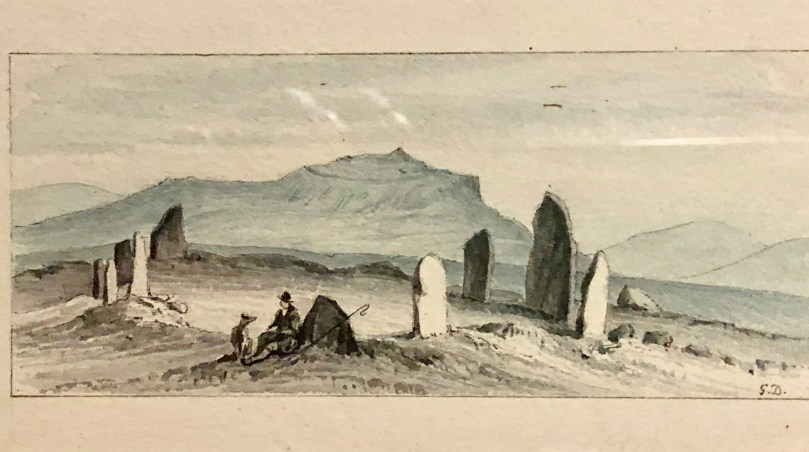
I’ve decided to annotate the images with quotes in italics (image follows quote) from the outstanding exhibition catalogue which is a collection of essays, each written from a slightly different perspective. I’ve tried to show representative samples of Du Noyer’s work, mostly from the exhibition. A couple of illustrations are from elsewhere. I’m not going to say a lot about Du Noyer’s life – there’s an excellent summary (with some additional photographs) by Fiona Ahern on the Maynooth University Library website.

From a cultural studies and critical theory perspective, the principal interest in Du Noyer lies also in seeing how, as an Irish artist, he responded to the international debates of his day: to the Devonian controversy, to the widening gap between ‘uniformitarianists’ and ‘catastrophists’, and to the urgent search by geologists and astronomers during his lifetime to explain the origins of the planet Earth. The ability of Du Noyer to traverse conventions of representation – he moved easily from picturesque watercolours, to scientific cross-sections of landscape – reflects a similar flux in nineteenth-century learning, where advances in science co-existed with a desire to adhere to traditional modes of representation. (From the Introduction by Peter Murray and Petra Coffey)

In contrast with other artists’ depiction of Ireland at this time (many of them English), Du Noyer’s sketches lack the stereotyping that is all too common in art of that period. Based on eyewitness observation, his drawings lack elements of caricature and satire often perceptible in depictions of Ireland by artists who tended to work from preconceived ideas. (From the Introduction by Peter Murray and Petra Coffey)

Throughout a long and productive lifetime, during which he depicted a myriad of objects and places in Ireland, George Victor Du Noyer compiled a databank of images that not only formed part of the new awareness of Irish national identity that emerged in the early nineteenth century, but also revealed the potential of art to frame revolutionary narratives relating to geology, natural history and human evolution . . . Du Noyer was one of those who helped construct this new narrative. He documented towns and villages, prehistoric sites and ruined monasteries. He had a keen interest in the natural environment, in methods of transport . . . artefacts connected with food preparation, cooking, eating and drinking. (From the Foreword by Peter Murray)

As  industrial production began to dominate people’s everyday view of the world, the aesthetics of handmade objects fell into sharp relief. Du Noyer delighted in depicting such objects, from every age, from simple ‘Killick’ anchors of wood and stone, to querns for grinding corn and wooden drinking vessels. Removed from their original context and preserved in glass cases in museums, these objects had begun to lose much of their original meaning. In illustrating them, Du Noyer not only committed their image to paper but also highlighted philosophical questions relating to the passing of time and the formation of both individual and collective memory. (From the Foreword by Peter Murray)

When he was visiting Belfast in 1837, he bought some apples in the market thinking they were Irish apples (they were not) and he painted them magnificently, enhanced with gum Arabic. (From George Victor Du Noyer – Artist and Geologist  (1817-69) by Petra Coffey)

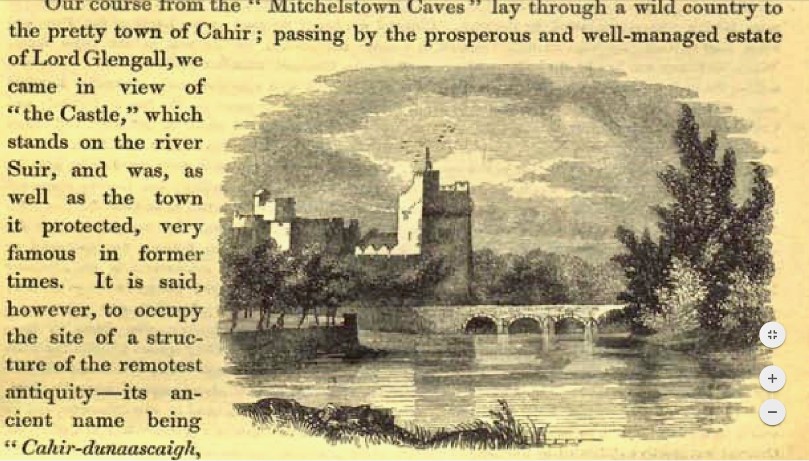
From 1842 to 1843 . . . he accepted private work, as he was able to produce art work in many media . . . He illustrated Hall’s Ireland: Its Scenery, Character, etc (Vol.2, 1842). (From George Victor Du Noyer – Artist and Geologist  (1817-69) by Petra Coffey)

The Geological Survey of Ireland (GSI) was established on 1st April, 1845 . . . Du Noyer had been introduced to the new study of the earth – geology – and it was to shape his life thereafter. Despite having no formal training or qualifications in geology he was to become extremely competent in his calling with the added bonus of being better able than most to record graphically what he saw . . . From now on, Du Noyer never put down his geological hammer, pencil, paper and watercolours . . . (From George Victor Du Noyer – Artist and Geologist  (1817-69) by Petra Coffey)

Du Noyer published papers in many journals, including the Archaeological Journal. His most important work was ‘On the remains of ancient stone-built fortresses and habitations to the west of Dingle, Couny Kerry’, published in 1858. (From George Victor Du Noyer – Artist and Geologist  (1817-69) by Petra Coffey)

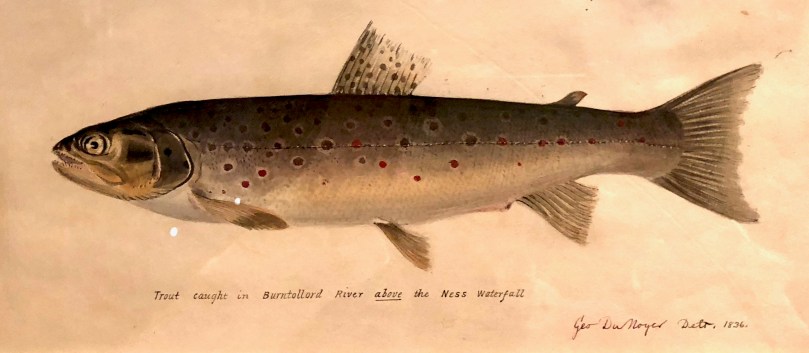
The purpose of a scientific illustration is to reflect accurately the key features of a fossil, animal, plant or landscape. It can be a far cry from the conventional artist’s view, where the essence can be more important than the reality. (From The Scientific Illustrations of George Victor Du Noyer by Nigel T Monaghan)

Du Noyer’s scientific landscapes emphasise the geology, showing rocks accurately in terms of bed thickness, irregularity, angles of dip, faults and major joints, with no less attention to detail in his rendition of the soil cover, vegetation and the human impact on the countryside. (From The Scientific Illustrations of George Victor Du Noyer by Nigel T Monaghan)

. . . when Du Noyer worked with the [Ordnance] Survey, he would go out in all weathers to sketch antiquities surviving in the landscape, some of which are now in a more parlous condition than when he drew them, while others have disappeared entirely… (From Du Noyer’s Treasures in the Royal Irish Academy by Peter Harbison)

In 1837 Du Noyer painted a series of large watercolours depicting typologies of Bronze Age spears and axeheads, and early Christian artefacts, such as brooches, bells, devotional crosses, and figures clearly prised off reliquaries. (From George Victor Du Noyer – Where and When by Peter Murray)

in 1837 and 1838, Du Noyer drew a series of palaeontological monochrome-wash watercolours, depicting fossils of ancient life forms, including seashells, whorls, spirals and other simple shapes, images that were lithographed for Portlock’s Report on the Geology of Londonderry . . . Portlock’s publication, at over 500 pages, was, literally, ground-breaking in terms of the study of fossils in Britain and Ireland. (From George Victor Du Noyer – Where and When by Peter Murray)

In May 1850, he painted four panoramic watercolours from the top of Carrickbyrne Hill . . . [and] also painted a panoramic watercolour, ‘View of Ballyhack and Arthurstown from Passage’. (From George Victor Du Noyer – Where and When by Peter Murray)

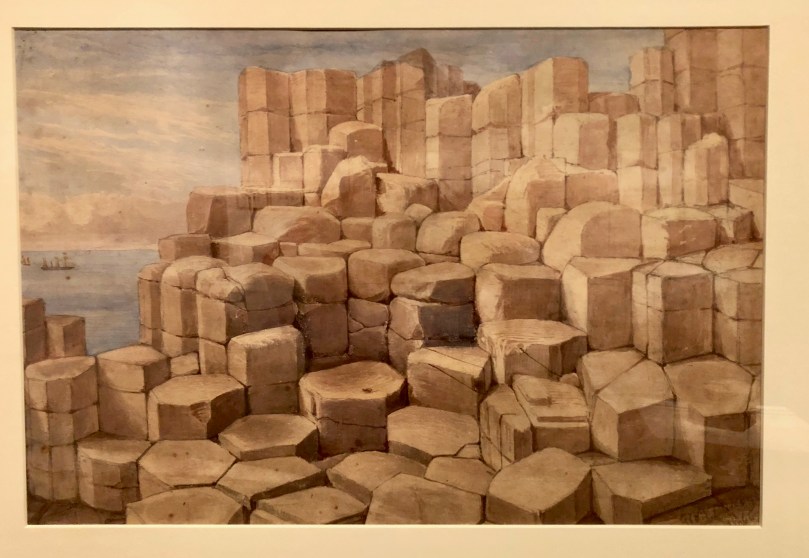
In 1867 . . . after many years working for the Geological Survey of Ireland as an assistant surveyor, Du Noyer was appointed District Surveyor and posted to a field station in County Antrim . . . His article, ‘Notes on the stratigraphical position of the Giant’s Causeway, and the structure of the Basaltic Cliffs immediately adjoining it,’ had been published in The Geologist in 1860. (From George Victor Du Noyer – Where and When by Peter Murray)

In total, Du Noyer left some five thousand works of art, in pencil and watercolour. At his best, he combined an objective scientific approach with a sublime artistic vision. (From George Victor Du Noyer – Where and When by Peter Murray)

The exhibition runs from November 17th, 2017 to February 24th, 2018 at the Crawford Art Gallery in Cork and then from March to September 2018 at the National Museum of Ireland, Dublin.

Catalogue published by Crawford Art Gallery, available from their book shop.

Off the M8 – Exploring the Delights of Durrow

Earlier this year, Finola wrote a very popular post entitled Off The M8 and into Medieval Ireland. From the responses, we realised that many travellers welcome the idea of breaking up a long journey by taking a diversion to experience some aspects of Ireland’s wonderful historical heritage. So, I’m taking up the mantle today by suggesting that you go a fair bit out of your way – if travelling the route between Dublin and Cork – to visit the ecclesiastical site of Durrow, County Offaly.

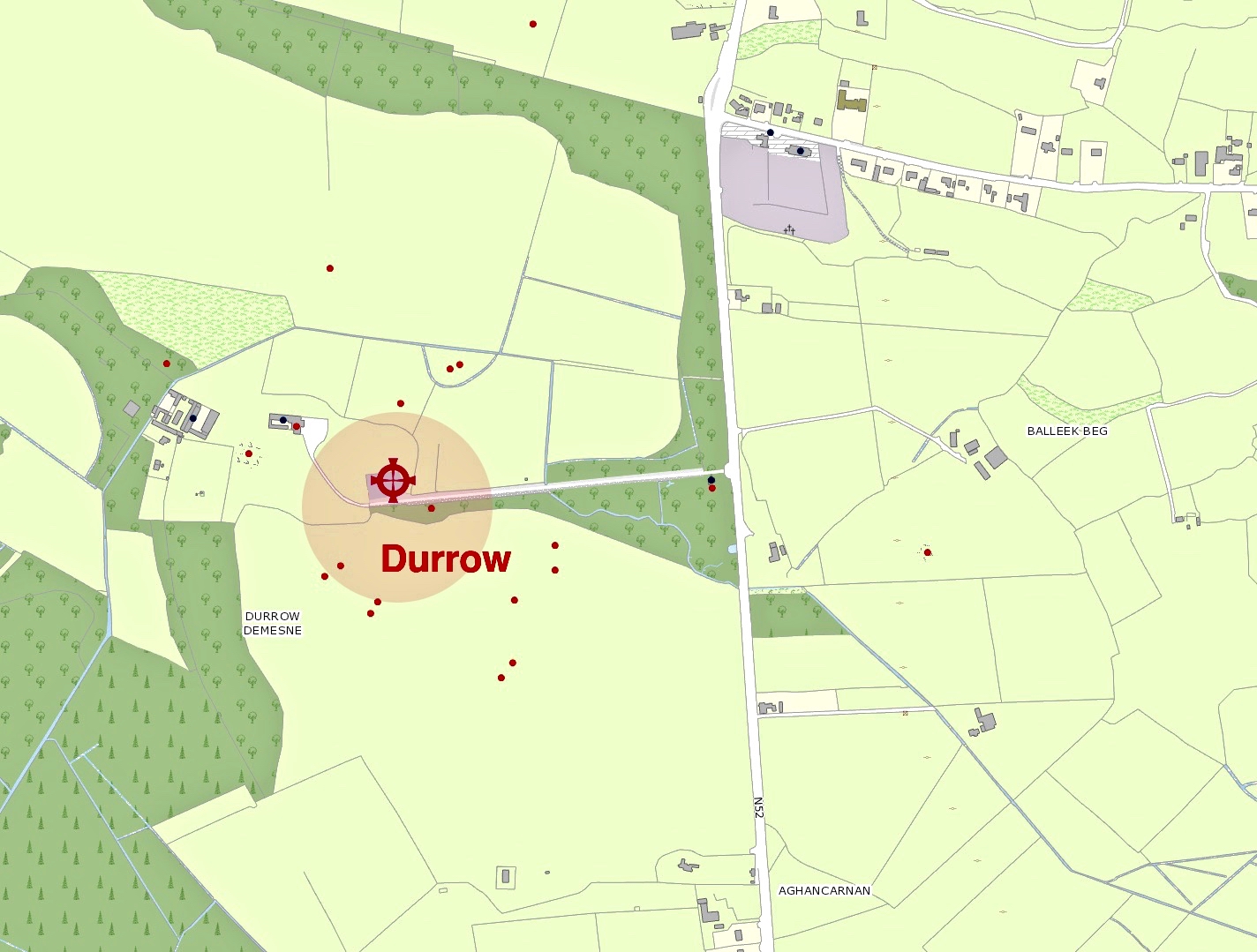
You’ll need a bit of guidance in order to find this little piece of medieval Ireland: hopefully the extract from the National Monuments Service Historic Environment Viewer – an invaluable source for us in our travels – will locate you (above). At the time of writing this, there is no signpost on the N52, but the entrance to the site is through a substantial gateway about 3km south of Kilbeggan – from Junction 5, on the M6 motorway – heading towards Tullamore. From the M50 around Dublin, leave at Junction 7 and it’s a one hour journey to Durrow. From Durrow it’s 40 minutes to connect with the M7 /M8 at Portlaoise. So taking this detour will add between 40 and 50 minutes to your overall journey, depending on traffic. But it will be well worth the extra time if, like us, you are mad about Irish history.

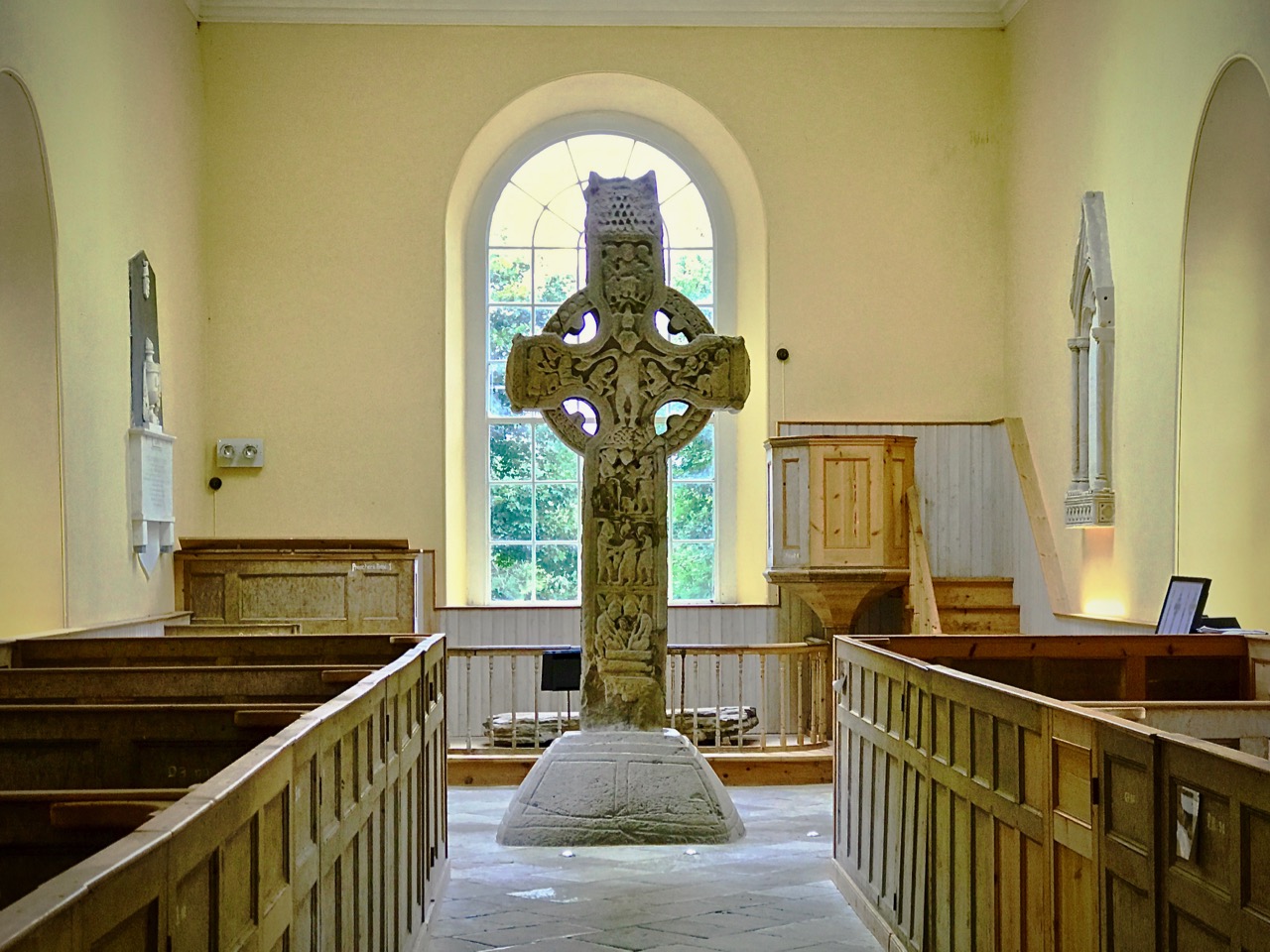
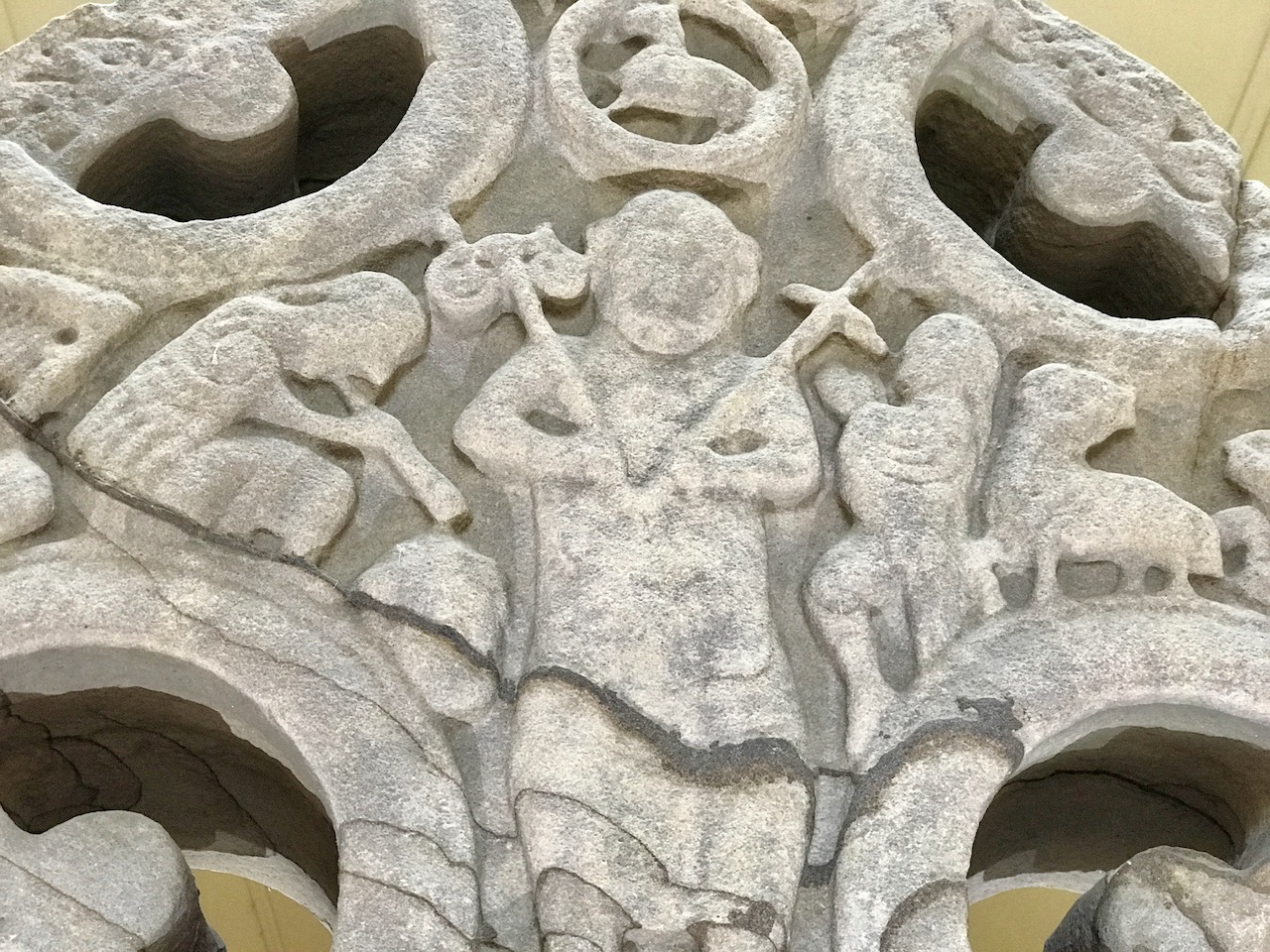
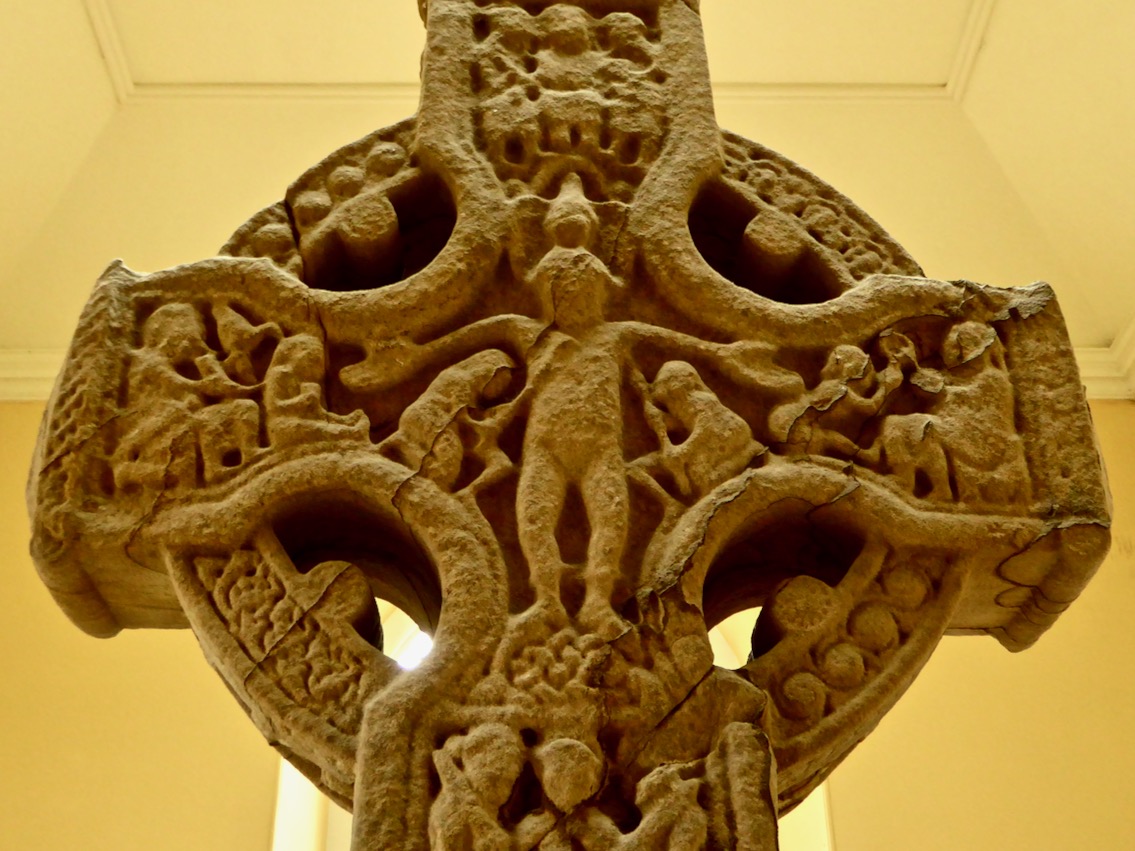
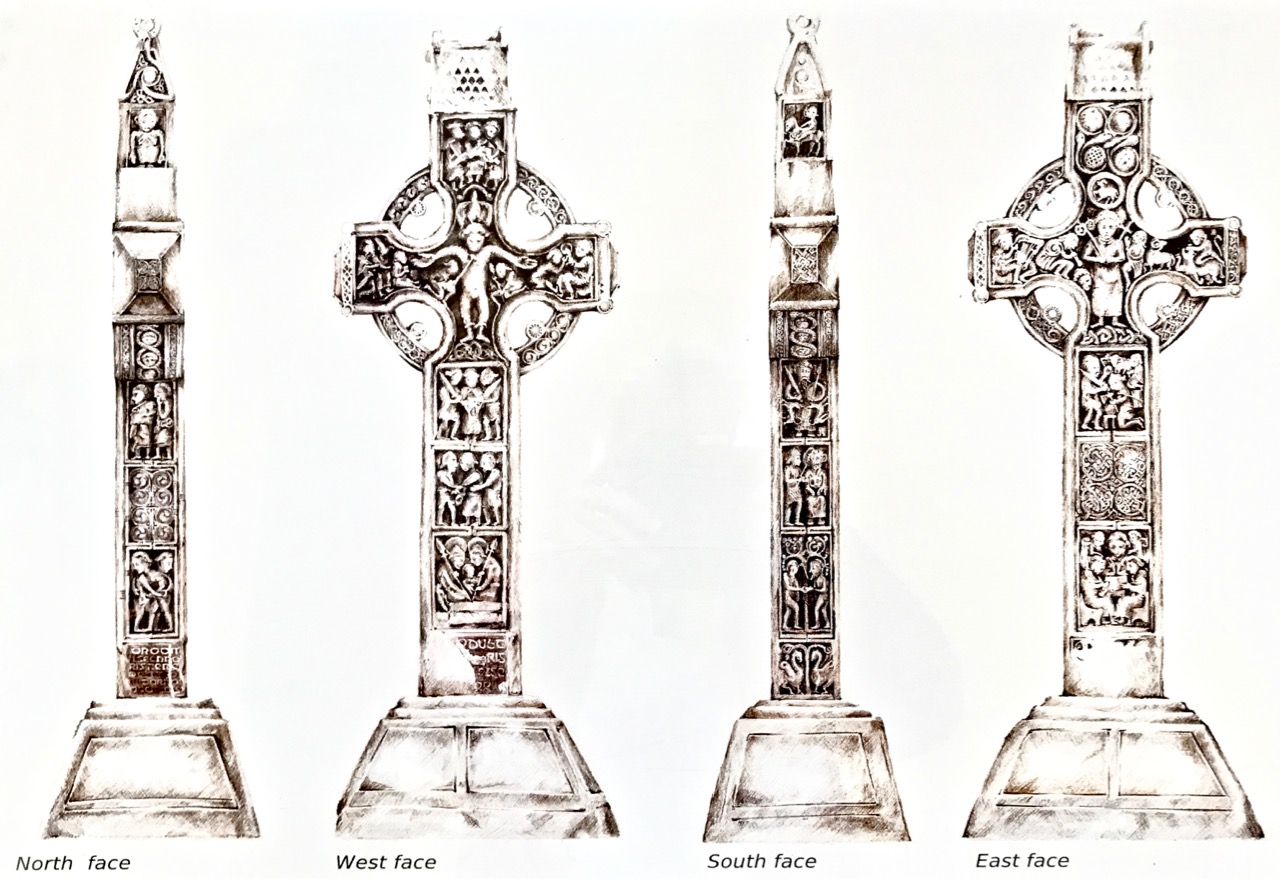
As you can see from the header picture – and the one above – the greatest delight of Durrow is the medieval High Cross, now saved from the elements and safely displayed inside the late 18th century church which is probably built on the site of an Augustian Abbey church founded in the 1140s by Murchadh Ua Maoil Sheachlainn, high king of Midhe, who died at Durrow in 1153. The cross – possibly 10th century – is a really good and clearly legible example of the scriptural type, depicting scenes from the Bible. The OPW has annotated all the panels in excellent information boards.

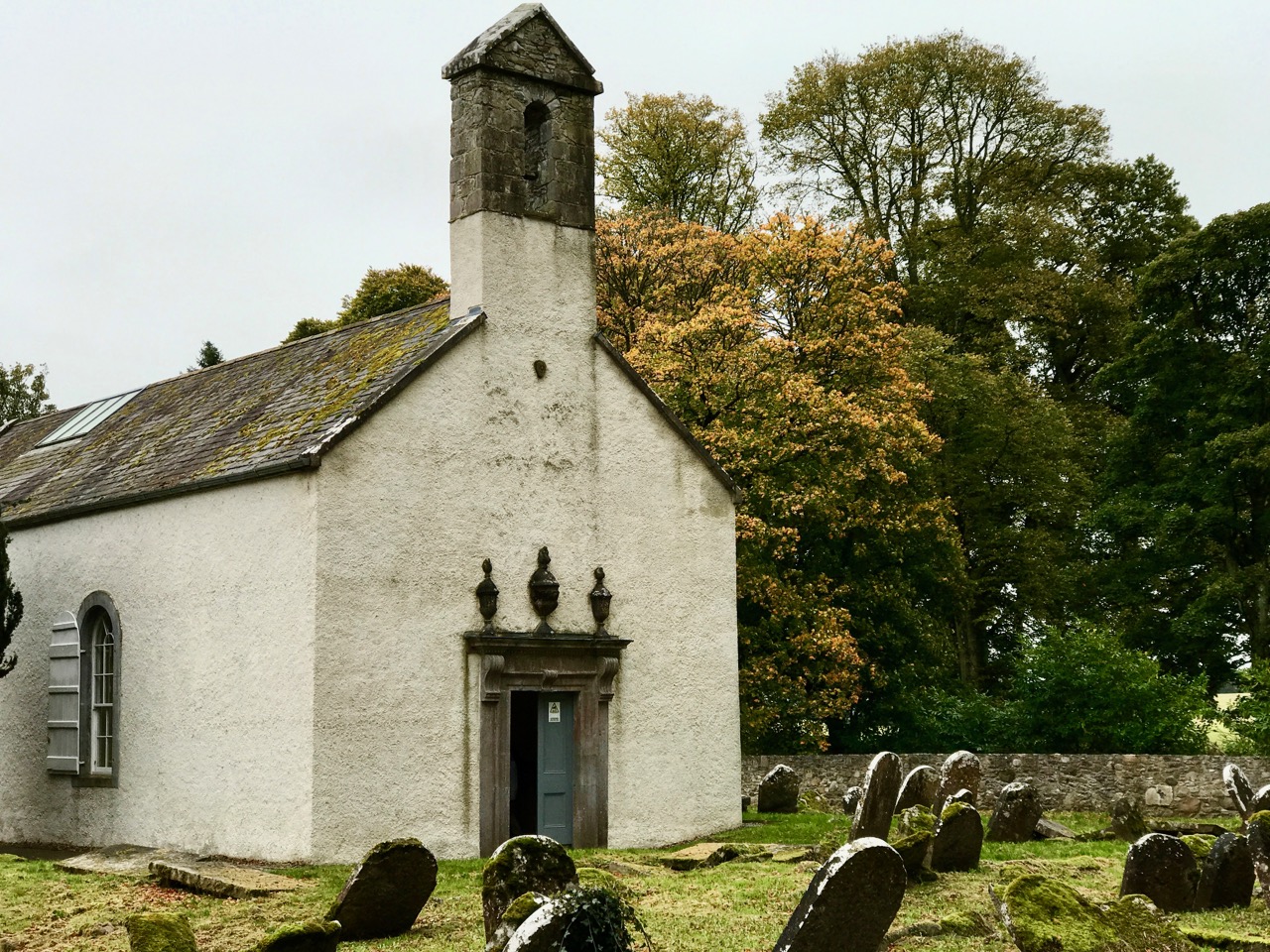
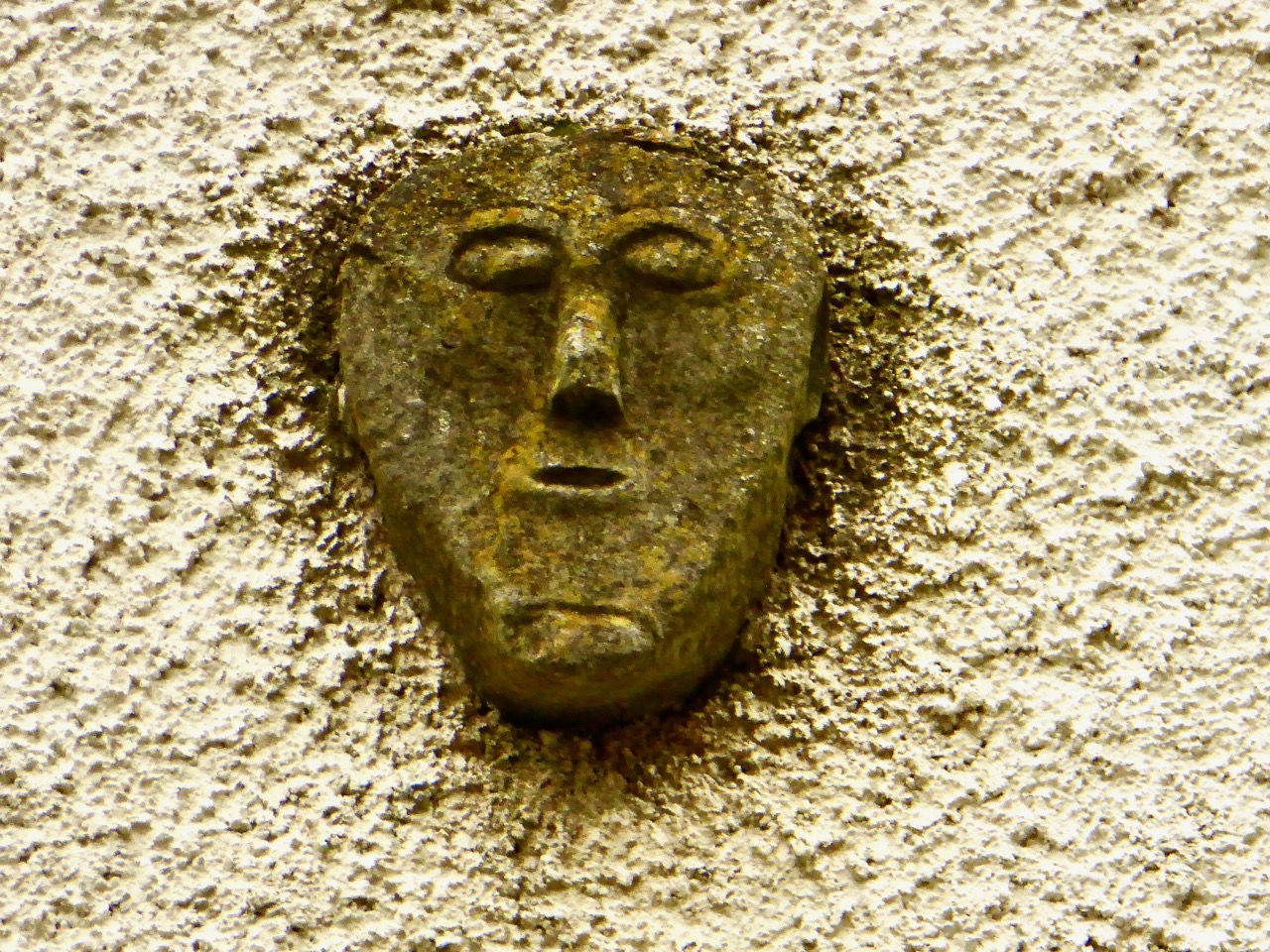
This is the west facing entrance to St Colmcille’s Church, Durrow, which now houses the High Cross and a number of cross slabs and grave slabs, some of which are medieval. A monastery was founded here by Colmcille in the 6th century; it is possible that the stone head which can just be made out above the entrance, and below the bell tower, could date from the earliest building period on this site and was incorporated into the present church. Perhaps it is St Colmcille himself – looking down over the old graveyard, and the original site of the High Cross. Colmcille famously established the monastery at Iona in Scotland, and over sixty churches in Britain and Ireland claim him as their founder.

Above (left) is a photograph taken in 1890 of the Durrow High Cross at its former site, to the west of the church building which now houses it. To the right is a fragment of one of the grave slabs which were embedded in the churchyard wall enclosure and which have also now been mounted inside the church for safety and conservation. This one is said to date from between the 12th and the 15th centuries: the visible inscription has not been deciphered.

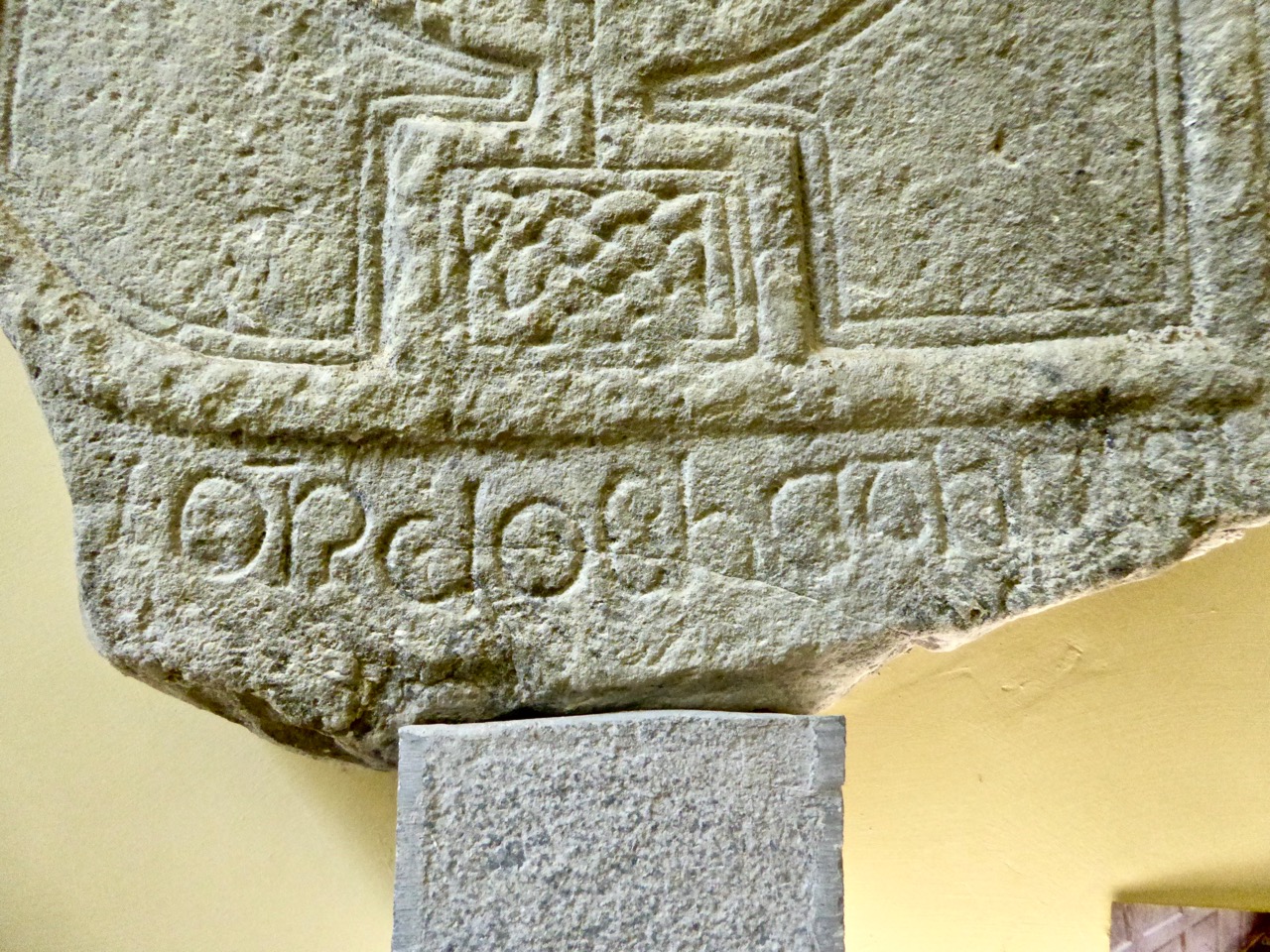
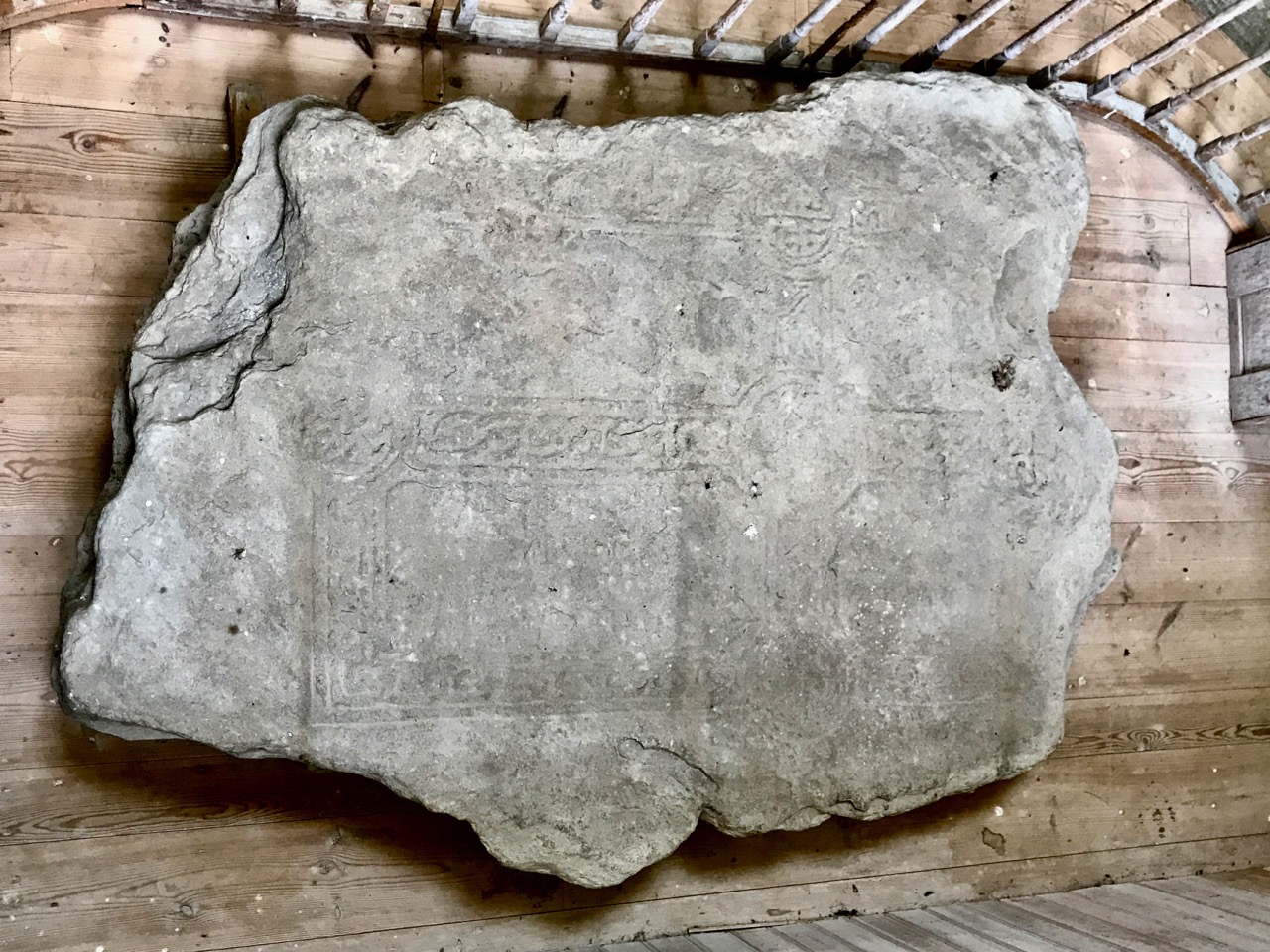
Above is an earlier cross-slab which has been described as …possibly of 9th century date… The inscription probably reads Ór do Chatalan (Pray for Chatalan). This carved stone was also located originally in the wall of the churchyard, and is now in the church.

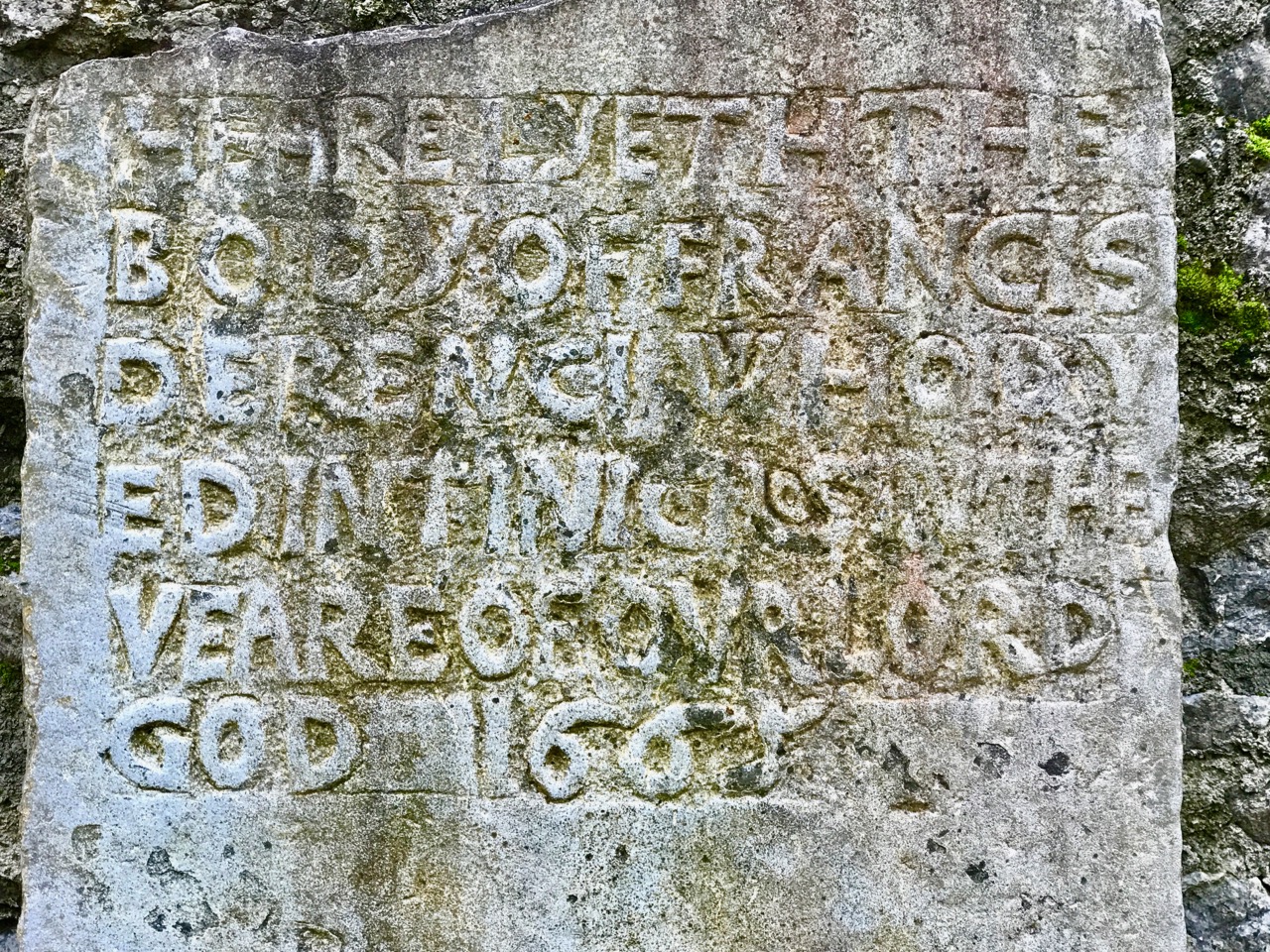
Through a curious twist, the inscribed stone above, dating from 1665 and commemorating a member of the De Renzi family of Hollow House in the townland of Ballynasrah, has been taken from inside the church and placed against the wall of the 18th century burial enclosure of the Armstrong family located outside in the graveyard. Below is a large ‘early Christian’ cross-slab, also taken from the wall of the graveyard and now resting inside the church below the east window.

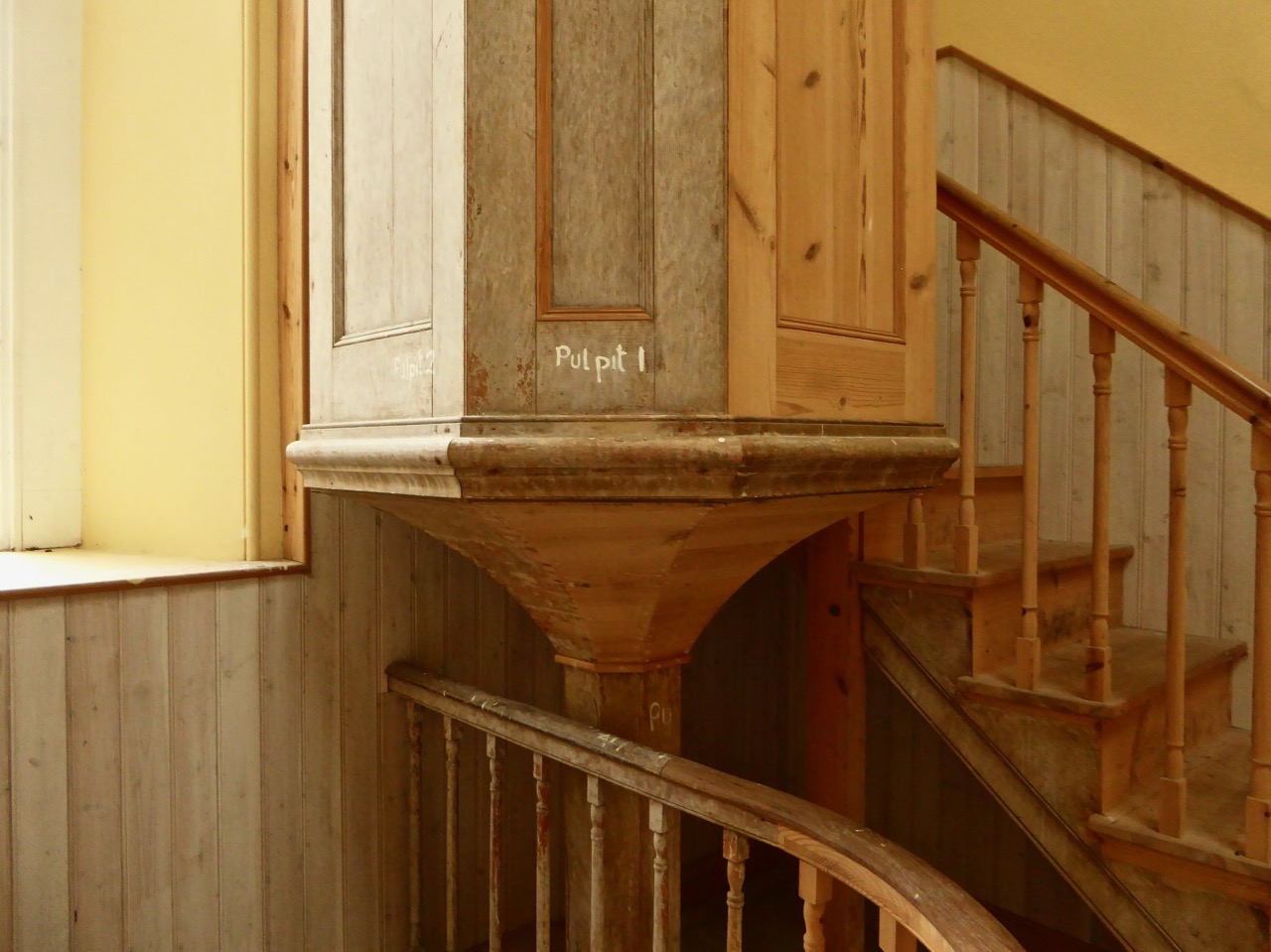
Don’t ignore the church itself – and don’t get confused with the thriving Catholic Church of St Colmcille in the small village of Durrow, only about a kilometre away. The one here off the beaten track (which now houses the High Cross and the cross-slabs) is a Church of Ireland site, and is a very well presented example of a simple 18th century interior with box pews, a raised pulpit and a ‘preaching box’. It has been the subject of a conservation project by the Office of Public Works, and is more properly classified as a Heritage Centre rather than a working church, although occasional services, concerts etc are held in the building.

You will remember my fascination with Irish medieval High Crosses from my previous posts – and my concerns for those which remain unprotected from the weather. Here at Durrow the damage which has befallen this High Cross over the centuries is all too visible, although conservation works are in progress and will ultimately return it to good condition. It’s a good example for others to follow.

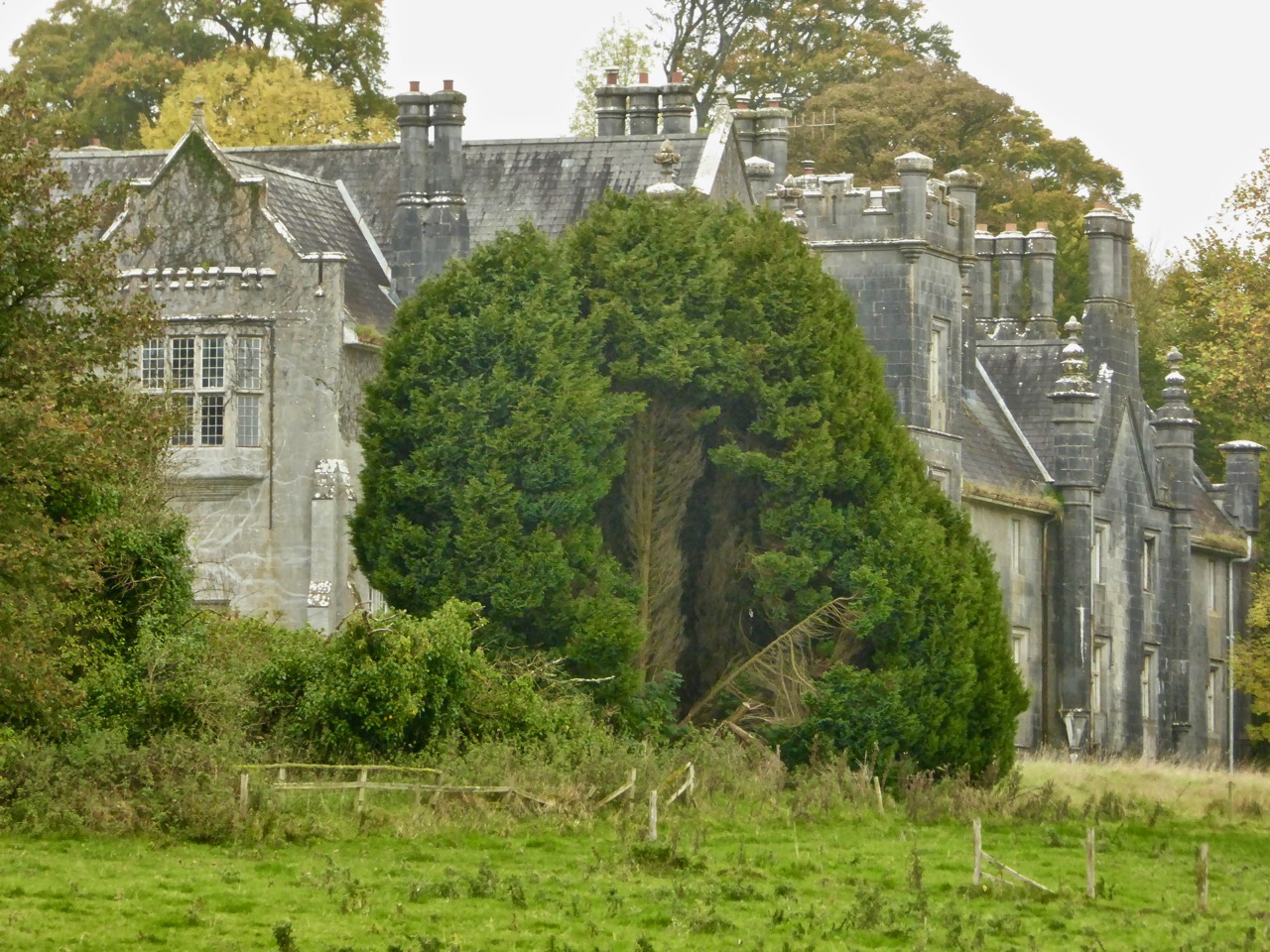
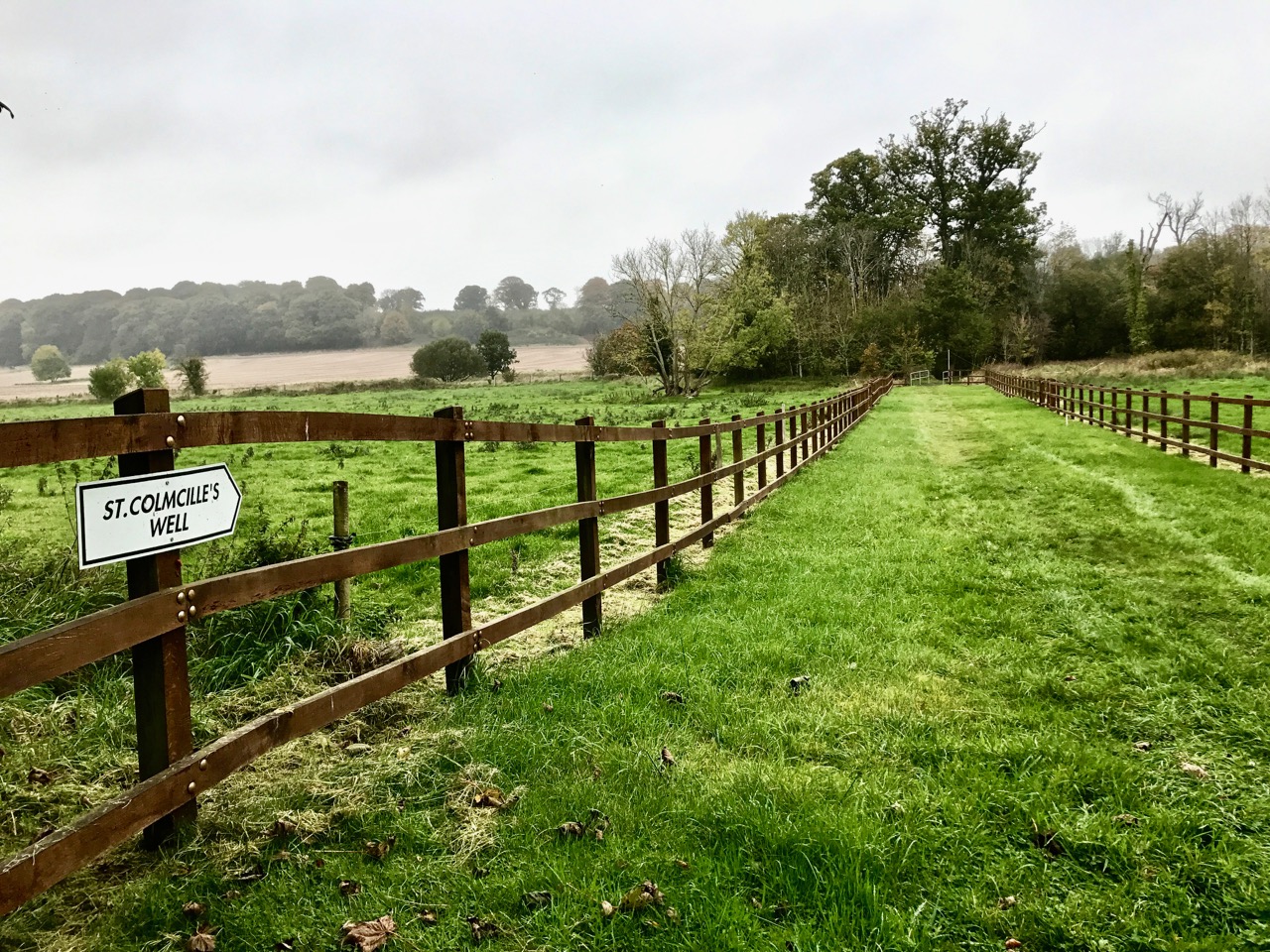
There is yet more to see at Durrow: follow the path to the Holy Well – on your way you will catch a glimpse of the architecturally significant Durrow Abbey House. Built in the Jacobean Revival style between 1837-43, much of it was severely damaged by fire in the 1920s. Subsequent rebuilding incorporated a Queen Anne style Art Nouveau interior. The house is not open to the public.

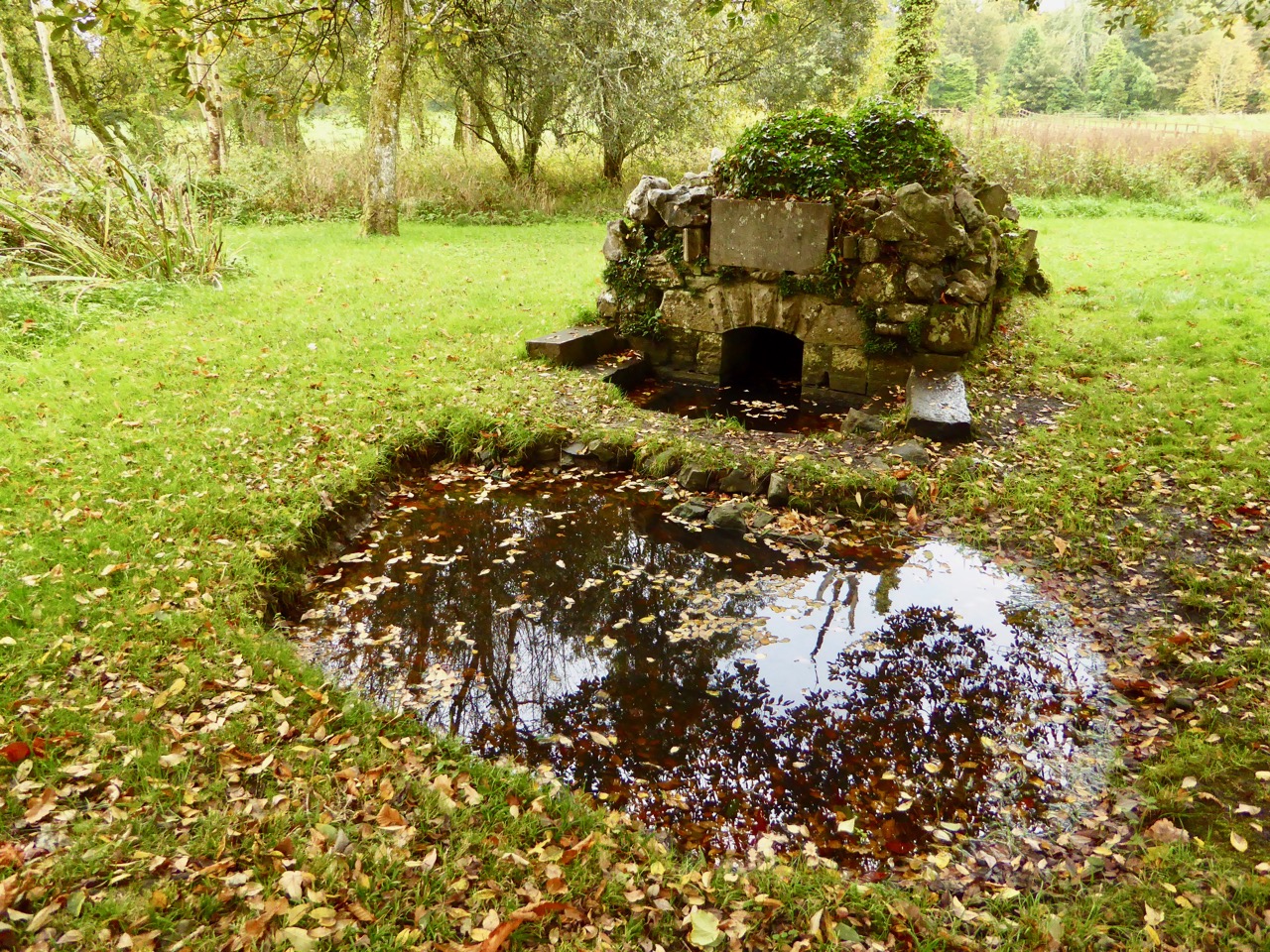
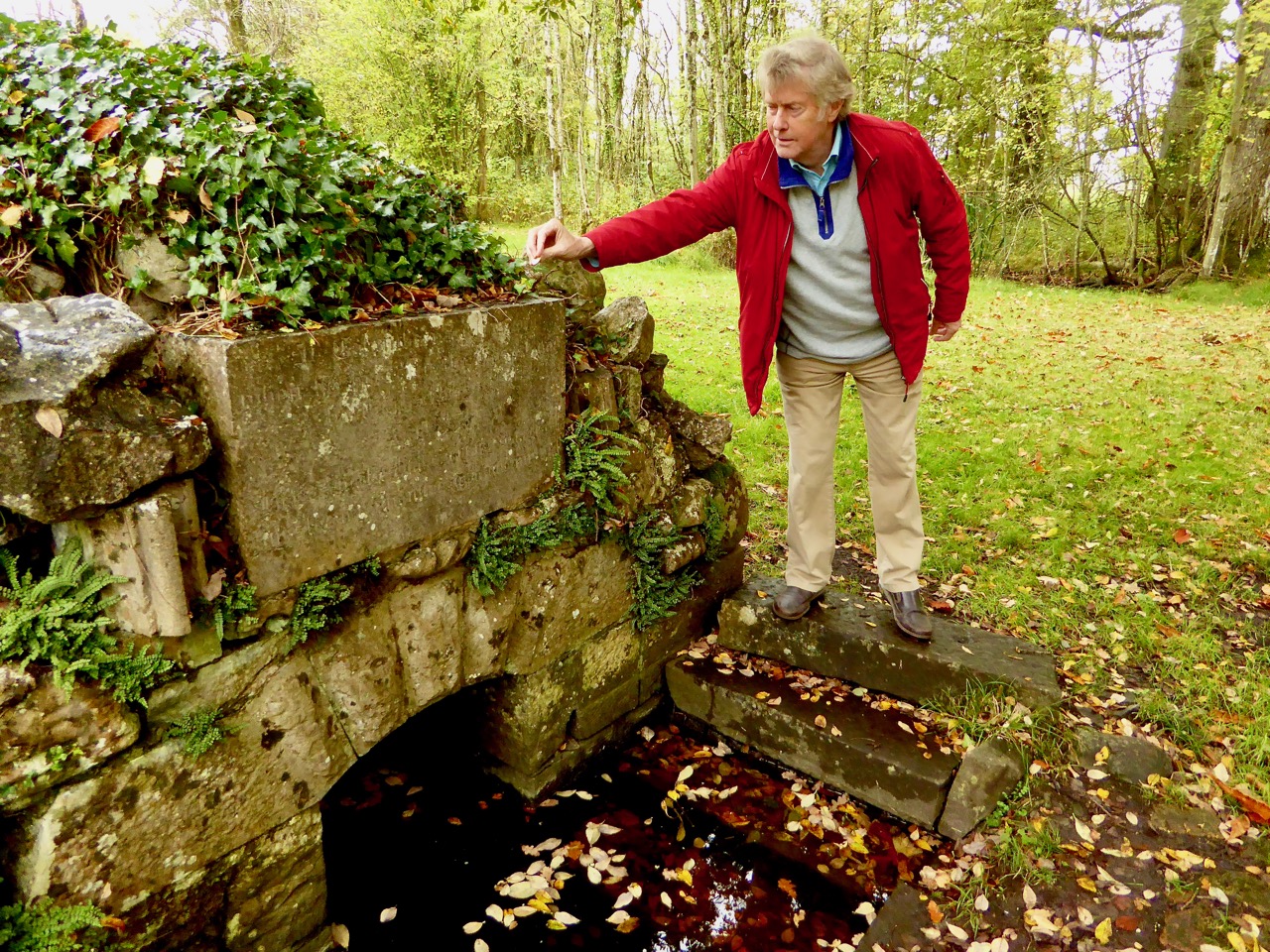
A walk to the well is rewarding, as the structure itself is in reasonable condition and quite ornate. It is still visited on St Colmcille’s feast day, June 9, when a procession arrives on foot from the Catholic Church in Durrow. We couldn’t complete our visit to the Saint’s special places without leaving an offering!


Journey into Purgatory

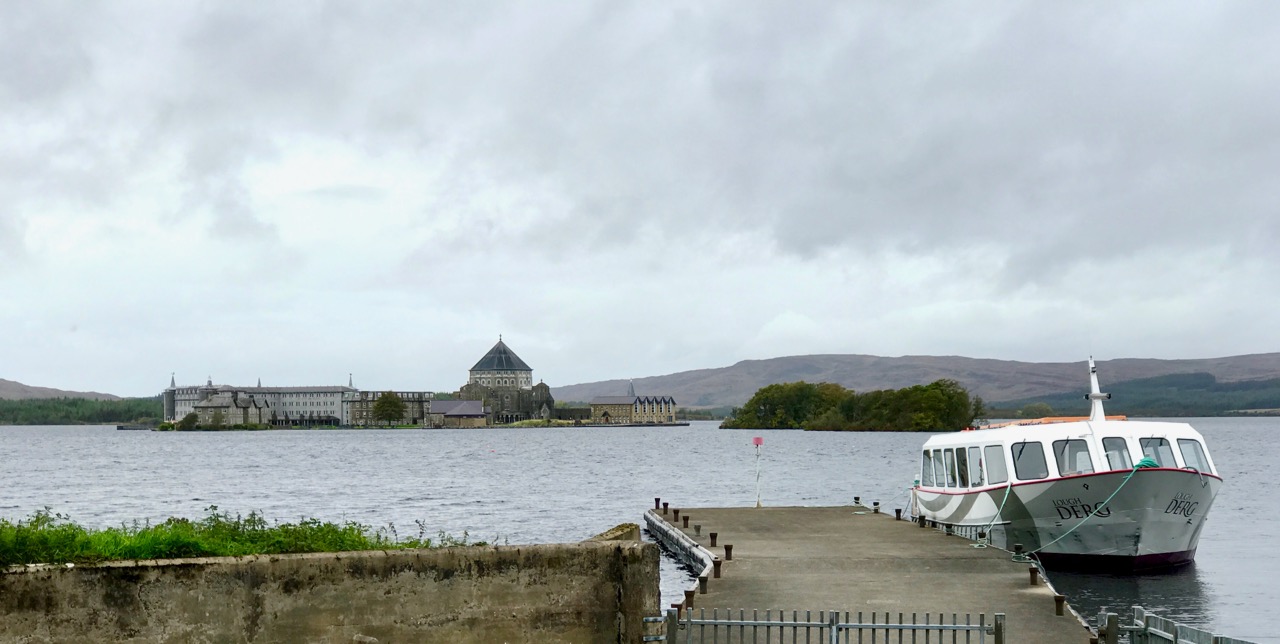
I was excited to be travelling to one of Ireland’s oldest – and most important – pilgrimage sites. Finola studies stained glass windows and their artists, and she knew that some particularly impressive Harry Clarke windows can be seen in the Basilica on Station Island, Lough Derg, in County Donegal. The roof of the Basilica, completed in 1931, towers over the island in the picture above, taken from the quay at Ballymacavany. Finola obtained special permission for us to visit the island to view and photograph the windows, after the main pilgrimage season was over: her account of them will appear in Roaringwater Journal in the near future.

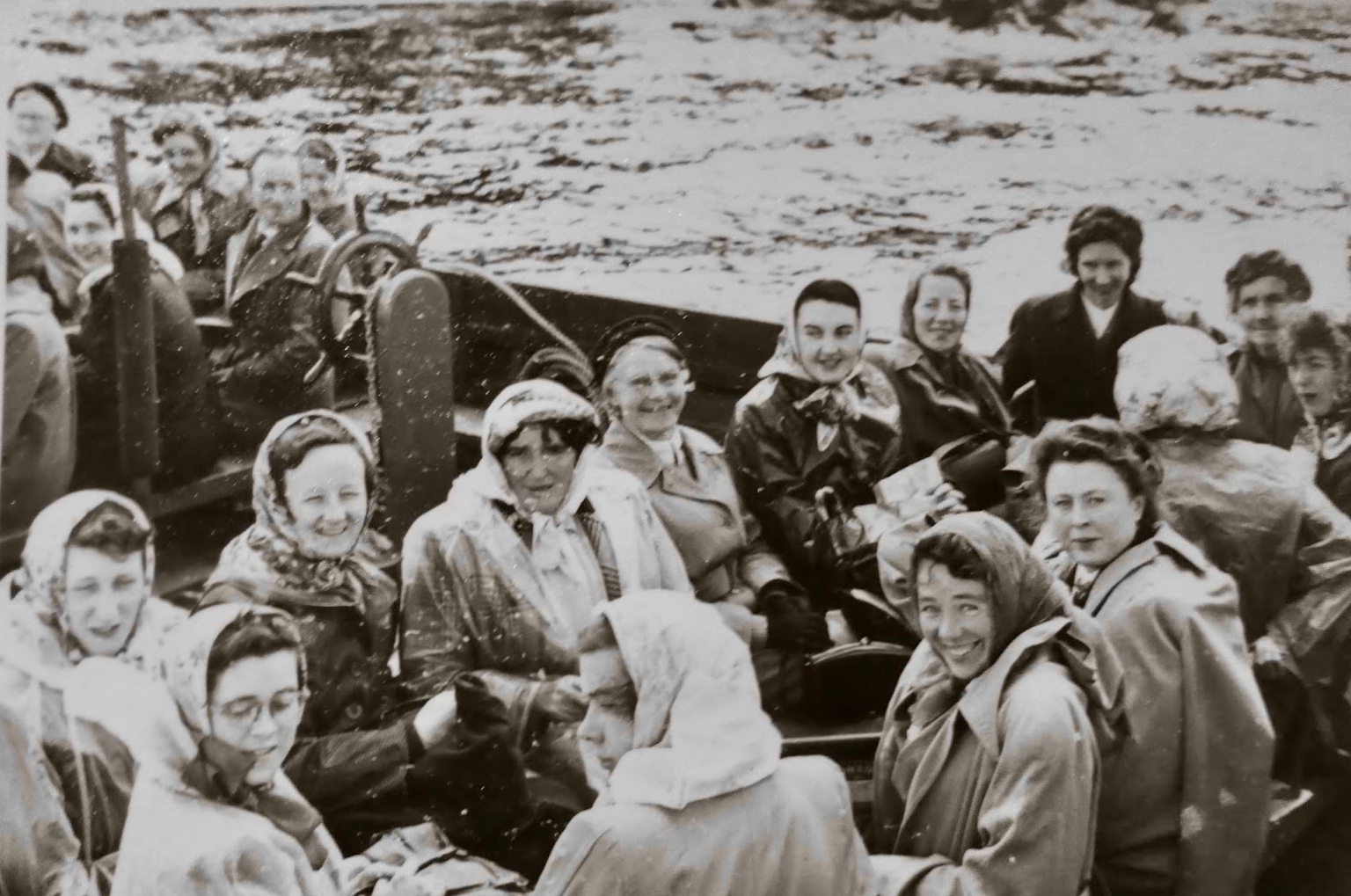
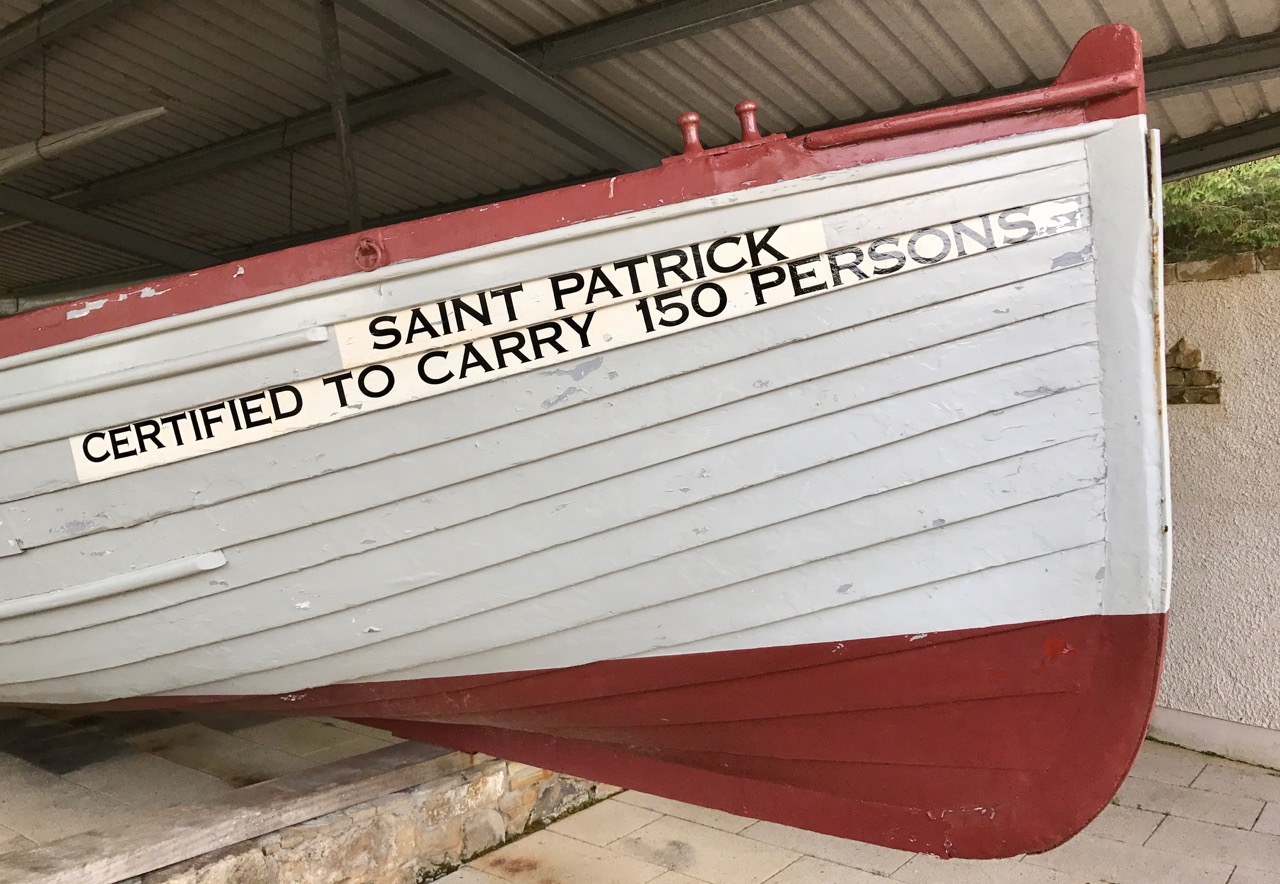
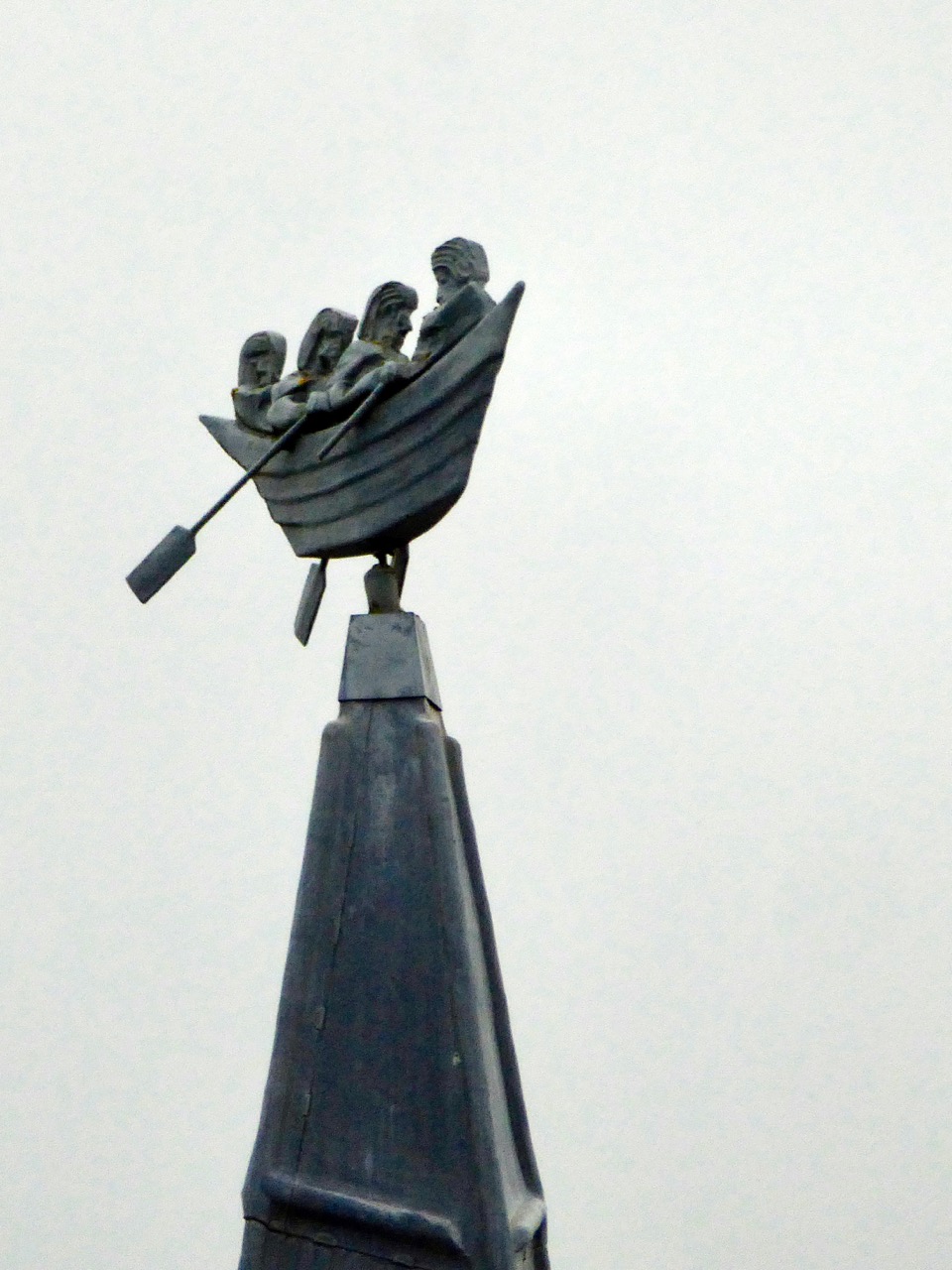
It’s salutary to learn how many people and families we know have taken part in the pilgrimage at Station Island. It’s a particularly austere experience, involving a three day cycle of prayer and liturgies, bare-footed and with very little food or sleep. Finola’s father undertook the pilgrimage in the 1950s: the photograph above was taken at around that time, when pilgrims were ferried over in large open boats once rowed by eight oarsmen and subsequently motorised. One of these historic boats is kept on display at Ballymacavany (below). Nowadays the journey is made in a modern covered launch, as seen in the header photo.

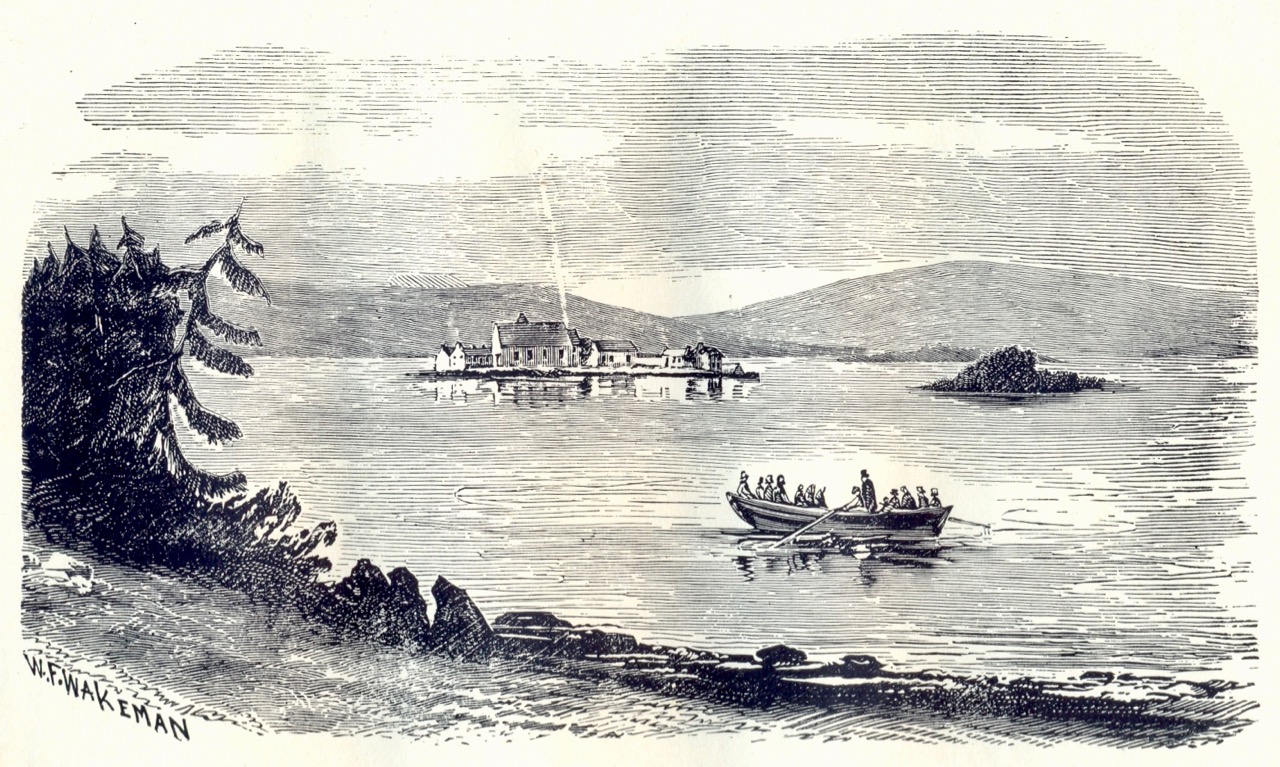
Records of the number of pilgrims who travelled to Station Island have only existed in comparatively recent times. The peak seems to have been just prior to the famine around 1846, when over 30,000 went there in one season. The drawing above is by William Frederick Wakeman, who was a draughtsman with the Ordnance Survey of Ireland, and was probably made at that time. Through the twentieth century numbers seldom fell below 10,000 pilgrims each season, but in many years was considerably more. This news item from the RTE Archives demonstrates the strength of the pilgrimage in the year 2000.

The island’s long history takes us back to the time of St Patrick. Despairing at the arduousness of persuading the Irish people to accept his Christian teachings he appealed to God to help. The story is admirably recounted by Dr Peter Harbison, Honorary Academic Editor in the Royal Irish Academy:

…St Patrick … was having difficulty convincing the pagan Irish of the 5th century of the truth of his teaching about heaven and hell; they were not prepared to believe him unless one of them had experienced it for themselves. To assist Patrick in his mission … Christ showed Patrick a dark pit in a deserted place and told him that whoever would enter the pit for a day and a night would be purged of his sins for the rest of his life. In the course of those twenty four hours, he would experience both the torments of the wicked and the delights of the blessed. St Patrick immediately had a church built, which he handed over to the Augustinian canons (who did not come to Ireland until the 12th century), locked the entrance to the pit and entrusted the key to the canons, so that no one would enter rashly without permission. Already during the lifetime of St Patrick a number of Irish entered the pit and were converted as a result of what they had seen. Thus the pit got the name of St Patrick’s Purgatory…

(from Pilgrimage in Ireland: the Monuments and the People by Peter Harbison, Barrie & Jenkins, 1991)

The entrance to this cave is on Station Island, and is the reason for the enduring popularity of the pilgrimage, which has persisted there for over 1500 years. In the medieval illustrations above, the gateway into Purgatory can be seen on the right, while on the left is a knight – Owein – whose terrifying adventures in the cave in medieval times have been written about in many languages: a summary can be found here.

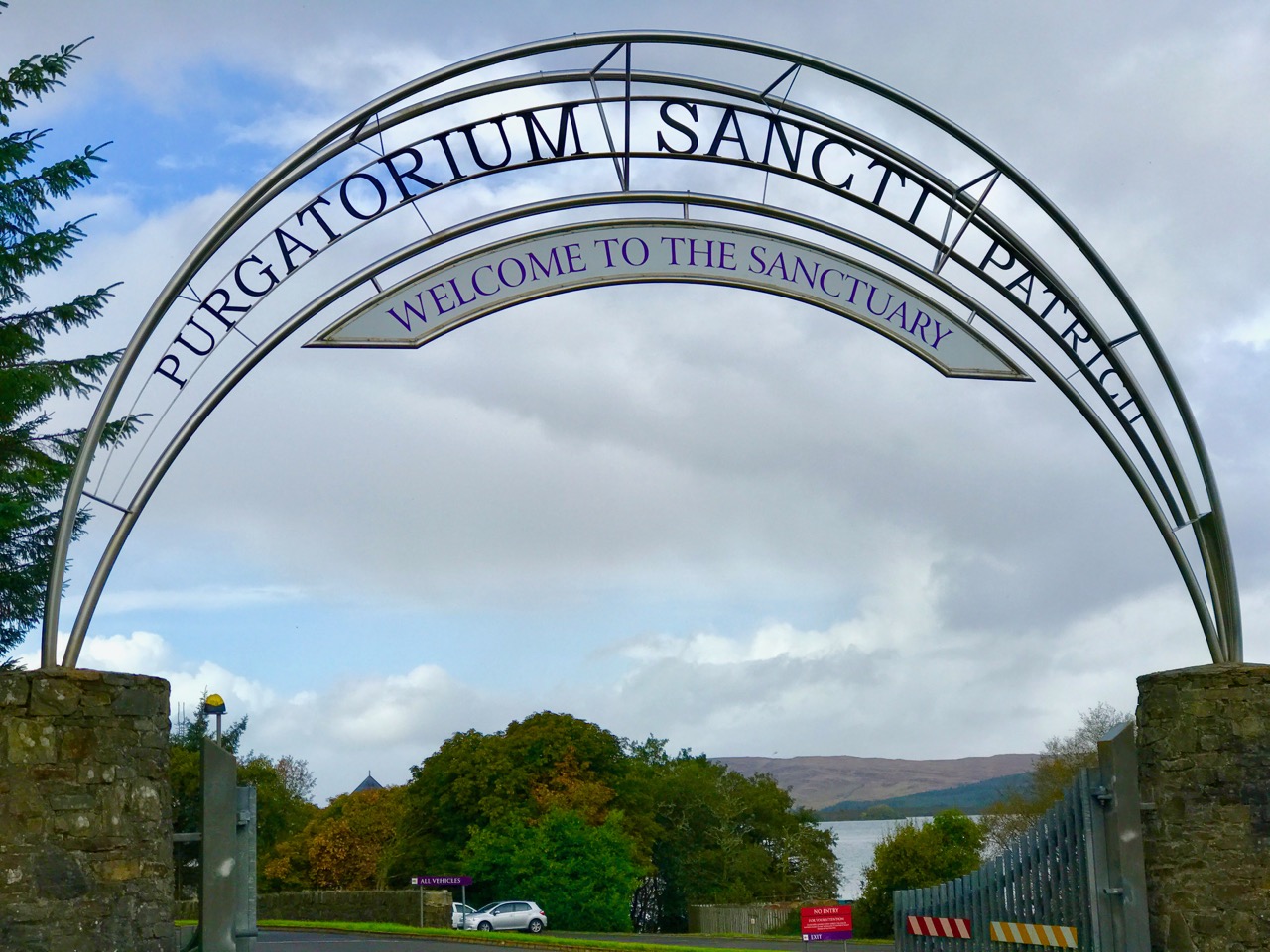
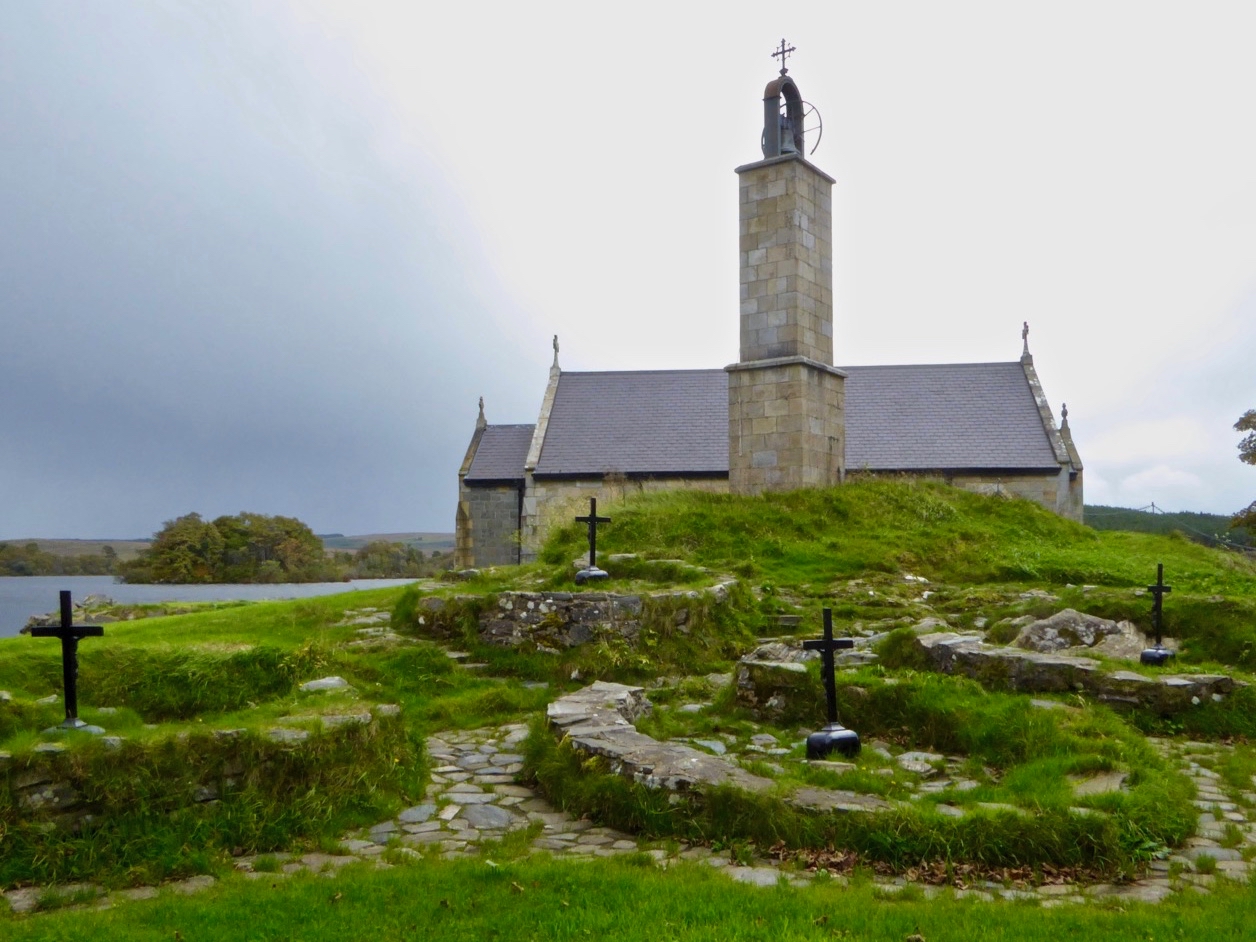
St Patrick’s Purgatory: the name is over the entrance at the reception centre at Ballymacavany, the point of departure for Station Island. The cave which marks the entrance into Purgatory was permanently sealed up in October 1632 when the pilgrimage was suppressed by order of the Privy Council for Ireland; in the same year the Anglican Bishop of Clogher, James Spottiswoode, personally supervised the destruction of everything on the island. Later, in 1704, an Act of Parliament imposed a fine of 10 shillings or a public whipping …as a penalty for going to such places of pilgrimage… The site of the cave entrance lies under the bell tower, seen above. In front are the penitential beds where pilgrims perform rounds to this day. It is thought that these formations are the remains of monks’ cells or ‘beehive huts’.

On the left is a map of Station Island by Thomas Carve, dated 1666. The words Caverna Purgatory, centre left, show the site of the cave entrance. In spite of the efforts of the Penal Laws to suppress the observances, pilgrimages have continued unabated. Above right is a photograph from the Lawrence Collection, dated 1903, showing pilgrims about to embark for the island.

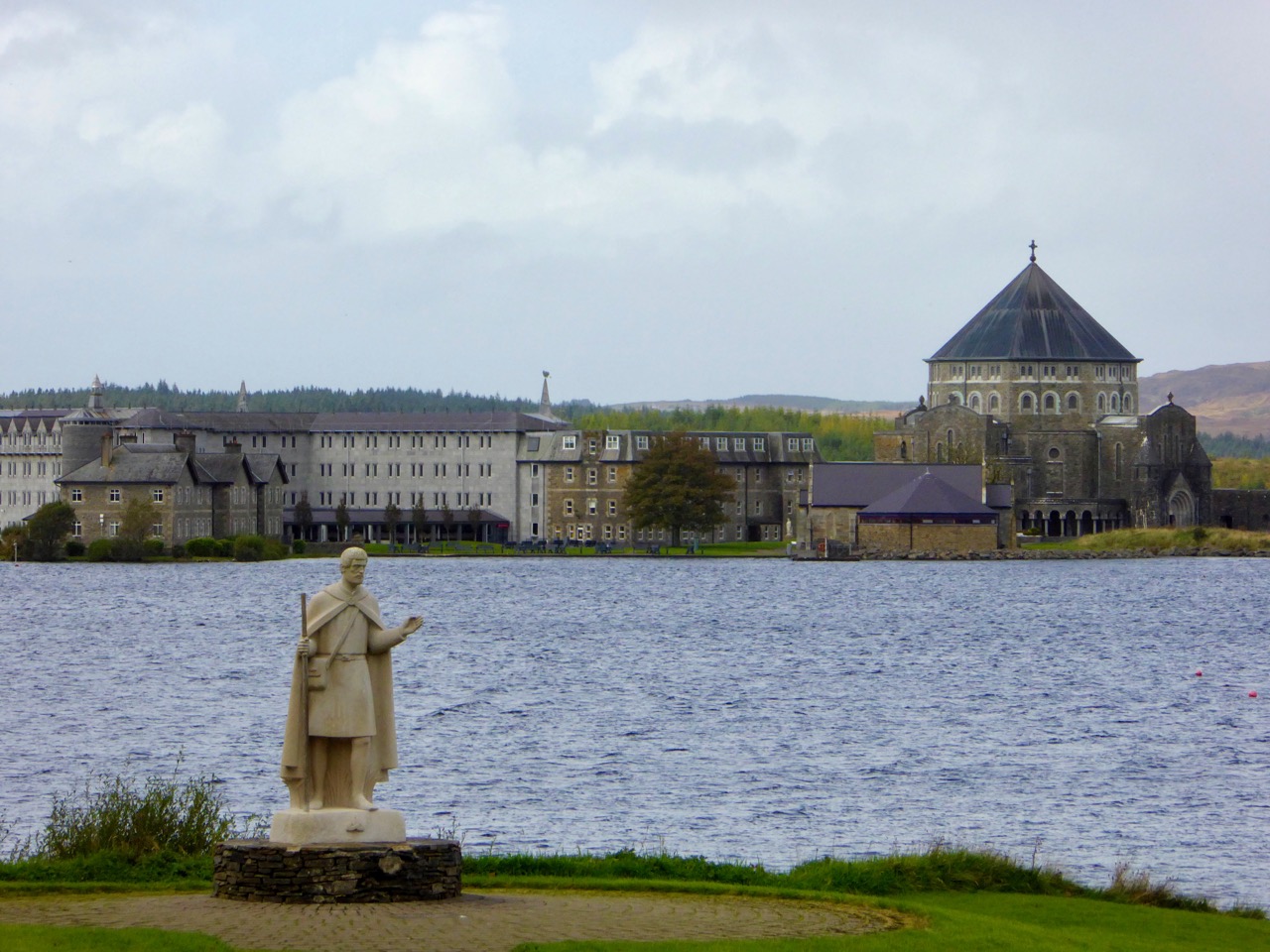
A young St Patrick portrayed as a pilgrim stands in front of the island: the Basilica is on the right. This view indicates the huge development  of the island since its complete destruction in the 18th century and shows the facilities provided for the many thousands who have come here over the generations.

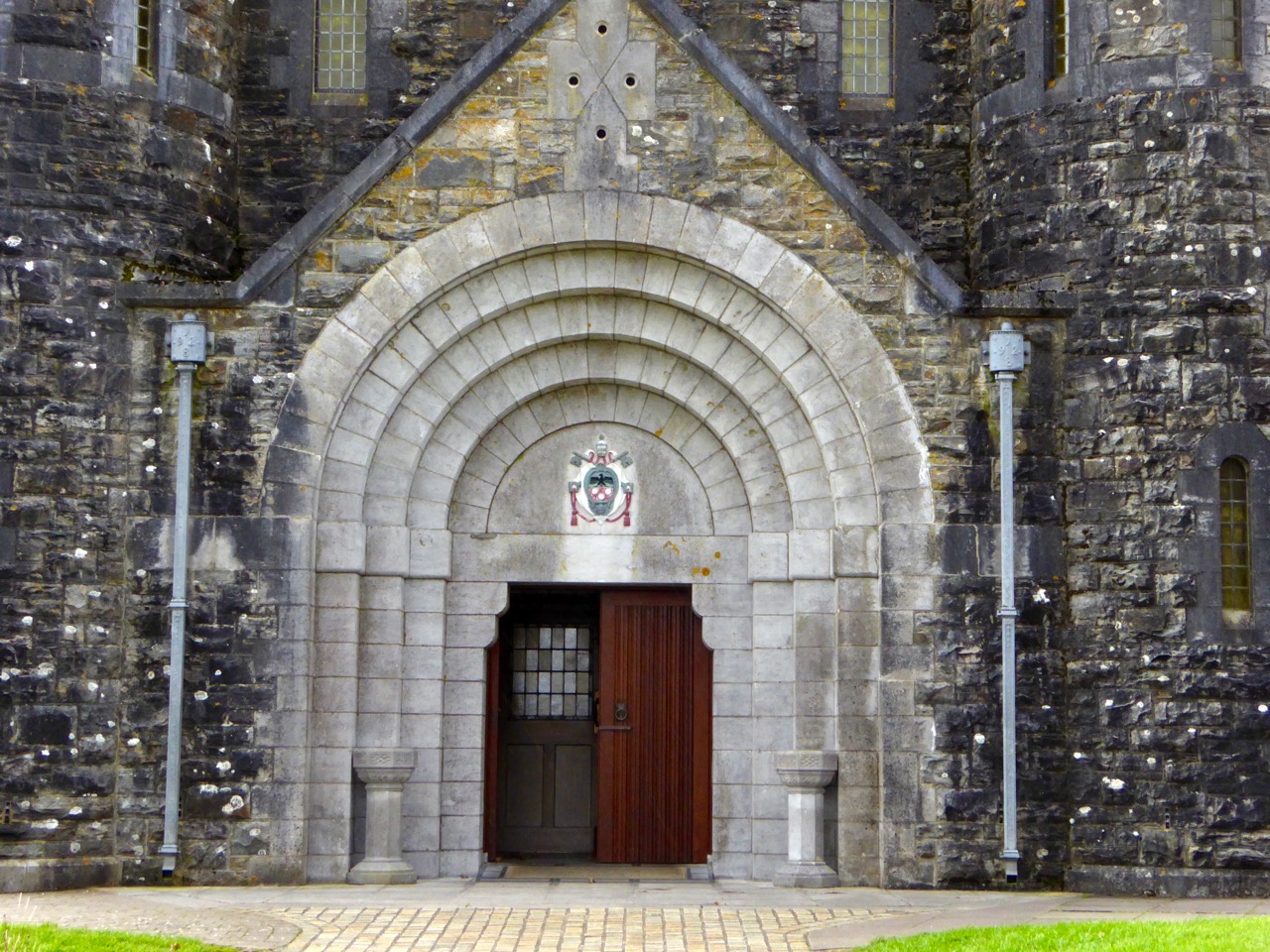
The Basilica is the focus of the pilgrimages today: it was formally consecrated in 1931. The entrance door is a modern interpretation of Romanesque architecture, while the tabernacle is an impressive example of fine bronze work.

Ireland’s great poets and writers have visited St Patrick’s Purgatory, and have responded to the experience:

Donnchadh Mór Ó Dálaigh (1244) “Chief in Ireland for poetry”:

Truagh mo thuras ar loch dearg
a Rí na gceall is na gclog
do chaoineadh do chneadh’s do
chréacht
‘s nach faghaim déar thar mo rosg.

(Sad is my pilgrimage to Lough Derg, O King of the cells and bells; I came to mourn your sufferings and wounds, but no tear will cross my eye)

Patrick Kavanagh:

Lough Derg, St. Patrick’s Purgatory in Donegal,
Christendom’s purge. Heretical
Around the edges: the centre’s hard
As the commonplace of a flamboyant bard.
The twentieth century blows across it now
But deeply it has kept an ancient vow.

W B Yeats:

Round Lough Derg’s holy island I went upon the stones,
I prayed at all the Stations upon my marrow-bones,
And there I found an old man beside me, nothing would he say
But fol de rol de rolly O.

Most impressive of all, perhaps, is Seamus Heaney whose moving contemplations took him back through his life experiences and produced twelve memorable poems in a volume entitled Station Island:

How well I know that fountain, filling, running,
although it is the night.
That eternal fountain, hidden away,
I know its haven and its secrecy
although it is the night.
But not its source because it does not have one,
which is all sources’ source and origin
although it is the night.
I know no sounding-line can find its bottom,
nobody ford or plumb its deepest fathom
although it is the night.
And its current so in flood it overspills
to water hell and heaven all peoples
although it is the night.
And the current that is generated there,
as far as it wills to, it can flow that far
although it is the night.

Finally, here’s a contemporary journalist’s view, well worth the read!


The Wonders of Monasterboice

In our recent journeys around Ireland we both had opportunities to indulge our particular interests. Among them, Finola was able to take in some fine examples of stained glass and Romanesque architecture, while I concentrated on the beautiful medieval carving of a number of Irish High Crosses, to add to the examples I have written about recently.

For any Irish High Cross enthusiasts (I suspect that there are many of you out there), Monasterboice in County Louth has to be on the list of ‘must see’ places. It was founded in the 5th century by Saint Buithe, a follower of St Patrick – the Irish Mainistir Bhuithe means Monastery of Buithe – and was an active and important Christian settlement through to the 12th century, when its importance was eclipsed by Mellifont. I found out that St Buithe ascended into Heaven by climbing a ladder that was lowered down to him for the purpose.

Left – a photograph of the great cross at Monasterboice – known as  Muiredach’s Cross – taken in 1905 and, right – the same west face seen today. Finola is there to show its true scale: remarkably it is 5.5m tall

Muiredach mac Domhnaill, who died in 923, was an Abbot at Monasterboice. He is  credited with commissioning the great cross, shown above. It’s not quite the tallest high cross in Ireland, but it’s said to be the finest, probably because of its stature and remarkable state of preservation. The carved panels are all legible, and the biblical stories illustrated have all been identified. An inscription on the lower section of the cross shaft states: OR DU MUIREDACH LASNDERNAD IN CHROS – A prayer for Muiredach under whose auspices this cross was made. Confusingly there was also a king, Muiredach mac Cathail, who owned the lands on which the monastery was built. He died around 867, so it is possible that the cross was commissioned by him, or was made in commemoration of him, rather than by the Abbot.

The Office of Public Works has responsibility for overseeing the site at Monasterboice. The well produced information panel details the carvings on Muiredach’s Cross

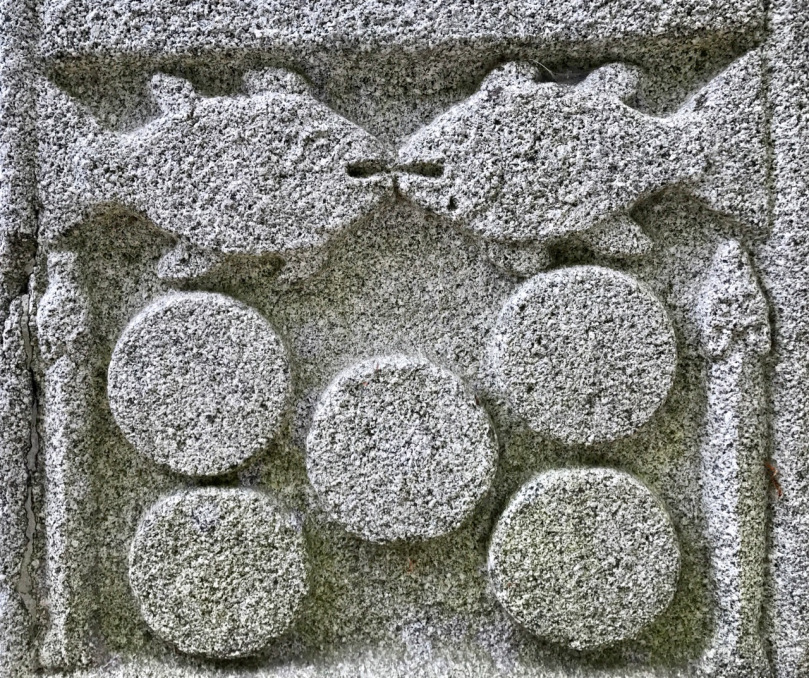
A gallery of detailed carving work from Muiredach’s great cross: the subjects include Adam and Eve and Cain and Abel; Celtic knotwork; Moses striking the rock; the crucifixion and (header) nativity scene with the Magi. The lowest picture, above, shows the decorated base, which is shaped like a saint’s reliquary and the panel with two cats and the prayer for Muiredach

This wealth of medieval art is only part of the site’s wonders. There are two more complete High Crosses, fragments of other carvings and slabs, and a round tower. The Tall Cross or West Cross is the highest in Ireland, at nearly 7 metres. Because of its size it has the greatest number of carved panels of any Irish High Cross. However, these panels are suffering from weathering much more than Muiredach’s Cross, and their present state must raise concerns for all the carvings at Monasterboice. At other sites, crosses have been sheltered (Moone) or moved into buildings (Clonmacnoise, Durrow).

The Tall Cross (or West Cross) at Monasterboice; left – in context with the round tower beyond; right – an example of a badly weathered panel on the Tall Cross

Upper – the west face of the Tall Cross cross-wheel, which is in comparatively good condition, and lower – the east face. The number of scenes depicted on these panels alone is remarkable

Carved panels on the Tall Cross at Monasterboice and – lower – a study of Celtic knotwork found on Irish High Crosses, taken from MUIREDACH – Abbot of Monasterboice 890-923 AD by R A S McAlister MA FSA, Dublin 1914

There is a third High Cross at Monasterboice, known as the North Cross. It is less spectacular, perhaps, than the large ones, and the carvings are comparatively minimal. Nevertheless, its modesty gives it a somewhat more refined character. Close to the North Cross are some fragments, including part of a medieval sundial – reminiscent of the one we saw at Kilmalkedar, County Kerry, earlier this year.

Upper – the North Cross with the round tower in the background; lower left – North Cross east face and, lower right – nearby fragment of a medieval sundial

Monasterboice displays so many wonders. Yet, in some ways, it’s an uneasy site. It’s probably not helpful – but perhaps essential – that the parking area a little way off is rife with warnings about thieves, and broken glass is evident. There have also been reports of vandalism against the monuments themselves – emphasising their vulnerability. The place is of major importance: during the summer season the site is attended, and guides are available. We were there in early October, when no-one was around.

This site – and similar ones all across Ireland – are vitally important to the heritage of this country. The artefacts are irreplaceable, yet too little resource is given to protecting them – from weather and people. As we know from our forays into the world of Prehistoric Rock Art, stone carvings are fragile, and under-appreciated. There’s no obvious easy solution, apart from them being given higher status and priority by the empowered bodies such as the Office of Public Works. They, in turn, need to be given more support by the State, particularly in terms of funding: they do the best they can with very limited resources.

Cats on the base of Muiredach’s Cross, recorded  by McAlister in 1914: