Images

looking out

Images: we take them so much for granted, because it’s easy for us to go out with a camera or phone and capture a place, an event or our friends and family. I’m sure we have now all got hard disks, memory sticks or ‘clouds’ full of hundreds of pictures – perhaps far too many for us to appreciate individually.

sheep may safely graze

Here are some images of Ireland, both old and new. The old ones are taken from the collection of Tomás Ó Muircheartaigh, who documented life in rural Ireland between the 1930s and the 1950s – that’s between sixty and eighty-something years ago. I was fortunate enough to pick up a copy of his book of photographs when it first came out: now it’s ‘rare as hen’s teeth’*… The new ones are taken locally by my favourite contemporary photographer – Finola.

nuns walking

The thing about a photograph is that you know it is an actual moment, a fraction of time, which has been captured and held forever. A painting is not the same – it can be very beautiful and emotional, but it is always a fantasy: it’s the artist that has made it live in the way that she or he chooses. Ó Muircheartaigh’s photographs affect me emotionally: they depict places and, more importantly, people that were once real – living landscapes, personalities… There’s a lot of nostalgia surrounding them because they show us the world – Ireland – as we want to think of it: halcyon, idyllically happy, peaceful, carefree. All the photos in Ó Muircheartaigh’s book picture this blissful state: that’s because he saw rural Ireland in that light, or because he wanted his audience to view it that way. In his work we never see hardship, rural deprivation, illness or pain – and we are completely unaware that there could be a terrible world war raging just over the waters.
Goleen

P1010179

Precious moments: how special that through the expert wielding of a camera lens Tomás Ó Muircheartaigh could use a negative to create a positive world! We can still do that: Finola’s photographs capture, digitally (and beautifully), a different world – our own modern Ireland – but also record the essence and enduring appeal of this place which we are pleased to call home. It’s all about the focus…

4 men 3

Not many of Tomás Ó Muircheartaigh’s photographs carry captions to indicate where they were taken. We know his travels encompassed the west coast, particularly the Aran Islands, Kerry, Galway and Mayo. We don’t know exactly where these three views are from (anyone who does, please comment) but it’s interesting that the wonderful portrait of four drinkers, above, has been turned into a painting now hanging on the walls of Levis’ Corner Bar – one of our local hostelries – in Ballydehob! Finola’s photos are all taken on our own Mizen Peninsula
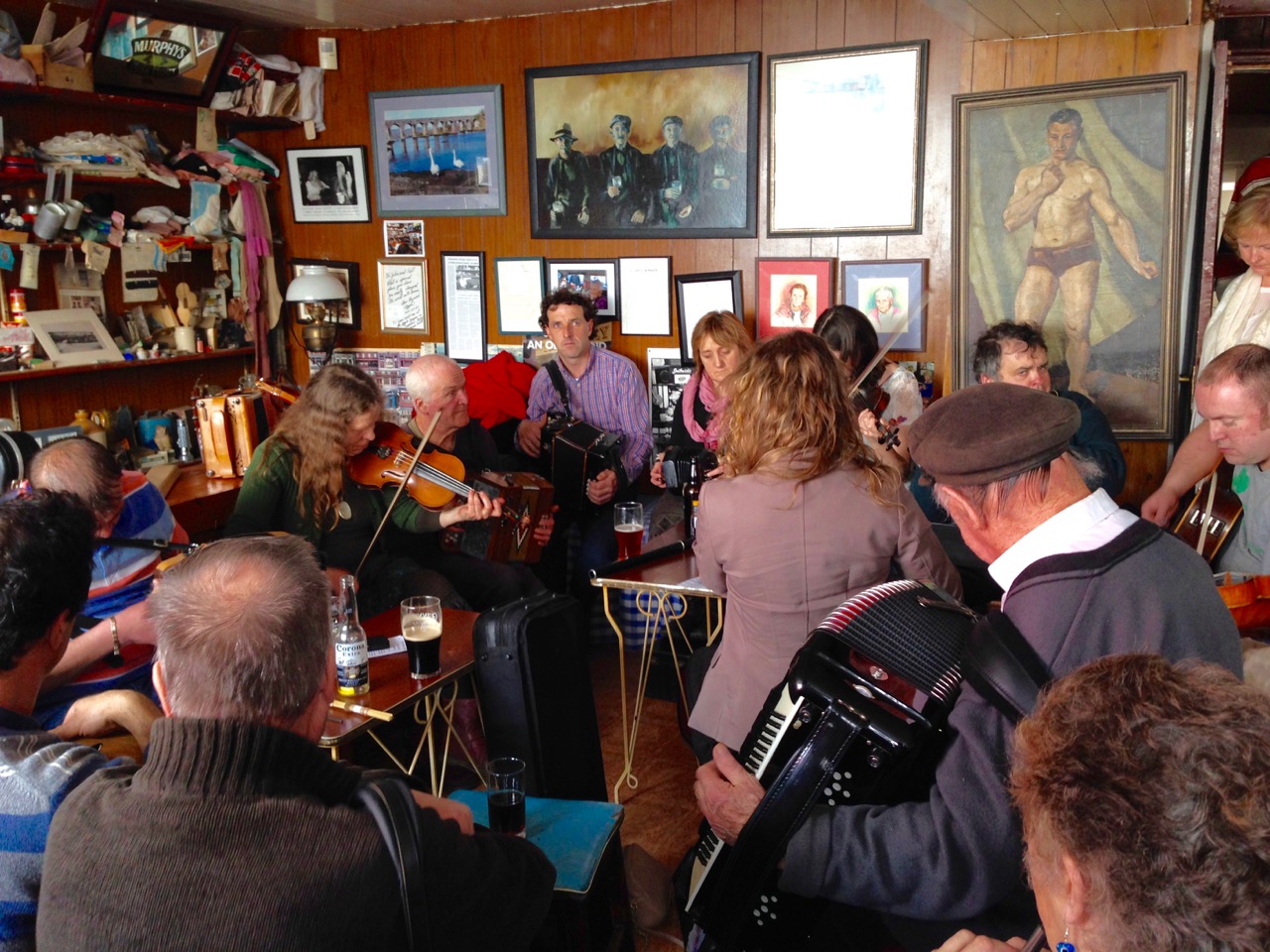
Session, Levis's of Ballydehob

*Birds did once have teeth – up until about 80 million years ago. Occasionally today, but very rarely, a ‘throwback’ bird is hatched with teeth!

All the Trimmings

Near Dunmanway

In my two previous posts on our wonderful West Cork colourful houses, A Lick of Paint and An Extra Lick of Paint, I’ve concentrated on overall house colour and on how that colour stands out in the landscape or the streetscape. Since that second post was written, in March, two of the most colourful houses I photographed have been re-painted, both in shades of khaki. Am I chronicling an endangered species? I hope not!

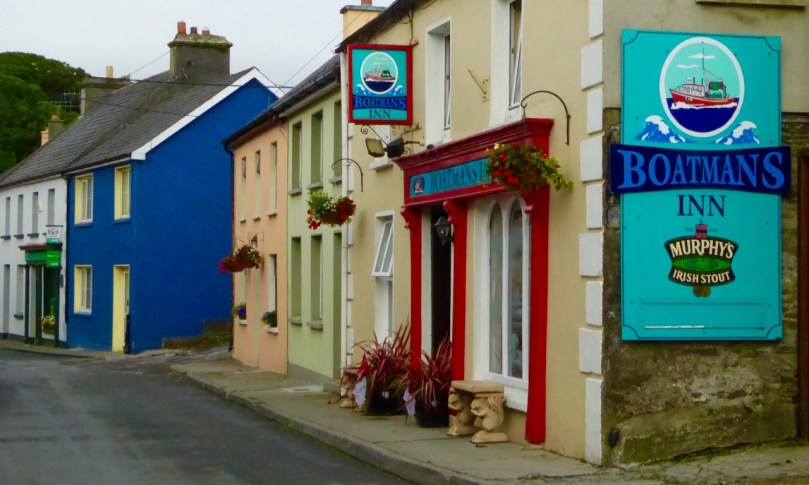
Boatmans

So in the spirit of celebrating our colourful tradition, I am devoting a post to the trim choices – the window surrounds, the doors and the chimneys, the shop fronts – that add to the vibrancy and delight of our neighbourhoods, villages and countryside.

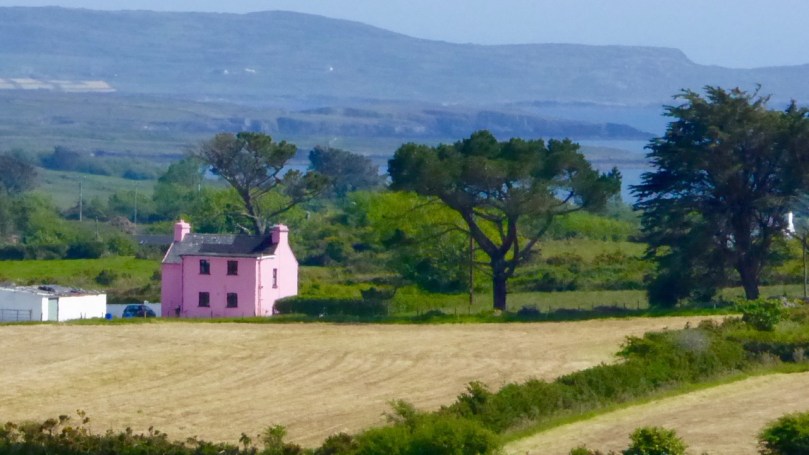
VERY VERY PINK

The most common trim choice is white and often that seems the only, or perfect, choice. Or perhaps the safest. It certainly provides a lively contrast to a bold colour.

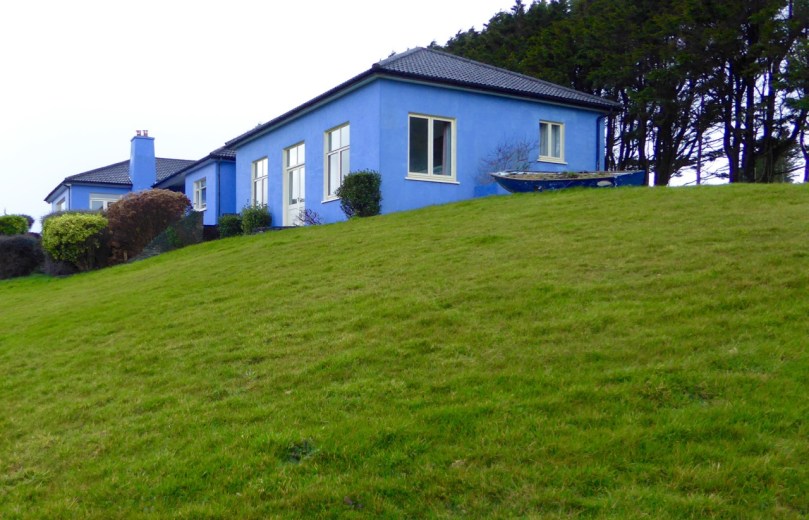
Marine blue

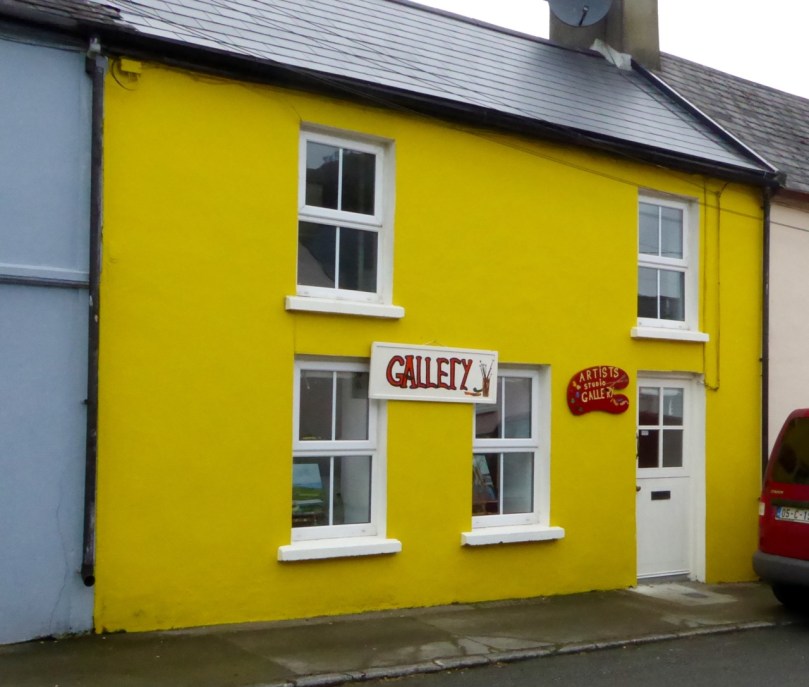
Orange you glad to see me?Gallery, Union HallWhite and bold-colour contrast can also look charming the other way around – white walls and colourful trim.

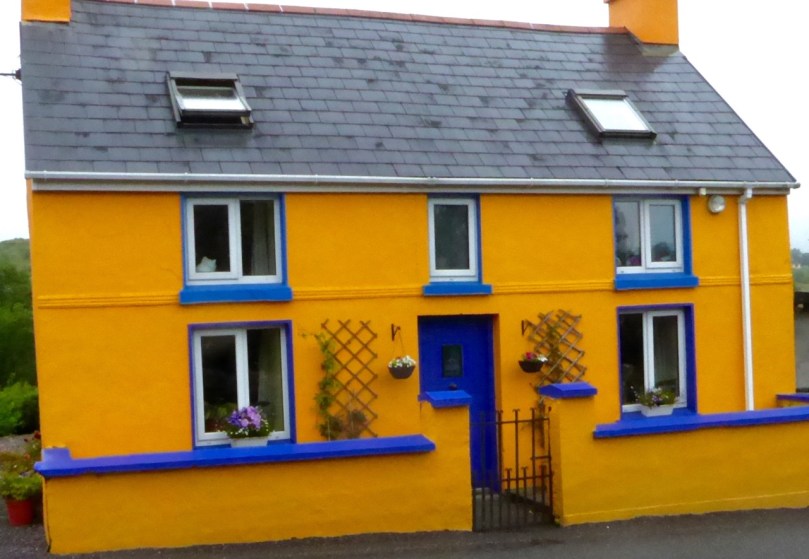
However, the juxtaposition of two bold colours, or even three, for walls and trim is irresistible.

Purple on Mustard

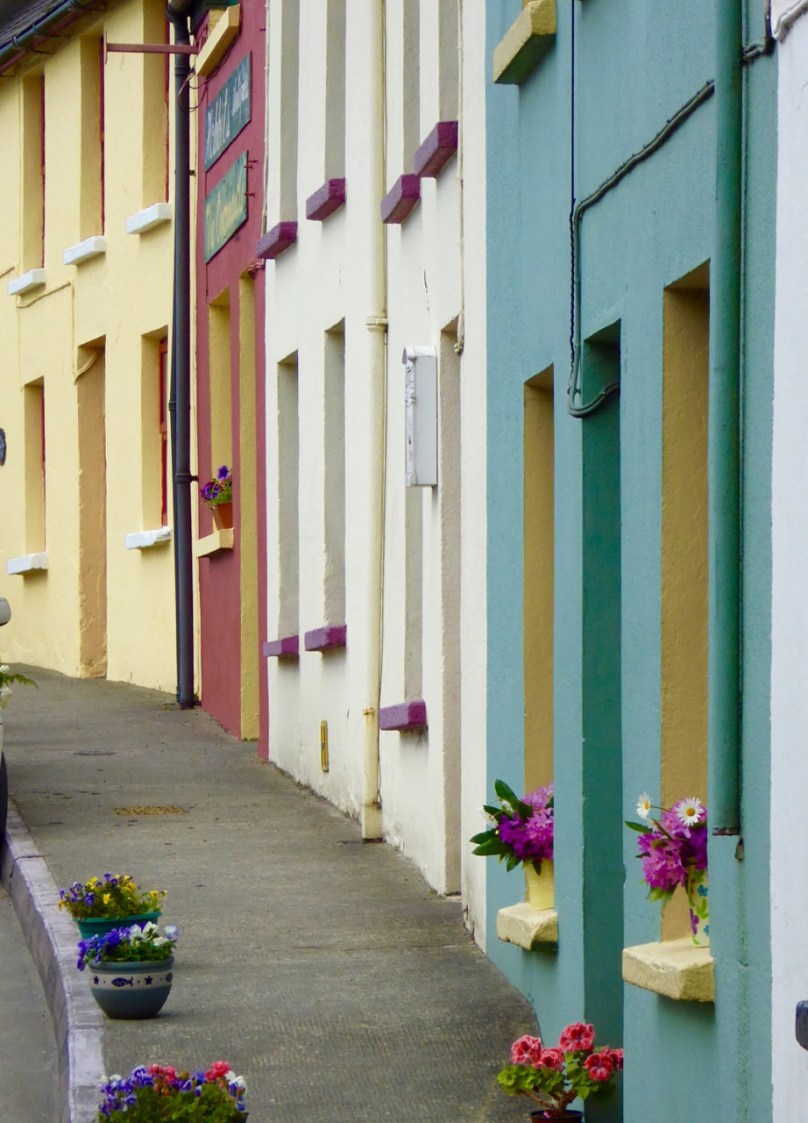
Windows are a natural focus for colour. Sometimes the frame and the surround is painted the same colour and sometimes two colours are employed, both contrasting with the wall colour.

Ballydehob windowsills

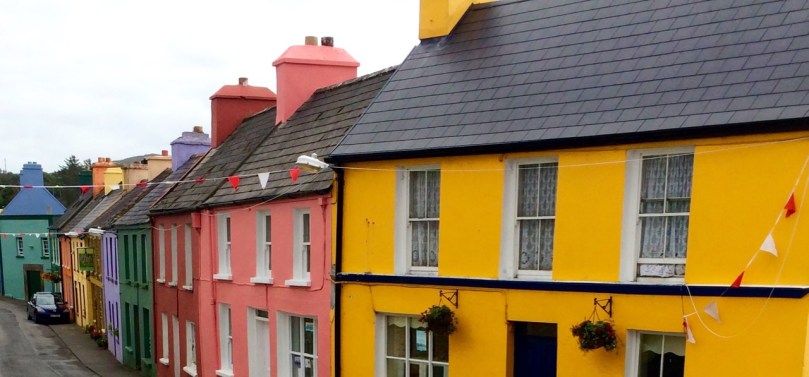
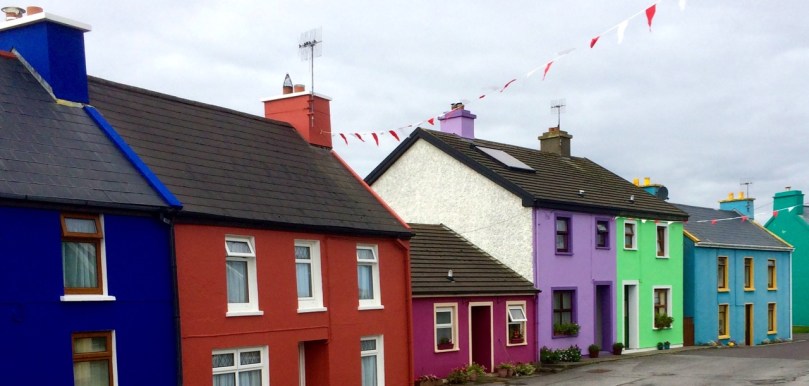
A local tradition seems to be to paint the chimneys the same colour as the walls, although occasionally the trim colour is used instead. I particularly like the chimneys in Eyries on the Beara Peninsula. Note the jaunty use of the trim colour on the chimney pots, on the second-to-last house in the lower photograph.

Eyeries Chimneys

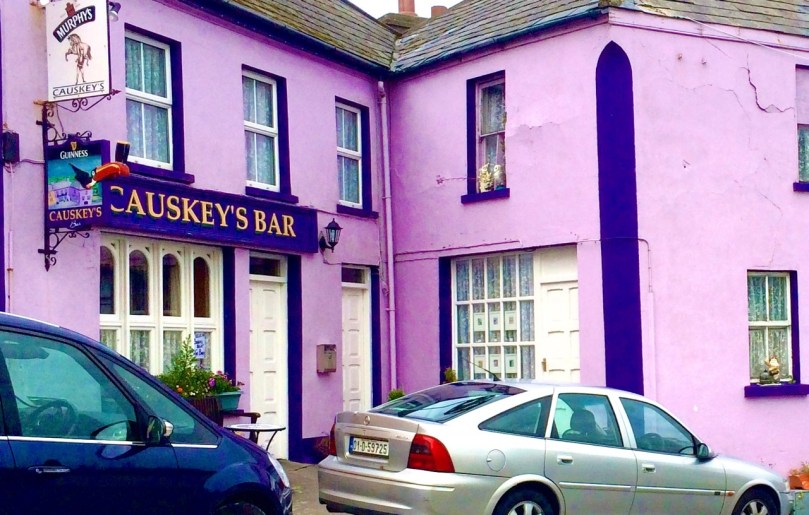
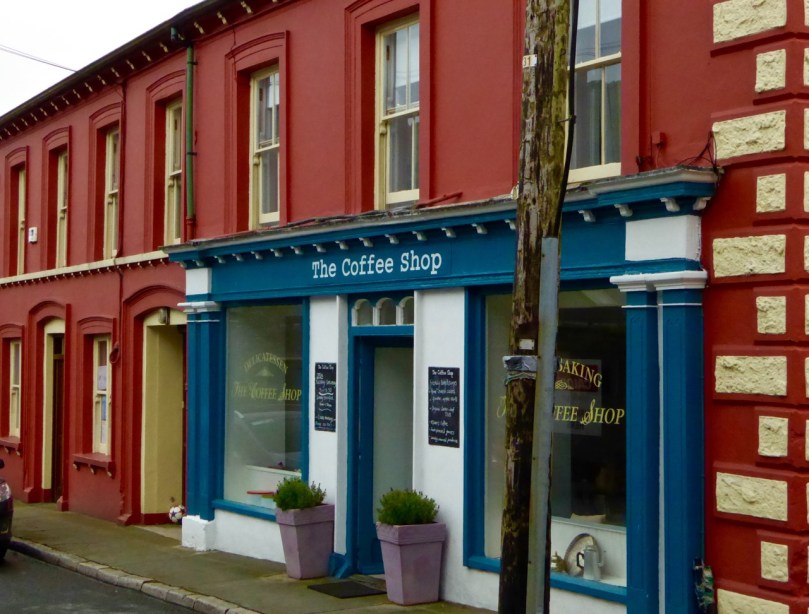
chimney trimMany traditional village or town commercial buildings here are masonry, with the shop-fronts in painted wood. A few examples here – although traditional shop-fronts deserve a post to themselves at some point. I also include cafés, restaurants and pubs in this category.

Causkey's

The Coffee Shop Union Hall

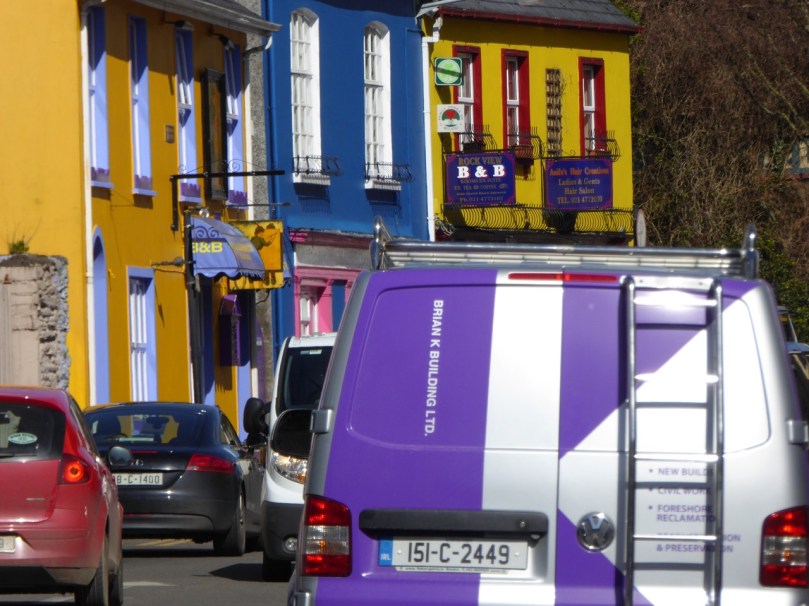
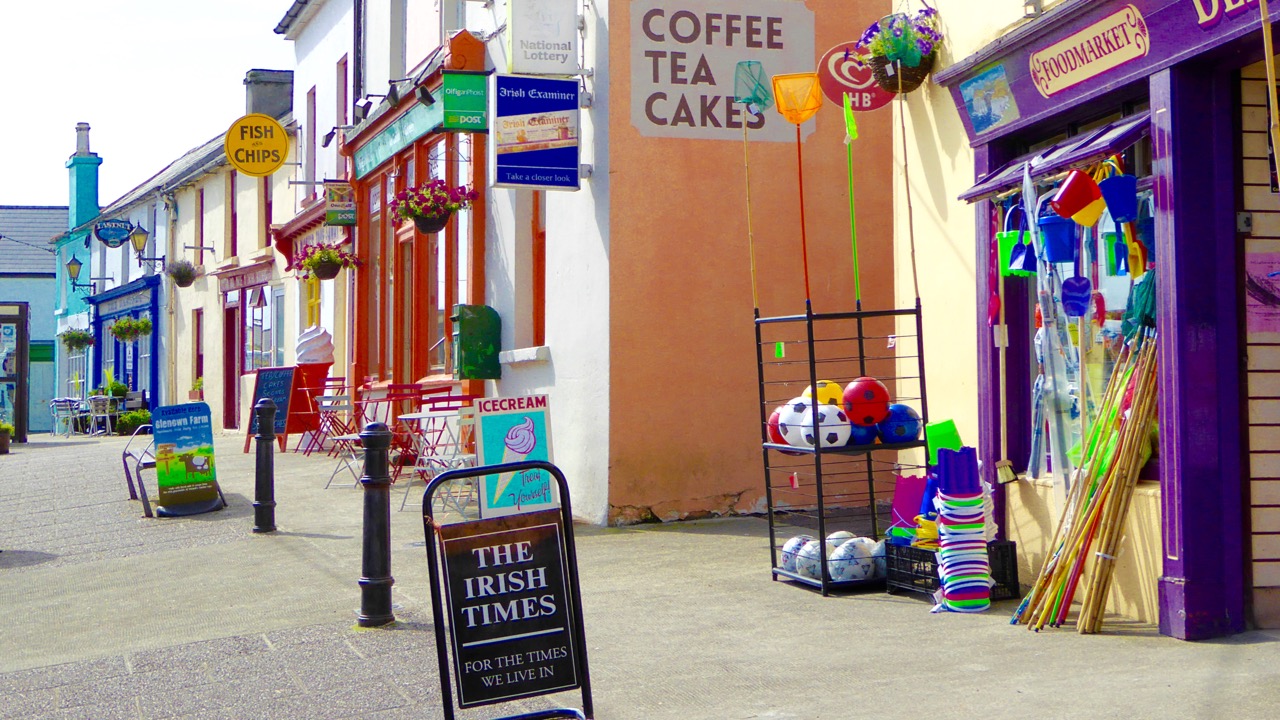
Kinsale is a cornucopia of colour! Herewith just a few examples of what you’ll find if you wander its streets.

Van

Trim colour is often used to good effect on garden walls and gate posts in addition to the house. Here’s a fetching example from near Union Hall .

Swedish

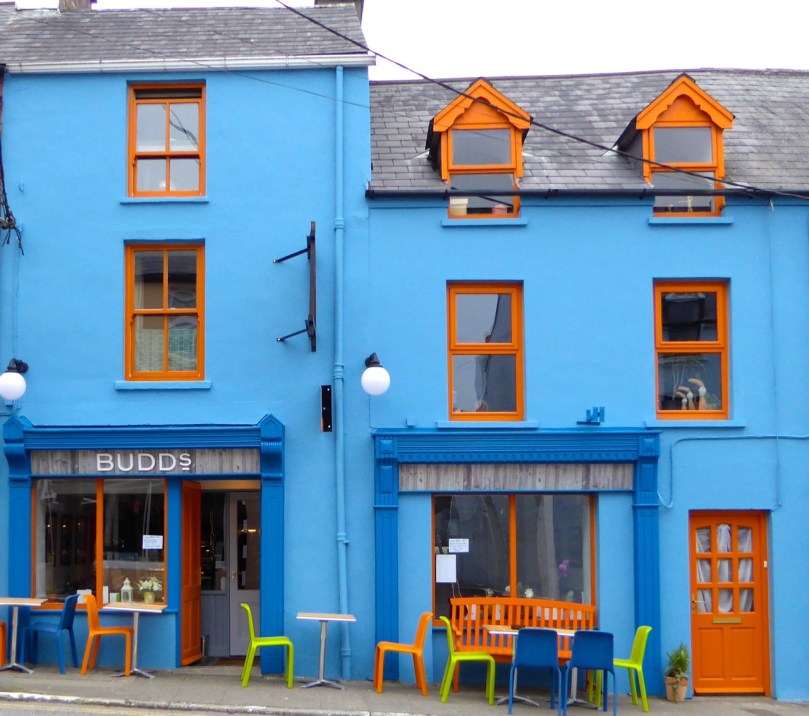
So – what do you think, Dear Reader? Do you have a favourite among these examples? Do you have any photos of your own to share? If so, comment below, or drop by our Facebook Page and vote for the one you like best. I will finish with one of my own current favourites and an exuberant addition to Ballydehob.

Budds