The Giant’s Ring

It’s not West Cork, but – if you are looking for an impressive archaeological site – take a little trip over the border into the North, as we did very recently. Just outside Belfast City we found The Giant’s Ring. The size of it is astonishing – 180 metres in internal diameter, and covering an area of 2.8 hectares. And what we see today is only part of a cluster of monuments here.

This marked up location plan, produced by archaeologist Barrie Hartwell in 1998, shows the Giant’s Ring, and other sites nearby which have been discovered by aerial survey and crop marks. We can’t really know what the focus of the whole complex is. Guesses are made as to what its function might have been, based on similarities to other finds, but the size of this ‘Ring’ sets it apart from most other equivalent discoveries. If you want West of Ireland comparisons, then Drombeg Circle has a diameter of 9.3 metres; The Giant’s Ring, at 180m, is twenty times greater! Also, the Grange Stone Circle in Co Limerick – which appears very large to us (it’s the Republic’s largest) – has a diameter of ‘only’ 60 metres.

It’s hard to judge the scale from a photograph, but looking at the figure just visible at the right-hand edge of this view, above, helps to set the scene. The ‘small’ pile of stone that you can also see within the enclosure is, in fact, a monument in its own right, generally thought today to be the remains of a passage grave. Here’s a nearer view, followed by close-ups. The structure – a type which used to be called a ‘dolmen’ (and still is in some of the accounts of The Giant’s Ring) is quite substantial.

This passage grave is far less impressive than – say – Newgrange, but why would it be sited in this enormous ring – which resembles a ‘henge’? It is dwarfed by the huge circular bank. It is likely that the grave or tomb structure was covered by a mound. Here is an artist’s impression of the enclosure being used for a ritual purpose:

In 1995 archaeologist Barrie Hartwell provided the following commentary to this sketch:

. . . This conjectural reconstruction of the Giant’s Ring brings together a number of ideas. Here the Giant’s Ring stands on the southern edge of a plateau overlooking the fertile land of the Lagan Valley. The internal slope of the bank is lined with stones and the bank has a flat top on which people crowd to view the spectacle unfolding within. The passage grave, embedded in an earthen mound provides the focus of activity. The quarry ditch can be seen between the two. In the right foreground is a circular bank, first seen as a crop mark in an aerial photograph. This was excavated in 1991, when the remains of a stoney bank were found on the eastern side. The central area had been removed by quarrying to a depth of 3m and backfilled within the last two hundred years . . .

Prehistory of The Giant’s Ring & Ballynahatty Townland
Barrie Hartwell LISBURN.COM

Above is an image from Google Earth showing the context of the circular monument in its immediate surroundings. There is no sign in this image of the many nearby sites which have been identified close to the Ring (look again at Barrie Hartwell’s location plan), but archaeologists have been busy at this location in comparatively modern times. Hartwell summarised some of the excavations in an article for Archaeology Ireland Volume 5, No 4, Winter 1991. He reports a description of a ‘chamber’ that was described in 1855 by Robert MacAdam, editor of the Ulster Journal of Archaeology:

. . . On November 21st 1855, Robert MacAdam picked up the Belfast Newsletter in his office in the Soho Foundry in Belfast . . . His attention was caught by a paragraph in the paper announcing the ‘discovery of an ancient tomb on the farm of Mr David Bodel of Ballynehatty’. He immediately visited the spot, just six miles south of Belfast, with his friend Mr Getty, and found that the tomb was still largely intact and that most of the contents had been rescued by the farmer. Equally interesting was its position close to the great enigmatic banked enclosure of the Giant’s Ring on an isolated, undulating, upland block of land overlooking the River Lagan. They were impressed enough to return at the weekend with other members of the Belfast Natural History and Philosophical Society to record it properly . . .

Archaeology Ireland Volume 5 No 4 – Winter 1991

The above illustration accompanies the article. Note that this find appears to have been sited outside of the Giant’s Ring itself. Hartwell’s account continues:

. . . Their plan and description shows that this curious structure had been built in a paved, 1.5m deep, flat-bottomed pit and with a corbelled roof supported by a stone perimeter wall, five internal stone dividers and a central prop. The top of the roof was 0.5m below the ground surface and may have been covered with small stones to form a cairn. In two of the radial compartments so formed were found the remains of four ‘…urns, about twelve inches high by ten broad…’ each containing burnt bones. One of the urns had disintegrated, and two of them were later described as being large and rudely formed. One of these survives today as a Bronze Age Collared Urn. The fourth was a typical globular-shaped Carrowkeel Ware pot usually found in Neolithic passage tombs . . .

Archaeology Ireland Volume 5 No 4 – Winter 1991

I found a further reference to the discovery of this ‘chamber’ in the archives of the Belfast News, 1855:

Hartwell’s fascinating account describes other finds in the area, and reports how Bodel – the farmer who owned the land – could remember stories of previous finds going back through generations of his family: a number of sites had been destroyed through agricultural clearance or ‘treasure hunting’. According to his memories these included a standing stone, another megalithic tomb, a multiple cist cairn, a number of single cist burials and two ‘cemeteries’ which produced many cart-loads of human bones. He also noted that similar sites had been found in his neighbours’ fields.

We can distil from these various stories that what we see today at this site was central to a very significant cultural hub, much of which is now lost. Hartwell suggests that some of the more recent excavations provide evidence that human activity here dates from 3039 to 2503 BC. His conclusion is significant:

. . . It is placed firmly in the late Neolithic rather than the Bronze Age. The closest parallel in Ireland is surely Newgrange. Indeed, the Bend in the Boyne and the ‘Loop in the Lagan’ invite close comparison. The scale of the monuments may vary but all the elements of a ceremonial landscape are there – passage tombs, henges, pit circles, flat cemeteries, and, of course, the river. Just as the river at its extremities defines a natural region, it mat also have defined a human territory with the ceremonial centre at its hub . . . Ancestral rights to territory were anchored by a thousand years of burial rites and the sanctity of the land shown by the continuum of ritual from the Neolithic to the Bronze Age . . .

Archaeology Ireland Volume 5 No 4 – Winter 1991
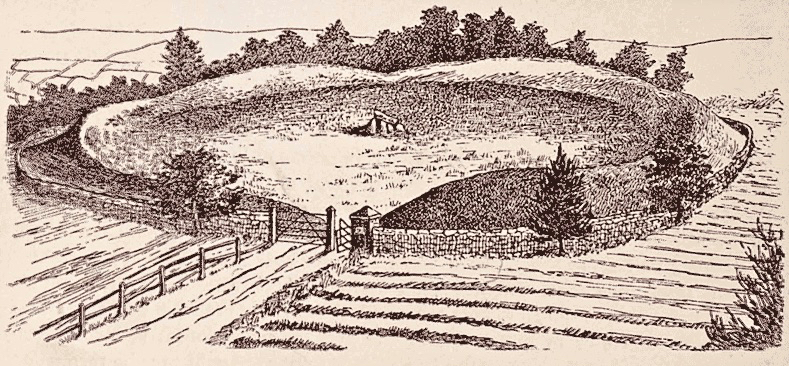
Former landowners of the estate on which this monument stands were the Dungannons of Belvoir House. In the mid nineteenth century Lord Dungannon built a protective wall around the Giant’s Ring (shown in the top sketch which reportedly dates from 1897). The plaque on the entrance gate (above) marks a visit to the site by Countess Dungannon, presumably to commemorate the completion of this wall.

The site has understandably attracted artists and photographers. The upper photo by R Welch dates from 1902 and the centre photo by S Kirker dates from 1905. The old postcard, above, is undated, but is remarkably similar in its viewpoint to the 1897 sketch – which one came first?

So there we have it: a very significant ceremonial site which has been compared in importance to Newgrange. What was it for? A burial place imbued with connections to an afterlife? We cannot know. But my own thoughts when looking at this vast circle is that in the present day we would call it an ‘arena’, and we might use it for sports, drama or processions. In fact I noted a report that stated it was used for horse-racing in the eighteenth century. A significant disappointment for me is that I have been unable to find any folklore or ‘stories’ about The Giant’s Ring. Northern Ireland does not share the equivalent of the Dúchas Folklore Collections which we have in Ireland, dating from the 1930s. There must have been tales told about it through the generations: I would be most interested to hear from anyone who can fill in this omission, please.

Looking Again at Simon Coleman

Back in May I put up a post celebrating our discovery of documentary artist Simon Coleman. There is plenty of material from Coleman that I didn’t use. Today, I’m showcasing more of his work: it’s invaluable to Irish folklore and folklife researchers. We have to be forever grateful to The Dúchas Collections, and their field-workers who spent so much time scouring the rural landscapes of Ireland and its inhabitants, and recording their findings in detail, preserving the rich memories of those times for our benefit.
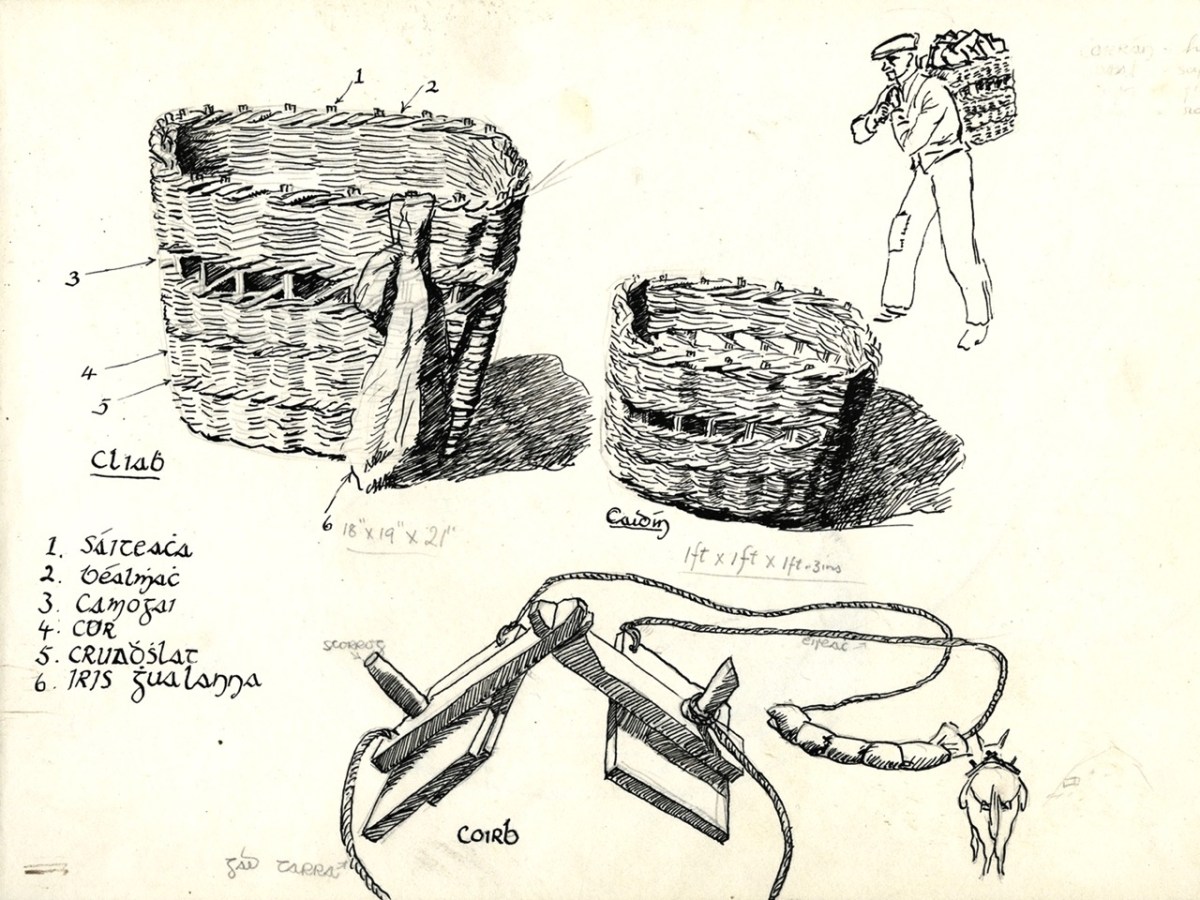
The header shows one of Coleman’s attractive watercolours which record the landscapes he traversed during his folklife researches. His sketch-pads, however, are filled with drawn details showing the basics of rural life, such as this one (above) recording baskets which were carried on the back or which were made as panniers for donkeys, mules and horses. Such methodical records are invaluable to our understanding of the paraphernalia of ordinary life, now virtually vanished. More technology for lifting and carrying loads is shown below.

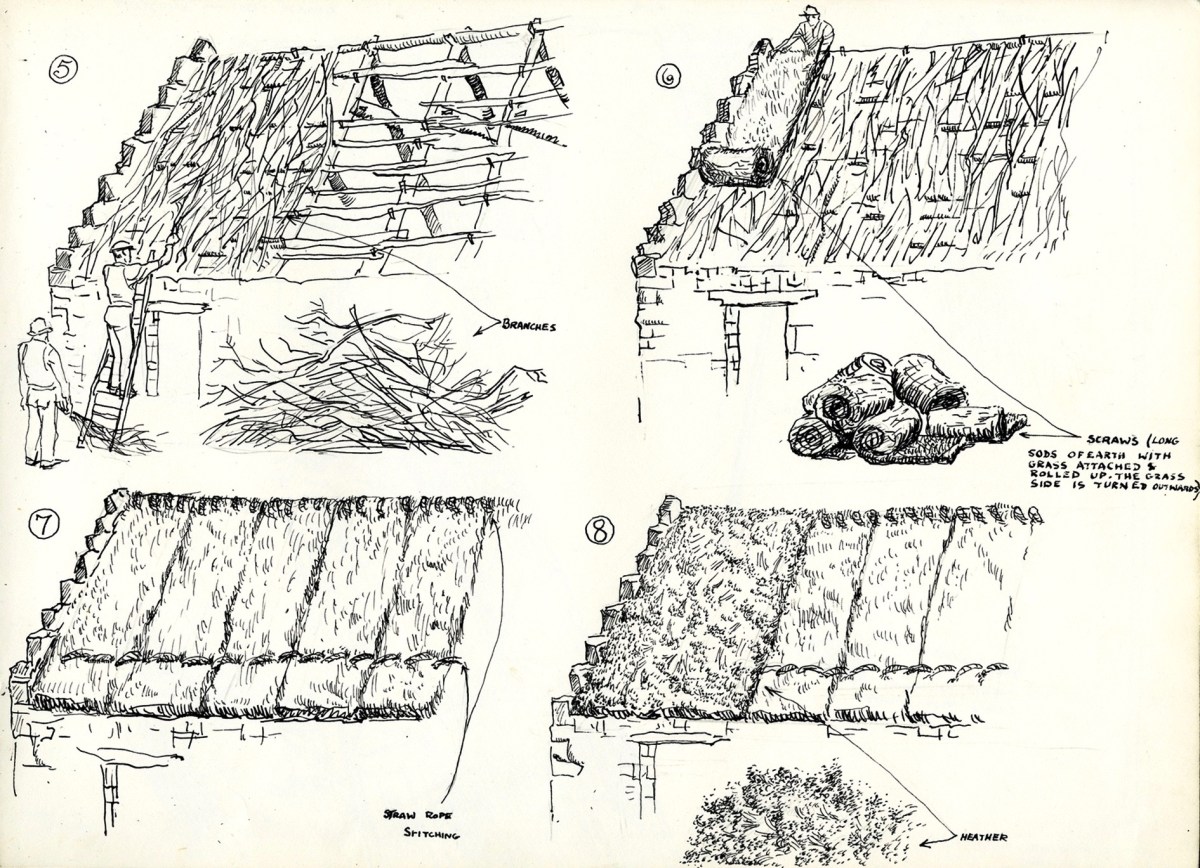
The drawing above shows in typically fine detail the process of ‘turfing’ a roof using clods of earth with grass attached. the grass is on the outer surface. Also shown is the use of ‘ling’ – or heather – as a roof covering.
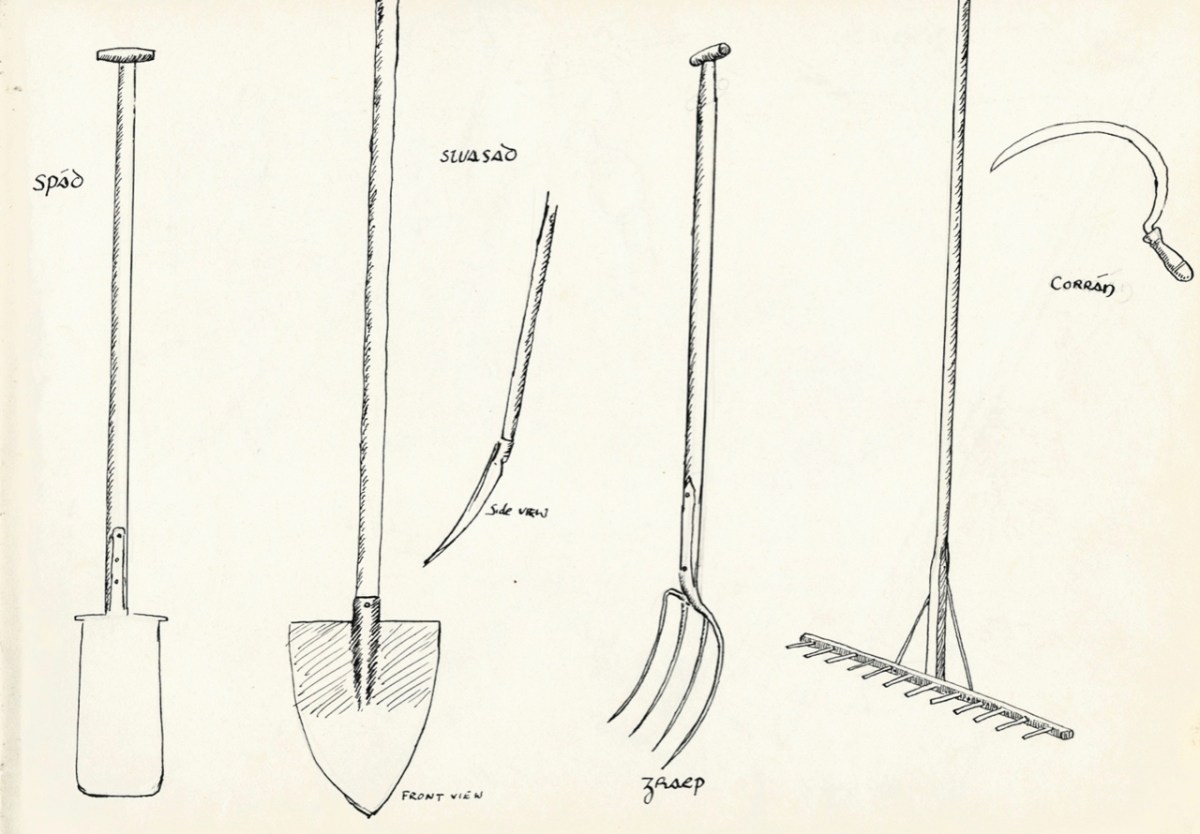
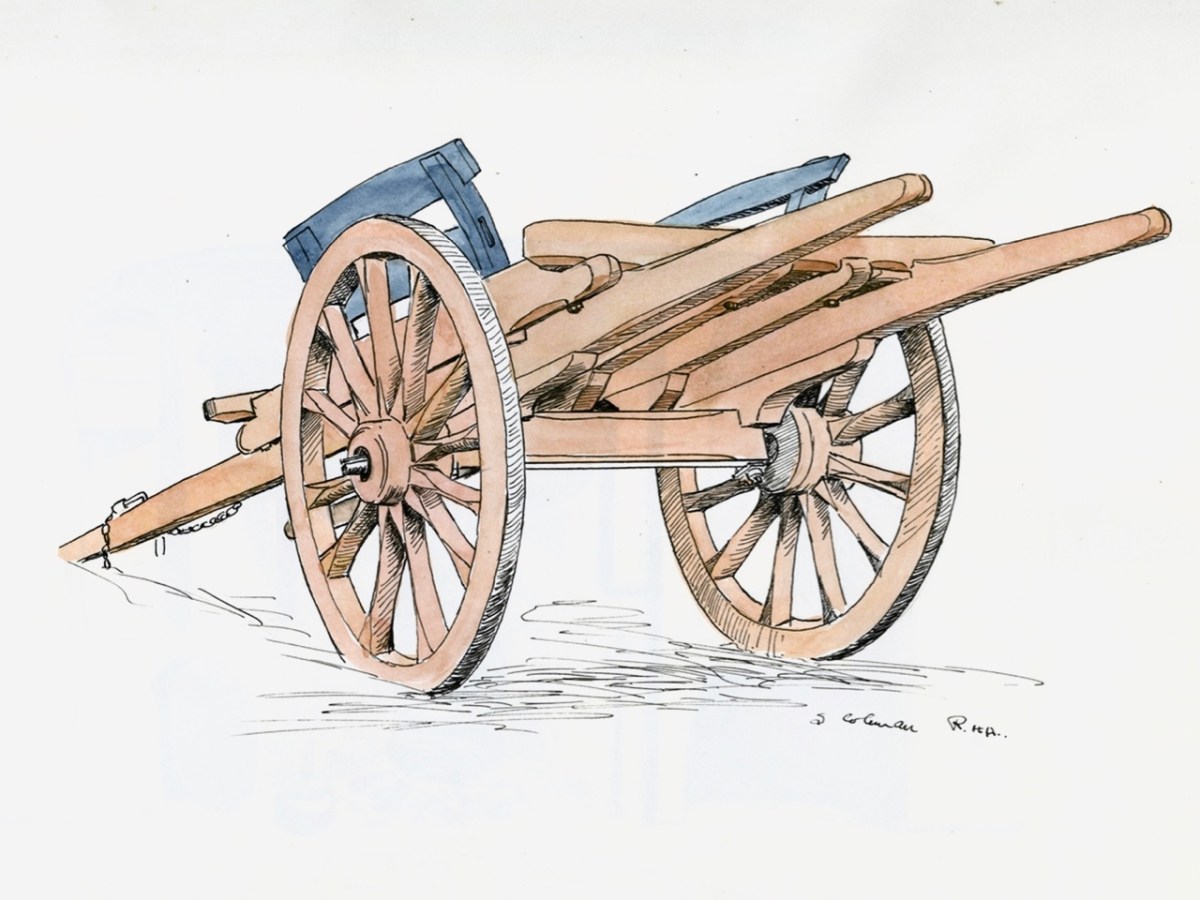
Straightforward hand implements used on farms (upper) are complemented by very fine watercolour sketches, such as the one above, recording the wagon – an essential element of life in the country.

Coleman was also an accomplished painter, as is evidenced by this portrait in oils of Anna Nic A’Luain, one of the most gifted storytellers encountered by the renowned Donegal folklore collector, Seán Ó Heochaidh. Anna was from Croaghubbrid, in the Blue Stack Mountains, Co Donegal, and lived from 1884 to 1953. The painting dates to 1949.

Cois Fharraige, above, another work in oils by Coleman.

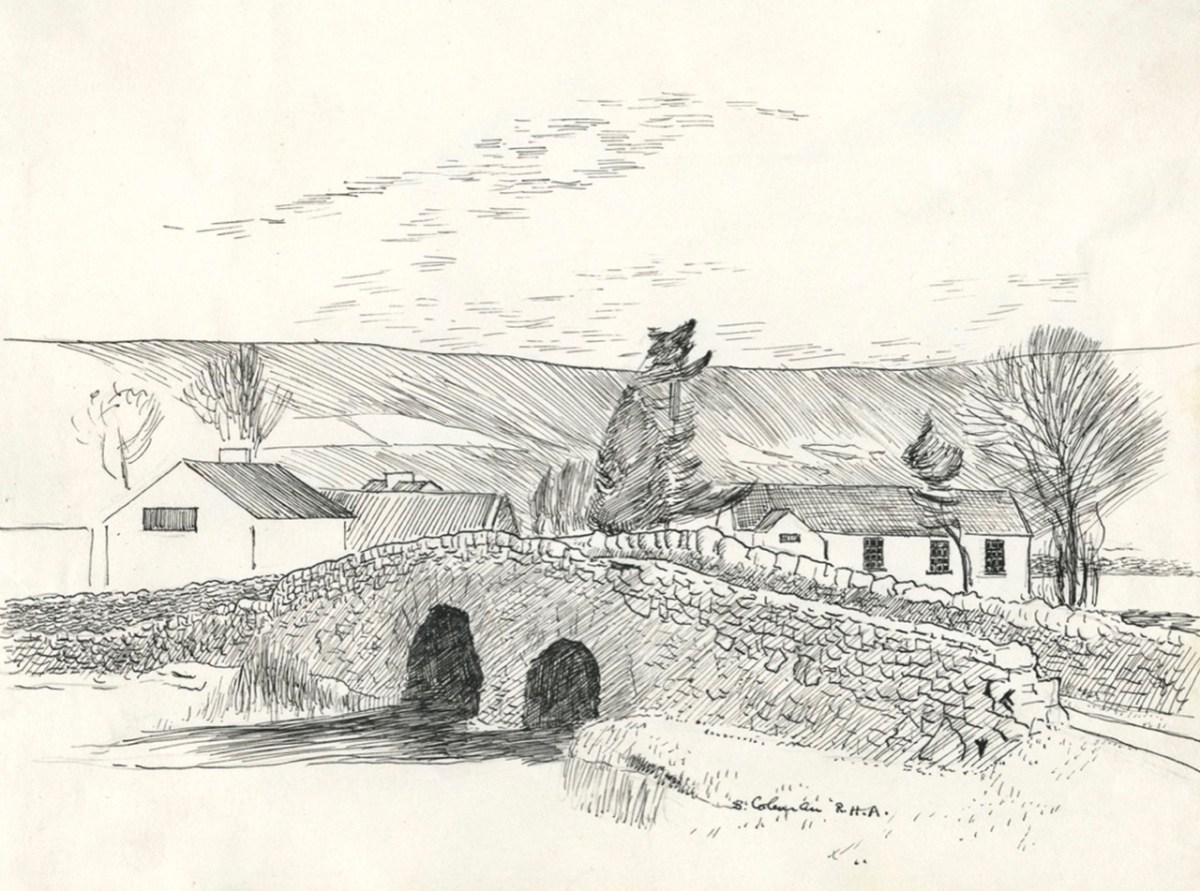
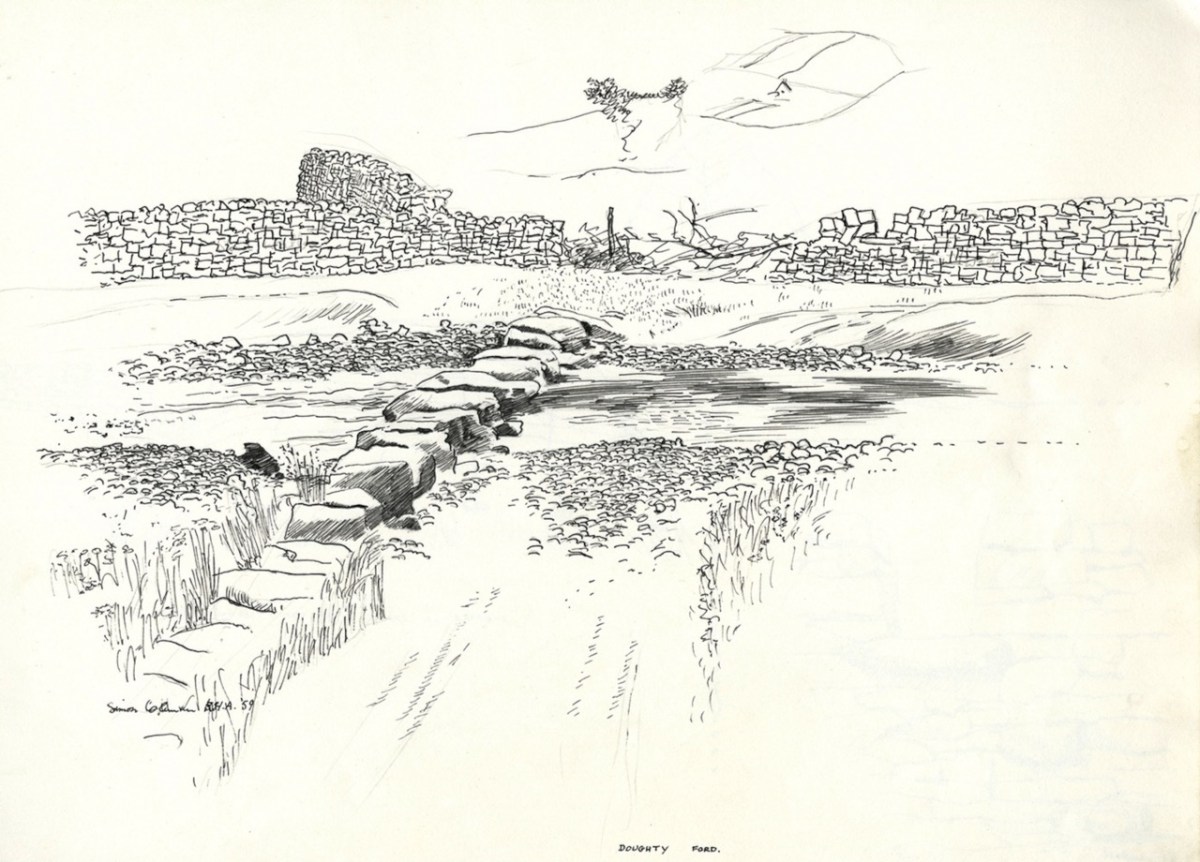
Doolin, Co Clare – Old stone bridge, Lough Agraffard, 1959 – Doughty Ford: all from Coleman’s sketch books. A valuable record stored in the Folklore Commission Archives. Slightly unusual, perhaps, is this house (below) which Coleman sketched in Galway city.

Timoleague Tour

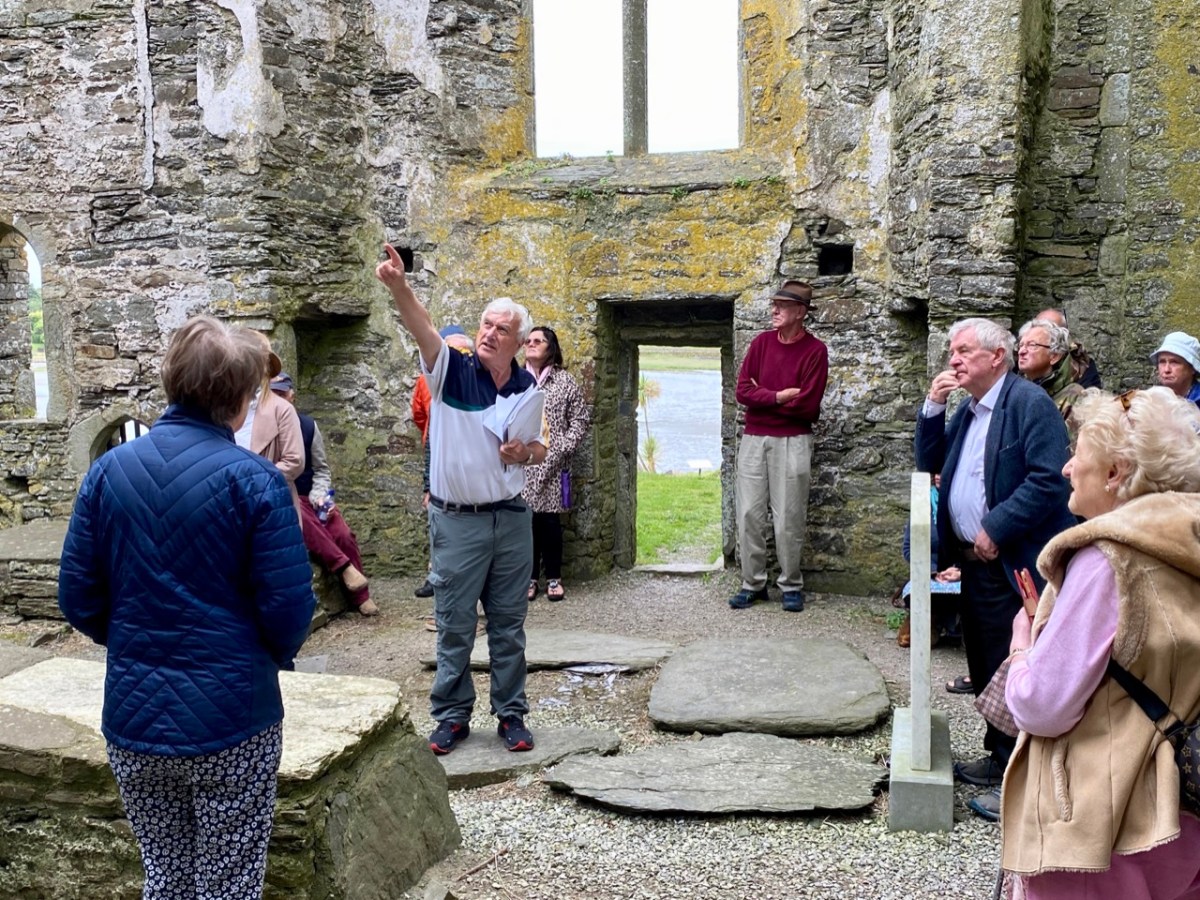
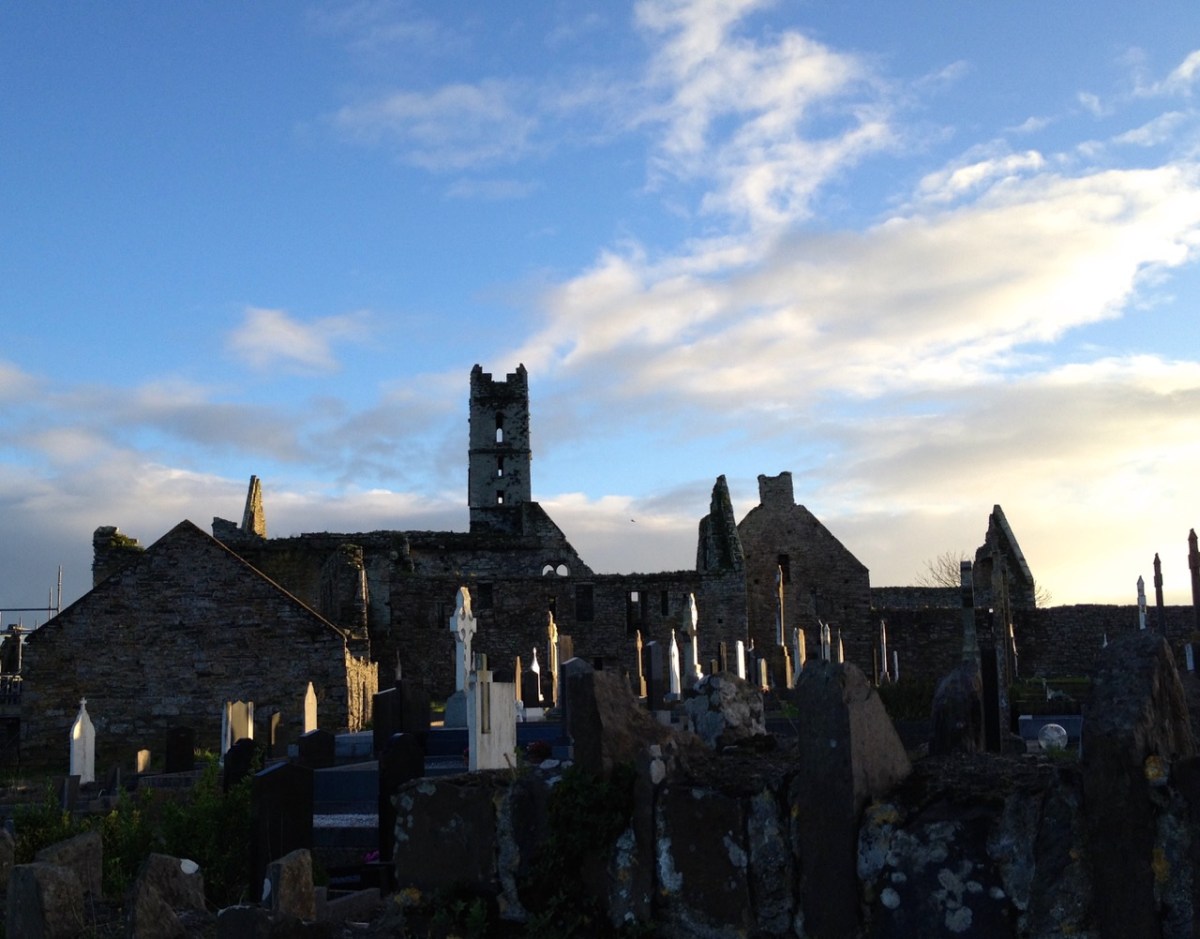
We had a great afternoon yesterday, exploring aspects of the history of Timoleague, in West Cork. Our Finola Finlay (above) was involved in an event organised by the Glass Society of Ireland . . . a professional all-island, non-profit association that opens a window onto the contemporary Irish Glass Community . . . The day’s proceedings were centred around the ecclesiastical buildings in the town, the earliest of which is the Franciscan Friary, now a substantial ruin beside the Argideen River.

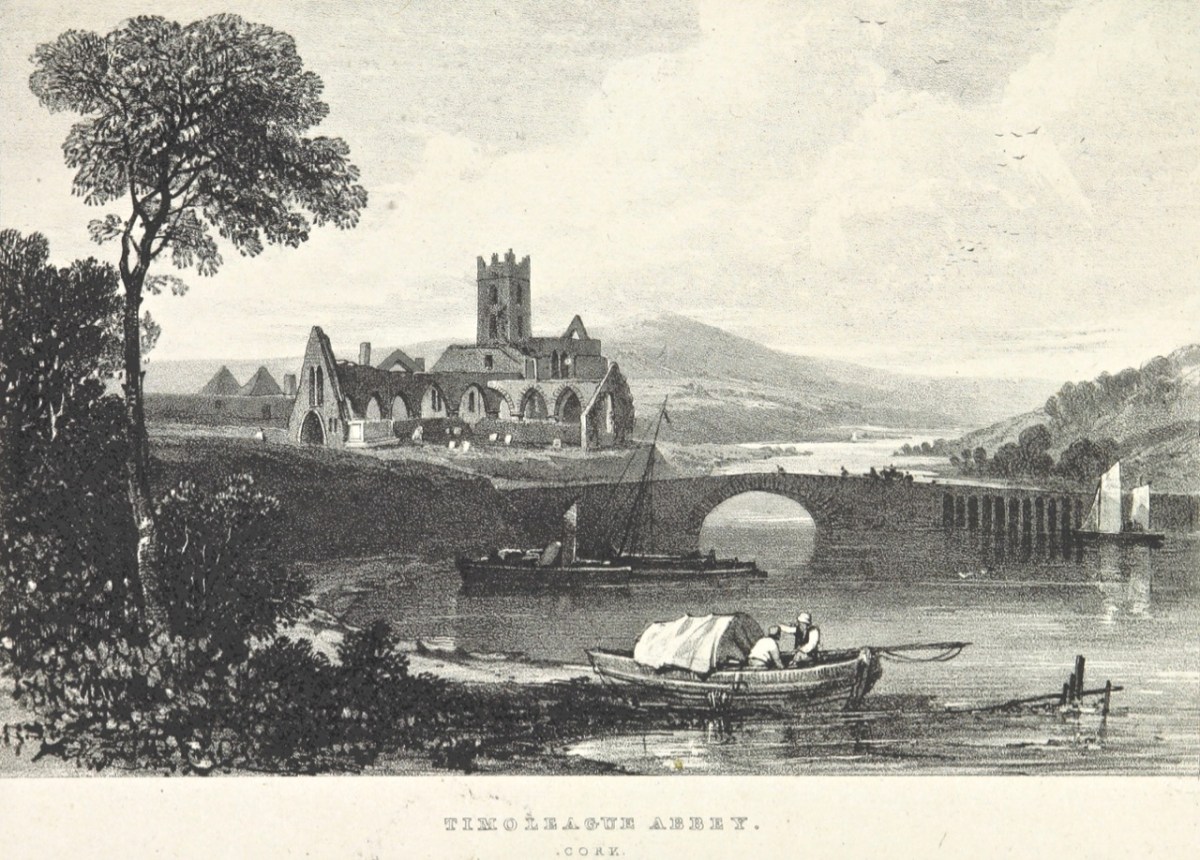
This view of the ruined ‘abbey’, above, dates from 1830. It is located on the site of an early Christian monastic settlement founded by Saint Molaga, from whom the town of Timoleague derives its name. A story that I heard for the first time yesterday was told by local historian Donal Whooley: the Saint was trying to found his community back in the sixth century, but everything that he and his followers built fell down the following day. According to legend, it was originally to be built a mile west of Timoleague, but all work done on that site by day would fall down by morning. Interpreting this as God’s wish that the church should be built elsewhere, Molaga fixed a blessed candle on a sheaf of corn, and floated it down the Argideen river, siting his settlement on the spot that it came ashore, on the big bend in the waterway where the Friary ruins can be found today. Here is a view from the great three-light window which looks out to the east over the river. Finola told us that, in its heyday, this window would have been filled with beautiful medieval glass, bringing light and colour into the substantial nave of the church.

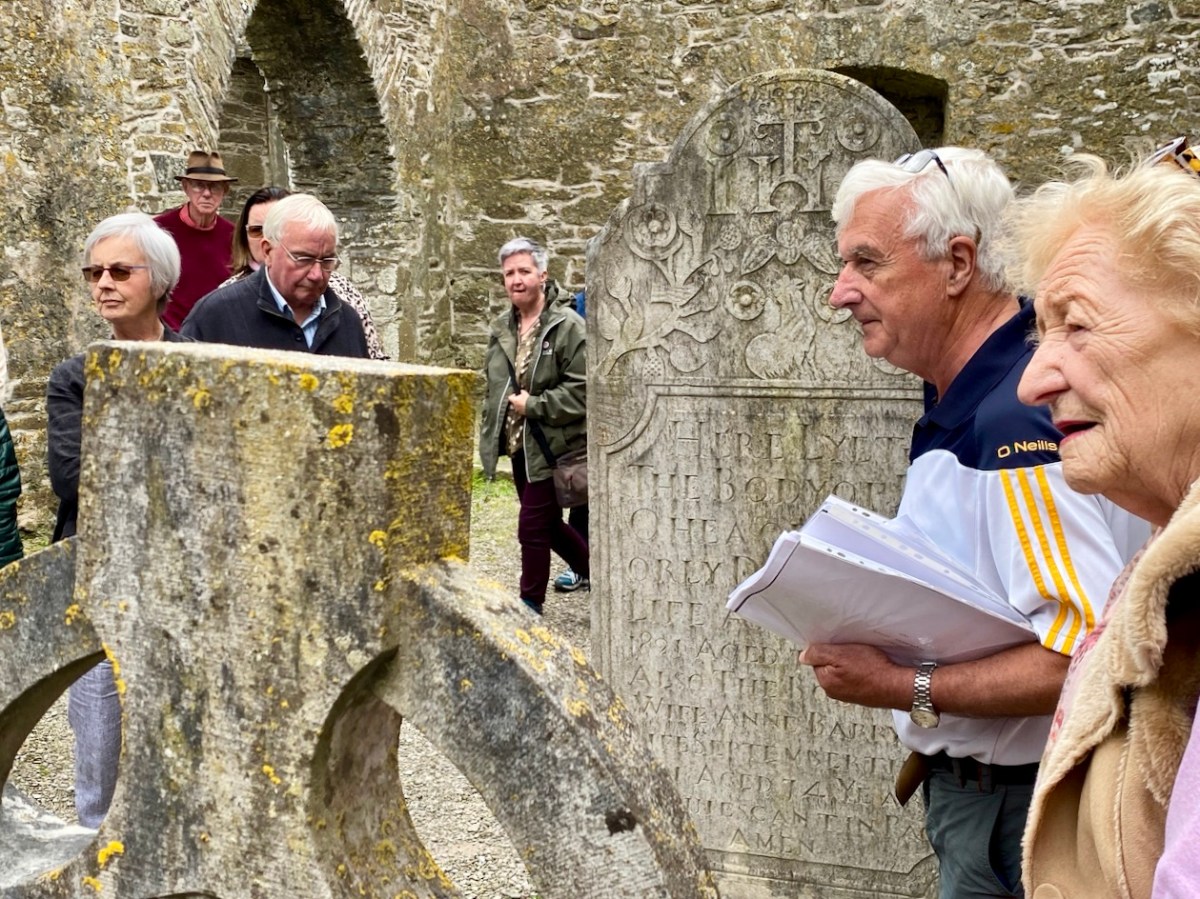
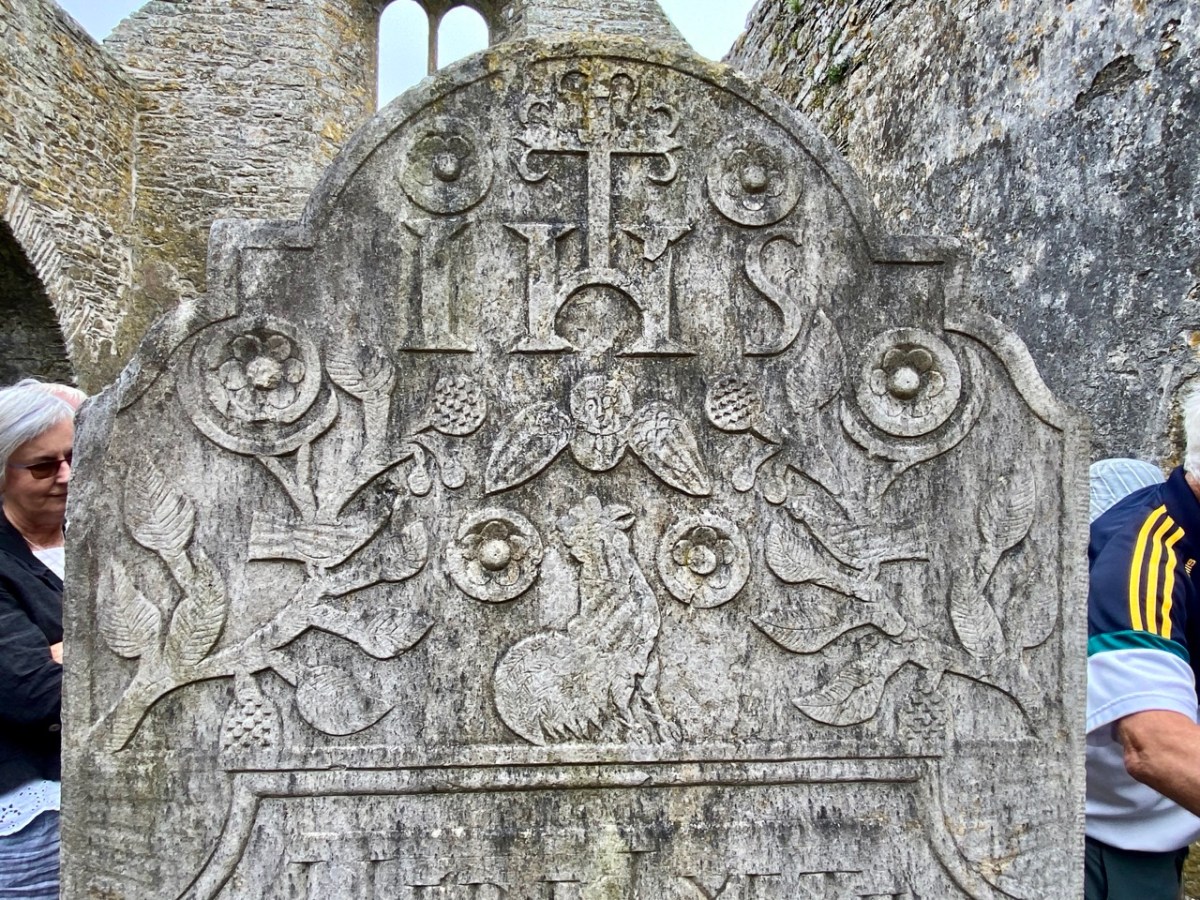
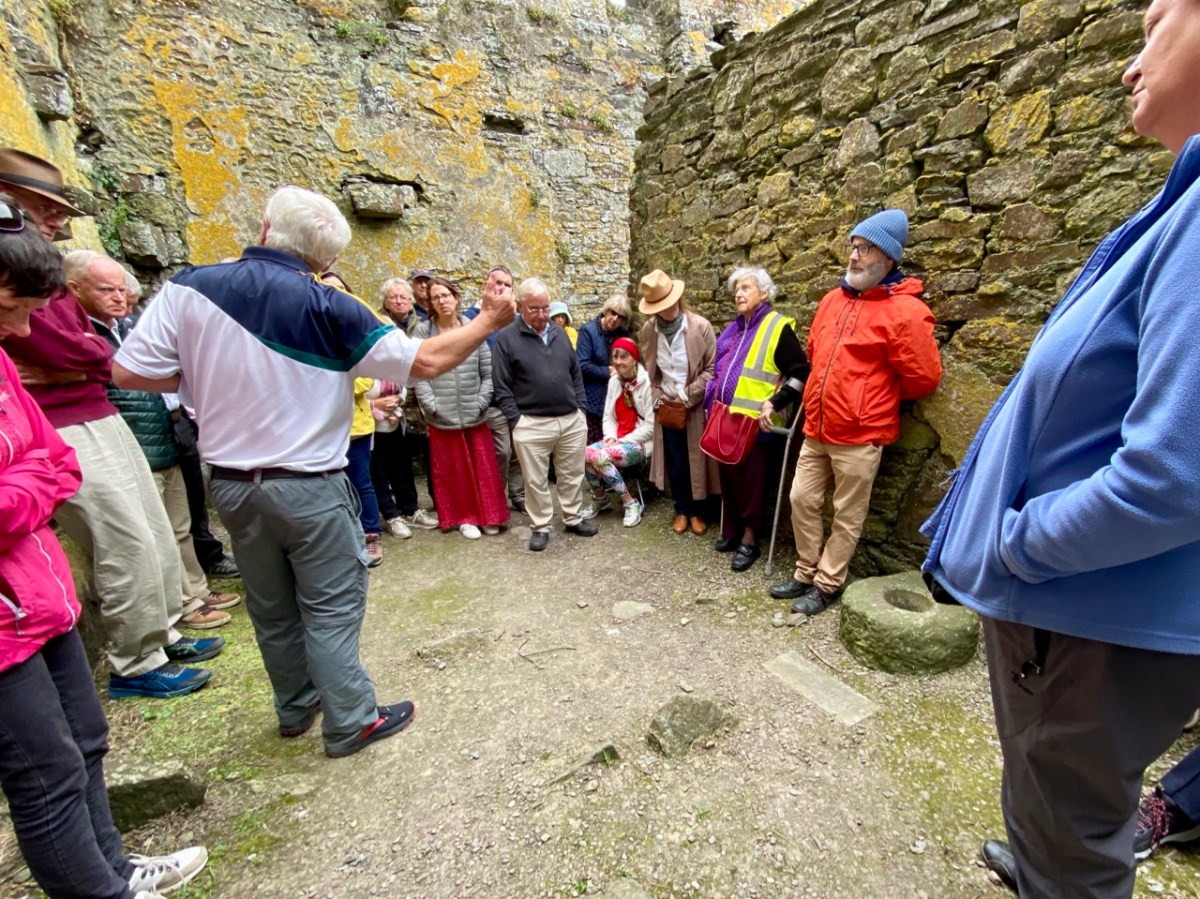
That’s Donal, above, leading our group of almost fifty keenly attentive people who shared an interest in the town and its history. To the right (in a blue jacket) is Father Patrick Hickey. He told us of the symbolism of the cockerel you can see on the large headstone in the nave (below), dating from 1821. Evidently some of the disciples were standing together while Christ was being crucified: nearby stood a pot in which a rooster was being boiled for supper. Judas reportedly said: do you think there’s any chance that our Lord will rise again? Mrs Judas retorted: there’s about as much chance of that as there is of that rooster jumping out of the pot and crowing! At which point – of course – the cockerel did just that!

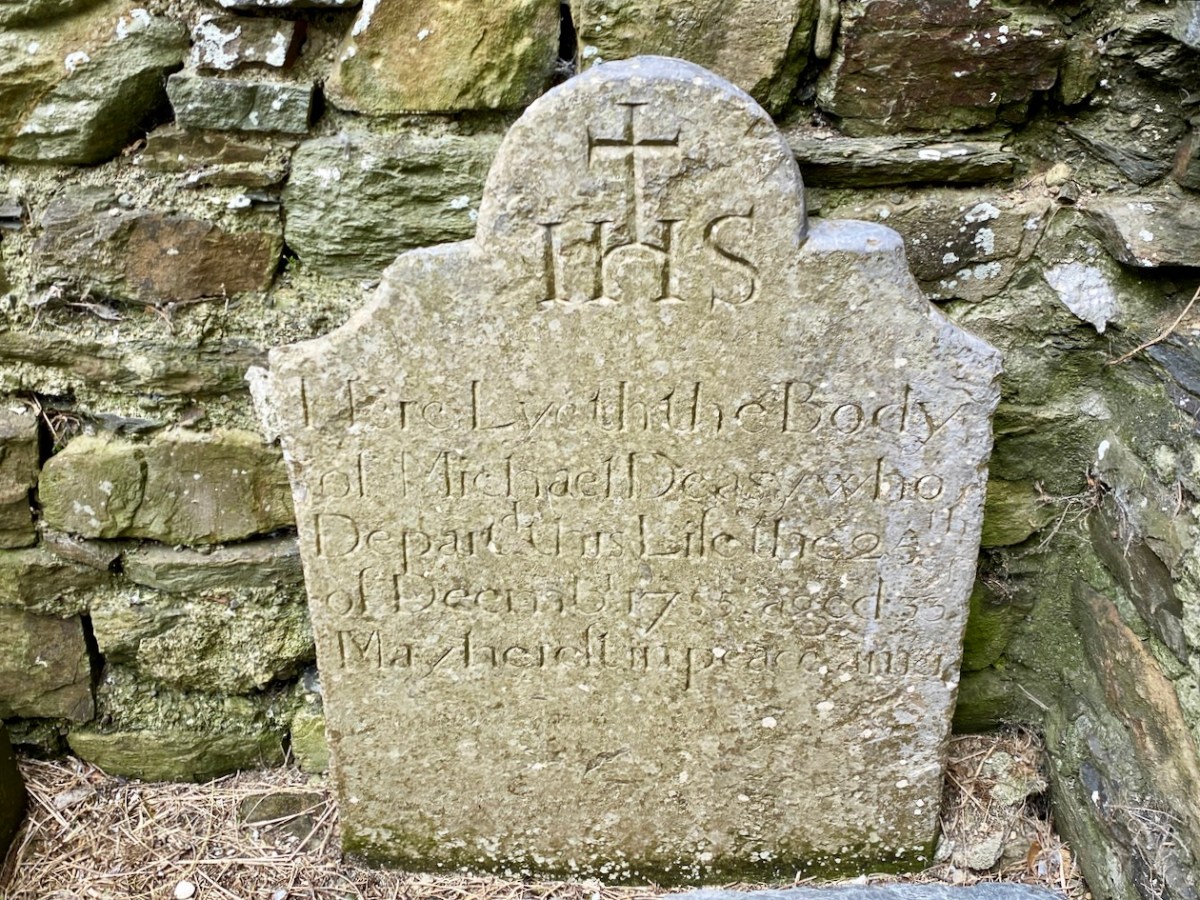
It was the custom to place burials in ruined church buildings. Here’s another fine headstone in Timoleague Abbey, to Michael Deasy, ” . . . who departed this life on the 23 December 1755, aged 33. May he rest in peace. Amen . . . “

Lively discussions ensued on the efficacy of wart wells, and Donal suggested that this repurposed bullaun stone, above could be the oldest human element on the whole site!

Here’s an aerial overview of the geography of Timoleague. The Friary ruin is only one of many historic sites of interest which caught our interest yesterday. It was Finola’s task to introduce us (or those of us who had never seen it) to the little Church of the Ascension.

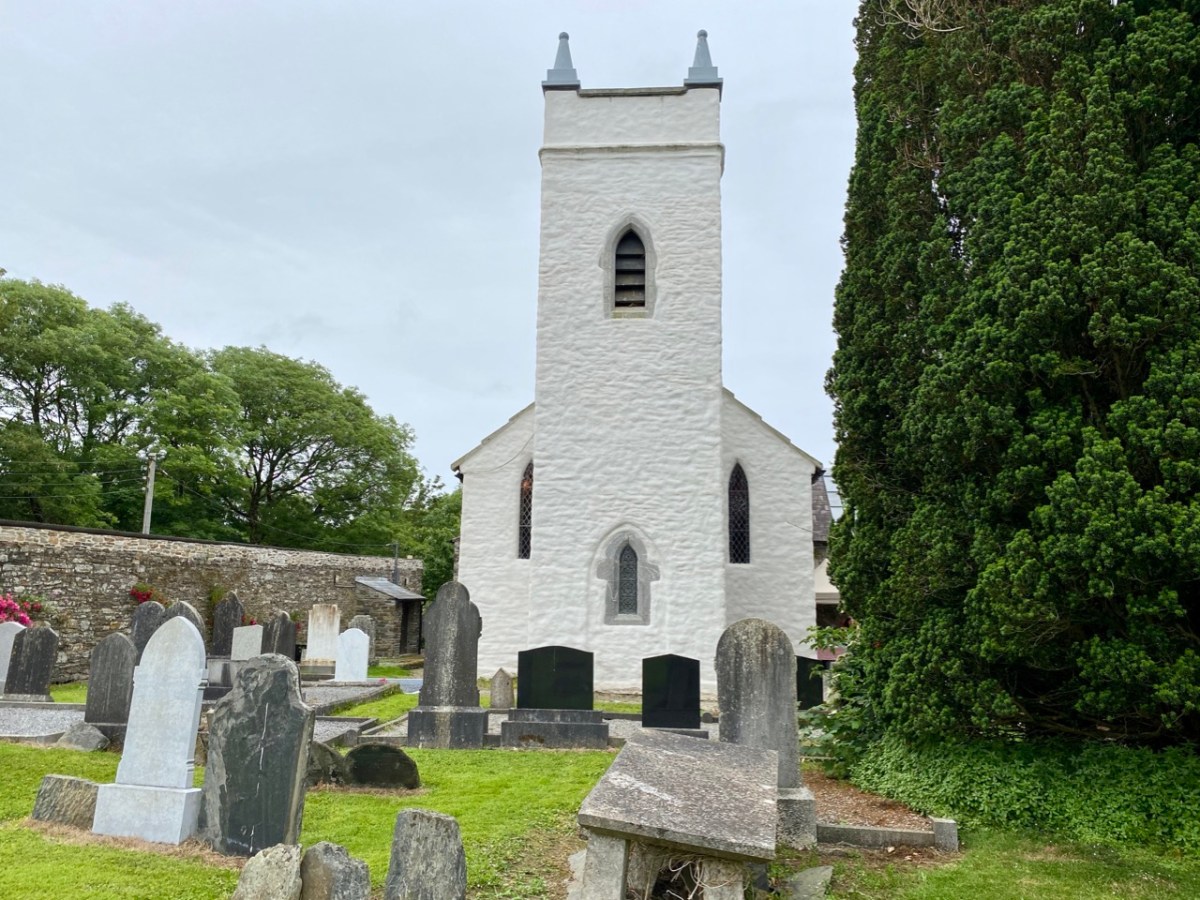
This building is currently undergoing major improvement works: the lime rendered tower has created a striking landmark in the town. This work has become necessary by water penetration through the stonework leading to deterioration of the fabric. The conservation project is led by a hard-working Parish committee who also served us delicious tea and cakes since the tour was a fund-raiser for their efforts.

You can see Finola addressing us in this little Protestant church in the header picture. Above is one example of the fine early glass here, this one by Clayton and Bell. For a fuller description of this church and its many stories, read our post here.

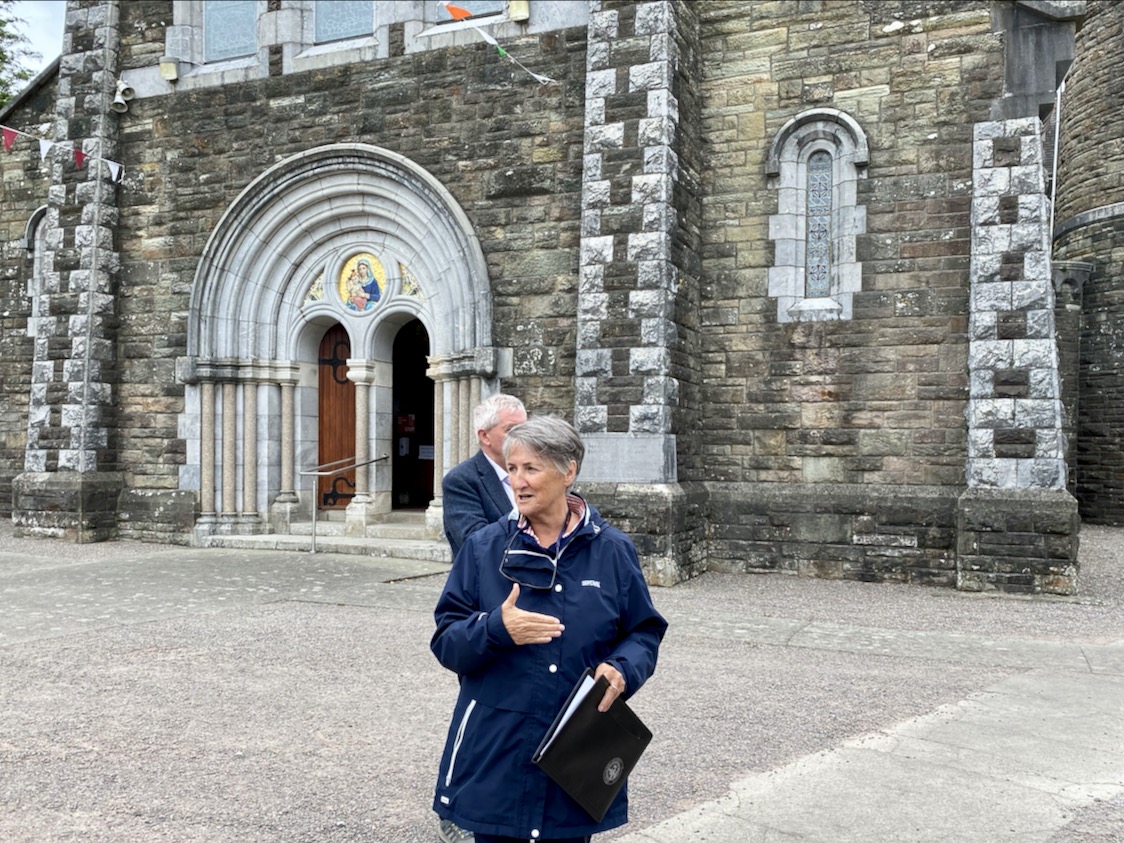
The early OS map extracts, above, give further context to the town’s history. The top map dates from the 1830s and comparison of the plan forms of the Church and Chapel buildings with those in the lower map, which dates from c1900, and then the present day aerial view (higher up the page) shows the degree of change which has taken place. We finished our town tour in the Church of the Nativity of the Blessed Virgin Mary. Here’s Finola standing outside it, below, prior to giving us an introduction to the history of the building, and its windows.

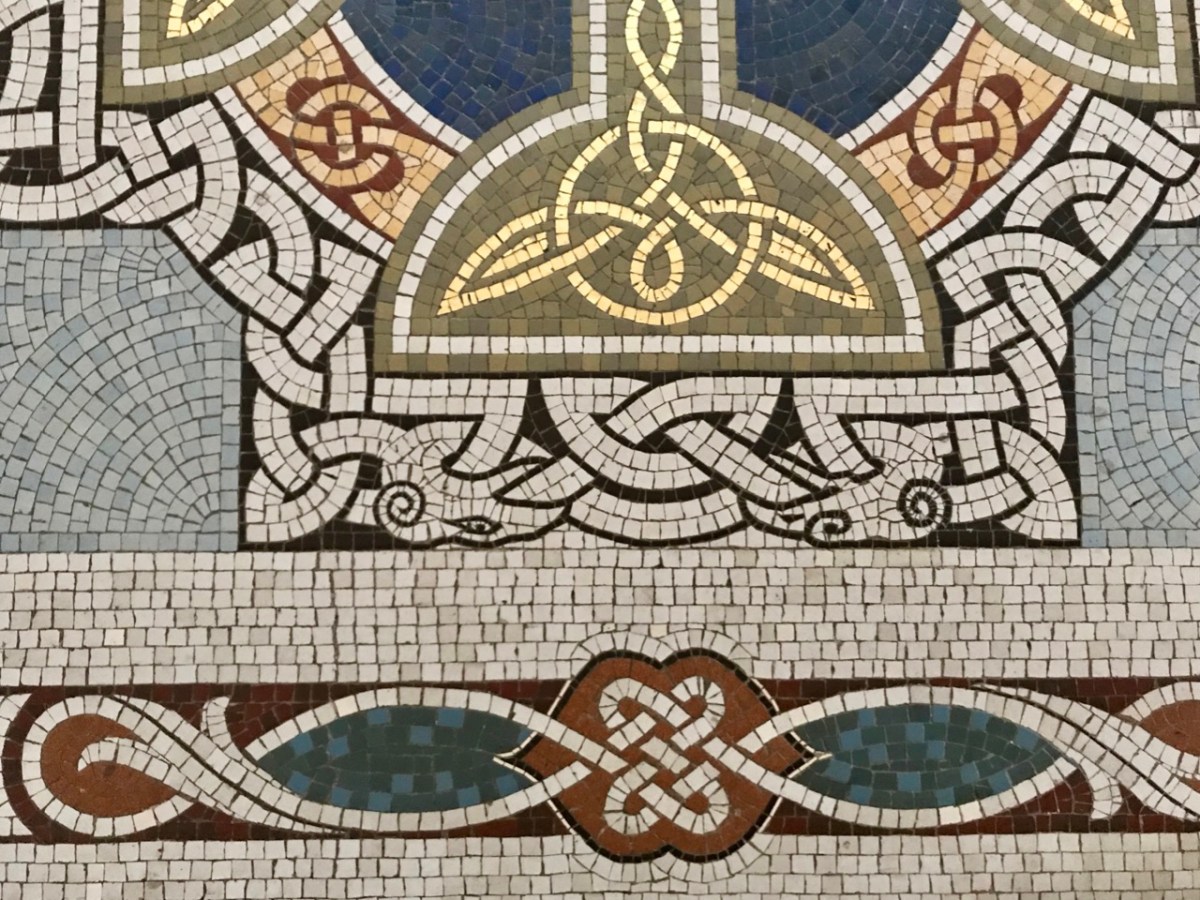
The fine Harry Clarke Studio window (one panel of which is shown in the upper picture) is a ‘must-see’, as is the mosaic work from the same church. The building work for this Catholic church, replacing an earlier chapel, dates from 1912.

Father Patrick Hickey nicely rounded off our day of Timoleague history by showing us the replica of the ‘Timoleague Chalice’ (above). The replica is kept in this Catholic church. According to Fr Hickey, ‘back in the penal days’ three monks were found floating in an open boat just off the island of Cape Clear. They had with them a box, or trunk. They were brought ashore but two of them died. The other asked that the box be kept on the island – but unopened – until he could return to retrieve it. He never returned, and in later years another visiting Priest said it could be opened. Inside was a gold chalice – blackened with age – and some liturgical vestments. The vestments fell to dust immediately, but the chalice was sent away for inspection, and was confirmed as coming from the Friary at Timoleague, where the replica is now kept.

Here is another ‘souvenir’ of Timoleague – it’s an extract from a poem written in Irish: The Mourner’s Soliloquy in the Ruined Abbey of Timoleague. The poet, Seághan Ó Coileáin, ” . . . was a Gaelic-language poet born in County Cork, in a time of faded Irish glory. He lived as a village schoolmaster, with a large family and no patron . . . “

Abroad one night in loneliness I stroll’d,
Along the wave-worn beach my footpath lay;
Struggling the while with sorrows yet untold,
Yielding to cares that wore my strength away:
On as I mov’d, my wayward musings ran
O’er the strange turns that mark the fleeting life of man.

The little stars shone sweetly in the sky;
Not one faint murmur rose from sea or shore;
The wind with silent wing went slowly by,
As tho’ some secret on its path it bore:
All, all was calm, — tree, flower, and shrub stood still,
And the soft moonlight slept on valley and on hill.

Midsummer Music

Here’s a little burst from our traditional session in Rosie’s, Ballydehob, last Friday, with a great crowd of players and singers filling the pub with Irish music, as they do every week through the year. Sometimes the session takes place at a different venue in the village, but you will soon find it, between seven and nine on a Friday evening. The music is to remind us that the The 9th Fastnet Maritime and Folk Festival will be held from the 17th – 19th June this year, after an enforced ‘Covid’ break. Hopefully it will be ‘just like old times’. There is a great programme to look forward to – don’t miss it! To get you into the spirit here’s Festival regular Matt Cranitch leading a rendering of the beautiful air Sliabh na mBan.

There’s a tale attached to all good songs, and Sliabh na mBan is no exception. This is from the Dúchas Schools Folklore Collection 1936 . . .

. . . Finn mac Cumail, having come of age, took upon himself the task of choosing a wife. A public man like him had to cater to the popular expectations and he was in sore straits fearing to give hurt to any of the noble families wishing to link their daughter with Finn in the bonds of Holy Matrimony. Having tasted of the Salmon of Knowledge, he was all wise, so he hit upon a good plan. A race would decide who to wed him. He sat on the top of Slievenamon, (Sliabh na mBan – Mountain of the Women). All the ladies were to race from the Anner and the first up was to become his wife. Then the gathering began – old, young, fair, dark, ugly, beautiful, sprightly and lame all came to try and become Finn’s wife. “They’re off!” – what a view as all the maidens of Munster set off on the race. The beautiful girls began well, but soon got tired and as some old hag would limp past them she’d sneer “Fair and go easy goes far in a day”. On they went, the latter tripping the former – three remained to do the east climb – two beautiful girls and a worn, old hag: up, still up – who’ll win what? Wait! the fair girl has fallen, now just a dark-haired caílin and the old woman. Oh look, she’s down – the girl hurts her ankle and tries to creep along, but faints. Now the old hag has an open field. Finn must marry her – But no, up the slope comes a lovely girl and reaches Finn first and like all nice stories, they were married and lived happily ever afterwards. (Nobody knew that Finn had instructed his lady love to run over to Boherbee where the mountain is low and go along the gradual slope, instead of trying to climb the steep precipitous mountain face) . . .

Schools Folklore Collection – Miss H Noonan Aged 70 – Cloneen, Co Tipperary

A reminder of pre-Covid days (above, in Levis’ Bar) – folk legend Martin McCarthy (now aged 81) was a regular at the Ballydehob Festival. There’s some good ‘new blood’ there this year, and the launch of an album of the best Sliabh Luachra music from Pat Fleming with Maria Cotter, Tim Browne, Gary O’Brien and Timmy O’Connor. A special event will take place in Bank House in the main street at 7.15 on Thursday 16th June: festival organiser Dick Miles will give a talk on the ‘folk revival’ – (A musical journey from England to Ireland). There will be plenty of opportunities for all musicians to participate over the weekend, starting with the regular Friday folk session in Rosie’s at 5pm (note the earlier-than-usual time) on the 17th.

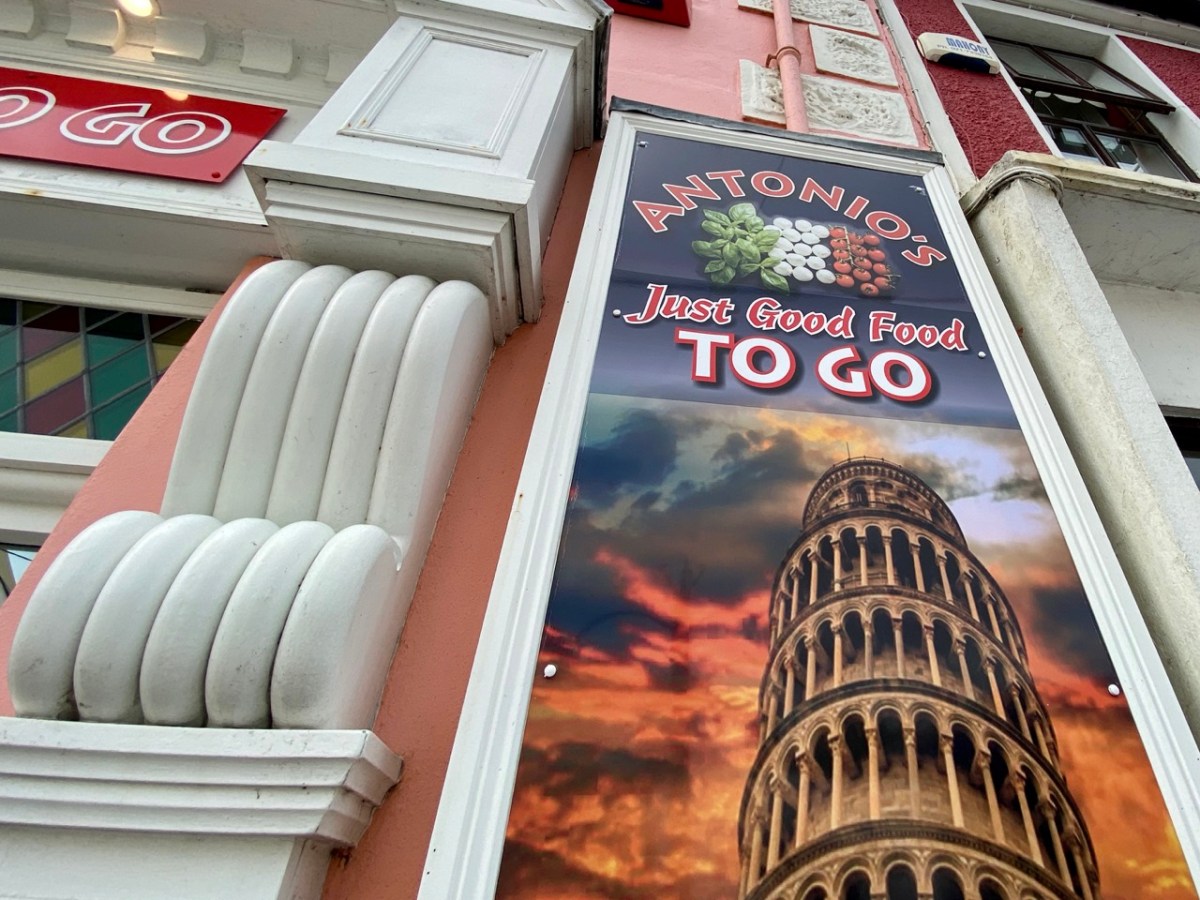
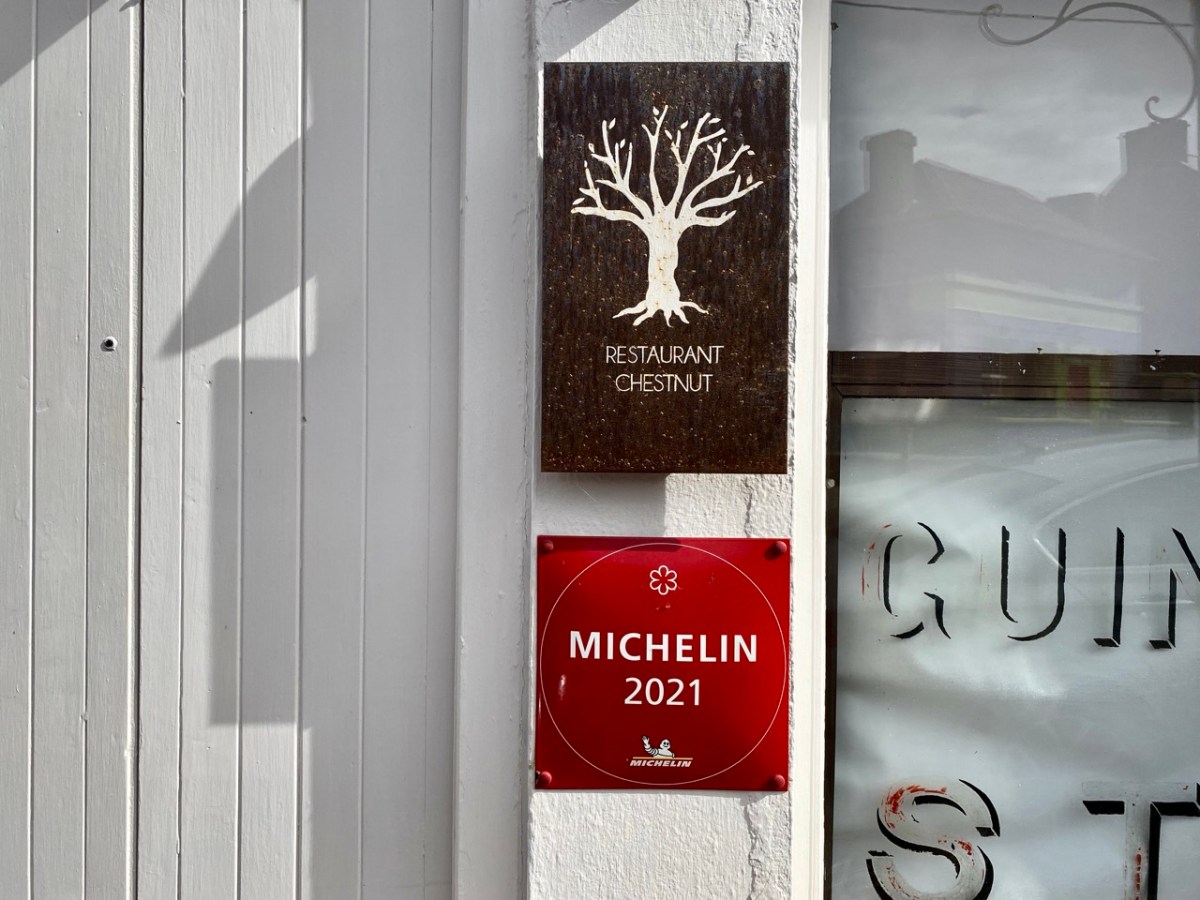
There are plenty of good food opportunities in Ballydehob: all will be available over the Festival weekend: the wonderful Yay Burger (top), Budds (above) and Bally Bia (below). Don’t forget Antonio’s and – if you want Michelin Star (why wouldn’t you?) there’s the Chestnut.

But the festival is – first and foremost – all about the music. We hope to see you there over this coming weekend. We’ll finish with more Sliabh Luachra tunes from Jackie Daly and Matt Cranitch, who will be there to serenade us. Enjoy!

In Search of Wells and Railway Lines

We are often invited to join our friends Amanda and Peter Clarke on their journeys of exploration into the wild places of West Cork and Kerry. We even stray over into Limerick on occasion! And it’s usually all to do with Holy Wells. Amanda has been writing about them for years, and you can find her accounts of them in Holy Wells of Cork & Kerry, here.

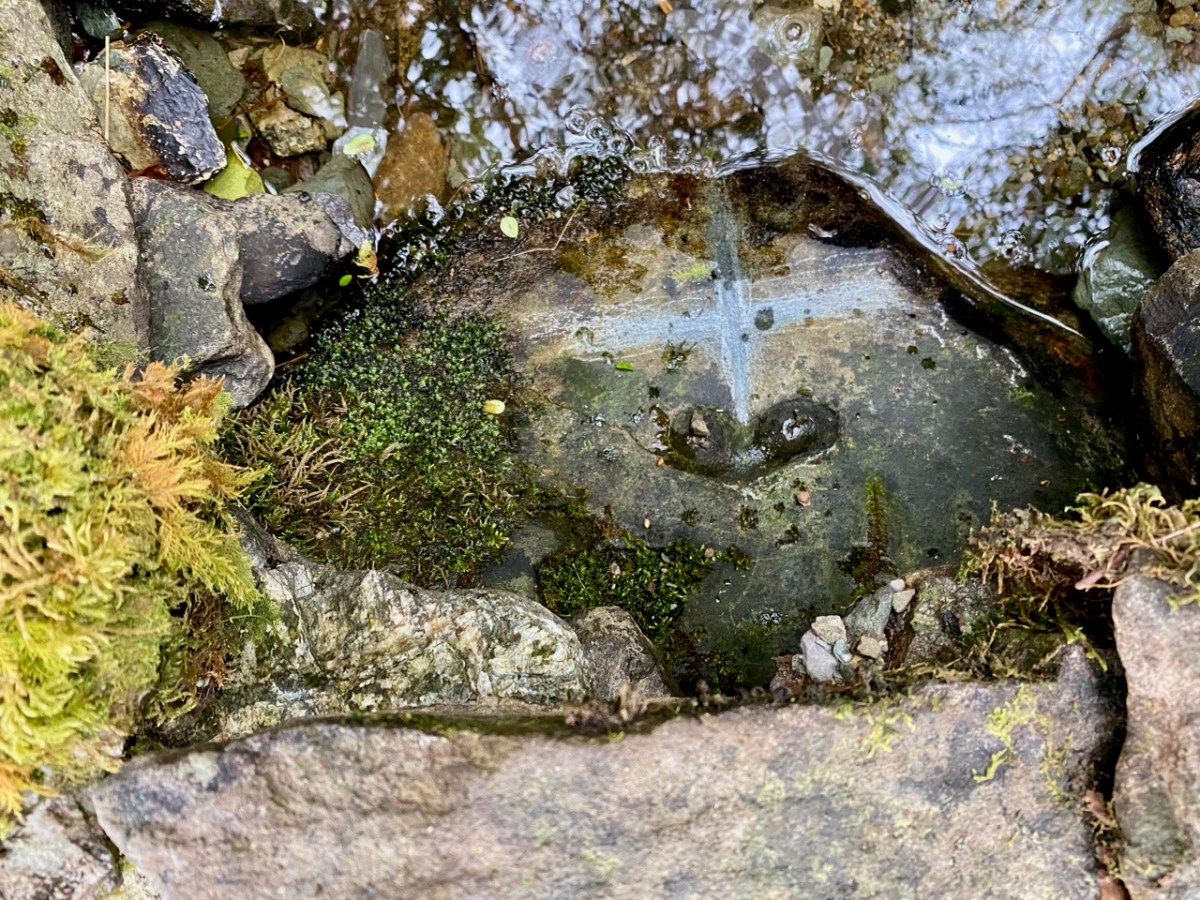
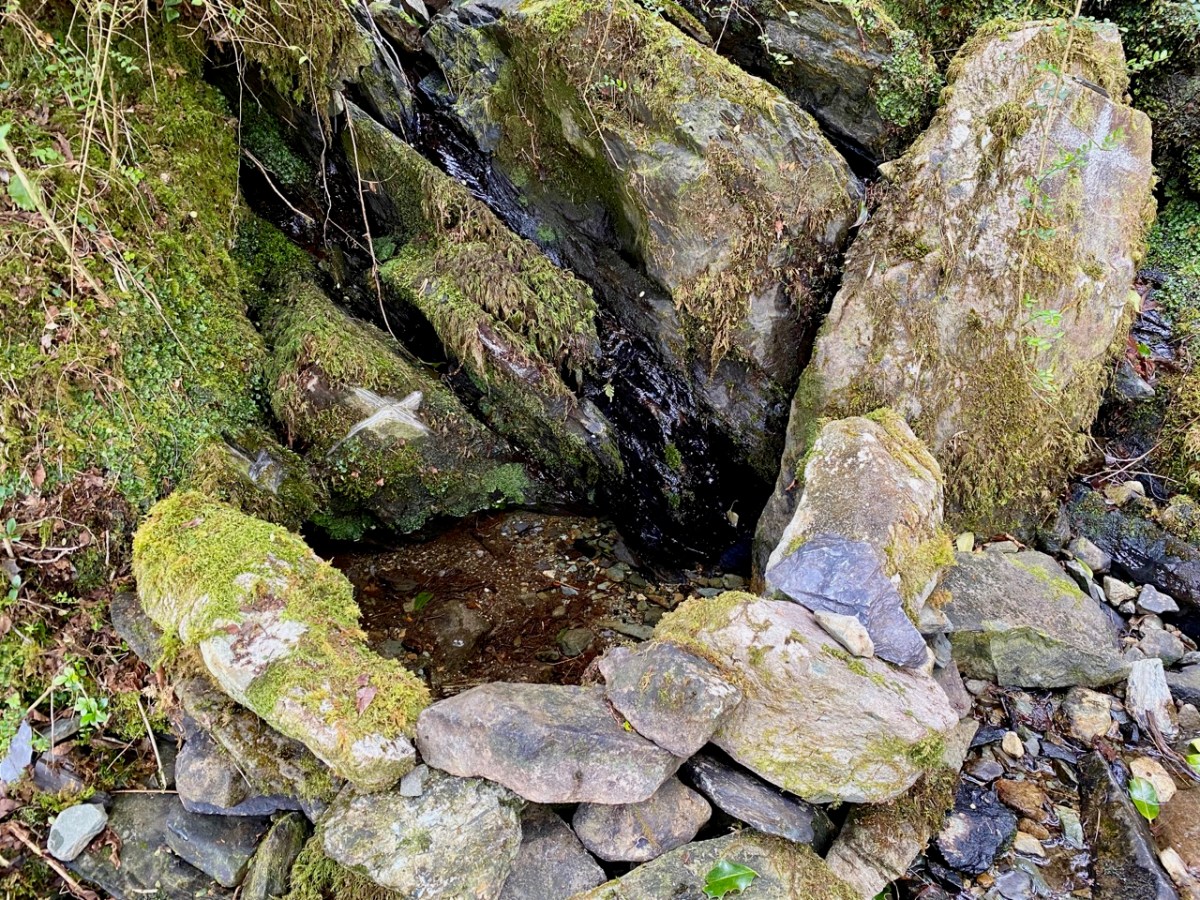
Recently we were at Loo Bridge, near Kilgarvan, Co Kerry. There’s a well there – Tobar na Naomh – All Saint’s Well, and there’s a lively account of it in the Dúchas Schools Folklore Collection. Evidently a ‘band of Saints’ travelling over the mountain to Gougane Barra stopped at this well for refreshment. One of them (St Finnbarr) left his spectacles behind and didn’t realise it until he was a long way up the steep path. Fortunately, there were so many of his companions that he was able to pass a message back down to those who were still starting off from the well and the spectacles were retrieved! But – because they were holy spectacles, they left their imprint on the rock at the well – forever. There it is in the picture above.

There are several crosses etched into the stones around this well by visitors. It’s wonderful to think of the continuity of those pilgrims seeking out the well and keeping its veneration alive – probably through countless generations.

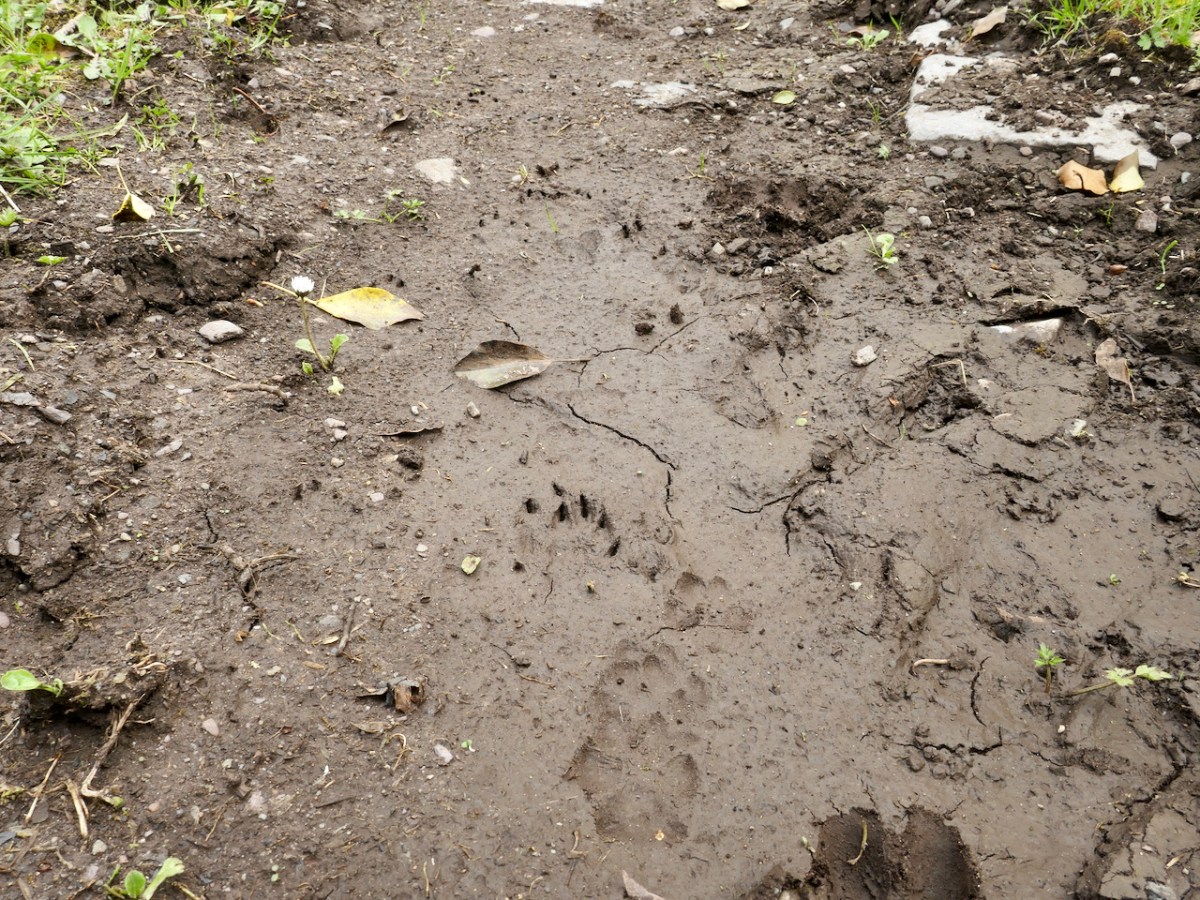
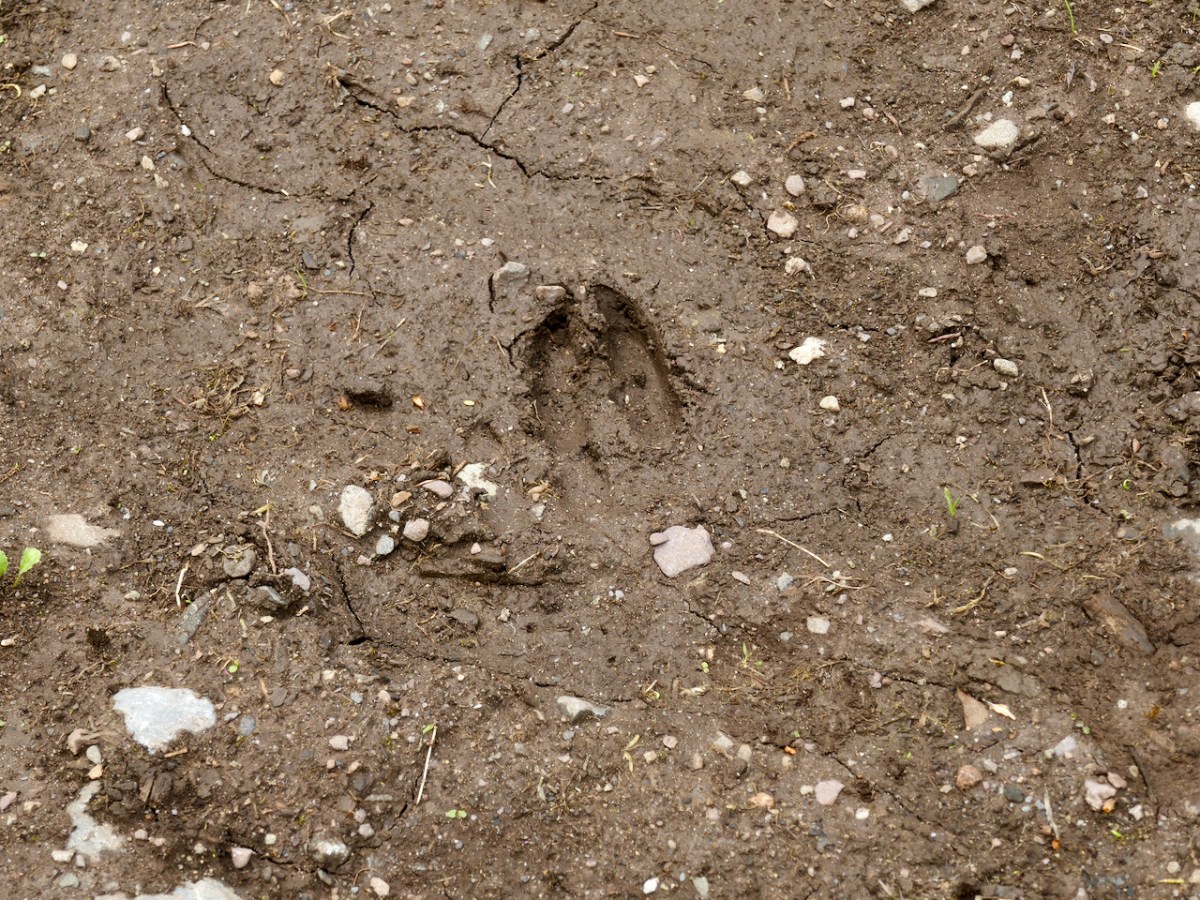
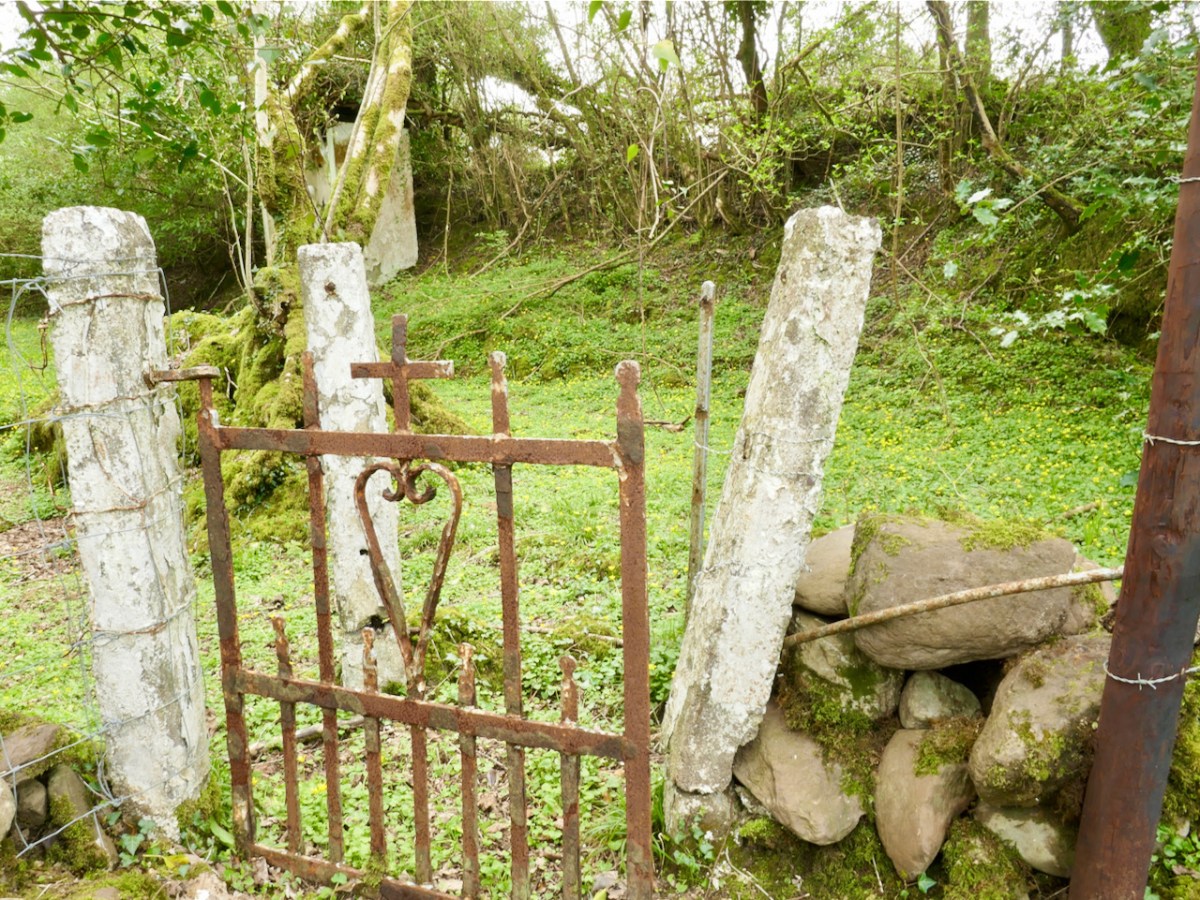
Another well on our agenda involved us walking over a long, muddy trackway. We could see the prints of the feet of other travellers: the top pic looks like bear paws (although perhaps more likely to be badgers), whereas the cloven hoof above is either Satan or a deer. We met none of these on the path that led, eventually, towards the Wells of St Peter and St Paul.

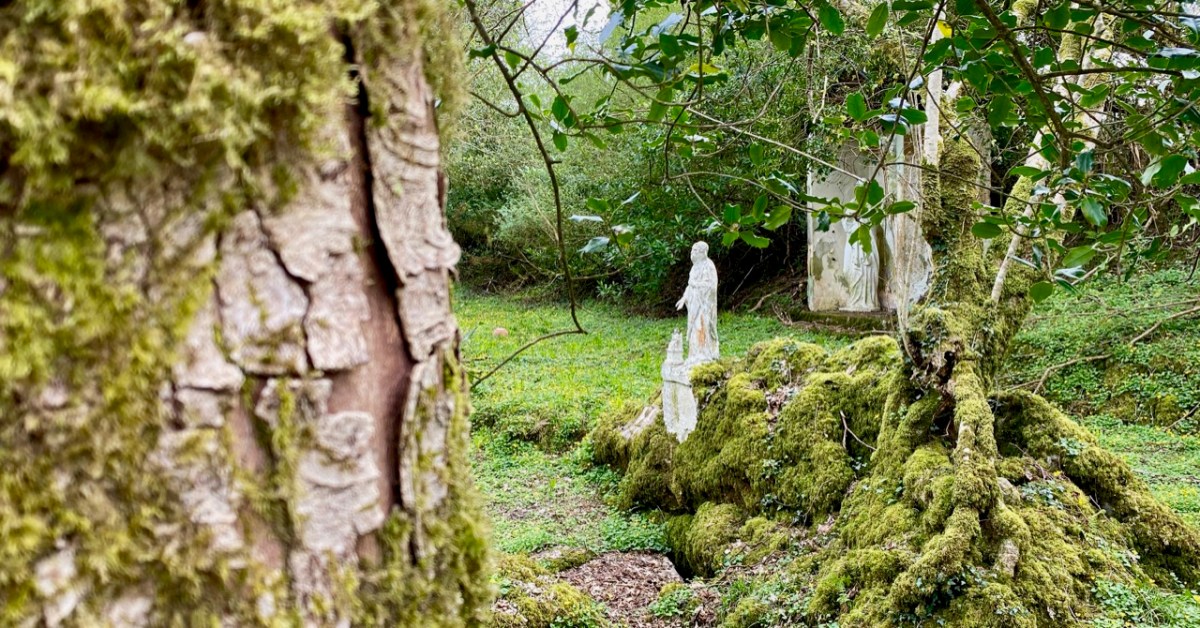
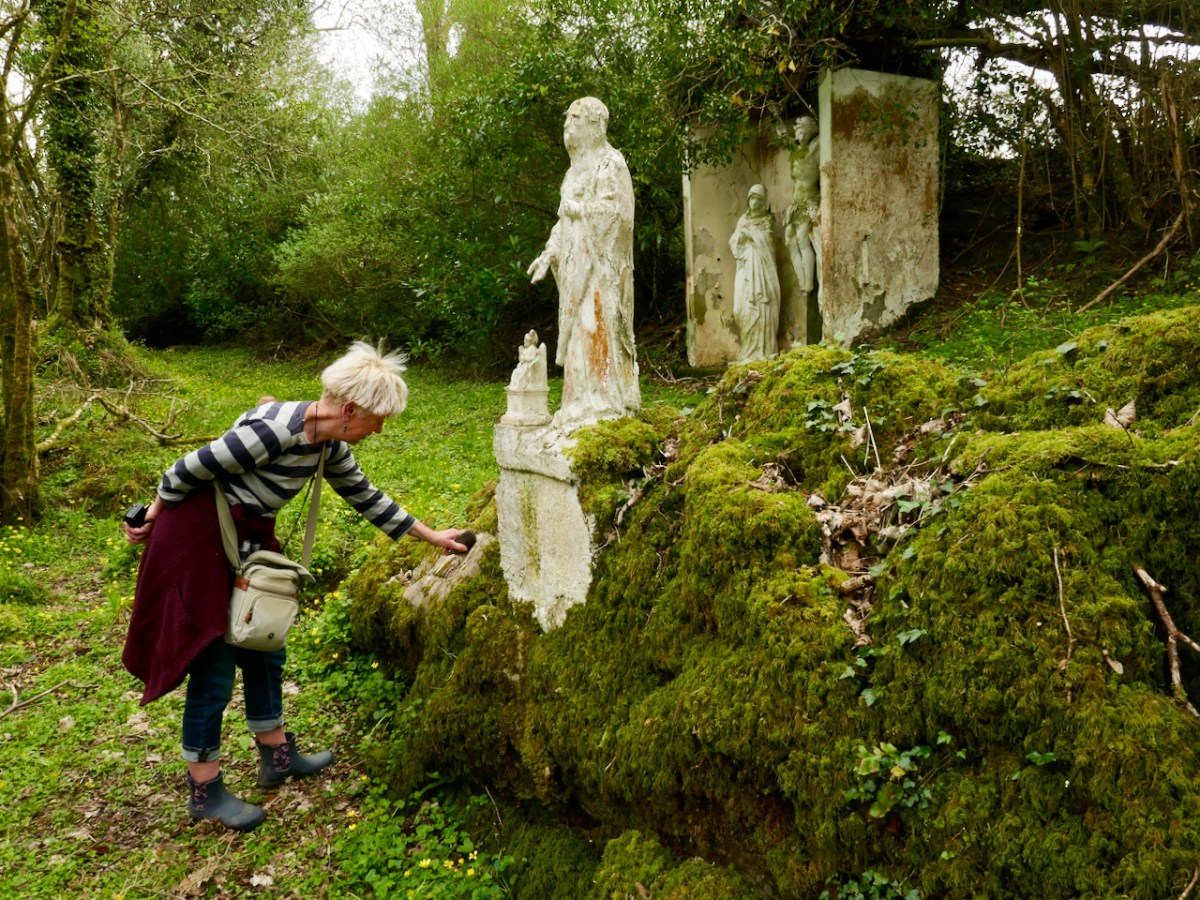
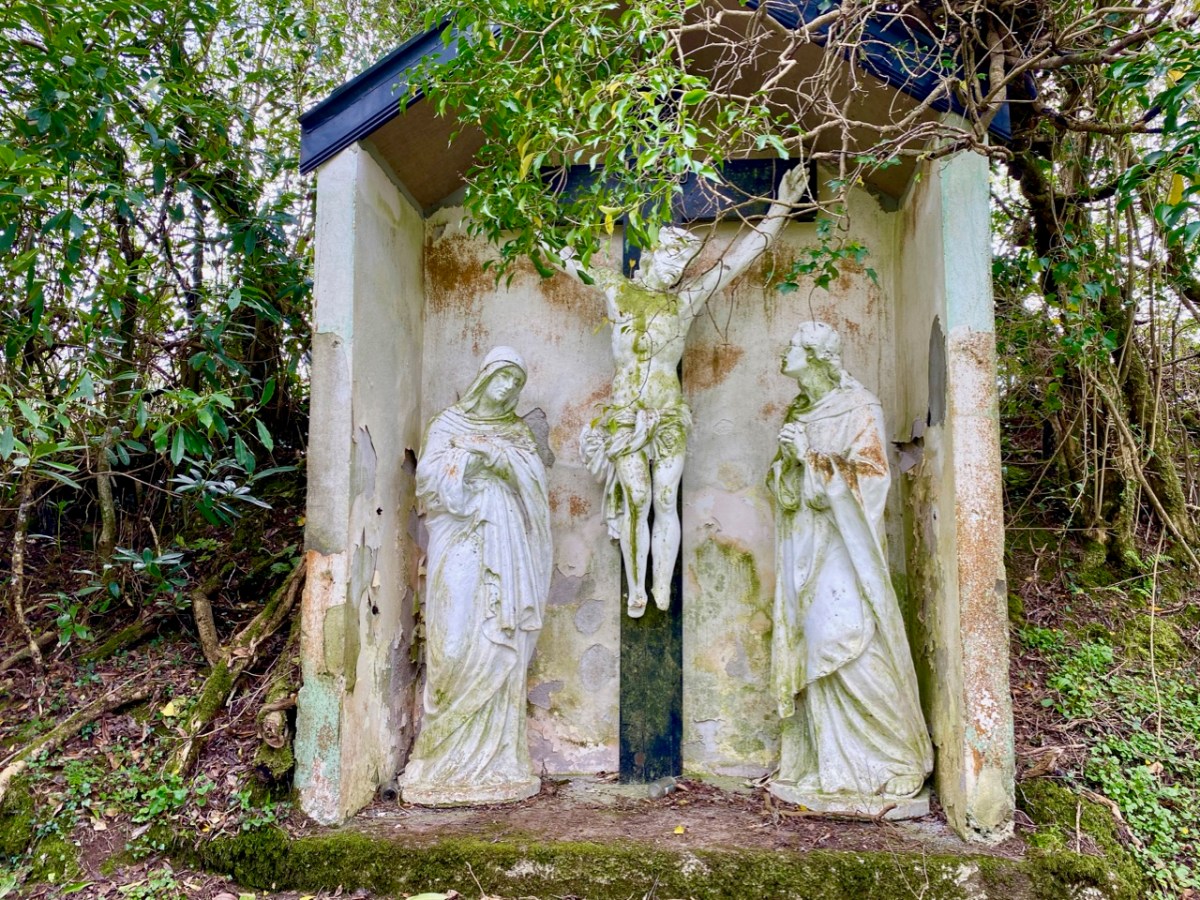
St Peter’s well is clearly defined (above, with Amanda looking on). Beyond it is a weather-worn shrine with a Calvary depiction. It’s quite a surprise to find such a substantial life-sized scene in a remote wood.

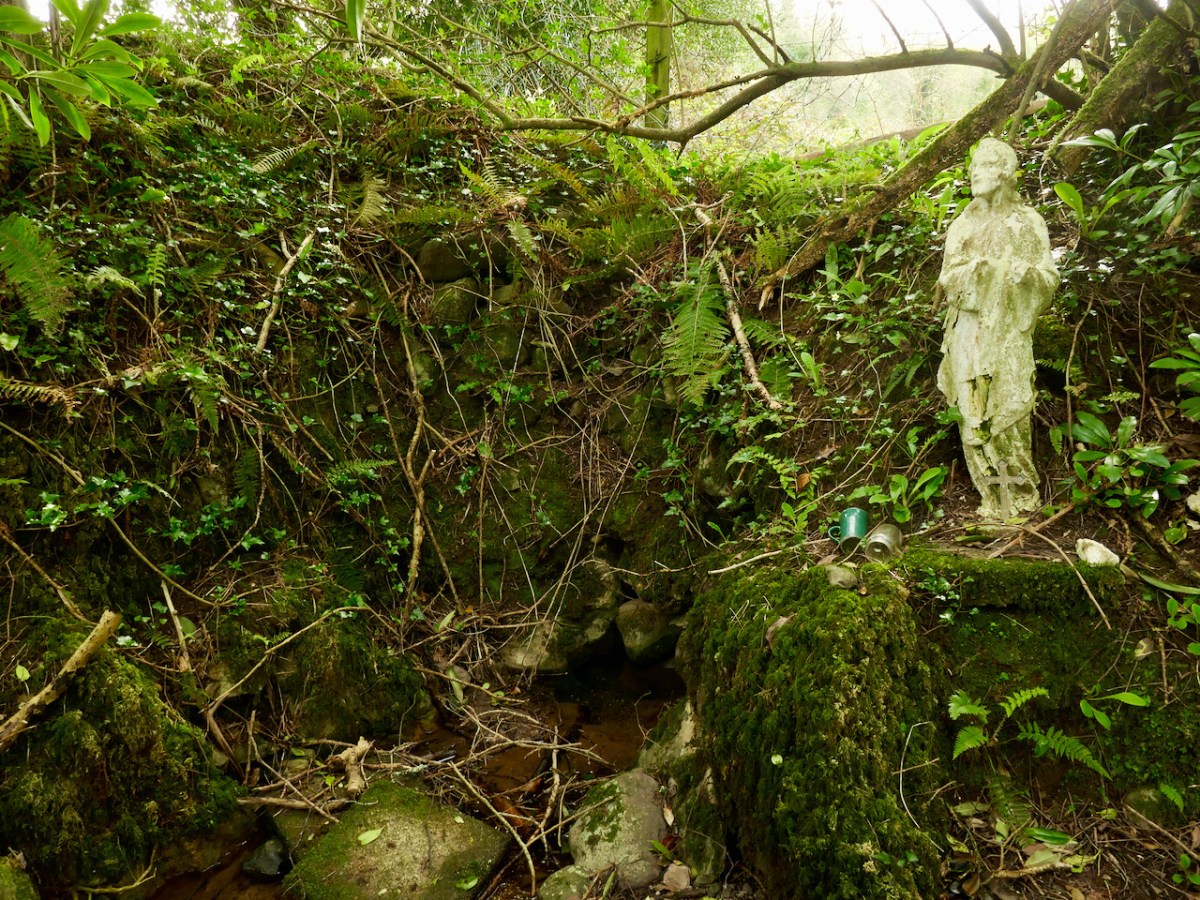
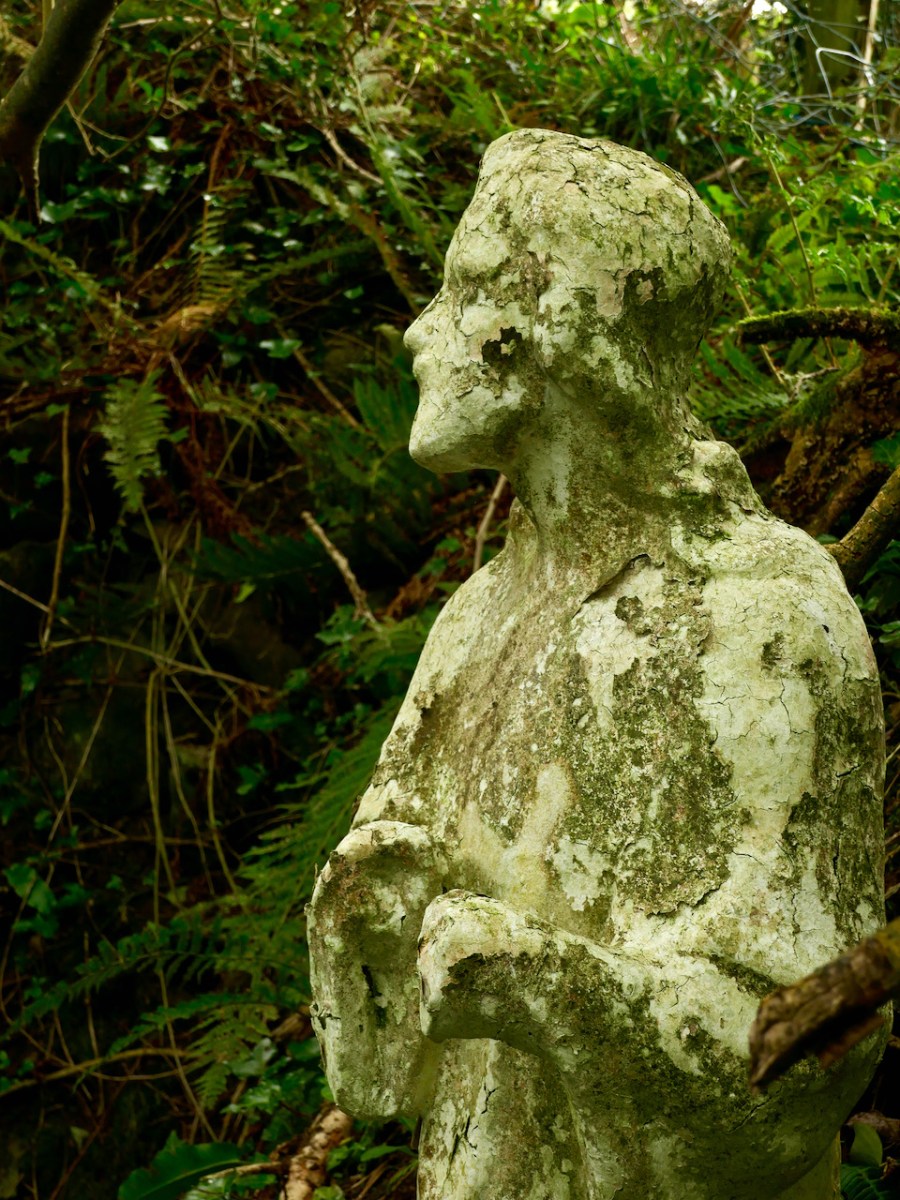
A little way to the east of St Peter is St Paul (above). He looks down on his own well. Note the modern mugs, implying that the well is still in use.

Both St Peter and St Paul share their feast day on 29th June. This is the day when these wells should be visited.

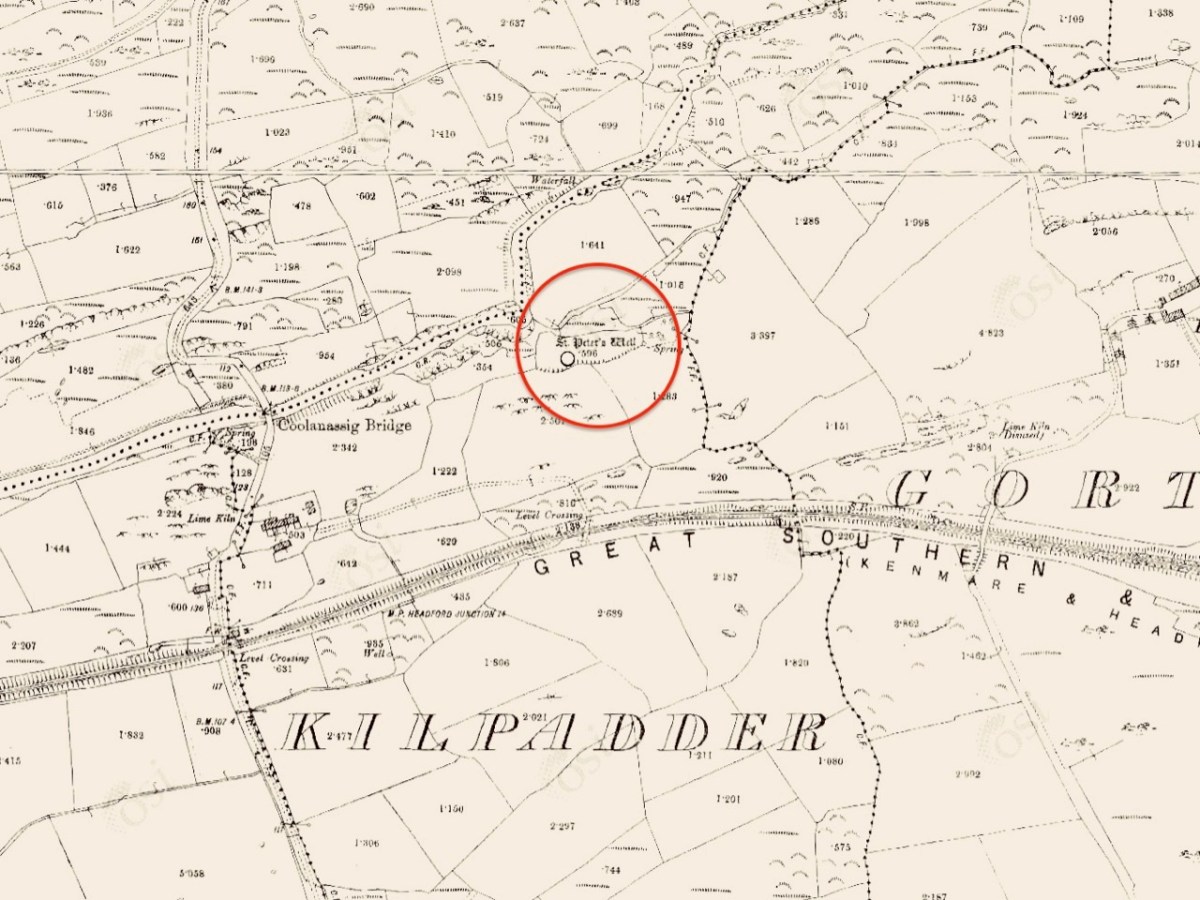
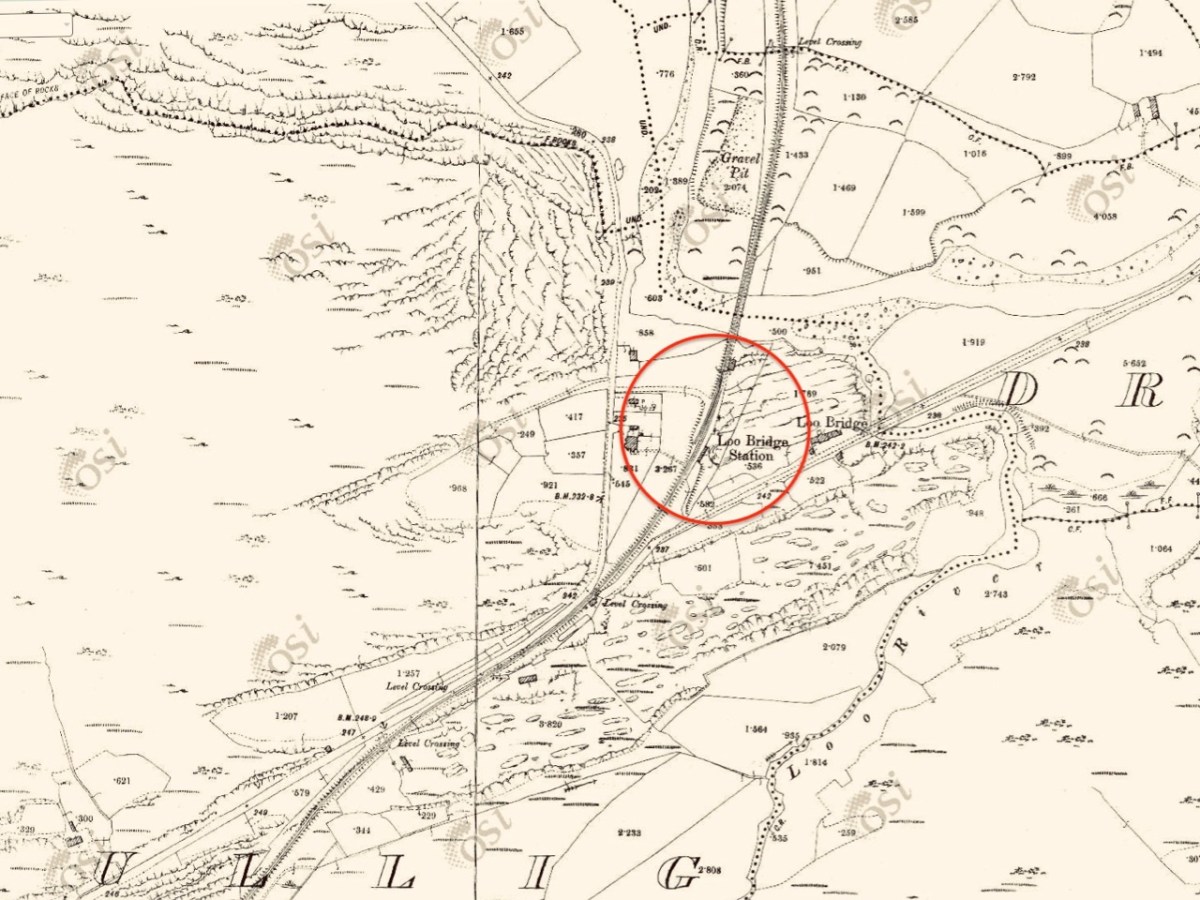
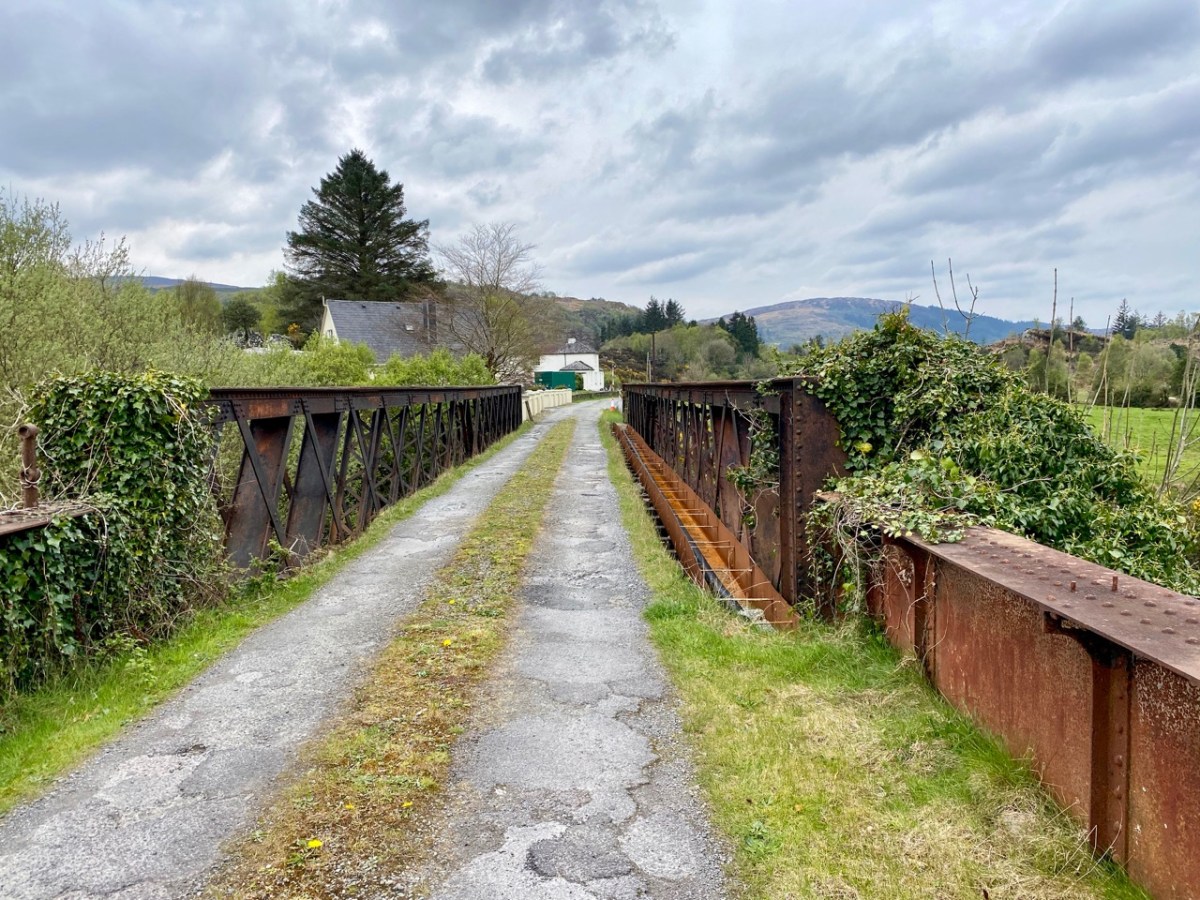
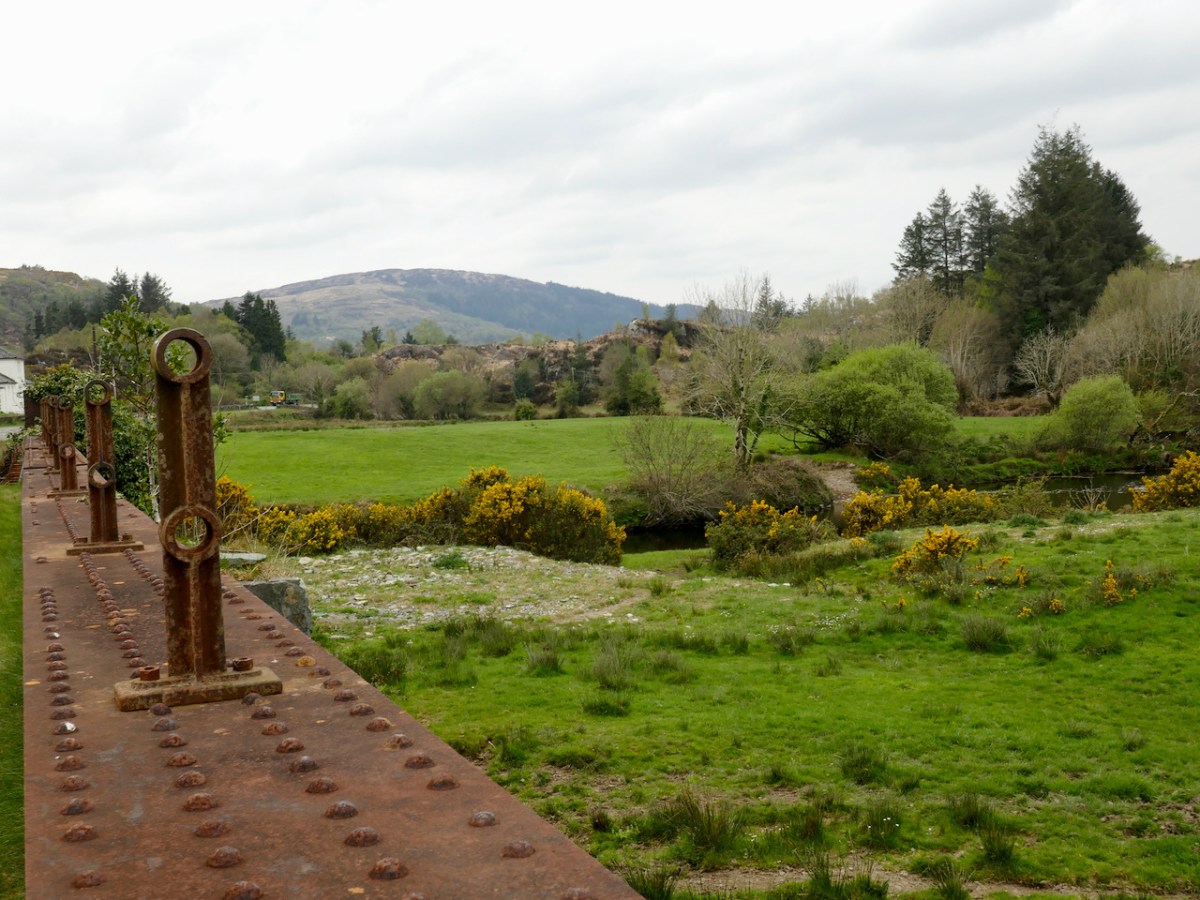
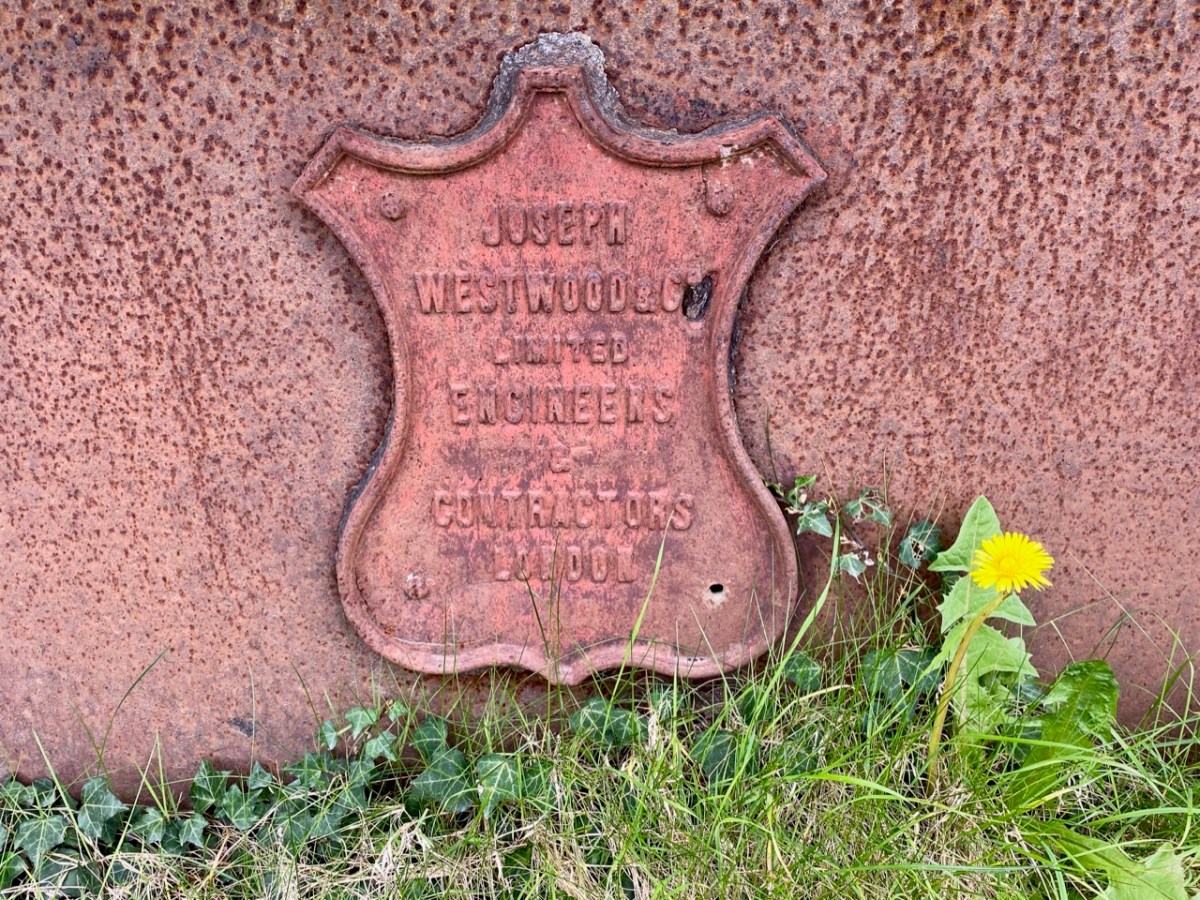
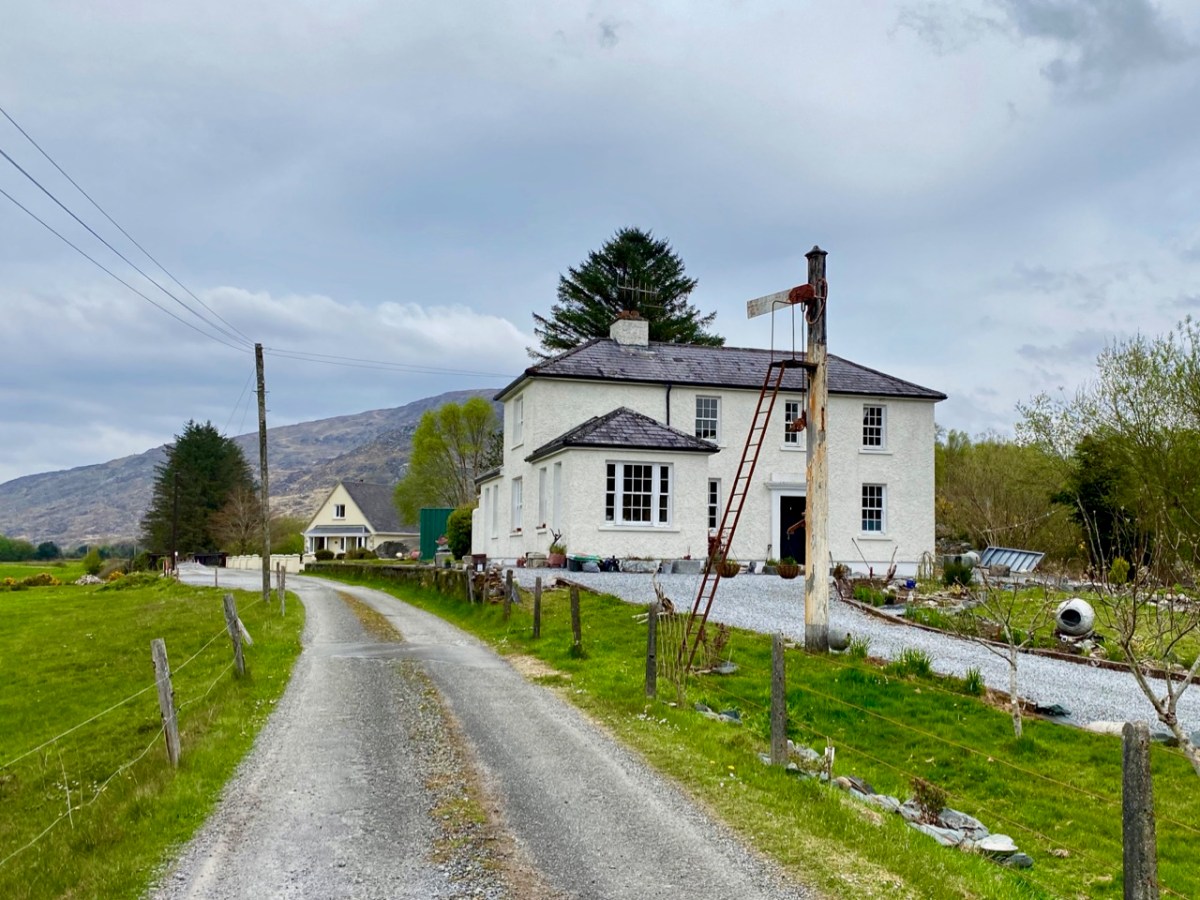
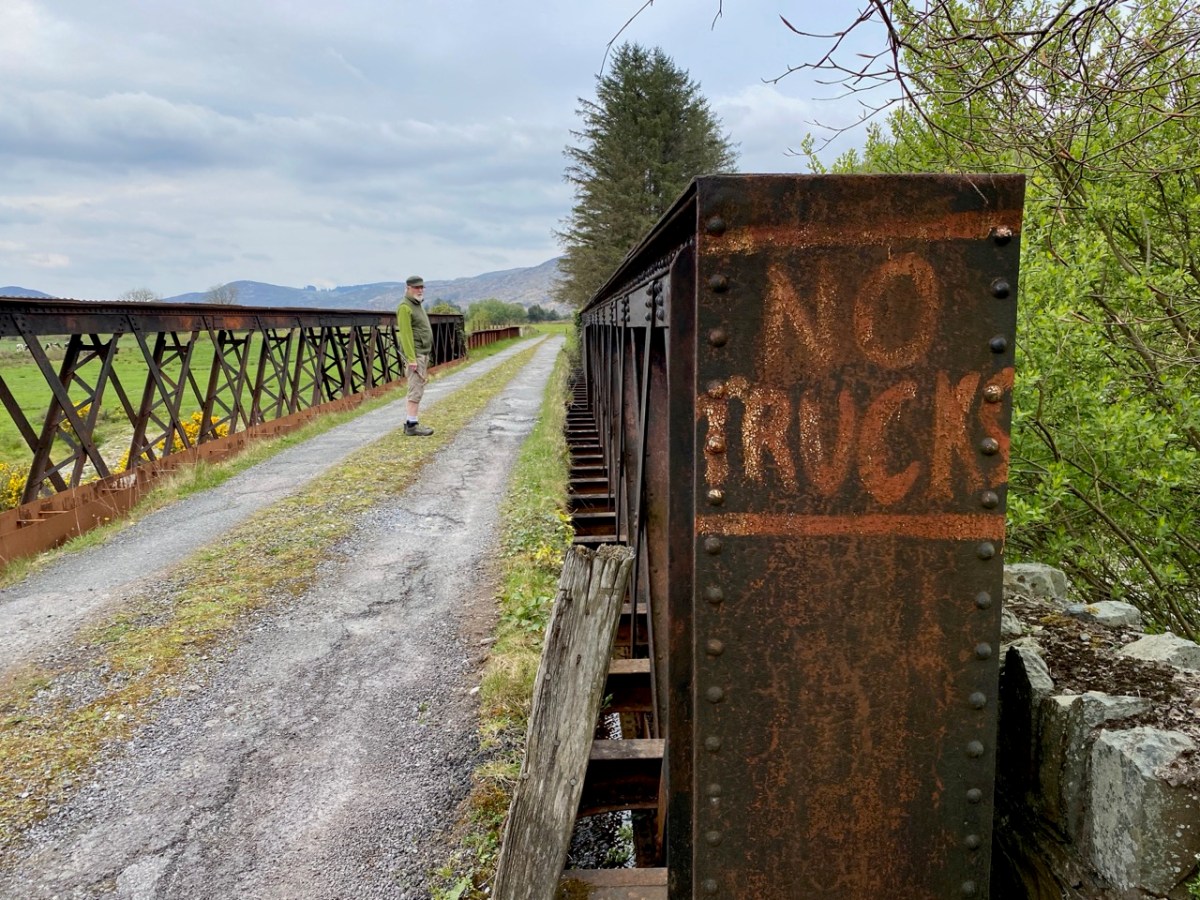
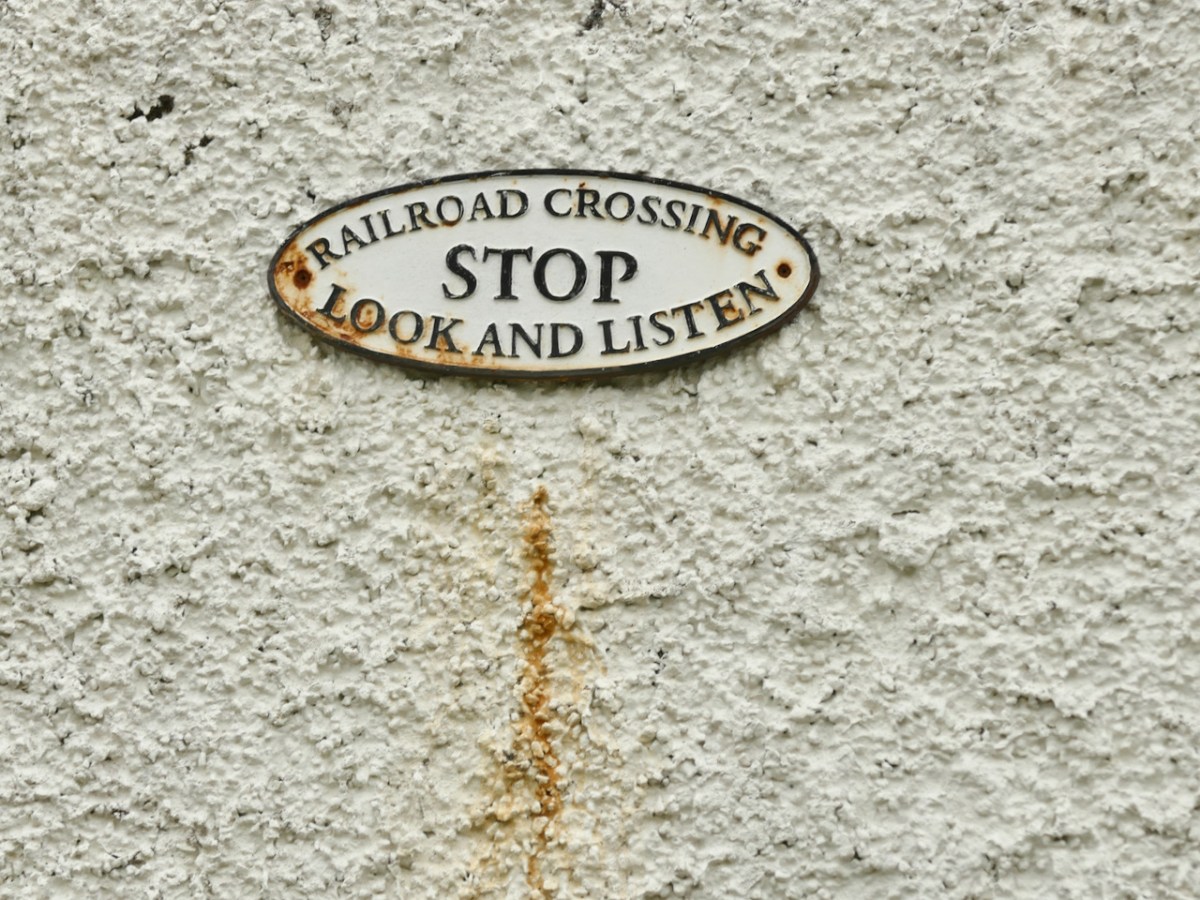
The 6″ OS map, above, dates from the late 19th century. St Peter’s well is marked on it, while St Paul’s only gets mentioned as a spring. Not far to the south is a railway line: The Great Southern Railway: Headford Junction to Kenmare. This was opened in 1890 and closed in 1959. While the track itself is long gone, many features can be traced. We stopped at Loo Bridge where the old station remains, as does an adjacent steel river crossing.

I am always saddened to see abandoned railway lines: they could so easily have had a new lease of life in our present environmentally conscious world. Regardless of their potential functionality, ‘heritage railways’ are also highly popular tourist destinations. I’m afraid, however, that the work and costs now required to recover them is unlikely to be invested any time soon, unless there is a big change in attitude and priority.

Lost railways and fading wells: unlikely bedfellows for a day out in Kerry. But our travels are always fulfilling, and diversity is the essence. In Ireland we can never run out of places to visit, or matters to be researched and recorded. Join us again, on our next expedition!

Drawing from Life – Simon Coleman RHA

The Dúchas Collections (duchas.ie) are an invaluable resource for any of us interested in Ireland’s handed-down culture. Encompassing folklore, traditional ways of life, stories and visual images, the material is readily available on-line, and the archives are substantial and perfectly preserved, hopefully for all time. A recent find, for me, is the work of Simon Coleman, who was commissioned by the Irish Folklore Commission to accompany some of its collectors, and to visually record aspects of their work, in the mid twentieth century.

. . . Coleman was commissioned to travel in the company of full time folklore collectors, and to make drawings of local work practices and associated equipment, the traditionally built environments he encountered, as well as the diverse material culture evident in homes and communities of the day . . .

UCD Digital library, national Folklore Collection

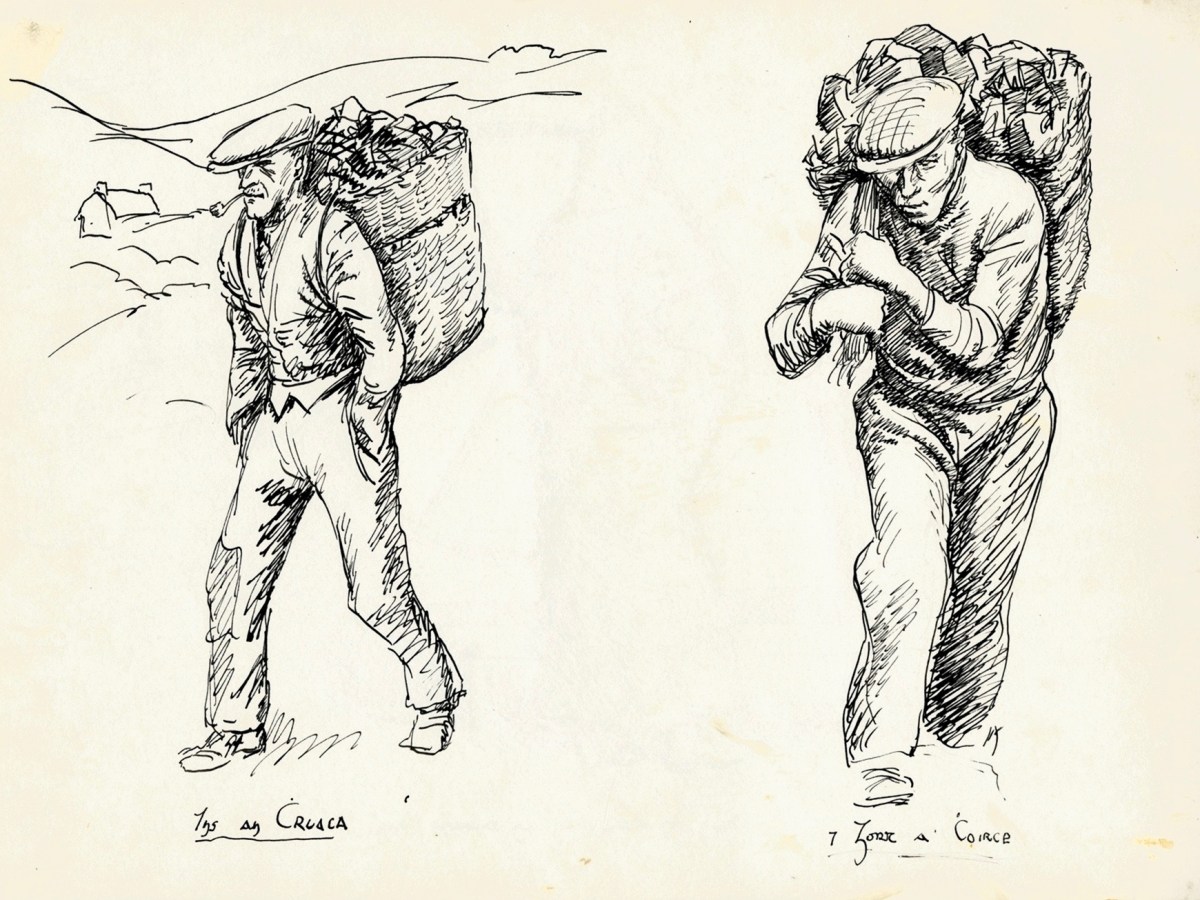
The simple studies by Coleman, above – which portray alternative forms of transporting goods – abundantly describe visually a way of life which is vanished today. The Commission also employed photographers (and the Dúchas collections are also rich in these) but – in my view – there is an immediacy in these drawings which make them completely convincing: we are looking directly into Ireland’s past.

Have you ever heard of “Cad”? I hadn’t, until I looked into the work of Simon Coleman. The word in Irish is Caid, and it refers to a game which was played with sticks. There is a suggestion that it was a precursor to Gaelic football, although I am not convinced about this. In the version that Coleman recorded in 1959 in Inishmaan, Co Galway, the object of play was a short piece of stick, chamfered at both ends. This was hit by one of the players with a large, stout stick, making it fly into the air. As it descended the player gave it a hardy whack into a field, and the aim was to shoot it further than anyone else. Coleman’s drawings are accompanied by his notes:

. . . Sticks Game: the game of ‘cad’, Inish Meadhon. The ‘cad’ (short length of stick: approximately 2 1/2”) lying against a stone in the middle of the road; ‘cad’ is tapped with stick and jumps into the air about 4 or 5 feet thus; before it has time to fall to the roadway again, it is hit full-bloodedly into the adjacent fields. Each player has one try; the distance that the cad is hit is measured by the player with a stick approximately 6ft long . . .

Duchas.ie – Photographic collection

Interestingly, i was speaking to an Irish friend today and I mentioned ‘Cad’. He had heard of it through his family, although was not aware of it being played in his lifetime. The game he described was virtually identical to the notes above.

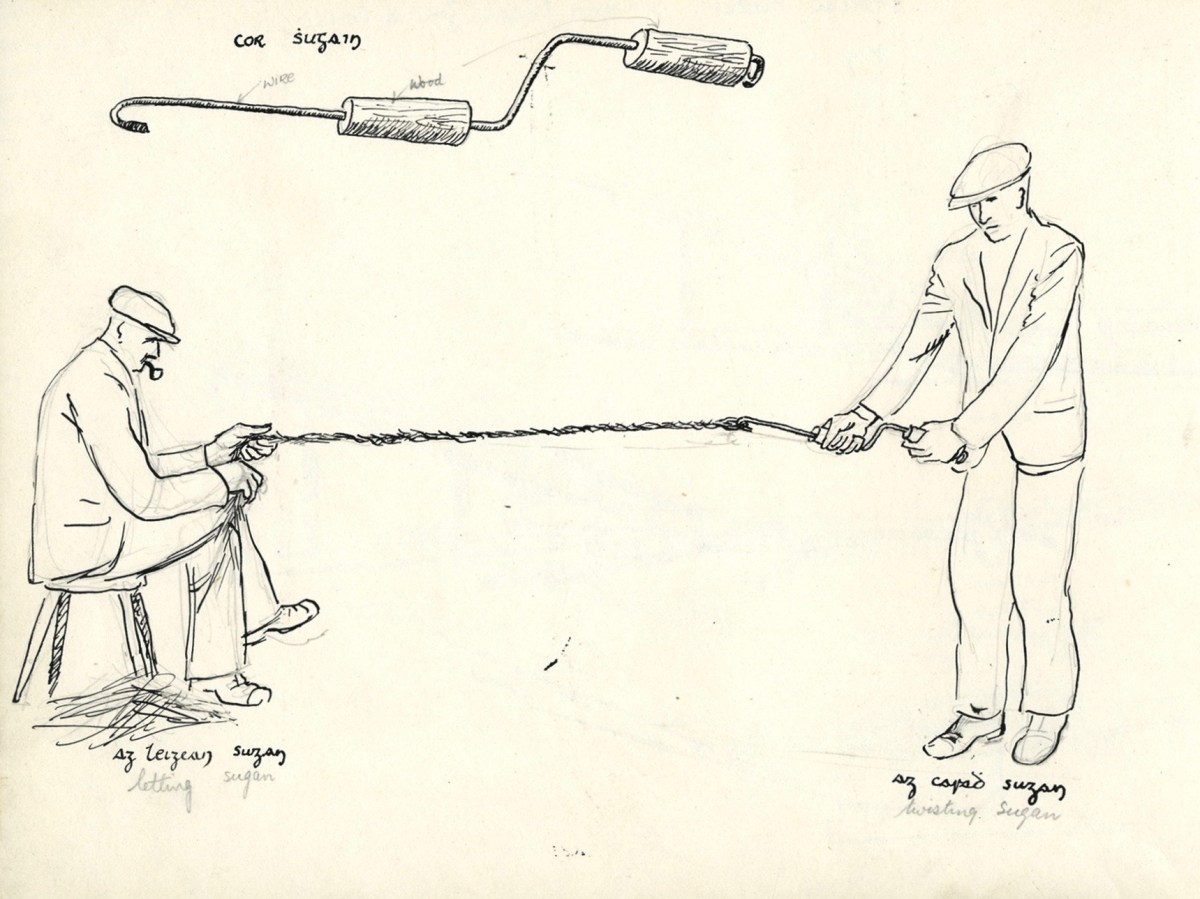
Coleman’s subjects were always wide-ranging. He was employed by the Folklore Commission in 1949 and again in 1959. We might imagine that he chose his own topics provided he fulfilled the brief of making an active record of what he saw. The top picture, above, shows traditional ‘Sunday Attire’, Inishere, Co Galway, and the interior view with bed and turf fire is from Croaghgorm or Blue Stack Mountains, Co Donegal. Also from Donegal is the simple but effective explanation of how ropes are made, below.

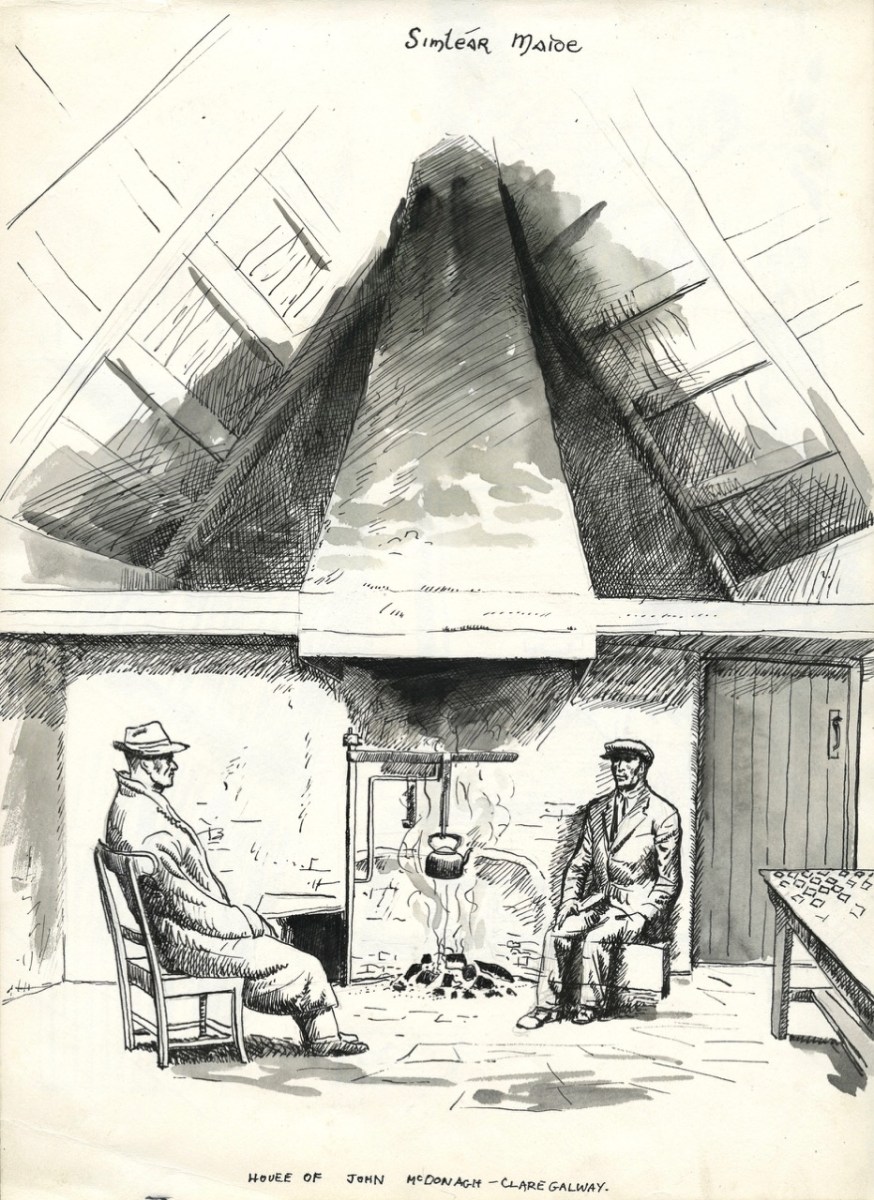
Particularly striking for me is the fact that all these images have been made in my own lifetime: This is an Ireland from not so long ago! There are very many more drawings and paintings by Coleman in this Collection, and I will return to them in future posts. Finally, for today, I can’t resist this spectacular rendering of a cottage interior from Clare, Co Galway.

I gratefully acknowledge and credit the Photographic Collection of Dúchas for all the above images (Cnuasach Bhéaloideas Éireann / National Folklore Collection). The header is a group of cottages at Gortahork, Co Donegal