More Books for Christmas!

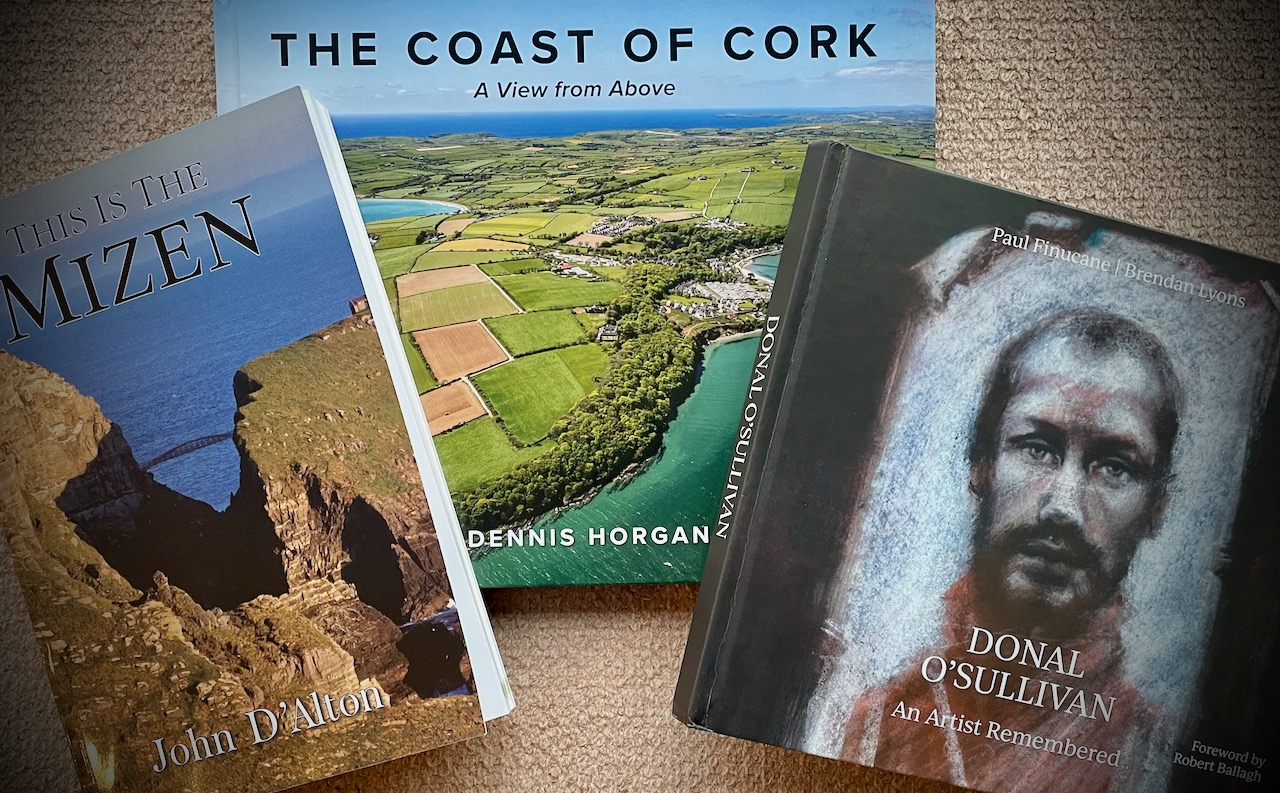
The three books I am recommending today are ideal for the person in your life who loves West Cork and/or fine art. All three are by West Cork men and all three are self-published. Even though self-publishing is increasingly common, distribution is often monopolised by the large publishing houses, so I am delighted to have the opportunity to bring these three to your attention. 
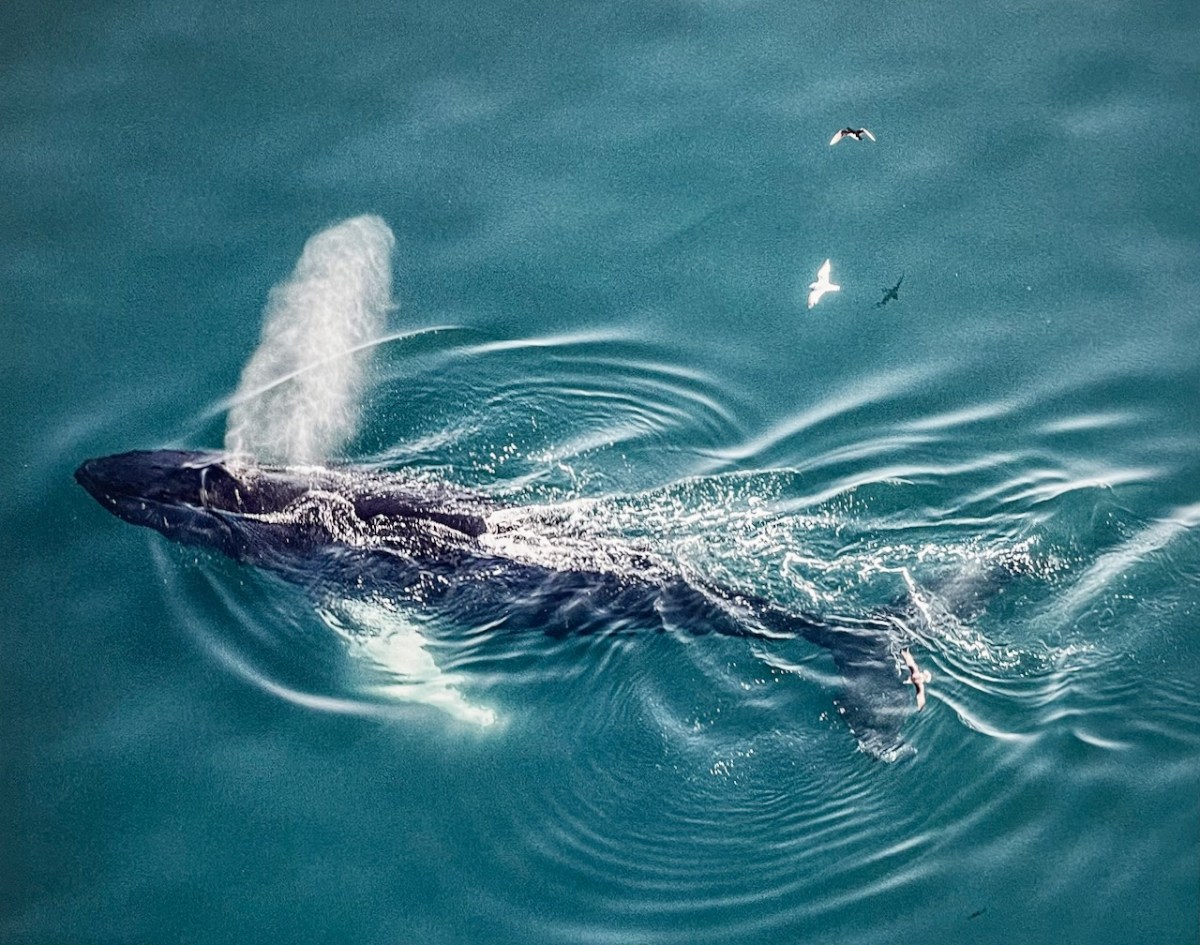
Let’s start with Dennis Horgan’s latest – The Coast of Cork, A View from Above. Dennis has been incredibly generous in allowing us to use his photographs in the past, but we have never reviewed one of his books before. In the age of the drone, it’s easy to forget that only an aerial photograph can capture the most expansive views – a whole island, for example, or the sudden rise of a humpback whale, or a seascape feature that is too far from land to capture any other way.
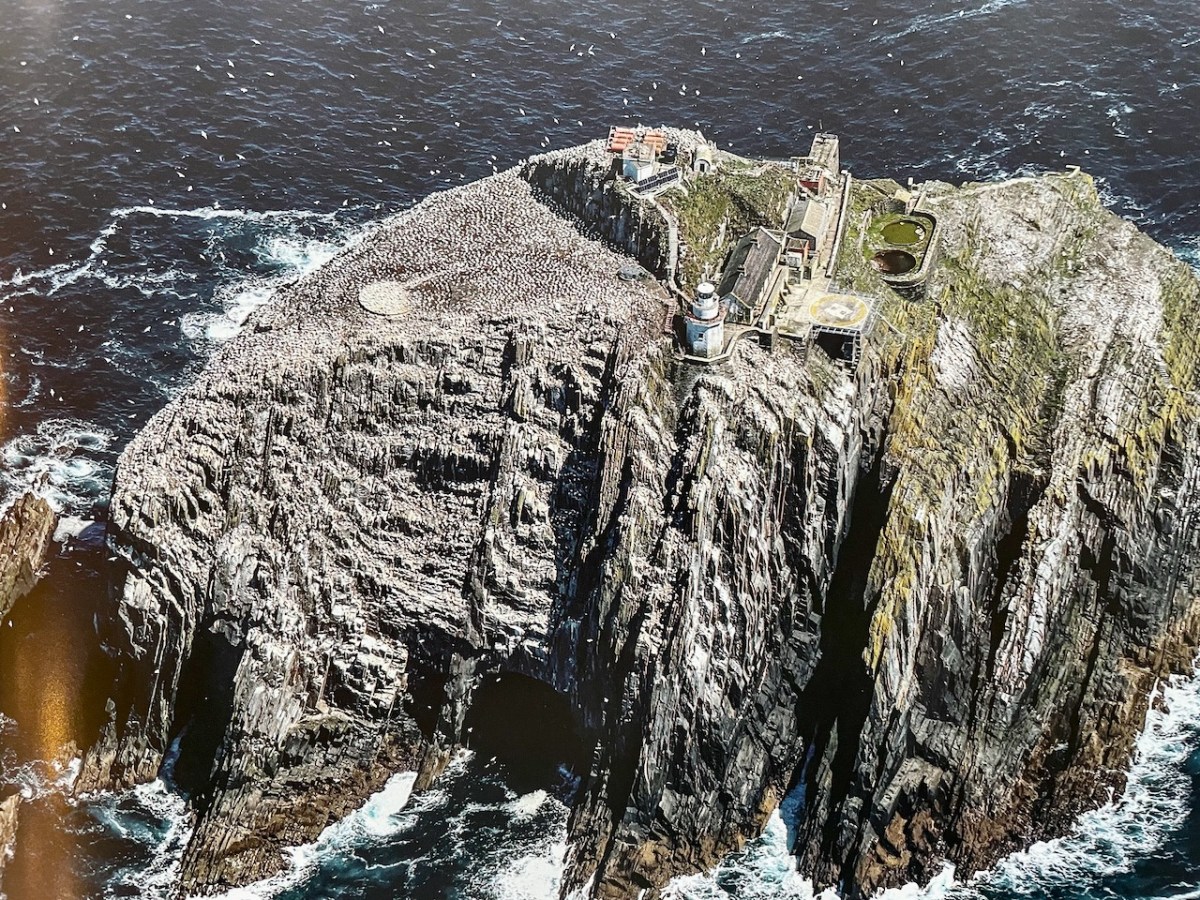
Dennis is the real deal.  Leaning out of a plane flying at 150 miles an hour, kept safe only by a seat belt – it’s not for cowards. Add to this his mastery of photographic techniques necessitated by speed, varying light, changing focal lengths, wind and cloud and here you have a virtuoso photographer working at the height of his powers.
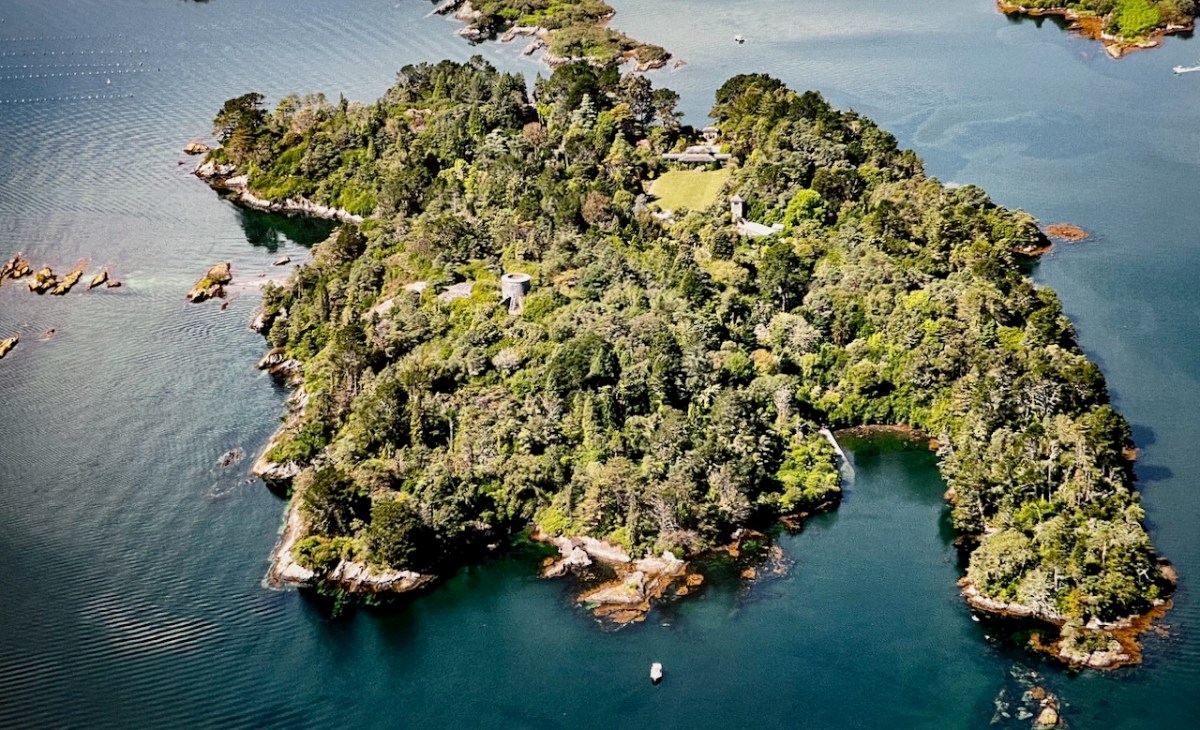
And he’s a Cork man through and through – his knowledge of and love for our coast is obvious. He knows these places on the ground and so he knows exactly what he wants to show us, and how he wants us to see it. You can find the book here, along with more of Dennis’s magnificent panoramas.
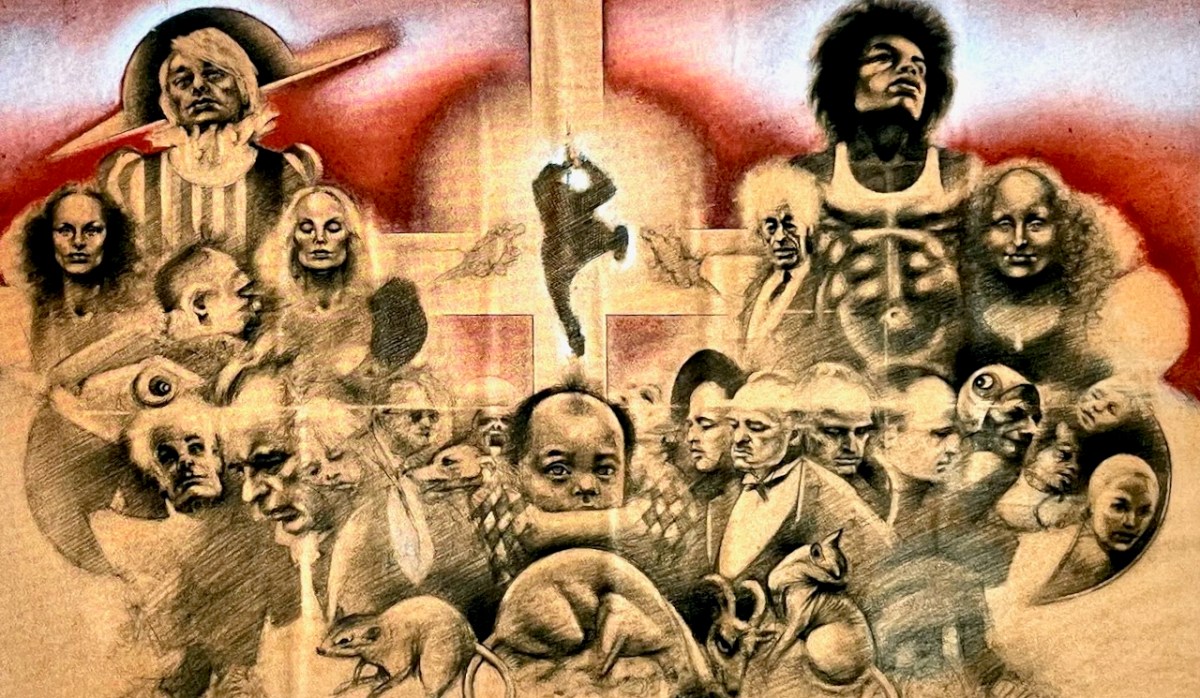
Our second book, Donal O’Sullivan: An Artist Remembered, is a revelation – why has nobody heard of this man? In jaw-dropping image after image, Paul Finucane and Brendan Lyons reveal the forgotten genius of O’Sullivan, whose preferred media, pastels and pencil, glow out from these pages. 
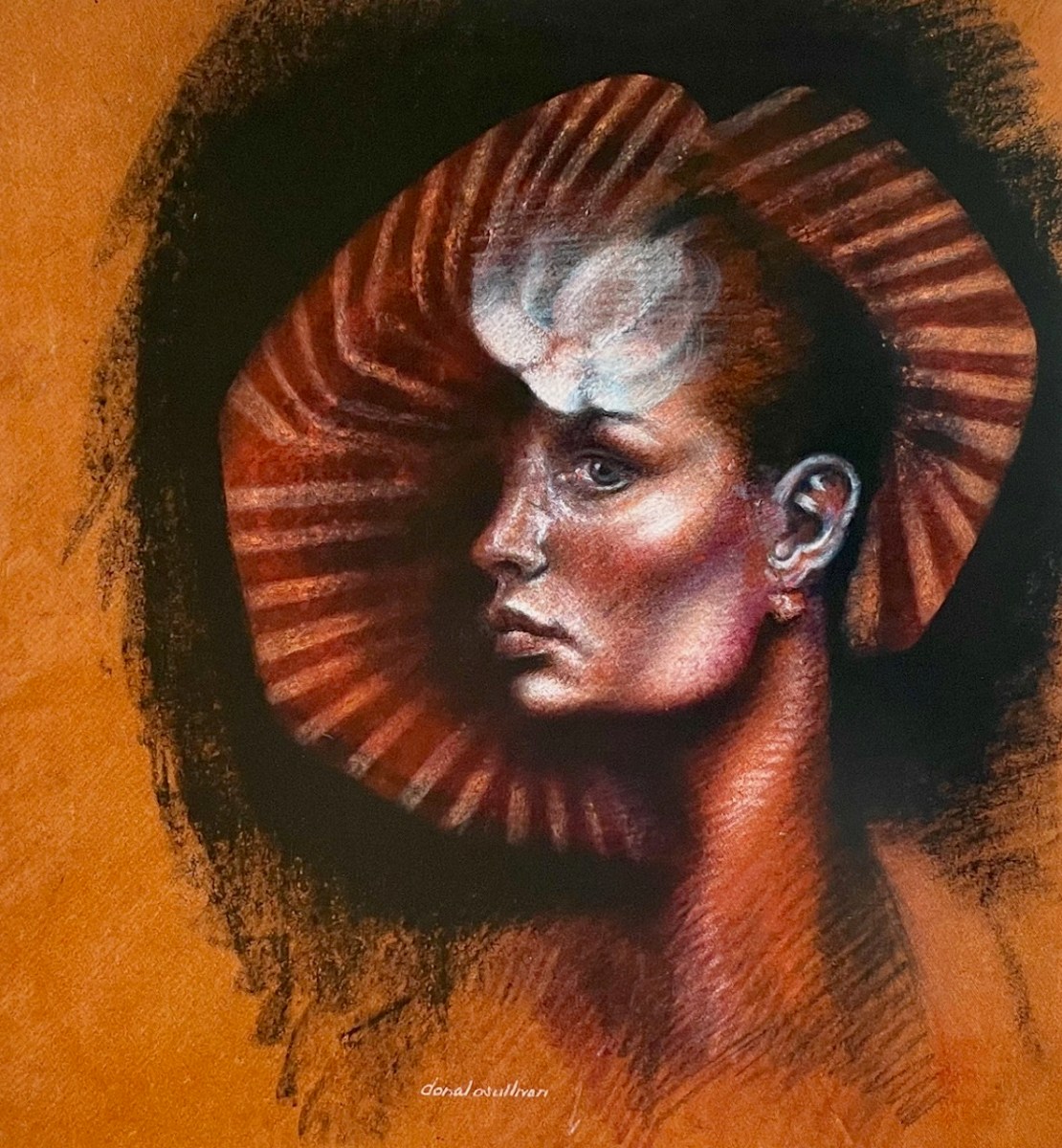
We learn about his students activism – he was a leader in reforming the old-fashioned and under-resourced College of Art, still languishing in basement rooms in Kildare street in the late 60s, with a curriculum dictated by civil servants (no life drawing, use those plaster casts!). Later, he was a beloved teacher in Dun Laoghaire, a friend and mentor to many. 
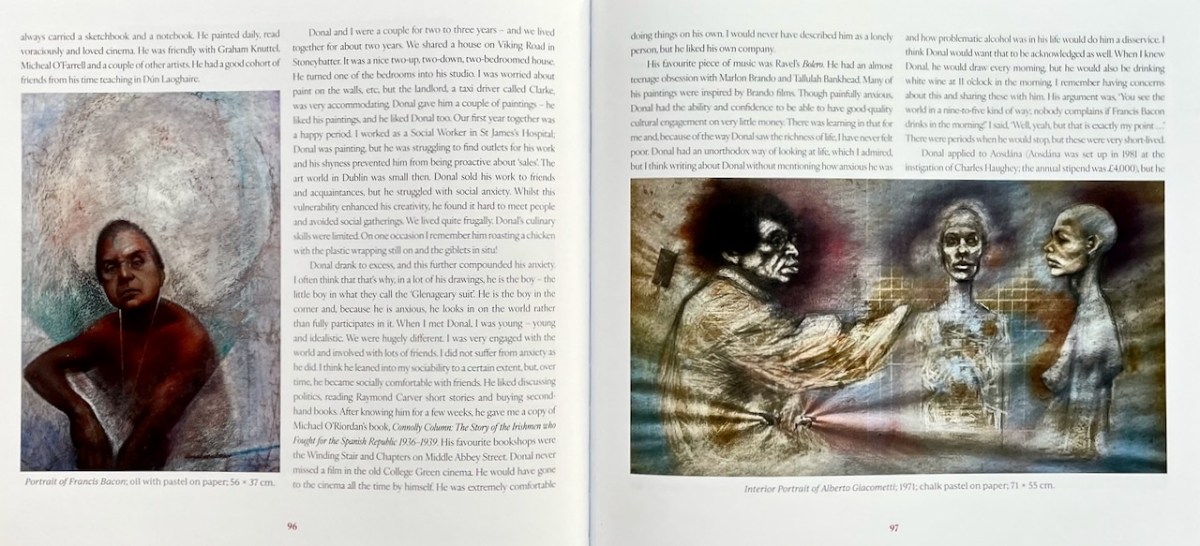
There are several descriptions of his chaotic studio. It sounded much like that of one of his inspirations, Francis Bacon, now reproduced in the Hugh Lane Gallery. He died by suicide when he was only 46, mourned by the family who loved and supported him through his later addiction battles, and those in the art world who remembered him as gentle, kind, encouraging, and fiercely individual.
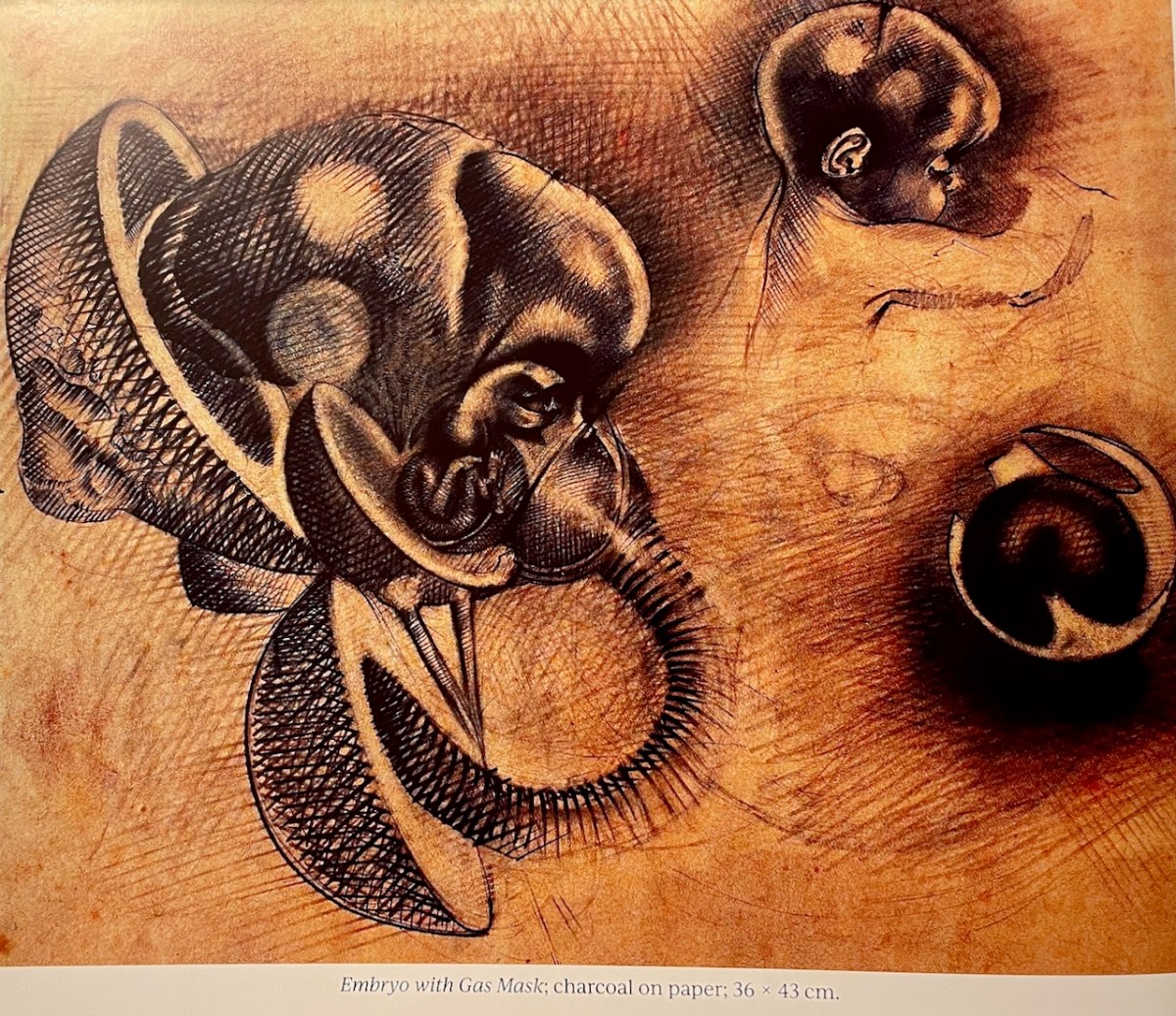
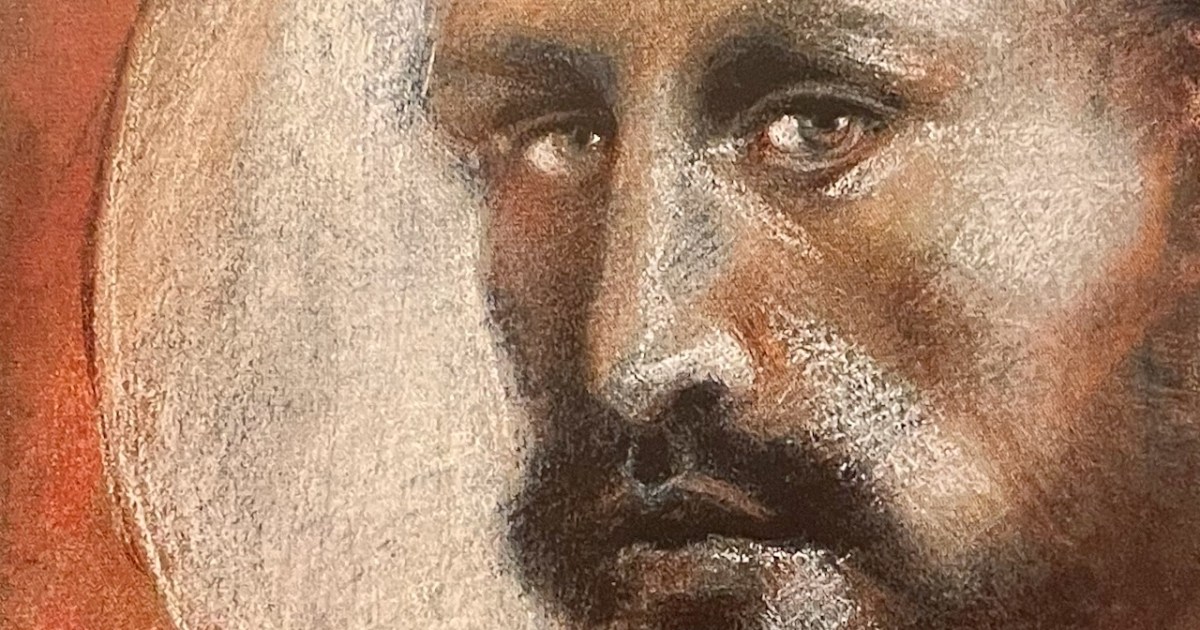
A piece in the Irish Times says, he had gone against the expressionism that was fashionable in Irish art circles at the time, trading instead in powerful, elegant and melancholy figurative art that often discomfited its viewers. That same piece has a video that shows many, many of his works, carefully preserved by his sister, Marie. There are many self-portraits – my lead image is a detail from one. And many nudes, despite the best efforts of those 1960s civil servants.
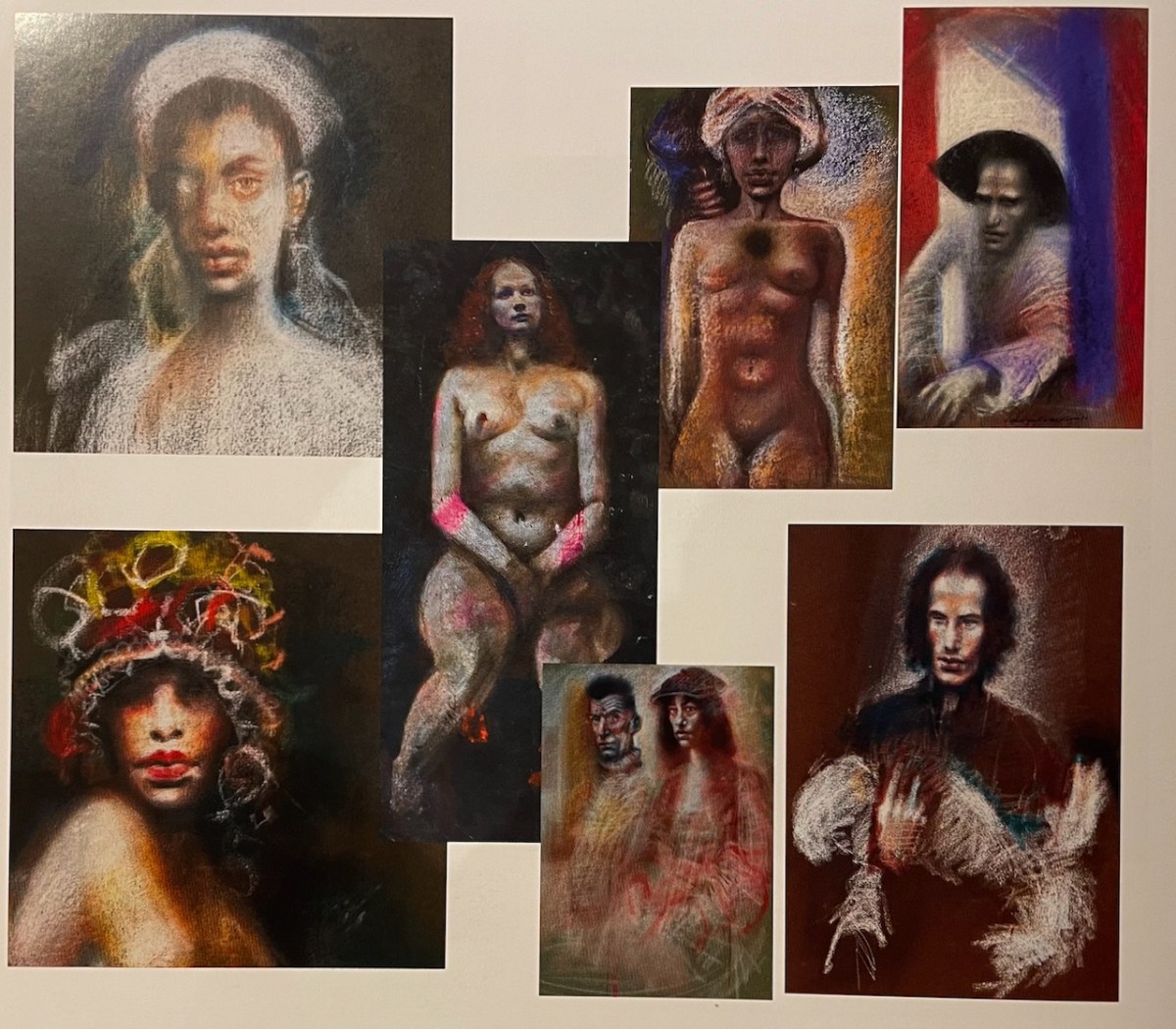
Finucane and Lyons, who also mounted a retrospective exhibition in September at Union Hall’s respected Cnoc Building Community Arts Centre, deserve all our thanks for rescuing this extraordinary artist from obscurity. You can purchase your own copy here.
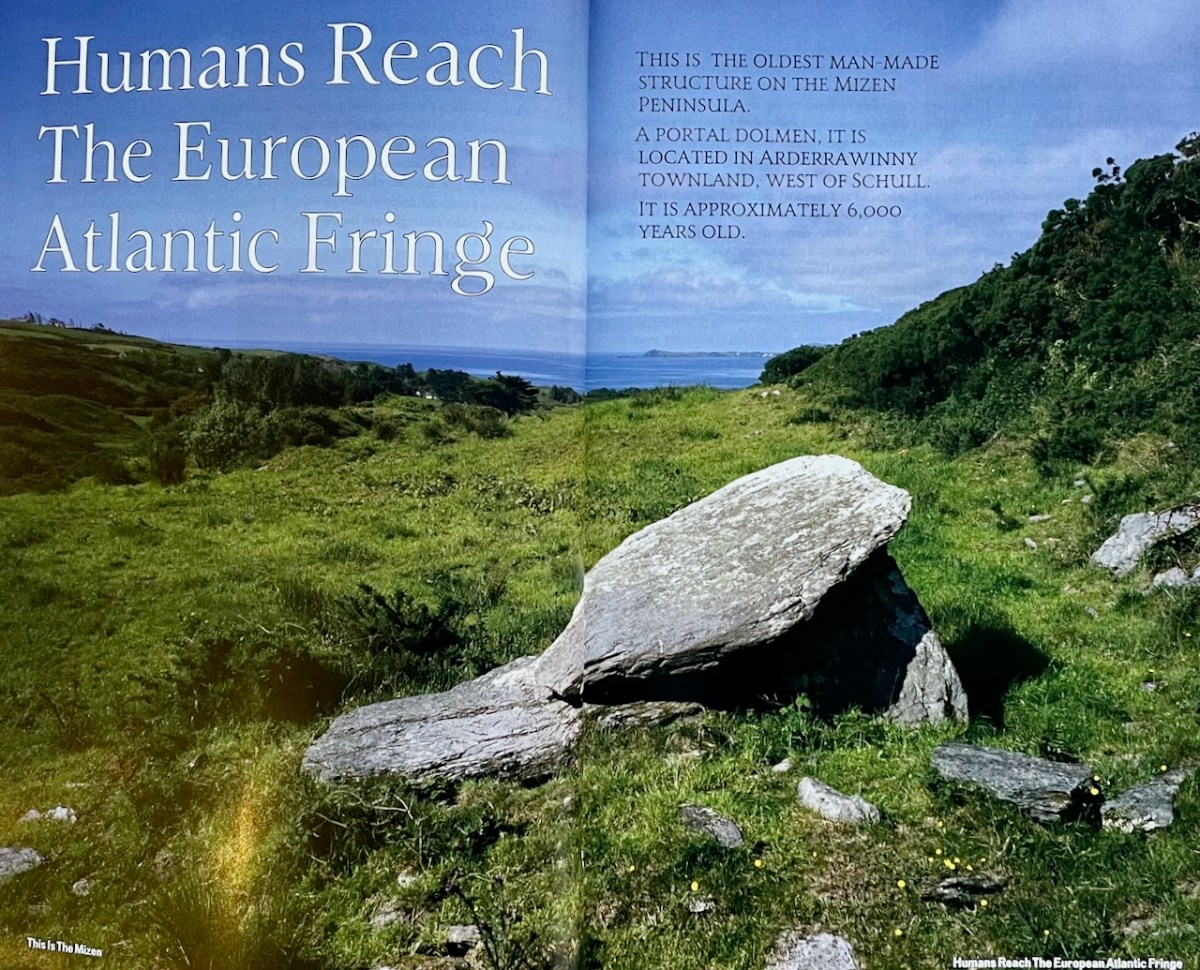
Finally, a book that, according to its writer, has been 18 years in the making, deals with a topic dear to my own heart. This Is The Mizen, by John D’Alton, delves into the history and prehistory of the Mizen Peninsula, copiously illustrated by John’s own photographs as well as historical images. 
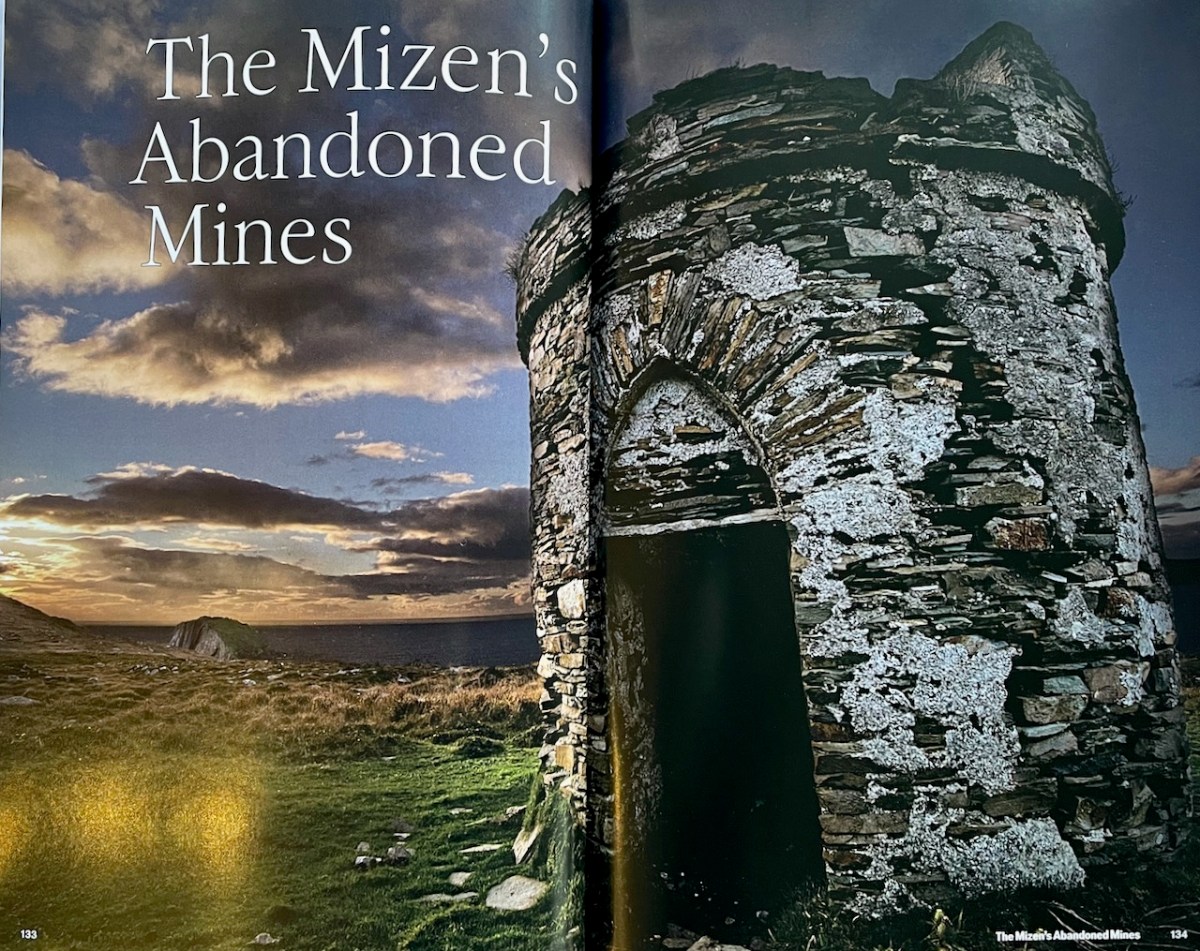
John, a former journalist and professional photographer, loves a moody landscape and his photographs often highlight a building or landscape lit by a setting sun. He has produced two previous books about West Cork (see here for example), using his own images.
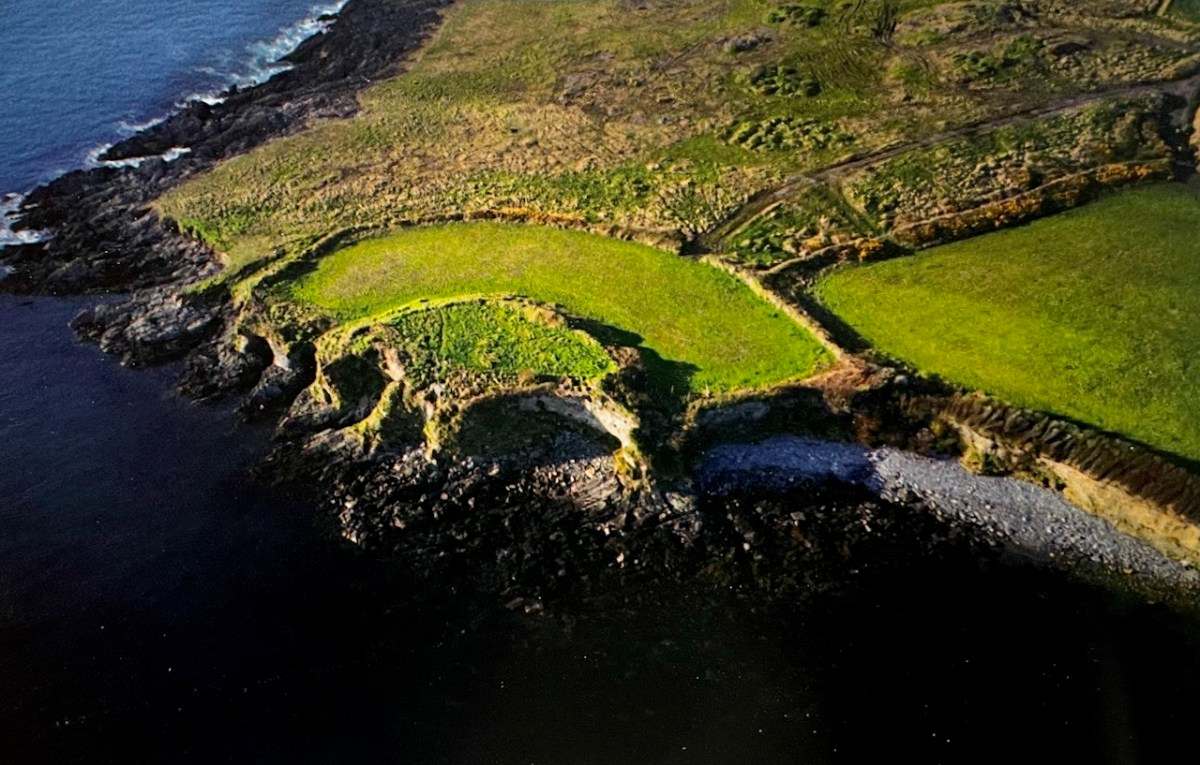
But this is not primarily a picture book, but rather an extended essay on the history of the Mizen Peninsula, from the earliest times. Regular readers might recognise the partial fort above – I wrote about it here and here. Don’t expect a turgid academic treatise: John has done his homework, and combines that with his own trenchant opinions, and a take-no-prisoners approach, to provide a highly readable account of this area. The book is available at local bookstores, such as the lovely Worm Books, or at https://www.buythebook.ie/product/this-is-the-mizen/
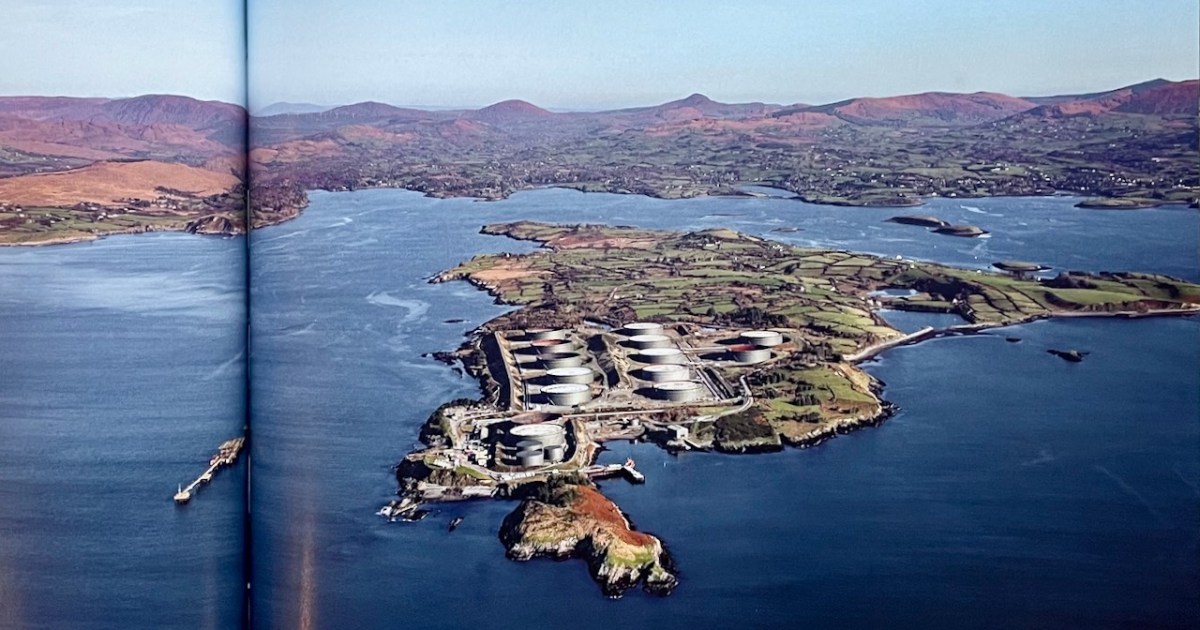
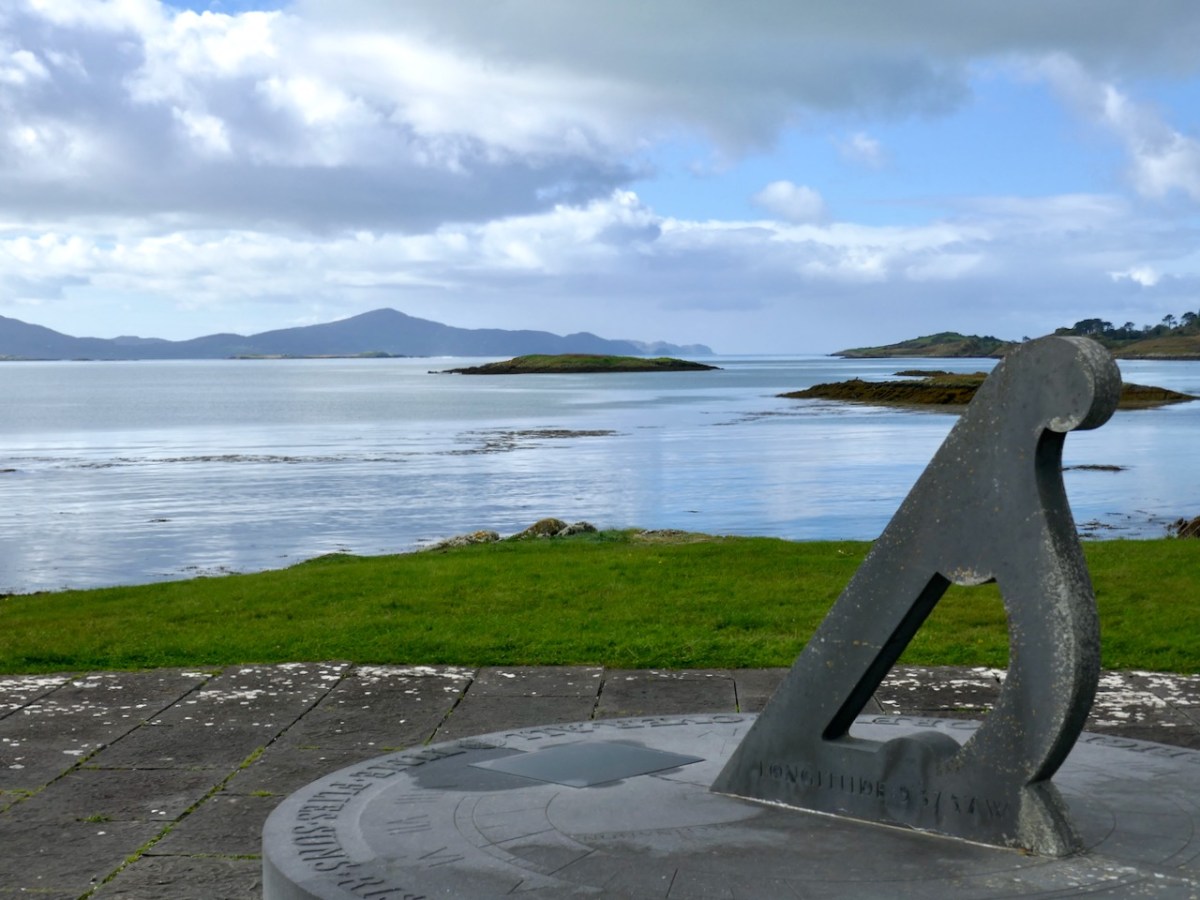
Above, Whiddy Island from Dennis Horgan’s The Coast of Cork
A Powerhouse for Nature – Sonia Caldwell and Kilcoe Studios

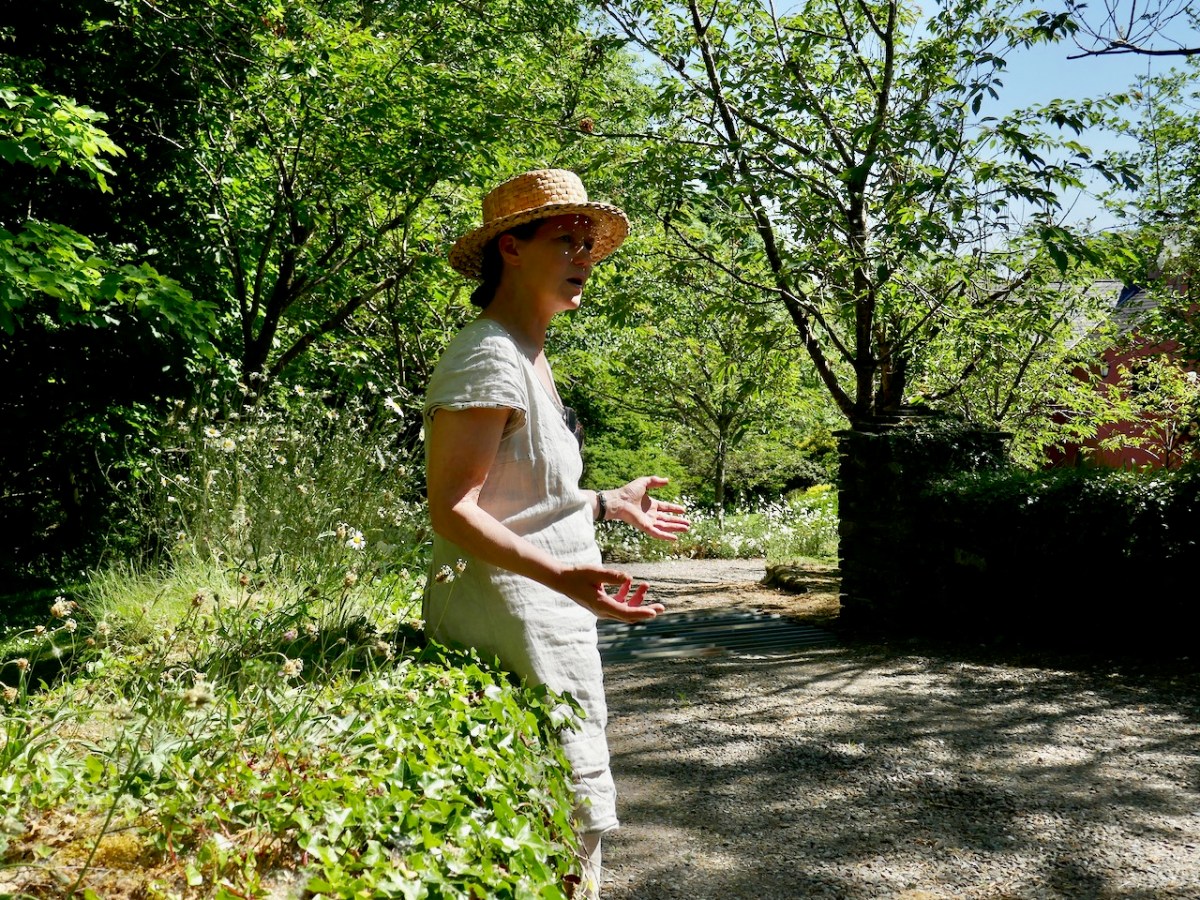
I have written once before about Sonia Caldwell of Kilcoe Studios. That was eight years ago. In a post titled Kilcoe Studios – Dedication and Passion, I showed you her production of beautiful botanical art calendars and notecards, and gave you a glimpse of her passion for sculpture.

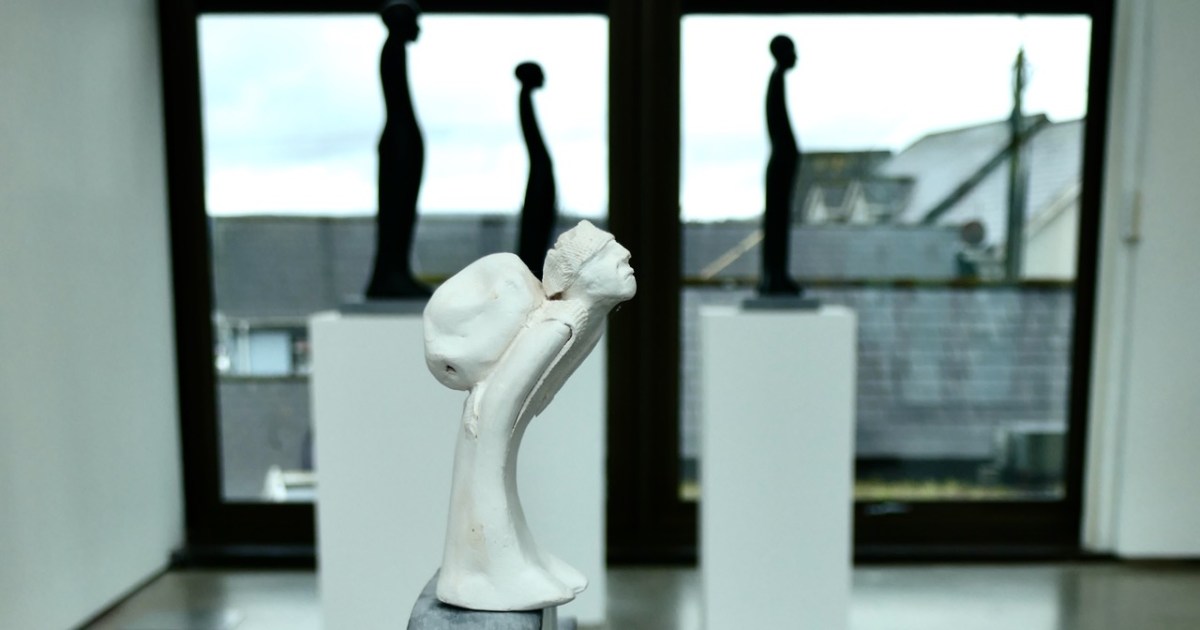
Since then, Sonia has emerged in West Cork as a true champion for heritage and nature, on top of continuing to develop her business and her personal sculpting practice. After a residency at Uillinn, she held a solo show there last month, mainly featuring her sculpture.
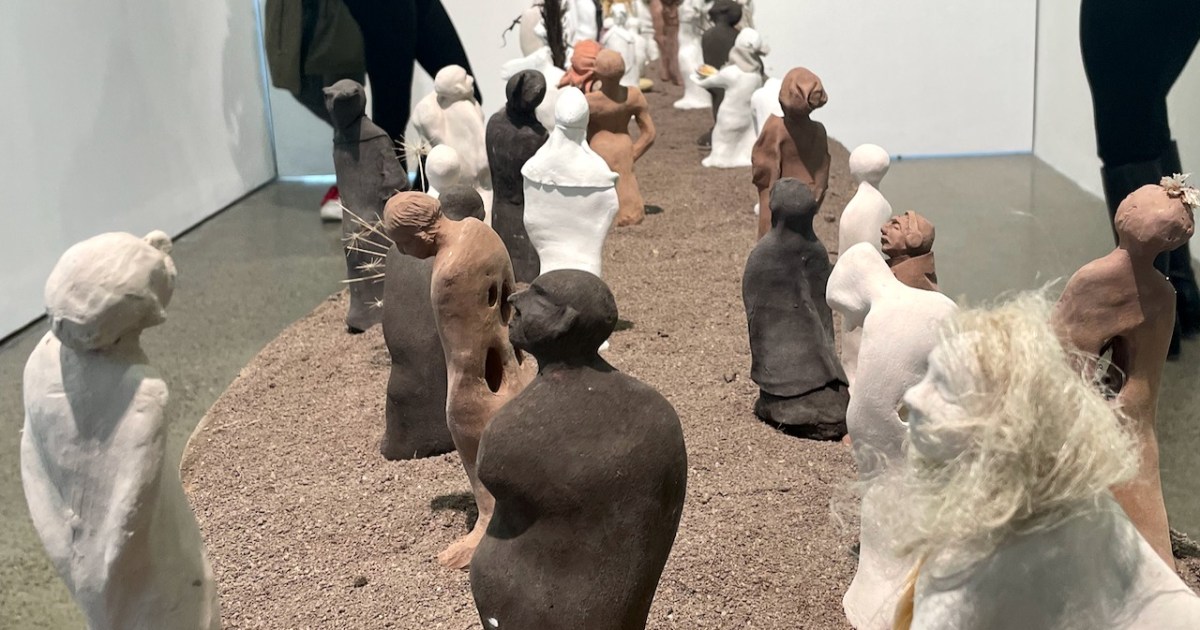
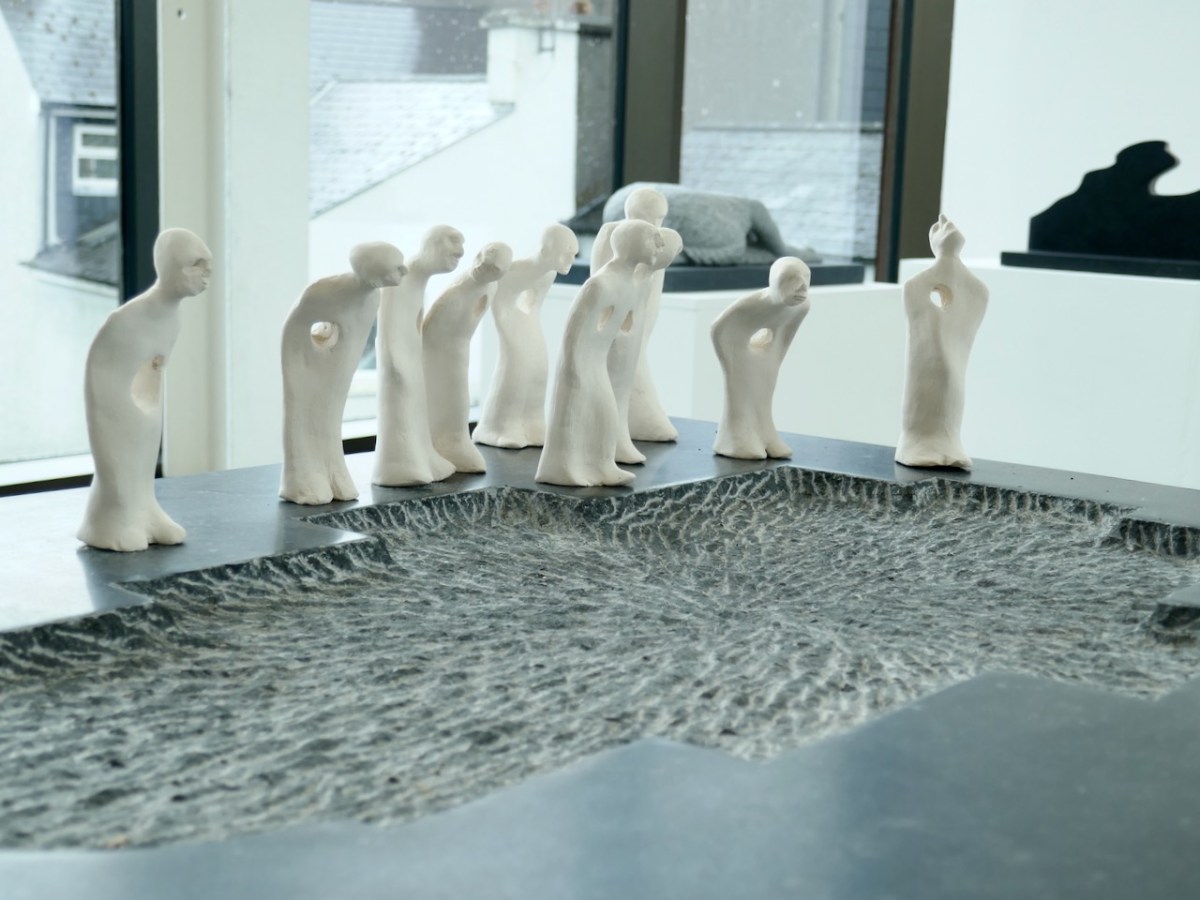
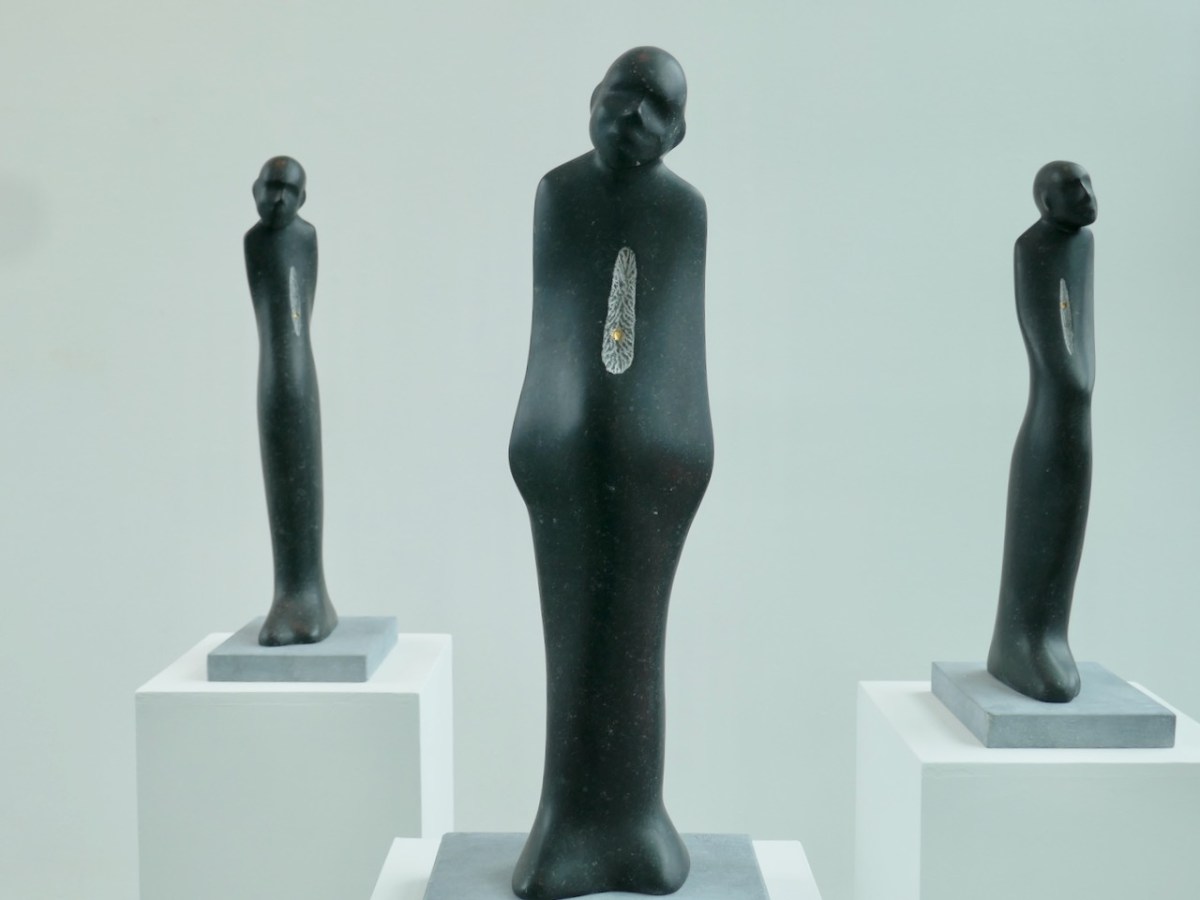
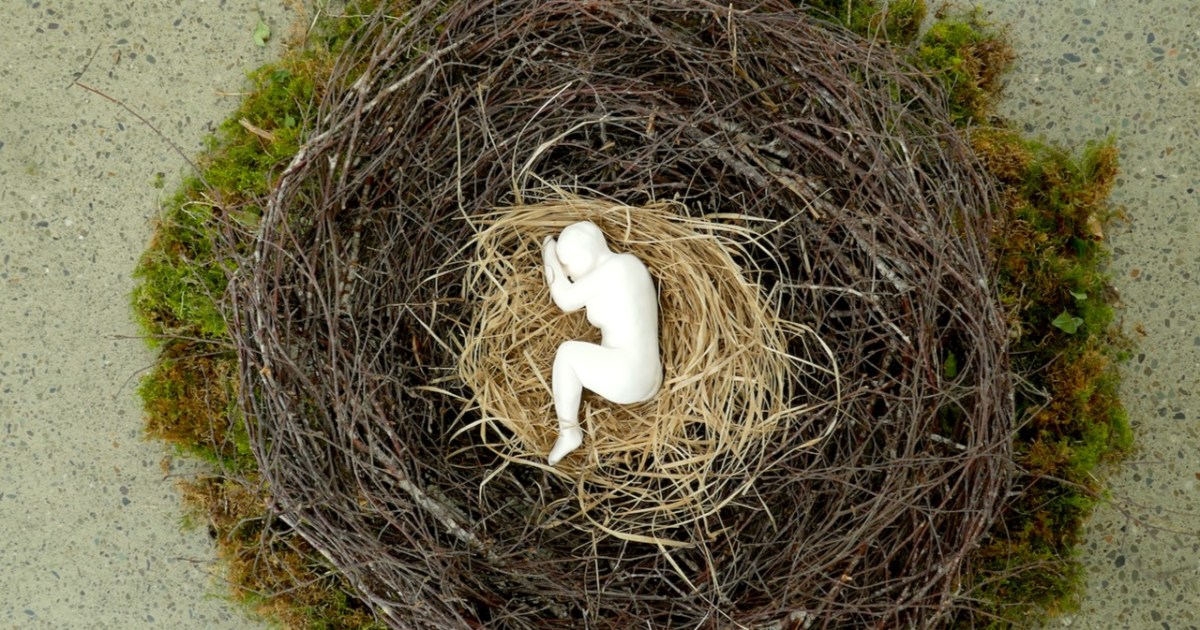
Sonia works in limestone, clay and natural materials such as mosses and twigs. Her work has an ethereal quality, explained by her personal spirituality. Her figures, small and large, are seeking to find their path, or answers to their questions. 

They ponder an empty church, march along a pilgrim route carrying their burdens, or gaze into the distance mulling over some otherworldly mystery. 

The launch of the exhibition was haunting. Sonia and singers, directed by Susan Nares, entered singing: chanting, rather, in a slightly Gregorian way, in English and Irish. 

That’s the fine art side of Sonia. But her other passion is for the natural world and for all those heritage crafts that will die, if people like her don’t learn, nurture and revive them. She has opened a shop in Ballydehob, where she sells her own artwork, and items by others made from all natural materials. 

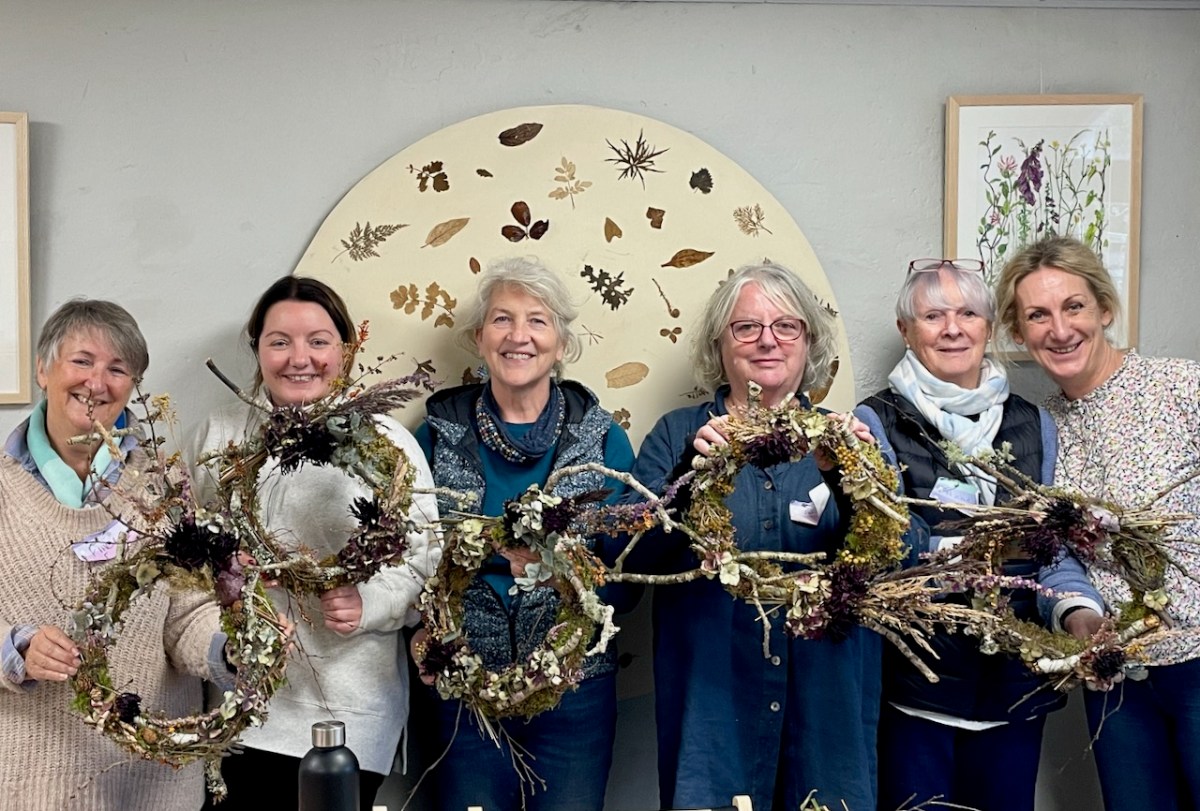
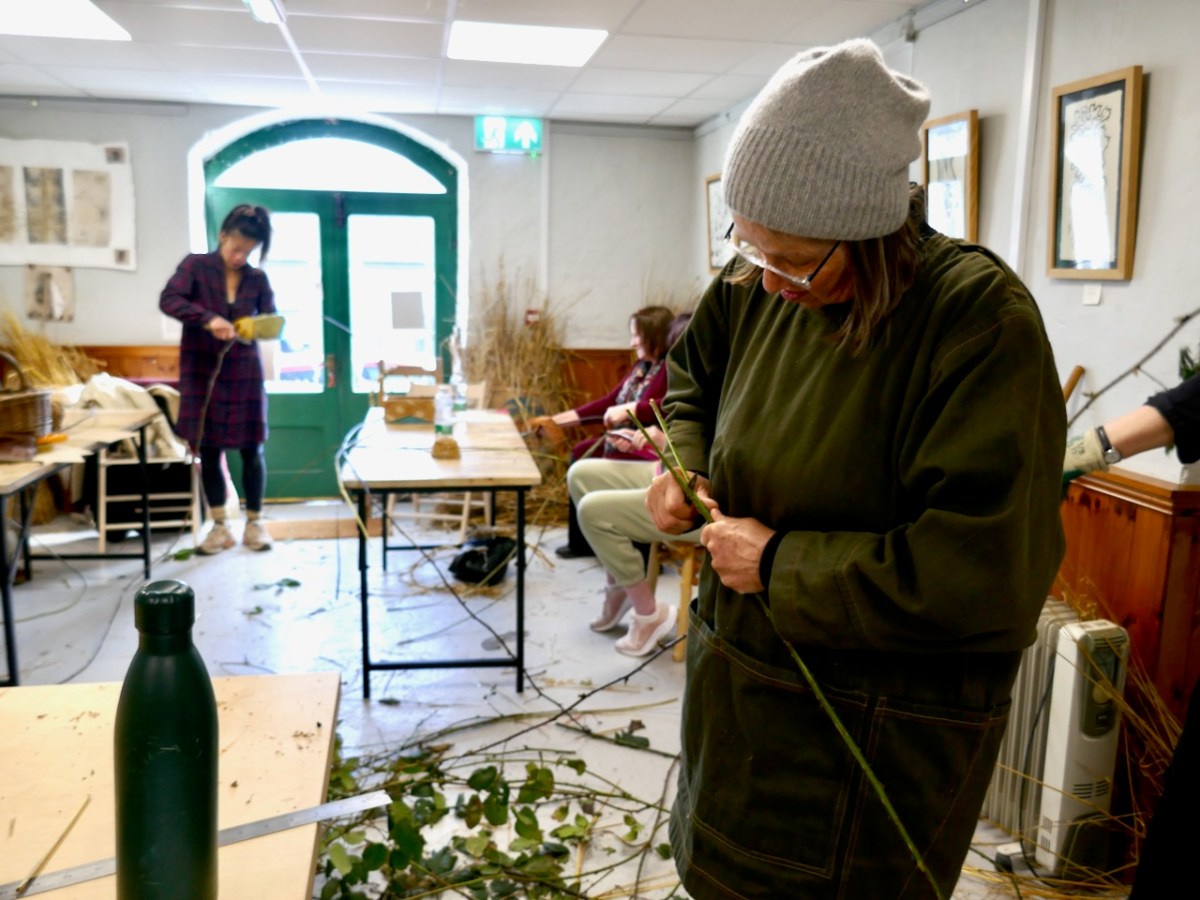
The shop is where she also hosts her workshops – often facilitated by herself and occasionally  by others. All the workshops are designed to get us engaging with heritage crafts and materials sourced from the fields, hedges and water around us. And they are great fun!

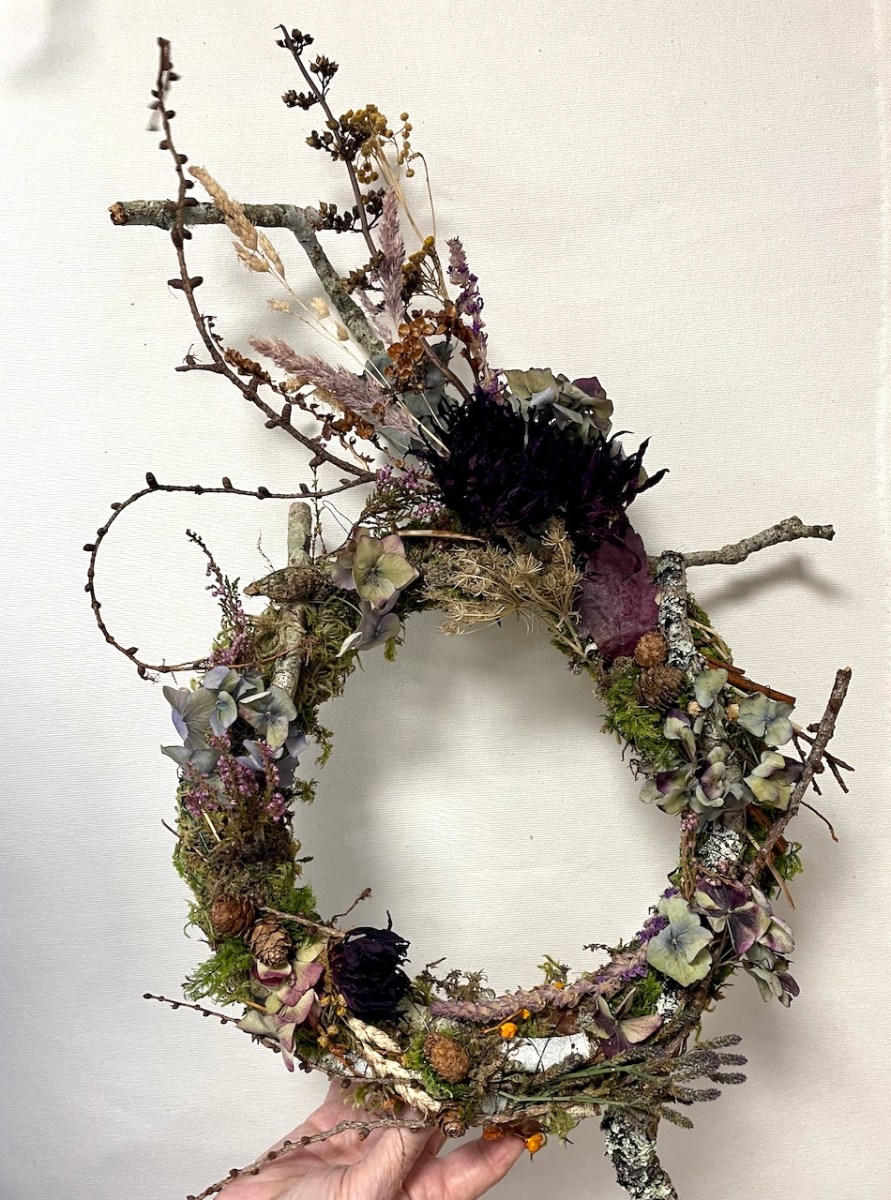
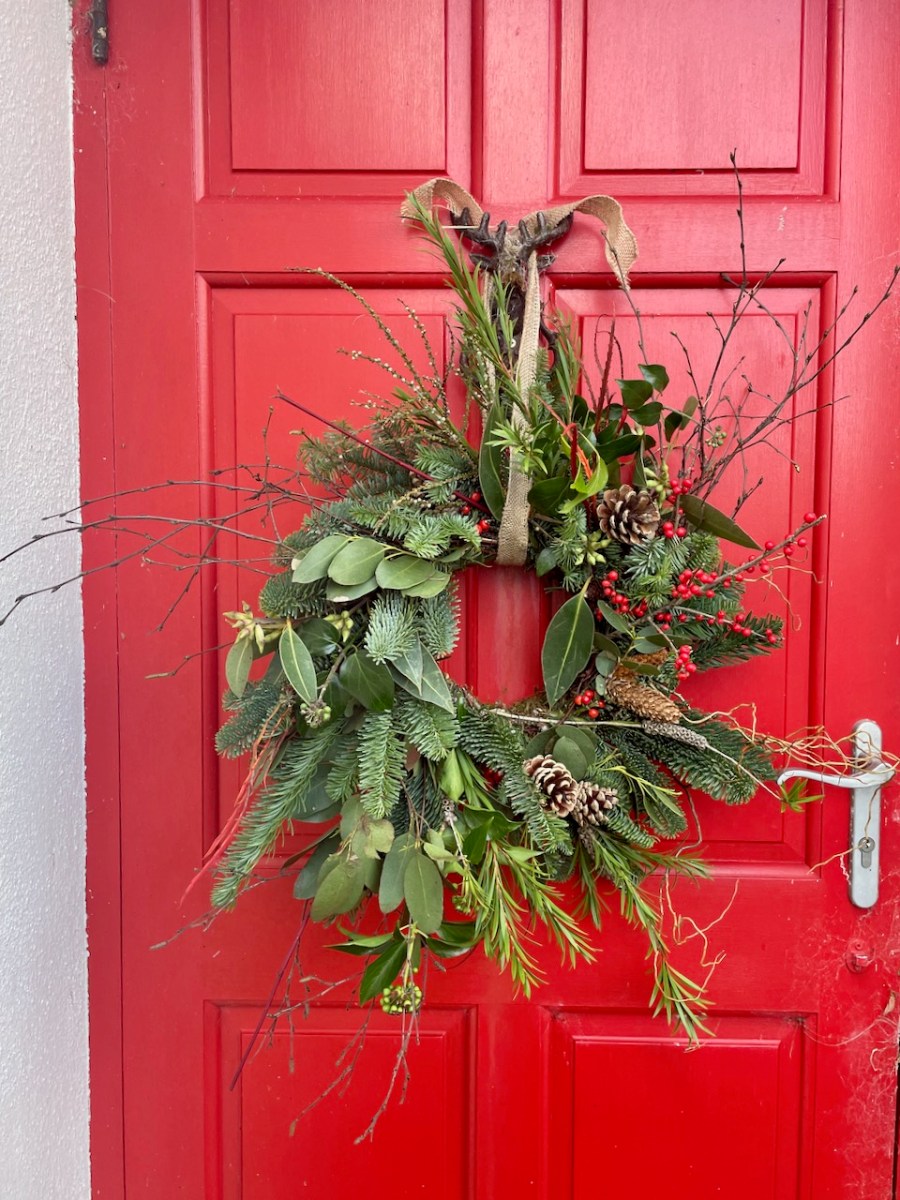
Just in the past year in that shop I have learned to make a basket from brambles (yes, don’t worry, de-thorned) – that’s my friend Julia splitting a long bramble above. I have made an autumn sculpture (“don’t call it a wreath!”) and a Christmas wreath, both facilitated by the wonderful Liz O’Leary and from foraged materials.

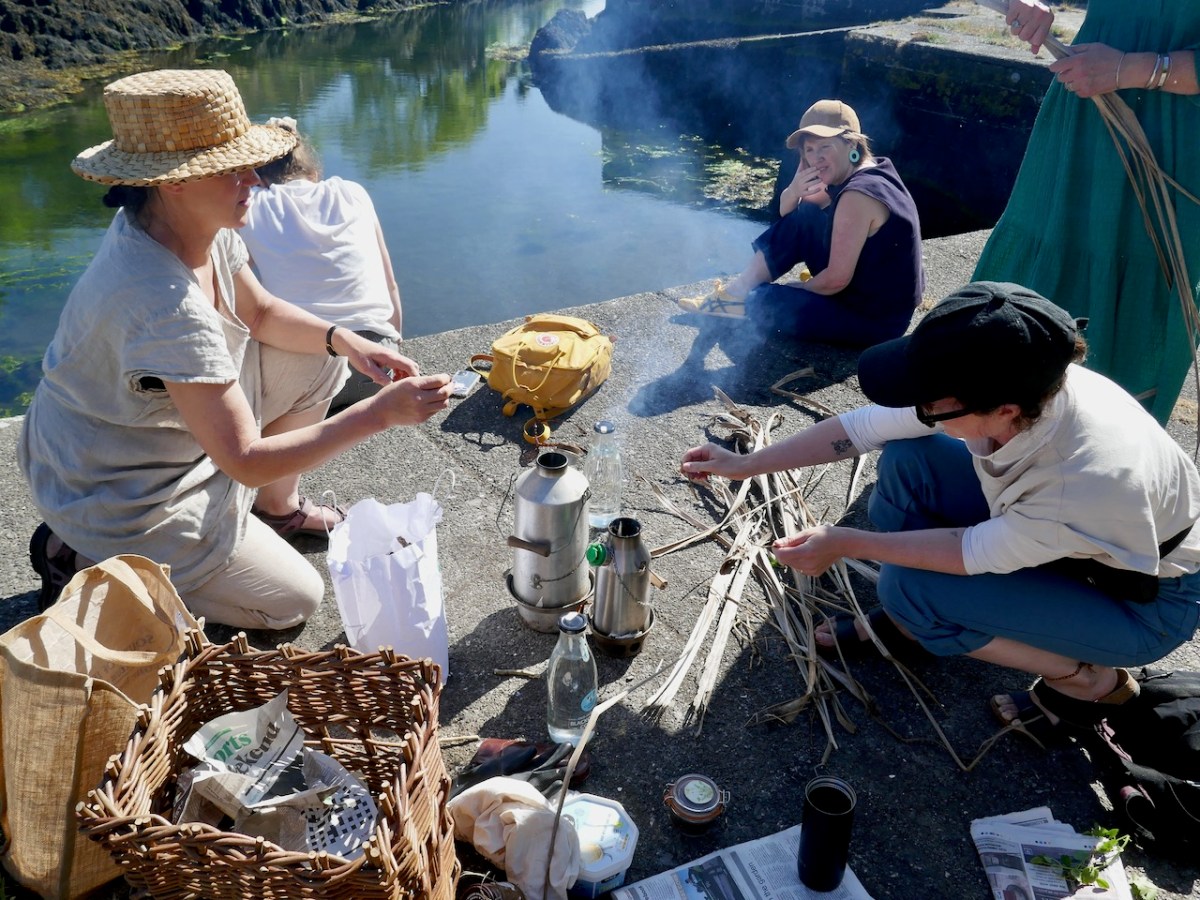
And I have gone on two foraging walks. The latest walk was last weekend, and it featured my first ever cup of nettle tea (delish!) and a picnic on the banks of a river with crackers and cake made from various gleanings and flavourings  – toasted Wood Avens seeds anyone?

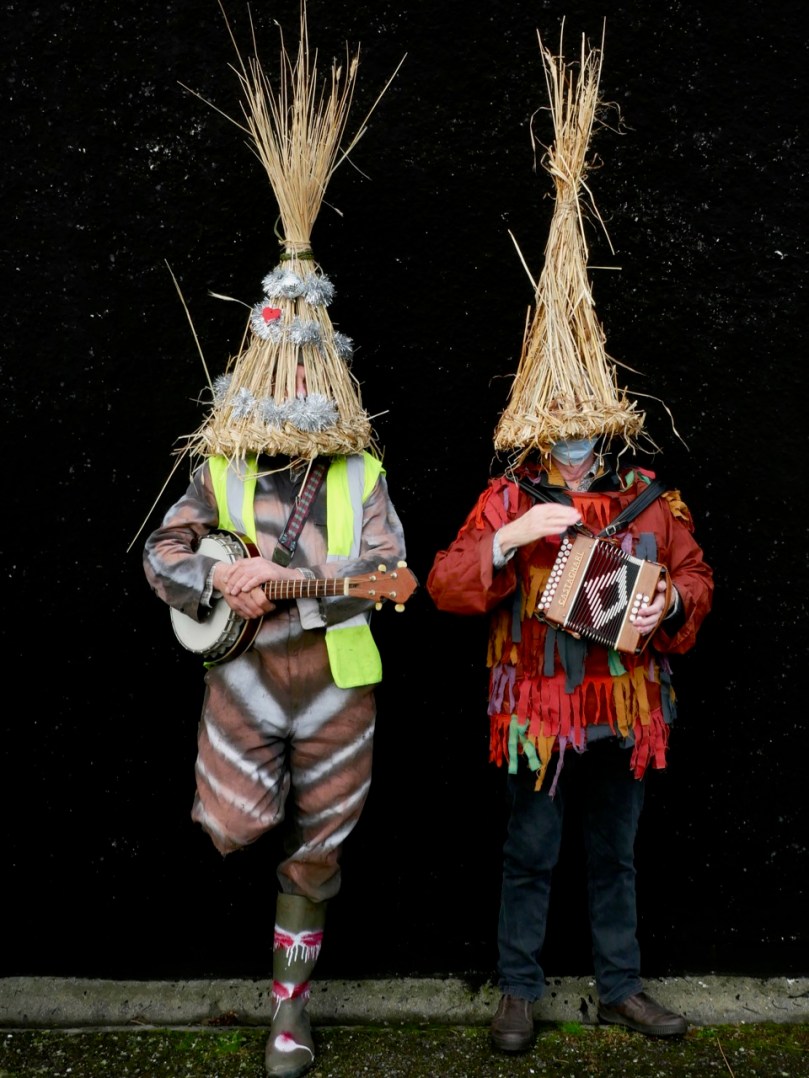
Sonia has also single-handedly revived Wren Day (also known as St Stephen’s Day in Ireland and Boxing Day abroad) in Ballydehob and taught us how to make the traditional rush hats worn by the Wren Boys. See Robert’s post The Wran for more on this unique Irish tradition – he was an enthusiastic participant.

All towns and villages deserve a person like Sonia – the person who won’t let the traditions die and who encourages the rest of us to look around us and really see what the land has to offer. We are lucky she chose West Cork as the place to nurture her own unique and mighty talent and to draw the occasional spark of creativity from the rest of us.
Stone Mad, Re-Issued

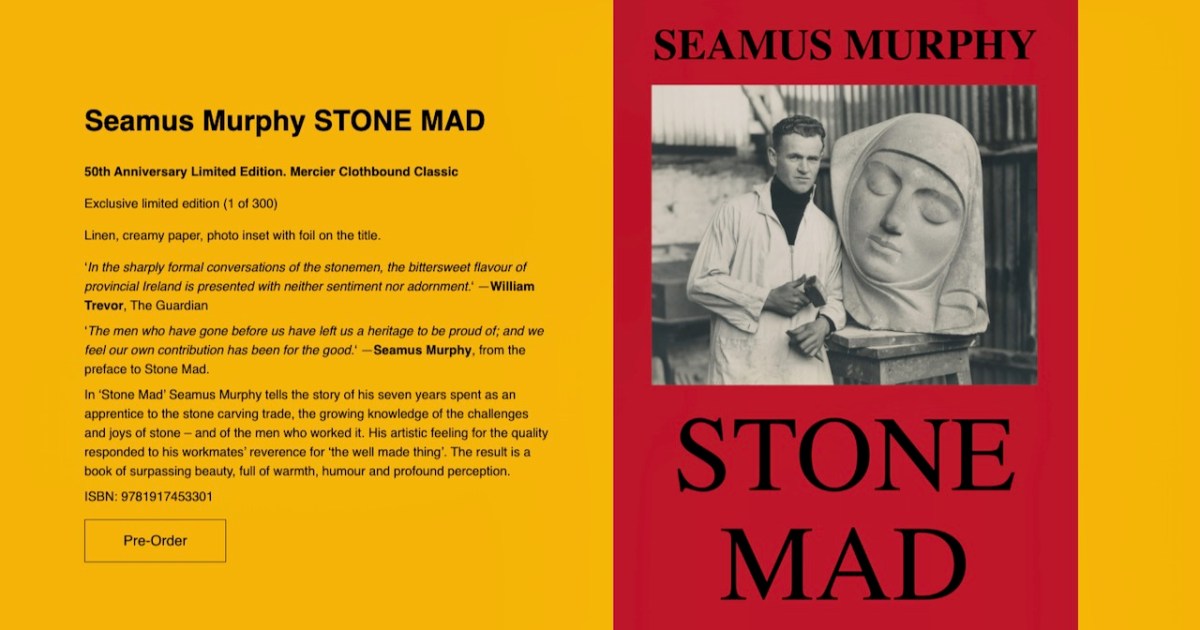
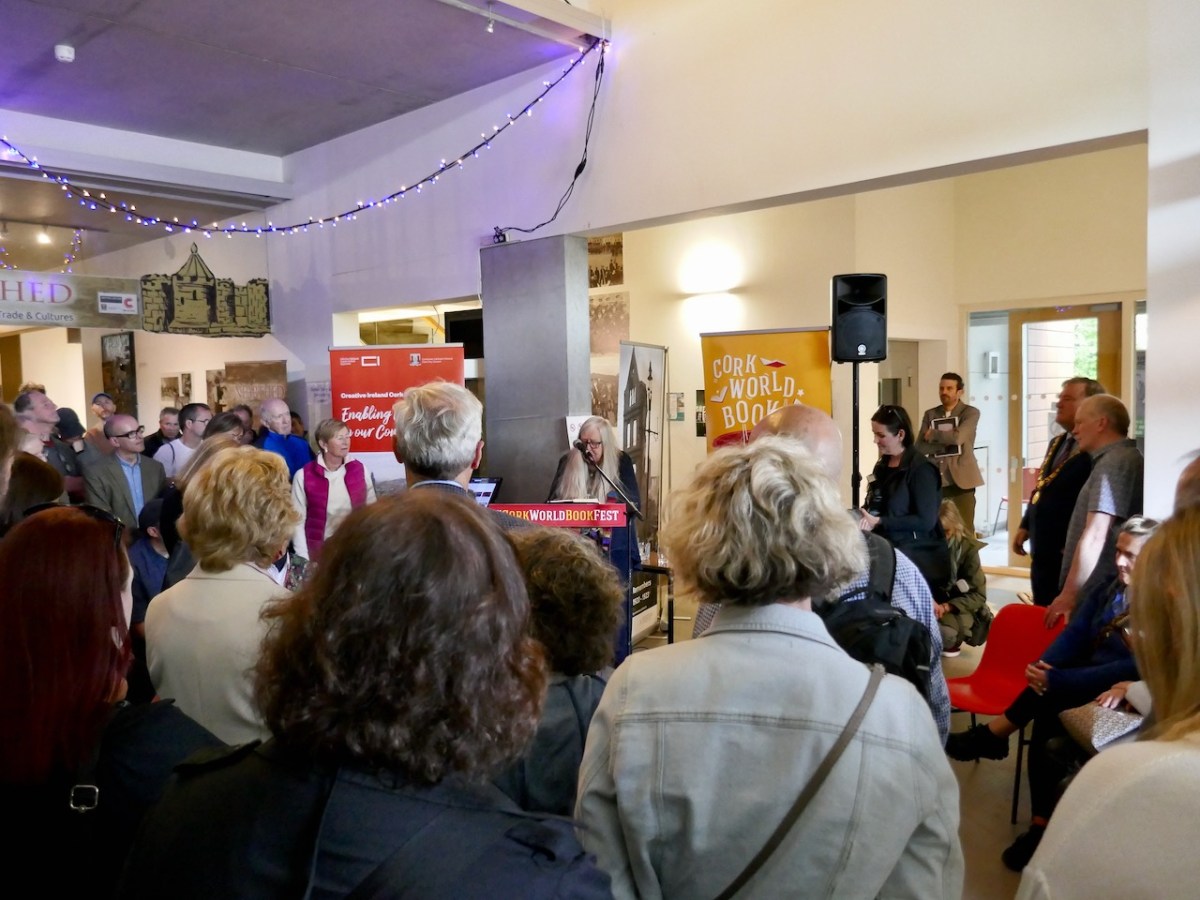
Yesterday, in a ceremony in the Cork Public Museum, Mercier Press launched a re-issued Stone Mad, by Seamus Murphy. This year is the 50th anniversary of Seamus’s death, in 1975. The book is also the One City One Book choice of the Cork City Library, as part of the 2025 Cork World Book Fest taking place all this week in venues across Cork.
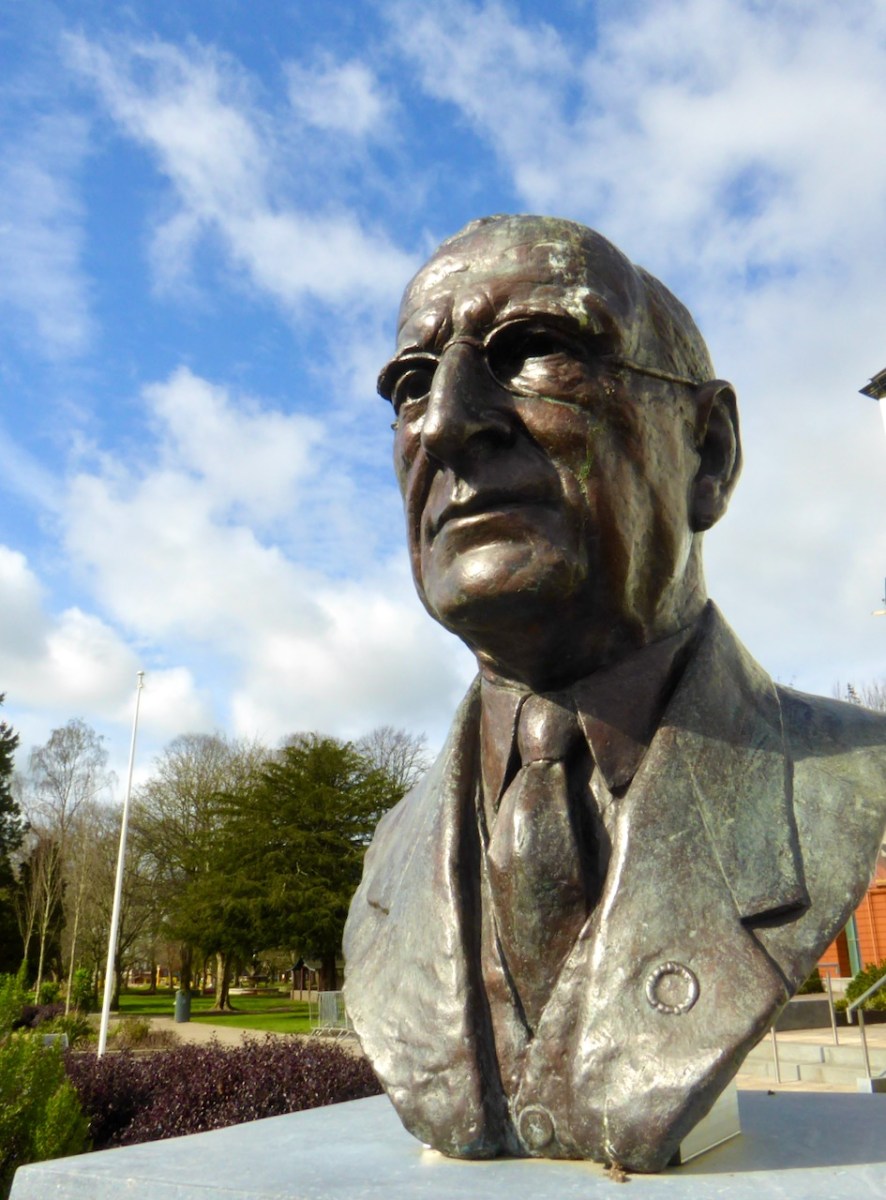
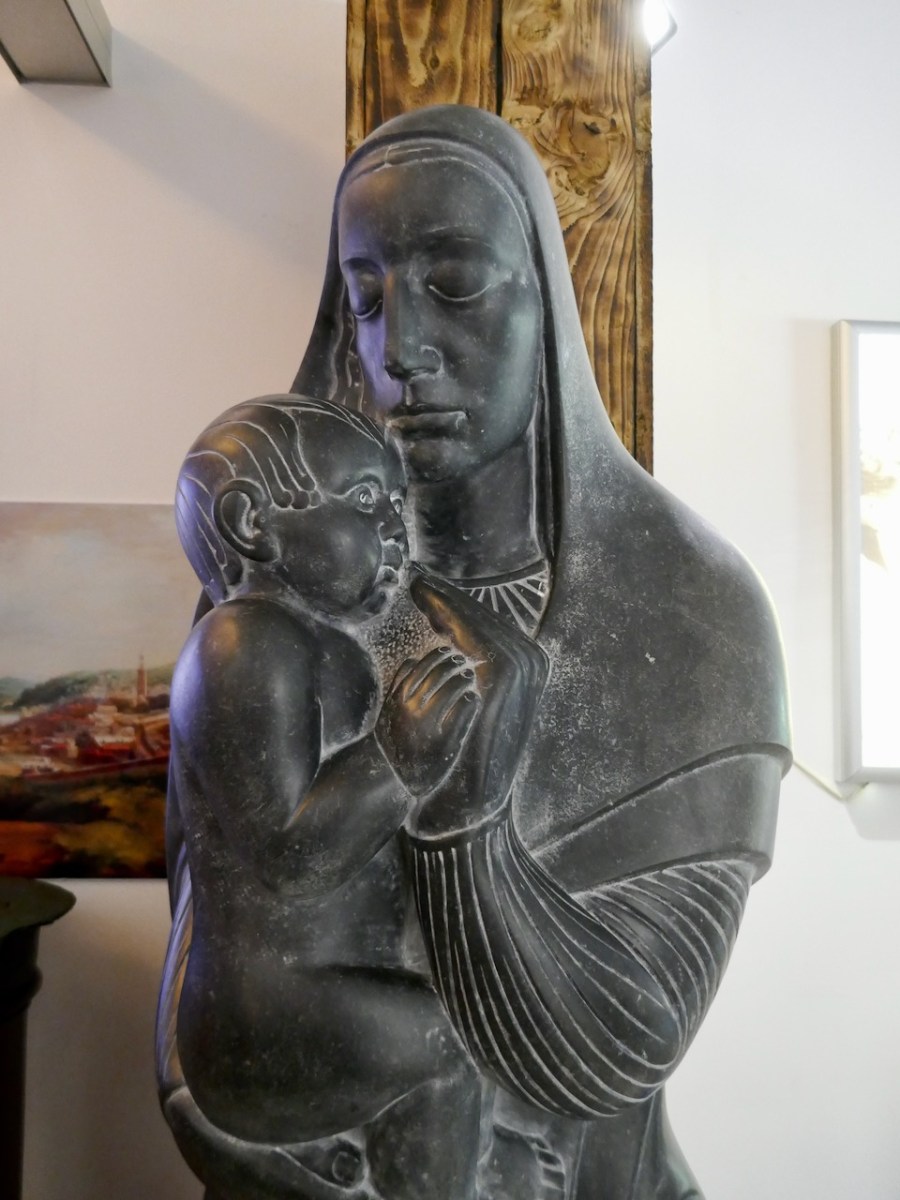
I attended the launch in the Museum, in Fitzgerald Park, home of several sculptures by Seamus, including this one of De Valera, above. Long-time readers will remember our own Rock Art Exhibition in the same building ten years ago – somehow apt that it featured the prehistoric version of the stone carving tradition we were celebrating yesterday. 

The book was officially launched by the poet Eiléan Ní Chuilleanáin, about whom I wrote here. She had known him in the old days in Cork, and her’s was a wonderful, evocative, beautifully written summary of Seamus and his book. She finished with words that resonated with everyone in the room (and it was packed!) – I paraphrase it as: Read this book again. And afterwards, go and wander around Cork. You will never look at it the same way again.

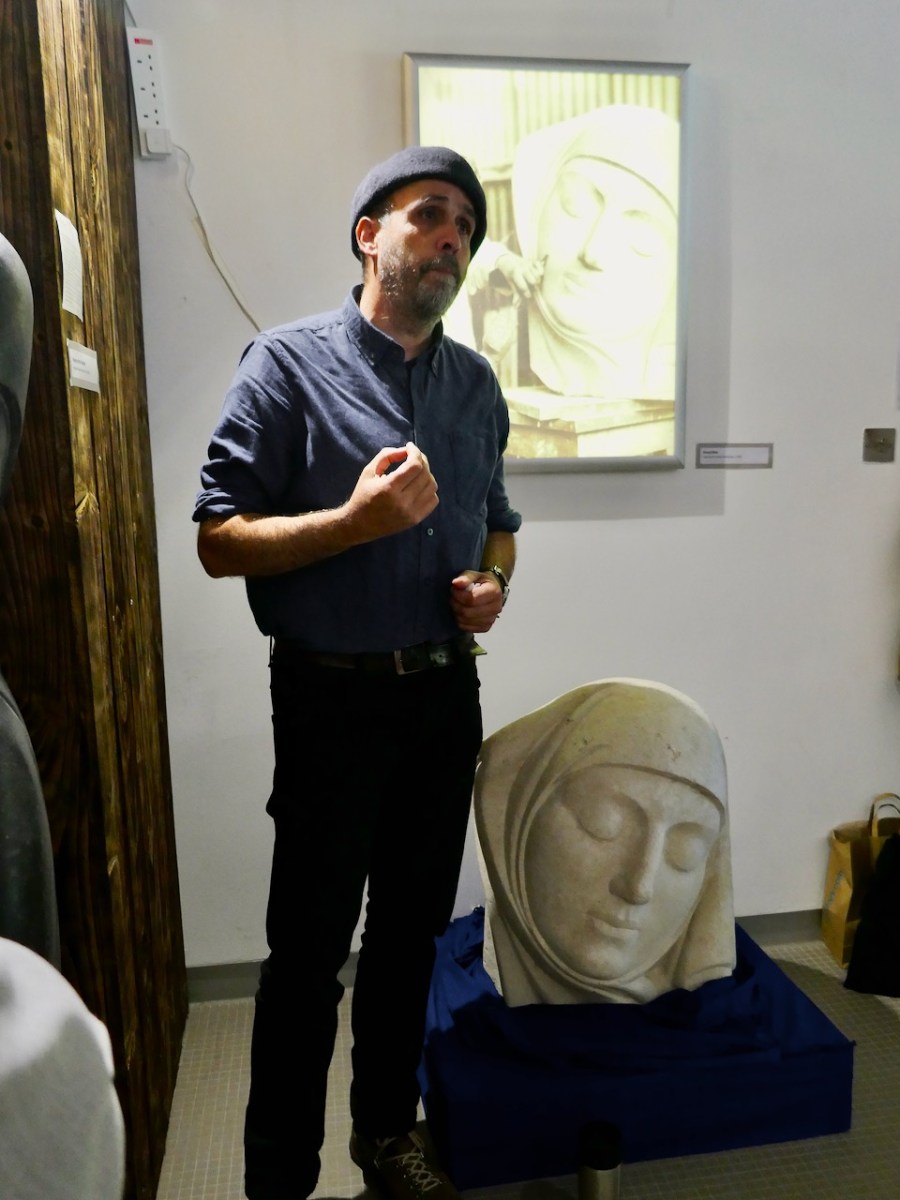
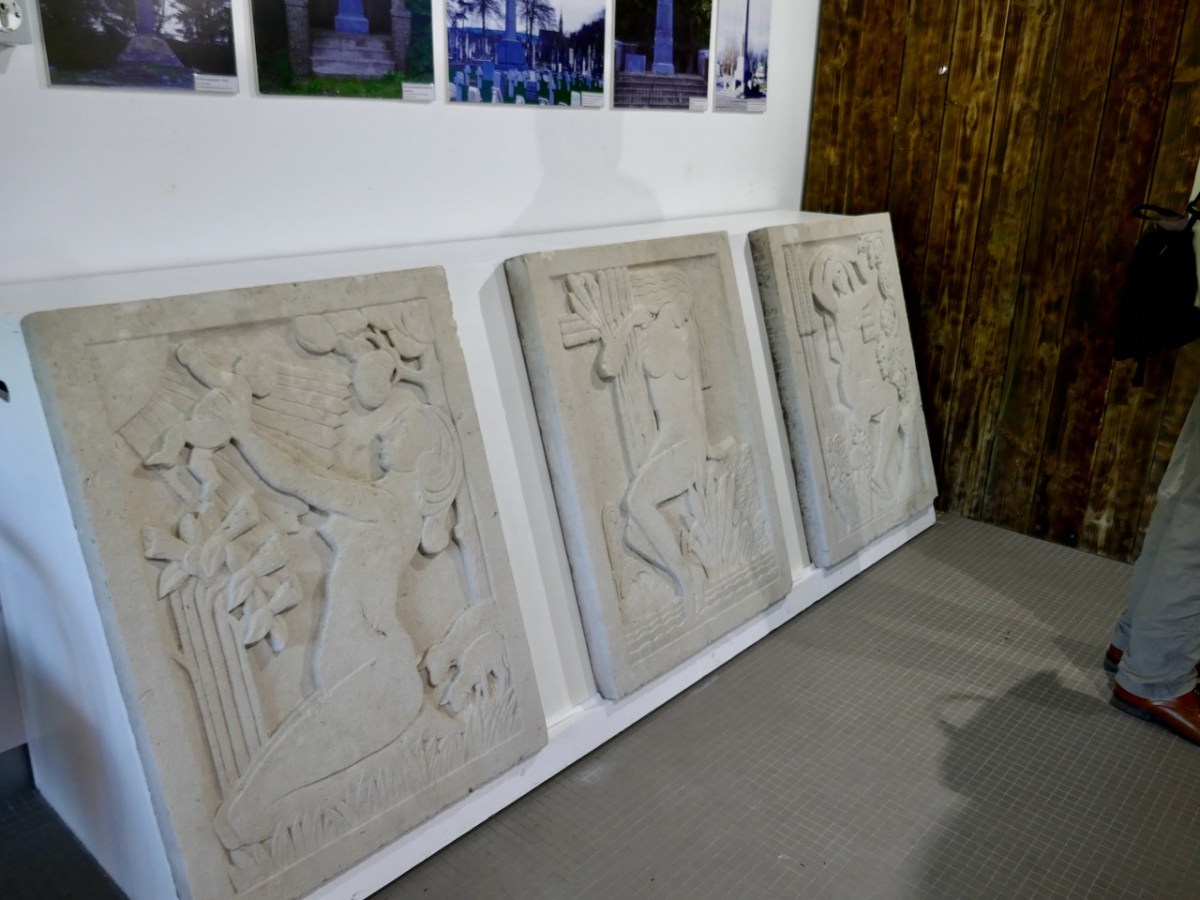
Eoghan Daltun, author of An Irish Atlantic Rain Forest, was there too. Besides a passionate conservationist, he is a skilled sculptural restorer, and was responsible from rescuing Dreamline from weather and lichen damage a couple of years ago. Standing within the display of carvings and tools and images, all carefully set up by the Museum team led by Curator Dan Breen, Eoghan talked us through what was involved in carving in stone and, many years later, restoring the artwork. 

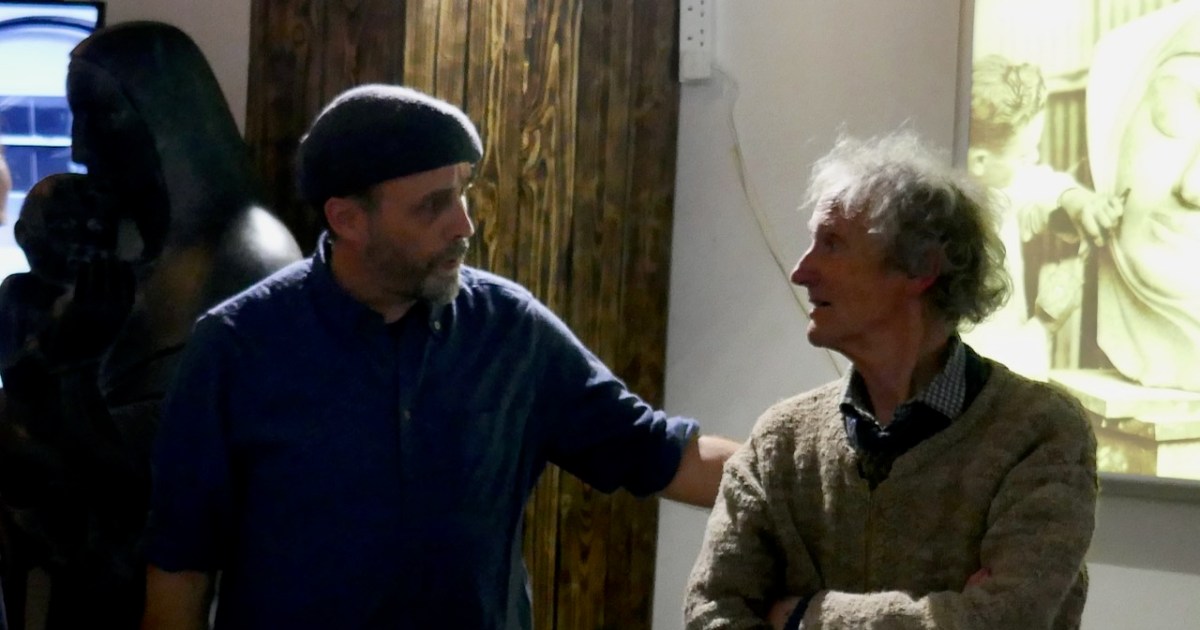
I was also very pleased to meet Ken Thompson, the stone carver who finished off lettering on Seamus’s headstones, after his death, and who carved many monuments I have encountered in Cork and elsewhere, including the inspirational memorial to the Victims of the Air India tragedy in Ahakista, below. 

Seamus Murphy is acknowledged as one of Ireland’s best stone carvers, and an icon of the 20th century Cork cultural scene. His work can be seen all over Ireland, but especially in an around Cork. If you are not that familiar with his output, the documentary Seamus Murphy A Quiet Revolution is a great introduction to his life and work.

Stone Mad has been a favourite on our shelves as long as Robert and I have had a joint library. We own a couple of copies, including a hardback of the second edition, signed by Seamus and with illustrations by William Harrington. It’s an evocative summation of his life as a ‘stoney’, the men with whom he worked, and the craft they honed together. It has become iconic, as much for its on-the-ground and entertaining picture of life in a Cork stone yard as for its musings on stone carving as an art, from medieval times to the present day. For some extracts, see my post, Building a Stone Wall.

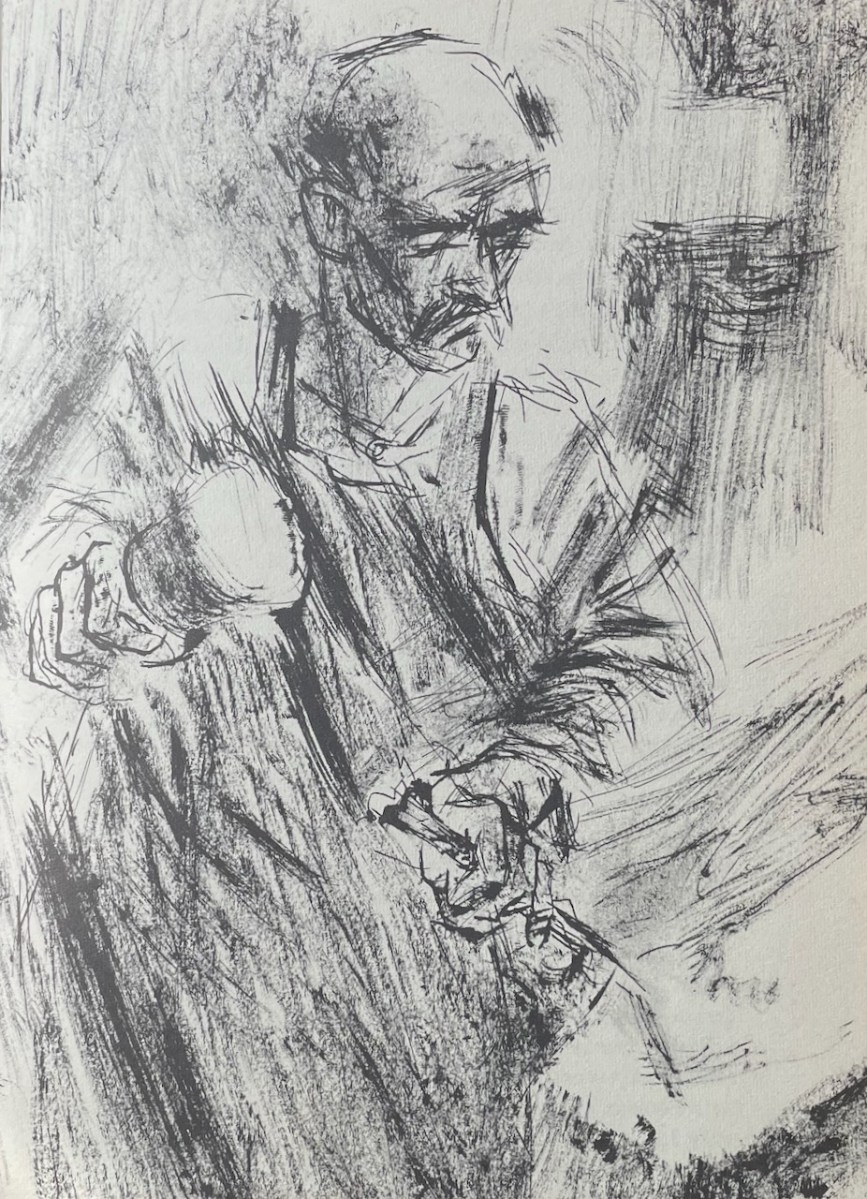
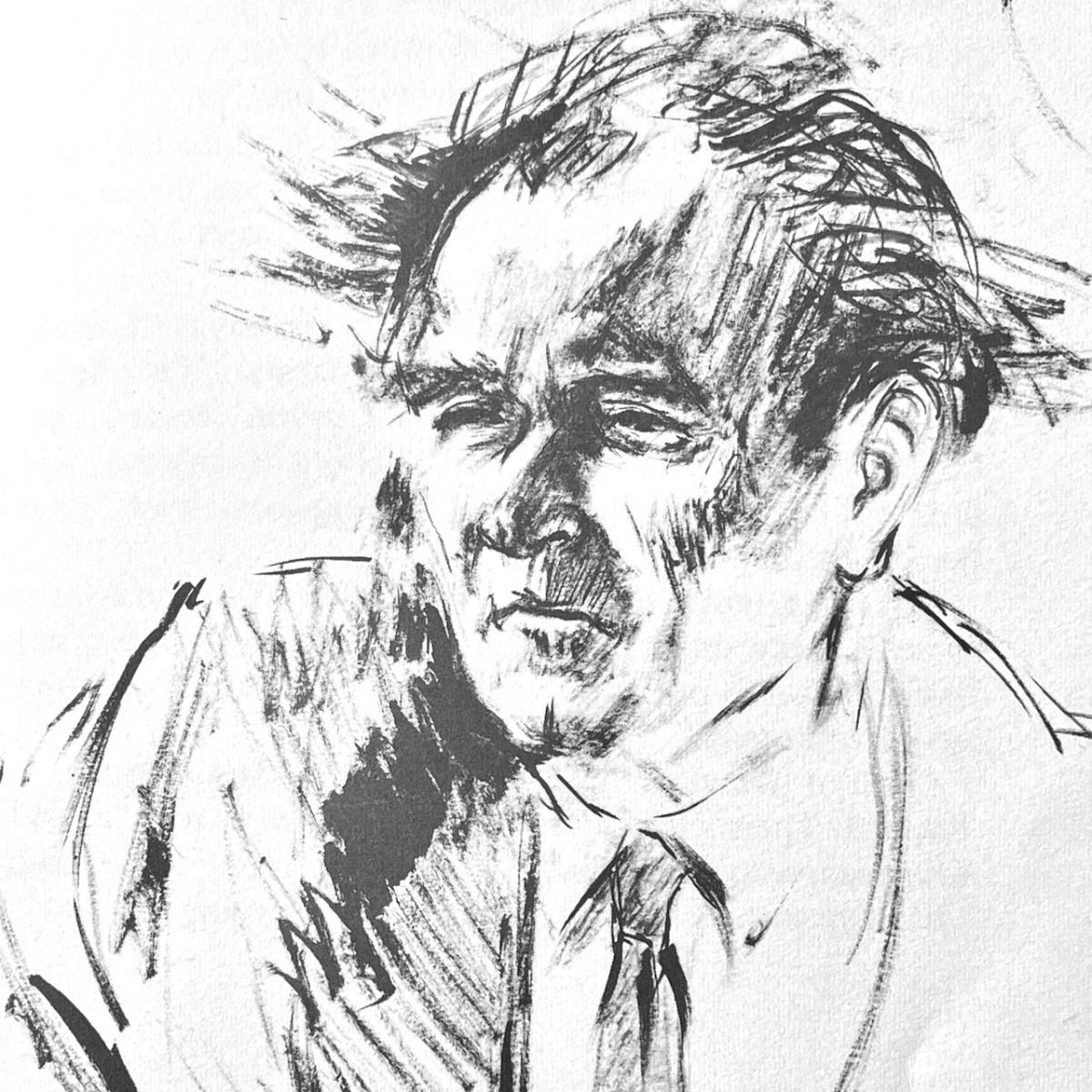
The illustrations by William Harrington, pen and ink sketches, capture the work, the camaraderie of pub life after a hard day’s work, but also includes a sensitively drawn portrait of Seamus. 

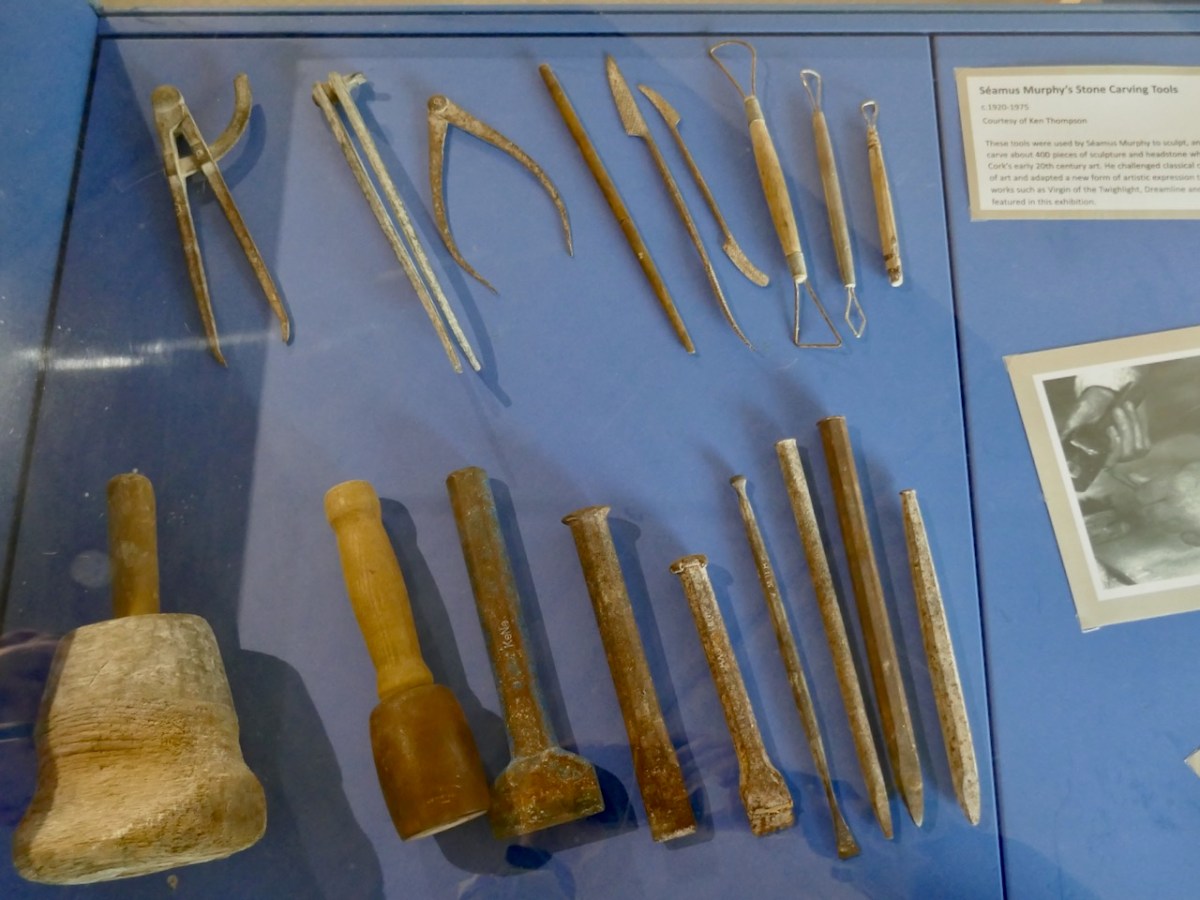
If you don’t have a copy of Stone Mad, do get one – it deserves a place in your library. I will leave the last word to Ken Thompson, from the documentary I link to above. Ken inherited Seamus’s tools (below) – most of them look surprisingly delicate for the work they do, don’t they?

Ken says, Now he’s been dead for 40 years, but I see his work in churches all the time. His work is shining out. It’s still a beacon. It still speaks.

Flail, by Debbie Godsell

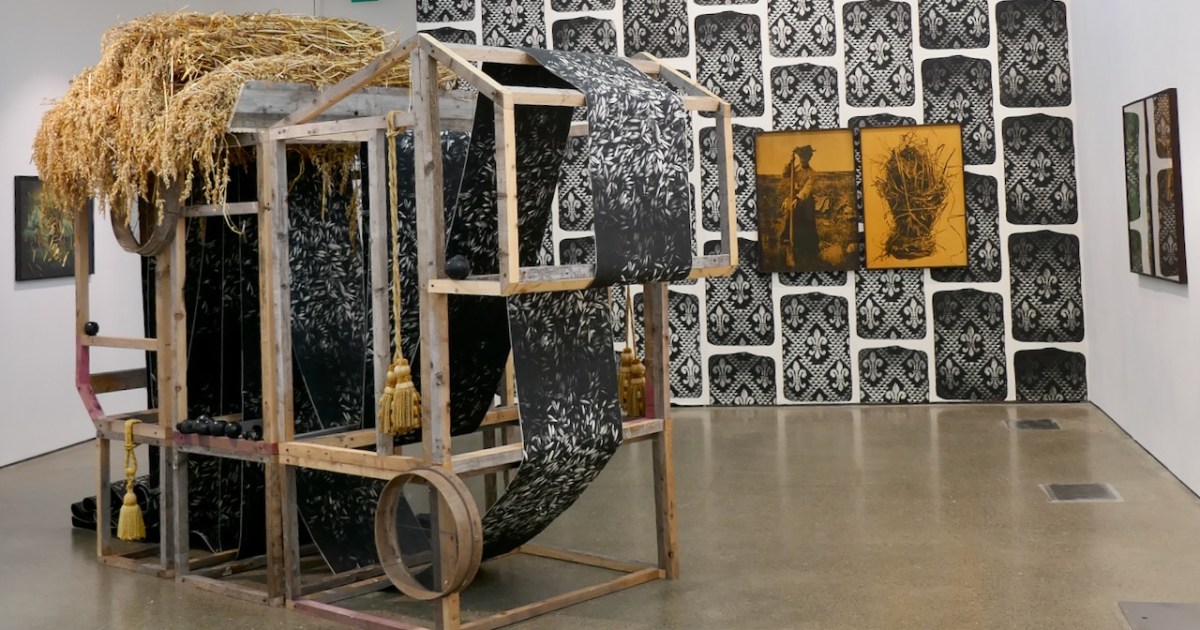
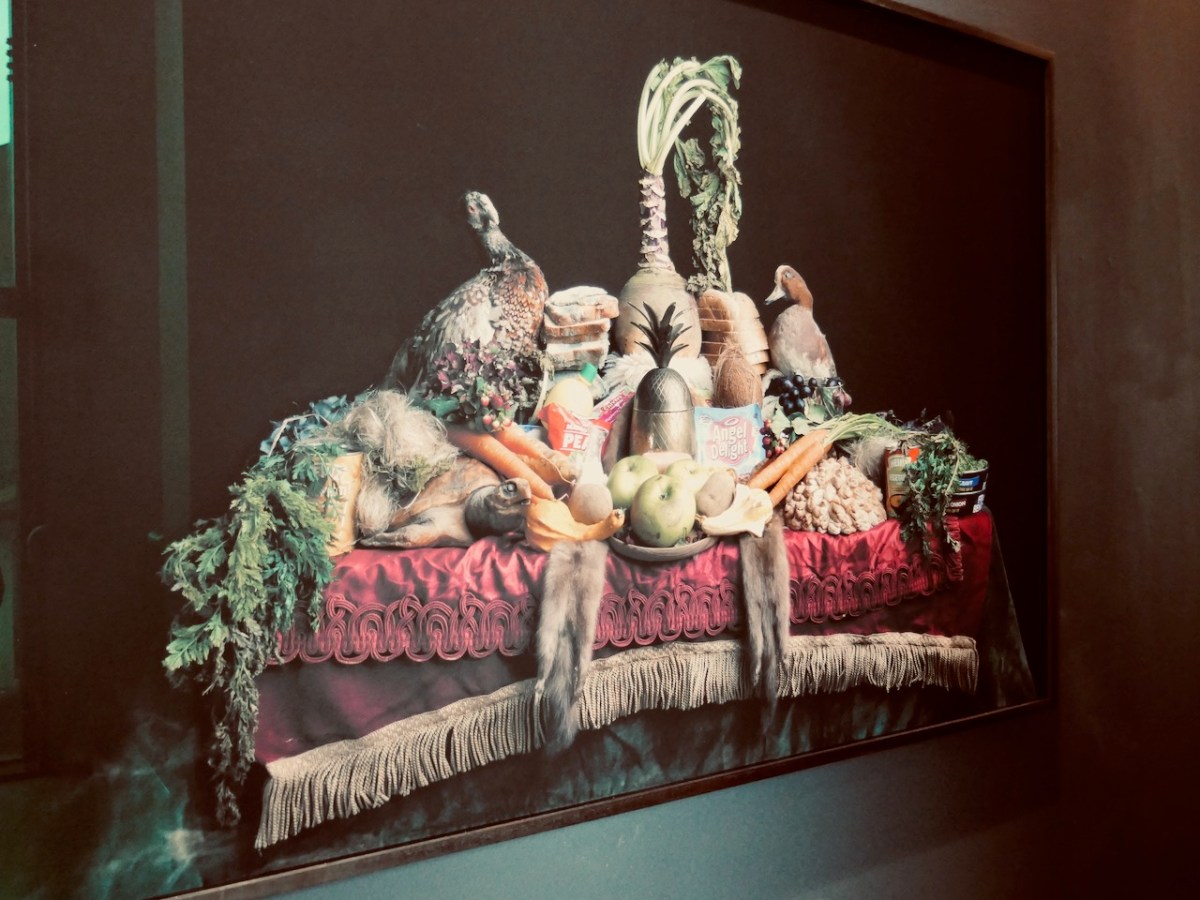
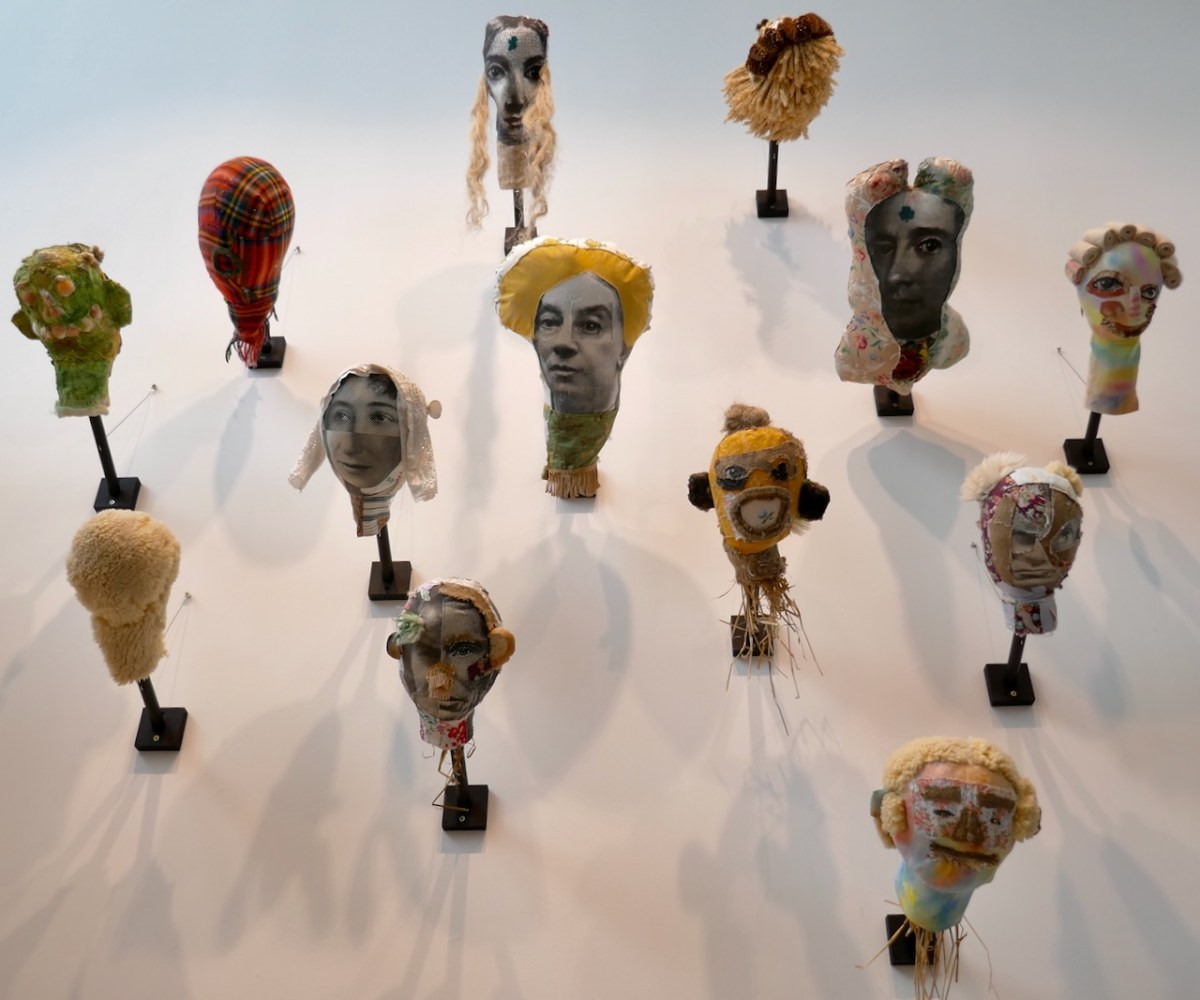
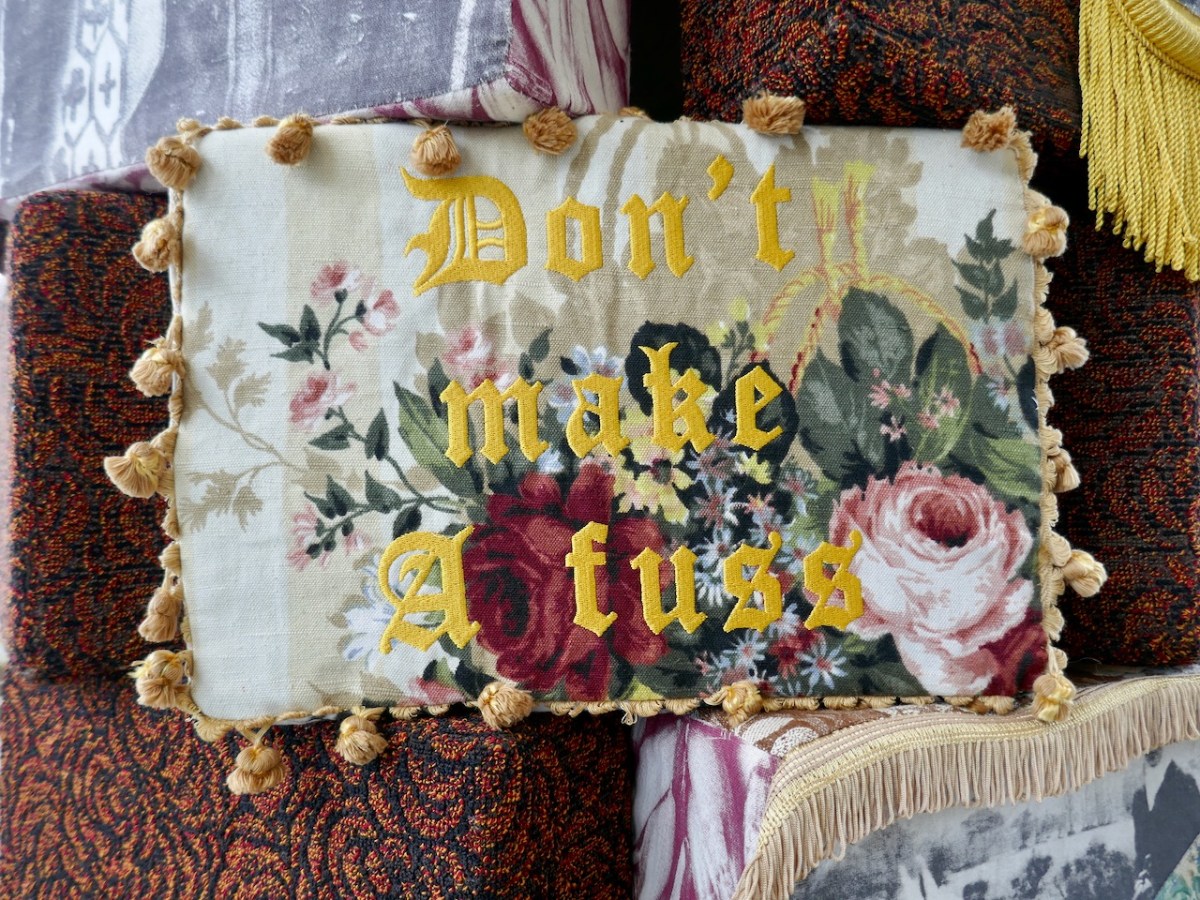
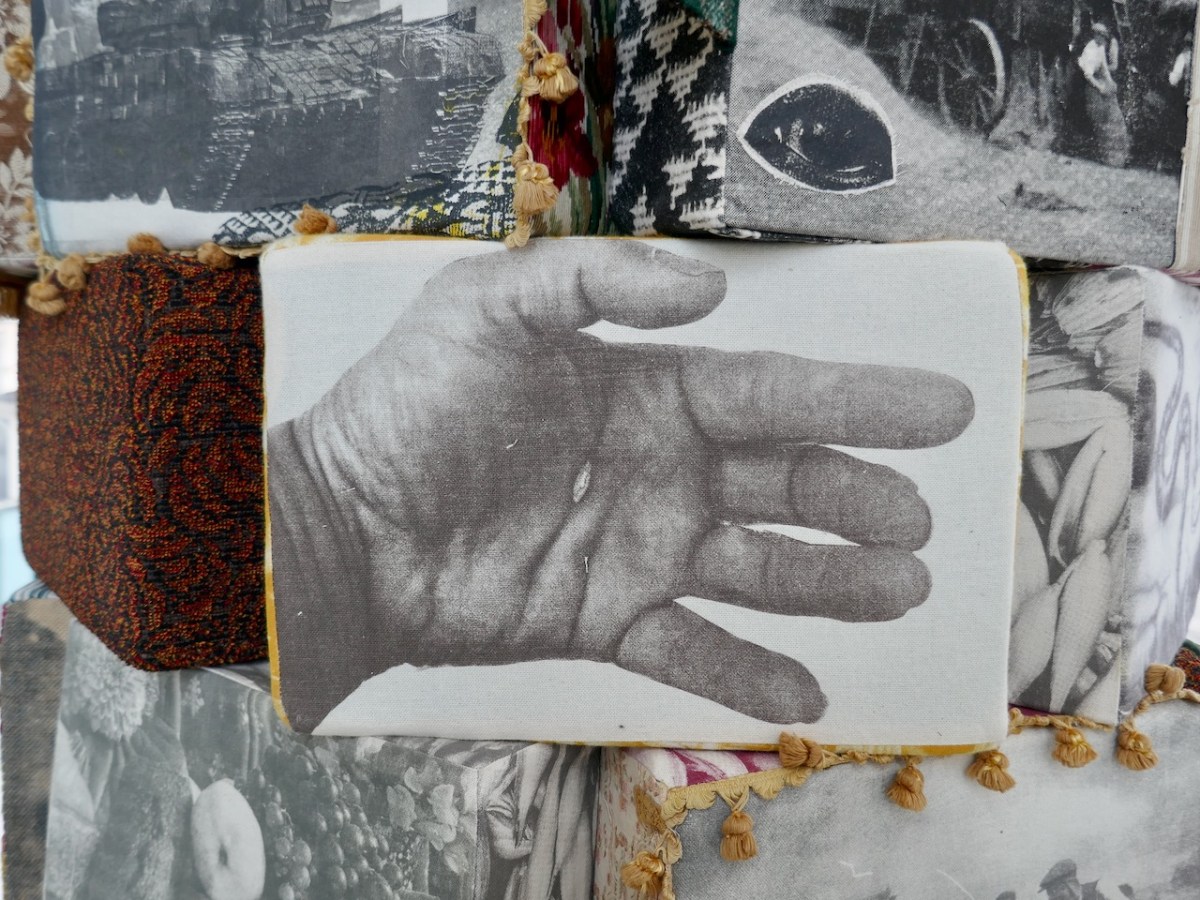
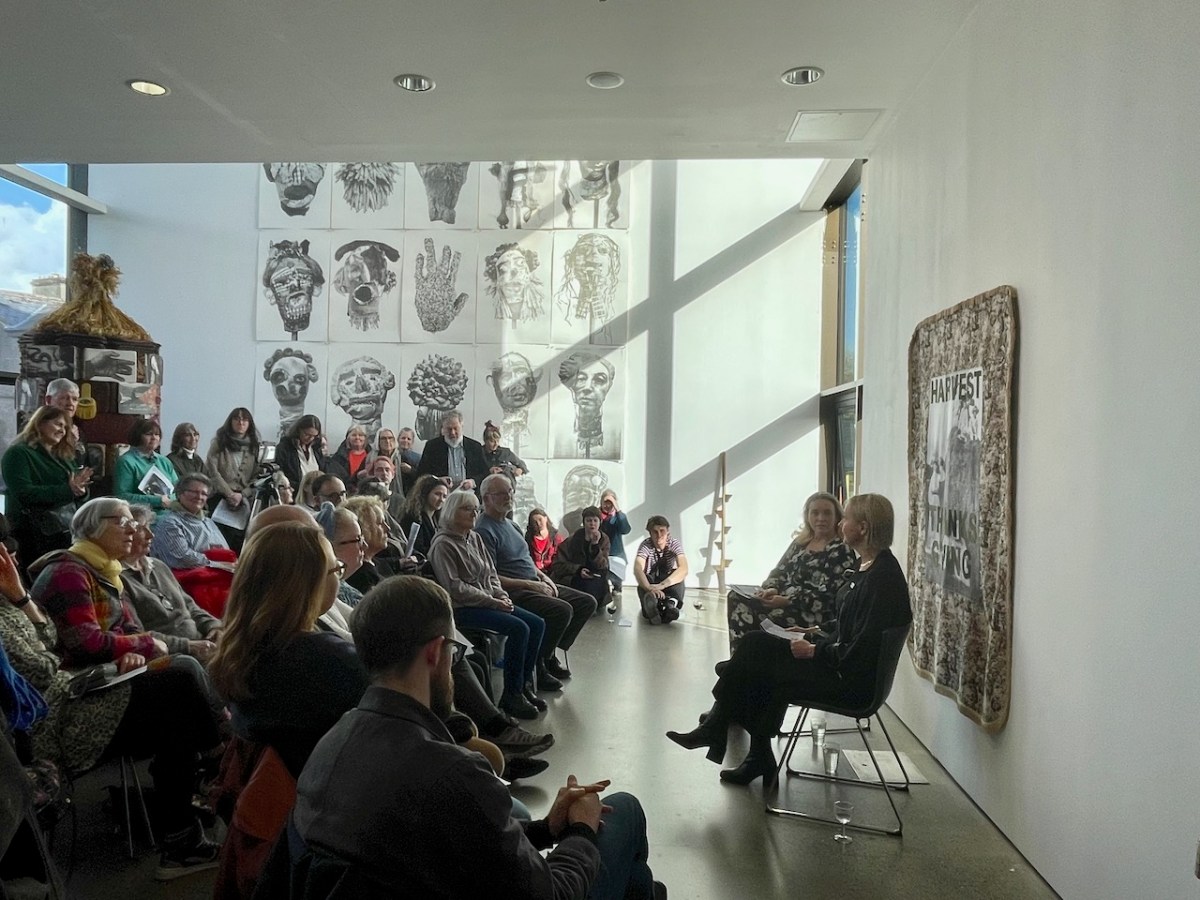
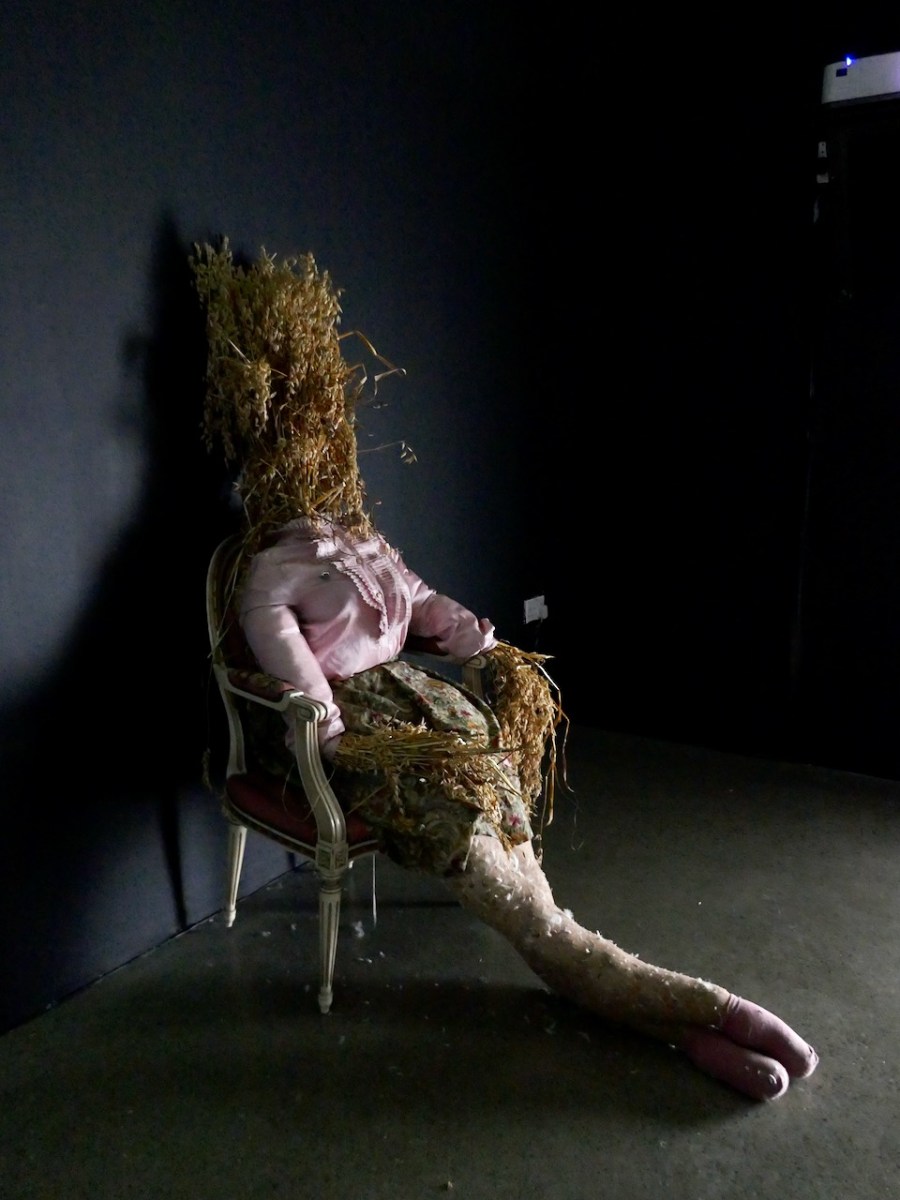
It’s not often an art exhibition has me running to my word processor to get a post out, but this one did it for me! On the surface, this is a quirky, amusing, thought-provoking, installation about the annual Harvest Festival, as practised in the autumn in Church of Ireland communities all over Ireland. Except it’s so much more than that. It’s titled Flail, and it’s on right now at Uillinn.

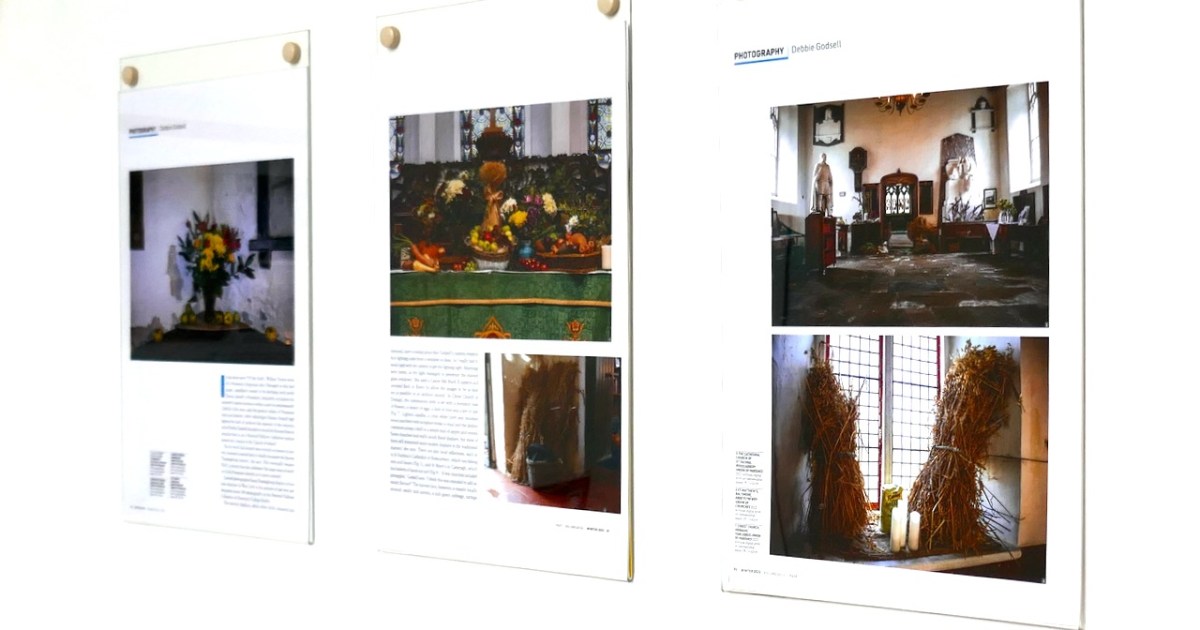
Debbie Godsell has taken the idea of the harvest festival and the communities that celebrate it, and turned it into a personal exploration of her own experience with it, as a child growing up in the C of I, and as a photographer recording the custom of decorating churches. In Ireland, this is a custom unique to the Protestant church – the minority religion. As such, there’s a strangeness to it when viewed by someone who grew up Catholic. Not strange in the sense of peculiar, but in the sense of unknown, slightly other-worldly, why-have-I-never-known-about-this?

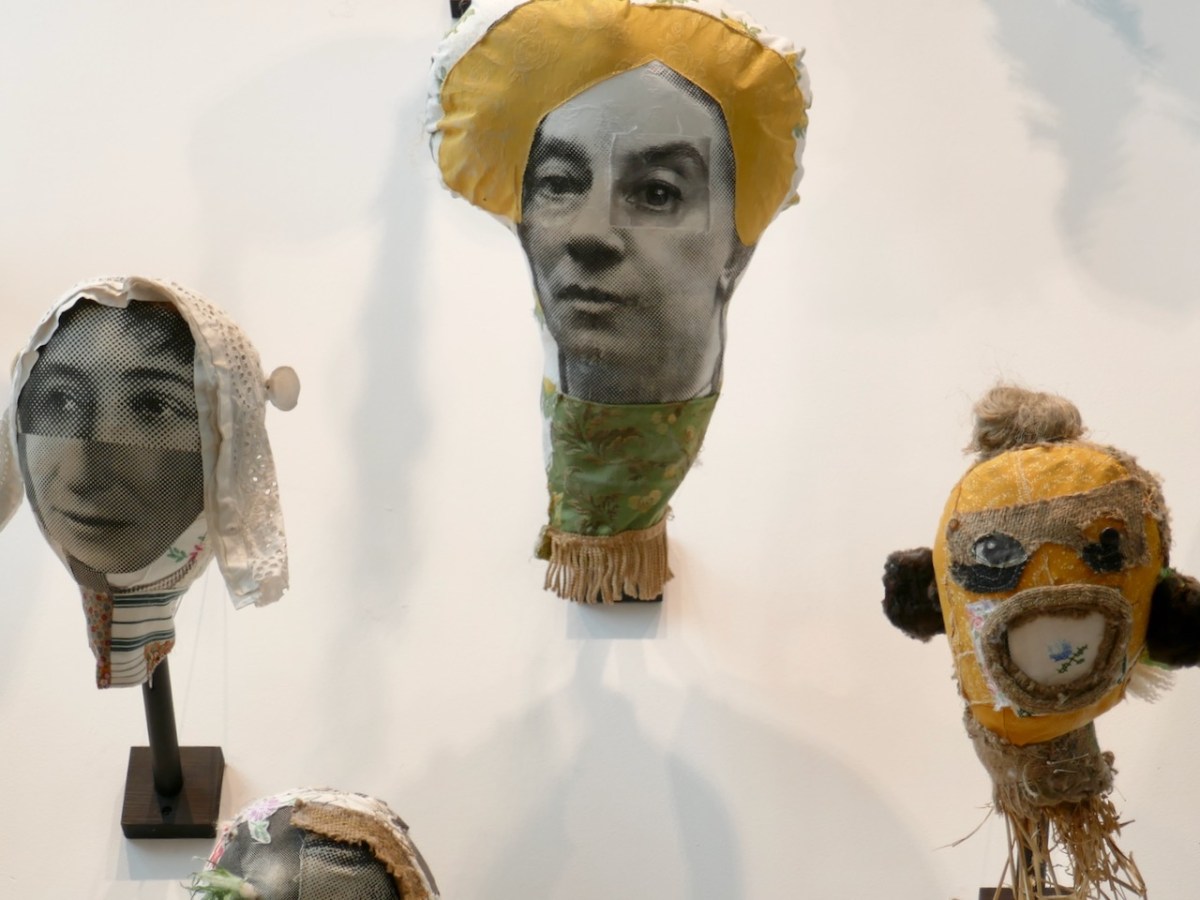
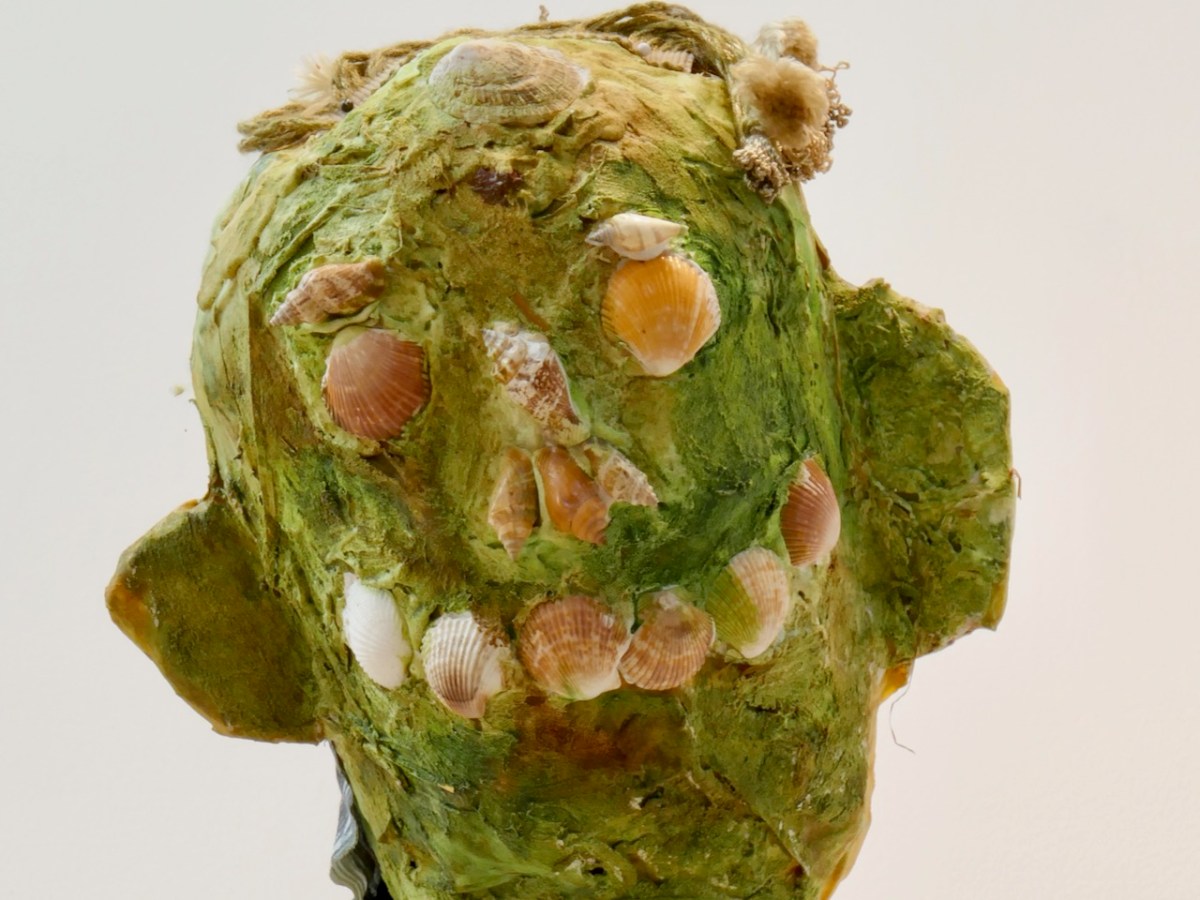
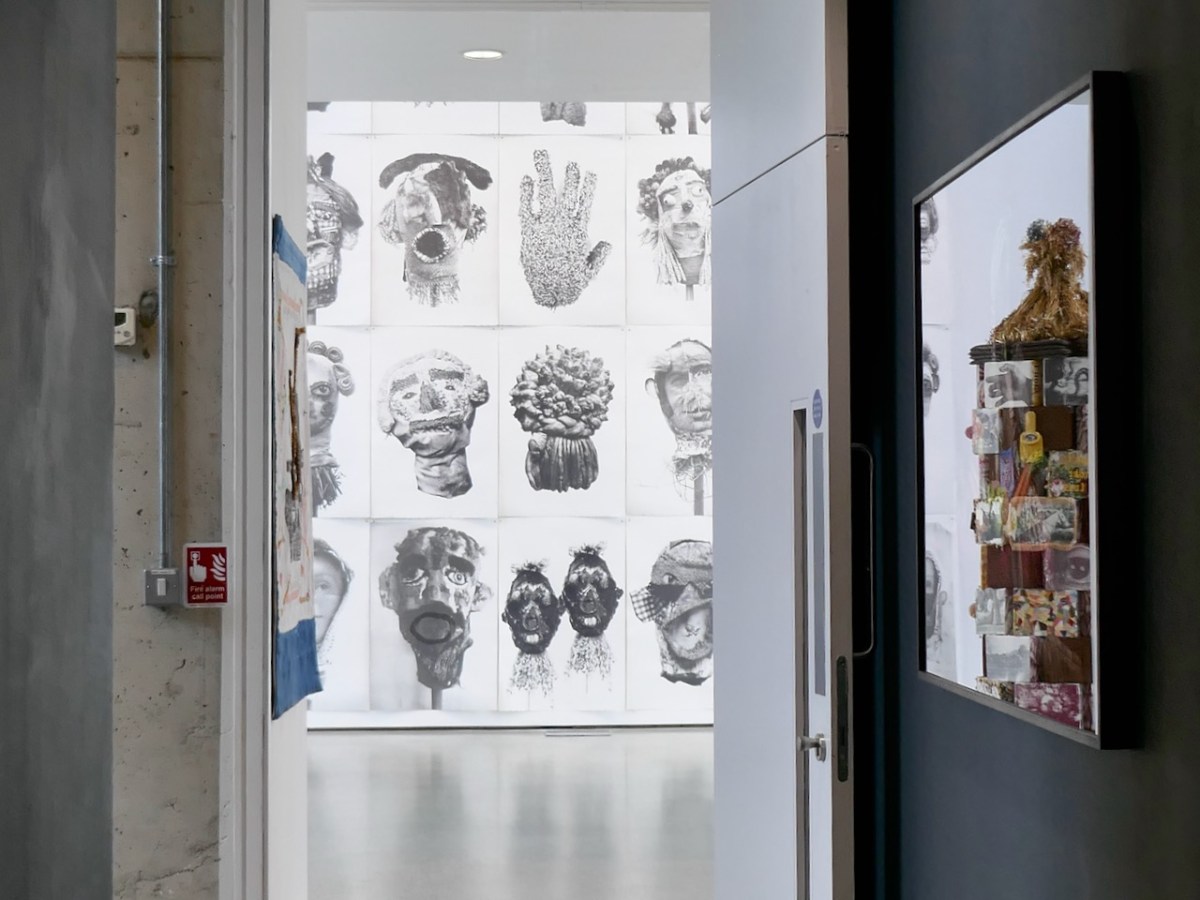
But yes, it is quirky and amusing. Just take a look at these heads – they are the first thing you notice when you come in, titled ‘Ancestors’. Made from all kinds of found materials, some represent real people (hello, Great-Aunt Molly!) although most are simply heads – a bit like you might find on a scarecrow out in the fields around harvest time.

But after the first encounter you realise that this also of course, is the thought-provoking part of this exhibition Now you notice that they are on sticks, mirroring perhaps the heads on pikes that seemed to spell the end on many rebellions against English rule down through the centuries. In her notes, Godsell states:

Here, the heads take on an unsettling childlike quality, drawing from elements of folk drama and ritual. Rudimentary in form, they are a fusion of figures from Irish history and the artist’s own imagined lineage. Blurring the line between historical facts and personal mythology, the work interrogates themes of memory, identity and inherited trauma, challenging how history is constructed and remembered.

What does it mean, in Ireland, to be part of a minority religion? What has it meant in the past, and now? What if that religion was perceived to track closely with class, and land ownership, and unionist sympathies? 

We pride ourselves, in Ireland, now, on being a pluralistic and non-sectarian society. But if that is true at all, it is only recently so. The Ireland I grew up in – in the 50s and 60s – was deeply sectarian. Protestants and Catholics rarely mixed and we were forbidden, on pain of sin, to enter each other’s churches. We were educated separately, played some different sports (Anyone for lacrosse? How about men’s hockey?), sounded different, went to separate Brownie troupes, studied different curricula at school . . .

This exhibition explores the harvest-related parts of that separateness, but the opening, in which Debbie Godsell was interviewed by art critic Cristín Leach, also featured a discussion on folklore and a hymn by Cristín!

Cristín has said that Flail is ‘complicated territory’ for her and the hymn, Harvesting History, sprang almost spontaneously from engaging with the first Flail exhibition. It has been beautifully set to music by Susan Nares, and the West Cork Choral Singers presented it at the opening. Here’s a snippet.

I was particularly fascinated by the folklore discussion. As Roaringwater Journal readers know, we have used the Duchas/Schools Folklore Collection extensively over the years. One particularly important piece of research for me was to look at what it had to say about the Reverend Fisher – Saint and/or Souper of Toormore. What I found was a little shocking and it opened my eyes to an aspect of this wonderful resource that I had never previously considered – the decidedly sectarian nature of the collections. While some Protestant National Schools did participate in the School’s Collection of 1937/38, Protestants are very under-represented as informants. See this excellent article from History Ireland for more on this*.

Cristín and Debbie talked about the prevailing view of Protestants as seen in the overwhelmingly Catholic responses in the Collection – and it wasn’t a pretty picture. As I discovered with Fisher, and as Amanda has discovered with Holy Wells Folklore, the Protestants are basically blamed for anything misfortunate or discreditable – some examples here, and here and here

Go see this exhibition if you can. It’s fascinating, but more than that, it’s important. We are still trying to come to grips with our history, in Ireland. Art like this helps immeasurably.

* A ‘Protestant folk’? Author(s): Deirdre Nuttall and Críostóir MacCarthaigh Source: History Ireland , Vol. 25, No. 5 (September–October 2017), pp. 48-51 Published by: Wordwell Ltd. Stable URL: https://www.jstor.org/stable/10.2307/90014607

Sit Stand Smoke – and Remember Kathleen

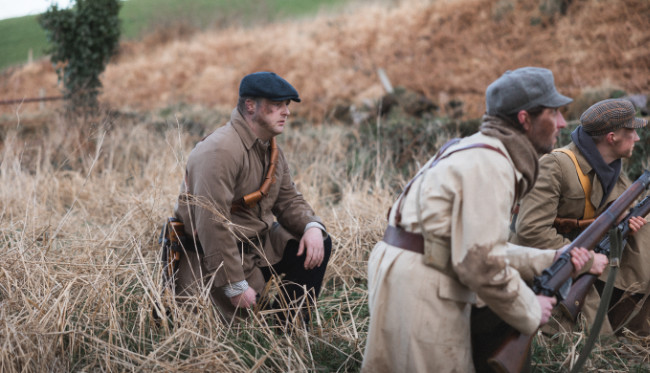
This week I experienced, in Virtual Reality, what is was to belong to a Flying Column during the Irish War of Independence. With the men, I crawled through a West Cork field, gun at the ready, alert for any sign of the British army or the Black and Tans.

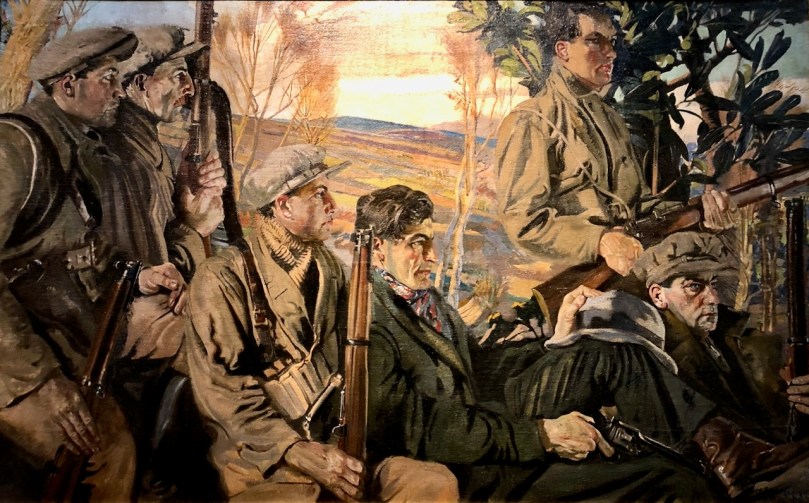
Or, at least, that’s what it felt like, and I must admit to a slight pounding of the heart as we were crouched behind that stone wall. In reality, I was on a swivel chair in the old Uillinn coffee shop, now repurposed as a VR theatre, wearing a VR headset. The Sean Keating painting that this experience is based on is the iconic Men of the South and you can read all about it here

Keating’s grandson, David Keating, and his creative partner Linda Curtin, have produced the VR experience, shooting it in West Cork in “360 stereoscopic + volumetric capture” with the help of many local people and the new West Cork Film Studio. Dr Éimear O’Connor provided the expert consultations on Sean Keating (below) and features, amusingly, as an exasperated director of the action. If you get a chance to see this anywhere, grab it! You can also read more about Sean Keating in this post by Robert from 2020.

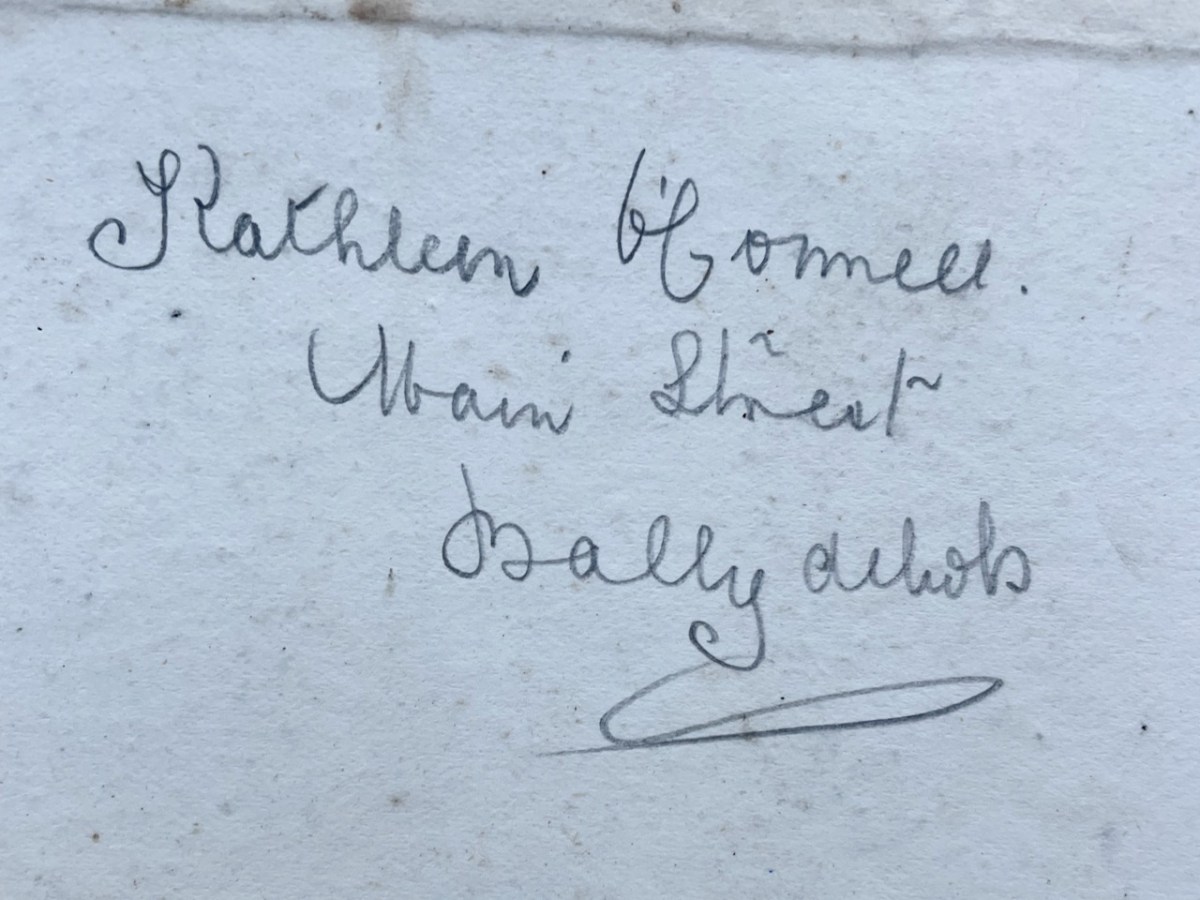
And this War of Independence action leads nicely into Kathleen O’Connell. You will remember her as one of the heroines of Karen Minihan’s book More Extraordinary Ordinary Women. Take a quick trip back to this post and read all about her and her daring and courageous deeds.  I concluded this section by saying

Kathleen was ruined financially by all her support for the cause. Letters of support for her pension application were fulsome in praise of her work and her commitment. She was awarded a grade E pension in 1939. She died, here in 1945, aged 50. She had not married and had no children, and all memory of her gradually disappeared from Ballydehob. When Karen went looking for the house she had lived in, it seemed nobody could remember the heroic Kathleen O’Connell who had once lived here.

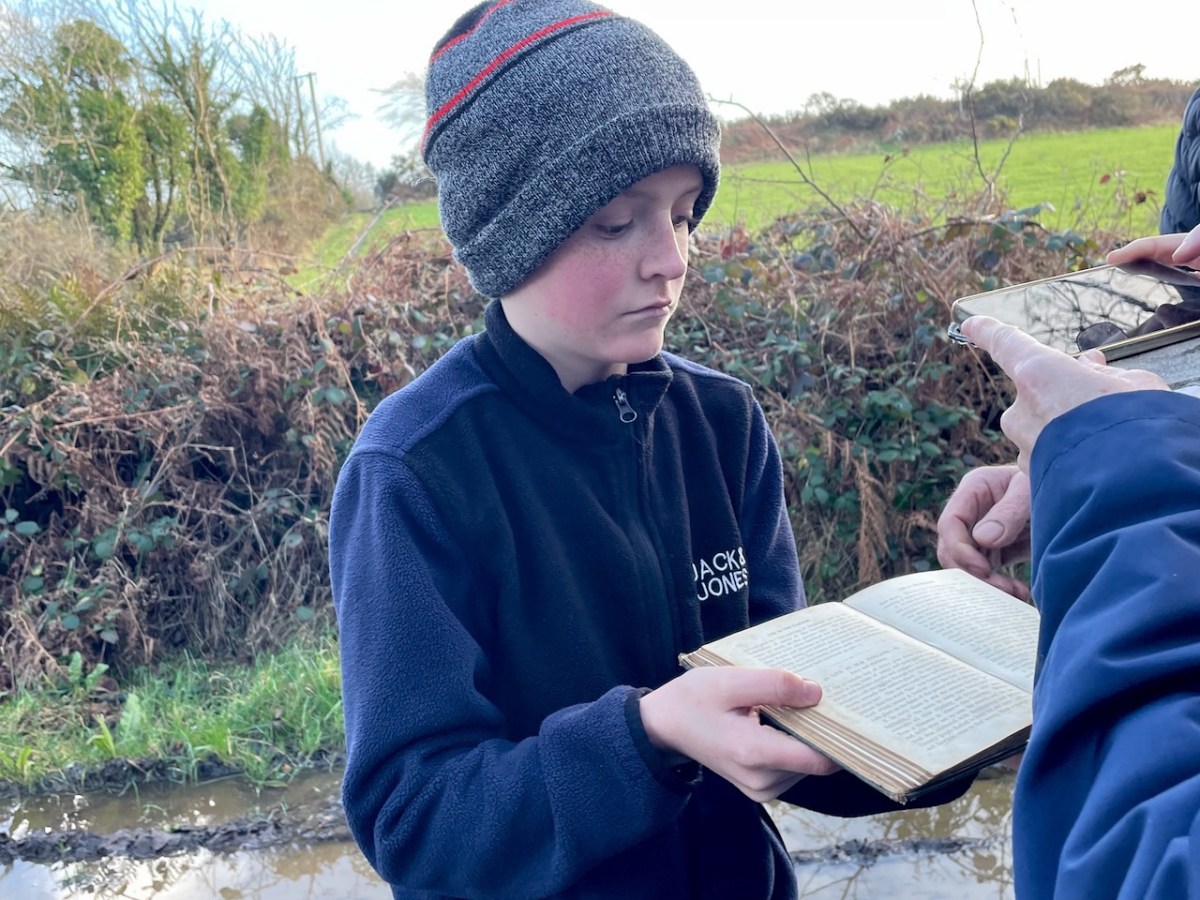
How wrong we were! Memory of Kathleen was far from dead. A relative of hers recently contacted Karen and on Friday afternoon we spent several hours with him and his charming grandson, rediscovering Kathleen from a man in whose family her memory was still fully alive. (He didn’t want his photo in the blog post, although Neven, the grandson, was happy to be in it.)

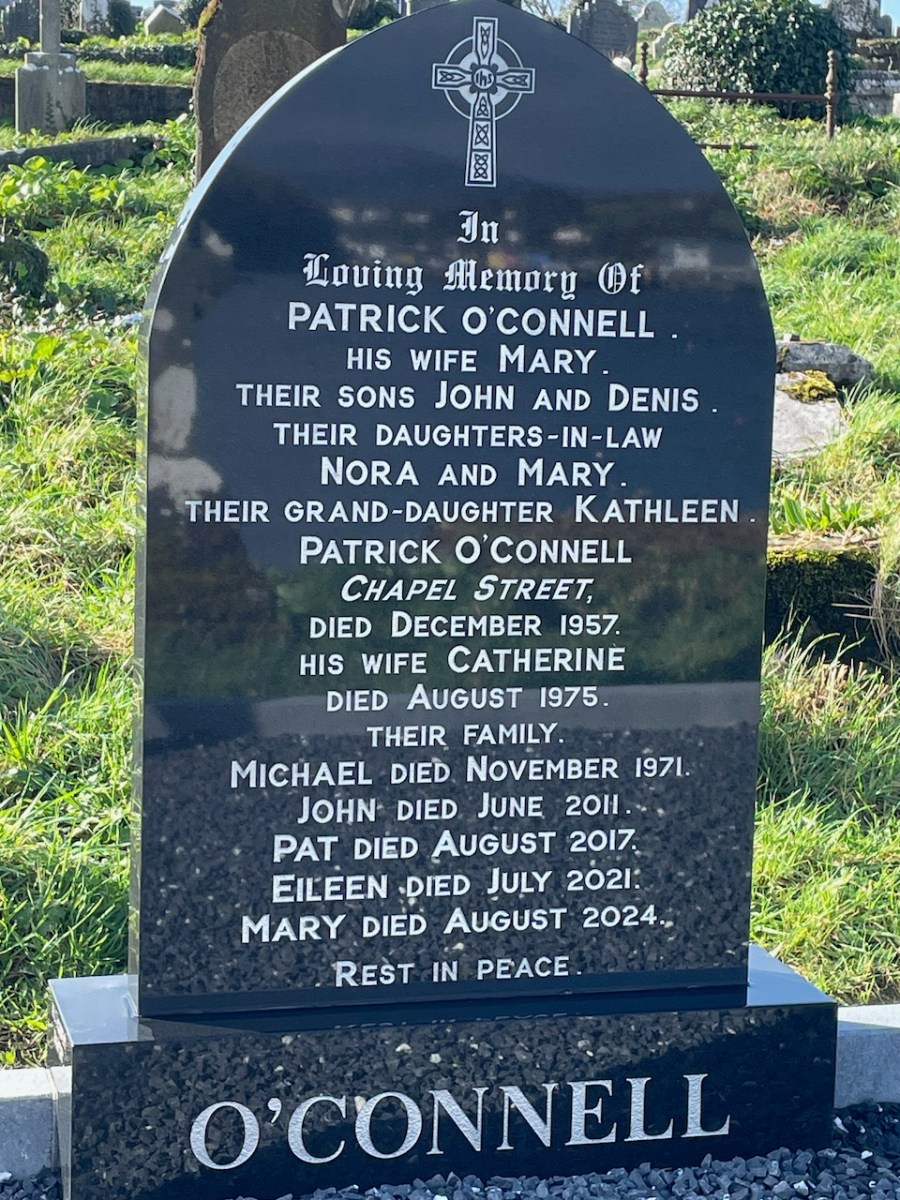
The first thing he showed us was her grave, at the historic Abbey Graveyard in Bantry. It contained many family members, including Kathleen. Our guide had knowledge of everyone in the grave and how they were related, and told us that there were probably more people in the plot than commemorated on the headstone. The grave looks out over the sea at Bantry.

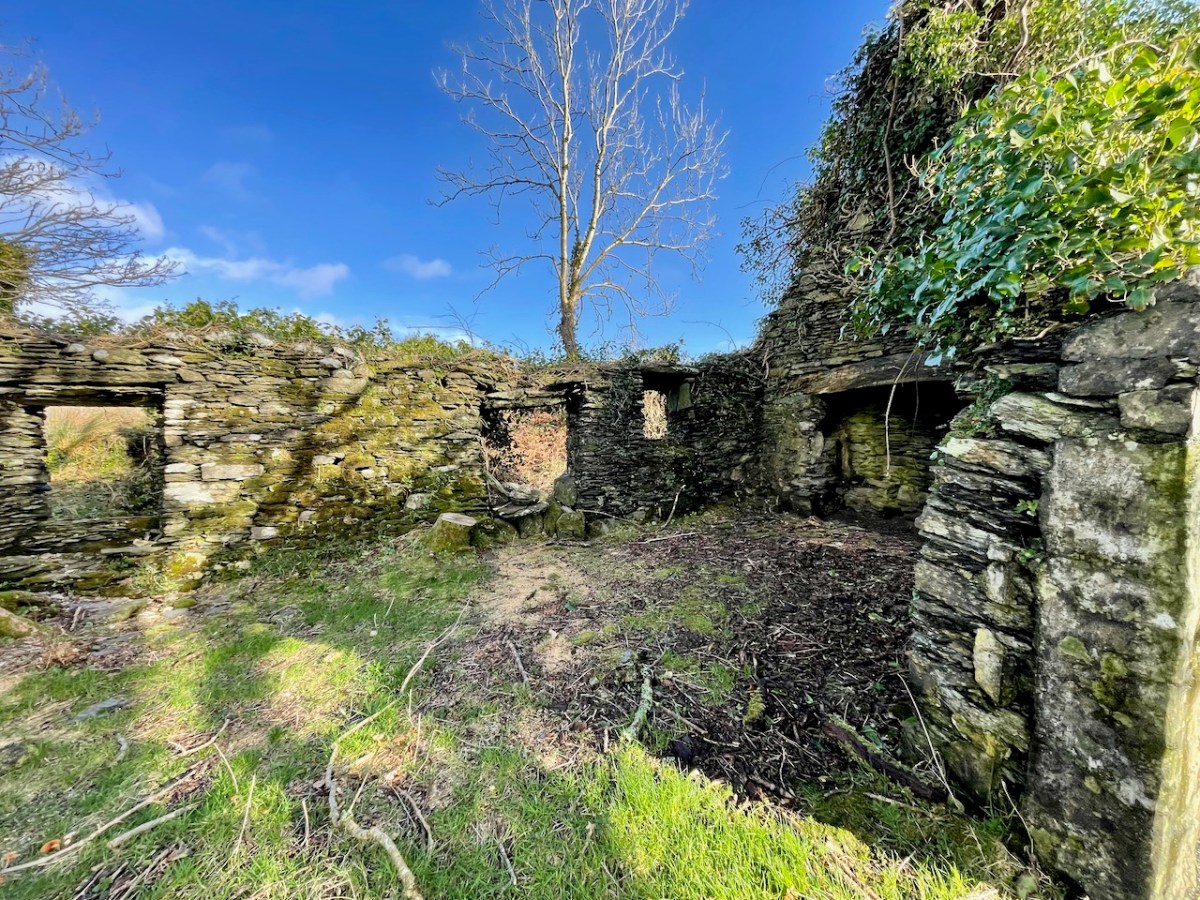
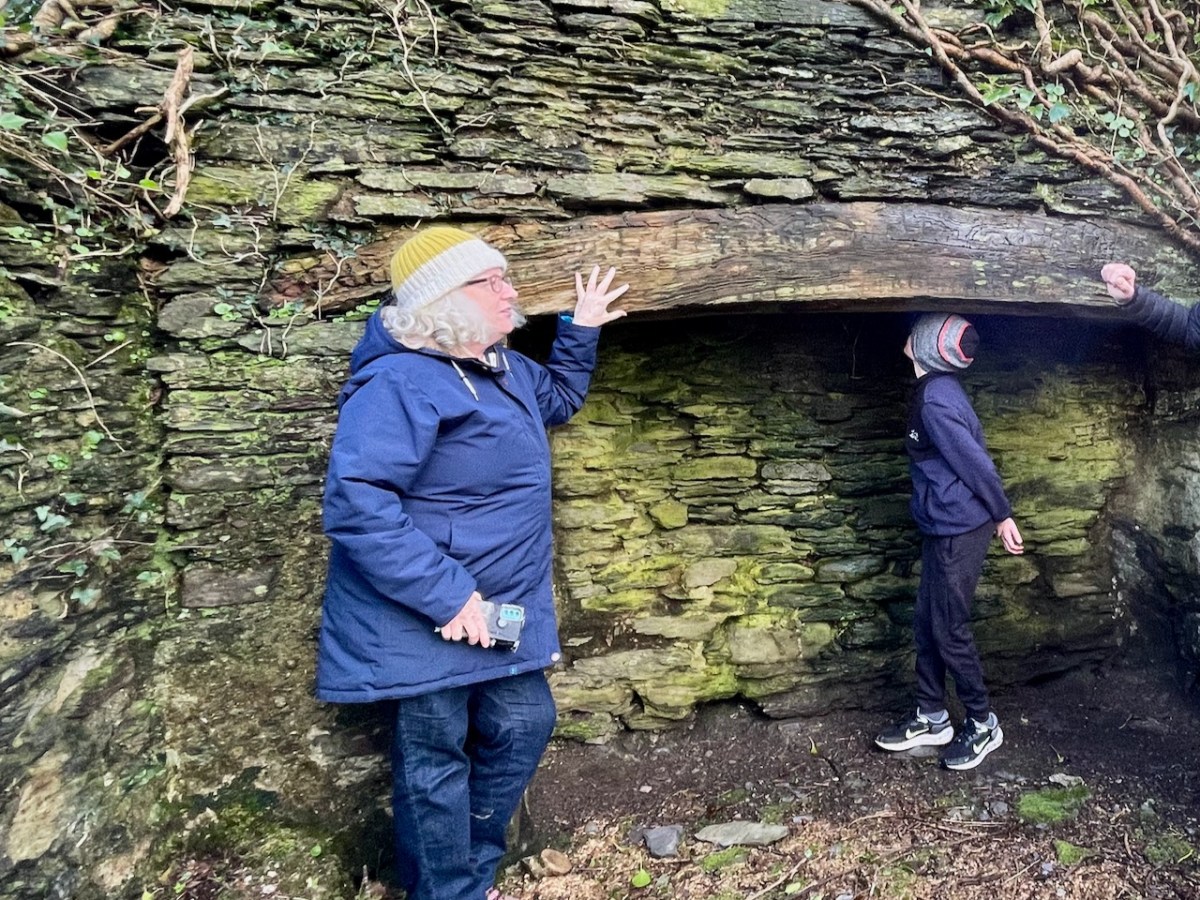
Next, he brought us to the cabin belonging to her Uncle Pat where she sheltered men on the run. It’s located in the hills behind Ballydehob, down several lonely boreens and across a couple of (very muddy) fields. The cabin, now roofless, still stands and still has the wonderful oak mantle across the open fireplace.

We marvelled that Kathleen was doing all this on her bicycle – it’s several kilometres above Ballydehob and about 100 metres above sea level. And of course few of the roads would have been paved at that time. Our guide told us that she was totally and passionately committed to the cause, and that, since she was an only child, she carried her parents along with her. It was really they who underwrote all the expenses she incurred in her work. 

In the family, it was understood that she had been engaged to a man who was a member of a Flying Column – just like one of the Men of the South, but that he had been shot. We could only wonder at the trauma and distress she had experienced. She left for America in 1925, but returned to live in Ballydehob, and her father eventually outlived her. 

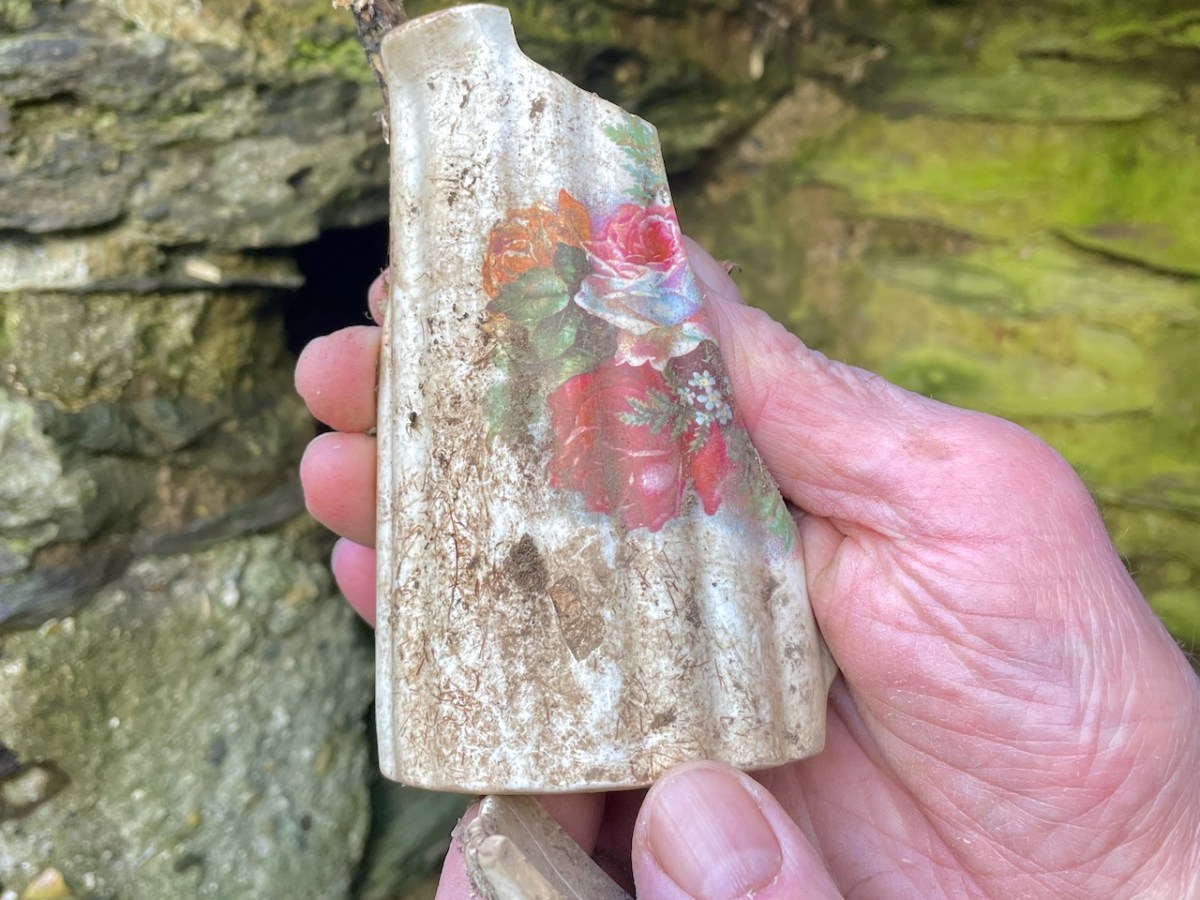
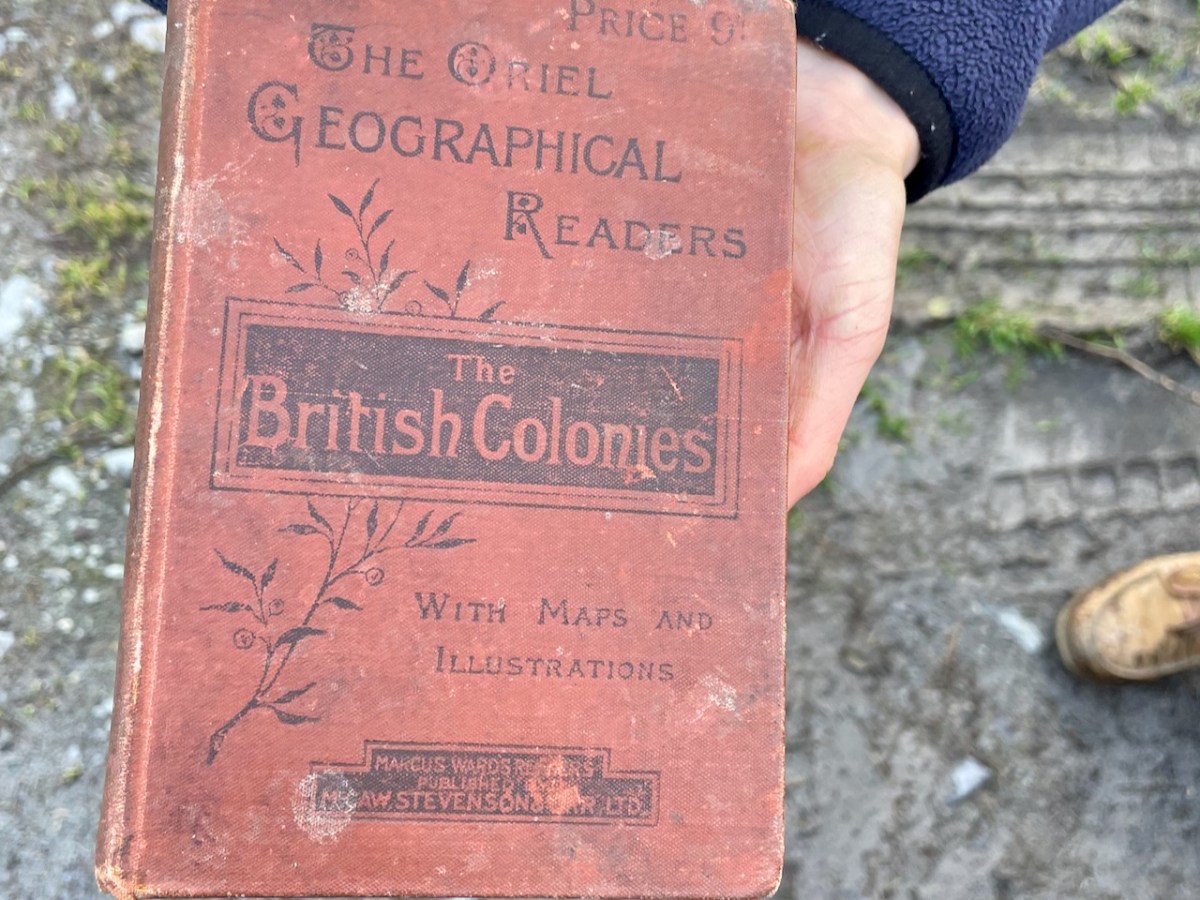
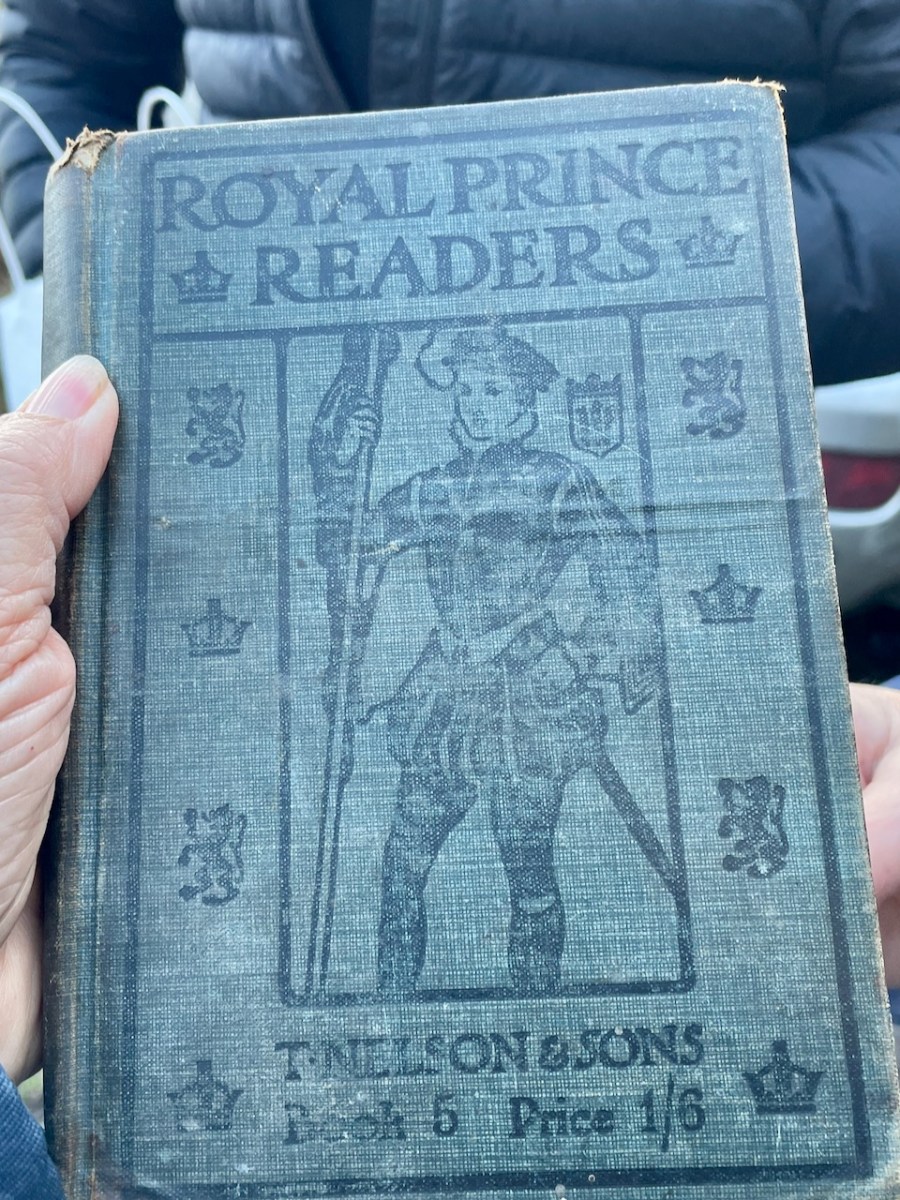
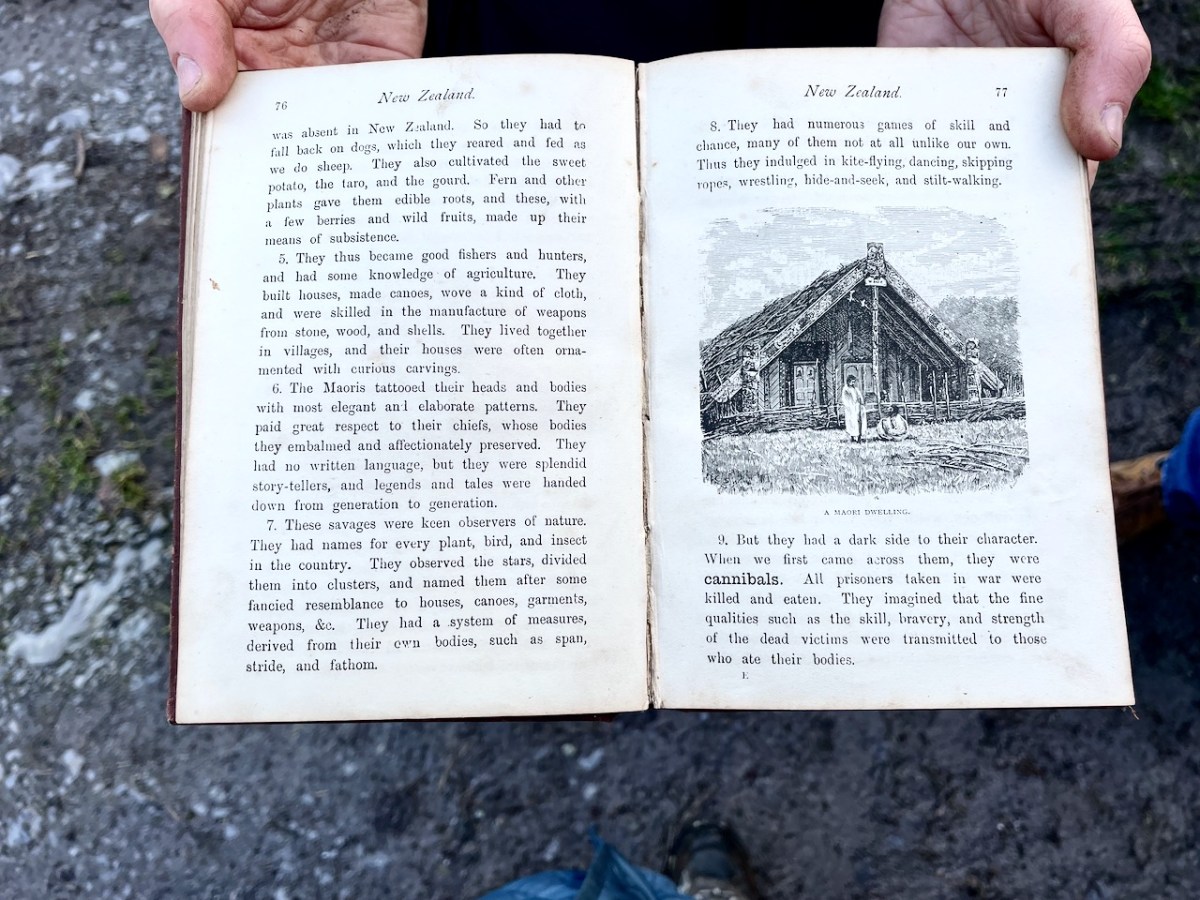
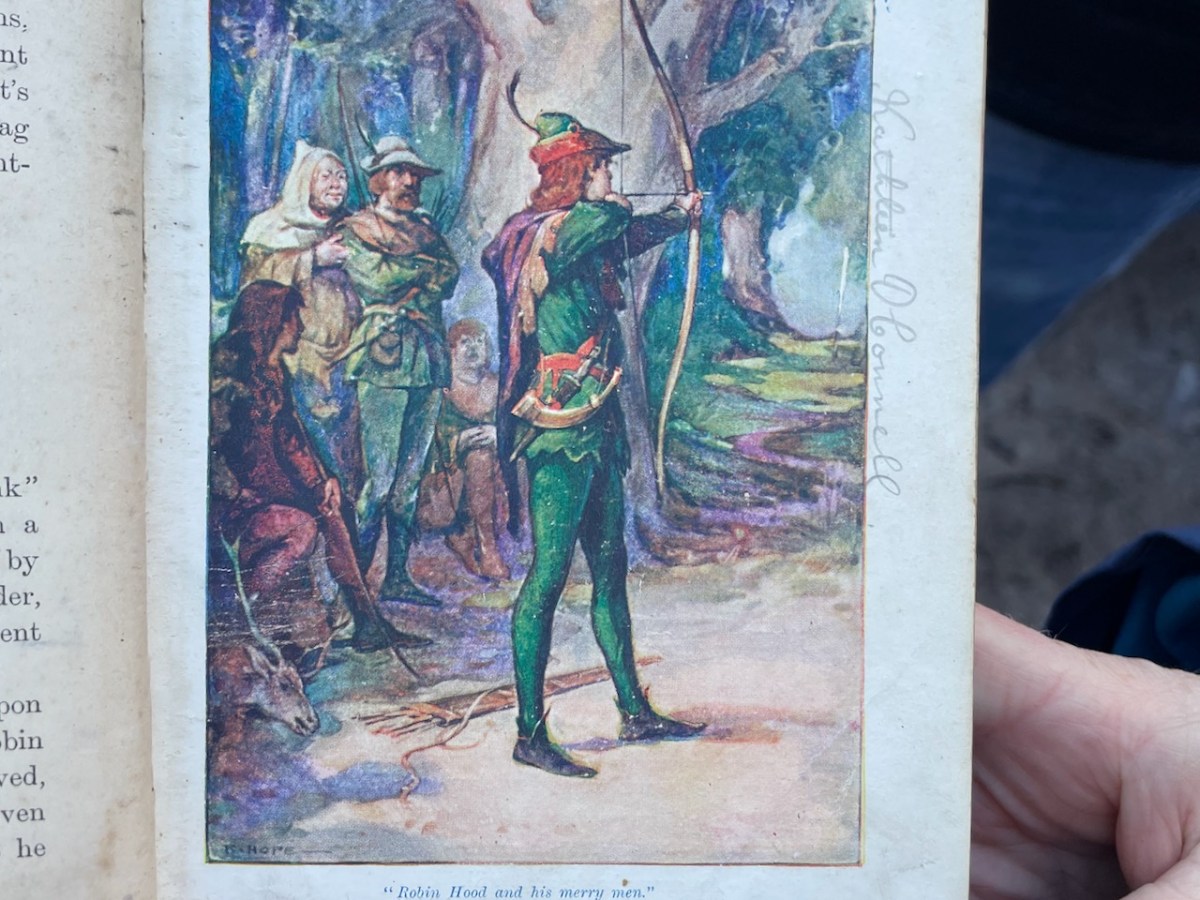
Our final mementoes of Kathleen were particularly poignant. Surviving in the family were two of her books, school books we think, in which she had written her name.

Each was very British – a reminder to us all what the standard school fare was at the time when we were members of the British Empire.

I have located a copy of the Royal Prince Reader (1910) on EBay – in Rajastan! A further reminder that empire was promoted through children’s literature as much as through military occupation.

Somehow these two books, her own possessions, brought Kathleen to life as nothing else could have done. We imagined her devouring these stories in school, and her gradual disillusion as she matured with what the Empire stood for.

It is an immense comfort to know that she is not forgotten after all.

Harry Clarke’s Brigid

Harry did several wonderful St Brigid windows, and included Brigid as a saint in larger scenes. There are also Brigid windows attributed to him that he actually didn’t do, but that’s a blog for another time. Today I want to give you a flavour of his take on Brigid, because this was a saint that must have been especially meaningful to him – his mother was a Brigid!

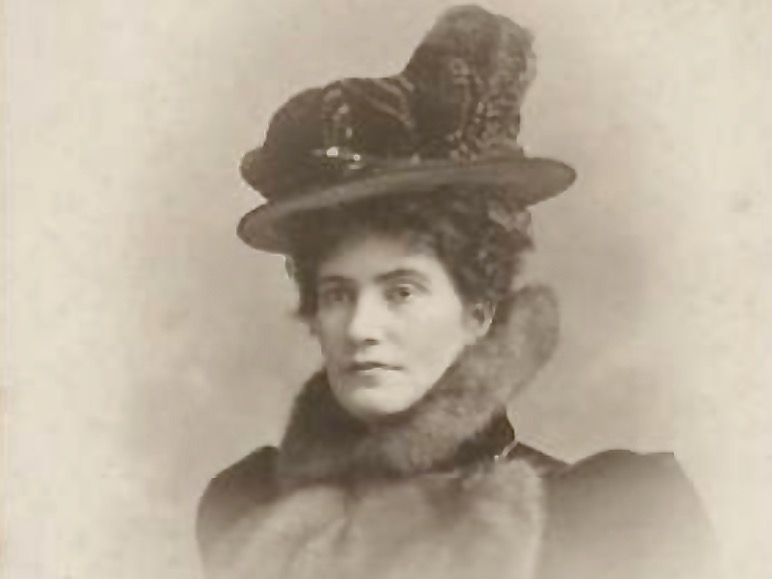
Brigid (sometimes given as Bridget) MacGonigal was born in Sligo and married Joshua Clarke, then an up-and-coming church decorator in Dublin and they had four children. Harry, their third child arrived in 1889. Brigid was never strong and died in Bray in August 1903, leaving her family bereft. Harry was 14 and that year marked the end of his schooling at Belvedere as he and his older brother Walter joined the family business to help run it. Harry was a sensitive child and it is likely that he missed and mourned his mother for many years. He also inherited her weak lungs and struggled, as she did, with his health.

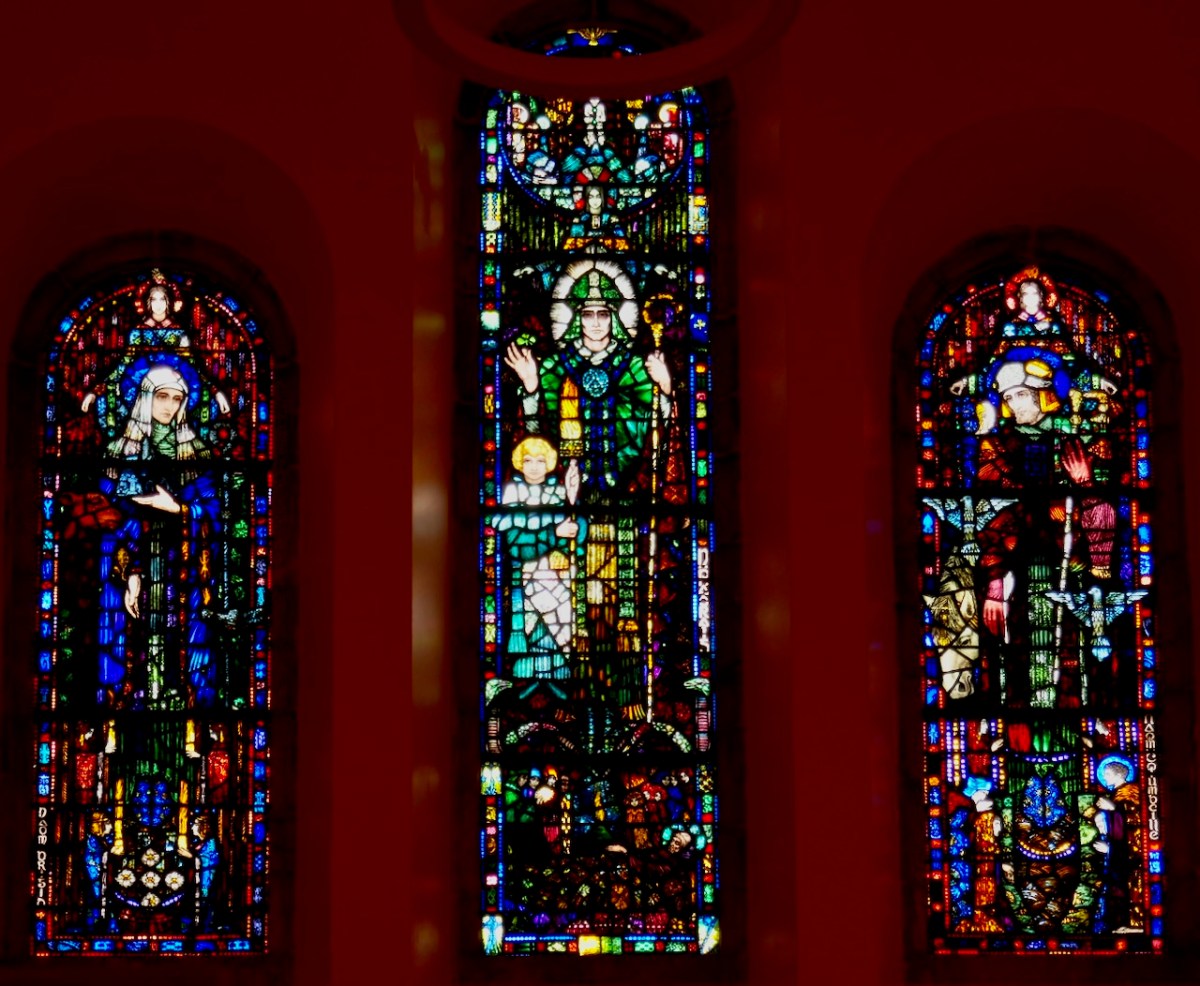
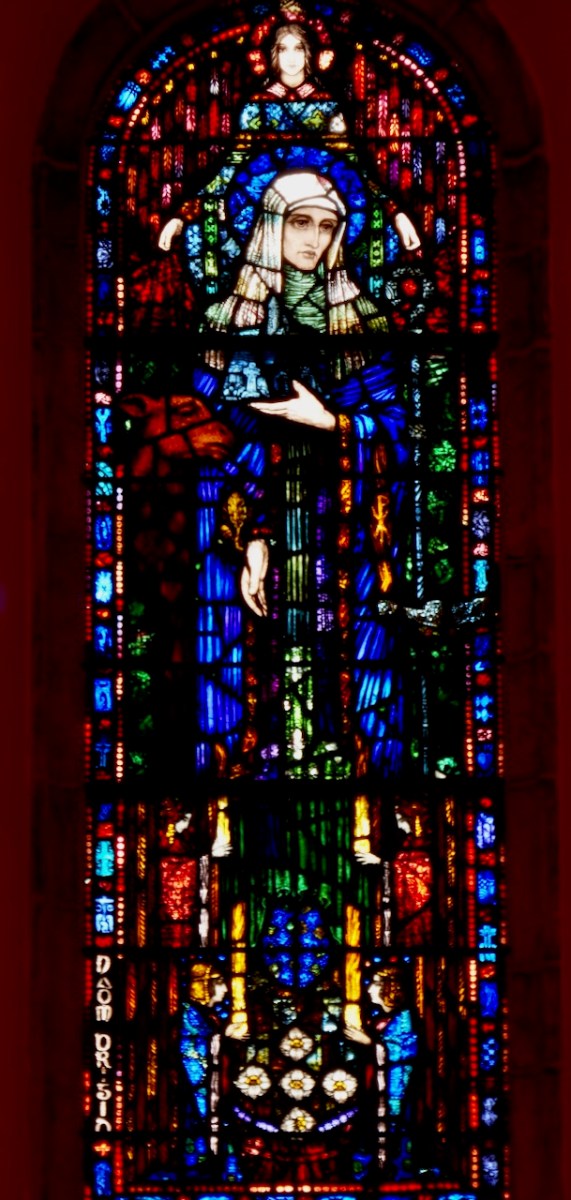
I will start with the place that launched Harry’s career, the Honan Chapel at University College Cork (I’ll finish with the one that is on my lead photo). And in fact it is his first windows for that Chapel – a three light, depicting Brigid, Patrick and Columcille, our three Patron Saints. This window is over the entrance, facing west, which, with Harry’s preference for dark colours and some internal lighting issues in the chapel, makes it hard to photograph.

Harry had completed a detailed sketch design for this window in 1914 (Nicole Gordon Bowe has an image of that design in her magnificent The Life and Work of Harry Clarke) and the window was made in 1915. There are a few differences between the sketch design and the finished window, but on the whole, the window is true to Harry’s original vision for it. His notes for the window refer to 

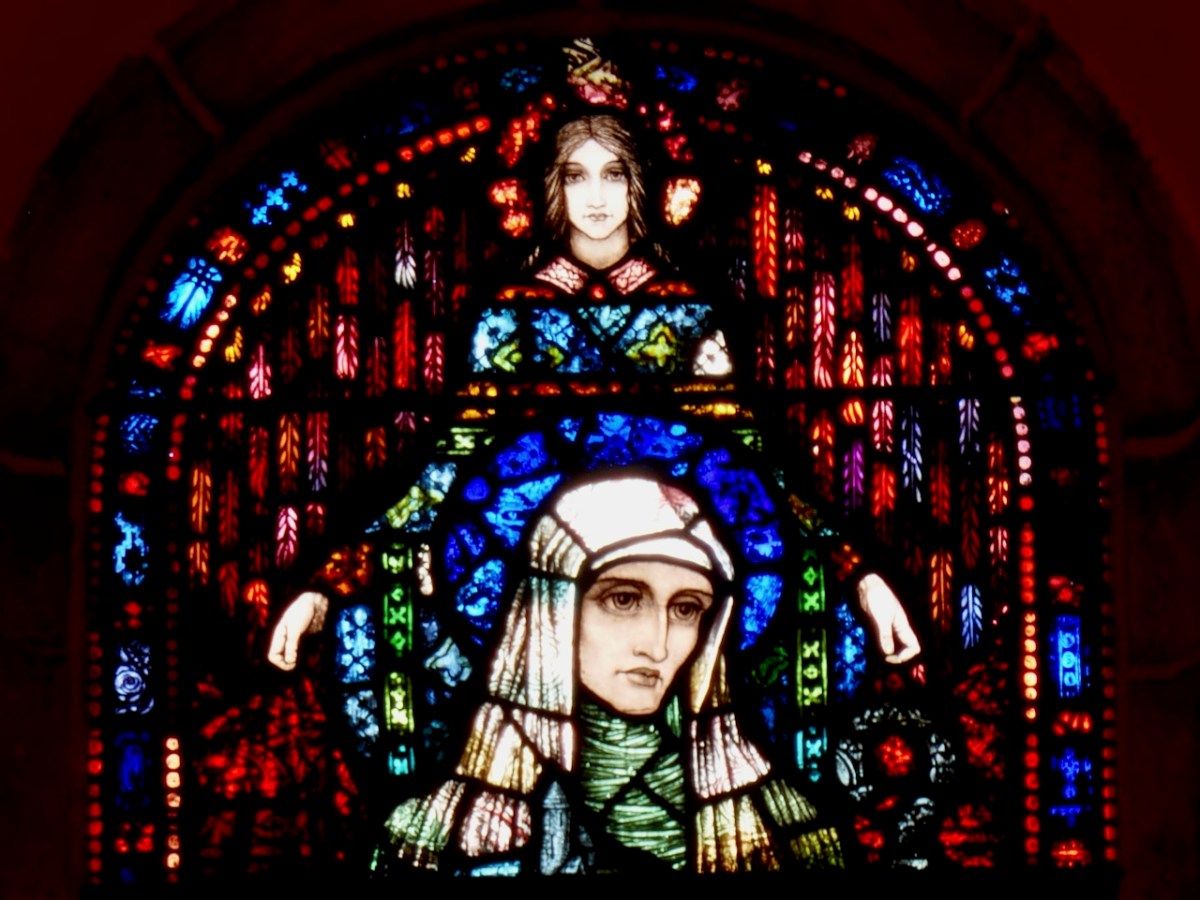
Top: The Angel with the cloth of heaven forming background

The Figure: With emblems – the church, the inextinguishable spiritual lamp – the calf and the oak.

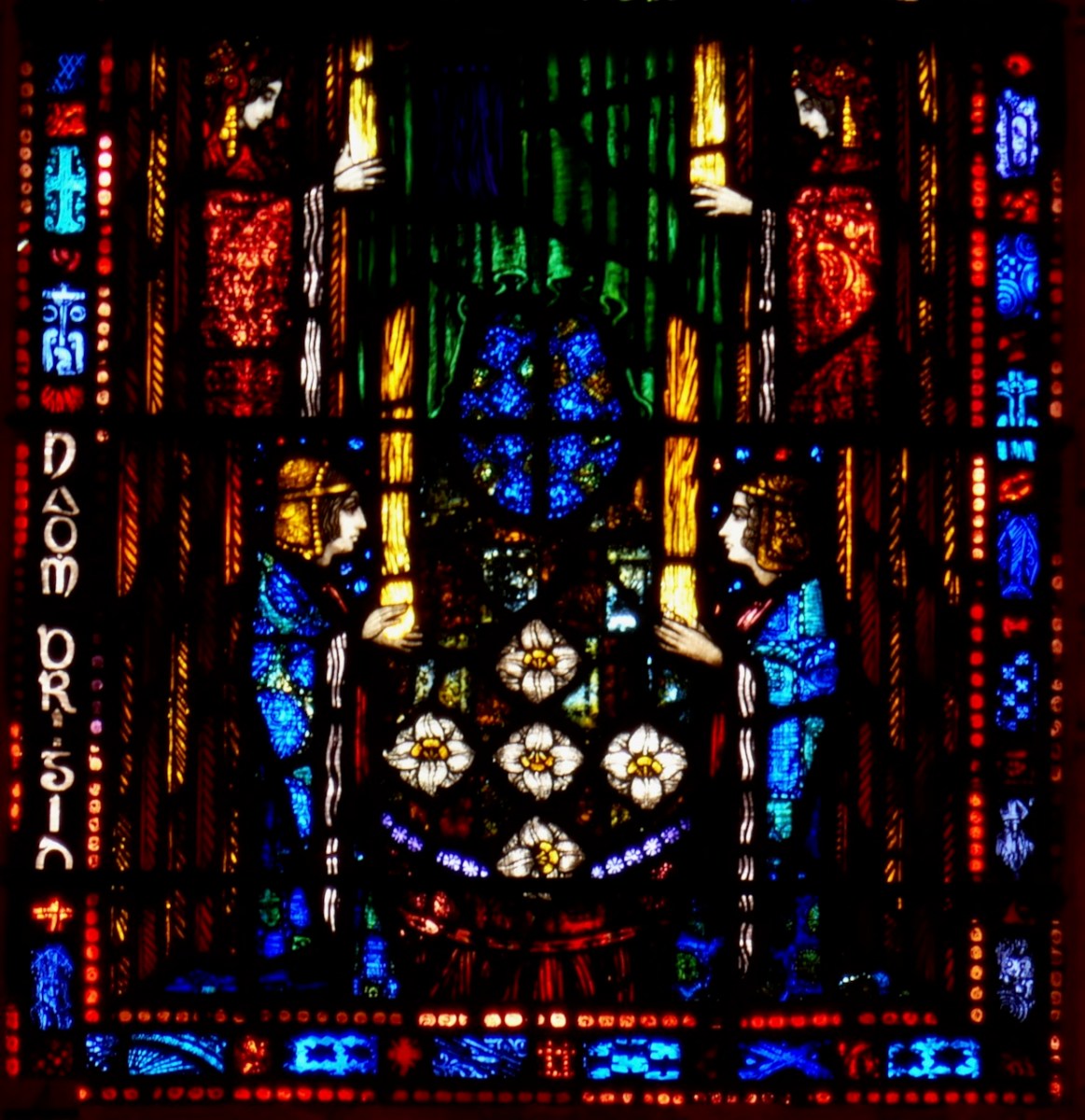
The Base: Are four angels carrying the prayers, prophesies, miracles and charities of St Brigid, also are shown the five lilies – she has been called the Mary of Ireland and these lilies symbolise the five provinces of Ireland over which she held spiritual control.

The cloth of heaven has been imagined as fronds in deeps reds, while St Brigid is shown as mature, wise and compassionate. She is holding a church which looks a lot like St Kevin’s Kitchen in Glendalough. In her other hand is a brown oak leaf, threaded through her fingers. The calf peers out from her right side. As befits a Mary of the Gael, she wears a deep blue robe. 

The predella (lowest section, above) shows four angels, but what they are carrying are torches – a reference to the spiritual lamp and the fire associated with Brigid. The symbols of the five provinces, recognisably lilies in the sketch design, have changed to another flower I can’t name. Note the tiny details, though – the crucifixion scene in the borders on the left and the right. The other detail to note here is that the fingers, of Brigid and the angels are ‘normal’ – Harry has not yet developed his signature long tapering fingers and pointed sleeves (among the idiosyncratic elements he called his “gadgets’).

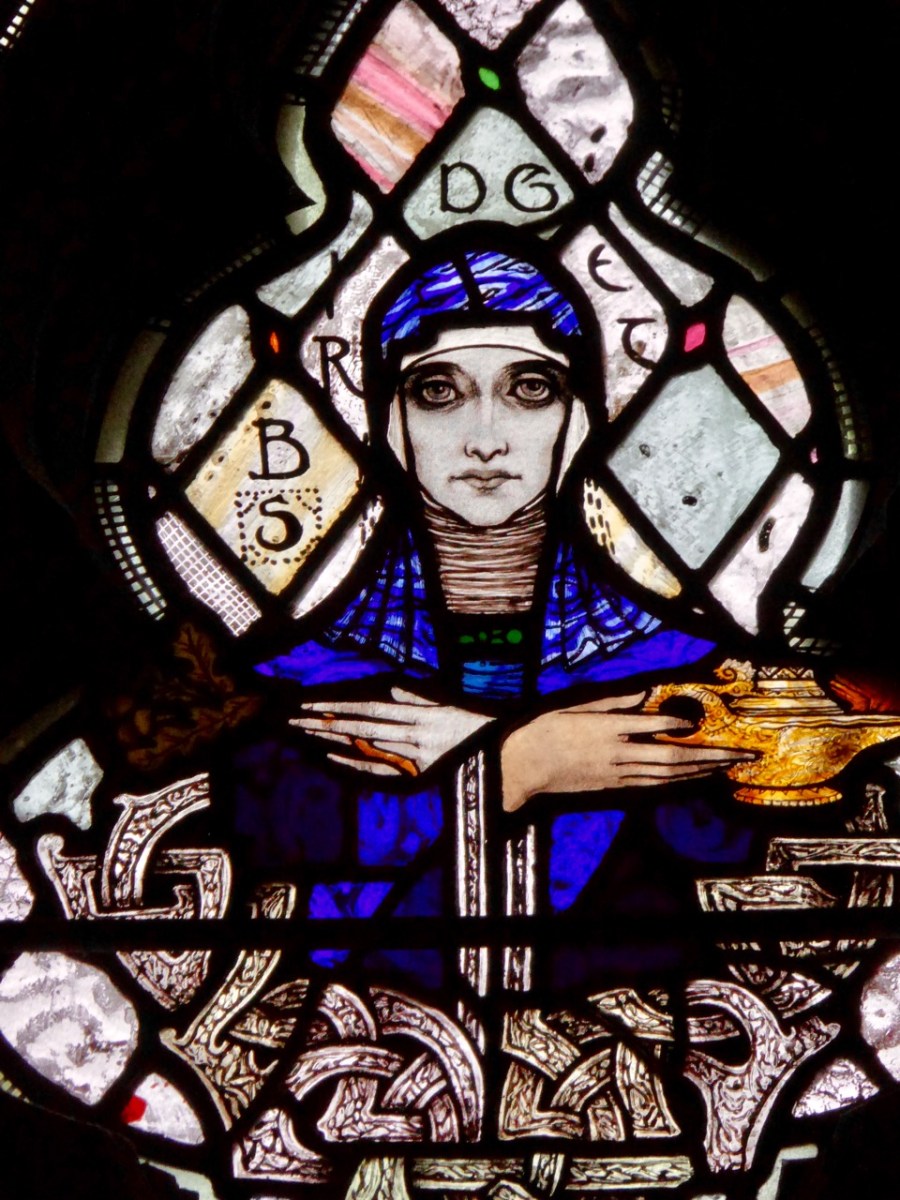
His next Brigid (above) was for the Nativity window in Castletownsend – I have written about that window extensively here so pop over and have a browse if you fancy. The Castletownsend Brigid, done in 1918, looks quite similar to the Honan Brigid and has the same oak leaf entwined in her fingers. The difference is that she is carrying the sacred lamp, has the Harry Clarke fingers, and is spelled S Bridget – the English version rather than the Irish Naomh Brighid of the Honan. [For non-Irish speaking readers – the small dot on top of consonants in Irish is now normally rendered as H – as in Briġid is now Brighid.]

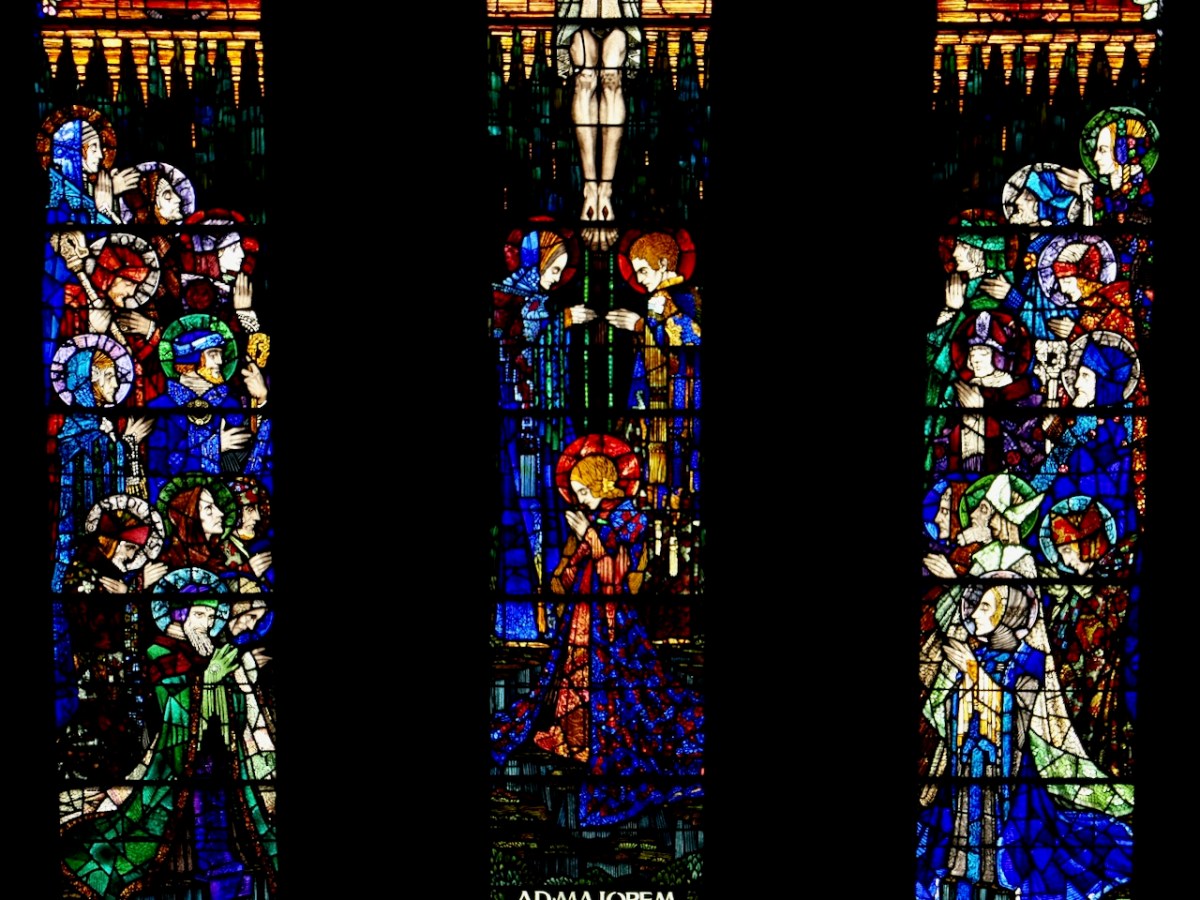
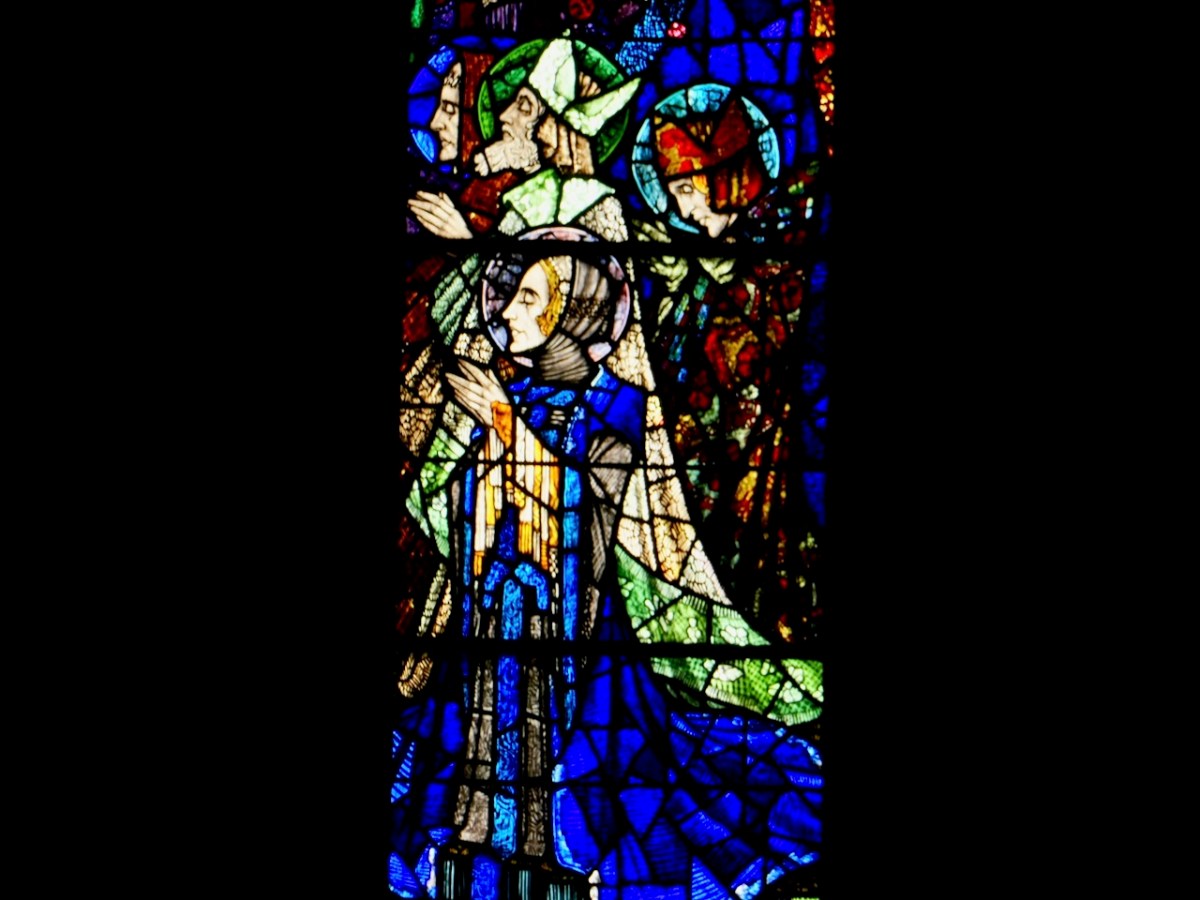
The next two windows, Terenure (above and below, details) from 1920 and Cloughjordan from 1924, show Brigid among a host of other saints. In Terenure the subject of the large window is The Crucifixion and the Adoration of the Cross by Irish Saints, and this is a large, three-light window behind the main altar. The saints are not all easy to identify, despite having their names in their haloes, but first and foremost among them are Patrick on the left and Brigid on the right.

Brigid is dressed in a blue robe which drapes on the ground around her, and has a golden trim to her sleeves.

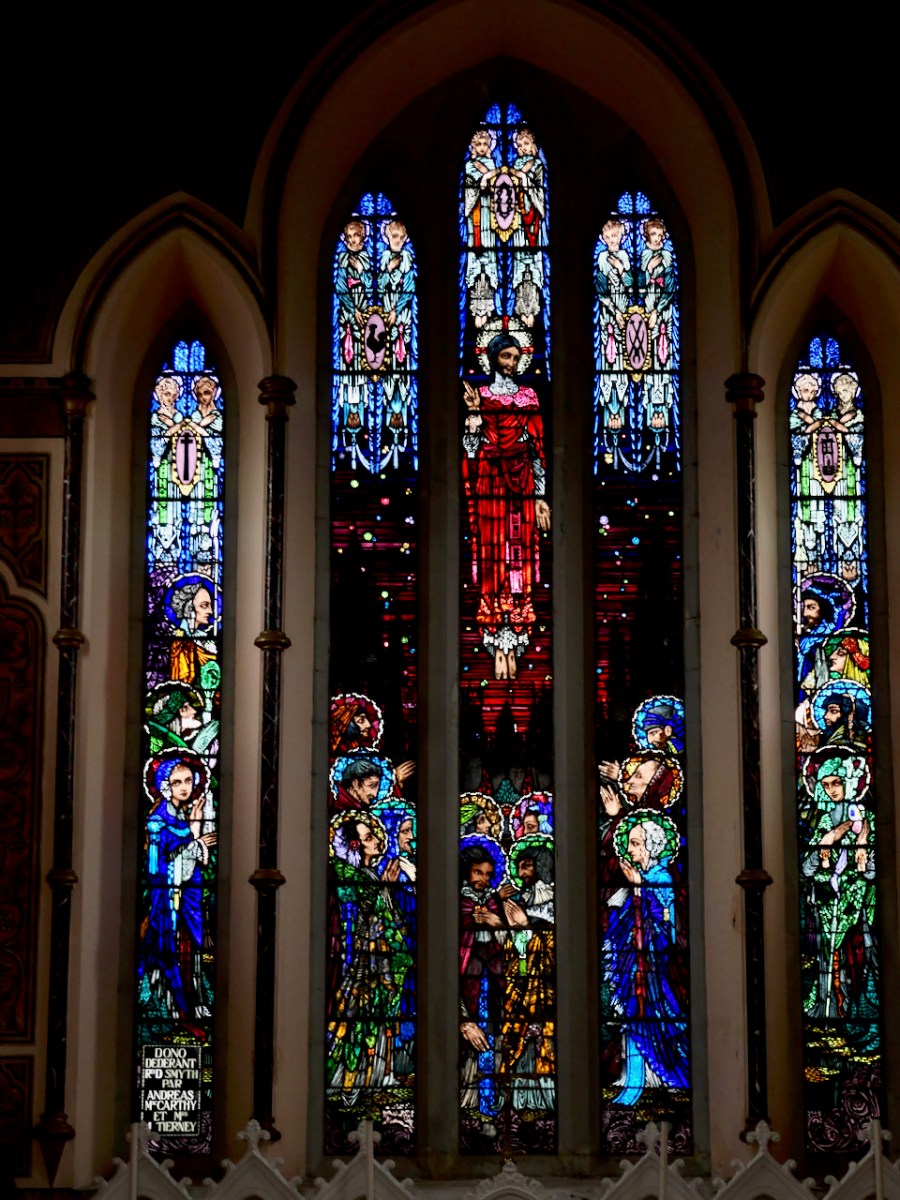
In St Michael and St John’s Church in Cloughjordan, Co Tipperary, the theme of the large, five-light, window is The Ascension with Irish Saints and St Michael and St James. Gordon Bowe designates this one a Harry Clarke (B). That means that this window was initially conceived and designed by him but executed by his studio under his close supervision. This is the first window we have come across, in this series, that is not wholly Harry’s own work, and this is a measure of how busy the Studios had become with Harry at the helm. 

As in Terenure, Brigid is here as one of the Irish saints. She is depicted as very young, wide-eyed, and carrying a church which now looks more medieval than Romanesque (neither would have been appropriate to her era) and is probably a nod to the Cathedral in Kildare.

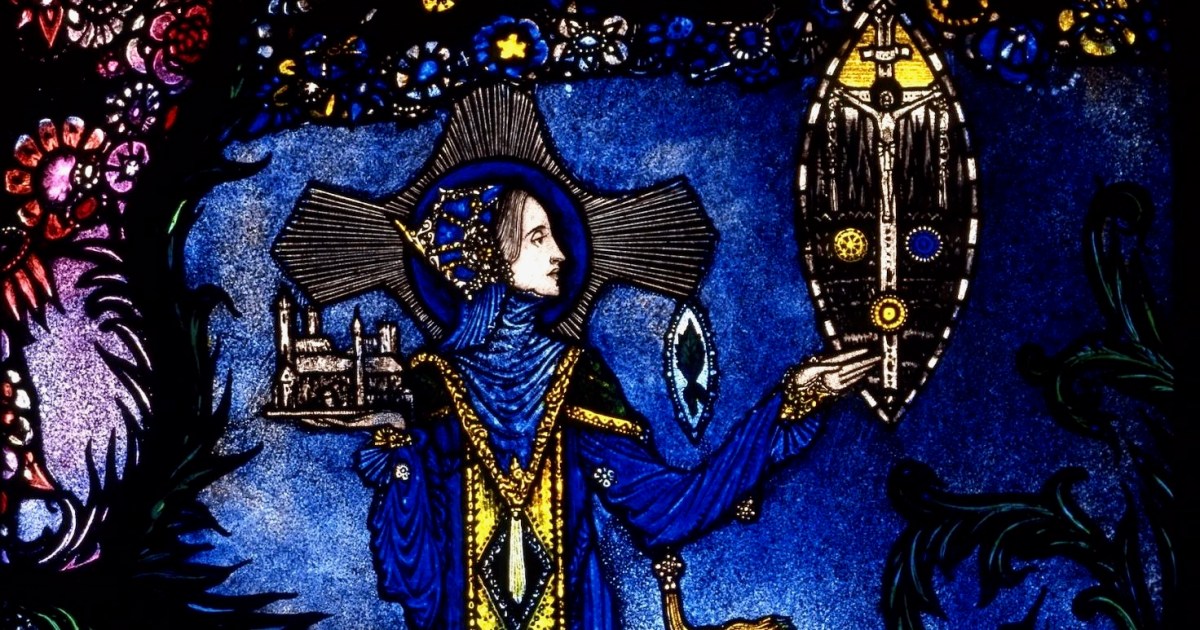
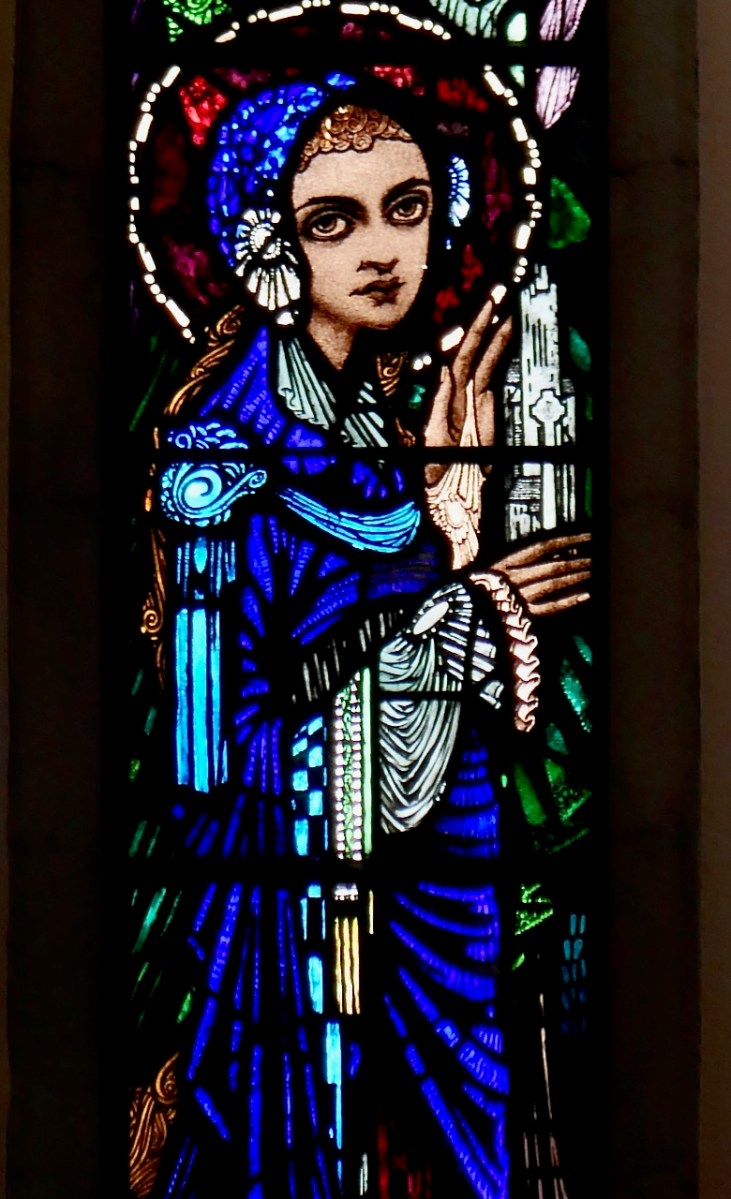
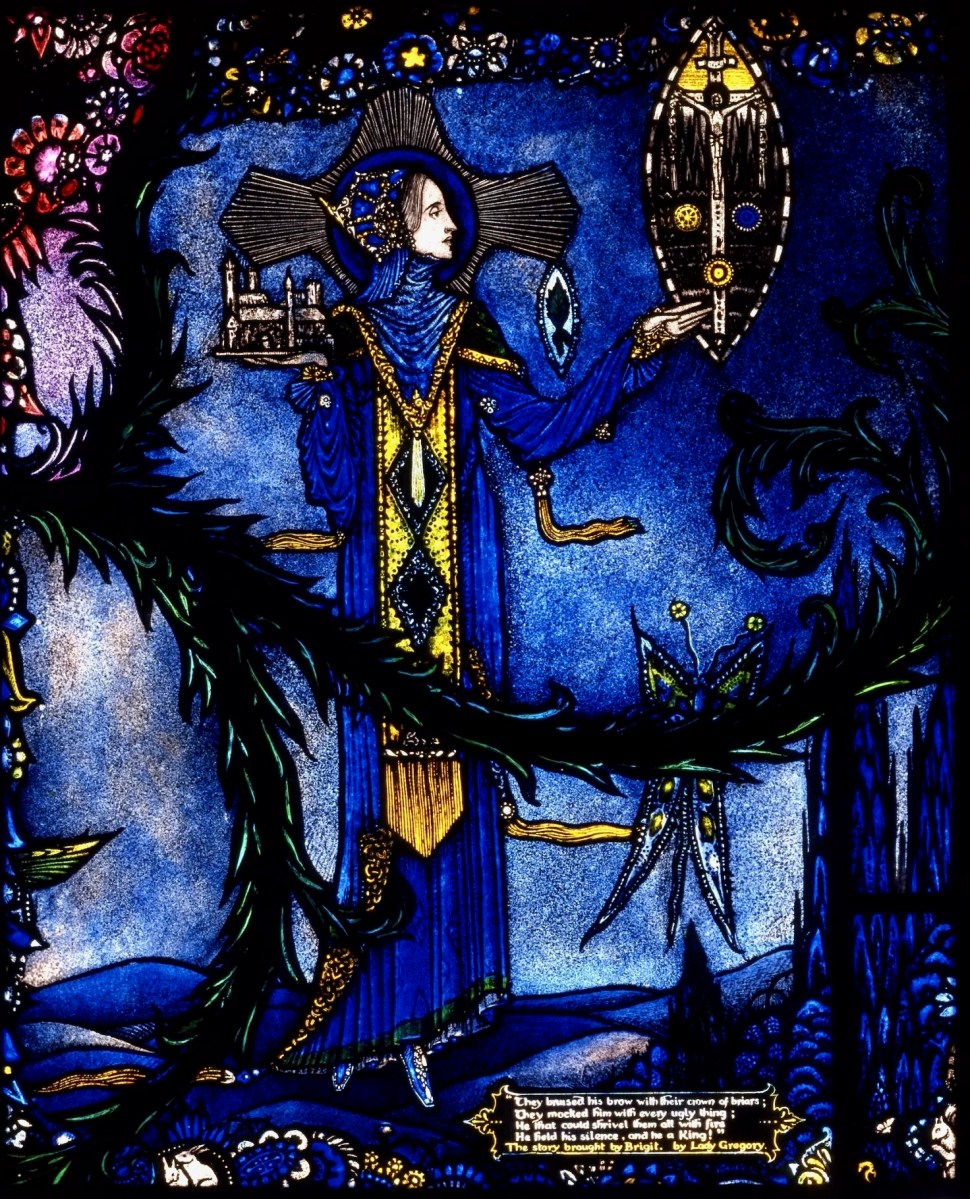
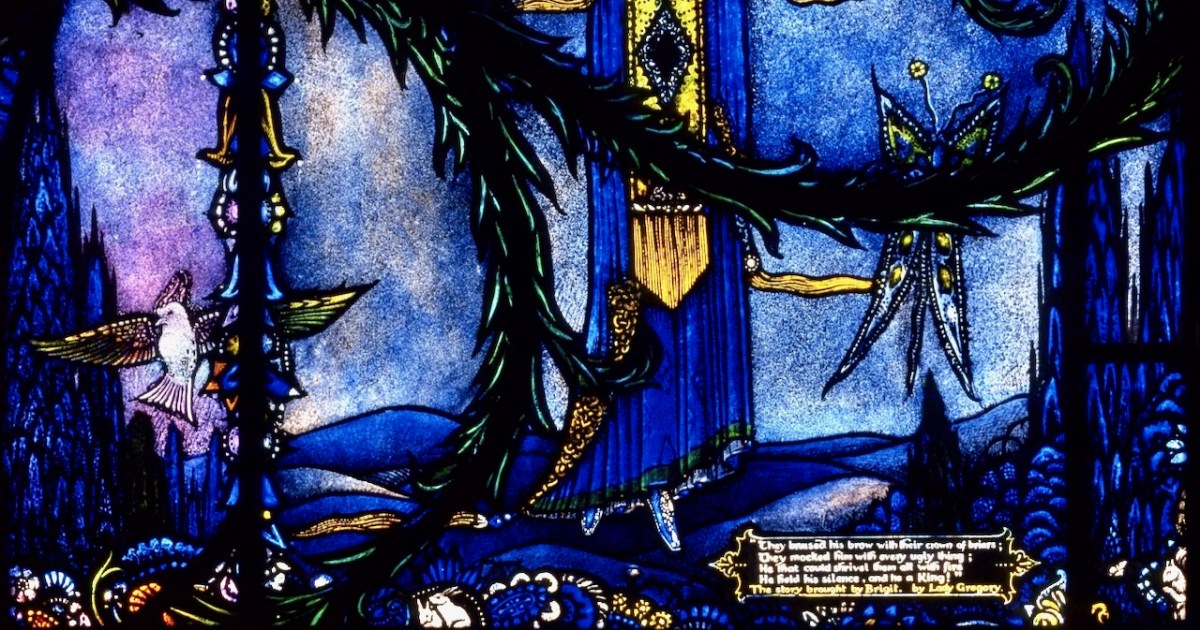
And so we come to the last Brigid that Harry ever did*. It is from the famous and controversial Geneva window, now in the Wolfsonian Museum in Miami. If you have not yet seen the marvellous documentary that Ardall O’Hanlon has made about this, I highly recommend you do. It’s available on the RTE Player as of this time of writing. The Brigid panel is among the less controversial images in the whole window. It’s based on a play by Lady Gregory called The Story Brought by Brigit. According to Marie T Mullan in her lovely book, Exiled from Ireland: Harry Clarke’s Geneva Window

The play is a passion play, but it is based on the legend, popular in Ireland and Scotland, that St Brigit was present at the birth and crucifixion of Jesus. Brigit mingles with the crowds from the time of Jesus’s triumphant entry into Jerusalem until after his death. She is a foreigner, observing and commenting. She tells people she is Jesus’s foster mother and brought Mary and Jesus to Ireland to escape Herod. . . The icon of Christ Crucified is a the vesica, a shape used often in art for a picture within a picture, and has the traditional beaded frame. Brigit is absorbed in the icon.

Note Brigid’s golden scapular and elaborate headdress. Also the stylised butterfly and the little woodland creatures in the scene.

I think that’s a good place to stop. Harry did another Brigid, for the Oblate Fathers in north Dublin’s Belcamp Hall. This is a sorry tale in which the buildings, once left by the priests were subject to appalling vandalism and the windows are in storage, and haven’t been seen for years. This is tragic. 

* Thanks to my friend Jack Zagar for the Photos of the Geneva Window.