Irish Romanesque 2 – Doorways

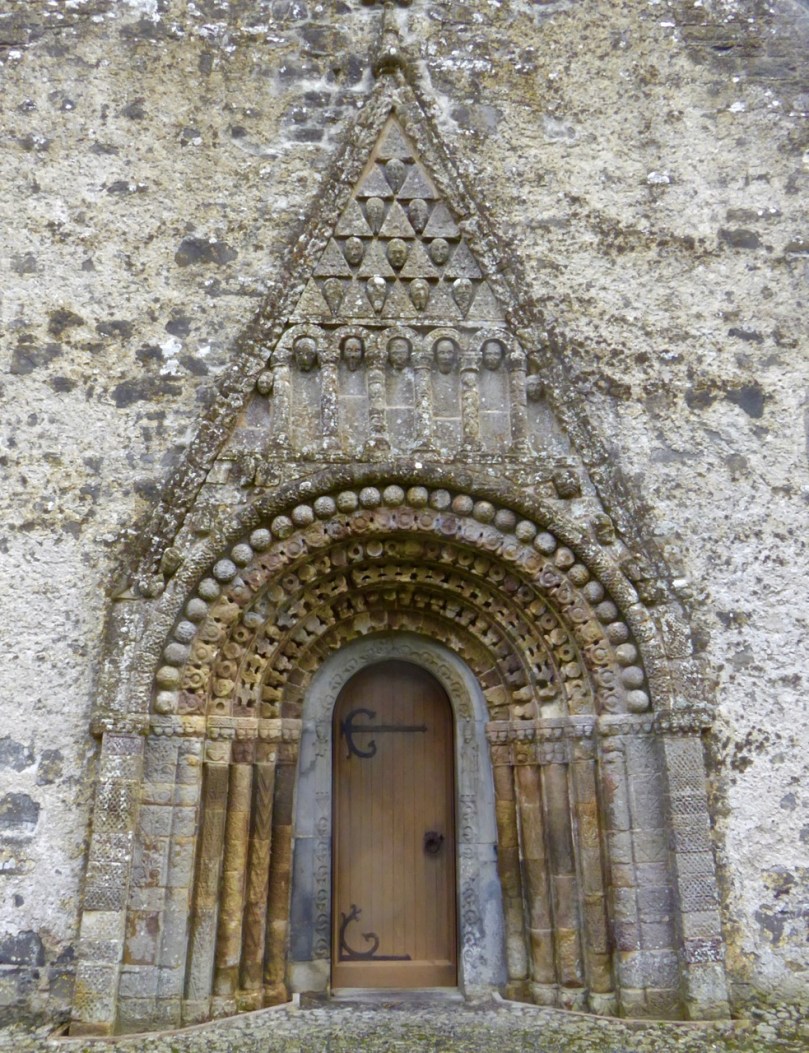
In April I introduced you to the form of architecture known as Irish Romanesque – the dominant form of church architecture in Ireland in the 12th century. If you haven’t read that post already a quick glance over it will get you ready for this one. To continue the series, I’m going to look at one of the glories of the form – the elaborate doorways, often highly decorated, such as the one at Clonfert, above.

Our friends Brendan and Kathie are visiting at the moment and I pressed Brendan, an artist, into service, drawing the Killeshin doorway for me, so I could use his drawing to illustrate the main features of these doorways, and cover some basic vocabulary. (Thank you, Brendan!) Take a look at our joint effort – it will help as I talk about the doorways.*
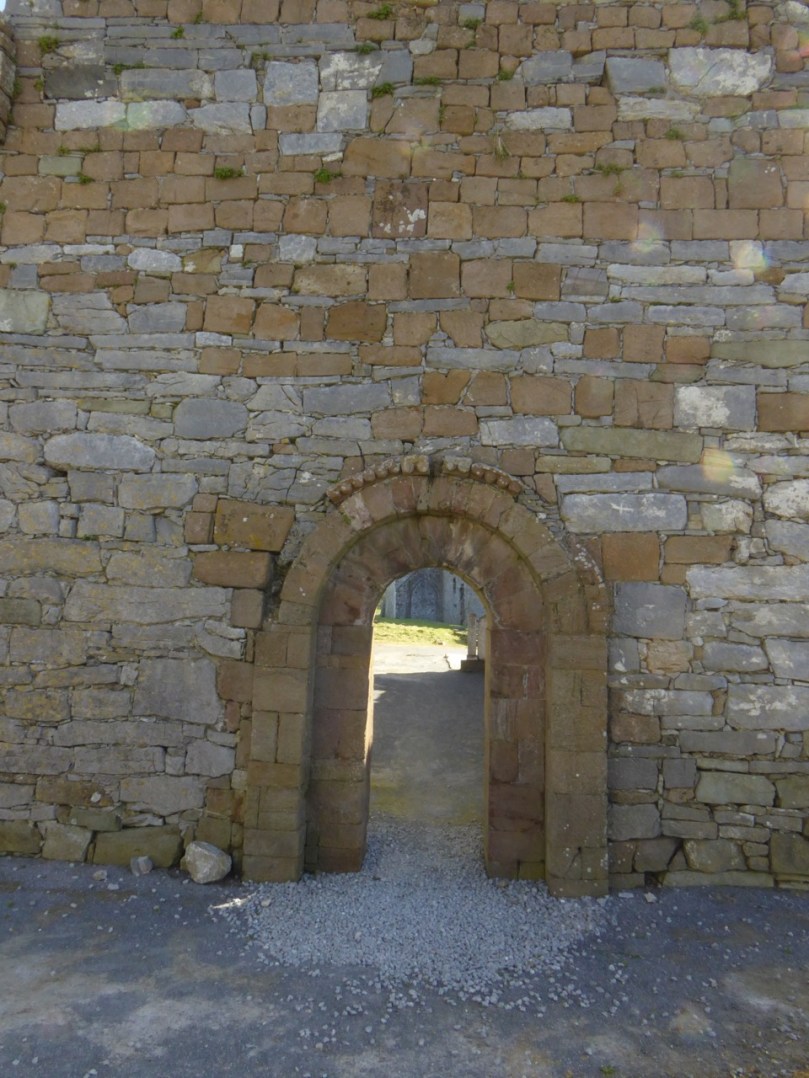
This simple door is at Ardfert in Co Kerry. It only has one order and no decoration apart from a string of bosses above the arch. The romanesque elements at Ardfert are mixed with later gothic elements – fragments only of the 12th century buildings that once occupied the site. The doorway below is yet another example, built into the wall of the later cathedral building. The stone is soft and much weathered but the columns were once carved, and the door is flanked by blind arcading.
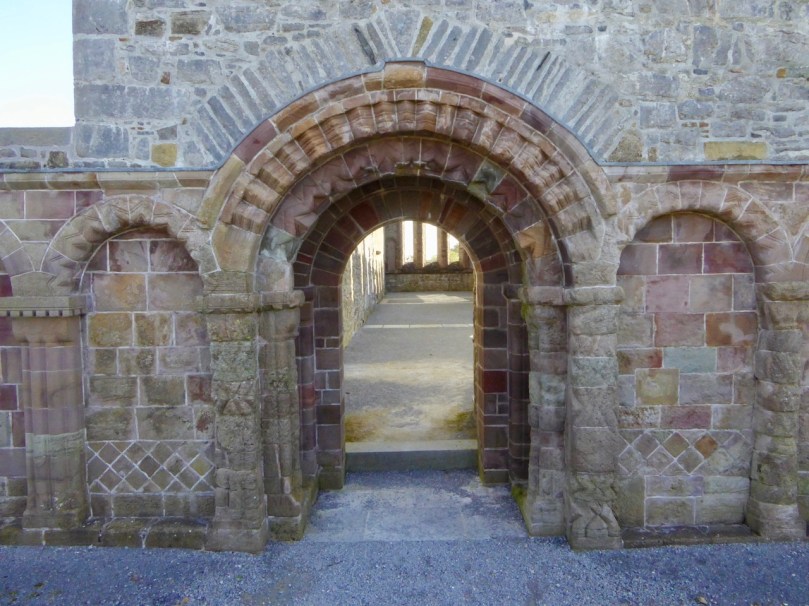
This doorway (below) at Ardmore in Waterford is no longer complete – while the jambs are there, the columns have disappeared, leaving only their capitals behind.
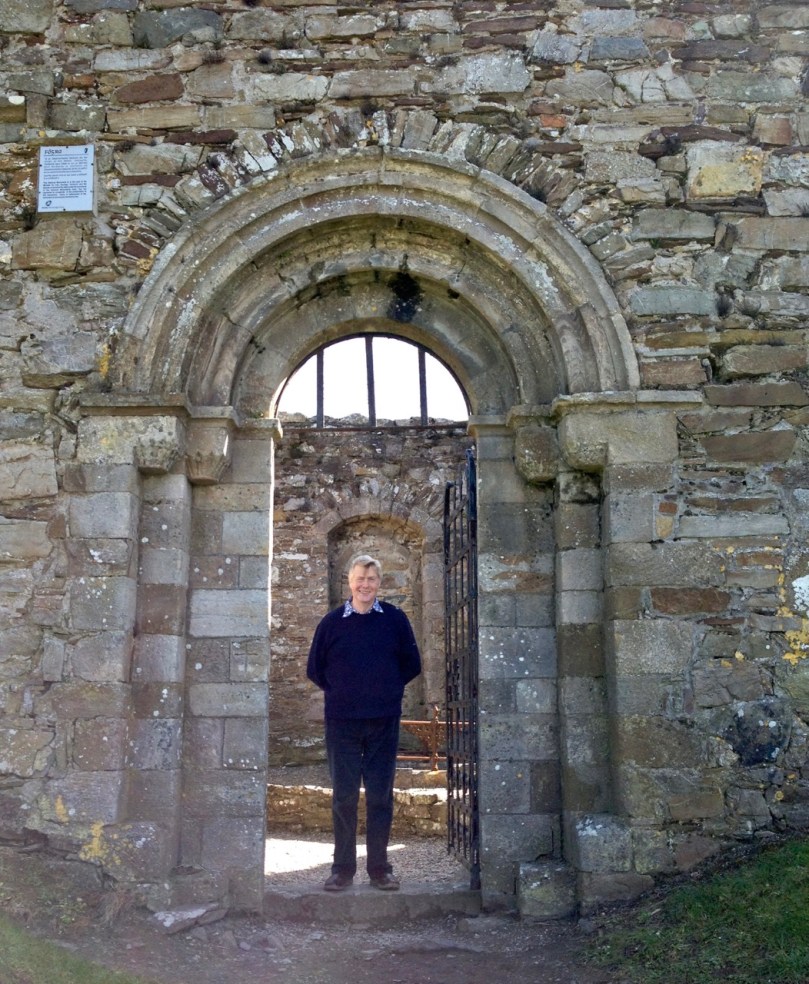
Killeshin in Co Laois, our model for the drawing, is a beautiful site. The early church retains antae on one side, and there are windows and vestiges of a stone roof reminiscent of the early medieval site we described at Kilmalkedar in Kerry.
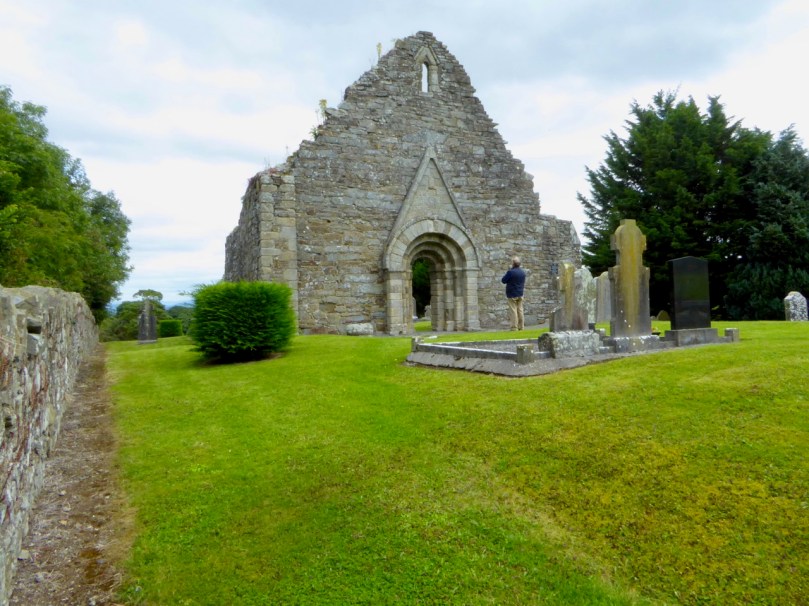
The doorways has three orders and a pediment above. Many of the voussoirs are carved with intricate designs and the keystone features a carved head.
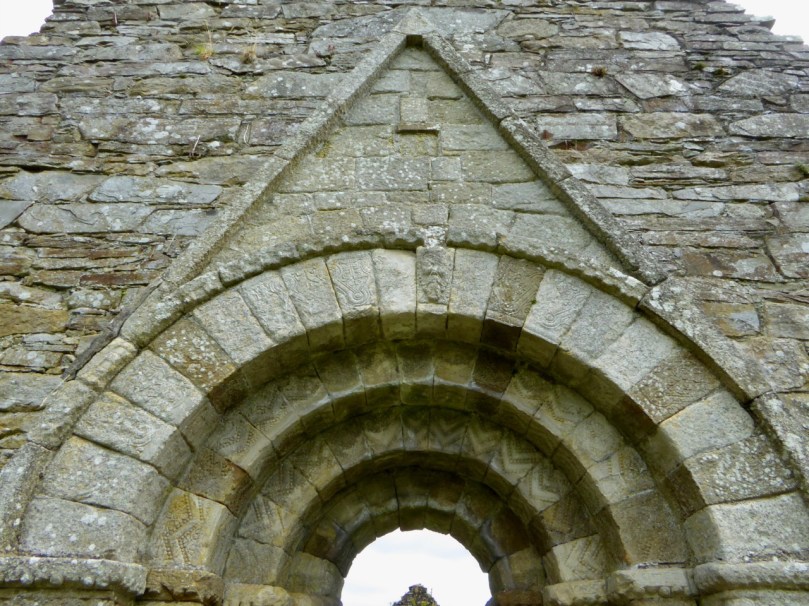
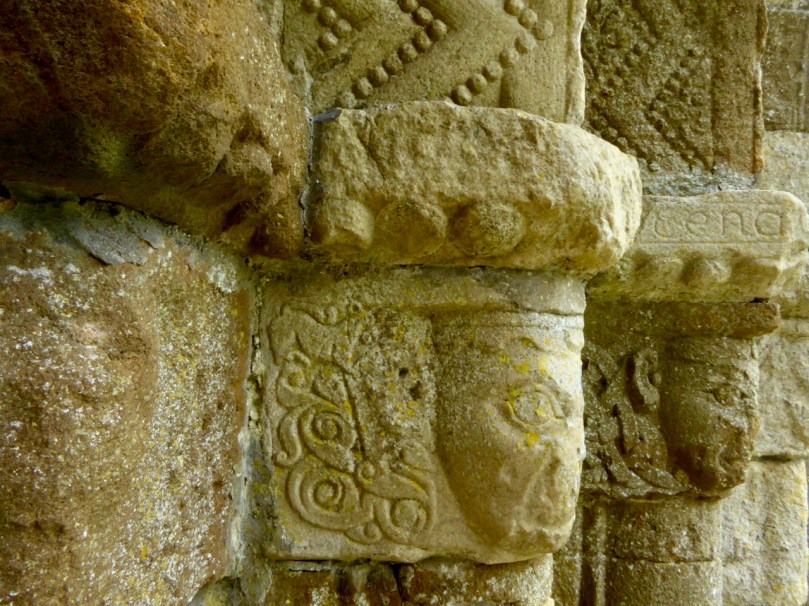
Not only do the Killeshin carvings include intricate geometric patterns and heads on the capitals, but there is writing memorialising the builder and the donor.
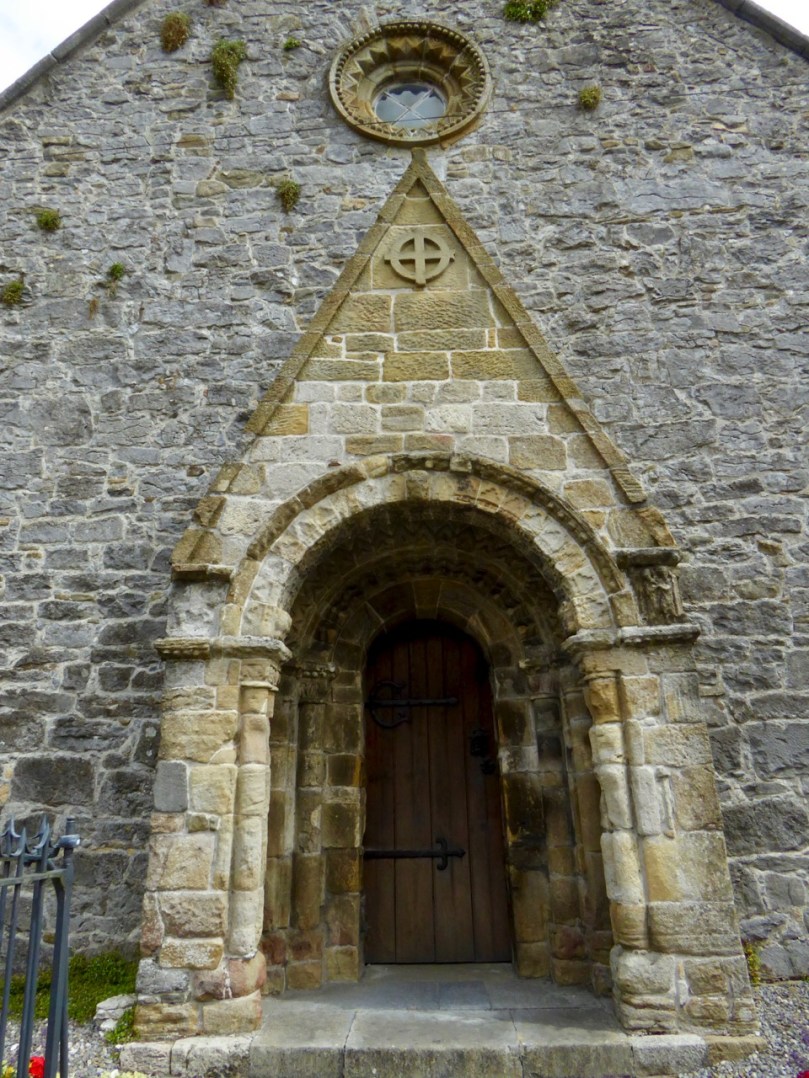
Not far from Killeshin is Freshford (Co Kilkenny) where a church still in use has incorporated a romanesque doorway from a 12th century church into a later building. Much modification has taken place – the round widow in the neo-romanesque style is an 18th century addition and the cross at the top of the pediment is also recent.
Note the inclined jambs – meaning the doorway tapers towards the top. The stone is soft and badly weathered, but some carvings are still discernible on the capitals. Interestingly, the jambs originally had niches for statuary, one example of which, two figures, remains,

Two of my personal favourites come now. The first in in Clare, at Dysert O’Dea, a fascinating multi-period site. The romanesque doorway is distinguished by its multiple carved heads on the voussoirs of the outermost archivolt of the arch.
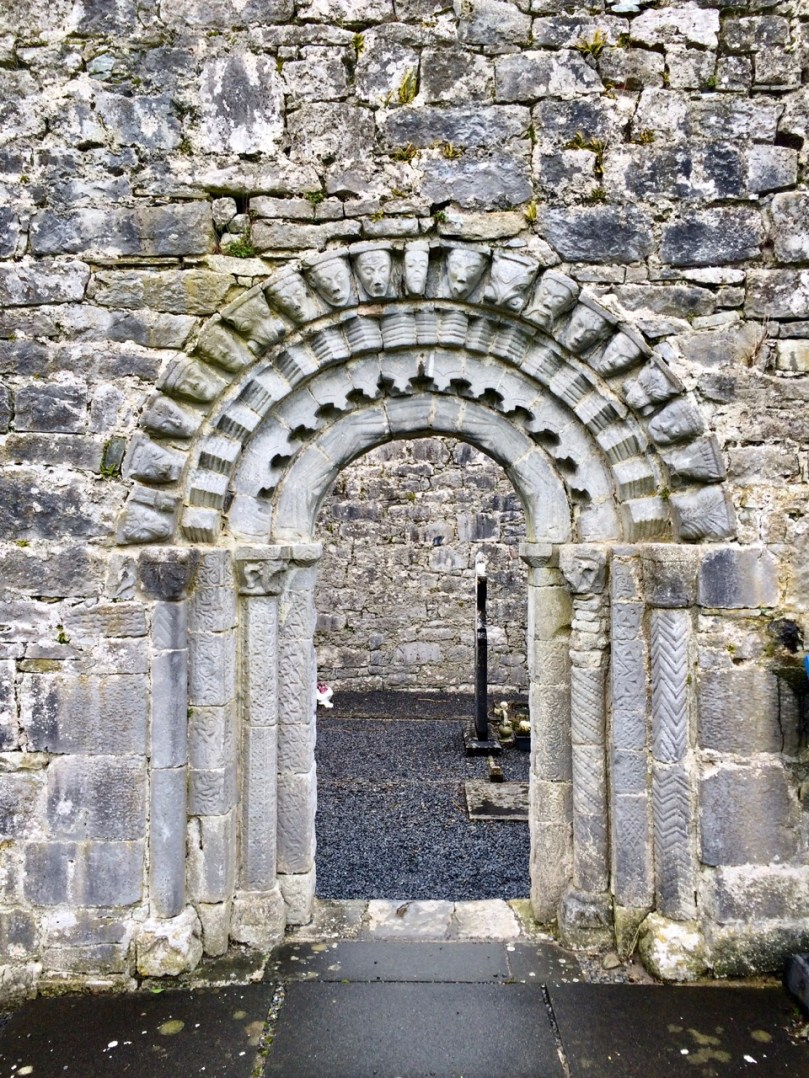
The columns, capitals and inner archivolts are also highly decorated, but it’s those carved heads that never fail to capture the imagination. Not all are human, but of the ones that are I can’t help wondering who the models were – bishops? warriors? saints? kings? Or perhaps the carvers themselves?
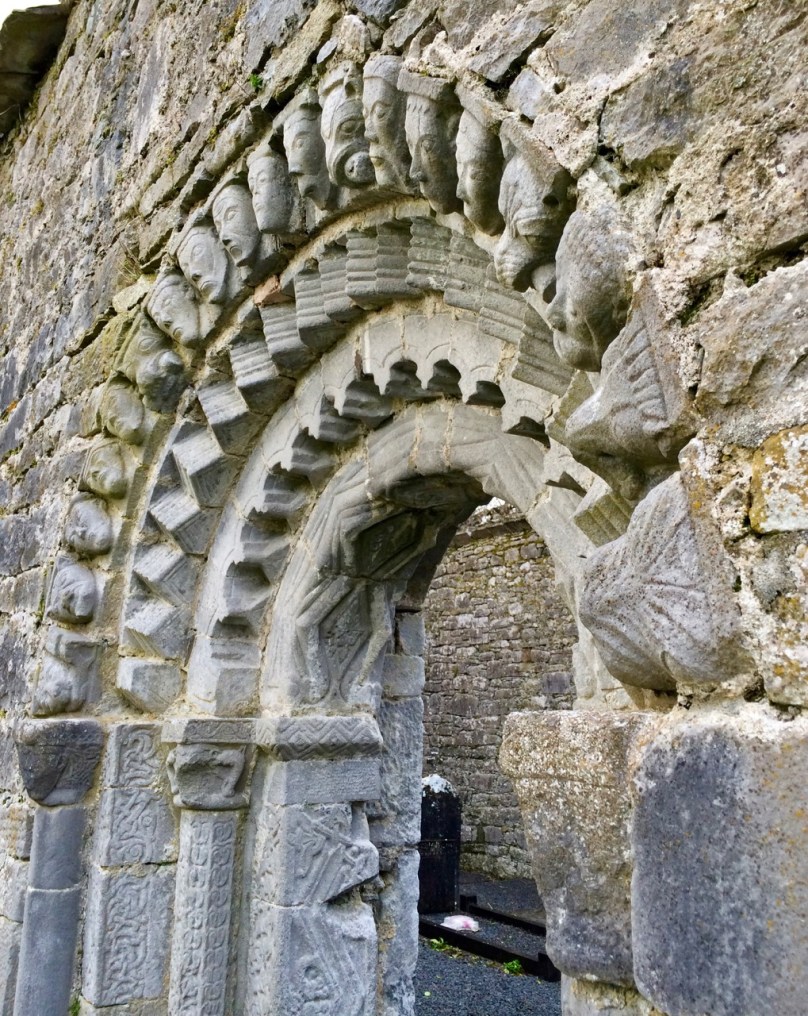
Finally, the greatest doorway of all, widely considerered to be the masterpiece of romanesque architecture on Ireland – the great door of Clonfert cathedral in Co Galway. It’s the photograph I led off with, showing the whole doorway. Let’s take a look at some of the details.
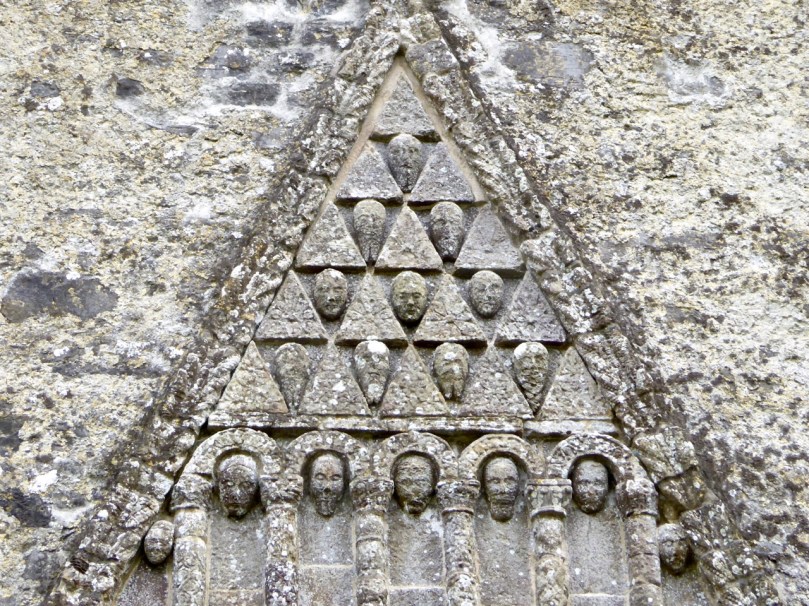
The pediment is unusual in that it is filled with triangular reliefs, each having a carved head. Below that are blind arcades with yet more heads. Although weathered, each head has its own distinct character.
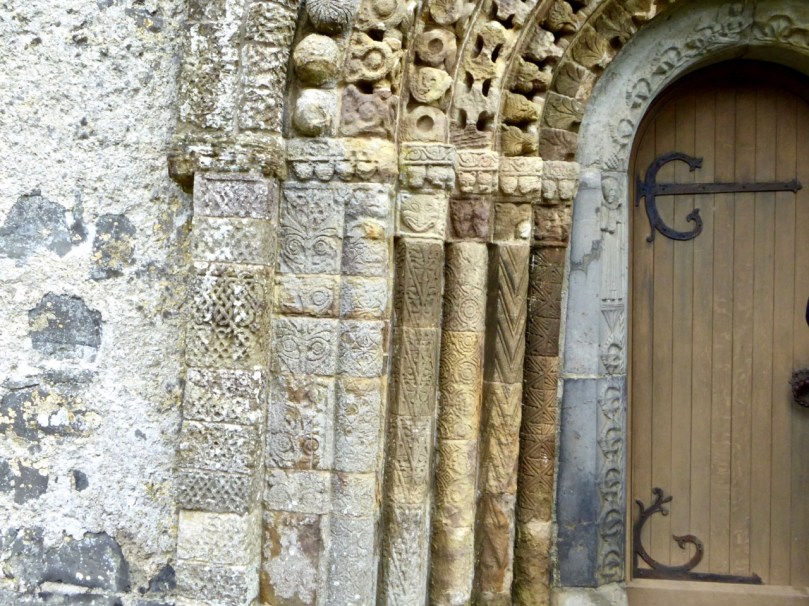
All seven orders of columns and capitals are decorated, as are the archivolts. In fact, it’s hard to find an inch on this doorway that isn’t intricately carved. There are fantastical creatures, animals, geometric and interlaced designs, and on the innermost jamb, two carved figures that are mostly likely 15th century additions, but no less compelling for that.

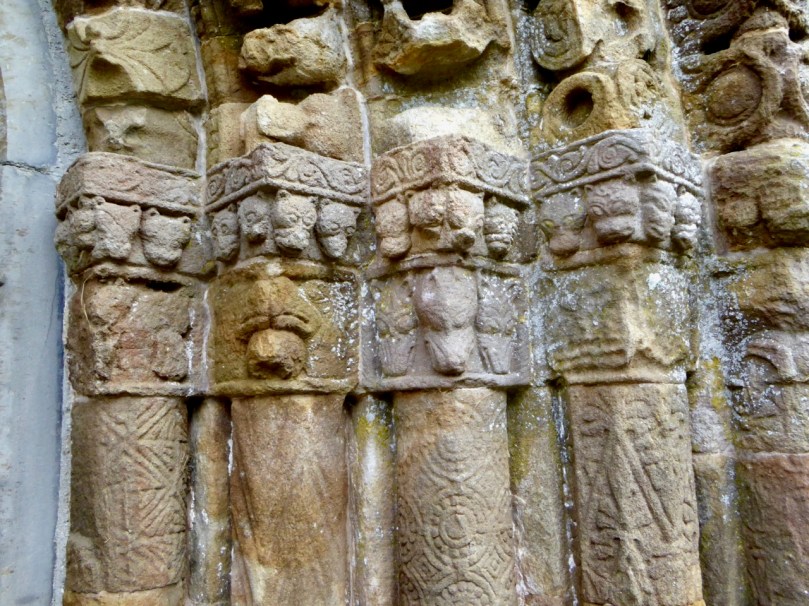
Romanesque carvings deserve a post to themselves one of these days, as does the iconic building of the period – and this time not just doorways but a complete building – Cormac’s Chapel at the Rock of Cashel. Look out for those posts in the future. Meanwhile, one last glimpse of some of columns and capitals from Clonfert…
*For a truly erudite treatment of Irish Romanesque, see the Corpus of Romanesque Sculpture in Britain and Ireland – its the Romanesque Encyclopaedia!
The Treasures of Castledermot

Last week we explored the medieval wonders at Moone, in County Kildare. We couldn’t leave the area without going on to Castledermot to visit the monastic site of Díseart Diarmada, (the hermitage of Dermot) – a few minutes’ drive down the road. Stone carving artists were active here, too, as we can see from the many artefacts mainly centred today around St James’ Church, built on the site of the former monastery. These include a decorated Romanesque doorway: Finola is writing about Romanesque architecture today.

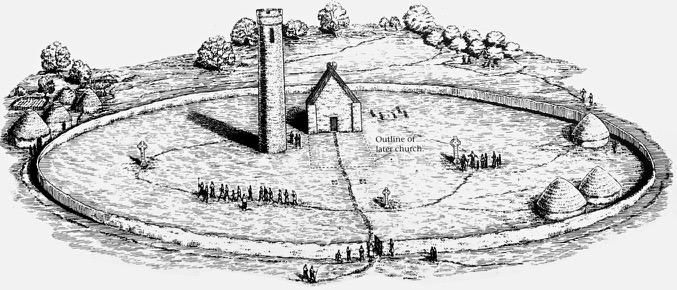
Díseart Diarmada as it might have appeared in the 800s. This reconstructed view is taken from the excellent Dúchas interpretation panels on the site, and shows the earliest church, the 20m high round tower (which still stands today) and the two ornate high crosses, which also remain intact

The settlement itself was highly important. There were Viking raids during the 9th century, probably indicating that there was wealth to be plundered there. A royal grant was given for a fair in 1199, and the very first Irish parliament was convened in the town on 18th June 1264. In 1393 Castledermot was granted permission to mint its own coins.

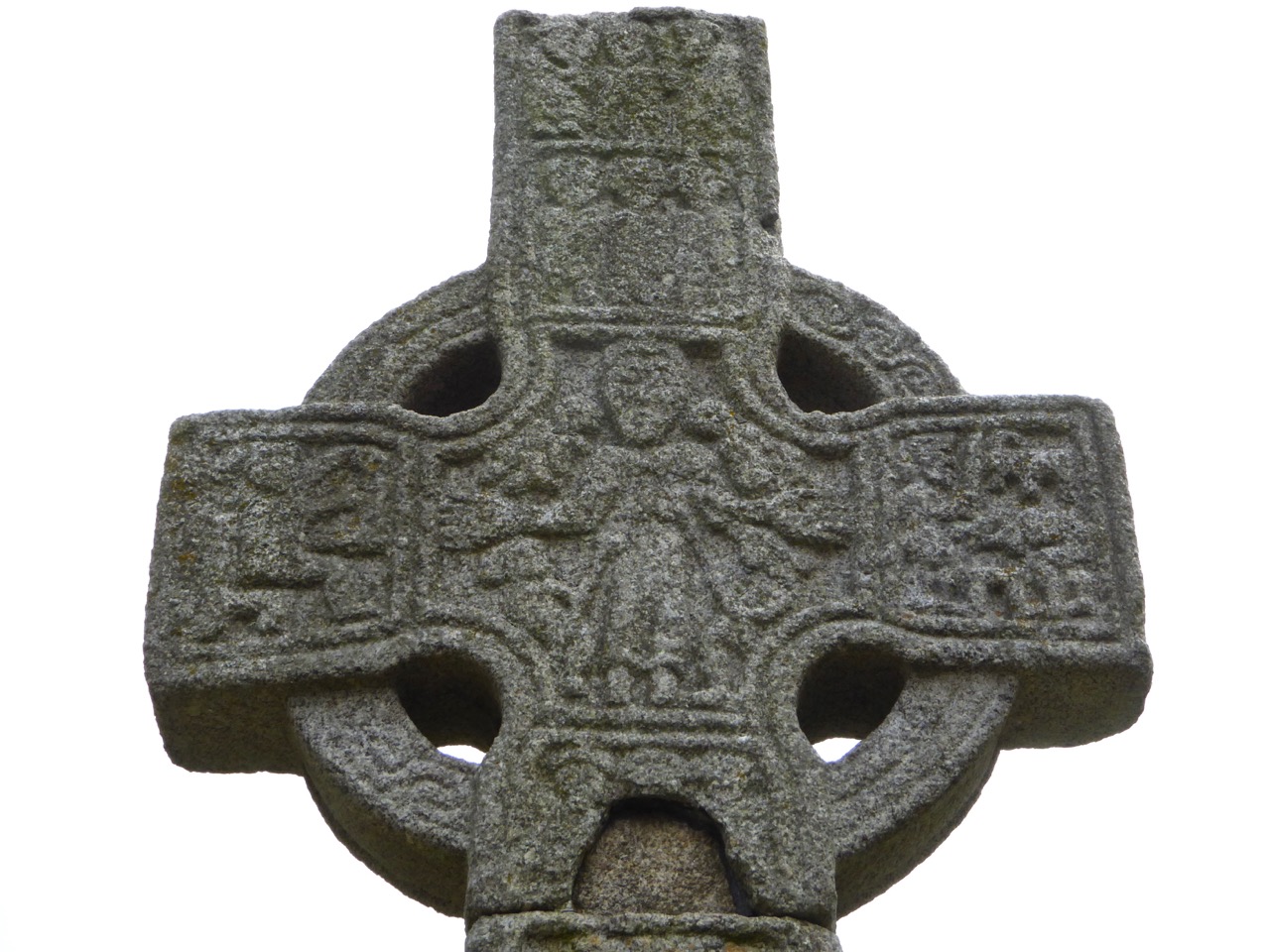
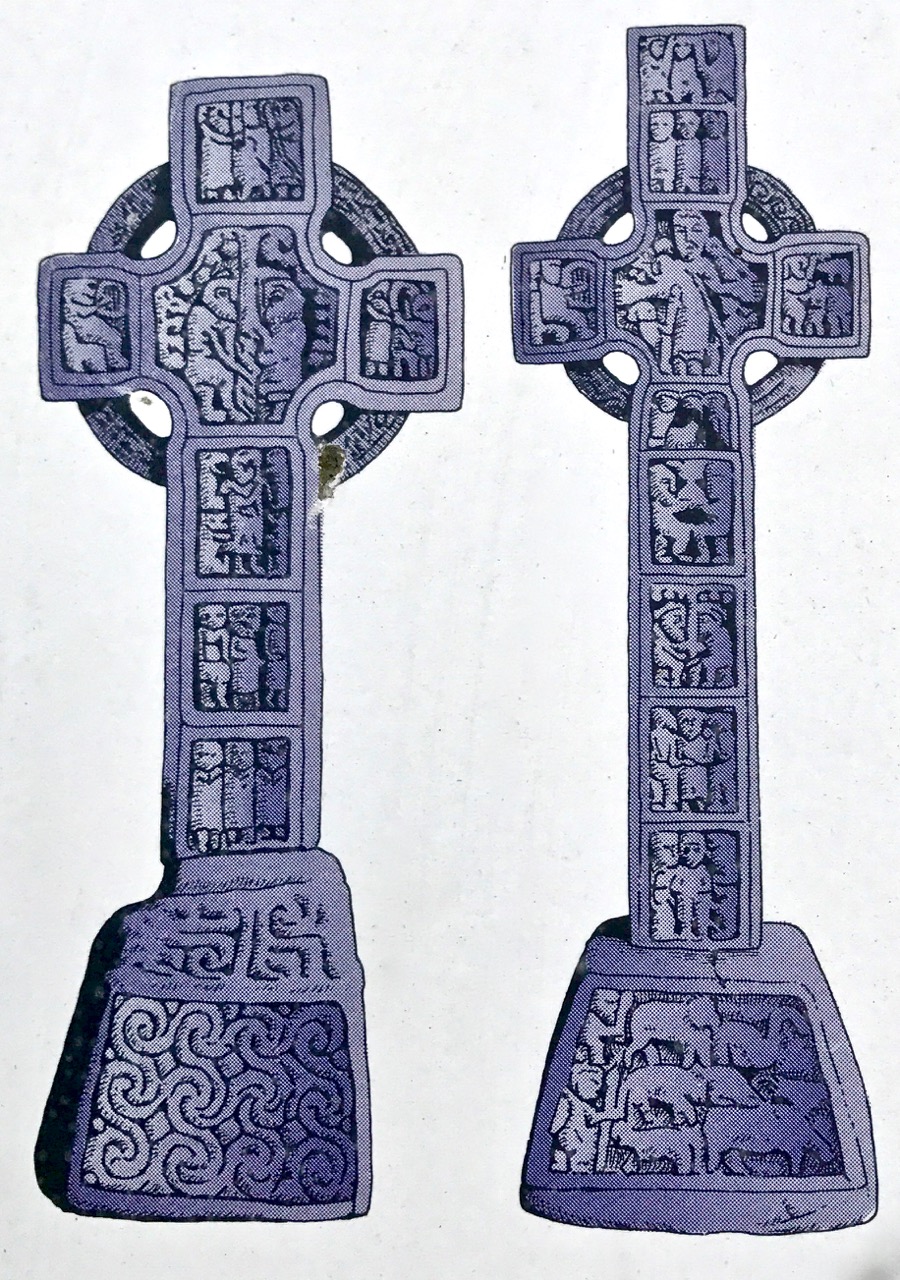
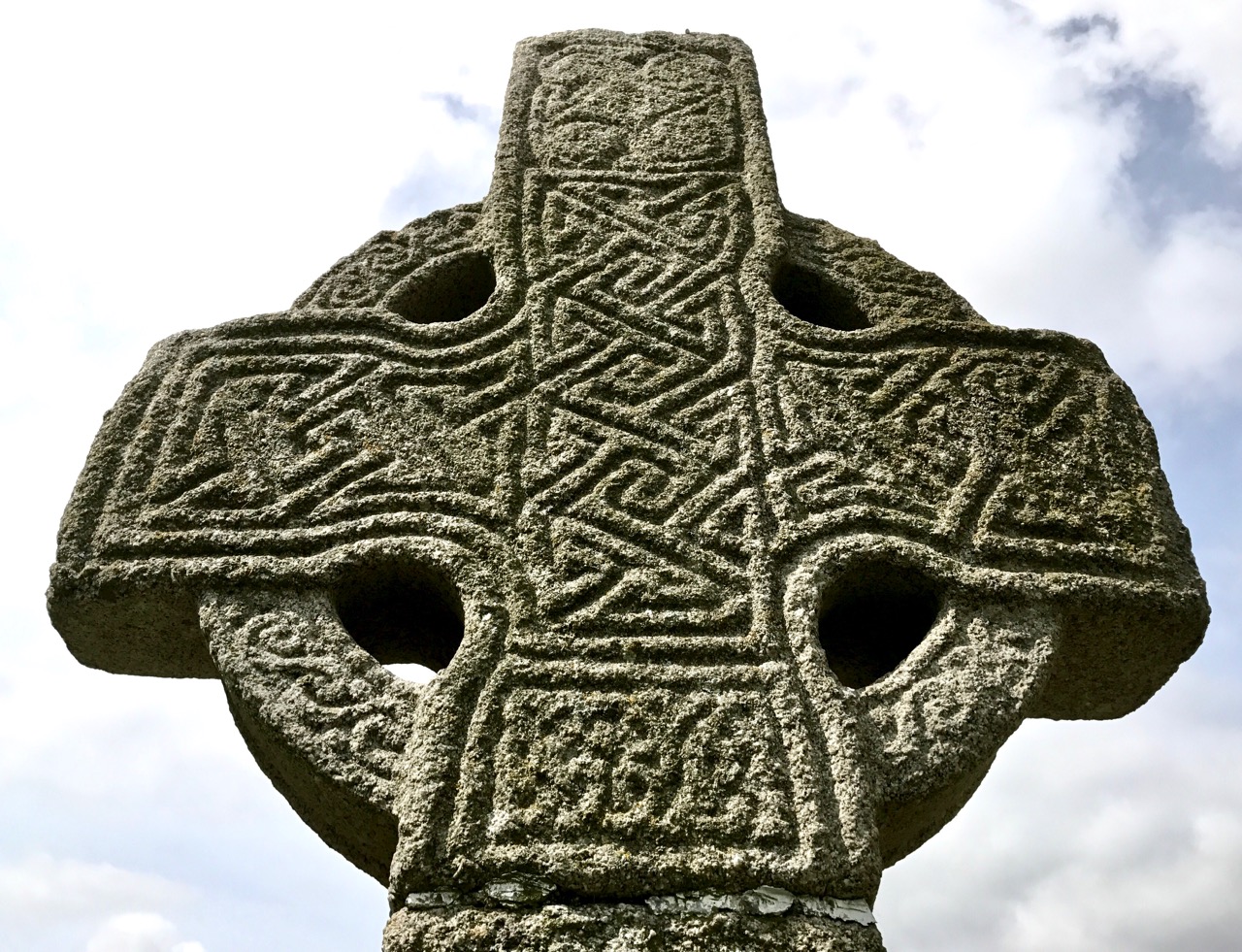
The two high crosses at Castledermot: south cross (left) and north cross (right – round tower beyond). The header picture shows the geometric work on the east face of the south cross

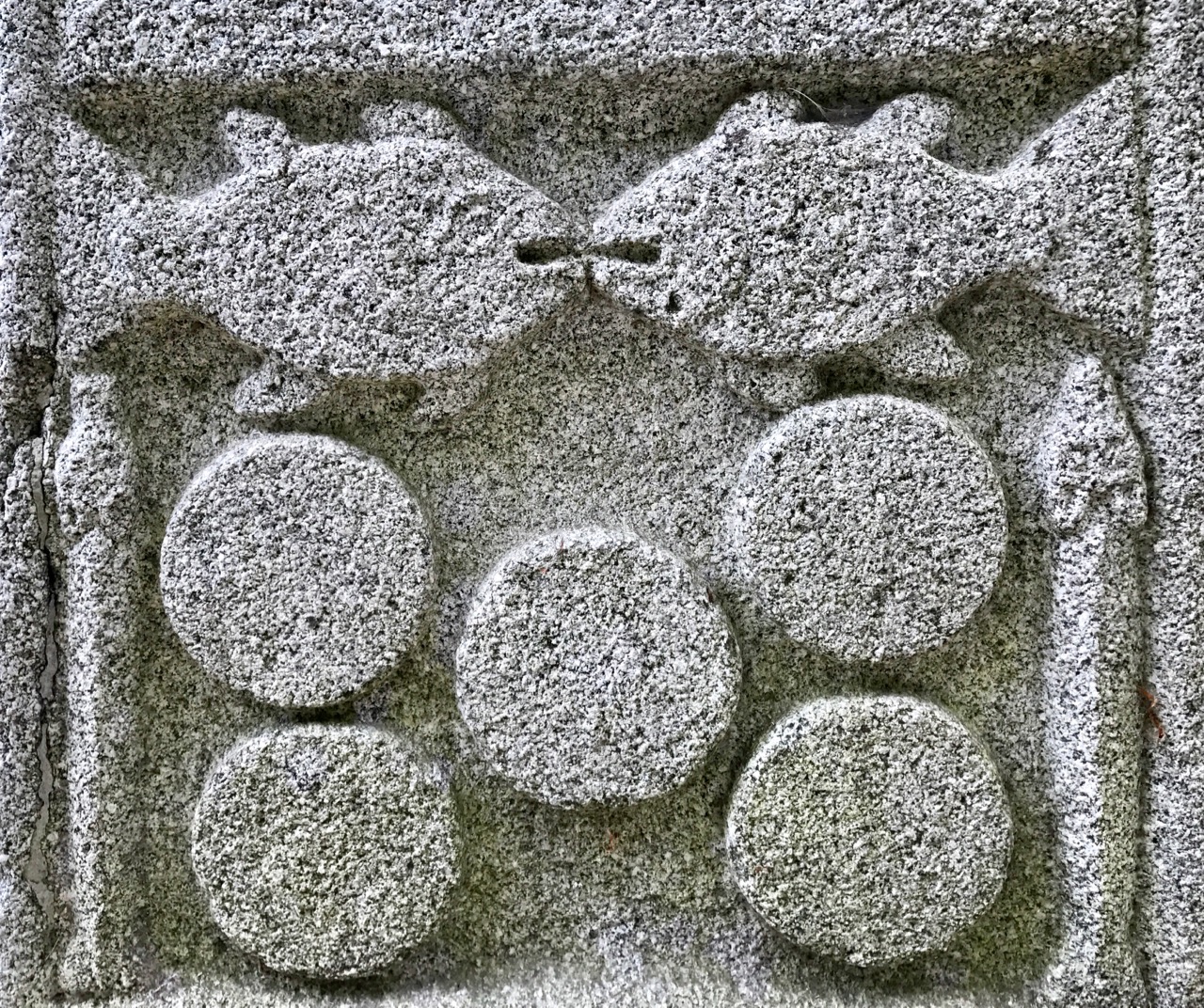
There are certainly figurative carvings on the two crosses to almost rival those found at Moone. I was particularly interested to see other versions of the stories of the loaves and fishes and Daniel in the lions’ den. But the real glory of Castledermot lies in the panels of knotwork. If these were coloured (as suggested at Moone) they must have been spectacular.

Note the loaves and fishes, bottom left

It’s interesting to speculate who might have been responsible for this ancient carving. Could it have been the monks themselves, who considered that part of their dedicated life was to build and decorate the great monastic buildings? Or were they constructed by travelling masons, much as the later cathedrals were? And who directed and designed the work? These are such important monuments – a legacy which we must be sure to look after: they have been here for more than a thousand years and – in spite of being in the open and subject to constant weathering – are still clear to see. At Moone the great cross there has been placed under a modern protective canopy, which is not intrusive. Perhaps such actions should be considered for all these Irish medieval works of art.

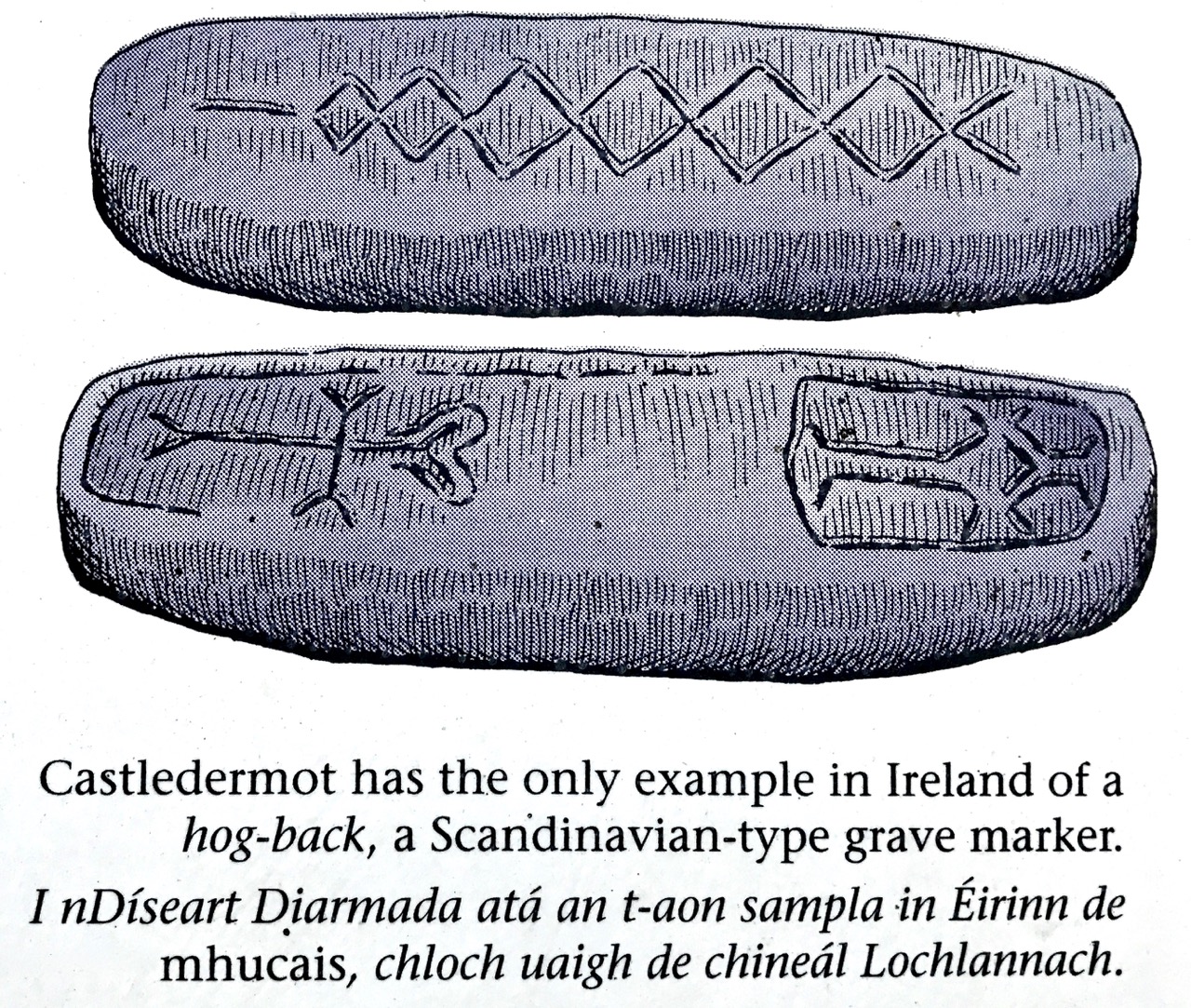
The site at Castledermot reveals many other remains which appear to be weathering quite badly. These include the Hogback Stone, which has been linked to Viking activity in the area: it was discovered just below the ground in its present location in 1967. It is said to represent a House for the Dead, and other examples have been found in Scotland and England: this is the only one found so far in Ireland.

The Hogback Stone (top – Dúchas – and bottom left) and an unusual type of cross-slab close by (right). This is known as the Swearing Stone, and it is said that it may have been used during wedding ceremonies or for swearing oaths or allegiances in early times

Although residents in Castledermot are keen that their historic artefacts are well looked after and are seen by an interested public, the site remains rather obscure and perhaps deserves to be better known. There is a wealth of heritage in Ireland – do we take it too much for granted? The Office of Public Works (formally Dúchas) do their best to maintain and advertise the monuments under their care but it’s an uphill job with a budget which is far too small.

We have by no means exhausted the treasures of this remarkable Irish town. There are other intriguing carved stones and crosses on the monastic site, and, at the southern end of the town are impressive remains of a Franciscan Friary, founded around 1247. This site has a guardian and a key holder, but we didn’t have time to visit. Inside it is a rare cadaver grave stone dating to about 1520. In 1275, the town was given a royal murage grant. This allowed the collection of tolls from people entering Castledermot to pay for the construction and maintenance of town walls. The wall, with three gates, was completed around 1300.

Ancient Irish Art – Moone High Cross

Wherever we travel in Ireland, we look for the routes which will take us past sites rich in history and archaeology. Finola wrote a while ago about places to visit close to the M8, which links Cork to Dublin. Last week we discovered a real gem, in County Kildare, about 40 kilometres east of the motorway – well worth the diversion.

Just outside the village of Moone is the finest medieval high cross that we have seen in Ireland. It is on the site of Moone Abbey (above right – a sketch from 1784 by antiquarian Austin Cooper), where a church is believed to have been founded by St Palladius, who came to Ireland in 431. It was later dedicated to St Columcille. The abbey ruins date from the 13th century, but the site must have been an important religious foundation long before this as the high crosses (there were once four here) are very much older. Historical sources differ on their age – I have found them variously attributed to the 7th, 8th, 9th and 10th centuries! It’s safe to say they are at least 1100 years old.

Early views of the High Cross at Moone: left – an engraving from 1857 and right – a photograph from the Lawrence Collection dating from the 1890s. Both images show the earlier reconstruction, before the centre pillar was discovered and added

The Abbey was ransacked and burned along with the nearby Castle by Cromwellian forces in the 17th century and the high crosses were probably buried at that time. Two sections of the one we can see today were rediscovered in the Abbey grounds in 1835 and re-erected in the Abbey by the Duke Of Leinster. In 1893 a further section was uncovered and added to bring the full height of this cross to 5.3 metres. This is not quite the highest high cross in Ireland – Muiredach’s Cross at Monasterboice is 5.5 metres – but Moone is visually more impressive because it is so slender, and beautifully decorated.

The west face of the Moone High Cross seen in its present context in the ruined Abbey. The site has been well laid out and presented with the fragments of other carved stones discovered during excavations. A protective roof has also been constructed in a non-intrusive simple style

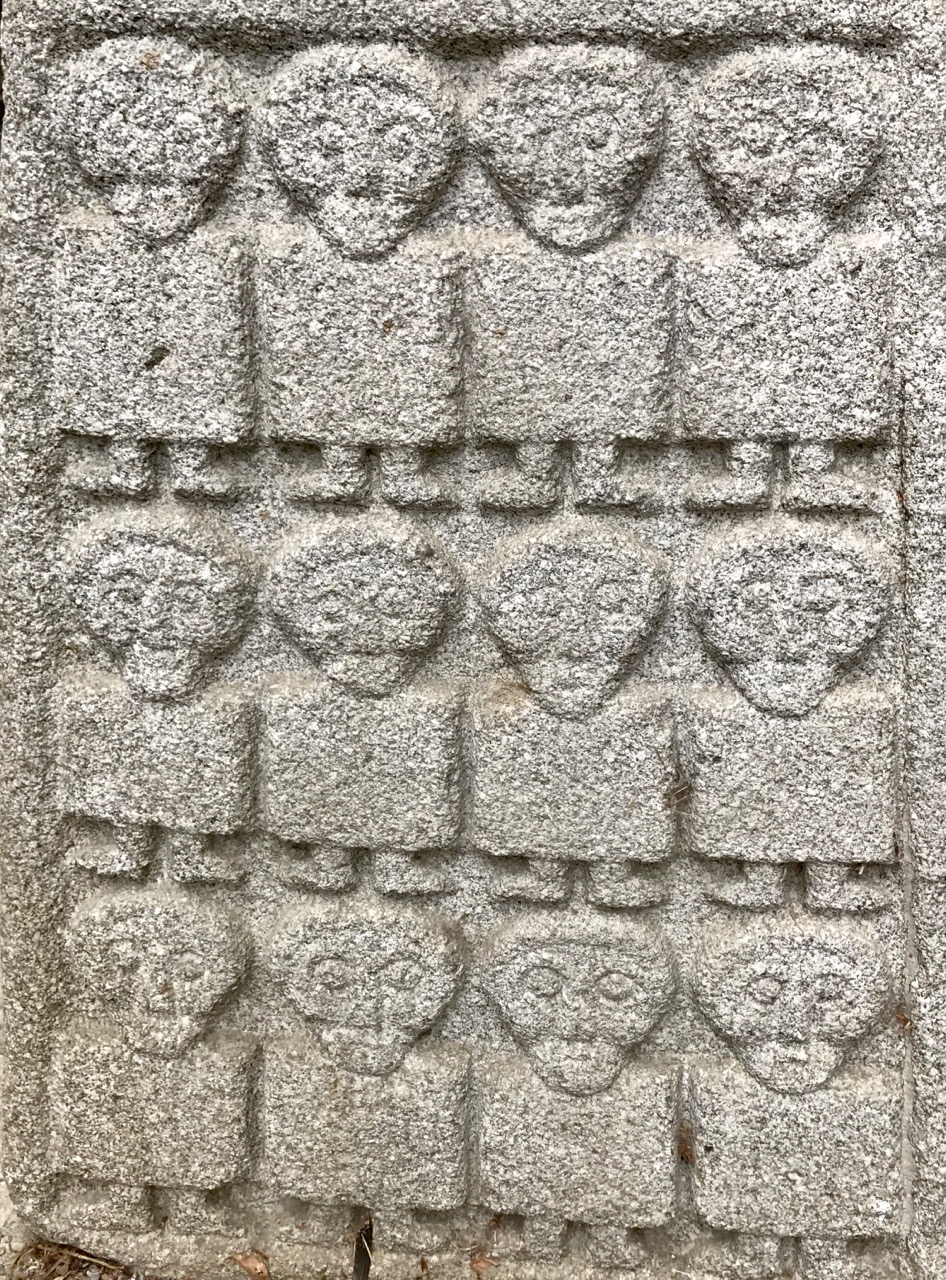
The carvings on the granite Moone cross are in relatively good condition and all the panels can be clearly seen. They are fine examples of medieval Irish art: stories from the Bible  are mingled with Celtic knotwork and some enigmatic bestiary. The figurative work is simple and stylised – yet somehow very modern in its execution.

Stories told in stone: Adam and Eve, Daniel in the Lion’s Den and the Flight into Egypt. The header image is a wonderful representation of the Loaves and Fishes
The Crucifixion, SS Paul and Anthony breaking bread in the desert and The Fiery Furnace
Abraham about to sacrifice Isaac and the Temptation of St Anthony the Hermit

A six-headed monster? Probably not a Bible story…

The site is very well interpreted by the Heritage Service: there are comprehensive information boards describing every carved panel.

Interpretation boards include full annotation for the panels on the High Cross, together with projected reconstructions of the other findings on the site

Top picture – looking towards the east face of the High Cross; below – the east and west faces of the cross wheel
Left – an interesting conjecture showing that the panels may have been coloured in; right – the friendly Keeper of the Cross!

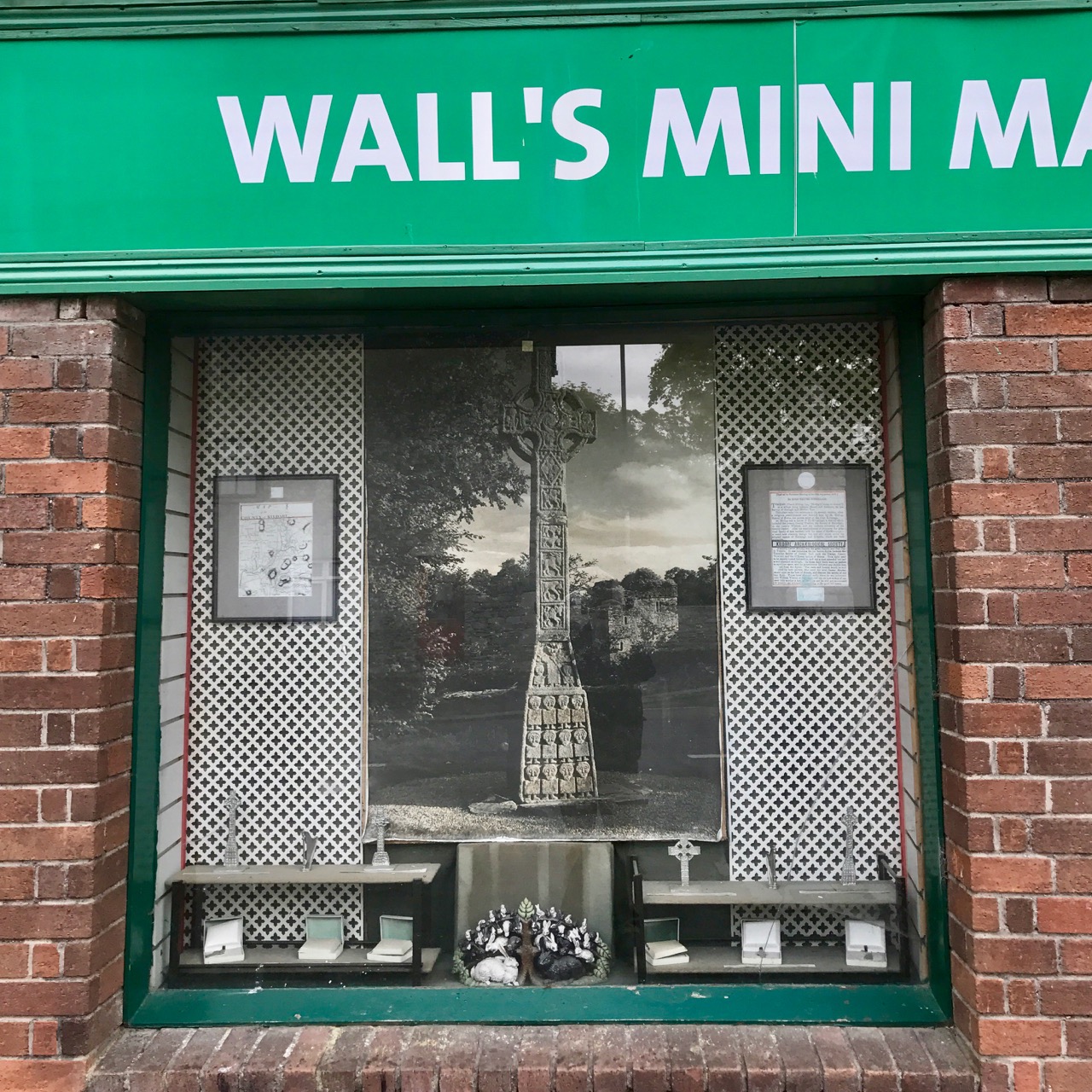
Be sure to visit this site – and don’t forget to purchase your guide book at Wall’s Mini Mart in the village!

Where Art and History Meet

Perhaps I should say where they collide! West Cork has both, in abundance, and we’ve just lived through one of those once-in-a-lifetime conjunctions of  the artistic and the historical that leave you stimulated, thoughtful and reeling all at once.

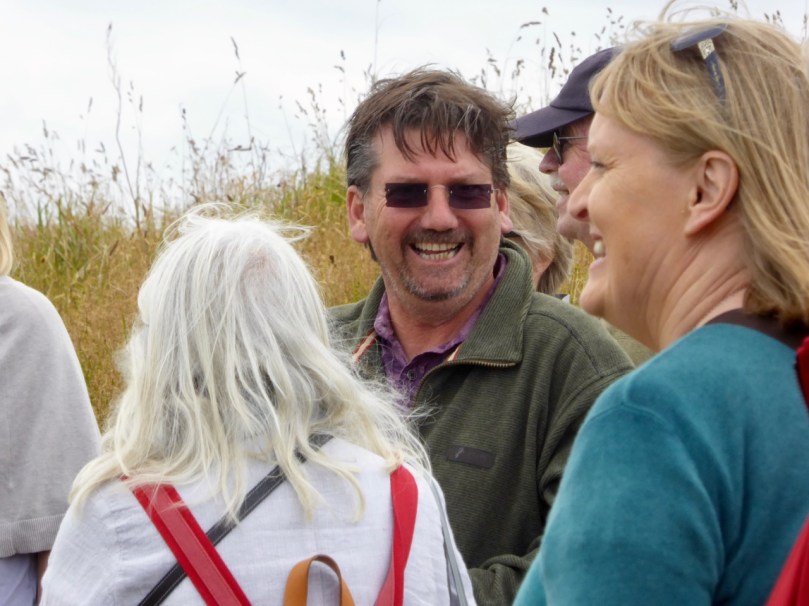
Clockwise from top left: Coverage of the Festival in the Southern Star – the headline says it all; Roy Foster delivered an acclaimed opening address; Finola introduces Kevin Vickers, Canada’s Ambassador to Ireland; Canon Salter and his daughter Brigid at the screening of An Tost Fada, perhaps the most controversial (and certainly one of the most interesting) moments of the Festival

First of all, as our readers must be tired of hearing by now, we participated in the brand new West Cork History Festival. It was a great success, with well over 400 people enjoying a huge variety of talks, films, and panels, augmented with lashings of food and drink. It was so well planned, in fact, that the rain showers obliged by only appearing during the talks, and clearing off when it was time to be outside mixing and mingling and moving between marquees. The Festival wasn’t short on controversy. Sparks flew at several sessions, mainly between speakers and audience members, proving, if we didn’t already know it, that history is very much alive in West Cork. Depressingly, it also signals that, 100 years on, some people are still fighting the old battles. However, to judge from the general climate, those folks are in the minority.

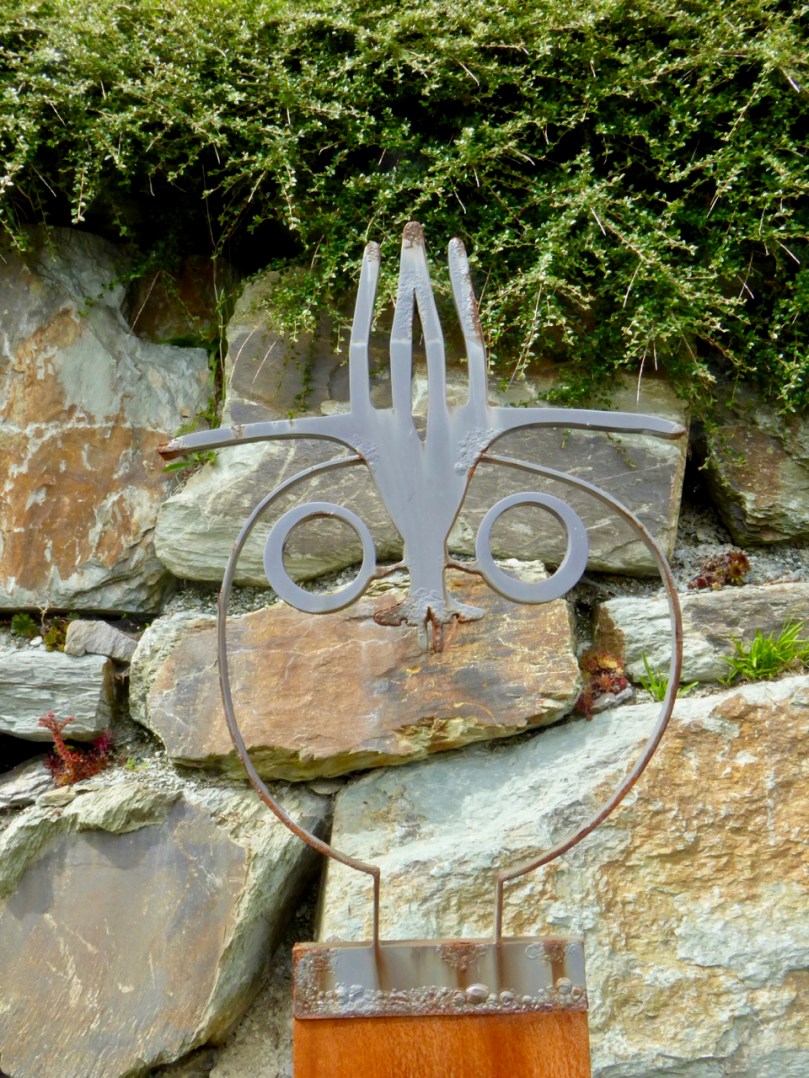
John Kelly the Irish/British/Australian artist, and West Cork resident

Two days after the Festival, we moved on to art. Or so we thought. We had signed up for a guided tour of Reen Farm, the Sculpture Garden that is the home, studio and inspiration for the artist John Kelly. This event was part of the marvellous Skibbereen Arts Festival that has been running all week.

Two upside-down kangaroos in the tennis court – don’t ask me to explain this one, my head was spinning at that point

We’ve met John a couple of times and had seen an exhibition of his at Uillinn that focused on his experiences in the Antarctic. We were aware that, as a sculptor, a painter, and a writer John is internationally esteemed and has exhibited world-wide.

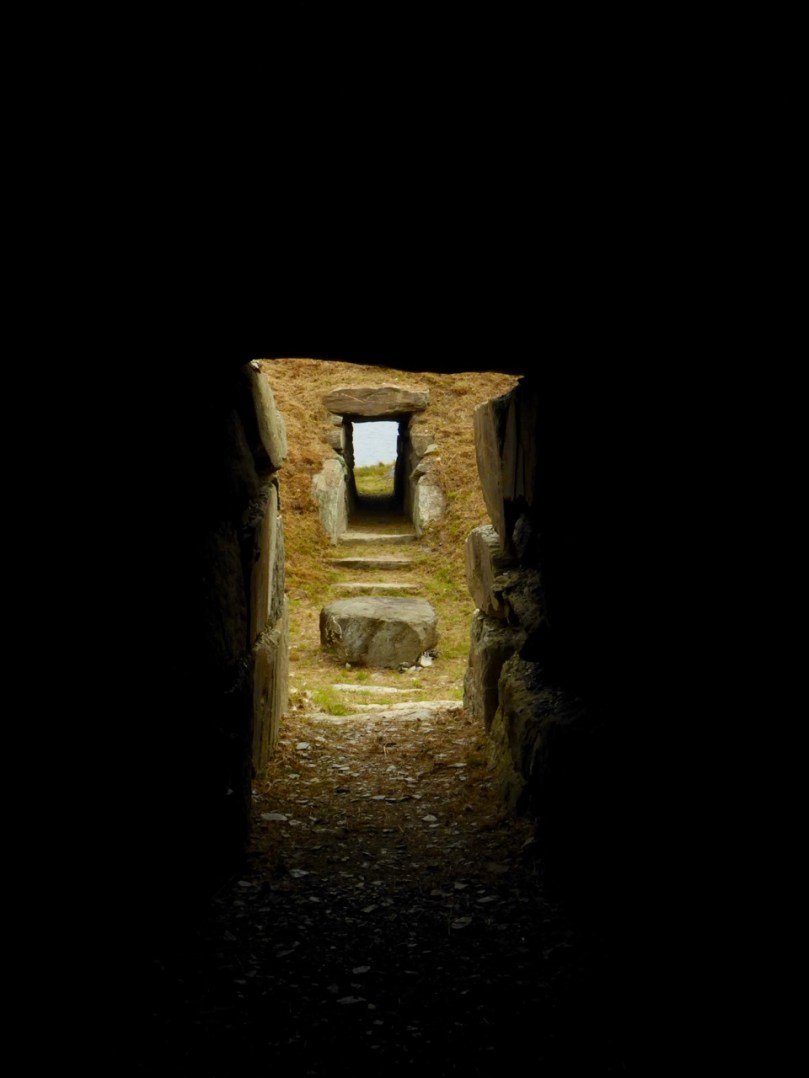
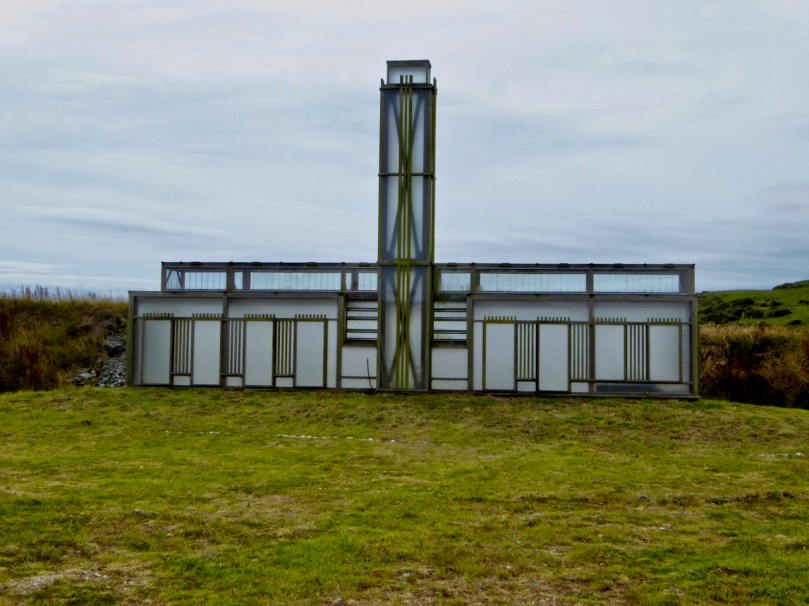
The Turrell-inspired crater with passages leading through it to the sea. (We have our reason to relate to John’s version of the famous Sky Garden at Liss Ard Estate in Skibbereen)

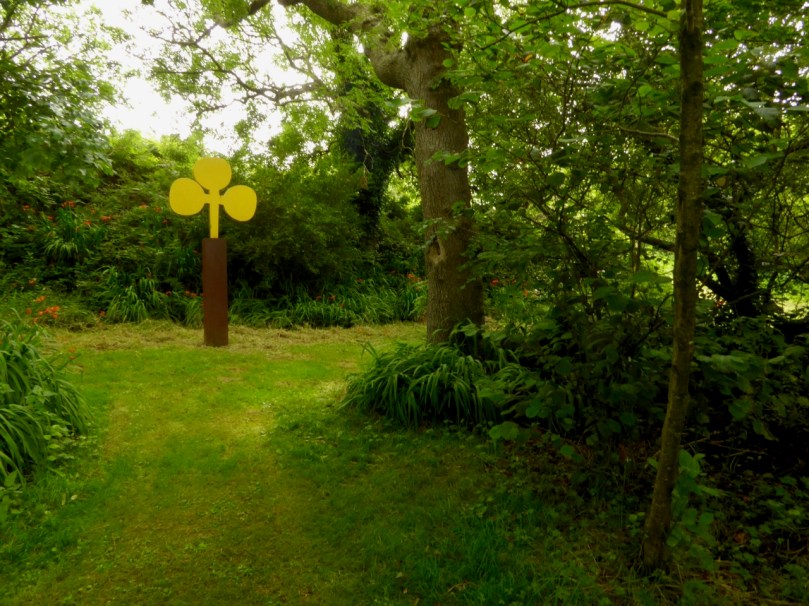
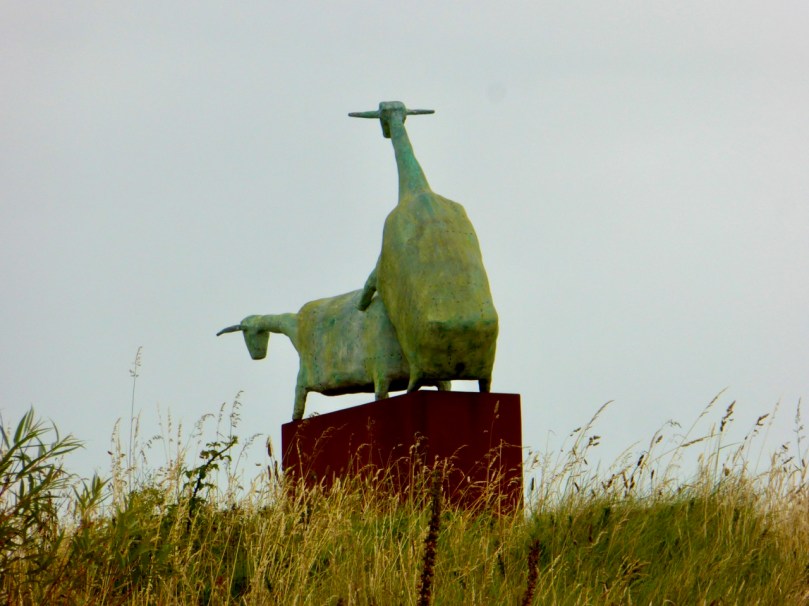
You’ve probably all visited a sculpture garden at some point – but I guarantee you, you’ve never had an experience like this. Being led around by John himself was a privilege, but it’s also a must in order to understand his inspirations, because it’s all about history, and eclectic history at that. 

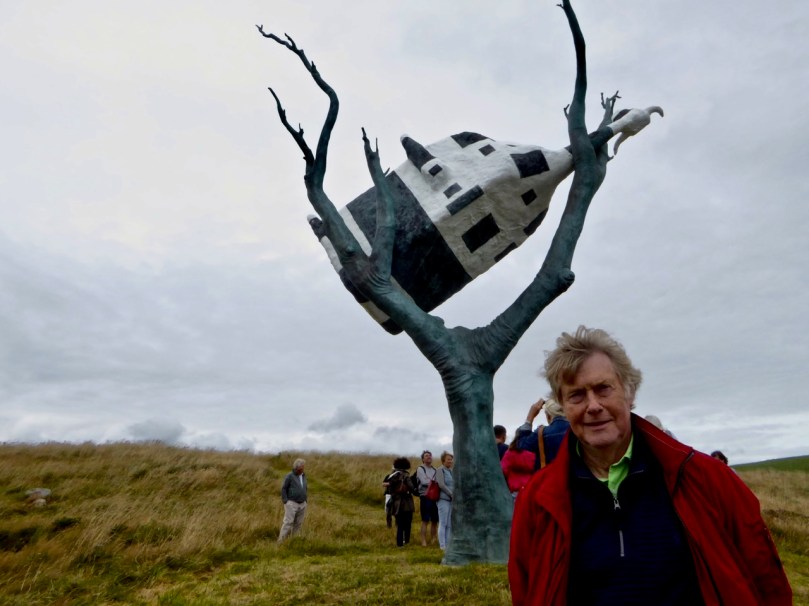
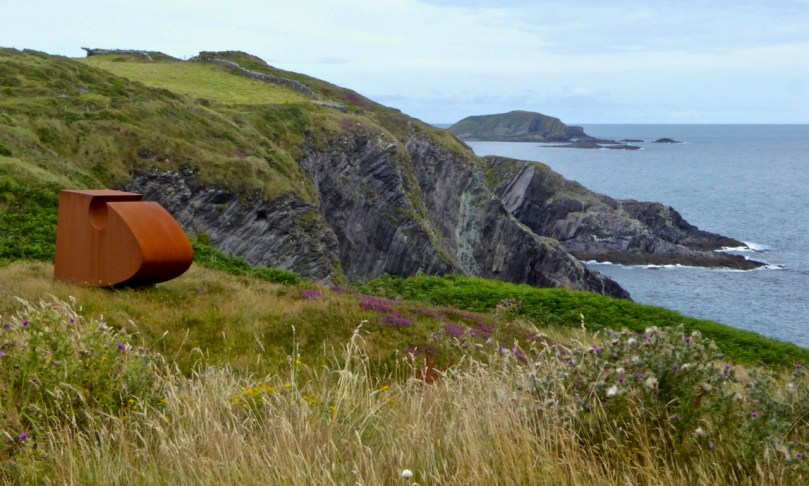
His Tate Modern piece (above) was a response to the famine in his townland, Reen, as reported in 1846 by a local resident, N M Cummins. Now, looking at it, you would never arrive at that conclusion by yourself, but once you stand there and listen to John recounting the grim happenings that took place there 170 years ago and how that led him to contemplating the food abundance that made Henry Tate a millionaire around the same time, it all starts to come together.

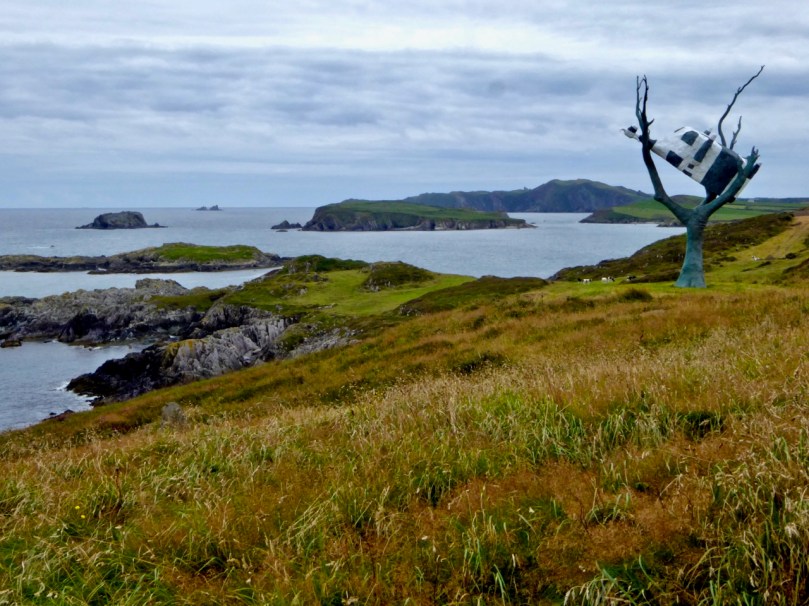
Robert and the Cow up a Tree – just to give you a sense of the scale of the sculpture

I won’t recount the story of the Cow up a Tree, because you have to go yourself and hear it from John in all its convoluted glory. (If you really need to know you can read about it on John’s website.) It’s the highlight of the tour, but definitely only one part of a whole fascinating set of experiences that goes on and on. 

Besides the art (some of which will make you laugh out loud), stunning views greet you as you follow the trail, and finally Christina’s garden and John’s studio round out the day. The Garden is now part of the West Cork Garden Trail and is open from August 7th (tomorrow) until the 13th.

Harvest Time

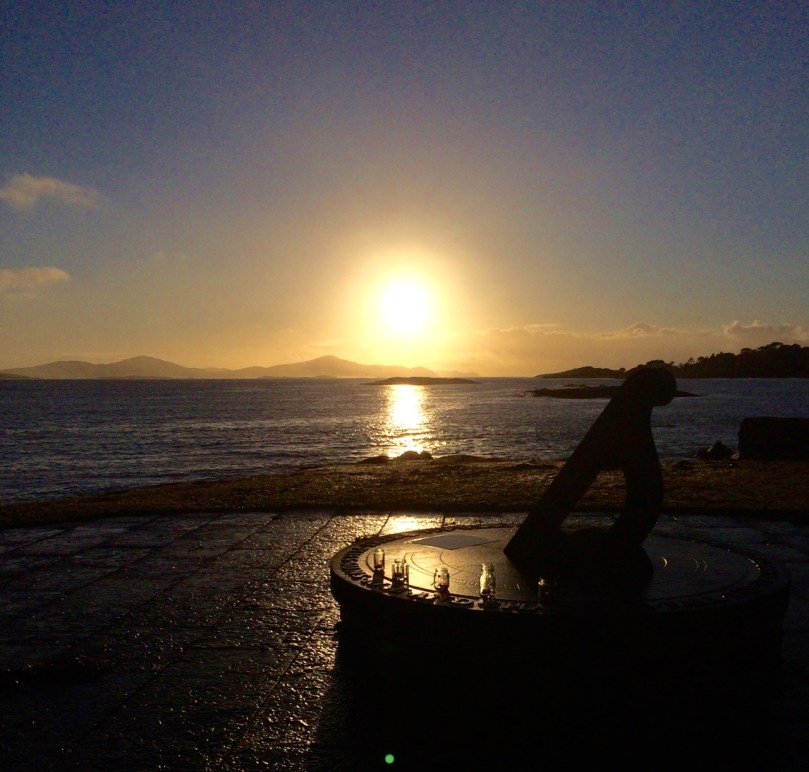
…The heat of the summer was eased by the cooling breezes from the Atlantic. It was busy on land and sea, with seine fishing by night and fish curing and farming by day, but there was always time for scoriachting, games and dance, sometimes on Carbery Island or across Dunmanus Bay…

(from Northside of the Mizen by Patrick McCarthy & Richard Hawkes, Mizen Productions, 1999)

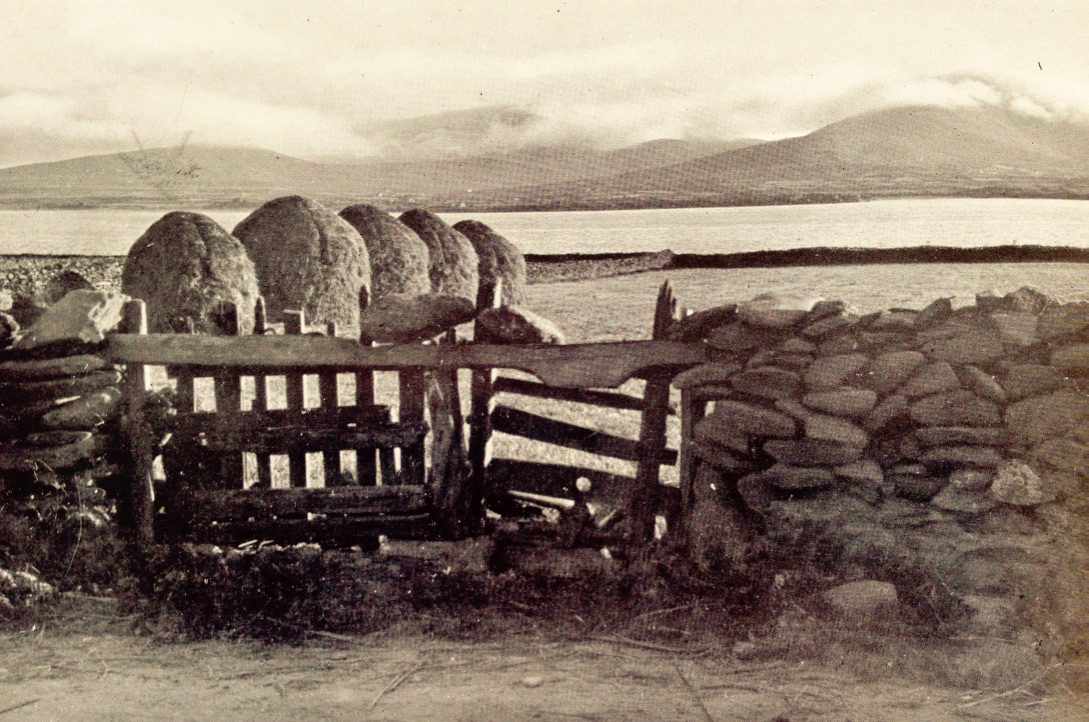
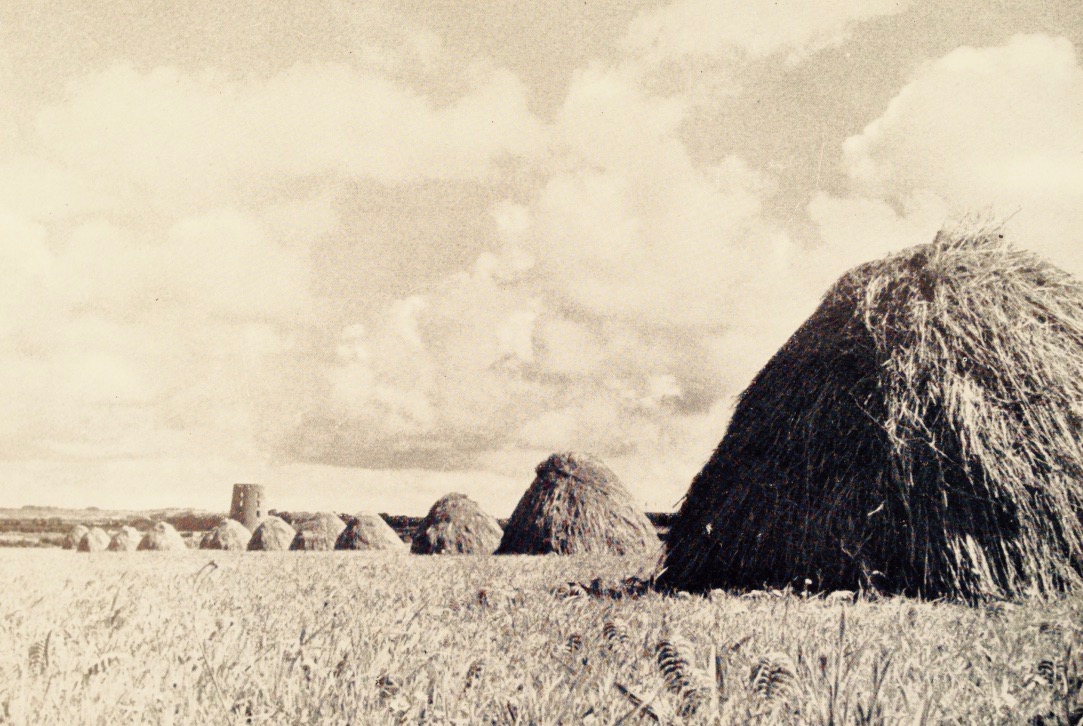
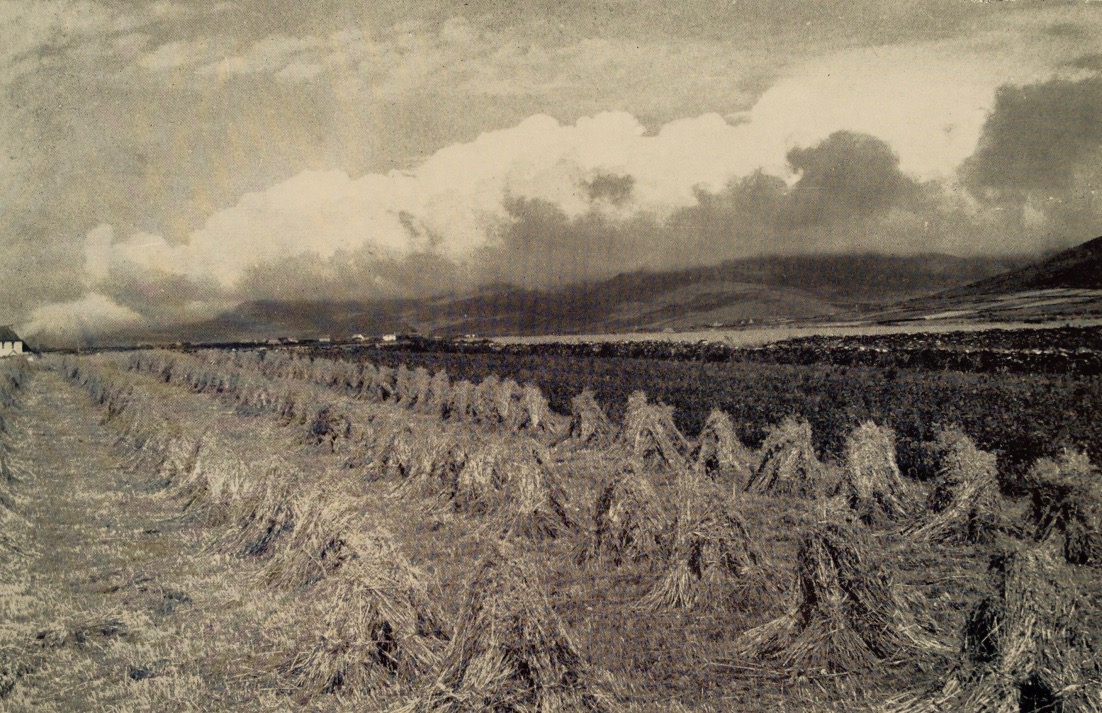
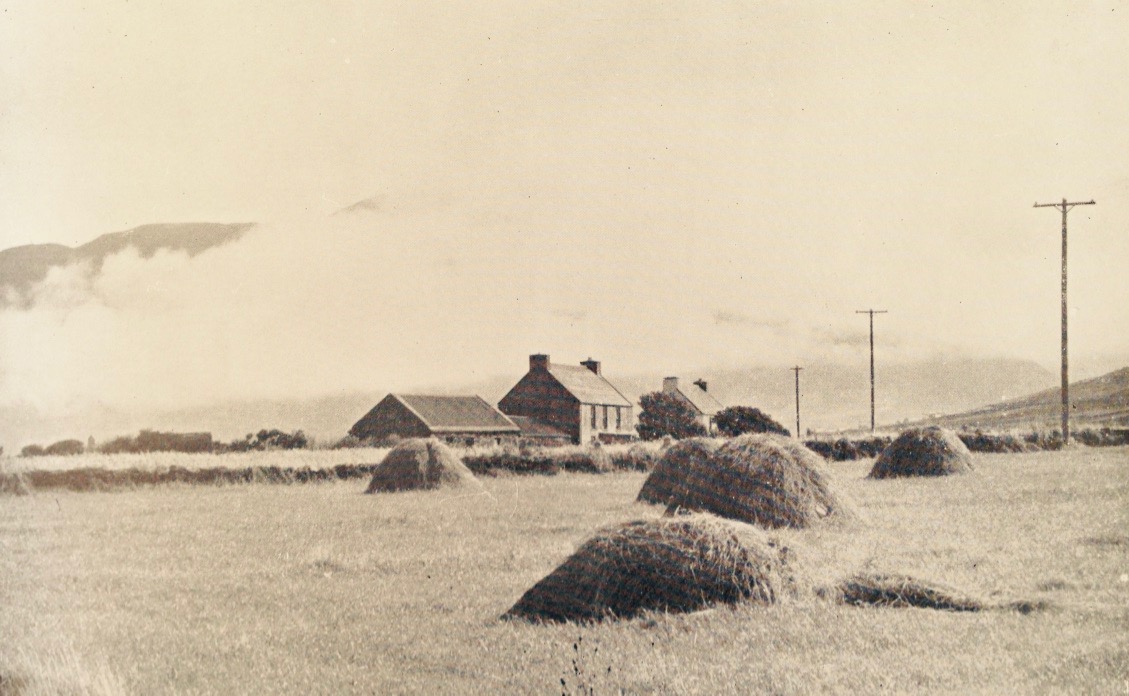
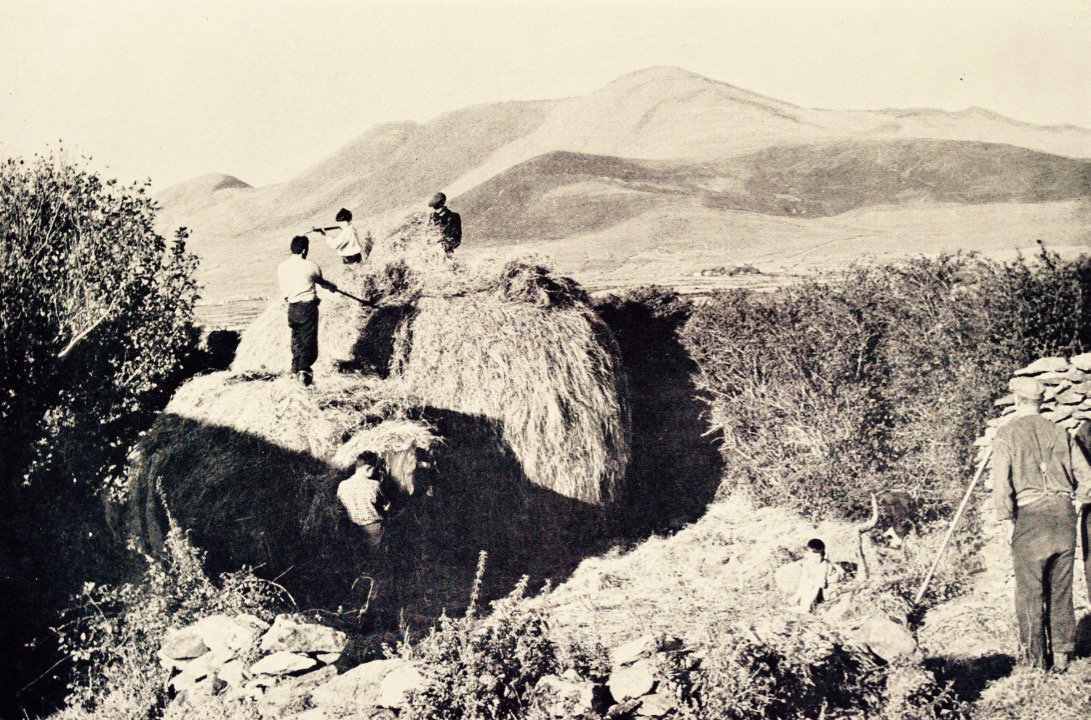
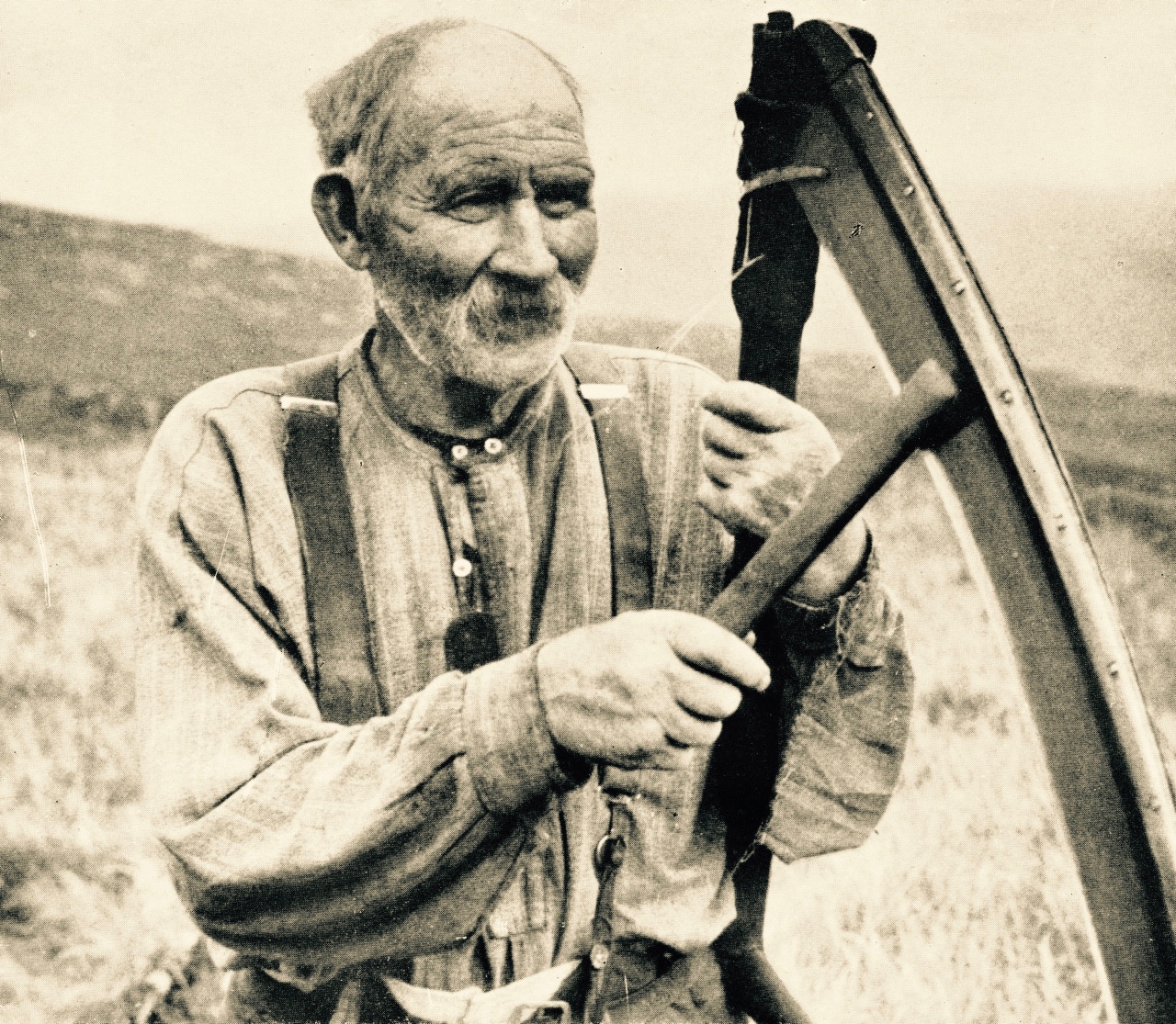
This selection of photographs is from the collection of Tomás Ó Muircheartaigh, 1907 – 1967, who documented life in rural Ireland between the 1930s and the 1950s. I have chosen his pictures that concentrate on gathering the harvest – and the fairs that are associated with harvest time: the festival of Lúnasa. They are generally not captioned, so we are not aware where these were taken. When I travelled in West Cork during the 1990s I remember seeing traditional stooks in the fields: this method of collecting the corn was practiced by the small farmers then, although now I believe it has completely vanished.

…Most of the people on the Northside had holdings that were so small that they could only grow corn (barley or oats) or wheat, for their own use. The land wasn’t good for corn crops. By the middle of August, the stooks were seen in the fields. As with the bringing in of the hay, the cutting of the corn was a great event with a meitheal to help you if needed. For cutting, a reaping hook or the scythe was used. When buying a scythe it had to be sharp enough to lift a penny off the floor. A man followed the cutter, collecting the corn, a sheaf at a time, and putting it out behind him. This was called ‘taking out’. Two people followed the man ‘taking out’ and bound the corn into sheaves with a bind, making sure that the ears on the bind lay with the rest of the ears. Six sheaves were made into a stook and left for a week, then the small stooks would be made into a stook of twelve sheaves which was left in the field to finish ripening for the rest of the month. The stooks were gathered into the haggard, by donkey or horse and cart, and made into a barrel stack ready for threshing in October… (Northside of the Mizen)

Lúnasa is one of the important turning points in the Irish calendar: harvest time, fruitfulness, and the onset of autumn. The others are Imbolc – 1st of February (the coming of the light and new life, spring), Bealtaine – 1st of May (onset of summer and a time of growth), Samhain – 1st November (winter and darkness). All these points have to be marked and celebrated. Lúnasa, or Lughnasa is probably the most fertile time for celebration, and festivities could last for days or even weeks. There was always a fair: the most well-known one still celebrated is at Killorglin, in the heart of County Kerry, where a great wild Puck goat is crowned and reigns above the crowds.


Ireland-Canada: Famine, Fenians, Friends!

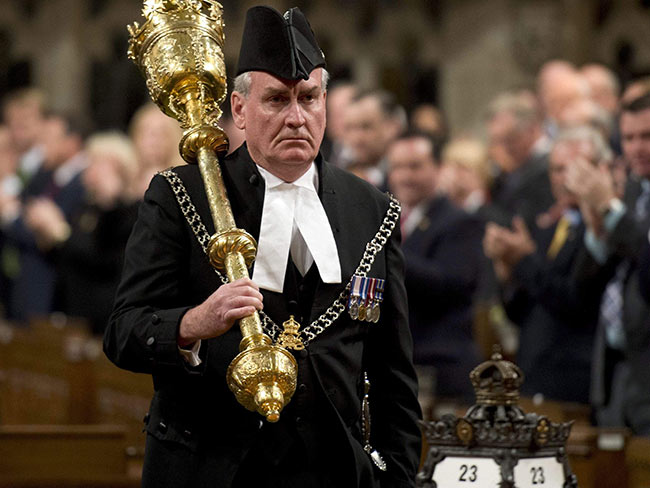
I’m Irish but spent forty years in Canada and I am still learning about the many deep, and too often tragic, links between my two countries. Canada’s Ambassador to Ireland, Kevin Vickers, (above) is coming to the West Cork History Festival in Skibbereen this week to talk about Irish-born Canadian Soldiers in the First World War. So in honour of that occasion I’ve been reviewing some of the connections between our nations.

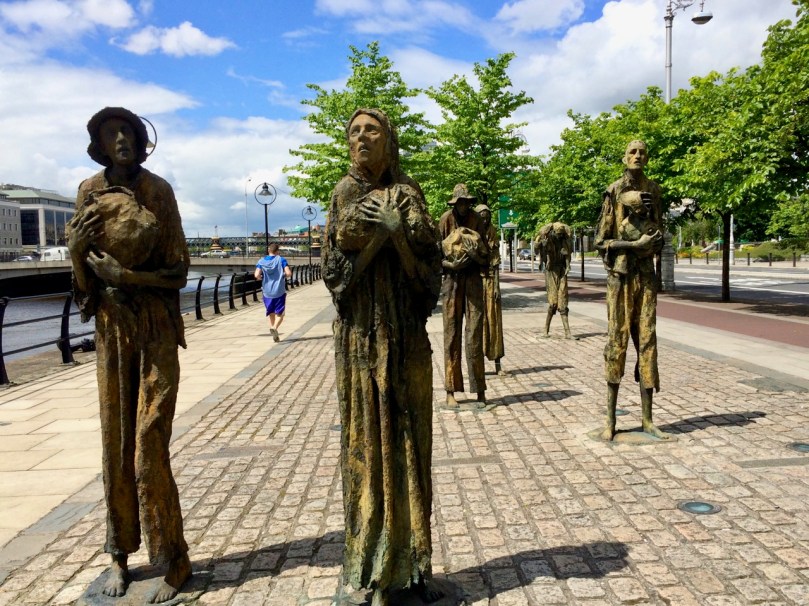
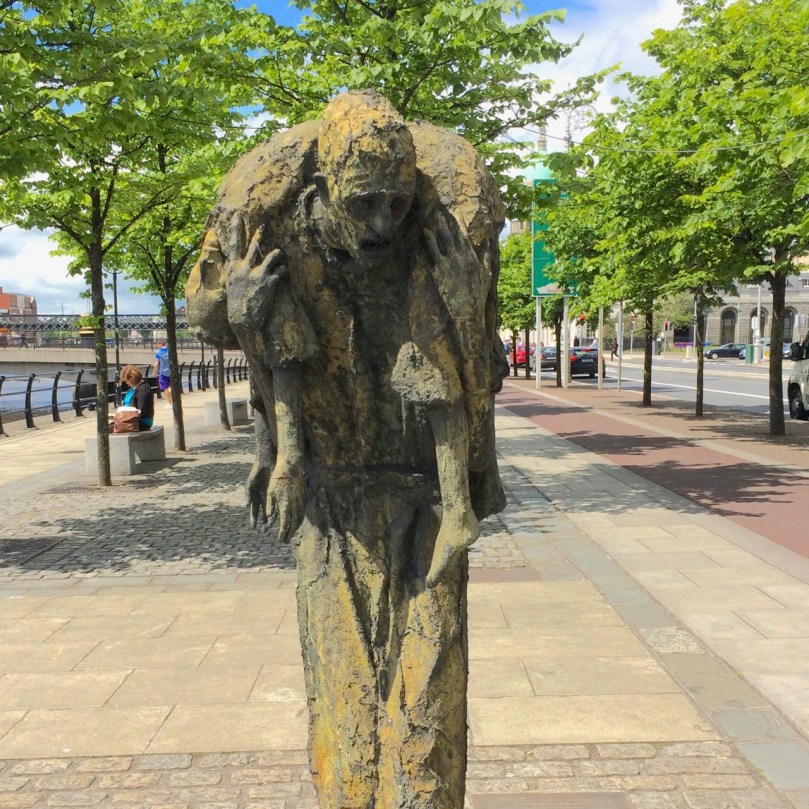
‘Departure’ – the harrowing sculpture by Rowan Gillespie on the Dublin quays

Although my own experience as a Canadian immigrant was a happy one, not all emigration stories are founded in choice and success. There’s a park in Toronto called Ireland Park. Lovely, you say – how nice that we have a memorial in this wonderful city. But Ireland Park commemorates a dark past – the year of 1847 when almost 40,000 immigrants fleeing the Irish Famine arrived in the coffin ships, overwhelming the city.

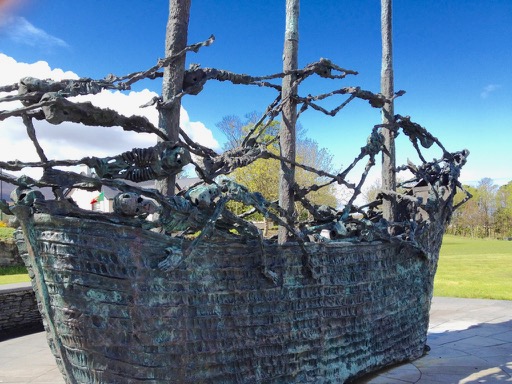
John Behan’s Coffin Ship Famine memorial in Murrisk, Co Mayo

They brought typhus, chaos, starvation and death and were soon filling the fever sheds built by the heroic citizens of the fledgling city. Catholic and Protestant arrived, and Catholic and Protestant co-operated to help them survive. It’s a tale of heroism and suffering and it echoes strongly  to this day, when we think about the refugees pouring into Greece and Calais – those people were once us.

Take a look at snippets from the haunting documentary film ‘Death or Canada’ (one here and another here) – it will give you a sense of what was involved for the incoming famine victims and for those on the ground.

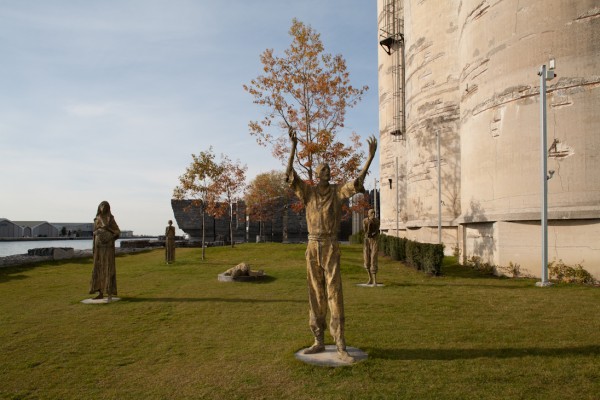
Rowan Gillespie’s ‘Arrival’ in Ireland Park, Toronto

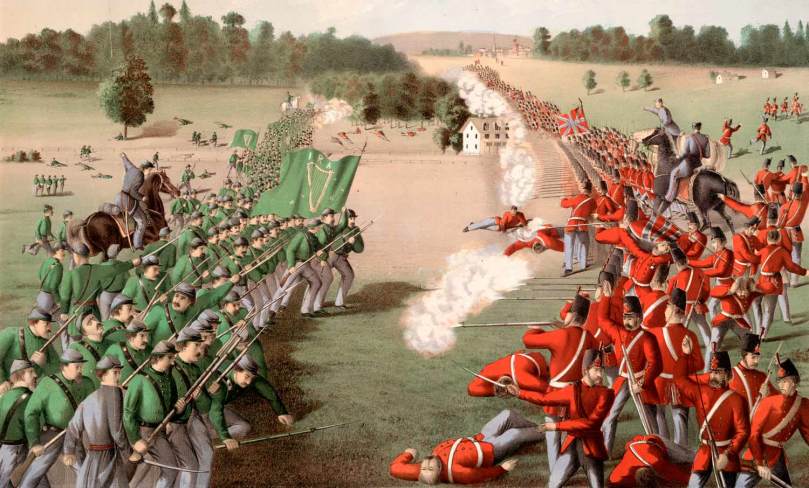
On a more muscular note, I have written elsewhere about the Fenians in Canada. Taking the fight for Irish freedom to ‘British soil’ in North America, there were many raids and one pitched battle organised by the Fenians in Canada. Ironically, the Battle of Ridgeway helped pave the way for Canadian Confederation.

One of the Fathers of that Confederation was Thomas D’Arcy McGee, a complex character who started off in the Young Ireland Movement. In his early days he was a firebrand revolutionary and that’s how he is chiefly remembered here – as one of a group of poets and writers committed to the liberation of Ireland from British rule. In this he would have seen common cause with that old Unrepentant Fenian, O’Donovan Rossa.

Thomas D’Arcy McGee: the young revolutionary and the elder statesman

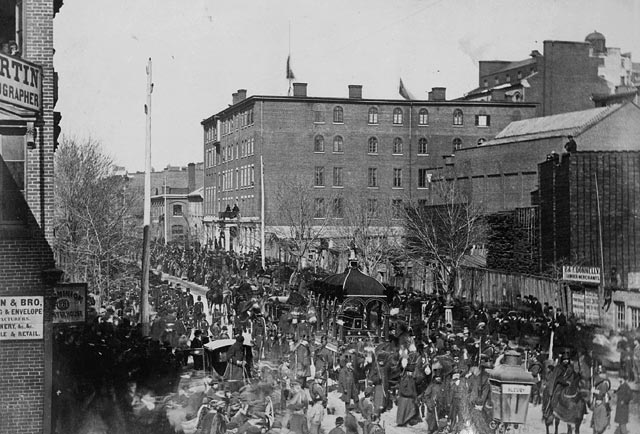
However, life in the United States, to which he was eventually forced to flee, while it radicalised Rossa even further, made a conservative out of McGee. He settled in Canada and became an ardent advocate for Canadian nationhood; however, he turned against violent rebellion and espoused a form of Home Rule, thereby earning the enmity of the Fenians who eventually ordered him assassinated. His funeral, held on what would have been his 43rd birthday, saw 80,000 people line the streets of Montreal to mourn a man that had given so much to his adopted country.

Image © Library and Archives Canada

I have written extensively about the Air India Disaster of June 1985. The beautiful memorial in Ahakista has become a place of focus for the families of the victims, who still come every year to remember those who died so tragically on that day. As a Canadian and an Irish person it has become a special place for me – at once a reminder of the terrorist threats that touch on all our lives and the warm and human response that we in West Cork delivered when it all came close to home.

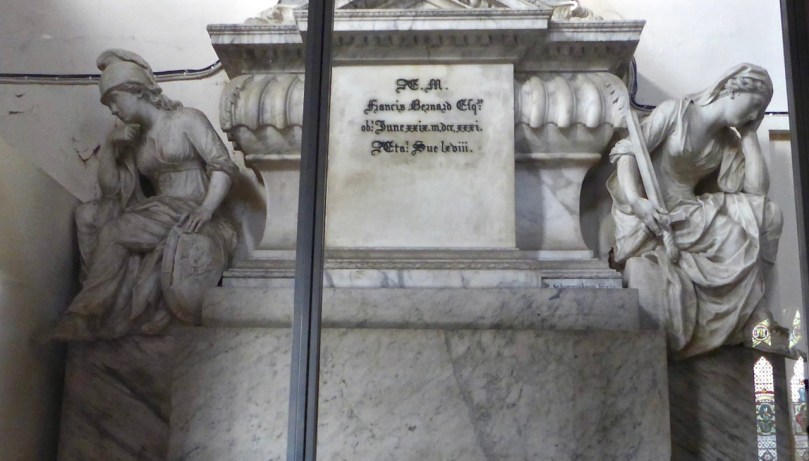
And now we discover that Justin Trudeau, through his mother, is descended from the Bernards of Bandon. This is quite a pedigree – according to The Irish Times In 1661, Francis Bernard married Mary Freake and had six daughters and two sons, the research shows. Mr Trudeau is descended from their younger son, Arthur Bernard, who was High Sheriff of Cork in 1697 and MP for Bandon from 1713-14. My own wanderings around churches have paid off here – take a look at this memorial in St Peter’s Church of Ireland in Bandon – it’s for Francis Bernard – Arthur’s older brother!

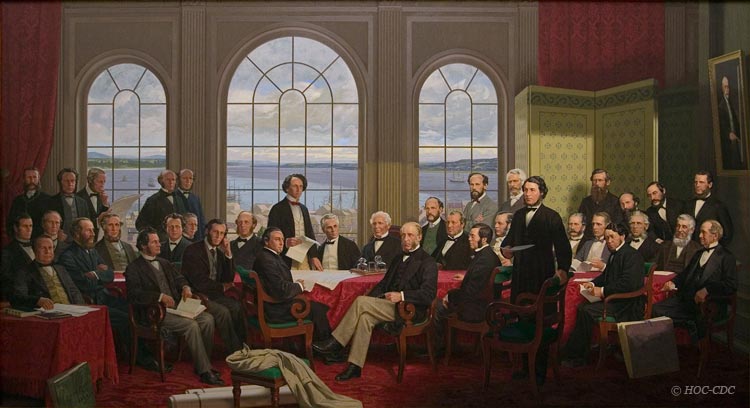
So there you are, Ambassador Vickers – one Canadian-Irish woman’s take on some of what binds us as nations. Oh – and for those of you who don’t know who Kevin Vickers is, this is no regular ambassador, no career diplomat. This is a genuine Canadian hero! We look forward to welcoming him back to West Cork and to hearing him speak on Irish-born Canadian Soldiers in the First World War. I wonder if he’ll arrive on his Harley?A famous Canadian painting depicts the Fathers of confederation – and there’s D’Arcy McGee in the front row, second from the right. Image © Canadian House of Commons.