Harvest Time

…The heat of the summer was eased by the cooling breezes from the Atlantic. It was busy on land and sea, with seine fishing by night and fish curing and farming by day, but there was always time for scoriachting, games and dance, sometimes on Carbery Island or across Dunmanus Bay…

(from Northside of the Mizen by Patrick McCarthy & Richard Hawkes, Mizen Productions, 1999)

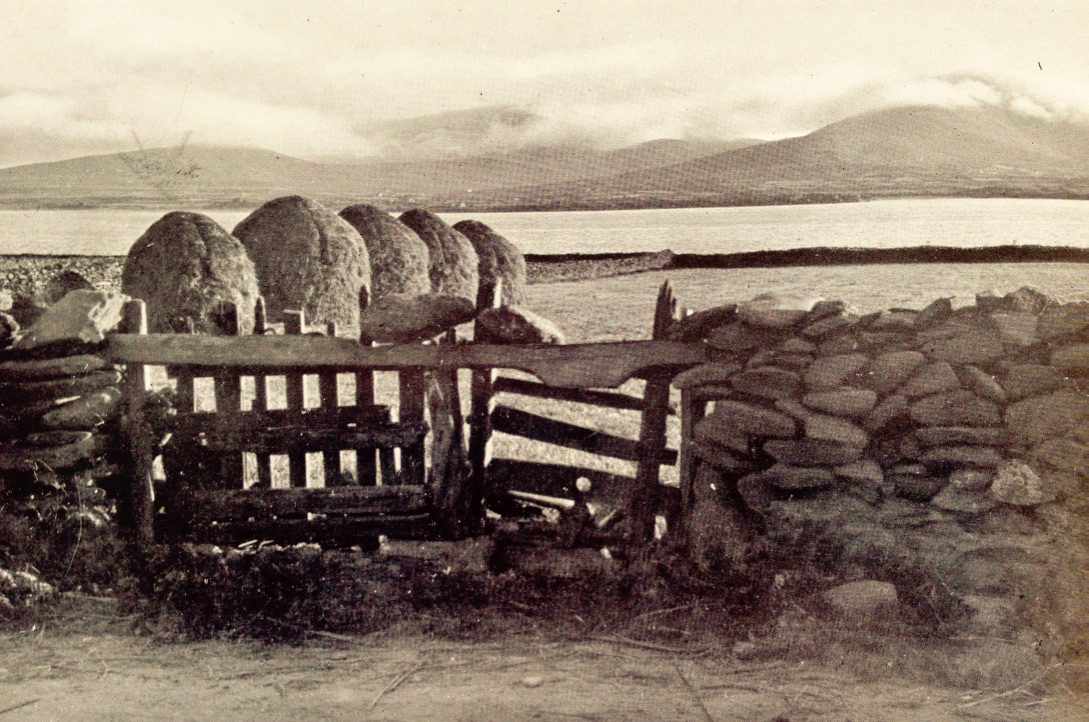
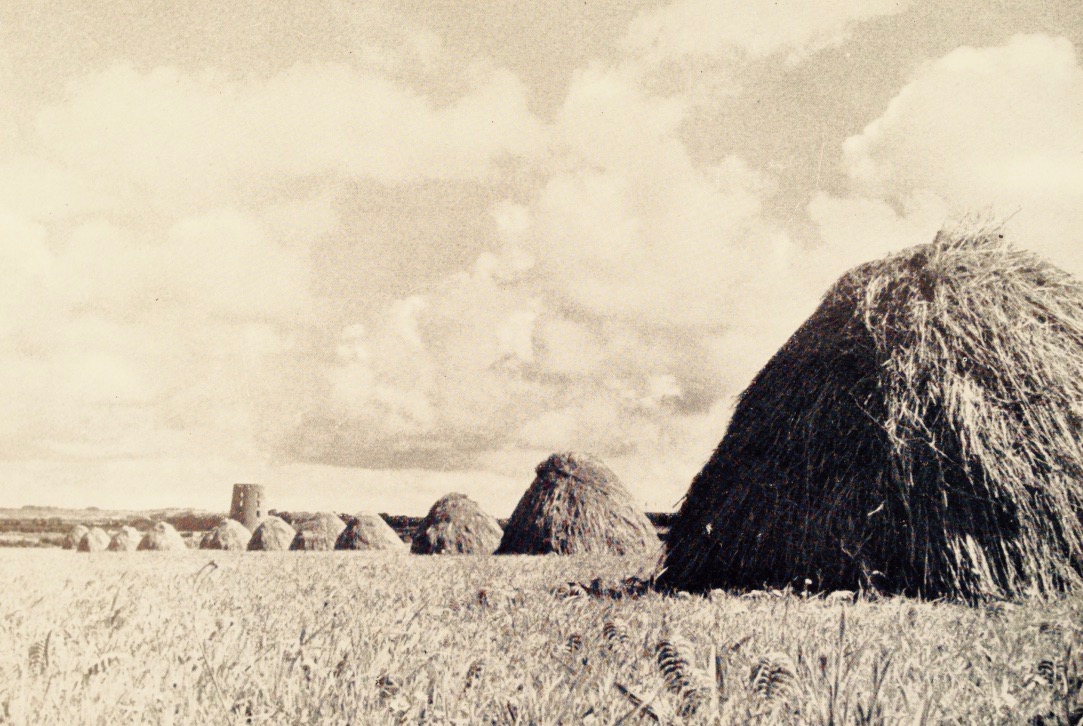
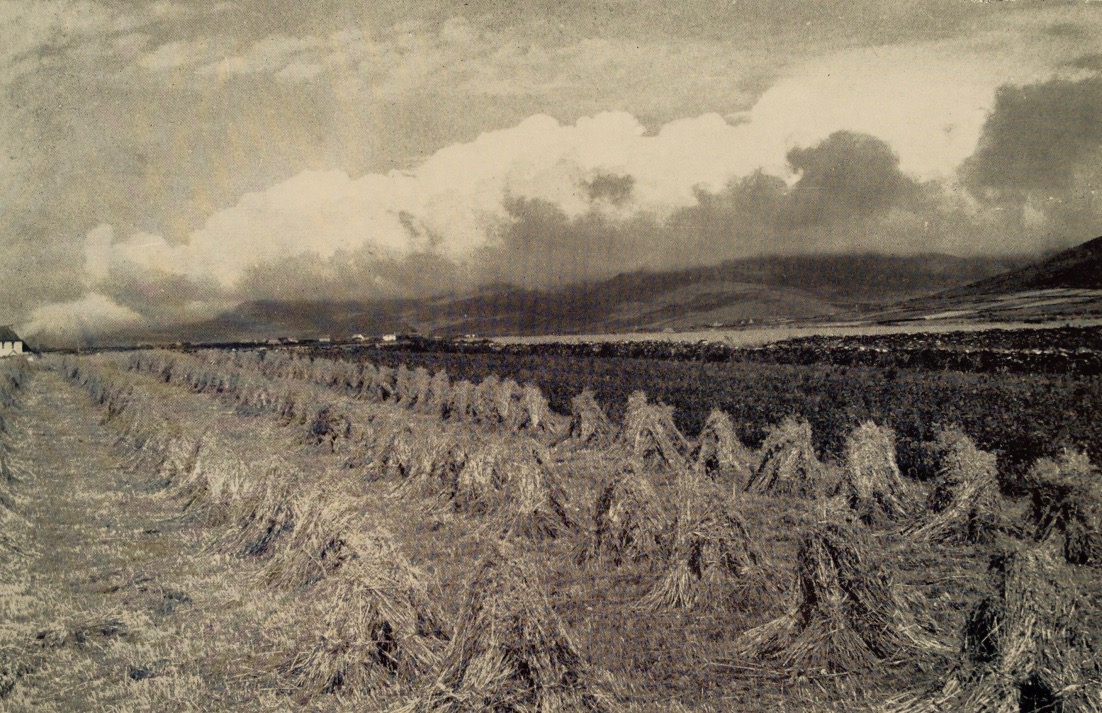
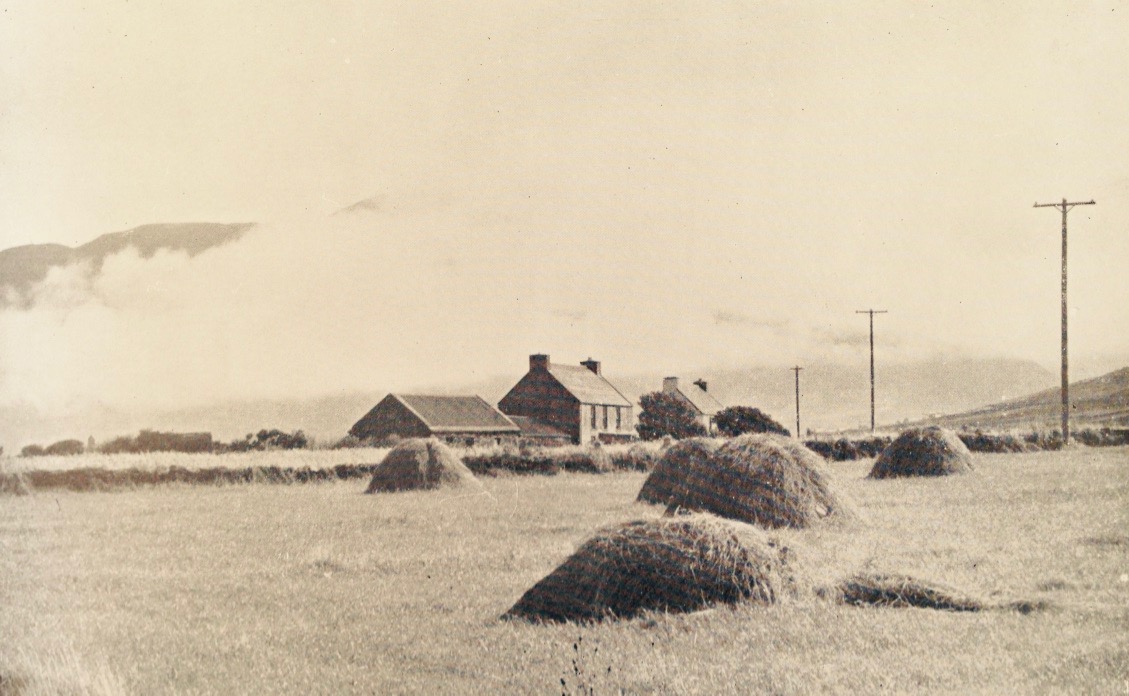
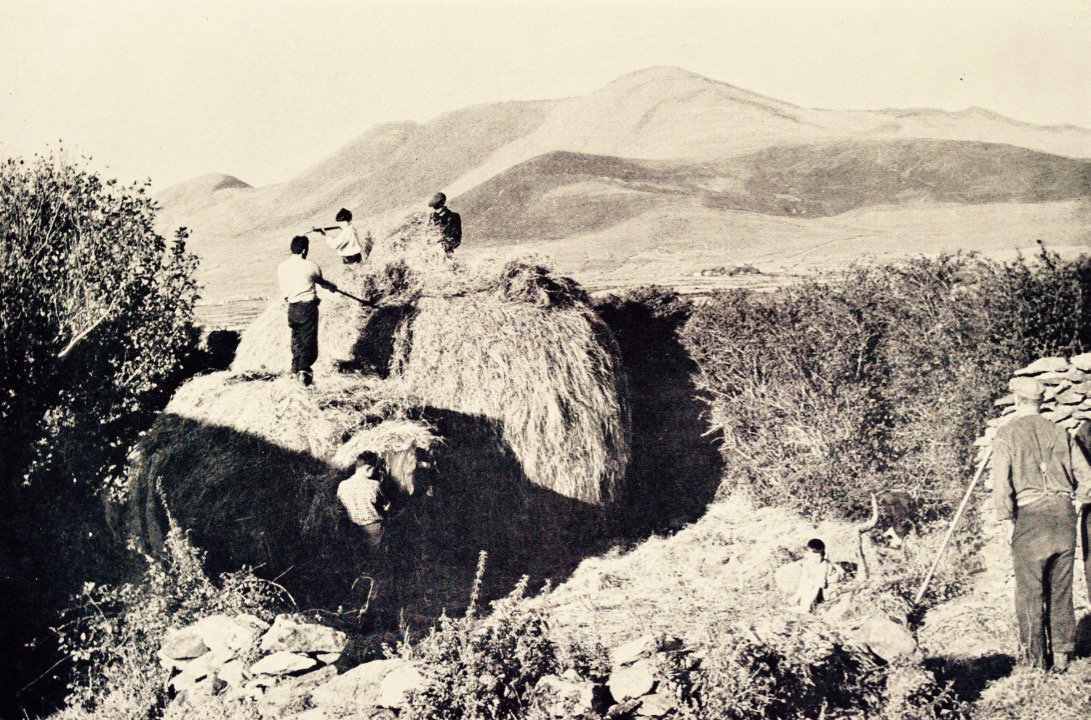
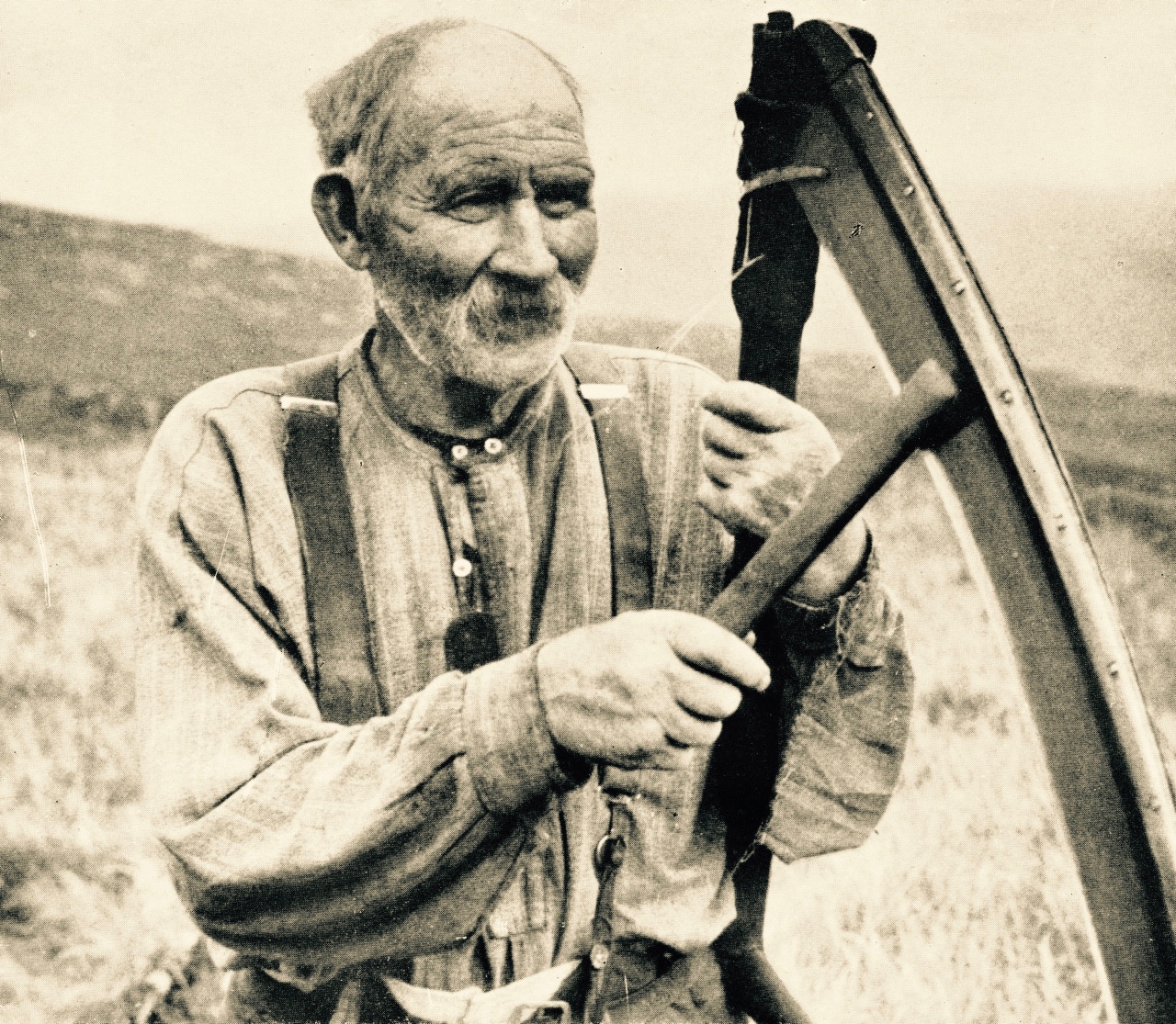
This selection of photographs is from the collection of Tomás Ó Muircheartaigh, 1907 – 1967, who documented life in rural Ireland between the 1930s and the 1950s. I have chosen his pictures that concentrate on gathering the harvest – and the fairs that are associated with harvest time: the festival of Lúnasa. They are generally not captioned, so we are not aware where these were taken. When I travelled in West Cork during the 1990s I remember seeing traditional stooks in the fields: this method of collecting the corn was practiced by the small farmers then, although now I believe it has completely vanished.

…Most of the people on the Northside had holdings that were so small that they could only grow corn (barley or oats) or wheat, for their own use. The land wasn’t good for corn crops. By the middle of August, the stooks were seen in the fields. As with the bringing in of the hay, the cutting of the corn was a great event with a meitheal to help you if needed. For cutting, a reaping hook or the scythe was used. When buying a scythe it had to be sharp enough to lift a penny off the floor. A man followed the cutter, collecting the corn, a sheaf at a time, and putting it out behind him. This was called ‘taking out’. Two people followed the man ‘taking out’ and bound the corn into sheaves with a bind, making sure that the ears on the bind lay with the rest of the ears. Six sheaves were made into a stook and left for a week, then the small stooks would be made into a stook of twelve sheaves which was left in the field to finish ripening for the rest of the month. The stooks were gathered into the haggard, by donkey or horse and cart, and made into a barrel stack ready for threshing in October… (Northside of the Mizen)
Lúnasa is one of the important turning points in the Irish calendar: harvest time, fruitfulness, and the onset of autumn. The others are Imbolc – 1st of February (the coming of the light and new life, spring), Bealtaine – 1st of May (onset of summer and a time of growth), Samhain – 1st November (winter and darkness). All these points have to be marked and celebrated. Lúnasa, or Lughnasa is probably the most fertile time for celebration, and festivities could last for days or even weeks. There was always a fair: the most well-known one still celebrated is at Killorglin, in the heart of County Kerry, where a great wild Puck goat is crowned and reigns above the crowds.


Ireland-Canada: Famine, Fenians, Friends!

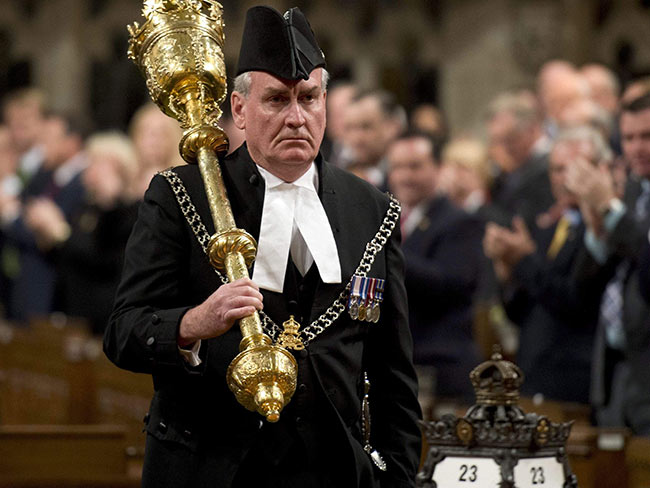
I’m Irish but spent forty years in Canada and I am still learning about the many deep, and too often tragic, links between my two countries. Canada’s Ambassador to Ireland, Kevin Vickers, (above) is coming to the West Cork History Festival in Skibbereen this week to talk about Irish-born Canadian Soldiers in the First World War. So in honour of that occasion I’ve been reviewing some of the connections between our nations.

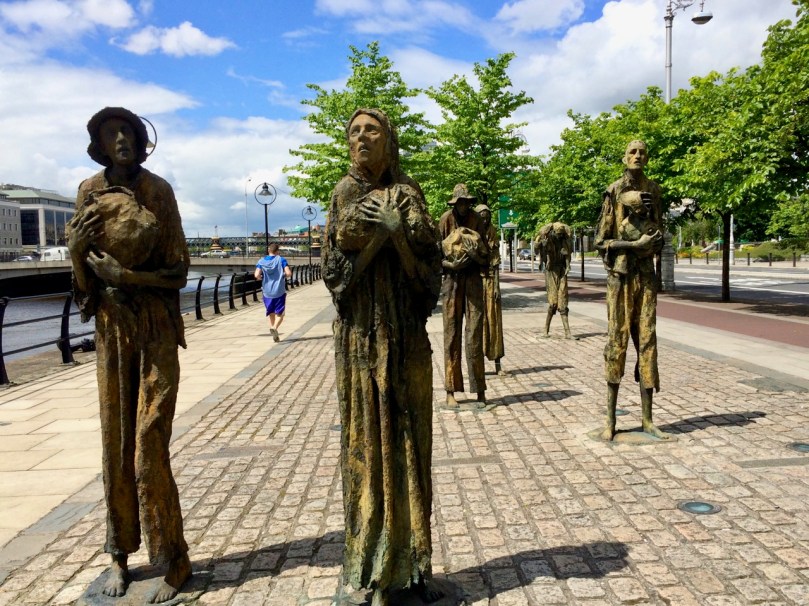
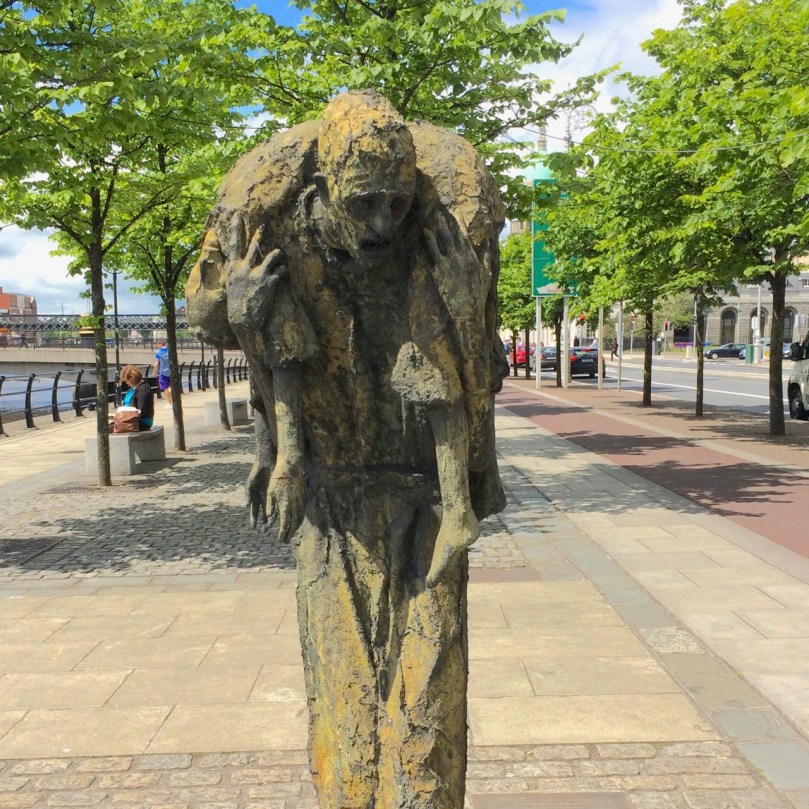
‘Departure’ – the harrowing sculpture by Rowan Gillespie on the Dublin quays

Although my own experience as a Canadian immigrant was a happy one, not all emigration stories are founded in choice and success. There’s a park in Toronto called Ireland Park. Lovely, you say – how nice that we have a memorial in this wonderful city. But Ireland Park commemorates a dark past – the year of 1847 when almost 40,000 immigrants fleeing the Irish Famine arrived in the coffin ships, overwhelming the city.

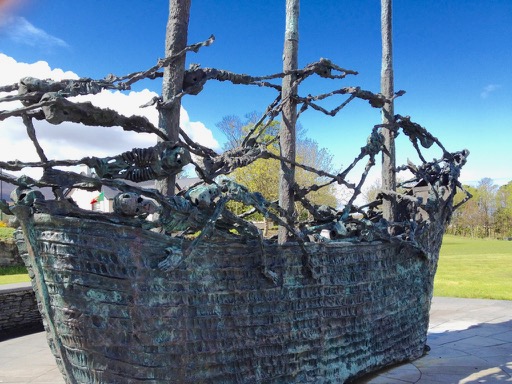
John Behan’s Coffin Ship Famine memorial in Murrisk, Co Mayo

They brought typhus, chaos, starvation and death and were soon filling the fever sheds built by the heroic citizens of the fledgling city. Catholic and Protestant arrived, and Catholic and Protestant co-operated to help them survive. It’s a tale of heroism and suffering and it echoes strongly  to this day, when we think about the refugees pouring into Greece and Calais – those people were once us.

Take a look at snippets from the haunting documentary film ‘Death or Canada’ (one here and another here) – it will give you a sense of what was involved for the incoming famine victims and for those on the ground.

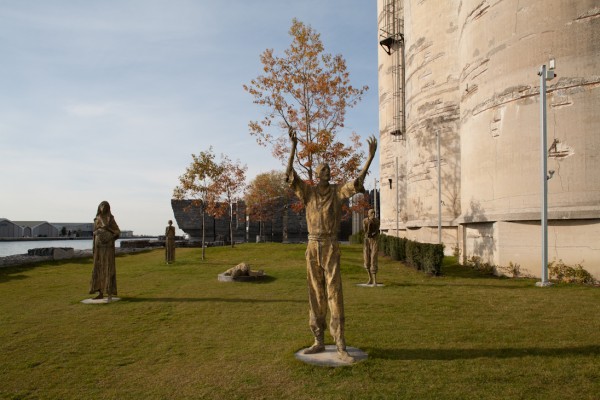
Rowan Gillespie’s ‘Arrival’ in Ireland Park, Toronto

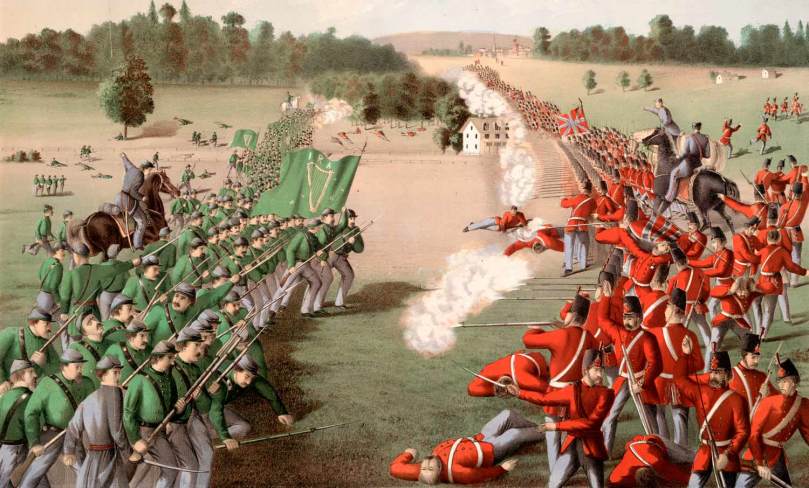
On a more muscular note, I have written elsewhere about the Fenians in Canada. Taking the fight for Irish freedom to ‘British soil’ in North America, there were many raids and one pitched battle organised by the Fenians in Canada. Ironically, the Battle of Ridgeway helped pave the way for Canadian Confederation.

One of the Fathers of that Confederation was Thomas D’Arcy McGee, a complex character who started off in the Young Ireland Movement. In his early days he was a firebrand revolutionary and that’s how he is chiefly remembered here – as one of a group of poets and writers committed to the liberation of Ireland from British rule. In this he would have seen common cause with that old Unrepentant Fenian, O’Donovan Rossa.

Thomas D’Arcy McGee: the young revolutionary and the elder statesman

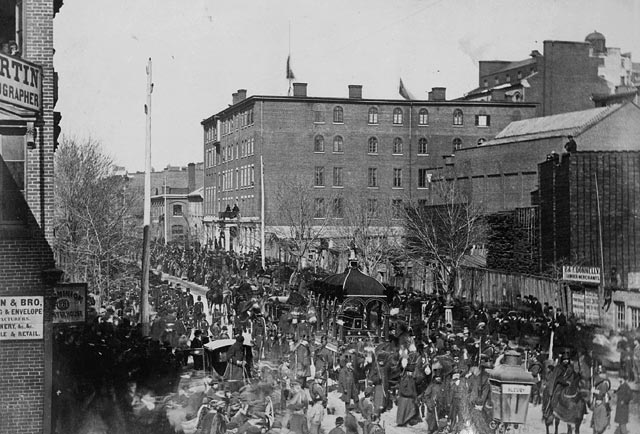
However, life in the United States, to which he was eventually forced to flee, while it radicalised Rossa even further, made a conservative out of McGee. He settled in Canada and became an ardent advocate for Canadian nationhood; however, he turned against violent rebellion and espoused a form of Home Rule, thereby earning the enmity of the Fenians who eventually ordered him assassinated. His funeral, held on what would have been his 43rd birthday, saw 80,000 people line the streets of Montreal to mourn a man that had given so much to his adopted country.

Image © Library and Archives Canada

I have written extensively about the Air India Disaster of June 1985. The beautiful memorial in Ahakista has become a place of focus for the families of the victims, who still come every year to remember those who died so tragically on that day. As a Canadian and an Irish person it has become a special place for me – at once a reminder of the terrorist threats that touch on all our lives and the warm and human response that we in West Cork delivered when it all came close to home.

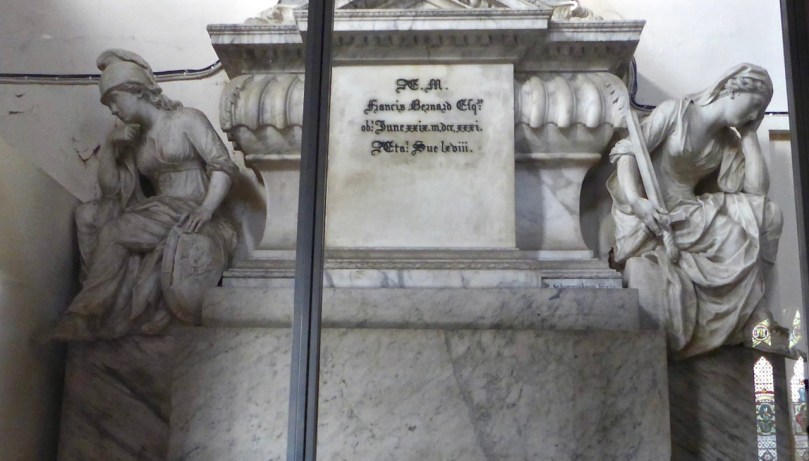
And now we discover that Justin Trudeau, through his mother, is descended from the Bernards of Bandon. This is quite a pedigree – according to The Irish Times In 1661, Francis Bernard married Mary Freake and had six daughters and two sons, the research shows. Mr Trudeau is descended from their younger son, Arthur Bernard, who was High Sheriff of Cork in 1697 and MP for Bandon from 1713-14. My own wanderings around churches have paid off here – take a look at this memorial in St Peter’s Church of Ireland in Bandon – it’s for Francis Bernard – Arthur’s older brother!

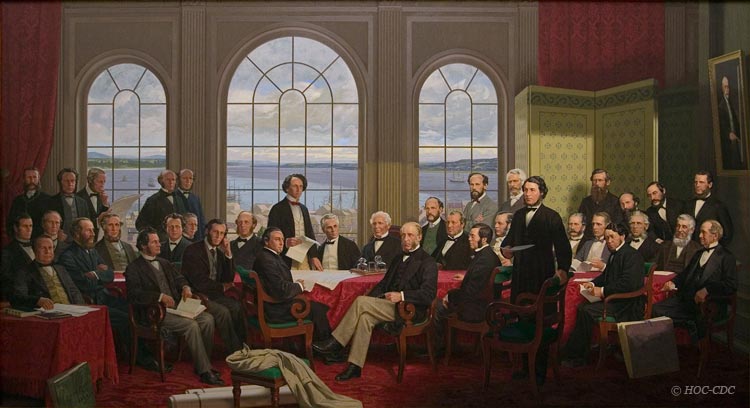
So there you are, Ambassador Vickers – one Canadian-Irish woman’s take on some of what binds us as nations. Oh – and for those of you who don’t know who Kevin Vickers is, this is no regular ambassador, no career diplomat. This is a genuine Canadian hero! We look forward to welcoming him back to West Cork and to hearing him speak on Irish-born Canadian Soldiers in the First World War. I wonder if he’ll arrive on his Harley?A famous Canadian painting depicts the Fathers of confederation – and there’s D’Arcy McGee in the front row, second from the right. Image © Canadian House of Commons.


Stab All!

With the West Cork History Festival just around the corner (this coming weekend – July 28 to 30: hurry! – there are still some tickets left for a whole host of compelling events), I thought I would concentrate today on a little piece of very local history which has fascinated me for some time.

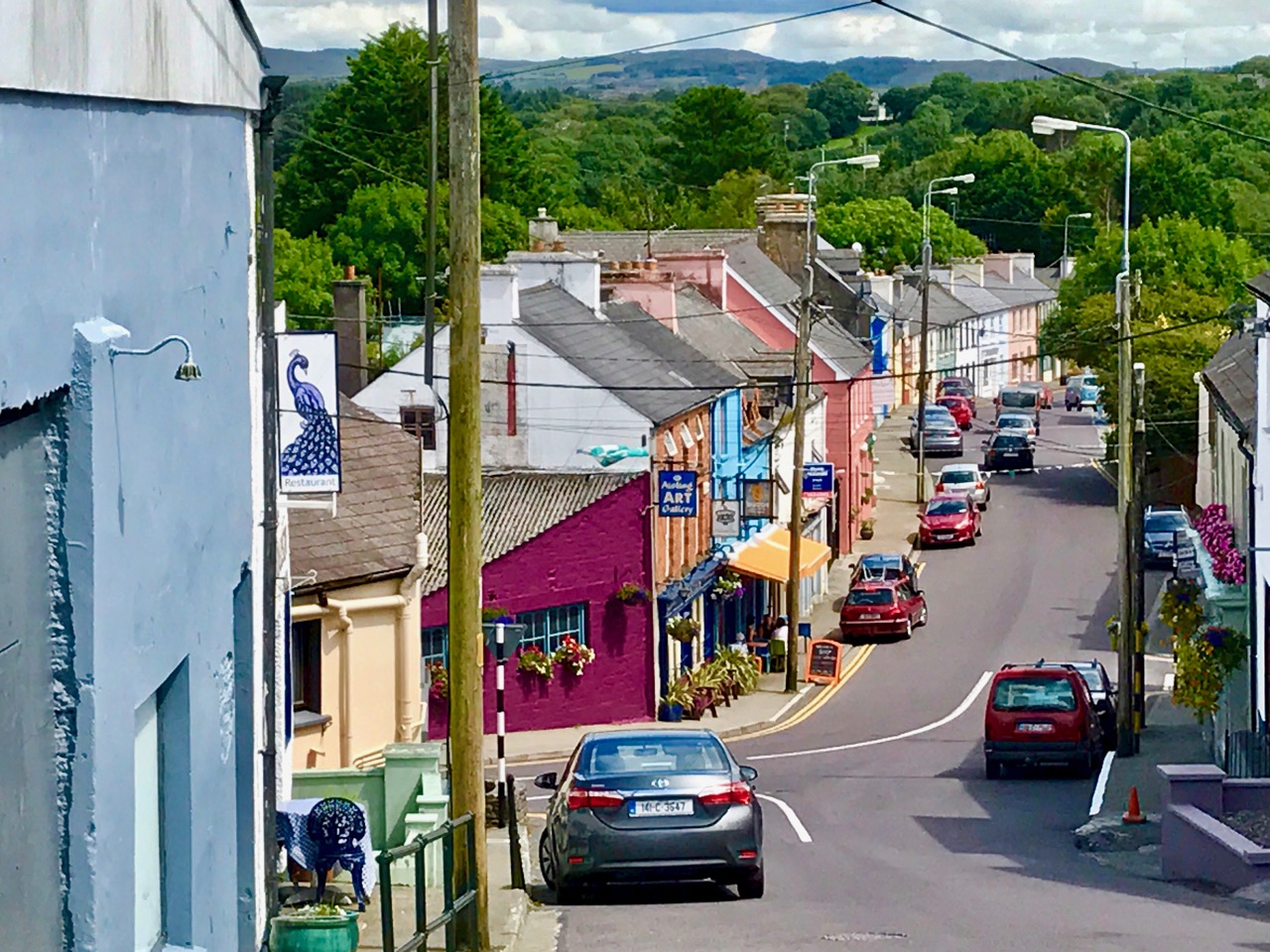
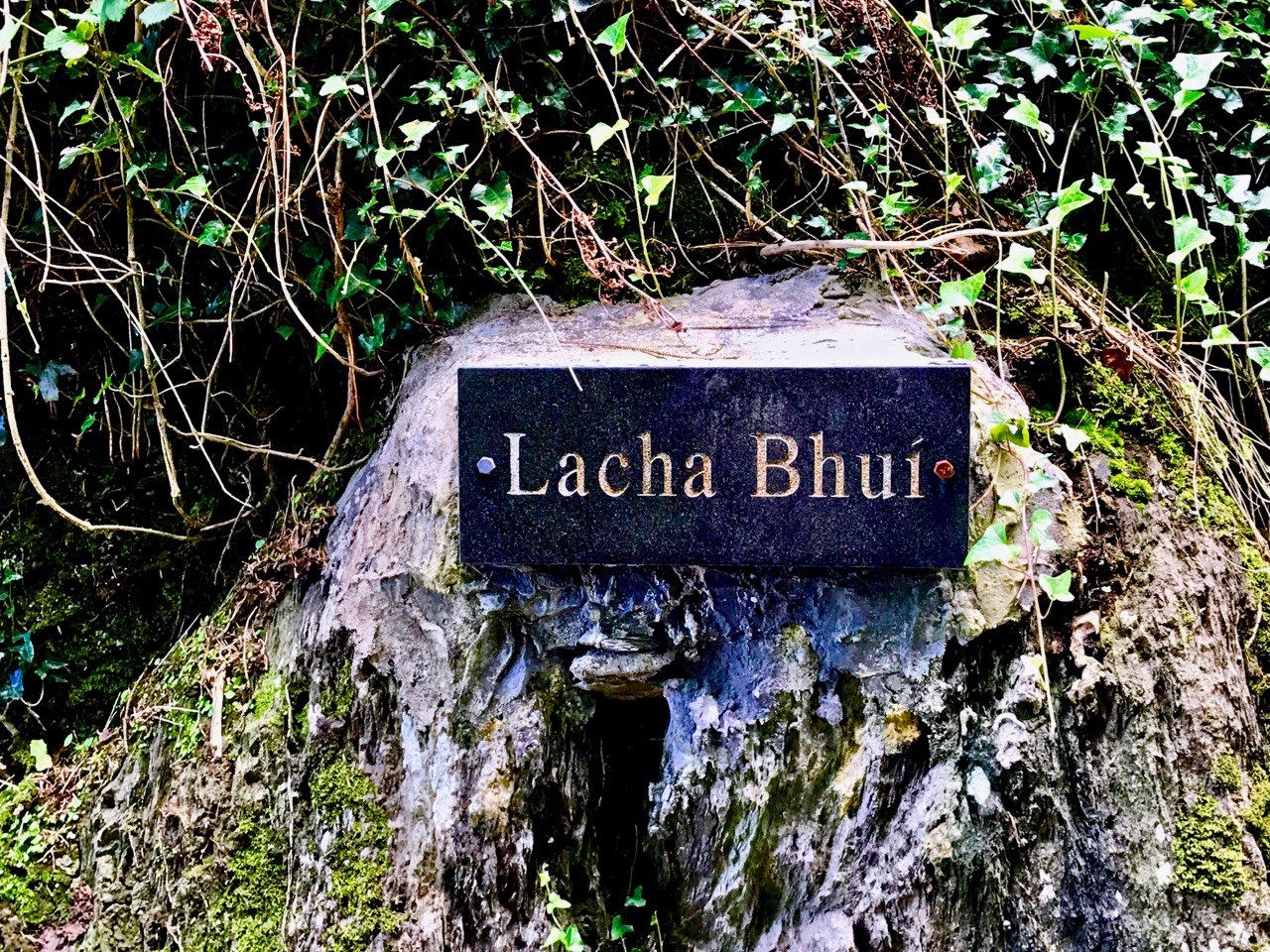
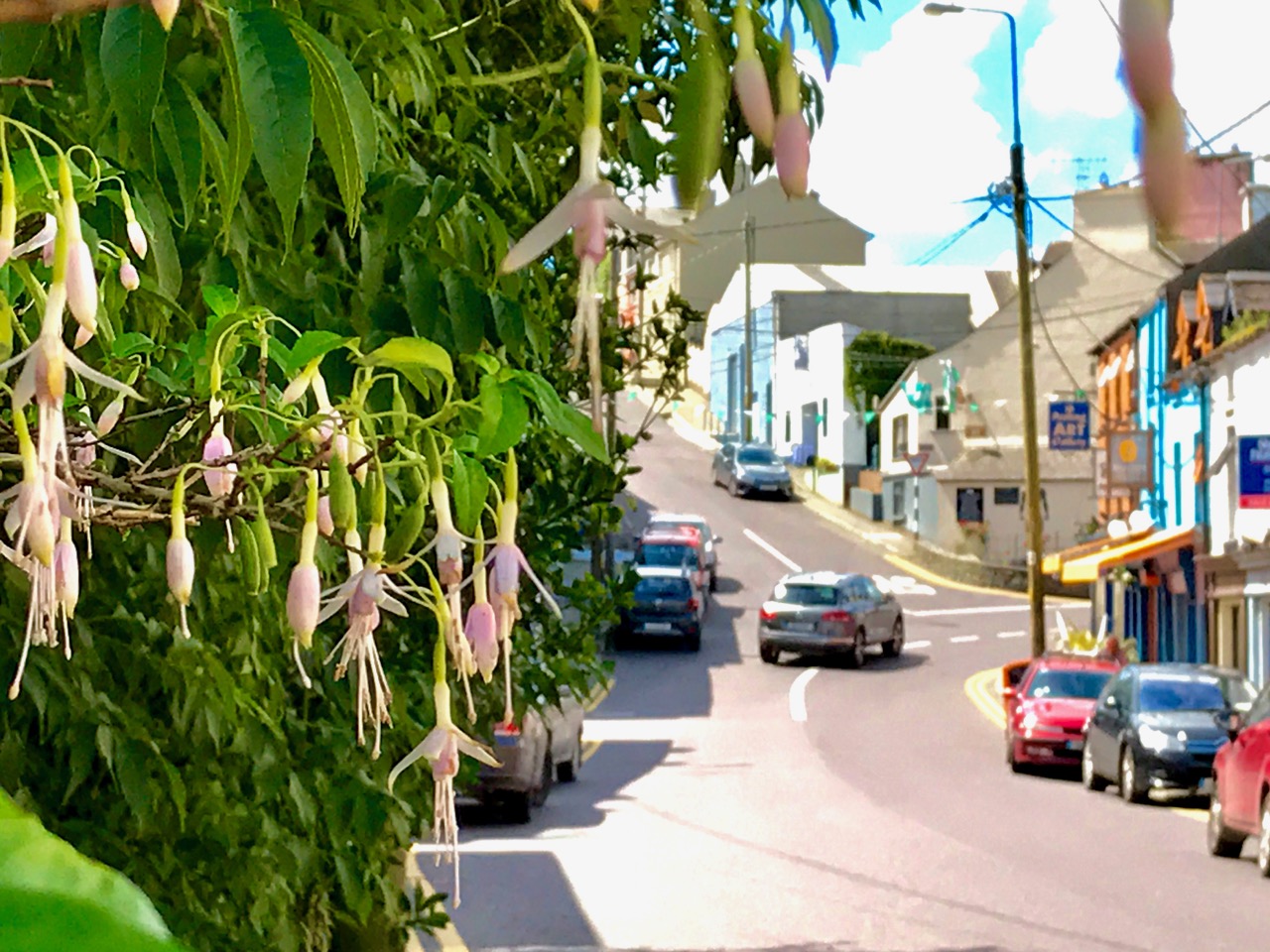
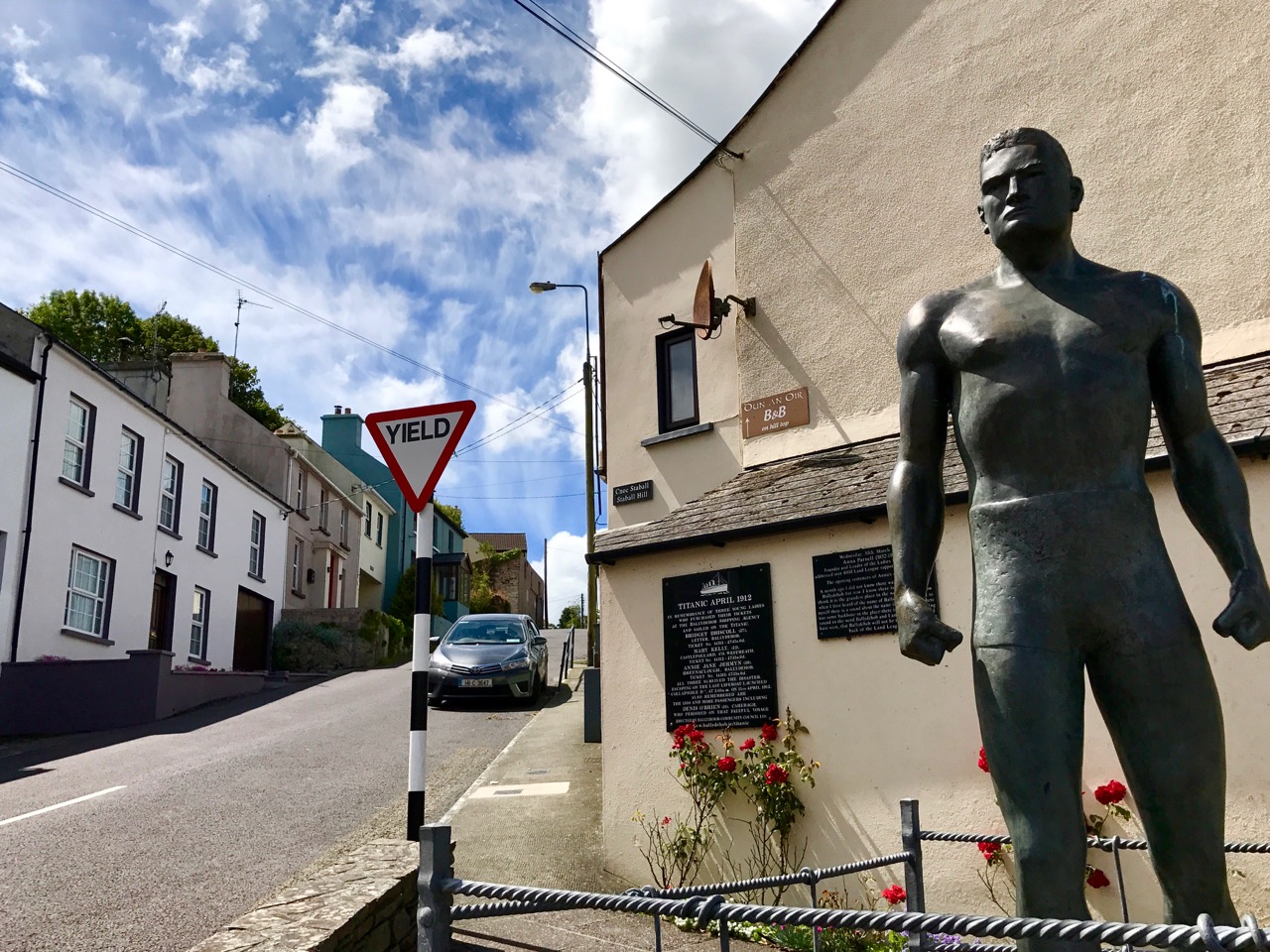
Header picture: looking down Staball Hill to the colourful and thriving community of Ballydehob in West Cork; above – Chapel Lane, just on the edge of town: a haven for wildflowers with – lower picture – the intriguing sign Lacha Bhuí

Mounted beside the road on Chapel Hill in Ballydehob is a slate plaque, which is inscribed Lacha Bhuí. I asked Finola to translate the Irish for me: it says Yellow Duck! Intrigued, I asked around to see if anyone knew why there should be such a sign in this place; eventually, I was transported back to 1642…

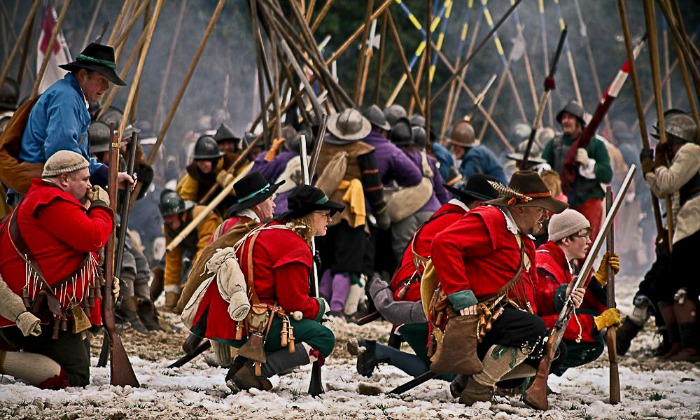
Reenactment of the 1642 Battle of Stratton, in Cornwall: it’s not Ballydehob, but perhaps it portrays something of the atmosphere of the skirmish that took place here in the same year

My principle informant is Noel Coakley – a local historian and a mine of information. He it was who told me the story of a battle that took place in Ballydehob, on Staball Hill in 1642. He couldn’t remember where he had the information from but this is the account he gave me:

In the days of the old Clan system, the McCarthys and the O’Mahonys held sway in this area and a string of castles bears testimony to their strength and dominance. In 1602, an army, led by Sir George Carew, the English President of Munster, descended on the area and were successful in breaking the power of the gaelic Chieftains.

The arrival of the sixteen hundreds saw an influx of settlers, mainly from England, but a significant number were protestants fleeing persecution from Catholic France.

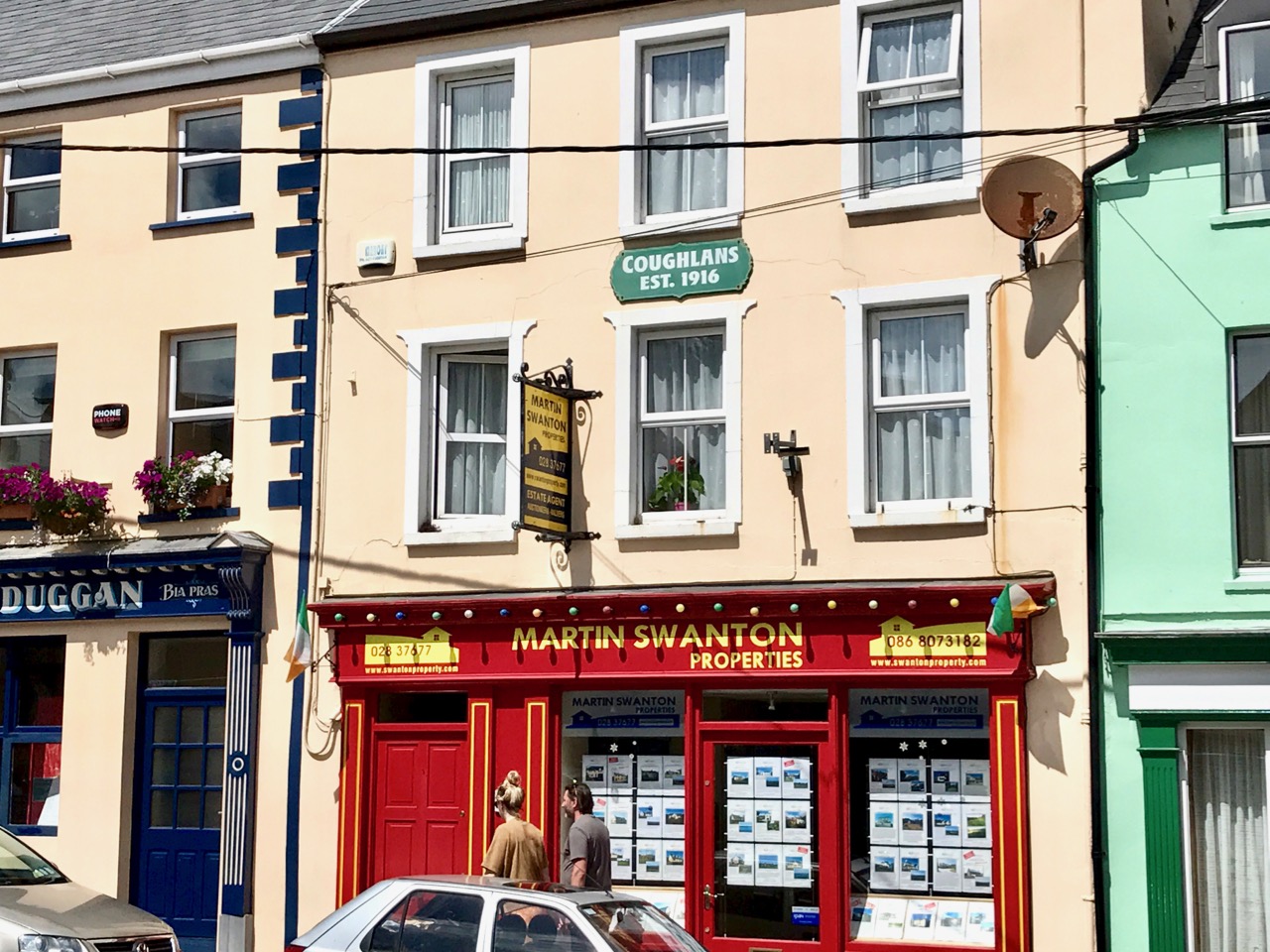
A powerful family named Swanton, from Norfolk in England, came and succeeded in subjecting much of the area to themselves and even changed the name of the village to “Swantons town”. The last use of this name was in the census of 1821.

As always the natives resisted the dominance of foreigners. In those days before police forces, a garrison of twelve British soldiers attempted to uphold and enforce the law and order in Ballydehob. Robert Swanton the leader of the Swanton group, who had quite a few questionable projects to his name, and had earned for himself the nickname ‘Black-hearted Bob’, enlisted the help of the garrison to take over Ballydehob for himself. A group of six local men, who were trained to arms, issued a challenge to the garrison and Black-hearted Bob and a pitched battle was fought at Staball Hill. The year was 1642…

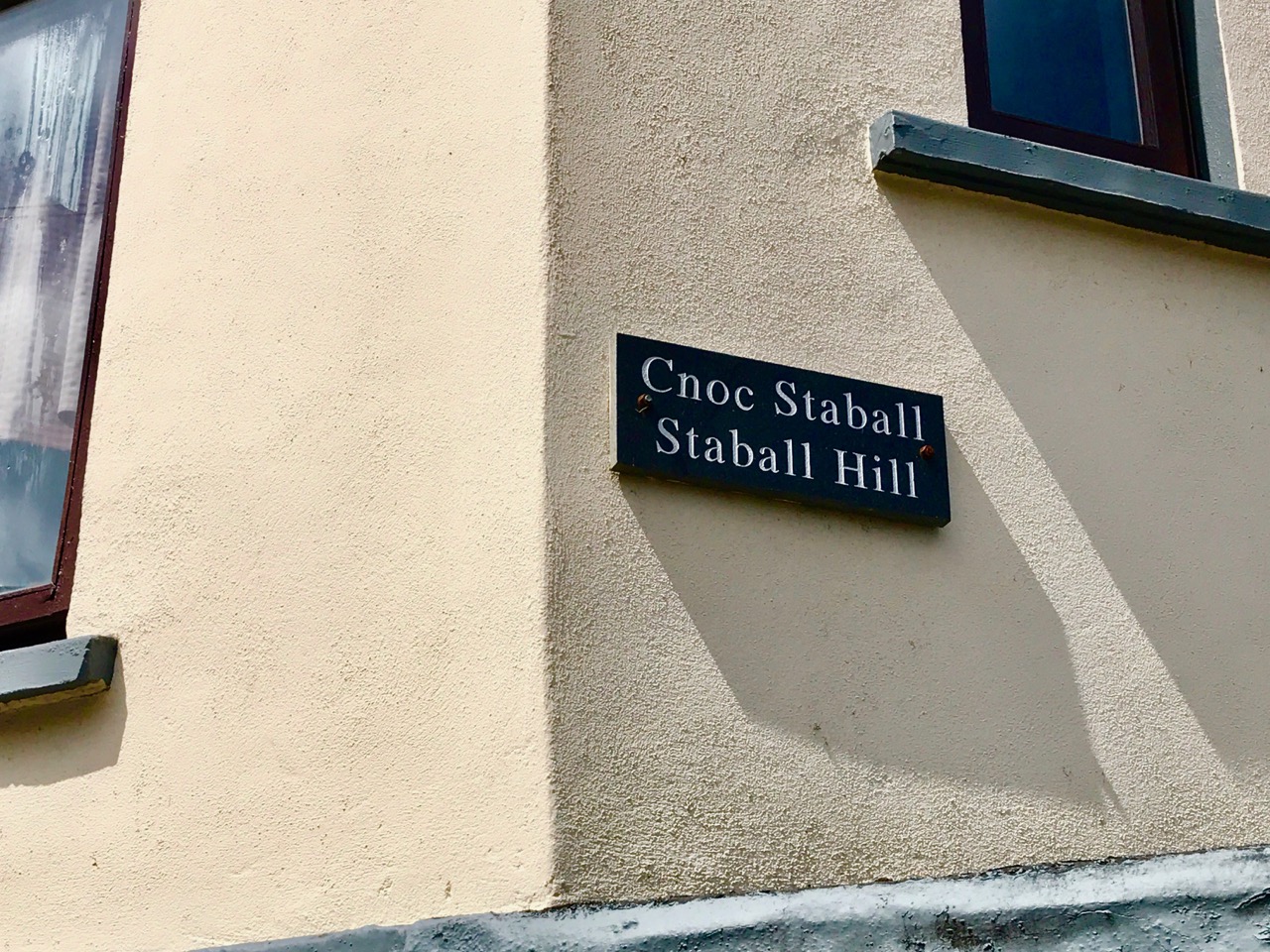
Top – looking towards Staball Hill, Ballydehob, on a peaceful summer Sunday afternoon; centre – Danno – wrestling Champion of the World (and son of Ballydehob) stands guard at the battle site; lower – Cnoc Staball – Staball Hill

There’s more from Noel:

In 1628, the first Huguenots appeared on the southwest coast, mainly in small boats, to escape detection from the French. They brought with them jewellery and other valuables which they traded with the Irish for plots of land. They were entrepreneurs and set up small industries.
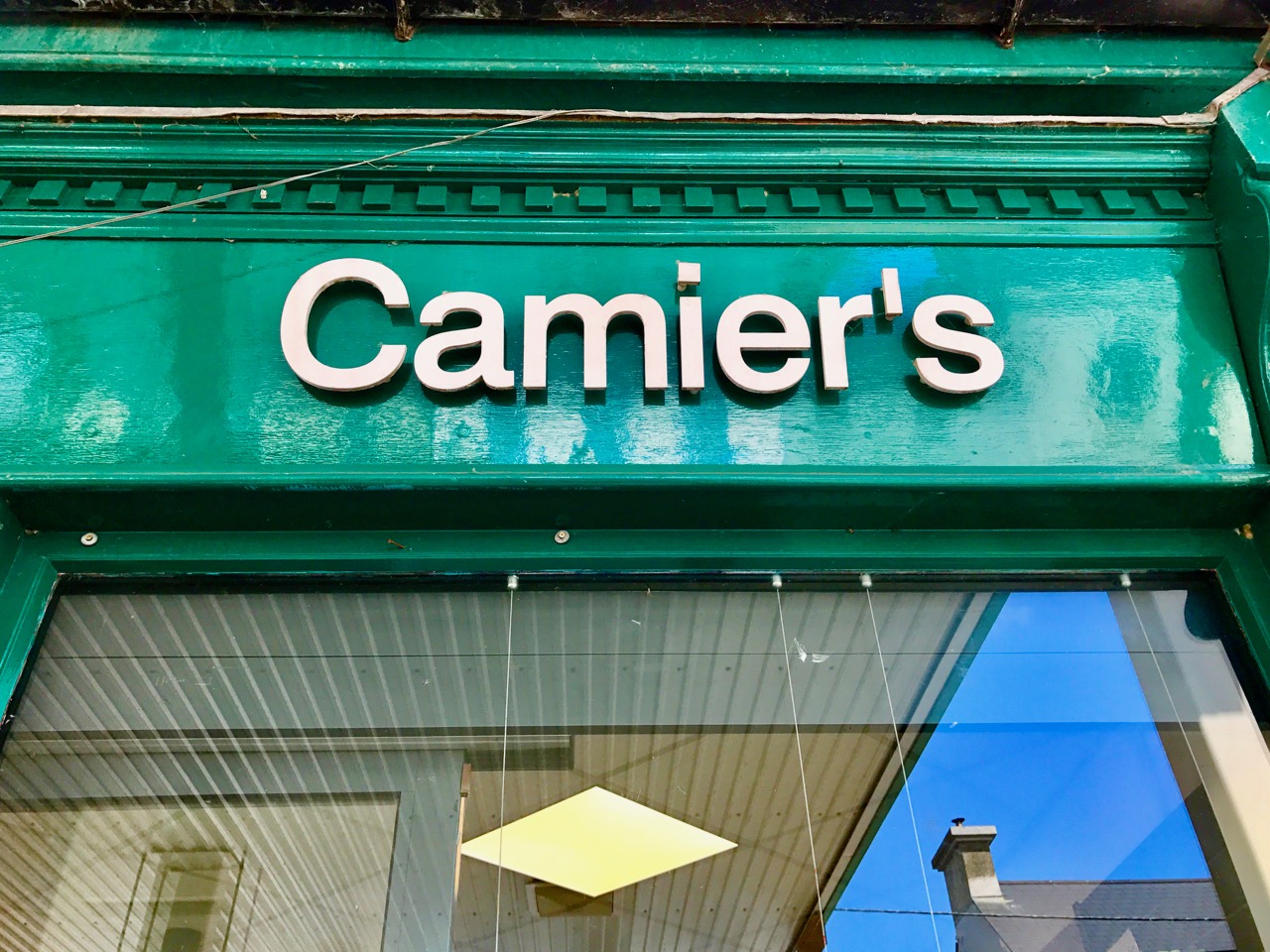
One of their number Pierre Camier noticed the exploitation of the natives and took sides with the Irish defenders in the battle of Staball Hill. Black-hearted Bob took flight from the fray and Pierre Camier pursued him and caught up with him between the present St Bridget’s Church and the Garda station and there he attacked him and killed him. He came back to the fray and shouted “I’ve killed the yellow duck”.

Meanwhile the battle was going well for the Irish band. They killed all the garrison losing just one man of their own. The leader of the Irish band shouted “stab ‘em all” and it is alleged that this was how Staball Hill got its name. The term yellow duck is often applied to a coward in France and to this day the spot where ‘Black-hearted Bob’ was killed is known as ‘Lacha bhuí’ which is the gaelic for ‘yellow duck’…

You’d never know it, but this little patch of West Cork tranquility was the very spot where Black-hearted Bob Swanton met his bloody end, at the hands of Pierre Camier

After some searching I found another account of the battle, in From West Cork Through Time by Kieran McCarthy and Daniel Breen – Amberly Publishing, UK 2013:

…The seventeenth century saw the arrival of a number of settlers, mainly from England, but many were also Protestants (Huguenots) fleeing persecution in Catholic France. The Swantons from Norfolk emerged as the most prominent family in the area and, by the late eighteenth century, they had even changed the name of Ballydehob to Swanton’s Town. A garrison of twelve British soldiers attempted to uphold the law. Robert Swanton, the leader of the group, enlisted the help of the garrison to take over Ballydehob. A group of six local men, who were trained in arms, issued a challenge to the garrison and ‘Black-hearted Bob’, and a pitched battle was fought on Staball Hill. The year was 1642…

In rural Ireland history is never far below the surface. Here in Ballydehob there are still reminders of the Huguenot and English proponents in the ‘Yellow Duck’ affair

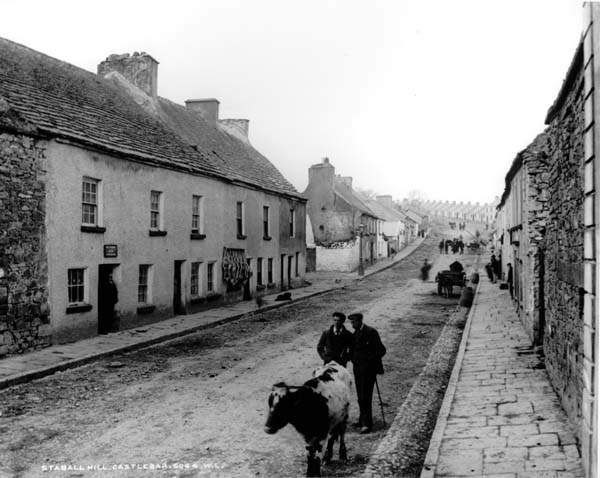
As a little addendum I can’t resist pointing out that there is a Staball Hill in Castlebar, County Mayo. It has a story, too:

According to folklore, Staball Hill got its name from the ‘Races of Castlebar’ during the Rebellion of 1798. General Humbert, with an army of 1000 French soldiers, landed at Killala and fought his way to Castlebar with the help of some Irish recruits where an army of British soldiers were waiting for him.  After the battle, the British contingent fled so fast that the episode became known as the ‘Races of Castlebar’ and is often described as one of the most ignominious defeats in British military history. During the battle a blockade was erected by the British in one last stand at Bridge Street.  As the Irish soldiers, armed only with pikes, charged the British the residents of the street are said to have shouted ‘Stab them all’. This was shortened to ‘Staball’.  On the Ordnance Survey Map c1900 the hill is called ‘Stab all’ – the words separated…

Staball Hill, Castlebar, County Mayo:

Goats, Bees and Spies – Redux

The farm at Dooneen

This post was first published in October 2013. Since then I have found more material, so have decided to update it.

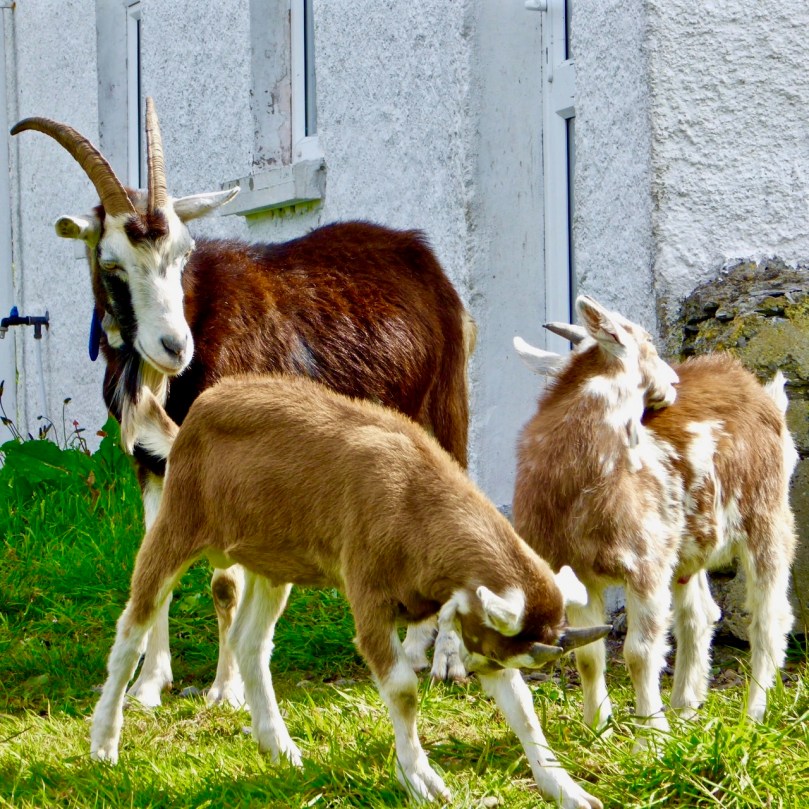
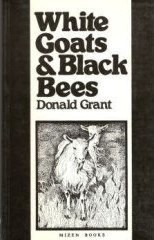
The non-fiction book, White Goats and Black Bees by Donald Grant is set on the Sheep’s Head. Donald and Mary Grant, a couple of journalists based in New York, impulsively decided to jump off the career treadmill and become farmers in Ireland in the 1960’s. They bought a small acreage on the Sheep’s Head, where they raised goats and ducks, cultivated an enormous vegetable garden, and by degrees and sheer hard work turned themselves into ‘peasants’.

This out-of-print book was drawn to my attention by my friend, Aideen, whose father, while in New York, had encouraged the Grants to consider West Cork. Aideen visited the Grants as a young woman and still has memories of their gorse wine.

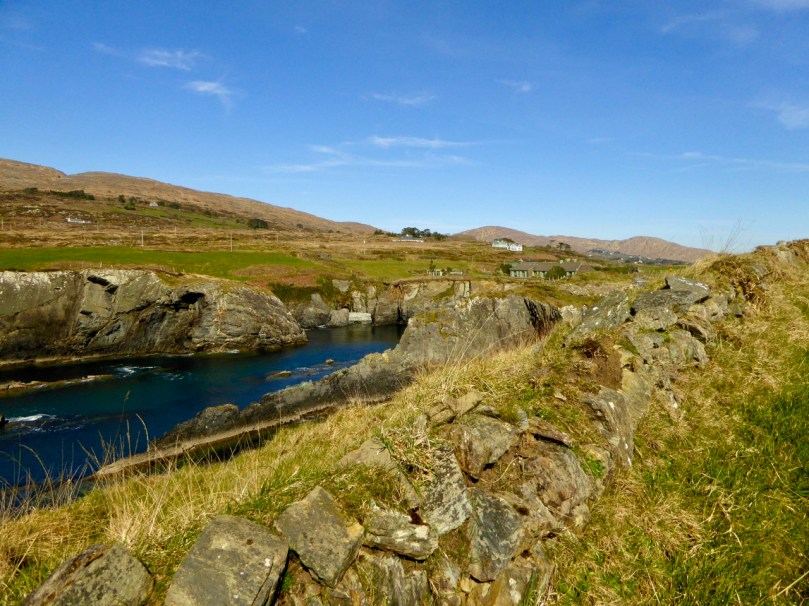
Dooneen, on the Sheep’s Head – this was the view the Grants looked out on. It could be fierce and desolate in the winter

As a Back to the Land narrative, this is a classic. Earnest urban professionals consulting Department of Agriculture pamphlets, conducting slug patrols, keenly observing the social structure of their goat herd and duck flock, battling the wild Atlantic storms, making cheese and smoking hams: this is the kind of thing that sent thousands of idealistic young people into communes all over the world, or in the case of Ireland, into the hills behind Ballydehob. The need to be accepted by the locals, a thread that appears in so many Year in Provence-type books, is coupled with the outsider’s puzzlement at the impenetrability of some aspects of local behaviour.

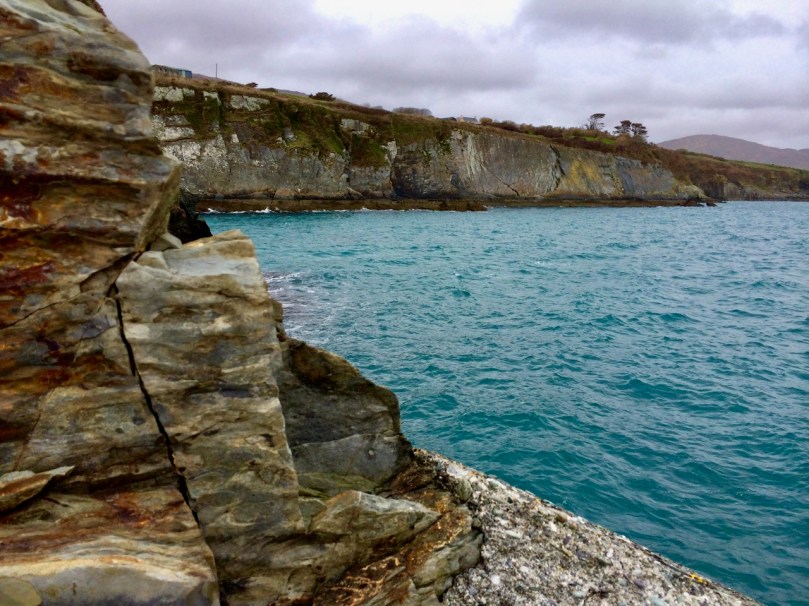
Dooneen Pier

Grant is not a gifted writer when it comes to scenery: …Trees wore their autumn colours. Streams tumbled down rocks, sparkling… Nevertheless he does slowly build up a picture of a man coming to grips with his place in the natural world and his relationship with animals and the elements. Perhaps the strongest sections of the book are those in which he chronicles the hard work and resourcefulness that it takes to sustain life on a smallholding, the setbacks and difficulties he and Mary encounter, and the support of the neighbours and community without which it would be impossible.

Donald and Mary, although not Catholic, attended the Star of the Sea church in Kilcrohane. This window from that church depicts the struggle against the elements that was such a part of life on the Sheep’s Head

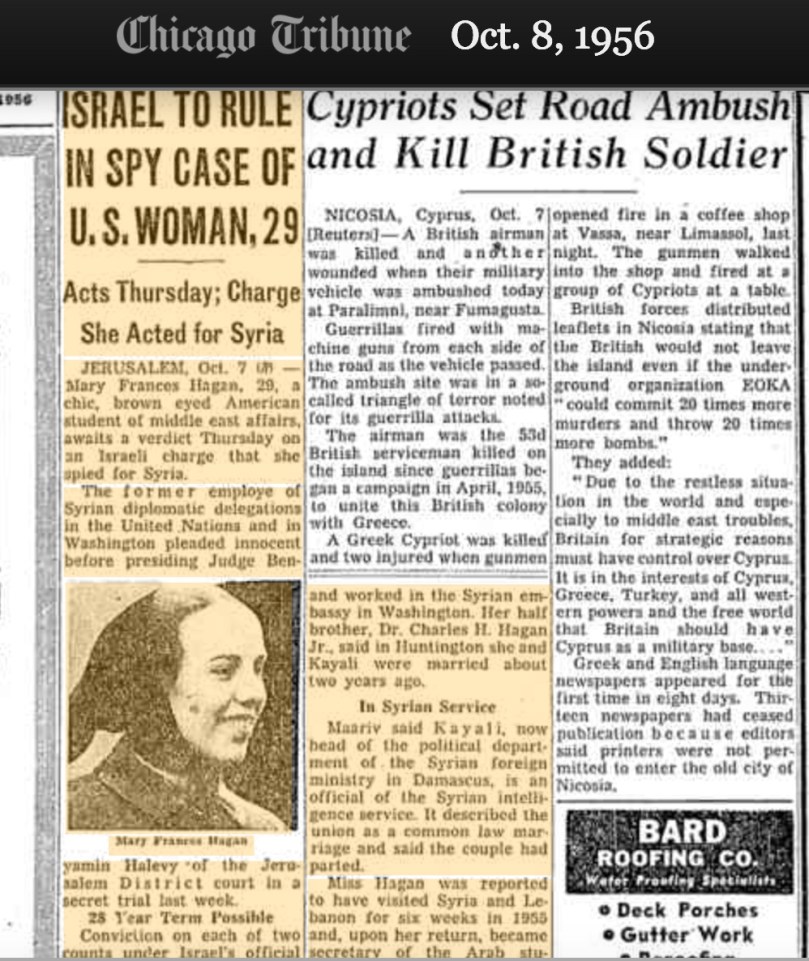
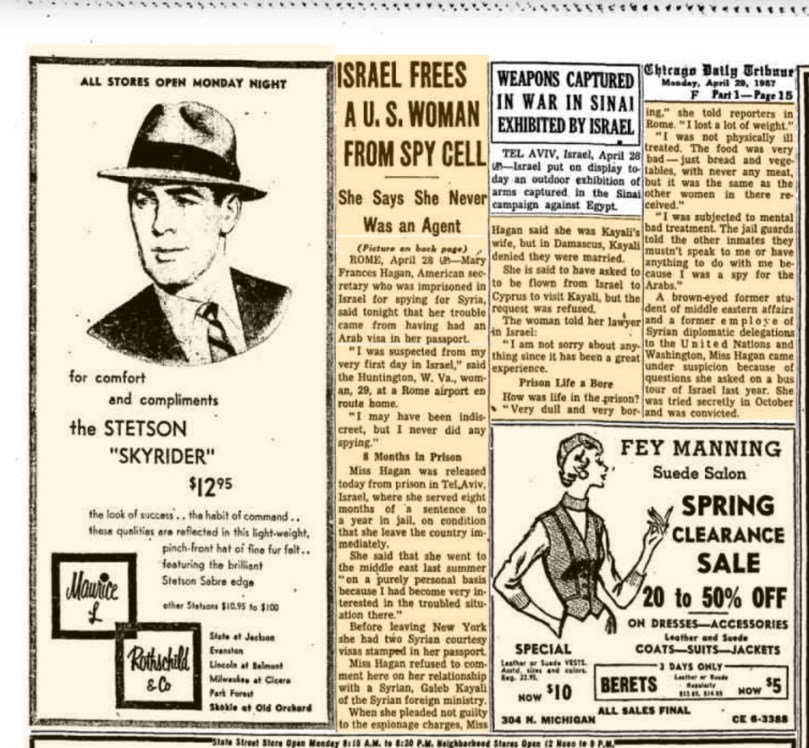
The story of Donald and Mary took a strange turn for me when I decided to Google around a bit, digging for more information about them. Astonishingly, Mary was convicted in Israel in 1956 of spying for Syria! She spent a year in an Israeli prison, eventually applying for a pardon. According to one account, she had fallen for a Syrian diplomat who persuaded her to take photographs in Israel for the Syrians. She was so unsophisticated a spy that she was captured almost right away.

She claimed to have been married to the Syrian: one newspaper account referred to her as Mrs. Caleb Kayali, the former Mary Frances Hagan of Huntington, W. Va. However, Kayali denied that they were married. The trial took place in secret, although the US authorities were kept apprised of the situation. Mary was eventually released when she had served much of her sentence. Once free, she denied that she had been spying, and described her prison term as “boring.”

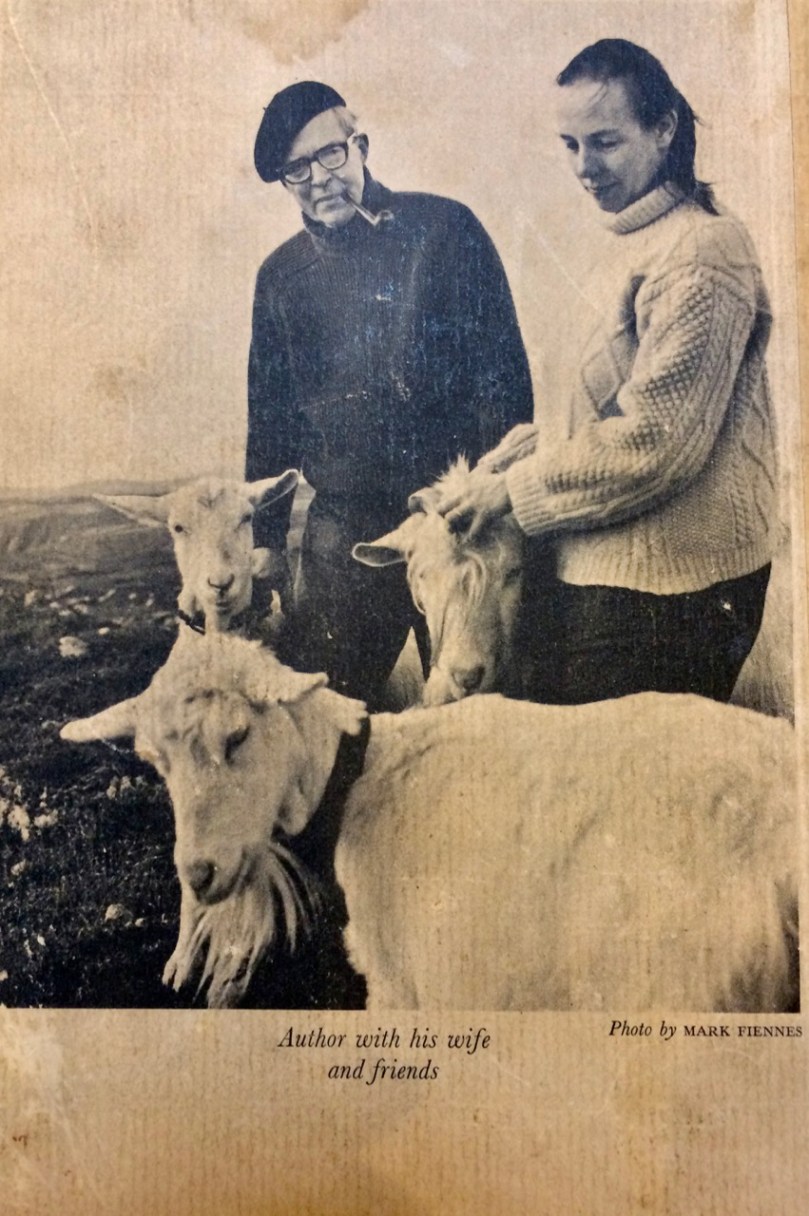
Donald and Mary on their farm. Note the photographer, Mark Fiennes, who was also living on the Sheep’s Head around this time

She and Donald met when they shared a desk at the United Nations, where they were both correspondents: he for the St. Louis Post-Dispatcher and she for Look Magazine. Little did the people of Doneen know of the chequered history of the American woman who introduced goat’s cheese to their far-flung parish. The story which starts White Goats and Black Bees – the one where Donald and Mary take a sudden notion to move to Ireland and farm – may not have happened quite as related. According to one account, Donald had been “given early retirement” when the Jewish community complained of and investigated what they saw as his “extremely anti-Israel” coverage, and declared that his marriage to a former convicted spy put him in a conflict of interest situation.

The old graveyard in Kilcrohane, centred on a ruined medieval church, is a beautiful and peaceful place

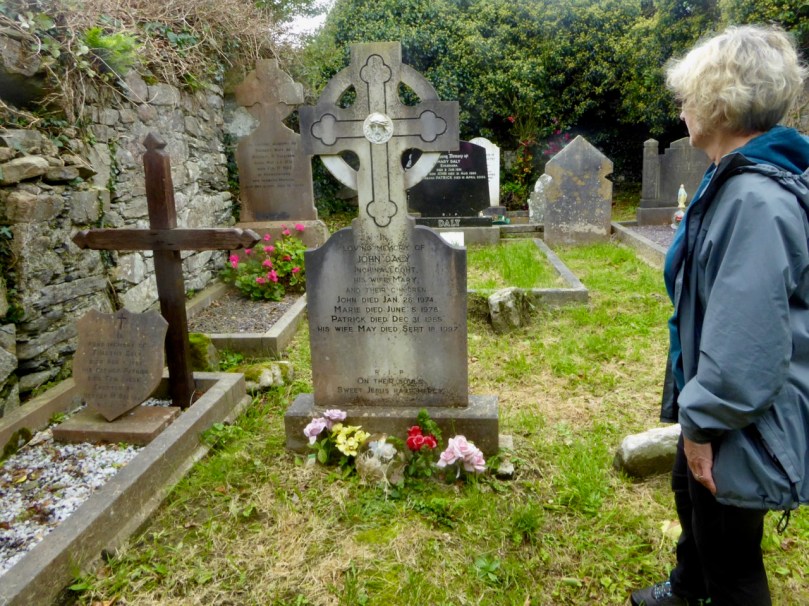
Whatever the truth behind how they got there, Donald and Mary continued to live happily on the Sheep’s Head and eventually in Bantry for the rest of their lives. While Donald died in 1983, Mary lived until 2012. Both are buried in their beloved Kilcrohane.

Forbes – An Irish Artist in Cornwall

In yesterday’s gallery talk as part of the West meets West exhibition at Uillinn, Skibbereen, I concentrated on one of the many artists who made their way to Cornwall in the late nineteenth century: Stanhope Alexander Forbes. He deserves a Roaringwater Journal post of his own, as he rather neatly embodies the concept of linking the two westernmost seaboards of Ireland and England, which is an essential element of the West meets West project. Colloquially known as the ‘Father of the Newlyn School’ of painters who were established in the West of Cornwall, and who have left an impressive legacy of their work in the most remote part of the peninsula, it was probably his longevity that earned him that title (he lived in Newlyn for most of his working life and died there in 1947) rather than a particular comparison of his work with others. There was a large group of talented artists, men and women, who contributed to the reputation of the Newlyn colony.

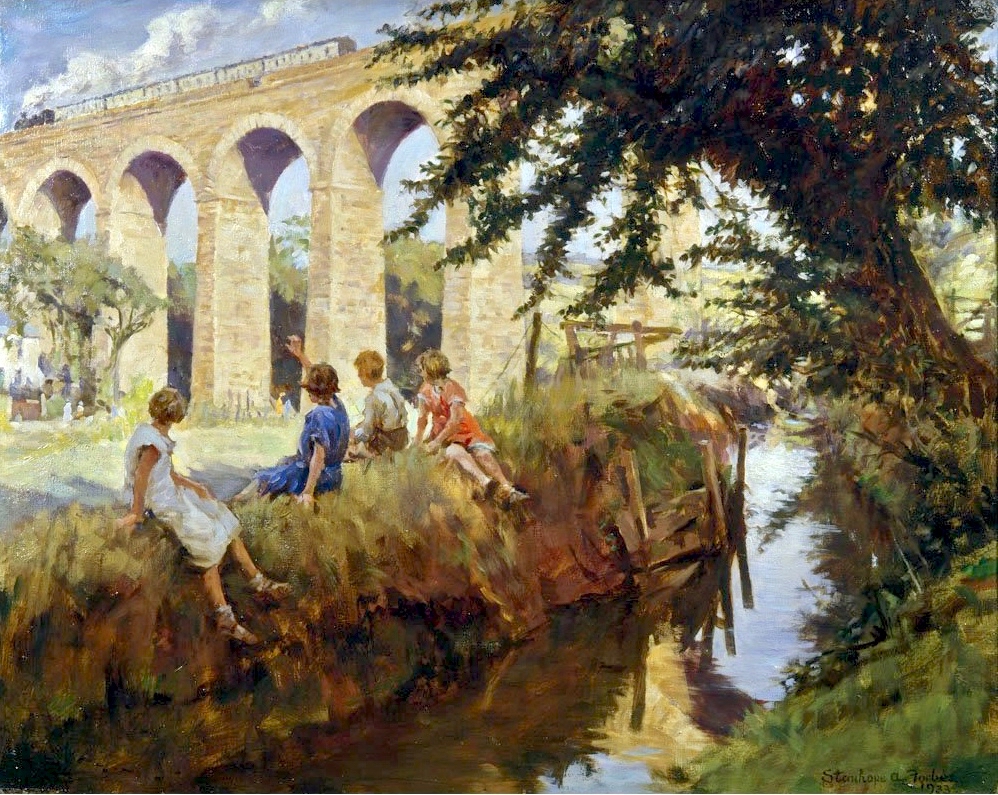
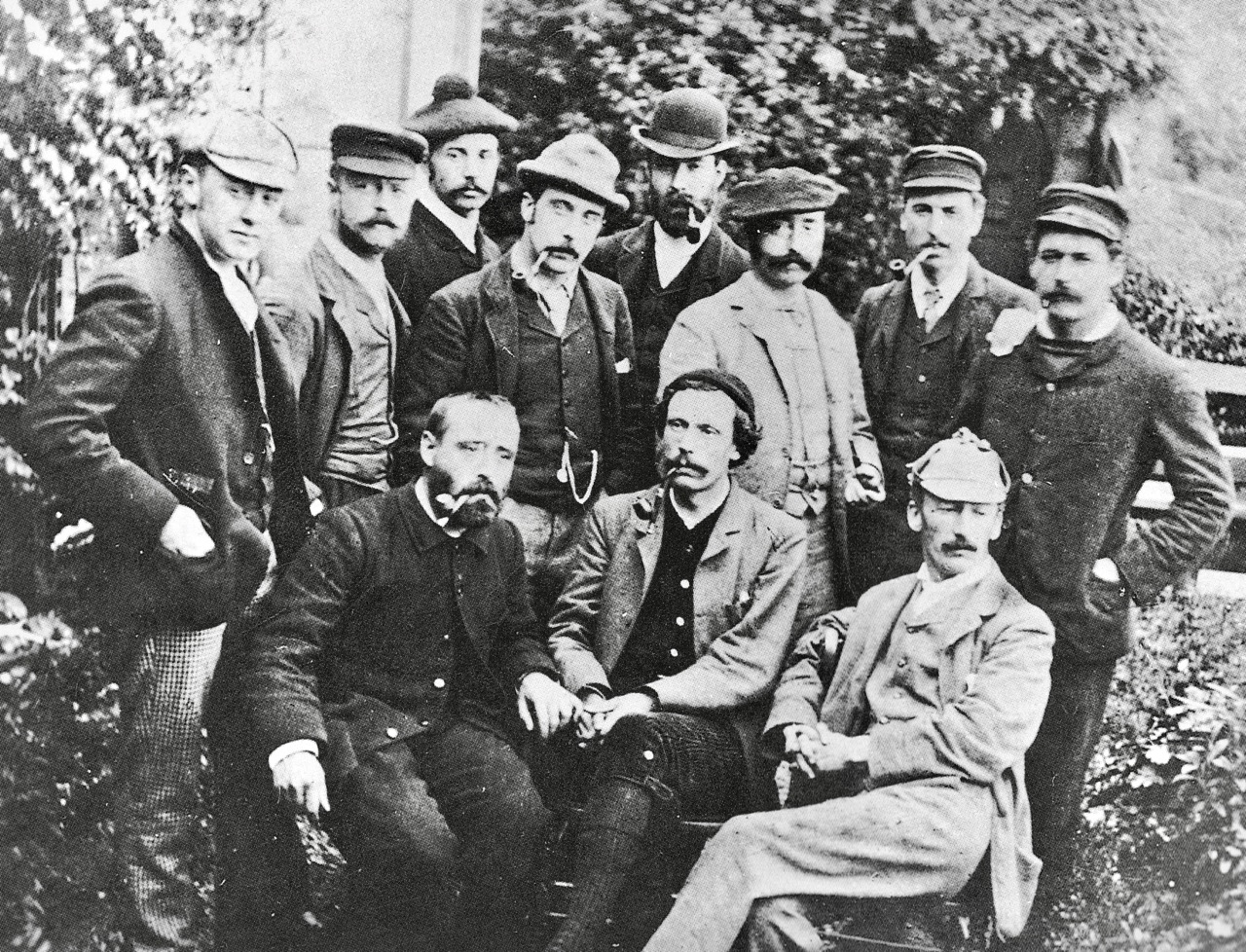
Header Picture – Perranwell Viaduct, Cornwall, painted by Stanhope Forbes in 1933, when he was 76 (The Medici Society Ltd). Above – a photograph of the Newlyn Group, taken in the early 1880s: shown are Frank Bodilly, Fred Millard, Frank Bramley, William Blandford Fletcher, William Breakspeare, Ralph Todd, William Wainwright, Edwin Harris and (seated lower right) Stanhope Forbes

Stanhope Forbes was born in Dublin in 1857. His father, William Forbes, was manager of the Midland Great Western Railway of Ireland. William was also a folklorist and probably passed his interest in traditions and traditional lifestyles on to his son. Stanhope’s uncle, James Staats Forbes (also a railway manager) had a large collection of paintings from the French Barbizon School whose members (including Corot and Rousseau) abandoned formalism to draw directly from nature. Stanhope was familiar with these works and the aspirations of these painters, and it is likely that when he embarked on a career in art he was heavily influenced by their heritage.

Forbes early works: left – A Street in Brittany 1881 (Walker Art Gallery), and right – Beach Scene St Ives (City of Bristol Art Gallery) 1886

Norman Garstin, another Irish artist who joined the Newlyn group and documented some of its history, described the Forbes family as “…essentially of the nineteenth century, full of its movement and restless activity…” Stanhope attended the Royal Academy School in London where he would have had a traditional training in still life and figure painting in the studio. London itself in those post-Industrial Revolution Victorian days was no doubt dirty and noisy, and the air would have been polluted. Forbes and many of his student companions would have longed for clean air and light and yearned to join the then fashionable (but daring and rebellious) en plein air movement where the object was to paint ‘natural’ colours and tones direct from life, albeit with the inherent problems of changing light through the days and seasons, and the practicalities of carrying easels, canvases and equipment to wherever they wanted to paint. As Norman Garstin said: “…your work could not be any good unless you caught a cold doing it…” The young artists were attracted to Brittany, where they discovered an ‘idyllic’ unchanging lifestyle and, latterly, to Cornwall, where they also perceived the ‘rural idyll’ existing closer to home, among the villages, farms and fishing communities.

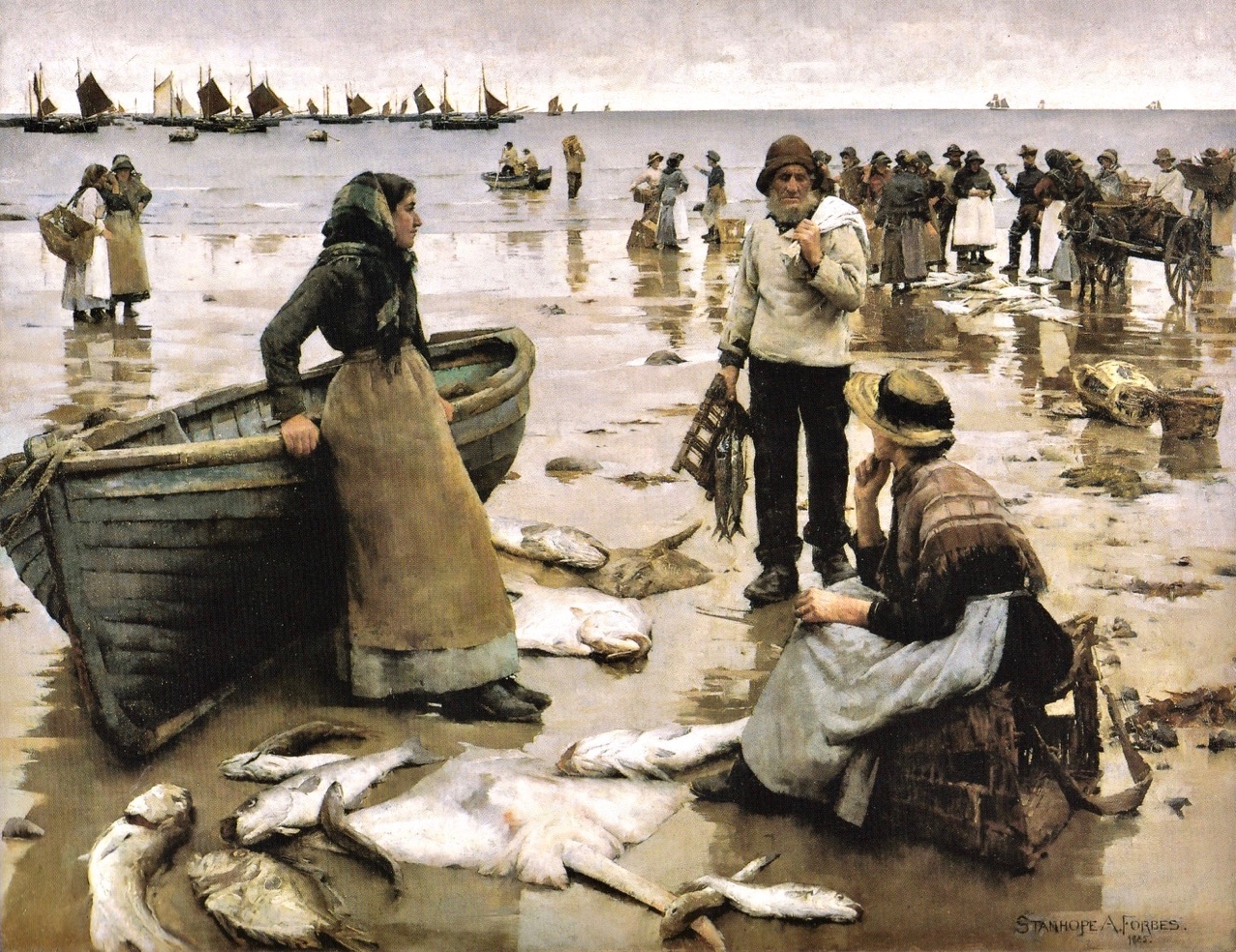
A Fish Sale on a Cornish Beach by Stanhope Alexander Forbes, completed in 1885 (now in the City of Plymouth Museum and Art Gallery). This spectacular painting – five feet long – is a masterpiece of composition and contains portraits drawn from real life: Newlyn locals were delighted to receive ‘sitting fees’ from the influx of artists

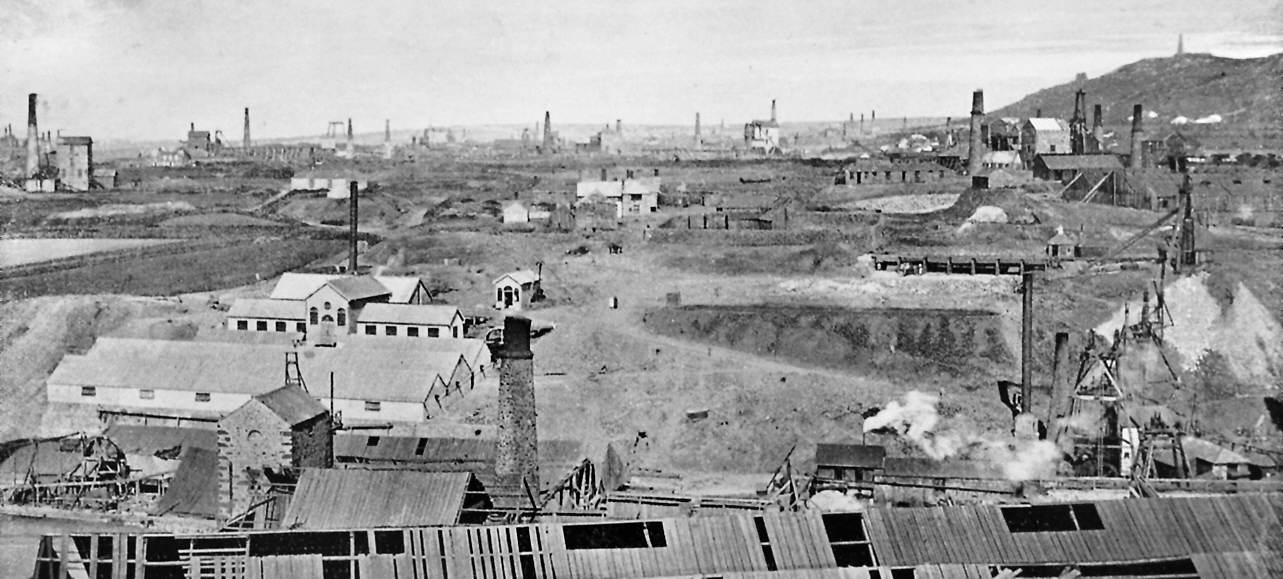
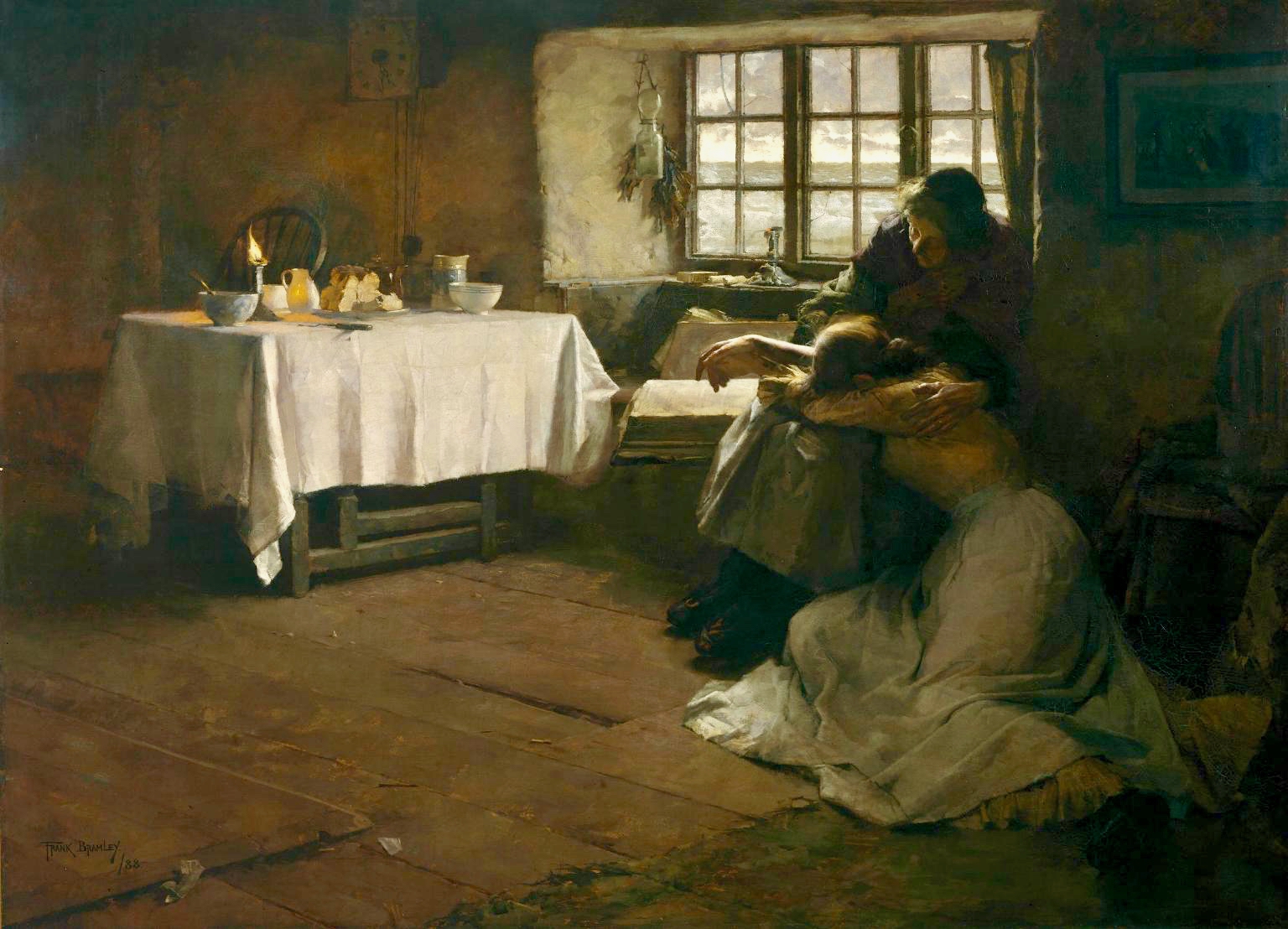
It’s probably true to say that the Newlyn artists romanticised the way of life in rural Cornwall by concentrating on the fishing communities and the beautiful seaboard. There was another reality: the interior of Cornwall’s peninsula was heavily industrialised in the 19th century by the metal mining industry. The artists must have been aware of this reality but ignored any recording of it. There was, at least, some acknowledgement of the hardship and distress of those connected to the sea itself. Frank Bramley’s Hopeless Dawn (beautifully painted although also romanticising in a very Victorian way the aftermath of lost lives at sea), painted in 1888, depicts the widow of a drowned fisherman being comforted by her mother; the lighting and composition of the interior view is remarkable.

Upper picture – the industrial landscape of inland Cornwall: Dolcoath Mine 1883. Lower picture – Frank Bramley’s A Hopeless Dawn, painted in 1888 (Tate Gallery, London)

Stanhope Forbes lived into his ninetieth year. By all accounts he achieved success in his chosen profession, but his personal life saw some tragedies: Elizabeth Armstrong – an equally talented artist who travelled from her native Canada to work in Newlyn – married Stanhope in 1889. She pursued her own career as a painter and etcher until her early death – aged 52 – in 1912. Their son Alec died on the battlefields of France in 1916. All are buried in the beautiful churchyard of Sancreed, in Cornwall.

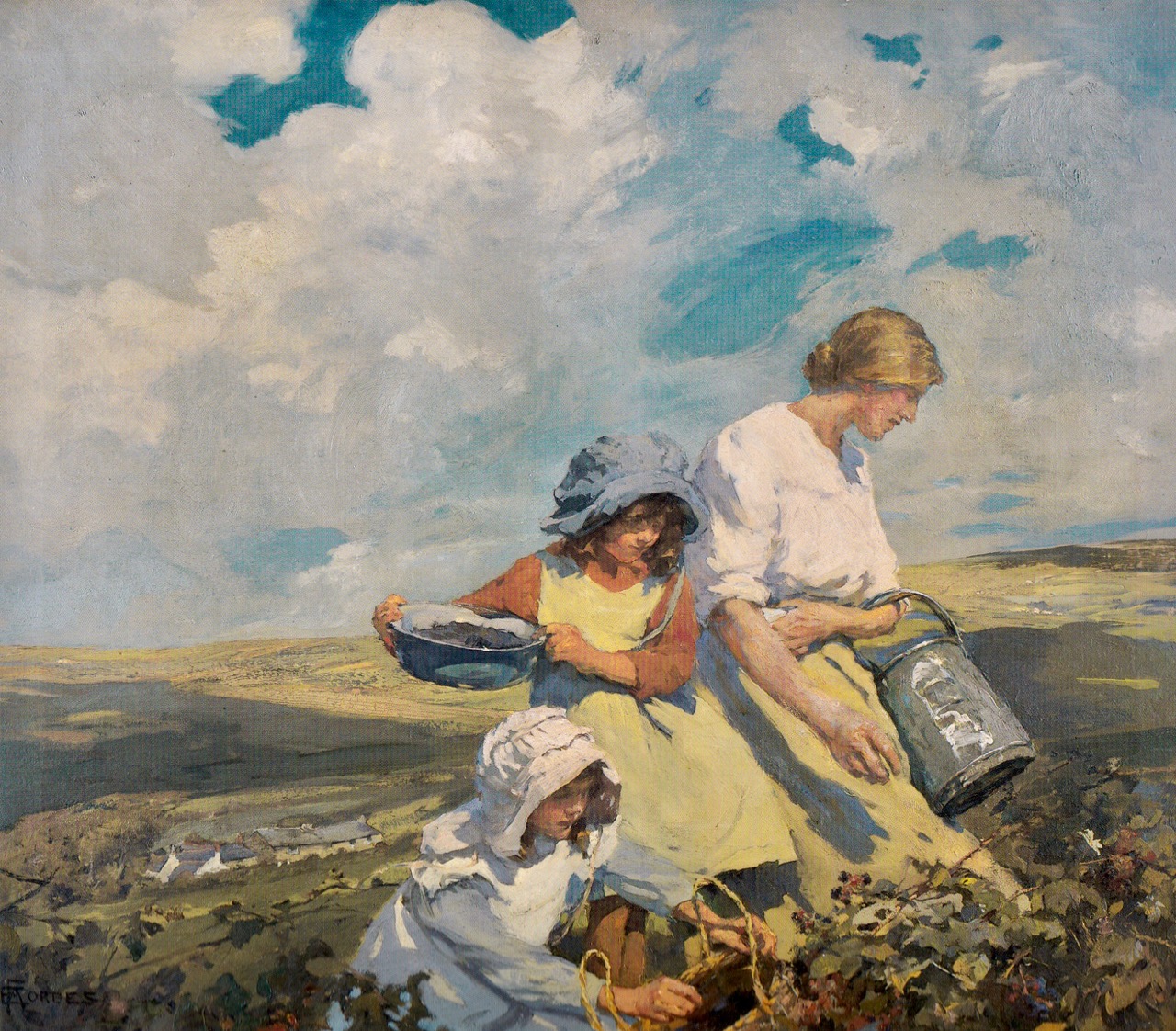
Blackberry Gatherers, painted by Elizabeth Armstrong Forbes in 1912 (Walker Art Gallery)

West meets West – a celebration of three contemporary artists from Cornwall – runs through to 8 July at Uillinn, Skibbereen

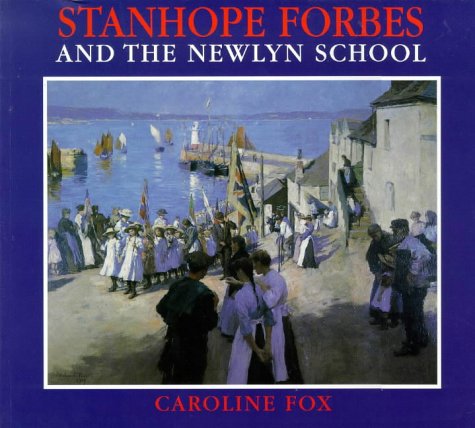
I am indebted to Stanhope Forbes and the Newlyn School by Caroline Fox, published by David & Charles 1993, for much of the biographical information on the artist in this post.


Artists of the Western Coasts

We look forward to welcoming our guest Cornish artists to Uillinn for the West meets West exhibition which opens this Friday – 2 June at 6pm – and runs through to 8 July. The three artists are excellent representatives of the vibrant arts scene in Cornwall, which was established from the late 19th century in Newlyn and St Ives and has been burgeoning through the late 20th century and into the 21st, especially with the opening of the spectacularly successful Tate St Ives gallery in 1993.

Header: Looking towards The Land’s End – Cornwall’s beautiful scenery has attracted artists and tourists for over a hundred years (photo by Phoebe Harris). Above: Tate St Ives – opened in 1993 – a spectacularly successful venue for cultural art tourism (photo by http://www.artfund.org)

Our artists are all from the West Penwith peninsula – the furthest landfall in the UK’s westernmost county of Cornwall. Phil Booth, Lamorna, will be showing some of his large sculptural relief constructions. Phil is known for these works but is also a talented landscape designer. His has spent many years teaching design and sculpture in Japan: he has intensively researched the form and meaning of traditional Japanese Gardens in Kyoto and is able to provide a high quality design service for anyone who is planning to construct a Japanese garden, or who might want to introduce Japanese elements into their own gardens.

Above left: Philip Booth. Above right: one of his relief constructions which will be shown at Uillinn – Beach Boulder

Matthew Lanyon sadly passed away while preparing work for our Uillinn exhibition. We will be showing many of his larger paintings (some are seven metres long!), but also some tapestry and a laminated glass piece which will be seen for the first time here in Skibbereen. Matthew’s father – Peter Lanyon – was one of the notable members of the St Ives School of Artists in the mid twentieth century. Peter was a painter and a teacher, and had a strong influence on many artists – not only in Cornwall and the UK but in Ireland as well. Matthew’s Cornish heritage, therefore, is very special in the context of West meets West.

The Late Matthew Lanyon with one of his huge paintings – The Listening Sea

Tony Lattimer lives in Penzance and has his studios and kilns on a beautiful wild acreage close to The Land’s End. His ceramic sculpture is large and visually stunning. Like the other exhibiting artists, he is recognised internationally. Tony has won the prestigious Emilia-Romagna Prize at Premio Faenza International Ceramic Art Competition, Italy twice – in 2005 and 2013. The MIC – International Museum of Ceramics in Faenza – is reputed to be the world’s largest ceramics museum and one of the liveliest art institutions in Italy. Tony has also exhibited at the Tate St Ives and many other UK galleries, and we are pleased that he is able to bring a selection of his new works over to Skibbereen.

Above left: Tony Lattimer preparing work for the kiln in his Land’s End studio. Above right: some of Tony Lattimer’s recent smaller works

Phil Booth and Tony Lattimer will be at the opening, and in the gallery at noon on Saturday 3 June to take part in a panel discussion on the artists’ work. Matthew will also be represented at this event. Please come! The following week – on Saturday 10 June, also at noon, I (Robert Harris) will be giving an illustrated talk titled Chasing the Light – Why the Artists Moved West. I will outline the historic connections and remarkable similarities between the two most westerly peninsulas of Britain and Ireland over a three and a half thousand year timespan, and explore the lives and work of artists who settled in both communities.

While this exhibition focusses on contemporary art from Cornwall it is part of a larger project envisaged by Uillinn (the West Cork Arts Centre). It is hoped that artists from West Cork will visit Cornwall to exhibit their work next year, and that this will become part of a regular cultural exchange between Cork and Cornwall in the future. There is a fascinating story to be told about the artists and craftspeople who arrived in West Cork from the late 1950s onwards and helped found a cosmopolitan, creative and free-thinking community here. Ceramicists, textile designers, printmakers, painters and writers all contributed to the mix. Because of that heritage there are many artists and creative people who continue to be attracted to the area today. Believe me, it’s the most stimulating place to live!

Don’t miss – West meets West – the work of contemporary Cornish artists, at Uillinn, Skibbereen, from 3 June to 8 July. Opening at 6pm on Friday 2 June.

Below: stirrings in Ballydehob: in the 1960s potter Christa Reichel and batik artist Nora Golden set up The Flower House as a shop, studio, cafe and haven for artists. “…Word spread that West Cork was a beautiful, creative place waiting to be discovered…” (Alison Ospina – West Cork Inspires) Photo courtesy Andrew Street